Month: June 2026

  • Amblyopia Market Forecast Signals New Revenue Opportunities Through 2030

    Amblyopia Market Forecast Signals New Revenue Opportunities Through 2030

    Enhanced with market attractiveness analysis, total addressable market evaluation, company benchmarking matrices, interactive Excel dashboards, expanded supply chain intelligence, emerging startup coverage, and detailed product insights, The Business Research Company’s 2026 market reports deliver more actionable and strategically valuable research.

    Amblyopia Market Size Outlook: How Fast Will Revenue Grow Through 2030?

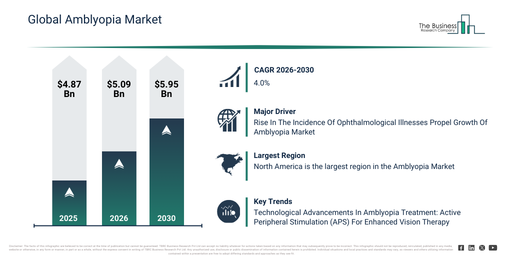
    The market for amblyopia is projected to experience sustained expansion, increasing from an estimated $4.87 billion in 2025 to $5.09 billion by 2026, reflecting a compound annual growth rate of 4.6%. Factors contributing to this expansion during the preceding period included heightened public understanding of vision impairments in children, greater accessibility to vision correction tools, increased reliance on eye patching for treatment, the broadening scope of ophthalmic care, and the early integration of atropine treatments.

    The amblyopia sector is poised for consistent expansion over the upcoming years, projected to reach a valuation of $5.95 billion by 2030, driven by a compound annual growth rate of 4.0%. This projected increase stems from a confluence of factors including a surge in demand for at-home amblyopia interventions, escalated investment in digital therapeutic solutions, a heightened emphasis on proactive eye care for children, the broadening scope of tele-ophthalmology, and innovations in neuro-visual treatment modalities. Key developments anticipated during this forecast period encompass a greater acceptance of digital vision therapy platforms, enhanced utilization of artificial intelligence in diagnostic tools, intensified efforts in early childhood vision surveillance, the proliferation of less invasive therapeutic alternatives, and a growing incorporation of game-based treatment strategies.

    Download A Free Sample Report For Comprehensive Market Insights:

    https://www.thebusinessresearchcompany.com/sample.aspx?id=16334&type=smp

    Amblyopia Market Growth Momentum: Which Factors Are Influencing Demand?

    The increasing prevalence of eye conditions is anticipated to be a primary catalyst for the expansion of the amblyopia market. These conditions, encompassing a spectrum from prevalent ailments like cataracts and glaucoma to less common disorders such as retinitis pigmentosa and eye tumors, are on the rise due to factors including extended screen usage, an aging global population, and environmental stressors like pollution. Amblyopia, or “lazy eye,” can manifest as a consequence of these broader ocular health challenges, leading the brain to disregard visual signals from the less dominant eye; untreated, this can result in lasting vision deficits and difficulties with depth perception. Illustrating this trend, data from the Centers for Disease Control and Prevention in January 2024 indicated that more than 3.4 million Americans over the age of 40 were experiencing blindness or severe visual impairment, a figure projected to double by 2030, thereby underscoring how the growing number of ophthalmological illnesses directly fuels the development of the amblyopia market.

    Amblyopia Market Segment Analysis Highlighting Growth Areas

    The amblyopia market covered in this report is segmented –

    1) By Disease Type: Strabismus Amblyopia, Refractive Amblyopia, Deprivation Amblyopia

    2) By Diagnosis: Visual Acuity Tests, Photo Screening, Bruckner Test, Other Diagnosis

    3) By Treatment: Eye Patches, Atropine Drops, Glasses, Video Games, Other Treatments

    Subsegments:

    1) By Strabismus Amblyopia: Congenital Strabismus Amblyopia, Acquired Strabismus Amblyopia, Non-Paralytic Strabismus Amblyopia, Paralytic Strabismus Amblyopia

    2) By Refractive Amblyopia: Myopic Refractive Amblyopia, Hypermetropic Refractive Amblyopia, Astigmatic Refractive Amblyopia, Treatment Through Corrective Lenses (Glasses, Contact Lenses)

    3) By Deprivation Amblyopia: Amblyopia Due To Cataracts, Amblyopia Caused By Ptosis (Drooping Eyelid), Amblyopia From Corneal Opacities, Treatment Through Surgical Interventions Or Patching

    Amblyopia Market Trends Reshaping Industry Growth

    In the amblyopia sector, leading enterprises are focusing on innovations like active peripheral stimulation (APS) as a means to boost treatments for peripheral vision issues. APS is a method designed to stimulate peripheral nerves or tissues, aiming to awaken sensory pathways and potentially aid in managing pain, supporting recovery, and addressing various neurological disorders. As an illustration, AmblyoPlay, a startup from the United States focused on digital vision therapies, launched APS in October 2024 to refine treatments for individuals experiencing deficits in their peripheral vision. This cutting-edge approach targets conditions such as amblyopia (lazy eye), strabismus, and convergence insufficiency, all of which can impair spatial perception and general visual performance. Through the direct stimulation of peripheral sight, APS tackles a significant public health concern that affects approximately 5% of people worldwide. AmblyoPlay has incorporated APS into a game-like system, thereby increasing the appeal and enjoyment of vision therapy, especially for younger patients, and fostering better commitment to prescribed treatments.

    Amblyopia Market Leading Companies: Who Holds Significant Market Presence?

    Major companies operating in the amblyopia market are Vivid Vision Inc, RevitalVision, NovaSight, Eyenovia Inc, OcuRx Vision Technologies LLC, AmblyoPlay, Adaptica Srl, Luminopia Inc, RightEye LLC, NeuroVision Imaging, Visionary Tool Inc, EyeJustRead Inc, Amblyotech, Vision Therapy Solutions LLC, Orthoptek Inc, OpticsTrainer, Vision Science Labs, Pediatric Vision Technologies, NeuroEye Therapy, Visual Cortex Solutions

    Access The Complete Amblyopia Market Report:

    https://www.thebusinessresearchcompany.com/report/amblyopia-global-market-report

    Amblyopia Market Regional Outlook: Where Are The Largest Opportunities Located?

    North Americawas the largest region in the amblyopia market in 2025. Asia-Pacificis expected to be the fastest-growing region in the forecast period. The regions covered in the amblyopia market report are Asia-Pacific, South East Asia, Western Europe, Eastern Europe, North America, South America, Middle East, Africa.

    Get in touch with us:

    The Business Research Company: https://www.thebusinessresearchcompany.com/

    Americas: +1 310-496-7795

    Asia: +44 7882 955267 & +91 8897263534

    Europe: +44 7882 955267

    Email us at: marketing@tbrc.info

    Follow us on:

    LinkedIn: https://in.linkedin.com/company/the-business-research-company

    YouTube: https://www.youtube.com/channel/UC24_fI0rV8cR5DxlCpgmyFQ

    Global Market Model: https://www.thebusinessresearchcompany.com/global-market-model

  • Ambient Digital Pharmacy Kiosk Market Growth Is Accelerating As Industry Transformation Continues

    Ambient Digital Pharmacy Kiosk Market Growth Is Accelerating As Industry Transformation Continues

    Through market attractiveness analysis, total addressable market evaluation, company benchmarking matrices, interactive Excel dashboards, expanded supply chain intelligence, emerging startup coverage, and detailed product insights, The Business Research Company’s 2026 market reports provide more actionable and strategically valuable research.

    Ambient Digital Pharmacy Kiosk Market Size, Value And Growth Trends Through 2030

    The marketplace for unmanned digital pharmacy terminals has experienced substantial expansion lately, projecting a rise from $2.04 billion in 2025 to $2.42 billion in 2026, a trajectory marked by a compound annual growth rate of 18.6%. This upward trend in the past owes much to the proliferation of automated retail pharmacy solutions, the increasing preference for remote healthcare options, a greater need for accessible healthcare in urban settings, the integration of electronic prescription platforms, and the burgeoning popularity of patient-driven healthcare service models.

    The market for ambient digital pharmacy kiosks is poised for significant expansion, projected to reach $4.74 billion by 2030, reflecting a compounded annual growth rate of 18.3%. This anticipated surge is fueled by several key factors, including heightened investments in advanced pharmacy infrastructure, a growing consumer need for localized and accessible medication solutions, the liberalization of telepharmacy regulations, deeper incorporation with hospital data systems, and a heightened emphasis on safeguarding sensitive information and adhering to industry standards. Furthermore, prominent developments expected within this timeframe involve a greater proliferation of self-service kiosk installations, an increasing inclination towards contactless prescription fulfillment, the seamless integration of remote pharmacy services, the advancement of secure digital transaction platforms, and a concentrated effort on optimizing automated stock control procedures.

    Download A Free Sample Report For Comprehensive Market Insights:

    https://www.thebusinessresearchcompany.com/sample.aspx?id=28902&type=smp

    Ambient Digital Pharmacy Kiosk Market Expansion Drivers: What Is Shaping Future Growth?

    The increasing prevalence of telehealth is anticipated to foster the expansion of the ambient digital pharmacy kiosk market. Telehealth encompasses technology-enabled services that facilitate remote healthcare delivery, such as virtual doctor visits and ongoing patient oversight, through digital communication. This trend is fueled by a greater need for accessible healthcare, as individuals desire convenient, prompt, and remote medical attention, circumventing the necessity for physical appointments. Ambient digital pharmacy kiosks bolster telehealth capabilities by offering accessible, on-location access to prescriptions, diagnostic tools, and medical services, thereby connecting virtual consultations with tangible healthcare provision. Highlighting this trend, FAIR Health Inc. reported in April 2023 that national telehealth utilization saw a 7.3% increase in 2023, escalating from 5.5% of medical claim lines in December 2022 to 5.9% in January 2023. Consequently, the expanding use of telehealth is a key factor contributing to the growth of the ambient digital pharmacy kiosk market.

    Growing investments in sophisticated patient monitoring technologies are poised to spur the expansion of the ambient digital pharmacy kiosk sector. Increased spending within the healthcare domain, encompassing medical services, devices, and technologies aimed at enhancing health outcomes, is a significant contributor to this market’s upward trajectory. This rise in healthcare expenditure is driven by a burgeoning demand for cutting-edge medical technologies, prompting healthcare facilities to allocate greater resources towards innovative equipment and digital advancements to elevate the quality of patient care and clinical results. The heightened healthcare spending facilitates the integration of ambient digital pharmacy kiosks by permitting investments in advanced automated systems that amplify medication accessibility, optimize pharmacy workflows, and refine the overall patient experience. For example, data from the Centers for Medicare & Medicaid Services indicated in June 2025 that in 2023, national health expenditures climbed by 7.5% to reach $4.9 trillion, averaging $14,570 per individual and constituting 17.6% of the Gross Domestic Product. Medicare spending alone rose by 8.1% to $1,029.8 billion, accounting for 21% of the aggregate national health expenditures. Thus, the upward trend in healthcare expenditure is a primary driver for the ambient digital pharmacy kiosk market’s growth.

    Ambient Digital Pharmacy Kiosk Market Segment Performance And Strategic Opportunities

    The ambient digital pharmacy kiosk market covered in this report is segmented –

    1) By Component: Hardware, Software, Services

    2) By Deployment Mode: Standalone, Integrated

    3) By Application: Prescription Dispensing, Over-the-Counter Medication, Telepharmacy, Health Monitoring, Other Applications

    4) By End User: Hospitals, Retail Pharmacies, Clinics, Long-Term Care Facilities, Other End Users

    Subsegments:

    1) By Hardware: Touchscreen Display, Payment Module, Barcode Scanner, Automated Dispensing Unit, Refrigeration Unit

    2) By Software: Prescription Management Software, Inventory Management Software, User Interface Software, Telehealth Integration Software, Data Analytics Software

    3) By Services: Installation Services, Maintenance And Support Services, Software Update Services, Training Services, Remote Assistance Services

    Ambient Digital Pharmacy Kiosk Market Key Players: Which Companies Shape Industry Competition?

    Major companies operating in the ambient digital pharmacy kiosk market are Rite Aid Corporation, Zebra Technologies Corporation, Omnicell Inc., Elo Touch Solutions Inc., ScriptPro LLC, Parata Systems LLC, Kiosk Information Systems Inc., XIPHIAS Software Technologies Private Limited., Medicap Pharmacy Inc., Amazon Pharmacy Inc., RedyRef Interactive Kiosks Inc., PharmaTrust Inc., ImageHOLDERS Inc., Pharmabox Inc., InstyMeds Corporation, Smart Rx Systems Inc., MedifriendRx Inc., Pickpoint Corporation, VendRx Inc., PARTTEAM And OEMKIOSKS,S.A.

    Access The Complete Ambient Digital Pharmacy Kiosk Market Report:

    https://www.thebusinessresearchcompany.com/report/ambient-digital-pharmacy-kiosk-global-market-report

    Ambient Digital Pharmacy Kiosk Market Geographic Landscape: Which Region Dominates Industry Growth?

    North Americawas the largest region in the ambient digital pharmacy kiosk market in 2025. Asia-Pacificis expected to be the fastest-growing region in the forecast period. The regions covered in the ambient digital pharmacy kiosk market report are Asia-Pacific, South East Asia, Western Europe, Eastern Europe, North America, South America, Middle East, Africa.

    Get in touch with us:

    The Business Research Company: https://www.thebusinessresearchcompany.com/

    Americas: +1 310-496-7795

    Asia: +44 7882 955267 & +91 8897263534

    Europe: +44 7882 955267

    Email us at: marketing@tbrc.info

    Follow us on:

    LinkedIn: https://in.linkedin.com/company/the-business-research-company

    YouTube: https://www.youtube.com/channel/UC24_fI0rV8cR5DxlCpgmyFQ

    Global Market Model: https://www.thebusinessresearchcompany.com/global-market-model
  • Alzheimer’s Disease Diagnostic Market Outlook Highlights The Next Major Growth Opportunities

    Alzheimer’s Disease Diagnostic Market Outlook Highlights The Next Major Growth Opportunities

    Delivering more actionable and strategically valuable research, The Business Research Company’s 2026 market reports feature market attractiveness analysis, total addressable market evaluation, company benchmarking matrices, interactive Excel dashboards, expanded supply chain intelligence, emerging startup coverage, and detailed product insights.

    Alzheimer’s Disease Diagnostic Market CAGR Analysis And Future Market Development

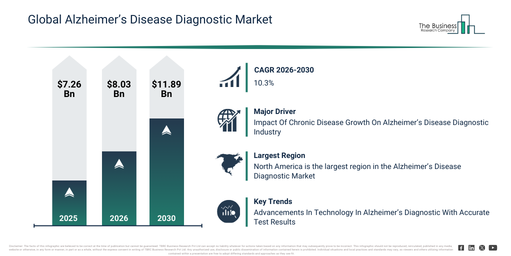
    The global market for Alzheimer’s disease diagnostics has experienced significant expansion, projected to increase from \$7.26 billion in 2025 to \$8.03 billion in 2026, reflecting a compound annual growth rate of 10.6%. This upward trajectory in the historical period is largely due to the escalating incidence of Alzheimer’s disease, heightened public consciousness regarding neurodegenerative conditions, the expanding use of MRI and PET imaging techniques, the proliferation of diagnostic facilities and healthcare institutions, and increased funding dedicated to research in cognitive assessment.

    The market for Alzheimer’s disease diagnostics is poised for significant expansion, projected to reach $11.89 billion by the year 2030, reflecting a compound annual growth rate of 10.3%. This anticipated surge is fueled by advancements in novel biomarkers and imaging tracers, the incorporation of artificial intelligence for earlier identification, increased governmental and private investment in Alzheimer’s research, broader adoption of personalized medicine strategies, and an uptick in multi-center clinical trials. Key developments anticipated during this forecast period encompass a greater reliance on diagnostics that utilize biomarkers, enhanced application of neuroimaging techniques for early detection, an escalation in cognitive assessment testing, expanded genetic testing to evaluate Alzheimer’s risk, and the integration of comprehensive, multi-modal diagnostic methodologies.

    Download A Free Sample Report For Comprehensive Market Insights:

    https://www.thebusinessresearchcompany.com/sample.aspx?id=21093&type=smp

    Alzheimer’s Disease Diagnostic Market Development Factors: Which Trends Are Supporting Demand?

    Anticipated expansion in the prevalence of chronic illnesses is poised to spur the advancement of the Alzheimer’s disease diagnostic market. Conditions like heart disease, diabetes, and high blood pressure are significantly linked to a heightened susceptibility to Alzheimer’s and other forms of dementia, consequently boosting the need for diagnostic tools that offer early and precise identification. A primary contributor to this surge in chronic ailments is the pervasive adoption of sedentary habits, as substantial public health studies consistently reveal substantially elevated incidences of conditions such as diabetes and cardiovascular issues within populations that are not physically active. Diagnostic tools for Alzheimer’s offer valuable support to healthcare frameworks by permitting early identification, enabling prompt therapeutic actions, and assisting in the management of patients to potentially decelerate the disease’s advancement. To illustrate, in November 2023, data from Heritage Health Services, a US non-profit health research entity, indicated that 6.7 million individuals over 65 in the United States were coping with Alzheimer’s dementia, with the condition becoming more widespread with advancing age, affecting 5.0% of those aged 65–74, 13.1% of those aged 75–84, and 33.3% of those aged 85 and older. This figure is forecasted to approach 13 million by the year 2050, underscoring how the increasing burden of chronic disease is fueling the growth trajectory of the Alzheimer’s disease diagnostic market.

    #Alzheimer’s Disease Diagnostic Market Segment Landscape And Growth Potential

    The alzheimer’s disease diagnostic market covered in this report is segmented –

    1) By Type: Triage, Diagnosis, Screening

    2) By Diagnostic Technique: Biomarkers, Imaging Techniques, Genetic Testing, Cognitive Assessment Tests

    3) By End User: Clinics, Hospitals, Diagnostic Centers, Pharmaceutical Companies, Academic Research Center

    Subsegments:

    1) By Triage: Cognitive Testing, Imaging Techniques

    2) By Diagnosis: Biomarker Testing, Neuroimaging

    3) By Screening: Neuropsychological Testing, Genetic Testing

    Alzheimer’s Disease Diagnostic Market Transformation Trends: Which Innovations Are Driving Change?

    Key players within the Alzheimer’s disease diagnostics sector are directing their efforts toward the development of blood-based biomarker assays, a strategic move anticipated to streamline the diagnostic pathway for Alzheimer’s, thereby lessening the dependence on more intrusive methods and enhancing the availability of prompt therapeutic interventions for individuals affected. Illustrating this trend, Quanterix, a biotechnology firm based in the United States, introduced the LucentAD p-Tau 217 test in October 2023, a blood-based indicator of Alzheimer’s pathology that exhibits considerable clinical sensitivity and specificity. Conventional diagnostic avenues for cerebrospinal fluid (CSF) biomarkers, such as positron emission tomography (PET) scans or lumbar punctures, are characterized by their expense, invasive nature, and limited accessibility. The LucentAD test further integrates Quanterix’s highly sensitive SimoaÒ technology with well-validated p-Tau 217 antibodies sourced from J&J Innovative Medicine, ensuring superior precision and a more user-friendly procedure.

    Alzheimer’s Disease Diagnostic Market Competitive Landscape: Who Are The Leading Companies?

    Major companies operating in the alzheimer’s disease diagnostic market are Hoffmann-La Roche, Eli Lilly and Company, Quest Diagnostics Incorporated, Laboratory Corporation of America Holdings, Lantheus, Quanterix, C2N Diagnostics, Sysmex, Royal Philips, Bruker Corporation, Revvity, Alamar Biosciences, ADx Neurosciences, Randox Laboratories, DiaSorin, Shenzhen Mindray Bio-Medical Electronics, Nipro Corporation, Canon Inc, Hitachi Ltd, Eisai Co Ltd

    Access The Complete Alzheimer’s Disease Diagnostic Market Report:

    https://www.thebusinessresearchcompany.com/report/alzheimers-disease-diagnostic-global-market-report

    #Alzheimer’s Disease Diagnostic Market Largest Region: Which Geography Holds The Highest Market Share?

    North Americawas the largest region in the alzheimer’s disease diagnostic market in 2025. Asia-Pacificis expected to be the fastest-growing region in the forecast period. The regions covered in the alzheimer’s disease diagnostic market report are Asia-Pacific, South East Asia, Western Europe, Eastern Europe, North America, South America, Middle East, Africa.

    Get in touch with us:

    The Business Research Company: https://www.thebusinessresearchcompany.com/

    Americas: +1 310-496-7795

    Asia: +44 7882 955267 & +91 8897263534

    Europe: +44 7882 955267

    Email us at: marketing@tbrc.info

    Follow us on:

    LinkedIn: https://in.linkedin.com/company/the-business-research-company

    YouTube: https://www.youtube.com/channel/UC24_fI0rV8cR5DxlCpgmyFQ

    Global Market Model: https://www.thebusinessresearchcompany.com/global-market-model

  • Alpha-1 Antitrypsin Deficiency Augmentation Therapy Market Trends And Growth Drivers Point To Strong Future Potential

    Alpha-1 Antitrypsin Deficiency Augmentation Therapy Market Trends And Growth Drivers Point To Strong Future Potential

    Enhanced with market attractiveness analysis, total addressable market evaluation, company benchmarking matrices, interactive Excel dashboards, expanded supply chain intelligence, emerging startup coverage, and detailed product insights, The Business Research Company’s 2026 market reports deliver more actionable and strategically valuable research.

    Alpha-1 Antitrypsin Deficiency Augmentation Therapy Market Expansion From $1.93 Billion In 2026 To $2.67 Billion In 2030

    The market for alpha-1 antitrypsin deficiency augmentation therapy has experienced significant expansion lately, with projections indicating continued robust growth. Valued at $1.8 billion in 2025, this market is anticipated to reach $1.93 billion by 2026, reflecting a compound annual growth rate (CAGR) of 7.3%. Factors contributing to the growth observed in the historical period include the scarcity of therapeutic interventions for Alpers disease, a heightened understanding of uncommon genetic conditions, a prevailing dependence on hospital settings for treatment, a rising number of pediatric patients, and the broader accessibility of supportive care initiatives.

    The market for alpha-1 antitrypsin deficiency augmentation therapy is poised for substantial expansion over the coming years, projecting a reach of $2.68 billion by 2030 with a compound annual growth rate of 8.5%. This anticipated growth is fueled by advancements in gene-targeted therapies, escalating investments in rare disease research, heightened collaboration between healthcare institutions and biotechnology companies, the embrace of innovative drug delivery systems, and the proliferation of specialized clinics for pediatric neurology. Key developments anticipated during this forecast period encompass a growing need for treatments that address symptoms and provide support, a concentrated effort on researching rare genetic disorders, an increase in therapeutic options for pediatric neurology, the wider availability of specialized clinics and hospital services, and the integration of new drug formulations and delivery approaches.

    Download A Free Sample Report For Comprehensive Market Insights:

    https://www.thebusinessresearchcompany.com/sample.aspx?id=13006&type=smp

    Alpha-1 Antitrypsin Deficiency Augmentation Therapy Market Industry Drivers: What Is Driving Revenue Growth?

    The expanding landscape of clinical trials is poised to be a significant catalyst for the advancement of the alpha-1 antitrypsin deficiency augmentation therapy market. These trials, which are essentially research investigations involving human subjects, are crucial for assessing the safety, effectiveness, and ideal application of emerging treatments like novel recombinant therapies, gene-based interventions, and extended-duration augmentation products. The upward trend in study initiation is fueled by increased funding for research, a heightened focus on cutting-edge treatment approaches, and the pressing necessity to mitigate the substantial health challenges posed by alpha-1 antitrypsin deficiency. Augmentation therapy for this condition operates by re-establishing adequate levels of the functional alpha-1 antitrypsin protein in both the bloodstream and the respiratory system, thereby decelerating the disease’s advancement, lessening pulmonary tissue deterioration, and ultimately enhancing long-term respiratory health for those afflicted, with a notable example being the increase in registered trials on ClinicalTrials.gov from 477,203 in early 2024 to 558,474 by late 2025, signifying a substantial influx of new research initiatives annually, consequently bolstering the growth trajectory of the alpha-1 antitrypsin deficiency augmentation therapy market.

    Alpha-1 Antitrypsin Deficiency Augmentation Therapy Market Categorization By Product Type And Application

    The alpha-1 antitrypsin deficiency augmentation therapy market covered in this report is segmented –

    1) By Treatment Type: Symptomatic Drug Therapy, Supportive Care Therapy, Palliative Care

    2) By Symptom Management: Seizure Management, Liver Dysfunction Management, Neurodevelopmental Support, Metabolic and Nutritional Support

    3) By Drug Class: Antiepileptic Drugs (excluding valproate), Hepatoprotective and Liver Support Medications, Metabolic Cofactor and Vitamin Therapies, Supportive Adjunct Medications

    4) By Route of Administration: Oral, Injectable

    5) By End User: Hospitals, Specialty Neurology and Metabolic Clinics, Palliative Care Centers

    Subsegments:

    1) By Symptomatic Drug Therapy: Antiepileptic Drug Therapy (non-valproate based), Acute Seizure Control Medications, Management of Movement Disorders and Spasticity, Supportive Medications for Gastrointestinal Symptoms, Infection Management and Prophylactic Medications

    2) By Supportive Care Therapy: Liver Function Monitoring and Support, Nutritional Support and Metabolic Supplementation, Respiratory Support and Assisted Ventilation, Physical, Occupational, and Speech Therapy, Management of Metabolic Decompensation

    3) By Palliative Care: Pain and Symptom Relief Management, End-of-Life Supportive Care, Psychological and Family Counseling

    #Alpha-1 Antitrypsin Deficiency Augmentation Therapy Market Growth Trends: What Is Influencing The Future Outlook?

    Within the alpha-1 antitrypsin deficiency augmentation therapy sector, key players are actively pursuing the creation of novel solutions, including augmentation therapy vials, aimed at simplifying dosage administration, enhancing infusion processes, and elevating the patient treatment journey. These augmentation therapy vials, containing plasma-derived alpha-1 antitrypsin, are presented in measured amounts designed for precise weight-based dosing and consistent AAT protein replenishment. As an illustration, in February of 2024, Grifols, a manufacturer of plasma-derived pharmaceuticals based in Spain, introduced PROLASTIN vials in both 4-gram and 5-gram sizes. The availability of these larger vial capacities allows healthcare providers to more adeptly meet weekly dosage needs, concurrently minimizing packaging waste and simplifying storage requirements. These enhanced choices contribute to a more efficient treatment preparation process and bolster the enduring PROLASTIN product line for individuals suffering from severe alpha-1 antitrypsin deficiency.

    Alpha-1 Antitrypsin Deficiency Augmentation Therapy Market Company Landscape And Strategic Competition

    Major companies operating in the alpha-1 antitrypsin deficiency augmentation therapy market are Pfizer Inc., Sanofi S.A., Takeda Pharmaceutical Company Limited, Biogen Inc., UCB S.A., Eisai Co. Ltd., Jazz Pharmaceuticals plc, GW Pharmaceuticals plc, BioMarin Pharmaceutical Inc., Ultragenyx Pharmaceutical Inc., PTC Therapeutics Inc., Alexion Pharmaceuticals Inc., Ionis Pharmaceuticals Inc., Vertex Pharmaceuticals Incorporated, Roche Holding AG, Novartis AG, Merck & Co. Inc., AbbVie Inc., Bristol Myers Squibb Company, Lundbeck A/S

    Access The Complete Alpha-1 Antitrypsin Deficiency Augmentation Therapy Market Report:

    https://www.thebusinessresearchcompany.com/report/alpha-1-antitrypsin-deficiency-augmentation-therapy-global-market-report

    Alpha-1 Antitrypsin Deficiency Augmentation Therapy Market Regional Analysis: Which Region Leads By Revenue?

    North Americawas the largest region in the alpha-1 antitrypsin deficiency augmentation therapy market in 2025. The regions covered in the alpha-1 antitrypsin deficiency augmentation therapy market report are Asia-Pacific, South East Asia, Western Europe, Eastern Europe, North America, South America, Middle East, Africa.

    Get in touch with us:

    The Business Research Company: https://www.thebusinessresearchcompany.com/

    Americas: +1 310-496-7795

    Asia: +44 7882 955267 & +91 8897263534

    Europe: +44 7882 955267

    Email us at: marketing@tbrc.info

    Follow us on:

    LinkedIn: https://in.linkedin.com/company/the-business-research-company

    YouTube: https://www.youtube.com/channel/UC24_fI0rV8cR5DxlCpgmyFQ

    Global Market Model: https://www.thebusinessresearchcompany.com/global-market-model

  • Alpha-1 Antitrypsin Deficiency Augmentation Therapy Market Trends And Growth Drivers Point To Strong Future Potential

    Enhanced with market attractiveness analysis, total addressable market evaluation, company benchmarking matrices, interactive Excel dashboards, expanded supply chain intelligence, emerging startup coverage, and detailed product insights, The Business Research Company’s 2026 market reports deliver more actionable and strategically valuable research.

    #Alpha-1 Antitrypsin Deficiency Augmentation Therapy Market Expansion From $1.93 Billion In 2026 To $2.67 Billion In 2030#_x000D_

    The market for alpha-1 antitrypsin deficiency augmentation therapy has experienced significant expansion lately, with projections indicating continued robust growth. Valued at $1.8 billion in 2025, this market is anticipated to reach $1.93 billion by 2026, reflecting a compound annual growth rate (CAGR) of 7.3%. Factors contributing to the growth observed in the historical period include the scarcity of therapeutic interventions for Alpers disease, a heightened understanding of uncommon genetic conditions, a prevailing dependence on hospital settings for treatment, a rising number of pediatric patients, and the broader accessibility of supportive care initiatives._x000D_

    _x000D_

    The market for alpha-1 antitrypsin deficiency augmentation therapy is poised for substantial expansion over the coming years, projecting a reach of $2.68 billion by 2030 with a compound annual growth rate of 8.5%. This anticipated growth is fueled by advancements in gene-targeted therapies, escalating investments in rare disease research, heightened collaboration between healthcare institutions and biotechnology companies, the embrace of innovative drug delivery systems, and the proliferation of specialized clinics for pediatric neurology. Key developments anticipated during this forecast period encompass a growing need for treatments that address symptoms and provide support, a concentrated effort on researching rare genetic disorders, an increase in therapeutic options for pediatric neurology, the wider availability of specialized clinics and hospital services, and the integration of new drug formulations and delivery approaches._x000D_

    _x000D_

    #Download A Free Sample Report For Comprehensive Market Insights:#_x000D_

    https://www.thebusinessresearchcompany.com/sample.aspx?id=13006&type=smp_x000D_

    _x000D_

    #Alpha-1 Antitrypsin Deficiency Augmentation Therapy Market Industry Drivers: What Is Driving Revenue Growth?#_x000D_

    The expanding landscape of clinical trials is poised to be a significant catalyst for the advancement of the alpha-1 antitrypsin deficiency augmentation therapy market. These trials, which are essentially research investigations involving human subjects, are crucial for assessing the safety, effectiveness, and ideal application of emerging treatments like novel recombinant therapies, gene-based interventions, and extended-duration augmentation products. The upward trend in study initiation is fueled by increased funding for research, a heightened focus on cutting-edge treatment approaches, and the pressing necessity to mitigate the substantial health challenges posed by alpha-1 antitrypsin deficiency. Augmentation therapy for this condition operates by re-establishing adequate levels of the functional alpha-1 antitrypsin protein in both the bloodstream and the respiratory system, thereby decelerating the disease’s advancement, lessening pulmonary tissue deterioration, and ultimately enhancing long-term respiratory health for those afflicted, with a notable example being the increase in registered trials on ClinicalTrials.gov from 477,203 in early 2024 to 558,474 by late 2025, signifying a substantial influx of new research initiatives annually, consequently bolstering the growth trajectory of the alpha-1 antitrypsin deficiency augmentation therapy market._x000D_

    _x000D_

    #Alpha-1 Antitrypsin Deficiency Augmentation Therapy Market Categorization By Product Type And Application#_x000D_

    The alpha-1 antitrypsin deficiency augmentation therapy market covered in this report is segmented – _x000D_

    _x000D_

    1) By Treatment Type: Symptomatic Drug Therapy, Supportive Care Therapy, Palliative Care_x000D_

    2) By Symptom Management: Seizure Management, Liver Dysfunction Management, Neurodevelopmental Support, Metabolic and Nutritional Support_x000D_

    3) By Drug Class: Antiepileptic Drugs (excluding valproate), Hepatoprotective and Liver Support Medications, Metabolic Cofactor and Vitamin Therapies, Supportive Adjunct Medications_x000D_

    4) By Route of Administration: Oral, Injectable_x000D_

    5) By End User: Hospitals, Specialty Neurology and Metabolic Clinics, Palliative Care Centers_x000D_

    _x000D_

    Subsegments:_x000D_

    1) By Symptomatic Drug Therapy: Antiepileptic Drug Therapy (non-valproate based), Acute Seizure Control Medications, Management of Movement Disorders and Spasticity, Supportive Medications for Gastrointestinal Symptoms, Infection Management and Prophylactic Medications_x000D_

    2) By Supportive Care Therapy: Liver Function Monitoring and Support, Nutritional Support and Metabolic Supplementation, Respiratory Support and Assisted Ventilation, Physical, Occupational, and Speech Therapy, Management of Metabolic Decompensation_x000D_

    3) By Palliative Care: Pain and Symptom Relief Management, End-of-Life Supportive Care, Psychological and Family Counseling_x000D_

    _x000D_

    #Alpha-1 Antitrypsin Deficiency Augmentation Therapy Market Growth Trends: What Is Influencing The Future Outlook?_x000D_

    Within the alpha-1 antitrypsin deficiency augmentation therapy sector, key players are actively pursuing the creation of novel solutions, including augmentation therapy vials, aimed at simplifying dosage administration, enhancing infusion processes, and elevating the patient treatment journey. These augmentation therapy vials, containing plasma-derived alpha-1 antitrypsin, are presented in measured amounts designed for precise weight-based dosing and consistent AAT protein replenishment. As an illustration, in February of 2024, Grifols, a manufacturer of plasma-derived pharmaceuticals based in Spain, introduced PROLASTIN vials in both 4-gram and 5-gram sizes. The availability of these larger vial capacities allows healthcare providers to more adeptly meet weekly dosage needs, concurrently minimizing packaging waste and simplifying storage requirements. These enhanced choices contribute to a more efficient treatment preparation process and bolster the enduring PROLASTIN product line for individuals suffering from severe alpha-1 antitrypsin deficiency._x000D_

    _x000D_

    #Alpha-1 Antitrypsin Deficiency Augmentation Therapy Market Company Landscape And Strategic Competition#_x000D_

    Major companies operating in the alpha-1 antitrypsin deficiency augmentation therapy market are Pfizer Inc., Sanofi S.A., Takeda Pharmaceutical Company Limited, Biogen Inc., UCB S.A., Eisai Co. Ltd., Jazz Pharmaceuticals plc, GW Pharmaceuticals plc, BioMarin Pharmaceutical Inc., Ultragenyx Pharmaceutical Inc., PTC Therapeutics Inc., Alexion Pharmaceuticals Inc., Ionis Pharmaceuticals Inc., Vertex Pharmaceuticals Incorporated, Roche Holding AG, Novartis AG, Merck & Co. Inc., AbbVie Inc., Bristol Myers Squibb Company, Lundbeck A/S _x000D_

    _x000D_

    #Access The Complete Alpha-1 Antitrypsin Deficiency Augmentation Therapy Market Report:#_x000D_

    https://www.thebusinessresearchcompany.com/report/alpha-1-antitrypsin-deficiency-augmentation-therapy-global-market-report_x000D_

    _x000D_

    #Alpha-1 Antitrypsin Deficiency Augmentation Therapy Market Regional Analysis: Which Region Leads By Revenue?#_x000D_

    North Americawas the largest region in the alpha-1 antitrypsin deficiency augmentation therapy market in 2025. The regions covered in the alpha-1 antitrypsin deficiency augmentation therapy market report are Asia-Pacific, South East Asia, Western Europe, Eastern Europe, North America, South America, Middle East, Africa._x000D_

    _x000D_

    #Get in touch with us:#_x000D_

    _x000D_

    The Business Research Company: https://www.thebusinessresearchcompany.com/_x000D_

    Americas: +1 310-496-7795_x000D_

    Asia: +44 7882 955267 & +91 8897263534_x000D_

    Europe: +44 7882 955267_x000D_

    Email us at: marketing@tbrc.info_x000D_

    _x000D_

    #Follow us on:#_x000D_

    _x000D_

    LinkedIn: https://in.linkedin.com/company/the-business-research-company_x000D_

    YouTube: https://www.youtube.com/channel/UC24_fI0rV8cR5DxlCpgmyFQ_x000D_

    Global Market Model: https://www.thebusinessresearchcompany.com/global-market-model

  • Isotype Control Antibody Market Trends Are Creating New Opportunities For Industry Leaders

    Isotype Control Antibody Market Trends Are Creating New Opportunities For Industry Leaders

    Delivering more actionable and strategically valuable research, The Business Research Company’s 2026 market reports feature market attractiveness analysis, total addressable market evaluation, company benchmarking matrices, interactive Excel dashboards, expanded supply chain intelligence, emerging startup coverage, and detailed product insights.

    Isotype Control Antibody Market Size Outlook: How Fast Will Revenue Grow Through 2030?

    The market for isotype control antibodies has experienced significant expansion lately, projecting a rise from $105.78 billion in 2025 to $122.62 billion in 2026, reflecting a compound annual growth rate (CAGR) of 15.9%. Factors contributing to this historical increase include advancements in immunology and oncology research, the growing application of flow cytometry, enhanced accessibility of commercially produced antibodies, burgeoning research within academic laboratories, and the implementation of consistent experimental procedures.

    The market for isotype control antibodies is projected for robust expansion in the upcoming years, with an anticipated valuation of $219.3 billion by 2030, reflecting a compound annual growth rate of 15.6%. This projected growth is underpinned by several key factors, including augmented investments in translational research, a heightened demand for high-throughput assay platforms, the progressive development of precision medicine research, a greater emphasis on ensuring data accuracy and dependability, and the increasing utilization of sophisticated immunostaining techniques. Significant developments anticipated within this forecast period encompass a growing need for superior quality isotype controls, a wider acceptance of flow cytometry-based assays, an increased focus on the reproducibility of experiments, the proliferation of multiplex immunoassays, and a strengthened emphasis on assay validation controls.

    Download A Free Sample Report For Comprehensive Market Insights:

    https://www.thebusinessresearchcompany.com/sample.aspx?id=30308&type=smp

    Isotype Control Antibody Market Growth Drivers: What Factors Are Accelerating Expansion?

    The escalating incidence of conditions where the immune system erroneously targets the body’s own tissues is anticipated to be a primary catalyst for the expansion of the isotype control antibody market. These autoimmune disorders are characterized by the immune system’s misdirected attack on healthy cellular components, resulting in persistent inflammation, structural damage, and compromised organ function. Contributing factors to this heightened prevalence include inherited genetic susceptibilities, where certain gene variants predispose an individual’s immune system to self-attack. Isotype control antibodies play a crucial role in the study of autoimmune diseases by establishing a reference point, thereby facilitating the clear differentiation between specific antibody reactions and non-specific interactions, which is essential for the accurate identification and tracking of immune system dysfunctions. As an illustration, data from Arthritis Australia in February 2024 indicated that by 2025, rheumatoid arthritis is projected to affect around 212,136 males and 362,137 females, with these figures forecasted to climb to approximately 280,040 males and 479,828 females by 2040. Consequently, the growing occurrence of autoimmune diseases is directly fueling the market’s growth for isotype control antibodies.

    Isotype Control Antibody Market Segment Analysis: What Are The Major Market Categories?

    The isotype control antibody market covered in this report is segmented –

    1) By Product Type: Monoclonal Antibodies, Polyclonal Antibodies, Recombinant Antibodies

    2) By Disease Indication: Central Nervous System Disorders, Cardiovascular Diseases, Cancer, Autoimmune Disorders

    3) By Application: Flow Cytometry, Immunohistochemistry, Western Blotting, Enzyme-Linked Immunosorbent Assay, Immunofluorescence

    4) By End-Use: Research Institutes, Pharmaceutical Companies, Biotechnology Companies, Diagnostic Laboratories, Contract Research Organizations

    Subsegments:

    1) By Monoclonal Antibodies: Mouse Monoclonal Antibodies, Human Monoclonal Antibodies, Chimeric Monoclonal Antibodies, Humanized Monoclonal Antibodies

    2) By Polyclonal Antibodies: Rabbit Polyclonal Antibodies, Goat Polyclonal Antibodies, Sheep Polyclonal Antibodies, Donkey Polyclonal Antibodies

    3) By Recombinant Antibodies: Single Chain Variable Fragment Antibodies, Fragment Antigen Binding Antibodies, Bispecific Recombinant Antibodies, Fully Recombinant Monoclonal Antibodies

    Isotype Control Antibody Market Trends: What Is Shaping Future Industry Growth?

    Leading entities within the isotype control antibody sector are prioritizing the creation of pioneering products, such as pre-titrated antibody cocktails, to enhance precision and user-friendliness. A pre-titrated antibody cocktail represents a conveniently prepared blend of antibodies, meticulously calibrated and fine-tuned to deliver the optimal concentration, thereby ensuring dependable and consistent experimental outcomes without the necessity for supplementary dilution or titration steps. As an illustration, in November of 2023, Proteintech Group Inc., a biotechnology firm headquartered in the United States, introduced the pioneering MultiPro Human Fixed Cell Immune Profiling Antibody Cocktail, which serves as the inaugural commercial offering for identifying intracellular proteins in single-cell RNA sequencing (scRNA-seq) studies. This all-encompassing cocktail comprises 53 antibodies designed to recognize both intracellular and cell surface proteins, in addition to 5 isotype controls. It demonstrates complete compatibility with the 10x Genomics Chromium Single Cell Gene Expression Flex assay, facilitating the simultaneous identification of protein markers and the full spectrum of gene expression within fixed cellular samples. Engineered for extensive multiplexing capabilities, this cocktail furnishes profound understanding into immune cell functionalities by employing validated targets spanning nuclear, cytosolic, secreted, and surface proteins, thereby empowering sophisticated multiomic investigations.

    Isotype Control Antibody Market Leading Companies Driving Competitive Growth

    Major companies operating in the isotype control antibody market are Thermo Fisher Scientific Inc., Biogen Inc., Sartorius AG, Beckman Coulter Life Sciences, Bio-Rad Laboratories Inc., Miltenyi Biotec GmbH, OriGene Technologies Inc., Becton, Dickinson and Company, RayBiotech Inc., Rockland Immunochemicals Inc., Amerigo Scientific Ltd., Creative Biolabs Inc., Novus Biologicals LLC, Absolute Antibody Ltd., Bioss Inc., Ichorbio Inc., Abbexa Ltd., Bio X Cell Inc., Biorbyt Ltd., Leinco Technologies Inc.

    Access The Complete Isotype Control Antibody Market Report:

    https://www.thebusinessresearchcompany.com/report/global-isotype-control-antibody-market-report

    Isotype Control Antibody Market Regional Outlook: Where Are The Largest Opportunities Located?

    North Americawas the largest region in the isotype control antibody market in 2025. Asia-Pacificis expected to be the fastest-growing region in the forecast period. The regions covered in the isotype control antibody market report are Asia-Pacific, South East Asia, Western Europe, Eastern Europe, North America, South America, Middle East, Africa.

    Get in touch with us:

    The Business Research Company: https://www.thebusinessresearchcompany.com/

    Americas: +1 310-496-7795

    Asia: +44 7882 955267 & +91 8897263534

    Europe: +44 7882 955267

    Email us at: marketing@tbrc.info

    Follow us on:

    LinkedIn: https://in.linkedin.com/company/the-business-research-company

    YouTube: https://www.youtube.com/channel/UC24_fI0rV8cR5DxlCpgmyFQ

    Global Market Model: https://www.thebusinessresearchcompany.com/global-market-model

  • Isothermal Nucleic Acid Amplification Technology (INAAT) Market Growth Is Reshaping Competitive Advantage Across The Industry

    Isothermal Nucleic Acid Amplification Technology (INAAT) Market Growth Is Reshaping Competitive Advantage Across The Industry

    Enhanced with market attractiveness analysis, total addressable market evaluation, company benchmarking matrices, interactive Excel dashboards, expanded supply chain intelligence, emerging startup coverage, and detailed product insights, The Business Research Company’s 2026 market reports deliver more actionable and strategically valuable research.

    Isothermal Nucleic Acid Amplification Technology (INAAT) Market Size, Value And Growth Trends Through 2030

    The market for isothermal nucleic acid amplification technology (inaat) has experienced substantial expansion lately. Projections indicate a progression from its 2025 valuation of 4.33 billion USD to 4.95 billion USD by 2026, reflecting a compound annual growth rate (CAGR) of 14.3%. This historical growth trajectory has been fueled by a convergence of factors, including the escalating incidence of infectious diseases, a heightened demand for expedited diagnostic solutions, the inherent constraints associated with conventional PCR methodologies, the broader integration of molecular diagnostics within healthcare facilities, and the augmentation of blood screening initiatives.

    The market for isothermal nucleic acid amplification technology (inaat) is poised for substantial expansion, projected to reach $8.57 billion by 2030, reflecting a compound annual growth rate of 14.7%. This anticipated surge is fueled by several key factors, including the increasing prevalence of decentralized diagnostic testing, a growing inclination towards utilizing portable diagnostic devices, a heightened emphasis on proactive disease identification, the broadening scope of applications within oncology diagnostics, and escalating healthcare investments in developing economies. Within the projection timeframe, prominent developments are expected to include the swift embrace of point-of-care molecular testing, a heightened demand for mobile inaat equipment, the expanded utilization of isothermal amplification in the realm of infectious disease diagnostics, a more significant integration of inaat into blood screening initiatives, and a trending preference for diagnostic processes that are both expedited and less complex.

    Download A Free Sample Report For Comprehensive Market Insights:

    https://www.thebusinessresearchcompany.com/sample.aspx?id=2505&type=smp

    Isothermal Nucleic Acid Amplification Technology (INAAT) Market Growth Factors Supporting Long-Term Expansion

    The rising prevalence of both infectious and chronic ailments is a significant catalyst for the expansion of the Isothermal Nucleic Acid Amplification Technology (INAAT) market. This surge is partly attributable to the growing number of infections, including those caused by H. influenzae and S. pneumonia leading to respiratory issues, N. gonorrhoeae and C. trachomatis affecting the genital tract, and tuberculosis (TB), all of which necessitate INAAT for accurate diagnosis. As an illustration, the World Health Organization, headquartered in Switzerland, reported in 2023 that tuberculosis, a communicable illness, affects an estimated 10 million individuals annually and tragically results in 1.5 million fatalities, underscoring the critical need for advanced diagnostic tools like INAAT in combating such widespread health challenges and consequently fueling market growth.

    Isothermal Nucleic Acid Amplification Technology (INAAT) Market Segment Breakdown: Which Categories Generate The Most Revenue?

    The isothermal nucleic acid amplification technology (inaat) market covered in this report is segmented –

    1) By Product: Instrument, Reagent

    2) By Technology: NASBA, Loop-Mediated Isothermal Amplification (LAMP)

    3) By Application: Blood Screening, Infectious Disease Diagnostics

    4) By End-User: Hospital, Reference Laboratories, Other End-Users

    Subsegments:

    1) By Instrument: Portable Instruments, Benchtop Instruments

    2) By Reagent: Enzymes, Primers And Probes, Buffers

    Isothermal Nucleic Acid Amplification Technology (INAAT) Market Industry Trends Shaping Future Revenue Growth

    Leading entities within the isothermal nucleic acid amplification technology sector are actively pursuing novel product developments, exemplified by initiatives like the QIAstat-Dx syndromic testing solution, as a strategy to solidify their market positions. This QIAstat-Dx platform represents a comprehensive, multi-analyte molecular diagnostic system designed to seamlessly integrate sample processing, nucleic acid amplification, and result detection into a single cartridge. A notable illustration of this innovation occurred in April 2023 when Qiagen, a firm headquartered in the Netherlands specializing in INAAT for diverse uses, introduced its QIAstat-Dx syndromic testing solution. This advanced system is engineered to furnish cycle threshold (Ct) values alongside straightforward access to amplification curves, thereby empowering healthcare professionals to oversee the amplification stages and facilitate more precise diagnostic conclusions.

    Isothermal Nucleic Acid Amplification Technology (INAAT) Market Key Players And Strategic Industry Positioning

    Major companies operating in the isothermal nucleic acid amplification technology (inaat) market are Abbott Laboratories, bioMérieux SA, Qiagen NV, Becton, Dickinson and Company, Hologic Inc., Quidel Corporation, Thermo Fisher Scientific Inc., New England Biolabs Inc., Lucigen Corporation, BioHelix Corporation, Meridian Bioscience Inc., Ustar Biotechnologies Ltd., Atila Biosystems Incorporated, OptiGene Limited, DiaSorin SpA, Grifols SA, LGC Ltd., Jena Bioscience GmbH, Eiken Chemical Co., Ltd., Canon Medical Systems Corporation, Roche Diagnostics International AG

    Access The Complete Isothermal Nucleic Acid Amplification Technology (INAAT) Market Report:

    https://www.thebusinessresearchcompany.com/report/isothermal-nucleic-acid-amplification-technology-global-market-report

    Isothermal Nucleic Acid Amplification Technology (INAAT) Market Geographic Landscape: Which Region Dominates Industry Growth?

    North Americawas the largest region in the isothermal nucleic acid amplification technology (INAAT) market in 2025. Western Europewas the second largest region in the isothermal nucleic acid amplification technology (INAAT) market. The regions covered in the isothermal nucleic acid amplification technology (inaat) market report are Asia-Pacific, South East Asia, Western Europe, Eastern Europe, North America, South America, Middle East, Africa.

    Get in touch with us:

    The Business Research Company: https://www.thebusinessresearchcompany.com/

    Americas: +1 310-496-7795

    Asia: +44 7882 955267 & +91 8897263534

    Europe: +44 7882 955267

    Email us at: marketing@tbrc.info

    Follow us on:

    LinkedIn: https://in.linkedin.com/company/the-business-research-company

    YouTube: https://www.youtube.com/channel/UC24_fI0rV8cR5DxlCpgmyFQ

    Global Market Model: https://www.thebusinessresearchcompany.com/global-market-model
  • Isosorbide Mononitrate Tablet Market Forecast Signals New Revenue Opportunities Through 2030

    Isosorbide Mononitrate Tablet Market Forecast Signals New Revenue Opportunities Through 2030

    Through market attractiveness analysis, total addressable market evaluation, company benchmarking matrices, interactive Excel dashboards, expanded supply chain intelligence, emerging startup coverage, and detailed product insights, The Business Research Company’s 2026 market reports provide more actionable and strategically valuable research.

    Isosorbide Mononitrate Tablet Market CAGR Analysis And Future Market Development

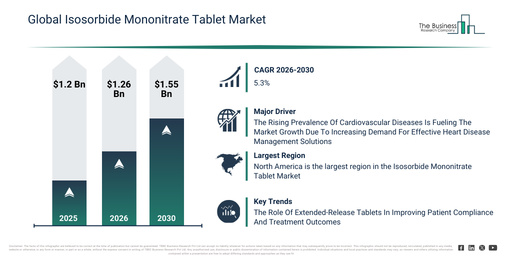
    Fueled by an increasing incidence of coronary artery disease, the prolonged therapeutic application of nitrates for managing angina, a growing elderly demographic, the accessibility of affordable generic medications, and the broadening network of hospital and retail pharmacy facilities, the market for isosorbide mononitrate tablets has experienced robust expansion. This market is projected to expand from its current valuation of $1.2 billion in 2025 to $1.26 billion in 2026, demonstrating a compound annual growth rate (CAGR) of 5.3% during this period.

    The market for isosorbide mononitrate tablets is poised for substantial expansion in the upcoming years, projected to reach a value of $1.55 billion by 2030, driven by a compound annual growth rate of 5.3%. This anticipated growth throughout the forecast period is underpinned by several key factors, including the escalating prevalence of chronic cardiovascular diseases, a growing consumer preference for extended-release tablet options, the increasing utilization of online pharmacies, enhanced diagnostic capabilities for angina and heart failure, and the broadening availability of cardiovascular treatments in developing economies. Furthermore, significant trends expected to shape this market include the development of long-acting therapies for cardiovascular maintenance, a heightened demand for extended-release drug formulations, a greater uptake of generic nitrate medications, enhanced patient compliance facilitated by once-daily dosing regimens, and an expanded reach through both online and traditional retail pharmacy channels.

    Download A Free Sample Report For Comprehensive Market Insights:

    https://www.thebusinessresearchcompany.com/sample.aspx?id=24268&type=smp

    Isosorbide Mononitrate Tablet Market Demand Drivers Creating New Revenue Opportunities

    The increasing incidence of heart and blood vessel conditions is anticipated to stimulate the expansion of the isosorbide mononitrate tablet sector moving ahead. These circulatory system ailments encompass issues like narrowed arteries, weakened cardiac function, and elevated blood pressure. Such a surge in cardiovascular ailments is largely linked to dietary habits characterized by excessive saturated fats, trans fats, sodium, and added sugars, contributing to weight gain, hypertension, and high cholesterol. Isosorbide mononitrate tablets aid in managing these conditions by dilating and relaxing the vessels, subsequently enhancing blood flow and decreasing the heart’s effort, thereby easing angina, reducing blood pressure, and boosting oxygen supply to the cardiac muscle. For context, global mortality from cardiovascular diseases reached 19.2 million in 2023, as noted in a September 2025 report from the American College of Cardiology, a prominent US cardiology organization. Consequently, the growing burden of cardiovascular diseases is a key factor propelling the isosorbide mononitrate tablet market.

    The proliferation of e-pharmacies is projected to be a significant catalyst for the expansion of the isosorbide mononitrate tablet market in the foreseeable future. E-pharmacies represent digital avenues where individuals can procure medications, both prescription and non-prescription, via the internet. This upward trend in online drugstores is predominantly driven by consumers’ escalating desire for ease of access, lower costs, and greater availability of medicines and health-related goods, eliminating the necessity of visiting brick-and-mortar establishments. These digital platforms enhance the accessibility of isosorbide mononitrate tablets through services like direct-to-home delivery, competitive pricing strategies, and improved stock levels, particularly beneficial for individuals managing long-term health issues. For illustration, data from May 2024, shared by the World Health Organization, indicated that digital requests for prescription renewals via the UK’s NHS App saw a substantial rise of over 45% in 2023, averaging 3.1 million requests monthly. Accordingly, the increasing presence and adoption of e-pharmacies are fostering growth in the isosorbide mononitrate tablet market.

    Isosorbide Mononitrate Tablet Market Segmentation: How Is The Market Structured Across Key Categories?

    The isosorbide mononitrate tablet market covered in this report is segmented –

    1) By Dosage Form: Immediate-Release Tablets, Extended-Release Tablets

    2) By Indication Type: Angina Pectoris, Coronary Artery Disease (CAD)

    3) By Distribution Channel: Hospital Pharmacies, Retail Pharmacies, Online Pharmacies

    Subsegments:

    1) By Immediate-Release Tablets: Low-Dose, Single Strength Tablets

    2) By Extended-Release Tablets: Moderate-Dose, High-Dose, Once-Daily Formulation, Twice-Daily Formulation

    Isosorbide Mononitrate Tablet Market Trends Driving Strategic Industry Expansion

    Pharmaceutical giants in the isosorbide mononitrate tablet arena are concentrating their efforts on pioneering novel offerings, like extended-release (ER) versions, aimed at improving how patients adhere to their treatment, ensuring enduring medicinal benefits, and refining therapeutic results for ailments such as angina pectoris. This sophisticated extended-release delivery mechanism facilitates a slow, sustained dispersal of the drug over a prolonged duration, thereby decreasing the need for frequent administration and preserving stable concentrations within the bloodstream. Illustrating this trend, Zydus Lifesciences Limited, a pharmaceutical producer headquartered in India, secured authorization in February 2024 from the U.S. Food and Drug Administration (USFDA) to commence the production and sale of isosorbide mononitrate extended-release tablets USP in 30 mg, 60 mg, and 120 mg dosages. These tablets serve the crucial purpose of averting chest pain episodes, commonly known as angina, in individuals diagnosed with coronary artery disease, and are bioequivalent to the benchmark Imdur extended-release tablets.

    Isosorbide Mononitrate Tablet Market Competitive Landscape And Leading Companies

    Major companies operating in the isosorbide mononitrate tablet market are Pfizer Inc., Merck & Co., Inc., AstraZeneca plc, Abbott Laboratories, Teva Pharmaceutical Industries Ltd., Sun Pharmaceutical Industries Ltd., Aurobindo Pharma Ltd., Cipla Ltd., Zydus Lifesciences Limited, Torrent Pharmaceuticals Ltd., Micro Labs Ltd., Lupin Limited, Dr. Reddy’s Laboratories Ltd., Glenmark Pharmaceuticals Ltd., Alkem Laboratories Ltd., Mylan N.V., Hikma Pharmaceuticals PLC, Sandoz International GmbH, Qilu Pharmaceutical Co., Ltd., Lunan Pharmaceutical Group, Shandong Keyuan Pharmaceutical Co., Ltd.

    Access The Complete Isosorbide Mononitrate Tablet Market Report:

    https://www.thebusinessresearchcompany.com/report/isosorbide-mononitrate-tablet-global-market-report

    Isosorbide Mononitrate Tablet Market Largest Region: Which Geography Holds The Highest Market Share?

    North Americawas the largest region in the isosorbide mononitrate tablet market in 2025. Asia-Pacificis expected to be the fastest-growing region in the forecast period. The regions covered in the isosorbide mononitrate tablet market report are Asia-Pacific, South East Asia, Western Europe, Eastern Europe, North America, South America, Middle East, Africa.

    Get in touch with us:

    The Business Research Company: https://www.thebusinessresearchcompany.com/

    Americas: +1 310-496-7795

    Asia: +44 7882 955267 & +91 8897263534

    Europe: +44 7882 955267

    Email us at: marketing@tbrc.info

    Follow us on:

    LinkedIn: https://in.linkedin.com/company/the-business-research-company

    YouTube: https://www.youtube.com/channel/UC24_fI0rV8cR5DxlCpgmyFQ

    Global Market Model: https://www.thebusinessresearchcompany.com/global-market-model

  • Ischemia Reperfusion Injury Market Growth Is Accelerating As Industry Transformation Continues

    Ischemia Reperfusion Injury Market Growth Is Accelerating As Industry Transformation Continues

    Delivering more actionable and strategically valuable research, The Business Research Company’s 2026 market reports feature market attractiveness analysis, total addressable market evaluation, company benchmarking matrices, interactive Excel dashboards, expanded supply chain intelligence, emerging startup coverage, and detailed product insights.

    Ischemia Reperfusion Injury Market Expansion From $1.79 Billion In 2026 To $2.38 Billion In 2030

    In the realm of ischemia reperfusion injury, the market has demonstrated robust expansion recently. Projections indicate a rise from $1.67 billion in 2025 to $1.79 billion in 2026, reflecting a compound annual growth rate (CAGR) of 7.5%. Factors contributing to this historical market expansion include the escalating rates of cardiovascular ailments, a greater volume of organ transplantation surgeries, the increasing frequency of stroke and heart attack occurrences, enhancements in emergency medical services infrastructure, and a broader adoption of medicinal treatments.

    The market for ischemia reperfusion injury is projected to experience considerable expansion over the coming years, with an anticipated rise to $2.38 billion by 2030, reflecting a compound annual growth rate of 7.4%. This projected expansion in the upcoming period is fueled by advancements in stem cell and gene therapy research, an increased utilization of non-pharmacological conditioning treatments, greater financial commitment to critical care technologies, a broader range of clinical trials investigating mitochondrial protective agents, and enhanced understanding of ischemia-reperfusion mechanisms. Key developments expected during this forecast period involve the application of AI to predict the consequences of ischemia reperfusion injury, the advent of personalized therapies focused on cellular and mitochondrial protection, the integration of data-driven systems for clinical decision support, real-time monitoring of tissue perfusion and oxygenation, and sophisticated methods for producing targeted therapies.

    Download A Free Sample Report For Comprehensive Market Insights:

    https://www.thebusinessresearchcompany.com/sample.aspx?id=22025&type=smp

    Ischemia Reperfusion Injury Market Expansion Supported By Key Demand Factors

    The escalating number of organ transplantations is anticipated to drive the expansion of the ischemia-reperfusion injury market. This surgical procedure involves substituting a diseased or non-functional organ with a healthy one from a donor. The surge in organ transplants is attributable to progress in medical technology and a growing population experiencing organ failure. Enhanced surgical methods, sophisticated immunosuppressive treatments, and improved organ preservation techniques have markedly boosted the success rates of these transplants. Organ transplantation effectively addresses ischemia-reperfusion injury by utilizing cutting-edge preservation methods to limit damage during the ischemic phase, thereby optimizing the transplanted organ’s viability and function post-reperfusion. Illustratively, data from the Organ Procurement and Transplantation Network indicated that in 2023, a total of 46,632 organ transplants were performed from both living and deceased donors in the United States, an 8.7 percent increase from 2022, with deceased donor transplants accounting for 39,679, an 8.9 percent rise from the prior year. Consequently, the increasing prevalence of organ transplantation is a key factor fueling the growth of the ischemia-reperfusion injury market.

    Ischemia Reperfusion Injury Market Segmentation Trends And Revenue Drivers

    The ischemia reperfusion injury market covered in this report is segmented –

    1) By Treatment Type: Pharmacological Therapy, Non-pharmacological Therapy

    2) By Application: Cardiovascular Diseases, Stroke, Organ Transplantation, Heart Attack

    3) By End User: Hospitals, Clinics, Ambulatory Services

    Subsegments:

    1) By Pharmacological Therapy: Antioxidants, Anti-inflammatory Agents, Calcium Channel Blockers, Free Radical Scavengers, Nitric Oxide Donors, Mitochondrial Protective Agents

    2) By Non-Pharmacological Therapy: Ischemic Preconditioning (IPC), Ischemic Postconditioning (IPO), Remote Ischemic Conditioning (RIC), Hypothermia Therapy, Mechanical Interventions

    Ischemia Reperfusion Injury Market Growth Trends Influencing Competitive Dynamics

    Key players within the ischemia-reperfusion injury market are concentrating their efforts on novel treatments, specifically dual-acting therapies for stroke, with the goal of accelerating patient healing, minimizing long-term impairments, and boosting overall treatment success. These sophisticated dual-acting neuroprotective agents are essentially small-molecule compounds engineered to simultaneously moderate specific NMDA receptors and neutralize harmful antioxidant free radicals, thereby offering benefits like diminished neuronal harm following reperfusion, increased survival of tissue after blockages are removed, and improved regaining of function. A notable example occurred in July of 2025 when GNT Pharma, a South Korean biopharmaceutical firm, secured approval to commence global Phase 3 clinical studies for Nelonemdaz. This innovative dual-action neuroprotective drug is specifically developed to lessen nerve damage in individuals undergoing endovascular thrombectomy for acute ischemic stroke, functioning through the precise blocking of excitotoxicity driven by NMDA receptors and robust free-radical scavenging to counteract cellular damage from oxidation, ultimately enhancing nerve protection, functional recovery, and outcomes after reperfusion in stroke patients.

    Ischemia Reperfusion Injury Market Industry Leaders: Which Organizations Are Driving Competition?

    Major companies operating in the ischemia reperfusion injury market are Pfizer Inc, Novartis AG, AstraZeneca PLC, Bristol Myers Squibb, F. Hoffmann-La Roche Ltd, Sanofi, Merck KGaA, Takeda Pharmaceutical Company, Bayer AG, Amgen Inc, Otsuka Pharmaceutical Co Ltd, Simcere Innovation Inc, Faron Pharmaceuticals Oy, Faraday Pharmaceuticals Inc, Prolong Pharmaceuticals LLC, Angion Biomedica Corp, CalciMedica Inc, Athersys Inc, Oxitope Pharma BV, LUCA Science Inc

    Access The Complete Ischemia Reperfusion Injury Market Report:

    https://www.thebusinessresearchcompany.com/report/ischemia-reperfusion-injury-global-market-report

    Ischemia Reperfusion Injury Market Regional Analysis: Which Region Leads By Revenue?

    North Americawas the largest region in the ischemia reperfusion injury market in 2025. Asia-Pacificis expected to be the fastest-growing region in the forecast period. The regions covered in the ischemia reperfusion injury market report are Asia-Pacific, South East Asia, Western Europe, Eastern Europe, North America, South America, Middle East, Africa.

    Get in touch with us:

    The Business Research Company: https://www.thebusinessresearchcompany.com/

    Americas: +1 310-496-7795

    Asia: +44 7882 955267 & +91 8897263534

    Europe: +44 7882 955267

    Email us at: marketing@tbrc.info

    Follow us on:

    LinkedIn: https://in.linkedin.com/company/the-business-research-company

    YouTube: https://www.youtube.com/channel/UC24_fI0rV8cR5DxlCpgmyFQ

    Global Market Model: https://www.thebusinessresearchcompany.com/global-market-model
  • Irritable Bowel Syndrome (IBS) Treatment Market Outlook Highlights The Next Major Growth Opportunities

    Irritable Bowel Syndrome (IBS) Treatment Market Outlook Highlights The Next Major Growth Opportunities

    Enhanced with market attractiveness analysis, total addressable market evaluation, company benchmarking matrices, interactive Excel dashboards, expanded supply chain intelligence, emerging startup coverage, and detailed product insights, The Business Research Company’s 2026 market reports deliver more actionable and strategically valuable research.

    Irritable Bowel Syndrome (IBS) Treatment Market Forecast Highlighting Growth From $7.97 Billion To $10.64 Billion

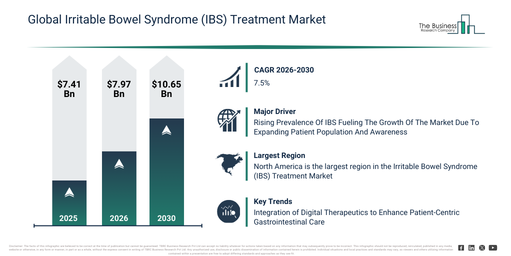
    The market for irritable bowel syndrome (IBS) treatments has experienced robust expansion recently, with projections indicating a continued upward trend. This market is expected to increase from $7.41 billion in 2025 to $7.97 billion in 2026, fueled by a compound annual growth rate (CAGR) of 7.6%. Factors contributing to this historical growth include a surge in gastrointestinal disorder occurrences, heightened diagnosis rates for IBS, escalating public consciousness regarding digestive wellness, the broader accessibility of prescription medications for IBS, and the expansion of both hospital-based and retail pharmacy infrastructures.

    The market for irritable bowel syndrome (IBS) treatments is poised for substantial expansion in the coming years. Projections indicate a market valuation of $10.65 billion by 2030, driven by a compound annual growth rate (CAGR) of 7.5%. This anticipated growth throughout the forecast period is underpinned by several key factors, including progress in personalized medicine, the escalating use of digital health solutions, an increased reliance on online pharmacies, a heightened emphasis on research into the human microbiome, and a greater allocation of healthcare spending towards managing chronic ailments. Significant trends anticipated during this timeframe encompass the rise of precision medicine and therapies targeting the microbiome, the integration of digital therapeutics and mobile health applications, the utilization of artificial intelligence for optimizing IBS diagnosis and treatment, the implementation of remote patient monitoring alongside innovative gut health monitoring devices, and a shift towards developing drugs that are both sustainable and centered around the patient’s needs.

    Download A Free Sample Report For Comprehensive Market Insights:

    https://www.thebusinessresearchcompany.com/sample.aspx?id=11978&type=smp

    Irritable Bowel Syndrome (IBS) Treatment Market Growth Drivers And Industry Catalysts

    The escalating incidence of Irritable Bowel Syndrome is anticipated to be a significant driver for the expansion of the IBS treatment market. IBS, a long-term condition affecting the large intestine, manifests through symptoms like abdominal discomfort, bloating, and changes in bowel habits, thereby diminishing an individual’s overall well-being. Factors such as contemporary lifestyle choices, encompassing inadequate dietary habits, elevated stress levels, and exposure to environmental irritants, are contributing to a greater number of people developing this condition. To address patient requirements, the IBS treatment market offers a dual approach consisting of pharmaceutical treatments, including antispasmodics and medications specifically targeting the gut, alongside non-drug interventions such as cognitive behavioral therapy, hypnotherapy, and dietary modifications. This growing need is underscored by data, for example, from the IBD Registry in the UK, which reported over 5,300 individuals with Inflammatory Bowel Disease by 2023, representing a substantial increase from the previous year. Consequently, the increasing prevalence of IBS is directly fueling the growth of its corresponding treatment market.

    Irritable Bowel Syndrome (IBS) Treatment Market Segment Analysis Highlighting Growth Areas

    The irritable bowel syndrome (ibs) treatment market covered in this report is segmented –

    1) By Drug Type: Eluxadoline, Alosetron, Other Drugs

    2) By Indication: IBS With Constipation, IBS With Diarrhea, IBS With Alternating Constipation And Diarrhea

    3) By Distribution Channel: Hospital Pharmacies, Online Pharmacies, Retail Pharmacies

    4) By End-Users: Hospitals, Clinics, Homecare Settings

    Subsegments:

    1) By Eluxadoline: IBS with Diarrhea (IBS-D) Treatment, Moderate IBS-D Treatment

    2) By Alosetron: Severe IBS-D Treatment for Women, Refractory IBS-D Treatment

    3) By Other Drugs: Prucalopride, Tenapanor, Plecanatide

    #Irritable Bowel Syndrome (IBS) Treatment Market Trends Influencing Long-Term Demand

    Key players within the irritable bowel syndrome (IBS) treatment sector are prioritizing the integration of digital health solutions, specifically mobile applications grounded in gut-directed hypnotherapy, to bolster patient interaction, ease of access to care, and effective symptom control. These digital therapeutic tools function as prescribed mobile platforms delivering structured hypnotherapy sessions via smartphones with the aim of influencing the gut-brain connection, thereby facilitating features like guided behavioral interventions, immediate symptom logging, and automated oversight of patient progress. To illustrate, in May 2023, the Canadian digital health firm Launchit DTx introduced Regulora. This digital therapeutic, utilizing gut-directed hypnotherapy, was developed to assist adults in managing the abdominal discomfort linked to IBS, incorporating hypnotherapy content supported by scientific research, prescribing processes facilitated for healthcare providers, and a mobile application that monitors patient outcomes throughout their treatment journey. By providing a non-medicinal and digitally dispensed therapeutic alternative, Regulora enhances both the availability of treatment options and the capacity for self-management, ultimately contributing to more comprehensive symptom alleviation for individuals with IBS.

    Irritable Bowel Syndrome (IBS) Treatment Market Leading Companies: Who Holds Significant Market Presence?

    Major companies operating in the irritable bowel syndrome (ibs) treatment market are Ironwood Pharmaceuticals Inc., AbbVie Inc., Takeda Pharmaceutical Company Limited, Pfizer Inc., Johnson & Johnson Services Inc., AstraZeneca plc, Novartis AG, Abbott Laboratories, Eli Lilly and Company, Astellas Pharma Inc., Bausch Health Companies Inc., Sebela Pharmaceuticals Inc., Prometheus Laboratories Inc., RedHill Biopharma Ltd., Ardelyx Inc., Renexxion Ireland Ltd., 4D Pharma plc, Biora Therapeutics Inc., Salix Pharmaceuticals Ltd., Allergan plc, Synergy Pharmaceuticals Inc.

    Access The Complete Irritable Bowel Syndrome (IBS) Treatment Market Report:

    https://www.thebusinessresearchcompany.com/report/irritable-bowel-syndrome-ibs-treatment-global-market-report

    Irritable Bowel Syndrome (IBS) Treatment Market Geographic Distribution And Regional Opportunities

    North America was the largest region in the irritable bowel syndrome (IBS) treatment market in 2025. Europe is expected to be the fastest-growing region in the forecast period. The regions covered in the irritable bowel syndrome (ibs) treatment market report are Asia-Pacific, South East Asia, Western Europe, Eastern Europe, North America, South America, Middle East, Africa.

    Get in touch with us:

    The Business Research Company: https://www.thebusinessresearchcompany.com/

    Americas: +1 310-496-7795

    Asia: +44 7882 955267 & +91 8897263534

    Europe: +44 7882 955267

    Email us at: marketing@tbrc.info

    Follow us on:

    LinkedIn: https://in.linkedin.com/company/the-business-research-company

    YouTube: https://www.youtube.com/channel/UC24_fI0rV8cR5DxlCpgmyFQ

    Global Market Model: https://www.thebusinessresearchcompany.com/global-market-model