Month: June 2026

  • Dendritic Cell Cancer Vaccine Market Expected To Reach $4.19 Billion By 2030 As Growth Accelerates At 8.9% CAGR

    Dendritic Cell Cancer Vaccine Market Expected To Reach $4.19 Billion By 2030 As Growth Accelerates At 8.9% CAGR

    Enhanced with market attractiveness analysis, total addressable market evaluation, company benchmarking matrices, interactive Excel dashboards, expanded supply chain intelligence, emerging startup coverage, and detailed product insights, The Business Research Company’s 2026 market reports deliver more actionable and strategically valuable research.

    Dendritic Cell Cancer Vaccine Market Expansion Outlook: What Revenue Opportunities Lie Ahead?

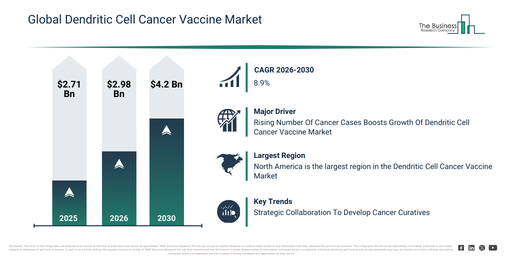
    The market for dendritic cell cancer vaccines has experienced swift expansion recently. Projections indicate a rise from $2.71 billion in 2025 to $2.98 billion in 2026, reflecting a compound annual growth rate of 10.1%. Factors contributing to this historical expansion include the shortcomings of traditional cancer treatments, the initial positive outcomes observed with sipuleucel-t, persistent unmet medical needs in patients with metastatic cancers, increased investment in immuno-oncology research, and the increasing utilization of hospital-based vaccine administration protocols.

    The market for dendritic cell cancer vaccines is projected to experience significant expansion over the coming years, reaching an estimated $4.2 billion by 2030 with a compound annual growth rate of 8.9%. This anticipated growth during the forecast period is underpinned by several key factors, including progress in cell therapy production, the widening scope of precision oncology, enhanced regulatory backing, a higher prevalence of cancer diagnoses, and increased financial commitment to immunotherapy research and development. Furthermore, significant trends expected to shape this market include a greater emphasis on customized cancer vaccines, an broader inclusion of solid tumors in clinical trials, a heightened concentration on bolstering the immune system’s response, a more widespread utilization of combined immunotherapy approaches, and ongoing developments in technologies for processing cells.

    Download A Free Sample Report For Comprehensive Market Insights:

    https://www.thebusinessresearchcompany.com/sample.aspx?id=16031&type=smp

    Dendritic Cell Cancer Vaccine Market Growth Drivers: What Factors Are Accelerating Expansion?

    The increasing incidence of cancer is anticipated to be a primary driver for the expansion of the dendritic cell cancer vaccine market in the coming years. Cancer, defined by the aberrant proliferation and dissemination of abnormal cells within the organism, frequently results in tumor development and the impairment of regular physiological processes. Lifestyles, environmental factors, and inherited predispositions all contribute to the overall cancer burden. Dendritic cell cancer vaccines function by activating the body’s natural defenses to identify and combat malignant cells, thereby offering the potential for enhanced patient results in cancer therapy. Specifically, as reported by the World Health Organization, a US-based intergovernmental body, in February 2024, an estimated 35 million new cancer diagnoses are projected for the year 2050, representing a substantial 77% surge compared to the approximately 20 million cases identified in 2022. Consequently, this upward trend in cancer occurrences is directly fueling the growth trajectory of the dendritic cell cancer vaccine market.

    Dendritic Cell Cancer Vaccine Market Segmentation Trends And Revenue Drivers

    The dendritic cell cancer vaccine market covered in this report is segmented –

    1) By Product: CreaVax, Sipuleucel-T (Provenge), Other Products

    2) By Distribution Channel: Hospitals, Cancer Centers, Ambulatory Surgical Centers, Clinics

    3) By Application: Pediatrics, Adults

    4) By End User: Oncology, Research Institutions, Biopharmaceutical Companies

    Subsegments:

    1) By Creavax: Creavax In Clinical Trials, Creavax Commercialization

    2) By Sipuleucel-T (Provenge): Sipuleucel-T In Prostate Cancer, Sipuleucel-T Market Share, Sipuleucel-T Regulatory Approvals

    3) By Other Products: Dcvax, Oncovax, GVAX

    Dendritic Cell Cancer Vaccine Market Trends: What Is Shaping Future Industry Growth?

    Leading players within the dendritic cell cancer vaccine sector are prioritizing the establishment of strategic alliances to pioneer treatments for cancer, ultimately aiming to enhance patient outcomes. These alliances, essentially formalized partnerships designed for mutual advantage, are geared towards specific business goals. Illustratively, in May of 2023, a partnership was formed between the Walter and Eliza Hall Institute of Medical Research, located in Australia, and the Peter MacCallum Cancer Centre, also an Australian entity specializing in oncology research. This collaborative effort secured more than $900,000 from the MRFF to advance the development of a cancer vaccine for individuals with limited treatment options. The core objective of this initiative is to refine dendritic cell immunotherapies, a promising avenue for cancer treatment that involves augmenting the patient’s own cells for a more effective anti-cancer response. The current research builds upon a foundational discovery from the WEHI made three decades ago, potentially paving the way for the first human clinical trials in cancer patients.

    #Dendritic Cell Cancer Vaccine Market Industry Leaders: Which Organizations Are Driving Competition?

    Major companies operating in the dendritic cell cancer vaccine market are Dendreon Pharmaceuticals LLC, Cognate BioServices Inc., Batavia Biosciences, Medigene AG, Zelluna Immunotherapy AS, Northwest Biotherapeutics, PDC*line Pharma SA, ImmunityBio Inc., Celldex Therapeutics Inc., Argos Therapeutics Inc., DCPrime, NuGenerex Immuno-Oncology, ImmunoCellular Therapeutics Ltd., Immunicum AB, 3M Company, Activartis Biotech GmbH, DanDrit Biotech, Kiromic BioPharma Inc., GlaxoSmithKline plc, SOTIO, Vaxil BioTherapeutics

    Access The Complete Dendritic Cell Cancer Vaccine Market Report:

    https://www.thebusinessresearchcompany.com/report/dendritic-cell-cancer-vaccine-global-market-report

    Dendritic Cell Cancer Vaccine Market Largest Region By Revenue And Market Share

    North Americawas the largest region in the dendritic cell cancer vaccine market in 2025. The regions covered in the dendritic cell cancer vaccine market report are Asia-Pacific, South East Asia, Western Europe, Eastern Europe, North America, South America, Middle East, Africa.

    Get in touch with us:

    The Business Research Company: https://www.thebusinessresearchcompany.com/

    Americas: +1 310-496-7795

    Asia: +44 7882 955267 & +91 8897263534

    Europe: +44 7882 955267

    Email us at: marketing@tbrc.info

    Follow us on:

    LinkedIn: https://in.linkedin.com/company/the-business-research-company

    YouTube: https://www.youtube.com/channel/UC24_fI0rV8cR5DxlCpgmyFQ

    Global Market Model: https://www.thebusinessresearchcompany.com/global-market-model
  • Demulcent Eye Drops Market Set To Grow From $2.15 Billion In 2026 To $2.86 Billion By 2030 At A CAGR Of 7.3%

    Demulcent Eye Drops Market Set To Grow From $2.15 Billion In 2026 To $2.86 Billion By 2030 At A CAGR Of 7.3%

    Through market attractiveness analysis, total addressable market evaluation, company benchmarking matrices, interactive Excel dashboards, expanded supply chain intelligence, emerging startup coverage, and detailed product insights, The Business Research Company’s 2026 market reports provide more actionable and strategically valuable research.

    Demulcent Eye Drops Market Growth Potential: How Will Market Size Change Through 2030?

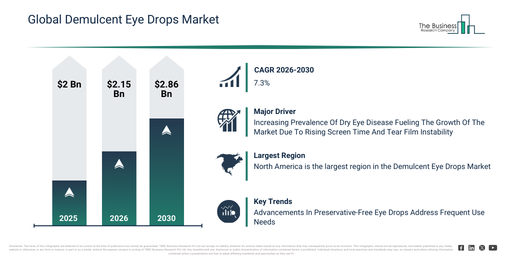
    The market for soothing eye drops has experienced robust expansion recently. Projections indicate a Compound Annual Growth Rate (CAGR) of 7.7%, with the market value expected to increase from $2 billion in 2025 to $2.15 billion by 2026. Factors contributing to this upward trend during the past period include the escalating incidence of dry eye syndrome, augmented exposure to digital screens, a swelling elderly demographic, the proliferation of readily available eye care solutions, and enhanced accessibility to treatments for eye conditions.

    The market for demulcent eye drops is poised for substantial expansion over the coming years, with projections indicating a rise to $2.86 billion by 2030, driven by a compound annual growth rate (CAGR) of 7.3%. This forecasted expansion is underpinned by several key factors, including heightened public awareness concerning ocular surface disorders, a burgeoning demand for sophisticated lubricating solutions, the amplified accessibility offered by online pharmaceutical channels, an increasing emphasis on preservative-free eye care options, and a greater utilization trend among individuals who wear contact lenses. Furthermore, significant market developments anticipated during this forecast period encompass the escalating acceptance of preservative-free formulations, a surge in the need for prolonged lubrication, a growing inclination towards single-dose packaging, the proliferation of combination therapies involving demulcents, and a heightened concentration on enhancing patient comfort and adherence to treatment regimens.

    Download A Free Sample Report For Comprehensive Market Insights:

    https://www.thebusinessresearchcompany.com/sample.aspx?id=24517&type=smp

    Demulcent Eye Drops Market Growth Factors Supporting Long-Term Expansion

    The expanding incidence of dry eye syndrome is anticipated to foster advancement within the demulcent eye drops sector. Dry eye syndrome describes a condition characterized by inadequate or substandard tear production, resulting in discomfort, visual impairments, and the possibility of harm to the ocular surface. This heightened occurrence is largely attributed to increased screen usage, which consequently diminishes blink rate and tear film stability, thereby causing ocular dryness and irritation. Demulcent eye drops function by establishing a protective film over the eye’s surface, thereby mitigating irritation and moisture loss while offering gentle alleviation to preserve ocular comfort. As an illustration, data from Eyes On Eyecare, a United States media entity, indicated in February 2024 that dry eye represented the principal clinical concern for 43.39% of practices in 2024, a notable rise of 16.54% from the preceding year. Consequently, the escalating prevalence of dry eye syndrome is serving as a catalyst for the growth observed in the demulcent eye drops market.

    Demulcent Eye Drops Market Segment Analysis Highlighting Growth Areas

    The demulcent eye drops market covered in this report is segmented –

    1) By Product Type: Artificial Tears, Lubricating Eye Drops, Allergy Eye Drops, Other Product Types

    2) By Formulation Type: Preserved Eye Drops, Preservatives-Free Eye Drops, Multidose Eye Drops, Single-Dose Eye Drops, Other Formulation Types

    3) By Application: Dry Eye Syndrome, Allergies, Eye Infections, Other Applications

    4) By Distribution channel: Retail Pharmacies, Online Pharmacies, Hospitals And Clinics

    5) By End User: Individuals With Dry Eye Syndrome, Post-Surgical Patients, Contact Lense Wearers, Individuals With Allergies, Other End Users

    Subsegments:

    1) By Artificial Tears: Cellulose Derivatives, Polyethylene Glycol-Based Formulations, Propylene Glycol-Based Formulations

    2) By Lubricating Eye Drops: Glycerin-Based Lubricants, Mineral Oil-Based Drops, Hyaluronic Acid-Based Lubricants

    3) By Allergy Eye Drops: Antihistamine-Dased Demulcents, Mast Cell Stabilizer Combinations

    4) By Other Product Types: Preservative-Free Demulcents, Combination Therapies

    Demulcent Eye Drops Market Industry Trends Shaping Future Revenue Growth

    Key players within the demulcent eye drops industry are prioritizing the creation of novel offerings, notably preservative-free options, in an effort to serve individuals experiencing eye sensitivity and mitigate potential irritations. These preservative-free artificial tears, devoid of chemical additives, are particularly well-suited for those with delicate eyes or who require regular application. As an illustration, in September 2023, Alcon Inc., a prominent pharmaceutical and medical device firm headquartered in Switzerland, introduced its Systane Hydration multi-dose preservative-free (MDPF) lubricant eye drops. This particular product incorporates HydroBoost Technology, a blend of sodium hyaluronate and HP-Guar, engineered to provide superior moisture and safeguarding. The preservative-free composition is housed within a multi-dose container featuring PureFlow technology, thereby maintaining sterility without the need for preservatives. It is formulated for consistent application, aiming to offer sustained relief from dry, bothered eyes, and is also deemed safe for wear with soft contact lenses.

    Demulcent Eye Drops Market Leading Companies: Who Holds Significant Market Presence?

    Major companies operating in the demulcent eye drops market are Pfizer Inc., AbbVie Inc., Abbott Laboratories, Novartis AG, Sun Pharmaceutical Industries Limited, Bausch + Lomb, Cipla Ltd, Santen Pharmaceutical Co. Ltd, Rohto Pharmaceutical Co. Ltd., Prestige Consumer Healthcare Inc., FDC Limited, AFT Pharmaceuticals, Sentiss Pharma Pvt. Ltd., VISUfarma B.V, URSAPHARM GmbH, Thea Pharmaceuticals, OASIS Medical Inc, Entod Pharmaceuticals Ltd., Scope Ophthalmics Ltd.

    Access The Complete Demulcent Eye Drops Market Report:

    https://www.thebusinessresearchcompany.com/report/demulcent-eye-drops-global-market-report

    Demulcent Eye Drops Market Regional Analysis And Leading Geography

    North Americawas the largest region in the demulcent eye drops market in 2025. Asia-Pacificis expected to be the fastest-growing region in the forecast period. The regions covered in the demulcent eye drops market report are Asia-Pacific, South East Asia, Western Europe, Eastern Europe, North America, South America, Middle East, Africa.

    Get in touch with us:

    The Business Research Company: https://www.thebusinessresearchcompany.com/

    Americas: +1 310-496-7795

    Asia: +44 7882 955267 & +91 8897263534

    Europe: +44 7882 955267

    Email us at: marketing@tbrc.info

    Follow us on:

    LinkedIn: https://in.linkedin.com/company/the-business-research-company

    YouTube: https://www.youtube.com/channel/UC24_fI0rV8cR5DxlCpgmyFQ

    Global Market Model: https://www.thebusinessresearchcompany.com/global-market-model
  • De-Identified Health Data Market Opportunities Are Emerging Beyond Traditional Growth Areas

    De-Identified Health Data Market Opportunities Are Emerging Beyond Traditional Growth Areas

    Delivering more actionable and strategically valuable research, The Business Research Company’s 2026 market reports feature market attractiveness analysis, total addressable market evaluation, company benchmarking matrices, interactive Excel dashboards, expanded supply chain intelligence, emerging startup coverage, and detailed product insights.

    De-Identified Health Data Market Value Analysis: What Growth Is Expected Over The Forecast Period?

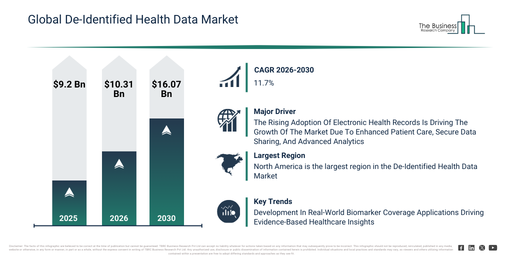
    The de-identified health data market has experienced substantial expansion recently, with projections indicating continued growth from $9.2 billion in 2025 to $10.31 billion in 2026, reflecting a compound annual growth rate of 12.1%. This upward trajectory during the historical period is largely driven by several key factors including a heightened embrace of electronic health records, an escalating need for population health analytics, the broadening scope of clinical research databases, a heightened emphasis on adhering to patient privacy regulations, and a greater availability of organized healthcare data.

    The market for de-identified health data is poised for substantial expansion, projecting a reach of $16.07 billion by 2030, reflecting an 11.7% compound annual growth rate. This upward trajectory is fueled by several key factors, including the increasing utilization of artificial intelligence for health insights, augmented investments in precision medicine research, the broadening application of value-based care analytics, a heightened need for secure health data exchange mechanisms, and a greater reliance on real-world evidence in regulatory processes. During this forecast period, prominent trends include the development of extensive de-identified data platforms, a surge in real-world evidence analytics, greater demand for data sharing models that prioritize privacy, enhanced adoption of longitudinal patient data analysis, and the integration of healthcare datasets from diverse sources.

    Download A Free Sample Report For Comprehensive Market Insights:

    https://www.thebusinessresearchcompany.com/sample.aspx?id=28191&type=smp

    #De-Identified Health Data Market Demand Drivers Creating New Revenue Opportunities

    The expansion of the de-identified health data market is poised for acceleration, primarily fueled by the widespread integration of electronic health records (EHRs). These digital repositories, essentially comprehensive digital chronicles of a patient’s medical journey encompassing diagnoses, treatments, prescriptions, laboratory findings, and other vital health details, are designed for secure storage and dissemination among authorized medical practitioners. The escalating utilization of EHRs stems from their demonstrated capacity to elevate the quality and security of patient care by providing immediate access to thorough medical histories. De-identified health data, by facilitating secure information exchange and sophisticated analytical capabilities without compromising patient confidentiality, further augments EHR systems. This, in turn, contributes to more informed clinical judgments and superior health system results. As an illustration, data from the U.S. National Institutes of Health’s National Center for Biotechnology Information, published in 2024, indicated that by August 2025, a significant majority of hospitals had implemented patient engagement tools allowing individuals to electronically view (99%), download (96%), and transfer their health information (84%) to external entities. Consequently, the growing prevalence of EHR implementation is a key driver for the de-identified health data market’s growth.

    De-Identified Health Data Market Segment Performance And Strategic Opportunities

    The de-identified health data market covered in this report is segmented –

    1) By Type: Clinical Data, Genomic Data, Patient Demographics, Prescription Data, Hospital And Provider Data, Pharmacogenomic Data

    2) By Application: Clinical Research And Trials, Public Health, Precision Medicine, Health Economics And Outcomes Research (HEOR), Population Health Management, Drug Discovery And Development, Healthcare Quality Improvement, Insurance Underwriting And Risk Assessment, Other Applications

    3) By End-User: Pharmaceutical Companies, Biotechnology Firms, Healthcare Providers, Insurance Companies Or Healthcare Payers, Research Institutions, Government Agencies, Other End-Users

    Subsegments:

    1) By Clinical Data: Electronic Health Records, Medical Imaging Data, Laboratory Test Results, Surgical Reports, Pathology Reports, Vital Signs Measurements

    2) By Genomic Data: Whole Genome Sequencing Data, Exome Sequencing Data, Single Nucleotide Polymorphism Data, Gene Expression Profiles, Epigenetic Data

    3) By Patient Demographics: Age Information, Gender Information, Ethnicity Information, Geographic Location, Socioeconomic Status, Marital Status

    4) By Prescription Data: Medication Orders, Dosage Information, Prescription Refill History, Drug Allergies, Pharmacy Dispensation Records

    5) By Hospital And Provider Data: Provider Performance Metrics, Care Delivery Outcomes, Billing And Claims Data, Resource Utilization Data

    6) By Pharmacogenomic Data: Gene–Drug Interaction Data, Adverse Drug Reaction Data, Personalized Therapy Response Data, Drug Efficacy Variation Data

    De-Identified Health Data Market Trends Driving Strategic Industry Expansion

    Leading entities within the de-identified health data sector are prioritizing the creation of sophisticated offerings, including applications for real-world biomarker coverage, aimed at bolstering evidence-based medical choices. Such an application utilizes anonymized patient information to observe and evaluate biomarker trends and their efficacy across varied demographics beyond the confines of clinical studies, thereby equipping researchers and medical professionals with deeper understanding of treatment outcomes and prevalent disease trajectories. Illustratively, in July of 2025, Datma Inc., a health technology firm headquartered in the United States, introduced the Federated Biomarker Explorer, a utility accessible at no cost to pharmaceutical groups, facilitating rapid confirmation of real-world biomarker coverage throughout Datma’s distributed network of contributing data sources. This instrument furnishes summarized, group-level data regarding biomarker prevalence, permitting swift coverage evaluations without necessitating formal agreements or information technology assistance. Furthermore, it permits the secure incorporation of proprietary datasets for comparative analysis and supports preliminary viability assessments through the application of clinical and demographic filters, assisting in the determination of whether available datasets encompass the requisite patient demographics prior to resource commitment.

    De-Identified Health Data Market Key Players: Which Companies Shape Industry Competition?

    Major companies operating in the de-identified health data market are UnitedHealth Group Incorporated, Oracle Corporation, IQVIA Holdings Inc, ICON Public Limited Company, Datavant Inc, Premier Inc., iMerit Technology Services Pvt. Ltd., Tempus Labs Inc., Medidata Solutions Inc., Veradigm Inc., Flatiron Health, Merative LP, Komodo Health Inc., Shaip Inc., Truveta Inc., Evidation Health Inc., TriNetX Inc., Clarify Health Solutions Inc., Akrivia Health Ltd., Gradient Health Inc.

    Access The Complete De-Identified Health Data Market Report:

    https://www.thebusinessresearchcompany.com/report/de-identified-health-data-global-market-report

    De-Identified Health Data Market Geographic Analysis: Where Is Demand Growing The Fastest?

    North Americawas the largest region in the de-identified health data market in 2025. Asia-Pacific is expected to be the fastest-growing region in the forecast period. The regions covered in the de-identified health data market report are Asia-Pacific, South East Asia, Western Europe, Eastern Europe, North America, South America, Middle East, Africa.

    Get in touch with us:

    The Business Research Company: https://www.thebusinessresearchcompany.com/

    Americas: +1 310-496-7795

    Asia: +44 7882 955267 & +91 8897263534

    Europe: +44 7882 955267

    Email us at: marketing@tbrc.info

    Follow us on:

    LinkedIn: https://in.linkedin.com/company/the-business-research-company

    YouTube: https://www.youtube.com/channel/UC24_fI0rV8cR5DxlCpgmyFQ

    Global Market Model: https://www.thebusinessresearchcompany.com/global-market-model
  • Deep Partial-Thickness Thermal Burns Market Expansion Is Opening New Pathways For Strategic Investment

    Deep Partial-Thickness Thermal Burns Market Expansion Is Opening New Pathways For Strategic Investment

    Enhanced with market attractiveness analysis, total addressable market evaluation, company benchmarking matrices, interactive Excel dashboards, expanded supply chain intelligence, emerging startup coverage, and detailed product insights, The Business Research Company’s 2026 market reports deliver more actionable and strategically valuable research.

    Deep Partial-Thickness Thermal Burns Market Size Forecast: How Large Could The Market Become By 2030?

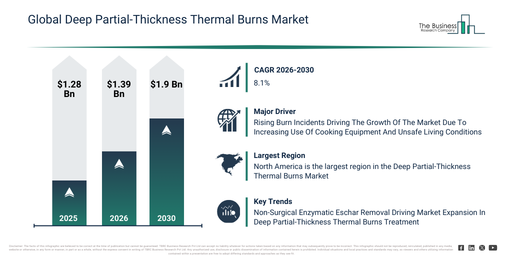
    The market for deep partial-thickness thermal burns has experienced robust expansion, with projections indicating a continued upward trajectory. This market is anticipated to increase from $1.28 billion in 2025 to $1.39 billion in 2026, reflecting a compound annual growth rate of 8.5%. Key factors that have fueled this historic growth include a rise in the occurrence of thermal burn injuries, the proliferation of dedicated burn treatment facilities, advancements in surgical approaches for wound management, enhancements in emergency medical services, and a growing public understanding of sophisticated burn treatment modalities.

    The market for deep partial-thickness thermal burns is poised for significant expansion in the coming years, projecting a valuation of $1.9 billion by 2030, driven by a compound annual growth rate of 8.1%. This anticipated growth is fundamentally fueled by several key factors: the increasing integration of regenerative medicine approaches within burn treatment protocols, a surge in financial commitments towards biologic wound therapy solutions, the broadening availability of home-based burn care services, a heightened emphasis on achieving optimal functional recovery post-injury, and the expanding utilization of sophisticated surgical reconstruction methods. Furthermore, several prevailing trends are expected to shape the market landscape during this forecast period, including the accelerating adoption of cutting-edge wound care strategies, a greater reliance on biologic dressings and skin substitutes, the growing incorporation of comprehensive, multidisciplinary burn care guidelines, advancements in surgical intervention techniques, and a more pronounced focus on achieving superior scar reduction results.

    Download A Free Sample Report For Comprehensive Market Insights:

    https://www.thebusinessresearchcompany.com/sample.aspx?id=24515&type=smp

    Deep Partial-Thickness Thermal Burns Market Expansion Supported By Key Demand Factors

    Anticipated advancements in the market segment dedicated to deep partial-thickness thermal burns are foreseen, primarily propelled by an increasing frequency of burn incidents. A burn incident encompasses instances where an individual’s integument sustains damage from thermal energy, combustion, heated items, electrical currents, or chemical agents. This escalation in burn cases is largely attributable to the heightened utilization of culinary apparatus and exposed flames within domestic settings, consequently resulting in a greater number of unintentional conflagrations and accidental contact with heated surfaces, especially in environments characterized by overcrowding or compromised safety standards. The treatment paradigm for deep partial-thickness thermal burns typically involves the deployment of sophisticated therapeutic agents, including but not limited to, specialized wound coverings, materials for cutaneous grafting, and innovative regenerative medical approaches. Such therapeutic interventions contribute to enhanced healing efficacy, mitigation of adverse sequelae, and expedited convalescence for individuals sustaining significant thermal trauma, while also playing a role in diminishing the likelihood of disfigurement and persistent functional impairments. Illustratively, a report disseminated in November 2023 by the East London NHS Foundation Trust, an entity situated in the United Kingdom, projected that approximately 250,000 persons incur burn-related injuries on an annual basis within the UK. Of this total, an estimated 175,000 seek attention at Accident and Emergency departments, with roughly 16,000 necessitating inpatient care for specialized burn management. Consequently, the burgeoning incidence of burn cases serves as a principal impetus for the expansion of the deep partial-thickness thermal burns market.

    #Deep Partial-Thickness Thermal Burns Market Segment Landscape And Growth Potential

    The deep partial-thickness thermal burns market covered in this report is segmented –

    1) By Treatment: Initial Wound Care, Physical And Occupational Therapy, Other Treatments

    2) By Burn Type: Fire Burn Injuries, Scald Burn, Hot Objects

    3) By Distribution Channel: Direct Tender, Hospital Pharmacy, Online Pharmacy, Retail Pharmacy, Other Distribution Channels

    4) By End-User: Hospitals, Specialty Clinics, Ambulatory Surgical Centers, Home Healthcare, Other End-Users

    Subsegments:

    1) By Initial Wound Care: Debridement, Topical Antimicrobial Agents, Dressings And Bandages, Pain Management

    2) By Physical And Occupational Therapy: Range Of Motion Exercises, Scar Management, Strengthening Exercises, Activities Of Daily Living (ADL) Training

    3) By Other Treatments: Skin Grafting, Biologic Dressings, Negative Pressure Wound Therapy (NPWT), Hyperbaric Oxygen Therapy (HBOT)

    Deep Partial-Thickness Thermal Burns Market Growth Trends Influencing Competitive Dynamics

    Within the deep partial-thickness thermal burns treatment sector, leading enterprises are prioritizing the adoption of cutting-edge methods like non-operative enzymatic eschar removal, aiming to improve therapeutic results for burn victims across all age groups. This approach facilitates the swift and precise breakdown of burn eschar through the application of biological agents directly to the wound, thereby circumventing the necessity for conventional surgical debridement. A notable development occurred in August 2024 when Vericel Corporation, a biopharmaceutical entity based in the United States, secured United States Food and Drug Administration (FDA) clearance for NexoBrid (anacaulase-bcdb) to include a pediatric indication, specifically for eschar removal in children suffering from deep partial-thickness and full-thickness thermal burns. It is crucial to note that NexoBrid is not recommended for individuals with a history of allergic reactions to pineapple, bromelain, papain, or other constituents of the preparation, as such individuals may experience severe hypersensitivity responses, including anaphylaxis. Furthermore, individuals undergoing anticoagulant treatment should use this product with heightened vigilance due to a potential increase in the risk of bleeding.

    Deep Partial-Thickness Thermal Burns Market Competitive Landscape: Who Are The Leading Companies?

    Major companies operating in the deep partial-thickness thermal burns market are Smith & Nephew plc, Coloplast A/S, Convatec Group plc, Integra LifeSciences Holdings Corporation, Mölnlycke Health Care AB, Organogenesis Holdings Inc., MiMedx Group Inc., Vericel Corporation, AlloSource Inc., PolyNovo Limited, AVITA Medical Inc., MediWound Ltd., Stratatech Corporation, RenovaCare Inc., Aroa Biosurgery Limited, 3M Company, Anika Therapeutics Inc., B Braun SE, Osiris Therapeutics Inc., Celularity Inc., Amnio Technology LLC, Tissue Regenix Group plc, CUTISS AG, Tides Medical Inc.

    Access The Complete Deep Partial-Thickness Thermal Burns Market Report:

    https://www.thebusinessresearchcompany.com/report/deep-partial-thickness-thermal-burns-global-market-report

    Deep Partial-Thickness Thermal Burns Market Global Footprint: Which Region Holds Market Leadership?

    North Americawas the largest region in the deep partial-thickness thermal burns market in 2025. Asia-Pacificis expected to be the fastest-growing region in the forecast period. The regions covered in the deep partial-thickness thermal burns market report are Asia-Pacific, South East Asia, Western Europe, Eastern Europe, North America, South America, Middle East, Africa.

    Get in touch with us:

    The Business Research Company: https://www.thebusinessresearchcompany.com/

    Americas: +1 310-496-7795

    Asia: +44 7882 955267 & +91 8897263534

    Europe: +44 7882 955267

    Email us at: marketing@tbrc.info

    Follow us on:

    LinkedIn: https://in.linkedin.com/company/the-business-research-company

    YouTube: https://www.youtube.com/channel/UC24_fI0rV8cR5DxlCpgmyFQ

    Global Market Model: https://www.thebusinessresearchcompany.com/global-market-model
  • Deep Learning In Drug Discovery And Diagnostics Market Trends Are Creating New Opportunities For Industry Leaders

    Deep Learning In Drug Discovery And Diagnostics Market Trends Are Creating New Opportunities For Industry Leaders

    Through market attractiveness analysis, total addressable market evaluation, company benchmarking matrices, interactive Excel dashboards, expanded supply chain intelligence, emerging startup coverage, and detailed product insights, The Business Research Company’s 2026 market reports provide more actionable and strategically valuable research.

    Deep Learning In Drug Discovery And Diagnostics Market Revenue Outlook: What CAGR Is Expected Through 2030?

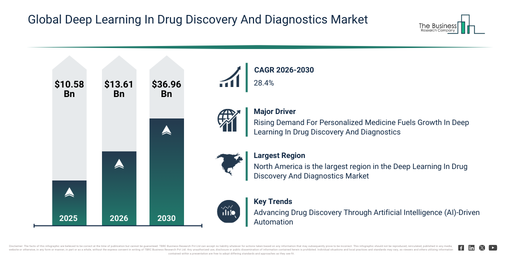
    The deep learning within the realms of drug discovery and diagnostics has witnessed remarkable expansion lately. Projections indicate this sector will surge from $10.58 billion in 2025 to $13.61 billion by 2026, reflecting a compounded annual growth rate of 28.7%. Factors fueling this growth during the preceding period include the greater accessibility of extensive biomedical data, enhanced computational capabilities for training sophisticated models, a broadening embrace of artificial intelligence in pharmaceutical research and development, a heightened need for accelerated drug discovery timelines, and the initial successes demonstrated by deep learning applications in diagnostics.

    Projections indicate a significant surge in the deep learning for drug discovery and diagnostics sector, anticipating a market valuation of $36.96 billion by 2030, fueled by a robust 28.4% compound annual growth rate. This expansion is primarily propelled by heightened financial commitments to AI-driven healthcare technologies, a growing need for tailored medical treatments, broader integration of artificial intelligence within healthcare processes, increased utilization of real-world patient data, and greater regulatory endorsement for AI-supported diagnostic tools. Key developments foreseen during this period encompass a greater embrace of deep neural networks for drug candidate identification, increased reliance on AI for predictive diagnostic modeling, enhanced incorporation of multi-omics data analysis, the proliferation of automated systems aiding clinical decisions, and a heightened emphasis on platforms dedicated to personalized patient care.

    Download A Free Sample Report For Comprehensive Market Insights:

    https://www.thebusinessresearchcompany.com/sample.aspx?id=19394&type=smp

    #Deep Learning In Drug Discovery And Diagnostics Market Growth Drivers And Industry Catalysts

    The increasing need for tailored medical approaches is anticipated to fuel the expansion of the deep learning in drug discovery and diagnostics sector moving ahead. Personalized medicine focuses on customizing healthcare interventions and treatments based on an individual’s genetic makeup, environmental influences, and lifestyle choices, aiming to boost effectiveness while reducing adverse reactions. This rising demand for personalized treatments is largely influenced by progress in genomics and data analysis capabilities, allowing for more accurate and potent therapies informed by individual patient data. Deep learning techniques significantly contribute to personalized medicine within drug discovery and diagnostics by processing intricate biological information to pinpoint specific biomarkers and forecast patient reactions to therapies with greater precision. Illustrating this trend, the Personalized Medicine Coalition, a US-based non-profit organization, reported that the FDA authorized 16 new personalized therapies for individuals with rare illnesses in 2023, a notable increase from the six approvals in 2022. Consequently, the escalating requirement for personalized medicine is a key driver for the deep learning in drug discovery and diagnostics market.

    Deep Learning In Drug Discovery And Diagnostics Market Categorization By Product Type And Application

    The deep learning in drug discovery and diagnostics market covered in this report is segmented –

    1) By Type: Drug Discovery, Diagnostics, Forensic Interventions, Other Types

    2) By Drug Type: Small Molecule Drugs, Biologics Drugs

    3) By End Use Industry: Pharmaceutical Companies, Biotechnology Companies, Contract Research Organizations (CROs), Healthcare Information Technology (IT)

    Subsegments:

    1) By Drug Discovery: Target Identification, Drug Screening, Lead Optimization, Predictive Modeling

    2) By Diagnostics: Medical Imaging Analysis, Genomic Data Interpretation, Disease Detection Algorithms, Personalized Medicine

    3) By Forensic Interventions: Digital Pathology, Forensic DNA Analysis, Toxicology Screening, Crime Scene Reconstruction

    4) By Other Types: Biomarker Discovery, Predictive Analytics in Healthcare, Patient Data Management Systems

    #Deep Learning In Drug Discovery And Diagnostics Market Trends Influencing Long-Term Demand

    Leading entities within the deep learning market focused on drug discovery and diagnostics are actively integrating sophisticated tools like generative artificial intelligence (AI) and automated platforms powered by machine learning (ML). This strategic integration aims to enhance operational efficiency, reduce expenses associated with research and development (R&D), and expedite the process of discovering early-stage therapeutics. These advanced computational systems, known as generative AI and ML-driven automation platforms, are designed to analyze vast amounts of chemical and biological information, enabling the virtual design of novel drug candidates. They also possess the capability to forecast molecular interactions and autonomously manufacture and evaluate compounds through robotic systems, thereby diminishing the necessity for conventional high-throughput screening methods. As an illustration, in July of 2024, Exscientia, a firm based in the United Kingdom specializing in AI-led drug design, unveiled its AI/ML platform, which is supported by Amazon Web Services (AWS). This platform features a “DesignStudio” component for AI-driven molecule creation and an “AutomationStudio” for automated laboratory synthesis and experimentation. The system functions within a continuous “design–make–test–learn” cycle, where the insights gained from experimental results are used to perpetually refine the AI models. This iterative process substantially accelerates the discovery timeline, boosts adaptability, and facilitates the development of innovative treatments in a more accurate and economical manner.

    Deep Learning In Drug Discovery And Diagnostics Market Company Landscape And Strategic Competition

    Major companies operating in the deep learning in drug discovery and diagnostics market are Google Inc., Microsoft Corporation, International Business Machines Corporation, NVIDIA Corporation, Zebra Medical Vision Ltd, Tempus Labs Inc., Nanostring Technologies Inc., Owkin Inc., Insilico Medicine Inc., SOPHiA GENETICS SA, Qureai Technologies Pvt Ltd, H2Oai Inc., Arterys Inc., Deep Genomics Inc., GNS Healthcare Inc., MedAware Systems Inc., PathAI Inc., Kheiron Medical Technologies Ltd, CureMetrix Inc., OncoImmunity AS, Proscia Inc., BenevolentAI Ltd, BioXcel Therapeutics Inc.

    Access The Complete Deep Learning In Drug Discovery And Diagnostics Market Report:

    https://www.thebusinessresearchcompany.com/report/deep-learning-in-drug-discovery-and-diagnostics-global-market-report

    Deep Learning In Drug Discovery And Diagnostics Market Regional Distribution: Which Areas Drive Market Expansion?

    North Americawas the largest region in the deep learning in drug discovery and diagnostics market in 2025. The regions covered in the deep learning in drug discovery and diagnostics market report are Asia-Pacific, South East Asia, Western Europe, Eastern Europe, North America, South America, Middle East, Africa.

    Get in touch with us:

    The Business Research Company: https://www.thebusinessresearchcompany.com/

    Americas: +1 310-496-7795

    Asia: +44 7882 955267 & +91 8897263534

    Europe: +44 7882 955267

    Email us at: marketing@tbrc.info

    Follow us on:

    LinkedIn: https://in.linkedin.com/company/the-business-research-company

    YouTube: https://www.youtube.com/channel/UC24_fI0rV8cR5DxlCpgmyFQ

    Global Market Model: https://www.thebusinessresearchcompany.com/global-market-model
  • Deep Learning In Diagnostics Market Growth Is Reshaping Competitive Advantage Across The Industry

    Deep Learning In Diagnostics Market Growth Is Reshaping Competitive Advantage Across The Industry

    Delivering more actionable and strategically valuable research, The Business Research Company’s 2026 market reports feature market attractiveness analysis, total addressable market evaluation, company benchmarking matrices, interactive Excel dashboards, expanded supply chain intelligence, emerging startup coverage, and detailed product insights.

    Deep Learning In Diagnostics Market Growth Analysis: How Will Revenue Expand During The Forecast Period?

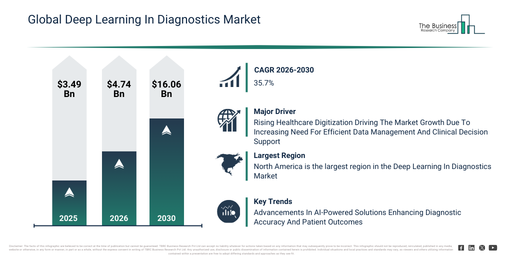
    The burgeoning field of deep learning in diagnostics has witnessed remarkable expansion recently. Projections indicate a notable increase from $3.49 billion in 2025 to $4.74 billion in 2026, reflecting a robust compound annual growth rate of 35.9%. Factors contributing to this surge during the preceding period include the widespread digitization of medical imagery, escalating pressures associated with diagnostic workloads, the broadening scope of radiology and pathology services, the increasing accessibility of curated medical data, and a growing uptake of clinical decision support systems.

    Anticipate a period of substantial expansion for the deep learning within diagnostics sector, projected to reach a valuation of $16.06 billion by the year 2030. This significant growth trajectory, characterized by a compound annual growth rate of 35.7%, is primarily fueled by an escalating need for proactive illness identification, elevated financial commitments toward artificial intelligence-driven diagnostic solutions, the proliferation of cloud-hosted diagnostic systems, a growing number of regulatory endorsements for AI technologies, and a heightened emphasis on streamlining healthcare operational processes. Key developments anticipated during this growth phase encompass a greater uptake of AI-driven medical imagery interpretation, broader application of deep learning techniques for uncovering diseases, the advancement of automated diagnostic pathways, more comprehensive incorporation of diverse clinical data sources, and an intensified concentration on refining the precision of diagnostic outcomes.

    Download A Free Sample Report For Comprehensive Market Insights:

    https://www.thebusinessresearchcompany.com/sample.aspx?id=28190&type=smp

    Deep Learning In Diagnostics Market Opportunity Drivers: What Is Creating New Revenue Potential?

    The expansion of the deep learning in diagnostics sector is anticipated to be significantly boosted by the ongoing digital transformation within healthcare. This digital movement in healthcare involves integrating advanced technologies to streamline operations, improve patient access, optimize data handling, and elevate the quality of patient services. A key factor fueling this digital shift is its capacity to manage and securely share the ever-growing quantities of patient information, thereby fostering improved collaborative care and more knowledgeable decision-making. The digitization of healthcare processes generates substantial data from sources like medical scans, digital patient records, and wearable devices, consequently increasing the demand for deep learning in diagnostics. This is because deep learning algorithms can process this extensive data far more effectively, yielding quicker and more precise conclusions than conventional approaches. As an illustration, FAIR Health Inc., a nonprofit entity in the United States, reported a 7.3% nationwide upward trend in telehealth utilization in April 2023, with claim lines increasing from 5.5% in December 2022 to 5.9% in January 2023. Consequently, the accelerating adoption of digital technologies in healthcare is a primary driver for the growth of the deep learning in diagnostics market.

    Deep Learning In Diagnostics Market Segment Analysis And Revenue Opportunities

    The deep learning in diagnostics market covered in this report is segmented –

    1) By Component: Software, Hardware, Services

    2) By Deployment Mode: Cloud-Based, On-Premises

    3) By Application: Medical Imaging, Pathology, Genomics, Drug Discovery, Other Applications

    4) By End-User: Hospitals, Diagnostic Laboratories, Research Institutes, Other End-Users

    Subsegments:

    1) By Software: Diagnostic Imaging Software, Pathology Analysis Software, Genomic Data Analysis Software

    2) By Hardware: Storage Devices, Networking Devices, Diagnostic Imaging Equipment

    3) By Services: Deployment And Integration Services, Training And Education Services, Consulting Services

    Deep Learning In Diagnostics Market Innovation Trends Driving Future Development

    In the deep learning in diagnostics sector, key players are concentrating their efforts on creating sophisticated tools, including AI-powered deep learning systems, to boost diagnostic precision, accelerate the diagnostic process, and tailor treatments to individuals. An AI-driven deep learning system represents a cutting-edge technology that employs artificial intelligence and intricate neural networks to autonomously examine large volumes of medical information, detect subtle patterns, and produce highly precise diagnostic conclusions with minimal human input. As an illustration, in May 2025, GE Healthcare Technologies Inc., a prominent US-based entity in medical technology and diagnostics, introduced CleaRecon DL, a product engineered to refine image reconstruction and elevate diagnostic accuracy. This innovation enhances cone-beam CT (CBCT) images by adeptly mitigating streak artifacts, thereby yielding significantly sharper and more reliable imagery for interventional applications. Such technology bolsters clinician assurance in image interpretation and heightens accuracy during interventional procedures, with clinical trials indicating a 98% improvement in image clarity and a 94% increase in confidence. Consequently, it contributes to superior patient results by optimizing clinical workflows and facilitating more effective treatments guided by imaging.

    Deep Learning In Diagnostics Market Leading Players Shaping Industry Direction

    Major companies operating in the deep learning in diagnostics market are International Business Machines Corporation, Siemens Healthineers AG, Koninklijke Philips N.V., GE HealthCare Technologies Inc., Tempus AI Inc., Qure.ai Technologies Pvt. Ltd., Freenome Holdings Inc., PathAI Inc., Aidoc Medical Ltd., Viz.ai Inc., SOPHiA GENETICS SA, Lunit Inc., Paige.AI Inc., Beijing Infervision Technology Co. Ltd., Indica Labs Inc., CureMetrix Inc., Deep Bio Inc., Enlitic Inc., ScreenPoint Medical B.V., VUNO Inc., Mindpeak GmbH, Arterys Inc.

    Access The Complete Deep Learning In Diagnostics Market Report:

    https://www.thebusinessresearchcompany.com/report/deep-learning-in-diagnostics-global-market-report

    Deep Learning In Diagnostics Market Leading Geography: Which Region Generates The Most Revenue?

    North Americawas the largest region in the deep learning in diagnostics market in 2025. Asia-Pacific is expected to be the fastest-growing region in the forecast period. The regions covered in the deep learning in diagnostics market report are Asia-Pacific, South East Asia, Western Europe, Eastern Europe, North America, South America, Middle East, Africa.

    Get in touch with us:

    The Business Research Company: https://www.thebusinessresearchcompany.com/

    Americas: +1 310-496-7795

    Asia: +44 7882 955267 & +91 8897263534

    Europe: +44 7882 955267

    Email us at: marketing@tbrc.info

    Follow us on:

    LinkedIn: https://in.linkedin.com/company/the-business-research-company

    YouTube: https://www.youtube.com/channel/UC24_fI0rV8cR5DxlCpgmyFQ

    Global Market Model: https://www.thebusinessresearchcompany.com/global-market-model
  • Decentralized Trial Wearable Kit Market Forecast Signals New Revenue Opportunities Through 2030

    Decentralized Trial Wearable Kit Market Forecast Signals New Revenue Opportunities Through 2030

    Enhanced with market attractiveness analysis, total addressable market evaluation, company benchmarking matrices, interactive Excel dashboards, expanded supply chain intelligence, emerging startup coverage, and detailed product insights, The Business Research Company’s 2026 market reports deliver more actionable and strategically valuable research.

    Decentralized Trial Wearable Kit Market Forecast: What Market Value Is Expected By 2030?

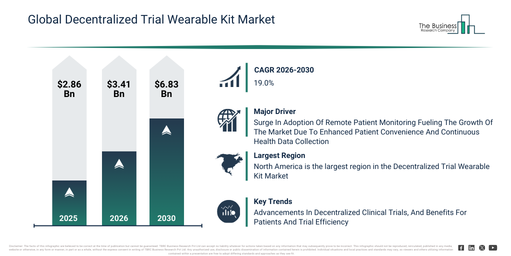
    The market for decentralized trial wearable kits has experienced significant expansion. Projected to increase from $2.86 billion in 2025 to $3.41 billion in 2026, this growth represents a compound annual growth rate of 19.3%. Key factors contributing to this upward trend during the historical period include a notable movement towards decentralized clinical trial methodologies, the increasing integration of mobile health applications within research endeavors, a broader adoption of remote data collection techniques, escalating investments in digital trial infrastructure, and enhancements in the interoperability of wearable technologies.

    The market for decentralized trial wearable kits is poised for significant expansion, projected to reach $6.83 billion by 2030, reflecting a robust compound annual growth rate of 19.0%. This upward trajectory is fueled by several key factors, including a rising need for comprehensive, ready-to-use decentralized trial solutions, a surge in trials focused on monitoring chronic conditions, a greater emphasis on retaining trial participants, the expanding utilization of cloud platforms for managing trial data, and an increasing endorsement from regulatory bodies for capturing data remotely. Looking ahead, prominent trends expected to shape this market involve the broader implementation of combined wearable kits for trials, a higher uptake of health monitoring devices linked to mobile applications, a growing preference for solutions that simplify the entire trial participation process, advancements in enabling clinical trials to be conducted within participants’ homes, and a more concentrated effort on ensuring data integrity and adherence from patients.

    Download A Free Sample Report For Comprehensive Market Insights:

    https://www.thebusinessresearchcompany.com/sample.aspx?id=29013&type=smp

    Decentralized Trial Wearable Kit Market Growth Momentum: Which Factors Are Influencing Demand?

    The expansion of decentralized clinical trial wearable kits is anticipated to be fueled by the increasing implementation of remote patient monitoring. This trend involves leveraging digital tools and connected devices to consistently gather and relay patient health information, including vital signs and data for chronic conditions, to medical professionals. Such capabilities facilitate prompt medical actions, enhance patient care strategies, and diminish the necessity for physical appointments, offering patients greater ease by enabling continuous health surveillance from their homes. Wearable kits for decentralized trials are instrumental in this remote monitoring, equipping individuals with devices that perpetually track vital signs, physiological metrics, and activity patterns. This continuous data stream grants healthcare providers real-time comprehension of patient status, thereby ensuring opportune interventions and boosting trial effectiveness without the burden of frequent in-person site visits. Illustratively, a World Health Organization report from October 2024 highlighted that teleradiology boasts the highest adoption rate globally, being available in 84% of nations, with telemedicine and telepsychiatry also showing significant growth at 77% and 51% respectively. Consequently, the widespread embrace of remote patient monitoring is a key driver for the decentralized trial wearable kit market’s advancement.

    Decentralized Trial Wearable Kit Market Segmentation And Category Breakdown

    The decentralized trial wearable kit market covered in this report is segmented –

    1) By Product Type: Smartwatches, Fitness Bands, Biosensors, Smart Clothing, Other Products

    2) By Distribution Channel: Online, Offline

    3) By Application: Clinical Trials, Remote Patient Monitoring, Chronic Disease Management, Other Applications

    4) By End-User: Pharmaceutical Companies, Contract Research Organizations, Hospitals And Clinics, Other End Users

    Subsegments:

    1) By Smartwatches: Heart Rate Monitoring, Sleep Tracking, Activity Tracking, Electrocardiogram Monitoring, Blood Pressure Monitoring

    2) By Fitness Bands: Step Counting, Calorie Tracking, Distance Tracking, Sleep Monitoring, Heart Rate Monitoring

    3) By Biosensors: Glucose Monitoring, Oxygen Saturation Monitoring, Electrocardiogram Monitoring, Temperature Monitoring, Blood Pressure Monitoring

    4) By Smart Clothing: Posture Monitoring, Muscle Activity Monitoring, Heart Rate Monitoring, Respiration Monitoring, Temperature Monitoring

    5) By Other Products: Portable Electrocardiogram Devices, Glucometers, Pulse Oximeters, Smart Inhalers, Mobile Health Kits

    Decentralized Trial Wearable Kit Market Trends Reshaping Industry Growth

    Leading entities within the decentralized trial wearable kit sector are prioritizing the creation of novel technological solutions, including wireless data transfer capabilities, with the objective of boosting data precision and optimizing the execution of remote clinical trial processes. The concept of wireless data transmission involves the exchange of digital information between apparatuses devoid of physical conduits, utilizing protocols like Wi-Fi, Bluetooth, or mobile carrier networks, thereby facilitating instantaneous communication, distant oversight, and uninterrupted interoperability among diverse instruments and environments. As an illustration, in the month of June in the year 2025, Empatica Inc., a health technology firm situated in the United States, introduced the EmbraceMini, recognized as the most diminutive actigraphy wearable globally designed for clinical investigation purposes, which provides unobtrusive, user-friendly, and perpetual tracking of patient physiological metrics, concurrently improving data acquisition in decentralized and blended study frameworks, while simultaneously augmenting patient comfort and trial operational effectiveness. The overarching goal of this introduction is to propel the advancement of decentralized clinical trials by furnishing exact, unceasing patient surveillance, thereby diminishing the necessity for recurrent visits to physical study centers and empowering more effective, evidence-based judgment formulation throughout the research duration.

    Decentralized Trial Wearable Kit Market Competitive Analysis Of Major Industry Participants

    Major companies operating in the decentralized trial wearable kit market are Dassault Systèmes SE, IQVIA Holdings Inc, THREAD Research Inc., ARCHIMED SAS, Google LLC, Alivecor Inc., ICON Public Limited Company, Oracle Corporation, Withings SAS, Clario Inc., Veeva Systems Inc., Koneksa Health Inc., Science 37 Holdings Inc., Medable Inc., Medidata Solutions Inc., Obvio Health USA Inc., ActiGraph LLC., Garmin Ltd., Signant Health Private Limited, Koninklijke Philips N.V.

    Access The Complete Decentralized Trial Wearable Kit Market Report:

    https://www.thebusinessresearchcompany.com/report/decentralized-trial-wearable-kit-global-market-report

    Decentralized Trial Wearable Kit Market Regional Outlook: Where Are The Largest Opportunities Located?

    North Americawas the largest region in the decentralized trial wearable Kit market in 2025. Asia-Pacificis expected to be the fastest-growing region in the forecast period. The regions covered in the decentralized trial wearable kit market report are Asia-Pacific, South East Asia, Western Europe, Eastern Europe, North America, South America, Middle East, Africa.

    Get in touch with us:

    The Business Research Company: https://www.thebusinessresearchcompany.com/

    Americas: +1 310-496-7795

    Asia: +44 7882 955267 & +91 8897263534

    Europe: +44 7882 955267

    Email us at: marketing@tbrc.info

    Follow us on:

    LinkedIn: https://in.linkedin.com/company/the-business-research-company

    YouTube: https://www.youtube.com/channel/UC24_fI0rV8cR5DxlCpgmyFQ

    Global Market Model: https://www.thebusinessresearchcompany.com/global-market-model
  • Decentralized Trial Wearable Market Growth Is Accelerating As Industry Transformation Continues

    Decentralized Trial Wearable Market Growth Is Accelerating As Industry Transformation Continues

    Through market attractiveness analysis, total addressable market evaluation, company benchmarking matrices, interactive Excel dashboards, expanded supply chain intelligence, emerging startup coverage, and detailed product insights, The Business Research Company’s 2026 market reports provide more actionable and strategically valuable research.

    Decentralized Trial Wearable Market Size Outlook: How Fast Will Revenue Grow Through 2030?

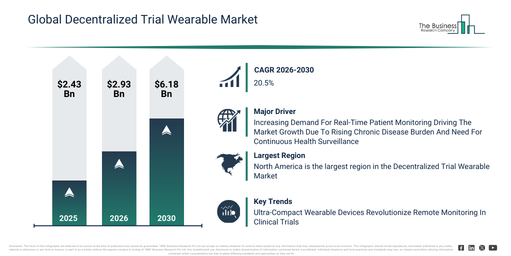
    The market for decentralized trial wearables has experienced significant expansion recently, projecting a rise from $2.43 billion in 2025 to $2.93 billion by 2026, reflecting a compound annual growth rate of 20.8%. This remarkable growth stems from several key factors during the past, including the increasing acceptance of decentralized clinical trial methodologies, a surge in the utilization of wearable health technology for research purposes, escalating demand for remote patient involvement, ongoing progress in the miniaturization of sensors, and the broadening of digital infrastructure for clinical trials.

    The market for decentralized trial wearable devices is poised for substantial expansion, projected to reach $6.18 billion by 2030 with a compound annual growth rate of 20.5%. This anticipated surge is fueled by several key factors, including augmented investments in virtual trial platforms, a heightened need for real-world evidence, the broader acceptance of hybrid clinical trial models, a greater focus on regulatory adherence in remote monitoring, and the increasing application of AI in analyzing trial data. Integral to this growth trajectory are several significant trends, such as the wider adoption of wearable devices for ongoing remote health monitoring, the enhanced incorporation of devices capable of measuring multiple biological parameters, the growing utilization of real-time data transmission within clinical trials, the further development of patient-focused trial designs, and an intensified commitment to data precision and regulatory compliance.

    Download A Free Sample Report For Comprehensive Market Insights:

    https://www.thebusinessresearchcompany.com/sample.aspx?id=29012&type=smp

    Decentralized Trial Wearable Market Expansion Drivers: What Is Shaping Future Growth?

    The escalating need for continuous patient health oversight is poised to be a significant catalyst for the expansion of the decentralized trial wearable sector. This continuous health monitoring involves the ongoing gathering and relaying of medical information via internet-connected devices, which systematically transmit vital signs to medical professionals for prompt analysis and necessary actions. The surge in demand for this real-time tracking stems from the growing incidence of long-term health conditions like diabetes, heart ailments, and breathing disorders, necessitating constant patient health surveillance to facilitate early detection and improved management of these conditions. Decentralized trial wearable solutions are instrumental in facilitating this real-time monitoring, as they consistently capture and transmit health data from patients in their everyday settings to central data repositories. This enables medical researchers and practitioners to remotely observe patient well-being, identify deviations from the norm swiftly, and execute clinical decisions based on accurate, up-to-date information. To illustrate this trend, Vivalink, a healthcare technology firm based in the United States, reported in August 2023 that a recent poll indicated 84% of those presently employing remote patient monitoring (RPM) plan to increase their usage in 2024, with 45% of healthcare providers currently leveraging RPM for acute care within hospital-at-home initiatives. Furthermore, an impressive 77% of these professionals anticipate that RPM-driven care will surpass conventional inpatient hospital treatment within the next five years. Consequently, the heightened requirement for real-time patient monitoring is acting as a primary driver for the growth observed in the decentralized trial wearable market.

    Decentralized Trial Wearable Market Segment Outlook: Which Categories Are Expanding The Fastest?

    The decentralized trial wearable market covered in this report is segmented –

    1) By Product Type: Smartwatches, Fitness Trackers, Biosensors, Smart Clothing, Other Product Types

    2) By Distribution Channel: Online, Offline

    3) By Application: Remote Patient Monitoring, Clinical Trials, Disease Management, Other Applications

    4) By End-User: Pharmaceutical Companies, Contract Research Organizations, Healthcare Providers, Other End-Users

    Subsegments:

    1) By Smartwatches: Health Monitoring Smartwatches, Electrocardiogram (ECG) Smartwatches, Blood Oxygen Tracking Smartwatches, Multi-Sensor Smartwatches

    2) By Fitness Trackers: Heart Rate Monitoring Fitness Trackers, Activity Tracking Fitness Trackers, Sleep Tracking Fitness Trackers, Multi-Metric Fitness Trackers

    3) By Biosensors: Glucose Monitoring Biosensors, Electrocardiogram (ECG) Biosensors, Temperature Sensing Biosensors, Multi-Parameter Biosensors

    4) By Smart Clothing: Sensor-Embedded Smart Shirts, Smart Pants With Biometric Sensors, Compression Wear Smart Clothing, Smart Athletic Wear

    5) By Other Product Types: Hybrid Wearable Devices, Remote Patient Monitoring Wearables, Medical Grade Wearables, Innovative Material Wearables

    Decentralized Trial Wearable Market Strategic Trends: What Is Defining The Next Phase Of Growth?

    Leading players within the decentralized clinical trial wearable sector are dedicating their efforts to creating novel solutions, particularly ultra-compact health monitoring gadgets, aiming to boost patient comfort and refine the process of remote data acquisition. These diminutive wearable devices are engineered for continuous surveillance of physiological and behavioral metrics with minimal disruption, thereby fostering better patient engagement, facilitating remote oversight, and yielding superior data quality for research. As an illustration, in June of 2025, the US firm Empatica Inc., a specialist in medical technology, introduced EmbraceMini, recognized as the globe’s most diminutive wrist-worn actigraphy instrument intended for clinical investigations. With dimensions of a mere 12mm in thickness and 14mm in width, comparable to a USB drive or an AA battery, it is constructed for exceptionally comfortable, unobtrusive wear, facilitating uninterrupted tracking of more than 200 digital indicators, encompassing activity levels, sleep patterns, gait analysis, and light exposure. Data from this device is wirelessly transmitted to Empatica’s Health Monitoring Platform, which holds FDA clearance, thereby supporting remote data gathering, the analysis of digital biomarkers, and seamless integration with current clinical trial frameworks, all while placing a strong emphasis on participant experience and adherence. It has been specifically developed for investigations into conditions such as sleep disorders, movement impairments, obesity, depression, and pain, offering detailed insights into participants’ physiological and behavioral dynamics. Its extended battery capacity allows for a minimum of seven days of continuous monitoring, alleviating participant burden and improving compliance. Furthermore, its adaptable construction permits wear on the wrist, ankle, leg, or waist, and the concurrent use of multiple units can yield more comprehensive datasets.

    Decentralized Trial Wearable Market Key Companies And Competitive Benchmarking

    Major companies operating in the decentralized trial wearable market are Oracle Corporation, IQVIA Holdings Inc., LabCorp Drug Development Inc., ICON Public Limited Company, Garmin Ltd., Clario Inc., Medidata Solutions Inc., BioTelemetry Inc., Signant Health Holding Corp, Withings France SA, Medable Inc., Science 37 Holdings Inc., THREAD Research Inc., Huma Therapeutics Ltd., Empatica S.r.l., Clinical Ink Inc., VivaLNK Inc., Sempulse Ltd., Activinsights Ltd., Mahalo Health Inc.

    Access The Complete Decentralized Trial Wearable Market Report:

    https://www.thebusinessresearchcompany.com/report/decentralized-trial-wearable-global-market-report

    Decentralized Trial Wearable Market Geographic Landscape: Which Region Dominates Industry Growth?

    North Americawas the largest region in the decentralized trial wearable market in 2025. Asia-Pacificis expected to be the fastest-growing region in the forecast period. The regions covered in the decentralized trial wearable market report are Asia-Pacific, South East Asia, Western Europe, Eastern Europe, North America, South America, Middle East, Africa.

    Get in touch with us:

    The Business Research Company: https://www.thebusinessresearchcompany.com/

    Americas: +1 310-496-7795

    Asia: +44 7882 955267 & +91 8897263534

    Europe: +44 7882 955267

    Email us at: marketing@tbrc.info

    Follow us on:

    LinkedIn: https://in.linkedin.com/company/the-business-research-company

    YouTube: https://www.youtube.com/channel/UC24_fI0rV8cR5DxlCpgmyFQ

    Global Market Model: https://www.thebusinessresearchcompany.com/global-market-model
  • Decentralized Clinical Trials Market Outlook Highlights The Next Major Growth Opportunities

    Decentralized Clinical Trials Market Outlook Highlights The Next Major Growth Opportunities

    Delivering more actionable and strategically valuable research, The Business Research Company’s 2026 market reports feature market attractiveness analysis, total addressable market evaluation, company benchmarking matrices, interactive Excel dashboards, expanded supply chain intelligence, emerging startup coverage, and detailed product insights.

    Decentralized Clinical Trials Market Size, Value And Growth Trends Through 2030

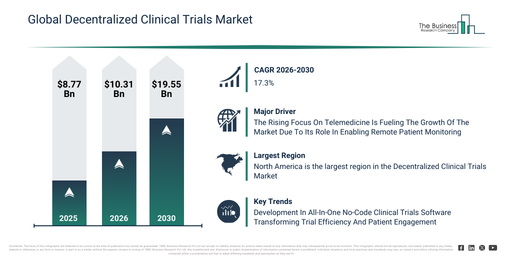
    The sector for decentralized clinical trials has seen a significant surge in its market value lately. Projections indicate a substantial increase from $8.77 billion in 2025 to $10.31 billion by 2026, reflecting a compound annual growth rate (CAGR) of 17.7%. Factors contributing to this expansion during the past period include the escalating intricacy of trial designs, a heightened demand for effective patient recruitment strategies, the proliferation of digital health solutions, a greater adoption of electronic data capture systems, and a more receptive regulatory landscape towards decentralized methodologies.

    The market for decentralized clinical trials is projected for substantial expansion, reaching an estimated $19.55 billion by 2030, driven by a compound annual growth rate of 17.3%. This projected increase stems from several key factors, including a greater embrace of hybrid trial methodologies, an escalating need for accelerated drug development schedules, the broader implementation of virtual trials worldwide, enhanced utilization of artificial intelligence for trial efficiencies, and a heightened emphasis on ensuring diverse patient involvement. Furthermore, significant developments anticipated during this forecast period involve the expanded use of remote patient monitoring devices, a surge in the adoption of virtual trial platforms, the increased deployment of data collection through wearables, a rise in the application of real-time analytics for trials, and a more pronounced focus on designing trials with the patient at the core.

    Download A Free Sample Report For Comprehensive Market Insights:

    https://www.thebusinessresearchcompany.com/sample.aspx?id=28189&type=smp

    Decentralized Clinical Trials Market Development Factors: Which Trends Are Supporting Demand?

    The increasing adoption of telemedicine is poised to significantly boost the decentralized clinical trials sector. By facilitating remote healthcare delivery through digital communication, telemedicine allows for medical consultations and patient monitoring without the need for in-person visits. This trend is largely propelled by the demand for more accessible healthcare solutions, especially in light of global health crises and the imperative for social distancing. Decentralized clinical trials leverage telemedicine to actively involve and remotely supervise participants, thereby reducing the necessity for physical clinic appointments, ensuring broader patient access, enabling continuous data acquisition, and maintaining ongoing observation. As an illustration, data from the Australian Bureau of Statistics indicated that in 2023–24, telehealth services were utilized by 83.5% of males, a notable rise from the 78.6% recorded in 2022–23. Consequently, the heightened emphasis on telemedicine serves as a key catalyst for the expansion of the decentralized clinical trials market.

    Decentralized Clinical Trials Market Segment Landscape: Which Areas Lead Market Development?

    The decentralized clinical trials market covered in this report is segmented –

    1) By Type: Interventional, Observational, Expanded Access

    2) By Technology Used: Wearable Devices, Mobile Health Applications, Telemedicine Platforms, Electronic Data Capture Systems

    3) By Study Phase: Phase I, Phase II, Phase III, Phase IV

    4) By Therapeutic Area: Oncology, Cardiology, Neurology, Infectious Diseases

    5) By End-User: Pharmaceutical Companies, Biotechnology Firms, Contract Research Organizations, Regulatory Authorities, Academic And Research Institutions

    Subsegments:

    1) By Interventional: Randomized Controlled Trials (RCTs), Non-Randomized Trials, Adaptive Clinical Trials, Pragmatic Clinical Trials

    2) By Observational: Cohort Studies, Case-Control Studies, Cross-Sectional Studies, Prospective Studies, Retrospective Studies, Longitudinal Studies

    3) By Expanded Access: Treatment Investigational New Drug (IND) Applications, Intermediate-Size Patient Population Investigational New Drug (IND) Applications, Single-Patient Investigational New Drug (IND) Applications, Emergency Use Investigational New Drug (IND) Applications

    Decentralized Clinical Trials Market Transformation Trends: Which Innovations Are Driving Change?

    Within the decentralized clinical trials sector, leading organizations are concentrating on creating sophisticated platforms, specifically all-in-one, no-code clinical trial management software, to streamline the initiation and oversight of studies, thereby boosting overall effectiveness and participant involvement. This type of integrated, code-free solution allows investigators to conceptualize, control, and conduct trials without requiring programming expertise, while also smoothly incorporating elements like participant acquisition, information gathering, performance tracking, and analytical functions within one intuitive interface. As an illustration, in August 2024, Medable, a clinical technology firm located in the United States, introduced Medable Studio, a comprehensive, no-code software designed to expedite and simplify the customization, localization, verification, and deployment of electronic Clinical Outcome Assessments (eCOA), eConsent, Televisit capabilities, and sensor integration into clinical research. This empowers biopharmaceutical entities to craft study designs that align with protocols in a matter of hours rather than months, granting users enhanced command, clarity, and velocity, alongside adaptable self-service, complete service, or blended operational models that substantially diminish study initiation periods and expenses. The ultimate goal of this system is to transform how trials are conducted by making the construction phase quicker, more productive, and less reliant on external expert assistance.

    Decentralized Clinical Trials Market Industry Leaders And Market Competition

    Major companies operating in the decentralized clinical trials market are Walgreens Boots Alliance Inc., Pfizer Inc., Oracle Corporation, Thermo Fisher Scientific Inc., IQVIA Holdings Inc., Labcorp Holdings Inc., ICON Public Limited Company, Dassault Systèmes SE, LEO Pharma A/S, Verily Life Sciences LLC, ProPharma, Signant Health Holding Corp., PCM Trials, Huma Therapeutics Limited, Medable Inc., Science 37 Inc., Obvio Health, EmVenio Research Inc., Grove AI Inc., Phesi Inc.

    Access The Complete Decentralized Clinical Trials Market Report:

    https://www.thebusinessresearchcompany.com/report/decentralized-clinical-trials-global-market-report

    #Decentralized Clinical Trials Market Largest Region: Which Geography Holds The Highest Market Share?

    North Americawas the largest region in the decentralized clinical trials market in 2025. Asia-Pacific is expected to be the fastest-growing region in the forecast period. The regions covered in the decentralized clinical trials market report are Asia-Pacific, South East Asia, Western Europe, Eastern Europe, North America, South America, Middle East, Africa.

    Get in touch with us:

    The Business Research Company: https://www.thebusinessresearchcompany.com/

    Americas: +1 310-496-7795

    Asia: +44 7882 955267 & +91 8897263534

    Europe: +44 7882 955267

    Email us at: marketing@tbrc.info

    Follow us on:

    LinkedIn: https://in.linkedin.com/company/the-business-research-company

    YouTube: https://www.youtube.com/channel/UC24_fI0rV8cR5DxlCpgmyFQ

    Global Market Model: https://www.thebusinessresearchcompany.com/global-market-model
  • Data-Driven Precision Medical Service Market Trends And Growth Drivers Point To Strong Future Potential

    Data-Driven Precision Medical Service Market Trends And Growth Drivers Point To Strong Future Potential

    Enhanced with market attractiveness analysis, total addressable market evaluation, company benchmarking matrices, interactive Excel dashboards, expanded supply chain intelligence, emerging startup coverage, and detailed product insights, The Business Research Company’s 2026 market reports deliver more actionable and strategically valuable research.

    Data-Driven Precision Medical Service Market CAGR Analysis And Future Market Development

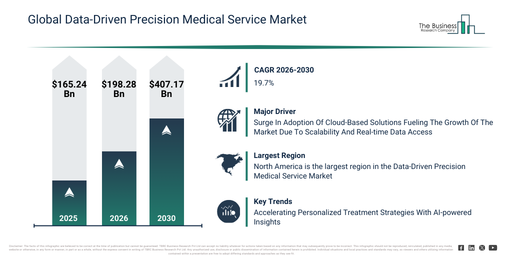
    The market for data-driven precision medicine services has experienced substantial expansion recently. Projections indicate a rise from $165.24 billion in 2025 to $198.28 billion by 2026, reflecting a compound annual growth rate of 20.0%. This past growth trajectory has been fueled by several key factors, including the escalating digitization of patient health records, a greater abundance of genomic data, the increasing implementation of care models powered by analytics, the enhancement of healthcare information technology infrastructure, and a growing trend of partnerships between technology firms and healthcare organizations.

    The market for precision medical services, powered by data analytics, is poised for substantial expansion in the coming years, projected to reach $407.17 billion by 2030 with a compound annual growth rate of 19.7%. This anticipated surge is fueled by several key factors, including heightened investment in artificial intelligence-driven healthcare solutions, a growing need for tailored treatment plans, the broader implementation of immediate clinical decision support systems, increased utilization of data from wearable health devices, and a greater emphasis on preventative precision medicine. Furthermore, prevailing trends that will shape this market during the forecast period involve the escalating adoption of AI for clinical data analysis, the more extensive incorporation of multi-omics data platforms, the proliferation of cloud-based precision medicine offerings, a rise in the use of predictive health models, and a stronger focus on healthcare delivery tied to patient outcomes.

    Download A Free Sample Report For Comprehensive Market Insights:

    https://www.thebusinessresearchcompany.com/sample.aspx?id=28188&type=smp

    Data-Driven Precision Medical Service Market Industry Drivers: What Is Driving Revenue Growth?

    The increasing prevalence of cloud-based services is poised to significantly boost the expansion of the data-driven precision medicine market. These cloud solutions, encompassing software, platforms, and infrastructure delivered via the internet, provide convenient, on-demand access to data storage and computing power without the need for on-site installations. A key factor fueling this trend is the inherent scalability of cloud services, which empowers organizations to efficiently modify their computing capacity in response to fluctuating needs, thereby avoiding substantial initial investments in physical infrastructure. This adaptability enables healthcare entities to swiftly scale resources according to demand, facilitating immediate analysis of patient information, sophisticated predictive modeling, and the development of tailored treatment plans. Illustratively, Ace Cloud Hosting, a US provider of specialized cloud computing for healthcare and HealthTech, reports that the healthcare industry is rapidly integrating cloud technology, with a remarkable 95% of organizations utilizing it for managing patient data. Furthermore, cloud adoption within the healthcare sector experienced an impressive 41% year-over-year increase in 2025, outperforming all other industries. Consequently, the expanding use of cloud-based solutions is anticipated to be a primary catalyst for the growth of the data-driven precision medicine service market.

    Data-Driven Precision Medical Service Market Segments: Where Are The Largest Growth Opportunities?

    The data-driven precision medical service market covered in this report is segmented –

    1) By Type: Cloud-Based, On-Premises

    2) By Technology: Artificial Intelligence And Machine Learning, Big Data Analytics, Genomics And Sequencing, Cloud Computing, Blockchain, Digital Twin Technology, Wearables And Internet Of Things

    3) By Application: Hospital, Clinic, Other Applications

    Subsegments:

    1) By Cloud-Based: Public Cloud Deployment, Private Cloud Deployment, Hybrid Cloud Deployment

    2) By On Premises: Dedicated Server Infrastructure, Enterprise Data Center Deployment, Localized Computing Environment

    #Data-Driven Precision Medical Service Market Growth Trends: What Is Influencing The Future Outlook?

    Leading players within the data-driven precision medicine sector are placing significant emphasis on pioneering advancements, particularly the application of deep learning for multi-omics discovery. This strategic focus is aimed at expediting the identification of biomarkers, refining personalized therapeutic approaches, and bolstering clinical decision-making capabilities, not only in oncology but also across a spectrum of other medical fields. The core of deep learning for multi-omics discovery lies in the utilization of artificial intelligence, employing sophisticated algorithms to dissect intricate datasets encompassing genomic, epigenomic, transcriptomic, and proteomic information. This analytical power facilitates the uncovering of previously unknown biomarkers and promising therapeutic targets. A notable illustration of this trend is the introduction of Guardant Galaxy in January 2023 by Guardant Health, a biotechnology firm based in the United States. This all-encompassing suite of sophisticated analytical instruments, the result of both in-house innovation and external partnerships, is designed to elevate the precision and real-world applicability of Guardant Health’s current cancer diagnostic solutions. Through the incorporation of state-of-the-art analytical methodologies, Guardant Galaxy empowers more accurate patient diagnoses and tailored treatment regimens. Concurrently, it serves as a catalyst for accelerating the discovery of novel biomarkers and therapeutic targets, thereby propelling the advancement of next-generation pharmaceuticals.

    Data-Driven Precision Medical Service Market Major Participants And Competitive Dynamics

    Major companies operating in the data-driven precision medical service market are Samsung Electronics Co. Ltd., Roche Holding AG, Novartis AG, Thermo Fisher Scientific Inc., Agilent Technologies Inc., Illumina Inc., BioNTech SE, QIAGEN N.V., Natera Inc., Precision Medicine Group Inc., Guardant Health Inc., Tempus Labs Inc., Flatiron Health Inc., Certara L.P., Verily Life Sciences LLC, GenomOncology Inc., SOPHiA GENETICS SA, Recursion Pharmaceuticals Inc., DNAnexus Inc., Biomea Fusion Inc.

    Access The Complete Data-Driven Precision Medical Service Market Report:

    https://www.thebusinessresearchcompany.com/report/data-driven-precision-medical-service-global-market-report

    Data-Driven Precision Medical Service Market Regional Analysis: Which Region Leads By Revenue?

    North Americawas the largest region in the data-driven precision medical service market in 2025. The regions covered in the data-driven precision medical service market report are Asia-Pacific, South East Asia, Western Europe, Eastern Europe, North America, South America, Middle East, Africa.

    Get in touch with us:

    The Business Research Company: https://www.thebusinessresearchcompany.com/

    Americas: +1 310-496-7795

    Asia: +44 7882 955267 & +91 8897263534

    Europe: +44 7882 955267

    Email us at: marketing@tbrc.info

    Follow us on:

    LinkedIn: https://in.linkedin.com/company/the-business-research-company

    YouTube: https://www.youtube.com/channel/UC24_fI0rV8cR5DxlCpgmyFQ

    Global Market Model: https://www.thebusinessresearchcompany.com/global-market-model