Month: June 2026

  • Acute Ischemic Stroke Diagnosis Market Growth Through 2030 Creates New Strategic Opportunities

    Acute Ischemic Stroke Diagnosis Market Growth Through 2030 Creates New Strategic Opportunities

    Through market attractiveness analysis, total addressable market evaluation, company benchmarking matrices, interactive Excel dashboards, expanded supply chain intelligence, emerging startup coverage, and detailed product insights, The Business Research Company’s 2026 market reports provide more actionable and strategically valuable research.

    Acute Ischemic Stroke Diagnosis Market CAGR Analysis And Future Market Development

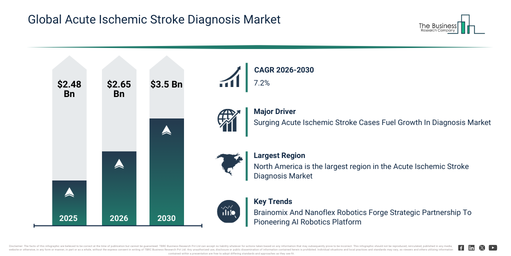
    The market for acute ischemic stroke diagnostics has experienced robust expansion, projecting a rise from $2.48 billion in 2025 to $2.65 billion in 2026, reflecting a compound annual growth rate of 6.9%. Historically, this growth was driven by factors such as restricted access to sophisticated imaging, dependence on traditional diagnostic approaches, a global surge in stroke occurrences, heightened recognition of the importance of prompt intervention, and an increase in specialized neurology units within hospitals.

    The market for acute ischemic stroke diagnostic solutions is poised for substantial expansion over the coming years, projecting a reach of $3.5 billion by 2030, fueled by a compound annual growth rate of 7.2%. This anticipated surge is largely attributable to advancements in AI-powered diagnostic instruments, escalating investments in telehealth frameworks, proliferation of point-of-care stroke diagnostic solutions, increased utilization of minimally invasive interventions, and the broader establishment of stroke care facilities and dedicated neurology departments. Key developments expected to shape this market during the forecast period encompass the growing embrace of sophisticated imaging techniques for diagnosing acute ischemic strokes, a heightened reliance on non-invasive diagnostic methodologies, the widening implementation of telemedicine and remote patient monitoring systems, the more widespread adoption of expedited diagnostic protocols within healthcare institutions, and the integration of artificial intelligence-driven predictive analytics to enhance stroke identification capabilities.

    Download A Free Sample Report For Comprehensive Market Insights:

    https://www.thebusinessresearchcompany.com/sample.aspx?id=12150&type=smp

    #Acute Ischemic Stroke Diagnosis Market Growth Drivers And Industry Catalysts

    The increasing occurrence of acute ischemic stroke events is anticipated to significantly boost the expansion of the acute ischemic stroke diagnosis market. This condition, characterized by a sudden interruption of blood flow to the brain leading to brain cell death, constitutes a critical medical emergency. Prompt identification of acute ischemic stroke is instrumental in initiating timely treatment, thereby mitigating brain injury and other potential long-term effects. For example, data released in April 2024 by the Stroke Association, a UK charity, indicated a projected surge in stroke-related expenditures in the UK, escalating from an estimated £43 billion in the upcoming year to £75 billion by 2035, representing an almost twofold increase over two decades. Furthermore, the statistic that one in four strokes impacts individuals of working age, resulting in an annual productivity loss of £1.6 billion projected to increase by 136% by 2035, underscores the severity of the issue. Consequently, the growing incidence of acute ischemic stroke cases is a primary determinant fueling the growth of the market for its diagnosis.

    Acute Ischemic Stroke Diagnosis Market Segmentation And Category Breakdown

    The acute ischemic stroke diagnosis market covered in this report is segmented –

    1) By Diagnostic Type: Computed Tomography (CT), Magnetic Resonance Imaging (MRI), Carotid Ultrasound, Cerebral Angiography, Electrocardiography (ECG), Echocardiography, Other Diagnostic Types

    2) By Imaging Type: Structural Imaging, Vascular Imaging, Perfusion Imaging

    3) By End User: Hospitals, Specialty Neurology Clinics, Diagnostic Imaging Centers, Academic and Research Institutes

    Subsegments:

    1) By Computed Tomography (CT): Non-Contrast CT, CT Angiography

    2) By Magnetic Resonance Imaging (MRI): MRI With Diffusion-Weighted Imaging (DWI), MRI Angiography

    3) By Carotid Ultrasound: Doppler Ultrasound, B-Mode Ultrasound

    4) By Cerebral Angiography: Digital Subtraction Angiography (DSA), Catheter Angiography

    5) By Electrocardiography (ECG): Standard ECG, Holter Monitoring

    6) By Echocardiography: Transthoracic Echocardiography (TTE), Transesophageal Echocardiography (TEE)

    7) By Other Diagnostics: Blood Tests, Neurological Examination, CT Perfusion

    #Acute Ischemic Stroke Diagnosis Market Trends Influencing Long-Term Demand

    Leading entities within the acute ischemic stroke diagnosis sector are prioritizing strategic alliances as a means to fortify their market standing. These joint ventures are instrumental in advancing the creation and availability of sophisticated diagnostic modalities, including computed tomography (CT), magnetic resonance imaging (MRI), carotid ultrasound, cerebral angiography, electrocardiography, and echocardiography, all of which are indispensable for precise and prompt stroke identification. Illustratively, a significant development occurred in October 2023 when Brainomix Ltd., an American firm specializing in AI-driven MedTech solutions, joined forces with Nanoflex Robotics AG, a Swiss innovator in soft robotic systems. Their collaboration is directed towards establishing an AI robotics platform intended for the therapeutic intervention of acute ischemic stroke, specifically an AI-enhanced magnetic navigation system for robotic surgical instruments pertinent to stroke treatment. This alliance will see the integration of their respective technologies to deliver an AI-supported navigation instrument that aids in guiding catheters and similar devices through the vascular network. The overarching objective of this initiative is to leverage artificial intelligence to elevate Nanoflex Robotics’ avant-garde magnetic robotic navigation system, positioning it as a pioneering solution for remote thrombectomy, thereby redefining the landscape of stroke treatment and positively impacting patient prognoses.

    Acute Ischemic Stroke Diagnosis Market Competitive Analysis Of Major Industry Participants

    Major companies operating in the acute ischemic stroke diagnosis market are Siemens Healthineers AG, GE HealthCare Technologies Inc., Philips Healthcare, Canon Medical Systems Corporation, FUJIFILM Medical Systems, Samsung Neurologica Corporation, Nihon Kohden Corporation, Neusoft Medical Systems Co. Ltd., Hyperfine Research Inc., Olea Medical, iSchemaView Inc., NovaSignal Corporation, RapidAI Inc., Viz.ai Inc., Brainomix Ltd., Nicolet Neuro Inc., Compumedics Limited, Electrical Geodesics Inc., Mediso Medical Imaging Systems, Esaote SpA, United Imaging Healthcare, Shimadzu Corporation

    Access The Complete Acute Ischemic Stroke Diagnosis Market Report:

    https://www.thebusinessresearchcompany.com/report/acute-ischemic-stroke-diagnosis-global-market-report

    Acute Ischemic Stroke Diagnosis Market Geographic Distribution And Regional Opportunities

    North America was the largest region in the acute ischemic stroke diagnosis market in 2025. Asia-Pacific is expected to be the fastest-growing region in the forecast period. The regions covered in the acute ischemic stroke diagnosis market report are Asia-Pacific, South East Asia, Western Europe, Eastern Europe, North America, South America, Middle East, Africa.

    Get in touch with us:

    The Business Research Company: https://www.thebusinessresearchcompany.com/

    Americas: +1 310-496-7795

    Asia: +44 7882 955267 & +91 8897263534

    Europe: +44 7882 955267

    Email us at: marketing@tbrc.info

    Follow us on:

    LinkedIn: https://in.linkedin.com/company/the-business-research-company

    YouTube: https://www.youtube.com/channel/UC24_fI0rV8cR5DxlCpgmyFQ

    Global Market Model: https://www.thebusinessresearchcompany.com/global-market-model
  • Acute Hospital Care Market Size Projected To Increase From $3520.39 Billion To $4542.87 Billion During The Forecast Period

    Acute Hospital Care Market Size Projected To Increase From $3520.39 Billion To $4542.87 Billion During The Forecast Period

    Delivering more actionable and strategically valuable research, The Business Research Company’s 2026 market reports feature market attractiveness analysis, total addressable market evaluation, company benchmarking matrices, interactive Excel dashboards, expanded supply chain intelligence, emerging startup coverage, and detailed product insights.

    Acute Hospital Care Market Expansion From $3520.39 Billion In 2026 To $4542.87 Billion In 2030

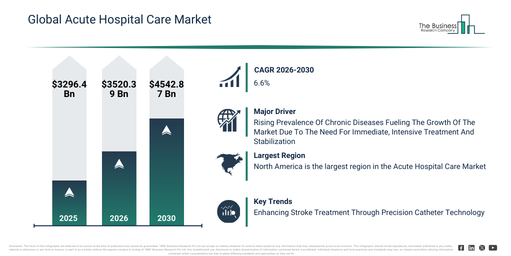
    Regarding the acute hospital care market, its valuation has experienced robust expansion historically, projected to advance from $3296.4 billion in 2025 to $3520.39 billion in 2026, reflecting a compound annual growth rate of 6.8%. This upward trajectory during the past period is underpinned by several key factors, including a heightened incidence of severe health conditions, the broader development of healthcare facilities, an increase in emergency and accident-related incidents, the integration of sophisticated surgical methodologies, and a continually expanding elderly demographic.

    The acute hospital care sector is poised for significant expansion over the coming years, projecting a market valuation of $4542.87 billion by 2030, driven by a compound annual growth rate (CAGR) of 6.6%. This anticipated growth stems from several key factors including the incorporation of digital patient monitoring technologies, the proliferation of specialized acute care facilities, increased financial backing for emergency and trauma care infrastructure, advancements in tele-ICU and remote patient care, and the utilization of predictive analytics to forecast patient outcomes. During this forecast period, prominent trends will include the enlargement of intensive care units (ICUs) and dedicated specialty units, a heightened demand for brief acute care and emergency services, a greater uptake of sophisticated monitoring and diagnostic tools, an intensified emphasis on post-operative and trauma management, and the establishment of uniform protocols designed for swift patient stabilization.

    Download A Free Sample Report For Comprehensive Market Insights:

    https://www.thebusinessresearchcompany.com/sample.aspx?id=24134&type=smp

    Acute Hospital Care Market Opportunity Drivers: What Is Creating New Revenue Potential?

    The expanding burden of long-term health conditions is poised to significantly boost the acute hospital care sector. These enduring ailments, which can last over a year and necessitate sustained medical intervention or impact daily life, are increasingly common. Factors like an aging global population and habits contributing to health risks are the primary drivers behind this trend. Acute hospital care plays a crucial role in managing flare-ups of these chronic conditions, delivering swift, intensive treatment to stabilize patients, avert further complications, and enhance recovery. As an illustration, the World Health Organization indicated in February 2024 that cancer cases are anticipated to surge to over 35 million new diagnoses by 2050, marking a substantial 77% rise from the approximately 20 million cases recorded in 2022. Consequently, the increasing incidence of chronic diseases is a key stimulant for the expansion of the acute hospital care market.

    Acute Hospital Care Market Segment Outlook: Which Categories Are Expanding The Fastest?

    The acute hospital care market covered in this report is segmented –

    1) By Service: Intensive Care Unit (ICU), Coronary Care Unit (CCU), Neonatal Intensive Care Unit (NICU)

    2) By Medical Condition: Emergency Care, Trauma Care, Acute Care Surgery, Short-term Stabilization

    3) By Facility Type: General Acute Care Hospitals, Specialized Hospitals

    Subsegments:

    1) By Intensive Care Unit (ICU): Medical ICU (MICU), Surgical ICU (SICU), Trauma ICU (TICU), Pediatric ICU (PICU), Cardiac ICU (CCU)

    2) By Coronary Care Unit (CCU): General Cardiac Care, Acute Myocardial Infarction Care, Post-surgical Cardiac Care, Arrhythmia Management, Cardiac Monitoring

    3) By Neonatal Intensive Care Unit (NICU): Level I Neonatal Intensive Care Unit (NICU), Level II Neonatal Intensive Care Unit (NICU), Level III Neonatal Intensive Care Unit (NICU), Level IV Neonatal Intensive Care Unit (NICU)

    Acute Hospital Care Market Innovation Trends Driving Future Development

    In the realm of acute hospital care, leading industry players are prioritizing innovations like inner diameter catheter systems to elevate the accuracy and effectiveness of patient treatment, aiming to minimize adverse events and boost therapeutic results. These catheter systems, characterized by their defined internal diameter, are engineered for controlled introduction and management of fluid or medicinal substances, finding application across a spectrum of medical interventions including IV therapy and catheterization processes. As an illustration, Johnson & Johnson MedTech, a prominent US entity within the Johnson & Johnson conglomerate, introduced the CEREGLIDE 92 Catheter System in February 2025, specifically targeting acute ischemic stroke management. This sophisticated catheter, furnished with a widened 0.092-inch inner diameter, affords enhanced access to distal regions, a vital factor in the successful treatment of individuals suffering from strokes. The CEREGLIDE 92 catheter serves as a conduit, enabling the navigation and deployment of interventional tools within the neurovascular network, with a particular emphasis on the M1 segment of the middle cerebral artery, a common site of damage in ischemic stroke incidents.

    Acute Hospital Care Market Key Companies And Competitive Benchmarking

    Major companies operating in the acute hospital care market are Ascension Health, HCA Healthcare Inc, Tenet Healthcare Corporation, Universal Health Services Inc, Community Health Systems Inc, Lifepoint Health Inc, Trinity Health, Providence Health and Services, CommonSpirit Health, AdventHealth, Mayo Clinic, Cleveland Clinic, Ramsay Health Care Limited, IHH Healthcare Berhad, Mediclinic International plc, Asklepios Kliniken GmbH and Co KGaA, Helios Kliniken GmbH, Apollo Hospitals Enterprise Limited, Fortis Healthcare Limited, Max Healthcare Institute Limited

    Access The Complete Acute Hospital Care Market Report:

    https://www.thebusinessresearchcompany.com/report/acute-hospital-care-global-market-report

    Acute Hospital Care Market Largest Region By Revenue And Market Share

    North Americawas the largest region in the acute hospital care market in 2025. Asia-Pacificis expected to be the fastest-growing region in the forecast period. The regions covered in the acute hospital care market report are Asia-Pacific, South East Asia, Western Europe, Eastern Europe, North America, South America, Middle East, Africa.

    Get in touch with us:

    The Business Research Company: https://www.thebusinessresearchcompany.com/

    Americas: +1 310-496-7795

    Asia: +44 7882 955267 & +91 8897263534

    Europe: +44 7882 955267

    Email us at: marketing@tbrc.info

    Follow us on:

    LinkedIn: https://in.linkedin.com/company/the-business-research-company

    YouTube: https://www.youtube.com/channel/UC24_fI0rV8cR5DxlCpgmyFQ

    Global Market Model: https://www.thebusinessresearchcompany.com/global-market-model
  • Acute Coronary Syndrome Market Growth Outlook Reveals A CAGR Of 7% And A Market Value Of $14.51 Billion By 2030

    Acute Coronary Syndrome Market Growth Outlook Reveals A CAGR Of 7% And A Market Value Of $14.51 Billion By 2030

    Enhanced with market attractiveness analysis, total addressable market evaluation, company benchmarking matrices, interactive Excel dashboards, expanded supply chain intelligence, emerging startup coverage, and detailed product insights, The Business Research Company’s 2026 market reports deliver more actionable and strategically valuable research.

    Acute Coronary Syndrome Market Forecast Highlighting Growth From $11.06 Billion To $14.51 Billion

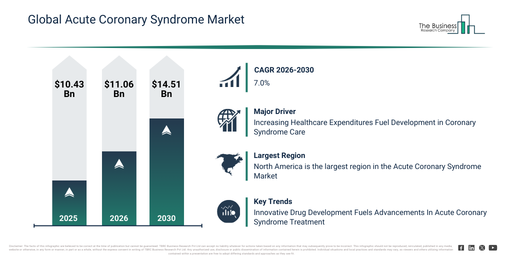
    The market for acute coronary syndrome has experienced significant expansion lately, projecting a rise from $10.43 billion in 2025 to $11.06 billion in 2026, reflecting a compound annual growth rate of 6.0%. Factors contributing to this growth trajectory in the past include an increasing incidence of heart conditions, a lack of widespread knowledge regarding preliminary ACS symptoms, improvements in cardiac care infrastructure within hospitals, the accessibility of established pharmaceutical treatments, and an aging global population.

    The market for acute coronary syndrome is projected to experience substantial expansion over the coming years, reaching an estimated value of $14.51 billion by the year 2030, driven by a compound annual growth rate of 7.0%. This anticipated growth during the forecast period is largely fueled by several key factors: the development of innovative anticoagulant and statin medications, a greater embrace of minimally invasive cardiac surgical techniques, the proliferation of specialized cardiac clinics, enhanced governmental efforts aimed at preventing heart disease, and notable advancements in diagnostic imaging and stress testing technologies. Furthermore, prevailing trends expected to shape this market include a surge in the adoption of early detection methods for ACS, increased utilization of percutaneous coronary intervention (PCI), heightened public and professional awareness regarding ACS risk factors and preventative measures, the expansion of hospital-based cardiac care facilities, and ongoing progress in both oral and parenteral therapeutic approaches for managing ACS.

    Download A Free Sample Report For Comprehensive Market Insights:

    https://www.thebusinessresearchcompany.com/sample.aspx?id=12985&type=smp

    Acute Coronary Syndrome Market Growth Momentum: Which Factors Are Influencing Demand?

    Rising healthcare spending is expected to be a significant catalyst for expansion within the acute coronary syndrome market. This spending encompasses all outlays for health-related goods, services, and actions over a set timeframe, whether at the individual, societal, national, or international level. Contributing factors to this surge include the increasing incidence of long-term illnesses, an expanding elderly demographic, innovations in medical science, and a greater desire for sophisticated medical interventions and care. Enhanced financial investment in healthcare directly stimulates the growth of the coronary syndrome sector by fostering the creation of improved diagnostic tools, cutting-edge treatments, and holistic care strategies, thereby meeting the escalating need for cardiovascular health services. Illustrating this trend, the UK’s Office for National Statistics reported in May 2023 that healthcare expenditure in the UK reached approximately $362.08 billion (£292 billion) in 2023, marking a nominal rise of 5.6%, with long-term health and social care spending also climbing by 2.8% in real terms during 2022. Consequently, escalating healthcare expenditures are poised to drive the acute coronary syndrome market forward.

    Acute Coronary Syndrome Market Segment Landscape: Which Areas Lead Market Development?

    The acute coronary syndrome market covered in this report is segmented –

    1) By Type: Non-St-Elevation Myocardial Infarction, St-Elevation Myocardial Infarction, Unstable Angina

    2) By Treatment: Statins, Beta blockers, ACE inhibitors, Anticoagulants, Other Treatment

    3) By Diagnosis: Stress Test, Blood Tests, Imaging, Other Diagnosis

    4) By Route Of Administration: Oral, Parenteral

    5) By End-User: Hospitals, Specialty clinics, Other End User

    Subsegments:

    1) By Non-ST-Elevation Myocardial Infarction: Medical Management, Percutaneous Coronary Intervention (PCI), Coronary Artery Bypass Grafting (CABG)

    2) By ST-Elevation Myocardial Infarction: Medical Management, Percutaneous Coronary Intervention (PCI), Coronary Artery Bypass Grafting (CABG)

    3) By Unstable Angina: Medical Management, Percutaneous Coronary Intervention (PCI), Coronary Artery Bypass Grafting (CABG)

    Acute Coronary Syndrome Market Trends Reshaping Industry Growth

    Within the acute coronary syndrome market, leading corporations are actively engaged in the creation of novel therapeutic agents aimed at combating this condition and solidifying their competitive standing. These enhanced drug development efforts hold the potential to boost the effectiveness of ACS treatments, subsequently diminishing both the temporal investment and resource allocation necessitated for patient care. As an illustration, consider the introduction of Lodoco in June 2023 by AGEPHA Pharma USA LLC, a United States-based pharmaceutical entity. This agent, having received endorsement from the Food and Drug Administration (FDA), a regulatory body within the US, represents a pioneering anti-inflammatory, atheroprotective cardiovascular therapy. Its established efficacy lies in mitigating the risks of cardiac events such as stroke, coronary revascularization procedures, myocardial infarction (MI), and ultimately, cardiovascular mortality among adult individuals afflicted with cardiovascular ailments, notably including acute coronary syndrome.

    Acute Coronary Syndrome Market Industry Leaders And Market Competition

    Major companies operating in the acute coronary syndrome market are Pfizer Inc., Johnson and Johnson Limited, Siemens AG, F. Hoffmann-La Roche Ltd., Merck & Co. Inc., Bayer AG, Novartis AG, Sanofi-Aventis LLC., Bristol-Myers Squibb Company, Thermo Fisher Scientific Inc., AstraZeneca PLC, Abbott Laboratories, Medtronic Plc, Takeda Pharmaceutical Company Limited, Eli Lilly and Co Ltd., Stryker Corporation, GE Healthcare Inc., Boehringer Ingelheim International GmbH, Boston Scientific Corporation, Daiichi Sankyo Company Limited, Terumo Corp., BioMérieux SA, Beckman Coulter Inc., Quidel Corporation, Bio-Rad Laboratories Inc., Biotronik Inc., Randox Laboratories Limited, Nihon Kohden Corporation, Trinity Biotech plc

    Access The Complete Acute Coronary Syndrome Market Report:

    https://www.thebusinessresearchcompany.com/report/acute-coronary-syndrome-global-market-report

    Acute Coronary Syndrome Market Regional Analysis And Leading Geography

    North Americawas the largest region in the acute coronary syndrome market in 2025. The regions covered in the acute coronary syndrome market report are Asia-Pacific, South East Asia, Western Europe, Eastern Europe, North America, South America, Middle East, Africa.

    Get in touch with us:

    The Business Research Company: https://www.thebusinessresearchcompany.com/

    Americas: +1 310-496-7795

    Asia: +44 7882 955267 & +91 8897263534

    Europe: +44 7882 955267

    Email us at: marketing@tbrc.info

    Follow us on:

    LinkedIn: https://in.linkedin.com/company/the-business-research-company

    YouTube: https://www.youtube.com/channel/UC24_fI0rV8cR5DxlCpgmyFQ

    Global Market Model: https://www.thebusinessresearchcompany.com/global-market-model
  • Acute Care Telemedicine Market Forecast Highlights Expansion From $40.88 Billion To $78.29 Billion Through 2030

    Acute Care Telemedicine Market Forecast Highlights Expansion From $40.88 Billion To $78.29 Billion Through 2030

    Through market attractiveness analysis, total addressable market evaluation, company benchmarking matrices, interactive Excel dashboards, expanded supply chain intelligence, emerging startup coverage, and detailed product insights, The Business Research Company’s 2026 market reports provide more actionable and strategically valuable research.

    Acute Care Telemedicine Market Revenue Growth Supported By A CAGR Of 78.29% Through 2030

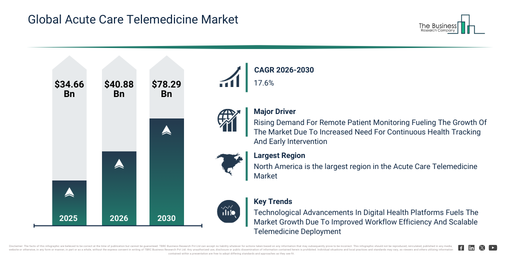
    The domain of acute care telemedicine has experienced substantial expansion recently, with projections indicating a significant upward trend. It is anticipated to increase from a valuation of $34.66 billion in 2025 to $40.88 billion by 2026, demonstrating a compound annual growth rate (CAGR) of 17.9%. Factors contributing to this surge during the preceding period include the development of emergency care facilities, a scarcity of in-person medical experts, widespread acceptance of collaborative remote care, escalating needs in critical care services, and advancements in wireless communication infrastructure.

    The acute care telemedicine sector is poised for substantial expansion, projecting a market valuation of $78.29 billion by 2030, fueled by a compound annual growth rate of 17.6%. This forecasted surge is propelled by several key factors including amplified investments in emergency telehealth infrastructures, a burgeoning need for swift virtual medical interventions, the proliferation of tele-ICU services, a heightened emphasis on providing critical care remotely, and the increasing integration of artificial intelligence for triage purposes. Furthermore, prevailing trends shaping this period encompass the wider implementation of telemedicine carts designed for high-acuity care, a greater reliance on immediate remote specialist consultations, the incorporation of portable diagnostic equipment, the broadening scope of emergency telehealth offerings, and a reinforced commitment to low-latency communication networks.

    Download A Free Sample Report For Comprehensive Market Insights:

    https://www.thebusinessresearchcompany.com/sample.aspx?id=25688&type=smp

    Acute Care Telemedicine Market Expansion Drivers: What Is Shaping Future Growth?

    The market for acute care telemedicine is anticipated to experience expansion driven by an increasing need for remote patient monitoring capabilities. This remote patient monitoring utilizes digital tools to gather and relay health information from patients outside conventional medical facilities to healthcare professionals, facilitating evaluation and sustained care. Such a surge in demand for monitoring patients remotely is attributed to the increased incidence of chronic illnesses necessitating constant health surveillance and prompt interventions to avert adverse outcomes and decrease hospitalizations. Acute care telemedicine facilitates this remote monitoring by allowing for immediate assessments and swift medical reactions to significant shifts in a patient’s health status, irrespective of their location away from healthcare institutions. For illustration, as reported by ElectroIQ, a US technology firm, in January 2025, heightened interest in healthcare delivered at home resulted in a 20% uplift in remote monitoring device sales compared to the preceding year, thereby underscoring the influence of remote patient monitoring demand on the growth trajectory of the acute care telemedicine sector.

    Acute Care Telemedicine Market Segments: Where Are The Largest Growth Opportunities?

    The acute care telemedicine market covered in this report is segmented –

    1) By Product Type: Telehealth Units, Telemedicine Carts, Portable Telemedicine Systems

    2) By Delivery: Clinician To Patient, Clinician To Clinician

    3) By Connectivity: Local Area Network (LAN), Wireless

    4) By Application: Emergency Medicine, Critical Care, Virtual Emergency Triage

    5) By End User: Hospitals, Clinics, Ambulatory Surgical Centers, Other End Users

    Subsegments:

    1) By Telehealth Units: Fixed Telehealth Stations, Wall-Mounted Telehealth Systems, Integrated Telemedicine Workstations

    2) By Telemedicine Carts: Basic Telemedicine Carts, Advanced and High-Acuity Telemedicine Carts, Specialty-Specific Carts

    3) By Portable Telemedicine Systems: Handheld Telemedicine Devices, Mobile Acute Care Teleconsultation Platforms, Continuous Vital Sign Monitoring Devices

    Acute Care Telemedicine Market Strategic Trends: What Is Defining The Next Phase Of Growth?

    Key players within the acute care telemedicine sector are prioritizing innovation through technologies like digital health platforms, aiming to boost the efficiency of clinical processes, improve real-time collaboration among caregivers, and expand the reach of telemedicine solutions in various acute care environments. These digital health platforms encompass comprehensive software systems that leverage digital technologies to facilitate the provision, coordination, and oversight of healthcare, offering capabilities such as immediate communication channels, remote patient observation, data analysis, and optimized clinical pathways. As an illustration, Avel eCare, a telemedicine service provider based in the United States, introduced its proprietary Avel eSync clinical workflow platform in May 2024, specifically engineered to simplify the implementation of telemedicine services across a spectrum of healthcare settings. This platform incorporates adaptable clinical workflows, sophisticated scheduling mechanisms, built-in secure video conferencing, and integrated analytical tools to aid informed decision-making grounded in data. Avel eSync has been developed to augment telemedicine services that connect healthcare professionals, empowering healthcare entities to customize workflows for specific areas like emergency medicine, intensive care units, mental health services, and elder care, all while adhering to necessary licensing, credentialing, and regulatory requirements.

    Acute Care Telemedicine Market Major Participants And Competitive Dynamics

    Major companies operating in the acute care telemedicine market are Koninklijke Philips NV, Teladoc Health, AMN Healthcare Inc, US Acute Care Solutions LLC, Enghouse Systems Limited, American Well Corporation, Caregility, Eagle Telemedicine, RelyMD Inc, eVisit LLC, Teledigm Health, Vitalchat Inc, GenieMD Inc, SOC Telemed, InTouch Health, GlobalMed, Advanced ICU Care, TeleSpecialists LLC, Avel eCare, Access TeleCare, Bluestream Health, RapidSOS

    Access The Complete Acute Care Telemedicine Market Report:

    https://www.thebusinessresearchcompany.com/report/acute-care-telemedicine-global-market-report

    Acute Care Telemedicine Market Geographic Analysis: Where Is Demand Growing The Fastest?

    North Americawas the largest region in the acute care telemedicine market in 2025. Asia-Pacificis expected to be the fastest-growing region in the forecast period. The regions covered in the acute care telemedicine market report are Asia-Pacific, South East Asia, Western Europe, Eastern Europe, North America, South America, Middle East, Africa.

    Get in touch with us:

    The Business Research Company: https://www.thebusinessresearchcompany.com/

    Americas: +1 310-496-7795

    Asia: +44 7882 955267 & +91 8897263534

    Europe: +44 7882 955267

    Email us at: marketing@tbrc.info

    Follow us on:

    LinkedIn: https://in.linkedin.com/company/the-business-research-company

    YouTube: https://www.youtube.com/channel/UC24_fI0rV8cR5DxlCpgmyFQ

    Global Market Model: https://www.thebusinessresearchcompany.com/global-market-model
  • Acute Bacterial Skin And Skin Structure Infections Market Expected To Reach $20.79 Billion By 2030 As Growth Accelerates At 10.2% CAGR

    Acute Bacterial Skin And Skin Structure Infections Market Expected To Reach $20.79 Billion By 2030 As Growth Accelerates At 10.2% CAGR

    Delivering more actionable and strategically valuable research, The Business Research Company’s 2026 market reports feature market attractiveness analysis, total addressable market evaluation, company benchmarking matrices, interactive Excel dashboards, expanded supply chain intelligence, emerging startup coverage, and detailed product insights.

    Acute Bacterial Skin And Skin Structure Infections Market Value Expansion And Long-Term Growth Outlook

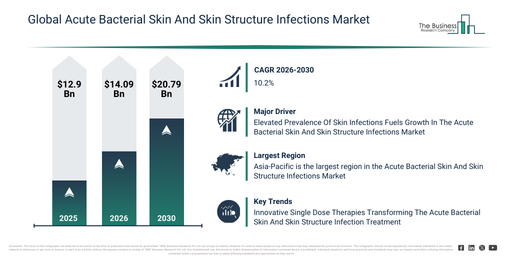
    The global market for diagnosing and treating acute bacterial skin and skin structure infections has experienced robust expansion recently. Projections indicate a rise from $12.9 billion in 2025 to $14.09 billion by 2026, demonstrating a compound annual growth rate of 9.2%. Factors contributing to this historical growth trajectory include a scarcity of readily available broad-spectrum antibiotics, an increasing incidence of infections acquired in healthcare settings, heightened public and medical awareness regarding the potential complications of skin infections, expanded access to healthcare within communities, and the widespread implementation of standardized infection control procedures.

    The global market for acute bacterial skin and skin structure infections is poised for substantial expansion, projected to reach $20.79 billion by 2030, reflecting a compound annual growth rate of 10.2%. This anticipated surge is fueled by advancements in novel antibiotic development, increased funding for antimicrobial research, the proliferation of community-focused infection control initiatives, broader access through hospital pharmacy networks, and the integration of swift diagnostic tools. Key influencing factors during this period will include a rise in the occurrence of these infections, greater acceptance of innovative antibiotics and combination treatments, the growth of both hospital and community healthcare infrastructure, a higher utilization of both oral and injectable antibiotic treatments, and concerted efforts to curb rates of infections acquired within healthcare settings.

    Download A Free Sample Report For Comprehensive Market Insights:

    https://www.thebusinessresearchcompany.com/sample.aspx?id=13282&type=smp

    Acute Bacterial Skin And Skin Structure Infections Market Development Factors: Which Trends Are Supporting Demand?

    The increasing incidence of skin ailments is anticipated to be a significant driver for the expansion of the acute bacterial skin and skin structure infections market in the coming period. Skin infections, characterized by the invasion and proliferation of microorganisms like bacteria, fungi, or viruses within the skin, result in a spectrum of symptoms and distress. This surge in skin infections subsequently boosts the demand for effective therapeutic interventions, including antibiotics and novel treatment modalities, to manage acute bacterial and skin structure infections, thereby facilitating optimal patient care and recovery. For example, data released in March 2023 by the World Health Organization, a UN agency headquartered in Switzerland, indicated that approximately 1.8 billion individuals worldwide contend with skin conditions at any given time. Among these, neglected tropical diseases account for roughly 10%, with fungal and bacterial infections comprising 34% and 23% respectively, frequently contributing to substantial mortality. Consequently, the escalating occurrence of skin infections is poised to fuel the growth trajectory of the acute bacterial skin and skin structure infections market.

    Acute Bacterial Skin And Skin Structure Infections Market Segment Analysis: What Are The Major Market Categories?

    The acute bacterial skin and skin structure infections market covered in this report is segmented –

    1) By Type Of Infection: Hospital-Acquired Acute Bacterial Skin And Skin Structure Infections, Community-Acquired Acute Bacterial Skin And Skin Structure Infections

    2) By Active Ingredients: Delafloxacin, Vancomycin, Ceftaroline Fosamil, Oritavancin, Tedizolid, Daptomycin, Tigecycline, Linezolid, Other Active Ingredients

    3) By Route Of Administration: Oral, Parenteral

    4) By Distribution Channel: Hospital Pharmacies, Retail Pharmacies, Online Pharmacies

    Subsegments:

    1) By Hospital-Acquired Acute Bacterial Skin And Skin Structure Infections (HABSSSIs): Surgical Site Infections, Catheter-Related Infections, Infections Related To Medical Devices

    2) By Community-Acquired Acute Bacterial Skin And Skin Structure Infections (CABSSSIs): Cellulitis, Abscesses, Impetigo, Folliculitis, Wound Infections

    Acute Bacterial Skin And Skin Structure Infections Market Transformation Trends: Which Innovations Are Driving Change?

    Key players in the acute bacterial skin and skin structure infections market are prioritizing the creation of novel single-administration treatments, like Dalbonova, to enhance their market standing. Dalbonova represents a potent 1500 mg single-dose treatment solution, offering both convenience and efficacy, thus enabling patient recovery with a solitary administration. Demonstrating this trend, BDR Pharmaceuticals International Pvt. Ltd., an Indian firm specializing in active pharmaceutical ingredients and formulations across various therapeutic areas, including acute bacterial skin and skin structure infections, introduced the Dalbonova injection in August 2023. This groundbreaking single-dose therapy targets acute bacterial skin and skin structure infections by minimizing the risk of hospital-acquired conditions and negating the necessity for inpatient care. Specifically formulated for infections caused by certain gram-positive bacteria, Dalbonova Injection is suitable for treating acute bacterial skin and skin structure infections (ABSSSI) in patients across all age groups, from newborns to adults.

    Acute Bacterial Skin And Skin Structure Infections Market Leading Companies Driving Competitive Growth

    Major companies operating in the acute bacterial skin and skin structure infections market are Pfizer Inc., AbbVie Inc., Novartis AG, GSK PLC, Takeda Pharmaceutical Company Limited, Viatris Inc., Teva Pharmaceutical Industries Ltd., Sun Pharmaceutical Industries Limited, Dr. Reddy’s Laboratories Ltd., Cipla Limited, Lupin Limited, Zydus Lifesciences Limited, Aurobindo Pharma Limited, Glenmark Pharmaceuticals Ltd., Alkem Laboratories Limited, Aspen Pharmacare Holdings Limited, Melinta Therapeutics LLC, Abbott Laboratories, Fresenius SE & Co. KGaA, Menarini Group

    Access The Complete Acute Bacterial Skin And Skin Structure Infections Market Report:

    https://www.thebusinessresearchcompany.com/report/acute-bacterial-skin-and-skin-structure-infections-global-market-report

    Acute Bacterial Skin And Skin Structure Infections Market Global Footprint: Which Region Holds Market Leadership?

    Asia-Pacificwas the largest region in the acute bacterial skin and skin structure infections market in 2025. North Americais expected to be the fastest-growing region in the forecast period. The regions covered in the acute bacterial skin and skin structure infections market report are Asia-Pacific, South East Asia, Western Europe, Eastern Europe, North America, South America, Middle East, Africa.

    Get in touch with us:

    The Business Research Company: https://www.thebusinessresearchcompany.com/

    Americas: +1 310-496-7795

    Asia: +44 7882 955267 & +91 8897263534

    Europe: +44 7882 955267

    Email us at: marketing@tbrc.info

    Follow us on:

    LinkedIn: https://in.linkedin.com/company/the-business-research-company

    YouTube: https://www.youtube.com/channel/UC24_fI0rV8cR5DxlCpgmyFQ

    Global Market Model: https://www.thebusinessresearchcompany.com/global-market-model
  • Acute Agitation And Aggression Treatment Market Set To Grow From $6.36 Billion In 2026 To $8.37 Billion By 2030 At A CAGR Of 7.1%

    Acute Agitation And Aggression Treatment Market Set To Grow From $6.36 Billion In 2026 To $8.37 Billion By 2030 At A CAGR Of 7.1%

    Enhanced with market attractiveness analysis, total addressable market evaluation, company benchmarking matrices, interactive Excel dashboards, expanded supply chain intelligence, emerging startup coverage, and detailed product insights, The Business Research Company’s 2026 market reports deliver more actionable and strategically valuable research.

    Acute Agitation And Aggression Treatment Market Expected To Reach $8.37 Billion By 2030 At 7.1% CAGR

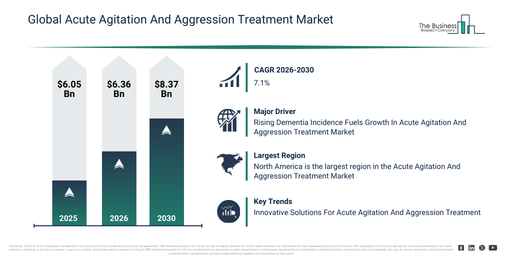
    The market for treating acute agitation and aggression has experienced robust expansion, projected to advance from a valuation of $6.05 billion in 2025 to $6.36 billion by 2026, reflecting a compound annual growth rate of 5.2%. This historical growth trajectory has been influenced by a confluence of factors including the escalating incidence of psychiatric disorders, an upturn in emergency room visits related to agitation, enhanced accessibility to antipsychotic treatments, the broader scope of mental health services, and heightened public consciousness regarding behavioral health issues.

    The market for treating acute agitation and aggression is poised for significant expansion in the coming years, projected to reach $8.37 billion by 2030 with a compound annual growth rate of 7.1%. This projected growth stems from several key factors including a rising preference for therapies that yield quick results, augmented funding for research into neuropsychiatric medications, a greater utilization of technology in mental health care, the broader implementation of comprehensive behavioral health services, and an intensified commitment to patient-focused treatment plans. During this forecast period, notable trends will include a surge in the use of swift-acting pharmacological interventions, a heightened emphasis on individualized psychiatric care, increased integration of remote patient monitoring technologies, the development of more robust emergency protocols for behavioral health crises, and a strengthened commitment to ensuring patient safety.

    Download A Free Sample Report For Comprehensive Market Insights:

    https://www.thebusinessresearchcompany.com/sample.aspx?id=13078&type=smp

    Acute Agitation And Aggression Treatment Market Industry Drivers: What Is Driving Revenue Growth?

    The rising prevalence of dementia is anticipated to be a primary catalyst for the expansion of the market focused on treating acute agitation and aggression. Dementia encompasses a spectrum of conditions marked by deficits in memory, cognitive function, and the ability to perform daily activities. A commonly witnessed symptom among individuals with dementia is agitation, which can manifest as physical cues like restlessness, performing repeated actions, or constant hand movements. Treatments for acute agitation and aggression are crucial in dementia care; they serve to mitigate the danger associated with severe symptoms, enhance the patient’s overall well-being, and address the root causes of the agitation. To illustrate, by February 2023, data from the Australian Institute of Health and Welfare, a governmental body in Australia, indicated that approximately 401,300 Australians were diagnosed with dementia in 2022, with projections suggesting this number will nearly double to 849,300 by 2058. Consequently, the escalating incidence of dementia directly fuels the growth trajectory of the acute agitation and aggression treatment market.

    Acute Agitation And Aggression Treatment Market Segment Breakdown: Which Categories Generate The Most Revenue?

    The acute agitation and aggression treatment market covered in this report is segmented –

    1) By Treatment Approach: Behavioral Approaches, Environmental Interventions, Pharmacologic Approaches

    2) By Drug Class: Anti-Psychotics, Benzodiazepines, Other Drug Classes

    3) By Route of Administration: Oral, Intramuscular, Other Routes of Administrations

    4) By Indication: Schizophrenia, Dementia, Bipolar Disorder, Depression, Drug-Induced Agitation And Aggression, Alcohol Withdrawal, Other Indications

    5) By End User: Hospitals And Ambulatory Surgical Centers, Psychiatric Care Facilities, Other End Users

    Subsegments:

    1) By Behavioral Approaches: Cognitive Behavioral Therapy (CBT), De-escalation Techniques, Psychoeducation, Relaxation Therapy, Other Behavioral Interventions

    2) By Environmental Interventions: Sensory Modifications, Safe Room Or Containment Strategies, Environmental Noise Reduction, Lighting And Temperature Adjustments, Other Environmental Interventions

    3) By Pharmacologic Approaches: Antipsychotic Medications, Benzodiazepine Medications, Mood Stabilizers, Other Pharmacologic Agents, Adjunctive Medications

    #Acute Agitation And Aggression Treatment Market Growth Trends: What Is Influencing The Future Outlook?

    In the realm of acute agitation and aggression treatment, key players are concentrating their efforts on pioneering new solutions, exemplified by the introduction of a generic olanzapine formulation, akin to Zyprexa, to cater to patient requirements. This generic olanzapine represents an off-brand equivalent of the original Zyprexa medication, which utilizes olanzapine as its core therapeutic component for managing psychotic disorders. A notable instance of this trend occurred in September 2023 when Camber Pharmaceuticals, a United States pharmaceutical entity, released its generic rendition of Zyprexa. This particular atypical antipsychotic agent is prescribed for alleviating the sudden and intense agitation linked to conditions like schizophrenia and bipolar I disorder manic episodes.

    Acute Agitation And Aggression Treatment Market Key Players And Strategic Industry Positioning

    Major companies operating in the acute agitation and aggression treatment market are Pfizer Inc., Johnson and Johnson Pvt Ltd., F Hoffmann-La Roche Ltd., AbbVie Inc., Novartis AG, Sanofi SA, Bristol-Myers Squibb Company, GlaxoSmithKline plc., Eli Lilly and Company, Teva Pharmaceutical Industries Ltd., Otsuka Pharmaceutical Co Ltd., Mylan NV, Biogen Inc., Bausch Health Companies Inc., UCB SA, Servier Laboratories, Sun Pharmaceutical Industries Ltd., AstraZeneca PLC, Ono Pharmaceutical Co Ltd., Apotex Inc., H Lundbeck A/S, Hikma Pharmaceuticals PLC, Amneal Pharmaceuticals LLC, Neurocrine Biosciences Inc., Aurobindo Pharma Limited, Alkermes plc., Indivior plc., Sunovion Pharmaceuticals Inc., Vanda Pharmaceuticals Inc., and Alexza Pharmaceuticals Inc

    Access The Complete Acute Agitation And Aggression Treatment Market Report:

    https://www.thebusinessresearchcompany.com/report/acute-agitation-and-aggression-treatment-global-market-report

    Acute Agitation And Aggression Treatment Market Regional Distribution: Which Areas Drive Market Expansion?

    North Americawas the largest region in the acute agitation and aggression treatment market in 2025. Asia-Pacific is expected to be the fastest-growing region in the forecast period. The regions covered in the acute agitation and aggression treatment market report are Asia-Pacific, South East Asia, Western Europe, Eastern Europe, North America, South America, Middle East, Africa.

    Get in touch with us:

    The Business Research Company: https://www.thebusinessresearchcompany.com/

    Americas: +1 310-496-7795

    Asia: +44 7882 955267 & +91 8897263534

    Europe: +44 7882 955267

    Email us at: marketing@tbrc.info

    Follow us on:

    LinkedIn: https://in.linkedin.com/company/the-business-research-company

    YouTube: https://www.youtube.com/channel/UC24_fI0rV8cR5DxlCpgmyFQ

    Global Market Model: https://www.thebusinessresearchcompany.com/global-market-model
  • Active Wound Care Market Opportunities Are Emerging Beyond Traditional Growth Areas

    Active Wound Care Market Opportunities Are Emerging Beyond Traditional Growth Areas

    Through market attractiveness analysis, total addressable market evaluation, company benchmarking matrices, interactive Excel dashboards, expanded supply chain intelligence, emerging startup coverage, and detailed product insights, The Business Research Company’s 2026 market reports provide more actionable and strategically valuable research.

    #Active Wound Care Market Size And Revenue Forecast Through 2030

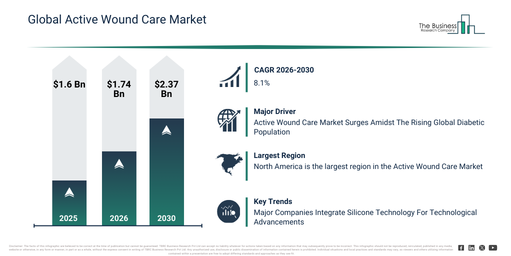
    Fueled by several contributing factors, the active wound care market experienced robust expansion, projecting a climb from $1.6 billion in 2025 to $1.74 billion by 2026, reflecting an 8.4% compound annual growth rate. This past growth trajectory was notably influenced by the restricted access to sophisticated wound management solutions, a surge in the incidence of persistent wounds, an increase in wound treatment interventions within healthcare facilities, heightened awareness surrounding diabetic foot ulcers, and the widespread utilization of traditional wound coverings.

    Download A Free Sample Report For Comprehensive Market Insights:

    https://www.thebusinessresearchcompany.com/sample.aspx?id=8123&type=smp

    #Active Wound Care Market Growth Factors: Which Forces Are Supporting Market Expansion?

    The escalating global prevalence of diabetes is poised to be a primary catalyst for the expansion of the active wound care market. Obesity, a common characteristic linked to elevated blood glucose levels, frequently leads to the development of sores and ulcers, significantly heightening the vulnerability to infections and other serious health issues. Active wound care interventions facilitate a structured approach to healing by employing diverse solutions and therapies for wounds, consequently stimulating demand for these treatments. Illustratively, the International Diabetes Federation (IDF), a non-profit entity headquartered in Belgium, reported in April 2025 that an estimated 589 million adults aged 20–79 worldwide currently live with diabetes, representing 11.1% of the global adult population in this demographic, with projections indicating this figure will climb to 853 million (13%) by the year 2050. Furthermore, it is estimated that approximately 252 million adults with diabetes remain undiagnosed. Consequently, the increasing incidence of diabetes and related mortality will serve as a key driver for the active wound care market’s growth.

    Active Wound Care Market Segmentation: How Is The Market Structured Across Key Categories?

    The active wound care market covered in this report is segmented –

    1) By Product: Biomaterials, Skin-Substitutes, Synthetic Skin-Substitute, Growth Factors

    2) By Indications: Burns, Diabetic Foot Ulcers, Pressure Ulcers, Lower Limb Ulcers

    3) By Application: Chronic Wounds, Acute Wounds

    4) By End-User: Hospitals, Clinics, Home Care Settings, Other End-users

    Subsegments:

    1) By Biomaterials: Collagen-Based Products, Hydrogel Dressings, Alginate Dressings

    2) By Skin-Substitutes: Autografts, Allografts, Xenografts

    3) By Synthetic Skin-Substitutes: Polyurethane Films, Silicone-Based Products, Dermal Regeneration Templates

    4) By Growth Factors: Platelet-Derived Growth Factors (PDGF), Epidermal Growth Factors (EGF), Vascular Endothelial Growth Factors (VEGF)

    Active Wound Care Market Industry Trends: What Changes Are Reshaping Demand?

    To maintain their standing in the active wound care sector, leading corporations are introducing innovative products incorporating silicone technology, which involves the use of synthetic polymers composed of silicon, oxygen, carbon, and hydrogen. An illustrative example is Convatec, a medical products and technologies firm based in the UK, which introduced ConvaFoam in January 2023. This advanced foam dressing was developed to meet the requirements of both healthcare providers and individuals receiving care. ConvaFoam leverages enhanced silicone technology to offer superior adhesion, increased absorbency, effective fluid management, extended wear capabilities for up to seven days, and a unique patterned film design intended to aid in the observation of exudate. This product moves beyond basic wound coverage, simplifying the wound care process and supporting patients and medical professionals in tackling a pervasive health challenge.

    Active Wound Care Market Competitive Landscape And Leading Companies

    Major companies operating in the active wound care market are Smith & Nephew PLC, MiMedx Group Inc., Tissue Regenix Group, Organogenesis Inc., Acell Inc., Integra Life Sciences Holdings Corporation, Solsys Medical LLC, Osiris Therapeutics Inc., Cytori Therapeutics Inc., Human BioSciences Inc., Wright Medical Group NV, Mölnlycke Health Care AB, Medline Industries Inc., AVITA Medical Inc., ConvaTec Inc., Stryker Corporation, 3M Company, Acelity L.P. Inc., B. Braun Melsungen AG, BSN Medical GmbH, Cardinal Health Inc., Celularity Inc., Coloplast A/S, Generex Biotechnology Corp., Hollister Incorporated, Johnson & Johnson Inc., Lohmann & Rauscher GmbH & Co. Kg, Medtronic PLC, PAUL HARTMANN AG, Adynxx Inc., Derma sciences Inc., Baxter International Inc., Axio Biosolutions

    Access The Complete Active Wound Care Market Report:

    https://www.thebusinessresearchcompany.com/report/active-wound-care-global-market-report

    Active Wound Care Market Leading Geography: Which Region Generates The Most Revenue?

    North Americawas the largest region in the active wound care market in 2025. The regions covered in the active wound care market report are Asia-Pacific, South East Asia, Western Europe, Eastern Europe, North America, South America, Middle East, Africa.

    Get in touch with us:

    The Business Research Company: https://www.thebusinessresearchcompany.com/

    Americas: +1 310-496-7795

    Asia: +44 7882 955267 & +91 8897263534

    Europe: +44 7882 955267

    Email us at: marketing@tbrc.info

    Follow us on:

    LinkedIn: https://in.linkedin.com/company/the-business-research-company

    YouTube: https://www.youtube.com/channel/UC24_fI0rV8cR5DxlCpgmyFQ

    Global Market Model: https://www.thebusinessresearchcompany.com/global-market-model
  • Actinic Keratosis Treatment Market Expansion Is Opening New Pathways For Strategic Investment

    Actinic Keratosis Treatment Market Expansion Is Opening New Pathways For Strategic Investment

    Delivering more actionable and strategically valuable research, The Business Research Company’s 2026 market reports feature market attractiveness analysis, total addressable market evaluation, company benchmarking matrices, interactive Excel dashboards, expanded supply chain intelligence, emerging startup coverage, and detailed product insights.

    Actinic Keratosis Treatment Market Growth From $3.67 Billion In 2026 To $4.93 Billion By 2030 At A CAGR Of 7.7%

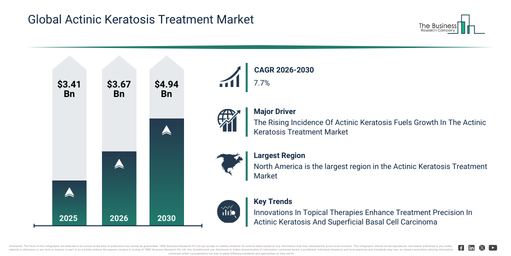
    The actinic keratosis treatment market experienced robust expansion recently. Projections indicate a rise from $3.41 billion in 2025 to $3.67 billion in 2026, demonstrating a compound annual growth rate (CAGR) of 7.7%. This historical growth trajectory was fueled by several factors, including an increased incidence of actinic keratoses linked to UV radiation exposure, a scarcity of therapeutic choices in earlier times, heightened public understanding of dermatological issues, greater utilization of cryotherapy and laser treatments, and the accessibility of prescription drugs.

    The market for actinic keratosis treatments is poised for significant expansion in the coming years, projecting a rise to $4.94 billion by 2030, driven by a compound annual growth rate of 7.7%. This anticipated growth is fueled by several key factors, including the creation of innovative topical solutions and photodynamic therapies, increased financial backing for dermatology practices, a greater acceptance of combined treatment approaches, the burgeoning availability of at-home care and self-administered options, and progress in less invasive procedural techniques. Furthermore, prominent trends expected to influence this market during the forecast period encompass a heightened utilization of topical treatments for actinic keratosis, a growing inclination towards photodynamic therapy, the expanding application of medications such as fluorouracil, imiquimod, and diclofenac, the proliferation of dermatology clinics and laser therapy facilities, and a general uplift in awareness concerning sun protection and home-based treatment strategies.

    Download A Free Sample Report For Comprehensive Market Insights:

    https://www.thebusinessresearchcompany.com/sample.aspx?id=8283&type=smp

    Actinic Keratosis Treatment Market Demand Drivers: What Is Fueling Industry Growth?

    The expansion of the actinic keratosis treatment market is anticipated to be fueled by an increasing preference for minimally invasive therapeutic approaches. These procedures, characterized by minimal or absent incisions, result in less tissue trauma and swifter convalescence than conventional open surgical methods. Factors such as an expanding elderly demographic in affluent nations, where individuals frequently opt for treatments with expedited recovery and diminished risks, are contributing to the heightened demand for these less invasive interventions. Consequently, these minimally invasive techniques enhance the actinic keratosis treatment landscape by presenting patients with more accessible and efficient alternatives that involve less distress and promote quicker healing. Illustratively, the British Association of Aesthetic Plastic Surgeons reported a 5% surge in cosmetic surgical procedures between 2023 and 2024, totaling 27,462 in the latter year, as noted in April 2025. This escalating trend in less invasive treatments directly correlates with the projected growth of the actinic keratosis treatment market.

    Actinic Keratosis Treatment Market Segmentation Trends And Revenue Drivers

    The actinic keratosis treatment market covered in this report is segmented –

    1) By Treatment: Topical Treatment, Procedural Modality, Photodynamic Therapy

    2) By Medication: Fluorouracil Cream, Imiquimod Cream, Ingenol Mebutate Gel, Diclofenac Gel

    3) By End User: Hospitals, Private Dermatology Clinics, Laser Therapy Centers, Homecare

    Subsegments:

    1) By Topical Treatment: 5-Fluorouracil (5-FU), Imiquimod, Ingenol Mebutate, Diclofenac

    2) By Procedural Modality: Cryotherapy, Curettage And Electrosurgery, Laser Therapy

    3) By Photodynamic Therapy: ALA-Based PDT, MAL-Based PDT

    Actinic Keratosis Treatment Market Innovation Trends: Which Developments Are Transforming The Industry?

    Within the actinic keratosis treatment sector, key industry players are concentrating their efforts on innovating sophisticated approaches, including multifaceted topical treatments designed to enhance therapeutic outcomes, reduce side effects, and offer dermatologists straightforward prescription choices. These comprehensive topical treatments involve compounds that blend several active components to combat precancerous skin lesions while simultaneously aiding in skin rejuvenation. As an illustration, SKNV, a US-based pioneer in dermatological advancements, introduced Kefunova Cream in April 2025. This topical agent, formulated with fluorouracil 5% and calcipotriene 0.005%, is indicated for the management of actinic keratosis (AK) and superficial basal cell carcinoma (sBCC), targeting the affected skin with direct application and serving as a physician-prescribed solution for those addressing these dermatological concerns.

    #Actinic Keratosis Treatment Market Industry Leaders: Which Organizations Are Driving Competition?

    Major companies operating in the actinic keratosis treatment market are Sun Pharmaceutical Industries Ltd., Hill Dermaceuticals Inc., Bausch Health Companies Inc., LEO Pharma A/S, Almirall SA, Biofrontera AG, Galderma SA, Mylan NV, Cipher Pharmaceuticals Inc., Pierre Fabre Pharmaceuticals Inc., Cutanea Life Sciences Inc., DUSA Pharmaceuticals Inc., Foamix Pharmaceuticals Ltd., Hikma Pharmaceuticals PLC, Innocutis Holdings LLC, Mayne Pharma Group Limited, Meda AB, Merz Pharma GmbH & Co KGaA, Perrigo Company PLC, Promius Pharma LLC, Ranbaxy Laboratories Limited, Sandoz International GmbH, Stiefel Laboratories Inc., Teva Pharmaceutical Industries Ltd., Valeant Pharmaceuticals International Inc., Zydus Pharmaceuticals Inc., Dermira Inc., Sol-Gel Technologies Ltd., Verrica Pharmaceuticals Inc.

    Access The Complete Actinic Keratosis Treatment Market Report:

    https://www.thebusinessresearchcompany.com/report/actinic-keratosis-treatment-global-market-report

    Actinic Keratosis Treatment Market Regional Outlook: Where Are The Largest Opportunities Located?

    North Americawas the largest region in the actinic keratosis treatment market in 2025. Asia-Pacificis expected to be the fastest-growing region in the forecast period. The regions covered in the actinic keratosis treatment market report are Asia-Pacific, South East Asia, Western Europe, Eastern Europe, North America, South America, Middle East, Africa.

    Get in touch with us:

    The Business Research Company: https://www.thebusinessresearchcompany.com/

    Americas: +1 310-496-7795

    Asia: +44 7882 955267 & +91 8897263534

    Europe: +44 7882 955267

    Email us at: marketing@tbrc.info

    Follow us on:

    LinkedIn: https://in.linkedin.com/company/the-business-research-company

    YouTube: https://www.youtube.com/channel/UC24_fI0rV8cR5DxlCpgmyFQ

    Global Market Model: https://www.thebusinessresearchcompany.com/global-market-model
  • Actinic Keratosis Market Trends Are Creating New Opportunities For Industry Leaders

    Actinic Keratosis Market Trends Are Creating New Opportunities For Industry Leaders

    Enhanced with market attractiveness analysis, total addressable market evaluation, company benchmarking matrices, interactive Excel dashboards, expanded supply chain intelligence, emerging startup coverage, and detailed product insights, The Business Research Company’s 2026 market reports deliver more actionable and strategically valuable research.

    Actinic Keratosis Market Expansion Outlook: What Revenue Opportunities Lie Ahead?

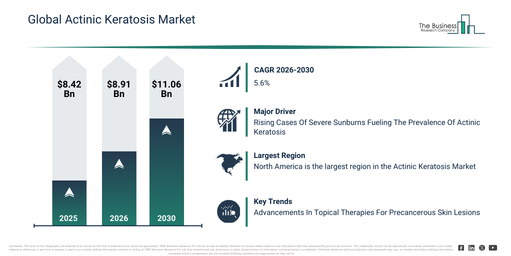
    The actinic keratosis market has experienced robust expansion lately, projected to increase from $8.42 billion in 2025 to $8.91 billion in 2026, reflecting a compound annual growth rate of 5.8%. This upward trend in the historical period stems from factors such as increased UV radiation exposure and a higher occurrence of sunburns, coupled with a scarcity of potent topical treatments, a rise in skin cancer cases, the development of dermatological healthcare facilities, and the utilization of standard surgical interventions.

    The market for actinic keratosis is poised for significant expansion in the coming years, projected to reach $11.06 billion by 2030, reflecting a compound annual growth rate of 5.6%. This anticipated growth trajectory is fueled by several key factors, including advancements in photodynamic therapies, a greater embrace of combined topical and procedural treatment approaches, the proliferation of hospital and dermatology clinic facilities, heightened public consciousness regarding the importance of early intervention, and the emergence of novel treatment options for home use. During this forecast period, dominant market trends will include a heightened emphasis on sun protection and skin health awareness, a growing acceptance of non-invasive photodynamic therapy, increased utilization of topical treatments for early-stage actinic keratosis, the expansion of both dermatology clinic services and at-home care solutions, and a discernible shift towards combination therapy preferences.

    Download A Free Sample Report For Comprehensive Market Insights:

    https://www.thebusinessresearchcompany.com/sample.aspx?id=21077&type=smp

    Actinic Keratosis Market Growth Drivers: What Factors Are Accelerating Expansion?

    The rise in instances of severe sunburn is anticipated to fuel the expansion of the actinic keratosis market. These intense skin burns, stemming from excessive ultraviolet (UV) radiation exposure, manifest as redness, discomfort, swelling, and occasionally blistering. Factors contributing to sunburn include extended periods under UV rays, inadequate sun protection, increased outdoor pursuits during peak UV times, and escalating global temperatures attributed to climate change. Sunburns contribute to actinic keratosis by damaging the DNA within skin cells via UV radiation, leading to mutations that impair normal cellular activity and consequently foster the development of precancerous lesions, particularly with repeated or prolonged sun exposure. As an illustration, data from Melanoma Focus, a UK charity, revealed that in the 2022-23 period, there were 201 hospital admissions related to sunburn, a figure that encompassed 89 children and 25 infants under the age of one. The same report indicated that 66% of UK adults aged 16-65 recalled experiencing sunburn during their childhood, with 65% of this group having endured a severe sunburn involving blisters at least once; this proportion increased to 77% among individuals with fair, pale, or white skin tones. Consequently, the escalating frequency of severe sunburns is acting as a catalyst for the growth observed in the actinic keratosis market.

    Actinic Keratosis Market Segment Analysis Highlighting Growth Areas

    The actinic keratosis market covered in this report is segmented –

    1) By Treatment Type: Topical Treatment, Surgical Procedure, Photodynamic Therapy, Other Treatment Types

    2) By Distribution Channels: Hospital Pharmacies, Drug Stores And Retail Pharmacies

    3) By End-User: Hospitals, Dermatology Clinics, Homecare Settings, Other End-Users

    Subsegments:

    1) By Topical Treatment: 5-Fluorouracil (5-FU), Imiquimod, Diclofenac

    2) By Surgical Procedure: Cryotherapy, Curettage And Electrodessication

    3) By Photodynamic Therapy: Aminolevulinic Acid (ALA) Plus Light Therapy, Methyl Aminolevulinate (MAL) Plus Light Therapy

    4) By Other Treatment Types: Laser Therapy, Combination Therapies

    Actinic Keratosis Market Trends: What Is Shaping Future Industry Growth?

    Companies prominent in the actinic keratosis market are concentrating their efforts on formulating topical applications designed for the precise destruction of precancerous skin abnormalities, aiming to minimize the likelihood of the condition’s return and boost patient adherence through abbreviated treatment periods accompanied by enhanced safety characteristics. These topical preparations, typically in the form of medicated creams or gels, are administered directly onto the compromised skin and feature active components like tirbanibulin, which function by specifically addressing aberrant keratinocytes to manage pre-malignant lesions. A noteworthy development occurred in June of 2024 when Almirall SA, a biopharmaceutical enterprise headquartered in Spain, secured approval from the U.S. Food and Drug Administration (FDA) for a supplementary new drug application (sNDA), thereby expanding the permissible application area of its therapeutic agent, Klisyri, to cover up to 100 square centimeters. Klisyri, a 1% ointment formulation of tirbanibulin, operates as a microtubule inhibitor, engineered to impede the proliferation of atypical keratinocytes, leading to a reduction in both the quantity and dimensions of precancerous lesions indicative of actinic keratosis on the facial or cranial regions.

    Actinic Keratosis Market Leading Companies: Who Holds Significant Market Presence?

    Major companies operating in the actinic keratosis market are Galderma SA, LEO Pharma A/S, Almirall S.A., Bausch Health Companies Inc., Perrigo Company plc, Pfizer Inc, F. Hoffmann-La Roche AG, Merck & Co. Inc., AbbVie Inc., Sanofi S.A., Novartis AG, GSK plc, Amgen Inc., Incyte Corporation, Aclaris Therapeutics Inc., Biofrontera AG, Hill Dermaceuticals Inc., Sun Pharmaceutical Industries Ltd., Dr. Reddy’s Laboratories Ltd., Viatris Inc.

    Access The Complete Actinic Keratosis Market Report:

    https://www.thebusinessresearchcompany.com/report/actinic-keratosis-global-market-report

    Actinic Keratosis Market Geographic Landscape: Which Region Dominates Industry Growth?

    North Americawas the largest region in the actinic keratosis market in 2025. Asia-Pacificis expected to be the fastest-growing region in the forecast period. The regions covered in the actinic keratosis market report are Asia-Pacific, South East Asia, Western Europe, Eastern Europe, North America, South America, Middle East, Africa.

    Get in touch with us:

    The Business Research Company: https://www.thebusinessresearchcompany.com/

    Americas: +1 310-496-7795

    Asia: +44 7882 955267 & +91 8897263534

    Europe: +44 7882 955267

    Email us at: marketing@tbrc.info

    Follow us on:

    LinkedIn: https://in.linkedin.com/company/the-business-research-company

    YouTube: https://www.youtube.com/channel/UC24_fI0rV8cR5DxlCpgmyFQ

    Global Market Model: https://www.thebusinessresearchcompany.com/global-market-model

  • Actinic Keratosis Market Trends Are Creating New Opportunities For Industry Leaders

    Enhanced with market attractiveness analysis, total addressable market evaluation, company benchmarking matrices, interactive Excel dashboards, expanded supply chain intelligence, emerging startup coverage, and detailed product insights, The Business Research Company’s 2026 market reports deliver more actionable and strategically valuable research.

    Actinic Keratosis Market Expansion Outlook: What Revenue Opportunities Lie Ahead?

    The actinic keratosis market has experienced robust expansion lately, projected to increase from $8.42 billion in 2025 to $8.91 billion in 2026, reflecting a compound annual growth rate of 5.8%. This upward trend in the historical period stems from factors such as increased UV radiation exposure and a higher occurrence of sunburns, coupled with a scarcity of potent topical treatments, a rise in skin cancer cases, the development of dermatological healthcare facilities, and the utilization of standard surgical interventions.

    The market for actinic keratosis is poised for significant expansion in the coming years, projected to reach $11.06 billion by 2030, reflecting a compound annual growth rate of 5.6%. This anticipated growth trajectory is fueled by several key factors, including advancements in photodynamic therapies, a greater embrace of combined topical and procedural treatment approaches, the proliferation of hospital and dermatology clinic facilities, heightened public consciousness regarding the importance of early intervention, and the emergence of novel treatment options for home use. During this forecast period, dominant market trends will include a heightened emphasis on sun protection and skin health awareness, a growing acceptance of non-invasive photodynamic therapy, increased utilization of topical treatments for early-stage actinic keratosis, the expansion of both dermatology clinic services and at-home care solutions, and a discernible shift towards combination therapy preferences.

    Download A Free Sample Report For Comprehensive Market Insights:

    https://www.thebusinessresearchcompany.com/sample.aspx?id=21077&type=smp

    Actinic Keratosis Market Growth Drivers: What Factors Are Accelerating Expansion?

    The rise in instances of severe sunburn is anticipated to fuel the expansion of the actinic keratosis market. These intense skin burns, stemming from excessive ultraviolet (UV) radiation exposure, manifest as redness, discomfort, swelling, and occasionally blistering. Factors contributing to sunburn include extended periods under UV rays, inadequate sun protection, increased outdoor pursuits during peak UV times, and escalating global temperatures attributed to climate change. Sunburns contribute to actinic keratosis by damaging the DNA within skin cells via UV radiation, leading to mutations that impair normal cellular activity and consequently foster the development of precancerous lesions, particularly with repeated or prolonged sun exposure. As an illustration, data from Melanoma Focus, a UK charity, revealed that in the 2022-23 period, there were 201 hospital admissions related to sunburn, a figure that encompassed 89 children and 25 infants under the age of one. The same report indicated that 66% of UK adults aged 16-65 recalled experiencing sunburn during their childhood, with 65% of this group having endured a severe sunburn involving blisters at least once; this proportion increased to 77% among individuals with fair, pale, or white skin tones. Consequently, the escalating frequency of severe sunburns is acting as a catalyst for the growth observed in the actinic keratosis market.

    Actinic Keratosis Market Segment Analysis Highlighting Growth Areas

    The actinic keratosis market covered in this report is segmented –

    1) By Treatment Type: Topical Treatment, Surgical Procedure, Photodynamic Therapy, Other Treatment Types

    2) By Distribution Channels: Hospital Pharmacies, Drug Stores And Retail Pharmacies

    3) By End-User: Hospitals, Dermatology Clinics, Homecare Settings, Other End-Users

    Subsegments:

    1) By Topical Treatment: 5-Fluorouracil (5-FU), Imiquimod, Diclofenac

    2) By Surgical Procedure: Cryotherapy, Curettage And Electrodessication

    3) By Photodynamic Therapy: Aminolevulinic Acid (ALA) Plus Light Therapy, Methyl Aminolevulinate (MAL) Plus Light Therapy

    4) By Other Treatment Types: Laser Therapy, Combination Therapies

    Actinic Keratosis Market Trends: What Is Shaping Future Industry Growth?

    Companies prominent in the actinic keratosis market are concentrating their efforts on formulating topical applications designed for the precise destruction of precancerous skin abnormalities, aiming to minimize the likelihood of the condition’s return and boost patient adherence through abbreviated treatment periods accompanied by enhanced safety characteristics. These topical preparations, typically in the form of medicated creams or gels, are administered directly onto the compromised skin and feature active components like tirbanibulin, which function by specifically addressing aberrant keratinocytes to manage pre-malignant lesions. A noteworthy development occurred in June of 2024 when Almirall SA, a biopharmaceutical enterprise headquartered in Spain, secured approval from the U.S. Food and Drug Administration (FDA) for a supplementary new drug application (sNDA), thereby expanding the permissible application area of its therapeutic agent, Klisyri, to cover up to 100 square centimeters. Klisyri, a 1% ointment formulation of tirbanibulin, operates as a microtubule inhibitor, engineered to impede the proliferation of atypical keratinocytes, leading to a reduction in both the quantity and dimensions of precancerous lesions indicative of actinic keratosis on the facial or cranial regions.

    Actinic Keratosis Market Leading Companies: Who Holds Significant Market Presence?

    Major companies operating in the actinic keratosis market are Galderma SA, LEO Pharma A/S, Almirall S.A., Bausch Health Companies Inc., Perrigo Company plc, Pfizer Inc, F. Hoffmann-La Roche AG, Merck & Co. Inc., AbbVie Inc., Sanofi S.A., Novartis AG, GSK plc, Amgen Inc., Incyte Corporation, Aclaris Therapeutics Inc., Biofrontera AG, Hill Dermaceuticals Inc., Sun Pharmaceutical Industries Ltd., Dr. Reddy’s Laboratories Ltd., Viatris Inc.

    Access The Complete Actinic Keratosis Market Report:

    https://www.thebusinessresearchcompany.com/report/actinic-keratosis-global-market-report

    Actinic Keratosis Market Geographic Landscape: Which Region Dominates Industry Growth?

    North Americawas the largest region in the actinic keratosis market in 2025. Asia-Pacificis expected to be the fastest-growing region in the forecast period. The regions covered in the actinic keratosis market report are Asia-Pacific, South East Asia, Western Europe, Eastern Europe, North America, South America, Middle East, Africa.

    Get in touch with us:

    The Business Research Company: https://www.thebusinessresearchcompany.com/

    Americas: +1 310-496-7795

    Asia: +44 7882 955267 & +91 8897263534

    Europe: +44 7882 955267

    Email us at: marketing@tbrc.info

    Follow us on:

    LinkedIn: https://in.linkedin.com/company/the-business-research-company

    YouTube: https://www.youtube.com/channel/UC24_fI0rV8cR5DxlCpgmyFQ

    Global Market Model: https://www.thebusinessresearchcompany.com/global-market-model