Month: June 2026

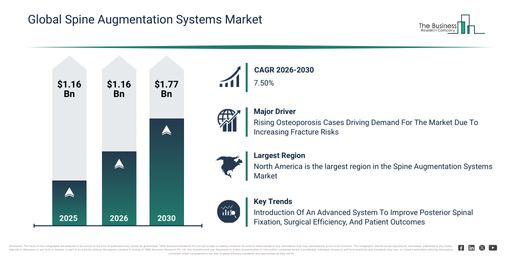
  • Spine Augmentation Systems Market Forecast Highlights Expansion From $2.3 Billion To $3.08 Billion Through 2030

    Spine Augmentation Systems Market Forecast Highlights Expansion From $2.3 Billion To $3.08 Billion Through 2030

    Delivering more actionable and strategically valuable research, The Business Research Company’s 2026 market reports feature market attractiveness analysis, total addressable market evaluation, company benchmarking matrices, interactive Excel dashboards, expanded supply chain intelligence, emerging startup coverage, and detailed product insights.

    The spine augmentation systems market has witnessed significant growth recently, driven by various factors influencing patient care and technological advancements. As the prevalence of spinal conditions rises globally, this market is set for continued expansion, supported by innovative medical procedures and an aging population. Let’s explore the current market size, key growth drivers, segmentation details, latest technological trends, competitive landscape, and regional insights shaping this industry.

    Spine Augmentation Systems Market Size and Expected Growth

    The market for spine augmentation systems has shown robust growth over past years and is projected to continue expanding. It is estimated to increase from $2.14 billion in 2025 to $2.31 billion in 2026, reflecting a compound annual growth rate (CAGR) of 7.6%. This past growth is largely attributed to rising vertebral compression fractures, greater use of kyphoplasty and vertebroplasty techniques, improvements in bone cement technology, wider adoption of minimally invasive spinal surgeries, and increased awareness around osteoporosis management. Looking further ahead, the market is expected to reach $3.08 billion by 2030, growing at a CAGR of 7.5%. Factors propelling this future growth include an aging population affected by osteoporosis, demand for outpatient procedures, the use of bioactive bone cements, expansion of image-guided spinal interventions, and a focus on rapid pain relief solutions. Emerging trends include the increased uptake of minimally invasive vertebral augmentation, advanced bone cement formulations, expandable vertebral implants, and the broader deployment of image-guided augmentation systems emphasizing osteoporosis-related treatments.

    Download A Free Sample Report For Comprehensive Market Insights:

    https://www.thebusinessresearchcompany.com/sample.aspx?id=23526&type=smp

    Key Factors Driving the Spine Augmentation Systems Market

    A major contributor to market growth is the high prevalence of osteoporosis, a condition that weakens bones and increases fracture risk due to decreased density and structural degradation. Lifestyle factors like poor diet, lack of exercise, and inadequate calcium intake have led to rising osteoporosis cases worldwide. Spine augmentation systems offer crucial benefits by stabilizing fractured vertebrae, alleviating pain, and realigning the spine through minimally invasive procedures. In support of this, an Australian health institute reported that in 2023, a bone fracture occurred every 2.7 minutes, with projections pointing to an increase to one fracture every 30 seconds by 2033. This growing burden of osteoporosis-related fractures continues to fuel demand for spine augmentation solutions.

    Additional Market Drivers Supporting Industry Expansion

    Alongside osteoporosis prevalence, advancements in surgical techniques such as kyphoplasty and vertebroplasty have expanded treatment options for patients with spinal fractures. The growing acceptance of minimally invasive spine surgeries allows for quicker recovery times and less procedural risk, encouraging more widespread use of augmentation systems. Moreover, innovations in bone cement technology, including bioactive and composite formulations, enhance outcomes by improving bone integration and durability. Increased awareness among healthcare providers and patients about spine health and fracture prevention also supports sustained market growth.

    Access The Complete Spine Augmentation Systems Market Report:

    https://www.thebusinessresearchcompany.com/report/spine-augmentation-systems-global-market-report

    Detailed Segmentation of the Spine Augmentation Systems Market

    The spine augmentation systems market is categorized across several dimensions in this report:

    1) Product Types: Vertebroplasty Systems, Kyphoplasty Systems, Bone Cement Systems, Biologic Agents, and Implants

    2) Materials: Polymethylmethacrylate (PMMA), Calcium Phosphate, Hydroxyapatite, and Bioactive Glass

    3) Applications: Spinal Fractures, Spinal Deformities, Spinal Tumors, Degenerative Disc Disease, and Osteoporosis-Related Fractures

    4) End Users: Hospitals, Ambulatory Surgery Centers, Orthopedic Clinics, Spine Specialty Centers, and Interventional Spine Centers

    The report also highlights subcategories such as vertebroplasty system components—bone cement delivery devices, needles and cannulas, and guidance/navigation systems; kyphoplasty components including balloon catheters and inflation devices; bone cement types like PMMA, calcium phosphate, and composite cements; biologic agents including bone grafts and bone morphogenetic proteins; and implants such as expandable devices, vertebral body stents, and fixation hardware like pedicle screws.

    Innovations Transforming the Spine Augmentation Systems Industry

    Leading companies in this market are introducing advanced technologies aimed at improving surgical outcomes and efficiency. One example is the development of posterior spinal fixation systems, which stabilize the spine from the back during fusion surgeries. In February 2025, Globus Medical Inc., a US-based orthopedic device manufacturer, unveiled the HILINE System—an innovative posterior fixation solution designed to enhance precision, versatility, and ease of use in complex spinal procedures. Its modular implants, streamlined instruments, and novel screw delivery mechanisms provide surgeons with greater flexibility, potentially improving patient recovery and care standards.

    Competitive Landscape Among Major Industry Players

    Prominent organizations active in the spine augmentation systems market include Johnson & Johnson, Medtronic plc, Stryker Corporation, Zimmer Biomet Holdings Inc., NuVasive Inc., Globus Medical Inc., Orthofix Medical Inc., Aesculap Implant Systems LLC, Alphatec Spine Inc., RTI Surgical Inc., B. Braun Melsungen AG, Autocam Medical Devices LLC, ulrich GmbH & Co. KG, ChoiceSpine LLC, Spine Wave Inc., Benvenue Medical Inc., CarboFix Orthopedics Ltd., Amber Implants BV, Osseus Fusion Systems LLC, GS Medical LLC, and Neuro France Implants SAS. These companies continuously invest in research and development to maintain competitive advantage and address evolving clinical needs.

    Regional Market Dynamics and Growth Potential

    In 2025, North America held the largest share of the spine augmentation systems market, driven by advanced healthcare infrastructure and high adoption of innovative treatments. Meanwhile, the Asia-Pacific region is anticipated to experience the fastest growth during the forecast period, fueled by increasing healthcare spending, rising awareness of spinal disorders, and expanding access to minimally invasive procedures. Other regions covered in the market analysis include South East Asia, Western Europe, Eastern Europe, South America, the Middle East, and Africa, indicating broad geographic opportunities for market expansion.

    Get in touch with us:

    The Business Research Company: https://www.thebusinessresearchcompany.com/

    Americas: +1 310-496-7795

    Asia: +44 7882 955267 & +91 8897263534

    Europe: +44 7882 955267

    Email us at: marketing@tbrc.info

    Follow us on:

    LinkedIn: https://in.linkedin.com/company/the-business-research-company

    YouTube: https://www.youtube.com/channel/UC24_fI0rV8cR5DxlCpgmyFQ

    Global Market Model: https://www.thebusinessresearchcompany.com/global-market-model
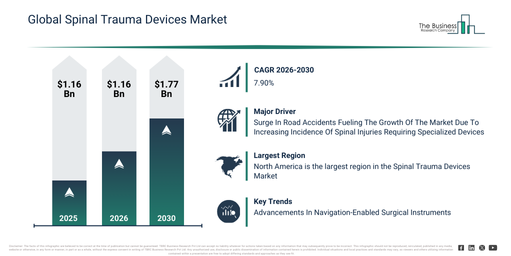
  • Spinal Trauma Devices Market Expected To Reach $13.07 Billion By 2030 As Growth Accelerates At 7.9% CAGR

    Spinal Trauma Devices Market Expected To Reach $13.07 Billion By 2030 As Growth Accelerates At 7.9% CAGR

    Enhanced with market attractiveness analysis, total addressable market evaluation, company benchmarking matrices, interactive Excel dashboards, expanded supply chain intelligence, emerging startup coverage, and detailed product insights, The Business Research Company’s 2026 market reports deliver more actionable and strategically valuable research.

    The spinal trauma devices industry has witnessed significant growth in recent years, driven by advancements in medical technology and increasing cases of spinal injuries. As healthcare infrastructure improves and surgical techniques evolve, the market is set to expand further. Here, we explore the market size, growth drivers, key segments, current trends, leading companies, and regional outlook shaping this sector.

    Spinal Trauma Devices Market Size and Forecast Through 2030

    The market for spinal trauma devices has experienced strong growth and is projected to continue on this upward trajectory. It is anticipated to increase from $8.91 billion in 2025 to $9.64 billion in 2026, representing a compound annual growth rate (CAGR) of 8.1%. Looking ahead, the market is expected to reach $13.08 billion by 2030, growing at a CAGR of 7.9%. This expansion is fueled by factors such as the rising number of road accidents causing spinal injuries, greater use of spinal fusion devices in trauma care, technological progress in vertebral fracture treatments, wider availability of specialized trauma centers, and increased adoption of surgical spinal stabilization techniques.

    Download A Free Sample Report For Comprehensive Market Insights:

    https://www.thebusinessresearchcompany.com/sample.aspx?id=23525&type=smp

    Key Factors Boosting Growth in the Spinal Trauma Devices Market

    One of the primary factors driving this market is the increasing frequency of road accidents worldwide. These incidents, involving vehicles, pedestrians, and cyclists, often result in severe spinal trauma. The rise in such accidents is linked to unsafe driving habits including speeding, distracted driving, driving under the influence, and failure to adhere to traffic signals. Sudden impacts during these collisions cause spinal injuries that require stabilization through spinal trauma devices.

    Supporting this, data from October 2025 released by the Road Safety Data Hub—a government initiative in Australia—reported a national road fatality rate of 4.9 deaths per 100,000 people for the 12 months ending that month. This marks a 5.2% increase compared to the previous year. Such statistics highlight the continuous need for effective spinal trauma interventions, thereby propelling market demand.

    Access The Complete Spinal Trauma Devices Market Report:

    https://www.thebusinessresearchcompany.com/report/spinal-trauma-devices-global-market-report

    Another significant driver is the growing adoption of minimally invasive surgical techniques in spinal trauma care. These less invasive procedures lead to quicker patient recovery, less post-operative pain, and reduced hospital stays. Alongside this, increased investment in trauma care facilities, utilization of biologics to aid spinal healing, and expansion of ambulatory surgery centers contribute to the market’s growth outlook.

    Diverse Segmentation Defining the Spinal Trauma Devices Market

    The spinal trauma devices market is segmented into several categories that reflect the wide range of products and technologies involved. By product type, the market includes spinal fusion devices, spinal biologics, vertebral compression fracture treatment devices, spinal bone growth stimulators, and spinal bone grafts. Technologically, the market covers fusion and fixation technology, vertebral compression fracture treatments, and motion preservation technologies.

    Surgical approaches are divided into open surgery and minimally invasive surgery, while end users comprise hospitals and clinics as well as ambulatory surgery centers.

    Further subsegments elaborate on product specifics: spinal fusion devices feature pedicle screw systems, plates, rods, and cages; spinal biologics include bone graft substitutes, platelet-rich plasma (PRP), and bone morphogenetic proteins (BMPs). Vertebral compression fracture treatments involve balloon kyphoplasty and vertebroplasty devices. Bone growth stimulators come in implanted, external, and ultrasonic forms. Lastly, spinal bone grafts consist of autografts, allografts, and synthetic grafts.

    Innovative Trends Shaping the Spinal Trauma Devices Sector

    Leading companies in the spinal trauma devices market are focusing on creating advanced, integrated solutions that boost surgical precision and improve patient outcomes. One notable innovation is the development of navigation-enabled instrument systems that combine implants with smart devices designed to work seamlessly with digital technologies. These systems aim to tackle complex spinal conditions more effectively.

    For example, in April 2024, DePuy Synthes introduced the TriALTIS Spine System in the US. This next-generation posterior thoracolumbar pedicle screw system offers a comprehensive range of implants and instruments engineered to integrate with power tools and navigation systems. The TriALTIS system is designed to meet unmet clinical needs and assist surgeons in achieving consistent results across degenerative, tumor, trauma, and deformity spine cases.

    Key Players Competing in the Spinal Trauma Devices Industry

    Several prominent companies dominate the spinal trauma devices market. These include Johnson & Johnson, Medtronic plc, Stryker Corporation, Zimmer Biomet Holdings Inc., Smith & Nephew plc, Globus Medical Inc., MicroPort Scientific Corporation, ZimVie Inc., Orthofix Medical Inc., Alphatec Holdings Inc., RTI Surgical Inc., B. Braun SE, Xtant Medical Holdings Inc., Spineart SA, GS Medical, Genesys Orthopedic Systems LLC, ChoiceSpine LLC, DePuy Synthes, NuVasive Inc., SeaSpine Holdings Corporation, K2M Group Holdings Inc., and Life Spine Inc. Their innovations and competitive strategies play a vital role in shaping market dynamics.

    Regional Overview and Market Leadership in Spinal Trauma Devices

    In 2025, North America held the largest share of the spinal trauma devices market, due to well-established healthcare infrastructure and high adoption of advanced medical technologies. Meanwhile, the Asia-Pacific region is forecasted to be the fastest-growing market over the coming years, driven by expanding healthcare facilities, rising accident rates, and increasing government focus on trauma care.

    Other important regions covered in the market analysis include South East Asia, Western Europe, Eastern Europe, South America, the Middle East, and Africa, providing a comprehensive view of global market trends and opportunities.

    Get in touch with us:

    The Business Research Company: https://www.thebusinessresearchcompany.com/

    Americas: +1 310-496-7795

    Asia: +44 7882 955267 & +91 8897263534

    Europe: +44 7882 955267

    Email us at: marketing@tbrc.info

    Follow us on:

    LinkedIn: https://in.linkedin.com/company/the-business-research-company

    YouTube: https://www.youtube.com/channel/UC24_fI0rV8cR5DxlCpgmyFQ

    Global Market Model: https://www.thebusinessresearchcompany.com/global-market-model
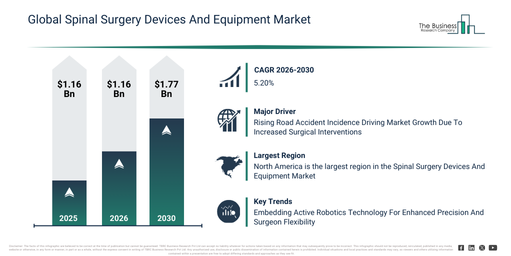
  • Spinal Surgery Devices And Equipment Market Set To Grow From $11.68 Billion In 2026 To $14.3 Billion By 2030 At A CAGR Of 5.2%

    Spinal Surgery Devices And Equipment Market Set To Grow From $11.68 Billion In 2026 To $14.3 Billion By 2030 At A CAGR Of 5.2%

    Through market attractiveness analysis, total addressable market evaluation, company benchmarking matrices, interactive Excel dashboards, expanded supply chain intelligence, emerging startup coverage, and detailed product insights, The Business Research Company’s 2026 market reports provide more actionable and strategically valuable research.

    The spinal surgery devices and equipment market has been steadily expanding, driven by rising cases of spinal disorders and advancements in surgical technology. As healthcare systems evolve and demand for precision surgical solutions grows, this sector is poised for continued growth through the next decade. Here is a detailed overview of the market’s size, key drivers, segments, and future trends shaping its trajectory.

    Steady Market Growth Forecast for the Spinal Surgery Devices and Equipment Market

    The market for spinal surgery devices and equipment has shown consistent growth in recent years. It is projected to increase from $11.17 billion in 2025 to $11.69 billion in 2026, exhibiting a compound annual growth rate (CAGR) of 4.7%. This historical growth has been fueled by factors such as a rising prevalence of spinal conditions, an aging global population, expansion of specialized spine care centers, increased adoption of minimally invasive procedures, and the availability of sophisticated surgical instruments.

    Download A Free Sample Report For Comprehensive Market Insights:

    https://www.thebusinessresearchcompany.com/sample.aspx?id=2402&type=smp

    Looking ahead, the market is expected to perform strongly, reaching $14.3 billion by 2030 with a CAGR of 5.2%. The anticipated growth is driven by increasing demand for robotic-assisted spinal surgeries, greater investments in precision surgical technologies, expansion of outpatient spine surgery facilities, and a stronger focus on optimizing patient outcomes. Additionally, the forecast period will see trends such as wider use of minimally invasive spinal surgery tools, more computer-assisted navigation systems, advanced spinal implants, growth in image-guided surgical platforms, and enhanced emphasis on surgical accuracy and safety.

    Key Factors Propelling Market Expansion Amid Rising Road Accidents

    One major factor boosting growth in the spinal surgery devices and equipment market is the increasing number of road accidents worldwide. These incidents typically involve vehicles, pedestrians, cyclists, and others on roadways. A notable contributor to the rise in accidents is driver distraction, largely due to mobile phone usage and in-car infotainment systems, which reduce attention and reaction times.

    Access The Complete Spinal Surgery Devices And Equipment Market Report:

    https://www.thebusinessresearchcompany.com/report/spinal-surgery-devices-and-equipment-global-market-report

    Spinal surgery devices play a critical role in addressing injuries from road accidents by enabling precise diagnosis, minimizing further damage, managing pain effectively, accelerating recovery, and improving overall quality of life. For example, in April 2025, data from the National Highway Traffic Safety Administration revealed that the estimated number of people injured in road incidents increased to 2.44 million in 2023, a 2.5% rise from 2022. Police-reported traffic crashes similarly rose by 3.5%, from 5.93 million in 2022 to 6.14 million in 2023. This upward trend in road accidents is directly supporting the demand for spinal surgery devices and equipment.

    Overview of Market Segments Defining Spinal Surgery Devices and Equipment

    The spinal surgery devices and equipment market is segmented into several key categories for a detailed understanding of its structure. These include:

    1) Product Type: Non-Fusion Devices, Fusion Devices, and Equipment

    2) Type of Surgery: Open Surgery and Minimally Invasive Surgery (MIS)

    3) End User: Hospitals, Ambulatory Surgical Centers, and Specialty Orthopedic and Spine Centers

    Further breakdown of product types includes:

    – Non-Fusion Devices such as Dynamic Stabilization Devices, Interspinous Spacers, and Artificial Discs

    – Fusion Devices such as Spinal Fusion Cages, Bone Grafts and Substitutes, and Pedicle Screws and Rods

    – Equipment including Surgical Instruments, Imaging Equipment, and Navigation Systems designed specifically for spinal surgery

    Technological Innovations Driving the Spinal Surgery Devices and Equipment Market

    Leading companies in this market are focusing heavily on integrating cutting-edge technologies, especially active robotics, to enhance surgical precision, workflow customization, and reduce surgeon fatigue. Active robotic systems provide real-time guidance tailored to the surgeon’s style and work seamlessly with standalone navigation platforms, offering both flexibility and improved control.

    For instance, in August 2024, DePuy Synthes, part of Johnson & Johnson MedTech, introduced the VELYS Active Robotic-Assisted System (VELYS SPINE), developed with eCential Robotics. This system supports spinal fusion surgeries across cervical, thoracolumbar, and sacroiliac regions and has received FDA 510(k) clearance. It features specialized workflows such as VELYS Adaptive Tracking Technology and Trajectory Assistance, enabling surgeons to personalize surgical guidance according to their preferences.

    Main Players Competing in the Spinal Surgery Devices and Equipment Market

    The spinal surgery devices and equipment market features prominent companies including Medtronic plc, Johnson & Johnson, Stryker Corporation, NuVasive Inc., Zimmer Biomet Holdings Inc., Globus Medical Inc., Orthofix Medical Inc., SeaSpine Holdings Corporation, RTI Surgical, B. Braun Melsungen AG, Atlas Surgical, Teijin Nakashima Medical Co, Anatomics, New Zealand Spine (NZOA), Amedica Corporation, Evispine, SpineGuard, Alphatec Holdings Inc., Integra Life Sciences, Benvenue Medical, DePuy Synthes, OSTEOMED Implantes, Osimplant, Tria Spine, SASpine, iSpine, and GE Healthcare. These companies are driving innovation and competition in the sector.

    Regional Market Outlook Highlights Areas of Opportunity

    In 2025, North America represented the largest regional market for spinal surgery devices and equipment. Western Europe ranked as the second-largest region. The comprehensive market analysis also covers Asia-Pacific, South East Asia, Eastern Europe, South America, the Middle East, and Africa, providing a global perspective on growth opportunities and regional trends within this expanding industry.

    Get in touch with us:

    The Business Research Company: https://www.thebusinessresearchcompany.com/

    Americas: +1 310-496-7795

    Asia: +44 7882 955267 & +91 8897263534

    Europe: +44 7882 955267

    Email us at: marketing@tbrc.info

    Follow us on:

    LinkedIn: https://in.linkedin.com/company/the-business-research-company

    YouTube: https://www.youtube.com/channel/UC24_fI0rV8cR5DxlCpgmyFQ

    Global Market Model: https://www.thebusinessresearchcompany.com/global-market-model
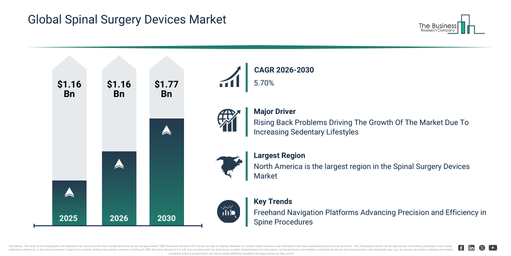
  • Spinal Surgery Devices Market Opportunities Are Emerging Beyond Traditional Growth Areas

    Spinal Surgery Devices Market Opportunities Are Emerging Beyond Traditional Growth Areas

    Delivering more actionable and strategically valuable research, The Business Research Company’s 2026 market reports feature market attractiveness analysis, total addressable market evaluation, company benchmarking matrices, interactive Excel dashboards, expanded supply chain intelligence, emerging startup coverage, and detailed product insights.

    The spinal surgery devices industry has experienced significant growth recently, driven by rising spinal health issues and advancements in surgical technology. As demand continues to increase, this sector is set to undergo further expansion in the coming years. Below is a detailed analysis of the market size, key drivers, segments, trends, major players, and regional outlook shaping this dynamic field.

    Spinal Surgery Devices Market Size and Expected Growth Trajectory

    The spinal surgery devices market has seen robust development over recent years, with revenues projected to rise from $13.37 billion in 2025 to $14.15 billion in 2026, representing a compound annual growth rate (CAGR) of 5.9%. This past growth has been fueled by an upsurge in spinal disorders, more trauma cases, the proliferation of orthopedic surgery centers, an aging population, and surgeons becoming more proficient with fusion procedures. Looking ahead, the market is anticipated to expand further, reaching $17.68 billion by 2030 with a CAGR of 5.7%. Factors supporting this forecast include the adoption of robot-assisted spine surgeries, growth in outpatient spine procedures, continuous implant innovations, demand for faster recovery options, and improved healthcare infrastructure. Key trends expected to influence the market encompass minimally invasive surgeries, increased use of motion-preservation devices, advances in image-guided spine surgery, rising application of spinal biologics, and a growing preference for patient-specific implants.

    Increasing Prevalence of Back Problems Boosting Market Demand

    One of the primary factors driving the spinal surgery devices market is the rising incidence of back problems. These conditions encompass a variety of issues causing pain, discomfort, or restricted movement in different sections of the back due to muscular, nerve-related, or structural causes. A sedentary lifestyle is a significant contributor to this rise, as long hours of sitting, poor posture, and lack of physical activity put excessive pressure on the spine, weaken core muscles, and accelerate disc degeneration, leading to chronic pain and mobility challenges. Spinal surgery devices play a crucial role in addressing these problems by providing structural support, alleviating nerve compression, correcting spinal alignment, and improving mobility. This ultimately leads to pain relief, better function, and an enhanced quality of life for patients. For instance, a January 2024 report from the UK’s Office for Health Improvement and Disparities noted that in 2023, 18.4% of people aged 16 and above self-reported having a long-term musculoskeletal condition, marking an increase from 17.6% in 2022. This upward trend in back-related issues continues to fuel demand for spinal surgery devices.

    Key Segments Identifying Growth Opportunities in the Spinal Surgery Devices Market

    The spinal surgery devices market is broadly categorized into several segments to better understand growth prospects:

    1) Device Type: Spinal Decompression, Spinal Fusion, Fracture Repair Devices, Arthroplasty Devices, and Non-Fusion Devices.

    2) Disease Indication: Degenerative Disc Disease, Complex Deformity, Traumas, and Fractures.

    3) Technology: Fusion, Non-Fusion, Vertebral Compression Fracture treatments, Spine Biologics, and Spinal Decompression approaches.

    4) End Users: Hospitals and Ambulatory Surgery Centers, Specialty Clinics, and Orthopedic and Spine Specialty Hospitals.

    Further subdivisions focus on specific device types such as cervical, lumbar, and thoracic decompression devices; fusion devices including Anterior Cervical Discectomy and Fusion (ACDF) and various lumbar interbody fusion techniques; fracture repair devices like pedicle screws, vertebroplasty, and kyphoplasty devices; arthroplasty devices for cervical and lumbar regions; as well as non-fusion options including artificial discs and dynamic stabilization devices.

    Access The Complete Spinal Surgery Devices Market Report:

    https://www.thebusinessresearchcompany.com/report/spinal-surgery-devices-global-market-report

    Innovative Trends Enhancing the Spinal Surgery Devices Market

    Leading companies in this sector are emphasizing the development of advanced intraoperative navigation technologies to improve surgical precision and efficiency. Freehand navigation systems, for example, offer real-time visualization of surgical instruments and implants relative to patient anatomy, which not only boosts accuracy but also reduces reliance on fluoroscopy and lowers radiation exposure during surgery. A case in point is Globus Medical’s launch on November 22, 2024, of ExcelsiusHub—a navigation platform that expands the Excelsius system to offer freehand navigation throughout the spine from the cervical region down to the sacrum. This system boasts features such as real-time patient array monitoring, tissue-sparing drills, multiple registration workflows, and compatibility with Globus’ instruments and implants.

    Key Players Shaping the Competitive Landscape of Spinal Surgery Devices

    Several prominent companies dominate the spinal surgery devices market, including Johnson & Johnson, Medtronic plc, Stryker Corporation, NuVasive Inc., SeaSpine Holdings Corporation, Globus Medical Inc., Orthofix Medical Inc., Aesculap Inc., Alphatec Holdings Inc., Innovasis Inc., Nexus Spine, Spinal Elements Inc., Spineart SA, B. Braun Melsungen AG, SpineWave Inc., Centinel Spine LLC, Life Spine Inc., Camber Spine Technologies, Captiva Spine Inc., and Aurora Spine Corporation. These organizations play vital roles in innovation, product development, and expanding market reach.

    Regional Market Dynamics and Dominance

    In 2025, North America held the largest share of the spinal surgery devices market. Meanwhile, the Asia-Pacific region is projected to be the fastest-growing market throughout the forecast period. The market overview includes analysis of key regions such as Asia-Pacific, South East Asia, Western Europe, Eastern Europe, North America, South America, the Middle East, and Africa, offering insights into global growth patterns and opportunities.

    Get in touch with us:

    The Business Research Company: https://www.thebusinessresearchcompany.com/

    Americas: +1 310-496-7795

    Asia: +44 7882 955267 & +91 8897263534

    Europe: +44 7882 955267

    Email us at: marketing@tbrc.info

    Follow us on:

    LinkedIn: https://in.linkedin.com/company/the-business-research-company

    YouTube: https://www.youtube.com/channel/UC24_fI0rV8cR5DxlCpgmyFQ

    Global Market Model: https://www.thebusinessresearchcompany.com/global-market-model
  • Spinal Osteosynthesis Units Market Expansion Is Opening New Pathways For Strategic Investment

    Spinal Osteosynthesis Units Market Expansion Is Opening New Pathways For Strategic Investment

    Enhanced with market attractiveness analysis, total addressable market evaluation, company benchmarking matrices, interactive Excel dashboards, expanded supply chain intelligence, emerging startup coverage, and detailed product insights, The Business Research Company’s 2026 market reports deliver more actionable and strategically valuable research.

    The spinal osteosynthesis units market has witnessed significant expansion in recent years, driven by various clinical and technological advances. As spinal disorders become more prevalent and surgical techniques evolve, this market is set to experience continued growth. Below is a detailed analysis of the market’s size, key drivers, segmentation, competitive landscape, and regional outlook.

    Spinal Osteosynthesis Units Market Size and Growth Outlook

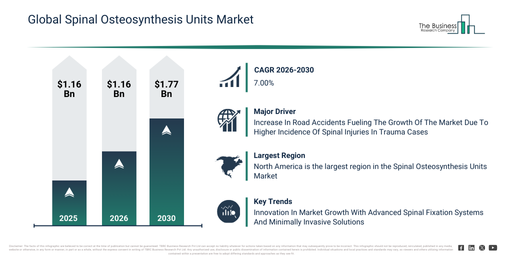
    The market for spinal osteosynthesis units is expected to increase notably, rising from $4.48 billion in 2025 to $4.79 billion in 2026, reflecting a compound annual growth rate (CAGR) of 7.1%. This strong performance during the past years has been fueled by factors such as the growing incidence of degenerative spinal conditions, a higher number of spinal fusion procedures, technological improvements in spinal implant design, increased acceptance of pedicle screw systems, and the expansion of spine surgery programs within hospitals. Looking ahead, the market is projected to reach $6.28 billion by 2030, with a CAGR of 7.0%. This forecasted growth is driven by the rising elderly population affected by spinal issues, greater demand for minimally invasive spine surgeries, increased investments in cutting-edge spinal implant technology, the broader use of personalized spinal fixation devices, and the growing preference for motion-preserving spinal systems.

    Download A Free Sample Report For Comprehensive Market Insights:

    https://www.thebusinessresearchcompany.com/sample.aspx?id=23524&type=smp

    Factors Fueling Demand for Spinal Osteosynthesis Units

    One significant factor propelling market growth is the increasing number of road traffic accidents worldwide. These accidents, often caused by rising traffic congestion and unsafe driving habits, lead to spinal injuries requiring surgical stabilization. Spinal osteosynthesis units play a crucial role in improving patient outcomes by enabling effective surgical fixation of damaged vertebrae, which aids in faster recovery and reduces long-term disabilities. For instance, in October 2025, the Australia-based Road Safety Data Hub reported a national road fatality rate of 4.9 deaths per 100,000 population over the prior 12 months, marking a 5.2% year-on-year increase. This upward trend in road accidents underscores the growing need for surgical interventions supported by osteosynthesis units.

    Spinal Osteosynthesis Units Market Categorization and Core Segments

    This market can be segmented into several key categories:

    1) Product Type: Thoracolumbar Osteosynthesis Unit, Lumbar Spinal Osteosynthesis Unit, Lumbosacral Osteosynthesis Unit, Thoracolumbosacral Osteosynthesis Unit, Occipitocervicothoracic Osteosynthesis Unit, Cervical Thoracic Lumbo Sacral Osteosynthesis Unit

    2) Surgical Approach: Posterior, Anterior, Lateral

    3) Application: Adult, Pediatric

    4) End User: Hospitals, Specialty Clinics, Other End Users

    Access The Complete Spinal Osteosynthesis Units Market Report:

    https://www.thebusinessresearchcompany.com/report/spinal-osteosynthesis-units-global-market-report

    Within these groups, further subcategories include:

    – Thoracolumbar Units: Pedicle Screw Systems, Rod and Plate Systems, Interbody Fusion Devices

    – Lumbar Units: Lumbar Interbody Fusion Cages, Lumbar Pedicle Screws and Rods, Dynamic Stabilization Devices

    – Lumbosacral Units: Sacroiliac Joint Fixation Devices, Lumbosacral Interbody Fusion Cages, Iliac Screws and Rod Systems

    – Thoracolumbosacral Units: Multilevel Fixation Systems, Spinal Deformity Correction Devices, Hybrid Stabilization Systems

    – Occipitocervicothoracic Units: Occipital Plate and Rod Systems, Cervicothoracic Fusion Implants, Posterior Cervical Fixation Devices

    – Cervical Thoracic Lumbo Sacral Units: Full-Spine Fixation Systems, Motion Preservation Devices, Vertebral Body Replacement Implants

    Innovations and Market Trends Defining Competitive Strategies

    Leading companies in the spinal osteosynthesis space are heavily investing in developing innovative spinal fixation technologies designed to improve surgical precision, enhance patient recovery, and address complex spinal conditions more effectively. Spinal fixation systems, which typically include screws, rods, plates, and other hardware, are crucial for stabilizing and aligning vertebrae during healing after injuries or deformities. For example, in October 2023, ulrich medical USA introduced the Momentum MIS Posterior Spinal Fixation System, tailored for minimally invasive surgery. This system features a sleek, versatile design with a slim profile, extended screw tabs, and compatibility with Medtronic’s StealthStation navigation technology, offering percutaneous solutions that enhance support and integrated reduction capabilities.

    Key Players Leading the Spinal Osteosynthesis Units Market

    Several prominent companies actively compete in this market, including Johnson & Johnson, Medtronic plc, Stryker Corporation, Zimmer Biomet Holdings Inc., NuVasive Inc., Globus Medical Inc., MicroPort Scientific Corporation, Orthofix Medical Inc., Aesculap Implant Systems LLC, Alphatec Spine Inc., RTI Surgical Inc., B Braun Melsungen AG, Xtant Medical Holdings Inc., Autocam Medical Devices LLC, Ulrich GmbH & Co. KG, Spinal Elements Inc., ChoiceSpine LLC, Königsee Implantate GmbH, GS Medical LLC, Neuro France Implants, and HPI Implants GmbH. These companies focus on advancing product innovation and expanding their portfolios to meet evolving clinical demands.

    Regional Market Leadership and Growth Dynamics

    In 2025, North America held the largest share of the spinal osteosynthesis units market, benefiting from advanced healthcare infrastructure and high adoption rates of innovative surgical technologies. Meanwhile, the Asia-Pacific region is expected to experience the fastest growth during the forecast period, driven by increasing healthcare investments, a growing elderly population, and rising awareness regarding spinal care. The market report covers a broad geographical scope, including Asia-Pacific, South East Asia, Western Europe, Eastern Europe, North America, South America, the Middle East, and Africa, providing a comprehensive view of global market trends and opportunities.

    Get in touch with us:

    The Business Research Company: https://www.thebusinessresearchcompany.com/

    Americas: +1 310-496-7795

    Asia: +44 7882 955267 & +91 8897263534

    Europe: +44 7882 955267

    Email us at: marketing@tbrc.info

    Follow us on:

    LinkedIn: https://in.linkedin.com/company/the-business-research-company

    YouTube: https://www.youtube.com/channel/UC24_fI0rV8cR5DxlCpgmyFQ

    Global Market Model: https://www.thebusinessresearchcompany.com/global-market-model
  • Spinal Fusion Devices Market Trends Are Creating New Opportunities For Industry Leaders

    Spinal Fusion Devices Market Trends Are Creating New Opportunities For Industry Leaders

    Through market attractiveness analysis, total addressable market evaluation, company benchmarking matrices, interactive Excel dashboards, expanded supply chain intelligence, emerging startup coverage, and detailed product insights, The Business Research Company’s 2026 market reports provide more actionable and strategically valuable research.

    The spinal fusion devices market has witnessed significant growth over recent years and continues to show promising potential. Driven by medical advancements and increasing demand for effective spine treatments, this sector is set to expand steadily through the coming decade. Below, we explore the current market size, key growth drivers, important segments, influential trends, leading companies, and regional outlook shaping the future of spinal fusion devices.

    Market Size and Projected Growth in the Spinal Fusion Devices Market

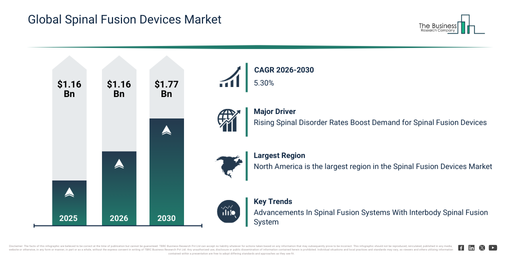
    The spinal fusion devices market has shown strong expansion and is expected to grow from $8.31 billion in 2025 to $8.77 billion in 2026, achieving a compound annual growth rate (CAGR) of 5.6%. This growth during the recent period is largely fueled by rising cases of degenerative spine diseases, trauma incidents, surgical innovations, expansion of orthopedic services in hospitals, and an aging population. Looking ahead, the market is projected to reach $10.78 billion by 2030, growing at a CAGR of 5.3%. Factors like the increasing adoption of minimally invasive surgical techniques, the rise of outpatient spine surgeries, treatment of spinal deformities, demand for quicker patient recovery, and specialization in orthopedics are expected to drive this continued growth. Key trends anticipated in this timeframe include the broader use of minimally invasive spine surgery, increasing acceptance of non-metallic implants, growing demand for lumbar fusion devices, advances in implant design technology, and expansion of outpatient procedures.

    Download A Free Sample Report For Comprehensive Market Insights:

    https://www.thebusinessresearchcompany.com/sample.aspx?id=20648&type=smp

    Rising Prevalence of Spinal Disorders as a Major Growth Driver

    One of the primary forces propelling the spinal fusion devices market is the growing incidence of spinal disorders. These conditions affect various parts of the spine, including vertebrae, intervertebral discs, spinal cord, nerves, and ligaments. Factors such as an aging population, sedentary lifestyles, and improved diagnostic tools have contributed to the rise in spinal disorder cases. Spinal fusion devices play a crucial role by helping to stabilize the spine, reduce pain, and restore function through surgical interventions. For example, in February 2024, the National Spinal Cord Injury Statistical Center (NSCISC) reported that in 2023, the yearly incidence of traumatic spinal cord injury in the U.S. was approximately 54 cases per million people, amounting to about 18,000 new cases annually. This growing patient base is a significant factor driving demand for spinal fusion devices.

    Advancement in Surgical Innovation Fueling Market Development

    Alongside the increased incidence of spinal conditions, technological innovation in surgical procedures is boosting market growth. Improvements in minimally invasive spine surgery techniques enable less traumatic interventions with faster recovery times, making spinal fusion devices increasingly essential. The rising trend toward outpatient surgery centers also supports market expansion by making procedures more accessible and cost-effective.

    Access The Complete Spinal Fusion Devices Market Report:

    https://www.thebusinessresearchcompany.com/report/spinal-fusion-devices-global-market-report

    Breakdown of Segments Within the Spinal Fusion Devices Market

    This market is divided into multiple segments based on various factors:

    1) By Type: Cervical Fusion Device, Thoracic Fusion Device, Lumbar Fusion Device

    2) By Material: Metallic Devices, Non Metallic Devices

    3) By Surgery Type: Open Spine Surgery, Minimally Invasive Spine Surgery

    4) By Disease Type: Degenerative Disc, Complex Deformity, Trauma and Fractures, Other Disease Types

    5) By End-User: Hospitals, Ambulatory Service Centers, Orthopedic Centers, Other End-Users

    Further subsegments include:

    – Cervical Fusion Devices such as Anterior Cervical Discectomy and Fusion (ACDF) Devices, Cervical Plates and Screws, Cervical Interbody Fusion Devices (IBFDs), and Minimally Invasive Cervical Fusion Devices

    – Thoracic Fusion Devices including Thoracic Interbody Fusion Devices, Thoracic Plates and Screws, Anterior and Posterior Thoracic Fusion Devices

    – Lumbar Fusion Devices encompassing Lumbar Interbody Fusion Devices (LIFDs), Pedicle Screws and Rods, Expandable Interbody Fusion Devices, and Minimally Invasive Lumbar Fusion Devices

    Innovations and Trends Shaping the Future of Spinal Fusion Devices

    Key players in this market are heavily investing in the development of advanced products such as interbody spinal fusion systems aimed at improving surgical precision, implant stability, and patient outcomes. These systems help stabilize the spine and promote vertebral fusion during surgery. For instance, in October 2023, NovApproach Spine, a U.S.-based medical technology firm, introduced OneLIF. This interbody spinal fusion system enhances the accuracy and efficiency of lumbar fusion surgeries by providing sophisticated instrumentation and implant technology that supports optimal alignment, stability, and fusion success. It is designed for treating lumbar spinal conditions including degenerative disc disease and spinal stenosis, facilitating minimally invasive procedures that aim to reduce recovery periods and improve patient results.

    Leading Organizations Driving the Spinal Fusion Devices Market

    Several prominent companies dominate the spinal fusion devices landscape, including Johnson & Johnson, Medtronic plc, Stryker Corporation, Zimmer Biomet Holdings Inc., NuVasive Inc., Globus Medical Inc., Medacta International SA, Orthofix Medical Inc., Exactech Inc., Paradigm Corp, SeaSpine Holdings Corporation, Xtant Medical Holdings Inc., Spinal Elements Inc., Surgalign Holdings Inc., Precision Spine Inc., Spine Wave Inc., SpineFrontier Inc., Zavation Medical Products, Aurora Spine Corporation, Nexxt Spine LLC, Camber Spine Technologies LLC, Captiva Spine Inc., and Viseon Inc.

    Regional Market Leadership and Growth Patterns

    In 2025, North America was the largest regional market for spinal fusion devices. Meanwhile, the Asia-Pacific region is anticipated to register the fastest growth during the forecast period. The analysis encompasses regions such as Asia-Pacific, South East Asia, Western Europe, Eastern Europe, North America, South America, the Middle East, and Africa, providing a comprehensive view of the global market dynamics.

    Get in touch with us:

    The Business Research Company: https://www.thebusinessresearchcompany.com/

    Americas: +1 310-496-7795

    Asia: +44 7882 955267 & +91 8897263534

    Europe: +44 7882 955267

    Email us at: marketing@tbrc.info

    Follow us on:

    LinkedIn: https://in.linkedin.com/company/the-business-research-company

    YouTube: https://www.youtube.com/channel/UC24_fI0rV8cR5DxlCpgmyFQ

    Global Market Model: https://www.thebusinessresearchcompany.com/global-market-model
  • Spinal Cord Stimulation Devices Market Growth Is Reshaping Competitive Advantage Across The Industry

    Spinal Cord Stimulation Devices Market Growth Is Reshaping Competitive Advantage Across The Industry

    Delivering more actionable and strategically valuable research, The Business Research Company’s 2026 market reports feature market attractiveness analysis, total addressable market evaluation, company benchmarking matrices, interactive Excel dashboards, expanded supply chain intelligence, emerging startup coverage, and detailed product insights.

    The spinal cord stimulation devices market is experiencing significant growth, driven by increasing chronic pain cases and advances in medical technology. This sector is evolving rapidly with innovations that promise improved patient outcomes and greater adoption worldwide. Let’s explore the market size, key growth drivers, segmentation, innovation trends, leading companies, and regional insights shaping this dynamic field.

    Spinal Cord Stimulation Devices Market Size and Growth Outlook

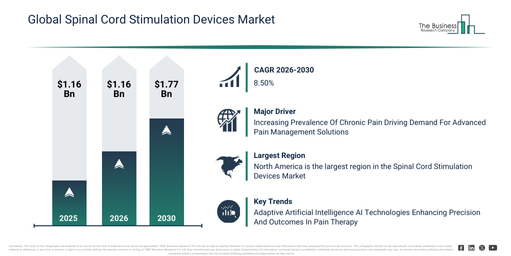
    The market for spinal cord stimulation devices has witnessed robust expansion in recent years. It is projected to grow from $2.97 billion in 2025 to $3.23 billion in 2026, representing a compound annual growth rate (CAGR) of 8.7%. This upward trend during the historical period is mainly due to the increasing number of chronic pain sufferers, a rise in failed back surgery syndrome cases, growing demand for opioid alternatives, an increase in neurology procedures, and wider acceptance of implantable devices. Looking ahead, the market is expected to reach $4.47 billion by 2030, sustaining an 8.5% CAGR. Factors fueling this growth include advancements in AI-driven stimulation algorithms, expansion of wearable stimulators, more pain management clinics, broader adoption of long-term pain therapy, and the incorporation of remote device monitoring. Key market trends anticipated during the forecast period involve personalized pain management, rechargeable neurostimulation devices, minimally invasive neuromodulation, wireless programming systems, and multi-lead stimulation technology.

    Download A Free Sample Report For Comprehensive Market Insights:

    https://www.thebusinessresearchcompany.com/sample.aspx?id=20964&type=smp

    Rising Chronic Pain Cases as a Major Growth Driver

    One of the primary factors propelling the spinal cord stimulation devices market is the increasing prevalence of chronic pain conditions. Chronic pain, defined as persistent pain lasting 12 weeks or longer, can result from a variety of causes such as arthritis, neuropathy, or lower back pain. This rise is influenced by an aging global population, lifestyle changes, chronic illnesses, and injuries or trauma. Spinal cord stimulation devices work by modifying pain signals with electrical impulses, offering relief to those with persistent pain conditions. For instance, in November 2024, the US Centers for Disease Control and Prevention reported that in 2023, 24.3% of adults experienced chronic pain, with 8.5% suffering from high-impact chronic pain, which makes up 34.9% of all chronic pain cases. This growing patient base is a significant factor driving demand for spinal cord stimulation technologies.

    Additional Factors Encouraging Market Expansion

    Beyond chronic pain prevalence, other elements contribute to market growth. There is increasing interest in alternatives to opioid painkillers, given concerns over addiction and side effects. Moreover, advances in neurology procedures are expanding treatment options, and the acceptance of implantable devices continues to rise among patients and clinicians alike. Together, these factors are stimulating broader adoption of spinal cord stimulation devices and encouraging ongoing investment in new technologies.

    Access The Complete Spinal Cord Stimulation Devices Market Report:

    https://www.thebusinessresearchcompany.com/report/spinal-cord-stimulation-devices-global-market-report

    Detailed Segmentation of the Spinal Cord Stimulation Devices Market

    This market is categorized across several key dimensions to capture its complexity. By device configuration, it is divided into implantable spinal cord stimulators and non-implantable spinal cord stimulators. The product type segment separates rechargeable devices from non-rechargeable devices. Application-wise, the market covers conditions such as failed back surgery syndrome, complex regional pain syndrome, degenerative disc disease, unsuccessful disk surgery, and other uses. Lastly, end users include hospitals, ambulatory surgical centers, and neuro clinics. Subcategories under implantable stimulators feature rechargeable, non-rechargeable, and multi-lead implantable devices, while non-implantable products include external stimulators, wearable stimulators, and transcutaneous stimulators.

    Innovation Trends Shaping the Future of Spinal Cord Stimulation Devices

    Leading companies in this field are heavily investing in cutting-edge technologies, especially artificial intelligence, to enhance therapy outcomes. AI-powered spinal cord stimulation systems utilize machine learning models trained on patient and device data to fine-tune stimulation settings in real time. This approach aims to maintain optimal pain relief while reducing the need for frequent clinician adjustments. A notable example is Nevro Corp., which in September 2024 launched the HFX iQ with HFX AdaptivAI platform. This AI-enabled SCS system uses millions of data points and adaptive algorithms to personalize 10 kHz therapy and supports remote clinician monitoring. It automatically adjusts stimulation parameters based on individual patient responses, improving pain management effectiveness and minimizing in-person programming sessions. By combining real-time insights with remote management, this platform enhances precision, streamlines workflows, and delivers a more consistent therapy experience for patients suffering from chronic pain.

    Key Players Defining the Spinal Cord Stimulation Devices Market

    The competitive landscape features several influential companies driving innovation and market growth. These include Abbott Laboratories, Medtronic plc, Boston Scientific Corporation, Nevro Corp., Bluewind Medical, NeuroPace Inc., Vertos Medical Inc., SPR Therapeutics Inc., Saluda Medical Pty Ltd., Stimwave Technologies Inc., Nuvectra Inc., Soterix Medical Inc., Synapse Biomedical, ONWARD Medical NV, NeuroSigma Inc., Nalu Medical Inc., Neurostim Technologies, SpineX Inc., Aleva Neurotherapeutics SA, and GTX Medical BV. These organizations are instrumental in developing new technologies and expanding access to spinal cord stimulation therapies worldwide.

    Regional Market Presence and Growth Opportunities

    In 2025, North America held the largest share of the spinal cord stimulation devices market, reflecting strong healthcare infrastructure and high adoption rates. However, the Asia-Pacific region is expected to be the fastest-growing market during the forecast period. The report covers major regions including Asia-Pacific, South East Asia, Western Europe, Eastern Europe, North America, South America, the Middle East, and Africa, providing a broad perspective on the geographic distribution and potential areas for expansion in this sector.

    Get in touch with us:

    The Business Research Company: https://www.thebusinessresearchcompany.com/

    Americas: +1 310-496-7795

    Asia: +44 7882 955267 & +91 8897263534

    Europe: +44 7882 955267

    Email us at: marketing@tbrc.info

    Follow us on:

    LinkedIn: https://in.linkedin.com/company/the-business-research-company

    YouTube: https://www.youtube.com/channel/UC24_fI0rV8cR5DxlCpgmyFQ

    Global Market Model: https://www.thebusinessresearchcompany.com/global-market-model
  • Sphygmomanometer Market Forecast Signals New Revenue Opportunities Through 2030

    Sphygmomanometer Market Forecast Signals New Revenue Opportunities Through 2030

    Enhanced with market attractiveness analysis, total addressable market evaluation, company benchmarking matrices, interactive Excel dashboards, expanded supply chain intelligence, emerging startup coverage, and detailed product insights, The Business Research Company’s 2026 market reports deliver more actionable and strategically valuable research.

    The market for sphygmomanometers has experienced significant growth recently, driven by increasing health awareness and advances in medical technology. This sector continues to evolve rapidly, influenced by rising rates of hypertension and a shift toward more modern, connected healthcare devices. Below, we explore the current market size, key drivers, segmentation, emerging trends, leading players, and regional outlook shaping the future of the sphygmomanometer industry.

    Sphygmomanometer Market Size and Expected Growth Trajectory

    The sphygmomanometer market has expanded steadily in recent years and is projected to grow from $3.2 billion in 2025 to $3.53 billion in 2026, at a compound annual growth rate (CAGR) of 10.3%. This growth during the past period is largely due to the increasing prevalence of hypertension, the historical reliance on mercury-based devices, more frequent clinical screenings, the expansion of primary healthcare centers, and ongoing use of manual and aneroid models.

    Download A Free Sample Report For Comprehensive Market Insights:

    https://www.thebusinessresearchcompany.com/sample.aspx?id=10396&type=smp

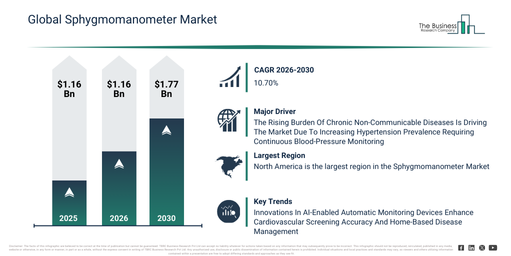
    Looking ahead, the market is expected to grow even faster, reaching $5.31 billion by 2030 with a CAGR of 10.7%. This forecasted increase is driven by rising demand for remote patient monitoring, wider adoption of connected healthcare technology, growth in telemedicine services, a stronger focus on preventive cardiovascular care, and the gradual replacement of mercury-based sphygmomanometers. Key trends include the growing popularity of digital blood pressure monitors, the surge in home-based monitoring, integration of data connectivity, portable and wearable device options, and an emphasis on accuracy and user-friendliness.

    Factors Behind Rising Demand in the Sphygmomanometer Market

    A major contributor to market growth is the escalating burden of chronic non-communicable diseases (NCDs), especially hypertension and cardiovascular disorders. These long-term conditions progress slowly and require continuous monitoring and management. Hypertension, in particular, is a significant global health issue and a leading risk factor for cardiovascular complications, making regular blood pressure monitoring critical for early diagnosis and effective treatment.

    Access The Complete Sphygmomanometer Market Report:

    https://www.thebusinessresearchcompany.com/report/sphygmomanometer-global-market-report

    Lifestyle factors such as an aging global population, unhealthy diets, reduced physical activity, and increasing obesity rates are fueling the rise in blood pressure irregularities worldwide. Sphygmomanometers are essential tools for timely diagnosis, ongoing monitoring, and enhanced management of cardiovascular risks in both clinical environments and home settings. For example, the World Health Organization (WHO) reported that in 2024, approximately 1.4 billion adults aged 30 to 79 were living with hypertension, constituting 33 percent of this demographic. Notably, two-thirds of these individuals reside in low- and middle-income countries, with about 600 million undiagnosed and roughly 630 million receiving treatment. This substantial global health challenge is a key factor driving sphygmomanometer market expansion.

    How the Growth of Ambulatory Surgery Centers is Boosting Market Demand

    Another important driver for the sphygmomanometer market is the rapid increase in ambulatory surgery centers (ASCs). These specialized medical facilities focus on performing surgical procedures that do not require overnight hospitalization. ASCs depend heavily on sphygmomanometers—commonly known as blood pressure cuffs—to monitor patients’ vital signs before, during, and after surgeries.

    In the United States, the number of ambulatory surgery centers is growing steadily. According to CliftonLarsonAllen LLP, as of July 2025, there are over 10,000 ASCs nationwide, with industry revenues projected to rise from approximately $45 billion in 2024 to about $57 billion by 2030. This expansion underscores the increasing demand for sphygmomanometers within these facilities, further stimulating market growth.

    Detailed Segmentation of the Sphygmomanometer Market

    This market is segmented by product type, configuration, operation mode, and end user. The product categories include Electronic Sphygmomanometers, Aneroid Sphygmomanometers, and Mercury Sphygmomanometers. Configurations are divided into Portable, Desk Mounted, Floor Standing, and Wall Mounted devices. Operational types cover Electric, Manual, Automatic, and Semi-automatic models. End users comprise Hospitals, Ambulatory Surgical Centers and Clinics, Home Healthcare, and other sectors.

    Further breakdowns include subtypes such as Upper Arm, Wrist, and Finger Electronic Sphygmomanometers; Manual and Digital Aneroid types; and Standard versus Portable Mercury Sphygmomanometers, allowing for a comprehensive understanding of the market’s structure.

    Innovations and Trends Driving the Future of the Sphygmomanometer Market

    Leading companies are increasingly focusing on developing advanced automatic blood pressure monitors that incorporate AI-driven diagnostic technologies. These innovations aim to enhance measurement accuracy, facilitate early detection of cardiovascular irregularities, and improve the convenience of home health monitoring.

    For example, in November 2024, OMRON Healthcare, a Japan-based company specializing in health equipment, received FDA De Novo authorization for its next-generation home blood pressure monitor featuring IntelliSense AFib. This AI-powered atrial fibrillation detection algorithm analyzes over 300 pulse-wave indices, achieving clinical performance with 95% sensitivity and 98% specificity. This advancement highlights the transformation of automatic oscillometric devices from simple blood pressure tools into comprehensive cardiovascular screening technologies, supporting early diagnosis, ongoing monitoring, and better clinical decision-making.

    Key Players Leading the Sphygmomanometer Market Competition

    The sphygmomanometer market features several prominent companies driving innovation and competition. Notable players include A&D Company Ltd., American Diagnostic Corporation, Omron Healthcare Inc., Microlife Corporation, Beurer GmbH, CIGA Healthcare Ltd., Rossmax International Ltd., Rudolf Riester GmbH, Welch Allyn Inc., Koninklijke Philips N.V., Paul Hartmann AG, Spengler, Holtex Ltd., Timesco Healthcare Ltd., Bremed Ltd., iHealth Labs Inc., Contec Medical Systems Co. Ltd., SunTech Medical Inc., General Electric Company, Amico Group of Companies, HEINE Optotechnik GmbH & Co. KG, Hill-Rom Services Inc., and Halma plc.

    Regional Market Leadership and Growth Forecast

    In 2025, North America held the largest share of the global sphygmomanometer market due to its advanced healthcare infrastructure and technology adoption. However, the Asia-Pacific region is anticipated to be the fastest-growing market during the forecast period, driven by increasing healthcare investments and rising awareness about cardiovascular health. The market analysis covers key territories including Asia-Pacific, South East Asia, Western Europe, Eastern Europe, North America, South America, the Middle East, and Africa, offering a broad perspective on regional market dynamics.

    Get in touch with us:

    The Business Research Company: https://www.thebusinessresearchcompany.com/

    Americas: +1 310-496-7795

    Asia: +44 7882 955267 & +91 8897263534

    Europe: +44 7882 955267

    Email us at: marketing@tbrc.info

    Follow us on:

    LinkedIn: https://in.linkedin.com/company/the-business-research-company

    YouTube: https://www.youtube.com/channel/UC24_fI0rV8cR5DxlCpgmyFQ

    Global Market Model: https://www.thebusinessresearchcompany.com/global-market-model
  • Spectrum Therapy Instrument Market Growth Is Accelerating As Industry Transformation Continues

    Spectrum Therapy Instrument Market Growth Is Accelerating As Industry Transformation Continues

    Through market attractiveness analysis, total addressable market evaluation, company benchmarking matrices, interactive Excel dashboards, expanded supply chain intelligence, emerging startup coverage, and detailed product insights, The Business Research Company’s 2026 market reports provide more actionable and strategically valuable research.

    The spectrum therapy instrument market is experiencing significant growth driven by rising health awareness and expanding applications across dermatology and musculoskeletal care. As demand for non-invasive treatment options increases, this sector is set to see continued expansion fueled by advancements in technology and shifting patient preferences. Below is a detailed look into the market’s current size, key growth drivers, segmentation, industry trends, leading players, and regional dynamics.

    Steady Growth and Market Size of the Spectrum Therapy Instrument Market

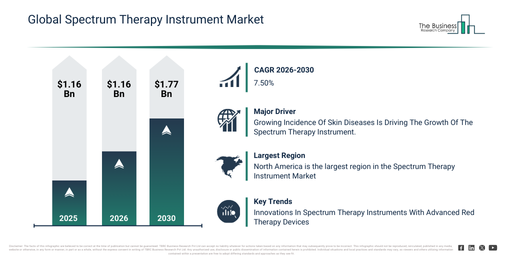
    The spectrum therapy instrument market has demonstrated strong growth in recent years, with its size increasing from $1.2 billion in 2025 to $1.29 billion in 2026, reflecting a compound annual growth rate (CAGR) of 7.8%. This upward trend during the historical period is driven by factors such as the growing prevalence of skin disorders, expansion of dermatology clinics, greater awareness about phototherapy, rising demand for cosmetic treatments, and higher hospital adoption rates.

    Download A Free Sample Report For Comprehensive Market Insights:

    https://www.thebusinessresearchcompany.com/sample.aspx?id=19716&type=smp

    Looking ahead, the market is forecasted to continue its robust trajectory, reaching $1.73 billion by 2030 at a CAGR of 7.5%. This growth will be supported by the increasing adoption of home-based therapy solutions, growth in the wellness industry, rising demand for chronic pain management, advances in dermatological technologies, and the expansion of outpatient care services. Emerging trends shaping the forecast period include wider use of non-invasive light therapies, development of home phototherapy devices, growing incorporation in dermatology treatments, greater interest in pain management alternatives, and the rising importance of wellness and aesthetic applications.

    Key Factors Behind the Growth in the Spectrum Therapy Instrument Market

    The increasing incidence of skin diseases is a major driver propelling the spectrum therapy instrument market forward. Skin conditions such as infections, inflammations, acne, eczema, and psoriasis are becoming more common, partly due to worsening environmental pollution that exacerbates skin irritation and allergic reactions. Spectrum therapy instruments, which harness specific wavelengths of light in phototherapy, treat these skin ailments by penetrating the skin and influencing cellular activity to achieve therapeutic results. For example, in January 2024, Cancer Australia estimated 18,257 new melanoma skin cancer cases in 2023, with 10,639 males and 7,618 females affected. This rising prevalence directly supports market expansion.

    Access The Complete Spectrum Therapy Instrument Market Report:

    https://www.thebusinessresearchcompany.com/report/spectrum-therapy-instrument-global-market-report

    Growing Prevalence of Musculoskeletal Disorders as a Catalyst for Market Expansion

    Another critical growth driver is the rising number of musculoskeletal disorders, which affect muscles, bones, joints, tendons, and ligaments, resulting in pain and mobility issues. This increase is largely linked to an aging global population, as natural joint degeneration and bone density loss become more widespread. Spectrum therapy instruments provide non-invasive light-based treatments that help reduce pain and inflammation, facilitate faster recovery, and improve mobility for patients. For instance, the UK’s Office for Health Improvement and Disparities reported in January 2024 that 18.4% of individuals aged 16 and above self-reported long-term musculoskeletal conditions in 2023, up from 17.6% in 2022. This trend supports growing demand within the market.

    Detailed Market Segments Defining the Spectrum Therapy Instrument Industry

    This market is classified across several key segments to provide a clear understanding of growth areas:

    1) By Type: Light Emitting Diode (LED) Spectrum Therapy Instruments and Carbon-Light Spectrum Therapy Instruments

    2) By Technology: Low Level Laser Therapy and Pulsed Electromagnetic Field Therapy

    3) By Patient Demographics: Adults and Pediatrics

    4) By Distribution Channel: Direct Sales and Distributors

    5) By Application: Hospitals, Beauty Salons, and Home Use

    Subcategories further breakdown these segments, including Red, Blue, and Infrared LED therapies, alongside Carbon Dioxide and Carbon Laser therapies under the Carbon-Light instrument category.

    Evolving Strategic Trends Driving the Spectrum Therapy Instrument Market’s Next Phase

    Leading companies in this sector are focusing on developing red light therapy devices to boost therapeutic effectiveness and broaden treatment possibilities, making advanced non-invasive therapy accessible for more patients. Red light therapy devices emit red and near-infrared light, which penetrates the skin to aid healing, decrease inflammation, and relieve pain. For example, in January 2024, Lumaflex, a US-based medical device manufacturer, launched the Lumaflex Essential. This portable, waterproof device utilizes red and near-infrared light to stimulate cellular activity, promoting natural healing, pain relief, enhanced energy, faster injury recovery, and muscle growth support. Designed for ease of use, it enables targeted treatment for specific body areas in quick, 10-minute sessions, suitable for home, gym, or travel.

    Prominent Market Players Steering the Spectrum Therapy Instrument Industry

    Key companies with significant presence in the spectrum therapy instrument market include BTL Industries Inc., Beurer GmbH, Cutera Inc., Syneron Candela, BioPhotas Inc., LightStim Inc., Verilux Inc., BioLight Technologies LLC, Hooga Health LLC, Joovv Inc., LED Technologies Inc., Mito Red Light LLC, Red Therapy Co Ltd, TheraLight LLC, Trophy Skin Inc., GembaRed LLC, Rouge Red Light Therapy Inc., Erchonia Corporation, Vielight Inc., Lumenis Ltd, PlatinumLED Therapy Lights LLC, Red Light Rising Ltd, Apira Science Inc., KONINKLIJKE PHILIPS N.V., Northern Light Technologies, HAIRMAX, Ultralux Health, ClearlightRed, Daavlin, and Eleve Health. These organizations drive innovation and market expansion through continuous development and strategic launches.

    Geographical Outlook Highlighting Regional Strengths in the Spectrum Therapy Instrument Market

    In 2025, North America held the largest share of the spectrum therapy instrument market. However, the Asia-Pacific region is expected to be the fastest-growing market during the forecast period. The report covers key regions including Asia-Pacific, South East Asia, Western Europe, Eastern Europe, North America, South America, the Middle East, and Africa, offering a comprehensive outlook on global market trends and opportunities.

    Get in touch with us:

    The Business Research Company: https://www.thebusinessresearchcompany.com/

    Americas: +1 310-496-7795

    Asia: +44 7882 955267 & +91 8897263534

    Europe: +44 7882 955267

    Email us at: marketing@tbrc.info

    Follow us on:

    LinkedIn: https://in.linkedin.com/company/the-business-research-company

    YouTube: https://www.youtube.com/channel/UC24_fI0rV8cR5DxlCpgmyFQ

    Global Market Model: https://www.thebusinessresearchcompany.com/global-market-model
  • Spectroscopy Software Market Outlook Highlights The Next Major Growth Opportunities

    Spectroscopy Software Market Outlook Highlights The Next Major Growth Opportunities

    Delivering more actionable and strategically valuable research, The Business Research Company’s 2026 market reports feature market attractiveness analysis, total addressable market evaluation, company benchmarking matrices, interactive Excel dashboards, expanded supply chain intelligence, emerging startup coverage, and detailed product insights.

    The spectroscopy software market has been experiencing swift development, driven by expanding applications across various industries. With advancements in technology and growing demand for precise analytical tools, this sector is set to continue its upward trajectory. Let’s delve into the current market size, the factors fueling growth, key players, and emerging trends shaping the future of spectroscopy software.

    Market Size Expansion and Growth Outlook for Spectroscopy Software

    The spectroscopy software market has witnessed significant growth in recent years. It is projected to increase from $1.49 billion in 2025 to $1.67 billion in 2026, registering a compound annual growth rate (CAGR) of 12.1%. This historical growth is largely due to the rising use of spectroscopy in pharmaceuticals, heightened demand for quality assurance within the food industry, broader adoption in environmental testing, innovations in UV-Vis and IR spectroscopy software, and the expansion of analytical laboratories worldwide.

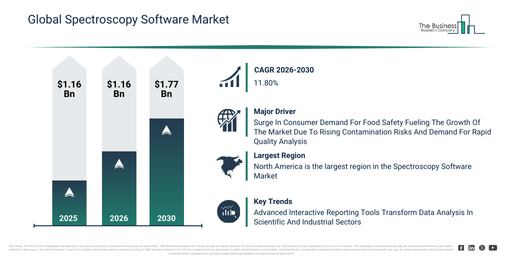
    Looking ahead, the market is expected to expand rapidly, reaching $2.61 billion by 2030 with a CAGR of 11.8%. This future growth is anticipated to be driven by the integration of artificial intelligence (AI) and machine learning technologies into spectroscopy software, the increasing adoption of cloud-based and hybrid deployment models, growing forensic science applications, automation trends in pharmaceutical and biotech laboratories, and the rise of remote and collaborative research platforms. Leading trends include automated spectral data processing, seamless integration with laboratory information management systems (LIMS), real-time instrument monitoring, enhanced visualization and reporting capabilities, and tools that support remote and joint data analysis.

    Download A Free Sample Report For Comprehensive Market Insights:

    https://www.thebusinessresearchcompany.com/sample.aspx?id=25910&type=smp

    Growing Consumer Demand for Food Safety Boosts Spectroscopy Software

    One of the key factors driving market expansion is the rising consumer focus on food safety, which has become critical due to the globalization of food supply chains. This global spread increases the risk of contamination during various stages such as production, processing, and distribution. Spectroscopy software plays a vital role in maintaining food safety by enabling quick, non-destructive testing methods that detect contaminants, verify ingredient authenticity, and monitor quality throughout the supply chain.

    For example, in April 2024, the Public Interest Research Group (PIRG), a nonprofit organization based in the US, reported an 8% increase in food and beverage recalls in 2023 compared to 6% in 2022. This upward trend highlights growing concerns about food safety, which in turn drives demand for advanced spectroscopy software solutions.

    Spectroscopy Software Market Segmentation and Strategic Opportunities

    This market report organizes the spectroscopy software industry into several distinct segments:

    1) By Type of Spectroscopy:

    – Ultraviolet-Visible (UV-Vis) Spectroscopy Software

    – Infrared (IR) Spectroscopy Software

    – Nuclear Magnetic Resonance (NMR) Spectroscopy Software

    – Mass Spectrometry Software

    – Fluorescence Spectroscopy Software

    2) By Deployment Type:

    – On-Premise Software

    – Cloud-Based Software

    – Hybrid Software

    3) By Functionality:

    – Data Acquisition

    – Data Analysis

    – Data Management

    – Reporting and Visualization

    – Instrument Control

    4) By Application:

    – Food Testing

    – Environmental Testing

    – Forensic Science

    – Pharmaceuticals

    – Other Applications

    5) By End-User:

    – Pharmaceutical and Biotechnology Industries

    – Forensics

    – Food Industries

    – Polymers and Organic Chemistry Industries

    Access The Complete Spectroscopy Software Market Report:

    https://www.thebusinessresearchcompany.com/report/spectroscopy-software-global-market-report

    Further subcategories provide more detailed classifications, such as the types of UV-Vis software (single-beam, double-beam, array-based, portable), IR spectroscopy types (NIR, MIR, FIR, FTIR), NMR software variations (1D, 2D/3D, solid-state, high-resolution), mass spectrometry software kinds (GC-MS, LC-MS, MALDI, tandem MS), and fluorescence software (steady-state, time-resolved, lifetime imaging, FRET).

    Innovations Driving Change in the Spectroscopy Software Market

    Leading companies in this space are focusing on creating advanced software solutions that enhance data visualization and enable comprehensive analysis. Interactive reporting tools have become a key innovation, offering dynamic and user-friendly features that allow scientists and industry professionals to explore, filter, and visualize spectroscopy data in real time.

    For instance, in June 2023, Mirion Technologies, Inc., a US-based tech and manufacturing company, released Genie 4.0, a significant update to its flagship spectroscopy software. This version improves user experience with interactive reports, boosts accuracy through sophisticated algorithms, and increases automation capabilities via Python scripting. Genie 4.0 supports both new and experienced users with a smooth transition and provides flexible subscription and perpetual licensing models. It became available for download in mid-July.

    Key Companies Influencing the Spectroscopy Software Industry

    Several prominent firms shape the competitive landscape of the spectroscopy software market. These include:

    – Thermo Fisher Scientific Inc.

    – Danaher Corporation

    – Agilent Technologies Inc.

    – PerkinElmer Inc.

    – Mettler-Toledo International Inc.

    – Shimadzu Corporation

    – Waters Corporation

    – Bruker Corporation

    – HORIBA Ltd.

    – JEOL Ltd.

    – Anton Paar GmbH

    – Renishaw plc

    – Metrohm AG

    – Genedata AG

    – HunterLab Europe GmbH

    – Avantes B.V.

    – JASCO Corporation

    – Wasatch Photonics Inc.

    – Lablicate GmbH

    – StellarNet Inc.

    Geographical Insights Revealing Growth Hotspots in Spectroscopy Software

    In 2025, North America was the largest regional market for spectroscopy software. However, the Asia-Pacific region is expected to lead growth during the forecast period, outpacing other areas. The market analysis covers key global regions, including Asia-Pacific, South East Asia, Western Europe, Eastern Europe, North America, South America, as well as the Middle East and Africa, providing a thorough perspective on worldwide market trends and opportunities.

    Get in touch with us:

    The Business Research Company: https://www.thebusinessresearchcompany.com/

    Americas: +1 310-496-7795

    Asia: +44 7882 955267 & +91 8897263534

    Europe: +44 7882 955267

    Email us at: marketing@tbrc.info

    Follow us on:

    LinkedIn: https://in.linkedin.com/company/the-business-research-company

    YouTube: https://www.youtube.com/channel/UC24_fI0rV8cR5DxlCpgmyFQ

    Global Market Model: https://www.thebusinessresearchcompany.com/global-market-model