Month: June 2026

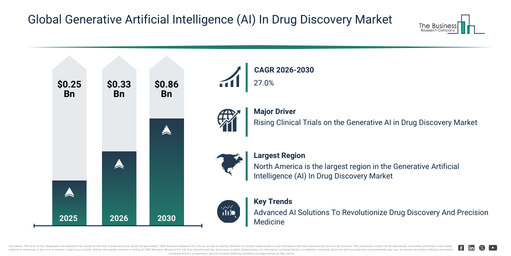
  • Generative Artificial Intelligence (AI) In Drug Discovery Market Forecast Signals New Revenue Opportunities Through 2030

    Generative Artificial Intelligence (AI) In Drug Discovery Market Forecast Signals New Revenue Opportunities Through 2030

    Through market attractiveness analysis, total addressable market evaluation, company benchmarking matrices, interactive Excel dashboards, expanded supply chain intelligence, emerging startup coverage, and detailed product insights, The Business Research Company’s 2026 market reports provide more actionable and strategically valuable research.

    Generative Artificial Intelligence (AI) In Drug Discovery Market Size Forecast: How Large Could The Market Become By 2030?

    The market size for AI-driven clinical trial site feasibility has experienced a rapid expansion in recent years. It is projected to increase from $1.53 billion in 2025 to $1.89 billion in 2026, reflecting a compound annual growth rate (CAGR) of 23.6%. This historic growth has been driven by several factors, including the growing complexity of clinical trial designs, heightened cost pressures on drug development schedules, an increased dependence on data-informed trial planning, the expansion of global multi-site clinical trials, and the early integration of predictive analytics into trial feasibility processes.

    The market for clinical trial site feasibility powered by artificial intelligence is projected to witness substantial expansion over the coming years. By 2030, its value is anticipated to reach $4.38 billion, reflecting a compound annual growth rate (CAGR) of 23.3%. This forecasted growth is driven by factors such as the widespread adoption of decentralized clinical trials, an increased demand for quicker site activation, a growing reliance on real-world evidence for feasibility decisions, the expansion of AI-enhanced trial planning platforms, and a heightened emphasis on mitigating trial risks. Key trends shaping this period include the incorporation of AI-driven models for site selection, the application of predictive analytics for patient recruitment, the integration of real-world data into feasibility assessments, the development of cloud-based feasibility solutions, and an intensified focus on forecasting trial performance.

    Download A Free Sample Report For Comprehensive Market Insights:

    https://www.thebusinessresearchcompany.com/sample.aspx?id=16067&type=smp

    #Generative Artificial Intelligence (AI) In Drug Discovery Market Growth Factors: Which Forces Are Supporting Market Expansion?

    The increase in clinical trial activity is anticipated to drive expansion in the AI-driven clinical trial site feasibility market moving forward. Clinical trials encompass global research studies designed to evaluate the safety and effectiveness of novel medical therapies, drugs, and devices. This surge in trials is primarily fueled by growing investments in biomedical research and development, as both public and private sectors acknowledge the pressing demand for innovative solutions to tackle evolving healthcare issues. As trials proliferate, there is a heightened need for AI-powered site feasibility tools, enabling research organizations to efficiently pinpoint optimal locations, evaluate site capabilities, and forecast enrollment success for their studies. By April 2025, data from the Multidisciplinary Digital Publishing Institute, a Switzerland-based open-access scientific journal publisher, indicated that the clinicaltrials.gov website hosted a total of 404,637 interventional clinical trials. Consequently, the growing number of clinical trials is propelling the AI-powered clinical trial site feasibility market.

    Generative Artificial Intelligence (AI) In Drug Discovery Market Segmentation Trends And Revenue Drivers

    The artificial intelligence (AI)-powered clinical trial site feasibility market covered in this report is segmented –

    1) By Component: Software, Services

    2) By Deployment Mode: Cloud-Based, On-Premises

    3) By Application: Site Selection, Patient Recruitment, Protocol Design, Performance Analytics, Other Applications

    4) By End-User: Pharmaceutical Companies, Contract Research Organizations, Academic Research Institutes, Hospitals, Other End-Users

    Subsegments:

    1) By Software: Predictive Analytics Software, Machine Learning (ML) Platforms, Natural Language Processing (NLP) Tools, Data Visualization Software, Clinical Trial Management System (CTMS) Integration Software, Real-World Data (RWD) Analytics Software, Risk-Based Monitoring (RBM) Software

    2) By Services: Feasibility Assessment Services, Site Selection Services, Patient Recruitment Support Services, Data Management And Analytics Services, Protocol Optimization Services, Regulatory Compliance Support Services, Consulting And Advisory Services

    Generative Artificial Intelligence (AI) In Drug Discovery Market Industry Trends: What Changes Are Reshaping Demand?

    Key players in the artificial intelligence-enabled clinical trial site feasibility market are concentrating on the creation of cutting-edge tools, specifically an AI-driven feasibility and recruitment platform aimed at refining site selection and boosting operational effectiveness throughout clinical trials. Such a platform functions as a software solution that employs artificial intelligence and machine learning to analyze trial protocols along with site data, pinpointing the most suitable clinical locations while improving patient recruitment by effectively matching eligible individuals, thereby shortening trial timelines and elevating study success rates. A notable example occurred in June 2023, when ObjectiveHealth, an integrated research and technology firm based in the United States, introduced ObjectiveScreen. This AI-powered feasibility and recruitment platform was designed to enhance clinical trial performance by improving patient identification, prequalification, and retention through real-time integration with electronic health records (EHRs), leveraging AI and machine learning algorithms in the process. By enabling clinical trial sites to directly access patient data, stratify health risks, and identify the most appropriate candidates, the platform accelerates enrollment and enhances trial outcomes.

    #Generative Artificial Intelligence (AI) In Drug Discovery Market Industry Leaders: Which Organizations Are Driving Competition?

    Major companies operating in the artificial intelligence (AI)-powered clinical trial site feasibility market are Oracle Corporation, Thermo Fisher Scientific Inc., NVIDIA Corporation, IQVIA Holdings Inc., Labcorp Holdings Inc., Dassault Systèmes SE, Parexel International Corporation, ZS Associates Inc., Veeva Systems Inc., Verily Life Sciences LLC, Signant Health Holding Corp., Saama Technologies LLC, Elligo Health Research Inc., ConcertAI Inc., Medable Inc., Science 37 Inc., Castor EDC Inc., Unlearn.AI Inc., Antidote Technologies Inc., Deep 6 AI

    Access The Complete Generative Artificial Intelligence (AI) In Drug Discovery Market Report:

    https://www.thebusinessresearchcompany.com/report/generative-artificial-intelligence-ai-in-drug-discovery-global-market-report

    Generative Artificial Intelligence (AI) In Drug Discovery Market Regional Distribution: Which Areas Drive Market Expansion?

    North America was the largest region in the artificial intelligence (AI)-powered clinical trial site feasibility market in 2025. Asia-Pacific is expected to be the fastest-growing region in the forecast period. The regions covered in the artificial intelligence (AI)-powered clinical trial site feasibility market report are Asia-Pacific, South East Asia, Western Europe, Eastern Europe, North America, South America, Middle East, Africa.

    Access a Customized Generative Artificial Intelligence (AI) In Drug Discovery Market Report for Deeper Competitive Insights

    https://www.thebusinessresearchcompany.com/sample.aspx?id=28923&type=smp

    Get in touch with us:

    The Business Research Company: https://www.thebusinessresearchcompany.com/

    Americas: +1 310-496-7795

    Asia: +44 7882 955267 & +91 8897263534

    Europe: +44 7882 955267

    Email us at: marketing@tbrc.info

    Follow us on:

    LinkedIn: https://in.linkedin.com/company/the-business-research-company

    YouTube: https://www.youtube.com/channel/UC24_fI0rV8cR5DxlCpgmyFQ

    Global Market Model: https://www.thebusinessresearchcompany.com/global-market-model
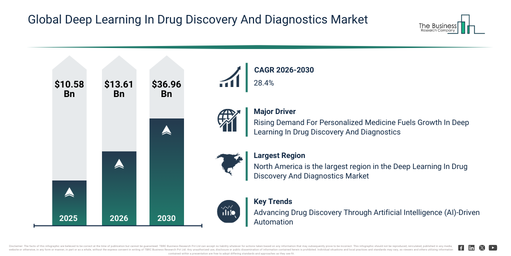
  • Deep Learning In Drug Discovery And Diagnostics Market Growth Is Accelerating As Industry Transformation Continues

    Deep Learning In Drug Discovery And Diagnostics Market Growth Is Accelerating As Industry Transformation Continues

    Delivering more actionable and strategically valuable research, The Business Research Company’s 2026 market reports feature market attractiveness analysis, total addressable market evaluation, company benchmarking matrices, interactive Excel dashboards, expanded supply chain intelligence, emerging startup coverage, and detailed product insights.

    Deep Learning In Drug Discovery And Diagnostics Market Revenue Outlook: What CAGR Is Expected Through 2030?

    The market for artificial intelligence in drug discovery has experienced rapid expansion over recent years. Forecasts indicate an increase from $2.33 billion in 2025 to $2.93 billion in 2026, representing a compound annual growth rate (CAGR) of 25.9%. This historic growth has been driven by several factors, including higher pharmaceutical R&D expenditures, the mounting complexity of drug discovery workflows, greater accessibility to biological and chemical data, an early embrace of machine learning within bioinformatics, and a rise in partnerships between pharmaceutical companies and technology firms.

    The market for artificial intelligence in drug discovery is projected to experience remarkable expansion over the coming years. Its value is anticipated to reach $7.42 billion by 2030, driven by a compound annual growth rate (CAGR) of 26.2%. This growth during the forecast period is fueled by factors such as the rising utilization of generative AI models, increased need for precision therapies, the broadening of clinical trial designs enabled by AI, greater investment in cloud-based discovery platforms, and growing regulatory endorsement of AI-supported drug development. Key trends shaping this period include the heightened application of AI for target identification, the growing use of deep learning in molecule screening, the wider implementation of virtual drug screening platforms, the advancement of AI-based lead optimization technologies, and a stronger emphasis on shortening drug development timelines.

    Download A Free Sample Report For Comprehensive Market Insights:

    https://www.thebusinessresearchcompany.com/sample.aspx?id=19394&type=smp

    Deep Learning In Drug Discovery And Diagnostics Market Demand Drivers: What Is Fueling Industry Growth?

    The increasing need for customized treatments is anticipated to boost the expansion of artificial intelligence within the drug discovery sector in the coming years. Personalized medicine is a focused strategy for preventing, diagnosing, and treating diseases by utilizing a person’s genetic, proteomic, or biological information to inform clinical choices. Its rising popularity stems from a greater demand for precise, patient-specific therapies that enhance treatment results while minimizing side effects. AI facilitates this trend by speeding up the identification of molecular targets, refining drug candidates, and improving clinical decision-making along the entire development process. As an example, the Personalized Medicine Coalition, a research and advocacy group based in the United States, reported in February 2024 that the U.S. FDA approved 26 new personalized therapies in 2023—these comprised 20 new molecular entities and 6 gene- or cell-based therapies. Consequently, the rising demand for personalized medicine is fueling the growth of artificial intelligence in the drug discovery market.

    Deep Learning In Drug Discovery And Diagnostics Market Segment Analysis Highlighting Growth Areas

    The artificial intelligence (AI) in drug discovery market covered in this report is segmented –

    1) By Technology: Context-Aware Processing, Natural Language Processing, Deep Learning

    2) By Drug Type: Small Molecules, Large Molecules

    3) By Therapeutic Type: Metabolic Disease, Cardiovascular Disease, Oncology, Neurodegenerative Diseases, Anti-Infective Diseases, Respiratory Diseases, Other Therapeutics

    4) By End User: Pharmaceutical Companies, Biopharmaceutical Companies, Academic And Research Institutes, Other End-Users

    Subsegments:

    1) By Context-Aware Processing: Contextual Data Integration, Predictive Modeling, Adaptive Learning Systems

    2) By Natural Language Processing (NLP): Text Mining And Analysis, Drug Interaction Extraction, Clinical Trial Data Analysis

    3) By Deep Learning: Neural Networks, Convolutional Neural Networks (CNNs), Recurrent Neural Networks (RNNs), Reinforcement Learning Applications

    Deep Learning In Drug Discovery And Diagnostics Market Innovation Trends: Which Developments Are Transforming The Industry?

    Major corporations are channeling funds into businesses that specialize in using artificial intelligence within the drug discovery sector, aiming to identify and create novel therapies while making these models accessible to other pharmaceutical developers. Such strategic financial commitments can supply the necessary capital for research and development of new drugs, a process that is often both expensive and drawn out. This infusion of money enables companies to push forward their drug discovery initiatives and introduce fresh treatments to the marketplace. A case in point occurred in July 2023 when Nvidia, a software company headquartered in the United States, injected $50 million into Recursion Pharmaceuticals, a US-based biotechnology enterprise that leverages AI for drug discovery. This investment is intended to accelerate Recursion’s development of its AI foundation models for biology and chemistry through the utilization of Nvidia’s cloud-based services.

    Deep Learning In Drug Discovery And Diagnostics Market Leading Companies: Who Holds Significant Market Presence?

    Major companies operating in the artificial intelligence (AI) in drug discovery market are Exscientia, Insilico Medicine, Owkin Inc., XtalPi Inc., Standigm Inc., Innoplexus AG, Atomwise, Inc., BenevolentAI, Deep Genomics Inc., NuMedii, Inc., Verge Genomics, Inc., Berg LLC, Cyclica Inc., Iktos, Quris, Adagene Inc., Gero Pte. Ltd., IBM Corporation, Microsoft Corporation, NVIDIA Corporation, Alphabet Inc., DeepMind Technologies Limited, IQVIA Holdings Inc., GNS Healthcare, Inc., GE HealthCare Technologies Inc., Novartis AG, Pfizer Inc., F. Hoffmann-La Roche Ltd., Merck & Co., Inc., AbbVie Inc., AstraZeneca PLC, Amgen Inc., GlaxoSmithKline plc, Johnson & Johnson, Takeda Pharmaceutical Company Limited, Ipsen S.A., Galderma S.A.

    Access The Complete Deep Learning In Drug Discovery And Diagnostics Market Report:

    https://www.thebusinessresearchcompany.com/report/deep-learning-in-drug-discovery-and-diagnostics-global-market-report

    Deep Learning In Drug Discovery And Diagnostics Market Leading Geography: Which Region Generates The Most Revenue?

    North America was the largest region in the artificial intelligence (AI) in drug discovery market in 2025. Western Europe was the second largest region in the global artificial intelligence (AI) in drug discovery market share. The regions covered in the artificial intelligence (AI) in drug discovery market report are Asia-Pacific, South East Asia, Western Europe, Eastern Europe, North America, South America, Middle East, Africa.

    Access a Customized Deep Learning In Drug Discovery And Diagnostics Market Report for Deeper Competitive Insights

    https://www.thebusinessresearchcompany.com/sample.aspx?id=28922&type=smp

    Get in touch with us:

    The Business Research Company: https://www.thebusinessresearchcompany.com/

    Americas: +1 310-496-7795

    Asia: +44 7882 955267 & +91 8897263534

    Europe: +44 7882 955267

    Email us at: marketing@tbrc.info

    Follow us on:

    LinkedIn: https://in.linkedin.com/company/the-business-research-company

    YouTube: https://www.youtube.com/channel/UC24_fI0rV8cR5DxlCpgmyFQ

    Global Market Model: https://www.thebusinessresearchcompany.com/global-market-model
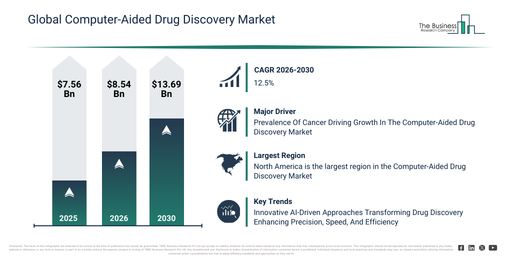
  • Computer-Aided Drug Discovery Market Outlook Highlights The Next Major Growth Opportunities

    Computer-Aided Drug Discovery Market Outlook Highlights The Next Major Growth Opportunities

    Enhanced with market attractiveness analysis, total addressable market evaluation, company benchmarking matrices, interactive Excel dashboards, expanded supply chain intelligence, emerging startup coverage, and detailed product insights, The Business Research Company’s 2026 market reports deliver more actionable and strategically valuable research.

    Computer-Aided Drug Discovery Market Growth Analysis: How Will Revenue Expand During The Forecast Period?

    The market for AI-based clinical trial solution providers has experienced explosive growth over the recent period. From a valuation of $3.03 billion in 2025, it is projected to reach $3.72 billion by 2026, expanding at a compound annual growth rate (CAGR) of 22.9%. This historic rise has been driven by several factors, including the reliance on manual patient recruitment methods, the limited adoption of artificial intelligence within clinical trials, dependence on traditional data management systems, the high expense associated with conventional trial monitoring practices, and the fragmented nature of trial oversight.

    The market for AI-based clinical trial solutions is projected to experience explosive growth over the coming years. Its value is anticipated to reach $8.53 billion by 2030, driven by a compound annual growth rate (CAGR) of 23.0%. This expansion during the forecast period is fueled by factors such as the improvement of AI algorithms for streamlining trial processes, the proliferation of cloud-based platforms for clinical research, increased funding for decentralized trial infrastructure, a heightened need for real-time data monitoring, and strategic alliances between pharmaceutical companies and AI solution developers. Key emerging trends include the application of AI to enhance patient recruitment, the growing incorporation of AI-driven data analytics within clinical trials, the spread of virtual and decentralized study models, the use of real-world evidence combined with predictive modeling, and a rising emphasis on automating regulatory compliance.

    Download A Free Sample Report For Comprehensive Market Insights:

    https://www.thebusinessresearchcompany.com/sample.aspx?id=19379&type=smp

    Computer-Aided Drug Discovery Market Growth Drivers: What Factors Are Accelerating Expansion?

    The growing integration of artificial intelligence is set to accelerate the advancement of the AI-powered clinical trial solution provider market. AI involves systems capable of replicating human cognitive functions, such as machine learning and deep learning, which introduce automation, efficiency, and data-driven analysis into complex operations. As clinical trial solution providers increasingly rely on AI, they facilitate streamlined patient selection, enhanced predictions for trial outcomes, continuous safety oversight in real time, and shorter study durations, thereby improving the overall clinical trial process. To illustrate, a March 2024 report from the United States Census Bureau, a federal statistical body, noted a swift rise in AI deployment, going from 3.7% of businesses in Fall 2023 to 5.4% by February 2024. Consequently, this expanding adoption of AI technology is fueling progress in the AI-based clinical trial solution provider market.

    Computer-Aided Drug Discovery Market Segment Performance And Strategic Opportunities

    The ai-based clinical trial solution providers market covered in this report is segmented –

    1) By Clinical Trial Phase: Phase-I, Phase-II, Phase-III

    2) By Therapeutic Application: Oncology, Cardiovascular Diseases, Neurological Diseases Or Conditions Metabolic Diseases, Infectious Diseases, Other Therapeutic Applications

    3) By End-User: Pharmaceutical Companies, Academia

    Subsegments:

    1) By Phase-I: Safety And Dosage Studies, Early Pharmacokinetics Studies

    2) By Phase-II: Efficacy Studies, Dose-Response Studies

    3) By Phase-III: Confirmatory Studies, Comparative Effectiveness Research

    Computer-Aided Drug Discovery Market Trends: What Is Shaping Future Industry Growth?

    Major players in the AI-based clinical trial solution providers market are introducing cutting-edge technological advancements, such as the Saama AI-driven data platform, to speed up clinical development and solidify their market presence. This AI-driven data platform is a software tool that uses artificial intelligence and machine learning to automate and improve data management and analysis tasks. For example, in June 2023, Saama Technologies, Inc., a software firm based in the United States, launched an AI-powered data platform named Saama. By centralizing and standardizing data, this platform simplifies clinical trial processes, delivering real-time insights into trial operations, finances, and patient information. It employs AI and advanced analytics to automate tasks, boost productivity, and offer detailed understanding of patient behaviors. Through SaaS offerings like data hubs, operational insights, patient insights, S2S, and SDQ, Saama enables AI-based clinical trial solution providers to enhance efficiency, accuracy, and effectiveness. Moreover, it seeks to eliminate manual, resource-heavy tasks, making clinical trials more streamlined and impactful.

    Computer-Aided Drug Discovery Market Key Players: Which Companies Shape Industry Competition?

    Major companies operating in the ai-based clinical trial solution providers market are International Business Machines Corporation, IQVIA Holdings Inc., Saama Technologies Inc., AiCure LLC, Deep 6 AI Inc., DEEP LENS AI Inc., Unlearn.AI Inc., Intelligencia Inc., Median Technologies SAS, PathAI Inc., Koneksa Health Inc., GNS Healthcare Inc., CytoReason, Ardigen, BenevolentAI SA, Exscientia, Mendel Health Inc., Concentro Health AI, Antidote Technologies Inc., TriNetX Inc., Phesi

    Access The Complete Computer-Aided Drug Discovery Market Report:

    https://www.thebusinessresearchcompany.com/report/computer-aided-drug-discovery-global-market-report

    Computer-Aided Drug Discovery Market Regional Outlook: Where Are The Largest Opportunities Located?

    North America was the largest region in the AI-based clinical trial solution providers market in 2025. Asia Pacific is expected to be the fastest-growing region in the forecast period. The regions covered in the ai-based clinical trial solution providers market report are Asia-Pacific, South East Asia, Western Europe, Eastern Europe, North America, South America, Middle East, Africa.

    Access a Customized Computer-Aided Drug Discovery Market Report for Deeper Competitive Insights

    https://www.thebusinessresearchcompany.com/sample.aspx?id=28919&type=smp

    Get in touch with us:

    The Business Research Company: https://www.thebusinessresearchcompany.com/

    Americas: +1 310-496-7795

    Asia: +44 7882 955267 & +91 8897263534

    Europe: +44 7882 955267

    Email us at: marketing@tbrc.info

    Follow us on:

    LinkedIn: https://in.linkedin.com/company/the-business-research-company

    YouTube: https://www.youtube.com/channel/UC24_fI0rV8cR5DxlCpgmyFQ

    Global Market Model: https://www.thebusinessresearchcompany.com/global-market-model
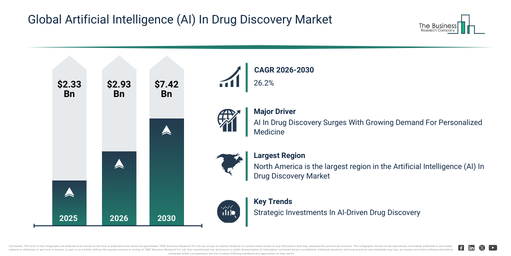
  • Artificial Intelligence (AI) In Drug Discovery Market Trends And Growth Drivers Point To Strong Future Potential

    Artificial Intelligence (AI) In Drug Discovery Market Trends And Growth Drivers Point To Strong Future Potential

    Through market attractiveness analysis, total addressable market evaluation, company benchmarking matrices, interactive Excel dashboards, expanded supply chain intelligence, emerging startup coverage, and detailed product insights, The Business Research Company’s 2026 market reports provide more actionable and strategically valuable research.

    Artificial Intelligence (AI) In Drug Discovery Market Forecast: What Market Value Is Expected By 2030?

    The market for artificial intelligence in cancer diagnostics has seen rapid expansion in recent years, with its value projected to rise from $0.79 billion in 2025 to $0.96 billion in 2026, reflecting a compound annual growth rate (CAGR) of 20.2%. This historical growth has been driven by factors such as the limited integration of AI into early diagnostic processes, a continued dependence on conventional imaging methods, a global increase in cancer incidence, a growing need for technologies that enable early detection, and the proliferation of diagnostic facilities.

    The market for artificial intelligence in cancer diagnostics is projected to experience significant expansion over the coming years, reaching an estimated valuation of $1.97 billion by 2030, driven by a compound annual growth rate of 19.9%. This anticipated growth during the forecast period is fueled by progress in deep learning and machine learning algorithms, the proliferation of AI-enhanced imaging systems, deeper incorporation of predictive analytics into healthcare, increased funding for digital health innovations, and strengthened partnerships between AI developers and medical institutions. Key developments shaping the forecast period encompass the wider uptake of AI-based imaging and diagnostic tools, the integration of predictive analytics into cancer screening processes, the growing utilization of AI for tumor identification and categorization, the expansion of AI-powered monitoring and follow-up systems, and a rise in cooperative efforts between hospitals and AI solution providers.

    Download A Free Sample Report For Comprehensive Market Insights:

    https://www.thebusinessresearchcompany.com/sample.aspx?id=3411&type=smp

    Artificial Intelligence (AI) In Drug Discovery Market Growth Factors Supporting Long-Term Expansion

    The rising incidence of cancer is anticipated to drive the expansion of artificial intelligence within the cancer diagnostics market in the coming years. Cancer encompasses a range of diseases characterized by abnormal cell growth that can potentially invade or spread to other areas of the body. The incorporation of AI into cancer care is designed to boost efficiency, accuracy, and personalized treatment approaches, ultimately leading to better outcomes for patients. For example, in May 2024, the National Cancer Institute, a U.S.-based government agency, reported that around 2 million new cancer diagnoses are expected in the United States in 2024, with over 611,000 deaths projected. By 2040, the global number of new cancer cases is estimated to reach 29.9 million, while cancer-related deaths are forecast to climb to 15.3 million. Consequently, the growing prevalence of cancer is fueling the advancement of artificial intelligence in the cancer diagnostics market.

    #Artificial Intelligence (AI) In Drug Discovery Market Segment Landscape And Growth Potential

    The ai in cancer diagnostics market covered in this report is segmented –

    1) By Component: Software Solutions, Hardware, Services

    2) By Cancer Type: Breast Cancer, Lung Cancer, Brain Tumor, Skin Cancer And Cervical Cancer, Prostate And Colorectal Cancer, Other Cancer Types

    3) By Application: Screening And Diagnosis, Tumor Identification, Monitoring

    4) By End User: Hospitals, Diagnostic Centers, Medical Research Institutes

    Subsegments:

    1) By Software Solutions: Machine Learning Software, Deep Learning Software, Image Analysis Software

    2) By Hardware: AI-Powered Imaging Systems, Diagnostic Devices

    3) By Services: AI Integration Services, Consulting And Training Services, Support And Maintenance Services

    Artificial Intelligence (AI) In Drug Discovery Market Industry Trends Shaping Future Revenue Growth

    Companies leading the AI in cancer diagnostics market are experiencing notable expansion, fueled by progress in AI-enabled digital pathology systems designed for cancer detection. These systems employ artificial intelligence algorithms to identify cancerous and diagnostic features across various tissue types, delivering precise and timely diagnoses, aiding in case prioritization, and ensuring consistent results. For example, in November 2023, Dedalus, in collaboration with Ibex Medical Analytics, a European health software firm, introduced a comprehensive End-to-End AI-driven digital pathology solution for cancer diagnosis throughout Europe. This innovation is intended to boost accuracy, provide AI-assisted decision support, streamline reporting processes, optimize laboratory workflows, and strengthen diagnostic certainty.

    Artificial Intelligence (AI) In Drug Discovery Market Competitive Landscape: Who Are The Leading Companies?

    Major companies operating in the ai in cancer diagnostics market are Microsoft Corporation, IBM Corporation, Verily Life Sciences LLC, Tempus Labs Inc, Guardant Health Inc, Lunit Inc, Paige AI Inc, Viz.ai Inc, Enlitic Inc, Ibex Medical Analytics Ltd, Kheiron Medical Technologies Limited, CureMetrix Inc, CancerIQ Inc, MultiplAI Health Inc, Freenome Holdings Inc, SkinVision B V, Owkin Inc, Imagen Technologies Inc, Cyrcadia Health Inc, Oncora Medical Inc, Xilis Inc

    Access The Complete Artificial Intelligence (AI) In Drug Discovery Market Report:

    https://www.thebusinessresearchcompany.com/report/artificial-intelligence-in-drug-discovery-global-market-report

    Artificial Intelligence (AI) In Drug Discovery Market Geographic Landscape: Which Region Dominates Industry Growth?

    North America was the largest region in the artificial intelligence in cancer diagnostics market in 2025. The regions covered in the ai in cancer diagnostics market report are Asia-Pacific, South East Asia, Western Europe, Eastern Europe, North America, South America, Middle East, Africa.

    Access a Customized Artificial Intelligence (AI) In Drug Discovery Market Report for Deeper Competitive Insights

    https://www.thebusinessresearchcompany.com/sample.aspx?id=28918&type=smp

    Get in touch with us:

    The Business Research Company: https://www.thebusinessresearchcompany.com/

    Americas: +1 310-496-7795

    Asia: +44 7882 955267 & +91 8897263534

    Europe: +44 7882 955267

    Email us at: marketing@tbrc.info

    Follow us on:

    LinkedIn: https://in.linkedin.com/company/the-business-research-company

    YouTube: https://www.youtube.com/channel/UC24_fI0rV8cR5DxlCpgmyFQ

    Global Market Model: https://www.thebusinessresearchcompany.com/global-market-model
  • Smart Orthopedic Implants Market Expansion Is Reshaping Competitive Dynamics Across The Industry

    Smart Orthopedic Implants Market Expansion Is Reshaping Competitive Dynamics Across The Industry

    Delivering more actionable and strategically valuable research, The Business Research Company’s 2026 market reports feature market attractiveness analysis, total addressable market evaluation, company benchmarking matrices, interactive Excel dashboards, expanded supply chain intelligence, emerging startup coverage, and detailed product insights.

    Smart Orthopedic Implants Market Size Outlook: How Fast Will Revenue Grow Through 2030?

    The smart orthopedic implants market has experienced robust expansion in recent years, with projections indicating an increase from $25.92 billion in 2025 to $27.33 billion in 2026, reflecting a compound annual growth rate (CAGR) of 5.4%. This historical growth has been driven by factors such as a higher prevalence of orthopedic conditions, constraints in early diagnostic approaches, traditional methods of implant surveillance, a significant rate of complications following surgery, and growing public recognition of the benefits associated with joint replacement procedures.

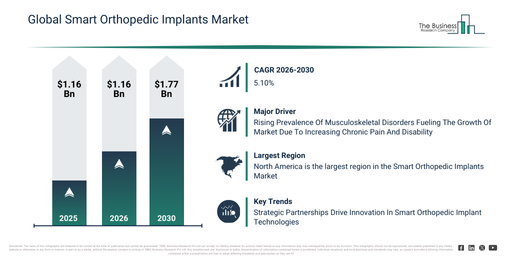
    Over the coming years, the smart orthopedic implants market is projected to experience robust expansion. By 2030, its value is anticipated to reach $33.36 billion, progressing at a compound annual growth rate (CAGR) of 5.1%. This upward trajectory in the forecast period is driven by factors such as the rising acceptance of intelligent implants, progress in implantable sensor technology, the infusion of artificial intelligence into orthopedics, a growing call for customized medical solutions, and an expanding elderly population. Key developments shaping this period include the rise of remote patient monitoring, predictive analytics in orthopedics, tailored rehabilitation strategies, timely identification of complications, and the adoption of minimally invasive implant techniques.

    Download A Free Sample Report For Comprehensive Market Insights:

    https://www.thebusinessresearchcompany.com/sample.aspx?id=25906&type=smp

    #Smart Orthopedic Implants Market Demand Drivers Creating New Revenue Opportunities

    The growing occurrence of musculoskeletal disorders is anticipated to fuel the expansion of the smart orthopedic implants market in the coming period. Musculoskeletal disorders encompass conditions affecting bones, muscles, joints, tendons, and ligaments, frequently leading to persistent pain, reduced mobility, and lasting disability. The rise in such conditions is driven by an aging population, inactive lifestyles, and the increasing prevalence of chronic noncommunicable diseases. Smart orthopedic implants support this upward trend by delivering real-time biomechanical data, early-warning notifications, and enhanced monitoring after surgery, leading to better patient outcomes and fewer revision surgeries needed. For example, in January 2024, the Office for Health Improvement and Disparities, a UK government department, reported that in 2023, 18.4% of individuals aged 16 and over indicated having a long-term musculoskeletal condition, slightly higher than 17.6% in 2022. These conditions were less commonly reported by men (15.8%) compared to women (20.9%). Consequently, the increasing frequency of musculoskeletal disorders is propelling growth in the smart orthopedic implants market.

    Smart Orthopedic Implants Market Categorization By Product Type And Application

    The smart orthopedic implants market covered in this report is segmented –

    1) By Type Of Implant: Smart Knee Implants, Smart Hip Implants, Smart Spine Implants, Smart Shoulder Implants, Smart Ankle Implants

    2) By Material: Ceramic Implants, Metallic Implants, Polymeric Implants

    3) By Technology Integration: Data Analytics And Artificial Intelligence Integration, Microelectronic Sensors, Telemedicine Capabilities

    4) By Application: Fracture Fixation, Joint Replacement, Osteotomy, Spinal Fusion

    5) By End-Use: Ambulatory Surgical Centers, Hospitals, Specialty Clinics, Other End-Uses

    Subsegments:

    1) By Smart Knee Implants: Total Knee Replacement, Partial Knee Replacement, Unicompartmental Knee Implants, Revision Knee Implants

    2) By Smart Hip Implants: Total Hip Replacement, Partial Hip Replacement, Hip Resurfacing Implants, Revision Hip Implants

    3) By Smart Spine Implants: Cervical Spine Implants, Thoracolumbar Spine Implants, Interbody Fusion Devices, Pedicle Screw Systems

    4) By Smart Shoulder Implants: Total Shoulder Replacement, Reverse Shoulder Replacement, Partial Shoulder Replacement, Revision Shoulder Implants

    5) By Smart Ankle Implants: Total Ankle Replacement, Ankle Fusion Implants, Revision Ankle Implants, Ankle Fracture Fixation Devices

    Smart Orthopedic Implants Market Trends Driving Strategic Industry Expansion

    Major players within the smart orthopedic implants market are increasingly pursuing strategic partnerships as a means to broaden their international presence and enhance the delivery of advanced patient care solutions. A strategic partnership refers to a formalized collaboration among two or more organizations designed to leverage their complementary strengths for achieving shared, long-term goals. Through such arrangements, partners can exchange resources, expertise, and innovative ideas without sacrificing their individual autonomy. For example, in June 2025, NanoHive Medical LLC, a US-based company specializing in 3D-printed spinal implants, partnered with DirectSync Surgical, a US-based producer of human-powered smart implants, to create the Hive Soft Titanium spinal interbody fusion device—a smart spine implant. This joint effort aims to incorporate bone-stimulating and remote monitoring sensor technology into NanoHive’s proprietary 3D-printed spinal fusion systems, taking advantage of their distinctive rhombic dodecahedron lattice structure to efficiently transmit energy from piezoelectric sensors. The initiative represents an advancement aimed at improving patient care by enabling better data collection, facilitating bone stimulation, and fostering connectivity with cutting-edge surgical tools and artificial intelligence.

    Smart Orthopedic Implants Market Company Landscape And Strategic Competition

    Major companies operating in the smart orthopedic implants market are Johnson And Johnson, Medtronic plc, Stryker Corporation, Zimmer Biomet Holdings Inc, Enovis Corporation, Orthofix Medical Inc, Exactech Inc, Xenco Medical LLC, Heraeus Medical GmbH, Intelligent Implants GmbH, Statera Medical Inc, SpineGuard SA, BoneTag Technologies, DirectSync Surgical Inc, AK Medical Holdings Limited, Mathys Ltd, Smith And Nephew plc, Globus Medical Inc, NuVasive Inc, Alphatec Spine Inc, Life Spine Inc, restor3d Inc

    Access The Complete Smart Orthopedic Implants Market Report:

    https://www.thebusinessresearchcompany.com/report/smart-orthopedic-implants-global-market-report

    #Smart Orthopedic Implants Market Largest Region: Which Geography Holds The Highest Market Share?

    North America was the largest region in the smart orthopedic implants market in 2025. Asia-Pacific is expected to be the fastest-growing region in the forecast period. The regions covered in the smart orthopedic implants market report are Asia-Pacific, South East Asia, Western Europe, Eastern Europe, North America, South America, Middle East, Africa.

    Access a Customized Smart Orthopedic Implants Market Report for Deeper Competitive Insights

    https://www.thebusinessresearchcompany.com/sample.aspx?id=28917&type=smp

    Get in touch with us:

    The Business Research Company: https://www.thebusinessresearchcompany.com/

    Americas: +1 310-496-7795

    Asia: +44 7882 955267 & +91 8897263534

    Europe: +44 7882 955267

    Email us at: marketing@tbrc.info

    Follow us on:

    LinkedIn: https://in.linkedin.com/company/the-business-research-company

    YouTube: https://www.youtube.com/channel/UC24_fI0rV8cR5DxlCpgmyFQ

    Global Market Model: https://www.thebusinessresearchcompany.com/global-market-model
  • Edge-GPU Breast Tomosynthesis Box Market Forecast Reveals Where Future Industry Value Will Be Created

    Edge-GPU Breast Tomosynthesis Box Market Forecast Reveals Where Future Industry Value Will Be Created

    Enhanced with market attractiveness analysis, total addressable market evaluation, company benchmarking matrices, interactive Excel dashboards, expanded supply chain intelligence, emerging startup coverage, and detailed product insights, The Business Research Company’s 2026 market reports deliver more actionable and strategically valuable research.

    Edge-GPU Breast Tomosynthesis Box Market Size, Value And Growth Trends Through 2030

    The market for edge-gpu breast tomosynthesis boxes has experienced swift expansion in recent times, with its value projected to climb from $0.53 billion in 2025 to $0.61 billion in 2026, reflecting a compound annual growth rate (CAGR) of 13.3%. Historical growth has been driven by the uptake of breast tomosynthesis technology, progress in edge-gpu computing, a need for detailed 3D imaging, the rise of breast cancer screening initiatives, and improvements in imaging detectors.

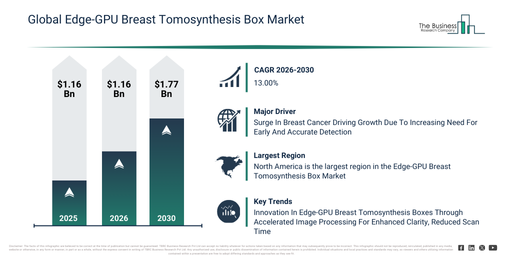
    The market for edge-GPU breast tomosynthesis boxes is projected to experience substantial expansion in the coming years. By 2030, its value is anticipated to reach $0.99 billion, reflecting a compound annual growth rate (CAGR) of 13.0%. This forecasted growth is fueled by AI-driven diagnostic tools, the growth of portable screening units, integration with cloud-based imaging platforms, faster image processing capabilities, and broader adoption in both clinical and research settings. Key trends shaping the forecast period include real-time 3D imaging, GPU-accelerated processing, heightened diagnostic precision, AI-based image analysis, and the availability of portable imaging solutions.

    Download A Free Sample Report For Comprehensive Market Insights:

    https://www.thebusinessresearchcompany.com/sample.aspx?id=29048&type=smp

    Edge-GPU Breast Tomosynthesis Box Market Expansion Supported By Key Demand Factors

    The anticipated growth of the edge-GPU breast tomosynthesis box market is being driven by the increasing incidence of breast cancer. This condition involves the uncontrolled proliferation of abnormal cells within the breast, forming malignant tumors that can metastasize, yet early detection through screening and heightened awareness markedly enhances treatment success and survival. Lifestyle modifications, including poor dietary habits, diminished physical activity, and hormonal changes, are major contributors to the growing number of breast cancer diagnoses globally, as they elevate the risk of abnormal cell development in breast tissue. By delivering high-resolution 3D imaging, the edge-GPU breast tomosynthesis box aids in the early and precise identification of tumors, boosts diagnostic accuracy, and facilitates quicker, more efficient image processing to improve treatment planning. A report from the American Cancer Society (ACS) in July 2024, a U.S.-based nonprofit focused on cancer research and patient support, indicated that approximately 310,720 new invasive breast cancer cases are expected to be diagnosed among American women in 2024, with 16% affecting those under 50, along with an additional 56,500 cases of DCIS (stage 0). Consequently, the rising prevalence of breast cancer is fueling the expansion of the edge-GPU breast tomosynthesis box market.

    Edge-GPU Breast Tomosynthesis Box Market Segment Analysis And Revenue Opportunities

    The edge-gpu breast tomosynthesis box market covered in this report is segmented –

    1) By Product Type: Standalone Edge-GPU Box, Integrated Edge-GPU Systems

    2) By Distribution Channel: Direct Sales, Distributors, Other Distribution Types

    3) By Application Type: Breast Cancer Screening, Diagnostic Imaging

    4) By End-User: Hospitals, Diagnostic Centers

    Subsegments:

    1) By Standalone Edge-GPU Box: Compact Edge-GPU Box, High-Performance Edge-GPU Box, Modular Edge-GPU Box

    2) By Integrated Edge-GPU Systems: Hospital Integrated Systems, Diagnostic Center Integrated Systems

    Edge-GPU Breast Tomosynthesis Box Market Growth Trends Influencing Competitive Dynamics

    Key players in the Edge-GPU breast tomosynthesis box space are prioritizing technological advancements such as accelerated image processing, which boosts image quality, shortens scanning duration, and enhances the early identification of breast cancer during screenings. Accelerated image processing involves leveraging high-performance computing resources, including GPUs or specialized hardware, to quickly process and refine digital images, thereby enabling swifter reconstruction, analysis, and visualization of intricate imaging data while increasing both efficiency and precision in medical imaging. For example, in June 2025, QT Imaging, Inc., a U.S.-based medical device firm, unveiled its latest breast imaging reconstruction software, which leverages NVIDIA L40 GPU acceleration to deliver faster and more accurate image processing, heightened diagnostic precision, and better workflow efficiency for clinicians—a major milestone in breast imaging technology. This release is designed to streamline breast cancer screening by facilitating quicker and more reliable detection, alleviating the workload on radiologists, and ultimately enhancing patient outcomes via cutting-edge, high-performance imaging technology.

    Edge-GPU Breast Tomosynthesis Box Market Leading Players Shaping Industry Direction

    Major companies operating in the edge-gpu breast tomosynthesis box market are Hologic Inc., GE Healthcare, Fujifilm Holdings Corporation, Siemens Healthineers, Canon Medical Systems Corporation, Planmed Oy, Metaltronica S.p.A., General Medical Merate (IMS GIOTTO), Villa Sistemi Medicali, DMS Imaging, DRTECH Corporation, Stephanix, Delphinus Medical Technologies, Konica Minolta, Carestream Health, Agfa-Gevaert N.V., IDETEC Medical Imaging, Xenox (Xenox Medical), Aurora Imaging Technology, Micrima Ltd., Neusoft Medical Systems, Landwind Medical

    Access The Complete Edge-GPU Breast Tomosynthesis Box Market Report:

    https://www.thebusinessresearchcompany.com/report/edge-gpu-breast-tomosynthesis-box-global-market-report

    Edge-GPU Breast Tomosynthesis Box Market Regional Analysis: Which Region Leads By Revenue?

    North America was the largest region in the edge-GPU breast tomosynthesis box market in 2025. Asia-Pacific is expected to be the fastest-growing region in the forecast period. The regions covered in the edge-gpu breast tomosynthesis box market report are Asia-Pacific, South East Asia, Western Europe, Eastern Europe, North America, South America, Middle East, Africa.

    Access a Customized Edge-GPU Breast Tomosynthesis Box Market Report for Deeper Competitive Insights

    https://www.thebusinessresearchcompany.com/sample.aspx?id=28130&type=smp

    Get in touch with us:

    The Business Research Company: https://www.thebusinessresearchcompany.com/

    Americas: +1 310-496-7795

    Asia: +44 7882 955267 & +91 8897263534

    Europe: +44 7882 955267

    Email us at: marketing@tbrc.info

    Follow us on:

    LinkedIn: https://in.linkedin.com/company/the-business-research-company

    YouTube: https://www.youtube.com/channel/UC24_fI0rV8cR5DxlCpgmyFQ

    Global Market Model: https://www.thebusinessresearchcompany.com/global-market-model
  • Digital Twin Cardio-Pulmonary Bypass Market Growth Through 2030 Creates New Strategic Opportunities

    Digital Twin Cardio-Pulmonary Bypass Market Growth Through 2030 Creates New Strategic Opportunities

    Through market attractiveness analysis, total addressable market evaluation, company benchmarking matrices, interactive Excel dashboards, expanded supply chain intelligence, emerging startup coverage, and detailed product insights, The Business Research Company’s 2026 market reports provide more actionable and strategically valuable research.

    Digital Twin Cardio-Pulmonary Bypass Market CAGR Analysis And Future Market Development

    The market for digital twin cardio-pulmonary bypass has experienced explosive growth over recent years. Expanding from $0.6 billion in 2025 to $0.72 billion in 2026, this increase reflects a compound annual growth rate (CAGR) of 20.1%. Several factors have driven historical expansion, including the widespread use of simulation software in cardiac procedures, progress in modeling the cardio-pulmonary system, the creation of real-time monitoring tools, the incorporation of predictive analytics, and a growing demand for safe training environments.

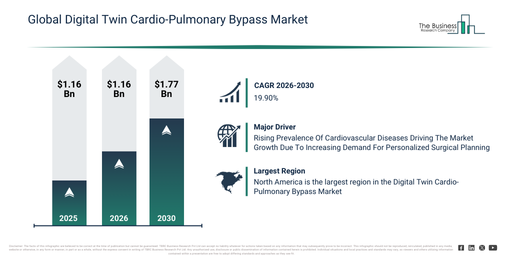
    The projected expansion of the digital twin cardiopulmonary bypass market remains exceptionally strong over the coming years. By 2030, its value is forecast to reach $1.49 billion, reflecting a compound annual growth rate (CAGR) of 19.9%. Several factors will drive this growth during the forecast period, including the incorporation of AI-based decision support tools, the broadening of remote surgical monitoring applications, the rising utilization of these systems in clinical training settings, more sophisticated predictive modeling for patient outcomes, and greater adoption across hospitals and research institutions. Among the most significant trends shaping this period are real-time hemodynamic simulations, predictive planning for surgeries, optimization of procedures via artificial intelligence, the creation of virtual training environments for surgeons, and the expanded use of remote patient monitoring technologies.

    Download A Free Sample Report For Comprehensive Market Insights:

    https://www.thebusinessresearchcompany.com/sample.aspx?id=29032&type=smp

    #Digital Twin Cardio-Pulmonary Bypass Market Growth Drivers And Industry Catalysts

    The growing incidence of cardiovascular diseases (CVDs) is anticipated to drive the expansion of the digital twin cardio-pulmonary bypass market in the coming period. Cardiovascular diseases (CVDs) encompass a range of disorders impacting the heart and blood vessels, including coronary artery disease, heart failure, stroke, and hypertension. This rise in CVD prevalence is largely attributed to aging populations, as advancing age gradually weakens blood vessels and the heart, thereby elevating the likelihood of heart-related conditions. Digital twin cardio-pulmonary bypass technology enables the simulation of a patient’s heart and circulatory system, empowering clinicians to forecast surgical outcomes, refine procedures, and minimize complications, thus directly aiding in the management and treatment of CVDs. For example, in October 2024, the Centers for Disease Control and Prevention, a US government agency, reported that cardiovascular disease caused 919,032 deaths in 2023, representing one in every three fatalities. Coronary heart disease remained the most common form of heart disease, and notably, approximately one in six cardiovascular deaths occurred among adults under 65 years old. Consequently, the escalating prevalence of cardiovascular diseases is fueling growth in the digital twin cardio-pulmonary bypass market.

    Digital Twin Cardio-Pulmonary Bypass Market Driver: Increasing Demand For Precision Medicine Driving The Market Growth Due To Patient-Specific Treatment Planning

    The rising demand for precision medicine is expected to accelerate the growth of the digital twin cardio-pulmonary bypass market moving forward. Precision medicine is a medical approach that customizes treatment and prevention strategies based on an individual’s unique genetic makeup, environment, and lifestyle. This demand is increasing because progress in genomics enables doctors to comprehend a patient’s genetic profile, facilitating more targeted and effective therapies. Digital twin cardio-pulmonary bypass supports precision medicine by generating a detailed, patient-specific virtual model of the cardiovascular system, allowing clinicians to simulate procedures, predict individual responses, and optimize treatment plans tailored to each patient’s distinct genetic and physiological characteristics. For instance, in February 2024, the Personalized Medicine Coalition, a US-based nonprofit, noted that the FDA approved 16 new personalized therapies for rare disease patients in 2023, a significant increase from the six approvals in 2022. Thus, the growing demand for precision medicine is propelling the digital twin cardio-pulmonary bypass market forward.

    Digital Twin Cardio-Pulmonary Bypass Market Driver: Increasing Investments In Medical Research Driving The Growth Of The Market Due To Advancements In Personalized And Precise Cardiac Care

    The surge in investments in medical research is expected to drive the growth of the digital twin cardio-pulmonary bypass market in the future. Medical research involves systematic investigation aimed at understanding human health, diseases, and medical conditions, as well as developing new treatments, drugs, devices, and technologies to enhance patient care. These investments are increasing because healthcare systems and patients seek more advanced, effective, and personalized medical solutions, necessitating the creation of innovative technologies and treatments. Funding in medical research accelerates the development and refinement of digital twin cardio-pulmonary bypass technology by supporting the creation of high-fidelity simulation models that precisely replicate human cardiovascular physiology, thereby improving surgical planning, patient safety, and treatment outcomes. For example, in December 2023, the Department for Science, Innovation & Technology, a UK government department, reported that the United States has allocated $2 billion toward biotechnology and biomanufacturing. Japan aims to achieve “the world’s most advanced bioeconomy” by 2030. France is investing USD 870 million (€800 million) to develop and produce biomedicines. Meanwhile, China’s latest Five-Year Plan commits to “accelerate the development” and “expand the size and strength” of its bioeconomy. Therefore, rising investments in medical research are fueling the expansion of the digital twin cardio-pulmonary bypass market.

    Digital Twin Cardio-Pulmonary Bypass Market Segmentation And Category Breakdown

    The digital twin cardio-pulmonary bypass market covered in this report is segmented –

    1) By Component: Software, Hardware, Services

    2) By Deployment Mode: On-Premises, Cloud-Based

    3) By Application: Cardiac Surgery, Pulmonary Surgery, Research And Development, Training And Education, Other Applications

    4) By End-User: Hospitals, Specialty Clinics, Academic And Research Institutes, Other End-Users

    Subsegments:

    1) By Software: Simulation Software, Data Analytics Software, Monitoring Software, Integration Software

    2) By Hardware: Sensors And Monitoring Devices, Computing Systems, Imaging Devices, Connectivity Modules

    3) By Services: Implementation Services, Maintenance Services, Training Services, Consulting Services

    Digital Twin Cardio-Pulmonary Bypass Market Competitive Analysis Of Major Industry Participants

    Major companies operating in the digital twin cardio-pulmonary bypass market are Tata Consultancy Services Limited (TCS), Medtronic plc, Siemens Healthineers AG, Koninklijke Philips N.V., GE HealthCare Technologies Inc., Boston Scientific Corporation, Dassault Systèmes SE, Terumo Corporation, Synopsys Inc., Getinge AB, LivaNova PLC, Materialise NV, HeartFlow Inc., CFD Research Corporation (CFDRC), Kitware Inc., Circle Cardiovascular Imaging Inc., Keya Medical Inc., inHEART SAS, PrediSurge Inc., InSilicoTrials Technologies SA

    Access The Complete Digital Twin Cardio-Pulmonary Bypass Market Report:

    https://www.thebusinessresearchcompany.com/report/digital-twin-cardio-pulmonary-bypass-global-market-report

    Digital Twin Cardio-Pulmonary Bypass Market Geographic Distribution And Regional Opportunities

    North America was the largest region in the digital twin cardio-pulmonary bypass market in 2025. Asia-Pacific is expected to be the fastest-growing region in the forecast period. The regions covered in the digital twin cardio-pulmonary bypass market report are Asia-Pacific, South East Asia, Western Europe, Eastern Europe, North America, South America, Middle East, Africa.

    Access a Customized Digital Twin Cardio-Pulmonary Bypass Market Report for Deeper Competitive Insights

    https://www.thebusinessresearchcompany.com/sample.aspx?id=28127&type=smp

    Get in touch with us:

    The Business Research Company: https://www.thebusinessresearchcompany.com/

    Americas: +1 310-496-7795

    Asia: +44 7882 955267 & +91 8897263534

    Europe: +44 7882 955267

    Email us at: marketing@tbrc.info

    Follow us on:

    LinkedIn: https://in.linkedin.com/company/the-business-research-company

    YouTube: https://www.youtube.com/channel/UC24_fI0rV8cR5DxlCpgmyFQ

    Global Market Model: https://www.thebusinessresearchcompany.com/global-market-model
  • Digital Twin Cardiac Cath Lab Market Size Projected To Increase From $2.12 Billion To $5.24 Billion During The Forecast Period

    Digital Twin Cardiac Cath Lab Market Size Projected To Increase From $2.12 Billion To $5.24 Billion During The Forecast Period

    Delivering more actionable and strategically valuable research, The Business Research Company’s 2026 market reports feature market attractiveness analysis, total addressable market evaluation, company benchmarking matrices, interactive Excel dashboards, expanded supply chain intelligence, emerging startup coverage, and detailed product insights.

    Digital Twin Cardiac Cath Lab Market Expansion From $2.12 Billion In 2026 To $5.24 Billion In 2030

    Over recent years, the digital twin cardiac cath lab market has experienced exponential expansion. Projected to rise from $1.7 billion in 2025 to $2.13 billion in 2026, it demonstrates a compound annual growth rate (CAGR) of 25.5%. This historic growth has been driven by the early integration of digital twin technology within healthcare, advancements in sophisticated imaging systems, the incorporation of data analytics in cath labs, an increasing preference for minimally invasive procedures, and escalated investments in healthcare IT infrastructure.

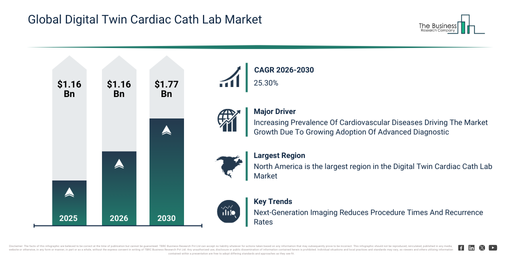
    The market for digital twin cardiac catheterization laboratories is projected to experience explosive growth over the coming years. By 2030, its valuation is anticipated to reach $5.24 billion, reflecting a compound annual growth rate (CAGR) of 25.3%. Several factors are fueling this expansion during the forecast period, including the use of AI-driven predictive modeling, the broadening of remote training initiatives, the linkage of these systems with hospital ERP platforms, the growing implementation of immersive AR and VR simulations, and a heightened need for real-time procedure refinement. Key developments shaping this sector involve live procedural simulation, artificial intelligence-based workflow streamlining, anticipatory equipment maintenance, digital training and educational tools, and improved clinical decision-assistance capabilities.

    Download A Free Sample Report For Comprehensive Market Insights:

    https://www.thebusinessresearchcompany.com/sample.aspx?id=29031&type=smp

    Digital Twin Cardiac Cath Lab Market Opportunity Drivers: What Is Creating New Revenue Potential?

    The anticipated rise in cardiovascular disease cases is set to accelerate the expansion of the digital twin cardiac cath lab market moving forward. These diseases encompass heart and blood vessel disorders, including coronary artery disease, heart attacks, and strokes, and their growing frequency is driven by sedentary lifestyles, where physical inactivity and poor diet, along with extended life expectancy, heighten the population at risk for cardiac conditions. Digital twin cardiac cath lab systems aid in managing cardiovascular disease by constructing virtual models of patients’ hearts and blood vessels, allowing cardiologists to simulate and refine intricate interventional procedures prior to execution, thus boosting treatment accuracy, cutting procedural risks, and improving outcomes for patients in cardiac catheterization suites. As an illustration, in October 2024, the Centers for Disease Control and Prevention, a US federal agency, reported that cardiovascular disease caused 919,032 deaths in 2023, representing one out of every three fatalities. Coronary heart disease was the most common heart disease type, and notably, roughly one in six cardiovascular deaths occurred among individuals under 65 years old. Consequently, the escalating prevalence of cardiovascular diseases is fueling growth in the digital twin cardiac cath lab market.

    Digital Twin Cardiac Cath Lab Market Segment Outlook: Which Categories Are Expanding The Fastest?

    The digital twin cardiac cath lab market covered in this report is segmented –

    1) By Component: Software, Hardware, Services

    2) By Deployment Mode: On-Premises, Cloud-Based

    3) By Application: Cardiac Diagnostics, Interventional Cardiology, Training And Education, Research And Development, Other Applications

    4) By End User: Hospitals, Specialty Clinics, Academic And Research Institutes, Other End Users

    Subsegments:

    1) By Software: Cardiac Simulation Software, Imaging And Visualization Software, Data Integration And Analytics Platforms, Procedure Planning And Optimization Tools

    2) By Hardware: Imaging Systems, Catheterization Equipment, Sensors And Monitoring Devices, Computing And Storage Systems

    3) By Services: Implementation And Integration Services, Training And Education Services, Maintenance And Support Services, Consulting Services

    Digital Twin Cardiac Cath Lab Market Innovation Trends Driving Future Development

    Key players within the digital twin cardiac catheterization laboratory market are increasingly adopting advanced technologies, specifically artificial intelligence (AI)-powered imaging, to boost procedural accuracy, cut down on operating times, and enhance patient recovery. AI-driven imaging involves applying machine learning algorithms to examine medical scans, automatically detecting and interpreting anatomical features, thereby delivering quicker and more precise insights, supporting tailored treatment strategies, and elevating both procedural effectiveness and clinical outcomes. A notable example is from March 2024, when inHEART, an AI-focused medical technology firm based in the United States, secured FDA 510(k) clearance for its AI software module, which automates the segmentation of CT images to construct detailed 3D heart models. This innovation enables clinicians to refine therapeutic approaches, plan interventions with greater efficiency, and slash ventricular tachycardia (VT) procedure duration by as much as 60%, in addition to decreasing recurrence frequencies. By employing AI algorithms to process pre-procedure imaging data, the software generates highly accurate, patient-tailored cardiac representations that can be effortlessly incorporated into key electroanatomic mapping (EAM) systems deployed in catheterization laboratories.

    Digital Twin Cardiac Cath Lab Market Key Companies And Competitive Benchmarking

    Major companies operating in the digital twin cardiac cath lab market are Tata Consultancy Services Limited, Siemens Healthineers AG, Koninklijke Philips N.V., GE HealthCare Technologies Inc., Dassault Systèmes SE, Materialise NV, HeartFlow Inc., Stereotaxis Inc., Imricor Medical Systems Inc., Circle Cardiovascular Imaging Inc., Medis Medical Imaging Systems BV, VirtaMed AG, Volta Medical SAS, DASI Simulations Inc., inHEART SAS, PrediSurge Inc., InSilicoTrials Technologies SA, Canon Medical Systems Corporation, Abbott Laboratories, Boston Scientific Corporation, Johnson & Johnson MedTech

    Access The Complete Digital Twin Cardiac Cath Lab Market Report:

    https://www.thebusinessresearchcompany.com/report/digital-twin-cardiac-cath-lab-global-market-report

    Digital Twin Cardiac Cath Lab Market Largest Region By Revenue And Market Share

    North America was the largest region in the digital twin cardiac cath lab market in 2025. Asia-Pacific is expected to be the fastest-growing region in the forecast period. The regions covered in the digital twin cardiac cath lab market report are Asia-Pacific, South East Asia, Western Europe, Eastern Europe, North America, South America, Middle East, Africa.

    Access a Customized Digital Twin Cardiac Cath Lab Market Report for Deeper Competitive Insights

    https://www.thebusinessresearchcompany.com/sample.aspx?id=28126&type=smp

    Get in touch with us:

    The Business Research Company: https://www.thebusinessresearchcompany.com/

    Americas: +1 310-496-7795

    Asia: +44 7882 955267 & +91 8897263534

    Europe: +44 7882 955267

    Email us at: marketing@tbrc.info

    Follow us on:

    LinkedIn: https://in.linkedin.com/company/the-business-research-company

    YouTube: https://www.youtube.com/channel/UC24_fI0rV8cR5DxlCpgmyFQ

    Global Market Model: https://www.thebusinessresearchcompany.com/global-market-model

  • Digital Twin Cardiac Ablation Suite Market Growth Outlook Reveals A CAGR Of 22.6% And A Market Value Of $2.73 Billion By 2030

    Digital Twin Cardiac Ablation Suite Market Growth Outlook Reveals A CAGR Of 22.6% And A Market Value Of $2.73 Billion By 2030

    Enhanced with market attractiveness analysis, total addressable market evaluation, company benchmarking matrices, interactive Excel dashboards, expanded supply chain intelligence, emerging startup coverage, and detailed product insights, The Business Research Company’s 2026 market reports deliver more actionable and strategically valuable research.

    Digital Twin Cardiac Ablation Suite Market Forecast Highlighting Growth From $1.21 Billion To $2.73 Billion

    The market for digital twin cardiac ablation suites has seen a massive expansion in recent years. Its value is projected to rise from $0.99 billion in 2025 to $1.21 billion in 2026, reflecting a compound annual growth rate (CAGR) of 22.9%. Driving this historic growth are factors including the high cost of conventional ablation instruments, restricted availability of patient-tailored modeling, dependence on human-led planning, disorganized healthcare information systems, and the sluggish uptake of cutting-edge simulation tools.

    The market for digital twin cardiac ablation suites is projected to experience remarkable expansion in the coming years. Its value is anticipated to reach $2.73 billion by 2030, driven by a compound annual growth rate (CAGR) of 22.6%. This upward trajectory during the forecast period is fueled by a growing need for precise cardiac interventions, wider acceptance of digital twin technologies, the incorporation of artificial intelligence into procedural planning, heightened investments in healthcare IT infrastructure, and the rise of telecardiology alongside remote monitoring solutions. Key developments anticipated in the forecast period involve individualized procedure optimization, continuous real-time patient oversight, preventive maintenance for medical equipment, simulation-driven surgical training, and seamless links with electronic health records.

    Download A Free Sample Report For Comprehensive Market Insights:

    https://www.thebusinessresearchcompany.com/sample.aspx?id=29030&type=smp

    Digital Twin Cardiac Ablation Suite Market Growth Momentum: Which Factors Are Influencing Demand?

    The anticipated expansion of the digital twin cardiac ablation suite market is being driven by the increasing incidence of cardiovascular diseases. These conditions, which impair the heart and blood vessels, often result in heart attacks, strokes, and other severe health issues. Their rising prevalence is linked to aging populations in developed countries, as older age significantly heightens the risk of heart-related ailments and complications. Digital twin cardiac ablation suites aid in managing cardiovascular diseases by generating virtual replicas of patients’ hearts, allowing doctors to simulate and refine ablation procedures beforehand, thereby enhancing outcomes and lowering complications for individuals with cardiac arrhythmias. For example, in October 2024, the Centers for Disease Control and Prevention, a US government agency, reported that cardiovascular disease led to 919,032 fatalities, representing one in every three deaths. Coronary heart disease was the most common type of heart disease, and notably, approximately one in six cardiovascular disease deaths occurred among adults under 65 years old. Consequently, the rising prevalence of cardiovascular diseases is fueling the growth of the digital twin cardiac ablation suite market.

    The digital twin cardiac ablation suite market growth is being fueled by a heightened focus on precision medicine. This medical approach customizes treatments and healthcare decisions for individual patients, taking into account their genetic profile, lifestyle, and environmental factors. The increasing emphasis on precision medicine stems from progress in genomic sequencing and data analytics, which empower healthcare professionals to detect specific biomarkers and craft targeted therapies that boost treatment effectiveness for each patient. Within this context, digital twin cardiac ablation suites enable precision medicine by developing patient-specific virtual heart models, enabling clinicians to simulate and optimize ablation strategies that are tailored to each individual’s unique heart structure and arrhythmia patterns prior to conducting actual procedures. In February 2024, the Personalized Medicine Coalition, a US nonprofit, noted that the FDA approved 16 new personalized treatments for rare diseases in 2023, a substantial rise from the six approvals in 2022. Thus, the growing emphasis on precision medicine is propelling the expansion of the digital twin cardiac ablation suite market.

    Digital Twin Cardiac Ablation Suite Market Segment Landscape: Which Areas Lead Market Development?

    The digital twin cardiac ablation suite market covered in this report is segmented –

    1) By Component: Software, Hardware, Services

    2) By Deployment Mode: On-Premises, Cloud-Based

    3) By Application: Preoperative Planning, Intraoperative Guidance, Postoperative Assessment, Training And Education, Other Applications

    4) By End-Users: Hospitals, Specialty Clinics, Research Institutes, Other End-Users

    Subsegments:

    1) By Software: Virtual Heart Modeling, Cardiac Simulation Software, Electrophysiology Simulation Tools, Patient Specific Cardiac Modeling, Three Dimensional Cardiac Mapping

    2) By Hardware: Imaging Devices, Computing Systems, Data Storage Devices

    3) By Services: Installation And Integration Services, Maintenance And Support Services, Training And Education Services, Consulting Services, Remote Monitoring Services

    Digital Twin Cardiac Ablation Suite Market Industry Leaders And Market Competition

    Major companies operating in the digital twin cardiac ablation suite market are Siemens Healthineers AG, Koninklijke Philips N.V., GE HealthCare Technologies Inc., Boston Scientific Corporation, Medtronic Public Limited Company, Abbott Laboratories, Dassault Systèmes SE, Stereotaxis Inc., Johnson & Johnson, Kardium Inc., CathWorks Ltd., inHEART SAS, Volta Medical SAS, Circle Cardiovascular Imaging Inc., Imricor Medical Systems Inc., CardioFocus Inc., CathVision ApS, HeartFlow Inc., Lepu Medical Technology Beijing Co. Ltd., Ortus Solutions Ltd., Biosense Webster Inc.

    Access The Complete Digital Twin Cardiac Ablation Suite Market Report:

    https://www.thebusinessresearchcompany.com/report/digital-twin-cardiac-ablation-suite-global-market-report

    Digital Twin Cardiac Ablation Suite Market Regional Analysis And Leading Geography

    North America was the largest region in the digital twin cardiac ablation suite market in 2025. Asia-Pacific is expected to be the fastest-growing region in the forecast period. The regions covered in the digital twin cardiac ablation suite market report are Asia-Pacific, South East Asia, Western Europe, Eastern Europe, North America, South America, Middle East, Africa.

    Access a Customized Digital Twin Cardiac Ablation Suite Market Report for Deeper Competitive Insights

    https://www.thebusinessresearchcompany.com/sample.aspx?id=28125&type=smp

    Get in touch with us:

    The Business Research Company: https://www.thebusinessresearchcompany.com/

    Americas: +1 310-496-7795

    Asia: +44 7882 955267 & +91 8897263534

    Europe: +44 7882 955267

    Email us at: marketing@tbrc.info

    Follow us on:

    LinkedIn: https://in.linkedin.com/company/the-business-research-company

    YouTube: https://www.youtube.com/channel/UC24_fI0rV8cR5DxlCpgmyFQ

    Global Market Model: https://www.thebusinessresearchcompany.com/global-market-model

  • Fifth Generation (5G) Tele-Mentored Robotic Surgery Market Forecast Highlights Expansion From $2.45 Billion To $6.14 Billion Through 2030

    Fifth Generation (5G) Tele-Mentored Robotic Surgery Market Forecast Highlights Expansion From $2.45 Billion To $6.14 Billion Through 2030

    Through market attractiveness analysis, total addressable market evaluation, company benchmarking matrices, interactive Excel dashboards, expanded supply chain intelligence, emerging startup coverage, and detailed product insights, The Business Research Company’s 2026 market reports provide more actionable and strategically valuable research.

    Fifth Generation (5G) Tele-Mentored Robotic Surgery Market Revenue Growth Supported By A CAGR Of 6.14% Through 2030

    The market for fifth-generation (5G) tele-mentored robotic surgery has seen explosive expansion in recent years. Valued at $1.95 billion in 2025, it is projected to climb to $2.46 billion by 2026, achieving a compound annual growth rate (CAGR) of 26.0%. This historical growth has been driven by factors such as the early embrace of telemedicine, the increased integration of robotic surgery, a pressing need for surgeon education, advancements in wireless network technology, and a growing demand for surgical accuracy.

    The market for fifth-generation (5G) tele-mentored robotic surgery is anticipated to experience exponential growth over the coming years, projected to reach a value of $6.15 billion by 2030, with a compound annual growth rate (CAGR) of 25.7%. This expansion in the forecast timeframe is driven by several factors, including the availability of low-latency communication via 5G, a scarcity of specialized surgeons globally, increasing requirements for cutting-edge surgical techniques, the development of surgical education platforms, and greater investments in digital healthcare. Key developments predicted for this period encompass remote expert mentorship for surgical procedures, real-time transfer of surgical skills, the widening scope of virtual surgical training, higher usage in intricate operations, and the establishment of collaborative surgical networks.

    Download A Free Sample Report For Comprehensive Market Insights:

    https://www.thebusinessresearchcompany.com/sample.aspx?id=28223&type=smp

    Fifth Generation (5G) Tele-Mentored Robotic Surgery Market Expansion Drivers: What Is Shaping Future Growth?

    The expansion of the fifth generation (5G) tele-mentored robotic surgery market is anticipated to be driven by the growing acceptance of telemedicine solutions. These solutions involve the remote delivery of healthcare services via digital communication technologies, which allow for patient consultations and medical procedures without the need for in-person visits. This trend is primarily fueled by the digitization of healthcare systems, where integrated electronic health record systems and advanced communication networks enable smooth virtual care delivery. As medical professionals increasingly depend on telemedicine, there is a corresponding need for 5G tele-mentored robotic surgery systems, which require ultra-fast, minimal-delay connectivity to offer real-time surgical mentorship and precise robotic operation guidance from distant locations. In April 2025, as reported by the American Hospital Association (AHA), a US-based national trade organization, over 12.6% of Medicare beneficiaries utilized telehealth services in the last quarter of 2023. Consequently, the rising adoption of telemedicine is propelling the growth of the 5G tele-mentored robotic surgery market.

    The market for fifth generation (5G) tele-mentored robotic surgery is expected to be propelled forward by the increasing demand for minimally invasive procedures. Such procedures involve surgical techniques that minimize the size and number of incisions, thereby reducing bodily trauma. This growing demand is attributed to advantages like less pain for patients, quicker recovery periods, and a decreased risk of complications in comparison to traditional open surgeries. These techniques allow surgeons to perform operations remotely with high accuracy, enhancing patient outcomes and fostering broader adoption of tele-mentored robotic surgery. For example, in June 2024, the American Society of Plastic Surgeons, a nonprofit organization based in the US, reported that minimally invasive procedures increased by 7% in 2023, surpassing the growth rate of surgical procedures by 2%. Furthermore, hand surgeries addressing conditions like carpal tunnel, arthritis, and trigger finger reached 207,887 procedures, marking a 2% increase from 2022. Thus, the rising preference for minimally invasive methods is fueling the expansion of the 5G tele-mentored robotic surgery market.

    Fifth Generation (5G) Tele-Mentored Robotic Surgery Market Segments: Where Are The Largest Growth Opportunities?

    The fifth generation (5g) tele-mentored robotic surgery market covered in this report is segmented –

    1) By Component: Hardware, Software, Services

    2) By Surgery Type: General Surgery, Orthopedic Surgery, Neurosurgery, Urology, Gynecology, Other Surgery Types

    3) By Application: Training And Education, Remote Surgery, Consultation, Other Applications

    4) By End-User: Hospitals, Ambulatory Surgical Centers, Specialty Clinics, Other End-Users

    Subsegments:

    1) By Hardware: Surgical Robots, Imaging Devices, Communication Devices, Haptic Devices, Sensors

    2) By Software: Surgical Planning Software, Remote Monitoring Software, Data Analytics Software, Simulation Software, Control Software

    3) By Services: Installation And Integration, Training And Education, Maintenance And Support, Consulting Services, Telecommunication Services

    Fifth Generation (5G) Tele-Mentored Robotic Surgery Market Strategic Trends: What Is Defining The Next Phase Of Growth?

    Key players in the fifth-generation (5G) tele-mentored robotic surgery market are concentrating on creating cutting-edge solutions, like real-time force feedback systems, to boost surgical accuracy and give surgeons a sense of touch during remote operations. These force feedback technologies deliver instant tactile sensations from robotic instruments, replicating the experience of touch in surgery, which enhances precision, lowers the risk of tissue injury, and improves safety in remote or minimally invasive procedures. As an example, in December 2024, Shanghai MicroPort MedBot (Group) Co., Ltd., a manufacturer based in China, secured market authorization from Brazil’s National Health Surveillance Agency (ANVISA) for its Toumai Laparoscopic Surgical Robot. This robot features real-time force-sensing capabilities, enabling surgeons to obtain tactile feedback during operations, thereby increasing precision and minimizing tissue damage. Additionally, it supports long-distance remote surgeries, facilitating intercontinental tele-mentored procedures, and represents a significant leap forward in minimally invasive and 5G-enabled robotic surgery in Latin America. This development paves the way for wider acceptance of remote surgical solutions, expands patient access to high-quality care, and establishes a new standard for combining robotics, artificial intelligence, and advanced network technologies in contemporary healthcare systems.

    Fifth Generation (5G) Tele-Mentored Robotic Surgery Market Major Participants And Competitive Dynamics

    Major companies operating in the fifth generation (5g) tele-mentored robotic surgery market are Huawei Technologies Co. Ltd., Telefonaktiebolaget LM Ericsson (publ), Nokia Corporation, Siemens Healthineers AG, Stryker Corporation, Intuitive Surgical Inc., PT Telekomunikasi Selular, Karl Storz SE & Co. KG, CMR Surgical Limited, Proximie Ltd., Mentice AB, Tianjin Tinavi Medical Technology Co. Ltd., Sovato Inc., Virtual Incision Corporation, Avatera Medical GmbH, SS Innovations International Inc., Medicaroid Corporation, Shenzhen Edge Medical Co. Ltd., KangDuo Robot Co. Ltd., Sina Robotics Inc.

    Access The Complete Fifth Generation (5G) Tele-Mentored Robotic Surgery Market Report:

    https://www.thebusinessresearchcompany.com/report/fifth-generation-5g-tele-mentored-robotic-surgery-global-market-report

    Fifth Generation (5G) Tele-Mentored Robotic Surgery Market Geographic Analysis: Where Is Demand Growing The Fastest?

    North America was the largest region in the fifth generation (5G) tele-mentored robotic surgery market in 2025. Asia-Pacific is expected to be the fastest-growing region in the forecast period. The regions covered in the fifth generation (5g) tele-mentored robotic surgery market report are Asia-Pacific, South East Asia, Western Europe, Eastern Europe, North America, South America, Middle East, Africa.

    Access a Customized Fifth Generation (5G) Tele-Mentored Robotic Surgery Market Report for Deeper Competitive Insights

    https://www.thebusinessresearchcompany.com/sample.aspx?id=28123&type=smp

    Get in touch with us:

    The Business Research Company: https://www.thebusinessresearchcompany.com/

    Americas: +1 310-496-7795

    Asia: +44 7882 955267 & +91 8897263534

    Europe: +44 7882 955267

    Email us at: marketing@tbrc.info

    Follow us on:

    LinkedIn: https://in.linkedin.com/company/the-business-research-company

    YouTube: https://www.youtube.com/channel/UC24_fI0rV8cR5DxlCpgmyFQ

    Global Market Model: https://www.thebusinessresearchcompany.com/global-market-model