Month: June 2026

  • Residential Intellectual And Development Disability Care Market Growth Is Reshaping Competitive Advantage Across The Industry

    Residential Intellectual And Development Disability Care Market Growth Is Reshaping Competitive Advantage Across The Industry

    Through market attractiveness analysis, total addressable market evaluation, company benchmarking matrices, interactive Excel dashboards, expanded supply chain intelligence, emerging startup coverage, and detailed product insights, The Business Research Company’s 2026 market reports provide more actionable and strategically valuable research.

    Residential Intellectual And Development Disability Care Market Size Forecast: How Large Could The Market Become By 2030?

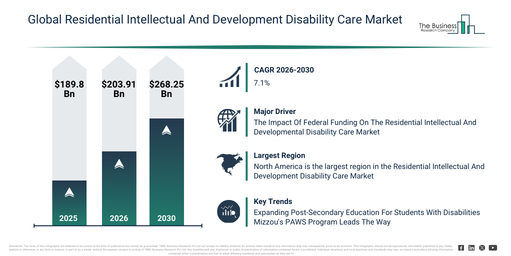
    The market encompassing residential care for individuals with intellectual and developmental disabilities has experienced robust expansion recently, projected to increase from $189.8 billion in 2025 to $203.91 billion in 2026, reflecting a compound annual growth rate of 7.4%. Key drivers behind this historical growth trajectory include the broader implementation of community-focused disability support initiatives, heightened public consciousness regarding intellectual and developmental disabilities, the development of enhanced residential care facilities, a greater need for assisted living solutions, and a growing pool of qualified caregiving professionals.

    The residential intellectual and developmental disability care sector is poised for substantial expansion, with projections indicating a surge to $268.25 billion by 2030, growing at a compound annual growth rate of 7.1%. This anticipated growth trajectory is fueled by several key drivers, including the increasing adoption of technology within care delivery, the escalating demand for tailored support services for individuals with disabilities, the broader reach of government-sponsored care programs, a heightened emphasis on care models focused on measurable outcomes, and increased investment aimed at updating residential care facilities. Over the forecast period, significant trends expected to shape the market include the widespread implementation of digital platforms for care administration, the greater incorporation of remote patient monitoring technologies, the proliferation of individualized care plans, a stronger emphasis on skill acquisition and fostering autonomy, and improved collaboration between healthcare providers and social service organizations.

    Download A Free Sample Report For Comprehensive Market Insights:

    https://www.thebusinessresearchcompany.com/sample.aspx?id=19678&type=smp

    Residential Intellectual And Development Disability Care Market Industry Drivers: What Is Driving Revenue Growth?

    The residential intellectual and developmental disability care market is poised for expansion, primarily fueled by a surge in federal financial backing allocated to initiatives supporting individuals with intellectual disabilities. This heightened federal investment stems from a growing recognition of the unique requirements of this population, coupled with robust advocacy for superior service provision and a steadfast dedication to fostering inclusive policies that aim to elevate living standards and ensure equitable access. Such federal funds are instrumental in bolstering residential care through the provision of essential financial aid for services, crucial support systems, and necessary upgrades to facilities. A clear example of this commitment is the US $37 billion allocated through the American Rescue Plan, as reported by the White House in December 2023, which specifically targeted home and community-based services designed for elderly individuals and those with disabilities. Consequently, the escalating federal funding for programs addressing intellectual disabilities is a significant catalyst for the growth observed in the residential intellectual and developmental disability care sector.

    Residential Intellectual And Development Disability Care Market Segment Landscape And Growth Potential

    The residential intellectual and development disability care market covered in this report is segmented –

    1) By Indication: Attention-Deficit Or Hyperactivity Disorder (ADHD), Autism Spectrum Disorders, Intellectual Disability, Learning Disorders, Other Indications

    2) By Mode Of Operation: State-Run Facilities, Medicaid Funded Services, Private Large Facilities, Privately Run Small Facilities

    3) By Number Of Beds: 4 To 9, 10 To 19, 20 To 49, 50 To 99, 100 To 199, 200 And More Beds

    4) By End-User: Hospitals, Intermediate Care Facilities, Group Homes, Private Home, Intellectual And Developmental Disability Facilities

    Subsegments:

    1) By Attention-Deficit Or Hyperactivity Disorder (ADHD): Behavioral Therapy, Medication Management, Support Services

    2) By Autism Spectrum Disorders: Applied Behavior Analysis (ABA) Therapy, Social Skills Training, Speech Therapy

    3) By Intellectual Disability: Residential Support Services, Day Programs, Vocational Training

    4) By Learning Disorders: Educational Support Services, Tutoring Programs, Skill Development Workshops

    5) By Other Indications: Dual Diagnosis Support, Mental Health Services, Therapeutic Recreation Programs

    #Residential Intellectual And Development Disability Care Market Growth Trends: What Is Influencing The Future Outlook?

    Within the residential sector for intellectual and developmental disability care, prominent organizations are prioritizing educational initiatives beyond high school, aimed at equipping individuals with essential life proficiencies, career preparedness, and opportunities for social inclusion within university settings. These distinct programs are engineered to deliver academic, occupational, and practical living instruction, thereby aiding the progression of individuals with intellectual and developmental disabilities toward independent adulthood and gainful employment. Illustrating this trend, the University of Missouri, often referred to as Mizzou, introduced the Preparing Adults for Work and Society (PAWS) initiative in January 2023; this residential program is specifically structured to extend post-secondary educational pathways to students with these needs. Furthermore, the PAWS program cultivates social connections by facilitating engagement between students with disabilities and their non-disabled peers, thereby championing a culture of belonging and mitigating feelings of solitude. Importantly, the PAWS program is actively undergoing the process to achieve accreditation as a Comprehensive Transition Post-Secondary (CTP) Program, as recognized by the U.S. Department of Education.

    Residential Intellectual And Development Disability Care Market Competitive Landscape: Who Are The Leading Companies?

    Major companies operating in the residential intellectual and development disability care market are Acadia Healthcare, Sheppard Pratt Health System Inc., Cerebral Palsy Associations of New York State, Merakey Allegheny Valley School, WellLife Network Inc., Alliance Health, Texana Center, Cuyahoga County Board of Developmental Disabilities, Lutheran Family Services Rocky Mountains, Metrocare Services, The Arc of the United States, New Vista Nursing and Rehabilitation Center, Lutheran Services in America Inc., St. Joseph’s Center, Beacon Health Options Inc., SPOT Rehabilitation & Home Health Care, Durham County Community Living Programs Inc., Mosaic Community Services, Heritage Christian Services, UCP of Central Florida

    Access The Complete Residential Intellectual And Development Disability Care Market Report:

    https://www.thebusinessresearchcompany.com/report/residential-intellectual-and-development-disability-care-global-market-report

    Residential Intellectual And Development Disability Care Market Largest Region: Which Geography Holds The Highest Market Share?

    North Americawas the largest region in the residential intellectual and development disability care market in 2025. Asia-Pacificis expected to be the fastest-growing region in the forecast period. The regions covered in the residential intellectual and development disability care market report are Asia-Pacific, South East Asia, Western Europe, Eastern Europe, North America, South America, Middle East, Africa.

    Get in touch with us:

    The Business Research Company: https://www.thebusinessresearchcompany.com/

    Americas: +1 310-496-7795

    Asia: +44 7882 955267 & +91 8897263534

    Europe: +44 7882 955267

    Email us at: marketing@tbrc.info

    Follow us on:

    LinkedIn: https://in.linkedin.com/company/the-business-research-company

    YouTube: https://www.youtube.com/channel/UC24_fI0rV8cR5DxlCpgmyFQ

    Global Market Model: https://www.thebusinessresearchcompany.com/global-market-model
  • Reproductive Genetics Market Forecast Signals New Revenue Opportunities Through 2030

    Reproductive Genetics Market Forecast Signals New Revenue Opportunities Through 2030

    Delivering more actionable and strategically valuable research, The Business Research Company’s 2026 market reports feature market attractiveness analysis, total addressable market evaluation, company benchmarking matrices, interactive Excel dashboards, expanded supply chain intelligence, emerging startup coverage, and detailed product insights.

    Reproductive Genetics Market Revenue Outlook: What CAGR Is Expected Through 2030?

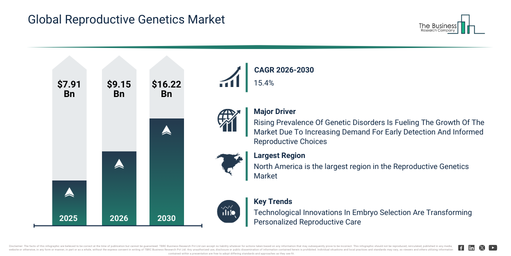
    The reproductive genetics market experienced significant expansion, projected to climb from $7.91 billion in 2025 to $9.15 billion by 2026, demonstrating a robust compound annual growth rate of 15.7%. This upswing during the historical period was fueled by burgeoning adoption of assisted reproductive technologies, a trend of mothers conceiving at older ages, the proliferation of fertility treatment centers, heightened public consciousness regarding inheritable genetic conditions, and the accessibility of sophisticated molecular diagnostic instruments.

    The reproductive genetics sector is poised for significant expansion over the coming years, projected to reach a market value of $16.22 billion by 2030, fueled by a compound annual growth rate (CAGR) of 15.4%. This anticipated surge is driven by several key factors, including the increasing embrace of precision reproductive medicine, escalating investments dedicated to fertility genomics research, the broader availability of non-invasive prenatal testing, a greater reliance on AI for genetic interpretation, and ongoing improvements in sequencing technology concerning both accuracy and cost-effectiveness. Looking ahead, prominent trends expected to shape the market landscape encompass the heightened utilization of preimplantation genetic testing, a growing demand for comprehensive carrier screening solutions, the expanded application of Next-Generation Sequencing (NGS) for reproductive diagnostics, the development of more individualized fertility treatment plans, and the enhanced incorporation of laboratory automation processes.

    Download A Free Sample Report For Comprehensive Market Insights:

    https://www.thebusinessresearchcompany.com/sample.aspx?id=28320&type=smp

    Reproductive Genetics Market Growth Factors: Which Forces Are Supporting Market Expansion?

    The reproductive genetics market is poised for expansion, largely driven by the escalating prevalence of genetic disorders. These conditions, stemming from alterations in an individual’s DNA, can manifest as minor gene mutations or more significant chromosomal abnormalities. The growing awareness and utilization of reproductive genetic testing are contributing factors, as families are increasingly seeking proactive information to alleviate uncertainty, facilitate educated reproductive decisions, and mitigate the likelihood of passing on hereditary ailments. Ultimately, reproductive genetics plays a crucial role in identifying and managing these disorders, empowering families with knowledge and decreasing the potential for intergenerational transmission of diseases. As an illustration, Australia’s Cystic Fibrosis Data Registry (ACFDR) reported an increase in individuals diagnosed with Cystic Fibrosis (CF) from 3,738 in 2022 to 3,798 in 2023, marking a 1.6% rise, according to Cystic Fibrosis Australia in July 2024. Consequently, this upward trend in genetic disorders is anticipated to fuel the growth trajectory of the reproductive genetics market.

    Reproductive Genetics Market Categorization By Product Type And Application

    The reproductive genetics market covered in this report is segmented –

    1) By Product Type: Kits, Laboratory Developed Tests (LDT), Reagents And Consumables

    2) By Technology: Polymerase Chain Reaction (PCR), Next-Generation Sequencing (NGS), In-Situ Hybridization (ISH), Microarray Analysis

    3) By Application: Aneuploidy, Single Gene Disorder, Structural Chromosomal Abnormality, Other Applications

    4) By End User: Hospitals, Diagnostic Laboratories, Fertility Clinics, Research Institutions

    Subsegments:

    1) By Kits: Sample Collection Kits, Extraction Kits, Amplification Kits, Sequencing Kits, Hybridization Kits

    2) By Laboratory Developed Tests: Carrier Screening Tests, Preimplantation Genetic Tests, Prenatal Diagnostic Tests, Aneuploidy Detection Tests, Single Gene Disorder Tests

    3) By Reagents And Consumables: Enzymes, Buffers, Probes, Fluorescent Labels, Laboratory Plasticware

    Reproductive Genetics Market Industry Trends: What Changes Are Reshaping Demand?

    Leading entities within the reproductive genetics sector are concentrating their efforts on pioneering sophisticated technologies designed for the thorough comparison of embryos across numerous characteristics, thereby facilitating a more accurate, evidence-based, and individualized selection process for individuals undergoing IVF. This advanced embryo assessment involves examining multiple embryos concurrently for a wide spectrum of genetic disorders and intricate traits, utilizing genomic data and polygenic scores to empower future parents with better decision-making capabilities throughout their in vitro fertilization journey. As a case in point, Nucleus Genomics Inc., a US-based biotech firm, introduced its Nucleus Embryo platform in June 2025, a reproductive genetics tool enabling users to scrutinize and contrast up to twenty embryos against over nine hundred hereditary conditions. This platform integrates polygenic risk scoring for multifaceted characteristics like physical appearance, cognitive aptitude, and psychological well-being, presenting a detailed, multi-faceted comparative interface that substantially broadens the scope of embryo selection possibilities beyond conventional screening methodologies.

    Reproductive Genetics Market Company Landscape And Strategic Competition

    Major companies operating in the reproductive genetics market are F. Hoffmann-La Roche Ltd., Thermo Fisher Scientific Inc., Quest Diagnostics Incorporated, Agilent Technologies Inc., Illumina Inc., Revvity Inc., Medicover AB, OPKO Health Inc., Natera Inc., Myriad Genetics Inc., Fulgent Genetics Inc., The Cooper Companies Inc., Vitrolife AB, BillionToOne Inc., Sophia Genetics SA, Eurofins Genomics India Private Limited, Invitae Corporation, Igenomix, Gonagen GmbH, Darwin AG.

    Access The Complete Reproductive Genetics Market Report:

    https://www.thebusinessresearchcompany.com/report/reproductive-genetics-global-market-report

    Reproductive Genetics Market Regional Analysis: Which Region Leads By Revenue?

    North Americawas the largest region in the reproductive genetics market in 2025. Asia-Pacific is expected to be the fastest-growing region in the forecast period. The regions covered in the reproductive genetics market report are Asia-Pacific, South East Asia, Western Europe, Eastern Europe, North America, South America, Middle East, Africa.

    Get in touch with us:

    The Business Research Company: https://www.thebusinessresearchcompany.com/

    Americas: +1 310-496-7795

    Asia: +44 7882 955267 & +91 8897263534

    Europe: +44 7882 955267

    Email us at: marketing@tbrc.info

    Follow us on:

    LinkedIn: https://in.linkedin.com/company/the-business-research-company

    YouTube: https://www.youtube.com/channel/UC24_fI0rV8cR5DxlCpgmyFQ

    Global Market Model: https://www.thebusinessresearchcompany.com/global-market-model
  • Reporter Gene Assay Market Growth Is Accelerating As Industry Transformation Continues

    Reporter Gene Assay Market Growth Is Accelerating As Industry Transformation Continues

    Enhanced with market attractiveness analysis, total addressable market evaluation, company benchmarking matrices, interactive Excel dashboards, expanded supply chain intelligence, emerging startup coverage, and detailed product insights, The Business Research Company’s 2026 market reports deliver more actionable and strategically valuable research.

    Reporter Gene Assay Market Growth Analysis: How Will Revenue Expand During The Forecast Period?

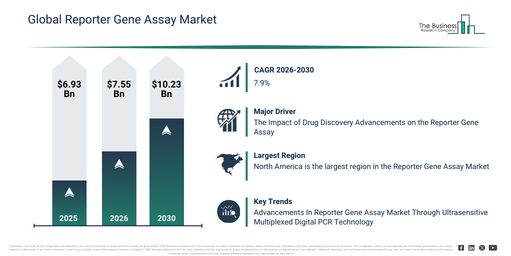
    The reporter gene assay market is experiencing a robust expansion, projected to increase from $6.93 billion in 2025 to $7.55 billion in 2026, reflecting an annual growth rate of 8.9%. This growth trajectory in the past can be linked to heightened funding for molecular biology research, the broadening scope of gene expression investigations, the increasing adoption of in-vitro screening methods, augmented pharmaceutical research and development efforts, and the accessibility of sophisticated assay components.

    The market for reporter gene assays is poised for significant expansion, projected to reach a value of $10.23 billion by the year 2030, reflecting a compound annual growth rate of 7.9%. This anticipated growth in the coming years is fueled by several key factors: the escalating integration of high-throughput screening methodologies, heightened demand for research instruments essential to precision medicine, the continued expansion of cell and gene therapy development initiatives, the increasing adoption of automated laboratory processes, and a greater emphasis on improving the efficiency of translational research. Within this forecast period, several noteworthy trends are expected to shape the market, including the greater utilization of highly sensitive reporter assay systems, a rise in the application of luciferase-based detection technologies, an increase in the need for functional assays conducted in cell-based environments, the broadening availability of multiplex reporter assay platforms, and a strengthened focus on ensuring the reproducibility and accuracy of research data.

    Download A Free Sample Report For Comprehensive Market Insights:

    https://www.thebusinessresearchcompany.com/sample.aspx?id=16526&type=smp

    Reporter Gene Assay Market Demand Drivers: What Is Fueling Industry Growth?

    The expansion of the reporter gene assay market is anticipated to be driven by the escalating efforts in drug discovery and development research; this research process, fundamental to medical science, biotechnology, and pharmacology, focuses on the identification, creation, and market introduction of new therapeutics. This surge in research activity is a consequence of progress in areas like proteomics, genomics, high-throughput screening, and the efficient advancement and authorization of innovative pharmaceuticals. Within this research landscape, reporter gene assays prove instrumental, offering researchers a means to understand gene expression control, pinpoint potential therapeutic targets, examine extensive compound collections, and assess the effectiveness and safety profiles of prospective drugs. To illustrate, the Center for Drug Evaluation and Research (CDER), a division of the U.S. Food and Drug Administration, reported in January 2024 that its 2023 review saw the approval of 55 new medications, a notable increase from the 37 novel drugs authorized in 2022, with 20 of these new approvals (36%) representing first-of-their-kind treatments, underscoring the dynamic nature of pharmaceutical innovation and its direct impact on the demand for research tools such as reporter gene assays.

    Reporter Gene Assay Market Segment Analysis And Revenue Opportunities

    The reporter gene assay market covered in this report is segmented –

    1) By Product: Assay Kits, Reagents

    2) By Application: Promoter Structural And Functional Analysis, Cell Signaling Pathways, Protein Interaction, Clinical And Gene Regulation

    3) By End-User: Biotechnology And Pharmaceutical Companies, Research And Academic Institutes, Hospital And Diagnostic Laboratories, Contract Research Organizations

    Subsegments:

    1) By Assay Kits: Luciferase Reporter Assay Kits, β-galactosidase Reporter Assay Kits, Fluorescent Reporter Assay Kits, Secreted Alkaline Phosphatase (SEAP) Assay Kits

    2) By Reagents: Luciferase Substrates, β-galactosidase Substrates, Fluorescent Proteins, Detection Buffers And Enhancers

    Reporter Gene Assay Market Innovation Trends: Which Developments Are Transforming The Industry?

    Leading entities within the reporter gene assay market are prioritizing the creation of cutting-edge technologies, including highly sensitive multiplexed digital PCR assays, as a strategy to enhance their market standing. These ultrasensitive multiplexed digital PCR assays achieve accurate detection and enumeration of nucleic acids by dividing a sample into an extensive number of discrete reactions, with each reaction containing minuscule quantities of the target DNA or RNA. Illustratively, in April 2024, Bio-Rad Laboratories Inc., a United States-based company specializing in life science research, introduced the ddPLEX ESR1 Mutation Detection Kit, marking the debut of an ultrasensitive multiplexed digital PCR assay. This novel ultrasensitive multiplexed digital PCR assay, designed for the identification of mutations associated with breast cancer, demonstrates superior sensitivity, capable of identifying subtle alterations within intricate samples, thereby facilitating early and accurate disease surveillance. The assay’s multiplexing capability allows for the concurrent identification of several mutations, streamlining the diagnostic process. This pioneering assay holds the potential to significantly advance breast cancer research and the development of individualized therapeutic approaches.

    Reporter Gene Assay Market Leading Players Shaping Industry Direction

    Major companies operating in the reporter gene assay market are Roche Diagnostics, Thermo Fisher Scientific, Danaher Corporation, Merck KGaA, Becton Dickinson and Company (BD Biosciences), GE Healthcare, Lonza Group, Agilent Technologies, Sartorius AG, PerkinElmer Inc., Bio-Rad Laboratories Inc., QIAGEN N.V., GenScript Biotech Corporation, Abcam plc, Promega Corporation, Promega Corporation, Takara Bio Inc., New England Biolabs (NEB), OriGene Technologies Inc., Cell Signaling Technology Inc., SABiosciences, Enzo Biochem Inc., InvivoGen, Biotium Inc., Enzo Life Sciences Inc., BioAssay Systems, Indigo Biosciences Inc.

    Access The Complete Reporter Gene Assay Market Report:

    https://www.thebusinessresearchcompany.com/report/reporter-gene-assay-global-market-report

    Reporter Gene Assay Market Geographic Distribution And Regional Opportunities

    North Americawas the largest region in the reporter gene assay market in 2025. Asia-Pacificis expected to be the fastest-growing region in the forecast period. The regions covered in the reporter gene assay market report are Asia-Pacific, South East Asia, Western Europe, Eastern Europe, North America, South America, Middle East, Africa.

    Get in touch with us:

    The Business Research Company: https://www.thebusinessresearchcompany.com/

    Americas: +1 310-496-7795

    Asia: +44 7882 955267 & +91 8897263534

    Europe: +44 7882 955267

    Email us at: marketing@tbrc.info

    Follow us on:

    LinkedIn: https://in.linkedin.com/company/the-business-research-company

    YouTube: https://www.youtube.com/channel/UC24_fI0rV8cR5DxlCpgmyFQ

    Global Market Model: https://www.thebusinessresearchcompany.com/global-market-model

  • Artificial Intelligence Clinical Genomics Interpretation Market Forecast Highlights Expansion From $2.23 Billion To $5.99 Billion Through 2030

    Artificial Intelligence Clinical Genomics Interpretation Market Forecast Highlights Expansion From $2.23 Billion To $5.99 Billion Through 2030

    Enhanced with market attractiveness analysis, total addressable market evaluation, company benchmarking matrices, interactive Excel dashboards, expanded supply chain intelligence, emerging startup coverage, and detailed product insights, The Business Research Company’s 2026 market reports deliver more actionable and strategically valuable research.

    Artificial Intelligence Clinical Genomics Interpretation Market Value Expansion And Long-Term Growth Outlook

    The market for generative artificial intelligence in drug discovery has seen remarkable exponential expansion over recent years. From a valuation of $0.25 billion in 2025, it is projected to increase to $0.33 billion by 2026, representing a compound annual growth rate (CAGR) of 30.6%. Historical growth has been driven by several key factors, including the high expense associated with drug development, progress in computational chemistry, increased availability of biological datasets, widespread adoption of machine learning tools, and significant investment in pharmaceutical research and development.

    The market for generative artificial intelligence in drug discovery is projected to experience substantial expansion over the coming years. By 2030, its value is anticipated to reach $0.86 billion, reflecting a compound annual growth rate (CAGR) of 27.0%. This forecasted growth is driven by factors such as the integration of generative models into drug development pipelines, an increasing need for more rapid drug discovery, the widening scope of biologics optimization, strategic alliances between artificial intelligence companies and pharmaceutical firms, and a reduction in the time required to bring drugs to market. Key trends shaping this period include a growing reliance on AI-powered molecule generation, the rising application of deep learning techniques in drug design, the broadening of small molecule discovery uses, the deeper incorporation of artificial intelligence into lead optimization efforts, and the acceleration of early-stage drug development processes.

    Download A Free Sample Report For Comprehensive Market Insights:

    https://www.thebusinessresearchcompany.com/sample.aspx?id=28141&type=smp

    Artificial Intelligence Clinical Genomics Interpretation Market Expansion Supported By Key Demand Factors

    A growing volume of clinical trials is anticipated to drive expansion in the generative AI drug discovery market. These trials involve human participants and evaluate the safety and efficacy of novel medical treatments or procedures, with the goal of collecting scientific evidence regarding their appropriateness for human application. This increase in clinical trial activity can be largely explained by progress in medical research, a greater prevalence of disease, modifications in regulatory frameworks, the internationalization of clinical studies, heightened patient advocacy and awareness, industry rivalry, advances in technology, and available funding. The data generated from clinical trials serves as fuel for generative AI models, which accelerate drug development by forecasting biological interactions and designing prospective compounds. Such a synergy facilitates personalized medicine, enhances treatment outcomes, boosts patient recovery rates, and reshapes the pharmaceutical industry. For example, in January 2025, Pharmaceutical Technology, a UK-based business news outlet, reported that 3,213 trials are scheduled to start that year, with 823 in Phase I and 1,102 in Phase II. Oncology is projected to remain the dominant therapeutic area, accounting for 946 trials, followed by the central nervous system with 686, and cardiovascular with 258, trailing considerably. Consequently, the rising number of clinical trials is fueling growth in the generative AI drug discovery market.

    Artificial Intelligence Clinical Genomics Interpretation Market Segmentation And Category Breakdown

    The deep learning in drug discovery and diagnostics market covered in this report is segmented –

    1) By Type: Drug Discovery, Diagnostics, Forensic Interventions, Other Types

    2) By Drug Type: Small Molecule Drugs, Biologics Drugs

    3) By End Use Industry: Pharmaceutical Companies, Biotechnology Companies, Contract Research Organizations (CROs), Healthcare Information Technology (IT)

    Subsegments:

    1) By Drug Discovery: Target Identification, Drug Screening, Lead Optimization, Predictive Modeling

    2) By Diagnostics: Medical Imaging Analysis, Genomic Data Interpretation, Disease Detection Algorithms, Personalized Medicine

    3) By Forensic Interventions: Digital Pathology, Forensic DNA Analysis, Toxicology Screening, Crime Scene Reconstruction

    4) By Other Types: Biomarker Discovery, Predictive Analytics in Healthcare, Patient Data Management Systems

    Artificial Intelligence Clinical Genomics Interpretation Market Growth Trends Influencing Competitive Dynamics

    Major players in the generative AI drug discovery market are creating sophisticated AI-powered tools to expedite drug development workflows. By harnessing predictive analytics and machine learning, these tools accelerate drug discovery, design, and clinical trials, improving tasks like target identification and compound screening through virtual screening, preclinical development, regulatory adherence, and manufacturing. For example, in May 2023, Google Cloud, a US-based cloud computing provider under Google, launched two novel AI solutions: the Target and Lead Identification Suite and the Multiomics Suite. These are tailored to enhance drug discovery and precision medicine across biotech, pharmaceutical, and public sector realms. The Target and Lead Identification Suite aids researchers in deciphering amino acid functions and forecasting protein structures, whereas the Multiomics Suite expedites genomic data analysis and interpretation, streamlining the creation of personalized therapies.

    Artificial Intelligence Clinical Genomics Interpretation Market Competitive Analysis Of Major Industry Participants

    Major companies operating in the deep learning in drug discovery and diagnostics market are Google Inc., Microsoft Corporation, International Business Machines Corporation, NVIDIA Corporation, Zebra Medical Vision Ltd, Tempus Labs Inc., Nanostring Technologies Inc., Owkin Inc., Insilico Medicine Inc., SOPHiA GENETICS SA, Qureai Technologies Pvt Ltd, H2Oai Inc., Arterys Inc., Deep Genomics Inc., GNS Healthcare Inc., MedAware Systems Inc., PathAI Inc., Kheiron Medical Technologies Ltd, CureMetrix Inc., OncoImmunity AS, Proscia Inc., BenevolentAI Ltd, BioXcel Therapeutics Inc.

    Access The Complete Artificial Intelligence Clinical Genomics Interpretation Market Report:

    https://www.thebusinessresearchcompany.com/report/artificial-intelligence-clinical-genomics-interpretation-global-market-report

    #Artificial Intelligence Clinical Genomics Interpretation Market Largest Region: Which Geography Holds The Highest Market Share?

    North America was the largest region in the deep learning in drug discovery and diagnostics market in 2025. The regions covered in the deep learning in drug discovery and diagnostics market report are Asia-Pacific, South East Asia, Western Europe, Eastern Europe, North America, South America, Middle East, Africa.

    Access a Customized Artificial Intelligence Clinical Genomics Interpretation Market Report for Deeper Competitive Insights

    https://www.thebusinessresearchcompany.com/sample.aspx?id=27362&type=smp

    Get in touch with us:

    The Business Research Company: https://www.thebusinessresearchcompany.com/

    Americas: +1 310-496-7795

    Asia: +44 7882 955267 & +91 8897263534

    Europe: +44 7882 955267

    Email us at: marketing@tbrc.info

    Follow us on:

    LinkedIn: https://in.linkedin.com/company/the-business-research-company

    YouTube: https://www.youtube.com/channel/UC24_fI0rV8cR5DxlCpgmyFQ

    Global Market Model: https://www.thebusinessresearchcompany.com/global-market-model

  • Artificial Intelligence Clinical Trial Protocol Feasibility Tool Market Expected To Reach $2.75 Billion By 2030 As Growth Accelerates At 27% CAGR

    Artificial Intelligence Clinical Trial Protocol Feasibility Tool Market Expected To Reach $2.75 Billion By 2030 As Growth Accelerates At 27% CAGR

    Through market attractiveness analysis, total addressable market evaluation, company benchmarking matrices, interactive Excel dashboards, expanded supply chain intelligence, emerging startup coverage, and detailed product insights, The Business Research Company’s 2026 market reports provide more actionable and strategically valuable research.

    Artificial Intelligence Clinical Trial Protocol Feasibility Tool Market Expected To Reach $2.75 Billion By 2030 At 27%% CAGR

    The market for explainable artificial intelligence in diagnostics has seen explosive expansion over the last few years. Valued at $1.69 billion in 2025, it is projected to reach $2.12 billion by 2026, reflecting a compound annual growth rate (CAGR) of 25.9%. Historical growth has been driven by a greater uptake of AI-powered diagnostic tools, the broadening of digital health infrastructure, an increase in medical imaging data, a growing need for clinical decision support systems, and the emergence of initial regulatory standards for healthcare AI.

    The diagnostics market for explainable artificial intelligence is anticipated to experience rapid growth over the coming years. Reaching a projected value of $5.28 billion by 2030, this expansion corresponds to a compound annual growth rate (CAGR) of 25.6%. Forecast period growth is driven by stricter regulatory requirements for AI transparency, greater investment in trustworthy AI platforms, the application of explainable AI in areas beyond imaging, a rising need among clinicians for understandable results, and deeper incorporation of AI into electronic health record systems. Key developments expected in this period feature a stronger push for interpretable AI diagnostic models, the addition of explainability components to clinical AI tools, a heightened focus on developing systems that align with regulatory guidelines, the growing use of AI across multi-modal diagnostics, and an increased emphasis on building clinical confidence and transparency.

    Download A Free Sample Report For Comprehensive Market Insights:

    https://www.thebusinessresearchcompany.com/sample.aspx?id=28142&type=smp

    #Artificial Intelligence Clinical Trial Protocol Feasibility Tool Market Growth Drivers And Industry Catalysts

    The rising need for tailored medical care is anticipated to boost the expansion of the explainable artificial intelligence diagnostics market in the near future. Personalized medicine, a healthcare strategy that adapts prevention, diagnosis, and therapy according to an individual’s genetic makeup, lifestyle, and surroundings, is on the rise due to improvements in genomic data and sequencing technologies, which facilitate more precise, focused, and efficacious treatments designed for specific patients. In diagnostics, explainable artificial intelligence supports personalized medicine by delivering clear, understandable insights into patient-specific information, aiding in the formulation of customized therapeutic choices. For example, as reported in February 2024 by the Personalized Medicine Coalition, a nonprofit organization based in the United States, the Food and Drug Administration approved 16 new individualized therapies for rare disease patients in 2023, a significant increase from six in 2022. Among these newly authorized treatments for 2023 were seven cancer drugs and three for other illnesses and conditions. Consequently, the growing demand for personalized medicine is accelerating progress in the market for explainable artificial intelligence in diagnostics.

    Artificial Intelligence Clinical Trial Protocol Feasibility Tool Market Segment Outlook: Which Categories Are Expanding The Fastest?

    The deep learning in diagnostics market covered in this report is segmented –

    1) By Component: Software, Hardware, Services

    2) By Deployment Mode: Cloud-Based, On-Premises

    3) By Application: Medical Imaging, Pathology, Genomics, Drug Discovery, Other Applications

    4) By End-User: Hospitals, Diagnostic Laboratories, Research Institutes, Other End-Users

    Subsegments:

    1) By Software: Diagnostic Imaging Software, Pathology Analysis Software, Genomic Data Analysis Software

    2) By Hardware: Storage Devices, Networking Devices, Diagnostic Imaging Equipment

    3) By Services: Deployment And Integration Services, Training And Education Services, Consulting Services

    #Artificial Intelligence Clinical Trial Protocol Feasibility Tool Market Trends Influencing Long-Term Demand

    Leading industry players in the explainable artificial intelligence for diagnostics market are concentrating on creating innovative technologies, like the AI-driven HER2 scoring algorithm, to boost diagnostic precision, facilitate clear and interpretable decision-making, and aid in individualized cancer care. This AI-based HER2 scoring algorithm is a machine learning framework intended to interpret medical imagery, including breast cancer tissue specimens, to autonomously determine the degree of HER2 protein expression, delivering accurate, reliable, and understandable results for guiding diagnostics and personalized treatment plans. As an example, in July 2023, PathAI Inc., a digital pathology company based in the United States, introduced AIM-HER2 Breast Cancer to improve the detection of HER2 status in breast cancer patients. This solution provides automated, repeatable HER2 scoring accompanied by explainable AI heatmaps that emphasize critical tissue characteristics, thereby boosting diagnostic confidence and clarity. It evaluates complete breast cancer biopsy slides without requiring manual area selection, simplifying pathologists’ workflows, especially in challenging borderline cases. This AI-powered tool is designed to enhance precision, effectiveness, and trust in HER2 scoring for pharmaceutical research and clinical laboratories.

    Artificial Intelligence Clinical Trial Protocol Feasibility Tool Market Key Companies And Competitive Benchmarking

    Major companies operating in the deep learning in diagnostics market are International Business Machines Corporation, Siemens Healthineers AG, Koninklijke Philips N.V., GE HealthCare Technologies Inc., Tempus AI Inc., Qure.ai Technologies Pvt. Ltd., Freenome Holdings Inc., PathAI Inc., Aidoc Medical Ltd., Viz.ai Inc., SOPHiA GENETICS SA, Lunit Inc., Paige.AI Inc., Beijing Infervision Technology Co. Ltd., Indica Labs Inc., CureMetrix Inc., Deep Bio Inc., Enlitic Inc., ScreenPoint Medical B.V., VUNO Inc., Mindpeak GmbH, Arterys Inc.

    Access The Complete Artificial Intelligence Clinical Trial Protocol Feasibility Tool Market Report:

    https://www.thebusinessresearchcompany.com/report/artificial-intelligence-clinical-trial-protocol-feasibility-tool-global-market-report

    Artificial Intelligence Clinical Trial Protocol Feasibility Tool Market Regional Analysis: Which Region Leads By Revenue?

    North America was the largest region in the deep learning in diagnostics market in 2025. Asia-Pacific is expected to be the fastest-growing region in the forecast period. The regions covered in the deep learning in diagnostics market report are Asia-Pacific, South East Asia, Western Europe, Eastern Europe, North America, South America, Middle East, Africa.

    Access a Customized Artificial Intelligence Clinical Trial Protocol Feasibility Tool Market Report for Deeper Competitive Insights

    https://www.thebusinessresearchcompany.com/sample.aspx?id=27218&type=smp

    Get in touch with us:

    The Business Research Company: https://www.thebusinessresearchcompany.com/

    Americas: +1 310-496-7795

    Asia: +44 7882 955267 & +91 8897263534

    Europe: +44 7882 955267

    Email us at: marketing@tbrc.info

    Follow us on:

    LinkedIn: https://in.linkedin.com/company/the-business-research-company

    YouTube: https://www.youtube.com/channel/UC24_fI0rV8cR5DxlCpgmyFQ

    Global Market Model: https://www.thebusinessresearchcompany.com/global-market-model
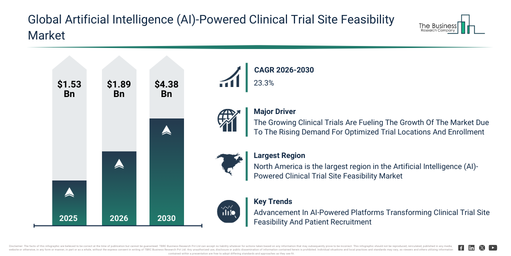
  • Artificial Intelligence (AI)-Powered Clinical Trial Site Feasibility Market Set To Grow From $1.89 Billion In 2026 To $4.37 Billion By 2030 At A CAGR Of 23.3%

    Artificial Intelligence (AI)-Powered Clinical Trial Site Feasibility Market Set To Grow From $1.89 Billion In 2026 To $4.37 Billion By 2030 At A CAGR Of 23.3%

    Delivering more actionable and strategically valuable research, The Business Research Company’s 2026 market reports feature market attractiveness analysis, total addressable market evaluation, company benchmarking matrices, interactive Excel dashboards, expanded supply chain intelligence, emerging startup coverage, and detailed product insights.

    #Artificial Intelligence (AI)-Powered Clinical Trial Site Feasibility Market Size And Revenue Forecast Through 2030

    The market for deep learning in drug discovery and diagnostics has seen exponential expansion in recent years. Projections indicate it will increase from $10.58 billion in 2025 to $13.61 billion in 2026, achieving a compound annual growth rate (CAGR) of 28.7%. The historic period’s growth can be explained by the greater accessibility of extensive biomedical datasets, enhanced computational capabilities for training models, broader integration of AI into pharmaceutical research and development, an increased need for quicker drug discovery timelines, and the initial effectiveness of deep learning-based diagnostic systems.

    The deep learning market within drug discovery and diagnostics is projected to experience robust expansion during the coming years. By 2030, its value is anticipated to reach $36.96 billion, reflecting a compound annual growth rate (CAGR) of 28.4%. This upward trajectory in the forecast period is driven by factors such as heightened investments in AI-powered healthcare solutions, a growing demand for precision medicine, broader incorporation of artificial intelligence into clinical workflows, increased utilization of real-world evidence data, and rising regulatory endorsement of AI-assisted diagnostic tools. Significant trends shaping this period encompass the widespread application of deep neural networks for drug screening, the growing reliance on AI-driven predictive modeling in diagnostics, the expanding incorporation of multi-omics data analysis, the proliferation of automated clinical decision support systems, and a stronger emphasis on personalized medicine platforms.

    Download A Free Sample Report For Comprehensive Market Insights:

    https://www.thebusinessresearchcompany.com/sample.aspx?id=28137&type=smp

    Artificial Intelligence (AI)-Powered Clinical Trial Site Feasibility Market Opportunity Drivers: What Is Creating New Revenue Potential?

    The increasing need for customized treatments is set to propel advancements in the market for deep learning in drug discovery and diagnostics. Personalized medicine adapts medical care to individual genetic, environmental, and lifestyle profiles, aiming to boost effectiveness while reducing negative effects. This rising demand is fueled by progress in genomics and data analysis, which allow for more targeted and accurate therapies tailored to each patient’s distinct characteristics. In this context, deep learning improves personalized medicine by processing intricate biological data to highlight specific biomarkers and more reliably forecast how patients will respond to treatments. For example, in February 2024, the Personalized Medicine Coalition, a nonprofit organization based in the United States, reported that the FDA greenlit 16 new personalized therapies for individuals with rare conditions in 2023, up from just six in 2022. Hence, the growing preference for personalized medicine is driving the expansion of the deep learning in drug discovery and diagnostics market.

    Artificial Intelligence (AI)-Powered Clinical Trial Site Feasibility Market Segment Landscape: Which Areas Lead Market Development?

    The computer-aided drug discovery market covered in this report is segmented –

    1) By Type: Structure Based Drug Design, Ligand-Based Drug Design, Sequence-Based Approaches

    2) By Therapeutic Area: Oncology, Neurology, Cardiovascular Disease, Respiratory Disease, Diabetes, Other Therapeutic Areas

    3) By End User: Pharmaceutical Companies, Biotechnology Companies, Research Laboratories

    Subsegments:

    1) By Structure Based Drug Design: X-ray Crystallography, Nuclear Magnetic Resonance (NMR) Spectroscopy, Molecular Docking Studies, Virtual Screening

    2) By Ligand-Based Drug Design: Quantitative Structure-Activity Relationship (QSAR) Models, Pharmacophore Modeling, Ligand Similarity Searching, Fragment-Based Drug Design

    3) By Sequence-Based Approaches: Protein Structure Prediction, Homology Modeling, Bioinformatics for Drug Target Identification, Genomic Data Analysis for Drug Discovery

    Artificial Intelligence (AI)-Powered Clinical Trial Site Feasibility Market Innovation Trends Driving Future Development

    Major players in the deep learning drug discovery and diagnostics market are integrating cutting-edge technologies such as generative artificial intelligence (AI) and machine-learning (ML)-powered automation platforms to boost efficiency, cut research and development (R&D) expenses, and expedite the identification of early-stage treatments. These generative AI and ML-driven automation platforms are computational systems that analyze chemical and biological datasets to generate new drug candidates in silico, forecast molecular properties, and streamline the synthesis and testing of compounds via robotic systems, thus decreasing dependence on conventional high-throughput screening methods. A case in point is July 2024, when Exscientia, a UK-based AI-focused drug design firm, unveiled its AWS-hosted AI/ML platform. This system pairs a “DesignStudio” for AI-powered molecule creation with an “AutomationStudio” for robotic lab synthesis and evaluation. Functioning within a closed “design–make–test–learn” cycle, experimental results continuously enhance the AI models, markedly hastening discovery, expanding scalability, and facilitating more precise and cost-effective development of innovative therapies.

    Artificial Intelligence (AI)-Powered Clinical Trial Site Feasibility Market Industry Leaders And Market Competition

    Major companies operating in the computer-aided drug discovery market are Dassault Systèmes SE, PerkinElmer Inc., Roivant Sciences Ltd., Certara Inc., Schrödinger Inc., XtalPi Inc., Dotmatics Limited, Simulations Plus Inc., ChemAxon Ltd., Exscientia Ltd., Insilico Medicine Inc., Collaborative Drug Discovery Inc., OpenEye Scientific Software Inc., Nimbus Therapeutics LLC, Atomwise Inc., GNS Healthcare Inc., BenevolentAI Limited, EpiVax Inc., Numerate Inc., Cloud Pharmaceuticals Inc., Aris Pharmaceuticals Inc., Cyclica Inc., BioSolveIT GmbH, Chemical Computing Group ULC, InSilicoTrials Technologies S.p.A

    Access The Complete Artificial Intelligence (AI)-Powered Clinical Trial Site Feasibility Market Report:

    https://www.thebusinessresearchcompany.com/report/artificial-intelligence-ai-powered-clinical-trial-site-feasibility-global-market-report

    Artificial Intelligence (AI)-Powered Clinical Trial Site Feasibility Market Geographic Distribution And Regional Opportunities

    North America was the largest region in the computer-aided drug discovery (CADD) market in 2025. The regions covered in the computer-aided drug discovery market report are Asia-Pacific, South East Asia, Western Europe, Eastern Europe, North America, South America, Middle East, Africa.

    Access a Customized Artificial Intelligence (AI)-Powered Clinical Trial Site Feasibility Market Report for Deeper Competitive Insights

    https://www.thebusinessresearchcompany.com/sample.aspx?id=28934&type=smp

    Get in touch with us:

    The Business Research Company: https://www.thebusinessresearchcompany.com/

    Americas: +1 310-496-7795

    Asia: +44 7882 955267 & +91 8897263534

    Europe: +44 7882 955267

    Email us at: marketing@tbrc.info

    Follow us on:

    LinkedIn: https://in.linkedin.com/company/the-business-research-company

    YouTube: https://www.youtube.com/channel/UC24_fI0rV8cR5DxlCpgmyFQ

    Global Market Model: https://www.thebusinessresearchcompany.com/global-market-model
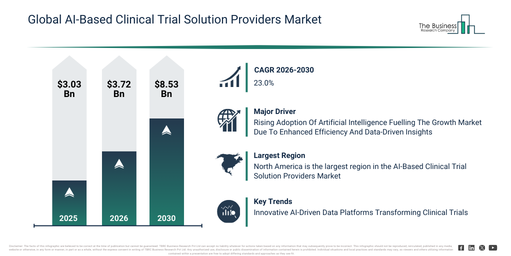
  • AI-Based Clinical Trial Solution Providers Market Opportunities Are Emerging Beyond Traditional Growth Areas

    AI-Based Clinical Trial Solution Providers Market Opportunities Are Emerging Beyond Traditional Growth Areas

    Enhanced with market attractiveness analysis, total addressable market evaluation, company benchmarking matrices, interactive Excel dashboards, expanded supply chain intelligence, emerging startup coverage, and detailed product insights, The Business Research Company’s 2026 market reports deliver more actionable and strategically valuable research.

    AI-Based Clinical Trial Solution Providers Market Growth From $3.72 Billion In 2026 To $8.52 Billion By 2030 At A CAGR Of 23%%

    The deep learning in diagnostics market has seen remarkable expansion in recent years. Valued at $3.49 billion in 2025, it is projected to reach $4.74 billion by 2026, reflecting a compound annual growth rate (CAGR) of 35.9%. Key drivers behind this historic growth include the growing digitization of medical imaging, heightened pressures due to diagnostic workloads, the broadening of radiology and pathology services, an expanding pool of annotated medical datasets, and the increasing integration of clinical decision support systems.

    The deep learning in diagnostics market is projected to experience rapid expansion over the next several years. It is anticipated to reach $16.06 billion by 2030, reflecting a compound annual growth rate (CAGR) of 35.7%. This forecasted growth is driven by factors such as the rising need for early disease identification, heightened investment in AI-enhanced diagnostic technologies, the proliferation of cloud-based diagnostic systems, growing regulatory approvals for artificial intelligence tools, and an increased emphasis on automating healthcare workflows. Key developments shaping the forecast period include the widespread uptake of AI-powered medical imaging analysis, the expanded application of deep learning for detecting diseases, the development of automated diagnostic processes, the greater incorporation of multi-modal clinical data, and a stronger focus on improving diagnostic precision.

    Download A Free Sample Report For Comprehensive Market Insights:

    https://www.thebusinessresearchcompany.com/sample.aspx?id=13575&type=smp

    AI-Based Clinical Trial Solution Providers Market Growth Momentum: Which Factors Are Influencing Demand?

    The ongoing push toward healthcare digitization is anticipated to significantly boost the expansion of the deep learning in diagnostics market. Healthcare digitization involves integrating digital technologies into medical systems to improve efficiency, accessibility, data handling, and patient outcomes. This trend gains momentum because it facilitates effective management and secure transmission of the rapidly growing volumes of patient information, enabling improved care collaboration and evidence-based decision-making. Digitization generates enormous datasets from sources like medical imaging, electronic health records, and connected devices, which drives demand for deep learning in diagnostics, given its capacity to process this information quickly and provide more precise insights compared to conventional approaches. For example, in April 2023, FAIR Health Inc., a nonprofit based in the United States, reported a 7.3% national uptick in telehealth usage, with its share of medical claim lines climbing from 5.5% in December 2022 to 5.9% in January 2023. Consequently, the rise in healthcare digitization is fueling the growth of the deep learning in diagnostics market.

    AI-Based Clinical Trial Solution Providers Market Segments: Where Are The Largest Growth Opportunities?

    The bioinformatics market covered in this report is segmented –

    1) By Products and Services: Knowledge Management Tools, Data Analysis Platforms, Services

    2) By Application: Metabolomics, Molecular Phylogenetics, Transcriptomics, Proteomics, Genomics

    3) By End Users: Pharmaceutics, Animal Study, Agriculture

    Subsegments:

    1) By Knowledge Management Tools: Data Integration Tools, Literature Mining Tools, Data Repositories And Databases, Biological Data Visualization Tools

    2) By Data Analysis Platforms: Genomic Data Analysis Platforms, Proteomics Data Analysis Platforms, Transcriptomics Data Analysis Platforms, Metabolomics Data Analysis Platforms

    3) By Services: Data Analysis Services, Consulting Services, Software And Platform-As-A-Service (PaaS), Bioinformatics Research And Development Services

    AI-Based Clinical Trial Solution Providers Market Trends Reshaping Industry Growth

    Major players in the deep learning diagnostics market are concentrating on creating state-of-the-art tools, including AI-powered deep learning technologies, aimed at boosting diagnostic precision, speed, and customized patient care. An AI-driven deep learning system is an advanced framework leveraging artificial intelligence and hierarchical neural networks to autonomously interpret intricate medical data, detect trends, and deliver exceptionally accurate diagnostic assessments with minimal human involvement. For example, in May 2025, GE Healthcare Technologies Inc., a U.S.-headquartered medical technology and diagnostics firm, introduced CleaRecon DL, engineered to refine image reconstruction and diagnostic accuracy. This innovation enhances cone-beam CT (CBCT) images by eliminating streak artifacts, producing far sharper and more precise imaging for interventional procedures. It boosts clinicians’ assurance in image interpretation and improves accuracy during interventions, with clinical trials demonstrating 98% sharper images and a 94% uplift in confidence. Ultimately, it fosters superior patient outcomes by optimizing workflows and facilitating more effective, image-guided therapies.

    AI-Based Clinical Trial Solution Providers Market Major Participants And Competitive Dynamics

    Major companies operating in the bioinformatics market are Agilent Technologies Inc., Illumina Inc., QIAGEN NV, Affymetrix Inc., Thermo Fisher Scientific Inc., BGI Group, Dassault Systems SE, Bruker Corporation, Biomax Informatix AG, DNASTAR Inc., Partek Inc., Geneva Bioinformatics SA, Accelrys Inc., Nonlinear Dynamics SA, Sophia Genetics SA, Celera Corporation, Tripos Inc., IBM Life Sciences, GNS Healthcare Inc., DNAnexus Inc., Syapse Inc.

    Access The Complete AI-Based Clinical Trial Solution Providers Market Report:

    https://www.thebusinessresearchcompany.com/report/ai-based-clinical-trial-solution-providers-global-market-report

    AI-Based Clinical Trial Solution Providers Market Largest Region By Revenue And Market Share

    North America was the largest region in the bioinformatics market in 2025. Western Europe was the second largest region in the bioinformatics market analysis. The regions covered in the bioinformatics market report are Asia-Pacific, South East Asia, Western Europe, Eastern Europe, North America, South America, Middle East, Africa.

    Access a Customized AI-Based Clinical Trial Solution Providers Market Report for Deeper Competitive Insights

    https://www.thebusinessresearchcompany.com/sample.aspx?id=28143&type=smp

    Get in touch with us:

    The Business Research Company: https://www.thebusinessresearchcompany.com/

    Americas: +1 310-496-7795

    Asia: +44 7882 955267 & +91 8897263534

    Europe: +44 7882 955267

    Email us at: marketing@tbrc.info

    Follow us on:

    LinkedIn: https://in.linkedin.com/company/the-business-research-company

    YouTube: https://www.youtube.com/channel/UC24_fI0rV8cR5DxlCpgmyFQ

    Global Market Model: https://www.thebusinessresearchcompany.com/global-market-model
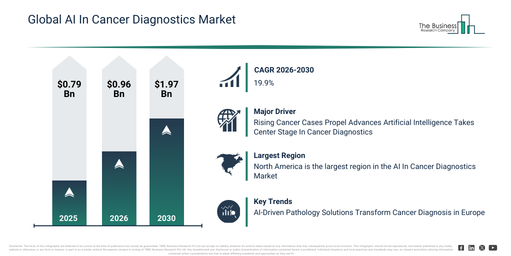
  • AI In Cancer Diagnostics Market Expansion Is Opening New Pathways For Strategic Investment

    AI In Cancer Diagnostics Market Expansion Is Opening New Pathways For Strategic Investment

    Through market attractiveness analysis, total addressable market evaluation, company benchmarking matrices, interactive Excel dashboards, expanded supply chain intelligence, emerging startup coverage, and detailed product insights, The Business Research Company’s 2026 market reports provide more actionable and strategically valuable research.

    AI In Cancer Diagnostics Market Expansion Outlook: What Revenue Opportunities Lie Ahead?

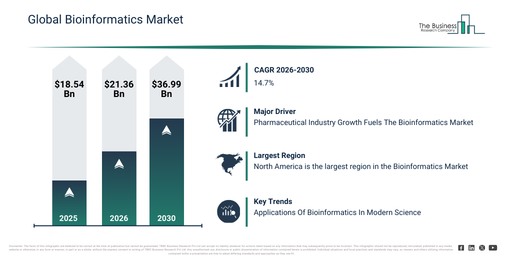
    The bioinformatics market has experienced substantial expansion over the last few years, with projections showing a rise from $18.54 billion in 2025 to $21.36 billion in 2026, reflecting a compound annual growth rate (CAGR) of 15.2%. This historic growth has been driven by several key factors, including the scaling up of genomic research programs, the increasing quantities of sequencing data, a growing need for computational biology solutions, heightened application of bioinformatics in drug development processes, and the accessibility of sophisticated data analysis systems.

    The bioinformatics sector is forecasted to undergo significant expansion over the coming years, with projections indicating it will reach a valuation of $36.99 billion by 2030, reflecting a compound annual growth rate (CAGR) of 14.7%. This anticipated surge is driven by factors such as heightened investment in precision medicine initiatives, greater utilization of artificial intelligence for interpreting biological data, the broadening of population genomics projects, an escalating need for scalable bioinformatics tools, and a stronger emphasis on data security and regulatory compliance. Among the key developments shaping this period are the widespread adoption of AI-driven genomic analysis applications, a growing reliance on cloud-based bioinformatics services, the heightened integration of multi-omics data analysis, advances in high-throughput data processing capabilities, and an increased focus on improving data interoperability and information sharing.

    Download A Free Sample Report For Comprehensive Market Insights:

    https://www.thebusinessresearchcompany.com/sample.aspx?id=13567&type=smp

    AI In Cancer Diagnostics Market Expansion Drivers: What Is Shaping Future Growth?

    The expansion of the pharmaceutical sector is anticipated to drive the bioinformatics market forward. This industry encompasses the discovery, development, and manufacturing of drugs and medicines carried out by both public and private organizations. Bioinformatics plays a critical role within this field, significantly speeding up drug discovery and development, lowering expenses, and enhancing both the effectiveness and safety of therapeutic treatments. For example, in November 2024, the European Federation of Pharmaceutical Industries and Associations (EFPIA), a trade association based in Belgium, released a report stating that North America held 54.8% of estimated global pharmaceutical sales in 2024, while Europe accounted for 22.7%. Consequently, the ongoing growth of the pharmaceutical industry is fueling the advancement of the bioinformatics market.

    AI In Cancer Diagnostics Market Segment Analysis: What Are The Major Market Categories?

    The ai in bioinformatics market covered in this report is segmented –

    1) By Type: Machine Learning, Deep Learning, Other Types

    2) By Offering: Services, Software

    3) By Application: Genomics, Chemoinformatics And Drug Design, Proteomics, DNA Sequencing, System Biology, Transcriptomics, Microarrays, Metabolomics, Other Applications

    Subsegments:

    1) By Machine Learning: Supervised Learning Algorithms, Unsupervised Learning Algorithms

    2) By Deep Learning: Neural Networks, Natural Language Processing Models

    3) By Other Types: Statistical Models, Evolutionary Algorithms

    AI In Cancer Diagnostics Market Strategic Trends: What Is Defining The Next Phase Of Growth?

    Key players in the bioinformatics sector are increasingly prioritizing the development of advanced technological tools, particularly bioinformatics platforms, aimed at boosting data analysis efficiency, refining accuracy in personalized medicine, and hastening the speed of drug discovery. Such a platform refers to a software system or a bundled set of applications crafted to handle, examine, and interpret biological data—encompassing genomic, proteomic, and metabolomic information—thereby assisting research activities and clinical decision-making. A concrete example occurred in February 2024, when Metabolon, Inc., a biotechnology firm headquartered in the United States, unveiled an integrated bioinformatics platform. This platform delivers a full range of analytical instruments intended to streamline research in metabolomics, allowing scientists to perform intricate analyses without difficulty. Among its standout characteristics are advanced visualization features, such as volcano plots and principal component analysis (PCA), along with innovative biomarker lenses that supply focused insights into particular biological pathways and diseases.

    AI In Cancer Diagnostics Market Leading Companies Driving Competitive Growth

    Major companies operating in the ai in bioinformatics market are Dassault Systèmes SE, QIAGEN N.V., SomaLogic Operating Co. Inc., Seven Bridges Genomics Inc., Genialis Inc., SOPHiA GENETICS SA, DNAnexus Inc., Insilico Medicine Inc., Deep Genomics Inc., Biomax Informatics Inc., Ardigen SA, Strand Life Sciences Pvt. Ltd., Genomenon Inc., Fios Genomics Limited, BlueBee Holding BV, JADBio, Elucidata Corporation, Gnosis DA, DNASTAR Inc., iNDX.Ai, Paige AI Inc.

    Access The Complete AI In Cancer Diagnostics Market Report:

    https://www.thebusinessresearchcompany.com/report/ai-in-cancer-diagnostics-global-market-report

    AI In Cancer Diagnostics Market Regional Analysis And Leading Geography

    North America was the largest region in the AI in bioinformatics market in 2025. Asia-Pacific is expected to be the fastest-growing region in the forecast period. The regions covered in the ai in bioinformatics market report are Asia-Pacific, South East Asia, Western Europe, Eastern Europe, North America, South America, Middle East, Africa.

    Access a Customized AI In Cancer Diagnostics Market Report for Deeper Competitive Insights

    https://www.thebusinessresearchcompany.com/sample.aspx?id=28930&type=smp

    Get in touch with us:

    The Business Research Company: https://www.thebusinessresearchcompany.com/

    Americas: +1 310-496-7795

    Asia: +44 7882 955267 & +91 8897263534

    Europe: +44 7882 955267

    Email us at: marketing@tbrc.info

    Follow us on:

    LinkedIn: https://in.linkedin.com/company/the-business-research-company

    YouTube: https://www.youtube.com/channel/UC24_fI0rV8cR5DxlCpgmyFQ

    Global Market Model: https://www.thebusinessresearchcompany.com/global-market-model
  • AI In Bioinformatics Market Trends Are Creating New Opportunities For Industry Leaders

    Delivering more actionable and strategically valuable research, The Business Research Company’s 2026 market reports feature market attractiveness analysis, total addressable market evaluation, company benchmarking matrices, interactive Excel dashboards, expanded supply chain intelligence, emerging startup coverage, and detailed product insights.

    AI In Bioinformatics Market Growth Potential: How Will Market Size Change Through 2030?

    The market for AI in bioinformatics has experienced tremendous expansion over the last several years. Starting at $6.14 billion in 2025, it is projected to reach $8.81 billion by 2026, achieving a compound annual growth rate (CAGR) of 43.6%. This historical growth has been driven by factors such as the increasing amount of genomic data, the widespread uptake of next-generation sequencing technologies, greater financial support for bioinformatics research, the early incorporation of machine learning within the life sciences sector, and the ongoing enlargement of public biological databases.

    The AI in bioinformatics sector is projected to undergo remarkable expansion in the coming years, with its value anticipated to reach $37.63 billion by 2030, representing a compound annual growth rate (CAGR) of 43.7%. This projected growth during the forecast period is driven by several key factors, including the heightened necessity for precision medicine, the growing application of artificial intelligence in clinical decision-making support systems, increased investments in pharmaceutical research and development, progress made in deep learning frameworks, and an escalating requirement for expedited drug development timelines. Among the prominent developments shaping this future period are the interpretation of genomic data through AI mechanisms, the automation of drug discovery processes and target identification, the incorporation of platforms that handle multi-omics data, the adoption of cloud-centric workflows for bioinformatics, and the implementation of advanced predictive models focused on protein structure analysis.

    Download A Free Sample Report For Comprehensive Market Insights:

    https://www.thebusinessresearchcompany.com/sample.aspx?id=13774&type=smp

    AI In Bioinformatics Market Development Factors: Which Trends Are Supporting Demand?

    Major players within the AI in bioinformatics market include Dassault Systèmes SE, QIAGEN N.V., SomaLogic Operating Co. Inc., Seven Bridges Genomics Inc., Genialis Inc., SOPHiA GENETICS SA, DNAnexus Inc., Insilico Medicine Inc., Deep Genomics Inc., Biomax Informatics Inc., Ardigen SA, Strand Life Sciences Pvt. Ltd., Genomenon Inc., Fios Genomics Limited, BlueBee Holding BV, JADBio, Elucidata Corporation, Gnosis DA, DNASTAR Inc., iNDX.Ai, and Paige AI Inc.

    AI In Bioinformatics Market Segment Breakdown: Which Categories Generate The Most Revenue?

    The artificial intelligence clinical trial protocol feasibility tool market covered in this report is segmented –

    1) By Component: Software, Services

    2) By Deployment Mode: Cloud-Based, On-Premises

    3) By Application: Protocol Design, Site Selection, Patient Recruitment, Risk Assessment, Other Applications

    4) By End-User: Pharmaceutical And Biotechnology Companies, Contract Research Organizations, Academic And Research Institutes, Other End-Users

    Subsegments:

    1) By Software: Predictive Analytics, Machine Learning, Natural Language Processing, Data Integration

    2) By Services: Consulting, Implementation, Training And Support, Managed Services

    AI In Bioinformatics Market Transformation Trends: Which Innovations Are Driving Change?

    Seqera has completed the acquisition of Tinybio, an AI-focused bioinformatics startup, in a move designed to strengthen its platform for the life sciences sector.

    AI In Bioinformatics Market Key Players And Strategic Industry Positioning

    Major companies operating in the artificial intelligence clinical trial protocol feasibility tool market are IQVIA Holdings Inc., SAS Institute Inc., Veeva Systems Inc., Tempus AI Inc., Cytel Inc., ArisGlobal LLC., Saama Technologies Inc., Norstella, ConcertAI, Komodo Health Inc., H1 Inc., TriNetX Inc., ObjectiveHealth LLC, Lokavant Inc., Inato Inc., Clinerion Ltd., Faro Health Inc., Lantern Pharma Inc., Ryght AI, BEKHealth Corporation

    Access The Complete AI In Bioinformatics Market Report:

    https://www.thebusinessresearchcompany.com/report/ai-in-bioinformatics-global-market-report

    AI In Bioinformatics Market Geographic Analysis: Where Is Demand Growing The Fastest?

    North America was the largest region in the artificial intelligence clinical trial protocol feasibility tool market in 2025. Asia-Pacific is expected to be the fastest-growing region in the forecast period. The regions covered in the artificial intelligence clinical trial protocol feasibility tool market report are Asia-Pacific, South East Asia, Western Europe, Eastern Europe, North America, South America, Middle East, Africa.

    Access a Customized AI In Bioinformatics Market Report for Deeper Competitive Insights

    https://www.thebusinessresearchcompany.com/sample.aspx?id=27204&type=smp

    Get in touch with us:

    The Business Research Company: https://www.thebusinessresearchcompany.com/

    Americas: +1 310-496-7795

    Asia: +44 7882 955267 & +91 8897263534

    Europe: +44 7882 955267

    Email us at: marketing@tbrc.info

    Follow us on:

    LinkedIn: https://in.linkedin.com/company/the-business-research-company

    YouTube: https://www.youtube.com/channel/UC24_fI0rV8cR5DxlCpgmyFQ

    Global Market Model: https://www.thebusinessresearchcompany.com/global-market-model

  • Bioinformatics Market Growth Is Reshaping Competitive Advantage Across The Industry

    Bioinformatics Market Growth Is Reshaping Competitive Advantage Across The Industry

    Enhanced with market attractiveness analysis, total addressable market evaluation, company benchmarking matrices, interactive Excel dashboards, expanded supply chain intelligence, emerging startup coverage, and detailed product insights, The Business Research Company’s 2026 market reports deliver more actionable and strategically valuable research.

    Bioinformatics Market Value Analysis: What Growth Is Expected Over The Forecast Period?

    The market for artificial intelligence-based clinical trial protocol feasibility tools has seen explosive expansion in recent years. Its value is projected to rise from $0.83 billion in 2025 to $1.06 billion in 2026, reflecting a compound annual growth rate (CAGR) of 27.3%. This historical growth has been driven by the growing intricacy of clinical trial protocols, higher rates of trial failures, a greater dependence on data-driven feasibility assessments, an increase in global clinical research efforts, and the initial uptake of AI-powered planning solutions.

    The market for artificial intelligence-driven clinical trial protocol feasibility tools is projected to experience rapid expansion in the coming years, reaching an estimated value of $2.76 billion by 2030, with a compound annual growth rate (CAGR) of 27.0%. Several key factors are driving this growth during the forecast period, including a heightened demand for expedited trial approvals, a growing preference for decentralized trial models, the proliferation of AI-based platforms for protocol optimization, a stronger emphasis on reducing trial costs, and an increased focus on predictive feasibility modeling. Notable market trends shaping this period involve the growing application of AI in assessing protocol risks, the widespread adoption of predictive models for patient recruitment, the integration of historical trial data into feasibility analysis, the development of cloud-based tools for feasibility assessments, and an intensified effort to enhance trial design through optimization.

    Download A Free Sample Report For Comprehensive Market Insights:

    https://www.thebusinessresearchcompany.com/sample.aspx?id=2483&type=smp

    Bioinformatics Market Industry Drivers: What Is Driving Revenue Growth?

    The growing focus on precision medicine is expected to drive expansion in the artificial intelligence clinical trial protocol feasibility tool market in the coming years. Precision medicine is a customized healthcare strategy that leverages an individual’s genetic makeup, environmental factors, and lifestyle choices to deliver more precise and effective therapies. This heightened interest in precision medicine stems from advancements in genomic sequencing and biomarker detection, which facilitate accurate diagnosis and targeted treatment approaches. By using AI-driven trial design, these feasibility tools enhance precision medicine, making them well-suited for customizing treatments to specific patient groups. They minimize trial inefficiencies by forecasting patient enrollment, timeframes, and potential risks, thereby boosting the accuracy and success of clinical research. For example, in March 2024, Novotech, an Australia-based biotechnology firm, reported that in 2023, 43% of the 217 FDA-approved oncology therapies were precision oncology treatments, with 78 involving DNA or NGS-detectable biomarkers. Consequently, the rising emphasis on precision medicine is fueling growth in the artificial intelligence clinical trial protocol feasibility tool market.

    Bioinformatics Market Segmentation: How Is The Market Structured Across Key Categories?

    The artificial intelligence clinical genomics interpretation market covered in this report is segmented –

    1) By Component: Software, Services

    2) By Deployment Mode: Cloud Based, On Premises

    3) By Application: Oncology, Rare Diseases, Pharmacogenomics, Infectious Diseases, Other Applications

    4) By End User: Hospitals And Clinics, Research Institutes, Diagnostic Laboratories, Other End User

    Subsegments:

    1) By Software: Genomic Data Analysis, Variant Interpretation, Clinical Decision Support, Predictive Modeling, Reporting And Visualization

    2) By Services: Implementation And Integration, Consulting And Advisory, Training And Support, Data Management, Maintenance And Upgrades

    #Bioinformatics Market Growth Trends: What Is Influencing The Future Outlook?

    Key players in the artificial intelligence clinical trial protocol feasibility tool market are prioritizing the creation of novel solutions, including predictive analytics-based trial planning software, aimed at improving protocol design precision and minimizing trial delays. This type of software leverages both historical and current clinical trial data to project schedules, detect potential hazards, and refine study structures, ultimately leading to more efficient and economical trials. As an example, in June 2024, Lokavant Inc., a clinical intelligence firm headquartered in the United States, unveiled Spectrum, their first AI-driven clinical trial feasibility solution designed to enhance trials from initial strategic planning through mid-study re-forecasting. The platform incorporates predictive analytics-based trial planning software that facilitates ongoing, real-time feasibility assessments, timeline and expense predictions, and financial projections with no manual input needed. By integrating live trial data, Spectrum enables dynamic, real-time re-forecasting, empowering study teams to track progress, examine different scenarios, and improve enrollment outcomes. Furthermore, this tool delivers exceptionally precise forecasts for timelines, expenses, and operational risks, aiding faster and more data-informed decision-making across the entire clinical trial process.

    Bioinformatics Market Competitive Landscape And Leading Companies

    Major companies operating in the artificial intelligence clinical genomics interpretation market are F. Hoffmann-La Roche AG, NVIDIA Corporation, Illumina Inc., QIAGEN N.V., Tempus Labs Inc., GeneDx Inc., Freenome Inc., NantHealth Inc., SOPHiA GENETICS SA, Genomenon Inc., DNAnexus Inc., Lifebit Biotech Ltd., Deep Genomics Inc., SpeeDx Pty Ltd, PierianDx Inc., Genuity Science Inc., Karius Inc., FDNA Inc., SeqOne Genomics Inc., Nostos Genomics Inc.

    Access The Complete Bioinformatics Market Report:

    https://www.thebusinessresearchcompany.com/report/bioinformatics-global-market-report

    Bioinformatics Market Global Footprint: Which Region Holds Market Leadership?

    North America was the largest region in the artificial intelligence clinical genomics interpretation market in 2025. Asia-Pacific is expected to be the fastest-growing region in the forecast period. The regions covered in the artificial intelligence clinical genomics interpretation market report are Asia-Pacific, South East Asia, Western Europe, Eastern Europe, North America, South America, Middle East, Africa.

    Access a Customized Bioinformatics Market Report for Deeper Competitive Insights

    https://www.thebusinessresearchcompany.com/sample.aspx?id=28928&type=smp

    Get in touch with us:

    The Business Research Company: https://www.thebusinessresearchcompany.com/

    Americas: +1 310-496-7795

    Asia: +44 7882 955267 & +91 8897263534

    Europe: +44 7882 955267

    Email us at: marketing@tbrc.info

    Follow us on:

    LinkedIn: https://in.linkedin.com/company/the-business-research-company

    YouTube: https://www.youtube.com/channel/UC24_fI0rV8cR5DxlCpgmyFQ

    Global Market Model: https://www.thebusinessresearchcompany.com/global-market-model