Month: June 2026

  • Food and Beverage Testing Kits Market Forecast Reveals Where Future Industry Value Will Be Created

    Food and Beverage Testing Kits Market Forecast Reveals Where Future Industry Value Will Be Created

    Delivering more actionable and strategically valuable research, The Business Research Company’s 2026 market reports feature market attractiveness analysis, total addressable market evaluation, company benchmarking matrices, interactive Excel dashboards, expanded supply chain intelligence, emerging startup coverage, and detailed product insights.

    The food and beverage testing kits industry has witnessed substantial development recently, driven by the increasing need to ensure food safety and quality in a highly complex global supply chain. As consumer awareness and regulatory demands rise, this market is set for significant expansion in the coming years. Let’s explore the current market size, growth drivers, key segments, emerging trends, major players, and regional dynamics shaping this sector.

    Market Size Progression and Future Outlook in the Food and Beverage Testing Kits Market

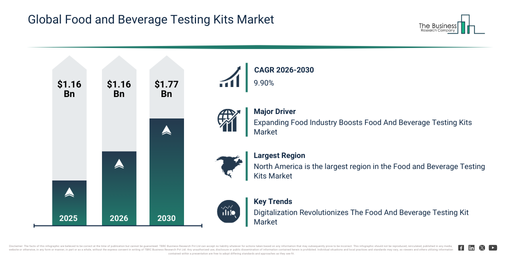
    The market for food and beverage testing kits has experienced strong growth in recent years. It is projected to increase from $23.29 billion in 2025 to $24.93 billion in 2026, growing at a compound annual growth rate (CAGR) of 7.0%. This progress during the historical period has been largely driven by the reliance on manual and traditional testing procedures, a limited supply of rapid testing kits, rising incidents of foodborne illnesses, stringent food safety regulations, and dependence on laboratory-based testing apparatus.

    Looking ahead, this market is expected to accelerate its expansion, reaching $36.39 billion by 2030 with an even higher CAGR of 9.9%. The anticipated growth is fueled by advances in portable testing devices, a surge in the adoption of rapid testing technologies, increasing demand for detection of GMOs and pesticides, growth in the processed food and beverage sectors, and integration of cloud-based data management and analytics platforms. Key trends shaping the future include a rising focus on rapid testing, enhanced detection of pathogens and contaminants, the use of portable and onsite testing instruments, expanded quality control in dairy, meat, and seafood industries, as well as growing consumption of sample collection kits and consumables.

    Download A Free Sample Report For Comprehensive Market Insights:

    https://www.thebusinessresearchcompany.com/sample.aspx?id=2495&type=smp

    Driving Forces Behind the Expansion of the Food and Beverage Testing Kits Market

    The expanding global food industry is a major catalyst behind the increasing demand for food and beverage testing kits. This industry encompasses a complex network responsible for delivering most of the food consumed worldwide, covering everything from agriculture and food production to packaging, distribution, retail, and catering services. Testing kits play a critical role in ensuring food safety by identifying chemical, microbiological, and physical contaminants.

    For instance, in June 2023, the Food and Agriculture Organization of the United Nations highlighted significant increases in global agricultural stocks and production, including a 1.7% rise in cereal stocks to a record 873 million tons and a 3.0% increase in coarse grain output for 2023 compared to the previous year. Furthermore, global sugar consumption grew for the third consecutive season in 2022–2023, increasing by 1.6 million tons or 0.9%. These statistics underscore the growth of the food sector, directly supporting the rising demand for testing kits to maintain food safety standards.

    Breakdown of Revenue-Generating Categories Within the Food and Beverage Testing Kits Market

    This market is segmented into various categories to cover diverse product types and applications:

    1) By Product Type: Consumables and Equipment

    2) By Technology: Traditional testing methods and Rapid testing technologies

    3) By Contaminant Type: Pathogens, GMOs, Pesticides, and Toxins

    4) By Application Area: Meat, Poultry, Seafood, Dairy, Processed Foods, and Fruits & Vegetables

    Further subcategories include consumables such as test strips, reagents and chemicals, and sample collection kits. Equipment types include portable testing devices, laboratory analyzers, spectrophotometers, and pH meters, addressing a broad spectrum of testing needs.

    Access The Complete Food and Beverage Testing Kits Market Report:

    https://www.thebusinessresearchcompany.com/report/food-and-beverage-testing-kits-global-market-report

    Emerging Innovations Transforming the Food and Beverage Testing Kits Sector

    Leading companies in this market are increasingly embracing digitalization to boost sustainability and gain competitive advantages. Digital technologies improve the efficiency, quality, and safety of food testing operations.

    For example, in June 2023, the Food Safety and Standards Authority of India (FSSAI) launched the Rapid Food Testing Kit (RAFT) portal, a digital platform designed to streamline the RAFT Scheme’s processes. This portal enables applicants to complete all procedures electronically — from applications to certificate issuance and renewal — promoting transparency and accountability while encouraging paperless operations. Such advancements signal a broader industry shift toward cutting-edge digital tools for food safety screening and surveillance.

    Key Industry Players and Their Strategic Market Positions in Food and Beverage Testing Kits

    The food and beverage testing kits market features numerous well-established companies, including Eurofins Scientific, Thermo Fisher Scientific Inc., Bio-Rad Laboratories Inc., Neogen Corporation, PerkinElmer Inc., Merck KGaA, Agilent Technologies Inc., Danaher Corporation, 3M Company, Qiagen N.V., Intertek Group plc, TÜV SÜD, ALS Limited, Romer Labs Division Holding GmbH, Charm Sciences Inc., Hygiena LLC, IDEXX Laboratories Inc., EnviroLogix Inc., Randox Laboratories Ltd., Biomerieux SA, R-Biopharm AG, Biocheck Inc., Ab Sciex LLC, Merck Millipore, SGS SA, Bureau Veritas SA, Covance Inc., and GeneDisc Technologies, Envirologix. These firms are pivotal in driving innovation and expanding market reach.

    Regional Market Leaders and Revenue Shares in the Food and Beverage Testing Kits Industry

    In 2025, North America held the largest market share in the food and beverage testing kits sector, asserting its dominance. Western Europe followed as the second-largest market region. Additional regions analyzed in the market include Asia-Pacific, South East Asia, Eastern Europe, South America, the Middle East, and Africa, providing a global perspective on market trends and growth opportunities.

    Get in touch with us:

    The Business Research Company: https://www.thebusinessresearchcompany.com/

    Americas: +1 310-496-7795

    Asia: +44 7882 955267 & +91 8897263534

    Europe: +44 7882 955267

    Email us at: marketing@tbrc.info

    Follow us on:

    LinkedIn: https://in.linkedin.com/company/the-business-research-company

    YouTube: https://www.youtube.com/channel/UC24_fI0rV8cR5DxlCpgmyFQ

    Global Market Model: https://www.thebusinessresearchcompany.com/global-market-model
  • Folding-Wheel Personal Mobility Robot Market Growth Through 2030 Creates New Strategic Opportunities

    Folding-Wheel Personal Mobility Robot Market Growth Through 2030 Creates New Strategic Opportunities

    Enhanced with market attractiveness analysis, total addressable market evaluation, company benchmarking matrices, interactive Excel dashboards, expanded supply chain intelligence, emerging startup coverage, and detailed product insights, The Business Research Company’s 2026 market reports deliver more actionable and strategically valuable research.

    The folding-wheel personal mobility robot market is rapidly evolving as a practical solution to modern mobility challenges. With innovations in technology and increasing demand for convenient, portable mobility aids, this market is set to experience substantial growth. Let’s explore the current market size, the factors driving expansion, key segments, emerging trends, major players, and regional dynamics shaping this industry.

    Market Growth Trajectory and Projections for the Folding-Wheel Personal Mobility Robot Market

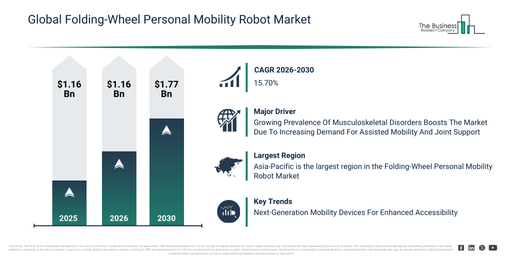
    The market for folding-wheel personal mobility robots has witnessed significant growth in recent years. It is projected to increase from $1.67 billion in 2025 to $1.93 billion in 2026, representing a notable CAGR of 16.0%. This earlier growth phase has been driven by factors such as the rise in urban commuting difficulties, early adoption of personal mobility robots, advancements in foldable wheel designs, increased awareness of mobility assistance devices, and the integration of electric mobility technologies. Looking ahead, the market is expected to reach $3.47 billion by 2030, maintaining a strong CAGR of 15.7%. Key contributors to this future growth include AI-powered route optimization, the expansion of smart city infrastructure, increased usage in elderly care and rehabilitation, improvements in battery longevity and capacity, and IoT connectivity. Important trends anticipated during this period encompass compact and foldable designs, sensor-driven navigation, AI-supported personal commuting, enhanced battery efficiency, and remote-controlled mobility features.

    Download A Free Sample Report For Comprehensive Market Insights:

    https://www.thebusinessresearchcompany.com/sample.aspx?id=29066&type=smp

    Rising Prevalence of Musculoskeletal Disorders Boosting Market Demand

    One of the main factors propelling the folding-wheel personal mobility robot market is the increasing occurrence of musculoskeletal disorders (MSDs). These conditions affect muscles, bones, joints, and connective tissues, leading to pain and restricted movement. Sedentary lifestyles contribute to muscle weakening and joint strain, thereby increasing the prevalence of MSDs. Folding-wheel personal mobility robots assist those affected by reducing joint stress and facilitating mobility, which allows users to move longer distances comfortably and safely. For instance, data from GOV.UK revealed that in 2023, 18.4% of individuals aged 16 and above in the UK reported living with long-term musculoskeletal conditions, up from 17.6% in 2022. This rising prevalence is a significant factor driving market growth.

    Growing Healthcare Spending Supporting Market Expansion

    Another key driver of the folding-wheel personal mobility robot market is the surge in healthcare expenditure worldwide. This spending encompasses investments in medical services, equipment, and advanced technologies designed to improve patient care. As hospitals and healthcare providers increase their budgets for innovative tools and digital solutions, the availability of folding-wheel personal mobility robots in both clinical and homecare settings expands. These robots enhance mobility, comfort, and independence for individuals with limited physical abilities. According to the Centers for Medicare & Medicaid Services, national health expenditures in the US grew by 7.5% in 2023, reaching $4.9 trillion, which equates to $14,570 per person and accounts for 17.6% of GDP. Medicare spending alone rose by 8.1% to $1,029.8 billion, representing 21% of total healthcare expenditure. This rising investment in healthcare technologies is a major factor encouraging market growth.

    Access The Complete Folding-Wheel Personal Mobility Robot Market Report:

    https://www.thebusinessresearchcompany.com/report/folding-wheel-personal-mobility-robot-global-market-report

    How the Folding-Wheel Personal Mobility Robot Market is Organized Across Key Segments

    The folding-wheel personal mobility robot market is segmented into multiple categories for comprehensive analysis:

    1) Product Type: This includes Automatic Folding-Wheel Personal Mobility Robots, Semi-Automatic Folding-Wheel Personal Mobility Robots, Self-Balancing Folding-Wheel Personal Mobility Robots, and Smart Robotic Folding Mobility Robots.

    2) Folding and Control Technology: Options such as Remote-Controlled Folding Robots, Sensor-Based Automatic Folding Robots, App-Controlled Folding Mobility Robots, and AI-Assisted Self-Balancing Folding Robots are covered.

    3) Wheel Configuration: The market includes Two-Wheel, Three-Wheel, and Four-Wheel Folding Mobility Robots.

    4) Application: Key uses include Personal Urban Mobility, Assisted Mobility for Elderly Users, Healthcare Mobility Assistance, Rehabilitation and Recovery Mobility, and Travel and Portable Mobility Assistance.

    5) End-User: Categories include Individual Users, Elderly and Mobility-Impaired Users, Hospitals and Clinics, Rehabilitation Centers, and Assisted Living and Care Facilities.

    Additional subsegments provide further detail, such as types of automatic folding robots including one-touch button and fully autonomous mechanisms, semi-automatic variants like motor-assisted and sensor-triggered folding systems, self-balancing robots with AI stabilization and dynamic terrain adaptation, and smart robotic mobility devices integrated with IoT and health monitoring.

    Innovations and Trends Shaping the Folding-Wheel Personal Mobility Robot Market

    Leading companies in this market are focusing on developing advanced technologies to improve maneuverability and user convenience. One such innovation is the omni traction drive system, which allows personal mobility robots to move smoothly in any direction—including sideways and diagonally—while maintaining stability across various surfaces. For example, in September 2025, Honda Motor Co. Ltd. released the UNI-ONE personal mobility device in Japan. This hands-free, self-balancing system enables users to control movement by shifting body weight, allowing them to keep their hands free and multitask naturally. Its adjustable height allows users to maintain eye level with standing individuals, promoting easier communication and social interaction. UNI-ONE is designed to reduce physical strain, expand mobility options for diverse users, and enhance productivity in workplaces, large venues, and everyday activities.

    Key Players Defining the Folding-Wheel Personal Mobility Robot Market

    The competitive landscape of the folding-wheel personal mobility robot market is shaped by several prominent companies, including WHILL Inc., Airwheel, Cheelcare, Robooter, XSTO Mobility, Mobius Mobility, ComfyGo, Golden Technologies, Pride Mobility Products, ZiiLIF, SUPERPI, ALBA Robot, Care for Mobility, Zuowei Technology, Mobot, Bbr Robot, Zinger Chair, KD Smart Chair, EzLite Cruiser, and Trident Mobility. These organizations are driving innovation and expanding market reach through diverse product offerings and technology advancements.

    Regional Presence and Market Leadership in Folding-Wheel Personal Mobility Robots

    In 2025, the Asia-Pacific region emerged as the largest market for folding-wheel personal mobility robots. The broader market analysis also covers regions such as South East Asia, Western Europe, Eastern Europe, North America, South America, the Middle East, and Africa. This geographical segmentation provides a comprehensive view of global market trends and growth opportunities across diverse economic and demographic landscapes.

    Get in touch with us:

    The Business Research Company: https://www.thebusinessresearchcompany.com/

    Americas: +1 310-496-7795

    Asia: +44 7882 955267 & +91 8897263534

    Europe: +44 7882 955267

    Email us at: marketing@tbrc.info

    Follow us on:

    LinkedIn: https://in.linkedin.com/company/the-business-research-company

    YouTube: https://www.youtube.com/channel/UC24_fI0rV8cR5DxlCpgmyFQ

    Global Market Model: https://www.thebusinessresearchcompany.com/global-market-model
  • Focused Ultrasound System Market Size Projected To Increase From $4.79 Billion To $7.12 Billion During The Forecast Period

    Focused Ultrasound System Market Size Projected To Increase From $4.79 Billion To $7.12 Billion During The Forecast Period

    Through market attractiveness analysis, total addressable market evaluation, company benchmarking matrices, interactive Excel dashboards, expanded supply chain intelligence, emerging startup coverage, and detailed product insights, The Business Research Company’s 2026 market reports provide more actionable and strategically valuable research.

    The focused ultrasound system market has been experiencing rapid expansion, driven by advancements in medical technology and a growing demand for less invasive treatment options. This sector is poised for substantial growth as new therapeutic applications emerge and the prevalence of chronic diseases increases globally. Let’s explore the current market valuation, key growth drivers, segmentation, industry trends, leading players, and regional opportunities shaping the future of focused ultrasound systems.

    Focused Ultrasound System Market Size and Growth Outlook

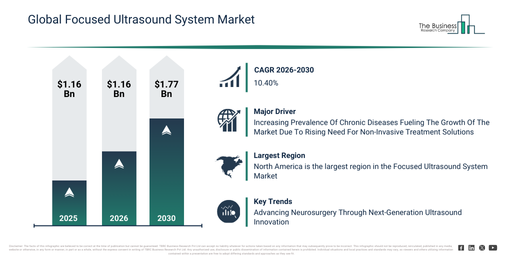
    The focused ultrasound system market is on an upward trajectory, expected to rise from $4.33 billion in 2025 to $4.79 billion in 2026, reflecting a compound annual growth rate (CAGR) of 10.7%. This growth during the historical period has been driven by improvements in ultrasound imaging technology, rising preference for non-invasive treatment methods, successful results in tumor ablation, clinical validation studies, and ongoing upgrades in hospital technologies. Looking ahead, the market is projected to reach $7.13 billion by 2030, growing at a CAGR of 10.4%. Factors fueling this future growth include an aging population, increasing therapeutic uses, investments in precision medicine, regulatory clearances, and a rise in neurological disorders. Key trends expected to influence the market involve expanding non-invasive procedures, broadening neurological applications, greater adoption in oncology therapies, advances in image-guided precision treatments, and a surge in clinical research activities.

    Download A Free Sample Report For Comprehensive Market Insights:

    https://www.thebusinessresearchcompany.com/sample.aspx?id=28224&type=smp

    The Impact of Chronic Diseases on Focused Ultrasound System Market Growth

    A significant factor propelling the focused ultrasound system market is the rising incidence of chronic diseases worldwide. These long-lasting health conditions, which often require ongoing management, are becoming more common due to sedentary lifestyles that contribute to obesity, diabetes, and cardiovascular issues. Focused ultrasound technology is valuable in managing these diseases by non-invasively targeting and destroying damaged tissue, reducing pain, and enhancing patient functionality without the need for surgery. To illustrate, in August 2024, Macmillan Cancer Support—a UK-based organization—reported that over 3 million people were living with cancer in the UK, with projections increasing to 3.5 million in 2025, 4 million by 2030, and reaching 5.3 million by 2040. This growing patient population underscores the expanding need for effective chronic disease treatments, supporting growth in this market.

    Focused Ultrasound System Market Segmentation and Key Revenue Drivers

    This market is categorized into several segments for a comprehensive analysis. By component, it includes devices, consumables, software, and accessories. Type segmentation covers thermal ablation systems, mechanical ablation systems, microbubble ultrasound systems, and high-intensity focused ultrasound (HIFU) systems. Technology classifications involve ultrasound imaging systems, non-linear ultrasound systems, thermal imaging systems, and diagnostic ultrasound systems. Application areas encompass clinical applications such as uterine fibroids, prostate cancer, essential tremor, dermatology, breast cancer, glaucoma, back pain, research applications, and others. End-users comprise hospitals, specialty clinics, ambulatory surgical centers, and additional healthcare providers. Further subcategories drill down into specifics, like MR-guided and ultrasound-guided focused ultrasound devices, various consumables such as coupling gels and treatment kits, software solutions for treatment planning and data management, and accessories including patient tables and cooling systems.

    Access The Complete Focused Ultrasound System Market Report:

    https://www.thebusinessresearchcompany.com/report/focused-ultrasound-system-global-market-report

    Innovative Trends Shaping the Focused Ultrasound System Market

    Leading market players are investing in developing sophisticated products to enhance treatment precision and patient outcomes. A notable innovation is the MR-guided focused ultrasound (MRgFUS) system, which combines high-intensity focused ultrasound with magnetic resonance imaging, enabling non-invasive, highly precise tissue treatment. For example, in January 2024, Israel-based Insightec launched Exablate Prime, the latest iteration of its MRgFUS system. This advanced device improves incisionless neurosurgery by offering an intuitive user interface, automated calculations, sub-millimeter targeting, real-time thermal monitoring, enhanced lesion shaping, and superior MRI visualization. Additional upgrades include strengthened cybersecurity, PACS connectivity, and an optional 3T head coil for higher-resolution imaging. These advancements position Exablate Prime as a breakthrough for treating movement disorders and expanding therapeutic possibilities in focused ultrasound applications.

    Top Companies Driving Competition in the Focused Ultrasound System Market

    Several prominent organizations are leading competition in this rapidly evolving market. These include Medtronic plc, InSightec Ltd., EDAP TMS S.A., Image Guided Therapy S.A., Chongqing Haifu Medical Technology Co. Ltd., Shanghai A&S Technology Development Co. Ltd., Alpinion Medical Systems Co Ltd, SonaCare Medical LLC, Profound Medical Inc., Mianyang Sonic Electronic Ltd., Theraclion SA, Focal One, Ultrasound Technologies Ltd., Sonic Concepts Inc., HistoSonics Inc., FUS Instruments Inc., Changjiangyuan Technology Development Co Ltd, NaviFUS Corp, Neurosona Co Ltd, EpiSonica Corp, Wuxi Haiying Medical Technology Co Ltd, Kona Medical Inc, EyeTechCare SA, IMGT Co Ltd, NanoFUS Ltd, Mirabilis Medical Inc, and AeonMD. These companies continuously push innovation and expand their product portfolios to maintain a competitive edge.

    Geographical Insights and Regions Leading Market Expansion

    In 2025, North America holds the largest share of the focused ultrasound system market, supported by strong healthcare infrastructure and adoption of advanced medical technologies. Meanwhile, the Asia-Pacific region is expected to experience the fastest growth during the forecast period, driven by increasing healthcare investments and rising demand for non-invasive therapies. The market analysis covers regions including Asia-Pacific, South East Asia, Western Europe, Eastern Europe, North America, South America, the Middle East, and Africa, providing a global perspective on demand and growth opportunities.

    Get in touch with us:

    The Business Research Company: https://www.thebusinessresearchcompany.com/

    Americas: +1 310-496-7795

    Asia: +44 7882 955267 & +91 8897263534

    Europe: +44 7882 955267

    Email us at: marketing@tbrc.info

    Follow us on:

    LinkedIn: https://in.linkedin.com/company/the-business-research-company

    YouTube: https://www.youtube.com/channel/UC24_fI0rV8cR5DxlCpgmyFQ

    Global Market Model: https://www.thebusinessresearchcompany.com/global-market-model
  • Fluoroscopy Equipment Market Growth Outlook Reveals A CAGR Of 6.1% And A Market Value Of $9.07 Billion By 2030

    Fluoroscopy Equipment Market Growth Outlook Reveals A CAGR Of 6.1% And A Market Value Of $9.07 Billion By 2030

    Delivering more actionable and strategically valuable research, The Business Research Company’s 2026 market reports feature market attractiveness analysis, total addressable market evaluation, company benchmarking matrices, interactive Excel dashboards, expanded supply chain intelligence, emerging startup coverage, and detailed product insights.

    The fluoroscopy equipment industry has experienced significant growth recently and is set for continued expansion in the coming years. Driven by advances in medical imaging and increasing demand for real-time diagnostic tools, this sector is attracting considerable attention from healthcare providers globally. Let’s explore the current market size, key growth drivers, prominent trends, leading companies, and regional dynamics shaping the future of fluoroscopy equipment.

    Fluoroscopy Equipment Market Size and Growth Outlook

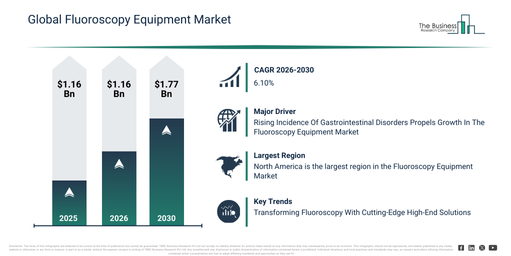
    The fluoroscopy equipment market has shown strong progress over recent years. From $6.79 billion in 2025, it is projected to rise to $7.15 billion by 2026, marking a compound annual growth rate (CAGR) of 5.4%. This expansion during the historic period is largely attributable to the increase in interventional procedures, growth in diagnostic imaging infrastructure, wider use of fluoroscopy in orthopedic surgeries, technological improvements in X-ray imaging, and more hospital investments in imaging devices. Looking ahead, the market is expected to reach $9.07 billion by 2030, growing at a CAGR of 6.1%. Future growth will likely be driven by rising demand for real-time imaging guidance, greater incorporation of AI-powered diagnostic tools, expansion of outpatient surgical centers, heightened attention to radiation safety standards, and the replacement of older imaging systems. Key trends include the adoption of digital fluoroscopy systems, increasing preference for mobile C-arm imaging, integration of AI-assisted image processing, growth of minimally invasive procedure guidance, and stronger emphasis on reducing radiation doses.

    Download A Free Sample Report For Comprehensive Market Insights:

    https://www.thebusinessresearchcompany.com/sample.aspx?id=12470&type=smp

    Rising Prevalence of Gastrointestinal Disorders Boosting Fluoroscopy Equipment Demand

    One of the main factors propelling the fluoroscopy equipment market is the growing incidence of gastrointestinal (GI) disorders. These disorders affect various parts of the GI tract and often require dynamic imaging to diagnose and manage effectively. Fluoroscopy’s ability to provide real-time X-ray visualization of internal organs and their movements makes it indispensable for assessing functions like swallowing, digestion, and bowel motility. For example, in January 2024, the American Cancer Society reported an expected 26,890 new cases of stomach cancer in the U.S. alone, with 16,160 among men and 10,730 among women. The same report projected about 10,880 deaths resulting from this cancer type in 2024. This rising burden of GI conditions is a critical driver for the expansion of the fluoroscopy equipment market.

    Fluoroscopy Equipment Market Segmentation Revealing Key Growth Areas

    This market is categorized into several segments for a detailed analysis:

    1) By Product Type: Fixed Fluoroscopy Equipment, Mobile C-Arms, and Fixed C-Arms

    2) By Application: Diagnostic, Surgical, and Other Uses

    3) By End-User: Hospitals, Diagnostic Centers, and Other End-Users

    Subdivisions include conventional and digital fluoroscopy systems under fixed equipment; mini and full-size mobile C-arms; and high-performance versus standard fixed C-arms. These various subcategories highlight the diversity of fluoroscopy products meeting different clinical needs and settings.

    Access The Complete Fluoroscopy Equipment Market Report:

    https://www.thebusinessresearchcompany.com/report/fluoroscopy-equipment-global-market-report

    Innovation Trends Advancing Fluoroscopy Equipment Market Expansion

    Industry players are focusing on developing cutting-edge solutions like motorized mobile C-arms to enhance their competitive positioning. Motorized mobile C-arms are versatile imaging systems mounted on wheeled platforms, offering real-time X-ray imaging with easy maneuverability during surgical and diagnostic procedures. For instance, in February 2024, Royal Philips from the Netherlands unveiled its Zenition 90 Motorized mobile C-arm. This device is distinguished by its exceptional speed, intuitive table-side controls, and user-friendly design, allowing surgeons greater flexibility and independence. It delivers high-quality imaging tailored for complex vascular procedures and incorporates automated workflows, a touch screen module for image management, and advanced software to boost clinical efficiency significantly.

    Key Industry Players Driving the Fluoroscopy Equipment Market

    Several globally recognized companies dominate the fluoroscopy equipment landscape, including Siemens Healthineers AG, Koninklijke Philips N.V., GE HealthCare Technologies Inc., Canon Medical Systems Corporation, Fujifilm Holdings Corporation, Shimadzu Corporation, Hitachi Medical Corporation, Mindray Medical International Limited, Hologic Inc., Ziehm Imaging GmbH, Carestream Health Inc., Agfa-Gevaert N.V., Allengers Medical Systems Limited, Orthoscan Inc., Toshiba Medical Systems Corporation, Analogic Corporation, Medonica Co. Ltd., Perlove Medical Equipment Co. Ltd., Villa Sistemi Medicali S.p.A., and MS Westfalia GmbH. These organizations continue to invest in research and development to deliver innovative fluoroscopy solutions.

    Regional Market Overview Highlighting Leadership and Growth Prospects

    In 2025, North America held the largest share of the fluoroscopy equipment market, reflecting its advanced healthcare infrastructure and high adoption of medical technologies. Meanwhile, the Asia-Pacific region is projected to register the fastest growth rate during the forecast period, driven by expanding healthcare facilities, increasing awareness, and rising demand for advanced diagnostic tools. The report covers key geographical regions including Asia-Pacific, South East Asia, Western Europe, Eastern Europe, North America, South America, the Middle East, and Africa, providing a comprehensive perspective on global market trends.

    Get in touch with us:

    The Business Research Company: https://www.thebusinessresearchcompany.com/

    Americas: +1 310-496-7795

    Asia: +44 7882 955267 & +91 8897263534

    Europe: +44 7882 955267

    Email us at: marketing@tbrc.info

    Follow us on:

    LinkedIn: https://in.linkedin.com/company/the-business-research-company

    YouTube: https://www.youtube.com/channel/UC24_fI0rV8cR5DxlCpgmyFQ

    Global Market Model: https://www.thebusinessresearchcompany.com/global-market-model
  • Fluorescent In Situ Hybridization Probe Market Forecast Highlights Expansion From $1.8 Billion To $2.39 Billion Through 2030

    Fluorescent In Situ Hybridization Probe Market Forecast Highlights Expansion From $1.8 Billion To $2.39 Billion Through 2030

    Enhanced with market attractiveness analysis, total addressable market evaluation, company benchmarking matrices, interactive Excel dashboards, expanded supply chain intelligence, emerging startup coverage, and detailed product insights, The Business Research Company’s 2026 market reports deliver more actionable and strategically valuable research.

    The fluorescent in situ hybridization (FISH) probe market has experienced significant advancement recently, supported by technological progress and increasing demand in genetic diagnostics. As research and clinical applications expand, this market is set for continued growth, driven by innovations and broader adoption in personalized medicine. Below, we explore the market size, key growth factors, competitive landscape, and regional dynamics shaping this evolving industry.

    Current Market Size and Growth Projections for the Fluorescent In Situ Hybridization Probe Market

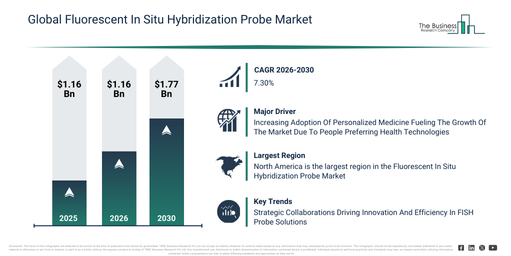
    The fluorescent in situ hybridization probe market has demonstrated strong growth over recent years. It is projected to rise from $1.68 billion in 2025 to $1.8 billion in 2026, growing at a compound annual growth rate (CAGR) of 7.1%. This increase has historically been driven by limited availability of fluorescent probes, ongoing reliance on traditional single-color FISH, growing awareness of genetic diagnostic tools, increased funding for molecular biology research, and widespread adoption of fluorescence microscopy techniques. Looking ahead, the market is expected to reach $2.39 billion by 2030, with a CAGR of 7.3%. This anticipated expansion is fueled by advancements in multiplex and combinatorial barcoded probes, wider use in personalized medicine, growth in pharmaceutical and biotech research, heightened regulatory compliance, and integration with AI-powered image analysis and data processing technologies. Key trends in the forecast period include a growing clinical use of FISH probes, expansion of multiplex and high-throughput screening methods, increasing applications in genetic and agricultural research, incorporation of sophisticated imaging tools, and emphasis on custom probe development tailored for personalized therapies.

    Download A Free Sample Report For Comprehensive Market Insights:

    https://www.thebusinessresearchcompany.com/sample.aspx?id=27289&type=smp

    Factors Supporting Growth in the Fluorescent In Situ Hybridization Probe Market

    The rising acceptance of personalized medicine is a major driver behind the fluorescent in situ hybridization probe market’s expansion. Personalized medicine tailors treatments and healthcare strategies based on an individual’s genetic makeup and lifestyle, offering more precise and effective solutions. Patients and clinicians increasingly prefer health technologies that provide real-time monitoring and individualized treatment plans. FISH probes play a critical role by accurately detecting genetic abnormalities at the chromosomal level, which helps inform customized therapeutic decisions. For example, in February 2024, the Personalized Medicine Coalition reported that the FDA approved 16 new personalized therapies for rare diseases in 2023, up from six in 2022. This growth highlights the increasing relevance of personalized medicine in healthcare and its significant contribution to driving demand for fluorescent in situ hybridization probes.

    Additional Market Drivers Shaping FISH Probe Demand

    Beyond personalized medicine, the expansion of pharmaceutical and biotechnology research continues to spur demand for FISH probes. The growing investment in molecular diagnostics and genetic research fuels the need for advanced probe technologies. Additionally, regulatory authorities are placing more emphasis on compliance and standardization in diagnostic procedures, encouraging the adoption of reliable and reproducible FISH probe technologies. Integration with AI-enabled image analysis and data analytics further enhances probe functionality and usability, thereby supporting broader market growth.

    Access The Complete Fluorescent In Situ Hybridization Probe Market Report:

    https://www.thebusinessresearchcompany.com/report/fluorescent-in-situ-hybridization-probe-global-market-report

    Detailed Market Segmentation and Strategic Opportunities in the Fluorescent In Situ Hybridization Probe Market

    This market is segmented based on various criteria:

    1) By Type: Deoxyribonucleic Acid (DNA) Probes, Ribonucleic Acid (RNA) Probes, and Multiplex Probes

    2) By Target: Genes, Chromosomes, and Other Targets

    3) By Technology: Single-Color Fluorescence In Situ Hybridization (FISH), Multiplex Fluorescence In Situ Hybridization (FISH), Quantitative Fluorescence In Situ Hybridization (FISH), and Other Technologies

    4) By Application: Clinical Diagnostics, Research Applications, Agricultural Biotechnology, Pharmaceutical Research, and Genetic Research

    5) By End User: Hospitals and Clinics, Research Laboratories, Pharmaceutical Companies, and Biotechnology Companies

    Within these categories, further subsegments include:

    – DNA Probes such as Centromeric, Telomeric, Whole Chromosome Paint, Locus-Specific Identifier (LSI), Comparative Genomic Hybridization (CGH), and Gene Fusion Probes

    – RNA Probes including mRNA, Long Non-Coding RNA (lncRNA), MicroRNA (miRNA), Single-Molecule RNA FISH (smFISH), Circular RNA (circRNA), and Multiplexed Error-Robust FISH (MERFISH) Probes

    – Multiplex Probes such as Multicolor DNA FISH, Multigene Expression Analysis, High-Throughput Screening, Multiplex smFISH, Combinatorial Barcoded Probes, and Simultaneous DNA/RNA Detection Probes

    This segmentation allows for targeted innovation and strategic product development to meet specific research and clinical needs.

    Strategic Collaborations Driving Innovation and Market Competitiveness

    Leading companies in the fluorescent in situ hybridization probe market are pursuing strategic partnerships to access novel technologies, expand market reach, or combine expertise for mutual advantage. These collaborations help overcome challenges and accelerate product innovation. For instance, in April 2025, Empire Genomics, a molecular diagnostics firm based in the US, partnered with BioDot, a provider of precision dispensing automation, to introduce the BDot Probe Line. This product line offers FISH probes pre-optimized for automated platforms, simplifying workflows in clinical cytogenetics and molecular pathology labs. These probes are designed for immediate use without manual calibration, ensuring compatibility with the BioDot CellWriter S system and reducing technician intervention. The initial set of BDot Probe Panels supports analysis of a broad spectrum of hematologic cancers, including multiple myeloma (MM), myelodysplastic syndromes (MDS), chronic myelogenous leukemia (CML), acute myeloid leukemia (AML), acute lymphoblastic leukemia (ALL), and other common blood disorders.

    Key Industry Players Shaping the Fluorescent In Situ Hybridization Probe Market

    The competitive landscape features prominent companies such as Thermo Fisher Scientific Inc., Abbott Laboratories, Oxford Gene Technology IP Limited, Sigma-Aldrich Co. LLC, Agilent Technologies Inc., Bio-Rad Laboratories Inc., QIAGEN N.V., Leica Biosystems Nussloch GmbH, Biocare Medical LLC, Enzo Biochem Inc., LGC Biosearch Technologies, ZytoVision GmbH, Creative Biolabs Inc., Empire Genomics LLC, MetaSystems GmbH, Abnova Corporation, Mirus Bio LLC, Genemed Biotechnologies Inc., Molecular Instruments Inc., and Cytocell Technologies Limited. These players drive innovation and maintain the market’s competitive edge through ongoing research and development efforts.

    Regional Market Distribution and Growth Forecasts

    In 2025, North America held the largest share of the fluorescent in situ hybridization probe market, benefiting from well-established healthcare infrastructure and extensive research activities. Meanwhile, the Asia-Pacific region is expected to register the fastest growth during the forecast period, driven by expanding healthcare access, increasing investments in life sciences research, and rising adoption of advanced diagnostic tools. Other regions analyzed in the market report include South East Asia, Western Europe, Eastern Europe, South America, the Middle East, and Africa, providing a comprehensive global perspective on market trajectories.

    Get in touch with us:

    The Business Research Company: https://www.thebusinessresearchcompany.com/

    Americas: +1 310-496-7795

    Asia: +44 7882 955267 & +91 8897263534

    Europe: +44 7882 955267

    Email us at: marketing@tbrc.info

    Follow us on:

    LinkedIn: https://in.linkedin.com/company/the-business-research-company

    YouTube: https://www.youtube.com/channel/UC24_fI0rV8cR5DxlCpgmyFQ

    Global Market Model: https://www.thebusinessresearchcompany.com/global-market-model

  • Fluid-Cooled Radiofrequency Ablation Market Expected To Reach $4.33 Billion By 2030 As Growth Accelerates At 9.1% CAGR

    Fluid-Cooled Radiofrequency Ablation Market Expected To Reach $4.33 Billion By 2030 As Growth Accelerates At 9.1% CAGR

    Through market attractiveness analysis, total addressable market evaluation, company benchmarking matrices, interactive Excel dashboards, expanded supply chain intelligence, emerging startup coverage, and detailed product insights, The Business Research Company’s 2026 market reports provide more actionable and strategically valuable research.

    The fluid-cooled radiofrequency ablation market is demonstrating robust growth, driven by advancements in technology and increasing demand for minimally invasive treatment options. As healthcare providers seek more effective pain management and cancer treatment solutions, this market is positioned for significant expansion over the coming years. Let’s explore the current market size, key growth factors, main players, and trends shaping the future of this sector.

    Steady Growth Outlook for the Fluid-Cooled Radiofrequency Ablation Market

    The fluid-cooled radiofrequency ablation market has shown considerable growth in recent years. It is projected to increase from $2.79 billion in 2025 to $3.06 billion in 2026, reflecting a compound annual growth rate (CAGR) of 9.4%. This rise during the historical period is largely due to limited availability of internally cooled RF ablation devices, continued reliance on traditional RF ablation systems, a growing number of patients suffering from cardiac arrhythmias and tumors, expanding hospital and surgical center infrastructure, and greater adoption of standard accessory products.

    Download A Free Sample Report For Comprehensive Market Insights:

    https://www.thebusinessresearchcompany.com/sample.aspx?id=27288&type=smp

    Looking ahead, the market is expected to maintain strong momentum, reaching $4.34 billion by 2030 at a CAGR of 9.1%. Factors driving growth in this forecast period include innovations in fluid-cooling technology, increased investments in minimally invasive procedures, broader use of integrated imaging and real-time feedback technologies, expansion of oncology and cardiology interventions, and increasing awareness and adoption of these procedures in ambulatory surgical centers and specialty clinics. Key trends involve rising use of fluid-cooled RF ablation for cardiology and oncology, development of both monopolar and bipolar RF ablation devices, incorporation of real-time monitoring systems for precise tissue targeting, growing use of accessory products like catheters and electrodes, and demand for closed-loop and disposable cooling systems.

    Rising Prevalence of Chronic Diseases Boosting Fluid-Cooled Radiofrequency Ablation Market

    One of the main factors propelling the fluid-cooled radiofrequency ablation market is the increasing incidence of chronic diseases worldwide. Chronic conditions tend to last a year or longer, requiring ongoing medical care and often restricting daily activities. The aging population is a significant contributor to this trend, as older adults are more susceptible to long-term health issues. Fluid-cooled RF ablation offers a targeted solution by delivering controlled heat to nerve tissues, blocking pain signals and providing lasting relief for ailments such as chronic back pain and arthritis.

    Access The Complete Fluid-Cooled Radiofrequency Ablation Market Report:

    https://www.thebusinessresearchcompany.com/report/fluid-cooled-radiofrequency-ablation-global-market-report

    For instance, in July 2024, the Australian Institute of Health and Welfare reported that chronic diseases caused an estimated 4.4 million years of healthy life lost in Australia during 2023, making up 85% of the total disease burden. This data highlights the growing need for effective pain management solutions, which is driving demand for fluid-cooled radiofrequency ablation systems.

    Expanding Geriatric Population Increasing Demand for Minimally Invasive Pain Relief

    The growth of the elderly population—those aged 65 and above—is another significant driver for the fluid-cooled radiofrequency ablation market. Advances in healthcare have extended life expectancy, resulting in a larger proportion of older adults who often require specialized medical care due to age-related conditions. These individuals benefit from minimally invasive treatments that reduce tissue damage and speed recovery, improving their quality of life and mobility.

    According to a January 2024 report by the World Bank, 17.4% of the U.S. population in 2023 were aged 65 or older. This demographic shift is increasing demand for effective and less invasive pain relief options like fluid-cooled radiofrequency ablation, which is well-suited to address the unique healthcare needs of the geriatric population.

    Detailed Segmentation of the Fluid-Cooled Radiofrequency Ablation Market

    This market is categorized into several key segments to better understand its landscape and growth potential:

    – By Product Type: Radiofrequency Ablation Devices, Accessory Products, Fluid-Cooling Systems

    – By Technology: Integrated Imaging Technology, Real-Time Feedback Systems

    – By Target Tissue: Solid Tumors, Soft Tissue Tumors, Bone Tumors

    – By Application: Cardiology, Oncology, Pain Management, Urology, Other Applications

    – By End-User: Hospitals, Ambulatory Surgical Centers, Specialty Clinics, Other End Users

    Subsegments include:

    – Radiofrequency Ablation Devices: Monopolar, Bipolar, and Internally Cooled Devices

    – Accessory Products: Catheters, Electrodes, Introducers, and Sheaths

    – Fluid-Cooling Systems: Peristaltic Pump Systems, Closed-Loop Cooling Systems, Disposable Tubing Sets

    Innovations and Trends Driving Market Expansion

    Leading players in the fluid-cooled radiofrequency ablation space are focused on improving device efficiency and safety. They are developing internally cooled RF ablation systems that circulate fluid within the electrode to prevent overheating, enabling deeper and more precise tissue ablation while minimizing damage to surrounding healthy areas.

    For example, in March 2024, Medtronic Plc gained FDA 510(k) clearance for the OsteoCool 2.0 bone tumor ablation system. This device offers enhanced precision and efficiency by allowing the simultaneous use of four internally cooled probes, capable of treating multiple vertebral bodies or creating larger ablation zones. Delivering 20 watts per channel, it is currently the most powerful bone tumor ablation system available. Its internal water-cooling technology ensures predictable ablation zones and reduces the risk of overheating adjacent tissues, making treatments safer and more effective. The system is designed to provide pain relief and palliative care for malignant bone metastases and benign tumors such as osteoid osteoma, improving patient outcomes through minimally invasive techniques.

    Major Players Leading the Fluid-Cooled Radiofrequency Ablation Market

    Some of the top companies operating in this market include Johnson & Johnson, Abbott Laboratories, Medtronic plc, Stryker Corporation, Boston Scientific Corporation, Olympus Corporation, CONMED Corporation, Lepu Medical Technology, MicroPort Scientific Corporation, Avanos Medical, Japan Lifeline Co. Ltd., AtriCure Inc, AngioDynamics, SyMap Medical, CardioFocus Inc, Imricor Medical Systems Inc., Stereotaxis Inc., Autonomix Medical, Innoblative Designs Inc, and livetec Ingenieurbüro GmbH.

    Regional Market Dynamics Highlight North America’s Lead

    In 2025, North America held the largest share of the fluid-cooled radiofrequency ablation market. However, the Asia-Pacific region is expected to witness the fastest growth throughout the forecast period. The market analysis covers major regions including Asia-Pacific, South East Asia, Western Europe, Eastern Europe, North America, South America, the Middle East, and Africa, providing a comprehensive view of global market trends and opportunities.

    Get in touch with us:

    The Business Research Company: https://www.thebusinessresearchcompany.com/

    Americas: +1 310-496-7795

    Asia: +44 7882 955267 & +91 8897263534

    Europe: +44 7882 955267

    Email us at: marketing@tbrc.info

    Follow us on:

    LinkedIn: https://in.linkedin.com/company/the-business-research-company

    YouTube: https://www.youtube.com/channel/UC24_fI0rV8cR5DxlCpgmyFQ

    Global Market Model: https://www.thebusinessresearchcompany.com/global-market-model
  • Fluid Aspiration Systems Market Set To Grow From $1.4 Billion In 2026 To $1.94 Billion By 2030 At A CAGR Of 8.5%

    Fluid Aspiration Systems Market Set To Grow From $1.4 Billion In 2026 To $1.94 Billion By 2030 At A CAGR Of 8.5%

    Delivering more actionable and strategically valuable research, The Business Research Company’s 2026 market reports feature market attractiveness analysis, total addressable market evaluation, company benchmarking matrices, interactive Excel dashboards, expanded supply chain intelligence, emerging startup coverage, and detailed product insights.

    The fluid aspiration systems market has been experiencing significant growth recently, driven by increasing technological advancements and expanding healthcare infrastructure worldwide. This sector is expected to continue evolving, offering promising revenue opportunities supported by rising demand across various medical and industrial fields. Below is a detailed overview of the market size, key growth drivers, segmentation, latest innovations, major players, and regional prospects.

    Steady Market Growth and Revenue Projections for Fluid Aspiration Systems

    The market for fluid aspiration systems has shown solid expansion in recent years. It is projected to increase from $1.28 billion in 2025 to $1.4 billion in 2026, exhibiting a compound annual growth rate (CAGR) of 9.4%. This historical growth phase has largely been influenced by ongoing reliance on manual aspiration methods, limited automated system options, expanding hospital and laboratory infrastructure, higher demand for fluid management during surgical procedures, and efforts toward standardizing suction devices.

    Download A Free Sample Report For Comprehensive Market Insights:

    https://www.thebusinessresearchcompany.com/sample.aspx?id=27287&type=smp

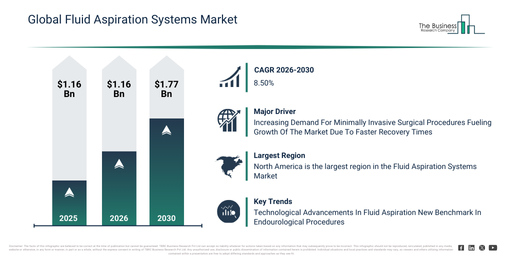
    Looking ahead, the market is poised for continued strong growth, expected to reach $1.94 billion by 2030 with a CAGR of 8.5%. This forecasted expansion is attributed to the advancement of electromechanical and automated aspiration technologies, integration with smart hospital and laboratory equipment, increased biomedical research and diagnostics activities, adoption of improved safety and contamination control protocols, and broader applications in industrial and aquaculture fluid management. Important trends anticipated to shape this market include the rising use of automated systems, enhanced biocompatible and sterilizable materials, growth in healthcare and medical research uses, development of closed-loop and high-throughput suction systems, and a heightened focus on safety and efficient fluid handling.

    Growing Demand for Fluid Aspiration Systems Driven by Minimally Invasive Surgeries

    One of the strongest factors fueling the fluid aspiration systems market is the increasing preference for minimally invasive surgical techniques. These procedures involve small incisions combined with specialized instruments such as cameras, which minimize tissue damage compared to traditional open surgeries. The popularity of minimally invasive surgeries stems from their benefits, including faster patient recovery, reduced hospital stays, and quicker return to normal activities.

    Access The Complete Fluid Aspiration Systems Market Report:

    https://www.thebusinessresearchcompany.com/report/fluid-aspiration-systems-global-market-report

    Fluid aspiration systems play a critical role in these surgeries by effectively removing blood, bodily fluids, and debris from the operative site, ensuring clear visibility for surgeons and reducing the need for larger incisions. For example, in June 2024, the American Society of Plastic Surgeons reported a 7% increase in minimally invasive procedures during 2023, surpassing 25 million in total. This rising adoption of minimally invasive techniques is a key driver for market growth.

    Impact of Rising Chronic Disease Rates and Aging Population on Market Demand

    Another significant influence on market expansion is the growing prevalence of chronic diseases worldwide, a trend closely linked to the aging global population. Chronic conditions—such as cardiovascular disorders, diabetes, cancer, and respiratory illnesses—typically require ongoing medical management and can limit daily activities.

    Fluid aspiration systems assist in managing these chronic ailments by preventing fluid build-up in the body, thereby reducing risks like infections and organ dysfunction and improving patient health outcomes. For instance, according to the UK’s National Health Service, the number of individuals diagnosed with non-diabetic hyperglycemia (pre-diabetes) registered with general practitioners rose by 18%, reaching 3,615,330 cases in 2023 compared to 3,065,825 in 2022. This increase in chronic diseases supports demand growth for fluid aspiration technologies.

    Detailed Segmentation of the Fluid Aspiration Systems Market

    This market is categorized into various segments to provide a clearer understanding:

    1) Product Type: Manual Fluid Aspiration Systems, Automatic Fluid Aspiration Systems, Electromechanical Fluid Aspiration Systems, Use-Specific Fluid Aspiration Systems

    2) Material Type: Plastic, Metal, Glass, Biocompatible Materials

    3) Distribution Channel: Direct Sales, Online Retail, Distributors, Wholesale Suppliers

    4) Application: Healthcare, Medical Research, Industrial Applications, Aquaculture

    5) End User: Hospitals, Diagnostic Laboratories, Research Institutes, Other End Users

    Further subcategories include:

    – Manual Systems such as syringe-based aspirators, manual vacuum pumps, handheld suction devices, and disposable aspiration kits

    – Automatic Systems including motorized vacuum aspirators, programmable suction units, closed-loop aspiration systems, and high-throughput suction systems

    – Electromechanical Systems like peristaltic pump aspirators, diaphragm pump systems, gear-driven units, and integrated aspiration and dispensing modules

    – Use-Specific Systems for surgical aspiration, laboratory aspiration, dental suction, endoscopic suction, and obstetric or gynecological applications

    Technological Innovations Shaping the Future of Fluid Aspiration Systems

    Leading companies in this market are focusing on cutting-edge innovations, such as continuous vacuum-assisted clearance (CVAC) technology, which improves stone clearance efficiency while maintaining safe intrarenal pressure during endourological procedures. This advanced fluid aspiration method allows continuous removal of stone fragments and irrigation fluids via controlled suction.

    For example, in March 2025, Calyxo Inc., a U.S.-based vacuum-assisted retrieval device provider, introduced the CVAC System. This system actively evacuates stone fragments and irrigation fluids in real time, enhancing procedural efficiency. Unlike traditional aspiration systems, the CVAC maintains stable intrarenal pressure, reducing the chance of renal trauma and postoperative complications. Its closed-loop design ensures effective fragment clearance without sacrificing visibility or control, contributing to faster procedures, improved safety, and better patient outcomes.

    Competitive Landscape and Key Players in the Fluid Aspiration Systems Market

    The fluid aspiration systems market features several influential companies driving innovation and market growth. Notable players include Olympus Corporation, Drägerwerk AG & Co. KGaA, Teleflex Incorporated, Cook Medical LLC, Merit Medical Systems Inc., Penumbra Inc., Hamilton Company, DeRoyal Industries Inc., SKAN AG, INTEGRA Biosciences AG, Gilson Inc., Labconco Corporation, Weinmann Emergency Medical Technology GmbH + Co KG, Clements Medical Equipment Pty Ltd., Vacuubrand GmbH & Co. KG, KNF Group, Nouvag AG, Haeberle GmbH + Co. KG, Hospitech Respiration Ltd., and Welch Vacuum Technology.

    Regional Market Insights Highlighting Growth Hotspots

    In 2025, North America held the largest share of the fluid aspiration systems market. However, the Asia-Pacific region is expected to record the fastest growth over the forecast period. The market analysis also encompasses other key regions, including South East Asia, Western Europe, Eastern Europe, South America, the Middle East, and Africa, providing a comprehensive overview of worldwide market trends and opportunities.

    Get in touch with us:

    The Business Research Company: https://www.thebusinessresearchcompany.com/

    Americas: +1 310-496-7795

    Asia: +44 7882 955267 & +91 8897263534

    Europe: +44 7882 955267

    Email us at: marketing@tbrc.info

    Follow us on:

    LinkedIn: https://in.linkedin.com/company/the-business-research-company

    YouTube: https://www.youtube.com/channel/UC24_fI0rV8cR5DxlCpgmyFQ

    Global Market Model: https://www.thebusinessresearchcompany.com/global-market-model
  • Flow Diverters Market Opportunities Are Emerging Beyond Traditional Growth Areas

    Flow Diverters Market Opportunities Are Emerging Beyond Traditional Growth Areas

    Enhanced with market attractiveness analysis, total addressable market evaluation, company benchmarking matrices, interactive Excel dashboards, expanded supply chain intelligence, emerging startup coverage, and detailed product insights, The Business Research Company’s 2026 market reports deliver more actionable and strategically valuable research.

    The flow diverters market is emerging as a significant segment within neurovascular treatment, driven by advances in technology and increasing awareness of aneurysm management. As medical professionals seek more effective and less invasive treatment options, this market is set to experience notable growth in the coming years. Let’s explore the current market size, key factors driving demand, segmentation, evolving trends, major players, and geographic insights shaping the industry.

    Flow Diverters Market Size and Growth Forecast Through 2030

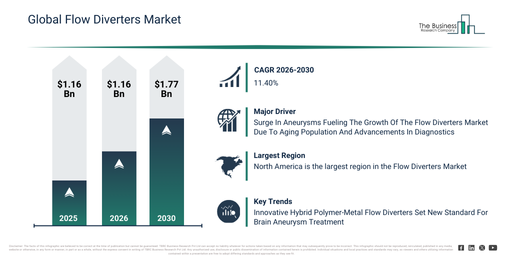
    The flow diverters market has seen rapid expansion over recent years. It is projected to increase from $0.55 billion in 2025 to $0.62 billion in 2026, reflecting a strong compound annual growth rate (CAGR) of 11.7%. This historical growth stems from limited availability of specialized flow diverters, dependence on traditional surgical methods like clipping and coiling, growing awareness about intracranial aneurysm treatments, enhanced neurovascular capabilities in hospitals and clinics, and the use of early-generation nitinol stents. Looking ahead, the market is expected to reach $0.95 billion by 2030, with a CAGR of 11.4%. This anticipated surge is tied to the development of next-generation flow diverters offering improved flexibility, an increasing preference for minimally invasive neurovascular procedures, investments in hospital endovascular infrastructure, rising regulatory approvals for new devices, and integration of imaging with AI-assisted deployment techniques. Key trends forecasted include broader use of flow diverters for complex aneurysms, advancement in nitinol and cobalt-chromium devices, expansion of specialized treatment centers, and a focus on improving patient safety by reducing procedure complications.

    Download A Free Sample Report For Comprehensive Market Insights:

    https://www.thebusinessresearchcompany.com/sample.aspx?id=24539&type=smp

    Primary Factors Supporting Flow Diverters Market Growth

    One of the main forces propelling demand for flow diverters is the rising prevalence of aneurysms. These are abnormal bulges or balloon-like expansions in blood vessel walls caused by weakening, primarily affecting aging populations. Improved diagnostic technologies have increased detection rates, resulting in a higher number of diagnosed aneurysm cases and greater awareness among patients and healthcare providers. Flow diverters address this growing need by redirecting blood flow away from the weakened vessel areas, promoting healing, lowering rupture risks, and providing a less invasive alternative to traditional surgery. For instance, a November 2025 report from PubMed, a U.S.-based biomedical literature database, highlighted that around 3% of adults carry an unruptured intracranial aneurysm, with prevalence rising to 10% among high-risk groups. This growing patient pool is a key driver behind the expanding market for flow diverters.

    Detailed Segmentation and Revenue Opportunities in the Flow Diverters Market

    This market is categorized into several segments to provide a comprehensive view of offerings and applications:

    1) By Type: Pipeline Embolization Device, Silk Flow Diverter, Surpass Flow Diverter, Flow Redirection Endoluminal Device, and Other Types

    2) By Material: Nitinol, Cobalt-Chromium Alloy, Stainless Steel, and Other Materials

    3) By Application: Intracranial Aneurysms, Arteriovenous Malformations, Complex Wide-Neck Aneurysms, and Other Applications

    4) By End-User: Hospitals and Clinics, Ambulatory Surgical Centers

    Access The Complete Flow Diverters Market Report:

    https://www.thebusinessresearchcompany.com/report/flow-diverters-global-market-report

    Further subtypes include various models within each device category, such as Classic, Flex, and Shield technology versions of the Pipeline Embolization Device; Silk+ and Silk Vista Baby for Silk Flow Diverters; Surpass Streamline and Surpass Evolve; FRED Jr. and FRED X under Flow Redirection Endoluminal Devices; and other options like DERIVO Embolization Device, p64 Flow Modulation Device, and Tubridge Flow Diverter. This detailed segmentation highlights diverse product portfolios catering to different clinical and patient needs.

    Innovations and Trends Transforming the Flow Diverters Industry

    Leading companies in the flow diverters market are focusing heavily on material science breakthroughs, especially the development of polymer-based neurovascular stents. These devices aim to improve performance by enhancing biocompatibility, encouraging natural vessel healing, and minimizing reliance on long-term blood-thinning medications. For example, in June 2023, Fluid Biomed, a Canadian medical device startup, announced the world’s first human implantation of a fully polymer-based neurovascular stent called the ReSolv stent, designed specifically to treat brain aneurysms. Unlike conventional hybrid polymer-metal stents, the ReSolv stent dissolves gradually as the vessel heals, potentially reducing the need for extended blood-thinner use while supporting natural vessel recovery. Such innovations are key to advancing patient outcomes and expanding the scope of flow diverter applications.

    Key Players Driving the Flow Diverters Market Forward

    Several prominent companies shape the competitive landscape of the flow diverters market, including Johnson & Johnson, Medtronic plc, Stryker Corporation, Terumo Corporation, MicroPort Scientific Corporation, Penumbra Inc., Phenox GmbH, Sino Medical Sciences Technology Inc., Balt Extrusion S.A.S., Sequent Medical Inc., Wallaby Medical Ltd., Zylox Tonbridge Medical Technology Co. Ltd., Acandis GmbH & Co. KG, Fluid Biomed Inc., Oxford Endovascular Ltd., EndoStream Medical Ltd., Rapid Medical Ltd., Cerus Endovascular Ltd., NeuroVasc Technologies Inc., Shape Memory Medical Inc., and Vesalio LLC. These organizations lead innovation, product development, and market expansion efforts globally.

    Regional Growth Patterns in the Flow Diverters Market

    In 2025, North America held the largest share of the flow diverters market, underscoring its mature healthcare infrastructure and high adoption rates of advanced neurovascular technologies. Meanwhile, the Asia-Pacific region is anticipated to experience the fastest growth during the forecast period, driven by increasing healthcare investments, rising awareness of neurovascular conditions, and expanding hospital capabilities. The overall market report includes insights across key regions such as Asia-Pacific, Southeast Asia, Western Europe, Eastern Europe, North America, South America, the Middle East, and Africa, providing a broad perspective on global market dynamics.

    Get in touch with us:

    The Business Research Company: https://www.thebusinessresearchcompany.com/

    Americas: +1 310-496-7795

    Asia: +44 7882 955267 & +91 8897263534

    Europe: +44 7882 955267

    Email us at: marketing@tbrc.info

    Follow us on:

    LinkedIn: https://in.linkedin.com/company/the-business-research-company

    YouTube: https://www.youtube.com/channel/UC24_fI0rV8cR5DxlCpgmyFQ

    Global Market Model: https://www.thebusinessresearchcompany.com/global-market-model
  • Flexible Endoscopes Market Expansion Is Opening New Pathways For Strategic Investment

    Flexible Endoscopes Market Expansion Is Opening New Pathways For Strategic Investment

    Through market attractiveness analysis, total addressable market evaluation, company benchmarking matrices, interactive Excel dashboards, expanded supply chain intelligence, emerging startup coverage, and detailed product insights, The Business Research Company’s 2026 market reports provide more actionable and strategically valuable research.

    The flexible endoscopes market has experienced significant growth in recent years and continues to demonstrate strong potential for expansion. Driven by advancements in medical technology and increasing demand for minimally invasive procedures, this market is poised for notable development over the coming years. Let’s explore the current market size, key drivers, segmentation, industry trends, and regional perspectives to understand the factors shaping this sector.

    Flexible Endoscopes Market Size and Growth Outlook

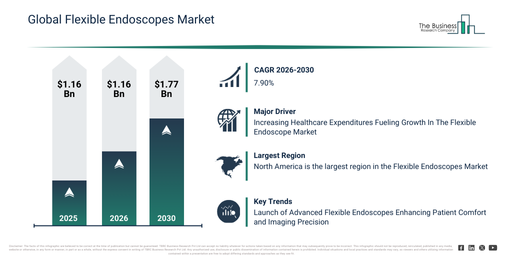
    The flexible endoscopes market has grown steadily, with its value rising from $10.41 billion in 2025 to $11.13 billion in 2026, representing a compound annual growth rate (CAGR) of 6.9%. This historical growth has been fueled by the increasing preference for minimally invasive surgeries, expansion of hospital endoscopy units, wider availability of flexible endoscopic devices, rising numbers of diagnostic procedures, and advances in fiber optic technology. Looking ahead, the market is expected to reach $15.08 billion by 2030, with an accelerated CAGR of 7.9%. The anticipated growth is supported by expanding use of outpatient endoscopic procedures, growing investments in artificial intelligence (AI)-aided visualization tools, broader application of endoscopy across various specialties, rising adoption of disposable endoscopes, and an intensified focus on improving procedural efficiency and patient outcomes.

    Download A Free Sample Report For Comprehensive Market Insights:

    https://www.thebusinessresearchcompany.com/sample.aspx?id=12993&type=smp

    Key Factors Supporting Flexible Endoscopes Market Growth

    One of the main forces propelling the growth of the flexible endoscopes market is the steady increase in healthcare expenditures worldwide. Investments in healthcare services allow for the acquisition of advanced endoscopic technologies, enhanced training of medical personnel, and greater support for research and innovation. For example, in April 2025, the UK’s Office for National Statistics reported a 6.5% nominal rise in healthcare spending between 2023 and 2024, and a 2.4% increase after adjusting for inflation. This upward trend in healthcare budgets directly contributes to the expansion of the flexible endoscope market by enabling better patient care.

    Additional Drivers Accelerating Market Expansion

    Another significant driver is the growing demand for minimally invasive diagnostic and surgical procedures, which offer reduced recovery times and improved patient comfort compared to traditional methods. The continuous development of flexible endoscope technologies, including enhanced imaging capabilities and improved ergonomics, further stimulates adoption across medical settings. This combination of financial support and clinical preference is creating a favorable environment for market growth.

    Access The Complete Flexible Endoscopes Market Report:

    https://www.thebusinessresearchcompany.com/report/flexible-endoscopes-global-market-report

    Overview of Flexible Endoscopes Market Segmentation

    This market is segmented by product type into Fiberscope and Video Endoscope categories. Within these, fiberscopes are divided into standard and specialty types, while video endoscopes include both rigid and flexible video models. By application, the market covers gastrointestinal (GI) endoscopy, pulmonary endoscopy, ear, nose, and throat (ENT) endoscopy, obstetrics and gynecology, urology, and other medical fields. End users are primarily hospitals, ambulatory surgery centers, and other healthcare facilities, reflecting the broad utilization of flexible endoscopes across various clinical environments.

    Emerging Innovation Trends in Flexible Endoscopes

    Industry leaders are continuously innovating to maintain competitive advantages, bringing products to market that offer better patient comfort, superior imaging, and improved handling. For instance, in September 2023, Olympus Corporation from Japan introduced the EVIS X1 flexible endoscopy system. This advanced platform includes the GIF 1100 gastrointestinal videoscope and CF HQ1100DL/I colonovideoscope, designed for thorough examination of both upper and lower digestive tracts. These devices boast a lighter control section for ease of use, high-definition imaging clarity, and enhanced maneuverability in challenging anatomical areas. Such innovation enhances procedural accuracy, reduces patient discomfort, and supports efficient workflow for healthcare providers.

    Competitive Landscape of the Flexible Endoscopes Market

    Key players dominating this market include Medtronic Plc, Fujifilm Holdings Corporation, Stryker Corporation, Boston Scientific Corporation, Olympus Corporation, HOYA Corporation, Smith & Nephew Plc, EndoChoice International, Pentax Medical, Ambu Inc., Richard Wolf GmbH, Cooper Surgical Inc, Ethicon Endo-Surgery LLC, Vimex Endoscopy, Endo-Flex GmbH, Machida Endoscope Co Ltd, XION GmbH, Huger Medical Instrument Co. Ltd., Endomed Systems GmbH, Karl Storz GmbH & Co. KG., Laborie Medical Technologies Inc, and ACMI Corporation. These companies focus on product development, regulatory approvals, and expanding their global footprint to strengthen their positions in this competitive market.

    Geographical Markets: North America Leads While Asia-Pacific Grows Fastest

    In 2025, North America held the largest share of the flexible endoscopes market, supported by advanced healthcare infrastructure and high adoption rates of cutting-edge medical devices. However, the Asia-Pacific region is expected to exhibit the fastest growth during the forecast period, driven by increasing healthcare investments, expanding patient populations, and rising awareness of minimally invasive procedures. The market analysis also includes regions such as South East Asia, Western Europe, Eastern Europe, South America, the Middle East, and Africa, offering a comprehensive global view.

    Get in touch with us:

    The Business Research Company: https://www.thebusinessresearchcompany.com/

    Americas: +1 310-496-7795

    Asia: +44 7882 955267 & +91 8897263534

    Europe: +44 7882 955267

    Email us at: marketing@tbrc.info

    Follow us on:

    LinkedIn: https://in.linkedin.com/company/the-business-research-company

    YouTube: https://www.youtube.com/channel/UC24_fI0rV8cR5DxlCpgmyFQ

    Global Market Model: https://www.thebusinessresearchcompany.com/global-market-model

  • Fixed-Dose Combination Inhalers Market Trends Are Creating New Opportunities For Industry Leaders

    Fixed-Dose Combination Inhalers Market Trends Are Creating New Opportunities For Industry Leaders

    Delivering more actionable and strategically valuable research, The Business Research Company’s 2026 market reports feature market attractiveness analysis, total addressable market evaluation, company benchmarking matrices, interactive Excel dashboards, expanded supply chain intelligence, emerging startup coverage, and detailed product insights.

    The fixed-dose combination inhalers market is experiencing strong growth driven by increasing respiratory health challenges and innovations in treatment options. As awareness of respiratory diseases rises and new therapeutic combinations become available, this market is set to expand significantly over the coming years. Below is an overview of the market size, key driving factors, segments, major players, and regional insights shaping its future.

    Fixed-Dose Combination Inhalers Market Size and Growth Projections

    The fixed-dose combination inhalers market has seen rapid expansion in recent years. It is projected to increase from $14.12 billion in 2025 to $15.58 billion in 2026, growing at a compound annual growth rate (CAGR) of 10.3%. This historical growth has been propelled by limited availability of combination inhalers, rising prevalence of respiratory illnesses, dependence on single-drug therapies, heightened healthcare awareness, and the expansion of hospital pharmacy networks. Looking ahead, the market is expected to reach $22.83 billion by 2030, with a steady CAGR of 10.0%. Innovations such as triple and multi-drug inhalers, broader chronic respiratory disease management programs, increased telehealth and e-pharmacy use, regulatory approvals for combination therapies, and greater patient preference for convenient inhaler options are key factors driving this forecasted growth. Emerging trends in the coming years include wider adoption of fixed-dose combination therapy, enhanced patient adherence, growth of asthma and COPD treatment markets, development of easier-to-use inhaler devices, and expansion of online and retail pharmacy distribution channels.

    Download A Free Sample Report For Comprehensive Market Insights:

    https://www.thebusinessresearchcompany.com/sample.aspx?id=25766&type=smp

    Rising Asthma Cases Propel Market Demand

    One of the primary forces boosting the fixed-dose combination inhalers market is the growing incidence of asthma. Asthma is a chronic inflammatory condition that narrows the airways and increases mucus production, causing breathing difficulties. Factors such as increasing air pollution irritate and inflame airways, making individuals more vulnerable to respiratory problems. Fixed-dose combination inhalers deliver two medications—usually a corticosteroid to reduce inflammation and a bronchodilator to relax airway muscles—in a single device. This combination improves symptom management and patient compliance. For example, in October 2024, the National Asthma Council of Australia reported 474 asthma-related deaths in 2023, including 325 females and 149 males, slightly higher than the 473 fatalities in 2022. This rising asthma burden is a significant factor driving fixed-dose combination inhaler market growth.

    Advancements in Combination Therapies Enhance Treatment Options

    Innovation in fixed-dose inhalers, especially the development of triple and multi-drug combinations, is another critical market driver. These advanced inhalers provide more comprehensive treatment for chronic respiratory diseases, improving efficacy and patient adherence. Pairing multiple medications in a single device simplifies disease management for asthma and chronic obstructive pulmonary disease (COPD) patients, encouraging wider usage and better health outcomes.

    Access The Complete Fixed-Dose Combination Inhalers Market Report:

    https://www.thebusinessresearchcompany.com/report/fixed-dose-combination-inhalers-global-market-report

    Categories Expanding Rapidly in the Fixed-Dose Combination Inhalers Market

    This market is segmented by combination type, indication, and distribution channel. Key combination categories include corticosteroid and bronchodilator inhalers, long-acting beta agonist and inhaled corticosteroid inhalers, triple combinations, and other combinations. Indications covered are asthma, chronic obstructive pulmonary disorder, and other respiratory conditions. Distribution channels consist of retail pharmacies, hospital pharmacies, and online pharmacies. Specific subsegments under combination types include:

    – Corticosteroid and bronchodilator inhalers like Beclomethasone + Salbutamol, Fluticasone + Salmeterol, and Budesonide + Formoterol

    – Long-acting beta agonist and inhaled corticosteroid inhalers such as Salmeterol + Fluticasone, Vilanterol + Fluticasone, and Formoterol + Budesonide

    – Triple combinations including Fluticasone + Umeclidinium + Vilanterol, Beclometasone + Formoterol + Glycopyrronium, and Budesonide + Glycopyrrolate + Formoterol

    – Other combinations like Tiotropium + Olodaterol, Mometasone + Formoterol, and Indacaterol + Glycopyrronium are also gaining traction.

    Innovative Products Transforming Patient Care

    Leading pharmaceutical companies are focusing on cutting-edge solutions such as fixed-dose triple combination dry powder inhalers. These devices enhance treatment effectiveness, simplify chronic disease management, and encourage adherence. For instance, in November 2023, Lupin Limited from India introduced Vilfuro G, a fixed-dose triple combination inhaler designed to treat moderate to severe COPD. This inhaler improves lung function, alleviates symptoms like breathlessness and cough, and reduces exacerbations through once-daily dosing and a triple-action formulation, offering significant benefits for long-term COPD management.

    Key Players Driving Growth in the Fixed-Dose Combination Inhalers Market

    The competitive landscape includes major pharmaceutical companies such as Novartis AG, AstraZeneca plc, GlaxoSmithKline plc, Viatris Inc., Teva Pharmaceutical Industries Ltd., Boehringer Ingelheim, Chiesi Farmaceutici S.p.A., Dr. Reddy’s Laboratories, Cipla Ltd., Hikma Pharmaceuticals plc., Amneal Pharmaceuticals Inc., Lupin Limited, Zydus Lifesciences Ltd., Glenmark Pharmaceuticals Ltd., Orion Corporation, Alembic Pharmaceuticals Ltd., Sava Healthcare Limited, Micro Labs Limited, Indoco Remedies Ltd., Vectura Group plc., and Pulmatrix Inc. These companies are actively investing in research, development, and market expansion to maintain strong positions.

    Regional Market Dynamics and Revenue Leadership

    In 2025, North America held the largest share of the fixed-dose combination inhalers market, driven by high healthcare spending, developed infrastructure, and widespread adoption of advanced therapies. Meanwhile, the Asia-Pacific region is expected to experience the fastest growth during the forecast period. Other regions analyzed in the market report include South East Asia, Western Europe, Eastern Europe, South America, the Middle East, and Africa, providing a comprehensive global perspective on market trends and opportunities.

    Get in touch with us:

    The Business Research Company: https://www.thebusinessresearchcompany.com/

    Americas: +1 310-496-7795

    Asia: +44 7882 955267 & +91 8897263534

    Europe: +44 7882 955267

    Email us at: marketing@tbrc.info

    Follow us on:

    LinkedIn: https://in.linkedin.com/company/the-business-research-company

    YouTube: https://www.youtube.com/channel/UC24_fI0rV8cR5DxlCpgmyFQ

    Global Market Model: https://www.thebusinessresearchcompany.com/global-market-model