Month: June 2026

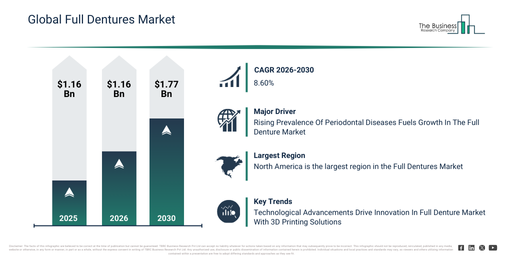
  • Full Dentures Market Set To Grow From $1.82 Billion In 2026 To $2.53 Billion By 2030 At A CAGR Of 8.6%

    Full Dentures Market Set To Grow From $1.82 Billion In 2026 To $2.53 Billion By 2030 At A CAGR Of 8.6%

    Through market attractiveness analysis, total addressable market evaluation, company benchmarking matrices, interactive Excel dashboards, expanded supply chain intelligence, emerging startup coverage, and detailed product insights, The Business Research Company’s 2026 market reports provide more actionable and strategically valuable research.

    The full dentures market has been showing significant growth recently, driven by various factors such as technological advancements and a rising aging population. This segment plays a vital role in oral healthcare, especially for individuals experiencing tooth loss, making it a critical area for innovation and expansion. Let’s explore the current market size, the key drivers behind its growth, important segments, emerging trends, and the leading players shaping the industry.

    Full Dentures Market Size and Future Growth Outlook

    The market for full dentures has seen strong expansion over recent years. It is projected to increase from $1.67 billion in 2025 to $1.82 billion in 2026, representing a compound annual growth rate (CAGR) of 8.9%. This historical growth reflects continued reliance on traditional acrylic and porcelain dentures, limited access to cutting-edge dental prosthetic technologies, a growing elderly population facing edentulism, heightened awareness about oral health, and the influence of conventional dental clinics promoting denture use. Looking ahead, the market is expected to reach $2.53 billion by 2030, expanding at a CAGR of 8.6%. This future growth will be driven by advancements in CAD/CAM and 3D-printing technologies, increased disposable income and dental spending, the rise of dental tourism, a preference for implant-supported dentures, and the development of biocompatible, high-performance denture materials. Key trends during this period include the growing adoption of implant-supported options, demand for more natural-looking and aesthetically pleasing dentures, expanded use of 3D-printed and CAD/CAM dentures, growth in dental clinics and specialized hospitals, and a focus on lightweight, flexible materials.

    Download A Free Sample Report For Comprehensive Market Insights:

    https://www.thebusinessresearchcompany.com/sample.aspx?id=20554&type=smp

    Factors Propelling the Full Dentures Market Forward

    One significant factor behind the expanding full dentures market is the increasing prevalence of periodontal diseases. These diseases, which include various inflammatory conditions affecting the structures that support teeth, are becoming more widespread due to factors such as poor oral hygiene, aging demographics, and heightened public awareness about oral health’s connection to overall wellness. Full dentures provide essential support to oral soft tissues, helping to maintain the natural contours of the mouth and jaw, which may mitigate some complications linked to periodontal disease. By replacing lost teeth, dentures can prevent further extractions and help preserve oral functionality.

    A closer look at the prevalence shows a concerning trend—in October 2025, the National Center for Biotechnology Information reported that over 1.5 billion people worldwide could be affected by periodontitis by 2050. This alarming figure highlights why the rising incidence of periodontal diseases is a crucial driver for the full dentures market’s growth.

    Access The Complete Full Dentures Market Report:

    https://www.thebusinessresearchcompany.com/report/full-dentures-global-market-report

    Key Segments Defining the Full Dentures Market

    This market is segmented into several key categories for clearer analysis:

    1) By Material: Acrylic Dentures, Ceramic Dentures, Porcelain Dentures, Metal Dentures, and Other Materials

    2) By Technology: Conventional Dentures, Implant-Supported Dentures, CAD/CAM Dentures

    3) By Usage: Removable and Fixed Dentures

    4) By Distribution Channel: Direct Sales, Distributors, Online Platforms, Pharmacies and Drug Stores

    5) By End-User: Specialized Dental Hospitals, Somatology Departments within General Hospitals, and Dental Clinics

    Further subcategories include variations of acrylic dentures such as conventional, flexible, lightweight, and those with a natural appearance. Ceramic dentures are divided into high-strength, monolithic, layered, and aesthetically enhanced types. Porcelain dentures include conventional types, those with metal frameworks, high aesthetic value, and stain-resistant options. Metal dentures are classified as partial, full, titanium, and gold alloy types. Other materials cover composite, 3D-printed, biocompatible, and custom-made dentures crafted from advanced materials.

    Innovations and Trends Shaping the Full Dentures Market’s Future

    Leading companies are investing in cutting-edge solutions to improve patient outcomes and streamline denture production. One of the most promising innovations is 3D-printed permanent dentures, which offer a highly customizable and efficient manufacturing process. These dentures can be produced faster and tailored more precisely to individual patients. For example, in February 2023, Stratasys Ltd., a US-based additive manufacturing leader, introduced TrueDent, the first monolithic, full-color 3D-printed permanent denture solution. This technology simplifies denture fabrication by producing the entire prosthesis in a single print, eliminating the need for assembling multiple components. It uses advanced materials that enhance both the look and durability of dentures, addressing common challenges found in traditional denture production. The full-color printing capability allows for a more natural match to a patient’s gum and tooth color, improving aesthetics significantly.

    Top Companies Making an Impact in the Full Dentures Market

    Several prominent players hold a significant presence in the full dentures industry, including 3M Company, Henry Schein Inc., Zimmer Biomet Holdings Inc., Dentsply Sirona Inc., Straumann Holding AG, Ivoclar Vivadent AG, VITA Zahnfabrik H. Rauter GmbH & Co. KG, Young Innovations Inc., VOCO GmbH, Keystone Dental Inc., BEGO GmbH and Co. K.G., Kuraray Co. Ltd., GC International AG, J. Morita Corporation, Kulzer GmbH, Modern Dental Group Limited, Nissin Dental Products Inc., YAMAHACHI DENTAL MFG CO, AvaDent Digital Dental Solutions, National Dentex Labs, Shofu Inc., COLTENE Holding AG, SCHEU-DENTAL GmbH, and Lang Dental Manufacturing Company Inc. These companies are driving innovation and expanding access through research, product development, and strategic partnerships.

    Regional Market Distribution and Leading Areas for Full Dentures

    In 2025, North America accounted for the largest share of the full dentures market. The report also covers other important regions including Asia-Pacific, South East Asia, Western Europe, Eastern Europe, South America, the Middle East, and Africa, offering a broad view of global market dynamics. The Asia-Pacific region, in particular, is expected to experience notable growth due to rising healthcare infrastructure and increasing demand for advanced dental prosthetics.

    Get in touch with us:

    The Business Research Company: https://www.thebusinessresearchcompany.com/

    Americas: +1 310-496-7795

    Asia: +44 7882 955267 & +91 8897263534

    Europe: +44 7882 955267

    Email us at: marketing@tbrc.info

    Follow us on:

    LinkedIn: https://in.linkedin.com/company/the-business-research-company

    YouTube: https://www.youtube.com/channel/UC24_fI0rV8cR5DxlCpgmyFQ

    Global Market Model: https://www.thebusinessresearchcompany.com/global-market-model
  • Fragile X Syndrome (FXS) Treatment Market Opportunities Are Emerging Beyond Traditional Growth Areas

    Delivering more actionable and strategically valuable research, The Business Research Company’s 2026 market reports feature market attractiveness analysis, total addressable market evaluation, company benchmarking matrices, interactive Excel dashboards, expanded supply chain intelligence, emerging startup coverage, and detailed product insights.

    The market for Fragile X Syndrome (FXS) treatments has been experiencing significant growth, driven by advances in clinical knowledge and expanding therapeutic options. As research deepens and healthcare accessibility improves, this specialized field is set for continued development. Below, we explore the market’s current size, the factors fueling its expansion, key segments, innovative trends, major players, and regional growth insights.

    Current Size and Growth Projections in the Fragile X Syndrome Treatment Market

    The Fragile X Syndrome treatment market has seen strong growth recently and is expected to rise from $2.07 billion in 2025 to $2.23 billion in 2026, reflecting a compound annual growth rate (CAGR) of 7.8%. This upward trend stems from enhanced clinical understanding of Fragile X Syndrome, broader availability of behavioral therapy programs, increased access to psychiatric medications, higher rates of genetic disorder diagnoses, and improved access to specialized care centers. Looking ahead, the market is projected to reach $3 billion by 2030 with a CAGR of 7.6%. Factors supporting this growth include rising investments in precision medicine, the expansion of gene-targeted therapies, increased clinical trials focused on rare diseases, a growing emphasis on early genetic screening, and stronger collaboration between biotech companies and research institutions. Emerging trends during this period involve a stronger focus on pharmacological therapies tailored to specific targets, integration of behavioral and medicinal treatments, personalized care approaches, early diagnosis and intervention efforts, and the advancement of innovative mGluR5 and GABA-based therapies.

    Download A Free Sample Report For Comprehensive Market Insights:

    https://www.thebusinessresearchcompany.com/sample.aspx?id=24220&type=smp

    Government Support as a Catalyst for Fragile X Syndrome Treatment Market Expansion

    An important driver of growth in the Fragile X Syndrome treatment market is government funding dedicated to rare diseases. These conditions, which affect a limited portion of the population, tend to be chronic, progressive, and potentially life-threatening. Improvements in diagnostic technologies, such as genetic testing and advanced imaging, have enabled healthcare providers to identify rare diseases more accurately, increasing their reported prevalence. Fragile X Syndrome treatment programs play a critical role in securing government investment by highlighting the need for specialized therapies and early intervention strategies. For example, in February 2024, the UK government announced a £14 million ($17.3 million) investment to develop a national rare disease research platform, comprising 11 research nodes and a coordinating hub across the UK. Such initiatives help channel resources toward research and healthcare improvements, thereby boosting the Fragile X Syndrome treatment market.

    Detailed Segment Breakdown of the Fragile X Syndrome Treatment Market

    This market is segmented across multiple categories to better understand patient needs and treatment approaches:

    1) Treatment Type: Pharmacological treatments, psychotherapy, and education and training programs.

    2) Route of Administration: Oral, injectable, intranasal, and transdermal methods.

    3) Related Disorders: Fragile X Syndrome itself, Fragile X Mental Retardation 1 (FMR1)-related primary ovarian insufficiency, Fragile X-associated tremor, Fragile X-associated neuropsychiatric disorders, and other associated conditions.

    4) Patient Age Groups: Children, adults, and elderly populations.

    5) End Users: Hospitals, specialty clinics, and other healthcare providers.

    Access The Complete Fragile X Syndrome (FXS) Treatment Market Report:

    https://www.thebusinessresearchcompany.com/report/fragile-x-syndrome-fxs-treatment-global-market-report

    Within pharmacological treatments, subcategories include antidepressants, antipsychotics, stimulants, anticonvulsants, anti-anxiety medications, mGluR5 antagonists, and GABA agonists. Psychotherapy options cover cognitive behavioral therapy (CBT), family therapy, social skills training, occupational therapy, speech and language therapy, and applied behavior analysis (ABA). Education and training segments consist of special education programs, individualized education programs (IEPs), parent training and support, behavioral intervention plans, skill-building workshops, and inclusive classroom strategies.

    Innovative Trends Accelerating Development in Fragile X Syndrome Treatments

    Leading companies in this market are focusing efforts on creating novel therapies that address the underlying neurological causes of Fragile X Syndrome. One such innovation involves calcium-activated potassium (BK) channel activators, which influence cellular excitability and neurotransmitter release to potentially improve patient outcomes. For instance, in January 2025, Spinogenix Inc., a biotechnology firm in the US, received Fast Track designation from the U.S. Food and Drug Administration (FDA) for SPG601, a BK channel activator aimed at treating Fragile X Syndrome. This designation expedites clinical development and regulatory review, highlighting the urgent need for effective treatments and the therapeutic promise of SPG601 in targeting cognitive and behavioral symptoms linked to synaptic dysfunction.

    Key Market Players Driving Competition in Fragile X Syndrome Treatment

    Several major companies play a pivotal role in shaping the competitive landscape of the Fragile X Syndrome treatment market. These include F. Hoffmann-La Roche Ltd, Shionogi & Co. Ltd., Marinus Pharmaceuticals Inc., Healx Ltd, Neuren Pharmaceuticals Limited, Fulcrum Therapeutics Inc., Neuronascent Inc., Autifony Therapeutics Limited, Quadrant Biosciences Inc., Neurolixis Inc., Taysha Gene Therapies Inc., Ovid Therapeutics Inc., Spinogenix Inc., Epigen Biosciences Inc., Confluence Pharmaceuticals Inc., Actinogen Medical Limited, Anavex Life Sciences Corp., FRAXA Research Foundation Inc., Zynerba Pharmaceuticals Inc., BioMarin Pharmaceutical Inc., PTC Therapeutics Inc., Sage Therapeutics Inc., Neurocrine Biosciences Inc., and Ionis Pharmaceuticals Inc.

    Regional Focus and Growth Patterns in the Fragile X Syndrome Treatment Market

    In 2025, North America held the largest market share for Fragile X Syndrome treatments. However, the Asia-Pacific region is expected to experience the fastest growth during the forecast period. The market report covers key geographical areas including Asia-Pacific, South East Asia, Western Europe, Eastern Europe, North America, South America, the Middle East, and Africa, providing a broad view of global demand and expansion trends.

    Get in touch with us:

    The Business Research Company: https://www.thebusinessresearchcompany.com/

    Americas: +1 310-496-7795

    Asia: +44 7882 955267 & +91 8897263534

    Europe: +44 7882 955267

    Email us at: marketing@tbrc.info

    Follow us on:

    LinkedIn: https://in.linkedin.com/company/the-business-research-company

    YouTube: https://www.youtube.com/channel/UC24_fI0rV8cR5DxlCpgmyFQ

    Global Market Model: https://www.thebusinessresearchcompany.com/global-market-model
  • Fracture Fixation Products Market Expansion Is Opening New Pathways For Strategic Investment

    Fracture Fixation Products Market Expansion Is Opening New Pathways For Strategic Investment

    Enhanced with market attractiveness analysis, total addressable market evaluation, company benchmarking matrices, interactive Excel dashboards, expanded supply chain intelligence, emerging startup coverage, and detailed product insights, The Business Research Company’s 2026 market reports deliver more actionable and strategically valuable research.

    The fracture fixation products market has experienced notable growth in recent years, driven by a combination of factors that increase the demand for orthopedic solutions. As the prevalence of injuries and fractures rises globally, this sector is set to continue its upward trajectory well into the future. Let’s explore the current market size, key drivers fueling expansion, segment details, major players, and regional dynamics shaping this industry.

    Steady Increase in Fracture Fixation Products Market Size and Outlook

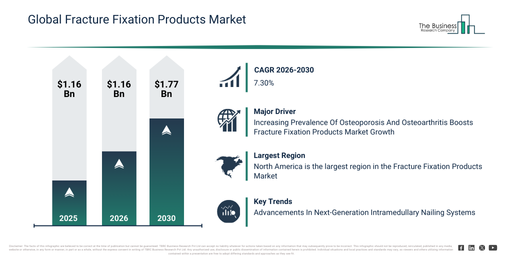
    The market for fracture fixation products is on a strong growth path, expected to rise from $11.32 billion in 2025 to $12.24 billion in 2026, reflecting a compound annual growth rate (CAGR) of 8.1%. This historical growth can be linked to factors such as an increase in road accidents, higher numbers of orthopedic surgeries, an aging population prone to bone fractures, expansion of hospital orthopedic departments, and growing awareness about fracture treatment options. Looking ahead, the market is anticipated to reach $16.23 billion by 2030, growing at a CAGR of 7.3%. Key contributors to this future growth include rising sports-related injuries, growing adoption of advanced orthopedic implants, the expansion of ambulatory surgical centers, a higher incidence of osteoporosis, and improved access to trauma care facilities. Trends that will influence the market include the rising use of bio-absorbable fixation devices, greater demand for fracture fixation in trauma cases, preference for minimally invasive procedures, more solutions for managing small bone fractures, and increasing utilization of customized fixation systems for complex fractures.

    Download A Free Sample Report For Comprehensive Market Insights:

    https://www.thebusinessresearchcompany.com/sample.aspx?id=17156&type=smp

    Rising Osteoporosis and Osteoarthritis Cases Fuel Market Demand for Fracture Fixation Products

    One of the primary factors propelling the fracture fixation products market is the increasing prevalence of osteoporosis and osteoarthritis. Osteoporosis causes bones to weaken and become more prone to fractures, while osteoarthritis leads to joint cartilage degeneration, pain, and limited mobility. Both conditions are becoming more widespread due to longer life expectancies, growing obesity rates, and higher occurrences of trauma such as sports injuries. Fracture fixation products are essential for stabilizing fragile bones affected by osteoporosis and for supporting joints damaged by osteoarthritis. For instance, in June 2025, Arthritis & Osteoporosis Tasmania, a nonprofit organization in Australia, reported that the number of Australians aged 50 and above with osteoporosis or osteopenia is projected to increase by 23% by 2033, reaching 7.7 million individuals. This rise in bone-related health conditions is a key driver behind the expanding market.

    Diverse Segment Breakdown of the Fracture Fixation Products Market

    This market is segmented by product type, fracture location, application, and end users. The product types include internal fixation products, external fixation products, small bone fracture management products, and other categories. Internal fixation products are further divided into plates and screws, intramedullary nails/rods, pins and wires, bone grafts, and cannulated screws. External fixation products consist of unilateral fixators, circular fixators, hybrid fixators, bone lengthening devices, and trauma fixators. Small bone fracture management covers finger and toe fixation devices, hand and wrist plates, ankle fixation plates, mini external fixators, and small intramedullary nails. Other types include bioabsorbable fixation devices, orthobiologic products, 3D-printed fixation devices, and orthopedic pins. The fracture location segmentation covers upper extremities, hip and pelvis, and lower extremities. Application-wise, the market is divided into metallic fixators, bio-absorbable fixators, and other uses. End users consist of hospitals and clinics, orthopedic centers, ambulatory surgical centers, and other users.

    Access The Complete Fracture Fixation Products Market Report:

    https://www.thebusinessresearchcompany.com/report/fracture-fixation-products-global-market-report

    Innovations and Market Trends Shaping Competitive Dynamics in Fracture Fixation

    Leading companies in the fracture fixation market are focusing on developing next-generation intramedullary nailing systems to enhance surgical precision and patient recovery. These advanced devices are designed to stabilize fractures in long bones such as the femur and tibia more effectively. For example, in March 2024, Stryker Corporation, a US-based medical technology firm, launched the Gamma4 Hip Fracture Nailing System in Europe. The Gamma4 system represents the latest evolution in intramedullary nailing technology, aiming to improve treatment of hip and femur fractures while streamlining surgical procedures. This product reflects a commitment to refining surgical workflows, standardizing techniques, and improving usability for healthcare professionals.

    Key Market Players Driving the Fracture Fixation Products Industry

    The fracture fixation products industry features several prominent companies that shape the market landscape. These include Johnson and Johnson, Medtronic Plc, Stryker Corporation, Zimmer Biomet Holdings Inc, Smith and Nephew plc, NuVasive Inc., Globus Medical Inc., Wright Medical Group N.V., Orthofix Medical Inc., KLS Martin SE & Co. KG, Paragon 28 Inc., Acumed LLC, Narang Medical Ltd., GPC Medical Ltd., Inion Oy, Vast Ortho Inc, Extremity Medical LLC, Citieffe s.r.l., Bioretec Ltd., and Arthrex Inc. These firms focus on innovation, expanding product portfolios, and addressing evolving clinical needs to maintain competitive advantage.

    Regional Market Leadership and Growth Forecast for Fracture Fixation Products

    In 2025, North America held the largest share of the fracture fixation products market. However, the Asia-Pacific region is projected to experience the fastest growth over the forecast period. The market analysis covers major geographic regions such as Asia-Pacific, South East Asia, Western Europe, Eastern Europe, North America, South America, the Middle East, and Africa, offering a thorough understanding of global market trends and opportunities.

    Get in touch with us:

    The Business Research Company: https://www.thebusinessresearchcompany.com/

    Americas: +1 310-496-7795

    Asia: +44 7882 955267 & +91 8897263534

    Europe: +44 7882 955267

    Email us at: marketing@tbrc.info

    Follow us on:

    LinkedIn: https://in.linkedin.com/company/the-business-research-company

    YouTube: https://www.youtube.com/channel/UC24_fI0rV8cR5DxlCpgmyFQ

    Global Market Model: https://www.thebusinessresearchcompany.com/global-market-model
  • Fractional Radio Frequency Body Device Market Trends Are Creating New Opportunities For Industry Leaders

    Fractional Radio Frequency Body Device Market Trends Are Creating New Opportunities For Industry Leaders

    Through market attractiveness analysis, total addressable market evaluation, company benchmarking matrices, interactive Excel dashboards, expanded supply chain intelligence, emerging startup coverage, and detailed product insights, The Business Research Company’s 2026 market reports provide more actionable and strategically valuable research.

    The fractional radio frequency body device market has seen remarkable growth recently, driven by advances in technology and shifting consumer preferences toward less invasive cosmetic treatments. As aesthetic awareness increases globally, this sector is set to expand further, presenting promising opportunities and innovations that cater to changing demands in body contouring and skin care.

    Steady Growth Predicted in the Fractional Radio Frequency Body Device Market

    The market for fractional radio frequency body devices has experienced rapid expansion over the past few years. It is projected to rise from $1.22 billion in 2025 to $1.39 billion in 2026, showing a strong compound annual growth rate (CAGR) of 13.7%. This upward trend during the historical period is largely driven by the growing number of cosmetic procedures, advancements in radio frequency technology, increasing demand for non-surgical treatments, expansion of medical spas, and heightened awareness of body aesthetics.

    Download A Free Sample Report For Comprehensive Market Insights:

    https://www.thebusinessresearchcompany.com/sample.aspx?id=28227&type=smp

    Future Market Expansion and Key Growth Projections for Fractional Radio Frequency Body Devices

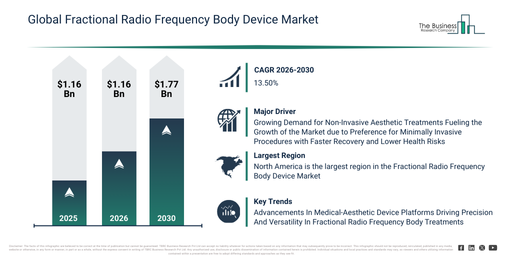
    Looking ahead, the fractional radio frequency body device market is expected to continue its robust growth trajectory, reaching $2.31 billion by 2030 with a CAGR of 13.5%. Factors contributing to this forecast include innovations in portable devices, rising concerns about obesity, the spread of home-use devices, increased disposable incomes, and greater acceptance of aesthetic treatments. Emerging trends anticipated to influence this market include the rise of non-invasive body contouring, growing interest in skin tightening procedures, adoption of portable RF devices, expansion of medical spa offerings, and a stronger focus on aesthetic wellness among consumers.

    Rising Desire for Non-Invasive Aesthetic Procedures Fuels Market Growth

    The increasing preference for non-invasive cosmetic treatments is a key factor propelling the fractional radio frequency body device market. These procedures enhance appearance without surgery, offering benefits such as quicker recovery and lower health risks. As patients lean toward minimally invasive options for skin tightening and body shaping, fractional RF devices become highly sought after due to their effectiveness and minimal downtime, aligning with the broader trend toward non-surgical solutions.

    Access The Complete Fractional Radio Frequency Body Device Market Report:

    https://www.thebusinessresearchcompany.com/report/fractional-radio-frequency-body-device-global-market-report

    Statistical Evidence of Growing Demand for Minimally Invasive Treatments

    Supporting this trend, data from the American Society of Plastic Surgeons (ASPS) shows that in 2024, US practitioners performed 28.5 million minimally invasive aesthetic treatments, up from 28.1 million in 2023—a 1.5% year-over-year increase. This growth underscores the rising consumer demand for non-invasive aesthetic procedures, which in turn drives expansion in the fractional radio frequency body device market.

    Product and Application Segmentation in the Fractional Radio Frequency Body Device Market

    This market is categorized into several segments to better understand its structure:

    1) By Product Type: Portable Fractional Radio Frequency Body Devices and Non-Portable Fractional Radio Frequency Body Devices

    2) By Distribution Channel: Direct Sales, Online Retail, and Other Distribution Channels

    3) By Application: Skin Tightening, Body Contouring, Cellulite Reduction, Wrinkle Reduction, and Other Applications

    4) By End-User: Hospitals, Dermatology Clinics, Medical Spas, and Other End Users

    Further distinctions within portable devices include handheld, battery-operated, rechargeable, and wireless or smart-connected types. Non-portable devices are classified as tabletop, trolley-based, stationary clinical systems, and multifunctional integrated systems.

    Technology Advancements Driving Trends in the Fractional Radio Frequency Body Device Market

    Leading companies in this market are focusing heavily on technological innovation, developing integrated medical-aesthetic device platforms that enhance precision, patient comfort, and treatment versatility. These platforms combine multiple technologies and applicators, enabling a broad range of skin and body treatments through a single system.

    Example of Innovative Technology Enhancing Market Offerings

    For instance, in February 2023, Candela Corporation introduced the Profound Matrix system—a long-pulse radio frequency microneedling platform designed for minimally invasive treatments addressing skin laxity, wrinkles, and body contouring. This system features the Matrix Pro applicator for precise microneedling combined with radio frequency energy, supported by Depth Intelligence technology, which ensures consistent energy delivery tailored to individual tissue characteristics.

    Key Players Competing in the Fractional Radio Frequency Body Device Market

    The market landscape is shaped by major corporations including Hologic Inc., InMode Ltd., BTL Industries Inc., Lumenis Ltd., Cynosure LLC, Venus Concept, Cutera Inc., Lutronic Corporation, Alma Lasers, Solta Medical, Fotona d.o.o., Sciton Inc., Sisram Medical, Quanta System S.p.A., Sharplight Technologies Ltd., Jeisys Medical Inc., Candela Corporation, EndyMed Medical Ltd., Syneron Medical Ltd., and Viora Ltd.

    Regional Market Dynamics and Growth Opportunities

    North America dominated the fractional radio frequency body device market in 2025, holding the largest regional share. Meanwhile, Asia-Pacific is expected to emerge as the fastest-growing region during the forecast period. The market report covers a broad geographical scope, including Asia-Pacific, South East Asia, Western Europe, Eastern Europe, North America, South America, the Middle East, and Africa, providing a global perspective on market expansion.

    Get in touch with us:

    The Business Research Company: https://www.thebusinessresearchcompany.com/

    Americas: +1 310-496-7795

    Asia: +44 7882 955267 & +91 8897263534

    Europe: +44 7882 955267

    Email us at: marketing@tbrc.info

    Follow us on:

    LinkedIn: https://in.linkedin.com/company/the-business-research-company

    YouTube: https://www.youtube.com/channel/UC24_fI0rV8cR5DxlCpgmyFQ

    Global Market Model: https://www.thebusinessresearchcompany.com/global-market-model
  • Fractional Radio Frequency (RF) Microneedle Device Market Growth Is Reshaping Competitive Advantage Across The Industry

    Fractional Radio Frequency (RF) Microneedle Device Market Growth Is Reshaping Competitive Advantage Across The Industry

    Delivering more actionable and strategically valuable research, The Business Research Company’s 2026 market reports feature market attractiveness analysis, total addressable market evaluation, company benchmarking matrices, interactive Excel dashboards, expanded supply chain intelligence, emerging startup coverage, and detailed product insights.

    The fractional radio frequency (RF) microneedle device market has been expanding swiftly, driven by rising aesthetic awareness and technological advances. This sector is set for continued growth as demand for cosmetic treatments increases worldwide. Let’s explore the market’s size, key growth drivers, segments, innovations, principal players, and regional dynamics shaping its future.

    Overview of Fractional Radio Frequency (RF) Microneedle Device Market Size and Growth

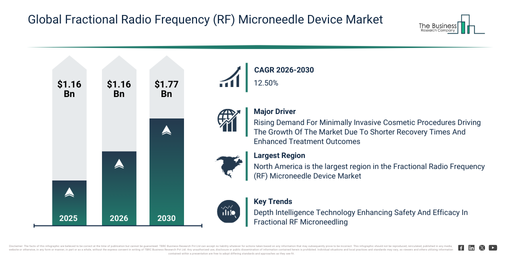
    The fractional RF microneedle device market has witnessed significant growth in recent years, with its value expected to rise from $1.02 billion in 2025 to $1.15 billion in 2026, achieving a compound annual growth rate (CAGR) of 12.8%. The past expansion has been driven by heightened awareness of aesthetics, the need for collagen stimulation, increased acne scar treatments, technological progress, and the growing number of dermatology practices. Looking ahead, the market is forecast to reach $1.85 billion by 2030, maintaining a strong CAGR of 12.5%. This projected growth reflects rising demand for cosmetic procedures, increased disposable incomes, innovations in microneedle designs, growth in the medical aesthetics industry, and the influence of social media. Key trends shaping the market include a preference for minimally invasive procedures, shorter recovery times, customizable skin rejuvenation options, combination aesthetic therapies, and the expansion of dermatology clinics.

    Download A Free Sample Report For Comprehensive Market Insights:

    https://www.thebusinessresearchcompany.com/sample.aspx?id=28226&type=smp

    Rising Popularity of Minimally Invasive Cosmetic Procedures

    One of the primary factors fueling the expansion of the fractional RF microneedle device market is the growing preference for minimally invasive cosmetic treatments. These procedures enhance appearance with less downtime and lower risk compared to traditional surgeries, often involving injections, lasers, or small incisions. Patients increasingly favor treatments that enable quicker recovery and faster return to daily activities, which drives demand for such solutions.

    How Fractional RF Microneedle Devices Meet Market Needs

    Fractional RF microneedle devices offer safe, precise, and consistent treatment outcomes by using insulated or adjustable-depth needles to target specific layers of skin. For example, in June 2024, the American Society of Plastic Surgeons reported a 7 percent rise in minimally invasive procedures in 2023, surpassing surgical procedures by 2 percent. Neuromodulator injections and hyaluronic acid fillers were especially popular, with over 9 million and 5 million treatments, respectively. This trend underscores the expanding potential for fractional RF microneedle devices as patients seek effective yet less invasive aesthetic options.

    Access The Complete Fractional Radio Frequency (RF) Microneedle Device Market Report:

    https://www.thebusinessresearchcompany.com/report/fractional-radio-frequency-rf-microneedle-device-global-market-report

    Detailed Market Segmentation and Opportunities Within Fractional RF Microneedle Devices

    The fractional RF microneedle device market is categorized based on product type, application, and end-user. Product types include single-needle and multi-needle devices. Applications cover skin rejuvenation, acne scar treatment, wrinkle reduction, hyperpigmentation, and other uses. End-users consist of hospitals, dermatology clinics, aesthetic centers, and other sectors.

    Further product subsegments break down single-needle devices into insulated, non-insulated, adjustable depth, and fixed depth variants. Multi-needle devices are similarly subdivided into insulated, non-insulated, adjustable depth, fixed depth, disposable tip, and reusable tip types, highlighting the diverse options available to meet specific clinical needs and preferences.

    Innovations Driving the Future of Fractional RF Microneedle Devices

    Leading companies in this space are focusing on enhancing device precision through depth intelligence-enabled RF delivery systems. These technologies allow accurate control of radiofrequency energy at targeted skin layers, ensuring uniform treatment while minimizing tissue damage and improving safety. For instance, in February 2023, Candela introduced the Profound Matrix System, which integrates the Matrix Pro applicator with depth intelligence technology. This device provides real-time impedance feedback and offers three user-selectable depth and energy settings during a single insertion, enabling customized treatments that improve outcomes in skin tightening, wrinkle reduction, and facial rejuvenation.

    Key Players Influencing the Fractional RF Microneedle Device Market

    Several prominent companies shape the trajectory of the fractional RF microneedle device industry. These include Hologic Inc., InMode Ltd., Lumenis Be Ltd., Candela Medical Inc., Cutera Inc., Lutronic Corporation, Venus Concept Inc., Dermatrix Inc., Cartessa Aesthetics LLC, Beijing Nubway Science & Technology Co. Ltd., Jeisys Medical Inc., WONTECH Co. Ltd., EndyMed Medical Ltd., Deka Medical, Agnes Medical Co. Ltd., Dermatude B.V., Ilooda Co. Ltd., Viol Co. Ltd., Aesthetics Biomedical Inc., and Xi’an Prima Beauty Equipment Co. Ltd. Their ongoing innovations and product launches continue to advance the market.

    Regional Market Highlights and Growth Outlook

    In 2025, North America held the largest share of the fractional RF microneedle device market. Meanwhile, the Asia-Pacific region is anticipated to experience the fastest growth during the forecast period. The market report covers broad geographical areas including Asia-Pacific, South East Asia, Western Europe, Eastern Europe, North America, South America, the Middle East, and Africa, providing a comprehensive view of global market trends and opportunities.

    Get in touch with us:

    The Business Research Company: https://www.thebusinessresearchcompany.com/

    Americas: +1 310-496-7795

    Asia: +44 7882 955267 & +91 8897263534

    Europe: +44 7882 955267

    Email us at: marketing@tbrc.info

    Follow us on:

    LinkedIn: https://in.linkedin.com/company/the-business-research-company

    YouTube: https://www.youtube.com/channel/UC24_fI0rV8cR5DxlCpgmyFQ

    Global Market Model: https://www.thebusinessresearchcompany.com/global-market-model
  • Foreign Body Removal Market Forecast Signals New Revenue Opportunities Through 2030

    Foreign Body Removal Market Forecast Signals New Revenue Opportunities Through 2030

    Enhanced with market attractiveness analysis, total addressable market evaluation, company benchmarking matrices, interactive Excel dashboards, expanded supply chain intelligence, emerging startup coverage, and detailed product insights, The Business Research Company’s 2026 market reports deliver more actionable and strategically valuable research.

    The foreign body removal market has seen notable growth recently, driven by advancements in medical technology and increased healthcare awareness. As healthcare providers focus on improving patient outcomes with less invasive procedures, this market is set to expand further. Below, we explore the current market size, key factors influencing growth, segmentation, emerging trends, major players, and regional perspectives shaping this industry.

    Foreign Body Removal Market Size and Growth Forecast

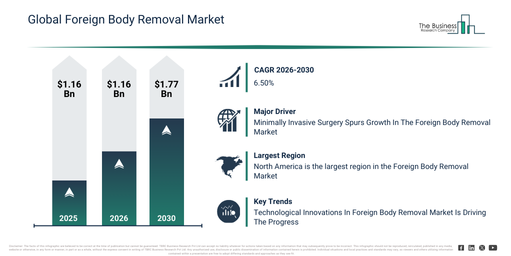
    The foreign body removal market has experienced strong expansion in recent years. It is expected to grow from $2.1 billion in 2025 to $2.24 billion in 2026, representing a compound annual growth rate (CAGR) of 6.9%. This increase during the historical period is largely due to rising instances of accidental ingestion, improvements in emergency medical services, greater availability of surgical instruments, higher hospital admission rates, and growing awareness about the importance of timely foreign body removal.

    Download A Free Sample Report For Comprehensive Market Insights:

    https://www.thebusinessresearchcompany.com/sample.aspx?id=9435&type=smp

    Looking ahead, the market is predicted to reach $2.89 billion by 2030, with a CAGR of 6.5% from 2026 to 2030. This projected growth is fueled by wider adoption of cutting-edge endoscopic technologies, a surge in demand for outpatient surgical procedures, expansion of ambulatory surgical centers, more investment in emergency care infrastructure, and an increasing focus on minimally invasive treatment methods. Key trends expected to influence the market include the increasing use of minimally invasive retrieval devices, rising preference for endoscopic foreign body removal tools, growing demand for precision surgical instruments, expansion of emergency treatment procedures, and heightened emphasis on patient safety and procedure efficiency.

    Factors Driving the Foreign Body Removal Market Growth

    One major driver for the foreign body removal market is the rising preference for minimally invasive surgeries. These procedures require smaller incisions, reduce recovery times, and often involve fewer stitches. Foreign body removal itself is a minimally invasive surgical process used to extract swallowed or lodged objects from the digestive system or other body areas. The increasing use of these less invasive surgeries naturally boosts demand for foreign body removal services and related devices.

    Access The Complete Foreign Body Removal Market Report:

    https://www.thebusinessresearchcompany.com/report/foreign-body-removal-global-market-report

    Supporting this trend, in February 2024, the American Academy of Facial Plastic and Reconstructive Surgery reported that approximately 83% of all medical procedures conducted in 2023 were minimally invasive, with traditional surgeries making up the remaining 17%. Additionally, the American Society of Plastic Surgeons noted that the number of minimally invasive cosmetic procedures rose from 23.7 million in 2022 to 25.4 million in 2023. These statistics confirm the growing shift toward minimally invasive interventions, which is positively impacting the foreign body removal market.

    Detailed Segmentation of the Foreign Body Removal Market

    This market is categorized across several segments for a comprehensive analysis:

    1) Device Type:

    – Forceps

    – Retrieval Baskets

    – Balloon Catheters

    – Other Device Types

    2) Application Areas:

    – Stomach

    – Gut

    – Mouth

    – Ear

    – Nose

    – Other Applications

    3) End Users:

    – Hospitals and Clinics

    – Ambulatory Surgical Centers

    – Other End Users

    Further breakdown includes subtypes of forceps such as grasping and biopsy forceps; retrieval baskets divided into standard and angled types; balloon catheters comprising inflatable and non-inflatable varieties; and other device types including endoscopic instruments, magnetic retrieval devices, and specimen traps.

    Innovations and Trends Shaping the Foreign Body Removal Industry

    Key players in the foreign body removal market are concentrating on developing innovative surgical tools to enhance precision and control during complex operations. Microsurgery instruments, designed for manipulating very small tissues with high accuracy, are a prime example. These tools facilitate intricate procedures like repairing blood vessels and nerves under magnification, ultimately improving surgical outcomes and patient recovery.

    For example, in November 2023, Surtex Instruments, based in the UK, launched the Infinex series featuring microsurgery forceps and needle holders with diamond-dusted jaws that improve grip and stability. The Maestro series, also introduced by Surtex, includes finely crafted micro scissors and forceps aimed at flawless performance. These advancements provide surgeons with superior control, reducing patient trauma and speeding up recovery times.

    Competitive Landscape of the Foreign Body Removal Market

    Several prominent companies dominate the foreign body removal sector. Noteworthy industry participants include Boston Scientific Corporation, CONMED Corporation, MEDIVATORS Inc., Applied Medical Resources Corporation, Olympus Corporation, Diversatek Inc., Cook Medical LLC, Medtronic plc, Stryker Corporation, Smith & Nephew plc, Johnson & Johnson Services Inc., B. Braun Melsungen AG, Teleflex Incorporated, Merit Medical Systems Inc., Terumo Corporation, Abbott Laboratories, Cardinal Health Inc., Becton Dickinson and Company, Teleflex Medical OEM, AngioDynamics Inc., Hologic Inc., Integra LifeSciences Holdings Corporation, Zimmer Biomet Holdings Inc., Karl Storz SE & Co. KG, Fujifilm Holdings Corporation, Richard Wolf GmbH, and Pentax Medical Company. These organizations are actively involved in innovation, production, and distribution within the market.

    Regional Outlook of the Foreign Body Removal Market

    In 2025, North America accounted for the largest share of the foreign body removal market. The report also covers significant regions such as Asia-Pacific, South East Asia, Western Europe, Eastern Europe, South America, the Middle East, and Africa, highlighting diverse growth opportunities worldwide. Asia-Pacific, in particular, is anticipated to see substantial market growth due to increasing healthcare access and investments in medical infrastructure.

    Get in touch with us:

    The Business Research Company: https://www.thebusinessresearchcompany.com/

    Americas: +1 310-496-7795

    Asia: +44 7882 955267 & +91 8897263534

    Europe: +44 7882 955267

    Email us at: marketing@tbrc.info

    Follow us on:

    LinkedIn: https://in.linkedin.com/company/the-business-research-company

    YouTube: https://www.youtube.com/channel/UC24_fI0rV8cR5DxlCpgmyFQ

    Global Market Model: https://www.thebusinessresearchcompany.com/global-market-model
  • Forceps And Spatulas Market Growth Is Accelerating As Industry Transformation Continues

    Forceps And Spatulas Market Growth Is Accelerating As Industry Transformation Continues

    Through market attractiveness analysis, total addressable market evaluation, company benchmarking matrices, interactive Excel dashboards, expanded supply chain intelligence, emerging startup coverage, and detailed product insights, The Business Research Company’s 2026 market reports provide more actionable and strategically valuable research.

    The market for forceps and spatulas has experienced notable growth in recent years, driven by advancements in surgical practices and increasing healthcare infrastructure. As medical technologies evolve and demand for precision tools rises, this market is set to continue expanding steadily through the next decade. Below is an overview of the current market status, key growth drivers, prominent segments, strategic trends, and leading companies shaping the future.

    Forceps and Spatulas Market Size and Growth Forecast

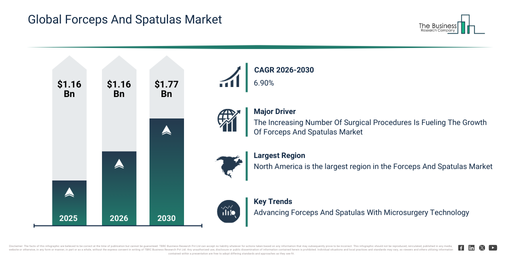
    The forceps and spatulas market demonstrated strong expansion historically and is anticipated to maintain this momentum. Market value is projected to rise from $2.08 billion in 2025 to $2.24 billion in 2026, representing a compound annual growth rate (CAGR) of 7.8%. Factors that have supported this growth include an increase in surgical procedure volumes, broader hospital and surgical infrastructure development, heightened attention to infection prevention, growing preference for reusable stainless steel instruments, and the advancement of specialty surgical fields. Moving forward, the market is expected to reach $2.93 billion by 2030, growing at a CAGR of 6.9%. This anticipated growth is attributed to the rising uptake of minimally invasive surgeries, a shift toward disposable surgical tools, expanding demand for high-precision instruments, growth in ambulatory surgical centers, and increased investment in advanced surgical care technologies. Key trends shaping this future include greater adoption of disposable instruments, heightened use of precision tools for complex surgeries, specialized forceps for micro and cardiovascular procedures, and the growing emphasis on sterile, single-use medical devices across diverse surgical specialties.

    Download A Free Sample Report For Comprehensive Market Insights:

    https://www.thebusinessresearchcompany.com/sample.aspx?id=17155&type=smp

    Factors Driving Growth in the Forceps and Spatulas Market

    The expanding number of surgical procedures plays a vital role in propelling the forceps and spatulas market forward. Surgical interventions, which involve modifying body tissues or organs for treatment or diagnosis, are on the rise due to advancements in medical technology, an aging global population requiring more care, higher incidence of chronic diseases, and elevated patient expectations for better post-operative outcomes. These trends collectively boost the demand for surgical instruments including forceps and spatulas, which are crucial for tissue handling and precise manipulation during procedures.

    Forceps enable surgeons to grasp and control tissues accurately, while spatulas assist in spreading, mixing, and applying substances during surgery, making them indispensable for achieving better surgical precision and patient outcomes. For example, in June 2024, the International Society of Aesthetic Plastic Surgery (ISAPS) reported a 3.4% increase in total surgical and non-surgical procedures in 2023, reaching 34.9 million. This growth was driven predominantly by a 5.5% rise in surgical procedures, with plastic surgeons performing over 15.8 million surgeries and 19.1 million non-surgical treatments—a 40% overall surge in the last four years. Such statistics strongly underline how the rising volume of surgeries fuels demand in this market.

    Access The Complete Forceps And Spatulas Market Report:

    https://www.thebusinessresearchcompany.com/report/forceps-and-spatulas-global-market-report

    Market Segmentation Highlighting the Expanding Categories in Forceps and Spatulas

    This report categorizes the forceps and spatulas market into several distinct segments for better clarity:

    1) By Type: Includes Trulla Spatulas, Taper Blade Spatulas, Nuffield Spatulas, Porcelain Spatulas, Micro Spatulas, Sterile Spatulas, Double or Spoon Spatulas, and other types.

    2) By Spatula Material: Polystyrene or Nylon, Polypropylene and Polytetrafluoroethylene (PTFE) or Porcelain, Stainless Steel and Nickel.

    3) By Forceps Type: Disposable Forceps, Reusable PTFE-Coated Forceps, Stainless Steel Forceps, Dissecting Forceps, Tissue Forceps, Iris Forceps, Pointed Forceps, Filter Forceps, among others.

    4) By Usability: Disposable Surgical Equipment and Reusable Surgical Equipment.

    5) By Application: Neurosurgery, Plastic and Reconstructive Surgeries, Wound Closure, Urology, Obstetrics and Gynecology, Thoracic Surgery, Micro-Vascular Surgery, Cardiovascular Surgery, Orthopedic Surgery.

    Further subcategories detail various spatula forms such as laboratory versus surgical Trulla spatulas, flexible versus rigid taper blade spatulas, standard and wide blade Nuffield spatulas, short- and long-handled porcelain spatulas, single- and double-ended micro spatulas, individually or bulk packaged sterile spatulas, flat- and curved-end spoon spatulas, plus plastic, metal, wooden, and silicone spatulas.

    Emerging Technological Trends Steering Market Advancements

    Leading manufacturers in the forceps and spatulas field are prioritizing the development of technologically advanced instruments, particularly focusing on microsurgery capabilities. Microsurgery involves the use of highly specialized tools and techniques that enable surgeons to operate on tiny and delicate structures such as nerves, blood vessels, and small tumors, using microscopes and precision instruments to minimize tissue damage and improve outcomes.

    For instance, in November 2023, Surtex Instruments Limited from the UK introduced its Infinex series for microsurgical instruments designed to provide surgeons with enhanced control and precision even in the most demanding procedures. This product line represents a notable leap in microsurgery technology, offering meticulously engineered micro scissors, forceps, and needle holders aimed at improving surgical accuracy, reducing patient trauma, and accelerating recovery. Such innovations are pivotal in defining the next era of growth and competitiveness in the market.

    Key Players Shaping the Competitive Landscape of the Forceps and Spatulas Industry

    The forceps and spatulas market features several prominent companies driving innovation and market expansion. Leading organizations include Thermo Fisher Scientific Inc., Paramount Industries, Merck KGaA, Stryker Corporation, B. Braun Melsungen AG, VWR International LLC, Integra LifeSciences Corporation, KLS Martin Group, Aesculap Inc., Teleflex Medical OEM, Symmetry Surgical Inc., Sklar Surgical Instruments, Bharat Surgical Co., Boss Instruments Ltd., Uteshiya Medicare, Jay Shakti Industries, Stingray Surgical Products LLC, Surtex Instruments Ltd., Sontec Instruments Inc., GSource LLC, Roboz Surgical Instrument Co., Kumpulan Saintifik, and Stille AB. These companies maintain competitive advantages through continuous technological innovation, product diversification, and strategic collaborations.

    Regional Market Presence and Growth Dynamics

    In 2025, North America held the largest share in the forceps and spatulas market, reflecting the region’s advanced healthcare infrastructure and high surgical procedure volumes. The market’s geographic coverage also encompasses Asia-Pacific, South East Asia, Western Europe, Eastern Europe, South America, the Middle East, and Africa. While North America currently dominates, the Asia-Pacific region is anticipated to experience significant growth in the coming years due to expanding healthcare facilities, increasing surgical awareness, and rising investments in medical technologies.

    Overall, the forceps and spatulas market is positioned for sustained expansion driven by evolving surgical techniques, growing procedure numbers, and continuous technological advancements shaping future healthcare delivery.

    Get in touch with us:

    The Business Research Company: https://www.thebusinessresearchcompany.com/

    Americas: +1 310-496-7795

    Asia: +44 7882 955267 & +91 8897263534

    Europe: +44 7882 955267

    Email us at: marketing@tbrc.info

    Follow us on:

    LinkedIn: https://in.linkedin.com/company/the-business-research-company

    YouTube: https://www.youtube.com/channel/UC24_fI0rV8cR5DxlCpgmyFQ

    Global Market Model: https://www.thebusinessresearchcompany.com/global-market-model
  • Foot Drop Treatment Devices Market Outlook Highlights The Next Major Growth Opportunities

    Foot Drop Treatment Devices Market Outlook Highlights The Next Major Growth Opportunities

    Delivering more actionable and strategically valuable research, The Business Research Company’s 2026 market reports feature market attractiveness analysis, total addressable market evaluation, company benchmarking matrices, interactive Excel dashboards, expanded supply chain intelligence, emerging startup coverage, and detailed product insights.

    The market for foot drop treatment devices has seen impressive growth recently, driven by medical advancements and increased awareness of neurological conditions. As the prevalence of mobility impairments rises, so does the demand for effective treatment solutions. This report explores the current market landscape, key factors propelling growth, main players involved, and emerging innovations shaping the future of this vital healthcare segment.

    Market Size and Growth Outlook for the Foot Drop Treatment Devices Market

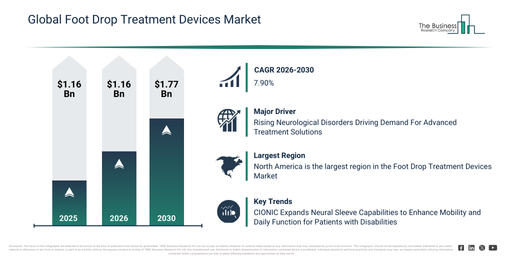
    The foot drop treatment devices sector has experienced significant expansion in recent years. Its market value is projected to increase from $2.45 billion in 2025 to $2.65 billion in 2026, representing a compound annual growth rate (CAGR) of 8.1%. This upward trend during the past period is largely due to a rise in neurological disorders, growing stroke-related mobility impairments, the establishment of more rehabilitation facilities, wider availability of orthotic devices, and heightened clinical awareness regarding foot drop management. Looking ahead, the market is expected to surge further, reaching $3.59 billion by 2030 with a CAGR of 7.9%. Factors influencing this forecasted growth include the uptake of advanced neurorehabilitation technologies, increased demand for mobility aids suitable for home care, expansion of personalized orthotic solutions, a stronger focus on enhancing patients’ quality of life, and rapid advancements in wearable medical devices. Important trends anticipated to shape the market include greater adoption of functional electrical stimulation devices, rising preference for custom-fitted orthotic braces, the use of lightweight and flexible materials, growth in home-based rehabilitation programs, and intensified efforts aimed at improving patient mobility.

    Download A Free Sample Report For Comprehensive Market Insights:

    https://www.thebusinessresearchcompany.com/sample.aspx?id=20792&type=smp

    Key Factors Propelling the Foot Drop Treatment Devices Market Expansion

    A major driver behind the growth of the foot drop treatment devices market is the rising incidence of neurological disorders and injuries. These conditions affect the brain, spinal cord, and nerves, resulting in impairments in motor skills, sensation, cognition, or behavior due to damage or degeneration of the nervous system. Several factors contribute to the increasing prevalence of these disorders, such as an aging global population, better diagnostic capabilities, lifestyle influences, environmental factors, and advances in medical technologies that enhance detection and treatment.

    Foot drop treatment devices play a critical role for individuals suffering from these neurological conditions as they often impair the ability to lift the foot, making walking difficult and increasing the risk of falls. These devices provide essential support by aiding foot lifting, thereby improving mobility and enhancing the overall quality of life for patients. For example, in October 2023, the World Federation of Neurology—a UK-based association representing neurological societies worldwide—reported that over 40% of the global population currently experiences some form of neurological condition, and this figure is expected to nearly double by 2050. Consequently, the growing prevalence of neurological disorders directly fuels demand for foot drop treatment devices.

    Access The Complete Foot Drop Treatment Devices Market Report:

    https://www.thebusinessresearchcompany.com/report/foot-drop-treatment-devices-global-market-report

    Foot Drop Treatment Devices Market Segmentation and Areas Leading Growth

    The market is organized into several key segments to better understand its scope:

    1) Product Type: Electrical Stimulators and Braces or Splints

    2) Application Areas: Neuropathy, Muscle Disorders, Brain and Spinal Disorders, and Other Uses

    3) End Users: Hospitals, Ambulatory Surgical Centers, Clinics, and Homecare Settings

    Within these broader segments, subcategories provide further detail:

    – Electrical Stimulators include Functional Electrical Stimulation (FES) Devices, Neuromuscular Electrical Stimulation (NMES) Devices, Transcutaneous Electrical Nerve Stimulation (TENS) Devices, and others.

    – Braces or Splints cover Ankle-Foot Orthoses (AFO), Dynamic Ankle-Foot Orthoses (DAFO), Hinged Ankle Braces, Custom-Made Braces, and additional types.

    This classification highlights the diversity of products and applications addressing different patient needs and care environments.

    Innovations and Technological Advancements Transforming the Foot Drop Treatment Market

    Leading companies in this market are investing heavily in cutting-edge technologies to improve treatment outcomes. One key area of innovation is software-powered wearable bionic devices that combine functional electrical stimulation with real-time mobility tracking. These devices aim to enhance walking ability, increase strength, and foster greater independence for people living with neuromuscular conditions. Such wearable tech enables personalized functional training, thorough progress monitoring, and integration into daily activities, allowing patients to regain mobility, navigate stairs, and perform essential tasks more independently.

    An illustration of this trend occurred in May 2024 when CIONIC, a US-based neurotechnology firm, updated its FDA-cleared Cionic Neural Sleeve. The new features include additional functional exercises and detailed activity tracking reports for patients with conditions such as multiple sclerosis, stroke, and spinal cord injuries. This lightweight, durable leg sleeve merges gait lab diagnostics with functional electrical stimulation and is controlled through a smartphone app, allowing for software updates to be rolled out simultaneously to all users. Such advancements empower patients to improve their mobility and independence in everyday life.

    Prominent Companies Shaping the Foot Drop Treatment Devices Industry

    The competitive landscape includes several key players that have established themselves as market leaders. These include:

    Cardinal Health Inc., Stryker Corporation, Henry Schein Inc., Smith & Nephew LLC, Ottobock, Hanger Inc., Ossur, Bauerfeind USA Inc., Breg Inc., B. Braun Melsungen AG, Trulife Ltd., Orthomerica Products Inc., Bioness Inc., Evolution Health Care Pvt. Ltd., Aspen Medical Products, Allard Inc., Footmaxx, ProCare, DJO Global Inc., ALIMCO, Saebo Inc., Axio Bionics LLC, Thrive Orthopedics, Turbomed Orthotics, and Accord Medical Products Private Limited.

    These companies continue to innovate and expand their product offerings to meet the growing and varied needs of patients worldwide.

    Geographical Market Analysis Highlighting the Largest and Fastest-Growing Regions

    In 2025, North America maintained its position as the largest regional market for foot drop treatment devices, benefiting from well-established healthcare infrastructure and high adoption rates of advanced technologies. Meanwhile, the Asia-Pacific region is forecasted to be the fastest-growing market during the forecast period. This growth is driven by increasing healthcare investments, rising awareness of neurological disorders, expanding rehabilitation facilities, and improving access to advanced medical devices. The foot drop treatment devices market report also covers other regions such as South East Asia, Western Europe, Eastern Europe, South America, the Middle East, and Africa, providing a comprehensive global perspective on market trends and opportunities.

    Get in touch with us:

    The Business Research Company: https://www.thebusinessresearchcompany.com/

    Americas: +1 310-496-7795

    Asia: +44 7882 955267 & +91 8897263534

    Europe: +44 7882 955267

    Email us at: marketing@tbrc.info

    Follow us on:

    LinkedIn: https://in.linkedin.com/company/the-business-research-company

    YouTube: https://www.youtube.com/channel/UC24_fI0rV8cR5DxlCpgmyFQ

    Global Market Model: https://www.thebusinessresearchcompany.com/global-market-model
  • Foot And Ankle Devices Market Trends And Growth Drivers Point To Strong Future Potential

    Foot And Ankle Devices Market Trends And Growth Drivers Point To Strong Future Potential

    Enhanced with market attractiveness analysis, total addressable market evaluation, company benchmarking matrices, interactive Excel dashboards, expanded supply chain intelligence, emerging startup coverage, and detailed product insights, The Business Research Company’s 2026 market reports deliver more actionable and strategically valuable research.

    The foot and ankle devices market has experienced significant growth recently, driven by a combination of demographic shifts and medical advancements. With an expanding patient base and technological progress, this sector is set for continued expansion in the coming years. Let’s explore the market size, growth factors, key players, and emerging trends shaping this industry.

    Market Size and Growth Outlook for the Foot and Ankle Devices Market

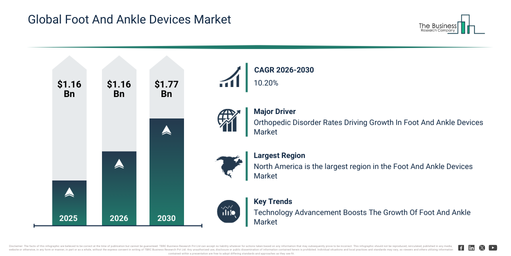
    The foot and ankle devices market has surged impressively, with its size projected to grow from $6.6 billion in 2025 to $7.3 billion in 2026, reflecting a strong compound annual growth rate (CAGR) of 10.6%. This expansion over recent years is largely due to the rising occurrence of foot and ankle disorders, an aging global population, increasing diabetes-related foot complications, a surge in orthopedic surgeries, and improved access to specialized orthopedic treatments. Looking ahead, the market is expected to reach $10.77 billion by 2030, with a CAGR of 10.2%. Factors fueling this future growth include a growing demand for personalized orthopedic solutions, wider adoption of minimally invasive surgeries, enhanced focus on rehabilitation after surgery, innovations in biomaterials, and rising investments in orthopedic device technologies. Key trends anticipated include more customized orthopedic implants, advanced bracing and support products, minimally invasive procedures, expanding diabetic foot care devices, and patient-specific prosthetics.

    Download A Free Sample Report For Comprehensive Market Insights:

    https://www.thebusinessresearchcompany.com/sample.aspx?id=6324&type=smp

    Rising Prevalence of Orthopedic Disorders as a Driving Force

    One of the main drivers behind the growth of the foot and ankle devices market is the increasing frequency of orthopedic conditions. These disorders affect the musculoskeletal system, impacting bones, cartilage, ligaments, tendons, and connective tissues. Foot and ankle devices address various surgical interventions such as fusions, fractures, and osteotomies across different parts of the foot. For example, in October 2023, data from the National Center for Biotechnology Information (NCBI) revealed that cases of musculoskeletal disorders are expected to rise by 115% from 2020 to 2050, reaching an estimated 1.06 billion cases worldwide. Most regions are predicted to experience at least a 50% increase in these disorders over the same period. This trend strongly supports the growing demand for foot and ankle devices.

    Expanding Surgical Procedures Boosting Market Demand

    The expansion of orthopedic surgical procedures also plays a significant role in the rising demand for foot and ankle devices. With advances in surgical techniques and greater availability of specialized care, more patients are undergoing treatments that require implants and braces. This growth in surgeries aligns closely with the increasing prevalence of conditions requiring such interventions, thus further driving the market’s upward trajectory.

    Access The Complete Foot And Ankle Devices Market Report:

    https://www.thebusinessresearchcompany.com/report/foot-and-ankle-devices-global-market-report

    Comprehensive Segmentation Highlights Growth Areas in the Foot and Ankle Devices Market

    This market is categorized based on several factors to identify key growth opportunities: by product type, cause of injury, and end user. Product categories include bracing and support devices, such as ankle braces, foot orthoses (arch supports), and night splints, as well as foot and ankle surgical implants like plates and screws, intramedullary nails and rods, arthrodesis (fusion) devices, total ankle replacement systems, external fixation devices, and bioabsorbable fixation devices. Injury causes are segmented into trauma, diabetes, and neurological disorders. The end-user groups include hospitals, ambulatory surgery centers, orthopedic clinics, and rehabilitation centers, each representing important avenues for market expansion.

    Technological Advances Shaping the Future of the Foot and Ankle Devices Market

    Cutting-edge technologies are playing a vital role in advancing the foot and ankle device sector. For instance, navigation systems designed to enhance surgical accuracy and improve patient outcomes are gaining traction. These computer-assisted surgical tools provide real-time, three-dimensional guidance, allowing surgeons to precisely align and position implants during complex procedures. A notable example is the launch of Exactech’s GPS Ankle navigation system in March 2025. This innovative system integrates intraoperative guidance with 3D ankle implants, enabling surgeons to match surgical resections with preoperative CT scans within a high degree of accuracy. By reducing reliance on fluoroscopy and supporting data-driven decisions, this technology marks a significant step forward in surgical precision and efficiency.

    Prominent Players Driving Competition and Innovation in the Market

    Several leading companies shape the competitive landscape of the foot and ankle devices market. These include Aap Implantate AG, Acumed LLC, Advanced Orthopaedic Solutions Inc., Arthrex Inc., CONMED Corporation, DePuy Synthes Companies, DonJoy Inc., Extremity Medical LLC, FH ORTHOPEDICS S.A.S., Integra LifeSciences Holdings Corporation, Medartis Holding AG, Mondeal Medical Systems GmbH, Orthofix Medical Inc., Smith & Nephew plc, Stryker Corporation, Tornier N.V., Vilex in Tennessee Inc., Wright Medical Technology Inc., Zimmer Biomet Holdings Inc., KYOCERA Medical Corporation, Medacta International SA, Merete Medical GmbH, Inovedis SAS, and OsteoMed LLC. These companies continue to invest heavily in research, innovation, and product development to maintain their market positions.

    Regional Market Analysis Indicates Growth Leaders

    In terms of geography, North America held the largest share of the foot and ankle devices market in 2025. However, the Asia-Pacific region is forecasted to experience the fastest growth during the upcoming years. The regional scope of this market analysis also includes South East Asia, Western Europe, Eastern Europe, South America, the Middle East, and Africa, providing a global perspective on market trends and opportunities.

    Get in touch with us:

    The Business Research Company: https://www.thebusinessresearchcompany.com/

    Americas: +1 310-496-7795

    Asia: +44 7882 955267 & +91 8897263534

    Europe: +44 7882 955267

    Email us at: marketing@tbrc.info

    Follow us on:

    LinkedIn: https://in.linkedin.com/company/the-business-research-company

    YouTube: https://www.youtube.com/channel/UC24_fI0rV8cR5DxlCpgmyFQ

    Global Market Model: https://www.thebusinessresearchcompany.com/global-market-model

  • Food Testing Kits Market Expansion Is Reshaping Competitive Dynamics Across The Industry

    Food Testing Kits Market Expansion Is Reshaping Competitive Dynamics Across The Industry

    Through market attractiveness analysis, total addressable market evaluation, company benchmarking matrices, interactive Excel dashboards, expanded supply chain intelligence, emerging startup coverage, and detailed product insights, The Business Research Company’s 2026 market reports provide more actionable and strategically valuable research.

    The food testing kits industry has witnessed substantial growth in recent years, driven by heightened concerns over food safety and quality. As demand for rapid, accurate testing solutions increases, the market is positioned for significant expansion in the coming years. This overview explores the current market size, growth drivers, key segments, industry trends, leading companies, and regional developments shaping the future of food testing kits.

    Food Testing Kits Market Size and Projected Growth Trajectory

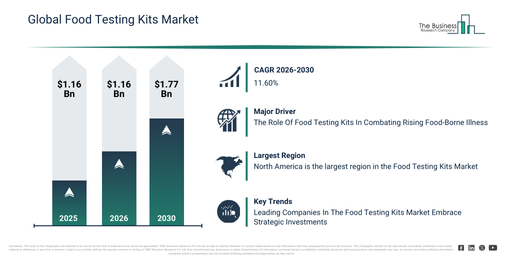
    The market for food testing kits has expanded rapidly, with its size rising from $3.33 billion in 2025 to $3.72 billion in 2026, reflecting a strong compound annual growth rate (CAGR) of 11.8%. This historical growth is largely fueled by stricter food safety regulations, increased consumption of packaged foods, growth in food processing infrastructure, a rising prevalence of foodborne illnesses, and greater availability of standardized testing products. Looking ahead, the market is set to continue its upward trend, reaching $5.76 billion by 2030, with a projected CAGR of 11.6%. This forecasted surge is supported by growing demands for real-time monitoring of food quality, the rising uptake of portable testing devices, expanded compliance testing for food exports, enhanced supply chain transparency, and the integration of digital food safety management platforms. Key trends expected to influence market growth include broader adoption of rapid testing kits, emphasis on onsite food safety assessments, increased use of PCR-based detection techniques, growth in allergen and GMO testing services, and a heightened focus on regulatory compliance.

    Download A Free Sample Report For Comprehensive Market Insights:

    https://www.thebusinessresearchcompany.com/sample.aspx?id=5491&type=smp

    Increasing Prevalence of Foodborne Illnesses Boosting Market Demand

    A significant factor propelling the food testing kits market is the rise in foodborne illnesses, which result from consuming contaminated food or beverages. Food testing kits play a crucial role in minimizing the risks associated with these illnesses by enabling early detection of contaminants. For instance, according to the European Food Safety Authority (EFSA) in December 2024, Italy reported 5,691 foodborne outbreak cases in 2023—marking a 1.2% rise compared to 2022. This upward trend highlights the urgent need for effective food safety measures, thereby driving demand for food testing kits.

    Key Segments Defining the Food Testing Kits Market

    This market is structured across several core segments to address diverse testing needs. By technology, the market includes PCR-based kits, immunoassay-based kits, and enzyme substrate-based kits. Target analytes cover pathogens, meat species, GMOs, allergens, mycotoxins, and other specific substances. Sample types span meat, poultry, seafood, dairy products, packaged food, fruits and vegetables, cereals, grains, pulses, nuts, seeds, spices, and additional samples. Subcategories further break down PCR-based kits into real-time, conventional, and multiplex options. Immunoassay-based kits encompass enzyme-linked immunosorbent assay (ELISA), lateral flow immunoassay, and radioimmunoassay kits. Enzyme substrate-based kits include colorimetric, fluorometric, and chemiluminescent assay types.

    Access The Complete Food Testing Kits Market Report:

    https://www.thebusinessresearchcompany.com/report/food-testing-kits-global-market-report

    Emerging Industry Trends Influencing Food Testing Kits Market

    Leading companies in this sector are heavily investing in innovations to make food testing kits more accessible for consumers, including options for home use. Investment in technology and product development is expanding the availability of user-friendly kits that enhance food safety monitoring. For example, in August 2023, Genetic Systems Diagnostics, a German biotechnology firm, introduced DNAllergen real-time PCR kits. These kits enable highly accurate detection of specific allergen DNA sequences in food products using molecular methods. The DNAllergen system automates processes such as loading and counting of Petrifilm plates, which are diagnostic tools designed to identify allergenic sequences that are often difficult to detect with traditional immunoassays. A major advantage of these kits lies in their superior sensitivity and specificity, allowing precise differentiation between closely related species like celery, mustard, and rapeseed. Each kit supports 50 reactions, offering a cost-efficient solution suitable for laboratories and food manufacturers alike.

    Top Companies Energizing Competition in the Food Testing Kits Industry

    The food testing kits market features several prominent players driving innovation and growth. Leading companies include Agilent Technologies Inc., Bio-Rad Laboratories Inc., bioMérieux SA, EnviroLogix Inc., Merck KGaA, Neogen Corporation, PerkinElmer Inc., QIAGEN N.V., Romer Labs Inc., Thermo Fisher Scientific Inc., Erber Group, DNA Diagnostic A/S, Elabscience Biotechnology Co. Ltd., Creative Diagnostics, AES Laboratories Pvt. Ltd., Luminex Corporation, Randox Laboratories Ltd., Hygiena LLC, Charm Sciences Inc., Bruker Corporation, FOSS A/S, and IDEXX Laboratories Inc. These organizations continue to focus on product innovation, strategic partnerships, and market expansion to meet rising global demand.

    Regional Market Breakdown and Growth Outlook

    In 2025, North America dominated the food testing kits market, holding the largest regional share. However, the Asia-Pacific region is anticipated to experience the fastest growth during the forecast period. The market overview includes detailed analysis of regions such as Asia-Pacific, South East Asia, Western Europe, Eastern Europe, North America, South America, the Middle East, and Africa, providing a comprehensive understanding of geographic opportunities and challenges shaping the global market landscape.

    Get in touch with us:

    The Business Research Company: https://www.thebusinessresearchcompany.com/

    Americas: +1 310-496-7795

    Asia: +44 7882 955267 & +91 8897263534

    Europe: +44 7882 955267

    Email us at: marketing@tbrc.info

    Follow us on:

    LinkedIn: https://in.linkedin.com/company/the-business-research-company

    YouTube: https://www.youtube.com/channel/UC24_fI0rV8cR5DxlCpgmyFQ

    Global Market Model: https://www.thebusinessresearchcompany.com/global-market-model