Month: June 2026

  • E-Textile Health Monitoring Market Trends And Growth Drivers Point To Strong Future Potential

    E-Textile Health Monitoring Market Trends And Growth Drivers Point To Strong Future Potential

    Delivering more actionable and strategically valuable research, The Business Research Company’s 2026 market reports feature market attractiveness analysis, total addressable market evaluation, company benchmarking matrices, interactive Excel dashboards, expanded supply chain intelligence, emerging startup coverage, and detailed product insights.

    The e-textile health monitoring market is rapidly evolving and gaining traction as wearable technology becomes more sophisticated and widely adopted. This sector combines textile innovation with health monitoring capabilities, creating new opportunities for patient care and fitness tracking. Let’s explore the current market size, growth drivers, key segments, major players, and regional dynamics shaping this exciting industry.

    Significant Expansion in the E-Textile Health Monitoring Market Size

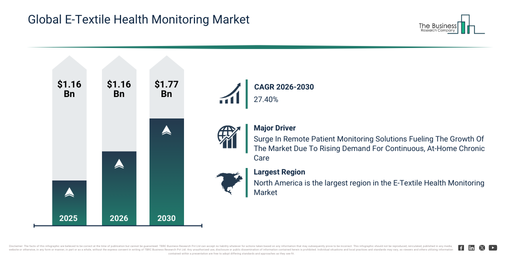
    The e-textile health monitoring market has witnessed remarkable growth recently. It is projected to increase from $3.59 billion in 2025 to $4.59 billion in 2026, achieving a strong compound annual growth rate (CAGR) of 27.7%. This historical growth is largely fueled by the rising adoption of wearable health devices, advancements in flexible electronics, the growing prevalence of chronic illnesses, increased demand for remote patient monitoring, and innovations in conductive textile materials. Moving forward, the market is expected to surge even further, reaching $12.09 billion by 2030 with a CAGR of 27.4%. Factors driving this future expansion include integration with AI-powered health platforms, broader wireless communication adoption, increasing use in sports and fitness, regulatory approvals for clinical use, and a rising demand for personalized healthcare solutions. Key trends anticipated during this period encompass real-time health data analytics, integrated wearable sensors, remote patient monitoring, predictive health assessments, and smart textile-enabled diagnostics.

    Download A Free Sample Report For Comprehensive Market Insights:

    https://www.thebusinessresearchcompany.com/sample.aspx?id=29056&type=smp

    Growing Demand for Remote Patient Monitoring Boosts Market Growth

    A major factor propelling the e-textile health monitoring market is the increasing need for remote patient monitoring (RPM) solutions. RPM technologies allow healthcare providers to continuously track and manage patient health data through connected devices and digital platforms. The surge in chronic diseases globally has heightened the adoption of these solutions, as they offer continuous monitoring of vital signs and early detection of potential health problems, leading to timely interventions and fewer hospital readmissions. E-textile health monitoring supports this trend by embedding sensors into textiles to measure physiological parameters such as heart rate, respiration, and body temperature in real-time, providing a comfortable and ongoing monitoring option for patients. For instance, in August 2025, the US Department of Health and Human Services reported that nearly 1 million people were enrolled in remote patient monitoring programs in 2024—a 27% increase from the previous year—highlighting the growing acceptance and demand for these technologies.

    Impact of Rising Respiratory Disorders on E-Textile Health Monitoring Market

    Another key driver of growth in the e-textile health monitoring market is the increasing prevalence of respiratory disorders, which creates a heightened need for continuous breathing monitoring and early detection. Respiratory conditions disrupt normal lung and airway functions, making breathing difficult and oxygen exchange less effective. The rise in pollution-related lung damage has led to more cases of asthma, chronic bronchitis, and other respiratory ailments. E-textiles assist in managing these disorders by continuously tracking breathing patterns, enabling early identification of abnormalities and prompting timely medical interventions to avoid complications. For example, the Center for Infectious Disease Research and Policy (CIDRAP) noted that in 2023, 8.2 million new tuberculosis cases were diagnosed worldwide, up from 7.5 million in 2022. This growing patient population underscores the expanding demand for e-textile solutions in respiratory care.

    Access The Complete E-Textile Health Monitoring Market Report:

    https://www.thebusinessresearchcompany.com/report/e-textile-health-monitoring-global-market-report

    Breakdown of E-Textile Health Monitoring Market Segments and Strategic Avenues

    This market is segmented into several categories to better understand product offerings and applications:

    1) Product Type includes Wearable Health-Monitoring E-Textiles, Medical-Grade Monitoring E-Textiles, Consumer Fitness & Wellness E-Textiles, Rehabilitation & Assistive E-Textiles, and other types.

    2) Technology covers Sensor Integration, Wireless Communication, Conductive Materials, and other innovations.

    3) Material segments are Conductive Yarns, Conductive Fabrics, and other materials.

    4) Application areas include Cardiac Monitoring, Respiratory Monitoring, Activity Monitoring, Temperature Monitoring, and additional uses.

    5) End-Users comprise Hospitals and Clinics, Homecare Settings, Sports and Fitness, Military and Defense, and others.

    Further subcategories provide detailed insights such as types of wearable e-textiles—smart shirts, pants, socks, and undergarments—and medical-grade textiles designed for cardiac or respiratory monitoring, continuous vital sign tracking, and clinical remote monitoring. Likewise, consumer fitness apparel, rehabilitation garments, and other sensor-embedded textile products like smart bandages and monitoring patches are included.

    Key Industry Players Leading the E-Textile Health Monitoring Market

    Several prominent companies are shaping the competitive landscape of the e-textile health monitoring market, including Myant Health Inc., Smartex Srl, Siren Care Inc., Carre Technologies Inc., BioSerenity, Chronolife SAS, Sensoria Health Inc., Xenoma Inc., AiQ Smart Clothing Inc., Embro GmbH, Interactive Wear AG, Loomia Technologies Inc., Ohmatex ApS, Nextiles Inc., Wearable X Inc., Sensing Tex S.L., TexRay Industrial Co. Ltd., Clothing Plus Oy, HealthWatch Ltd., and Athos Works Inc.

    Geographic Market Leadership and Growth Prospects

    In 2025, North America held the largest share of the e-textile health monitoring market. However, the Asia-Pacific region is expected to experience the fastest growth during the forecast period. The market report covers key areas including Asia-Pacific, South East Asia, Western Europe, Eastern Europe, North America, South America, the Middle East, and Africa, providing a detailed global perspective on emerging trends and regional market dynamics.

    Get in touch with us:

    The Business Research Company: https://www.thebusinessresearchcompany.com/

    Americas: +1 310-496-7795

    Asia: +44 7882 955267 & +91 8897263534

    Europe: +44 7882 955267

    Email us at: marketing@tbrc.info

    Follow us on:

    LinkedIn: https://in.linkedin.com/company/the-business-research-company

    YouTube: https://www.youtube.com/channel/UC24_fI0rV8cR5DxlCpgmyFQ

    Global Market Model: https://www.thebusinessresearchcompany.com/global-market-model
  • Esophagoscopes And Gastroscopes Market Expansion Is Reshaping Competitive Dynamics Across The Industry

    Esophagoscopes And Gastroscopes Market Expansion Is Reshaping Competitive Dynamics Across The Industry

    Enhanced with market attractiveness analysis, total addressable market evaluation, company benchmarking matrices, interactive Excel dashboards, expanded supply chain intelligence, emerging startup coverage, and detailed product insights, The Business Research Company’s 2026 market reports deliver more actionable and strategically valuable research.

    The esophagoscopes and gastroscopes market is experiencing notable growth as advancements in medical technology and rising disease prevalence drive demand for improved diagnostic tools. Increasing awareness and adoption of innovative endoscopic procedures are setting the stage for significant expansion in this specialized healthcare segment.

    Steady Expansion in the Esophagoscopes and Gastroscopes Market Size

    The market for esophagoscopes and gastroscopes has seen considerable growth in recent years. It is projected to grow from $1.77 billion in 2025 to $1.88 billion in 2026, reflecting a compound annual growth rate (CAGR) of 6.2%. This growth during the historical period is largely due to the rising incidence of gastrointestinal disorders, expanded adoption of endoscopic diagnostics, growth in hospital gastroenterology units, increased awareness about early diagnosis, and a larger pool of trained endoscopy specialists.

    Download A Free Sample Report For Comprehensive Market Insights:

    https://www.thebusinessresearchcompany.com/sample.aspx?id=12979&type=smp

    Future Growth Prospects for Esophagoscopes and Gastroscopes

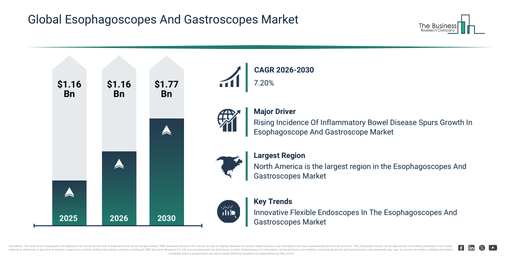
    Looking ahead, the market is expected to continue its upward trajectory, reaching $2.48 billion by 2030 with a CAGR of 7.2%. Factors contributing to this forecasted expansion include the growing preference for minimally invasive therapeutic procedures, rising investments in advanced endoscopic imaging technologies, increased use of disposable endoscopes, growth in outpatient diagnostic services, and heightened emphasis on patient safety and infection control. Key trends anticipated to influence the market involve wider adoption of high-definition imaging endoscopes, expanded use of minimally invasive diagnostics, rising demand for single-use devices, growth in therapeutic endoscopy applications, and stronger infection prevention protocols.

    Rising Inflammatory Bowel Disease Cases Bolster Market Demand

    One of the primary factors propelling the esophagoscopes and gastroscopes market is the increasing prevalence of inflammatory bowel disease (IBD), a chronic condition causing inflammation within the digestive tract. These endoscopic devices play a crucial role in diagnosing and managing IBD by providing clear visualization of gastrointestinal interiors. For instance, a March 2023 study published in the Journal of the Canadian Association of Gastroenterology forecasts that the incidence rate of IBD in Canada will rise from 825 per 100,000 people in 2023 to 1,075 per 100,000 by 2035. This upward trend in IBD cases underpins growing demand for esophagoscopes and gastroscopes.

    Access The Complete Esophagoscopes And Gastroscopes Market Report:

    https://www.thebusinessresearchcompany.com/report/esophagoscopes-and-gastroscopes-global-market-report

    The Esophagoscopes and Gastroscopes Market Segmentation Overview

    This market is categorized into distinct segments for better insight. By type, products include rigid, flexible, transnasal, and other varieties. Application segments cover conditions such as gastroesophageal reflux disease, ulcers, Barrett’s esophagus, celiac disease, and others. End users span hospitals, ambulatory surgical centers, specialty clinics, diagnostic centers, and additional healthcare facilities. Further subcategories divide types into rigid esophagoscopes and gastroscopes, flexible esophagoscopes and gastroscopes, transnasal variants, as well as single-use and dual-use endoscopes.

    Innovative Technologies Shaping the Esophagoscopes and Gastroscopes Market

    Leading companies in this field are heavily investing in innovation, particularly in flexible endoscopy technology, to maintain a competitive edge. Flexible endoscopes consist of a bendable tube equipped with a camera that sends real-time images, facilitating minimally invasive examination of internal organs like the gastrointestinal tract. For example, in October 2024, US biotechnology firm Lumicell received a $400,000 Phase I Small Business Innovation Research (SBIR) grant from the National Cancer Institute (NCI). This funding supports development of a cutting-edge flexible endoscope aimed at diagnosing Barrett’s esophagus. The device will integrate far infrared fluorescence with reflected light imaging to detect potentially cancerous lesions instantly. This novel technology seeks to improve early detection of esophageal adenocarcinoma, reduce reliance on random biopsies, and allow immediate treatment of identified abnormalities.

    Key Players Dominating the Esophagoscopes and Gastroscopes Market

    The esophagoscopes and gastroscopes industry features several prominent companies, including Medtronic plc, FUJIFILM Corporation, Boston Scientific Corporation, B Braun Melsungen AG, Olympus Corporation, HOYA Corporation, Karl Storz SE & Co. KG, CONMED Corporation, Ambu A/S, Richard Wolf GmbH, SonoScape Medical Corporation, Vimex Endoscopy Sp. z o.o., Smart Medical Systems Ltd., Jedmed Instrument Co, Endomed Systems GmbH, Maxer Endoscopy GmbH, Surtex Instruments Limited, FENTEX medical GmbH, Machida Endoscope Co. Ltd., Aohua Endoscopy Co. Ltd., Zhejiang Shendasiao Medical Instrument Co. Ltd., Hangzhou Orient Medical Co. Ltd., and Optec Endoscopy Systems GmbH. These companies continue to push forward with research and development to meet evolving clinical needs.

    Regional Market Dynamics Highlight North America’s Leadership

    In 2025, North America held the largest revenue share in the esophagoscopes and gastroscopes market. Meanwhile, the Asia-Pacific region is expected to experience the fastest growth in the coming years. The market report covers important regional areas such as Asia-Pacific, South East Asia, Western Europe, Eastern Europe, North America, South America, the Middle East, and Africa, providing a comprehensive view of global market trends and opportunities.

    Get in touch with us:

    The Business Research Company: https://www.thebusinessresearchcompany.com/

    Americas: +1 310-496-7795

    Asia: +44 7882 955267 & +91 8897263534

    Europe: +44 7882 955267

    Email us at: marketing@tbrc.info

    Follow us on:

    LinkedIn: https://in.linkedin.com/company/the-business-research-company

    YouTube: https://www.youtube.com/channel/UC24_fI0rV8cR5DxlCpgmyFQ

    Global Market Model: https://www.thebusinessresearchcompany.com/global-market-model
  • Esophageal Dilator Market Forecast Reveals Where Future Industry Value Will Be Created

    Esophageal Dilator Market Forecast Reveals Where Future Industry Value Will Be Created

    Through market attractiveness analysis, total addressable market evaluation, company benchmarking matrices, interactive Excel dashboards, expanded supply chain intelligence, emerging startup coverage, and detailed product insights, The Business Research Company’s 2026 market reports provide more actionable and strategically valuable research.

    The esophageal dilator market has experienced significant growth recently, driven by advances in medical technology and increasing awareness of esophageal health issues. As demand rises for more effective and less invasive treatment options, this market is set for steady expansion over the coming years. Let’s explore the market’s size, key growth factors, segmentation, competitive landscape, and regional outlook in detail.

    Market Size and Expected Growth in the Esophageal Dilator Market

    The esophageal dilator market has strengthened considerably in recent years. It is projected to increase from a valuation of $1.57 billion in 2025 to $1.65 billion in 2026, exhibiting a compound annual growth rate (CAGR) of 5.2%. This historical growth is largely due to the limited availability of advanced esophageal dilators, continued dependence on traditional mechanical dilators, heightened awareness about esophageal conditions, expansion of hospital and clinic infrastructure, and wider adoption of standardized surgical techniques.

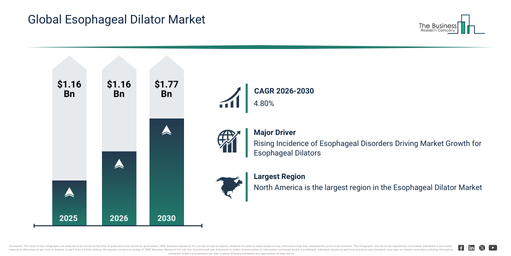
    Looking ahead, the market is expected to continue its upward trajectory, reaching $1.99 billion by 2030 with a CAGR of 4.8%. Factors anticipated to drive growth in this forecast period include innovations like controlled-release and pre-loaded balloon dilators, increased use of flexible and hydrostatic dilators, growth in ambulatory surgical centers, a rising elderly population with esophageal ailments, and progress in materials science and guided procedural technologies. Key trends shaping the market include a growing preference for minimally invasive esophageal treatments, increased adoption of balloon and hydrostatic dilators, rising prevalence of esophageal disorders, emphasis on patient safety and procedural precision, and integration of advanced materials to enhance durability and flexibility.

    Download A Free Sample Report For Comprehensive Market Insights:

    https://www.thebusinessresearchcompany.com/sample.aspx?id=19421&type=smp

    Rising Incidence of Esophageal Disorders as a Growth Catalyst

    One of the primary factors propelling the esophageal dilator market is the increasing prevalence of esophageal disorders. These conditions affect the esophagus, the passage that carries food and liquids from the mouth to the stomach. The rising rates of gastroesophageal reflux disease (GERD), obesity, and lifestyle changes have contributed to this upsurge. Esophageal dilators help alleviate symptoms by expanding narrowed sections of the esophagus, improving swallowing function and reducing discomfort.

    For example, data from the American Cancer Society in January 2024 highlights that in 2023, the US recorded 16,120 deaths due to esophageal cancer, with projections indicating a slight increase to 16,130 in 2024. Such statistics emphasize the growing burden of esophageal diseases and highlight the expanding need for effective dilator devices, thereby supporting market growth.

    Role of Minimally Invasive Procedures in Market Expansion

    The trend toward minimally invasive medical procedures is another key driver of the esophageal dilator market. These procedures involve smaller incisions and specialized instruments, reducing pain, recovery time, and tissue damage compared to traditional surgery. Patients increasingly prefer these options for faster recovery and less postoperative discomfort.

    Esophageal dilators play a vital role in these minimally invasive treatments by gently widening constricted parts of the esophagus, restoring smooth swallowing. For instance, the American Society of Plastic Surgeons reported in June 2024 that minimally invasive procedures grew by 7% in 2023, outpacing the 2% growth seen in traditional surgeries. This shift towards less invasive options is significantly contributing to the rising demand for esophageal dilators.

    Access The Complete Esophageal Dilator Market Report:

    https://www.thebusinessresearchcompany.com/report/esophageal-dilator-global-market-report

    Detailed Segmentation of the Esophageal Dilator Market

    The esophageal dilator market can be broken down into several key segments:

    1) By Dilator Type: Balloon Dilators, Mechanical Dilators, and Hydrostatic Dilators

    2) By Material: Plastic, Metal, and Other Materials

    3) By Esophageal Disease: Achalasia, Esophageal Strictures, Zenker’s Diverticulum, and Esophageal Cancer

    4) By End User: Hospitals, Ambulatory Surgical Centers, Clinics, and Doctors’ Offices

    Further subcategories include:

    • Balloon Dilators: Inflatable, Non-Inflatable, Pre-loaded, and Controlled-Release variants

    • Mechanical Dilators: Bougie, Metal, Flexible Mechanical, and Rigid Mechanical types

    • Hydrostatic Dilators: Fluid-Filled, High-Pressure, Low-Pressure, and Guide Wire-assisted Hydrostatic Dilators

    Competitive Landscape of the Esophageal Dilator Market

    Numerous prominent companies shape the competitive field of the esophageal dilator market. Leading players include Medtronic plc, Boston Scientific Corporation, Olympus Corporation, Cook Medical, Karl Storz SE & Co. KG, Micro-Tech Endoscopy, Endo-med Technologies Private Limited, Shaili Endoscopy, Bard Medical, GE Healthcare, Telemed Systems, Fiagon AG, Crospon Ltd., MFI Medical Equipments, Merit Medical Systems Inc., Becton Dickinson and Company, PENTAX Medical, M I Tech Co. Ltd., ELLA-CS, Taewoong Medical Co. Ltd., Albyn Medical, Ankon Medical, Alton Shanghai Medical Instruments, and Anrei Medical. These companies continue to innovate and expand their offerings to meet growing market demand.

    Geographical Distribution and Regional Market Insights

    In 2025, North America stood as the dominant region in the esophageal dilator market. The report also covers important regional markets including Asia-Pacific, South East Asia, Western Europe, Eastern Europe, South America, the Middle East, and Africa. While North America currently leads in market size, regions like Asia-Pacific are expected to demonstrate faster growth due to improving healthcare infrastructure and increasing awareness of esophageal health issues.

    Overall, the esophageal dilator market is positioned for steady growth driven by technological advancements, rising disease prevalence, and shifting patient preferences towards less invasive treatment options.

    Get in touch with us:

    The Business Research Company: https://www.thebusinessresearchcompany.com/

    Americas: +1 310-496-7795

    Asia: +44 7882 955267 & +91 8897263534

    Europe: +44 7882 955267

    Email us at: marketing@tbrc.info

    Follow us on:

    LinkedIn: https://in.linkedin.com/company/the-business-research-company

    YouTube: https://www.youtube.com/channel/UC24_fI0rV8cR5DxlCpgmyFQ

    Global Market Model: https://www.thebusinessresearchcompany.com/global-market-model
  • Esophageal Catheters Market Growth Through 2030 Creates New Strategic Opportunities

    Esophageal Catheters Market Growth Through 2030 Creates New Strategic Opportunities

    Delivering more actionable and strategically valuable research, The Business Research Company’s 2026 market reports feature market attractiveness analysis, total addressable market evaluation, company benchmarking matrices, interactive Excel dashboards, expanded supply chain intelligence, emerging startup coverage, and detailed product insights.

    The esophageal catheters market is witnessing significant growth, driven by advances in medical technology and increasing healthcare needs related to esophageal conditions. As diagnostic and therapeutic procedures continue to evolve, this industry is set to expand substantially, fueled by innovations and rising demand across various healthcare settings. Here’s a detailed look at the current market landscape, key growth factors, market segments, innovations, and regional dynamics.

    Steady Growth and Future Outlook for the Esophageal Catheters Market

    The esophageal catheters market has demonstrated strong growth in recent years, with its size expected to rise from $2.62 billion in 2025 to $2.82 billion in 2026, marking a compound annual growth rate (CAGR) of 7.6%. This growth during the past period has been supported by factors such as the increasing incidence of gastrointestinal disorders, more frequent diagnosis of GERD and dysphagia, expansion of gastroenterology departments, availability of advanced catheter designs, and the widespread use of diagnostic esophageal procedures.

    Download A Free Sample Report For Comprehensive Market Insights:

    https://www.thebusinessresearchcompany.com/sample.aspx?id=13010&type=smp

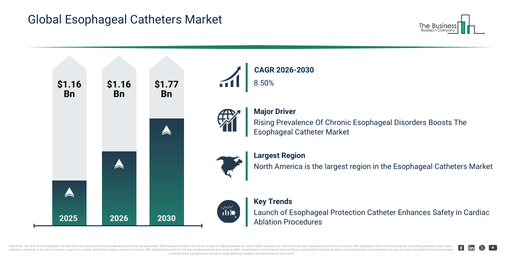
    Looking ahead, the market is projected to reach $3.91 billion by 2030, growing at an accelerated CAGR of 8.5%. Key drivers for this forecast include the rising preference for outpatient diagnostic solutions, wider adoption of minimally invasive treatments, growth in precision diagnostics, increased healthcare investments focused on gastrointestinal diseases, and an emphasis on patient-centered care approaches. Emerging trends in this period also highlight the growing use of single-use esophageal catheters, demand for precise pressure monitoring, expansion of minimally invasive diagnostic methods, rising radiofrequency ablation procedures, and an intensified focus on patient safety and comfort.

    Factors Fueling Demand in the Esophageal Catheters Market

    The market’s expansion is strongly influenced by the increasing prevalence of chronic esophageal disorders, which encompass medical conditions affecting the esophagus over extended periods. Esophageal catheters, such as manometry catheters, are essential for diagnosing these disorders by assessing pressure changes and motility along the esophageal tract.

    Access The Complete Esophageal Catheters Market Report:

    https://www.thebusinessresearchcompany.com/report/esophageal-catheters-global-market-report

    For instance, a report published by the National Library of Medicine in January 2023 predicted that esophageal cancer cases in the US would reach 739,666 with 723,466 deaths by 2030, and globally, 987,723 cases with 914,304 fatalities by 2040. This alarming rise in chronic esophageal conditions is a significant factor driving the demand for esophageal catheters used in diagnosis and treatment.

    Detailed Segment Breakdown of the Esophageal Catheters Market

    This market is segmented based on product type, applications, and end-users to provide a comprehensive overview:

    1) By Product Type:

    – Balloon Dilation Catheter

    – Irrigation Catheter

    – Pressure Monitoring Catheter

    – Radiofrequency Ablation Catheter

    – Suction Catheter

    2) By Application:

    – Gastroesophageal Reflux Disease (GERD)

    – Dysphagia

    – Chest Pain

    – Other Applications

    3) By End-User:

    – Hospitals

    – Clinics

    – Ambulatory Surgical Centers

    Further subcategories include distinctions such as single-use versus multi-use balloon dilation catheters, standard and specialty irrigation catheters, continuous and intermittent pressure monitoring catheters, circular and linear radiofrequency ablation catheters, as well as standard and pediatric suction catheters.

    Innovations Driving Transformation in the Esophageal Catheters Market

    Leading companies in the esophageal catheters sector are focusing on developing advanced technologies to enhance procedural safety and efficacy. One notable innovation is esophageal protection devices designed to minimize thermal injury during cardiac ablation treatments by physically displacing the esophagus away from ablation sites.

    For example, in February 2025, the US-based S4 Medical Corp. received FDA clearance and launched the esolution Atrial Fibrillation Esophageal Protection Device. This catheter-based device features a dual-lumen design with an outer sheath and an inner mechanical deflection component, tailored to conform to patient anatomy. Such devices represent important strides in improving patient safety and procedural outcomes.

    Prominent Companies Shaping the Future of the Esophageal Catheters Industry

    Some of the key players driving growth and innovation in this market include:

    Medtronic plc, Boston Scientific Corporation, B Braun Melsungen AG, Olympus Corporation, Teleflex Incorporated, Cook Medical Inc., Merit Medical Systems Inc., Avanos Medical Inc., Laborie Medical Technologies Inc., FUJIFILM Medical Systems, Taewoong Medical Co, Alicn Medical Co Ltd, Medcaptain Medical Technology Co Ltd, PENTAX Medical Co, EndoControl Medical, MicroTech Medical, Rotech Healthcare, Steris Medical Devices, SMI Endoscopy, and Halyard Health.

    Regional Market Dynamics Highlighting Growth Patterns

    In 2025, North America held the largest market share in the esophageal catheters industry, reflecting well-established healthcare infrastructure and advanced medical technology adoption. Meanwhile, the Asia-Pacific region is expected to be the fastest-growing market during the forecast period, driven by increasing healthcare investments, growing patient awareness, and expanding medical facilities. Other important regions covered in the market analysis include South East Asia, Western Europe, Eastern Europe, South America, the Middle East, and Africa, offering a global perspective on market developments.

    Get in touch with us:

    The Business Research Company: https://www.thebusinessresearchcompany.com/

    Americas: +1 310-496-7795

    Asia: +44 7882 955267 & +91 8897263534

    Europe: +44 7882 955267

    Email us at: marketing@tbrc.info

    Follow us on:

    LinkedIn: https://in.linkedin.com/company/the-business-research-company

    YouTube: https://www.youtube.com/channel/UC24_fI0rV8cR5DxlCpgmyFQ

    Global Market Model: https://www.thebusinessresearchcompany.com/global-market-model
  • Erectile Dysfunction Devices Market Size Projected To Increase From $2.34 Billion To $3.73 Billion During The Forecast Period

    Erectile Dysfunction Devices Market Size Projected To Increase From $2.34 Billion To $3.73 Billion During The Forecast Period

    Enhanced with market attractiveness analysis, total addressable market evaluation, company benchmarking matrices, interactive Excel dashboards, expanded supply chain intelligence, emerging startup coverage, and detailed product insights, The Business Research Company’s 2026 market reports deliver more actionable and strategically valuable research.

    The erectile dysfunction devices market has been experiencing swift growth, driven by a variety of health, demographic, and technological factors. This market is poised for continued expansion as awareness rises and new treatment options become more accessible worldwide. Let’s explore the current market size, key growth drivers, segmentation, emerging trends, and leading players shaping the future of this sector.

    Steady Market Expansion Projected for the Erectile Dysfunction Devices Market

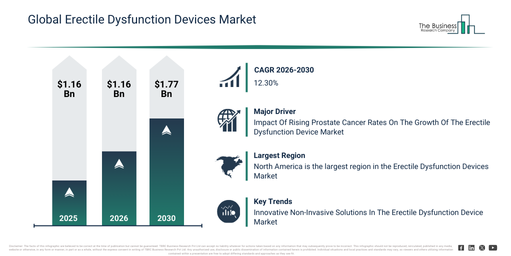
    The erectile dysfunction devices market is on a rapid growth trajectory, increasing from $2.09 billion in 2025 to $2.35 billion in 2026, supported by a compound annual growth rate (CAGR) of 12.3%. This upward trend is largely attributed to factors such as the growing prevalence of diabetes, rising cases of cardiovascular diseases, an aging male population, heightened awareness about erectile dysfunction therapies, and broader availability of urology care services. Looking ahead, this market is expected to reach $3.73 billion by 2030, maintaining the same CAGR of 12.3%. The anticipated growth during this period is fueled by a rise in lifestyle-related disorders, increasing focus on male health awareness, greater acceptance of medical devices for sexual health, wider access to minimally invasive treatments, and ongoing improvements in healthcare infrastructure, especially in emerging markets.

    Download A Free Sample Report For Comprehensive Market Insights:

    https://www.thebusinessresearchcompany.com/sample.aspx?id=18813&type=smp

    Key Factors Boosting the Erectile Dysfunction Devices Industry

    One significant driver propelling the market is the rising incidence of prostate cancer. This cancer originates in the prostate gland, a small male organ involved in semen production. Increasing prostate cancer cases stem from aging populations, better diagnostic tools, and lifestyle shifts that contribute to the disease’s prevalence. After treatment, prostate cancer patients often face erectile dysfunction, making erectile dysfunction devices crucial for restoring sexual function and enhancing quality of life. For instance, in September 2025, the American Cancer Society projected approximately 313,780 new prostate cancer cases in the United States alone. The risk of prostate cancer escalates with age, climbing from 0.2% in men under 50 to 6.5% in those aged 70 to 79. This growing prevalence plays a vital role in driving demand for erectile dysfunction devices.

    Additional Elements Encouraging Market Growth

    Beyond prostate cancer, factors such as increasing male health consciousness and broader acceptance of sexual health devices are fueling market expansion. The willingness to adopt medical solutions for erectile dysfunction, including non-invasive and surgical options, is on the rise. Furthermore, advancements in minimally invasive treatments and improved healthcare access in developing regions are creating new growth opportunities for companies operating in this space.

    Access The Complete Erectile Dysfunction Devices Market Report:

    https://www.thebusinessresearchcompany.com/report/erectile-dysfunction-devices-global-market-report

    A Closer Look at Erectile Dysfunction Devices Market Segmentation

    This market is categorized based on device type, causes, approach, age group, and end-user segments. Device types are split into non-surgical and surgical devices. Causes include diabetes, neurological disorders, hypertension, and other factors influencing erectile dysfunction. Approaches are divided into invasive and non-invasive methods. Age groups considered are under 40 years, 40 to 60 years, and over 60 years. Finally, end-users encompass hospitals, clinics, ambulatory surgical centers, and other healthcare facilities.

    Breaking down device types further, non-surgical devices include penile pumps (vacuum erection devices), external penile prostheses, erectile dysfunction medications (oral and topical), penile traction devices, and intraurethral suppositories. Surgical options cover penile implants (inflatable and semi-rigid), penile prostheses (inflatable and non-inflatable), and vascular surgery devices such as penile artery surgery tools.

    Emerging Trends Shaping the Erectile Dysfunction Devices Market

    Innovation is a major focus for market leaders who are developing advanced, non-invasive erectile dysfunction devices to stay competitive. These devices aim to improve erectile function without requiring surgery, often using technology like vacuum therapy or electrical stimulation. For example, in June 2024, Ohh-Med Medical, based in Israel, introduced the VerticaPlus device. This cutting-edge solution integrates a cloud-based mobile app that enhances therapy by providing real-time feedback, quality tracking, and personalized coaching throughout treatment. Such innovations are making erectile dysfunction management more effective and user-friendly.

    Additional Innovations Highlighting Industry Progress

    The integration of digital health technologies, such as mobile applications and cloud computing, is revolutionizing treatment experiences. These advancements allow patients to receive customized guidance, monitor progress, and adjust therapy settings conveniently, which can improve overall treatment adherence and outcomes. Increasingly, manufacturers are focusing on products that combine medical efficacy with user engagement tools.

    Leading Industry Players in the Erectile Dysfunction Devices Market

    Several prominent companies dominate this field, including Boston Scientific Corporation, Coloplast Corporation, MTS Medical AG, Alma Lasers Ltd., Shenzhen Huikang Medical Apparatus Co Ltd, Storz Medical AG, UroMatrix Medical Systems, Medispec Ltd., Zephyr Surgical Implants, Timm Medical Technologies Inc., Promedon GmbH, Zimmer MedizinSysteme GmbH, Rigicon Inc., NOVAmedtek, Vacurect, The Elator, Silimed Indústria de Implantes, Restore Medical Inc, Medtronic plc, Titan Medical Inc, and Encore Medical Ltd. These organizations are actively investing in research and development to expand their product portfolios and address evolving patient needs.

    Regional Insights and Market Growth Across Geographies

    In 2025, North America held the largest share of the erectile dysfunction devices market. Meanwhile, the Asia-Pacific region is projected to experience the fastest growth throughout the coming years. Other key regions analyzed in the market report include South East Asia, Western Europe, Eastern Europe, South America, the Middle East, and Africa, providing a comprehensive view of global market dynamics and expansion opportunities.

    Get in touch with us:

    The Business Research Company: https://www.thebusinessresearchcompany.com/

    Americas: +1 310-496-7795

    Asia: +44 7882 955267 & +91 8897263534

    Europe: +44 7882 955267

    Email us at: marketing@tbrc.info

    Follow us on:

    LinkedIn: https://in.linkedin.com/company/the-business-research-company

    YouTube: https://www.youtube.com/channel/UC24_fI0rV8cR5DxlCpgmyFQ

    Global Market Model: https://www.thebusinessresearchcompany.com/global-market-model
  • Epithelioma Treatment Market Growth Outlook Reveals A CAGR Of 9.5% And A Market Value Of $8.16 Billion By 2030

    Epithelioma Treatment Market Growth Outlook Reveals A CAGR Of 9.5% And A Market Value Of $8.16 Billion By 2030

    Through market attractiveness analysis, total addressable market evaluation, company benchmarking matrices, interactive Excel dashboards, expanded supply chain intelligence, emerging startup coverage, and detailed product insights, The Business Research Company’s 2026 market reports provide more actionable and strategically valuable research.

    The epithelioma treatment market has been experiencing notable growth recently, driven by advances in medical technology and increasing cancer incidence worldwide. This sector is expected to continue expanding steadily, supported by innovative therapies and rising demand for personalized treatment approaches. Let’s explore the current market size, key growth factors, prominent segments, industry trends, leading companies, and geographic insights shaping this evolving market.

    Market Size Expansion and Projected Growth in the Epithelioma Treatment Market

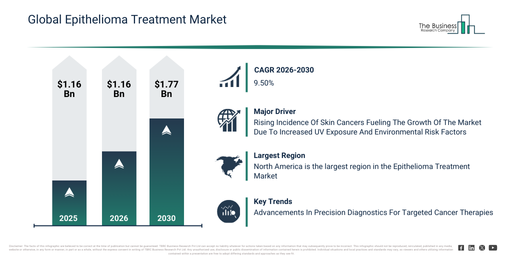
    The market size for epithelioma treatment has shown strong growth in recent years. From $5.19 billion in 2025, it is expected to reach $5.69 billion in 2026, representing a compound annual growth rate (CAGR) of 9.5%. This upward trend during the historical period can be linked to the rising incidence of epithelial tumors, the expansion of oncology treatment centers, advancements in surgical oncology techniques, increased use of radiation therapy technologies, and growing clinical research efforts focused on cancer therapies. Looking ahead, the market is forecasted to expand further, reaching $8.16 billion by 2030 with a steady CAGR of 9.5%. Growth drivers for this forecast period include heightened demand for personalized cancer treatments, increased investments in oncology drug development, wider adoption of advanced diagnostic imaging, the popularity of combination therapy regimens, and a stronger emphasis on improving patient survival outcomes. Key trends shaping the market in the coming years involve the rising use of targeted cancer therapies, expanded combination treatment approaches, integration of precision oncology diagnostics, advances in minimally invasive surgeries, and enhanced focus on early tumor detection.

    Download A Free Sample Report For Comprehensive Market Insights:

    https://www.thebusinessresearchcompany.com/sample.aspx?id=24217&type=smp

    Factors Fueling Growth in the Epithelioma Treatment Market

    An important contributor to the market’s expansion is the increasing occurrence of skin cancers globally. Skin cancer arises from uncontrolled growth of abnormal skin cells caused by unrepaired DNA damage leading to mutations. Greater exposure to ultraviolet (UV) radiation from both sunlight and tanning beds, combined with environmental issues such as ozone layer depletion, plays a significant role in the rising incidence of skin cancers. Epithelioma treatments specifically target and eliminate cancerous epithelial cells, effectively addressing the underlying cause of these cancers. For instance, in January 2024, the American Cancer Society reported an estimated 100,640 new melanoma cases in the United States alone, with approximately 59,170 in men and 41,470 in women. This rising prevalence is a key driver boosting demand for epithelioma therapies.

    Additional Drivers Shaping Market Growth

    Alongside increasing incidence rates, advancements in oncology treatment infrastructure are accelerating market expansion. More oncology centers are being established, offering state-of-the-art surgical and radiation therapies. Progress in surgical oncology techniques and the integration of newer radiation therapy technologies are improving treatment outcomes, encouraging more patients to seek care. Additionally, growing clinical research and innovation in cancer treatments are opening pathways for novel therapies. These combined factors are stimulating positive momentum in the epithelioma treatment market.

    Access The Complete Epithelioma Treatment Market Report:

    https://www.thebusinessresearchcompany.com/report/epithelioma-treatment-global-market-report

    Segment Breakdown and Expanding Categories in the Epithelioma Treatment Market

    This market is segmented based on several key criteria:

    1) Disease Type: Basal Cell Epithelioma, Squamous Cell Epithelioma, Malignant Epithelioma

    2) Treatment Type: Drug Class, Surgical Treatments, Radiation Therapy, Photodynamic Therapy, Combination Therapies

    3) Distribution Channel: Hospital Pharmacies, Retail Pharmacies, E-Commerce, Other Distribution Channels

    4) End-User: Hospitals, Specialty Clinics, Ambulatory Surgical Centers, Research and Academic Institutes

    Within these categories, further subsegments are identified:

    – Basal Cell Epithelioma includes superficial, nodular, infiltrative, morpheaform (sclerosing), and pigmented forms.

    – Squamous Cell Epithelioma covers cutaneous, oral, esophageal, pulmonary, and cervical types.

    – Malignant Epithelioma comprises epithelioid sarcoma, clear cell sarcoma, spindle cell carcinoma, adenoid cystic carcinoma, and mucoepidermoid carcinoma.

    By breaking down the market this way, stakeholders can better understand growth potentials across different treatment types and disease subcategories.

    Innovations and Emerging Trends Transforming Demand in the Epithelioma Treatment Market

    Leading companies in the epithelioma treatment sector are actively focusing on developing innovative therapies, including companion diagnostics, that aim to improve treatment precision and patient outcomes while promoting personalized medicine. Companion diagnostics are specialized tests that help identify which patients are most likely to benefit from specific treatments, thereby enhancing safety and effectiveness. For example, in November 2024, Roche Holdings AG received FDA approval for an expanded use of its PATHWAY anti-HER2/neu (4B5) rabbit monoclonal primary antibody test. This test now helps detect patients with previously treated, unresectable, or metastatic HER2-positive biliary tract cancer who may be suitable candidates for treatment with Ziihera (zanidatamab-hrii). Such advancements highlight the industry’s commitment to targeted therapies guided by reliable diagnostic tools.

    Key Players Shaping the Competitive Landscape of the Epithelioma Treatment Market

    Several prominent companies are driving innovation and competition within this market, including Pfizer Inc., F. Hoffmann-La Roche Ltd, Merck & Co. Inc., Sanofi, Bristol-Myers Squibb Company, Novartis AG, Eli Lilly and Company, Amgen Inc., Regeneron Pharmaceuticals Inc., Sun Pharmaceutical Industries Ltd., Zhejiang Hisun Pharmaceutical Co. Ltd., Verrica Pharmaceuticals Inc., Sirnaomics Inc., MediWound Ltd, Philogen SpA, PellePharm Inc., Kintor Pharmaceutical Limited, DermBiont, Transgene SA, and AiViva BioPharma Inc. These organizations are investing heavily in research and development to introduce new treatments and diagnostic options.

    Geographic Insights and Regions Leading Growth in the Epithelioma Treatment Market

    In 2025, North America held the largest market share for epithelioma treatment, owing to its advanced healthcare infrastructure and high disease prevalence. Meanwhile, the Asia-Pacific region is expected to experience the fastest growth throughout the forecast period. Other key regions covered in the market analysis include South East Asia, Western Europe, Eastern Europe, South America, the Middle East, and Africa. These geographic insights provide a broad perspective on where demand is strongest and where future opportunities are emerging globally.

    Get in touch with us:

    The Business Research Company: https://www.thebusinessresearchcompany.com/

    Americas: +1 310-496-7795

    Asia: +44 7882 955267 & +91 8897263534

    Europe: +44 7882 955267

    Email us at: marketing@tbrc.info

    Follow us on:

    LinkedIn: https://in.linkedin.com/company/the-business-research-company

    YouTube: https://www.youtube.com/channel/UC24_fI0rV8cR5DxlCpgmyFQ

    Global Market Model: https://www.thebusinessresearchcompany.com/global-market-model
  • Epigenetics Diagnostics Market Forecast Highlights Expansion From $19.29 Billion To $35.17 Billion Through 2030

    Epigenetics Diagnostics Market Forecast Highlights Expansion From $19.29 Billion To $35.17 Billion Through 2030

    Delivering more actionable and strategically valuable research, The Business Research Company’s 2026 market reports feature market attractiveness analysis, total addressable market evaluation, company benchmarking matrices, interactive Excel dashboards, expanded supply chain intelligence, emerging startup coverage, and detailed product insights.

    The epigenetics diagnostics sector is rapidly evolving, driven by breakthroughs in technology and increasing demand for personalized healthcare solutions. This market is set to experience significant growth as new advances emerge and more industries recognize the value of epigenetic insights in disease detection and treatment. Let’s explore the current market size, growth factors, key players, innovations, and regional dynamics shaping this promising field.

    Steady Increase in Epigenetics Diagnostics Market Size and Future Growth Estimates

    The epigenetics diagnostics market has seen swift expansion recently. From $16.56 billion in 2025, it is expected to rise to $19.29 billion in 2026, reflecting a strong compound annual growth rate (CAGR) of 16.5%. Historically, this growth was constrained by the limited availability of specialized epigenetic diagnostic tools and a heavy reliance on traditional molecular biology methods. However, rising awareness of epigenetic science, increasing academic and clinical research efforts, and gradual adoption of automated technologies have contributed to market development.

    Download A Free Sample Report For Comprehensive Market Insights:

    https://www.thebusinessresearchcompany.com/sample.aspx?id=27286&type=smp

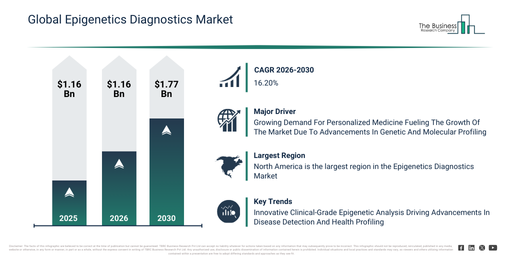
    Looking ahead, the market is forecasted to grow even faster, reaching $35.17 billion by 2030 with a CAGR of 16.2%. This anticipated surge is fueled by innovations in sequencing and epigenetic analysis, a growing focus on personalized medicine, expansion in oncology and metabolic diagnostics, adoption of cloud-based bioinformatics, and rising demand from pharmaceutical and biotechnology companies. Key trends during this period include wider use of epigenetic biomarker kits, next-generation sequencing, microarray technologies, enhanced data analysis services, and automated high-throughput platforms.

    The Rising Demand for Personalized Medicine Driving Epigenetics Diagnostics

    One of the main factors propelling growth in this market is the expanding demand for personalized medicine. This approach tailors medical treatment to an individual’s genetic profile, biological characteristics, and lifestyle, aiming to boost treatment effectiveness and minimize side effects. Advances in genetic and molecular profiling techniques have increased the feasibility and popularity of customized healthcare.

    Access The Complete Epigenetics Diagnostics Market Report:

    https://www.thebusinessresearchcompany.com/report/epigenetics-diagnostics-global-market-report

    Epigenetics diagnostics play a crucial role by identifying specific epigenetic signatures unique to each patient, enabling more precise prevention and therapy options. For example, in February 2024, the Personalized Medicine Coalition reported that the FDA approved 16 new personalized therapies for rare diseases in 2023, compared with only six approvals in 2022. This trend highlights how personalized medicine is becoming a key driver for the epigenetics diagnostics market’s expansion.

    Market Segmentation Reveals Core Areas Leading Epigenetics Diagnostics Development

    This market is divided into several important segments:

    1) Product categories include Kits and Reagents, Software and Services, and Instruments.

    2) Technologies covered range from DNA Methylation, Histone Methylation and Acetylation, Large Non-Coding RNA, microRNA modifications, to Chromatin structure analysis.

    3) Applications focus on Oncology, Metabolic Diseases, Developmental Biology, Immunology, Cardiovascular Diseases, and others.

    4) End users encompass Pharmaceutical and Biotechnology firms, Academic and Research Institutions, and Clinical Diagnostic Laboratories.

    Further subcategories detail specific product types such as DNA Methylation Kits, Histone Modification Kits, Chromatin Accessibility Kits, Bisulfite Conversion Kits, PCR reagents, antibodies, enzymes, and buffers. Software and services include data analysis tools, bioinformatics, epigenetic data interpretation, cloud storage, custom assay creation, and consulting. Instruments cover next-generation sequencers, microarray systems, PCR and qPCR machines, mass spectrometry, imaging systems, and automated liquid handling platforms.

    Innovations in Clinical-Grade Epigenetic Analysis Transform the Diagnostics Industry

    Leading companies in this market are focusing on developing cutting-edge clinical-grade epigenetic tests that improve accuracy, sensitivity, and practical application in healthcare. Clinical-grade analysis involves using validated, standardized procedures to detect epigenetic alterations reliably enough to inform clinical decisions.

    For instance, in October 2024, Singapore’s EpiMedTech introduced epiGeneComplete, a comprehensive clinical-grade test combining genetic and epigenetic analysis via next-generation sequencing and advanced DNA methylation technologies. This non-invasive saliva test, performed in CAP-accredited labs, offers high accuracy and sensitivity for profiling important health factors like aging, stress, inflammation, addiction risk, and metabolism. Designed as a flexible platform for future diagnostic uses, epiGeneComplete represents a significant step forward for routine health screenings and early disease detection.

    Top Competitors Driving Innovation and Market Expansion

    Key players shaping the epigenetics diagnostics field include F. Hoffmann-La Roche Ltd., Merck KGaA, Thermo Fisher Scientific Inc., Agilent Technologies Inc., Illumina Inc., PerkinElmer Inc., Bio-Rad Laboratories Inc., QIAGEN N.V., GeneTex Inc., Bio-Techne Corporation, Promega Corporation, New England Biolabs Incorporated, Pacific Biosciences of California Inc., Enzo Biochem Inc., Diagenode Société Anonyme, Zymo Research Corporation, Active Motif Inc., ADmit Therapeutics SL, Epigentek Group Inc., and INHERENT Biosciences Inc. These companies are investing heavily in research and product development to maintain leadership and meet evolving market demands.

    Regional Market Overview Highlights North America’s Lead and Asia-Pacific’s Rapid Growth

    In 2025, North America held the largest share of the epigenetics diagnostics market, benefiting from its strong research infrastructure and healthcare networks. Meanwhile, the Asia-Pacific region is expected to be the fastest-growing market during the forecast period, driven by rising healthcare investments, growing research activities, and increasing adoption of advanced diagnostic technologies. Other regions covered in the market analysis include South East Asia, Western Europe, Eastern Europe, South America, the Middle East, and Africa, offering a global perspective on market penetration and growth opportunities.

    Get in touch with us:

    The Business Research Company: https://www.thebusinessresearchcompany.com/

    Americas: +1 310-496-7795

    Asia: +44 7882 955267 & +91 8897263534

    Europe: +44 7882 955267

    Email us at: marketing@tbrc.info

    Follow us on:

    LinkedIn: https://in.linkedin.com/company/the-business-research-company

    YouTube: https://www.youtube.com/channel/UC24_fI0rV8cR5DxlCpgmyFQ

    Global Market Model: https://www.thebusinessresearchcompany.com/global-market-model
  • Epigenetics Market Expected To Reach $35 Billion By 2030 As Growth Accelerates At 22.3% CAGR

    Epigenetics Market Expected To Reach $35 Billion By 2030 As Growth Accelerates At 22.3% CAGR

    Enhanced with market attractiveness analysis, total addressable market evaluation, company benchmarking matrices, interactive Excel dashboards, expanded supply chain intelligence, emerging startup coverage, and detailed product insights, The Business Research Company’s 2026 market reports deliver more actionable and strategically valuable research.

    The epigenetics market has witnessed remarkable growth recently and is set to continue this upward trajectory in the coming years. Driven by advancements in research and technology, this sector is becoming increasingly vital in precision medicine and cancer treatment. Let’s explore the market’s current size, growth drivers, emerging trends, major players, and regional dynamics shaping its future.

    Rapid Expansion and Size Forecast of the Epigenetics Market

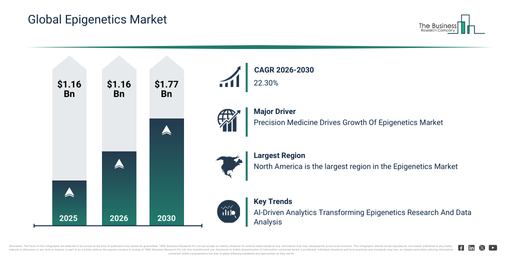
    The epigenetics market has experienced significant growth, expanding from $12.74 billion in 2025 to an estimated $15.62 billion in 2026, reflecting a compound annual growth rate (CAGR) of 22.6%. This surge during the past period results from heightened cancer research activities, the broadening scope of academic genomics studies, improved availability of advanced sequencing instruments, and an increased focus on molecular diagnostics backed by rising funding in life sciences research. Looking ahead, the market is projected to soar to $35.01 billion by 2030 at a CAGR of 22.3%, fueled by investments in precision medicine, growing acceptance of epigenetic therapies, expansion of personalized oncology, AI-powered genomic analysis, and stronger partnerships between pharmaceutical companies and research institutions. Important trends expected to influence this growth include wider use of epigenetic biomarkers in cancer, adoption of high-throughput analysis tools, increasing demand for DNA methylation assays, advances in drug discovery based on epigenetics, and better integration of bioinformatics platforms.

    Download A Free Sample Report For Comprehensive Market Insights:

    https://www.thebusinessresearchcompany.com/sample.aspx?id=7070&type=smp

    Precision Medicine as a Major Catalyst in Epigenetics Market Growth

    An intensified emphasis on precision medicine is one of the primary factors driving the epigenetics market forward. Precision medicine tailors treatments based on an individual’s genetic makeup, environmental factors, and lifestyle, enabling more personalized and effective healthcare approaches. Within epigenetics, this means utilizing unique epigenetic profiles alongside genetic data to design targeted treatment strategies for patients. For example, in March 2024, Novotech, an Australian biotechnology firm, reported that in 2023, 43% of the 217 oncology therapies approved by the FDA were precision oncology treatments, with 78 of these involving DNA or next-generation sequencing (NGS) biomarkers. Such data highlights how the focus on precision medicine is instrumental in accelerating epigenetics market expansion.

    Segmentation Highlights Uncovering Key Opportunities in the Epigenetics Market

    This report breaks down the epigenetics market by several key segments:

    1) Product categories including reagents, enzymes, instruments, and kits;

    2) Technology types such as DNA methylation, histone methylation, histone acetylation, large noncoding RNA, microRNA modification, and chromatin structures;

    3) Applications across oncology, metabolic diseases, developmental biology, immunology, cardiovascular disorders, and others;

    4) End users comprising academic and research institutes, pharmaceutical and biotechnology firms, contract research organizations, and additional user groups.

    Further subcategories dive deeper, for instance, reagents include DNA methylation reagents, histone modification reagents, RNA modification reagents, and enzymes; enzymes are divided into DNA methyltransferases, histone acetyltransferases, and histone deacetylases; instruments cover sequencers, PCR machines, microarray platforms, and mass spectrometers; kits include DNA methylation kits, chromatin immunoprecipitation (ChIP) kits, RNA-Seq kits, and bisulfite conversion kits.

    Access The Complete Epigenetics Market Report:

    https://www.thebusinessresearchcompany.com/report/epigenetics-global-market-report

    How AI and Bioinformatics Are Influencing Epigenetics Market Trends

    Leading companies in the epigenetics sector are increasingly leveraging artificial intelligence (AI) to gain a competitive advantage by enhancing data analytics capabilities. AI-driven analytics involve using advanced AI technologies to automatically process and interpret vast quantities of data, accelerating research and discovery. For example, in July 2023, FOXO Technologies, a US-based company, launched Bioinformatics Services designed to transform epigenetic data analysis. Their platform offers a range of customizable data solutions tailored to the needs of academic institutions, healthcare providers, and pharmaceutical researchers. By employing innovative bioinformatic tools, FOXO aims to improve the speed and accuracy of data processing, helping clients advance their understanding of complex diseases more efficiently.

    Top Companies Influencing the Direction of the Epigenetics Market

    Key players dominating the epigenetics industry include Illumina Inc., Thermo Fisher Scientific, Merck Millipore, Active Motif, Abcam PLC, Qiagen NV, Diagenode SA, CellCentric Ltd., Chroma Medicine Inc., Constellation Pharmaceuticals Inc., Domainex Ltd., Eisai Co. Ltd., Epigen Biosciences Inc., EpigenDx Inc., Epigenomics AG, Epizyme Inc., Gilead Sciences Inc., GlaxoSmithKline plc, Janssen Pharmaceuticals Inc., MDxHealth SA, Novartis AG, OncoDNA SA, Oryzon Genomics S.A., Pfizer Inc., Syndax Pharmaceuticals Inc., and Valirx plc. These organizations are at the forefront of innovation, research, and market expansion within this field.

    Regional Patterns Revealing Growth Hotspots in the Epigenetics Market

    In 2025, North America held the largest share of the epigenetics market, driven by strong research infrastructure and funding. Looking toward the future, the Asia-Pacific region is expected to exhibit the fastest growth during the forecast period, fueled by increasing investments, expanding research activities, and growing healthcare awareness. The market report covers key regions including Asia-Pacific, South East Asia, Western Europe, Eastern Europe, North America, South America, the Middle East, and Africa, offering a broad perspective on global expansion trends.

    Get in touch with us:

    The Business Research Company: https://www.thebusinessresearchcompany.com/

    Americas: +1 310-496-7795

    Asia: +44 7882 955267 & +91 8897263534

    Europe: +44 7882 955267

    Email us at: marketing@tbrc.info

    Follow us on:

    LinkedIn: https://in.linkedin.com/company/the-business-research-company

    YouTube: https://www.youtube.com/channel/UC24_fI0rV8cR5DxlCpgmyFQ

    Global Market Model: https://www.thebusinessresearchcompany.com/global-market-model
  • Hospital Supplies Market Forecast Reveals Where Future Industry Value Will Be Created

    Hospital Supplies Market Forecast Reveals Where Future Industry Value Will Be Created

    Through market attractiveness analysis, total addressable market evaluation, company benchmarking matrices, interactive Excel dashboards, expanded supply chain intelligence, emerging startup coverage, and detailed product insights, The Business Research Company’s 2026 market reports provide more actionable and strategically valuable research.

    The hospital supplies market has seen remarkable growth recently, driven by expanding healthcare infrastructure and increasing patient needs. As healthcare systems evolve, the demand for medical supplies continues to rise, reflecting broader trends in hospital admissions, surgical procedures, and product innovations. Let’s explore the market’s size, key growth drivers, segment breakdowns, strategic trends, and competitive landscape to understand its future trajectory.

    Hospital Supplies Market Size and Expected Growth Through 2030

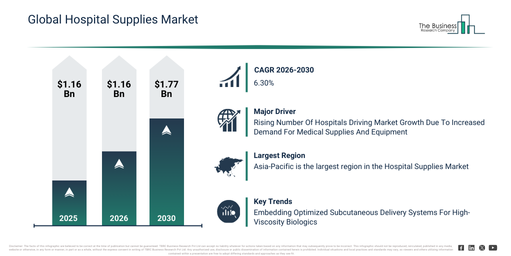
    The market for hospital supplies has grown steadily and is projected to continue expanding. From $54.19 billion in 2025, it is expected to reach $57.29 billion in 2026, growing at a compound annual growth rate (CAGR) of 5.7%. This historical growth has been largely driven by the expansion of healthcare facilities, increased hospital admissions, widespread use of single-use medical products, rising surgical interventions, and advancements in supply management systems within hospitals. Looking ahead, the market is anticipated to grow even faster, reaching $73.14 billion by 2030 with a CAGR of 6.3%. Factors fueling this future growth include greater investments in healthcare modernization, heightened demand for eco-friendly hospital supplies, the rise of outpatient and home healthcare services, adoption of digital inventory systems, and increased focus on patient safety and hygiene standards. Key trends shaping the market include growing use of disposable medical supplies, advanced sterilization techniques, enhanced infection prevention products, expanded modular operating room equipment, and improved supply chain reliability.

    Download A Free Sample Report For Comprehensive Market Insights:

    https://www.thebusinessresearchcompany.com/sample.aspx?id=1973&type=smp

    Increasing Number of Hospitals as a Major Market Driver

    The rising number of hospitals globally is a significant factor propelling the hospital supplies market forward. Hospitals serve as essential facilities offering medical and surgical care to patients, and their growth is driven by aging populations, higher demand for healthcare services, and longer patient stays, all of which require expanded and updated infrastructure. Hospitals depend on a wide range of medical supplies and equipment to provide quality care. For instance, in May 2023, the American Hospital Association (AHA) reported an increase in the total number of hospitals in the U.S. to 6,129, up from 6,093 in 2022. Moreover, total hospital admissions climbed to 34,011,386 in 2023 from 33,356,853 the previous year. This upward trend in hospital numbers and admissions is expected to continue driving demand for hospital supplies.

    Additional Factors Supporting Market Growth

    Beyond the sheer number of hospitals, various other factors support the expansion of the hospital supplies market. These include technological advancements, regulatory support for improved healthcare infrastructure, and the increasing emphasis on infection control and patient hygiene. Growing investments in digital inventory management and supply chain optimization further enhance service delivery and efficiency, creating additional market opportunities.

    Access The Complete Hospital Supplies Market Report:

    https://www.thebusinessresearchcompany.com/report/hospital-supplies-global-market-report

    The Hospital Supplies Market Segmentation and Its Diverse Components

    This report segments the hospital supplies market according to several key categories:

    1) Supply Type: Disposable Hospital Supplies, Sterilization Equipment and Disinfectants, Mobility Aids and Transportation Equipment, Operating Room Equipment

    2) Product Type: Instruments or Equipment, Disposables

    3) End User: Hospitals and Clinics, Diagnostic Laboratories, Other End Users

    4) Type of Expenditure: Public, Private

    Further detailed subcategories include:

    – Disposable Hospital Supplies such as surgical masks, gloves, drapes and gowns, IV consumables, and wound care products

    – Sterilization Equipment and Disinfectants including autoclaves, disinfectants and sanitizers, sterilization indicators, and UV sterilizers

    – Mobility Aids and Transportation Equipment such as wheelchairs, walkers, crutches, patient lifts, and stretchers

    – Operating Room Equipment including surgical tables, operating room lights, surgical instruments, anesthesia machines, and patient monitors

    Emerging Technological Trends Driving Innovation in Hospital Supplies

    Leading companies in the hospital supplies sector are focusing on innovative injectable delivery systems designed for next-generation biologics, particularly those with high viscosity, to reduce injection force and enhance patient comfort. These advancements enable pharmaceutical developers to utilize more concentrated therapies safely and effectively via subcutaneous administration. For example, in September 2024, BD (Becton, Dickinson & Co.) introduced the BD Neopak XtraFlow syringe, featuring an 8 mm needle and a thinner-wall cannula optimized for reducing injection force and administration time for high-viscosity drugs.

    Expansion of Manufacturing Capabilities to Meet Growing Demand

    To keep up with rising demand, BD also expanded production capacity at its Le Pont-de-Claix, France facility, adding a high-volume manufacturing line that increases output by seven times. By lowering the mechanical challenges associated with injecting viscous biologics, BD supports the delivery of more concentrated, high-dose therapies such as antibodies and GLP-1 formulations, improving patient experience and treatment efficacy.

    Key Players Shaping the Hospital Supplies Market

    The hospital supplies market features a range of influential companies driving the industry forward. Prominent names include Becton Dickinson and Company, B. Braun Melsungen AG, Steris plc, Baxter International Inc., Stryker Corporation, Cardinal Health Inc., Hill-Rom Holdings Inc., Terumo Corporation, 3M Company, McKesson Corporation, Cencora Inc., GE HealthCare Technologies Inc., Koninklijke Philips NV, Dentsply Sirona Inc., Masimo Corporation, Olympus Corporation, ResMed Inc., Smith & Nephew plc, The Cooper Companies Inc., Teleflex Incorporated, West Pharmaceutical Services Inc., Straumann Group, and Fresenius Medical Care AG & Co KGaA.

    Regional Market Leadership and Emerging Areas

    In 2025, Asia-Pacific led the global hospital supplies market in terms of revenue, followed by North America as the second-largest region. The report also examines other key regions, including South East Asia, Western Europe, Eastern Europe, South America, the Middle East, and Africa, providing a comprehensive view of the global market dynamics and growth prospects.

    Get in touch with us:

    The Business Research Company: https://www.thebusinessresearchcompany.com/

    Americas: +1 310-496-7795

    Asia: +44 7882 955267 & +91 8897263534

    Europe: +44 7882 955267

    Email us at: marketing@tbrc.info

    Follow us on:

    LinkedIn: https://in.linkedin.com/company/the-business-research-company

    YouTube: https://www.youtube.com/channel/UC24_fI0rV8cR5DxlCpgmyFQ

    Global Market Model: https://www.thebusinessresearchcompany.com/global-market-model
  • Hospital Stretchers Market Growth Through 2030 Creates New Strategic Opportunities

    Hospital Stretchers Market Growth Through 2030 Creates New Strategic Opportunities

    Delivering more actionable and strategically valuable research, The Business Research Company’s 2026 market reports feature market attractiveness analysis, total addressable market evaluation, company benchmarking matrices, interactive Excel dashboards, expanded supply chain intelligence, emerging startup coverage, and detailed product insights.

    The hospital stretchers market is experiencing consistent growth, driven by increasing healthcare demands and advancements in medical equipment. As hospitals focus on improving patient care and operational efficiency, the demand for innovative stretcher solutions is rising steadily. Below is an in-depth look at market size, key drivers, product segments, trends, leading companies, and regional insights shaping this sector.

    Hospital Stretchers Market Size and Expected Growth Trajectory

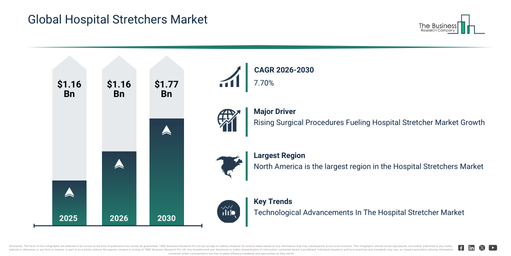
    The market for hospital stretchers has seen significant expansion recently, with its value projected to rise from $2.98 billion in 2025 to $3.19 billion in 2026, representing a compound annual growth rate (CAGR) of 7.1%. This rise during the historical period is mainly due to growing emergency room visits, the expansion of hospital facilities, an increase in trauma and accident cases, a greater need for patient mobility solutions, and advancements in medical transport equipment. Looking ahead, the market is forecasted to reach $4.29 billion by 2030, with an enhanced CAGR of 7.7%. This growth is expected to be fueled by escalating investments in emergency medical services, heightened emphasis on reducing staff injuries, expansion of ambulance fleets, increased adoption of powered mobility devices, and rising demand for sophisticated patient handling technologies. Key trends influencing the market include a shift towards motorized and powered stretchers, specialized bariatric transport options, ergonomic and lightweight designs, expansion in emergency and trauma care applications, and improved safety locking mechanisms.

    Download A Free Sample Report For Comprehensive Market Insights:

    https://www.thebusinessresearchcompany.com/sample.aspx?id=10598&type=smp

    Factors Contributing to Growth in the Hospital Stretchers Market

    An important driver behind the hospital stretcher market expansion is the rising volume of surgical procedures. Surgical interventions, performed by qualified healthcare professionals to treat or diagnose medical conditions, rely heavily on hospital stretchers to efficiently move patients through preoperative, operative, and postoperative stages. For instance, in December 2023, the UK Health Security agency reported a notable 10.2% increase in mandatory orthopedic procedure submissions, totaling 102,025 cases for the fiscal year 2022-2023. More broadly, surveillance data indicated an overall 8.4% rise in surgical activity across various categories compared to the previous year. These trends highlight how increasing surgical workloads are directly supporting demand for reliable and advanced hospital stretchers.

    Breakdown of Hospital Stretchers by Type, Technology, and Application

    The hospital stretchers market is categorized into several key segments to reflect its diverse offerings:

    1) Product Type: Fixed Height Stretchers, Adjustable Stretchers, Bariatric Stretchers, and Other Types

    2) Technology: Motorized Stretchers and Non-Motorized Stretchers

    3) Application: Intra-Hospital use, Pediatric Care, Emergency Departments, Radiology Departments, and Other uses

    Access The Complete Hospital Stretchers Market Report:

    https://www.thebusinessresearchcompany.com/report/hospital-stretchers-global-market-report

    Further subcategories provide more detailed classification:

    – Fixed Height Stretchers include Standard and Foldable models

    – Adjustable Stretchers cover Manual and Electric variants

    – Bariatric Stretchers consist of Heavy-Duty and Wider designs

    – Other product types encompass Neonatal and Emergency Transport Stretchers

    Innovations and Technological Advances Driving Market Transformation

    Leading companies in the hospital stretcher sector are focusing on integrating smart technologies to enhance patient care and operational efficiency. Smart stretchers are advanced medical devices equipped with features that improve monitoring, safety, and workflow in healthcare environments. For example, in October 2023, Stryker Corporation introduced Prime Connect, a connected hospital stretcher designed to enhance fall prevention protocols. It includes both visual and audible bed exit alarms and integrates seamlessly with hospital communication systems such as nurse call dome lights. Additionally, Prime Connect offers wireless transmission of vital patient data in near real-time to nursing staff via devices like the Vocera Badge and management dashboards. This innovation supports more efficient workflows and continuous patient monitoring, ultimately improving safety and care quality.

    Key Players and Competitors in the Hospital Stretchers Market

    The hospital stretchers market features a competitive landscape with numerous prominent companies, including:

    Stryker Corporation, TransMotion Medical Inc., Mac Medical Inc., Narang Medical Limited, ROYAX s.r.o., Anetic Aid Ltd., LINET Group SE, Fu Shun Hsing Technology Co. Ltd., Venture Medical Technologies Inc., Zhangjiagang Xiehe Medical Instrument Co. Ltd., Advin Healthcare Pty. Ltd., Joson Care Enterprise Co. Ltd., Desco Medical Limited, Invacare Corporation, Paramount Bed Holdings Co. Ltd., Stiegelmeyer GmbH & Co. KG, Joerns Healthcare LLC, Spencer S.p.A., Midmark Corporation, Howard Wright Limited, and Getinge AB.

    Regional Distribution and Growth Potential in the Hospital Stretchers Market

    In 2025, North America held the largest share of the hospital stretchers market. However, the Asia-Pacific region is expected to emerge as the fastest-growing market over the forecast period. The report covers key geographic regions including Asia-Pacific, South East Asia, Western Europe, Eastern Europe, North America, South America, the Middle East, and Africa, providing a comprehensive overview of global market dynamics and regional opportunities.

    Get in touch with us:

    The Business Research Company: https://www.thebusinessresearchcompany.com/

    Americas: +1 310-496-7795

    Asia: +44 7882 955267 & +91 8897263534

    Europe: +44 7882 955267

    Email us at: marketing@tbrc.info

    Follow us on:

    LinkedIn: https://in.linkedin.com/company/the-business-research-company

    YouTube: https://www.youtube.com/channel/UC24_fI0rV8cR5DxlCpgmyFQ

    Global Market Model: https://www.thebusinessresearchcompany.com/global-market-model