Month: June 2026

  • Home Medical Equipment (HME) Devices Market Growth Is Accelerating As Industry Transformation Continues

    Home Medical Equipment (HME) Devices Market Growth Is Accelerating As Industry Transformation Continues

    Through market attractiveness analysis, total addressable market evaluation, company benchmarking matrices, interactive Excel dashboards, expanded supply chain intelligence, emerging startup coverage, and detailed product insights, The Business Research Company’s 2026 market reports provide more actionable and strategically valuable research.

    The home medical equipment (HME) devices sector has witnessed significant growth recently, driven by several healthcare and demographic trends. As more people seek convenient healthcare solutions at home, this market is poised for continued expansion in the coming years. Let’s explore the current market size, key growth drivers, segment details, major players, and regional outlook shaping the future of HME devices.

    Home Medical Equipment Devices Market Size and Growth Forecast

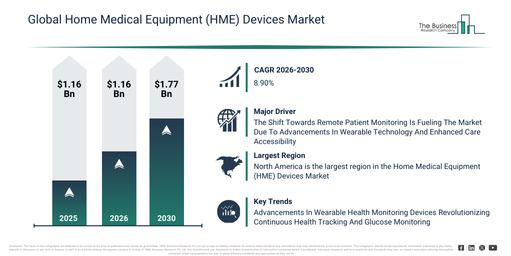
    The home medical equipment devices market has shown strong momentum, with its value increasing from $39.9 billion in 2025 to $43.47 billion in 2026. This rise reflects an impressive compound annual growth rate (CAGR) of 8.9%. Looking ahead, this market is expected to reach $61.05 billion by 2030, maintaining the same CAGR of 8.9%. This growth is fueled by factors like rising investment in digital health technologies, the growing popularity of home-based care models, enhanced telehealth integration, a stronger emphasis on preventive healthcare, and increasing use of smart medical devices. Forecast trends include a surge in remote patient monitoring products, demand for portable and easy-to-use equipment, expansion of connected healthcare solutions, incorporation of AI-powered diagnostics, and a heightened focus on patient comfort and independence.

    Download A Free Sample Report For Comprehensive Market Insights:

    https://www.thebusinessresearchcompany.com/sample.aspx?id=24239&type=smp

    Key Factors Encouraging Growth in the Home Medical Equipment Market

    One major driver of growth is the shift towards remote patient monitoring (RPM). RPM uses technology to supervise patients’ health from afar, often outside traditional healthcare environments. This approach involves devices such as wearable sensors and mobile applications that collect vital health data—including heart rate, blood pressure, and glucose levels—and transmit it to healthcare professionals for analysis. The rising adoption of wearable tech enables continuous, real-time tracking, which enhances management of chronic illnesses and overall patient care beyond clinical settings.

    Remote patient monitoring relies heavily on home medical equipment, allowing individuals to monitor their health conveniently from home. This capability helps doctors track patient progress, adjust treatment plans, and intervene when necessary without requiring frequent in-person visits. For example, in April 2024, Insurance Thought Leadership Inc., a US-based insurance research firm, reported that telehealth usage soared to over 53 million Medicare participants, with 91% of healthcare systems offering telehealth programs. This growing reliance on remote healthcare solutions is a significant catalyst for expanding the home medical equipment devices market.

    Access The Complete Home Medical Equipment (HME) Devices Market Report:

    https://www.thebusinessresearchcompany.com/report/home-medical-equipment-hme-devices-global-market-report

    Detailed Segmentation of the Home Medical Equipment Devices Market

    The home medical equipment market is categorized into various segments to capture its diverse product range and applications:

    1) By Product Type: Oxygen Equipment, Mobility Assistive Devices, Respiratory Therapy Equipment, Other Products

    2) By Application: Home Healthcare, Long-term Care, Other Applications

    3) By Distribution Channel: Online Retail, Hospital Pharmacies, Retail Pharmacies, Other Distribution Channels

    4) By End-User: Adults, Pediatric, Geriatric

    Further breakdown includes:

    – Oxygen Equipment: Oxygen Concentrators, Oxygen Cylinders, Liquid Oxygen Systems, Oxygen Masks, Oxygen Regulators

    – Mobility Assistive Devices: Wheelchairs, Walking Aids, Scooters, Lift Chairs, Stair Lifts

    – Respiratory Therapy Equipment: Ventilators, CPAP Machines, BiPAP Machines, Nebulizers, Inhalers

    – Other Products: Home Dialysis Equipment, Blood Pressure Monitors, Temperature Monitors, Pulse Oximeters, Patient Lifting Equipment

    Innovations and Trends Defining the Future of HME Devices

    Leading companies in the HME devices market are focusing heavily on developing advanced wearable health monitoring products that offer precise, continuous tracking of vital signs. These innovations aim to improve patient outcomes by providing real-time health information in a user-friendly format. For instance, in September 2024, Abbott Laboratories launched Lingo, the first over-the-counter continuous glucose monitoring (CGM) system in the US. Designed for adults not requiring insulin therapy, Lingo uses a small adhesive sensor that syncs with a smartphone app, allowing easy and accessible glucose monitoring for individuals managing prediabetes or maintaining general health awareness.

    Key Players Driving Competition in the Home Medical Equipment Market

    The home medical equipment devices landscape features several prominent companies, including Cardinal Health Inc., Abbott Laboratories, Medtronic plc, 3M Health Care, Medline Industries Inc., Fresenius Medical Care AG & Co. KGaA, Becton Dickinson and Company, Koninklijke Philips N.V., Stryker Corporation, GE HealthCare, Baxter International Inc., Smith & Nephew, ResMed Inc., Fisher and Paykel Healthcare Corporation Limited, Rotech Healthcare Inc., Invacare Corporation, Sunrise Medical LLC, Hollister Incorporated, B. Braun SE, Omron Healthcare Inc., and Nidek Medical Products Inc.

    Geographic Distribution and Regional Growth Opportunities in the HME Devices Market

    In 2025, North America held the largest share of the home medical equipment devices market. Meanwhile, the Asia-Pacific region is forecasted to experience the fastest growth in the coming years. The market analysis also covers key regions such as South East Asia, Western Europe, Eastern Europe, South America, the Middle East, and Africa, providing a global perspective on emerging opportunities and market dynamics.

    Get in touch with us:

    The Business Research Company: https://www.thebusinessresearchcompany.com/

    Americas: +1 310-496-7795

    Asia: +44 7882 955267 & +91 8897263534

    Europe: +44 7882 955267

    Email us at: marketing@tbrc.info

    Follow us on:

    LinkedIn: https://in.linkedin.com/company/the-business-research-company

    YouTube: https://www.youtube.com/channel/UC24_fI0rV8cR5DxlCpgmyFQ

    Global Market Model: https://www.thebusinessresearchcompany.com/global-market-model
  • Home Medical Alert Systems Market Outlook Highlights The Next Major Growth Opportunities

    Home Medical Alert Systems Market Outlook Highlights The Next Major Growth Opportunities

    Delivering more actionable and strategically valuable research, The Business Research Company’s 2026 market reports feature market attractiveness analysis, total addressable market evaluation, company benchmarking matrices, interactive Excel dashboards, expanded supply chain intelligence, emerging startup coverage, and detailed product insights.

    The home medical alert systems sector is experiencing swift expansion, driven by advances in technology and growing awareness of in-home safety for vulnerable populations. As the elderly population rises and smart technology becomes more integrated into healthcare, this market is set to see remarkable growth in the coming years. Let’s explore the latest market size, key growth factors, technological trends, major players, and regional dynamics shaping this industry.

    Home Medical Alert Systems Market Size and Projected Growth

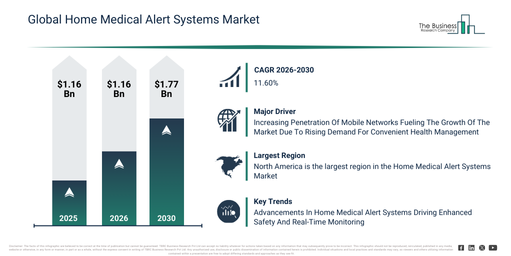
    The market for home medical alert systems has expanded rapidly over recent years. It is projected to increase from $4.4 billion in 2025 to $4.93 billion in 2026, reflecting a compound annual growth rate (CAGR) of 11.9%. This growth during the historical period has been largely driven by the rising elderly population, reliance on landline-based personal emergency response systems (PERS), limited mobile connectivity in earlier years, increasing awareness of safety within the home, and the development of simple emergency pendant devices. Looking ahead, the market is expected to reach $7.65 billion by 2030, growing at a CAGR of 11.6%. Factors contributing to this forecasted surge include the adoption of smartphone-based and AI-powered alert applications, integration with smart home systems, an increasing prevalence of chronic diseases, advancements in wearable technologies, and the expansion of assisted living and nursing facilities.

    Download A Free Sample Report For Comprehensive Market Insights:

    https://www.thebusinessresearchcompany.com/sample.aspx?id=24562&type=smp

    Rising Mobile Network Penetration Boosting Market Demand

    One of the key drivers propelling the home medical alert systems market is the growing penetration of mobile networks globally. Mobile networks enable wireless communication and internet access through radio waves, connecting devices seamlessly. The rising demand for internet access in both urban and rural regions fuels this expansion, which in turn supports the functionality of mobile-dependent medical alert systems. For example, in February 2025, the GSM Association reported that there were around 5.8 billion unique mobile subscribers worldwide, representing a 71% penetration rate. This figure is expected to climb to 6.5 billion by 2030. Increased mobile network availability is therefore a critical factor encouraging wider adoption of home medical alert devices.

    Expansion of Awareness and Technology Adoption Creating Opportunities

    Growing awareness about in-home safety and the increasing aging population have prompted more users to seek reliable medical alert solutions. Simultaneously, technological progress in wearable alert devices and smartphone applications is creating new opportunities for market expansion. High demand for features such as GPS tracking, fall detection, and integration with telehealth services are shaping the future landscape. Furthermore, subscription-based and pay-as-you-go service models are becoming more popular, along with efforts to develop user-friendly interfaces that enhance accessibility for seniors and disabled individuals.

    Access The Complete Home Medical Alert Systems Market Report:

    https://www.thebusinessresearchcompany.com/report/home-medical-alert-systems-global-market-report

    Market Segmentation Highlighting Diverse Product and Service Offerings

    The home medical alert systems market is broadly segmented to cover a variety of product types, service models, applications, distribution channels, and end users. Product types include Personal Emergency Response Systems (PERS), Wearable Alert Systems, Smartphone-Based Alert Systems, and In-Home Alert Systems. Service models consist of subscription-based services, one-time purchase options, bundled packages, and pay-as-you-go plans. Applications span home usage, nursing homes, assisted living facilities, hospices, and other settings. Distribution occurs through online retailers, medical equipment stores, direct sales, and healthcare providers. Key end users encompass seniors, disabled persons, patients with chronic diseases, and other groups in need of emergency monitoring. Further subcategories break down PERS into landline-based, cellular-based, GPS-enabled, two-way voice communication, and fall detection-integrated systems. Wearable alert devices include medical alert smartwatches, pendants, wristbands, necklaces, and clip-on sensors. Smartphone-based systems feature dedicated medical alert apps, hybrid smartphone-wearable combos, AI-powered emergency response apps, family-connected apps, and GPS tracking applications. In-home alert devices cover wall-mounted emergency buttons, bedside alert systems, voice-activated assistants, motion sensor alarms, and smart home-integrated medical alerts.

    Innovations in AI and Connectivity Transforming the Market

    Major players in this sector are increasingly incorporating artificial intelligence (AI) technologies to improve response time, safety, and personalization. AI-powered fall detection, for instance, uses sophisticated algorithms to accurately identify falls and notify caregivers immediately, reducing false alarms and speeding up emergency responses. A notable example is LogicMark’s November 2024 launch of the Freedom Alert Max, a cutting-edge device combining AI fall detection, GPS tracking, and emergency video calling. This system offers seamless mobile app connectivity and round-the-clock US-based professional monitoring, significantly enhancing the independence and safety of seniors and vulnerable individuals.

    Key Players Driving the Home Medical Alert Systems Industry

    The competitive landscape of the home medical alert systems market includes several leading companies, such as ADT Inc., Connect America LLC, Lifeline Systems Pvt. Ltd., LifeStation Inc., Medical Guardian LLC, LifeFone Inc., AlertOne Services LLC, Life Alert Emergency Response Inc., Rescue Alert of California, MyNotifi by MedHab Inc., Bay Alarm Medical, SafeGuardian LLC, LifeCall Medical Alert Systems, Senior Safety Medical Alert, AlertCare Medical Alert Systems, LifeSignals Group Inc., LogicMark Inc., ResponseNow Medical Alert Systems, Rescue Touch LLC, and Vital Alert Communication Inc.

    Regional Market Share and Growth Outlook

    In 2025, North America emerged as the dominant region in the home medical alert systems market, accounting for the largest revenue share. However, the Asia-Pacific region is expected to register the fastest growth during the forecast period. The market analysis covers key geographical areas, including Asia-Pacific, South East Asia, Western Europe, Eastern Europe, North America, South America, the Middle East, and Africa, providing a comprehensive view of global trends and opportunities in this sector.

    Get in touch with us:

    The Business Research Company: https://www.thebusinessresearchcompany.com/

    Americas: +1 310-496-7795

    Asia: +44 7882 955267 & +91 8897263534

    Europe: +44 7882 955267

    Email us at: marketing@tbrc.info

    Follow us on:

    LinkedIn: https://in.linkedin.com/company/the-business-research-company

    YouTube: https://www.youtube.com/channel/UC24_fI0rV8cR5DxlCpgmyFQ

    Global Market Model: https://www.thebusinessresearchcompany.com/global-market-model
  • Home Healthcare Equipment Market Trends And Growth Drivers Point To Strong Future Potential

    Home Healthcare Equipment Market Trends And Growth Drivers Point To Strong Future Potential

    Enhanced with market attractiveness analysis, total addressable market evaluation, company benchmarking matrices, interactive Excel dashboards, expanded supply chain intelligence, emerging startup coverage, and detailed product insights, The Business Research Company’s 2026 market reports deliver more actionable and strategically valuable research.

    The home healthcare equipment market is experiencing substantial growth, driven by evolving healthcare needs and technological advancements. With an aging population and rising chronic diseases, more individuals are seeking medical care within the comfort of their homes. This overview dives into the market size, key drivers, trends, competitive landscape, and regional insights shaping the future of home healthcare equipment.

    Significant Growth in the Home Healthcare Equipment Market Size

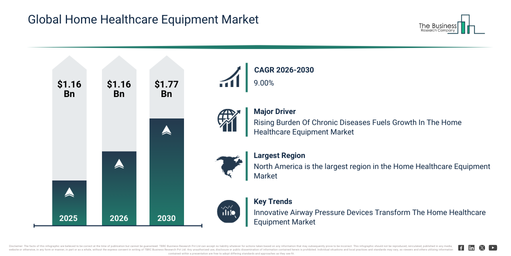
    The home healthcare equipment market has shown impressive growth over recent years and is projected to continue expanding rapidly. It is expected to increase from $37.83 billion in 2025 to $41.25 billion in 2026, marking a compound annual growth rate (CAGR) of 9.0%. This upward trend is supported by a growing prevalence of chronic illnesses, an expanding elderly population, rising healthcare costs, greater acceptance of home-based care models, and improved access to portable medical devices. Looking ahead, the market is forecast to reach $58.15 billion by 2030, maintaining the same CAGR of 9.0%. Factors behind this sustained expansion include the rising demand for telehealth-enabled services, wider adoption of smart medical devices, development of value-based healthcare models, increased emphasis on preventive home healthcare, and ongoing innovations in connected health technologies. Emerging trends such as remote patient monitoring, growth in home diagnostic tools, and enhanced patient-centric care equipment also play a key role in driving market growth.

    Download A Free Sample Report For Comprehensive Market Insights:

    https://www.thebusinessresearchcompany.com/sample.aspx?id=7867&type=smp

    The Impact of Chronic Diseases on Market Expansion

    One of the main forces propelling the home healthcare equipment market is the high burden of chronic diseases worldwide. Chronic conditions, which last a year or longer and often require continuous medical attention, limit daily activities and demand ongoing management. Diseases like heart disease, cancer, diabetes, and obesity are common examples. Home healthcare equipment offers essential tools for patients to monitor their health, receive treatments, and improve their quality of life without frequent hospital visits. For instance, in June 2024, the UK’s National Health Service reported that 3,615,330 people registered with general practitioners were diagnosed with non-diabetic hyperglycemia or pre-diabetes in 2023. This reflects an 18% rise compared to 2022’s 3,065,825 cases, highlighting the growing need for home-based healthcare solutions in managing chronic illnesses.

    Growing Acceptance of Home-Based Care Models Boosts Market Demand

    Alongside chronic disease prevalence, greater acceptance and adoption of home-based healthcare models are substantially contributing to market growth. Many patients and healthcare providers are recognizing the clinical and cost benefits of delivering care at home. Portable and user-friendly medical devices allow for continuous monitoring and therapy outside traditional healthcare settings, enhancing convenience while reducing overall expenses. This shift is further supported by advancements in telehealth and connected health technologies, enabling remote consultations and real-time data sharing between patients and clinicians.

    Access The Complete Home Healthcare Equipment Market Report:

    https://www.thebusinessresearchcompany.com/report/home-healthcare-equipment-global-market-report

    Diverse Product and Application Segments Defining the Market

    The home healthcare equipment market is segmented across various dimensions to capture the full scope of offerings and applications. Product-wise, it includes blood glucose monitors, blood pressure monitors, rehabilitation equipment, and other devices such as thermometers, nebulizers, and pulse oximeters. Service segments cover rehabilitation, infusion therapy, respiratory therapy, and pregnancy care. Applications span diagnostics and monitoring, therapeutics, care and rehabilitation, and other medical uses. End users range from hospitals, clinics, and diagnostic labs to research centers and home care settings. Further subcategories break down products into types such as glucometers, continuous glucose monitors (CGMs), digital and manual blood pressure monitors, mobility aids, exercise equipment, and home modification products.

    Emerging Innovations and Advanced Devices Shaping Market Trends

    Leading companies in the home healthcare equipment industry are increasingly focusing on launching advanced respiratory support devices to stay competitive. These devices deliver precise airway pressure to assist patients with conditions like sleep apnea and respiratory failure. For example, in July 2024, US-based Varon introduced the Sunnygrand series, which includes cutting-edge CPAP (continuous positive airway pressure) and BiPAP (bilevel positive airway pressure) machines. Equipped with intelligent algorithms, these devices adapt to users’ breathing patterns, optimizing airflow and improving sleep quality. CPAP devices maintain continuous airflow to keep airways open, making them the standard treatment for obstructive sleep apnea, while BiPAP machines offer variable pressure levels for inhalation and exhalation, providing a more comfortable option for individuals with complex respiratory needs.

    Key Industry Players Driving the Home Healthcare Equipment Market

    The competitive landscape of this market features several prominent companies, including LifeScan Inc., Microlife Corporation, A&D Company Limited, Abbott Laboratories, Panasonic Corp., Jiangsu Yuyue Medical Equipment & Supply Co. Ltd., Sannuo Hong Kong Limited Company, Insulet Corporation, Phonak Holding AG, William Demant Holding AS, Invacare Holdings Corporation, 3M Company, ARKRAY Inc., Apex Ltd., ApiJect Systems Corp., B. Braun Melsungen AG, Baxter International Inc., Becton Dickinson and Company, Bigfoot Biomedical Inc., Cardinal Health Inc., and GE Healthcare Technologies Inc. These organizations are actively innovating and expanding their product portfolios to meet growing demands.

    Regional Overview of the Home Healthcare Equipment Market

    In 2025, North America maintained its position as the largest regional market for home healthcare equipment. However, the report highlights key geographic regions including Asia-Pacific, Southeast Asia, Western Europe, Eastern Europe, South America, the Middle East, and Africa, each presenting distinct growth opportunities. The Asia-Pacific region, in particular, is anticipated to witness rapid expansion due to increasing healthcare infrastructure investments and rising patient awareness about home-based care.

    In summary, the home healthcare equipment market is set for sustained growth fueled by chronic disease management, technological innovation, and shifting care paradigms favoring home treatment. With a broad range of products and services, supported by leading industry players and expanding regional prospects, this market is poised for significant advancements through 2030.

    Get in touch with us:

    The Business Research Company: https://www.thebusinessresearchcompany.com/

    Americas: +1 310-496-7795

    Asia: +44 7882 955267 & +91 8897263534

    Europe: +44 7882 955267

    Email us at: marketing@tbrc.info

    Follow us on:

    LinkedIn: https://in.linkedin.com/company/the-business-research-company

    YouTube: https://www.youtube.com/channel/UC24_fI0rV8cR5DxlCpgmyFQ

    Global Market Model: https://www.thebusinessresearchcompany.com/global-market-model
  • Home Health Monitoring Devices Market Expansion Is Reshaping Competitive Dynamics Across The Industry

    Home Health Monitoring Devices Market Expansion Is Reshaping Competitive Dynamics Across The Industry

    Through market attractiveness analysis, total addressable market evaluation, company benchmarking matrices, interactive Excel dashboards, expanded supply chain intelligence, emerging startup coverage, and detailed product insights, The Business Research Company’s 2026 market reports provide more actionable and strategically valuable research.

    The market for home health monitoring devices has seen significant development recently, driven by technological advances and a heightened focus on remote healthcare. As more people seek convenient and effective ways to manage their health at home, this sector is poised to continue its steady growth. Let’s explore the current market landscape, the factors propelling expansion, segmentation details, industry trends, key players, and regional growth prospects.

    Home Health Monitoring Devices Market Size and Growth Trajectory

    The home health monitoring devices market experienced notable growth during the past years, with the market value expected to rise from $1.42 billion in 2025 to $1.49 billion in 2026, representing a compound annual growth rate (CAGR) of 5.5%. This growth is largely a result of limited prior availability of home-based health devices, increasing awareness about chronic illnesses, reliance on hospital visits for health monitoring, early adoption of simple heart and respiratory monitors, and relatively low penetration of remote health monitoring technologies.

    Download A Free Sample Report For Comprehensive Market Insights:

    https://www.thebusinessresearchcompany.com/sample.aspx?id=24561&type=smp

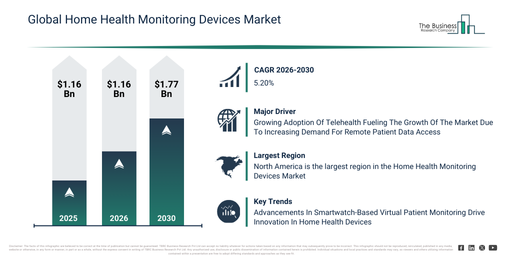
    Looking ahead, the market is projected to expand further, reaching $1.83 billion by 2030, with a CAGR of 5.2%. The forecasted growth is driven by advances in wearable and connected devices, a rising elderly population, growing adoption of telemedicine, the expansion of smart home healthcare infrastructure, and increased investments in AI-powered health analytics. Notable trends in this upcoming period include a surge in wearable health monitoring adoption, heightened focus on managing chronic diseases at home, greater integration of telehealth with remote patient monitoring, emphasis on preventive healthcare and wellness tracking, and improvements in user-friendly interfaces and mobile connectivity.

    Key Drivers Accelerating the Home Health Monitoring Devices Market

    Telehealth adoption is playing a pivotal role in boosting demand for home health monitoring devices. Telehealth enables medical consultations and care remotely, eliminating the need for in-person visits. Its growing popularity stems from the convenience it offers patients, who can consult healthcare providers quickly and from the comfort of their homes, saving time and travel.

    Access The Complete Home Health Monitoring Devices Market Report:

    https://www.thebusinessresearchcompany.com/report/home-health-monitoring-devices-global-market-report

    Moreover, telehealth’s rise supports the need for devices that provide real-time patient data to healthcare professionals, which is crucial for accurate diagnosis, timely intervention, and continuous care without physical visits. For instance, in May 2025, the US federal agency Centers for Medicare & Medicaid Services reported that 95% of HRSA-funded health centers utilized telehealth to deliver primary care in 2024. This trend underscores the important role telehealth plays in propelling the home health monitoring devices market forward.

    Detailed Market Segmentation and Revenue Opportunities in Home Health Monitoring Devices

    The home health monitoring devices market is segmented by type, application, and end user to offer a comprehensive view of the sector. Types include heart monitors, breath monitors, hematology monitors, multi-parameter monitors, and other related devices. Heart monitors further break down into ECG monitors, heart rate monitors, blood pressure monitors, and Holter monitors, while breath monitors encompass pulse oximeters, spirometers, and breath analyzers. Hematology monitors include blood glucose monitors, INR monitors, hemoglobin monitors, and blood clotting time monitors. Multi-parameter monitors cover vital signs and wearable multi-parameter devices, and other types consist of body temperature monitors, sleep apnea monitors, urine analyzers, and activity and fitness trackers.

    By application, the market caters to care centers, households, and other uses. The end users include the elderly, chronic disease patients, health-conscious individuals, post-operative and rehabilitation patients, as well as healthcare providers and caregivers, highlighting the wide reach and diverse demand within the market.

    Industry Trends and Innovations Driving the Home Health Monitoring Devices Sector

    Leading companies in this market are focusing on developing sophisticated solutions like smartwatches designed for virtual patient monitoring that easily integrate with health apps and telehealth platforms. These wearables continuously track health data in real-time and allow remote healthcare providers to monitor patients’ physiological status proactively.

    For example, in July 2024, US-based IoT company KORE introduced the mCareWatch 241, a smartwatch specialized for virtual patient monitoring. Equipped with an emergency SOS feature, calling capabilities, GPS tracking, and quick-dial options, this device emphasizes user safety and reliable communication. Key sensors include heart rate monitoring, step counting, fall detection, and inactivity alerts. Additional features such as geo-fencing alerts and reminders are accessible through a dedicated mobile app and web interface, enhancing health monitoring and user engagement.

    Prominent Companies Steering the Home Health Monitoring Devices Market

    The market is shaped by major players such as Abbott Laboratories Inc., Omron Healthcare Co. Ltd., Garmin Ltd., ResMed Inc., Masimo Corporation, ChoiceMMed America Corp., Beurer GmbH, iRhythm Technologies Inc., A&D Company Limited, Microlife Corporation, Telli Health LLC, AliveCor Inc., CareSimple Inc., BioBeat Technologies Ltd., BioIntelliSense Inc., Tenovi Inc., 100Plus Inc., BodiMetrics LLC, Oxitone Medical Ltd., and Guangdong Transtek Medical Electronics Co. Ltd. These organizations are key contributors to innovation and market expansion.

    Geographic Market Insights Highlighting Regional Demand Patterns

    In 2025, North America held the largest share of the home health monitoring devices market. However, the Asia-Pacific region is anticipated to witness the fastest growth over the forecast period. The market analysis encompasses regions such as Asia-Pacific, South East Asia, Western Europe, Eastern Europe, North America, South America, the Middle East, and Africa, providing a global perspective on market trends and opportunities.

    Get in touch with us:

    The Business Research Company: https://www.thebusinessresearchcompany.com/

    Americas: +1 310-496-7795

    Asia: +44 7882 955267 & +91 8897263534

    Europe: +44 7882 955267

    Email us at: marketing@tbrc.info

    Follow us on:

    LinkedIn: https://in.linkedin.com/company/the-business-research-company

    YouTube: https://www.youtube.com/channel/UC24_fI0rV8cR5DxlCpgmyFQ

    Global Market Model: https://www.thebusinessresearchcompany.com/global-market-model
  • Holter Monitor Market Forecast Reveals Where Future Industry Value Will Be Created

    Holter Monitor Market Forecast Reveals Where Future Industry Value Will Be Created

    Delivering more actionable and strategically valuable research, The Business Research Company’s 2026 market reports feature market attractiveness analysis, total addressable market evaluation, company benchmarking matrices, interactive Excel dashboards, expanded supply chain intelligence, emerging startup coverage, and detailed product insights.

    The holter monitor market is experiencing significant growth as advancements in cardiac care and diagnostic technology gain traction. With cardiovascular diseases on the rise globally, there is an increasing demand for reliable heart monitoring solutions. Let’s explore the market’s current size, key growth drivers, major companies, technological innovations, and regional dynamics shaping its future.

    Holter Monitor Market Size and Growth Projections

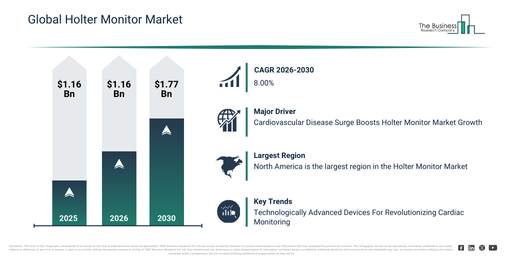
    The holter monitor market has seen strong expansion recently and is projected to grow from $1.11 billion in 2025 to $1.22 billion in 2026, marking a compound annual growth rate (CAGR) of 9.4%. This past growth has been driven by factors such as the increasing prevalence of cardiovascular diseases, widespread adoption of ambulatory ECG monitoring, heightened hospital use of cardiac diagnostic tools, greater awareness around arrhythmia detection, and the development of specialized cardiac centers. Looking ahead, the market is expected to continue its upward trajectory, reaching $1.66 billion by 2030 with a CAGR of 8.0%. Key contributors to this future growth include an aging population at higher risk for heart conditions, expanding demand for remote cardiac diagnostics, increased use of continuous heart rhythm monitoring, growth in home healthcare cardiac services, and a stronger focus on early detection of cardiac abnormalities. Emerging trends during this period encompass the shift to wireless and wearable holter devices, expansion of long-term continuous cardiac monitoring, wider adoption of remote and home-based monitoring solutions, demand for compact and user-friendly monitors, and integration of holter technology in preventive heart care.

    Download A Free Sample Report For Comprehensive Market Insights:

    https://www.thebusinessresearchcompany.com/sample.aspx?id=15584&type=smp

    Crucial Factors Supporting Holter Monitor Market Expansion

    One of the primary drivers behind the holter monitor market is the rising incidence of cardiovascular diseases worldwide. These diseases affect the heart and blood vessels and often lead to severe complications like heart attacks or strokes. Their increasing prevalence is connected to lifestyle factors such as sedentary behavior, unhealthy diets, obesity, and an aging population. Holter monitors play a vital role in continuously tracking heart rhythms to aid in the diagnosis and management of cardiac conditions like arrhythmias and ischemic events. To illustrate, in December 2024, the UK government agency GOV.UK reported that by March 2024, approximately 2.24 million adults in England—representing 4.4% of those aged 18 and above—had a recorded diagnosis of chronic kidney disease (CKD), up from 2.09 million the previous year. This rise in cardiovascular-related conditions is a key factor propelling demand for holter monitors.

    Segmentation Breakdown of the Holter Monitor Market

    This market is segmented across various categories to cater to diverse clinical needs:

    1) Product Type: Wired and Wireless devices

    2) Channel Type: 3 Channel, 12 Channel, and other configurations

    3) Monitoring Capacity: Devices capable of monitoring up to 7 days and those designed for periods longer than 7 days

    4) End Users: Hospitals, specialty cardiac centers, and other users

    Access The Complete Holter Monitor Market Report:

    https://www.thebusinessresearchcompany.com/report/holter-monitor-global-market-report

    Further subcategories include:

    – Wired devices such as single-channel wired monitors, multi-channel versions, standard 12-lead ECG wired monitors, portable wired monitors, long-term continuous monitoring wired devices, and hospital-grade wired monitors

    – Wireless devices including single and multi-channel wireless monitors, Bluetooth-enabled models, cloud-connected systems, wearable devices like patches or wristbands, and monitors integrated with mobile applications

    Innovations Revolutionizing the Holter Monitor Industry

    Key players in the holter monitor market are focusing on developing advanced technologies that deliver high-quality ECG recordings, essential for accurate diagnosis of cardiac conditions. For example, in November 2023, Norav Medical from Germany launched the NR-314P Holter device. This state-of-the-art product offers up to 14 days of continuous ECG recording in a lightweight 41-gram unit. It features 3-lead ECG technology, wireless connectivity, and seamless integration with electronic health record (EHR) and hospital information system (HIS) platforms via HL7 and DICOM standards. Its rechargeable battery and water-resistant design allow patients to maintain regular daily activities without interruption, enhancing long-term monitoring adherence. The NR-314P also supports advanced analysis functions to improve patient care.

    Leading Market Players Driving Competition in the Holter Monitor Sector

    The holter monitor market is highly competitive with several prominent companies involved, including Koninklijke Philips N.V., GE HealthCare Technologies, Lepu Medical Technology (Beijing) Co. Ltd, Fukuda Denshi Co. Ltd, Bittium Corporation, BTL Corporate, iRhythm Technologies Inc., Schiller AG, Edan Instruments Inc., Contec Medical Systems Co. Ltd, BPL Medical Technologies, ScottCare Corporation, EB Neuro S.p.A., custo med GmbH, ACS Diagnostics GmbH, Biotricity Inc., Cortrium ApS, Cardioline S.p.A., Labtech Ltd, Aspel SA, Borsam BioMedical Instruments Co. Ltd, and AMEDTEC Medizintechnik Aue GmbH. These companies focus on innovation, product quality, and expanding market presence to maintain a competitive edge.

    Regional Market Leadership and Growth Dynamics

    In 2025, North America held the largest share of the holter monitor market, reflecting strong healthcare infrastructure and widespread use of cardiac diagnostic tools. The report also covers other important regions such as Asia-Pacific, South East Asia, Western Europe, Eastern Europe, South America, the Middle East, and Africa, providing a global perspective on market trends and growth opportunities. Emerging markets in Asia-Pacific are expected to contribute significantly to future market growth due to increasing healthcare investments and rising cardiovascular disease prevalence.

    Get in touch with us:

    The Business Research Company: https://www.thebusinessresearchcompany.com/

    Americas: +1 310-496-7795

    Asia: +44 7882 955267 & +91 8897263534

    Europe: +44 7882 955267

    Email us at: marketing@tbrc.info

    Follow us on:

    LinkedIn: https://in.linkedin.com/company/the-business-research-company

    YouTube: https://www.youtube.com/channel/UC24_fI0rV8cR5DxlCpgmyFQ

    Global Market Model: https://www.thebusinessresearchcompany.com/global-market-model
  • Hollow-Fiber Bioreactors Market Growth Through 2030 Creates New Strategic Opportunities

    Hollow-Fiber Bioreactors Market Growth Through 2030 Creates New Strategic Opportunities

    Enhanced with market attractiveness analysis, total addressable market evaluation, company benchmarking matrices, interactive Excel dashboards, expanded supply chain intelligence, emerging startup coverage, and detailed product insights, The Business Research Company’s 2026 market reports deliver more actionable and strategically valuable research.

    The hollow-fiber bioreactors market is experiencing notable expansion as it addresses critical needs in biopharmaceutical production and advanced cell culture technologies. Driven by innovations and growing demand for efficient cell-based therapies and personalized medicine, this sector is set to see significant growth through 2030. Let’s explore the current market status, key growth factors, segment performance, emerging trends, major players, and regional market dynamics.

    Hollow-Fiber Bioreactors Market Size and Growth Outlook

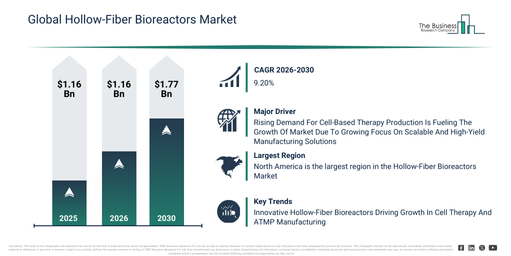
    The hollow-fiber bioreactors market has demonstrated strong growth in recent years and is projected to continue expanding steadily. Market value is expected to rise from $1.5 billion in 2025 to $1.64 billion in 2026, marking a compound annual growth rate (CAGR) of 9.3%. This historical growth stems from dependence on conventional cell culture methods, limited scalability of existing bioreactors, an increase in biopharmaceutical research and development, growing academic interest in tissue engineering, and the adoption of reusable bioreactors for early-stage production. Looking ahead, the market is forecasted to reach $2.33 billion by 2030, growing at a CAGR of 9.2%. This future expansion is supported by advances in single-use bioreactors, the rise of modular and automated systems, demand for high-throughput protein manufacturing, increased outsourcing to contract research organizations (CROs), and integration with continuous perfusion and monitoring technologies. Key trends anticipated include wider acceptance of single-use hollow-fiber bioreactors, growth in high-density cell culture applications, rising protein production needs, expansion in tissue engineering and regenerative medicine, and a focus on automation and high-throughput bioreactor platforms.

    Download A Free Sample Report For Comprehensive Market Insights:

    https://www.thebusinessresearchcompany.com/sample.aspx?id=27307&type=smp

    Primary Drivers Behind Hollow-Fiber Bioreactors Market Growth

    One of the main factors propelling the hollow-fiber bioreactors market is the growing demand for cell-based therapy production. This process involves manufacturing therapeutic products derived from living cells to treat a range of diseases such as cancers, autoimmune disorders, and genetic conditions. Increasingly, scalable and consistent manufacturing methods capable of supporting high cell densities without sacrificing product quality are required. Hollow-fiber bioreactors meet this need by providing a closed system with a large surface area that allows efficient expansion and harvesting of therapeutic cells under tightly controlled conditions. For example, in December 2024, the International Federation of Pharmaceutical Manufacturers and Associations reported that six first-in-class cell and gene therapies were approved in 2023—a 50% increase compared to the three approved in 2022—highlighting growing demand that supports this market’s expansion.

    Growing Importance of Personalized Medicine in Driving Market Demand

    The rising prevalence of personalized medicine is also fueling the hollow-fiber bioreactors market. Personalized medicine tailors treatments and healthcare decisions to the unique genetic makeup and characteristics of individual patients. This approach is gaining traction due to better diagnostic technologies that help precisely identify disease mechanisms and improve therapeutic outcomes while reducing trial-and-error in treatment selection. Hollow-fiber bioreactors facilitate personalized medicine by enabling scalable production of high-quality cell cultures necessary for developing patient-specific therapies. For instance, the Personalized Medicine Coalition noted in February 2024 that the FDA approved 16 new personalized treatments for rare diseases in 2023, more than double the six approvals in 2022, underscoring the increased adoption of personalized treatments and the corresponding demand for bioreactor technologies.

    Access The Complete Hollow-Fiber Bioreactors Market Report:

    https://www.thebusinessresearchcompany.com/report/hollow-fiber-bioreactors-global-market-report

    Market Segmentation Insights for Hollow-Fiber Bioreactors

    The hollow-fiber bioreactors market is categorized by several segments:

    1) Product Type: Single-Use Hollow-Fiber Bioreactors and Reusable Hollow-Fiber Bioreactors

    2) Applications: Cell Culture, Tissue Engineering, Biopharmaceutical Production, Wastewater Treatment, and Other Applications

    3) End-Users: Pharmaceutical and Biotechnology Companies, Research Institutes, Contract Research Organizations, and Other End-Users

    Within single-use bioreactors, subcategories include pre-assembled, modular, customizable, high-throughput, and automated systems. Reusable bioreactors are further divided into fixed-bed, modular, high-capacity, multipurpose, and clean-in-place variants. These detailed segments reflect the diverse needs and technological preferences across industries relying on hollow-fiber bioreactors.

    Emerging Trends Shaping the Hollow-Fiber Bioreactors Industry

    Leading companies in this market are focusing on pioneering innovations like single-use hollow-fiber membrane networks designed to support high-density, scalable, and gentle cell culture environments ideal for advanced therapies. These disposable bioreactor systems consist of semi-permeable fibers that allow constant nutrient supply and waste removal, ensuring even nutrient distribution and low shear stress, which promotes cell viability while reducing contamination risks and simplifying manufacturing processes. A notable example is the March 2025 launch by ABEC Inc. of their ATB (Advanced Therapy Bioreactor) platform. This single-use, closed bioreactor uses proprietary hollow-fiber membranes that mimic human blood circulation for efficient nutrient and gas exchange, combined with oscillation mixing to maintain optimal growth without mechanical agitation. Designed for consistent scale-up from 0.2 liters to 10 liters while maintaining surface-area-to-volume ratios, the system has demonstrated high densities and viability for various challenging cell types, including primary T-cells, CD34+ stem cells, HEK293, and CHO cell lines.

    Key Competitors and Industry Players in Hollow-Fiber Bioreactors

    The hollow-fiber bioreactors market features several leading companies, including General Electric Company, Veolia Environnement S.A., Thermo Fisher Scientific Inc., Mitsubishi Chemical Corporation, Kubota Corporation, DuPont de Nemours Inc., MANN+HUMMEL GmbH, Alfa Laval AB, Sartorius AG, Repligen Corporation, Shenzhen Dreamemway Environmental Products Co. Ltd., FiberCell Systems Inc., Reynolds Culligan Water, Shanghai MegaVision Membrane Engineering & Technology Co. Ltd., Memfill Tech Private Limited, FibraCast Inc., iMemFlo Membrane Technology Co. Ltd., Guangdong Skyview Environmental Science and Technology Co. Ltd., PHILOS Co. Ltd., and Blufox Engineering Pvt. Ltd. These organizations are pivotal in advancing technology, expanding market reach, and setting competitive benchmarks.

    Regional Market Landscape and Growth Patterns

    In 2025, North America held the largest share of the hollow-fiber bioreactors market. However, the Asia-Pacific region is anticipated to be the fastest-growing market during the forecast period. The analysis encompasses key regions including Asia-Pacific, South East Asia, Western Europe, Eastern Europe, North America, South America, the Middle East, and Africa, providing a comprehensive overview of regional dynamics influencing global market expansion.

    Get in touch with us:

    The Business Research Company: https://www.thebusinessresearchcompany.com/

    Americas: +1 310-496-7795

    Asia: +44 7882 955267 & +91 8897263534

    Europe: +44 7882 955267

    Email us at: marketing@tbrc.info

    Follow us on:

    LinkedIn: https://in.linkedin.com/company/the-business-research-company

    YouTube: https://www.youtube.com/channel/UC24_fI0rV8cR5DxlCpgmyFQ

    Global Market Model: https://www.thebusinessresearchcompany.com/global-market-model
  • Hollow Fiber Dialyzer Market Size Projected To Increase From $6.78 Billion To $8.39 Billion During The Forecast Period

    Hollow Fiber Dialyzer Market Size Projected To Increase From $6.78 Billion To $8.39 Billion During The Forecast Period

    Through market attractiveness analysis, total addressable market evaluation, company benchmarking matrices, interactive Excel dashboards, expanded supply chain intelligence, emerging startup coverage, and detailed product insights, The Business Research Company’s 2026 market reports provide more actionable and strategically valuable research.

    The hollow fiber dialyzer market has been witnessing robust growth, driven by increasing healthcare needs and technological progress in renal care. As kidney-related health issues become more common globally, demand for effective dialysis solutions continues to rise. Let’s explore the market’s current scale, key drivers, segment distribution, industry trends, leading companies, and regional outlook.

    Hollow Fiber Dialyzer Market Size and Growth Outlook

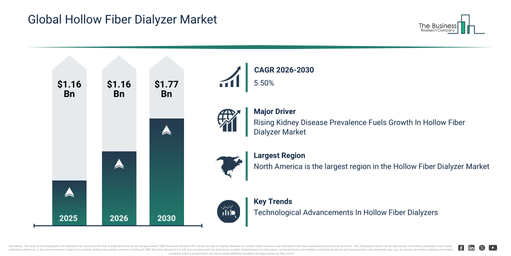
    The hollow fiber dialyzer market has experienced significant expansion recently and is expected to continue this trend. Market value is forecasted to rise from $6.41 billion in 2025 to $6.78 billion in 2026, reflecting a compound annual growth rate (CAGR) of 5.8%. This growth during the historical period has been driven by a rise in chronic kidney disease cases, increased availability of hospital-based dialysis services, the dominance of low flux membrane technologies, a growing elderly population, and enhanced awareness about renal replacement therapies. Looking ahead, the market is projected to reach $8.4 billion by 2030, growing at a CAGR of 5.5%. Factors such as wider adoption of high flux and high efficiency dialyzers, innovations in hollow fiber membrane technology, expansion of dialysis centers in emerging markets, increased healthcare spending on kidney care, and a focus on improving dialysis treatment outcomes will fuel this growth. Trends expected to influence the market include a surge in demand for high-flux dialyzers, greater use of biocompatible membranes, rising application in pediatric and geriatric patients, a shift toward synthetic polymer hollow fiber dialyzers, and heightened emphasis on filtration efficiency and patient safety.

    Download A Free Sample Report For Comprehensive Market Insights:

    https://www.thebusinessresearchcompany.com/sample.aspx?id=20561&type=smp

    Rising Kidney Disease Cases Bolster Hollow Fiber Dialyzer Market Expansion

    One of the primary factors propelling the growth of the hollow fiber dialyzer market is the increasing prevalence of kidney diseases. These disorders, including chronic kidney disease (CKD) and acute kidney injury, impair the kidneys’ ability to filter waste and maintain fluid balance. The surge in kidney disease cases is closely linked to the rising incidence of chronic conditions such as diabetes and hypertension, along with an aging population. Hollow fiber dialyzers serve a critical role in managing these diseases by functioning as artificial kidneys, removing toxins and excess fluids from the bloodstream. For example, Kidney Research UK reported in June 2023 that by 2033, approximately 3.9 million people in the UK will be living with CKD stages 3–5. This growing patient population directly fuels demand for effective dialysis products like hollow fiber dialyzers.

    Segment Breakdown of the Hollow Fiber Dialyzer Market

    This market can be segmented into distinct categories for a clearer understanding of its structure:

    1) By Type: Low Flux Membrane and High Flux Membrane

    2) By Material: Synthetic Polymer Hollow Fiber Dialyzers and Cellulose-Based Hollow Fiber Dialyzers

    3) By Application: Hospitals, Dialysis Centers, and Other Uses

    Further subcategories include:

    – Low Flux Membrane types such as Standard Low Flux Dialyzers, Biocompatible Low Flux Dialyzers, and Low Flux Dialyzers designed for pediatric patients

    – High Flux Membrane types including Standard High Flux Dialyzers, Modified High Flux Dialyzers, High Flux Dialyzers for Pediatric Use, and High Efficiency Dialyzers

    Access The Complete Hollow Fiber Dialyzer Market Report:

    https://www.thebusinessresearchcompany.com/report/hollow-fiber-dialyzer-global-market-report

    Innovations and Industry Trends Influencing Hollow Fiber Dialyzer Market

    Leading players in this market are concentrating on developing advanced dialysis therapies to improve blood filtration efficiency and patient outcomes. Dialysis therapy serves as a substitute for kidney function by removing waste, toxins, and excess fluids in patients with impaired kidney activity. An example of innovation is the August 2024 FDA approval granted to Germany-based Fresenius Medical Care for the 5008X Hemodialysis System. This device offers high-volume hemodiafiltration (Hv-HDF), which combines diffusion and convection mechanisms to more effectively eliminate toxins and excess fluid compared to traditional high-flux hemodialysis. The system’s advanced membrane technology and user-friendly design make it suitable for both clinical and home use, significantly enhancing treatment quality and patient safety.

    Key Companies Driving Competition in the Hollow Fiber Dialyzer Market

    Several major corporations are key players in the hollow fiber dialyzer industry, including:

    Fresenius Medical Care AG & Co. KGaA, Asahi Kasei Medical Co. Ltd., Toray Industries Inc., Baxter International Inc., B. Braun Melsungen AG, Nipro Corporation, Shandong Weigao Group Medical Polymer Company Limited, Nikkiso Co. Ltd., Jiangxi Sanxin Medtec Co. Ltd., BLT Biolight, SB-Kawasumi Laboratories Inc., Shanghai Peony Medical Devices Co. Ltd., Medica S.p.A., Gambro, Medtronic plc, JMS Co. Ltd., Dialife SA, Farmasol Medical Products Ind and Trd Co., SWS Hemodialysis Care Co. Ltd., Chengdu OCI Medical Devices Co. Ltd., Shenzhen Landwind Industry Co. Ltd., and Sundial Medical Co. Ltd.

    Geographic Market Leaders and Growth Potential in Hollow Fiber Dialyzers

    In 2025, North America emerged as the largest market for hollow fiber dialyzers in terms of revenue. However, the Asia-Pacific region is predicted to be the fastest-growing market throughout the forecast period. The global analysis includes key regions such as Asia-Pacific, South East Asia, Western Europe, Eastern Europe, North America, South America, the Middle East, and Africa, providing a comprehensive view of regional market developments and opportunities.

    Get in touch with us:

    The Business Research Company: https://www.thebusinessresearchcompany.com/

    Americas: +1 310-496-7795

    Asia: +44 7882 955267 & +91 8897263534

    Europe: +44 7882 955267

    Email us at: marketing@tbrc.info

    Follow us on:

    LinkedIn: https://in.linkedin.com/company/the-business-research-company

    YouTube: https://www.youtube.com/channel/UC24_fI0rV8cR5DxlCpgmyFQ

    Global Market Model: https://www.thebusinessresearchcompany.com/global-market-model
  • Histology Equipment Market Growth Outlook Reveals A CAGR Of 3.9% And A Market Value Of $0.82 Billion By 2030

    Histology Equipment Market Growth Outlook Reveals A CAGR Of 3.9% And A Market Value Of $0.82 Billion By 2030

    Delivering more actionable and strategically valuable research, The Business Research Company’s 2026 market reports feature market attractiveness analysis, total addressable market evaluation, company benchmarking matrices, interactive Excel dashboards, expanded supply chain intelligence, emerging startup coverage, and detailed product insights.

    The histology equipment market has been steadily evolving, driven by increasing demands for accurate tissue analysis and advancements in diagnostic technologies. This sector plays a vital role in medical research and clinical diagnostics, with significant growth anticipated over the coming years. Below, we explore the market’s size, key drivers, segmentation, emerging trends, major players, and regional prospects shaping its future.

    Projected Expansion and Market Size of the Histology Equipment Market

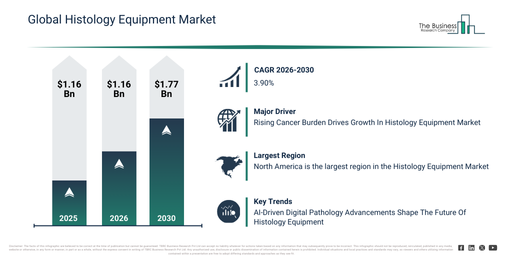
    The histology equipment market has shown consistent growth, with its size expected to rise from $0.68 billion in 2025 to $0.71 billion in 2026, representing a compound annual growth rate (CAGR) of 4.4%. This growth during the historical period has been largely fueled by the expanding use of histopathology in disease diagnosis, the development of hospital and diagnostic laboratory infrastructure, increasing cancer prevalence which necessitates detailed tissue analysis, heightened academic and research activities in life sciences, and a growing shift towards laboratory automation. Looking ahead, the market is forecast to expand further, reaching $0.83 billion by 2030 at a CAGR of 3.9%. The anticipated growth will be driven by the rising need for precision medicine diagnostics, greater investments in digital pathology platforms, expansion of pharmaceutical and biotechnology research pipelines, increased clinical trial activities, and a demand for faster, more accurate tissue analysis. Notable trends expected to influence this period include the adoption of automated histology workflow systems, wider use of digital pathology and slide scanning technologies, increased demand for high-throughput tissue processing, growth in clinical diagnostics applications, and a stronger focus on lab standardization and workflow efficiency.

    Download A Free Sample Report For Comprehensive Market Insights:

    https://www.thebusinessresearchcompany.com/sample.aspx?id=16080&type=smp

    The Rising Impact of Cancer as a Catalyst for Market Growth

    One of the primary factors propelling the histology equipment market forward is the increasing burden of cancer worldwide. Cancer is characterized by uncontrolled growth and spread of abnormal cells, which can be fatal if left untreated. Its rising incidence is influenced by both lifestyle choices that can be modified and inherent biological and demographic factors. Histology equipment is essential for diagnosing and evaluating cancer by enabling detailed examination of tissue samples, allowing clinicians to identify cancer types, stages, and tailor treatment strategies accordingly. For instance, a report from the Australian Institute of Health and Welfare in July 2024 highlighted that cancer diagnoses in Australia increased from 160,570 cases in 2022 to 164,694 in 2023, illustrating a significant year-over-year rise. This upward trend in cancer prevalence directly supports the expanding demand for histology equipment.

    Breaking Down the Histology Equipment Market Segments

    The histology equipment market is categorized into several key segments to capture its broad application spectrum:

    1) Equipment Types: Slide Staining Systems, Scanners, Tissue Processing Systems, Microtomes, Coverslippers, and Other Equipment

    2) Product Categories: Instruments and Analysis Software Systems, Consumables and Reagents

    3) Application Areas: Hospitals, Pharmaceutical Companies, Diagnostic Centers, Academic Institutes, Research Laboratories, and Other Uses

    Further detail includes subcategories such as manual, automated, and hybrid staining systems within slide staining systems; digital slide scanners, whole slide imaging scanners, and confocal scanners under scanners; as well as various microtome types including rotary, cryostat, sliding, manual, and semi-automated models. Other equipment encompasses embedding stations, tissue embedding centers, cryostats, staining racks, and histology printers, illustrating the diverse and specialized nature of this market.

    Access The Complete Histology Equipment Market Report:

    https://www.thebusinessresearchcompany.com/report/histology-equipment-global-market-report

    Technological Advances and Trends Steering Market Innovation

    Leading companies in the histology equipment sector are increasingly focusing on integrating artificial intelligence (AI) into digital pathology solutions to enhance diagnostic accuracy and workflow efficiency. For example, in May 2024, the European medical equipment manufacturer 3DHISTECH launched the P480 2nd Generation slide scanner, featuring polarization imaging, a touchscreen interface, and an upgraded stepper-motor focusing system designed for faster and more reliable operation. Similarly, Roche obtained FDA 510(k) clearance in June 2024 for its VENTANA DP 200 whole-slide scanner, a part of its Digital Pathology Dx platform, which offers high-resolution imaging and capabilities for remote diagnostics. These developments demonstrate how AI-enabled technologies are becoming central to improving histology equipment performance, although challenges remain due to the high initial investment and infrastructure requirements for widespread adoption.

    Key Players Driving Competitive Dynamics in Histology Equipment

    The global histology equipment market features several influential companies that shape the competitive landscape. Prominent participants include Thermo Fisher Scientific Inc., Roche Diagnostics International Ltd, Agilent Technologies Inc., Hologic Inc., Leica Microsystems Nussloch GmbH, Cole-Parmer Instrument Company LLC, Sakura Finetechnical Company Ltd., Biogenex Laboratories Inc., StatLab Medical Products Inc., Biocare Medical LLC, Andwin Scientific, Covaris Inc., A. Menarini Diagnostics S.r.l., Diapath S.p.A., PolyScience Inc., CellPath USA, Medite Medical GmbH, Hacker Instruments & Industries Inc., Amos Scientific Pty. Ltd., TissueGnostics GmbH, Konfoong Bioinformation Tech Co. Ltd (KFBIO), Labstac USA, Intelsint Srl, Milestone Medical Inc., and Histo-Line Laboratories s.r.l. These organizations are actively investing in innovation and digital integration to maintain leadership within the field.

    Regional Market Overview and Areas with the Most Potential

    In 2025, North America held the largest share of the histology equipment market, benefiting from advanced healthcare infrastructure and high adoption of new technologies. Meanwhile, the Asia-Pacific region is projected to experience the fastest growth throughout the forecast period, driven by expanding healthcare sectors, increasing research activities, and rising incidences of cancer and other diseases requiring histopathological diagnosis. The market report covers a wide geographical scope, including Asia-Pacific, South East Asia, Western Europe, Eastern Europe, North America, South America, the Middle East, and Africa, offering a comprehensive understanding of global market trends and regional opportunities.

    Get in touch with us:

    The Business Research Company: https://www.thebusinessresearchcompany.com/

    Americas: +1 310-496-7795

    Asia: +44 7882 955267 & +91 8897263534

    Europe: +44 7882 955267

    Email us at: marketing@tbrc.info

    Follow us on:

    LinkedIn: https://in.linkedin.com/company/the-business-research-company

    YouTube: https://www.youtube.com/channel/UC24_fI0rV8cR5DxlCpgmyFQ

    Global Market Model: https://www.thebusinessresearchcompany.com/global-market-model
  • Hip Replacement Implants Market Forecast Highlights Expansion From $9.16 Billion To $12.73 Billion Through 2030

    Hip Replacement Implants Market Forecast Highlights Expansion From $9.16 Billion To $12.73 Billion Through 2030

    Enhanced with market attractiveness analysis, total addressable market evaluation, company benchmarking matrices, interactive Excel dashboards, expanded supply chain intelligence, emerging startup coverage, and detailed product insights, The Business Research Company’s 2026 market reports deliver more actionable and strategically valuable research.

    The hip replacement implants market is experiencing substantial growth as advances in medical technology and rising patient needs drive demand. With the increasing prevalence of joint-related conditions and improvements in surgical techniques, this market is set to expand notably over the next several years. Below, we explore the current market size, key growth drivers, important segments, competitive developments, and regional trends shaping the industry’s future.

    Steady Expansion Forecast for the Hip Replacement Implants Market

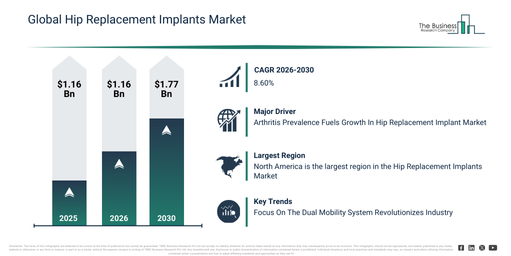
    The hip replacement implants market has seen robust growth recently and is anticipated to continue this trend. Market value is expected to rise from $8.43 billion in 2025 to $9.17 billion in 2026, representing a compound annual growth rate (CAGR) of 8.8%. Looking ahead, this upward trajectory is projected to persist, with the market reaching $12.73 billion by 2030 at a CAGR of 8.6%. This growth is fueled by factors such as the rising incidence of osteoarthritis, an aging global population, broader access to orthopedic surgeries, advancements in implant materials, and enhanced expertise among orthopedic surgeons.

    Download A Free Sample Report For Comprehensive Market Insights:

    https://www.thebusinessresearchcompany.com/sample.aspx?id=9157&type=smp

    Key Factors Boosting Demand for Hip Replacement Implants

    A significant driver of market growth is the increasing number of arthritis cases worldwide. Arthritis, characterized by joint swelling and pain, commonly involves osteoarthritis and rheumatoid arthritis. Hip replacement implants are essential in hip arthroplasty procedures, where damaged hip joints are replaced with artificial components to relieve pain and restore function. For example, data from the UK’s Office for Health Improvement and Disparities indicates that in 2023, 18.4% of people aged 16 and over reported having a long-term musculoskeletal condition, a slight increase from 17.6% in 2022. Women reported these conditions more frequently (20.9%) than men (15.8%). This upward trend in arthritis prevalence directly supports sustained growth in the hip replacement implant market.

    Additional Market Growth Drivers Enhancing Mobility and Technology Adoption

    The demand for procedures that restore mobility is rising rapidly, contributing to market expansion. There is a growing preference for minimally invasive orthopedic surgeries, which offer reduced recovery times and less trauma to patients. Furthermore, personalized and 3D-printed hip implants are gaining traction, allowing for better fit and functionality tailored to individual patients. Innovations focusing on implant durability and longevity, along with advancements in bearing surface technologies, are also important factors encouraging market growth.

    Access The Complete Hip Replacement Implants Market Report:

    https://www.thebusinessresearchcompany.com/report/hip-replacement-implants-global-market-report

    Key Segments Defining the Hip Replacement Implants Market

    This market is categorized into several primary segments, including:

    1) Product Type: Femoral Reconstruction, Acetabular Reconstruction, and Revision Hip Implants

    2) Component Type: Acetabular Cup Systems, Hip Stem Systems, and Revision Accessories and Components

    3) Material Type: Metal-On-Polyethylene, Ceramic-On-Polyethylene, and Ceramic-On-Ceramic

    4) End-User: Orthopedic Clinics, Hospitals, and Surgical Centers

    Further subcategories specify components such as femoral heads and stems, acetabular cups and liners, and revision components for both femoral and acetabular reconstructions.

    Innovations Shaping Competitive Advantage in the Hip Replacement Implant Market

    Leading companies in this sector are focusing on developing cutting-edge products to capture market share. One notable innovation is the Dual Mobility System, which incorporates the OXINIUM DH bearing surface to enhance implant stability, reduce dislocation risk, and improve range of motion. Unlike traditional implants, this system minimizes wear and corrosion by replacing certain metallic components with proprietary materials. For example, in August 2023, Smith & Nephew PLC launched the OR3O Dual Mobility System in India, highlighting these advanced features to improve clinical outcomes in both primary and revision hip arthroplasty procedures.

    Top Market Players Driving Growth and Innovation

    The hip replacement implants market is dominated by several prominent companies, including Zimmer Biomet Holdings Inc., DePuy Synthes, Stryker Corporation, Smith & Nephew PLC, Corin Group PLC, Waldemar Link GmbH & Co KG, Wright Medical Group NV, Corentec Co Ltd., MicroPort Scientific Corporation, Exactech Inc., OMNI Life Science Inc., Medacta International SA, PETER BREHM GmbH, Gruppo Bioimpianti srl., LimaCorporate SPA, Mathys AG Bettlach, Merete GmbH, Ortho Development Corporation, Shanghai MicroPort Orthopedics Inc., FH Orthopedics Inc., ConforMIS Inc., AK Medical Holdings Limited, and Beijing Chunlizhengda Medical Instruments Co. Ltd. These companies are actively investing in research and development to enhance product portfolios and maintain competitive advantage.

    Regional Market Overview Highlighting Growth Leaders

    In 2025, North America held the largest share of the hip replacement implants market. However, the Asia-Pacific region is expected to be the fastest-growing market during the forecast period, driven by rising healthcare investments and increasing demand for orthopedic solutions. The geographic analysis includes regions such as Asia-Pacific, South East Asia, Western Europe, Eastern Europe, North America, South America, the Middle East, and Africa, providing a comprehensive perspective of global market dynamics.

    Get in touch with us:

    The Business Research Company: https://www.thebusinessresearchcompany.com/

    Americas: +1 310-496-7795

    Asia: +44 7882 955267 & +91 8897263534

    Europe: +44 7882 955267

    Email us at: marketing@tbrc.info

    Follow us on:

    LinkedIn: https://in.linkedin.com/company/the-business-research-company

    YouTube: https://www.youtube.com/channel/UC24_fI0rV8cR5DxlCpgmyFQ

    Global Market Model: https://www.thebusinessresearchcompany.com/global-market-model
  • High-Resolution Anoscopy Market Expected To Reach $22.43 Billion By 2030 As Growth Accelerates At 7.2% CAGR

    High-Resolution Anoscopy Market Expected To Reach $22.43 Billion By 2030 As Growth Accelerates At 7.2% CAGR

    Through market attractiveness analysis, total addressable market evaluation, company benchmarking matrices, interactive Excel dashboards, expanded supply chain intelligence, emerging startup coverage, and detailed product insights, The Business Research Company’s 2026 market reports provide more actionable and strategically valuable research.

    The high-resolution anoscopy market is experiencing significant growth driven by advancements in diagnostic technology and rising awareness of anal health conditions. As medical professionals increasingly adopt innovative tools for early cancer detection, the market is positioned for steady expansion in the coming years. Let’s explore the current market size, the main factors fueling growth, important trends, key segments, and leading companies shaping this industry.

    Market Size and Expected Growth Trajectory in High-Resolution Anoscopy

    The market for high-resolution anoscopy has seen robust growth recently, expanding from $16 billion in 2025 to an anticipated $17 billion in 2026, with a compound annual growth rate (CAGR) of 6.2%. Factors behind this rise include growing awareness about anal cancer and anal intraepithelial neoplasia (aIN), the establishment of more specialty diagnostic centers, the adoption of colposcopy-based diagnostic techniques, enhanced visualization technologies in anoscopy, and the expansion of preventive screening programs.

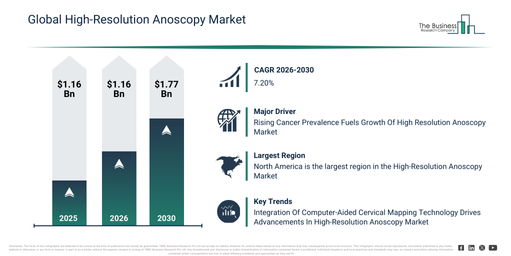
    Looking ahead, the market is projected to reach $22.43 billion by 2030, growing at a CAGR of 7.2%. This forecasted growth reflects increased investments in early cancer detection initiatives, greater demand for portable diagnostic devices, expanded use of telemedicine in diagnostics, wider adoption of AI-assisted image analysis, and a stronger emphasis on minimally invasive procedures. Key trends expected to influence the market include the rising popularity of digital and portable anoscopy devices, greater application of high-resolution imaging for early diagnosis, a boost in anal cancer screening programs, growth in outpatient diagnostic services, and enhanced integration of image documentation systems.

    Download A Free Sample Report For Comprehensive Market Insights:

    https://www.thebusinessresearchcompany.com/sample.aspx?id=13011&type=smp

    Key Factors Propelling Growth in the High-Resolution Anoscopy Market

    One of the primary growth drivers for the high-resolution anoscopy market is the increasing prevalence of cancer worldwide. Cancer, characterized by uncontrolled cell growth, underscores the importance of advanced diagnostic tools like high-resolution anoscopy, which provides detailed imaging through colposcopes or operating microscopes. These devices enable more accurate detection and evaluation of abnormalities in the anal canal. For example, data from the American Cancer Society in January 2024 indicated a rise in cancer cases in the United States from 1,958,310 in 2023 to 2,001,140, marking a 2.19% increase. This upward trend in cancer incidence is directly fueling demand for disposable endoscopes, including those used in high-resolution anoscopy.

    The Role of Rising Sexually Transmitted Infections in Expanding Market Demand

    Another significant factor contributing to market growth is the increasing incidence of sexually transmitted diseases (STDs), also known as sexually transmitted infections (STIs). These infections, caused by bacteria, viruses, or parasites, are commonly spread through sexual contact. Human papillomavirus (HPV), which can lead to anal dysplasia, is a key condition diagnosed and monitored using high-resolution anoscopy. The growing prevalence of STIs highlights the need for early cancer detection and management, boosting demand for HRA technology. For instance, the Joint United Nations Programme on HIV/AIDS reported in July 2025 that around 40.8 million people worldwide were living with HIV in 2024, with 1.3 million new infections occurring that year. This rise in sexually transmitted infections supports the expanding use of high-resolution anoscopy devices.

    Access The Complete High-Resolution Anoscopy Market Report:

    https://www.thebusinessresearchcompany.com/report/high-resolution-anoscopy-global-market-report

    Market Segmentation Overview for High-Resolution Anoscopy

    This report categorizes the high-resolution anoscopy market into several key segments:

    1) Product Type: Including colposcopes, portable colposcopes, hand-held colposcopes, anoscopes, disposable anoscopes, and reusable anoscopes.

    2) Patient Population: Divided into adults and pediatrics.

    3) End Use: Comprising hospitals and specialty clinics.

    Further subcategories break down product types such as standard and digital colposcopes; battery-powered and rechargeable portable colposcopes; standard and advanced hand-held colposcopes; standard and lighted anoscopes; single-use and specialty disposable anoscopes; and standard and advanced reusable anoscopes.

    How Technological Innovations Shape Future Demand in High-Resolution Anoscopy

    Leading companies in the high-resolution anoscopy market are continuously adopting cutting-edge technologies, such as computer-aided cervical mapping, to enhance diagnostic accuracy and treatment outcomes. This innovative technology assists healthcare providers in rapidly identifying cervical abnormalities during clinical examinations. For example, in 2023, Rudolf Riester GmbH, a German manufacturer of medical devices, introduced the LT-300 SD Digital Colposcope. This device facilitates detailed clinical examinations of the cervix, vulva, vagina, and lower uterus for healthcare facilities worldwide, including hospitals, clinics, medical schools, telemedicine providers, and assault advocacy programs. Such advancements are helping maintain competitive market positions while improving patient care.

    Prominent Players and Their Strategic Roles in the High-Resolution Anoscopy Market

    Key companies leading the high-resolution anoscopy market include Philips Medical Systems Technologies Ltd., Olympus Corporation, Hoya Corporation, Karl Storz SE & Co. KG, CooperSurgical, Ecleris S.R.L, Pentax Medical, Fujifilm Medical Systems, Carl Zeiss Meditec AG, Optomic, Narang Medical Limited, Medorah Meditek Pvt Ltd., Welch Allyn, Leisegang Feinmechanik Optik GmbH, Medimar S.A., DYSIS Medical, Gynius Plus AB, Lutech Medical, Ottomed Endoscopy, and Seiler Garepa Pvt. Ltd. These organizations focus on innovation, expanding product portfolios, and strategic partnerships to strengthen their market presence.

    Geographic Market Distribution and Regional Leadership

    In 2025, North America held the largest share of the high-resolution anoscopy market. The comprehensive market analysis also includes important regions such as Asia-Pacific, South East Asia, Western Europe, Eastern Europe, South America, the Middle East, and Africa. While North America currently leads, emerging markets in Asia-Pacific and other regions are expected to contribute significantly to future growth.

    Get in touch with us:

    The Business Research Company: https://www.thebusinessresearchcompany.com/

    Americas: +1 310-496-7795

    Asia: +44 7882 955267 & +91 8897263534

    Europe: +44 7882 955267

    Email us at: marketing@tbrc.info

    Follow us on:

    LinkedIn: https://in.linkedin.com/company/the-business-research-company

    YouTube: https://www.youtube.com/channel/UC24_fI0rV8cR5DxlCpgmyFQ

    Global Market Model: https://www.thebusinessresearchcompany.com/global-market-model