Month: June 2026

  • Artificial Intelligence (AI) Otoscopic Image Triaging Platform Market Expansion Is Reshaping Competitive Dynamics Across The Industry

    Through market attractiveness analysis, total addressable market evaluation, company benchmarking matrices, interactive Excel dashboards, expanded supply chain intelligence, emerging startup coverage, and detailed product insights, The Business Research Company’s 2026 market reports provide more actionable and strategically valuable research.

    Artificial Intelligence (AI) Otoscopic Image Triaging Platform Market Growth Analysis: How Will Revenue Expand During The Forecast Period?

    The market for artificial intelligence-based otoscopic image triaging platforms has seen rapid expansion in recent years. Projected to rise from $0.64 billion in 2025 to $0.75 billion in 2026, this growth corresponds to a compound annual rate of 17.1%. Historical expansion has been driven by the uptake of digital otoscopes, the broadening of telemedicine offerings, a higher incidence of ear infections, a growing need for streamlined ear, nose, and throat (ENT) diagnostics, and progress in imaging sensor technology.

    The artificial intelligence (AI) otoscopic image triaging platform market is poised for rapid expansion over the coming years, with projections indicating it will reach $1.4 billion by 2030, driven by a compound annual growth rate (CAGR) of 16.8%. This forecasted growth is largely fueled by the integration of AI into portable otoscopes, the broader implementation of cloud-based triaging systems, the creation of predictive diagnostic algorithms, increased funding for remote ear, nose, and throat (ENT) monitoring technologies, and a surge in adoption within primary care and telehealth settings. Key trends expected to shape this period include automated ear image classification, AI-enhanced workflow optimization, remote otoscopy services, cloud-driven image analysis, and systems that prioritize patient triage.

    Download A Free Sample Report For Comprehensive Market Insights:

    https://www.thebusinessresearchcompany.com/sample.aspx?id=28123&type=smp

    #Artificial Intelligence (AI) Otoscopic Image Triaging Platform Market Growth Factors: Which Forces Are Supporting Market Expansion?

    The market for artificial intelligence (AI) otoscopic image triaging platforms is anticipated to expand due to the escalating prevalence of ear-related disorders. These conditions, which disrupt normal ear function and impact hearing, balance, or overall ear health, are increasingly triggered by heightened exposure to loud noises. Persistent or repetitive loud sounds can harm the delicate inner ear structures, resulting in hearing impairment and balance issues. AI-driven otoscopic image triaging platforms address this challenge by swiftly and precisely analyzing ear images to detect irregularities, enabling early diagnosis, effective prioritization of critical cases, and improved treatment strategies. For example, as reported by the World Health Organization (WHO), an intergovernmental entity based in Switzerland, in February 2025, approximately 2.5 billion individuals are projected to experience hearing loss by 2050, with over 700 million requiring hearing rehabilitation. Consequently, the rising incidence of ear-related disorders is fueling growth in the AI otoscopic image triaging platform market.

    Artificial Intelligence (AI) Otoscopic Image Triaging Platform Market Segment Analysis: What Are The Major Market Categories?

    The artificial intelligence (ai) otoscopic image triaging platform market covered in this report is segmented –

    1) By Component: Software, Hardware, Services

    2) By Deployment Mode: Cloud-Based, On-Premises

    3) By Application: Telemedicine, Primary Care, ENT Clinics, Hospitals, Research And Academic Institutes, Other Applications

    Subsegments:

    1) By Software: AI Algorithms, Image Analysis Tools, Diagnostic Support Systems, Workflow Management Solutions, Cloud-Based Platforms

    2) By Hardware: Digital Otoscopes, Imaging Sensors And Detectors, Workstations And Displays, AI-Enhanced Imaging Devices

    3) By Services: Implementation And Integration Services, Training And Maintenance Services, Consulting Services, Data Management Services, Technical Support Services

    Artificial Intelligence (AI) Otoscopic Image Triaging Platform Market Industry Trends: What Changes Are Reshaping Demand?

    Leading players in the artificial intelligence (AI)-based otoscopic image triaging platform market are concentrating on creating advanced offerings, such as digital otoscopes, to facilitate simpler documentation and remote consultations. A digital otoscope is an electronic device that delivers high-quality images or videos of the ear canal and eardrum, aiding in accurate examination and diagnosis. For example, in February 2025, JEDMED, a US-based medical equipment firm, partnered with Otologic Tech, a US company focused on AI-powered digital otoscopy, to release an AI-enabled digital otoscope. This tool seamlessly integrates with Otologic Technologies’ platform, providing automated diagnostic support to healthcare professionals. It offers real-time evaluation of middle ear conditions, which improves clinical decision-making. By transforming captured video into a single, sharp image, it streamlines the examination and review process. Furthermore, it includes a probability assessment that determines if the ear is healthy or diseased, allowing for quicker and more well-informed treatment choices.

    Artificial Intelligence (AI) Otoscopic Image Triaging Platform Market Leading Companies Driving Competitive Growth

    Major companies operating in the artificial intelligence (ai) otoscopic image triaging platform market are TytoCare Ltd, Digital Diagnostics Inc, Tympa Health Technologies, hearX, Otologic Technologies, OtoNexus Medical Technologies Inc, Siemens Healthineers AG, Philips Healthcare, Folio3 Software Inc, Aidoc Medical Ltd, Ajackus, DeepTek, CARPL AI, Zebra Medical Vision, Enlitic, VUNO Inc, CellScope, PhotoniCare, Otovation, Cupris Health, Aural Analytics, Earscan, Otoharmonics, ResApp Health

    Access The Complete Artificial Intelligence (AI) Otoscopic Image Triaging Platform Market Report:

    https://www.thebusinessresearchcompany.com/report/artificial-intelligence-ai-otoscopic-image-triaging-platform-global-market-report

    Artificial Intelligence (AI) Otoscopic Image Triaging Platform Market Geographic Landscape: Which Region Dominates Industry Growth?

    North America was the largest region in the artificial intelligence (AI) otoscopic image triaging platform market in 2025. Asia-Pacific is expected to be the fastest-growing region in the forecast period. The regions covered in the artificial intelligence (AI) otoscopic image triaging platform market report are Asia-Pacific, South East Asia, Western Europe, Eastern Europe, North America, South America, Middle East, Africa.

    Access a Customized Artificial Intelligence (AI) Otoscopic Image Triaging Platform Market Report for Deeper Competitive Insights

    https://www.thebusinessresearchcompany.com/customise?id=28123&type=smp

    Get in touch with us:

    The Business Research Company: https://www.thebusinessresearchcompany.com/

    Americas: +1 310-496-7795

    Asia: +44 7882 955267 & +91 8897263534

    Europe: +44 7882 955267

    Email us at: marketing@tbrc.info

    Follow us on:

    LinkedIn: https://in.linkedin.com/company/the-business-research-company

    YouTube: https://www.youtube.com/channel/UC24_fI0rV8cR5DxlCpgmyFQ

    Global Market Model: https://www.thebusinessresearchcompany.com/global-market-model
  • Artificial Intelligence (AI) Optical Coherence Tomography (OCT) Market Forecast Reveals Where Future Industry Value Will Be Created

    Delivering more actionable and strategically valuable research, The Business Research Company’s 2026 market reports feature market attractiveness analysis, total addressable market evaluation, company benchmarking matrices, interactive Excel dashboards, expanded supply chain intelligence, emerging startup coverage, and detailed product insights.

    Artificial Intelligence (AI) Optical Coherence Tomography (OCT) Market Forecast: What Market Value Is Expected By 2030?

    The artificial intelligence (AI) optical coherence tomography (OCT) market has experienced robust expansion in recent times. Its value is projected to climb from $2.06 billion in 2025 to $2.32 billion in 2026, reflecting a compound annual growth rate (CAGR) of 12.2%. This historical increase is driven by factors such as the adoption of OCT technology in ophthalmology, a rising demand for early disease diagnosis, progress in retinal imaging equipment, a growing frequency of eye conditions, and the incorporation of digital imaging solutions.

    The artificial intelligence-driven optical coherence tomography market is projected to experience rapid expansion over the coming years. By 2030, its value is anticipated to climb to $3.63 billion, reflecting a compound annual growth rate of 11.9%. This forecast period growth is fueled by several factors: the incorporation of AI into portable OCT devices, the evolution of cloud-based ophthalmic systems, the creation of algorithms enabling real-time diagnostics, rising financial support for tele-ophthalmology, and a growing need for customized eye care solutions. Notable developments shaping this period include AI-enhanced retinal imaging, automated disease identification, predictive analytics for ophthalmology, cloud-based OCT platforms, and high-resolution image interpretation.

    Download A Free Sample Report For Comprehensive Market Insights:

    https://www.thebusinessresearchcompany.com/sample.aspx?id=28121&type=smp

    Artificial Intelligence (AI) Optical Coherence Tomography (OCT) Market Demand Drivers: What Is Fueling Industry Growth?

    The rising frequency of eye-related disorders is anticipated to drive expansion in the artificial intelligence (AI) optical coherence tomography (OCT) market in the coming period. Ophthalmological diseases encompass a range of conditions that impair the eyes and visual system, affecting sight, ocular structure, or overall eye health. Their growing prevalence is largely attributed to the escalating rate of diabetes, which harms retinal blood vessels and results in sight-compromising complications. AI-powered OCT systems assist in diagnosing these conditions by delivering detailed retinal images, making them well-suited for the timely identification and ongoing management of eye problems. These tools streamline diagnostic processes by automatically evaluating retinal scans, thus enhancing clinical workflow and patient outcomes. As an example, the Centers for Disease Control and Prevention (CDC), a US public health organization, reported in May 2024 that over 3 million individuals were affected by glaucoma, with projections indicating this figure could climb to 6.3 million by 2050. Consequently, the heightened occurrence of ophthalmological diseases is fueling growth in the AI optical coherence tomography market.

    Artificial Intelligence (AI) Optical Coherence Tomography (OCT) Market Segment Breakdown: Which Categories Generate The Most Revenue?

    The artificial intelligence (ai) optical coherence tomography (oct) market covered in this report is segmented –

    1) By Type: Table Type, Portable

    2) By Technology: Time Domain Optical Coherence Tomography, Spectral Domain Optical Coherence Tomography, Swept Source Optical Coherence Tomography

    3) By Application: Hospitals, Clinic, Other Applications

    Subsegments:

    1) By Table Type: Spectral-Domain Optical Coherence Tomography (SD-OCT), Time-Domain Optical Coherence Tomography (TD-OCT), Swept-Source Optical Coherence Tomography (SS-OCT), Full-Field Optical Coherence Tomography, Doppler Optical Coherence Tomography

    2) By Portable: Handheld Optical Coherence Tomography, Smartphone Or Tablet-Based Optical Coherence Tomography, Point-Of-Care Optical Coherence Tomography Devices, Compact Or Bedside Optical Coherence Tomography Units, Wearable Optical Coherence Tomography

    Artificial Intelligence (AI) Optical Coherence Tomography (OCT) Market Innovation Trends: Which Developments Are Transforming The Industry?

    Key players in the artificial intelligence (AI)-enhanced optical coherence tomography (OCT) market are concentrating on creating innovative solutions, particularly home-use optical coherence tomography (OCT) systems, to improve diagnostic accuracy, facilitate remote patient oversight, and optimize ophthalmic care processes. These at-home optical coherence tomography (OCT) devices are portable instruments that allow individuals to obtain retinal scans from their own residences, supporting remote tracking of ocular conditions. As an example, in May 2024, Notal Vision Inc., a healthcare firm based in the United States, secured de novo approval from the US Food and Drug Administration (FDA) for its SCANLY Home OCT device, which incorporates artificial intelligence (AI). This marks the first self-operated retinal imaging system designed to track wet age-related macular degeneration (AMD) in elderly patients. The device utilizes spectral-domain optical coherence tomography (OCT) along with the AI-powered Notal OCT analyzer (NOA) to detect and quantify retinal biomarkers, allowing for high-resolution remote monitoring during intervals between clinical appointments. Images captured are securely transmitted to the Notal Health cloud for assessment by physicians. Additionally, SCANLY is supported by current procedural terminology (CPT) billing codes.

    Artificial Intelligence (AI) Optical Coherence Tomography (OCT) Market Key Players And Strategic Industry Positioning

    Major companies operating in the artificial intelligence (ai) optical coherence tomography (oct) market are Abbott Laboratories, Canon Inc., Carl Zeiss AG, Excelitas Technologies Corp., Topcon Corporation, Thorlabs Inc., Santec Holdings Corporation, Notal Vision Inc., Optopol Technology Sp. z o.o., BigVision Tech Inc., Shenzhen Certainn Technology Co. Ltd., Conavi Medical Inc., Wasatch Photonics Inc., RSIP Vision Ltd., Visionix Ltd., Altris AI Ltd., NIDEK Co. Ltd., Perimeter Medical Imaging AI Inc., Michelson Diagnostics Ltd., Artelus Private Limited

    Access The Complete Artificial Intelligence (AI) Optical Coherence Tomography (OCT) Market Report:

    https://www.thebusinessresearchcompany.com/report/artificial-intelligence-ai-optical-coherence-tomography-oct-global-market-report

    #Artificial Intelligence (AI) Optical Coherence Tomography (OCT) Market Largest Region: Which Geography Holds The Highest Market Share?

    North America was the largest region in the artificial intelligence (AI) optical coherence tomography (OCT) market in 2025. Asia-Pacific is expected to be the fastest-growing region in the forecast period. The regions covered in the artificial intelligence (AI) optical coherence tomography (oct) market report are Asia-Pacific, South East Asia, Western Europe, Eastern Europe, North America, South America, Middle East, Africa.

    Access a Customized Artificial Intelligence (AI) Optical Coherence Tomography (OCT) Market Report for Deeper Competitive Insights

    https://www.thebusinessresearchcompany.com/customise?id=28121&type=smp

    Get in touch with us:

    The Business Research Company: https://www.thebusinessresearchcompany.com/

    Americas: +1 310-496-7795

    Asia: +44 7882 955267 & +91 8897263534

    Europe: +44 7882 955267

    Email us at: marketing@tbrc.info

    Follow us on:

    LinkedIn: https://in.linkedin.com/company/the-business-research-company

    YouTube: https://www.youtube.com/channel/UC24_fI0rV8cR5DxlCpgmyFQ

    Global Market Model: https://www.thebusinessresearchcompany.com/global-market-model
  • Artificial Intelligence (AI) In Endoscopy Market Growth Through 2030 Creates New Strategic Opportunities

    Enhanced with market attractiveness analysis, total addressable market evaluation, company benchmarking matrices, interactive Excel dashboards, expanded supply chain intelligence, emerging startup coverage, and detailed product insights, The Business Research Company’s 2026 market reports deliver more actionable and strategically valuable research.

    Artificial Intelligence (AI) In Endoscopy Market Size Outlook: How Fast Will Revenue Grow Through 2030?

    The artificial intelligence (AI) in endoscopy market has experienced exponential expansion in recent years. Its value is projected to rise from $13.52 billion in 2025 to $17.34 billion in 2026, reflecting a compound annual growth rate (CAGR) of 28.3%. Historic growth was driven by the increasing incidence of gastrointestinal and colorectal conditions, inherent limitations in conventional endoscopic analysis, a surge in the number of endoscopic procedures, heightened awareness surrounding early cancer diagnosis, and the widespread adoption of digital endoscopy systems.

    The artificial intelligence (AI) market within endoscopy is projected to experience dramatic expansion in the coming years, reaching an estimated value of $46.53 billion by 2030, driven by a compound annual growth rate (CAGR) of 28.0%. This anticipated growth during the forecast period is fueled by progress in machine learning algorithms tailored for medical imaging, heightened investments in AI-driven healthcare technologies, a broader adoption of minimally invasive diagnostic procedures, a rising endorsement of clinical decision support systems, and the establishment of favorable regulatory frameworks for AI-based medical devices. Key trends shaping this phase include the widespread integration of real-time lesion detection during endoscopic procedures, the seamless incorporation of AI software into existing endoscopic equipment, an escalating need for enhanced diagnostic precision to minimize overlooked lesions, the proliferation of AI-powered training and simulation platforms in endoscopy, and an intensified emphasis on optimizing workflow efficiency and standardizing procedural protocols.

    Download A Free Sample Report For Comprehensive Market Insights:

    https://www.thebusinessresearchcompany.com/sample.aspx?id=25698&type=smp

    Artificial Intelligence (AI) In Endoscopy Market Growth Drivers: What Factors Are Accelerating Expansion?

    The growth of the artificial intelligence (AI) in endoscopy market is anticipated to be fueled by the increasing incidence of gastrointestinal diseases. These conditions, which impact the digestive tract and manifest through symptoms like abdominal discomfort, bloating, and irregular bowel patterns, are becoming more common due to a higher intake of ultra-processed foods that disturb gut microbiota and trigger persistent inflammation and digestive disturbances. By leveraging AI in endoscopy, real-time image analysis is enhanced for more accurate identification of abnormalities, facilitating earlier medical intervention, reducing diagnostic mistakes, and improving patient outcomes. An example is provided by the IBD Registry, a UK nonprofit, which reported in December 2023 that the number of individuals with inflammatory bowel disease registered had surpassed 5,300 in 2023, marking an increase of over 3,000 from 2022. This trend highlights how the mounting prevalence of gastrointestinal disorders is driving the expansion of the AI in endoscopy market.

    Artificial Intelligence (AI) In Endoscopy Market Segmentation: How Is The Market Structured Across Key Categories?

    The artificial intelligence (ai) in endoscopy market covered in this report is segmented –

    1) By Product Type: Artificial Intelligence-Driven Imaging Systems, Artificial Intelligence-Powered Endoscopic Equipment, Wearable Endoscopy Devices, Consumables Used In Artificial Intelligence Endoscopy, Software Solutions For Artificial Intelligence Integration

    2) By Functionality: Image Capture And Processing, Data Management, Enhanced Visualization, Real-Time Decision Support, Training And Simulation Systems

    3) By Application: Gastrointestinal Endoscopy, Respiratory Endoscopy, Urological Endoscopy, Pancreatic Endoscopy, Neurological Endoscopy

    4) By End-User: Hospitals, Endoscopy Centers, Outpatient Surgical Centers, Research Institutions, Specialized Clinics

    Subsegments:

    1) By Artificial Intelligence-Driven Imaging Systems: High Definition Imaging Platforms, Three-Dimensional (3D) Visualization Systems, Fluorescence-Based Imaging Devices, Low Light Sensitivity Imaging Systems, Contrast-Enhanced Endoscopic Imaging Systems

    2) By Artificial Intelligence-Powered Endoscopic Equipment: Flexible Endoscopic Systems With Artificial Intelligence Integration, Rigid Endoscopic Systems With Artificial Intelligence Support, Capsule-Based Endoscopic Devices With Smart Processing, Robotic Assisted Endoscopic Instrumentation, Navigation-Enabled Endoscopic Equipment With Artificial Intelligence

    3) By Wearable Endoscopy Devices: Swallowable Capsule Endoscopy Units, Sensor Integrated Wearable Endoscopy Devices, Wireless Data Enabled Endoscopic Monitoring Devices, Artificial Intelligence-Based Wearable Imaging Systems, Miniature High Resolution Endoscopic Cameras

    4) By Consumables Used In Artificial Intelligence Endoscopy: Biopsy Forceps Compatible With Artificial Intelligence Systems, Single Use Endoscopic Protective Sheaths, Medical-Grade Contrast Media For Enhanced Imaging, Artificial Intelligence Compatible Irrigation Tubing, Disposable Accessories For Visualization And Sampling

    5) By Software Solutions For Artificial Intelligence Integration: Real-Time Lesion Detection Software Modules, Computer-Aided Diagnostic Imaging Platforms, Cloud-Based Endoscopic Data Management Systems, Image Segmentation And Classification Software Tools, Data Visualization And Automated Reporting Interfaces

    Artificial Intelligence (AI) In Endoscopy Market Trends: What Is Shaping Future Industry Growth?

    Key players in the artificial intelligence in endoscopy market are prioritizing the development of cutting-edge technologies, including AI-driven real-time lesion detection systems, to improve clinical decision-making during gastrointestinal exams. These systems are advanced software tools that continuously analyze live endoscopic video feeds to precisely identify and highlight suspicious lesions, such as polyps and tumors, throughout endoscopic procedures. For example, in August 2024, Ainex Corporation, a medical technology firm based in Singapore, introduced the Endoscopy AI system to boost real-time detection and diagnosis of gastrointestinal abnormalities during endoscopies. This system incorporates sophisticated machine learning algorithms to identify gastrointestinal lesions in real time during both upper and lower endoscopy procedures. It increases diagnostic precision, minimizes false positives, and enhances the visualization of mucosal irregularities. Designed to optimize clinical workflows, shorten procedure durations, and facilitate earlier detection of gastrointestinal cancers and other conditions, this product represents a significant advancement in the field.

    Artificial Intelligence (AI) In Endoscopy Market Competitive Landscape And Leading Companies

    Major companies operating in the artificial intelligence (ai) in endoscopy market are Medtronic plc, Fujifilm Holdings Corporation, Olympus Corporation, Iterative Health, CapsoVision Inc, EndoSoft Inc, Mauna Kea Technologies SA, LPixel Inc, Sky Engine Limited, Endovision Limited, BioCam Sp z o o, MAIA Labs Inc, Magentiq Eye Ltd, EndoSurg AI Inc, iEndoscopic GmbH, Intelliscopes LLC, Odin Vision, Wision AI, NEC Corporation Medical AI, Shanghai Wision AI Co Ltd, Shanghai Ankon Technologies Co Ltd, Fujifilm Medical AI Solutions

    Access The Complete Artificial Intelligence (AI) In Endoscopy Market Report:

    https://www.thebusinessresearchcompany.com/report/artificial-intelligence-ai-in-endoscopy-global-market-report

    Artificial Intelligence (AI) In Endoscopy Market Regional Analysis: Which Region Leads By Revenue?

    North America was the largest region in the artificial intelligence (AI) in endoscopy market in 2025. Asia-Pacific is expected to be the fastest-growing region in the forecast period. The regions covered in the artificial intelligence (AI) in endoscopy market report are Asia-Pacific, South East Asia, Western Europe, Eastern Europe, North America, South America, Middle East, Africa.

    Access a Customized Artificial Intelligence (AI) In Endoscopy Market Report for Deeper Competitive Insights

    https://www.thebusinessresearchcompany.com/customise?id=25698&type=smp

    Get in touch with us:

    The Business Research Company: https://www.thebusinessresearchcompany.com/

    Americas: +1 310-496-7795

    Asia: +44 7882 955267 & +91 8897263534

    Europe: +44 7882 955267

    Email us at: marketing@tbrc.info

    Follow us on:

    LinkedIn: https://in.linkedin.com/company/the-business-research-company

    YouTube: https://www.youtube.com/channel/UC24_fI0rV8cR5DxlCpgmyFQ

    Global Market Model: https://www.thebusinessresearchcompany.com/global-market-model
  • Les jeux de grattage disponibles chez Aerobet Casino

    Aerobet Casino, une plateforme incontournable dans le monde du jeu en ligne, propose une large gamme de jeux de grattage pour les amateurs de sensations fortes. Sur aerobet-casino.bet, les joueurs peuvent découvrir des options variées qui promettent divertissement et gains potentiels. Dans cet article, nous explorerons les jeux de grattage disponibles, leur diversité et la manière dont ils se distinguent sur le marché.

    Diversité des jeux de grattage

    Aerobet Casino se distingue par son offre variée de jeux de grattage. Les joueurs peuvent choisir parmi plusieurs types de cartes à gratter, chacune ayant ses propres thèmes et caractéristiques. Que ce soit des jeux à gros lots ou des cartes à gratter à prix abordable, il y en a pour tous les goûts.

    Parmi les jeux les plus populaires, on trouve des titres mettant en avant des graphismes colorés et des mécanismes de jeu engageants. Ces jeux permettent au joueur de vivre une expérience immersive, mêlant anticipation et excitation à chaque grattage.

    • Thèmes variés : fruits, aventures, mystères.
    • Lots attractifs allant de petites sommes à des jackpots.
    • Faciles à comprendre : idéaux pour les nouveaux joueurs.
    • Accessibles sur mobile et desktop.

    Fonctionnalités des jeux de grattage

    Les jeux de grattage d’Aerobet Casino offrent plusieurs fonctionnalités qui augmentent l’attrait pour les joueurs. Beaucoup de ces jeux incluent des bonus intégrés, tels que des multiplicateurs ou des tours gratuits, qui peuvent maximiser les gains potentiels. De plus, l’interface utilisateur est conçue pour être simple et intuitive, rendant la navigation aisée même pour les débutants.

    Les nouvelles fonctionnalités et les mises à jour régulières garantissent un contenu frais et excitant. Les joueurs peuvent souvent découvrir de nouveaux jeux avec des promotions spéciales, augmentant ainsi l’engagement et l’enthousiasme.

    Points forts par rapport à la concurrence

    Ce qui distingue Aerobet Casino des autres plateformes de jeux en ligne, c’est son engagement envers l’expérience utilisateur. Les jeux de grattage proposés sont non seulement diversifiés, mais aussi constamment améliorés grâce au retour des joueurs et à l’évolution du marché. Les taux de retour au joueur (RTP) sont compétitifs, ce qui attire des joueurs à la recherche de meilleures chances de gains.

    Caractéristique Aerobet Casino Moyenne du marché
    Diversité des jeux Large gamme Modérée
    Taux de RTP 88-95% 85-90%

    FAQ sur les jeux de grattage

    • Quels types de jeux de grattage sont disponibles ? Aerobet Casino propose une variété de jeux de grattage avec différents thèmes et jackpots.
    • Est-il possible de jouer sur mobile ? Oui, la plupart des jeux de grattage sont accessibles sur mobile et desktop.
    • Les jeux de grattage offrent-ils des bonus ? Oui, beaucoup de jeux incluent des bonus et des fonctionnalités spéciales pour maximiser les gains.

  • Tele-Derm Robot Camera Arm Market Opportunities Are Emerging Beyond Traditional Growth Areas

    Tele-Derm Robot Camera Arm Market Opportunities Are Emerging Beyond Traditional Growth Areas

    Enhanced with market attractiveness analysis, total addressable market evaluation, company benchmarking matrices, interactive Excel dashboards, expanded supply chain intelligence, emerging startup coverage, and detailed product insights, The Business Research Company’s 2026 market reports deliver more actionable and strategically valuable research.

    Tele-Derm Robot Camera Arm Market Value Expansion And Long-Term Growth Outlook

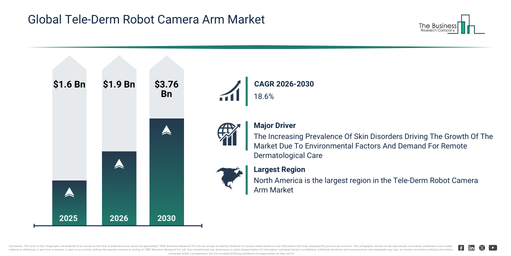
    The market for tele-derm robot camera arms has experienced substantial expansion lately, projecting a rise from $1.6 billion in 2025 to $1.9 billion in 2026, reflecting a compound annual growth rate of 18.9%. This upward trend is largely propelled by the increasing embrace of telemedicine, a growing scarcity of dermatology experts, the wider availability of remote consultation options, enhancements in robotic camera technology, and a greater willingness to utilize digital diagnostic tools during the historical period.

    The market for tele-derm robot camera arms is poised for significant expansion, projected to reach $3.76 billion by 2030, reflecting a compound annual growth rate of 18.6%. This surge is anticipated to be fueled by several key factors, including escalating investments in robotic telehealth solutions, a growing need for specialized remote medical consultations, advancements in wireless imaging for medical applications, the increasing incorporation of artificial intelligence for diagnostic purposes, and a wider implementation in both outpatient facilities and ambulatory care centers. Throughout the projected timeframe, notable market developments are expected to include a greater uptake of robotic systems for teledermatology, a heightened demand for high-accuracy remote imaging equipment, the expanding use of AI to refine skin analysis, the development of more portable and adaptable camera arm technologies, and an intensified emphasis on ensuring the precision of remote diagnoses.

    Download A Free Sample Report For Comprehensive Market Insights:

    https://www.thebusinessresearchcompany.com/sample.aspx?id=29225&type=smp

    Tele-Derm Robot Camera Arm Market Demand Drivers Creating New Revenue Opportunities

    The escalating incidence of dermatological conditions is poised to stimulate the expansion of the tele-derm robot camera arm sector. These conditions encompass a wide array of ailments affecting the skin’s integrity, functionality, or visual presentation, manifesting as symptoms like rashes, sores, inflammation, or alterations in hue or texture. Such an increase in skin disorder prevalence can be attributed to environmental influences, including pollution, ultraviolet radiation exposure, climatic shifts, and contact with hazardous chemicals, any of which can inflict damage upon the skin and precipitate diverse dermatological issues. Tele-derm robot camera arms facilitate meticulous remote skin assessments, thereby improving the early identification, diagnosis, and ongoing management of various skin ailments, while simultaneously broadening the reach of dermatological expertise. As an illustration, data from Skin Health Institute Inc., an Australian non-profit, indicated in August 2023 that approximately 2–3% of the Australian population suffers from psoriasis, underscoring its commonality. Consequently, the rising tide of skin disorders is a key impetus for the tele-derm robot camera arm market.

    The upsurge in healthcare spending is projected to fuel the advancement of the tele-derm robot camera arm market. Healthcare expenditure encompasses all financial outlays for medical services, apparatus, and innovations designed to enhance well-being. This spending is escalating due to a heightened demand for sophisticated medical technologies, as healthcare facilities increasingly allocate resources towards cutting-edge equipment and digital solutions to refine patient care and improve health outcomes. Increased healthcare expenditure is fostering the adoption of tele-derm robot camera arms by empowering medical providers to invest in advanced diagnostic tools that elevate remote dermatological services and contribute to better patient results. For example, the Centers for Medicare & Medicaid Services, a US governmental entity, reported in June 2025 that national health expenditures in 2023 surged by 7.5% to $4.9 trillion, averaging $14,570 per capita and constituting 17.6% of the GDP, with Medicare spending alone climbing 8.1% to $1,029.8 billion, representing 21% of the total NHE. Thus, robust healthcare spending is a significant contributor to the tele-derm robot camera arm market’s growth.

    The expanding utilization of telemedicine platforms is anticipated to invigorate the tele-derm robot camera arm market. Telemedicine involves leveraging digital technologies to deliver clinical services remotely, allowing patients to consult with healthcare professionals without the necessity of in-person appointments. The increasing embrace of telemedicine platforms stems from a growing demand for convenient and accessible healthcare options, enabling individuals to seek medical advice remotely, thereby eliminating the need for travel to clinics or hospitals. Tele-derm robot camera arms serve to augment telemedicine platforms by providing high-definition, real-time visualization of the skin, equipping dermatologists with the capability to diagnose, monitor, and manage cutaneous conditions from a distance with enhanced precision and efficiency. As an illustration, FAIR Health Inc., a US non-profit, noted in April 2023 that national telehealth usage saw a 7.3% increase in 2023, progressing from 5.5% of medical claim lines in December 2022 to 5.9% in January 2023. Therefore, the widespread adoption of telemedicine platforms is a primary driver for the tele-derm robot camera arm market.

    Tele-Derm Robot Camera Arm Market Segmentation Trends And Revenue Drivers

    The tele-derm robot camera arm market covered in this report is segmented –

    1) By Product Type: Fixed Camera Arm, Articulated Camera Arm, Portable Camera Arm, Other Product Types

    2) By Technology: Wired, Wireless

    3) By Application: Teledermatology, Remote Patient Monitoring, Clinical Diagnostics, Other Applications

    4) By End-User: Hospitals, Clinics, Ambulatory Surgical Centers, Other End-Users

    Subsegments:

    1) By Fixed Camera Arm: Wall Mounted, Ceiling Mounted, Tripod Mounted, Desk Mounted

    2) By Articulated Camera Arm: Single Joint, Double Joint, Multi Joint, Telescopic

    3) By Portable Camera Arm: Handheld, Foldable, Collapsible, Lightweight

    4) By Other Product Types: Robotic, Motorized, Pneumatic, Hydraulic

    Tele-Derm Robot Camera Arm Market Industry Leaders: Which Organizations Are Driving Competition?

    Major companies operating in the tele-derm robot camera arm market are Olympus Corporation, KUKA Systems GmbH, Comau S.p.A., Universal Robots AS, FotoFinder Systems Inc., Canfield Scientific Inc., Mecademic Robotics, Blackcam Robotics, Dermavision Solutions S.L., Elephant Robotics, Fourth Arrow Camera Arms, Shenzhen Wisonic Medical Technology Co. Ltd, Adept Technology Inc., Kinova Robotics, Staubli Robotics, Denso Robotics, Robotiq Inc., iRobot Medical Systems, Yaskawa Motoman, ABB Robotics

    Access The Complete Tele-Derm Robot Camera Arm Market Report:

    https://www.thebusinessresearchcompany.com/report/tele-derm-robot-camera-arm-global-market-report

    Tele-Derm Robot Camera Arm Market Regional Outlook: Where Are The Largest Opportunities Located?

    North Americawas the largest region in the tele-derm robot camera arm market in 2025. Asia-Pacificis expected to be the fastest-growing region in the forecast period. The regions covered in the tele-derm robot camera arm market report are Asia-Pacific, South East Asia, Western Europe, Eastern Europe, North America, South America, Middle East, Africa.

    Get in touch with us:

    The Business Research Company: https://www.thebusinessresearchcompany.com/

    Americas: +1 310-496-7795

    Asia: +44 7882 955267 & +91 8897263534

    Europe: +44 7882 955267

    Email us at: marketing@tbrc.info

    Follow us on:

    LinkedIn: https://in.linkedin.com/company/the-business-research-company

    YouTube: https://www.youtube.com/channel/UC24_fI0rV8cR5DxlCpgmyFQ

    Global Market Model: https://www.thebusinessresearchcompany.com/global-market-model
  • Teledentistry Market Expansion Is Opening New Pathways For Strategic Investment

    Teledentistry Market Expansion Is Opening New Pathways For Strategic Investment

    Through market attractiveness analysis, total addressable market evaluation, company benchmarking matrices, interactive Excel dashboards, expanded supply chain intelligence, emerging startup coverage, and detailed product insights, The Business Research Company’s 2026 market reports provide more actionable and strategically valuable research.

    Teledentistry Market Expected To Reach $5.81 Billion By 2030 At 18.9% CAGR

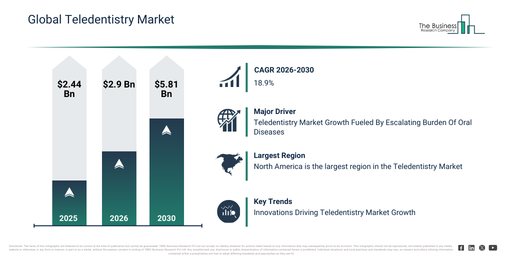
    The teledentistry market demonstrates a substantial upward trajectory, projected to expand from $2.44 billion in 2025 to $2.9 billion in 2026, reflecting a compound annual growth rate of 19.0%. Several key factors fueled this expansion during the historical period, including the widespread adoption of internet connectivity within the healthcare sector, a notable scarcity of dental practitioners in remote regions, an increasing willingness to embrace telehealth solutions, the broader implementation of electronic dental records, and advancements in video communication tools.

    The teledentistry sector is poised for substantial expansion within the forthcoming years, projected to reach a valuation of $5.81 billion by 2030, driven by a compound annual growth rate (CAGR) of 18.9%. This accelerated trajectory in the upcoming period is fueled by several key factors, including a heightened need for accessible remote oral healthcare solutions, increased capital flowing into digital dental technologies, a greater emphasis on proactive dental wellness, the proliferation of AI-powered dental diagnostic tools, and the seamless incorporation of teledentistry into everyday dental practices. Essential developments anticipated during this forecast horizon encompass a broader embrace of virtual dental consultations, a greater utilization of digital imaging and remote diagnostic capabilities, deeper integration with practice management systems, the wider availability of cloud-based dental communication platforms, and an intensified focus on engaging patients remotely.

    Download A Free Sample Report For Comprehensive Market Insights:

    https://www.thebusinessresearchcompany.com/sample.aspx?id=8311&type=smp

    Teledentistry Market Expansion Supported By Key Demand Factors

    The increasing global burden of oral health issues is anticipated to be a primary catalyst for the teledentistry market’s expansion. Oral diseases encompass conditions affecting the mouth, including teeth, gums, and the tongue. Teledentistry plays a crucial role in broadening access to dental care and enhancing the management of these conditions. For illustration, data from the World Health Organization, an international organization headquartered in Switzerland, indicated that in 2022, an estimated 389,846 new diagnoses of lip and oral cavity cancers were recorded worldwide, leading to roughly 188,438 fatalities. Consequently, the escalating incidence of oral diseases is fueling the advancement of the teledentistry sector.

    Teledentistry Market Segment Analysis Highlighting Growth Areas

    The teledentistry market covered in this report is segmented –

    1) By Component: Hardware, Software

    2) By Delivery Mode: On-premise, Cloud-based

    3) By Application: Tele-consultation, Remote patient monitoring, Education and training

    4) By End User: Healthcare providers, Patients, Other End-Users

    Subsegments:

    1) By Hardware: Intraoral Cameras, X-Ray Scanners, Mobile Devices, Computer Systems

    2) By Software: Practice Management Software, Appointment Scheduling Software, Image Analysis and Diagnosis Software, Communication And Video Conferencing Software

    Teledentistry Market Growth Trends Influencing Competitive Dynamics

    Leading entities within the teledentistry sector are prioritizing innovations, encompassing AI-powered diagnostic aids and digital consultation systems, with the objective of broadening patient reach and elevating the standard of dental services, ultimately contributing to superior oral health and increased patient contentment. AI in image interpretation employs sophisticated algorithms to scrutinize and comprehend visual information derived from photographs, facilitating precise evaluations and diagnoses across numerous domains, notably within the medical field. As an illustration, in June of 2023, Virtual Dental Care, Inc., a United States firm specializing in teledentistry software and related services, introduced Teledentistry 3.0. The objective of Teledentistry 3.0 is to expand access to dental services by offering a complete suite of remote options, allowing patients to receive care conveniently at home. This updated version of teledentistry extends its scope beyond addressing immediate issues to encompass services focused on overall well-being, including proactive measures and continuous oversight of dental health. This cutting-edge solution incorporates sophisticated technologies like artificial intelligence to refine diagnostic capabilities and customize treatment strategies, thereby amplifying the availability of dental care.

    Teledentistry Market Leading Companies: Who Holds Significant Market Presence?

    Major companies operating in the teledentistry market are The TeleDentists, Dentulu Inc, Toothpic, Virtudent Inc, SmileMate, DentalChat, Denteractive, DigiDentista, Odonto Virtual, Odontología Virtual, Dentaly.org, Teladent, Zahnarzt-Hotline, Dentist.cz, DentistulTau, Dentaltap, Dentalink, Odontovida, Smileneo, Teledentistry

    Access The Complete Teledentistry Market Report:

    https://www.thebusinessresearchcompany.com/report/teledentistry-global-market-report

    Teledentistry Market Geographic Landscape: Which Region Dominates Industry Growth?

    North Americawas the largest region in the teledentistry market in 2025. The regions covered in the teledentistry market report are Asia-Pacific, South East Asia, Western Europe, Eastern Europe, North America, South America, Middle East, Africa.

    Get in touch with us:

    The Business Research Company: https://www.thebusinessresearchcompany.com/

    Americas: +1 310-496-7795

    Asia: +44 7882 955267 & +91 8897263534

    Europe: +44 7882 955267

    Email us at: marketing@tbrc.info

    Follow us on:

    LinkedIn: https://in.linkedin.com/company/the-business-research-company

    YouTube: https://www.youtube.com/channel/UC24_fI0rV8cR5DxlCpgmyFQ

    Global Market Model: https://www.thebusinessresearchcompany.com/global-market-model
  • Telecare Market Trends Are Creating New Opportunities For Industry Leaders

    Telecare Market Trends Are Creating New Opportunities For Industry Leaders

    Delivering more actionable and strategically valuable research, The Business Research Company’s 2026 market reports feature market attractiveness analysis, total addressable market evaluation, company benchmarking matrices, interactive Excel dashboards, expanded supply chain intelligence, emerging startup coverage, and detailed product insights.

    Telecare Market Size And Revenue Forecast Through 2030

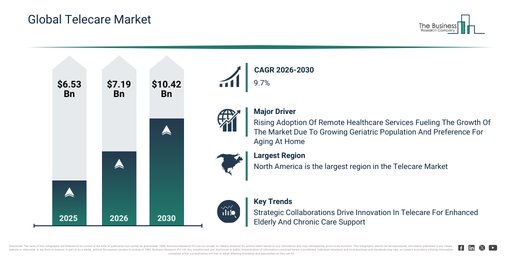
    The telecare sector has experienced substantial expansion lately, projected to surge from $6.53 billion in 2025 to $7.19 billion in 2026, reflecting a compound annual growth rate of 10.1%. This upward trajectory during the past period is fueled by several key factors: a burgeoning elderly demographic, a higher incidence of chronic diseases, the broadening scope of in-home healthcare, enhancements in network infrastructure, and a greater embrace of telemedicine approaches.

    Anticipating a robust expansion, the telecare sector’s market valuation is projected to reach $10.42 billion by 2030, exhibiting a compound annual growth rate of 9.7% throughout the forecasted period. This upward trajectory is largely fueled by several key factors, including escalating investments in digital health infrastructure, a heightened embrace of AI-driven telecare analytical tools, the proliferation of smart home healthcare networks, an intensified emphasis on proactive healthcare strategies, and a growing need for more economical methods of care provision. Furthermore, several significant trends are expected to shape this market, such as the increasing implementation of remote patient monitoring systems, a greater utilization of wearable telecare gadgets, the enhanced incorporation of emergency notification technologies, the broadening scope of home-based chronic illness management programs, and a reinforced commitment to facilitating independent living solutions for the elderly.

    Download A Free Sample Report For Comprehensive Market Insights:

    https://www.thebusinessresearchcompany.com/sample.aspx?id=25921&type=smp

    Telecare Market Growth Drivers And Industry Catalysts

    Advancements in remote healthcare, facilitated by telecommunication technologies, are poised to be a significant catalyst for the telecare market’s expansion. This trend stems from an aging global population who increasingly opt for in-home care, thus elevating the need for consistent remote supervision and support services. Telecare plays a crucial role in these remote healthcare solutions by offering real-time patient monitoring, swift emergency interventions, and seamless communication via interconnected devices, thereby ensuring that care can be provided irrespective of physical proximity. A compelling illustration of this trend was observed in the first quarter of 2024, when approximately 2.75 million Medicare beneficiaries in the United States utilized telehealth services, underscoring a persistent and widespread dependence on remote healthcare provisions. Consequently, the increasing embrace of remote healthcare solutions is directly fueling the growth trajectory of the telecare market.

    Telecare Market Segment Performance And Strategic Opportunities

    The telecare market covered in this report is segmented –

    1) By Type: Activity Monitoring, Remote Medication Management

    2) By Technology: Non Wearable, Wearable

    3) By End Use: Healthcare Consumers, Healthcare Providers, Payers

    Subsegments:

    1) By Activity Monitoring: Motion Sensors, Bed And Chair Occupancy Sensors, Door And Window Sensors, Wearable Activity Trackers, Fall Detection Devices

    2) By Remote Medication Management: Smart Pill Dispensers, Automated Medication Reminders, Mobile Medication Management Apps, Connected Inhalers, Remote Dose Monitoring Platforms

    #Telecare Market Trends Influencing Long-Term Demand

    In the telecare industry, leading entities are prioritizing the deployment of inventive offerings via calculated alliances. These partnerships are designed to bolster remote patient observation capacities and broaden the spectrum of services available, thereby addressing the escalating need for support among the elderly and individuals with chronic health conditions. Such strategic alliances entail cooperative agreements between firms, pooling their assets and specialized knowledge to foster novel developments, refine service provision, and attain shared objectives with greater efficacy. As an illustration, during December of 2024, Skyresponse AB, a technological firm originating from Sweden, and OneCo Technologies AS, a Norwegian entity acclaimed for its health technology solutions, established a significant alliance. Their joint endeavor is set to introduce cutting-edge, entirely digital, cloud-powered telecare solutions intended to bolster independent living and cater to the requirements of care facilities, institutions, and healthcare providers across both private and public domains. This union merges Skyresponse’s sophisticated alarm administration framework with OneCo’s proficiency in electronics, automation, and telecommunications, ultimately aiming to deliver adaptable, economical, and intuitive telecare services. The immediate emphasis of this collaboration lies in a remote night check-in system that integrates KeplerVision with the Skyresponse Responder App, with Norway’s foremost private operator of care homes being among the inaugural adopters.

    Telecare Market Key Players: Which Companies Shape Industry Competition?

    Major companies operating in the telecare market are Philips Healthcare, The Access Group Limited, Tunstall Healthcare Group Limited, ConnectAmerica.com LLC, Ascom Holding AG, Resideo Technologies Inc., Cera Care Limited, Enovation Group B.V., iHealth Labs Inc., Vivify Health Inc., Careium AB, Essence SmartCare Ltd., Helios Telecare Inc., Rest Assured LLC, Tyto Care Ltd., Alarm.com, Legrand Care, Essence Group, Everon Group, AT Technology Services, Doro Care, Televic Healthcare

    Access The Complete Telecare Market Report:

    https://www.thebusinessresearchcompany.com/report/telecare-global-market-report

    Telecare Market Largest Region: Which Geography Holds The Highest Market Share?

    North Americawas the largest region in the telecare market in 2025. Asia-Pacificis expected to be the fastest-growing region in the forecast period. The regions covered in the telecare market report are Asia-Pacific, South East Asia, Western Europe, Eastern Europe, North America, South America, Middle East, Africa.

    Get in touch with us:

    The Business Research Company: https://www.thebusinessresearchcompany.com/

    Americas: +1 310-496-7795

    Asia: +44 7882 955267 & +91 8897263534

    Europe: +44 7882 955267

    Email us at: marketing@tbrc.info

    Follow us on:

    LinkedIn: https://in.linkedin.com/company/the-business-research-company

    YouTube: https://www.youtube.com/channel/UC24_fI0rV8cR5DxlCpgmyFQ

    Global Market Model: https://www.thebusinessresearchcompany.com/global-market-model
  • Tele Intensive Care Unit Market Growth Is Reshaping Competitive Advantage Across The Industry

    Tele Intensive Care Unit Market Growth Is Reshaping Competitive Advantage Across The Industry

    Enhanced with market attractiveness analysis, total addressable market evaluation, company benchmarking matrices, interactive Excel dashboards, expanded supply chain intelligence, emerging startup coverage, and detailed product insights, The Business Research Company’s 2026 market reports deliver more actionable and strategically valuable research.

    Tele Intensive Care Unit Market Growth From $7.58 Billion In 2026 To $15.64 Billion By 2030 At A CAGR Of 19.8%

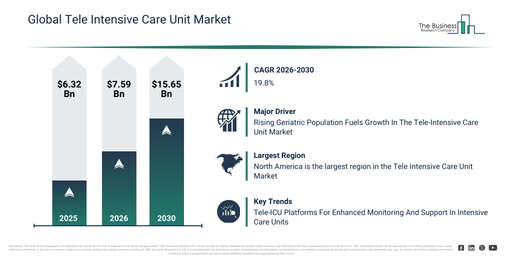
    The telemedicine ICU sector has experienced substantial expansion lately, with projections indicating a rise from $6.32 billion in 2025 to $7.59 billion in 2026, reflecting a compound annual growth rate of 20.0%. During the preceding period, key factors fueling this growth included the enhancement of hospital critical care capabilities, an escalating scarcity of intensivists, the broader adoption of telemedicine solutions, advancements in digital health infrastructure, and the persistent need for ongoing patient observation.

    The tele-intensive care unit (Tele-ICU) market is projected to experience rapid growth over the next few years, reaching $15.65 billion by 2030 at a compound annual growth rate (CAGR) of 19.8%. This growth is expected to be fueled by increasing investments in smart hospital infrastructure, greater adoption of cloud-based healthcare platforms, expansion of remote critical care services, wider use of predictive analytics in ICU management, and a growing emphasis on delivering cost-effective healthcare. Key trends anticipated during the forecast period include the rising adoption of remote ICU monitoring solutions, expansion of centralized Tele-ICU models, greater integration of AI-powered clinical decision support systems, increasing demand for real-time patient data analytics, and a stronger focus on optimizing critical care workforce efficiency.

    Download A Free Sample Report For Comprehensive Market Insights:

    https://www.thebusinessresearchcompany.com/sample.aspx?id=8164&type=smp

    Tele Intensive Care Unit Market Opportunity Drivers: What Is Creating New Revenue Potential?

    The increasing number of elderly individuals is poised to be a significant catalyst for the expansion of the tele-intensive care unit market. Specifically, the demographic of older adults, generally recognized as those aged 65 and above, will benefit greatly from Tele-ICU solutions that facilitate prompt medical interventions and enhance patient results. These advanced systems offer care to patients in critical condition and bolster the capabilities of onsite ICU personnel through secure audio-video communication and electronic data exchange. As an illustration, projections from the World Health Organization indicate that by the year 2030, one out of every six people worldwide will be 60 years of age or older, a figure expected to climb to 2.1 billion elderly individuals by 2050. Consequently, this burgeoning elderly population is a key driver behind the tele-intensive care unit market’s upward trajectory.

    Tele Intensive Care Unit Market Segment Landscape And Growth Potential

    The tele intensive care unit market covered in this report is segmented –

    1) By Type: Centralized Models, Decentralized Models, Other Types

    2) By Type Of Management: Intensivist, Open, Co-Managed, Open With Consultants, Other Types Of Management

    3) By Component: Hardware, Software

    4) By End User: Hospitals, Clinics, Other End Users

    Subsegments:

    1) By Centralized Models: Single Hub With Multiple Remote ICUs, Centralized Monitoring Systems, Integrated Care Coordination Platforms

    2) By Decentralized Models: Distributed Care Teams Across Multiple Locations, Localized Monitoring With Remote Support, Hybrid Care Models

    3) By Other Types: Mobile Tele-ICU Units, Cloud-Based Tele-ICU Solutions, Specialized Tele-ICU Applications

    Tele Intensive Care Unit Market Innovation Trends Driving Future Development

    Key players in the tele-intensive care unit sector are prioritizing the deployment of tele-ICU platforms to distinguish themselves in the marketplace. These platforms represent a technologically advanced solution facilitating remote observation, advisory services, and assistance for intensive care units. As an illustration, in October 2023, HealthNet Global, a healthcare entity based in India, initiated a tele-ICU initiative at Apollo Spectra Hospitals within India. This initiative establishes a link between Apollo Spectra’s ICU facilities and the Apollo Command Center utilizing HNG’s cutting-edge tele-ICU platform, thereby enabling the provision of critical care services with remarkable accuracy. The initiative ensures the availability of remote intensive care physicians and nurses who contribute to the management of ICU patients through sophisticated telehealth capabilities.

    Tele Intensive Care Unit Market Competitive Landscape: Who Are The Leading Companies?

    Major companies operating in the tele intensive care unit market are Hicuity Health LLC, Banner Health System, Teladoc Health Inc., Koninklijke Philips NV, University of Pittsburgh Medical Center, Inova Health System, Apollo TeleHealth Services Limited, Eagle Telemedicine LLC, iMDsoft Ltd., CLEW Medical Ltd., General Electric Company, Cloudphysician Healthcare Company, GlobalMed Inc., Mercy Virtual Inc., SynsorMed Inc., TeleICU by eCatalyst Healthcare Solutions LLC, Vidyo Inc., Vituity Telehealth Services Inc., CyberMed Inc., Dignity Health Telemedicine

    Access The Complete Tele Intensive Care Unit Market Report:

    https://www.thebusinessresearchcompany.com/report/tele-intensive-care-unit-global-market-report

    Tele Intensive Care Unit Market Regional Analysis: Which Region Leads By Revenue?

    North Americawas the largest region in the tele intensive care unit market in 2025. The regions covered in the tele intensive care unit market report are Asia-Pacific, South East Asia, Western Europe, Eastern Europe, North America, South America, Middle East, Africa.

    Get in touch with us:

    The Business Research Company: https://www.thebusinessresearchcompany.com/

    Americas: +1 310-496-7795

    Asia: +44 7882 955267 & +91 8897263534

    Europe: +44 7882 955267

    Email us at: marketing@tbrc.info

    Follow us on:

    LinkedIn: https://in.linkedin.com/company/the-business-research-company

    YouTube: https://www.youtube.com/channel/UC24_fI0rV8cR5DxlCpgmyFQ

    Global Market Model: https://www.thebusinessresearchcompany.com/global-market-model

  • Teeth Whitening Market Forecast Signals New Revenue Opportunities Through 2030

    Teeth Whitening Market Forecast Signals New Revenue Opportunities Through 2030

    Through market attractiveness analysis, total addressable market evaluation, company benchmarking matrices, interactive Excel dashboards, expanded supply chain intelligence, emerging startup coverage, and detailed product insights, The Business Research Company’s 2026 market reports provide more actionable and strategically valuable research.

    Teeth Whitening Market Expansion Outlook: What Revenue Opportunities Lie Ahead?

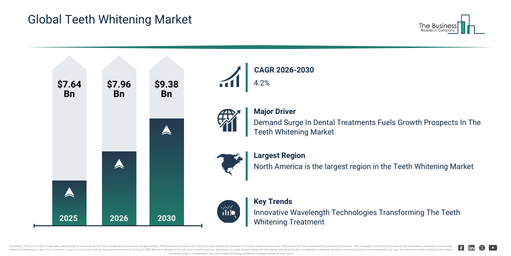
    The global teeth whitening market experienced robust expansion recently, with projections indicating a continued upward trend from $7.64 billion in 2025 to $7.96 billion in 2026, reflecting a compound annual growth rate of 4.3%. This historical growth trajectory has been fueled by heightened public awareness surrounding cosmetic dentistry, a growing emphasis among consumers on their personal appearance, the proliferation of oral care products in retail settings, enhanced disposable income globally, and the widespread availability of professional teeth whitening procedures.

    The global teeth whitening market is projected for consistent expansion in the upcoming years, reaching an estimated value of $9.38 billion by the year 2030, driven by a compound annual growth rate (CAGR) of 4.2%. This anticipated increase during the forecast period is largely fueled by several key factors: the heightened integration of digital dental technologies, a growing consumer desire for high-quality oral hygiene products, the proliferation of specialized cosmetic dental practices, the significant impact of social media trends on perceived beauty standards, and continuous advancements in the development of novel whitening solutions. Key developments anticipated within this timeframe include a surge in the popularity of at-home teeth whitening options, a greater uptake of LED-powered whitening apparatuses, a marked preference for less invasive cosmetic dental procedures, the widening availability of professional whitening treatments, and an intensified emphasis on developing formulations that are gentle on tooth enamel.

    Download A Free Sample Report For Comprehensive Market Insights:

    https://www.thebusinessresearchcompany.com/sample.aspx?id=13543&type=smp

    Teeth Whitening Market Growth Momentum: Which Factors Are Influencing Demand?

    A rising appetite for dental procedures is anticipated to invigorate the expansion of the teeth whitening sector. Dental treatments encompass the various medical services and interventions undertaken by dental practitioners to manage and resolve a range of oral health concerns. Within this scope, dental professionals provide teeth whitening treatments aimed at improving tooth coloration and visual appeal, thereby boosting patients’ aesthetic confidence. As an illustration, referencing Q1 2025 data from Align Technology, Inc., a prominent US medical device entity, clear aligner shipments registered 642.3 thousand units. This volume represented a 2.2% increase from the preceding quarter and a 6.2% rise year-over-year, underscoring the robust activity in related dental services. Consequently, the heightened demand for dental treatments is poised to be a significant catalyst for the teeth whitening market’s advancement.

    Teeth Whitening Market Categorization By Product Type And Application

    The teeth whitening market covered in this report is segmented –

    1) By Product Type: Whitening Toothpaste, Whitening Gels And Strips, Light Teeth Whitening Device, Other Product Types

    2) By Distribution Channel: Institutional Sales, Retail Sales

    3) By Application Type: In-Office, At-Home

    Subsegments:

    1) By Whitening Toothpaste: Abrasive Whitening Toothpaste, Enzyme-Based Whitening Toothpaste

    2) By Whitening Gels And Strips: Gel-Based Whitening Products, Whitening Strips

    3) By Light Teeth Whitening Device: LED Teeth Whitening Devices, UV Teeth Whitening Devices

    4) By Other Product Types: Whitening Mouthwashes, Whitening Pens, Professional Teeth Whitening Kits

    Teeth Whitening Market Trends Reshaping Industry Growth

    Leading entities within the teeth whitening sector are focusing on innovation by introducing sophisticated oral care items incorporating wavelength technology, a strategy aimed at securing a stronger market position. These cutting-edge oral care products leverage distinct light frequencies to optimize dental procedures and elevate oral health results. A notable example occurred in February 2023 when Colgate-Palmolive Company, a prominent US-based firm specializing in dental and personal hygiene products, unveiled its Colgate Optic White ComfortFit LED Teeth Whitening Kit, which features this wavelength technology. This technology employs particular light wavelengths, often within the blue or violet range of the spectrum, to boost the overall effectiveness of teeth whitening processes. The kit’s design prioritizes an improved user journey, emphasizing aspects such as comfort, consistent whitening results, straightforward application, proven effectiveness, and rapid treatment times. By employing wavelength technology, the kit applies a fine coating of whitening serum to the teeth, with the integrated LED device used for a daily 10-minute session over a 10-day span, effectively addressing discoloration swiftly. This comprehensive kit comprises a pliable LED whitening light and a teeth whitening pen, and notably, it can be easily powered by a smartphone, functioning seamlessly with both iPhone and Android devices.

    Teeth Whitening Market Company Landscape And Strategic Competition

    Major companies operating in the teeth whitening market are Johnson And Johnson, Procter And Gamble, Unilever PLC, GlaxoSmithKline Plc, 3M Company, Koninklijke Philips N.V., Colgate-Palmolive Company, Church And Dwight Co, DENTSPLY International, Ivoclar Vivadent AG, Kerr Corp, Ultradent Products Inc., Dr. Fresh LLC, Onuge Personal Care (Guangzhou) Co. Ltd., TECNO-GAZ SpA, Pearl Smile GmbH, Beaming White LLC, WHITEsmile GmbH, WSD Labs USA INC., DentMate Technology Co. Ltd., Mavrik Dental Systems Ltd., GLO Science LLC, Cosmolab Manufacturing Ltd

    Access The Complete Teeth Whitening Market Report:

    https://www.thebusinessresearchcompany.com/report/teeth-whitening-global-market-report

    Teeth Whitening Market Geographic Distribution And Regional Opportunities

    North Americawas the largest region in the teeth whitening market in 2025. Asia-Pacificis expected to be the fastest-growing region in the forecast period. The regions covered in the teeth whitening market report are Asia-Pacific, South East Asia, Western Europe, Eastern Europe, North America, South America, Middle East, Africa.

    Get in touch with us:

    The Business Research Company: https://www.thebusinessresearchcompany.com/

    Americas: +1 310-496-7795

    Asia: +44 7882 955267 & +91 8897263534

    Europe: +44 7882 955267

    Email us at: marketing@tbrc.info

    Follow us on:

    LinkedIn: https://in.linkedin.com/company/the-business-research-company

    YouTube: https://www.youtube.com/channel/UC24_fI0rV8cR5DxlCpgmyFQ

    Global Market Model: https://www.thebusinessresearchcompany.com/global-market-model

  • Technology Spending On Core Administration In Healthcare Market Growth Is Accelerating As Industry Transformation Continues

    Technology Spending On Core Administration In Healthcare Market Growth Is Accelerating As Industry Transformation Continues

    Delivering more actionable and strategically valuable research, The Business Research Company’s 2026 market reports feature market attractiveness analysis, total addressable market evaluation, company benchmarking matrices, interactive Excel dashboards, expanded supply chain intelligence, emerging startup coverage, and detailed product insights.

    Technology Spending On Core Administration In Healthcare Market Growth Potential: How Will Market Size Change Through 2030?

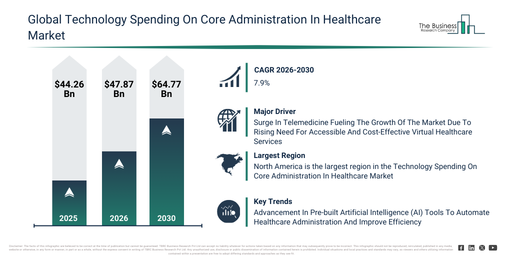
    Within the healthcare sector, expenditures on fundamental administrative technologies have experienced substantial expansion recently. Projections indicate a rise from $44.26 billion in 2025 to $47.87 billion in 2026, reflecting a compound annual growth rate of 8.2%. This historical growth trajectory can be attributed to several key factors, including the escalating administrative workload within healthcare organizations, the increasing integration of electronic records for managing billing and enrollment processes, the growing complexity of healthcare operations, the broader reach of insurance coverage initiatives, and the imperative for effective revenue cycle management.

    Anticipate a robust ascent in the market’s valuation for core healthcare administration technology over the forthcoming years, projecting an increase to $64.77 billion by 2030, driven by a compound annual growth rate of 7.9%. This expansion throughout the projected period is fueled by escalating investments in intelligent automation solutions, a heightened need for instant financial insights, the broadening of digital connections between payers and providers, a greater emphasis on automating adherence to regulations, and the incorporation of sophisticated data management systems. Key developments shaping this future include the accelerating automation of routine administrative tasks in healthcare, increased uptake of cloud-based administrative platforms, a wider deployment of artificial intelligence in claims and billing processes, a reinforced commitment to data precision and the seamless exchange of information, and a more significant concentration on reducing expenses within healthcare operations.

    Download A Free Sample Report For Comprehensive Market Insights:

    https://www.thebusinessresearchcompany.com/sample.aspx?id=27432&type=smp

    Technology Spending On Core Administration In Healthcare Market Expansion Drivers: What Is Shaping Future Growth?

    The expansion of telehealth services is poised to stimulate increased technology expenditures in fundamental healthcare administration functions. Telemedicine, defined as delivering healthcare remotely via digital platforms like video calls, messaging, and mobile applications for patient diagnosis, treatment, and monitoring, is experiencing a surge in utilization. This greater accessibility through telemedicine enables individuals to receive medical care without the necessity of travel, thereby increasing convenience, particularly for residents of remote or underserved regions. Enhanced core administrative technology within healthcare systems improves the functionality of telemedicine by streamlining processes such as patient onboarding, appointment management, invoicing, and claim adjudication, leading to greater operational efficiency and fewer delays, ultimately freeing up healthcare professionals to concentrate on delivering timely virtual consultations. For example, data from the Australian Bureau of Statistics indicated that in the 2024–25 period, 22.5% of Australians utilized telehealth, with a significant 90.3% expressing willingness to use the service again, a slight increase from 89.2% in the preceding year, underscoring the escalating demand for telemedicine and, consequently, the commensurate rise in investment in related core administrative technologies within the healthcare sector.

    Technology Spending On Core Administration In Healthcare Market Segment Analysis And Revenue Opportunities

    The technology spending on core administration in healthcare market covered in this report is segmented –

    1) By Type: Software, Hardware, Services

    2) By Technology: Electronic Health Records (EHRs), Patient Management Systems, Financial Management Systems, Supply Chain Management Systems, Revenue Cycle Management System

    3) By Deployment Mode: On-Premise, Cloud-Based, Hybrid

    4) By Application: Patient Management, Staff Management, Inventory Management, Other Applications

    5) By End-User: Hospitals, Clinics, Insurance Providers, Other End-Users

    Subsegments:

    1) By Software: Electronic Health Record (EHR) Systems, Practice Management Software, Revenue Cycle Management (RCM) Software, Patient Scheduling Software, Claims Management Software

    2) By Hardware: Servers and Storage Devices, Workstations and Desktops, Networking Equipment, Scanners And Imaging Devices, Administrative Endpoints And Secure Access Devices

    3) By Services: Information Technology Consulting and Support, System Integration Services, Managed Services, Training and Education Services, Maintenance and Upgrades

    Technology Spending On Core Administration In Healthcare Market Strategic Trends: What Is Defining The Next Phase Of Growth?

    Within the healthcare technology sector, key players are heavily investing in core administrative functions, specifically by creating sophisticated offerings like pre-packaged artificial intelligence instruments. These tools are designed to automate routine administrative duties and elevate the precision of decision-making processes. Pre-built AI solutions provide immediate access to advanced capabilities, negating the requirement for lengthy custom development cycles and facilitating swift implementation for tasks like automation, data examination, and predictive modeling to optimize operational flows. An illustrative example is the February 2025 release of Agentforce for Health by Salesforce Inc., a prominent US-based cloud software provider. This suite comprises a collection of ready-made AI agents engineered to automate protracted administrative, clinical, and public health responsibilities within the healthcare domain. The functionalities within this platform encompass elements such as managing patient appointments, verifying insurance eligibility, and aiding in care coordination efforts. Furthermore, it contributes to disease monitoring and the identification of suitable clinical trial participants by aggregating information from diverse databases. The overarching objective of these advancements is to alleviate the pressures of administrative overhead, mitigate healthcare professional burnout, and boost the overall operational effectiveness for both service providers and insurance entities.

    Technology Spending On Core Administration In Healthcare Market Leading Players Shaping Industry Direction

    Major companies operating in the technology spending on core administration in healthcare market are Microsoft Corporation, Siemens AG, International Business Machines Corporation, Oracle Corporation, Tata Consultancy Services Limited, Cognizant Technology Solutions Corporation, GE Healthcare Technologies Inc., Infosys Limited, Conduent Incorporated, Evolent Health Inc., Veradigm Inc., Tebra Inc., 314e Corporation, Qventus Inc., Meditab Software Inc., CodaMetrix Inc., Raintree Systems Inc., ReLi Med Solutions Inc., Cerner Corporation, Epic Systems Corporation, Allscripts Healthcare Solutions Inc., McKesson Corporation

    Access The Complete Technology Spending On Core Administration In Healthcare Market Report:

    https://www.thebusinessresearchcompany.com/report/technology-spending-on-core-administration-in-healthcare-global-market-report

    Technology Spending On Core Administration In Healthcare Market Largest Region By Revenue And Market Share

    North Americawas the largest region in the technology spending on core administration in healthcare market in 2025. Asia-Pacificis expected to be the fastest-growing region in the forecast period. The regions covered in the technology spending on core administration in healthcare market report are Asia-Pacific, South East Asia, Western Europe, Eastern Europe, North America, South America, Middle East, Africa.

    Get in touch with us:

    The Business Research Company: https://www.thebusinessresearchcompany.com/

    Americas: +1 310-496-7795

    Asia: +44 7882 955267 & +91 8897263534

    Europe: +44 7882 955267

    Email us at: marketing@tbrc.info

    Follow us on:

    LinkedIn: https://in.linkedin.com/company/the-business-research-company

    YouTube: https://www.youtube.com/channel/UC24_fI0rV8cR5DxlCpgmyFQ

    Global Market Model: https://www.thebusinessresearchcompany.com/global-market-model