Month: June 2026

  • Hearing Diagnostic Devices And Equipment Market Trends And Growth Drivers Point To Strong Future Potential

    Hearing Diagnostic Devices And Equipment Market Trends And Growth Drivers Point To Strong Future Potential

    Enhanced with market attractiveness analysis, total addressable market evaluation, company benchmarking matrices, interactive Excel dashboards, expanded supply chain intelligence, emerging startup coverage, and detailed product insights, The Business Research Company’s 2026 market reports deliver more actionable and strategically valuable research.

    The hearing diagnostic devices and equipment sector has demonstrated notable growth in recent years, driven by increasing awareness and advancements in auditory health technologies. As hearing health becomes a critical focus worldwide, the market is expected to expand further, shaped by innovations and rising demand across diverse healthcare settings. Let’s explore the current market scenario, key factors propelling growth, significant players, and future trends influencing this dynamic industry.

    Steady Expansion of the Hearing Diagnostic Devices and Equipment Market

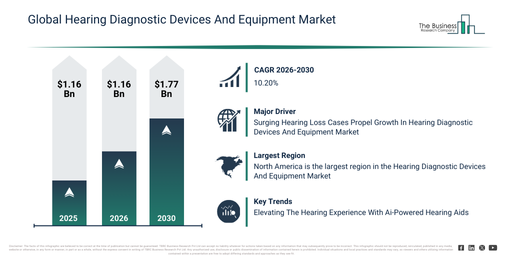
    The hearing diagnostic devices and equipment market has witnessed strong growth historically and is projected to continue on this upward path. Market size is estimated to rise from $2.48 billion in 2025 to $2.71 billion in 2026, reflecting a compound annual growth rate (CAGR) of 9.4%. This expansion during the past years has been supported by the broadening scope of clinical hearing assessments, increased identification of hearing impairments, improved access to audiometric technology, growth in ENT-focused healthcare facilities, and the adoption of uniform diagnostic protocols.

    Download A Free Sample Report For Comprehensive Market Insights:

    https://www.thebusinessresearchcompany.com/sample.aspx?id=2429&type=smp

    Projecting Future Growth and Market Opportunities in Hearing Diagnostic Devices

    Looking ahead, the market is anticipated to grow rapidly, reaching $4 billion by 2030 with an accelerated CAGR of 10.2%. Factors fueling this growth include heightened demand for point-of-care diagnostic solutions, increased use of telehealth-based hearing examinations, wider implementation of pediatric and elderly hearing screening initiatives, technological advancements enhancing diagnostic precision, and rising investments in digital healthcare diagnostics. Emerging trends involve growing use of automated hearing screening systems, expanding adoption of portable diagnostic tools, integration of software-driven audiometry, the rise of remote hearing evaluation platforms, and a stronger focus on early detection technologies.

    Rising Hearing Loss Cases as a Key Growth Driver

    One of the primary factors propelling the hearing diagnostic devices and equipment market is the escalating prevalence of hearing loss globally. Hearing loss, characterized by partial or complete inability to perceive sounds in one or both ears, stems from causes such as noise exposure, genetic factors, ototoxic medications, auditory diseases, complications during birth, and aging. The increasing incidence is linked to growing environmental noise pollution, an aging global population, and a rise in health conditions that impact hearing. For example, in February 2025, the World Health Organization (WHO) reported that over 5% of the world’s population—approximately 430 million people—suffer from disabling hearing loss, with projections estimating this figure could reach 700 million by 2050. Notably, around 80% of those affected live in low- and middle-income countries, and hearing loss prevalence sharply increases with age, affecting more than 25% of adults over 60 years old. This widespread rise in hearing impairment is a crucial factor driving market growth.

    Access The Complete Hearing Diagnostic Devices And Equipment Market Report:

    https://www.thebusinessresearchcompany.com/report/hearing-diagnostic-devices-and-equipment-global-market-report

    Additional Market Drivers Shaping Hearing Diagnostic Device Demand

    Besides increasing hearing loss, the expansion of clinical infrastructures such as ENT clinics and audiology centers supports demand for diagnostic equipment. Enhanced awareness campaigns and government screening programs also contribute by encouraging early diagnosis and intervention. Furthermore, advances in diagnostic protocols and broader availability of hearing assessment tools have made hearing evaluation more accessible, amplifying market growth prospects.

    Detailed Segmentation of the Hearing Diagnostic Devices and Equipment Market

    This market is segmented based on type, indication, and end-user to provide a comprehensive understanding of its structure:

    1) By Type:

    – Otoacoustic Emission (OAE) Devices (subdivided into Transient Evoked OAE and Distortion Product OAE devices)

    – Audiometers (including Diagnostic, Screening, Portable, and Computerized audiometers)

    – Otoscopes (Pocket, Video, and Digital variants)

    – Tympanometers (Conventional, Portable, and Multifunction)

    – Other Devices such as Hearing Screeners, Speech Audiometry Equipment, and Impedance Audiometers

    2) By Indication:

    – Conductive Hearing Loss

    – Sensorineural Hearing Loss

    – Combination Hearing Loss

    – Other Indications

    3) By End-User:

    – Hospitals

    – Clinics

    – Personal Care Settings

    – Ambulatory Care Facilities

    Innovative Technologies and AI Influence Future Market Prospects

    Leading manufacturers are increasingly incorporating artificial intelligence (AI) into hearing diagnostic devices to gain a competitive advantage and improve diagnostic accuracy. AI-enabled tools assist medical professionals in more precise and efficient assessments of hearing-related disorders. For example, in September 2023, US-based Starkey Hearing Technologies introduced its Genesis AI hearing aids featuring a new Neuro Processor with six times more transistors and four times the processing speed. This cutting-edge chip imitates the central auditory system via an advanced compression system and an on-chip Deep Neural Network (DNN) accelerator. Its upgraded Edge Mode+ uses an enhanced DNN algorithm to deliver smarter sound processing across various environments. The device also includes features like offline mode, improved two-way audio, updated feedback cancellation, and firmware update alerts via the My Starkey app, all designed to offer a superior hearing experience for patients and professionals alike.

    Prominent Companies Leading the Hearing Diagnostic Devices Market

    Several key players dominate the landscape of hearing diagnostic devices and equipment, including Demant A/S, WS Audiology, Natus Medical Incorporated, Grason Stadler, MeCan Medical, Amplivox, Inventis, Western Surgical, Xion Medical, Interacoustics, MAICO Diagnostics, Luxamed, Sibelmed, Vivosonic, Oticon, Phonak, KaWe Medical, Hangzhou AcoSound Technology Co. Ltd, Microson, and Zumax Medical. These organizations are recognized for their innovation, extensive product portfolios, and global reach.

    Geographic Market Leadership and Regional Growth Insights

    In 2025, North America held the leading position as the largest regional market for hearing diagnostic devices and equipment. The Asia-Pacific region ranked second, showing substantial market size and promising growth potential. Other regions covered in the market report include South East Asia, Western Europe, Eastern Europe, South America, the Middle East, and Africa, reflecting a broad global footprint and diverse opportunities for expansion.

    Get in touch with us:

    The Business Research Company: https://www.thebusinessresearchcompany.com/

    Americas: +1 310-496-7795

    Asia: +44 7882 955267 & +91 8897263534

    Europe: +44 7882 955267

    Email us at: marketing@tbrc.info

    Follow us on:

    LinkedIn: https://in.linkedin.com/company/the-business-research-company

    YouTube: https://www.youtube.com/channel/UC24_fI0rV8cR5DxlCpgmyFQ

    Global Market Model: https://www.thebusinessresearchcompany.com/global-market-model
  • Hearing Aid Devices And Equipment Market Expansion Is Reshaping Competitive Dynamics Across The Industry

    Hearing Aid Devices And Equipment Market Expansion Is Reshaping Competitive Dynamics Across The Industry

    Through market attractiveness analysis, total addressable market evaluation, company benchmarking matrices, interactive Excel dashboards, expanded supply chain intelligence, emerging startup coverage, and detailed product insights, The Business Research Company’s 2026 market reports provide more actionable and strategically valuable research.

    The hearing aid devices and equipment market has experienced significant growth recently, driven by technological advancements and increasing awareness of hearing health. As the global population ages and more people face hearing challenges, this market is set to expand further, offering promising prospects for innovation and broader adoption in the coming years.

    Market Size and Forecast in the Hearing Aid Devices and Equipment Market

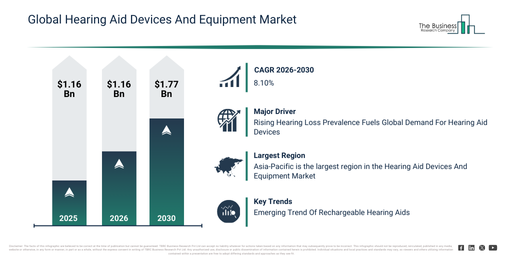
    The hearing aid devices and equipment market has seen robust expansion, with its value rising from $12.97 billion in 2025 to an anticipated $14.02 billion in 2026, reflecting a compound annual growth rate (CAGR) of 8.1%. This steady growth over recent years has been largely fueled by an aging population, higher rates of hearing loss, increased awareness about hearing health, advancements in digital hearing technologies, and the growth of audiology services. Looking ahead, the market is expected to reach $19.18 billion by 2030, maintaining the same CAGR of 8.1%. Factors propelling this future growth include a rising preference for smart hearing devices, personalized hearing solutions, greater availability of over-the-counter hearing aids, tele-audiology service expansion, and ongoing innovations in sound enhancement algorithms. Key trends anticipated are wider adoption of AI-powered sound processing, increasing demand for wireless and Bluetooth-enabled devices, a focus on smaller and less visible aids, growth in rechargeable hearing solutions, and closer integration with smartphones.

    Download A Free Sample Report For Comprehensive Market Insights:

    https://www.thebusinessresearchcompany.com/sample.aspx?id=2428&type=smp

    Key Factors Supporting the Hearing Aid Devices and Equipment Market Growth

    One of the primary drivers behind the expansion of the hearing aid devices and equipment market is the increasing prevalence of hearing loss worldwide. Hearing loss, which can range from partial to complete inability to detect sounds, often results from aging, exposure to loud noises, infections, or genetic predispositions. The widespread use of personal audio devices at high volumes has further contributed to damage in the sensory hair cells of the inner ear, leading to gradual or permanent hearing impairment. As the number of people affected by hearing loss rises, so does the demand for hearing aids, cochlear implants, and various assistive listening devices.

    For context, in February 2025, the World Health Organization (WHO) reported that over 5% of the global population—approximately 430 million people, including 34 million children—require rehabilitation for disabling hearing loss. Projections suggest that by 2050, this number could exceed 700 million, or roughly one in ten people worldwide. This significant increase is a major factor driving demand in the hearing aid devices and equipment market.

    Detailed Breakdown of the Hearing Aid Devices and Equipment Market Segments

    This market is segmented into several key categories to capture diverse product types, technologies, patient groups, types of hearing loss, and distribution channels. Product types covered include Receiver-In-The-Ear (RTE), Behind-The-Ear (BTE), In-The-Ear (ITE), In-The-Canal (ITC), and Completely-In-The-Canal (CIC) hearing aids. The technology segmentation divides the market into conventional and digital hearing aids. Patient categories focus on adults, pediatric users, and elderly patients. The market also considers types of hearing loss such as conductive and sensorineural. Distribution channels include audiology and ENT clinics, pharmacies, online sales, and other pathways.

    Further subsegments provide a more granular view, such as RTE aids featuring standard, telecoil, and Bluetooth connectivity options; BTE variations including standard, mini, and wireless-enabled devices; ITE aids in full-size, half-size, and custom-fit versions; ITC aids with standard, wireless connectivity, and noise management features; and CIC aids offering standard models, remote control options, and enhanced sound capabilities.

    Access The Complete Hearing Aid Devices And Equipment Market Report:

    https://www.thebusinessresearchcompany.com/report/hearing-aid-devices-and-equipment-global-market-report

    Current Industry Trends Reshaping the Hearing Aid Devices and Equipment Market

    Innovation is a key theme among leading players in the hearing aid devices and equipment market, with a particular focus on rechargeable hearing aids that offer greater convenience and sustainability by eliminating disposable batteries. Rechargeable devices also often come with enhanced features such as improved connectivity.

    For example, in August 2023, Unitron, a Canadian manufacturer, introduced the Moxi V-RS, a rechargeable hearing aid powered by the Vivante platform. This product provides separate instruments for the left and right ears for better comfort, includes a magnetic charging case, and supports seamless digital device connectivity. It allows users to stream calls, music, and other audio effortlessly, while tap controls and a Remote Plus app offer personalized hearing management, advanced sound performance, and a modern design aesthetic.

    Key Players Dominating the Hearing Aid Devices and Equipment Market

    The hearing aid devices and equipment market is led by several major companies, including Sonova Holding AG, WS Audiology A/S, Demant AS, Starkey Hearing Technologies, GN Store Nord A/S, Eargo Inc., RION Co. Ltd, Zounds Hearing, Audina Hearing Instruments Inc., SeboTek Hearing Systems LLC, Widex India Pvt Ltd., Oticon India, Phonak India, Unitron India, Bernafon India, Beltone India Private Limited, Signia Australia, GN Hearing Australia Pty. Ltd, Cortiton Hearing Aid Co Ltd, and Narang Medical Limited. These companies play a critical role in driving innovation, expanding product portfolios, and enhancing market reach globally.

    Geographical Outlook and Regional Market Highlights for Hearing Aid Devices and Equipment

    In 2025, the Asia-Pacific region held the largest share in the global hearing aid devices and equipment market, showcasing strong demand and growth potential. North America ranked as the second-largest market. The report also covers other important regions including South East Asia, Western Europe, Eastern Europe, South America, the Middle East, and Africa, delivering a comprehensive perspective on regional market trends and opportunities worldwide.

    Get in touch with us:

    The Business Research Company: https://www.thebusinessresearchcompany.com/

    Americas: +1 310-496-7795

    Asia: +44 7882 955267 & +91 8897263534

    Europe: +44 7882 955267

    Email us at: marketing@tbrc.info

    Follow us on:

    LinkedIn: https://in.linkedin.com/company/the-business-research-company

    YouTube: https://www.youtube.com/channel/UC24_fI0rV8cR5DxlCpgmyFQ

    Global Market Model: https://www.thebusinessresearchcompany.com/global-market-model
  • Healthcare Smart Card Reader Market Forecast Reveals Where Future Industry Value Will Be Created

    Healthcare Smart Card Reader Market Forecast Reveals Where Future Industry Value Will Be Created

    Delivering more actionable and strategically valuable research, The Business Research Company’s 2026 market reports feature market attractiveness analysis, total addressable market evaluation, company benchmarking matrices, interactive Excel dashboards, expanded supply chain intelligence, emerging startup coverage, and detailed product insights.

    The healthcare smart card reader market is evolving swiftly, driven by advancements in digital record-keeping and the growing emphasis on patient data security. As healthcare providers continue to modernize their systems, the demand for efficient, reliable smart card readers is surging, setting the stage for strong market growth in the coming years.

    Healthcare Smart Card Reader Market Size and Growth Outlook

    The healthcare smart card reader market has witnessed rapid expansion in recent years. From a market size of $1.62 billion in 2025, it is projected to increase to $1.91 billion in 2026, representing a compound annual growth rate (CAGR) of 18.0%. Historical growth has been propelled by the gradual shift away from traditional paper-based patient records, limited but growing adoption of smart card technology, the rising need for reliable patient identification systems, ongoing digitization within hospitals and clinics, and efforts to standardize medical card formats.

    Download A Free Sample Report For Comprehensive Market Insights:

    https://www.thebusinessresearchcompany.com/sample.aspx?id=25778&type=smp

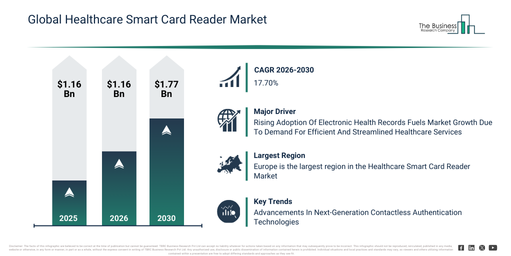
    Looking ahead, the market is expected to accelerate further, reaching $3.67 billion by 2030 with a CAGR of 17.7%. Factors contributing to this forecast include the integration of smart card readers with cloud-based healthcare platforms, the emergence of biometric and multi-application card readers, stricter government regulations concerning data security, expansion of smart healthcare infrastructure, and the rising use of telemedicine and remote patient monitoring. Key trends shaping the future include greater use of contactless and dual interface card readers, closer integration with electronic health records (EHR) systems, a stronger focus on patient data protection and authentication, incorporation into medication dispensing processes, and improvements in administrative efficiency at hospitals and clinics.

    Main Factors Propelling Growth in the Healthcare Smart Card Reader Market

    The growing implementation of electronic health records is a major driver of the healthcare smart card reader market. Electronic health records serve as digital versions of patients’ medical histories, securely accessible to authorized healthcare professionals for improved diagnosis and treatment. The increasing adoption of EHRs is fueled by the demand for more efficient healthcare delivery that reduces paperwork, saves time, and ensures rapid, accurate access to vital patient data. Healthcare smart card readers enhance this process by enabling secure and swift access to patient information, facilitating accurate identification, seamless data integration, and effective information exchange among healthcare providers.

    Access The Complete Healthcare Smart Card Reader Market Report:

    https://www.thebusinessresearchcompany.com/report/healthcare-smart-card-reader-global-market-report

    For example, NHS England reported in October 2024 that by November 2023, 90% of its trusts had adopted Electronic Patient Records (EPR) systems. This widespread adoption has allowed authorized clinicians to access critical patient data efficiently, underscoring how electronic health records are contributing to the rising demand for healthcare smart card readers.

    A Closer Look at Key Market Segments in Healthcare Smart Card Readers

    This market is segmented based on product type, card type, application, and end user. Product categories include contact-based card readers, contactless card readers, dual interface card readers, and other specialized types. Card types are divided into memory-based smart cards and micro-controller-based smart cards. Applications cover patient identification, medical records management, medication dispensing, and access control. End users range from hospitals and clinics to pharmacies, medical laboratories, and insurance companies.

    Further subsegments under product types include USB smart card readers, serial port readers, keyboard integrated readers, PIN pad readers, and mobile device readers for contact-based devices. Contactless readers encompass RFID readers, near field communication (NFC) enabled readers, Bluetooth contactless readers, Wi-Fi contactless readers, and embedded contactless modules. Dual interface card readers include hybrid smart card readers, biometric dual interface readers, multi-application smart card readers, secure access module (SAM) compatible readers, and both desktop and handheld dual interface readers. Other product types cover wearable smart card readers, all-in-one authentication terminals, tablet or phone slot readers, integrated point-of-care terminals, and smart card reader software solutions.

    Innovative Developments Driving Change in the Healthcare Smart Card Reader Market

    Leading companies in this sector are focusing on next-generation contactless communication (NCC) technologies. These advancements enable smart card readers to handle high-speed, multi-protocol interactions, which are essential for applications such as patient identification, asset tracking, and secure access control. NCC technology supports real-time card data processing, interoperability across multiple card standards, and smooth integration with enterprise systems.

    As an example, in January 2024, Advanced Card Systems Ltd., a manufacturer based in China, introduced the ACR1552 Series. This line of NCC-enhanced readers is designed for healthcare, finance, and government sectors, offering up to 848 kbps communication speeds, a built-in secure access module (SAM) slot for secure transactions, and compatibility with various smart card standards (ISO 14443, ISO 15693, NFC) across multiple form factors. The ACR1552 Series enhances secure and efficient access to health card systems, supports flexible deployment options, and improves interoperability in clinical and administrative settings.

    Key Industry Players Influencing the Healthcare Smart Card Reader Market

    The competitive landscape of the healthcare smart card reader market includes prominent players such as Thales S.A., Infineon Technologies AG, NXP Semiconductors N.V., ASSA ABLOY AB, Giesecke+Devrient GmbH, Advantech Co. Ltd., Identiv Inc., FEITIAN Technologies Co. Ltd., rf IDEAS Inc., WISeKey International Holding Ltd., Advanced Card Systems Ltd., On Track Innovations Ltd. (OTI), ID Tech Solutions Pvt. Ltd., IDEMIA Group, IDENTOS Inc., SecuGen Corporation, Rayton Solutions Pte Ltd., CardLogix Corporation, Shenzhen HCC Technology Co. Ltd., and Creator Tech Co. Ltd.

    Regional Insights into Healthcare Smart Card Reader Market Growth

    In 2025, Europe held the largest share of the healthcare smart card reader market. However, the Asia-Pacific region is anticipated to experience the fastest growth rate during the forecast period. The market coverage includes regions such as Asia-Pacific, South East Asia, Western Europe, Eastern Europe, North America, South America, the Middle East, and Africa, providing a broad view of global market trends and opportunities.

    Get in touch with us:

    The Business Research Company: https://www.thebusinessresearchcompany.com/

    Americas: +1 310-496-7795

    Asia: +44 7882 955267 & +91 8897263534

    Europe: +44 7882 955267

    Email us at: marketing@tbrc.info

    Follow us on:

    LinkedIn: https://in.linkedin.com/company/the-business-research-company

    YouTube: https://www.youtube.com/channel/UC24_fI0rV8cR5DxlCpgmyFQ

    Global Market Model: https://www.thebusinessresearchcompany.com/global-market-model
  • Healthcare Personal Protective Equipment Market Growth Through 2030 Creates New Strategic Opportunities

    Healthcare Personal Protective Equipment Market Growth Through 2030 Creates New Strategic Opportunities

    Enhanced with market attractiveness analysis, total addressable market evaluation, company benchmarking matrices, interactive Excel dashboards, expanded supply chain intelligence, emerging startup coverage, and detailed product insights, The Business Research Company’s 2026 market reports deliver more actionable and strategically valuable research.

    The healthcare personal protective equipment (PPE) market has witnessed significant growth recently, driven by increased awareness around safety and infection control in medical settings. As healthcare systems expand and evolve, the demand for advanced and reliable protective gear continues to rise, making this sector a critical focus for innovation and investment. Let’s explore the current market size, key growth factors, leading players, and emerging trends shaping the future of healthcare PPE.

    Healthcare Personal Protective Equipment Market Size and Projected Growth

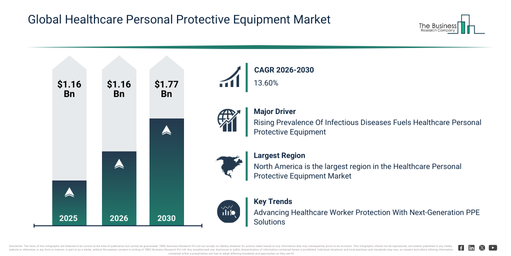
    The healthcare PPE market has seen rapid expansion, valued at $28.89 billion in 2025 and expected to reach $32.29 billion in 2026, growing at a compound annual growth rate (CAGR) of 11.8%. This growth in recent years has been driven by spikes in demand during disease outbreaks, initial shortages of high-quality equipment, reliance on conventional manufacturing techniques, heightened safety awareness among healthcare workers, and stringent infection control regulations. Looking ahead, the market is forecasted to surge further, reaching $53.81 billion by 2030 with an accelerated CAGR of 13.6%. Factors contributing to this future growth include the adoption of cutting-edge materials enhancing comfort and protection, expansion of healthcare facilities, integration of smart PPE featuring monitoring sensors, rising use in outpatient and ambulatory care settings, and government initiatives focused on emergency preparedness. Notable trends anticipated during this period involve increased preference for both disposable and reusable PPE, stronger emphasis on infection control protocols, broader use of protective clothing and respiratory devices, growth in hospital and research institute usage, and development of ergonomic, user-friendly designs.

    Download A Free Sample Report For Comprehensive Market Insights:

    https://www.thebusinessresearchcompany.com/sample.aspx?id=3252&type=smp

    Key Factors Driving Growth in the Healthcare PPE Market

    One of the primary growth drivers is the rising incidence of infectious diseases worldwide. Infectious illnesses are caused by microorganisms such as bacteria, viruses, fungi, or parasites, which affect the body’s normal functions. Tuberculosis serves as a notable example of such diseases. PPE plays a vital role in preventing the transmission of these infections, protecting both healthcare providers and patients by minimizing exposure and contamination risks.

    For instance, the Centers for Disease Control and Prevention (CDC) reported that in 2023, the United States saw 9,615 provisional TB cases across all 50 states and DC, marking a 16% increase compared to 8,320 cases in 2022. This rise in infectious diseases underscores the growing necessity for effective protective equipment, fueling expansion in the healthcare PPE market.

    Healthcare PPE Market Segmentation and Areas of Application

    This market is segmented according to product type, usability, and end-use sectors.

    By product, the categories include head, eye, and face protection (such as helmets, face shields, and goggles), hearing protection (earplugs and earmuffs), protective clothing (gowns, coveralls, aprons), respiratory protection (masks and respirators), protective footwear (boots and shoe covers), and fall protection (harnesses, lanyards).

    In terms of usability, PPE can be disposable or reusable, catering to different healthcare needs and protocols.

    The end-use sectors encompass hospitals and clinics, ambulatory surgical centers, academic and research institutions, diagnostic laboratories, and other healthcare settings, each demanding tailored protective solutions.

    Access The Complete Healthcare Personal Protective Equipment Market Report:

    https://www.thebusinessresearchcompany.com/report/healthcare-personal-protective-equipment-global-market-report

    Innovations and Trends Shaping the Healthcare PPE Industry

    Leading companies in the healthcare PPE sector are focusing on creating innovative solutions that improve safety and comfort for healthcare workers, which helps increase compliance and reduce fatigue during long shifts. One such innovation is the Personal Protection System (PPS), an integrated approach combining equipment, procedures, and strategies to offer comprehensive protection.

    For example, in March 2025, Stryker Corporation introduced the Steri-Shield 8 Personal Protection System, a novel product that merges a high-quality surgical gown with a disposable face shield. This single-use, sterile system features a fluid-resistant gown with a pre-attached clear shield that extends directly from the gown’s collar, eliminating the need for separate eye protection. This design offers a seamless barrier against sprays and splashes during surgeries while enhancing wearer comfort and protection.

    Key Players Dominating the Healthcare Personal Protective Equipment Market

    The healthcare PPE market is highly competitive, with several major companies leading the way. These include 3M Company, Ansell Limited, E I DuPont de Nemours and Co., Lakeland Industries, Alpha Pro Tech Ltd., Cardinal Health, Crosstex International Inc., Halyard Health, Unicharm India Pvt Ltd, Mölnlycke Health Care AB, Top Glove Corporation Bhd, Supermax Corporation Berhad, Hartalega Holdings Berhad, Kossan Rubber Industries Bhd, Semperit AG Holding, Paul Hartmann AG, Dynarex Corporation, Medicom Group, and B Braun Melsungen AG, among others.

    Geographic Market Leadership and Regional Growth Outlook

    In 2025, North America held the largest share in the healthcare PPE market, reflecting the region’s established healthcare infrastructure and stringent safety standards. Western Europe ranked as the second largest market. The market analysis also includes important regions such as Asia-Pacific, South East Asia, Eastern Europe, South America, the Middle East, and Africa, each offering unique growth opportunities driven by expanding healthcare services and increasing infection control awareness.

    Get in touch with us:

    The Business Research Company: https://www.thebusinessresearchcompany.com/

    Americas: +1 310-496-7795

    Asia: +44 7882 955267 & +91 8897263534

    Europe: +44 7882 955267

    Email us at: marketing@tbrc.info

    Follow us on:

    LinkedIn: https://in.linkedin.com/company/the-business-research-company

    YouTube: https://www.youtube.com/channel/UC24_fI0rV8cR5DxlCpgmyFQ

    Global Market Model: https://www.thebusinessresearchcompany.com/global-market-model
  • Healthcare Mobile Robots Market Size Projected To Increase From $6.75 Billion To $12.66 Billion During The Forecast Period

    Healthcare Mobile Robots Market Size Projected To Increase From $6.75 Billion To $12.66 Billion During The Forecast Period

    Through market attractiveness analysis, total addressable market evaluation, company benchmarking matrices, interactive Excel dashboards, expanded supply chain intelligence, emerging startup coverage, and detailed product insights, The Business Research Company’s 2026 market reports provide more actionable and strategically valuable research.

    The healthcare mobile robots sector is rapidly evolving as hospitals and medical facilities increasingly turn to automation to enhance patient care and operational efficiency. With technological advancements and rising healthcare demands, this market is poised for significant expansion in the coming years. Let’s explore the current market size, key growth drivers, segmentation, industry trends, major players, and regional outlook for healthcare mobile robots.

    Healthcare Mobile Robots Market Size and Growth Outlook

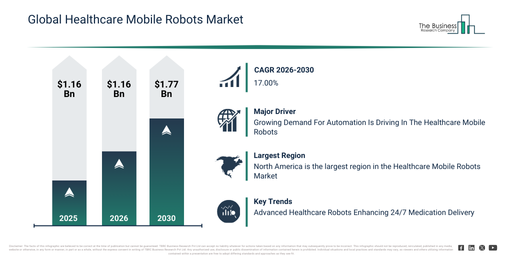
    The healthcare mobile robots market has experienced swift growth recently, increasing from $5.67 billion in 2025 to $6.76 billion in 2026, with a compound annual growth rate (CAGR) of 19.1%. This surge during the past years is largely due to factors such as a shortage of healthcare staff, increasing hospital operational costs, a rise in patient admissions, the need to automate workflows within hospitals, and the demand for more efficient medical logistics. Looking ahead, the market is expected to grow even faster, reaching $12.67 billion by 2030 at a CAGR of 17.0%. This projected expansion is driven by the growing adoption of automation technologies in healthcare facilities, increased investments in robotics infrastructure, enhanced focus on patient safety and staff productivity, the development of smart hospital initiatives, and a rising preference for contactless healthcare operations. Key emerging trends include the use of autonomous hospital logistics robots, contactless transport of materials and medications, mobile robots dedicated to infection control and disinfection, telepresence and remote care support robots, and better integration of robots into hospital workflow systems.

    Download A Free Sample Report For Comprehensive Market Insights:

    https://www.thebusinessresearchcompany.com/sample.aspx?id=15819&type=smp

    Factors Propelling Growth in the Healthcare Mobile Robots Market

    The rising demand for automation is a primary factor fueling the healthcare mobile robots market’s rapid growth. Automation involves using machinery, software, or robotics to carry out tasks with minimal human involvement. This demand is propelled by technological advancements, the need to improve efficiency and productivity, labor shortages, and the goal of reducing operational expenses. In healthcare, automation helps optimize various functions such as logistics support and direct patient care, leading to improved operational efficiency and better patient outcomes. For instance, in September 2024, data from the International Federation of Robotics, a Germany-based nonprofit organization, showed that 276,288 industrial robots were installed worldwide in 2023, accounting for 51% of global installations—the second-highest number ever recorded, just behind the 290,144 units installed in 2022. This highlights the growing prominence of automation and its impact on the healthcare mobile robots market.

    Additional Drivers Supporting Market Expansion

    Hospitals and healthcare providers are increasingly investing in robotic solutions to address workforce shortages and operational challenges. The integration of robots reduces human error, enhances safety protocols, and supports continuous care delivery, which is especially critical during health crises such as pandemics. Furthermore, the shift toward smart healthcare environments and the demand for contactless services accelerate the adoption of healthcare mobile robots. These factors collectively create a supportive environment for the sustained growth of this market segment.

    Access The Complete Healthcare Mobile Robots Market Report:

    https://www.thebusinessresearchcompany.com/report/healthcare-mobile-robots-global-market-report

    Detailed Segmentation of Healthcare Mobile Robots Market

    This market is categorized by several key segments:

    1) By Type: Hospital Robots, Care Robots, and Teleoperation and Telepresence Systems.

    2) By Component: Hardware, Software, and Support and Service.

    3) By End-User: Hospitals, Ambulatory Surgical Centers, Rehabilitation Centers, and Other End-Users.

    Further subcategories break down these segments as follows: Hospital Robots include Delivery Robots and Medication Management Robots; Care Robots consist of Elderly Care Robots and Personal Assistance Robots; Teleoperation and Telepresence Systems cover Telehealth Robots and Telepresence Robots. This comprehensive segmentation helps in understanding the diverse applications and technological scope present in the healthcare mobile robots industry.

    Emerging Industry Trends Shaping Healthcare Robotics Revenue

    Leading companies in this space are working on advanced robotic solutions designed to improve hospital pharmacy workflows by enabling continuous medication delivery. This approach ensures that medicines are supplied to patients around the clock, which helps maintain timely access and reduces strain on pharmacy staff. For example, in June 2024, Richtech Robotics, a US-based tech firm, launched Medbot—an autonomous mobile robot engineered to enhance hospital efficiency through automated, continuous medication transport. Medbot features elevator integration for multi-floor navigation, four secure storage units, sophisticated sensors and cameras for safe movement, and a touchscreen interface for scheduling and tracking. By addressing pharmacy staffing shortages and providing accurate, secure, and cost-effective medication deliveries, Medbot allows staff to concentrate on higher-priority tasks. With a 100% delivery success rate and IoT-enabled integration into hospital systems, Medbot represents a significant leap forward in healthcare automation aimed at improving both patient care and operational efficiency.

    Key Players in the Healthcare Mobile Robots Market

    The healthcare mobile robots industry includes several prominent companies such as Intuitive Surgical Inc., Medtronic plc, Stryker Corporation, GE Healthcare, Omnicell Inc., Diligent Robotics Inc., Aethon Inc., Vecna Robotics, Blue Ocean Robotics ApS, SoftBank Robotics Group Corp., Cyberdyne Inc., Ekso Bionics Holdings Inc., Kinova Robotics, Stereotaxis Inc., Xenex Ltd., VGo Communications Inc., Intuition Robotics, Focal Meditech, Asensus Surgical Inc., and ReWalk Robotics Ltd. These organizations are actively developing innovative robotic solutions and expanding their market presence globally.

    Regional Market Leadership and Growth Patterns

    In 2025, North America held the largest share of the healthcare mobile robots market, standing as the dominant region in terms of revenue. The analysis also covers significant regions including Asia-Pacific, South East Asia, Western Europe, Eastern Europe, South America, the Middle East, and Africa. While North America leads currently, rapid growth is expected in Asia-Pacific and other emerging markets as healthcare infrastructure and robotics adoption continue to expand worldwide.

    Get in touch with us:

    The Business Research Company: https://www.thebusinessresearchcompany.com/

    Americas: +1 310-496-7795

    Asia: +44 7882 955267 & +91 8897263534

    Europe: +44 7882 955267

    Email us at: marketing@tbrc.info

    Follow us on:

    LinkedIn: https://in.linkedin.com/company/the-business-research-company

    YouTube: https://www.youtube.com/channel/UC24_fI0rV8cR5DxlCpgmyFQ

    Global Market Model: https://www.thebusinessresearchcompany.com/global-market-model
  • Healthcare Chromatography Analyzers Market Growth Outlook Reveals A CAGR Of 5.1% And A Market Value Of $2 Billion By 2030

    Healthcare Chromatography Analyzers Market Growth Outlook Reveals A CAGR Of 5.1% And A Market Value Of $2 Billion By 2030

    Delivering more actionable and strategically valuable research, The Business Research Company’s 2026 market reports feature market attractiveness analysis, total addressable market evaluation, company benchmarking matrices, interactive Excel dashboards, expanded supply chain intelligence, emerging startup coverage, and detailed product insights.

    The healthcare chromatography analyzers market has witnessed significant growth recently, reflecting the increasing demand for precise diagnostic tools and advanced research equipment. As the healthcare sector continues to evolve, these analyzers are becoming essential for improving clinical outcomes and supporting pharmaceutical innovations. Let’s explore the current market size, key growth drivers, major players, and emerging trends shaping this industry.

    Healthcare Chromatography Analyzers Market Size and Growth Forecast

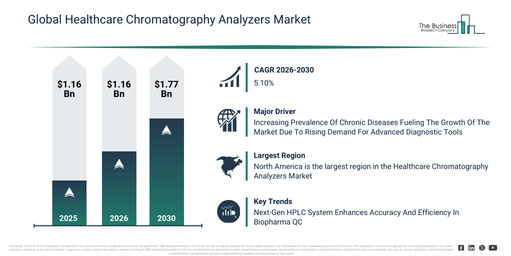
    The market for healthcare chromatography analyzers has expanded impressively in recent years. It is projected to rise from $1.56 billion in 2025 to $1.64 billion in 2026, marking a compound annual growth rate (CAGR) of 5.1%. This past growth has been driven by the limited availability of advanced chromatography systems, increasing clinical diagnostic requirements, heightened pharmaceutical research activities, continued use of manual TLC and LPLC technologies, and rising demand from life sciences and academic institutions. Looking ahead, the market is expected to reach $2 billion by 2030, maintaining a CAGR of 5.1%. Factors fueling this future growth include innovations in UHPLC, LC-MS, and GC-MS technologies, enhanced automation and remote monitoring capabilities, a rising focus on precision medicine and biomarker identification, expansion of pharmaceutical and biotechnology sectors, and integration with digital data analysis tools. Key trends anticipated in the coming years include increased adoption of high-resolution chromatography systems, greater demand for automated and portable analyzers, broader pharmaceutical and clinical diagnostic applications, increased use of consumables to improve analytical accuracy, and a focus on rapid disease diagnosis and biomarker detection.

    Download A Free Sample Report For Comprehensive Market Insights:

    https://www.thebusinessresearchcompany.com/sample.aspx?id=25775&type=smp

    Rising Prevalence of Chronic Diseases Fuels Healthcare Chromatography Analyzers Market

    One of the primary factors boosting the growth of the healthcare chromatography analyzers market is the rising incidence of chronic diseases. These conditions develop gradually and require ongoing medical care, often linked to sedentary lifestyles characterized by prolonged inactivity, which heightens the risk of ailments like cardiovascular diseases and diabetes. Healthcare chromatography analyzers play a critical role in improving diagnostic precision by enabling detailed biomolecular separation, which is vital for effective disease monitoring. They facilitate early detection and ongoing tracking of biomarkers, thereby enhancing patient management and clinical outcomes. For example, in June 2024, the National Health Service in the UK reported that 3,615,330 individuals registered with general practitioners were diagnosed with non-diabetic hyperglycemia or pre-diabetes in 2023, an 18% increase from 3,065,825 cases in 2022. This surge in chronic conditions significantly drives demand for chromatography analyzers.

    Healthcare Chromatography Analyzers Market Segmentation and Revenue Channels

    The report segments the healthcare chromatography analyzers market into several categories:

    1) By Type: Supercritical Fluid Chromatography Systems, Thin-Layer Chromatography Systems, Gas Chromatography Systems, and Liquid Chromatography Systems.

    2) By Consumables and Accessories: Including flow management consumables, detectors, fraction collectors, fittings and tubing, pressure regulators, column consumables, autosamplers, mobile phase accessories, columns, and other related items.

    3) By End-User: Covering pharmaceutical and biotechnology industries, academic and research institutions, life science industry, food and beverage industries, hospitals and clinics, environmental agencies, and other users.

    Access The Complete Healthcare Chromatography Analyzers Market Report:

    https://www.thebusinessresearchcompany.com/report/healthcare-chromatography-analyzers-global-market-report

    Further subcategories include:

    – Supercritical Fluid Chromatography Systems: Analytical SFC and Preparative Prep-SFC Systems.

    – Thin-Layer Chromatography Systems: Automated and Manual TLC Systems.

    – Gas Chromatography Systems: Benchtop, Portable, and GC-MS Systems.

    – Liquid Chromatography Systems: HPLC, UHPLC, LPLC, and LC-MS Systems.

    Advancements in Technology Boost the Healthcare Chromatography Analyzers Market

    Leading companies in the healthcare chromatography analyzers market are prioritizing the development of technologically advanced products such as high-performance liquid chromatography (HPLC) systems. These systems improve accuracy and efficiency in both clinical diagnostics and pharmaceutical research. HPLC technology is widely used to separate, identify, and quantify components in complex biological and pharmaceutical samples with high precision. For example, in April 2024, Waters Corporation launched the Alliance iS Bio HPLC System, a next-generation platform designed specifically for biopharmaceutical quality control laboratories. This system features advanced bio-inert MaxPeak high-performance surfaces, which minimize unwanted analyte interactions. It also includes built-in instrument intelligence like an intuitive touchscreen and guided workflows, reducing human error by up to 40%. These innovations enable faster, more consistent results with improved data integrity, making it an optimal solution for quality control in the biopharmaceutical industry.

    Key Market Players Influencing the Healthcare Chromatography Analyzers Industry

    Several prominent companies lead the healthcare chromatography analyzers market, including Hitachi Ltd., Merck and Co. Inc., Thermo Fisher Scientific Inc., Danaher Corporation, GE Healthcare Life Sciences, Agilent Technologies Inc., Cytiva, PerkinElmer Inc., Shimadzu Corp, Waters Corp, Bio-Rad Laboratories Inc., Bruker Corp, Phenomenex Inc., Gilson Inc., Restek Corporation, Scion Instruments UK Ltd, Knauer GmbH, JASCO Corporation, E-Chrom Tech Co. Ltd., and SRI Instruments Inc. These organizations drive innovation and market expansion through continuous product development and strategic initiatives.

    Geographical Landscape and Regional Market Outlook for Healthcare Chromatography Analyzers

    In 2025, North America held the largest market share in the healthcare chromatography analyzers sector. Alongside this, the market report covers other significant regions, including Asia-Pacific, South East Asia, Western Europe, Eastern Europe, South America, the Middle East, and Africa. Each region presents unique growth opportunities and contributes to the global expansion of the healthcare chromatography analyzers market.

    Get in touch with us:

    The Business Research Company: https://www.thebusinessresearchcompany.com/

    Americas: +1 310-496-7795

    Asia: +44 7882 955267 & +91 8897263534

    Europe: +44 7882 955267

    Email us at: marketing@tbrc.info

    Follow us on:

    LinkedIn: https://in.linkedin.com/company/the-business-research-company

    YouTube: https://www.youtube.com/channel/UC24_fI0rV8cR5DxlCpgmyFQ

    Global Market Model: https://www.thebusinessresearchcompany.com/global-market-model
  • Healthcare Adhesive Tapes Market Forecast Highlights Expansion From $45.59 Billion To $65.67 Billion Through 2030

    Healthcare Adhesive Tapes Market Forecast Highlights Expansion From $45.59 Billion To $65.67 Billion Through 2030

    Enhanced with market attractiveness analysis, total addressable market evaluation, company benchmarking matrices, interactive Excel dashboards, expanded supply chain intelligence, emerging startup coverage, and detailed product insights, The Business Research Company’s 2026 market reports deliver more actionable and strategically valuable research.

    The healthcare adhesive tapes sector has shown remarkable growth recently, driven by advancements in medical technology and increasing demand across various healthcare settings. With rising healthcare needs worldwide, this market is set to experience substantial expansion in the years to come. Let’s explore the current market size, key growth drivers, segmentation details, competitive landscape, and regional insights shaping this industry.

    Healthcare Adhesive Tapes Market Size Forecast Through 2030

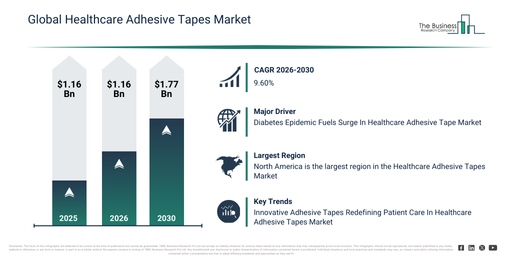
    The healthcare adhesive tapes market has seen significant growth, expanding from $41.58 billion in 2025 to an estimated $45.6 billion in 2026, reflecting a strong compound annual growth rate (CAGR) of 9.6%. This increase during recent years is mainly due to a rise in surgical procedures, the growing number of chronic wound cases, expansion in hospital and clinical care facilities, wider use of diagnostic and monitoring devices, and improvements in medical adhesive technologies. Looking ahead, the market is projected to reach $65.67 billion by 2030, maintaining the same robust CAGR of 9.6%. Factors fueling this future growth include increasing demand for home healthcare products, greater emphasis on patient safety and comfort, growth in minimally invasive surgeries, rising adoption of wearable medical devices, and the use of innovative wound care solutions. Emerging trends expected to drive the market forward encompass the growing preference for skin-friendly and hypoallergenic tapes, higher demand for silicone-based adhesives, wider use of breathable and flexible backing materials, development of advanced pressure-sensitive adhesives, and a focus on long-lasting secure fixation products.

    Download A Free Sample Report For Comprehensive Market Insights:

    https://www.thebusinessresearchcompany.com/sample.aspx?id=7283&type=smp

    Key Factors Accelerating Growth in Healthcare Adhesive Tapes

    The rising incidence of diabetes is a major factor propelling the expansion of the healthcare adhesive tapes market. Adhesive tapes play an essential role in diabetes care by securely fastening devices while minimizing skin irritation and providing comfort and reliability for patients. These tapes assist in securing various medical devices, dressings, and infusion sites critical to diabetes management. For example, in April 2025, the International Diabetes Federation based in Belgium reported that 589 million adults aged 20 to 79 were living with diabetes worldwide—a number that surpasses the combined population of the U.S., Canada, Mexico, and the Caribbean. This figure is expected to rise to 853 million by 2050, highlighting the growing demand for supportive healthcare adhesive solutions.

    Healthcare Adhesive Tapes Market Segmentation and Key Categories

    This report segments the healthcare adhesive tapes market as follows:

    1) Resin Type: Acrylic, Rubber, Silicone

    2) Backing Material: Paper, Fabric, Plastic, and other backing types

    3) Application Areas: Surgery, Wound Dressing, Splints, Secure IV Line, Ostomy Seal, Hygiene, Bandages, Transdermal Patches, Blister Protection, Diagnostic, Monitoring and Medical Devices, Optical Care, and other uses.

    Access The Complete Healthcare Adhesive Tapes Market Report:

    https://www.thebusinessresearchcompany.com/report/healthcare-adhesive-tapes-global-market-report

    Further breakdowns include:

    – Acrylic tapes split into Pressure-Sensitive Acrylic Tapes and Medical-Grade Acrylic Tapes

    – Rubber tapes divided into Natural Rubber Tapes and Synthetic Rubber Tapes

    – Silicone tapes categorized as Silicone Adhesive Tapes and Silicone Gel Tapes

    Innovations Shaping Market Competition Through Advanced Adhesives

    Leading companies in the healthcare adhesive tapes sector are prioritizing the development of advanced, skin-friendly tapes to enhance patient comfort and adhesion reliability. One key innovation is the double-coated silicone medical tape, which offers secure fixation with minimal skin trauma and pain upon removal. These tapes significantly reduce the risk of medical adhesive-related skin injuries, particularly benefiting patients with delicate or sensitive skin. For instance, in October 2024, US-based Solventum introduced a double-coated silicone medical tape that delivers strong yet gentle adhesion for medical devices and dressings. This tape maintains consistent performance even after multiple repositionings, making it ideal for wound care, wearable medical devices, and long-term dressings. Its breathable design and soft silicone adhesive help preserve skin health while ensuring reliable attachment, reinforcing the trend toward combining durability, comfort, and safety in healthcare adhesives.

    Competitive Landscape of the Healthcare Adhesive Tapes Market

    The healthcare adhesive tapes market features several prominent companies competing to deliver innovative solutions. Key players include 3M Company, Cardinal Health Inc., Nitto Denko Corporation, Johnson & Johnson, Paul Hartmann AG, Avery Dennison Corporation, NICHIBAN Co. Ltd., Smith & Nephew plc, Lohmann GmbH & Co. KG, Scapa Group plc, Medline Industries Inc., Essity Aktiebolag, Adchem Corporation, CCT Tapes, Dermamed Coatings Company LLC, Dermarite Industries LLC, Jiangsu Nanfang Medical Co. Ltd., Libatape Pharmaceutical Co. Ltd., Mactac LLC, Lintec Corporation, Sekisui Chemical Co. Ltd., and Tesa SE.

    Regional Healthcare Adhesive Tapes Market Size and Growth Outlook

    In 2025, North America held the largest share of the healthcare adhesive tapes market. However, the Asia-Pacific region is expected to experience the fastest growth during the forecast period. The market analysis covers major regions including Asia-Pacific, South East Asia, Western Europe, Eastern Europe, North America, South America, the Middle East, and Africa, providing a well-rounded perspective on global market trends.

    Get in touch with us:

    The Business Research Company: https://www.thebusinessresearchcompany.com/

    Americas: +1 310-496-7795

    Asia: +44 7882 955267 & +91 8897263534

    Europe: +44 7882 955267

    Email us at: marketing@tbrc.info

    Follow us on:

    LinkedIn: https://in.linkedin.com/company/the-business-research-company

    YouTube: https://www.youtube.com/channel/UC24_fI0rV8cR5DxlCpgmyFQ

    Global Market Model: https://www.thebusinessresearchcompany.com/global-market-model
  • Head And Neck Cancer Diagnostics Market Expected To Reach $4.5 Billion By 2030 As Growth Accelerates At 17.3% CAGR

    Head And Neck Cancer Diagnostics Market Expected To Reach $4.5 Billion By 2030 As Growth Accelerates At 17.3% CAGR

    Through market attractiveness analysis, total addressable market evaluation, company benchmarking matrices, interactive Excel dashboards, expanded supply chain intelligence, emerging startup coverage, and detailed product insights, The Business Research Company’s 2026 market reports provide more actionable and strategically valuable research.

    The diagnostics landscape for head and neck cancers has seen significant advances recently, driven by technological progress and rising awareness of early detection. The market is on track for strong growth as new diagnostic techniques and personalized medicine approaches become more widely adopted. Let’s explore the current market size, key drivers, segment developments, leading companies, and regional outlook to understand where this sector is heading.

    Rapid Expansion in the Head and Neck Cancer Diagnostics Market Size

    The head and neck cancer diagnostics market has experienced fast growth over recent years. From an estimated value of $2.03 billion in 2025, it is projected to reach $2.38 billion in 2026, registering a compound annual growth rate (CAGR) of 17.1%. This surge has been primarily fueled by rising cases of head and neck cancers, expansion of diagnostic imaging facilities, growing awareness around early cancer detection, an increase in biopsy-based diagnostic procedures, and better access to specialized oncology services.

    Download A Free Sample Report For Comprehensive Market Insights:

    https://www.thebusinessresearchcompany.com/sample.aspx?id=12016&type=smp

    Projected Market Growth and Future Outlook

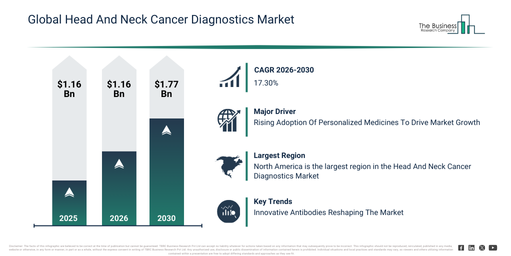
    Looking ahead, the market is set to expand rapidly, reaching $4.5 billion by 2030 with a CAGR of 17.3%. Key factors supporting this growth include the increasing adoption of personalized cancer diagnostics, investments in AI-powered imaging technologies, expansion in molecular diagnostic testing, heightened emphasis on early detection initiatives, and greater integration of digital pathology tools. Market trends expected to shape the forecast period include wider use of advanced imaging diagnostics, growth in molecular and genetic testing, AI integration in cancer detection methods, broader early-stage screening programs, and an intensified focus on precision oncology.

    Personalized Medicine as a Growth Catalyst in Head and Neck Cancer Diagnostics

    Personalized medicine is becoming a major growth driver for the head and neck cancer diagnostics market. This approach customizes treatment plans and interventions based on the unique characteristics of each patient, improving outcomes and minimizing side effects. Precision imaging and tailored follow-up care are key components that enhance the management of head and neck cancers. For instance, in February 2024, the Personalized Medicine Coalition reported that the FDA approved 16 new personalized therapies for rare diseases in 2023, a marked increase from six approvals in 2022. This demonstrates the accelerating adoption of personalized medicine, boosting demand for advanced diagnostic tools.

    Access The Complete Head And Neck Cancer Diagnostics Market Report:

    https://www.thebusinessresearchcompany.com/report/head-and-neck-cancer-diagnostics-global-market-report

    Growing Role of Innovative Diagnostic Technologies in Market Expansion

    The increasing use of AI-enabled imaging and molecular diagnostics is also propelling the market forward. These technologies offer more accurate and earlier detection capabilities, which are critical for effective treatment. The expansion of molecular testing and digital pathology solutions further supports this trajectory, enabling clinicians to better identify cancer subtypes and tailor therapies accordingly.

    Key Segment Breakdown in the Head and Neck Cancer Diagnostics Market

    This market is categorized into several important segments:

    1) Diagnostic Methods: Diagnostic imaging equipment, endoscopy screening equipment, and biopsy screening tests.

    2) Assay Types: Histopathology and cytology, immunohistochemistry and biomarker testing, molecular diagnostics, liquid biopsy, cytogenetics and FISH, point-of-care and rapid tests, and AI-based image analysis with computer-aided diagnostics.

    3) Distribution Channels: Hospitals and hospital-based diagnostic departments, independent diagnostic and imaging centers, and specialty clinics.

    Further subsegments include specific diagnostic imaging equipment such as CT scans, MRI, PET scans, and X-rays; endoscopy tools like rigid and flexible endoscopes plus video endoscopy systems; and various biopsy tests including fine needle aspiration (FNA), core needle biopsy, and surgical biopsy.

    Emerging Trends Shaping Demand in Head and Neck Cancer Diagnostics

    Leading players in the market are focusing on developing novel antibodies and diagnostic reagents to maintain a competitive edge. Antibodies, which the immune system produces in response to foreign agents, play a crucial role in cancer diagnostics. For example, in February 2023, Roche Holding AG launched the IDH1 R132H (MRQ-67) Rabbit Monoclonal Primary Antibody and ATRX Rabbit Polyclonal Antibody, designed to detect mutations in IDH1 and ATRX genes. These products provide clinicians with vital diagnostic and prognostic insights, aiding patient stratification for clinical trials and improving management of gliomas and related cancers.

    Competitive Landscape and Leading Organizations in the Market

    The head and neck cancer diagnostics market includes many prominent companies, such as Siemens Healthineers AG, Koninklijke Philips N.V., GE HealthCare Technologies Inc., Canon Medical Systems Corporation, Shimadzu Corporation, Carestream Health Inc., Agilent Technologies Inc., Abbott Laboratories, F. Hoffmann-La Roche Ltd., QIAGEN N.V., Illumina Inc., Exact Sciences Corp., Hologic Inc., Sysmex Corporation, Cepheid Inc., NanoString Technologies Inc., Myriad Genetics Inc., Bio-Techne Corp., Caris Life Sciences Inc., HTG Molecular Diagnostics Inc., VolitionRx Ltd., Perseus Proteomics Inc., and Oncgnostics GmbH.

    Regional Market Position and Growth Outlook

    In 2025, North America held the largest share of the head and neck cancer diagnostics market. However, the Asia-Pacific region is anticipated to experience the fastest growth over the forecast period. The market report covers key geographic regions including Asia-Pacific, South East Asia, Western Europe, Eastern Europe, North America, South America, the Middle East, and Africa, providing a comprehensive global perspective on market trends and opportunities.

    Get in touch with us:

    The Business Research Company: https://www.thebusinessresearchcompany.com/

    Americas: +1 310-496-7795

    Asia: +44 7882 955267 & +91 8897263534

    Europe: +44 7882 955267

    Email us at: marketing@tbrc.info

    Follow us on:

    LinkedIn: https://in.linkedin.com/company/the-business-research-company

    YouTube: https://www.youtube.com/channel/UC24_fI0rV8cR5DxlCpgmyFQ

    Global Market Model: https://www.thebusinessresearchcompany.com/global-market-model
  • Hazmat Suits Market Set To Grow From $10.82 Billion In 2026 To $15.7 Billion By 2030 At A CAGR Of 9.8%

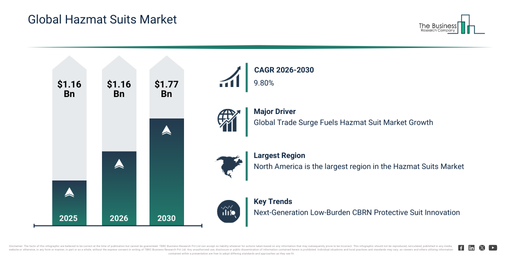
    Hazmat Suits Market Set To Grow From $10.82 Billion In 2026 To $15.7 Billion By 2030 At A CAGR Of 9.8%

    Delivering more actionable and strategically valuable research, The Business Research Company’s 2026 market reports feature market attractiveness analysis, total addressable market evaluation, company benchmarking matrices, interactive Excel dashboards, expanded supply chain intelligence, emerging startup coverage, and detailed product insights.

    The demand for hazmat suits has been rising steadily due to growing awareness of safety measures in various industries. As the need for protection against hazardous materials becomes more critical, the market for these specialized suits is set to experience substantial growth. Let’s explore the current market size, driving factors, segment breakdown, innovation trends, key players, and regional demand patterns shaping this sector.

    Hazmat Suits Market Size Growth and Future Projection

    The hazmat suits market has shown impressive growth in recent years. It is projected to expand from $9.86 billion in 2025 to $10.82 billion in 2026, reflecting a compound annual growth rate (CAGR) of 9.7%. This growth during the past period has been fueled by stricter industrial safety regulations, the growth of chemical and oil and gas industries, increased use in healthcare settings, the availability of standardized safety certifications, and heightened awareness of risks associated with hazardous materials exposure.

    Looking ahead, the market is expected to continue its upward trajectory, reaching $15.71 billion by 2030 at a CAGR of 9.8%. Key factors propelling this expansion include rising investments in advanced protective materials, increasing demand driven by biohazard and infection control needs, improved emergency response readiness, growing emphasis on sustainable protective equipment, and the adoption of custom-designed hazmat suits. Emerging trends point toward higher protection-level suits, the use of lightweight and flexible materials, reusable and multi-layer designs, broader applications across industry and healthcare, and stronger compliance with international safety standards.

    Download A Free Sample Report For Comprehensive Market Insights:

    https://www.thebusinessresearchcompany.com/sample.aspx?id=8178&type=smp

    Increasing Global Trade as a Catalyst for Hazmat Suits Market Expansion

    One significant factor contributing to the growth of the hazmat suits market is the rise in global trade. As goods, services, and capital move more frequently across borders, the transportation and handling of hazardous materials have intensified. This makes protective suits essential for workers to maintain safety and meet regulatory requirements.

    For example, a report released in September 2023 by the United Nations Conference on Trade and Development highlighted that maritime trade is expected to grow by 2.4% in 2023 and by over 2% annually from 2024 to 2028. Additionally, as pandemic restrictions eased, energy sector trades in oil and gas increased by 6.0% and 4.6%, respectively, in 2022. These trends underline how expanding global commerce is driving demand for hazmat protective gear.

    Breakdown of the Hazmat Suits Market Segments

    The hazmat suits market is categorized by several dimensions for detailed analysis:

    – Safety Standards: Level A, Level B, Level C, and Other Safety Standards

    – Application Areas: Chemical Waste, Infection Control, Biohazard and Hazardous Material, Fire or High-Temperature Situations

    – End-User Industries: Oil and Gas, Mining, Construction, Healthcare, and others

    Access The Complete Hazmat Suits Market Report:

    https://www.thebusinessresearchcompany.com/report/hazmat-suits-global-market-report

    Further subcategories include:

    – Level A: Fully encapsulated suits and positive pressure suits

    – Level B: Non-encapsulated suits and air-purifying respirators (APRs)

    – Level C: Splash protection suits and APRs with chemical filters

    – Other Safety Standards: Specialized industry-specific standards and custom-designed suits tailored to particular hazards

    Innovations Transforming the Hazmat Suits Market

    Leading companies in the hazmat suits sector are pushing the envelope by developing innovative protective ensembles that are lightweight and integrated for enhanced mobility and protection. These new designs often include multi-layer materials, such as activated carbon layers combined with durable outer shells, and ergonomic tailoring to reduce wearer fatigue while maintaining safety.

    For instance, in February 2024, Avon Technologies plc from the UK introduced the EXOSKIN-S1—a low-burden, high-performance CBRN protective suit meeting NATO AEP-38 standards. This suit uses a cotton-polyester outer fabric with an activated carbon inner layer to protect against various chemical warfare agents and toxic industrial chemicals. It offers 24-hour continuous protection, fits closely like a second skin to maximize comfort and movement, and includes features like adjustable leg and wrist closures to prevent contamination entry. Designed for military, special forces, and first responders, it also integrates seamlessly with other protective equipment from Avon, such as respirators and gloves.

    Top Companies Leading the Hazmat Suits Industry

    The hazmat suits market includes a variety of prominent manufacturers and suppliers, such as 3M Company, Alpha Pro Tech Ltd., Ansell Limited, Drägerwerk AG & Co., DuPont de Nemours Inc., Halyard Health Inc., Honeywell Inc., International Enviroguard Systems Inc., Kappler Inc., Kimberly-Clark Corporation, Lakeland Industries Inc., Matisec SA, MSA Safety Incorporated, SealWerks, Conney Safety Products, Haggard & Stocking Associates Inc., Jorgensen Co., Kinequip Inc., Medline Industries Inc., Moldex-Metric Inc., New Pig Corp., Northern Safety Co. Inc., O&M Halyard Inc., Protective Industrial Products Inc., Queen Industries, Sioen Industries NV, The Cary Company, TST Sweden AB, Uvex Winter Holdings Co. GmbH, W.L. Gore & Associates Inc., and Workrite Uniform Company Inc.

    Regions Where Hazmat Suits Demand Is Surging

    In 2025, North America held the largest share of the hazmat suits market. However, the Asia-Pacific region is projected to be the fastest-growing market during the forecast period. The analysis covers major regions including Asia-Pacific, South East Asia, Western Europe, Eastern Europe, North America, South America, the Middle East, and Africa, providing a comprehensive perspective on global demand patterns.

    Get in touch with us:

    The Business Research Company: https://www.thebusinessresearchcompany.com/

    Americas: +1 310-496-7795

    Asia: +44 7882 955267 & +91 8897263534

    Europe: +44 7882 955267

    Email us at: marketing@tbrc.info

    Follow us on:

    LinkedIn: https://in.linkedin.com/company/the-business-research-company

    YouTube: https://www.youtube.com/channel/UC24_fI0rV8cR5DxlCpgmyFQ

    Global Market Model: https://www.thebusinessresearchcompany.com/global-market-model
  • Hand-Held Surgical Instruments Market Opportunities Are Emerging Beyond Traditional Growth Areas

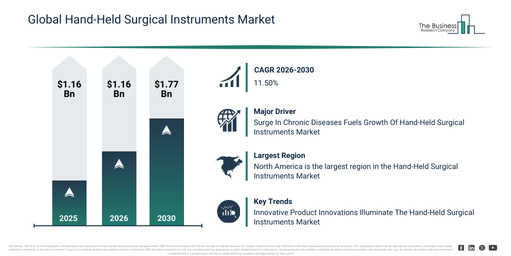
    Hand-Held Surgical Instruments Market Opportunities Are Emerging Beyond Traditional Growth Areas

    Enhanced with market attractiveness analysis, total addressable market evaluation, company benchmarking matrices, interactive Excel dashboards, expanded supply chain intelligence, emerging startup coverage, and detailed product insights, The Business Research Company’s 2026 market reports deliver more actionable and strategically valuable research.

    The hand-held surgical instruments market is experiencing significant growth, driven by advancements in surgical procedures and expanding healthcare needs worldwide. As innovations continue to emerge and healthcare facilities increase their surgical capacities, this market is set to see substantial developments in the coming years. Below is a detailed overview of the market’s size, key drivers, major players, and evolving trends shaping its future.

    Steady Growth in the Hand-Held Surgical Instruments Market Size

    The hand-held surgical instruments market has witnessed rapid expansion recently. From a valuation of $7.54 billion in 2025, it is projected to grow to $8.4 billion in 2026, reflecting a compound annual growth rate (CAGR) of 11.4%. This historical growth is primarily due to a rise in surgical procedures across various specialties, increased surgical volumes in hospitals, widespread availability of standardized stainless steel instruments, growth in ambulatory surgical centers, and a higher demand for reusable surgical tools.

    Download A Free Sample Report For Comprehensive Market Insights:

    https://www.thebusinessresearchcompany.com/sample.aspx?id=7428&type=smp

    Looking ahead, the market is expected to maintain strong growth momentum, reaching $12.96 billion by 2030 with a CAGR of 11.5%. This forecasted expansion is driven by the growing adoption of advanced surgical techniques, heightened focus on infection control, the surge in outpatient surgical procedures, rising investments in surgical innovations, and a growing need for instruments tailored to specific procedures. Key trends anticipated during this period include a rising preference for precision instruments, increased use of disposable and single-use tools, ergonomic designs gaining traction, growth in minimally invasive surgical devices, and an emphasis on enhanced sterility and durability.

    The Rising Impact of Chronic Diseases on Market Demand

    One of the main factors fueling the hand-held surgical instruments market is the increasing prevalence of chronic diseases. These long-term health conditions typically require continuous medical management, and handheld surgical tools play an essential role in diagnosing, assessing, and treating such illnesses. They are used for biopsy, tissue sampling, pain management, and improving patient outcomes.

    Access The Complete Hand-Held Surgical Instruments Market Report:

    https://www.thebusinessresearchcompany.com/report/hand-held-surgical-instruments-global-market-report

    For example, data from January 2023 by the National Center for Biotechnology Information (NCBI), a branch of the US National Library of Medicine, predicts that by 2050, the number of people aged 50 and above with at least one chronic illness will rise dramatically, from 99.5 million to 142.66 million. This demographic trend underscores the growing need for surgical instruments adapted to manage chronic health issues, thus supporting market growth.

    Key Segments in the Hand-Held Surgical Instruments Market

    The hand-held surgical instruments market is categorized into several important segments:

    1) By Product Type: Forceps, Retractors, Dilators, Graspers, Scalpels, and Other Products

    2) By Application: Including Neurosurgery, Cardiovascular, Orthopedic, Plastic and Reconstructive Surgery, Obstetrics and Gynecology, and Other medical fields

    3) By End User: Clinics, Ambulatory Surgical Centers, and Other healthcare settings

    Further sub-segmentation includes types of forceps such as tissue, hemostatic, and dressing forceps; retractors divided into hand-held and self-retaining; dilators categorized as urethral and cervical; graspers including tissue and laparoscopic variants; scalpels split between disposable, reusable, and surgical blades; and other products like needle holders, scissors, and speculums.

    Innovations and Technological Trends Fueling Market Evolution

    Leading companies in this space are focusing on innovation to differentiate themselves and meet evolving clinical demands. One notable example is the introduction of advanced lighting solutions to enhance surgical precision. The Sunoptic Surgical Light Wand, a single-use, sterile, pre-packaged light source, provides illumination directly within the surgical site, improving visibility while being cost-effective.

    In June 2023, UK-based medical device manufacturer SURE Retractors Inc. launched this product featuring an LED light designed to illuminate deep surgical cavities without shadows, reducing eye strain during lengthy procedures. It delivers bright, focused light for up to 90 minutes, eliminating the need for external light sources like headlamps, thereby improving surgical workflow and outcomes.

    Major Players Shaping the Hand-Held Surgical Instruments Market

    The market features a competitive landscape with several prominent companies driving innovation and expansion. Key participants include Johnson & Johnson, B. Braun Melsungen AG, Zimmer Biomet Holdings Inc., KLS Martin Group, Aspen Surgical Products Inc., CooperSurgical Inc., Thompson Surgical Instruments Inc., Becton Dickinson and Company, Swann-Morton Limited, Peters Surgical SAS, Huaiyin Medical Instruments Co. Ltd., ConMed Corp., Stryker Corporation, Integra LifeSciences Corporation, Smith & Nephew plc, Aesculap AG, Scanlan International Inc., Sklar Surgical Instruments, Symmetry Surgical Inc., Millennium Surgical Corp., Surgipro Inc., Wexler Surgical, Grena Ltd., Surgmed Group, Surtex Instruments Ltd., Instrumed International B.V., Surgitrac Instruments UK Limited, and Sontec Instruments Inc.

    Global Reach and Regional Market Leadership

    In 2025, North America emerged as the largest market for hand-held surgical instruments, supported by advanced healthcare infrastructure and high adoption rates of surgical technologies. Meanwhile, the Asia-Pacific region is forecast to be the fastest-growing market over the coming years, driven by rising healthcare expenditure, expanding surgical healthcare facilities, and increasing awareness of minimally invasive procedures.

    This market analysis also encompasses other significant regions such as South East Asia, Western Europe, Eastern Europe, South America, the Middle East, and Africa, providing a comprehensive global perspective.

    Get in touch with us:

    The Business Research Company: https://www.thebusinessresearchcompany.com/

    Americas: +1 310-496-7795

    Asia: +44 7882 955267 & +91 8897263534

    Europe: +44 7882 955267

    Email us at: marketing@tbrc.info

    Follow us on:

    LinkedIn: https://in.linkedin.com/company/the-business-research-company

    YouTube: https://www.youtube.com/channel/UC24_fI0rV8cR5DxlCpgmyFQ

    Global Market Model: https://www.thebusinessresearchcompany.com/global-market-model