Month: June 2026

  • Hemoglobin A1c Testing Devices Market Growth Is Reshaping Competitive Advantage Across The Industry

    Hemoglobin A1c Testing Devices Market Growth Is Reshaping Competitive Advantage Across The Industry

    Through market attractiveness analysis, total addressable market evaluation, company benchmarking matrices, interactive Excel dashboards, expanded supply chain intelligence, emerging startup coverage, and detailed product insights, The Business Research Company’s 2026 market reports provide more actionable and strategically valuable research.

    The hemoglobin A1c testing devices market is experiencing significant growth as the need for effective diabetes management intensifies globally. Advances in technology and increasing awareness about glycemic control are driving demand for reliable and convenient testing solutions. Let’s explore the current market size, key growth drivers, segmentation, industry trends, competitive landscape, and regional outlook shaping this sector’s future.

    Market Size and Growth Prospects in the Hemoglobin A1c Testing Devices Market

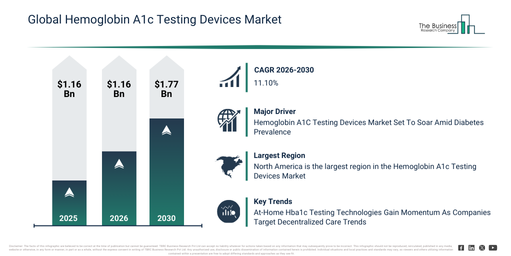
    The hemoglobin A1c testing devices market has rapidly expanded, with its value expected to rise from $2.08 billion in 2025 to $2.32 billion in 2026, reflecting a strong compound annual growth rate (CAGR) of 11.7%. This earlier growth phase was largely influenced by the increasing prevalence of diabetes, wider use of routine blood glucose monitoring, improved accessibility to lab diagnostics, heightened awareness about glycemic control, and the adoption of standardized diabetes testing procedures. Looking ahead, the market is forecasted to continue its upward trajectory, reaching $3.53 billion by 2030 at a CAGR of 11.1%. This anticipated growth is fueled by expanding demand for home-based diabetes monitoring, integration of AI-driven analytics, the rise of remote patient monitoring technologies, a growing focus on personalized diabetes care, and the acceptance of smart diagnostic devices. Key trends expected to define the market include greater adoption of point-of-care HbA1c testing, increased use of portable and handheld devices, stronger connectivity with digital diabetes management platforms, development of rapid and highly accurate assays, and a stronger emphasis on patient-centered monitoring.

    Download A Free Sample Report For Comprehensive Market Insights:

    https://www.thebusinessresearchcompany.com/sample.aspx?id=9077&type=smp

    Primary Factors Contributing to the Hemoglobin A1c Testing Devices Market Growth

    The rising incidence of diabetes worldwide is a major factor propelling the hemoglobin A1c testing devices market. Diabetes, a chronic metabolic disease characterized by elevated blood sugar levels, requires ongoing monitoring. Hemoglobin A1c testing provides essential information about average blood glucose levels over time, aiding in diagnosing type 2 diabetes, prediabetes, and managing diabetes effectively. This testing enables patients and healthcare providers to make informed treatment decisions to prevent complications. For example, in June 2024, the UK’s National Health Service reported that in 2023, over half a million additional people in England were identified as at risk for developing type 2 diabetes, increasing the number of individuals with prediabetes registered with general practitioners to 3,615,330—a nearly 20% rise compared to 2022. Such statistics underscore the growing patient population needing HbA1c testing devices.

    Expanding Routine Blood Glucose Testing Drives Demand

    The widespread use of routine blood glucose monitoring practices has further supported market growth. More frequent testing and monitoring have become integral to managing diabetes, encouraging the adoption of advanced devices that provide accurate and timely results. Improved laboratory diagnostic capabilities have also made HbA1c testing more accessible and reliable for both patients and healthcare professionals.

    Access The Complete Hemoglobin A1c Testing Devices Market Report:

    https://www.thebusinessresearchcompany.com/report/hemoglobin-a1c-testing-devices-global-market-report

    Detailed Segmentation of the Hemoglobin A1c Testing Devices Market

    This market is segmented by type, technology, and end use to provide a comprehensive understanding of its structure:

    1) By Type:

    – Bench Top Devices

    – Handheld Devices

    2) By Technology:

    – Ion-Exchange High-Performance Liquid Chromatography (HPLC)

    – Immunoassay

    – Boronate Affinity Chromatography

    – Direct Enzymatic Assay

    – Other Technologies

    3) By End Use:

    – Hospitals

    – Pharmaceuticals

    – Medical Devices

    – Laboratory Testing

    Further subcategories include:

    – Bench Top Devices: Automated Hemoglobin A1c Analyzers, Laboratory-Grade Analyzers, Multi-Parameter Testing Devices

    – Handheld Devices: Portable HbA1c Testers, Point-of-Care Testing Devices, Smartphone-Integrated Testing Devices

    Innovative Industry Trends Shaping the Future of Hemoglobin A1c Testing Devices

    Key players in the hemoglobin A1c testing devices market are focusing on innovation, particularly developing at-home or micro-sample collection kits to meet growing demand. These kits enable patients to conveniently collect small blood samples at home via finger-pricks, stabilize the sample for transport, and send it to certified labs for accurate analysis. This approach supports decentralized care models, telehealth services, and patient preferences for easy, cost-effective monitoring tools. For instance, in February 2023, Hurdle, a US-based diagnostics-as-a-service company, introduced an at-home HbA1c test through its Chronomics direct-to-consumer platform. The kit includes lancets and sample cards, secure registration, and courier service to CLIA-certified laboratories. It offers lab-grade results with typical turnaround times of around three days, integrated explanations, and optional one-on-one consultations with healthcare professionals, combining convenience with clinical accuracy.

    Major Competitors and Market Leaders in Hemoglobin A1c Testing Devices

    Several prominent companies drive the hemoglobin A1c testing devices market, including:

    – Arkray Inc

    – Abbott Laboratories

    – Polymer Technology Systems Inc

    – Bio-Rad Laboratories Inc

    – Menarini Group

    – F Hoffmann-La Roche AG

    – Siemens Healthineers AG

    – Tosoh Corporation

    – Trinity Biotech plc

    – Transasia Bio-Medicals Limited

    – Beckman Coulter Inc

    – Diazyme Laboratories Inc

    – EKF Diagnostics Holdings plc

    – HemoCue AB

    – OSANG Healthcare Co Ltd

    – Danaher

    – Thermo Fisher Scientific Inc.

    – PTS Diagnostics India Private Limited

    – Nova Biomedical

    – Randox Laboratories Ltd.

    – ACON Laboratories Inc.

    – DiaSys Diagnostic Systems GmbH

    – Erba Mannheim

    – Green Cross Medical Science Corp.

    – Infopia Co. Ltd.

    – TaiDoc Technology Corporation

    – Werfen

    – Zhejiang Orient Gene Biotech Co. Ltd.

    Regional Market Leadership and Growth Projections for Hemoglobin A1c Testing Devices

    In 2025, North America held the largest share in the hemoglobin A1c testing devices market due to advanced healthcare infrastructure and high diabetes prevalence. Meanwhile, Asia-Pacific is projected to be the fastest-growing region during the forecast period. Other regions covered in the analysis include South East Asia, Western Europe, Eastern Europe, South America, the Middle East, and Africa, providing a global perspective on market trends and opportunities.

    Get in touch with us:

    The Business Research Company: https://www.thebusinessresearchcompany.com/

    Americas: +1 310-496-7795

    Asia: +44 7882 955267 & +91 8897263534

    Europe: +44 7882 955267

    Email us at: marketing@tbrc.info

    Follow us on:

    LinkedIn: https://in.linkedin.com/company/the-business-research-company

    YouTube: https://www.youtube.com/channel/UC24_fI0rV8cR5DxlCpgmyFQ

    Global Market Model: https://www.thebusinessresearchcompany.com/global-market-model
  • Hemodynamic Flow Alteration Devices Market Forecast Signals New Revenue Opportunities Through 2030

    Hemodynamic Flow Alteration Devices Market Forecast Signals New Revenue Opportunities Through 2030

    Delivering more actionable and strategically valuable research, The Business Research Company’s 2026 market reports feature market attractiveness analysis, total addressable market evaluation, company benchmarking matrices, interactive Excel dashboards, expanded supply chain intelligence, emerging startup coverage, and detailed product insights.

    The hemodynamic flow alteration devices sector has been witnessing significant progress lately, driven by advancements in medical technology and increasing demand for improved cardiovascular care. This market is set to continue expanding as innovations emerge and healthcare providers seek more effective solutions to manage blood flow in patients with various vascular conditions. Let’s explore the market’s current standing, growth drivers, key players, and emerging trends shaping its future.

    Market Size and Forecasted Growth in the Hemodynamic Flow Alteration Devices Market

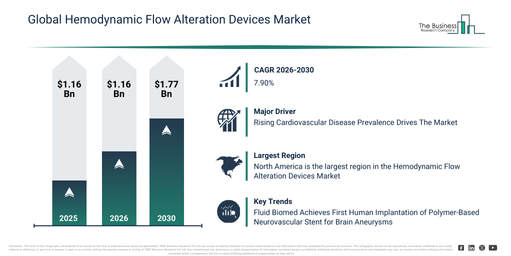
    The market for hemodynamic flow alteration devices has demonstrated strong expansion in recent years. It is forecasted to increase from $0.88 billion in 2025 to $0.96 billion in 2026, growing at a compound annual growth rate (CAGR) of 8.2%. This upward trend is largely due to the rising prevalence of cardiovascular diseases, a growing number of vascular intervention procedures, improvements in catheter-based technology, increased availability of specialized devices for intervention, and better clinical outcomes related to flow management. Looking ahead, the market is expected to reach $1.3 billion by 2030, with a CAGR of 7.9%, fueled by factors such as the rise of precision medicine in vascular care, higher demand for minimally invasive cardiac procedures, expanded neurovascular intervention capabilities, and greater investments in advanced interventional cardiology devices.

    Download A Free Sample Report For Comprehensive Market Insights:

    https://www.thebusinessresearchcompany.com/sample.aspx?id=20831&type=smp

    Key Factors Propelling Growth in the Hemodynamic Flow Alteration Devices Market – Part One

    One of the main drivers behind the growth of this market is the increasing prevalence of cardiovascular diseases worldwide. Cardiovascular disease (CVD) includes a range of conditions affecting the heart and blood vessels. The rise in CVD cases is linked to an aging population, unhealthy diets, sedentary lifestyles, and increasing rates of conditions such as hypertension and diabetes. This surge in cardiovascular conditions creates a greater need for devices that help manage and improve blood flow in patients suffering from heart failure, arterial blockages, and hypertension.

    Key Factors Propelling Growth in the Hemodynamic Flow Alteration Devices Market – Part Two

    For instance, in September 2024, the British Heart Foundation reported that around 7.6 million people in the UK are affected by heart and circulatory diseases, with 4 million men and 3.6 million women impacted. By 2030, this figure is expected to increase by 1 million, and by 2040, it may rise by an additional 2 million. This growing patient base highlights the expanding need for hemodynamic flow alteration devices, emphasizing their crucial role in managing cardiovascular health.

    Access The Complete Hemodynamic Flow Alteration Devices Market Report:

    https://www.thebusinessresearchcompany.com/report/hemodynamic-flow-alteration-devices-global-market-report

    Segments Showing the Fastest Growth in the Hemodynamic Flow Alteration Devices Market

    The hemodynamic flow alteration devices market is categorized into several segments for detailed analysis:

    1) By Type: Embolic Protection Devices and Chronic Total Occlusion (CTO) Devices

    2) By Application: Cardiovascular Diseases, Neurological Disorders, Renal Disorders, and Respiratory Disorders

    3) By End User: Hospitals, Clinics, Ambulatory Care Centers, Home Care Settings, and Other End Users

    Subcategories include various embolic protection devices such as distal, proximal, filter-based, balloon-based, and mesh or cage-based types. For CTO devices, subsegments cover crossing guidewires, CTO balloon catheters, microcatheters, re-entry devices, and support catheters.

    Innovations Driving Strategic Growth in the Hemodynamic Flow Alteration Devices Market

    Leading companies in this market are investing heavily in technological advancements to enhance patient outcomes and safety. A notable innovation is the development of hybrid polymer-metal flow-diverting stents, which blend the mechanical strength of metal with the biocompatibility and flexibility of polymers. This combination allows for precise hemodynamic flow control, reduced risk of thrombosis, and improved vessel healing, especially for patients with brain aneurysms. For example, in June 2023, Fluid Biomed Inc., a Canadian medical device company, initiated the REDIRECT first-in-human clinical trial, implanting ReSolv—the world’s first hybrid polymer-metal neurovascular stent. The Phase 1 trial demonstrated safe implantation with no adverse effects at the 30-day follow-up, marking a significant advancement in minimally invasive neurovascular therapy.

    Competitive Landscape and Leading Players in the Hemodynamic Flow Alteration Devices Industry

    The hemodynamic flow alteration devices market features prominent companies such as Cardinal Health Inc., Abbott Laboratories, Medtronic plc, Siemens Healthcare GmbH, Becton Dickinson and Company, Stryker Corporation, Boston Scientific Corporation, Edwards Lifesciences Corporation, W. L. Gore & Associates Inc., ZOLL Medical Corporation, Getinge AB, Lepu Medical Technology (Beijing) Co. Ltd., Abiomed Inc., LivaNova PLC, Cordis US Corp., Silk Road Medical Inc., Berlin Heart GmbH, CorWave SA, Jarvik Heart Inc., and CARMAT SA.

    Geographic Insights Highlighting North America’s Market Leadership

    As of 2025, North America held the largest share of the hemodynamic flow alteration devices market. The comprehensive market analysis includes regions such as Asia-Pacific, South East Asia, Western Europe, Eastern Europe, North America, South America, the Middle East, and Africa, providing a global perspective on market dynamics and growth opportunities.

    Get in touch with us:

    The Business Research Company: https://www.thebusinessresearchcompany.com/

    Americas: +1 310-496-7795

    Asia: +44 7882 955267 & +91 8897263534

    Europe: +44 7882 955267

    Email us at: marketing@tbrc.info

    Follow us on:

    LinkedIn: https://in.linkedin.com/company/the-business-research-company

    YouTube: https://www.youtube.com/channel/UC24_fI0rV8cR5DxlCpgmyFQ

    Global Market Model: https://www.thebusinessresearchcompany.com/global-market-model
  • Hemodialysis Chairs Market Growth Is Accelerating As Industry Transformation Continues

    Hemodialysis Chairs Market Growth Is Accelerating As Industry Transformation Continues

    Enhanced with market attractiveness analysis, total addressable market evaluation, company benchmarking matrices, interactive Excel dashboards, expanded supply chain intelligence, emerging startup coverage, and detailed product insights, The Business Research Company’s 2026 market reports deliver more actionable and strategically valuable research.

    The hemodialysis chairs market is experiencing steady and promising growth, driven by rising healthcare needs and technological advancements. With the increasing global burden of chronic kidney disease and improvements in patient-centered care, this market is set to expand significantly over the coming years. Here is a detailed overview of the current market status, key growth drivers, segmentation, competitive landscape, and regional insights.

    Hemodialysis Chairs Market Size and Projected Growth Trajectory

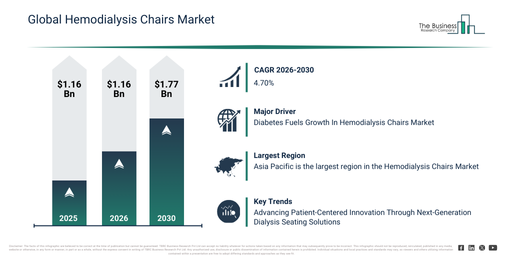
    The market for hemodialysis chairs has shown consistent expansion in recent times. It is anticipated to grow from $90.7 billion in 2025 to $95 billion in 2026, featuring a compound annual growth rate (CAGR) of 4.7%. This upward trend during the historical period was driven by factors such as the rising number of chronic kidney disease cases, the growing number of dialysis centers, increased demand for patient-focused care spaces, investments in healthcare infrastructure, and the availability of durable medical furniture. Looking ahead, the market is expected to reach $114.04 billion by 2030, maintaining a CAGR of 4.7%. The forecasted growth is supported by greater adoption of home dialysis treatments, a stronger emphasis on patient comfort and mobility, expansion of outpatient dialysis facilities, rising demand for smart and adjustable medical furniture, and further investments in renal care infrastructure. Key trends shaping the market include the growing use of electrically adjustable dialysis chairs, enhanced patient comfort features, integration of ergonomic and safety elements, expansion of home dialysis furniture options, and improved support for long-duration treatments.

    Download A Free Sample Report For Comprehensive Market Insights:

    https://www.thebusinessresearchcompany.com/sample.aspx?id=13452&type=smp

    Increasing Diabetes Prevalence Boosts Demand in the Hemodialysis Chairs Market

    The rising prevalence of diabetes is a significant factor propelling the hemodialysis chairs market forward. Diabetes, a chronic metabolic disorder characterized by elevated blood sugar levels, is becoming more common due to factors like obesity linked to high-calorie and processed diets. Excess body weight contributes to insulin resistance, thereby increasing diabetes cases. Since patients with diabetes often require hemodialysis treatment to manage complications, the demand for specialized equipment such as hemodialysis chairs is also rising. For instance, in April 2025, the International Diabetes Federation—a global alliance of over 250 national diabetes associations based in Belgium—reported that in 2024, more than 9.5 million individuals were living with type 1 diabetes, including 1.9 million children and adolescents under age 20. Projections indicate that by 2050, the worldwide diabetes population will climb to 853 million. This upward trend in diabetes cases is a key driver supporting market growth.

    Key Product and End-User Segments Within the Hemodialysis Chairs Market

    This market is categorized into several important segments:

    1) By Product Type: Manual Hemodialysis Chairs and Electrical Hemodialysis Chairs

    2) By Material: Leather, Vinyl, and Other Materials

    3) By End User: Hospitals, Hemodialysis Research Centers, Government Organizations, Ambulatory Centers, and Home Care settings

    Further breakdowns include subcategories like fixed and adjustable manual hemodialysis chairs, as well as fully electric and semi-electric versions of electrical hemodialysis chairs. These segments help identify specific market niches and opportunities for targeted product development.

    Access The Complete Hemodialysis Chairs Market Report:

    https://www.thebusinessresearchcompany.com/report/hemodialysis-chairs-global-market-report

    Emerging Market Trends Transforming the Hemodialysis Chairs Industry

    Market participants are increasingly focusing on technological innovation to differentiate their offerings and improve patient outcomes. One key development is the creation of ergonomically optimized, electrically adjustable therapy chairs designed for home hemodialysis. These chairs feature motorized position controls, user-friendly handsets, rapid emergency or Trendelenburg positioning, and upholstery designed specifically for dialysis procedures. Such features aim to enhance patient comfort, support stable vascular access, reduce caregiver strain, and improve workflow efficiency during frequent treatments.

    For example, in June 2024, Digiterm Ltd., a Hungary-based manufacturer specializing in medical equipment, launched the Comfort-1 Eco therapy chair. This product offers simultaneous electric adjustment of the backrest and leg rest through an intuitive remote, along with quick Trendelenburg positioning to help patients reach comfortable or emergency postures during home hemodialysis. Its optional transport mode and dialysis-focused design facilitate easier patient movement within facilities while preserving ergonomic working conditions and safety. The chair’s easy-to-clean, customizable upholstery and compact, cost-effective build are intended to promote wider use of dedicated hemodialysis seating in both home and clinical environments.

    Major Players Driving Competition in the Hemodialysis Chairs Market

    The competitive landscape of the hemodialysis chairs market features well-established companies such as Fresenius Medical Care AG & Co KGaA, Baxter International Inc, B Braun Melsungen AG, Nipro Corporation, Champion Manufacturing Inc, Digiterm Ltd, Guangdong Dongpin Beauty & Medical Technology Co Ltd, Likamed GmbH, Acime-Frame (Acime), IBIOM Instruments Ltée, Diasol Inc, SEERS Medical Limited, Toray Medical Co Ltd, JMS Co Ltd, Quanta Dialysis (Italy), Nanjing KangQiao Medical Equipment Co Ltd, Jiangsu Fengyuan Medical Equipment Co Ltd, Dongpin Beauty & Medical Co Ltd (China), Indtech Healthcare Pvt Ltd, and Meditek Engineers Pvt Ltd. These organizations are continuously investing in research and development to enhance product features and meet evolving patient and healthcare provider needs.

    Regional Market Outlook with Asia Pacific Leading Revenues

    In 2025, the Asia Pacific region emerged as the dominant market for hemodialysis chairs in terms of revenue. The regional analysis within this market report covers key areas including Asia-Pacific, South East Asia, Western Europe, Eastern Europe, North America, South America, the Middle East, and Africa. While Asia Pacific currently leads, ongoing developments in healthcare infrastructure and rising disease prevalence across various regions will continue to influence global market dynamics.

    Get in touch with us:

    The Business Research Company: https://www.thebusinessresearchcompany.com/

    Americas: +1 310-496-7795

    Asia: +44 7882 955267 & +91 8897263534

    Europe: +44 7882 955267

    Email us at: marketing@tbrc.info

    Follow us on:

    LinkedIn: https://in.linkedin.com/company/the-business-research-company

    YouTube: https://www.youtube.com/channel/UC24_fI0rV8cR5DxlCpgmyFQ

    Global Market Model: https://www.thebusinessresearchcompany.com/global-market-model
  • Hemodialysis And Peritoneal Dialysis Market Outlook Highlights The Next Major Growth Opportunities

    Hemodialysis And Peritoneal Dialysis Market Outlook Highlights The Next Major Growth Opportunities

    Through market attractiveness analysis, total addressable market evaluation, company benchmarking matrices, interactive Excel dashboards, expanded supply chain intelligence, emerging startup coverage, and detailed product insights, The Business Research Company’s 2026 market reports provide more actionable and strategically valuable research.

    The hemodialysis and peritoneal dialysis market has experienced significant growth in recent years, driven by rising health challenges and technological advancements. With a growing number of patients requiring renal care, this market is poised for continued expansion. Let’s explore the current market size, key growth factors, leading players, emerging trends, and regional insights shaping the future of this vital healthcare segment.

    Steady Expansion in Hemodialysis and Peritoneal Dialysis Market Size

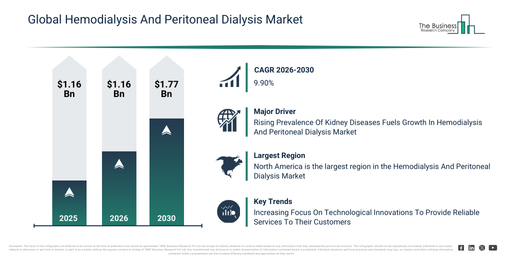
    The market for hemodialysis and peritoneal dialysis has witnessed robust growth recently. It is projected to increase from $88.26 billion in 2025 to $97.07 billion in 2026, reflecting a compound annual growth rate (CAGR) of 10.0%. The historical growth can be linked to factors such as the rising incidence of chronic kidney disease, an aging population, the expansion of dialysis centers, better awareness about renal replacement therapies, and advancements in dialysis access technologies. Looking ahead, the market is expected to reach $141.72 billion by 2030, with a CAGR of 9.9%. This future growth will be supported by increasing demand for home dialysis treatments, investments in connected dialysis devices, more personalized renal care methods, a rise in remote patient monitoring, and progress in dialyzer and catheter technologies.

    Download A Free Sample Report For Comprehensive Market Insights:

    https://www.thebusinessresearchcompany.com/sample.aspx?id=7246&type=smp

    Key Factors Propelling Hemodialysis and Peritoneal Dialysis Market Growth

    One of the main drivers behind market expansion is the growing prevalence of kidney diseases worldwide. These conditions, which affect kidney structure and function, can lead to severe complications requiring dialysis for survival. Hemodialysis and peritoneal dialysis serve as life-sustaining treatments by filtering waste and excess fluids from the blood using specialized machines and filters known as artificial kidneys. For example, a report published in January 2023 by PubMed, a US government agency, estimated that 788 million people aged 20 years and above globally had chronic kidney disease in 2023. This widespread prevalence is a significant factor fueling demand for dialysis therapies.

    Additional Catalysts Enhancing Market Momentum

    Advancements in dialysis technology and expanding infrastructure also contribute to the growing market. Improved dialysis access methods and greater awareness about treatment options have made therapies more accessible and effective. Moreover, the rising aging population, who are more susceptible to kidney ailments, further intensifies the need for comprehensive renal care solutions such as hemodialysis and peritoneal dialysis.

    Access The Complete Hemodialysis And Peritoneal Dialysis Market Report:

    https://www.thebusinessresearchcompany.com/report/hemodialysis-and-peritoneal-dialysis-global-market-report

    Defining Market Segments and Identifying Opportunities in Hemodialysis and Peritoneal Dialysis

    This market can be segmented based on various criteria:

    1) By Type: Hemodialysis and Peritoneal Dialysis

    2) By Modality: Conventional and Daily (which includes Day Time and Night Time sessions)

    3) By End User: Hospitals, Clinics, Dialysis Centers, and Home Dialysis

    Further subcategories include:

    1) Hemodialysis: In-Center Hemodialysis and Home Hemodialysis

    2) Peritoneal Dialysis: Continuous Ambulatory Peritoneal Dialysis (CAPD) and Automated Peritoneal Dialysis (APD)

    These segments highlight areas with significant growth potential, especially home-based therapies and advanced dialysis modalities.

    Emerging Trends Shaping Future Demand in the Hemodialysis and Peritoneal Dialysis Market

    Leading companies in this field are focusing on cutting-edge technologies to improve patient experiences and outcomes. One notable innovation is the Versi HD with GuideMe software, designed to enhance chronic home hemodialysis systems. This technology offers a user-friendly touchscreen interface that simplifies treatment management, making home dialysis more accessible.

    For example, in September 2023, Fresenius Medical Care AG and Co. KGaA, a healthcare leader from Germany specializing in kidney care, introduced this new HD version equipped with GuideMe software. This advancement is expected to increase the number of patients opting for home-based therapies, providing greater flexibility and comfort for individuals managing renal failure.

    Top Players Steering Competition in the Hemodialysis and Peritoneal Dialysis Market

    The market features several key companies driving innovation and growth, including Fresenius Medical Care AG & Co. KGaA, Baxter International Inc., Nipro Corporation, B. Braun Melsungen AG, Nikkiso Co. Ltd., DaVita Inc., Asahi Kasei Corporation, Medtronic plc, Becton Dickinson and Company, Rockwell Medical Inc., NxStage Medical Inc., Quanta Dialysis Technologies Ltd., Outset Medical Inc., Toray Medical Co. Ltd., Medcomp, Medline Industries Inc., Diaverum, Satellite Healthcare Inc., U.S. Renal Care Inc., American Renal Associates Holdings Inc., and Northwest Kidney Centers. These organizations continue to invest in R&D to offer innovative products and services.

    Regional Market Insights and Growth Potential in Hemodialysis and Peritoneal Dialysis

    In 2025, North America held the largest share of the hemodialysis and peritoneal dialysis market. However, the fastest growth is forecasted to occur in the Asia-Pacific region during the coming years. The market analysis covers key regions including Asia-Pacific, South East Asia, Western Europe, Eastern Europe, North America, South America, the Middle East, and Africa, providing a comprehensive view of global developments and opportunities.

    Get in touch with us:

    The Business Research Company: https://www.thebusinessresearchcompany.com/

    Americas: +1 310-496-7795

    Asia: +44 7882 955267 & +91 8897263534

    Europe: +44 7882 955267

    Email us at: marketing@tbrc.info

    Follow us on:

    LinkedIn: https://in.linkedin.com/company/the-business-research-company

    YouTube: https://www.youtube.com/channel/UC24_fI0rV8cR5DxlCpgmyFQ

    Global Market Model: https://www.thebusinessresearchcompany.com/global-market-model
  • Hemodialysis Market Trends And Growth Drivers Point To Strong Future Potential

    Hemodialysis Market Trends And Growth Drivers Point To Strong Future Potential

    Delivering more actionable and strategically valuable research, The Business Research Company’s 2026 market reports feature market attractiveness analysis, total addressable market evaluation, company benchmarking matrices, interactive Excel dashboards, expanded supply chain intelligence, emerging startup coverage, and detailed product insights.

    The hemodialysis market has experienced significant expansion recently, driven by various healthcare advancements and demographic changes. As the demand for kidney failure treatment rises, this sector shows promising growth prospects fueled by technological innovations and shifting care preferences. Let’s explore the current market size, key growth drivers, segment classifications, emerging trends, leading players, and regional insights shaping the future of the hemodialysis market.

    Hemodialysis Market Size and Projected Growth Trajectory

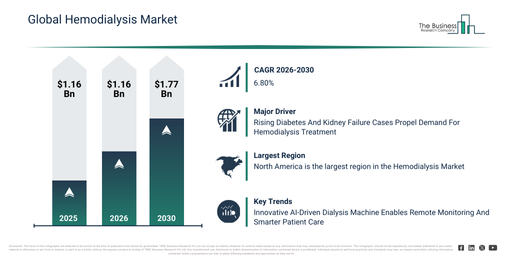
    The hemodialysis market has demonstrated strong growth in recent years and is expected to continue expanding. From a valuation of $95.52 billion in 2025, the market is projected to reach $101.58 billion by 2026, reflecting a compound annual growth rate (CAGR) of 6.3%. This upward trend in the historical period is largely due to the increasing prevalence of chronic kidney disease, the expansion of dialysis centers, an aging global population, enhanced reimbursement policies for dialysis treatments, and ongoing technological improvements in dialyzers. Looking ahead, the market is anticipated to grow further, reaching $132.17 billion by 2030 with a CAGR of 6.8%. Factors driving this future growth include a rising shift toward home-based dialysis care, increased investments in remote dialysis monitoring technologies, growing demand for compact dialysis devices, expansion of personalized dialysis treatment regimens, and continuous innovation in dialysis consumables. Key trends for the forecast period encompass greater adoption of home hemodialysis systems, higher demand for state-of-the-art dialysis machines, increased integration of digital patient monitoring, growth in portable dialysis solutions, and a stronger focus on patient-centered dialysis care.

    Download A Free Sample Report For Comprehensive Market Insights:

    https://www.thebusinessresearchcompany.com/sample.aspx?id=10174&type=smp

    Key Factors Fueling Growth in the Hemodialysis Market

    One of the main drivers behind the rapid expansion of the hemodialysis market is the rising incidence of kidney failure worldwide. Kidney failure occurs when the kidneys lose their ability to effectively filter waste, excess fluids, and toxins from the bloodstream. This condition is commonly linked to chronic illnesses such as diabetes and hypertension, along with aging populations and lifestyle factors. Patients suffering from kidney failure depend on hemodialysis machines to perform the vital function of cleansing their blood artificially, compensating for the impaired kidney function.

    For example, according to data published in June 2023 by the UK-based journal Nephrology Dialysis Transplantation (NDT), the number of individuals with Chronic Kidney Disease (CKD) in the United Kingdom is expected to increase by 4% from 8.27 million in 2022 to 8.61 million by 2032. This growing patient base directly contributes to the expanding demand for hemodialysis treatments and equipment.

    Detailed Breakdown of the Hemodialysis Market Segments

    The hemodialysis market can be segmented into several major categories to better understand its structure and dynamics. By type, it includes Conventional Hemodialysis, Short Daily or Daily Hemodialysis, and Nocturnal Hemodialysis. Component-wise, the market covers dialyzers, dialysis solutions, tubes, and catheters. Regarding end users, the key segments include hospitals, specialty clinics, and home-care settings.

    Further sub-segments provide a more detailed view: Conventional Hemodialysis splits into in-center and home-based hemodialysis; Short Daily Hemodialysis is classified into home-based and in-center treatments; and Nocturnal Hemodialysis is also divided between home and in-center options. This segmentation highlights the diversity of treatment settings and technologies catering to different patient needs.

    Access The Complete Hemodialysis Market Report:

    https://www.thebusinessresearchcompany.com/report/hemodialysis-global-market-report

    Innovation Trends Shaping the Future of the Hemodialysis Market

    Leading companies in the hemodialysis sector are increasingly focusing on creating innovative technologies to improve patient outcomes and treatment efficiency. One significant development is the introduction of cloud-enabled hemodialysis machines that allow remote monitoring of patient data, optimizing therapy protocols and enhancing healthcare provider oversight.

    For instance, in June 2025, Renalyx Health Systems Pvt. Ltd., an Indian technology firm, launched the country’s first fully indigenous AI-powered smart hemodialysis machine called RENALYX–RxT 21. This advanced machine integrates nephrology information systems on the cloud, AI-based smart algorithms, real-time remote monitoring with telemetry alerts, and Electronic Medical Records (EMR) integration. It also features sophisticated image processing and Internet of Medical Things (IoMT) capabilities for continuous performance tracking. Such innovations are designed to make dialysis more affordable, accessible, and safer, particularly targeting patients in semi-urban and rural areas.

    Top Companies Leading Competition in the Hemodialysis Market

    The hemodialysis market features several prominent corporations that drive innovation and competitive growth. Key players include Fresenius Medical Care AG & Co. KGaA, Baxter International Inc., B. Braun Melsungen AG, Nipro Corporation, Asahi Kasei Corporation, Nikkiso Co. Ltd., Toray Medical Co. Ltd., DaVita Inc., Diaverum AB, Outset Medical Inc., Quanta Dialysis Technologies Ltd., Rockwell Medical Inc., JMS Co. Ltd., Kawasumi Laboratories Inc., Terumo Corporation, Poly Medicure Ltd., Renax Biomedical Tech. Co. Ltd., Allmed Medical Care Corporation, Hemoclean Co. Ltd., and Medcomp Holdings Inc. These companies continue to invest heavily in research and development to maintain their market positions.

    Regional Analysis of Hemodialysis Market Revenue and Growth

    In 2025, North America accounted for the largest share of the hemodialysis market by revenue. However, the Asia-Pacific region is expected to experience the fastest growth throughout the forecast period. The market analysis encompasses several key regions including Asia-Pacific, South East Asia, Western Europe, Eastern Europe, North America, South America, the Middle East, and Africa. This broad geographic coverage provides insights into varying regional dynamics and growth opportunities in the global hemodialysis market.

    Get in touch with us:

    The Business Research Company: https://www.thebusinessresearchcompany.com/

    Americas: +1 310-496-7795

    Asia: +44 7882 955267 & +91 8897263534

    Europe: +44 7882 955267

    Email us at: marketing@tbrc.info

    Follow us on:

    LinkedIn: https://in.linkedin.com/company/the-business-research-company

    YouTube: https://www.youtube.com/channel/UC24_fI0rV8cR5DxlCpgmyFQ

    Global Market Model: https://www.thebusinessresearchcompany.com/global-market-model
  • Hematology Diagnostic Devices And Equipment Market Expansion Is Reshaping Competitive Dynamics Across The Industry

    Hematology Diagnostic Devices And Equipment Market Expansion Is Reshaping Competitive Dynamics Across The Industry

    Enhanced with market attractiveness analysis, total addressable market evaluation, company benchmarking matrices, interactive Excel dashboards, expanded supply chain intelligence, emerging startup coverage, and detailed product insights, The Business Research Company’s 2026 market reports deliver more actionable and strategically valuable research.

    The hematology diagnostic devices and equipment market is undergoing significant expansion, driven by advancements in technology and increasing healthcare demands worldwide. This sector plays a crucial role in diagnosing and monitoring various blood-related conditions, offering critical support to medical professionals and patients alike. Let’s explore the current market size, key growth factors, segment breakdown, industry trends, and leading players shaping this important market.

    Current Market Size and Future Growth Outlook for Hematology Diagnostic Devices and Equipment

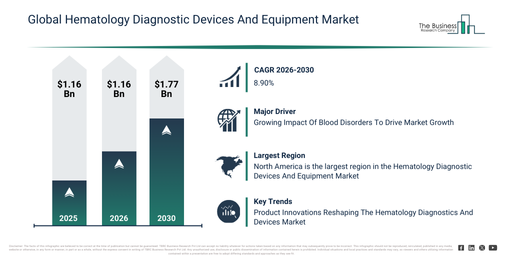
    The market for hematology diagnostic devices and equipment has experienced rapid growth recently. It is projected to rise from $8.29 billion in 2025 to $9.13 billion in 2026, reflecting a robust compound annual growth rate (CAGR) of 10.2%. This past expansion has been fueled by an increasing prevalence of blood disorders, growth in clinical diagnostic laboratories, heightened demand for routine blood testing, advancements in laboratory automation, and the availability of standardized hematology reagents. Looking ahead, the market is expected to continue its upward trajectory, reaching $12.86 billion by 2030 at a CAGR of 8.9%. Factors driving this future growth include wider adoption of AI-assisted diagnostic technologies, a surge in point-of-care hematology testing, growth in personalized medicine, increased investments in laboratory automation, and a strong focus on early disease detection.

    Download A Free Sample Report For Comprehensive Market Insights:

    https://www.thebusinessresearchcompany.com/sample.aspx?id=2536&type=smp

    Prevalence of Blood Disorders as a Catalyst for Market Expansion

    One of the primary factors propelling the hematology diagnostic devices and equipment market is the rising number of blood disorders globally. Blood disorders, which affect the levels and functions of red and white blood cells as well as platelets, are becoming more common, especially among the aging population who are at greater risk for such conditions. Hematology diagnostic tools are essential because they allow for early detection, precise classification, and ongoing monitoring of these disorders, ensuring timely and appropriate treatment. For example, the Canadian Cancer Society estimates that around 23,600 Canadians will be diagnosed with blood cancer in 2024, highlighting the growing need for advanced diagnostic solutions in hematology.

    The Impact of Chronic Diseases on Hematology Diagnostic Market Growth

    Another significant driver of market growth is the increasing prevalence of chronic diseases worldwide. Chronic conditions such as cardiovascular diseases, diabetes, cancer, and chronic respiratory illnesses require continuous management and regular blood monitoring. Hematology diagnostic devices play a vital role in assessing blood parameters, identifying abnormalities, and facilitating accurate diagnoses and treatment plans for these long-term diseases. A report from the National Center for Biotechnology Information (NCBI) in January 2023 projects that by 2050, the population aged 50 and above with at least one chronic illness will nearly double to between 99.5 and 142.66 million. This trend underscores the growing dependence on hematology diagnostics to support chronic disease management.

    Access The Complete Hematology Diagnostic Devices And Equipment Market Report:

    https://www.thebusinessresearchcompany.com/report/hematology-diagnostic-devices-and-equipment-global-market-report

    Product and Application Segments Driving Revenue in the Hematology Diagnostic Market

    This market is segmented across several categories to address diverse needs. By product, it includes instruments and consumables. Instruments are further divided into analyzers, flow cytometers, and other equipment, while consumables include reagents, stains, and additional materials. Applications span autoimmune diseases, cancer, infectious diseases, and other medical conditions. End users mainly consist of hospitals, specialized diagnostic centers, and research institutes. Key subcategories under instruments include hematology analyzers, flow cytometers, coagulation analyzers, hemoglobin analyzers, and blood gas analyzers. Consumables encompass reagents, test strips, blood collection tubes, slides, cover slips, and calibration or quality control materials.

    Innovative Trends Enhancing Hematology Diagnostics Industry Growth

    Leading companies in the hematology diagnostics market are concentrating on innovation to strengthen their market positions. Hematology analyzers, widely used in clinical labs and healthcare facilities, help automate blood sample analysis and improve efficiency. For instance, in May 2023, Siemens Healthineers introduced the Atellica HEMA 570 and Atellica HEMA 580 analyzers. These devices are designed to streamline high-volume hematology testing by integrating automation, intelligent data management, and user-friendly interfaces. Capable of processing up to 120 tests per hour, these analyzers enable healthcare professionals to quickly interpret complex results and integrate findings directly into laboratory information systems, enhancing workflow and patient care.

    Key Players and Their Role in the Hematology Diagnostic Devices Market

    Several major corporations lead the hematology diagnostic devices and equipment market. Some of the prominent players include Abbott Diagnostics, Beckman Coulter Inc., Bio-Rad Laboratories Inc., Drucker Diagnostics Inc., Horiba Ltd., Instrumentation Laboratory Inc., Siemens Healthcare, Shenzhen Mindray Bio-Medical Electronics Co. Ltd., F. Hoffmann-La Roche AG, Thermo Fisher Scientific Inc., HemoCue AB, Mindray Medical International Limited, Danaher Corporation, Edan Instruments Inc., Sysmex Corporation, CellaVision, Maccura Biotechnology Co., DY mind Biotech, Balio Diagnostics, BioSystems Diagnostics Pvt. Ltd., Wiener Lab, Accurex Biomedical Pvt. Ltd., ARKRAY USA, Boule Diagnostics AB, Diatron Group, EKF Diagnostics Holdings, Grifols S.A., Nihon Kohden Corporation, Ortho Clinical Diagnostics, PixCell Medical, STRATEC Biomedical AG, and Terumo BCT. These companies are continuously investing in research and development to bring novel and efficient diagnostic solutions to market.

    Regional Market Leaders and Growth Patterns in Hematology Diagnostic Devices and Equipment

    In 2025, North America was the largest market for hematology diagnostic devices and equipment, holding the most significant share globally. Following closely, Asia-Pacific was the second-largest market with substantial growth potential. The overall market analysis includes regions such as Asia-Pacific, South East Asia, Western Europe, Eastern Europe, North America, South America, the Middle East, and Africa, providing a comprehensive global perspective on the trends and opportunities shaping this market’s future.

    Get in touch with us:

    The Business Research Company: https://www.thebusinessresearchcompany.com/

    Americas: +1 310-496-7795

    Asia: +44 7882 955267 & +91 8897263534

    Europe: +44 7882 955267

    Email us at: marketing@tbrc.info

    Follow us on:

    LinkedIn: https://in.linkedin.com/company/the-business-research-company

    YouTube: https://www.youtube.com/channel/UC24_fI0rV8cR5DxlCpgmyFQ

    Global Market Model: https://www.thebusinessresearchcompany.com/global-market-model
  • Hematology Analyzers and Reagents Market Forecast Reveals Where Future Industry Value Will Be Created

    Hematology Analyzers and Reagents Market Forecast Reveals Where Future Industry Value Will Be Created

    Through market attractiveness analysis, total addressable market evaluation, company benchmarking matrices, interactive Excel dashboards, expanded supply chain intelligence, emerging startup coverage, and detailed product insights, The Business Research Company’s 2026 market reports provide more actionable and strategically valuable research.

    The hematology analyzers and reagents market is evolving steadily, supported by ongoing advancements in diagnostic technologies and a growing need for accurate blood disorder testing. This industry plays a vital role in healthcare by enabling efficient analysis of blood samples, which is crucial for diagnosing and managing various diseases. Let’s explore the current market size, growth drivers, segmentation, key players, and geographic trends shaping this sector through 2030.

    Current Status and Growth Outlook for the Hematology Analyzers and Reagents Market

    In recent years, the hematology analyzers and reagents market has experienced modest growth, rising from $5.25 billion in 2025 to $5.26 billion in 2026, reflecting a low compound annual growth rate (CAGR) of 0.2%. This slow but steady expansion is largely driven by factors such as the increasing prevalence of anemia and other blood disorders, enhanced hospital and diagnostic lab infrastructure, continued reliance on manual and semi-automated analyzers, greater demand for complete blood count (CBC) testing, and the broadening scope of clinical diagnostic services.

    Download A Free Sample Report For Comprehensive Market Insights:

    https://www.thebusinessresearchcompany.com/sample.aspx?id=2572&type=smp

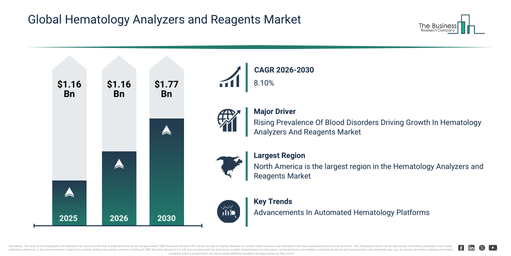
    Looking ahead, the market is poised for more robust growth with projections reaching $7.19 billion by 2030, at a healthy CAGR of 8.1%. This expected acceleration stems from the adoption of AI-powered cell analysis, widespread use of fully automated hematology systems, a stronger focus on precision medicine and personalized diagnostic approaches, expanding diagnostic centers across emerging markets, and rising demand for sophisticated reagents and consumables. Important trends for the forecast period include increasing use of automated and high-throughput analyzers, heightened demand for early and precise diagnosis of blood disorders, growth in point-of-care testing, expansion of reagent rental and consumable-based models, and an intensified emphasis on standardization and quality control in hematology testing.

    Rising Blood Disorder Rates as a Key Growth Driver in the Hematology Analyzers and Reagents Market

    One of the primary factors propelling the hematology analyzers and reagents market forward is the increasing prevalence of blood disorders. These medical conditions disrupt the normal functioning of blood components—such as red blood cells, white blood cells, or platelets—and require accurate diagnosis and ongoing monitoring. Hematology analyzers and reagents are essential tools in this process, helping to analyze blood cell counts and morphology, which are critical for detecting diseases like cancer.

    Access The Complete Hematology Analyzers and Reagents Market Report:

    https://www.thebusinessresearchcompany.com/report/hematology-analyzers-and-reagents-global-market-report

    For instance, according to Cancer Research UK in July 2024, the annual number of new Hodgkin lymphoma cases in the UK is projected to rise from about 2,400 cases during 2023-2025 to nearly 2,900 cases by 2038-2040. This increasing incidence underscores the growing demand for effective hematology testing equipment and reagents, contributing significantly to the expansion of the market.

    Detailed Segmentation of the Hematology Analyzers and Reagents Market

    The hematology analyzers and reagents market is categorized across several essential segments to provide a comprehensive view of its structure:

    1) By Product Type: Hematology Analyzers, Hemostasis Analyzers, Plasma Protein Analyzers, Hemoglobin Analyzers, Erythrocyte Sedimentation Rate (ESR) Analyzers, and Coagulation Analyzers.

    2) By Application: Anemias, Blood Cancers, Hemorrhagic Conditions, Infection-Related Conditions, Immune System Disorders, and other applications.

    3) By End User: Specialized Research Institutes, Hospitals, Specialized Diagnostic Centers, and other end users.

    Further subdivisions include:

    – Hematology Analyzers split into Automated and Semi-Automated versions.

    – Hemostasis Analyzers classified as Platelet Function Analyzers and Coagulation Testing Analyzers.

    – Plasma Protein Analyzers divided into Electrophoresis and Immunofixation Analyzers.

    – Hemoglobin Analyzers differentiated as Point-Of-Care and Laboratory Hemoglobin Analyzers.

    – ESR Analyzers segmented into Manual and Automated types.

    – Coagulation Analyzers categorized as Clotting Time Analyzers and Thromboelastography (TEG) Analyzers.

    Innovative Developments and Strategic Trends in the Hematology Market

    Leading companies in the hematology analyzers and reagents market are focusing on innovation to improve diagnostic precision, streamline laboratory operations, and deliver comprehensive patient data. Automated hematology platforms stand out as advanced, computerized instruments capable of performing complete blood counts and related tests rapidly and with minimal human input.

    For example, in January 2024, HORIBA Medical from France introduced the Yumizen Helo, a next-generation, fully automated, modular hematology system. This device combines a high-throughput analyzer with digital cell morphology and an automated reticulocyte module into one compact unit. Its standout feature is walkaway automation, where an intelligent robotic arm handles blood smear sorting and preparation automatically. This significantly cuts down manual steps compared to traditional benchtop analyzers that require separate, manual slide preparation and review processes. This innovation is designed to enhance clinical laboratory productivity by integrating multiple hematology tasks into a seamless, automated workflow.

    Key Players Leading the Hematology Analyzers and Reagents Market

    The competitive landscape of the hematology analyzers and reagents market features several prominent companies, including Abbott Laboratories, Bio-Rad Laboratories, Horiba Ltd., Siemens AG, Sysmex Corporation, BioSystems Diagnostics Pvt. Ltd, Boule Diagnostics, Danaher Corporation, Diatron MI PLC, Drew Scientific, EKF Diagnostics, Mindray, Nihon Kohden, Ortho Clinical Diagnostics, Roche, Beckman Coulter, Bayer AG, Heska, Drucker, Instrumentation Laboratory, Abaxis Inc., Accriva Diagnostics, ACON, Diamond Diagnostics, ERBA Diagnostics, Hycel, Maccura Biotechnology Co. Ltd., Genrui Biotech Inc., A&T Corporation, Beijing Succeeder Technology Inc., and Diagnostica Stago SAS.

    Regional Market Dynamics and Growth Hotspots

    In 2025, North America accounted for the largest share of the hematology analyzers and reagents market, followed by Western Europe as the second-largest region. The global analysis also includes detailed insights on Asia-Pacific, South East Asia, Eastern Europe, South America, the Middle East, and Africa, highlighting areas where market demand is growing most rapidly and offering a broad perspective on regional trends influencing this market’s trajectory.

    Get in touch with us:

    The Business Research Company: https://www.thebusinessresearchcompany.com/

    Americas: +1 310-496-7795

    Asia: +44 7882 955267 & +91 8897263534

    Europe: +44 7882 955267

    Email us at: marketing@tbrc.info

    Follow us on:

    LinkedIn: https://in.linkedin.com/company/the-business-research-company

    YouTube: https://www.youtube.com/channel/UC24_fI0rV8cR5DxlCpgmyFQ

    Global Market Model: https://www.thebusinessresearchcompany.com/global-market-model
  • Hematocrit Test Devices Market Growth Through 2030 Creates New Strategic Opportunities

    Hematocrit Test Devices Market Growth Through 2030 Creates New Strategic Opportunities

    Delivering more actionable and strategically valuable research, The Business Research Company’s 2026 market reports feature market attractiveness analysis, total addressable market evaluation, company benchmarking matrices, interactive Excel dashboards, expanded supply chain intelligence, emerging startup coverage, and detailed product insights.

    The hematocrit test devices market has experienced notable growth recently, driven by increasing healthcare needs and advancements in diagnostic technologies. As conditions related to blood health become more prevalent, the demand for accurate and efficient hematocrit testing solutions is rising. This overview explores the market’s current size, growth factors, key players, and evolving innovations shaping its future.

    Current Market Size and Projected Growth of the Hematocrit Test Devices Market

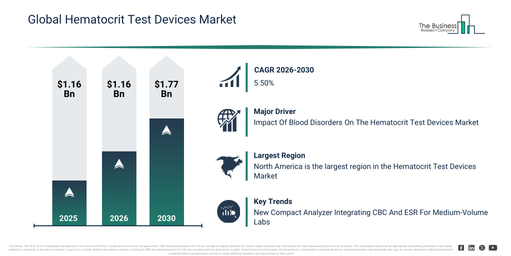
    The hematocrit test devices market demonstrated strong expansion from $4.91 billion in 2025 to $5.22 billion in 2026, growing at a compound annual growth rate (CAGR) of 6.4%. This growth during the past years has been driven by a rise in anemia and blood disorder cases, increasing diagnostic testing in hospitals and laboratories, higher demand for screening blood donors, the broadening scope of emergency and trauma care, and a stronger awareness of hematocrit monitoring in clinical settings. Looking ahead, the market is forecasted to reach $6.47 billion by 2030, growing at a CAGR of 5.5%. This anticipated growth will be fueled by the expanding need for point-of-care diagnostics, the rising incidence of chronic and lifestyle-related illnesses, the growth of decentralized health services and home-testing options, increased investments in diagnostic infrastructure, and a growing emphasis on early disease detection and preventive healthcare.

    Download A Free Sample Report For Comprehensive Market Insights:

    https://www.thebusinessresearchcompany.com/sample.aspx?id=15582&type=smp

    Factors Supporting Demand Growth in the Hematocrit Test Devices Market

    One key element bolstering the hematocrit test devices market is the rising occurrence of blood disorders worldwide. These disorders impact various blood components such as red and white blood cells, platelets, and plasma. Their increasing prevalence is influenced by genetic factors, environmental pollution, and lifestyle changes. Hematocrit test devices play a vital role in measuring the proportion of red blood cells in blood, providing essential data on a patient’s hematologic status. For instance, the American Cancer Society’s January 2024 report expects about 62,770 new leukemia cases in the US in 2024, with approximately 23,670 deaths. Acute myeloid leukemia (AML) accounts for roughly 20,800 new cases, primarily in adults, and about 11,220 deaths mostly within this group. Such statistics highlight how the rising number of blood disorders is steering demand for hematocrit testing technologies.

    Additional Drivers Accelerating Hematocrit Test Devices Market Demand

    Moreover, the growing awareness of hematocrit testing’s importance in routine health monitoring and chronic disease management continues to propel the market. The expansion of healthcare infrastructure and the integration of advanced diagnostic tools contribute further. Emergency care settings increasingly rely on rapid hematocrit testing to guide treatment decisions, enhancing patient outcomes and efficiency.

    Access The Complete Hematocrit Test Devices Market Report:

    https://www.thebusinessresearchcompany.com/report/hematocrit-test-devices-global-market-report

    Hematocrit Test Devices Market Segmentation and Revenue Generators

    The hematocrit test devices market is categorized into several segments to better understand its scope:

    1) Product types: Hematocrit Test Meter, Hematocrit Test Analyzer, and Reagents and Consumables.

    2) Applications: Anemia, Polycythemia Vera, Congenital Heart Diseases, and other uses.

    3) End-Users: Hospitals and Ambulatory Surgical Centers, Clinics, Diagnostic and Pathology Labs, and various other end-users.

    Within product subcategories, hematocrit test meters include handheld, portable, desktop, point-of-care, digital, and battery-powered variants. Hematocrit analyzers range from automated, benchtop, semi-automated, microhematocrit, high-throughput, to compact analyzers. Reagents and consumables consist of test strips, pipettes and capillaries, blood collection tubes, quality control reagents, calibration standards, and disposable kits.

    Technological Developments and Innovations Driving Market Transformation

    Leading companies in the hematocrit test devices sector are advancing their offerings by focusing on user-friendly platforms suited for medium-volume laboratories. These systems emphasize ease of use with minimal training required. For example, in March 2024, Mindray introduced the BC-700 Series, a compact hematology analyzer combining CBC and ESR testing in one device designed for smaller labs. It delivers results in 1.5 minutes, improving workflow efficiency. Its SF Cube 3D analysis technology allows precise cell differentiation, and the inclusion of the PLT-H parameter enhances platelet counting. Combining multiple tests into a single unit reduces costs for equipment and consumables. Available in open vial and autoloader formats, the BC-700 Series offers reliable, automated, and space-saving testing with strong consistency compared to traditional methods, alongside improved safety and repeatability.

    Key Companies Leading the Hematocrit Test Devices Market Competition

    The market features several prominent players, including F. Hoffmann-La Roche Ltd., Thermo Fisher Scientific Inc., Abbott Laboratories, Danaher Corporation, Siemens Healthcare GmbH, Becton Dickinson and Company, Terumo Corporation, Beckman Coulter Inc., Mindray Medical International Limited, bioMérieux SA, Sysmex Corporation, Horiba Ltd., Nihon Kohden Corporation, Erba Mannheim, EKF Diagnostics Holding Plc., Nova Biomedical Corporation, Boule Diagnostics AB, Stanbio Laboratory LP, Drucker Diagnostics, A. Menarini Diagnostics Srl, Sensa Core, and Mikroscan Technologies Inc. These organizations compete by innovating product features, expanding distribution networks, and enhancing service capabilities.

    Geographical Market Presence and Regional Leadership in Hematocrit Testing

    In 2025, North America held the largest share of the hematocrit test devices market. However, the Asia-Pacific region is expected to exhibit the fastest growth rate during the forecast period. The market report covers regions such as Asia-Pacific, Southeast Asia, Western Europe, Eastern Europe, North America, South America, the Middle East, and Africa, providing a detailed global perspective on market trends and opportunities.

    Get in touch with us:

    The Business Research Company: https://www.thebusinessresearchcompany.com/

    Americas: +1 310-496-7795

    Asia: +44 7882 955267 & +91 8897263534

    Europe: +44 7882 955267

    Email us at: marketing@tbrc.info

    Follow us on:

    LinkedIn: https://in.linkedin.com/company/the-business-research-company

    YouTube: https://www.youtube.com/channel/UC24_fI0rV8cR5DxlCpgmyFQ

    Global Market Model: https://www.thebusinessresearchcompany.com/global-market-model
  • Hemato Oncology Testing Market Size Projected To Increase From $4.49 Billion To $7.76 Billion During The Forecast Period

    Hemato Oncology Testing Market Size Projected To Increase From $4.49 Billion To $7.76 Billion During The Forecast Period

    Enhanced with market attractiveness analysis, total addressable market evaluation, company benchmarking matrices, interactive Excel dashboards, expanded supply chain intelligence, emerging startup coverage, and detailed product insights, The Business Research Company’s 2026 market reports deliver more actionable and strategically valuable research.

    The hemato oncology testing market is experiencing rapid expansion as advancements in diagnostic technologies and rising cancer incidences drive demand. This sector is evolving swiftly, offering promising revenue opportunities fueled by innovation and growing awareness around early detection and personalized medicine. Below is an overview of the market size, key factors influencing growth, leading companies, emerging trends, and regional insights shaping the future of hemato oncology testing.

    Current and Projected Size of the Hemato Oncology Testing Market

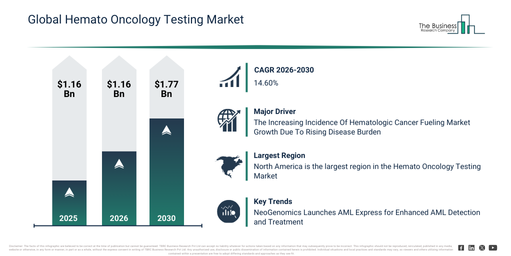
    The hemato oncology testing market has seen substantial growth recently and is projected to increase from $3.93 billion in 2025 to $4.5 billion in 2026, representing a compound annual growth rate (CAGR) of 14.4%. This expansion during the historical period is largely driven by the rising number of blood cancer cases, the growth of hospital diagnostic labs, heightened awareness about early cancer diagnosis, advances in clinical research, and the availability of sophisticated testing reagents. Looking ahead, the market is expected to continue this upward trajectory, reaching $7.76 billion by 2030 with a CAGR of 14.6%. Key future growth drivers include the adoption of precision oncology diagnostics, increased investments in genomic testing infrastructure, the rise of AI-powered diagnostic platforms, growing demand for companion diagnostics, and ongoing innovation in assay technologies. Emerging trends forecasted in this period include a surge in molecular diagnostic testing, expanded use of next-generation sequencing in oncology, heightened demand for personalized cancer diagnostics, broader implementation of automated laboratory systems, and deeper integration of data analytics in hemato-oncology.

    Download A Free Sample Report For Comprehensive Market Insights:

    https://www.thebusinessresearchcompany.com/sample.aspx?id=10075&type=smp

    Rising Hematologic Cancer Cases as a Major Growth Driver

    The increasing prevalence of hematologic cancers is a principal factor propelling the hemato oncology testing market’s expansion. Hematologic cancers, which originate in blood-forming tissues and affect blood, bone marrow, and the lymphatic system, include leukemia, lymphoma, and multiple myeloma. Early detection through hemato oncology testing is crucial in managing these diseases effectively. For example, Cancer Research UK reported in September 2025 that leukemia incidence in the UK is projected to hover around 17.9 cases per 100,000 people annually from 2024 to 2026, with a slight estimated decline of 3% to 17.4 cases per 100,000 people by 2038-2040. This upward trend in cancer incidence highlights the growing need for advanced testing solutions, fueling the market’s growth.

    Detailed Segmentation of the Hemato Oncology Testing Market

    This market is categorized across several dimensions to capture its diverse scope:

    – Product and Services: Assay Kits and Reagents, Services

    – Cancer Types: Leukemia, Lymphoma, Multiple Myeloma

    – Technologies: Polymerase Chain Reaction (PCR), Immunohistochemistry (IHC), Next-Generation Sequencing (NGS)

    – End Users: Hospitals, Academic and Research Institutes

    Further subsegments include specific assay kits such as PCR kits, NGS kits, flow cytometry reagents, and antibodies, alongside service-based offerings like testing services and data analysis services.

    Access The Complete Hemato Oncology Testing Market Report:

    https://www.thebusinessresearchcompany.com/report/hemato-oncology-testing-global-market-report

    Innovations and Trends Shaping the Hemato Oncology Testing Landscape

    Key players in the hemato oncology testing space are embracing next-generation sequencing (NGS) to enhance the precision and speed of genetic analysis. NGS technology enables comprehensive profiling of hematologic malignancies, facilitating tailored treatment approaches based on individual genetic profiles. For instance, in October 2024, NeoGenomics Inc., a US-based diagnostics and genomic testing firm, launched AML Express, an NGS tool designed for rapid mutation detection in Acute Myeloid Leukemia (AML). This platform provides high accuracy and fast turnaround times, empowering oncologists to make timely and personalized treatment decisions. AML Express exemplifies how cutting-edge diagnostics can improve patient outcomes by delivering precise genetic insights specific to AML.

    Key Industry Players Dominating the Hemato Oncology Testing Market

    The hemato oncology testing market features a competitive landscape with prominent companies including F. Hoffmann-La Roche Ltd., Abbott Laboratories, Thermo Fisher Scientific Inc., Illumina Inc., Invivoscribe Inc., Qiagen N.V., Bio-Rad Laboratories Inc., Archerdx Inc., ARUP Laboratories Inc., Asuragen Inc., Adaptive Biotechnologies Corp., Cepheid Inc., EntroGen Inc., CORE Diagnostics Inc., Genoptix Inc., GenPath Diagnostics, NeoGenomics Laboratories Inc., Siemens AG, Sysmex Corporation, Laboratory Corporation of America Holdings, Agilent Technologies, Danaher Corporation, Grifols SA, Diaorin SpA, HTG Molecular Diagnostics Inc., and Admera Health. These companies are at the forefront of developing innovative testing technologies and expanding diagnostic capabilities worldwide.

    Regional Market Dynamics and Growth Potential

    In 2025, North America held the largest share of the hemato oncology testing market, reflecting its advanced healthcare infrastructure and widespread adoption of cutting-edge diagnostics. Meanwhile, the Asia-Pacific region is anticipated to be the fastest-growing market throughout the forecast period. The analysis covers regions including Asia-Pacific, South East Asia, Western Europe, Eastern Europe, North America, South America, Middle East, and Africa, providing a comprehensive view of regional performance and growth prospects within the hemato oncology testing sector.

    Get in touch with us:

    The Business Research Company: https://www.thebusinessresearchcompany.com/

    Americas: +1 310-496-7795

    Asia: +44 7882 955267 & +91 8897263534

    Europe: +44 7882 955267

    Email us at: marketing@tbrc.info

    Follow us on:

    LinkedIn: https://in.linkedin.com/company/the-business-research-company

    YouTube: https://www.youtube.com/channel/UC24_fI0rV8cR5DxlCpgmyFQ

    Global Market Model: https://www.thebusinessresearchcompany.com/global-market-model
  • Heavy Payload Robotic Arm Market Growth Outlook Reveals A CAGR Of 7.4% And A Market Value Of $19.72 Billion By 2030

    Heavy Payload Robotic Arm Market Growth Outlook Reveals A CAGR Of 7.4% And A Market Value Of $19.72 Billion By 2030

    Through market attractiveness analysis, total addressable market evaluation, company benchmarking matrices, interactive Excel dashboards, expanded supply chain intelligence, emerging startup coverage, and detailed product insights, The Business Research Company’s 2026 market reports provide more actionable and strategically valuable research.

    The heavy payload robotic arm market is experiencing considerable growth as industries increasingly seek efficient automation solutions to handle heavy materials. With rapid technological advancements and expanding industrial applications, this market is set to see steady gains through 2030. Below, we explore the current market size, key factors fueling expansion, segmentation, industry trends, top players, and regional performance.

    Heavy Payload Robotic Arm Market Size and Growth Projections

    The market for heavy payload robotic arms has shown strong growth recently and is expected to continue expanding. From $13.79 billion in 2025, the market is projected to reach $14.84 billion in 2026, registering a compound annual growth rate (CAGR) of 7.6%. This past growth has been driven by industries heavily dependent on manual labor for material handling, limited automation in welding and metal fabrication, increasing industrial manufacturing output, growth in automotive production, and widespread use of standard robotic arm models.

    Download A Free Sample Report For Comprehensive Market Insights:

    https://www.thebusinessresearchcompany.com/sample.aspx?id=27303&type=smp

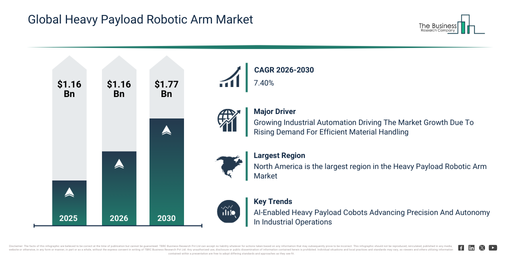
    Looking ahead, the market is forecasted to grow robustly, reaching $19.72 billion by 2030 with a CAGR of 7.4%. Factors supporting this expansion include advancements in multi-axis robotic arms, AI and machine learning integration for greater precision, rapid growth in electronics and automotive sectors, rising use in construction and chemical industries, and improvements in wireless and computer-based control technologies. Key emerging trends involve broader adoption of heavy payload arms in material handling, increased demand for multi-axis designs, enhanced automation in welding and metal fabrication, expanded applications in palletizing and packaging, and heightened emphasis on safety and accuracy in industrial operations.

    Factors Driving Growth in the Heavy Payload Robotic Arm Market

    Industrial automation is a major force propelling the demand for heavy payload robotic arms. By employing advanced control systems and machinery, industries can minimize human intervention in processes, leading to faster production, better precision, and less downtime. Heavy payload robotic arms play a critical role in this automation, efficiently handling cumbersome materials to boost productivity, reduce labor costs, and improve workplace safety.

    Access The Complete Heavy Payload Robotic Arm Market Report:

    https://www.thebusinessresearchcompany.com/report/heavy-payload-robotic-arm-global-market-report

    For example, in September 2024, the International Federation of Robotics (IFR) reported a 51% increase in industrial robot installations in the UK during 2023, totaling 3,830 units. This surge highlights the growing reliance on automated systems, which directly supports the heavy payload robotic arm market’s upward trajectory.

    Detailed Segmentation of the Heavy Payload Robotic Arm Market

    The heavy payload robotic arm market is categorized into several segments:

    1) By Type: Articulated, Cartesian, Selective Compliance Assembly Robot Arm (SCARA), Cylindrical, and Other Types

    2) By Payload Capacity: Up to 500 Kilograms (Kg), 500 to 1000 Kg, 1000 to 2000 Kg, and Over 2000 Kg

    3) By Control System: Manual Control, Programmable Logic Controller (PLC), Computer-Based Control Systems, Wireless Control Systems

    4) By Application: Material Handling, Welding and Metal Fabrication, Palletizing and Packaging, Other Applications

    5) By End-User Industry: Automotive, Healthcare, Electrical or Electronics, Metal and Machinery, Chemical, Construction, and Others

    Subcategories further break down each type: Articulated arms are divided into four, five, six, and seven axis models; Cartesian robots include two, three, and four axis as well as gantry types; SCARA robots comprise horizontal arm, vertically articulated, single arm, and dual arm variants; Cylindrical types feature fixed base, mobile base, dual arm, and telescopic designs; Other types cover spherical, delta, polar, and hybrid robotic arms.

    Innovations and Industry Trends Transforming the Heavy Payload Robotic Arm Market

    Leading companies in the sector are focusing on developing heavy payload collaborative robots (cobots) that work safely alongside human operators in demanding environments. These cobots combine strong lifting capacity with advanced safety mechanisms and adaptability across industries.

    A notable example is the TM30S model from Taiwan-based Techman Robot Inc., launched in May 2024. This robotic arm supports a maximum payload of 35 kg with a reach of 1,702 mm, and features integrated smart vision and a 3D camera powered by AI. This technology enables the robot to detect object size and position in real time, allowing it to perform palletizing, pick-and-place, and material handling without relying on fixed stacking patterns. Such AI-enabled vision systems enhance operational accuracy and autonomy in complex industrial environments, reflecting a growing trend toward smarter robotic solutions.

    Key Players Shaping the Heavy Payload Robotic Arm Industry

    The market is led by several prominent companies, including Mitsubishi Electric Corporation, ABB Ltd., Kawasaki Heavy Industries Ltd., Seiko Epson Corporation, Hyundai Heavy Industries Co. Ltd., FANUC Corporation, Yaskawa Electric Corporation, Stäubli International AG, NACHI-FUJIKOSHI CORP., Comau S.p.A., SIASUN Robot & Automation Co. Ltd., Scott Technology Limited, Vulcan Engineering Co. Inc., Ellison Technologies Inc., Apex Automation and Robotics Pty. Ltd., TM Robotics Ltd., OTC DAIHEN Inc., Black-I Robotics Inc., CHAIFU Industries Co. Ltd., and GS Automatic Co. Ltd. These players are instrumental in driving innovation and expanding market reach globally.

    Regional Market Leaders and Growth Outlook for Heavy Payload Robotic Arms

    In 2025, North America held the largest share of the heavy payload robotic arm market. Meanwhile, the Asia-Pacific region is anticipated to be the fastest-growing market throughout the forecast period. The comprehensive market analysis includes regions such as Asia-Pacific, South East Asia, Western Europe, Eastern Europe, North America, South America, the Middle East, and Africa, offering a global perspective on evolving market dynamics.

    Get in touch with us:

    The Business Research Company: https://www.thebusinessresearchcompany.com/

    Americas: +1 310-496-7795

    Asia: +44 7882 955267 & +91 8897263534

    Europe: +44 7882 955267

    Email us at: marketing@tbrc.info

    Follow us on:

    LinkedIn: https://in.linkedin.com/company/the-business-research-company

    YouTube: https://www.youtube.com/channel/UC24_fI0rV8cR5DxlCpgmyFQ

    Global Market Model: https://www.thebusinessresearchcompany.com/global-market-model