Month: June 2026

  • Angio Suites Market Growth Is Accelerating As Industry Transformation Continues

    Angio Suites Market Growth Is Accelerating As Industry Transformation Continues

    Through market attractiveness analysis, total addressable market evaluation, company benchmarking matrices, interactive Excel dashboards, expanded supply chain intelligence, emerging startup coverage, and detailed product insights, The Business Research Company’s 2026 market reports provide more actionable and strategically valuable research.

    The angio suites market has been witnessing substantial growth recently, driven by advancements in medical imaging and increasing healthcare needs. As cardiovascular and vascular diseases continue to rise globally, demand for sophisticated diagnostic and interventional solutions is pushing this market forward. Let’s explore the current market size, key growth factors, segmentation, influential trends, and leading companies shaping the angio suites industry.

    Steady Expansion in Angio Suites Market Size and Projections

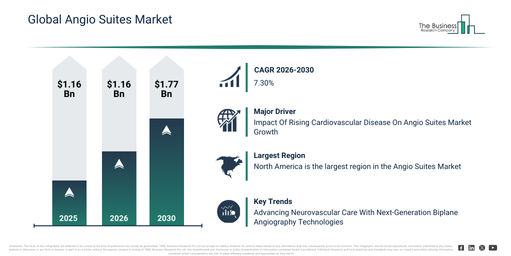
    The angio suites market has shown strong expansion over recent years, with revenues expected to rise from $1.9 billion in 2025 to $2.04 billion in 2026, representing a compound annual growth rate (CAGR) of 7.3%. This growth is mainly driven by several factors, including the increasing prevalence of cardiovascular and peripheral vascular diseases, greater demand for minimally invasive interventional procedures, expanding hospital investments in cutting-edge imaging technologies, wider availability of X-ray and CT angiography platforms, and increased use of cardiac and neuro-angiography procedures. Looking ahead, the market is forecast to grow further, reaching $2.7 billion by 2030, maintaining the same 7.3% CAGR. This future growth will largely be supported by the rising adoption of bi-plane and hybrid angio suites, integration of advanced imaging and navigation technologies, expansion of outpatient and ambulatory care models, deeper penetration of oncology and peripheral vascular interventions, and growing healthcare infrastructure development in emerging economies.

    Download A Free Sample Report For Comprehensive Market Insights:

    https://www.thebusinessresearchcompany.com/sample.aspx?id=18779&type=smp

    Increasing Cardiovascular Disease Burden as a Growth Catalyst

    One of the primary forces fueling the angio suites market is the escalating incidence of cardiovascular diseases worldwide. Conditions such as coronary artery disease, heart attacks, strokes, and hypertension are on the rise, exacerbated by sedentary lifestyles, unhealthy diets, and high obesity rates. Angio suites play a critical role by offering sophisticated imaging and interventional tools that enable precise diagnosis and treatment of complex cardiovascular conditions, often through minimally invasive procedures with real-time visualization. For example, in January 2024, the American Heart Association reported nearly 931,578 deaths due to cardiovascular diseases in the US, marking a slight increase from 928,741 in 2023. The age-adjusted death rate also rose by 4%, highlighting the persistent and growing impact of these diseases, which in turn drives the need for advanced angio suite solutions.

    Technological Advances and Hospital Investments Supporting Market Growth

    Another important driver is the increasing hospital investments aimed at upgrading imaging infrastructure. The expanded availability of sophisticated X-ray and CT angiography platforms supports more accurate and efficient interventional procedures. This ongoing modernization in healthcare facilities facilitates the wider adoption of angio suites, enabling better patient outcomes and new treatment possibilities.

    https://www.thebusinessresearchcompany.com/report/angio-suites-global-market-report

    Angio Suites Market Largest Region By Revenue And Market Share

    Detailed Segmentation of the Angio Suites Market

    This report breaks down the angio suites market into several key segments to better understand revenue drivers and market dynamics:

    1) By Type: Single-Plane systems and Bi-Plane systems

    2) By Technology: X-ray Angiography, Computed Tomography (CT) Angiography, Magnetic Resonance Angiography (MRA), and other emerging imaging technologies

    3) By Application: Cardiac Angiography, Neurology Angiography, Oncology Angiography, Peripheral Vascular Angiography, and other clinical uses

    4) By End-User: Hospitals, Ambulatory Surgical Centers, Diagnostic Imaging Centers, and other healthcare providers

    Further subcategories include types of Single-Plane systems such as fixed C-arm, rotating C-arm, and compact systems, as well as Bi-Plane systems featuring fixed C-arm, rotating C-arm, and hybrid configurations. This segmentation provides a comprehensive view of the market landscape.

    Emerging Technological Trends Transforming the Angio Suites Market

    The next phase of growth in the angio suites market is being shaped by the integration of advanced imaging technologies, including biplane angiography systems. These systems capture two perpendicular X-ray images simultaneously, offering detailed 2D and 3D visualizations that improve procedural accuracy and efficiency, especially for complex vascular interventions. For example, in February 2024, Koninklijke Philips N.V. introduced the Azurion Neuro Biplane system, which combines enhanced imaging capabilities with flexible C-arm movements, automated beam rotation for correctly oriented images, and low-dose radiation technology via its ClarityIQ software. This innovation accelerates diagnosis and treatment for neurovascular diseases such as stroke.

    Leading Players Steering the Angio Suites Market

    The angio suites industry is dominated by several prominent companies, including Siemens Healthineers AG, GE Healthcare, Koninklijke Philips N.V., Canon Medical Systems Corporation, Shimadzu Corporation, Hitachi Ltd, Mindray Medical International Limited, United Imaging Healthcare, Ziehm Imaging GmbH, Omega Medical Imaging, NeuroLogica Corporation, Terumo Corporation, Boston Scientific Corporation, Medtronic plc, Abbott Laboratories, AngioDynamics Inc, Microport Scientific Corporation, Biotronik, Asahi Intecc Co Ltd, and Merit Medical Systems Inc. These key players are driving innovation, expanding product portfolios, and strengthening their market presence globally.

    Regional Market Insights Highlighting Growth Opportunities

    In 2025, North America emerged as the largest regional market for angio suites, benefiting from advanced healthcare infrastructure and high adoption rates. Nevertheless, Asia-Pacific is expected to be the fastest-growing region during the forecast period, propelled by increasing healthcare investments, rising prevalence of cardiovascular diseases, and expanding accessibility to advanced medical technologies. The market report also covers other important regions including South East Asia, Western Europe, Eastern Europe, South America, the Middle East, and Africa, providing a broad perspective on global market developments.

    Get in touch with us:

    The Business Research Company: https://www.thebusinessresearchcompany.com/

    Americas: +1 310-496-7795

    Asia: +44 7882 955267 & +91 8897263534

    Europe: +44 7882 955267

    Email us at: marketing@tbrc.info

    Follow us on:

    LinkedIn: https://in.linkedin.com/company/the-business-research-company

    YouTube: https://www.youtube.com/channel/UC24_fI0rV8cR5DxlCpgmyFQ

    Global Market Model: https://www.thebusinessresearchcompany.com/global-market-model
  • Anesthesia Monitoring Devices Market Outlook Highlights The Next Major Growth Opportunities

    Anesthesia Monitoring Devices Market Outlook Highlights The Next Major Growth Opportunities

    Delivering more actionable and strategically valuable research, The Business Research Company’s 2026 market reports feature market attractiveness analysis, total addressable market evaluation, company benchmarking matrices, interactive Excel dashboards, expanded supply chain intelligence, emerging startup coverage, and detailed product insights.

    The anesthesia monitoring devices sector has experienced consistent growth in recent years, driven by advances in surgical procedures and healthcare infrastructure. As the demand for safer anesthesia management rises, this market is set to continue expanding steadily. Below is a detailed look at its current size, growth drivers, segmentation, innovations, competitive environment, and regional outlook.

    Current Market Size and Projected Growth of the Anesthesia Monitoring Devices Market

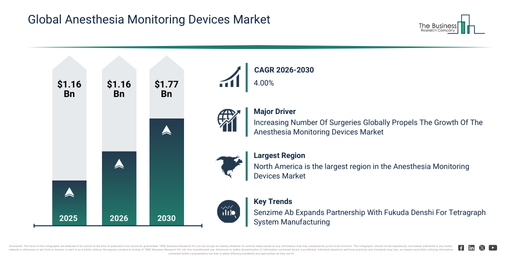
    The anesthesia monitoring devices market has shown steady progress, with its value expected to increase from $3.48 billion in 2025 to $3.57 billion in 2026, representing a compound annual growth rate (CAGR) of 2.8%. This growth in the past years has been propelled by a rise in the number of surgical operations, heightened demand for safer anesthesia delivery, expanded hospital infrastructure, the widespread use of basic monitoring tools in operating rooms, and improvements in perioperative care standards. Looking ahead, the market is forecasted to reach $4.17 billion by 2030, growing at a faster CAGR of 4.0%. Factors supporting this future expansion include greater adoption of advanced anesthesia monitoring technologies, increased emphasis on personalized anesthesia dosing, growth of minimally invasive surgeries, integration of smart operating rooms, and rising investments in digital healthcare systems. Key trends expected to influence the market during this period involve broader use of multi-parameter monitoring systems, enhanced integration of EEG and depth of anesthesia monitoring, real-time data analytics in anesthesia care, expansion of integrated anesthesia workstations, and a stronger focus on patient safety and precision.

    Download A Free Sample Report For Comprehensive Market Insights:

    https://www.thebusinessresearchcompany.com/sample.aspx?id=5972&type=smp

    Increasing Surgical Procedures as a Major Growth Factor

    A significant driver behind the anesthesia monitoring devices market is the rising volume of surgeries worldwide. Procedures such as hip fracture repairs, neurosurgical operations, cesarean sections, and others are becoming more frequent, which in turn escalates the need for reliable anesthesia monitoring solutions. For example, in June 2024, the International Society of Aesthetic Plastic Surgery (ISAPS) reported a 3.4% increase in total surgical and non-surgical procedures during 2023, reaching 34.9 million. This growth in surgical interventions underlines the growing demand for anesthesia monitoring devices.

    Advancements in Perioperative Care Supporting Market Expansion

    Beyond just the number of surgeries, improvements in standards of perioperative care have fostered increased adoption of anesthesia monitoring devices. Enhanced protocols and technology integration are ensuring safer anesthesia administration, thus encouraging hospitals and surgical centers to upgrade their monitoring systems. This trend is expected to continue feeding market growth over the coming years.

    https://www.thebusinessresearchcompany.com/report/anesthesia-monitoring-devices-global-market-report

    Anesthesia Monitoring Devices Market Regional Analysis And Leading Geography

    Breaking Down the Anesthesia Monitoring Devices Market Segmentation

    This market is organized across several key categories:

    1) By Product Type: Advanced Anesthesia Monitors, Basic Anesthesia Monitors, and Integrated Anesthesia Workstations.

    2) By Application Area: Cardiology, Neurology, Dental, Ophthalmology, Urology, Orthopedics, and other medical fields.

    3) By End User: Hospitals, Ambulatory Surgical Centers, Clinics, and Specialty Surgical Centers.

    Further subcategories include Advanced Anesthesia Monitors such as Multi-parameter Monitors, EEG Monitors, and Gas Analyzers; Basic Anesthesia Monitors including Pulse Oximeters, Blood Pressure Monitors, and Capnometers; and Integrated Anesthesia Workstations comprising Anesthesia Delivery Systems, Ventilation Systems, and Monitoring Systems.

    Innovations and Collaborations Reshaping the Anesthesia Monitoring Devices Market

    Leading companies in this market are increasingly engaging in strategic partnerships to foster innovation and strengthen their market presence. Such collaborations enable the development of cutting-edge monitoring technologies that improve patient outcomes. For instance, in May 2023, Senzime AB, a company based in Sweden specializing in patient monitoring systems, expanded its partnership with Fukuda Denshi, a Japanese firm known for patient monitoring equipment. This alliance focuses on producing TetraGraph systems, which utilize electromyography (EMG) technology to monitor neuromuscular blockade during anesthesia, providing precise and sensitive measurements of muscle activity.

    Key Players Competing in the Anesthesia Monitoring Devices Arena

    Several well-established companies dominate the anesthesia monitoring devices market, including Baxter International Inc., Cardinal Health Inc., Draegerwerk AG & Co. KGaA, GE Healthcare, Heyer Medical AG, Medtronic Inc., Mindray Medical International Limited, Nihon Kohden Corporation, Philips Healthcare, Smiths Medical Inc., Infinium Medical Inc., Fukuda Denshi Co. Ltd., Ambu A/S, ACOMA Medical Industry Co., BPL Medical Technologies, Dixion GmbH, Löwenstein Medical GmbH & Co. KG, Medasense Biometrics Ltd., CNSystems Medizintechnik GmbH, Allied Medical Limited, Criticare Technologies Inc., Masimo Corporation, Spacelabs Healthcare Inc., Mennen Medical Ltd., BrainU Co. Ltd., OSI Systems Inc., Penlon Limited, Schiller AG, Bionet Co. Ltd., DRE Medical Inc., and Digicare Biomedical Technology Inc.

    Regional Market Distribution and Growth Patterns

    In 2025, North America held the largest share of the anesthesia monitoring devices market. However, Asia-Pacific is projected to be the fastest-growing region during the forecast period. The market analysis spans key regions including Asia-Pacific, South East Asia, Western Europe, Eastern Europe, North America, South America, the Middle East, and Africa, providing a comprehensive view of global market dynamics.

    Get in touch with us:

    The Business Research Company: https://www.thebusinessresearchcompany.com/

    Americas: +1 310-496-7795

    Asia: +44 7882 955267 & +91 8897263534

    Europe: +44 7882 955267

    Email us at: marketing@tbrc.info

    Follow us on:

    LinkedIn: https://in.linkedin.com/company/the-business-research-company

    YouTube: https://www.youtube.com/channel/UC24_fI0rV8cR5DxlCpgmyFQ

    Global Market Model: https://www.thebusinessresearchcompany.com/global-market-model
  • Anesthesia Machines Market Trends And Growth Drivers Point To Strong Future Potential

    Anesthesia Machines Market Trends And Growth Drivers Point To Strong Future Potential

    Enhanced with market attractiveness analysis, total addressable market evaluation, company benchmarking matrices, interactive Excel dashboards, expanded supply chain intelligence, emerging startup coverage, and detailed product insights, The Business Research Company’s 2026 market reports deliver more actionable and strategically valuable research.

    The anesthesia machines market has experienced significant growth recently, driven by advancements in medical technology and increasing surgical demands worldwide. As healthcare facilities expand and modernize, the need for reliable and efficient anesthesia equipment continues to rise, setting the stage for impressive market developments in the coming years. Let’s explore the current market size, key growth drivers, segment details, major players, and future trends shaping this sector.

    Anesthesia Machines Market Size and Its Expected Growth Trajectory

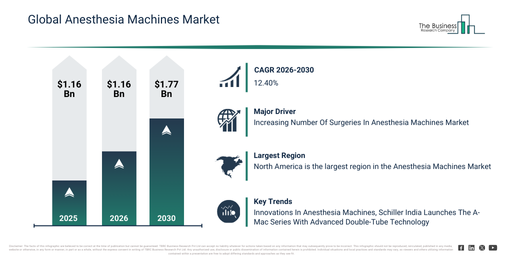
    The anesthesia machines market has seen rapid expansion and is projected to grow from $7.3 billion in 2025 to $8.23 billion in 2026, reflecting a strong compound annual growth rate (CAGR) of 12.8%. This growth during the historical period stems from factors such as a rising number of surgical procedures, expansion of hospital operating room infrastructure, wider adoption of general anesthesia methods, better access to advanced surgical care, and increasing demand for dependable anesthesia equipment. Looking ahead, the market is forecasted to reach $13.15 billion by 2030, maintaining a robust CAGR of 12.4%. Growth drivers in the forecast period include increased investments in smart operating rooms, a higher rate of outpatient surgeries, growing need for compact anesthesia machines, advancements in AI-assisted anesthesia monitoring, and a focus on patient-specific anesthesia delivery. Key trends expected to influence the market involve adoption of integrated monitoring systems, demand for portable anesthesia workstations, use of smart alarm and safety features, expansion of digitally controlled anesthesia delivery, and enhanced workflow efficiency.

    Download A Free Sample Report For Comprehensive Market Insights:

    https://www.thebusinessresearchcompany.com/sample.aspx?id=2574&type=smp

    Rising Surgical Volumes Powering Demand for Anesthesia Machines

    A primary factor fueling anesthesia machine market growth is the increasing volume of surgeries worldwide. Anesthesia machines are essential for ensuring patient comfort and pain management during surgical interventions. The uptick in chronic diseases such as cataracts, neurological disorders, muscle injuries, oral health issues, and abdominal problems necessitating surgical treatment has driven up the demand for anesthesia equipment. For instance, in July 2025, the American Med Spa Association reported a 42.5% rise in cosmetic procedure volumes over the past four years, totaling 20.5 million non-surgical treatments and 17.4 million surgical procedures in 2024. This growing surgical demand directly supports expansion in the anesthesia machines market.

    Chronic Diseases Playing a Significant Role in Market Growth

    Another important contributor to the anesthesia machines market is the rising prevalence of chronic diseases globally. These long-lasting medical conditions, often lasting three months or more, require surgical or procedural interventions that depend on anesthesia delivery systems. For example, according to the National Library of Medicine in January 2023, the population in the United States aged 50 and over with at least one chronic condition is projected to nearly double—by 99.5% to reach 142.66 million—by 2050. This surge in chronic illnesses highlights the growing need for reliable anesthesia machines in healthcare settings.

    https://www.thebusinessresearchcompany.com/report/anesthesia-machines-global-market-report

    Anesthesia Machines Market Geographic Analysis: Where Is Demand Growing The Fastest?

    Detailed Segmentation Overview of the Anesthesia Machines Market

    This market is categorized based on product type, operation mode, and end user. Product types include Mobile Anesthesia Machines and Standalone Anesthesia Machines. Mobile anesthesia devices further subdivide into Compact Anesthesia Workstations, Portable Anesthesia Machines, and Anesthesia Delivery Systems designed for outpatient settings. Standalone machines include Conventional Anesthesia Machines, Advanced Anesthesia Machines with Integrated Monitoring, and those equipped with Ventilator Support. Operation modes are divided into Continuous Anesthesia Machines, Intermittent Anesthesia Machines, and other varieties. By end user, the market serves Hospitals, Clinics, and Ambulatory Surgical Centers.

    Technology Advancements and Innovations Influencing Market Trends

    Key players in the anesthesia machines industry are focusing on groundbreaking technologies to enhance safety and performance. One such innovation is the double-tube anesthesia machine, which utilizes two separate tubes to improve the efficiency and safety of anesthetic gas delivery. For instance, in January 2024, Schiller India introduced its A-mac series, featuring three models: A-mac S23, A-mac E1, and A-mac E6. These machines are designed to enhance precision and safety with features like multiple ventilation modes, intuitive touchscreens, and integrated battery backups. The A-mac S23 suits both adult and infant patients, while the E1 and E6 models offer additional functionalities such as CO2 monitoring and ergonomic designs, demonstrating the industry’s push towards smarter, more versatile anesthesia equipment.

    Prominent Companies Leading the Anesthesia Machines Market

    Several well-established companies are at the forefront of competition in this market. These include General Electric Company, Koninklijke Philips N.V., Datex-Ohmeda Inc., B. Braun Holding GmbH & Co. KG, Mindray Medical International Limited, Dragerwerk Ag & Co. KGAA, Getinge Group, Shenzhen Landwind Medical Co. Ltd., Midmark Corporation, Penlon Limited, Aeonmed Co. Ltd., Beijing Siriusmed Medical Device Co. Ltd., Heyer Medical AG, Dameca A/S, DRE Inc., Shenzhen Comen Medical Instruments Co. Ltd., BPL Medical Technologies Pvt. Ltd., Oricare Inc., Infinium Medical Inc., and HERSILL S.L. These organizations continue to drive innovation and expand their product portfolios to meet evolving clinical needs.

    Geographical Market Dynamics and Areas of Rapid Growth

    In 2025, North America held the largest share of the anesthesia machines market, supported by advanced healthcare infrastructure and high surgical volumes. Western Europe followed as the second-largest regional market globally. The report also covers other key regions including Asia-Pacific, Southeast Asia, Eastern Europe, South America, the Middle East, and Africa, providing a comprehensive view of global demand patterns and regional growth opportunities.

    Get in touch with us:

    The Business Research Company: https://www.thebusinessresearchcompany.com/

    Americas: +1 310-496-7795

    Asia: +44 7882 955267 & +91 8897263534

    Europe: +44 7882 955267

    Email us at: marketing@tbrc.info

    Follow us on:

    LinkedIn: https://in.linkedin.com/company/the-business-research-company

    YouTube: https://www.youtube.com/channel/UC24_fI0rV8cR5DxlCpgmyFQ

    Global Market Model: https://www.thebusinessresearchcompany.com/global-market-model
  • Anesthesia Disposables Market Expansion Is Reshaping Competitive Dynamics Across The Industry

    Anesthesia Disposables Market Expansion Is Reshaping Competitive Dynamics Across The Industry

    Through market attractiveness analysis, total addressable market evaluation, company benchmarking matrices, interactive Excel dashboards, expanded supply chain intelligence, emerging startup coverage, and detailed product insights, The Business Research Company’s 2026 market reports provide more actionable and strategically valuable research.

    The anesthesia disposables market is experiencing rapid expansion driven by ongoing developments in healthcare and surgical practices. As the demand for safer, more efficient anesthesia delivery rises, this market is set to grow substantially in the coming years. Let’s explore the current market size, the forces propelling growth, key industry players, and emerging trends shaping this sector.

    Current Size and Growth Outlook of the Anesthesia Disposables Market

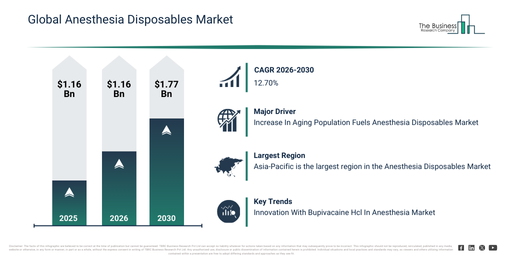
    The anesthesia disposables market has seen significant growth recently, with its value projected to rise from $15.58 billion in 2025 to $17.6 billion in 2026, representing a compound annual growth rate (CAGR) of 12.9%. This growth has been largely driven by an increase in surgical procedures, expansion in healthcare infrastructure, heightened infection control measures, wider adoption of disposable medical products, and the availability of standardized anesthesia equipment. Looking ahead, the market is anticipated to continue its rapid rise, reaching $28.38 billion by 2030 with a CAGR of 12.7%. Factors such as the growing popularity of outpatient and minimally invasive surgeries, increased emphasis on preventing hospital-acquired infections, expansion of ambulatory surgical centers, rising investments in single-use medical devices, and stricter patient safety regulations are expected to fuel this growth. Key trends shaping the market include greater utilization of single-use anesthesia consumables, increased demand for infection-prevention devices, wider adoption of disposable airway management products, development of procedure-specific anesthesia kits, and a stronger focus on patient safety and efficiency of clinical workflows.

    Download A Free Sample Report For Comprehensive Market Insights:

    https://www.thebusinessresearchcompany.com/sample.aspx?id=2448&type=smp

    Population Aging as a Key Driver in the Anesthesia Disposables Market

    One of the primary factors supporting the growth of the anesthesia disposables market is the rising number of elderly individuals worldwide. The aging population, commonly defined as those aged 65 and above, is increasing due to advances in healthcare, improved living conditions, and medical technology breakthroughs, which have collectively extended life expectancies. This demographic shift results in more elderly patients requiring surgical and diagnostic procedures that rely on anesthesia disposables for safer, more hygienic care. Single-use anesthesia products help minimize infection risks and streamline procedural efficiency, which is critical for this vulnerable group. For example, in July 2024, data from the House of Commons Library in the UK showed that people aged 65 and over made up about 19% of the UK population in 2022, totaling approximately 12.7 million. This figure is forecasted to rise to 22.1 million by 2072, accounting for 27% of the population. Thus, the increasing elderly population is a significant growth engine for the anesthesia disposables sector.

    Rising Popularity of Plastic Surgery Boosting Anesthesia Disposables Demand

    Another important factor propelling the anesthesia disposables market is the growing demand for plastic surgery procedures, which require effective anesthesia to ensure patient comfort and safety. Plastic surgery encompasses reconstructive and cosmetic operations aimed at restoring or enhancing physical appearance affected by congenital conditions, injuries, diseases, or previous surgeries. Procedures such as facelifts, tummy tucks, and breast reduction surgeries all involve the use of anesthesia. For instance, in June 2024, the International Society of Aesthetic Plastic Surgery (ISAPS) reported a significant increase in facial and head cosmetic procedures, totaling over 6.5 million with a 19.6% year-over-year rise. Eyelid surgeries topped the list with over 1.7 million procedures, growing by 24%, followed by rhinoplasty with 1.1 million cases, marking a 21.6% increase. Lip enhancement and perioral treatments reached approximately 0.9 million, up 29%. This surge in cosmetic surgeries directly contributes to the higher need for anesthesia disposables.

    https://www.thebusinessresearchcompany.com/report/anesthesia-disposables-global-market-report

    Anesthesia Disposables Market Global Footprint: Which Region Holds Market Leadership?

    Product and Patient Segmentation in the Anesthesia Disposables Market

    The anesthesia disposables market is segmented into various categories to address diverse clinical needs. By product type, the market includes anesthesia breathing circuits, endotracheal tubes, anesthesia gas masks, and laryngeal mask airways. Patient groups covered in the market comprise neonatal, adult, and pediatric populations. Regarding end users, products are supplied to hospitals, clinics, ambulatory surgical centers, and other healthcare facilities. Further breakdowns include subcategories such as single-patient use and disposable breathing circuits; cuffed, uncuffed, and reinforced endotracheal tubes; single-use anesthesia gas masks; and disposable laryngeal mask airways.

    Innovations and Trends Reshaping the Anesthesia Disposables Market

    Industry leaders are focusing on enhancing anesthesia equipment with advanced technology to meet the evolving demands of diverse medical procedures. For example, in August 2023, Mindray, a medical device manufacturer based in China, introduced upgraded anesthesia systems—specifically the A7 and A5 models—designed to improve patient safety and operational efficiency in perioperative settings. These systems feature AnaeSight integration, a technology that connects anesthesia machines, monitors, and pumps, enabling more streamlined anesthetic management and real-time patient monitoring. Innovations like these reflect a broader trend toward smarter, more efficient anesthesia delivery solutions.

    Top Companies Driving the Anesthesia Disposables Market

    Several key players dominate the global anesthesia disposables market, including Ambu A/S, Medline Industries Inc., Smiths Medical, Teleflex Inc., Vyaire Medical Inc., Armstrong Medical Ltd., Intersurgical Ltd., Medtronic Plc., Mercury Medical, Fisher & Paykel Healthcare Limited, Draegerwerk AG & Co. KGaA, B. Braun Melsungen AG, Becton Dickinson and Company, Cardinal Health Inc., Flexicare Medical Limited, Mindray Medical International Limited, Vygon S.A., Westmed Inc., WILMarc Medical, and Xiamen Compower Medical Tech Co. Ltd. These companies are instrumental in developing innovative products and expanding market reach.

    Regional Overview of the Global Anesthesia Disposables Market

    Asia-Pacific was the largest regional market for anesthesia disposables in 2025, followed by Western Europe. Other key regions covered in the market analysis include South East Asia, Eastern Europe, North America, South America, the Middle East, and Africa. The dynamic growth in Asia-Pacific is largely driven by increasing surgical volumes, expanding healthcare infrastructure, and rising investments in medical technology across the region.

    Get in touch with us:

    The Business Research Company: https://www.thebusinessresearchcompany.com/

    Americas: +1 310-496-7795

    Asia: +44 7882 955267 & +91 8897263534

    Europe: +44 7882 955267

    Email us at: marketing@tbrc.info

    Follow us on:

    LinkedIn: https://in.linkedin.com/company/the-business-research-company

    YouTube: https://www.youtube.com/channel/UC24_fI0rV8cR5DxlCpgmyFQ

    Global Market Model: https://www.thebusinessresearchcompany.com/global-market-model
  • Anesthesia Circuits Market Forecast Reveals Where Future Industry Value Will Be Created

    Anesthesia Circuits Market Forecast Reveals Where Future Industry Value Will Be Created

    Delivering more actionable and strategically valuable research, The Business Research Company’s 2026 market reports feature market attractiveness analysis, total addressable market evaluation, company benchmarking matrices, interactive Excel dashboards, expanded supply chain intelligence, emerging startup coverage, and detailed product insights.

    The anesthesia circuits market is witnessing notable growth as advancements in medical technology and increasing surgical procedures continue to drive demand. This industry plays a crucial role in ensuring patient safety and effective anesthesia delivery during surgeries. Let’s explore the market’s current size, growth factors, key players, innovation trends, and regional dynamics shaping its future.

    Steady Expansion and Market Size of the Anesthesia Circuits Market

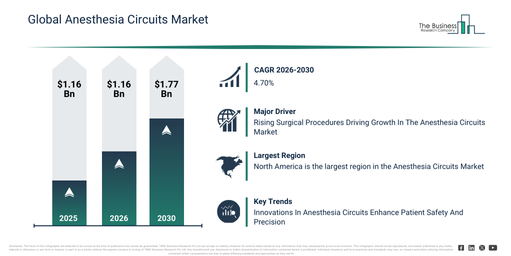
    The anesthesia circuits market has shown strong growth in recent years and is projected to continue expanding. It is expected to increase from $1.22 billion in 2025 to $1.29 billion in 2026, reflecting a compound annual growth rate (CAGR) of 5.0%. This growth during the historic period is largely due to limited availability of advanced anesthesia circuits, reliance on traditional open and semi-open systems, a rising number of surgical procedures performed in hospitals, growing awareness around patient safety, and widespread adoption of standardized anesthesia delivery devices.

    Download A Free Sample Report For Comprehensive Market Insights:

    https://www.thebusinessresearchcompany.com/sample.aspx?id=20463&type=smp

    Looking ahead, the market is forecast to grow steadily, reaching $1.54 billion by 2030 with a CAGR of 4.7%. This upward trend is driven by innovations in low-flow and closed anesthesia circuits, increased popularity of minimally invasive surgeries, integration of anesthesia circuits with monitoring technologies, expansion of ambulatory surgical centers, and the growing use of automated anesthesia delivery solutions. Key trends expected to influence the market include higher demand for semi-open, open, and closed circuits, greater adoption of low-flow and high-flow closed circuits, and a continued focus on patient safety and anesthetic gas efficiency.

    Rising Surgical Procedures Accelerate Demand for Anesthesia Circuits

    A primary factor propelling the anesthesia circuits market is the rising number of surgical interventions worldwide. Surgical procedures involve operations or incisions to diagnose, treat, or prevent medical conditions, and their frequency is increasing due to advances in medical technology, an aging global population, better diagnostics, higher chronic disease rates, and improved patient care outcomes. Anesthesia circuits are essential for delivering safe and controlled anesthesia during these procedures, ensuring patient comfort and procedural effectiveness.

    https://www.thebusinessresearchcompany.com/report/anesthesia-circuits-global-market-report

    Anesthesia Circuits Market Regional Distribution: Which Areas Drive Market Expansion?

    For instance, in April 2025, the Australian Institute of Health and Welfare reported that public hospitals in Australia recorded 778,500 admissions from elective surgery waitlists in 2023–24, a 5.8% rise compared to 735,500 admissions in 2022–23. This example highlights how growing surgical volumes contribute to the expanding demand for anesthesia circuits.

    Breakdown of Market Segments in the Anesthesia Circuits Industry

    The anesthesia circuits market can be segmented into various categories for a comprehensive understanding:

    1) By Type: Semi-Open Circuits, Open Circuits, Closed Circuits

    2) By Distribution Channel: Direct Sales, Independent Representatives, Distributors

    3) By End-User: Ambulatory Surgical Centers, Hospitals, Clinics, and Other Healthcare Facilities

    Further detail includes:

    – Semi-Open Circuits: Mapleson A Circuit, Mapleson D Circuit, Mapleson F Circuit, Bain Circuit, Coaxial Semi-Open Circuits

    – Open Circuits: Jackson-Rees Circuit, Ayre’s T-Piece Circuit, Non-Rebreathing Open Circuits

    – Closed Circuits: Circle Breathing System, Rebreathing Closed Circuits, Low-Flow Closed Circuits, High-Flow Closed Circuits

    Progressive Innovations Shaping the Anesthesia Circuits Market

    Leading companies in the anesthesia circuits market are investing heavily in developing innovative solutions to enhance patient safety and improve anesthesia delivery precision. One such advancement is the anesthesia workstation, an integrated system used in operating rooms that administers anesthetic gases, monitors patient vitals, and supports ventilation during surgeries.

    For example, in January 2024, Schiller India launched the A-mac series of anesthesia workstations, including models A-mac S23, A-mac E1, and A-mac E6. These devices offer enhanced anesthesia delivery with advanced safety features and clinical performance improvements. The A-mac S23 features a double-tube mechanical flowmeter and an 8.4-inch LCD touchscreen. The A-mac E1 provides a 10.4-inch TFT LCD display and a two-hour battery backup, while the high-end A-mac E6 boasts a 12-inch touchscreen, sophisticated ventilation options, and a heated breathing system. These innovations demonstrate the market’s commitment to technological advancement and patient-centered care.

    Key Industry Players Driving Competition in the Anesthesia Circuits Market

    The anesthesia circuits sector features numerous prominent companies shaping industry competition and innovation. Noteworthy players include Medtronic plc, Koninklijke Philips N.V., GE HealthCare Technologies Inc., Drägerwerk AG & Co. KGaA, Getinge AB, Ambu A/S, Ningbo Boya Medical Equipment Co. Ltd., Armstrong Medical Limited, Penlon Limited, Flexicare Medical Limited, Intersurgical Limited, Heyer Medical AG, Beijing Aeonmed Co. Ltd., Smiths Medical (ICU Medical), Vyaire Medical Inc., Bio Med Devices, TG Eakin Ltd., Airways Surgical Pvt Ltd, Haier Smart Home Co Ltd, Hamilton Company, Sharn Inc., Vincent Medical Holdings Ltd., Well Lead Medical Co Ltd., Mindray Bio Medical Electronics Co Ltd., and OSI Systems Inc.

    Regional Market Distribution and Growth Outlook for Anesthesia Circuits

    In 2025, North America held the largest share of the anesthesia circuits market. The report also covers key regions including Asia-Pacific, South East Asia, Western Europe, Eastern Europe, South America, Middle East, and Africa. While North America leads in market size, emerging regions such as Asia-Pacific and South East Asia are expected to show significant growth, driven by rising surgical volumes, healthcare infrastructure development, and increasing adoption of advanced anesthesia technologies.

    Get in touch with us:

    The Business Research Company: https://www.thebusinessresearchcompany.com/

    Americas: +1 310-496-7795

    Asia: +44 7882 955267 & +91 8897263534

    Europe: +44 7882 955267

    Email us at: marketing@tbrc.info

    Follow us on:

    LinkedIn: https://in.linkedin.com/company/the-business-research-company

    YouTube: https://www.youtube.com/channel/UC24_fI0rV8cR5DxlCpgmyFQ

    Global Market Model: https://www.thebusinessresearchcompany.com/global-market-model
  • Anesthesia And Respiratory Devices Market Growth Through 2030 Creates New Strategic Opportunities

    Anesthesia And Respiratory Devices Market Growth Through 2030 Creates New Strategic Opportunities

    Enhanced with market attractiveness analysis, total addressable market evaluation, company benchmarking matrices, interactive Excel dashboards, expanded supply chain intelligence, emerging startup coverage, and detailed product insights, The Business Research Company’s 2026 market reports deliver more actionable and strategically valuable research.

    The anesthesia and respiratory devices market is experiencing significant growth, driven by evolving healthcare needs and technological advancements. As respiratory diseases become more prevalent and healthcare infrastructure expands, the demand for innovative anesthesia and respiratory care products continues to rise. Below, we explore the current market size, key growth drivers, emerging trends, important segments, competitive players, and regional insights shaping this dynamic industry.

    Anesthesia And Respiratory Devices Market Size and Projected Growth

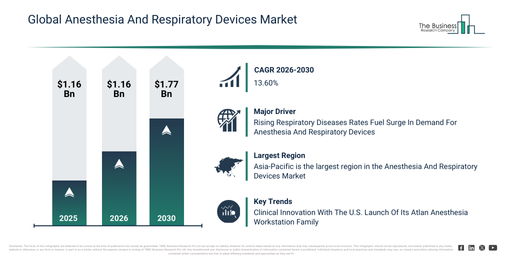
    The anesthesia and respiratory devices market has shown remarkable expansion in recent years. It is expected to increase from $37.63 billion in 2025 to $42.45 billion in 2026, representing a compound annual growth rate (CAGR) of 12.8%. This growth has been fueled by factors such as the rising incidence of respiratory illnesses, enhanced critical care infrastructure within hospitals, an increase in surgical procedures, broader availability of respiratory diagnostic technologies, and a surge in the use of disposable medical devices. Looking ahead, the market is forecast to surge to $70.71 billion by 2030, with a CAGR of 13.6%. This anticipated growth is linked to rising adoption of home-based respiratory care, investments in smart hospital technologies, demand for minimally invasive anesthesia methods, expansion of remote patient monitoring, and a stronger focus on personalized respiratory treatments.

    Download A Free Sample Report For Comprehensive Market Insights:

    https://www.thebusinessresearchcompany.com/sample.aspx?id=3602&type=smp

    Key Influences Driving Expansion in the Anesthesia and Respiratory Devices Market

    A principal factor contributing to market growth is the increasing prevalence of respiratory diseases. These conditions, which disrupt breathing and gas exchange by affecting lung tissues and airways, require specialized anesthesia and respiratory equipment for effective treatment. For example, data from June 2025 by the UK’s Office for Health Improvement & Disparities shows that emergency admissions related to respiratory diseases in England rose by 7% between 2023 and 2024. Cases of COPD increased by 9%, adult asthma by 17%, and pneumonia by 16% during the same period. This surge in respiratory illnesses underscores the rising need for advanced anesthesia and respiratory care devices.

    Rising Healthcare Spending as a Catalyst for Market Growth

    Another critical driver is the steady increase in healthcare expenditures globally. Higher spending often translates into an emphasis on improving healthcare quality, including surgical and respiratory services, which in turn boosts demand for advanced medical devices. For instance, the US Centers for Medicare & Medicaid Services reported in June 2025 that National Health Expenditure grew by 7.5% to reach $4.9 trillion in 2023, accounting for 17.6% of the country’s GDP. Hospital expenditures specifically rose by 10.4% to $1.52 trillion, outpacing previous growth rates. This trend of escalating healthcare investments is expected to continue fueling demand in the anesthesia and respiratory devices market.

    https://www.thebusinessresearchcompany.com/report/anesthesia-and-respiratory-devices-global-market-report

    Anesthesia And Respiratory Devices Market Leading Geography: Which Region Generates The Most Revenue?

    Segment Breakdown and Growth Opportunities Within the Anesthesia and Respiratory Devices Market

    This market can be categorized by several criteria:

    – Types include Respiratory Devices and Equipment (both Therapeutic and Diagnostic), Anesthesia Machines, Anesthesia Disposables, and Respiratory Disposables.

    – By expenditure type, segments are Public and Private.

    – By category, it includes Instruments or Equipment and Disposables.

    – End users span Hospitals and Clinics, Diagnostic Laboratories, and Other End Users.

    Subcategories further detail therapeutic respiratory devices such as oxygen therapy equipment and CPAP or BiPAP machines, diagnostic tools including spirometers and pulse oximeters, and nebulizers. Anesthesia machines are divided into continuous flow, portable units, and workstations. Disposable products cover anesthesia masks, endotracheal tubes, laryngeal mask airways, breathing circuits, oxygen masks, ventilator circuits, filters, and suction catheters.

    Emerging Trends Shaping the Future of the Anesthesia and Respiratory Devices Market

    Leading companies are focusing on innovations that improve patient safety and operational efficiency. One notable advancement is low- and minimal-flow anesthesia optimization, which conserves anesthetic agents by recycling gases during procedures. This approach reduces costs and environmental impacts for healthcare providers. For example, in September 2023, Dräger, a prominent German medical technology firm, introduced the Atlan anesthesia workstation family. This platform offers precise ventilation for patients ranging from neonates to adults and includes scalable configurations tailored to hospital needs. It also features design elements that facilitate hygiene and easy cleaning, alongside integration with digital tools like Dräger Connect to monitor clinical and operational data.

    Top Competitors Leading the Anesthesia and Respiratory Devices Sector

    The competitive landscape includes well-established players such as Drägerwerk AG & Co KGaA, GE Healthcare, Koninklijke Philips N.V., Medtronic plc, ResMed Inc., Fisher & Paykel Healthcare Corporation Limited, Smiths Medical plc, Masimo Corporation, B Braun Melsungen AG, Shenzhen Mindray Bio-Medical Electronics Co Ltd, Hamilton Medical AG, Nihon Kohden Corporation, Ambu A S, Invacare Corporation, SunMed Medical, Intersurgical Ltd, PARI GmbH, Heinen + Löwenstein GmbH & Co KG, Aerogen Ltd, and DeVilbiss Healthcare LLC. These companies continue to invest in research and development to introduce cutting-edge products and expand their market presence.

    Regional Overview of Market Revenue and Growth

    In 2025, the Asia-Pacific region emerged as the largest market for anesthesia and respiratory devices globally. North America ranks as the second-largest market, while Eastern Europe accounts for the smallest share. The market report covers multiple regions including Asia-Pacific, South East Asia, Western Europe, Eastern Europe, North America, South America, the Middle East, and Africa, providing a comprehensive view of geographic market dynamics and growth potential.

    Get in touch with us:

    The Business Research Company: https://www.thebusinessresearchcompany.com/

    Americas: +1 310-496-7795

    Asia: +44 7882 955267 & +91 8897263534

    Europe: +44 7882 955267

    Email us at: marketing@tbrc.info

    Follow us on:

    LinkedIn: https://in.linkedin.com/company/the-business-research-company

    YouTube: https://www.youtube.com/channel/UC24_fI0rV8cR5DxlCpgmyFQ

    Global Market Model: https://www.thebusinessresearchcompany.com/global-market-model
  • Anatomic Pathology Equipment and Consumables Market Size Projected To Increase From $27.08 Billion To $39.11 Billion During The Forecast Period

    Anatomic Pathology Equipment and Consumables Market Size Projected To Increase From $27.08 Billion To $39.11 Billion During The Forecast Period

    Through market attractiveness analysis, total addressable market evaluation, company benchmarking matrices, interactive Excel dashboards, expanded supply chain intelligence, emerging startup coverage, and detailed product insights, The Business Research Company’s 2026 market reports provide more actionable and strategically valuable research.

    The field of anatomic pathology equipment and consumables is experiencing robust growth as advancements in medical technology and rising disease prevalence drive demand. This sector plays a crucial role in diagnostics and personalized medicine, making it increasingly important for healthcare providers worldwide. Let’s explore the current market size, factors fueling its expansion, key players, and emerging trends shaping its future.

    Steady Growth and Expanding Market Size in Anatomic Pathology Equipment and Consumables

    The market for anatomic pathology equipment and consumables has shown significant progress over recent years. It is anticipated to grow from $25.18 billion in 2025 to $27.09 billion in 2026, reflecting a compound annual growth rate (CAGR) of 7.6%. Historical expansion can be linked to challenges such as limited availability of advanced pathology instruments, dependence on manual tissue processing techniques, rising incidence of cancer and chronic illnesses, improved hospital and laboratory infrastructure, and continued use of traditional staining and diagnostic methods.

    Download A Free Sample Report For Comprehensive Market Insights:

    https://www.thebusinessresearchcompany.com/sample.aspx?id=3410&type=smp

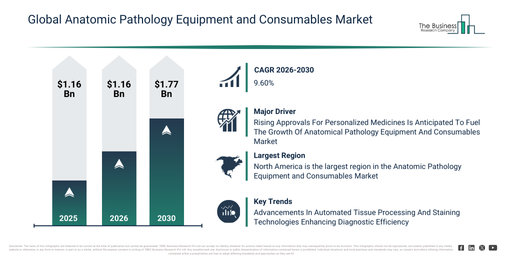
    Looking ahead, the market is projected to expand further, reaching $39.12 billion by 2030 with a CAGR of 9.6%. This forecasted growth is driven by increased adoption of automated devices and AI-driven diagnostic tools, higher investments in research and development, growing demand for quality consumables, expansion of clinical labs and research centers, and incorporation of digital pathology and big data analytics. Important trends during this period include greater use of advanced microscopy and imaging technologies, automated tissue processors and slide stainers, more disposable biopsy kits, expanded training and consultation services, and heightened focus on cancer diagnostics and research.

    Key Drivers Behind the Expansion of the Anatomic Pathology Equipment and Consumables Market

    One significant factor propelling the market forward is the rising number of approvals for personalized medicines. These tailored therapies are developed based on individual patient characteristics such as genetic markers, biomarkers, phenotypic traits, or psychosocial factors that predict treatment response. Anatomic pathology tools are essential in enabling molecular and genetic profiling required for these precise treatments.

    https://www.thebusinessresearchcompany.com/report/anatomic-pathology-equipment-and-consumables-global-market-report

    Anatomic Pathology Equipment and Consumables Market Regional Outlook: Where Are The Largest Opportunities Located?

    For instance, in February 2024, the Personalized Medicine Coalition, a US nonprofit, reported that personalized medicines accounted for more than one-third of new drug approvals by the U.S. FDA in 2023 for the fourth consecutive year. This growth is particularly evident in treatments for rare diseases and cancer, with 26 personalized therapies approved, including 20 new molecular entities and multiple gene and cell-based therapies. This trend toward personalized healthcare is boosting the demand for anatomic pathology equipment and consumables, which support diagnostic testing and targeted treatment approaches.

    Detailed Segmentation of the Anatomic Pathology Equipment and Consumables Market by Product and Application

    This market is categorized comprehensively by product type, application, and end-use sectors. The product and service segments include instruments, consumables, and services. Applications are primarily divided into cancer diagnostics and non-cancer disease diagnostics. End users mainly consist of hospitals, clinical laboratories, and research institutions.

    Breaking down the instruments segment includes microscopes (both light and electron types), slide stainers, tissue processors, cryostats, and embedding centers. Consumables cover reagents and stains, disposable biopsy kits, fixatives and embedding media, glass slides and cover slips, and paraffin wax. The services category encompasses equipment maintenance and repair, training and support, consultation for pathology laboratories, as well as quality control and assurance.

    Innovations and Industry Trends Leading to Improved Diagnostic Efficiency

    Leading companies in the anatomic pathology equipment and consumables market are focusing on product innovations designed to improve diagnostic precision and streamline laboratory workflows. A key development is the automated tissue processor, which prepares tissue samples for microscopy by automating steps like dehydration, clearing, and paraffin infiltration.

    For example, in September 2025, US-based StatLab introduced the Diapath instrument suite in the American market. This line includes the Donatello tissue processor, Giotto stainer, and Galileo slide printer, all engineered to optimize pathology lab operations. Donatello offers customizable protocols with real-time reagent monitoring, Giotto ensures uniform staining through advanced automation, and Galileo provides high-resolution thermal transfer printing for accurate slide identification. These technological advances aim to increase throughput, reduce human errors, and support high-quality diagnostic results.

    Competitive Landscape and Leading Players in the Anatomic Pathology Equipment and Consumables Market

    Major corporations active in this market include Danaher Corporation, F. Hoffmann-La Roche Ltd., Cardinal Health Inc., PHC Group, Agilent Technologies, Laboratory Corporation of America Holdings, Quest Diagnostics Incorporated, NeoGenomics Laboratories Inc., BioGenex Laboratories, Sakura Finetek USA Inc., Shimadzu Corporation, Bionics Scientific Technologies (P) Ltd, ACMAS Technologies Pvt. Ltd, Labindia Instruments Pvt. Ltd, Hospital Supply Company Pvt. Ltd., Ratek, Leica Biosystem, SORAN, Thermo Fisher Scientific, Becton Dickinson and Company, Epridia, TPL Pathology Labs, ARUP Pathology, Maxdata, Medesa, BMT Medical Technology, Dynex, Medicarom, Hologic Inc., Merck KGaA, Bio SB, Diapath S.p.A., DASA, UW Medicine Pathology, Sunquest, Somatco, ANDAAF Scientific Ltd, and Katchey Company Limited. These organizations are continuously enhancing their portfolios through innovation and strategic partnerships to maintain a competitive edge.

    Regional Market Overview and Leading Geographies for Anatomic Pathology Equipment and Consumables

    In 2025, North America emerged as the largest regional market for anatomic pathology equipment and consumables. Western Europe held the position of the second-largest regional market globally. The analysis also covers regions such as Asia-Pacific, South East Asia, Eastern Europe, South America, Middle East, and Africa, providing a wide-ranging view of the global market landscape and growth opportunities across different territories.

    Get in touch with us:

    The Business Research Company: https://www.thebusinessresearchcompany.com/

    Americas: +1 310-496-7795

    Asia: +44 7882 955267 & +91 8897263534

    Europe: +44 7882 955267

    Email us at: marketing@tbrc.info

    Follow us on:

    LinkedIn: https://in.linkedin.com/company/the-business-research-company

    YouTube: https://www.youtube.com/channel/UC24_fI0rV8cR5DxlCpgmyFQ

    Global Market Model: https://www.thebusinessresearchcompany.com/global-market-model
  • Anastomotic Leak Devices Market Growth Outlook Reveals A CAGR Of 6.5% And A Market Value Of $4.74 Billion By 2030

    Anastomotic Leak Devices Market Growth Outlook Reveals A CAGR Of 6.5% And A Market Value Of $4.74 Billion By 2030

    Delivering more actionable and strategically valuable research, The Business Research Company’s 2026 market reports feature market attractiveness analysis, total addressable market evaluation, company benchmarking matrices, interactive Excel dashboards, expanded supply chain intelligence, emerging startup coverage, and detailed product insights.

    The anastomotic leak devices market is experiencing steady expansion, driven by advances in surgical technology and increasing demand for safer postoperative outcomes. As medical procedures become more sophisticated, the importance of detecting and managing leaks at surgical connection sites grows, creating promising opportunities for this specialized market. Let’s explore the current market size, growth drivers, segmentation, emerging trends, key players, and regional dynamics shaping this industry.

    Anastomotic Leak Devices Market Size and Projected Growth Trajectory

    The market for anastomotic leak devices has witnessed notable growth in recent years. It is projected to increase from $3.45 billion in 2025 to $3.68 billion in 2026, reflecting a compound annual growth rate (CAGR) of 6.8%. This growth during the historical period is largely due to the limited availability of specialized leak detection tools, continued reliance on traditional surgical techniques, a rise in gastrointestinal and cardiovascular surgeries, heightened awareness about postoperative complications, and the adoption of single-use surgical instruments.

    Download A Free Sample Report For Comprehensive Market Insights:

    https://www.thebusinessresearchcompany.com/sample.aspx?id=24459&type=smp

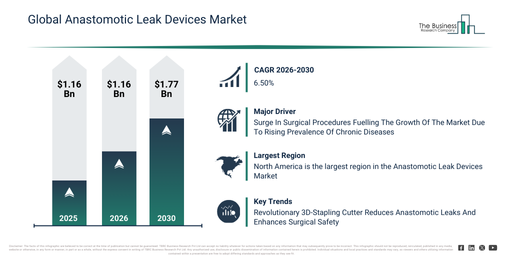
    Looking ahead, the market is expected to maintain strong momentum, reaching $4.74 billion by 2030 with a CAGR of 6.5%. Factors contributing to this forecast include the development of advanced reusable and disposable leak prevention devices, the integration of these tools with smart surgical systems, increased hospital investments in patient safety technology, growing preference for minimally invasive surgeries, and expansion of specialty surgical centers. Key trends anticipated during this period involve greater use of disposable surgical instruments, embedding leak detection sensors into procedures, and a continued rise in gastrointestinal and cardiovascular operations aimed at reducing postoperative complications and enhancing patient safety.

    Rising Number of Surgeries Fueling Demand for Anastomotic Leak Devices

    The increasing volume of surgical procedures is a significant factor driving the growth of the anastomotic leak devices market. Surgical interventions are essential medical treatments that employ manual techniques and instruments to repair injuries, treat diseases, or improve bodily functions. Innovations in minimally invasive technologies have made surgeries safer, less painful, and quicker to recover from, encouraging more patients and healthcare providers to opt for surgical solutions.

    https://www.thebusinessresearchcompany.com/report/anastomotic-leak-devices-global-market-report

    Anastomotic Leak Devices Market Geographic Landscape: Which Region Dominates Industry Growth?

    Anastomotic leak devices play a crucial role by detecting and managing leaks at the anastomosis site, which helps minimize complications and supports faster patient recovery. For example, a May 2023 report from PubMed highlighted that, on average, 877 surgeries occur per 100,000 people, with cesarean sections representing the highest proportion (30.1%), followed by hernia repairs (16.4%) and laparotomies (5.1%). The report also noted that surgical volumes increase alongside GDP per capita, further confirming that the rising number of surgeries globally is boosting demand for leak detection and prevention devices.

    Key Product Segments and Revenue Opportunities Within the Anastomotic Leak Devices Market

    This market is broadly categorized by usability, application, and end-user groups:

    1) Usability: Disposable and Reusable devices

    2) Application: Gastrointestinal Surgery and Other Applications

    3) End-User: Hospitals, Specialty Clinics, and Other Users

    The disposable segment includes single-use staplers, disposable sealants, clips, sutures, and leak detection sensors. Conversely, the reusable segment comprises reusable staplers, clamps, sealant applicators, leak testing devices, and other surgical instruments designed to prevent leaks. These diverse product categories provide multiple avenues for revenue generation and innovation.

    Innovative Technologies and Trends Shaping the Anastomotic Leak Devices Market

    Leading companies in this sector are focusing on breakthrough solutions to improve surgical outcomes, such as the development of 3D surgical staplers. These devices utilize advanced 3D stapling technology to create staple lines with more uniform tissue compression, enhancing staple line integrity and reducing the risk of leaks or bleeding.

    For instance, in May 2024, Ethicon Inc., a US-based medical equipment manufacturer, unveiled the ECHELON LINEAR Cutter. This surgical stapler combines 3D-stapling and gripping surface technology (GST) to deliver 47% fewer leaks at the staple line compared to conventional devices. Designed to improve control and flexibility during surgery, it allows surgeons to lock or separate device halves, ensuring consistent staple line quality across different tissue types. Backed by clinical evidence, the ECHELON LINEAR Cutter is part of Ethicon’s colorectal surgical solutions portfolio, and it exemplifies how innovation is advancing patient safety and surgical precision.

    Top Companies Influencing the Market Landscape of Anastomotic Leak Devices

    The market features several influential players driving product development and industry growth, including:

    Johnson and Johnson, Medtronic plc, Boston Scientific Corporation, B Braun Melsungen AG, Ethicon Inc, Advanced Medical Solutions Group plc, Peters Surgical SAS, Dextera Surgical Inc, GT Metabolic Solutions Inc, Synovis Micro Companies Alliance Inc, CarpoNovum AB, Colospan Ltd, Exero Medical Ltd, Lydus Medical Ltd, Ovesco Endoscopy AG, Getinge AB, Olympus Medical Systems, Intuitive Surgical Inc, SurgiQuest Inc, and AesDex LLC.

    Geographical Market Distribution and Regional Growth Insights

    In 2025, North America held the dominant position in the anastomotic leak devices market. Alongside North America, the market outlook includes significant regions such as Asia-Pacific, South East Asia, Western Europe, Eastern Europe, South America, the Middle East, and Africa. These regions collectively provide a comprehensive picture of global market trends and future growth potential across diverse healthcare settings.

    Get in touch with us:

    The Business Research Company: https://www.thebusinessresearchcompany.com/

    Americas: +1 310-496-7795

    Asia: +44 7882 955267 & +91 8897263534

    Europe: +44 7882 955267

    Email us at: marketing@tbrc.info

    Follow us on:

    LinkedIn: https://in.linkedin.com/company/the-business-research-company

    YouTube: https://www.youtube.com/channel/UC24_fI0rV8cR5DxlCpgmyFQ

    Global Market Model: https://www.thebusinessresearchcompany.com/global-market-model
  • Anastomosis Devices Market Forecast Highlights Expansion From $4.15 Billion To $5.63 Billion Through 2030

    Anastomosis Devices Market Forecast Highlights Expansion From $4.15 Billion To $5.63 Billion Through 2030

    Enhanced with market attractiveness analysis, total addressable market evaluation, company benchmarking matrices, interactive Excel dashboards, expanded supply chain intelligence, emerging startup coverage, and detailed product insights, The Business Research Company’s 2026 market reports deliver more actionable and strategically valuable research.

    The anastomosis devices market has seen substantial progress in recent years, driven by advancements in surgical techniques and increasing procedure volumes. As medical technology continues to evolve, this sector is anticipated to expand steadily, offering promising opportunities for healthcare providers and manufacturers alike. Let’s explore the market’s current scale, key growth factors, segmentation, competitive environment, and regional dynamics.

    Steady Growth and Market Size Forecast for the Anastomosis Devices Market

    The anastomosis devices market is poised for consistent growth, rising from $3.86 billion in 2025 to $4.15 billion in 2026, with a compound annual growth rate (CAGR) of 7.5%. This past expansion has been supported by a surge in gastrointestinal surgeries, wider acceptance of surgical stapling methods, improvements in suture materials, the growing implementation of minimally invasive surgeries, and increased surgical capacity in hospitals.

    Download A Free Sample Report For Comprehensive Market Insights:

    https://www.thebusinessresearchcompany.com/sample.aspx?id=10558&type=smp

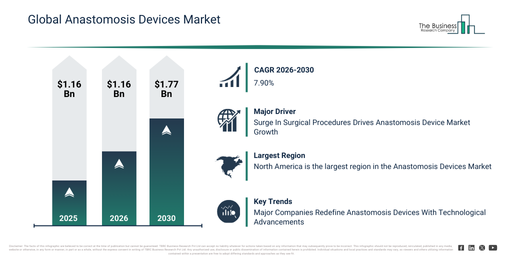
    Looking ahead, the market is expected to reach $5.64 billion by 2030, advancing at a CAGR of 7.9%. This anticipated boost is linked to factors such as the rising use of robotic surgical systems, a stronger focus on accelerating patient recovery times, the growth of advanced surgical training programs, higher adoption of disposable surgical devices, and ongoing technological improvements in automated suturing. Trends that will likely shape the market include greater use of automated anastomosis tools, bioabsorbable sutures and staples, minimally invasive surgical closures, and robotic-assisted suturing systems, alongside enhanced leak-prevention techniques.

    How Surgical Procedure Increases Propel the Anastomosis Devices Market

    The rising number of surgical procedures is a significant contributor to the expanding demand for anastomosis devices. Surgical interventions, which involve incisions on the body for therapeutic or cosmetic reasons, have been growing steadily. Anastomosis devices play a vital role in these operations by helping surgeons efficiently and safely connect body parts like blood vessels or intestines.

    https://www.thebusinessresearchcompany.com/report/anastomosis-devices-global-market-report

    #Anastomosis Devices Market Largest Region: Which Geography Holds The Highest Market Share?

    For example, in May 2025, data from the Australian Institute of Health and Welfare showed that 778,500 patients were admitted from public hospital elective surgery waiting lists during 2023-24, a 5.8% increase compared to the previous year. This growth in surgical cases directly supports the rising need for reliable anastomosis devices in healthcare settings.

    Diving Into the Anastomosis Devices Market Segmentation

    This market is categorized by several key factors to address diverse medical needs:

    1) By Type: Surgical Staplers, Surgical Sutures, Surgical Sealants and Adhesives, Automated Suturing

    2) By Usage: Disposable and Reusable Devices

    3) By Application: Cardiovascular and Thoracic Surgery, Gastrointestinal Surgery, Gynecological Surgery, and Other Applications

    4) By End-User: Hospitals, Ambulatory Surgery Centers, and Other Users

    Further subcategories include:

    – Surgical Staplers: Manual, Automated, and Endoscopic Staplers

    – Surgical Sutures: Absorbable, Non-Absorbable, and Barbed Sutures

    – Surgical Sealants and Adhesives: Fibrin Sealants, Tissue Adhesives, Cyanoacrylate Adhesives

    – Automated Suturing: Linear Cutters, Circular Suturing Devices, Robotic Suturing Systems

    Innovations in the Anastomosis Devices Market Enhancing Competitive Positioning

    Leading companies in this field are focusing on developing advanced surgical solutions, particularly sophisticated stapling technologies that improve patient outcomes and safety. These innovations aim to reduce complications such as leaks along staple lines, which are critical for maintaining tissue integrity and ensuring quicker recoveries.

    For instance, in May 2024, Ethicon, a US-based medical device manufacturer, introduced the ECHELON LINEAR Cutter, a state-of-the-art surgical stapler designed to notably decrease staple line leaks by 47% compared to traditional staplers. This advancement helps limit potential post-surgical complications like infections and prolonged healing periods.

    Top Industry Players in the Anastomosis Devices Market

    The market features several prominent corporations including Medtronic plc, B. Braun Melsungen AG, Johnson & Johnson Services Inc., Boston Scientific Corp., Baxter International Inc., Meril Life Sciences Pvt. Ltd., Becton Dickinson and Company, Terumo Corporation, Teleflex Incorporated, Getinge AB, LivaNova plc, Stryker Corporation, ConMed Corporation, Grena Ltd., Microline Surgical Inc., Scanlan International Inc., Innovia Medical, Genesee BioMedical Inc., EndoEvolution LLC, Novare Surgical Systems Inc., Dextera Surgical Inc., Intuitive Surgical Inc., Artivion Inc., CryoLife Inc., Cardica Inc., Vascular Graft Solutions Ltd., and LifeNet Health Inc.

    Regional Insights into the Anastomosis Devices Market’s Leading Territories

    In 2025, North America held the largest share in the anastomosis devices market. However, the Asia-Pacific region is expected to experience the fastest growth during the forecast period. The market analysis also covers regions like South East Asia, Western Europe, Eastern Europe, South America, the Middle East, and Africa, providing a broad perspective on global market trends.

    Get in touch with us:

    The Business Research Company: https://www.thebusinessresearchcompany.com/

    Americas: +1 310-496-7795

    Asia: +44 7882 955267 & +91 8897263534

    Europe: +44 7882 955267

    Email us at: marketing@tbrc.info

    Follow us on:

    LinkedIn: https://in.linkedin.com/company/the-business-research-company

    YouTube: https://www.youtube.com/channel/UC24_fI0rV8cR5DxlCpgmyFQ

    Global Market Model: https://www.thebusinessresearchcompany.com/global-market-model
  • Analytical Instrumentation Market Expected To Reach $89.57 Billion By 2030 As Growth Accelerates At 7.8% CAGR

    Analytical Instrumentation Market Expected To Reach $89.57 Billion By 2030 As Growth Accelerates At 7.8% CAGR

    Through market attractiveness analysis, total addressable market evaluation, company benchmarking matrices, interactive Excel dashboards, expanded supply chain intelligence, emerging startup coverage, and detailed product insights, The Business Research Company’s 2026 market reports provide more actionable and strategically valuable research.

    The analytical instrumentation market has witnessed significant growth recently, driven by advancements in technology and increasing demand across various industries. As research activities and diagnostic testing expand, this sector is poised for continued development. Let’s explore the current market size, key growth drivers, important players, emerging trends, and future prospects shaping the analytical instrumentation landscape.

    Market Size and Future Growth Outlook for Analytical Instrumentation

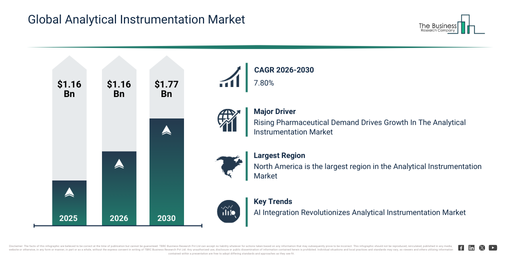
    The analytical instrumentation market has shown remarkable progress, with its size increasing from $61.45 billion in 2025 to $66.42 billion in 2026, reflecting an 8.1% compound annual growth rate (CAGR). This growth during the past period was mainly due to dependence on traditional laboratory instruments, limited software integration, expanding research and development (R&D) in life sciences, and a rise in clinical and diagnostic testing. Techniques such as chromatography and spectroscopy have also contributed to this upward trend. Looking ahead, the market is expected to reach $89.58 billion by 2030, growing at a CAGR of 7.8%. The forecasted expansion will be supported by advancements in mass spectrometry and flow cytometry, wider adoption of sequencing and microarray technologies, growth in laboratory automation and smart labs, and increasing demand for software-driven analytical solutions. Additional factors include the focus on multi-purpose analytical platforms and compliance with regulatory standards.

    Download A Free Sample Report For Comprehensive Market Insights:

    https://www.thebusinessresearchcompany.com/sample.aspx?id=19288&type=smp

    Pharmaceutical Sector as a Major Growth Stimulus in Analytical Instrumentation

    The pharmaceutical industry is playing a central role in driving the growth of the analytical instrumentation market. Continuous innovation in research and development, successful regulatory approvals, an aging global population, technological progress, globalization, and better healthcare accessibility all contribute to this demand. Analytical instruments are essential in pharmaceutical manufacturing for accurate measurement, quality control, and validation of drug formulations to guarantee safety and regulatory compliance. For instance, in August 2025, the European Federation of Pharmaceutical Industries and Associations (EFPIA) reported that the pharmaceutical sector invested approximately $60,377.11 million (€52,400 million) in R&D across Europe in 2023, underscoring the strong appetite for analytical tools in this field.

    Product and Application Segments Driving the Analytical Instrumentation Market

    The analytical instrumentation market is divided into various segments based on product, technology, and application. Products include instruments, services, and software. Technologies covered involve polymerase chain reaction (PCR), spectroscopy, microscopy, chromatography, flow cytometry, sequencing, microarray, and others. Applications span life sciences research and development, clinical and diagnostic analysis, food and beverage testing, forensic science, environmental testing, and more. Further subcategories for instruments include chromatography, spectroscopy, mass spectrometry, electrochemical analyzers, and microscopy devices. Service offerings encompass calibration, maintenance, consulting, and training services. Software is categorized into data analysis, instrument control, lab management, and regulatory compliance solutions.

    https://www.thebusinessresearchcompany.com/report/analytical-instrumentation-global-market-report

    Analytical Instrumentation Market Regional Analysis: Which Region Leads By Revenue?

    Innovations and Trends Shaping the Future Demand for Analytical Instrumentation

    Leading companies in the analytical instrumentation market are increasingly incorporating intelligent technologies to improve data analysis, automation, and accuracy. These smart instruments enhance predictive capabilities and decision-making processes, offering significant advantages for laboratories. For example, in April 2024, Agilent Technologies introduced the Advanced Dilution System (ADS 2), designed to boost workflow efficiency and sample throughput for ICP-MS and ICP-OES analyses. This system integrates an intelligent auto-dilutor compatible with Agilent autosamplers and uses the same software as related instruments, ensuring consistent data handling and reporting. This development is particularly valuable for labs that analyze numerous samples with varied analyte concentrations.

    Key Players Leading the Analytical Instrumentation Market

    Several prominent companies dominate the analytical instrumentation industry, including Hitachi Ltd., F. Hoffmann-La Roche Ltd, Thermo Fisher Scientific Inc., Danaher Corporation, Avantor Inc., Agilent Technologies Inc., Illumina Inc., Sartorius AG, Mettler-Toledo International Inc., PerkinElmer Inc., Shimadzu Corporation, Waters Corporation, Bio-Rad Laboratories Inc., Bruker Corporation, Carl Zeiss AG, HORIBA Group, Eppendorf SE, Renishaw plc, Malvern Panalytical Ltd, Smiths Detection Group Ltd., Techcomp Inc., LECO Corporation, and JASCO International Co. Ltd. These companies are instrumental in shaping market direction through innovation, product development, and strategic partnerships.

    Regional Insights Highlighting Market Leaders and Growth Prospects

    In 2025, North America held the largest share of the analytical instrumentation market, reflecting strong demand and established infrastructure. Meanwhile, the Asia-Pacific region is anticipated to experience the fastest growth rate during the forecast period, driven by expanding industrial bases, increasing investments in research, and rising healthcare expenditures. The market analysis covers regions including Asia-Pacific, South East Asia, Western Europe, Eastern Europe, North America, South America, the Middle East, and Africa, presenting a comprehensive global perspective.

    Get in touch with us:

    The Business Research Company: https://www.thebusinessresearchcompany.com/

    Americas: +1 310-496-7795

    Asia: +44 7882 955267 & +91 8897263534

    Europe: +44 7882 955267

    Email us at: marketing@tbrc.info

    Follow us on:

    LinkedIn: https://in.linkedin.com/company/the-business-research-company

    YouTube: https://www.youtube.com/channel/UC24_fI0rV8cR5DxlCpgmyFQ

    Global Market Model: https://www.thebusinessresearchcompany.com/global-market-model