Month: June 2026

  • Arthroscopic Orthopedic Surgery Instrument Market Expansion Is Opening New Pathways For Strategic Investment

    Arthroscopic Orthopedic Surgery Instrument Market Expansion Is Opening New Pathways For Strategic Investment

    Delivering more actionable and strategically valuable research, The Business Research Company’s 2026 market reports feature market attractiveness analysis, total addressable market evaluation, company benchmarking matrices, interactive Excel dashboards, expanded supply chain intelligence, emerging startup coverage, and detailed product insights.

    The field of arthroscopic orthopedic surgery instruments has seen significant progress in recent years, driven by advances in medical technology and a rising demand for minimally invasive procedures. As healthcare providers continue to adopt innovative tools, this sector is set to experience steady expansion. Below, we explore the market size, growth drivers, segmentations, key innovations, leading companies, and regional trends shaping the industry’s future.

    Arthroscopic Orthopedic Surgery Instrument Market Size and Growth Expectations

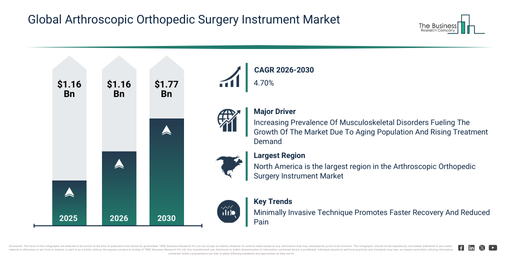
    The arthroscopic orthopedic surgery instrument market has recorded robust growth recently. It is projected to rise from $4.16 billion in 2025 to $4.37 billion in 2026, representing a compound annual growth rate (CAGR) of 5.1%. This upward trend during the historical period is attributed to factors such as the limited availability of specialized arthroscopic instruments, a heavy reliance on traditional open surgery methods, increasing prevalence of orthopedic disorders, early adoption of procedures involving the knee and shoulder, and expanding infrastructure within hospitals and orthopedic clinics.

    Download A Free Sample Report For Comprehensive Market Insights:

    https://www.thebusinessresearchcompany.com/sample.aspx?id=24468&type=smp

    Looking ahead, this market is expected to maintain steady progress, reaching $5.26 billion by 2030 with a CAGR of 4.7%. Several drivers underpin this forecast, including technological innovations in flexible and smart instruments, the growing use of single-use and disposable devices, expansion of ambulatory surgical centers (ASCs), rising demand for arthroscopic surgeries on multiple joints, and the integration of artificial intelligence (AI) and digital imaging into surgical workflows. Key trends anticipated over the coming years include wider adoption of minimally invasive surgeries, increasing preference for both reusable and disposable tools, broader application of arthroscopy across various joints, enhanced imaging and navigation technologies, and a growing focus on creating precision-engineered and ergonomically designed instruments.

    The Growing Prevalence of Musculoskeletal Disorders Fueling Market Expansion

    One of the central factors propelling the arthroscopic orthopedic surgery instrument market is the rising incidence of musculoskeletal disorders. These conditions affect muscles, bones, joints, tendons, and ligaments, often causing pain and limiting movement. The increasing prevalence results largely from an aging global population, as natural joint degeneration and decreased bone density become more common with age.

    https://www.thebusinessresearchcompany.com/report/arthroscopic-orthopedic-surgery-instrument-global-market-report

    Arthroscopic Orthopedic Surgery Instrument Market Geographic Analysis: Where Is Demand Growing The Fastest?

    Arthroscopic instruments play a crucial role in treating these disorders by enabling minimally invasive surgeries. Such procedures minimize tissue damage and support faster patient recovery while improving surgical accuracy. For example, in January 2024, the UK’s Office for Health Improvement and Disparities reported that 18.4% of people aged 16 and over self-reported having long-term musculoskeletal conditions in 2023, up from 17.6% in 2022. This growing patient population directly supports demand for arthroscopic surgical tools.

    Detailed Segmentation of the Arthroscopic Orthopedic Surgery Instrument Market

    This market can be categorized into several segments based on product type, design, application, and end-user:

    1) By Type: Arthroscopic shavers, scissors, probes, graspers, scalpels, and cannulas

    2) By Product Design: Rigid instruments, flexible instruments, reusable instruments, and single-use instruments

    3) By Application: Procedures involving the knee, shoulder, hip, ankle, and elbow

    4) By End-User: Hospitals, ambulatory surgical centers (ASCs), and orthopedic clinics

    Further subcategories include:

    – Arthroscopic shavers such as blade shavers, burr shavers, handpiece shavers, disposable shavers, and reusable shavers

    – Arthroscopic scissors including straight, curved, hook, and micro scissors

    – Arthroscopic probes like straight, angled, calibrated, and hook probes

    – Arthroscopic graspers including straight, curved, rotating, alligator, and punch graspers

    – Arthroscopic scalpels such as retractable, disposable, reusable, and mini scalpels

    – Arthroscopic cannulas including slotted, threaded, smooth, metal, and plastic cannulas

    Innovative Advancements Transforming the Arthroscopic Orthopedic Surgery Instrument Market

    Leading companies in this sector emphasize the development of improved innovations aimed at minimally invasive surgical procedures that help accelerate recovery times. These advances contribute to greater surgical precision, better patient results, and overall healthcare cost reductions. Minimally invasive techniques use small incisions and specialized tools to reduce tissue trauma, thereby minimizing pain, shortening hospital stays, and enabling faster resumption of daily activities.

    For instance, in January 2024, Arthrex, a US-based surgical technology firm, launched TheNanoExperience.com, a patient-focused online platform. This initiative supports minimally invasive surgeries designed to reduce discomfort and speed up recovery, providing educational resources including videos, testimonials, and detailed procedure explanations to empower patients in making informed healthcare decisions.

    Key Players Competing in the Arthroscopic Orthopedic Surgery Instrument Market

    The market features several prominent companies actively competing and innovating, including:

    Johnson and Johnson, Medtronic plc, Stryker Corporation, Zimmer Biomet Holdings Inc., Smith and Nephew plc, Arthrex Inc., Karl Storz SE and Co KG, Integra LifeSciences Holdings Corporation, CONMED Corporation, B Braun Melsungen AG, Gauthier Biomedical Inc., Sklar Surgical Instruments Inc., Medicon eG, Millennium Surgical Corp., Rudolf Medical GmbH and Co KG, Devesh Meditech Pvt Ltd, GPC Medical Ltd., Olympus Medical Systems, Surgical Holdings Ltd., and Smiths Medical.

    Geographic Market Analysis Reveals Regional Growth Patterns

    In 2025, North America accounted for the largest share in the arthroscopic orthopedic surgery instrument market. However, the Asia-Pacific region is expected to experience the fastest growth during the forecast period. The market report includes detailed analysis of regions such as Asia-Pacific, South East Asia, Western Europe, Eastern Europe, North America, South America, the Middle East, and Africa, providing a comprehensive view of global demand and regional opportunities.

    Get in touch with us:

    The Business Research Company: https://www.thebusinessresearchcompany.com/

    Americas: +1 310-496-7795

    Asia: +44 7882 955267 & +91 8897263534

    Europe: +44 7882 955267

    Email us at: marketing@tbrc.info

    Follow us on:

    LinkedIn: https://in.linkedin.com/company/the-business-research-company

    YouTube: https://www.youtube.com/channel/UC24_fI0rV8cR5DxlCpgmyFQ

    Global Market Model: https://www.thebusinessresearchcompany.com/global-market-model
  • Arteriotomy Closure Devices Market Trends Are Creating New Opportunities For Industry Leaders

    Arteriotomy Closure Devices Market Trends Are Creating New Opportunities For Industry Leaders

    Enhanced with market attractiveness analysis, total addressable market evaluation, company benchmarking matrices, interactive Excel dashboards, expanded supply chain intelligence, emerging startup coverage, and detailed product insights, The Business Research Company’s 2026 market reports deliver more actionable and strategically valuable research.

    The market for arteriotomy closure devices has been experiencing significant growth recently, driven by technological advances and increasing medical needs. As healthcare evolves, these devices are becoming more critical in improving patient outcomes during cardiovascular procedures. Below, we explore the current market size, key growth factors, segmentation, emerging trends, major players, and regional dynamics shaping this industry’s future.

    Arteriotomy Closure Devices Market Size and Growth Outlook

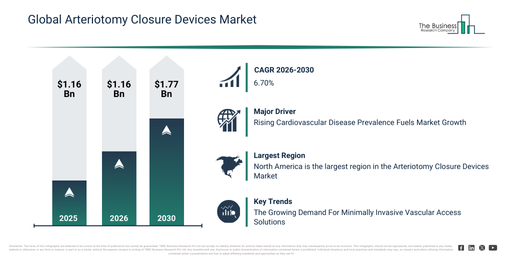
    The arteriotomy closure devices market has demonstrated strong expansion over recent years. It is projected to grow from $1.72 billion in 2025 to $1.84 billion in 2026, representing a compound annual growth rate (CAGR) of 6.9%. This growth during the historical period is primarily fueled by an increased number of catheter-based interventions, broader adoption of minimally invasive angiography techniques, rising rates of cardiovascular diseases, enhanced clinical acceptance of closure devices, and the expansion of interventional cardiology services. Looking ahead, the market is expected to continue its upward trajectory, reaching $2.38 billion by 2030 at a CAGR of 6.7%. Key factors supporting this forecast include a rising demand for next-generation vascular closure systems, a growing focus on minimizing procedure-related complications, increasing outpatient vascular procedures, investments in bioresorbable materials, and wider adoption of advanced closure technologies. Notable trends shaping the future of this market include greater use of suture-based closure devices, preference for radial access closure solutions, enhanced utilization of bioabsorbable hemostatic materials, growth in minimally invasive vascular procedures, and an emphasis on accelerating patient recovery.

    Download A Free Sample Report For Comprehensive Market Insights:

    https://www.thebusinessresearchcompany.com/sample.aspx?id=20712&type=smp

    Cardiovascular Disease Trends Fueling Demand for Arteriotomy Closure Devices

    A primary driver propelling the arteriotomy closure devices market is the increasing prevalence of cardiovascular diseases (CVDs). These disorders, which impact the heart and blood vessels, are becoming more widespread due to lifestyle factors such as poor diets, physical inactivity, obesity, and an aging global population. Arteriotomy closure devices play a crucial role in cardiovascular treatments by quickly and securely sealing arterial puncture sites, which helps reduce complications and speeds up recovery following interventions like angioplasties and catheterizations.

    To illustrate, in September 2024, the British Heart Foundation, a UK-based cardiovascular research charity, reported that around 7.6 million people in the UK are currently affected by heart and circulatory diseases, including 4 million men and 3.6 million women. Projections suggest this number could increase by 1 million by 2030 and possibly rise by 2 million more by 2040. This rising patient population directly contributes to expanding demand in the arteriotomy closure devices market.

    Detailed Segmentation of the Arteriotomy Closure Devices Market

    This market is categorized into several segments to better understand revenue opportunities and product focus.

    By Product Type:

    – Active Closure Devices

    – Passive Closure Devices

    By Application:

    – Femoral Arterial Access Procedures

    – Radial Arterial Access Procedures

    By End User:

    – Hospitals

    – Ambulatory Care Centers

    – Other End Users

    https://www.thebusinessresearchcompany.com/report/arteriotomy-closure-devices-global-market-report

    Arteriotomy Closure Devices Market Global Footprint: Which Region Holds Market Leadership?

    Further subcategories include:

    Active Closure Devices, which comprise suture-based devices, staple-based devices, vascular closure devices containing collagen or hemostatic agents, and balloon-based devices.

    Passive Closure Devices include compression devices, hemostatic patches or sponges, and vascular plugs.

    Innovations and Technological Advancements Shaping Market Trends

    Leading companies within the arteriotomy closure devices market are prioritizing innovation to increase procedural efficiency, improve clinical outcomes, and respond to the growing preference for minimally invasive vascular access solutions. One notable advancement is the development of mid-bore venous closure devices, designed to seal venous access points created by medium-sized catheters or sheaths, supporting hemostasis and faster patient recovery after interventions.

    For example, in June 2024, Haemonetics Corp, a US-based healthcare firm, expanded its VASCADE product line by introducing the VASCADE MVP XL mid-bore venous closure device. This new device is tailored for larger sheaths (10-12F, up to 15F outer diameter) used in procedures such as cryoablation. It features 58% more collagen and a larger collapsible disc to achieve rapid hemostasis. This addition complements Haemonetics’ offerings of small- and mid-bore vascular closure solutions, underscoring the company’s leadership in advanced closure technologies.

    Key Players Driving the Arteriotomy Closure Devices Market Forward

    Several prominent companies are shaping the direction of this market, including:

    Cardinal Health Inc., Johnson & Johnson, Abbott Laboratories, Medtronic PLC, Terumo Corporation, Teleflex Incorporated, Cook Medical Incorporated, Lepu Medical Technology (Beijing) Co. Ltd., Meril Life Sciences Pvt. Ltd., Haemonetics Corporation, Cordis Corporation, Asahi Intecc Co. Ltd., LeMaitre Vascular Inc., Cardiva Medical Inc., AccessClosure Inc., Vasorum Limited, Invamed (Pty) Ltd., Artio Medical Inc., SUTUREGARD Medical Inc., and Vivasure Medical.

    Geographical Market Outlook Highlighting Regional Leadership

    In 2025, North America was the leading market for arteriotomy closure devices, holding the largest share globally. However, the Asia-Pacific region is expected to experience the fastest growth during the forecast period. The market analysis includes key regions such as Asia-Pacific, South East Asia, Western Europe, Eastern Europe, North America, South America, the Middle East, and Africa, providing a comprehensive view of worldwide market trends and expansion opportunities.

    Get in touch with us:

    The Business Research Company: https://www.thebusinessresearchcompany.com/

    Americas: +1 310-496-7795

    Asia: +44 7882 955267 & +91 8897263534

    Europe: +44 7882 955267

    Email us at: marketing@tbrc.info

    Follow us on:

    LinkedIn: https://in.linkedin.com/company/the-business-research-company

    YouTube: https://www.youtube.com/channel/UC24_fI0rV8cR5DxlCpgmyFQ

    Global Market Model: https://www.thebusinessresearchcompany.com/global-market-model
  • Arrhythmia Monitoring Devices Market Growth Is Reshaping Competitive Advantage Across The Industry

    Arrhythmia Monitoring Devices Market Growth Is Reshaping Competitive Advantage Across The Industry

    Through market attractiveness analysis, total addressable market evaluation, company benchmarking matrices, interactive Excel dashboards, expanded supply chain intelligence, emerging startup coverage, and detailed product insights, The Business Research Company’s 2026 market reports provide more actionable and strategically valuable research.

    The market for arrhythmia monitoring devices has experienced significant growth recently, driven by technological advances and increasing demand for cardiac health management. As cardiovascular diseases continue to rise worldwide, this sector is set to expand further, supported by innovations and shifting healthcare practices. Below is a detailed overview of the current market size, growth drivers, segmentation, emerging trends, key players, and regional dynamics shaping this industry.

    Current Market Size and Predicted Growth Trajectory of the Arrhythmia Monitoring Devices Market

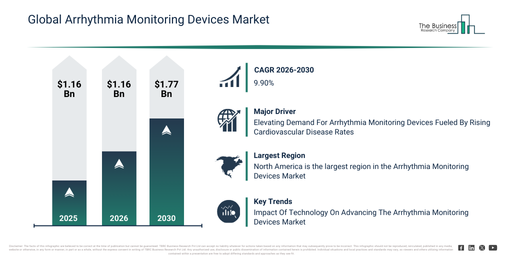
    The arrhythmia monitoring devices market is expanding rapidly. It is projected to grow from $8.16 billion in 2025 to $9.02 billion in 2026, reflecting a compound annual growth rate (CAGR) of 10.5%. This growth during the historical period has been fueled by the rising prevalence of cardiovascular diseases, wider adoption of ECG diagnostics, development of cardiac care infrastructure, increased awareness surrounding arrhythmia risks, and greater availability of portable monitoring tools. Looking ahead, the market is expected to reach $13.15 billion by 2030 with a CAGR of 9.9%. Factors contributing to this forecast include increasing use of remote patient monitoring, stronger demand for continuous and real-time cardiac data, expansion of home-based diagnostics, growing integration of AI-driven analytics, and an increased emphasis on preventive cardiology. Key trends include a surge in remote cardiac monitoring solutions, wearable arrhythmia detection devices, AI-based rhythm analysis, long-term monitoring systems, and focus on earlier diagnosis of arrhythmias.

    Download A Free Sample Report For Comprehensive Market Insights:

    https://www.thebusinessresearchcompany.com/sample.aspx?id=7437&type=smp

    Primary Factors Encouraging Growth in the Arrhythmia Monitoring Devices Market

    One of the most significant drivers behind the market expansion is the rising incidence of cardiovascular diseases globally. Cardiovascular diseases affect the heart and blood vessels, with arrhythmias—the irregular heartbeats—being a common symptom. The increasing number of patients suffering from such conditions directly boosts the demand for arrhythmia monitoring devices. For instance, in January 2024, the American Heart Association reported that the age-adjusted death rate from cardiovascular disease in the US rose to 233.3 per 100,000 people, a 4.0% increase from 224.4 per 100,000 in 2023. This upward trend in cardiovascular health issues is expected to keep driving demand for arrhythmia monitoring technologies.

    Growing Awareness and Technological Uptake Supporting Market Expansion

    In addition to the disease prevalence, growing public awareness about arrhythmia risks and the importance of early detection is another catalyst for market growth. More patients and healthcare providers are recognizing the benefits of using advanced monitoring devices to manage heart conditions effectively. This has led to higher adoption rates of innovative monitoring solutions and diagnostic approaches aimed at improving patient outcomes.

    https://www.thebusinessresearchcompany.com/report/arrhythmia-monitoring-devices-global-market-report

    Arrhythmia Monitoring Devices Market Regional Distribution: Which Areas Drive Market Expansion?

    How the Arrhythmia Monitoring Devices Market Is Structured by Type, Application, and User

    The market is organized into several critical segments to better address different needs:

    1) By Type: ECG devices, implantable monitors, Holter monitors, and mobile cardiac telemetry systems.

    2) By Application: Monitoring of bradycardia, tachycardia, atrial fibrillation, ventricular fibrillation, premature contractions, and other heart rhythm disorders.

    3) By End-User: Hospitals and diagnostic centers, as well as ambulatory centers.

    Further subcategories include specific device types such as resting and stress ECG machines, 12-lead ECG systems, implantable loop recorders, subcutaneous implantable cardioverter defibrillators, various durations of Holter monitors, and wireless or smartphone-integrated telemetry devices.

    Innovations and Technological Breakthroughs Driving Market Evolution

    Technological progress remains a pivotal trend in the arrhythmia monitoring devices market. Leading companies are incorporating cutting-edge technologies like artificial intelligence and enhanced detection algorithms to improve accuracy and streamline data management. For example, in September 2024, iRhythm Technologies, headquartered in the United States, secured Japanese regulatory approval for its Zio ECG Monitoring System. This system represents a significant advancement over traditional Holter monitors by providing superior diagnostic accuracy for cardiac arrhythmias. The Zio device’s deep learning technology is capable of identifying a wide variety of arrhythmias with performance comparable to cardiologists, reducing errors in computerized ECG interpretations and enhancing clinical efficiency.

    Key Players Defining the Arrhythmia Monitoring Devices Market Landscape

    Several prominent companies dominate this market, including Abbott Laboratories, Medtronic plc, Biotronik Inc., iRhythm Technologies Inc., GE HealthCare Technologies Inc., Koninklijke Philips NV, ACS Diagnostics Inc., AliveCor Inc., Medi-Lynx Cardiac Monitoring LLC, Spacelabs Healthcare Inc., Fukuda Denshi Co. Ltd., Applied Cardiac Systems Inc., BIOTRONIK SE & Co. KG, Nihon Kohden Corporation, CardioNet LLC, Bardy Diagnostics Inc., BioTelemetry Inc., Boston Scientific Corporation, CardioComm Solutions Inc., Cardiac Insight Inc., Cardiac Science Corporation, Johnson & Johnson, Preventice Solutions Inc., Qardio Inc., and ZOLL Medical Corporation. These companies continuously innovate and compete to capture larger shares of this rapidly evolving market.

    Regional Market Dynamics and Growth Opportunities

    As of 2025, North America holds the largest share of the arrhythmia monitoring devices market, reflecting a mature healthcare infrastructure and strong adoption of advanced technologies. Meanwhile, the Asia-Pacific region is projected to be the fastest-growing market over the forecast period, driven by rising cardiovascular disease incidence, expanding healthcare access, and increasing investments in medical technology. Other regions covered in the market analysis include South East Asia, Western Europe, Eastern Europe, South America, the Middle East, and Africa, which collectively contribute to the global growth outlook for this sector.

    Get in touch with us:

    The Business Research Company: https://www.thebusinessresearchcompany.com/

    Americas: +1 310-496-7795

    Asia: +44 7882 955267 & +91 8897263534

    Europe: +44 7882 955267

    Email us at: marketing@tbrc.info

    Follow us on:

    LinkedIn: https://in.linkedin.com/company/the-business-research-company

    YouTube: https://www.youtube.com/channel/UC24_fI0rV8cR5DxlCpgmyFQ

    Global Market Model: https://www.thebusinessresearchcompany.com/global-market-model
  • Arrhythmia Market Forecast Signals New Revenue Opportunities Through 2030

    Arrhythmia Market Forecast Signals New Revenue Opportunities Through 2030

    Delivering more actionable and strategically valuable research, The Business Research Company’s 2026 market reports feature market attractiveness analysis, total addressable market evaluation, company benchmarking matrices, interactive Excel dashboards, expanded supply chain intelligence, emerging startup coverage, and detailed product insights.

    The arrhythmia market has been experiencing substantial growth in recent years, driven by advances in cardiac care and rising health awareness. As cardiovascular diseases become more prevalent, innovations in diagnostic and monitoring technologies are fueling market expansion. This overview explores the current market size, key growth factors, segment developments, leading companies, and regional insights shaping the future of arrhythmia management.

    Steady Expansion and Future Outlook for the Arrhythmia Market

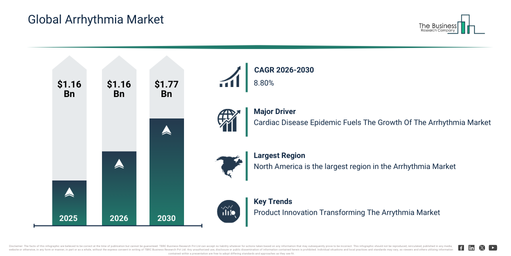
    The arrhythmia market size has seen significant growth and is projected to continue this trajectory, increasing from $8.28 billion in 2025 to $9.03 billion in 2026 at a 9.0% compound annual growth rate (CAGR). This upward trend in recent years has been driven by a growing incidence of cardiovascular diseases, an aging global population, better access to cardiac diagnostic devices, enhanced awareness of heart rhythm disorders, and the expansion of cardiology departments in hospitals. Looking ahead, the market is expected to reach $12.65 billion by 2030, growing at a CAGR of 8.8%. Factors fueling this forecast include the rising adoption of remote patient monitoring, increased investment in digital cardiology platforms, demand for early arrhythmia detection, growth in home-based cardiac care, and technological improvements in diagnostics. Notable trends anticipated during this period involve wider use of AI-based detection tools, wearable and remote monitoring devices, digital ECG and Holter integration, personalized treatment approaches, and a greater focus on early diagnosis and continuous patient monitoring.

    Download A Free Sample Report For Comprehensive Market Insights:

    https://www.thebusinessresearchcompany.com/sample.aspx?id=8018&type=smp

    Rising Cardiovascular Disease as a Major Market Driver

    One of the primary forces propelling the arrhythmia market is the increasing prevalence of cardiac diseases and related conditions. Cardiovascular disease encompasses a broad range of heart and blood vessel disorders, such as atherosclerosis, heart attack, stroke, and arrhythmia itself. Both mechanical dysfunctions like systolic and diastolic heart failure and electrical disturbances including arrhythmias contribute to a high incidence of conditions such as atrial fibrillation and heart failure. For example, in October 2024, the US Centers for Disease Control and Prevention reported that cardiovascular diseases were responsible for 919,032 deaths in 2023, representing one in every three fatalities. Coronary heart disease remains the most common form, and notably, nearly one in six cardiovascular-related deaths occurred in adults under 65 years of age. This widespread impact of cardiac conditions is a key factor driving demand in the arrhythmia market.

    Advancements in Remote Monitoring and Digital Platforms Boosting Growth

    The arrhythmia market is also seeing growth due to the increasing adoption of remote cardiac monitoring technologies and digital cardiology solutions. These innovations allow for continuous tracking of heart rhythms outside traditional clinical settings, enabling earlier detection and intervention. Additionally, investments in digital platforms facilitate improved management of arrhythmia patients by integrating data from wearable devices and diagnostics, providing more personalized and efficient care options.

    https://www.thebusinessresearchcompany.com/report/arrhythmia-global-market-report

    Arrhythmia Market Leading Geography: Which Region Generates The Most Revenue?

    Detailed Segmentation of the Arrhythmia Market

    This report breaks down the arrhythmia market into several important segments:

    1) By Type: Supraventricular Tachycardias, Ventricular Arrhythmias, Bradyarrhythmias, and Other Types

    2) By Test Equipment: Electrocardiogram (ECG) and Holter Monitor

    3) By Heart Blocks: First Degree, Second Degree, and Third Degree Heart Block

    4) By Distribution Channel: Hospital Pharmacies, Retail Pharmacies, and Online Pharmacies

    Further subcategories include types within each arrhythmia group: Supraventricular Tachycardias cover atrial fibrillation, atrial flutter, and paroxysmal supraventricular tachycardia (PSVT); Ventricular Arrhythmias include ventricular fibrillation, ventricular tachycardia, and premature ventricular contractions (PVCs); Bradyarrhythmias consist of sinus bradycardia and heart block; while other types include long QT syndrome, Wolff-Parkinson-White syndrome, and torsades de pointes.

    Innovative Catheter Technologies Shaping the Arrhythmia Market

    Leading players in the arrhythmia sector are focusing on developing advanced catheters to maintain competitive advantages. Catheters, which are flexible tubes inserted into the body for various diagnostic and therapeutic purposes, play a crucial role in cardiac electrophysiology. For instance, in July 2023, Biosense Webster, Inc., a US medical equipment manufacturer, introduced the Optrell Mapping Catheter equipped with TrueRef Technology. This device offers high-definition mapping for complex arrhythmias like atrial fibrillation and tachycardia. Designed for use with the Carto 3 system, it helps electrophysiologists quickly and accurately identify targets for ablation therapy. This innovation enhances diagnostic precision and confidence, especially in challenging cases, marking a significant step forward in the treatment of cardiac rhythm disorders.

    Key Players Defining the Competitive Landscape of the Arrhythmia Market

    The arrhythmia market is dominated by several major companies, including Medtronic PLC, Abbott Laboratories, Boston Scientific Corporation, AliveCor Inc., Biotronik SE & Co. KG, Biotricity Inc., GE Healthcare, Koninklijke Philips N.V., Nihon Kohden Corporation, Spacelabs Healthcare, Welch Allyn Inc., Mylan N.V., Lepu Medical Technology Co. Ltd., iRhythm Technologies Inc., BioTelemetry Inc., Fukuda Denshi Co. Ltd., Smart Solutions Technologies Inc., Biosense Webster Inc., Cardiac Science Corporation, CardioComm Solutions Inc., CardioNet LLC, NUUBO SMART SOLUTIONS S.L., Cardiva Medical Inc., Osypka AG, Johnson & Johnson Services Inc., Pfizer Inc., Teva Pharmaceutical Industries Ltd, Applied Cardiac Systems, Acutus Medical, and EP Solutions SA. These organizations are leading innovation, product development, and market expansion efforts worldwide.

    Regional Market Leadership and Growth Patterns

    In 2025, North America held the largest share of the global arrhythmia market, benefiting from advanced healthcare infrastructure and high patient awareness. The report also covers other important regions such as Asia-Pacific, South East Asia, Western Europe, Eastern Europe, South America, the Middle East, and Africa. While North America currently leads in revenue, emerging markets in Asia-Pacific and other regions are expected to experience rapid growth due to increasing healthcare investments and rising prevalence of cardiovascular diseases.

    Get in touch with us:

    The Business Research Company: https://www.thebusinessresearchcompany.com/

    Americas: +1 310-496-7795

    Asia: +44 7882 955267 & +91 8897263534

    Europe: +44 7882 955267

    Email us at: marketing@tbrc.info

    Follow us on:

    LinkedIn: https://in.linkedin.com/company/the-business-research-company

    YouTube: https://www.youtube.com/channel/UC24_fI0rV8cR5DxlCpgmyFQ

    Global Market Model: https://www.thebusinessresearchcompany.com/global-market-model
  • Apheresis Equipment Market Growth Is Accelerating As Industry Transformation Continues

    Apheresis Equipment Market Growth Is Accelerating As Industry Transformation Continues

    Enhanced with market attractiveness analysis, total addressable market evaluation, company benchmarking matrices, interactive Excel dashboards, expanded supply chain intelligence, emerging startup coverage, and detailed product insights, The Business Research Company’s 2026 market reports deliver more actionable and strategically valuable research.

    The apheresis equipment sector has experienced significant growth in recent years, driven by several factors in healthcare and technology. As the demand for advanced blood treatment technologies rises, the market is anticipated to continue expanding strongly over the coming decade. Let’s explore the current market size, growth drivers, segmentation, competitive landscape, and regional outlook of this important healthcare equipment industry.

    Market Size and Anticipated Growth of the Apheresis Equipment Market

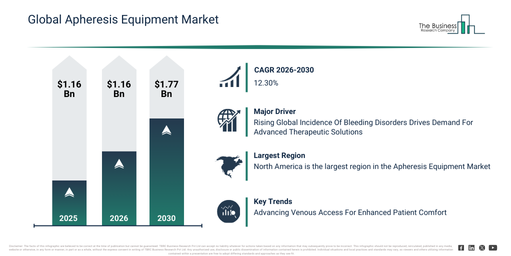
    The apheresis equipment market has seen a rapid increase in size, expected to grow from $4.33 billion in 2025 to $4.88 billion in 2026, exhibiting a compound annual growth rate (CAGR) of 12.7%. This historical growth is largely due to limited availability of automated equipment, a rising prevalence of renal and hematologic diseases, increased blood donation activities, widespread adoption of centrifugation-based systems, and stringent patient safety regulations. Looking ahead, the market is forecast to reach $7.77 billion by 2030, maintaining a strong CAGR of 12.3%. Factors driving this future expansion include technological innovations in photopheresis and low-density lipoprotein (LDL) apheresis systems, growing investments in automated and membrane-based technologies, expansion of hospital and ambulatory surgical center infrastructure, a rising demand for personalized therapies, and broader awareness and acceptance of therapeutic apheresis worldwide. Emerging market trends point to growing adoption of automated systems, increased use in hematology and renal treatments, membrane filtration technology advancements, expansion of blood donation and therapy facilities, and increased focus on patient safety and quality standards.

    Download A Free Sample Report For Comprehensive Market Insights:

    https://www.thebusinessresearchcompany.com/sample.aspx?id=27199&type=smp

    Key Factors Fueling Growth in the Apheresis Equipment Market

    One of the primary drivers of market growth is the rising incidence of blood disorders. Conditions like hemophilia, a genetic disorder that causes clotting factor deficiencies and prolonged bleeding, require specialized treatment involving plasma and clotting factor replacement. Improved diagnosis, better reporting, and population growth have contributed to an increase in the number of hemophilia patients. Apheresis equipment plays a critical role in managing such disorders by allowing precise separation and collection of blood components, thereby enhancing treatment efficacy and patient outcomes. For example, in October 2024, the World Federation of Hemophilia, based in Canada, reported that in 2023 there were 390,630 diagnosed hemophilia patients across 119 countries. This growing patient base is a major factor propelling market demand.

    Important Segments Driving Development Within the Apheresis Equipment Market

    This market can be broken down into several key segments for better understanding:

    1) Product Types: These include Plasmapheresis Equipment, Photopheresis Equipment, Low-Density Lipoprotein (LDL) Apheresis Equipment, and other types.

    2) Technology Types: Centrifugation and Membrane Filtration are the primary technologies employed.

    3) Applications: Markets served include Renal Diseases, Hematology, Neurology, and others.

    4) End Users: Key consumers include Hospitals, Ambulatory Surgical Centers (ASCs), Blood Donation Centers, and other facilities.

    https://www.thebusinessresearchcompany.com/report/apheresis-equipment-global-market-report

    Apheresis Equipment Market Regional Outlook: Where Are The Largest Opportunities Located?

    Further subdivisions cover:

    – Plasmapheresis Equipment like Automated and Manual Systems, Plasma Exchange and Collection Devices, and Plasma Filtration Systems

    – Photopheresis Equipment such as Extracorporeal Photopheresis Systems, In Vivo Photopheresis Devices, and Photoactivation Equipment

    – LDL Apheresis Equipment including Cascade Filtration Systems, Immunoadsorption Systems, and Selective LDL Removal Devices

    – Other products like Leukapheresis Equipment, Red Blood Cell Apheresis Devices, Plateletpheresis Systems, and Stem Cell Apheresis Devices

    Innovations and Competitive Moves Transforming the Apheresis Equipment Market

    Companies in this sector are investing in advanced product development, especially in venous access techniques that improve patient comfort, reduce treatment duration, and enhance overall efficiency. Venous access innovations focus on safer and more convenient methods for inserting catheters or needles. For instance, in April 2023, Fresenius Kabi AG, a German medical technology firm, introduced a single-needle venous access option for its Amicus extracorporeal photopheresis (ECP) system. This advancement allows seamless switching between single- and double-needle modes during procedures and includes software upgrades along with a single-use disposable kit designed for easy setup. These enhancements significantly improve patient experience, lower complication risks, and streamline clinical workflows during apheresis treatments.

    Major Players and Competitive Landscape in the Apheresis Equipment Market

    The apheresis equipment market features many prominent companies, including Asahi Kasei Medical Co. Ltd., Baxter International Inc., Fresenius Kabi AG, Terumo Blood and Cell Technologies Inc., Kaneka Corporation, Sumitomo Bakelite Co. Ltd., Nikkiso Co. Ltd., Haemonetics Corporation, Miltenyi Biotec GmbH, Macopharma S.A., B. Braun Melsungen AG, Cerus Corporation, Infomed S.A., Medica S.p.A., Baihe Medical Technology Co. Ltd., Brightwake Limited, Kawasumi Laboratories Inc., Haier Biomedical Co. Ltd., Nigale Biomedical Inc., and Apheresis Technologies LLC. These firms compete by innovating technologies and expanding market reach globally.

    Regional Market Highlights and Growth Prospects for Apheresis Equipment

    In 2025, North America held the largest share of the apheresis equipment market due to advanced healthcare infrastructure and high adoption rates. However, the Asia-Pacific region is expected to register the fastest growth during the forecast period. The market analysis includes regions such as Asia-Pacific, South East Asia, Western Europe, Eastern Europe, North America, South America, the Middle East, and Africa, providing a global perspective on regional opportunities and trends.

    Get in touch with us:

    The Business Research Company: https://www.thebusinessresearchcompany.com/

    Americas: +1 310-496-7795

    Asia: +44 7882 955267 & +91 8897263534

    Europe: +44 7882 955267

    Email us at: marketing@tbrc.info

    Follow us on:

    LinkedIn: https://in.linkedin.com/company/the-business-research-company

    YouTube: https://www.youtube.com/channel/UC24_fI0rV8cR5DxlCpgmyFQ

    Global Market Model: https://www.thebusinessresearchcompany.com/global-market-model
  • Apheresis Consumables And Equipment Market Outlook Highlights The Next Major Growth Opportunities

    Apheresis Consumables And Equipment Market Outlook Highlights The Next Major Growth Opportunities

    Through market attractiveness analysis, total addressable market evaluation, company benchmarking matrices, interactive Excel dashboards, expanded supply chain intelligence, emerging startup coverage, and detailed product insights, The Business Research Company’s 2026 market reports provide more actionable and strategically valuable research.

    The field of apheresis consumables and equipment has experienced significant growth in recent years, driven by advancements in technology and increasing demand for blood component therapies. As healthcare needs evolve, the market is set to expand even further, supported by rising awareness and innovation. Let’s explore the current market size, key growth drivers, emerging trends, major players, and regional dynamics shaping this industry.

    Market Size and Anticipated Growth Trajectory for Apheresis Consumables and Equipment

    The apheresis consumables and equipment market has demonstrated rapid expansion, with revenue projected to rise from $3.76 billion in 2025 to $4.16 billion in 2026, representing a compound annual growth rate (CAGR) of 10.7%. This growth during the past period has been primarily driven by the limited automation in apheresis procedures, ongoing reliance on manual devices, heightened awareness around hematology and renal disease management, increased blood donation initiatives, and the use of traditional filtration and separation techniques.

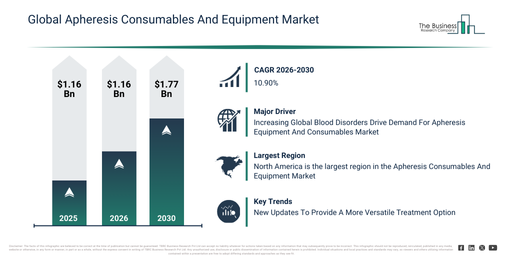
    Looking ahead, the market is forecasted to continue its upward trajectory by reaching $6.29 billion by 2030, with an expected CAGR of 10.9%. This surge reflects advancements in automated apheresis technologies, a growing demand for plasma-derived therapies, the broadening scope of stem cell collection procedures, stricter regulations on disposables and devices, and the integration of digital monitoring and IoT-enabled solutions. Key trends shaping the future market include a rising preference for automated devices, greater utilization of disposable kits and tubing sets, expansion of plasma and plateletpheresis procedures, adoption of cutting-edge centrifugation and membrane filtration technologies, and enhanced focus on patient safety alongside improved blood component quality.

    Download A Free Sample Report For Comprehensive Market Insights:

    https://www.thebusinessresearchcompany.com/sample.aspx?id=2476&type=smp

    Factors Contributing to Market Expansion: Blood Disorders as a Major Driver

    Globally increasing cases of blood disorders have heightened the need for effective blood transfusion solutions, fueling demand for apheresis equipment. These devices play a critical role in treating diseases like sickle cell anemia, leukemia, and various forms of cancer that require regular blood transfusions. For instance, the Leukemia and Lymphoma Society forecasts that 60,300 new leukemia diagnoses will occur in the USA, with one blood cancer diagnosis happening every three minutes, each necessitating immediate transfusion. Similarly, the American Society of Hematology reports that approximately 100,000 Americans live with sickle cell anemia, with an additional 2 million carrying the trait, all requiring apheresis-based transfusion support. According to the International Agency for Research on Cancer (IARC), by 2040, 16.3 million new cancer cases worldwide are expected, with cancer treatments demanding at least eight units of blood per patient per procedure, further driving the need for blood component collection and transfusion. This high prevalence of blood disorders significantly boosts the demand for apheresis consumables and equipment.

    The Impact of Chronic Diseases on Apheresis Consumables and Equipment Market Growth

    The growing prevalence of chronic diseases is anticipated to be a pivotal factor sustaining the growth of the apheresis consumables and equipment market. Chronic conditions—long-lasting illnesses typically without complete cures—require ongoing management, often involving targeted removal or collection of specific blood components. These include autoimmune disorders, familial hypercholesterolemia, sickle cell disease, and stem cell harvesting procedures.

    For example, according to data from the National Library of Medicine in 2023, nearly 36% of US adults aged 50 and above are expected to have at least one chronic condition by 2035, with this figure projected to increase to almost 48% by 2050. This expanding population with chronic health issues is directly contributing to rising demand in the apheresis consumables and equipment sector.

    https://www.thebusinessresearchcompany.com/report/apheresis-consumables-and-equipment-global-market-report

    Apheresis Consumables And Equipment Market Geographic Landscape: Which Region Dominates Industry Growth?

    Market Segmentation: Identifying Areas of Largest Growth Potential in the Apheresis Consumables and Equipment Industry

    The apheresis consumables and equipment market is categorized as follows:

    1) By Product Type: Disposables and Devices

    2) By Technology: Centrifugation and Membrane Filtration

    3) By Procedure: Photopheresis, Plasmapheresis, LDL Apheresis, Plateletpheresis, Leukapheresis, Erythrocytapheresis, and Other Procedures

    4) By Application: Renal Disease, Neurology, Hematology, and Additional Applications

    Within these broad categories, disposables include items such as apheresis kits, tubing sets, filters, collection bags, and anticoagulants. Devices comprise automated apheresis machines, manual apheresis devices, centrifuges, and plasmapheresis systems.

    Emerging Trends and Innovations Driving Long-Term Market Demand

    Leading companies in the apheresis consumables and equipment sector are introducing updated products to enhance versatility and patient care. A notable example is the launch of the Amicus Extracorporeal Photopheresis (ECP) single-needle option, which enables blood collection and return through a single venous access point during photopheresis procedures.

    In April 2023, Germany-based healthcare firm Fresenius Kabi unveiled this single-needle enhancement for its Amicus ECP System, adding new software versions for the Amicus Separator and Phelix Photoactivation Device, along with disposable kits designed for single or double-needle access. This innovation is especially beneficial for patients with limited venous access and is primarily used for extracorporeal photopheresis treatment of cutaneous T-cell lymphoma (CTCL).

    Key Players and Competitive Landscape in the Apheresis Consumables and Equipment Market

    Several prominent companies dominate the market, including Asahi Kasei Medical Co. Ltd., Haemonetics Corporation, Kawasumi Laboratories Inc., Fresenius SE & Co. KGaA, Terumo BCT, Braun Melsungen AG, Therakos Inc., HemaCare Corporation, Cerus Corporation, Kaneka Corporation, Nikkiso Co., Medica SpA, Terumo Corporation, Macopharma, Grifols S.A., Baxter International Inc., Fenwal Inc., Miltenyi Biotec GmbH, Infomed SA, Lmb Technologie GmbH, Medivators Inc., Nigale Biomedical Inc., Aferetica S.r.l., Apheresis Care Group, Beijing Meso-Tech Co. Ltd., Biegler GmbH, Brightwake Ltd., Cytosorbents Corporation, DePuy Synthes Companies, Guangzhou Daji Medical Science and Technology Co. Ltd., and Haier Biomedical. These companies are continuously innovating and expanding their product offerings to meet growing global demand.

    Regional Market Overview: North America Leading While Asia-Pacific Shows Rapid Growth

    In 2025, North America held the largest share of the global apheresis consumables and equipment market, supported by advanced healthcare infrastructure and widespread adoption of innovative technologies. Western Europe followed as the second-largest regional market. The report also includes detailed coverage of other key regions such as Asia-Pacific, South East Asia, Eastern Europe, South America, the Middle East, and Africa, highlighting the global reach and diverse growth opportunities within this sector.

    Get in touch with us:

    The Business Research Company: https://www.thebusinessresearchcompany.com/

    Americas: +1 310-496-7795

    Asia: +44 7882 955267 & +91 8897263534

    Europe: +44 7882 955267

    Email us at: marketing@tbrc.info

    Follow us on:

    LinkedIn: https://in.linkedin.com/company/the-business-research-company

    YouTube: https://www.youtube.com/channel/UC24_fI0rV8cR5DxlCpgmyFQ

    Global Market Model: https://www.thebusinessresearchcompany.com/global-market-model
  • Aortic Stent Grafts Market Trends And Growth Drivers Point To Strong Future Potential

    Aortic Stent Grafts Market Trends And Growth Drivers Point To Strong Future Potential

    Delivering more actionable and strategically valuable research, The Business Research Company’s 2026 market reports feature market attractiveness analysis, total addressable market evaluation, company benchmarking matrices, interactive Excel dashboards, expanded supply chain intelligence, emerging startup coverage, and detailed product insights.

    The aortic stent grafts market has demonstrated impressive growth in recent years, driven by advances in medical technology and increasing health awareness. As cardiovascular conditions become more prevalent, particularly aortic aneurysms, demand for innovative and minimally invasive treatment options continues to rise. Let’s explore the current market size, key growth factors, segment breakdowns, innovation trends, leading companies, and regional outlook shaping this vital healthcare sector.

    Steady Expansion of the Aortic Stent Grafts Market Through 2030

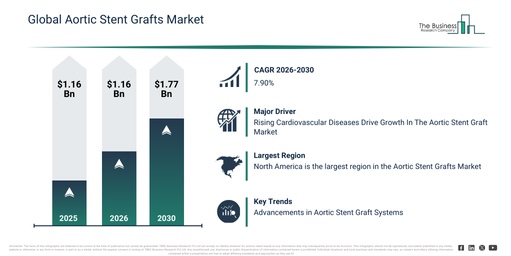
    The market for aortic stent grafts has been growing strongly and is projected to continue on this trajectory. From $3.59 billion in 2025, the market is expected to reach $3.9 billion in 2026, reflecting a CAGR of 8.8%. This growth stems from the increasing prevalence of abdominal and thoracic aortic aneurysms, early adoption of EVAR and TEVAR procedures, expanding vascular surgery infrastructure, broader availability of endovascular device technologies, and the aging population with elevated cardiovascular risk. Looking further ahead, the market is forecasted to grow to $5.3 billion by 2030, with a CAGR of 7.9%, supported by rising procedure volumes in outpatient and ambulatory surgical centers, greater demand for advanced and hybrid stent graft systems, and enhanced screening programs for early aneurysm detection.

    Download A Free Sample Report For Comprehensive Market Insights:

    https://www.thebusinessresearchcompany.com/sample.aspx?id=17062&type=smp

    Rising Rates of Cardiovascular Disease Fuel Demand for Aortic Stent Grafts

    An upsurge in cardiovascular diseases is a significant factor boosting the aortic stent grafts market. Lifestyle habits such as unhealthy diets, sedentary behavior, smoking, and obesity contribute to the increased incidence of cardiovascular conditions. Aortic stent grafts play a critical role in treating cardiovascular ailments by repairing and reinforcing compromised sections of the aorta, especially aneurysms. For example, in January 2024, the British Heart Foundation reported that coronary heart disease remains a leading cause of death in the UK, accounting for approximately 68,000 fatalities yearly. This translates to around 190 deaths daily, or one every eight minutes, with CHD responsible for the deaths of one in eight men and one in fourteen women. Such statistics highlight the growing need for effective therapies like aortic stent grafts.

    Detailed Segmentation of the Aortic Stent Grafts Market

    The aortic stent grafts market is organized into several key segments to better understand its scope. By product, it includes abdominal aortic stent grafts and thoracic aortic stent grafts. When broken down by indication, the market addresses abdominal aortic aneurysms and thoracic aortic aneurysms. End users span hospitals, ambulatory surgical centers or outpatient surgical centers, and other healthcare facilities. Further subcategories cover types of abdominal aortic stent grafts, such as Endovascular Aneurysm Repair (EVAR) stent grafts and aortic aneurysm stent grafts, as well as thoracic aortic stent grafts like Thoracic Endovascular Aortic Repair (TEVAR) stent grafts and hybrid aortic stent grafts.

    https://www.thebusinessresearchcompany.com/report/aortic-stent-grafts-global-market-report

    #Aortic Stent Grafts Market Largest Region: Which Geography Holds The Highest Market Share?

    Innovation and Technological Advances Powering the Aortic Stent Grafts Market

    Leading players in the aortic stent grafts sector are heavily investing in the development of next-generation products designed to enhance stability, flexibility, and safety while lowering complication risks. A stent graft system typically combines a supportive stent with a graft to strengthen the vessel wall during endovascular procedures for aneurysm treatment. An example of such innovation is the launch of the TREO Abdominal Stent-Graft System by Terumo India in August 2024. This device offers in situ limb adjustability, superior sealing, and strong fixation, aiming to improve procedural stability and long-term outcomes for patients with infrarenal abdominal aortic aneurysms.

    Top Companies Leading Market Growth in Aortic Stent Grafts

    The competitive landscape of the aortic stent grafts market features several major corporations, including Medtronic plc, W.L. Gore & Associates Inc, Terumo Corporation, Cook Medical Inc, Endologix Inc, Lombard Medical Ltd, MicroPort Scientific Corporation, Jotec GmbH, Braile Biomédica, Merit Medical Systems Inc, Endospan Ltd, Lifetech Scientific (Shenzhen) Co Ltd, Biomerics LLC, Bentley InnoMed GmbH, Trivascular Inc, Abbott Laboratories, Becton Dickinson and Company, Biotronik SE & Co KG, Altura Medical Inc, and S&G Biotech Inc. These companies are driving innovation and expanding market reach through product development and strategic collaborations.

    Regional Market Share and Growth Prospects in Aortic Stent Grafts

    In 2025, North America held the largest share of the aortic stent grafts market, benefiting from advanced healthcare infrastructure and high procedural volumes. Meanwhile, the Asia-Pacific region is expected to experience the fastest growth over the forecast period, fueled by increasing healthcare investments, rising awareness, and expanding access to minimally invasive therapies. The overall market analysis also covers critical regions such as South East Asia, Western Europe, Eastern Europe, South America, the Middle East, and Africa, providing a comprehensive view of global opportunities and challenges.

    Get in touch with us:

    The Business Research Company: https://www.thebusinessresearchcompany.com/

    Americas: +1 310-496-7795

    Asia: +44 7882 955267 & +91 8897263534

    Europe: +44 7882 955267

    Email us at: marketing@tbrc.info

    Follow us on:

    LinkedIn: https://in.linkedin.com/company/the-business-research-company

    YouTube: https://www.youtube.com/channel/UC24_fI0rV8cR5DxlCpgmyFQ

    Global Market Model: https://www.thebusinessresearchcompany.com/global-market-model
  • Aortic Endograft Market Expansion Is Reshaping Competitive Dynamics Across The Industry

    Aortic Endograft Market Expansion Is Reshaping Competitive Dynamics Across The Industry

    Enhanced with market attractiveness analysis, total addressable market evaluation, company benchmarking matrices, interactive Excel dashboards, expanded supply chain intelligence, emerging startup coverage, and detailed product insights, The Business Research Company’s 2026 market reports deliver more actionable and strategically valuable research.

    The aortic endograft market is steadily advancing as medical technology evolves and the global population ages. Increasing awareness of vascular health and improved minimally invasive procedures are driving demand for these life-saving devices. Let’s explore the market’s current size, key growth factors, segment details, emerging trends, major players, and regional performance.

    Steady Market Growth and Future Forecast in the Aortic Endograft Market

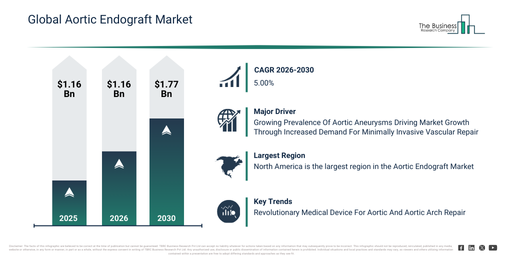
    The aortic endograft market has shown consistent growth and is poised to expand further. Market value is projected to rise from $3.52 billion in 2025 to $3.7 billion in 2026, reflecting a compound annual growth rate (CAGR) of 5.0%. This upward trajectory in recent years has been driven by factors such as the rising number of aortic aneurysm cases, wider adoption of endovascular surgeries, advancements in imaging techniques for vascular interventions, availability of superior stent materials, and enhanced surgeon expertise in minimally invasive procedures. Looking ahead, the market is expected to reach $4.5 billion by 2030, maintaining a CAGR of 5.0%. This forecasted growth will be supported by an aging population with vascular conditions, increasing preference for endovascular treatments, expansion of tailored vascular implants, greater investments in next-generation graft materials, and demand for surgeries that offer quicker recovery times.

    Download A Free Sample Report For Comprehensive Market Insights:

    https://www.thebusinessresearchcompany.com/sample.aspx?id=13784&type=smp

    Key Drivers Behind Aortic Endograft Market Expansion

    The increasing incidence of aortic aneurysms is a significant factor propelling market demand. An aortic aneurysm involves a localized dilation or bulging of the aorta, the body’s largest artery, which can lead to life-threatening complications if untreated. The rise in these cases correlates with an aging population and the prevalence of related health issues like hypertension and atherosclerosis. This growth in aneurysm prevalence is boosting demand for minimally invasive endovascular repair devices, which reduce the risks associated with open surgery and improve recovery outcomes.

    For example, in February 2023, data from the UK Government Digital Service indicated that approximately 274,800 men underwent screening for aortic aneurysms, with 79.0% receiving conclusive results and 1,794 aneurysms detected. Such statistics illustrate the increasing recognition and diagnosis of this condition, fueling market growth for aortic endografts.

    https://www.thebusinessresearchcompany.com/report/aortic-endograft-global-market-report

    Aortic Endograft Market Regional Analysis: Which Region Leads By Revenue?

    Detailed Breakdown of the Aortic Endograft Market Segments

    This market can be segmented into several categories:

    1) Product Type: Abdominal Aortic Grafts and Thoracic Aortic Grafts

    2) Material Used: Metallic Endografts and Polymeric Endografts

    3) Procedure Type: Open Surgical Repair and Endovascular Aneurysm Repair (EVAR)

    4) End User: Hospitals and Ambulatory Surgical Centers

    Further subcategories within these segments include:

    – For Abdominal Aortic Grafts: Fenestrated Aortic Grafts, Branched Aortic Grafts, and Conventional Aortic Grafts

    – For Thoracic Aortic Grafts: Stented, Non-Stented, and Hybrid Thoracic Aortic Grafts

    Innovations and Trends Shaping the Aortic Endograft Market

    Leading companies in this sector are focusing on groundbreaking developments to maintain a competitive edge. One such innovation is the castor-branched aortic stent graft system, designed for minimally invasive treatment of the aorta and aortic arch, particularly effective in Stanford type B aortic dissection (TBAD) cases.

    For instance, in August 2024, Terumo India, a subsidiary of Terumo Corporation, introduced the TREO Stent-Graft System. This advanced device is tailored for infrarenal abdominal aortic aneurysms and uniquely offers both suprarenal and infrarenal active fixation. Such innovations highlight a shift toward more sophisticated and patient-specific treatments within the aortic endograft market.

    Prominent Players and Market Positioning in the Aortic Endograft Industry

    Key companies dominating this market include Abbott Laboratories, Medtronic Plc, Boston Scientific Corporation, Terumo Corporation, W. L. Gore & Associates Inc., Cook Medical Inc., LifeTech Scientific Corporation, MicroPort Scientific Corporation, CryoLife Inc., Endologix LLC, Braile Biomédica Indústria Comércio e Representações Ltda., Nano Endoluminal S.A., JOTEC GmbH, Lombard Medical Inc., Aptus Endosystems Inc., Lombardi SA, Cardiatis S.A., Endospan Ltd., Transcatheter Technologies GmbH, and Vascutek Ltd. These organizations are actively involved in product development, strategic partnerships, and expanding their market reach to meet rising demand.

    Regional Dynamics and Revenue Leadership in the Aortic Endograft Market

    In 2025, North America led the aortic endograft market in terms of revenue. However, the Asia-Pacific region is forecasted to experience the fastest growth during the upcoming years. The comprehensive market analysis includes key regions such as Asia-Pacific, South East Asia, Western Europe, Eastern Europe, North America, South America, the Middle East, and Africa, providing a global perspective on industry trends and opportunities.

    Get in touch with us:

    The Business Research Company: https://www.thebusinessresearchcompany.com/

    Americas: +1 310-496-7795

    Asia: +44 7882 955267 & +91 8897263534

    Europe: +44 7882 955267

    Email us at: marketing@tbrc.info

    Follow us on:

    LinkedIn: https://in.linkedin.com/company/the-business-research-company

    YouTube: https://www.youtube.com/channel/UC24_fI0rV8cR5DxlCpgmyFQ

    Global Market Model: https://www.thebusinessresearchcompany.com/global-market-model
  • Anti-Snoring Devices Market Forecast Reveals Where Future Industry Value Will Be Created

    Anti-Snoring Devices Market Forecast Reveals Where Future Industry Value Will Be Created

    Through market attractiveness analysis, total addressable market evaluation, company benchmarking matrices, interactive Excel dashboards, expanded supply chain intelligence, emerging startup coverage, and detailed product insights, The Business Research Company’s 2026 market reports provide more actionable and strategically valuable research.

    The market for anti-snoring devices has witnessed significant growth recently, driven by rising awareness and technological advances aimed at improving sleep quality. As more people seek effective solutions to manage snoring and related sleep disorders, this market is set to expand further in the coming years. Let’s explore the current market size, growth factors, segmentation, key players, and regional outlook shaping the anti-snoring devices industry.

    Steady Growth and Future Outlook of the Anti-Snoring Devices Market

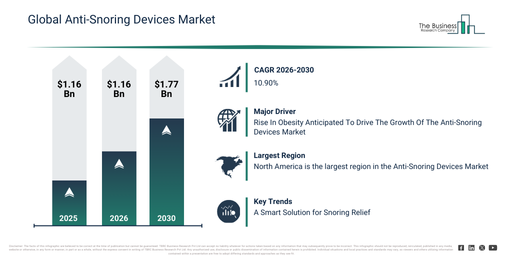
    The anti-snoring devices market has grown considerably, reaching a valuation of $1.9 billion in 2025. It is expected to further increase to $2.1 billion by 2026, with a compound annual growth rate (CAGR) of 10.3%. This upward trend in recent years stems from factors such as the rising incidence of sleep-disordered breathing, growing awareness about sleep health, a surge in home healthcare adoption, availability of over-the-counter snoring aids, and an increase in specialized sleep clinics. Looking ahead, the market is projected to expand rapidly to $3.18 billion by 2030 at a CAGR of 10.9%. This growth will be fueled by rising demand for connected sleep monitoring devices, enhanced adoption of AI-based sleep analytics, preventive sleep healthcare advancements, a growing focus on non-surgical snoring treatments, and increasing consumer investment in sleep wellness. Key trends expected to drive the market include the popularity of smart anti-snoring wearables, broader use of mandibular advancement devices, expanding home-based sleep solutions, and greater emphasis on personalized sleep health technology.

    Download A Free Sample Report For Comprehensive Market Insights:

    https://www.thebusinessresearchcompany.com/sample.aspx?id=10755&type=smp

    Obesity’s Role in Boosting Demand for Anti-Snoring Devices

    A major factor propelling the growth of the anti-snoring devices market is the rising prevalence of obesity worldwide. Obesity, characterized by excessive or abnormal body weight that poses health risks, often contributes to snoring and obstructed airways during sleep. Anti-snoring devices, such as mandibular advancement mouthpieces, help obese individuals by advancing the jaw forward, which prevents the tongue from blocking the airway. For example, in May 2025, the UK’s Office for Health Improvement and Disparities reported that between 2023 and 2024, approximately 64.5% of adults aged 18 and older in England were overweight or living with obesity, a slight increase from 64.0% the previous year. This growing number of overweight individuals is a key driver for increased adoption of anti-snoring devices.

    Additional Factors Fueling Expansion in the Anti-Snoring Devices Market

    Another important growth driver is the rising consumer interest in non-invasive and wearable solutions that improve sleep quality without surgery. Increasing awareness about sleep disorders and advances in sleep technology have made such devices more accessible and appealing. Moreover, the expansion of healthcare services at home and the growing prevalence of sleep clinics contribute to greater market penetration. These elements together encourage consumers to invest in effective snoring management tools, further pushing market growth.

    https://www.thebusinessresearchcompany.com/report/anti-snoring-devices-global-market-report

    Anti-Snoring Devices Market Geographic Distribution And Regional Opportunities

    Understanding the Structure of the Anti-Snoring Devices Market

    The anti-snoring devices market is organized into several key segments based on product type, gender, age group, and end-user. The product category includes Mandibular Advancement Devices (MADS), Tongue Retaining Devices (TRD), Nasal Dilators, Chin Straps, Position Control devices, and specialized Pillows. Gender segmentation divides the market between men and women, while age groups include those below 40 years, those between 40 and 59 years, and those aged 60 and above. End users primarily consist of sleep clinics and the home healthcare sector. Each product type further breaks down into subcategories, such as Adjustable and Fixed MADS, Soft and Rigid TRDs, External and Internal Nasal Dilators, Adjustable and Elastic Chin Straps, Positional Pillows and Sleep Positioners, and Anti-Snoring and Contoured Pillows.

    Innovations and New Technologies Defining Market Progress

    Market leaders are focusing on developing cutting-edge technologies to improve the comfort and effectiveness of anti-snoring solutions. One notable advancement is the introduction of innovative wearable devices designed to monitor and reduce snoring through gentle interventions. For instance, in September 2024, Israeli technology firm AppYea Inc. launched the AppySleep device, a sleek wearable that tracks sleep patterns and detects snoring. It uses subtle vibrations to encourage users to change positions during sleep, thereby diminishing snoring occurrences. The device integrates with a mobile app, offering personalized insights and recommendations for better sleep quality, making it a user-friendly and high-tech option in the market.

    Key Competitors Shaping the Anti-Snoring Devices Industry

    The competitive landscape of the anti-snoring devices market features several prominent companies, including SomnoMed Ltd, Apnea Sciences Corporation, Theravent Inc, Tomed GmbH, MPowRx, AccuMed Corp, Contour Products Inc, Rhinomed Limited, ZQuiet, The Pure Sleep Company, Nozovent, Snoring Solutions Inc, Sleeping Well LLC, Signifier Medical Technologies LLC, VVFLY Electronics Co Ltd, DentCare Dental Lab Pvt Ltd, Airway Management Inc, MEDiTAS Ltd, Innovative Health Care Pvt Ltd, and PureSleep. These organizations are actively investing in research and development to stay ahead in this rapidly evolving market.

    Geographical Trends and Regional Market Opportunities

    In 2025, North America held the largest share of the global anti-snoring devices market, thanks to high healthcare awareness and robust healthcare infrastructure. Meanwhile, the Asia-Pacific region is expected to experience the fastest growth throughout the forecast period. This surge is driven by increasing health awareness, growing urban populations, and expanding healthcare access in countries across Asia-Pacific. Other regions covered in the market analysis include South East Asia, Western Europe, Eastern Europe, South America, the Middle East, and Africa, each presenting unique opportunities and challenges for market participants.

    Get in touch with us:

    The Business Research Company: https://www.thebusinessresearchcompany.com/

    Americas: +1 310-496-7795

    Asia: +44 7882 955267 & +91 8897263534

    Europe: +44 7882 955267

    Email us at: marketing@tbrc.info

    Follow us on:

    LinkedIn: https://in.linkedin.com/company/the-business-research-company

    YouTube: https://www.youtube.com/channel/UC24_fI0rV8cR5DxlCpgmyFQ

    Global Market Model: https://www.thebusinessresearchcompany.com/global-market-model
  • Anti-Retropulsion Devices Market Growth Through 2030 Creates New Strategic Opportunities

    Anti-Retropulsion Devices Market Growth Through 2030 Creates New Strategic Opportunities

    Delivering more actionable and strategically valuable research, The Business Research Company’s 2026 market reports feature market attractiveness analysis, total addressable market evaluation, company benchmarking matrices, interactive Excel dashboards, expanded supply chain intelligence, emerging startup coverage, and detailed product insights.

    The anti-retropulsion devices market is gaining significant traction, driven by advances in kidney stone treatment and the increasing burden of related health conditions. This market is poised for steady expansion in the coming years as new technologies and growing demand for minimally invasive procedures come to the forefront. Let’s explore the current market size, key growth factors, prominent players, and technological innovations shaping this sector’s future.

    Steady Market Growth Forecast for Anti-Retropulsion Devices

    The market for anti-retropulsion devices has experienced strong growth recently and is projected to continue expanding. It is expected to rise from $2.56 billion in 2025 to $2.75 billion in 2026, reflecting a compound annual growth rate (CAGR) of 7.1%. This upward trend during the historical period is largely fueled by the increasing incidence of kidney stones and urolithiasis, broader utilization of ureteroscopy and lithotripsy procedures, early adoption of basket and balloon anti-retropulsion devices, rising volumes of urological surgeries in hospitals, and a growing focus on improving stone clearance efficiency.

    Download A Free Sample Report For Comprehensive Market Insights:

    https://www.thebusinessresearchcompany.com/sample.aspx?id=17061&type=smp

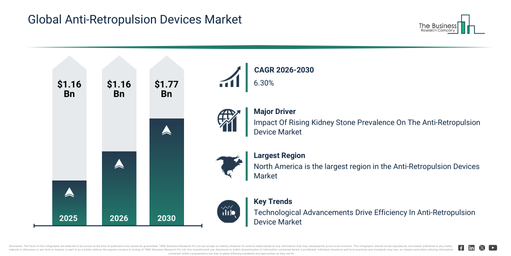
    Looking ahead, the anti-retropulsion devices market is forecast to reach $3.51 billion by 2030, growing at a CAGR of 6.3%. Factors contributing to this growth include rising demand for minimally invasive stone removal technologies, increased use of disposable anti-retropulsion devices, growth in outpatient stone treatment procedures, ongoing development of specialized devices for complex stones, and expanding investments in urology care infrastructure. Key trends expected to influence the market over the forecast period are a growing preference for advanced devices to enhance stone stabilization during lithotripsy, increased use of basket and balloon devices to prevent proximal stone migration, a clinical shift toward minimally invasive ureteroscopy, broader adoption of device designs tailored for complex ureteral anatomies, and higher demand for disposable single-use devices to reduce infection risks.

    Rising Chronic Kidney Disease Cases Fueling Market Demand

    The growing prevalence of chronic kidney disease (CKD) is a major factor expected to drive the anti-retropulsion devices market forward. CKD encompasses a variety of conditions that impair kidney structure and function. Contributing lifestyle factors such as poor diet, inactivity, obesity, smoking, and excessive alcohol intake further exacerbate kidney health problems. Anti-retropulsion devices play an important role in improving the success of urological treatments by preventing kidney stone fragments from migrating back toward the kidney during procedures.

    https://www.thebusinessresearchcompany.com/report/anti-retropulsion-devices-global-market-report

    Anti-Retropulsion Devices Market Largest Region By Revenue And Market Share

    For instance, in May 2024, the U.S. Centers for Disease Control and Prevention reported that over 14% of U.S. adults—about 35.5 million people—were affected by chronic kidney disease, up from 13% in 2023. This rising prevalence signals an increasing need for efficient kidney stone management solutions, which in turn will support market growth for anti-retropulsion devices.

    Detailed Market Segmentation and Key Revenue Contributors

    This report segments the anti-retropulsion devices market based on product type, application, and end-user. Product categories include basket-type devices, balloon-type devices, and mechanical retropulsion devices. Applications cover ureteroscopy and lithotripsy procedures. The main end-user groups are hospitals, ambulatory surgical centers, and other healthcare providers.

    Further subcategories break down basket-type devices into self-expanding and balloon-expandable baskets, as well as balloon-type devices into single-lumen and multi-lumen balloons. Mechanical retropulsion devices are classified into mechanical and stent-based systems. This detailed segmentation helps identify market niches and growth areas within these device types and clinical uses.

    Innovations Driving Market Transformation and Enhanced Patient Outcomes

    Leading companies in the anti-retropulsion devices market are focusing on user-centric innovations and improved designs to enhance procedural efficiency and patient outcomes. One notable advancement is vacuum-assisted kidney stone removal devices, which use suction technology to effectively capture and extract stones during urological procedures.

    For example, in March 2024, U.S.-based medical device firm Calyxo, Inc. introduced the CVAC System. This innovative solution employs continuous irrigation combined with vacuum aspiration to clear stone fragments during and after laser lithotripsy, helping physicians achieve better stone-free results more efficiently.

    Competitive Landscape and Key Players in the Anti-Retropulsion Devices Market

    The anti-retropulsion devices market features several major companies driving competition and innovation. Notable players include Johnson & Johnson, Medtronic plc, Boston Scientific Corporation, Cook Medical Incorporated, KARL STORZ SE & Co KG, Coloplast A/S, ROCAMED SAM, Endotherapeutics Pty Ltd, Dornier MedTech GmbH, Accordion Medical LLC, Cogentix Medical Inc., NeoScope Inc, OTU Medical, Clarion Medical Technologies, Calyxo Inc, EMS Urology, Happiness Works Medical, PENTAX Medical, UROMED Kurt Drews KG, EndoTheia Inc, and Maxer Endoscopy GmbH. These organizations are investing in product development and expanding their market reach to maintain leadership positions.

    Regional Market Dynamics Highlight North America and Asia-Pacific

    In 2025, North America was the largest market for anti-retropulsion devices, holding the highest revenue share. However, the Asia-Pacific region is anticipated to register the fastest growth during the forecast period. Additional regions analyzed in the market report include South East Asia, Western Europe, Eastern Europe, South America, the Middle East, and Africa, providing a comprehensive view of regional trends and opportunities across the globe.

    Get in touch with us:

    The Business Research Company: https://www.thebusinessresearchcompany.com/

    Americas: +1 310-496-7795

    Asia: +44 7882 955267 & +91 8897263534

    Europe: +44 7882 955267

    Email us at: marketing@tbrc.info

    Follow us on:

    LinkedIn: https://in.linkedin.com/company/the-business-research-company

    YouTube: https://www.youtube.com/channel/UC24_fI0rV8cR5DxlCpgmyFQ

    Global Market Model: https://www.thebusinessresearchcompany.com/global-market-model