Month: June 2026

  • 3D Medical Imaging Devices Market Trends And Growth Drivers Point To Strong Future Potential

    3D Medical Imaging Devices Market Trends And Growth Drivers Point To Strong Future Potential

    Enhanced with market attractiveness analysis, total addressable market evaluation, company benchmarking matrices, interactive Excel dashboards, expanded supply chain intelligence, emerging startup coverage, and detailed product insights, The Business Research Company’s 2026 market reports deliver more actionable and strategically valuable research.

    The 3D medical imaging devices market is experiencing rapid growth, driven by technological advancements and expanding healthcare needs. As demand for detailed anatomical visualization and improved diagnostic accuracy rises, this sector is poised for significant development through 2030. Let’s explore the current market size, key growth drivers, major players, emerging trends, and future opportunities shaping this important healthcare technology field.

    Steady Growth Forecast in the 3D Medical Imaging Devices Market

    The market for 3D medical imaging devices has expanded notably over recent years. It is projected to increase from $13.68 billion in 2025 to $14.76 billion in 2026, reflecting a compound annual growth rate (CAGR) of 7.9%. This upward trajectory during the historic period has been fueled by advances in medical imaging technology, a rise in diagnostic imaging centers, increased demand for detailed anatomical views, the growing burden of chronic diseases, and enhancements in hospital imaging infrastructure. Looking ahead, the market is expected to reach $20.16 billion by 2030, with a slightly higher CAGR of 8.1%. Key factors contributing to this forecast include the rising use of AI-powered diagnostic tools, greater investments in precision medicine, expanded applications in oncology and cardiology imaging, increased focus on early disease detection, and the integration of cloud-based imaging solutions. Notable trends anticipated in the coming years are the adoption of AI-enabled image reconstruction, more widespread use of high-resolution 3D imaging systems, advanced visualization software, multi-modality imaging platforms, and an emphasis on improving diagnostic speed and accuracy.

    Download A Free Sample Report For Comprehensive Market Insights:

    https://www.thebusinessresearchcompany.com/sample.aspx?id=2513&type=smp

    How Chronic Disease Prevalence Fuels Market Expansion

    One of the primary forces driving the growth of the 3D medical imaging devices market is the increasing prevalence of chronic diseases. Chronic illnesses, defined as long-term health conditions lasting three months or more, require precise and early diagnosis to manage effectively. 3D imaging techniques such as computed tomography (CT) scans and magnetic resonance imaging (MRI) provide detailed three-dimensional views of internal anatomy, enabling healthcare providers to identify chronic conditions at earlier stages. For instance, data from the National Library of Medicine in January 2023 highlighted that the population of Americans aged 50 and older with at least one chronic condition is expected to rise by 99.5%, reaching 142.66 million by 2050. This surge highlights a growing need for sophisticated imaging solutions, directly boosting demand in the 3D medical imaging market.

    Additional Factors Supporting Market Growth

    Beyond chronic disease, ongoing improvements in hospital infrastructure and the expansion of diagnostic imaging centers worldwide are strengthening the market. The increasing utilization of 3D imaging technologies in routine clinical practice and the broadening range of diagnostic applications also contribute significantly. Furthermore, advancements in imaging algorithms and hardware are making these devices more accessible and effective, encouraging adoption across diverse healthcare settings.

    https://www.thebusinessresearchcompany.com/report/3d-medical-imaging-devices-global-market-report

    3D Medical Imaging Devices Market Regional Outlook: Where Are The Largest Opportunities Located?

    Segment Overview Highlighting Opportunities in the 3D Medical Imaging Devices Market

    This report divides the 3D medical imaging devices market into several key segments for deeper analysis:

    1) By Type: Ultrasound, X-ray, CT Scan, and Other Types

    2) By Application: Gynecology and Obstetrics, Cardiology, Neurology, Orthopedics, and Oncology

    3) By End User: Diagnostic Centers, Hospitals, and Research Centers

    Further subcategories provide detail on ultrasound types such as 3D/4D ultrasound and contrast-enhanced ultrasound; X-ray modalities including 3D mammography or tomosynthesis, cone beam CT (CBCT) for X-ray imaging, and fluoroscopy; CT scans featuring spiral/helical CT, cone beam CT, and dual-energy CT; and other types encompassing MRI, positron emission tomography (PET), single photon emission computed tomography (SPECT), and 3D endoscopic imaging systems. This segmentation highlights where the most promising growth opportunities are unfolding within the market.

    Innovative Trends Driving Future Growth in 3D Medical Imaging

    Leading players in this market are pushing forward innovations such as immersive learning platforms that utilize hyper-realistic 3D medical images derived from MRI and CT scans. These platforms aim to enhance training for medical professionals and students by providing precise, interactive diagnostic images. For example, in August 2023, GigXR, Inc., a US-based pioneer in holographic training solutions, launched the DICOM XR Library. This shared resource offers 3D DICOM holograms from computed tomography and magnetic resonance imaging, enabling a 360-degree diagnostic imaging experience. Such innovations improve educational outcomes and prepare healthcare providers with accurate simulation tools for observation and assessment.

    Key Companies Competing in the 3D Medical Imaging Devices Market

    The market features a broad range of influential companies, including GE Healthcare, Royal Philips, Siemens AG, Materialise NV, Toshiba Group, Samsung Medison Co. Ltd., Shimadzu Corporation, Analogic Corporation, Digirad Corporation, Del Medical Systems Group, Hologic Inc., Carestream Health Inc., Ambra Health, Fovia, Mach7 Technologies Ltd., Barco NV, TomTec Imaging Systems GmbH, Fujifilm Holdings Corporation, 3D Systems Healthcare, Canon Medical Systems Corporation, ContextVision AB, Curvebeam AI Ltd., EchoPixel Inc., EOS Imaging, Esaote SpA, Hitachi Healthcare, Intrasense, Konica Minolta Healthcare, Mobius Imaging, Neusoft Medical Systems, Pie Medical Imaging, Planmed Oy, Sectra, Shenzhen Mindray Bio-Medical Electronics, Varian Medical Systems, and Ziehm Imaging GmbH. These companies are instrumental in driving innovation, expanding market reach, and enhancing product portfolios.

    Regional Market Dynamics and Growth Hotspots

    In 2025, Western Europe stood as the largest market for 3D medical imaging devices, with Asia-Pacific ranking as the second largest. The report covers key regions including Asia-Pacific, South East Asia, Western Europe, Eastern Europe, North America, South America, the Middle East, and Africa. Each of these areas offers unique opportunities and challenges, contributing to a comprehensive global perspective on the market’s growth and development.

    Get in touch with us:

    The Business Research Company: https://www.thebusinessresearchcompany.com/

    Americas: +1 310-496-7795

    Asia: +44 7882 955267 & +91 8897263534

    Europe: +44 7882 955267

    Email us at: marketing@tbrc.info

    Follow us on:

    LinkedIn: https://in.linkedin.com/company/the-business-research-company

    YouTube: https://www.youtube.com/channel/UC24_fI0rV8cR5DxlCpgmyFQ

    Global Market Model: https://www.thebusinessresearchcompany.com/global-market-model

  • 3D Dental Scanners Market Expansion Is Reshaping Competitive Dynamics Across The Industry

    3D Dental Scanners Market Expansion Is Reshaping Competitive Dynamics Across The Industry

    Through market attractiveness analysis, total addressable market evaluation, company benchmarking matrices, interactive Excel dashboards, expanded supply chain intelligence, emerging startup coverage, and detailed product insights, The Business Research Company’s 2026 market reports provide more actionable and strategically valuable research.

    The market for 3D dental scanners is experiencing remarkable expansion as digital technology continues to transform dental care. With advancements in imaging and scanning solutions, dental professionals are increasingly adopting digital workflows that enhance diagnostic accuracy and treatment planning. Let’s explore the market’s size, key growth drivers, segmentation, current trends, leading companies, and the geographical outlook shaping this evolving sector.

    Market Size and Expected Growth Trajectory of the 3D Dental Scanners Market

    The 3D dental scanners market has seen significant growth in recent years, scaling from $2.19 billion in 2025 to an anticipated $2.36 billion in 2026, at a compound annual growth rate (CAGR) of 7.9%. This upward trajectory during the past period has been fueled by rising volumes of orthodontic and prosthodontic treatments, a shift from traditional manual impressions to digital workflows, increased installations of CBCT systems in dental offices, broader adoption of digital dentistry technologies in hospitals and clinics, and expanded use of laboratory scanners for creating dental restorations.

    Looking ahead, the market is projected to reach $3.19 billion by 2030, maintaining a CAGR of 7.9%. This forecasted growth is supported by surging demand for chairside intraoral scanning, a preference for minimally invasive and precise dental procedures, deeper integration of digital scanning in implantology planning, greater use of portable and handheld scanners, and rising investments in advanced 3D imaging capabilities within dental facilities. Trends expected to drive the market include wider adoption of intraoral 3D scanners for chairside diagnostics, increased use of CBCT scanners for detailed orthodontic and implantology imaging, growing popularity of handheld scanners in clinical settings, expanded laboratory scanner adoption for prosthodontic workflows, and a shift toward digital impressions over conventional molds.

    Download A Free Sample Report For Comprehensive Market Insights:

    https://www.thebusinessresearchcompany.com/sample.aspx?id=18204&type=smp

    Primary Factors Contributing to the Expansion of the 3D Dental Scanners Market

    An important factor fueling this market’s growth is the rising prevalence of dental disorders worldwide. These conditions, which include abnormalities and diseases within the oral cavity, demand accurate evaluation, diagnosis, and treatment to maintain oral health and prevent further complications. Contributing causes for the increase in dental disorders include poor oral hygiene practices, higher consumption of sugary foods and drinks, and limited access to dental healthcare services.

    3D dental scanners play a crucial role in managing these conditions by enabling precise diagnosis, treatment planning, and the production of customized dental prosthetics with enhanced accuracy and efficiency. For instance, data from the Australian Institute of Health and Welfare in October 2024 revealed that in 2022–23, about 87,400 hospitalizations in Australia were due to dental conditions that could have been prevented with timely care. Children aged 5 to 9 years showed the highest rate of avoidable hospitalizations, at 12.3 per 1,000 population, highlighting the urgent need for improved dental diagnostics and care solutions like 3D scanning technologies.

    Detailed Breakdown of the 3D Dental Scanners Market Segments

    This market is categorized into several key segments based on type, application, and end-user.

    1) By Type: The market includes Desktop or Laboratory 3D Dental Scanners, Intraoral 3D Dental Scanners, Hand-Held 3D Dental Scanners, and Cone Beam Computerized Tomography (CBCT) systems.

    – Desktop or Laboratory Scanners are further divided into Optical Laboratory Scanners and Structured Light Laboratory Scanners.

    – Intraoral Scanners are classified as Wireless or Wired.

    – Hand-Held Scanners include Laser-Based and Structured Light variants.

    – CBCT scanners come in Standard Field-Of-View and Extended Field-Of-View models.

    2) By Application: The main applications covered are Prosthodontics, Orthodontics, and Implantology.

    3) By End-User: The primary users include Hospitals, Dental Clinics, and Research and Academic Institutes.

    https://www.thebusinessresearchcompany.com/report/3d-dental-scanners-global-market-report

    3D Dental Scanners Market Geographic Landscape: Which Region Dominates Industry Growth?

    Emerging Industry Trends Shaping Demand in the 3D Dental Scanners Market

    Leading companies in this sector are investing in cutting-edge technologies to improve scanning precision and efficiency, such as multi-direct capture technology, which captures multiple images from various angles simultaneously. This innovation enables more accurate dental treatments and streamlined workflows.

    For example, in January 2024, Align Technology Inc., a US-based medical device company, introduced the iTero Lumina intraoral scanner. This device offers a field of capture three times wider than previous models, packed into a smaller, lighter wand. It delivers faster scanning speeds, higher precision, improved visualization, and greater patient comfort. The scanner can capture data from complex oral areas, including narrow or deep palates, edentulous spaces, and partially erupted teeth, with minimal adjustments. This technology produces high-quality scans and photorealistic 3D models, eliminating the need for bulky digital cameras and traditional cheek retractors.

    Top Companies Driving Innovation and Competition in the 3D Dental Scanners Market

    The competitive landscape includes major players such as Danaher Corporation, Dentsply Sirona Inc., Align Technology Inc., Midmark Corp., J. Morita Corporation, 3Shape Inc., Roland DG Corp., KaVo Dental GmbH, Amann Girrbach AG, Zirkonzahn, Carestream Health India Pvt. Ltd., Imes-icore GmbH, Planmeca Group Company, Hint-ELS GmbH, Dental Wings Inc., Condor Technologies Inc., Imetric 3D SA, Medit Corporation, Owandy Radiology, and 3M Co. These companies are leading the charge in developing innovative scanning solutions and expanding market reach.

    Geographical Overview and Regional Market Dynamics of the 3D Dental Scanners Industry

    In 2025, North America held the largest share of the 3D dental scanners market due to advanced dental infrastructures and widespread adoption of digital technologies. Meanwhile, the Asia-Pacific region is anticipated to be the fastest-growing market in the coming years, driven by rising dental awareness, increasing investment in healthcare infrastructure, and growing demand for advanced dental imaging solutions. The report covers a wide range of regions including Asia-Pacific, South East Asia, Western Europe, Eastern Europe, North America, South America, the Middle East, and Africa, providing a comprehensive global market perspective.

    Get in touch with us:

    The Business Research Company: https://www.thebusinessresearchcompany.com/

    Americas: +1 310-496-7795

    Asia: +44 7882 955267 & +91 8897263534

    Europe: +44 7882 955267

    Email us at: marketing@tbrc.info

    Follow us on:

    LinkedIn: https://in.linkedin.com/company/the-business-research-company

    YouTube: https://www.youtube.com/channel/UC24_fI0rV8cR5DxlCpgmyFQ

    Global Market Model: https://www.thebusinessresearchcompany.com/global-market-model
  • 3D Bioprinting Market Forecast Reveals Where Future Industry Value Will Be Created

    3D Bioprinting Market Forecast Reveals Where Future Industry Value Will Be Created

    Delivering more actionable and strategically valuable research, The Business Research Company’s 2026 market reports feature market attractiveness analysis, total addressable market evaluation, company benchmarking matrices, interactive Excel dashboards, expanded supply chain intelligence, emerging startup coverage, and detailed product insights.

    The 3D bioprinting sector is witnessing remarkable progress, driven by innovations in medical research and regenerative technologies. As this industry evolves, understanding its current market status, growth drivers, key players, and emerging trends is essential for grasping its future potential. Here’s a detailed overview of the 3D bioprinting market landscape.

    3D Bioprinting Market Size and Growth Projections

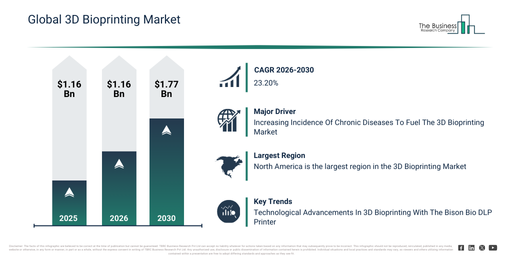
    The 3D bioprinting market has seen rapid expansion recently and is projected to continue this trend. From a valuation of $2.19 billion in 2025, the market is expected to reach $2.7 billion in 2026, growing at a compound annual growth rate (CAGR) of 23.0%. This past growth was fueled by increased funding in biomedical research, a rising need for in vitro drug testing models, early adoption of regenerative medicine, advancements in cell culture techniques, and broader use of 3D printing in healthcare. Looking ahead, the market is forecasted to surge to $6.21 billion by 2030, driven by personalized medicine expansion, growing organ transplantation demand, supportive regulations for bioprinted tissues, advancements in biopharmaceutical research pipelines, and the development of scalable bioprinting platforms. Key trends expected during this period include tissue engineering for regenerative therapies, creation of patient-specific implants, new bioink formulations, high-resolution multi-material bioprinting, and the clinical application of printed tissues.

    Download A Free Sample Report For Comprehensive Market Insights:

    https://www.thebusinessresearchcompany.com/sample.aspx?id=5341&type=smp

    Key Factors Encouraging Growth in the 3D Bioprinting Market

    A significant factor contributing to the 3D bioprinting market’s expansion is the rising prevalence of chronic diseases. Chronic illnesses, which persist for long durations typically exceeding three months, often require ongoing medical care. 3D bioprinting plays a crucial role in generating tissue models for studying these diseases and facilitating organ replacement therapies.

    For example, in June 2024, the National Health Service in the UK reported that 3,615,330 people registered with general practitioners were diagnosed with non-diabetic hyperglycemia or pre-diabetes in 2023. This figure represents an 18% increase compared to 3,065,825 cases in 2022, highlighting the growing health burden that supports demand for advanced bioprinting solutions.

    Primary Segments Within the 3D Bioprinting Market

    This market is categorized into several important segments for clarity and analysis:

    1) By Component: encompassing 3D bioprinters and bioinks

    2) By Material: including living cells, hydrogels, extracellular matrices, and other materials

    3) By Application: comprising research applications, clinical applications, and other uses

    4) By End User: covering research organizations and academic institutes, biopharmaceutical companies, hospitals, and other end users

    These categories are further divided; for example, 3D bioprinters include inkjet, microextrusion, laser-assisted, and stereolithography (SLA) types, while bioinks are classified as natural, synthetic, and hybrid.

    https://www.thebusinessresearchcompany.com/report/3d-bioprinting-global-market-report

    #3D Bioprinting Market Largest Region: Which Geography Holds The Highest Market Share?

    Innovations Shaping the Future of the 3D Bioprinting Market

    Leading companies in the 3D bioprinting field are heavily investing in advanced technological solutions to improve the precision and efficiency of tissue engineering and regenerative medicine. Devices known as 3D bioprinters use bioinks loaded with living cells to fabricate three-dimensional tissue and organ structures that benefit medical research and patient therapies.

    An illustrative example is the June 2024 launch of the Bison Bio DLP 3D bioprinter by Tethon 3D, a U.S.-based firm specializing in ceramic and metal-polymer products. Developed in partnership with Carima, this device offers adjustable build sizes (30 × 20 mm, 57 × 32 mm, and 96 × 54 mm) and works with proprietary photoinitiators and hydrogel bioinks essential for creating live tissues. Measuring 24 × 24 × 24 inches and weighing 75 pounds, the Bison Bio is priced at $19,950. It aims to advance healthcare by enabling the production of complex tissues and organs, thus supporting personalized medicine and regenerative therapies.

    Leading Players and Strategic Positioning in the 3D Bioprinting Industry

    The 3D bioprinting market is shaped by numerous key companies, including Organovo Holdings Inc., Allevi Inc., Cellink AB, Aspect Biosystems Ltd., Cyfuse Biomedical KK, Poietis SA, TeVido BioDevices, Nano3D Biosciences Inc., RegenHU Ltd., GeSiM mbH, Advanced Solutions Life Sciences LLC, Regenovo Biotechnology Co. Ltd., Regemat 3D S.L., Bio3D Technologies, ROKIT Healthcare Co. Ltd., Inventia Life Science Pvt. Ltd., Vivax Bio LLC, 3D Biotek LLC, 3D Bio Corp, 3D Bioprinting Solutions, BICO Group AB, CollPlant Biotechnologies Ltd., 3D Systems Corporation, EnvisionTEC GmbH, GE HealthCare Technologies Inc., and Nuclera Nucleics Ltd. These companies play critical roles in technology development and market expansion.

    Geographical Leadership and Regional Growth in the 3D Bioprinting Market

    North America held the largest share of the 3D bioprinting market in 2025, reflecting its strong infrastructure and established biomedical research hubs. However, the Asia-Pacific region is anticipated to emerge as the fastest-growing market throughout the forecast period, driven by increasing investments, expanding healthcare sectors, and growing awareness. The market report also covers other important regions such as South East Asia, Western Europe, Eastern Europe, South America, the Middle East, and Africa, providing a comprehensive global perspective.

    Get in touch with us:

    The Business Research Company: https://www.thebusinessresearchcompany.com/

    Americas: +1 310-496-7795

    Asia: +44 7882 955267 & +91 8897263534

    Europe: +44 7882 955267

    Email us at: marketing@tbrc.info

    Follow us on:

    LinkedIn: https://in.linkedin.com/company/the-business-research-company

    YouTube: https://www.youtube.com/channel/UC24_fI0rV8cR5DxlCpgmyFQ

    Global Market Model: https://www.thebusinessresearchcompany.com/global-market-model
  • 3D And 4D Ultrasound Devices Market Growth Through 2030 Creates New Strategic Opportunities

    3D And 4D Ultrasound Devices Market Growth Through 2030 Creates New Strategic Opportunities

    Enhanced with market attractiveness analysis, total addressable market evaluation, company benchmarking matrices, interactive Excel dashboards, expanded supply chain intelligence, emerging startup coverage, and detailed product insights, The Business Research Company’s 2026 market reports deliver more actionable and strategically valuable research.

    The market for 3D and 4D ultrasound devices has seen remarkable growth recently, driven by advancements in medical imaging technologies and increasing demand for detailed diagnostic tools. As healthcare providers seek more precise and non-invasive solutions, this sector continues to expand rapidly. Below is an in-depth look at the market’s size, key growth factors, segmentation, emerging trends, major players, and regional outlook.

    Significant Expansion in the 3D and 4D Ultrasound Devices Market Size

    The 3D and 4D ultrasound devices market is experiencing rapid growth, with revenues increasing from $14.07 billion in 2025 to $17.25 billion in 2026, representing a compound annual growth rate (CAGR) of 22.6%. This surge has been driven by the expanding use of ultrasound imaging, particularly in prenatal care, along with improved diagnostic infrastructure, more skilled sonographers, heightened awareness about early disease detection, and widespread adoption of non-invasive diagnostic technologies.

    Download A Free Sample Report For Comprehensive Market Insights:

    https://www.thebusinessresearchcompany.com/sample.aspx?id=14233&type=smp

    Forecasted Market Growth Through 2030

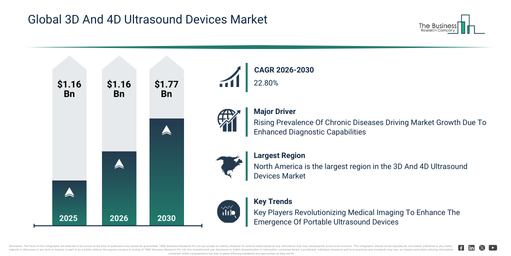
    Looking ahead, the market is projected to grow dramatically to $39.28 billion by 2030, at a CAGR of 22.8%. This anticipated expansion is fueled by the rising need for advanced prenatal diagnostic tools, increased investment in portable ultrasound devices, greater availability of point-of-care diagnostics, the growing incorporation of AI-assisted image analysis, and a stronger emphasis on detecting diseases at early stages. Key trends shaping the future include the growing use of high-resolution fetal imaging systems, demand for portable and point-of-care ultrasound devices, integration of sophisticated visualization software, expansion of multi-specialty diagnostic applications, and improvements in workflow efficiency and image accuracy.

    Factors Propelling Growth Due to Rising Chronic Disease Rates

    One of the primary drivers behind the expanding 3D and 4D ultrasound devices market is the increasing prevalence of chronic diseases worldwide. Chronic conditions, which require continuous management and medical attention, are becoming more common due to sedentary lifestyles, poor dietary habits, and an aging population. Ultrasound devices provide detailed 3D images that improve diagnosis and monitoring of these diseases, enhancing clinical outcomes.

    https://www.thebusinessresearchcompany.com/report/3d-and-4d-ultrasound-devices-global-market-report

    3D And 4D Ultrasound Devices Market Regional Analysis: Which Region Leads By Revenue?

    Demographic Changes Accelerating Market Demand

    For example, a January 2023 report from the US National Library of Medicine projects that by 2050, the number of Americans aged 50 and above with at least one chronic condition will nearly double to 142.66 million, a 99.5% increase. This demographic shift intensifies the need for advanced imaging technologies like 3D and 4D ultrasound devices, thereby driving market growth.

    How the 3D and 4D Ultrasound Devices Market Is Categorized

    This market is segmented across several crucial categories:

    1) By Type: Stationary 3D and 4D ultrasound devices and portable 3D and 4D ultrasound devices.

    2) By Display: Color ultrasound and black-and-white (B/W) ultrasound.

    3) By Portability: Trolley or cart-based ultrasound systems, compact or handheld ultrasound systems, and point-of-care (PoC) ultrasound systems.

    4) By Application: Radiology/general imaging, obstetrics/gynecology, cardiology, urology, vascular imaging, orthopedic and musculoskeletal uses, pain management, and other specialized applications.

    5) By End-User: Hospitals, surgical and diagnostic centers, maternity centers, ambulatory care centers, and various other users.

    Further breakdowns include categories such as console-based stationary systems, high-performance imaging machines, handheld portable devices, mobile ultrasound units, and compact point-of-care machines.

    Innovations and Trends Shaping the Future of 3D and 4D Ultrasound Devices

    Leading companies in this sector are pushing the boundaries of technology by developing ultrasound-on-chip solutions that miniaturize components onto a single chip. This innovation enables the creation of compact, portable ultrasound devices suitable for diverse medical imaging needs, improving accessibility and convenience in diagnostics.

    For instance, Butterfly Network Inc., a US-based company, introduced its Butterfly iQ3 handheld ultrasound system in June 2023. This device utilizes P4.3 ultrasound-on-chip technology, offering the fastest digital data transfer rate globally. It delivers enhanced high-resolution imaging, advanced 3D capabilities, and portable functionality while doubling the processing power of its predecessor, Butterfly iQ+.

    Top Companies Driving the 3D and 4D Ultrasound Devices Market

    Key players dominating this market include Hitachi Ltd., Toshiba Corporation, Siemens Healthineers, Koninklijke Philips N.V., GE HealthCare Technologies Inc., Fujifilm Holdings Corporation, Konica Minolta Healthcare Americas Inc., Hologic Inc., Mindray Medical International Limited, Canon Medical Systems Corporation, Samsung Medison Co. Ltd., Mobisante Inc., Esaote S.p.A, Shimadzu Medical Systems USA, Terason, Alpinion Medical Systems Co. Ltd., Shenzhen Bestman Instrument Co. Ltd., Chison Medical Technologies Co. Ltd., Edan Instruments Inc., and Mindray DS USA.

    Regional Market Leadership and Growth Potential

    In 2025, North America held the largest share of the 3D and 4D ultrasound devices market. However, the Asia-Pacific region is expected to witness the fastest growth during the forecast period. The market analysis includes various regions such as Asia-Pacific, South East Asia, Western Europe, Eastern Europe, North America, South America, the Middle East, and Africa, providing a broad view of regional trends and opportunities.

    Get in touch with us:

    The Business Research Company: https://www.thebusinessresearchcompany.com/

    Americas: +1 310-496-7795

    Asia: +44 7882 955267 & +91 8897263534

    Europe: +44 7882 955267

    Email us at: marketing@tbrc.info

    Follow us on:

    LinkedIn: https://in.linkedin.com/company/the-business-research-company

    YouTube: https://www.youtube.com/channel/UC24_fI0rV8cR5DxlCpgmyFQ

    Global Market Model: https://www.thebusinessresearchcompany.com/global-market-model
  • Thermal Cyclers Market Outlook Highlighting Demand Trends for 2026–2030

    Thermal Cyclers Market Outlook Highlighting Demand Trends for 2026–2030

    The Business Research Company’s 2026 market reports feature advanced enhancements such as market attractiveness analysis, total addressable market evaluation, company benchmarking matrices, interactive Excel dashboards, expanded supply chain intelligence, emerging startup coverage, and detailed product insights, delivering more actionable and strategically valuable research.

    How Will The Market Size Of The Thermal Cyclers Market Progress Through 2030?

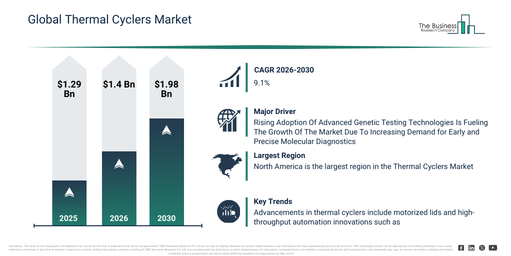
    The thermal cyclers market has experienced considerable growth in recent years. It is anticipated to expand from $1.29 billion in 2025 to $1.4 billion in 2026, exhibiting a compound annual growth rate (CAGR) of 8.9%. This past growth can be attributed to various factors, including the advancement of molecular diagnostics, the broadening scope of genomics research, an increase in infectious disease testing, a rise in forensic analysis, and the proliferation of academic research laboratories.

    The thermal cyclers market is poised for robust expansion in the upcoming years. It is projected to reach $1.98 billion in 2030, exhibiting a compound annual growth rate (CAGR) of 9.1%. This anticipated growth during the forecast period is driven by the increasing spread of point of care testing, advancements in precision medicine, a growing need for rapid diagnostics, augmented biotech research funding, and the wider uptake of digital PCR. Significant developments anticipated in this period encompass high throughput pcr cycler systems, portable field deployable cyclers, AI assisted temperature optimization, cloud connected pcr platforms, and rapid cycling thermal blocks.

    Download A Free Sample Report For Comprehensive Market Insights:

    https://www.thebusinessresearchcompany.com/sample.aspx?id=33341&type=smp

    What Core Drivers Are Transforming The Thermal Cyclers Market?

    The increasing adoption of advanced genetic testing technologies is anticipated to propel the growth of the thermal cyclers market moving forward. Molecular diagnostics refers to sophisticated laboratory techniques utilized to detect and analyze genetic material (DNA and RNA) for accurately identifying diseases, infections, and genetic conditions. The expansion of molecular diagnostics is fueled by the escalating demand for early and precise disease detection, which in turn encourages the use of advanced genetic testing methods for quicker and more reliable clinical outcomes. Thermal cyclers support molecular diagnostics by enabling precise DNA amplification through controlled temperature cycling, thereby ensuring accurate, rapid, and reliable molecular testing. For instance, in May 2025, according to Ellume, an Australia-based developer of rapid digital diagnostic tests, more than 96,215 molecular diagnostic tests were conducted per week in the US in 2023, highlighting extensive clinical use and the persistent importance of molecular diagnostics in disease surveillance and clinical decision-making. Therefore, the growing adoption of advanced genetic testing technologies is driving the expansion of the thermal cyclers market.

    How Is The Thermal Cyclers Market Examined Through Segment Analysis?

    The thermal cyclers market covered in this report is segmented –

    1) By Product Type: Standard Polymerase Chain Reaction (PCR) Thermal Cyclers; Real-Time Polymerase Chain Reaction (PCR) (qPCR) Systems; Digital Polymerase Chain Reaction (dPCR) Systems; High-Throughput Thermal Cyclers; Portable Or Compact Thermal Cyclers

    2) By Technology: Gradient Polymerase Chain Reaction (PCR); Touchdown Polymerase Chain Reaction (PCR); Fast Polymerase Chain Reaction (PCR); Reverse Transcription Polymerase Chain Reaction (RT-PCR); Other Technologies

    3) By Application: Clinical Diagnostics; Research And Academic Use; Forensic Applications; Agricultural Biotechnology; Environmental Testing

    4) By Distribution Channel: Direct Sales; Distributors Or Resellers; Online Sales

    5) By End User: Hospitals And Diagnostic Centers; Academic And Research Institutions; Biotechnology And Pharmaceutical Companies; Forensic Laboratories; Contract Research Organizations (CROs)

    Subsegments:

    1) By Standard Polymerase Chain Reaction (PCR) Thermal Cyclers: Conventional Block Thermal Cyclers; Gradient Thermal Cyclers; Touchscreen Controlled Thermal Cyclers; Multi Block Thermal Cyclers

    2) By Real-Time Polymerase Chain Reaction (PCR) (qPCR) Systems: Dye Based Detection Systems; Probe Based Detection Systems; Multiplex Real Time Systems; Fast Cycling Real Time Systems

    3) By Digital Polymerase Chain Reaction (dPCR) Systems: Droplet Based Digital Systems; Chip Based Digital Systems; Microfluidic Digital Systems; High Precision Quantification Systems

    4) By High-Throughput Thermal Cyclers: Ninety Six Well Thermal Cyclers; Three Hundred Eighty Four Well Thermal Cyclers; Automated High Capacity Thermal Cyclers; Parallel Processing Thermal Cyclers

    5) By Portable Or Compact Thermal Cyclers: Battery Operated Thermal Cyclers; Handheld Thermal Cyclers; Field Deployable Thermal Cyclers; Point Of Care Thermal Cyclers

    Which Trends Are Expected To Shape The Thermal Cyclers Market?

    Leading firms within the thermal cyclers market are concentrating on sophisticated advancements like deep-well thermal cyclers to achieve a competitive advantage in the sector. Deep-well thermal cyclers represent specialized lab equipment designed for executing temperature-regulated reactions, including PCR, with samples housed in deep-well plates, capable of accommodating greater volumes compared to conventional PCR tubes or plates. For example, in March 2025, Bio-Rad Laboratories, a research firm based in the US, introduced the PTC Tempo 384 Thermal Cycler, which is the newest addition to its PTC Tempo series. This cutting-edge device is specifically engineered for high-throughput PCR uses across basic research, translational investigations, process refinement, and quality assurance. The PTC Tempo 384 incorporates a 384-well reaction module fitted with a motorized lid, facilitating effortless automation and compatibility with robotic systems. It provides exceptional thermal uniformity (±0.3°C at 95°C), rapid ramp rates reaching up to 5°C per second, and multizone gradient programming, thereby proving more effective than alternative models, like the dual-block PTC Tempo 48/48, for rigorous, expandable workflows. Constructed upon the reliable C1000 Touch platform, the PTC Tempo 384 includes an enhanced intuitive user interface, versatile connectivity choices such as BR.io cloud monitoring, and the recent software update v3.0.0.8, which improves API support. Consequently, the PTC Tempo 384 stands as an outstanding option for academic, commercial, and biopharma laboratories, presenting unparalleled reproducibility and ease of use.

    Which Organizations Are Operating Within The Thermal Cyclers Market?

    Major companies operating in the thermal cyclers market are Roche Diagnostics, Thermo Fisher Scientific Inc., Agilent Technologies, Bio-Rad Laboratories, QIAGEN, Eppendorf, Cepheid, Bio-Techne, Hamilton Company, Heal Force Bio-Meditech, Takara Bio, Hangzhou Bioer Technology, Analytik Jena, Esco Lifesciences, ELITechGroup, Benchmark Scientific, Cole-Parmer Instrument Company, Biomeme, GNA Biosolutions, Cleaver Scientific, Starlab International, and Scilogex.

    Access The Complete Thermal Cyclers Market Report:

    https://www.thebusinessresearchcompany.com/report/thermal-cyclers-market-report

    What Is The Largest Regional Market In The Thermal Cyclers Market?

    North America was the largest region in the thermal cyclers market in 2025. Asia-Pacific is expected to be the fastest-growing region in the forecast period. The regions covered in the thermal cyclers market report are Asia-Pacific, South East Asia, Western Europe, Eastern Europe, North America, South America, Middle East, Africa.

    Access a Customized Thermal Cyclers Market Report for Deeper Competitive Insights

    Get in touch with us:

    The Business Research Company: https://www.thebusinessresearchcompany.com/

    Americas: +1 310-496-7795

    Asia: +44 7882 955267 & +91 8897263534

    Europe: +44 7882 955267

    Email us at: marketing@tbrc.info

    Follow us on:

    LinkedIn: https://in.linkedin.com/company/the-business-research-company

    YouTube: https://www.youtube.com/channel/UC24_fI0rV8cR5DxlCpgmyFQ

    Global Market Model: https://www.thebusinessresearchcompany.com/global-market-model
  • Teleultrasound Systems Market Trends, Drivers, and Opportunities Through 2030

    Teleultrasound Systems Market Trends, Drivers, and Opportunities Through 2030

    The Business Research Company’s 2026 market reports feature advanced enhancements such as market attractiveness analysis, total addressable market evaluation, company benchmarking matrices, interactive Excel dashboards, expanded supply chain intelligence, emerging startup coverage, and detailed product insights, delivering more actionable and strategically valuable research.

    What Is The Expected Market Size Of The Teleultrasound System Market In 2026 And How Much Will It Reach By 2030?

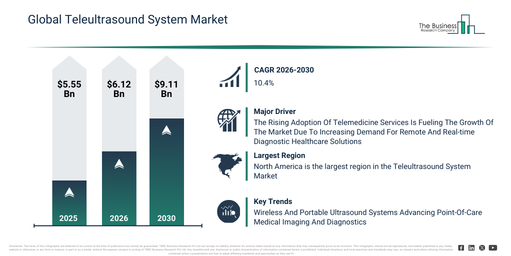
    The teleultrasound system market size has expanded considerably in recent years. Its value is expected to rise from $5.55 billion in 2025 to $6.12 billion in 2026, at a compound annual growth rate (CAGR) of 10.2%. The past growth can be attributed to several factors including the increased adoption of telemedicine, a shortage of imaging specialists, the expansion of rural healthcare programs, a rise in portable ultrasound devices, and the need for quicker diagnoses.

    The teleultrasound system market is anticipated to experience substantial growth in the upcoming years. It is forecast to expand to $9.11 billion by 2030, driven by a compound annual growth rate (CAGR) of 10.4%. This projected increase is fueled by the broadening reach of remote diagnostics, the proliferation of connected medical devices, a rising need for point-of-care imaging, intensified healthcare digitization, and more extensive reimbursement options for telehealth services. Noteworthy trends for this period encompass AI-driven remote ultrasound guidance, cloud-based platforms for image transmission, portable connected ultrasound devices, tools facilitating real-time specialist collaboration, and secure tele-imaging workflows.

    Download A Free Sample Report For Comprehensive Market Insights:

    https://www.thebusinessresearchcompany.com/sample.aspx?id=33339&type=smp

    Which Growth Factors Are Strengthening The Teleultrasound System Market Landscape?

    The future expansion of the teleultrasound system market is anticipated to be significantly advanced by the increasing integration of telemedicine services. These services encompass the provision of healthcare consultations, diagnostic procedures, and patient monitoring, all facilitated by digital communication technologies, thereby eliminating the necessity for physical visits. The heightened demand for convenient and geographically accessible healthcare, particularly within remote and underserved communities, is fueling the rapid rise of telemedicine services. In this context, the teleultrasound system enhances access to diagnostic imaging, allowing specialists to offer real-time remote guidance, manage image acquisition, and perform interpretations, especially beneficial in healthcare environments that are remote or lacking sufficient resources. A notable illustration of this trend comes from June 2025, when Harmony Healthcare IT, a US-based data management firm, reported that 62% of Americans had utilized telehealth services for their medical requirements, and over 77% viewed telehealth as the future of healthcare, underscoring robust consumer trust and continuous growth in adoption. Consequently, the expanding use of telemedicine services is a primary catalyst for the development of the teleultrasound system market.

    Which Segment Groups Define The Teleultrasound System Market Landscape?

    The teleultrasound system market covered in this report is segmented –

    1) By Component: Hardware; Software; Services

    2) By Technology: Two-Dimensional (2D) Ultrasound; Three-Dimensional (3D) Or Four Dimensional (4D) Ultrasound; Artificial Intelligence-Enabled Ultrasound; Cloud-Based Imaging Platforms

    3) By Product Type: Portable Teleultrasound Systems; Handheld Teleultrasound Systems; Cart-Based Teleultrasound Systems

    4) By Application: Cardiology; Obstetrics Or Gynecology; Radiology; Vascular; Musculoskeletal; Other Applications

    5) By End-User: Hospitals; Diagnostic Centers; Ambulatory Surgical Centers; Other End-Users

    Subsegments:

    1) By Hardware: Ultrasound Imaging Devices; Ultrasound Probes And Transducers; Communication And Transmission Modules; Display And Control Units; Peripheral And Accessory Equipment

    2) By Software: Image Processing Software; Real Time Image Transmission Software; Remote Collaboration And Guidance Software; Data Storage And Management Software; Integration And Workflow Management Software

    3) By Services: Installation And System Integration Services; Maintenance And Technical Support Services; Training And Education Services; Calibration And Quality Assurance Services; Operational And Consulting Services

    What Trends Are Impacting The Teleultrasound System Market?

    Major companies engaged in the medical imaging and diagnostic ultrasound market are concentrating on developing innovative solutions, including wireless and portable ultrasound systems, aimed at enhancing point-of-care diagnostics, improving clinical workflow efficiency, and expanding access to imaging in various care settings. Wireless ultrasound systems describe compact, cable-free imaging devices that transmit ultrasound data wirelessly to smartphones, tablets, or workstations, allowing for greater mobility, ease of use, and rapid deployment across hospitals, clinics, emergency care, and remote environments. For instance, in November 2025, Mindray Bio-Medical Electronics Co. Ltd., a China-based medical device manufacturer, introduced a new wireless ultrasound system engineered to deliver high-quality imaging through flexible, handheld operation. This system offers real-time imaging, seamless wireless connectivity, and compatibility with multiple clinical applications, enabling healthcare professionals to perform swift and accurate assessments at the bedside or in the field. This launch underscores the increasing focus on portable, user-friendly diagnostic technologies that improve clinical decision-making while enhancing efficiency and accessibility across healthcare environments.

    Who Are The Businesses Driving Activity In The Teleultrasound System Market?

    Major companies operating in the teleultrasound system market are Siemens Healthineers AG, FUJIFILM Holdings Corporation, Koninklijke Philips N.V., GE HealthCare Technologies Inc., Mindray Medical International Limited, Canon Medical Systems Corporation, DeepEcho Inc., Esaote S.p.A., TELSONIC AG, Butterfly Network Inc., EchoNous Inc., Clarius Mobile Health Corp., Telemed Medical Systems S.r.l., Healcerion Co. Ltd., Interson Corporation, Remote Medical Technologies LLC, Pulsenmore Ltd., e-Medical Systems Pty Ltd, Alpinion Medical Systems Co. Ltd., TeleGuidance Systems Inc.

    Access The Complete Teleultrasound System Market Report:

    https://www.thebusinessresearchcompany.com/report/teleultrasound-system-market-report

    Which Region Contributes The Most To The Teleultrasound System Market?

    North America was the largest region in the teleultrasound system market in 2025. Asia-Pacific is expected to be the fastest-growing region in the forecast period. The regions covered in the teleultrasound system market report are Asia-Pacific, South East Asia, Western Europe, Eastern Europe, North America, South America, Middle East, Africa.

    Access a Customized Teleultrasound System Market Report for Deeper Competitive Insights

    Get in touch with us:

    The Business Research Company: https://www.thebusinessresearchcompany.com/

    Americas: +1 310-496-7795

    Asia: +44 7882 955267 & +91 8897263534

    Europe: +44 7882 955267

    Email us at: marketing@tbrc.info

    Follow us on:

    LinkedIn: https://in.linkedin.com/company/the-business-research-company

    YouTube: https://www.youtube.com/channel/UC24_fI0rV8cR5DxlCpgmyFQ

    Global Market Model: https://www.thebusinessresearchcompany.com/global-market-model
  • Targeted LNPs for Extrahepatic Delivery Market Forecast to Hit $4.67 Billion by 2030

    Targeted LNPs for Extrahepatic Delivery Market Forecast to Hit $4.67 Billion by 2030

    The Business Research Company’s 2026 market reports feature advanced enhancements such as market attractiveness analysis, total addressable market evaluation, company benchmarking matrices, interactive Excel dashboards, expanded supply chain intelligence, emerging startup coverage, and detailed product insights, delivering more actionable and strategically valuable research.

    What Market Size Is Forecasted For The Targeted LNPs For Extrahepatic Delivery Market By 2030 Based On Its 2026 Value?

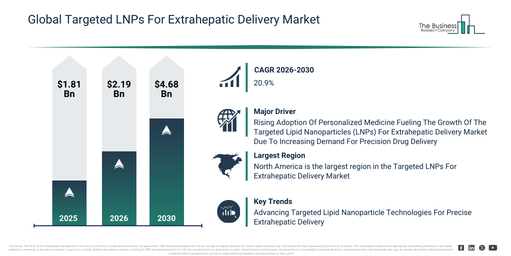
    The targeted lnps for extrahepatic delivery market size has experienced substantial growth in recent years. This market is projected to expand from $1.81 billion in 2025 to $2.19 billion in 2026, at a compound annual growth rate (CAGR) of 20.7%. The historical growth can be attributed to the success of hepatic LNP delivery systems, the rise of mRNA vaccine platforms, the expansion of nanomedicine research, an increase in gene therapy trials, and the growing challenges in biologic drug delivery.

    The market for targeted LNPs intended for extrahepatic delivery is projected to experience substantial growth in the coming years. This market is set to reach $4.68 billion by 2030, exhibiting a compound annual growth rate (CAGR) of 20.9%. The expansion during this forecast timeframe is driven by factors such as an expanding pipeline of RNA therapeutics, an increasing need for tissue-specific delivery, the proliferation of precision drug delivery platforms, a surge in oncology nanoparticle research, and enhanced biotech delivery collaborations. Key trends anticipated during the forecast period encompass extrahepatic targeted LNP formulations, ligand-directed nanoparticle delivery, RNA delivery systems that are tissue-specific, innovative ionizable lipid designs, and modular targeted nanocarrier platforms.

    Download A Free Sample Report For Comprehensive Market Insights:

    https://www.thebusinessresearchcompany.com/sample.aspx?id=33338&type=smp

    What Important Drivers Are Powering The Targeted LNPs For Extrahepatic Delivery Market Growth?

    The increasing need for personalized medicine (PM) is anticipated to drive the expansion of the targeted lipid nanoparticles (LNPs) for extrahepatic delivery market in the future. Personalized medicine (PM) encompasses treatments specifically designed for an individual’s unique genetic makeup, disease attributes, or biological markers, aiming to optimize therapeutic effectiveness and reduce adverse reactions. Progress in molecular diagnostics, the identification of biomarkers, and the development of precision drugs are speeding up the uptake of personalized therapies. Crucially, targeted lipid nanoparticles are instrumental in advancing personalized medicine by allowing for the accurate delivery of therapeutic agents to particular tissues or cell types, including those outside the liver, thus improving treatment efficacy and safety. For example, data from the Personalized Medicine Coalition, a US-based hospital and health care organization, indicates that the U.S. Food and Drug Administration sanctioned 16 new personalized treatments for rare disease patients in 2023, a rise from six in 2022. Consequently, the growing demand for personalized medicine (PM) is fueling the expansion of the targeted lipid nanoparticles (LNPs) for extrahepatic delivery market.

    What Key Segment Areas Are Included In The Targeted LNPs For Extrahepatic Delivery Market Assessment?

    The targeted lnps for extrahepatic delivery market covered in this report is segmented –

    1) By Product Type: Ionizable Lipid-Based Lipid Nanoparticles; Cationic Lipid-Based Lipid Nanoparticles; Polyethylene Glycol-Coated Lipid Nanoparticles; Other Lipid Nanoparticle Formulations

    2) By Therapeutic Area: Oncology; Infectious Diseases; Genetic Disorders; Metabolic Diseases; Other Therapeutic Area

    3) By Application: Gene Therapy; Messenger Ribonucleic Acid Vaccines; Small Interfering Ribonucleic Acid Delivery; Protein Delivery; Other Application

    4) By End-User: Pharmaceutical Companies; Biotechnology Companies; Academic and Research Institutes; Other End-Users

    Subsegments:

    1) By Ionizable Lipid-Based Lipid Nanoparticles: Single Chain Ionizable Lipids; Multi-Chain Ionizable Lipids; Functionalized Ionizable Lipids

    2) By Cationic Lipid-Based Lipid Nanoparticles: Quaternary Ammonium Cationic Lipids; Permanent Cationic Lipids; Helper Lipids in Cationic Formulations

    3) By Polyethylene Glycol-Coated Lipid Nanoparticles: Polyethylene Glycolylated Lipids with Different Chain Lengths; Polyethylene Glycol-Lipid Conjugates with Targeting Ligands; Polyethylene Glycolylated Lipid Combinations for Stability

    4) By Other Lipid Nanoparticle Formulations: Sphingomyelin-Based Lipid Nanoparticles; Biodegradable Lipid Nanoparticles; Modular or Hybrid Lipid Nanoparticles; Stimulus-Responsive Lipid Nanoparticles

    Which Trends Are Affecting The Targeted LNPs For Extrahepatic Delivery Market Framework?

    Companies primarily engaged in the targeted lipid nanoparticles (LNPs) for extrahepatic delivery market are prioritizing technological advancements in their targeted LNP platforms, notably DARPin-conjugated systems, to improve selective delivery to immune and tissue-specific cells. DARPin-conjugated lipid nanoparticles describe LNPs that have been functionalized with Designed Ankyrin Repeat Proteins (DARPins), which are engineered binding proteins capable of highly precise interactions with chosen cell surface receptors. This specific targeting ability facilitates enhanced uptake by particular cell types, thereby supporting extrahepatic applications such as immune cell modulation and tissue-specific gene delivery. As an illustration, in November 2025, Acuitas Therapeutics Inc., a Canada-based biotechnology company, unveiled its next-generation LNP technologies designed for extrahepatic targeting. These innovations included platforms aimed at T-lymphocyte delivery, mucous-penetrant formulations for airway epithelial cells, and a pre-formed vesicle manufacturing method intended to boost scalability, cost efficiency, and storage stability. Such advancements broaden the potential uses of mRNA-LNP therapeutics beyond the liver, supporting wider applications in gene editing, vaccines, and personalized medicine.

    Which Firms Are Competing In The Targeted LNPs For Extrahepatic Delivery Market?

    Major companies operating in the targeted lnps for extrahepatic delivery market are Pfizer Inc., Sanofi S.A., Merck KGaA, FUJIFILM Pharmaceuticals U.S.A. Inc., Evonik Industries AG, Recipharm, CordenPharma International GmbH, Ardena Nanomedicines, Arcturus Therapeutics Holdings Inc., BIOVECTRA Inc., Ascendia Pharmaceuticals Inc., ABITEC Corporation, Creative Biolabs, Genevant Sciences GmbH, Polymun Scientific Immunbiologische Forschung GmbH, ST Pharm, eTheRNA immunotherapies NV, NanoVation Therapeutics, DIANT Pharma, Curapath, Phosphorex Inc.

    Access The Complete Targeted LNPs For Extrahepatic Delivery Market Report:

    https://www.thebusinessresearchcompany.com/report/targeted-lnps-for-extrahepatic-delivery-market-report

    Which Regional Market Leads The Targeted LNPs For Extrahepatic Delivery Market?

    North America was the largest region in the targeted lipid nanoparticles (LNPs) for extrahepatic delivery market in 2025. Asia-Pacific is expected to be the fastest-growing region in the forecast period. The regions covered in the targeted lnps for extrahepatic delivery market report are Asia-Pacific, South East Asia, Western Europe, Eastern Europe, North America, South America, Middle East, Africa.

    Access a Customized Targeted LNPs For Extrahepatic Delivery Market Report for Deeper Competitive Insights

    Get in touch with us:

    The Business Research Company: https://www.thebusinessresearchcompany.com/

    Americas: +1 310-496-7795

    Asia: +44 7882 955267 & +91 8897263534

    Europe: +44 7882 955267

    Email us at: marketing@tbrc.info

    Follow us on:

    LinkedIn: https://in.linkedin.com/company/the-business-research-company

    YouTube: https://www.youtube.com/channel/UC24_fI0rV8cR5DxlCpgmyFQ

    Global Market Model: https://www.thebusinessresearchcompany.com/global-market-model
  • Systemic Amyloidosis Therapeutics Market Expected to Approach $8.87 Billion by 2030

    Systemic Amyloidosis Therapeutics Market Expected to Approach $8.87 Billion by 2030

    The Business Research Company’s 2026 market reports feature advanced enhancements such as market attractiveness analysis, total addressable market evaluation, company benchmarking matrices, interactive Excel dashboards, expanded supply chain intelligence, emerging startup coverage, and detailed product insights, delivering more actionable and strategically valuable research.

    How Is The Market Value Of The Systemic Amyloidosis Therapeutic Market Projected To Expand During 2026–2030?

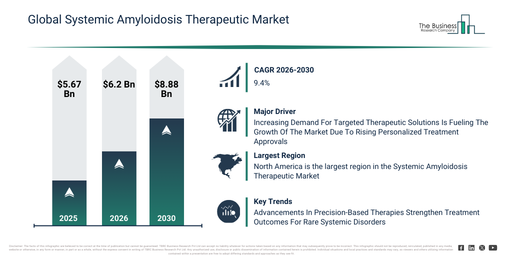
    The systemic amyloidosis therapeutic market size has experienced robust expansion in recent times. This market is projected to expand from $5.67 billion in 2025 to $6.2 billion in 2026, demonstrating a compound annual growth rate (CAGR) of 9.2%. Factors contributing to its historical growth include the past underdiagnosis of amyloidosis, the prevailing use of chemotherapy regimens, an increase in hematology treatment centers, a rise in awareness regarding rare diseases, and the initial adoption of proteasome inhibitors.

    The systemic amyloidosis therapeutic market size is poised for significant expansion in the upcoming years. It is forecast to achieve a valuation of $8.88 billion by 2030, advancing at a compound annual growth rate (CAGR) of 9.4%. This projected increase during the forecast period stems from factors such as increasing rates of rare disease diagnosis, the broader availability of targeted biologic drugs, a rise in approvals for gene silencing therapies, the growth of specialized clinic networks, and more robust incentives for orphan drugs. Noteworthy trends anticipated in this period encompass targeted amyloid protein stabilizer medications, gene silencing treatments for amyloidosis, therapies utilizing monoclonal antibodies, combined treatment protocols, and supportive drug approaches specific to various organs.

    Download A Free Sample Report For Comprehensive Market Insights:

    https://www.thebusinessresearchcompany.com/sample.aspx?id=33337&type=smp

    Which Major Factors Are Contributing To The Development Of The Systemic Amyloidosis Therapeutic Market?

    The increasing use of personalized medicine methods is set to boost the systemic amyloidosis therapeutic market in the coming years. Personalized medicine is a healthcare strategy that tailors treatment and prevention plans based on an individual’s genetic makeup, biological markers, and specific disease traits. The demand for personalized medicine is on the rise due to advancements in genomic and biomarker technologies, which empower clinicians to accurately pinpoint disease drivers and customize therapies, thereby improving effectiveness and reducing negative side effects for patients. The integration of personalized medicine elevates the need for systemic amyloidosis therapeutics because patients with systemic amyloidosis display distinct amyloid subtypes (e.g., AL, ATTR) and genetic variations, meaning successful treatment requires therapies specifically designed to target each patient’s unique disease profile to ensure optimal effectiveness and minimal adverse reactions. For instance, in April 2025, according to the Personalized Medicine Coalition (PMC), a US-based nonprofit advocacy and educational organization, in 2023, the FDA approved 16 new personalized treatments for rare disease patients, a substantial increase from six in 2022. Consequently, the expanding adoption of personalized medicine approaches is stimulating the growth of the systemic amyloidosis therapeutic market.

    How Is Segment Classification Applied In The Systemic Amyloidosis Therapeutic Market?

    The systemic amyloidosis therapeutic market covered in this report is segmented –

    1) By Product Type: Small Molecule Drugs; Biologic Therapies; Monoclonal Antibodies; Chemotherapy Based Regimens; Targeted Therapies; Supportive Treatments

    2) By Formulation: Tablets; Capsules; Injection

    3) By Route of Administration: Oral; Intravenous; Subcutaneous

    4) By Distribution Channel: Hospital Pharmacies; Retail Pharmacies; Online Pharmacies

    5) By End User: Hospitals; Specialty Clinics; Specialty Pharmacies; Research and Academic Institutes; Other End Users

    Subsegments:

    1) By Small Molecule Drugs: Proteasome Inhibitors; Stabilizers of Transthyretin Protein; Amyloid Fibril Disruptors; Immunomodulatory Small Molecules

    2) By Biologic Therapies: Recombinant Protein Therapies; Gene Silencing Biologic Agents; Plasma Derived Biologic Products

    3) By Monoclonal Antibodies: Anti Amyloid Fibril Antibodies; Anti Light Chain Antibodies; Targeted Clearance Antibodies

    4) By Chemotherapy Based Regimens: Alkylating Agent Based Regimens; Proteasome Inhibitor Based Chemotherapy; Combination Chemotherapy Protocols

    5) By Targeted Therapies: Targeted Light Chain Suppression Therapies; Targeted Transthyretin Reduction Therapies; Organ Specific Targeted Treatments

    6) By Supportive Treatments: Cardiac Supportive Therapies; Renal Supportive Therapies; Neurological Symptom Management Therapies; Nutritional and Palliative Care Therapies

    Which Trends Are Supporting The Evolution Of The Systemic Amyloidosis Therapeutic Market?

    Leading companies operating in the systemic amyloidosis therapeutic market are prioritizing the development of advanced targeted treatment approaches, such as RNA interference-based therapies. These aim to address the fundamental genetic causes of protein misfolding disorders, thereby reducing disease progression and improving long-term patient outcomes. RNA interference-based therapies function by selectively silencing disease-causing genes, which in turn diminishes the production of harmful proteins responsible for systemic organ damage. For instance, in March 2025, Alnylam Pharmaceuticals, a US-based biotechnology company, launched AMVUTTRA. AMVUTTRA provides a targeted, disease-modifying treatment for adults with transthyretin amyloidosis with cardiomyopathy (ATTR-CM). Developed by Alnylam Pharmaceuticals, it stands as the first RNAI therapeutic proven to reduce cardiovascular death, hospitalizations, and urgent heart failure visits within this specific patient population. AMVUTTRA works by promptly suppressing transthyretin production at its source, directly addressing the underlying cause of amyloid deposition. It consistently demonstrates benefits across cardiovascular outcomes, functional capacity, and quality of life.

    Who Are The Major Companies Operating In The Systemic Amyloidosis Therapeutic Market?

    Major companies operating in the systemic amyloidosis therapeutic market are Johnson & Johnson Services Inc., Sanofi SA, Novartis Plc, AstraZeneca Plc, GSK Plc, Novo Nordisk A/S, Takeda Pharmaceutical Company Limited, Regeneron Pharmaceuticals Inc., Alnylam Pharmaceuticals Inc., Ionis Pharmaceuticals, Arcturus Therapeutics Inc, Prothena Biosciences, Fortress Biotech Inc., Intellia Therapeutics Inc., Zentalis Pharmaceuticals Inc., BridgeBio Pharma Inc., Neurimmune AG, HaemaLogix Pty Ltd., Attralus Inc., and Oncopeptides AB.

    Access The Complete Systemic Amyloidosis Therapeutic Market Report:

    https://www.thebusinessresearchcompany.com/report/systemic-amyloidosis-therapeutic-market-report

    Which Region Holds The Largest Share In The Systemic Amyloidosis Therapeutic Market?

    North America was the largest region in the systemic amyloidosis therapeutic market in 2025. Asia-Pacific is expected to be the fastest-growing region in the forecast period. The regions covered in the systemic amyloidosis therapeutic market report are Asia-Pacific, South East Asia, Western Europe, Eastern Europe, North America, South America, Middle East, Africa.

    Access a Customized Systemic Amyloidosis Therapeutic Market Report for Deeper Competitive Insights

    Get in touch with us:

    The Business Research Company: https://www.thebusinessresearchcompany.com/

    Americas: +1 310-496-7795

    Asia: +44 7882 955267 & +91 8897263534

    Europe: +44 7882 955267

    Email us at: marketing@tbrc.info

    Follow us on:

    LinkedIn: https://in.linkedin.com/company/the-business-research-company

    YouTube: https://www.youtube.com/channel/UC24_fI0rV8cR5DxlCpgmyFQ

    Global Market Model: https://www.thebusinessresearchcompany.com/global-market-model
  • Surgical Robotics in Gynecology Market to Reach $5.75 Billion by 2030

    Surgical Robotics in Gynecology Market to Reach $5.75 Billion by 2030

    The Business Research Company’s 2026 market reports feature advanced enhancements such as market attractiveness analysis, total addressable market evaluation, company benchmarking matrices, interactive Excel dashboards, expanded supply chain intelligence, emerging startup coverage, and detailed product insights, delivering more actionable and strategically valuable research.

    What Are The Forecasted Market Size Figures For The Surgical Robotics for Gynecology Market In 2026 And 2030?

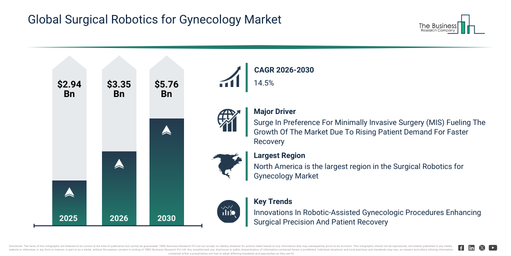
    The surgical robotics for gynecology market size has witnessed substantial expansion in recent years. This market is set to increase from $2.94 billion in 2025 to $3.35 billion in 2026, exhibiting a compound annual growth rate (CAGR) of 14.2%. The historical growth can be linked to several contributing factors, including the advancement of minimally invasive gynecology, an increase in women’s health procedure volumes, the establishment of more robotic surgery centers, enhancements in laparoscopic outcomes, and the demand for better surgeon ergonomics.

    The surgical robotics for gynecology market is projected to experience substantial expansion over the upcoming years. This market is predicted to reach $5.76 billion by 2030, exhibiting a compound annual growth rate (CAGR) of 14.5%. Key drivers contributing to this anticipated growth include increased hospital spending on robotic systems, an uptick in intricate gynecologic surgeries, a growing preference among patients for less invasive operations, the widening availability of robotic training initiatives, and enhanced support for reimbursements. Significant trends expected during this period encompass the growing acceptance of robotic hysterectomy platforms, the advancement of minimally invasive gynecologic robotic techniques, the proliferation of robotic single-port surgical methods, an increased application of sophisticated surgical imaging technologies, and the incorporation of software for procedure planning.

    Download A Free Sample Report For Comprehensive Market Insights:

    https://www.thebusinessresearchcompany.com/sample.aspx?id=33332&type=smp

    What Key Growth Drivers Are Influencing The Surgical Robotics for Gynecology Market?

    The increasing demand for minimally invasive surgery is projected to boost the expansion of the surgical robotics for gynecology market in the future. This type of surgery involves executing gynecological operations, such as hysterectomies and myomectomies, via small incisions utilizing either laparoscopic or robot-assisted methods, which leads to reduced tissue damage. The rise in minimally invasive surgery can be attributed to enhancements in surgical tools and imaging technologies, providing greater accuracy, less patient trauma, and quicker recovery periods. Surgical robotics for gynecology significantly improves these minimally invasive procedures by providing superior precision, three-dimensional visualization, better dexterity, and tremor cancellation, thereby allowing surgeons to carry out intricate operations more efficiently. For example, in November 2025, Intuitive Surgical Inc., a US-based medical device company, reported that in 2023, approximately 2,286,000 surgical procedures worldwide utilized da Vinci robotic surgical systems, marking an increase of about 22% over 2022, with the total experience on da Vinci platforms surpassing 14 million procedures. Consequently, the rising preference for minimally invasive surgery is propelling the growth of the surgical robotics for gynecology market.

    What Are The Core Segment Classifications In The Surgical Robotics for Gynecology Market?

    The surgical robotics for gynecology market covered in this report is segmented –

    1) By Product Type: Robotic Systems; Instruments And Accessories; Services

    2) By Technology: Telerobotics; Minimally Invasive Robotics; Autonomous Robotics

    3) By Application: Hysterectomy; Myomectomy; Oophorectomy; Sacrocolpopexy; Other Applications

    4) By End-User: Hospitals; Ambulatory Surgical Centers; Specialty Clinics; Other End-Users

    Subsegments:

    1) By Robotic Systems: Robotic Surgical Platforms; Robotic Laparoscopy Systems; Robotic Hysterectomy Systems; Robotic Myomectomy Systems; Single Port Robotic Systems

    2) By Instruments And Accessories: Robotic Surgical Instruments; Endoscopic Staplers; Energy Devices; Needle Holders; Trocars And Cannulas

    3) By Services: Installation Services; Maintenance Services; Training And Education Services; Software Upgradation Services; Technical Support Services

    What Trends Are Affecting The Growth Of The Surgical Robotics for Gynecology Market?

    Leading companies within the surgical robotics for gynecology market are concentrating on creating advanced solutions, including minimally invasive gynecologic surgery platforms, with the goal of increasing surgical accuracy, minimizing patient harm, and bettering clinical results. These platforms are robotic systems empowering surgeons to conduct intricate gynecological operations via small cuts, offering superior precision, clearer sight, and improved dexterity, thereby assisting in less blood loss, less pain after surgery, and quicker recovery when contrasted with conventional surgery. As an example, in September 2025, the Royal Free Hospital, a public healthcare provider located in the UK, initiated a robotic gynaecology surgery program designed to broaden the availability of sophisticated robotic-assisted procedures for women’s healthcare. This initiative employs cutting-edge surgical robotics, allowing for challenging gynecological procedures like hysterectomies and cancer-related surgeries to be executed with greater accuracy and command. The robotic setup facilitates surgeons in executing precise movements via tiny incisions, which enhances the visibility of anatomical features and diminishes blood loss in comparison to conventional methods. Significant advantages encompass quicker recovery periods, a decreased chance of infection, less pain following surgery, and better patient clinical results. Furthermore, this program supports the training of surgeons and promotes the wider integration of robotic gynecology throughout the UK healthcare system.

    Which Companies Are Influencing The Surgical Robotics for Gynecology Market?

    Major companies operating in the surgical robotics for gynecology market are Johnson & Johnson, Medtronic plc, Intuitive Surgical Inc., Meere Company, Avateramedical GmbH, CMR Surgical Ltd., DistalMotion SA, Distalmotion SA, Ronovo Surgical Inc., OmniGuide Holdings, SS Innovations International Inc., Titan Medical Inc., MicroPort MedBot, Virtual Incision Corporation, Asensus Surgical, Moon Surgical SAS, Virtuoso Surgical Inc., Edge Medical Robotics Corporation, Momentis Surgical Ltd., Medicaroid Corporation.

    Access The Complete Surgical Robotics for Gynecology Market Report:

    https://www.thebusinessresearchcompany.com/report/surgical-robotics-for-gynecology-market-report

    Which Region Is The Dominant Market In The Surgical Robotics for Gynecology Market?

    North America was the largest region in the surgical robotics for gynecology market in 2025. Asia-Pacific is expected to be the fastest-growing region in the forecast period. The regions covered in the surgical robotics for gynecology market report are Asia-Pacific, South East Asia, Western Europe, Eastern Europe, North America, South America, Middle East, Africa.

    Access a Customized Surgical Robotics for Gynecology Market Report for Deeper Competitive Insights

    Get in touch with us:

    The Business Research Company: https://www.thebusinessresearchcompany.com/

    Americas: +1 310-496-7795

    Asia: +44 7882 955267 & +91 8897263534

    Europe: +44 7882 955267

    Email us at: marketing@tbrc.info

    Follow us on:

    LinkedIn: https://in.linkedin.com/company/the-business-research-company

    YouTube: https://www.youtube.com/channel/UC24_fI0rV8cR5DxlCpgmyFQ

    Global Market Model: https://www.thebusinessresearchcompany.com/global-market-model
  • Super Generics Market Expanding Steadily Toward $169.75 Billion by 2030

    Super Generics Market Expanding Steadily Toward $169.75 Billion by 2030

    The Business Research Company’s 2026 market reports feature advanced enhancements such as market attractiveness analysis, total addressable market evaluation, company benchmarking matrices, interactive Excel dashboards, expanded supply chain intelligence, emerging startup coverage, and detailed product insights, delivering more actionable and strategically valuable research.

    How Much Larger Will The Super Generics Market Become By 2030 Compared To 2026?

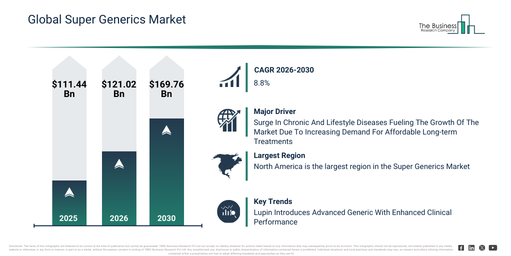
    The super generics market has seen significant expansion in recent years. Its valuation is expected to rise from $111.44 billion in 2025 to $121.02 billion in 2026, achieving a compound annual growth rate (CAGR) of 8.6%. Historically, this market’s growth has been propelled by the patent expiry of branded drugs, an increase in generic drug demand, escalating healthcare cost pressure, the expansion of generic manufacturing, and supportive generic substitution policies.

    The super generics market is projected to experience substantial expansion over the upcoming years. By 2030, this market is anticipated to reach a value of $169.76 billion, demonstrating an 8.8% compound annual growth rate (CAGR). This anticipated growth is driven by several factors, including the expansion of specialty generic pipelines, an increasing demand for enhanced generic drugs, the development of sophisticated formulation techniques, a greater emphasis from payers on economical treatments, and the escalating prevalence of chronic diseases. Key trends during this period are expected to involve the creation of value-added reformulations, an increase in extended-release generic medications, wider acceptance of abuse-deterrent formulations, the proliferation of varied drug delivery methods, and a rise in patient-centric dosage forms.

    Download A Free Sample Report For Comprehensive Market Insights:

    https://www.thebusinessresearchcompany.com/sample.aspx?id=33331&type=smp

    Which Core Factors Are Supporting The Expansion Of The Super Generics Market?

    The increasing incidence of chronic and lifestyle diseases is projected to drive the expansion of the super generics market in the coming years. These long-term health conditions, which include diabetes, cardiovascular disorders, and obesity, are influenced by factors such as diet, physical inactivity, stress, an aging population, and improved disease diagnosis. The escalating burden of these conditions has resulted in a consistent demand for long-term and cost-effective treatment options. Super generics are instrumental in managing chronic and lifestyle diseases by providing affordable, high-quality versions of complex and value-added medications, particularly in therapeutic areas like cardiovascular, metabolic, and respiratory care, thereby enhancing patient access and supporting ongoing disease management. For instance, according to recent data cited by Wecovr, based on UK health statistics, more than 17 million adults in England—over one-third of the population—are living with two or more chronic conditions, with a growing proportion of individuals in their 40s and 50s affected. Thus, the rising prevalence of chronic and lifestyle diseases represents a significant catalyst for growth within the super generics market.

    How Is The Super Generics Market Structured Across Different Market Segments?

    The super generics market covered in this report is segmented –

    1) By Product Type: Generic Pharmaceuticals; Branded Generic Pharmaceuticals; Over-the-Counter (OTC) Products

    2) By Therapeutic Area: Cardiovascular; Oncology; Neurology; Diabetes; Anti-infective

    3) By Formulation Type: Tablet; Capsule; Injectable; Topical; Syrup

    4) By Distribution Channel: Hospital Pharmacies; Retail Pharmacies; Online

    5) By End User: Hospitals and Specialty Clinics; Homecare Settings; Ambulatory Surgical Centers

    Subsegments:

    1) By Generic Pharmaceuticals: Immediate Release Formulations; Modified Release Formulations; Fixed Dose Combination Products; Improved Bioavailability Formulations

    2) By Branded Generic Pharmaceuticals: Value Added Formulations; Patient Friendly Dosage Forms; Therapeutically Enhanced Products; Reformulated Established Medicines

    3) By Over The Counter Products: Pain Relief Products; Cold and Cough Remedies; Digestive Health Products; Vitamin and Mineral Supplements

    Which Trends Are Influencing The Direction Of The Super Generics Market?

    Leading companies within the super generics market are increasingly directing their efforts towards developing sophisticated solutions, such as advanced formulation platforms, with the goal of enhancing drug performance and offering cost-effective therapeutic alternatives. Enhanced formulation platforms involve making modifications to existing drug formulations or delivery mechanisms to improve characteristics like bioavailability, stability, dosing convenience, or patient adherence, all while upholding established safety and efficacy standards. These methods empower companies to distinguish their products from conventional generics and address unmet clinical demands without the necessity of creating entirely new molecules. For example, Lupin, an India-based pharmaceutical company, has expanded its super generics portfolio in the United States by introducing value-added formulations that target high-demand therapeutic segments. Such products are specifically designed to provide improved clinical performance compared to standard generics, while simultaneously remaining economically appealing for healthcare systems and providers. By utilizing advanced formulation technologies, robust quality controls, and manufacturing processes that comply with regulations, companies endeavor to assure consistent potency, safety, and reliability.

    Who Are The Companies Shaping The Super Generics Market Landscape?

    Major companies operating in the super generics market are Teva Pharmaceutical Industries Ltd, Viatris Inc., Baxter International Inc., Sandoz Group AG, Sun Pharmaceutical Industries Ltd, Aurobindo Pharma, Dr. Reddy’s Laboratories Ltd, Cipla Ltd, Hikma Pharmaceuticals, Lupin Limited, Zydus Lifesciences., Glenmark Pharmaceuticals, Torrent Pharmaceuticals, Ascendia Pharmaceutical Solutions, Accord Healthcare, Neurelis Inc, Latitude Pharmaceuticals, Biovista Inc, CritiTech Inc, Crossject SA

    Access The Complete Super Generics Market Report:

    https://www.thebusinessresearchcompany.com/report/super-generics-market-report

    Which Area Represents The Largest Portion Of The Super Generics Market?

    North America was the largest region in the super generics market in 2025. Asia-Pacific is expected to be the fastest-growing region in the forecast period. The regions covered in the super generics market report are Asia-Pacific, South East Asia, Western Europe, Eastern Europe, North America, South America, Middle East, Africa.

    Access a Customized Super Generics Market Report for Deeper Competitive Insights

    Get in touch with us:

    The Business Research Company: https://www.thebusinessresearchcompany.com/

    Americas: +1 310-496-7795

    Asia: +44 7882 955267 & +91 8897263534

    Europe: +44 7882 955267

    Email us at: marketing@tbrc.info

    Follow us on:

    LinkedIn: https://in.linkedin.com/company/the-business-research-company

    YouTube: https://www.youtube.com/channel/UC24_fI0rV8cR5DxlCpgmyFQ

    Global Market Model: https://www.thebusinessresearchcompany.com/global-market-model