Month: June 2026

  • Subdermal Neural Display Market Set for Rapid Growth to $2.55 Billion by 2030

    Subdermal Neural Display Market Set for Rapid Growth to $2.55 Billion by 2030

    The Business Research Company’s 2026 market reports feature advanced enhancements such as market attractiveness analysis, total addressable market evaluation, company benchmarking matrices, interactive Excel dashboards, expanded supply chain intelligence, emerging startup coverage, and detailed product insights, delivering more actionable and strategically valuable research.

    What Growth In Market Value Is Anticipated For The Subdermal Neural Display Market Between 2026 And 2030?

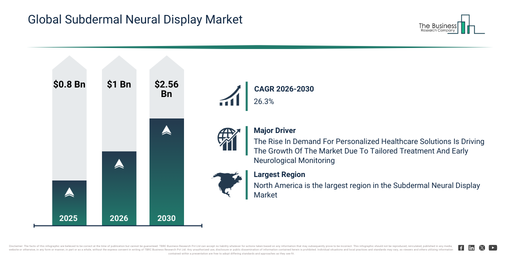
    The subdermal neural display market has seen its size increase exponentially in recent years. It is expected to grow from $0.8 billion in 2025 to $1 billion in 2026, achieving a compound annual growth rate (CAGR) of 26.1%. The growth observed in the historical period is attributable to factors such as growth in neural interface research, an increase in brain computer interface trials, the expansion of implantable medical electronics, rising neuroscience funding, and the early adoption of EEG-based interfaces.

    The subdermal neural display market is projected to experience substantial growth in the coming years. It will grow to $2.56 billion in 2030 at a compound annual growth rate (CAGR) of 26.3%. This expansion during the forecast period is driven by increasing neurotechnology investments, a rising demand for cognitive augmentation tools, the expansion of clinical neural implants, the growth of defense neurotech programs, and greater funding for human-machine interface research. Key trends for the forecast period include the ongoing development of implantable neural interfaces, the increasing adoption of wireless neural signal transmission, the broadening of miniaturized neural electrode arrays, enhanced integration of brain-computer interface modules, and a heightened focus on closed-loop neural feedback systems.

    Download A Free Sample Report For Comprehensive Market Insights:

    https://www.thebusinessresearchcompany.com/sample.aspx?id=33328&type=smp

    What Are The Main Drivers Accelerating The Growth Of The Subdermal Neural Display Market?

    The increasing demand for personalized healthcare solutions is expected to propel the growth of the subdermal neural display market going forward. Personalized healthcare solutions refer to healthcare approaches and services that are customized to the individual characteristic conditions of each patient to improve treatment effectiveness and reduce side effects. The increasing demand for personalized healthcare solutions is due to the rising prevalence of chronic and lifestyle diseases, which require tailored prevention, monitoring, and treatment strategies for individual patients. Subdermal neural displays help personalized healthcare solutions by allowing direct monitoring and stimulation of neural activity with real-time health insights for early detection of neurological conditions and personalized neurofeedback therapies tailored to everyone’s brain and body signals. For instance, in February 2024, the Personalized Medicine Coalition, a US-based non-profit organization, reported that in 2023, the FDA approved 16 new personalized treatments for rare disease patients, up from 6 in 2022. The newly approved personalized treatments for 2023 also include 7 cancer drugs and 3 for other diseases and conditions. Therefore, the increasing demand for personalized healthcare solutions is driving the growth of the subdermal neural display market.

    Which Segment-Based Categories Are Covered In The Subdermal Neural Display Market?

    The subdermal neural display market covered in this report is segmented –

    1) By Component Type: Hardware; Software

    2) By Product Type: Implantable Neural Display Devices; Wearable Neural Interface Devices; Subdermal Electrode Arrays; Implantable Display Modules; Wireless Neural Transmitters; Neural Signal Amplifiers

    3) By Technology: Electroencephalography (EEG); Electrocorticography (ECoG); Optogenetics; Other Technologies

    4) By End-User: Hospitals And Clinics; Research Institutes; Consumer Electronics; Military And Defense; Other End-Users

    Subsegments:

    1) By Hardware: Electrode Arrays; Implantable Sensors; Microcontroller Units; Power Management Modules; Signal Amplification Units

    2) By Software: Neural Signal Processing Software; Data Visualization Software; Device Control Software; Algorithm Development Software; Simulation And Modeling Software

    Which Industry Players Are Present In The Subdermal Neural Display Market?

    Major companies operating in the subdermal neural display market are Synchron Inc., BrainCo Inc., MindMaze SA, INBRAIN Neuroelectronics SL, Axoft Inc., VisionCare Ophthalmic Technologies Inc., Blackrock Neurotech Inc., LambdaVision Inc., Advanced Brain Monitoring Inc., iBionics Inc., CorTec GmbH, Bionic Vision Technologies, Braingrade Inc., Nano Retina Inc., Neurable Inc., OpenBCI LLC, Optobionics Corporation, Pixium Vision SA, Precision Neuroscience Corporation, Cognixion Inc.

    Access The Complete Subdermal Neural Display Market Report:

    https://www.thebusinessresearchcompany.com/report/subdermal-neural-display-market-report

    Which Region Commands The Largest Share Of The Subdermal Neural Display Market?

    North America was the largest region in the subdermal neural display market in 2025. Asia-Pacific is expected to be the fastest-growing region in the forecast period. The regions covered in the subdermal neural display market report are Asia-Pacific, South East Asia, Western Europe, Eastern Europe, North America, South America, Middle East, Africa.

    Access a Customized Subdermal Neural Display Market Report for Deeper Competitive Insights

    Get in touch with us:

    The Business Research Company: https://www.thebusinessresearchcompany.com/

    Americas: +1 310-496-7795

    Asia: +44 7882 955267 & +91 8897263534

    Europe: +44 7882 955267

    Email us at: marketing@tbrc.info

    Follow us on:

    LinkedIn: https://in.linkedin.com/company/the-business-research-company

    YouTube: https://www.youtube.com/channel/UC24_fI0rV8cR5DxlCpgmyFQ

    Global Market Model: https://www.thebusinessresearchcompany.com/global-market-model
  • Stuttering Treatment Market Projected to Reach $4.05 Billion by 2030

    Stuttering Treatment Market Projected to Reach $4.05 Billion by 2030

    The Business Research Company’s 2026 market reports feature advanced enhancements such as market attractiveness analysis, total addressable market evaluation, company benchmarking matrices, interactive Excel dashboards, expanded supply chain intelligence, emerging startup coverage, and detailed product insights, delivering more actionable and strategically valuable research.

    What Is The Estimated Growth In Market Size Of The Stuttering Treatment Market During 2026–2030?

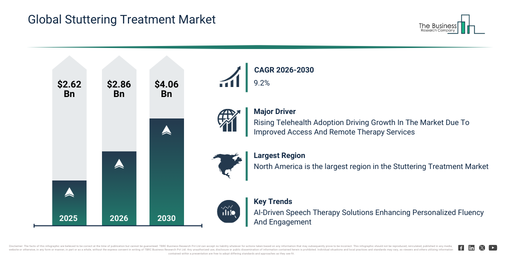
    The stuttering treatment market size has shown significant growth over recent years. It is anticipated to increase from $2.62 billion in 2025 to $2.86 billion in 2026, achieving a compound annual growth rate (CAGR) of 8.9%. The expansion observed in the historical period is largely due to heightened awareness of speech disorders, an increase in speech therapy clinics, the development of more school screening programs, the wider availability of pediatric therapy services, and the early implementation of fluency shaping methods.

    The stuttering treatment market is anticipated to experience substantial growth in the upcoming years, with its valuation expected to reach $4.06 billion by 2030, driven by a compound annual growth rate (CAGR) of 9.2%. This projected expansion during the forecast period is fueled by the increasing adoption of teletherapy, greater integration of mental health services into speech care, the expansion of digital therapy platforms, improved insurance coverage for speech therapy, and higher rates of early diagnosis. Prominent trends throughout this period are set to include the growing embrace of app-based speech therapy, a rise in the use of virtual speech therapy sessions, the broadening of early childhood fluency programs, increased incorporation of behavioral counseling, and more widespread utilization of assistive fluency devices.

    Download A Free Sample Report For Comprehensive Market Insights:

    https://www.thebusinessresearchcompany.com/sample.aspx?id=33327&type=smp

    What Major Growth Factors Are Impacting The Stuttering Treatment Market?

    The expanding use of telehealth is projected to boost the stuttering treatment market in the upcoming years. Telehealth encompasses the provision of healthcare services remotely utilizing digital communication tools like video consultations, mobile applications, and online therapy systems. Its increasing uptake is due to enhanced access to care, especially for those in isolated or underserved regions, alongside cutting down travel time and logistical obstacles. Stuttering treatment is particularly suited for telehealth, as speech therapy sessions can be effectively carried out through live video interactions. Telehealth allows patients to obtain regular, convenient, and tailored speech therapy from their homes, potentially improving commitment to therapy and broadening reach to expert speech-language pathologists. For instance, in September 2024, according to the Australian Bureau of Statistics (ABS), the national statistical agency of Australia, in 2023–24, 83.5% of males reported using telehealth services, up from 78.6% in 2022–23. Consequently, the rising adoption of telehealth is stimulating growth in the stuttering treatment market.

    How Is Segment Classification Applied In The Stuttering Treatment Market?

    The stuttering treatment market covered in this report is segmented –

    1) By Treatment Type: Speech Therapy; Digital And App-Based Therapy; Pharmacological Treatment; Assistive Devices And Wearables

    2) By Age Group: Children; Adolescents; Adults

    3) By End User: Speech And Language Clinics; Hospitals And Rehabilitation Centers; Schools And Educational Institutions; Direct-To-Consumer Platforms

    Subsegments:

    1) By Speech Therapy: Articulation Therapy; Fluency Shaping Therapy; Stuttering Modification Therapy; Cognitive Behavioral Therapy

    2) By Digital And App-Based Therapy: Mobile Application Based Therapy; Online Video Therapy Sessions; Virtual Reality Based Therapy; Interactive Software Tools

    3) By Pharmacological Treatment: Anti Anxiety Medication; Dopamine Modulators; Beta Blockers; Other Prescription Drugs

    4) By Assistive Devices And Wearables: Speech Feedback Devices; Delayed Auditory Feedback Devices; Electronic Fluency Devices; Wearable Therapy Devices

    What Trends Are Affecting The Growth Of The Stuttering Treatment Market?

    Major companies operating in the stuttering treatment market are increasingly directing their focus toward developing innovative solutions, such as AI-powered speech therapy applications, to improve personalization, enhance therapy adherence, and support better speech fluency outcomes. These AI-powered speech therapy apps are digital platforms that utilize artificial intelligence to analyze speech patterns, offer real-time feedback, and deliver tailored therapy exercises designed to help individuals manage stuttering more effectively. These solutions enable scalable, continuous intervention outside traditional clinical settings. For instance, in December 2025, Iyaso Softwares Private Limited, an India-based health technology company, launched Eloquent, an AI-powered speech therapy application intended to help individuals who stutter improve fluency and speaking confidence through regular practice. The app incorporates evidence-based techniques such as gentle onsets, rhythmic speech, and simulated real-life conversations. According to the company, users who engaged in consistent daily sessions experienced measurable improvements in stuttering severity and speaking confidence, highlighting the potential effectiveness of AI-enabled, app-based therapy solutions.

    Who Are The Prominent Players Across The Stuttering Treatment Market?

    Major companies operating in the stuttering treatment market are Mayo Clinic, Cleveland Clinic, Vanderbilt Health, Houston Methodist, Texas Children’s Hospital, Boston Children’s Hospital, Apollo Hospitals Enterprise Limited, Practo Technologies Pvt. Ltd. (Practo), Ruby Hall Clinic, All India Institute of Speech and Hearing (AIISH) Mysore, McGuire Programme, Perley Health, Tender Palm Super Speciality Hospital, American Institute for Stuttering (AIS), Wasatch Speech & Language Center, Michael Palin Centre for Stammering, National Stuttering Association, Speech & Stuttering Institute, Australian Stuttering Research Centre, Curtin Stuttering Treatment Clinic

    Access The Complete Stuttering Treatment Market Report:

    https://www.thebusinessresearchcompany.com/report/stuttering-treatment-market-report

    Which Region Accounts For The Highest Share Of The Stuttering Treatment Market?

    North America was the largest region in the stuttering treatment market in 2025. Asia-Pacific is expected to be the fastest-growing region in the forecast period. The regions covered in the stuttering treatment market report are Asia-Pacific, South East Asia, Western Europe, Eastern Europe, North America, South America, Middle East, Africa.

    Access a Customized Stuttering Treatment Market Report for Deeper Competitive Insights

    Get in touch with us:

    The Business Research Company: https://www.thebusinessresearchcompany.com/

    Americas: +1 310-496-7795

    Asia: +44 7882 955267 & +91 8897263534

    Europe: +44 7882 955267

    Email us at: marketing@tbrc.info

    Follow us on:

    LinkedIn: https://in.linkedin.com/company/the-business-research-company

    YouTube: https://www.youtube.com/channel/UC24_fI0rV8cR5DxlCpgmyFQ

    Global Market Model: https://www.thebusinessresearchcompany.com/global-market-model
  • Spiral CT (SCT) Market Forecast to Grow to $13.24 Billion by 2030

    Spiral CT (SCT) Market Forecast to Grow to $13.24 Billion by 2030

    The Business Research Company’s 2026 market reports feature advanced enhancements such as market attractiveness analysis, total addressable market evaluation, company benchmarking matrices, interactive Excel dashboards, expanded supply chain intelligence, emerging startup coverage, and detailed product insights, delivering more actionable and strategically valuable research.

    What Market Value Expansion Is Expected For The Spiral Computed Tomography (SCT) Market Over The Forecast Period?

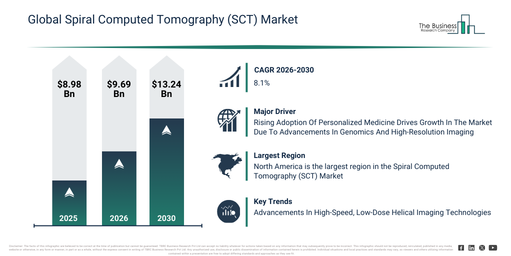
    The spiral computed tomography (sct) market has shown strong expansion in recent years. It is projected to grow from $8.98 billion in 2025 to $9.69 billion in 2026, achieving a compound annual growth rate (CAGR) of 7.9%. Historically, this growth can be attributed to an increase in chronic disease diagnoses, enhanced hospital imaging capabilities, rising oncology screening rates, the expansion of radiology departments, and the early replacement of conventional CT systems.

    The spiral computed tomography (SCT) market is anticipated to experience robust expansion over the next few years, with its size expected to reach $13.24 billion by 2030, demonstrating a compound annual growth rate (CAGR) of 8.1%. This projected growth can be attributed to several factors, including an expanding aging population, a rising demand for early detection imaging, the broadening of emergency diagnostic services, increased investment in advanced radiology, and higher volumes of outpatient imaging. Major trends identified for the forecast period include the growing adoption of multi-slice spiral scanners, an increase in the use of low-dose imaging protocols, the expansion of three-dimensional reconstruction software, greater integration of AI-assisted image analysis, and an elevated demand for fast scan trauma imaging.

    Download A Free Sample Report For Comprehensive Market Insights:

    https://www.thebusinessresearchcompany.com/sample.aspx?id=33326&type=smp

    What Market Drivers Are Helping Shape The Spiral Computed Tomography (SCT) Market Expansion?

    The increasing acceptance of personalized medicine is expected to drive the expansion of the Spiral Computed Tomography (SCT) market. This medical strategy customizes disease prevention, diagnosis, and therapeutic interventions by considering an individual’s unique genetic, molecular, and cellular makeup. Its growth stems from advancements in genomics and molecular diagnostics, allowing treatments to be precisely matched to a person’s genetic profile and specific disease traits. Spiral Computed Tomography (SCT) facilitates personalized medicine through its capacity to generate high-resolution, three-dimensional images, enabling medical professionals to accurately visualize specific anatomical and pathological features. This supports customized diagnosis, treatment formulation, and ongoing patient monitoring based on their distinct health status. As an illustration, in February 2024, data from the Personalized Medicine Coalition (PMC), a US-based non-profit organization, indicated that the FDA cleared 16 novel personalized therapies for rare diseases in 2023, marking a substantial rise compared to the six approvals granted in 2022. Consequently, the growing integration of personalized medicine has fueled the expansion of the Spiral Computed Tomography (SCT) market.

    What Are The Core Segment Classifications In The Spiral Computed Tomography (SCT) Market?

    The spiral computed tomography (sct) market covered in this report is segmented –

    1) By Component: Hardware; Software; Services

    2) By Technology: Single-Slice Spiral Computed Tomography; Multi-Slice Spiral Computed Tomography

    3) By Detector Type: Ionization Chamber Detectors; Solid-State Detectors

    4) By Application: Oncology; Cardiology; Neuroscience; Pulmonology; Trauma Care

    5) By End-User: Hospitals; Diagnostic Imaging Centers; Outpatient Care Centers; Research Institutions

    Subsegments:

    1) By Hardware: Computed Tomography Scanner Systems; Extended Ray Tubes; Detector Arrays; Gantry And Patient Table Components; Data Acquisition Systems

    2) By Software: Image Reconstruction Software; Three Dimensional Visualization Software; Dose Management Software; Workflow Management Software; Diagnostic Analysis Software

    3) By Services: Installation And Commissioning Services; Maintenance And Repair Services; Calibration And Quality Assurance Services; Training And Education Services; Technical Support Services

    Which Trends Are Influencing The Direction Of The Spiral Computed Tomography (SCT) Market?

    Leading companies within the spiral computed tomography (SCT) market are prioritizing the creation of advanced solutions, specifically spiral CT technology, to address the growing requirement for rapid, precise, and reduced-radiation diagnostic imaging. This demand is fueled by the rising incidence of chronic illnesses and the necessity for effective early diagnosis. This spiral CT technology functions by employing a continuously rotating X-ray tube and a moving patient table to generate intricate three-dimensional body images. It provides quicker data acquisition and enhanced spatial resolution when contrasted with conventional step-and-shoot CT scanners, which capture images in distinct slices instead of a helical volume. As an illustration, in June 2024, FUJIFILM Healthcare Americas Corporation, a US-based supplier of diagnostic imaging solutions, introduced the FCT iStream 128-Slice Computed Tomography System. This novel CT scanner incorporates exclusive technologies like HiMAR Plus for superior image quality and metal artifact reduction, Intelli IPV for iterative progressive reconstruction that markedly diminishes image noise, IntelliODM for organ-based dose modulation, and SynergyDrive for optimized automated workflow. This compact, AI-powered system can capture up to 60 images per second, thereby improving diagnostic accuracy and considerably reducing patient radiation exposure across a wide array of radiological uses, from standard body imaging to complex cardiac CT angiography, all while increasing patient comfort due to its wide bore design.

    Which Companies Form The Competitive Landscape Of The Spiral Computed Tomography (SCT) Market?

    Major companies operating in the spiral computed tomography (sct) market are Hitachi Ltd., Siemens Healthineers AG, FUJIFILM Holdings Corporation, Koninklijke Philips N.V., GE HealthCare Technologies Inc., Analogic Corporation, Shimadzu Corporation, Canon Medical Systems Corporation, United Imaging Healthcare Co. Ltd., Carestream Health Inc., Accuray Incorporated, Neusoft Medical Systems Co. Ltd., MinFound Medical Systems Co. Ltd., North Star Imaging Inc., Xoran Technologies LLC, Koning Corporation, Shenzhen Anke High-tech Co. Ltd., Planmed Oy, NeuroLogica Corporation, Comet Yxlon GmbH.

    Access The Complete Spiral Computed Tomography (SCT) Market Report:

    https://www.thebusinessresearchcompany.com/report/spiral-computed-tomography-sct-market-report

    Which Region Is The Primary Market For The Spiral Computed Tomography (SCT) Market?

    North America was the largest region in the spiral computed tomography (SCT) market in 2025. Asia-Pacific is expected to be the fastest-growing region in the forecast period. The regions covered in the spiral computed tomography (sct) market report are Asia-Pacific, South East Asia, Western Europe, Eastern Europe, North America, South America, Middle East, Africa.

    Access a Customized Spiral Computed Tomography (SCT) Market Report for Deeper Competitive Insights

    Get in touch with us:

    The Business Research Company: https://www.thebusinessresearchcompany.com/

    Americas: +1 310-496-7795

    Asia: +44 7882 955267 & +91 8897263534

    Europe: +44 7882 955267

    Email us at: marketing@tbrc.info

    Follow us on:

    LinkedIn: https://in.linkedin.com/company/the-business-research-company

    YouTube: https://www.youtube.com/channel/UC24_fI0rV8cR5DxlCpgmyFQ

    Global Market Model: https://www.thebusinessresearchcompany.com/global-market-model
  • Spinal Immobilizer Market Expected to Reach $2.35 Billion by 2030

    Spinal Immobilizer Market Expected to Reach $2.35 Billion by 2030

    The Business Research Company’s 2026 market reports feature advanced enhancements such as market attractiveness analysis, total addressable market evaluation, company benchmarking matrices, interactive Excel dashboards, expanded supply chain intelligence, emerging startup coverage, and detailed product insights, delivering more actionable and strategically valuable research.

    How Will The Market Value Of The Spinal Immobilizer Market Change Between 2026 And 2030?

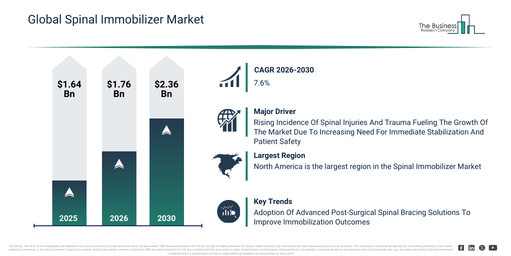
    The spinal immobilizer market size has seen robust growth in recent years. It is projected to increase from $1.64 billion in 2025 to $1.76 billion in 2026, exhibiting a compound annual growth rate (CAGR) of 7.4%. This historic expansion can be attributed to a rise in road traffic accidents, the growth of emergency medical services, an increase in sports injury cases, the expansion of trauma care centers, and the early adoption of cervical collars.

    The spinal immobilizer market is projected to experience robust expansion over the coming years, reaching $2.36 billion in 2030 at a compound annual growth rate (CAGR) of 7.6%. This anticipated growth during the forecast period stems from factors such as a rise in trauma incidents, increased investments in emergency response systems, an expansion of ambulance fleets, elevated hospital safety standards, and broadening disaster preparedness initiatives. Key developments expected within the forecast timeframe involve a surging demand for lightweight immobilization solutions, a greater uptake of radiolucent spinal boards, the proliferation of immobilizers designed specifically for pediatric patients, increased implementation of disposable immobilizer systems, and an enhanced emphasis on ergonomic designs for emergency transport.

    Download A Free Sample Report For Comprehensive Market Insights:

    https://www.thebusinessresearchcompany.com/sample.aspx?id=33325&type=smp

    Which Significant Factors Are Encouraging Growth In The Spinal Immobilizer Market?

    The increasing occurrence of spinal injuries and trauma is anticipated to drive the expansion of the spinal immobilizer market moving forward. These conditions involve acute damage to the spinal column or spinal cord, often resulting from road traffic accidents, falls, violence, or sports-related incidents, which necessitate immediate immobilization to prevent further harm. The rise in spinal injuries and trauma is linked to the growing incidence of road traffic accidents, spurred by rapid urbanization and increased vehicle usage. Spinal immobilizers are instrumental in managing spinal injuries and trauma by stabilizing the spine and head during rescue, transportation, and initial medical intervention, thereby reducing the potential for secondary neurological damage and enhancing patient safety outcomes. For instance, in October 2024, according to the Congressionally Directed Medical Research Programs, a US-based authentic platform for Clinical Services, an estimated 300,000 people are living with spinal cord injuries (SCI) in the U.S., with over 17,000 new cases reported annually, and these numbers continue to rise. Hence, the escalating incidence of spinal injuries and trauma is a significant factor propelling the growth of the spinal immobilizer market.

    How Is The Spinal Immobilizer Market Structured Across Different Market Segments?

    The spinal immobilizer market covered in this report is segmented –

    1) By Product Type: Cervical Immobilizers; Spinal Boards; Vacuum Mattresses; Soft Collars; Hard Collars

    2) By Material: Plastic; Metal; Foam; Composite Materials; Fabric

    3) By Sales Channel: Direct Sales; Indirect Sales; Online Platforms

    4) By Application: Trauma Cases; Surgical Procedures; Sports Injuries; Emergency Medical Services; Transportation of Patients

    5) By End User: Hospitals; Ambulance Services; Rehabilitation Centers; Home Care Settings; Sports Facilities

    Subsegments:

    1) By Cervical Immobilizers: Rigid Cervical Immobilizers; Adjustable Cervical Immobilizers; Pediatric Cervical Immobilizers; Disposable Cervical Immobilizers

    2) By Spinal Boards: Rigid Spinal Boards; Radiolucent Spinal Boards; Pediatric Spinal Boards; Foldable Spinal Boards

    3) By Vacuum Mattresses: Full Body Vacuum Mattresses; Pediatric Vacuum Mattresses; Multi Chamber Vacuum Mattresses; Reusable Vacuum Mattresses

    4) By Soft Collars: Foam Soft Collars; Contoured Soft Collars; Adjustable Soft Collars; Post Injury Support Collars

    5) By Hard Collars: Two Piece Hard Collars; Adjustable Hard Collars; Emergency Trauma Hard Collars; Post Surgical Hard Collars

    What Trends Are Driving Changes In The Spinal Immobilizer Market?

    Leading companies in the spinal immobilizer market are focusing on developing innovative solutions, such as advanced post-surgical thoracolumbosacral orthoses, to address the increasing demand for improved postoperative spinal stability and reduced complication rates. These advanced post-surgical thoracolumbosacral orthoses are prefabricated spinal braces crafted to offer targeted flexion control, circumferential stabilization, and enhanced comfort, delivering superior biomechanical support and patient compliance compared to traditional hyperextension braces, which often lack optimized pressure distribution and comfort features. For example, in August 2024, Aspen Medical Products, a US-based medical device company specializing in spinal orthopedics and pain therapy solutions, introduced the Align Orthosis, an innovative prefabricated thoracolumbosacral orthosis designed to help lessen the incidence of proximal junctional kyphosis after spinal deformity surgery. The Align Orthosis incorporates a three-point pressure system that contacts crucial points at the chest, lower abdomen, and mid-back to restore symmetrical spinal loads and guide correct spinal biomechanics; it provides improved flexion control with enhanced comfort for better patient compliance; and its design supports safer postoperative movement, potentially reducing readmission and revision surgery rates compared with conventional braces.

    Who Are The Key Market Participants In The Spinal Immobilizer Market?

    Major companies operating in the spinal immobilizer market are Medline Industries Inc., Trulife Inc., Össur hf., Orthofix Medical Inc., DeRoyal Industries Inc., Laerdal Medical AS, Medi USA Inc., Breg Inc., Ferno-EMS, Allied Healthcare Products Inc., Thuasne USA Inc., Aspen Medical Products Inc., Bird & Cronin Inc., Spinal Technology Inc., Zhangjiagang Herui Medical Equipment Co. Ltd., DJO Global Inc., Red Leaf Medical Inc., Live Action Safety, Dynarex Corporation, Asia Connection Co. Ltd., ShanghAI EMSS Medical & Technology Co. Ltd., SAM Medical Products Inc.

    Access The Complete Spinal Immobilizer Market Report:

    https://www.thebusinessresearchcompany.com/report/spinal-immobilizer-market-report

    Which Geographic Region Represents The Largest Spinal Immobilizer Market Share?

    North America was the largest region in the spinal immobilizer market in 2025. Asia-Pacific is expected to be the fastest-growing region in the forecast period. The regions covered in the spinal immobilizer market report are Asia-Pacific, South East Asia, Western Europe, Eastern Europe, North America, South America, Middle East, Africa.

    Access a Customized Spinal Immobilizer Market Report for Deeper Competitive Insights

    Get in touch with us:

    The Business Research Company: https://www.thebusinessresearchcompany.com/

    Americas: +1 310-496-7795

    Asia: +44 7882 955267 & +91 8897263534

    Europe: +44 7882 955267

    Email us at: marketing@tbrc.info

    Follow us on:

    LinkedIn: https://in.linkedin.com/company/the-business-research-company

    YouTube: https://www.youtube.com/channel/UC24_fI0rV8cR5DxlCpgmyFQ

    Global Market Model: https://www.thebusinessresearchcompany.com/global-market-model
  • Smart Tissue Autonomous Robot (STAR) Market Expanding with Advanced Surgical Innovations

    Smart Tissue Autonomous Robot (STAR) Market Expanding with Advanced Surgical Innovations

    The Business Research Company’s 2026 market reports feature advanced enhancements such as market attractiveness analysis, total addressable market evaluation, company benchmarking matrices, interactive Excel dashboards, expanded supply chain intelligence, emerging startup coverage, and detailed product insights, delivering more actionable and strategically valuable research.

    What Is The Forecasted Rise In Market Size Of The Smart Tissue Autonomous Robot (STAR) Market During The Forecast Period?

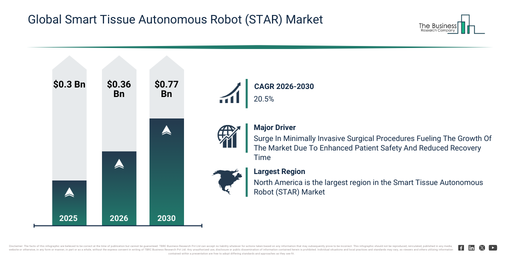
    The smart tissue autonomous robot (star) market has seen substantial growth in recent years. It is projected to expand from $0.3 billion in 2025 to $0.36 billion in 2026, at a compound annual growth rate (CAGR) of 20.3%. The historical increase can be attributed to several factors including the rise of robotic surgery platforms, increased demand for minimally invasive surgery, progress in surgical imaging, investments in hospital robotics, and the need for precision surgery.

    The smart tissue autonomous robot (star) market size is anticipated to expand significantly over the coming years. It is projected to reach $0.77 billion by 2030, driven by a compound annual growth rate (CAGR) of 20.5%. This expansion during the forecast period stems from factors such as expanded research in autonomous surgery, the incorporation of AI into surgical workflows, a heightened demand for sophisticated sensing instruments, an emphasis on consistent surgical outcomes, and investment in next-generation surgical robotics. Prominent trends foreseen for the same period involve autonomous soft tissue suturing systems, AI-powered surgical decision engines, robotics for real-time tissue tracking, force feedback surgical instruments, and image-driven robotic navigation.

    Download A Free Sample Report For Comprehensive Market Insights:

    https://www.thebusinessresearchcompany.com/sample.aspx?id=33322&type=smp

    What Core Drivers Are Transforming The Smart Tissue Autonomous Robot (STAR) Market?

    The increasing need for minimally invasive surgical techniques is projected to boost the expansion of the smart tissue autonomous robot (STAR) market in the future. These procedures involve operations conducted via tiny cuts or natural orifices utilizing specialized tools, aiming to lessen tissue damage, blood loss, and recovery periods while preserving surgical exactness. A key factor driving this heightened demand for minimally invasive surgeries is improved patient safety. The smart tissue autonomous robot (STAR) facilitates this growing demand for minimally invasive procedures by accurately carrying out intricate soft-tissue manipulations via small incisions, thereby lessening human mistakes, diminishing tissue harm, and enhancing overall surgical precision and patient healing. For example, in June 2024, as reported by the American Society of Plastic Surgeons, a US-based non-profit organization, hyaluronic acid filler minimally invasive procedures reached 5.29 million in 2023, marking an 8% rise compared to 2022. Consequently, the escalating demand for minimally invasive surgical procedures is propelling the growth of the smart tissue autonomous robot (STAR) market. Hospital investments in robotic infrastructure are set to drive the expansion of the smart tissue autonomous robot (STAR) market moving forward. Robotic infrastructure encompasses the collective robotic systems, along with the essential software, hardware, and facilities needed for the effective setup, operation, and upkeep of robotic technologies within a healthcare institution. A primary impetus for these increasing hospital investments in robotic infrastructure is the imperative to enhance surgical exactness. The smart tissue autonomous robot (STAR) assists expanding hospital investments in robotic infrastructure by providing a sophisticated autonomous surgical platform that combines artificial intelligence, imaging, and precise robotics, thus allowing hospitals to elevate their surgical capacities, achieve better clinical results, and optimize the returns on their robotic technology expenditures. For instance, in Nov 2025, Springer Nature, a Germany-based academic and scientific publishing company, documented that surgical robot ownership across trusts increased by 42%, from 36 to 51, with its application extending to 49 trusts for general surgery and doubling for emergency procedures, going from 13 to 26 trusts. Consequently, the growing hospital investments in robotic infrastructure are propelling the growth of the smart tissue autonomous robot (STAR) market.

    Which Segment-Based Categories Are Covered In The Smart Tissue Autonomous Robot (STAR) Market?

    The smart tissue autonomous robot (star) market covered in this report is segmented –

    1) By Component: Hardware; Software

    2) By Surgical Technique: Open Surgery; Minimally Invasive Surgery; Endoscopic Surgery

    3) By Technology: Artificial Intelligence; Machine Learning; Computer Vision; Robotic Manipulation

    4) By Application: Soft Tissue Surgery; Plastic And Reconstructive Surgery; Orthopedic Surgery; Gastrointestinal Surgery; Cardiothoracic Surgery

    5) By End-User: Hospitals; Ambulatory Surgical Centers; Research Institutions; Clinics

    Subsegments:

    1) By Hardware: Sensors; Actuators; Robotic Arms; Control Units; Imaging Modules; Power Systems

    2) By Software: Algorithmic Control Software; Machine Learning Platforms; Surgical Planning Software; Real Time Navigation Software; Image Processing Software; Data Analytics Software

    Which Organizations Are Operating Within The Smart Tissue Autonomous Robot (STAR) Market?

    Major companies operating in the smart tissue autonomous robot (star) market are Johnson & Johnson, Medtronic, ABB Ltd, Siemens Healthineers, Stryker Corporation, Philips, Boston Scientific, Zimmer Biomet Holdings, Inc., Intuitive Surgical, Smith & Nephew plc, KARL STORZ, Globus Medical, Inc., Renishaw plc, CMR Surgical Limited, Osso VR, Caresyntax, Think Surgical, Inc, Activ Surgical, Tuodao Medical, Sina Robotics & Medical Innovators Co

    Access The Complete Smart Tissue Autonomous Robot (STAR) Market Report:

    https://www.thebusinessresearchcompany.com/report/smart-tissue-autonomous-robot-star-market-report

    Which Region Leads The Smart Tissue Autonomous Robot (STAR) Market By Size?

    North America was the largest region in the smart tissue autonomous robot (STAR) market in 2025. Asia-Pacific is expected to be the fastest-growing region in the forecast period. The regions covered in the smart tissue autonomous robot (star) market report are Asia-Pacific, South East Asia, Western Europe, Eastern Europe, North America, South America, Middle East, Africa.

    Access a Customized Smart Tissue Autonomous Robot (STAR) Market Report for Deeper Competitive Insights

    Get in touch with us:

    The Business Research Company: https://www.thebusinessresearchcompany.com/

    Americas: +1 310-496-7795

    Asia: +44 7882 955267 & +91 8897263534

    Europe: +44 7882 955267

    Email us at: marketing@tbrc.info

    Follow us on:

    LinkedIn: https://in.linkedin.com/company/the-business-research-company

    YouTube: https://www.youtube.com/channel/UC24_fI0rV8cR5DxlCpgmyFQ

    Global Market Model: https://www.thebusinessresearchcompany.com/global-market-model
  • AI in Sleep Diagnostics Market Insights and Strategic Growth Outlook for 2026–2030

    AI in Sleep Diagnostics Market Insights and Strategic Growth Outlook for 2026–2030

    The Business Research Company’s 2026 market reports feature advanced enhancements such as market attractiveness analysis, total addressable market evaluation, company benchmarking matrices, interactive Excel dashboards, expanded supply chain intelligence, emerging startup coverage, and detailed product insights, delivering more actionable and strategically valuable research.

    How Is The Sleep Diagnostics Artificial Intelligence Market’s Market Value Anticipated To Evolve From 2026 To 2030?

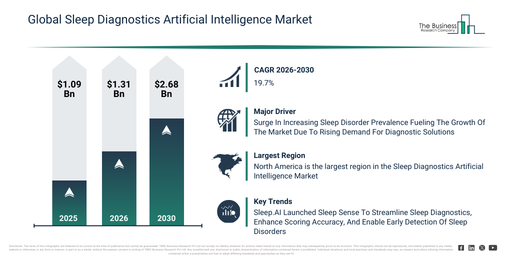
    The sleep diagnostics artificial intelligence market has seen significant growth over the past few years. It is anticipated to increase from $1.09 billion in 2025 to $1.31 billion in 2026, achieving a compound annual growth rate (CAGR) of 19.4%. Several factors contributed to the historical expansion, including an escalation in sleep disorder occurrences, the widespread adoption of wearable devices, the development of digital health analytics, a rise in sleep lab investigations, and the pressing requirement for accelerated diagnostic solutions.

    The market size for sleep diagnostics artificial intelligence is projected to experience substantial expansion over the upcoming years. This market is anticipated to reach $2.68 billion by 2030, exhibiting a compound annual growth rate (CAGR) of 19.7%. This forecasted growth is largely driven by factors such as the increasing adoption of AI clinical decision-making tools, the broader expansion of remote sleep monitoring, an increase in home-based diagnostics, the emergence of personalized sleep therapy, and better integration with digital health platforms. Key trends expected during this period encompass AI-based sleep stage scoring, analytics integrated with wearables, cloud-based sleep diagnostic platforms, models for predicting sleep disorders, and automated polysomnography interpretation.

    Download A Free Sample Report For Comprehensive Market Insights:

    https://www.thebusinessresearchcompany.com/sample.aspx?id=33318&type=smp

    Which Growth Factors Are Strengthening The Sleep Diagnostics Artificial Intelligence Market Landscape?

    The expanding occurrence of sleep disorders is projected to fuel the advancement of the sleep diagnostics artificial intelligence market in the foreseeable future. These disorders are health conditions that interfere with typical sleep cycles, impacting sleep quality, timing, or length, which results in daytime discomfort or reduced capability. The growing prevalence is primarily caused by factors like an aging demographic, stress linked to modern lifestyles, and a heightened understanding of sleep wellness, all of which have led to more screenings, diagnoses, and documented cases. Sleep diagnostics artificial intelligence aids in managing sleep disorders through automated, precise, and scalable analysis of sleep data, thereby facilitating prompt identification, customized therapies, and enhanced patient results. As an illustration, during November 2023, NHS England revealed that 64.9% of individuals between 17 and 23 years old reported experiencing sleep difficulties three or more times in the preceding week. This underscores the escalating challenge of sleep issues and the subsequent rise in demand for diagnostic tools. Consequently, the increasing occurrence of sleep disorders serves as a significant impetus for expansion within the sleep diagnostics artificial intelligence market.

    What Are The Major Segment Categories Within The Sleep Diagnostics Artificial Intelligence Market?

    The sleep diagnostics artificial intelligence market covered in this report is segmented –

    1) By Component: Software; Hardware; Services

    2) By Technology: Machine Learning; Deep Learning; Natural Language Processing; Ensemble Learning

    3) By Deployment Mode: On Premises; Cloud Based

    4) By Application: Sleep Apnea; Insomnia; Narcolepsy; Restless Legs Syndrome; Circadian Rhythm Disorders; Other Applications

    5) By End User: Hospitals; Sleep Centers And Clinics; Home Care Settings; Research Institutes; Other End Users

    Subsegments:

    1) By Software: Sleep Scoring Software; Predictive Analytics Software; Electronic Health Record Integration Software

    2) By Hardware: Wearable Devices; Portable Diagnostic Devices; In Lab Monitoring Equipment

    3) By Services: Consulting Services; Implementation Services; Maintenance And Support Services

    What Trends Are Influencing The Sleep Diagnostics Artificial Intelligence Market?

    Companies operating in the sleep diagnostics artificial intelligence market are prioritizing technological advancements in automated sleep scoring, particularly frictionless sleep monitoring technology, to lessen clinician dependency and reduce diagnostic variability, thereby gaining a competitive advantage. This frictionless sleep monitoring technology is a contactless, AI-powered system designed to automatically capture and analyze sleep patterns, stages, and disturbances without requiring wearable devices, thus enabling accurate and convenient sleep diagnostics. For example, in December 2025, Sleep.ai, a U.S.-based digital health company, introduced Sleep Sense, a frictionless sleep monitoring technology that converts any smartphone into a privacy-aware sleep sensor, allowing for near-universal sleep data capture without wearables or manual input. It employs advanced AI boundary detection with hybrid spatio-temporal models to accurately identify bedtime and wake time, performing comparably to PSG-validated trackers. Moreover, through multimodal contextual modeling, it examines signals like motion, ambient light, and device usage patterns to generate reliable sleep insights, even when data quality is noisy or limited.

    Who Are The Businesses Driving Activity In The Sleep Diagnostics Artificial Intelligence Market?

    Major companies operating in the sleep diagnostics artificial intelligence market are ResMed Inc., Neurosoft Ltd., Nox Health Inc., Itamar Medical Ltd., Compumedics Limited, Beacon Biosignals Inc., Onera Health Inc., EnsoData Inc., SleepImage Inc., Zeto Inc., HoneyNaps Co. Ltd., SOMNOmedics GmbH, SleepScore Labs, Nox Medical A/S, Sleep.AI Inc., Sleepacta S.r.l.

    Access The Complete Sleep Diagnostics Artificial Intelligence Market Report:

    https://www.thebusinessresearchcompany.com/report/sleep-diagnostics-artificial-intelligence-market-report

    Which Region Has The Strongest Presence In The Sleep Diagnostics Artificial Intelligence Market?

    North America was the largest region in the sleep diagnostics artificial intelligence (AI) market in 2025. Asia-Pacific is expected to be the fastest-growing region in the forecast period. The regions covered in the sleep diagnostics artificial intelligence market report are Asia-Pacific, South East Asia, Western Europe, Eastern Europe, North America, South America, Middle East, Africa.

    Access a Customized Sleep Diagnostics Artificial Intelligence Market Report for Deeper Competitive Insights

    Get in touch with us:

    The Business Research Company: https://www.thebusinessresearchcompany.com/

    Americas: +1 310-496-7795

    Asia: +44 7882 955267 & +91 8897263534

    Europe: +44 7882 955267

    Email us at: marketing@tbrc.info

    Follow us on:

    LinkedIn: https://in.linkedin.com/company/the-business-research-company

    YouTube: https://www.youtube.com/channel/UC24_fI0rV8cR5DxlCpgmyFQ

    Global Market Model: https://www.thebusinessresearchcompany.com/global-market-model
  • Sleep Apnea Implants Market Outlook Driven by Key Trends and Demand Through 2035

    Sleep Apnea Implants Market Outlook Driven by Key Trends and Demand Through 2035

    The Business Research Company’s 2026 market reports feature advanced enhancements such as market attractiveness analysis, total addressable market evaluation, company benchmarking matrices, interactive Excel dashboards, expanded supply chain intelligence, emerging startup coverage, and detailed product insights, delivering more actionable and strategically valuable research.

    By 2030, How Much Growth In Market Size Is Expected For The Sleep Apnea Implants Market?

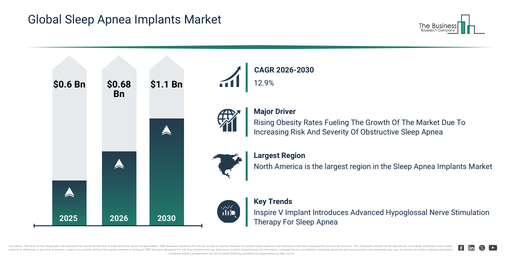
    The sleep apnea implants market has seen rapid expansion in recent years. Its value is anticipated to rise from $0.6 billion in 2025 to $0.68 billion in 2026, at a compound annual growth rate (CAGR) of 12.6%. Historically, this growth can be attributed to factors such as the increasing prevalence of sleep apnea, higher rates of CPAP intolerance, advancements in sleep disorder diagnosis, a rise in obesity levels, and the expansion of specialized sleep clinics.

    The sleep apnea implants market is set for substantial expansion in the coming years. It is forecast to grow to $1.1 billion in 2030, demonstrating a compound annual growth rate (CAGR) of 12.9%. This increase over the forecast period stems from factors such as the heightened demand for long-term implant therapy, an uptick in minimally invasive procedures, greater awareness of sleep health, an extension of reimbursement coverage, and innovations in neurostimulation devices. Prominent trends anticipated in this period include hypoglossal nerve stimulation devices, implantable airway support systems, programmable neurostimulation implants, less invasive sleep implants, and wireless-controlled implant platforms.

    Download A Free Sample Report For Comprehensive Market Insights:

    https://www.thebusinessresearchcompany.com/sample.aspx?id=33317&type=smp

    What Important Drivers Are Powering The Sleep Apnea Implants Market Growth?

    The increasing incidence of obesity is projected to boost the expansion of the sleep apnea implants market in the future. Obesity is defined as a medical state marked by an excessive buildup of body fat, substantially elevating the likelihood of negative health consequences and chronic illnesses. This condition is predominantly escalating due to greater intake of high-calorie, ultra-processed foods that offer surplus energy but minimal nutritional benefit, thereby fostering sustained weight gain. The growing prevalence of obesity fuels the demand for sleep apnea implants because surplus fat deposits around the neck and upper airway heighten both the risk and seriousness of obstructive sleep apnea, prompting more individuals unable to use CPAP to seek enduring implantable treatment options. For example, data from May 2024, provided by the Office for Health Improvement and Disparities, a UK-based government department, indicated that roughly 64% of adults aged 18 and older in England were considered overweight or obese, with men showing significantly higher rates at around 69% versus approximately 59% for women. Consequently, the increasing occurrence of obesity is propelling the expansion of the sleep apnea implants market.

    How Is The Sleep Apnea Implants Market Distributed Across Key Segments?

    The sleep apnea implants market covered in this report is segmented –

    1) By Product: Phrenic Nerve Stimulator; Hypoglossal Neurostimulation Devices; Bone Screw Implant System; Palatal Implants; Pillar Procedure

    2) By Indication: Central Sleep Apnea; Obstructive Sleep Apnea

    3) By Distribution Channel: Direct Sales to Hospitals; Medical Device Distributors; Specialty Medical Suppliers

    4) By End Use: Hospitals; Ambulatory Surgical Centers

    Subsegments:

    1) By Phrenic Nerve Stimulator: Implantable Phrenic Nerve Stimulators; Rechargeable Phrenic Nerve Stimulators; Fully Programmable Phrenic Nerve Stimulators; Wireless Controlled Phrenic Nerve Stimulators; Long Term Use Phrenic Nerve Stimulators

    2) By Hypoglossal Neurostimulation Devices: Implantable Hypoglossal Neurostimulation Devices; Rechargeable Hypoglossal Neurostimulation Devices; Programmable Hypoglossal Neurostimulation Devices; Wireless Controlled Hypoglossal Neurostimulation Devices; Sleep Activated Hypoglossal Neurostimulation Devices

    3) By Bone Screw Implant System: Titanium Bone Screw Implant Systems; Adjustable Bone Screw Implant Systems; Self Tapping Bone Screw Implant Systems; Long Term Fixation Bone Screw Implant Systems; Minimally Invasive Bone Screw Implant Systems

    4) By Palatal Implants: Soft Palate Implants; Rigid Palatal Implants; Bio Compatible Palatal Implants; Permanent Palatal Implants; Minimally Invasive Palatal Implants

    5) By Pillar Procedure: Single Implant Pillar Procedures; Multiple Implant Pillar Procedures; Office Based Pillar Procedures; Minimally Invasive Pillar Procedures; Outpatient Pillar Procedures

    Which Trends Are Supporting The Evolution Of The Sleep Apnea Implants Market?

    Leading companies within the sleep apnea implants market are prioritizing technological advancements, particularly hypoglossal nerve stimulation (HNS) therapy, to improve airway patency and lessen obstructive sleep apnea incidents. Hypoglossal nerve stimulation (HNS) therapy constitutes an implantable medical solution for obstructive sleep apnea, functioning by electrically stimulating the hypoglossal nerve, responsible for tongue movements, to keep the airway open during slumber. For example, in November 2025, Children’s Hospital of Pittsburgh, a pediatric hospital in the US, unveiled the Inspire V implant through its initial implantation. This device includes an integrated respiratory sensor that streamlines the system from three components to two, alongside enhanced software that boosts patient management efficiency and accessibility, with a brief recovery period typically involving one night of observation. The Inspire V implant system addresses obstructive sleep apnea by stimulating the hypoglossal nerve to sustain an open airway throughout sleep. It offers advantages to patients through its integrated respiratory sensor, a streamlined two-component structure, and updated software that improves therapy oversight and lowers procedural intricacy.

    Which Firms Are Competing In The Sleep Apnea Implants Market?

    Major companies operating in the sleep apnea implants market are Medtronic Plc, Koninklijke Philips N.V., Asahi Kasei Corporation, Nyxoah SA, Fisher & Paykel Healthcare Limited, LivaNova Plc, Contec Medical Systems Co. Ltd., Inspire Medical Systems Inc., Drive DeVilbiss Healthcare GmbH, Pillar Palatal LLC, SomnoMed Limited, Respicardia, Inc., Sibel Health Inc., LinguaFlex LLC, Advanced Brain Monitoring Inc, Cleveland Medical Devices Inc., Siesta Medical, Inc., Avery Biomedical Devices Inc., and Nox Medical, Somnowell Ltd.

    Access The Complete Sleep Apnea Implants Market Report:

    https://www.thebusinessresearchcompany.com/report/sleep-apnea-implants-market-report

    Which Region Stands As The Largest Contributor To The Sleep Apnea Implants Market?

    North America was the largest region in the sleep apnea implants market in 2025. Asia-Pacific is expected to be the fastest-growing region in the forecast period. The regions covered in the sleep apnea implants market report are Asia-Pacific, South East Asia, Western Europe, Eastern Europe, North America, South America, Middle East, Africa.

    Access a Customized Sleep Apnea Implants Market Report for Deeper Competitive Insights

    Get in touch with us:

    The Business Research Company: https://www.thebusinessresearchcompany.com/

    Americas: +1 310-496-7795

    Asia: +44 7882 955267 & +91 8897263534

    Europe: +44 7882 955267

    Email us at: marketing@tbrc.info

    Follow us on:

    LinkedIn: https://in.linkedin.com/company/the-business-research-company

    YouTube: https://www.youtube.com/channel/UC24_fI0rV8cR5DxlCpgmyFQ

    Global Market Model: https://www.thebusinessresearchcompany.com/global-market-model
  • Single-Use Membrane Chromatography Systems Market Growth and Emerging Opportunities

    Single-Use Membrane Chromatography Systems Market Growth and Emerging Opportunities

    The Business Research Company’s 2026 market reports feature advanced enhancements such as market attractiveness analysis, total addressable market evaluation, company benchmarking matrices, interactive Excel dashboards, expanded supply chain intelligence, emerging startup coverage, and detailed product insights, delivering more actionable and strategically valuable research.

    What Market Value Trend Is Expected For The Single-use Membrane Chromatography Systems Market From 2026 To 2030?

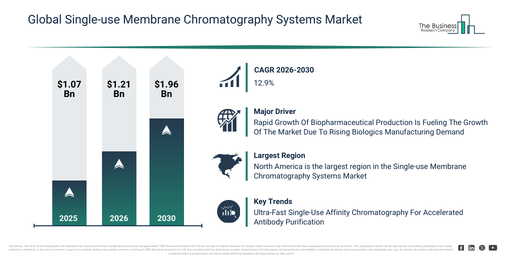
    In recent years, the market size for single-use membrane chromatography systems has shown rapid expansion. This market is projected to grow from $1.07 billion in 2025 to $1.21 billion in 2026, demonstrating a compound annual growth rate (CAGR) of 12.6%. The historical market growth can be attributed to factors such as increased biologics manufacturing, expanded vaccine production, the adoption of single-use bioprocessing, the demand for quicker purification cycles, and a rise in contract manufacturing.

    The single-use membrane chromatography systems market is projected to experience swift expansion over the coming years. This market is set to reach a value of $1.96 billion by 2030, exhibiting a compound annual growth rate (CAGR) of 12.9%. Several factors will drive this growth during the forecast period, including the expansion of gene and cell therapy, an increase in modular bioprocess plants, a greater need for adaptable purification methods, their use in viral vector production, and the scaling of continuous bioprocessing. Key developments anticipated during this period encompass disposable high flow membrane modules, platforms for rapid downstream purification, pre-packed single-use capsules, continuous membrane processing systems, and designs that require less buffer.

    Download A Free Sample Report For Comprehensive Market Insights:

    https://www.thebusinessresearchcompany.com/sample.aspx?id=33316&type=smp

    Which Major Factors Are Contributing To The Development Of The Single-use Membrane Chromatography Systems Market?

    The substantial rise in biopharmaceutical production is projected to fuel the expansion of the single-use membrane chromatography systems market moving forward. This increase in biopharmaceutical output is attributable to a growing worldwide demand for biologic therapeutics, including monoclonal antibodies, vaccines, and advanced therapies. Single-use membrane chromatography systems aid biopharmaceutical production by delivering high-throughput, disposable purification solutions, which facilitate faster and more efficient processing of biologics such as monoclonal antibodies. For instance, in November 2025, according to report published by the Ministry of Trade, Industry and Resources, a South Korea–based government ministry of the Republic, Korea’s bioindustry production reached KRW 22.9 trillion, marking a 9.8% increase from the previous year. Therefore, the rapid growth of biopharmaceutical production has driven the growth of the single-use membrane chromatography systems market.

    How Does Segment Analysis Break Down The Single-use Membrane Chromatography Systems Market Structure?

    The single-use membrane chromatography systems market covered in this report is segmented –

    1) By Product Type: Anion Exchange Membrane Chromatography; Cation Exchange Membrane Chromatography; Mixed-Mode Membrane Chromatography

    2) By Technique: Ion Exchange Membrane Chromatography; Affinity Membrane Chromatography; Hydrophobic Interaction Membrane Chromatography; Mixed-Mode Membrane Chromatography

    3) By Application: Biopharmaceuticals; Clinical Research; Academic Research; Other Applications

    4) By End-User: Pharmaceutical and Biotechnology Companies; Academic and Research Institutes; Contract Research Organizations; Other End-Users

    Subsegments:

    1) By Anion Exchange Membrane Chromatography: High Capacity Anion Exchange Membrane; Strong Anion Exchange Membrane; Weak Anion Exchange Membrane; Disposable Anion Exchange Membrane

    2) By Cation Exchange Membrane Chromatography: Strong Cation Exchange Membrane; Weak Cation Exchange Membrane; High Capacity Cation Exchange Membrane; Disposable Cation Exchange Membrane

    3) By Mixed-Mode Membrane Chromatography: Cation Anion Mixed Mode Membrane; Hydrophobic Interaction Mixed Mode Membrane; Affinity Mixed Mode Membrane; Disposable Mixed Mode Membrane

    Which Trends Are Expected To Shape The Single-use Membrane Chromatography Systems Market?

    Major companies operating in the single-use membrane chromatography systems market are focusing on technological advancements, such as ultra-fast single-use affinity chromatography, to gain higher downstream processing efficiency, faster antibody capture, reduced purification cycle times, and improved scalability from research to commercial manufacturing. Ultra-fast single-use affinity chromatography refers to membrane-based, disposable chromatography systems that use high-flow affinity ligands to capture target biomolecules. For instance, in October 2024, Sartorius AG, a Germany-based company, launched Sartobind Rapid A Lab. Sartobind Rapid A Lab offers a plug-and-play, single-use Protein A membrane chromatography solution designed to accelerate antibody purification workflows. It enables ultra-fast antibody capture in under three minutes using a high-flow membrane matrix that delivers significantly higher lifetime yields than traditional resin columns. The unit operates without column packing, buffer degassing, or cleaning-in-place, reducing process complexity and setup time. It supports flexible operation with syringes, pumps, or liquid chromatography systems, eliminating the need for dedicated chromatography infrastructure.

    Who Are The Major Companies Operating In The Single-use Membrane Chromatography Systems Market?

    Major companies operating in the single-use membrane chromatography systems market are Thermo Fisher Scientific Inc., 3M Company, Merck Millipore, Danaher Corporation, GE Healthcare, Asahi Kasei Corporation, Agilent Technologies Inc., Cytiva, Sartorius AG, Bio-Rad Laboratories Inc., Repligen Corporation, Phenomenex Inc., Cole-Parmer Instrument Company LLC, Membrane Solutions LLC, Graver Technologies LLC, Regis Technologies Inc., Purilogics Inc., BIA Separations d.o.o., Cobetter Filtration Equipment Co. Ltd., i3 Membrane Partnership Ltd.

    Access The Complete Single-use Membrane Chromatography Systems Market Report:

    https://www.thebusinessresearchcompany.com/report/single-use-membrane-chromatography-systems-market-report

    What Is The Largest Regional Market In The Single-use Membrane Chromatography Systems Market?

    North America was the largest region in the single-use membrane chromatography systems market in 2025. Asia-Pacific is expected to be the fastest-growing region in the forecast period. The regions covered in the single-use membrane chromatography systems market report are Asia-Pacific, South East Asia, Western Europe, Eastern Europe, North America, South America, Middle East, Africa.

    Access a Customized Single-use Membrane Chromatography Systems Market Report for Deeper Competitive Insights

    Get in touch with us:

    The Business Research Company: https://www.thebusinessresearchcompany.com/

    Americas: +1 310-496-7795

    Asia: +44 7882 955267 & +91 8897263534

    Europe: +44 7882 955267

    Email us at: marketing@tbrc.info

    Follow us on:

    LinkedIn: https://in.linkedin.com/company/the-business-research-company

    YouTube: https://www.youtube.com/channel/UC24_fI0rV8cR5DxlCpgmyFQ

    Global Market Model: https://www.thebusinessresearchcompany.com/global-market-model
  • Robotic Surgery Flight Simulation Market Poised for Long-Term Expansion

    Robotic Surgery Flight Simulation Market Poised for Long-Term Expansion

    The Business Research Company’s 2026 market reports feature advanced enhancements such as market attractiveness analysis, total addressable market evaluation, company benchmarking matrices, interactive Excel dashboards, expanded supply chain intelligence, emerging startup coverage, and detailed product insights, delivering more actionable and strategically valuable research.

    How Does The Forecasted Market Size Of The Robotic Flight Simulator Surgery Market Compare Between 2026 And 2030?

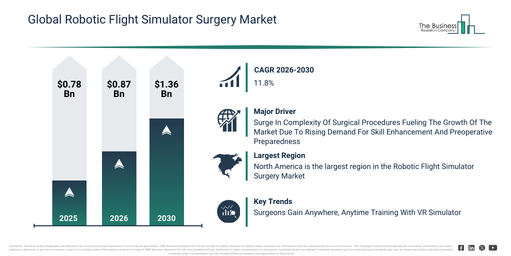
    The robotic flight simulator surgery market has experienced significant growth in recent years. It is projected to expand from $0.78 billion in 2025 to $0.87 billion in 2026, showing a compound annual growth rate (CAGR) of 11.6%. This historical development is attributable to factors such as increasing complexity in surgical training, the broadening scope of simulation based education, a heightened emphasis on patient safety, the rise in minimally invasive surgery, and the advancement of high fidelity simulators.

    The robotic flight simulator surgery market size is projected to experience substantial growth in the next few years, expanding to $1.36 billion in 2030 with a compound annual growth rate (CAGR) of 11.8%. This anticipated growth during the forecast period can be attributed to the wider adoption of VR surgical labs, an increase in competency-based surgical certification, the expansion of remote surgical training, a rising demand for rehearsal-based planning, and enhanced funding for medical simulation centers. Major trends expected in the forecast period include the proliferation of virtual surgical training platforms, a growing utilization of patient-specific procedure simulation, the expansion of haptic-enabled training systems, increased integration of team-based surgical simulation, and the incorporation of performance scoring and feedback tools.

    Download A Free Sample Report For Comprehensive Market Insights:

    https://www.thebusinessresearchcompany.com/sample.aspx?id=33307&type=smp

    What Key Growth Drivers Are Influencing The Robotic Flight Simulator Surgery Market?

    The increasing intricacy of surgical operations is anticipated to drive expansion in the robotic flight simulator surgery market in the future. These procedures are medical interventions carried out by skilled surgeons to address illnesses, injuries, or anatomical defects through physical modification of body tissues. The intricacy of surgical interventions is escalating, attributed to factors such as an aging demographic, a higher incidence of chronic ailments necessitating surgery, and the broader embrace of minimally invasive and robot-assisted methods. Robotic flight simulator surgery aids surgical training by allowing surgeons to practice intricate operations within a lifelike virtual setting, enhance their technical proficiency, and boost their preparedness prior to actual surgeries. As an illustration, the Australian Institute of Health and Welfare (AIHW), an Australia-based independent statutory agency, reported in April 2025 that there were 778,500 public hospital elective surgery admissions, marking a 5.8% rise from 735,500 in 2022–23. Consequently, the increasing difficulty of surgical procedures is fueling the expansion of the robotic flight simulator surgery market.

    What Segment Types Are Included In The Robotic Flight Simulator Surgery Market Analysis?

    The robotic flight simulator surgery market covered in this report is segmented –

    1) By Type Of Surgery: Cardiac Surgery; Orthopedic Surgery; Neurosurgery; Gastrointestinal Surgery; Urological Surgery; Other Types

    2) By Technology: Virtual Reality (VR); Augmented Reality (AR); Mixed Reality (MR)

    3) By Application: Training And Education; Preoperative Planning; Surgical Navigation; Rehabilitation And Recovery Training

    4) By End-User: Hospitals And Clinics; Ambulatory Surgical Centers (ASCs); Research And Academic Institutions

    Subsegments:

    1) By Cardiac Surgery: Minimally Invasive Cardiac Surgery; Coronary Artery Bypass Simulation; Valve Repair And Replacement Simulation; Electrophysiology Procedure Simulation

    2) By Orthopedic Surgery: Joint Replacement Simulation; Fracture Fixation Simulation; Arthroscopic Surgery Simulation; Spinal Fusion Simulation

    3) By Neurosurgery: Brain Tumor Resection Simulation; Spinal Cord Surgery Simulation; Vascular Neurosurgery Simulation; Endoscopic Neurosurgery Simulation

    4) By Gastrointestinal Surgery: Bariatric Surgery Simulation; Colorectal Surgery Simulation; Liver And Pancreas Surgery Simulation; Laparoscopic Gastrointestinal Surgery Simulation

    5) By Urological Surgery: Prostate Surgery Simulation; Kidney Surgery Simulation; Bladder Surgery Simulation; Minimally Invasive Urological Procedures Simulation

    6) By Other Types: Pediatric Surgery Simulation; Gynecological Surgery Simulation; Ophthalmic Surgery Simulation; Emergency Surgery Simulation

    What Trends Are Impacting The Robotic Flight Simulator Surgery Market?

    Major companies in the robotic flight simulator surgery market are concentrating on integrating artificial intelligence (AI) technology into simulation platforms, such as the VTVR platform, to improve surgical precision, optimize training results, and offer real-time performance analytics for both new and experienced surgeons. The VTVR platform commonly refers to a Virtual Reality-based training system utilized within the context of CMR Surgical’s Versius robotic surgery training program. For example, in July 2023, CMR Surgical, a UK-based surgical robotics company, launched the Versius Trainer in VR (VTVR), an advanced virtual reality simulator designed for its Versius robotic surgical system. The VTVR allows surgeons to participate in interactive simulator exercises through VR headsets and hand controllers, providing flexible training that can be done anywhere, at any time. Intended to complement the existing Versius Trainer, it delivers a wireless and portable experience without requiring a PC connection. This innovative method supports surgeons in practicing and familiarizing themselves with the Versius interface at their own pace. By offering this accessible, immersive training, VTVR has the potential to accelerate skill development and shorten the traditional learning curve compared to using in-lab simulators.

    Which Companies Are Influencing The Robotic Flight Simulator Surgery Market?

    Major companies operating in the robotic flight simulator surgery market are Medtronic plc, Intuitive Surgical Inc., Smith & Nephew plc, CAE Inc., Meerecompany Inc., Surgical Science Sweden AB, Avatera Medical GmbH, CMR Surgical Ltd, Osso VR, Ubitus K.K., Mentice AB, HaptX Inc., KRN Labs, Medicaroid Corporation, PrecisionOS Technology, EndoQuest Robotics Inc., iotaMotion Inc., LifeLike BioTissues, ToLTech GmbH, Simulated Surgical Systems LLC

    Access The Complete Robotic Flight Simulator Surgery Market Report:

    https://www.thebusinessresearchcompany.com/report/robotic-flight-simulator-surgery-market-report

    Which Region Contributes The Most To The Robotic Flight Simulator Surgery Market?

    North America was the largest region in the robotic flight simulator surgery market in 2025. Asia-Pacific is expected to be the fastest-growing region in the forecast period. The regions covered in the robotic flight simulator surgery market report are Asia-Pacific, South East Asia, Western Europe, Eastern Europe, North America, South America, Middle East, Africa.

    Access a Customized Robotic Flight Simulator Surgery Market Report for Deeper Competitive Insights

    Get in touch with us:

    The Business Research Company: https://www.thebusinessresearchcompany.com/

    Americas: +1 310-496-7795

    Asia: +44 7882 955267 & +91 8897263534

    Europe: +44 7882 955267

    Email us at: marketing@tbrc.info

    Follow us on:

    LinkedIn: https://in.linkedin.com/company/the-business-research-company

    YouTube: https://www.youtube.com/channel/UC24_fI0rV8cR5DxlCpgmyFQ

    Global Market Model: https://www.thebusinessresearchcompany.com/global-market-model
  • Robotic Endovascular Systems Market Gaining Traction with Emerging Opportunities

    Robotic Endovascular Systems Market Gaining Traction with Emerging Opportunities

    The Business Research Company’s 2026 market reports feature advanced enhancements such as market attractiveness analysis, total addressable market evaluation, company benchmarking matrices, interactive Excel dashboards, expanded supply chain intelligence, emerging startup coverage, and detailed product insights, delivering more actionable and strategically valuable research.

    What Increase In Market Value Is Predicted For The Robotic Assisted Endovascular Systems Market During The 2026–2030 Period?

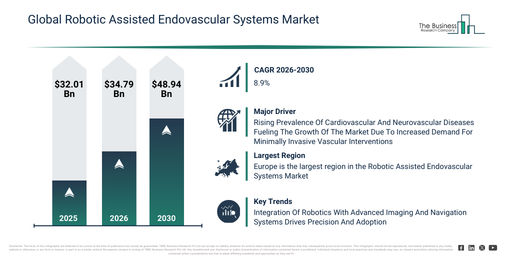
    The market size for robotic assisted endovascular systems has demonstrated strong growth in recent years. It is projected to increase from $32.01 billion in 2025 to $34.79 billion in 2026, achieving a compound annual growth rate (CAGR) of 8.7%. The expansion observed in the historical period is attributable to an increase in cardiovascular disease cases, the growth of catheter-based interventions, the expansion of interventional radiology units, a rising preference for minimally invasive surgery, and improvements in vascular imaging.

    The market for robotic assisted endovascular systems is projected to experience substantial expansion in the coming years. This market is predicted to reach $48.94 billion by 2030, demonstrating a compound annual growth rate (CAGR) of 8.9%. This anticipated growth during the forecast period can be linked to several factors, including the expansion of robotic vascular laboratories, an increasing need for precision-guided interventions, the broadening scope of neurovascular robotic procedures, enhanced capabilities in remote surgery, and elevated hospital spending on robotic suites. Key trends expected over the forecast period encompass advancements in robotic catheter navigation, a growing acceptance of minimally invasive vascular procedures, the development of imaging-guided robotic platforms, an uptick in the application of remote robotic intervention, and the incorporation of precision vascular control systems.

    Download A Free Sample Report For Comprehensive Market Insights:

    https://www.thebusinessresearchcompany.com/sample.aspx?id=33306&type=smp

    Which Core Factors Are Supporting The Expansion Of The Robotic Assisted Endovascular Systems Market?

    The increasing occurrence of cardiovascular and neurovascular diseases is projected to boost the expansion of the robotic-assisted endovascular systems market moving forward. These conditions, which involve the heart, blood vessels, and brain circulation, encompass issues like coronary artery disease, stroke, and cerebral aneurysms, and are a primary global contributor to mortality and extended disability. The rise in cardiovascular and neurovascular diseases is attributable to an aging populace alongside a greater incidence of lifestyle-associated risk factors such as obesity, high blood pressure, and lack of physical activity. Robotic-assisted endovascular systems are instrumental in managing these diseases by allowing for highly precise, minimally invasive navigation within blood vessels, thereby enhancing treatment accuracy, patient safety, and clinical results for intricate vascular procedures. As an illustration, in January 2024, the American Heart Association, a US-based non-profit organization, reported that the age-adjusted death rate due to cardiovascular disease escalated to 233.3 per 100,000 in 2024, marking a 4.0% rise from 224.4 per 100,000 in 2023. Consequently, the growing prevalence of cardiovascular and neurovascular diseases is fueling the growth of the robotic-assisted endovascular systems market.

    Which Segment Divisions Form The Structure Of The Robotic Assisted Endovascular Systems Market?

    The robotic assisted endovascular systems market covered in this report is segmented –

    1) By Component: Hardware; Software; Services

    2) By Product: Robotic Catheter Systems; Robotic Guidewire Systems; Robotic Angioplasty Systems; Other Products

    3) By Technology: Robotic Catheter Systems; AI-Assisted Navigation Systems; Imaging-Guided Robotic Platforms; Haptic Feedback Systems; Autonomous Robotic Systems

    4) By Application: Coronary Interventions; Peripheral Vascular Interventions; Neurovascular Interventions; Other Applications

    5) By End-User: Hospitals; Specialty Clinics; Ambulatory Surgical Centers; Research And Academic Institutes; Other End-Users

    Subsegments:

    1) By Hardware: Robotic Control Units; Robotic Catheter Systems; Navigation Consoles; Imaging Integration Modules; Surgical Instrument Arms

    2) By Software: Navigation Software Platforms; Imaging Processing Software; Procedure Planning Software; Data Management Software; Clinical Decision Support Software

    3) By Services: Installation Services; Maintenance And Repair Services; Training And Education Services; System Upgradation Services

    Which Trends Are Affecting The Robotic Assisted Endovascular Systems Market Framework?

    Major companies operating in the robotic assisted endovascular systems market are focusing on integrating robotics with advanced imaging and navigation systems, such as fully remote endovascular robotic platforms. This integration aims to improve procedural precision, enable complex vascular navigation, and expand access to specialist care. Fully remote endovascular robotic platforms are defined as robotic systems that combine real-time fluoroscopic imaging with preoperative CT and MRI data to guide the robotic manipulation of catheters and guidewires during endovascular procedures, while allowing clinicians to operate from a remote console. For instance, in October 2025, Remedy Robotics, a US-based medical technology company, introduced the Remedy N1 System, an endovascular surgical robotic platform designed to support fully remote neurointerventional procedures. This system is engineered to enhance accuracy and clinical workflow by integrating automated CT and MRI image preprocessing with live fluoroscopic imaging for real-time navigation. It also enables simultaneous robotic control of up to four endovascular devices and includes a portable operator console with secure audiovisual connectivity to support remote procedural execution.

    Who Are The Companies Shaping The Robotic Assisted Endovascular Systems Market Landscape?

    Major companies operating in the robotic assisted endovascular systems market are Johnson & Johnson, Siemens Healthineers AG, Corindus Vascular Robotics Inc., Cordis Corporation, MicroPort Scientific Corporation, Hansen Medical Inc., Robocath S.A.S., Magnetecs Corporation, Cathbot Robot Co. Ltd., EKOS Corporation, Stereotaxis Inc., Imperative Care Inc., WeMed Medical Technology Co. Ltd., Lombard Medical Limited, Endovascular Robotics Inc., SS Innovations International Inc., Visionary Medicare Co. Ltd., Vantis Vascular Inc., Microbot Medical Inc., Sentante Ltd.

    Access The Complete Robotic Assisted Endovascular Systems Market Report:

    https://www.thebusinessresearchcompany.com/report/robotic-assisted-endovascular-systems-market-report

    Which Regional Market Leads The Robotic Assisted Endovascular Systems Market?

    Europe was the largest region in the robotic assisted endovascular systems market in 2025. Asia-Pacific is expected to be the fastest-growing region in the forecast period. The regions covered in the robotic assisted endovascular systems market report are Asia-Pacific, South East Asia, Western Europe, Eastern Europe, North America, South America, Middle East, Africa.

    Access a Customized Robotic Assisted Endovascular Systems Market Report for Deeper Competitive Insights

    Get in touch with us:

    The Business Research Company: https://www.thebusinessresearchcompany.com/

    Americas: +1 310-496-7795

    Asia: +44 7882 955267 & +91 8897263534

    Europe: +44 7882 955267

    Email us at: marketing@tbrc.info

    Follow us on:

    LinkedIn: https://in.linkedin.com/company/the-business-research-company

    YouTube: https://www.youtube.com/channel/UC24_fI0rV8cR5DxlCpgmyFQ

    Global Market Model: https://www.thebusinessresearchcompany.com/global-market-model