Month: June 2026

  • Personalized Medicine Trends Accelerating Growth in Personal Genome Services Market

    Personalized Medicine Trends Accelerating Growth in Personal Genome Services Market

    The Business Research Company’s 2026 market reports feature advanced enhancements such as market attractiveness analysis, total addressable market evaluation, company benchmarking matrices, interactive Excel dashboards, expanded supply chain intelligence, emerging startup coverage, and detailed product insights, delivering more actionable and strategically valuable research.

    What Is The Expected Market Size Of The Personal Genome Services Market In 2026 And How Much Will It Reach By 2030?

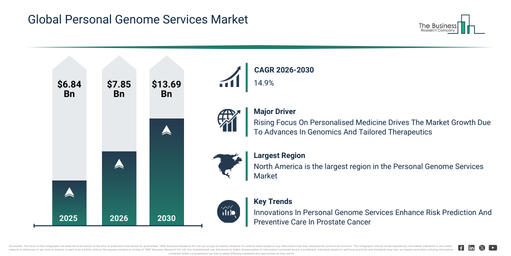
    The personal genome services market has experienced significant expansion in recent years. It is projected to grow from $6.84 billion in 2025 to $7.85 billion in 2026, achieving a compound annual growth rate (CAGR) of 14.7%. The market’s historical growth can be attributed to factors such as reduced sequencing costs, an increase in demand for ancestry testing, greater consumer awareness of genetics, the proliferation of genomics startups, and enhanced sequencing accuracy.

    The personal genome services market is projected to experience swift expansion in the coming years. This market is anticipated to reach $13.69 billion by 2030, demonstrating a compound annual growth rate (CAGR) of 14.9%. Several factors will drive this expansion during the forecast period, including an increase in preventive genomics adoption, wider application of pharmacogenomics, growing consumer demand for personalized wellness solutions, more extensive insurance coverage for testing, and the integration with digital health platforms. Significant developments expected in this timeframe comprise direct-to-consumer genome testing, comprehensive health risk genomic reports, bundled pharmacogenomic services, preventive genome screening packages, and digital platforms for genetic counseling.

    Download A Free Sample Report For Comprehensive Market Insights:

    https://www.thebusinessresearchcompany.com/sample.aspx?id=33258&type=smp

    Which Strategic Drivers Are Supporting The Personal Genome Services Market Development?

    The personal genome services market is projected to expand due to the heightened emphasis on personalized medicine. Personalized medicine represents a healthcare strategy that tailors treatment and preventive measures according to an individual’s unique genetic, biological, and lifestyle attributes. The growing acceptance of personalized medicine stems from breakthroughs in genomics and molecular diagnostics, enabling the customization of treatments to an individual’s genetic makeup for improved results. Through the analysis of an individual’s genetic profile, personal genome services facilitate personalized medicine, aiding in disease risk prediction, guiding medication choices, and customizing prevention and treatment plans. As an illustration, data from February 2024 by the Personalized Medicine Coalition, a US-based non-profit organization, indicated that in 2023, the FDA sanctioned 16 novel personalized treatments for rare disease patients, an increase from six in 2022. The personalized treatments newly approved for 2023 further comprised seven cancer drugs and three for various other diseases and conditions. Consequently, the heightened attention on personalized medicine is fueling the expansion of the personal genome services market.

    What Are The Core Segment Classifications In The Personal Genome Services Market?

    The personal genome services market covered in this report is segmented –

    1) By Service Type: Genetic Testing; Whole Genome Sequencing; Carrier Testing; Ancestry Testing; Other Service Types

    2) By Application: Healthcare; Research; Ancestry; Other Applications

    3) By End-User: Hospitals and Clinics; Research Centers; Direct-to-Consumer; Other End-Users

    Subsegments:

    1) By Genetic Testing: Health Risk Assessment Testing; Pharmacogenomic Testing; Nutritional Genetic Testing; Lifestyle Genetic Testing; Wellness Genetic Screening

    2) By Whole Genome Sequencing: Clinical Whole Genome Sequencing; Research Whole Genome Sequencing; Preventive Health Genome Sequencing; Rare Disease Genome Sequencing; Population Based Genome Sequencing

    3) By Carrier Testing: Inherited Disease Carrier Screening; Preconception Carrier Testing; Prenatal Carrier Testing; Reproductive Health Carrier Screening; Family Planning Carrier Testing

    4) By Ancestry Testing: Ethnicity Estimation Testing; Genealogical Lineage Testing; Migration Pattern Analysis; Regional Ancestry Breakdown; Family Relationship Discovery

    5) By Other Service Types: Newborn Genetic Screening; Predictive Genetic Testing; Sports Performance Genetic Analysis; Personalized Health Reporting; Custom Genetic Consulting Services

    Which Trends Are Shaping The Personal Genome Services Market Landscape?

    Leading firms within the personal genome services market are concentrating on creating sophisticated offerings, including genome-wide risk stratification, to deliver tailored health information, forecast disease vulnerability, and inform both preventative measures and lifestyle adjustments. This stratification involves examining a person’s complete genome to pinpoint genetic variations linked to the likelihood of developing specific diseases or conditions, thereby allowing for customized health risk predictions and focused prevention approaches. An example of this is MyOme Inc., a US-based biotechnology firm, which introduced the initial integrated polygenic risk score (iPRS) test for prostate cancer in November 2025. This test integrates ~7 million genetic markers with clinical data to provide individualized risk projections over 10 years and a lifetime, with its accuracy confirmed in 140,000+ diverse men. The objective is early detection and prevention for 95% of cases lacking rare variants like BRCA2. It directs PSA, MRI, or biopsies for individuals deemed high-risk (those with 3-4x elevated odds in the top decile), simultaneously reducing instances of false positives and unnecessary treatments. Its advantages encompass precise stratification, equitable performance across ancestries, and continuously updated insights powered by AI, all derived from one whole-genome sample.

    Which Companies Are Engaged In The Personal Genome Services Market Environment?

    Major companies operating in the personal genome services market are Thermo Fisher Scientific Inc, Illumina Inc, Helix OpCo LLC, Ancestry.com Operations Inc, Fulgent Genetics Inc, 23andMe Holding Co, Prenetics Global Limited, MyHeritage Ltd, Color Health Inc, Genomics plc, GenoPalate Inc, Living DNA Ltd, Mapmygenome India Pvt Ltd, Nebula Genomics Inc, Xcode Life Sciences Pvt Ltd, Sema4 Holdings Corp, Gene by Gene Ltd, TellmeGen SL, CRI Genetics LLC, African Ancestry Inc, and DNAFit Limited.

    Access The Complete Personal Genome Services Market Report:

    https://www.thebusinessresearchcompany.com/report/personal-genome-services-market-report

    Which Region Leads The Personal Genome Services Market By Size?

    North America was the largest region in the personal genome services market in 2025. Asia-Pacific is expected to be the fastest-growing region in the forecast period. The regions covered in the personal genome services market report are Asia-Pacific, South East Asia, Western Europe, Eastern Europe, North America, South America, Middle East, Africa.

    Access a Customized Personal Genome Services Market Report for Deeper Competitive Insights

    Get in touch with us:

    The Business Research Company: https://www.thebusinessresearchcompany.com/

    Americas: +1 310-496-7795

    Asia: +44 7882 955267 & +91 8897263534

    Europe: +44 7882 955267

    Email us at: marketing@tbrc.info

    Follow us on:

    LinkedIn: https://in.linkedin.com/company/the-business-research-company

    YouTube: https://www.youtube.com/channel/UC24_fI0rV8cR5DxlCpgmyFQ

    Global Market Model: https://www.thebusinessresearchcompany.com/global-market-model
  • Rising Infection Rates and Antibiotic Resistance Driving Penicillin API Market Growth

    Rising Infection Rates and Antibiotic Resistance Driving Penicillin API Market Growth

    The Business Research Company’s 2026 market reports feature advanced enhancements such as market attractiveness analysis, total addressable market evaluation, company benchmarking matrices, interactive Excel dashboards, expanded supply chain intelligence, emerging startup coverage, and detailed product insights, delivering more actionable and strategically valuable research.

    What Market Size Is Forecasted For The Penicillin Active Pharmaceutical Ingredients Market By 2030 Based On Its 2026 Value?

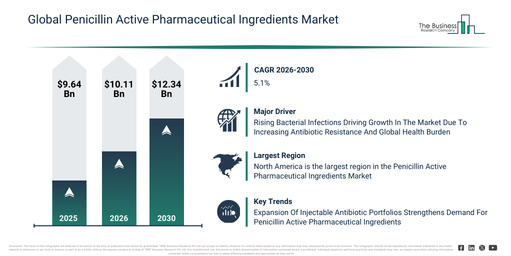
    The penicillin active pharmaceutical ingredients market has shown consistent growth in recent years. This market is expected to expand from $9.64 billion in 2025 to $10.11 billion in 2026, achieving a compound annual growth rate (CAGR) of 4.9%. The historical growth can be attributed to several factors including elevated global demand for antibiotics, the expansion of generic drug manufacturing, an increase in infectious disease treatments, considerable large-scale fermentation capacity, and a rise in hospital antibiotic usage.

    The penicillin active pharmaceutical ingredients market size is projected to experience significant expansion over the next few years. It is expected to reach $12.34 billion by 2030, progressing at a compound annual growth rate (CAGR) of 5.1%. The anticipated growth during this period stems from factors such as an escalating burden of bacterial infections, the enlargement of generic antibiotic markets, an increase in contract API manufacturing, the establishment of more robust antibiotic stockpiling programs, and the growth of pharmaceutical production in emerging markets. Noteworthy trends for the forecast period include the adoption of high purity fermentation processes, the broadening application of semisynthetic penicillin, the integration of continuous API manufacturing lines, advanced methods for antibiotic quality testing, and the development of cost-optimized bulk antibiotic production.

    Download A Free Sample Report For Comprehensive Market Insights:

    https://www.thebusinessresearchcompany.com/sample.aspx?id=33256&type=smp

    What Major Growth Factors Are Impacting The Penicillin Active Pharmaceutical Ingredients Market?

    The increasing frequency of bacterial infections is anticipated to propel the growth of the penicillin active pharmaceutical ingredients market going forward. These infections are conditions resulting from pathogenic bacteria entering and multiplying within the body, leading to symptoms and potential health issues. The growing occurrence of such infections stems from antimicrobial resistance, where the excessive or improper use of antibiotics enables bacteria to evolve resistance, thus making infections more challenging to manage and longer-lasting in both clinical and community environments. Consequently, the rising rate of bacterial infections fuels the need for penicillin-derived antibiotics, which continue to be crucial for addressing prevalent bacterial illnesses and fighting resistant strains in medical settings. A notable example from September 2024, cited by the US-based Institute for Health Metrics and Evaluation, projects that antibiotic-resistant infections might lead to over 39 million deaths by 2050. This surge is attributed to AMR bacteria, which are anticipated to cause a 75% increase in annual cases, rising from 4.71 to 8.22 million. This demonstrates that the increasing prevalence of bacterial infections is indeed a key driver for the expansion of the penicillin active pharmaceutical ingredients market.

    How Is The Penicillin Active Pharmaceutical Ingredients Market Structured Across Different Market Segments?

    The penicillin active pharmaceutical ingredients market covered in this report is segmented –

    1) By Product Type: Penicillin G; Penicillin V; Ampicillin; Amoxicillin; Other Product Types

    2) By Formulation Type: Oral Formulations; Injectable Formulations; Topical Formulations

    3) By Distribution Channel: Direct Distribution; Online Pharmacies; Third Party Distributors

    4) By Application: Bacterial Infections; Respiratory Infections; Skin Infections; Urinary Tract Infections; Gastrointestinal Infections

    5) By End User: Hospitals; Pharmacies; Clinics; Academic And Research Institutions

    Subsegments:

    1) By Penicillin G: Injectable Penicillin G; Oral Penicillin G; Long Acting Penicillin G; Aqueous Penicillin G; Crystalline Penicillin G

    2) By Penicillin V: Oral Penicillin V; Tablet Penicillin V; Liquid Penicillin V; Immediate Release Penicillin V; Extended Release Penicillin V

    3) By Ampicillin: Injectable Ampicillin; Oral Ampicillin; Capsule Ampicillin; Liquid Ampicillin; Sodium Salt Ampicillin

    4) By Amoxicillin: Tablet Amoxicillin; Capsule Amoxicillin; Oral Suspension Amoxicillin; Extended Release Amoxicillin; Chewable Amoxicillin

    5) By Other Product Type: Dicloxacillin; Cloxacillin; Flucloxacillin; Oxacillin; Carbenicillin

    What Trends Are Influencing The Penicillin Active Pharmaceutical Ingredients Market Outlook?

    Leading companies within the penicillin active pharmaceutical ingredients (APIs) market are concentrating their efforts on broadening their range of injectable antibiotic products to enhance treatment availability and meet hospital requirements for vital anti-infective treatments. Such injectable antibiotic products are defined as parenteral formulations, pre-prepared for immediate use, which are sourced from penicillin APIs and formulated to provide quick and efficient therapy for severe bacterial infections. An example of this is Avenacy, a pharmaceutical company based in the US, which disclosed in March 2025 the introduction of five new injectable antibiotic products into the U.S. market: Ampicillin for Injection, USP; Ampicillin and Sulbactam for Injection, USP; Nafcillin for Injection, USP; Penicillin G Potassium for Injection, USP; and Piperacillin and Tazobactam for Injection, USP. These launches are specifically intended to cater to acute care environments. These offerings encompass penicillin-derived formulations, utilized for managing a diverse array of bacterial infections, thereby strengthening the need for premium penicillin APIs and facilitating reliable, extensive production and distribution throughout healthcare institutions.

    Who Are The Prominent Players Across The Penicillin Active Pharmaceutical Ingredients Market?

    Major companies operating in the penicillin active pharmaceutical ingredients market are Merck & Co Inc, Pfizer Inc, Sanofi S.A., Novartis AG, GSK plc, Teva Pharmaceutical Industries Ltd, CSPC Zhongrun Pharmaceutical Co. Ltd, Aurobindo Pharma Ltd, Shionogi & Co. Ltd, North China Pharmaceutical Group Corporation, Centrient Pharmaceuticals B.V., Qilu Tianhe Pharmaceutical Co. Ltd, Jiangxi Fushine Pharmaceutical Co. Ltd, Harbin Pharmaceutical Group Co. Ltd, The United Laboratories International Holdings Limited, Sinopharm Weiqida Pharmaceutical Co. Ltd, Rochem International Inc, Sichuan Kelun Pharmaceutical Co. Ltd, Shandong Lukang Pharmaceutical Co. Ltd, Huaxing Pharmaceutical Co. Ltd, Jiangxi Huabang Pharmaceutical Co. Ltd, and Changzhou RedSun Pharmaceutical Co. Ltd.

    Access The Complete Penicillin Active Pharmaceutical Ingredients Market Report:

    https://www.thebusinessresearchcompany.com/report/penicillin-active-pharmaceutical-ingredients-market-report

    Which Region Has The Strongest Presence In The Penicillin Active Pharmaceutical Ingredients Market?

    North America was the largest region in the penicillin active pharmaceutical ingredients (API) market in 2025. Asia-Pacific is expected to be the fastest-growing region in the forecast period. The regions covered in the penicillin active pharmaceutical ingredients market report are Asia-Pacific, South East Asia, Western Europe, Eastern Europe, North America, South America, Middle East, Africa.

    Access a Customized Penicillin Active Pharmaceutical Ingredients Market Report for Deeper Competitive Insights

    Get in touch with us:

    The Business Research Company: https://www.thebusinessresearchcompany.com/

    Americas: +1 310-496-7795

    Asia: +44 7882 955267 & +91 8897263534

    Europe: +44 7882 955267

    Email us at: marketing@tbrc.info

    Follow us on:

    LinkedIn: https://in.linkedin.com/company/the-business-research-company

    YouTube: https://www.youtube.com/channel/UC24_fI0rV8cR5DxlCpgmyFQ

    Global Market Model: https://www.thebusinessresearchcompany.com/global-market-model
  • Palmoplantar Keratoderma Market Trends and Growth Forecast Through 2030

    Palmoplantar Keratoderma Market Trends and Growth Forecast Through 2030

    The Business Research Company’s 2026 market reports feature advanced enhancements such as market attractiveness analysis, total addressable market evaluation, company benchmarking matrices, interactive Excel dashboards, expanded supply chain intelligence, emerging startup coverage, and detailed product insights, delivering more actionable and strategically valuable research.

    How Is The Market Value Of The Palmoplantar Keratoderma Market Projected To Expand During 2026–2030?

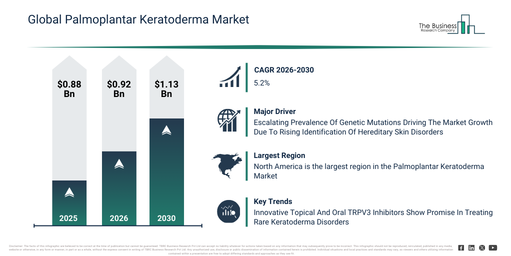
    The palmoplantar keratoderma market has experienced consistent expansion in recent years. This market is projected to expand from $0.88 billion in 2025 to $0.92 billion in 2026, exhibiting a compound annual growth rate (CAGR) of 4.9%. The historical growth of the market can be linked to factors such as an increase in diagnoses of rare dermatological disorders, the proliferation of dermatology specialty clinics, the broadened availability of retinoid therapies, a rise in patient awareness regarding genetic skin diseases, and enhanced dermatopathology testing.

    The palmoplantar keratoderma market is projected to experience substantial expansion in the coming years. This market is predicted to reach $1.13 billion in 2030, demonstrating a compound annual growth rate (CAGR) of 5.2%. Factors contributing to this anticipated growth include an increase in targeted dermatology medications, expanded availability of genetic screening, greater adoption of biologic therapies, an expanding pipeline of specialty dermatology products, and enhanced support programs for orphan diseases. Key trends anticipated during this period encompass targeted biologic treatments for skin conditions, sophisticated genetic diagnostic tools, extended-release topical formulations, combined retinoid treatment approaches, and the increasing use of home-based phototherapy.

    Download A Free Sample Report For Comprehensive Market Insights:

    https://www.thebusinessresearchcompany.com/sample.aspx?id=33255&type=smp

    What Market Drivers Are Helping Shape The Palmoplantar Keratoderma Market Expansion?

    The growing occurrence of genetic mutations is projected to stimulate the expansion of the palmoplantar keratoderma market in the future. Genetic mutations are alterations or variances in DNA sequences that can heighten vulnerability to inherited disorders and dermatological conditions. The increase in genetic mutation prevalence stems from progress in genomic sequencing and extensive genetic testing, which allow for the detection and identification of a rising number of previously unrecognized DNA variations across diverse populations. A higher incidence of genetic mutations contributes to palmoplantar keratoderma by expanding the demographic with inherited skin-gene modifications, which subsequently leads to earlier diagnosis and a greater demand for specific treatment approaches. For instance, in January 2023, a report from the National Center for Biotechnology Information (NCBI), a division of the US-based National Library of Medicine (NLM), indicated that with approximately 140 million babies born each year, roughly 9.8 billion new human mutations enter the gene pool annually. Consequently, the increasing prevalence of genetic mutations is fueling the growth of the palmoplantar keratoderma market.

    Which Segment-Based Categories Are Covered In The Palmoplantar Keratoderma Market?

    The palmoplantar keratoderma market covered in this report is segmented –

    1) By Treatment Type: Topical Treatments; Systemic Treatments; Phototherapy; Surgical Interventions

    2) By Type: Non Lamellar Keratoderma; Lamellar Keratoderma; Epidermolytic Keratoderma; Palmoplantar Keratoderma With Systemic Involvement

    3) By Diagnosis Method: Clinical Examination; Histopathological Examination; Genetic Testing

    4) By Patient Type: Pediatric; Adult

    5) By Distribution Channel: Hospital Pharmacies; Retail Pharmacies; Online Pharmacies

    Subsegments:

    1) By Topical Treatments: Salicylic Acid Preparations; Urea Creams; Emollients; Retinoid Creams; Corticosteroid Creams

    2) By Systemic Treatments: Oral Retinoids; Oral Vitamin D Analogues; Oral Corticosteroids; Oral Immunosuppressants

    3) By Phototherapy: Ultraviolet A Therapy; Ultraviolet B Therapy; Psoralen Plus Ultraviolet A Therapy

    4) By Surgical Interventions: Excision Surgery; Laser Therapy; Dermabrasion; Skin Grafting

    Which Trends Are Expected To Shape The Palmoplantar Keratoderma Market?

    Leading companies operating in the palmoplantar keratoderma market are concentrating on conducting clinical investigations to create advanced medications, such as TRPV3 inhibitors, aiming to deliver precise, disease-altering treatments that extend beyond merely addressing symptoms. These TRPV3 inhibitors function by blocking the TRPV3 ion channel, thereby aiding in the normalization of skin cell growth, strengthening the skin barrier, and reducing the pain and thickening associated with palmoplantar keratoderma. For example, in June 2024, Kamari Pharma Ltd., a clinical-stage biotechnology firm, launched KM-001, a topical TRPV3 inhibitor, following encouraging Phase 1b clinical results. KM-001 is presented as a cream for twice-daily application and has demonstrated significant safety, with no severe adverse events reported, along with an overall responder rate of 87% in patients with pachyonychia congenita and punctate palmoplantar keratoderma type 1. Its unique mechanism of action helps to normalize skin cell proliferation, enhance epidermal barrier formation, and alleviate pain in affected patients, thereby offering a disease-modifying alternative to conventional therapies. Kamari Pharma intends to move KM-001 into Phase 2 trials while also developing KM-023, an oral TRPV3 inhibitor, for broader keratoderma indications.

    Which Companies Form The Competitive Landscape Of The Palmoplantar Keratoderma Market?

    Major companies operating in the palmoplantar keratoderma market are LEO Pharma, Krystal Biotech Inc., and Kamari Pharma.

    Access The Complete Palmoplantar Keratoderma Market Report:

    https://www.thebusinessresearchcompany.com/report/palmoplantar-keratoderma-market-report

    Which Region Stands As The Largest Contributor To The Palmoplantar Keratoderma Market?

    North America was the largest region in the palmoplantar keratoderma market in 2025. Asia – Pacific is expected to be the fastest-growing region in the forecast period. The regions covered in the palmoplantar keratoderma market report are Asia-Pacific, South East Asia, Western Europe, Eastern Europe, North America, South America, Middle East, Africa.

    Access a Customized Palmoplantar Keratoderma Market Report for Deeper Competitive Insights

    Get in touch with us:

    The Business Research Company: https://www.thebusinessresearchcompany.com/

    Americas: +1 310-496-7795

    Asia: +44 7882 955267 & +91 8897263534

    Europe: +44 7882 955267

    Email us at: marketing@tbrc.info

    Follow us on:

    LinkedIn: https://in.linkedin.com/company/the-business-research-company

    YouTube: https://www.youtube.com/channel/UC24_fI0rV8cR5DxlCpgmyFQ

    Global Market Model: https://www.thebusinessresearchcompany.com/global-market-model
  • Orthostatic Hypotension Market Outlook Highlighting Demand Trends for 2026–2030

    Orthostatic Hypotension Market Outlook Highlighting Demand Trends for 2026–2030

    The Business Research Company’s 2026 market reports feature advanced enhancements such as market attractiveness analysis, total addressable market evaluation, company benchmarking matrices, interactive Excel dashboards, expanded supply chain intelligence, emerging startup coverage, and detailed product insights, delivering more actionable and strategically valuable research.

    What Are The Forecasted Market Size Figures For The Orthostatic Hypotension Market In 2026 And 2030?

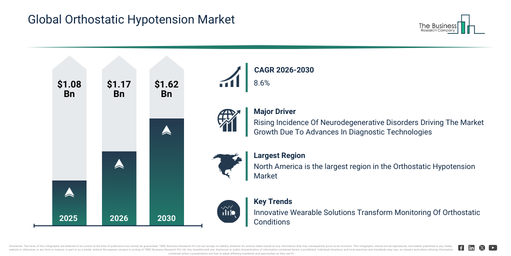
    The orthostatic hypotension market size has demonstrated significant growth in recent years. It is projected to expand from $1.08 billion in 2025 to $1.17 billion in 2026, at a compound annual growth rate (CAGR) of 8.4%. The historical increase can be attributed to factors such as an aging population, a rise in neurological disorders, the increased prevalence of cardiovascular diseases, the expansion of diagnostic testing, and heightened clinical awareness.

    The orthostatic hypotension market size is set for significant expansion in the coming years. It is foreseen to attain a valuation of $1.62 billion in 2030, progressing at a compound annual growth rate (CAGR) of 8.6%. This growth throughout the forecast period stems from increased acceptance of remote monitoring, a rising incidence of chronic diseases, the expansion of specialized neurology care services, more frequent screening initiatives, and enhanced integration of telehealth. Noteworthy trends during this period include wearable technologies for blood pressure monitoring, digital assessments for autonomic function, broad remote patient monitoring programs, multi-drug therapy approaches, and models for home-based hypotension management.

    Download A Free Sample Report For Comprehensive Market Insights:

    https://www.thebusinessresearchcompany.com/sample.aspx?id=33253&type=smp

    Which Significant Factors Are Encouraging Growth In The Orthostatic Hypotension Market?

    The increasing occurrence of neurodegenerative conditions is anticipated to fuel the expansion of the orthostatic hypotension market in the future. These progressive ailments are characterized by the degradation of nerve cells within the brain and nervous system, leading to both motor and cognitive impairments. The prevalence of neurodegenerative disorders is growing primarily due to aging global populations, as a greater number of individuals reach advanced ages where conditions like Alzheimer’s and Parkinson’s disease are more likely to manifest. An uptick in neurodegenerative disorders, including Parkinson’s disease and multiple system atrophy, contributes to the onset of orthostatic hypotension by hindering autonomic nervous system regulation, disrupting baroreceptor reflexes, and diminishing vascular tone, consequently compromising the body’s capacity to maintain stable blood pressure when standing. For example, in March 2023, the Alzheimer’s Association, a US-based nonprofit voluntary health organization, reported that approximately 6.7 million Americans aged 65 and older are living with Alzheimer’s dementia, a figure expected to climb to 13.8 million by 2060. Thus, the growing incidence of neurodegenerative disorders is a significant factor driving the orthostatic hypotension market. The increasing prevalence of cardiovascular diseases is anticipated to boost the growth of the orthostatic hypotension market moving forward. These conditions encompass ailments affecting the heart and blood vessels, including coronary heart disease, stroke, heart failure, and arrhythmias. The incidence of cardiovascular diseases is rising due to demographic shifts towards older populations, given that advanced age substantially elevates the risk of developing heart and vascular issues, particularly for those over 65 years. The increasing occurrence of cardiovascular diseases fuels the demand for orthostatic hypotension management solutions because individuals with heart conditions encounter considerably elevated risks of postural blood pressure irregularities that necessitate specialized monitoring and therapeutic interventions. As an illustration, in October 2024, data from the Centers for Disease Control and Prevention, a US-based government agency, indicated that in 2023, cardiovascular disease was responsible for 919,032 deaths, accounting for roughly one-third of all fatalities. Coronary heart disease remained the most common type, with approximately one in six cardiovascular deaths occurring in adults under the age of 65. Therefore, the increasing prevalence of cardiovascular diseases is a key factor propelling the orthostatic hypotension market.

    What Are The Major Segment Categories Within The Orthostatic Hypotension Market?

    The orthostatic hypotension market covered in this report is segmented –

    1) By Drug Type: Fludrocortisone; Midodrine Hydrochloride; Droxidopa; Pyridostigmine; Indomethacin; Caffeine; Epoetin; Oxilofrine Potassium Chloride; Non Steroidal Anti Inflammatory Drugs

    2) By Test Type: ECG; Blood Tests; Stress Test; Echocardiogram

    3) By Route Of Administration: Oral; Parenteral

    4) By Distribution Channel: Hospital Pharmacies; Retail Pharmacies; Online Pharmacies

    5) By End User: Hospitals; Diagnostic Centers; Clinics; Ambulatory Surgical Centers

    Subsegments:

    1) By Fludrocortisone: Fludrocortisone Tablets; Fludrocortisone Oral Solutions

    2) By Midodrine Hydrochloride: Midodrine Immediate Release Tablets; Midodrine Extended Release Formulations

    3) By Droxidopa: Droxidopa Capsules; Droxidopa Oral Formulations

    4) By Pyridostigmine: Pyridostigmine Bromide Tablets; Pyridostigmine Extended Release Tablets

    5) By Indomethacin: Indomethacin Capsules; Indomethacin Sustained Release Tablets

    6) By Caffeine: Caffeine Oral Tablets; Caffeine Oral Solutions

    7) By Epoetin: Epoetin Alfa Injections; Epoetin Beta Injections

    8) By Oxilofrine Potassium Chloride: Oxilofrine Oral Formulations; Oxilofrine Combination Formulations

    9) By Non Steroidal Anti Inflammatory Drugs: Ibuprofen Based Drugs; Naproxen Based Drugs; Aspirin Based Drugs; Other Non Steroidal Anti Inflammatory Drug Formulations

    What Trends Are Affecting The Orthostatic Hypotension Market Dynamics?

    Leading firms within the orthostatic hypotension market are concentrating on creating cutting-edge solutions, like wearable cerebral blood flow monitors, to enhance the real-time monitoring of symptoms and provide more individualized patient support. Such a monitor is a body-worn instrument, for instance, placed in the ear, which continuously gauges blood flow to the brain, assisting in identifying orthostatic shifts, forecasting syncope, and directing symptom regulation. As an illustration, in June 2023, STAT Health, a US-based digital health startup, introduced its ear-worn wearable device, specifically engineered for orthostatic conditions. This device captures cerebral blood flow via a superficial ear artery, identifies alterations in posture, and produces trend scores, enabling users to monitor their time spent standing and any irregularities in blood flow. Its distinctive attributes encompass alerts for impending fainting, seamless integration with a complementary application, and extended wearability coupled with clinical-grade signal quality, thereby empowering patients suffering from conditions such as POTS, long COVID, and chronic fatigue syndrome to more effectively manage their symptoms.

    Who Are The Key Market Participants In The Orthostatic Hypotension Market?

    Major companies operating in the orthostatic hypotension market are Pfizer Inc., Novartis AG, Takeda Pharmaceutical Company Limited, Teva Pharmaceutical Industries Ltd., Baxter International Inc., Sandoz International GmbH, Sun Pharmaceutical Industries Ltd., Apotex Inc., Dr. Reddy’s Laboratories Ltd., Cipla Limited, H. Lundbeck A/S, Hikma Pharmaceuticals PLC, Amneal Pharmaceuticals Inc., Lupin Limited, Alembic Pharmaceuticals Ltd., Theravance Biopharma Inc., Avadel Pharmaceuticals plc, Civica Rx Inc., Alterity Therapeutics Limited, and STAT Health Services LLC.

    Access The Complete Orthostatic Hypotension Market Report:

    https://www.thebusinessresearchcompany.com/report/orthostatic-hypotension-market-report

    What Is The Largest Regional Market In The Orthostatic Hypotension Market?

    North America was the largest region in the orthostatic hypotension market in 2025. Asia-Pacific is expected to be the fastest-growing region in the forecast period. The regions covered in the orthostatic hypotension market report are Asia-Pacific, South East Asia, Western Europe, Eastern Europe, North America, South America, Middle East, Africa.

    Access a Customized Orthostatic Hypotension Market Report for Deeper Competitive Insights

    Get in touch with us:

    The Business Research Company: https://www.thebusinessresearchcompany.com/

    Americas: +1 310-496-7795

    Asia: +44 7882 955267 & +91 8897263534

    Europe: +44 7882 955267

    Email us at: marketing@tbrc.info

    Follow us on:

    LinkedIn: https://in.linkedin.com/company/the-business-research-company

    YouTube: https://www.youtube.com/channel/UC24_fI0rV8cR5DxlCpgmyFQ

    Global Market Model: https://www.thebusinessresearchcompany.com/global-market-model
  • Orthopedic Casting Tape Market Trends and Growth Drivers Through 2030

    Orthopedic Casting Tape Market Trends and Growth Drivers Through 2030

    The Business Research Company’s 2026 market reports feature advanced enhancements such as market attractiveness analysis, total addressable market evaluation, company benchmarking matrices, interactive Excel dashboards, expanded supply chain intelligence, emerging startup coverage, and detailed product insights, delivering more actionable and strategically valuable research.

    How Much Larger Will The Orthopedic Casting Tape Market Become By 2030 Compared To 2026?

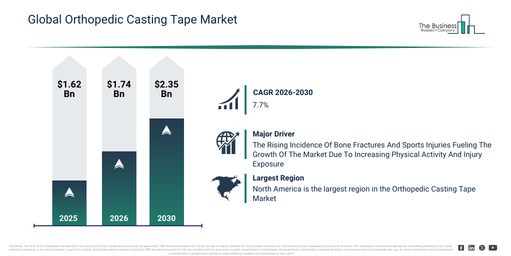
    The orthopedic casting tape market has experienced significant growth in recent years. This market is projected to expand from $1.62 billion in 2025 to reach $1.74 billion by 2026, exhibiting a compound annual growth rate (CAGR) of 7.5%. Factors contributing to this growth in the past have included a rise in fracture incidents, an increase in orthopedic surgical procedures, a greater occurrence of sports injuries, the expanding aging demographic, and the proliferation of emergency care facilities.

    The orthopedic casting tape market is projected to experience substantial expansion over the upcoming years. Its valuation is anticipated to reach $2.35 billion by 2030, exhibiting a compound annual growth rate (CAGR) of 7.7%. This projected growth is driven by factors such as an increase in trauma incidents, the expansion of outpatient orthopedic services, a rising need for materials that enhance patient comfort, the proliferation of ambulatory surgery centers, and a surge in minimally invasive surgical techniques. Key developments expected during this period encompass lightweight fiberglass casting tapes, water-resistant casting materials, rapidly setting synthetic cast tapes, breathable orthopedic casting solutions, and ergonomically designed, easy-to-apply casting rolls.

    Download A Free Sample Report For Comprehensive Market Insights:

    https://www.thebusinessresearchcompany.com/sample.aspx?id=33252&type=smp

    What Core Drivers Are Transforming The Orthopedic Casting Tape Market?

    The increasing occurrence of bone fractures and sports-related injuries is anticipated to drive the expansion of the orthopedic casting tape market. These injuries involve breaks, cracks, or trauma to bones resulting from athletic, recreational, or physical activities, necessitating clinical immobilization for proper healing. The frequency of such injuries is increasing due to greater participation in high-impact and competitive sports, coupled with insufficient training and protective gear, which makes bones and muscles more susceptible to sudden stress and impacts. Orthopedic casting tape plays a crucial role in managing fractures by providing firm immobilization, ensuring correct bone alignment, and promoting quicker, safer recovery from injuries sustained during sports and other activities. For example, in July 2025, the Australian Institute of Health and Welfare, an Australia-based government agency, reported that in 2023–24, cycling was responsible for the largest share of sports-related hospitalizations, accounting for 12% (7,500 cases) of all such injuries, followed by Australian rules football at 8.7% (5,400 cases) and soccer at 8.6% (5,300 cases). Consequently, the rising incidence of bone fractures and sports injuries is fueling the growth of the orthopedic casting tape market.

    How Is The Orthopedic Casting Tape Market Distributed Across Key Segments?

    The orthopedic casting tape market covered in this report is segmented –

    1) By Type: Knee Braces; Ankle Braces; Wrist and Hand Braces; Back and Spinal Braces; Elbow Braces; Shoulder Braces

    2) By Material Type: Fiberglass Casting Tapes; Polyester Casting Tapes; Plaster of Paris Casting Tapes; Other Synthetic Casting Materials

    3) By Application: Post-Surgical Rehabilitation; Ligament Injury Management; Osteoarthritis Pain Relief; Sports Injury Prevention and Treatment; Spinal Cord Support and Posture Correction

    4) By End-User: Hospitals; Orthopedic Clinics; Ambulatory Surgical Centers; Trauma and Emergency Care Centers

    Subsegments:

    1) By Knee Braces: Hinged Knee Braces; Sleeve Knee Braces; Wraparound Knee Braces; Patella Stabilizing Knee Braces

    2) By Ankle Braces: Lace-Up Ankle Braces; Rigid Ankle Braces; Sleeve Ankle Braces; Strap Ankle Braces

    3) By Wrist and Hand Braces: Wrist Support Braces; Thumb Stabilizing Braces; Finger Splints; Hand Compression Braces

    4) By Back and Spinal Braces: Lumbar Support Braces; Thoracic Support Braces; Full Back Braces; Posture Corrector Braces

    5) By Elbow Braces: Hinged Elbow Braces; Compression Elbow Sleeves; Strap Elbow Braces; Adjustable Elbow Braces

    6) By Shoulder Braces: Immobilizer Shoulder Braces; Posture Corrector Shoulder Braces; Rotator Cuff Shoulder Braces; Support Strap Shoulder Braces

    Which Organizations Are Operating Within The Orthopedic Casting Tape Market?

    Major companies operating in the orthopedic casting tape market are McKesson Corporation, Cardinal Health Inc., 3M Company, Smith & Nephew plc, Paul Hartmann AG, Össur hf., DeRoyal Industries Inc., Tynor Orthotics Pvt. Ltd., Dynamic Techno Medicals Pvt. Ltd., Ansen Medical Technology Co. Ltd., Prime Medical Inc., JMS Plastics Pvt. Ltd., Essity AB, Datt Mediproducts Pvt. Ltd., StayGuard Medical, MIKA Medical Pvt. Ltd., OrthoTape Pvt. Ltd., Gujarat Healthcare Ltd., CNF Medical Pvt. Ltd., DUK-IN Healthcare Pvt. Ltd.

    Access The Complete Orthopedic Casting Tape Market Report:

    https://www.thebusinessresearchcompany.com/report/orthopedic-casting-tape-market-report

    Which Region Contributes The Most To The Orthopedic Casting Tape Market?

    North America was the largest region in the orthopedic casting tape market in 2025. Asia-Pacific is expected to be the fastest-growing region in the forecast period. The regions covered in the orthopedic casting tape market report are Asia-Pacific, South East Asia, Western Europe, Eastern Europe, North America, South America, Middle East, Africa.

    Access a Customized Orthopedic Casting Tape Market Report for Deeper Competitive Insights

    Get in touch with us:

    The Business Research Company: https://www.thebusinessresearchcompany.com/

    Americas: +1 310-496-7795

    Asia: +44 7882 955267 & +91 8897263534

    Europe: +44 7882 955267

    Email us at: marketing@tbrc.info

    Follow us on:

    LinkedIn: https://in.linkedin.com/company/the-business-research-company

    YouTube: https://www.youtube.com/channel/UC24_fI0rV8cR5DxlCpgmyFQ

    Global Market Model: https://www.thebusinessresearchcompany.com/global-market-model
  • CRISPR-Based HOLMES Diagnostics Market Expected to Grow Rapidly to $3.75 Billion by 2030

    CRISPR-Based HOLMES Diagnostics Market Expected to Grow Rapidly to $3.75 Billion by 2030

    The Business Research Company’s 2026 market reports feature advanced enhancements such as market attractiveness analysis, total addressable market evaluation, company benchmarking matrices, interactive Excel dashboards, expanded supply chain intelligence, emerging startup coverage, and detailed product insights, delivering more actionable and strategically valuable research.

    What Growth In Market Value Is Anticipated For The One-Hour Low-Cost Multipurpose Highly Efficient System (HOLMES) Clustered Regularly Interspaced Short Palindromic Repeats (CRISPR) Diagnostics Market Between 2026 And 2030?

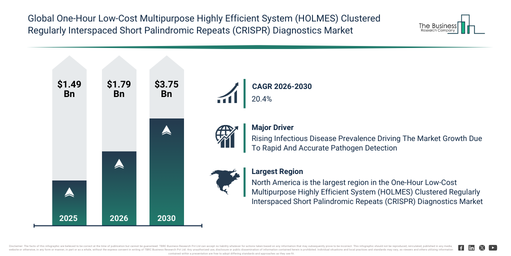
    The market size for the one-hour low-cost multipurpose highly efficient system (holmes) clustered regularly interspaced short palindromic repeats (crispr) diagnostics has witnessed exponential expansion in recent years. This market is projected to increase from $1.49 billion in 2025 to $1.79 billion in 2026, driven by a compound annual growth rate (CAGR) of 20.1%. Historically, this growth can be attributed to several factors including the expansion of molecular diagnostics, broader CRISPR research, an uptick in infectious disease testing, heightened demand for rapid tests, and progress in genomics technology.

    The one-hour low-cost multipurpose highly efficient system (holmes) clustered regularly interspaced short palindromic repeats (crispr) diagnostics market size is anticipated to undergo significant expansion in the coming years. The market is forecast to expand, reaching $3.75 billion in 2030 at a compound annual growth rate (CAGR) of 20.4%. This growth in the forecast period can be attributed to the broadening of point-of-care molecular testing, an increasing demand for rapid pathogen detection, the progression of personalized diagnostics, greater clinical adoption of crispr technology, and more widespread field-deployable testing. Key trends expected during this period include rapid crispr-based diagnostic assays, point-of-care crispr testing kits, multiplex gene detection panels, portable molecular crispr platforms, and affordable nucleic acid detection kits.

    Download A Free Sample Report For Comprehensive Market Insights:

    https://www.thebusinessresearchcompany.com/sample.aspx?id=33249&type=smp

    Which Growth Factors Are Strengthening The One-Hour Low-Cost Multipurpose Highly Efficient System (HOLMES) Clustered Regularly Interspaced Short Palindromic Repeats (CRISPR) Diagnostics Market Landscape?

    The increasing occurrence of infectious diseases is anticipated to stimulate the expansion of the hybrid oligonucleotide linked modular enzyme system (HOLMES) clustered regularly interspaced short palindromic repeats (CRISPR) diagnostics market in the future. These illnesses stem from harmful microorganisms entering the body and can spread through various means like physical contact, air, water, or vectors. The rise in urbanization and high population density contributes to the increased spread of these diseases, as they facilitate quicker pathogen transmission. HOLMES CRISPR Diagnostics aids in identifying infectious diseases by employing CRISPR-Cas enzymes to precisely and rapidly pinpoint specific genetic sequences belonging to pathogens, thus allowing for quick, sensitive, and on-site diagnosis. For instance, in February 2024, data from GOV.UK, a UK government department, indicated a 10.7% increase in tuberculosis (TB) cases in England in 2023, rising from 4,380 in 2022 to 4,850. Consequently, the growing prevalence of infectious diseases is driving the growth of the hybrid oligonucleotide linked modular enzyme system (HOLMES) clustered regularly interspaced short palindromic repeats (CRISPR) diagnostics market. The increasing uptake of precision medicine is anticipated to drive the expansion of the hybrid oligonucleotide linked modular enzyme system (HOLMES) clustered regularly interspaced short palindromic repeats (CRISPR) diagnostics market going forward. Precision medicine focuses on providing individualized healthcare by taking into account an individual’s genetic makeup, environmental influences, and lifestyle choices. Its adoption is on the rise because of progress in genomics, which allows medical professionals to pinpoint genetic variations and formulate specific treatments, thereby enhancing patient results. The HOLMES CRISPR diagnostics system contributes to precision medicine by swiftly and precisely identifying particular genetic mutations or pathogens within a patient’s DNA or RNA, which facilitates customized treatments and prompt interventions aligned with a person’s unique genetic profile. For example, in February 2024, the Personalized Medicine Coalition, a US-based non-profit organization, reported that in 2023, the FDA sanctioned 16 novel personalized treatments for patients with rare diseases, a significant increase from six in 2022. The new personalized treatments approved for 2023 also encompassed seven cancer drugs and three for other diseases and conditions. Therefore, the growing application of precision medicine is propelling the growth of the hybrid oligonucleotide-linked modular enzyme system (HOLMES) clustered regularly interspaced short palindromic repeats (CRISPR) diagnostics market.

    How Does Segment Analysis Break Down The One-Hour Low-Cost Multipurpose Highly Efficient System (HOLMES) Clustered Regularly Interspaced Short Palindromic Repeats (CRISPR) Diagnostics Market Structure?

    The one-hour low-cost multipurpose highly efficient system (holmes) clustered regularly interspaced short palindromic repeats (crispr) diagnostics market covered in this report is segmented –

    1) By Product Type: Kits; Instruments; Reagents; Other Product Types

    2) By Service Type: Sample Collection And Preparation Services; Assay Development And Validation Services; Data Interpretation And Reporting Services; Quality Control And Assurance Services

    3) By Application: Infectious Disease Diagnosis; Oncology; Genetic Disease Screening; Other Applications

    4) By End-User: Hospitals And Clinics; Diagnostic Laboratories; Research Institutes; Other End-Users

    Subsegments:

    1) By Kits: Single Target Diagnostic Kits; Multiplex Diagnostic Kits; Point Of Care Testing Kits; Laboratory Use Diagnostic Kits; Disease Specific Diagnostic Kits

    2) By Instruments: Benchtop Diagnostic Instruments; Portable Diagnostic Devices; Automated Detection Systems; Sample Preparation Instruments; Integrated Analysis Platforms

    3) By Reagents: Enzyme Based Reagents; Nucleic Acid Extraction Reagents; Amplification Reaction Reagents; Detection And Reporting Reagents; Sample Stabilization Reagents

    4) By Other Product Types: Consumables And Accessories; Quality Control Materials; Calibration Standards; Disposable Testing Components; Supporting Laboratory Supplies

    Who Are The Businesses Driving Activity In The One-Hour Low-Cost Multipurpose Highly Efficient System (HOLMES) Clustered Regularly Interspaced Short Palindromic Repeats (CRISPR) Diagnostics Market?

    Major companies operating in the one-hour low-cost multipurpose highly efficient system (holmes) clustered regularly interspaced short palindromic repeats (crispr) diagnostics market are Thermo Fisher Scientific Inc., Merck KGaA, Danaher Corporation, Agilent Technologies Inc., Bio-Rad Laboratories Inc., Qiagen N.V., Integrated DNA Technologies Inc., GenScript Biotech Corporation, OraSure Technologies Inc., Molbio Diagnostics Pvt. Ltd., New England Biolabs Inc., Horizon Discovery Group plc, Mammoth Biosciences, Synthego Corporation, Binx Health Inc., Sherlock Biosciences Inc., Caspr Biotech, Tolo Biotechnology Co. Ltd., CrisprBits Private Limited, Scope Biosciences.

    Access The Complete One-Hour Low-Cost Multipurpose Highly Efficient System (HOLMES) Clustered Regularly Interspaced Short Palindromic Repeats (CRISPR) Diagnostics Market Report:

    https://www.thebusinessresearchcompany.com/report/one-hour-low-cost-multipurpose-highly-efficient-system-holmes-clustered-regularly-interspaced-short-palindromic-repeats-crispr-diagnostics-market-report

    Which Regional Market Leads The One-Hour Low-Cost Multipurpose Highly Efficient System (HOLMES) Clustered Regularly Interspaced Short Palindromic Repeats (CRISPR) Diagnostics Market?

    North America was the largest region in the hybrid oligonucleotide linked modular enzyme system (HOLMES) clustered regularly interspaced short palindromic repeats (CRISPR) diagnostics market in 2025. Asia-Pacific is expected to be the fastest-growing region in the forecast period. The regions covered in the one-hour low-cost multipurpose highly efficient system (holmes) clustered regularly interspaced short palindromic repeats (crispr) diagnostics market report are Asia-Pacific, South East Asia, Western Europe, Eastern Europe, North America, South America, Middle East, Africa.

    Access a Customized One-Hour Low-Cost Multipurpose Highly Efficient System (HOLMES) Clustered Regularly Interspaced Short Palindromic Repeats (CRISPR) Diagnostics Market Report for Deeper Competitive Insights

    Get in touch with us:

    The Business Research Company: https://www.thebusinessresearchcompany.com/

    Americas: +1 310-496-7795

    Asia: +44 7882 955267 & +91 8897263534

    Europe: +44 7882 955267

    Email us at: marketing@tbrc.info

    Follow us on:

    LinkedIn: https://in.linkedin.com/company/the-business-research-company

    YouTube: https://www.youtube.com/channel/UC24_fI0rV8cR5DxlCpgmyFQ

    Global Market Model: https://www.thebusinessresearchcompany.com/global-market-model
  • Oligonucleotide Synthesis Services Market Forecast to Hit $4.69 Billion by 2030

    Oligonucleotide Synthesis Services Market Forecast to Hit $4.69 Billion by 2030

    The Business Research Company’s 2026 market reports feature advanced enhancements such as market attractiveness analysis, total addressable market evaluation, company benchmarking matrices, interactive Excel dashboards, expanded supply chain intelligence, emerging startup coverage, and detailed product insights, delivering more actionable and strategically valuable research.

    What Is The Expected Market Value Outlook For The Oligonucleotide Synthesis Services Market Through 2030?

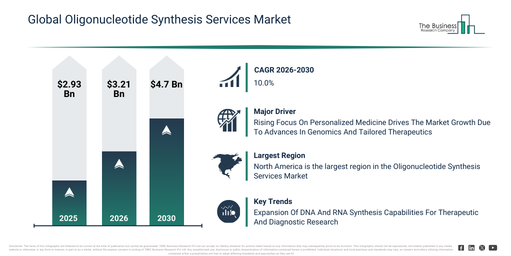
    The oligonucleotide synthesis services market size has experienced strong growth in recent years. This market is forecasted to increase from $2.93 billion in 2025 to $3.21 billion in 2026, at a compound annual growth rate (CAGR) of 9.7%. Historically, this expansion has been driven by the rising use of PCR and sequencing, the broadening of molecular biology research, an increase in genomic testing, greater academic genomics funding, and an expansion of biotech research and development activity.

    The oligonucleotide synthesis services market is set to experience robust expansion over the next few years. It is projected to achieve a value of $4.7 billion by 2030, advancing at a compound annual growth rate (CAGR) of 10.0%. This anticipated growth is primarily fueled by the expansion of gene and cell therapy pipelines, increasing demand for CRISPR and gene editing, the broadening application of nucleic acid therapeutics, greater adoption of precision diagnostics, and the scaling up of clinical oligo production. Prominent trends for the forecast period include high-throughput custom oligo production, offerings for modified and labeled oligonucleotide services, GMP-grade oligo manufacturing, rapid turnaround gene editing oligos, and sophisticated oligo purification workflows.

    Download A Free Sample Report For Comprehensive Market Insights:

    https://www.thebusinessresearchcompany.com/sample.aspx?id=33245&type=smp

    What Important Drivers Are Powering The Oligonucleotide Synthesis Services Market Growth?

    A growing emphasis on personalized medicine is projected to stimulate the expansion of the oligonucleotide synthesis services market in the future. This medical approach tailors treatment and prevention strategies to an individual’s unique genetic, biological, and lifestyle attributes. Its adoption is rising, fueled by breakthroughs in genomics and molecular diagnostics that enable therapies to be customized to an individual’s genetic makeup, leading to improved patient results. Oligonucleotide synthesis services facilitate personalized medicine through the quick and accurate creation of bespoke DNA or RNA sequences, which are vital for patient-specific diagnostics, precise therapies, and gene-oriented treatments, thus supporting interventions tailored to an individual’s genetic profile. As an illustration, in February 2024, data from the Personalized Medicine Coalition, a US-based non-profit organization, showed that in 2023, the FDA sanctioned 16 novel personalized treatments for patients with rare diseases, an increase from six in 2022. The newly sanctioned personalized treatments for 2023 also comprised seven cancer medications and three for other illnesses and conditions. Consequently, the heightened focus on personalized medicine is a key driver for the growth of the oligonucleotide synthesis services market.

    What Segment Types Are Included In The Oligonucleotide Synthesis Services Market Analysis?

    The oligonucleotide synthesis services market covered in this report is segmented –

    1) By Type Of Oligonucleotide: Deoxyribonucleic Acid Oligonucleotides; Ribonucleic Acid Oligonucleotides; Peptide Nucleic Acids (PNAs); Locked Nucleic Acids (LNAs); Other Synthetic Nucleotides

    2) By Synthesis Method: Solid Phase Synthesis; Liquid Phase Synthesis; Microarray Based Synthesis; Oligonucleotide Synthesis Via Automated Synthesizers; Enzymatic Synthesis

    3) By Purity Level: Standard Purity; High Purity; Ultra High Purity; Custom Purity Solutions; Quality Control Measures

    4) By Application: Diagnostics; Therapeutics; Research And Development; Gene Editing; Vaccine Development

    5) By End User: Academic And Research Institutions; Pharmaceutical And Biotechnology Companies; Diagnostic Laboratories; Contract Research Organizations (CROs); Clinical Laboratories

    Subsegments:

    1) By Deoxyribonucleic Acid Oligonucleotides: Standard Deoxyribonucleic Acid Oligonucleotides; Modified Deoxyribonucleic Acid Oligonucleotides; Phosphorothioate Deoxyribonucleic Acid Oligonucleotides; Methylated Deoxyribonucleic Acid Oligonucleotides

    2) By Ribonucleic Acid Oligonucleotides: Standard Ribonucleic Acid Oligonucleotides; Modified Ribonucleic Acid Oligonucleotides; Small Interfering Ribonucleic Acid Oligonucleotides; Micro Ribonucleic Acid Oligonucleotides

    3) By Peptide Nucleic Acids: Standard Peptide Nucleic Acids; Modified Peptide Nucleic Acids; Functionalized Peptide Nucleic Acids

    4) By Locked Nucleic Acids: Standard Locked Nucleic Acids; 2′-O-Methyl Locked Nucleic Acids; Gapmer Locked Nucleic Acids

    5) By Other Synthetic Nucleotides: Morpholino Oligonucleotides; Phosphoramidite Oligonucleotides; Xeno Nucleic Acid Oligonucleotides; Synthetic Aptamers

    Which Trends Are Affecting The Oligonucleotide Synthesis Services Market Framework?

    Leading entities within the oligonucleotide synthesis services sector are prioritizing the expansion of DNA and RNA manufacturing capabilities to advance therapeutic and diagnostic investigations. These capabilities encompass sophisticated techniques for generating and scaling premium genetic material, which are essential for facilitating scientific inquiry, diagnostic procedures, and the formulation of biopharmaceutical treatments. A notable illustration is Oligo Factory Inc., a US-based manufacturing firm, which introduced a low-scale oligo synthesis feature in May 2025, specifically designed to extend assistance to professionals in therapeutic and diagnostic research and development. This innovation facilitates the production of custom DNA/RNA in small batches, beginning at 50 nmol, catering to initial research and development phases across therapeutics, diagnostics, qPCR, NGS, and preclinical trials. Its advantages include reduced expenses and waste, a rapid turnaround time (4 weeks or less) adhering to GMP or ISO 13485 quality standards, and the provision of continuous scaling support through portfolios like FactorTx, eliminating the need for vendor transitions. This flexibility is particularly advantageous for researchers who require prototypes rather than extensive minimum order quantities.

    Which Firms Are Competing In The Oligonucleotide Synthesis Services Market?

    Major companies operating in the oligonucleotide synthesis services market are Thermo Fisher Scientific Inc., Agilent Technologies Inc., QIAGEN N.V., Integrated DNA Technologies Inc., Sangon Biotech (Shanghai) Co. Ltd., Ajinomoto Co. Inc., Twist Bioscience Corporation, Sigma-Aldrich Co. LLC, Aldevron LLC, Bioneer Corporation, GenScript Biotech Corporation, BBI Life Sciences Ltd., Takara Bio Inc., BioServe Biotechnologies Ltd., Eurofins Genomics Germany GmbH, Bio-Synthesis Inc., TriLink BioTechnologies LLC, BioBasic Inc., Biosearch Technologies Inc., JenaBioscience GmbH, Geneworks Pty Ltd., HUWEL Life Science Co. Ltd., and SynoLigo Pvt. Ltd.

    Access The Complete Oligonucleotide Synthesis Services Market Report:

    https://www.thebusinessresearchcompany.com/report/oligonucleotide-synthesis-services-market-report

    Which Region Holds The Largest Share In The Oligonucleotide Synthesis Services Market?

    North America was the largest region in the oligonucleotide synthesis services market in 2025. Asia-Pacific is expected to be the fastest-growing region in the forecast period. The regions covered in the oligonucleotide synthesis services market report are Asia-Pacific, South East Asia, Western Europe, Eastern Europe, North America, South America, Middle East, Africa.

    Access a Customized Oligonucleotide Synthesis Services Market Report for Deeper Competitive Insights

    Get in touch with us:

    The Business Research Company: https://www.thebusinessresearchcompany.com/

    Americas: +1 310-496-7795

    Asia: +44 7882 955267 & +91 8897263534

    Europe: +44 7882 955267

    Email us at: marketing@tbrc.info

    Follow us on:

    LinkedIn: https://in.linkedin.com/company/the-business-research-company

    YouTube: https://www.youtube.com/channel/UC24_fI0rV8cR5DxlCpgmyFQ

    Global Market Model: https://www.thebusinessresearchcompany.com/global-market-model
  • Offloading Devices Market to Reach $10.19 Billion by 2030 with Stable Growth

    Offloading Devices Market to Reach $10.19 Billion by 2030 with Stable Growth

    The Business Research Company’s 2026 market reports feature advanced enhancements such as market attractiveness analysis, total addressable market evaluation, company benchmarking matrices, interactive Excel dashboards, expanded supply chain intelligence, emerging startup coverage, and detailed product insights, delivering more actionable and strategically valuable research.

    How Will The Market Value Of The Offloading Devices Market Increase Between 2026 And 2030?

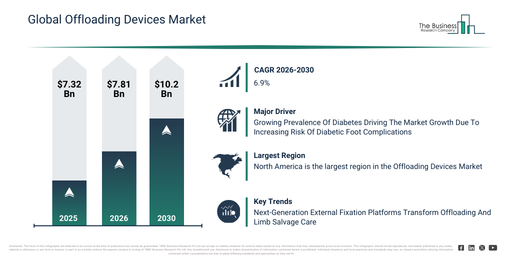
    The offloading devices market has experienced robust expansion over recent years. It is projected to grow from $7.32 billion in 2025 to $7.81 billion in 2026, demonstrating a compound annual growth rate (CAGR) of 6.7%. The historical growth in this market can be attributed to factors such as an increase in diabetic foot ulcers, a rising aging population, greater demand for podiatric care, wider adoption of orthopedic devices, and heightened requirements for post-surgical recovery.

    The offloading devices market is anticipated to show significant expansion over the coming years. Its size is projected to reach $10.2 billion by 2030, growing at a compound annual growth rate (CAGR) of 6.9%. This projected growth is driven by several factors, including the increasing prevalence of diabetes, the rise in home care treatment, the expansion of preventive wound care, the demand for custom orthotics, and an increase in outpatient recovery device usage. Furthermore, noteworthy trends identified for the forecast period include custom molded offloading footwear, advanced pressure redistribution insoles, lightweight composite offloading boots, 3D printed orthotic devices, and modular removable cast walkers.

    Download A Free Sample Report For Comprehensive Market Insights:

    https://www.thebusinessresearchcompany.com/sample.aspx?id=33244&type=smp

    Which Major Factors Are Contributing To The Development Of The Offloading Devices Market?

    The increasing occurrence of diabetes is projected to fuel the expansion of the offloading devices market. Diabetes is a persistent illness that interferes with the body’s process of converting food into energy, leading to elevated blood sugar levels and potentially severe health complications. The surge in diabetes cases is primarily driven by rising obesity rates, as excess body fat contributes to insulin resistance and higher blood sugar levels. Offloading devices provide support to diabetes patients by reducing pressure on high-risk regions, preventing foot ulcers, accelerating wound healing, and diminishing the likelihood of serious complications such as infections or amputations, thereby improving mobility, quality of life, and overall diabetic care outcomes. For instance, in June 2024, the National Health Service, a UK-based government department, stated that 3,615,330 individuals registered with a general practitioner (GP) were diagnosed with non-diabetic hyperglycemia or pre-diabetes in 2023, indicating an 18% rise from 3,065,825 cases in 2022. Therefore, the growing prevalence of diabetes is driving the growth of the offloading devices market.

    Which Segment Divisions Form The Structure Of The Offloading Devices Market?

    The offloading devices market covered in this report is segmented –

    1) By Product Type: Nonremovable Knee-High Offloading Devices; Removable Knee-High Offloading Devices; Air-Assisted Lateral Transfer Systems; Replacement Sliding Sheets; Wheelchairs

    2) By Material: Foam; Plastics; Rubber; Composite Materials; Advanced Polymers

    3) By Application: Diabetic Foot Ulcer Management; Pressure Ulcer Prevention And Treatment; Surgical Recovery; Post-Operative Care; Diagnostics; Long-Term Rehabilitation

    4) By End-User: Hospitals; Ambulatory Surgery Centers; Nursing Homes; Long-Term Care Facilities; Home Care Settings

    Subsegments:

    1) By Nonremovable Knee-High Offloading Devices: Total Contact Cast Systems; Fiberglass Casting Systems; Plaster Based Casting Systems; Custom Molded Immobilization Devices

    2) By Removable Knee-High Offloading Devices: Removable Cast Walkers; Adjustable Walking Boots; Modular Immobilization Braces; Custom Fit Removable Devices

    3) By Air-Assisted Lateral Transfer Systems: Single Patient Use Air Transfer Systems; Reusable Air Transfer Systems; Inflatable Air Cushion Transfer Systems; Powered Air Assisted Transfer Systems

    4) By Replacement Sliding Sheets: Disposable Sliding Sheets; Reusable Sliding Sheets; Low Friction Coated Sliding Sheets; Waterproof Sliding Sheets

    5) By Wheelchairs: Manual Wheelchairs; Powered Wheelchairs; Transport Wheelchairs; Custom Configured Wheelchairs

    What Trends Are Influencing The Offloading Devices Market?

    Leading firms within the offloading devices market are focusing on developing advanced external fixation platforms aimed at improving wound safeguarding, facilitating accurate pressure distribution, and simplifying limb salvage operations. These external fixation platforms represent orthopedic support mechanisms designed to stabilize bones and joints through components situated externally to the body, typically linked to the skeletal structure via pins or wires. Their common applications include managing fractures, reconstructing limbs, and aiding post-surgical recuperation. As an illustration, in January 2026, BlueOcean Global, a US-based medical device company, declared receiving FDA 510(k) clearance for its product, Excelsior. This is a compact, surgeon-ready platform designed for limb salvage among high-risk patient populations. The Excelsior system enables medical practitioners to securely incorporate offloading rings and bars into current fixation arrangements utilizing standard parts. It addresses conditions like diabetes-related ulcers, infections, trauma, and wounds that do not heal in critical yet underserved clinical domains, including Charcot reconstruction. These adaptable frames effectively relieve soft tissues from primary skeletal burdens, improve stability in intricate situations, and are managed using BlueOcean’s exclusive FAST protocols to guarantee superior healing and smooth patient recovery.

    Who Are The Major Companies Operating In The Offloading Devices Market?

    Major companies operating in the offloading devices market are Medline Industries LP, Stryker Corporation, Ottobock SE & Co KGaA, Arjo Group, Invacare Corporation, Guldmann A/S, Etac AB, Permobil AB, Sunrise Medical LLC, Frontier Medical Group, Drive DeVilbiss Healthcare, Joerns Healthcare LLC, AliMed Inc, Seneca Devices Inc., DARCO International Inc., HoverTech International, Beechfield Healthcare Ltd, Next Health LLC, Jewell Nursing Solutions, and Posey Products LLC.

    Access The Complete Offloading Devices Market Report:

    https://www.thebusinessresearchcompany.com/report/offloading-devices-market-report

    Which Region Is The Dominant Market In The Offloading Devices Market?

    North America was the largest region in the offloading devices market in 2025. Asia-Pacific is expected to be the fastest-growing region in the forecast period. The regions covered in the offloading devices market report are Asia-Pacific, South East Asia, Western Europe, Eastern Europe, North America, South America, Middle East, Africa.

    Access a Customized Offloading Devices Market Report for Deeper Competitive Insights

    Get in touch with us:

    The Business Research Company: https://www.thebusinessresearchcompany.com/

    Americas: +1 310-496-7795

    Asia: +44 7882 955267 & +91 8897263534

    Europe: +44 7882 955267

    Email us at: marketing@tbrc.info

    Follow us on:

    LinkedIn: https://in.linkedin.com/company/the-business-research-company

    YouTube: https://www.youtube.com/channel/UC24_fI0rV8cR5DxlCpgmyFQ

    Global Market Model: https://www.thebusinessresearchcompany.com/global-market-model
  • Neuroendocrine Prostate Cancer Market Showing Steady Growth Toward 2030

    Neuroendocrine Prostate Cancer Market Showing Steady Growth Toward 2030

    The Business Research Company’s 2026 market reports feature advanced enhancements such as market attractiveness analysis, total addressable market evaluation, company benchmarking matrices, interactive Excel dashboards, expanded supply chain intelligence, emerging startup coverage, and detailed product insights, delivering more actionable and strategically valuable research.

    What Will Be The Estimated Market Size Of The Neuroendocrine Prostate Cancer Market By 2030?

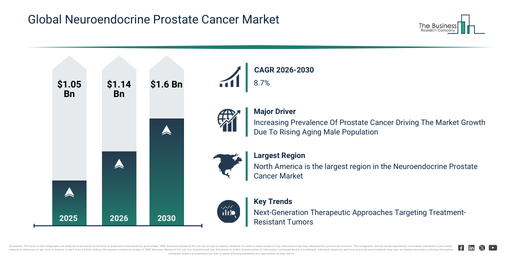
    The neuroendocrine prostate cancer market size has experienced robust growth over recent years. This market is projected to expand from $1.05 billion in 2025 to $1.14 billion in 2026, exhibiting a compound annual growth rate (CAGR) of 8.5%. Factors contributing to this historical expansion include an increase in prostate cancer diagnoses, the prevalence of long-term hormone therapy resistance, the broadening of oncology drug pipelines, advancements in molecular pathology testing, and enhanced specialization of cancer centers.

    The neuroendocrine prostate cancer market is projected to experience substantial expansion in the coming years, reaching a valuation of $1.6 billion by 2030, driven by an impressive compound annual growth rate (CAGR) of 8.7%. This anticipated growth throughout the forecast period stems from factors such as increasing adoption of precision oncology, the development of more biomarker-based treatments, the wider availability of targeted therapies, an increase in research funding for rare cancers, and the more widespread application of genomic testing. Key trends expected during this period involve patient categorization based on biomarkers, the implementation of combination oncology treatment plans, sophisticated molecular diagnostic evaluations, an increase in clinical trials for rare cancers, and the development of targeted radiopharmaceutical strategies.

    Download A Free Sample Report For Comprehensive Market Insights:

    https://www.thebusinessresearchcompany.com/sample.aspx?id=33242&type=smp

    What Key Growth Drivers Are Influencing The Neuroendocrine Prostate Cancer Market?

    The neuroendocrine prostate cancer market is anticipated to expand due to the rising occurrence of prostate cancer. This condition is characterized by a malignant tumor forming in the prostate gland, predominantly affecting males aged 50 and above. Its increasing prevalence is largely attributed to the expanding older male population, considering that advanced age represents a significant risk factor for the disease’s onset. The higher incidence of prostate cancer contributes to the growth of neuroendocrine prostate cancer by enlarging the total number of patients, leading to prolonged exposure to androgen-deprivation therapies, and subsequently heightening the probability of treatment-induced neuroendocrine differentiation in advanced and castration-resistant disease phases. As an illustration, in January 2025, the Centers for Disease Control and Prevention (CDC), a U.S. federal public health agency, indicated that during 2023, 255,395 new cases of prostate cancer were identified in the United States, and 33,881 men succumbed to the illness. Consequently, the rising occurrence of prostate cancer is fueling the expansion of the neuroendocrine prostate cancer market.

    How Are Different Segment Groups Identified Within The Neuroendocrine Prostate Cancer Market?

    The neuroendocrine prostate cancer market covered in this report is segmented –

    1) By Treatment: Chemotherapy; Hormonal Therapy

    2) By Therapeutics: Immunotherapy; Targeted Therapy

    3) By Disease Stage: Localized Disease; Advanced Disease; Metastatic Disease

    4) By End Users: Hospitals; Oncology Specialty Clinics; Cancer Research Institutes

    Subsegments:

    1) By Chemotherapy: Platinum Based Chemotherapy; Taxane Based Chemotherapy; Combination Chemotherapy; Second Line Chemotherapy

    2) By Hormonal Therapy: Androgen Deprivation Therapy; Androgen Receptor Inhibition; Hormone Synthesis Inhibition; Combined Hormonal Therapy

    Which Trends Are Guiding The Development Of The Neuroendocrine Prostate Cancer Market?

    Leading companies in the neuroendocrine prostate cancer market are concentrating on developing innovative drugs, including immune-modulating small-molecule therapies, to improve immune response and patient outcomes. These orally administered immune-modulating small-molecule therapies work by stimulating the body’s innate immune system to recognize and attack cancer cells, thereby helping to overcome resistance to traditional treatments like hormone therapy or chemotherapy by enhancing the anti-tumor immune response. For example, in February 2024, BioXcel Therapeutics, a US-based clinical-stage biopharmaceutical company, received Fast Track Designation from the U.S. Food and Drug Administration for BXCL701, an immune-modulating small-molecule therapy intended for neuroendocrine prostate cancer. BXCL701 is designed to activate the NLRP3 inflammasome, increase cytokine release, and prime the immune system to target tumor cells, offering a novel method that complements immune checkpoint inhibitors. This Fast Track Designation is expected to accelerate the clinical development and regulatory review of BXCL701, underscoring its potential to address critical unmet medical needs in aggressive and treatment-resistant prostate cancer.

    Which Companies Are Influencing The Neuroendocrine Prostate Cancer Market?

    Major companies operating in the neuroendocrine prostate cancer market are Novartis AG, Amgen Inc., Phanes Therapeutics Inc., and BioXcel Therapeutics Inc.

    Access The Complete Neuroendocrine Prostate Cancer Market Report:

    https://www.thebusinessresearchcompany.com/report/neuroendocrine-prostate-cancer-market-report

    Which Area Represents The Largest Portion Of The Neuroendocrine Prostate Cancer Market?

    North America was the largest region in the neuroendocrine prostate cancer market in 2025. Asia-Pacific is expected to be the fastest-growing region in the forecast period. The regions covered in the neuroendocrine prostate cancer market report are Asia-Pacific, South East Asia, Western Europe, Eastern Europe, North America, South America, Middle East, Africa.

    Access a Customized Neuroendocrine Prostate Cancer Market Report for Deeper Competitive Insights

    Get in touch with us:

    The Business Research Company: https://www.thebusinessresearchcompany.com/

    Americas: +1 310-496-7795

    Asia: +44 7882 955267 & +91 8897263534

    Europe: +44 7882 955267

    Email us at: marketing@tbrc.info

    Follow us on:

    LinkedIn: https://in.linkedin.com/company/the-business-research-company

    YouTube: https://www.youtube.com/channel/UC24_fI0rV8cR5DxlCpgmyFQ

    Global Market Model: https://www.thebusinessresearchcompany.com/global-market-model
  • Neural Control Market Set for Rapid Expansion, Reaching $4.72 Billion by 2030

    Neural Control Market Set for Rapid Expansion, Reaching $4.72 Billion by 2030

    The Business Research Company’s 2026 market reports feature advanced enhancements such as market attractiveness analysis, total addressable market evaluation, company benchmarking matrices, interactive Excel dashboards, expanded supply chain intelligence, emerging startup coverage, and detailed product insights, delivering more actionable and strategically valuable research.

    What Is The Estimated Growth In Market Size Of The Neural Control Market During 2026–2030?

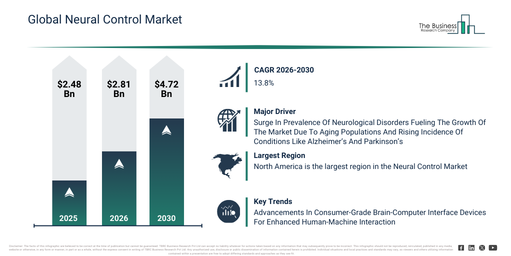
    The neural control market has shown rapid expansion in recent years. It is anticipated to grow from $2.48 billion in 2025 to $2.81 billion in 2026, achieving a compound annual growth rate (CAGR) of 13.6%. The market’s historical growth can be linked to the rise of neuroprosthetics research, the broadening scope of rehabilitation robotics, increasing demand for paralysis treatment, developments in neural electrodes, and a proliferation of neurostimulation therapies.

    The neural control market is projected to experience substantial expansion in the coming years. Its valuation is set to reach $4.72 billion by 2030, exhibiting a compound annual growth rate (CAGR) of 13.8%. This anticipated growth during the forecast period stems from factors such as increasing demand for BCI solutions, the proliferation of assistive exoskeletons, advancements in neural rehabilitation technology, a boost in neurotech funding, and wider clinical adoption of neural interfaces. Key developments expected over the forecast horizon encompass the integration of brain-computer interfaces, the emergence of implantable neural interface devices, wearable neuro-signal sensors, closed-loop neurostimulation systems, and neuro-controlled assistive robotics.

    Download A Free Sample Report For Comprehensive Market Insights:

    https://www.thebusinessresearchcompany.com/sample.aspx?id=33241&type=smp

    Which Core Factors Are Supporting The Expansion Of The Neural Control Market?

    The expanding occurrence of neurological disorders is anticipated to stimulate the advancement of the neural control market in the coming years. These disorders are health issues impacting the brain, spinal cord, or nerves, leading to difficulties in movement, sensation, thought, or other bodily functions. The growing number of neurological conditions is fueled by an aging global populace, which elevates the chances of diseases such as Alzheimer’s and Parkinson’s, thereby contributing to an increasing healthcare burden worldwide. Neural control plays a crucial role in tackling the rising prevalence of neurological disorders by allowing for precise observation, adjustment, and recovery of neural activity, which helps in enhancing patient results and effectively managing symptoms. For instance, in March 2023, the Alzheimer’s Association, a US-based nonprofit voluntary health organization, reported that 6.7 million Americans aged 65 and above are affected by Alzheimer’s, a figure expected to climb to 13.8 million by 2060. Consequently, the increasing prevalence of neurological disorders is acting as a catalyst for the growth of the neural control treatment market.

    What Segment Categories Are Evaluated In The Neural Control Market Study?

    The neural control market covered in this report is segmented –

    1) By Component: Hardware; Software; Services

    2) By Mode Of Operation: Invasive; Non Invasive

    3) By Technology: Brain Computer Interface; Neurostimulation; Neuroprosthetics

    4) By Application: Healthcare; Robotics; Automotive; Consumer Electronics; Other Applications

    5) By End-User: Medical Institutions; Research Organizations; Industrial; Other End-Users

    Subsegments:

    1) By Hardware: Electrodes; Sensors; Stimulators; Wearable Devices; Implants

    2) By Software: Signal Processing Platforms; Neurofeedback Applications; Brain Computer Interface Platforms; Data Analytics Tools; Simulation Software

    3) By Services: Installation And Integration; Maintenance And Support; Training And Consultation; Custom Development; Research And Testing

    What Trends Are Influencing The Future Of The Neural Control Market?

    Leading companies active within the neural control market are concentrating on innovations in neural interface technologies, such as BCI-enabled consumer-grade devices, to boost human-machine interaction, improve cognitive capabilities, and facilitate seamless control across digital and physical environments. A BCI-enabled consumer-grade device refers to an electronic item made for general use by non-specialists that integrates brain-computer interface (BCI) technology to detect, interpret, and respond to neural signals from the user’s brain. For instance, in September 2024, Neurable Inc., a US-based neurotechnology company, introduced the MW75 Neuro, smart headphones equipped with its AI-powered BCI technology, in collaboration with the premium audio brand Master & Dynamic. The MW75 Neuro incorporates EEG sensors within the ear pads to capture brainwave data, offering features like focus tracking, burnout management, and personalized productivity tips via the Neurable mobile app. Its advanced AI platform delivers lab-level accuracy in interpreting brain signals, while the headphones also provide premium audio quality, adaptive noise cancellation, and ergonomic comfort. This product signifies a substantial stride in making noninvasive BCI technology accessible in everyday consumer devices.

    Who Are The Companies Shaping The Neural Control Market Landscape?

    Major companies operating in the neural control market are Boston Scientific Corporation, Synchron Inc., Neuralink Corp., NeuroSky Inc., Emotiv Inc., BrainCo Inc., Brain Products GmbH, Paradromics Inc., Neuroelectrics S.L.U., g.tec medical engineering GmbH, Neurable Inc., Advanced Brain Monitoring Inc., Bitbrain Technologies S.L., Cortec GmbH, BrainGate Inc., OpenBCI LLC, Cognixion Inc., Alea Neurotherapeutics SA, Nexstem Technologies Pvt. Ltd., AAVAA Inc.

    Access The Complete Neural Control Market Report:

    https://www.thebusinessresearchcompany.com/report/neural-control-market-report

    Which Region Commands The Largest Share Of The Neural Control Market?

    North America was the largest region in the neural control market in 2025. Asia-Pacific is expected to be the fastest-growing region in the forecast period. The regions covered in the neural control market report are Asia-Pacific, South East Asia, Western Europe, Eastern Europe, North America, South America, Middle East, Africa.

    Access a Customized Neural Control Market Report for Deeper Competitive Insights

    Get in touch with us:

    The Business Research Company: https://www.thebusinessresearchcompany.com/

    Americas: +1 310-496-7795

    Asia: +44 7882 955267 & +91 8897263534

    Europe: +44 7882 955267

    Email us at: marketing@tbrc.info

    Follow us on:

    LinkedIn: https://in.linkedin.com/company/the-business-research-company

    YouTube: https://www.youtube.com/channel/UC24_fI0rV8cR5DxlCpgmyFQ

    Global Market Model: https://www.thebusinessresearchcompany.com/global-market-model