Month: June 2026

  • Next-Generation mRNA Vaccine Platforms Driving Innovation in Global Markets

    Next-Generation mRNA Vaccine Platforms Driving Innovation in Global Markets

    The Business Research Company’s 2026 market reports feature advanced enhancements such as market attractiveness analysis, total addressable market evaluation, company benchmarking matrices, interactive Excel dashboards, expanded supply chain intelligence, emerging startup coverage, and detailed product insights, delivering more actionable and strategically valuable research.

    What Market Size Is Forecasted For The Messenger Ribonucleic Acid (mRNA) And Next-Generation Vaccine Platforms Market By 2030 Based On Its 2026 Value?

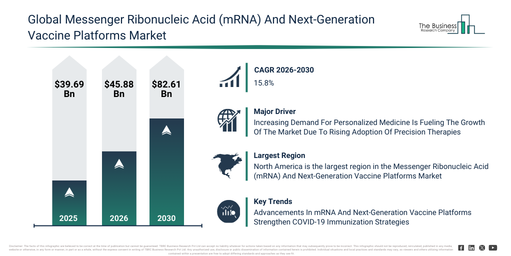
    The messenger ribonucleic acid (mrna) and next-generation vaccine platforms market has witnessed swift growth recently. It is projected to increase from $39.69 billion in 2025 to $45.88 billion in 2026, at a compound annual growth rate (CAGR) of 15.6%. The expansion observed in the past can be attributed to breakthroughs in COVID-19 vaccines, preceding viral vector research, global pandemic readiness programs, developments in genomic sequencing, and early trials of nucleic acid vaccines.

    The messenger ribonucleic acid (mrna) and next-generation vaccine platforms market is anticipated to undergo rapid expansion in the coming years. It is projected to reach $82.61 billion in 2030, demonstrating a compound annual growth rate (CAGR) of 15.8%. This anticipated growth can be attributed to factors such as the rise of personalized cancer vaccines, the expansion of infectious disease pipelines, quicker platform-based approvals, increased funding in biotechnology, and broader use of therapeutic vaccines. Key trends during the forecast period are expected to include self-amplifying mRNA platforms, optimized lipid nanoparticle delivery, modular vaccine platform designs, rapid adaptation to pathogen targets, and advanced adjuvant systems.

    Download A Free Sample Report For Comprehensive Market Insights:

    https://www.thebusinessresearchcompany.com/sample.aspx?id=33215&type=smp

    Which Growth Factors Are Strengthening The Messenger Ribonucleic Acid (mRNA) And Next-Generation Vaccine Platforms Market Landscape?

    The rising need for personalized medicine is anticipated to fuel the expansion of the messenger ribonucleic acid (mRNA) and next-generation vaccine platforms market moving ahead. This medical strategy involves customizing disease prevention and treatment approaches according to an individual’s genetic makeup, molecular traits, and unique health circumstances. The surge in personalized medicine demand stems from the increasing occurrence of complex and persistent illnesses, which necessitate precise and patient-focused therapeutic interventions to enhance treatment effectiveness and safety results. Messenger ribonucleic acid (mRNA) and next-generation vaccine platforms facilitate personalized medicine by allowing for swift, adaptable, and highly targeted vaccine and treatment designs, which can be adapted to specific genetic and disease profiles, thereby supporting precision healthcare. For example, in February 2024, data from the Personalized Medicine Coalition, a US-based hospital and healthcare body, showed that in 2023, the FDA sanctioned 16 novel personalized therapies for rare disease patients, an increase from six in 2022. Consequently, the escalating demand for personalized medicine is propelling the expansion of the messenger ribonucleic acid (mRNA) and next-generation vaccine platforms market.

    What Segment Types Are Included In The Messenger Ribonucleic Acid (mRNA) And Next-Generation Vaccine Platforms Market Analysis?

    The messenger ribonucleic acid (mrna) and next-generation vaccine platforms market covered in this report is segmented –

    1) By Vaccine Type: Messenger Ribonucleic Acid Vaccines; Deoxyribonucleic Acid (DNA) Vaccines; Viral Vector Vaccines; Protein Subunit Vaccines; Peptide Vaccines; Other Vaccine Types

    2) By Technology or Platform: Lipid Nanoparticle (LNP) Delivery; Self-Amplifying Messenger Ribonucleic Acid; Circular Messenger Ribonucleic Acid; Replicon or Non-replicating Platforms; Viral Vector Technologies

    3) By Disease Indication: Infectious Diseases; Oncology; Rare Diseases; Other Disease Indications

    4) By End User: Pharmaceutical and Biotechnology Companies; Contract Research Organizations (CROs); Academic and Research Institutes; Hospitals and Clinics

    Subsegments:

    1) By Messenger Ribonucleic Acid Vaccines: Conventional Messenger Ribonucleic Acid Vaccines; Self Amplifying Messenger Ribonucleic Acid Vaccines; Modified Messenger Ribonucleic Acid Vaccines; Circular Messenger Ribonucleic Acid Vaccines

    2) By Deoxyribonucleic Acid Vaccines: Plasmid Deoxyribonucleic Acid Vaccines; Viral Assisted Deoxyribonucleic Acid Vaccines; Synthetic Deoxyribonucleic Acid Vaccines; Gene Based Deoxyribonucleic Acid Vaccines

    3) By Viral Vector Vaccines: Adenovirus Based Viral Vector Vaccines; Lentivirus Based Viral Vector Vaccines; Poxvirus Based Viral Vector Vaccines; Measles Virus Based Viral Vector Vaccines

    4) By Protein Subunit Vaccines: Recombinant Protein Vaccines; Virus Like Particle Vaccines; Toxoid Based Protein Vaccines; Polysaccharide Conjugate Vaccines

    5) By Peptide Vaccines: Synthetic Peptide Vaccines; Personalized Peptide Vaccines; Multi Epitope Peptide Vaccines; Long Peptide Vaccines

    6) By Other Vaccine Types: Protein Subunit Vaccines, Virus-Like Particle Vaccines, Inactivated Vaccines, Live Attenuated Vaccines, Recombinant Vector Vaccines

    Which Trends Are Contributing To Changes In The Messenger Ribonucleic Acid (mRNA) And Next-Generation Vaccine Platforms Market?

    Leading enterprises within the mRNA and next-generation vaccine platforms market are concentrating on creating advanced mRNA-based COVID-19 vaccines, with the goal of strengthening immune persistence, expanding protection against variants, and elevating overall vaccine efficacy. These advanced mRNA vaccines utilize enhanced mRNA engineering and delivery methods, offering more extensive and lasting protection against current and developing SARS-CoV-2 variants. They also boost safety, stability, and ease of storage, alongside enabling swift adjustments to evolving viruses. An illustration of this is Moderna Inc., a US-based biotechnology company, launching mNEXSPIKE in June 2025. This next-generation COVID-19 vaccine is engineered to bolster defenses against both prevalent and newly appearing SARS-CoV-2 variants, featuring an updated spike protein antigen that more accurately aligns with recent variants. Its objective is to provide superior immune durability and efficacy, thereby assisting current COVID-19 prevention initiatives and future booster approaches.

    Who Are The Businesses Driving Activity In The Messenger Ribonucleic Acid (mRNA) And Next-Generation Vaccine Platforms Market?

    Major companies operating in the messenger ribonucleic acid (mrna) and next-generation vaccine platforms market are Pfizer Inc., Sanofi S.A., AstraZeneca PLC, Thermo Fisher Scientific Inc., GSK plc, Takeda Pharmaceutical Company Limited, Daiichi Sankyo Company Limited, Moderna Inc., BioNTech SE, Novavax Inc., Walvax Biotechnology Co Ltd, Arcturus Therapeutics Inc, Gennova Biopharmaceuticals Ltd, Vaxxas Pty Ltd, Vaxart Inc, Ethris GmbH, The Biologicals and Vaccines Institute of Southern Africa Proprietary Limited, eTheRNA Immunotherapies NV, Stemirna Therapeutics Co Ltd, Primrose Bio Inc, Acuitas Therapeutics Inc, and Incepta Vaccine Ltd.

    Access The Complete Messenger Ribonucleic Acid (mRNA) And Next-Generation Vaccine Platforms Market Report:

    https://www.thebusinessresearchcompany.com/report/messenger-ribonucleic-acid-mrna-and-next-generation-vaccine-platforms-market-report

    Which Region Is The Dominant Market In The Messenger Ribonucleic Acid (mRNA) And Next-Generation Vaccine Platforms Market?

    North America was the largest region in the messenger ribonucleic acid (mRNA) and next-generation vaccine platforms market in 2025. Asia-Pacific is expected to be the fastest-growing region in the forecast period. The regions covered in the messenger ribonucleic acid (mrna) and next-generation vaccine platforms market report are Asia-Pacific, South East Asia, Western Europe, Eastern Europe, North America, South America, Middle East, Africa.

    Access a Customized Messenger Ribonucleic Acid (mRNA) And Next-Generation Vaccine Platforms Market Report for Deeper Competitive Insights

    Get in touch with us:

    The Business Research Company: https://www.thebusinessresearchcompany.com/

    Americas: +1 310-496-7795

    Asia: +44 7882 955267 & +91 8897263534

    Europe: +44 7882 955267

    Email us at: marketing@tbrc.info

    Follow us on:

    LinkedIn: https://in.linkedin.com/company/the-business-research-company

    YouTube: https://www.youtube.com/channel/UC24_fI0rV8cR5DxlCpgmyFQ

    Global Market Model: https://www.thebusinessresearchcompany.com/global-market-model
  • mRNA Vaccine CDMO Market Insights and Growth Patterns Through 2035

    mRNA Vaccine CDMO Market Insights and Growth Patterns Through 2035

    The Business Research Company’s 2026 market reports feature advanced enhancements such as market attractiveness analysis, total addressable market evaluation, company benchmarking matrices, interactive Excel dashboards, expanded supply chain intelligence, emerging startup coverage, and detailed product insights, delivering more actionable and strategically valuable research.

    How Is The Market Value Of The Messenger Ribo Nucleic Acid (mRNA) Vaccine Contract Development And Manufacturing Organization (CDMO) Market Projected To Expand During 2026–2030?

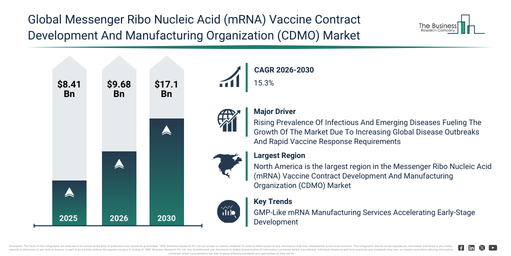
    The messenger ribo nucleic acid (mrna) vaccine contract development and manufacturing organization (cdmo) market size has experienced rapid growth in recent years. It is anticipated to increase from $8.41 billion in 2025 to $9.68 billion in 2026, exhibiting a compound annual growth rate (CAGR) of 15.1%. This historical expansion can be attributed to elements such as COVID-19 vaccine programs, the rise of biotech startups, constrained in-house manufacturing capacity, a surge in contract manufacturing, and the quick validation of mRNA platforms.

    The market for messenger ribonucleic acid (mRNA) vaccine contract development and manufacturing organizations (CDMOs) is projected to experience substantial expansion over the upcoming years. This market is forecast to reach $17.1 billion by 2030, exhibiting a compound annual growth rate (CAGR) of 15.3%. Factors contributing to this anticipated growth include the development of mRNA cancer vaccines, the rise of personalized vaccines, an increase in CDMO collaborations, the need for swift manufacturing at scale, and a growing number of mRNA therapies in development. Key trends anticipated during this period encompass services related to lipid nanoparticle formulation, accelerated mRNA process scaling, outsourced integrated fill-finish operations, adaptable modular vaccine manufacturing facilities, and comprehensive end-to-end mRNA development solutions.

    Download A Free Sample Report For Comprehensive Market Insights:

    https://www.thebusinessresearchcompany.com/sample.aspx?id=33214&type=smp

    What Important Drivers Are Powering The Messenger Ribo Nucleic Acid (mRNA) Vaccine Contract Development And Manufacturing Organization (CDMO) Market Growth?

    The mRNA vaccine CDMO market is projected to expand due to the increasing occurrence of infectious and emerging diseases. These diseases are defined as conditions stemming from pathogenic microorganisms, which either spread quickly or manifest newly, often influenced by environmental shifts, urbanization, and enhanced global connections. Increased global travel, higher population densities, and interwoven supply chains have expedited the spread of pathogens, leading to more frequent, extensive, and challenging-to-control disease outbreaks. mRNA vaccine CDMOs are vital in tackling these issues, facilitating the swift development, scalable manufacturing, and adaptable production of vaccines essential for confronting evolving infectious threats. Given the need for specialized manufacturing infrastructure and technical know-how for mRNA technologies, vaccine developers increasingly depend on contract development and manufacturing organizations to speed up development and guarantee production readiness during outbreaks. As an illustration, the World Health Organization (WHO), a Switzerland-based United Nations’ specialized agency for global health, reported in May 2024 that by 30 April 2024, global dengue cases exceeded 7.6 million, with 3.4 million confirmed cases, over 16,000 severe cases, and more than 3,000 deaths. This surge was especially noticeable in the Region of the Americas, where cases reached over seven million by April 2024, surpassing the entire 2023 annual total of 4.6 million cases. Consequently, the increasing occurrence of infectious and emerging diseases is a key factor propelling the expansion of the mRNA vaccine CDMO market.

    Which Segment Divisions Form The Structure Of The Messenger Ribo Nucleic Acid (mRNA) Vaccine Contract Development And Manufacturing Organization (CDMO) Market?

    The messenger ribo nucleic acid (mrna) vaccine contract development and manufacturing organization (cdmo) market covered in this report is segmented –

    1) By Service Type: Process Development; Manufacturing; Analytical And Quality Control; Fill Finish; Packaging; Other Service Types

    2) By Vaccine Type: COVID-19 Vaccines; Cancer Vaccines; Infectious Disease Vaccines; Other Vaccine Types

    3) By Scale of Operation: Preclinical; Clinical; Commercial

    4) By End-User: Pharmaceutical Companies; Biotechnology Companies; Research Institutes; Other End-Users

    Subsegments:

    1) By Process Development: Formulation Optimization; Cell Line Development; Upstream Process Development; Process Scale-Up

    2) By Manufacturing: Lipid Nanoparticle Production; Enzymatic Capping; Purification Process

    3) By Analytical And Quality Control: Potency Testing; Purity Analysis; Stability Testing; Identity Testing; Microbial Testing

    4) By Fill Finish: Aseptic Filling; Vial Filling; Syringe Filling; Lyophilization

    5) By Packaging: Primary Packaging; Secondary Packaging; Labeling Operations; Cold Chain Packaging; Unit Dose Packaging

    6) By Other Service Types: Regulatory Support Services; Technology Transfer Services; Contract Development Services; Consulting Services; Supply Chain Management

    What Trends Are Impacting The Messenger Ribo Nucleic Acid (mRNA) Vaccine Contract Development And Manufacturing Organization (CDMO) Market?

    Leading firms within the mRNA vaccine CDMO market are increasingly prioritizing cutting-edge advancements, including phase-appropriate GMP mRNA contract development and manufacturing solutions, to expedite preclinical and IND-enabling development while upholding regulatory-compliant quality standards and achieving quicker turnaround times. This approach, known as phase-appropriate GMP-like mRNA manufacturing, describes a production method intended to provide premium, regulatory-conscious mRNA material suitable for preclinical and initial development phases, circumventing the expenses and operational intricacies typically linked with comprehensive GMP manufacturing. As an illustration, in May 2025, GenScript Biotech Corporation, a global biotechnology reagents and services provider based in China, introduced a GMP-like mRNA manufacturing service designed to aid preclinical and IND-enabling development. This offering yields high-quality, regulatory-aware mRNA, featuring faster delivery and decreased expenditures when contrasted with conventional full GMP manufacturing, exemplifying the rising need for adaptable, phase-appropriate CDMO solutions within the mRNA vaccine market.

    Which Firms Are Competing In The Messenger Ribo Nucleic Acid (mRNA) Vaccine Contract Development And Manufacturing Organization (CDMO) Market?

    Major companies operating in the messenger ribo nucleic acid (mrna) vaccine contract development and manufacturing organization (cdmo) market are Sanofi S.A., Thermo Fisher Scientific Inc., FUJIFILM Diosynth Biotechnologies U.S.A. Inc., Danaher Corporation, Boehringer Ingelheim BioXcellence GmbH & Co. KG, AGC Biologics A/S, Eurofins Scientific SE, Lonza Group AG, BioNTech SE, Samsung Biologics Co. Ltd., WuXi Biologics (Cayman) Inc., Siegfried Holding AG, Recipharm AB, Vetter Pharma International GmbH, CordenPharma GmbH & Co. KG, Ajinomoto Bio-Pharma Services Inc., Novasep Holding S.A.S., Rentschler Biopharma SE, IDT Biologika GmbH, Wacker Biotech GmbH

    Access The Complete Messenger Ribo Nucleic Acid (mRNA) Vaccine Contract Development And Manufacturing Organization (CDMO) Market Report:

    https://www.thebusinessresearchcompany.com/report/messenger-ribo-nucleic-acid-mrna-vaccine-contract-development-and-manufacturing-organization-cdmo-market-report

    Which Area Represents The Largest Portion Of The Messenger Ribo Nucleic Acid (mRNA) Vaccine Contract Development And Manufacturing Organization (CDMO) Market?

    North America was the largest region in the mRNA vaccine contract development and manufacturing organization (CDMO) market in 2025. Asia-Pacific is expected to be the fastest-growing region in the forecast period. The regions covered in the messenger ribo nucleic acid (mrna) vaccine contract development and manufacturing organization (cdmo) market report are Asia-Pacific, South East Asia, Western Europe, Eastern Europe, North America, South America, Middle East, Africa.

    Access a Customized Messenger Ribo Nucleic Acid (mRNA) Vaccine Contract Development And Manufacturing Organization (CDMO) Market Report for Deeper Competitive Insights

    Get in touch with us:

    The Business Research Company: https://www.thebusinessresearchcompany.com/

    Americas: +1 310-496-7795

    Asia: +44 7882 955267 & +91 8897263534

    Europe: +44 7882 955267

    Email us at: marketing@tbrc.info

    Follow us on:

    LinkedIn: https://in.linkedin.com/company/the-business-research-company

    YouTube: https://www.youtube.com/channel/UC24_fI0rV8cR5DxlCpgmyFQ

    Global Market Model: https://www.thebusinessresearchcompany.com/global-market-model
  • Memory-Augmenting Neural Devices Market Outlook and Innovation Trends Through 2030

    Memory-Augmenting Neural Devices Market Outlook and Innovation Trends Through 2030

    The Business Research Company’s 2026 market reports feature advanced enhancements such as market attractiveness analysis, total addressable market evaluation, company benchmarking matrices, interactive Excel dashboards, expanded supply chain intelligence, emerging startup coverage, and detailed product insights, delivering more actionable and strategically valuable research.

    What Are The Forecasted Market Size Figures For The Memory-Augmenting Neural Devices Market In 2026 And 2030?

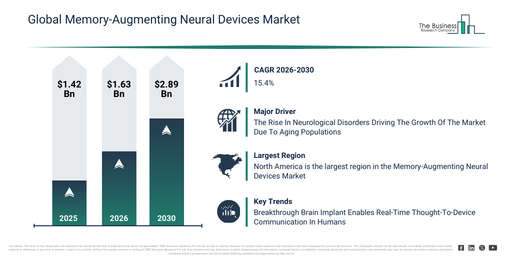
    The memory-augmenting neural devices market has experienced rapid expansion recently. Its size is expected to increase from $1.42 billion in 2025 to $1.63 billion in 2026, achieving a compound annual growth rate (CAGR) of 15.2%. This historical growth is attributable to the development of neurostimulation tools, initial studies in cognitive enhancement, the adoption of wearable neuro devices, an increase in BCI prototypes, and academic brain research programs.

    The memory-augmenting neural devices market is anticipated to experience substantial expansion in the coming years. This market is projected to reach $2.89 billion by 2030, exhibiting a compound annual growth rate (CAGR) of 15.4%. Several factors contribute to this growth during the forecast period, including the increasing requirements of an aging population, a rising demand for cognitive enhancement, the proliferation of wearable neurotechnology, advanced AI-driven neural analysis, and extensive clinical validation trials. Key developments expected in this period encompass noninvasive brain stimulation wearables, AI-driven memory enhancement algorithms, portable neurostimulation devices, integrated implant and wearable systems, and closed-loop cognitive support devices.

    Download A Free Sample Report For Comprehensive Market Insights:

    https://www.thebusinessresearchcompany.com/sample.aspx?id=33212&type=smp

    Which Major Factors Are Contributing To The Development Of The Memory-Augmenting Neural Devices Market?

    The increasing occurrence of neurological conditions is anticipated to fuel the expansion of the memory-augmenting neural devices market in the future. A neurological disorder refers to any ailment or state impacting the typical architecture or operation of the central nervous system (comprising the brain and spinal cord) or the peripheral nervous system (which includes nerves throughout the body). The escalation of neurological disorders stems from the expanding global senior demographic, leading to a higher incidence of age-associated neurological conditions. Memory-augmenting neural devices aid in managing neurological disorders by improving or reinstating cognitive capabilities, such as memory and learning, through specific neural stimulation and adaptive interface innovations. For instance, in March 2023, the Alzheimer’s Association, a US-based nonprofit voluntary health organization, reported that in 2023, roughly 6.7 million Americans aged 65 and older are afflicted with Alzheimer’s dementia, and this figure is expected to climb to 13.8 million by 2060. Consequently, the growing prevalence of neurological disorders is propelling the development of the memory-augmenting neural devices market.

    How Are Different Segment Groups Identified Within The Memory-Augmenting Neural Devices Market?

    The memory-augmenting neural devices market covered in this report is segmented –

    1) By Device Type: Implantable Neural Devices; Noninvasive Brain Stimulation Devices; Other Device Types

    2) By Technology: Artificial Intelligence (AI) And Machine Learning-Based Memory Enhancement; Neural Implants & Electrodes; Transcranial Stimulation; Other Technologies

    3) By Application: Cognitive Enhancement; Neurodegenerative Disease Treatment; Brain-Computer Interfaces (BCIs); Other Applications

    4) By End User: Healthcare And Medical Institutions; Research And Academic Centers; Defense And Military; Other End Users

    Subsegments:

    1) By Implantable Neural Devices: Deep Brain Stimulation Systems; Cortical Microelectrode Arrays; Hippocampal Memory Prostheses; Neural Recording And Stimulation Implants; Closed Loop Neuromodulation Implants

    2) By Noninvasive Brain Stimulation Devices: Transcranial Magnetic Stimulation Systems; Transcranial Direct Current Stimulation Devices; Transcranial Alternating Current Stimulation Devices; Transcranial Random Noise Stimulation Devices; Focused Ultrasound Brain Stimulation Systems

    3) By Other Device Types: Wearable Neurofeedback Devices; Brain Computer Interface Headsets; Cognitive Enhancement Headgear; Portable Neurostimulation Devices; Hybrid Neural Modulation Systems

    Which Trends Are Contributing To Changes In The Messenger Ribonucleic Acid (mRNA) And Next-Generation Vaccine Platforms Market?

    Leading firms within the memory augmenting neural devices market are concentrating on creating advanced solutions, including implantable brain computer interfaces, with the aim of boosting cognitive abilities and improving memory recall. An implantable brain computer interface (BCI) functions as a device surgically embedded in the brain, which directly interprets neural signals and converts them into digital instructions for operating computers or other external equipment. As an illustration, in July 2025, Neuralink Corp., a US-based neurotechnology company, successfully implanted its high-channel-count fully implantable brain computer interface (BCI) into a ninth human participant, continuing its active clinical trials. This implant is engineered to capture and decipher neural signals utilizing ultra-thin electrode threads integrated within the brain, thereby facilitating direct, real-time interaction between neural activity and external digital tools. The system incorporates wireless data transmission, permits long-term implantation without the need for external hardware, and offers high-resolution signal capture, empowering users to manipulate computers or interfaces solely through mental command. This achievement, noteworthy also as the company’s inaugural occasion of conducting two implant surgeries within a single day, underscores enhanced surgical efficacy and increasing clinical preparedness for widespread human implementation.

    Who Are The Major Companies Operating In The Memory-Augmenting Neural Devices Market?

    Major companies operating in the memory-augmenting neural devices market are Medtronic plc, Bitbrain Technologies S.L., NeuroLutions Inc., CorTec GmbH, FinalSpark Inc., Kernel Inc., Neuralink Corporation, NeuroPace Inc., Blackrock Neurotech Inc., NeuroSky Inc., Emotiv Inc., mBrainTrain Inc., BrainChip Holdings Ltd., BrainCo Inc., INBRAIN Neuroelectronics S.L., Merge Labs Inc., InBrain Neuroelectronics S.L., Axoft Inc., Motif Neurotech Inc., MintNeuro Inc.

    Access The Complete Memory-Augmenting Neural Devices Market Report:

    https://www.thebusinessresearchcompany.com/report/memory-augmenting-neural-devices-market-report

    Which Region Commands The Largest Share Of The Memory-Augmenting Neural Devices Market?

    North America was the largest region in the memory-augmenting neural devices market in 2025. Asia-Pacific is expected to be the fastest-growing region in the forecast period. The regions covered in the memory-augmenting neural devices market report are Asia-Pacific, South East Asia, Western Europe, Eastern Europe, North America, South America, Middle East, Africa.

    Access a Customized Memory-Augmenting Neural Devices Market Report for Deeper Competitive Insights

    Get in touch with us:

    The Business Research Company: https://www.thebusinessresearchcompany.com/

    Americas: +1 310-496-7795

    Asia: +44 7882 955267 & +91 8897263534

    Europe: +44 7882 955267

    Email us at: marketing@tbrc.info

    Follow us on:

    LinkedIn: https://in.linkedin.com/company/the-business-research-company

    YouTube: https://www.youtube.com/channel/UC24_fI0rV8cR5DxlCpgmyFQ

    Global Market Model: https://www.thebusinessresearchcompany.com/global-market-model
  • Growing Neurological Disorders Boost Memory Implants Market Expansion

    Growing Neurological Disorders Boost Memory Implants Market Expansion

    The Business Research Company’s 2026 market reports feature advanced enhancements such as market attractiveness analysis, total addressable market evaluation, company benchmarking matrices, interactive Excel dashboards, expanded supply chain intelligence, emerging startup coverage, and detailed product insights, delivering more actionable and strategically valuable research.

    How Much Larger Will The Memory Implants Market Become By 2030 Compared To 2026?

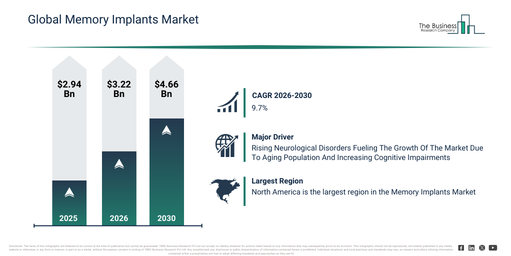
    The memory implants market size has demonstrated strong growth in recent years. It is forecast to grow from $2.94 billion in 2025 to $3.22 billion in 2026, achieving a compound annual growth rate (CAGR) of 9.4%. The expansion observed historically can be linked to advances in neuroscience research, early brain implant trials, an increase in neuromodulation therapies, the rising incidence of neurodegenerative disorders, and defense-funded neural interface programs.

    The memory implants market is projected to experience robust expansion over the coming years. By 2030, this market is predicted to reach $4.66 billion, demonstrating a compound annual growth rate (CAGR) of 9.7%. This growth trajectory is fueled by the rising prevalence of cognitive disorders, advancements in brain-computer interfaces, enhanced funding for neural engineering, an increase in clinical neurotech trials, and the demand for therapies aimed at memory restoration. Notable trends influencing the market will involve implantable memory prosthetic systems, hippocampal signal encoding devices, closed-loop neural memory stimulation, high-density neural electrode arrays, and adaptive memory restoration implants.

    Download A Free Sample Report For Comprehensive Market Insights:

    https://www.thebusinessresearchcompany.com/sample.aspx?id=33211&type=smp

    What Key Growth Drivers Are Influencing The Memory Implants Market?

    The increasing incidence of neurological disorders is anticipated to stimulate the expansion of the memory implants market moving forward. A neurological disorder is a medical condition impacting the brain, spinal cord, or nervous system, resulting in difficulties with movement, sensation, thinking, behavior, or autonomic bodily functions. The prevalence of these disorders is escalating, primarily due to the rapid growth of the elderly population, which in turn leads to a higher occurrence of age-related conditions such as Alzheimer’s disease, Parkinson’s disease, and stroke, as susceptibility to neurological issues rises with longer life expectancy. Memory implants assist patients affected by the rising prevalence of neurological disorders by aiding in the improvement of cognitive function and overall quality of life. For example, in March 2023, data from the Alzheimer’s Association, a US-based nonprofit voluntary health organization, indicated that approximately 6.7 million Americans aged 65 and older were living with Alzheimer’s dementia in 2023, a figure projected to increase to 13.8 million by 2060. Consequently, the rising prevalence of neurological disorders is a key factor propelling the growth of the memory implants market. The escalating number of clinical trials is expected to drive the growth of the memory implants market in the future. Clinical trials are structured research studies involving human participants, designed to assess the safety, efficacy, and optimal application of medical devices, drugs, or therapeutic interventions before they receive regulatory approval. The increase in clinical trials is attributed to greater investment from governments and life science companies, aimed at accelerating the development and regulatory clearance of new therapies, medical devices, and digital health solutions. Memory implants contribute to clinical trials by enabling precise monitoring and modulation of neural activity, allowing researchers to objectively evaluate cognitive responses, treatment effectiveness, and neurological outcomes in real time. For instance, in December 2024, the Association of the British Pharmaceutical Industry, a UK-based trade association, reported that the total number of industry clinical trials initiated in the UK reached 426 in 2023, showing an increase from 411 trials in 2022 and marking growth for the second consecutive year. Therefore, the rising number of clinical trials is a significant driver for the memory implants market.

    What Segment Categories Are Evaluated In The Memory Implants Market Study?

    The memory implants market covered in this report is segmented –

    1) By Product Type: Deep Brain Stimulation Devices; Vagus Nerve Stimulation Devices; Implantable Memory Prosthetics; Electrode Arrays; Neural Signal Sensors; Brain–Computer Interface Hardware; Neuromodulation Devices; Wearable Neural Headsets; Other Product Types

    2) By Application: Alzheimer’s Disease; Parkinson’s Disease; Epilepsy; Traumatic Brain Injury; Memory Loss due to Aging; Other Cognitive Disorders; Other Applications

    3) By End-User: Hospitals; Clinics; Research Institutes; Rehabilitation Centers; Other End-Users

    Subsegments:

    1) By Deep Brain Stimulation Devices: Single Target Stimulation Systems; Multi Target Stimulation Systems; Closed Loop Stimulation Systems; Adaptive Stimulation Systems

    2) By Vagus Nerve Stimulation Devices: Implantable Vagus Nerve Stimulators; Transcutaneous Vagus Nerve Stimulation Systems; Programmable Vagus Nerve Modulation Devices

    3) By Implantable Memory Prosthetics: Hippocampal Memory Restoration Systems; Cortical Memory Enhancement Implants; Neural Memory Encoding Devices; Memory Recall Support Implants

    4) By Electrode Arrays: Depth Electrode Arrays; Surface Cortical Electrode Arrays; Flexible Neural Electrode Arrays; High Density Electrode Arrays

    5) By Neural Signal Sensors: Intracranial Neural Signal Sensors; Implantable Bioelectric Signal Sensors; Real Time Neural Monitoring Sensors

    6) By Brain–Computer Interface Hardware: Implantable Brain Signal Processing Units; External Neural Signal Interface Devices; Hybrid Brain Interface Systems

    7) By Neuromodulation Devices: Electrical Neuromodulation Systems; Magnetic Neuromodulation Systems; Targeted Neural Modulation Devices

    8) By Wearable Neural Headsets: Electroencephalography Based Neural Headsets; Cognitive Monitoring Neural Wearables; Noninvasive Neurostimulation Headsets

    9) By Other Product Types: Hybrid Memory Implant Systems; Experimental Neural Augmentation Devices; Integrated Cognitive Enhancement Platforms

    Which Companies Are Influencing The Memory Implants Market?

    Major companies operating in the memory implants market are Abbott Laboratories, Medtronic plc, Boston Scientific Corporation, LivaNova PLC, Renishaw plc, NeuroPace Inc., Beijing PINS Medical Co Ltd., FHC Inc., electroCore Inc., SetPoint Medical Corporation, Parasym Ltd., MicroTransponder Inc., ReShape Lifesciences Inc., Adriakaim Inc., Evren Technologies Inc., Soterix Medical Inc., Aleva Neurotherapeutics SA, SceneRay Corporation Ltd., NeuroSigma Inc., BioControl Medical Ltd.

    Access The Complete Memory Implants Market Report:

    https://www.thebusinessresearchcompany.com/report/memory-implants-market-report

    Which Region Accounts For The Highest Share Of The Memory Implants Market?

    North America was the largest region in the memory implants market in 2025. Asia-Pacific is expected to be the fastest-growing region in the forecast period. The regions covered in the memory implants market report are Asia-Pacific, South East Asia, Western Europe, Eastern Europe, North America, South America, Middle East, Africa.

    Access a Customized Memory Implants Market Report for Deeper Competitive Insights

    Get in touch with us:

    The Business Research Company: https://www.thebusinessresearchcompany.com/

    Americas: +1 310-496-7795

    Asia: +44 7882 955267 & +91 8897263534

    Europe: +44 7882 955267

    Email us at: marketing@tbrc.info

    Follow us on:

    LinkedIn: https://in.linkedin.com/company/the-business-research-company

    YouTube: https://www.youtube.com/channel/UC24_fI0rV8cR5DxlCpgmyFQ

    Global Market Model: https://www.thebusinessresearchcompany.com/global-market-model

  • Increasing Imaging Demand Driving Expansion in Medical Imaging Outsourcing Market

    Increasing Imaging Demand Driving Expansion in Medical Imaging Outsourcing Market

    The Business Research Company’s 2026 market reports feature advanced enhancements such as market attractiveness analysis, total addressable market evaluation, company benchmarking matrices, interactive Excel dashboards, expanded supply chain intelligence, emerging startup coverage, and detailed product insights, delivering more actionable and strategically valuable research.

    What Growth In Market Value Is Anticipated For The Medical Imaging Outsourcing Market Between 2026 And 2030?

    The medical imaging outsourcing market has shown substantial growth recently. This market is set to expand from $18.08 billion in 2025 to $19.68 billion in 2026, achieving a compound annual growth rate (CAGR) of 8.9%. Historically, this expansion was fueled by factors including a shortage of radiologists, increasing diagnostic imaging volumes, hospital initiatives to reduce costs, the early adoption of teleradiology, and the wider deployment of digital imaging systems.

    The medical imaging outsourcing market is poised for significant expansion in the coming years. It is projected to achieve a size of $27.88 billion by 2030, exhibiting a compound annual growth rate (CAGR) of 9.1%. This anticipated growth during the forecast period is driven by an increasing demand for cross-border reporting, a rise in imaging backlogs, the expansion of remote diagnostic approaches, heightened outsourcing by hospitals, and the necessity for faster report delivery. Major trends expected within this period include the development of global teleradiology reporting networks, round-the-clock remote image interpretation, centralized management of imaging workflows, cloud-based services for image archiving, and specialized radiology outsourcing.

    Download A Free Sample Report For Comprehensive Market Insights:

    https://www.thebusinessresearchcompany.com/sample.aspx?id=33210&type=smp

    Which Core Factors Are Supporting The Expansion Of The Medical Imaging Outsourcing Market?

    The escalating volumes of imaging procedures are projected to fuel the expansion of the medical imaging outsourcing market moving forward. Imaging procedure volumes represent the cumulative count of diagnostic imaging examinations performed by healthcare providers within a specific timeframe. The rise in these volumes stems from the increasing prevalence of chronic diseases, which necessitates frequent diagnostic imaging for early detection, monitoring disease progression, and guiding treatment decisions. Medical imaging outsourcing facilitates the management of these growing procedure volumes by enabling healthcare providers to efficiently address increasing diagnostic demands through access to remote radiology expertise, adaptable resources, quicker report turnaround times, and a reduced operational burden, all without needing to expand their in-house infrastructure. For example, in November 2023, data from the National Health Service, a UK-based government department, revealed that in the year concluding March 2023, England conducted 45.0 million imaging tests, marking a 2.2% increase from 44.0 million in the preceding year. This total included 10.3 million diagnostic ultrasound tests, an increase of 1.8%; 7.1 million CT scans, up by 5.5%; and 4.1 million MRI scans, showing a rise of 6.2%. Consequently, the rising imaging procedure volumes are a key driver for the growth of the medical imaging outsourcing market. The growth of healthcare infrastructure is anticipated to drive the medical imaging outsourcing market’s development in the future. Healthcare infrastructure comprises the facilities, equipment, and workforce essential for delivering medical services effectively to a population. This infrastructure is expanding due to a rising population, which requires more hospitals, clinics, medical equipment, and trained healthcare professionals to provide adequate services and ensure public health and well-being. The expansion of healthcare infrastructure increases the demand for advanced diagnostic services, allowing medical imaging outsourcing to offer specialized expertise, faster turnaround times, and cost-effective solutions that complement the expanding network of hospitals and clinics. For instance, in May 2023, the American Health Care Association, a US-based nonprofit organization, reported that the number of hospitals in the United States increased by 0.591% from the previous year, rising from 6,093 to 6,129. Thus, the expansion of healthcare infrastructure is propelling the growth of the medical imaging outsourcing market.

    How Is The Medical Imaging Outsourcing Market Examined Through Segment Analysis?

    The medical imaging outsourcing market covered in this report is segmented –

    1) By Product Type: Computed Tomography (CT); Magnetic Resonance Imaging (MRI); Ultrasound; X-Ray; Nuclear Medicine; Other Modalities

    2) By Delivery Mode: Onsite Outsourcing Services; Offsite Outsourcing Services; Hybrid Outsourcing Services

    3) By Application: Cardiology; Diagnostic Imaging; Orthopedic; Diagnostic Testing Systems; Drug Delivery; Diabetes Care; Other Application

    4) By End Use: Hospitals And Clinics; Interventional Imaging Centers; Other End Uses

    Subsegments:

    1) By Computed Tomography: High Resolution Computed Tomography; Low Dose Computed Tomography; Contrast Enhanced Computed Tomography; Cardiac Computed Tomography; Whole Body Computed Tomography

    2) By Magnetic Resonance Imaging: Functional Magnetic Resonance Imaging; Diffusion Weighted Imaging; Magnetic Resonance Angiography; Magnetic Resonance Spectroscopy; Cardiac Magnetic Resonance Imaging

    3) By Ultrasound: Diagnostic Ultrasound Imaging; Doppler Ultrasound Imaging; Three Dimensional Ultrasound Imaging; Four Dimensional Ultrasound Imaging; Point Of Care Ultrasound

    4) By X-Ray: Digital Radiography; Computed Radiography; Mobile X-Ray Imaging; Fluoroscopy Imaging; Dental X-Ray Imaging

    5) By Nuclear Medicine: Positron Emission Tomography; Single Photon Emission Computed Tomography; Hybrid Nuclear Imaging; Radionuclide Imaging; Molecular Imaging

    6) By Other Modalities: Optical Imaging; Thermal Imaging; Elastography Imaging; Photoacoustic Imaging; Molecular Diagnostic Imaging

    Who Are The Companies Shaping The Medical Imaging Outsourcing Market Landscape?

    Major companies operating in the medical imaging outsourcing market are Sonic Healthcare Limited, RadNet Inc., Agfa HealthCare NV, Flatworld Solutions Pvt. Ltd., Radiology Partners Inc., Envision Radiology, ProScan Imaging, Alliance Medical Limited, Teleradiology Solutions, Everlight Radiology Limited, ONRAD Inc., RamSoft Inc., StatRad LLC, Sirona Medical Inc., Candelis Inc., MedWeb LLC, MetaMed, Shields Health Care Group, Diagnostic Imaging Services, MEDNAX Services Inc., 3DR Laboratories Inc., and American Imaging Consultants.

    Access The Complete Medical Imaging Outsourcing Market Report:

    https://www.thebusinessresearchcompany.com/report/medical-imaging-outsourcing-market-report

    Which Region Is The Primary Market For The Medical Imaging Outsourcing Market?

    North America was the largest region in the medical imaging outsourcing market in 2025. Asia-Pacific is expected to be the fastest-growing region in the forecast period. The regions covered in the medical imaging outsourcing market report are Asia-Pacific, South East Asia, Western Europe, Eastern Europe, North America, South America, Middle East, Africa.

    Access a Customized Medical Imaging Outsourcing Market Report for Deeper Competitive Insights

    Get in touch with us:

    The Business Research Company: https://www.thebusinessresearchcompany.com/

    Americas: +1 310-496-7795

    Asia: +44 7882 955267 & +91 8897263534

    Europe: +44 7882 955267

    Email us at: marketing@tbrc.info

    Follow us on:

    LinkedIn: https://in.linkedin.com/company/the-business-research-company

    YouTube: https://www.youtube.com/channel/UC24_fI0rV8cR5DxlCpgmyFQ

    Global Market Model: https://www.thebusinessresearchcompany.com/global-market-model
  • Medical Fiber Optics Market Evolving with High-Resolution Imaging Innovations

    Medical Fiber Optics Market Evolving with High-Resolution Imaging Innovations

    The Business Research Company’s 2026 market reports feature advanced enhancements such as market attractiveness analysis, total addressable market evaluation, company benchmarking matrices, interactive Excel dashboards, expanded supply chain intelligence, emerging startup coverage, and detailed product insights, delivering more actionable and strategically valuable research.

    What Is The Expected Market Value Outlook For The Medical Fiber Optics Market Through 2030?

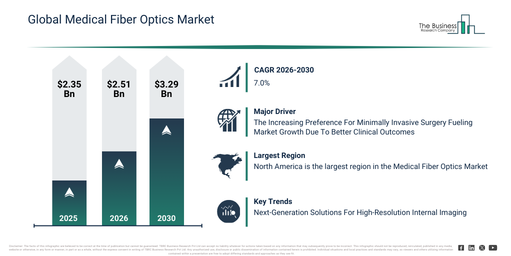
    The medical fiber optics market has demonstrated robust growth in recent years. It is anticipated to increase from $2.35 billion in 2025 to $2.51 billion in 2026, at a compound annual growth rate (CAGR) of 6.8%. The historical expansion of this market can be attributed to an upsurge in endoscopic procedures, the advancement of laser-based therapies, the widespread adoption of minimally invasive diagnostics, the demand from hospitals for enhanced visualization instruments, and improvements in optical materials.

    The medical fiber optics market is projected to experience substantial expansion over the upcoming years, reaching $3.29 billion in 2030, demonstrating a compound annual growth rate (CAGR) of 7.0%. This anticipated growth throughout the forecast period stems from factors such as an increase in image-guided surgeries, the escalating need for accurate diagnostics, a rise in outpatient medical procedures, the broadening scope of biomedical sensing applications, and the greater uptake of single-use optical instruments. Noteworthy trends during this period encompass high-resolution endoscopic fiber systems, fibers designed for laser energy delivery, compact optical sensing probes, disposable fiber optic instruments for surgery, and sophisticated imaging fiber bundles.

    Download A Free Sample Report For Comprehensive Market Insights:

    https://www.thebusinessresearchcompany.com/sample.aspx?id=33209&type=smp

    What Are The Main Drivers Accelerating The Growth Of The Medical Fiber Optics Market?

    The expanding preference for minimally invasive surgery is anticipated to fuel the medical fiber optics market’s growth in the coming years. This surgical approach involves executing procedures through small incisions with specialized instruments and advanced visualization technologies, thereby reducing tissue damage, postoperative discomfort, and recovery duration. The rising favor for these methods stems from quicker patient recovery, lower complication rates, and shorter hospital stays. This inclination directly boosts the demand for medical fiber optics, as versatile and high-precision fiber-optic components are vital for illumination and imaging in endoscopic, laparoscopic, and robotic-assisted surgeries, empowering surgeons to clearly view internal structures and perform intricate operations through minimal access points. For instance, in November 2025, Intuitive Surgical Inc., a US-based medical device company, reported that customers worldwide performed approximately 2.29 million surgical procedures using da Vinci robotic surgical systems in 2023, indicating an increase of about 22% compared with 2022, with cumulative procedures on da Vinci platforms exceeding 14 million. Consequently, the increasing adoption of minimally invasive surgical procedures is a significant factor propelling the medical fiber optics market’s expansion.

    Which Segment Groups Define The Medical Fiber Optics Market Landscape?

    The medical fiber optics market covered in this report is segmented –

    1) By Type: Single Mode Optical Fiber; Multimode Optical Fiber

    2) By Usage: Disposable; Reusable

    3) By Application: Endoscopic Imaging; Laser Signal Delivery; Biomedical Sensing; Illumination; Other Applications

    4) By End User: Hospital; Specialty Clinics; Ambulatory Surgical Centers; Diagnostic Laboratories; Other End Users

    Subsegments:

    1) By Single Mode Optical Fiber: Long Distance Signal Transmission; High Precision Laser Energy Delivery; Advanced Biomedical Sensing

    2) By Multimode Optical Fiber: Short Distance Image Transmission; Endoscopic Imaging Bundles; Medical Illumination Systems

    What Trends Are Influencing The Future Of The Medical Fiber Optics Market?

    Leading companies in the medical fiber optics market are prioritizing the creation of innovative products like imaging fiber assemblies to support high-resolution, minimally invasive diagnostic imaging applications. These assemblies represent specialized optical fiber bundles crafted for integration into medical imaging catheters and systems, enabling the transmission and collection of light to generate high-quality internal images. They offer enhanced flexibility and precision compared to traditional rigid endoscopes, facilitating a wide array of minimally invasive diagnostic and interventional procedures. As an illustration, in January 2025, Coherent Corp., a US-based photonics company, announced the launch of its AxioView imaging fiber assemblies, specifically designed for use in optical coherence tomography (OCT), near-infrared spectroscopy (NIRS), and multimodal catheter-based imaging applications. AxioView incorporates specialty fiber designs optimized for medical imaging, catheter-ready distal geometries such as ball-tip and side-fire configurations, vertically integrated manufacturing for consistent optical performance, and ISO 13485-certified production to comply with regulatory demands.

    Which Industry Players Are Present In The Medical Fiber Optics Market?

    Major companies operating in the medical fiber optics market are Heraeus Holding GmbH, Boston Scientific Corporation, Fujikura Ltd., Coherent Medical Group, Smiths Group plc, MKS Instruments Inc., Carl Zeiss Meditec AG, Integra Lifesciences Corporation, IPG Photonics Corporation, SCHOTT AG, Radiall America Inc., OZ Optics Ltd., HEINE Optotechnik GmbH & Co. KG, ForTec Medical Corporation, Thorlabs Inc., Fiberoptics Technology Incorporated (FTI), Biolitec AG, Laser Mechanisms Inc., LEONI AG, Beijing L.H.H. Medical Devices Co. Ltd.

    Access The Complete Medical Fiber Optics Market Report:

    https://www.thebusinessresearchcompany.com/report/medical-fiber-optics-market-report

    Which Geographic Region Represents The Largest Medical Fiber Optics Market Share?

    North America was the largest region in the medical fiber optics market in 2025. The regions covered in the medical fiber optics market report are Asia-Pacific, South East Asia, Western Europe, Eastern Europe, North America, South America, Middle East, Africa.

    Access a Customized Medical Fiber Optics Market Report for Deeper Competitive Insights

    Get in touch with us:

    The Business Research Company: https://www.thebusinessresearchcompany.com/

    Americas: +1 310-496-7795

    Asia: +44 7882 955267 & +91 8897263534

    Europe: +44 7882 955267

    Email us at: marketing@tbrc.info

    Follow us on:

    LinkedIn: https://in.linkedin.com/company/the-business-research-company

    YouTube: https://www.youtube.com/channel/UC24_fI0rV8cR5DxlCpgmyFQ

    Global Market Model: https://www.thebusinessresearchcompany.com/global-market-model
  • Magnetic Navigation Surgical Robots Advancing Precision in Minimally Invasive Procedures

    Magnetic Navigation Surgical Robots Advancing Precision in Minimally Invasive Procedures

    The Business Research Company’s 2026 market reports feature advanced enhancements such as market attractiveness analysis, total addressable market evaluation, company benchmarking matrices, interactive Excel dashboards, expanded supply chain intelligence, emerging startup coverage, and detailed product insights, delivering more actionable and strategically valuable research.

    How Will The Market Value Of The Magnetic Navigation Surgical Robot Market Increase Between 2026 And 2030?

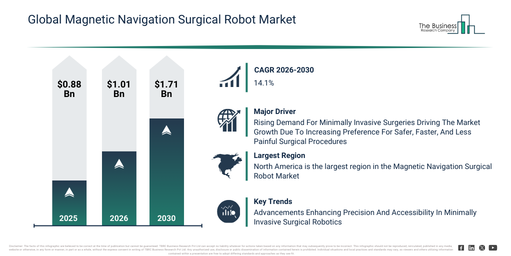
    The market for magnetic navigation surgical robots has experienced substantial growth in recent years. Its size is projected to increase from $0.88 billion in 2025 to $1.01 billion in 2026, demonstrating a compound annual growth rate (CAGR) of 13.9%. The expansion observed in the historic period can be attributed to factors such as the rise of minimally invasive surgery, the early adoption of surgical robotics, the necessity for greater procedural precision, an increase in complex cardiac interventions, and hospital investments in advanced operating rooms.

    The magnetic navigation surgical robot market size is anticipated to experience significant expansion over the next few years. It is projected to reach $1.71 billion in 2030, demonstrating a compound annual growth rate (CAGR) of 14.1%. This expected growth during the forecast period is driven by various factors, such as the increasing volume of robotic-assisted surgeries, the wider application of image-guided interventions, a heightened demand for precision navigation systems, the expansion of specialty surgical centers, and enhanced training for surgeons on robotic platforms. Noteworthy trends in the upcoming period include magnetic guided minimally invasive procedures, integrated surgical planning software, robotic catheter navigation systems, high precision instrument control modules, and tools for procedure simulation and planning.

    Download A Free Sample Report For Comprehensive Market Insights:

    https://www.thebusinessresearchcompany.com/sample.aspx?id=33207&type=smp

    Which Growth Drivers Are Expected To Support The Magnetic Navigation Surgical Robot Market Forward?

    The market for magnetic navigation surgical robots is anticipated to expand due to increasing demand for minimally invasive surgical procedures. These procedures involve small incisions, specialized tools, and techniques, leading to less tissue damage, reduced pain, and quicker patient recovery compared to conventional open surgeries. The increase in minimally invasive surgeries can be attributed to progress in surgical instrumentation and imaging technologies, which offer enhanced precision, less patient trauma, and more rapid recovery. Magnetic navigation surgical robots improve minimally invasive operations by giving surgeons exact, real-time command over instruments through small openings, thereby boosting accuracy, minimizing tissue damage, and facilitating intricate procedures otherwise challenging or hazardous with older techniques. For example, data from June 2024 by the American Society of Plastic Surgeons, a US-based non-profit body, indicated that in 2023, a total of 347,782 liposuction procedures were carried out, marking a 7% rise from 2022. During the same year, minimally invasive procedures collectively saw a 7% growth, exceeding the growth of surgical procedures by 2 percentage points. In total, plastic surgeries grew 5% year-over-year, whereas minimally invasive treatments experienced a 7% surge. Consequently, the escalating demand for minimally invasive operations is a primary catalyst for the expansion of the magnetic navigation surgical robot market.

    What Key Segment Areas Are Included In The Magnetic Navigation Surgical Robot Market Assessment?

    The magnetic navigation surgical robot market covered in this report is segmented –

    1) By Component: Hardware; Software; Services

    2) By Technology: Active Magnetic Navigation; Passive Magnetic Navigation

    3) By Distribution Channel: Direct Sales; Distributors

    4) By Application: Spine Surgery; Orthopedic Surgery; Neurosurgery; Interventional Cardiology; Ear, Nose, And Throat (ENT) Surgery; Other Surgical Applications

    5) By End-User: Hospitals; Ambulatory Surgical Centers; Specialty Clinics

    Subsegments:

    1) By Hardware: Robotic Manipulation Units; Magnetic Field Generation Systems; Surgical Instrument Navigation Components; Sensor And Imaging Hardware; Control And Power Supply Units

    2) By Software: Navigation And Guidance Software; Imaging Integration Software; Motion Control And Planning Software; User Interface And Visualization Software; Data Processing And Analytics Software

    3) By Services: Installation And System Integration Services; Clinical Training And Education Services; Maintenance And Technical Support Services; Calibration And Performance Optimization Services; Regulatory Compliance And Validation Services

    Which Trends Are Contributing To Changes In The Magnetic Navigation Surgical Robot Market?

    Leading companies in the magnetic navigation surgical robot market are concentrating on developing novel solutions, such as sophisticated endovascular robotic surgery systems, to enhance surgical precision and decrease procedural risks. These advanced endovascular robotic surgery solutions are robotic setups that utilize precise, computer-controlled navigation to guide instruments through blood vessels, thereby enabling surgeons to execute complex procedures with heightened accuracy, reduced invasiveness, and improved patient safety. For instance, in November 2025, Stereotaxis Inc., a US-based medical technology company, obtained U.S. FDA 510(k) clearance for its GenesisX Robotic Magnetic Navigation System, an inventive surgical robot designed to simplify installation and broaden access to magnetic navigation technology in endovascular surgeries, underscoring ongoing innovation in this field. These robotic systems boost procedural accuracy and shorten recovery times by allowing surgeons to perform challenging operations with superior control. As hospitals and surgical centers increasingly seek out technologies that improve outcomes while optimizing infrastructure and operational efficiency, magnetic navigation surgical robots are emerging as a crucial enabling technology.

    Which Organizations Are Involved In The Magnetic Navigation Surgical Robot Market?

    Major companies operating in the magnetic navigation surgical robot market are Medtronic plc, Stereotaxis Inc., Globus Medical Inc., MicroPort Scientific Corporation, Genesis Robotic Magnetic Navigation System, ZimVie Inc., Northern Digital Inc., Brain Navi Biotechnology Co. Ltd., Synaptive Medical Inc., ClearPoint Neuro Inc., Naviq Inc., Polhemus Incorporated, Levita Magnetics International Corp., Flux Robotics Inc., Radwave Technologies Inc., Magnetecs Corporation, EndoQuest Robotics Inc., Nanoflex Robotics AG, Theranautilus Private Limited, Magnendo Corp.

    Access The Complete Magnetic Navigation Surgical Robot Market Report:

    https://www.thebusinessresearchcompany.com/report/magnetic-navigation-surgical-robot-market-report

    Which Region Leads The Magnetic Navigation Surgical Robot Market By Size?

    North America was the largest region in the magnetic navigation surgical robot market in 2025. Asia-Pacific is expected to be the fastest-growing region in the forecast period. The regions covered in the magnetic navigation surgical robot market report are Asia-Pacific, South East Asia, Western Europe, Eastern Europe, North America, South America, Middle East, Africa.

    Access a Customized Magnetic Navigation Surgical Robot Market Report for Deeper Competitive Insights

    Get in touch with us:

    The Business Research Company: https://www.thebusinessresearchcompany.com/

    Americas: +1 310-496-7795

    Asia: +44 7882 955267 & +91 8897263534

    Europe: +44 7882 955267

    Email us at: marketing@tbrc.info

    Follow us on:

    LinkedIn: https://in.linkedin.com/company/the-business-research-company

    YouTube: https://www.youtube.com/channel/UC24_fI0rV8cR5DxlCpgmyFQ

    Global Market Model: https://www.thebusinessresearchcompany.com/global-market-model
  • Biologic Drug Adoption Accelerates Growth of Lipid Nanoparticle Delivery Systems Market

    Biologic Drug Adoption Accelerates Growth of Lipid Nanoparticle Delivery Systems Market

    The Business Research Company’s 2026 market reports feature advanced enhancements such as market attractiveness analysis, total addressable market evaluation, company benchmarking matrices, interactive Excel dashboards, expanded supply chain intelligence, emerging startup coverage, and detailed product insights, delivering more actionable and strategically valuable research.

    What Will Be The Estimated Market Size Of The Lipid Nanoparticle Delivery System Market By 2030?

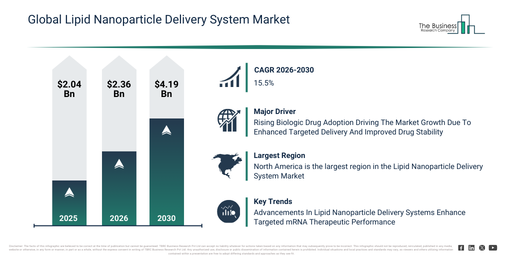
    The lipid nanoparticle delivery system market has experienced substantial growth in recent years. It is anticipated to expand from $2.04 billion in 2025 to $2.36 billion in 2026, achieving a compound annual growth rate (CAGR) of 15.3%. This growth during the historic period can be ascribed to advancements in lipid chemistry research, growth of nucleic acid therapeutics, expansion of vaccine development programs, increased funding for gene therapy research, and the establishment of nanoparticle manufacturing capabilities.

    The lipid nanoparticle delivery system market is projected to experience substantial expansion in the coming years, reaching a valuation of $4.19 billion by 2030, demonstrating a compound annual growth rate (CAGR) of 15.5%. This anticipated growth during the forecast period is primarily driven by factors such as a burgeoning pipeline of RNA-based drugs, increased investments in precision medicine initiatives, the broader expansion of personalized therapeutics, a rising need for scalable delivery platforms, and a higher number of regulatory green lights for gene therapies. Key trends anticipated during this period encompass the growing integration of mRNA-based therapeutics delivery, an escalating demand for ionizable lipid formulations, a sharpened focus on advanced targeted drug delivery systems, the development of scalable nanoparticle manufacturing techniques, and a stronger emphasis on optimizing both delivery efficiency and stability.

    Download A Free Sample Report For Comprehensive Market Insights:

    https://www.thebusinessresearchcompany.com/sample.aspx?id=33202&type=smp

    What Influential Factors Are Boosting The Lipid Nanoparticle Delivery System Market Demand?

    The increasing use of biologic drugs is anticipated to drive the expansion of the lipid nanoparticle delivery system market in the future. These drugs are therapeutic agents derived from living organisms, including proteins, antibodies, or cells, employed to manage conditions unresponsive to conventional chemical medications. The uptake of biologic drugs is growing because of the escalating incidence of chronic and intricate diseases demanding specific treatments. Lipid nanoparticle delivery systems enhance the adoption of biologic drugs by encasing them to prevent breakdown, aiding their absorption by cells, and ensuring accurate delivery to specific tissues. To illustrate this trend, Cardinal Health Inc., a US-based healthcare firm, reported in January 2023 that by January 2022, the US had 33 biosimilar products cleared by the FDA, with 21 accessible in the market. By 2023, the number of FDA-approved biosimilars had risen to 40, with 25 readily available for commercial use. Consequently, the growing acceptance of biologic drugs is a key factor propelling the expansion of the lipid nanoparticle delivery system market.

    How Is Segment Classification Applied In The Lipid Nanoparticle Delivery System Market?

    The lipid nanoparticle delivery system market covered in this report is segmented –

    1) By Product Type: Solid Lipid Nanoparticles; Nanostructured Lipid Carriers; Liposomes; Other Product Types

    2) By Route Of Administration: Oral; Injectable; Topical; Other Route Of Administrations

    3) By Application: Drug Delivery; Gene Therapy; Vaccines; Cosmetics; Other Applications

    4) By End-User: Pharmaceutical And Biotechnology Companies; Research Institutes; Hospitals And Clinics; Other End Users

    Subsegments:

    1) By Solid Lipid Nanoparticles: Glyceryl Monostearate Based; Glyceryl Behenate Based; Stearic Acid Based; Compritol Based

    2) By Nanostructured Lipid Carriers: Type I Nanostructured Lipid Carriers; Type II Nanostructured Lipid Carriers; Type III Nanostructured Lipid Carriers

    3) By Liposomes: Multilamellar Vesicles; Small Unilamellar Vesicles; Large Unilamellar Vesicles; Giant Unilamellar Vesicles

    4) By Other Product Types: Polymeric Lipid Nanoparticles; Lipid Polymer Hybrids; Micelles

    What Trends Are Shaping The Lipid Nanoparticle Delivery System Market Structure?

    Companies operating significantly within the lipid nanoparticle delivery system market are concentrating on developing advanced solutions, such as targeted mRNA delivery systems, to bolster the precision, efficiency, and safety of gene therapies and vaccines. A targeted mRNA delivery system refers to a technology that utilizes lipid nanoparticles or other carriers to deliver messenger RNA (mRNA) specifically to intended cells or tissues, ensuring effective protein expression while minimizing unintended effects and immune responses. For instance, in November 2025, Acuitas Therapeutics Inc., a biotechnology company based in Canada, introduced Next-Generation Lipid Nanoparticle Advancements to enhance the targeted delivery and efficacy of mRNA therapeutics. This innovation provides up to fourfold potency gains for gene editing and vaccines, features optimized lipids that reduce liver exposure while maintaining efficacy in mouse models, and includes DARPin-conjugated LNPs for targeted T-lymphocyte delivery. These advancements improve ALC-315, a component in Pfizer-BioNTech’s COMIRNATY vaccine, by enabling superior intramuscular mRNA delivery for cancer vaccines at lower doses, with wider applications in CAR T-cell therapies, epigenetic treatments, multivalent vaccines for malaria or HIV or TB, and personalized oncology, thereby accelerating the development of safer, more effective mRNA therapies beyond liver-specific targeting.

    Who Are The Firms Contributing To The Lipid Nanoparticle Delivery System Market Ecosystem?

    Major companies operating in the lipid nanoparticle delivery system market are Johnson and Johnson, Pfizer Inc, AstraZeneca plc, Avanti Polar Lipids Inc, Evonik Industries AG, Moderna Inc, Sanofi SA, BioNTech SE, Alnylam Pharmaceuticals Inc, Ascendia Pharmaceuticals Inc, Arcturus Therapeutics Holdings Inc, Lipoid GmbH, Creative Biolabs Inc, Acuitas Therapeutics Inc, Genevant Sciences GmbH, Polymun Scientific Immunbiologische Forschung GmbH, Carcell Biopharma Inc, Integrated Nanotherapeutics Inc, Sinopeg Biotech Co Ltd, CureVac NV, ReCode Therapeutics Inc, and Intellia Therapeutics Inc.

    Access The Complete Lipid Nanoparticle Delivery System Market Report:

    https://www.thebusinessresearchcompany.com/report/lipid-nanoparticle-delivery-system-market-report

    Which Region Has The Strongest Presence In The Lipid Nanoparticle Delivery System Market?

    North America was the largest region in the lipid nanoparticle delivery system market in 2025. Asia-Pacific is expected to be the fastest-growing region in the forecast period. The regions covered in the lipid nanoparticle delivery system market report are Asia-Pacific, South East Asia, Western Europe, Eastern Europe, North America, South America, Middle East, Africa.

    Access a Customized Lipid Nanoparticle Delivery System Market Report for Deeper Competitive Insights

    Get in touch with us:

    The Business Research Company: https://www.thebusinessresearchcompany.com/

    Americas: +1 310-496-7795

    Asia: +44 7882 955267 & +91 8897263534

    Europe: +44 7882 955267

    Email us at: marketing@tbrc.info

    Follow us on:

    LinkedIn: https://in.linkedin.com/company/the-business-research-company

    YouTube: https://www.youtube.com/channel/UC24_fI0rV8cR5DxlCpgmyFQ

    Global Market Model: https://www.thebusinessresearchcompany.com/global-market-model
  • Rising Surgical Volumes Fuel Demand in the Ligation Devices Market

    Rising Surgical Volumes Fuel Demand in the Ligation Devices Market

    The Business Research Company’s 2026 market reports feature advanced enhancements such as market attractiveness analysis, total addressable market evaluation, company benchmarking matrices, interactive Excel dashboards, expanded supply chain intelligence, emerging startup coverage, and detailed product insights, delivering more actionable and strategically valuable research.

    What Is The Estimated Growth In Market Size Of The Ligation Devices Market During 2026–2030?

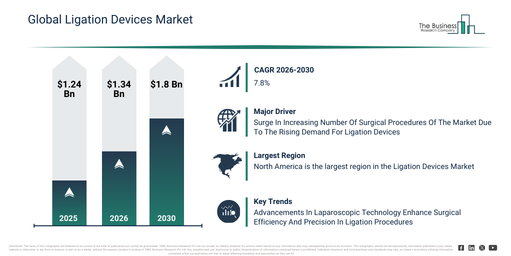
    The ligation devices market has shown significant growth in recent years. It is anticipated to increase from $1.24 billion in 2025 to $1.34 billion in 2026, demonstrating a compound annual growth rate (CAGR) of 7.6%. This past growth can be attributed to a rising volume of surgical procedures, the expansion of hospital infrastructure, the growing adoption of laparoscopic surgeries, increased availability of advanced surgical instruments, and the rising prevalence of chronic diseases.

    The ligation devices market is projected to experience robust expansion over the coming years. Its valuation is set to reach $1.8 billion in 2030, driven by a compound annual growth rate (CAGR) of 7.8%. This anticipated growth during the forecast timeframe is primarily driven by factors such as a surge in demand for minimally invasive interventions, escalating investments in advancements within surgical technology, the proliferation of ambulatory surgical centers, an intensified emphasis on operational efficiency in procedures, and the expanding embrace of sophisticated endoscopic instruments. Key trends anticipated during this period encompass the wider acceptance of minimally invasive ligation methods, the escalating utilization of disposable and single-use ligation tools, a heightened need for accurate clip application systems, the broadening scope of endoscopic and laparoscopic ligation approaches, and an elevated commitment to patient safety alongside surgical effectiveness.

    Download A Free Sample Report For Comprehensive Market Insights:

    https://www.thebusinessresearchcompany.com/sample.aspx?id=33200&type=smp

    Which Drivers Are Advancing The Ligation Devices Market Growth?

    The increasing volume of surgical procedures is anticipated to drive the expansion of the ligation devices market. Surgical procedures involve clinical interventions executed by trained health professionals to address diseases, repair injuries, or optimize physiological functions. The quantity of surgeries is escalating as healthcare systems augment their capacity, tackle unmet surgical requirements, and enhance the accessibility of surgical care across various populations. Ligation devices facilitate this rise in surgical activity by empowering surgeons to achieve secure vessel closure, efficient hemostasis, and precise tissue approximation, which in turn enhances procedural safety and operational effectiveness. For instance, in June 2024, the International Society of Aesthetic Plastic Surgery (ISAPS), an association of aesthetic surgeons, reported that total surgical and non-surgical procedures grew by 3.4% in 2023, with more than 15.8 million surgical procedures performed worldwide, a higher count compared with prior years. Thus, the escalating number of surgical procedures is a key driver for the growth of the ligation devices market.

    What Are The Core Segment Classifications In The Ligation Devices Market?

    The ligation devices market covered in this report is segmented –

    1) By Product Type: Clip Appliers; Endoscopic Ligators; Accessories

    2) By Material Type: Metal Ligation Devices; Polymer Ligation Devices

    3) By Application: Gastrointestinal Surgeries; Gynecological Surgeries; Cardiovascular Surgeries; Urological Surgeries; Other Applications

    4) By End-User: Hospitals; Ambulatory Surgical Centers; Specialty Clinics; Other End-Users

    Subsegments:

    1) By Clip Appliers: Reusable Clip Appliers; Disposable Clip Appliers; Laparoscopic Clip Appliers; Open Surgery Clip Appliers; Multi Fire Clip Appliers

    2) By Endoscopic Ligators: Band Ligation Devices; Loop Ligation Devices; Single Use Endoscopic Ligators; Multiple Band Endoscopic Ligators; Therapeutic Endoscopic Ligators

    3) By Accessories: Ligation Clips; Ligation Bands; Loading Cartridges; Applicator Handles; Replacement Components

    Which Trends Are Supporting The Evolution Of The Ligation Devices Market?

    Leading companies in the ligation devices market are prioritizing the development of innovative, minimally invasive surgical solutions, such as advanced laparoscopic vessel sealing and ligation systems, which are designed to enhance procedural control, shorten operative times, and enable precise tissue handling during complex surgical interventions. These sophisticated laparoscopic vessel sealing and ligation systems are instruments crafted to apply controlled energy for both occluding and severing blood vessels and tissue masses, while also incorporating user-friendly ergonomic designs and improved access capabilities in confined anatomical areas to boost surgical accuracy and achieve better hemostasis. As an illustration, in March 2023, Medtronic, an Ireland-based medical technology company, launched the LigaSure Exact Dissector, a laparoscopic vessel sealing and dissection device that incorporates sophisticated bipolar energy technology to ensure reliable sealing, features a curved jaw configuration enhancing visibility and reach, and includes a nano-coated jaw surface to reduce tissue adherence and facilitate smoother procedures.

    Which Key Players Are Active In The Ligation Devices Market?

    Major companies operating in the ligation devices market are Johnson & Johnson Services Inc., Abbott Laboratories, Medtronic plc, Stryker Corporation, Boston Scientific Corporation, B. Braun Melsungen AG, Olympus Corporation, Smith & Nephew Plc, The Cooper Companies Inc., Teleflex Incorporated, Cook Medical LLC, Merit Medical Systems Inc., ConMed Corporation, CooperSurgical Inc., AngioDynamics Inc., Argon Medical Devices Inc., Scanlan International Inc., Purple Surgical, Unimicro Medical Systems Co. Ltd., Ovesco Endoscopy AG, Applied Medical Resources Corporation, Grena Think Medical, Genicon Inc., and Hakko Co. Ltd.

    Access The Complete Ligation Devices Market Report:

    https://www.thebusinessresearchcompany.com/report/ligation-devices-market-report

    Which Region Stands As The Largest Contributor To The Ligation Devices Market?

    North America was the largest region in the ligation devices market in 2025. Asia-Pacific is expected to be the fastest-growing region in the forecast period. The regions covered in the ligation devices market report are Asia-Pacific, South East Asia, Western Europe, Eastern Europe, North America, South America, Middle East, Africa.

    Access a Customized Ligation Devices Market Report for Deeper Competitive Insights

    Get in touch with us:

    The Business Research Company: https://www.thebusinessresearchcompany.com/

    Americas: +1 310-496-7795

    Asia: +44 7882 955267 & +91 8897263534

    Europe: +44 7882 955267

    Email us at: marketing@tbrc.info

    Follow us on:

    LinkedIn: https://in.linkedin.com/company/the-business-research-company

    YouTube: https://www.youtube.com/channel/UC24_fI0rV8cR5DxlCpgmyFQ

    Global Market Model: https://www.thebusinessresearchcompany.com/global-market-model
  • Kinase Drug Discovery Solutions Market Trends and Growth Forecast for 2026–2030

    Kinase Drug Discovery Solutions Market Trends and Growth Forecast for 2026–2030

    The Business Research Company’s 2026 market reports feature advanced enhancements such as market attractiveness analysis, total addressable market evaluation, company benchmarking matrices, interactive Excel dashboards, expanded supply chain intelligence, emerging startup coverage, and detailed product insights, delivering more actionable and strategically valuable research.

    What Market Value Expansion Is Expected For The Kinase Drug Discovery Solutions Market Over The Forecast Period?

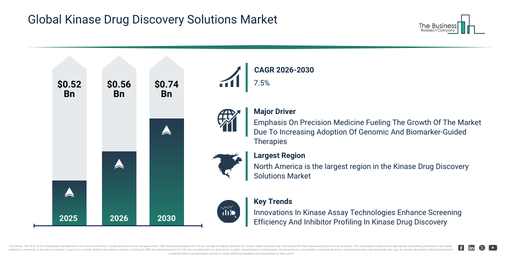
    The kinase drug discovery solutions market size has seen robust growth in recent years. It is expected to expand from $0.52 billion in 2025 to $0.56 billion in 2026, exhibiting a compound annual growth rate (CAGR) of 7.3%. The market’s historical growth can be attributed to factors such as the increasing prevalence of kinase-driven diseases, the expansion of oncology research pipelines, advancements in assay development technologies, the growth of contract research services, and increasing pharmaceutical research and development investments.

    The kinase drug discovery solutions market is projected to experience substantial growth over the coming years, expanding to $0.74 billion by 2030, demonstrating a compound annual growth rate (CAGR) of 7.5%. This anticipated growth is driven by several factors, including the increasing embrace of precision oncology methods, greater integration of computational modeling in drug discovery processes, the broadening scope of biologics and gene editing applications, a heightened need for quicker lead optimization, and a rise in collaborations between pharmaceutical companies and Contract Research Organizations (CROs). Key trends expected during this period involve the expanding utilization of AI for kinase target identification, increased adoption of structure-based drug design platforms, a surging demand for high-throughput screening services, the development of comprehensive medicinal chemistry solutions, and a stronger emphasis on developing selective kinase inhibitors.

    Download A Free Sample Report For Comprehensive Market Insights:

    https://www.thebusinessresearchcompany.com/sample.aspx?id=33191&type=smp

    What Primary Factors Are Fueling The Expansion Of The Kinase Drug Discovery Solutions Market?

    The increasing focus on precision medicine is anticipated to propel the growth of the kinase drug discovery solutions market going forward. Precision medicine refers to the growing commitment within healthcare systems to developing and deploying treatments tailored to individual patient characteristics, employing genetic, molecular, and biomarker information to improve therapeutic outcomes. The adoption of personalized medicine is escalating due to advancements in genomic and sequencing technologies, which have reduced the time, cost, and complexity of genetic testing. Kinase drug discovery solutions support precision medicine by offering the assays, screening technologies, and analytical tools essential for identifying and optimizing kinase inhibitors that precisely target disease-relevant pathways and enhance treatment outcomes. For instance, in February 2024, the Personalized Medicine Coalition, a US-based nonprofit group, stated that in 2023, the FDA approved 16 new personalized therapies for rare disease patients, a substantial increase from just six approvals in 2022. Therefore, the heightened emphasis on precision medicine is driving the growth of the kinase drug discovery solutions market.

    How Is The Kinase Drug Discovery Solutions Market Structured Across Different Market Segments?

    The kinase drug discovery solutions market covered in this report is segmented –

    1) By Type: Small Molecules; Biologies; Antibodies; Gene Editing

    2) By Technology: High-Throughput Screening; Structure-Based Drug Design

    3) By Application: Cancer Research; Cardiovascular Diseases; Neurological Disorders; Metabolic Disorders; Autoimmune Diseases

    4) By End-User: Pharmaceutical Companies; Biotechnology Firms; Research Institutions; Academic Organizations

    Subsegments:

    1) By Small Molecules: Kinase Inhibitor Compounds; Allosteric Modulator Compounds; Covalent Inhibitor Compounds; Selective Kinase Modulator Compounds; Multi Target Kinase Inhibitor Compounds

    2) By Biologies: Recombinant Protein Therapeutics; Enzyme Based Therapeutics; Peptide Based Therapeutics; Fusion Protein Therapeutics; Protein Degradation Therapeutics

    3) By Antibodies: Monoclonal Antibodies; Bispecific Antibodies; Antibody Fragment Therapeutics; Conjugated Antibody Therapeutics; Humanized Antibody Therapeutics

    4) By Gene Editing: Clustered Regularly Interspaced Short Palindromic Repeats Based Editing; Transcription Activator Like Effector Nuclease Based Editing; Zinc Finger Nuclease Based Editing; Base Editing Technologies; Prime Editing Technologies

    What Trends Are Affecting The Growth Of The Kinase Drug Discovery Solutions Market?

    Leading companies operating in the kinase drug discovery solutions market are prioritizing the development of advanced offerings, such as ready-to-use kinase activity detection kits, to enhance assay consistency and streamline inhibitor profiling during early-stage drug discovery. A ready-to-use kinase activity detection kit serves as a fully prepared assay solution, enabling rapid measurement of kinase enzyme activity with minimal setup. It provides sensitive and accurate detection of phosphorylation events, thereby facilitating efficient analysis of signaling pathways in both research and drug development. For instance, in January 2026, Sino Biological, a US-based biotechnology company, introduced the SwiftFluo TR-FRET Kinase Assay Kits, a ready-to-use, high-performance solution specifically designed to support high-throughput screening of kinase inhibitors in drug discovery workflows. These kits utilize time-resolved fluorescence resonance energy transfer (TR-FRET) technology to achieve robust signal stability, reduced background interference, and improved assay consistency, ultimately allowing for faster and more precise identification of promising kinase inhibitor candidates for therapeutic development.

    Who Are The Leading Firms Participating In The Kinase Drug Discovery Solutions Market?

    Major companies operating in the kinase drug discovery solutions market are Thermo Fisher Scientific Inc., Eurofins Scientific SE, Pharmaron Incorporated, KMD Bioscience Co. Ltd., GenScript Biotech Corporation, Sino Biological Inc., Reaction Biology Corp, Domainex Ltd, Creative Bioarray Inc, Carna Biosciences Inc., BPS Bioscience Inc., Syngene International Ltd, MedChemExpress LLC, Creative Biogene Inc, Kinexus Bioinformatics Corporation, Enzymlogic S.L., AssayQuant Technologies Inc., LC Sciences LLC, Luceome Biotechnologies LLC, and BOC Sciences Inc.

    Access The Complete Kinase Drug Discovery Solutions Market Report:

    https://www.thebusinessresearchcompany.com/report/kinase-drug-discovery-solutions-market-report

    What Is The Largest Regional Market In The Kinase Drug Discovery Solutions Market?

    North America was the largest region in the kinase drug discovery solutions market in 2025. Asia-Pacific is expected to be the fastest-growing region in the forecast period. The regions covered in the kinase drug discovery solutions market report are Asia-Pacific, South East Asia, Western Europe, Eastern Europe, North America, South America, Middle East, Africa.

    Access a Customized Kinase Drug Discovery Solutions Market Report for Deeper Competitive Insights

    Get in touch with us:

    The Business Research Company: https://www.thebusinessresearchcompany.com/

    Americas: +1 310-496-7795

    Asia: +44 7882 955267 & +91 8897263534

    Europe: +44 7882 955267

    Email us at: marketing@tbrc.info

    Follow us on:

    LinkedIn: https://in.linkedin.com/company/the-business-research-company

    YouTube: https://www.youtube.com/channel/UC24_fI0rV8cR5DxlCpgmyFQ

    Global Market Model: https://www.thebusinessresearchcompany.com/global-market-model