Month: June 2026

  • Kidney Transplant Rejection Market Outlook Highlighting Demand Trends Through 2030

    Kidney Transplant Rejection Market Outlook Highlighting Demand Trends Through 2030

    The Business Research Company’s 2026 market reports feature advanced enhancements such as market attractiveness analysis, total addressable market evaluation, company benchmarking matrices, interactive Excel dashboards, expanded supply chain intelligence, emerging startup coverage, and detailed product insights, delivering more actionable and strategically valuable research.

    How Will The Market Value Of The Kidney Transplant Rejection Market Change Between 2026 And 2030?

    The market size for kidney transplant rejection has experienced substantial growth in recent years. This market is expected to expand from $3.51 billion in 2025 to $3.76 billion in 2026, achieving a compound annual growth rate (CAGR) of 7.2%. The historical growth in this sector is attributable to an increase in kidney transplant procedures, progress in histopathological assessment techniques, the broader availability of immunosuppressive drugs, the expansion of transplant center networks, and improved patient survival rates post-transplant.

    The kidney transplant rejection market is anticipated to show substantial growth over the next few years, set to reach $5.01 billion in 2030, at a compound annual growth rate (CAGR) of 7.4%. This projected expansion during the forecast period is driven by factors such as an escalating demand for personalized immunosuppression strategies, increased adoption of molecular diagnostics, the expansion of precision medicine within transplant care, a growing emphasis on long-term graft survival, and rising investment in transplant monitoring technologies. Key trends during this period will encompass the increasing integration of biomarker-based rejection monitoring, a rising utilization of genomics-based diagnostic approaches, continuous optimization of immunosuppressive therapy protocols, the development of non-invasive rejection surveillance methods, and an enhanced focus on the early detection of chronic rejection.

    Download A Free Sample Report For Comprehensive Market Insights:

    https://www.thebusinessresearchcompany.com/sample.aspx?id=33190&type=smp

    Which Strategic Drivers Are Supporting The Kidney Transplant Rejection Market Development?

    The increasing occurrence of end-stage renal disease is projected to stimulate the expansion of the kidney transplant rejection market in the future. End-stage renal disease (ESRD) is defined as the ultimate, irreversible stage of chronic kidney disease where kidneys are unable to function adequately without external support like dialysis or a kidney transplant. The rise in end-stage renal disease cases is attributed to the growing prevalence of chronic conditions, notably diabetes and hypertension, which progressively damage the kidneys, leading to their failure. Kidney transplant rejection creates a demand for advanced monitoring and therapeutic interventions, directly supporting the effective management of end-stage renal disease by ensuring the continued functionality of transplanted kidneys and preserving patients’ kidney health. For instance, in September 2024, information from the National Institute of Diabetes and Digestive and Kidney Diseases, a US-based government institute, indicated that in 2023, more than 808,000 people in the United States were living with end-stage kidney disease (ESKD), also known as end-stage renal disease (ESRD), with 68% undergoing dialysis and 32% having received a kidney transplant. Therefore, the growing incidence of end-stage renal disease is fueling the growth of the kidney transplant rejection market.

    Which Segment-Based Categories Are Covered In The Kidney Transplant Rejection Market?

    The kidney transplant rejection market covered in this report is segmented –

    1) By Rejection Type: Chronic Rejection; Acute Rejection

    2) By Treatment: Immunosuppressive Drugs; Antibody-Mediated Rejection Therapies

    3) By Diagnostic Approach: Biomarker-Based Diagnostics; Genomics-Based Diagnostics

    4) By Therapeutics: Small Molecule Inhibitors; Biologic Therapies

    5) By End-Users: Transplant Centers Or Hospitals; Diagnostic Laboratories; Pharmacies

    Subsegments:

    1) By Chronic Rejection: Antibody Mediated Chronic Rejection; Chronic Allograft Nephropathy; Interstitial Fibrosis And Tubular Atrophy; Vascular Chronic Rejection; Mixed Chronic Rejection

    2) By Acute Rejection: Cellular Acute Rejection; Antibody Mediated Acute Rejection; Hyperacute Rejection; Mixed Acute Rejection; Vascular Acute Rejection

    Which Trends Are Influencing The Direction Of The Kidney Transplant Rejection Market?

    Leading firms within the kidney transplant rejection market are prioritizing the creation of advanced diagnostic options, including noninvasive urinary biomarker testing, aiming for swifter, safer, and more precise identification of transplant rejection. This noninvasive method examines urine specimens to pinpoint molecular markers signaling kidney inflammation or rejection, thereby assisting medical professionals in promptly and safely recognizing transplant complications, eliminating the necessity for invasive biopsies. An example of this is the launch in May 2024 by Thermo Fisher Scientific Inc., a US-based biotechnology company, of its CXCL10 testing service, representing an innovative diagnostic instrument for individuals who have received kidney transplants. The CXCL10 test identifies the CXCL10 chemokine present in urine, a substance linked to the early stages of transplant rejection and inflammation. This test provides results within 24 hours, facilitating faster clinical judgments, lessening the requirement for superfluous biopsies, and enhancing patient ease through its noninvasive sample collection process. Developed and validated by Thermo Fisher’s One Lambda Laboratories, this assay offers a combination of high sensitivity, specificity, and user-friendliness in clinical environments, thereby contributing to superior post-transplant management and improved patient results.

    Which Companies Are Engaged In The Kidney Transplant Rejection Market Environment?

    Major companies operating in the kidney transplant rejection market are F. Hoffmann-La Roche AG, Merck & Co. Inc., Sanofi SA, Novartis AG, Bristol-Myers Squibb Company, Thermo Fisher Scientific Inc., Takeda Pharmaceutical Company Limited, Amgen Inc., Asahi Kasei Corporation, Teva Pharmaceutical Industries Ltd., Astellas Pharma Inc., Biogen Inc., ChugAI Pharmaceutical Co. Ltd., Eurofins Scientific SE, Illumina Inc., Natera Inc., CareDx Inc., Azurity Pharmaceuticals Inc., Insight Molecular Diagnostics, and RenalytixAI plc.

    Access The Complete Kidney Transplant Rejection Market Report:

    https://www.thebusinessresearchcompany.com/report/kidney-transplant-rejection-market-report

    Which Region Contributes The Most To The Kidney Transplant Rejection Market?

    North America was the largest region in the kidney transplant rejection market in 2025. Asia-Pacific is expected to be the fastest-growing region in the forecast period. The regions covered in the kidney transplant rejection market report are Asia-Pacific, South East Asia, Western Europe, Eastern Europe, North America, South America, Middle East, Africa.

    Access a Customized Kidney Transplant Rejection Market Report for Deeper Competitive Insights

    Get in touch with us:

    The Business Research Company: https://www.thebusinessresearchcompany.com/

    Americas: +1 310-496-7795

    Asia: +44 7882 955267 & +91 8897263534

    Europe: +44 7882 955267

    Email us at: marketing@tbrc.info

    Follow us on:

    LinkedIn: https://in.linkedin.com/company/the-business-research-company

    YouTube: https://www.youtube.com/channel/UC24_fI0rV8cR5DxlCpgmyFQ

    Global Market Model: https://www.thebusinessresearchcompany.com/global-market-model
  • JAK3 Inhibitor Market Trends, Opportunities, and Growth Drivers Through 2030

    JAK3 Inhibitor Market Trends, Opportunities, and Growth Drivers Through 2030

    The Business Research Company’s 2026 market reports feature advanced enhancements such as market attractiveness analysis, total addressable market evaluation, company benchmarking matrices, interactive Excel dashboards, expanded supply chain intelligence, emerging startup coverage, and detailed product insights, delivering more actionable and strategically valuable research.

    What Is The Forecasted Rise In Market Size Of The Janus Kinase (JAK) 3 Inhibitor Market During The Forecast Period?

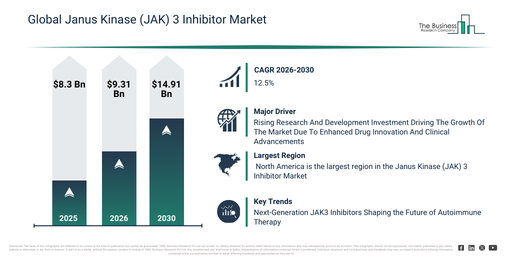
    The market size for janus kinase (jak) 3 inhibitors has expanded significantly in recent years. This market is expected to surge from $8.3 billion in 2025 to $9.31 billion in 2026, exhibiting a compound annual growth rate (CAGR) of 12.2%. The historical expansion of this market can be attributed to advances in kinase inhibitor drug discovery, the rising occurrence of autoimmune diseases, the initial clinical achievements of selective JAK inhibition, the wider availability of oral immunomodulatory therapies, and the progress in targeted therapy research.

    The janus kinase (jak) 3 inhibitor market is projected to experience substantial expansion over the coming years. Its valuation is anticipated to reach $14.91 billion in 2030, exhibiting a compound annual growth rate (CAGR) of 12.5%. This forecasted growth is primarily driven by the proliferation of precision immunology treatments, a heightened need for secure long-term immune therapies, greater incorporation of biomarker-guided treatment choices, increased capital allocation towards advanced jak inhibitors, and a broader range of approved therapeutic uses. Key developments expected during this period involve a surge in the creation of highly selective jak3 inhibitors, a heightened emphasis on minimizing unintended immunosuppression, increased adoption of companion diagnostics, the spread of oral small molecule therapies, and more robust clinical investigations into autoimmune and inflammatory conditions.

    Download A Free Sample Report For Comprehensive Market Insights:

    https://www.thebusinessresearchcompany.com/sample.aspx?id=33189&type=smp

    What Major Growth Factors Are Impacting The Janus Kinase (JAK) 3 Inhibitor Market?

    Growing investments in research and development are projected to drive the expansion of the janus kinase 3 (JAK3) inhibitor market in the future. Research and development (R&D) encompasses a structured approach to exploring, innovating, and developing novel products, services, or methods, aiming to advance knowledge and stimulate business or technological progress. The increase in research and development funding stems from heightened competition, prompting companies to invest more in innovation to distinguish their offerings and sustain a technological advantage within dynamic markets. Investments in research and development support Janus kinase 3 (JAK3) inhibitors by financing comprehensive studies essential for comprehending the drug’s mechanism, optimizing its chemical structure for enhanced specificity, and evaluating its safety and effectiveness in clinical trials, resulting in superior treatments with reduced side effects for ailments such as autoimmune diseases and organ transplant rejection. For example, as reported by Eurostat, a Luxembourg-based statistical office, in November 2025, the European Union dedicated $475 billion (€403) billion to research and development in 2024, with this expenditure accounting for 2.24% of the region’s GDP. Consequently, the expanding investment in research and development is propelling the growth of the janus kinase 3 (JAK3) inhibitor market.

    What Are The Major Segment Categories Within The Janus Kinase (JAK) 3 Inhibitor Market?

    The janus kinase (jak) 3 inhibitor market covered in this report is segmented –

    1) By Product Type: Selective Janus Kinase (JAK)3 Inhibitors; Pan-Janus Kinase (JAK) Inhibitors with Janus Kinase (JAK) 3 Activity

    2) By Therapeutic Indication: Rheumatoid Arthritis; Psoriasis; Ulcerative Colitis; Hematologic Malignancies; Other Therapeutic Indications

    3) By Route of Administration: Oral Tablets and Capsules; Topical Creams and Ointments; Subcutaneous and Parenteral Injections; Transdermal Drug Delivery Systems

    4) By Distribution Channel: Direct Sales to Healthcare Providers; Pharmaceutical Distributors and Wholesalers; Online and E-Pharmacy Channels

    5) By End User: Hospitals; Specialty Clinics; Retail Pharmacies and Outpatient Centers; Academic and Research Institutions

    Subsegments:

    1) By Selective Janus Kinase (JAK)3 Inhibitors: First Generation Selective Janus Kinase Three Inhibitors; Next Generation Highly Selective Janus Kinase Three Inhibitors; Oral Small Molecule Selective Janus Kinase Three Inhibitors; Immune Targeted Selective Janus Kinase Three Inhibitors

    2) By Pan-Janus Kinase (JAK) Inhibitors with JAK3 Activity: Multi Kinase Pan Janus Kinase Inhibitors; Broad Spectrum Immune Modulating Janus Kinase Inhibitors; Oral Systemic Pan Janus Kinase Therapies; Combination Activity Janus Kinase Inhibitor Therapies

    What Trends Are Driving Changes In The Janus Kinase (JAK) 3 Inhibitor Market?

    Leading companies in the janus kinase 3 (JAK3) inhibitor market are concentrating on developing innovative solutions, such as selective oral small-molecule JAK3 inhibitors, to satisfy the increasing demand for targeted treatments for autoimmune and inflammatory diseases with enhanced safety profiles. Selective oral small-molecule JAK3 inhibitors are low-molecular-weight, orally administered drugs specifically designed to inhibit Janus kinase 3 (JAK3) while sparing other JAK family members (JAK1, JAK2, and TYK2). For instance, in June 2023, Pfizer Inc., a US-based biopharmaceutical company, obtained U.S. Food and Drug Administration (FDA) approval for LITFULO (ritlecitinib), an innovative once-daily oral JAK3-selective inhibitor for treating severe alopecia areata in adults and adolescents aged 12 years and older. Ritlecitinib selectively inhibits JAK3 and TEC family kinases, which are vital in immune-mediated inflammation affecting hair follicles. This selective mechanism differentiates it from conventional JAK inhibitors by providing a more focused immunomodulatory approach. The FDA approval was underpinned by positive results from the ALLEGRO Phase 2b/3 clinical trials, which demonstrated significant scalp hair regrowth and established LITFULO as a landmark advancement in the JAK3 inhibitor market.

    Who Are The Prominent Players Across The Janus Kinase (JAK) 3 Inhibitor Market?

    Major companies operating in the janus kinase (jak) 3 inhibitor market are Merck & Co. Inc., Pfizer Inc., AbbVie Inc., Novartis AG, GlaxoSmithKline Plc, Eli Lilly and Company, Takeda Pharmaceutical Company Limited, Vertex Pharmaceuticals Incorporated, Sun Pharmaceutical Industries Limited, Incyte Corporation, LEO Pharma A/S, Alfasigma S.p.A., Karyopharm Therapeutics Inc., Rigel Pharmaceuticals Inc., Arcutis Biotherapeutics Inc., Theravance Biopharma Inc., Celon Pharma S.A., Aclaris Therapeutics Inc., Dizal Pharmaceutical Co. Ltd., Asana BioSciences LLC, Ajax Therapeutics Inc., Sareum Holdings plc, and MaxiNovel Pharmaceuticals Co. Ltd.

    Access The Complete Janus Kinase (JAK) 3 Inhibitor Market Report:

    https://www.thebusinessresearchcompany.com/report/janus-kinase-jak-3-inhibitor-market-report

    Which Regional Market Leads The Janus Kinase (JAK) 3 Inhibitor Market?

    North America was the largest region in the janus kinase 3 (JAK3) inhibitor market in 2025. Asia-Pacific is expected to be the fastest-growing region in the forecast period. The regions covered in the janus kinase (jak) 3 inhibitor market report are Asia-Pacific, South East Asia, Western Europe, Eastern Europe, North America, South America, Middle East, Africa.

    Access a Customized Janus Kinase (JAK) 3 Inhibitor Market Report for Deeper Competitive Insights

    Get in touch with us:

    The Business Research Company: https://www.thebusinessresearchcompany.com/

    Americas: +1 310-496-7795

    Asia: +44 7882 955267 & +91 8897263534

    Europe: +44 7882 955267

    Email us at: marketing@tbrc.info

    Follow us on:

    LinkedIn: https://in.linkedin.com/company/the-business-research-company

    YouTube: https://www.youtube.com/channel/UC24_fI0rV8cR5DxlCpgmyFQ

    Global Market Model: https://www.thebusinessresearchcompany.com/global-market-model
  • IoMT-Based Drug Delivery Market Anticipated to Reach $10.09 Billion by 2030

    IoMT-Based Drug Delivery Market Anticipated to Reach $10.09 Billion by 2030

    The Business Research Company’s 2026 market reports feature advanced enhancements such as market attractiveness analysis, total addressable market evaluation, company benchmarking matrices, interactive Excel dashboards, expanded supply chain intelligence, emerging startup coverage, and detailed product insights, delivering more actionable and strategically valuable research.

    How Is The Internet Of Medical Things (IOMT) For Drug Delivery Market’s Market Value Anticipated To Evolve From 2026 To 2030?

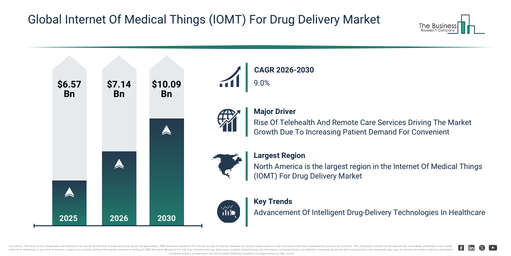
    The internet of medical things (iomt) for drug delivery market size has shown substantial growth in recent years. This market is set to expand from $6.57 billion in 2025 to $7.14 billion in 2026, achieving a compound annual growth rate (CAGR) of 8.8%. Throughout the historical period, this expansion can be linked to factors like the increasing occurrence of chronic diseases, the prompt uptake of smart infusion and monitoring equipment, the development of home healthcare provisions, a heightened emphasis on medication adherence, and the enhancement of digital health infrastructure.

    The internet of medical things (IoMT) for drug delivery market is projected to experience substantial expansion over the upcoming years. This market is predicted to reach $10.09 billion by 2030, driven by a compound annual growth rate (CAGR) of 9.0%. Factors contributing to this anticipated growth include the broadening of personalized medicine applications, increased investments in connected healthcare platforms, a surging need for remote patient management, greater incorporation of AI-powered dosing algorithms, and enhanced regulatory backing for digital therapeutics. Key trends expected during the forecast period encompass a rise in the uptake of connected drug delivery devices, more widespread utilization of real-time patient monitoring platforms, increasing integration of wearable and implantable delivery systems, the development of personalized dosage management solutions, and a heightened emphasis on remote therapy management.

    Download A Free Sample Report For Comprehensive Market Insights:

    https://www.thebusinessresearchcompany.com/sample.aspx?id=33187&type=smp

    What Market Drivers Are Helping Shape The Internet Of Medical Things (IOMT) For Drug Delivery Market Expansion?

    The increasing prevalence of telehealth and remote care solutions is anticipated to drive the expansion of the Internet of Medical Things (IoMT) for drug delivery market in the future. These services involve providing healthcare via digital platforms, allowing individuals to get medical advice, oversight, and therapy from their residences, eliminating the need for physical visits. The growth in telehealth and remote care can be attributed to a surge in patient desire for accessible, immediate healthcare, enabling them to consult physicians, track their well-being, and manage therapies from home, thereby reducing hospital trips. The Internet of Medical Things (IoMT) for drug delivery facilitates telehealth and remote care by offering real-time tracking of how well patients follow their medication, precise and automated drug delivery, and smooth information exchange with healthcare professionals. This empowers doctors to remotely oversee treatment evolution, modify dosages, and provide customized care without needing physical appointments. For example, in April 2023, FAIR Health Inc., a US-based non-profit organization, reported that national telehealth utilization saw an increase of 7.3%, climbing from 5.5% of medical claim lines in December 2022 to 5.9% in January 2023. Consequently, the expanding embrace of telemedicine platforms is fueling the expansion of the Internet of Medical Things (IoMT) for drug delivery market.

    How Is The Internet Of Medical Things (IOMT) For Drug Delivery Market Distributed Across Key Segments?

    The internet of medical things (iomt) for drug delivery market covered in this report is segmented –

    1) By Type: Wearable Drug Delivery Devices; Smart Inhalers; Injectable Drug Delivery Systems; Implantable Drug Delivery Devices; Remote Drug Monitoring

    2) By Connectivity: Bluetooth And Low Energy Connectivity; Wi Fi Connectivity; Cellular Connectivity; Near Field Communication; Cloud And Edge Based Connectivity

    3) By Application: Chronic Disease Management; Acute Care Drug Delivery; Home Based Drug Administration; Hospital And Clinical Drug Delivery; Personalized And Precision Medicine

    4) By End User: Hospitals And Clinics; Home Care Settings; Pharmaceutical And Biotechnology Companies; Research And Development Organizations; Contract Research And Clinical Trial Centers

    Subsegments:

    1) By Wearable Drug Delivery Devices: On Body Infusion Pumps; Patch Based Drug Delivery Systems; Wearable Insulin Delivery Devices; Wearable Pain Management Devices

    2) By Smart Inhalers: Connected Metered Dose Inhalers; Connected Dry Powder Inhalers; Medication Adherence Monitoring Inhalers; Dose Tracking Inhaler Systems

    3) By Injectable Drug Delivery Systems: Connected Auto Injectors; Smart Pen Injectors; Pre Filled Smart Syringes; Electronic Injection Monitoring Systems

    4) By Implantable Drug Delivery Devices: Implantable Infusion Pumps; Controlled Release Implant Systems; Programmable Drug Delivery Implants; Long Term Therapeutic Implants

    5) By Remote Drug Monitoring: Medication Adherence Monitoring Systems; Real Time Dosage Tracking Platforms; Remote Therapy Management Systems; Patient Compliance Monitoring Solutions

    Which Trends Are Shaping The Internet Of Medical Things (IOMT) For Drug Delivery Market Landscape?

    Prominent companies within the internet of medical things (IoMT) for drug delivery market are dedicating efforts to developing inventive solutions, such as connected smart drug-delivery devices equipped with real-time monitoring. These advancements are designed to enable personalized dosing, enhance treatment adherence, and elevate patient outcomes. Connected smart drug-delivery devices with real-time monitoring are defined as medical instruments that autonomously track medication dispensation and patient data, sharing this information wirelessly with applications or healthcare systems to optimize dosing, improve adherence, and facilitate timely clinical decisions. For instance, in November 2024, the Ireland-based healthcare technology company, Medtronic plc, launched its Smart MDI system, which incorporates the InPen app with Simplera CGM. This system integrates a smart insulin pen with a disposable, all-in-one continuous glucose monitor (CGM) to offer real-time, personalized insulin dosing insights, including recommendations for identifying and correcting missed or inaccurate mealtime doses. It consistently monitors glucose levels, records insulin administration, and analyzes patient data through a mobile application to mitigate hyperglycemia risk and support improved glycemic control. Unlike conventional insulin pens, this solution provides automated data capture, intelligent alerts, and comprehensive clinical decision support, thereby significantly reducing dosing uncertainties and contributing to better patient outcomes.

    Which Companies Form The Competitive Landscape Of The Internet Of Medical Things (IOMT) For Drug Delivery Market?

    Major companies operating in the internet of medical things (iomt) for drug delivery market are Siemens AG, F. Hoffmann-La Roche AG, IBM Corporation, Bayer AG, Oracle Corporation, Abbott Laboratories, Honeywell Life Care Solutions Inc., Medtronic plc, Koninklijke Philips N.V., GE HealthCare Technologies Inc., Becton Dickinson and Company, Cognizant Technology Solutions Corporation, Biogen Inc., Omron Healthcare Co. Ltd., Dexcom Inc., Insulet Corporation, Tandem Diabetes Care Inc., Senseonics Inc., AdhereTech Inc., Adherium Limited

    Access The Complete Internet Of Medical Things (IOMT) For Drug Delivery Market Report:

    https://www.thebusinessresearchcompany.com/report/internet-of-medical-things-iomt-for-drug-delivery-market-report

    Which Region Holds The Largest Share In The Internet Of Medical Things (IOMT) For Drug Delivery Market?

    North America was the largest region in the internet of medical things (IOMT) for drug delivery market in 2025. The regions covered in the internet of medical things (iomt) for drug delivery market report are Asia-Pacific, South East Asia, Western Europe, Eastern Europe, North America, South America, Middle East, Africa.

    Access a Customized Internet Of Medical Things (IOMT) For Drug Delivery Market Report for Deeper Competitive Insights

    Get in touch with us:

    The Business Research Company: https://www.thebusinessresearchcompany.com/

    Americas: +1 310-496-7795

    Asia: +44 7882 955267 & +91 8897263534

    Europe: +44 7882 955267

    Email us at: marketing@tbrc.info

    Follow us on:

    LinkedIn: https://in.linkedin.com/company/the-business-research-company

    YouTube: https://www.youtube.com/channel/UC24_fI0rV8cR5DxlCpgmyFQ

    Global Market Model: https://www.thebusinessresearchcompany.com/global-market-model
  • IL-2 Mutein Therapies Market Expected to Approach $1.43 Billion by 2030

    IL-2 Mutein Therapies Market Expected to Approach $1.43 Billion by 2030

    The Business Research Company’s 2026 market reports feature advanced enhancements such as market attractiveness analysis, total addressable market evaluation, company benchmarking matrices, interactive Excel dashboards, expanded supply chain intelligence, emerging startup coverage, and detailed product insights, delivering more actionable and strategically valuable research.

    By 2030, How Much Growth In Market Size Is Expected For The Interleukin-2 (IL-2) Mutein Therapies Market?

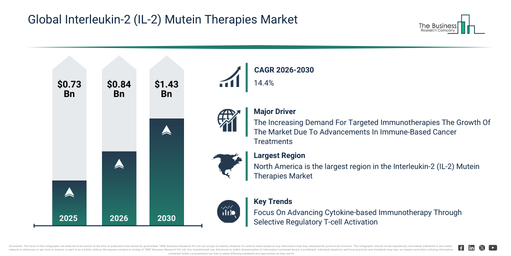
    The interleukin-2 (il-2) mutein therapies market has seen rapid growth in its size in recent years. Its value is expected to increase from $0.73 billion in 2025 to $0.84 billion in 2026, representing a compound annual growth rate (CAGR) of 14.1%. This historical growth can be linked to advancements in cytokine engineering techniques, an enhanced understanding of immune signaling pathways, early positive clinical results from modified IL-2 therapies, a rise in investment within immuno-oncology research, and the increasing occurrence of immune-mediated diseases.

    The interleukin-2 (il-2) mutein therapies market size is projected to experience substantial expansion in the coming years, with expectations to reach **$1.43 billion by 2030, demonstrating a compound annual growth rate (CAGR) of 14.4%.** This anticipated growth over the forecast period stems from factors such as the broader adoption of personalized immunotherapy approaches, an increase in clinical trial activity for next-generation cytokines, a rising requirement for safer immune modulators, growing regulatory backing for innovative biologics, and an increase in partnerships formed between biotechnology and pharmaceutical companies. Significant trends during this period encompass the escalating development of receptor-biased il-2 muteins, a heightened focus on minimizing cytokine toxicity profiles, the expanded utilization of combination immunotherapy regimens, the proliferation of precision immune modulation strategies, and intensified clinical pipeline activity for both autoimmune and oncology indications.

    Download A Free Sample Report For Comprehensive Market Insights:

    https://www.thebusinessresearchcompany.com/sample.aspx?id=33185&type=smp

    Which Significant Factors Are Encouraging Growth In The Interleukin-2 (IL-2) Mutein Therapies Market?

    The heightened need for targeted immunotherapies is anticipated to fuel expansion within the interleukin-2 (IL-2) mutein therapies market. These specialized treatments are formulated to modify the immune system, enabling it to specifically target and eliminate cancer cells while minimizing harm to healthy tissues. The impetus for these therapies is growing as medical professionals and researchers increasingly seek safer and more potent alternatives to traditional chemotherapy and radiation therapy, which frequently entail considerable toxicity and lack specificity. IL-2 mutein therapies contribute to the progress of targeted immunotherapies by employing modified versions of interleukin-2 that selectively activate immune effector cells crucial for anti-tumor responses, simultaneously mitigating the activation of pathways linked to systemic toxicity. For example, in April 2025, the Cancer Research Institute, a US-based non-profit organization, reported that the FDA approved 17 new targeted immunotherapy agents in 2024, thereby broadening available choices for immune-based cancer treatment and enlarging the demographic of patients who could benefit from such interventions. Consequently, the rising demand for targeted immunotherapies is propelling the growth of the interleukin-2 (IL-2) mutein therapies market.

    How Does Segment Analysis Break Down The Interleukin-2 (IL-2) Mutein Therapies Market Structure?

    The interleukin-2 (il-2) mutein therapies market covered in this report is segmented –

    1) By Product Type: Monotherapy; Combination Therapy

    2) By Route Of Administration: Intravenous; Subcutaneous; Other Route Of Administrations

    3) By Application: Cancer; Autoimmune Diseases; Infectious Diseases; Other Applications

    4) By End User: Hospitals; Specialty Clinics; Research Institutes; Other End Users

    Subsegments:

    1) By Monotherapy: Single Agent Interleukin Two Mutein Therapy; Standalone Cytokine Based Immunotherapy; Targeted Immune Modulation Therapy

    2) By Combination Therapy: Interleukin Two Mutein With Immune Checkpoint Inhibitors; Interleukin Two Mutein With Chemotherapy; Interleukin Two Mutein With Targeted Biologic Therapies; Interleukin Two Mutein With Cell Based Therapies

    What Trends Are Influencing The Interleukin-2 (IL-2) Mutein Therapies Market Outlook?

    Key players within the interleukin-2 (IL-2) mutein therapies market are increasingly prioritizing technological progress in cytokine-based immunotherapy, specifically focusing on the targeted activation of regulatory T-cells (Tregs) via engineered IL-2 muteins. This targeted Treg activation using engineered IL-2 muteins employs genetically altered IL-2 proteins crafted to selectively activate Tregs while concurrently restricting the stimulation of effector immune cells. As an illustration, Almirall S.A., a Spanish pharmaceutical firm, commenced the initial Phase I clinical investigation of its engineered IL-2 mutein fusion protein, ALM223, in December 2023. This study aims to assess its safety, pharmacokinetics, immunogenicity, and pharmacodynamics in the context of autoimmune diseases. This specific candidate incorporates features like selective Treg activation, a modified Fc fusion designed to enhance molecular stability, and an optimized cytokine backbone engineered for superior immune modulation. Although these technological strides underscore the potential of IL-2 muteins for precise immunomodulation and wider application in autoimmune conditions, their actual clinical effectiveness and sustained safety profiles still require confirmation through current and upcoming trials.

    Who Are The Key Market Participants In The Interleukin-2 (IL-2) Mutein Therapies Market?

    Major companies operating in the interleukin-2 (il-2) mutein therapies market are Merck & Co. Inc., Sanofi S.A., Roche Holding AG, Bristol-Myers Squibb, Amgen Inc., Lonza Group AG, Alkermes plc, BioNTech SE, Xencor Inc., Innovent Biologics Inc., Ascendis Pharma A/S, ShanghAI Junshi Biosciences Co. Ltd., Mural Oncology Inc., ProBioGen AG, Werewolf Therapeutics Ltd., Philogen S.p.A., Cue Biopharma Inc., Medicenna Therapeutics Corp., Bright Peak Therapeutics Inc., Iovance Biotherapeutics Inc.

    Access The Complete Interleukin-2 (IL-2) Mutein Therapies Market Report:

    https://www.thebusinessresearchcompany.com/report/interleukin-2-il-2-mutein-therapies-market-report

    Which Region Is The Dominant Market In The Interleukin-2 (IL-2) Mutein Therapies Market?

    North America was the largest region in the interleukin 2 (IL-2) mutein therapies market in 2025. Asia-Pacific is expected to be the fastest-growing region in the forecast period. The regions covered in the interleukin-2 (il-2) mutein therapies market report are Asia-Pacific, South East Asia, Western Europe, Eastern Europe, North America, South America, Middle East, Africa.

    Access a Customized Interleukin-2 (IL-2) Mutein Therapies Market Report for Deeper Competitive Insights

    Get in touch with us:

    The Business Research Company: https://www.thebusinessresearchcompany.com/

    Americas: +1 310-496-7795

    Asia: +44 7882 955267 & +91 8897263534

    Europe: +44 7882 955267

    Email us at: marketing@tbrc.info

    Follow us on:

    LinkedIn: https://in.linkedin.com/company/the-business-research-company

    YouTube: https://www.youtube.com/channel/UC24_fI0rV8cR5DxlCpgmyFQ

    Global Market Model: https://www.thebusinessresearchcompany.com/global-market-model
  • In Silico Drug Discovery Market Set for Strong Growth, Reaching $7.42 Billion by 2030

    In Silico Drug Discovery Market Set for Strong Growth, Reaching $7.42 Billion by 2030

    The Business Research Company’s 2026 market reports feature advanced enhancements such as market attractiveness analysis, total addressable market evaluation, company benchmarking matrices, interactive Excel dashboards, expanded supply chain intelligence, emerging startup coverage, and detailed product insights, delivering more actionable and strategically valuable research.

    What Market Value Trend Is Expected For The In Silico Drug Discovery Market From 2026 To 2030?

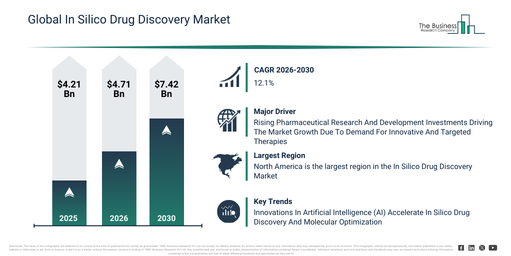
    The in silico drug discovery market size has experienced rapid growth in recent years. It is anticipated to expand from $4.21 billion in 2025 to $4.71 billion in 2026, achieving a compound annual growth rate (CAGR) of 11.8%. The expansion observed in prior periods stemmed from several factors, including escalating pharmaceutical R&D costs, the early embrace of molecular modeling tools, enhanced computational chemistry capabilities, the widening of genomic databases, and increasing cooperation between academic institutions and industry.

    The in silico drug discovery market is anticipated to experience substantial expansion over the coming years. Its valuation is projected to reach $7.42 billion in 2030, exhibiting a compound annual growth rate (CAGR) of 12.1%. This projected growth throughout the forecast period stems from factors such as an increasing need for expedited drug development processes, the escalating application of machine learning within pharmacology, the broadening scope of cloud computing in life sciences, a heightened emphasis on precision medicine, and the greater uptake of in silico clinical trial simulations. Key trends anticipated during this period encompass the increasing utilization of AI-powered virtual screening platforms, a greater embrace of cloud-hosted drug discovery software, the advancing integration of predictive toxicology models, the expansion of tools for target identification and validation, and a sharper focus on data-centric lead optimization.

    Download A Free Sample Report For Comprehensive Market Insights:

    https://www.thebusinessresearchcompany.com/sample.aspx?id=33181&type=smp

    What Core Drivers Are Transforming The In Silico Drug Discovery Market?

    The in silico drug discovery market is set to experience growth, propelled by the expanding investments in pharmaceutical research and development. Pharmaceutical R&D investments refer to the resources companies dedicate to discovering, developing, and testing new drugs and therapies to ensure their safe and effective application. These investments in pharmaceutical R&D are escalating due to a heightened demand for innovative therapies to tackle complex and chronic diseases, prompting companies to increase their funding for developing targeted and effective treatments that address unmet medical needs. Such pharmaceutical R&D investments fuel in silico drug discovery by speeding up the screening and optimization of potential candidates, enabling companies to concentrate on the most viable compounds, which in turn enhances research efficiency and optimizes returns on R&D expenditure. For instance, in April 2025, as reported by the Office for National Statistics, a UK-based government agency, the UK government’s net spending on research and development (R&D) rose to $22.1 billion (£17.4 billion) in 2023, an increase from $20.45 billion (£16.1 billion) in 2022, signifying an 8.2% rise. Consequently, the expanding pharmaceutical research and development investments are a key driver for the growth of the in silico drug discovery market.

    What Segment Types Are Included In The In Silico Drug Discovery Market Analysis?

    The in silico drug discovery market covered in this report is segmented –

    1) By Component: Software; Services

    2) By Deployment: On-Premise; Cloud-Based Source

    3) By Drug-Discovery Phase: Target Identification And Validation; Hit Identification; Lead Optimization; Candidate Validation

    4) By Therapeutic Area: Oncology; Neurology; Cardiovascular; Infectious Diseases; Metabolic Disorders

    5) By End User: Pharmaceutical Companies; Biotechnology Firms; Academic And Research Institutes; Contract Research Organization

    Subsegments:

    1) By Software: Molecular Modeling And Simulation; Pharmacophore Modeling Software; Virtual Screening Tools; Quantitative Structure Activity Relationship Modeling; Protein Structure Prediction Software; Ligand Based Design Software; De Novo Drug Design Software; Cheminformatics And Data Analysis Tools

    2) By Services: Algorithm Development Services; Model Customization And Tailoring Services; Data Analytics Consulting Services; Computational Screening And Outsourcing Services; Protein Modeling And Simulation Services; Virtual Library Design Services; Target Assessment And Validation Services; Lead Optimization And Candidate Evaluation Services

    Which Trends Are Expected To Shape The In Silico Drug Discovery Market?

    Major companies operating in the in silico drug discovery market are concentrating on creating innovative solutions, such as pharmaceutical-grade AI benchmarking platforms, to boost the accuracy, efficiency, and predictive power of computational drug design and candidate screening. A pharmaceutical-grade AI benchmarking platform refers to the rigorous evaluation of AI models against standard pharmaceutical datasets to guarantee their accuracy, reliability, and adherence to regulations in drug discovery. For instance, in January 2026, Insilico Medicine Inc., a US-based clinical-stage biotechnology company, launched a Science MMAI Gym, a specialized training platform intended to enhance large language models (LLMs) for drug discovery tasks. This platform is designed to fine-tune frontier LLMs into pharmaceutical-grade AI engines for drug discovery, employing proprietary datasets from chemistry, biology, and clinical domains. Its purpose is to foster pharmaceutical superintelligence by increasing model performance up to 10x on benchmarks like TargetBench and ClinBench through multi-task fine-tuning and reinforcement learning. Its key advantages encompass versatile single-model reasoning, flexible membership programs with lab validation, and accelerated in silico tasks such as retrosynthesis and trial prediction.

    Which Organizations Are Operating Within The In Silico Drug Discovery Market?

    Major companies operating in the in silico drug discovery market are NVIDIA Corporation, Dassault Systèmes, Clarivate, Schrödinger Inc., XtalPi Inc., Cresset Discovery Ltd., BenevolentAI, Simulations Plus Inc., Owkin Inc., Insilico Medicine, Recursion Pharmaceuticals Inc., Ardigen S.A., Aqemia, Iktos SA., Enveda Therapeutics Inc., Atomwise Inc., Turbine Simulated Cell Technologies Ltd., Optibrium Ltd., PostEra Inc., Insitro Inc., BioMap Inc., BioSolveIT GmbH, Quris Technologies LTD., and Nabla Bio Inc.

    Access The Complete In Silico Drug Discovery Market Report:

    https://www.thebusinessresearchcompany.com/report/in-silico-drug-discovery-market-report

    Which Area Represents The Largest Portion Of The In Silico Drug Discovery Market?

    North America was the largest region in the in silico drug discovery market in 2025. Asia-Pacific is expected to be the fastest-growing region in the forecast period. The regions covered in the in silico drug discovery market report are Asia-Pacific, South East Asia, Western Europe, Eastern Europe, North America, South America, Middle East, Africa.

    Access a Customized In Silico Drug Discovery Market Report for Deeper Competitive Insights

    Get in touch with us:

    The Business Research Company: https://www.thebusinessresearchcompany.com/

    Americas: +1 310-496-7795

    Asia: +44 7882 955267 & +91 8897263534

    Europe: +44 7882 955267

    Email us at: marketing@tbrc.info

    Follow us on:

    LinkedIn: https://in.linkedin.com/company/the-business-research-company

    YouTube: https://www.youtube.com/channel/UC24_fI0rV8cR5DxlCpgmyFQ

    Global Market Model: https://www.thebusinessresearchcompany.com/global-market-model
  • Implantable Neural Probes Market Gaining Momentum Toward $3.55 Billion by 2030

    Implantable Neural Probes Market Gaining Momentum Toward $3.55 Billion by 2030

    The Business Research Company’s 2026 market reports feature advanced enhancements such as market attractiveness analysis, total addressable market evaluation, company benchmarking matrices, interactive Excel dashboards, expanded supply chain intelligence, emerging startup coverage, and detailed product insights, delivering more actionable and strategically valuable research.

    How Does The Forecasted Market Size Of The Implantable Neural Probes Market Compare Between 2026 And 2030?

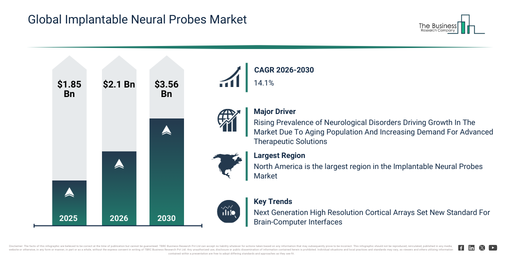
    The implantable neural probes market has seen significant expansion in recent times. It is anticipated to increase from $1.85 billion in 2025 to $2.1 billion in 2026, registering a compound annual growth rate (CAGR) of 13.8%. The reasons for this growth in the past include developments in neuroscience research instruments, the increasing deployment of depth electrodes for monitoring epilepsy, the expansion of academic brain research initiatives, the early incorporation of brain-computer interface technologies, and advancements in microfabrication methods.

    The implantable neural probes market size is expected to undergo significant expansion in the coming years, with projections indicating it will reach $3.56 billion by 2030, demonstrating a compound annual growth rate (CAGR) of 14.1%. This anticipated growth during the forecast period is attributed to the increasing demand for neuroprosthetics, rising investment in brain-machine interfaces, the expansion of clinical neuromodulation therapies, a heightened focus on chronic neural implants, and continuous innovation in biocompatible materials. Major trends expected over the forecast period include the increasing adoption of high-density microelectrode arrays, a growing demand for flexible and biocompatible neural probes, the expanding integration of wireless neural recording systems, the development of multi-site and multi-modal neural probes, and an enhanced emphasis on long-term implant stability.

    Download A Free Sample Report For Comprehensive Market Insights:

    https://www.thebusinessresearchcompany.com/sample.aspx?id=33180&type=smp

    Which Growth Factors Are Strengthening The Implantable Neural Probes Market Landscape?

    The anticipated expansion of the implantable neural probes market is fueled by the rising occurrence of neurological disorders. These disorders encompass medical conditions impacting the nervous system, such as the brain, spinal cord, and their connecting nerves. Their incidence is on the rise, primarily attributed to an aging demographic, given that advanced age is a significant risk factor for conditions like Alzheimer’s disease, Parkinson’s disease, and stroke. Implantable neural probes play a crucial role in managing and treating these disorders. They facilitate accurate, real-time recording and stimulation of neural activity, which in turn supports precise diagnosis, ongoing monitoring, and tailored therapeutic strategies for conditions including epilepsy, Parkinson’s disease, and paralysis. As an illustration, data from March 2023 by the Alzheimer’s Association, a US-based nonprofit voluntary health organization, indicated that around 6.7 million Americans aged 65 and older were living with Alzheimer’s dementia in 2023, with projections showing this figure reaching 13.8 million by 2060. Consequently, the growing prevalence of neurological disorders serves as a key driver for the expansion of the implantable neural probes market.

    Which Segment Divisions Form The Structure Of The Implantable Neural Probes Market?

    The implantable neural probes market covered in this report is segmented –

    1) By Product Type: Microelectrodes; Microelectrode Arrays; Depth Probes; Surface Probes; Other Product Types

    2) By Material: Silicon; Glass; Polymer; Metal; Other Materials

    3) By Application: Neuroscience Research; Clinical Diagnostics; Brain-Computer Interfaces; Other Applications

    4) By End-User: Research Institutes; Hospitals; Diagnostic Centers; Other End-Users

    Subsegments:

    1) By Microelectrodes: Platinum Microelectrodes; Tungsten Microelectrodes; Iridium Oxide Microelectrodes; Gold Microelectrodes; Silicon Microelectrodes

    2) By Microelectrode Arrays: Planar Microelectrode Arrays; Three Dimensional Microelectrode Arrays; Flexible Microelectrode Arrays; High Density Microelectrode Arrays; Custom Designed Microelectrode Arrays

    3) By Depth Probes: Single Shank Depth Probes; Multi Shank Depth Probes; Glass Insulated Depth Probes; Metal Coated Depth Probes; Custom Configured Depth Probes

    4) By Surface Probes: Electrocorticography Surface Probes; Flexible Surface Probes; Grid Surface Probes; Strip Surface Probes; Custom Fabricated Surface Probes

    5) By Other Product Types: Optical Neural Probes; Wireless Neural Probes; Nano Fabricated Neural Probes; Multi Modal Neural Probes; Custom Engineered Neural Probes

    What Trends Are Affecting The Implantable Neural Probes Market Dynamics?

    Companies operating within the implantable neural probes market are prioritizing technological advancements, such as high-resolution cortical electrode arrays, to enhance neural signal accuracy and expand brain-computer interface applications. A high-resolution cortical electrode array is an implantable neural probe type, featuring a thin, flexible film embedded with hundreds to thousands of microelectrodes. For instance, in April 2025, Precision Neuroscience Corporation, a US-based neurotechnology firm developing advanced brain-computer interface systems, launched the Layer 7 Cortical Interface. This next-generation implantable microelectrode array received U.S. Food and Drug Administration (FDA) 510(k) clearance for recording, monitoring, and stimulating electrical activity on the brain’s surface for up to 30 days. The device incorporates a high-density array of 1,024 microelectrodes on a flexible polyimide film, conforming to cortical anatomy to provide detailed neural data while minimizing tissue damage risks. It supports real-time mapping during neurosurgery and establishes a platform for future wireless BCI applications addressing conditions like paralysis and communication impairments. The product’s clearance and functionalities signify a move towards safer, higher-resolution implantable neural probes with expanded clinical utility.

    Who Are The Businesses Driving Activity In The Implantable Neural Probes Market?

    Major companies operating in the implantable neural probes market are Abbott Laboratories, Medtronic plc, Boston Scientific Corporation, Neuralink Corp., NeuroPace Inc., NeuroOne Medical Technologies Corporation, Alpha Omega Engineering Ltd., INBRAIN Neuroelectronics, Paradromics Inc., Axoft Inc, Synchron Inc., Ripple Neuro LLC, NeuroNexus Technologies Inc., Plexon Inc., CorTec Advanced Neuroscience GmbH, Cambridge NeuroTech Ltd, Spike Neuro LLC, Aleva Neurotherapeutics SA, Optogenix Inc., Precision Neuroscience Corporation.

    Access The Complete Implantable Neural Probes Market Report:

    https://www.thebusinessresearchcompany.com/report/implantable-neural-probes-market-report

    Which Region Commands The Largest Share Of The Implantable Neural Probes Market?

    North America was the largest region in the implantable neural probes market in 2025. Asia-Pacific is expected to be the fastest-growing region in the forecast period. The regions covered in the implantable neural probes market report are Asia-Pacific, South East Asia, Western Europe, Eastern Europe, North America, South America, Middle East, Africa.

    Access a Customized Implantable Neural Probes Market Report for Deeper Competitive Insights

    Get in touch with us:

    The Business Research Company: https://www.thebusinessresearchcompany.com/

    Americas: +1 310-496-7795

    Asia: +44 7882 955267 & +91 8897263534

    Europe: +44 7882 955267

    Email us at: marketing@tbrc.info

    Follow us on:

    LinkedIn: https://in.linkedin.com/company/the-business-research-company

    YouTube: https://www.youtube.com/channel/UC24_fI0rV8cR5DxlCpgmyFQ

    Global Market Model: https://www.thebusinessresearchcompany.com/global-market-model
  • Human Osteoblasts Market Forecast to Expand to $53.09 Billion by 2030 at 8.2% CAGR

    Human Osteoblasts Market Forecast to Expand to $53.09 Billion by 2030 at 8.2% CAGR

    The Business Research Company’s 2026 market reports feature advanced enhancements such as market attractiveness analysis, total addressable market evaluation, company benchmarking matrices, interactive Excel dashboards, expanded supply chain intelligence, emerging startup coverage, and detailed product insights, delivering more actionable and strategically valuable research.

    What Increase In Market Value Is Predicted For The Human Osteoblasts Market During The 2026–2030 Period?

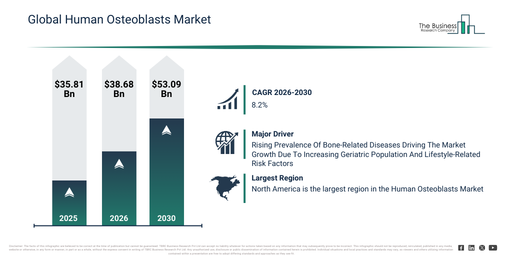
    The human osteoblasts market has experienced robust growth in recent years. It is set to expand from $35.81 billion in 2025 to $38.68 billion in 2026, achieving a compound annual growth rate (CAGR) of 8.0%. This past growth can be attributed to progress in cell culture technologies, the increasing incidence of bone-related disorders, a rise in orthopedic research funding, the expansion of musculoskeletal research programs, and the accessibility of commercial cell lines.

    The market for human osteoblasts is projected to experience robust expansion over the coming years. This market is anticipated to reach $53.09 billion in 2030, exhibiting a compound annual growth rate (CAGR) of 8.2%. Factors driving this expansion during the forecast timeframe include the wider acceptance of regenerative medicine treatments, a surge in investments directed towards bone tissue engineering, the broadening scope of stem cell research uses, an escalating need for tailored orthopedic solutions, and increased application in drug screening methodologies. Key developments expected over the forecast period encompass a greater utilization of osteoblast cell cultures for research purposes, an escalating requirement for investigations into bone regeneration, increased integration into orthopedic and spinal research, the broadening of tissue engineering applications, and a heightened emphasis on superior quality cell lines.

    Download A Free Sample Report For Comprehensive Market Insights:

    https://www.thebusinessresearchcompany.com/sample.aspx?id=33173&type=smp

    What Important Drivers Are Powering The Human Osteoblasts Market Growth?

    The increasing occurrence of bone-related ailments is anticipated to drive expansion in the human osteoblasts market. These medical conditions impact bone density, structure, and strength, making bones more fragile and prone to fractures. The growth in bone-related disease prevalence is attributed to the aging demographic in developed nations, where advanced age naturally results in diminished bone density and a higher susceptibility to conditions such as osteoporosis and osteopenia. Human osteoblasts are crucial for preventing bone loss and preserving skeletal integrity by stimulating bone formation, facilitating mineralization, and managing the equilibrium between bone resorption and deposition, thereby offering protection against osteoporosis, fractures, and other metabolic bone disorders. For instance, in February 2024, Arthritis Australia, an Australia-based non-profit organization, forecast that by 2040, the number of Australians afflicted with osteoarthritis (OA) is predicted to reach 3.11 million, representing a 32% increase from 2.35 million in 2025, which corresponds to an additional 762,515 individuals living with OA in the country. Consequently, the escalating incidence of bone-related diseases is propelling the growth of the human osteoblasts market.

    How Are Different Segment Groups Identified Within The Human Osteoblasts Market?

    The human osteoblasts market covered in this report is segmented –

    1) By Product: Human Cell Culture; Osteoblast Cell Lines

    2) By Application: Traumatic Injuries; Road Accidents; Regeneration Surgeries; Orthopedics; Musculoskeletal And Spine; Neurology

    3) By End User: Hospitals; Specialty Clinics; Ambulatory Surgical Centers

    Subsegments:

    1) By Human Cell Culture: Primary Human Osteoblast Cultures; Cryopreserved Human Osteoblast Cells; Fresh Human Osteoblast Cultures; Customized Human Cell Culture Media; Specialized Human Cell Culture Reagents

    2) By Osteoblast Cell Lines: Immortalized Osteoblast Cell Lines; Genetically Modified Osteoblast Cell Lines; Disease Specific Osteoblast Cell Lines; Research Grade Osteoblast Cell Lines; Commercially Available Osteoblast Cell Lines

    Which Firms Are Competing In The Human Osteoblasts Market?

    Major companies operating in the human osteoblasts market are Merck KGaA, Thermo Fisher Scientific Inc., Lonza Group Ltd., STEMCELL Technologies Inc., Takara Bio Inc., BioIVT LLC, American Type Culture Collection, Cyagen Biosciences Inc., CELLINK AB, ScienCell Research Laboratories Inc., ZenBio Inc., Creative Bioarray Inc., PromoCell GmbH, ReproCELL Inc., MatTek Life Sciences Inc., Axol Bioscience Ltd., iXCells Biotechnologies USA Inc., Cell Applications Inc., Neuromics Inc., and Innoprot S.L.

    Access The Complete Human Osteoblasts Market Report:

    https://www.thebusinessresearchcompany.com/report/human-osteoblasts-market-report

    Which Region Accounts For The Highest Share Of The Human Osteoblasts Market?

    North America was the largest region in the human osteoblasts market in 2025. Asia-Pacific is expected to be the fastest-growing region in the forecast period. The regions covered in the human osteoblasts market report are Asia-Pacific, South East Asia, Western Europe, Eastern Europe, North America, South America, Middle East, Africa.

    Access a Customized Human Osteoblasts Market Report for Deeper Competitive Insights

    Get in touch with us:

    The Business Research Company: https://www.thebusinessresearchcompany.com/

    Americas: +1 310-496-7795

    Asia: +44 7882 955267 & +91 8897263534

    Europe: +44 7882 955267

    Email us at: marketing@tbrc.info

    Follow us on:

    LinkedIn: https://in.linkedin.com/company/the-business-research-company

    YouTube: https://www.youtube.com/channel/UC24_fI0rV8cR5DxlCpgmyFQ

    Global Market Model: https://www.thebusinessresearchcompany.com/global-market-model
  • Human Acellular Dermis Market Projected to Hit $2.27 Billion by 2030 with Consistent Growth

    Human Acellular Dermis Market Projected to Hit $2.27 Billion by 2030 with Consistent Growth

    The Business Research Company’s 2026 market reports feature advanced enhancements such as market attractiveness analysis, total addressable market evaluation, company benchmarking matrices, interactive Excel dashboards, expanded supply chain intelligence, emerging startup coverage, and detailed product insights, delivering more actionable and strategically valuable research.

    How Will The Market Size Of The Human Acellular Dermis Market Progress Through 2030?

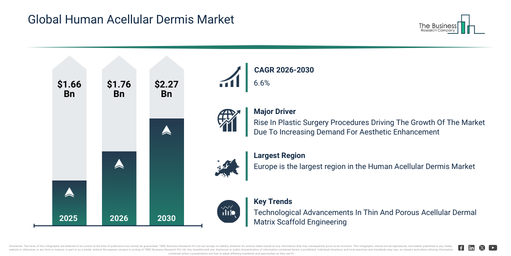
    The human acellular dermis market has experienced robust growth in recent years. This market is projected to expand from $1.66 billion in 2025 to $1.76 billion in 2026, demonstrating a compound annual growth rate (CAGR) of 6.3%. Historically, this expansion has been driven by factors such as an increasing volume of reconstructive surgeries, a rise in burn injury cases, developments in tissue processing technologies, the proliferation of cosmetic and plastic surgery procedures, and enhanced availability of donor tissue.

    The human acellular dermis market is anticipated to show significant expansion over the next few years. It is projected to reach $2.27 billion in 2030, achieving a compound annual growth rate (CAGR) of 6.6%. This projected increase is driven by factors such as the rising adoption in regenerative medicine, a growing demand for minimally invasive reconstruction solutions, the broadening use in orthopedic and soft tissue repair applications, an increased focus on advanced wound management, and continuous innovation in biomaterial processing. Key trends expected during this period include the expanding application of acellular dermal matrices in reconstruction, greater utilization in burn and wound care, an escalating demand for ready-to-use dermal grafts, an increase in plastic and reconstructive surgery procedures, and an enhanced focus on biocompatibility and integration.

    Download A Free Sample Report For Comprehensive Market Insights:

    https://www.thebusinessresearchcompany.com/sample.aspx?id=33172&type=smp

    Which Major Factors Are Contributing To The Development Of The Human Acellular Dermis Market?

    The expansion of plastic surgery procedures is anticipated to fuel the growth of the human acellular dermis market moving forward. Plastic surgery procedures are medical interventions designed to reshape, restore, or enhance the body’s appearance and function through surgical techniques. The rising prevalence of these procedures is attributed to increased awareness and a growing demand for aesthetic enhancement, as more individuals seek to improve their appearance and self-confidence via advanced, minimally invasive surgical options. Human acellular dermis (HAD) offers benefits in plastic surgery by serving as a biologically compatible scaffold that integrates with a patient’s own tissue, thereby supporting new tissue growth, minimizing scar formation, and improving both the aesthetic and functional outcomes of reconstructive or cosmetic surgeries. For example, in June 2024, data from the International Society of Aesthetic Plastic Surgery, a US-based professional organization, indicated that facial and head aesthetic procedures experienced substantial growth compared to the prior year in 2023, totaling over 6.5 million interventions and reflecting a 19.6% rise. Thus, the increasing scope of plastic surgery procedures is propelling the growth of the human acellular dermis market.

    What Segment Categories Are Evaluated In The Human Acellular Dermis Market Study?

    The human acellular dermis market covered in this report is segmented –

    1) By Product Type: Recombinant Acellular Dermis; Lyophilized Acellular Dermis; Decellularized Acellular Dermis; Fresh Acellular Dermis

    2) By Structure Type: Sheet Type Acellular Dermis; Mesh Type Acellular Dermis; Gel Type Acellular Dermis

    3) By Distribution Channel: Direct Sales; Distributors; Online Retailing

    4) By Application: Burn Treatment; Soft Tissue Reconstruction; Wound Management; Plastic Surgery; Orthopedic Surgery

    5) By End User: Hospitals; Ambulatory Surgical Centers (ASCs); Specialty Clinics; Research Institutions

    Subsegments:

    1) By Recombinant Acellular Dermis: Collagen Based Recombinant Dermis; Elastin Enriched Recombinant Dermis; Growth Factor Integrated Recombinant Dermis; Synthetic Hybrid Recombinant Dermis

    2) By Lyophilized Acellular Dermis: Single Layer Lyophilized Dermis; Multi Layer Lyophilized Dermis; Sterile Lyophilized Dermis; Long Shelf Life Lyophilized Dermis

    3) By Decellularized Acellular Dermis: Human Donor Derived Dermis; Enzyme Processed Decellularized Dermis; Detergent Treated Decellularized Dermis; Minimally Processed Decellularized Dermis

    4) By Fresh Acellular Dermis: Cryopreserved Fresh Dermis; Hydrated Fresh Dermis; Ready To Use Fresh Dermis; Short Term Stored Fresh Dermis

    What Trends Are Impacting The Human Acellular Dermis Market?

    Major companies within the human acellular dermis market are concentrating on developing innovative products, such as thin and porous acellular dermal matrix scaffold technology, to enhance handling and conformability for complex wound geometries, thus enabling simpler placement and more consistent clinical outcomes. This technology involves crafting acellular dermal matrices with reduced thickness and interconnected porous structures that promote cellular infiltration, vascularization, and tissue integration, leading to faster wound healing with fewer clinical applications. For example, in April 2025, LifeNet Health, a US-based regenerative medicine company, introduced Dermacell Porous, an acellular dermal matrix designed to be thin, durable, and naturally porous. It offers enhanced retention of extracellular matrix proteins and cytokines, along with easy non-sided application straight from its packaging, facilitating broader clinical adoption for complex wound cases requiring fewer interventions. Engineered to support chronic wound closure in four or fewer applications, Dermacell Porous is also one of 26 skin substitute grafts and cellular or tissue-based products covered under Medicare’s new Local Coverage Determinations effective January 1, 2026. This addition strengthens LifeNet Health’s regenerative wound care portfolio and emphasizes its commitment to delivering advanced and accessible clinical solutions.

    Who Are The Major Companies Operating In The Human Acellular Dermis Market?

    Major companies operating in the human acellular dermis market are Medtronic Plc, Stryker Corporation, Zimmer Biomet Holdings Inc., Integra LifeSciences Corporation, Conmed Corporation, MTF Biologics, MiMedx Group Inc., BioHorizons IPH Inc., LifeNet Health, BioBridge Global, Hans Biomed Corp., PolyNovo Limited, Tissue Regenix Group Plc, CG Bio Inc., Parametrics Medical, Meccellis Biotech, Promethean LifeSciences Inc., Bimini Health Tech LLC, Citagenix Inc., and Aziyo Biologics.

    Access The Complete Human Acellular Dermis Market Report:

    https://www.thebusinessresearchcompany.com/report/human-acellular-dermis-market-report

    Which Region Is The Primary Market For The Human Acellular Dermis Market?

    Europe was the largest region in the human acellular dermis market in 2025. Asia-Pacific is expected to be the fastest-growing region in the forecast period. The regions covered in the human acellular dermis market report are Asia-Pacific, South East Asia, Western Europe, Eastern Europe, North America, South America, Middle East, Africa.

    Access a Customized Human Acellular Dermis Market Report for Deeper Competitive Insights

    Get in touch with us:

    The Business Research Company: https://www.thebusinessresearchcompany.com/

    Americas: +1 310-496-7795

    Asia: +44 7882 955267 & +91 8897263534

    Europe: +44 7882 955267

    Email us at: marketing@tbrc.info

    Follow us on:

    LinkedIn: https://in.linkedin.com/company/the-business-research-company

    YouTube: https://www.youtube.com/channel/UC24_fI0rV8cR5DxlCpgmyFQ

    Global Market Model: https://www.thebusinessresearchcompany.com/global-market-model
  • Homozygous Familial Hypercholesterolemia Market Poised for Steady Growth to $0.53 Billion by 2030

    Homozygous Familial Hypercholesterolemia Market Poised for Steady Growth to $0.53 Billion by 2030

    The Business Research Company’s 2026 market reports feature advanced enhancements such as market attractiveness analysis, total addressable market evaluation, company benchmarking matrices, interactive Excel dashboards, expanded supply chain intelligence, emerging startup coverage, and detailed product insights, delivering more actionable and strategically valuable research.

    What Is The Expected Market Size Of The Homozygous Familial Hypercholesterolemia Market In 2026 And How Much Will It Reach By 2030?

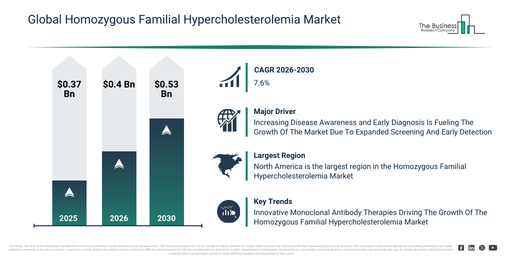
    The market for homozygous familial hypercholesterolemia has experienced robust growth in recent years. It is anticipated to grow from $0.37 billion in 2025 to $0.4 billion in 2026 at a compound annual growth rate (CAGR) of 7.4%. This past growth is attributable to factors such as heightened awareness of rare lipid disorders, the expansion of specialty lipid clinics, the introduction of advanced lipid-lowering drugs, increased cardiovascular risk screening, and enhanced diagnostic capabilities for genetic diseases.

    The market for homozygous familial hypercholesterolemia is projected to experience substantial expansion over the upcoming years. It is anticipated to reach $0.53 billion in 2030 at a compound annual growth rate (CAGR) of 7.6%. This growth during the forecast period is fueled by factors such as the increasing acceptance of gene and RNA-based treatments, a heightened emphasis on early pediatric intervention, broadening reimbursement policies for rare conditions, increasing financial commitment to personalized cardiovascular medicine, and a rise in clinical trials for new therapeutic approaches. Key trends anticipated during this period include a greater uptake of genetic testing for prompt diagnosis, an increased utilization of PCSK9 inhibitors in treatment protocols, the growing incorporation of individualized lipid management strategies, the expansion of advanced lipoprotein apheresis services, and a reinforced focus on ongoing patient surveillance.

    Download A Free Sample Report For Comprehensive Market Insights:

    https://www.thebusinessresearchcompany.com/sample.aspx?id=33171&type=smp

    What Key Growth Drivers Are Influencing The Homozygous Familial Hypercholesterolemia Market?

    Enhanced understanding of the condition and prompt identification are anticipated to stimulate the expansion of the homozygous familial hypercholesterolemia market in the future. This involves informing medical practitioners, decision-makers, and the general population about inherited conditions causing extremely high cholesterol, and enhancing the discovery of affected persons through structured screening and diagnostic initiatives. These advancements in awareness and early detection are fueled by worldwide efforts and campaigns encouraging widespread cholesterol testing, screening for children, and cascade screening to identify previously undiagnosed individuals earlier. The homozygous familial hypercholesterolemia market facilitates prompt identification by providing availability of sophisticated diagnostic instruments, dedicated lipid clinics, and specific treatments, thereby reinforcing early discovery and sustained management of the condition. As an illustration, in March 2025, the Korean Hospital Association, a national healthcare organization situated in South Korea, reported that the cancer screening rate in 2024 reached 70.2%, marking a rise of approximately 3.8% from the preceding year (2023). Consequently, the heightened disease awareness and early diagnosis are propelling the expansion of the homozygous familial hypercholesterolemia market.

    How Is The Homozygous Familial Hypercholesterolemia Market Examined Through Segment Analysis?

    The homozygous familial hypercholesterolemia market covered in this report is segmented –

    1) By Drug Class: Statins; Proprotein Convertase Subtilisin Kexin Type Nine (PCSK9) Inhibitors; Lomitapide; Gene Therapy; Ribonucleic Acid (RNA) Based Therapeutics

    2) By Treatment Modality: Pharmacologic And Small Molecule Therapies; Biologic And Monoclonal Antibody Therapies; Advanced Lipoprotein Apheresis Procedures; Investigational Gene And RNAI-Based Therapies

    3) By Route Of Administration: Oral; Subcutaneous; Intravenous

    4) By Patient Age Group: Pediatric; Adult

    5) By End User: Specialty Lipid Clinics; Academic Hospitals; General Hospitals; Payers Or Managed Care

    Subsegments:

    1) By Statins: Hydroxymethylglutaryl-Coenzyme A Reductase Inhibitors; Atorvastatin; Rosuvastatin; Simvastatin; Pravastatin

    2) By Proprotein Convertase Subtilisin Kexin Type Nine (PCSK9) Inhibitors: Monoclonal Antibodies; Alirocumab; Evolocumab; Inclisiran; Bococizumab

    3) By Lomitapide: Microsomal Triglyceride Transfer Protein Inhibitors; Oral Lipid Lowering Agents; Combination Lipid Therapy

    4) By Gene Therapy: Adeno-Associated Virus Mediated Therapy; Ex Vivo Gene Editing Therapy; In Vivo Gene Transfer Therapy

    5) By Ribonucleic Acid (RNA)-Based Therapeutics: Small Interfering Ribonucleic Acid Therapy; Antisense Oligonucleotide Therapy; Messenger Ribonucleic Acid Therapy; Short Hairpin Ribonucleic Acid Therapy

    What Trends Are Shaping The Homozygous Familial Hypercholesterolemia Market Structure?

    Major companies operating within the homozygous familial hypercholesterolemia market are increasingly prioritizing the development of innovative biologic therapies, including ANGPTL3-targeted monoclonal antibodies, to address the unmet clinical requirements of patients affected by this ultra-rare and severe genetic lipid disorder. ANGPTL3-targeted monoclonal antibody therapies refer to specialized biologic drugs designed to inhibit angiopoietin-like 3, a primary regulator of lipid metabolism known to suppress enzymes essential for lipid breakdown. By blocking ANGPTL3, these therapeutic agents achieve reductions in LDL-C levels through mechanisms independent of LDL receptor function, which is frequently compromised in homozygous familial hypercholesterolemia patients. A notable example occurred in March 2023 when Regeneron Pharmaceuticals Inc., a biotechnology company based in the U.S., obtained an expanded approval from the U.S. Food and Drug Administration for Evkeeza (evinacumab-dgnb), specifically for the treatment of children aged 5 to 11 years with homozygous familial hypercholesterolemia, intended as an adjunct to other lipid-lowering treatments. Evkeeza is a fully human monoclonal antibody that effectively inhibits ANGPTL3, leading to significant decreases in LDL-C levels in patients who often exhibit an inadequate response to standard therapies. Clinical studies demonstrated an average LDL-C reduction of nearly 48% over 24 weeks in pediatric patients, thereby highlighting the growing influence of inventive monoclonal antibody therapies in driving the expansion of the homozygous familial hypercholesterolemia market.

    Which Companies Are Influencing The Homozygous Familial Hypercholesterolemia Market?

    Major companies operating in the homozygous familial hypercholesterolemia market are Merck & Co. Inc., Pfizer Inc., Sanofi S.A., Novartis AG, Amgen, Teva Pharmaceutical Ltd., Viatris Inc., Regeneron Pharmaceuticals Inc., Organon & Co., Alnylam Pharmaceuticals, Ionis Pharmaceuticals, AstraZeneca Ionis Pharmaceuticals, CRISPR Therapeutics AG, Arrowhead Pharmaceuticals, Akcea Therapeutics, Esperion Therapeutics, Accord Healthcare, Verve Therapeutics Inc., Aegerion Pharmaceuticals, LIB Therapeutics Inc., and Changzhou Pharmaceutical Factory Co. Ltd.

    Access The Complete Homozygous Familial Hypercholesterolemia Market Report:

    https://www.thebusinessresearchcompany.com/report/homozygous-familial-hypercholesterolemia-market-report

    Which Geographic Region Represents The Largest Homozygous Familial Hypercholesterolemia Market Share?

    North America was the largest region in the Homozygous Familial Hypercholesterolemia market in 2025. Asia-Pacific is expected to be the fastest-growing region in the forecast period. The regions covered in the homozygous familial hypercholesterolemia market report are Asia-Pacific, South East Asia, Western Europe, Eastern Europe, North America, South America, Middle East, Africa.

    Access a Customized Homozygous Familial Hypercholesterolemia Market Report for Deeper Competitive Insights

    Get in touch with us:

    The Business Research Company: https://www.thebusinessresearchcompany.com/

    Americas: +1 310-496-7795

    Asia: +44 7882 955267 & +91 8897263534

    Europe: +44 7882 955267

    Email us at: marketing@tbrc.info

    Follow us on:

    LinkedIn: https://in.linkedin.com/company/the-business-research-company

    YouTube: https://www.youtube.com/channel/UC24_fI0rV8cR5DxlCpgmyFQ

    Global Market Model: https://www.thebusinessresearchcompany.com/global-market-model
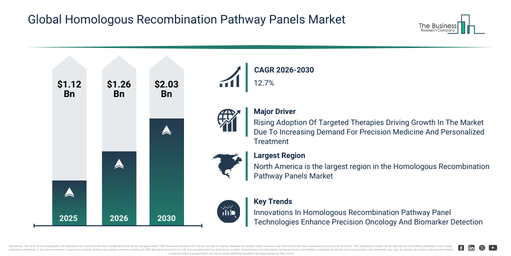
  • Homologous Recombination Pathway Panels Market to Reach $2.02 Billion by 2030 at 12.7% CAGR

    Homologous Recombination Pathway Panels Market to Reach $2.02 Billion by 2030 at 12.7% CAGR

    The Business Research Company’s 2026 market reports feature advanced enhancements such as market attractiveness analysis, total addressable market evaluation, company benchmarking matrices, interactive Excel dashboards, expanded supply chain intelligence, emerging startup coverage, and detailed product insights, delivering more actionable and strategically valuable research.

    What Market Size Is Forecasted For The Homologous Recombination Pathway Panels Market By 2030 Based On Its 2026 Value?

    The homologous recombination pathway panels market has experienced rapid expansion in recent years. It is anticipated to grow from $1.12 billion in 2025 to $1.26 billion in 2026, exhibiting a compound annual growth rate (CAGR) of 12.5%. This historical growth can be attributed to the expansion of precision oncology research, the increasing utilization of genetic testing in cancer diagnosis, the growth in hereditary cancer screening programs, the wider availability of NGS technologies, and rising collaboration between diagnostics and pharmaceutical companies.

    The homologous recombination pathway panels market is poised for significant expansion in the coming years. This market is projected to reach a valuation of $2.03 billion in 2030, exhibiting a compound annual growth rate (CAGR) of 12.7%. The anticipated growth during the forecast timeframe is attributable to several factors, including the increasing integration of companion diagnostics, the escalating need for individualized cancer treatments, the broader implementation of clinical genomics within healthcare facilities, the expanded application of AI-powered variant interpretation, and a rise in regulatory approvals for genomic panels. Key developments characterizing this period involve the greater uptake of extensive HRD testing panels, the expanding utilization of NGS-based homologous recombination assays, an increasing preference for panels designed for therapy selection, the proliferation of integrated genomic profiling kits, and a heightened emphasis on diagnostic panels offering quick results.

    Download A Free Sample Report For Comprehensive Market Insights:

    https://www.thebusinessresearchcompany.com/sample.aspx?id=33170&type=smp

    Which Core Factors Are Supporting The Expansion Of The Homologous Recombination Pathway Panels Market?

    The growing integration of targeted therapies is anticipated to fuel the expansion of the homologous recombination pathway panels market in the future. These therapies are treatments developed to precisely identify and act upon specific disease-causing molecules or genetic defects within cells, thereby suppressing their proliferation while limiting harm to healthy cells. The increasing application of targeted therapies is boosting the need for precision medicine, given that both patients and medical professionals favor treatments offering greater efficacy and reduced adverse effects over traditional approaches. Homologous recombination (HR) pathway panels play a crucial role in complementing targeted therapies by pinpointing individuals who are probable responders to DNA damage-targeting medications, which allows clinicians to customize treatment strategies and improve patient results. An illustration of this trend is observed in July 2023, where data from the American Society of Gene & Cell Therapy, a US-based non-profit medical and scientific organization, indicated a 10% increase in the number of gene therapies undergoing Phase III clinical trials during the fourth quarter of 2023, representing the initial quarterly rise since the third quarter of 2022. Consequently, the widespread integration of targeted therapies is actively driving the growth of the homologous recombination pathway panels market.

    Which Segment Groups Define The Homologous Recombination Pathway Panels Market Landscape?

    The homologous recombination pathway panels market covered in this report is segmented –

    1) By Panel Type: Comprehensive Homologous Recombination Deficiency Panels; Focused Or Core Homologous Recombination Repair Gene Panels; Custom Or Research Panels; Integrated Genomic Profiling Kits

    2) By Technology: Next-Generation Sequencing (NGS); Polymerase Chain Reaction (PCR); Microarray Based Panels; Other Molecular Diagnostic Techniques

    3) By Application: Cancer Research; Genetic Disorder Studies; Drug Discovery; Clinical Diagnostics; Other Applications

    4) By End User: Hospitals And Clinics; Diagnostic Laboratories; Research Institutes; Biotechnology Companies; Pharmaceutical Companies

    Subsegments:

    1) By Comprehensive Homologous Recombination Deficiency Panels: Broad Gene Coverage Panels; Clinical Grade Diagnostic Panels; Therapy Selection Panels; Prognostic Risk Assessment Panels

    2) By Focused Or Core Homologous Recombination Repair Gene Panels: Single Pathway Targeted Panels; Small Gene Set Panels; Cost Optimized Clinical Panels; Rapid Turnaround Testing Panels

    3) By Custom Or Research Panels: Disease Specific Research Panels; Institution Designed Gene Panels; Exploratory Genomic Study Panels; Preclinical Research Panels

    4) By Integrated Genomic Profiling Kits: Multigene Sequencing Kits; Combined Mutation And Structural Variant Kits; End To End Genomic Analysis Kits; Clinical Workflow Integrated Kits

    What Trends Are Influencing The Homologous Recombination Pathway Panels Market?

    Leading companies operating in the homologous recombination pathway panels market are focusing on the development of advanced comprehensive genomic profiling solutions. These solutions aim to identify DNA repair deficiencies, guide targeted therapies, and enable personalized treatment strategies for cancer patients. Comprehensive genomic profiling refers to an advanced testing approach that simultaneously examines hundreds of genes to identify genetic alterations, biomarkers, and molecular signatures, thereby enabling precision medicine and informed therapeutic strategies. For instance, in September 2024, Integrated DNA Technologies, a US-based biotechnology company, introduced Archer homologous recombination deficiency (HRD) technology, designed to detect homologous recombination deficiencies and guide targeted cancer therapies. These technologies assess homologous recombination deficiency (HRD) in solid tumors to enhance comprehensive genomic profiling (CGP) for cancer research. Their purpose is to detect key biomarkers like HRD, alongside MSI and TMB, from low-input samples, supporting precision medicine through flexible NGS panels without requiring workflow overhauls. Among the advantages is AMP chemistry, which facilitates standalone, spike-in, or integrated use, optimizing resources and customization.

    Who Are The Companies Shaping The Homologous Recombination Pathway Panels Market Landscape?

    Major companies operating in the homologous recombination pathway panels market are F. Hoffmann-La Roche AG, Thermo Fisher Scientific Inc., Merck KGaA, Eurofins Scientific SE, Agilent Technologies Inc., Illumina Inc., Bio-Rad Laboratories Inc., QIAGEN N.V., Integrated DNA Technologies Inc., NeoGenomics Laboratories Inc., Promega Corporation, Invitae Corporation, Caris Life Sciences Inc., Fulgent Genetics Inc., Foundation Medicine Inc., Metropolis Healthcare Limited, AmoyDx Diagnostics Co. Ltd., CD Genomics, iGeneTech Inc., and Paragon Genomics Inc.

    Access The Complete Homologous Recombination Pathway Panels Market Report:

    https://www.thebusinessresearchcompany.com/report/homologous-recombination-pathway-panels-market-report

    Which Region Leads The Homologous Recombination Pathway Panels Market By Size?

    North America was the largest region in the homologous recombination pathway panels market in 2025. Asia-Pacific is expected to be the fastest-growing region in the forecast period. The regions covered in the homologous recombination pathway panels market report are Asia-Pacific, South East Asia, Western Europe, Eastern Europe, North America, South America, Middle East, Africa.

    Access a Customized Homologous Recombination Pathway Panels Market Report for Deeper Competitive Insights

    Get in touch with us:

    The Business Research Company: https://www.thebusinessresearchcompany.com/

    Americas: +1 310-496-7795

    Asia: +44 7882 955267 & +91 8897263534

    Europe: +44 7882 955267

    Email us at: marketing@tbrc.info

    Follow us on:

    LinkedIn: https://in.linkedin.com/company/the-business-research-company

    YouTube: https://www.youtube.com/channel/UC24_fI0rV8cR5DxlCpgmyFQ

    Global Market Model: https://www.thebusinessresearchcompany.com/global-market-model