Month: June 2026

  • Dynamic Retractor Systems Market Outlook Showing Growth Toward $1.89 Billion by 2030

    Dynamic Retractor Systems Market Outlook Showing Growth Toward $1.89 Billion by 2030

    The Business Research Company’s 2026 market reports feature advanced enhancements such as market attractiveness analysis, total addressable market evaluation, company benchmarking matrices, interactive Excel dashboards, expanded supply chain intelligence, emerging startup coverage, and detailed product insights, delivering more actionable and strategically valuable research.

    What Are The Forecasted Market Size Figures For The Dynamic Retractor Systems Market In 2026 And 2030?

    The dynamic retractor systems market has observed significant growth in recent years. Its valuation is anticipated to rise from $1.25 billion in 2025 to $1.36 billion in 2026, achieving a compound annual growth rate (CAGR) of 8.3%. The expansion observed historically is attributable to an escalating volume of intricate surgical procedures, the proliferation of minimally invasive surgeries, an increasing need for enhanced access to operative sites, innovations in surgical instrument engineering, and greater hospital investment in advanced surgical tools.

    The dynamic retractor systems market is projected to experience robust growth in the coming years, expected to reach $1.89 billion in 2030, demonstrating a compound annual growth rate (CAGR) of 8.6%. This anticipated expansion during the forecast period is driven by several factors, including the increasing adoption of robotic-assisted surgeries, a heightened focus on infection prevention through the use of disposable instruments, the proliferation of outpatient surgical centers, a growing demand for procedure-specific retractor solutions, and increased investments in advanced surgical infrastructure. Concurrently, major trends in this period will involve the increasing integration of modular dynamic retractor systems, a rising demand for ergonomic surgical instrument designs, the growing utilization of lightweight and hybrid material retractors, the expansion of disposable and single-use retraction systems, and an enhanced emphasis on achieving surgical precision and visibility.

    Download A Free Sample Report For Comprehensive Market Insights:

    https://www.thebusinessresearchcompany.com/sample.aspx?id=33096&type=smp

    Which Strategic Drivers Are Supporting The Dynamic Retractor Systems Market Development?

    The increasing number of surgical procedures is anticipated to fuel the expansion of the dynamic retractor systems market moving forward. Surgical procedure volumes refer to the growing quantity of operations conducted worldwide across specializations such as orthopedics, general surgery, and minimally invasive techniques. This escalation in surgical procedures is propelled by aging populations, the rising prevalence of chronic conditions, and enhanced access to healthcare, all of which contribute to more patients requiring surgical interventions annually. The dynamic retractor systems benefits from this surge in surgical procedure volumes by supplying advanced devices that improve operative visibility, lessen tissue trauma, and boost surgeon efficiency across a broad array of procedures. For instance, according to the Agency for Healthcare Research and Quality (AHRQ), a US-based government agency, the total number of in-scope ambulatory surgery encounters increased by 9%, from 12.4 million in 2022 to 13.5 million. Therefore, the expanding surgical procedure volumes are a significant driver of growth for the dynamic retractor systems market.

    How Is The Dynamic Retractor Systems Market Distributed Across Key Segments?

    The dynamic retractor systems market covered in this report is segmented –

    1) By Product Type: Self-Retaining Retractors; Hand-Held Retractors; Table-Mounted Retractors; Other Product Types

    2) By Material Type: Stainless Steel; Titanium; Polymer Based; Other Material Types

    3) By Usage: Reusable Retractor Systems; Disposable Or Single-Use Retractor Systems

    4) By Application: Neurosurgery; Orthopedic Surgery; Cardiothoracic Surgery; Abdominal Surgery; Other Applications

    5) By End User: Hospitals; Ambulatory Surgical Centers; Specialty Clinics; Other End Users

    Subsegments:

    1) By Self-Retaining Retractors: Ratchet Mechanism; Spring Mechanism; Screw Mechanism; Lever Lock Mechanism; Lightweight Self-Retaining Retractors

    2) By Hand-Held Retractors: Single Hand Retractors; Double Hand Retractors; Palm Grip Retractors; Disposable Hand-Held Retractors; Ergonomic Grip Hand-Held Retractors

    3) By Table-Mounted Retractors: Fixed Arm Table Retractors; Adjustable Arm Table Retractors; Quick-Release Table Retractors; Modular Table Retractor Systems; Heavy-Duty Table-Mounted Retractors

    4) By Other Product Types: Custom Surgical Retractors; Specialty Procedure Retractors; Disposable Specialty Retractors; Novel Design Retractors

    Which Trends Are Supporting The Evolution Of The Dynamic Retractor Systems Market?

    Leading enterprises within the dynamic retractor systems market are concentrating on technological advancements, including improved exposure capabilities via multi-blade control, to secure a competitive edge, elevate surgical efficiency, and satisfy the escalating demand for minimally invasive procedures. These systems are engineered to refine the precision of surgical access, augment visualization, and streamline operational sequences in minimally invasive spine surgery, consequently fostering efficiency and better clinical outcomes in a competitive surgical tools landscape. As an example, in April 2023, Orthofix Medical Inc., a US-based medical device company, launched its Lattus Lateral Access System and the Fathom Pedicle-Based Retractor System. The Lattus Lateral Access System provides a comprehensive solution for lateral minimally invasive spine (MIS) surgery, crafted to enhance both access and the procedural workflow for surgeons performing lateral lumbar interbody fusion and related lateral spine procedures. The Lattus Lateral Access System and Fathom Pedicle-Based Retractor System represent advanced dynamic (self-retaining) retractor systems created by Orthofix Medical Inc. for minimally invasive spine surgery. These systems facilitate hands-free, adaptable, and stable surgical exposure through small incisions, employing independently controlled or telescoping blades that can be dynamically adjusted during a procedure to suit individual patient anatomy.

    Which Companies Are Engaged In The Dynamic Retractor Systems Market Environment?

    Major companies operating in the dynamic retractor systems market are Johnson And Johnson, Medtronic plc, Stryker Corporation, B. Braun Melsungen SE, STERIS plc, Getinge AB, Teleflex Incorporated, Cook Medical LLC, Integra LifeSciences Holdings Corporation, CONMED Corporation, CooperSurgical Inc., Tecomet Inc., KLS Martin Group, Innomed Inc., Mediflex Surgical Products Inc., Advin Health Care Private Limited, Auxein Medical Pvt. Ltd., Thompson Surgical Instruments Inc., Chamfond Biotech Co. Ltd., Advanced Surgical Retractor Systems Inc.

    Access The Complete Dynamic Retractor Systems Market Report:

    https://www.thebusinessresearchcompany.com/report/dynamic-retractor-systems-market-report

    Which Area Represents The Largest Portion Of The Dynamic Retractor Systems Market?

    North America was the largest region in the dynamic retractor system market in 2025. Asia-Pacific is expected to be the fastest-growing region in the forecast period. The regions covered in the dynamic retractor systems market report are Asia-Pacific, South East Asia, Western Europe, Eastern Europe, North America, South America, Middle East, Africa.

    Access a Customized Dynamic Retractor Systems Market Report for Deeper Competitive Insights

    Get in touch with us:

    The Business Research Company: https://www.thebusinessresearchcompany.com/

    Americas: +1 310-496-7795

    Asia: +44 7882 955267 & +91 8897263534

    Europe: +44 7882 955267

    Email us at: marketing@tbrc.info

    Follow us on:

    LinkedIn: https://in.linkedin.com/company/the-business-research-company

    YouTube: https://www.youtube.com/channel/UC24_fI0rV8cR5DxlCpgmyFQ

    Global Market Model: https://www.thebusinessresearchcompany.com/global-market-model
  • Dual-Chamber Serum Bottle Market Forecast to Reach $1.97 Billion by 2030 at 7.9% CAGR

    Dual-Chamber Serum Bottle Market Forecast to Reach $1.97 Billion by 2030 at 7.9% CAGR

    The Business Research Company’s 2026 market reports feature advanced enhancements such as market attractiveness analysis, total addressable market evaluation, company benchmarking matrices, interactive Excel dashboards, expanded supply chain intelligence, emerging startup coverage, and detailed product insights, delivering more actionable and strategically valuable research.

    How Much Larger Will The Dual-chamber Serum Bottle Market Become By 2030 Compared To 2026?

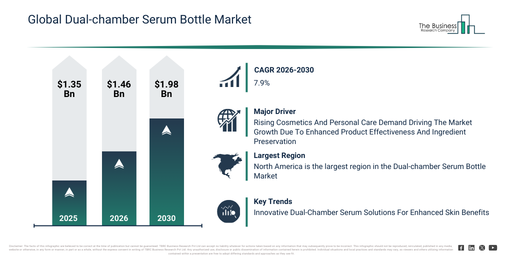
    The dual-chamber serum bottle market has experienced robust expansion in recent years. It will grow from $1.35 billion in 2025 to $1.46 billion in 2026 at a compound annual growth rate (CAGR) of 7.7%. This historical expansion was driven by several factors, including the increased development of injectable drug formulations, the growing adoption of lyophilized pharmaceuticals, a heightened need for drug delivery systems that minimize errors, the broadening scope of hospital-based drug preparation, and continuous improvements in pharmaceutical packaging materials.

    The market for dual-chamber serum bottles is projected to experience substantial expansion over the coming years. This market is anticipated to reach a valuation of $1.98 billion by 2030, demonstrating a compound annual growth rate (CAGR) of 7.9%. This projected growth during the forecast period can be primarily attributed to several factors, including the increasing development of biologics pipelines, a heightened emphasis on patient safety and precise dosing, the expansion of injectable therapies for self-administration, the increasing embrace of sophisticated drug packaging formats, and a growing regulatory focus on drug stability and sterility. Key trends expected within the forecast period encompass a greater acceptance of dual-chamber reconstitution packaging, an escalating need for sterile multi-component drug containers, a broadening application of polymer-based dual-chamber bottles, the expansion of ready-to-mix injectable packaging options, and a reinforced commitment to drug stability and extended shelf-life.

    Download A Free Sample Report For Comprehensive Market Insights:

    https://www.thebusinessresearchcompany.com/sample.aspx?id=33095&type=smp

    What Major Growth Factors Are Impacting The Dual-chamber Serum Bottle Market?

    The increasing need for cosmetics and personal care products is anticipated to drive the expansion of the dual-chamber serum bottle market in the future. This category encompasses items formulated to cleanse, safeguard, beautify the body, and improve one’s outward look. The growth in cosmetics and personal care is fueled by consumers’ growing emphasis on self-care and aesthetic improvements, influenced by social media and increased discretionary spending. Dual-chamber serum bottles assist the cosmetics and personal care sector by enabling the precise combination of two distinct formulations right before application, thereby boosting product efficacy and preserving both shelf life and the strength of ingredients. For example, in February 2025, data from the Centre for the Promotion of Imports from Developing Countries, a government body based in the Netherlands, showed that in 2023, Europe’s cosmetics manufacturing contributed €11 billion ($11.9 billion), and exports of cosmetic products globally totaled €28.2 billion ($30.5 billion). Additionally, in September 2024, the Bureau of Labor Statistics, a US government agency, reported that spending on personal care products and services hit $950 in 2023, marking a 9.7% rise from $866 in 2022. Consequently, the increasing demand within the cosmetics and personal care sector is propelling the expansion of the dual-chamber serum bottle market.

    How Does Segment Analysis Break Down The Dual-chamber Serum Bottle Market Structure?

    The dual-chamber serum bottle market covered in this report is segmented –

    1) By Material Type: Glass; Plastic; Other Material Types

    2) By Capacity: Below 10 ml; 10-30 ml; Above 30 ml

    3) By Application: Pharmaceuticals; Biotechnology; Cosmetics; Other Applications

    4) By Distribution Channel: Direct Sales; Distributors; Online Sales; Other Distribution Channels

    5) By End-User: Hospitals; Clinics; Research Laboratories; Other End-Users

    Subsegments:

    1) By Glass: Borosilicate Glass; Soda Lime Glass; Amber Glass

    2) By Plastic: Polypropylene; Polyethylene; Cyclic Olefin Polymer; Cyclic Olefin Copolymer

    3) By Other Material Types: Silicone; Elastomeric Materials; Composite Materials

    What Trends Are Affecting The Growth Of The Dual-chamber Serum Bottle Market?

    Leading companies within the dual-chamber serum bottle market are dedicated to creating novel solutions, like bi-phase serum, aiming to preserve ingredient stability, amplify effectiveness, and elevate the user experience. A bi-phase serum is defined as a cosmetic product comprising two unmixable phases, typically oil and water, which blend together when shaken to deliver specific skin advantages including hydration, nourishment, and improved uptake of active ingredients. As an illustration, in November 2023, L’Oréal S.A., a personal care firm situated in France, introduced Age Perfect Serum Le Duo, an anti-aging serum with a dual-chamber design intended to provide intense hydration and diminish noticeable signs of aging. This product addresses 10 signs, including wrinkles, loss of firmness, dullness, and uneven tone, by utilizing a dual-chamber bottle that blends collagen peptides and vitamins B3/C as needed. Its advantages encompass smoother, firmer, and more radiant skin within weeks, achieving 91% user satisfaction, alongside clinically proven improvements in wrinkles and tone after 8 weeks. Noteworthy benefits consist of maintained ingredient potency, accurate one-pump application, a rapidly absorbing, non-greasy formula, and premium yet affordable packaging offered exclusively at Walmart.

    Who Are The Prominent Players Across The Dual-chamber Serum Bottle Market?

    Major companies operating in the dual-chamber serum bottle market are Albea Group, AptarGroup Inc., TekniPlex Healthcare, Gerresheimer AG, Stevanato Group, Shandong Pharmaceutical Glass Co. Ltd., Pfizer CentreOne, Quadpack Industries SA, Matsa Group Ltd., Unica Packaging, Shijiazhuang Xinfuda Medical Packaging Co. Ltd., APackaging Group, Credence MedSystems Inc., Cospack America Corp., LF of America Crop., ShanghAI Hopeck Packaging Co. Ltd., Gidea Packaging Enterprise Limited, TopFeelPack Co. Ltd., Zhejiang UKPACK Packaging Co. Ltd., Guangzhou Xingyuan Plastic Manufacturing Co. Ltd.

    Access The Complete Dual-chamber Serum Bottle Market Report:

    https://www.thebusinessresearchcompany.com/report/dual-chamber-serum-bottle-market-report

    Which Region Commands The Largest Share Of The Dual-chamber Serum Bottle Market?

    North America was the largest region in the dual-chamber serum bottle market in 2025. Asia-Pacific is expected to be the fastest-growing region in the forecast period. The regions covered in the dual-chamber serum bottle market report are Asia-Pacific, South East Asia, Western Europe, Eastern Europe, North America, South America, Middle East, Africa.

    Access a Customized Dual-chamber Serum Bottle Market Report for Deeper Competitive Insights

    Get in touch with us:

    The Business Research Company: https://www.thebusinessresearchcompany.com/

    Americas: +1 310-496-7795

    Asia: +44 7882 955267 & +91 8897263534

    Europe: +44 7882 955267

    Email us at: marketing@tbrc.info

    Follow us on:

    LinkedIn: https://in.linkedin.com/company/the-business-research-company

    YouTube: https://www.youtube.com/channel/UC24_fI0rV8cR5DxlCpgmyFQ

    Global Market Model: https://www.thebusinessresearchcompany.com/global-market-model
  • DNA Sequencing in Drug Discovery Market Expected to Reach $15.21 Billion by 2030

    DNA Sequencing in Drug Discovery Market Expected to Reach $15.21 Billion by 2030

    The Business Research Company’s 2026 market reports feature advanced enhancements such as market attractiveness analysis, total addressable market evaluation, company benchmarking matrices, interactive Excel dashboards, expanded supply chain intelligence, emerging startup coverage, and detailed product insights, delivering more actionable and strategically valuable research.

    What Growth In Market Value Is Anticipated For The Deoxyribonucleic Acid (DNA) Sequencing In Drug Discovery Market Between 2026 And 2030?

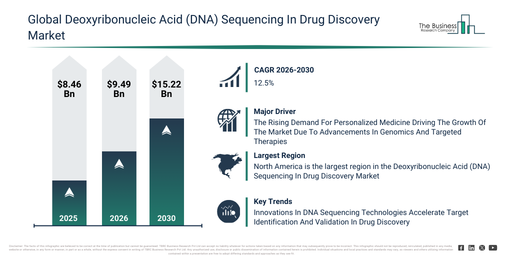
    The deoxyribonucleic acid (DNA) sequencing in drug discovery market has experienced swift expansion in recent years. It is projected to grow from $8.46 billion in 2025 to $9.49 billion in 2026, at a compound annual growth rate (CAGR) of 12.3%. Historically, this growth can be attributed to factors like heightened investment in genomic research, the widening of pharmaceutical R&D pipelines, the accessibility of high-throughput sequencing platforms, an increasing emphasis on personalized medicine, and advancements in sequencing accuracy and speed.

    The deoxyribonucleic acid (dna) sequencing in drug discovery market size anticipates substantial expansion over the upcoming years. This market is projected to reach $15.22 billion by 2030, exhibiting a compound annual growth rate (CAGR) of 12.5%. This projected growth is driven by several factors, including the increasing integration of AI-driven genomic analysis, a heightened demand for targeted therapeutic solutions, the broadening scope of pharmacogenomics applications, the expanding utility of sequencing in early-stage drug screening processes, and enhanced collaborations between pharmaceutical and biotechnology companies. Key trends expected during this period involve a greater application of next-generation sequencing for target identification, the increasing embrace of single-cell sequencing methodologies, a deeper incorporation of bioinformatics within drug discovery efforts, the expansion of research initiatives in precision medicine, and a heightened emphasis on drug development guided by biomarkers.

    Download A Free Sample Report For Comprehensive Market Insights:

    https://www.thebusinessresearchcompany.com/sample.aspx?id=33087&type=smp

    What Market Drivers Are Helping Shape The Deoxyribonucleic Acid (DNA) Sequencing In Drug Discovery Market Expansion?

    The increasing need for individualized medicine is anticipated to fuel the expansion of deoxyribonucleic acid (DNA) sequencing within the drug discovery market in the future. Individualized medicine is defined as a healthcare strategy that customizes the prevention, diagnosis, and treatment of diseases based on a person’s genetic profile, lifestyle choices, and environmental influences. The growing interest in personalized medicine largely stems from progress in genomics and molecular diagnostics, which facilitate the accurate detection of genetic and molecular variations between individuals, thereby enabling the customization of therapies for enhanced efficacy and fewer adverse reactions. Deoxyribonucleic acid (DNA) sequencing supports personalized medicine through the detection of genetic differences specific to each patient, which in turn permits the creation of focused treatments, improved drug choices, and better treatment outcomes while minimizing negative impacts. For example, in February 2024, data from the Personalized Medicine Coalition, a US-based non-profit, showed that in 2023, the Food and Drug Administration (FDA) authorized 16 novel personalized therapies for patients with rare diseases, an increase from six in 2022. Among the new personalized treatments cleared in 2023 were also seven medications for cancer and three for various other conditions. Consequently, the increased need for personalized medicine is a key factor propelling the expansion of deoxyribonucleic acid (DNA) sequencing within the drug discovery market.

    What Segment Types Are Included In The Deoxyribonucleic Acid (DNA) Sequencing In Drug Discovery Market Analysis?

    The deoxyribonucleic acid (dna) sequencing in drug discovery market covered in this report is segmented –

    1) By Product Type: Instruments; Consumables

    2) By Workflow: Sample Preparation; Sequencing

    3) By Technology Type: Sanger Sequencing; Next-Generation Sequencing (NGS)

    4) By Application: Drug Discovery; Pharmacogenomics

    5) By End-User: Pharmaceutical Companies; Biotechnology Firms

    Subsegments:

    1) By Instruments: Sequencing Systems; Sample Preparation Systems; Detection And Imaging Systems; Automation And Robotics Systems; Data Analysis Hardware

    2) By Consumables: Sequencing Reagents; Library Preparation Kits; Sample Collection Kits; Flow Cells; Quality Control Reagents

    Which Trends Are Influencing The Direction Of The Deoxyribonucleic Acid (DNA) Sequencing In Drug Discovery Market?

    Major companies engaged in deoxyribonucleic acid (DNA) sequencing for the drug discovery market are prioritizing the development of sophisticated solutions, including high-resolution DNA methylation sequencing assays, to expedite biomarker discovery and precision drug development. These high-resolution DNA methylation sequencing assays are advanced genomic methodologies that accurately map DNA methylation at single-base or near single-base resolution across the entire genome. This allows for an in-depth assessment of epigenetic changes that govern gene activity, thereby aiding a precise understanding of disease biology and the identification of potential drug targets. As an illustration, in April 2025, EpiCypher Inc., a US-based epigenetics company, launched CUTANA mCUT&RUN and Multiomic CUT&RUN. These innovative DNA methylation sequencing assays were designed to provide high-resolution methylation profiling with notably reduced sequencing costs and lower sample input requirements. Such assays enable researchers to concurrently examine DNA methylation and chromatin features, offering more profound multiomic insights into gene regulation mechanisms. These advancements in assay technology facilitate quicker and more cost-efficient target identification and validation, consequently accelerating the drug discovery and development timeline.

    Which Companies Form The Competitive Landscape Of The Deoxyribonucleic Acid (DNA) Sequencing In Drug Discovery Market?

    Major companies operating in the deoxyribonucleic acid (dna) sequencing in drug discovery market are Thermo Fisher Scientific Inc., Eurofins Genomics GmbH, Agilent Technologies Inc., Illumina Inc., Revvity Inc., Bio-Rad Laboratories Inc., QIAGEN N.V., 10x Genomics Inc., BGI Genomics, Azenta Life Sciences, Oxford Nanopore Technologies plc, Pacific Biosciences of California Inc., Element Biosciences Inc., Macrogen Inc., Ultima Genomics Inc., SOPHiA GENETICS SA, ProPhase Labs Inc., Singular Genomics Systems Inc., Psomagen Inc., and QitanTech Co Ltd.

    Access The Complete Deoxyribonucleic Acid (DNA) Sequencing In Drug Discovery Market Report:

    https://www.thebusinessresearchcompany.com/report/deoxyribonucleic-acid-dna-sequencing-in-drug-discovery-market-report

    Which Region Accounts For The Highest Share Of The Deoxyribonucleic Acid (DNA) Sequencing In Drug Discovery Market?

    North America was the largest region in the deoxyribonucleic acid (DNA) sequencing in drug discovery market in 2025. Asia-Pacific is expected to be the fastest-growing region in the forecast period. The regions covered in the deoxyribonucleic acid (dna) sequencing in drug discovery market report are Asia-Pacific, South East Asia, Western Europe, Eastern Europe, North America, South America, Middle East, Africa.

    Access a Customized Deoxyribonucleic Acid (DNA) Sequencing In Drug Discovery Market Report for Deeper Competitive Insights

    Get in touch with us:

    The Business Research Company: https://www.thebusinessresearchcompany.com/

    Americas: +1 310-496-7795

    Asia: +44 7882 955267 & +91 8897263534

    Europe: +44 7882 955267

    Email us at: marketing@tbrc.info

    Follow us on:

    LinkedIn: https://in.linkedin.com/company/the-business-research-company

    YouTube: https://www.youtube.com/channel/UC24_fI0rV8cR5DxlCpgmyFQ

    Global Market Model: https://www.thebusinessresearchcompany.com/global-market-model
  • Dental Service Organization Market Projected to Reach $379.41 Billion by 2030 at 15.8% CAGR

    Dental Service Organization Market Projected to Reach $379.41 Billion by 2030 at 15.8% CAGR

    The Business Research Company’s 2026 market reports feature advanced enhancements such as market attractiveness analysis, total addressable market evaluation, company benchmarking matrices, interactive Excel dashboards, expanded supply chain intelligence, emerging startup coverage, and detailed product insights, delivering more actionable and strategically valuable research.

    What Is The Expected Market Value Outlook For The Dental Service Organization Market Through 2030?

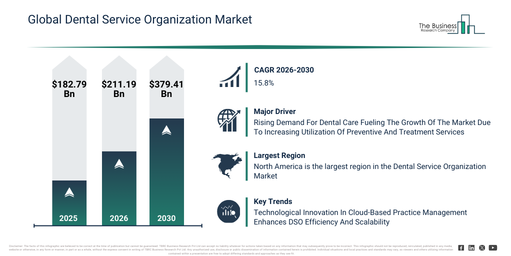
    The dental service organization market has experienced substantial expansion in its size over recent years. Projections indicate it will expand from $182.79 billion in 2025 to $211.19 billion in 2026, exhibiting a compound annual growth rate (CAGR) of 15.5%. Historically, this growth has been driven by factors such as the increasing administrative burden faced by dental practices, higher operating expenses in independent clinics, the expansion of private dental practices, a rising need for professional management services, and the implementation of electronic health records.

    The dental service organization market is anticipated to experience substantial expansion over the coming years. By 2030, this market is projected to reach a valuation of $379.41 billion, demonstrating a compound annual growth rate (CAGR) of 15.8%. This expansion during the forecast period is driven by factors such as the increasing integration of dental practices, a growing need for adaptable dental service platforms, the wider acceptance of tele-dentistry, the development of data-driven patient acquisition techniques, and the greater utilization of AI for diagnostic assistance. Key trends anticipated for this period encompass the broader implementation of centralized practice management approaches, the increased deployment of AI-powered scheduling and billing solutions, deeper integration of digital patient records, the enlargement of multi-specialty dental networks, and a heightened emphasis on operational streamline and consistency.

    Download A Free Sample Report For Comprehensive Market Insights:

    https://www.thebusinessresearchcompany.com/sample.aspx?id=33086&type=smp

    Which Significant Factors Are Encouraging Growth In The Dental Service Organization Market?

    The increasing need for dental care is anticipated to drive expansion within the dental service organization market moving forward. This involves the identification, prevention, treatment, and management of various conditions impacting the teeth, gums, and the entire oral cavity, encompassing regular examinations, cleanings, restorative services, and specialized procedures aimed at preserving oral health and overall wellness. The demand for dental care is on the rise, primarily fueled by greater public awareness of oral hygiene and the benefits of preventive dentistry, which in turn leads to a higher uptake of routine examinations and necessary treatments. A dental service organization supports the provision of dental care through offering centralized administration, investment in technology, and operational assistance, empowering dental practices to provide more accessible, effective, and superior patient services. For instance, in August 2024, as per the NHS Business Services Authority, a UK-based government agency, during 2023/24, approximately 34 million courses of dental treatment were delivered, representing a 4.3% year-over-year increase. Concurrently, about 18 million adult patients received treatment in the 24 months ending March 2024, and the total units of dental activity climbed by 3.4% compared to 2022/23, reaching 73 million, which signifies consistent growth in the overall utilization of dental services. Consequently, the heightened demand for dental care is propelling the expansion of the dental service organization market.

    Which Segment Divisions Form The Structure Of The Dental Service Organization Market?

    The dental service organization market covered in this report is segmented –

    1) By Type of Services: General Dentistry; Pediatric Dentistry; Orthodontics; Oral Maxillofacial Surgery; Periodontics; Cosmetic Dentistry; Endodontics; Prosthodontics

    2) By Practice Model: Single Specialty; Multi-Specialty; Corporate Owned; Independent Practitioner Networks; Franchise Models

    3) By Patient Demographics: Pediatric Patients; Adult Patients; Geriatric Patients; Special Needs Patients; Preventive Care Patients

    4) By Technology Utilization: Traditional Practices; Digital Records Management; Treatment Planning Software; Tele-dentistry Services; 3D Imaging And Printing Technologies; Artificial Intelligence (AI)-Driven Diagnostics

    5) By End-User: General Dentists; Dental Surgeons And Specialists

    Subsegments:

    1) By General Dentistry: Preventive Dental Care; Routine Oral Examinations; Dental Fillings And Restorations; Oral Health Education; Basic Tooth Extractions

    2) By Pediatric Dentistry: Infant Oral Health Care; Child Preventive Dental Services; Pediatric Restorative Dentistry; Behavior Management Dentistry; Special Needs Pediatric Dentistry

    3) By Orthodontics: Metal Braces Treatment; Ceramic Braces Treatment; Clear Aligner Therapy; Lingual Orthodontics; Early Interceptive Orthodontics

    4) By Oral Maxillofacial Surgery: Tooth Extraction Surgery; Dental Implant Surgery; Corrective Jaw Surgery; Facial Trauma Surgery; Oral Pathology Treatment

    5) By Periodontics: Gum Disease Treatment; Scaling And Root Planning; Periodontal Surgery; Gum Grafting Procedures; Dental Implant Maintenance

    6) By Cosmetic Dentistry: Teeth Whitening Services; Dental Veneers Treatment; Cosmetic Bonding; Smile Makeover Services; Aesthetic Dental Contouring

    7) By Endodontics: Root Canal Treatment; Endodontic Retreatment; Apical Surgery; Traumatic Dental Injury Management; Pulp Therapy

    8) By Prosthodontics: Dental Crowns And Bridges; Complete Dentures; Partial Dentures; Implant Supported Prosthetics

    What Trends Are Driving Changes In The Dental Service Organization Market?

    Major companies in the dental service organization market are concentrating on technological innovations, such as integrated cloud-based practice management platforms, to enhance operational efficiency, enable multi-location scalability, and reinforce centralized oversight. Integrated cloud-based practice management platforms are enterprise software systems that allow dental service organizations to manage administrative, financial, clinical, and patient engagement functions across multiple affiliated practices through a single digital infrastructure. For example, in February 2024, Planet DDS, a US-based dental technology company, unveiled Denticon Reimagined, an improved cloud-based dental practice management platform designed for large dental groups and DSOs. The platform offers advanced analytics for real-time performance tracking, integrated patient communication and engagement tools, and a scalable cloud architecture that supports centralized billing, scheduling, and reporting across various locations.

    Who Are The Key Market Participants In The Dental Service Organization Market?

    Major companies operating in the dental service organization market are Heartland Dental LLC, Aspen Dental Management Inc., Smile Brands Inc., Western Dental Services Inc., Dental Care Alliance LLC, Great Expressions Dental Centers LLC, Dykema Gossett PLLC, Affordable Dentures & Implants LLC, MB2 Dental Solutions LLC, InterDent Service Corporation, Guardian Dentistry Partners LLC, Benevis LLC, Specialty1 Partners LLC, Pacific Dental Services LLC, Bluetree Dental LLC, iDental Group LLC, Affordable Care LLC, Lollipop Dental LLC, Straine Dental Management LLC, Family Dental Care LLC.

    Access The Complete Dental Service Organization Market Report:

    https://www.thebusinessresearchcompany.com/report/dental-service-organization-market-report

    Which Region Is The Primary Market For The Dental Service Organization Market?

    North America was the largest region in the dental service organization market in 2025. Asia-Pacific is expected to be the fastest-growing region in the forecast period. The regions covered in the dental service organization market report are Asia-Pacific, South East Asia, Western Europe, Eastern Europe, North America, South America, Middle East, Africa.

    Access a Customized Dental Service Organization Market Report for Deeper Competitive Insights

    Get in touch with us:

    The Business Research Company: https://www.thebusinessresearchcompany.com/

    Americas: +1 310-496-7795

    Asia: +44 7882 955267 & +91 8897263534

    Europe: +44 7882 955267

    Email us at: marketing@tbrc.info

    Follow us on:

    LinkedIn: https://in.linkedin.com/company/the-business-research-company

    YouTube: https://www.youtube.com/channel/UC24_fI0rV8cR5DxlCpgmyFQ

    Global Market Model: https://www.thebusinessresearchcompany.com/global-market-model

  • Dental Implant Fixtures Market Revenue Expected to Reach $6.37 Billion by 2030 at 8.1% CAGR

    Dental Implant Fixtures Market Revenue Expected to Reach $6.37 Billion by 2030 at 8.1% CAGR

    The Business Research Company’s 2026 market reports feature advanced enhancements such as market attractiveness analysis, total addressable market evaluation, company benchmarking matrices, interactive Excel dashboards, expanded supply chain intelligence, emerging startup coverage, and detailed product insights, delivering more actionable and strategically valuable research.

    How Will The Market Value Of The Dental Implant Fixtures Market Increase Between 2026 And 2030?

    The dental implant fixtures market has experienced substantial growth in recent years. It is projected to expand from $4.32 billion in 2025 to $4.66 billion in 2026, demonstrating a compound annual growth rate (CAGR) of 7.9%. Historically, this expansion can be linked to factors such as a rise in the occurrence of dental problems, the wider acceptance of implant dentistry, heightened public awareness concerning oral health, the expansion of dental clinic facilities, and better access to sophisticated implant materials.

    The dental implant fixtures market is anticipated to show significant expansion in the coming years, with its size expected to reach $6.37 billion by 2030, exhibiting a compound annual growth rate (CAGR) of 8.1%. This projected growth during the forecast period is fueled by several factors, including increasing consumer desire for aesthetic dental solutions, a growing elderly demographic experiencing tooth loss, the rising integration of digital dentistry workflows, the broader application of minimally invasive implant procedures, and increased investments in sophisticated biomaterials. Notable trends foreseen in this period involve the greater adoption of surface-treated implant fixtures, the increasing utilization of zirconia-based implant systems, a rising need for short and narrow implants, the expansion of custom implant designs, and a stronger focus on long-term osseointegration efficacy.

    Download A Free Sample Report For Comprehensive Market Insights:

    https://www.thebusinessresearchcompany.com/sample.aspx?id=33085&type=smp

    What Core Drivers Are Transforming The Dental Implant Fixtures Market?

    The dental implant fixtures market is expected to experience growth driven by the rising incidence of dental disorders. These conditions, encompassing issues like cavities, periodontal disease, and tooth loss, affect the teeth, gums, and oral cavity, detrimental to both oral health and general well-being. The increase in dental disorders is attributable to poor dietary habits, insufficient oral hygiene practices, and the aging global population, leading to a higher demand for restorative dental solutions. Dental implant fixtures address these disorders by providing a secure, enduring foundation that substitutes missing tooth roots, rehabilitates proper chewing capabilities, hinders bone deterioration, and supports overall oral health and structural integrity. As an illustration, in March 2025, the UK’s Office for Health Improvement and Disparities reported that during the 2023 to 2024 period, 5-year-old schoolchildren in the most deprived fifth of the country were more than twice as likely to have experienced dentinal decay (32.2%) compared to their counterparts in the least deprived fifth (13.6%). Therefore, the increasing prevalence of dental disorders is a key factor propelling the dental implant fixtures market forward.

    How Are Different Segment Groups Identified Within The Dental Implant Fixtures Market?

    The dental implant fixtures market covered in this report is segmented –

    1) By Product Type: Endosteal Implants; Subperiosteal Implants; Transosteal Implants

    2) By Material: Titanium Implants; Zirconia Implants

    3) By Implant Length: Short Implants; Standard Implants; Long Implants

    4) By Surgery Type: Single-Tooth Implant; Multiple-Tooth Implant; Full-Mouth Implant

    5) By End-User: Dental Clinics; Hospitals; Dental Laboratories

    Subsegments:

    1) By Endosteal Implants: Root Form Implants; Blade Form Implants; Cylinder Implants; Screw Type Implants

    2) By Subperiosteal Implants: Custom Framework Implants; Cobalt Chromium Implants; Titanium Mesh Implants; Plate Form Implants

    3) By Transosteal Implants: Mandibular Staple Implants; Transmandibular Implants; Hollow Cylinder Implants; Plate and Pin Implants

    Which Trends Are Shaping The Dental Implant Fixtures Market Landscape?

    Major companies within the dental implant fixtures market are prioritizing the creation of innovative products, such as advanced digital-integrated implant systems, to enhance surgical precision, minimize treatment time, and improve patient outcomes. These advanced digital-integrated implant systems are comprehensive implant solutions that combine conventional implant fixtures with digital instruments like CAD/CAM planning, intraoral scanning, and guided surgery, which assist clinicians in achieving greater placement accuracy, faster procedures, and more predictable clinical results compared to conventional manual techniques. For example, in September 2025, Dentalkart, an India-based dental products e-commerce company, launched the ApexKonnect dental implant system, a patented implant technology developed with a novel macro fixture and bioactive nanotechnology surface treatment. This system is designed to enhance primary stability, facilitate immediate placement with fewer drills, and integrate smoothly with major CAD software platforms. It helps reduce surgical time, alleviate postoperative discomfort, and supports digital workflows across clinical environments, simultaneously improving bone-to-implant contact and osseointegration. The ApexKonnect system exemplifies the industry’s progression towards digitally compatible, clinician-centric implant solutions that deliver both procedural efficiency and superior clinical outcomes, particularly in challenging bone conditions and immediate loading protocols.

    Which Organizations Are Operating Within The Dental Implant Fixtures Market?

    Major companies operating in the dental implant fixtures market are Zimmer Biomet Holdings Inc., DENTSPLY International Inc., Institut Straumann AG, Nobel Biocare Holding AG, Osstem Implant Co. Ltd., Invibio Ltd., Dentium Co. Ltd., MIS Implants Technologies Ltd., BioHorizons Inc., Keystone Dental Inc., Bicon LLC, Zest Dental Solutions Inc., Neoss Limited, Thommen Medical AG, Southern Implants (Pty) Ltd., MegaGen Implant Co. Ltd., CAMLOG Biotechnologies AG, Anthogyr SAS, Adin Dental Implant Systems Ltd., Sweden & Martina S.p.A., Medentis Medical GmbH, Alpha-Bio Tec Ltd., NTA Implant GmbH.

    Access The Complete Dental Implant Fixtures Market Report:

    https://www.thebusinessresearchcompany.com/report/dental-implant-fixtures-market-report

    Which Geographic Region Represents The Largest Dental Implant Fixtures Market Share?

    North America was the largest region in the dental implant fixtures market in 2025. Asia-Pacific is expected to be the fastest-growing region in the forecast period. The regions covered in the dental implant fixtures market report are Asia-Pacific, South East Asia, Western Europe, Eastern Europe, North America, South America, Middle East, Africa.

    Access a Customized Dental Implant Fixtures Market Report for Deeper Competitive Insights

    Get in touch with us:

    The Business Research Company: https://www.thebusinessresearchcompany.com/

    Americas: +1 310-496-7795

    Asia: +44 7882 955267 & +91 8897263534

    Europe: +44 7882 955267

    Email us at: marketing@tbrc.info

    Follow us on:

    LinkedIn: https://in.linkedin.com/company/the-business-research-company

    YouTube: https://www.youtube.com/channel/UC24_fI0rV8cR5DxlCpgmyFQ

    Global Market Model: https://www.thebusinessresearchcompany.com/global-market-model

  • Global Custom Recombinant Protein Production Services Market to Reach $10.21 Billion by 2030 at 12.1% CAGR

    Global Custom Recombinant Protein Production Services Market to Reach $10.21 Billion by 2030 at 12.1% CAGR

    The Business Research Company’s 2026 market reports feature advanced enhancements such as market attractiveness analysis, total addressable market evaluation, company benchmarking matrices, interactive Excel dashboards, expanded supply chain intelligence, emerging startup coverage, and detailed product insights, delivering more actionable and strategically valuable research.

    What Will Be The Estimated Market Size Of The Custom Recombinant Protein Production Services Market By 2030?

    The custom recombinant protein production services market size has experienced rapid growth in recent years. It is anticipated to increase from $5.79 billion in 2025 to $6.47 billion by 2026, achieving a compound annual growth rate (CAGR) of 11.8%. This historical expansion can be attributed to several factors: the increasing scope of academic and clinical research activities, the greater integration of recombinant proteins in drug discovery, the development of biopharmaceutical R&D pipelines, the widespread availability of advanced expression technologies, and the escalating demand for specialized research services.

    The custom recombinant protein production services market size is anticipated to experience substantial growth in the upcoming years. It is projected to reach $10.21 billion by 2030, progressing at a compound annual growth rate (CAGR) of 12.1%. This expansion during the forecast period is driven by several factors, including the increasing development of biologics and biosimilars, rising investments in precision medicine, the expansion of contract research outsourcing, a growing demand for scalable protein production, and the wider adoption of advanced purification technologies. Prominent trends expected over the forecast period encompass an increasing demand for custom protein expression services, a rising use of mammalian expression systems, a growing focus on the production of high-purity proteins, the expansion of rapid turnaround research services, and an enhanced emphasis on quality control and validation.

    Download A Free Sample Report For Comprehensive Market Insights:

    https://www.thebusinessresearchcompany.com/sample.aspx?id=33077&type=smp

    Which Growth Factors Are Strengthening The Custom Recombinant Protein Production Services Market Landscape?

    An increasing emphasis on targeted and personalized therapies is anticipated to drive the expansion of the custom recombinant protein production services market moving forward. These medical treatments are designed to cater to individual patient characteristics, such as genetic profiles or specific disease markers, aiming to enhance treatment effectiveness and minimize side effects. The growth in targeted and personalized therapies is a result of advancements in precision medicine, which allows for treatments to be precisely tailored to an individual’s biology, thereby improving clinical outcomes and therapeutic efficiency. The custom recombinant protein production services support targeted and personalized therapies by supplying precisely engineered proteins vital for patient-specific drug development, biomarker identification, and advanced biologic treatments. For example, in February 2024, as reported by the Personalized Medicine Coalition, a US-based hospital and health care organization, the FDA approved 16 new personalized treatments for rare disease patients in 2023, an increase from six in 2022. Thus, the growing focus on targeted and personalized therapies is propelling the growth of the custom recombinant protein production services market.

    What Segment Categories Are Evaluated In The Custom Recombinant Protein Production Services Market Study?

    The custom recombinant protein production services market covered in this report is segmented –

    1) By Product: Antibodies; Enzymes; Cytokines; Growth Factors; Recombinant Hormones

    2) By Expression System: Mammalian; Bacteria; Insect; Yeast; Other Expression Systems

    3) By Application: Drug Discovery; Biopharmaceutical Production; Diagnostics Development; Academic Research; Industrial Enzymes

    4) By End User: Research Institutes; Biotechnology And Pharmaceutical Companies; Contract Research Organizations (CROs); Other End-Users

    Subsegments:

    1) By Antibodies: Monoclonal Antibodies; Polyclonal Antibodies; Chimeric Antibodies; Humanized Antibodies; Single Chain Antibodies

    2) By Enzymes: Proteases; Lipases; Amylases; Cellulases; Polymerases

    3) By Cytokines: Interleukins; Interferons; Tumor Necrosis Factors; Colony Stimulating Factors; Chemokines

    4) By Growth Factors: Epidermal Growth Factors; Fibroblast Growth Factors; Vascular Endothelial Growth Factors; Transforming Growth Factors; Platelet Derived Growth Factors

    5) By Recombinant Hormones: Insulin; Erythropoietin; Growth Hormone; Thyroid Stimulating Hormone; Follicle Stimulating Hormone

    What Trends Are Influencing The Custom Recombinant Protein Production Services Market Outlook?

    Leading companies within the custom recombinant protein production services market are concentrating on introducing innovative microbial expression platforms, such as their unique E. coli expression systems, to boost protein production, enhance scalability, and reduce costs, thus accelerating the delivery of next-generation biologics. A proprietary E. coli expression system refers to a specialized, engineered E. coli bacterial strain designed for high-yield, stable, and efficient production of recombinant proteins and plasmid DNA, often tailored for specific biotechnological or pharmaceutical applications. For example, in March 2025, WuXi Biologics (Cayman) Inc., a China-based contract research, development, and manufacturing organization (CRDMO), launched its new EffiX Microbial Expression Platform. This platform delivers impressive titers exceeding 15 g/L for non-mAb recombinant proteins and more than 1 g/L for plasmid DNA. EffiX is positioned as a comprehensive solution for developing and manufacturing microbial-derived biologics, improving scalability, quality, and productivity across the biopharmaceutical industry.

    Who Are The Businesses Driving Activity In The Custom Recombinant Protein Production Services Market?

    Major companies operating in the custom recombinant protein production services market are Thermo Fisher Scientific Inc., Merck KGaA, Applied Biological Materials Inc., R&D Systems Inc., GenScript Biotech Corporation, Sino Biological Inc, Biointron Biological Inc., OriGene Technologies Inc., Crown Bioscience Inc., Premas Biotech, Eurofins Discovery, ATUM, BPS Bioscience Inc., Novoprotein Scientific Inc., Kempbio Inc., Proteos Inc., Trenzyme GmbH, LakePharma Inc., Icosagen AS, and ProteoGenix SAS.

    Access The Complete Custom Recombinant Protein Production Services Market Report:

    https://www.thebusinessresearchcompany.com/report/custom-recombinant-protein-production-services-market-report

    Which Region Leads The Custom Recombinant Protein Production Services Market By Size?

    North America was the largest region in the custom recombinant protein production services market in 2025. Asia-Pacific is expected to be the fastest-growing region in the forecast period. The regions covered in the custom recombinant protein production services market report are Asia-Pacific, South East Asia, Western Europe, Eastern Europe, North America, South America, Middle East, Africa.

    Access a Customized Custom Recombinant Protein Production Services Market Report for Deeper Competitive Insights

    Get in touch with us:

    The Business Research Company: https://www.thebusinessresearchcompany.com/

    Americas: +1 310-496-7795

    Asia: +44 7882 955267 & +91 8897263534

    Europe: +44 7882 955267

    Email us at: marketing@tbrc.info

    Follow us on:

    LinkedIn: https://in.linkedin.com/company/the-business-research-company

    YouTube: https://www.youtube.com/channel/UC24_fI0rV8cR5DxlCpgmyFQ

    Global Market Model: https://www.thebusinessresearchcompany.com/global-market-model

  • Cuffless Blood Pressure Monitor Market Expected to Reach $1.88 Billion by 2030 at 14.8% CAGR

    Cuffless Blood Pressure Monitor Market Expected to Reach $1.88 Billion by 2030 at 14.8% CAGR

    The Business Research Company’s 2026 market reports feature advanced enhancements such as market attractiveness analysis, total addressable market evaluation, company benchmarking matrices, interactive Excel dashboards, expanded supply chain intelligence, emerging startup coverage, and detailed product insights, delivering more actionable and strategically valuable research.

    What Is The Estimated Growth In Market Size Of The Cuffless Blood Pressure Monitor Market During 2026–2030?

    The cuffless blood pressure monitor market has experienced substantial growth in recent years. This market is expected to expand from $0.94 billion in 2025 to $1.08 billion in 2026, exhibiting a compound annual growth rate (CAGR) of 14.6%. Historically, this expansion can be linked to the increasing prevalence of hypertension, the widespread adoption of consumer wearable health devices, a heightened awareness of preventive healthcare, the rise of digital health platforms, and improvements in sensor miniaturization technologies.

    The cuffless blood pressure monitor market size is anticipated to experience significant expansion over the coming years. Projections indicate it will reach $1.88 billion by 2030, demonstrating a compound annual growth rate (CAGR) of 14.8%. This expansion during the forecast period is primarily driven by the increasing embrace of remote healthcare solutions, a heightened need for ongoing cardiovascular monitoring, the widespread development of AI-powered health analytics, rising capital expenditure in interconnected medical devices, and an intensified emphasis on individualized health management. Key developments expected during this period involve the greater uptake of continuous blood pressure monitoring devices, increased incorporation of wearable health sensors, expanding utilization of smartphone-integrated BP monitoring, the broadening scope of remote patient monitoring applications, and a stronger commitment to user comfort and adherence.

    Download A Free Sample Report For Comprehensive Market Insights:

    https://www.thebusinessresearchcompany.com/sample.aspx?id=33076&type=smp

    What Important Drivers Are Powering The Cuffless Blood Pressure Monitor Market Growth?

    The escalating occurrence of hypertension is anticipated to fuel the expansion of the cuffless blood pressure monitor market. This condition involves persistently high blood pressure, elevating the chances of heart disease, stroke, and kidney issues. The surge in hypertension, stemming from inactive lifestyles and poor eating habits, is resulting in a greater incidence of high blood pressure worldwide, burdening healthcare systems. Cuffless blood pressure monitors contribute to mitigating the increase of hypertension through continuous, non-invasive blood pressure tracking, which facilitates early identification, improved management, and prompt action for vulnerable individuals. A case in point is the data from June 2025: the British Heart Foundation, a UK-based organization dedicated to cardiovascular research, reported that more than 15.0% of adults in the United Kingdom were diagnosed with hypertension in 2023, totaling around 10.9 million individuals listed on national health registers. This illustrates the significant extent of this cardiovascular risk factor. Consequently, the rising incidence of hypertension is a primary factor driving the expansion of the cuffless blood pressure monitor market.

    How Is The Cuffless Blood Pressure Monitor Market Examined Through Segment Analysis?

    The cuffless blood pressure monitor market covered in this report is segmented –

    1) By Service Type: Screening And Imaging Services; Radiology Interpretation And Reporting; Diagnostic Follow-Up Procedures; Risk Assessment And Patient Counseling; Telehealth And Remote Consultation Services

    2) By Type: Automated; Manual

    3) By Size: Infants To Young Adults; Adults To Long Adults; Large To Extra-Large Adults

    4) By Distribution Channel: Health Facilities; Retail Pharmacies; Online Pharmacies

    5) By End Users: Hospitals; Home Care Setting; Ambulatory Care Centers; Urgent Care Centers; Primary Centers; Other End Users

    Subsegments:

    1) By Screening And Imaging Services: Preventive Blood Pressure Screening; Community Health Screening Programs; Workplace Health Screening Services; Mobile Screening Units; Home Based Screening Services

    2) By Radiology Interpretation And Reporting: Integrated Vital Sign Reporting; Cardiovascular Risk Imaging Support; Clinical Decision Support Reporting; Longitudinal Patient Data Reporting; Remote Diagnostic Reporting Services

    3) By Diagnostic Follow-Up Procedures: Continuous Blood Pressure Monitoring; Post Diagnosis Monitoring Services; Chronic Condition Follow Up; Treatment Response Monitoring; Physician Guided Follow Up Services

    4) By Risk Assessment And Patient Counseling: Hypertension Risk Evaluation; Lifestyle Modification Counseling; Preventive Health Risk Assessment; Personalized Patient Education Services; Term Cardiovascular Risk Counseling

    5) By Telehealth And Remote Consultation Services: Virtual Blood Pressure Monitoring; Remote Physician Consultation; Home Based Digital Health Services; Continuous Remote Patient Monitoring; Integrated Telemedicine Care Services

    Which Trends Are Expected To Shape The Cuffless Blood Pressure Monitor Market?

    Leading companies in the cuffless blood pressure monitor market are concentrating on advanced innovations, such as continuous multi-parameter monitoring, to gain a competitive advantage. This approach allows cuffless blood pressure devices to concurrently measure heart rate, ECG, respiration, SpO2, activity, and sleep, thereby offering a comprehensive understanding of a patient’s physiological status. For example, in August 2023, Corsano Health BV, a MedTech company based in the Netherlands, launched the CardioWatch 287-2, an EU-MDR-certified, medical-grade wearable developed for continuous, cuffless blood pressure monitoring as part of a broader multi-parameter vital signs platform. The device was unveiled at the European Society of Cardiology (ESC) Congress in Amsterdam, where Corsano presented the integration of cuffless, non-invasive blood pressure measurement alongside continuous tracking of heart rate, respiration rate, ECG, SpO2, body temperature, activity, and sleep. The collected data are transmitted wirelessly via an accompanying app or gateway to cloud-based systems for storage and advanced analysis.

    Which Firms Are Competing In The Cuffless Blood Pressure Monitor Market?

    Major companies operating in the cuffless blood pressure monitor market are Samsung Electronics, Huawei Technologies, Medtronic plc, Philips Healthcare, Omron Healthcare, Withings, Valencell, Rockley Photonics, Sotera Wireless, Corsano Health, CardieX, Healthstats International, Biobeat, Biospectal, Charmcare, CardiacSense, SOMNOmedics, Aktiia, LiveMetric, and Movano Health.

    Access The Complete Cuffless Blood Pressure Monitor Market Report:

    https://www.thebusinessresearchcompany.com/report/cuffless-blood-pressure-monitor-market-report

    Which Region Has The Strongest Presence In The Cuffless Blood Pressure Monitor Market?

    North America was the largest region in the cuffless blood pressure monitor market in 2025. Asia-Pacific is expected to be the fastest-growing region in the forecast period. The regions covered in the cuffless blood pressure monitor market report are Asia-Pacific, South East Asia, Western Europe, Eastern Europe, North America, South America, Middle East, Africa.

    Access a Customized Cuffless Blood Pressure Monitor Market Report for Deeper Competitive Insights

    Get in touch with us:

    The Business Research Company: https://www.thebusinessresearchcompany.com/

    Americas: +1 310-496-7795

    Asia: +44 7882 955267 & +91 8897263534

    Europe: +44 7882 955267

    Email us at: marketing@tbrc.info

    Follow us on:

    LinkedIn: https://in.linkedin.com/company/the-business-research-company

    YouTube: https://www.youtube.com/channel/UC24_fI0rV8cR5DxlCpgmyFQ

    Global Market Model: https://www.thebusinessresearchcompany.com/global-market-model
  • Consumer mHealth Market Forecast 2026–2035 Reflecting Growth Opportunities

    Consumer mHealth Market Forecast 2026–2035 Reflecting Growth Opportunities

    The Business Research Company’s 2026 market reports feature advanced enhancements such as market attractiveness analysis, total addressable market evaluation, company benchmarking matrices, interactive Excel dashboards, expanded supply chain intelligence, emerging startup coverage, and detailed product insights, delivering more actionable and strategically valuable research.

    What Market Value Expansion Is Expected For The Consumer mHealth Market Over The Forecast Period?

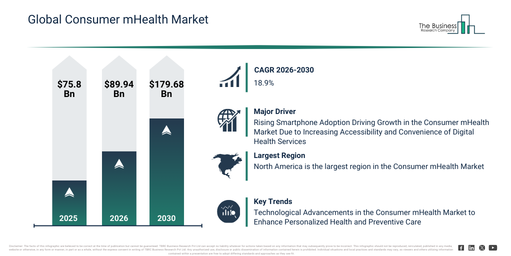
    The consumer mhealth market has experienced rapid expansion in recent years, and it is projected to grow from $75.8 billion in 2025 to $89.94 billion in 2026, exhibiting a compound annual growth rate (CAGR) of 18.7%. Historically, this expansion has been driven by several factors, including increased smartphone and wearable device usage, heightened consumer awareness of health, the proliferation of fitness and wellness applications, greater uptake of mobile health platforms, and a growing demand for self-managed healthcare.

    The size of the consumer mhealth market is anticipated to expand quickly in the near future. It will grow to $179.68 billion in 2030 at a compound annual growth rate (CAGR) of 18.9%. This anticipated growth during the forecast period stems from factors such as the wider uptake of personalized digital health solutions, the increasing incorporation of AI into consumer health applications, the broader implementation of remote monitoring for long-term illnesses, a heightened emphasis on managing mental well-being, and a greater need for wellness insights driven by data. Key trends expected throughout this period encompass the greater embrace of wearable health tracking technologies, a surge in the application of AI-powered wellness analytics, the deepening integration of remote health surveillance, the proliferation of tailored health coaching platforms, and an intensified commitment to proactive healthcare management.

    Download A Free Sample Report For Comprehensive Market Insights:

    https://www.thebusinessresearchcompany.com/sample.aspx?id=33073&type=smp

    Which Major Factors Are Contributing To The Development Of The Consumer mHealth Market?

    The rising trend of smartphone adoption is projected to stimulate the expansion of the consumer mHealth market in the coming years. Smartphone adoption refers to the degree to which individuals or households own and actively utilize smartphones, frequently measured as the proportion of mobile users equipped with smartphone-enabled devices. The broad availability of inexpensive mobile internet and smartphones has considerably elevated these adoption rates. Increased smartphone penetration grants improved access to mobile health applications, remote monitoring instruments, fitness trackers, and telehealth offerings, thereby expanding the consumer mHealth sector. For instance, in January 2025, according to Priori Data, a Germany-based market intelligence platform, smartphone adoption in the U.S. maintained its consistent upward trajectory, climbing from approximately 311 million users in 2023 to about 316 million in 2024. Therefore, the expanding smartphone adoption is a primary force propelling the growth of the consumer mHealth market.

    Which Segment Groups Define The Consumer mHealth Market Landscape?

    The consumer mhealth market covered in this report is segmented –

    1) By Product Type: Wearable Devices; Mobile Health Apps; Telemedicine; Other Product Types

    2) By Technology: Bluetooth; Wireless Fidelity (Wi Fi); Near-Field Communication (NFC); Cloud-Based Platforms

    3) By Application: Healthcare; Fitness; Wellness; Chronic Disease Management; Mental Health

    4) By End-User: Hospitals; Clinics; Home Healthcare; Individuals

    Subsegments:

    1) By Wearable Devices: Smart Watches; Fitness Trackers; Smart Bands; Health Monitoring Patches; Wearable Medical Sensors

    2) By Mobile Health Apps: Fitness And Wellness Apps; Chronic Disease Management Apps; Medication Reminder Apps; Mental Health And Stress Management Apps; Nutrition And Diet Tracking Apps

    3) By Telemedicine: Virtual Doctor Consultation Platforms; Remote Patient Monitoring Solutions; Telepsychiatry Services; Teleconsultation And Follow Up Services; Digital Prescription And Reporting Platforms

    4) By Other Product Types: Connected Medical Devices; Home Health Monitoring Systems; Health Data Management Platforms; Wellness And Preventive Care Solutions

    What Trends Are Affecting The Consumer mHealth Market Dynamics?

    Within the consumer mHealth market, major companies are directing their efforts towards technological advancements, such as AI-integrated preventive health diagnostics platforms. This initiative aims to satisfy the increasing demand for individualized, real-time health insights and early disease detection, propelled by rising consumer awareness of proactive health management and the prevention of chronic conditions. AI-integrated preventive health diagnostics platforms combine conventional biometric data collection, like that from wearables or blood tests, with artificial intelligence to offer predictive analytics, longitudinal tracking, and actionable health insights. These platforms move beyond typical single-point measurements by correlating lifestyle patterns with clinical biomarkers to provide a more holistic perspective on well-being. As an illustration, in July 2025, Ultrahuman Healthcare, an India-based health-tech company, launched Blood Vision, an inventive AI-enabled preventive blood-testing and diagnostics service. This service integrates data from over 100 biomarkers with real-time wearable lifestyle data collected by its Ultrahuman Ring AIR and related devices, supplying users with a comprehensive longitudinal health profile that includes personalized recommendations and clinician-grade summaries.

    Who Are The Major Companies Operating In The Consumer mHealth Market?

    Major companies operating in the consumer mhealth market are Apple Inc., Samsung Electronics Co. Ltd., Abbott Laboratories, Medtronic plc, Philips Healthcare, Omron Healthcare Inc., Dexcom Inc., Teladoc Health Inc., Athenahealth Inc., Masimo Corporation, Fitbit Inc, Veradigm Inc., Ada Health GmbH, Withings, MyFitnessPal Inc., AliveCor Inc., AgaMatrix Inc., DarioHealth Corp., Ovia Health Inc., Higi SH LLC

    Access The Complete Consumer mHealth Market Report:

    https://www.thebusinessresearchcompany.com/report/consumer-mhealth-market-report

    Which Region Stands As The Largest Contributor To The Consumer mHealth Market?

    North America was the largest region in the consumer mHealth market in 2025. Asia-Pacific is expected to be the fastest-growing region in the forecast period. The regions covered in the consumer mhealth market report are Asia-Pacific, South East Asia, Western Europe, Eastern Europe, North America, South America, Middle East, Africa.

    Access a Customized Consumer mHealth Market Report for Deeper Competitive Insights

    Get in touch with us:

    The Business Research Company: https://www.thebusinessresearchcompany.com/

    Americas: +1 310-496-7795

    Asia: +44 7882 955267 & +91 8897263534

    Europe: +44 7882 955267

    Email us at: marketing@tbrc.info

    Follow us on:

    LinkedIn: https://in.linkedin.com/company/the-business-research-company

    YouTube: https://www.youtube.com/channel/UC24_fI0rV8cR5DxlCpgmyFQ

    Global Market Model: https://www.thebusinessresearchcompany.com/global-market-model
  • Global Clinically Isolated Syndrome Market Analysis 2026–2030 Offering Strategic Insights

    Global Clinically Isolated Syndrome Market Analysis 2026–2030 Offering Strategic Insights

    The Business Research Company’s 2026 market reports feature advanced enhancements such as market attractiveness analysis, total addressable market evaluation, company benchmarking matrices, interactive Excel dashboards, expanded supply chain intelligence, emerging startup coverage, and detailed product insights, delivering more actionable and strategically valuable research.

    How Will The Market Value Of The Clinically Isolated Syndrome Market Change Between 2026 And 2030?

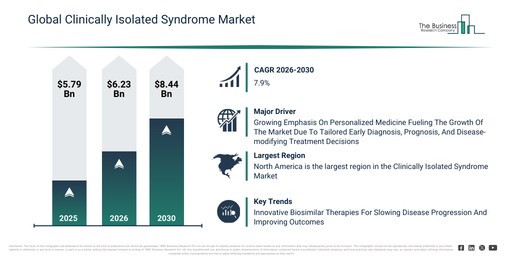
    The market size for clinically isolated syndrome has experienced robust growth in recent years. It is anticipated to expand from $5.79 billion in 2025 to $6.23 billion in 2026, registering a compound annual growth rate (CAGR) of 7.6%. The growth observed in the past can be attributed to enhanced access to magnetic resonance imaging diagnostics, increased awareness of early neurological symptoms, the proliferation of neurology specialty clinics, the adoption of disease-modifying therapies, and the presence of standardized diagnostic protocols.

    The market size for clinically isolated syndrome is expected to show significant growth in the coming years. It is forecast to grow to $8.44 billion in 2030, achieving a compound annual growth rate (CAGR) of 7.9%. The projected increase during this period can be attributed to an intensified focus on early multiple sclerosis prevention, the rising application of artificial intelligence in neurodiagnostics, the expanding availability of remote patient monitoring solutions, growing investment in biomarker research, and an increasing demand for personalized neurological care. Noteworthy trends in the forecast period include the expanding use of advanced neuroimaging analytics, a rising adoption of early intervention treatment strategies, the increasing integration of digital patient monitoring platforms, an expansion of biomarker-based risk assessment, and an enhanced emphasis on personalized disease management.

    Download A Free Sample Report For Comprehensive Market Insights:

    https://www.thebusinessresearchcompany.com/sample.aspx?id=33067&type=smp

    What Key Growth Drivers Are Influencing The Clinically Isolated Syndrome Market?

    The increasing focus on personalized medicine is projected to drive the expansion of the clinically isolated syndrome market in the future. This medical approach involves customizing treatment and preventive measures based on an individual’s unique genetic profile, lifestyle choices, and environmental factors. The heightened importance of personalized medicine stems from its capacity to enhance the efficacy of treatments and minimize side effects by aligning therapies with specific patient characteristics. Within clinically isolated syndrome, personalized medicine allows medical professionals to customize early diagnostic, prognostic, and disease-modifying treatment choices, taking into account individual patient biomarkers, imaging results, and risk profiles, thereby aiming to postpone or avert the development of multiple sclerosis. For example, in February 2024, the Personalized Medicine Coalition, a US-based non-profit organization, reported that the US Food and Drug Administration (FDA) in 2023 approved 16 new personalized therapies for individuals with rare diseases, a significant rise from the six approvals recorded in 2022. Consequently, the expanding focus on personalized medicine is fostering the growth of the clinically isolated syndrome market.

    What Key Segment Areas Are Included In The Clinically Isolated Syndrome Market Assessment?

    The clinically isolated syndrome market covered in this report is segmented –

    1) By Product And Service Type: Diagnostic Services; Disease-Modifying Therapies; Monitoring And Management Services; Digital Monitoring And Decision Support Tools

    2) By Drug Class: Interferon Beta; Glatiramer Acetate; Monoclonal Antibodies; Oral Immunomodulators; Other Drug Classes

    3) By Route Of Administration: Oral; Injectable; Intravenous

    4) By End User: Hospitals; Neurology Clinics; Diagnostic Centers; Home Care Settings

    Subsegments:

    1) By Diagnostic Services: Magnetic Resonance Imaging Diagnostic Services; Cerebrospinal Fluid Analysis Services; Evoked Potential Testing Services; Neurological Examination Services; Laboratory Biomarker Testing Services; Advanced Imaging Interpretation Services

    2) By Disease-Modifying Therapies: Injectable Immunomodulatory Therapies; Oral Disease Modifying Therapies; Monoclonal Antibody Based Therapies; Corticosteroid Based Therapies; Emerging Pharmacological Therapies

    3) By Monitoring And Management Services: Clinical Follow Up Monitoring Services; Relapse Management Services; Physical And Cognitive Rehabilitation Services; Patient Counseling And Support Services; Long Term Disease Management Programs

    4) By Digital Monitoring And Decision Support Tools: Remote Patient Monitoring Platforms; Clinical Decision Support Software; Mobile Health Applications; Artificial Intelligence Based Analytics Tools; Electronic Health Record Integrated Solutions

    Which Trends Are Influencing The Expansion Of The Clinically Isolated Syndrome Market?

    Major companies operating within the clinically isolated syndrome market are concentrating on creating innovative solutions, particularly biosimilar disease-modifying therapies. These therapies are designed to slow disease progression, reduce relapse rates, and improve long-term neurological outcomes for patients. Biosimilar disease-modifying therapies are essentially biologic drugs that bear a high similarity to an already approved reference biologic, intending to modify the fundamental disease process instead of just mitigating symptoms, all while offering comparable safety, efficacy, and quality. For example, in August 2023, Sandoz, a Switzerland-based generic and biosimilar medicines company, obtained FDA approval for Tyruko (natalizumab-sztn), establishing it as the first and only biosimilar for relapsing forms of multiple sclerosis (MS). Its primary purpose is to decrease MS relapses by up to 70%, decelerate disability progression, and limit the formation of new brain lesions by inhibiting immune cells from crossing into the central nervous system. This treatment is administered via IV infusion every four weeks under a REMS program due to the risk of PML. Significant benefits include its equivalent efficacy, safety, and immunogenicity to the originator product, and its anticipated November 2025 US launch is expected to provide considerable cost savings and wider access for patients with highly active disease who have not responded to other therapies.

    Which Companies Are Influencing The Clinically Isolated Syndrome Market?

    Major companies operating in the clinically isolated syndrome market are F. Hoffmann-La Roche Ltd., Bayer AG., Sanofi S.A., Novartis AG., Bristol-Myers Squibb Company, Siemens Healthineers AG., Merck KGaA, GE HealthCare, Teva Pharmaceutical Industries Ltd., Laboratory Corporation of America Holdings, Biogen Inc., Atara Biotherapeutics, Cipla Limited, Lupin Limited, Alembic Pharmaceuticals, TG Therapeutics Inc., Metropolis Healthcare, Mapi Pharma, Cortechs.AI Inc., Polpharma Biologics

    Access The Complete Clinically Isolated Syndrome Market Report:

    https://www.thebusinessresearchcompany.com/report/clinically-isolated-syndrome-market-report

    What Is The Largest Regional Market In The Clinically Isolated Syndrome Market?

    North America was the largest region in the clinically isolated syndrome market in 2025. Asia-Pacific is expected to be the fastest-growing region in the forecast period. The regions covered in the clinically isolated syndrome market report are Asia-Pacific, South East Asia, Western Europe, Eastern Europe, North America, South America, Middle East, Africa.

    Access a Customized Clinically Isolated Syndrome Market Report for Deeper Competitive Insights

    Get in touch with us:

    The Business Research Company: https://www.thebusinessresearchcompany.com/

    Americas: +1 310-496-7795

    Asia: +44 7882 955267 & +91 8897263534

    Europe: +44 7882 955267

    Email us at: marketing@tbrc.info

    Follow us on:

    LinkedIn: https://in.linkedin.com/company/the-business-research-company

    YouTube: https://www.youtube.com/channel/UC24_fI0rV8cR5DxlCpgmyFQ

    Global Market Model: https://www.thebusinessresearchcompany.com/global-market-model
  • Clear Cell Ovarian Cancer Market Outlook 2026–2035 Driven by Key Growth Drivers

    Clear Cell Ovarian Cancer Market Outlook 2026–2035 Driven by Key Growth Drivers

    The Business Research Company’s 2026 market reports feature advanced enhancements such as market attractiveness analysis, total addressable market evaluation, company benchmarking matrices, interactive Excel dashboards, expanded supply chain intelligence, emerging startup coverage, and detailed product insights, delivering more actionable and strategically valuable research.

    What Is The Forecasted Rise In Market Size Of The Clear Cell Ovarian Cancer Market During The Forecast Period?

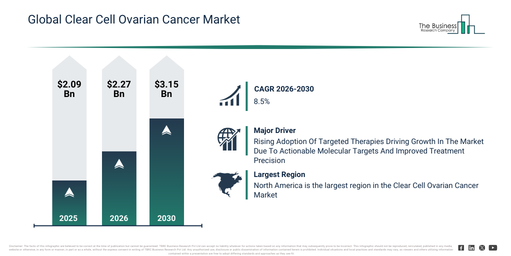
    The clear cell ovarian cancer market has seen significant growth in recent years. It is anticipated to expand from $2.09 billion in 2025 to $2.27 billion in 2026, achieving a compound annual growth rate (CAGR) of 8.3%. This past growth can be attributed to several factors including improved recognition of clear cell ovarian cancer as a distinct subtype, advancements in histopathological diagnostics, increased surgical intervention rates, expansion of oncology care infrastructure, and the availability of platinum-based chemotherapy regimens.

    The clear cell ovarian cancer market size is anticipated to undergo significant expansion over the next few years, projected to reach **$3.15 billion in 2030** at a compound annual growth rate (CAGR) of **8.5%**. This growth during the forecast period is attributable to heightened investments in precision oncology research, the advancing development of targeted and immunotherapy treatments, increased adoption of genetic testing for treatment selection, the broadening of personalized cancer care pathways, and rising clinical trial activity for rare ovarian cancers. Prominent trends for this period include the increased uptake of targeted and precision therapies, a rise in the use of molecular and genetic diagnostics, a stronger focus on combination treatment approaches, the expansion of specialized clinical management programs, and enhanced integration of digital patient monitoring tools.

    Download A Free Sample Report For Comprehensive Market Insights:

    https://www.thebusinessresearchcompany.com/sample.aspx?id=33066&type=smp

    Which Core Factors Are Supporting The Expansion Of The Clear Cell Ovarian Cancer Market?

    The clear cell ovarian cancer market is anticipated to expand due to the growing adoption of targeted therapies. These treatments specifically target cancer or diseased cells by focusing on particular molecules or pathways crucial for their growth and survival. The rising acceptance of targeted therapies is attributed to their precise action on diseased cells while minimizing harm to healthy ones, leading to more effective treatment with fewer side effects. Clear cell ovarian cancer is particularly suitable for targeted therapeutic approaches due to its distinct molecular characteristics, including ARID1A and PIK3CA mutations, VEGF-driven angiogenesis, and deficiencies in DNA repair pathways. These characteristics offer viable avenues for treatments such as PI3K/mTOR inhibitors, anti-angiogenic agents, immunotherapies, and PARP inhibitors. For instance, in 2023, the American Society of Gene & Cell Therapy, a US-based non-profit medical and scientific organization, reported a 10% increase in the number of gene therapies in Phase III clinical trials during Q3 2023, marking the first quarterly rise since Q3 2022. Thus, the increasing uptake of targeted therapies is a key driver for the growth of the clear cell ovarian cancer market.

    How Is Segment Classification Applied In The Clear Cell Ovarian Cancer Market?

    The clear cell ovarian cancer market covered in this report is segmented –

    1) By Treatment Type: Surgical Treatment; Chemotherapy; Targeted Therapy; Immunotherapy; Hormonal Therapy; Combination Therapy

    2) By Diagnosis Type: Imaging Techniques; Biopsy And Histopathology; Genetic And Molecular Testing; Blood Biomarker Testing; Pelvic Examination

    3) By Stage Of Disease: Early Stage; Advanced Stage; Recurrent Stage

    4) By Distribution Channel: Hospital Pharmacies; Retail Pharmacies; Online Pharmacies

    5) By End User: Hospitals; Cancer Treatment Centers; Specialty Clinics; Ambulatory Surgical Centers

    Subsegments:

    1) By Surgical Treatment: Primary Tumor Resection; Cytoreductive Surgery; Total Hysterectomy; Bilateral Salpingo Oophorectomy; Lymph Node Dissection; Minimally Invasive Surgery

    2) By Chemotherapy: Platinum Based Chemotherapy; Taxane Based Chemotherapy; Alkylating Agent Therapy; Antimetabolite Therapy; Neoadjuvant Chemotherapy; Adjuvant Chemotherapy

    3) By Targeted Therapy: Angiogenesis Inhibitor Therapy; Poly Adenosine Diphosphate Ribose Polymerase Inhibitor Therapy; Tyrosine Kinase Inhibitor Therapy; Mammalian Target Of Rapamycin Inhibitor Therapy; Phosphoinositide Three Kinase Pathway Inhibitor Therapy

    4) By Immunotherapy: Immune Checkpoint Inhibitor Therapy; Monoclonal Antibody Therapy; Cancer Vaccine Therapy; Adoptive Cell Therapy; Cytokine Based Therapy

    5) By Hormonal Therapy: Estrogen Suppression Therapy; Progesterone Modulation Therapy; Gonadotropin Releasing Hormone Analog Therapy; Aromatase Inhibitor Therapy

    6) By Combination Therapy: Surgery And Chemotherapy Combination; Chemotherapy And Targeted Therapy Combination; Targeted Therapy And Immunotherapy Combination; Chemotherapy And Immunotherapy Combination; Multimodal Integrated Treatment Approach

    Who Are The Companies Shaping The Clear Cell Ovarian Cancer Market Landscape?

    Major companies operating in the clear cell ovarian cancer market are F. Hoffmann-La Roche AG, Merck & Co. Inc., AbbVie Inc., Novartis AG, AstraZeneca plc, Thermo Fisher Scientific Inc., GlaxoSmithKline plc, Takeda Pharmaceutical Company Limited, Quest Diagnostics Incorporated, EisAI Co. Ltd., Natco Pharma Limited, Prescient Therapeutics Limited, Clovis Oncology Inc., Beta Drugs Ltd., Anant Pharmaceuticals Pvt. Ltd., Pharmaand Healthcare Pvt. Ltd., Glycotope GmbH, Genelux Corporation, LIXTE Biotechnology Holdings Inc., Newsoara Biopharma Pvt. Ltd.

    Access The Complete Clear Cell Ovarian Cancer Market Report:

    https://www.thebusinessresearchcompany.com/report/clear-cell-ovarian-cancer-market-report

    Which Region Contributes The Most To The Clear Cell Ovarian Cancer Market?

    North America was the largest region in the clear cell ovarian cancer market in 2025. Asia-Pacific is expected to be the fastest-growing region in the forecast period. The regions covered in the clear cell ovarian cancer market report are Asia-Pacific, South East Asia, Western Europe, Eastern Europe, North America, South America, Middle East, Africa.

    Access a Customized Clear Cell Ovarian Cancer Market Report for Deeper Competitive Insights

    Get in touch with us:

    The Business Research Company: https://www.thebusinessresearchcompany.com/

    Americas: +1 310-496-7795

    Asia: +44 7882 955267 & +91 8897263534

    Europe: +44 7882 955267

    Email us at: marketing@tbrc.info

    Follow us on:

    LinkedIn: https://in.linkedin.com/company/the-business-research-company

    YouTube: https://www.youtube.com/channel/UC24_fI0rV8cR5DxlCpgmyFQ

    Global Market Model: https://www.thebusinessresearchcompany.com/global-market-model