Month: June 2026

  • Cleanroom Shelving Systems Market Trends and Growth Opportunities Through 2026–2030

    Cleanroom Shelving Systems Market Trends and Growth Opportunities Through 2026–2030

    The Business Research Company’s 2026 market reports feature advanced enhancements such as market attractiveness analysis, total addressable market evaluation, company benchmarking matrices, interactive Excel dashboards, expanded supply chain intelligence, emerging startup coverage, and detailed product insights, delivering more actionable and strategically valuable research.

    How Is The Cleanroom Shelving Systems Market’s Market Value Anticipated To Evolve From 2026 To 2030?

    The cleanroom shelving systems market size has demonstrated strong expansion in recent years. This market is set to expand from $1.4 billion in 2025 to $1.51 billion in 2026, registering a compound annual growth rate (CAGR) of 7.9%. The market’s growth during the preceding period stemmed from factors such as the increase in pharmaceutical manufacturing facilities, the growth of semiconductor cleanroom environments, rising investments in biotechnology research laboratories, wider acceptance of controlled environment storage, and more stringent regulatory compliance mandates.

    The cleanroom shelving systems market is anticipated to experience substantial expansion over the coming years. It is projected to reach $2.07 billion by 2030, exhibiting a compound annual growth rate (CAGR) of 8.2%. This expansion during the forecast period is driven by factors such as the increasing development of sophisticated cleanroom facilities, heightened demand from the life sciences and electronics industries, a greater emphasis on adaptable cleanroom configurations, the proliferation of modular cleanroom infrastructure, and increased funding for contamination control measures. Key trends anticipated for the forecast period encompass a wider acceptance of modular cleanroom shelving systems, a surge in the need for stainless steel and polymer shelving, a heightened focus on storage designs that control contamination, the spread of adjustable and mobile shelving options, and a stronger commitment to adhering to cleanroom standards.

    Download A Free Sample Report For Comprehensive Market Insights:

    https://www.thebusinessresearchcompany.com/sample.aspx?id=33065&type=smp

    What Are The Main Drivers Accelerating The Growth Of The Cleanroom Shelving Systems Market?

    The future expansion of the cleanroom shelving systems market is anticipated due to a rise in pharmaceutical output. This production involves the industrial manufacture of medicines, transforming active pharmaceutical ingredients (APIs) and excipients into complete dosage forms like tablets, capsules, injections, or syrups, all while adhering to strict quality regulations. The surge in pharmaceutical manufacturing stems from the growing incidence of chronic and infectious diseases, which, in turn, fuels the necessity for a consistent and high-volume supply of vital medications. Cleanroom shelving systems facilitate pharmaceutical production by offering organized, contamination-free storage that ensures regulatory compliance, enhances material movement, and preserves product integrity during manufacturing. An example illustrates this trend: in November 2024, the European Federation of Pharmaceutical Industries and Associations (EFPIA), a Belgium-based trade group for the European pharmaceutical sector, indicated that total pharmaceutical production in Europe reached $475,200 million (€440,000 million) in 2024, marking an increase from approximately $438,158 million (€405,701 million) in 2023. Consequently, the expanding pharmaceutical production is a key factor propelling the growth of the cleanroom shelving systems market.

    What Are The Core Segment Classifications In The Cleanroom Shelving Systems Market?

    The cleanroom shelving systems market covered in this report is segmented –

    1) By Product Type: Wire Shelving; Solid Shelving; Modular Shelving; Mobile Shelving; Other Product Types

    2) By Material: Stainless Steel; Aluminum; Plastic; Other Materials

    3) By Application: Pharmaceuticals; Biotechnology; Hospitals And Healthcare; Electronics; Food And Beverage; Other Applications

    4) By Distribution Channel: Direct Sales; Distributors; Online Retail; Other Distribution Channels

    5) By End User: Laboratories; Manufacturing Facilities; Research Institutes; Other End Users

    Subsegments:

    1) By Wire Shelving: Standard Wire Shelving; Heavy-Duty Wire Shelving; Chrome Wire Shelving; Epoxy-Coated Wire Shelving; Powder-Coated Wire Shelving

    2) By Solid Shelving: Wooden Solid Shelving; Metal Solid Shelving; Laminate Solid Shelving; Stainless Steel Solid Shelving; Industrial Solid Shelving

    3) By Modular Shelving: Adjustable Modular Shelving; Fixed Modular Shelving; Multi-Level Modular Shelving; Knockdown Modular Shelving; Expandable Modular Shelving

    4) By Mobile Shelving: Manual Mobile Shelving; Electrically Operated Mobile Shelving; Mobile Compactor Shelving; Rail-Mounted Mobile Shelving; High-Density Mobile Shelving

    5) By Other Product Types: Plastic Shelving; Resin Shelving; Hybrid Shelving; Custom-Engineered Shelving; Specialty Shelving

    Which Trends Are Affecting The Cleanroom Shelving Systems Market Framework?

    Companies operating in the cleanroom shelving systems market are concentrating on developing advanced storage solutions, such as modular stainless-steel shelving, to improve contamination control, increase workflow efficiency, and support regulatory compliance in controlled environments. Modular stainless-steel shelving refers to precisely engineered, corrosion-resistant racks designed for cleanroom applications, allowing for customizable configurations while minimizing particle generation. For example, in October 2025, Schiller Automatisierungstechnik, a Germany-based provider of laboratory and cleanroom solutions, launched its dedicated cleanroom division as an independent entity. This division offers a variety of shelving systems optimized for pharmaceutical, biotechnology, and semiconductor manufacturing, featuring easy-to-clean surfaces, adjustable components, and enhanced load-bearing capabilities. These solutions help maintain strict cleanliness standards, streamline inventory management, and improve operational efficiency in highly controlled production settings.

    Which Industry Players Are Present In The Cleanroom Shelving Systems Market?

    Major companies operating in the cleanroom shelving systems market are Stora Solutions, Metro (InterMetro Industries Corporation), GMP Technical Solutions, Lista International Corp., Terra Universal, Connect 2 Cleanrooms, Teknomek, Clean Air Products, PortaFab Corporation, Abtech, Cleatech LLC, Clean Rooms International, Gerbig Engineering Company, Icleantech (Iclean), MRC Cleanrooms, Modular Cleanrooms Inc., Palbam Class, Liberty Industries, SPS CleanTech, and Clean Room Depot.

    Access The Complete Cleanroom Shelving Systems Market Report:

    https://www.thebusinessresearchcompany.com/report/cleanroom-shelving-systems-market-report

    Which Regional Market Leads The Cleanroom Shelving Systems Market?

    North America was the largest region in the cleanroom shelving systems market in 2025. Asia-Pacific is expected to be the fastest-growing region in the forecast period. The regions covered in the cleanroom shelving systems market report are Asia-Pacific, South East Asia, Western Europe, Eastern Europe, North America, South America, Middle East, Africa.

    Access a Customized Cleanroom Shelving Systems Market Report for Deeper Competitive Insights

    Get in touch with us:

    The Business Research Company: https://www.thebusinessresearchcompany.com/

    Americas: +1 310-496-7795

    Asia: +44 7882 955267 & +91 8897263534

    Europe: +44 7882 955267

    Email us at: marketing@tbrc.info

    Follow us on:

    LinkedIn: https://in.linkedin.com/company/the-business-research-company

    YouTube: https://www.youtube.com/channel/UC24_fI0rV8cR5DxlCpgmyFQ

    Global Market Model: https://www.thebusinessresearchcompany.com/global-market-model
  • Global Chronic Idiopathic Urticaria Treatment Market Forecast 2026–2035 with Long-Term Outlook

    Global Chronic Idiopathic Urticaria Treatment Market Forecast 2026–2035 with Long-Term Outlook

    The Business Research Company’s 2026 market reports feature advanced enhancements such as market attractiveness analysis, total addressable market evaluation, company benchmarking matrices, interactive Excel dashboards, expanded supply chain intelligence, emerging startup coverage, and detailed product insights, delivering more actionable and strategically valuable research.

    By 2030, How Much Growth In Market Size Is Expected For The Chronic Idiopathic Urticaria Treatment Market?

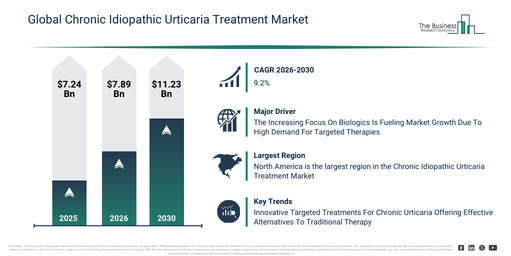
    The chronic idiopathic urticaria treatment market size has seen significant growth in recent years. It is anticipated to expand from $7.24 billion in 2025 to $7.89 billion in 2026, exhibiting a compound annual growth rate (CAGR) of 9.0%. This historical growth can be attributed to an increased diagnosis of chronic urticaria, the availability of second-line antihistamine therapies, the adoption of stepwise treatment protocols, the expansion of allergy specialty clinics, and the growing use of immunomodulatory drugs.

    The chronic idiopathic urticaria treatment market is projected to experience robust expansion over the coming years. This market is set to reach $11.23 billion by 2030, exhibiting a compound annual growth rate (CAGR) of 9.2%. Factors contributing to this growth during the forecast period include a heightened demand for biologic therapies, an increased emphasis on individualized immunology care, the proliferation of digital tools for disease management, greater investment in new urticaria treatments, and improved patient understanding and compliance with therapy. Key trends anticipated for this period encompass a wider acceptance of biologic therapies for individuals with difficult-to-treat conditions, a surge in the implementation of tailored treatment plans, increased incorporation of digital tools for symptom tracking, an expansion of available injectable medications, and a stronger emphasis on managing the disease over the long term.

    Download A Free Sample Report For Comprehensive Market Insights:

    https://www.thebusinessresearchcompany.com/sample.aspx?id=33064&type=smp

    Which Growth Drivers Are Expected To Support The Chronic Idiopathic Urticaria Treatment Market Forward?

    An escalating emphasis on biologics is anticipated to stimulate the expansion of the chronic idiopathic urticaria treatment market moving forward. Biologics are therapeutic products derived from living organisms or their constituents, designed to target specific immune system pathways for treating diseases. The growing focus on biologics is attributed to advancements in biotechnology and immunology, which have facilitated the creation of more precise and effective treatments that address the underlying mechanisms of immune-mediated conditions, rather than merely managing symptoms. These biologics specifically target the fundamental immune pathways and mast cell activation responsible for chronic idiopathic urticaria, thus transforming treatment approaches and offering patients more effective and durable symptom control. For example, in February 2025, the World Health Organization (WHO), a Switzerland-based intergovernmental body, stated that its 2023 Essential Medicines List comprises 81 biologic therapies, constituting over 15% of all listed medicines. Therefore, the heightened focus on biologics is propelling the growth of the chronic idiopathic urticaria treatment market.

    How Is The Chronic Idiopathic Urticaria Treatment Market Structured Across Different Market Segments?

    The chronic idiopathic urticaria treatment market covered in this report is segmented –

    1) By Types: Tablets; Capsules; Creams; Lotions; Injections

    2) By Drug Class: Antihistamines; Corticosteroids; Leukotriene Receptor Antagonists; Immunosuppressants; Biologic Therapies; Other Drug Class

    3) By Route Of Administration: Oral; Injectable; Topical

    4) By Distribution Channel: Hospital Pharmacies; Retail Pharmacies; Online Pharmacies

    Subsegments:

    1) By Tablets: Immediate Release Tablets; Extended Release Tablets; Enteric Coated Tablets; Chewable Tablets; Orally Disintegrating Tablets

    2) By Capsules: Hard Gelatin Capsules; Soft Gelatin Capsules; Sustained Release Capsules; Delayed Release Capsules

    3) By Creams: Medicated Topical Creams; Anti Inflammatory Creams; Antifungal Creams; Antibacterial Creams; Moisturizing Therapeutic Creams

    4) By Lotions: Medicated Therapeutic Lotions; Anti Inflammatory Lotions; Antiseptic Lotions; Moisturizing Lotions; Specialty Dermatological Lotions

    5) By Injections: Intravenous Injections; Intramuscular Injections; Subcutaneous Injections; Pre Filled Syringe Injections; Auto Injector Based Injections

    What Trends Are Influencing The Chronic Idiopathic Urticaria Treatment Market?

    Leading companies in the chronic idiopathic urticaria treatment market are concentrating on developing innovative products, such as monoclonal antibody therapies, to offer targeted, lasting relief for patients who do not respond to conventional treatments. These monoclonal antibody therapies are biologic medications specifically engineered to target immune system components, like immunoglobulin E (IgE) or other inflammatory mediators that cause chronic hives, thereby providing more precise action compared to traditional antihistamines or corticosteroids. For example, in September 2025, Celltrion Inc., a biopharmaceutical company based in South Korea, introduced Omriclo, an omalizumab biosimilar, in Norway. This product contains the same active monoclonal antibody as Xolair, works by neutralizing circulating IgE, and is administered via subcutaneous injection. Its distinctive characteristics include its first-mover status in Europe, improved accessibility via local distribution channels, and potential cost efficiencies for healthcare systems. It is intended for chronic idiopathic urticaria patients who remain symptomatic despite standard therapy, serving as a biologic alternative to conventional treatments, offering enhanced symptom management, reducing the frequency of flare-ups, and potentially improving overall quality of life by decreasing dependence on long-term antihistamine or corticosteroid use.

    Which Organizations Are Involved In The Chronic Idiopathic Urticaria Treatment Market?

    Major companies operating in the chronic idiopathic urticaria treatment market are F. Hoffmann-La Roche Ltd., Sanofi S.A., Novartis AG., AstraZeneca PLC, GlaxoSmithKline plc, Teva Pharmaceutical Industries Ltd., Regeneron Pharmaceuticals Inc., Incyte Corporation, Dr. Reddy’s Laboratories Ltd., Celltrion Inc., Yuhan Corporation, Kiniksa Pharmaceuticals Ltd., Celldex Therapeutics Inc., Septerna Therapeutics Inc., Carna Biosciences Inc., United BioPharma Inc., Recludix Pharma Inc., Jasper Therapeutics Inc., Evommune Inc., ARS Pharmaceuticals Inc

    Access The Complete Chronic Idiopathic Urticaria Treatment Market Report:

    https://www.thebusinessresearchcompany.com/report/chronic-idiopathic-urticaria-treatment-market-report

    Which Region Holds The Largest Share In The Chronic Idiopathic Urticaria Treatment Market?

    North America was the largest region in the chronic idiopathic urticaria treatment market in 2025. Asia-Pacific is expected to be the fastest-growing region in the forecast period. The regions covered in the chronic idiopathic urticaria treatment market report are Asia-Pacific, South East Asia, Western Europe, Eastern Europe, North America, South America, Middle East, Africa.

    Access a Customized Chronic Idiopathic Urticaria Treatment Market Report for Deeper Competitive Insights

    Get in touch with us:

    The Business Research Company: https://www.thebusinessresearchcompany.com/

    Americas: +1 310-496-7795

    Asia: +44 7882 955267 & +91 8897263534

    Europe: +44 7882 955267

    Email us at: marketing@tbrc.info

    Follow us on:

    LinkedIn: https://in.linkedin.com/company/the-business-research-company

    YouTube: https://www.youtube.com/channel/UC24_fI0rV8cR5DxlCpgmyFQ

    Global Market Model: https://www.thebusinessresearchcompany.com/global-market-model
  • Chlorhexidine Mouth Rinse Market Insights 2026–2030 Exploring Emerging Opportunities

    Chlorhexidine Mouth Rinse Market Insights 2026–2030 Exploring Emerging Opportunities

    The Business Research Company’s 2026 market reports feature advanced enhancements such as market attractiveness analysis, total addressable market evaluation, company benchmarking matrices, interactive Excel dashboards, expanded supply chain intelligence, emerging startup coverage, and detailed product insights, delivering more actionable and strategically valuable research.

    What Market Value Trend Is Expected For The Chlorhexidine Mouth Rinse Market From 2026 To 2030?

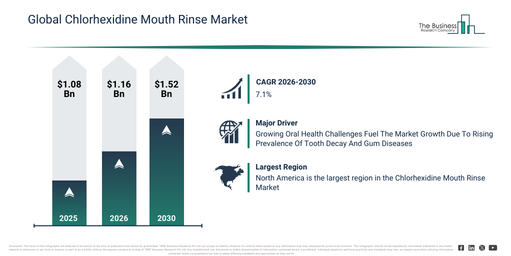
    The chlorhexidine mouth rinse market has experienced robust expansion in recent years. Projections indicate its growth from $1.08 billion in 2025 to $1.16 billion in 2026, demonstrating a compound annual growth rate (CAGR) of 6.8%. The historical growth of this market can be linked to factors such as the increasing prevalence of periodontal disease, the widespread use of antiseptic oral care, its adoption in post-dental surgery protocols, the availability of prescription oral rinses, and the expansion of dental clinic networks.

    The chlorhexidine mouth rinse market is projected to experience robust expansion over the coming years, with its valuation expected to reach $1.52 billion by 2030, advancing at a compound annual growth rate (CAGR) of 7.1%. This anticipated growth during the forecast period is primarily fueled by a heightened emphasis on preventive oral healthcare, an increasing demand for medicated home care products, the broadening availability of over-the-counter therapeutic mouth rinses, a growing consumer preference for low-irritation formulations, and rising awareness concerning oral hygiene. Key trends foreseen in this period encompass an escalating demand for alcohol-free mouth rinse formulations, increased utilization of post-surgical oral care products, a developing preference for combination oral antiseptic solutions, the expansion of prescription-based dental rinses, and an enhanced focus on achieving long-term plaque control.

    Download A Free Sample Report For Comprehensive Market Insights:

    https://www.thebusinessresearchcompany.com/sample.aspx?id=33063&type=smp

    What Influential Factors Are Boosting The Chlorhexidine Mouth Rinse Market Demand?

    The expanding occurrence of oral diseases is anticipated to fuel the expansion of the chlorhexidine mouth rinse market in the coming period. These conditions encompass disorders of the mouth and oral cavity, such as tooth decay, gum infections, and other issues impacting oral health. An increase in oral diseases is largely attributable to significant sugar intake, which fosters tooth decay and gum problems by nourishing harmful oral bacteria that generate enamel-eroding acids. Chlorhexidine mouth rinse aids in preventing and managing oral diseases by eliminating or hindering the proliferation of detrimental bacteria within the mouth, thereby lessening plaque accumulation, gingivitis, and infection risks. For example, in January 2025, the American Cancer Society, a US-based professional organization, predicted that approximately 59,660 new cases of oral cavity and oropharyngeal cancer would be diagnosed in 2025, with an estimated 12,770 individuals succumbing to these cancers. Consequently, the rising incidence of oral diseases is a key factor boosting the chlorhexidine mouth rinse market’s development. Increased healthcare spending is projected to stimulate the expansion of the chlorhexidine mouth rinse market in the coming years. This spending represents financial resources allocated to the prevention, diagnosis, treatment, and management of various illnesses and health conditions. Healthcare spending is on the rise, primarily driven by the growing occurrence of chronic diseases, which necessitate continuous treatment and medical support. Higher healthcare expenditure facilitates greater accessibility to chlorhexidine mouth rinse by funding its manufacturing, distribution, and integration into dental care initiatives, thereby ensuring individuals can effectively prevent and manage oral infections. As an illustration, the Centers for Medicare & Medicaid Services, a US-based agency, reported in December 2024 that U.S. health care expenditures rose by 7.5% in 2023, reaching $4.9 trillion, which equates to approximately $14,570 per person. Hence, the escalating healthcare expenditure is a significant factor propelling the growth of the chlorhexidine mouth rinse market.

    Which Segment-Based Categories Are Covered In The Chlorhexidine Mouth Rinse Market?

    The chlorhexidine mouth rinse market covered in this report is segmented –

    1) By Product Type: Alcohol-Based; Alcohol-Free

    2) By Concentration: 0.12%; 0.20%; Other Concentrations

    3) By Application: Dental Care; Oral Surgery; Periodontal Disease; Other Applications

    4) By Distribution Channel: Hospital Pharmacies; Retail Pharmacies; Online Pharmacies; Other Distribution Channels

    5) By End-User: Hospitals; Dental Clinics; Home Care; Other End-Users

    Subsegments:

    1) By Alcohol-Based: Ethanol-Based Formulations; Isopropyl Alcohol-Based Formulations; Combination Alcohol Formulations

    2) By Alcohol-Free: Chlorhexidine-Based Formulations; Cetylpyridinium Chloride-Based Formulations; Herbal And Plant-Based Formulations

    Who Are The Firms Contributing To The Chlorhexidine Mouth Rinse Market Ecosystem?

    Major companies operating in the chlorhexidine mouth rinse market are Procter & Gamble, GlaxoSmithKline plc, 3M Company, Medline Inc., Colgate-Palmolive Company, Teva Pharmaceutical Industries Ltd., Viatris Inc., Ecolab Inc., Henry Schein Inc., Perrigo Company plc, Dentsply Sirona, Dr. Reddy’s Laboratories Ltd., Cipla Ltd., Sunstar Suisse S.A., Xttrium Laboratories, Young Innovations Inc., Hager & Werken, Curaden AG, ICPA Health Products Ltd., Arvoni Lifesciences Private Limited, AstraEureka Pharmaceuticals, Topcaredent AG.

    Access The Complete Chlorhexidine Mouth Rinse Market Report:

    https://www.thebusinessresearchcompany.com/report/chlorhexidine-mouth-rinse-market-report

    Which Region Is The Dominant Market In The Chlorhexidine Mouth Rinse Market?

    North America was the largest region in the chlorhexidine mouth rinse market in 2025. Asia-Pacific is expected to be the fastest-growing region in the forecast period. The regions covered in the chlorhexidine mouth rinse market report are Asia-Pacific, South East Asia, Western Europe, Eastern Europe, North America, South America, Middle East, Africa.

    Access a Customized Chlorhexidine Mouth Rinse Market Report for Deeper Competitive Insights

    Get in touch with us:

    The Business Research Company: https://www.thebusinessresearchcompany.com/

    Americas: +1 310-496-7795

    Asia: +44 7882 955267 & +91 8897263534

    Europe: +44 7882 955267

    Email us at: marketing@tbrc.info

    Follow us on:

    LinkedIn: https://in.linkedin.com/company/the-business-research-company

    YouTube: https://www.youtube.com/channel/UC24_fI0rV8cR5DxlCpgmyFQ

    Global Market Model: https://www.thebusinessresearchcompany.com/global-market-model
  • Global Cheek Augmentation Market Outlook 2026–2035 Highlighting Expansion Opportunities

    Global Cheek Augmentation Market Outlook 2026–2035 Highlighting Expansion Opportunities

    The Business Research Company’s 2026 market reports feature advanced enhancements such as market attractiveness analysis, total addressable market evaluation, company benchmarking matrices, interactive Excel dashboards, expanded supply chain intelligence, emerging startup coverage, and detailed product insights, delivering more actionable and strategically valuable research.

    How Does The Forecasted Market Size Of The Cheek Augmentation Market Compare Between 2026 And 2030?

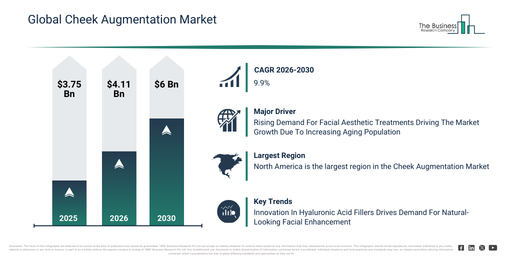
    The cheek augmentation market size has experienced robust growth over recent years. This market is anticipated to expand from $3.75 billion in 2025 to $4.11 billion in 2026, achieving a compound annual growth rate (CAGR) of 9.7%. Historically, this expansion has been driven by factors such as increasing acceptance of cosmetic procedures, the growth of medical aesthetics clinics, the availability of advanced dermal fillers, the rising influence of aesthetic medicine, and the expansion of urban cosmetic service providers.

    The cheek augmentation market is anticipated to experience substantial growth in the coming years, with its valuation expected to reach $6 billion by 2030, demonstrating a compound annual growth rate (CAGR) of 9.9%. This projected growth is fueled by several factors, including a rising demand for minimally invasive cosmetic treatments, increased adoption of AI-assisted facial analysis, the expansion of medical tourism focused on aesthetics, a growing emphasis on personalized beauty solutions, and heightened investments in aesthetic technology platforms. Furthermore, significant trends shaping this period encompass the greater utilization of 3D facial imaging for planning treatments, an increasing desire for non-surgical injectable procedures, a stronger preference for personalized aesthetic designs, the broadened application of minimally invasive facial contouring, and an enhanced focus on achieving natural-looking results.

    Download A Free Sample Report For Comprehensive Market Insights:

    https://www.thebusinessresearchcompany.com/sample.aspx?id=33062&type=smp

    Which Drivers Are Advancing The Cheek Augmentation Market Growth?

    The increasing need for facial aesthetic procedures is projected to fuel the expansion of the cheek augmentation market in the future. These treatments are cosmetic methods aimed at enhancing or restoring facial characteristics, thereby improving appearance and boosting self-confidence. This heightened demand for facial aesthetic treatments stems from an expanding aging demographic desiring a more youthful look, as the natural loss of facial volume and the emergence of wrinkles encourage numerous people to undergo procedures that can restore youthfulness and elevate self-confidence. Cheek augmentation complements facial aesthetic procedures by replenishing mid-face volume, refining facial contours, correcting asymmetry, and producing a subtle lifting effect, all of which contribute to a more youthful, harmonious, and revitalized overall facial appearance. For example, data from June 2024, provided by the American Society of Plastic Surgeons, a US-based non-profit body, indicated that minimally invasive procedures grew by 7% in 2023, surpassing surgical procedures by 2%. Concurrently, plastic surgeries observed a 5% increase, while minimally invasive procedures recorded a 7% year-over-year growth. Consequently, the increasing need for facial aesthetic procedures is propelling the expansion of the cheek augmentation market.

    What Are The Major Segment Categories Within The Cheek Augmentation Market?

    The cheek augmentation market covered in this report is segmented –

    1) By Procedure Type: Surgical Cheek Implants; Injectable Fillers; Fat Grafting Or Autologous Fat Transfer

    2) By Product: Derma Fillers; Implant; Malar Implant; Submalar Implant; Combined Implant; Other Products

    3) By Technique: Minimally Invasive Procedures; Conventional Surgical Procedures

    4) By End-User: Specialty Aesthetic Clinics Market; Medical Spas Market; Hospitals Market

    Subsegments:

    1) By Surgical Cheek Implants: Silicone Implants; Porous Polyethylene Implants; Anatomical Implants

    2) By Injectable Fillers: Hyaluronic Acid Fillers; Calcium Hydroxylapatite Fillers; Poly L Lactic Acid Fillers; Polymethyl Methacrylate Fillers

    3) By Fat Grafting Or Autologous Fat Transfer: Micro Fat Grafting; Nano Fat Grafting; Structural Fat Grafting

    What Trends Are Influencing The Future Of The Cheek Augmentation Market?

    Leading companies operating in the cheek augmentation market are concentrating on developing innovative products, such as advanced hyaluronic acid-based dermal fillers, to enhance facial volume and contour, offering improved safety and longer-lasting results. These advanced hyaluronic acid-based dermal fillers are injectable gels designed to mimic the body’s natural hyaluronic acid, helping to restore cheek volume, enhance contour, and improve facial symmetry by attracting and retaining moisture for a smoother, more youthful appearance. For instance, in January 2026, Revance Therapeutics Inc., a US-based pharmaceutical company, and TEOXANE SA., a Switzerland-based manufacturing company, received U.S. Food and Drug Administration (FDA) approval for RHA Dynamic Volume, a next-generation hyaluronic acid dermal filler developed for cheek augmentation and the correction of age-related midface contour deficiencies. The product is engineered using Preserved Network Technology, a gentle, heat-free crosslinking process that helps maintain the natural structure of hyaluronic acid, resulting in high dynamic strength, elasticity, and durability compared with conventional fillers. It is designed to provide deep structural support while adapting to facial movement, allowing natural-looking results both at rest and in motion, and has demonstrated comparable clinical effectiveness with fewer treatment sessions and touch-ups in late-stage clinical studies.

    Which Key Players Are Active In The Cheek Augmentation Market?

    Major companies operating in the cheek augmentation market are AbbVie Inc., LG Chem Life Sciences Ltd., Stryker Corporation, Zimmer Biomet Holdings Inc., Merz Aesthetics GmbH, KLS Martin Group, Sinclair Pharma Limited, Medartis Holding AG, Hugel Inc., Revance Therapeutics Inc., Medytox Inc., Anika Therapeutics Inc., Croma-Pharma GmbH, GC Aesthetics Ltd., Regen Lab SA, Teoxane Laboratories SA, Human Med AG, BioPlus Co. Ltd., Polytech Health & Aesthetics GmbH, and Sebbin Group.

    Access The Complete Cheek Augmentation Market Report:

    https://www.thebusinessresearchcompany.com/report/cheek-augmentation-market-report

    Which Area Represents The Largest Portion Of The Cheek Augmentation Market?

    North America was the largest region in the cheek augmentation market in 2025. Asia-Pacific is expected to be the fastest-growing region in the forecast period. The regions covered in the cheek augmentation market report are Asia-Pacific, South East Asia, Western Europe, Eastern Europe, North America, South America, Middle East, Africa.

    Access a Customized Cheek Augmentation Market Report for Deeper Competitive Insights

    Get in touch with us:

    The Business Research Company: https://www.thebusinessresearchcompany.com/

    Americas: +1 310-496-7795

    Asia: +44 7882 955267 & +91 8897263534

    Europe: +44 7882 955267

    Email us at: marketing@tbrc.info

    Follow us on:

    LinkedIn: https://in.linkedin.com/company/the-business-research-company

    YouTube: https://www.youtube.com/channel/UC24_fI0rV8cR5DxlCpgmyFQ

    Global Market Model: https://www.thebusinessresearchcompany.com/global-market-model

  • Cervical Intraepithelial Neoplasia Market Growth Outlook 2026–2030 with Innovation Trends

    Cervical Intraepithelial Neoplasia Market Growth Outlook 2026–2030 with Innovation Trends

    The Business Research Company’s 2026 market reports feature advanced enhancements such as market attractiveness analysis, total addressable market evaluation, company benchmarking matrices, interactive Excel dashboards, expanded supply chain intelligence, emerging startup coverage, and detailed product insights, delivering more actionable and strategically valuable research.

    What Increase In Market Value Is Predicted For The Cervical Intraepithelial Neoplasia Market During The 2026–2030 Period?

    The cervical intraepithelial neoplasia market size has experienced significant expansion in recent years. It is forecast to rise from $1.14 billion in 2025 to $1.22 billion in 2026, demonstrating a compound annual growth rate (CAGR) of 7.8%. This historical growth can be attributed to the proliferation of cervical cancer screening programs, an increase in the detection of precancerous lesions, the adoption of colposcopy-guided diagnostic approaches, the availability of excisional treatment devices, and the expanding role of specialty gynecology clinics.

    The cervical intraepithelial neoplasia market is poised for significant expansion in the coming years. By 2030, its value is projected to climb to $1.66 billion, demonstrating a compound annual growth rate (CAGR) of 8.0%. This growth during the forecast period is fueled by an escalating demand for early intervention strategies, the increasing adoption of biomarker-driven treatment decisions, the expansion of community-based cervical care initiatives, a heightened focus on fertility-preserving treatments, and the integration of AI-assisted diagnostic imaging technologies. Concurrently, major trends expected over this period include a greater uptake of biomarker-based triage methods, the rising utilization of minimally invasive treatment devices, the growing integration of digital colposcopy systems, an expansion of outpatient CIN treatment procedures, and an intensified concentration on early lesion risk stratification.

    Download A Free Sample Report For Comprehensive Market Insights:

    https://www.thebusinessresearchcompany.com/sample.aspx?id=33061&type=smp

    What Primary Factors Are Fueling The Expansion Of The Cervical Intraepithelial Neoplasia Market?

    The increasing prevalence of human papillomavirus (HPV) infection is anticipated to propel the expansion of the cervical intraepithelial neoplasia (CIN) market. HPV infection, a widespread viral condition, originates from a group of related viruses primarily spread through skin-to-skin or sexual contact, which can lead to warts, precancerous lesions, and specific cancers, particularly of the cervix, anus, throat, and genitals. The rise in HPV infection is attributed to low vaccination coverage in many populations, enabling the ongoing transmission of the virus. Cervical intraepithelial neoplasia (CIN) assists in assessing human papillomavirus (HPV) infection by serving as a measurable precancerous lesion that indicates persistent HPV infection and the risk of disease progression. For example, in July 2025, Brieflands, a Netherlands-based science and medical data publisher, reported that the prevalence of high-risk human papillomavirus (hrHPV) infection climbed from 12.78 percent in 2023 to 13.47 percent in 2024, marking an approximate increase of 5.4 percent. Thus, the escalating incidence of HPV infection is driving the growth of the cervical intraepithelial neoplasia (CIN) market.

    How Is The Cervical Intraepithelial Neoplasia Market Distributed Across Key Segments?

    The cervical intraepithelial neoplasia market covered in this report is segmented –

    1) By Cervical Intraepithelial Neoplasia (CIN) Grade: Cervical Intraepithelial Neoplasia (CIN) I; Cervical Intraepithelial Neoplasia (CIN) II; Cervical Intraepithelial Neoplasia (CIN) III

    2) By Diagnostic Method: Pap Smear; Human Papillomavirus (HPV) Testing; Colposcopy; Biomarker Triage

    3) By Treatment: Cryotherapy; Loop Electrosurgical Excision Procedure (LEEP); Cold Knife Conization; Immunotherapy

    4) By Distribution Channel: Direct Sales; Distributors And Retail Channels; Online Sales

    5) By End User: Hospitals; Specialty Clinics; Diagnostic Labs; Community Health Centers

    Subsegments:

    1) By Cervical Intraepithelial Neoplasia (CIN) I: Mild Dysplasia; Low Grade Squamous Intraepithelial Lesion; Human Papillomavirus Associated Changes

    2) By Cervical Intraepithelial Neoplasia (CIN) II: Moderate Dysplasia; High Grade Squamous Intraepithelial Lesion; Human Papillomavirus Induced Cellular Abnormalities

    3) By Cervical Intraepithelial Neoplasia (CIN) III: Severe Dysplasia; Carcinoma In Situ; High Grade Squamous Intraepithelial Lesion Progression

    Which Trends Are Contributing To Changes In The Cervical Intraepithelial Neoplasia Market?

    Leading companies in the cervical intraepithelial neoplasia market are prioritizing the development of innovative solutions, such as non-invasive cervical cancer screening, to enable earlier detection, improve patient compliance, and enhance overall treatment outcomes. Non-invasive cervical cancer screening refers to medical tests designed to identify precancerous or cancerous changes in the cervix without requiring surgical procedures or tissue removal, typically utilizing methods like Pap smears, HPV DNA tests, or liquid-based cytology. For instance, in September 2025, PHASE Scientific International Limited, a biotechnology company based in China, launched a urine-based clinical study for cervical cancer (HPV) screening, aimed at advancing non-invasive early detection methods. This study is enrolling 17,000 women in China to validate the non-invasive detection of cervical intraepithelial neoplasia (CIN) and cancer. Utilizing PHASiFY technology, the method concentrates HPV DNA over 10,000 times, achieving 93.42% sensitivity and high concordance with standard swabs, thereby promoting WHO’s 90-70-90 elimination targets through convenient self-sampling, AI colposcopy, and scalable public health impact.

    Who Are The Leading Firms Participating In The Cervical Intraepithelial Neoplasia Market?

    Major companies operating in the cervical intraepithelial neoplasia market are F. Hoffmann-La Roche Ltd., Merck & Co. Inc., Pfizer Inc., Thermo Fisher Scientific Inc., Abbott Laboratories, GlaxoSmithKline plc., Quest Diagnostics Inc., Hologic Inc., QIAGEN N.V., Inovio Pharmaceuticals Inc., CooperSurgical Inc., PDS Biotechnology Corporation, Nykode Therapeutics ASA, Antiva Biosciences Inc., Genexine Inc., Papivax LLC, Zilico Ltd., TruScreen Group Limited, Arbor Vita Corporation, Frantz Viral Therapeutics Inc., Barinthus Biotherapeutics Inc.

    Access The Complete Cervical Intraepithelial Neoplasia Market Report:

    https://www.thebusinessresearchcompany.com/report/cervical-intraepithelial-neoplasia-market-report

    Which Region Commands The Largest Share Of The Cervical Intraepithelial Neoplasia Market?

    North America was the largest region in the cervical intraepithelial neoplasia market in 2025. Asia-Pacific is expected to be the fastest-growing region in the forecast period. The regions covered in the cervical intraepithelial neoplasia market report are Asia-Pacific, South East Asia, Western Europe, Eastern Europe, North America, South America, Middle East, Africa.

    Access a Customized Cervical Intraepithelial Neoplasia Market Report for Deeper Competitive Insights

    Get in touch with us:

    The Business Research Company: https://www.thebusinessresearchcompany.com/

    Americas: +1 310-496-7795

    Asia: +44 7882 955267 & +91 8897263534

    Europe: +44 7882 955267

    Email us at: marketing@tbrc.info

    Follow us on:

    LinkedIn: https://in.linkedin.com/company/the-business-research-company

    YouTube: https://www.youtube.com/channel/UC24_fI0rV8cR5DxlCpgmyFQ

    Global Market Model: https://www.thebusinessresearchcompany.com/global-market-model

  • Cervical HPV mRNA Testing Market Forecast 2026–2035 with Key Data Insights

    Cervical HPV mRNA Testing Market Forecast 2026–2035 with Key Data Insights

    The Business Research Company’s 2026 market reports feature advanced enhancements such as market attractiveness analysis, total addressable market evaluation, company benchmarking matrices, interactive Excel dashboards, expanded supply chain intelligence, emerging startup coverage, and detailed product insights, delivering more actionable and strategically valuable research.

    How Will The Market Size Of The Cervical Human Papillomavirus (HPV) Messenger Ribonucleic Acid (mRNA) Testing Market Progress Through 2030?

    The market for cervical human papillomavirus (hpv) messenger ribonucleic acid (mrna) testing has experienced rapid expansion in recent years. It will grow from $1.06 billion in 2025 to $1.22 billion in 2026 at a compound annual growth rate (CAGR) of 14.6%. This historical growth is attributable to several key factors, including increased coverage of cervical cancer screening programs, the integration of molecular diagnostics in gynecology, growing awareness of the risks associated with hr-hpv infection, the widespread availability of automated pcr platforms, and the expansion of centralized diagnostic laboratories.

    The cervical human papillomavirus (hpv) messenger ribonucleic acid (mrna) testing market is projected for significant expansion in the coming years. This market is anticipated to reach a valuation of $2.12 billion by 2030, exhibiting a compound annual growth rate (CAGR) of 14.9%. Factors driving this growth during the forecast period include a rising preference for primary HPV screening, a greater need for highly specific cancer risk assessment, the proliferation of population-based screening initiatives, the adoption of digital pathology and reporting systems, and heightened investments in precision diagnostics. Key trends expected over the forecast horizon involve the wider uptake of mRNA-based assays for primary cervical screening, the expanding deployment of fully automated molecular testing platforms, the increasing incorporation of genotype-specific reflex testing, the development of advanced high-specificity screening algorithms, and a stronger emphasis on identifying clinically actionable HPV.

    Download A Free Sample Report For Comprehensive Market Insights:

    https://www.thebusinessresearchcompany.com/sample.aspx?id=33060&type=smp

    Which Strategic Drivers Are Supporting The Cervical Human Papillomavirus (HPV) Messenger Ribonucleic Acid (mRNA) Testing Market Development?

    How Does Segment Analysis Break Down The Cervical Human Papillomavirus (HPV) Messenger Ribonucleic Acid (mRNA) Testing Market Structure?

    The cervical human papillomavirus (hpv) messenger ribonucleic acid (mrna) testing market covered in this report is segmented –

    1) By Product Type: Assay Kits; Instruments; Reagents And Consumables

    2) By Application: Cervical Cancer Screening; Research; Other Applications

    3) By End User: Hospitals And Clinics; Diagnostic Laboratories; Research Institutes; Other End Users

    Subsegments:

    1) By Assay Kits: Messenger Ribonucleic Acid Detection Kits; Multiplex Testing Kits; High Risk Genotype Specific Kits; Screening And Diagnostic Kits

    2) By Instruments: Real Time Polymerase Chain Reaction Systems; Automated Molecular Analyzers; Sample Preparation Systems; Nucleic Acid Extraction Instruments

    3) By Reagents And Consumables: Primers And Probes; Enzymes And Buffers; Controls And Standards; Extraction And Purification Consumables

    What Trends Are Shaping The Cervical Human Papillomavirus (HPV) Messenger Ribonucleic Acid (mRNA) Testing Market Structure?

    Key players in the cervical human papillomavirus messenger ribonucleic acid (mRNA) testing market are concentrating on technological advancements, such as multiplex real-time PCR innovations, to gain a competitive advantage. Their efforts aim to enhance diagnostic accuracy, facilitate simultaneous E6/E7 mRNA detection and high-risk HPV genotyping, minimize false positives, reduce testing costs, and expand adoption. Multiplex real-time PCR innovations are defined by their capacity to detect and quantify multiple HPV E6/E7 mRNA targets and high-risk genotypes concurrently within a single PCR reaction, thus boosting the accuracy, efficiency, and clinical relevance of cervical HPV testing. As an example, in July 2024, Medicon Hellas S.A., a Greece-based diagnostics company, launched a multiplex real time pcr kit for hpv e6/e7 mrna genotyping, acting as the exclusive distributor for uni-medica in Greece and Cyprus. This kit offers compatibility with multiple PCR instruments like bio-rad cfx96 and hongshi slan-96 series for fluorochrome analysis with ct values. It is applicable to diverse samples, including semen, urine, and anal swabs, beyond traditional cytology, carries CE-IVD marking, and provides results in 2.5 hours.

    Which Companies Are Engaged In The Cervical Human Papillomavirus (HPV) Messenger Ribonucleic Acid (mRNA) Testing Market Environment?

    Major companies operating in the cervical human papillomavirus (hpv) messenger ribonucleic acid (mrna) testing market are F. Hoffmann-La Roche Ltd., Thermo Fisher Scientific Inc., Becton, Dickinson and Company, Eurofins Scientific, Agilent Technologies Inc., bioMérieux SA, Bio-Rad Laboratories Inc., Bio-Techne Corporation, Co-Dx Ltd., Promega Corporation, Seegene Inc., Molbio Diagnostics, QIAGEN N.V., Sansure Biotech Inc., Xiamen Zeesan Biotech Co. Ltd., DiaCarta Inc., Operon S.A., AB ANALITICA s.r.l., Arbor Vita Corporation, Mylab Discovery Solutions, Guangdong Hybribio Biotech Co. Ltd., Atila Biosystems, GeneFirst Ltd., Advanced Molecular Diagnostics.

    Access The Complete Cervical Human Papillomavirus (HPV) Messenger Ribonucleic Acid (mRNA) Testing Market Report:

    https://www.thebusinessresearchcompany.com/report/cervical-human-papillomavirus-hpv-messenger-ribonucleic-acid-mrna-testing-market-report

    Which Region Accounts For The Highest Share Of The Cervical Human Papillomavirus (HPV) Messenger Ribonucleic Acid (mRNA) Testing Market?

    North America was the largest region in the cervical human papillomavirus (HPV) messenger ribonucleic acid (mRNA) testing market in 2025. Asia-Pacific is expected to be the fastest-growing region in the forecast period. The regions covered in the cervical human papillomavirus (hpv) messenger ribonucleic acid (mrna) testing market report are Asia-Pacific, South East Asia, Western Europe, Eastern Europe, North America, South America, Middle East, Africa.

    Access a Customized Cervical Human Papillomavirus (HPV) Messenger Ribonucleic Acid (mRNA) Testing Market Report for Deeper Competitive Insights

    Get in touch with us:

    The Business Research Company: https://www.thebusinessresearchcompany.com/

    Americas: +1 310-496-7795

    Asia: +44 7882 955267 & +91 8897263534

    Europe: +44 7882 955267

    Email us at: marketing@tbrc.info

    Follow us on:

    LinkedIn: https://in.linkedin.com/company/the-business-research-company

    YouTube: https://www.youtube.com/channel/UC24_fI0rV8cR5DxlCpgmyFQ

    Global Market Model: https://www.thebusinessresearchcompany.com/global-market-model
  • Cell-Based Biological Reagents Market Outlook 2026–2030 Highlighting Growth Drivers and Trends

    Cell-Based Biological Reagents Market Outlook 2026–2030 Highlighting Growth Drivers and Trends

    The Business Research Company’s 2026 market reports feature advanced enhancements such as market attractiveness analysis, total addressable market evaluation, company benchmarking matrices, interactive Excel dashboards, expanded supply chain intelligence, emerging startup coverage, and detailed product insights, delivering more actionable and strategically valuable research.

    What Is The Expected Market Size Of The Cell-based Biological Reagents Market In 2026 And How Much Will It Reach By 2030?

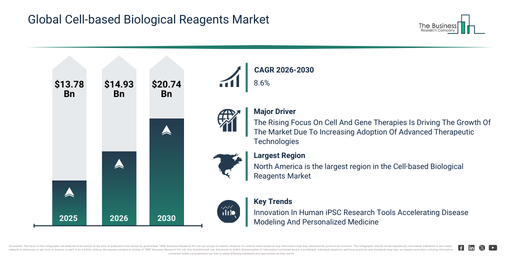
    The cell-based biological reagents market size has experienced robust growth in recent years. It is projected to expand from $13.78 billion in 2025 to $14.93 billion in 2026, demonstrating a compound annual growth rate (CAGR) of 8.3%. The historical expansion can be attributed to factors such as increased drug discovery research activities, higher spending on pharmaceutical R&D, a growing reliance on cell-based assays for toxicity testing, advancements in cell culture technologies, and the rising adoption of standardized biological reagents.

    The cell-based biological reagents market is anticipated to show significant expansion in the next few years. It is projected to achieve a size of $20.74 billion by 2030, growing at a compound annual growth rate (CAGR) of 8.6%. This growth during the forecast period can be attributed to factors such as increasing demand for predictive in vitro models, the expansion of personalized medicine research, a rising adoption of AI-driven drug screening, increasing investments in regenerative medicine studies, and a greater focus on complex disease modeling. Prominent trends for the forecast period include the increasing uptake of 3D cell culture and assay platforms, a rise in the use of gene-edited and reporter cell lines, growing demand for high-throughput cell-based screening, the broadening of stem cell and primary cell applications, and an enhanced focus on developing physiologically relevant models.

    Download A Free Sample Report For Comprehensive Market Insights:

    https://www.thebusinessresearchcompany.com/sample.aspx?id=33059&type=smp

    What Major Growth Factors Are Impacting The Cell-based Biological Reagents Market?

    The heightened emphasis on cell and gene therapies is projected to fuel the expansion of the cell-based biological reagents market. These therapies utilize living cells or genetic elements to repair, replace, or modify impaired cells or genes, aiming to treat or cure various diseases. The adoption of cell and gene therapies is increasing primarily due to the growing occurrence of rare and genetic illnesses, as they can address the fundamental issues at a cellular or genetic level, potentially offering remedies instead of just symptom management provided by traditional treatments. Cell-based biological reagents facilitate cell and gene therapies by delivering the essential tools and substances required for cultivating, modifying, and efficiently delivering therapeutic cells or genetic material. A relevant example shows that in March 2024, IQVIA Holdings Inc., a US-based healthcare company focused on clinical research services and analytics, revealed global expenditure on cell and gene therapies soared to $5.9 billion in 2023, marking an increase of 38% from 2022. Hence, the increasing concentration on cell and gene therapies is stimulating the growth of the cell-based biological reagents market.

    What Segment Types Are Included In The Cell-based Biological Reagents Market Analysis?

    The cell-based biological reagents market covered in this report is segmented –

    1) By Product Type: Assay Kits; Cell Lines; Reagents; Other Product Types

    2) By Technology: Two Dimensional Cell Culture; Three Dimensional Cell Culture; High Throughput Screening Platforms; Stem Cell Technologies; Gene Edited Cell Platforms

    3) By Application: Drug Discovery And Development; Toxicology And Safety Assessment; Disease Modeling; Regenerative Medicine; Basic Research

    4) By End User: Pharmaceutical And Biotechnology Companies; Academic And Research Institutes; Contract Research Organizations; Clinical And Diagnostic Laboratories; Government And Public Health Agencies

    Subsegments:

    1) By Assay Kits: Cell Viability Assay Kits; Cytotoxicity Assay Kits; Proliferation Assay Kits; Apoptosis Assay Kits; Signal Transduction Assay Kits

    2) By Cell Lines: Primary Cell Lines; Immortalized Cell Lines; Stem Cell Lines; Cancer Cell Lines; Transfected Cell Lines

    3) By Reagents: Culture Media Reagents; Growth Factor Reagents; Enzyme Reagents; Supplement Reagents; Antibody Reagents

    4) By Other Product Types: Cryopreservation Reagents; Labware Consumables; Transfection Reagents; Cell Sorting Reagents; Custom Reagents

    Which Trends Are Supporting The Evolution Of The Cell-based Biological Reagents Market?

    Leading companies operating in the cell-based biological reagents market are strategically focusing on developing human-induced pluripotent stem cell (iPSC) research products to drive progress in drug discovery, disease modeling, and regenerative medicine applications. Human-induced pluripotent stem cell (iPSC) research products represent comprehensive tools and integrated workflows that allow for the generation, maintenance, differentiation, and analysis of iPSCs, applicable across various areas of biomedical research, including drug testing, disease modeling, and the advancement of cell therapy. For example, in July 2024, BioServe Biotechnologies (India) Private Limited, an India-based biotechnology company, introduced a sophisticated stem cell product line designed to further regenerative medicine and drug development research. This innovation supports biotech research by ensuring reliable iPSC generation, 3D organoid cultures, and precise differentiation tools, which helps to minimize experimental inconsistencies. The products streamline drug discovery by providing human-specific models that reduce reliance on animal testing and accelerate toxicity assessments, contributing to faster therapy development. Ultimately, they empower personalized medicine, facilitating tissue regeneration for conditions such as diabetes or heart failure while simultaneously reducing costs and the likelihood of rejection.

    Who Are The Prominent Players Across The Cell-based Biological Reagents Market?

    Major companies operating in the cell-based biological reagents market are Thermo Fisher Scientific Inc., Merck KGaA, FUJIFILM Corp., Danaher Corporation, GE Healthcare, Becton, Dickinson And Company, Corning Incorporated, Lonza Group Ltd., Agilent Technologies Inc., Sartorius AG, Revvity Inc., Bio-Rad Laboratories Inc., STEMCELL Technologies Inc., Miltenyi Biotec, Abcam plc, Promega Corporation, Takara Bio Inc., R&D Systems Inc., MP Biomedicals, Sino Biological, Cell Signaling Technology Inc., InvivoGen, Tocris Bioscience, and OPM Biosciences.

    Access The Complete Cell-based Biological Reagents Market Report:

    https://www.thebusinessresearchcompany.com/report/cell-based-biological-reagents-market-report

    Which Region Is The Primary Market For The Cell-based Biological Reagents Market?

    North America was the largest region in the cell-based biological reagents market in 2025. Asia-Pacific is expected to be the fastest-growing region in the forecast period. The regions covered in the cell-based biological reagents market report are Asia-Pacific, South East Asia, Western Europe, Eastern Europe, North America, South America, Middle East, Africa.

    Access a Customized Cell-based Biological Reagents Market Report for Deeper Competitive Insights

    Get in touch with us:

    The Business Research Company: https://www.thebusinessresearchcompany.com/

    Americas: +1 310-496-7795

    Asia: +44 7882 955267 & +91 8897263534

    Europe: +44 7882 955267

    Email us at: marketing@tbrc.info

    Follow us on:

    LinkedIn: https://in.linkedin.com/company/the-business-research-company

    YouTube: https://www.youtube.com/channel/UC24_fI0rV8cR5DxlCpgmyFQ

    Global Market Model: https://www.thebusinessresearchcompany.com/global-market-model
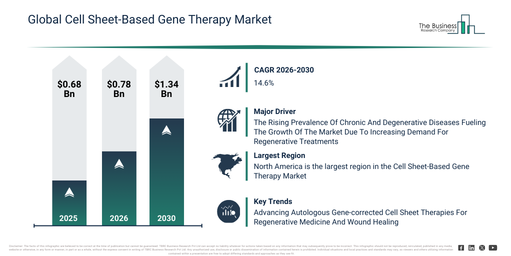
  • Rising chronic disease burden fueling demand in the Cell Sheet-Based Gene Therapy Market

    Rising chronic disease burden fueling demand in the Cell Sheet-Based Gene Therapy Market

    The Business Research Company’s 2026 market reports feature advanced enhancements such as market attractiveness analysis, total addressable market evaluation, company benchmarking matrices, interactive Excel dashboards, expanded supply chain intelligence, emerging startup coverage, and detailed product insights, delivering more actionable and strategically valuable research.

    What Market Size Is Forecasted For The Cell Sheet-Based Gene Therapy Market By 2030 Based On Its 2026 Value?

    The market size for cell sheet-based gene therapy has witnessed rapid expansion in recent years. This market is expected to increase from $0.68 billion in 2025 to $0.78 billion in 2026, progressing at a compound annual growth rate (CAGR) of 14.4%. The expansion observed historically is due to increasing advancements in tissue engineering research, the early adoption of regenerative medicine techniques, growth in cell-based therapeutic studies, improvements in gene delivery technologies, and the expansion of translational research initiatives.

    The cell sheet-based gene therapy market is projected for significant expansion over the coming years. Its valuation is set to reach $1.34 billion by 2030, exhibiting a compound annual growth rate (CAGR) of 14.6%. This anticipated growth stems from factors such as a heightened demand for localized regenerative treatments, an uptick in clinical trials concerning gene-modified cell therapies, broader applications in oncology and cardiology, increased investments in sophisticated tissue engineering, and a growing emphasis on precision regenerative medicine. Key trends anticipated during this period involve the proliferation of multilayered and co-culture cell sheet technologies, an intensified focus on localized gene expression therapies, greater incorporation of regenerative medicine strategies, more frequent utilization of stem-cell derived cell sheets, and an elevated emphasis on tissue integration and long-term viability.

    Download A Free Sample Report For Comprehensive Market Insights:

    https://www.thebusinessresearchcompany.com/sample.aspx?id=33058&type=smp

    What Market Drivers Are Helping Shape The Cell Sheet-Based Gene Therapy Market Expansion?

    The increasing occurrence of chronic and degenerative ailments is anticipated to fuel expansion in the cell sheet-based gene therapy market. These long-lasting conditions, encompassing cardiovascular disorders, neurodegenerative diseases, diabetes, and genetic disorders, gradually harm tissues and organs, necessitating ongoing therapeutic treatment. The widespread presence of these health issues is growing because of larger aging populations and extended life expectancies in both developed and emerging economies. Cell sheet-based gene therapy facilitates regenerative treatment methods for chronic and degenerative diseases by allowing localized tissue restoration and continuous gene transfer via layered living cell constructs, which can enhance tissue integration and durable therapeutic results. As an illustration, in April 2025, the International Diabetes Federation (IDF), a non-profit organization based in Belgium, reported that 589 million individuals globally had diabetes in 2024, with this number forecasted to reach 853 million by 2050. Consequently, the growing occurrence of chronic and degenerative diseases is propelling the expansion of the cell sheet-based gene therapy market.

    Which Segment Divisions Form The Structure Of The Cell Sheet-Based Gene Therapy Market?

    The cell sheet-based gene therapy market covered in this report is segmented –

    1) By Cell-Sheet Type: Monolayer Cell-Sheet Type; Co-Culture Cell-Sheet Type; Multilayered Cell-Sheet Type; Other Cell-Sheet Types

    2) By Technology Type: Cell Sheet-Based Engineering Techniques; Gene Delivery Methods

    3) By Source Type: Autologous; Allogenic; Stem-Cell Derived

    4) By Application: Oncology; Ophthalmology; Genetic Disorders; Cardiology; Other Applications

    5) By End-User: Hospitals And Clinics; Research And Academic Institutions; Biotech And Pharma Companies; Other End-Users

    Subsegments:

    1) By Monolayer Cell-Sheet Type: Cardiomyocyte Sheets; Epithelial Cell Sheets; Mesenchymal Stem Cell Sheets; Other Monolayer Cell Sheets

    2) By Co-Culture Cell-Sheet Type: Fibroblast + Stem Cell Sheets; Endothelial + Smooth Muscle Cell Sheets; Other Co-Culture Combinations

    3) By Multilayered Cell-Sheet Type: Triple-Layered Sheets; Double-Layered Sheets; Other Multilayered Configurations

    4) By Other Cell-Sheet Types: Genetically Modified Cell Sheets; Hybrid Cell Sheets; Other Novel Or Experimental Sheets

    What Trends Are Affecting The Growth Of The Cell Sheet-Based Gene Therapy Market?

    Leading companies operating within the cell sheet-based gene therapy market are concentrating on developing innovative solutions, such as autologous gene-corrected cell sheet products. These aim to enhance regenerative medicine outcomes, improve treatment precision, and achieve long-term tissue repair by combining engineered cells with scaffold-free sheet constructs for targeted gene delivery and wound healing. Autologous gene-corrected cell sheet products describe therapies where a patient’s own cells are genetically modified ex vivo, expanded into sheet constructs that preserve cell-to-cell interactions and extracellular matrix integrity, and then applied directly to damaged tissues to promote functional integration and durable therapeutic effects. For instance, in April 2025, Abeona Therapeutics Inc., a US-based biopharmaceutical company, received Food and Drug Administration (FDA), a US-based federal agency approval for zevaskyn (prademagene zamikeracel), which is designed to treat wounds in adult and pediatric patients with recessive dystrophic epidermolysis bullosa (RDEB). Zevaskyn delivers the functional COL7A1 gene via genetically corrected cell sheets, promotes clinically meaningful wound healing and pain reduction with a single application, and supports sustained type VII collagen expression at wound sites, establishing it as a breakthrough regenerative therapy and a model for future cell sheet-based gene therapy innovations.

    Which Companies Form The Competitive Landscape Of The Cell Sheet-Based Gene Therapy Market?

    Major companies operating in the cell sheet-based gene therapy market are Hitachi Ltd., Thermo Fisher Scientific, Fujifilm Cellular Dynamics Inc. (FCDI) (FUJIFILM Holdings Corporation), Lonza Group AG, teijin regenet co. ltd., Terumo Corporation, Nikon CeLL innovation Co. Ltd., Rohto Pharmaceutical Co. Ltd., BioBridge Global, AGC Biologics, Shibuya Corporation (Shibuya Kogyo Co. Ltd.), National Resilience Inc., Takara Bio Inc., Japan Tissue Engineering Co. Ltd. (J-TEC), Medipost Co. Ltd., Cell Therapies Pty Ltd, CellSeed Inc., SCTbio, Abeona Therapeutics Inc., Foundation ENEA Tech, Cyto-Facto Inc., ENCELL Co. Ltd.

    Access The Complete Cell Sheet-Based Gene Therapy Market Report:

    https://www.thebusinessresearchcompany.com/report/cell-sheet-based-gene-therapy-market-report

    Which Geographic Region Represents The Largest Cell Sheet-Based Gene Therapy Market Share?

    North America was the largest region in the cell sheet based gene therapy market in 2025. Asia-Pacific is expected to be the fastest-growing region in the forecast period. The regions covered in the cell sheet-based gene therapy market report are Asia-Pacific, South East Asia, Western Europe, Eastern Europe, North America, South America, Middle East, Africa.

    Access a Customized Cell Sheet-Based Gene Therapy Market Report for Deeper Competitive Insights

    Get in touch with us:

    The Business Research Company: https://www.thebusinessresearchcompany.com/

    Americas: +1 310-496-7795

    Asia: +44 7882 955267 & +91 8897263534

    Europe: +44 7882 955267

    Email us at: marketing@tbrc.info

    Follow us on:

    LinkedIn: https://in.linkedin.com/company/the-business-research-company

    YouTube: https://www.youtube.com/channel/UC24_fI0rV8cR5DxlCpgmyFQ

    Global Market Model: https://www.thebusinessresearchcompany.com/global-market-model
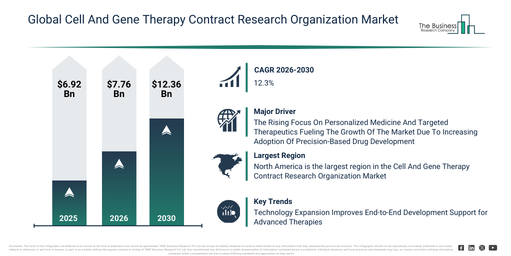
  • Technology expansion enhancing development capabilities in the Cell and Gene Therapy CRO Market

    Technology expansion enhancing development capabilities in the Cell and Gene Therapy CRO Market

    The Business Research Company’s 2026 market reports feature advanced enhancements such as market attractiveness analysis, total addressable market evaluation, company benchmarking matrices, interactive Excel dashboards, expanded supply chain intelligence, emerging startup coverage, and detailed product insights, delivering more actionable and strategically valuable research.

    How Is The Market Value Of The Cell And Gene Therapy Contract Research Organization Market Projected To Expand During 2026–2030?

    The cell and gene therapy contract research organization market has seen rapid growth in recent years. It will grow from $6.92 billion in 2025 to $7.76 billion in 2026 at a compound annual growth rate (CAGR) of 12.1%. The market’s historical expansion is attributable to an increasing number of early-stage cell and gene therapy programs, limited in-house development capabilities, a rise in rare disease research pipelines, growing regulatory complexity within advanced therapies, and an increasing reliance on external research expertise.

    The market size for cell and gene therapy contract research organizations is projected to experience swift expansion over the coming years. This market is anticipated to reach $12.36 billion in 2030, exhibiting a compound annual growth rate (CAGR) of 12.3%. Factors contributing to this growth during the forecast period include heightened clinical trial activity in gene therapies, the broadening of personalized medicine development, increased investments in oncology and genetic disorder research, a rising need for accelerated development timelines, and enhanced collaboration between biotechnology companies and CROs. Key trends observed over the forecast period encompass an increase in outsourcing for cell and gene therapy research, a surging demand for integrated preclinical and clinical services, a heightened emphasis on regulatory and compliance expertise, the expansion of support for vector development and manufacturing, and improved utilization of data-driven trial management strategies.

    Download A Free Sample Report For Comprehensive Market Insights:

    https://www.thebusinessresearchcompany.com/sample.aspx?id=33057&type=smp

    Which Significant Factors Are Encouraging Growth In The Cell And Gene Therapy Contract Research Organization Market?

    The increasing emphasis on personalized medicine and targeted therapeutics is anticipated to drive expansion in the cell and gene therapy contract research organization (CRO) market moving ahead. This approach entails creating treatments specifically adapted to an individual’s unique genetic, molecular, or cellular profile to enhance effectiveness and minimize side effects. The heightened attention on personalized medicine stems from regulators and healthcare systems increasingly favoring precision therapies to tackle intricate diseases and attain improved clinical outcomes. Cell and gene therapy contract research organizations (CROs) facilitate personalized medicine through their specialized preclinical, clinical, and regulatory services essential for the development, testing, and validation of intricate gene- and cell-based therapeutic products. As an illustration, in April 2025, the Personalized Medicine Coalition, a US-based nonprofit, reported that the Food and Drug Administration (FDA) approved 18 personalized medicines during 2024, representing approximately 38% of all newly approved therapeutic molecular entities. Consequently, the expanding focus on personalized medicine and targeted therapeutics is a significant factor boosting the cell and gene therapy contract research organization (CRO) market.

    How Are Different Segment Groups Identified Within The Cell And Gene Therapy Contract Research Organization Market?

    The cell and gene therapy contract research organization market covered in this report is segmented –

    1) By Type: Preclinical Contract Research Organization; Clinical Stage Contract Research Organization; Other Types

    2) By Service: Project And Clinical Trial Management; Regulatory Strategy; Data Management And Medical Writing; Clinical Monitoring; Quality Management And Good Manufacturing Practice Compliance; Biostatistics And Safety Monitoring; Patient And Site Recruitment; Technology Transfer; Other Services

    3) By Indication: Oncology; Central Nervous System Disorders; Infectious Diseases; Immunological Disorders; Cardiovascular Diseases; Respiratory Diseases; Diabetes; Ophthalmology; Pain Management; Other Indications

    4) By Modality: Cell-Based Therapies; Gene Therapies; Gene-Modified Cell Therapies

    5) By Application: Hospital; Research Institute; Other Applications

    Subsegments:

    1) By Preclinical Contract Research Organization: In Vitro Testing Services; In Vivo Animal Model Services; Toxicology And Safety Assessment; Other Preclinical Services

    2) By Clinical Stage Contract Research Organization: Phase I Clinical Trial Services; Phase II Clinical Trial Services; Phase III Clinical Trial Services; Other Clinical Stage Services

    3) By Other Types: Regulatory Consulting Services; Process Development Services; Manufacturing Support Services; Other Support Services

    Which Trends Are Influencing The Direction Of The Cell And Gene Therapy Contract Research Organization Market?

    Major companies within the cell and gene therapy contract research organization (CRO) market are concentrating on developing innovative solutions, such as expanded laboratory and analytical services. These efforts aim to enhance the efficiency of therapy development, ensure regulatory compliance, and improve research precision by offering state-of-the-art facilities, specialized equipment, and integrated testing capabilities for cell and gene therapies. Expanded laboratory and analytical services refer to contract research organization (CRO) offerings that increase capacity, enable the execution of complex assays, and provide sponsors with end-to-end support for the development of advanced cell and gene therapies. For instance, in August 2025, Labcorp Holdings Inc., a US-based healthcare company, enlarged its cell and gene therapy laboratory in Madison, Wisconsin, thereby improving its capabilities for cell characterization, vector analytics, and regulatory-compliant testing. This expanded facility now provides specialized infrastructure for intricate cell and gene therapy workflows, supports high-throughput sample processing, and integrates advanced analytical platforms, positioning it as a comprehensive solution for accelerating cell and gene therapy research and development.

    Who Are The Key Market Participants In The Cell And Gene Therapy Contract Research Organization Market?

    Major companies operating in the cell and gene therapy contract research organization market are Thermo Fisher Scientific Inc., IQVIA Holdings Inc., Laboratory Corporation of America Holdings (Labcorp), ICON plc, WuXi AppTec Co. Ltd., Syneos Health Inc., Charles River Laboratories International Inc., Parexel International Corporation, Fortrea Holdings Inc., CMIC Co. Ltd., Medpace Holdings Inc., PharmaLex GmbH, Premier Research International LLC, Worldwide Clinical Trials Inc., Novotech (Australia) Pty Ltd., Precision for Medicine Inc., Syngene International Limited, Allucent Inc., TFS HealthScience AB, QPS Holdings LLC, Altasciences Company Inc., Veristat LLC, Linical Co. Ltd., Aixial Group, ProRelix Research LLC

    Access The Complete Cell And Gene Therapy Contract Research Organization Market Report:

    https://www.thebusinessresearchcompany.com/report/cell-and-gene-therapy-contract-research-organization-market-report

    Which Region Leads The Cell And Gene Therapy Contract Research Organization Market By Size?

    North America was the largest region in the cell and gene therapy contract research organization (CRO) market in 2025. Asia-Pacific is expected to be the fastest-growing region in the forecast period. The regions covered in the cell and gene therapy contract research organization market report are Asia-Pacific, South East Asia, Western Europe, Eastern Europe, North America, South America, Middle East, Africa.

    Access a Customized Cell And Gene Therapy Contract Research Organization Market Report for Deeper Competitive Insights

    Get in touch with us:

    The Business Research Company: https://www.thebusinessresearchcompany.com/

    Americas: +1 310-496-7795

    Asia: +44 7882 955267 & +91 8897263534

    Europe: +44 7882 955267

    Email us at: marketing@tbrc.info

    Follow us on:

    LinkedIn: https://in.linkedin.com/company/the-business-research-company

    YouTube: https://www.youtube.com/channel/UC24_fI0rV8cR5DxlCpgmyFQ

    Global Market Model: https://www.thebusinessresearchcompany.com/global-market-model

  • Advancements in next-generation aortic valve design transforming the Cardiovascular Repair and Reconstruction Devices Market

    Advancements in next-generation aortic valve design transforming the Cardiovascular Repair and Reconstruction Devices Market

    The Business Research Company’s 2026 market reports feature advanced enhancements such as market attractiveness analysis, total addressable market evaluation, company benchmarking matrices, interactive Excel dashboards, expanded supply chain intelligence, emerging startup coverage, and detailed product insights, delivering more actionable and strategically valuable research.

    What Are The Forecasted Market Size Figures For The Cardiovascular Repair And Reconstruction Devices Market In 2026 And 2030?

    The cardiovascular repair and reconstruction devices market size has experienced strong growth in recent years. Its valuation is set to climb from $6.1 billion in 2025 to $6.65 billion in 2026, achieving a compound annual growth rate (CAGR) of 9.0%. This historical growth can be linked to several factors, including a rising incidence of congenital and structural heart diseases, an expansion of cardiovascular surgical capabilities, continuous improvements in implant material science, the increasing adoption of stent-based interventions, and a greater awareness of advanced cardiac repair options.

    The cardiovascular repair and reconstruction devices market is anticipated to show significant expansion over the coming years. Its size is projected to reach $9.45 billion in 2030, progressing at a compound annual growth rate (CAGR) of 9.2%. This projected growth can be linked to factors such as an increasing demand for minimally invasive cardiac surgeries, an expanding aging population dealing with vascular conditions, rising investments in advanced implant technologies, the growth in personalized cardiovascular care, and the increasing adoption of hybrid surgical-interventional approaches. Prominent trends within the forecast period include the increasing uptake of minimally invasive repair devices, a rising use of bioprosthetic and hybrid implants, a growing demand for customized cardiovascular implants, the expansion of endovascular reconstruction techniques, and an enhanced focus on the long-term durability of devices.

    Download A Free Sample Report For Comprehensive Market Insights:

    https://www.thebusinessresearchcompany.com/sample.aspx?id=33056&type=smp

    What Core Drivers Are Transforming The Cardiovascular Repair And Reconstruction Devices Market?

    The increasing adoption of minimally invasive procedures is projected to fuel the expansion of the cardiovascular repair and reconstruction devices market. These procedures involve medical interventions carried out via small cuts or natural orifices, leading to less tissue damage, quicker recovery periods, and diminished procedural hazards when contrasted with conventional open surgeries. Patients’ desire for expedited recovery and reduced procedural risks is driving the heightened preference for minimally invasive techniques. Cardiovascular repair and reconstruction devices facilitate this trend by widely supplying coronary stents and delivery equipment crucial for PCI. As an illustration, data from Jun 2024, provided by the American Society of Plastic Surgeons, a US-based organization comprising board-certified plastic surgeons, indicates that minimally invasive procedures saw a 7% rise in 2023, surpassing the growth rate of traditional surgical procedures by 2%. Consequently, the rising inclination towards minimally invasive procedures is propelling the growth of the cardiovascular repair and reconstruction devices market.

    What Segment Categories Are Evaluated In The Cardiovascular Repair And Reconstruction Devices Market Study?

    The cardiovascular repair and reconstruction devices market covered in this report is segmented –

    1) By Product Type: Valve Repair Devices; Vascular Grafts; Occluders; Annuloplasty Rings; Tissue Patches

    2) By Material: Biological Tissue; Synthetic Polymers; Metals And Alloys

    3) By Application: Congenital Heart Defect Closure; Vascular Reconstruction; Cardiac Structural Repair; Other Cardiovascular Repair Procedures

    4) By End User: Hospitals; Cardiac Catheterization Laboratories; Ambulatory Surgical Centers; Specialty Clinics; Other End Users

    Subsegments:

    1) By Valve Repair Devices: Mechanical Valve Repair Devices; Bioprosthetic Valve Repair Devices; Minimally Invasive Valve Repair Devices; Sutureless Valve Repair Devices

    2) By Vascular Grafts: Autologous Vascular Grafts; Allograft Vascular Grafts; Synthetic Vascular Grafts; Hybrid Vascular Grafts

    3) By Occluders: Atrial Septal Defect Occluders; Ventricular Septal Defect Occluders; Patent Foramen Ovale Occluders; Multi-Chamber Occluders

    4) By Annuloplasty Rings: Flexible Annuloplasty Rings; Semi-Rigid Annuloplasty Rings; Rigid Annuloplasty Rings; Adjustable Annuloplasty Rings

    5) By Tissue Patches: Biological Tissue Patches; Synthetic Tissue Patches; Composite Tissue Patches; Reinforced Tissue Patches

    What Trends Are Driving Changes In The Cardiovascular Repair And Reconstruction Devices Market?

    Leading companies in the cardiovascular repair and reconstruction devices market are concentrating on advancing surgical bioprosthetic valve technologies, exemplified by next-generation aortic tissue valves developed for simple implantation and future reintervention support. These next-generation aortic tissue valves are sophisticated bioprosthetic heart valves crafted with enhanced biomaterials and structural designs to replace diseased aortic valves through surgical or minimally invasive interventions, simultaneously boosting implant ease, hemodynamic performance, durability, and compatibility with subsequent valve-in-valve procedures. For example, in April 2024, Medtronic plc, an Ireland–based medical technology entity, launched the Avalus Ultra valve. This valve features a polyetheretherketone (PEEK) base frame to ensure consistent circularity, a low valve profile for easier implant placement, and a radiopaque coil for clear visibility during future valve-in-valve procedures, thereby streamlining lifetime patient management. Its polyetheretherketone (PEEK) base frame guarantees consistent circularity during implantation. It provides an industry-leading Effective Orifice Area (EOA), potentially facilitating improved blood flow, as evidenced by clinical data. Moreover, the valve incorporates a radiopaque coil, which offers clear visibility to support future valve-in-valve procedures.

    Which Organizations Are Operating Within The Cardiovascular Repair And Reconstruction Devices Market?

    Major companies operating in the cardiovascular repair and reconstruction devices market are Johnson & Johnson Services Inc., Abbott Laboratories, Medtronic plc, Stryker Corporation, Siemens Healthineers AG, Philips Healthcare, Becton Dickinson and Company, Boston Scientific Corporation, Baxter International Inc., Zimmer Biomet, Terumo Corporation, Getinge, Teleflex Incorporated, Cook Medical Inc, Merit Medical Systems, MicroPort Scientific Corporation, Shockwave, Artivion, Endologix Inc., LeMaitre Vascular Inc., W. L. Gore & Associates Inc., and Sorin Group.

    Access The Complete Cardiovascular Repair And Reconstruction Devices Market Report:

    https://www.thebusinessresearchcompany.com/report/cardiovascular-repair-and-reconstruction-devices-market-report

    Which Region Has The Strongest Presence In The Cardiovascular Repair And Reconstruction Devices Market?

    North America was the largest region in the cardiovascular repair and reconstruction devices market in 2025. Asia-Pacific is expected to be the fastest-growing region in the forecast period. The regions covered in the cardiovascular repair and reconstruction devices market report are Asia-Pacific, South East Asia, Western Europe, Eastern Europe, North America, South America, Middle East, Africa.

    Access a Customized Cardiovascular Repair And Reconstruction Devices Market Report for Deeper Competitive Insights

    Get in touch with us:

    The Business Research Company: https://www.thebusinessresearchcompany.com/

    Americas: +1 310-496-7795

    Asia: +44 7882 955267 & +91 8897263534

    Europe: +44 7882 955267

    Email us at: marketing@tbrc.info

    Follow us on:

    LinkedIn: https://in.linkedin.com/company/the-business-research-company

    YouTube: https://www.youtube.com/channel/UC24_fI0rV8cR5DxlCpgmyFQ

    Global Market Model: https://www.thebusinessresearchcompany.com/global-market-model