Month: June 2026

  • Pancreatic Enzyme Replacement Market Expansion Is Reshaping Competitive Dynamics Across The Industry

    Pancreatic Enzyme Replacement Market Expansion Is Reshaping Competitive Dynamics Across The Industry

    Delivering more actionable and strategically valuable research, The Business Research Company’s 2026 market reports feature market attractiveness analysis, total addressable market evaluation, company benchmarking matrices, interactive Excel dashboards, expanded supply chain intelligence, emerging startup coverage, and detailed product insights.

    Pancreatic Enzyme Replacement Market Size, Value And Growth Trends Through 2030

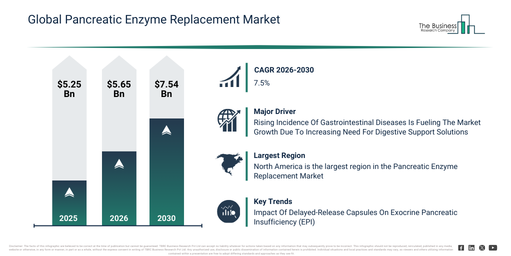
    The market for pancreatic enzyme replacement therapies has experienced robust expansion lately, projected to advance from $5.25 billion in 2025 to $5.65 billion in 2026, reflecting a compound annual growth rate of 7.7%. Factors contributing to this historical growth trajectory include the scarce availability of synthetic enzyme options, significant dependence on enzymes sourced from pigs, a general lack of awareness regarding enzyme replacement therapy, treatment pathways predominantly managed within hospital settings, and a supply chain that was previously quite dispersed.

    The market for pancreatic enzyme replacement therapies is poised for significant expansion, projected to reach $7.54 billion by 2030, reflecting a compound annual growth rate of 7.5%. This upward trajectory is fueled by several key factors, including the escalating utilization of enzymes derived from microbial and recombinant sources, an increasing prevalence of chronic pancreatitis and cystic fibrosis, the growing reach of home healthcare services, the proliferation of oral and delayed-release dosage forms, and advancements in digital monitoring and precise dosage adjustments. Looking ahead, dominant trends are expected to encompass a greater embrace of tailored enzyme treatments, the implementation of artificial intelligence for optimizing medication dosages, a surge in the popularity of oral powder and capsule formulations, a heightened demand for enzyme solutions within home care settings, and the broadening accessibility through hospital and clinic distribution networks.

    Download A Free Sample Report For Comprehensive Market Insights:

    https://www.thebusinessresearchcompany.com/sample.aspx?id=24355&type=smp

    Pancreatic Enzyme Replacement Market Growth Factors: Which Forces Are Supporting Market Expansion?

    An escalating prevalence of digestive system ailments is anticipated to fuel the expansion of the pancreatic enzyme replacement market. These gastrointestinal disorders, impacting organs from the esophagus to the gallbladder and pancreas, manifest through discomforts like stomach pain, abdominal distension, and changes in bowel regularity. The surge in these conditions is largely attributed to adverse nutritional patterns, including a greater reliance on processed foods, insufficient dietary fiber, and high-fat eating habits, all of which can compromise intestinal well-being and foster issues such as acid reflux and various forms of bowel inflammation. Pancreatic enzyme replacement therapy offers a solution by enhancing the body’s ability to absorb nutrients and better digest food, consequently mitigating symptoms like poor nutrition, bloating, and fatty stools, which are characteristic of pancreatic insufficiency. For illustration, the IBD Registry in the UK reported in December 2023 that the count of individuals diagnosed with inflammatory bowel disease exceeded 5,300, marking a substantial rise of over 3,000 patients from the previous year. Consequently, the increasing occurrence of gastrointestinal diseases is acting as a significant catalyst for the growth trajectory of the pancreatic enzyme replacement market.

    Pancreatic Enzyme Replacement Market Segment Outlook: Which Categories Are Expanding The Fastest?

    The pancreatic enzyme replacement market covered in this report is segmented –

    1) By Product Type: Tablets, Capsules, Powders, Other Product Types

    2) By Source Of Enzymes: Porcine-Derived Enzymes, Microbial-Derived Enzymes, Recombinant-Derived Enzymes

    3) By Application: Chronic Pancreatitis, Cystic Fibrosis, Pancreatic Cancer, Other Applications

    4) By Distribution Channel: Hospital Pharmacies, Retail Pharmacies, Online Pharmacies, Other Distribution Channels

    5) By End-User: Hospitals, Clinics, Home Healthcare

    Subsegments:

    1) By Tablets: Film-Coated Tablets, Chewable Tablets, Extended-Release Tablets

    2) By Capsules: Gel Capsules, Liquid-Filled Capsules, Delayed-Release Capsules

    3) By Powders: Oral Powder, Sachets

    4) By Other Product Types: Enzyme Suspensions, Oral Solutions

    Pancreatic Enzyme Replacement Market Industry Trends: What Changes Are Reshaping Demand?

    Leading participants in the pancreatic enzyme replacement therapy sector are concentrating their efforts on pioneering novel dosage forms, such as capsules engineered for delayed release, with the dual objectives of bolstering enzyme stability and amplifying treatment outcomes for individuals experiencing pancreatic inadequacy. These delayed-release capsules are cleverly constructed to liberate their active ingredients at a predetermined point or region within the gastrointestinal tract, thereby facilitating pancreatic enzyme replacement by guaranteeing the enzymes reach the small intestine, the site where they can effectively assist in the digestive process, while circumventing the destructive acidic milieu of the stomach. As an illustration, in March of 2025, Adalvo Limited, a pharmaceutical entity headquartered in Malta, introduced its Pancreatin Delayed-Release Capsules, a product meticulously developed to elevate enzyme persistence and refine the therapeutic impact for those afflicted with exocrine pancreatic insufficiency (EPI). The formulation of these capsules is specifically calibrated to ensure the release of their contents within the small intestine, enabling pancreatic enzymes to contribute efficiently to digestion and simultaneously avoiding the stomach’s acidic conditions, which would otherwise lead to their degradation. This advancements seeks to fulfill a significant unmet requirement for patients contending with ailments like chronic pancreatitis, cystic fibrosis, and those who have undergone a pancreatectomy.

    Pancreatic Enzyme Replacement Market Key Companies And Competitive Benchmarking

    Major companies operating in the pancreatic enzyme replacement market are Johnson & Johnson, Abbott Laboratories, Viatris Inc., Nestlé Health Science S.A., Chiesi Farmaceutici S.p.A., Now Health Group Inc., AzurRx BioPharma Inc., Nordmark Arzneimittel GmbH & Co. KG, Alcresta Therapeutics Inc., Perseo Pharma AG, Digestive Care Inc., Anagram Therapeutics Inc., Entero Therapeutics Inc., Sun Pharmaceutical Industries Ltd, Laboratoires Mayoly Spindler, Recordati S.p.A., Synmosa Biopharma Corporation, Dr Falk Pharma GmbH, Enzymedica Inc., VIVUS Inc., Pharming Group NV, Dr Reddy’s Laboratories, Teva Pharmaceutical Industries Ltd, AstraZeneca plc, Bausch Health Companies Inc

    Access The Complete Pancreatic Enzyme Replacement Market Report:

    https://www.thebusinessresearchcompany.com/report/pancreatic-enzyme-replacement-global-market-report

    Pancreatic Enzyme Replacement Market Geographic Distribution And Regional Opportunities

    North Americawas the largest region in the pancreatic enzyme replacement market in 2025. Asia-Pacificis expected to be the fastest-growing region in the forecast period. The regions covered in the pancreatic enzyme replacement market report are Asia-Pacific, South East Asia, Western Europe, Eastern Europe, North America, South America, Middle East, Africa.

    Get in touch with us:

    The Business Research Company: https://www.thebusinessresearchcompany.com/

    Americas: +1 310-496-7795

    Asia: +44 7882 955267 & +91 8897263534

    Europe: +44 7882 955267

    Email us at: marketing@tbrc.info

    Follow us on:

    LinkedIn: https://in.linkedin.com/company/the-business-research-company

    YouTube: https://www.youtube.com/channel/UC24_fI0rV8cR5DxlCpgmyFQ

    Global Market Model: https://www.thebusinessresearchcompany.com/global-market-model
  • Pancreatic Cancer Diagnostic Market Forecast Reveals Where Future Industry Value Will Be Created

    Pancreatic Cancer Diagnostic Market Forecast Reveals Where Future Industry Value Will Be Created

    Enhanced with market attractiveness analysis, total addressable market evaluation, company benchmarking matrices, interactive Excel dashboards, expanded supply chain intelligence, emerging startup coverage, and detailed product insights, The Business Research Company’s 2026 market reports deliver more actionable and strategically valuable research.

    Pancreatic Cancer Diagnostic Market CAGR Analysis And Future Market Development

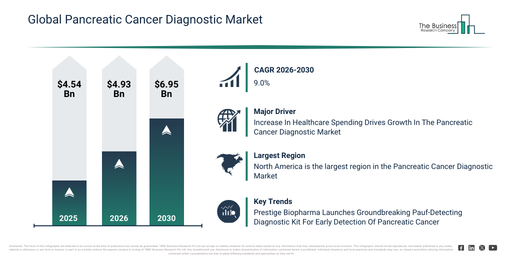
    The market for pancreatic cancer diagnostics has experienced robust expansion lately, projecting an increase from $4.54 billion in 2025 to $4.93 billion in 2026, reflecting a compound annual growth rate (CAGR) of 8.6%. This growth during the past period was influenced by factors such as the restricted access to sophisticated diagnostic instruments, dependence on traditional imaging techniques and biopsies, a prevalence of late-stage diagnoses, dispersed diagnostic service networks, and a healthcare system that tended to concentrate diagnostics within hospital settings.

    The market for diagnosing pancreatic cancer is poised for considerable expansion in the coming years, with projections indicating a valuation of $6.95 billion by 2030, driven by a compound annual growth rate of 9.0%. This anticipated growth is underpinned by several key factors, including the escalating utilization of genomic and biomarker-based diagnostic methods, the integration of artificial intelligence (AI) and machine learning within diagnostic processes, the increasing prevalence of minimally invasive liquid biopsy techniques, the broadening availability of diagnostic services across hospitals and dedicated cancer care facilities, and the growing demand for comprehensive laboratory and consulting solutions. Prominent trends expected to shape this market during the forecast period encompass the greater acceptance of sophisticated genomic testing for pancreatic cancer detection, the incorporation of AI-driven imaging solutions for diagnostics, an upward trajectory in liquid biopsy and other less invasive testing modalities, advancements in precision medicine diagnostics, and the further development of services offered by hospitals and diagnostic centers.

    Download A Free Sample Report For Comprehensive Market Insights:

    https://www.thebusinessresearchcompany.com/sample.aspx?id=11981&type=smp

    Pancreatic Cancer Diagnostic Market Demand Drivers: What Is Fueling Industry Growth?

    Forward momentum in the pancreatic cancer diagnostic market is being propelled by escalating healthcare expenditures, which represent the aggregate financial investment directed toward the healthcare domain within a defined geographic area, nation, or entity. These increased financial commitments to healthcare are channeled towards pancreatic cancer diagnostics with the objective of enabling earlier identification, precise staging of the disease, and prompt treatment initiation, all of which are crucial for enhancing patient prognoses and survival rates. Illustratively, the Canadian Institute for Health Information reported in November 2023 that Canada’s total health expenditure was anticipated to reach $344 billion in 2023, translating to $8,740 per individual. This figure signifies a substantial 2.8% rise from the preceding year, when health spending growth was a more modest 1.5% in 2022, thus signaling a marked resurgence in healthcare-related investments. Consequently, the expansion of healthcare budgets is a key determinant in the ongoing expansion of the pancreatic cancer diagnostic market.

    Pancreatic Cancer Diagnostic Market Segment Landscape: Which Areas Lead Market Development?

    The pancreatic cancer diagnostic market covered in this report is segmented –

    1) By Product: Instruments, Consumables, Services

    2) By Treatment: Surgery, Chemotherapy, Radiation Therapy, Targeted Therapy

    3) By Cancer Type: Exocrine, Adenocarcinoma, Squamous Cell Carcinoma, Adenosquamous Carcinoma, Colloid Carcinoma, Endocrine

    4) By Test Type: Imaging Test, Biopsy, Blood Test, Genomic Test, Other Test Types

    5) By End-User: Hospitals, Diagnostic Centers, Cancer Research Centers, Academic Institutes, Ambulatory Surgical Centers, Other End-Users

    Subsegments:

    1) By Instruments: Imaging Systems, Biopsy Devices, Endoscopy Equipment

    2) By Consumables: Reagents, Biopsy Needles, Assay Kits

    3) By Services: Diagnostic Testing Services, Laboratory Services, Consulting Services

    Pancreatic Cancer Diagnostic Market Innovation Trends: Which Developments Are Transforming The Industry?

    Leading players in the pancreatic cancer diagnostics sector are committing resources to the creation of cutting-edge tools, specifically biomarker diagnostic kits, driven by the escalating need for earlier disease identification, enhanced diagnostic precision, and improved patient prognoses. These biomarker-guided diagnostic methods pinpoint proteins or genetic indicators linked to tumors within blood or tissue, providing a more keen and precise diagnostic avenue than traditional imaging methods, which frequently only identify pancreatic cancer in its later phases. As an illustration, in the month of March 2023, Prestige Biopharma Limited, a biopharmaceutical entity headquartered in Singapore, introduced the novel PAUF-detecting diagnostic kit, representing a significant advancement for the early identification of pancreatic cancer. PAUF, which stands for Pancreatic Adenocarcinoma Upregulated Factor, is a distinctive biomarker specific to this type of cancer, correlated with early metastatic spread and found to be overexpressed in approximately 80% of pancreatic cancer instances. This novel diagnostic methodology exhibits a high degree of sensitivity and specificity in detecting PAUF. Initial research, as reported by Prestige Biopharma’s IDC (Innovative Discovery Center), indicated that the level of PAUF expression in the blood plasma of individuals diagnosed with pancreatic cancer is nearly 1.9 times greater than in healthy subjects.

    Pancreatic Cancer Diagnostic Market Industry Leaders And Market Competition

    Major companies operating in the pancreatic cancer diagnostic market are Hitachi Medical Corporation, F. Hoffmann-La Roche AG, Thermo Fisher Scientific Inc., Abbott Laboratories Inc., Danaher Corporation, Siemens Healthcare GmbH, FUJIFILM Corporation, Becton Dickinson and Company, Koninklijke Philips N.V., GE Healthcare Bio Sciences AB, Laboratory Corporation of America Holdings, Agilent Technologies Inc., Illumina Inc., Qiagen Inc., Myriad Genetics Inc., Canon Medical Systems Corporation, Biological Dynamics Inc., Berg LLC, Abcodia Ltd., Acobiom, Amplified Sciences LLC, Avant Diagnostics Inc., Axim Biotechnologies Inc., Alaunus Biosciences Inc., Advanced Marker Discovery SL, Anixa Diagnostics Corporation

    Access The Complete Pancreatic Cancer Diagnostic Market Report:

    https://www.thebusinessresearchcompany.com/report/pancreatic-cancer-diagnostic-global-market-report

    Pancreatic Cancer Diagnostic Market Largest Region By Revenue And Market Share

    North America was the largest region in the pancreatic cancer diagnostic market in 2025. Asia-Pacific is expected to be the fastest-growing region in the forecast period. The regions covered in the pancreatic cancer diagnostic market report are Asia-Pacific, South East Asia, Western Europe, Eastern Europe, North America, South America, Middle East, Africa.

    Get in touch with us:

    The Business Research Company: https://www.thebusinessresearchcompany.com/

    Americas: +1 310-496-7795

    Asia: +44 7882 955267 & +91 8897263534

    Europe: +44 7882 955267

    Email us at: marketing@tbrc.info

    Follow us on:

    LinkedIn: https://in.linkedin.com/company/the-business-research-company

    YouTube: https://www.youtube.com/channel/UC24_fI0rV8cR5DxlCpgmyFQ

    Global Market Model: https://www.thebusinessresearchcompany.com/global-market-model
  • Pancreatic Adenocarcinoma Treatment Market Growth Through 2030 Creates New Strategic Opportunities

    Pancreatic Adenocarcinoma Treatment Market Growth Through 2030 Creates New Strategic Opportunities

    Through market attractiveness analysis, total addressable market evaluation, company benchmarking matrices, interactive Excel dashboards, expanded supply chain intelligence, emerging startup coverage, and detailed product insights, The Business Research Company’s 2026 market reports provide more actionable and strategically valuable research.

    Pancreatic Adenocarcinoma Treatment Market Expansion From $2.73 Billion In 2026 To $4.45 Billion In 2030

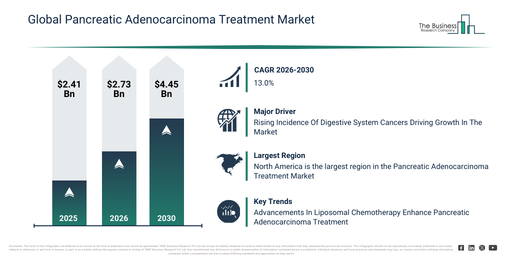
    The market for pancreatic adenocarcinoma treatments has experienced significant expansion lately, projected to increase from $2.41 billion in 2025 to $2.73 billion in 2026, reflecting a compound annual growth rate of 13.3%. Factors contributing to this expansion during the prior period included a scarcity of therapeutic alternatives for pancreatic adenocarcinoma, a continued dependence on traditional chemotherapy regimens, infrequent diagnoses in the early stages of the disease, a high mortality rate coupled with a grim prognosis, and the predominant delivery of treatment within hospital settings.

    The market for treating pancreatic adenocarcinoma is poised for considerable expansion in the coming years, projecting a value of $4.45 billion by 2030 with a consistent annual growth rate of 13.0%. This anticipated expansion stems from several key developments, including the advent of individualized targeted treatment approaches, a heightened embrace of monoclonal antibodies and immunotherapies, enhanced utilization of digital tools for patient health oversight, broader implementation of combined therapeutic strategies, and improved accessibility via both hospital and retail pharmacy channels. Key developments anticipated during this forecast period involve a greater reliance on targeted therapies and small molecule inhibitors, increasing uptake of monoclonal antibody-based treatments, an expanded role for immunotherapy in patient care, the incorporation of digital systems for patient tracking, and a rise in the distribution of cancer medications through hospital pharmacies.

    Download A Free Sample Report For Comprehensive Market Insights:

    https://www.thebusinessresearchcompany.com/sample.aspx?id=21243&type=smp

    Pancreatic Adenocarcinoma Treatment Market Growth Drivers: What Factors Are Accelerating Expansion?

    The escalating occurrence of digestive system malignancies is anticipated to be a primary driver for the expansion of the pancreatic adenocarcinoma treatment market. Digestive system cancers encompass malignant growths originating in organs integral to the digestion process, including the stomach, liver, pancreas, intestines, esophagus, and colon. Factors contributing to the heightened prevalence of these cancers are linked to detrimental lifestyle habits such as inadequate nutrition, excessive alcohol intake, and tobacco use. Pancreatic adenocarcinoma treatment is instrumental in managing a particularly aggressive form of digestive system cancer, with the objective of enhancing patient survival and their overall quality of life. As an illustration, the American Cancer Society, a charitable organization based in the United States, estimated in January 2023 that approximately 64,050 people in the U.S. would receive a pancreatic cancer diagnosis, and an estimated 50,550 individuals would die from the illness. Consequently, the rising rates of digestive system cancers are fueling the market’s growth for pancreatic adenocarcinoma treatments.

    Pancreatic Adenocarcinoma Treatment Market Segments: Where Are The Largest Growth Opportunities?

    The pancreatic adenocarcinoma treatment market covered in this report is segmented –

    1) By Type: Chemotherapy, Targeted Therapy, Other Types

    2) By Affected Area: Exocrine, Endocrine

    3) By Distribution Channel: Hospital Pharmacies, Retail Pharmacies, Other Distribution Channels

    Subsegments:

    1) By Chemotherapy: Monotherapy, Combination Therapy

    2) By Targeted Therapy: Small Molecule Inhibitors, Monoclonal Antibodies

    3) By Other Types: Immunotherapy, Radiation Therapy

    Pancreatic Adenocarcinoma Treatment Market Trends: What Is Shaping Future Industry Growth?

    Key players in the pancreatic adenocarcinoma therapeutic arena are channeling their efforts into creating novel approaches, epitomized by irinotecan liposome injection, aiming to boost treatment success, mitigate adverse reactions, and surmount obstacles related to tumor recalcitrance. This chemotherapy agent, irinotecan liposome injection, is formulated within liposomes to optimize its delivery to malignant cells, thereby amplifying its potency and minimizing unwanted effects when treating pancreatic adenocarcinoma. A case in point is Ipsen SA, a biopharmaceutical firm headquartered in France, which revealed in February 2024 that the U.S. Food and Drug Administration (FDA) granted approval for the supplemental new drug application for Onivyde, an irinotecan liposome injection, when administered alongside oxaliplatin. The synergy between Onivyde (irinotecan liposome injection) and oxaliplatin provides superior tumor localization via enhanced drug conveyance, resulting in diminished side effects relative to established treatments. This therapeutic strategy harnesses a liposomal encapsulation that elevates the absorption and prolonged release of irinotecan, while oxaliplatin adds to the therapeutic impact against pancreatic cancer cells. This regulatory endorsement highlights the regimen’s promise in meeting the critical demand for more impactful interventions against this formidable malignancy.

    Pancreatic Adenocarcinoma Treatment Market Major Participants And Competitive Dynamics

    Major companies operating in the pancreatic adenocarcinoma treatment market are Pfizer Inc., Roche AG, Merck & Co Inc., Sanofi, Bristol-Myers Squibb Company, AstraZeneca plc, Novartis AG, GlaxoSmithKline plc, Takeda Pharmaceutical Company Limited, Eli Lilly and Company, Amgen Inc., Teva Pharmaceutical Industries Ltd, Mylan N.V., Astellas Pharma Inc., Sun Pharmaceutical Industries Ltd., Ipsen SA, Clovis Oncology Inc., Oncolytics Biotech Inc., Zydus Cadila, PharmaCyte Biotech Inc., Infinity Pharmaceuticals Inc.

    Access The Complete Pancreatic Adenocarcinoma Treatment Market Report:

    https://www.thebusinessresearchcompany.com/report/pancreatic-adenocarcinoma-treatment-global-market-report

    Pancreatic Adenocarcinoma Treatment Market Regional Analysis And Leading Geography

    North Americawas the largest region in the pancreatic adenocarcinoma treatment market in 2025. The regions covered in the pancreatic adenocarcinoma treatment market report are Asia-Pacific, South East Asia, Western Europe, Eastern Europe, North America, South America, Middle East, Africa.

    Get in touch with us:

    The Business Research Company: https://www.thebusinessresearchcompany.com/

    Americas: +1 310-496-7795

    Asia: +44 7882 955267 & +91 8897263534

    Europe: +44 7882 955267

    Email us at: marketing@tbrc.info

    Follow us on:

    LinkedIn: https://in.linkedin.com/company/the-business-research-company

    YouTube: https://www.youtube.com/channel/UC24_fI0rV8cR5DxlCpgmyFQ

    Global Market Model: https://www.thebusinessresearchcompany.com/global-market-model
  • Palmoplantar Pustulosis Market Size Projected To Increase From $2.25 Billion To $3.02 Billion During The Forecast Period

    Palmoplantar Pustulosis Market Size Projected To Increase From $2.25 Billion To $3.02 Billion During The Forecast Period

    Delivering more actionable and strategically valuable research, The Business Research Company’s 2026 market reports feature market attractiveness analysis, total addressable market evaluation, company benchmarking matrices, interactive Excel dashboards, expanded supply chain intelligence, emerging startup coverage, and detailed product insights.

    Palmoplantar Pustulosis Market Forecast Highlighting Growth From $2.25 Billion To $3.02 Billion

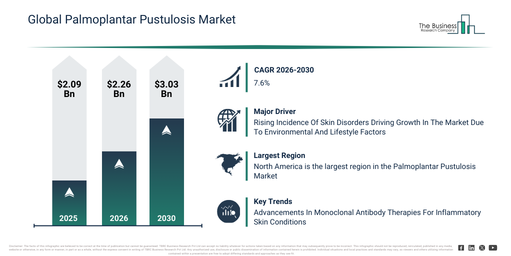
    The palmoplantar pustulosis market size has grown strongly in recent years. It will grow from $2.09 billion in 2025 to $2.26 billion in 2026 at a compound annual growth rate (CAGR) of 7.8%. The growth in the historic period can be attributed to limited treatment options for chronic skin conditions, reliance on corticosteroids and topical agents, delayed diagnosis of pustular psoriasis, low patient awareness about disease management, hospital-centric care delivery.

    The palmoplantar pustulosis market is projected for significant expansion in the forthcoming years, anticipating a reach of $3.03 billion by 2030, driven by a compound annual growth rate of 7.6%. This projected expansion is largely fueled by the introduction of innovative biologic and systemic treatments, a greater utilization of focused immunomodulators, the increasing prevalence of teledermatology and digital health solutions, a wider acceptance of at-home phototherapy, and enhanced accessibility through online and retail pharmacies. Key developments influencing this growth trajectory include a heightened preference for biologic therapies, expanded application of targeted immunomodulators, broader availability of home-based phototherapy options, the integration of teledermatology for managing long-term skin conditions, and increased access to therapeutic options via online pharmacies.

    Download A Free Sample Report For Comprehensive Market Insights:

    https://www.thebusinessresearchcompany.com/sample.aspx?id=22090&type=smp

    Palmoplantar Pustulosis Market Growth Factors Supporting Long-Term Expansion

    The palmoplantar pustulosis market is anticipated to experience expansion, largely driven by a rising number of skin condition cases. These skin conditions, characterized by alterations in the skin’s structure, functionality, or visual presentation, are becoming more prevalent due to factors such as environmental shifts, evolving lifestyle choices, and inherent genetic predispositions. External influences like atmospheric contamination, harsh climatic extremes, and contact with hazardous substances can irritate the skin, potentially triggering issues such as eczema or acne. Palmoplantar pustulosis itself is a persistent dermatological ailment that impacts the skin of the hands’ palms and the feet’s soles, manifesting as pustules, redness, and scaling, for which therapeutic interventions exist to enhance skin well-being and ease associated discomfort. Illustrating this trend, data from December 2023, released by the National Institutes of Health (NIH), a leading U.S. medical research institution, indicated that atopic dermatitis affected approximately 2.6% of the global population, impacting an estimated 204 million individuals worldwide, thereby underscoring how the escalating occurrence of skin ailments is a significant catalyst for the growth within the palmoplantar pustulosis market.

    Palmoplantar Pustulosis Market Segment Analysis: What Are The Major Market Categories?

    The palmoplantar pustulosis market covered in this report is segmented –

    1) By Treatment Type: Topical Treatments, Systemic Treatments, Biologics, Phototherapy

    2) By Distribution Channel: Online Pharmacies, Retail Pharmacies

    3) By Application: Hospitals, Dermatology Clinics, Homecare Settings

    Subsegments:

    1) By Topical Treatments: Corticosteroids, Vitamin D Analogues, Calcineurin Inhibitors, Keratolytics

    2) By Systemic Treatments: Retinoids, Immunosuppressants, Phosphodiesterase-4 (PDE4) Inhibitors, Corticosteroids

    3) By Biologics: Tumor Necrosis Factor (TNF) Inhibitors, Interleukin-17 (IL-17) Inhibitors, Interleukin-23 (IL-23) Inhibitors, Interleukin-12/23 (IL-12/23) Inhibitors

    4) By Phototherapy: Narrowband UVB Therapy (NB-UVB), Psoralen plus Ultraviolet A (PUVA) Therapy, Excimer Laser Therapy, Targeted Phototherapy

    Palmoplantar Pustulosis Market Industry Trends Shaping Future Revenue Growth

    In the palmoplantar pustulosis market, leading entities are concentrating their efforts on pioneering new therapeutic approaches, including monoclonal antibodies aimed at specific inflammatory pathways, with the ultimate goal of enhancing patient results. A monoclonal antibody (mAb) is essentially a uniform antibody, stemming from a solitary B cell lineage, engineered to bind to a particular antigen, serving either diagnostic or therapeutic functions. Demonstrating this trend, Kyowa Kirin Co., Ltd., a pharmaceutical firm headquartered in Japan, secured partial approval for an alteration of its treatment LUMICEF for palmoplantar pustulosis within Japan in August of 2023. LUMICEF functions as a selective treatment by inhibiting IL-17, a mechanism that delivers prompt and enduring alleviation from inflammatory ailments like psoriasis and palmoplantar pustulosis, thereby aiming to diminish inflammation and elevate the standard of living for individuals afflicted by these persistent conditions.

    Palmoplantar Pustulosis Market Leading Companies Driving Competitive Growth

    Major companies operating in the palmoplantar pustulosis market are Pfizer Inc., AbbVie Inc., Sanofi S.A., Bristol‑Myers Squibb Company, Novartis International AG, GlaxoSmithKline PLC (GSK), Amgen Inc., Chugai Pharmaceutical Co. Ltd., Janssen Pharmaceuticals Inc., Kyowa Kirin Co. Ltd., Almirall S.A., MorphoSys AG, MoonLake Immunotherapeutics AG, Aristea Therapeutics Inc., AnaptysBio Inc., Kamari Pharma Ltd., Johnson & Johnson, AstraZeneca, Eli Lilly and Company, Bayer AG, Merck & Co. Inc., UCB S.A., Boehringer Ingelheim International GmbH, Arcutis Biotherapeutics, Affibody AB, LEO Pharma A/S, Galderma, Incyte Corporation, Takeda Pharmaceutical Company Ltd., Roivant Sciences

    Access The Complete Palmoplantar Pustulosis Market Report:

    https://www.thebusinessresearchcompany.com/report/palmoplantar-pustulosis-global-market-report

    Palmoplantar Pustulosis Market Geographic Analysis: Where Is Demand Growing The Fastest?

    North Americawas the largest region in the palmoplantar pustulosis market in 2025. The regions covered in the palmoplantar pustulosis market report are Asia-Pacific, South East Asia, Western Europe, Eastern Europe, North America, South America, Middle East, Africa.

    Get in touch with us:

    The Business Research Company: https://www.thebusinessresearchcompany.com/

    Americas: +1 310-496-7795

    Asia: +44 7882 955267 & +91 8897263534

    Europe: +44 7882 955267

    Email us at: marketing@tbrc.info

    Follow us on:

    LinkedIn: https://in.linkedin.com/company/the-business-research-company

    YouTube: https://www.youtube.com/channel/UC24_fI0rV8cR5DxlCpgmyFQ

    Global Market Model: https://www.thebusinessresearchcompany.com/global-market-model
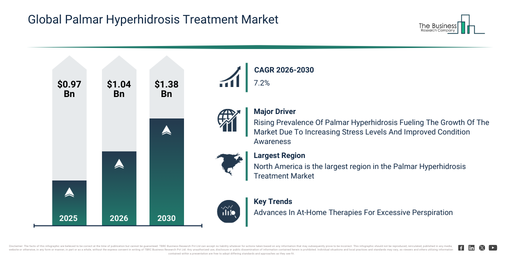
  • Palmar Hyperhidrosis Treatment Market Growth Outlook Reveals A CAGR Of 7.2% And A Market Value Of $1.37 Billion By 2030

    Palmar Hyperhidrosis Treatment Market Growth Outlook Reveals A CAGR Of 7.2% And A Market Value Of $1.37 Billion By 2030

    Enhanced with market attractiveness analysis, total addressable market evaluation, company benchmarking matrices, interactive Excel dashboards, expanded supply chain intelligence, emerging startup coverage, and detailed product insights, The Business Research Company’s 2026 market reports deliver more actionable and strategically valuable research.

    Palmar Hyperhidrosis Treatment Market Revenue Growth Supported By A CAGR Of 1.37% Through 2030

    The market for palmar hyperhidrosis treatments has experienced robust expansion lately. Projections indicate a rise from $0.97 billion in 2025 to $1.04 billion in 2026, reflecting a compound annual growth rate of 7.6%. Key factors contributing to this advancement during the preceding period include heightened public understanding of hyperhidrosis, broader access to dermatological therapies, more accurate identification of excessive sweating conditions, an increase in specialized dermatology centers, and the growing adoption of less invasive medical interventions.

    The market for palmar hyperhidrosis treatments is poised for significant expansion, projected to reach $1.38 billion by 2030, reflecting a compound annual growth rate of 7.2%. This anticipated upswing is propelled by several key factors, including a growing preference for enduring treatment solutions, a noticeable increase in the utilization of therapies administered at home, a heightened emphasis on dermatological care centered around the individual patient, continuous investigations into groundbreaking treatments, and broader accessibility to sophisticated dermatological interventions. Furthermore, the coming years will likely witness a surge in the adoption of non-invasive therapeutic methods, a greater demand for iontophoresis devices intended for home use, increased application of botulinum toxin treatments, the broadening of customized therapeutic strategies, and a more pronounced attention to improving patients’ overall quality of life.

    Download A Free Sample Report For Comprehensive Market Insights:

    https://www.thebusinessresearchcompany.com/sample.aspx?id=24648&type=smp

    Palmar Hyperhidrosis Treatment Market Demand Drivers Creating New Revenue Opportunities

    The escalating occurrence of palmar hyperhidrosis is anticipated to stimulate expansion within the market for its treatments. This condition involves excessive, uncontrollable palm sweating, often stemming from overactive nerves without an identifiable medical root. The surge in palmar hyperhidrosis cases is largely attributable to mounting stress and anxiety levels, which excessively activate the sympathetic nervous system, consequently leading to heightened sweating. Treatments for palmar hyperhidrosis aim to mitigate this excessive hand perspiration, proving beneficial for individuals encountering difficulties in their daily routines. By diminishing moisture-related discomfort, these treatments enhance both personal comfort and self-assurance, thereby improving social and professional interactions. For illustration, data from the National Library of Medicine in the US, as of January 2023, indicates that hyperhidrosis (HH) is a chronic condition that remains underdiagnosed and under-researched, with prevalence estimates of 1.6% in the UK and ranging from 1.0% to 4.8% in the USA. Consequently, the increasing incidence of palmar hyperhidrosis is fueling the growth of its treatment market.

    Boosting the palmar hyperhidrosis treatment market’s growth is the ongoing rise in healthcare spending, driven by a heightened demand for early and preventive medical interventions. Healthcare expenditure encompasses the total financial investment in medical services, therapies, facilities, research endeavors, and public health initiatives aimed at preserving or improving health status. This growing expenditure on healthcare is influenced by an aging demographic, which necessitates more extensive medical care, treatments, and long-term health support. Increased healthcare spending facilitates enhanced access to sophisticated therapies and diagnostic tools for palmar hyperhidrosis, making specialized treatments such as botulinum toxin injections more accessible and contributing to better patient results. For instance, figures from the Centers for Medicare and Medicaid Services (CMS) in the US, released in December 2024, show that national health expenditures (NHE) rose by 7.5% to $4.9 trillion in 2023, representing 17.6% of the gross domestic product (GDP). Furthermore, projections indicate that between 2023 and 2032, average national health expenditures (NHE) will climb at an annual rate of 5.6%, consequently increasing the proportion of GDP allocated to health spending from 17.3% in 2022 to 19.7% by 2032. Therefore, the upward trend in healthcare expenditure is a significant driver for the palmar hyperhidrosis treatment market.

    Palmar Hyperhidrosis Treatment Market Segment Breakdown: Which Categories Generate The Most Revenue?

    The palmar hyperhidrosis treatment market covered in this report is segmented –

    1) By Treatment Type: Topical Treatments, Oral Medications, Botulinum Toxin Injections, Iontophoresis, Surgical Interventions, Other Treatment Types

    2) By Patient Age Group: Children, Adolescents, Adults, Elderly

    3) By Severity Of Hyperhidrosis: Mild, Moderate, Severe

    4) By End-User: Hospitals, Dermatology Clinics, Specialty Clinics, Homecare

    Subsegments:

    1) By Topical Treatments: Aluminum Chloride-Based Antiperspirants, Natural Or Herbal Formulations, Glycopyrronium-Based Creams Or Wipes

    2) By Oral Medications: Anticholinergics, Benzodiazepines, Beta-Blockers

    3) By Botulinum Toxin Injections: Botulinum Toxin Type A, Liposomal Botulinum Formulations, Botulinum Toxin Type B

    4) By Iontophoresis: Tap Water Iontophoresis, Portable Or Home-Use Iontophoresis Devices, Iontophoresis With Anticholinergic Agents

    5) By Surgical Interventions: Endoscopic Thoracic Sympathectomy (Ets), Microscopic Sympathectomy, Sympathectomy By Radiofrequency Ablation

    6) By Other Treatment Types: Laser Therapy, Nerve-Blocking Agents Or Injections, Microwave Therapy

    Palmar Hyperhidrosis Treatment Market Trends Driving Strategic Industry Expansion

    In the realm of palmar hyperhidrosis treatment, leading entities are concentrating on pioneering advancements, notably topical transdermal anticholinergic preparations, thereby offering non-invasive, convenient at-home care that mitigates the systemic adverse effects associated with oral medications. These topical transdermal anticholinergic lotions operate by delivering an antimuscarinic agent directly through the skin to the eccrine sweat glands, effectively controlling palmar hyperhidrosis through diminished sweat output, enhanced ease of use with self-application, and the potential for repeated administration, unlike injections or energy-based interventions. Illustrating this trend, May 2023 saw Hisamitsu Pharmaceutical Co., Ltd., a Japanese firm, introduce APOHIDE Lotion 20%, a novel topical therapy for palmar hyperhidrosis featuring 20% oxybutynin hydrochloride developed with Hisamitsu’s proprietary transdermal drug delivery system. The lotion works by locally blocking acetylcholine’s influence on sweat gland activity, and its transdermal nature is designed to reduce systemic absorption compared to oral oxybutynin, presenting patients with a safer and more user-friendly option.

    Palmar Hyperhidrosis Treatment Market Key Players And Strategic Industry Positioning

    Major companies operating in the palmar hyperhidrosis treatment market are AbbVie Inc, GlaxoSmithKline plc, Eli Lilly and Company, Dr August Wolff GmbH And Co KG, Merz Pharma GmbH And Co KGaA, Kaken Pharmaceutical Co Ltd, Medytox Inc, Revance Therapeutics Inc, Alma Lasers Ltd, Journey Medical Corporation, Fotona doo, Candela Corporation, Brickell Biotech Inc, Avanor Healthcare Ltd, C Cube Advanced Technologies, Dermadry Laboratories Inc, TheraVida Inc, ThermiGen LLC, Ulthera Inc, Cutera Inc, Lumenis Ltd, Medtronic plc

    Access The Complete Palmar Hyperhidrosis Treatment Market Report:

    https://www.thebusinessresearchcompany.com/report/palmar-hyperhidrosis-treatment-global-market-report

    Palmar Hyperhidrosis Treatment Market Global Footprint: Which Region Holds Market Leadership?

    North Americawas the largest region in the palmar hyperhidrosis treatment market in 2025. Asia-Pacificis expected to be the fastest-growing region in the forecast period. The regions covered in the palmar hyperhidrosis treatment market report are Asia-Pacific, South East Asia, Western Europe, Eastern Europe, North America, South America, Middle East, Africa.

    Get in touch with us:

    The Business Research Company: https://www.thebusinessresearchcompany.com/

    Americas: +1 310-496-7795

    Asia: +44 7882 955267 & +91 8897263534

    Europe: +44 7882 955267

    Email us at: marketing@tbrc.info

    Follow us on:

    LinkedIn: https://in.linkedin.com/company/the-business-research-company

    YouTube: https://www.youtube.com/channel/UC24_fI0rV8cR5DxlCpgmyFQ

    Global Market Model: https://www.thebusinessresearchcompany.com/global-market-model
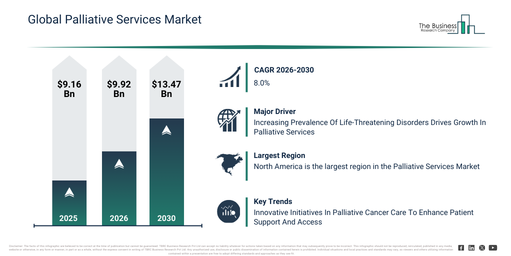
  • Palliative Services Market Forecast Highlights Expansion From $9.91 Billion To $13.47 Billion Through 2030

    Palliative Services Market Forecast Highlights Expansion From $9.91 Billion To $13.47 Billion Through 2030

    Through market attractiveness analysis, total addressable market evaluation, company benchmarking matrices, interactive Excel dashboards, expanded supply chain intelligence, emerging startup coverage, and detailed product insights, The Business Research Company’s 2026 market reports provide more actionable and strategically valuable research.

    Palliative Services Market Value Expansion And Long-Term Growth Outlook

    The market for palliative care experienced robust expansion lately, projected to climb from $9.16 billion in 2025 to $9.92 billion in 2026, reflecting an 8.3% compound annual growth rate. This significant upswing observed during the historical period is fueled by several key factors: an expanding elderly demographic, a surge in chronic and debilitating diseases, heightened public embrace of care prioritizing patient comfort, the broadening reach of hospice and at-home care options, and a greater societal understanding of the importance of life quality during illness.

    The palliative services market is poised for substantial expansion over the upcoming years, projecting a rise to $13.47 billion by 2030, driven by a compound annual growth rate (CAGR) of 8.0%. This anticipated surge is underpinned by several key factors including an escalating preference for healthcare delivered in the home environment, a heightened emphasis on patient-centric approaches to care, the broadening of coordinated care models, a greater uptake of digital health technologies, and increased investment in managing long-term health conditions. Notable developments projected for this period encompass the proliferation of home palliative care arrangements, a more comprehensive approach to managing diverse symptoms,Enhanced integration of diverse healthcare professionals into care teams, a stronger commitment to providing emotional and familial support, and the growth of palliative care initiatives within communities.

    Download A Free Sample Report For Comprehensive Market Insights:

    https://www.thebusinessresearchcompany.com/sample.aspx?id=19637&type=smp

    Palliative Services Market Expansion Supported By Key Demand Factors

    The expanding market for palliative services is poised for growth, fueled by an increase in life-threatening medical conditions. These serious illnesses, which present a substantial risk to life and demand immediate, intensive medical attention, are becoming more common due to factors such as the growing burden of chronic diseases, an aging global population, environmental contamination, and prevalent lifestyle choices. Palliative care is designed to offer all-encompassing support, focusing on symptom management and enhancing the well-being of those facing life-threatening diagnoses, while also extending crucial assistance to their families and guiding patients through challenging treatment decisions. As an illustration, data from the American Heart Association, a non-profit entity in the United States, indicated that by January 2024, the cumulative fatalities from cardiovascular ailments had climbed to 931,578, a slight increase of under 3,000 from the 928,741 deaths recorded in 2023. Correspondingly, the mortality rate from cardiovascular disease, adjusted for age, also experienced a slight rise, reaching 233.3 per 100,000 individuals, representing a 4.0% increase from the preceding year’s rate of 224.4 per 100,000, thus underscoring the market’s upward trajectory driven by the heightened incidence of critical illnesses.

    Palliative Services Market Segmentation: How Is The Market Structured Across Key Categories?

    The palliative services market covered in this report is segmented –

    1) By Type: Private Residence Care, Hospice Inpatient Care, Hospital Inpatient Care, Nursing Home, Residential Facility Care

    2) By Application: Cancer, Congestive Heart Failure, Chronic Obstructive Pulmonary Disease (COPD), Kidney Failure, Alzheimer’s, Parkinson’s, Amyotrophic Lateral Sclerosis (ALS)

    3) By End-User: Hospitals, Home Care Settings, Palliative Care Centers, Long-Term Care Centers And Rehabilitation Centers

    Subsegments:

    1) By Private Residence Care: Home Health Aides, Skilled Nursing Care, Personal Care Services

    2) By Hospice Inpatient Care: General Inpatient Care, Respite Care, Continuous Care

    3) By Hospital Inpatient Care: Acute Care Services, Consultation Services, Palliative Care Units

    4) By Nursing Home: Long-Term Care Services, Short-Term Rehabilitation, Specialized Dementia Care

    5) By Residential Facility Care: Assisted Living Facilities, Memory Care Units, Continuing Care Retirement Communities (CCRCs)

    Palliative Services Market Growth Trends Influencing Competitive Dynamics

    Leading entities within the palliative care sector are actively developing novel offerings, exemplified by palliative cancer care, with the objective of broadening the availability of such support for individuals battling cancer. This specialized form of care is designed to alleviate suffering and enhance the well-being of cancer patients by attending to their physical, emotional, and spiritual requirements as they navigate their treatment. As an illustration, the Biller Family Foundation, an organization based in the United States, introduced its Advance Palliative Cancer Care program in September 2024. This program specifically aims to deliver all-encompassing support for individuals with cancer, taking into account their entire experience. Its distinctive characteristics involve championing prompt and fair access to thorough care that caters to the physical, emotional, spiritual, and social aspects for both patients and their support networks throughout the cancer continuum.

    Palliative Services Market Competitive Landscape And Leading Companies

    Major companies operating in the palliative services market are Kaiser Permanente Inc., Genesis Healthcare Inc., HCR ManorCare Inc., Kindred Healthcare LLC, LHC Group Inc., Amedisys Inc., Compassus LLC, PruittHealth Hospice Inc., Seasons Hospice And Palliative Care Inc., Vitas Healthcare LLC, Heart To Heart Hospice Inc., Crossroads Hospice And Palliative Care Inc., Landmark Health LLC, Agape Care Group LLC, Suncoast Hospice Inc., Curo Health Services Inc., Hospice Of The Valley Inc., Aspire Health Inc., Tidewell Hospice Inc., Ascend Hospice LLC, Palliative Care Center Of The San Joaquin Valley Inc., Hospice Of The Golden Isles Inc., Turn-Key Health LLC, Harmony Hospice Inc., Great Lakes Caring LLC

    Access The Complete Palliative Services Market Report:

    https://www.thebusinessresearchcompany.com/report/palliative-services-global-market-report

    Palliative Services Market Regional Distribution: Which Areas Drive Market Expansion?

    North Americawas the largest region in the palliative services market in 2025. The regions covered in the palliative services market report are Asia-Pacific, South East Asia, Western Europe, Eastern Europe, North America, South America, Middle East, Africa.

    Get in touch with us:

    The Business Research Company: https://www.thebusinessresearchcompany.com/

    Americas: +1 310-496-7795

    Asia: +44 7882 955267 & +91 8897263534

    Europe: +44 7882 955267

    Email us at: marketing@tbrc.info

    Follow us on:

    LinkedIn: https://in.linkedin.com/company/the-business-research-company

    YouTube: https://www.youtube.com/channel/UC24_fI0rV8cR5DxlCpgmyFQ

    Global Market Model: https://www.thebusinessresearchcompany.com/global-market-model
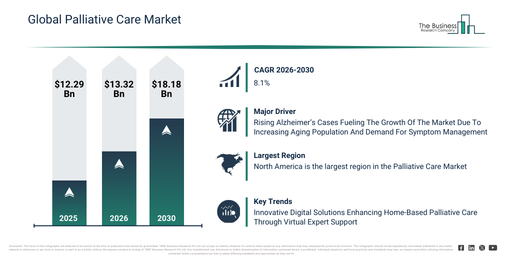
  • Palliative Care Market Expected To Reach $18.18 Billion By 2030 As Growth Accelerates At 8.1% CAGR

    Palliative Care Market Expected To Reach $18.18 Billion By 2030 As Growth Accelerates At 8.1% CAGR

    Delivering more actionable and strategically valuable research, The Business Research Company’s 2026 market reports feature market attractiveness analysis, total addressable market evaluation, company benchmarking matrices, interactive Excel dashboards, expanded supply chain intelligence, emerging startup coverage, and detailed product insights.

    Palliative Care Market Expected To Reach $18.18 Billion By 2030 At 8.1% CAGR

    The palliative care sector has experienced substantial expansion, projecting a rise from $12.29 billion in the year 2025 to $13.32 billion by 2026, demonstrating a compound annual growth rate of 8.4%. This historical growth surge is largely attributable to a confluence of factors, including the escalating incidence of chronic and terminal conditions, a growing elderly demographic, heightened public consciousness regarding care centered on quality of life, the proliferation of hospice care initiatives, and an increased emphasis on the education and training of palliative care specialists.

    The palliative care sector is poised for substantial expansion in the coming years, with projections indicating a rise to $18.18 billion by 2030, driven by a compound annual growth rate of 8.1%. This projected advancement is fueled by several key factors, including a heightened need for tailored patient care plans, the increasing utilization of remote palliative care services through telehealth, the broader implementation of community-focused care initiatives, a greater emphasis on holistic healthcare delivery systems, and augmented governmental backing for palliative services. Furthermore, significant developments expected during this forecast period involve the expansion of palliative care delivered within the home environment, the greater incorporation of digital tools for monitoring patient symptoms, a strengthened commitment to comprehensive and patient-centric care approaches, the growing use of interdisciplinary medical teams, and a more pronounced focus on initiating palliative interventions at an earlier stage of illness.

    Download A Free Sample Report For Comprehensive Market Insights:

    https://www.thebusinessresearchcompany.com/sample.aspx?id=27376&type=smp

    Palliative Care Market Growth Drivers And Industry Catalysts

    The escalating incidence of Alzheimer’s disease is anticipated to serve as a significant catalyst for the expansion of the palliative care sector in the upcoming period. Alzheimer’s disease, characterized by its progressive nature impacting the nervous system, leads to impairments in memory, a decline in cognitive functions, and alterations in behavior. This neurodegenerative condition’s rise can be attributed to the globally aging demographic, as the likelihood of developing Alzheimer’s substantially increases with advancing age, consequently making it more commonplace as human lifespans extend. Palliative care offers crucial support to individuals affected by Alzheimer’s by prioritizing an enhanced quality of life, adeptly managing challenging symptoms, providing essential support to those providing care, and delivering empathetic, comprehensive care throughout the course of the disease’s development. For example, as of August 2024, the Centers for Disease Control and Prevention (CDC), the United States’ governmental public health authority, reported that approximately 6.7 million elderly individuals in the U.S. were living with Alzheimer’s disease. This figure is forecasted to approach a doubling by the year 2060, potentially affecting close to 14 million adults. Consequently, the growing prevalence of Alzheimer’s disease is a primary determinant in the market growth for palliative care services.

    Palliative Care Market Segmentation Trends And Revenue Drivers

    The palliative care market covered in this report is segmented –

    1) By Service Type: Hospice Care, Hospital Inpatient Care, Nursing Homes, Home Care, Other Service Types

    2) By Age Group: Pediatric, Adult, Geriatric

    3) By Application: Cardiac Disease, Congestive Heart Failure, Cancer, Chronic Obstructive Pulmonary Disease (COPD), Kidney Failure, Alzheimer’s Disease, Parkinson’s Disease, Amyotrophic Lateral Sclerosis (ALS)

    4) By End User: Hospitals, Home Care Settings, Palliative Care Centres, Long-Term Care Centres And Rehabilitation Centres

    Subsegments:

    1) By Hospice Care: Inpatient Hospice Care, Outpatient Hospice Care, Community-Based Hospice Care, Home-Based Hospice Care

    2) By Hospital Inpatient Care: Acute Palliative Care Units, Specialized Palliative Wards, Consultation-Based Palliative Services, Post-Surgical Palliative Care

    3) By Nursing Homes: Skilled Nursing Facilities, Assisted Living Facilities, Long-Term Care Facilities, Memory Care Units

    4) By Home Care: Physician-Led Home Visits, Nurse-Led Palliative Care, Home-Based Symptom Management, Family Caregiver Support Services

    5) By Other Service Types: Outpatient Palliative Clinics, Telehealth Palliative Services, Community Health Programs, Mobile Palliative Care Units

    #Palliative Care Market Trends Influencing Long-Term Demand

    Companies prominent in the palliative care sector are prioritizing advancements in technology, including the implementation of home-based palliative care services, as a strategy to alleviate the burdens linked to hospital admissions and prolonged stays. These home palliative care solutions are designed to deliver medically supervised and emotionally supportive care to patients facing life-limiting conditions within the comfort of their residences. As an illustration of this trend, in November 2023, Stream I Inc., a Japanese entity specializing in healthcare technology, introduced Home Care Base, a comprehensive home palliative care support offering. This initiative facilitates remote consultations with specialists and provides resolutions for intricate medical situations, thereby fostering better collaboration among physicians, nursing staff, and pharmacists. Its objective is to meet the escalating demand for in-home medical attention in Japan, a consequence of its demographic shift towards an older population. Furthermore, it contributes to the optimized allocation of scarce medical resources and expands the availability of superior palliative care.

    Palliative Care Market Industry Leaders: Which Organizations Are Driving Competition?

    Major companies operating in the palliative care market are Carelon, Vancouver Coastal Health, Chemed Corporation, VNS Health, Empath Health, HammondCare, Hospice of the Western Reserve, Hospice of the Valley, Princess Alice Hospice, Royal Trinity Hospice, Anam Cara House Colac, Karuna Hospice Service Ltd., Teresa Dellar Palliative Care Residence, Banksia Palliative Care Service Inc., Hosparus Health, Kenya Hospices and Palliative Care Association, Amitayus, Cittamani Hospice, Pallium India Inc., Drakenstein Palliative Hospice.

    Access The Complete Palliative Care Market Report:

    https://www.thebusinessresearchcompany.com/report/palliative-care-global-market-report

    Palliative Care Market Leading Geography: Which Region Generates The Most Revenue?

    North Americawas the largest region in the palliative care market in 2025. Asia-Pacificis expected to be the fastest-growing region in the forecast period. The regions covered in the palliative care market report are Asia-Pacific, South East Asia, Western Europe, Eastern Europe, North America, South America, Middle East, Africa.

    Get in touch with us:

    The Business Research Company: https://www.thebusinessresearchcompany.com/

    Americas: +1 310-496-7795

    Asia: +44 7882 955267 & +91 8897263534

    Europe: +44 7882 955267

    Email us at: marketing@tbrc.info

    Follow us on:

    LinkedIn: https://in.linkedin.com/company/the-business-research-company

    YouTube: https://www.youtube.com/channel/UC24_fI0rV8cR5DxlCpgmyFQ

    Global Market Model: https://www.thebusinessresearchcompany.com/global-market-model
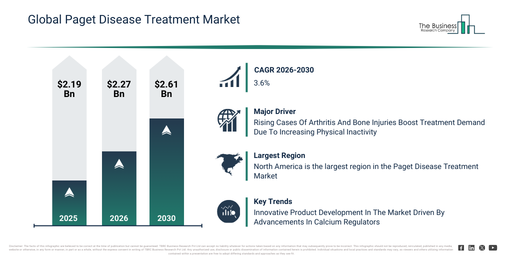
  • Paget Disease Treatment Market Set To Grow From $2.26 Billion In 2026 To $2.6 Billion By 2030 At A CAGR Of 3.6%

    Paget Disease Treatment Market Set To Grow From $2.26 Billion In 2026 To $2.6 Billion By 2030 At A CAGR Of 3.6%

    Enhanced with market attractiveness analysis, total addressable market evaluation, company benchmarking matrices, interactive Excel dashboards, expanded supply chain intelligence, emerging startup coverage, and detailed product insights, The Business Research Company’s 2026 market reports deliver more actionable and strategically valuable research.

    Paget Disease Treatment Market Size And Revenue Forecast Through 2030

    The market value for Paget’s disease treatments has experienced consistent expansion, projected to ascend from $2.19 billion in 2025 to $2.27 billion in 2026, reflecting a compound annual growth rate of 3.6%. This upward trajectory in the historical period was influenced by a scarcity of therapeutic alternatives, a prevalent dependence on established bisphosphonate medications, an increasing incidence of skeletal ailments, insufficient patient understanding regarding disease management strategies, and a tendency for treatments to be concentrated within hospital settings.

    The market for Paget’s disease treatments is projected for consistent expansion over the coming years, anticipating a valuation of $2.61 billion by 2030, driven by a compound annual growth rate of 3.6%. This projected growth is fueled by several key factors, including the introduction of innovative treatment options for Paget’s disease, a greater acceptance of therapies precisely formulated for specific targets, an increase in surgical procedures that are less invasive, a broader utilization of telehealth services for managing chronic bone conditions, and the widening availability across both online and traditional retail pharmacy networks. During this forecast period, significant trends shaping the market involve a stronger embrace of bisphosphonate therapies, the incorporation of individualized treatment plans, a rise in surgical interventions that minimize patient impact, increased reliance on telemedicine for the oversight of bone disorders, and the expanding role of online pharmacies in facilitating access to treatments.

    Download A Free Sample Report For Comprehensive Market Insights:

    https://www.thebusinessresearchcompany.com/sample.aspx?id=22088&type=smp

    Paget Disease Treatment Market Opportunity Drivers: What Is Creating New Revenue Potential?

    The increasing incidence of arthritis and bone-related injuries is anticipated to stimulate expansion within the Paget’s disease treatment market. Arthritis, characterized by joint inflammation, and bone injuries can both contribute to the development or exacerbation of conditions like Paget’s disease. Sedentary lifestyles, which lead to weakened muscles and joints and diminish their capacity for effective movement and shock absorption, are largely responsible for the surge in these health issues. Consequently, this elevates the likelihood of joint deterioration, rigidity, and fractures over extended periods. Treatments for Paget’s disease play a crucial role in managing arthritis and bone injuries by alleviating bone discomfort, enhancing joint mobility, and averting adverse outcomes such as fractures and deformities stemming from aberrant bone remodeling. Illustratively, as reported by Arthritis Australia in February 2024, a non-profit entity dedicated to arthritis awareness, advocacy, and assistance in Australia, an estimated 15% of the Australian populace, spanning all age demographics, currently manages arthritis, positioning it as one of the country’s most widespread chronic health challenges. Forecasts suggest that the count of individuals affected by arthritis is slated to climb to 5.39 million by the year 2040, signifying a 31% increase and representing an additional 1.28 million individuals impacted. Furthermore, by 2040, the prevalence of rheumatoid arthritis is expected to affect 280,040 men and 479,828 women. In light of these trends, the escalating number of arthritis and bone injury cases is a key factor propelling the Paget’s disease treatment market forward.

    Paget Disease Treatment Market Segment Analysis Highlighting Growth Areas

    The paget disease treatment market covered in this report is segmented –

    1) By Treatment Type: Actonel, Reclast, Zoledronic Acid, Fosamax, Miacalcin, Aredia, Calcitonin, Zometa, Other Treatments

    2) By Route Of Administration: Oral, Intravenous, Topical

    3) By Distribution Channels: Hospital Pharmacies, Retail Pharmacies, Online Pharmacies, Drug stores

    4) By End User: Hospitals, Clinics, Other End-Users

    Subsegments:

    1) By Actonel: Risedronate Sodium Tablets, Delayed-Release Risedronate

    2) By Reclast: Intravenous Reclast, Annual Reclast Infusion

    3) By Zoledronic Acid: Zoledronic Acid 5 mg Injection, Zoledronic Acid 4 mg Injection

    4) By Fosamax: Alendronate Sodium Tablets, Alendronate Oral Solution

    5) By Miacalcin: Miacalcin Nasal Spray, Miacalcin Injection

    6) By Aredia: Pamidronate Disodium 30 mg Injection, Pamidronate Disodium 90 mg Injection

    7) By Calcitonin: Synthetic Salmon Calcitonin, Human Calcitonin

    8) By Zometa: Zometa 4 mg/5 mL Concentrate, Zometa 4 mg Infusion

    9) By Other Treatments: Pain Management Medications, Physical Therapy, Surgical Interventions

    Paget Disease Treatment Market Innovation Trends Driving Future Development

    In the realm of Paget’s disease therapeutics, key industry players are prioritizing novel product creation, including calcium regulators, with the dual aims of boosting treatment effectiveness and broadening their market footprint. These calcium regulators function by meticulously managing calcium levels within the bloodstream and skeletal structure, thereby upholding essential bodily equilibrium. Illustrating this trend, Fresenius Kabi AG, a prominent German healthcare entity, introduced Calcitonin Salmon Injection, USP Synthetic in February 2025. This particular calcium regulator is formulated to address symptomatic Paget’s disease of the bone, hypercalcemia, and osteoporosis that follows menopause, presenting a more economical therapeutic choice, fortifying distribution networks, and augmenting their existing range of injectable generics. The company has channeled significant capital into its manufacturing infrastructure to ensure a consistent availability of critical medications, ultimately seeking to elevate patient well-being and solidify its position as a frontrunner in the healthcare sector.

    Paget Disease Treatment Market Leading Companies: Who Holds Significant Market Presence?

    Major companies operating in the paget disease treatment market are Pfizer Inc., Merck & Co. Inc., Novartis AG, Takeda Pharmaceutical Company Limited, Eli Lilly and Company, Teva Pharmaceutical Industries Ltd., Mylan N.V., Sun Pharmaceutical Industries Limited, Apotex Inc., Aurobindo Pharma Limited, Dr. Reddy’s Laboratories Ltd., Cipla Limited, Zakłady Farmaceutyczne Polpharma S.A., Amgen Inc., Sanofi S.A., GlaxoSmithKline plc, Johnson & Johnson, Roche Holding AG, AstraZeneca, Mallinckrodt Pharmaceuticals, Neopharma Inc., Kyowa Kirin Co. Ltd., Radius Health Inc., Accord Healthcare Ltd., Leucadia Pharmaceuticals Inc., Biocon Ltd., Omeros Corp., Angitia Biopharmaceuticals, CSPC Pharmaceutical Group Ltd., Luye Pharma Group Ltd.

    Access The Complete Paget Disease Treatment Market Report:

    https://www.thebusinessresearchcompany.com/report/paget-disease-treatment-global-market-report

    Paget Disease Treatment Market Regional Outlook: Where Are The Largest Opportunities Located?

    North Americawas the largest region in the paget disease treatment market in 2025. Asia-Pacificis expected to be the fastest-growing region in the forecast period. The regions covered in the paget disease treatment market report are Asia-Pacific, South East Asia, Western Europe, Eastern Europe, North America, South America, Middle East, Africa.

    Get in touch with us:

    The Business Research Company: https://www.thebusinessresearchcompany.com/

    Americas: +1 310-496-7795

    Asia: +44 7882 955267 & +91 8897263534

    Europe: +44 7882 955267

    Email us at: marketing@tbrc.info

    Follow us on:

    LinkedIn: https://in.linkedin.com/company/the-business-research-company

    YouTube: https://www.youtube.com/channel/UC24_fI0rV8cR5DxlCpgmyFQ

    Global Market Model: https://www.thebusinessresearchcompany.com/global-market-model
  • Pacemakers Market Opportunities Are Emerging Beyond Traditional Growth Areas

    Pacemakers Market Opportunities Are Emerging Beyond Traditional Growth Areas

    Through market attractiveness analysis, total addressable market evaluation, company benchmarking matrices, interactive Excel dashboards, expanded supply chain intelligence, emerging startup coverage, and detailed product insights, The Business Research Company’s 2026 market reports provide more actionable and strategically valuable research.

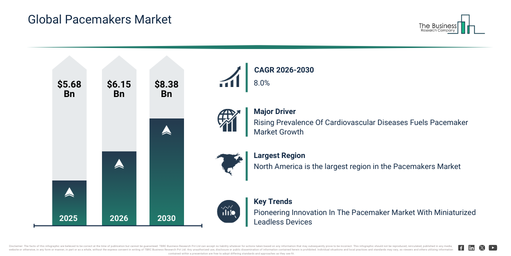
    Pacemakers Market Growth From $6.14 Billion In 2026 To $8.37 Billion By 2030 At A CAGR Of 8%

    The global pacemakers market experienced robust expansion recently and is projected to increase from $5.68 billion in 2025 to $6.15 billion in 2026, demonstrating a compound annual growth rate of 8.2%. Factors contributing to this upward trend during the preceding period included restricted access to diagnostic laboratories, a dependence on in-clinic assessments, the escalating incidence of chronic illnesses, heightened public health consciousness, and the continued utilization of conventional diagnostic techniques.

    The pacemakers market is poised for substantial expansion in the upcoming years, projecting a significant increase to $8.38 billion by the year 2030, fueled by a robust compound annual growth rate (CAGR) of 8.0%. This anticipated growth trajectory during the forecast period is largely propelled by an escalating embrace of home healthcare solutions, a heightened demand for tailored diagnostic approaches, the proliferation of rapid diagnostic technologies, the seamless integration of testing with mobile applications and interconnected devices, and a growing consumer inclination towards convenience and personal privacy. Key trends shaping this market landscape over the forecast period encompass a greater acceptance of self-testing kits among consumers, a mounting demand for diagnostic solutions that can be utilized at home, the expanding availability of rapid diagnostic testing options, increased public consciousness regarding preventive healthcare measures, and the merging of smart devices with over-the-counter testing capabilities.

    Download A Free Sample Report For Comprehensive Market Insights:

    https://www.thebusinessresearchcompany.com/sample.aspx?id=6593&type=smp

    Pacemakers Market Growth Momentum: Which Factors Are Influencing Demand?

    The escalating incidence of ailments affecting the heart and circulatory system is acting as a catalyst for the expansion of the pacemaker market. These conditions, broadly categorized as cardiovascular diseases, are being addressed with advanced drug discovery tools aimed at identifying novel therapeutic agents. Pacemakers, equipped with adaptable and protected leads, play a crucial role in managing these diseases by regulating erratic heartbeats. For example, as reported by the American Heart Association in January 2024, the mortality rate attributed to cardiovascular diseases, adjusted for age, climbed to 233.3 deaths per 100,000 individuals. This figure represents a 4.0% surge compared to the preceding year’s rate of 224.4 per 100,000, and follows a 4.6% increase in 2023, signifying the first upward trend in these mortality statistics witnessed in a considerable period. Thus, the heightened occurrence of cardiovascular diseases is poised to propel the pacemaker market’s advancement.

    Pacemakers Market Segment Performance And Strategic Opportunities

    The pacemakers market covered in this report is segmented –

    1) By Type: MRI Compatible Pacemaker, Conventional Pacemaker

    2) By Technology: Single-Chamber Pacemaker, Dual-Chamber Pacemaker, Biventricular Or CRT Pacemaker

    3) By Implantability: Implantable Pacemaker, External Pacemaker

    4) By Application: Congestive Heart Failure, Arrhythmias, Bradycardia, Tachycardia

    5) By End-User: Hospitals, Cardiac Care Centers, Ambulatory Surgical Centers, Other End Users

    Subsegments:

    1) By MRI Compatible Pacemaker: Single-Chamber MRI Compatible Pacemaker, Dual-Chamber MRI Compatible Pacemaker, Biventricular MRI Compatible Pacemaker

    2) By Conventional Pacemaker: Single-Chamber Conventional Pacemaker, Dual-Chamber Conventional Pacemaker, Biventricular Conventional Pacemaker

    Pacemakers Market Trends Reshaping Industry Growth

    Major players within the pacemaker sector are actively engaged in innovating, particularly with the creation of smaller pacemaker devices, a strategy aimed at broadening their customer reach, boosting sales figures, and ultimately enhancing revenue. These exceedingly compact cardiac implantable electronic devices (CIEDs), known as miniaturized pacemakers, are engineered to manage the heart’s rhythm and address specific cardiac rhythm irregularities without reliance on electrical leads or wires. A notable example occurred in May 2023, when Medtronic plc, a prominent US medical technology firm, shared that the U.S. Food and Drug Administration (FDA) had granted approval for its Micra AV2 and Micra VR2 models, both representative of miniaturized, leadless pacemaker technology. Esteemed as the planet’s most diminutive pacemakers, the Micra AV2 and Micra VR2 boast extended battery longevity and user-friendly programming capabilities when contrasted with earlier iterations, while still delivering the advantage of fewer complications compared to conventional pacemakers. Boasting an impressive roughly 40% improvement in battery performance over preceding models, the Micra AV2 and Micra VR2 are projected to have a median battery lifespan of approximately 16 and 17 years, respectively, suggesting that upwards of 80% of individuals receiving a Micra pacemaker will likely need only a singular device throughout their lives. Furthermore, the recently introduced Micra AV2 integrates sophisticated algorithms that automatically manage atrioventricular synchrony, thereby facilitating proper coordination between the heart’s upper and lower chambers.

    Pacemakers Market Key Players: Which Companies Shape Industry Competition?

    Major companies operating in the pacemakers market are Boston Scientific Corporation, Medtronic plc, Biotronik SE & Co KG, MicroPort Scientific Corporation, Shree Pacetronix Ltd, Oscor Inc, Osypka Medical GmbH, Abbott Laboratories, Lepu Medical Technology Beijing Co Ltd, Vitatron Holding BV, Pacetronix Limited, Sorin Group Italia SRL, CCC Medical Devices, Cardioelectronica, Izhevsky Mekhanichesky Zavod, Neuroiz, St Jude Medical (Abbott), Medico Spa, Braile Biomedica, Cardiaccs ApS, Hunan Huacheng Medical, Progetti SRL, Nihon Kohden Corporation, Schiller AG, Koninklijke Philips NV, Stryker Corporation, Physio Control Inc, AliveCor Inc.

    Access The Complete Pacemakers Market Report:

    https://www.thebusinessresearchcompany.com/report/pacemakers-global-market-report

    Pacemakers Market Geographic Landscape: Which Region Dominates Industry Growth?

    North Americawas the largest region in the pacemaker market in 2025. Asia-Pacificis expected to be the fastest-growing region in the forecast period. The regions covered in the pacemakers market report are Asia-Pacific, South East Asia, Western Europe, Eastern Europe, North America, South America, Middle East, Africa.

    Get in touch with us:

    The Business Research Company: https://www.thebusinessresearchcompany.com/

    Americas: +1 310-496-7795

    Asia: +44 7882 955267 & +91 8897263534

    Europe: +44 7882 955267

    Email us at: marketing@tbrc.info

    Follow us on:

    LinkedIn: https://in.linkedin.com/company/the-business-research-company

    YouTube: https://www.youtube.com/channel/UC24_fI0rV8cR5DxlCpgmyFQ

    Global Market Model: https://www.thebusinessresearchcompany.com/global-market-model
  • Ozone Therapy Session Market Expansion Is Opening New Pathways For Strategic Investment

    Ozone Therapy Session Market Expansion Is Opening New Pathways For Strategic Investment

    Delivering more actionable and strategically valuable research, The Business Research Company’s 2026 market reports feature market attractiveness analysis, total addressable market evaluation, company benchmarking matrices, interactive Excel dashboards, expanded supply chain intelligence, emerging startup coverage, and detailed product insights.

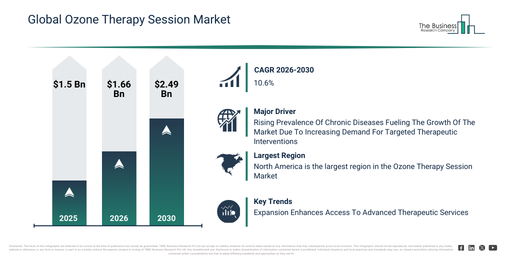
    Ozone Therapy Session Market Expansion Outlook: What Revenue Opportunities Lie Ahead?

    The market for ozone therapy sessions has experienced substantial expansion lately, projecting a rise from a valuation of $1.5 billion in 2025 to $1.66 billion by 2026, reflecting a compound annual growth rate of 10.9%. Factors contributing to this historical growth include a surge in attention towards alternative medical approaches, a heightened application of ozone therapy for managing persistent ailments, the proliferation of private wellness centers, an increasing inclination among patients towards integrated health solutions, and the accessibility of specialized ozone therapy apparatus.

    The ozone therapy session market is poised for substantial expansion over the upcoming years, projecting a rise to $2.49 billion by 2030, with a compound annual growth rate (CAGR) of 10.6%. This anticipated upswing during the forecast period is underpinned by several key drivers, including a heightened demand for integrated healthcare approaches, augmented investments in regenerative medicine services, a burgeoning volume of research into ozone therapy, increasing endorsement of supplementary treatment methods, and a greater emphasis on customized well-being initiatives. Furthermore, prevalent market trends expected to shape this period involve a wider acceptance of complementary and alternative treatment modalities, a growing preference for non-surgical pain relief options, escalating utilization of ozone-based immune-boosting therapies, the proliferation of wellness and regenerative medicine facilities, and an intensified concentration on bespoke therapeutic plans.

    Download A Free Sample Report For Comprehensive Market Insights:

    https://www.thebusinessresearchcompany.com/sample.aspx?id=30346&type=smp

    Ozone Therapy Session Market Expansion Drivers: What Is Shaping Future Growth?

    The increasing global spending on healthcare is anticipated to act as a significant catalyst for the expansion of the ozone therapy session market in the forthcoming period. Healthcare expenditure encompasses the aggregate financial resources allocated towards medical provisions, therapeutic interventions, healthcare infrastructure, scientific inquiry, and public health programs aimed at preserving or advancing health status. This surge in healthcare spending is largely attributed to the escalating burden of chronic conditions necessitating sustained and resource-intensive medical management. Enhanced financial investments in sophisticated therapeutic modalities, thereby elevating the caliber and attainability of treatments, are facilitated by increased healthcare expenditure, fostering improved clinical frameworks and encouraging broader acceptance of ozone-informed wellness practices. Illustratively, data from May 2024, sourced from the Office for National Statistics, a United Kingdom governmental body, revealed that total healthcare expenses experienced a 5.6% rise in monetary terms during 2023, signifying a 0.9% growth acceleration from the preceding year. Consequently, escalating healthcare expenditure is a primary driver behind the market’s expansion for ozone therapy sessions.

    Ozone Therapy Session Market Segment Landscape And Growth Potential

    The ozone therapy session market covered in this report is segmented –

    1) By Type: Major Autohemotherapy, Minor Autohemotherapy, Rectal Insufflation, Ozone Sauna, Other Types

    2) By Application: Pain Management, Skin Diseases, Infectious Diseases, Orthopedic Disorders

    3) By End-User: Hospitals, Clinics, Wellness Centers, Other End Users

    Subsegments:

    1) By Major Autohemotherapy: Single Pass Technique, Reinfusion Method, Blood Ozonation Therapy

    2) By Minor Autohemotherapy: Intramuscular Injection, Subcutaneous Injection

    3) By Rectal Insufflation: Continuous Flow Method, Intermittent Flow Method

    4) By Ozone Sauna: Full Body Sauna, Partial Body Sauna

    5) By Other Types: Ozonated Water Therapy, Ozone Oil Application, Joint Injection Therapy

    Ozone Therapy Session Market Strategic Trends: What Is Defining The Next Phase Of Growth?

    Companies active in the ozone therapy session market are prioritizing the broadening of access to sophisticated treatment options, including ex vivo blood ozonation, with the aim of managing long-term health issues and improving patient results. This particular medical procedure involves extracting a patient’s blood, processing it, combining it with ozone gas, and subsequently reintroducing it into the body, a method believed to promote recovery and diminish inflammation. To illustrate, in March of 2024, Rejuvenetix, a company based in the United States specializing in wellness and longevity, broadened its ex vivo blood ozonation clinic capabilities in Scottsdale. The enhanced site is intended to boost the number of patients that can be treated and minimize delays, thereby facilitating greater availability of this specialized treatment for those seeking remedies for conditions like Lyme disease and various autoimmune ailments. This enhancement allows the clinic to extend its service hours and incorporate a wider array of supplementary wellness offerings in conjunction with ozone therapy, contributing to comprehensive patient treatment.

    Ozone Therapy Session Market Competitive Landscape: Who Are The Leading Companies?

    Major companies operating in the ozone therapy session market are Sedecal S.A., Hänsler Medical GmbH, ZAT a.s., Nexus Advanced Pain Management, Kastner‑Praxisbedarf GmbH, Promolife Inc., APOZA Enterprise Co., Ltd., Medozons Ltd., The Ozone Clinic, Oxidation Technologies, Dr. J. Hänsler GmbH, Ozonmed, Herrmann Apparatebau GmbH, Vabek Aqua Technology, Clinic Next Face, Ozonline Health Technologies, Chellaram Ultra Wellness Clinic, Zotzmann + Stahl GmbH & Co. KG, Weimei Group, Ozone Health Solutions LLC

    Access The Complete Ozone Therapy Session Market Report:

    https://www.thebusinessresearchcompany.com/report/global-ozone-therapy-session-market-report

    Ozone Therapy Session Market Largest Region: Which Geography Holds The Highest Market Share?

    North Americawas the largest region in the ozone therapy session market in 2025. Asia-Pacificis expected to be the fastest-growing region in the forecast period. The regions covered in the ozone therapy session market report are Asia-Pacific, South East Asia, Western Europe, Eastern Europe, North America, South America, Middle East, Africa.

    Get in touch with us:

    The Business Research Company: https://www.thebusinessresearchcompany.com/

    Americas: +1 310-496-7795

    Asia: +44 7882 955267 & +91 8897263534

    Europe: +44 7882 955267

    Email us at: marketing@tbrc.info

    Follow us on:

    LinkedIn: https://in.linkedin.com/company/the-business-research-company

    YouTube: https://www.youtube.com/channel/UC24_fI0rV8cR5DxlCpgmyFQ

    Global Market Model: https://www.thebusinessresearchcompany.com/global-market-model