Month: June 2026

  • Oncolytic Adenovirus Market Expected To Reach $195.85 Billion By 2030 As Growth Accelerates At 8.1% CAGR

    Oncolytic Adenovirus Market Expected To Reach $195.85 Billion By 2030 As Growth Accelerates At 8.1% CAGR

    Enhanced with market attractiveness analysis, total addressable market evaluation, company benchmarking matrices, interactive Excel dashboards, expanded supply chain intelligence, emerging startup coverage, and detailed product insights, The Business Research Company’s 2026 market reports deliver more actionable and strategically valuable research.

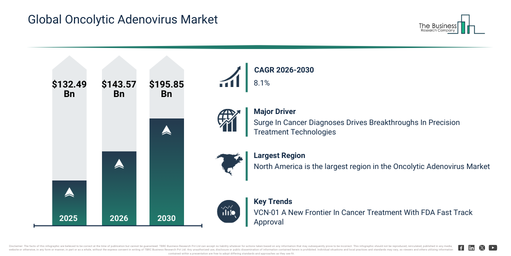
    Oncolytic Adenovirus Market Expansion From $143.56 Billion In 2026 To $195.85 Billion In 2030

    The market for oncolytic adenoviruses has experienced robust expansion recently. Projections indicate a notable increase from $132.49 billion in 2025 to $143.57 billion in 2026, reflecting a compound annual growth rate of 8.4%. This expansion during the historical period is underpinned by factors such as the emergence of initial adenovirus-based treatment options, a rise in melanoma and prostate cancer diagnoses, increased funding for oncolytic virus studies, early acceptance by cancer research facilities, and enhanced partnerships between biotechnology firms and academic organizations.

    The market for oncolytic adenoviruses is projected for substantial expansion in the upcoming years, with forecasts indicating a reach of $195.85 billion by the year 2030, driven by a compound annual growth rate (CAGR) of 8.1%. This projected growth over the forecast period is underpinned by several key factors, including a heightened demand for sophisticated engineered adenovirus treatments, their increasing application in managing breast, ovarian, and lung cancers, a greater involvement from biotechnology firms, elevated investment in clinical trials and research and development activities, and the enhanced capabilities of hospitals and research institutions in the field of gene therapy. Significant trends anticipated during this forecast period involve the growing integration of artificial intelligence and big data analytics within oncolytic virus research, the expanding use of genomics and precision medicine approaches in the engineering of these viruses, the increased deployment of digital platforms for the oversight of clinical trials, a rise in automated processes for viral production and quality assurance, and the more frequent utilization of the Internet of Things for the monitoring of virus storage and distribution systems.

    Download A Free Sample Report For Comprehensive Market Insights:

    https://www.thebusinessresearchcompany.com/sample.aspx?id=21235&type=smp

    Oncolytic Adenovirus Market Development Factors: Which Trends Are Supporting Demand?

    The global demand for oncolytic adenovirus is anticipated to surge due to the escalating prevalence of cancer. Cancer, defined by the uncontrolled proliferation and dissemination of cells, is becoming more common owing to factors such as an aging demographic, lifestyle choices, environmental influences, inherited predispositions, and enhanced diagnostic capabilities. Oncolytic adenoviruses present a promising therapeutic strategy by selectively seeking out and destroying cancerous cells, thereby addressing the increasing burden of this disease. For illustration, data from the National Cancer Institute indicated approximately 20 million new cancer diagnoses and 9.7 million fatalities globally in May 2024, with predictions suggesting these figures could reach 29.9 million cases and 15.3 million deaths by 2040. Additionally, Australian Bureau of Statistics figures from 2023 revealed that 1.8% of Australians had cancer, with a slightly higher incidence in males (2.1%) compared to females (1.6%), particularly among the elderly aged 75 and above. Consequently, the rising rates of cancer are a significant catalyst for expansion within the oncolytic adenovirus market.

    The expanding embrace of personalized medicine is poised to accelerate the expansion of the oncolytic adenovirus sector. Personalized medicine involves customizing medical interventions for individual patients, taking into account their unique genetic makeup, biomarker profiles, phenotypic traits, or psychosocial factors, with the aim of optimizing therapeutic effectiveness while reducing adverse effects. This trend is fueled by progress in comprehending the intricacies of tumor biology and the development of therapies designed to target particular genetic alterations or biomarkers, leading to improved patient outcomes and enhanced safety. Oncolytic adenoviruses are particularly well-suited to this paradigm, facilitating the creation of highly specific viral treatments designed to selectively target and eliminate malignant cells. As an example, the Personalized Medicine Coalition reported in February 2024 that the U.S. FDA authorized 26 novel personalized treatments in 2023, encompassing 20 new molecular entities and 6 therapies based on gene or cell modification. Accordingly, the increasing adoption of personalized medicine serves as a key driver for the growth trajectory of the oncolytic adenovirus market.

    Oncolytic Adenovirus Market Segmentation: How Is The Market Structured Across Key Categories?

    The oncolytic adenovirus market covered in this report is segmented –

    1) By Virus Type: Adenovirus Type 5-Based Oncolytic Viruses, Adenovirus Type 2-Based Oncolytic Viruses, Other Virus Types

    2) By Application: Melanoma, Prostate Cancer, Breast Cancer, Ovarian Cancer, Lung Cancer, Other Applications

    3) By End-User: Hospitals, Cancer Research Institutes, Biotechnology Companies, Academic And Research Institutes

    Subsegments:

    1) By Adenovirus Type 5-Based Oncolytic Viruses: First-Generation Adenovirus Type 5-Based, Second-Generation Adenovirus Type 5-Based, Engineered Adenovirus Type 5-Based

    2) By Adenovirus Type 2-Based Oncolytic Viruses: First-Generation Adenovirus Type 2-Based, Second-Generation Adenovirus Type 2-Based, Engineered Adenovirus Type 2-Based

    3) By Other Virus Types: Modified Adenovirus Strains, Hybrid Adenovirus Types, Chimeric Adenoviruses

    Oncolytic Adenovirus Market Transformation Trends: Which Innovations Are Driving Change?

    Leading players within the oncolytic adenovirus sector are prioritizing the development of combined treatment approaches, exemplified by VCN-01. this innovative therapy merges oncolytic virotherapy with conventional chemotherapy, aiming to refine tumor-specific delivery and amplify the overall effectiveness of treatment. VCN-01 functions as a genetically modified oncolytic adenovirus designed for the precise targeting and elimination of cancerous cells, concurrently boosting the efficacy of chemotherapy regimens. A noteworthy development occurred in May 2024 when Theriva Biologics, a clinical-stage immuno-oncology firm headquartered in the United States, reported that the U.S. Food and Drug Administration (FDA) bestowed Fast Track Designation (FTD) upon their principal candidate, VCN-01. This designation is specifically for VCN-01 when administered alongside gemcitabine and nab-paclitaxel to address metastatic pancreatic adenocarcinoma. Essentially, VCN-01 is an oncolytic adenovirus that seeks out and multiplies within tumor cells, contributing to the degradation of the tumor’s stromal environment, a significant impediment to successful cancer therapy.

    Oncolytic Adenovirus Market Competitive Landscape And Leading Companies

    Major companies operating in the oncolytic adenovirus market are Amgen Inc., Targovax ASA, CG Oncology Inc., Replimune Group Inc., Imugene Limited, Oncorus Inc., PsiOxus Therapeutics Ltd., Vyriad Inc., Transgene SA, Valo Therapeutics Oy, EpicentRx Inc., DNAtrix Inc., Shanghai Sunway Biotech Co. Ltd., TILT Biotherapeutics Ltd., Oncolys BioPharma Inc., Lokon Pharma AB, GeneMedicine Co. Ltd., Akamis Bio Ltd., Genelux Corporation, SillaJen Inc.

    Access The Complete Oncolytic Adenovirus Market Report:

    https://www.thebusinessresearchcompany.com/report/oncolytic-adenovirus-global-market-report

    Oncolytic Adenovirus Market Global Footprint: Which Region Holds Market Leadership?

    North Americawas the largest region in the oncolytic adenovirus market in 2025. Asia-Pacificis expected to be the fastest-growing region in the forecast period. The regions covered in the oncolytic adenovirus market report are Asia-Pacific, South East Asia, Western Europe, Eastern Europe, North America, South America, Middle East, Africa.

    Get in touch with us:

    The Business Research Company: https://www.thebusinessresearchcompany.com/

    Americas: +1 310-496-7795

    Asia: +44 7882 955267 & +91 8897263534

    Europe: +44 7882 955267

    Email us at: marketing@tbrc.info

    Follow us on:

    LinkedIn: https://in.linkedin.com/company/the-business-research-company

    YouTube: https://www.youtube.com/channel/UC24_fI0rV8cR5DxlCpgmyFQ

    Global Market Model: https://www.thebusinessresearchcompany.com/global-market-model
  • Oncology Nutrition Market Set To Grow From $2.28 Billion In 2026 To $3.27 Billion By 2030 At A CAGR Of 9.4%

    Oncology Nutrition Market Set To Grow From $2.28 Billion In 2026 To $3.27 Billion By 2030 At A CAGR Of 9.4%

    Through market attractiveness analysis, total addressable market evaluation, company benchmarking matrices, interactive Excel dashboards, expanded supply chain intelligence, emerging startup coverage, and detailed product insights, The Business Research Company’s 2026 market reports provide more actionable and strategically valuable research.

    Oncology Nutrition Market Forecast Highlighting Growth From $2.28 Billion To $3.27 Billion

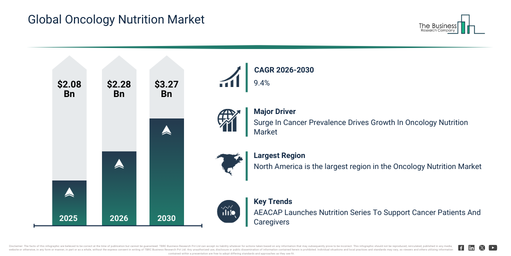
    The market for nutritional support in oncology has experienced substantial expansion lately, projecting a rise from $2.08 billion in 2025 to $2.28 billion by 2026, driven by a compound annual growth rate of 9.6%. Factors contributing to this growth trajectory during the preceding period include heightened public consciousness regarding the role of nutrition in cancer management, an increasing incidence of specific cancer diagnoses like breast, blood, and gastrointestinal malignancies, the escalating utilization of both tube feeding (enteral) and intravenous feeding (parenteral) in healthcare settings and at home, the innovation of tailored nutritional products for cancer patients, and the proliferation of dedicated cancer treatment facilities.

    The oncology nutrition sector is poised for substantial expansion in the coming years, projected to reach $3.27 billion by 2030, experiencing a compound annual growth rate of 9.4%. This anticipated growth is fueled by several key factors, including a surging requirement for individualized oncology nutrition strategies, a greater embrace of technology for monitoring dietary intake, the proliferation of nutrition support in homecare and outpatient settings, an intensified emphasis on enhancing patient results via nutritional interventions, and the broadening availability of oncology nutrition services in developing economies. Furthermore, prominent developments shaping this market during the forecast period involve the escalating use of digital health platforms for tracking oncology nutrition requirements, the growing integration of artificial intelligence to formulate tailored cancer dietary plans, the expanding application of genomics and precision medicine in nutritional approaches, increased automation within hospital and home-based nutrition services, and the uptake of Internet of Things (IoT) devices for monitoring nutritional product delivery and patient adherence.

    Download A Free Sample Report For Comprehensive Market Insights:

    https://www.thebusinessresearchcompany.com/sample.aspx?id=6745&type=smp

    Oncology Nutrition Market Industry Drivers: What Is Driving Revenue Growth?

    The escalating rates of cancer diagnosis are a major catalyst for the expansion of the oncology nutrition market in the foreseeable future. Cancer incidence, which denotes the count of newly diagnosed cancer cases within a defined population over a specific timeframe, directly correlates with the need for adequate and nutrient-rich diets among affected individuals. Consequently, an upward trend in cancer occurrences fuels a greater demand for specialized nutritional support. To illustrate, projections from the World Health Organization, an international body headquartered in Switzerland, indicated in February 2024 that over 35 million new cancer cases are anticipated by 2050, marking a substantial 77% surge from the approximately 20 million cases recorded in 2022. This burgeoning cancer landscape, therefore, is poised to propel the oncology nutrition market’s growth.

    Oncology Nutrition Market Segmentation Trends And Revenue Drivers

    The oncology nutrition market covered in this report is segmented –

    1) By Cancer Type: Blood Cancer, Breast Cancer, Stomach And Gastrointestinal Cancers, Liver Cancer, Pancreatic Cancer, Other Cancer Types

    2) By Nutrition: Enteral Nutrition, Parenteral Nutrition

    3) By End-Users: Hospitals, Homecare, Specialty Clinics, Other End Users

    Subsegments:

    1) By Blood Cancer: Leukemia, Lymphoma, Multiple Myeloma

    2) By Breast Cancer: Early-Stage Breast Cancer, Advanced Breast Cancer

    3) By Stomach And Gastrointestinal Cancers: Gastric Cancer, Colorectal Cancer, Esophageal Cancer

    4) By Liver Cancer: Hepatocellular Carcinoma, Cholangiocarcinoma

    5) By Pancreatic Cancer: Exocrine Pancreatic Cancer, Endocrine Pancreatic Tumors

    6) By Other Cancer Types: Lung Cancer, Prostate Cancer, Ovarian Cancer, Head And Neck Cancers

    #Oncology Nutrition Market Growth Trends: What Is Influencing The Future Outlook?

    Companies leading the oncology nutrition sector are prioritizing the creation of novel approaches, like specialized diets for individuals with cancer, to bolster treatment efficacy, fortify the immune system, mitigate side effects linked to therapy, and elevate the general well-being of patients throughout their cancer journey and recovery phases. Nutrition tailored for cancer patients encompasses carefully crafted eating regimens and dietary interventions aimed at addressing the specific requirements of those undergoing cancer therapies. As an illustration, in June 2024, AEACAP, an organization in Spain dedicated to patient support, introduced a new educational series focused on nutrition for cancer patients and their support networks. This program involves a bi-weekly release of video content, guided by an expert nutritionist, with the objective of disseminating vital knowledge regarding dietary practices during and post-cancer treatment, underscoring the profound impact of judicious nutrition on improving treatment results and the overall quality of life for individuals confronting cancer.

    Oncology Nutrition Market Industry Leaders: Which Organizations Are Driving Competition?

    Major companies operating in the oncology nutrition market are B. Braun Melsungen AG, Abbott Laboratories, Abbott Nutrition, Nestle S.A., Nutricia, Baxter International Inc., Fresenius Kabi AG, Fresenius Kabi USA LLC, Global Health Products Inc., Cambrooke Therapeutics Inc., Kate Farms Inc., Real Food Blends LLC, Medtrition Inc., Nutra Balance Products, Nutritional Medicinals LLC, Primus Pharmaceuticals Inc., Solace Nutrition, Unimed Pharma LLC, Vitaflo USA LLC, Danone S.A., Ajinomoto Co Ltd, Otsuka Pharmaceutical Co Ltd, Grifols S.A., Victus Inc, Esperer Nutrition

    Access The Complete Oncology Nutrition Market Report:

    https://www.thebusinessresearchcompany.com/report/oncology-nutrition-global-market-report

    Oncology Nutrition Market Regional Distribution: Which Areas Drive Market Expansion?

    North Americawas the largest region in the oncology nutrition market in 2025. Asia-Pacificis expected to be the fastest-growing region in the forecast period. The regions covered in the oncology nutrition market report are Asia-Pacific, South East Asia, Western Europe, Eastern Europe, North America, South America, Middle East, Africa.

    Get in touch with us:

    The Business Research Company: https://www.thebusinessresearchcompany.com/

    Americas: +1 310-496-7795

    Asia: +44 7882 955267 & +91 8897263534

    Europe: +44 7882 955267

    Email us at: marketing@tbrc.info

    Follow us on:

    LinkedIn: https://in.linkedin.com/company/the-business-research-company

    YouTube: https://www.youtube.com/channel/UC24_fI0rV8cR5DxlCpgmyFQ

    Global Market Model: https://www.thebusinessresearchcompany.com/global-market-model

  • Oncology Companion Diagnostics Market Opportunities Are Emerging Beyond Traditional Growth Areas

    Oncology Companion Diagnostics Market Opportunities Are Emerging Beyond Traditional Growth Areas

    Delivering more actionable and strategically valuable research, The Business Research Company’s 2026 market reports feature market attractiveness analysis, total addressable market evaluation, company benchmarking matrices, interactive Excel dashboards, expanded supply chain intelligence, emerging startup coverage, and detailed product insights.

    Oncology Companion Diagnostics Market Revenue Growth Supported By A CAGR Of 6.49% Through 2030

    The market for companion diagnostics in oncology has experienced substantial expansion recently, projected to escalate from $3.79 billion in 2025 to $4.29 billion in 2026, reflecting a compound annual growth rate of 13.0%. This upward trajectory in the historical period is underpinned by several key factors including the increasing incidence of cancers like breast, colorectal, and melanoma, a heightened emphasis on individualized treatment approaches, a growing need for precise targeted therapy selection, the proliferation of diagnostic laboratories and healthcare facilities, and advancements in molecular and genetic testing methodologies.

    The market for oncology companion diagnostics is poised for substantial expansion over the coming years, projected to reach $6.5 billion by 2030, reflecting a compound annual growth rate of 10.9%. This anticipated surge is fueled by several key factors: the increasing embrace of next-generation sequencing (NGS) and PCR-based diagnostic methods, enhanced partnerships between pharmaceutical and diagnostic firms, a growing number of regulatory approvals for companion diagnostics, a heightened demand for personalized cancer treatments, and a greater utilization of bioinformatics and decision-support software within the diagnostic landscape. Significant trends expected to shape this market during the forecast period include the growing adoption of digital platforms for managing companion diagnostic data, a more pronounced integration of artificial intelligence in analyzing biomarkers and stratifying patient populations, the expanding application of genomics and precision medicine in the development of targeted cancer therapies, increased automation in diagnostic testing and laboratory processes, and the rising use of the Internet of Things (IoT) for monitoring diagnostic equipment and consumables.

    Download A Free Sample Report For Comprehensive Market Insights:

    https://www.thebusinessresearchcompany.com/sample.aspx?id=15623&type=smp

    Oncology Companion Diagnostics Market Growth Factors: Which Forces Are Supporting Market Expansion?

    The projected increase in cancer incidence is anticipated to be a primary catalyst for the expansion of the oncology companion diagnostics market. Cancer, characterized by the uncontrolled proliferation and dissemination of aberrant cells within the body, is on the rise due to a confluence of factors including altered lifestyles, environmental influences, the global obesity crisis, tobacco consumption, and hereditary predispositions. Within the realm of oncology, companion diagnostics are instrumental in advancing personalized medicine, transforming patient care by facilitating tailored treatment choices, boosting therapeutic effectiveness, mitigating unwanted side effects, streamlining participation in clinical studies, and improving the oversight of treatment progress. Illustrating this trend, data from the US National Cancer Institute in May 2024 reported approximately 20 million new cancer diagnoses and 9.7 million fatalities linked to the disease in 2022, with projections suggesting an annual toll of 15.3 million deaths and 29.9 million new cases by the year 2040. Consequently, the escalating number of cancer diagnoses directly fuels the growth trajectory of the oncology companion diagnostics market.

    Oncology Companion Diagnostics Market Segment Analysis Highlighting Growth Areas

    The oncology companion diagnostics market covered in this report is segmented –

    1) By Product: Instrument, Consumables, Software

    2) By Disease Type: Melanoma, Breast Cancer, Colorectal Cancer, Leukemia, Prostate Cancer, Other Disease Types

    3) By Technology: Immunohistochemistry (IHC), In Situ Hybridization (ISH) Or Fluorescence In Situ Hybridization (FISH), Polymerase Chain Reaction (PCR), Next-Generation Sequencing (NGS), Other Technologies

    4) By End User: Hospital, Pathology Or Diagnostic Laboratory, Academic Medical Center, Other End-Users

    Subsegments:

    1) By Instrument: Polymerase Chain Reaction (PCR) Instruments, Next-Generation Sequencing (NGS) Systems, Immunohistochemistry (IHC) Instruments, Fluorescence In Situ Hybridization (FISH) Instruments, Microarray Platforms

    2) By Consumables: Reagents And Kits (DNA Or RNA Extraction Kits, PCR Reagents), Biopsy Needles, Testing Slides And Chips, Control And Calibration Samples

    3) By Software: Data Analysis Software, Bioinformatics Software (For Gene Expression Analysis), Companion Diagnostic Decision Support Software, Clinical Workflow Management Software

    Oncology Companion Diagnostics Market Industry Trends: What Changes Are Reshaping Demand?

    Leading entities within the oncology companion diagnostics sector are prioritizing the advancement of sophisticated, high-volume sequencing methodologies. A prime example is the adoption of the c-MET companion diagnostic assay, which aids in therapeutic decision-making for individuals diagnosed with advanced non-small cell lung cancer. This application serves to bolster precision oncology initiatives and refine the selection of personalized treatment regimens. Specifically, the implementation of the c-MET companion diagnostic assay for guiding therapy in advanced NSCLC involves the utilization of a specialized detection test. This test identifies c-MET genetic variations in patients afflicted with advanced non-small cell lung cancer, thereby empowering healthcare providers to choose suitable treatments, maximize therapeutic effectiveness, and champion precision medicine strategies. To illustrate, in May 2025, NeoGenomics, Inc., a prominent American oncology diagnostics firm, introduced its c-MET CDx Assay. This assay is intended to inform therapeutic choices for patients presenting with advanced Non-Small Cell Lung Cancer (NSCLC). The c-MET CDx Assay functions as a companion diagnostic tool, designed to identify c-MET protein overexpression within tumor samples, thereby yielding swift and precise outcomes that pinpoint patients who could benefit from therapies targeting the MET pathway. This assay is characterized by its exceptional sensitivity and specificity, expedited processing times, consistent testing protocols, and seamless integration into standard clinical procedures, positioning it as an invaluable asset for advancing precision oncology and customizing patient care plans.

    Oncology Companion Diagnostics Market Leading Companies: Who Holds Significant Market Presence?

    Major companies operating in the oncology companion diagnostics market are F. Hoffmann-La Roche AG, Thermo Fisher Scientific Inc., Abbott Laboratories, Danaher Corporation, Laboratory Corporation of America Holdings (LabCorp), Quest Diagnostics Incorporated, Eurofins Scientific SE, Agilent Technologies Inc., Illumina Inc., PerkinElmer Inc., bioMérieux SA, Sysmex Corporation, Bio-Rad Laboratories Inc., QIAGEN N.V., Exact Sciences Corporation, BGI Genomics Co. Ltd., Natera Inc., Myriad Genetics Inc., ARUP Laboratories, NeoGenomics Laboratories Inc., Guardant Health, Ambry Genetics Corporation, Biocartis SA, CENTOGENE N.V., Invivoscribe Inc., Pillar Biosciences Inc.

    Access The Complete Oncology Companion Diagnostics Market Report:

    https://www.thebusinessresearchcompany.com/report/oncology-companion-diagnostics-global-market-report

    Oncology Companion Diagnostics Market Leading Geography: Which Region Generates The Most Revenue?

    North Americawas the largest region in the oncology companion diagnostic market in 2025. Asia-Pacificis expected to be the fastest-growing region in the forecast period. The regions covered in the oncology companion diagnostics market report are Asia-Pacific, South East Asia, Western Europe, Eastern Europe, North America, South America, Middle East, Africa.

    Get in touch with us:

    The Business Research Company: https://www.thebusinessresearchcompany.com/

    Americas: +1 310-496-7795

    Asia: +44 7882 955267 & +91 8897263534

    Europe: +44 7882 955267

    Email us at: marketing@tbrc.info

    Follow us on:

    LinkedIn: https://in.linkedin.com/company/the-business-research-company

    YouTube: https://www.youtube.com/channel/UC24_fI0rV8cR5DxlCpgmyFQ

    Global Market Model: https://www.thebusinessresearchcompany.com/global-market-model

  • Oncology Based In-Vivo CRO Market Expansion Is Opening New Pathways For Strategic Investment

    Oncology Based In-Vivo CRO Market Expansion Is Opening New Pathways For Strategic Investment

    Enhanced with market attractiveness analysis, total addressable market evaluation, company benchmarking matrices, interactive Excel dashboards, expanded supply chain intelligence, emerging startup coverage, and detailed product insights, The Business Research Company’s 2026 market reports deliver more actionable and strategically valuable research.

    Oncology Based In-Vivo CRO Market Value Expansion And Long-Term Growth Outlook

    The market for in-vivo oncology contract research organizations has seen substantial expansion recently, with its value projected to increase from $1.5 billion in 2025 to $1.66 billion in 2026. This represents a compound annual growth rate of 10.6%. Factors contributing to this growth during the past period include a heightened need for early-stage oncology research, an upswing in studies utilizing animal models, a greater incidence of both hematological malignancies and solid tumors, the global proliferation of CROs, and more stringent regulatory mandates for preclinical study validation.

    The market for in-vivo oncology Contract Research Organizations (CROs) is poised for substantial expansion in the coming years, with projections indicating a rise to $2.54 billion by 2030, demonstrating a compound annual growth rate (CAGR) of 11.2%. This upward trajectory is fueled by several key factors, including an intensified focus on patient-derived xenograft models, greater incorporation of digital data management systems, advancements in personalized oncology drug development, a growing tendency to outsource in-vivo studies to dedicated CROs, and the increased utilization of automated imaging and monitoring technologies. Significant movements shaping this forecast period involve a greater embrace of digital platforms for managing in-vivo studies, enhanced application of artificial intelligence and machine learning in preclinical oncology research, broader implementation of genomic profiling for patient-derived xenograft models, heightened automation in in-vivo testing and subsequent data analysis, and expanded use of IoT-enabled monitoring for laboratory equipment and study results.

    Download A Free Sample Report For Comprehensive Market Insights:

    https://www.thebusinessresearchcompany.com/sample.aspx?id=10521&type=smp

    Oncology Based In-Vivo CRO Market Demand Drivers: What Is Fueling Industry Growth?

    The escalating incidence of cancer is anticipated to be a primary catalyst for the expansion of the oncology in-vivo contract research organization (CRO) sector. Cancer, characterized by the uncontrolled proliferation and potential metastasis of aberrant cells that can originate within any bodily organ or tissue, necessitates the development of novel pharmaceuticals and medical equipment. These innovations undergo rigorous preclinical and clinical evaluation, alongside regulatory oversight, prior to market release. Oncology-focused in-vivo CROs function as external service providers, undertaking all or part of the preclinical testing phases in living organisms (such as animals, plants, or intact cell cultures) on behalf of sponsoring companies, a crucial step before human trials commence. Consequently, the rising global burden of cancer fuels a greater demand for advanced therapeutic solutions and treatments, thereby stimulating the growth trajectory of the oncology in-vivo CRO market. Illustrating this trend, data from the American Cancer Society in April 2024 indicated approximately 609,000 cancer fatalities and 1.9 million new diagnoses in the United States

    Oncology Based In-Vivo CRO Market Segment Performance And Strategic Opportunities

    The oncology based in-vivo cro market covered in this report is segmented –

    1) By Indication: Blood Cancer, Solid Tumors, Other Indications

    2) By Model: Syngeneic Model, Xenograft, Patient Derived Xenograft (PDX), Other Models

    3) By Application: Pharmaceutical Companies Or Biopharma, Biotechnology Companies, Academic And Research Institutes, CROs Or Contract Research Partners

    Subsegments:

    1) By Blood Cancer: Leukemia, Lymphoma, Myeloma

    2) By Solid Tumors: Breast Cancer, Lung Cancer, Colorectal Cancer, Prostate Cancer

    3) By Other Indications: Neuroblastoma, Germ Cell Tumors, Sarcomas

    Oncology Based In-Vivo CRO Market Innovation Trends: Which Developments Are Transforming The Industry?

    In the oncology-focused in vivo Contract Research Organization sector, prominent businesses are concentrating on pioneering novel approaches, like CAR T-cell treatments, to enhance their market standing. This CAR T-cell therapy represents a type of immunotherapy where T cells are genetically modified to combat cancer. A notable development occurred in May 2023 when Seattle Children’s Hospital and Research Institute established BrainChild Bio, an initiative aimed at expediting the development of CAR T-cell therapies for pediatric brain tumor patients. Initially, BrainChild Bio will concentrate on diffuse intrinsic pontine gliomas (DIPG), a notoriously difficult-to-treat childhood brainstem cancer, for its CAR T-cell therapy applications. This advanced CAR T-cell treatment platform, BrainChild Bio, utilizes synthetic technologies to optimize the application of CAR T-cell therapies specifically for central nervous system cancers. Following the acquisition of pediatric approval for DIPG, BrainChild Bio plans to leverage its groundbreaking CAR T-cell therapy to address other hard-to-treat adult and pediatric brain tumors, including glioblastoma and brain metastases.

    Oncology Based In-Vivo CRO Market Key Players: Which Companies Shape Industry Competition?

    Major companies operating in the oncology based in-vivo cro market are Crown Bioscience, Charles River Laboratories International Inc., Taconic Biosciences Inc., The Jackson Laboratory, ICON plc., WuXi AppTec Inc., Eurofins Scientific SE, Labcorp Drug Development, Champion Oncology Inc., Xentech SAS, Thermo Fisher Scientific Inc., MI Bioresearch Inc., Covance Inc., Evotec SE, Living Tumor Laboratory, Oncodesign SA, Pharmaron Beijing Co. Ltd., Syngene International Limited, Shanghai Medicilon Inc., Pharmalegacy Laboratories, Oncotest GmbH, Biocytogen LLC

    Access The Complete Oncology Based In-Vivo CRO Market Report:

    https://www.thebusinessresearchcompany.com/report/oncology-based-in-vivo-cro-global-market-report

    Oncology Based In-Vivo CRO Market Regional Outlook: Where Are The Largest Opportunities Located?

    North Americawas the largest region in the oncology-based in-vivo CRO market in 2025.North Americais expected to be the fastest-growing region in the global oncology-based in-vivo CRO market report during the forecast period. The regions covered in the oncology based in-vivo cro market report are Asia-Pacific, South East Asia, Western Europe, Eastern Europe, North America, South America, Middle East, Africa.

    Get in touch with us:

    The Business Research Company: https://www.thebusinessresearchcompany.com/

    Americas: +1 310-496-7795

    Asia: +44 7882 955267 & +91 8897263534

    Europe: +44 7882 955267

    Email us at: marketing@tbrc.info

    Follow us on:

    LinkedIn: https://in.linkedin.com/company/the-business-research-company

    YouTube: https://www.youtube.com/channel/UC24_fI0rV8cR5DxlCpgmyFQ

    Global Market Model: https://www.thebusinessresearchcompany.com/global-market-model
  • Oncology Ablation Market Trends Are Creating New Opportunities For Industry Leaders

    Oncology Ablation Market Trends Are Creating New Opportunities For Industry Leaders

    Through market attractiveness analysis, total addressable market evaluation, company benchmarking matrices, interactive Excel dashboards, expanded supply chain intelligence, emerging startup coverage, and detailed product insights, The Business Research Company’s 2026 market reports provide more actionable and strategically valuable research.

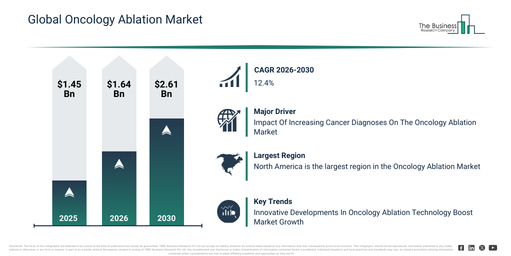
    Oncology Ablation Market Expected To Reach $2.61 Billion By 2030 At 12.4% CAGR

    The oncology ablation sector has experienced substantial expansion lately, projected to increase from $1.45 billion in 2025 to $1.64 billion in 2026, reflecting a compound annual growth rate of 12.5%. This upward trajectory in the historical period is linked to several factors: a greater incidence of liver, kidney, and lung cancers; amplified interest in less invasive medical procedures; the broader accessibility of sophisticated imaging equipment; the development of healthcare facilities, including hospitals and dedicated cancer centers; and a heightened recognition of ablation as a viable substitute for surgical interventions.

    The global market for oncology ablation is poised for substantial expansion over the coming years, projected to reach $2.61 billion by 2030, exhibiting a compound annual growth rate of 12.4%. This anticipated surge in the forecast period is largely fueled by advancements in targeted and personalized ablation treatments, a heightened embrace of minimally invasive percutaneous and laparoscopic approaches, continuous technological innovation in ablation devices, the proliferation of oncology centers in developing economies, and the increasing integration of digital tools for patient management and post-procedural monitoring. Key market developments expected during this timeframe encompass a greater adoption of digital platforms for managing oncology ablation procedures, the growing incorporation of artificial intelligence and machine learning in tumor diagnosis and treatment planning, a wider application of precision medicine and genomic profiling to tailor ablation therapies, increasing automation in ablation equipment and surgical tools, and a rise in Internet of Things (IoT) enabled devices for monitoring ablation procedures and patient results.

    Download A Free Sample Report For Comprehensive Market Insights:

    https://www.thebusinessresearchcompany.com/sample.aspx?id=18415&type=smp

    Oncology Ablation Market Growth Drivers: What Factors Are Accelerating Expansion?

    The expanding prevalence of cancer detection is set to stimulate advancements within the oncology ablation market. Cancer diagnosis entails the systematic identification and verification of malignancy, employing medical examinations, sophisticated imaging techniques, and thorough pathological assessments of bodily tissues. This upward trend in cancer diagnoses can be attributed to a confluence of elements, including an expanding elderly demographic, more effective screening methodologies, elevated public consciousness fostering earlier identification, and various environmental influences. Oncology ablation serves as a critical intervention for addressing tumors identified through these diagnostic processes, providing less invasive methods to eradicate cancerous growths and enhance patient prognoses. Illustratively, by May of 2024, projections from the National Cancer Institute, a leading US federal entity dedicated to cancer research and education, indicated an anticipated 2,001,140 new cancer diagnoses within the United States for that year, with prostate, lung, and colorectal cancers accounting for approximately 48% of the total diagnoses among males. Looking ahead to 2040, the yearly incidence of new cancer cases is anticipated to escalate dramatically to 29.9 million, underscoring a substantial prospective surge in cancer affliction rates globally. Moreover, in June 2022, data from the American Cancer Society, a prominent US non-profit focused on cancer awareness, revealed that roughly 1.9 million new cancer cases were identified in the USA during 2022. Consequently, the growing volume of cancer detections is poised to be a primary catalyst for the oncology ablation market’s expansion.

    Oncology Ablation Market Segment Landscape And Growth Potential

    The oncology ablation market covered in this report is segmented –

    1) By Technology: Radiofrequency Ablation, Microwave Ablation, Cryoablation, Irreversible Electroporation Ablation

    2) By Treatment: Surgical Ablation, Laparoscopic Ablation, Percutaneous Ablation

    3) By Application: Kidney Cancer, Liver Cancer, Breast Cancer, Lung Cancer, Prostate Cancer

    Subsegments:

    1) By Radiofrequency Ablation: Monopolar Radiofrequency Ablation, Bipolar Radiofrequency Ablation

    2) By Microwave Ablation: Single-Probe Microwave Ablation, Multi-Probe Microwave Ablation

    3) By Cryoablation: Cryo-Needle Ablation, Cryo-Generator System Ablation

    4) By Irreversible Electroporation Ablation: Transurethral IRE, Transperineal IRE, Percutaneous IRE

    Oncology Ablation Market Trends: What Is Shaping Future Industry Growth?

    Within the oncology ablation market, leading enterprises are actively engaged in creating cutting-edge solutions, encompassing sophisticated ablation systems engineered for greater accuracy, imaging capabilities that offer dynamic guidance, and heightened safety attributes. These state-of-the-art ablation systems represent medical instruments employing sophisticated techniques to accurately target and eradicate malignant growths, such as tumors, while concurrently preserving adjacent healthy tissue. A notable illustration of this progress occurred in March 2024, when Medtronic Plc, a prominent medical device manufacturer headquartered in Ireland, secured approval from the U.S. Food and Drug Administration for its OsteoCool 2.0 bone tumor ablation system, a device intended for the treatment of painful bone metastases

    Oncology Ablation Market Competitive Landscape: Who Are The Leading Companies?

    Major companies operating in the oncology ablation market are Medtronic plc, Boston Scientific Corporation, AngioDynamics Inc, EDAP TMS S.A., Merit Medical Systems Inc, Misonix Inc, BSD Medical Corporation, Sonacare Medical, Chongqing Haifu Medical Technology Co Ltd, HealthTronics Inc, Galil Medical Inc, SonaCare Medical LLC, BVM Medical Ltd, BTG International Ltd, Mermaid Medical, HistoSonics Inc, Medigus Ltd, Miramar Labs Inc, KLS Martin Group, Endocare Inc, InnovaCore Inc, IceCure Medical Inc, RF Medical Co Ltd, CSA Medical Inc

    Access The Complete Oncology Ablation Market Report:

    https://www.thebusinessresearchcompany.com/report/oncology-ablation-global-market-report

    Oncology Ablation Market Geographic Landscape: Which Region Dominates Industry Growth?

    North Americawas the largest region in the oncology ablation market in 2025. Asia-Pacificis expected to be the fastest-growing region in the forecast period. The regions covered in the oncology ablation market report are Asia-Pacific, South East Asia, Western Europe, Eastern Europe, North America, South America, Middle East, Africa.

    Get in touch with us:

    The Business Research Company: https://www.thebusinessresearchcompany.com/

    Americas: +1 310-496-7795

    Asia: +44 7882 955267 & +91 8897263534

    Europe: +44 7882 955267

    Email us at: marketing@tbrc.info

    Follow us on:

    LinkedIn: https://in.linkedin.com/company/the-business-research-company

    YouTube: https://www.youtube.com/channel/UC24_fI0rV8cR5DxlCpgmyFQ

    Global Market Model: https://www.thebusinessresearchcompany.com/global-market-model
  • Oncologists Market Growth Is Reshaping Competitive Advantage Across The Industry

    Oncologists Market Growth Is Reshaping Competitive Advantage Across The Industry

    Delivering more actionable and strategically valuable research, The Business Research Company’s 2026 market reports feature market attractiveness analysis, total addressable market evaluation, company benchmarking matrices, interactive Excel dashboards, expanded supply chain intelligence, emerging startup coverage, and detailed product insights.

    Oncologists Market Size And Revenue Forecast Through 2030

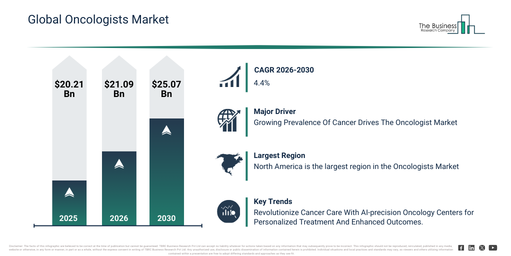
    The oncologists market, valued at $20.21 billion in 2025, is projected to experience an upward trajectory, reaching an estimated $21.09 billion by 2026, reflecting a compound annual growth rate of 4.4%. Factors contributing to this expansion historically include a global increase in cancer cases, heightened demand for expert cancer treatment services, the proliferation of healthcare facilities, improvements in medical imaging for diagnosis, and a greater emphasis on identifying cancer at its earliest stages.

    The global oncologists market is projected to experience consistent expansion, reaching an estimated value of $25.07 billion by the year 2030, with a projected compound annual growth rate (CAGR) of 4.4%. This anticipated growth throughout the forecast period is fueled by several key factors, including the increasing prevalence of personalized and targeted cancer treatments, the broader acceptance of digital solutions for oncology management, advancements in immunotherapy and targeted therapy technologies, the establishment of more oncology centers in developing economies, and a heightened utilization of genomics and molecular diagnostics to guide treatment strategies. Important market trends anticipated during this timeframe involve a greater embrace of digital oncology platforms for patient oversight, a deeper integration of artificial intelligence and machine learning in cancer detection processes, the expanding implementation of precision medicine and genomic profiling for tailored cancer therapies, a surge in automated processes for chemotherapy preparation and drug administration, and a growing reliance on IoT-enabled systems for the monitoring of both oncology equipment and patient-related data.

    Download A Free Sample Report For Comprehensive Market Insights:

    https://www.thebusinessresearchcompany.com/sample.aspx?id=9474&type=smp

    Oncologists Market Growth Factors Supporting Long-Term Expansion

    The increasing incidence of cancer is anticipated to be a significant driver for the oncologists market in the future. Cancer, a condition characterized by aberrant cell growth and dissemination throughout the body, is becoming more common. The term “prevalence” in this context signifies the count of new cancer diagnoses within a defined population over a specific timeframe. Oncologists are medical professionals dedicated to the detection and management of cancer, engaging in patient examination, diagnostic procedures, and the formulation of treatment strategies. To illustrate, data from the National Cancer Institute, a U.S. governmental body, reported approximately 18.1 million individuals as cancer survivors in the United States as of May 2024. This number is forecast to surge to 22.5 million by the year 2032. Projections for 2040 indicate an annual incidence of 29.9 million new cancer cases, with an estimated escalation in cancer-related fatalities to 15.3 million. Consequently, the escalating rate of cancer occurrences is fueling growth within the oncologists market.

    Oncologists Market Categorization By Product Type And Application

    The oncologists market covered in this report is segmented –

    1) By Cancer Diagnostics And Treatment: Cancer Diagnostics, Cancer Treatment

    2) By Indication: Lungs Cancer, Colorectal Cancer, Breast Cancer, Liver Cancer, Bladder Cancer, Head And Neck Cancer, Prostate Cancer, Other Indications

    3) By End Use: Hospitals, Diagnostic Laboratories, Diagnostic Imaging Centers, Specialty Clinics, Academia, Other End Uses

    Subsegments:

    1) By Cancer Diagnostics: Imaging Tests, Biopsy, Blood Tests, Molecular Diagnostics, Genetic Testing

    2) By Cancer Treatment: Chemotherapy, Radiation Therapy, Immunotherapy, Targeted Therapy, Hormone Therapy, Stem Cell Transplant

    Oncologists Market Industry Trends Shaping Future Revenue Growth

    Key players within the oncologists market are prioritizing the establishment of AI-driven precision oncology centers, aiming to elevate personalized cancer therapies, sharpen diagnostic precision, and refine treatment strategies according to unique patient profiles and tumor attributes. These AI-precision oncology centers represent dedicated healthcare facilities employing artificial intelligence and machine learning to deliver exceptionally tailored cancer care. As an illustration, in early 2024, the Apollo Cancer Centre in India inaugurated its own specialized center. This facility is designed to empower oncologists, patients, and their support networks to achieve optimal results within specified periods by harnessing the extensive capabilities of AI. The center leverages AI technologies for highly accurate diagnoses and immediate comprehension of a patient’s health status, thereby enabling prompt actions and superior management of oncological cases, while also performing thorough cancer risk evaluations to pinpoint individuals who could gain from targeted drug treatments or immunotherapy integrated into their care regimens.

    Oncologists Market Company Landscape And Strategic Competition

    Major companies operating in the oncologists market are Abramson Cancer Center, MD Anderson Cancer Center of the University of Texas, Lilavati Hospital & Research Centre, Mount Elizabeth Hospital, Mount Miriam Cancer Hospital, Charité – Universitätsmedizin Berlin, General Electric Healthcare, F. Hoffmann-La Roche AG, Pfizer Inc., Bayer AG, Merck & Co. Inc., AbbVie Inc., Amgen Inc., Takeda Pharmaceuticals USA Inc., Becton Dickinson and Company, Cook Medical LLC, Terumo Corporation, AngioDynamics Inc., Thermo Fisher Scientific Inc., Illumina Inc., Bristol-Myers Squibb Company, AstraZeneca plc, Novartis AG, Eli Lilly and Company, Gilead Sciences Inc., Regeneron Pharmaceuticals Inc., Incyte Corporation, Seattle Genetics Inc.

    Access The Complete Oncologists Market Report:

    https://www.thebusinessresearchcompany.com/report/oncologists-global-market-report

    Oncologists Market Largest Region: Which Geography Holds The Highest Market Share?

    North Americawas the largest region in the oncologists market in 2025. The regions covered in the oncologists market report are Asia-Pacific, South East Asia, Western Europe, Eastern Europe, North America, South America, Middle East, Africa.

    Get in touch with us:

    The Business Research Company: https://www.thebusinessresearchcompany.com/

    Americas: +1 310-496-7795

    Asia: +44 7882 955267 & +91 8897263534

    Europe: +44 7882 955267

    Email us at: marketing@tbrc.info

    Follow us on:

    LinkedIn: https://in.linkedin.com/company/the-business-research-company

    YouTube: https://www.youtube.com/channel/UC24_fI0rV8cR5DxlCpgmyFQ

    Global Market Model: https://www.thebusinessresearchcompany.com/global-market-model

  • Omics-Based Clinical Trials Market Forecast Signals New Revenue Opportunities Through 2030

    Omics-Based Clinical Trials Market Forecast Signals New Revenue Opportunities Through 2030

    Enhanced with market attractiveness analysis, total addressable market evaluation, company benchmarking matrices, interactive Excel dashboards, expanded supply chain intelligence, emerging startup coverage, and detailed product insights, The Business Research Company’s 2026 market reports deliver more actionable and strategically valuable research.

    Omics-Based Clinical Trials Market Growth From $34.48 Billion In 2026 To $47.77 Billion By 2030 At A CAGR Of 8.5%

    The market for omics-based clinical trials has experienced significant expansion recently. Projections indicate a rise from $31.71 billion in 2025 to $34.49 billion in 2026, reflecting a compound annual growth rate of 8.8%. Factors fueling this historical growth include the escalating intricacy of clinical trial methodologies, advancements in genomic and proteomic investigations, a mounting need for tailored medical treatments, the broadening of clinical research facilities, and enhanced partnerships between pharmaceutical companies and academic bodies.

    The omics-based clinical trials market demonstrates a trajectory of robust expansion, projected to reach a valuation of $47.78 billion by 2030. This impressive growth is underpinned by a compound annual growth rate of 8.5% over the forecast period, fueled by several key drivers. These include the escalating embrace of personalized medicine strategies, a surge in financial commitment towards data-centric clinical trial methodologies, the broadened application of AI-powered patient recruitment solutions, increasing validation of omics-derived endpoints by regulatory bodies, and a heightened need for optimizing clinical trial results. Furthermore, significant developments anticipated within this timeframe encompass a greater reliance on biomarker-guided trial frameworks, more extensive utilization of multi-omics data for patient segmentation, the deeper incorporation of real-world evidence analysis, a widened scope for precision oncology trials, and a more pronounced concentration on optimizing trials through data-focused approaches.

    Download A Free Sample Report For Comprehensive Market Insights:

    https://www.thebusinessresearchcompany.com/sample.aspx?id=27369&type=smp

    Omics-Based Clinical Trials Market Demand Drivers Creating New Revenue Opportunities

    The burgeoning field of personalized medicine is set to significantly fuel the expansion of the omics-based clinical trials sector. This approach to healthcare customizes disease prevention, diagnosis, and treatment based on a patient’s unique biological makeup. Such a shift towards individualized care is largely driven by advancements in genomic technologies, which now facilitate rapid and affordable examination of genetic information, paving the way for precisely targeted therapies. Omics-based clinical trials are instrumental in realizing personalized medicine’s potential by facilitating the detailed profiling of an individual’s genes, proteins, and metabolic pathways, thereby enabling the development of highly effective and patient-specific treatment plans. Illustrating this trend, the Personalized Medicine Coalition reported that in 2023, the US Food and Drug Administration authorized 16 novel personalized treatments for individuals with rare diseases, a notable increase from the six such approvals granted in 2022; these 2023 authorizations also included seven cancer therapies and three treatments for other conditions. Consequently, the growing need for personalized medicine directly stimulates the growth trajectory of the omics-based clinical trials market.

    Omics-Based Clinical Trials Market Segment Analysis And Revenue Opportunities

    The omics-based clinical trials market covered in this report is segmented –

    1) By Type: Genomics, Proteomics, Metabolomics, Transcriptomics

    2) By Phase: Phase I, Phase II, Phase III, Phase IV

    3) By Study Design: Interventional Studies, Observational Studies, Expanded Access Studies

    4) By Application: Oncology, Cardiovascular, Neurology, Infectious Diseases, Metabolic Disorders

    5) By End-User: Pharmaceutical And Biotechnology Companies, Academic And Research Institutes, Contract Research Organizations (CROs), Hospitals And Diagnostic Laboratories

    Subsegments:

    1) By Genomics: Whole Genome Sequencing, Whole Exome Sequencing, Targeted Gene Sequencing

    2) By Proteomics: Protein Expression Profiling, Post-Translational Modifications Analysis, Protein-Protein Interaction Mapping

    3) By Metabolomics: Targeted Metabolomics, Untargeted Metabolomics, Metabolic Flux Analysis

    4) By Transcriptomics: Microarray Analysis, Single-Cell Transcriptomics, Gene Expression Profiling

    Omics-Based Clinical Trials Market Trends Driving Strategic Industry Expansion

    Businesses leading the charge in the omics-driven clinical trials sector are prioritizing novel approaches, including the adoption of HiFi sequencing technology, with the goal of boosting the precision, rapidity, and comprehensiveness of multi-omics data interpretation, thereby refining clinical trial results and tailoring therapeutic interventions. HiFi sequencing represents a sophisticated next-generation sequencing (NGS) methodology that generates extensive, exceptionally accurate readings through circular consensus sequencing (CCS), thereby facilitating a thorough and exact examination of genomic, transcriptomic, and epigenomic data. As a prime example, in October 2024, Pacific Biosciences of California Inc., an American biotech firm, partnered with Singapore’s Agency for Science, Technology, and Research (A*STAR) and South Korea’s Macrogen Inc. to inaugurate a premier laboratory in Singapore, leveraging advanced long-read sequencing capabilities to expedite genomic advancements. This facility empowers researchers to undertake sophisticated genomic investigations with enhanced accuracy and efficiency, catering to diverse applications such as whole genome sequencing, transcriptomics, epigenetics, and metagenomics, while also cultivating international and local scientific partnerships to speed up breakthroughs in personalized medicine, rare disease identification, and precision oncology, complemented by training initiatives and shared access to high-capacity sequencing resources to build expertise and foster innovation across the Asia-Pacific region.

    Omics-Based Clinical Trials Market Leading Players Shaping Industry Direction

    Major companies operating in the omics-based clinical trials market are Pfizer Inc., F. Hoffmann-La Roche Ltd., Thermo Fisher Scientific Inc., GlaxoSmithKline Plc, Eli Lilly and Company, Novo Nordisk A/S, BioNTech SE, IQVIA Inc., Laboratory Corporation of America Holdings, ICON Public Limited Company, SGS Société Générale de Surveillance SA, Eurofins Scientific SE, Syneos Health Inc., Illumina Inc., Charles River Laboratories International Inc., Parexel International Corporation, Bruker Corporation, Fulgent Genetics Inc., Signios Biosciences, BioAro Inc.

    Access The Complete Omics-Based Clinical Trials Market Report:

    https://www.thebusinessresearchcompany.com/report/omics-based-clinical-trials-global-market-report

    Omics-Based Clinical Trials Market Regional Analysis: Which Region Leads By Revenue?

    North Americawas the largest region in the omics-based clinical trials market in 2025. Asia-Pacificis expected to be the fastest-growing region in the forecast period. The regions covered in the omics-based clinical trials market report are Asia-Pacific, South East Asia, Western Europe, Eastern Europe, North America, South America, Middle East, Africa.

    Get in touch with us:

    The Business Research Company: https://www.thebusinessresearchcompany.com/

    Americas: +1 310-496-7795

    Asia: +44 7882 955267 & +91 8897263534

    Europe: +44 7882 955267

    Email us at: marketing@tbrc.info

    Follow us on:

    LinkedIn: https://in.linkedin.com/company/the-business-research-company

    YouTube: https://www.youtube.com/channel/UC24_fI0rV8cR5DxlCpgmyFQ

    Global Market Model: https://www.thebusinessresearchcompany.com/global-market-model
  • Omics Lab Services Market Growth Is Accelerating As Industry Transformation Continues

    Omics Lab Services Market Growth Is Accelerating As Industry Transformation Continues

    Through market attractiveness analysis, total addressable market evaluation, company benchmarking matrices, interactive Excel dashboards, expanded supply chain intelligence, emerging startup coverage, and detailed product insights, The Business Research Company’s 2026 market reports provide more actionable and strategically valuable research.

    Omics Lab Services Market Expansion Outlook: What Revenue Opportunities Lie Ahead?

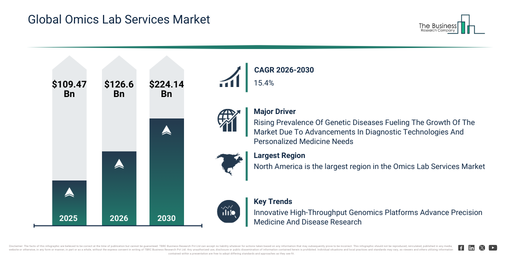
    The omics laboratory services market experienced considerable expansion, projecting an increase from $109.47 billion in 2025 to $126.6 billion in 2026, driven by a compound annual growth rate of 15.7%. This historical uptick is largely due to several key factors: the broadening scope of life sciences research, the burgeoning pharmaceutical R&D pipelines, the greater accessibility of omics technologies, a trend towards outsourcing laboratory operations, and the amplification of collaborative efforts in both academic and clinical research settings.

    The realm of omics laboratory services is poised for substantial expansion in the upcoming years, with projections indicating a surge to $224.14 billion by 2030, driven by a compound annual growth rate of 15.4%. This burgeoning expansion over the projected timeframe is largely fueled by the escalating embrace of personalized medicine research, augmented investments in the field of systems biology, the proliferation of artificial intelligence-powered bioinformatics instruments, a heightened need for comprehensive omics solutions, and a significant emphasis on drug discovery methodologies that are informed by data. Key developments anticipated during this forecast period encompass a greater call for unified multi-omics analysis, increased utilization of contract research outsourcing, the broadening application of bioinformatics for data interpretation, a more widespread adoption of high-throughput analytical technologies, and an intensified commitment to supporting translational research endeavors.

    Download A Free Sample Report For Comprehensive Market Insights:

    https://www.thebusinessresearchcompany.com/sample.aspx?id=28284&type=smp

    Omics Lab Services Market Expansion Supported By Key Demand Factors

    The increasing incidence of genetic disorders is anticipated to be a key driver for the expansion of the omics lab services market. These genetic disorders stem from alterations or errors within a person’s DNA, which can either be passed down through generations or arise independently. The growing occurrence of these conditions is partly attributable to innovations in diagnostic methodologies, especially next-generation sequencing and other advanced genomic technologies, which have greatly enhanced the capacity to pinpoint and confirm a broad spectrum of genetic conditions that were once either overlooked or incorrectly identified. Omics lab services play a crucial role in addressing genetic diseases by meticulously examining intricate biological information to detect specific mutations and molecular alterations, thereby facilitating prompt diagnosis and tailored therapeutic approaches. As an illustration, by October 2024, data from the Cystic Fibrosis Trust, a charitable organization in the UK focused on assisting individuals affected by cystic fibrosis, indicated that the number of registered cystic fibrosis patients rose from 11,148 in 2022 to 11,318 in 2023, signifying a year-over-year increment of 1.5% in patient registrations. Consequently, the escalating prevalence of genetic diseases is directly contributing to the market’s upward trajectory in omics lab services.

    Omics Lab Services Market Segmentation And Category Breakdown

    The omics lab services market covered in this report is segmented –

    1) By Type Of Omics Services: Genomics, Transcriptomics, Proteomics, Metabolomics, Epigenomics

    2) By Service Model: Contract Services, In-House Services, Consultative Services, Collaborative Research, Custom Solutions

    3) By Technology Platform: Next-Generation Sequencing (NGS), Microarray Technology, Mass Spectrometry, Chromatography, Bioinformatics Tools

    4) By Application: Drug Discovery, Diagnostics, Personalized Medicine, Other Applications

    5) By End Users: Research Institutions, Pharmaceutical Companies, Biotechnology Firms, Academic Institutions, Clinical Laboratories

    Subsegments:

    1) By Genomics: Whole Genome Sequencing, Whole Exome Sequencing, Targeted Gene Sequencing, Single-Cell Genomics, Comparative Genomic Hybridization

    2) By Transcriptomics: Messenger Ribonucleic Acid (RNA) Sequencing, Non-Coding Ribonucleic Acid (RNA) Sequencing, Expression Profiling, Ribonucleic Acid (RNA) Microarrays, Single-Cell Transcriptomics

    3) By Proteomics: Protein Identification, Protein Quantification, Post-Translational Modifications Analysis, Protein-Protein Interaction Mapping, Structural Proteomics

    4) By Metabolomics: Targeted Metabolomics, Untargeted Metabolomics, Lipidomics, Fluxomics, Metabolic Fingerprinting

    5) By Epigenomics: Deoxyribonucleic Acid (DNA) Methylation Analysis, Histone Modification Profiling, Chromatin Accessibility Assays, Chromatin Immunoprecipitation Sequencing, Non-Coding Ribonucleic Acid (RNA) Epigenetic Regulation

    Omics Lab Services Market Growth Trends Influencing Competitive Dynamics

    Leading entities within the omics laboratory services sector are actively engaged in creating novel offerings, including high-throughput genomics, with the objective of expediting both biomedical investigations and personalized medical approaches. High-throughput genomics involves the deployment of cutting-edge technologies designed for the swift sequencing and examination of substantial quantities of genetic material, thereby facilitating efficient, large-scale genetic inquiries. As an illustration, in September of 2024, the Translational Genomics Research Institute (TGen), a non-profit medical research organization situated in the United States, unveiled the Center for Spatial Multi-Omics (COSMO). This facility delivers whole-transcriptome information at a high resolution through the utilization of sequencing-based Visium HD, integrated with histological staining techniques, and additionally provides tissue preparation services like Tissue Microarray (TMA) creation for economical, multi-sample analyses. The adaptable systems offered, augmented by cell segmentation driven by machine learning, facilitate the detailed visualization and charting of molecular information within intact tissue samples, thereby fostering progress in personalized medicine and the study of diseases.

    Omics Lab Services Market Competitive Analysis Of Major Industry Participants

    Major companies operating in the omics lab services market are Thermo Fisher Scientific Inc., Eurofins Scientific SE, Agilent Technologies Inc., Illumina Inc., Revvity Inc., QIAGEN N.V., Novogene Co. Ltd., Oxford Nanopore Technologies plc, Pacific Biosciences of California Inc., Macrogen Inc., MedGenome Labs Ltd., Metabolon Inc., Zymo Research Corporation, CD Genomics, BaseClear B.V., Strand Life Sciences Pvt. Ltd., Sengenics Corporation Pte Ltd., Psomagen Inc., Biocrates Life Sciences AG, Creative Proteomics

    Access The Complete Omics Lab Services Market Report:

    https://www.thebusinessresearchcompany.com/report/omics-lab-services-global-market-report

    Omics Lab Services Market Geographic Distribution And Regional Opportunities

    North Americawas the largest region in the omics lab services market in 2025. Asia-Pacific is expected to be the fastest-growing region in the forecast period. The regions covered in the omics lab services market report are Asia-Pacific, South East Asia, Western Europe, Eastern Europe, North America, South America, Middle East, Africa.

    Get in touch with us:

    The Business Research Company: https://www.thebusinessresearchcompany.com/

    Americas: +1 310-496-7795

    Asia: +44 7882 955267 & +91 8897263534

    Europe: +44 7882 955267

    Email us at: marketing@tbrc.info

    Follow us on:

    LinkedIn: https://in.linkedin.com/company/the-business-research-company

    YouTube: https://www.youtube.com/channel/UC24_fI0rV8cR5DxlCpgmyFQ

    Global Market Model: https://www.thebusinessresearchcompany.com/global-market-model
  • Omeprazole Market Outlook Highlights The Next Major Growth Opportunities

    Omeprazole Market Outlook Highlights The Next Major Growth Opportunities

    Delivering more actionable and strategically valuable research, The Business Research Company’s 2026 market reports feature market attractiveness analysis, total addressable market evaluation, company benchmarking matrices, interactive Excel dashboards, expanded supply chain intelligence, emerging startup coverage, and detailed product insights.

    Omeprazole Market Growth Potential: How Will Market Size Change Through 2030?

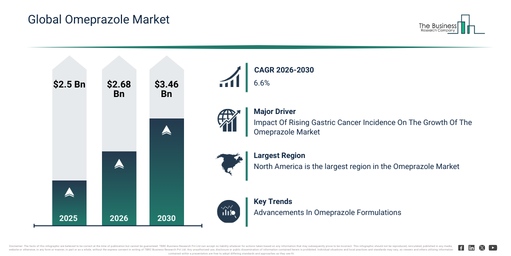
    The market for omeprazole has experienced robust expansion lately, projected to increase from $2.5 billion in 2025 to $2.68 billion in 2026, reflecting a compound annual growth rate of 7.3%. Historically, this expansion has been fueled by several factors, including a greater incidence of gastric and duodenal ulcers, escalating instances of gastroesophageal reflux disease (GERD), heightened public knowledge regarding proton pump inhibitors, a scarcity of viable alternative treatments, and the widening reach of both hospital and retail pharmacy services.

    The omeprazole market is poised for substantial expansion, projecting a valuation of $3.46 billion by 2030 with a compound annual growth rate of 6.6%. This upward trajectory is anticipated due to increasing needs for tailored gastric therapies, the proliferation of e-pharmacy services, innovations in drug delivery mechanisms, escalating utilization of omeprazole for younger and older age groups, and the burgeoning pharmaceutical manufacturing sector in developing economies. Key developments expected during this period involve greater use of digital health solutions for managing prescriptions, the incorporation of artificial intelligence into drug development and individualized treatment plans, the advancement of precision medicine strategies for digestive ailments, increased automation in pharmaceutical production and quality assurance, and the deployment of Internet of Things technology for overseeing drug storage and delivery processes.

    Download A Free Sample Report For Comprehensive Market Insights:

    https://www.thebusinessresearchcompany.com/sample.aspx?id=16495&type=smp

    Omeprazole Market Growth Drivers And Industry Catalysts

    The escalating rates of gastric cancer are anticipated to be a significant driver for the expansion of the omeprazole market. Gastric cancers, defined as malignant tumors developing within the stomach’s mucosal lining, are increasingly attributed to factors such as persistent Helicobacter pylori infections, excessive alcohol intake, inherited genetic susceptibilities, ongoing gastritis, obesity, and regional differences in disease occurrence. Omeprazole, functioning as a proton pump inhibitor, plays a role in managing gastric cancer by diminishing the production of stomach acid. This reduction in acidity can lead to symptom relief, enhance the patient’s overall well-being, and aid in the healing of stomach ulcers or damaged tissue within the gastric lining. As an illustration, data released in January 2025 by the American Cancer Society (ACS) indicated that approximately 30,300 new diagnoses of gastric cancer were recorded in the United States, with men accounting for 17,720 cases and women for 12,580, highlighting a higher prevalence in males. Furthermore, out of the roughly 10,780 fatalities linked to this disease, 6,400 were men and 4,380 were women, underscoring a greater mortality impact on the male population. Consequently, these rising gastric cancer incidences are fueling demand within the omeprazole market.

    Omeprazole Market Segment Outlook: Which Categories Are Expanding The Fastest?

    The omeprazole market covered in this report is segmented –

    1) By Dosage Form: Capsule, Powder, Tablet

    2) By Indication: Duodenal Ulcer, Gastric Ulcer, Gastroesophageal Reflux Disease, Erosive Esophagitis, Other Indications

    3) By Distribution Channel: Hospital Pharmacies, Retail Pharmacies, Online Pharmacies

    Subsegments:

    1) By Capsule: Delayed-Release Capsules, Immediate-Release Capsules

    2) By Powder: Oral Suspension Powder, Injectable Powder

    3) By Tablet: Delayed-Release Tablets, Immediate-Release Tablets

    #Omeprazole Market Trends Influencing Long-Term Demand

    Pharmaceutical titans in the omeprazole sector are focusing on the creation of pre-mixed liquid versions of the drug, aiming to boost patient ease and adherence, especially for individuals struggling with solid dosage forms like pills or capsules. These readily available liquid omeprazole solutions contribute to better patient follow-through, increased user-friendliness, precise dosage administration, a more rapid therapeutic effect, and improved drug longevity. A prime example occurred in February 2024 when Alkaloid AD, a pharmaceutical producer based in North Macedonia, introduced its liquid Omeprazole product. This launch marked the debut of a pre-mixed liquid omeprazole formulation designed for individuals suffering from reflux esophagitis and GERD who find it challenging to swallow pills; it incorporates a novel dual-chamber packaging system. This advancement presents a more convenient and attainable therapeutic choice for patient groups including young children, adults experiencing swallowing difficulties (dysphagia), individuals relying on gastric feeding tubes, and the elderly population. Significantly, the company secured the inaugural international patent for this value-added medication (VAM) and has successfully obtained approval to market it in both North Macedonia and the United Kingdom.

    Omeprazole Market Key Companies And Competitive Benchmarking

    Major companies operating in the omeprazole market are Pfizer Inc., AstraZeneca plc, Viatris Inc., Teva Pharmaceutical Industries Ltd., Sandoz Group AG, Macleods Pharmaceuticals Pvt Ltd., Perrigo Company plc, Sun Pharmaceutical Industries Ltd., Intas Pharmaceuticals Ltd., Aurobindo Pharma, Dr. Reddy’s Laboratories, Cipla, Apotex Inc., Amneal Pharmaceuticals, Lupin Limited, Glenmark Pharmaceuticals Ltd., Alkem Laboratories Ltd., Torrent Pharmaceuticals, Jubilant Generics Limited, Accord Healthcare, Hetero Healthcare Limited, Zydus Cadila, Ranbaxy Laboratories Limited

    Access The Complete Omeprazole Market Report:

    https://www.thebusinessresearchcompany.com/report/omeprazole-global-market-report

    Omeprazole Market Largest Region By Revenue And Market Share

    North Americawas the largest region in the omeprazole market in 2025. The regions covered in the omeprazole market report are Asia-Pacific, South East Asia, Western Europe, Eastern Europe, North America, South America, Middle East, Africa.

    Get in touch with us:

    The Business Research Company: https://www.thebusinessresearchcompany.com/

    Americas: +1 310-496-7795

    Asia: +44 7882 955267 & +91 8897263534

    Europe: +44 7882 955267

    Email us at: marketing@tbrc.info

    Follow us on:

    LinkedIn: https://in.linkedin.com/company/the-business-research-company

    YouTube: https://www.youtube.com/channel/UC24_fI0rV8cR5DxlCpgmyFQ

    Global Market Model: https://www.thebusinessresearchcompany.com/global-market-model
  • Oligonucleotide Synthesis Market Trends And Growth Drivers Point To Strong Future Potential

    Oligonucleotide Synthesis Market Trends And Growth Drivers Point To Strong Future Potential

    Enhanced with market attractiveness analysis, total addressable market evaluation, company benchmarking matrices, interactive Excel dashboards, expanded supply chain intelligence, emerging startup coverage, and detailed product insights, The Business Research Company’s 2026 market reports deliver more actionable and strategically valuable research.

    Oligonucleotide Synthesis Market Value Analysis: What Growth Is Expected Over The Forecast Period?

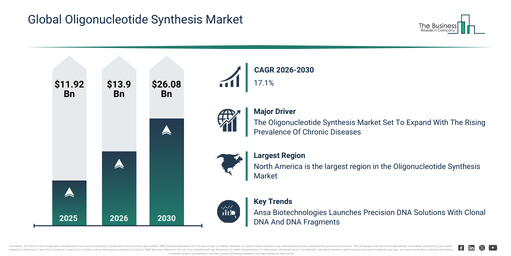
    The oligonucleotide synthesis market experienced substantial expansion recently, projecting a rise from $11.92 billion in 2025 to $13.9 billion in 2026, fueled by a compound annual growth rate of 16.6%. This past growth was influenced by factors such as the significant expense of synthesis machinery, restricted access to bespoke oligonucleotides, reliance on manual production methods, a lack of widespread researcher awareness, and extended manufacturing schedules.

    The oligonucleotide synthesis sector is poised for substantial expansion, projected to reach a market valuation of $26.08 billion by 2030, driven by a compound annual growth rate (CAGR) of 17.1%. This upward trajectory during the projected timeframe will be fueled by several key factors, including escalating demand stemming from therapeutic and diagnostic uses, a heightened uptake of automated synthesis technologies, significant progress in gene therapy investigations, increased financial commitment to biotechnology research, and a broader geographical reach for oligo-based studies and diagnostic tools. Within this forecast period, prominent developments are expected to center on breakthroughs in gene editing and tailored medical approaches, the incorporation of cloud-based systems for data administration, the utilization of artificial intelligence to refine sequence design and optimization, the streamlining of oligonucleotide synthesis through automation, and the deployment of IoT-enabled devices for equipment oversight and operational monitoring.

    Download A Free Sample Report For Comprehensive Market Insights:

    https://www.thebusinessresearchcompany.com/sample.aspx?id=12176&type=smp

    Oligonucleotide Synthesis Market Opportunity Drivers: What Is Creating New Revenue Potential?

    The increasing incidence of long-term health conditions is anticipated to fuel the expansion of the oligonucleotide synthesis market. These chronic conditions, defined as ailments persisting for a year or more and necessitating ongoing medical care, have the potential for deterioration. Oligonucleotides exert influence on the genetic expression pathways associated with these chronic diseases through diverse methods, including targeting messenger RNA, precursor messenger RNA, or non-coding RNA to influence splicing, trigger degradation, or disrupt protein synthesis. Illustratively, projections from the World Health Organization, a global intergovernmental body headquartered in Switzerland, indicated in February 2024 that by 2050, an estimated 35 million new cancer diagnoses were foreseen, signifying a substantial 77% increase from the approximately 20 million cases estimated for 2022, thereby highlighting how the escalating rates of chronic and rare diseases are serving as a catalyst for the growth observed in the oligonucleotide synthesis sector.

    Oligonucleotide Synthesis Market Segment Landscape: Which Areas Lead Market Development?

    The oligonucleotide synthesis market covered in this report is segmented –

    1) By Type: Custom Oligos, Predesigned Oligos

    2) By Solution Type: Oligonucleotides, Reagents, Equipment, Services, Purification, Modification

    3) By Application: Therapeutic Applications, Research Applications, Diagnostic Applications

    Subsegments:

    1) By Custom Oligos: Long Oligonucleotides, Short Oligonucleotides, Modified Oligonucleotides

    2) By Predesigned Oligos: Gene-Specific Oligos, Probe Oligos, Primers For PCR And RT-PCR

    Oligonucleotide Synthesis Market Innovation Trends Driving Future Development

    Pioneering firms within the oligonucleotide synthesis sector are dedicating their efforts to creating novel DNA solutions. These advancements aim to boost the precision of sequences, streamline procedural steps, and facilitate sophisticated research endeavors. A notable development occurred in July 2024 when Ansa Biotechnologies, Inc., a prominent US entity known for its expertise in intricate DNA production, introduced two new offerings: Ansa Clonal DNA and Ansa DNA Fragments. The former delivers DNA that is clonal and precisely matches its intended sequence, extending up to 600 base pairs. This eliminates the requirement for assembly processes and furnishes exceptional accuracy, proving invaluable for ambitious synthetic biology endeavors by providing developers with error-free, immediately usable DNA sequences. Complementing this, Ansa DNA Fragments presents linear double-stranded DNA fragments, also capped at 600 base pairs, that have undergone sequence verification and are designed for a broad spectrum of research objectives. Through its inventive enzymatic synthesis methodology, Ansa consistently manufactures complex DNA structures, encompassing repetitive elements and challenging secondary formations, with a high degree of exactitude.

    Oligonucleotide Synthesis Market Industry Leaders And Market Competition

    Major companies operating in the oligonucleotide synthesis market are Thermo Fisher Scientific Inc., Danaher Corporation, Merck KGaA, GE HealthCare Technologies Inc., Eurofins Scientific SE, Agilent Technologies Inc., Nitto Denko Avecia Inc., Alnylam Pharmaceuticals Inc., Maravai Life Sciences, LGC Limited, Ionis Pharmaceuticals Inc., GenScript Inc., Ajinomoto Bio-Pharma Services, Sarepta Therapeutics Inc., Integrated DNA Technologies Inc., Twist Bioscience Corporation, Eurogentec SA, Kaneka Eurogentec S.A., Biocomma Limited, Bio-Synthesis Inc., TriLink BioTechnologies Incorporated, Generi Biotech s.r.o., ATDBio Ltd., BioAutomation Corporation, Biolegio B.V., Dharmacon Research Inc.

    Access The Complete Oligonucleotide Synthesis Market Report:

    https://www.thebusinessresearchcompany.com/report/oligonucleotide-synthesis-global-market-report

    Oligonucleotide Synthesis Market Regional Analysis And Leading Geography

    North America was the largest region in the oligonucleotide synthesis market in 2025. Asia-Pacific is expected to be the fastest-growing region in the forecast period. The regions covered in the oligonucleotide synthesis market report are Asia-Pacific, South East Asia, Western Europe, Eastern Europe, North America, South America, Middle East, Africa.

    Get in touch with us:

    The Business Research Company: https://www.thebusinessresearchcompany.com/

    Americas: +1 310-496-7795

    Asia: +44 7882 955267 & +91 8897263534

    Europe: +44 7882 955267

    Email us at: marketing@tbrc.info

    Follow us on:

    LinkedIn: https://in.linkedin.com/company/the-business-research-company

    YouTube: https://www.youtube.com/channel/UC24_fI0rV8cR5DxlCpgmyFQ

    Global Market Model: https://www.thebusinessresearchcompany.com/global-market-model