Month: July 2026

  • Tumor Models Market Outlook Highlights The Next Major Growth Opportunities

    Tumor Models Market Outlook Highlights The Next Major Growth Opportunities

    Enhanced with market attractiveness analysis, total addressable market evaluation, company benchmarking matrices, interactive Excel dashboards, expanded supply chain intelligence, emerging startup coverage, and detailed product insights, The Business Research Company’s 2026 market reports deliver more actionable and strategically valuable research.

    Tumor Models Market CAGR Analysis And Future Market Development

    The tumor models market has experienced rapid expansion over recent years, with its value rising from $2.13 billion in 2025 to an estimated $2.37 billion in 2026, reflecting a compound annual growth rate (CAGR) of 11.3%. This historic growth is driven by several key factors, including the restricted availability of advanced tumor models, a continued dependence on conventional 2D cell cultures, a surge in funding for cancer research, the escalating incidence of cancer, and the increased adoption of both orthotopic and heterotopic models.

    The tumor models market is projected to experience rapid expansion in the coming years, reaching $3.57 billion by 2030 with a compound annual growth rate (CAGR) of 10.8%. This forecasted growth is driven by progress in organ-on-a-chip and 3D spheroid technologies, a heightened focus on personalized oncology treatments, the growing role of contract research organizations (CROs) in tumor research, rising pharmaceutical R&D spending, and the incorporation of AI and big data analytics into tumor model studies. Key trends shaping this period include the growing adoption of 3D tumor spheroids and organ-on-a-chip platforms, an increased demand for personalized medicine and targeted cancer therapies, the expanded use of xenograft and genetically engineered mouse models (GEMMs), the advancement of drug discovery and toxicology investigations utilizing tumor models, and collaborations between pharmaceutical firms and academic institutions.

    Download A Free Sample Report For Comprehensive Market Insights:

    https://www.thebusinessresearchcompany.com/sample.aspx?id=27441&type=smp&utm_source=BlogsPR&utm_medium=Paid&utm_campaign=Jul_PR

    Tumor Models Market Growth Drivers: What Factors Are Accelerating Expansion?

    The rising need for tailored therapeutic approaches is anticipated to advance the tumor models market in the coming years. Personalized medicine is defined as a healthcare model that leverages genetic information and lifestyle factors to customize treatments and medical care for individual patients. Its increasing prevalence stems from a growing preference for health technologies capable of real-time monitoring and the development of treatment plans aligned with a person’s unique biological profile. Tumor models facilitate personalized medicine by serving as experimental platforms that replicate the behavior of actual human cancers, allowing researchers and clinicians to evaluate and predict how a specific patient’s tumor might react to various therapies, thus fostering a more targeted treatment strategy. For example, in February 2024, the Personalized Medicine Coalition (PMC), a non-profit organization based in the United States, reported that the U.S. Food and Drug Administration (FDA) approved 26 new personalized medicines in 2023, a marked rise compared to the 12 approvals recorded in 2022. Consequently, the escalating demand for personalized medicine is fueling expansion in the tumor models market.

    Tumor Models Market Segment Outlook: Which Categories Are Expanding The Fastest?

    The tumor models market covered in this report is segmented –

    1) By Type Of Tumor: Primary Tumor Models, Metastatic Tumor Models, Orthotopic Tumor Models, Heterotopic Tumor Models

    2) By Application: Drug Discovery And Development, Cancer Research, Personalized Medicine, Toxicology Studies

    3) By Technology: Xenograft Models, Genetically Engineered Mouse Models (GEMMs), Three-Dimensional (3D) Tumor Spheroids, Organ-On-A-Chip Models

    4) By End-User: Pharmaceutical And Biotechnology Companies, Academic Institutions, Contract Research Organizations (CROs), Government Research Organizations

    Subsegments:

    1) By Primary Tumor Models: Carcinoma Models, Sarcoma Models, Glioma Models, Melanoma Models, Leukemia Models, Lymphoma Models

    2) By Metastatic Tumor Models: Lung Metastasis Models, Bone Metastasis Models, Liver Metastasis Models, Brain Metastasis Models, Lymph Node Metastasis Models

    3) By Orthotopic Tumor Models: Orthotopic Breast Cancer Models, Orthotopic Lung Cancer Models, Orthotopic Pancreatic Cancer Models, Orthotopic Colon Cancer Models, Orthotopic Prostate Cancer Models

    4) By Heterotopic Tumor Models: Subcutaneous Tumor Models, Intramuscular Tumor Models, Intraperitoneal Tumor Models

    Tumor Models Market Trends: What Is Shaping Future Industry Growth?

    Key players in the tumor models market are prioritizing the creation of cutting-edge solutions like tumor spheroid models to improve how accurately in vitro cancer models mirror real physiological conditions and predict therapeutic outcomes. These spheroid models are three-dimensional clusters of cancer cells that naturally form spherical aggregates during culture. In a notable example from June 2024, Predictive Oncology, a company headquartered in the United States that specializes in advanced 3D cell culture techniques and predictive oncology tools, introduced a novel 3D cell technology aimed at accelerating the discovery of cancer drugs. This technology stands out for several distinctive attributes, including sophisticated 3D tumor spheroid and organoid models that effectively replicate the tumor microenvironment, high-throughput screening capabilities that enable rapid drug evaluation, support for constructing personalized tumor models derived directly from patients, in-depth analysis of how drugs penetrate 3D structures, and seamless integration with AI-driven data analytics to boost predictive accuracy and provide richer insights into treatment responses.

    Tumor Models Market Key Companies And Competitive Benchmarking

    Major companies operating in the tumor models market are WuXi AppTec Co Ltd., Charles River Laboratories International Inc., Pharmaron Beijing Co. Ltd., The Jackson Laboratory, Taconic Biosciences Inc., Cyagen Biosciences Inc., Crown Bioscience Inc., Champions Oncology Inc., InSphero AG, Creative Biolabs Inc., Oncodesign S.A., Xentech S.A., MIMETAS BV, Experimental Pharmacology and Oncology Berlin-Buch GmbH.

    Access The Complete Tumor Models Market Report:

    https://www.thebusinessresearchcompany.com/report/tumor-models-global-market-report?utm_source=BlogsPR&utm_medium=Paid&utm_campaign=Jul_PR

    Tumor Models Market Regional Analysis: Which Region Leads By Revenue?

    North America was the largest region in the tumor models market in 2025. Asia-Pacific is expected to be the fastest-growing region in the forecast period. The regions covered in the tumor models market report are Asia-Pacific, South East Asia, Western Europe, Eastern Europe, North America, South America, Middle East, Africa.

    Get in touch with us:

    The Business Research Company: https://www.thebusinessresearchcompany.com/?utm_source=BlogsPR&utm_medium=Paid&utm_campaign=home_page_test

    Americas: +1 310-496-7795

    Asia: +44 7882 955267 & +91 8897263534

    Europe: +44 7882 955267

    Email us at: marketing@tbrc.info

    Follow us on:

    LinkedIn: https://in.linkedin.com/company/the-business-research-company

    YouTube: https://www.youtube.com/channel/UC24_fI0rV8cR5DxlCpgmyFQ

    Global Market Model: https://www.thebusinessresearchcompany.com/global-market-model

  • Tumor Infiltrating Lymphocytes Market Trends And Growth Drivers Point To Strong Future Potential

    Tumor Infiltrating Lymphocytes Market Trends And Growth Drivers Point To Strong Future Potential

    Through market attractiveness analysis, total addressable market evaluation, company benchmarking matrices, interactive Excel dashboards, expanded supply chain intelligence, emerging startup coverage, and detailed product insights, The Business Research Company’s 2026 market reports provide more actionable and strategically valuable research.

    Tumor Infiltrating Lymphocytes Market Expansion From $13.75 Billion In 2026 To $23.25 Billion In 2030

    The tumor infiltrating lymphocytes market has seen significant expansion over the past few years. In 2025, its value stood at $12.05 billion, with projections reaching $13.75 billion by 2026, reflecting a compound annual growth rate (CAGR) of 14.2%. This historical growth has been fueled by factors such as a rising incidence of cancer, progress in immunotherapy studies, heightened interest in tailored treatment approaches, the initial achievements of adoptive cell therapies, and joint efforts involving research institutions and biotechnology firms.

    The market for tumor infiltrating lymphocytes is anticipated to experience substantial expansion over the coming years, reaching a valuation of $23.25 billion by 2030, reflecting a compound annual growth rate (CAGR) of 14.0%. This projected growth during the forecast period is driven by several key factors, including the increasing uptake of tumor infiltrating lymphocyte therapies, the broadening of cGMP-compliant manufacturing capabilities, the incorporation of artificial intelligence to refine cell therapy processes, a rise in collaborative efforts between pharmaceutical and biotechnology firms, and the receipt of regulatory approvals for innovative T-cell treatments. Significant developments shaping this period encompass the evolution of personalized cell therapy, the advancement of ex vivo T-cell expansion methodologies, the use of immunotherapy in combination strategies, the modulation of the tumor microenvironment, and enhancements in cell storage and cryopreservation techniques.

    Download A Free Sample Report For Comprehensive Market Insights:

    https://www.thebusinessresearchcompany.com/sample.aspx?id=9440&type=smp&utm_source=BlogsPR&utm_medium=Paid&utm_campaign=Jul_PR

    Tumor Infiltrating Lymphocytes Market Growth Factors Supporting Long-Term Expansion

    The growing number of individuals affected by cancer is anticipated to fuel the expansion of the tumor infiltrating lymphocytes (TIL) market in the upcoming period. Cancer represents a disease where certain body cells multiply uncontrollably and spread to other areas, causing various health complications, with some proving fatal. Tumor infiltrating lymphocytes are immune cells capable of recognizing and eliminating cancerous cells. These lymphocytes are taken from a patient’s tumor, cultivated to large quantities outside the body in a lab, and then reintroduced into the patient to enhance the immune system’s ability to fight cancer. As an illustration, a report from the Australian Institute of Health and Welfare, a national agency providing health and welfare data for Australia, stated in August 2024 that by 2034, there could be around 209,000 new cancer cases diagnosed in Australia, marking a notable rise from the estimated 169,000 cases projected for 2024, driven by a growing population and higher cancer incidence. Additionally, in 2024, cancer is expected to be responsible for approximately three out of every ten deaths across the nation. Consequently, the increase in the number of cancer patients will stimulate the growth of the tumor infiltrating lymphocyte market.

    Tumor Infiltrating Lymphocytes Market Segment Landscape: Which Areas Lead Market Development?

    The tumor infiltrating lymphocytes market covered in this report is segmented –

    1) By Anatomy: CD3, CD8, CD16, CD56, CD4, CD57, FOXP3

    2) By Component: T-Cells, Natural Killer Cells

    3) By Application: Melanoma, Cervical Cancer, Ovarian Cancer, Other Applications

    4) By End-User: Hospitals, Cancer Research Centers, Clinics

    Tumor Infiltrating Lymphocytes Market Industry Trends Shaping Future Revenue Growth

    Major players within the tumor-infiltrating lymphocyte sector are increasingly pursuing strategic collaborations as a method for creating groundbreaking treatments capable of regulating gene editing. Such alliances involve companies pooling their respective strengths and assets in pursuit of shared advantages and outcomes. A case in point is February 2023, when Moderna, a pharmaceutical and biotech firm headquartered in the US, forged a strategic alliance with Life Edit Therapeutics, an American enterprise specializing in next-generation genome editing. The objective was to expedite the creation of novel in vivo gene editing therapies. By integrating Moderna’s mRNA technology with Life Edit’s proprietary genome editing platform, this partnership seeks to craft more precise and potent therapeutics targeting conditions like cancer and genetic disorders. This collaboration highlights a rising tendency within the biopharma field to merge cutting-edge technologies in order to deliver advanced therapeutic innovations.

    Tumor Infiltrating Lymphocytes Market Industry Leaders And Market Competition

    Major companies operating in the tumor infiltrating lymphocytes market are Novartis AG, Pfizer Inc., Precision BioScience Inc., TCR2 Therapeutics Inc., Merck KGaA, Autolus Therapeutics PLC., Eli Lilly and Company, Oxford Biomedica PLC., Unum Therapeutics Inc., Amgen Inc., Gilead Sciences Inc., Sorrento Therapeutics Inc., TILT Biotherapeutics Ltd., Iovance Biotherapeutics Inc., Adaptimmune Therapeutics plc, Atara Biotherapeutics Inc., BioNTech SE, CARsgen Therapeutics Ltd., Cellectis S.A., Celyad Oncology SA, CRISPR Therapeutics AG, Intellia Therapeutics Inc., MaxCyte Inc.

    Access The Complete Tumor Infiltrating Lymphocytes Market Report:

    https://www.thebusinessresearchcompany.com/report/tumor-infiltrating-lymphocytes-global-market-report?utm_source=BlogsPR&utm_medium=Paid&utm_campaign=Jul_PR

    Tumor Infiltrating Lymphocytes Market Geographic Distribution And Regional Opportunities

    North America was the largest region in the tumor infiltrating lymphocytes market in 2025. The regions covered in the tumor infiltrating lymphocytes market report are Asia-Pacific, South East Asia, Western Europe, Eastern Europe, North America, South America, Middle East, Africa.

    Get in touch with us:

    The Business Research Company: https://www.thebusinessresearchcompany.com/?utm_source=BlogsPR&utm_medium=Paid&utm_campaign=home_page_test

    Americas: +1 310-496-7795

    Asia: +44 7882 955267 & +91 8897263534

    Europe: +44 7882 955267

    Email us at: marketing@tbrc.info

    Follow us on:

    LinkedIn: https://in.linkedin.com/company/the-business-research-company

    YouTube: https://www.youtube.com/channel/UC24_fI0rV8cR5DxlCpgmyFQ

    Global Market Model: https://www.thebusinessresearchcompany.com/global-market-model

  • Tubulin Inhibitors For Breast Cancer Market Expansion Is Reshaping Competitive Dynamics Across The Industry

    Tubulin Inhibitors For Breast Cancer Market Expansion Is Reshaping Competitive Dynamics Across The Industry

    Delivering more actionable and strategically valuable research, The Business Research Company’s 2026 market reports feature market attractiveness analysis, total addressable market evaluation, company benchmarking matrices, interactive Excel dashboards, expanded supply chain intelligence, emerging startup coverage, and detailed product insights.

    Tubulin Inhibitors For Breast Cancer Market Forecast Highlighting Growth From $2.09 Billion To $2.77 Billion

    The market value of tubulin inhibitors intended for breast cancer treatment has experienced notable expansion over the past few years. Projections indicate an increase from $1.94 billion in 2025 to $2.09 billion in 2026, reflecting a compound annual growth rate (CAGR) of 7.7%. This historical growth is driven by several contributing factors, including a restricted supply of tubulin inhibitor therapies, a continued dependence on traditional chemotherapy, a rising incidence of breast cancer, a greater number of oncology treatments administered in hospital settings, and the widespread implementation of standardized therapeutic guidelines.

    The market for tubulin inhibitors targeting breast cancer is projected to experience substantial expansion in the coming years. By 2030, its value is anticipated to reach $2.78 billion, reflecting a compound annual growth rate (CAGR) of 7.4%. This forecasted growth is driven by the development of novel colchicine, taxanes, vinca alkaloids, and epothilones, along with the broadening of neoadjuvant and adjuvant therapies. Increased investment in personalized and targeted treatments, a growing number of regulatory approvals for new formulations, and the integration of digital health tools and clinical decision support systems are also contributing factors. Key trends shaping this period include the growing application of tubulin inhibitors in early-stage breast cancer, the expansion of combination and targeted therapeutic strategies, an uptick in clinical trials focused on novel tubulin inhibitors, the widespread adoption of personalized medicine, and a rising demand for outpatient and clinic-based care options.

    Download A Free Sample Report For Comprehensive Market Insights:

    https://www.thebusinessresearchcompany.com/sample.aspx?id=24731&type=smp&utm_source=BlogsPR&utm_medium=Paid&utm_campaign=Jul_PR

    Tubulin Inhibitors For Breast Cancer Market Demand Drivers Creating New Revenue Opportunities

    The expansion of the tubulin inhibitors market for breast cancer treatment is anticipated to be driven forward by the increasing incidence of chronic diseases in the coming period. These chronic conditions, including breast cancer, are persistent health issues marked by unchecked cell growth and high relapse rates, demanding ongoing therapeutic approaches. Their rising frequency is largely attributed to inactive lifestyles that foster obesity, diabetes, and heart-related problems. Tubulin inhibitors play a role in managing these diseases by interfering with abnormal cell division, thereby lowering inflammation, decelerating disease advancement, and aiding in the control of disorders linked to uncontrolled cellular multiplication. As an example, the National Breast Cancer Foundation, a nonprofit organization in the United States, reported in April 2025 that around 316,950 women and 2,800 men are projected to receive diagnoses of invasive breast cancer, alongside 59,080 new cases of non-invasive (in situ) breast cancer. Consequently, the climb in chronic disease prevalence is fueling the growth trajectory of the breast cancer tubulin inhibitor market.

    Tubulin Inhibitors For Breast Cancer Market Segments: Where Are The Largest Growth Opportunities?

    The tubulin inhibitors for breast cancer market covered in this report is segmented –

    1) By Drug Class: Taxanes, Vinca Alkaloids, Epothilones, Other Drug Classes

    2) By Mechanism Of Action: Microtubule Destabilizers, Microtubule Polymerization Inhibitors, Modulators Of Tubulin Dynamics, Targeted Microtubule-Associated Proteins

    3) By Stage Of Breast Cancer: Early-stage Breast Cancer, Locally Advanced Breast Cancer, Metastatic Breast Cancer

    4) By Treatment Approach: Chemotherapy, Combination Therapy, Adjuvant Therapy, Neoadjuvant Therapy

    5) By Application: Hospital, Clinic, Drug Center, Other Applications

    Subsegments:

    1) By Taxanes: Paclitaxel, Docetaxel

    2) By Vinca Alkaloids: Vinorelbine, Vincristine, Vindesine

    3) By Epothilones: Ixabepilone, Epothilone B Derivatives

    4) By Other Drug Classes: Maytansinoids, Eribulin Mesylate, Cabazitaxel, Discodermolide

    Tubulin Inhibitors For Breast Cancer Market Trends Driving Strategic Industry Expansion

    Leading corporations in the tubulin inhibitors sector for breast cancer are advancing novel therapeutic strategies, notably antibody-drug conjugates (ADCs), to boost treatment accuracy and reduce adverse effects. By linking tubulin inhibitors with monoclonal antibodies that specifically seek out breast cancer cells, ADCs deliver potent anti-mitotic agents directly to the tumor location. This targeted approach enhances the potency of tubulin inhibitors while lowering overall systemic toxicity. For example, in December 2023, Roche, a pharmaceutical firm based in Switzerland, broadened the use of Kadcyla (ado-trastuzumab emtansine), a HER2-targeted ADC carrying the tubulin inhibitor DM1 straight to HER2-positive breast cancer cells, leading to better results in advanced breast cancer instances. This cutting-edge therapy offers a more tailored, potent, and safer treatment option, improving patient outcomes in cases of advanced breast cancer.

    Tubulin Inhibitors For Breast Cancer Market Major Participants And Competitive Dynamics

    Major companies operating in the tubulin inhibitors for breast cancer market are Pfizer Inc., F. Hoffmann-La Roche Ltd., Sanofi S.A., Novartis AG, Eli Lilly and Company, Eisai Co. Ltd., Sun Pharmaceutical Industries Limited, Genentech Inc., Luye Pharma Group Ltd., CSPC Pharmaceutical Group Limited, Jiangsu Hengrui Pharmaceuticals Co. Ltd., Natco Pharma Limited, Samyang Biopharmaceuticals Corporation, Qilu Pharmaceutical Co. Ltd., Beijing Biostar Pharmaceuticals Co. Ltd., Beijing Youcare Pharmaceutical Group Co. Ltd., Teva Pharmaceutical Industries Ltd., Fresenius Kabi AG, Dr. Reddy’s Laboratories Ltd., Cipla Ltd., Hikma Pharmaceuticals PLC, Aurobindo Pharma Ltd., Accord Healthcare Ltd., Baxter International Inc., Mylan N.V. (Viatris Inc.), Intas Pharmaceuticals Ltd., Zydus Lifesciences Ltd.

    Access The Complete Tubulin Inhibitors For Breast Cancer Market Report:

    https://www.thebusinessresearchcompany.com/report/tubulin-inhibitors-for-breast-cancer-global-market-report?utm_source=BlogsPR&utm_medium=Paid&utm_campaign=Jul_PR

    Tubulin Inhibitors For Breast Cancer Market Largest Region By Revenue And Market Share

    North America was the largest region in the tubulin inhibitors for breast cancer market in 2025. Asia-Pacific is expected to be the fastest-growing region in the forecast period. The regions covered in the tubulin inhibitors for breast cancer market report are Asia-Pacific, South East Asia, Western Europe, Eastern Europe, North America, South America, Middle East, Africa.

    Get in touch with us:

    The Business Research Company: https://www.thebusinessresearchcompany.com/?utm_source=BlogsPR&utm_medium=Paid&utm_campaign=home_page_test

    Americas: +1 310-496-7795

    Asia: +44 7882 955267 & +91 8897263534

    Europe: +44 7882 955267

    Email us at: marketing@tbrc.info

    Follow us on:

    LinkedIn: https://in.linkedin.com/company/the-business-research-company

    YouTube: https://www.youtube.com/channel/UC24_fI0rV8cR5DxlCpgmyFQ

    Global Market Model: https://www.thebusinessresearchcompany.com/global-market-model
  • Tuberous Sclerosis Drug Market Forecast Reveals Where Future Industry Value Will Be Created

    Tuberous Sclerosis Drug Market Forecast Reveals Where Future Industry Value Will Be Created

    Enhanced with market attractiveness analysis, total addressable market evaluation, company benchmarking matrices, interactive Excel dashboards, expanded supply chain intelligence, emerging startup coverage, and detailed product insights, The Business Research Company’s 2026 market reports deliver more actionable and strategically valuable research.

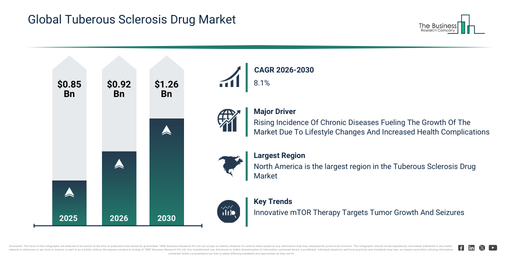
    Tuberous Sclerosis Drug Market Revenue Growth Supported By A CAGR Of 1.26% Through 2030

    The market for tuberous sclerosis drugs has experienced robust expansion in recent years. Projections indicate an increase from $0.85 billion in 2025 to $0.92 billion in 2026, reflecting a compound annual growth rate (CAGR) of 8.1%. This historical growth has been driven by factors such as heightened awareness of rare diseases, advancements in genetic research, incentives for orphan drug development, specialized hospital care, and the management of seizure disorders.

    The market for tuberous sclerosis drugs is projected to experience robust expansion over the coming years, reaching a value of $1.26 billion by 2030, with a compound annual growth rate (CAGR) of 8.1%. This anticipated growth during the forecast period is driven by factors such as the rise of precision medicine, the expansion of newborn screening programs, increased funding for orphan drugs, enhanced diagnostic capabilities, and the development of biologic therapies. Key trends shaping this period include the advancement of targeted mTOR inhibitor therapies, a broader focus on developing treatments for rare diseases, an emphasis on managing seizures, higher rates of genetic diagnosis, and the implementation of long-term strategies for symptom control.

    Download A Free Sample Report For Comprehensive Market Insights:

    https://www.thebusinessresearchcompany.com/sample.aspx?id=24419&type=smp&utm_source=BlogsPR&utm_medium=Paid&utm_campaign=Jul_PR

    Tuberous Sclerosis Drug Market Expansion Supported By Key Demand Factors

    The escalating prevalence of long-term health conditions is anticipated to drive expansion in the tuberous sclerosis drug market in the coming period. Chronic illnesses, which are defined as persistent medical conditions that generally advance gradually and necessitate continuous care, encompass ailments like diabetes, cardiovascular disease, hypertension, arthritis, chronic lung disorders, cancer, and obesity. This growing burden of chronic disease stems from shifts in lifestyle, especially poor dietary habits and reduced physical activity, which create lasting health complications. Medications for tuberous sclerosis contribute to managing these chronic conditions by addressing fundamental mechanisms behind disorders such as tuberous sclerosis complex (TSC), delivering effective therapies for controlling tumor development and managing seizures. These pharmaceutical interventions enhance patients’ quality of life through sustained symptom relief and decreased dependency on frequent hospital visits. By June 2024, data from the National Health Service, a UK governmental agency, revealed that 3,615,330 individuals consulting a general practitioner received diagnoses of non-diabetic hyperglycemia or pre-diabetes during 2023, representing an 18% rise from the 3,065,825 cases documented in 2022. Consequently, the growing frequency of chronic disease diagnoses is fueling momentum in the tuberous sclerosis drug market.

    Tuberous Sclerosis Drug Market Segment Analysis: What Are The Major Market Categories?

    The tuberous sclerosis drug market covered in this report is segmented –

    1) By Drug Class: Targeted Therapy, Immunotherapy, Symptomatic Treatment

    2) By Route Of Administration: Oral, Intravenous, Subcutaneous

    3) By Treatment Stage: Initial Diagnosis, Chronic Management, Recurrent Management

    4) By Distribution Channel: Hospital Pharmacies, Retail Pharmacies, Online Pharmacies

    5) By End-Users: Hospitals, Homecare, Specialty Clinics, Other End-Users

    Subsegments:

    1) By Targeted Therapy: Mammalian Target Of Rapamycin (mTOR) Inhibitors, Vascular Endothelial Growth Factor (VEGF) Inhibitors, Tyrosine Kinase Inhibitors

    2) By Immunotherapy: Monoclonal Antibodies, Cytokine Therapy

    3) By Symptomatic Treatment: Antiepileptic Drugs, Corticosteroids, Behavioral Therapy Medications

    Tuberous Sclerosis Drug Market Growth Trends Influencing Competitive Dynamics

    Leading players in the tuberous sclerosis drug market are prioritizing the creation of advanced therapeutics, particularly mammalian target of rapamycin (mTOR) inhibitors, aimed at minimizing tumor growth, managing seizure activity, and targeting the disease’s fundamental biological processes. An mTOR inhibitor is a drug category designed to suppress the mTOR protein, which plays a critical role in controlling cell growth, multiplication, and longevity. As an example, in August 2024, Upsher-Smith Laboratories LLC, a pharmaceutical firm based in the United States, introduced TORPENZ (everolimus) tablets in strengths of 2.5 mg, 5 mg, 7.5 mg, and 10 mg for individuals with tuberous sclerosis complex (TSC). This oral mTOR inhibitor functions by blocking the hyperactive mTOR pathway that drives excessive cell proliferation in TSC, thereby reducing the size of noncancerous tumors and alleviating symptoms like seizures.

    Tuberous Sclerosis Drug Market Leading Companies Driving Competitive Growth

    Major companies operating in the tuberous sclerosis drug market are Novartis AG, Dr. Reddy’s Laboratories Ltd., Pfizer Inc., Teva Pharmaceutical Industries Ltd., Viatris Inc., Sun Pharmaceutical Industries Ltd., Cipla Limited, Aurobindo Pharma Ltd., Lupin Limited, Zydus Lifesciences Ltd., Glenmark Pharmaceuticals Ltd., Hikma Pharmaceuticals PLC, Alembic Pharmaceuticals Ltd., Torrent Pharmaceuticals Ltd., Intas Pharmaceuticals Ltd., Amneal Pharmaceuticals Inc., Alkem Laboratories Ltd., Wockhardt Ltd., Hetero Drugs Ltd., Mylan N.V., Accord Healthcare Ltd., Apotex Inc., Sandoz Group AG, Fresenius Kabi AG, Macleods Pharmaceuticals Ltd.

    Access The Complete Tuberous Sclerosis Drug Market Report:

    https://www.thebusinessresearchcompany.com/report/tuberous-sclerosis-drug-global-market-report?utm_source=BlogsPR&utm_medium=Paid&utm_campaign=Jul_PR

    Tuberous Sclerosis Drug Market Regional Analysis And Leading Geography

    North America was the largest region in the tuberous sclerosis drug market in 2025. Asia-Pacific is expected to be the fastest-growing region in the forecast period. The regions covered in the tuberous sclerosis drug market report are Asia-Pacific, South East Asia, Western Europe, Eastern Europe, North America, South America, Middle East, Africa.

    Get in touch with us:

    The Business Research Company: https://www.thebusinessresearchcompany.com/?utm_source=BlogsPR&utm_medium=Paid&utm_campaign=home_page_test

    Americas: +1 310-496-7795

    Asia: +44 7882 955267 & +91 8897263534

    Europe: +44 7882 955267

    Email us at: marketing@tbrc.info

    Follow us on:

    LinkedIn: https://in.linkedin.com/company/the-business-research-company

    YouTube: https://www.youtube.com/channel/UC24_fI0rV8cR5DxlCpgmyFQ

    Global Market Model: https://www.thebusinessresearchcompany.com/global-market-model
  • Tuberculous Meningitis Treatment Market Growth Through 2030 Creates New Strategic Opportunities

    Tuberculous Meningitis Treatment Market Growth Through 2030 Creates New Strategic Opportunities

    Through market attractiveness analysis, total addressable market evaluation, company benchmarking matrices, interactive Excel dashboards, expanded supply chain intelligence, emerging startup coverage, and detailed product insights, The Business Research Company’s 2026 market reports provide more actionable and strategically valuable research.

    Tuberculous Meningitis Treatment Market Value Expansion And Long-Term Growth Outlook

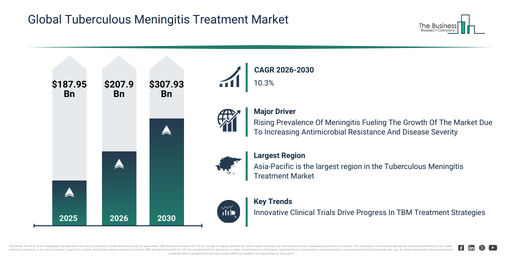
    The market for tuberculous meningitis treatments has experienced considerable expansion over the past few years, with its size projected to rise from $187.95 billion in 2025 to $207.9 billion in 2026, reflecting a compound annual growth rate (CAGR) of 10.6%. This historical growth is driven by factors such as the scarce supply of effective anti-tuberculosis medications, a high incidence of TB meningitis in developing areas, dependence on standard hospital treatment approaches, insufficient early detection and public awareness, and restricted availability of neurosurgical procedures.

    The market for tuberculous meningitis treatments is projected to undergo substantial expansion in the coming years. By 2030, its value is anticipated to reach $307.93 billion, reflecting a compound annual growth rate (CAGR) of 10.3%. This forecasted growth is driven by several key factors, including the emergence of innovative anti-tuberculosis therapies, the enhancement of healthcare infrastructure within developing economies, the growing implementation of telemedicine and digital patient monitoring solutions, increased funding directed toward clinical research and personalized medicine, and the incorporation of AI-powered systems for both diagnosis and treatment strategy formulation. Prominent trends shaping this future period encompass a heightened use of both frontline and subsequent anti-tuberculosis medications, a wider application of adjunctive corticosteroid treatments, a greater number of neurosurgical procedures being performed for severe cases, the proliferation of specialized treatment initiatives within hospitals and clinics, and a stronger focus on individualized patient oversight and customized therapeutic plans.

    Download A Free Sample Report For Comprehensive Market Insights:

    https://www.thebusinessresearchcompany.com/sample.aspx?id=24730&type=smp&utm_source=BlogsPR&utm_medium=Paid&utm_campaign=Jul_PR

    Tuberculous Meningitis Treatment Market Growth Drivers And Industry Catalysts

    The increasing incidence of meningitis is anticipated to drive expansion in the tuberculous meningitis treatment market moving forward. Meningitis involves inflammation of the protective layers surrounding the brain and spinal cord, usually resulting from infections, and can cause severe neurological issues, demanding urgent medical intervention. Its prevalence is climbing due to growing antimicrobial resistance, which complicates effective bacterial infection treatment, leading to extended illness duration, elevated transmission rates, and heightened outbreak risks. Tuberculous meningitis treatment addresses this condition by eradicating tuberculosis bacteria, reducing brain inflammation, and alleviating intracranial pressure to avert complications and enhance patient recovery. For example, in September 2024, according to Meningitis Now, a UK-based charity, 396 cases of invasive meningococcal disease were confirmed in 2023, a rise from 205 cases in 2022. Consequently, the growing prevalence of meningitis is fueling the tuberculous meningitis treatment market’s growth.

    The increase in healthcare spending is projected to drive the tuberculous meningitis treatment market forward. Healthcare expenditure encompasses total outlays on medical services, treatments, and health-related resources over a set timeframe. This rise stems from an aging population, which boosts demand for medical services, long-term care, and age-specific treatments, collectively intensifying financial pressures on healthcare systems. Such expenditure supports tuberculous meningitis management by funding crucial diagnostics, advanced drugs, expert care, and clinical studies, thereby enhancing patient outcomes and lessening disease impact. In April 2025, the American Medical Association, a US-based professional group, reported that U.S. health spending rose by 7.5% in 2023, reaching $4.9 trillion—or $14,570 per person—a significant uptick from the 4.6% growth seen in 2022. Hence, rising healthcare expenditure is propelling the tuberculous meningitis treatment market’s expansion.

    Tuberculous Meningitis Treatment Market Segment Breakdown: Which Categories Generate The Most Revenue?

    The tuberculous meningitis treatment market covered in this report is segmented –

    1) By Treatment: Antibiotic Therapy, Adjunctive Corticosteroid Therapy, Neurosurgical Management

    2) By Distribution Channel: Hospital Pharmacy, Retail Pharmacy, Online Pharmacy

    3) By End User: Hospitals, Specialty Clinics, Other End Users

    Subsegments:

    1) By Antibiotic Therapy: First-Line Anti-Tuberculosis Drugs, Second-Line Anti-Tuberculosis Drugs

    2) By Adjunctive Corticosteroid Therapy: Dexamethasone, Prednisolone

    3) By Neurosurgical Management: Ventriculoperitoneal Shunt, External Ventricular Drainage (EVD), Surgical Removal Of Tuberculoma

    Tuberculous Meningitis Treatment Market Trends Influencing Long-Term Demand

    Major players in the tuberculous meningitis treatment market are concentrating on advancing therapeutic approaches via ongoing clinical research to boost effectiveness and improve patient results. Clinical trials constitute human research studies designed to assess the safety, efficacy, and ideal application of medical interventions like drugs, vaccines, or procedures. Such trials are crucial for verifying whether a novel treatment is effective, identifying potential side effects, and establishing its performance relative to current therapies prior to approval for broad use. For example, in December 2023, the AIDS Clinical Trials Group, a US-based organization specializing in HIV clinical research, initiated the IMAGINE-TBM (A5384) clinical trial—an international, randomized, open-label phase 2 study examining a new six-month treatment protocol for tuberculous meningitis (TBM). This protocol involves high-dose rifampicin, high-dose isoniazid, linezolid, and pyrazinamide, and it will be compared against the existing nine-month standard of care. The study plans to enroll 330 participants aged 15 and older, including both HIV-positive and HIV-negative individuals, across multiple countries with high TB burdens. Its objective is to assess the safety and efficacy of the shorter regimen to improve treatment outcomes and shorten therapy duration for this serious illness.

    Tuberculous Meningitis Treatment Market Key Players And Strategic Industry Positioning

    Major companies operating in the tuberculous meningitis treatment market are Merck & Co. Inc., Sanofi S.A., GlaxoSmithKline plc, Otsuka Pharmaceutical Co. Ltd., Sun Pharmaceutical Industries Limited, Aurobindo Pharma Limited, Cipla Limited, Cadila Pharmaceuticals Ltd., Amneal Pharmaceuticals Inc., Lupin Limited, Alkem Laboratories Limited, Macleods Pharmaceuticals Ltd., Torrent Pharmaceuticals Limited, Strides Pharma Science Limited, Ajanta Pharma Limited, Wockhardt Limited, Orchid Pharma Limited, Panacea Biotec Limited, Anuh Pharma Ltd., Rusan Pharma Ltd.

    Access The Complete Tuberculous Meningitis Treatment Market Report:

    https://www.thebusinessresearchcompany.com/report/tuberculous-meningitis-treatment-global-market-report?utm_source=BlogsPR&utm_medium=Paid&utm_campaign=Jul_PR

    Tuberculous Meningitis Treatment Market Geographic Analysis: Where Is Demand Growing The Fastest?

    Asia-Pacific was the largest region in the tuberculous meningitis treatment market in 2025. The regions covered in the tuberculous meningitis treatment market report are Asia-Pacific, South East Asia, Western Europe, Eastern Europe, North America, South America, Middle East, Africa.

    Get in touch with us:

    The Business Research Company: https://www.thebusinessresearchcompany.com/?utm_source=BlogsPR&utm_medium=Paid&utm_campaign=home_page_test

    Americas: +1 310-496-7795

    Asia: +44 7882 955267 & +91 8897263534

    Europe: +44 7882 955267

    Email us at: marketing@tbrc.info

    Follow us on:

    LinkedIn: https://in.linkedin.com/company/the-business-research-company

    YouTube: https://www.youtube.com/channel/UC24_fI0rV8cR5DxlCpgmyFQ

    Global Market Model: https://www.thebusinessresearchcompany.com/global-market-model
  • Trispecific Antibodies Market Size Projected To Increase From $0.91 Billion To $1.66 Billion During The Forecast Period

    Trispecific Antibodies Market Size Projected To Increase From $0.91 Billion To $1.66 Billion During The Forecast Period

    Delivering more actionable and strategically valuable research, The Business Research Company’s 2026 market reports feature market attractiveness analysis, total addressable market evaluation, company benchmarking matrices, interactive Excel dashboards, expanded supply chain intelligence, emerging startup coverage, and detailed product insights.

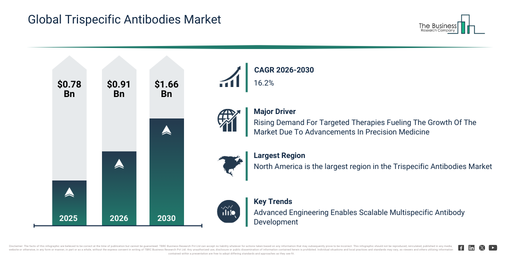
    Trispecific Antibodies Market Expected To Reach $1.66 Billion By 2030 At 16.2% CAGR

    The market for trispecific antibodies has experienced rapid expansion over recent years, with its value projected to rise from $0.78 billion in 2025 to $0.91 billion in 2026, reflecting a compound annual growth rate (CAGR) of 16.7%. This historic growth was largely driven by several key factors, including the constrained supply of trispecific antibody platforms, early-stage investigative efforts in oncology and autoimmune treatments, dependence on established monoclonal antibody technologies, an escalating emphasis on targeted therapeutic strategies, and rising investments in research and development from both biotechnology and pharmaceutical firms.

    The trispecific antibodies market is projected to experience significant expansion in the coming years, reaching a value of $1.66 billion by 2030, driven by a compound annual growth rate (CAGR) of 16.2%. This forecasted growth is fueled by progress in multivalent and synthetic protein scaffolds, a growing need for personalized immunotherapy, the adoption of dock-and-lock and tandem scFv technologies, the broadening of global clinical trial activities, and heightened partnerships among pharmaceutical companies, biotechnology firms, and research institutions. Key trends shaping this period include the creation of trispecific antibodies for targeted cancer treatments, their increasing use in autoimmune and infectious disease applications, the advancement of monoclonal and bispecific-trispecific antibody platforms, greater investment in fusion protein and synthetic antibody technologies, and a rise in collaborative efforts between pharma and research entities to drive antibody innovation.

    Download A Free Sample Report For Comprehensive Market Insights:

    https://www.thebusinessresearchcompany.com/sample.aspx?id=27439&type=smp&utm_source=BlogsPR&utm_medium=Paid&utm_campaign=Jul_PR

    Trispecific Antibodies Market Opportunity Drivers: What Is Creating New Revenue Potential?

    The anticipated expansion of the trispecific antibodies market is being driven by the growing demand for targeted therapies. These treatments are designed to specifically address molecular aberrations in conditions such as cancer, thereby enhancing therapeutic accuracy and reducing damage to healthy cells. This increased emphasis on targeted treatments stems largely from progress in precision medicine, which allows for more individualized and effective care tailored to patients’ genetic profiles. By engaging three different antigens at the same time, trispecific antibodies significantly bolster targeted therapies, offering strong efficacy against complex illnesses like cancer and viral infections. They refine treatment precision through improved immune cell recruitment and the simultaneous disruption of multiple disease pathways, leading to superior clinical results. As an example, in December 2024 the American Society of Gene & Cell Therapy—a U.S.-based nonprofit medical and scientific organization—reported that the Food and Drug Administration cleared six gene therapy products in 2023, compared to five in the prior year. Consequently, the rising appetite for targeted therapies is fueling expansion in the trispecific antibodies market.

    Trispecific Antibodies Market Segmentation: How Is The Market Structured Across Key Categories?

    The trispecific antibodies market covered in this report is segmented –

    1) By Product Type: Monoclonal Trispecific Antibodies, Bispecific-Trispecific Antibodies, Other Product Types

    2) By Application: Oncology, Autoimmune Diseases, Infectious Diseases, Other Applications

    3) By End-User: Hospitals, Research Institutes, Pharmaceutical And Biotechnology Companies, Other End-Users

    Subsegments:

    1) By Monoclonal Trispecific Antibodies: Immunoglobulin G Based, Single Chain Variable Fragment Based, Dual Variable Domain Immunoglobulin Based

    2) By Bispecific-Trispecific Antibodies: Fusion Protein Based, Tandem Single Chain Variable Fragment Based, Dock And Lock Technology Based

    3) By Other Product Types: Multivalent Binding Molecules, Synthetic Protein Scaffolds, Engineered Antibody Fragments

    Trispecific Antibodies Market Innovation Trends Driving Future Development

    Key players in the trispecific antibodies market are placing significant emphasis on creating innovative solutions, particularly trispecific antibody engineering platforms, aimed at improving efficacy, expanding possible uses, and accelerating biologics development. These engineering platforms represent cutting-edge technologies that enable the production of antibodies capable of binding to three distinct targets at once, allowing for more targeted and effective management of complex conditions like cancer and viral infections. To illustrate, in May 2025, Invenra Inc., a biotechnology firm based in the United States, introduced its T-BODY platform to drive forward next-generation trispecific therapeutic antibodies. This system allows for the scalable construction of multispecific antibody designs, resulting in superior immune cell activation, improved precision in tumor targeting, and adaptable functionality. Through advanced molecular engineering, the T-Body platform guarantees stability, ease of manufacturing, and enhanced pharmacokinetic properties, thereby supporting the creation of novel therapeutic options.

    Trispecific Antibodies Market Competitive Landscape And Leading Companies

    Major companies operating in the trispecific antibodies market are Johnson & Johnson, F. Hoffmann-La Roche AG, Merck & Co. Inc., AbbVie Inc., Sanofi S.A., AstraZeneca plc, Novartis AG, Biocytogen Pharmaceuticals (Beijing) Co. Ltd., Zymeworks Inc., Molecular Partners AG, Genor Biopharma Co. Ltd., Numab Therapeutics AG, GT Biopharma Inc., Ichnos Sciences Inc.

    Access The Complete Trispecific Antibodies Market Report:

    https://www.thebusinessresearchcompany.com/report/trispecific-antibodies-global-market-report?utm_source=BlogsPR&utm_medium=Paid&utm_campaign=Jul_PR

    Trispecific Antibodies Market Global Footprint: Which Region Holds Market Leadership?

    North America was the largest region in the trispecific antibodies market in 2025. The regions covered in the trispecific antibodies market report are Asia-Pacific, South East Asia, Western Europe, Eastern Europe, North America, South America, Middle East, Africa.

    Get in touch with us:

    The Business Research Company: https://www.thebusinessresearchcompany.com/?utm_source=BlogsPR&utm_medium=Paid&utm_campaign=home_page_test

    Americas: +1 310-496-7795

    Asia: +44 7882 955267 & +91 8897263534

    Europe: +44 7882 955267

    Email us at: marketing@tbrc.info

    Follow us on:

    LinkedIn: https://in.linkedin.com/company/the-business-research-company

    YouTube: https://www.youtube.com/channel/UC24_fI0rV8cR5DxlCpgmyFQ

    Global Market Model: https://www.thebusinessresearchcompany.com/global-market-model

  • Trial Size Supplements Market Growth Outlook Reveals A CAGR Of 10.4% And A Market Value Of $4.19 Billion By 2030

    Trial Size Supplements Market Growth Outlook Reveals A CAGR Of 10.4% And A Market Value Of $4.19 Billion By 2030

    Enhanced with market attractiveness analysis, total addressable market evaluation, company benchmarking matrices, interactive Excel dashboards, expanded supply chain intelligence, emerging startup coverage, and detailed product insights, The Business Research Company’s 2026 market reports deliver more actionable and strategically valuable research.

    Trial Size Supplements Market Size And Revenue Forecast Through 2030

    The market for trial size supplements has experienced robust expansion in recent times. Projected to increase from $2.55 billion in 2025 to $2.82 billion in 2026, this growth reflects a compound annual growth rate (CAGR) of 10.7%. Several factors have driven this historical performance, including a rise in the introduction of health and wellness products, a growing tendency among consumers to experiment with supplements, the broader reach of e-commerce retail platforms, heightened rivalry among nutraceutical brands, and the accessibility of adaptable packaging options.

    The market for trial size supplements is projected to undergo rapid expansion over the coming years. By 2030, its value is anticipated to reach $4.2 billion, reflecting a compound annual growth rate (CAGR) of 10.4%. Several factors are driving this growth during the forecast period, including a heightened emphasis on customer acquisition strategies, a growing demand for personalized supplement trials, the proliferation of online wellness marketplaces, an increasing focus on sustainable packaging solutions, and the expanded use of data-driven marketing. Key trends shaping this period involve the rising use of trial packs for product sampling, a growing preference for travel-friendly supplement formats, the spread of subscription-based sampling models, wider adoption of eco-friendly packaging, and a stronger focus on consumer trial and conversion strategies.

    Download A Free Sample Report For Comprehensive Market Insights:

    https://www.thebusinessresearchcompany.com/sample.aspx?id=30422&type=smp&utm_source=BlogsPR&utm_medium=Paid&utm_campaign=Jul_PR

    Trial Size Supplements Market Growth Momentum: Which Factors Are Influencing Demand?

    The rising consumer interest in health and wellness products is anticipated to boost the expansion of the trial-size supplements market in the coming period. These products are designed to foster overall well-being, ward off illness, and improve both physical and mental health. This growing demand is fueled by heightened public awareness around preventive care, with more individuals emphasizing nutrition, exercise, and lifestyle decisions to stave off diseases and sustain their health. As shoppers increasingly look for tailored and convenient wellness options, trial-size supplements align with this trend by offering compact, easy-to-use servings that let people test new nutritional items, control expenses, and embrace healthier routines more regularly. By way of illustration, data from the International Food Information Council, a US-based nonprofit, revealed in 2024 that the percentage of consumers aiming to boost their protein intake climbed steadily from 59% in 2022 to 67% in 2023, reaching 71% in 2024. This points to a broader movement toward deliberate nutrition and trying out supplement choices, including trial-size varieties. Consequently, the heightened demand for health and wellness products is fueling the growth of the trial-size supplements market.

    The rise in disposable incomes is projected to drive the growth of the trial-size supplements market in the future. Disposable income signifies the funds an individual or household retains after tax obligations, available for spending or savings. This income is growing as economic development and employment prospects improve, enabling people to earn and keep more after-tax money. With higher disposable incomes comes an expanded capacity for discretionary spending, giving consumers the means to invest in non-essential health and wellness items like trial-size supplements. Such smaller formats offer a handy and budget-friendly way for individuals to try out new nutritional products before purchasing full-sized versions. For example, according to Statistics Iceland, a government agency in Iceland, household gross disposable income for 2023 was estimated to have risen by 13.6% relative to the prior year, as reported in October 2024. Thus, increasing disposable incomes are propelling the expansion of the trial-size supplements market.

    Trial Size Supplements Market Segmentation Trends And Revenue Drivers

    The trial size supplements market covered in this report is segmented –

    1) By Product Type: Vitamins, Minerals, Herbal Supplements, Protein Supplements, Amino Acids, Enzymes, Probiotics, Other Nutritional Supplements

    2) By Form: Capsules, Tablets, Powder, Softgels, Liquids, Gummies

    3) By Packaging Type: Blister Packs, Pouches, Bottles, Boxes, Tubes

    4) By Distribution Channel: Online Retail, Pharmacies, Health And Wellness Stores, Supermarkets Or Hypermarkets, Direct Sales

    5) By End User: Adults, Children, Athletes, Elderly

    Subsegments:

    1) By Vitamins: Vitamin A, Vitamin B Complex, Vitamin C

    2) By Minerals: Calcium, Magnesium, Zinc

    3) By Herbal Supplements: Ginseng, Ashwagandha, Turmeric

    4) By Protein Supplements: Whey Protein, Casein Protein, Soy Protein

    5) By Amino Acids: Glutamine, L-Arginine, L-Tryptophan

    6) By Enzymes: Protease, Amylase, Lipase

    7) By Probiotics: Lactobacillus, Bifidobacterium, Saccharomyces boulardii

    8) By Other Nutritional Supplements: Omega-3 Fatty Acids, Coenzyme Q10, Fiber Supplements

    Trial Size Supplements Market Industry Leaders: Which Organizations Are Driving Competition?

    Major companies operating in the trial size supplements market are Abbott Laboratories, Herbalife Ltd., GNC Holdings LLC, Myprotein, Swanson Health Products Inc., Iovate Health Sciences International Inc., Athletic Greens, Grenade (UK) Limited, Optimum Nutrition Inc., ProSupps USA LLC, Sunwarrior LLC, Isagenix International LLC, eFlow Nutrition LLC, German American Technologies (GAT Sport), HealthifyMe Wellness Private Limited, PEScience Inc., Sprout Living, VitaMist Ltd., ADDRA Labs, TravelVita

    Access The Complete Trial Size Supplements Market Report:

    https://www.thebusinessresearchcompany.com/report/global-trial-size-supplements-market-report?utm_source=BlogsPR&utm_medium=Paid&utm_campaign=Jul_PR

    Trial Size Supplements Market Regional Distribution: Which Areas Drive Market Expansion?

    North America was the largest region in the trial size supplements market in 2025. Asia-Pacific is expected to be the fastest-growing region in the forecast period. The regions covered in the trial size supplements market report are Asia-Pacific, South East Asia, Western Europe, Eastern Europe, North America, South America, Middle East, Africa.

    Get in touch with us:

    The Business Research Company: https://www.thebusinessresearchcompany.com/?utm_source=BlogsPR&utm_medium=Paid&utm_campaign=home_page_test

    Americas: +1 310-496-7795

    Asia: +44 7882 955267 & +91 8897263534

    Europe: +44 7882 955267

    Email us at: marketing@tbrc.info

    Follow us on:

    LinkedIn: https://in.linkedin.com/company/the-business-research-company

    YouTube: https://www.youtube.com/channel/UC24_fI0rV8cR5DxlCpgmyFQ

    Global Market Model: https://www.thebusinessresearchcompany.com/global-market-model
  • Treprostinil Sodium Market Forecast Highlights Expansion From $1.37 Billion To $1.96 Billion Through 2030

    Treprostinil Sodium Market Forecast Highlights Expansion From $1.37 Billion To $1.96 Billion Through 2030

    Through market attractiveness analysis, total addressable market evaluation, company benchmarking matrices, interactive Excel dashboards, expanded supply chain intelligence, emerging startup coverage, and detailed product insights, The Business Research Company’s 2026 market reports provide more actionable and strategically valuable research.

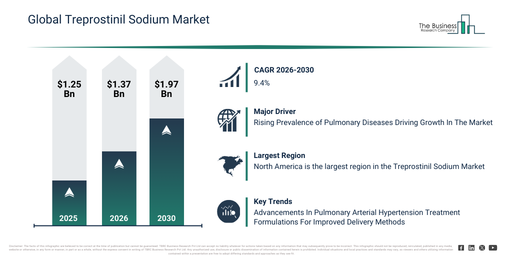
    Treprostinil Sodium Market Growth From $1.37 Billion In 2026 To $1.96 Billion By 2030 At A CAGR Of 9.4%

    The treprostinil sodium market has seen robust expansion in recent times. Projected to increase from $1.25 billion in 2025 to $1.37 billion in 2026, this growth represents a compound annual growth rate (CAGR) of 9.5%. Historical progress has been driven by factors such as the proven efficacy of prostacyclin therapy, a broadening scope of pulmonary arterial hypertension (PAH) diagnoses, the reliance on hospital-based PAH care, a scarcity of available treatment options, and enhanced survival rates among patients.

    The treprostinil sodium market is projected to experience robust expansion over the coming years, reaching an estimated $1.97 billion by 2030, with a compound annual growth rate (CAGR) of 9.4%. This anticipated growth during the forecast period is driven by factors such as the rising prevalence of pulmonary arterial hypertension (PAH), a growing preference for long-term treatment strategies, the development of inhalable and oral drug formulations, an increasing number of specialized clinics, and heightened awareness of PAH. Key trends shaping this period include a greater reliance on prostacyclin analog therapies, an intensified focus on managing pulmonary arterial hypertension, the expansion of home-based PAH care, the adoption of diverse drug delivery methods, and a rising need for sustained PAH management.

    Download A Free Sample Report For Comprehensive Market Insights:

    https://www.thebusinessresearchcompany.com/sample.aspx?id=21306&type=smp&utm_source=BlogsPR&utm_medium=Paid&utm_campaign=Jul_PR

    Treprostinil Sodium Market Expansion Drivers: What Is Shaping Future Growth?

    The expanding prevalence of pulmonary disorders is anticipated to drive the expansion of the treprostinil sodium market in the coming period. Pulmonary diseases refer to medical conditions that affect the lungs and the respiratory system, thereby impairing normal breathing and oxygen circulation. The rising incidence of these conditions is attributed to various influences, including airborne pollutants, tobacco use, exposure to environmental toxins, and the growing proportion of elderly individuals in the population. Treprostinil sodium functions as a vasodilator that works to ease tension in the pulmonary blood vessels, lower internal pressure, enhance respiratory function, and provide a flexible therapeutic option for managing these diseases. As an illustration, the Office for Health Improvement & Disparities, a governmental body based in the United Kingdom, reported in June 2025 that the rate of emergency hospital admissions for respiratory diseases in England experienced a 7 percent increase between the fiscal years ending in 2023 and 2024. Consequently, the mounting number of pulmonary disease cases is fueling the upward trajectory of the treprostinil sodium market.

    Treprostinil Sodium Market Segment Analysis Highlighting Growth Areas

    The treprostinil sodium market covered in this report is segmented –

    1) By Product Type: Injectable, Inhalable, Oral

    2) By Applications: Pulmonary Arterial Hypertension, Chronic Thromboembolic Pulmonary Hypertension, Other Applications

    3) By Distribution Channel: Hospitals, Specialty Clinics, Online Pharmacies, Retail Pharmacies

    Subsegments:

    1) By Injectable: Subcutaneous Injection, Intravenous Infusion

    2) By Inhalable: Inhalation Aerosol, Nebulizer Solution

    3) By Oral: Extended-Release Tablets, Oral Suspension

    Treprostinil Sodium Market Strategic Trends: What Is Defining The Next Phase Of Growth?

    Major pharmaceutical players involved in the treprostinil sodium sector are concentrating on the creation of cutting-edge therapies for pulmonary arterial hypertension, specifically through the development of pulmonary vasodilator prostacyclin analog injections. These injections are designed to improve hemodynamic control within the lungs and better manage symptoms experienced by individuals suffering from pulmonary arterial hypertension (PAH). A pulmonary vasodilator prostacyclin analog injection is a biologically engineered formulation of prostacyclin or its structural analogue, delivered either intravenously or subcutaneously. Its purpose is to widen the pulmonary arteries, lower pulmonary vascular resistance, and enhance overall blood circulation in PAH patients. An illustrative example occurred in April 2023, when Dr. Reddy’s Laboratories, a pharmaceutical company based in India, introduced Treprostinil Injection to the U.S. marketplace. This product received approval from the Food and Drug Administration, a federal agency in the United States. Treprostinil Injection serves as a therapeutic equivalent generic alternative to Remodulin (treprostinil) injection, falling under the category of prostacyclin mimetics—agents used to treat pulmonary arterial hypertension by alleviating symptoms linked to physical exertion. It is available in vials containing 20 mg/20 mL, 50 mg/20 mL, 100 mg/20 mL, or 200 mg/20 mL.

    Treprostinil Sodium Market Leading Companies: Who Holds Significant Market Presence?

    Major companies operating in the treprostinil sodium market are United Therapeutics Corporation, Liquidia Corporation, Teva Pharmaceutical Industries Ltd., Sandoz International GmbH, Dr. Reddy’s Laboratories Ltd., Mylan Laboratories Limited, Alembic Pharmaceuticals Ltd., Euroapi SA, Cipla Limited, Lupin Limited, Sun Pharmaceutical Industries Ltd., Endo International plc, ChemWerth Inc., LGM Pharma, Simson Pharma Limited, YONSUNG Fine Chemicals Co. Ltd., Nuray Chemicals Private Limited, KPS Chemicals Pharmaceuticals, Farbe Firma Pvt. Ltd., Aurobindo Pharma Limited

    Access The Complete Treprostinil Sodium Market Report:

    https://www.thebusinessresearchcompany.com/report/treprostinil-sodium-global-market-report?utm_source=BlogsPR&utm_medium=Paid&utm_campaign=Jul_PR

    Treprostinil Sodium Market Leading Geography: Which Region Generates The Most Revenue?

    North America was the largest region in the treprostinil sodium market in 2025. The regions covered in the treprostinil sodium market report are Asia-Pacific, South East Asia, Western Europe, Eastern Europe, North America, South America, Middle East, Africa.

    Get in touch with us:

    The Business Research Company: https://www.thebusinessresearchcompany.com/?utm_source=BlogsPR&utm_medium=Paid&utm_campaign=home_page_test

    Americas: +1 310-496-7795

    Asia: +44 7882 955267 & +91 8897263534

    Europe: +44 7882 955267

    Email us at: marketing@tbrc.info

    Follow us on:

    LinkedIn: https://in.linkedin.com/company/the-business-research-company

    YouTube: https://www.youtube.com/channel/UC24_fI0rV8cR5DxlCpgmyFQ

    Global Market Model: https://www.thebusinessresearchcompany.com/global-market-model
  • Travel Vaccines Market Expected To Reach $8.15 Billion By 2030 As Growth Accelerates At 10% CAGR

    Travel Vaccines Market Expected To Reach $8.15 Billion By 2030 As Growth Accelerates At 10% CAGR

    Delivering more actionable and strategically valuable research, The Business Research Company’s 2026 market reports feature market attractiveness analysis, total addressable market evaluation, company benchmarking matrices, interactive Excel dashboards, expanded supply chain intelligence, emerging startup coverage, and detailed product insights.

    Travel Vaccines Market Expansion Outlook: What Revenue Opportunities Lie Ahead?

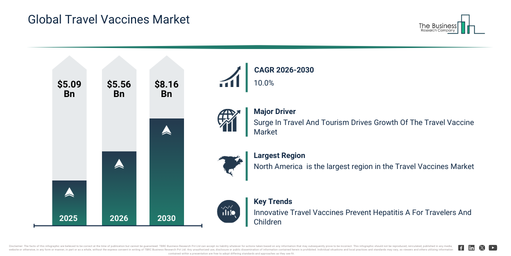
    The travel vaccines market has experienced robust expansion over recent years. Its value is projected to rise from $5.09 billion in 2025 to $5.56 billion in 2026, reflecting a compound annual growth rate (CAGR) of 9.2%. This historical growth has been driven by several factors, including restricted vaccine availability in developing regions, insufficient public knowledge about illnesses contracted during travel, a dependence on conventional vaccination facilities, regulatory clearances for single-pathogen vaccines, and a gradual uptake of digital scheduling systems.

    The travel vaccines market is projected to experience strong growth over the coming years, reaching a value of $8.16 billion by 2030 with a compound annual growth rate (CAGR) of 10.0%. This forecasted expansion is driven by factors such as rising global travel and mobility, progress in biotechnology enabling combination vaccines, the growth of digital health and telemedicine services, heightened awareness about preventive healthcare, and the broadening of international travel immunization programs. Key developments shaping the market include an increase in international tourism and business travel, growing traveler focus on preventive health measures, the rise of online travel health services and booking platforms, the creation of combination and multivalent travel vaccines, and strengthened public-private partnerships supporting global immunization efforts.

    Download A Free Sample Report For Comprehensive Market Insights:

    https://www.thebusinessresearchcompany.com/sample.aspx?id=11918&type=smp&utm_source=BlogsPR&utm_medium=Paid&utm_campaign=Jul_PR

    Travel Vaccines Market Development Factors: Which Trends Are Supporting Demand?

    The growth of the travel vaccine market is expected to be driven by the rising volume of travel and tourism in the coming period. This sector involves the movement of individuals and goods across distant geographical locations using various modes of transport such as trains, boats, and aircraft. Travel vaccines play a vital role in protecting tourists and travelers, ensuring their health and safety during international trips. For example, in May 2025, UN Tourism—a Spain-based specialized agency focused on promoting responsible, sustainable, and universally accessible tourism—reported that over 300 million tourists traveled internationally during the first three months of 2025. This figure represents approximately 14 million more travelers than in the same period of 2024, corresponding to a 5% year-on-year increase. As a result, the expansion of travel and tourism is fueling the advancement of the travel vaccine market.

    Travel Vaccines Market Segment Performance And Strategic Opportunities

    The travel vaccines market covered in this report is segmented –

    1) By Disease: Hepatitis A, Diphtheria, Pertussis, And Tetanus (DPT), Yellow Fever, Typhoid, Hepatitis B, Measles And Mumps, Rabies, Meningococcal, Other Diseases,

    2) By Composition: Mono Vaccines, Combination Vaccines

    3) By Booking Channel: Online Booking, In-Person Booking

    4) By Application: Domestic Travel, Outbound Travel

    Travel Vaccines Market Transformation Trends: Which Innovations Are Driving Change?

    Key players in the travel vaccine market are focusing on the creation of new vaccines aimed at delivering active immunity against Hepatitis A, an infection that frequently poses a risk for travelers. A travel vaccine is designed to guard individuals against infectious diseases that are common in specific countries or regions, and it is typically advised for those journeying to such locations. As an example, in January 2024, Indian Immunologicals Ltd. (IIL), a biotechnology firm based in India, introduced Havisure, the first Hepatitis A vaccine developed domestically in the nation. Havisure is expected to play a crucial role in offering defense against the Hepatitis A virus, which primarily affects the liver. This vaccine proves effective in preventing the illness and is suggested for children as part of their regular vaccination schedule. Moreover, it is also intended for people who face a higher risk of exposure or who are traveling to areas where Hepatitis A is widespread.

    Travel Vaccines Market Key Players: Which Companies Shape Industry Competition?

    Major companies operating in the travel vaccines market are Pfizer Inc, Johnson and Johnson, Merck & Co. Inc, Sanofi SA, GlaxoSmithKline plc, Takeda Pharmaceutical Company Limited, Serum Institute of India Pvt. Ltd., Bavarian Nordic A/S, Valneva SE, Panacea Biotec, Bharat Biotech International Limited, Bio Farma, Novavax Inc, Emergent BioSolutions UK, Biological E. Limited, Vabiotech, Cadila Healthcare Limited, Zydus Lifesciences Ltd, Cipla Inc, Haffkine Biopharmaceutical Corporation Ltd

    Access The Complete Travel Vaccines Market Report:

    https://www.thebusinessresearchcompany.com/report/travel-vaccines-global-market-report?utm_source=BlogsPR&utm_medium=Paid&utm_campaign=Jul_PR

    Travel Vaccines Market Regional Outlook: Where Are The Largest Opportunities Located?

    North America was the largest region in the travel vaccines market in 2025. Asia-Pacific is expected to be the fastest-growing region in the forecast period. The regions covered in the travel vaccines market report are Asia-Pacific, South East Asia, Western Europe, Eastern Europe, North America, South America, Middle East, Africa.

    Get in touch with us:

    The Business Research Company: https://www.thebusinessresearchcompany.com/?utm_source=BlogsPR&utm_medium=Paid&utm_campaign=home_page_test

    Americas: +1 310-496-7795

    Asia: +44 7882 955267 & +91 8897263534

    Europe: +44 7882 955267

    Email us at: marketing@tbrc.info

    Follow us on:

    LinkedIn: https://in.linkedin.com/company/the-business-research-company

    YouTube: https://www.youtube.com/channel/UC24_fI0rV8cR5DxlCpgmyFQ

    Global Market Model: https://www.thebusinessresearchcompany.com/global-market-model
  • Traumatic Brain Injury Biomarkers Market Set To Grow From $1.68 Billion In 2026 To $3.67 Billion By 2030 At A CAGR Of 21.6%

    Traumatic Brain Injury Biomarkers Market Set To Grow From $1.68 Billion In 2026 To $3.67 Billion By 2030 At A CAGR Of 21.6%

    Enhanced with market attractiveness analysis, total addressable market evaluation, company benchmarking matrices, interactive Excel dashboards, expanded supply chain intelligence, emerging startup coverage, and detailed product insights, The Business Research Company’s 2026 market reports deliver more actionable and strategically valuable research.

    Traumatic Brain Injury Biomarkers Market Growth Potential: How Will Market Size Change Through 2030?

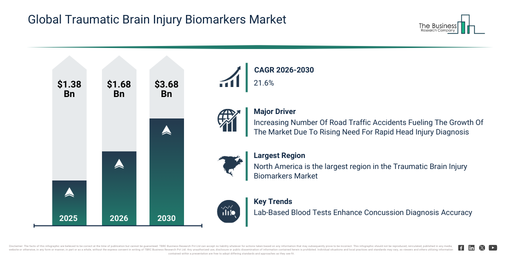
    The market for traumatic brain injury biomarkers has experienced remarkable expansion in recent years. It is projected to increase from $1.38 billion in 2025 to $1.68 billion in 2026, reflecting a compound annual growth rate (CAGR) of 21.9%. This historical growth has been driven by factors such as the limited availability of standardized TBI biomarkers, dependence on traditional imaging methods, rising awareness of the consequences of traumatic brain injuries, the expansion of hospital-based diagnostic services, and initial investigations into protein and genetic biomarkers.

    The traumatic brain injury biomarkers market is anticipated to witness exponential expansion over the coming years. By 2030, its value is projected to reach $3.68 billion, with a compound annual growth rate (CAGR) of 21.6%. This forecasted growth is driven by advancements in high-sensitivity protein and genetic assays, the incorporation of metabolomic biomarkers into TBI assessment, the development of personalized monitoring and prognosis tools, broader adoption by hospitals and diagnostic labs, and increased investment in TBI biomarker research and clinical trials. Key trends expected during this period include the growing use of blood-based and CSF-based biomarker testing, a stronger emphasis on early TBI diagnosis and prognosis, the creation of multiplex biomarker panels for both proteins and genetics, expansion of tools for tracking treatment response, and the integration of research-derived biomarkers into routine clinical use.The traumatic brain injury biomarkers market is projected to experience explosive growth over the coming years, reaching $3.68 billion by 2030 at a CAGR of 21.6%. This expansion in the forecast period results from several factors, including progress in high-sensitivity protein and genetic assays, the inclusion of metabolomic biomarkers in TBI evaluation, the growth of personalized monitoring and prognosis instruments, increased adoption by hospitals and diagnostic laboratories, and higher investment in TBI biomarker research and clinical trials. Major trends expected during the forecast period consist of greater utilization of blood-based and CSF-based biomarker testing, a heightened focus on early TBI diagnosis and prognosis, the creation of multiplex protein and genetic biomarker panels, the expansion of monitoring tools for treatment response, and the incorporation of research-derived biomarkers into clinical settings.

    Download A Free Sample Report For Comprehensive Market Insights:

    https://www.thebusinessresearchcompany.com/sample.aspx?id=27438&type=smp&utm_source=BlogsPR&utm_medium=Paid&utm_campaign=Jul_PR

    Traumatic Brain Injury Biomarkers Market Industry Drivers: What Is Driving Revenue Growth?

    The growing frequency of road traffic accidents is anticipated to boost the expansion of the traumatic brain injury biomarkers market in the coming period. Road traffic accidents are defined as unforeseen, unintended incidents that result in injury, harm, or damage, frequently demanding urgent medical intervention. The incidence of such accidents is climbing due to a sharp rise in private vehicle use, driven by urbanization and motorization. Biomarkers for traumatic brain injury play a crucial role in road traffic accident care by facilitating quick and precise evaluation of head injuries. They aid in early diagnosis through the detection of specific blood proteins, enabling clinicians to make prompt treatment choices and enhance patient outcomes in emergency settings. For example, in October 2025, a report from the National Highway Traffic Safety Administration (NHTSA), a US-based national safety organization, indicated that the United States experienced 6,138,359 police-reported motor-vehicle crashes, leading to 40,901 fatalities and 2,442,581 injuries, underscoring a substantial trauma load. Consequently, the rising number of road traffic accidents is fueling growth in the traumatic brain injury biomarkers market.

    The increasing embrace of personalized medicine is set to drive the traumatic brain injury biomarkers market forward in the future. Personalized medicine is a healthcare strategy that customizes treatments for individual patients by considering their genetic, environmental, and lifestyle factors to enhance outcomes and improve care quality. The growing demand for this approach stems from progress in genomic technologies, which allow for accurate detection of genetic differences and tailored interventions for each person. Biomarkers for traumatic brain injury support personalized medicine by pinpointing specific biological markers associated with brain injuries. They facilitate customized treatment plans based on individual reactions, boosting recovery results and refining clinical decision-making for every patient. As an illustration, in February 2024, the Personalized Medicine Coalition (PMC), a US-based nonprofit organization, reported that the U.S. Food and Drug Administration (FDA) approved 26 new personalized medicines in 2023, a notable rise from the 12 approvals in 2022. Hence, the growing adoption of personalized medicine is propelling the expansion of the traumatic brain injury biomarkers market.

    Traumatic Brain Injury Biomarkers Market Segment Landscape And Growth Potential

    The traumatic brain injury biomarkers market covered in this report is segmented –

    1) By Type: Protein Biomarkers, Genetic Biomarkers, Metabolomic Biomarkers

    2) By Sample Type: Blood-based, Cerebrospinal Fluid (CSF)-Based, Urine-Based

    3) By Application: Diagnosis, Prognosis, Monitoring Treatment Response

    4) By End Use: Hospitals And Clinics, Diagnostic Laboratories, Research Institutes

    Subsegments:

    1) By Protein Biomarkers: Glial Fibrillary Acidic Protein (GFAP), Ubiquitin C-Terminal Hydrolase L1 (UCH-L1), S100 Calcium Binding Protein B (S100B), Neuron-Specific Enolase (NSE)

    2) By Genetic Biomarkers: Apolipoprotein E (APOE) Genotyping, Brain-Derived Neurotrophic Factor (BDNF) Polymorphism, Interleukin-6 (IL-6) Gene Variants, Tumor Necrosis Factor-Alpha (TNF-a) Polymorphism

    3) By Metabolomic Biomarkers: Lactate, Creatine, Choline, N-Acetylaspartate (NAA)

    Traumatic Brain Injury Biomarkers Market Growth Trends: What Is Influencing The Future Outlook?

    Key industry players in the traumatic brain injury biomarker market are channeling their efforts into creating novel solutions, like a laboratory-based blood test, designed to enhance the precision and efficiency of concussion assessment and diagnosis. This type of blood test serves as a diagnostic instrument that quantifies particular biomarkers in the bloodstream, indicating the existence and extent of brain damage, which allows for more prompt and objective clinical evaluations. A case in point is Abbott Laboratories, a healthcare firm based in the United States, which introduced the Alinity i and Architect i1000SR laboratory tests in June 2025. These assays measure two critical biomarkers—glial fibrillary acidic protein (GFAP) and ubiquitin carboxy-terminal hydrolase (UCH)-L1—to aid healthcare providers in assessing potential concussions within a 12-hour window post-injury. Moreover, they produce lab outcomes in only 18 minutes, facilitate quicker triage decisions in emergency rooms, and decrease the need for non-essential CT scans. This breakthrough gives physicians a trustworthy approach for spotting patients with possible traumatic brain injuries, and it marks a notable step forward in broadening access to quicker, evidence-informed treatment within emergency departments.

    Traumatic Brain Injury Biomarkers Market Competitive Landscape: Who Are The Leading Companies?

    Major companies operating in the traumatic brain injury biomarkers market are F. Hoffmann-La Roche Ltd, Thermo Fisher Scientific Inc., Abbott Laboratories, Siemens Healthineers AG, BioMérieux S.A., DiaSorin S.p.A., Abcam Limited, Fujirebio Inc., Meso Scale Diagnostics (MSD), Olink Holding AB, Quanterix Corporation, OriGene Technologies Inc., BioDirection Inc., BrainBox Solutions Inc., NeuroTrauma Sciences LLC, Banyan Biomarkers Inc.

    Access The Complete Traumatic Brain Injury Biomarkers Market Report:

    https://www.thebusinessresearchcompany.com/report/traumatic-brain-injury-biomarkers-global-market-report?utm_source=BlogsPR&utm_medium=Paid&utm_campaign=Jul_PR

    Traumatic Brain Injury Biomarkers Market Geographic Landscape: Which Region Dominates Industry Growth?

    North America was the largest region in the traumatic brain injury biomarkers market in 2025. Asia-Pacific is expected to be the fastest-growing region in the forecast period. The regions covered in the traumatic brain injury biomarkers market report are Asia-Pacific, South East Asia, Western Europe, Eastern Europe, North America, South America, Middle East, Africa.

    Get in touch with us:

    The Business Research Company: https://www.thebusinessresearchcompany.com/?utm_source=BlogsPR&utm_medium=Paid&utm_campaign=home_page_test

    Americas: +1 310-496-7795

    Asia: +44 7882 955267 & +91 8897263534

    Europe: +44 7882 955267

    Email us at: marketing@tbrc.info

    Follow us on:

    LinkedIn: https://in.linkedin.com/company/the-business-research-company

    YouTube: https://www.youtube.com/channel/UC24_fI0rV8cR5DxlCpgmyFQ

    Global Market Model: https://www.thebusinessresearchcompany.com/global-market-model