Month: July 2026

  • Topical Antifungals Market Growth Through 2030 Creates New Strategic Opportunities

    Topical Antifungals Market Growth Through 2030 Creates New Strategic Opportunities

    Delivering more actionable and strategically valuable research, The Business Research Company’s 2026 market reports feature market attractiveness analysis, total addressable market evaluation, company benchmarking matrices, interactive Excel dashboards, expanded supply chain intelligence, emerging startup coverage, and detailed product insights.

    Topical Antifungals Market Revenue Growth Supported By A CAGR Of 8.22% Through 2030

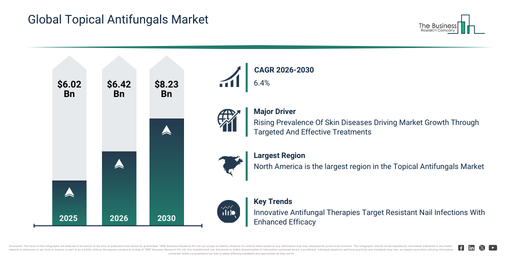
    The market for topical antifungals has experienced robust expansion in recent times. Valued at $6.02 billion in 2025, it is anticipated to reach $6.42 billion by 2026, reflecting a compound annual growth rate (CAGR) of 6.7%. Several factors drove this historic growth, including a scarcity of alternative topical antifungal treatments, a high prevalence of dermatophyte infections, dependence on hospital-based pharmacies, limited public knowledge regarding fungal diseases, and a continued preference for traditional pharmaceutical formulations.

    The topical antifungal market is projected to experience significant expansion over the coming years, reaching $8.23 billion by 2030 with a compound annual growth rate (CAGR) of 6.4%. This anticipated growth in the forecast period is driven by innovations in azoles and allylamines, a rise in home healthcare adoption, the expansion of online pharmacy platforms, growing demand for convenient formulations such as creams and sprays, and increased investment from pharmaceutical companies in dermatology. Key trends shaping this period include a higher incidence of skin fungal infections, a growing preference for topical treatments over systemic alternatives, the development of novel formulations and delivery systems, heightened awareness of home healthcare and self-medication, and the growth of online pharmacies and e-commerce distribution channels.

    Download A Free Sample Report For Comprehensive Market Insights:

    https://www.thebusinessresearchcompany.com/sample.aspx?id=24727&type=smp&utm_source=BlogsPR&utm_medium=Paid&utm_campaign=Jul_PR

    Topical Antifungals Market Development Factors: Which Trends Are Supporting Demand?

    The anticipated expansion of the topical antifungals market will be significantly fueled by the rising incidence of skin diseases. These ailments encompass disorders that compromise the skin’s integrity, appearance, or functionality, including irritation, inflammation, or infectious conditions. Their growing frequency is primarily attributed to heightened contact with environmental contaminants and ultraviolet radiation, which harm the skin and trigger a range of disorders. Topical antifungals are employed to manage these conditions by delivering focused effects against fungal pathogens, limiting systemic absorption, lowering the risk of adverse effects, and accelerating recovery in impacted regions. For example, in March 2023, the World Health Organization, a Switzerland-based health body, reported that skin conditions affect roughly 1.8 billion people globally at any moment. Consequently, the growing prevalence of skin diseases is set to drive the topical antifungals market forward.

    Topical Antifungals Market Segment Analysis Highlighting Growth Areas

    The topical antifungals market covered in this report is segmented –

    1) By Product Type: Azoles, Allylamines, Echinocandins, Polyenes

    2) By Formulation Type: Creams, Ointments, Lotions, Sprays, Powders

    3) By Indication: Dermatophyte Infections, Candidiasis, Tinea Infections, Onychomycosis

    4) By Distribution Channel: Pharmacies, Online Pharmacies, Hospital Pharmacies, Drug Stores

    5) By End-User: Hospitals, Clinics, Home Healthcare

    Subsegments:

    1) By Azoles: Clotrimazole, Miconazole, Ketoconazole, Fluconazole

    2) By Allylamines: Terbinafine, Naftifine, Butenafine

    3) By Echinocandins: Caspofungin, Micafungin, Anidulafungin

    4) By Polyenes: Nystatin, Amphotericin B

    Topical Antifungals Market Transformation Trends: Which Innovations Are Driving Change?

    Leading players in the topical antifungals sector are concentrating on creating advanced formulations, including histone deacetylase (HDAC) inhibitors, to boost therapeutic effectiveness, combat antifungal resistance, and improve nail bed penetration for onychomycosis treatment. These inhibitors work by blocking histone deacetylase enzymes, which are responsible for removing acetyl groups from histone proteins. As an example, in January 2024, Vanda Pharmaceuticals Inc., a biotechnology firm based in the United States, secured approval from the U.S. Food and Drug Administration (FDA) for its Investigational New Drug (IND) application to evaluate VTR-297 as a therapy for onychomycosis, a prevalent fungal nail condition. VTR-297 is a small-molecule HDAC inhibitor that exhibits antifungal properties. Originally derived from the bacterial strain Streptomyces hygroscopicus, it was initially identified as an antifungal antibiotic.

    Topical Antifungals Market Leading Companies: Who Holds Significant Market Presence?

    Major companies operating in the topical antifungals market are Pfizer Inc., Bayer AG, Novartis AG, GSK plc, Macleods Pharmaceuticals Ltd., Sun Pharmaceutical Industries Ltd., Galderma S.A., Aurobindo Pharma Limited, Dr. Reddy’s Laboratories, Cipla Limited, Lupin Limited, Zydus Lifesciences Ltd., Glenmark Pharmaceuticals Ltd., Alkem Laboratories Ltd., Ipca Laboratories Ltd., Taro Pharmaceutical Industries Ltd., Natco Pharma Ltd., Glamris Dermacare, Perrigo Company plc, Teva Pharmaceutical Industries Ltd., Viatris Inc., Amneal Pharmaceuticals LLC, Torrent Pharmaceuticals Ltd., Abbott Laboratories, Johnson & Johnson (Janssen Consumer Health), Reckitt Benckiser Group plc, Himalaya Wellness Company, Aristo Pharmaceuticals Pvt. Ltd., Emcure Pharmaceuticals Ltd., Ajanta Pharma Ltd., Alembic Pharmaceuticals Ltd.

    Access The Complete Topical Antifungals Market Report:

    https://www.thebusinessresearchcompany.com/report/topical-antifungals-global-market-report?utm_source=BlogsPR&utm_medium=Paid&utm_campaign=Jul_PR

    Topical Antifungals Market Geographic Landscape: Which Region Dominates Industry Growth?

    North America was the largest region in the topical antifungals market in 2025. Asia-Pacific is expected to be the fastest-growing region in the forecast period. The regions covered in the topical antifungals market report are Asia-Pacific, South East Asia, Western Europe, Eastern Europe, North America, South America, Middle East, Africa.

    Get in touch with us:

    The Business Research Company: https://www.thebusinessresearchcompany.com/?utm_source=BlogsPR&utm_medium=Paid&utm_campaign=home_page_test

    Americas: +1 310-496-7795

    Asia: +44 7882 955267 & +91 8897263534

    Europe: +44 7882 955267

    Email us at: marketing@tbrc.info

    Follow us on:

    LinkedIn: https://in.linkedin.com/company/the-business-research-company

    YouTube: https://www.youtube.com/channel/UC24_fI0rV8cR5DxlCpgmyFQ

    Global Market Model: https://www.thebusinessresearchcompany.com/global-market-model
  • Tofacitinib Market Size Projected To Increase From $3.86 Billion To $6.52 Billion During The Forecast Period

    Tofacitinib Market Size Projected To Increase From $3.86 Billion To $6.52 Billion During The Forecast Period

    Enhanced with market attractiveness analysis, total addressable market evaluation, company benchmarking matrices, interactive Excel dashboards, expanded supply chain intelligence, emerging startup coverage, and detailed product insights, The Business Research Company’s 2026 market reports deliver more actionable and strategically valuable research.

    Tofacitinib Market Value Expansion And Long-Term Growth Outlook

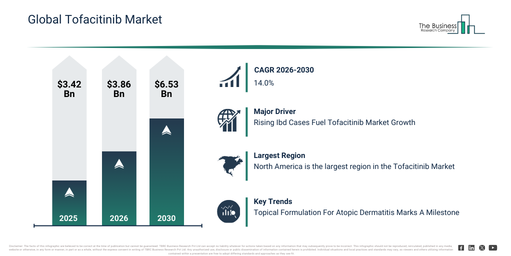
    The size of the tofacitinib market has seen swift expansion in recent times. In 2025, it was valued at $3.42 billion, and this figure is projected to reach $3.86 billion by 2026, reflecting a compound annual growth rate (CAGR) of 12.9%. Several factors have driven this growth over the historical period, including a higher incidence of rheumatoid arthritis, greater awareness surrounding ulcerative colitis, the broadening scope of the biologics market, the authorization of Janus kinase inhibitors, and the proliferation of hospital pharmacy networks.

    The tofacitinib market is projected to experience significant expansion over the coming years. By 2030, it is anticipated to reach a value of $6.53 billion, with a compound annual growth rate (CAGR) of 14.0%. This forecasted growth is driven by factors such as the development of new tofacitinib formulations, a heightened emphasis on precision medicine, increased investments in biosimilars, the growth of online pharmacy channels, and a higher demand for immunosuppressants. Key trends shaping this period include a greater uptake of targeted therapies, a rise in cases of ulcerative colitis and rheumatic diseases, a move toward personalized medicine, increased research and development efforts in biopharmaceuticals, and the broadening of specialty pharmacy services.

    Download A Free Sample Report For Comprehensive Market Insights:

    https://www.thebusinessresearchcompany.com/sample.aspx?id=10779&type=smp&utm_source=BlogsPR&utm_medium=Paid&utm_campaign=Jul_PR

    Tofacitinib Market Industry Drivers: What Is Driving Revenue Growth?

    The projected expansion of the tofacitinib market is significantly driven by a growing prevalence of inflammatory bowel disease. This term refers to a spectrum of chronic gastrointestinal conditions, most notably Crohn’s disease and ulcerative colitis. Tofacitinib plays a critical role in treating IBD patients by blocking Janus kinase (JAK) enzymes, effectively alleviating symptoms and supporting mucosal healing. For example, data from Crohn’s and Colitis Canada, a nonprofit organization based in Canada, indicated in June 2023 that over 322,600 Canadians were affected by these diseases in 2023, making up roughly 0.82% of the population. As this condition continues to rise, projections suggest that about 470,000 Canadians—approximately 1.1% of the population, or one in every 91 individuals—will have IBD by 2035. Consequently, the surge in inflammatory bowel disease cases serves as a primary driver for the tofacitinib market’s growth.

    Tofacitinib Market Segment Performance And Strategic Opportunities

    The tofacitinib market covered in this report is segmented –

    1) By Drug Class: Antirheumatic, Janus Kinase Inhibitor, Immunosuppressant

    2) By Strength: 5mg, 10mg, 11mg, 22mg

    3) By Route Of Administration: Oral, Other Routes Of Administration

    4) By Distribution Channel: Hospital Pharmacy, Retail Pharmacy, Online Pharmacy

    5) By Application: Ulcerative Colitis, Rheumatoid Arthritis, Psoriasis, Other Applications

    Subsegments:

    1) By Antirheumatic: Conventional Synthetic Antirheumatics, Targeted Synthetic Antirheumatics

    2) By Janus Kinase Inhibitor: JAK1 Inhibitors, JAK2 Inhibitors, JAK3 Inhibitors

    3) By Immunosuppressant: Corticosteroids, Non-Steroidal Immunosuppressants

    Tofacitinib Market Growth Trends: What Is Influencing The Future Outlook?

    Key players in the tofacitinib market are placing greater emphasis on developing topical formulations of the drug as a strategy to strengthen their market position. A topical version of tofacitinib is a preparation intended for direct application to the skin. A case in point is Intas Pharmaceuticals, an Indian company, which introduced Tofacitinib Topical (JAKi) in June 2023 for managing mild to moderate atopic dermatitis (AD) in India. This marks the first JAK inhibitor approved for AD within the country. A Phase III clinical trial of TOFATAS (Tofacitinib Ointment 2% w/w) carried out on AD patients in India showed outstanding safety and effectiveness. With the introduction of TOFATAS, the aim is to offer renewed optimism for individuals dealing with AD, given that no topical JAK inhibitors were previously authorized in India.

    Tofacitinib Market Key Players: Which Companies Shape Industry Competition?

    Major companies operating in the tofacitinib market are Pfizer Inc, Beacon Pharmaceuticals Limited, Glenmark Pharmaceuticals LTD, Sun Pharmaceutical Industries Ltd, Zydus Lifesciences Ltd, Unichem Laboratories, Sandoz International GmbH, Mylan N.V., Hetero Drugs Limited, Torrent Pharmaceuticals Ltd, Lupin Limited, Aurobindo Pharma Limited, Cipla Inc, Dr. Reddys Laboratories Ltd, Strides Pharma Science Limited, Alkem Laboratories Limited, Cadila Healthcare Limited, Wockhardt Limited, Alembic Pharmaceuticals Limited, Intas Pharmaceuticals Limited

    Access The Complete Tofacitinib Market Report:

    https://www.thebusinessresearchcompany.com/report/tofacitinib-global-market-report?utm_source=BlogsPR&utm_medium=Paid&utm_campaign=Jul_PR

    Tofacitinib Market Largest Region: Which Geography Holds The Highest Market Share?

    North America was the largest region in the tofacitinib market in 2025. Asia-Pacific is expected to be the fastest-growing region in the forecast period. The regions covered in the tofacitinib market report are Asia-Pacific, South East Asia, Western Europe, Eastern Europe, North America, South America, Middle East, Africa.

    Get in touch with us:

    The Business Research Company: https://www.thebusinessresearchcompany.com/?utm_source=BlogsPR&utm_medium=Paid&utm_campaign=home_page_test

    Americas: +1 310-496-7795

    Asia: +44 7882 955267 & +91 8897263534

    Europe: +44 7882 955267

    Email us at: marketing@tbrc.info

    Follow us on:

    LinkedIn: https://in.linkedin.com/company/the-business-research-company

    YouTube: https://www.youtube.com/channel/UC24_fI0rV8cR5DxlCpgmyFQ

    Global Market Model: https://www.thebusinessresearchcompany.com/global-market-model

  • TNF Alpha Inhibitors Market Growth Outlook Reveals A CAGR Of 3% And A Market Value Of $50.58 Billion By 2030

    TNF Alpha Inhibitors Market Growth Outlook Reveals A CAGR Of 3% And A Market Value Of $50.58 Billion By 2030

    Through market attractiveness analysis, total addressable market evaluation, company benchmarking matrices, interactive Excel dashboards, expanded supply chain intelligence, emerging startup coverage, and detailed product insights, The Business Research Company’s 2026 market reports provide more actionable and strategically valuable research.

    TNF Alpha Inhibitors Market Expected To Reach $50.58 Billion By 2030 At 3% CAGR

    In recent years, the market for TNF alpha inhibitors has experienced consistent expansion. Projected figures indicate a rise from $43.83 billion in 2025 to $44.95 billion in 2026, reflecting a compound annual growth rate (CAGR) of 2.6%. This historical growth has been driven by several factors, including a high incidence of rheumatoid arthritis, the well-documented effectiveness of TNF blockers, robust endorsement from clinical guidelines, increased uptake of biologics within hospital settings, and broader application of immunology therapies.

    The market for TNF alpha inhibitors is anticipated to experience consistent expansion over the coming years, reaching a projected value of $50.58 billion by 2030, reflecting a compound annual growth rate (CAGR) of 3.0%. This forecasted growth is driven by several factors, including a rising incidence of inflammatory bowel disease, greater adoption of biosimilars, expanded patient access initiatives, the development of safer drug formulations, and increased healthcare expenditure. Key trends shaping this period involve the growing preference for biologic anti-inflammatory treatments, their wider application in managing autoimmune conditions, a notable shift toward biosimilar versions of TNF inhibitors, the expansion of subcutaneous delivery methods, and a greater emphasis on extended long-term therapy.

    Download A Free Sample Report For Comprehensive Market Insights:

    https://www.thebusinessresearchcompany.com/sample.aspx?id=3459&type=smp&utm_source=BlogsPR&utm_medium=Paid&utm_campaign=Jul_PR

    #TNF Alpha Inhibitors Market Growth Factors: Which Forces Are Supporting Market Expansion?

    A rising number of elderly individuals is set to fuel the expansion of the TNF-alpha inhibitors market in the coming period. The geriatric demographic, referring to those aged 65 and above, is more prone to autoimmune conditions and tends to exhibit heightened inflammatory activity in the bloodstream. In this older population, TNF-alpha inhibitors have demonstrated effectiveness in lessening inflammation and atherosclerosis. As reported in January 2024 by the Population Reference Bureau, a nonprofit organization based in the United States, the count of Americans aged 65 or older is projected to climb from 58 million in 2022 to 82 million by 2050—an increase of 47%. Concurrently, the share of this age group within the total U.S. population is anticipated to rise from 17% to 23% over that timeframe. Consequently, the growing number of older adults is accelerating the growth trajectory of the TNF-alpha inhibitors market.

    TNF Alpha Inhibitors Market Segment Landscape And Growth Potential

    The tnf alpha inhibitors market covered in this report is segmented –

    1) By Drug: Remicade (Infliximab), Enbrel (Etanercept), Humira (Adalimumab), Cimzia (Certolizumab Pegol), Simponi (Golimumab)

    2) By Route Of Administration: Subcutaneous, Intravenous, Other Route Of Administration

    3) By Disease Type: Inflammatory Bowel Disease, Psoriatic Arthritis, Ulcerative Colitis (UC), Rheumatoid Arthritis, Ankylosing Spondylitis, Other Disease Types

    TNF Alpha Inhibitors Market Industry Trends: What Changes Are Reshaping Demand?

    Key players in the TNF alpha inhibitor market are increasingly focusing on forming strategic partnerships as a way to broaden their product offerings and ensure that TNF-blockers reach patients more effectively. In this context, product distribution involves making these treatments, including TNF-alpha inhibitors, accessible for purchase through various market channels. A notable example from June 2023 is the collaboration between Mark Cuban Cost Plus Drug Company, a pharmaceutical firm based in the US, and Coherus BioSciences Inc., a US-based biopharmaceutical company. Under this agreement, Mark Cuban Cost Plus Drug Company customers can now obtain YUSIMRY (adalimumab-aqvh), a biosimilar of HUMIRA (adalimumab injection), which is a TNF blocker approved for conditions such as Crohn’s disease, ulcerative colitis, plaque psoriasis, and hidradenitis suppurativa, in addition to managing symptoms of rheumatoid arthritis, juvenile idiopathic arthritis, psoriatic arthritis, and ankylosing spondylitis. This initiative is part of Coherus’ broader biosimilar approach, where they leverage their strong manufacturing and supply chain capabilities to deliver safe and effective biosimilars with a consistent and dependable supply.

    TNF Alpha Inhibitors Market Competitive Landscape: Who Are The Leading Companies?

    Major companies operating in the tnf alpha inhibitors market are Pfizer Inc., Johnson & Johnson, Janssen Biotech Inc., AbbVie Inc., Amgen Inc., Sandoz International GmbH, Cadila Healthcare Limited, Intas Pharmaceuticals Ltd., Samsung Bioepis Co. Ltd., Celltrion Healthcare Co. Ltd., AryoGen Pharmed Co. Ltd., EPIRUS Biopharmaceuticals Inc., Mylan N.V., Teva Pharmaceutical Industries Ltd., Apotex Inc.

    Access The Complete TNF Alpha Inhibitors Market Report:

    https://www.thebusinessresearchcompany.com/report/tnf-alpha-inhibitor-global-market-report?utm_source=BlogsPR&utm_medium=Paid&utm_campaign=Jul_PR

    TNF Alpha Inhibitors Market Regional Analysis: Which Region Leads By Revenue?

    North America was the largest region in the TNF alpha inhibitors market in 2025. The regions covered in the tnf alpha inhibitors market report are Asia-Pacific, South East Asia, Western Europe, Eastern Europe, North America, South America, Middle East, Africa.

    Get in touch with us:

    The Business Research Company: https://www.thebusinessresearchcompany.com/?utm_source=BlogsPR&utm_medium=Paid&utm_campaign=home_page_test

    Americas: +1 310-496-7795

    Asia: +44 7882 955267 & +91 8897263534

    Europe: +44 7882 955267

    Email us at: marketing@tbrc.info

    Follow us on:

    LinkedIn: https://in.linkedin.com/company/the-business-research-company

    YouTube: https://www.youtube.com/channel/UC24_fI0rV8cR5DxlCpgmyFQ

    Global Market Model: https://www.thebusinessresearchcompany.com/global-market-model

  • Tissue Regeneration Scaffold Market Forecast Highlights Expansion From $3.05 Billion To $5.58 Billion Through 2030

    Tissue Regeneration Scaffold Market Forecast Highlights Expansion From $3.05 Billion To $5.58 Billion Through 2030

    Delivering more actionable and strategically valuable research, The Business Research Company’s 2026 market reports feature market attractiveness analysis, total addressable market evaluation, company benchmarking matrices, interactive Excel dashboards, expanded supply chain intelligence, emerging startup coverage, and detailed product insights.

    Tissue Regeneration Scaffold Market Size And Revenue Forecast Through 2030

    The market for tissue regeneration scaffolds has seen swift expansion over recent years, with its value projected to increase from $2.61 billion in 2025 to $3.05 billion in 2026, reflecting a compound annual growth rate (CAGR) of 16.9%. Factors driving past growth include a scarcity of high-quality scaffolds, a dependency on conventional grafting techniques, a rising frequency of orthopedic and dental injuries, heightened activity in tissue engineering research, and improvements in hospital and clinical facilities.

    The tissue regeneration scaffold market is anticipated to experience significant expansion in the coming years, with projections indicating it will reach $5.58 billion by 2030, driven by a compound annual growth rate (CAGR) of 16.3%. This forecasted growth is fueled by the development of composite and nanocomposite scaffolds, progress in bioactive and hydroxyapatite-based materials, the incorporation of 3D bioprinting into scaffold manufacturing, increased investment in regenerative medicine, and a rise in partnerships between academic institutions and hospitals. Key trends shaping this period include a growing preference for both natural and synthetic tissue scaffolds, expanding applications in orthopedics, dentistry, and wound care, the integration of 3D bioprinting alongside advanced fabrication methods, a heightened emphasis on biocompatibility and scaffold functionalization, and the proliferation of research and academic initiatives in regenerative medicine.

    Download A Free Sample Report For Comprehensive Market Insights:

    https://www.thebusinessresearchcompany.com/sample.aspx?id=27436&type=smp&utm_source=BlogsPR&utm_medium=Paid&utm_campaign=Jul_PR

    Tissue Regeneration Scaffold Market Demand Drivers: What Is Fueling Industry Growth?

    The increasing incidence of trauma-related injuries is anticipated to drive expansion in the tissue regeneration scaffold market in the coming years. Trauma cases involve injuries from accidents, falls, or violence that cause tissue damage requiring medical care. This rise is mainly fueled by a higher frequency of road traffic accidents and workplace or industrial incidents, creating a greater demand for advanced tissue repair and regeneration options. Tissue regeneration scaffolds assist in trauma care by offering a structural framework that facilitates damaged tissue repair and growth, thereby speeding up recovery, lowering the risk of complications like infections or scarring, and more effectively restoring normal function in the affected area. For example, in October 2024, the Department of Health Alaska, a US government agency, reported that roughly 3,373 people in Alaska suffered from traumatic brain injuries (TBI) in 2023, encompassing both fatal cases and non-fatal injuries treated and released from hospitals or emergency departments. Consequently, the surge in trauma cases is fueling growth in the tissue regeneration scaffold market.

    Tissue Regeneration Scaffold Market Categorization By Product Type And Application

    The tissue regeneration scaffold market covered in this report is segmented –

    1) By Type: Natural, Synthetic, Composite

    2) By Application: Orthopedic, Dental, Wound Care

    3) By End-User: Hospitals And Clinics, Research And Academic Institutes

    Subsegments:

    1) By Natural: Collagen Scaffolds, Chitosan Scaffolds, Alginate Scaffolds, Hyaluronic Acid Scaffolds, Gelatin Scaffolds

    2) By Synthetic: Polylactic Acid (PLA) Scaffolds, Polyglycolic Acid (PGA) Scaffolds, Polycaprolactone (PCL) Scaffolds, Polyethylene Glycol (PEG) Scaffolds, Polylactic-Co-Glycolic Acid (PLGA) Scaffolds

    3) By Composite: Natural-Synthetic Polymer Composites, Ceramic-Polymer Composites, Nanocomposite Scaffolds, Hydroxyapatite-Based Composites, Bioactive Glass Composites

    Tissue Regeneration Scaffold Market Innovation Trends: Which Developments Are Transforming The Industry?

    Key players in the tissue regeneration scaffold market are prioritizing the advancement of cutting-edge technologies like three-dimensional (3D) bioprinting to produce scaffolds that are highly tailored and biologically meaningful. By employing bioinks composed of living cells and biomaterials, 3D bioprinting enables the creation of functional three-dimensional tissue constructs for use in regenerative medicine and scientific inquiry. In June 2023, for example, 3D BioFibR Inc., a Canadian manufacturer of biopolymer fibers, introduced two collagen fiber products named micro-collafibr and collafibr 3D scaffold. These leverage proprietary dry-spinning technology to generate robust, biologically relevant scaffolds that enhance the mechanical integrity and functionality of 3D bioprinted tissues and cell cultures. The Collafibr 3D scaffold, constructed from GMP-grade type 1 collagen fibers, closely mimics the structure and biomechanical characteristics of the natural extracellular matrix. It offers a three-dimensional setting conducive to authentic cell growth and interaction, while also being compatible with standard well plate formats for high-throughput drug screening and advanced microscopy. Consequently, this innovation propels progress in tissue modeling and regenerative medicine research.

    Tissue Regeneration Scaffold Market Company Landscape And Strategic Competition

    Major companies operating in the tissue regeneration scaffold market are Evonik Industries AG, DSM-Firmenich AG, Ashland Inc., Integra LifeSciences Corporation, Organogenesis Inc., MiMedx Group Inc., LifeNet Health Inc., BioTissue Inc., Aroa Biosurgery Limited, Poly-Med Inc., CollPlant Biotechnologies Ltd.

    Access The Complete Tissue Regeneration Scaffold Market Report:

    https://www.thebusinessresearchcompany.com/report/tissue-regeneration-scaffold-global-market-report?utm_source=BlogsPR&utm_medium=Paid&utm_campaign=Jul_PR

    Tissue Regeneration Scaffold Market Geographic Distribution And Regional Opportunities

    North America was the largest region in the tissue regeneration scaffold market in 2025. Asia-Pacific is expected to be the fastest-growing region in the forecast period. The regions covered in the tissue regeneration scaffold market report are Asia-Pacific, South East Asia, Western Europe, Eastern Europe, North America, South America, Middle East, Africa.

    Get in touch with us:

    The Business Research Company: https://www.thebusinessresearchcompany.com/?utm_source=BlogsPR&utm_medium=Paid&utm_campaign=home_page_test

    Americas: +1 310-496-7795

    Asia: +44 7882 955267 & +91 8897263534

    Europe: +44 7882 955267

    Email us at: marketing@tbrc.info

    Follow us on:

    LinkedIn: https://in.linkedin.com/company/the-business-research-company

    YouTube: https://www.youtube.com/channel/UC24_fI0rV8cR5DxlCpgmyFQ

    Global Market Model: https://www.thebusinessresearchcompany.com/global-market-model
  • Tissue Plasminogen Activator Market Expected To Reach $5.65 Billion By 2030 As Growth Accelerates At 8.6% CAGR

    Tissue Plasminogen Activator Market Expected To Reach $5.65 Billion By 2030 As Growth Accelerates At 8.6% CAGR

    Enhanced with market attractiveness analysis, total addressable market evaluation, company benchmarking matrices, interactive Excel dashboards, expanded supply chain intelligence, emerging startup coverage, and detailed product insights, The Business Research Company’s 2026 market reports deliver more actionable and strategically valuable research.

    Tissue Plasminogen Activator Market Growth From $4.06 Billion In 2026 To $5.65 Billion By 2030 At A CAGR Of 8.6%

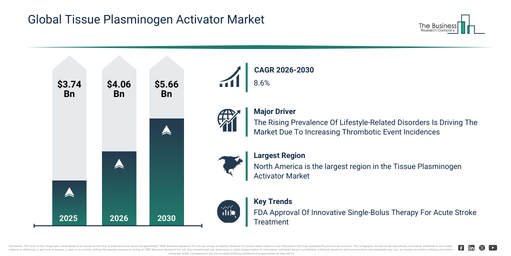
    The tissue plasminogen activator market has experienced substantial expansion in recent years, with projections indicating an increase from $3.74 billion in 2025 to $4.06 billion in 2026, reflecting a compound annual growth rate (CAGR) of 8.7%. This upward trajectory in the historical period has been driven by factors such as the prevalence of stroke, the implementation of emergency care protocols, the adoption of hospital-based thrombolysis, the burden of cardiovascular disease, and the backing of clinical guidelines.

    The market for tissue plasminogen activator is projected to experience robust expansion over the coming years. By 2030, its value is anticipated to reach $5.66 billion, reflecting a compound annual growth rate (CAGR) of 8.6%. This forecasted growth is driven by factors such as an aging population, heightened awareness of stroke symptoms, the proliferation of biosimilars, increased funding for emergency healthcare, and faster diagnostic capabilities. Key developments shaping the market during this period include the growing application of tPA in treating acute ischemic stroke, the broader implementation of emergency thrombolytic therapy, the uptake of biosimilar tPA products, the emergence of rapid response care models, and a heightened emphasis on time-critical drug administration.

    Download A Free Sample Report For Comprehensive Market Insights:

    https://www.thebusinessresearchcompany.com/sample.aspx?id=24413&type=smp&utm_source=BlogsPR&utm_medium=Paid&utm_campaign=Jul_PR

    Tissue Plasminogen Activator Market Growth Drivers: What Factors Are Accelerating Expansion?

    The growing occurrence of lifestyle-associated diseases is anticipated to boost the expansion of the tissue plasminogen activator market in the coming period. Lifestyle-related disorders encompass a category of non-communicable illnesses primarily arising from detrimental behavioral patterns, including poor nutritional intake, lack of physical exercise, tobacco use, and heavy alcohol intake, which lead to ailments like heart disease, diabetes, and high blood pressure. This increase in lifestyle-driven conditions is fueled by evolving eating habits and diminished physical activity, with the embrace of sedentary behaviors being a major factor, as it interferes with metabolic processes and accelerates the development of clot-related events. Through its ability to effectively break down dangerous blood clots involved in ischemic strokes and heart attacks, tissue plasminogen activator (tPA) mitigates the medical effects of lifestyle-related disorders, cutting death rates and enhancing recovery outcomes. As an example, data from the Office for Health Improvement and Disparities, a UK governmental agency, indicated that in May 2025, an estimated 64.5% of adults aged 18 and above in England were either overweight or obese in 2023 to 2024, a rise from 64.0% in 2022 to 2023. Consequently, the rising frequency of lifestyle-associated diseases is propelling forward the tissue plasminogen activator market.

    Tissue Plasminogen Activator Market Segment Analysis And Revenue Opportunities

    The tissue plasminogen activator market covered in this report is segmented –

    1) By Product Type: Alteplase, Tenecteplase, Reteplase, Other Product Types

    2) By Dosage Form: Powder For Injection, Solution For Injection

    3) By Distribution Channel: Direct Sales, Distributors, Online Pharmacies, Retail Pharmacies

    4) By Application: Ischemic Stroke, Myocardial Infarction, Pulmonary Embolism, Thrombolysis, Other Applications

    5) By End-User: Hospitals, Specialized Cardiac Clinics, Emergency Medical Services (EMS)

    Subsegments:

    1) By Alteplase: Recombinant Alteplase, Biosimilar Alteplase, Lyophilized Alteplase

    2) By Tenecteplase: Recombinant Tenecteplase: Genetically Engineered Tenecteplase, Long-Acting Tenecteplase

    3) By Reteplase: Recombinant Reteplase, Double-Chain Reteplase, Single-Bolus Reteplase

    4) By Other Product Types: Monteplase, Lanoteplase, Desmoteplase, Combination Agents With tPA Analogs

    Tissue Plasminogen Activator Market Trends: What Is Shaping Future Industry Growth?

    Major players in the tissue plasminogen activator market are actively pursuing the development of advanced formulations like single-bolus thrombolytic agents, aiming to elevate acute stroke care by refining thrombolytic therapy. These single-bolus agents consist of fast-acting drugs given in one intravenous dose to quickly dissolve blood clots and restore normal circulation in cases like myocardial infarction, stroke, or pulmonary embolism. A notable example occurred in March 2025, when Genentech Inc., a biotechnology firm based in the United States, received U.S. Food and Drug Administration (FDA) approval for TNKase (tenecteplase) to treat acute ischemic stroke (AIS) in adults. This marks the company’s second authorization for stroke management, with TNKase providing a more efficient and simplified approach via a single five-second intravenous bolus, contrasting with the standard 60-minute infusion required for Activase (alteplase). Strong clinical data from the AcT trial supported this approval, showing that TNKase matches Activase in both safety and efficacy for AIS patients. This innovation is projected to greatly enhance treatment timeliness and ease, which is vital for individuals suffering from acute ischemic strokes, where prompt intervention is key to minimizing long-term disability and death rates.

    Tissue Plasminogen Activator Market Leading Players Shaping Industry Direction

    Major companies operating in the tissue plasminogen activator market are F. Hoffmann-La Roche Ltd., Genentech Inc., Boehringer Ingelheim International GmbH, Mitsubishi Tanabe Pharma Corporation, Eisai Co. Ltd., Kyowa Kirin Co. Ltd., Chugai Pharmaceutical Co. Ltd., Hisun Pharmaceutical Co. Ltd., Livzon Pharmaceutical Group Inc., Shanghai Shyndec Pharmaceutical Co. Ltd., CSPC Pharmaceutical Group Limited, China Grand Pharmaceutical and Healthcare Holdings Limited, Tasly Pharmaceutical Group Co. Ltd., Beijing Sihuan Pharmaceutical Co. Ltd., Shenzhen Salubris Pharmaceuticals Co. Ltd., Guangzhou Baiyunshan Pharmaceutical Holdings Co. Ltd., Zhejiang Hisun Pharmaceutical Co. Ltd., North China Pharmaceutical Group Corporation, Jiangsu Hengrui Pharmaceuticals Co. Ltd., Simcere Pharmaceutical Group Ltd., Qilu Pharmaceutical Co. Ltd., Harbin Pharmaceutical Group Co. Ltd., Gennova Biopharmaceuticals Ltd., Reliance Life Sciences, Angde Biological Pharmaceutical Co. Ltd.

    Access The Complete Tissue Plasminogen Activator Market Report:

    https://www.thebusinessresearchcompany.com/report/tissue-plasminogen-activator-global-market-report?utm_source=BlogsPR&utm_medium=Paid&utm_campaign=Jul_PR

    Tissue Plasminogen Activator Market Largest Region By Revenue And Market Share

    North America was the largest region in the tissue plasminogen activator market in 2025. Asia-Pacific is expected to be the fastest-growing region in the forecast period. The regions covered in the tissue plasminogen activator market report are Asia-Pacific, South East Asia, Western Europe, Eastern Europe, North America, South America, Middle East, Africa.

    Get in touch with us:

    The Business Research Company: https://www.thebusinessresearchcompany.com/?utm_source=BlogsPR&utm_medium=Paid&utm_campaign=home_page_test

    Americas: +1 310-496-7795

    Asia: +44 7882 955267 & +91 8897263534

    Europe: +44 7882 955267

    Email us at: marketing@tbrc.info

    Follow us on:

    LinkedIn: https://in.linkedin.com/company/the-business-research-company

    YouTube: https://www.youtube.com/channel/UC24_fI0rV8cR5DxlCpgmyFQ

    Global Market Model: https://www.thebusinessresearchcompany.com/global-market-model
  • Tissue Engineering For Wound Care Market Set To Grow From $7.93 Billion In 2026 To $13.6 Billion By 2030 At A CAGR Of 14.4%

    Tissue Engineering For Wound Care Market Set To Grow From $7.93 Billion In 2026 To $13.6 Billion By 2030 At A CAGR Of 14.4%

    Through market attractiveness analysis, total addressable market evaluation, company benchmarking matrices, interactive Excel dashboards, expanded supply chain intelligence, emerging startup coverage, and detailed product insights, The Business Research Company’s 2026 market reports provide more actionable and strategically valuable research.

    Tissue Engineering For Wound Care Market Expansion Outlook: What Revenue Opportunities Lie Ahead?

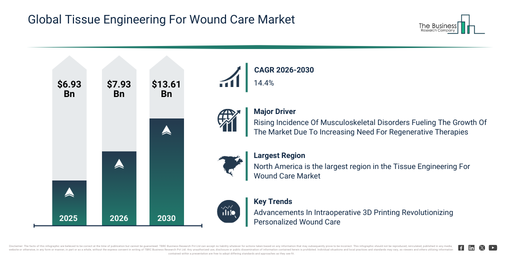
    The market for tissue engineering in wound care has experienced swift expansion in recent years. Its value is projected to increase from $6.93 billion in 2025 to $7.93 billion in 2026, reflecting a compound annual growth rate (CAGR) of 14.5%. This historical growth has been driven by an aging demographic, a rising incidence of diabetes, burn-related injuries, hospital-based wound management initiatives, and breakthroughs in biomaterials.

    The wound care sector involving tissue engineering is projected to experience significant expansion over the next several years. By 2030, the market is anticipated to reach $13.61 billion, reflecting a compound annual growth rate (CAGR) of 14.4%. This anticipated expansion during the forecast interval is driven by factors such as an increase in chronic wound occurrences, greater acceptance of regenerative medicine, the broadening of outpatient wound care services, advancements in biomaterials, and higher levels of healthcare spending. Among the key developments shaping the upcoming period are the growing application of bioengineered skin substitutes, the rise of solutions for managing chronic wounds, the implementation of therapies using stem cells, an increasing array of sophisticated wound care options, and a strong emphasis on speeding up the natural healing of tissue.

    Download A Free Sample Report For Comprehensive Market Insights:

    https://www.thebusinessresearchcompany.com/sample.aspx?id=24412&type=smp&utm_source=BlogsPR&utm_medium=Paid&utm_campaign=Jul_PR

    Tissue Engineering For Wound Care Market Growth Factors Supporting Long-Term Expansion

    A rising number of musculoskeletal disorders is expected to drive expansion in the tissue engineering for wound care market in the years ahead. These disorders impact muscles, bones, joints, tendons, or ligaments, manifesting as pain, stiffness, or impaired movement. Their increase is largely attributed to more sedentary lifestyles, where prolonged sitting and decreased physical activity weaken muscles and stress joints, resulting in chronic conditions. Tissue engineering for wound care becomes essential in addressing musculoskeletal disorders by facilitating the regeneration of damaged tissues, thereby restoring function and structure where natural recovery falls short. For example, data from the Office for Health Improvement and Disparities, a UK government public health agency, showed in January 2024 that self-reported long-term musculoskeletal conditions among people aged 16 and over rose to 18.4% in 2023, up from 17.6% in 2022. Consequently, the growing prevalence of these disorders is set to propel the tissue engineering for wound care market forward.

    Tissue Engineering For Wound Care Market Segmentation And Category Breakdown

    The tissue engineering for wound care market covered in this report is segmented –

    1) By Product Material: Scaffold, Tissue Grafts, Other Products

    2) By Type Of Wound: Chronic Wounds, Acute Wounds

    3) By Application: Skin Regeneration, Soft Tissue Repair

    4) By End-User: Hospitals, Specialty Centers And Clinics, Ambulatory Surgical Centers

    Subsegments:

    1) By Scaffold: Natural Scaffolds, Synthetic Scaffolds, Composite Scaffolds, Hydrogels, Nanofiber-Based Scaffolds

    2) By Tissue Grafts: Autografts, Allografts, Xenografts, Bioengineered Skin Substitutes, Amniotic Tissue Grafts

    3) By Other Products: Cell-Based Products, Growth Factors, Acellular Dermal Matrices, Collagen-Based Dressings, Stem Cell-Derived Biomaterials

    Tissue Engineering For Wound Care Market Industry Trends Shaping Future Revenue Growth

    Key industry players in the tissue engineering for wound care market are prioritizing the development of cutting-edge technologies, including intraoperative 3D printers, to facilitate fast prototyping of intricate structures. These intraoperative 3D printers are sophisticated tools employed during surgeries to produce patient-specific implants, models, or instruments in real time, thereby improving accuracy and enabling tailored treatment. For example, in September 2024, Tides Medical, a biotechnology firm based in the United States, introduced APLICOR 3D, an innovative wound care intraoperative 3D printer. This device revolutionizes wound management by employing the patient’s own tissue, artificial intelligence, and 3D printing to create custom skin grafts directly at the wound site. The single-use procedure addresses each patient’s distinct requirements while streamlining supply chain and inventory management and reducing demands on physicians. By scanning the wound with a specialized tablet to ascertain precise dimensions, depth, and tissue requirements, the provider sends a 3D file to the printer. After harvesting and processing fat to create bio-ink, the printer constructs the graft, enabling successful wound closure within an hour.

    Tissue Engineering For Wound Care Market Competitive Analysis Of Major Industry Participants

    Major companies operating in the tissue engineering for wound care market are Smith & Nephew plc, ConvaTec Group Plc, MTF Biologics, MiMedx Group Inc., LifeNet Health Inc., Kerecis LLC, Aroa Biosurgery Ltd., Tissue Regenix Group PLC, BioStem Technologies Inc., Organogenesis Holdings Inc., Integra LifeSciences Holdings Corporation, Osiris Therapeutics (Smith & Nephew), Stryker Corporation, Medline Industries LP, Mölnlycke Health Care AB, 3M Health Care, Cardinal Health Inc., Derma Sciences Inc., Acell Inc., Wright Medical Group N.V., Anika Therapeutics Inc., Regen Lab SA, Skye Biologics Inc., Human Regenerative Technologies LLC, StimLabs LLC

    Access The Complete Tissue Engineering For Wound Care Market Report:

    https://www.thebusinessresearchcompany.com/report/tissue-engineering-for-wound-care-global-market-report?utm_source=BlogsPR&utm_medium=Paid&utm_campaign=Jul_PR

    Tissue Engineering For Wound Care Market Regional Analysis And Leading Geography

    North America was the largest region in the tissue engineering for wound care market in 2025. The regions covered in the tissue engineering for wound care market report are Asia-Pacific, South East Asia, Western Europe, Eastern Europe, North America, South America, Middle East, Africa.

    Get in touch with us:

    The Business Research Company: https://www.thebusinessresearchcompany.com/?utm_source=BlogsPR&utm_medium=Paid&utm_campaign=home_page_test

    Americas: +1 310-496-7795

    Asia: +44 7882 955267 & +91 8897263534

    Europe: +44 7882 955267

    Email us at: marketing@tbrc.info

    Follow us on:

    LinkedIn: https://in.linkedin.com/company/the-business-research-company

    YouTube: https://www.youtube.com/channel/UC24_fI0rV8cR5DxlCpgmyFQ

    Global Market Model: https://www.thebusinessresearchcompany.com/global-market-model
  • Ticagrelor Market Opportunities Are Emerging Beyond Traditional Growth Areas

    Ticagrelor Market Opportunities Are Emerging Beyond Traditional Growth Areas

    Delivering more actionable and strategically valuable research, The Business Research Company’s 2026 market reports feature market attractiveness analysis, total addressable market evaluation, company benchmarking matrices, interactive Excel dashboards, expanded supply chain intelligence, emerging startup coverage, and detailed product insights.

    Ticagrelor Market Growth Potential: How Will Market Size Change Through 2030?

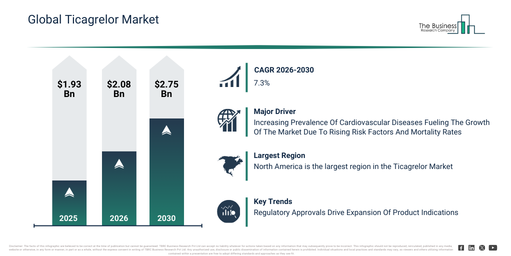
    The ticagrelor market has seen notable expansion in recent years, with its size projected to increase from $1.93 billion in 2025 to $2.08 billion in 2026, reflecting a compound annual growth rate (CAGR) of 7.6%. This past period of growth was driven by factors such as the restricted range of available antiplatelet therapies, a rising incidence of cardiovascular conditions, the broadening of hospital pharmacy networks, a growing number of clinical trials focused on cardiovascular medications, and heightened public awareness of the dangers posed by heart attacks and strokes.

    Projections indicate that the ticagrelor market will experience robust expansion in the coming years, reaching a valuation of $2.75 billion by 2030 with a compound annual growth rate (CAGR) of 7.3%. This anticipated growth in the forecast period stems from factors including the introduction of extended-release ticagrelor tablets, growing distribution channels through retail pharmacies and online platforms, a rising focus on personalized cardiovascular care, heightened government efforts to prevent heart disease, and the integration of such treatments with digital health monitoring systems. Key trends driving this trajectory encompass the increased application of ticagrelor in managing acute coronary syndrome, a shift in preference toward oral antiplatelet therapies over injectable alternatives, the expansion of both hospital and ambulatory cardiology services, greater awareness around preventing strokes and myocardial infarctions, and the development of novel extended-release ticagrelor formulations.

    Download A Free Sample Report For Comprehensive Market Insights:

    https://www.thebusinessresearchcompany.com/sample.aspx?id=24726&type=smp&utm_source=BlogsPR&utm_medium=Paid&utm_campaign=Jul_PR

    Ticagrelor Market Demand Drivers Creating New Revenue Opportunities

    The rising incidence of cardiovascular diseases is anticipated to boost the ticagrelor market in the coming period. Cardiovascular diseases encompass a range of disorders that impact the heart and blood vessels, including coronary heart disease, heart failure, stroke, and hypertension. This growing prevalence is largely driven by unhealthy dietary habits, where high consumption of saturated fats, trans fats, added sugars, and sodium leads to elevated blood pressure, obesity, and increased cholesterol levels—key contributors to heart conditions. Ticagrelor addresses these diseases by inhibiting platelet aggregation, thereby lowering the risk of blood clot formation. It enhances patient outcomes by reducing the likelihood of heart attacks and strokes, particularly among those at elevated risk. As reported by the American Heart Association in January 2024, the age-adjusted cardiovascular disease death rate in the United States rose to 233.3 per 100,000 in 2024, a 4.0% increase from 224.4 per 100,000 in 2023. Consequently, the escalating prevalence of cardiovascular diseases is fueling the expansion of the ticagrelor market.

    Ticagrelor Market Segment Outlook: Which Categories Are Expanding The Fastest?

    The ticagrelor market covered in this report is segmented –

    1) By Type: 90 mg Tablet, 60 mg Tablet

    2) By Drug Class: Antiplatelet Agents, Antithrombotic Agents

    3) By Distribution Channel: Hospital Pharmacies, Retail Pharmacies, Online Pharmacies

    4) By Application: Acute Coronary Syndrome, Myocardial Infarction, Stroke Prevention, Other Applications

    5) By End User: Hospitals And Clinics, Ambulatory Centers, Other End Users

    Ticagrelor Market Trends Driving Strategic Industry Expansion

    Key players in the ticagrelor market are actively pursuing regulatory approvals to broaden product indications, improve market reach, and enhance their competitive edge. Such approvals represent official authorization from government bodies to commercialize a product, confirming its compliance with safety, effectiveness, and quality benchmarks. A case in point is May 2025, when Alembic Pharmaceuticals Ltd., a pharmaceutical firm based in India, secured an abbreviated new drug application (ANDA) from the US Food & Drug Administration (USFDA) for its generic ticagrelor tablets in 90 mg strength, along with tentative approval for the 60 mg version. These tablets are designed to lower the likelihood of cardiovascular incidents by inhibiting platelet aggregation, thus preventing blood clot formation.

    Ticagrelor Market Key Companies And Competitive Benchmarking

    Major companies operating in the ticagrelor market are AstraZeneca PLC, Merck KGaA, Boehringer Ingelheim International GmbH, Sun Pharmaceutical Industries Limited, Dr. Reddy’s Laboratories Limited, Cadila Pharmaceuticals Limited, Alkem Laboratories, Alembic Pharmaceuticals Limited, CCL Pharmaceuticals, Neuland Laboratories, Jiangxi Synergy Pharmaceutical Co. Ltd., Leeford Healthcare Limited, Scimplify, JAMP Pharma Corporation, Actoverco Pharmaceutical Company, CTX Lifesciences Private Limited, DM Pharma, Hema Pharmaceuticals Pvt. Ltd., Chia-Tai Tianqing Pharmaceutical Group Co. Ltd., Biophar Lifesciences Pvt. Ltd., PhaseBio Pharmaceuticals Inc.

    Access The Complete Ticagrelor Market Report:

    https://www.thebusinessresearchcompany.com/report/ticagrelor-global-market-report?utm_source=BlogsPR&utm_medium=Paid&utm_campaign=Jul_PR

    Ticagrelor Market Geographic Analysis: Where Is Demand Growing The Fastest?

    North America was the largest region in the ticagrelor market in 2025. Asia-Pacific is expected to be the fastest-growing region in the forecast period. The regions covered in the ticagrelor market report are Asia-Pacific, South East Asia, Western Europe, Eastern Europe, North America, South America, Middle East, Africa.

    Get in touch with us:

    The Business Research Company: https://www.thebusinessresearchcompany.com/?utm_source=BlogsPR&utm_medium=Paid&utm_campaign=home_page_test

    Americas: +1 310-496-7795

    Asia: +44 7882 955267 & +91 8897263534

    Europe: +44 7882 955267

    Email us at: marketing@tbrc.info

    Follow us on:

    LinkedIn: https://in.linkedin.com/company/the-business-research-company

    YouTube: https://www.youtube.com/channel/UC24_fI0rV8cR5DxlCpgmyFQ

    Global Market Model: https://www.thebusinessresearchcompany.com/global-market-model
  • Tibsovo Market Expansion Is Opening New Pathways For Strategic Investment

    Tibsovo Market Expansion Is Opening New Pathways For Strategic Investment

    Enhanced with market attractiveness analysis, total addressable market evaluation, company benchmarking matrices, interactive Excel dashboards, expanded supply chain intelligence, emerging startup coverage, and detailed product insights, The Business Research Company’s 2026 market reports deliver more actionable and strategically valuable research.

    Tibsovo Market Value Analysis: What Growth Is Expected Over The Forecast Period?

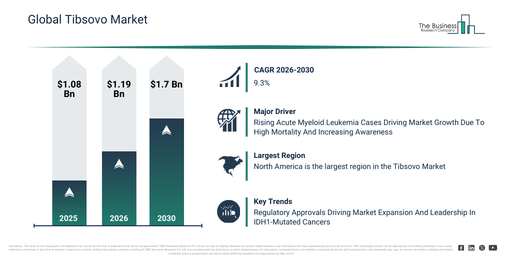
    The tibsovo market has experienced significant expansion over recent years, with projections showing an increase from $1.08 billion in 2025 to $1.19 billion in 2026, reflecting a compound annual growth rate (CAGR) of 9.6%. This historical growth has been driven by factors such as the scarcity of IDH1-targeted therapies, rising incidence of AML and cholangiocarcinoma, dependence on conventional chemotherapy, limited awareness regarding genetic mutation screening, and constrained availability of specialized oncology centers.

    The tibsovo market is anticipated to witness robust expansion during the upcoming years. Projections indicate it will reach a value of $1.7 billion by 2030, representing a compound annual growth rate (CAGR) of 9.3%. This forecasted growth is driven by the development of innovative oral targeted therapies, increased implementation of genetic testing and personalized medicine, the broadening of combination treatment strategies, heightened investment in oncology research, and the expansion of hospital and specialty clinic networks. Key trends shaping this period include a growing preference for targeted therapies specifically for AML and cholangiocarcinoma, a shift towards oral targeted drugs rather than those administered intravenously, the proliferation of combination therapy approaches, rising awareness about IDH1 mutation testing, and a heightened emphasis on individualized cancer care.

    Download A Free Sample Report For Comprehensive Market Insights:

    https://www.thebusinessresearchcompany.com/sample.aspx?id=24725&type=smp&utm_source=BlogsPR&utm_medium=Paid&utm_campaign=Jul_PR

    Tibsovo Market Expansion Supported By Key Demand Factors

    The growing occurrence of acute myeloid leukemia is anticipated to drive the expansion of the tibsovo market in the coming period. Acute myeloid leukemia (AML) is characterized as a rapidly advancing malignancy of the blood and bone marrow that severely affects blood cell formation, immune system performance, and general physical well-being. The rising incidence of AML is primarily attributed to the worldwide increase in the elderly population, given that this disease predominantly affects older individuals, and extended life spans mean that a larger number of people are reaching the age range most vulnerable to acquiring this type of leukemia. Tibsovo functions against acute myeloid leukemia by targeting IDH1-mutated cancer cells, thereby inhibiting irregular cell proliferation, slowing disease advancement, improving therapeutic responses, and boosting survival rates through the restoration of normal blood cell generation. For example, in February 2023, as per a report issued by the Leukemia Foundation, an Australian non-profit organization, from 2022 to 2035, more than 7,000 children, 6,000 young adults, and 108,000 adults aged 25 to 65 are projected to be diagnosed with blood cancers, primarily encompassing ALL, AML, and non-Hodgkin lymphoma. Consequently, the heightened frequency of acute myeloid leukemia is fueling the growth of the tibsovo market.

    Tibsovo Market Segment Landscape: Which Areas Lead Market Development?

    The tibsovo market covered in this report is segmented –

    1) By Product: Tablets, Combination Therapy

    2) By Drug Administration: Oral Administration, Intravenous Administration

    3) By Distribution Channel: Hospital Pharmacies, Retail Pharmacies, Online Pharmacies

    4) By Application: Cancer Treatment, Acute Myeloid Leukemia, Targeted Therapy

    5) By End User: Hospitals, Specialty Clinics, Research Institutions, Homecare Settings

    Subsegments:

    1) By Tablets: Oral Tablets, Extended-Release Tablets

    2) By Combination Therapy: Tibsovo + Chemotherapy Agents, Tibsovo + Targeted Therapy Agents

    Tibsovo Market Growth Trends Influencing Competitive Dynamics

    Major players in the tibsovo market are actively pursuing regulatory approvals to expand the medication’s availability and sustain its leading position in IDH1-mutated cancers. These approvals are official authorizations from health agencies that permit a drug to be sold and prescribed for specific conditions after its safety and efficacy have been verified. For example, in October 2023, Servier Laboratoires, a pharmaceutical firm headquartered in France, secured approval from the European Commission for tibsovo (ivosidenib tablets), establishing it as the first and only IDH1-targeted therapy to be sanctioned in Europe for two challenging cancer types. It has been authorized for use alongside azacitidine to treat newly diagnosed acute myeloid leukemia (AML) patients carrying an IDH1 R132 mutation who cannot undergo standard induction chemotherapy, and as a standalone treatment for adults with locally advanced or metastatic cholangiocarcinoma that also exhibits this mutation, following at least one prior systemic therapy. This authorization, which benefits from orphan drug status, addresses substantial unmet medical needs and offers renewed hope for enhanced outcomes and improved quality of life for those affected.

    Tibsovo Market Industry Leaders And Market Competition

    Major companies operating in the tibsovo market are Servier Laboratoires, Agios Pharmaceuticals

    Access The Complete Tibsovo Market Report:

    https://www.thebusinessresearchcompany.com/report/tibsovo-global-market-report?utm_source=BlogsPR&utm_medium=Paid&utm_campaign=Jul_PR

    Tibsovo Market Global Footprint: Which Region Holds Market Leadership?

    North America was the largest region in the tibsovo market in 2025. Asia-Pacific is expected to be the fastest-growing region in the forecast period. The regions covered in the tibsovo market report are Asia-Pacific, South East Asia, Western Europe, Eastern Europe, North America, South America, Middle East, Africa.

    Get in touch with us:

    The Business Research Company: https://www.thebusinessresearchcompany.com/?utm_source=BlogsPR&utm_medium=Paid&utm_campaign=home_page_test

    Americas: +1 310-496-7795

    Asia: +44 7882 955267 & +91 8897263534

    Europe: +44 7882 955267

    Email us at: marketing@tbrc.info

    Follow us on:

    LinkedIn: https://in.linkedin.com/company/the-business-research-company

    YouTube: https://www.youtube.com/channel/UC24_fI0rV8cR5DxlCpgmyFQ

    Global Market Model: https://www.thebusinessresearchcompany.com/global-market-model

  • Thyroid Cancer Drugs Market Trends Are Creating New Opportunities For Industry Leaders

    Thyroid Cancer Drugs Market Trends Are Creating New Opportunities For Industry Leaders

    Through market attractiveness analysis, total addressable market evaluation, company benchmarking matrices, interactive Excel dashboards, expanded supply chain intelligence, emerging startup coverage, and detailed product insights, The Business Research Company’s 2026 market reports provide more actionable and strategically valuable research.

    Thyroid Cancer Drugs Market Size Forecast: How Large Could The Market Become By 2030?

    The thyroid cancer drugs market has experienced significant expansion in recent years. From $1.32 billion in 2025, it is projected to reach $1.47 billion in 2026, representing a compound annual growth rate of 11.8%. This historic growth has been driven by factors such as a higher prevalence of thyroid cancer, the uptake of kinase inhibitors, advancements in cancer diagnostics, the growth of oncology-focused healthcare facilities, and broader availability of targeted therapies.

    The market for thyroid cancer drugs is projected to experience significant expansion over the coming years. By 2030, its value is anticipated to reach $2.39 billion, driven by a compound annual growth rate (CAGR) of 12.8%. This forecasted growth is fueled by several factors, including the rise of personalized oncology treatments, a growing number of advanced thyroid cancer cases, an increase in clinical trial initiatives, broader adoption of immunotherapy combinations, and higher overall spending on oncology care. Key developments during this period include a greater reliance on targeted multikinase inhibitors, the expanded application of combined drug therapies, a stronger emphasis on managing advanced and treatment-resistant forms of thyroid cancer, a broader use of precision oncology strategies, and improved thyroid cancer management within hospital settings.

    Download A Free Sample Report For Comprehensive Market Insights:

    https://www.thebusinessresearchcompany.com/sample.aspx?id=2601&type=smp&utm_source=BlogsPR&utm_medium=Paid&utm_campaign=Jul_PR

    Thyroid Cancer Drugs Market Growth Drivers And Industry Catalysts

    The projected rise in thyroid cancer cases is anticipated to fuel the expansion of the thyroid cancer drugs market in the coming years. Thyroid cancer involves malignant growths in the thyroid gland, necessitating prompt diagnosis and effective medical interventions to curb disease advancement and spread. This uptick in occurrences is attributed to both enhanced identification via more sensitive diagnostic methods and an increase linked to greater exposure to environmental factors. As the prevalence of thyroid cancer climbs, it drives demand for targeted therapies, immunotherapies, radiopharmaceuticals, and hormone-suppressing drugs, which improve treatment efficacy and long-term survival rates. For example, in September 2025, Cancer Research United Kingdom—a UK-based non-profit dedicated to cancer research and patient care—projected approximately 6,600 new thyroid cancer cases annually by 2038–2040, with incidence rates rising 27% from about 7.3 per 100,000 people per year in 2024–2026 to roughly 9.2 per 100,000. Consequently, the growing frequency of thyroid cancer is accelerating the growth of the thyroid cancer drugs market.

    Thyroid Cancer Drugs Market Segments: Where Are The Largest Growth Opportunities?

    The thyroid cancer drugs market covered in this report is segmented –

    1) By Drug Type: Ipilimumab, Cabozantinib-S-Malate, Caprelsa (Vandetanib), Doxorubicin Hydrochloride, Lenvatinib Mesylate, Nivolumab, Vandetanib, Other Drug Types

    2) By Type: Radioiodine Ablation, Thyroid Stimulating Hormone (THS) Suppression, Chemotherapy, Targeted Multikinase Therapy, Other Types

    3) By End Users: Hospitals, Oncology Clinics, Research Organizations, Other End-Users

    Subsegments:

    1) By Ipilimumab: Monotherapy Ipilimumab, Combination Therapy With Ipilimumab

    2) By Cabozantinib-S-Malate: Single-Agent Cabozantinib, Combination Therapy With Cabozantinib

    3) By Caprelsa (Vandetanib): Vandetanib For Medullary Thyroid Cancer (MTC), Combination Therapy With Vandetanib

    4) By Doxorubicin Hydrochloride: Doxorubicin For Chemotherapy, Liposomal Doxorubicin

    5) By Lenvatinib Mesylate: Lenvatinib For Differentiated Thyroid Cancer (DTC), Combination Therapy With Lenvatinib

    6) By Nivolumab: Monotherapy Nivolumab, Combination Therapy With Nivolumab

    7) By Vandetanib: Single-Agent Vandetanib, Combination Therapy With Vandetanib

    8) By Other Drug Types: Sorafenib, Everolimus, Pembrolizumab

    Thyroid Cancer Drugs Market Trends Influencing Long-Term Demand

    Key players in the thyroid cancer market are focused on developing innovative treatments like selpercatinib to enhance patient care and therapeutic outcomes. Selpercatinib, sold under the brand name Retevmo, is used to address various cancers driven by Rearranged During Transfection (RET) mutations, such as advanced or metastatic medullary thyroid cancer (MTC) and RET fusion-positive thyroid cancer. As an example, in September 2024, Eli Lilly and Company, a pharmaceutical firm based in the United States, secured approval from the Food and Drug Administration (FDA), a U.S. federal entity tasked with safeguarding public health, for selpercatinib (Retevmo) to treat advanced or metastatic MTC with a RET mutation. This authorization covers both adult and pediatric patients aged two years and older needing systemic therapy. This recent traditional approval represents a major step forward in therapeutic choices for individuals affected by this particular form of thyroid cancer.

    Thyroid Cancer Drugs Market Major Participants And Competitive Dynamics

    Major companies operating in the thyroid cancer drugs market are AbbVie Inc., AstraZeneca PLC, Bayer AG, Bristol Myers Squibb Company, Daiichi Sankyo Company Limited, Eisai Co. Ltd., Eli Lilly and Company, Exelixis Inc., F. Hoffmann-La Roche Ltd, Ipsen Biopharmaceuticals Inc., Johnson & Johnson, Kyowa Kirin Co. Ltd., Merck & Co. Inc., Novartis AG, Pfizer Inc., Sanofi S.A., Takeda Pharmaceutical Company Limited, Amgen Inc., Astellas Pharma Inc., Boehringer Ingelheim International GmbH

    Access The Complete Thyroid Cancer Drugs Market Report:

    https://www.thebusinessresearchcompany.com/report/thyroid-cancer-drugs-global-market-report?utm_source=BlogsPR&utm_medium=Paid&utm_campaign=Jul_PR

    Thyroid Cancer Drugs Market Regional Distribution: Which Areas Drive Market Expansion?

    North America was the largest region in the thyroid cancer drugs market in 2025. Middle East is expected to be the fastest-growing region in the thyroid cancer drugs market during the forecast period. The regions covered in the thyroid cancer drugs market report are Asia-Pacific, South East Asia, Western Europe, Eastern Europe, North America, South America, Middle East, Africa.

    Get in touch with us:

    The Business Research Company: https://www.thebusinessresearchcompany.com/?utm_source=BlogsPR&utm_medium=Paid&utm_campaign=home_page_test

    Americas: +1 310-496-7795

    Asia: +44 7882 955267 & +91 8897263534

    Europe: +44 7882 955267

    Email us at: marketing@tbrc.info

    Follow us on:

    LinkedIn: https://in.linkedin.com/company/the-business-research-company

    YouTube: https://www.youtube.com/channel/UC24_fI0rV8cR5DxlCpgmyFQ

    Global Market Model: https://www.thebusinessresearchcompany.com/global-market-model

  • Thrombosis And Hemostasis Biomarkers Market Growth Is Reshaping Competitive Advantage Across The Industry

    Thrombosis And Hemostasis Biomarkers Market Growth Is Reshaping Competitive Advantage Across The Industry

    Delivering more actionable and strategically valuable research, The Business Research Company’s 2026 market reports feature market attractiveness analysis, total addressable market evaluation, company benchmarking matrices, interactive Excel dashboards, expanded supply chain intelligence, emerging startup coverage, and detailed product insights.

    Thrombosis And Hemostasis Biomarkers Market Revenue Outlook: What CAGR Is Expected Through 2030?

    The thrombosis and hemostasis biomarkers market has experienced robust expansion in recent years. Valued at $5.17 billion in 2025, it is projected to reach $5.56 billion by 2026, reflecting a compound annual growth rate (CAGR) of 7.6%. This historical growth has been driven by factors such as the restricted accessibility of coagulation biomarkers, dependence on manual and semi-automated analyzers, a rising incidence of cardiovascular disorders, enhanced diagnostic laboratory infrastructure, and growing awareness regarding thrombosis and hemostasis conditions.

    The market for thrombosis and hemostasis biomarkers is anticipated to experience robust expansion over the coming years. Its value is projected to reach $7.37 billion by 2030, advancing at a compound annual growth rate (CAGR) of 7.3%. This projected growth during the forecast period is fueled by several factors, including progress in fully automated analyzer technology, greater use of POCT coagulation devices, heightened investment in personalized medicine, the broadening of pharmaceutical and diagnostic research efforts, and the creation of innovative biomarkers that enable early disease detection. Key developments shaping the forecast period encompass the increased utilization of sophisticated coagulation analyzers, a surge in demand for point-of-care testing options, a strengthened emphasis on the early identification of cardiovascular conditions, the broadening of diagnostic reagent and immunoassay kit availability, and the incorporation of biomarker testing into personalized medicine approaches.

    Download A Free Sample Report For Comprehensive Market Insights:

    https://www.thebusinessresearchcompany.com/sample.aspx?id=24724&type=smp&utm_source=BlogsPR&utm_medium=Paid&utm_campaign=Jul_PR

    Thrombosis And Hemostasis Biomarkers Market Opportunity Drivers: What Is Creating New Revenue Potential?

    The increasing need for accurate and focused treatment methods is anticipated to boost the expansion of the thrombosis and hemostasis biomarkers market in the coming period. These precise and targeted therapies are advanced medical strategies that concentrate on the unique molecular and genetic traits of a patient’s condition, with the goal of improving effectiveness while reducing unwanted side effects. This rising demand stems from a deeper comprehension of genetic and molecular differences in diseases, enabling more individualized care that boosts treatment success and lowers adverse reactions. Such demand supports thrombosis and hemostasis biomarkers by facilitating the creation of more exact diagnostic tools that pinpoint specific markers, resulting in better-focused interventions for clotting issues and enhanced patient recovery. As an example, in March 2024, Novotech, a contract research organization based in Australia, reported that out of 217 FDA-approved oncology therapies by late 2023, 43% are considered precision oncology treatments, with 78 incorporating DNA or next-generation sequencing-detectable biomarkers. Consequently, the growing appetite for precise and targeted therapies will drive forward the thrombosis and hemostasis biomarkers market.

    Thrombosis And Hemostasis Biomarkers Market Segment Analysis: What Are The Major Market Categories?

    The thrombosis and hemostasis biomarkers market covered in this report is segmented –

    1) By Product: Reagents And Consumables, Analyzers

    2) By Test Type: D-Dimer, Anti-Thrombin III, Plasminogen, Soluble Fibrin, Factor VIII, Post-Thrombin (PT), Activated Partial Thromboplastin Time (APTT) Test, Other Test Types

    3) By Application: Cardiovascular Disorders, Neurological Disorders, Oncology, Pregnancy-Related Disorders, Orthopedic Procedures

    4) By End User: Hospitals, Diagnostics Laboratories, Pharmaceutical Companies, Academic Institutions, Home Healthcare Settings

    Subsegments:

    1) By Reagents And Consumables: Coagulation Reagents, Control And Calibration Materials, Immunoassay Kits

    2) By Analyzers: Fully Automated Coagulation Analyzers, Semi-Automated Coagulation Analyzers, Point-Of-Care Coagulation Devices

    Thrombosis And Hemostasis Biomarkers Market Innovation Trends Driving Future Development

    Key players in the thrombosis and hemostasis biomarkers market are increasingly prioritizing the development of cutting-edge solutions, particularly through the incorporation of automation integration, which enhances laboratory workflow efficiency and improves testing accuracy. In a clinical laboratory setting, automation integration involves the deployment of interconnected automated systems, instruments, and robotics that execute testing procedures with little to no manual involvement. A concrete example occurred in April 2024, when Siemens Healthcare, a medical technology firm headquartered in Germany, and Japan-based Sysmex Corporation jointly introduced an integrated portfolio of hemostasis testing solutions for laboratories. This offering encompasses a comprehensive range of proven instruments and assay kits designed to aid in the diagnosis of various bleeding and clotting disorders. It also enables dynamic sample routing combined with automated reflex testing, thereby accelerating turnaround times and boosting throughput without requiring additional personnel. Furthermore, automation supports centralized oversight and real-time monitoring, facilitating intelligent workflow management, seamless integration of quality control, and efficient resource utilization.

    Thrombosis And Hemostasis Biomarkers Market Leading Companies Driving Competitive Growth

    Major companies operating in the thrombosis and hemostasis biomarkers market are F. Hoffmann-La Roche Ltd., Thermo Fisher Scientific Inc., Abbott Laboratories, Siemens Healthineers AG, Becton Dickinson and Company (BD), Mayo Clinic Laboratories, bioMérieux S.A., Beckman Coulter Inc., QuidelOrtho Corporation, Bio-Rad Laboratories Inc., ARUP Laboratories, HORIBA Ltd., Werfen S.A., Pathkind Diagnostics Pvt. Ltd., Diagnostica Stago, Agilus Diagnostics, Helena Laboratories Corporations, Cleveland Clinic Laboratories, Diazyme Laboratories Inc., Biomedica Diagnostics Inc., Atlas Medical GmbH

    Access The Complete Thrombosis And Hemostasis Biomarkers Market Report:

    https://www.thebusinessresearchcompany.com/report/thrombosis-and-hemostasis-biomarkers-global-market-report?utm_source=BlogsPR&utm_medium=Paid&utm_campaign=Jul_PR

    Thrombosis And Hemostasis Biomarkers Market Leading Geography: Which Region Generates The Most Revenue?

    North America was the largest region in the thrombosis and hemostasis biomarkers market in 2025. Asia-Pacific is expected to be the fastest-growing region in the forecast period. The regions covered in the thrombosis and hemostasis biomarkers market report are Asia-Pacific, South East Asia, Western Europe, Eastern Europe, North America, South America, Middle East, Africa.

    Get in touch with us:

    The Business Research Company: https://www.thebusinessresearchcompany.com/?utm_source=BlogsPR&utm_medium=Paid&utm_campaign=home_page_test

    Americas: +1 310-496-7795

    Asia: +44 7882 955267 & +91 8897263534

    Europe: +44 7882 955267

    Email us at: marketing@tbrc.info

    Follow us on:

    LinkedIn: https://in.linkedin.com/company/the-business-research-company

    YouTube: https://www.youtube.com/channel/UC24_fI0rV8cR5DxlCpgmyFQ

    Global Market Model: https://www.thebusinessresearchcompany.com/global-market-model