Month: July 2026

  • Methicillin-Resistant Staphylococcus Aureus (MRSA) Drugs Market Outlook Highlights The Next Major Growth Opportunities

    Methicillin-Resistant Staphylococcus Aureus (MRSA) Drugs Market Outlook Highlights The Next Major Growth Opportunities

    Enhanced with market attractiveness analysis, total addressable market evaluation, company benchmarking matrices, interactive Excel dashboards, expanded supply chain intelligence, emerging startup coverage, and detailed product insights, The Business Research Company’s 2026 market reports deliver more actionable and strategically valuable research.

    Methicillin-Resistant Staphylococcus Aureus (MRSA) Drugs Market Value Expansion And Long-Term Growth Outlook

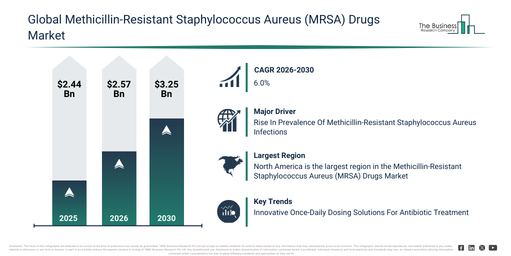
    The market for methicillin-resistant Staphylococcus aureus (MRSA) drugs has expanded significantly over the past few years. In 2025, it achieved a value of $2.44 billion, and this figure is projected to increase to $2.57 billion by 2026, reflecting a compound annual growth rate (CAGR) of 5.1%. The progress seen during the historical period was driven by several key factors, including the broad application of broad-spectrum antibiotics, a rise in infections acquired within hospital settings, the emergence of community-associated MRSA strains, a shortage of specifically designed antibiotic options, and an increased public awareness of Staphylococcus aureus-related infections.

    The market for methicillin-resistant Staphylococcus aureus (MRSA) drugs is projected to experience robust expansion over the coming years. By 2030, its value is anticipated to reach $3.25 billion, reflecting a compound annual growth rate (CAGR) of 6.0%. This upward trajectory during the forecast period is driven by factors such as progress in genomics-based drug development, a rising need for precision medicine, the growth of healthcare systems in emerging economies, an increasing incidence of chronic and immunocompromised conditions, and the growing use of MRSA treatments in veterinary settings. Key developments shaping this period include escalating antibiotic resistance among MRSA strains, the creation of new classes of MRSA medications, higher rates of hospital-acquired infections, a larger pediatric and geriatric patient base, and the broadening of MRSA therapy within veterinary medicine.

    Download A Free Sample Report For Comprehensive Market Insights:

    https://www.thebusinessresearchcompany.com/sample.aspx?id=10859&type=smp&utm_source=BlogsPR&utm_medium=Paid&utm_campaign=Jul_PR

    Methicillin-Resistant Staphylococcus Aureus (MRSA) Drugs Market Growth Drivers: What Factors Are Accelerating Expansion?

    The anticipated rise in hospital-acquired infections (HAIs) is set to propel growth in the methicillin-resistant Staphylococcus aureus drugs market moving forward. These infections are contracted by patients during medical treatment in healthcare settings, typically appearing 48 hours or more after admission. Contributing factors include contaminated medical equipment, insufficient hand hygiene among healthcare personnel, excessive antibiotic use, extended hospital stays, and compromised immune systems. MRSA drugs are designed to combat such infections by specifically targeting and eliminating antibiotic-resistant MRSA strains, thereby limiting their spread and severity within healthcare environments. For example, the Intergovernmental organization based in Switzerland, the World Health Organization, reported in 2023 that there are approximately 136 million healthcare-associated antibiotic-resistant infections annually worldwide. Consequently, the growing prevalence of MRSA infections is fueling demand for methicillin-resistant Staphylococcus aureus drugs, driving market expansion.

    Methicillin-Resistant Staphylococcus Aureus (MRSA) Drugs Market Segmentation And Category Breakdown

    The methicillin-resistant staphylococcus aureus (mrsa) drugs market covered in this report is segmented –

    1) By Drug Class: Lipopeptides, Oxazolidinones, Cephalosporin, Tetracycline, Folate Antagonist, Lipoglycopeptide, Other Drug Classes

    2) By Indication: Skin Infections, Bone and Joint Infections, Bacteremia, Animal Infections

    3) By MRSA Type: Hospital-Acquired (HA-MRSA), Community-Acquired (CA-MRSA)

    4) By Route of Administration: Oral Administration, Parenteral Administration

    5) By End User: Hospitals and Clinics, Research and Academic Institutes, Other End-Users

    Methicillin-Resistant Staphylococcus Aureus (MRSA) Drugs Market Trends: What Is Shaping Future Industry Growth?

    Key players in the Methicillin-Resistant Staphylococcus Aureus (MRSA) drug market are prioritizing once-daily dosing schedules to boost patient compliance, simplify treatment routines, and increase the efficacy of therapies designed to fight MRSA infections. A once-daily dosing regimen refers to a medication plan where a drug is taken or given only once every 24 hours. As an illustration, in August 2024, Sun Pharma, a biotechnology firm based in India, introduced Tedizolid Phosphate tablets in a 200 mg strength, providing a convenient once-daily treatment option for patients suffering from acute bacterial skin and skin structure infections, including those triggered by MRSA, thus promoting improved adherence to therapy and better clinical results.

    Methicillin-Resistant Staphylococcus Aureus (MRSA) Drugs Market Competitive Analysis Of Major Industry Participants

    Major companies operating in the methicillin-resistant staphylococcus aureus (mrsa) drugs market are Basilea Pharmaceutica Ltd., Merck & Co Inc., Pfizer Inc., Cumberland Pharmaceuticals Inc., Innovation Pharmaceuticals Inc., Melinta Therapeutics Inc., Nabriva Therapeutics plc, Paratek Pharmaceuticals Inc., GlaxoSmithKline plc, Johnson & Johnson, Theravance Biopharma Inc., AstraZeneca plc, AmpliPhi Biosciences Corporation, Debiopharm International S.A., AbbVie Inc., Seagen Inc., Astellas Pharma Inc., Eisai Co. Ltd., Exelixis Inc., Zymeworks Inc.

    Access The Complete Methicillin-Resistant Staphylococcus Aureus (MRSA) Drugs Market Report:

    https://www.thebusinessresearchcompany.com/report/methicillin-resistant-staphylococcus-aureus-mrsa-drugs-global-market-report?utm_source=BlogsPR&utm_medium=Paid&utm_campaign=Jul_PR

    Methicillin-Resistant Staphylococcus Aureus (MRSA) Drugs Market Leading Geography: Which Region Generates The Most Revenue?

    North America was the largest region in the global methicillin-resistant staphylococcus aureus drugs market in 2025. Asia-Pacific is expected to be the fastest-growing region in the forecast period. The regions covered in the methicillin-resistant staphylococcus aureus (mrsa) drugs market report are Asia-Pacific, South East Asia, Western Europe, Eastern Europe, North America, South America, Middle East, Africa.

    Get in touch with us:

    The Business Research Company: https://www.thebusinessresearchcompany.com/?utm_source=BlogsPR&utm_medium=Paid&utm_campaign=home_page_test

    Americas: +1 310-496-7795

    Asia: +44 7882 955267 & +91 8897263534

    Europe: +44 7882 955267

    Email us at: marketing@tbrc.info

    Follow us on:

    LinkedIn: https://in.linkedin.com/company/the-business-research-company

    YouTube: https://www.youtube.com/channel/UC24_fI0rV8cR5DxlCpgmyFQ

    Global Market Model: https://www.thebusinessresearchcompany.com/global-market-model
  • Methenamine Hippurate Tablets Market Trends And Growth Drivers Point To Strong Future Potential

    Methenamine Hippurate Tablets Market Trends And Growth Drivers Point To Strong Future Potential

    Through market attractiveness analysis, total addressable market evaluation, company benchmarking matrices, interactive Excel dashboards, expanded supply chain intelligence, emerging startup coverage, and detailed product insights, The Business Research Company’s 2026 market reports provide more actionable and strategically valuable research.

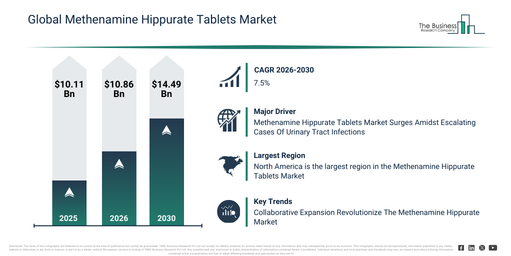
    Methenamine Hippurate Tablets Market Expected To Reach $14.48 Billion By 2030 At 7.5% CAGR

    The market for methenamine hippurate tablets has experienced robust expansion over recent years, with projections indicating an increase from $10.11 billion in 2025 to $10.86 billion in 2026, reflecting a compound annual growth rate (CAGR) of 7.4%. This historical growth was driven by factors such as constrained knowledge regarding the prevention of recurrent urinary tract infections, limited availability of specialized urological services, modest uptake of antimicrobial tablets, a dependence on hospital-centered care approaches, and the use of conventional packaging methods.

    The market for methenamine hippurate tablets is projected to experience significant expansion over the coming years. By 2030, it is anticipated to reach a value of $14.49 billion, driven by a compound annual growth rate (CAGR) of 7.5%. This forecasted growth is fueled by factors such as the rising occurrence of urinary tract infections, an increased preference for outpatient and home-based treatment solutions, advancements in tablet manufacturing technologies, the growing embrace of personalized medical approaches, and the broader reach of online pharmaceutical channels. Key developments shaping this period include the higher frequency of recurrent UTIs, a larger elderly population, a growing shift toward oral antimicrobial therapies, the broadening of home healthcare services, and the introduction of tailored medication regimens.

    Download A Free Sample Report For Comprehensive Market Insights:

    https://www.thebusinessresearchcompany.com/sample.aspx?id=9412&type=smp&utm_source=BlogsPR&utm_medium=Paid&utm_campaign=Jul_PR

    Methenamine Hippurate Tablets Market Growth Factors Supporting Long-Term Expansion

    The anticipated expansion of the methenamine hippurate tablets market is being propelled forward by the increasing incidence of urinary tract infections (UTIs). These infections, common conditions where bacteria enter the urethra and infect the urinary tract, typically via the skin or rectum, can be prevented or treated with methenamine hippurate tablets, which target specific bacterial causes of recurring infections. A notable example comes from October 2023, when the National Health Service—a UK government department—reported that during the 2022-23 period, 147,285 hospital admissions were primarily diagnosed with UTIs. Among these, 56% (82,392 admissions) involved patients aged 65 and older, with the largest number of admissions, 17,280, observed in the 80-84 age group. Consequently, the growing prevalence of UTIs is fueling demand in the methenamine hippurate market.

    The growth of the methenamine hippurate tablets market is being significantly driven by escalating healthcare expenditure. This expenditure, representing the total financial resources allocated to healthcare services such as medical treatments, hospital care, medications, and public health initiatives by governments, businesses, and individuals, is rising due to the increased prevalence of chronic diseases that necessitate prolonged and costly therapies. Enhanced spending on healthcare boosts the accessibility of urinary antiseptic treatments like methenamine hippurate tablets for patients suffering from recurrent UTIs, while also supporting improved diagnostic services and timely prescriptions, thereby elevating treatment efficiency and patient outcomes. As an illustration, the Office for National Statistics, another UK government department, noted in May 2024 that total healthcare expenditure rose by 5.6% in nominal terms in 2023, representing a 0.9% increase in growth compared to 2022. Thus, the upward trend in healthcare spending is a key driver for the methenamine hippurate tablets market.

    Methenamine Hippurate Tablets Market Segment Outlook: Which Categories Are Expanding The Fastest?

    The methenamine hippurate tablets market covered in this report is segmented –

    1) By Type: 20 Tablets Or Bottle, 6 Tablets Or Bottle

    2) By Distribution Channel: Hospital Pharmacy, Online Pharmacy, Retail Pharmacy

    3) By Application: Uncomplicated UTIs, Healthcare-associated UTIs

    4) By End User: Hospitals, Homecare, Specialty Clinics, Other End Users

    Subsegments:

    1) By 20 Tablets per Bottle: Standard Packaging, Bulk Packaging Options

    2) By 6 Tablets per Bottle: Standard Packaging, Sample Or Trial Packaging

    Methenamine Hippurate Tablets Market Industry Trends Shaping Future Revenue Growth

    Leading firms within the methenamine hippurate tablets market are forming strategic collaborations as a method to boost their profitability. These alliances are deliberate partnerships between organizations, designed to reach shared objectives by combining resources and coordinating efforts, thereby capitalizing on each other’s complementary strengths. A case in point occurred in May 2023, when EQL Pharma AB, a pharmaceutical company based in Sweden that supplies methenamine hippurate tablets, partnered with Dr. Pfleger Arzneimittel GmbH, a German pharmaceutical firm. Through this arrangement, EQL Pharma AB intends to introduce a methenamine hippurate product under an EQL-registered brand within the coming two years, with terms that include standard licensing fees, milestones related to regulatory approval and reimbursement, and a supply price dependent on volume, subject to regulatory clearance.

    Methenamine Hippurate Tablets Market Key Companies And Competitive Benchmarking

    Major companies operating in the methenamine hippurate tablets market are Alvogen Lux Holdings S.ÀR.L., Micro Labs Inc., Aurobindo Pharma, Amneal Pharmaceuticals Inc., Viatris Inc., Sun Pharmaceutical Industries Ltd., Cipla Ltd., Dr. Reddy’s Laboratories Ltd., Cadila Healthcare Ltd., Torrent Pharmaceuticals Ltd., Glenmark Pharmaceuticals Ltd., Zydus Pharmaceuticals Ltd., Lupin Ltd., Alkem Laboratories Ltd., Ipca Laboratories Ltd., Granules India Ltd., Teva Pharmaceutical Industries Ltd., Apotex Pharmachem Inc., Sandoz International GmbH, Mylan Laboratories Ltd.

    Access The Complete Methenamine Hippurate Tablets Market Report:

    https://www.thebusinessresearchcompany.com/report/methenamine-hippurate-tablets-global-market-report?utm_source=BlogsPR&utm_medium=Paid&utm_campaign=Jul_PR

    Methenamine Hippurate Tablets Market Regional Outlook: Where Are The Largest Opportunities Located?

    North America was the largest region in the methenamine hippurate tablets market in 2025. The regions covered in the methenamine hippurate tablets market report are Asia-Pacific, South East Asia, Western Europe, Eastern Europe, North America, South America, Middle East, Africa.

    Get in touch with us:

    The Business Research Company: https://www.thebusinessresearchcompany.com/?utm_source=BlogsPR&utm_medium=Paid&utm_campaign=home_page_test

    Americas: +1 310-496-7795

    Asia: +44 7882 955267 & +91 8897263534

    Europe: +44 7882 955267

    Email us at: marketing@tbrc.info

    Follow us on:

    LinkedIn: https://in.linkedin.com/company/the-business-research-company

    YouTube: https://www.youtube.com/channel/UC24_fI0rV8cR5DxlCpgmyFQ

    Global Market Model: https://www.thebusinessresearchcompany.com/global-market-model
  • Metastatic Cancer Drugs Market Expansion Is Reshaping Competitive Dynamics Across The Industry

    Metastatic Cancer Drugs Market Expansion Is Reshaping Competitive Dynamics Across The Industry

    Delivering more actionable and strategically valuable research, The Business Research Company’s 2026 market reports feature market attractiveness analysis, total addressable market evaluation, company benchmarking matrices, interactive Excel dashboards, expanded supply chain intelligence, emerging startup coverage, and detailed product insights.

    Metastatic Cancer Drugs Market Size And Revenue Forecast Through 2030

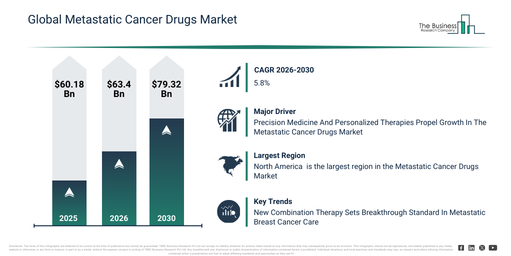
    The market for metastatic cancer drugs has experienced robust expansion over the past few years. Valued at $60.18 billion in 2025, it is projected to reach $63.4 billion by 2026, reflecting a compound annual growth rate (CAGR) of 5.3%. This historic upward trend has been driven by a higher incidence of metastatic cancers, progress in targeted treatment approaches, a rise in healthcare spending, the strengthening of oncology research initiatives, and the emergence of immunotherapeutic agents.

    The market for metastatic cancer drugs is projected to experience substantial expansion in the coming years. By 2030, its value is anticipated to reach $79.32 billion, driven by a compound annual growth rate (CAGR) of 5.8%. This forecasted growth is propelled by factors such as the rising uptake of precision medicine, broader use of oral delivery methods, enhanced funding for research and development, increased public understanding of cancer therapies, and the incorporation of artificial intelligence into drug creation. Key developments expected in this period involve personalized therapeutic approaches, progress in targeted drug creation, the use of combination treatment plans, a wider availability of oral cancer medications, and a greater embrace of immunotherapy.

    Download A Free Sample Report For Comprehensive Market Insights:

    https://www.thebusinessresearchcompany.com/sample.aspx?id=11941&type=smp&utm_source=BlogsPR&utm_medium=Paid&utm_campaign=Jul_PR

    Metastatic Cancer Drugs Market Demand Drivers Creating New Revenue Opportunities

    The advancement of precision medicine and tailored therapies is anticipated to drive growth in the metastatic cancer drugs market moving forward. Precision medicine concentrates on customizing healthcare and interventions based on individual patient characteristics, taking into account elements such as genetic composition, molecular profile, environment, and lifestyle. Through precision medicine and personalized treatments, metastatic cancer drugs are utilized by aligning therapeutic approaches with the distinct genetic and molecular features of each patient. This strategy allows medical professionals to pinpoint targeted therapies with a higher likelihood of effectiveness against specific cancer types, thus enhancing treatment success while reducing harmful side effects. As an example, in February 2024, the Personalized Medicine Coalition, a nonprofit organization based in the United States, reported that the USFDA authorized 16 novel personalized therapies for rare disease patients during 2023, marking a notable rise from the 6 personalized treatments approved in 2022. Consequently, the progression of precision medicine and individualized therapies serves as a catalyst for the metastatic cancer drugs market.

    Metastatic Cancer Drugs Market Segment Landscape: Which Areas Lead Market Development?

    The metastatic cancer drugs market covered in this report is segmented –

    1) By Drug Class: HER2 Inhibitors, Immune Checkpoints Inhibitors, PARP Inhibitors, Kinase Inhibitors, Other Drug Class

    2) By Cancer: Breast Cancer, Lung Cancer, Liver Cancer, Hematological Cancer, Brain Cancer, Prostate Cancer, Pancreatic Cancer, Other Cancers

    3) By Treatment: Chemotherapy, Immunotherapy, Hormonal Therapy, Surgery, Other Treatments

    4) By Route Of Administration: Intravenous, Intramuscular, Oral, Other Routes Of Administration

    5) By End-Users: Hospitals, Specialty Clinics, Other End-Users

    Subsegments:

    1) By HER2 Inhibitors: Trastuzumab, Ado-trastuzumab emtansine, Lapatinib

    2) By Immune Checkpoint Inhibitors: PD-1 Inhibitors, PD-L1 Inhibitors, CTLA-4 Inhibitors

    3) By PARP Inhibitors: Olaparib, Rucaparib, Niraparib

    4) By Kinase Inhibitors: EGFR Inhibitors, BRAF Inhibitors, ALK Inhibitors

    5) By Other Drug Classes: Chemotherapy Agents, Hormonal Therapies, Targeted Therapies

    Metastatic Cancer Drugs Market Trends Driving Strategic Industry Expansion

    Leading firms in the metastatic cancer drugs market are prioritizing the development of sophisticated targeted therapies and combination strategies aimed at boosting treatment efficacy, slowing disease progression, and prolonging patient survival in advanced-stage cancers. These innovations encompass next-generation antibody–drug conjugates (ADCs), precisely engineered targeted inhibitors, and novel biologic combinations crafted to counteract therapy resistance and optimize clinical results. For example, in November 2025, AstraZeneca Plc, a UK-based biopharmaceutical entity, together with Daiichi Sankyo, a Japanese pharmaceutical company, progressed the metastatic cancer treatment field by submitting their Enhertu and pertuzumab combination for FDA Priority Review as a first-line option for HER2-positive metastatic breast cancer. This followed Phase III trial outcomes demonstrating a 44% decrease in the risk of disease progression or death versus the existing standard of care. Such initiatives underscore the sector’s enduring dedication to reshaping therapeutic norms and enhancing survival outlooks for individuals dealing with metastatic conditions.

    Metastatic Cancer Drugs Market Industry Leaders And Market Competition

    Major companies operating in the metastatic cancer drugs market are Pfizer Inc., F. Hoffmann-La Roche AG, Merck & Co. Inc., AbbVie Inc., Bayer AG, AstraZeneca plc, Novartis AG, Bristol-Myers Squibb Company, Takeda Pharmaceutical Company Limited, Eli Lilly and Company, Amgen Inc., Astellas Pharma Inc., Eisai Co. Ltd., Incyte Corporation, Ipsen SA, Seagen Inc., Exelixis Inc., Zymeworks Inc., Karyopharm Therapeutics Inc., CytomX Therapeutics Inc., Spectrum Pharmaceuticals Inc., GlaxoSmithKline plc, Adaptimmune Therapeutics plc

    Access The Complete Metastatic Cancer Drugs Market Report:

    https://www.thebusinessresearchcompany.com/report/metastatic-cancer-drugs-global-market-report?utm_source=BlogsPR&utm_medium=Paid&utm_campaign=Jul_PR

    Metastatic Cancer Drugs Market Geographic Landscape: Which Region Dominates Industry Growth?

    North America was the largest region in the metastatic cancer drugs market in 2025. Asia-Pacific is expected to be the fastest-growing region in the forecast period. The regions covered in the metastatic cancer drugs market report are Asia-Pacific, South East Asia, Western Europe, Eastern Europe, North America, South America, Middle East, Africa.

    Get in touch with us:

    The Business Research Company: https://www.thebusinessresearchcompany.com/?utm_source=BlogsPR&utm_medium=Paid&utm_campaign=home_page_test

    Americas: +1 310-496-7795

    Asia: +44 7882 955267 & +91 8897263534

    Europe: +44 7882 955267

    Email us at: marketing@tbrc.info

    Follow us on:

    LinkedIn: https://in.linkedin.com/company/the-business-research-company

    YouTube: https://www.youtube.com/channel/UC24_fI0rV8cR5DxlCpgmyFQ

    Global Market Model: https://www.thebusinessresearchcompany.com/global-market-model
  • Messenger Ribonucleic Acid Quality Monitoring Market Forecast Reveals Where Future Industry Value Will Be Created

    Messenger Ribonucleic Acid Quality Monitoring Market Forecast Reveals Where Future Industry Value Will Be Created

    Enhanced with market attractiveness analysis, total addressable market evaluation, company benchmarking matrices, interactive Excel dashboards, expanded supply chain intelligence, emerging startup coverage, and detailed product insights, The Business Research Company’s 2026 market reports deliver more actionable and strategically valuable research.

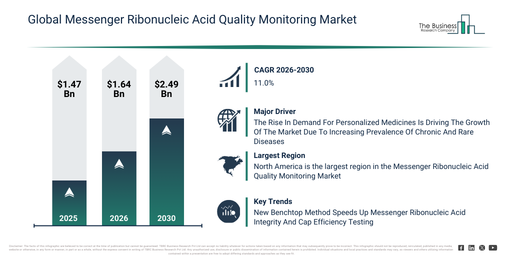
    Messenger Ribonucleic Acid Quality Monitoring Market Growth From $1.64 Billion In 2026 To $2.49 Billion By 2030 At A CAGR Of 11%

    The market for messenger ribonucleic acid quality monitoring has seen significant expansion over the last few years. Its value is projected to climb from $1.47 billion in 2025 to $1.64 billion in 2026, reflecting a compound annual growth rate (CAGR) of 11.3%. This historical growth has been driven by the broadening scope of mRNA research applications, the initial uptake of analytical validation tools, the increase in academic and clinical research initiatives, the growing utilization of mRNA in vaccine creation, and the accessibility of specialized quality control reagents.

    Over the coming years, the messenger ribonucleic acid quality monitoring market is projected to undergo substantial expansion, with its size anticipated to reach $2.49 billion by 2030, reflecting a compound annual growth rate (CAGR) of 11.0%. This forecasted growth is driven by several factors, including the widening of therapeutic mRNA development pipelines, heightened regulatory oversight of mRNA products, increased financial commitments to biopharmaceutical manufacturing, a growing uptake of real-time quality analytics, and the expansion of contract research and manufacturing services. Key trends shaping the forecast period encompass a greater adoption of standardized mRNA quality control protocols, expanded utilization of advanced analytical instrumentation, more widespread incorporation of automated quality monitoring systems, the broadening of regulatory compliance testing requirements, and a sharper emphasis on mRNA stability and integrity.

    Download A Free Sample Report For Comprehensive Market Insights:

    https://www.thebusinessresearchcompany.com/sample.aspx?id=30321&type=smp&utm_source=BlogsPR&utm_medium=Paid&utm_campaign=Jul_PR

    Messenger Ribonucleic Acid Quality Monitoring Market Expansion Supported By Key Demand Factors

    The growing need for customized therapies is anticipated to boost the messenger ribonucleic acid quality monitoring market in the coming period. Personalized medicine involves treatments adjusted to a patient’s genetic profile, lifestyle, and environmental factors to achieve optimal therapeutic results. This rising demand stems from an increase in chronic and rare conditions, which require precisely targeted approaches for better treatment efficacy. Messenger ribonucleic acid quality monitoring plays a key role in verifying the precision, consistency, and effectiveness of mRNA-based treatments, thereby enabling the creation of reliable and safe personalized therapies. As an example, the Personalized Medicine Coalition, a US nonprofit organization, reported in February 2024 that the FDA approved 16 novel personalized treatments for rare diseases in 2023, a significant uptick from the six approvals seen in 2022. Consequently, the escalating demand for personalized medicines is fueling expansion in the messenger ribonucleic acid quality monitoring market.

    Messenger Ribonucleic Acid Quality Monitoring Market Segments: Where Are The Largest Growth Opportunities?

    The messenger ribonucleic acid quality monitoring market covered in this report is segmented –

    1) By Type: Analytical Instruments, Reagents And Consumables, Software And Services

    2) By Technology: Liquid Chromatography-Mass Spectrometry (LC-MS), Electrophoresis, Enzyme-Linked Immunosorbent Assay (ELISA), Polymerase Chain Reaction (PCR) Techniques, Other Technologies

    3) By Application: Vaccine Development, Therapeutic Messenger Ribonucleic Acid Products, Gene Editing

    4) By End User: Biopharmaceutical And Biotechnology Companies, Contract Development And Manufacturing Organizations (CDMOs), Contract Research Organizations (CROs) And Analytical Labs, Academic And Research Institutes Or Centers

    Subsegments:

    1) By Analytical Instruments: Benchtop Analyzers, Microfluidic Systems, Spectrophotometers, Capillary Electrophoresis Systems

    2) By Reagents And Consumables: Ribonucleic Acid Extraction Kits, Complementary Deoxyribonucleic Acid Synthesis Kits, Fluorescent Probes, Quality Control Standards

    3) By Software And Services: Data Analysis Software, Laboratory Information Management Systems, Consulting Services, Validation And Training Services

    Messenger Ribonucleic Acid Quality Monitoring Market Growth Trends Influencing Competitive Dynamics

    Key players within the messenger ribonucleic acid quality monitoring sector are directing their efforts toward the creation of advanced solutions, including benchtop instruments, that enable swift and precise evaluation of messenger ribonucleic acid quality characteristics. A benchtop instrument refers to a compact laboratory apparatus intended for carrying out particular analyses or experiments on a workbench, delivering ease, rapidity, and availability without necessitating large-scale machinery. To illustrate, in June 2024, InDevR Inc., a biotechnology and analytical instrumentation firm based in the United States, introduced 5’CapQ, a rapid benchtop assay designed to assess critical quality attributes (CQAs) of mRNA-based vaccines. This assay measures the integrity and 5’ capping efficiency of mRNA molecules within a timeframe of under two hours, merging these important quality indicators into one streamlined procedure. It operates by specifically capturing mRNA molecules that possess a 5’ cap and tagging the poly(A) tail with a fluorescent marker, thereby guaranteeing that only completely intact, capped mRNA—which is crucial for stability and protein synthesis—is measured. By delivering fast, quantitative, and user-friendly analysis, 5’CapQ assists in removing testing obstacles in mRNA vaccine production, eliminating the demand for specialized knowledge or prolonged processing durations.

    Messenger Ribonucleic Acid Quality Monitoring Market Major Participants And Competitive Dynamics

    Major companies operating in the messenger ribonucleic acid quality monitoring market are F. Hoffmann-La Roche Ltd., Thermo Fisher Scientific Inc., Danaher Corporation, Lonza Group AG, Eurofins Scientific SE, Agilent Technologies Inc., Illumina Inc., Intertek Group plc, Sartorius AG, Revvity Inc., Bio-Rad Laboratories Inc., WuXi Biologics (Cayman) Inc., QIAGEN N.V., Bio-Techne Corporation, Fujifilm Diosynth Biotechnologies, GenScript Biotech Corporation, Promega Corporation, Takara Bio Inc., Oxford Nanopore Technologies Ltd., Creative Biolabs Inc., Creative Diagnostics, Jena Bioscience GmbH.

    Access The Complete Messenger Ribonucleic Acid Quality Monitoring Market Report:

    https://www.thebusinessresearchcompany.com/report/global-messenger-ribonucleic-acid-quality-monitoring-market-report?utm_source=BlogsPR&utm_medium=Paid&utm_campaign=Jul_PR

    Messenger Ribonucleic Acid Quality Monitoring Market Largest Region: Which Geography Holds The Highest Market Share?

    North America was the largest region in the messenger ribonucleic acid quality monitoring market in 2025. Asia-Pacific is expected to be the fastest-growing region in the forecast period. The regions covered in the messenger ribonucleic acid quality monitoring market report are Asia-Pacific, South East Asia, Western Europe, Eastern Europe, North America, South America, Middle East, Africa.

    Get in touch with us:

    The Business Research Company: https://www.thebusinessresearchcompany.com/?utm_source=BlogsPR&utm_medium=Paid&utm_campaign=home_page_test

    Americas: +1 310-496-7795

    Asia: +44 7882 955267 & +91 8897263534

    Europe: +44 7882 955267

    Email us at: marketing@tbrc.info

    Follow us on:

    LinkedIn: https://in.linkedin.com/company/the-business-research-company

    YouTube: https://www.youtube.com/channel/UC24_fI0rV8cR5DxlCpgmyFQ

    Global Market Model: https://www.thebusinessresearchcompany.com/global-market-model
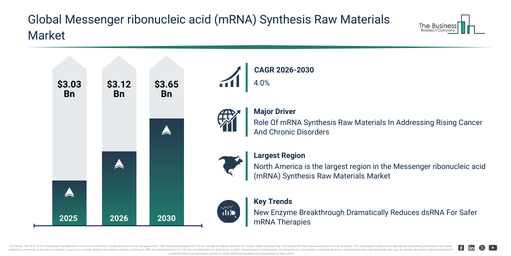
  • Messenger ribonucleic acid (mRNA) Synthesis Raw Materials Market Growth Through 2030 Creates New Strategic Opportunities

    Messenger ribonucleic acid (mRNA) Synthesis Raw Materials Market Growth Through 2030 Creates New Strategic Opportunities

    Through market attractiveness analysis, total addressable market evaluation, company benchmarking matrices, interactive Excel dashboards, expanded supply chain intelligence, emerging startup coverage, and detailed product insights, The Business Research Company’s 2026 market reports provide more actionable and strategically valuable research.

    Messenger ribonucleic acid (mRNA) Synthesis Raw Materials Market Expansion Outlook: What Revenue Opportunities Lie Ahead?

    The market for raw materials used in messenger ribonucleic acid (mRNA) synthesis has experienced consistent growth over the recent past. Starting at $3.03 billion in 2025, it is projected to reach $3.12 billion by 2026, reflecting a compound annual growth rate (CAGR) of 3.0%. This historical expansion has been driven by factors such as an increasing need for vaccines, advancements in molecular biology, heightened research and development spending in synthetic biology, a surge in infectious disease outbreaks, and the creation of more effective transcription enzymes.

    The market for raw materials used in messenger ribonucleic acid (mRNA) synthesis is projected to experience consistent expansion in the coming years. By 2030, its value is anticipated to reach $3.65 billion, driven by a compound annual growth rate (CAGR) of 4.0%. This forecasted growth is influenced by factors such as the expansion of mRNA-based therapeutics, the rising adoption of automated platforms for mRNA synthesis, increased efforts in personalized medicine, the establishment of biotechnology manufacturing hubs, and ongoing innovations in nucleotide modifications. Key trends shaping the future include the optimization of synthetic mRNA, the development of high-purity raw materials, scalable in-vitro transcription methods, standardization of supply chains for mRNA production, and rigorous quality control alongside regulatory compliance.

    Download A Free Sample Report For Comprehensive Market Insights:

    https://www.thebusinessresearchcompany.com/sample.aspx?id=12336&type=smp&utm_source=BlogsPR&utm_medium=Paid&utm_campaign=Jul_PR

    Messenger ribonucleic acid (mRNA) Synthesis Raw Materials Market Growth Drivers And Industry Catalysts

    The rising prevalence of cancer and chronic conditions is anticipated to accelerate expansion in the mRNA synthesis raw materials market. Cancer is characterized by the uncontrolled growth of abnormal cells, which can invade nearby tissues and potentially spread to other parts of the body through the bloodstream and lymphatic system. Chronic diseases are generally defined as health issues that last for a year or longer, require continuous medical attention, hinder daily activities, or combine these factors. Raw materials for mRNA synthesis are employed in drug discovery, vaccine creation, and the production of RNA-based therapeutics to achieve superior immunogenicity, greater effectiveness, and quicker manufacturing timelines, all of which are applicable in addressing cancer and chronic disorders. As an example, in January 2024, data from the American Cancer Society, a non-profit organization based in the United States, indicated that the country is expected to face 2,001,140 new cancer diagnoses and 611,720 cancer-related deaths in 2024, compared to 1,958,310 cases and 609,820 deaths in 2023. Additionally, in September 2025, the British Heart Foundation, a UK-based charity, reported that across the United Kingdom, more than 7.6 million people—including over 4 million men and more than 3.6 million women—are living with cardiovascular disease. Projections suggest that, fueled by an aging population and improved survival rates, this number could increase by approximately 1 million by 2030 and by around 2 million by 2040. Consequently, the growing frequency of cancer and chronic illnesses serves as a key driver for the mRNA synthesis raw materials market.

    Messenger ribonucleic acid (mRNA) Synthesis Raw Materials Market Segment Analysis: What Are The Major Market Categories?

    The messenger ribonucleic acid (mrna) synthesis raw materials market covered in this report is segmented –

    1) By Type: Capping Agents, Nucleotides, Plasmid DNA, Other Types

    2) By Applications: Therapeutics Production, Vaccine Production, Other Applications

    3) By End-Users: Biotechnology Companies, Pharmaceutical Companies, Research And Academic Institutions, Other End-Users

    Subsegments:

    1) By Capping Agents: 7-Methyl Guanylate (M7G) Capping Agents, Other Capping Agents

    2) By Nucleotides: Natural Nucleotides, Modified Nucleotides, Triphosphate Nucleotides

    3) By Plasmid DNA: Linearized Plasmid DNA, Circular Plasmid DNA, High-Purity Plasmid DNA

    4) By Other Types: Buffer Solutions, Enzymes, Other Auxiliary Materials

    Messenger ribonucleic acid (mRNA) Synthesis Raw Materials Market Trends Influencing Long-Term Demand

    Major players in the messenger ribonucleic acid (mRNA) synthesis raw materials market are increasingly prioritizing strategic collaborations to strengthen their technological expertise, broaden their range of high-quality raw materials, and speed up the development of next-generation mRNA treatments. These strategic collaborations are defined as formal alliances formed among biotech companies, enzyme developers, and nucleic acid technology suppliers to jointly create advanced IVT enzymes, modified nucleotides, capping analogs, or other essential components intended to boost mRNA yield, purity, stability, and safety. As a case in point, in September 2024, TriLink Biotechnologies, a US biotechnology firm, entered into a partnership with Alphazyme LLC, a US-based firm specializing in custom molecular biology enzymes, to introduce the CleanScribe RNA Polymerase. This next-generation IVT enzyme is capable of cutting double-stranded RNA formation by as much as 85% during mRNA production, thus facilitating the creation of safer and more effective mRNA-based therapies.

    Messenger ribonucleic acid (mRNA) Synthesis Raw Materials Market Leading Companies Driving Competitive Growth

    Major companies operating in the messenger ribonucleic acid (mrna) synthesis raw materials market are Thermo Fisher Scientific Inc., Agilent Technologies Inc., Lonza Group Ltd., Bio-Rad Laboratories Inc., Qiagen N.V., Maravai LifeSciences, Takara Bio Inc., GenScript Biotech Corporation, Promega Corporation, Integrated DNA Technologies Inc., LGC Biosearch Technologies, Merck KGaA, GeneCopoeia Inc., Bio-Synthesis Inc., BOC Sciences Inc., Bio Basic Inc., OriGene Technologies Inc., BioCat GmbH, Creative Biogene, Jena Bioscience GmbH, ATDBio Ltd.

    Access The Complete Messenger ribonucleic acid (mRNA) Synthesis Raw Materials Market Report:

    https://www.thebusinessresearchcompany.com/report/messenger-ribonucleic-acid-mrna-synthesis-raw-materials-global-market-report?utm_source=BlogsPR&utm_medium=Paid&utm_campaign=Jul_PR

    Messenger ribonucleic acid (mRNA) Synthesis Raw Materials Market Regional Analysis: Which Region Leads By Revenue?

    North America was the largest region in the mRNA synthesis raw materials market in 2025. The regions covered in the messenger ribonucleic acid (mrna) synthesis raw materials market report are Asia-Pacific, South East Asia, Western Europe, Eastern Europe, North America, South America, Middle East, Africa.

    Get in touch with us:

    The Business Research Company: https://www.thebusinessresearchcompany.com/?utm_source=BlogsPR&utm_medium=Paid&utm_campaign=home_page_test

    Americas: +1 310-496-7795

    Asia: +44 7882 955267 & +91 8897263534

    Europe: +44 7882 955267

    Email us at: marketing@tbrc.info

    Follow us on:

    LinkedIn: https://in.linkedin.com/company/the-business-research-company

    YouTube: https://www.youtube.com/channel/UC24_fI0rV8cR5DxlCpgmyFQ

    Global Market Model: https://www.thebusinessresearchcompany.com/global-market-model
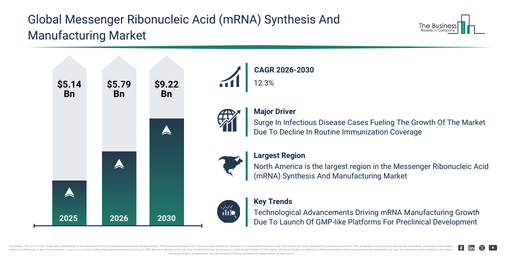
  • Messenger Ribonucleic Acid (mRNA) Synthesis And Manufacturing Market Size Projected To Increase From $5.79 Billion To $9.22 Billion During The Forecast Period

    Messenger Ribonucleic Acid (mRNA) Synthesis And Manufacturing Market Size Projected To Increase From $5.79 Billion To $9.22 Billion During The Forecast Period

    Delivering more actionable and strategically valuable research, The Business Research Company’s 2026 market reports feature market attractiveness analysis, total addressable market evaluation, company benchmarking matrices, interactive Excel dashboards, expanded supply chain intelligence, emerging startup coverage, and detailed product insights.

    Messenger Ribonucleic Acid (mRNA) Synthesis And Manufacturing Market Growth Potential: How Will Market Size Change Through 2030?

    The messenger ribonucleic acid (mRNA) synthesis and manufacturing market has experienced rapid expansion in recent years, with its size climbing from $5.14 billion in 2025 to $5.79 billion in 2026, reflecting a compound annual growth rate (CAGR) of 12.6%. This historical growth was driven by factors such as the limited accessibility of mRNA synthesis platforms, early-phase research into mRNA-based therapeutics, a dependence on small-scale laboratory production, the emergence of basic regulatory structures, and the significant expenses tied to purification and formulation services.

    The market for messenger ribonucleic acid (mRNA) synthesis and manufacturing is projected to experience strong expansion in the years ahead. Its value is anticipated to reach $9.22 billion by 2030, reflecting a compound annual growth rate (CAGR) of 12.3%. This surge during the forecast period can be linked to progress in automated mRNA synthesis technology, the establishment of larger commercial-scale mRNA manufacturing plants, increased funding for vaccines and therapeutic development, a rising need for self-amplifying mRNA and innovative formulations, and a growth in preclinical and clinical research partnerships. Key developments shaping this period include the wider adoption of GMP-compliant mRNA production, a heightened need for large-scale mRNA manufacturing, the broadening of mRNA therapeutic and vaccine initiatives, a stronger emphasis on purification, capping, and tailing services, and the increasing use of mRNA-LNP formulations with integrated delivery systems.

    Download A Free Sample Report For Comprehensive Market Insights:

    https://www.thebusinessresearchcompany.com/sample.aspx?id=25832&type=smp&utm_source=BlogsPR&utm_medium=Paid&utm_campaign=Jul_PR

    Messenger Ribonucleic Acid (mRNA) Synthesis And Manufacturing Market Opportunity Drivers: What Is Creating New Revenue Potential?

    The growing incidence of infectious diseases is projected to boost the messenger ribonucleic acid (mRNA) synthesis and manufacturing market moving forward. Infectious diseases are illnesses triggered by pathogenic microorganisms like bacteria, viruses, fungi, or parasites, which includes conditions such as malaria that may be transmitted either directly or indirectly. This rise in infectious disease prevalence is largely attributed to rapid urbanization, which results in greater population density and close interpersonal contact, thereby facilitating the spread of infections. mRNA synthesis and manufacturing play a key role in fighting infectious diseases by allowing for the swift creation and scalable output of targeted vaccines and therapeutics designed to elicit a specific immune response. As an example, in October 2024, the World Health Organization—a Switzerland-based international public health body—reported that roughly 8.2 million people were newly diagnosed with tuberculosis in 2023, compared to about 7.5 million in 2022, making tuberculosis the leading cause of death among infectious diseases. Consequently, the increasing prevalence of infectious diseases is fueling the expansion of the messenger ribonucleic acid (mRNA) synthesis and manufacturing market.

    Messenger Ribonucleic Acid (mRNA) Synthesis And Manufacturing Market Segment Breakdown: Which Categories Generate The Most Revenue?

    The messenger ribonucleic acid (mrna) synthesis and manufacturing market covered in this report is segmented –

    1) By Service Type: Messenger Ribonucleic Acid (mRNA) Drug Synthesis, Messenger Ribonucleic Acid (mRNA) Vaccine Synthesis

    2) By Scale Of Operation: Preclinical, Clinical, Commercial

    3) By Therapeutic Area: Infectious Diseases, Oncology, Other Therapeutic Areas

    4) By Application: Vaccine Production, Therapeutic Development, Drug Discovery, Other Applications

    Subsegments:

    1) By Messenger Ribonucleic Acid (mRNA) Drug Synthesis: Custom Messenger Ribonucleic Acid (mRNA) Synthesis, GMP-Grade Messenger Ribonucleic Acid (mRNA) Synthesis, Large-Scale Messenger Ribonucleic Acid (mRNA) Synthesis, Modified Messenger Ribonucleic Acid (mRNA) Synthesis, Capping And Tailing Services, Purification Services

    2) By Messenger Ribonucleic Acid (mRNA) Vaccine Synthesis: Preclinical Messenger Ribonucleic Acid (mRNA) Vaccine Synthesis, Clinical-Grade Messenger Ribonucleic Acid (mRNA) Vaccine Synthesis, GMP-Compliant Vaccine Batch Production, Self-Amplifying Messenger Ribonucleic Acid (mRNA) Synthesis, Messenger Ribonucleic Acid (mRNA)-LNP Formulation Services For Vaccines, Stability Testing And QC Services

    Messenger Ribonucleic Acid (mRNA) Synthesis And Manufacturing Market Innovation Trends Driving Future Development

    Key players in the market for messenger ribonucleic acid (mRNA) synthesis and manufacturing are prioritizing the development of advanced solutions, such as co-transcriptional capping platforms, to speed up preclinical research while minimizing regulatory hurdles. This platform represents a specialized technique that effectively attaches a protective cap to mRNA molecules during the synthesis process, resulting in improved mRNA stability, enhanced translation efficiency, and better control over immunogenicity. As an example, in May 2025, GenScript, a life sciences research tools company based in the US, introduced its good manufacturing practice (GMP)-like mRNA manufacturing service. This scalable service, designed with regulatory considerations in mind, produces high-purity, functional mRNA suitable for investigational new drug (IND)-enabling preclinical studies, covering toxicology, biodistribution, and pharmacokinetics or pharmacodynamics (PK or PD) evaluations. The service operates within cleanroom-compliant environments classified as International Organization for Standardization (ISO) 7 and integrates patented co-transcriptional capping technology, allowing for the delivery of customized mRNA within about seven weeks. This advancement effectively fills a critical gap between research-grade production and full GMP manufacturing, enabling early-stage biotechnology and pharmaceutical firms to conduct studies that meet regulatory standards without the substantial expenses and delays typically associated with traditional GMP processes.

    Messenger Ribonucleic Acid (mRNA) Synthesis And Manufacturing Market Key Players And Strategic Industry Positioning

    Major companies operating in the messenger ribonucleic acid (mrna) synthesis and manufacturing market are Thermo Fisher Scientific Inc., Evonik Industries AG, Moderna Inc., BioNTech SE , AGC Biologics A/S, Eurofins Scientific SE, Lonza Group AG, Catalent Inc., WuXi Biologics (Cayman) Inc., Samsung Biologics Co Ltd., GenScript Biotech Corporation, Arcturus Therapeutics Holdings Inc., New England Biolabs Inc., CureVac N.V., Abzena plc, Creative Biolabs Inc., Aldevron LLC, eTheRNA immunotherapies NV, Bio-Synthesis Inc., TriLink BioTechnologies LLC

    Access The Complete Messenger Ribonucleic Acid (mRNA) Synthesis And Manufacturing Market Report:

    https://www.thebusinessresearchcompany.com/report/messenger-ribonucleic-acid-mrna-synthesis-and-manufacturing-global-market-report?utm_source=BlogsPR&utm_medium=Paid&utm_campaign=Jul_PR

    Messenger Ribonucleic Acid (mRNA) Synthesis And Manufacturing Market Geographic Distribution And Regional Opportunities

    North America was the largest region in the messenger ribonucleic acid (mRNA) synthesis and manufacturing market in 2025. Asia-Pacific is expected to be the fastest-growing region in the forecast period. The regions covered in the messenger ribonucleic acid (mrna) synthesis and manufacturing market report are Asia-Pacific, South East Asia, Western Europe, Eastern Europe, North America, South America, Middle East, Africa.

    Get in touch with us:

    The Business Research Company: https://www.thebusinessresearchcompany.com/?utm_source=BlogsPR&utm_medium=Paid&utm_campaign=home_page_test

    Americas: +1 310-496-7795

    Asia: +44 7882 955267 & +91 8897263534

    Europe: +44 7882 955267

    Email us at: marketing@tbrc.info

    Follow us on:

    LinkedIn: https://in.linkedin.com/company/the-business-research-company

    YouTube: https://www.youtube.com/channel/UC24_fI0rV8cR5DxlCpgmyFQ

    Global Market Model: https://www.thebusinessresearchcompany.com/global-market-model
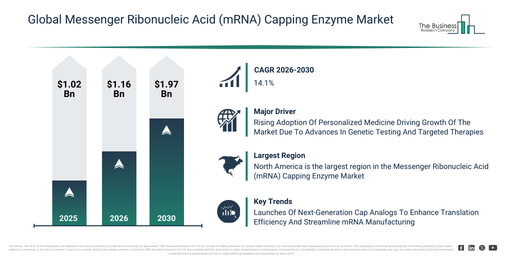
  • Messenger Ribonucleic Acid (mRNA) Capping Enzyme Market Growth Outlook Reveals A CAGR Of 14.1% And A Market Value Of $1.97 Billion By 2030

    Messenger Ribonucleic Acid (mRNA) Capping Enzyme Market Growth Outlook Reveals A CAGR Of 14.1% And A Market Value Of $1.97 Billion By 2030

    Enhanced with market attractiveness analysis, total addressable market evaluation, company benchmarking matrices, interactive Excel dashboards, expanded supply chain intelligence, emerging startup coverage, and detailed product insights, The Business Research Company’s 2026 market reports deliver more actionable and strategically valuable research.

    Messenger Ribonucleic Acid (mRNA) Capping Enzyme Market Value Analysis: What Growth Is Expected Over The Forecast Period?

    The messenger ribonucleic acid (mRNA) capping enzyme market has experienced rapid expansion in recent years. It is projected to increase from $1.02 billion in 2025 to $1.16 billion in 2026, reflecting a compound annual growth rate (CAGR) of 14.4%. This historic growth is driven by several factors, including the broadening of mRNA research initiatives, the growing application of mRNA in vaccine development, progress in enzymatic synthesis techniques, greater funding allocated to genetic research, and a heightened uptake of in vitro transcription technologies.

    The messenger ribonucleic acid (mRNA) capping enzyme market is projected to experience robust expansion over the coming years. By 2030, its value is anticipated to reach $1.97 billion, reflecting a compound annual growth rate (CAGR) of 14.1%. This forecasted growth is driven by several factors, including the accelerated development of mRNA-based therapies, heightened investment in cutting-edge vaccine platforms, the expansion of biopharmaceutical production facilities, a growing need for high-purity mRNA components, and an increased emphasis on scalable mRNA manufacturing processes. Key trends shaping this period involve a rising demand for highly efficient mRNA capping enzymes, greater adoption of enzymatic mRNA modification approaches, the increasing integration of mRNA therapeutic production, the broadening of recombinant enzyme manufacturing, and a heightened focus on optimizing cap structures.

    Download A Free Sample Report For Comprehensive Market Insights:

    https://www.thebusinessresearchcompany.com/sample.aspx?id=28266&type=smp&utm_source=BlogsPR&utm_medium=Paid&utm_campaign=Jul_PR

    Messenger Ribonucleic Acid (mRNA) Capping Enzyme Market Growth Momentum: Which Factors Are Influencing Demand?

    The rising uptake of individualized medicine is anticipated to boost expansion in the messenger ribonucleic acid (mRNA) capping enzyme market. Individualized medicine represents a medical strategy that tailors therapies to a patient’s distinct genetic profile, lifestyle, and environmental factors. This approach is increasingly embraced because of progress in genetic testing technologies, which facilitate more precise identification of each patient’s requirements, thereby enabling focused and efficient treatments. mRNA capping enzymes play a crucial role in personalized therapies by enhancing the stability and correct functionality of therapeutic mRNA, guaranteeing its effective conversion into proteins targeted to a person’s specific treatment needs. For example, as reported in February 2024 by the Personalized Medicine Coalition, a non-profit organization based in the US, the FDA greenlit 16 novel personalized therapies for rare disease patients in 2023, a significant jump from six approvals in 2022. Hence, the expanding use of individualized medicine is fueling growth in the messenger ribonucleic acid (mRNA) capping enzyme market.

    Messenger Ribonucleic Acid (mRNA) Capping Enzyme Market Segmentation: How Is The Market Structured Across Key Categories?

    The messenger ribonucleic acid (mrna) capping enzyme market covered in this report is segmented –

    1) By Product Type: Recombinant Messenger Ribonucleic Acid (mRNA) Capping Enzymes, Natural Messenger Ribonucleic Acid (mRNA) Capping Enzymes

    2) By Application: Research And Development, Therapeutics, Diagnostics, Other Applications

    3) By End-User: Pharmaceutical And Biotechnology Companies, Research Institutions, Contract Manufacturing Organizations (CMOS)

    Subsegments:

    1) By Recombinant Messenger Ribonucleic Acid (mRNA) Capping Enzymes: Vaccinia Capping Enzyme (VCE), RNA Triphosphatase, Guanylyltransferase, (Guanine-N7)-Methyltransferase

    2) By Natural Messenger Ribonucleic Acid (mRNA) Capping Enzymes: Cap 0 Capping Enzymes, Cap 1 Capping Enzymes, Cap 2 Capping Enzymes

    Messenger Ribonucleic Acid (mRNA) Capping Enzyme Market Trends Reshaping Industry Growth

    Leading players in the mRNA capping enzyme market are placing greater emphasis on advanced cap analog technologies, including co-transcriptional cap analogs, to boost mRNA stability, translation efficiency, and overall therapeutic performance. These co-transcriptional cap analogs are chemically engineered molecules incorporated during mRNA synthesis to replicate the natural 5′ cap structure, thereby enhancing mRNA stability and protein expression. A notable example occurred in May 2023 when TriLink Bio Technologies Inc., a life sciences firm based in the United States, launched the CleanCap M6 analog. This innovation achieves superior protein expression relative to enzymatically capped mRNA, delivers high capping efficiency through a simplified single-step reaction that speeds up mRNA production, and cuts manufacturing expenses by reducing reagent and process needs. The technology offers high AU capping efficiency with lower reagent consumption, significantly decreasing double-stranded RNA byproducts to improve mRNA safety and efficacy. Furthermore, it enables higher yields of fully capped, long-template self-amplifying mRNA, which reduces production costs and streamlines the overall manufacturing workflow.

    Messenger Ribonucleic Acid (mRNA) Capping Enzyme Market Competitive Landscape And Leading Companies

    Major companies operating in the messenger ribonucleic acid (mrna) capping enzyme market are Roche AG, Thermo Fisher Scientific Inc., Merck KGaA, Takara Bio Inc., Aldevron, New England Biolabs Inc., CellScript Inc., Krishgen Biosystems, Yeasen Biotechnology Co. Ltd., Novoprotein Scientific Inc., TriLink Biotechnologies LLC, Jena Bioscience GmbH, OZ Biosciences, SBS Biotech Ltd., Vazyme Biotech Co. Ltd., Enzynomics Inc., Creative Enzymes, Canvax Biotech SL, APExBIO Technology LLC, BOC Sciences, KACTUS Biosystems.

    Access The Complete Messenger Ribonucleic Acid (mRNA) Capping Enzyme Market Report:

    https://www.thebusinessresearchcompany.com/report/messenger-ribonucleic-acid-mrna-capping-enzyme-global-market-report?utm_source=BlogsPR&utm_medium=Paid&utm_campaign=Jul_PR

    Messenger Ribonucleic Acid (mRNA) Capping Enzyme Market Largest Region By Revenue And Market Share

    North America was the largest region in the messenger ribonucleic acid (mRNA) capping enzyme market in 2025. Asia-Pacific is expected to be the fastest-growing region in the forecast period. The regions covered in the messenger ribonucleic acid (mrna) capping enzyme market report are Asia-Pacific, South East Asia, Western Europe, Eastern Europe, North America, South America, Middle East, Africa.

    Get in touch with us:

    The Business Research Company: https://www.thebusinessresearchcompany.com/?utm_source=BlogsPR&utm_medium=Paid&utm_campaign=home_page_test

    Americas: +1 310-496-7795

    Asia: +44 7882 955267 & +91 8897263534

    Europe: +44 7882 955267

    Email us at: marketing@tbrc.info

    Follow us on:

    LinkedIn: https://in.linkedin.com/company/the-business-research-company

    YouTube: https://www.youtube.com/channel/UC24_fI0rV8cR5DxlCpgmyFQ

    Global Market Model: https://www.thebusinessresearchcompany.com/global-market-model
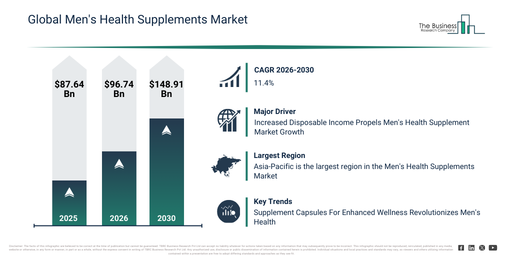
  • Men’s Health Supplements Market Forecast Highlights Expansion From $96.74 Billion To $148.9 Billion Through 2030

    Men’s Health Supplements Market Forecast Highlights Expansion From $96.74 Billion To $148.9 Billion Through 2030

    Through market attractiveness analysis, total addressable market evaluation, company benchmarking matrices, interactive Excel dashboards, expanded supply chain intelligence, emerging startup coverage, and detailed product insights, The Business Research Company’s 2026 market reports provide more actionable and strategically valuable research.

    Men’s Health Supplements Market Size Forecast: How Large Could The Market Become By 2030?

    The market for men’s health supplements has experienced rapid expansion over recent years, with its valuation projected to rise from $87.64 billion in 2025 to $96.74 billion in 2026, reflecting a compound annual growth rate (CAGR) of 10.4%. This historical growth has been largely driven by heightened awareness surrounding male health and wellness, growing disposable incomes, the increasing prevalence of gym and fitness culture, a surge in the popularity of herbal and natural remedies, and an early embrace of sports supplements.

    The men’s health supplements market is projected to experience significant expansion in the upcoming years, with a forecasted value of $148.91 billion by 2030, reflecting a compound annual growth rate (CAGR) of 11.4%. This anticipated growth during the forecast period is driven by factors such as the rapid development of e-commerce platforms, advancements in personalized nutrition, a growing incidence of male health issues linked to lifestyle, an expanding aging male demographic, and an increased emphasis on preventive healthcare. Among the key trends shaping this period are customized nutrition regimens, rising consumer interest in herbal and natural supplements, functional fitness products, increased attention on male hormonal health, and the growing prevalence of online direct-to-consumer sales channels.

    Download A Free Sample Report For Comprehensive Market Insights:

    https://www.thebusinessresearchcompany.com/sample.aspx?id=12719&type=smp&utm_source=BlogsPR&utm_medium=Paid&utm_campaign=Jul_PR

    Men’s Health Supplements Market Expansion Drivers: What Is Shaping Future Growth?

    Rising disposable income is set to drive forward the growth of the men’s health supplement market in the coming years. This growth in disposable income typically stems from an improving economy, which results in higher wages and salaries while also boosting healthcare spending. With more disposable income, men can invest in health supplements to improve their well-being and target specific health issues, thereby supporting overall men’s health and fitness. For example, in August 2023, the Bureau of Economic Analysis, a US government agency, reported that in July 2023, disposable personal income climbed by $7.3 billion (less than 0.1%) and personal consumption expenditures (PCE) rose by $144.6 billion (0.8%). As a result, the increase in disposable income is fueling expansion in the men’s health supplement market.

    Men’s Health Supplements Market Segmentation Trends And Revenue Drivers

    The men’s health supplements market covered in this report is segmented –

    1) By Type: Sports Supplements, Reproductive Health Supplements, Bone And Joint Health Supplements, Cardiovascular Health Supplements, Probiotic Supplements, Anti-Aging Supplements, Hair Growth Supplements, Weight Management Supplements, Immune Health Supplements, Other Types

    2) By Age Group: 20-30, 31-45, 46-60, Above 60

    3) By Formulation: Tablets, Capsules, Liquids, Powders, Gummies, Other Formulations

    4) By Distribution Channel: Online, Offline

    Subsegments:

    1) By Sports Supplements: Protein Powders, Creatine, Branched-Chain Amino Acids (BCAAs), Pre-Workout Formulas

    2) By Reproductive Health Supplements: Testosterone Boosters, Fertility Supplements

    3) By Bone And Joint Health Supplements: Glucosamine, Chondroitin, Calcium and Vitamin D

    4) By Cardiovascular Health Supplements: Omega-3 Fatty Acids, Coenzyme Q10 (CoQ10)

    5) By Probiotic Supplements: Multi-Strain Probiotics, Targeted Probiotic Blends

    6) By Anti-Aging Supplements: Antioxidants, Collagen Supplements

    7) By Hair Growth Supplements: Biotin, Saw Palmetto

    8) By Weight Management Supplements: Fat Burners, Appetite Suppressants

    9) By Immune Health Supplements: Vitamin C, Zinc

    10) By Other Types: Herbal Supplements, Nutraceuticals

    Men’s Health Supplements Market Strategic Trends: What Is Defining The Next Phase Of Growth?

    Key players in the men’s health supplement industry are increasingly investing in the creation of advanced solutions, like supplement capsules, aimed at addressing specific health concerns and improving general wellness. These capsules, typically made from gelatin or similar substances, serve as oral dosage forms that deliver precise, measured quantities of nutritional or bioactive compounds to complement a person’s diet and offer targeted health advantages. A notable example occurred in September 2023, when Olly, an American company specializing in high-quality nutrition and wellness items, introduced its new Mighty Mojo capsule, priced at $35, which is formulated to support healthy testosterone levels and improve sexual function. This product includes tongkat ali, a flowering plant backed by clinical evidence for its role in maintaining testosterone levels and promoting overall health. Additionally, Mighty Mojo incorporates resveratrol and pine bark, both potent antioxidants that may enhance immune function and contribute to general well-being. The supplement was crafted using carefully evaluated dosages of these components to guarantee its efficacy.

    Men’s Health Supplements Market Industry Leaders: Which Organizations Are Driving Competition?

    Major companies operating in the men’s health supplements market are Haleon plc, Herbalife Nutrition Ltd., GNC Holdings LLC, Vitamin Shoppe Inc., Biotest LLC, Hims & Hers Health Inc., Now Health Group Inc., Thorne Research Inc., Natrol LLC, Irwin Naturals Inc., Pharmavite LLC, Nutrix International LLC, Nordic Naturals Inc., Matsun Nutrition Inc., Makers Nutrition LLC, NutraBio Labs Inc., Vox Nutrition Inc., Nutricap Labs LLC, Nutrivo LLC, Paragon Laboratories Inc., Nutra Solutions USA Inc., Optimum Nutrition Inc., BioThrive Sciences LLC, Nutraceutical Wellness Inc., Botanic Supplements Private Limited, Custom Nutra LLC, Bio-Tech Pharmacal Inc., NutraPak USA, NuMedica LLC

    Access The Complete Men’s Health Supplements Market Report:

    https://www.thebusinessresearchcompany.com/report/mens-health-supplements-global-market-report?utm_source=BlogsPR&utm_medium=Paid&utm_campaign=Jul_PR

    Men’s Health Supplements Market Regional Analysis And Leading Geography

    Asia-Pacific was the largest region in the men’s health supplements market in 2025. The regions covered in the men’s health supplements market report are Asia-Pacific, South East Asia, Western Europe, Eastern Europe, North America, South America, Middle East, Africa.

    Get in touch with us:

    The Business Research Company: https://www.thebusinessresearchcompany.com/?utm_source=BlogsPR&utm_medium=Paid&utm_campaign=home_page_test

    Americas: +1 310-496-7795

    Asia: +44 7882 955267 & +91 8897263534

    Europe: +44 7882 955267

    Email us at: marketing@tbrc.info

    Follow us on:

    LinkedIn: https://in.linkedin.com/company/the-business-research-company

    YouTube: https://www.youtube.com/channel/UC24_fI0rV8cR5DxlCpgmyFQ

    Global Market Model: https://www.thebusinessresearchcompany.com/global-market-model
  • Menopause Supplement Market Expected To Reach $2.97 Billion By 2030 As Growth Accelerates At 7.7% CAGR

    Menopause Supplement Market Expected To Reach $2.97 Billion By 2030 As Growth Accelerates At 7.7% CAGR

    Delivering more actionable and strategically valuable research, The Business Research Company’s 2026 market reports feature market attractiveness analysis, total addressable market evaluation, company benchmarking matrices, interactive Excel dashboards, expanded supply chain intelligence, emerging startup coverage, and detailed product insights.

    Menopause Supplement Market Revenue Outlook: What CAGR Is Expected Through 2030?

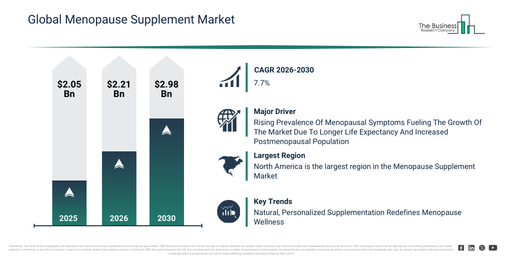
    In recent years, the market for menopause supplements has experienced robust expansion. By 2026, its value is projected to reach $2.21 billion, climbing from $2.05 billion in 2025, which corresponds to a 7.9% compound annual growth rate. This historical growth has been driven by heightened awareness surrounding the management of menopause-related health issues, a growing inclination toward non-prescription wellness products, a wider range of women’s health supplement options, increased health knowledge among women in middle age, and the introduction of various supplement forms.

    The menopause supplement market is projected to experience robust expansion over the coming years. By 2030, its value is anticipated to reach $2.98 billion, driven by a compound annual growth rate (CAGR) of 7.7%. This forecasted growth is fueled by several factors, including an increasing need for personalized menopause nutrition, greater utilization of digital platforms dedicated to women’s health, a heightened emphasis on holistic and lifestyle-oriented menopause management, the broadening of e-commerce channels for supplement sales, and rising financial support for female health research. Key trends shaping this period encompass a growing preference for natural hormone support products, a shift toward non-hormonal supplement options, the development of symptom-specific menopause formulas, an intensified focus on wellness products tailored for women, and a broader acceptance of preventive approaches to menopause care.

    Download A Free Sample Report For Comprehensive Market Insights:

    https://www.thebusinessresearchcompany.com/sample.aspx?id=30320&type=smp&utm_source=BlogsPR&utm_medium=Paid&utm_campaign=Jul_PR

    Menopause Supplement Market Development Factors: Which Trends Are Supporting Demand?

    The growing frequency of menopausal symptoms is anticipated to propel the expansion of the menopause supplement market in the coming years. These symptoms encompass the physical and emotional shifts women undergo as estrogen levels decline during the transition to menopause. This trend is on the rise because women are living longer and spending more time in the postmenopausal stage, which results in prolonged exposure to hormonal and bodily changes. Menopause supplements are frequently utilized to address these symptoms by supplying targeted nutrients and herbal ingredients that may ease hot flashes, mood fluctuations, and sleep issues, thereby contributing to improved hormonal balance and overall health, though individual responses may differ. For example, in December 2023, the National Library of Medicine, a U.S. government body, indicated that roughly 1.3 million women reach menopause each year, typically between ages 45 and 56, with 5% experiencing early menopause between 40 and 45 and 1% dealing with primary ovarian insufficiency before age 40. Consequently, the rising occurrence of menopausal symptoms serves as a major factor driving growth in the menopause supplement market.

    Menopause Supplement Market Segment Analysis Highlighting Growth Areas

    The menopause supplement market covered in this report is segmented –

    1) By Product Type: Hormonal supplements, Non-hormonal supplements, Nutritional supplements, Other Product Types

    2) By Form: Tablets, Capsules, Liquids, Powders, Gummies, Soft gels

    3) By Gender: Women, Men

    4) By Sales Channel: Store-based, Modern trade, Hospital pharmacies, Retail pharmacies, Drug stores, Online pharmacies

    5) By End-user: Hospitals, Homecare, Clinics

    Subsegments:

    1) By Hormonal Supplements: Estrogen Therapy, Progesterone Therapy, Combined Hormone Therapy, Bioidentical Hormone Therapy

    2) By Non-Hormonal Supplements: Herbal Extract Supplements, Phytoestrogen Supplements, Homeopathic Supplements, Botanical Blend Supplements

    3) By Nutritional Supplements: Vitamin Supplements, Mineral Supplements, Protein Supplements, Omega Fatty Acid Supplements

    4) By Other Product Types: Probiotic Supplements, Collagen Supplements, Antioxidant Supplements, Enzyme Supplements

    Menopause Supplement Market Transformation Trends: Which Innovations Are Driving Change?

    In the menopause supplement industry, leading players are concentrating on advanced innovations like customized supplements, which are tailored to offer specific symptom relief, boost effectiveness, and address the distinct hormonal and nutritional profiles of individual women. These customized supplements involve personalized nutritional formulas crafted in response to a person’s particular health requirements, symptoms, hormonal levels, or lifestyle factors. A notable example occurred in September 2025 when Desert Harvest, an American firm recognized for developing natural health products, unveiled its inaugural menopause supplement that incorporates human-identical lactoferrin. This development represents a significant breakthrough because the lactoferrin utilized closely resembles the form naturally present in the human body. The supplement is intended to assist women going through the peri- and post-menopausal stages by combating issues like hormonal imbalances, exhaustion, and immune system support. Through the combination of bioidentical lactoferrin with natural components, the company seeks to provide a non-hormonal, scientifically validated option for menopause relief. This initiative also signifies Desert Harvest’s foray into the swiftly expanding sector of women’s health and menopause supplements.

    Menopause Supplement Market Leading Companies: Who Holds Significant Market Presence?

    Major companies operating in the menopause supplement market are Nestlé Health Science, Procter & Gamble, Bayer AG, Church & Dwight Co. Inc., Herbalife Nutrition Ltd., Amway Corporation, The Nature’s Bounty Co., GNC Holdings Inc., Pharmavite LLC, Blackmores Limited, NOW Foods, Thorne HealthTech, Metagenics Inc., Jarrow Formulas Inc., Nature’s Way, Vitabiotics Ltd., Standard Process Inc., Swisse Wellness Pty Ltd., Bio-Botanica Inc., Life Extension

    Access The Complete Menopause Supplement Market Report:

    https://www.thebusinessresearchcompany.com/report/global-menopause-supplement-market-report?utm_source=BlogsPR&utm_medium=Paid&utm_campaign=Jul_PR

    Menopause Supplement Market Geographic Analysis: Where Is Demand Growing The Fastest?

    North America was the largest region in the menopause supplement market in 2025. Asia-Pacific is expected to be the fastest-growing region in the forecast period. The regions covered in the menopause supplement market report are Asia-Pacific, South East Asia, Western Europe, Eastern Europe, North America, South America, Middle East, Africa.

    Get in touch with us:

    The Business Research Company: https://www.thebusinessresearchcompany.com/?utm_source=BlogsPR&utm_medium=Paid&utm_campaign=home_page_test

    Americas: +1 310-496-7795

    Asia: +44 7882 955267 & +91 8897263534

    Europe: +44 7882 955267

    Email us at: marketing@tbrc.info

    Follow us on:

    LinkedIn: https://in.linkedin.com/company/the-business-research-company

    YouTube: https://www.youtube.com/channel/UC24_fI0rV8cR5DxlCpgmyFQ

    Global Market Model: https://www.thebusinessresearchcompany.com/global-market-model
  • Menopausal Disorder Treatment Market Set To Grow From $12.31 Billion In 2026 To $16.25 Billion By 2030 At A CAGR Of 7.2%

    Menopausal Disorder Treatment Market Set To Grow From $12.31 Billion In 2026 To $16.25 Billion By 2030 At A CAGR Of 7.2%

    Enhanced with market attractiveness analysis, total addressable market evaluation, company benchmarking matrices, interactive Excel dashboards, expanded supply chain intelligence, emerging startup coverage, and detailed product insights, The Business Research Company’s 2026 market reports deliver more actionable and strategically valuable research.

    Menopausal Disorder Treatment Market Growth Analysis: How Will Revenue Expand During The Forecast Period?

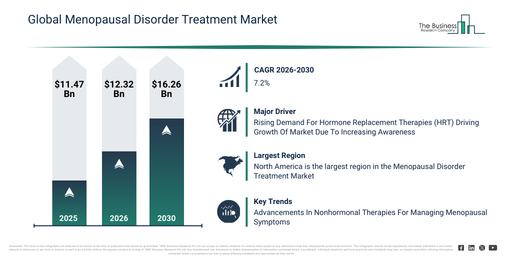
    The market for treating menopausal disorders has experienced robust expansion in recent years. In 2025, its value stood at $11.47 billion, and by 2026 it is projected to reach $12.32 billion, reflecting a compound annual growth rate (CAGR) of 7.4%. This growth during the historical period was driven by factors such as an increase in the aging female population, broader adoption of hormone replacement therapy, more frequent diagnoses of menopausal symptoms, the growth of gynecology care services, and improved healthcare access for women.

    The market for treatments addressing menopausal disorders is projected to experience substantial growth over the coming years. By 2030, its value is anticipated to reach $16.26 billion, reflecting a compound annual growth rate (CAGR) of 7.2%. This upward trajectory during the forecast interval is largely driven by several key factors, including an increased desire for safer menopausal interventions, a stronger emphasis on customized therapeutic approaches, heightened comprehension of the long-term risks associated with hormonal replacement therapy, the proliferation of digital platforms dedicated to women’s wellness, and a growing trend towards preventive healthcare measures for women. Notable developments expected to shape this period include a growing inclination towards non-hormonal treatment options for menopause, a surge in the uptake of individually tailored hormone replacement therapies, the expanded application of lifestyle and behavioral modifications, a wider availability of botanical and natural remedies for menopause, and an elevated consciousness regarding the effective management of menopause-related symptoms.

    Download A Free Sample Report For Comprehensive Market Insights:

    https://www.thebusinessresearchcompany.com/sample.aspx?id=24318&type=smp&utm_source=BlogsPR&utm_medium=Paid&utm_campaign=Jul_PR

    Menopausal Disorder Treatment Market Industry Drivers: What Is Driving Revenue Growth?

    The growth of the menopausal disorder treatment market is being significantly fueled by the escalating demand for hormone replacement therapies. Hormone replacement therapy (HRT) is a medical intervention designed to supplement or replace hormones in order to relieve symptoms caused by menopause or hormonal imbalances. This increasing adoption of HRT stems from enhanced awareness and a stronger desire for effective control of menopausal discomforts and hormone-related issues. By directly replenishing estrogen and progesterone, HRT works to restore hormonal balance and reduce disruptive symptoms such as hot flashes, night sweats, and mood swings, thereby improving patients’ overall well-being. For example, data released in October 2024 by the NHS Business Services Authority (NHSBSA), a UK-based support services entity, indicated that HRT prescriptions surged by 22% to 13 million, while the number of identified patients rose by 12% from 2.3 million in 2022/23 to 2.6 million in 2023/24. Thus, the rising need for hormone replacement therapies continues to drive the expansion of the menopausal disorder treatment market.

    Menopausal Disorder Treatment Market Segment Performance And Strategic Opportunities

    The menopausal disorder treatment market covered in this report is segmented –

    1) By Treatment Type: Hormone Replacement Therapy, Non-Hormonal Treatment, Herbal Supplements, Lifestyle Modifications

    2) By Stages: Menopause, Postmenopause, Perimenopause

    3) By Application: Hot Flashes, Night Sweats, Mood Swings, Vaginal Dryness

    4) By Distribution Channel: Hospital Pharmacy, Retail Pharmacy, Online Pharmacy, Other Distribution Channels

    5) By End-Users: Hospitals, Specialty Clinics, Homecare, Other End-Users

    Subsegments:

    1) By Hormone Replacement Therapy (HRT): Estrogen Therapy, Progesterone Therapy, Combination Therapy, Transdermal Patches, Vaginal Estrogen, Oral Tablets

    2) By Non-Hormonal Treatment: Selective Estrogen Receptor Modulators (SERMs), Antidepressants, Gabapentin, Clonidine, Bisphosphonates, Calcium And Vitamin D Supplements

    3) By Herbal Supplements: Black Cohosh, Red Clover, Dong Quai, Ginseng, Soy Isoflavones, Flaxseed

    4) By Lifestyle Modifications: Dietary Changes, Regular Physical Exercise, Stress Management Techniques, Cognitive Behavioral Therapy (CBT), Smoking Cessation, Sleep Hygiene Practices

    Menopausal Disorder Treatment Market Growth Trends: What Is Influencing The Future Outlook?

    Key players in the menopause disorder treatment sector are focusing on the creation of advanced nonhormonal neurokinin 3 (NK3) receptor antagonist medications to address vasomotor symptoms effectively while avoiding hormone-based approaches. These innovative NK3 receptor antagonist therapies function by blocking NK3 receptors to alleviate menopausal discomfort without the use of hormones. A case in point is Astellas Pharma Inc., a pharmaceutical firm based in Japan, which obtained European Commission approval in December 2023 for Veozah (fezolinetant). This non-hormonal NK3 receptor antagonist is designed to manage moderate to severe vasomotor symptoms (VMS), including hot flashes and night sweats, experienced by menopausal women. The drug achieves this by acting on neurons within the brain’s thermoregulatory center, thereby decreasing both the occurrence and severity of these symptoms.

    Menopausal Disorder Treatment Market Key Players: Which Companies Shape Industry Competition?

    Major companies operating in the menopausal disorder treatment market are Pfizer Inc., F. Hoffmann-La Roche Ltd, Merck & Co Inc., Novartis AG, Bayer AG, Bristol-Myers Squibb Company, Sanofi SA, AstraZeneca plc, Eli Lilly and Company, Novo Nordisk A/S, Abbott Laboratories, GlaxoSmithKline plc, Teva Pharmaceutical Industries Ltd., Ipsen SA, Dr. Reddy’s Laboratories Ltd., Theramex, Besins Healthcare, Mithra Pharmaceuticals, Duchesnay USA, Fervent Pharmaceuticals, Joylux Inc., TherapeuticsMD Inc.

    Access The Complete Menopausal Disorder Treatment Market Report:

    https://www.thebusinessresearchcompany.com/report/menopausal-disorder-treatment-global-market-report?utm_source=BlogsPR&utm_medium=Paid&utm_campaign=Jul_PR

    Menopausal Disorder Treatment Market Global Footprint: Which Region Holds Market Leadership?

    North America was the largest region in the menopausal disorder treatment market in 2025. The regions covered in the menopausal disorder treatment market report are Asia-Pacific, South East Asia, Western Europe, Eastern Europe, North America, South America, Middle East, Africa.

    Get in touch with us:

    The Business Research Company: https://www.thebusinessresearchcompany.com/?utm_source=BlogsPR&utm_medium=Paid&utm_campaign=home_page_test

    Americas: +1 310-496-7795

    Asia: +44 7882 955267 & +91 8897263534

    Europe: +44 7882 955267

    Email us at: marketing@tbrc.info

    Follow us on:

    LinkedIn: https://in.linkedin.com/company/the-business-research-company

    YouTube: https://www.youtube.com/channel/UC24_fI0rV8cR5DxlCpgmyFQ

    Global Market Model: https://www.thebusinessresearchcompany.com/global-market-model