Month: July 2026

  • Bioprocessing Support Services Market Expansion Is Reshaping Competitive Dynamics Across The Industry

    Bioprocessing Support Services Market Expansion Is Reshaping Competitive Dynamics Across The Industry

    Through market attractiveness analysis, total addressable market evaluation, company benchmarking matrices, interactive Excel dashboards, expanded supply chain intelligence, emerging startup coverage, and detailed product insights, The Business Research Company’s 2026 market reports provide more actionable and strategically valuable research.

    Bioprocessing Support Services Market Size, Value And Growth Trends Through 2030

    The bioprocessing support services market has experienced substantial expansion in recent years. This market is set to increase from $2.1 billion in 2025 to $2.4 billion in 2026, achieving a compound annual growth rate (CAGR) of 14.3%. Historically, this growth can be attributed to several factors, including a rise in monoclonal antibody production demand, the expansion of contract research and manufacturing outsourcing, the tightening of global regulatory frameworks for biologics, an increase in biotechnology startups and funding activity, and the adoption of single-use bioprocessing technologies.

    The bioprocessing support services market is projected to experience substantial expansion in the coming years, reaching $4.13 billion by 2030, exhibiting a compound annual growth rate (CAGR) of 14.6%. This anticipated growth is driven by factors such as the increasing intricacy and variety of the biologics pipeline, a heightened demand for quicker drug development cycles, the expansion of manufacturing for advanced therapy medicinal products, a growing imperative for robust global supply chain resilience in biomanufacturing, and a greater focus on optimizing costs and enhancing process efficiency in production. Key trends during this period encompass the growing practice of outsourcing bioprocess development and analytical services to expert providers, the increasing embrace of single-use bioprocessing support solutions, an escalating need for comprehensive regulatory compliance and documentation services, the broadening of technological transfer and scale-up assistance for intricate biologics manufacturing, and an amplified commitment to process standardization and quality assurance in biologics production.

    Download A Free Sample Report For Comprehensive Market Insights:

    https://www.thebusinessresearchcompany.com/sample_request?id=64400075&type=smp

    #Bioprocessing Support Services Market Growth Factors: Which Forces Are Supporting Market Expansion?

    The rising need for biopharmaceuticals is projected to drive the expansion of the bioprocessing support services market moving forward. Biopharmaceuticals are therapeutic products derived from biological sources, such as proteins, monoclonal antibodies, vaccines, and cell and gene therapies, utilized for addressing a broad spectrum of chronic and life-threatening conditions. This escalating demand for biopharmaceuticals is fueled by the increasing prevalence of chronic diseases, advancements in biotechnology, and the shift towards targeted and personalized medical interventions. Bioprocessing support services are crucial in meeting this demand by delivering specialized solutions like process development, scale-up, analytical testing, and regulatory assistance, all of which are vital for efficient and compliant manufacturing of biologics. These services empower biopharmaceutical companies to accelerate production timelines, maintain product quality, and optimize manufacturing effectiveness while minimizing operational complexity. For instance, according to the International Federation of Pharmaceutical Manufacturers & Associations, a U. S. trade association representing leading research-based pharmaceutical and biotechnology companies, biopharmaceutical companies in the United States invested approximately $96 billion in research and development in 2023, accounting for over 20% of total industry sales. Additionally, the economic contribution of the industry remains substantial, with more than $25 billion in biopharmaceutical exports generated by majority foreign-owned firms operating in the United States in 2022. Therefore, the increasing demand for biopharmaceuticals is fostering the growth of the bioprocessing support services market.

    Bioprocessing Support Services Market Segment Analysis Highlighting Growth Areas

    The bioprocessing support services market covered in this report is segmented –

    1) By Service Type: Process Development And Optimization, Analytical And Quality Control Services, Regulatory Support And Compliance Services, Manufacturing Support Services, Validation And Qualification Services, Supply Chain And Logistics Support, Training And Consultancy Services

    2) By Product Type: Single-Use Systems, Bioreactors And Fermenters, Filtration And Purification, Bags And Containers, Media And Buffers

    3) By Scale: Small Scale, Large Scale

    4) By End User: Biopharmaceutical Companies, Contract Manufacturing Organizations, Contract Research Organizations, Academic And Research Institutes, Biotechnology Startups

    Subsegments:

    1) By Process Development And Optimization: Upstream Process Development, Downstream Process Development, Process Scale Up And Scale Down Studies, Process Optimization And Improvement, Cell Line Development Support, Formulation Development Assistance

    2) By Analytical And Quality Control Services: Bioanalytical Testing, Microbiological Testing, Physicochemical Testing, Stability Studies And Shelf Life Analysis, Method Development And Validation, Quality Assurance And Quality Control Support

    3) By Regulatory Support And Compliance Services: Regulatory Submission Preparation, Regulatory Strategy And Consulting, Good Manufacturing Practice Compliance Support, Documentation And Dossier Preparation, Inspection Readiness And Audits Support, Product Registration And Licensing Assistance

    4) By Manufacturing Support Services: Contract Manufacturing Assistance, Technology Transfer Support, Pilot Scale Manufacturing, Commercial Scale Manufacturing, Process Monitoring And Troubleshooting, Equipment And Facility Support

    5) By Validation And Qualification Services: Equipment Qualification, Process Validation, Cleaning Validation, Analytical Method Validation, Computer System Validation, Facility Qualification

    6) By Supply Chain And Logistics Support: Cold Chain Management, Inventory Management, Transportation And Distribution Support, Vendor Management, Supply Chain Planning And Optimization, Import Export Compliance Assistance

    7) By Training And Consultancy Services: Workforce Training Programs, Technical Workshops And Seminars, Process Improvement Consultancy, Regulatory And Compliance Training, Quality Management System Consultancy, Custom Advisory Services

    Bioprocessing Support Services Market Industry Trends: What Changes Are Reshaping Demand?

    Leading companies in the bioprocessing support services market are focused on developing integrated bioprocessing platforms, such as the chromatography resin platform, to improve bioprocessing efficiency and purification performance. A chromatography resin platform is a specialized collection of engineered resins specifically designed for use in bioprocessing and purification workflows. For example, in June 2025, Ecolab Life Sciences, a US-based bioprocessing solutions provider, released Purolite AP+50, an affinity chromatography resin created to boost antibody manufacturing efficiency. Purolite AP+50 boasts a 50-micron bead size, offering the highest dynamic binding capacity within the AP resin platform, alongside excellent durability for capturing monoclonal antibodies. By utilizing Ecolab’s patented Jetted resin bead technology, it guarantees lot-to-lot consistency and reduced lead times, making it suitable for cost-effective, high-purity antibody production and streamlined operations in biopharmaceutical manufacturing.

    Bioprocessing Support Services Market Leading Companies: Who Holds Significant Market Presence?

    Major companies operating in the bioprocessing support services market are Thermo Fisher Scientific Inc., Merck KGaA, Boehringer Ingelheim International GmbH, Corning Incorporated, SGS Société Générale de Surveillance S. A., Eurofins Scientific SE, Agilent Technologies Inc., bioMérieux S. A., Sartorius AG, Getinge AB, Waters Corporation, Samsung Biologics Co. Ltd., Bio-Rad Laboratories Inc., Eppendorf AG, Repligen Corporation, Randox Laboratories Ltd, GenScript Biotech Corporation, Promega Corporation, Takara Bio Inc., Rentschler Biopharma SE, Maravai LifeSciences Holdings Inc., Oxford Biomedica plc, PBS Biotech Inc., Meissner Filtration Products Inc., Bio-Synthesis Inc.

    Access The Complete Bioprocessing Support Services Market Report:

    https://www.thebusinessresearchcompany.com/report/bioprocessing-support-services-market-report

    Bioprocessing Support Services Market Global Footprint: Which Region Holds Market Leadership?

    Asia-Pacific was the largest region in the bioprocessing support services market in 2025. North America is expected to be the fastest-growing region in the forecast period. The regions covered in the bioprocessing support services market report are Asia-Pacific, South East Asia, Western Europe, Eastern Europe, North America, South America, Middle East and Africa.

    Get in touch with us:

    The Business Research Company: https://www.thebusinessresearchcompany.com/

    Americas: +1 310-496-7795

    Asia: +44 7882 955267 & +91 8897263534

    Europe: +44 7882 955267

    Email us at: marketing@tbrc.info

    Follow us on:

    LinkedIn: https://in.linkedin.com/company/the-business-research-company

    YouTube: https://www.youtube.com/channel/UC24_fI0rV8cR5DxlCpgmyFQ

    Global Market Model: https://www.thebusinessresearchcompany.com/global-market-model
  • Bioprocessing Reagent Market Forecast Reveals Where Future Industry Value Will Be Created

    Bioprocessing Reagent Market Forecast Reveals Where Future Industry Value Will Be Created

    Delivering more actionable and strategically valuable research, The Business Research Company’s 2026 market reports feature market attractiveness analysis, total addressable market evaluation, company benchmarking matrices, interactive Excel dashboards, expanded supply chain intelligence, emerging startup coverage, and detailed product insights.

    Bioprocessing Reagent Market CAGR Analysis And Future Market Development

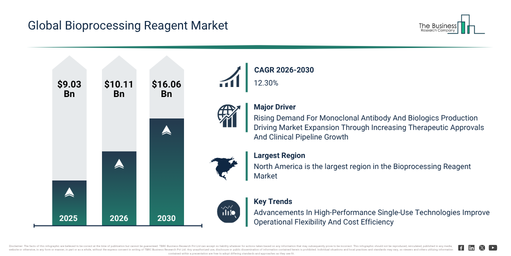
    The bioprocessing reagent market’s size has experienced rapid growth in recent years. It is forecast to increase from $9.03 billion in 2025 to $10.11 billion in 2026, exhibiting a compound annual growth rate (CAGR) of 12.0%. This historical expansion can be attributed to the rising adoption of cell culture techniques in biologics production, the growth in monoclonal antibody manufacturing which necessitates specialized reagents, the expansion of pharmaceutical and biotechnology research infrastructure, the escalating demand for vaccines driving large-scale bioprocessing activities, and the early development of fermentation-based industrial biotechnology processes.

    The bioprocessing reagent market is forecast for substantial growth in the upcoming period, with its size projected to reach $16.06 billion by 2030, demonstrating a compound annual growth rate (CAGR) of 12.3%. This expansion is primarily driven by the increasing need for biosimilars and advanced biologics manufacturing, the rising adoption of automated and continuous bioprocessing setups, growing investments in cell and gene therapy production, the expanding field of personalized medicine requiring specialized bioprocessing workflows, and a stronger focus on scalable and cost-effective biomanufacturing. Major trends anticipated during this forecast include AI-driven bioprocess optimization for enhanced yield and reduced variability in production, the widespread use of single-use bioprocessing systems enabling flexible and contamination-free manufacturing, continuous bioprocessing technologies improving production efficiency and scalability, innovations in advanced chromatography resins for high-purity biologics separation, and the development of sustainable bio-based reagents for greener biomanufacturing processes.

    Download A Free Sample Report For Comprehensive Market Insights:

    https://www.thebusinessresearchcompany.com/sample_request?id=64986523&type=smp

    Bioprocessing Reagent Market Demand Drivers: What Is Fueling Industry Growth?

    The rising demand for monoclonal antibody and biologics production is set to fuel the growth of the bioprocessing reagent market. Monoclonal antibodies and biologics are intricate protein-based therapeutics, crafted from living cells, designed to target specific antigens for treating various ailments like cancer, autoimmune disorders, and neurological conditions. This escalating demand for their production stems from an increasing number of therapeutic approvals and a strong late-stage clinical development pipeline. Bioprocessing reagents play a vital role in enabling efficient cell culture, protein synthesis, and purification processes necessary for the large-scale manufacturing of biologics. An illustrative example from December 2024, reported by the National Center for Biotechnology Information, a US-based biomedical research platform, showed that 21 antibody therapeutics received their first approvals in 2024, an increase from 16 approvals in 2023, signaling a year-on-year rise in biologics commercialization activities. Consequently, the heightened demand for monoclonal antibody and biologics production is a primary driver for the expansion of the bioprocessing reagent market.

    Bioprocessing Reagent Market Segment Performance And Strategic Opportunities

    The bioprocessing reagent market covered in this report is segmented –

    1) By Product Type: Cell Culture Media, Buffer Solutions, Enzymes, Growth Factors, Chromatography Resins, Filtration Reagents, Antifoaming Agents, Purification Reagents, Other Bioprocessing Reagents

    2) By Technology: Upstream Bioprocessing Reagents, Downstream Bioprocessing Reagents, Single-Use Bioprocessing Solutions, Continuous Bioprocessing Systems, Chromatography-Based Purification Reagents, Filtration And Separation Reagents

    3) By Grade: Research Grade Bioprocessing Reagents, Good Manufacturing Practice (GMP) Grade And Clinical Grade Reagents, Animal Component-Free Certified Reagents, Chemically Defined Formulations, Xeno-Free Bioprocessing Reagents

    4) By Process Stage: Upstream Processing Reagents, Cell Culture And Fermentation Reagents, Downstream Processing Reagents, Purification And Chromatography Reagents, Formulation And Fill-Finish Reagents

    5) By End-User: Biopharmaceutical Manufacturers, Contract Development And Manufacturing Organizations, Contract Research Organizations, Academic And Research Institutions, Vaccine Production Facilities, Cell And Gene Therapy Companies, Diagnostic Manufacturers, Industrial Biotechnology Companies

    Subsegments:

    1) By Cell Culture Media: Basal Media, Serum Free Media, Protein Free Media, Chemically Defined Media

    2) By Buffer Solutions: Phosphate Buffers, Acetate Buffers, Tris Buffers, Citrate Buffers

    3) By Enzymes: Proteases, Nucleases, Ligases, Polymerases

    4) By Growth Factors: Epidermal Growth Factors, Fibroblast Growth Factors, Insulin Like Growth Factors, Transforming Growth Factors

    5) By Chromatography Resins: Ion Exchange Resins, Affinity Resins, Size Exclusion Resins, Hydrophobic Interaction Resins

    6) By Filtration Reagents: Membrane Filters, Depth Filters, Filter Aids, Microfiltration Reagents

    7) By Antifoaming Agents: Silicone Based Antifoaming Agents, Oil Based Antifoaming Agents, Water Based Antifoaming Agents

    8) By Purification Reagents: Precipitation Reagents, Extraction Reagents, Clarification Reagents, Concentration Reagents

    9) By Other Bioprocessing Reagents: Cryoprotectants, Stabilizers, Detergents, Process Additives

    Bioprocessing Reagent Market Innovation Trends: Which Developments Are Transforming The Industry?

    Major companies operating in the bioprocessing reagent market are concentrating on developing high-performance single-use technologies, such as pre-sterilized, disposable bioprocessing reagents, to increase manufacturing flexibility, decrease contamination hazards, and reduce capital expenditure. Single-use bioprocessing reagents are ready-to-use, disposable chemical and biological components intended for a singular application in upstream and downstream processing, eliminating the need for cleaning validation and shortening turnaround time. For instance, in October 2023, Thermo Fisher Scientific Inc., a US-based biotechnology company, launched its Gibco CTS Detachable Dynabeads platform, an advanced cell separation technology designed for cell therapy manufacturing. This platform allows for gentle bead detachment to improve cell viability, supports closed-system processing to lessen contamination risk, and enhances scalability for commercial production. This product introduction highlights a strong supplier commitment to reducing operational costs while improving process efficiency and regulatory compliance in advanced biomanufacturing environments.

    Bioprocessing Reagent Market Key Players: Which Companies Shape Industry Competition?

    Major companies operating in the bioprocessing reagent market are Thermo Fisher Scientific Inc., Danaher Corporation, Merck KGaA, FUJIFILM Corporation, Corning Incorporated, Lonza Group, Avantor Inc., Sartorius AG, Bio-Rad Laboratories Inc., Bio-Techne, Repligen Corporation, Promega Corporation, Takara Bio, MP Biomedicals, ITW, Creative Bioarray, PromoCell, Rockland Immunochemicals, Solis BioDyne, Nippon Genetics, HiMedia Laboratories, Capricorn Scientific, Serana Europe, ZenBio

    Access The Complete Bioprocessing Reagent Market Report:

    https://www.thebusinessresearchcompany.com/report/bioprocessing-reagent-market-report

    Bioprocessing Reagent Market Regional Distribution: Which Areas Drive Market Expansion?

    North America was the largest region in the bioprocessing reagent market in 2025. Asia-Pacific is expected to be the fastest-growing region in the forecast period. The regions covered in the bioprocessing reagent market report are Asia-Pacific, South East Asia, Western Europe, Eastern Europe, North America, South America, Middle East and Africa.

    Get in touch with us:

    The Business Research Company: https://www.thebusinessresearchcompany.com/

    Americas: +1 310-496-7795

    Asia: +44 7882 955267 & +91 8897263534

    Europe: +44 7882 955267

    Email us at: marketing@tbrc.info

    Follow us on:

    LinkedIn: https://in.linkedin.com/company/the-business-research-company

    YouTube: https://www.youtube.com/channel/UC24_fI0rV8cR5DxlCpgmyFQ

    Global Market Model: https://www.thebusinessresearchcompany.com/global-market-model
  • Biomedical Refrigerator And Freezer Market Growth Through 2030 Creates New Strategic Opportunities

    Biomedical Refrigerator And Freezer Market Growth Through 2030 Creates New Strategic Opportunities

    Enhanced with market attractiveness analysis, total addressable market evaluation, company benchmarking matrices, interactive Excel dashboards, expanded supply chain intelligence, emerging startup coverage, and detailed product insights, The Business Research Company’s 2026 market reports deliver more actionable and strategically valuable research.

    Biomedical Refrigerator And Freezer Market Expansion From $4.8 Billion In 2026 To $7.25 Billion In 2030

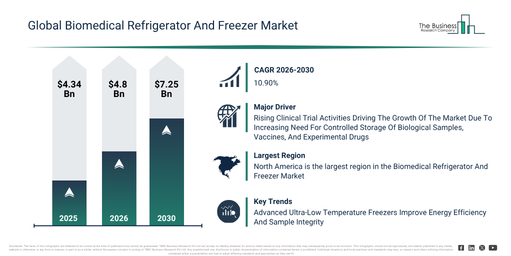
    The biomedical refrigerator and freezer market has experienced substantial growth in recent years. Its valuation is projected to increase from $4.34 billion in 2025 to $4.8 billion by 2026, exhibiting a compound annual growth rate (CAGR) of 10.6%. Historically, this expansion has been driven by several factors, including a greater need for vaccine storage during worldwide immunization initiatives, an escalating requirement for dependable blood and plasma storage in healthcare facilities, the expansion of pharmaceutical research demanding regulated temperature environments, the proliferation of clinical laboratories and diagnostic infrastructure, and the establishment of initial cold chain logistics for health supply networks.

    The biomedical refrigerator and freezer market is poised for significant expansion over the coming years, with its size projected to reach $7.25 billion by 2030, exhibiting a compound annual growth rate (CAGR) of 10.9%. This growth throughout the forecast period can be attributed to several factors, including the increasing demand for biologics and cell-based therapies that necessitate ultra-low temperature storage, a heightened emphasis on vaccine distribution and pandemic preparedness infrastructure, the growing adoption of smart monitoring and connected refrigeration systems, the ongoing expansion of biobanking and genomic research requiring long-term sample preservation, and increasingly stringent regulatory standards for temperature-sensitive medical storage. Major trends anticipated during this period encompass IoMT-enabled biomedical refrigeration systems offering real-time temperature monitoring and predictive alerts, the development of energy-efficient ultra-low temperature freezer designs aimed at reducing their operational carbon footprint, the deployment of cloud-based cold chain monitoring platforms for managing vaccine and biologics storage, the integration of automated inventory and sample tracking capabilities within biomedical storage systems, and advancements in insulation and cryogenic cooling technologies for extended biological preservation.

    Download A Free Sample Report For Comprehensive Market Insights:

    https://www.thebusinessresearchcompany.com/sample_request?id=69712484&type=smp

    Biomedical Refrigerator And Freezer Market Growth Drivers: What Factors Are Accelerating Expansion?

    Rising clinical trial activities are projected to drive the expansion of the biomedical refrigerator and freezer market. These activities involve the planning, execution, oversight, and examination of research investigations aimed at assessing the safety, effectiveness, and results of medical treatments in human subjects. The increase in clinical trials stems from a rising demand for innovative therapies, with pharmaceutical and biotechnology firms increasingly undertaking studies to create new drugs and treatments for global unmet medical requirements. This expansion in clinical trials consequently heightens the demand for biomedical refrigerators and freezers, given the necessity to store a greater volume of biological samples, vaccines, and investigational drugs at controlled temperatures to maintain their safety and efficacy. For example, data from March 2026, released by the UK’s Association of the British Pharmaceutical Industry (ABPI), indicated a 36% rise in commercial clinical trials launched in the UK in 2024 compared to the prior year. This advancement positioned the UK two spots higher, reaching sixth place worldwide for competitiveness in all Phase III trials started that year. Consequently, the growing volume of clinical trial activities is fueling the expansion of the biomedical refrigerator and freezer market.

    #Biomedical Refrigerator And Freezer Market Segment Landscape And Growth Potential

    The biomedical refrigerator and freezer market covered in this report is segmented –

    1) By Product Type: Laboratory Refrigerators, Blood Bank Refrigerators, Pharmacy Refrigerators, Ultra-Low Temperature Freezers, Plasma Freezers, Cryogenic Freezers, Vaccine Storage Refrigerators, Explosion-Proof Refrigerators, Chromatography Refrigerators, Undercounter And Benchtop Units

    2) By Mobility: Stationary Floor-Standing Units, Portable And Transportable Units, Mobile Cart-Mounted Systems, Benchtop And Countertop Models, Transport And Shipping Containers

    3) By Temperature Range: 2°C to 8°C Refrigerators, -20°C Freezers, -40°C Freezers, -80°C Ultra-Low Freezers, Cryogenic Freezers (-150°C And below)

    4) By Application: Vaccine Storage, Blood And Plasma Storage, Drug Storage, Sample Preservation, Biobanking

    5) By End User: Hospitals, Research Laboratories, Pharmacies, Diagnostic Centers, Other End Users

    Subsegments:

    1) By Laboratory Refrigerators: Standard Temperature Units, Low Temperature Units, Glass Door Refrigerators, Solid Door Refrigerators, Undercounter Refrigerators

    2) By Blood Bank Refrigerators: Platelet Storage Units, Red Blood Cell Storage Units, Plasma Storage Units, Dual Temperature Units

    3) By Pharmacy Refrigerators: Vaccine Storage Units, Medication Storage Units, Controlled Room Temperature Units, Compartmentalized Refrigerators

    4) By Ultra-Low Temperature Freezers: Vertical Ultra-Low Freezers, Horizontal Ultra-Low Freezers, Undercounter Ultra-Low Freezers, Stackable Ultra-Low Freezers

    5) By Plasma Freezers: Single Compartment Freezers, Multi Compartment Freezers, Portable Plasma Freezers

    6) By Cryogenic Freezers: Liquid Nitrogen Freezers, Mechanical Cryogenic Freezers, Rack Mounted Cryogenic Freezers

    7) By Vaccine Storage Refrigerators: Purpose Built Vaccine Refrigerators, Undercounter Vaccine Refrigerators, Pharmacy Vaccine Refrigerators

    8) By Explosion-Proof Refrigerators: Flammable Material Refrigerators, Corrosive Material Refrigerators, Hazardous Environment Refrigerators

    9) By Chromatography Refrigerators: Solvent Storage Refrigerators, Sample Storage Refrigerators, Column Storage Refrigerators

    10) By Undercounter And Benchtop Units: Compact Benchtop Refrigerators, Mini Undercounter Refrigerators, Portable Undercounter Units

    Biomedical Refrigerator And Freezer Market Trends: What Is Shaping Future Industry Growth?

    Leading companies in the biomedical refrigerators and freezers market are concentrating on developing advanced solutions, such as ultra-low temperature (ULT) freezers, with the goal of enhancing sample preservation, improving workflow efficiency, and ensuring regulatory compliance in laboratory and clinical environments. Ultra-low temperature (ULT) freezers are refrigeration systems designed to maintain extremely low temperatures, typically from -40°C to -86°C, for the storage of biological materials, pharmaceuticals, and cell- and gene-therapy products. For instance, in April 2024, Thermo Fisher Scientific Inc., a US-based life sciences technology company, launched its TSX Universal Series ULT Freezers. These freezers, crafted to assist scientists across diverse workflows, feature Universal V-Drive technology, tighter temperature control, faster recovery times, and universal voltage support, while achieving ISO Class 5.5 cleanroom compliance. Such advancements enable reliable long-term storage of blood, blood products, and sensitive biological materials in academic, GMP, and research laboratories, simultaneously improving energy efficiency and supporting sustainability goals.

    Biomedical Refrigerator And Freezer Market Competitive Landscape: Who Are The Leading Companies?

    Major companies operating in the biomedical refrigerator and freezer market are Thermo Fisher Scientific Inc., Liebherr Group, Follett LLC, Dometic Group, PHC Holdings Corporation, Eppendorf AG, Telstar SA, Binder GmbH, B Medical Systems S. à r. l., Helmer Inc., Vestfrost Solutions, Arctiko A/S, Jeio Tech Inc., So-Low Environmental Equipment Co. Inc., Migali Industries Inc., Desmon S. p. A., Labcold Ltd., Philipp Kirsch GmbH, Gram Commercial A/S, Haier Biomedical International, Fiocchetti Scientific S. r. l., Evermed S. r. l., Accucold, Froilabo

    Access The Complete Biomedical Refrigerator And Freezer Market Report:

    https://www.thebusinessresearchcompany.com/report/biomedical-refrigerator-and-freezer-market-report

    Biomedical Refrigerator And Freezer Market Leading Geography: Which Region Generates The Most Revenue?

    North America was the largest region in the biomedical refrigerator and freezer market in 2025. Asia-Pacific is expected to be the fastest-growing region in the forecast period. The regions covered in the biomedical refrigerator and freezer market report are Asia-Pacific, South East Asia, Western Europe, Eastern Europe, North America, South America, Middle East and Africa.

    Get in touch with us:

    The Business Research Company: https://www.thebusinessresearchcompany.com/

    Americas: +1 310-496-7795

    Asia: +44 7882 955267 & +91 8897263534

    Europe: +44 7882 955267

    Email us at: marketing@tbrc.info

    Follow us on:

    LinkedIn: https://in.linkedin.com/company/the-business-research-company

    YouTube: https://www.youtube.com/channel/UC24_fI0rV8cR5DxlCpgmyFQ

    Global Market Model: https://www.thebusinessresearchcompany.com/global-market-model
  • Biomarker-Based Immunoassays Market Size Projected To Increase From $7.37 Billion To $11.55 Billion During The Forecast Period

    Through market attractiveness analysis, total addressable market evaluation, company benchmarking matrices, interactive Excel dashboards, expanded supply chain intelligence, emerging startup coverage, and detailed product insights, The Business Research Company’s 2026 market reports provide more actionable and strategically valuable research.

    Biomarker-Based Immunoassays Market Forecast Highlighting Growth From $7.37 Billion To $11.55 Billion

    The biomarker-based immunoassays market has experienced considerable expansion in recent years. This market is expected to increase from $6.6 billion in 2025 to $7.37 billion in 2026, demonstrating a compound annual growth rate (CAGR) of 11.6%. The historical growth of this market can be attributed to factors such as the rising incidence of chronic diseases, which has intensified the demand for early diagnostic testing, the expanded application of enzyme linked immunosorbent assay in clinical laboratories, improvements in hospital diagnostic infrastructure and laboratory networks, the increasing use of antibody based detection techniques in research applications, and the formulation of standardized biomarker identification methods in biomedical research.

    The biomarker-based immunoassays market is projected to experience substantial expansion in the coming years, reaching a valuation of $11.55 billion by 2030, exhibiting a compound annual growth rate (CAGR) of 11.9%. This projected growth during the forecast period is fueled by several factors, including the escalating demand for personalized medicine and precise diagnostics, the greater incorporation of AI and machine learning into biomarker analysis, the wider embrace of multiplex and high-throughput immunoassay techniques, the broader deployment of point-of-care diagnostic testing in distant healthcare environments, and increased financial commitments to pharmaceutical research and drug discovery initiatives. Key trends anticipated in this period encompass AI-powered biomarker interpretation alongside predictive disease modeling to improve diagnostic precision, multiplex immunoassay platforms allowing for the concurrent identification of numerous biomarkers, cloud-based immunoassay systems for consolidated management of diagnostic data, laboratory automation combined with robotic sample handling for efficient high-throughput immunoassay analysis, and advanced point-of-care immunoassay devices for swift clinical diagnoses.

    Download A Free Sample Report For Comprehensive Market Insights:

    https://www.thebusinessresearchcompany.com/sample_request?id=11186796&type=smp

    Biomarker-Based Immunoassays Market Growth Factors Supporting Long-Term Expansion

    The escalating number of oncology cases is anticipated to fuel the expansion of the biomarker-based immunoassays market. Oncology cases, defined as the occurrence of cancers stemming from abnormal and uncontrolled cellular growth that can disseminate to various body parts, are on the rise primarily due to aging populations. The risk of developing cancer increases substantially with age, and longer life expectancies lead to a greater number of diagnosed cases. Biomarker-based immunoassays are instrumental in managing oncology cases by enabling early detection, meticulous monitoring of disease progression, and guiding personalized treatment decisions through the accurate identification of cancer-specific biomarkers. For example, in February 2024, the World Health Organization projected over 35 million new cancer cases by 2050, marking a 77% increase from the estimated 20 million cases in 2022. Therefore, the increasing incidence of oncology cases is a significant driver for the growth of the biomarker-based immunoassays market.

    Biomarker-Based Immunoassays Market Categorization By Product Type And Application

    The biomarker-based immunoassays market covered in this report is segmented –

    1) By Product: Consumables, Instruments And Analyzers, Reagents And Kits, Services

    2) By Biomarker Type: Protein Biomarkers, Hormone Biomarkers, Cardiac Biomarkers, Cancer Biomarkers, Infectious Disease Biomarkers, Neurological Biomarkers, Autoimmune Disease Biomarkers

    3) By Technology: Chemiluminescence, Enzyme Linked Immunosorbent Assay, Fluorescence, Multiplex, Radioimmunoassay, Other Technologies

    4) By Application: Oncology Diagnostics, Cardiology Diagnostics, Infectious Disease Testing, Endocrinology Testing, Autoimmune Disease Testing, Neurology Diagnostics, Drug Discovery And Development

    5) By End-User: Clinical Diagnostic Laboratories, Pharmaceutical Research And Development, Contract Research Organizations, Hospitals And Clinics, Academic Research Institutes

    Subsegments:

    1) By Consumables: Pipette Tips, Microplates, Sample Containers, Microcentrifuge Tubes, Reagent Reservoirs, Disposable Pipettes

    2) By Instruments And Analyzers: Enzyme Linked Immunosorbent Assay Analyzers, Chemiluminescence Immunoassay Analyzers, Fluorescence Immunoassay Systems, Multiplex Assay Platforms, Radioimmunoassay Instruments, Automated Immunoassay Analyzers

    3) By Reagents And Kits: Enzyme Linked Immunosorbent Assay Kits, Chemiluminescence Immunoassay Reagents, Fluorescence Immunoassay Reagents, Multiplex Assay Kits, Radioimmunoassay Kits, Controls And Standards

    4) By Services: Assay Development Services, Sample Testing Services, Data Analysis Services, Technical Support Services, Clinical Trial Support Services, Training And Consultation Services

    Biomarker-Based Immunoassays Market Industry Trends Shaping Future Revenue Growth

    Key companies operating within the biomarker-based immunoassays market are prioritizing the development of innovative solutions, such as ultrasensitive immunoassay platforms, to facilitate the early and precise detection of low-abundance biomarkers. These ultrasensitive immunoassay platforms represent advanced diagnostic systems engineered to identify exceptionally low concentrations of biomarkers with high accuracy and specificity, thereby enabling earlier disease detection, enhanced diagnostic precision, and improved monitoring of disease progression compared to traditional assays. For instance, in July 2025, Spear Bio Inc., a US-based biotechnology company, launched SPEAR UltraDetect, a next-generation ultrasensitive immunoassay solution specifically designed to improve biomarker detection in neurodegenerative disease research. This platform employs proprietary homogeneous assay technology that eliminates the need for wash steps, a departure from traditional heterogeneous immunoassays, thus allowing for faster and more streamlined workflows. It possesses the capability to detect protein biomarkers at attomolar concentrations using as little as 1 µL of sample, significantly enhancing sensitivity and efficiency. The solution incorporates assays targeting critical neurological biomarkers including pTau217, pTau231, GFAP, and NfL, which support early and accurate disease analysis.

    Biomarker-Based Immunoassays Market Company Landscape And Strategic Competition

    Major companies operating in the biomarker-based immunoassays market are Thermo Fisher Scientific Inc., Abbott Laboratories, Merck KGaA, Eurofins Scientific SE, Bio-Rad Laboratories Inc., QIAGEN N. V., Tecan Trading AG, Autobio Diagnostics Co. Ltd., Promega Corporation, Sekisui Diagnostics LLC, Boditech Med Inc., Dynex Technologies Inc., NanoEntek Inc., J. Mitra & Co. Pvt. Ltd., ALPCO Diagnostics LLC, Micropoint Bioscience Inc., Coris BioConcept, MiCo BioMed Co. Ltd., Abionic SA, ANP Technologies Inc., Axela Inc., Epitope Diagnostics Inc., MedMira Inc., Nanomix Inc.

    Access The Complete Biomarker-Based Immunoassays Market Report:

    https://www.thebusinessresearchcompany.com/report/biomarker-based-immunoassays-market-report

    Biomarker-Based Immunoassays Market Regional Outlook: Where Are The Largest Opportunities Located?

    North America was the largest region in the biomarker-based immunoassays market in 2025. Asia-Pacific is expected to be the fastest-growing region in the forecast period. The regions covered in the biomarker-based immunoassays market report are Asia-Pacific, South East Asia, Western Europe, Eastern Europe, North America, South America, Middle East and Africa.

    Get in touch with us:

    The Business Research Company: https://www.thebusinessresearchcompany.com/

    Americas: +1 310-496-7795

    Asia: +44 7882 955267 & +91 8897263534

    Europe: +44 7882 955267

    Email us at: marketing@tbrc.info

    Follow us on:

    LinkedIn: https://in.linkedin.com/company/the-business-research-company

    YouTube: https://www.youtube.com/channel/UC24_fI0rV8cR5DxlCpgmyFQ

    Global Market Model: https://www.thebusinessresearchcompany.com/global-market-model
  • Bioabsorbable Orthopedic Implants Market Forecast Highlights Expansion From $1.46 Billion To $2.41 Billion Through 2030

    Bioabsorbable Orthopedic Implants Market Forecast Highlights Expansion From $1.46 Billion To $2.41 Billion Through 2030

    Enhanced with market attractiveness analysis, total addressable market evaluation, company benchmarking matrices, interactive Excel dashboards, expanded supply chain intelligence, emerging startup coverage, and detailed product insights, The Business Research Company’s 2026 market reports deliver more actionable and strategically valuable research.

    Bioabsorbable Orthopedic Implants Market Value Expansion And Long-Term Growth Outlook

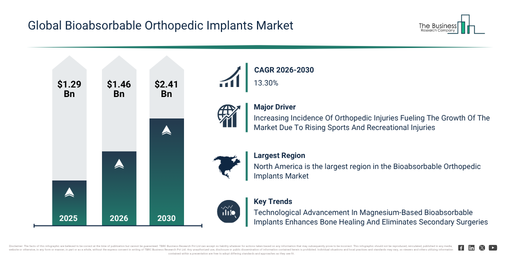
    The bioabsorbable orthopedic implants market has experienced swift expansion recently. It is forecast to rise from $1.29 billion in 2025 to $1.46 billion in 2026, achieving a compound annual growth rate (CAGR) of 13.1%. The growth observed in the past can be ascribed to several factors, such as the increased adoption of metallic implants for fracture fixation leading to a need for removal surgeries; a surge in sports injuries and trauma incidents requiring orthopedic interventions; the early development of biocompatible polymer materials suitable for medical applications; an evolving clinical preference for minimally invasive surgical techniques; and the expansion of hospital infrastructure that supports orthopedic procedures.

    The bioabsorbable orthopedic implants market is poised for significant expansion in the foreseeable future, expected to reach $2.41 billion by 2030, at a compound annual growth rate (CAGR) of 13.3%. This growth during the forecast period is driven by various factors, including the increasing integration of biodegradable materials, which helps in reducing the necessity for secondary implant removal procedures. Other contributors are the escalating demand for patient-specific orthopedic solutions utilizing 3D printing technology, a heightened focus on achieving quicker recovery times and minimizing post-surgical complications, advancements in biomaterial science that allow for controlled degradation rates, and the expanding elderly demographic necessitating more orthopedic care. Major trends influencing this period encompass innovations in bioresorbable polymers for advanced orthopedic fixation devices, the development of personalized implant designs through patient-specific anatomical modeling, progress in composite material development for enhanced mechanical strength and controlled degradation, the adoption of minimally invasive orthopedic procedures driving the need for absorbable fixation systems, and the introduction of smart biodegradable implants that provide controlled drug elution for improved bone healing.

    Download A Free Sample Report For Comprehensive Market Insights:

    https://www.thebusinessresearchcompany.com/sample_request?id=66092687&type=smp

    Bioabsorbable Orthopedic Implants Market Expansion Supported By Key Demand Factors

    The anticipated expansion of the bioabsorbable orthopedic implants market is propelled by the growing frequency of orthopedic injuries. These injuries involve harm to the musculoskeletal system, encompassing bones, joints, ligaments, tendons, and muscles, frequently resulting from trauma, sports activities, accidents, or age-related conditions. The heightened occurrence of orthopedic injuries is fueled by greater engagement in sports and physical activities, an expanding elderly population, and an elevated risk of road accidents and trauma incidents. Bioabsorbable orthopedic implants contribute to orthopedic care by offering temporary structural support for bone repair, while naturally breaking down within the body, thereby negating the necessity for surgical extraction, enhancing treatment efficacy, and improving patient care results. For example, data from the Consumer Product Safety Commission indicates that in 2024, sports and recreational injuries requiring emergency department treatment saw a 17% rise compared to 2023, sustaining an upward trend following the pandemic-induced decrease, with total cases reaching around 4. 4 million in 2024. Thus, the rising incidence of orthopedic injuries is a key factor driving the growth of the bioabsorbable orthopedic implants market.

    Bioabsorbable Orthopedic Implants Market Segmentation And Category Breakdown

    The bioabsorbable orthopedic implants market covered in this report is segmented –

    1) By Product Type: Screws, Pins, Plates, Rods, Sutures

    2) By Material Type: Polylactic Acid (PLA), Polyglycolic Acid (PGA), Polycaprolactone (PCL), Composite Materials

    3) By Application: Trauma, Spine, Sports Injury, Craniofacial, Other Applications

    4) By End User: Hospitals, Ambulatory Surgical Centers, Specialty Clinics

    Subsegments:

    1) By Screws: Cannulated Screws, Cortical Screws, Cancellous Screws, Headless Screws

    2) By Pins: Kirschner Pins, Steinmann Pins, Smooth Pins, Threaded Pins

    3) By Plates: Locking Plates, Compression Plates, Reconstruction Plates, Mini Plates

    4) By Rods: Intramedullary Rods, Elastic Rods, Locking Rods, Solid Rods

    5) By Sutures: Absorbable Sutures, Non-Absorbable Sutures, Braided Sutures, Monofilament Sutures

    Bioabsorbable Orthopedic Implants Market Growth Trends Influencing Competitive Dynamics

    Companies in the bioabsorbable orthopedic implants market are directing their efforts toward advancements in magnesium-based bioabsorbable implants, such as magnesium alloy-based fixation devices, responding to the increasing demand for quicker bone healing, less invasive procedures, and the elimination of follow-up surgeries for implant removal. These magnesium-based bioabsorbable implants are sophisticated orthopedic devices crafted from biodegradable metal alloys that offer mechanical strength comparable to conventional titanium implants while gradually dissolving within the body, supporting natural bone regeneration and lessening long-term complications linked to permanent implants. As an illustration, in June 2024, Bioretec Ltd., a medical device company located in Finland, introduced the RemeOs trauma screw. This implant is manufactured from a proprietary magnesium alloy developed to provide considerable mechanical strength alongside controlled biodegradation. It ensures stable fracture fixation while progressively resorbing in parallel with the bone healing process, thus removing the necessity for implant removal surgery. Moreover, the screw encourages bone growth through its biological interaction with surrounding tissue and is suitable for various applications including trauma surgery, osteotomies, and the correction of deformities.

    Bioabsorbable Orthopedic Implants Market Competitive Analysis Of Major Industry Participants

    Major companies operating in the bioabsorbable orthopedic implants market are Johnson & Johnson Services Inc., Stryker Corporation, Evonik Industries AG, B. Braun SE, Zimmer Biomet Holdings Inc., Teijin Limited, Smith & Nephew plc, Arthrex Inc., Meril Life Sciences Pvt. Ltd., CONMED Corporation, Orthofix Medical Inc., Wright Medical Group N. V., KLS Martin Group (Gebrüder Martin GmbH & Co. KG), Cook Biotech Incorporated LLC, Anika Therapeutics Inc., Acumed LLC, OrthoPediatrics Corp., Xtant Medical Holdings Inc., Citieffe S. r. l., Biometrix Ltd., Bioretec Ltd., Orthomed S. A. S., Aziyo Biologics Inc.

    Access The Complete Bioabsorbable Orthopedic Implants Market Report:

    https://www.thebusinessresearchcompany.com/report/bioabsorbable-orthopedic-implants-market-report

    #Bioabsorbable Orthopedic Implants Market Largest Region: Which Geography Holds The Highest Market Share?

    North America was the largest region in the bioabsorbable orthopedic implants market in 2025. Asia-Pacific is expected to be the fastest-growing region in the forecast period. The regions covered in the bioabsorbable orthopedic implants market report are Asia-Pacific, South East Asia, Western Europe, Eastern Europe, North America, South America, Middle East and Africa.

    Get in touch with us:

    The Business Research Company: https://www.thebusinessresearchcompany.com/

    Americas: +1 310-496-7795

    Asia: +44 7882 955267 & +91 8897263534

    Europe: +44 7882 955267

    Email us at: marketing@tbrc.info

    Follow us on:

    LinkedIn: https://in.linkedin.com/company/the-business-research-company

    YouTube: https://www.youtube.com/channel/UC24_fI0rV8cR5DxlCpgmyFQ

    Global Market Model: https://www.thebusinessresearchcompany.com/global-market-model

  • Auto Disable Syringes Market Size Projected To Increase From $21.34 Billion To $41.48 Billion During The Forecast Period

    Auto Disable Syringes Market Size Projected To Increase From $21.34 Billion To $41.48 Billion During The Forecast Period

    Delivering more actionable and strategically valuable research, The Business Research Company’s 2026 market reports feature market attractiveness analysis, total addressable market evaluation, company benchmarking matrices, interactive Excel dashboards, expanded supply chain intelligence, emerging startup coverage, and detailed product insights.

    Auto Disable Syringes Market Expansion From $21.34 Billion In 2026 To $41.48 Billion In 2030

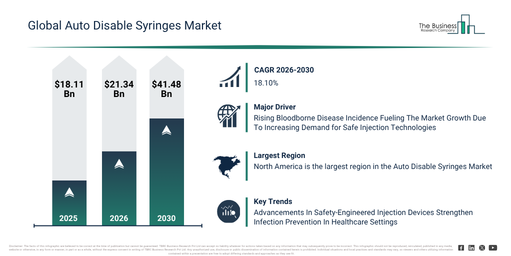
    Recent years have witnessed significant growth in the auto disable syringes market size. Forecasts show it will ascend from $18.11 billion in 2025 to $21.34 billion in 2026, achieving a compound annual growth rate (CAGR) of 17.8%. Historically, this expansion has been driven by several factors: a greater incidence of bloodborne infections linked to unsafe injection practices, the expansion of worldwide vaccination programs and immunization rates, increased understanding of how to prevent needle-stick injuries, the ongoing development of healthcare facilities in emerging markets, and more stringent regulations concerning single-use medical devices.

    The auto disable syringes market is anticipated to experience significant growth over the next few years, with its valuation expected to reach $41.48 billion by 2030, demonstrating a compound annual growth rate (CAGR) of 18.1%. This projected growth during the forecast period can be attributed to the expanding embrace of advanced safety-engineered syringe technologies, increased investments in automated medical device manufacturing facilities, a heightened demand for infection control products in outpatient care settings, rising public healthcare expenditure on vaccination programs, and a growing emphasis on sustainable and recyclable medical consumables. Furthermore, prominent trends for this period include the wider adoption of single-use safety injection devices in immunization efforts, an increasing need for low dead space auto-disable syringes for effective drug delivery, the rising implementation of infection prevention protocols within healthcare facilities, governmental initiatives fostering safe injection practices in developing nations, and an evolving preference for retractable and tamper-proof syringe mechanisms in clinical environments.

    Download A Free Sample Report For Comprehensive Market Insights:

    https://www.thebusinessresearchcompany.com/sample_request?id=80677941&type=smp

    Auto Disable Syringes Market Opportunity Drivers: What Is Creating New Revenue Potential?

    The increasing occurrence of bloodborne illnesses is anticipated to drive the expansion of the auto-disable syringes market. These diseases are infections resulting from pathogens transmitted via contact with contaminated blood or bodily fluids. Their rise is primarily due to continued transmission among vulnerable populations, often involving the use of unsterile needles and inadequate preventative strategies in advanced healthcare environments. Auto-disable syringes prevent reuse by locking after a single application, thereby mitigating the spread of bloodborne illnesses by guaranteeing the safety and sterility of each injection. For example, in April 2025, according to the Centers for Disease Control and Prevention, the number of acute hepatitis C cases grew from 4,848 in 2022 to 4,966 in 2023, an increase of 118 cases. Consequently, the escalating incidence of bloodborne diseases is stimulating expansion in the auto-disable syringe market.

    Auto Disable Syringes Market Segment Outlook: Which Categories Are Expanding The Fastest?

    The auto disable syringes market covered in this report is segmented –

    1) By Product Types: Plastic Auto Disable Syringes, Metal Auto Disable Syringes, Safety Auto Disable Syringes

    2) By Syringe Capacity: 1 Milliliter, 2 Milliliters, 5 Milliliters, 10 Milliliters

    3) By Mechanism: Retractable, Non-Retractable, Other Mechanisms

    4) By Application: Blood Collection, Vaccination, Drug Delivery, Other Applications

    5) By End User: Hospitals, Clinics, Diagnostic Laboratories, Ambulatory Surgical Centers, Other End Users

    Subsegments:

    1) By Plastic Auto Disable Syringes: Single Use Plastic Auto Disable Syringes, Pre-Filled Plastic Auto Disable Syringes, High Volume Plastic Auto Disable Syringes, Low Dead Space Plastic Auto Disable Syringes, Insulin Plastic Auto Disable Syringes

    2) By Metal Auto Disable Syringes: Stainless Steel Metal Auto Disable Syringes, Needle-Integrated Metal Auto Disable Syringes, High Precision Metal Auto Disable Syringes, Reusable Metal Auto Disable Syringes, Syringes With Metal Plungers Auto Disable

    3) By Safety Auto Disable Syringes: Safety Needle Auto Disable Syringes, Retractable Needle Auto Disable Syringes, Shielded Needle Auto Disable Syringes, Tamper-Proof Safety Auto Disable Syringes, Auto-Locking Safety Auto Disable Syringes

    Auto Disable Syringes Market Innovation Trends Driving Future Development

    Leading companies in the auto-disable syringe market are concentrating on acquiring global certifications and developing advanced safety-engineered injection devices. This focus aims to bolster patient safety, prevent product reuse, and diminish the spread of bloodborne infections. Safety-engineered injection devices are tools equipped with protective attributes that lessen needlestick injuries and facilitate secure usage and disposal. For instance, in September 2023, Revital Healthcare, a Kenya-based producer of medical disposable products, achieved World Health Organization (WHO) prequalification for its early activation auto-disable syringe. This achievement confirms the syringe’s adherence to international standards for quality, safety, and performance, thus ensuring dependable reuse prevention and supporting safe immunization practices across global healthcare systems.

    Auto Disable Syringes Market Key Companies And Competitive Benchmarking

    Major companies operating in the auto disable syringes market are Becton Dickinson and Company, B Braun Melsungen SE, Terumo Corporation, Nipro Corporation, ICU Medical Inc, Sol Millennium Medical Group Inc, Vogt Medical Vertrieb GmbH, Weigao Group Co Ltd, Retractable Technologies Inc, Shandong Sinorgmed Co Ltd, Jiangsu Jichun Medical Devices Co Ltd, Hindustan Syringes and Medical Devices Limited, Roma Medical Aids Private Limited, HLL Lifecare Limited, Numedico Technologies Private Limited, Star Syringe Limited, JMI Syringes and Medical Devices Limited, Zhejiang KangKang Medical Devices Co Ltd, PT Oneject Indonesia, Anhui Tiankang Medical Technology Co Ltd, Shanghai Kindly Enterprise Development Group Co Ltd

    Access The Complete Auto Disable Syringes Market Report:

    https://www.thebusinessresearchcompany.com/report/auto-disable-syringes-market-report

    Auto Disable Syringes Market Largest Region By Revenue And Market Share

    North America was the largest region in the auto-disable syringes market in 2025. Asia-Pacific is expected to be the fastest-growing region in the forecast period. The regions covered in the auto disable syringes market report are Asia-Pacific, South East Asia, Western Europe, Eastern Europe, North America, South America, Middle East and Africa.

    Get in touch with us:

    The Business Research Company: https://www.thebusinessresearchcompany.com/

    Americas: +1 310-496-7795

    Asia: +44 7882 955267 & +91 8897263534

    Europe: +44 7882 955267

    Email us at: marketing@tbrc.info

    Follow us on:

    LinkedIn: https://in.linkedin.com/company/the-business-research-company

    YouTube: https://www.youtube.com/channel/UC24_fI0rV8cR5DxlCpgmyFQ

    Global Market Model: https://www.thebusinessresearchcompany.com/global-market-model

  • At-Home Sexually Transmitted Infection (STI) Testing Market Forecast Highlights Expansion From $2.17 Billion To $3.55 Billion Through 2030

    Through market attractiveness analysis, total addressable market evaluation, company benchmarking matrices, interactive Excel dashboards, expanded supply chain intelligence, emerging startup coverage, and detailed product insights, The Business Research Company’s 2026 market reports provide more actionable and strategically valuable research.

    At-Home Sexually Transmitted Infection (STI) Testing Market Revenue Growth Supported By A CAGR Of 3.55% Through 2030

    The size of the at-home sexually transmitted infection (STI) testing market has seen rapid expansion over recent years. It is projected to grow from $1.93 billion in 2025 to $2.17 billion in 2026, exhibiting a compound annual growth rate (CAGR) of 12.8%. The growth observed in the past can be attributed to factors such as the increasing global prevalence of sexually transmitted infections, enhanced awareness regarding timely STI diagnosis and treatment, the growing adoption of online healthcare and telemedicine services, expanding public health initiatives focused on HIV and STI screening, and a heightened consumer preference for confidential home healthcare solutions.

    The at-home sexually transmitted infection (STI) testing market is projected to experience substantial expansion in the coming years, with its value expected to reach $3.55 billion by 2030, demonstrating a compound annual growth rate (CAGR) of 13.0%. This growth during the forecast period is primarily attributed to factors such as the increasing integration of AI-enabled digital sexual health platforms, a heightened demand for versatile and quick at-home STI diagnostic kits, the expanding use of connected and app-driven testing ecosystems, broader access to direct-to-consumer (D2C) healthcare distribution networks, and an enhanced emphasis on proactive sexual wellness and routine screening protocols. Significant trends anticipated during this period encompass a greater uptake of discreet self-collection STI screening kits for private, home-based testing; an increasing need for rapid-turnaround sexually transmitted infection diagnostic solutions; a growing inclination among younger adults towards mail-in laboratory sexual health testing services; the broader availability of multi-infection at-home sexual wellness testing panels; and the continuous growth of online pharmacy and direct-to-consumer channels for sexual health testing.

    Download A Free Sample Report For Comprehensive Market Insights:

    https://www.thebusinessresearchcompany.com/sample_request?id=43345945&type=smp

    At-Home Sexually Transmitted Infection (STI) Testing Market Expansion Drivers: What Is Shaping Future Growth?

    The increasing understanding of sexual health is projected to accelerate the expansion of the at-home sexually transmitted infection (STI) testing market in the future. This awareness encompasses an individual’s comprehension of STIs, how they are transmitted, strategies for prevention, and the significance of consistent testing for prompt diagnosis and intervention. A greater emphasis on sexual health education is primarily fueled by widespread public health initiatives and the removal of stigma associated with STI testing, prompting more people to actively look for information and available testing solutions. The heightened awareness regarding sexual health subsequently fuels the demand for at-home STI testing, as it encourages individuals to pursue discreet, user-friendly, and readily available testing alternatives beyond conventional medical environments. An illustrative example is seen in December 2025, where the UK Health Security Agency, a government entity in the UK, reported an increase of 1.7% in infectious syphilis diagnoses, climbing from 9,375 cases in 2023 to 9,535 cases in 2024. Consequently, the expanding recognition of sexual health is a key factor propelling the expansion of the at-home sexually transmitted infection (STI) testing market.

    At-Home Sexually Transmitted Infection (STI) Testing Market Segments: Where Are The Largest Growth Opportunities?

    The at-home sexually transmitted infection (sti) testing market covered in this report is segmented –

    1) By Type: Rapid Lateral Flow Immunoassays, Molecular Or Nucleic Acid Amplification Technology (NAAT)-Based Kits, Multiplex Panel Testing, Other Types

    2) By Infection: Human Immunodeficiency Virus (HIV), Chlamydia Trachomatis (CT), Neisseria Gonorrhoeae (NG), Syphilis, Trichomoniasis, Human Papillomavirus (HPV), Hepatitis B And C, Other Infections

    3) By Sample: Blood Samples, Urine Samples, Swab Samples

    4) By Distribution: Online Pharmacies And D2C Platforms, Retail Pharmacies, Public Health Distribution Programs, Other Distributions

    5) By End User: Individual Consumers, Healthcare Providers, Public Health Programs

    Subsegments:

    1) By Rapid Lateral Flow Immunoassays: Of Human Immunodeficiency Virus Antibody Detection, Of Syphilis Antibody Detection, Of Chlamydia Antigen Detection, Of Gonorrhea Antigen Detection, Of Hepatitis B Surface Antigen Detection

    2) By Molecular Or Nucleic Acid Amplification Technology (NAAT) Based Kits: Of Human Immunodeficiency Virus Nucleic Acid Detection, Of Chlamydia Trachomatis Nucleic Acid Detection, Of Neisseria Gonorrhoeae Nucleic Acid Detection, Of Trichomonas Vaginalis Nucleic Acid Detection, Of Mycoplasma Genitalium Nucleic Acid Detection

    3) By Multiplex Panel Testing: Of Combined Human Immunodeficiency Virus And Syphilis Detection, Of Combined Chlamydia And Gonorrhea Detection, Of Comprehensive Bacterial Sexually Transmitted Infection Panel, Of Comprehensive Viral Sexually Transmitted Infection Panel, Of Multi Pathogen Sexual Health Screening Panel

    4) By Other Types: Self-Collection Sample Kits, Mail-In Laboratory Testing Kits, Digital Or Connected At-Home Testing Kits, Microfluidic Lab-On-Chip Testing Kits

    At-Home Sexually Transmitted Infection (STI) Testing Market Strategic Trends: What Is Defining The Next Phase Of Growth?

    Leading firms within the at-home STI testing sector are prioritizing the creation of sophisticated diagnostic methods, specifically instrument-free polymerase chain reaction platforms, to boost detection precision, shorten processing periods, and broaden the availability of professional-grade test outcomes in a home setting. These instrument-free PCR platforms are self-contained molecular diagnostic tools, allowing individuals to collect samples remotely and receive highly accurate pathogen detection results without needing conventional lab apparatus, all while incorporating digital interfaces for safe result transmission and remote healthcare assistance. An example is Visby Medical, a US-based medical diagnostics firm, which introduced its FDA-authorized at-home PCR test for sexually transmitted infections in November 2025. This test identifies chlamydia, gonorrhea, and trichomoniasis, provides results in about 30 minutes, functions as a single-use instrument-free device, and connects with digital platforms for secure result communication and virtual follow-up care. Its design aims to facilitate direct consumer access, elevate molecular accuracy, enhance testing convenience, and allow for effortless treatment guidance through telehealth.

    At-Home Sexually Transmitted Infection (STI) Testing Market Major Participants And Competitive Dynamics

    Major companies operating in the at-home sexually transmitted infection (sti) testing market are Becton Dickinson and Company (BD), Laboratory Corporation of America Holdings, Randox Laboratories Ltd, LetsGetChecked, Everly Health Inc, myLAB Box LLC, Preventx Ltd, MySTDTestKits, RapidTest. co. uk Ltd, Got Lucky Labs Inc, Biopanda Reagents Ltd, Rapid Labs Ltd, Walk-In Lab LLC, Any Lab Test Now Inc, 4U Health Ltd, Quest Diagnostics Incorporated, ACON Biotech (Hangzhou) Co. Ltd, UroSure Inc, Yoxly Ltd, Genedia Co. Ltd

    Access The Complete At-Home Sexually Transmitted Infection (STI) Testing Market Report:

    https://www.thebusinessresearchcompany.com/report/at-home-sexually-transmitted-infection-sti-testing-market-report

    At-Home Sexually Transmitted Infection (STI) Testing Market Geographic Analysis: Where Is Demand Growing The Fastest?

    North America was the largest region in the at-home sexually transmitted infection (STI) testing market in 2025. Asia-Pacific is expected to be the fastest-growing region in the forecast period. The regions covered in the at-home sexually transmitted infection (STI) testing market report are Asia-Pacific, South East Asia, Western Europe, Eastern Europe, North America, South America, Middle East and Africa.

    Get in touch with us:

    The Business Research Company: https://www.thebusinessresearchcompany.com/

    Americas: +1 310-496-7795

    Asia: +44 7882 955267 & +91 8897263534

    Europe: +44 7882 955267

    Email us at: marketing@tbrc.info

    Follow us on:

    LinkedIn: https://in.linkedin.com/company/the-business-research-company

    YouTube: https://www.youtube.com/channel/UC24_fI0rV8cR5DxlCpgmyFQ

    Global Market Model: https://www.thebusinessresearchcompany.com/global-market-model

  • Asthma-Chronic Obstructive Pulmonary Disease (COPD) Overlap Treatment Market Expected To Reach $14.27 Billion By 2030 As Growth Accelerates At 8.7% CAGR

    Delivering more actionable and strategically valuable research, The Business Research Company’s 2026 market reports feature market attractiveness analysis, total addressable market evaluation, company benchmarking matrices, interactive Excel dashboards, expanded supply chain intelligence, emerging startup coverage, and detailed product insights.

    Asthma-Chronic Obstructive Pulmonary Disease (COPD) Overlap Treatment Market Value Expansion And Long-Term Growth Outlook

    The asthma-chronic obstructive pulmonary disease (COPD) overlap treatment market size has experienced significant expansion in recent years. It is projected to increase from $9.44 billion in 2025 to $10.23 billion in 2026, achieving a compound annual growth rate (CAGR) of 8.4%. Historically, this growth has been driven by factors including the escalating prevalence of smoking-related respiratory disorders, the increasing misdiagnosis of asthma and COPD overlap conditions, limitations in treatment personalization within respiratory care, a rise in hospital admissions due to exacerbations, and a continued reliance on conventional inhalation therapies.

    The asthma-chronic obstructive pulmonary disease (COPD) overlap treatment market size is projected to experience substantial expansion in the coming years. Its value is anticipated to reach $14.27 billion by the year 2030, demonstrating a compound annual growth rate (CAGR) of 8.7%. This projected increase during the forecast period is fueled by several factors, including the wider application of biologics in managing respiratory conditions, the growing embrace of digital devices for respiratory monitoring, an increased need for tailored treatment plans, the expansion of home-based chronic disease care, and improvements in anti-inflammatory therapies that are more targeted. Key developments expected throughout this period encompass personalized precision therapies designed for asthma-COPD overlap phenotypes, enhanced digital monitoring for inhaler adherence alongside integrated respiratory care, a surge in biologic-based treatments addressing eosinophilic airway inflammation, the incorporation of remote patient monitoring into chronic respiratory disease management, and a move towards combination inhalation therapies for superior airway control.

    Download A Free Sample Report For Comprehensive Market Insights:

    https://www.thebusinessresearchcompany.com/sample_request?id=38698593&type=smp

    Asthma-Chronic Obstructive Pulmonary Disease (COPD) Overlap Treatment Market Development Factors: Which Trends Are Supporting Demand?

    An increase in cases linked to smoking is projected to fuel the expansion of the asthma chronic obstructive pulmonary disease (COPD) overlap treatment market in the coming years. These smoking-driven cases denote respiratory illnesses, like asthma or COPD, predominantly caused by tobacco consumption. The rise in such cases stems from a growing population of tobacco users, leading to lung inflammation, damage to airways, and an elevated risk of severe respiratory conditions. Asthma-COPD overlap treatment tackles these smoking-induced conditions by offering specialized therapies that concurrently manage the associated symptoms, restricted airflow, and lung deterioration from tobacco use, thereby enhancing lung function and patient well-being for individuals with both asthma and COPD. For example, in February 2026, the Australian Institute of Health and Welfare, an Australia-based government agency, reported that chronic obstructive pulmonary disease (COPD) accounted for 3.7% of Australia’s overall disease burden in 2024 and was responsible for 7,437 deaths in 2023, equating to 28 deaths per 100,000 people and making up 4.1% of all deaths. Consequently, the surge in smoking-related cases is anticipated to drive the growth of the asthma COPD overlap treatment market.

    Asthma-Chronic Obstructive Pulmonary Disease (COPD) Overlap Treatment Market Segment Analysis: What Are The Major Market Categories?

    The asthma-chronic obstructive pulmonary disease (copd) overlap treatment market covered in this report is segmented –

    1) By Drug Class: Triple Therapy, Dual Therapy, Biologics, Systemic Therapies

    2) By Treatment Use Case: Exacerbation Prevention In Asthma Chronic Obstructive Pulmonary Disease Overlap Phenotypes, Severe Asthma With Fixed Airflow Limitation, Chronic Obstructive Pulmonary Disease With Eosinophilic Inflammation, Post Hospital Discharge Optimization, Comorbidity Driven Management

    3) By Route Of Administration: Inhalation, Oral

    4) By Patient Age Group: Pediatric, Adult, Geriatric

    5) By End User: Retail Pharmacy Channel, Hospitals, Pulmonology Clinics, Primary Care Centers, Other End Users

    Subsegments:

    1) By Triple Therapy: Inhaled Corticosteroid Long Acting Beta Agonist Long Acting Muscarinic Antagonist Combinations, Fixed Dose Combination Inhalers, Maintenance Therapy Combinations

    2) By Dual Therapy: Inhaled Corticosteroid Long Acting Beta Agonist Combinations, Long Acting Beta Agonist Long Acting Muscarinic Antagonist Combinations, Add On Bronchodilator Combinations

    3) By Biologics: Interleukin Five Inhibitors, Interleukin Four And Interleukin Thirteen Pathway Inhibitors, Immunoglobulin E Targeting Therapies, Monoclonal Antibody Treatments

    4) By Systemic Therapies: Oral Corticosteroids, Systemic Bronchodilators, Anti Inflammatory Agents, Immune Modulating Therapies

    Asthma-Chronic Obstructive Pulmonary Disease (COPD) Overlap Treatment Market Leading Companies Driving Competitive Growth

    Major companies operating in the asthma-chronic obstructive pulmonary disease (copd) overlap treatment market are Pfizer Inc., Sanofi S. A., Novartis AG, AstraZeneca PLC, GlaxoSmithKline plc, Amgen Inc., Boehringer Ingelheim International GmbH, Teva Pharmaceutical Industries Ltd., Regeneron Pharmaceuticals Inc., Grifols S. A., Sun Pharmaceutical Industries Limited, Chiesi Farmaceutici S. p. A., Kyowa Kirin Co. Ltd., Cipla Limited, Hikma Pharmaceuticals PLC, Lupin Limited, Zydus Lifesciences Limited, Glenmark Pharmaceuticals Limited, Theravance Biopharma Inc., Orion Corporation

    Access The Complete Asthma-Chronic Obstructive Pulmonary Disease (COPD) Overlap Treatment Market Report:

    https://www.thebusinessresearchcompany.com/report/asthma-chronic-obstructive-pulmonary-disease-copd-overlap-treatment-market-report

    Asthma-Chronic Obstructive Pulmonary Disease (COPD) Overlap Treatment Market Global Footprint: Which Region Holds Market Leadership?

    North America was the largest region in the asthma-chronic obstructive pulmonary disease (COPD) overlap treatment market in 2025. Asia-Pacific is expected to be the fastest-growing region in the forecast period. The regions covered in the asthma-chronic obstructive pulmonary disease (COPD) overlap treatment market report are Asia-Pacific, South East Asia, Western Europe, Eastern Europe, North America, South America, Middle East and Africa.

    Get in touch with us:

    The Business Research Company: https://www.thebusinessresearchcompany.com/

    Americas: +1 310-496-7795

    Asia: +44 7882 955267 & +91 8897263534

    Europe: +44 7882 955267

    Email us at: marketing@tbrc.info

    Follow us on:

    LinkedIn: https://in.linkedin.com/company/the-business-research-company

    YouTube: https://www.youtube.com/channel/UC24_fI0rV8cR5DxlCpgmyFQ

    Global Market Model: https://www.thebusinessresearchcompany.com/global-market-model

  • Artificial Intelligence (AI)-Powered Diagnostic Radiogenomics Devices Market Opportunities Are Emerging Beyond Traditional Growth Areas

    Through market attractiveness analysis, total addressable market evaluation, company benchmarking matrices, interactive Excel dashboards, expanded supply chain intelligence, emerging startup coverage, and detailed product insights, The Business Research Company’s 2026 market reports provide more actionable and strategically valuable research.

    #Artificial Intelligence (AI)-Powered Diagnostic Radiogenomics Devices Market Size And Revenue Forecast Through 2030

    The artificial intelligence (AI)-powered diagnostic radiogenomics devices market has demonstrated rapid expansion in recent years. This market is expected to grow from $0.62 billion in 2025 to $0.74 billion in 2026, achieving a compound annual growth rate (CAGR) of 19.2%. Historically, this expansion can be attributed to the rising prevalence of chronic and complex diseases, the increased adoption of advanced diagnostic imaging technologies, greater investment in precision medicine research initiatives, the broader application of genomic sequencing and molecular profiling, and the escalating demand for data-driven clinical decision-making solutions.

    The artificial intelligence (AI)-powered diagnostic radiogenomics devices market is projected for significant expansion in the coming years, with its size expected to reach $1.5 billion by 2030, exhibiting a compound annual growth rate (CAGR) of 19.5%. This notable growth is largely attributable to several factors, including the increasing demand for AI-enabled personalized treatment planning solutions, the rising adoption of cloud-based radiogenomic data analytics platforms, the growing integration of genomics into diagnostic imaging workflows, a surge in investment towards oncology and neurology precision diagnostics, and a heightened focus on early disease detection and predictive healthcare technologies. Furthermore, major trends anticipated during this forecast period encompass the increasing adoption of multimodal imaging and genomics integration platforms, a growing demand for personalized and precision diagnostic solutions, the rising utilization of predictive analytics for disease prognosis and therapy response assessment, the increasing implementation of automated radiogenomic data interpretation tools, and an expanding emphasis on real-time clinical decision support within diagnostic workflows.

    Download A Free Sample Report For Comprehensive Market Insights:

    https://www.thebusinessresearchcompany.com/sample_request?id=48488920&type=smp

    #Artificial Intelligence (AI)-Powered Diagnostic Radiogenomics Devices Market Growth Factors: Which Forces Are Supporting Market Expansion?

    The increasing use of precision medicine approaches is projected to drive the expansion of the AI-powered diagnostic radiogenomics devices market in the coming years. Precision medicine refers to medical strategies that customize disease prevention, diagnosis, and treatment based on individual genetic, environmental, and lifestyle differences. The rise in precision medicine adoption is primarily fueled by the growing incorporation of genomic data into clinical decision-making within advanced healthcare systems. AI-powered diagnostic radiogenomics devices support this development by combining medical imaging with genomic data to facilitate accurate disease profiling, early diagnosis, and personalized treatment planning. For instance, in February 2024, a report from the Personalized Medicine Coalition (PMC), a US-based nonprofit organization, highlighted that more than one-third of new drug approvals by the U. S. Food and Drug Administration were personalized therapies for four consecutive years through 2023. Therefore, the increasing embrace of precision medicine approaches is stimulating the growth of the AI-powered diagnostic radiogenomics devices market.

    Artificial Intelligence (AI)-Powered Diagnostic Radiogenomics Devices Market Segmentation: How Is The Market Structured Across Key Categories?

    The artificial intelligence (ai)-powered diagnostic radiogenomics devices market covered in this report is segmented –

    1) By Component: Hardware, Software, Services

    2) By Imaging Modality: Magnetic Resonance Imaging, Computed Tomography, Positron Emission Tomography, Ultrasound, X-Ray Or Mammography, Multi-Modal Fusion

    3) By Application: Oncology, Neurology, Cardiology, Infectious Diseases

    4) By End User: Hospitals And Clinics, Diagnostic Imaging Centers, Academic And Research Institutes And Biobanks, Pharmaceutical And Biotechnology Companies And Contract Research Organizations, Government And Public Health Programs

    Subsegments:

    1) By Hardware: Imaging Sensors, Computational Processing Units, Data Storage Systems, Networking And Connectivity Modules, User Interface Devices

    2) By Software: Radiogenomic Analysis Software, Artificial Intelligence Diagnostic Algorithms, Image Processing And Enhancement Software, Data Visualization And Reporting Tools, Machine Learning Model Management Software

    3) By Services: Installation And Setup Services, Calibration And Maintenance Services, Training And Support Services, Data Management And Integration Services, Clinical Workflow Optimization Services

    Artificial Intelligence (AI)-Powered Diagnostic Radiogenomics Devices Market Industry Trends: What Changes Are Reshaping Demand?

    Leading companies in the AI-powered diagnostic radiogenomics devices market are increasingly prioritizing technological innovations, particularly imaging quality assessment tools, to boost diagnostic precision and consistency. An imaging quality assessment tool operates as a software system, employing advanced algorithms to appraise, standardize, and ensure the dependability of medical imaging information. For instance, in June 2025, Quibim, a medical imaging technology company from Spain, introduced AI-QUAL. This solution uses artificial intelligence to automatically evaluate the quality of prostate magnetic resonance imaging, assign standardized scores, and identify artifacts that could affect diagnostic outcomes. The tool streamlines radiology workflows and aids in more reliable clinical decision-making by guaranteeing high-quality imaging data, which is crucial for subsequent applications such as radiogenomics.

    Artificial Intelligence (AI)-Powered Diagnostic Radiogenomics Devices Market Competitive Landscape And Leading Companies

    Major companies operating in the artificial intelligence (ai)-powered diagnostic radiogenomics devices market are Thermo Fisher Scientific Inc., Siemens Healthineers AG, Philips Healthcare (Koninklijke Philips N. V. ), GE HealthCare Technologies Inc., Agilent Technologies Inc., Canon Medical Systems Corporation, Tempus AI Inc., Aidoc Medical Ltd., Owkin Inc., SOPHiA GENETICS SA, Lunit Inc., Synaptive Medical Inc., Median Technologies SA, Perspectum Ltd., Quibim S. L., Seno Medical Instruments Inc., Ultromics Limited, QMENTA Inc., Imbio LLC, Mirada Medical Limited, VUNO Inc., Radiomics. bio Inc., Qlucore AB, CureMetrix Inc.

    Access The Complete Artificial Intelligence (AI)-Powered Diagnostic Radiogenomics Devices Market Report:

    https://www.thebusinessresearchcompany.com/report/artificial-intelligence-ai-powered-diagnostic-radiogenomics-devices-market-report

    Artificial Intelligence (AI)-Powered Diagnostic Radiogenomics Devices Market Leading Geography: Which Region Generates The Most Revenue?

    North America was the largest region in the artificial intelligence (AI)-powered diagnostic radiogenomics devices market in 2025. Asia-Pacific is expected to be the fastest-growing region in the forecast period. The regions covered in the artificial intelligence (AI)-powered diagnostic radiogenomics devices market report are Asia-Pacific, South East Asia, Western Europe, Eastern Europe, North America, South America, Middle East and Africa.

    Get in touch with us:

    The Business Research Company: https://www.thebusinessresearchcompany.com/

    Americas: +1 310-496-7795

    Asia: +44 7882 955267 & +91 8897263534

    Europe: +44 7882 955267

    Email us at: marketing@tbrc.info

    Follow us on:

    LinkedIn: https://in.linkedin.com/company/the-business-research-company

    YouTube: https://www.youtube.com/channel/UC24_fI0rV8cR5DxlCpgmyFQ

    Global Market Model: https://www.thebusinessresearchcompany.com/global-market-model

  • Artificial Intelligence (AI)-Enabled Wound Analysis Market Trends Are Creating New Opportunities For Industry Leaders

    Enhanced with market attractiveness analysis, total addressable market evaluation, company benchmarking matrices, interactive Excel dashboards, expanded supply chain intelligence, emerging startup coverage, and detailed product insights, The Business Research Company’s 2026 market reports deliver more actionable and strategically valuable research.

    Artificial Intelligence (AI)-Enabled Wound Analysis Market Expansion Outlook: What Revenue Opportunities Lie Ahead?

    The artificial intelligence (AI)-enabled wound analysis market has witnessed rapid expansion in recent years. This market is set to expand from $1.17 billion in 2025 to $1.34 billion in 2026, reflecting a compound annual growth rate (CAGR) of 14.1%. Historically, this growth can be attributed to several factors including the rising prevalence of chronic wounds and diabetic ulcers, the limited accuracy inherent in manual wound assessment, an increasing workload on hospitals for wound care management, the growing adoption of digital imaging in clinical settings, and the ongoing need for standardized wound documentation practices.

    The artificial intelligence (AI)-enabled wound analysis market is projected to experience substantial expansion over the coming years, reaching $2.28 billion by 2030, with a compound annual growth rate (CAGR) of 14.3%. This expansion during the forecast period is fueled by several factors, including the proliferation of remote patient monitoring and home healthcare services, the growing acceptance of AI-powered diagnostic imaging tools, the deepening integration of telemedicine into wound management practices, an increasing need for predictive clinical analytics in devising treatment plans, and continuous developments in computer vision for analyzing medical images. Key developments anticipated in this period encompass the broadening of remote wound monitoring and telehealth integration, the emergence of AI-based systems for grading and classifying wound severity, a heightened uptake of automated platforms for managing chronic wounds, the incorporation of clinical decision support systems within wound care processes, and the expanded application of analytics for predicting healing trajectories.

    Download A Free Sample Report For Comprehensive Market Insights:

    https://www.thebusinessresearchcompany.com/sample_request?id=67420080&type=smp

    Artificial Intelligence (AI)-Enabled Wound Analysis Market Growth Drivers: What Factors Are Accelerating Expansion?

    The increasing embrace of personalized medical strategies is projected to propel the expansion of the artificial intelligence (AI)-enabled wound analysis market in the future. Personalized medicine is defined as a healthcare method that customizes treatment plans according to unique patient attributes such as genetic makeup, biomarker condition, lifestyle choices, and specific disease elements, aiming to enhance treatment effectiveness and lessen negative reactions. A primary catalyst behind the growing acceptance of personalized medicine involves the greater incorporation of genomic understanding into medical practice, since progress in genetic profiling allows healthcare professionals to pinpoint disease susceptibilities and treatment efficacy with higher accuracy, leading to more focused and successful treatment choices. AI-powered wound analysis assists personalized medicine through the real-time examination of distinct wound features (like size, depth, tissue classification, and infection potential), which enables clinicians to customize treatment regimens precisely for a patient’s wound profile, thereby enhancing recovery results and lowering complications. For example, a report from February 2024 by the Personalized Medicine Coalition (PMC), a US-based nonprofit, revealed that over one-third of novel drug approvals by the U. S. Food and Drug Administration have consistently been personalized treatments over four consecutive years through 2023; in 2023 alone, these approvals encompassed 16 rare disease treatments (an increase from six in 2022), along with seven oncology drugs and three therapies addressing other ailments. Consequently, the expanding use of personalized medicine strategies is fueling the growth of the artificial intelligence (AI)-enabled wound analysis market.

    Artificial Intelligence (AI)-Enabled Wound Analysis Market Segment Analysis Highlighting Growth Areas

    The artificial intelligence (AI)-enabled wound analysis market covered in this report is segmented –

    1) By Product Type: Smartphone Based Applications, Telemedicine Platforms, Electronic Medical Record Integration Software, Artificial Intelligence Enabled Imaging Hardware

    2) By Technology: Machine Learning, Deep Learning, Computer Vision

    3) By Application: Diabetic Foot Ulcers, Pressure Ulcers, Venous Leg Ulcers, Surgical Wounds, Burns

    4) By End User: Hospitals, Home Healthcare Agencies, Long Term Care Facilities, Specialty Clinics

    Subsegments:

    1) By Smartphone Based Applications: Chronic Wound Monitoring Applications, Post Surgical Wound Tracking Applications, Diabetic Ulcer Assessment Applications, Burn Wound Monitoring Applications, Infection Detection Applications

    2) By Telemedicine Platforms: Video Consultation Platforms, Remote Patient Monitoring Platforms, Cloud Based Wound Management Platforms, Mobile Health Teleconsultation Platforms, Virtual Care Coordination Platforms

    3) By Electronic Medical Record Integration Software: Hospital Information System Integration Software, Clinical Data Management Software, Interoperability And Data Exchange Software, Patient Record Management Software, Workflow Automation Software

    4) By Artificial Intelligence Enabled Imaging Hardware: Handheld Wound Imaging Devices, Three Dimensional Wound Imaging Systems, Thermal Imaging Devices For Wound Assessment, Optical Imaging Devices, Portable Diagnostic Imaging Devices

    Artificial Intelligence (AI)-Enabled Wound Analysis Market Trends: What Is Shaping Future Industry Growth?

    Leading companies within the artificial intelligence (AI)-enabled wound analysis market are prioritizing the creation of sophisticated offerings, such as AI-driven digital wound assessment platforms. These innovations aim to boost accuracy, standardize documentation, refine clinical decision-making, and accelerate the healing of wounds across home health, ambulatory, acute, and skilled nursing environments. Such platforms employ advanced imaging, generative AI algorithms, and interoperability standards to deliver impartial diagnostics, precise measurements, and actionable clinical insights. As an illustration, in October 2024, Swift Medical, a digital wound care company based in Canada, introduced its Skin & Wound 2 platform. This AI-based digital wound care solution is engineered to assist patient assessments across various care settings. The platform embraces FHIR standards, integrates seamlessly with EMR systems like Homecare Homebase, and utilizes AI to guarantee accurate and fair wound evaluations for all skin tones. Skin & Wound 2 has been implemented in over 4,800 facilities, providing support to more than 21,000 clinicians and enabling over 600,000 wound care evaluations within a single month, with the goal of improving healing rates and enhancing patient outcomes.

    Artificial Intelligence (AI)-Enabled Wound Analysis Market Leading Companies: Who Holds Significant Market Presence?

    Major companies operating in the artificial intelligence (AI)-enabled wound analysis market are Smith + Nephew plc, Healthy. io Ltd., Spectral AI Inc., Swift Medical Inc., cureVision GmbH, ARANZ Medical Ltd., Entec Health Ltd., WoundVision LLC, eKare Inc., Intellicure LLC, MolecuLight Corp., Kent Imaging Inc., Mimosa Diagnostics Inc., CutoSense, WoundMatrix Inc., imito AG, KroniKare Pte Ltd., WoundZoom Inc., The Wound Pros Inc., Urgo Group

    Access The Complete Artificial Intelligence (AI)-Enabled Wound Analysis Market Report:

    https://www.thebusinessresearchcompany.com/report/artificial-intelligence-ai-enabled-wound-analysis-market-report

    Artificial Intelligence (AI)-Enabled Wound Analysis Market Geographic Landscape: Which Region Dominates Industry Growth?

    North America was the largest region in the artificial intelligence (AI)-enabled wound analysis market in 2025. Asia-Pacific is expected to be the fastest-growing region in the forecast period. The regions covered in the artificial intelligence (AI)-enabled wound analysis market report are Asia-Pacific, South East Asia, Western Europe, Eastern Europe, North America, South America, Middle East and Africa.

    Get in touch with us:

    The Business Research Company: https://www.thebusinessresearchcompany.com/

    Americas: +1 310-496-7795

    Asia: +44 7882 955267 & +91 8897263534

    Europe: +44 7882 955267

    Email us at: marketing@tbrc.info

    Follow us on:

    LinkedIn: https://in.linkedin.com/company/the-business-research-company

    YouTube: https://www.youtube.com/channel/UC24_fI0rV8cR5DxlCpgmyFQ

    Global Market Model: https://www.thebusinessresearchcompany.com/global-market-model