Month: July 2026

  • Pourquoi choisir Wild Robin Casino pour débuter ?

    Pour les nouveaux joueurs à la recherche d’une plateforme de jeu fiable et stimulante, casino wild robin se présente comme une option attrayante. Avec une interface conviviale et une large gamme de jeux, cet établissement se distingue par sa capacité à offrir une expérience utilisateur satisfaisante. Les nouveaux utilisateurs bénéficieront de plusieurs avantages qui rendent leur entrée dans le monde des jeux en ligne à la fois excitante et sécurisée.

    Un vaste catalogue de jeux

    La diversité du catalogue de jeux est l’un des principaux atouts de Wild Robin Casino. Les joueurs peuvent choisir parmi une multitude de machines à sous, de jeux de table et d’options de casino en direct. Les jeux proviennent de fournisseurs réputés, garantissant ainsi qualité et innovation.

    Les catégories de jeux incluent :

    • Machines à sous : des classiques aux dernières nouveautés.
    • Jeux de table : blackjack, roulette, baccarat et plus.
    • Casino en direct : expériences interactives avec de véritables croupiers.

    Ce mélange contribue à créer une atmosphère dynamique qui attire aussi bien les débutants que les joueurs expérimentés.

    Une approche axée sur la sécurité

    Wild Robin Casino met un point d’honneur à garantir la sécurité et la confidentialité de ses utilisateurs. La plateforme est licenciée et utilise des protocoles de cryptage avancés pour protéger les informations personnelles et financières des joueurs. Cela assure un environnement de jeu sécurisé et fiable.

    Par ailleurs, le casino promeut des pratiques de jeu responsable pour prévenir les risques d’addiction. Des outils et des ressources sont disponibles pour les joueurs qui souhaitent contrôler leur jeu.

    Des bonus et promotions attractifs

    Pour attirer et fidéliser les joueurs, Wild Robin Casino propose une gamme variée de bonus et promotions. Les nouvelles inscriptions peuvent profiter d’offres d’accueil intéressantes, tandis que des promotions régulières sont mises à jour pour récompenser les joueurs réguliers.

    Type de Bonus Montant Conditions de Mise
    Bonus de bienvenue 100% jusqu’à 200€ 30x
    Free spins 50 tours gratuits 20x

    Ces incitations permettent aux joueurs de maximiser leurs sessions de jeu et d’explorer le catalogue diversifié de la plateforme.

    Questions fréquentes

    Comment puis-je déposer des fonds sur mon compte ?
    Les dépôts peuvent être effectués via diverses méthodes de paiement, y compris les cartes de crédit, les portefeuilles électroniques et les cryptomonnaies.

    Wild Robin Casino est-il fiable ?
    Oui, la plateforme est licenciée et utilise un cryptage de pointe, offrant un environnement de jeu sécurisé.

    Quels types de jeux puis-je trouver sur le site ?
    Vous trouverez une gamme variée allant des machines à sous aux jeux de table, en passant par les options en direct avec de véritables croupiers.

  • La réalité virtuelle chez Midarion Casino : un futur proche ?

    La réalité virtuelle (RV) est en train de transformer le paysage des jeux en ligne, et Midarion Casino semble être à la pointe de cette innovation. Ce casino en ligne récemment établi commence à intégrer des éléments de réalité virtuelle, promettant une expérience immersive sans précédent pour ses utilisateurs. Dans cet article, nous examinerons comment la RV pourrait façonner l’avenir du divertissement en ligne chez Midarion Casino.

    Une plateforme novatrice pour une expérience immersive

    Midarion Casino se distingue par son engagement envers l’innovation technologique, notamment à travers l’incorporation de la réalité virtuelle. Les utilisateurs ont accès à des jeux évolutifs qui exploitent des environnements 3D captivants, leur permettant d’interagir plus directement avec les éléments du jeu. Cette immersion transforme le casino en une véritable destination, éloignant l’expérience du simple écran d’ordinateur.

    Les jeux proposés incluent des machines à sous animées et des jeux de table classiques comme le blackjack ou la roulette, tous optimisés pour la réalité virtuelle. Grâce à ces améliorations, les joueurs peuvent se sentir présents dans un vrai casino, avec la possibilité d’interagir avec les autres joueurs et les croupiers virtuels.

    Se préparer pour le futur du jeu en ligne

    La RV pourrait également avoir un impact significatif sur la manière dont les casinos en ligne comme Midarion attirent et conservent les joueurs. En offrant des bonus exclusifs pour les expériences en RV et en organisant des tournois immersifs, Midarion Casino pourrait créer une communauté de joueurs passionnés. De plus, cette technologie pourrait favoriser une approche plus responsable du jeu, en incitant les joueurs à prendre des pauses fréquentes dans des environnements plus réalistes.

    • Environnements virtuels interactifs
    • Possibilité de jeux multijoueurs en temps réel
    • Événements et tournois exclusifs en réalité virtuelle
    • Intégration de technologies de réalité augmentée

    Les défis et considérations à prendre en compte

    Cependant, l’adoption de la RV dans des casinos en ligne pose également plusieurs défis. Les exigences techniques en matière de matériel et de bande passante pourraient exclure certains joueurs, en particulier ceux avec des connexions internet moins performantes ou des dispositifs anciens. De plus, la sécurité et la protection des données doivent rester une priorité pour assurer un environnement de jeu sûr et agréable.

    Aspects Avantages Désavantages
    Immersion Expérience de jeu captivante Exigences matérielles élevées
    Interaction sociale Jouer avec d’autres personnes Peut entraîner des distractions
    Technologie Innovations constantes Coûts de développement élevés

    Questions fréquentes sur la réalité virtuelle chez Midarion Casino

    1. La RV est-elle accessible à tous les joueurs ?
      Actuellement, la réalité virtuelle pourrait nécessiter des équipements spécifiques, mais Midarion Casino travaille à rendre cette technologie plus accessible.
    2. Quels types de jeux en RV sont disponibles ?
      Midarion Casino propose une variété de jeux, notamment des machines à sous et des tables de jeu, optimisés pour la réalité virtuelle.
    3. Comment la sécurité est-elle garantie en RV ?
      Les protocoles de sécurité traditionnels seront intégrés pour protéger les données et garantir un jeu responsable, même dans un environnement de réalité virtuelle.

  • Qu’est-ce qui rend Win Ma Chance Casino spécial ?

    Dans le monde des casinos en ligne, win ma chance se démarque par sa combinaison unique de sécurité, de variété de jeux et d’offres attractives. Cette plateforme vise à offrir une expérience de jeu inégalée, convenant aux joueurs de tous niveaux, des débutants aux plus expérimentés. Qu’est-ce qui rend Win Ma Chance Casino si spécial ? Explorons les principaux atouts de cette plateforme de jeu en ligne.

    Un catalogue de jeux diversifié

    Win Ma Chance Casino propose un impressionnant éventail de jeux. Des machines à sous aux jeux de table classiques, les utilisateurs trouvent ici une large gamme de divertissements. Les collaborations avec des développeurs renommés comme NetEnt et Microgaming garantissent des graphismes de haute qualité et des fonctionnalités innovantes. De plus, les jeux sont régulièrement mis à jour avec de nouvelles sorties, maintenant l’intérêt des joueurs.

    • Machines à sous variées
    • Jeux de table classiques comme la roulette et le blackjack
    • Options de jeux en direct avec des croupiers professionnels

    Sécurité et fiabilité

    Un des piliers fondamentaux de Win Ma Chance Casino est la sécurité de ses joueurs. La plateforme est régulée par des autorités de jeu reconnues, assurant une expérience de jeu sécurisée. De plus, les technologies de cryptage de pointe protègent les données personnelles et financières des utilisateurs. Cette attention portée à la sécurité donne confiance aux joueurs, garantissant un environnement de jeu équitable et transparent.

    Attractivité des bonus et promotions

    Les femmes et hommes de Win Ma Chance Casino ont conçu un système de bonus attrayant. Les nouveaux joueurs sont accueillis avec un bonus de bienvenue généreux, tandis que les joueurs réguliers bénéficient de promotions continues et d’un programme de fidélité. Les conditions de mise sont clairement communiquées, permettant aux joueurs de profiter de leurs gains sans surprises. Les types de bonus incluent :

    • Bonus de bienvenue
    • Offres de dépôt ponctuelles
    • Promotions hebdomadaires et mensuelles
    Type de bonus Pourcentage Conditions de mise
    Bonus de bienvenue 100% 30x
    Bonus sur dépôt 50% 25x

    Support disponible et expérience utilisateur

    Win Ma Chance Casino se distingue également par son service client. Disponible 24/7, le support est accessible via plusieurs canaux tels que chat en direct, email et téléphone. Les agents sont formés pour répondre rapidement et efficacement aux préoccupations des joueurs. En outre, la plateforme est conçue pour être conviviale, facilitant la navigation pour une expérience utilisateur fluide.

    FAQ

    Quels types de jeux sont disponibles sur Win Ma Chance Casino ?
    La plateforme offre une grande variété de jeux, notamment des machines à sous, des jeux de table et des jeux en direct.

    Comment puis-je me protéger en jouant sur ce casino ?
    Win Ma Chance Casino utilise des technologies de cryptage avancées pour sécuriser les données des utilisateurs et est régulé par des autorités de jeu reconnues.

    Quels bonus sont proposés aux nouveaux joueurs ?
    Les nouveaux joueurs peuvent bénéficier d’un bonus de bienvenue de 100% sur leur premier dépôt, avec des conditions de mise claires.

  • Wound Skin Substitutes  Market Forecast Signals New Revenue Opportunities Through 2030

    Wound Skin Substitutes Market Forecast Signals New Revenue Opportunities Through 2030

    Delivering more actionable and strategically valuable research, The Business Research Company’s 2026 market reports feature market attractiveness analysis, total addressable market evaluation, company benchmarking matrices, interactive Excel dashboards, expanded supply chain intelligence, emerging startup coverage, and detailed product insights.

    Wound Skin Substitutes Market Forecast: What Market Value Is Expected By 2030?

    The wound skin substitutes market size has seen robust growth in recent years. It is projected to increase from $1.19 billion in 2025 to $1.3 billion in 2026, at a compound annual growth rate (CAGR) of 9.7%. The expansion witnessed during the historic period is attributable to a rise in burn injury cases, the increasing prevalence of diabetic ulcers, a growth in surgical procedures, the established adoption of collagen dressings, and the expansion of wound care centers.

    The wound skin substitutes market size is expected to experience significant growth over the next few years. It is projected to reach $1.91 billion in 2030, growing at a compound annual growth rate (CAGR) of 10.0%. The expansion during the forecast period can be attributed to an aging population dealing with chronic wounds, a rising incidence of diabetes, advancements in regenerative medicine, increased spending on advanced wound care, and the proliferation of outpatient wound clinics. Key trends identified for this period encompass bioengineered regenerative skin matrices, cell based advanced wound covers, composite biosynthetic skin substitutes, growth factor enriched dressings, and smart moisture balancing wound covers.

    Download A Free Sample Report For Comprehensive Market Insights:

    https://www.thebusinessresearchcompany.com/sample.aspx?id=33363&type=smp&utm_source=Blogs&utm_medium=Paid&utm_campaign=Jul_PR

    #Wound Skin Substitutes Market Demand Drivers Creating New Revenue Opportunities

    The projected increase in pressure ulcers is anticipated to stimulate the expansion of the wound skin substitutes market. These ulcers are localized injuries impacting the skin and underlying tissue, typically resulting from sustained pressure, often over bony prominences. The rising occurrence of pressure ulcers is attributed to an aging population, given that older adults frequently experience diminished mobility, delicate skin, and chronic health conditions, which heighten their vulnerability to skin breakdown. Wound skin substitutes effectively prevent pressure ulcers by providing skin protection, fostering tissue regeneration, ensuring adequate moisture balance, and enhancing overall skin integrity, thereby collectively mitigating the risk of skin breakdown in susceptible areas. For instance, in November 2023, according to the National Health Service (NHS) England, a UK-based government department, between October 1, 2022, and October 1, 2023, a total of 193 inpatients were reported to have developed bedsores, pressure sores, or pressure ulcers during their hospital stay. Consequently, the escalating prevalence of pressure ulcers is a key factor propelling the growth of the wound skin substitutes market.

    Wound Skin Substitutes Market Segment Analysis And Revenue Opportunities

    The wound skin substitutes market covered in this report is segmented –

    1) By Product Type: Biologic Skin Substitutes; Synthetic Skin Substitutes; Biosynthetic Skin Substitutes; Collagen Dressings; Acellular Dermal Matrices; Cultured Epithelial Autografts; Allograft Skin; Xenograft Skin; Hydrogel Dressings; Foam Dressings

    2) By Technology: Static Skin Substitutes; Dynamic; Smart

    3) By Application Or Indication: Diabetic Foot Ulcers; Pressure Ulcers; Burns; Surgical Wounds; Trauma Wounds; Chronic Wounds

    4) By Distribution Channel: Direct Sales Or Institutional Sales; Medical Device Distributors; Online Retail Or E-commerce

    5) By End User: Hospitals And Burn Centers; Ambulatory Surgical Centers (ASCs); Specialty Wound Care Clinics; Academic And Research Institute

    Subsegments:

    1) By Biologic Skin Substitutes: Human Derived Skin Substitutes; Animal Derived Skin Substitutes; Cellular Based Skin Substitutes; Growth Factor Enriched Skin Substitutes

    2) By Synthetic Skin Substitutes: Polymer Based Skin Substitutes; Silicone Based Skin Substitutes; Polyurethane Based Skin Substitutes; Synthetic Composite Skin Substitutes

    3) By Biosynthetic Skin Substitutes: Collagen And Silicone Based Skin Substitutes; Polymer And Collagen Composite Skin Substitutes; Semi Synthetic Skin Substitutes

    4) By Collagen Dressings: Native Collagen Dressings; Oxidized Regenerated Collagen Dressings; Collagen With Antimicrobial Agents; Collagen With Silver

    5) By Acellular Dermal Matrices: Human Acellular Dermal Matrices; Animal Acellular Dermal Matrices; Cross Linked Dermal Matrices; Non Cross Linked Dermal Matrices

    6) By Cultured Epithelial Autografts: Keratinocyte Based Autografts; Epidermal Sheet Autografts; Spray On Cultured Epithelial Cells

    7) By Allograft Skin: Fresh Allograft Skin; Cryopreserved Allograft Skin; Lyophilized Allograft Skin

    8) By Xenograft Skin: Porcine Derived Xenograft Skin; Bovine Derived Xenograft Skin; Processed Xenograft Skin

    9) By Hydrogel Dressings: Amorphous Hydrogel Dressings; Sheet Hydrogel Dressings; Impregnated Hydrogel Dressings

    10) By Foam Dressings: Polyurethane Foam Dressings; Silicone Foam Dressings; Adhesive Foam Dressings; Non Adhesive Foam Dressings

    Wound Skin Substitutes Market Trends Driving Strategic Industry Expansion

    Major companies operating in the wound skin substitutes market are concentrating on developing innovative products like advanced bioengineered skin grafts, designed to accelerate wound healing, minimize infection risk, and enhance tissue regeneration. These advanced bioengineered skin grafts are either lab-grown or tissue-engineered skin substitutes engineered to emulate natural skin structure, supplying living cells and structural scaffolds that foster more rapid wound recovery, support tissue regrowth, and lower the likelihood of infection compared to conventional dressings. For instance, in May 2025, Tides Medical, a US-based medical device company, introduced Artacent Wound, a next-generation wound skin substitute that leverages an Arta-Pure Process to carefully preserve the entire structure of amniotic tissue, including its crucial spongy intermediate layer, thus maximizing the graft’s natural integrity. The product features a dual-layer configuration that can be applied on either side, remains securely in place without the need for sutures, and assists clinicians in treating chronic wounds by maintaining a biologically active matrix that facilitates tissue repair and mitigates inflammation, differentiating it from traditional dehydrated or highly processed grafts.

    Wound Skin Substitutes Market Leading Players Shaping Industry Direction

    Major companies operating in the wound skin substitutes market are 3M Company, Stryker Corporation, Essity Aktiebolag, Smith & Nephew plc, B. Braun Melsungen AG, Coloplast A/S, ConvaTec Group plc, Mallinckrodt Pharmaceuticals, Integra LifeSciences Corporation, AVITA Medical Inc., MTF Biologics, Organogenesis Inc., MiMedx Group Inc., Vericel Corporation, LifeNet Health, Anika Therapeutics Inc., AlloSource, BioTissue Inc., Tissue Regenix Group plc, Gunze Medical Co. Ltd., and Molecular Biologicals Inc.

    Access The Complete Wound Skin Substitutes Market Report:

    https://www.thebusinessresearchcompany.com/report/wound-skin-substitutes-market-report?utm_source=Blogs&utm_medium=Paid&utm_campaign=Jul_PR

    Wound Skin Substitutes Market Global Footprint: Which Region Holds Market Leadership?

    North America was the largest region in the wound skin substitutes market in 2025. Asia-Pacific is expected to be the fastest-growing region in the forecast period. The regions covered in the wound skin substitutes market report are Asia-Pacific, South East Asia, Western Europe, Eastern Europe, North America, South America, Middle East, Africa.

    Get in touch with us:

    The Business Research Company: https://www.thebusinessresearchcompany.com/

    Americas: +1 310-496-7795

    Asia: +44 7882 955267 & +91 8897263534

    Europe: +44 7882 955267

    Email us at: marketing@tbrc.info

    Follow us on:

    LinkedIn: https://in.linkedin.com/company/the-business-research-company

    YouTube: https://www.youtube.com/channel/UC24_fI0rV8cR5DxlCpgmyFQ

    Global Market Model: https://www.thebusinessresearchcompany.com/global-market-model

  • Wearable Neurotech  Market Expansion Is Reshaping Competitive Dynamics Across The Industry

    Wearable Neurotech Market Expansion Is Reshaping Competitive Dynamics Across The Industry

    Enhanced with market attractiveness analysis, total addressable market evaluation, company benchmarking matrices, interactive Excel dashboards, expanded supply chain intelligence, emerging startup coverage, and detailed product insights, The Business Research Company’s 2026 market reports deliver more actionable and strategically valuable research.

    Wearable Neurotech Market Expansion From $2.61 Billion In 2026 To $5.34 Billion In 2030

    The size of the wearable neurotech market has seen significant growth in recent years. It is projected to expand from $2.18 billion in 2025 to $2.61 billion in 2026, achieving a compound annual growth rate (CAGR) of 19.4%. This historical growth can be attributed to advancements in EEG miniaturization, an increase in digital health device usage, the expansion of brain-computer interface research, the rise of mental wellness technology, and heightened adoption of wearable sensors.

    The wearable neurotech market is projected to experience substantial expansion in the coming years. Its valuation is anticipated to reach $5.34 billion by 2030, demonstrating a compound annual growth rate (CAGR) of 19.7%. This projected growth is driven by factors such as the rise of remote neuro monitoring, increasing demand for tools that enhance cognition, the broadening scope of neuro digital therapeutics, enhanced utilization of sports performance analytics, and a surge in personalized brain health programs. Key trends anticipated during this period encompass the development of consumer brain-computer interfaces, increasing uptake of neurofeedback wearables, the proliferation of portable EEG devices, the incorporation of cognitive monitoring applications, and a rise in at-home neurostimulation devices.

    Download A Free Sample Report For Comprehensive Market Insights:

    https://www.thebusinessresearchcompany.com/sample.aspx?id=33359&type=smp&utm_source=Blogs&utm_medium=Paid&utm_campaign=Jul_PR

    Wearable Neurotech Market Growth Momentum: Which Factors Are Influencing Demand?

    An anticipated driver for the future expansion of the wearable neurotech market is the increasing occurrence of neurological disorders. These disorders are defined as health conditions affecting the brain, spinal cord, or nerves, subsequently influencing functions like movement, sensation, thought processes, or conduct. Their growth can be attributed to the global population’s aging demographic, which, in turn, elevates the incidence of age-associated neurological conditions. Wearable neurotech offers assistance in managing neurological disorders through continuous monitoring of brain and nerve activity, facilitating early diagnosis, tailored therapeutic approaches, and immediate symptom control. To illustrate, in March 2023, the Alzheimer’s Association, a US-based nonprofit voluntary health organization, disclosed that 6.7 million Americans aged 65 and above live with Alzheimer’s, a figure anticipated to escalate to 13.8 million by 2060. Consequently, the expanding prevalence of neurological disorders is a key factor propelling the development of the wearable neurotech market.

    Wearable Neurotech Market Segments: Where Are The Largest Growth Opportunities?

    The wearable neurotech market covered in this report is segmented –

    1) By Product Type: Electroencephalography Headsets; Brain Computer Interface Devices; Neurostimulation Wearables; Neurofeedback Wearable Devices; Wearable Neural Sensors

    2) By Technology: Electroencephalography Technology; Functional Near Infrared Spectroscopy Technology; Magnetoencephalography Technology; Transcranial Direct Current Stimulation Technology; Other Neural Sensing and Stimulation Technologies

    3) By Distribution Channel: Online Stores; Specialty Retail Stores; Direct Sales; Other Distribution Channels

    4) By Application: Healthcare; Consumer Electronics; Sports and Fitness; Other Applications

    5) By End User: Hospitals and Clinics; Research Institutes and Laboratories; Consumer End Users; Sports and Fitness Centers; Academic and Educational Institutions

    Subsegments:

    1) By Electroencephalography Headsets: Portable Electroencephalography Headsets; Wireless Electroencephalography Headsets; Clinical Electroencephalography Headsets

    2) By Brain Computer Interface Devices: Non Invasive Brain Computer Interface Devices; Invasive Brain Computer Interface Devices; Hybrid Brain Computer Interface Devices

    3) By Neurostimulation Wearables: Transcranial Direct Current Stimulation Wearables; Transcranial Magnetic Stimulation Wearables; Vagus Nerve Stimulation Wearables

    4) By Neurofeedback Wearable Devices: Real Time Neurofeedback Wearable Devices; Home Use Neurofeedback Wearable Devices; Clinical Neurofeedback Wearable Devices

    5) By Wearable Neural Sensors: Electroencephalography Sensors; Functional Near-Infrared Spectroscopy Sensors; Magnetoencephalography Sensors; Electromyography Sensors; Cognitive Monitoring Sensors; Brain Computer Interface Sensors

    Wearable Neurotech Market Trends Reshaping Industry Growth

    Leading enterprises within the wearable neurotech market are concentrating their efforts on enhancing non-invasive neurostimulation methods, such as wearable vagus nerve and electrical muscle stimulation devices, to facilitate rehabilitation, overall well-being, or neural regeneration. Wearable vagus nerve devices represent non-invasive systems worn on the body that administer electrical stimulation to the vagus nerve, supporting various health, wellness, or therapeutic outcomes. For example, in February 2025, Neuvotion Inc., a US medical device company, unveiled NeuStim, an FDA-cleared, non-invasive, wearable neurostimulation system engineered to precisely stimulate muscles, assisting in the recovery of hand movement following a stroke or spinal cord injury. This device boasts a lightweight, wrist-worn design, features a user-friendly touchscreen for clinicians to target stimulation, and offers customizable programs accessible through a mobile interface. Correspondingly, in 2025, Pulsetto, based in Lithuania, either introduced or broadened the availability of its wearable vagus nerve stimulation device, intended for stress reduction and improving sleep. This particular neck-worn device provides low-frequency transcutaneous stimulation, includes numerous preset programs via a complementary app, and is designed for everyday, drug-free application. These two examples underscore the growing popularity of noninvasive, wearable neurotechnologies for health management and rehabilitation purposes.

    Wearable Neurotech Market Major Participants And Competitive Dynamics

    Major companies operating in the wearable neurotech market are Kernel Labs Inc., Nuro Corporation, NeuroSky Inc., BrainCo Inc., Emotiv Inc., Cognito Therapeutics Inc., Neuroelectrics Barcelona S.L.U, Q30 Innovations Inc., Halo Neuroscience, Thync, Neurable Inc., Neurovalens Ltd., Neurovalens Ltd., Bitbrain Technologies S.L., Muse (InteraXon), OpenBCI Inc., BrainBit, Nexstem Technologies Pvt. Ltd, Nalu Medical Inc., Alphabeats, Motif Neurotech.

    Access The Complete Wearable Neurotech Market Report:

    https://www.thebusinessresearchcompany.com/report/wearable-neurotech-market-report?utm_source=Blogs&utm_medium=Paid&utm_campaign=Jul_PR

    Wearable Neurotech Market Geographic Landscape: Which Region Dominates Industry Growth?

    North America was the largest region in the wearable neurotech market in 2025. Asia-Pacific is expected to be the fastest-growing region in the forecast period. The regions covered in the wearable neurotech market report are Asia-Pacific, South East Asia, Western Europe, Eastern Europe, North America, South America, Middle East, Africa.

    Get in touch with us:

    The Business Research Company: https://www.thebusinessresearchcompany.com/

    Americas: +1 310-496-7795

    Asia: +44 7882 955267 & +91 8897263534

    Europe: +44 7882 955267

    Email us at: marketing@tbrc.info

    Follow us on:

    LinkedIn: https://in.linkedin.com/company/the-business-research-company

    YouTube: https://www.youtube.com/channel/UC24_fI0rV8cR5DxlCpgmyFQ

    Global Market Model: https://www.thebusinessresearchcompany.com/global-market-model

  • Wastewater Biothreat Genomics  Market Forecast Reveals Where Future Industry Value Will Be Created

    Wastewater Biothreat Genomics Market Forecast Reveals Where Future Industry Value Will Be Created

    Through market attractiveness analysis, total addressable market evaluation, company benchmarking matrices, interactive Excel dashboards, expanded supply chain intelligence, emerging startup coverage, and detailed product insights, The Business Research Company’s 2026 market reports provide more actionable and strategically valuable research.

    Wastewater Biothreat Genomics Market Forecast Highlighting Growth From $1.79 Billion To $3.01 Billion

    The wastewater biothreat genomics market size has experienced swift expansion in recent years. This market is projected to expand from $1.57 billion in 2025 to $1.79 billion in 2026, demonstrating a compound annual growth rate (CAGR) of 13.7%. Historically, the market’s growth can be attributed to covid era wastewater surveillance, an increase in genomic sequencing labs, broader public health monitoring, a rise in pathogen tracking programs, and an uptick in molecular diagnostics.

    The market for wastewater biothreat genomics is projected to experience swift expansion over the coming years, anticipated to reach $3.01 billion by 2030, exhibiting a compound annual growth rate (CAGR) of 14.0%. This projected growth during the forecast period stems from increased biosecurity investments, the broadening of early outbreak detection systems, advancements in automated sample processing, a rise in government surveillance initiatives, and the growing application of AI genomic analytics. Key trends foreseen for the same period encompass the expansion of sewage-based pathogen surveillance, an increase in metagenomic wastewater testing, the uptake of rapid field sequencing kits, the integration of bioinformatics threat dashboards, and heightened community-level pathogen monitoring.

    Download A Free Sample Report For Comprehensive Market Insights:

    https://www.thebusinessresearchcompany.com/sample.aspx?id=33358&type=smp&utm_source=Blogs&utm_medium=Paid&utm_campaign=Jul_PR

    Wastewater Biothreat Genomics Market Expansion Drivers: What Is Shaping Future Growth?

    The anticipated expansion of global genomic surveillance partnerships is poised to drive the growth of the wastewater biothreat genomics market in the future. These partnerships represent collaborative frameworks involving governments, international health organizations, and research institutions that unite to share genomic data and enhance the early detection of biological threats. The rise in genomic surveillance partnerships stems from a growing recognition among governments and health organizations regarding the necessity for coordinated, cross-border monitoring to identify emerging biological threats promptly. Wastewater biothreat genomics facilitates global genomic surveillance by enabling standardized detection and comparison of pathogens in wastewater samples, thereby improving cross-border data integration and bolstering early warning capabilities. For instance, in July 2025, the World Health Organization (WHO), a Switzerland-based intergovernmental organization, reported a substantial expansion of the International Pathogen Surveillance Network, which grew from around 35 partner organizations in 18 countries to nearly 350 partners spanning over 100 countries. Consequently, the broadening of global genomic surveillance partnerships is a significant driver for the growth of the wastewater biothreat genomics market.

    Wastewater Biothreat Genomics Market Segment Analysis: What Are The Major Market Categories?

    The wastewater biothreat genomics market covered in this report is segmented –

    1) By Product Type: Portable Genomic Detection Devices; Laboratory Based Sequencing Instruments; Sample Collection and Preparation Kits; Consumables and Reagents; Software and Analytical Platforms

    2) By Technology: Polymerase Chain Reaction Systems; Next Generation Sequencing Systems; Microarray Based Detection Systems; Biosensor Based Detection Systems; Other Molecular Detection Technologies

    3) By Application: Pathogen Detection; Antimicrobial Resistance Surveillance; Environmental Monitoring; Other Applications

    4) By End-User: Municipal Utilities; Industrial Facilities; Academic and Research Institutes; Government Agencies; Other End-Users

    Subsegments:

    1) By Portable Genomic Detection Devices: Handheld Nucleic Acid Sequencers; Field Deployable Polymerase Chain Reaction Systems; Portable Isothermal Amplification Devices; Mobile Biosensor Based Genomic Detectors

    2) By Laboratory Based Sequencing Instruments: Next Generation Sequencing Systems; High Throughput Whole Genome Sequencers; Targeted Gene Sequencing Platforms; Metagenomic Sequencing Instruments

    3) By Sample Collection and Preparation Kits: Wastewater Sampling Kits; Nucleic Acid Extraction Kits; Pathogen Enrichment and Concentration Kits; Library Preparation Kits

    4) By Consumables and Reagents: Enzymes for Nucleic Acid Amplification; Sequencing Reagent Cartridges; Primers and Probes; Buffers and Chemical Solutions

    5) By Software and Analytical Platforms: Bioinformatics Data Analysis Software; Pathogen Identification and Surveillance Platforms; Genomic Data Management Systems; Artificial Intelligence Based Threat Detection Tools

    Wastewater Biothreat Genomics Market Strategic Trends: What Is Defining The Next Phase Of Growth?

    Major companies operating in the wastewater biothreat genomics market are focusing on creating sophisticated solutions, including genomic-based pathogen surveillance systems, to improve the prompt identification of biological dangers, elevate public health responses, and support environmental oversight. Genomic-based pathogen surveillance systems refer to technologies that scrutinize wastewater samples through genomic sequencing and bioinformatics to pinpoint viruses, bacteria, and other microbial threats, thereby enabling continuous monitoring of health risks at a population level. For instance, in January 2023, Fusion Genomics Corporation, a Canada-based biotechnology company, launched a pioneering wastewater surveillance pilot study at Toronto Pearson International Airport. This system integrates high-throughput genomic sequencing with advanced analytics to identify and quantify potential biothreats present in wastewater streams. This approach facilitates swifter detection of emerging pathogens, underpins data-driven public health interventions, and offers practical insights for mitigating biological risks, particularly when contrasted with traditional monitoring methods. By combining genomics, bioinformatics, and environmental sampling, the solution helps enhance situational awareness, strengthen biosecurity protocols, and improve early warning capacities for communities and critical infrastructure.

    Wastewater Biothreat Genomics Market Leading Companies Driving Competitive Growth

    Major companies operating in the wastewater biothreat genomics market are Miniature Brain Stimulator, Danaher Corporation, Thermo Fisher Scientific Inc., Eurofins Scientific SE, Illumina Inc., IDEXX Laboratories Inc., Bio-Rad Laboratories Inc., QIAGEN N.V., Randox Laboratories Ltd., Promega Corporation, OraSure Technologies Inc., Verily Life Sciences LLC, Twist Bioscience Corporation, Ginkgo Bioworks Holdings Inc., Oxford Nanopore Technologies plc, Pacific Biosciences of California Inc., New England Biolabs Inc., LuminUltra Technologies Ltd., BaseClear B.V., Biobot Analytics Inc., GT Molecular Inc., Ceres Nanosciences Inc.

    Access The Complete Wastewater Biothreat Genomics Market Report:

    https://www.thebusinessresearchcompany.com/report/wastewater-biothreat-genomics-market-report?utm_source=Blogs&utm_medium=Paid&utm_campaign=Jul_PR

    #Wastewater Biothreat Genomics Market Largest Region: Which Geography Holds The Highest Market Share?

    North America was the largest region in the wastewater biothreat genomics market in 2025. Asia-Pacific is expected to be the fastest-growing region in the forecast period. The regions covered in the wastewater biothreat genomics market report are Asia-Pacific, South East Asia, Western Europe, Eastern Europe, North America, South America, Middle East, Africa.

    Get in touch with us:

    The Business Research Company: https://www.thebusinessresearchcompany.com/

    Americas: +1 310-496-7795

    Asia: +44 7882 955267 & +91 8897263534

    Europe: +44 7882 955267

    Email us at: marketing@tbrc.info

    Follow us on:

    LinkedIn: https://in.linkedin.com/company/the-business-research-company

    YouTube: https://www.youtube.com/channel/UC24_fI0rV8cR5DxlCpgmyFQ

    Global Market Model: https://www.thebusinessresearchcompany.com/global-market-model

  • Virtual Ward  Market Forecast Highlights Expansion From $2.84 Billion To $5 Billion Through 2030

    Virtual Ward Market Forecast Highlights Expansion From $2.84 Billion To $5 Billion Through 2030

    Delivering more actionable and strategically valuable research, The Business Research Company’s 2026 market reports feature market attractiveness analysis, total addressable market evaluation, company benchmarking matrices, interactive Excel dashboards, expanded supply chain intelligence, emerging startup coverage, and detailed product insights.

    #Virtual Ward Market Size And Revenue Forecast Through 2030

    The virtual ward market has experienced significant expansion in recent years. Its valuation is projected to increase from $2.47 billion in 2025 to $2.84 billion in 2026, demonstrating a compound annual growth rate (CAGR) of 14.9%. This historical progression can be linked to factors such as limitations in hospital capacity, the emergence of remote monitoring pilot programs, an uptick in telehealth services, a rise in admissions for chronic diseases, and the early adoption of digital solutions in home care.

    The virtual ward market is projected to experience substantial expansion over the upcoming years, reaching $5 billion by 2030, demonstrating a compound annual growth rate (CAGR) of 15.2%. This anticipated growth during the forecast period is driven by factors such as escalating healthcare cost pressures, an expanding aging population, broader reimbursement policies for home care, increased uptake of connected medical devices, and enhanced government backing for home-based treatment approaches. Key developments expected during this period involve a rise in hospital at home models, greater utilization of continuous remote patient monitoring, the evolution of virtual nursing services, more extensive integration of clinical decision support tools, and increased implementation of home-based acute care programs.

    Download A Free Sample Report For Comprehensive Market Insights:

    https://www.thebusinessresearchcompany.com/sample.aspx?id=33354&type=smp&utm_source=Blogs&utm_medium=Paid&utm_campaign=Jul_PR

    Virtual Ward Market Demand Drivers: What Is Fueling Industry Growth?

    The expansion of the virtual ward market is anticipated to be fueled by increasing hospital capacity limitations and a lack of available beds in the coming years. Hospital capacity issues arise when healthcare infrastructure, including beds, staff, and facilities, is insufficient to meet patient requirements. An aging demographic, needing more extended hospital stays and intricate care, is a primary factor behind these pressures, leading to slower bed turnover and a heightened need for inpatient services. Virtual wards offer a solution to these challenges by allowing patients to receive hospital-level treatment in their homes, which in turn frees up physical beds, enhances patient movement, and eases the burden on hospital resources. For instance, in January 2026, according to the Australian Institute of Health and Welfare (AIHW), an Australian-based government agency, an average of 67,300 public hospital beds were available in 2023–24, representing 2.5 beds per 1,000 people. This scarcity of beds, coupled with increasing demand for healthcare, underscores the persistent capacity challenges within the hospital system. Consequently, the growing constraints on hospital capacity and bed availability are projected to stimulate the growth of the virtual ward market.

    Virtual Ward Market Segment Analysis Highlighting Growth Areas

    The virtual ward market covered in this report is segmented –

    1) By Component: Hardware; Software; Services

    2) By Service Type: Chronic Disease Management; Post-Operative Care; Preventive Care; Acute Care at Home; Virtual Nursing Services; Care Coordination Services

    3) By Patient Demographics: Children; Adults; Senior Citizens

    4) By Application: Cardiology; Neurology; Pulmonology; Oncology; Orthopedics; General Medicine; Geriatric Care

    5) By End User: Patients; Hospitals; Clinics; Home Healthcare Providers; Insurance Companies; Government Healthcare Agencies

    Subsegments:

    1) By Hardware: Remote Patient Monitoring Devices; Wearable Health Sensors; Vital Sign Monitoring Equipment; Mobile Medical Tablets; Home Diagnostic Devices

    2) By Software: Virtual Ward Management Platforms; Remote Monitoring Software; Patient Data Management Systems; Clinical Decision Support Software; Telehealth Integration Software

    3) By Services: Remote Patient Monitoring Services; Virtual Clinical Care Services; Technical Support Services; Data Management Services; Care Coordination Services

    Virtual Ward Market Innovation Trends: Which Developments Are Transforming The Industry?

    Major companies within the virtual ward market are concentrating on developing advanced products, such as digital platforms, to enhance remote patient monitoring, facilitate real-time clinical decision-making, improve care coordination among healthcare teams, and decrease hospital admissions by delivering continuous, hospital-level care in home settings. A digital platform functions as a technology-based system, typically provided over the internet, that enables interactions, transactions, or the exchange of value between two or more interconnected groups, including users, businesses, developers, or service providers. For example, in June 2025, Medway NHS Foundation Trust, a public healthcare provider based in the UK, launched a new digital platform in collaboration with health tech firm Feebris to expand its virtual hospital and virtual ward services, extending digital care beyond pilot programmes. This platform incorporates configurable technology that supports virtual monitoring and hospital-at-home services across all clinical specialties, allows for the remote capture of patient data, and significantly lowers hospital bed days and costs by enabling recovery at home; it also supports the submission of pseudonymised data to national health data systems, aiding in broader adoption and evidence generation for virtual care models. This solution improves traditional models by moving care delivery from physical wards into digitally enabled patient environments, enhancing efficiency and patient experience.

    Virtual Ward Market Leading Companies: Who Holds Significant Market Presence?

    Major companies operating in the virtual ward market are Amazon.com Inc., UnitedHealth Group Incorporated, CVS Health Corporation, The Cigna Group Inc., Elevance Health Inc., Siemens AG, Roche Holding AG, HCA Healthcare Inc., Best Buy Co. Inc., Abbott Laboratories, Medtronic plc, Stryker Corporation, Koninklijke Philips N.V, GE Healthcare Technologies Inc., Boston Scientific Corporation, Baxter International Inc., ResMed Inc., DexCom Inc., Teladoc Health Inc., Masimo Corporation, iRhythm Technologies Inc.

    Access The Complete Virtual Ward Market Report:

    https://www.thebusinessresearchcompany.com/report/virtual-ward-market-report?utm_source=Blogs&utm_medium=Paid&utm_campaign=Jul_PR

    Virtual Ward Market Regional Analysis And Leading Geography

    North America was the largest region in the virtual ward market in 2025. Asia-Pacific is expected to be the fastest-growing region in the forecast period. The regions covered in the virtual ward market report are Asia-Pacific, South East Asia, Western Europe, Eastern Europe, North America, South America, Middle East, Africa.

    Get in touch with us:

    The Business Research Company: https://www.thebusinessresearchcompany.com/

    Americas: +1 310-496-7795

    Asia: +44 7882 955267 & +91 8897263534

    Europe: +44 7882 955267

    Email us at: marketing@tbrc.info

    Follow us on:

    LinkedIn: https://in.linkedin.com/company/the-business-research-company

    YouTube: https://www.youtube.com/channel/UC24_fI0rV8cR5DxlCpgmyFQ

    Global Market Model: https://www.thebusinessresearchcompany.com/global-market-model

  • Virtual Clinics  Market Opportunities Are Emerging Beyond Traditional Growth Areas

    Virtual Clinics Market Opportunities Are Emerging Beyond Traditional Growth Areas

    Delivering more actionable and strategically valuable research, The Business Research Company’s 2026 market reports feature market attractiveness analysis, total addressable market evaluation, company benchmarking matrices, interactive Excel dashboards, expanded supply chain intelligence, emerging startup coverage, and detailed product insights.

    Virtual Clinics Market Growth Potential: How Will Market Size Change Through 2030?

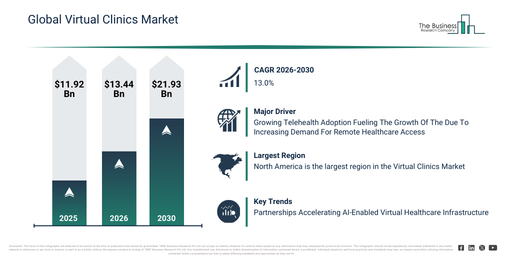
    The virtual clinics market size has seen rapid growth over recent years. It is anticipated to expand from $11.92 billion in 2025 to $13.44 billion in 2026, exhibiting a compound annual growth rate (CAGR) of 12.8%. This historical expansion can be linked to an increase in telemedicine usage, the growth of broadband access, the proliferation of digital health apps, a rising demand for patient convenience, and virtual visits initially driven by the pandemic.

    The virtual clinics market size is projected to experience swift expansion over the coming years. This market is set to reach $21.93 billion by 2030, advancing at a compound annual growth rate (CAGR) of 13.0%. The anticipated growth during this period stems from several factors, such as the increasing prevalence of hybrid care models, the emergence of digital-first healthcare policies, the broadening scope of remote diagnostics, enhanced insurer coverage for virtual appointments, and the rise in cross-border teleconsultations. Key developments projected for the forecast period encompass a greater uptake of video consultation platforms, an increase in the utilization of virtual follow-up services, the widespread integration of EHR teleclinic systems, a surge in the deployment of remote diagnostic kiosks, and a higher preference for mobile-first virtual clinics.

    Download A Free Sample Report For Comprehensive Market Insights:

    https://www.thebusinessresearchcompany.com/sample.aspx?id=33351&type=smp&utm_source=Blogs&utm_medium=Paid&utm_campaign=Jul_PR

    #Virtual Clinics Market Demand Drivers Creating New Revenue Opportunities

    The increasing integration of telehealth is anticipated to spur the expansion of the virtual clinics market moving forward. Telehealth adoption refers to the degree to which patients, providers, and healthcare systems implement and regularly utilize digital technologies for the remote delivery of clinical care and health services. This rise in telehealth adoption is largely due to the growing demand for convenient access to healthcare, eliminating the need for in-person visits. Virtual clinics, serving as a primary delivery model within telehealth, furnish structured platforms that enable patients to access consultations, diagnoses, and follow-up care entirely online. For instance, in July 2025, the International Trade Administration (ITA) reported that digital treatment penetration in the U.S. was 18.1% in 2024 and is expected to grow to 28.08% by 2029, demonstrating the widening use of digital and remote healthcare services. Thus, the escalating adoption of telehealth is propelling the growth of the virtual clinics market.

    Virtual Clinics Market Categorization By Product Type And Application

    The virtual clinics market covered in this report is segmented –

    1) By Type: Teleconsultation Platforms; Virtual Primary Care; Specialty E-Clinics; Artificial Intelligence-Based Symptom Checkers; Mobile Health Services

    2) By Application: Primary Care; Mental Health; Dermatology; Pediatrics; Chronic Care

    3) By End Users: Healthcare Providers; Patients; Pharmaceutical Companies; Insurance Companies; Employers

    Subsegments:

    1) By Teleconsultation Platforms: Video Consultation Platforms; Audio Consultation Platforms; Chat-Based Consultation Platforms; Integrated Scheduling and Consultation Platforms

    2) By Virtual Primary Care: Preventive Care Platforms; Routine Checkup Platforms; Family Medicine Virtual Platforms; General Practice Virtual Platforms

    3) By Specialty E-Clinics: Cardiology Virtual Clinics; Dermatology Virtual Clinics; Endocrinology Virtual Clinics; Orthopedic Virtual Clinics; Neurology Virtual Clinics

    4) By Artificial Intelligence-Based Symptom Checkers: Rule Based Symptom Assessment Tools; Machine Learning Driven Symptom Analysis Tools; Natural Language Processing Based Triage Tools; Predictive Diagnostic Support Tools

    5) By Mobile Health Services: Mobile Consultation Applications; Remote Health Monitoring Applications; Medication Management Applications; Wellness and Preventive Care Applications

    Virtual Clinics Market Trends Driving Strategic Industry Expansion

    Major companies active in the virtual clinics market are adopting a strategic partnership approach to enhance the integration of technology and expand their market reach. A strategic partnership typically describes a collaborative relationship between two or more organizations, where they combine their resources, expertise, and efforts to achieve common goals or objectives. For instance, in January 2026, VSee Health, Inc., a US-based telehealth technology company, forged a strategic partnership with DocBox, a US-based augmented intelligence platform for critical care, aimed at developing a next-generation virtual ICU operating system for hospitals globally. This collaboration integrates VSee’s telehealth and AI-driven workflows with DocBox’s vendor-agnostic bedside data infrastructure, enabling hospitals to leverage real-time, structured clinical data from ICU devices and monitoring systems. This integrated solution functions as an AI-native, reimbursement-compliant virtual ICU platform. It is built to facilitate scalable remote critical care, improve revenue generation via automated billing, permit the use of AI decision-support tools on live physiological data, guarantee hospital ownership of clinical data, and integrate VSee’s functionalities into essential clinical operations.

    Virtual Clinics Market Company Landscape And Strategic Competition

    Major companies operating in the virtual clinics market are Optum Inc., The Cigna Group, Siemens Healthineers AG, Koninklijke Philips N.V., SSM Health Care Group, Teladoc Health Inc., Babylon Healthcare Services Limited, Hims & Hers Health Inc., Ping An Healthcare and Technology Company Limited, Kry International AB, American Well Corporation, MDLIVE Inc., Doctor On Demand Inc., CallHealth Services Private Limited, HealthTap Inc., Ada Health GmbH, Virinchi Hospitals Private Limited, Practo Technologies Private Limited, 98point6 Inc., PlushCare Inc.

    Access The Complete Virtual Clinics Market Report:

    https://www.thebusinessresearchcompany.com/report/virtual-clinics-market-report?utm_source=Blogs&utm_medium=Paid&utm_campaign=Jul_PR

    Virtual Clinics Market Regional Distribution: Which Areas Drive Market Expansion?

    North America was the largest region in the virtual clinics market in 2025. Asia-Pacific is expected to be the fastest-growing region in the forecast period. The regions covered in the virtual clinics market report are Asia-Pacific, South East Asia, Western Europe, Eastern Europe, North America, South America, Middle East, Africa.

    Get in touch with us:

    The Business Research Company: https://www.thebusinessresearchcompany.com/

    Americas: +1 310-496-7795

    Asia: +44 7882 955267 & +91 8897263534

    Europe: +44 7882 955267

    Email us at: marketing@tbrc.info

    Follow us on:

    LinkedIn: https://in.linkedin.com/company/the-business-research-company

    YouTube: https://www.youtube.com/channel/UC24_fI0rV8cR5DxlCpgmyFQ

    Global Market Model: https://www.thebusinessresearchcompany.com/global-market-model
  • Virtual Care Management  Market Expansion Is Opening New Pathways For Strategic Investment

    Virtual Care Management Market Expansion Is Opening New Pathways For Strategic Investment

    Enhanced with market attractiveness analysis, total addressable market evaluation, company benchmarking matrices, interactive Excel dashboards, expanded supply chain intelligence, emerging startup coverage, and detailed product insights, The Business Research Company’s 2026 market reports deliver more actionable and strategically valuable research.

    Virtual Care Management Market Value Analysis: What Growth Is Expected Over The Forecast Period?

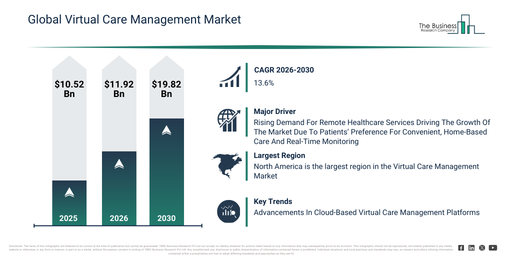
    The virtual care management market has witnessed rapid growth in recent years. It is projected to expand from $10.52 billion in 2025 to $11.92 billion in 2026, achieving a compound annual growth rate (CAGR) of 13.3%. The historical development of this market is attributable to increased telehealth adoption, a growing burden of chronic diseases, the expansion of digital health records, a rise in remote monitoring pilot initiatives, and early support for virtual care from insurers.

    The virtual care management market is anticipated to experience substantial expansion in the coming years, projected to reach $19.82 billion by 2030, exhibiting a compound annual growth rate (CAGR) of 13.6%. This growth throughout the forecast period is attributable to factors such as the rise in value-based care models, an expanding aging population, the broadening of home-based monitoring programs, increased payer reimbursement for virtual services, and larger digital transformation budgets for providers. Significant trends during this period include the growing adoption of remote care coordination platforms, the increasing utilization of continuous chronic care monitoring, the wider implementation of digital care plan management tools, enhanced integration of patient engagement platforms, and a higher deployment of virtual care analytics solutions.

    Download A Free Sample Report For Comprehensive Market Insights:

    https://www.thebusinessresearchcompany.com/sample.aspx?id=33350&type=smp&utm_source=Blogs&utm_medium=Paid&utm_campaign=Jul_PR

    Virtual Care Management Market Expansion Supported By Key Demand Factors

    The increasing desire for remote healthcare services is projected to stimulate the expansion of the virtual care management market in the upcoming years. Remote healthcare involves providing medical attention, consultations, and patient oversight from a distance using digital platforms and telecommunication technologies. This escalating demand is largely driven by patients’ preference for convenient and easily accessible care, allowing them to receive medical services at home while reducing travel time, wait times, and related expenses. Virtual care management facilitates remote healthcare delivery by enabling synchronized, real-time monitoring, communication, and care planning among providers and patients. These functionalities enhance continuity of care, improve patient participation, and boost overall healthcare system efficiency. Evidence of this growing demand is visible in telehealth adoption trends. For instance, according to the U.S. Department of Health and Human Services (HHS), a US-based national health policy, roughly 25% of medicare fee-for-service beneficiaries utilized a telehealth service, which is a significant 7 percentage point increase compared to 18% in March 2023, reflecting a notable year-over-year rise. Thus, the growing demand for remote healthcare services is a key factor driving the growth of the virtual care management market.

    Virtual Care Management Market Segment Analysis And Revenue Opportunities

    The virtual care management market covered in this report is segmented –

    1) By Component: Software; Hardware; Services

    2) By Deployment Mode: On-Premises; Cloud

    3) By Application: Telehealth; Remote Patient Monitoring; Chronic Disease Management; Behavioral Health; Other Applications

    4) By End-Users: Hospitals; Clinics; Home Care Settings; Other End-Users

    Subsegments:

    1) By Software: Care Coordination Platforms; Patient Engagement Applications; Clinical Decision Support Systems; Population Health Management Tools

    2) By Hardware: Remote Monitoring Devices; Wearable Health Tracking Devices; Connected Diagnostic Equipment; Home Care Medical Devices

    3) By Services: Remote Care Coordination Services; Chronic Care Management Services; Virtual Patient Monitoring Services

    Virtual Care Management Market Growth Trends Influencing Competitive Dynamics

    Major companies within the virtual care management market are prioritizing enhancements in cloud and teleconferencing technologies, such as virtual care management (VCM) platforms, to boost remote patient engagement, facilitate real-time clinician–patient interactions, improve care coordination, and support the scalable, secure delivery of healthcare services across diverse settings. Virtual care management (VCM) refers to the systematic provision, monitoring, and administration of patient care utilizing digital and remote healthcare technologies, rather than requiring in-person visits. For instance, in march 2023, Royal Philips, a Netherlands-based health technology company, launched Philips virtual care management, which includes condition-specific protocols (such as diabetes and hypertension), connected devices, and engagement tools on a secure interoperable cloud-based platform, along with licensed clinical professional monitoring providing personalized health coaching.

    Virtual Care Management Market Leading Players Shaping Industry Direction

    Major companies operating in the virtual care management market are Amazon.web service Inc., UnitedHealth Group Incorporated, CVS Health Corporation, The Cigna Group Inc., Elevance Health Inc., Centene Corporation, Humana Inc., HCA Healthcare Inc., Best Buy Co. Inc., Koninklijke Philips N.V., Boston Scientific Corporation, ResMed Inc., Agilon Health Inc., DexCom Inc., Teladoc Health Inc., Masimo Corporation, Evolent Health Inc., Privia Health Group Inc., Hims & Hers Health Inc., Doximity Inc., American Well Corporation, LifeMD Inc., Talkspace Inc.

    Access The Complete Virtual Care Management Market Report:

    https://www.thebusinessresearchcompany.com/report/virtual-care-management-market-report?utm_source=Blogs&utm_medium=Paid&utm_campaign=Jul_PR

    Virtual Care Management Market Leading Geography: Which Region Generates The Most Revenue?

    North America was the largest region in the virtual care management market in 2025. Asia-Pacific is expected to be the fastest-growing region in the forecast period. The regions covered in the virtual care management market report are Asia-Pacific, South East Asia, Western Europe, Eastern Europe, North America, South America, Middle East, Africa.

    Get in touch with us:

    The Business Research Company: https://www.thebusinessresearchcompany.com/

    Americas: +1 310-496-7795

    Asia: +44 7882 955267 & +91 8897263534

    Europe: +44 7882 955267

    Email us at: marketing@tbrc.info

    Follow us on:

    LinkedIn: https://in.linkedin.com/company/the-business-research-company

    YouTube: https://www.youtube.com/channel/UC24_fI0rV8cR5DxlCpgmyFQ

    Global Market Model: https://www.thebusinessresearchcompany.com/global-market-model
  • Viral Arthritis Vaccine  Market Trends Are Creating New Opportunities For Industry Leaders

    Viral Arthritis Vaccine Market Trends Are Creating New Opportunities For Industry Leaders

    Through market attractiveness analysis, total addressable market evaluation, company benchmarking matrices, interactive Excel dashboards, expanded supply chain intelligence, emerging startup coverage, and detailed product insights, The Business Research Company’s 2026 market reports provide more actionable and strategically valuable research.

    Viral Arthritis Vaccine Market Size Forecast: How Large Could The Market Become By 2030?

    The viral arthritis vaccine market has expanded significantly in recent years. This market is projected to expand from $6.66 billion in 2025 to $7.36 billion in 2026, driven by a compound annual growth rate (CAGR) of 10.6%. Its historical expansion can be attributed to several factors, including the history of chikungunya outbreaks, advancements in vaccine platforms, global immunization programs, research into zoonotic viruses, and public health preparedness efforts.

    The viral arthritis vaccine market size is anticipated to expand rapidly over the next few years, reaching $11.09 billion by 2030, at a compound annual growth rate (CAGR) of 10.8%. The projected increase in this period can be linked to the development of next generation vaccine platforms, the growing danger posed by arboviruses, swifter clinical trials, increased exposure due to global travel, and the wider adoption of preventive immunization. Significant trends during the forecast period involve mrna based viral arthritis vaccines, the use of recombinant vector vaccine platforms, multivalent arthritogenic virus vaccines, innovative rapid response vaccine design, and adjuvanted immunogenic formulations.

    Download A Free Sample Report For Comprehensive Market Insights:

    https://www.thebusinessresearchcompany.com/sample.aspx?id=33349&type=smp&utm_source=Blogs&utm_medium=Paid&utm_campaign=Jul_PR

    #Viral Arthritis Vaccine Market Growth Drivers And Industry Catalysts

    The increasing prevalence of mosquito-borne viral infections is projected to drive the expansion of the viral arthritis vaccine market in the coming years. These infections involve diseases transmitted to humans through the bite of infected mosquitoes, including chikungunya, Zika, and dengue viruses, which can manifest as symptoms like fever, joint pain, rash, and, in some instances, enduring complications such as viral arthritis. The rise in mosquito-borne viral infections is attributed to climate change, leading to warmer temperatures and altered rainfall patterns that extend mosquito habitats and breeding cycles. A viral arthritis vaccine assists in mitigating mosquito-borne viral infections by preventing initial infection and the progression of diseases caused by viruses that induce joint inflammation, thereby reducing transmission risk and the overall disease burden in affected populations. For instance, in 2024, the World Health Organization (WHO), a Switzerland-based intergovernmental organization, reported over 7.6 million cases globally by April, which is triple the number recorded during the same period in 2023, with transmission continuing to spread across more than 90 countries. Therefore, the escalating incidence of mosquito-borne viral infections is propelling growth in the viral arthritis vaccine market.

    Viral Arthritis Vaccine Market Segmentation And Category Breakdown

    The viral arthritis vaccine market covered in this report is segmented –

    1) By Type: Viral Arthritis Vaccine, Live; Viral Arthritis Vaccine, Inactivated

    2) By Virus Targeted: Chikungunya Virus; Rubella Virus; Parvovirus; Other Viral Arthritis-Causing Viruses

    3) By Application: Farms; Individual

    4) By End-User: Hospitals And Clinics; Vaccination Centers; Homecare; Government Programs

    Subsegments:

    1) By Viral Arthritis Vaccine, Live: Single Dose; Combination Dose; Recombinant Live Vaccine

    2) By Viral Arthritis Vaccine, Inactivated: Whole Virus Inactivated Vaccine; Split Virus Inactivated Vaccine; Adjuvanted Inactivated Vaccine

    #Viral Arthritis Vaccine Market Trends Influencing Long-Term Demand

    Leading companies in the viral arthritis vaccine market are prioritizing the development of innovative vaccine candidates, such as live-attenuated and next-generation chikungunya vaccines. This initiative aims to address the growing necessity for effective prevention against viral-induced joint pain and long-term arthritic complications, particularly for vulnerable populations. Live-attenuated and next-generation chikungunya vaccines represent advanced formulations engineered to prevent chikungunya virus infection by eliciting strong and enduring immune responses. Live-attenuated vaccines achieve this by employing weakened forms of the virus to closely mimic natural infection and provide durable protection, while next-generation vaccines utilize modern platforms like viral vectors, recombinant proteins, or novel attenuation technologies to enhance safety, immunogenicity, and broader applicability across populations. For instance, in June 2025, Bavarian Nordic A/S, a Denmark-based biotechnology company, initiated a Phase 3 clinical study of its chikungunya vaccine specifically for children. This move is designed to extend protection to pediatric populations in endemic regions, where early-life exposure can result in a significant disease burden. The progression to late-stage clinical evaluation demonstrates increasing confidence in the vaccine’s safety and immunogenicity profile and highlights continuous efforts to broaden age indications, strengthen population-level immunity, and diminish the global long-term impact of chikungunya-associated viral arthritis.

    Viral Arthritis Vaccine Market Competitive Analysis Of Major Industry Participants

    Major companies operating in the viral arthritis vaccine market are Bavarian Nordic A/S, Serum Institute of India Private Limited, Valneva SE, Bharat Biotech International Limited, Panacea Biotec Ltd., The Biologicals and Vaccines Institute of Southern Africa (Pty) Ltd.

    Access The Complete Viral Arthritis Vaccine Market Report:

    https://www.thebusinessresearchcompany.com/report/viral-arthritis-vaccine-market-report?utm_source=Blogs&utm_medium=Paid&utm_campaign=Jul_PR

    Viral Arthritis Vaccine Market Regional Outlook: Where Are The Largest Opportunities Located?

    North America was the largest region in the viral arthritis vaccine market in 2025. Asia-Pacific is expected to be the fastest-growing region in the forecast period. The regions covered in the viral arthritis vaccine market report are Asia-Pacific, South East Asia, Western Europe, Eastern Europe, North America, South America, Middle East, Africa.

    Get in touch with us:

    The Business Research Company: https://www.thebusinessresearchcompany.com/

    Americas: +1 310-496-7795

    Asia: +44 7882 955267 & +91 8897263534

    Europe: +44 7882 955267

    Email us at: marketing@tbrc.info

    Follow us on:

    LinkedIn: https://in.linkedin.com/company/the-business-research-company

    YouTube: https://www.youtube.com/channel/UC24_fI0rV8cR5DxlCpgmyFQ

    Global Market Model: https://www.thebusinessresearchcompany.com/global-market-model