Month: July 2026

  • Familial Mediterranean Fever Pharmaceuticals Market Growth Is Accelerating As Industry Transformation Continues

    Familial Mediterranean Fever Pharmaceuticals Market Growth Is Accelerating As Industry Transformation Continues

    Enhanced with market attractiveness analysis, total addressable market evaluation, company benchmarking matrices, interactive Excel dashboards, expanded supply chain intelligence, emerging startup coverage, and detailed product insights, The Business Research Company’s 2026 market reports deliver more actionable and strategically valuable research.

    Familial Mediterranean Fever Pharmaceuticals Market Value Expansion And Long-Term Growth Outlook

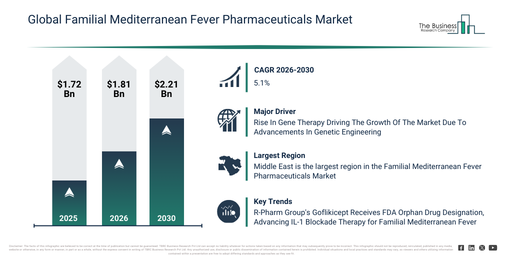
    The pharmaceutical market for familial Mediterranean fever has experienced robust expansion over recent years, with projections indicating a rise from $1.72 billion in 2025 to $1.81 billion in 2026, reflecting a compound annual growth rate (CAGR) of 5.1%. This historical growth is driven by the proven efficacy of colchicine, the genetic frequency observed in Mediterranean communities, a scarcity of alternative treatment options, growing recognition of the disease, and more refined diagnostic standards.

    The market for familial Mediterranean fever pharmaceuticals is projected to experience robust expansion over the coming years. By 2030, its value is anticipated to reach $2.21 billion, with a compound annual growth rate (CAGR) of 5.1%. This forecasted growth is driven by higher diagnosis rates beyond endemic areas, a greater uptake of biologic therapies, the broadening of orphan drug initiatives, enhanced genetic testing methods, and a stronger emphasis on averting long-term complications. Key developments shaping this period include an ongoing dependence on colchicine as a treatment, a rising application of interleukin-1 inhibitors, a wider array of biologic options for managing resistant FMF, heightened efforts to stop amyloidosis from developing, and improved genetic diagnostics that facilitate prompt therapeutic interventions.

    Download A Free Sample Report For Comprehensive Market Insights:

    https://www.thebusinessresearchcompany.com/sample.aspx?id=23397&type=smp&utm_source=BlogsPR&utm_medium=Paid&utm_campaign=Jul_PR

    Familial Mediterranean Fever Pharmaceuticals Market Expansion Supported By Key Demand Factors

    The growing adoption of gene therapy is anticipated to propel the expansion of the familial Mediterranean fever (FMF) pharmaceuticals market in the coming period. As a medical strategy, gene therapy involves altering or replacing defective genes to treat or prevent diseases at the genetic level. This trend is driven by progress in genetic engineering, which facilitates precise targeting and correction of genetic abnormalities, presenting potential cures for conditions that were once considered incurable. In the context of familial Mediterranean fever (FMF), gene therapy positively influences pharmaceutical development by addressing the underlying mutations in the MEFV gene, offering a possible long-term or permanent solution rather than simply managing symptoms. For example, in July 2024, the American Society of Gene & Cell Therapy (ASGCT), a non-profit organization based in the United States, reported that 76 gene therapy trials were launched in the second quarter of 2024, representing a 25% increase compared to the previous quarter. Consequently, the rise in gene therapy is fueling growth in the familial Mediterranean fever (FMF) pharmaceuticals market.

    Familial Mediterranean Fever Pharmaceuticals Market Segment Analysis Highlighting Growth Areas

    The familial mediterranean fever pharmaceuticals market covered in this report is segmented –

    1) By Drug Type: Colchicine, Interleukin-1 Inhibitors, Anti-IL-6 Drugs

    2) By Route Of Administration: Oral, Injectable

    3) By End Users: Hospitals, Clinical Diagnostic Laboratories, Other End Users

    Subsegments:

    1) By Colchicine: Oral Colchicine, Intravenous Colchicine

    2) By Interleukin-1 Inhibitors: Anakinra, Canakinumab, Rilonacept

    3) By Anti-IL-6 Drugs: Tocilizumab, Off-Label IL-6 Receptor Antagonists, Refractory FMF Supportive IL-6 Modulation

    Familial Mediterranean Fever Pharmaceuticals Market Growth Trends Influencing Competitive Dynamics

    Key players in the familial Mediterranean fever pharmaceutical market are prioritizing targeted biologic therapies, including dual interleukin-1 (IL-1a and IL-1ß) blockade mechanisms and orphan drug designation strategies, to achieve long-term disease remission and broaden treatment options for patients with autoinflammatory conditions. These dual IL-1 blockade mechanisms utilize heterodimeric hybrid proteins that bind with high affinity to both IL-1a and IL-1ß cytokines simultaneously, effectively halting the inflammatory cascade responsible for disease progression in familial Mediterranean fever and similar disorders. For example, in November 2024, R-Pharm Group, a pharmaceutical company based in Russia, was granted Orphan Drug Designation by the U.S. Food and Drug Administration (FDA) for Goflikicept, a novel heterodimeric hybrid protein that targets both IL-1a and IL-1ß, for treating familial Mediterranean fever (FMF) and idiopathic recurrent pericarditis (IRP). The company completed Phase 2/3 clinical trials for IRP and secured marketing authorization in Russia, while also advancing a Phase 2 study for FMF in Turkey, Russia, and Armenia, positioning IL-1 blockade as a leading approach for sustained remission in autoinflammatory diseases.

    Familial Mediterranean Fever Pharmaceuticals Market Leading Companies: Who Holds Significant Market Presence?

    Major companies operating in the familial mediterranean fever pharmaceuticals market are Novartis International AG, Swedish Orphan Biovitrum AB, Granules Pharmaceuticals Inc., Hikma Pharmaceuticals plc, Camber Pharmaceuticals Inc., Teva Pharmaceutical Industries Ltd., Amgen Inc., Indena S.p.A., Harman Finochem, Alchem International, Honour Lab Ltd., Maithri Drugs Pvt. Ltd., Vital Laboratories Pvt. Ltd., Enomark Biotech Pvt. Ltd., Gonane Pharma, Ennature Biopharma, R-Pharm Group, Sun Pharmaceutical Industries Ltd., Dr. Reddy’s Laboratories Ltd., Lupin Limited

    Access The Complete Familial Mediterranean Fever Pharmaceuticals Market Report:

    https://www.thebusinessresearchcompany.com/report/familial-mediterranean-fever-pharmaceuticals-global-market-report?utm_source=BlogsPR&utm_medium=Paid&utm_campaign=Jul_PR

    Familial Mediterranean Fever Pharmaceuticals Market Geographic Landscape: Which Region Dominates Industry Growth?

    Middle East was the largest region in the familial mediterranean fever pharmaceuticals market in 2025. Asia-Pacific is expected to be the fastest-growing region in the forecast period. The regions covered in the familial mediterranean fever pharmaceuticals market report are Asia-Pacific, South East Asia, Western Europe, Eastern Europe, North America, South America, Middle East, Africa.

    Get in touch with us:

    The Business Research Company: https://www.thebusinessresearchcompany.com/?utm_source=BlogsPR&utm_medium=Paid&utm_campaign=home_page_test

    Americas: +1 310-496-7795

    Asia: +44 7882 955267 & +91 8897263534

    Europe: +44 7882 955267

    Email us at: marketing@tbrc.info

    Follow us on:

    LinkedIn: https://in.linkedin.com/company/the-business-research-company

    YouTube: https://www.youtube.com/channel/UC24_fI0rV8cR5DxlCpgmyFQ

    Global Market Model: https://www.thebusinessresearchcompany.com/global-market-model
  • Familial Amyloid Polyneuropathy Market Outlook Highlights The Next Major Growth Opportunities

    Familial Amyloid Polyneuropathy Market Outlook Highlights The Next Major Growth Opportunities

    Through market attractiveness analysis, total addressable market evaluation, company benchmarking matrices, interactive Excel dashboards, expanded supply chain intelligence, emerging startup coverage, and detailed product insights, The Business Research Company’s 2026 market reports provide more actionable and strategically valuable research.

    Familial Amyloid Polyneuropathy Market Expected To Reach $2.42 Billion By 2030 At 8% CAGR

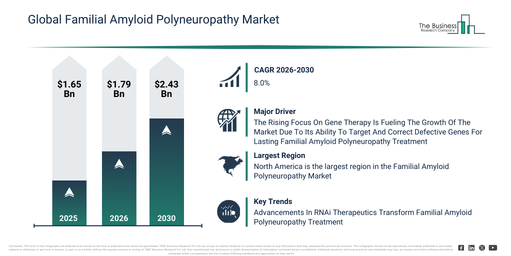
    The market for familial amyloid polyneuropathy has experienced notable expansion over the past few years, with projections indicating a rise from $1.65 billion in 2025 to $1.79 billion in 2026, reflecting a compound annual growth rate of 8.3%. This upward trajectory in the historical phase was driven by factors such as the diagnosis of rare diseases, increased awareness of genetic disorders, progress in transplant medicine, advancements in neurology research, and the growing adoption of supportive care approaches.

    The familial amyloid polyneuropathy market is projected to achieve substantial expansion in the coming years. By 2030, its valuation is anticipated to reach $2.43 billion, reflecting a compound annual growth rate (CAGR) of 8.0%. This projected growth during the forecast period is driven by advancements in gene therapy, the implementation of early genetic testing, increased financial support for rare disease research, the integration of precision medicine, and the expansion of specialty pharmacy services. Key developments shaping this period include the broader uptake of TTR stabilizers, the increasing utilization of gene silencing treatments, a rise in genetic screening protocols, heightened attention toward managing rare diseases, and the establishment of more specialized healthcare facilities.

    Download A Free Sample Report For Comprehensive Market Insights:

    https://www.thebusinessresearchcompany.com/sample.aspx?id=24532&type=smp&utm_source=BlogsPR&utm_medium=Paid&utm_campaign=Jul_PR

    Familial Amyloid Polyneuropathy Market Growth Drivers And Industry Catalysts

    The increasing emphasis on gene therapy is anticipated to drive forward the expansion of the familial amyloid polyneuropathy market. This therapeutic approach works by altering or replacing defective genes to tackle the fundamental cause of diseases. Gene therapy is gaining traction because it directly targets and corrects faulty genes, delivering long-term or permanent solutions instead of merely alleviating symptoms. In the context of familial amyloid polyneuropathy, gene therapy aims to rectify or silence the faulty transthyretin (TTR) gene, thereby preventing the formation of damaging amyloid proteins. This action reduces amyloid deposits, slows the progression of the disease, and helps maintain nerve functionality. For example, data from July 2023, as reported by the American Society of Gene & Cell Therapy (ASGCT), a US-based professional membership organization, and Citeline, a US-based drug and device provider, showed that 247 gene therapies were in Phase II at the end of the first quarter; this figure increased by 5% to 260 by the conclusion of the second quarter. Consequently, the growing focus on gene therapy is fueling the growth of the familial amyloid polyneuropathy market.

    Familial Amyloid Polyneuropathy Market Segment Performance And Strategic Opportunities

    The familial amyloid polyneuropathy market covered in this report is segmented –

    1) By Treatment: Medication, Gene Therapy, Supportive Care, Pain Management, Symptomatic Treatment

    2) By Diagnosis: Genetic Testing, Biopsy, Imaging, Other Diagnosis

    3) By Patient Age Group: Pediatric, Adult, Geriatric

    4) By Distribution Channel: Hospital Pharmacies, Retail Pharmacies, Online Pharmacies, Specialty Pharmacies, Direct Sales

    5) By End-User: Hospitals, Specialty Clinics, Research Institutes, Other End-Users

    Subsegments:

    1) By Medication: Transthyretin (TTR) Stabilizers, Transthyretin (TTR) Gene Silencers, Tafamidis, Diflunisal, Patisiran

    2) By Gene Therapy: Clustered Regularly Interspaced Short Palindromic Repeats (CRISPR) Or Cas9-Based Therapy, RNA Interference (RNAi) Therapy, Antisense Oligonucleotides (ASO) Therapy

    3) By Supportive Care: Physical Therapy, Occupational Therapy, Nutritional Support, Psychological Counseling

    4) By Pain Management: Non-Steroidal Anti-Inflammatory Drugs (NSAIDs), Opioids, Antidepressants, Anticonvulsants

    5) By Symptomatic Treatment: Gastrointestinal Symptom Management, Cardiovascular Symptom Management, Autonomic Dysfunction Management, Orthostatic Hypotension Treatment

    Familial Amyloid Polyneuropathy Market Trends Influencing Long-Term Demand

    Major players in the familial amyloid polyneuropathy market are prioritizing the creation of cutting-edge therapeutic options, including RNA interference (RNAi) treatments, aimed at decelerating illness progression and enhancing patient well-being. RNA interference (RNAi) therapies represent sophisticated interventions that silence genes responsible for disease by focusing on their messenger RNA (mRNA), thereby halting the generation of harmful proteins and tackling genetic disorders at their fundamental level. To illustrate, Alnylam Pharmaceuticals, a biopharmaceutical firm based in the United States, introduced AMVUTTRA (vutrisiran) in March 2025, after receiving approval from the Food and Drug Administration (FDA) for managing cardiomyopathy resulting from wild-type or hereditary transthyretin-mediated amyloidosis (ATTR-CM) in adults. This treatment, administered as four subcutaneous doses annually, is crafted to address both ATTR-CM and the polyneuropathy linked to hereditary transthyretin-mediated amyloidosis (hATTR-PN). By lowering the production of the transthyretin (TTR) protein, which is the underlying cause of the condition, it substantially reduces cardiovascular mortality, hospital admissions, and urgent heart failure visits, as evidenced by the findings from the HELIOS-B Phase 3 clinical trial.

    Familial Amyloid Polyneuropathy Market Key Players: Which Companies Shape Industry Competition?

    Major companies operating in the familial amyloid polyneuropathy market are Pfizer Inc., AstraZeneca plc, Novo Nordisk A/S, Regeneron Pharmaceuticals Inc., NYU Langone Hospitals, Alexion Pharmaceuticals Inc., Mount Sinai Medical Center, PTC Therapeutics Inc., Mayo Foundation for Medical Education and Research, Arcturus Therapeutics Inc., Precision BioSciences Inc., Creative Biolabs, Stanford Health Care, Duke University Health System, YolTech Therapeutics

    Access The Complete Familial Amyloid Polyneuropathy Market Report:

    https://www.thebusinessresearchcompany.com/report/familial-amyloid-polyneuropathy-global-market-report?utm_source=BlogsPR&utm_medium=Paid&utm_campaign=Jul_PR

    Familial Amyloid Polyneuropathy Market Largest Region: Which Geography Holds The Highest Market Share?

    North America was the largest region in the familial amyloid polyneuropathy market in 2025. Asia-Pacific is expected to be the fastest-growing region in the forecast period. The regions covered in the familial amyloid polyneuropathy market report are Asia-Pacific, South East Asia, Western Europe, Eastern Europe, North America, South America, Middle East, Africa.

    Get in touch with us:

    The Business Research Company: https://www.thebusinessresearchcompany.com/?utm_source=BlogsPR&utm_medium=Paid&utm_campaign=home_page_test

    Americas: +1 310-496-7795

    Asia: +44 7882 955267 & +91 8897263534

    Europe: +44 7882 955267

    Email us at: marketing@tbrc.info

    Follow us on:

    LinkedIn: https://in.linkedin.com/company/the-business-research-company

    YouTube: https://www.youtube.com/channel/UC24_fI0rV8cR5DxlCpgmyFQ

    Global Market Model: https://www.thebusinessresearchcompany.com/global-market-model
  • Factor XII Inhibitors Market Trends And Growth Drivers Point To Strong Future Potential

    Factor XII Inhibitors Market Trends And Growth Drivers Point To Strong Future Potential

    Delivering more actionable and strategically valuable research, The Business Research Company’s 2026 market reports feature market attractiveness analysis, total addressable market evaluation, company benchmarking matrices, interactive Excel dashboards, expanded supply chain intelligence, emerging startup coverage, and detailed product insights.

    Factor XII Inhibitors Market Size And Revenue Forecast Through 2030

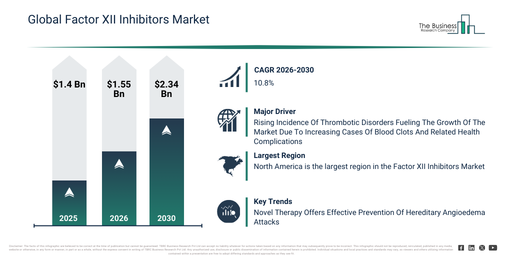
    In recent years, the market for factor XII inhibitors has expanded rapidly, rising from $1.4 billion in 2025 to an anticipated $1.55 billion in 2026, representing a compound annual growth rate (CAGR) of 11.1%. This historical surge is driven by progress in coagulation biology research, a higher prevalence of thrombotic conditions, the shortcomings of conventional anticoagulants, promising early-phase clinical outcomes for FXII inhibition, and increased funding directed toward rare and specialized therapies.

    The factor XII inhibitors market is projected to experience significant expansion over the coming years. By 2030, its value is anticipated to reach $2.34 billion, reflecting a compound annual growth rate (CAGR) of 10.8%. This expected growth is driven by several key factors during the forecast period, including the expansion of late-stage clinical trials, a growing demand for safer antithrombotic therapies, the rising adoption of precision medicine, increased regulatory support for novel anticoagulants, and the broadening of FXII inhibitors into inflammatory disease applications. Major developments shaping the market in the forecast period involve the increasing creation of non-bleeding anticoagulant treatments, a heightened focus on targeted modulation of coagulation pathways, more extensive clinical assessment of FXII-selective inhibitors, the expansion of RNA-based and peptide therapeutics, and the enhanced application of precision drug design techniques.

    Download A Free Sample Report For Comprehensive Market Insights:

    https://www.thebusinessresearchcompany.com/sample.aspx?id=30278&type=smp&utm_source=BlogsPR&utm_medium=Paid&utm_campaign=Jul_PR

    Factor XII Inhibitors Market Opportunity Drivers: What Is Creating New Revenue Potential?

    The increasing occurrence of thrombotic conditions is anticipated to drive expansion in the factor XII inhibitors market. Thromboembolic disorders involve blood clots forming within veins or arteries, which can obstruct circulation and result in severe health issues. These disorders are becoming more common, driven by the growing prevalence of sedentary lifestyles that impair blood flow and elevate clot formation risks. Factor XII inhibitors address thrombotic disorders by blocking the contact activation pathway to prevent abnormal clotting while preserving normal hemostasis, thus providing effective thrombosis management with a reduced bleeding risk. For example, as reported in January 2025 by the Centers for Disease Control and Prevention (CDC), a US government agency, around 900,000 individuals in the United States experience venous thromboembolism, with an estimated 60,000–100,000 annual deaths and many more facing long-term consequences. Consequently, this rise in thrombotic disorder incidence is fueling growth in the factor XII inhibitors market.

    A heightened emphasis on targeted therapies is set to stimulate growth in the factor XII inhibitors market moving forward. Targeted therapies are designed to address specific molecular abnormalities in diseases such as cancer, aiming to enhance treatment accuracy and limit damage to healthy cells. This growing focus is largely driven by progress in precision medicine, which facilitates individualized and more effective treatments aligned with unique genetic profiles. Factor XII inhibitors complement targeted therapies by specifically influencing the intrinsic coagulation pathway, making them suitable for patients susceptible to thrombotic conditions. Their precise inhibition of Factor XII lowers bleeding risks relative to standard anticoagulants, thus boosting treatment safety and efficacy. In December 2024, data from the American Society of Gene & Cell Therapy (ASGCT), a US-based non-profit medical and scientific organization, revealed that the Food and Drug Administration (FDA) approved six gene therapy products in 2023, up from five in 2022. Therefore, the increasing focus on targeted therapies is driving growth in the factor XII inhibitors market.

    Factor XII Inhibitors Market Segment Landscape And Growth Potential

    The factor xii inhibitors market covered in this report is segmented –

    1) By Drug Type: Monoclonal Antibodies, Small Molecule Inhibitors, Other Drug Types

    2) By Route Of Administration: Oral, Injectable, Other Routes Of Administration

    3) By Application: Hereditary Angioedema, Thrombosis, Inflammatory Disorders, Other Applications

    4) By End-User: Hospitals, Specialty Clinics, Research Institutes, Other End-Users

    Subsegments:

    1) By Monoclonal Antibodies: Fully Human Monoclonal Antibodies, Humanized Monoclonal Antibodies, Chimeric Monoclonal Antibodies, Bispecific Monoclonal Antibodies, Single-Chain Variable Fragment (scFv) Antibodies

    2) By Small Molecule Inhibitors: Direct Factor XII Inhibitors, Allosteric Factor XII Inhibitors, Reversible Inhibitors, Irreversible Inhibitors, Peptidomimetic Inhibitors

    3) By Other Drug Types: Peptide-Based Inhibitors, RNA Interference (RNAi) Therapeutics, Antisense Oligonucleotides, Combination Therapies

    Factor XII Inhibitors Market Innovation Trends Driving Future Development

    Key players in the Factor XII Inhibitors market are concentrating on the development of cutting-edge products, including anti-FXIIa monoclonal antibodies, aimed at improving therapeutic accuracy and treatment outcomes. These antibodies are specialized biologics designed to block activated factor XII, thereby preventing abnormal blood clot formation without interfering with normal clotting processes. For example, in February 2025, CSL Behring GmbH, a biopharmaceutical firm headquartered in Germany, secured manufacturing and marketing authorization from Japan’s Ministry of Health, Labour and Welfare (MHLW) for ANDEMBRY (garadacimab) subcutaneous (S.C.) injection 200 mg pens. This innovative human monoclonal antibody targets activated factor XII and has been approved for preventing acute episodes of hereditary angioedema (HAE). It functions by inhibiting activated factor XIIa, a critical initiator of HAE attacks, and is delivered through a user-friendly subcutaneous injection pen.

    Factor XII Inhibitors Market Competitive Landscape: Who Are The Leading Companies?

    Major companies operating in the factor xii inhibitors market are Taylor & Francis Group, Santa Cruz Biotechnology Inc., CSL Limited, Bridge Medicines Inc., KalVista Pharmaceuticals Inc., Ovid Technologies Inc., Affinity Biologicals Inc., Lunac Therapeutics Ltd., Grantome LLC

    Access The Complete Factor XII Inhibitors Market Report:

    https://www.thebusinessresearchcompany.com/report/global-factor-xii-inhibitors-market-report?utm_source=BlogsPR&utm_medium=Paid&utm_campaign=Jul_PR

    Factor XII Inhibitors Market Regional Analysis: Which Region Leads By Revenue?

    North America was the largest region in the factor XII inhibitors market in 2025. Asia-Pacific is expected to be the fastest-growing region in the forecast period. The regions covered in the factor xii inhibitors market report are Asia-Pacific, South East Asia, Western Europe, Eastern Europe, North America, South America, Middle East, Africa.

    Get in touch with us:

    The Business Research Company: https://www.thebusinessresearchcompany.com/?utm_source=BlogsPR&utm_medium=Paid&utm_campaign=home_page_test

    Americas: +1 310-496-7795

    Asia: +44 7882 955267 & +91 8897263534

    Europe: +44 7882 955267

    Email us at: marketing@tbrc.info

    Follow us on:

    LinkedIn: https://in.linkedin.com/company/the-business-research-company

    YouTube: https://www.youtube.com/channel/UC24_fI0rV8cR5DxlCpgmyFQ

    Global Market Model: https://www.thebusinessresearchcompany.com/global-market-model
  • Facet-Joint Injection Market Expansion Is Reshaping Competitive Dynamics Across The Industry

    Facet-Joint Injection Market Expansion Is Reshaping Competitive Dynamics Across The Industry

    Enhanced with market attractiveness analysis, total addressable market evaluation, company benchmarking matrices, interactive Excel dashboards, expanded supply chain intelligence, emerging startup coverage, and detailed product insights, The Business Research Company’s 2026 market reports deliver more actionable and strategically valuable research.

    Facet-Joint Injection Market Growth From $3.17 Billion In 2026 To $4.1 Billion By 2030 At A CAGR Of 6.6%

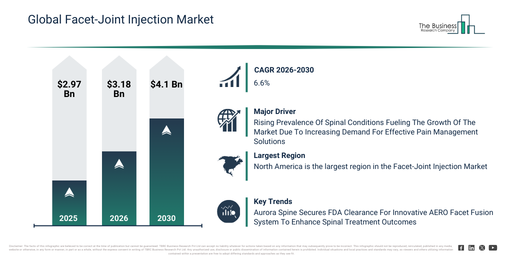
    The facet-joint injection market has seen notable expansion over the past few years. From a valuation of $2.97 billion in 2025, it is projected to climb to $3.18 billion by 2026, representing a compound annual growth rate (CAGR) of 6.9%. This upward trajectory during the historical timeframe was largely driven by factors such as the rising prevalence of spinal degeneration, higher rates of arthritis, growing awareness around pain management practices, the widespread application of corticosteroids, and an increase in the number of outpatient procedures.

    Projections for the facet-joint injection market indicate robust expansion in the coming years. By 2030, its value is anticipated to reach $4.1 billion, reflecting a compound annual growth rate (CAGR) of 6.6%. This upward trajectory during the forecast timeframe is fueled by factors such as an aging demographic, a growing preference for minimally invasive treatments, the widespread occurrence of chronic pain, the broadening of ambulatory care services, and the utilization of imaging-guided interventions. Key developments shaping the forecast period include an escalating demand for low-invasive pain procedures, heightened application in treating chronic back pain, the proliferation of outpatient pain management centers, the integration of image-guided injection methodologies, and the increasing number of ambulatory surgical facilities.

    Download A Free Sample Report For Comprehensive Market Insights:

    https://www.thebusinessresearchcompany.com/sample.aspx?id=24531&type=smp&utm_source=BlogsPR&utm_medium=Paid&utm_campaign=Jul_PR

    Facet-Joint Injection Market Growth Momentum: Which Factors Are Influencing Demand?

    The increasing occurrence of spinal disorders and chronic back ailments is anticipated to boost the expansion of the facet-joint injection market in the coming period. Spinal disorders and chronic back ailments describe prolonged conditions impacting the spine, including disc degeneration, arthritis, or nerve impingement, which result in ongoing pain, restricted movement, and a diminished quality of life. The growing frequency of spinal disorders and chronic back ailments stems from inactive lifestyles and poor posture habits, prompting individuals to pursue effective, minimally disruptive therapies that alleviate persistent pain and restore functional movement. Facet-joint injection aids spinal disorders and chronic back ailments by decreasing pain and swelling in the spine, offering relief to individuals affected by the rising issue of spinal conditions and chronic back pain. For example, in May 2023, based on data from Spinal Cord Inc., a US-based nonprofit resource center, approximately 18,000 new spinal cord injury (SCI) cases are documented each year in the United States, with around 302,000 people currently residing with spinal cord injuries across the nation. Thus, the increasing frequency of spinal disorders and chronic back ailments is fueling the advancement of the facet-joint injection market.

    The escalating inclination toward minimally invasive techniques is anticipated to drive the growth of the facet-joint injection market in the future. Minimally invasive techniques denote medical procedures conducted via small incisions or without necessitating extensive surgical openings. The rise in minimally invasive techniques is fueled by patients’ growing desire for quicker recovery periods and lessened postoperative discomfort. Facet-joint injection improves minimally invasive techniques by delivering precise pain management and diagnostic clarity while avoiding major surgical involvement. For instance, in 2023, the American Society of Plastic Surgeons, a US-based specialty organization, reported that the overall count of minimally invasive cosmetic procedures increased from 23.7 million in 2022 to 25.4 million in 2023. Consequently, the rising demand for minimally invasive techniques is propelling the growth of the facet-joint injection market.

    Facet-Joint Injection Market Categorization By Product Type And Application

    The facet-joint injection market covered in this report is segmented –

    1) By Product Type: Corticosteroids, Local Anesthetics, Hyaluronic Acid, Other Product Types

    2) By Application: Cervical Facet Joints, Thoracic Facet Joints, Lumbar Facet Joints

    3) By End-User: Hospitals, Ambulatory Surgical Centers, Specialty Clinics, Other End-Users

    Subsegments:

    1) By Corticosteroids: Triamcinolone Acetonide, Methylprednisolone Acetate, Dexamethasone Sodium Phosphate, Betamethasone

    2) By Local Anesthetics: Lidocaine, Bupivacaine, Ropivacaine, Prilocaine

    3) By Hyaluronic Acid: High Molecular Weight Hyaluronic Acid, Low Molecular Weight Hyaluronic Acid, Cross-Linked Hyaluronic Acid, Non-Cross-Linked Hyaluronic Acid

    4) By Other Product Types: Platelet-Rich Plasma, Biological Agents, Combination Formulations

    Facet-Joint Injection Market Trends Reshaping Industry Growth

    Leading players in the facet-joint injection market are concentrating on creating advanced solutions, such as facet fusion systems, designed to deliver sustained pain relief and enhance therapeutic results. Facet fusion systems are specialized medical implants used to stabilize and unite the spine’s facet joints through the promotion of bone growth between adjacent vertebrae. A notable example occurred in March 2025, when Aurora Spine Corporation, a medical device firm based in the United States, secured 510(k) clearance from the U.S. Food and Drug Administration (FDA) for its latest innovation—the AEROTM Facet Fusion System. This system employs a titanium plasma spray coating to facilitate better osseointegration and fusion capability. It accommodates a range of implant sizes to suit diverse patient anatomies and features radiolucent instrumentation that improves visibility during surgery. These attributes are collectively intended to boost procedural efficiency and long-term outcomes in addressing chronic back pain stemming from facet joint disorders.

    Facet-Joint Injection Market Company Landscape And Strategic Competition

    Major companies operating in the facet-joint injection market are Abbott Laboratories, B. Braun Melsungen AG, BD (Becton Dickinson and Company), Cook Medical, Teleflex Incorporated, Merit Medical Systems Inc., Halyard Health, ICU Medical Inc., Pajunk GmbH Medizintechnologie, Avanos Medical Inc., Vygon SA, Cardinal Health Inc., Terumo Corporation, Nipro Corporation, Septodont Holding, Fresenius Kabi AG, Hikma Pharmaceuticals PLC, Sun Pharmaceutical Industries Ltd., Aurobindo Pharma Ltd., Zydus Lifesciences Ltd., Amneal Pharmaceuticals LLC, Lupin Limited, Piramal Pharma Limited, Intas Pharmaceuticals Ltd., Gland Pharma Limited, Amphastar Pharmaceuticals Inc., Fresenius Medical Care, Baxter International Inc., McKesson Corporation

    Access The Complete Facet-Joint Injection Market Report:

    https://www.thebusinessresearchcompany.com/report/facet-joint-injection-global-market-report?utm_source=BlogsPR&utm_medium=Paid&utm_campaign=Jul_PR

    Facet-Joint Injection Market Geographic Distribution And Regional Opportunities

    North America was the largest region in the facet-joint injection market in 2025. Asia-Pacific is expected to be the fastest-growing region in the forecast period. The regions covered in the facet-joint injection market report are Asia-Pacific, South East Asia, Western Europe, Eastern Europe, North America, South America, Middle East, Africa.

    Get in touch with us:

    The Business Research Company: https://www.thebusinessresearchcompany.com/?utm_source=BlogsPR&utm_medium=Paid&utm_campaign=home_page_test

    Americas: +1 310-496-7795

    Asia: +44 7882 955267 & +91 8897263534

    Europe: +44 7882 955267

    Email us at: marketing@tbrc.info

    Follow us on:

    LinkedIn: https://in.linkedin.com/company/the-business-research-company

    YouTube: https://www.youtube.com/channel/UC24_fI0rV8cR5DxlCpgmyFQ

    Global Market Model: https://www.thebusinessresearchcompany.com/global-market-model
  • Fabry Disease Market Forecast Reveals Where Future Industry Value Will Be Created

    Fabry Disease Market Forecast Reveals Where Future Industry Value Will Be Created

    Through market attractiveness analysis, total addressable market evaluation, company benchmarking matrices, interactive Excel dashboards, expanded supply chain intelligence, emerging startup coverage, and detailed product insights, The Business Research Company’s 2026 market reports provide more actionable and strategically valuable research.

    Fabry Disease Market Expansion Outlook: What Revenue Opportunities Lie Ahead?

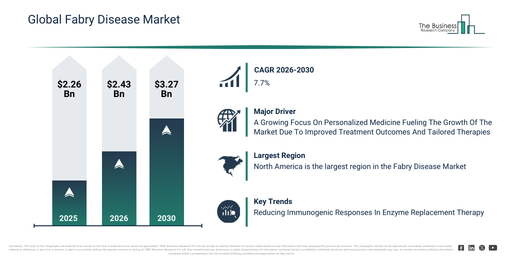
    The rare genetic disorder market known as Fabry disease experienced robust expansion in recent years, climbing from $2.26 billion in 2025 to $2.43 billion in 2026, achieving a compound annual growth rate of 7.7%. This historical growth was driven by heightened awareness of rare genetic conditions, the regulatory approvals for enzyme replacement treatments, the proliferation of specialized clinics, the broadening of genetic screening initiatives, and an uptick in diagnostic rates.

    The fabry disease market is anticipated to experience robust expansion in the coming years, reaching an estimated value of $3.27 billion by 2030, with a compound annual growth rate (CAGR) of 7.7%. This forecasted growth is driven by progress in gene-based treatments, the widening reach of newborn screening initiatives, heightened healthcare expenditure directed at rare conditions, the rise of tailored medicine, and the emergence of advanced oral therapies. Key developments shaping this period include a greater uptake of enzyme replacement therapy, a stronger emphasis on diagnosing rare diseases, the wider application of genetic testing for early identification, the proliferation of oral and supplementary treatments, and a growing shift toward patient-focused care strategies.

    Download A Free Sample Report For Comprehensive Market Insights:

    https://www.thebusinessresearchcompany.com/sample.aspx?id=24218&type=smp&utm_source=BlogsPR&utm_medium=Paid&utm_campaign=Jul_PR

    Fabry Disease Market Expansion Drivers: What Is Shaping Future Growth?

    An increasing emphasis on personalized medicine is anticipated to drive expansion in the fabry disease market moving forward. This treatment approach utilizes information about an individual’s genetic makeup, environment, and lifestyle to customize medical care and therapies for enhanced outcomes. The rising attention on personalized medicine stems from its capacity to boost treatment efficacy while minimizing adverse effects, as therapies are adapted to meet each patient’s unique needs. By crafting treatment strategies based on a person’s specific genetic mutation and disease severity, personalized medicine promotes better results and reduces unnecessary side effects. For example, the Personalized Medicine Coalition, a non-profit organization based in the United States, reported that in 2023, the FDA approved 16 new personalized therapies for rare disease patients—a significant rise from just six approvals in 2022. Consequently, the growing focus on personalized medicine is fueling growth in the fabry disease market.

    Fabry Disease Market Segment Analysis And Revenue Opportunities

    The fabry disease market covered in this report is segmented –

    1) By Type: Type 1, Type 2, Other Types

    2) By Treatment: Enzyme Replacement Therapy, Oral Therapy, Adjunct Therapy, Other Treatments

    3) By Diagnosis: Blood Test, Genetic Test, Other Diagnosis

    4) By Distribution Channel: Hospital Pharmacy, Online Pharmacy, Retail Pharmacy

    5) By End User: Hospitals, Homecare, Specialty Clinics, Other End Users

    Subsegments:

    1) By Type 1: Classic Fabry Disease, Later-Onset Fabry Disease

    2) By Type 2: Cardiovascular-Focused Fabry Disease, Renal-Focused Fabry Disease

    3) By Other Types: Variant Fabry Disease, X-linked Fabry Disease

    Fabry Disease Market Strategic Trends: What Is Defining The Next Phase Of Growth?

    Key players in the fabry disease market are placing significant emphasis on the development of innovative treatment approaches, particularly PEGylated enzyme replacement therapy (ERT), with the goal of boosting treatment effectiveness, enhancing patient adherence, and minimizing immune responses that often arise with standard ERTs. This advanced form of therapy involves attaching polyethylene glycol (PEG) chains to the enzyme, thereby improving its stability, extending its presence in the bloodstream, and lowering the likelihood of adverse immune reactions. A notable example occurred in May 2023, when Chiesi Global Rare Diseases, a subsidiary of the Italy-headquartered pharmaceutical firm Chiesi Group, secured approval from the U.S. Food and Drug Administration (FDA) for PRX-102 (pegunigalsidase alfa), intended for use in adult patients with Fabry disease. This regulatory authorization was underpinned by a comprehensive clinical program that included over 140 patients, with some followed for as long as 7.5 years. The data confirmed the therapy’s ability to effectively reduce renal Gb3 deposits, preserve kidney function, and maintain a favorable safety profile.

    Fabry Disease Market Leading Players Shaping Industry Direction

    Major companies operating in the fabry disease market are Sanofi S.A., GlaxoSmithKline plc, Takeda Pharmaceutical Company Limited, JCR Pharmaceuticals Co. Ltd., Sumitomo Pharma Co. Ltd, Chiesi Farmaceutici S.p.A., Amicus Therapeutics Inc., Idorsia Pharmaceuticals Ltd, Sangamo Therapeutics Inc., uniQure N.V., Protalix BioTherapeutics Inc., Spur Therapeutics Inc., Exegenesis Bio Inc., ISU ABXIS Co. Ltd., Eleva GmbH, AceLink Therapeutics Inc., 4D Molecular Therapeutics Inc., iBio Inc., Freeline Therapeutics Holdings plc, Greenovation Biotech GmbH

    Access The Complete Fabry Disease Market Report:

    https://www.thebusinessresearchcompany.com/report/fabry-disease-global-market-report?utm_source=BlogsPR&utm_medium=Paid&utm_campaign=Jul_PR

    Fabry Disease Market Largest Region By Revenue And Market Share

    North America was the largest region in the fabry disease market in 2025. Asia-Pacific is expected to be the fastest-growing region in the forecast period. The regions covered in the fabry disease market report are Asia-Pacific, South East Asia, Western Europe, Eastern Europe, North America, South America, Middle East, Africa.

    Get in touch with us:

    The Business Research Company: https://www.thebusinessresearchcompany.com/?utm_source=BlogsPR&utm_medium=Paid&utm_campaign=home_page_test

    Americas: +1 310-496-7795

    Asia: +44 7882 955267 & +91 8897263534

    Europe: +44 7882 955267

    Email us at: marketing@tbrc.info

    Follow us on:

    LinkedIn: https://in.linkedin.com/company/the-business-research-company

    YouTube: https://www.youtube.com/channel/UC24_fI0rV8cR5DxlCpgmyFQ

    Global Market Model: https://www.thebusinessresearchcompany.com/global-market-model
  • Eylea Market Growth Through 2030 Creates New Strategic Opportunities

    Eylea Market Growth Through 2030 Creates New Strategic Opportunities

    Delivering more actionable and strategically valuable research, The Business Research Company’s 2026 market reports feature market attractiveness analysis, total addressable market evaluation, company benchmarking matrices, interactive Excel dashboards, expanded supply chain intelligence, emerging startup coverage, and detailed product insights.

    Eylea Market Growth Potential: How Will Market Size Change Through 2030?

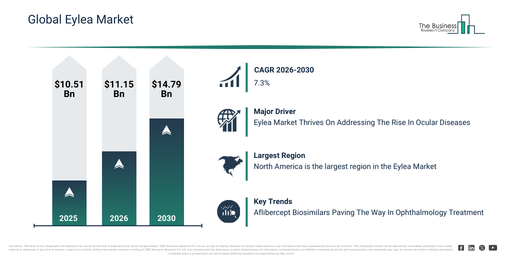
    The market for Eylea has experienced robust expansion in recent years, with projections indicating an increase from $10.51 billion in 2025 to $11.15 billion in 2026, reflecting a compound annual growth rate (CAGR) of 6.2%. This historical growth has been driven by several factors, including a higher incidence of age-related macular degeneration, an aging worldwide population, the proven clinical effectiveness of anti-VEGF medications, a growing number of specialized ophthalmology clinics, and favorable reimbursement policies for retinal treatments.

    The Eylea market is anticipated to experience robust expansion in the coming years, with projections indicating it will reach a value of $14.79 billion by 2030, driven by a compound annual growth rate (CAGR) of 7.3%. This upward trajectory during the forecast period is largely fueled by factors such as the rising number of individuals with diabetes, broader applications in treating various retinal conditions, the development of long-acting formulations, enhancements in drug delivery methods, and greater accessibility in emerging markets. Key trends shaping this period include a growing emphasis on extended-interval anti-VEGF therapies, a notable shift toward the adoption of prefilled syringes, an expanding role in managing diabetic retinopathy, a rise in hospital-based intravitreal procedures, and an increased focus on collecting real-world evidence to assess treatment outcomes.

    Download A Free Sample Report For Comprehensive Market Insights:

    https://www.thebusinessresearchcompany.com/sample.aspx?id=9155&type=smp&utm_source=BlogsPR&utm_medium=Paid&utm_campaign=Jul_PR

    Eylea Market Development Factors: Which Trends Are Supporting Demand?

    The rising incidence of eye disorders is anticipated to boost the Eylea market. Ocular diseases are conditions that impair the eye’s normal function, diminishing vision and clarity. Often, these conditions remain asymptomatic until they reach an advanced stage. Eylea is used to treat disorders such as wet age-related macular degeneration (AMD) and glaucoma, both of which damage the retina or macula and compromise eyesight. It works by inhibiting a protein responsible for forming new, fragile blood vessels and reducing swelling in the retina caused by vascular blockages. For example, data from the BrightFocus Foundation—a U.S. nonprofit focused on macular degeneration and glaucoma research—indicated in 2024 that roughly 80 million people worldwide have glaucoma, with that number expected to climb to 111 million by 2040. Consequently, the growing prevalence of ocular diseases is fueling expansion in the Eylea market.

    Eylea Market Segmentation And Category Breakdown

    The eylea market covered in this report is segmented –

    1) By Product: Prefilled Syringe Package, Vial Package

    2) By Disorder: Wet Age-Related Macular Degeneration (AMD), Diabetic Retinopathy, Other Disorders

    3) By Application: Hospitals, Retail Pharmacy, Other Applications

    Subsegments:

    1) By Prefilled Syringe Package: Single-Dose Prefilled Syringes, Multi-Dose Prefilled Syringes

    2) By Vial Package: Single-Dose Vials, Multi-Dose Vials

    Eylea Market Transformation Trends: Which Innovations Are Driving Change?

    Leading firms within the eylea market are emphasizing the development of biologic therapies, particularly aflibercept biosimilars, to secure a strategic edge. Aflibercept Biosimilar represents a biologically analogous version of the original aflibercept drug, ensuring no clinically significant differences while providing a more economical option for managing certain ocular disorders. As an example, Biocon Biologics Ltd., a biopharmaceutical company headquartered in India, obtained marketing approval from the European Commission (EC) in September 2023 for YESAFILI, a biosimilar of Aflibercept, across the European Union (EU). This authorization followed a favorable assessment from the European Medicines Agency’s Committee for Medicinal Products for Human Use (CHMP) in July. YESAFILI, an ophthalmologic treatment for multiple eye conditions, has been affirmed as comparable to the reference product Eylea (aflibercept) in terms of quality, safety, and effectiveness.

    Eylea Market Competitive Analysis Of Major Industry Participants

    Major companies operating in the eylea market are Regeneron Pharmaceuticals Inc., Bayer AG, Novartis AG, Roche Holding AG, Pfizer Inc., Amgen Inc., Sanofi S.A., AbbVie Inc., Alcon Inc., Genentech Inc., Johnson & Johnson, Samsung Bioepis Co. Ltd., Boehringer Ingelheim GmbH, Eisai Co. Ltd., Daiichi Sankyo Company Limited, Aerie Pharmaceuticals Inc., Otsuka Pharmaceutical Co. Ltd., Santen Pharmaceutical Co. Ltd., Allergan plc, BioMarin Pharmaceutical Inc.

    Access The Complete Eylea Market Report:

    https://www.thebusinessresearchcompany.com/report/eylea-global-market-report?utm_source=BlogsPR&utm_medium=Paid&utm_campaign=Jul_PR

    Eylea Market Regional Analysis And Leading Geography

    North America was the largest region in the eylea market in 2025. Asia-Pacific is expected to be the fastest-growing region in the eylea market during the forecast period. The regions covered in the eylea market report are Asia-Pacific, South East Asia, Western Europe, Eastern Europe, North America, South America, Middle East, Africa.

    Get in touch with us:

    The Business Research Company: https://www.thebusinessresearchcompany.com/?utm_source=BlogsPR&utm_medium=Paid&utm_campaign=home_page_test

    Americas: +1 310-496-7795

    Asia: +44 7882 955267 & +91 8897263534

    Europe: +44 7882 955267

    Email us at: marketing@tbrc.info

    Follow us on:

    LinkedIn: https://in.linkedin.com/company/the-business-research-company

    YouTube: https://www.youtube.com/channel/UC24_fI0rV8cR5DxlCpgmyFQ

    Global Market Model: https://www.thebusinessresearchcompany.com/global-market-model
  • Eye Drop Mist Market Size Projected To Increase From $1.71 Billion To $2.6 Billion During The Forecast Period

    Eye Drop Mist Market Size Projected To Increase From $1.71 Billion To $2.6 Billion During The Forecast Period

    Enhanced with market attractiveness analysis, total addressable market evaluation, company benchmarking matrices, interactive Excel dashboards, expanded supply chain intelligence, emerging startup coverage, and detailed product insights, The Business Research Company’s 2026 market reports deliver more actionable and strategically valuable research.

    Eye Drop Mist Market Value Analysis: What Growth Is Expected Over The Forecast Period?

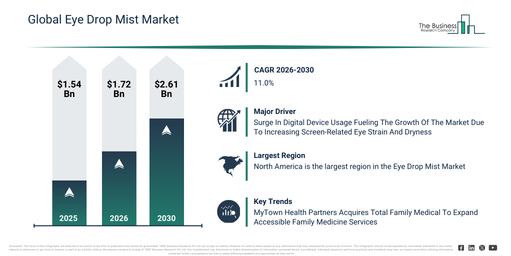
    The market for eye drop mists has seen substantial expansion in recent times. Its value is projected to climb from $1.54 billion in 2025 to $1.72 billion in 2026, reflecting a compound annual growth rate (CAGR) of 11.3%. This historical upward trend has been driven by factors such as a higher incidence of dry eye syndrome, extended periods of screen usage, broader adoption of contact lenses, greater emphasis on ocular hygiene, and the widespread availability of non-prescription eye care products.

    The eye drop mist market is projected to experience significant growth over the coming years, with its value reaching $2.61 billion by 2030, reflecting a compound annual growth rate (CAGR) of 11.0%. This expansion during the forecast period is driven by factors such as the rising need for portable eye care solutions, a growing emphasis on formulations without preservatives, the escalating requirements of an aging population for eye health, increased acceptance of innovative spray-based delivery methods, and a heightened focus on daily ocular comfort. Key trends shaping the future include a greater shift toward preservative-free eye mist products, a heightened demand for convenient ways to hydrate the eyes, the wider use of multi-dose spray systems, the broadening scope of medicated eye mist applications, and a stronger emphasis on creating user-friendly eye care solutions.

    Download A Free Sample Report For Comprehensive Market Insights:

    https://www.thebusinessresearchcompany.com/sample.aspx?id=28217&type=smp&utm_source=BlogsPR&utm_medium=Paid&utm_campaign=Jul_PR

    Eye Drop Mist Market Industry Drivers: What Is Driving Revenue Growth?

    The rising adoption of digital devices is anticipated to accelerate growth in the eye drop mist market moving forward. Digital device usage describes how people interact with and engage electronic gadgets like smartphones, tablets, computers, and wearables for tasks involving communication, leisure, education, or work. This surge in usage can be attributed to wider internet access, which has made online connectivity more affordable and obtainable for a greater number of people. Prolonged screen time results in eye strain and dryness, which in turn boosts demand for eye drop mists. These products deliver quick hydration and relief, thereby enhancing eye comfort and lessening irritation linked to extended screen exposure. For example, the GSM Association, a UK-based nonprofit, reported in October 2023 that nearly 4.3 billion individuals, or 53% of the global population, were accessing the internet via their own smartphones, with roughly 80% of mobile internet users now utilizing 4G or 5G devices—marking a gain of 330 million users between 2022 and 2023. Consequently, the growing use of digital devices is fueling the expansion of the eye drop mist market. The escalating frequency of eye surgeries is also expected to drive growth in the eye drop mist market in the coming period. Eye surgeries encompass medical interventions performed on the eye or adjacent tissues to correct vision impairments, injuries, or ocular diseases. This uptick in operations stems from an aging demographic, as older adults are more susceptible to conditions such as cataracts and glaucoma that necessitate surgical correction. Eye drop mists contribute to surgical care by delivering soothing and hydrating benefits, which alleviate post-operative dryness and discomfort. By fostering quicker recovery and improving patient well-being, these products enhance surgical results. As a case in point, the Eye Bank Association of America, a US-based nonprofit, noted that in 2024, domestic keratoplasty procedures totaled 51,559, reflecting a 1.2% rise from 50,925 in the previous year. Thus, the increase in eye surgeries is propelling the growth of the eye drop mist market.

    Eye Drop Mist Market Segment Outlook: Which Categories Are Expanding The Fastest?

    The eye drop mist market covered in this report is segmented –

    1) By Product Type: Preservative-Free Eye Drop Mist, Medicated Eye Drop Mist, Lubricating Eye Drop Mist, Other Product Types

    2) By Application: Dry Eye Syndrome, Allergies, Eye Fatigue, Other Applications

    3) By Distribution Channel: Hospital Pharmacies, Retail Pharmacies, Online Pharmacies, Other Distribution Channels

    4) By End-User: Hospitals, Clinics, Homecare, Other End-Users

    Subsegments:

    1) By Preservative-Free Eye Drop Mist: Single Dose Units, Multi Dose Systems

    2) By Medicated Eye Drop Mist: Allergy Relief, Anti Inflammatory, Antibiotic Formulation, Antihistamine Formulation, Glaucoma Treatment

    3) By Lubricating Eye Drop Mist: Dry Eye Relief, Contact Lens Rewetting, Redness Relief, Moisturizing Formulation

    4) By Other Product Types Eye Drop Mist: Herbal Formulation, Vitamin Enriched Formulation, Combination Therapy, Specialty Use Formulation

    Eye Drop Mist Market Growth Trends: What Is Influencing The Future Outlook?

    Leading players in the eye drop mist market are concentrating on creating cutting-edge products, like microdosing systems, that provide accurate, regulated delivery of eye medication or moisture while reducing excess. As a delivery method, a microdosing system gives the eyes small, exact, and managed amounts of fluid or medicine, ensuring even coverage and cutting down on waste in comparison to standard droppers. To illustrate, in March 2023, EYE-GO A/S, a MedTech firm based in Denmark, unveiled MistGo, a sophisticated microdosing system intended for topical ophthalmic use. This device applies a soft, precise mist of roughly 6 µL evenly across the cornea, boosting drug absorption and preventing frequent issues like overdosing, contamination, and incorrect usage normally linked to conventional eyedroppers. MistGo comes with integrated eye interfaces that enable safe, contact-free administration, thereby improving adherence among patients and elevating treatment results.

    Eye Drop Mist Market Key Companies And Competitive Benchmarking

    Major companies operating in the eye drop mist market are Bausch + Lomb Incorporated, AptarGroup Inc., Laboratoires Théa, Similasan AG, Reckitt Benckiser Group plc, OCuSOFT Inc., Scope Ophthalmics Ltd., Medicom Healthcare Ltd., AFT Pharmaceuticals Ltd., Aero Pump GmbH, I-MED Pharma Inc., Eyeeco Inc., EYE-GO A/S, Iskon Remedies Pvt. Ltd., Max Concept Enterprises Ltd., Servocare Lifesciences Pvt. Ltd., Dry Eye Shop LLC, Eyenovia Inc., KBIDI Co. Ltd., Swissvision Pharmaceuticals Pvt. Ltd.

    Access The Complete Eye Drop Mist Market Report:

    https://www.thebusinessresearchcompany.com/report/eye-drop-mist-global-market-report?utm_source=BlogsPR&utm_medium=Paid&utm_campaign=Jul_PR

    Eye Drop Mist Market Geographic Analysis: Where Is Demand Growing The Fastest?

    North America was the largest region in the eye drop mist market in 2025. Asia-Pacific is expected to be the fastest-growing region in the forecast period. The regions covered in the eye drop mist market report are Asia-Pacific, South East Asia, Western Europe, Eastern Europe, North America, South America, Middle East, Africa.

    Get in touch with us:

    The Business Research Company: https://www.thebusinessresearchcompany.com/?utm_source=BlogsPR&utm_medium=Paid&utm_campaign=home_page_test

    Americas: +1 310-496-7795

    Asia: +44 7882 955267 & +91 8897263534

    Europe: +44 7882 955267

    Email us at: marketing@tbrc.info

    Follow us on:

    LinkedIn: https://in.linkedin.com/company/the-business-research-company

    YouTube: https://www.youtube.com/channel/UC24_fI0rV8cR5DxlCpgmyFQ

    Global Market Model: https://www.thebusinessresearchcompany.com/global-market-model
  • Eye Allergy Therapeutics Market Growth Outlook Reveals A CAGR Of 6% And A Market Value Of $4.34 Billion By 2030

    Eye Allergy Therapeutics Market Growth Outlook Reveals A CAGR Of 6% And A Market Value Of $4.34 Billion By 2030

    Through market attractiveness analysis, total addressable market evaluation, company benchmarking matrices, interactive Excel dashboards, expanded supply chain intelligence, emerging startup coverage, and detailed product insights, The Business Research Company’s 2026 market reports provide more actionable and strategically valuable research.

    Eye Allergy Therapeutics Market Size Forecast: How Large Could The Market Become By 2030?

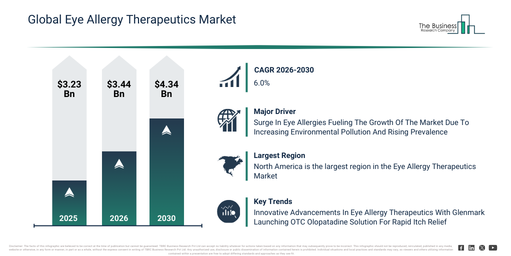
    The market for eye allergy therapeutics has experienced robust expansion in recent years, with projections indicating an increase from $3.23 billion in 2025 to $3.44 billion in 2026, reflecting a compound annual growth rate (CAGR) of 6.5%. This historical growth has been driven by factors such as the scarcity of available treatments for ocular allergies, a continued dependence on conventional antihistamines, a rising incidence of allergic conjunctivitis, a higher number of visits to ophthalmology clinics, and growing public awareness regarding the management of eye allergies.

    The market for eye allergy therapeutics is projected to experience significant expansion over the coming years. By 2030, its value is anticipated to reach $4.34 billion, reflecting a compound annual growth rate (CAGR) of 6.0%. This anticipated growth during the forecast period is driven by several key factors, including the advancement of dual-action and biologic treatments, a broader range of immunotherapy options being made available, heightened research into innovative ocular drug delivery systems, a growing preference for home-based care models, and the incorporation of digital health technologies to track allergies. Among the major trends shaping this period are the increasing frequency of both seasonal and perennial eye allergies, a wider use of dual-action agents alongside novel drug formulations, a surge in therapies designed for home administration and self-care, the broadening of sales channels through online and retail pharmacies, and a stronger emphasis on patient-focused care and enhanced safety protocols.

    Download A Free Sample Report For Comprehensive Market Insights:

    https://www.thebusinessresearchcompany.com/sample.aspx?id=25765&type=smp&utm_source=BlogsPR&utm_medium=Paid&utm_campaign=Jul_PR

    #Eye Allergy Therapeutics Market Growth Factors: Which Forces Are Supporting Market Expansion?

    The growing incidence of eye allergies is anticipated to drive expansion in the eye allergy therapeutics market in the coming period. Eye allergies involve immune system responses that lead to inflammation and irritation of the eyes when exposed to allergens. This increase in eye allergy cases is largely attributed to rising environmental pollution, which heightens exposure to airborne allergens and consequently triggers more frequent allergic reactions. Therapeutics for eye allergies manage these conditions by alleviating inflammation, soothing itching and redness, and inhibiting allergic responses, thereby offering effective symptom control. As an example, in May 2025, the National Library of Medicine, a biomedical library based in the United States, reported that ocular allergy (OA) was present in 49.3% (n=207) of cases, with seasonal allergic conjunctivitis (SAC) accounting for 90.3%, predominantly affecting 14-year-olds (23.4%) and females (58.8%). Hence, the escalating prevalence of eye allergies is fueling growth in the eye allergy therapeutics market.

    Eye Allergy Therapeutics Market Segment Landscape: Which Areas Lead Market Development?

    The eye allergy therapeutics market covered in this report is segmented –

    1) By Drug Class: Antihistamines, Mast Cell Stabilizers, Dual-Action Agents, Corticosteroids, Immunotherapy, Other Drug Classes

    2) By Allergy Type: Seasonal Allergic Conjunctivitis (SAC), Perennial Allergic Conjunctivitis (PAC), Vernal Keratoconjunctivitis (VKC), Atopic Keratoconjunctivitis (AKC), Giant Papillary Conjunctivitis

    3) By Route of Administration: Topical, Oral, Injectable, Ocular, Systemic

    4) By Distribution Channel: Hospital Pharmacies, Retail Pharmacies, Online Pharmacies, Other Channels

    5) By End User: Hospitals, Clinics, Homecare Settings, Pharmacies, Research Institutions

    Subsegments:

    1) By Antihistamines: Olopatadine, Ketotifen, Emedastine, Levocabastine, Bepotastine

    2) By Mast Cell Stabilizers: Cromolyn Sodium, Nedocromil, Lodoxamide, Pemirolast

    3) By Dual-action Agents: Olopatadine, Ketotifen Fumarate, Azelastine, Alcaftadine

    4) By Corticosteroids: Loteprednol Etabonate, Prednisolone Acetate, Dexamethasone, Fluorometholone

    5) By Immunotherapy: Subcutaneous Immunotherapy, Sublingual Immunotherapy, Allergen-specific Desensitization Drops

    6) By Other Drug Classes: Nonsteroidal Anti-inflammatory Drugs, Biologics

    Eye Allergy Therapeutics Market Industry Trends: What Changes Are Reshaping Demand?

    Major players in the eye allergy therapeutics industry are concentrating on creating advanced products, particularly eye allergy itch relief treatments, to deliver faster symptom alleviation, improve patient well-being, and broaden accessibility through over-the-counter options. These itch relief therapies are formulated to specifically target itching triggered by ocular allergic responses. As an example, in August 2024, Glenmark Pharmaceuticals Limited, a pharmaceutical company based in India, introduced Olopatadine Hydrochloride Ophthalmic Solution USP, 0.1% (OTC), intended to address eye allergy symptoms. This product is meant to be used twice daily and offers swift and sustained relief from allergic conjunctivitis signs like itching, redness, and excessive tearing. Its over-the-counter availability meets the rising preference for self-managed care and facilitates increased consumer adoption in the eye health market.

    Eye Allergy Therapeutics Market Industry Leaders And Market Competition

    Major companies operating in the eye allergy therapeutics market are Novartis AG, Teva Pharmaceutical Industries Limited, Alcon Inc., Bausch Health Companies Inc., Sun Pharmaceutical Industries Limited, Santen Pharmaceutical Co. Ltd., Ocular Therapeutix Inc., Nicox S.A.

    Access The Complete Eye Allergy Therapeutics Market Report:

    https://www.thebusinessresearchcompany.com/report/eye-allergy-therapeutics-global-market-report?utm_source=BlogsPR&utm_medium=Paid&utm_campaign=Jul_PR

    Eye Allergy Therapeutics Market Global Footprint: Which Region Holds Market Leadership?

    North America was the largest region in the eye allergy therapeutics market in 2025. The regions covered in the eye allergy therapeutics market report are Asia-Pacific, South East Asia, Western Europe, Eastern Europe, North America, South America, Middle East, Africa.

    Get in touch with us:

    The Business Research Company: https://www.thebusinessresearchcompany.com/?utm_source=BlogsPR&utm_medium=Paid&utm_campaign=home_page_test

    Americas: +1 310-496-7795

    Asia: +44 7882 955267 & +91 8897263534

    Europe: +44 7882 955267

    Email us at: marketing@tbrc.info

    Follow us on:

    LinkedIn: https://in.linkedin.com/company/the-business-research-company

    YouTube: https://www.youtube.com/channel/UC24_fI0rV8cR5DxlCpgmyFQ

    Global Market Model: https://www.thebusinessresearchcompany.com/global-market-model
  • Extended-Release Drugs Market Forecast Highlights Expansion From $77.91 Billion To $126.89 Billion Through 2030

    Extended-Release Drugs Market Forecast Highlights Expansion From $77.91 Billion To $126.89 Billion Through 2030

    Delivering more actionable and strategically valuable research, The Business Research Company’s 2026 market reports feature market attractiveness analysis, total addressable market evaluation, company benchmarking matrices, interactive Excel dashboards, expanded supply chain intelligence, emerging startup coverage, and detailed product insights.

    Extended-Release Drugs Market Revenue Outlook: What CAGR Is Expected Through 2030?

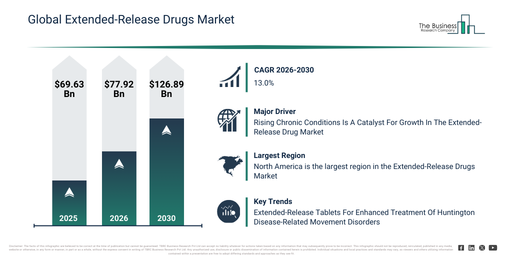
    In recent years, the market for extended-release medications has experienced rapid expansion. Projected to rise from $69.63 billion in 2025 to $77.92 billion in 2026, it is expected to achieve a compound annual growth rate (CAGR) of 11.9%. This historic growth has been driven by factors such as the increasing incidence of chronic conditions, a growing preference for patient-focused drug formulations, the inherent drawbacks of immediate-release options, higher healthcare spending, and innovations in pharmaceutical excipients.

    The market for extended-release medications is projected to experience significant expansion in the near future. By 2030, it will reach a size of $126.89 billion, achieving a compound annual growth rate (CAGR) of 13.0%. This anticipated growth during the forecast period can be linked to the rise of precision medicine, a greater use of oral controlled-release formulations, the growth of hospital and retail pharmacy networks, an increase in the elderly population, and investments in innovative delivery technologies. Key developments shaping this period consist of personalized dosing schedules, sophisticated drug delivery platforms, strategies to improve patient adherence, new formulation methods, and combination therapies with extended-release features.

    Download A Free Sample Report For Comprehensive Market Insights:

    https://www.thebusinessresearchcompany.com/sample.aspx?id=12675&type=smp&utm_source=BlogsPR&utm_medium=Paid&utm_campaign=Jul_PR

    Extended-Release Drugs Market Demand Drivers: What Is Fueling Industry Growth?

    The anticipated rise in chronic diseases is set to boost the extended-release drug market in the coming years. Chronic diseases are those that persist for a year or longer, requiring ongoing medical attention, limiting daily activities, or both. Examples include heart disease, cancer, obesity, and diabetes. Extended-release drug systems are crafted to ensure a steady medication level in the body over an extended timeframe, supporting consistent therapeutic outcomes and minimizing the drug level fluctuations often seen with immediate-release alternatives. In January 2023, data from the National Center for Biotechnology Information (NCBI), a US-based National Library of Medicine, indicated that by 2050, the number of people aged 50 and above with at least one chronic condition is expected to increase by 99.5%, reaching 142.66 million. Consequently, the growing prevalence of chronic illnesses is fueling expansion in the extended-release drug market.

    Extended-Release Drugs Market Segments: Where Are The Largest Growth Opportunities?

    The extended-release drugs market covered in this report is segmented –

    1) By Type: Sustained Release Drug, Controlled Release Drug

    2) By Mode: Over-The-Counter, Prescription

    3) By Distribution Channel: Hospital Pharmacies, Retail Pharmacies, Mail Order Pharmacies, Drug Stores

    Subsegments:

    1) By Sustained Release Drug: Matrix Systems, Coating Systems

    2) By Controlled Release Drug: Osmotic Systems, Microencapsulation Systems, Targeted Delivery Systems

    Extended-Release Drugs Market Innovation Trends: Which Developments Are Transforming The Industry?

    Key players in the extended-release drugs market are concentrating on the creation of advanced formulations, including next-generation extended-release tablets, to strengthen their product portfolios and secure a market edge. These tablets represent a specialized class of pharmaceuticals designed to dispense their active components slowly over a prolonged timeframe. In February 2023, for example, Teva Pharmaceutical Industries Ltd., headquartered in Israel, secured U.S. Food and Drug Administration (FDA) clearance for austedo XR (deutetrabenazine). This medication is indicated for managing chorea and tardive dyskinesia associated with Huntington disease in adults, and it is supplied in 6, 12, and 24 mg strengths. Following the approval of austedo XR, patients facing tardive dyskinesia or Huntington disease-related chorea have gained access to an additional effective therapy, taken just once daily. The launch of austedo XR marks a notable advancement in treating these conditions, offering a convenient and impactful solution for individuals living with such movement disorders.

    Extended-Release Drugs Market Major Participants And Competitive Dynamics

    Major companies operating in the extended-release drugs market are Pfizer Inc., AbbVie Inc., Novartis AG, Sanofi SA, GlaxoSmithKline PLC, AstraZeneca Plc, Gilead Sciences Inc., Boehringer Ingelheim International GmbH, Viatris Inc., Teva Pharmaceuticals Inc., Sun Pharmaceutical Industries Limited, Purdue Pharma LP, Amneal Pharmaceuticals Inc., Endo Pharmaceuticals Inc., Mallinckrodt LLC, Allergan plc, Janssen Pharmaceuticals Inc., Noven Pharmaceuticals Inc., Mayne Pharma Group Ltd., Neos Therapeutics Inc., Oakwood Laboratories LLC, Roxane Laboratories Inc., Watson Pharmaceuticals Inc.

    Access The Complete Extended-Release Drugs Market Report:

    https://www.thebusinessresearchcompany.com/report/extended-release-drugs-global-market-report?utm_source=BlogsPR&utm_medium=Paid&utm_campaign=Jul_PR

    Extended-Release Drugs Market Regional Distribution: Which Areas Drive Market Expansion?

    North America was the largest region in the extended-release drugs market in 2025. Asia-Pacific is expected to be the fastest-growing region in the forecast period. The regions covered in the extended-release drugs market report are Asia-Pacific, South East Asia, Western Europe, Eastern Europe, North America, South America, Middle East, Africa.

    Get in touch with us:

    The Business Research Company: https://www.thebusinessresearchcompany.com/?utm_source=BlogsPR&utm_medium=Paid&utm_campaign=home_page_test

    Americas: +1 310-496-7795

    Asia: +44 7882 955267 & +91 8897263534

    Europe: +44 7882 955267

    Email us at: marketing@tbrc.info

    Follow us on:

    LinkedIn: https://in.linkedin.com/company/the-business-research-company

    YouTube: https://www.youtube.com/channel/UC24_fI0rV8cR5DxlCpgmyFQ

    Global Market Model: https://www.thebusinessresearchcompany.com/global-market-model
  • Exocrine Pancreatic Insufficiency (EPI) Therapeutics And Diagnostics Market Expected To Reach $8.97 Billion By 2030 As Growth Accelerates At 8.2% CAGR

    Exocrine Pancreatic Insufficiency (EPI) Therapeutics And Diagnostics Market Expected To Reach $8.97 Billion By 2030 As Growth Accelerates At 8.2% CAGR

    Enhanced with market attractiveness analysis, total addressable market evaluation, company benchmarking matrices, interactive Excel dashboards, expanded supply chain intelligence, emerging startup coverage, and detailed product insights, The Business Research Company’s 2026 market reports deliver more actionable and strategically valuable research.

    Exocrine Pancreatic Insufficiency (EPI) Therapeutics And Diagnostics Market Growth Analysis: How Will Revenue Expand During The Forecast Period?

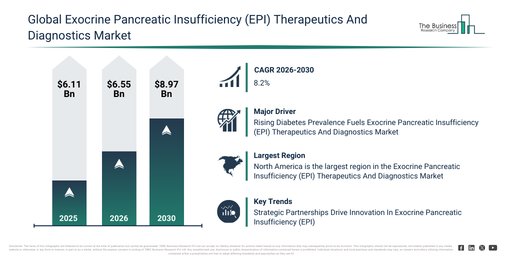
    The market for exocrine pancreatic insufficiency (EPI) therapeutics and diagnostics has experienced robust expansion in recent years. Projected to rise from $6.11 billion in 2025 to $6.55 billion in 2026, this growth reflects a compound annual growth rate (CAGR) of 7.1%. Historical expansion has been driven by factors such as a higher incidence of chronic pancreatitis, growing public awareness of digestive health issues, restricted availability of specialized diagnostic tools, increased use of nutritional supplements, and the broadening reach of home healthcare services.

    The market for exocrine pancreatic insufficiency (EPI) therapeutics and diagnostics is projected to experience robust expansion in the coming years. By 2030, its value is anticipated to reach $8.97 billion, driven by a compound annual growth rate (CAGR) of 8.2%. This forecasted growth is influenced by progress made in customizing enzyme therapies, the incorporation of artificial intelligence into diagnostic tools, an increased need for imaging methods that are non-invasive, the broadening of telehealth services, and a heightened emphasis on nutrition management tailored to individual patients. Key developments shaping this period include improved forms of pancreatic enzyme replacement therapy, rapid diagnostic tools usable at the point of care, customized nutritional care plans, imaging techniques that avoid invasive procedures for EPI, and the widespread adoption of telehealth within EPI treatment protocols.

    Download A Free Sample Report For Comprehensive Market Insights:

    https://www.thebusinessresearchcompany.com/sample.aspx?id=12992&type=smp&utm_source=BlogsPR&utm_medium=Paid&utm_campaign=Jul_PR

    Exocrine Pancreatic Insufficiency (EPI) Therapeutics And Diagnostics Market Growth Drivers: What Factors Are Accelerating Expansion?

    The rising prevalence of diabetes is anticipated to drive expansion in the exocrine pancreatic insufficiency (EPI) therapeutics and diagnostics market in the coming period. Diabetes is defined as a chronic metabolic condition marked by sustained high blood sugar levels (hyperglycemia) over an extended timeframe. This disorder arises when the body fails to generate sufficient insulin or cannot utilize the insulin it produces effectively. EPI treatment, primarily through pancreatic enzyme replacement therapy (PERT), can enhance nutrient absorption in individuals with both diabetes and EPI. Additionally, it may support better glycemic control in diabetic patients. For example, in June 2024, data from The National Health Service (NHS England), a publicly funded healthcare system in the UK, revealed that in 2023, the count of individuals identified with pre-diabetes in England climbed to 3,615,330, representing an 18% rise from 3,065,825 in 2022. Moreover, among those under 40, cases surged by nearly 25%, increasing from 173,166 in 2022 to 216,440 in 2023. Consequently, the growing number of diabetes cases is fueling the expansion of the exocrine pancreatic insufficiency (EPI) therapeutics and diagnostics market.

    The growing frequency of gastrointestinal disorders is expected to boost the exocrine pancreatic insufficiency (EPI) therapeutics and diagnostics market moving forward. Gastrointestinal diseases encompass a range of medical conditions impacting the gastrointestinal tract, which includes organs involved in digestion. EPI therapeutics and diagnostics are essential for managing these diseases by targeting the root enzyme deficiency and facilitating proper nutrient digestion. They play a key role in gastrointestinal disease management by correcting enzyme shortages and aiding digestive processes. As an illustration, in June 2023, Crohn’s and Colitis Canada, a non-profit organization based in Canada, reported that over 322,600 Canadians were estimated to be living with inflammatory bowel diseases (IBD) in 2023, accounting for roughly 0.82% of the population. With the ongoing rise in IBD prevalence, projections indicate that approximately 470,000 Canadians will have IBD by 2035, equating to about 1.1% of the population, or one in every 91 individuals nationwide. Thus, the escalating incidence of gastrointestinal diseases is anticipated to drive growth in the exocrine pancreatic insufficiency (EPI) therapeutics and diagnostics market.

    Exocrine Pancreatic Insufficiency (EPI) Therapeutics And Diagnostics Market Segment Analysis: What Are The Major Market Categories?

    The exocrine pancreatic insufficiency (epi) therapeutics and diagnostics market covered in this report is segmented –

    1) By Therapies: Nutritional Management, Pancreatic Enzyme Replacement Therapy (PERT), Lifestyle Modifications Approach

    2) By Diagnostics: Blood Tests, Magnetic Resonance Imaging (MRI), Endoscopic Ultra-Sonography (EUS), Computerized Tomography (CT) Scanning

    3) By Drug Type: Generic, Branded

    4) By Distribution Channel: Direct Tender, Retail Pharmacy , Third-Party Distributor, Other Distribution Channels

    5) By End User: Hospitals, Specialty Clinics, Homecare, Diagnostic Center, Research And Academic Institutes, Other End Users

    Subsegments:

    1) By Nutritional Management: Dietary Modifications, Nutritional Supplements

    2) By Pancreatic Enzyme Replacement Therapy (PERT): Capsule Formulations, Tablet Formulations, Powder Formulations

    3) By Lifestyle Modifications Approach: Weight Management, Physical Activity Recommendations, Smoking Cessation Programs

    Exocrine Pancreatic Insufficiency (EPI) Therapeutics And Diagnostics Market Trends: What Is Shaping Future Industry Growth?

    Major players within the exocrine pancreatic insufficiency (EPI) therapeutics and diagnostics market are actively leveraging a strategic partnership approach to drive better technology integration and broaden their market presence. This type of arrangement generally involves a collaborative alliance between multiple organizations, where they pool their resources, specialized knowledge, and collective efforts to achieve shared goals or objectives. A case in point is February 2023, when Codexis, Inc., a protein engineering firm based in the United States, joined forces with Nestlé Health Science, a Swiss company focused on nutritional science, to release interim findings from their Phase 1 clinical trial for CDX-7108—an investigational therapy designed to manage exocrine pancreatic insufficiency (EPI). These outcomes from the Phase 1 trial lay a solid foundation for subsequent investigations that could potentially lead to significant enhancements in treatment options for individuals dealing with EPI.

    Exocrine Pancreatic Insufficiency (EPI) Therapeutics And Diagnostics Market Leading Companies Driving Competitive Growth

    Major companies operating in the exocrine pancreatic insufficiency (epi) therapeutics and diagnostics market are Abbott Laboratories, Metagenics LLC, Chiesi Farmaceutici S.p.A., Nordmark Arzneimittel GmbH & Co. KG, Digestive Care Inc., Bioserv Diagnostics Gmbh, Aptalis Pharma Inc., EagleBiosciences Inc., ScheBo Biotech AG, Solvay S.A., Codexis Inc., ChiRhoClin Inc., Alcresta Therapeutics Inc., Cilian AG, First Wave BioPharma Inc., Laboratory Corporation of America Holdings, Organon, Vivus Inc., Anthera Pharmaceuticals Inc., Teva Pharmaceutical Industries Ltd

    Access The Complete Exocrine Pancreatic Insufficiency (EPI) Therapeutics And Diagnostics Market Report:

    https://www.thebusinessresearchcompany.com/report/exocrine-pancreatic-insufficiency-epi-therapeutics-and-diagnostics-global-market-report?utm_source=BlogsPR&utm_medium=Paid&utm_campaign=Jul_PR

    Exocrine Pancreatic Insufficiency (EPI) Therapeutics And Diagnostics Market Leading Geography: Which Region Generates The Most Revenue?

    North America was the largest region in the exocrine pancreatic insufficiency (EPI) therapeutics and diagnostics market in 2025. The regions covered in the exocrine pancreatic insufficiency (epi) therapeutics and diagnostics market report are Asia-Pacific, South East Asia, Western Europe, Eastern Europe, North America, South America, Middle East, Africa.

    Get in touch with us:

    The Business Research Company: https://www.thebusinessresearchcompany.com/?utm_source=BlogsPR&utm_medium=Paid&utm_campaign=home_page_test

    Americas: +1 310-496-7795

    Asia: +44 7882 955267 & +91 8897263534

    Europe: +44 7882 955267

    Email us at: marketing@tbrc.info

    Follow us on:

    LinkedIn: https://in.linkedin.com/company/the-business-research-company

    YouTube: https://www.youtube.com/channel/UC24_fI0rV8cR5DxlCpgmyFQ

    Global Market Model: https://www.thebusinessresearchcompany.com/global-market-model