Month: July 2026

  • Digital Therapeutics Endometriosis Market Set To Grow From $2.08 Billion In 2026 To $4.64 Billion By 2030 At A CAGR Of 22.2%

    Digital Therapeutics Endometriosis Market Set To Grow From $2.08 Billion In 2026 To $4.64 Billion By 2030 At A CAGR Of 22.2%

    Delivering more actionable and strategically valuable research, The Business Research Company’s 2026 market reports feature market attractiveness analysis, total addressable market evaluation, company benchmarking matrices, interactive Excel dashboards, expanded supply chain intelligence, emerging startup coverage, and detailed product insights.

    Digital Therapeutics Endometriosis Market Value Analysis: What Growth Is Expected Over The Forecast Period?

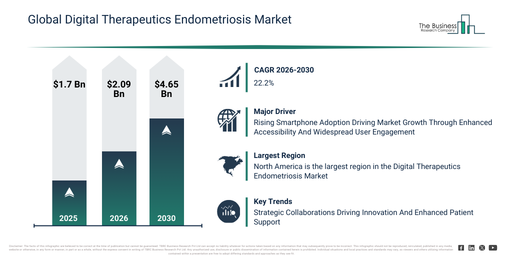
    The market for digital therapeutics focused on endometriosis has seen remarkable expansion in recent times. Valued at $1.7 billion in 2025, it is projected to reach $2.09 billion by 2026, reflecting a compound annual growth rate (CAGR) of 22.5%. This historic growth is driven by factors such as the increasing diagnosis rates of endometriosis, the wider adoption of mobile health applications, a growing patient preference for non-invasive management approaches, early regulatory support for digital therapeutics, and the ongoing development of digital platforms dedicated to women’s health.

    The digital therapeutics endometriosis market is projected to experience rapid expansion over the coming years. By 2030, its value is anticipated to reach $4.65 billion, reflecting a compound annual growth rate (CAGR) of 22.2%. This forecasted growth is driven by factors such as the growing clinical validation of digital therapies for endometriosis, an increased demand for tools that support long-term condition management, the broader adoption of cloud-based digital health platforms, greater integration with wearable health devices, and rising acceptance among both payers and providers. Key trends shaping this period include a shift toward personalized digital treatment programs, the growing use of applications for tracking symptoms and fertility, the expansion of behavior-based therapy platforms, the increasing incorporation of remote care and teleconsultation tools, and a stronger emphasis on patient education and active engagement.

    Download A Free Sample Report For Comprehensive Market Insights:

    https://www.thebusinessresearchcompany.com/sample.aspx?id=29024&type=smp&utm_source=BlogsPR&utm_medium=Paid&utm_campaign=Jul_PR

    Digital Therapeutics Endometriosis Market Opportunity Drivers: What Is Creating New Revenue Potential?

    The increasing prevalence of smartphones is anticipated to drive expansion in the digital therapeutics endometriosis market. These handheld devices combine communication, internet access, and computing capabilities into a single unit. Their growing use is fueled by rising internet penetration, which enables more individuals to conveniently access online services, social media, and digital entertainment from their devices. This widespread smartphone adoption facilitates digital therapeutics for endometriosis by offering users seamless and continuous access to personalized therapeutic applications, allowing for real-time symptom tracking, data monitoring, and evidence-based treatment guidance at any time and from any location. For example, in February 2023, a report from Uswitch Limited, a UK-based online and telephone comparison and switching service provider, indicated that there were 71.8 million active mobile connections in 2022, and by 2025, it is projected that 95% of the 68.3 million UK residents will own smartphones. Consequently, the swift uptake of smartphones is expected to boost the digital therapeutics endometriosis market.

    Digital Therapeutics Endometriosis Market Segment Analysis: What Are The Major Market Categories?

    The digital therapeutics endometriosis market covered in this report is segmented –

    1) By Product Type: Software, Devices, Services

    2) By Deployment Mode: On-Premises, Cloud-Based

    3) By Application: Pain Management, Symptom Tracking, Fertility Management, Education And Awareness, Other Applications

    4) By End User: Hospitals And Clinics, Homecare, Research Institutes, Other End Users

    Subsegments:

    1) By Software: Mobile Applications, Web-Based Platforms, Cloud-Based Solutions, Decision Support Tools

    2) By Devices: Wearable Monitoring Devices, Smart Therapeutic Devices, Digital Diagnostic Tools, Connected Medical Devices

    3) By Services: Remote Patient Monitoring Services, Teleconsultation Services, Therapy Management Services, Data Analytics And Support Services

    Digital Therapeutics Endometriosis Market Innovation Trends Driving Future Development

    Key players in the digital therapeutics endometriosis market are prioritizing the establishment of strategic alliances to drive innovation by merging specialized expertise and diverse viewpoints. Collaborations involve joint efforts among multiple entities to accomplish mutual goals, pool resources, or leverage each other’s strengths. For example, in March 2024, Endometriosis Australia, a nationally accredited charity based in Australia, teamed up with CHARLI, an Australian digital health firm, to launch a groundbreaking platform designed to assist thousands of Australians impacted by endometriosis. This partnership led to the creation of an app developed by medical and health professionals in cooperation with consumers. The app utilizes artificial intelligence to help women track menstruation, fertility, sexual health, pregnancy, and peri/menopause. Additionally, it assists in identifying pain or potential conditions like endometriosis. Through its collaboration with Endometriosis Australia, the app offers support to one in seven Australians affected by the condition, facilitating faster diagnosis and enhanced access to care.

    Digital Therapeutics Endometriosis Market Leading Companies Driving Competitive Growth

    Major companies operating in the digital therapeutics endometriosis market are Bayer AG, Kissei Pharmaceutical Co. Ltd., Abbott Laboratories, Luna Endoscore, Chugai Pharmaceutical Co. Ltd., Sword health inc., Charli , Maven Clinic Co., Flo Health Inc., Hinge Health Inc., PrecisionLife Ltd., TiumBio, EpicentRx Inc., Syrona Health, Matilda Health Care, ELANZA Wellness Inc., iCareBetter Inc., Endocare Clinic Fz LLc, Herabiotech, Ziwig Biotech, Hera Biotech Inc.

    Access The Complete Digital Therapeutics Endometriosis Market Report:

    https://www.thebusinessresearchcompany.com/report/digital-therapeutics-endometriosis-global-market-report?utm_source=BlogsPR&utm_medium=Paid&utm_campaign=Jul_PR

    Digital Therapeutics Endometriosis Market Regional Distribution: Which Areas Drive Market Expansion?

    North America was the largest region in the digital therapeutics endometriosis market in 2025. Asia-Pacific is expected to be the fastest-growing region in the forecast period. The regions covered in the digital therapeutics endometriosis market report are Asia-Pacific, South East Asia, Western Europe, Eastern Europe, North America, South America, Middle East, Africa.

    Get in touch with us:

    The Business Research Company: https://www.thebusinessresearchcompany.com/?utm_source=BlogsPR&utm_medium=Paid&utm_campaign=home_page_test

    Americas: +1 310-496-7795

    Asia: +44 7882 955267 & +91 8897263534

    Europe: +44 7882 955267

    Email us at: marketing@tbrc.info

    Follow us on:

    LinkedIn: https://in.linkedin.com/company/the-business-research-company

    YouTube: https://www.youtube.com/channel/UC24_fI0rV8cR5DxlCpgmyFQ

    Global Market Model: https://www.thebusinessresearchcompany.com/global-market-model
  • Digital Therapeutics Complex Regional Pain Syndrome Market Opportunities Are Emerging Beyond Traditional Growth Areas

    Digital Therapeutics Complex Regional Pain Syndrome Market Opportunities Are Emerging Beyond Traditional Growth Areas

    Enhanced with market attractiveness analysis, total addressable market evaluation, company benchmarking matrices, interactive Excel dashboards, expanded supply chain intelligence, emerging startup coverage, and detailed product insights, The Business Research Company’s 2026 market reports deliver more actionable and strategically valuable research.

    Digital Therapeutics Complex Regional Pain Syndrome Market Size Forecast: How Large Could The Market Become By 2030?

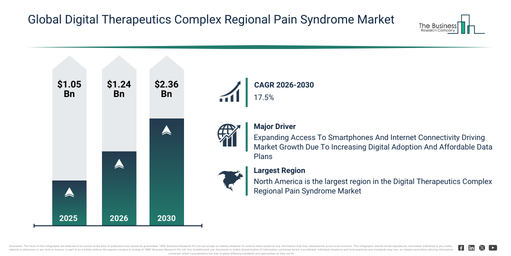
    The market size for digital therapeutics targeting complex regional pain syndrome has experienced swift expansion in recent years. Projected to increase from $1.05 billion in 2025 to $1.24 billion in 2026, this represents a compound annual growth rate (CAGR) of 17.8%. The historical growth has been driven by heightened recognition of unmet needs in CRPS treatment, greater adoption of digital health tools for pain management, broader acceptance of telehealth services, preliminary clinical evidence supporting digital therapeutics, and an increasing emphasis on non-pharmacological approaches.

    In the coming years, the market for digital therapeutics focused on complex regional pain syndrome is projected to experience significant expansion. By 2030, its value is anticipated to reach $2.36 billion, driven by a robust compound annual growth rate of 17.5%. This anticipated growth in the forecast period is largely fueled by several key factors, including the rising use of prescription-based digital therapies, a growing need for pain management solutions that can be administered at home, the broadening of clinical care models supported by digital tools, enhanced connections with wearable monitoring technology, and increased financial backing through reimbursements for such digital interventions. Looking ahead, prevailing trends shaping this market involve the widespread adoption of software-driven pain management programs, a greater incorporation of tools for remote patient monitoring, the development of more customized therapeutic algorithms, heightened utilization of platforms for tracking symptoms through data analysis, and a strengthened emphasis on improving patient engagement and treatment adherence.

    Download A Free Sample Report For Comprehensive Market Insights:

    https://www.thebusinessresearchcompany.com/sample.aspx?id=29023&type=smp&utm_source=BlogsPR&utm_medium=Paid&utm_campaign=Jul_PR

    Digital Therapeutics Complex Regional Pain Syndrome Market Growth Momentum: Which Factors Are Influencing Demand?

    The anticipated growth of the digital therapeutics market for complex regional pain syndrome is being fueled by the broadening availability of smartphones and internet access. This refers to mobile devices that connect to the web, allowing users to communicate, search for information, and utilize online services at any time and from any location. Rapid urbanization plays a key role in driving this expanded access, as dense city environments foster infrastructure development and economic conditions that speed up the rollout of mobile networks and broadband services. Greater smartphone adoption and internet penetration bolster digital therapeutics for complex regional pain syndrome by facilitating continuous patient involvement, remote oversight, and customized treatment delivery via easily accessible mobile platforms, which in turn enhances adherence to therapy, enables real-time data gathering, and improves overall pain management outcomes. By May 2025, as reported by the Federal Communications Commission (a U.S. government agency), total connections climbed roughly 2.5% between June 2023 and June 2024, reaching 549 million. Mobile connections experienced a 2.5% year-over-year increase to 416 million as of June 2024, while fixed connections rose approximately 2.3% to 133 million during the same timeframe. Consequently, the expansion of smartphone and internet access is propelling the growth trajectory of the digital therapeutics market for complex regional pain syndrome.

    Digital Therapeutics Complex Regional Pain Syndrome Market Segment Breakdown: Which Categories Generate The Most Revenue?

    The digital therapeutics complex regional pain syndrome market covered in this report is segmented –

    1) By Product Type: Software, Devices, Platforms

    2) By Distribution Channel: Online Platforms, Pharmacies, Direct Sales, Other Distribution Channels

    3) By Application: Pain Management, Rehabilitation, Patient Education, Other Applications

    4) By End-User: Hospitals, Clinics, Homecare, Research Institutes, Other End Users

    Subsegments:

    1) By Software: Pain Management Software, Cognitive Behavioral Therapy Software, Symptom Tracking Software, Telehealth Integration Software

    2) By Devices: Wearable Pain Monitoring Devices, Biofeedback Devices, Peripheral Nerve Stimulation Devices, Rehabilitation Support Devices

    3) By Platforms: Patient Engagement Platforms, Clinician Management Platforms, Data Analytics Platforms, Telemedicine Platforms

    Digital Therapeutics Complex Regional Pain Syndrome Market Key Players And Strategic Industry Positioning

    Major companies operating in the digital therapeutics complex regional pain syndrome market are Abbott Laboratories, Hinge Health Inc., MedBridge Inc., Luna Innovations Inc., BioWave Inc., Kaia Health Software GmbH, XRHealth Inc., Vori Health Inc., AppliedVR Inc., Theranica Bio-Electronics Ltd., PainDrainer Inc., Physitrack Ltd., WellBrain Inc., Vitrue Health Inc., Upswing Health Inc., Flowly Inc., Plethy Inc., PainChek Ltd., Oska Wellness Inc., DarioHealth Corp.

    Access The Complete Digital Therapeutics Complex Regional Pain Syndrome Market Report:

    https://www.thebusinessresearchcompany.com/report/digital-therapeutics-complex-regional-pain-syndrome-global-market-report?utm_source=BlogsPR&utm_medium=Paid&utm_campaign=Jul_PR

    Digital Therapeutics Complex Regional Pain Syndrome Market Leading Geography: Which Region Generates The Most Revenue?

    North America was the largest region in the digital therapeutics complex regional pain syndrome market in 2025. Asia-Pacific is expected to be the fastest-growing region in the forecast period. The regions covered in the digital therapeutics complex regional pain syndrome market report are Asia-Pacific, South East Asia, Western Europe, Eastern Europe, North America, South America, Middle East, Africa.

    Get in touch with us:

    The Business Research Company: https://www.thebusinessresearchcompany.com/?utm_source=BlogsPR&utm_medium=Paid&utm_campaign=home_page_test

    Americas: +1 310-496-7795

    Asia: +44 7882 955267 & +91 8897263534

    Europe: +44 7882 955267

    Email us at: marketing@tbrc.info

    Follow us on:

    LinkedIn: https://in.linkedin.com/company/the-business-research-company

    YouTube: https://www.youtube.com/channel/UC24_fI0rV8cR5DxlCpgmyFQ

    Global Market Model: https://www.thebusinessresearchcompany.com/global-market-model
  • Digital Assistants In Health care Market Expansion Is Opening New Pathways For Strategic Investment

    Digital Assistants In Health care Market Expansion Is Opening New Pathways For Strategic Investment

    Through market attractiveness analysis, total addressable market evaluation, company benchmarking matrices, interactive Excel dashboards, expanded supply chain intelligence, emerging startup coverage, and detailed product insights, The Business Research Company’s 2026 market reports provide more actionable and strategically valuable research.

    Digital Assistants In Health care Market Revenue Outlook: What CAGR Is Expected Through 2030?

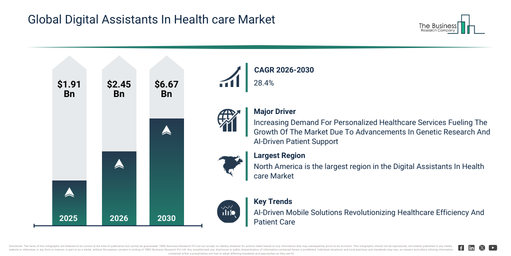
    The market for digital assistants in healthcare has seen remarkable expansion over the last few years. Valued at $1.91 billion in 2025, it is projected to climb to $2.45 billion by 2026, reflecting a compound annual growth rate (CAGR) of 28.7%. This historic growth was fueled by several factors, including accelerated healthcare digitization, a scarcity of clinical personnel, heightened demands for patient interaction, the widespread integration of electronic health records, and the expansion of telehealth services.

    The market for digital assistants in healthcare is anticipated to experience robust expansion over the coming years. By 2030, its projected value is set to reach $6.67 billion, reflecting a compound annual growth rate (CAGR) of 28.4%. This upward trajectory during the forecast period is driven by several factors, including improvements in conversational AI, the broadening of virtual care models, a heightened need for operational efficiency, the proliferation of remote monitoring solutions, and sustained funding for digital health platforms. Key developments shaping this period encompass the growing reliance on AI-powered virtual assistants, the increasing prevalence of voice-activated healthcare systems, deeper integration with electronic health records, broader adoption of tools for remote patient engagement, and a stronger emphasis on automating clinical workflows.

    Download A Free Sample Report For Comprehensive Market Insights:

    https://www.thebusinessresearchcompany.com/sample.aspx?id=24208&type=smp&utm_source=BlogsPR&utm_medium=Paid&utm_campaign=Jul_PR

    Digital Assistants In Health care Market Expansion Drivers: What Is Shaping Future Growth?

    The growing demand for custom-tailored medical care is anticipated to accelerate the expansion of the healthcare digital assistant market. Personalized healthcare services involve medical treatments designed around an individual’s genetic makeup, lifestyle choices, and health history to ensure more precise and effective outcomes. This category encompasses customized medications, bespoke treatment plans, diagnostic procedures, and wellness strategies. The rising trend of personalization is fueled by progress in genetic research, which facilitates more targeted and efficient therapies aligned with a patient’s unique genetic characteristics. Within this context, digital assistants in healthcare bolster personalized care by offering individualized health advice and support through artificial intelligence-driven interactions. They enhance patient involvement by automating tasks such as symptom assessment and appointment booking, thereby boosting care availability and operational efficiency. To illustrate, in February 2024, the Personalized Medicine Coalition (PMC), a non-profit organization based in the US, reported that the U.S. Food and Drug Administration (FDA) sanctioned 26 new personalized drugs in 2023, a notable leap from the 12 approvals recorded in 2022. Consequently, the rising need for customized healthcare services is fueling the progression of the digital assistant market within the healthcare sector.

    Digital Assistants In Health care Market Segmentation: How Is The Market Structured Across Key Categories?

    The digital assistants in health care market covered in this report is segmented –

    1) By Type: Smart Speaker, Chatbot, Other Types

    2) By Technology: Artificial Intelligence (AI)-Powered Assistants, Rule-Based Assistants, Natural Language Processing (NLP) Assistants, Machine Learning Assistants, Robotic Process Automation (RPA) Assistants

    3) By Application: Diagnosis, Virtual Nursing Assistance, Patient Tracking, Other Applications

    4) By End-User: Healthcare Providers, Healthcare Payers, Patients, Other End Users

    Subsegments:

    1) By Smart Speaker: Voice-activated Healthcare Assistants, Speech Recognition Systems for Healthcare, Virtual Health Assistants (VHA)

    2) By Chatbot: Symptom Checking Chatbots, Patient Support and Engagement Chatbots, Virtual Health Coaching Chatbots, Mental Health Support Chatbots

    Digital Assistants In Health care Market Strategic Trends: What Is Defining The Next Phase Of Growth?

    Leading companies in the digital assistants for healthcare sector are directing their efforts toward the creation of advanced technological tools, particularly artificial intelligence (AI)-powered mobile platforms designed to automate repetitive activities, improve patient care, and aid in clinical decision-making. An AI-powered mobile platform is essentially a smartphone application that employs artificial intelligence to deliver customized, efficient, and data-informed services, thereby boosting user experience and supporting healthcare functions like diagnostics, patient interaction, and remote health tracking. As an example, in July 2024, Oracle Corporation, a computer software firm based in the United States, introduced the Oracle Clinical Digital Assistant. This mobile platform, which incorporates AI and voice technology, is linked to the Oracle health electronic health record (EHR) to automate clinical note-taking and streamline work processes, thereby notably decreasing the administrative load on physicians. Because of this, doctors are able to conserve time, enhance their interactions with patients, and boost the overall effectiveness of healthcare delivery.

    Digital Assistants In Health care Market Competitive Landscape And Leading Companies

    Major companies operating in the digital assistants in health care market are Amazon.com Inc., Apple Inc., Google LLC, Samsung Electronics Co. Ltd, Microsoft Corporation, IBM Corporation, Siemens Healthineers AG, Koninklijke Philips N.V., GE HealthCare Technologies Inc., Babylon Holdings Limited, Verint Systems Inc., eGain Corporation, Suki Inc., Ada Health GmbH, K Health Inc., Infermedica Sp. z o.o, Your.MD Ltd, Fabric Labs Inc., Mediktor, MediSprout

    Access The Complete Digital Assistants In Health care Market Report:

    https://www.thebusinessresearchcompany.com/report/digital-assistants-in-health-care-global-market-report?utm_source=BlogsPR&utm_medium=Paid&utm_campaign=Jul_PR

    Digital Assistants In Health care Market Regional Outlook: Where Are The Largest Opportunities Located?

    North America was the largest region in the digital assistants in the healthcare market in 2025. Asia-Pacific is expected to be the fastest-growing region in the forecast period. The regions covered in the digital assistants in health care market report are Asia-Pacific, South East Asia, Western Europe, Eastern Europe, North America, South America, Middle East, Africa.

    Get in touch with us:

    The Business Research Company: https://www.thebusinessresearchcompany.com/?utm_source=BlogsPR&utm_medium=Paid&utm_campaign=home_page_test

    Americas: +1 310-496-7795

    Asia: +44 7882 955267 & +91 8897263534

    Europe: +44 7882 955267

    Email us at: marketing@tbrc.info

    Follow us on:

    LinkedIn: https://in.linkedin.com/company/the-business-research-company

    YouTube: https://www.youtube.com/channel/UC24_fI0rV8cR5DxlCpgmyFQ

    Global Market Model: https://www.thebusinessresearchcompany.com/global-market-model
  • Digestive Health Supplements Market Trends Are Creating New Opportunities For Industry Leaders

    Digestive Health Supplements Market Trends Are Creating New Opportunities For Industry Leaders

    Delivering more actionable and strategically valuable research, The Business Research Company’s 2026 market reports feature market attractiveness analysis, total addressable market evaluation, company benchmarking matrices, interactive Excel dashboards, expanded supply chain intelligence, emerging startup coverage, and detailed product insights.

    Digestive Health Supplements Market Growth Analysis: How Will Revenue Expand During The Forecast Period?

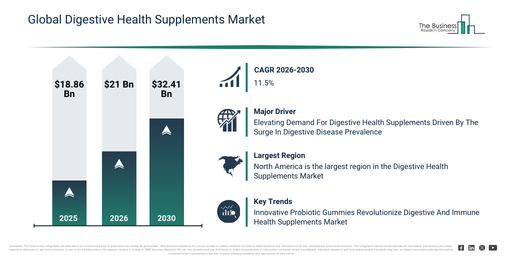
    The digestive health supplements industry has seen substantial expansion in recent times. From $18.86 billion in 2025, the market is projected to reach $21 billion by 2026, reflecting a compound annual growth rate of 11.3%. Several factors fueled this past growth, including a higher incidence of digestive issues, greater public understanding of gut wellness, wider adoption of probiotics and enzymes, broader availability through retail pharmacies, and increasing household incomes in developing nations.

    The digestive health supplements market is projected to experience robust expansion over the coming years. By 2030, its size is anticipated to reach $32.41 billion, advancing at a compound annual growth rate (CAGR) of 11.5%. This forecasted growth is fueled by breakthroughs in microbiome research, a growing appetite for customized nutrition, the proliferation of online supplement retailers, an aging demographic facing digestive challenges, and an intensified emphasis on preventive care. Key developments shaping this period include the emergence of bespoke gut health products, digestive aids featuring natural and clean-label ingredients, the creation of synbiotic and multi-strain formulations, a broader uptake of preventive digestive wellness strategies, and the strengthening of e-commerce with direct-to-consumer channels.

    Download A Free Sample Report For Comprehensive Market Insights:

    https://www.thebusinessresearchcompany.com/sample.aspx?id=7292&type=smp&utm_source=BlogsPR&utm_medium=Paid&utm_campaign=Jul_PR

    Digestive Health Supplements Market Development Factors: Which Trends Are Supporting Demand?

    The growing incidence of digestive disorders is anticipated to boost the digestive health supplement market in the coming period. A digestive disease refers to any medical condition impacting the digestive system, with severity ranging from mild to severe. Supplements like probiotics, prebiotics, and enzymes are used to address gastrointestinal issues such as diarrhea, constipation, inflammatory bowel disease, irritable bowel syndrome, urinary tract infections, and other related problems. For example, in November 2025, the Canadian Cancer Society—a national charity based in Canada—forecasted that roughly 7,100 people in the country would be diagnosed with pancreatic cancer, and about 6,300 would die from it, highlighting a particularly high fatality rate relative to new cases. Consequently, the rising frequency of digestive diseases is set to fuel expansion in the digestive health supplements market.

    Digestive Health Supplements Market Segmentation Trends And Revenue Drivers

    The digestive health supplements market covered in this report is segmented –

    1) By Product: Prebiotics, Probiotics, Enzymes, Other Product

    2) By Form: Capsules, Tablets, Powders, Liquids, Other Form

    3) By Distribution Channel: Supermarkets/Hypermarkets, Convenience Store, Specialty Store, Pharmacies, E-Commerce, Other Distribution Channels

    Subsegments:

    1) By Prebiotics: Inulin, Oligofructose, Fructooligosaccharides (FOS), Galactooligosaccharides (GOS), Other Prebiotics

    2) By Probiotics: Lactobacillus, Bifidobacterium, Saccharomyces, Streptococcus, Other Probiotics

    3) By Enzymes: Amylase, Protease, Lipase, Cellulase, Other Digestive Enzymes

    4) By Other Products: Herbal Supplements, Fiber Supplements, Digestive Health Blends, Other Natural Ingredients

    Digestive Health Supplements Market Transformation Trends: Which Innovations Are Driving Change?

    Major players within the market are actively working to develop cutting-edge products like Probiotic Gummies, aiming to broaden their product portfolios and capture a larger revenue share. Nutrazee Probiotic Gummies are meticulously formulated to withstand stomach acid and maintain stability at room temperature throughout their entire shelf life, delivering a practical and efficient solution for supporting gut health. As an example, in March 2023, Nutrazee, an Indian firm specializing in vegan dietary supplements, introduced its new product line called Nutrazee Probiotic Gummies for Digestive and Immune Health, which incorporates prebiotic fiber to encourage the proliferation of beneficial intestinal bacteria. This newly launched item within Nutrazee’s range is specifically engineered to boost digestive and immune functions in both children and adults. The formulation of Nutrazee Probiotic Gummies includes a patented, clinically proven probiotic strain, Bacillus coagulans, recognized for its substantial health advantages. This strain has shown efficacy in reducing symptoms of irritable bowel syndrome (IBS) in youngsters, addressing frequent concerns such as abdominal pain, bloating, and irregular bowel movements, and also improving stool consistency.

    Digestive Health Supplements Market Industry Leaders: Which Organizations Are Driving Competition?

    Major companies operating in the digestive health supplements market are Amway Corp., Bayer AG, NOW Foods, Alimentary Health Limited, Garden of Life LLC, Better Body Co., Florastor – Biocodex, Culturelle – i-Health Inc., Pure Encapsulations LLC, Bio-K Probiotic Inc., Renew Life Formulas Inc., The Nature’s Bounty Co., Nature Made – Pharmavite LLC, Align – The Procter & Gamble Company, Nature’s Way Products LLC, Schiff Nutrition International Inc., Rainbow Light Nutritional Systems, Jarrow Formulas Inc., Enzymedica Inc., Thorne Research Inc., New Chapter Inc., Solgar Inc., Gaia Herbs Inc., MegaFood, Country Life LLC, Bluebonnet Nutrition Corporation, Nature’s Plus – Natural Organics Inc., Carlson Laboratories Inc., Irwin Naturals

    Access The Complete Digestive Health Supplements Market Report:

    https://www.thebusinessresearchcompany.com/report/digestive-health-supplements-global-market-report?utm_source=BlogsPR&utm_medium=Paid&utm_campaign=Jul_PR

    Digestive Health Supplements Market Geographic Landscape: Which Region Dominates Industry Growth?

    North America was the largest region in the digestive health supplements market in 2025. Asia-Pacific is expected to be the fastest-growing region in the forecast period. The regions covered in the digestive health supplements market report are Asia-Pacific, South East Asia, Western Europe, Eastern Europe, North America, South America, Middle East, Africa.

    Get in touch with us:

    The Business Research Company: https://www.thebusinessresearchcompany.com/?utm_source=BlogsPR&utm_medium=Paid&utm_campaign=home_page_test

    Americas: +1 310-496-7795

    Asia: +44 7882 955267 & +91 8897263534

    Europe: +44 7882 955267

    Email us at: marketing@tbrc.info

    Follow us on:

    LinkedIn: https://in.linkedin.com/company/the-business-research-company

    YouTube: https://www.youtube.com/channel/UC24_fI0rV8cR5DxlCpgmyFQ

    Global Market Model: https://www.thebusinessresearchcompany.com/global-market-model
  • Digestive Health Market Growth Is Reshaping Competitive Advantage Across The Industry

    Digestive Health Market Growth Is Reshaping Competitive Advantage Across The Industry

    Enhanced with market attractiveness analysis, total addressable market evaluation, company benchmarking matrices, interactive Excel dashboards, expanded supply chain intelligence, emerging startup coverage, and detailed product insights, The Business Research Company’s 2026 market reports deliver more actionable and strategically valuable research.

    Digestive Health Market Forecast: What Market Value Is Expected By 2030?

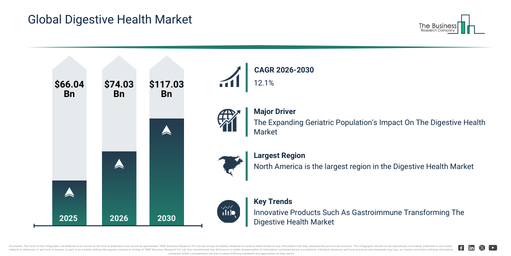
    The digestive health market has experienced rapid expansion in recent years, with its value projected to increase from $66.04 billion in 2025 to $74.03 billion in 2026, reflecting a compound annual growth rate (CAGR) of 12.1%. This historical growth has been driven by factors such as the rising incidence of digestive disorders, heightened consumer awareness regarding gut health, increased consumption of functional foods, the broadening of retail channels for dietary supplements, and recommendations from physicians for probiotics.

    The digestive health market is forecasted to experience significant expansion in the near future. It is projected to reach a value of $117.03 billion by 2030, driven by a compound annual growth rate (CAGR) of 12.1%. This anticipated growth in the coming period stems from factors such as the uptake of personalized nutrition, the rise of e-commerce health platforms, breakthroughs in probiotic formulations, a growing elderly demographic, and increased spending on preventive healthcare. Key trends shaping this market include a higher demand for probiotic and prebiotic products, the emergence of functional foods designed to boost digestive wellness, a growing inclination toward natural and plant-based digestive remedies, the proliferation of online pharmacies and direct-to-consumer channels, and a heightened focus on gut health as part of preventive care.

    Download A Free Sample Report For Comprehensive Market Insights:

    https://www.thebusinessresearchcompany.com/sample.aspx?id=7756&type=smp&utm_source=BlogsPR&utm_medium=Paid&utm_campaign=Jul_PR

    Digestive Health Market Industry Drivers: What Is Driving Revenue Growth?

    The growing number of elderly individuals is propelling the digestive health market forward. This demographic is defined as adults aged 65 and older. As people age, various physiological processes slow down, meaning the digestive system may no longer function as quickly or efficiently as it used to. Over time, the digestive tract’s muscles become stiffer, softer, and less effective. Products designed for digestive health help the body digest food properly and absorb essential nutrients, supporting overall wellness. For example, the World Health Organization (WHO), a UN agency based in Switzerland, reported in October 2025 that by 2030, one in six people worldwide will be 60 years or older, and the number of individuals in this age bracket is expected to reach 2.1 billion by 2050, doubling from current figures. Consequently, the expanding elderly population is anticipated to drive growth in the digestive health market.

    Digestive Health Market Segment Analysis Highlighting Growth Areas

    The digestive health market covered in this report is segmented –

    1) By Product Type: Functional Foods and Beverages, Vitamins And Dietary Supplements, Other Products

    2) By Ingredient Type: Probiotics, Prebiotics, Digestive Enzymes, Other Ingredients

    3) By Distribution Channel: Supermarkets Or Hypermarkets, Hospital Pharmacies, Online Pharmacies, Other Distribution Channels

    Subsegments:

    1) By Functional Foods And Beverages: Probiotic Yogurts, Prebiotic Foods, Fiber-Enriched Products, Fermented Foods, Digestive Health Beverages

    2) By Vitamins And Dietary Supplements: Probiotic Supplements, Digestive Enzymes, Fiber Supplements, Multivitamins With Digestive Support, Herbal Supplements

    3) By Other Products: Dietary Aids, Over-The-Counter Digestive Health Products

    Digestive Health Market Growth Trends: What Is Influencing The Future Outlook?

    In the digestive health sector, major players are focusing on product innovation to strengthen their market standing and secure a competitive edge, with GastroImmune being one such example. This supplement, created by Daiwa Health Development, Inc., supports digestive wellness and a strong mucosal immune system through a blend of ImmunoLin and key nutrients. Launched in April 2023 by the US-based dietary supplement firm, GastroImmune enhances digestive function and promotes a healthy mucosal immune response, leveraging ImmunoLin—an agglomerated powder derived from edible bovine plasma that is abundant in immunoglobulins, peptides, and growth factors naturally present in milk or colostrum. Featuring more than 50% immunoglobulins and over 180 distinct proteins identified via proteomics, the product is manufactured in an FDA-inspected facility under rigorous quality standards. ImmunoLin is also referred to as serum-derived bovine immunoglobulin/protein isolate (SBI).

    Digestive Health Market Leading Companies: Who Holds Significant Market Presence?

    Major companies operating in the digestive health market are Chr. Hansen Holdings A/S, Yakult Honsha Co. Ltd., Nestlé SA, DuPont de Nemours Inc., PepsiCo Inc., Abbott Laboratories, ANI Pharmaceuticals Inc., Carlson Labs, Biovencer Healthcare Private Limited, Evoke Pharma Inc., Swanson Health, GlaxoSmithKline PLC, Solgar Inc., Mac Twins – The Gut Stuff Limited, Culturelle – i-Health Inc., Jarrow Formulas Inc., SmartyPants Inc., Takeda Pharmaceutical Company Limited, Enzymedica Inc., Gaia Herbs Inc., Zeria Pharmaceutical Co. Ltd., Thorne Research Inc., The Nature’s Bounty Co.

    Access The Complete Digestive Health Market Report:

    https://www.thebusinessresearchcompany.com/report/digestive-health-global-market-report?utm_source=BlogsPR&utm_medium=Paid&utm_campaign=Jul_PR

    Digestive Health Market Largest Region: Which Geography Holds The Highest Market Share?

    North America was the largest region in the digestive health market in 2025. The regions covered in the digestive health market report are Asia-Pacific, South East Asia, Western Europe, Eastern Europe, North America, South America, Middle East, Africa.

    Get in touch with us:

    The Business Research Company: https://www.thebusinessresearchcompany.com/?utm_source=BlogsPR&utm_medium=Paid&utm_campaign=home_page_test

    Americas: +1 310-496-7795

    Asia: +44 7882 955267 & +91 8897263534

    Europe: +44 7882 955267

    Email us at: marketing@tbrc.info

    Follow us on:

    LinkedIn: https://in.linkedin.com/company/the-business-research-company

    YouTube: https://www.youtube.com/channel/UC24_fI0rV8cR5DxlCpgmyFQ

    Global Market Model: https://www.thebusinessresearchcompany.com/global-market-model
  • Digestive Enzymes Market Forecast Signals New Revenue Opportunities Through 2030

    Digestive Enzymes Market Forecast Signals New Revenue Opportunities Through 2030

    Through market attractiveness analysis, total addressable market evaluation, company benchmarking matrices, interactive Excel dashboards, expanded supply chain intelligence, emerging startup coverage, and detailed product insights, The Business Research Company’s 2026 market reports provide more actionable and strategically valuable research.

    Digestive Enzymes Market Size Outlook: How Fast Will Revenue Grow Through 2030?

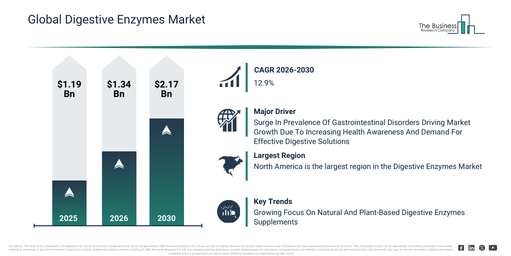
    The market for digestive enzymes has experienced rapid expansion in recent years, moving from a valuation of $1.19 billion in 2025 to an anticipated $1.34 billion by 2026, driven by a compound annual growth rate (CAGR) of 12.4%. This historical growth can be traced to several key factors, such as a higher incidence of digestive conditions, greater public understanding of enzyme-based treatments, an expanding elderly demographic, the development of more pharmaceutical enzyme products, and the widening reach of retail pharmacy outlets.

    The digestive enzymes market is set to undergo significant expansion in the coming years. By 2030, its value is projected to reach $2.17 billion, reflecting a compound annual growth rate (CAGR) of 12.9%. This forecasted growth is largely driven by rising interest in customized digestive solutions, an increased emphasis on gut health, the expansion of plant-derived enzyme production, the growth of online health product retail, and progress in enzyme formulation techniques. Key trends expected to shape the forecast period include greater use of enzyme supplements for digestive wellness, increased demand for plant-based and microbial enzymes, wider adoption of non-prescription digestive aids, broader enzyme applications in managing chronic digestive conditions, and enhanced online availability of digestive enzyme products.

    Download A Free Sample Report For Comprehensive Market Insights:

    https://www.thebusinessresearchcompany.com/sample.aspx?id=2809&type=smp&utm_source=BlogsPR&utm_medium=Paid&utm_campaign=Jul_PR

    #Digestive Enzymes Market Growth Factors: Which Forces Are Supporting Market Expansion?

    The expanding occurrence of gastrointestinal conditions across various age groups is fueling the expansion of the digestive enzymes market. These conditions affect the gastrointestinal tract from the mouth through the esophagus, stomach, small intestine, large intestine, and anus, often arising from a deficiency in digestive enzymes. Factors such as smoking, dietary habits, genetic predisposition, poor sanitation, heightened antibiotic usage, and evolving environmental influences tied to industrialization and urbanization are driving the rising rates of these disorders. As an example, the UK Health Security Agency (UKHSA)—a government body overseeing health security in England—reported in September 2025 that laboratory-confirmed cases of Campylobacter, a pathogen responsible for gastrointestinal infections, rose by 27.0 percent in the rate per 100,000 population, climbing from 96.1 in 2022 to 122.0 in 2024. Consequently, the growing incidence of digestive diseases is significantly contributing to the advancement of the digestive enzymes market.

    Digestive Enzymes Market Segment Performance And Strategic Opportunities

    The digestive enzymes market covered in this report is segmented –

    1) By Enzyme Type: Carbohydrates, Protease, Lipase, Other Enzyme Types

    2) By Origin: Animal, Fungi, Microbial, Plant

    3) By Application: Indigestion, Chronic Pancreatitis, Irritable Bowel Syndrome, Other Applications

    4) By Distribution Channel: Retail Stores, Online Stores

    Subsegments:

    1) By Carbohydrates: Amylase, Alpha-Galactosidase, Lactase, Sucrase, Maltase

    2) By Protease: Pepsin, Trypsin, Chymotrypsin, Bromelain, Papain

    3) By Lipase: Pancreatic Lipase, Gastric Lipase, Lingual Lipase

    4) By Other Enzyme Types: Cellulase, Lactase, Phytase, Beta-Glucanase, Xylanase

    Digestive Enzymes Market Industry Trends: What Changes Are Reshaping Demand?

    Major players within the digestive enzymes market are concentrating on creating novel products, especially enzymatic digestibility enhancers, in response to increasing consumer demand for healthier food choices. An enzymatic digestibility enhancer is a compound or dietary supplement that incorporates enzymes designed to facilitate more effective breakdown and absorption of nutrients from food. As an example, Huvepharma EOOD, a pharmaceutical firm based in Bulgaria, introduced its enzymatic digestibility enhancer called Huvezym neXo across the European Union in September 2023. This product is intended to enhance feed efficiency in young poultry. Belonging to the Huvezym line, it incorporates an enzyme mixture that improves nutrient uptake by lowering intestinal viscosity, breaking down nutrient barriers, and releasing prebiotic oligosaccharides. Experimental results indicate that Huvezym neXo can increase growth rates by 4.4% and enhance feed conversion by 3.5%.

    Digestive Enzymes Market Key Players: Which Companies Shape Industry Competition?

    Major companies operating in the digestive enzymes market are Garden of Life LLC, Biotics Research Corporation, Klaire Laboratories, Abbott Nutrition, Amway Corporation, Food State Inc., Matsun Nutrition, Metagenics Inc., Twinlab Corporation, AST Enzymes, Vemo Corp., Advanced Vital Enzymes Pvt. Ltd., Zeus Biotech Limited, Vox Nutrition Inc., Enzyme Bioscience Pvt. Ltd., XYMOGEN Inc., Douglas Laboratories, Thorne Research Inc., Integrative Therapeutics LLC, Pure Encapsulations Inc., Ortho Molecular Products Inc., Designs for Health Inc., Master Supplements Inc., Proteozymes Pvt Ltd., Chr. Hansen Holding A/S, DSM Nutritional Products AG, DuPont de Nemours Inc., Kerry Group plc, Koninklijke DSM N.V., Nestle S.A., Pfizer Inc., Sanofi S.A., Specialty Enzymes & Biotechnologies Co.

    Access The Complete Digestive Enzymes Market Report:

    https://www.thebusinessresearchcompany.com/report/digestive-enzyme-global-market-report?utm_source=BlogsPR&utm_medium=Paid&utm_campaign=Jul_PR

    Digestive Enzymes Market Regional Analysis: Which Region Leads By Revenue?

    North America was the largest region in the digestive enzymes market in 2025. Middle East is expected to be the largest growing region in the digestive enzymes market report during the forecast period. The regions covered in the digestive enzymes market report are Asia-Pacific, South East Asia, Western Europe, Eastern Europe, North America, South America, Middle East, Africa.

    Get in touch with us:

    The Business Research Company: https://www.thebusinessresearchcompany.com/?utm_source=BlogsPR&utm_medium=Paid&utm_campaign=home_page_test

    Americas: +1 310-496-7795

    Asia: +44 7882 955267 & +91 8897263534

    Europe: +44 7882 955267

    Email us at: marketing@tbrc.info

    Follow us on:

    LinkedIn: https://in.linkedin.com/company/the-business-research-company

    YouTube: https://www.youtube.com/channel/UC24_fI0rV8cR5DxlCpgmyFQ

    Global Market Model: https://www.thebusinessresearchcompany.com/global-market-model
  • Digestive and Intestinal Remedies Market Growth Is Accelerating As Industry Transformation Continues

    Digestive and Intestinal Remedies Market Growth Is Accelerating As Industry Transformation Continues

    Delivering more actionable and strategically valuable research, The Business Research Company’s 2026 market reports feature market attractiveness analysis, total addressable market evaluation, company benchmarking matrices, interactive Excel dashboards, expanded supply chain intelligence, emerging startup coverage, and detailed product insights.

    Digestive and Intestinal Remedies Market Size, Value And Growth Trends Through 2030

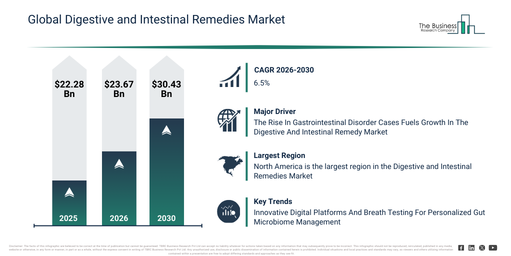
    The market for digestive and intestinal remedies has seen robust expansion in recent times. Valued at $22.28 billion in 2025, it is projected to reach $23.67 billion by 2026, reflecting a compound annual growth rate (CAGR) of 6.2%. This historical growth has been driven by factors such as the increasing prevalence of gastrointestinal disorders, greater use of antacids and proton pump inhibitors, heightened awareness around digestive health, the development of hospital and clinic infrastructure, and the rising adoption of herbal treatments.

    The digestive and intestinal remedies market is anticipated to experience robust expansion in the coming years, reaching a valuation of $30.43 billion by 2030 with a compound annual growth rate (CAGR) of 6.5%. This forecasted growth is driven by several factors, including progress in gut microbiome therapies, the incorporation of artificial intelligence into digestive health diagnostics, the rise of tailored nutrition and supplement products, the broadening of online pharmaceutical services, and an increasing elderly population grappling with digestive concerns. Key developments shaping this period encompass the emergence of customized digestive health approaches, a surge in herbal and natural treatment options, heightened emphasis on microbiome studies, the proliferation of internet-based pharmacy and e-pharmacy channels, and growing awareness surrounding preventive care for digestive ailments.

    Download A Free Sample Report For Comprehensive Market Insights:

    https://www.thebusinessresearchcompany.com/sample.aspx?id=8184&type=smp&utm_source=BlogsPR&utm_medium=Paid&utm_campaign=Jul_PR

    Digestive and Intestinal Remedies Market Demand Drivers: What Is Fueling Industry Growth?

    The anticipated rise in cases of gastrointestinal disorders is set to become a key driver for the digestive and intestinal remedy market in the coming period. These disorders, which encompass conditions such as nausea, vomiting, food poisoning, and diarrhea, collectively affect the normal functioning of the gastrointestinal tract. This growing prevalence has led to an increased need for effective remedies aimed at managing these conditions. For example, data from the American Cancer Society, a non-profit organization based in the United States, indicated in January 2024 that approximately 26,890 new stomach cancer diagnoses are projected in the country for that year, with 16,160 cases among men and 10,730 among women, alongside an estimated 10,880 deaths, including 6,490 men and 4,390 women. Consequently, the upward trend in gastrointestinal disorder cases is expected to stimulate expansion within the digestive and intestinal remedy market.

    Digestive and Intestinal Remedies Market Segment Landscape And Growth Potential

    The digestive and intestinal remedies market covered in this report is segmented –

    1) By Type: Digestive Medicines, Remedies Against Gastrointestinal Complaints, Natural And Synthetic Agents

    2) By Age Group: Pediatric, Adults

    3) By Distribution Channel: Online, Offline

    Subsegments:

    1) By Digestive Medicines: Antacids, Digestive Enzymes, Proton Pump Inhibitors (PPIs), H2-Receptor Antagonists

    2) By Remedies Against Gastrointestinal Complaints: Anti-Nausea Medications, Antidiarrheal Agents, Laxatives, Gastroprotective Agents

    3) By Natural And Synthetic Agents: Herbal Remedies, Synthetic Antispasmodics, Probiotics And Prebiotics

    Digestive and Intestinal Remedies Market Innovation Trends: Which Developments Are Transforming The Industry?

    Key players in the digestive and intestinal remedy sector are now focusing on the creation of novel offerings, particularly digital platforms, in order to reach a wider audience, boost sales figures, and enhance their revenue streams. Such digital platforms are defined as online, technology-driven systems or structures that facilitate the generation, distribution, and interaction involving digital services, products, or content. A notable example from April 2023 involves Owlstone Medical, a biotechnology firm based in the United Kingdom, which unveiled OMED Health. This initiative is designed to help patients gain a better understanding of their gut microbiome and take more effective control over their digestive health. With an initial emphasis on digestive disorders, OMED Health aspires to improve quality of life for those experiencing gut health challenges by providing faster and deeper insights into and management of their conditions. In the context of digestive wellness, breath testing is increasingly recognized as an effective tool for symptom monitoring and regulation. What sets OMED Health’s gut health assessments apart is their capability to detect extremely low levels of hydrogen and methane in breath samples, along with a convenient at-home collection method. These gaseous markers are crucial signals of gut health, pointing to particular ailments or diseases.

    Digestive and Intestinal Remedies Market Competitive Landscape: Who Are The Leading Companies?

    Major companies operating in the digestive and intestinal remedies market are Bayer AG, Abbott Laboratories, Bausch Health Companies Inc., Eli Lilly and Company, GlaxoSmithKline PLC, Jiangzhong Pharmaceutical Co. Ltd., Johnson & Johnson Pvt. Ltd., Menarini Group, Merck Co. & KGaA, Pfizer Inc., Prestige Consumer Healthcare Inc., Procter & Gamble Company, Reckitt Benckiser Group PLC, Sanofi SA, Takeda Pharmaceutical Company Limited, AbbVie Inc., Alfa Wassermann and Sigma-Tau, Allergan PLC, AstraZeneca PLC, Boehringer Ingelheim International GmbH, Daiichi Sankyo Chemical Pharma Co. Ltd., Evoke Pharma Inc., Ipsen SA, Ironwood Pharmaceuticals Inc., Mundipharma, Mylan NV, Norgine Pharmaceuticals Ltd., Novartis AG, Otsuka Pharmaceutical Co. Ltd., Perrigo Company, Recordati S.p.A., RedHill Biopharma Ltd., Ritter Pharmaceuticals Inc., Salix Pharmaceuticals Inc.

    Access The Complete Digestive and Intestinal Remedies Market Report:

    https://www.thebusinessresearchcompany.com/report/digestive-and-intestinal-remedies-global-market-report?utm_source=BlogsPR&utm_medium=Paid&utm_campaign=Jul_PR

    Digestive and Intestinal Remedies Market Geographic Distribution And Regional Opportunities

    North America was the largest region in the digestive and intestinal remedies market in 2025. Asia-Pacific is expected to be the fastest-growing region in the forecast period. The regions covered in the digestive and intestinal remedies market report are Asia-Pacific, South East Asia, Western Europe, Eastern Europe, North America, South America, Middle East, Africa.

    Get in touch with us:

    The Business Research Company: https://www.thebusinessresearchcompany.com/?utm_source=BlogsPR&utm_medium=Paid&utm_campaign=home_page_test

    Americas: +1 310-496-7795

    Asia: +44 7882 955267 & +91 8897263534

    Europe: +44 7882 955267

    Email us at: marketing@tbrc.info

    Follow us on:

    LinkedIn: https://in.linkedin.com/company/the-business-research-company

    YouTube: https://www.youtube.com/channel/UC24_fI0rV8cR5DxlCpgmyFQ

    Global Market Model: https://www.thebusinessresearchcompany.com/global-market-model
  • Diffuse Large B-cell Lymphoma Therapeutics Market Outlook Highlights The Next Major Growth Opportunities

    Diffuse Large B-cell Lymphoma Therapeutics Market Outlook Highlights The Next Major Growth Opportunities

    Enhanced with market attractiveness analysis, total addressable market evaluation, company benchmarking matrices, interactive Excel dashboards, expanded supply chain intelligence, emerging startup coverage, and detailed product insights, The Business Research Company’s 2026 market reports deliver more actionable and strategically valuable research.

    Diffuse Large B-cell Lymphoma Therapeutics Market CAGR Analysis And Future Market Development

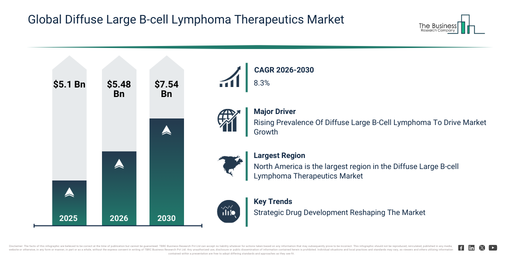
    The market for diffuse large B-cell lymphoma therapeutics has experienced robust expansion in recent years. Its value is projected to rise from $5.1 billion in 2025 to $5.48 billion in 2026, reflecting a compound annual growth rate (CAGR) of 7.6%. This historical growth has been driven by a higher prevalence of non-Hodgkin lymphoma, broad implementation of rituximab-based treatment regimens, enhanced diagnostic precision, greater development of hospital-based oncology facilities, and increased public knowledge of available lymphoma therapies.

    The market for diffuse large B-cell lymphoma therapeutics is projected to experience robust expansion over the coming years. By 2030, its value is anticipated to reach $7.54 billion, representing a compound annual growth rate (CAGR) of 8.3%. This forecasted growth is driven by several factors, including a growing pipeline of targeted therapies, a rising adoption of combined immunochemotherapy regimens, the proliferation of specialized oncology clinics, increased healthcare spending in developing nations, and progress in personalized medicine. Key trends shaping the market during this period encompass the broadening of immunotherapy-based treatment options, the greater utilization of combination chemotherapy protocols, the heightened application of monoclonal antibody therapies, the emergence of customized treatment approaches, and an intensified emphasis on enhancing patient outcomes.

    Download A Free Sample Report For Comprehensive Market Insights:

    https://www.thebusinessresearchcompany.com/sample.aspx?id=10805&type=smp&utm_source=BlogsPR&utm_medium=Paid&utm_campaign=Jul_PR

    Diffuse Large B-cell Lymphoma Therapeutics Market Growth Drivers: What Factors Are Accelerating Expansion?

    The rising prevalence of diffuse large B-cell lymphoma (DLBCL) is anticipated to drive the expansion of the DLBCL therapeutics market in the coming period. This aggressive cancer originates from B-cells within the lymphatic system, exhibiting rapid and widespread growth, and is classified as a form of non-Hodgkin lymphoma (NHL). Therapeutics developed for DLBCL are designed to enhance outcomes for patients already diagnosed by targeting and controlling cancerous cells. As an example, the American Cancer Society, a voluntary health organization based in the United States, projected that in 2023, approximately 80,550 individuals (44,880 men and 35,670 women) would receive a diagnosis of non-Hodgkin’s lymphoma, with around 20,180 fatalities expected from the disease. Consequently, the growing incidence of DLBCL is fueling the advancement of the market for its therapeutic treatments.

    Diffuse Large B-cell Lymphoma Therapeutics Market Categorization By Product Type And Application

    The diffuse large b-cell lymphoma therapeutics market covered in this report is segmented –

    1) By Drug Class: Cisplatin, Carboplatin, 5-fluorouracil, Docetaxel, Paclitaxel, Methotrexate, Other Drugs

    2) By Therapy: Targeted Therapy, Immunotherapy, Chemotherapy, Other Therapies

    3) By Route of Administration: Oral, Parenteral, Other Routes

    4) By End User: Hospitals, Clinics, Other End-Users

    Diffuse Large B-cell Lymphoma Therapeutics Market Trends: What Is Shaping Future Industry Growth?

    Leading players in the diffuse large B-cell lymphoma therapeutics space are concentrating their efforts on creating innovative medicines, including cutting-edge CD19-targeted immunotherapies, with the goal of boosting therapeutic effectiveness and broadening available choices for individuals suffering from relapsed or refractory forms of the disease. These next-generation approaches involve antibody-based or antibody-derived therapies designed to specifically bind the CD19 antigen present on B-cell lymphoma cells, thereby triggering immune responses like antibody-dependent cellular cytotoxicity or improved immune cell recruitment to more effectively destroy malignant cells. A concrete example came in June 2023, when MINJUVI (tafasitamab), a product from Specialized Therapeutics Asia Pte Ltd (STA)—a biopharmaceutical firm headquartered in Singapore—received approval from the Therapeutic Goods Administration (TGA). This CD19-targeted immunotherapy is prescribed alongside lenalidomide for adults with relapsed or refractory DLBCL who are ineligible for autologous stem cell transplant (ASCT). By activating an immune reaction directed at B-cell lymphoma cells, MINJUVI has shown a manageable safety profile alongside significant response rates among patients whose disease has returned. Its clearance under a provisional regulatory pathway, combined with involvement in the Modified Project Orbis initiative, underscores concerted efforts to speed up patient access within Australia. The regulatory nod was backed by encouraging results from the Phase 2 L-MIND study, and ongoing authorization hinges on outcomes from the confirmatory Phase 3 frontMIND investigation.

    Diffuse Large B-cell Lymphoma Therapeutics Market Company Landscape And Strategic Competition

    Major companies operating in the diffuse large b-cell lymphoma therapeutics market are Novartis AG, Pfizer Inc., Merck & Co Inc., GlaxoSmithKline plc, F. Hoffmann-La Roche AG, CTI BioPharma Corp., Celltrion Healthcare Co Ltd., Bristol-Myers Squibb Company, AbbVie Inc., Gilead Sciences Inc., Seagen Inc., Kite Pharma Inc., ADC Therapeutics SA, Bayer AG, Xencor Inc., Autolus Therapeutics plc, Allogene Therapeutics Inc., Spectrum Pharmaceuticals Inc., AstraZeneca PLC, Aptevo Therapeutics Inc., Takeda Pharmaceutical Company Limited, Johnson & Johnson, Celgene Corporation, Eli Lilly and Company, Sanofi SA, Seattle Genetics Inc., Karyopharm Therapeutics Inc., TG Therapeutics Inc., MorphoSys AG

    Access The Complete Diffuse Large B-cell Lymphoma Therapeutics Market Report:

    https://www.thebusinessresearchcompany.com/report/diffuse-large-b-cell-lymphoma-therapeutics-global-market-report?utm_source=BlogsPR&utm_medium=Paid&utm_campaign=Jul_PR

    Diffuse Large B-cell Lymphoma Therapeutics Market Largest Region By Revenue And Market Share

    North America was the largest region in the global diffuse large B-cell lymphoma therapeutics market in 2025. Asia-Pacific is expected to be the fastest-growing region in the forecast period. The regions covered in the diffuse large b-cell lymphoma therapeutics market report are Asia-Pacific, South East Asia, Western Europe, Eastern Europe, North America, South America, Middle East, Africa.

    Get in touch with us:

    The Business Research Company: https://www.thebusinessresearchcompany.com/?utm_source=BlogsPR&utm_medium=Paid&utm_campaign=home_page_test

    Americas: +1 310-496-7795

    Asia: +44 7882 955267 & +91 8897263534

    Europe: +44 7882 955267

    Email us at: marketing@tbrc.info

    Follow us on:

    LinkedIn: https://in.linkedin.com/company/the-business-research-company

    YouTube: https://www.youtube.com/channel/UC24_fI0rV8cR5DxlCpgmyFQ

    Global Market Model: https://www.thebusinessresearchcompany.com/global-market-model
  • Diet Pills Market Trends And Growth Drivers Point To Strong Future Potential

    Diet Pills Market Trends And Growth Drivers Point To Strong Future Potential

    Through market attractiveness analysis, total addressable market evaluation, company benchmarking matrices, interactive Excel dashboards, expanded supply chain intelligence, emerging startup coverage, and detailed product insights, The Business Research Company’s 2026 market reports provide more actionable and strategically valuable research.

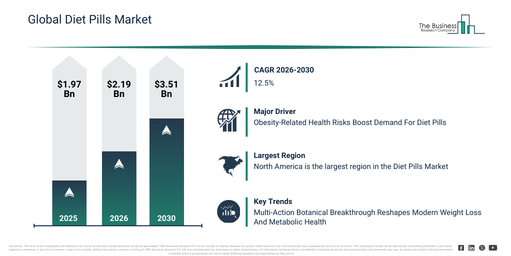
    Diet Pills Market Expansion From $2.19 Billion In 2026 To $3.51 Billion In 2030

    The market for diet pills has experienced significant expansion in recent times. Projected to increase from $1.97 billion in 2025 to $2.19 billion in 2026, it is expected to advance at a compound annual growth rate (CAGR) of 11.5%. Significant factors driving historical growth include higher rates of obesity, the prevalence of sedentary lifestyles in urban areas, enhanced public knowledge about weight control, broader availability through retail pharmacy chains, and intense promotional efforts for dietary supplements.

    The market for diet pills is anticipated to experience substantial growth over the coming years. Projections indicate it will reach $3.51 billion by 2030, expanding at a compound annual growth rate (CAGR) of 12.5%. This upward trajectory during the forecast period is driven by several factors, including a heightened preference for preventive healthcare, a rising demand for natural and herbal solutions, broader access through e-commerce pharmacies, progress in weight management research, and higher disposable incomes in developing nations. Key trends shaping the market include an increased need for appetite suppressants, a surge in herbal and natural diet pill offerings, growing consumer interest in over-the-counter weight loss products, a boost in online pharmacy sales, and a stronger focus on formulations designed to enhance metabolism.

    Download A Free Sample Report For Comprehensive Market Insights:

    https://www.thebusinessresearchcompany.com/sample.aspx?id=10774&type=smp&utm_source=BlogsPR&utm_medium=Paid&utm_campaign=Jul_PR

    Diet Pills Market Growth Factors Supporting Long-Term Expansion

    The growing challenge of obesity is set to drive expansion in the diet pill market in the coming years. Obesity is defined as abnormal or excessive weight gain, typically indicated by a body mass index (BMI) exceeding 30, which presents significant health dangers. This condition elevates the risk of mortality from cancers of the esophagus, colon, rectum, liver, gallbladder, pancreas, and kidneys. Moreover, it contributes to the development of health issues such as type 2 diabetes (T2D) and cardiovascular diseases (CVD). Individuals who are obese often turn to diet pills as a medicinal approach to facilitate weight loss. These pills work by suppressing appetite and reducing food cravings, thereby promoting weight reduction. For example, data released in June 2024 by the American Heart Association, Inc., a US-based non-profit organization, indicates that by 2050, over 150 million Americans will have poor dietary habits, leading to a nearly 40% rise in adult obesity (from 43.6% to 60.6%) and over 60% in children (from 20.6% to 33%). Additionally, 61% of adults are predicted to suffer from cardiovascular disease, with the highest obesity increase observed among those aged 20-64. Consequently, the escalating prevalence of obesity is fueling growth in the diet pill market.

    Diet Pills Market Segment Analysis And Revenue Opportunities

    The diet pills market covered in this report is segmented –

    1) By Product Type: Prescription, Over The Counter, Herbal Supplements

    2) By Age: Teenagers, Adults

    3) By Distribution Channel: Hospital Pharmacies, Retail Pharmacies, Online Pharmacies, Drug Stores

    4) By Application: Appetite Suppression, Fat Blocking, Other Applications

    Subsegments:

    1) By Prescription: Prescription Weight Loss Pills, Prescription Appetite Suppressants, Prescription Fat Blockers

    2) By Over The Counter: Non-Prescription Weight Loss Pills, Appetite Control Tablets, Fat Burners, Metabolism Boosters

    3) By Herbal Supplements: Herbal Weight Loss Pills, Herbal Appetite Suppressants, Natural Fat Burners, Traditional Herbal Formulations

    Diet Pills Market Industry Trends Shaping Future Revenue Growth

    Leading players in the diet pills market are increasingly prioritizing innovation around multi-action botanical formulas designed to deliver enhanced weight loss and better metabolic performance. These formulations incorporate clinically tested plant-derived ingredients that synergistically promote fat reduction, boost energy expenditure, and improve satiety signals. Their goal is to provide evidence-based weight management assistance to consumers without relying on pharmaceutical components. As an example, in July 2025, Herbalife Ltd.—a nutrition firm based in the U.S.—introduced MultiBurn, combining Morosil sourced from Moro blood oranges, Metabolaid derived from hibiscus and lemon verbena, and Capsifen, which contains red chili pepper and fenugreek. The product also includes caffeine to support metabolism and energy levels, along with chromium to help regulate blood glucose levels already within a healthy range. It is gluten-free, vegan-friendly, and free of synthetic colorants or dyes. MultiBurn supports overall weight reduction, healthy fat loss, efficient energy use, and a feeling of satiety, aligning with Herbalife’s commitment to clean-label, science-driven products.

    Diet Pills Market Leading Players Shaping Industry Direction

    Major companies operating in the diet pills market are GlaxoSmithKline plc, Iovate Health Sciences International Inc., Novo Nordisk A/S, Gelesis Inc., VIVUS Inc., Creative Biosciences Pvt. Ltd., Applied Nutrition Ltd. (India), Herbalife Nutrition India Private Limited, Camillotek India Pvt. Ltd., NOW Foods, MuscleTech Research and Development LLC, Healthviva Group of Companies, Nalpropion Pharmaceuticals LLC, Chong’s Health Care Pte. Ltd., Currax Pharmaceuticals LLC, TEVA PHARMACEUTICAL INDUSTRIES LTD, Eli Lilly and Company, Arena Pharmaceuticals GmbH & Co. KG, Orexigen Therapeutics Inc., Takeda Pharmaceutical Company Limited, Sanofi SA, Boehringer Ingelheim International GmbH, Merck & Co. Inc., Johnson & Johnson, Abbott Laboratories

    Access The Complete Diet Pills Market Report:

    https://www.thebusinessresearchcompany.com/report/diet-pills-global-market-report?utm_source=BlogsPR&utm_medium=Paid&utm_campaign=Jul_PR

    Diet Pills Market Regional Analysis And Leading Geography

    North America was the largest region in the diet pills market in 2025. The regions covered in the diet pills market report are Asia-Pacific, South East Asia, Western Europe, Eastern Europe, North America, South America, Middle East, Africa.

    Get in touch with us:

    The Business Research Company: https://www.thebusinessresearchcompany.com/?utm_source=BlogsPR&utm_medium=Paid&utm_campaign=home_page_test

    Americas: +1 310-496-7795

    Asia: +44 7882 955267 & +91 8897263534

    Europe: +44 7882 955267

    Email us at: marketing@tbrc.info

    Follow us on:

    LinkedIn: https://in.linkedin.com/company/the-business-research-company

    YouTube: https://www.youtube.com/channel/UC24_fI0rV8cR5DxlCpgmyFQ

    Global Market Model: https://www.thebusinessresearchcompany.com/global-market-model
  • Diagnostic Specialty Antibodies Market Expansion Is Reshaping Competitive Dynamics Across The Industry

    Diagnostic Specialty Antibodies Market Expansion Is Reshaping Competitive Dynamics Across The Industry

    Delivering more actionable and strategically valuable research, The Business Research Company’s 2026 market reports feature market attractiveness analysis, total addressable market evaluation, company benchmarking matrices, interactive Excel dashboards, expanded supply chain intelligence, emerging startup coverage, and detailed product insights.

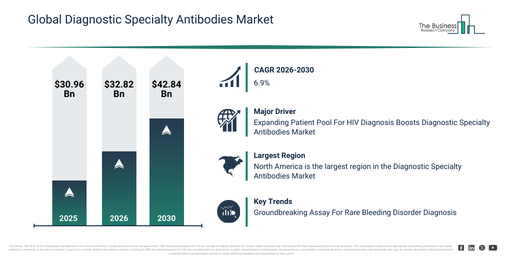
    Diagnostic Specialty Antibodies Market Forecast Highlighting Growth From $32.81 Billion To $42.84 Billion

    The diagnostic specialty antibodies market has experienced notable expansion in recent years. Projections indicate an increase from $30.96 billion in 2025 to $32.82 billion in 2026, representing a compound annual growth rate (CAGR) of 6.0%. This historical growth has been driven by factors such as the rising incidence of infectious diseases, the growing use of hospital-based diagnostic tests, the wider implementation of immunoassay methods, heightened emphasis on early diagnosis, and the availability of established monoclonal antibody technologies.

    The market for diagnostic specialty antibodies is anticipated to experience substantial expansion over the coming years. Its value is projected to reach $42.84 billion by 2030, driven by a compound annual growth rate (CAGR) of 6.9%. This upward trajectory during the forecast period is fueled by a rise in oncology diagnostics, an increasing need for rapid testing solutions, the proliferation of diagnostic labs in emerging economies, progress in recombinant antibody engineering, and heightened funding for biomarker-based diagnostics. Key developments shaping the market include a growing preference for precision diagnostics, the broadening of infectious disease testing panels, a heightened focus on high-specificity monoclonal antibodies, the spread of point-of-care diagnostic assays, and the implementation of standardized antibody validation and quality control measures.

    Download A Free Sample Report For Comprehensive Market Insights:

    https://www.thebusinessresearchcompany.com/sample.aspx?id=12241&type=smp&utm_source=BlogsPR&utm_medium=Paid&utm_campaign=Jul_PR

    Diagnostic Specialty Antibodies Market Demand Drivers Creating New Revenue Opportunities

    The expansion of the patient base for HIV diagnosis is set to drive growth in the diagnostic specialty antibodies market moving ahead. This expanding patient pool refers to the rising count of individuals being identified with HIV. As more people receive an HIV diagnosis, demand for diagnostic specialty antibodies grows, opening up avenues for manufacturers to create and supply targeted antibody-based diagnostic tools for HIV testing, which facilitate the identification of virus-specific biomarkers and support early detection and ongoing monitoring of HIV infection. For example, a report released in October 2024 by the UK Health Security Agency, a government body in the United Kingdom, revealed that the HIV testing rate rose by 11% between 2022 and 2023. In 2023, the highest testing rate—52,255 per 100,000—was recorded among gay, bisexual, and other men who have sex with men (GBMSM). By comparison, heterosexual men and heterosexual plus bisexual women had much lower rates, at 1,894 and 3,106 per 100,000 respectively. Consequently, the increasing number of HIV diagnoses is fueling the expansion of the diagnostic specialty antibodies market.

    Diagnostic Specialty Antibodies Market Segmentation And Category Breakdown

    The diagnostic specialty antibodies market covered in this report is segmented –

    1) By Antibody Type: Monoclonal Antibodies, Polyclonal Antibodies, Recombinant Polyclonal Antibodies

    2) By Application: Hepatitis, Tuberculosis, Dengue, Oncology, Human Immunodeficiency Virus (HIV), Infectious Disease, Other Applications

    3) By End User: Diagnostic Laboratories, Hospitals

    Subsegments:

    1) By Monoclonal Antibodies: Murine Monoclonal Antibodies, Chimeric Monoclonal Antibodies, Humanized Monoclonal Antibodies, Fully Human Monoclonal Antibodies

    2) By Polyclonal Antibodies: Rabbit Polyclonal Antibodies, Goat Polyclonal Antibodies, Sheep Polyclonal Antibodies

    3) By Recombinant Polyclonal Antibodies: Single-Chain Variable Fragment (scFv), Fab Fragments

    Diagnostic Specialty Antibodies Market Trends Driving Strategic Industry Expansion

    Leading companies within the diagnostic specialty antibodies sector are concentrating their efforts on creating innovative assays, including antibody-based tests, to improve the diagnosis of rare bleeding disorders and secure a market advantage. An antibody assay is a laboratory method employed to identify and quantify the existence and concentration of antibodies in a biological specimen. As an example, in May 2023, Versiti, a nonprofit organization headquartered in the United States, introduced the Anti-von Willebrand Factor (VWF) Antibody Assay. This pioneering test is intended to aid healthcare providers in diagnosing individuals suspected of having acquired von Willebrand Disease (aVWD). Developed through studies conducted at the Versiti Blood Research Institute, the assay can identify both inhibitory and non-inhibitory antibodies that attach to VWF, thereby providing increased avenues for detecting anti-VWF antibodies.

    Diagnostic Specialty Antibodies Market Competitive Analysis Of Major Industry Participants

    Major companies operating in the diagnostic specialty antibodies market are F. Hoffmann-La Roche AG, Thermo Fisher Scientific Inc., Abbott Laboratories, Danaher Corporation, Merck KGaA, Becton Dickinson and Company, Agilent Technologies Inc., Sartorius AG, Bio-Rad Laboratories Inc., STEMCELL Technologies Inc., Abcam PLC, Enzo Life Sciences Inc., Rockland Immunochemicals Inc., Santa Cruz Biotechnology Inc., Creative Diagnostics, Novus Biologicals LLC, Precirix NV, Creative Biolabs Inc., Polymun Scientific Immunbiologische Forschung GmbH, Telix Pharmaceuticals Limited

    Access The Complete Diagnostic Specialty Antibodies Market Report:

    https://www.thebusinessresearchcompany.com/report/diagnostic-specialty-antibodies-global-market-report?utm_source=BlogsPR&utm_medium=Paid&utm_campaign=Jul_PR

    Diagnostic Specialty Antibodies Market Geographic Analysis: Where Is Demand Growing The Fastest?

    North America was the largest region in the diagnostic specialty antibodies market in 2025. Asia-Pacific is expected to be the fastest-growing region in the diagnostic specialty antibodies market report during the forecast period. The regions covered in the diagnostic specialty antibodies market report are Asia-Pacific, South East Asia, Western Europe, Eastern Europe, North America, South America, Middle East, Africa.

    Get in touch with us:

    The Business Research Company: https://www.thebusinessresearchcompany.com/?utm_source=BlogsPR&utm_medium=Paid&utm_campaign=home_page_test

    Americas: +1 310-496-7795

    Asia: +44 7882 955267 & +91 8897263534

    Europe: +44 7882 955267

    Email us at: marketing@tbrc.info

    Follow us on:

    LinkedIn: https://in.linkedin.com/company/the-business-research-company

    YouTube: https://www.youtube.com/channel/UC24_fI0rV8cR5DxlCpgmyFQ

    Global Market Model: https://www.thebusinessresearchcompany.com/global-market-model