Month: July 2026

  • Asthma And Chronic Obstructive Pulmonary Disease (COPD) Drugs Market Expansion Is Opening New Pathways For Strategic Investment

    Asthma And Chronic Obstructive Pulmonary Disease (COPD) Drugs Market Expansion Is Opening New Pathways For Strategic Investment

    Delivering more actionable and strategically valuable research, The Business Research Company’s 2026 market reports feature market attractiveness analysis, total addressable market evaluation, company benchmarking matrices, interactive Excel dashboards, expanded supply chain intelligence, emerging startup coverage, and detailed product insights.

    Asthma And Chronic Obstructive Pulmonary Disease (COPD) Drugs Market Growth Analysis: How Will Revenue Expand During The Forecast Period?

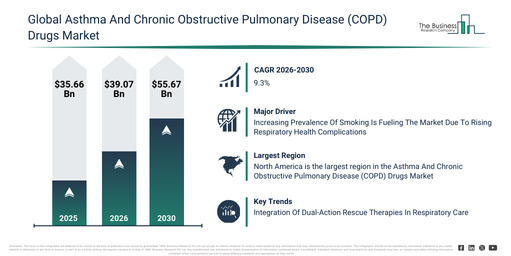
    The market for asthma and chronic obstructive pulmonary disease (COPD) medications has experienced robust expansion over recent years. Projected to rise from $35.66 billion in 2025 to $39.07 billion in 2026, this growth represents a compound annual growth rate (CAGR) of 9.6%. Historical progress has been driven by factors such as increasing rates of smoking, urban air pollution, respiratory care provided in hospital settings, the widespread adoption of inhaler technology, and a rise in asthma diagnoses.

    The respiratory drug market, covering asthma and chronic obstructive pulmonary disease (COPD), is projected to experience robust expansion in the coming years. It is anticipated to reach a value of $55.67 billion by 2030, reflecting a compound annual growth rate (CAGR) of 9.3%. Key factors driving this forecasted growth include innovation in biologic drugs, an aging population, worsening air quality, the emergence of personalized respiratory therapies, and a shift toward home-based care solutions. Notable trends shaping this period comprise the rising use of combination inhaler therapies, a greater emphasis on long-acting bronchodilators, the expanding role of biologics in managing severe asthma, a move toward managing respiratory conditions at home, and an escalating demand for affordable generic inhalation medications.

    Download A Free Sample Report For Comprehensive Market Insights:

    https://www.thebusinessresearchcompany.com/sample.aspx?id=24472&type=smp&utm_source=BlogsPR&utm_medium=Paid&utm_campaign=Jul_PR

    Asthma And Chronic Obstructive Pulmonary Disease (COPD) Drugs Market Demand Drivers: What Is Fueling Industry Growth?

    The rising frequency of smoking is anticipated to advance the expansion of the asthma and COPD drugs market in the foreseeable future. Smoking is defined as the practice of consuming tobacco products through inhaling smoke, a habit that causes severe health problems like lung cancer and heart disease. This growing trend in smoking is largely fueled by social influences, including peer pressure, cultural standards, and social settings that drive individuals to begin and persist in smoking. Medications for asthma and chronic obstructive pulmonary disease (COPD) counteract the respiratory damage from smoking by decreasing inflammation, relaxing airway muscles, and enhancing airflow, which eases symptoms and boosts lung performance. In 2024, the European Respiratory Society (ERS), a Switzerland-based nonprofit, released a study on youth smoking trends, revealing a significant rise from 22.5% of participants in 2022 to 40.1% in 2024. Consequently, the increasing prevalence of smoking is fueling the growth of the asthma and COPD drugs market.

    Asthma And Chronic Obstructive Pulmonary Disease (COPD) Drugs Market Segment Landscape: Which Areas Lead Market Development?

    The asthma and chronic obstructive pulmonary disease (copd) drugs market covered in this report is segmented –

    1) By Drug Class: Bronchodilators, Corticosteroids, Combination Drugs, Leukotriene Modifiers

    2) By Route Of Administration: Inhalation, Oral, Injection, Other Route Of Administrations

    3) By Patient Group: Adult, Pediatric, Geriatric

    4) By Application: Asthma, Chronic Obstructive Pulmonary Disease

    5) By Distribution Channel: Hospital Pharmacies, Retail Pharmacies, Online Pharmacies, Drug Stores

    Subsegments:

    1) By Bronchodilators: Short-Acting Beta-2 Agonists (SABA), Long-Acting Beta-2 Agonists (LABA), Anticholinergics, Long-Acting Muscarinic Antagonists, Methylxanthines

    2) By Corticosteroids: Inhaled Corticosteroids (ICS), Oral Corticosteroids, Intravenous Corticosteroids

    3) By Combination Drugs: Long-Acting Beta-Agonist + Inhaled Corticosteroid, Long-Acting Beta-Agonist + Long-Acting Muscarinic Antagonist, Long-Acting Beta-Agonist + Long-Acting Muscarinic Antagonist + Inhaled Corticosteroid

    4) By Leukotriene Modifiers: Leukotriene Receptor Antagonists, Leukotriene Synthesis Inhibitors

    Asthma And Chronic Obstructive Pulmonary Disease (COPD) Drugs Market Innovation Trends: Which Developments Are Transforming The Industry?

    Major players in the asthma and chronic obstructive pulmonary disease (COPD) drug market are increasingly turning to innovative combination therapies, including short-acting beta-agonist (SABA) and inhaled corticosteroid (ICS) rescue inhalers, to deliver benefits such as preventing severe asthma episodes, better managing inflammation, and supporting more effective disease control. A SABA–ICS rescue inhaler merges a short-acting beta-agonist, which quickly eases airway muscle tension to alleviate symptoms, with an inhaled corticosteroid, which combats persistent airway inflammation, thus providing dual advantages—swift symptom relief coupled with an anti-inflammatory effect. For example, in January 2024, AstraZeneca, a biopharmaceutical firm headquartered in the UK, introduced AIRSUPRA (albuterol/budesonide) in the United States. This fixed-dose SABA-ICS rescue inhaler is aimed at treating asthma symptoms and averting sudden serious breathing issues, with its two-component formulation delivered through pressurised metered-dose inhaler (pMDI) Aerosphere technology. AIRSUPRA not only enhances quick symptom relief but also targets airway inflammation concurrently, lowering the chance of severe asthma flare-ups and improving overall asthma management.

    Asthma And Chronic Obstructive Pulmonary Disease (COPD) Drugs Market Industry Leaders And Market Competition

    Major companies operating in the asthma and chronic obstructive pulmonary disease (copd) drugs market are Sun Pharmaceutical Industries Ltd., Viatris Inc., Hikma Pharmaceuticals PLC, Orion Corporation, Bausch Health Companies Inc., Kyorin Pharmaceutical Co. Ltd., Sandoz International GmbH, Mundipharma International Ltd., Ferrer Internacional S.A., Neopharm Group, Covis Pharma Group, Almirall S.A., Menarini Group, Cipla Health Ltd., Indoco Remedies Ltd., Intas Pharmaceuticals Ltd., Alembic Pharmaceuticals Ltd., Torrent Pharmaceuticals Ltd., Macleods Pharmaceuticals Ltd., Wockhardt Ltd., Ajanta Pharma Ltd., Emcure Pharmaceuticals Ltd., Abbott Laboratories, Endo International plc, Takeda Pharmaceutical Company Ltd.

    Access The Complete Asthma And Chronic Obstructive Pulmonary Disease (COPD) Drugs Market Report:

    https://www.thebusinessresearchcompany.com/report/asthma-and-chronic-obstructive-pulmonary-disease-copd-drugs-global-market-report?utm_source=BlogsPR&utm_medium=Paid&utm_campaign=Jul_PR

    Asthma And Chronic Obstructive Pulmonary Disease (COPD) Drugs Market Regional Analysis: Which Region Leads By Revenue?

    North America was the largest region in the asthma and COPD drugs market in 2025. Asia-Pacific is expected to be the fastest-growing region in the forecast period. The regions covered in the asthma and chronic obstructive pulmonary disease (copd) drugs market report are Asia-Pacific, South East Asia, Western Europe, Eastern Europe, North America, South America, Middle East, Africa.

    Get in touch with us:

    The Business Research Company: https://www.thebusinessresearchcompany.com/?utm_source=BlogsPR&utm_medium=Paid&utm_campaign=home_page_test

    Americas: +1 310-496-7795

    Asia: +44 7882 955267 & +91 8897263534

    Europe: +44 7882 955267

    Email us at: marketing@tbrc.info

    Follow us on:

    LinkedIn: https://in.linkedin.com/company/the-business-research-company

    YouTube: https://www.youtube.com/channel/UC24_fI0rV8cR5DxlCpgmyFQ

    Global Market Model: https://www.thebusinessresearchcompany.com/global-market-model
  • Aspirin Market Trends Are Creating New Opportunities For Industry Leaders

    Aspirin Market Trends Are Creating New Opportunities For Industry Leaders

    Enhanced with market attractiveness analysis, total addressable market evaluation, company benchmarking matrices, interactive Excel dashboards, expanded supply chain intelligence, emerging startup coverage, and detailed product insights, The Business Research Company’s 2026 market reports deliver more actionable and strategically valuable research.

    Aspirin Market Forecast: What Market Value Is Expected By 2030?

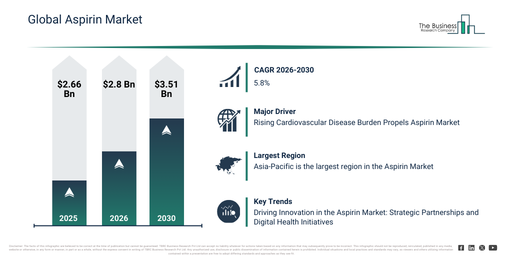
    The market for aspirin has experienced robust expansion in recent years. Projections indicate an increase from $2.66 billion in 2025 to $2.8 billion in 2026, reflecting a compound annual growth rate (CAGR) of 5.5%. This past growth has been driven by heightened awareness of cardiovascular well-being, a greater prevalence of arthritis cases, wider uptake of over-the-counter medications, progress in treating pain and fever, and the accessibility of affordable aspirin options.

    The aspirin market is projected to experience robust expansion over the coming years, reaching an estimated $3.51 billion by 2030 with a compound annual growth rate (CAGR) of 5.8%. Several factors are driving this forecasted growth, including the emergence of targeted aspirin therapies, the implementation of advanced manufacturing technologies, a rise in preventive healthcare efforts, an intensified emphasis on cardiovascular disease prevention, and the broadening of global distribution networks. Key developments shaping the forecast period comprise customized dosage formulations, the growth of over-the-counter aspirin accessibility, heightened public knowledge about cardiovascular conditions, innovative drug delivery systems, and increasing utilization among the aging population.

    Download A Free Sample Report For Comprehensive Market Insights:

    https://www.thebusinessresearchcompany.com/sample.aspx?id=9154&type=smp&utm_source=BlogsPR&utm_medium=Paid&utm_campaign=Jul_PR

    Aspirin Market Growth Drivers: What Factors Are Accelerating Expansion?

    The escalating global prevalence of cardiovascular diseases is anticipated to drive the aspirin market forward. Cardiovascular diseases encompass any conditions that impact the heart and blood vessels. Aspirin is frequently prescribed as a preventative action for these ailments, especially for those susceptible to heart attacks or strokes. As an example, in May 2024, ischemic heart diseases accounted for 5,302 deaths, according to the Singapore Heart Foundation (SHF), a non-profit entity based in Singapore, marking a marginal increase from the 5,290 deaths reported in 2022. Consequently, the substantial worldwide toll of cardiovascular diseases is set to boost the aspirin market.

    Aspirin Market Segments: Where Are The Largest Growth Opportunities?

    The aspirin market covered in this report is segmented –

    1) By Product: Prescription Aspirin, OTC (Over-the-Counter) Aspirin

    2) By Route Of Administration: Oral, Rectal, Parenteral

    3) By Dosage Form: Tablets, Capsules, Injections, Suppositories

    4) By Application: Cardiovascular Disease, Pain, Fever, O Inflammation, Other Applications

    5) By End User: Hospitals, Clinics, Other End Users

    Subsegments:

    1) By Prescription Aspirin: Low-Dose Aspirin (81 Mg), High-Dose Aspirin (325 Mg)

    2) By OTC (Over-the-Counter) Aspirin: Regular Strength Aspirin (325 Mg), Extra-Strength Aspirin (500 Mg), Buffered Aspirin, Aspirin Combinations

    Aspirin Market Trends: What Is Shaping Future Industry Growth?

    Key players in the aspirin market are increasingly embracing strategic partnerships as a means to boost technology integration and broaden their market presence. A strategic partnership involves a collaborative arrangement between two or more entities, through which they pool their resources, knowledge, and efforts to pursue shared objectives. A notable example occurred in February 2023, when Huma Therapeutics Limited (‘Huma’), a digital health company from the UK, teamed up with Bayer AG, a German life sciences firm, to launch the Bayer Aspirin Heart Risk Assessment online tool. This tool helps individuals gauge their risk of developing cardiovascular disease over the next ten years and share those findings with their healthcare provider. An algorithm created by Huma, based on UK Biobank data, predicts long-term cardiovascular risk. Users can access this assessment at Bayer Aspirin, where they complete a straightforward 15-question survey. Their answers are then compared to research population data, enabling the tool to classify their risk as higher, average, or lower.

    Aspirin Market Major Participants And Competitive Dynamics

    Major companies operating in the aspirin market are Bayer AG, Allegiant Health, Par Pharmaceutical, Cardinal Health Inc., Nanjing pharmaceutical factory Co. Ltd., JQC (Huayin) Pharmaceutical Co. Ltd., LNK International Inc., Bal Pharma Limited, Trumac Healthcare, Perrigo Company PLC, Alta Laboratories Ltd., Zhenjiang Gaopeng Pharmaceutical Co. Ltd., J.M. Loveridge Ltd., Mayne Pharma Group Limited, St. Joseph’s Aspirin, Teva Pharmaceutical Industries Ltd, Boehringer Ingelheim International GmbH, Cadila Healthcare Ltd., Cipla Ltd., Dr. Reddy’s Laboratories Ltd., GlaxoSmithKline plc, Hetero Labs Ltd., Jubilant Generics Ltd., Lupin Ltd., Merck & Co. Inc., Novartis AG, Pfizer Inc., Sanofi S.A., Sun Pharmaceutical Industries Ltd.

    Access The Complete Aspirin Market Report:

    https://www.thebusinessresearchcompany.com/report/aspirin-global-market-report?utm_source=BlogsPR&utm_medium=Paid&utm_campaign=Jul_PR

    Aspirin Market Geographic Distribution And Regional Opportunities

    Asia-Pacific was the largest region in the aspirin market in 2025. The regions covered in the aspirin market report are Asia-Pacific, South East Asia, Western Europe, Eastern Europe, North America, South America, Middle East, Africa.

    Get in touch with us:

    The Business Research Company: https://www.thebusinessresearchcompany.com/?utm_source=BlogsPR&utm_medium=Paid&utm_campaign=home_page_test

    Americas: +1 310-496-7795

    Asia: +44 7882 955267 & +91 8897263534

    Europe: +44 7882 955267

    Email us at: marketing@tbrc.info

    Follow us on:

    LinkedIn: https://in.linkedin.com/company/the-business-research-company

    YouTube: https://www.youtube.com/channel/UC24_fI0rV8cR5DxlCpgmyFQ

    Global Market Model: https://www.thebusinessresearchcompany.com/global-market-model
  • Asparaginase For Injection Market Growth Is Reshaping Competitive Advantage Across The Industry

    Asparaginase For Injection Market Growth Is Reshaping Competitive Advantage Across The Industry

    Through market attractiveness analysis, total addressable market evaluation, company benchmarking matrices, interactive Excel dashboards, expanded supply chain intelligence, emerging startup coverage, and detailed product insights, The Business Research Company’s 2026 market reports provide more actionable and strategically valuable research.

    Asparaginase For Injection Market Size Outlook: How Fast Will Revenue Grow Through 2030?

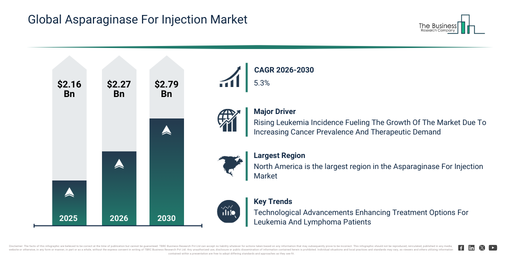
    The injectable asparaginase market has seen solid expansion in recent times. Projections indicate a rise from $2.16 billion in 2025 to $2.27 billion in 2026, reflecting a compound annual growth rate (CAGR) of 5.3%. This historical growth has been driven by clinical efficacy in treating acute lymphoblastic leukemia (ALL), the broadening of pediatric oncology initiatives, its integration into conventional chemotherapy protocols, better survival outcomes for leukemia patients, and the accessibility of enzymes sourced from bacteria.

    The market for injectable asparaginase is projected to experience significant expansion over the coming years, reaching a valuation of $2.79 billion by 2030 with a compound annual growth rate (CAGR) of 5.3%. This anticipated growth during the forecast period can be explained by factors such as a rising incidence of pediatric cancers, broader availability of oncology treatment options, the creation of biosimilar asparaginase products, higher levels of healthcare spending dedicated to cancer care, and advancements in enzyme stabilization innovations. Key developments shaping this forecast period include a growing reliance on asparaginase for pediatric oncology therapies, greater incorporation into leukemia treatment protocols, an intensified focus on enzyme-driven cancer therapies, the broadening of hospital-based chemotherapy services, and a rising demand for biosimilar enzyme-based treatments.

    Download A Free Sample Report For Comprehensive Market Insights:

    https://www.thebusinessresearchcompany.com/sample.aspx?id=23319&type=smp&utm_source=BlogsPR&utm_medium=Paid&utm_campaign=Jul_PR

    Asparaginase For Injection Market Growth Factors Supporting Long-Term Expansion

    The growing prevalence of leukemia is anticipated to drive expansion in the market for asparaginase for injection over the coming years. Leukemia, a malignancy originating in blood-forming tissues like bone marrow, results in the excessive production of abnormal white blood cells. Its incidence is rising worldwide, contributing to an increasing number of diagnosed cases annually. This uptick mirrors a larger increase in the global cancer burden, with leukemia being detected more frequently among diverse age groups. Asparaginase for injection is employed in leukemia treatment by reducing levels of asparagine, an amino acid that cancerous cells cannot synthesize independently, effectively starving them and curbing their proliferation. As an example, the National Cancer Institute, a US government agency, reported in October 2025 that an estimated 66,890 new leukemia cases are projected for 2025, accounting for 3.3% of all new cancer diagnoses, alongside 23,540 anticipated deaths, representing 3.8% of total cancer-related fatalities. Consequently, the surge in leukemia cases will boost the asparaginase for injection market.

    Asparaginase For Injection Market Segment Analysis: What Are The Major Market Categories?

    The asparaginase for injection market covered in this report is segmented –

    1) By Therapeutic Area: Oncology, Hematologic Malignancies, Pediatric Oncology

    2) By Formulation Type: Lyophilized Powder, Solution For Injection, Concentrated Solution

    3) By Route Of Administration: Intravenous, Intramuscular, Subcutaneous

    4) By Distribution Channel: Hospital Pharmacies, Retail Pharmacies, Online Pharmacies

    5) By Application: Lymphoblastic Leukemia, Acute Myeloid Leukemia, Non-Hodgkin’s Lymphoma

    Subsegments:

    1) By Oncology: Acute Lymphoblastic Leukemia (ALL), Lymphoblastic Lymphoma

    2) By Hematologic Malignancies: Acute Lymphoblastic Leukemia (ALL), Relapsed Or Refractory Leukemia

    3) By Pediatric Oncology: Pediatric Acute Lymphoblastic Leukemia, Pediatric Lymphoid Malignancies

    Asparaginase For Injection Market Industry Trends Shaping Future Revenue Growth

    Key players in the asparaginase for injection market are concentrating on advancing innovative products, like recombinant medications, designed to treat individuals with acute lymphoblastic leukemia (ALL) and lymphoblastic lymphoma (LBL). These recombinant drugs are created through genetically modified organisms, which produce therapeutic proteins or hormones that replicate naturally occurring human substances. A notable example occurred in July 2023, when Jazz Pharmaceuticals, a biopharmaceutical firm based in Ireland, secured approval from the European Medicines Agency’s Committee for Medicinal Products for Human Use (CHMP) for JZP458, a recombinant Erwinia asparaginase, also known as crisantaspase. This medication is authorized for use within a multi-agent chemotherapy regimen for ALL patients who experience hypersensitivity to E. coli-derived asparaginase, offering a viable option for roughly 30% of those who do not respond well to standard treatments. Clinical trial results indicate that JZP458 effectively sustains crucial serum asparaginase activity, underscoring its therapeutic value.

    Asparaginase For Injection Market Leading Companies Driving Competitive Growth

    Major companies operating in the asparaginase for injection market are Roche, Merck And Co, Bristol-Myers Squibb, Novartis AG, Takeda Pharmaceuticals, Amgen Inc, Intas Pharmaceuticals Ltd, Baxter International, Jazz Pharmaceuticals, Clinigen Ltd, Admac Lifesciences, Hetero Healthcare, G J Pharmaceuticals LLP, Actiza Pharmaceutical Pvt. Ltd., Taj Pharmaceuticals, Sayre Therapeutics, Aark Pharmaceuticals, Bruck Pharma Pvt Ltd, Zymeth Pharmaceuticals Pvt. Ltd., Aetos Pharma

    Access The Complete Asparaginase For Injection Market Report:

    https://www.thebusinessresearchcompany.com/report/asparaginase-for-injection-global-market-report?utm_source=BlogsPR&utm_medium=Paid&utm_campaign=Jul_PR

    Asparaginase For Injection Market Largest Region By Revenue And Market Share

    North America was the largest region in the asparaginase for injection market in 2025. Asia-Pacific is expected to be the fastest-growing region in the forecast period. The regions covered in the asparaginase for injection market report are Asia-Pacific, South East Asia, Western Europe, Eastern Europe, North America, South America, Middle East, Africa.

    Get in touch with us:

    The Business Research Company: https://www.thebusinessresearchcompany.com/?utm_source=BlogsPR&utm_medium=Paid&utm_campaign=home_page_test

    Americas: +1 310-496-7795

    Asia: +44 7882 955267 & +91 8897263534

    Europe: +44 7882 955267

    Email us at: marketing@tbrc.info

    Follow us on:

    LinkedIn: https://in.linkedin.com/company/the-business-research-company

    YouTube: https://www.youtube.com/channel/UC24_fI0rV8cR5DxlCpgmyFQ

    Global Market Model: https://www.thebusinessresearchcompany.com/global-market-model
  • Asbestosis Treatment Market Forecast Signals New Revenue Opportunities Through 2030

    Asbestosis Treatment Market Forecast Signals New Revenue Opportunities Through 2030

    Delivering more actionable and strategically valuable research, The Business Research Company’s 2026 market reports feature market attractiveness analysis, total addressable market evaluation, company benchmarking matrices, interactive Excel dashboards, expanded supply chain intelligence, emerging startup coverage, and detailed product insights.

    Asbestosis Treatment Market Size, Value And Growth Trends Through 2030

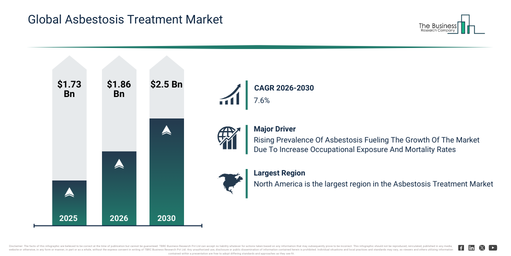
    The market for asbestosis treatment has experienced robust expansion over recent years. Projected figures indicate it will increase from $1.73 billion in 2025 to $1.86 billion in 2026, reflecting a compound annual growth rate (CAGR) of 7.7%. This historical growth has been driven by factors such as occupational exposure to asbestos, the prevalence of chronic lung conditions, the utilization of respiratory medications, hospital-based pulmonology services, and an aging workforce.

    According to projections, the market for treating asbestosis will experience robust expansion in the coming years. By 2030, its value is anticipated to reach $2.5 billion, advancing at a compound annual growth rate (CAGR) of 7.6%. This forecast period growth is driven by initiatives for early diagnosis, a rising need for long-term care, the increasing role of home oxygen therapy, the broadening of supportive care options, and the widespread implementation of pulmonary rehabilitation. Key developments shaping this period include a heightened emphasis on managing symptoms, the gradual expansion of long-term respiratory services, a greater adoption of palliative treatment methods, the increasing application of multi-drug therapies, and a growing preference for at-home respiratory support solutions.

    Download A Free Sample Report For Comprehensive Market Insights:

    https://www.thebusinessresearchcompany.com/sample.aspx?id=24152&type=smp&utm_source=BlogsPR&utm_medium=Paid&utm_campaign=Jul_PR

    Asbestosis Treatment Market Demand Drivers Creating New Revenue Opportunities

    The ongoing increase in asbestosis cases is anticipated to drive forward the expansion of the asbestosis treatment market. This condition, characterized as a chronic pulmonary disease resulting from sustained contact with asbestos fibers, leads to damage in lung tissue along with associated breathing difficulties. Its growing incidence is largely attributable to extended professional contact with these fibers, particularly within industries like construction, shipbuilding, and heavy manufacturing where rigorous safety protocols are frequently absent. Therapy for asbestosis is focused on alleviating its symptoms by enhancing respiratory capability and delivering comfort, thereby improving the life quality of those affected. As an example, information released in November 2024 by the Health and Safety Executive, a governmental body in the UK, indicated that 493 individuals died from asbestosis in 2022, with every documented case involving males. Consequently, the escalating incidence of this disease is fueling the expansion of the market dedicated to its treatment.

    Asbestosis Treatment Market Segment Breakdown: Which Categories Generate The Most Revenue?

    The asbestosis treatment market covered in this report is segmented –

    1) By Type: Salbutamol, Guaifenesin, Acetaminophen, Prednisone, Other Types

    2) By Treatment Type: Medication, Surgery, Rehabilitation, Palliative Care

    3) By Route of Administration: Oral, Inhalation, Intravenous, Other Routes Of Administration

    4) By Distribution Channel: Hospital pharmacies, Retail pharmacies, Online pharmacies

    Subsegments:

    1) By Salbutamol: Inhalers, Nebulizer Solutions, Oral Tablets, Extended-Release Formulations

    2) By Guaifenesin: Syrups, Tablets, Extended-Release Tablets, Combination Formulations

    3) By Acetaminophen: Oral Tablets, Capsules, Liquid Suspension, Intravenous (IV) Formulations

    4) By Prednisone: Oral Tablets, Oral Solution, Delayed-Release Tablets, Combination Therapy Packs

    5) By Other Types: Bronchodilators, Corticosteroids, Oxygen Therapy Products, Antibiotics, Immunosuppressants

    Asbestosis Treatment Market Key Players And Strategic Industry Positioning

    Major companies operating in the asbestosis treatment market are Pfizer Inc, F. Hoffmann-La Roche AG, Merck and Co. Inc., Sanofi S.A., Bristol-Myers Squibb Company, AstraZeneca plc, Novartis AG, GSK plc, Eli Lilly and Company, Granules India Ltd., FibroGen Inc, Farmson Basic Drugs Pvt. Ltd., Atabay Pharmaceuticals and Fine Chemicals Inc., AMGIS Lifescience Ltd., Conscientia Industrial Co. Ltd., Sri Krishna Pharmaceuticals Ltd., Manus Aktteva Biopharma LLP, Thykn India International, Zhejiang Haizhou Pharmaceutical Co. Ltd., Inopha International Co. Limited, Synthokem Labs Pvt. Ltd.

    Access The Complete Asbestosis Treatment Market Report:

    https://www.thebusinessresearchcompany.com/report/asbestosis-treatment-global-market-report?utm_source=BlogsPR&utm_medium=Paid&utm_campaign=Jul_PR

    Asbestosis Treatment Market Regional Analysis And Leading Geography

    North America was the largest region in the asbestosis treatment market in 2025. Asia-Pacific is expected to be the fastest-growing region in the forecast period. The regions covered in the asbestosis treatment market report are Asia-Pacific, South East Asia, Western Europe, Eastern Europe, North America, South America, Middle East, Africa.

    Get in touch with us:

    The Business Research Company: https://www.thebusinessresearchcompany.com/?utm_source=BlogsPR&utm_medium=Paid&utm_campaign=home_page_test

    Americas: +1 310-496-7795

    Asia: +44 7882 955267 & +91 8897263534

    Europe: +44 7882 955267

    Email us at: marketing@tbrc.info

    Follow us on:

    LinkedIn: https://in.linkedin.com/company/the-business-research-company

    YouTube: https://www.youtube.com/channel/UC24_fI0rV8cR5DxlCpgmyFQ

    Global Market Model: https://www.thebusinessresearchcompany.com/global-market-model
  • Aryl Hydrocarbon Receptor Market Growth Is Accelerating As Industry Transformation Continues

    Aryl Hydrocarbon Receptor Market Growth Is Accelerating As Industry Transformation Continues

    Enhanced with market attractiveness analysis, total addressable market evaluation, company benchmarking matrices, interactive Excel dashboards, expanded supply chain intelligence, emerging startup coverage, and detailed product insights, The Business Research Company’s 2026 market reports deliver more actionable and strategically valuable research.

    Aryl Hydrocarbon Receptor Market CAGR Analysis And Future Market Development

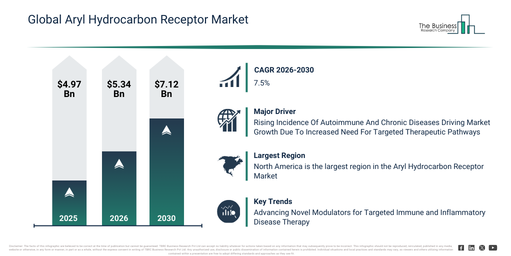
    The aryl hydrocarbon receptor market has experienced notable expansion in recent years, rising from $4.97 billion in 2025 to $5.34 billion in 2026, representing a compound annual growth rate (CAGR) of 7.5%. This past growth has been fueled by progress in molecular biology, a rising prevalence of autoimmune diseases, heightened academic investigation, increased biotechnology investment, and enhancements in receptor targeting methods.

    The market for aryl hydrocarbon receptor is anticipated to experience robust expansion over the coming years, with projections indicating it will reach $7.12 billion by 2030, driven by a compound annual growth rate of 7.5%. During the forecast period, this growth is fueled by several factors, including advancements in novel immunotherapies, the broadening scope of precision medicine, heightened investment in inflammation research, an uptick in clinical trials, and the proliferation of biotech startups. Key emerging trends shaping this period involve increased exploration of immune modulation therapies, the rising development of selective AHR modulators, a growing emphasis on autoimmune and inflammatory conditions, the expansion of preclinical and early-stage trials, and stronger collaborative efforts between pharmaceutical companies and biotechnology firms.

    Download A Free Sample Report For Comprehensive Market Insights:

    https://www.thebusinessresearchcompany.com/sample.aspx?id=21106&type=smp&utm_source=BlogsPR&utm_medium=Paid&utm_campaign=Jul_PR

    Aryl Hydrocarbon Receptor Market Expansion Supported By Key Demand Factors

    The increasing prevalence of autoimmune disorders and chronic health conditions is anticipated to drive growth in the aryl hydrocarbon receptor market moving forward. These conditions involve long-term immune system dysfunction or persistent medical issues. Their rising incidence is attributed to genetic factors, environmental influences, lifestyle choices, gut microbiota imbalances, and improvements in diagnostic capabilities. Aryl hydrocarbon receptor (AHR) agonists have the ability to regulate immune responses and inflammation, offering promising therapeutic avenues for autoimmune and chronic diseases by influencing T-cell differentiation and immune cell function. For example, in May 2023, the University of Oxford, a research institution based in the UK, reported that autoimmune disorders impact roughly one in ten people, with 13% of women and 7% of men affected across 19 studied autoimmune conditions. As a result, the growing number of autoimmune diseases and chronic conditions is fueling the expansion of the AHR agonist market.

    Aryl Hydrocarbon Receptor Market Segmentation: How Is The Market Structured Across Key Categories?

    The aryl hydrocarbon receptor market covered in this report is segmented –

    1) By Type: CB-993113, CDR-914K058, Cinnabarinic Acid, Other Types

    2) By Distribution Channel: Direct Sales, Online Platforms, Distributors, Retail Pharmacies, Wholesale Suppliers

    3) By Application: Hepatocellular Carcinoma, Multiple Sclerosis, Obesity, Osteoporosis, Other Applications

    4) By End-User Industry: Pharmaceuticals, Biotechnology, Agriculture, Environmental Consultancy, Research Institutions

    Subsegments:

    1) By CB-993113: Preclinical Stage CB-993113, Clinical Trials of CB-993113, Targeted Applications of CB-993113

    2) By CDR-914K058: Preclinical Development of CDR-914K058, CDR-914K058 in Immunological Disorders, Targeted Therapeutic Areas for CDR-914K058

    3) By Cinnabarinic Acid: Mechanism Of Action Of Cinnabarinic Acid, Cinnabarinic Acid In Inflammatory Conditions, Potential Applications In Neurodegenerative Diseases

    4) By Other Types: Synthetic Aryl Hydrocarbon Receptor Agonists, Natural Aryl Hydrocarbon Receptor Ligands, Novel Aryl Hydrocarbon Receptor Modulators

    Aryl Hydrocarbon Receptor Market Growth Trends Influencing Competitive Dynamics

    Major industry players in the Aryl Hydrocarbon Receptor (AhR) sector are placing a strong emphasis on product development and formulation, particularly through novel AhR modulators, with the aim of crafting targeted therapeutics for immune-mediated and inflammatory conditions, enhancing safety profiles, and broadening treatment possibilities for individuals with unresolved medical needs. By engaging with the AhR pathway, these modulators regulate immune responses, paving the way for precision interventions in disorders such as graft-versus-host disease, autoimmune ailments, and persistent inflammatory diseases. A case in point is Equillium, a biopharmaceutical firm based in the United States, which in May 2025 unveiled its EQ504 program—an AhR modulator tailored to influence key immune pathways for bolstered anti-inflammatory effects. This initiative is engineered to deliver greater selectivity and minimize unintended effects, facilitating more precise modulation of immune functions while lowering toxicity risks. The introduction of this program underscores a prevailing market shift toward precision immune modulation, with next-generation AhR-based therapies designed to tackle intricate inflammatory routes and offer innovative answers for patients facing scarce therapeutic choices.

    Aryl Hydrocarbon Receptor Market Competitive Landscape And Leading Companies

    Major companies operating in the aryl hydrocarbon receptor market are Bayer AG, Eli Lilly and Company, Organon & Co., Sigma-Aldrich Corporation, Bio-Techne Corporation, Abcam plc, R&D Systems Inc., Dermavant Sciences Inc., Cayman Chemical Company, Enzo Life Sciences Inc., Tocris Bioscience, Ikena Oncology Inc., MedChemExpress LLC, Hercules Pharmaceuticals BV, Active Biotech AB, AnTolRx Inc., Aqilion AB, Azora Therapeutics Australia Pty Ltd, Sol-Gel Technologies Ltd., Actavalon Inc.

    Access The Complete Aryl Hydrocarbon Receptor Market Report:

    https://www.thebusinessresearchcompany.com/report/aryl-hydrocarbon-receptor-global-market-report?utm_source=BlogsPR&utm_medium=Paid&utm_campaign=Jul_PR

    Aryl Hydrocarbon Receptor Market Geographic Analysis: Where Is Demand Growing The Fastest?

    North America was the largest region in the aryl hydrocarbon receptor market in 2025. Asia-Pacific is expected to be the fastest-growing region in the forecast period. The regions covered in the aryl hydrocarbon receptor market report are Asia-Pacific, South East Asia, Western Europe, Eastern Europe, North America, South America, Middle East, Africa.

    Get in touch with us:

    The Business Research Company: https://www.thebusinessresearchcompany.com/?utm_source=BlogsPR&utm_medium=Paid&utm_campaign=home_page_test

    Americas: +1 310-496-7795

    Asia: +44 7882 955267 & +91 8897263534

    Europe: +44 7882 955267

    Email us at: marketing@tbrc.info

    Follow us on:

    LinkedIn: https://in.linkedin.com/company/the-business-research-company

    YouTube: https://www.youtube.com/channel/UC24_fI0rV8cR5DxlCpgmyFQ

    Global Market Model: https://www.thebusinessresearchcompany.com/global-market-model
  • Artificial Tears Market Outlook Highlights The Next Major Growth Opportunities

    Artificial Tears Market Outlook Highlights The Next Major Growth Opportunities

    Through market attractiveness analysis, total addressable market evaluation, company benchmarking matrices, interactive Excel dashboards, expanded supply chain intelligence, emerging startup coverage, and detailed product insights, The Business Research Company’s 2026 market reports provide more actionable and strategically valuable research.

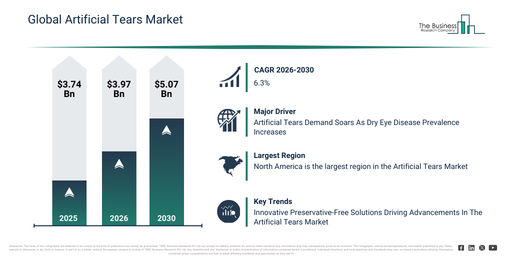
    Artificial Tears Market Expansion From $3.97 Billion In 2026 To $5.07 Billion In 2030

    The market for artificial tears has seen notable expansion in recent years, with projections indicating a rise from $3.74 billion in 2025 to $3.97 billion in 2026, reflecting a compound annual growth rate (CAGR) of 6.1%. This historical growth has been driven by several factors, including a higher prevalence of dry eye syndrome, greater adoption of contact lenses, heightened public awareness regarding eye health, advancements in multi-purpose eye drop formulations, and the influence of key industry participants.

    Projections for the artificial tears market indicate robust expansion over the coming years, with its value anticipated to reach $5.07 billion by 2030, representing a compound annual growth rate (CAGR) of 6.3%. This forecasted growth is fueled by several factors, including advancements in preservative-free and high molecular weight formulations, the rise of e-commerce and online pharmacy platforms, a growing elderly demographic, improvements in drug delivery technologies, and increased activity in emerging markets. Key trends shaping this period encompass a surge in both prescription and over-the-counter eye drop usage, a higher incidence of dry eye syndrome, greater public focus on eye health and preventive measures, the creation of preservative-free products, and the continued expansion of digital pharmacy and online retail avenues.

    Download A Free Sample Report For Comprehensive Market Insights:

    https://www.thebusinessresearchcompany.com/sample.aspx?id=13799&type=smp&utm_source=BlogsPR&utm_medium=Paid&utm_campaign=Jul_PR

    Artificial Tears Market Growth Drivers And Industry Catalysts

    An increasing number of dry eye disease cases is anticipated to accelerate the expansion of the artificial tear market in the coming years. This condition arises when the eyes fail to generate sufficient tears or the tears produced are of substandard quality, resulting in irritation and discomfort. Artificial tears serve as a complement to natural tear production, offering lubrication and alleviating symptoms associated with dry eyes. As an example, according to a February 2024 report from Eyes On Eyecare, a US-based digital media and education firm, the clinical emphasis on dry eye is expected to climb by 13.89%, moving from 37.23% in 2023 to 42.4% in 2024. Consequently, the growing frequency of dry eye disease is fueling the artificial tear market’s growth.

    Artificial Tears Market Segmentation Trends And Revenue Drivers

    The artificial tears market covered in this report is segmented –

    1) By Type: Glycerin Tears, Cellulose Tears, Oil-Based Emulsion Tears, Polyethylene Glycol-based Tears, Sodium Hyaluronate Based Artificial Tears, Propylene Glycol-based Tears

    2) By Dosage: Suspensions, Solution, Ointment, Emulsion, Gel

    3) By Indication: Dry Eye Syndrome, Contact Lens Moisture Retention, Other Indications

    4) By Distribution: Retail Pharmacies, Hospital Pharmacies, Online Pharmacies, Ophthalmic Stores

    Subsegments:

    1) By Glycerin Tears: Preserved Glycerin Tears, Preservative-Free Glycerin Tears

    2) By Cellulose Tears: Hydroxypropyl Methylcellulose (HPMC) Tears, Carboxymethylcellulose (CMC) Tears

    3) By Oil-Based Emulsion Tears: Mineral Oil-based Tears, Castor Oil-based Tears

    4) By Polyethylene Glycol-based Tears: PEG 400 Tears, PEG 3350 Tears

    5) By Sodium Hyaluronate Based Artificial Tears: Low Molecular Weight Sodium Hyaluronate Tears, High Molecular Weight Sodium Hyaluronate Tears

    6) By Propylene Glycol-based Tears: Preserved Propylene Glycol Tears, Preservative-Free Propylene Glycol Tears

    Artificial Tears Market Trends Influencing Long-Term Demand

    Major players within the artificial tears market are concentrating on the creation of cutting-edge preservative-free formulations aimed at boosting ocular comfort, lessening irritation, and fostering better adherence to treatment for individuals suffering from dry eye disease. These preservative-free drops are specifically engineered to lower toxicity on the eye’s surface, facilitating safer extended usage. A case in point is Alcon Inc., a Swiss eye care firm, which in February 2025 rolled out Systane Pro PF. This product is intended to ease dry eye symptoms while enhancing general eye health. It delivers superior lubrication and comfort, targeting patients with sensitive eyes or ongoing dry eye issues. The introduction highlights a rising focus within the artificial tears market on patient-oriented, safer, and more potent treatment options.

    Artificial Tears Market Industry Leaders: Which Organizations Are Driving Competition?

    Major companies operating in the artificial tears market are Pfizer Inc, Johnson & Johnson, AbbVie Inc, Novartis AG, Abbott Laboratories, Otsuka Pharmaceutical Co Ltd, Alcon, Bausch Health Companies Inc, Sun Pharmaceutical Industries Ltd, Dr Reddys Laboratories Ltd, Santen Pharmaceutical Co Ltd, Lupin Limited, Rohto Pharmaceutical Co Ltd, Prestige Consumer Healthcare Inc, Thea Pharma Inc, Sentiss Pharma Pvt Ltd, VISUfarma BV, Similasan Corporation, Eyevance Pharmaceuticals LLC, Nicox SA, I MED Pharma Inc, Velocity Pharma LLC

    Access The Complete Artificial Tears Market Report:

    https://www.thebusinessresearchcompany.com/report/artificial-tears-global-market-report?utm_source=BlogsPR&utm_medium=Paid&utm_campaign=Jul_PR

    Artificial Tears Market Global Footprint: Which Region Holds Market Leadership?

    North America was the largest region in the artificial tears market in 2025. Asia-Pacific is expected to be the fastest-growing region in the forecast period. The regions covered in the artificial tears market report are Asia-Pacific, South East Asia, Western Europe, Eastern Europe, North America, South America, Middle East, Africa.

    Get in touch with us:

    The Business Research Company: https://www.thebusinessresearchcompany.com/?utm_source=BlogsPR&utm_medium=Paid&utm_campaign=home_page_test

    Americas: +1 310-496-7795

    Asia: +44 7882 955267 & +91 8897263534

    Europe: +44 7882 955267

    Email us at: marketing@tbrc.info

    Follow us on:

    LinkedIn: https://in.linkedin.com/company/the-business-research-company

    YouTube: https://www.youtube.com/channel/UC24_fI0rV8cR5DxlCpgmyFQ

    Global Market Model: https://www.thebusinessresearchcompany.com/global-market-model
  • Artificial Intelligence (AI) In Predictive Toxicology Market Trends And Growth Drivers Point To Strong Future Potential

    Artificial Intelligence (AI) In Predictive Toxicology Market Trends And Growth Drivers Point To Strong Future Potential

    Delivering more actionable and strategically valuable research, The Business Research Company’s 2026 market reports feature market attractiveness analysis, total addressable market evaluation, company benchmarking matrices, interactive Excel dashboards, expanded supply chain intelligence, emerging startup coverage, and detailed product insights.

    Artificial Intelligence (AI) In Predictive Toxicology Market Forecast Highlighting Growth From $0.82 Billion To $2.29 Billion

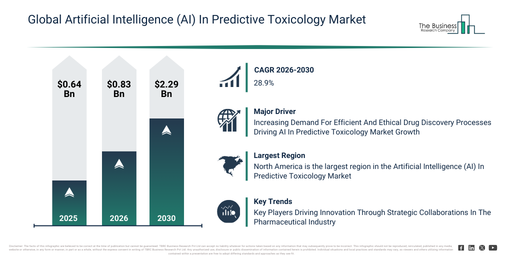
    The market for artificial intelligence in predictive toxicology has seen rapid expansion in recent years, with its value projected to rise from $0.64 billion in 2025 to $0.83 billion in 2026, reflecting a compound annual growth rate (CAGR) of 29.3%. Historical growth was driven by several factors, including a heightened demand for safer chemicals, intensified research and development efforts in pharmaceuticals, stricter regulatory requirements concerning chemical safety, early moves toward computational toxicology, and progress in bioinformatics tools.

    In the market for artificial intelligence within predictive toxicology, substantial growth is anticipated over the coming years, with projections indicating it will reach a value of $2.29 billion by 2030, reflecting a compound annual growth rate of 28.9%. This expansion in the forecast period is driven by factors such as the greater uptake of AI-powered predictive models, the proliferation of cloud-based toxicology platforms, the merging of genomic and chemical data sources, heightened partnerships among pharmaceutical and biotechnology entities, and an escalating need for swift chemical safety evaluations. Key developments shaping this period involve the incorporation of multi-omics datasets to enhance toxicity forecasts, the creation of in silico models for drug toxicity assessments, the use of high-throughput screening techniques for toxicological purposes, the improved prioritization of chemicals through artificial intelligence, and the deployment of cloud-based systems for managing toxicology data.

    Download A Free Sample Report For Comprehensive Market Insights:

    https://www.thebusinessresearchcompany.com/sample.aspx?id=14253&type=smp&utm_source=BlogsPR&utm_medium=Paid&utm_campaign=Jul_PR

    Artificial Intelligence (AI) In Predictive Toxicology Market Opportunity Drivers: What Is Creating New Revenue Potential?

    The growing need for faster and more ethical approaches to drug discovery is anticipated to boost the expansion of the artificial intelligence (AI) in predictive toxicology market moving forward. Drug discovery is a complex and dynamic process involving the methodical investigation, synthesis, and assessment of chemical compounds aimed at identifying promising therapeutic agents to treat diseases and improve human health, while efficient and ethical drug discovery processes integrate advanced technologies and prioritize responsible research practices in the creation of new treatments. This demand is fueled by the rise in chronic illnesses, the increasing shift toward personalized medicine, and a higher occurrence of age-related conditions. Artificial intelligence in predictive toxicology streamlines drug development by rapidly processing extensive datasets to forecast potential toxic effects, thus accelerating the timeline and upholding ethical considerations. For example, data from the Office for National Statistics, a UK government body, revealed that in 2023, the UK’s net research and development spending reached £17.4 billion ($22.1 billion), up from £16.1 billion ($20.45 billion) in 2022, representing an 8.2% increase. Consequently, the rising emphasis on efficient and ethical drug discovery is propelling the growth of the artificial intelligence in predictive toxicology market.

    Artificial Intelligence (AI) In Predictive Toxicology Market Segment Analysis Highlighting Growth Areas

    The artificial intelligence (ai) in predictive toxicology market covered in this report is segmented –

    1) By Component: Solution, Services

    2) By Technology: Machine Learning, Other Technologies

    3) By Toxicity Endpoints: Genotoxicity, Hepatotoxicity, Neurotoxicity, Cardiotoxicity, Other Toxicity Endpoints

    4) By End User: Pharmaceutical And Biotechnology Companies, Chemical And Cosmetics, Contract Research Organizations, Other End Users

    Subsegments:

    1) By Solution: Software Platforms, Data Analysis Tools, Predictive Modeling Solutions, Database And Information Systems

    2) By Services: Consulting Services, Training And Support Services, Data Management And Integration Services, Research And Development Services

    Artificial Intelligence (AI) In Predictive Toxicology Market Innovation Trends Driving Future Development

    Leading players in the artificial intelligence (AI)-driven predictive toxicology sector are increasingly turning to strategic partnerships as a means to strengthen their market position and drive innovation. By combining AI and machine learning techniques, these collaborations aim to refine the ways in which toxicity is predicted and assessed for chemical compounds and pharmaceuticals. A concrete example comes from January 2024, when SyntheticGestalt, a UK-based AI research company focused on drug discovery, joined forces with Enamine, a Ukrainian supplier of chemical building blocks, screening compounds, and integrated drug discovery services. The partnership’s goal was to develop a suite of AI models that support the generation of synthetically accessible, biologically active molecules while optimizing their physicochemical and ADME/Tox (Absorption, Distribution, Metabolism, Excretion, and Toxicity) characteristics. These models are slated for use in SyntheticGestalt’s compound discovery initiatives, serving both academic researchers and pharmaceutical firms through their service offerings. In a key move, Enamine granted access to its immense REAL database, which holds 38 billion molecules. SyntheticGestalt plans to incorporate this resource into its Drug Discovery Service, relying on proprietary AI models to forecast compounds’ physicochemical and ADME/Tox profiles. When problematic compounds are identified, the service will rapidly propose enhanced alternatives.

    Artificial Intelligence (AI) In Predictive Toxicology Market Leading Companies: Who Holds Significant Market Presence?

    Major companies operating in the artificial intelligence (ai) in predictive toxicology market are Certara Inc, Schrödinger Inc, Instem plc, Simulations Plus Inc, Lhasa Limited, Chemaxon Ltd, Algorithme Pharma, Benevolent AI, Berg Health, Biovista Inc, Recursion Pharmaceuticals Inc, Exscientia plc, Insilico Medicine Inc, Celsius Therapeutics Inc, ArisGlobal, Merative L.P., BioTeam Inc, Leadscope Inc, MultiCASE Inc, ACD Labs, Optibrium Ltd, Chemotargets SL, Toxys BV

    Access The Complete Artificial Intelligence (AI) In Predictive Toxicology Market Report:

    https://www.thebusinessresearchcompany.com/report/artificial-intelligence-ai-in-predictive-toxicology-global-market-report?utm_source=BlogsPR&utm_medium=Paid&utm_campaign=Jul_PR

    Artificial Intelligence (AI) In Predictive Toxicology Market Regional Distribution: Which Areas Drive Market Expansion?

    North America was the largest region in the artificial intelligence (AI) in predictive toxicology market in 2025. Asia-Pacific is expected to be the fastest-growing region in the forecast period. The regions covered in the artificial intelligence (ai) in predictive toxicology market report are Asia-Pacific, South East Asia, Western Europe, Eastern Europe, North America, South America, Middle East, Africa.

    Get in touch with us:

    The Business Research Company: https://www.thebusinessresearchcompany.com/?utm_source=BlogsPR&utm_medium=Paid&utm_campaign=home_page_test

    Americas: +1 310-496-7795

    Asia: +44 7882 955267 & +91 8897263534

    Europe: +44 7882 955267

    Email us at: marketing@tbrc.info

    Follow us on:

    LinkedIn: https://in.linkedin.com/company/the-business-research-company

    YouTube: https://www.youtube.com/channel/UC24_fI0rV8cR5DxlCpgmyFQ

    Global Market Model: https://www.thebusinessresearchcompany.com/global-market-model
  • Artificial Intelligence (AI) In Biopharmaceuticals Market Expansion Is Reshaping Competitive Dynamics Across The Industry

    Artificial Intelligence (AI) In Biopharmaceuticals Market Expansion Is Reshaping Competitive Dynamics Across The Industry

    Enhanced with market attractiveness analysis, total addressable market evaluation, company benchmarking matrices, interactive Excel dashboards, expanded supply chain intelligence, emerging startup coverage, and detailed product insights, The Business Research Company’s 2026 market reports deliver more actionable and strategically valuable research.

    Artificial Intelligence (AI) In Biopharmaceuticals Market Revenue Growth Supported By A CAGR Of 8.77% Through 2030

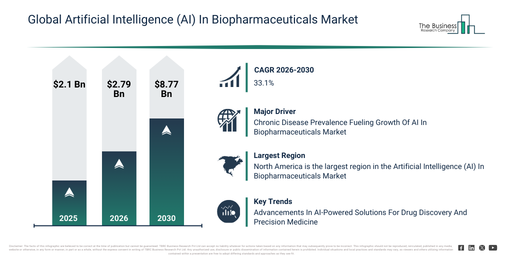
    The market for artificial intelligence (AI) in biopharmaceuticals has experienced exponential expansion in recent years. Projected to increase from $2.1 billion in 2025 to $2.79 billion in 2026, this growth represents a compound annual growth rate (CAGR) of 33.0%. Factors driving progress during the historical period include the early adoption of AI within pharmaceutical research, enhanced computational capabilities, heightened investment in biopharmaceutical research and development, the integration of omics data, and the proliferation of cloud-based data storage solutions.

    The artificial intelligence (AI) sector within biopharmaceuticals is poised for rapid expansion over the coming years. By 2030, it is projected to reach a valuation of $8.77 billion, reflecting a compound annual growth rate (CAGR) of 33.1%. This anticipated growth during the forecast period is fueled by several key factors, such as progress in machine learning algorithms, broader deployment of AI-powered laboratory tools, a greater reliance on predictive analytics, a surge in collaborative initiatives between AI firms and biopharma companies, and government support for AI-driven healthcare solutions. Notable developments shaping this period include AI-facilitated drug discovery, the application of predictive analytics to clinical trials, lab automation, the use of real-world data, and customized approaches to treatment optimization.

    Download A Free Sample Report For Comprehensive Market Insights:

    https://www.thebusinessresearchcompany.com/sample.aspx?id=14251&type=smp&utm_source=BlogsPR&utm_medium=Paid&utm_campaign=Jul_PR

    Artificial Intelligence (AI) In Biopharmaceuticals Market Growth Momentum: Which Factors Are Influencing Demand?

    The increasing occurrence of chronic illnesses is set to boost the expansion of artificial intelligence (AI) within the biopharmaceuticals sector in the coming years. Chronic diseases, which are persistent conditions that typically advance gradually and can last for years or a lifetime, stem from factors such as lifestyle choices, an aging demographic, genetic tendencies, and environmental influences. AI’s role in biopharmaceuticals has become crucial for managing these conditions because it processes extensive and varied data sets, uncovers trends, and tailors treatment strategies to individuals. For example, in April 2025, the Centers for Disease Control and Prevention (CDC), a U.S. federal agency, reported that about 194 million American adults—equivalent to 76.4%—had at least one chronic condition in 2023. This prevalence varied by age, affecting 59.5% of younger adults, 78.4% of those in midlife, and 93.0% of older individuals. Consequently, the rising prevalence of chronic diseases is fueling the growth of artificial intelligence (AI) in the biopharmaceuticals market.

    Artificial Intelligence (AI) In Biopharmaceuticals Market Segment Performance And Strategic Opportunities

    The artificial intelligence (ai) in biopharmaceuticals market covered in this report is segmented –

    1) By Offering: Hardware, Software, Services

    2) By Deployment: Cloud, On-Premises

    3) By Technology: Machine Learning, Natural Language Processing, Deep Learning, Other Technologies

    4) By Application: Drug Discovery, Precision Medicine

    5) By End-Users: Manufacturers, Contract Research Organizations, Academic And Government Research Institutes

    Subsegments:

    1) By Hardware: High-Performance Computing Systems, AI-Enabled Laboratory Equipment, Data Storage Solutions

    2) By Software: Drug Discovery Platforms, Predictive Analytics Tools, Natural Language Processing Solutions

    3) By Services: Consulting Services, Implementation And Integration Services, Data Management And Analytics Services, Training And Support Services

    Artificial Intelligence (AI) In Biopharmaceuticals Market Trends Reshaping Industry Growth

    Key industry players in the artificial intelligence (AI) sector for biopharmaceuticals are concentrating on creating cutting-edge innovations, including AI-driven solutions for target and lead identification, which accelerate drug discovery and enable precision medicine, thereby transforming life sciences organizations. These drug discovery and precision medicine solutions incorporate a range of novel methods for developing new medications and customizing treatments for individual patients. For example, in May 2023, Google LLC, a U.S.-based cloud computing provider, introduced two new AI-powered tools—the target and lead identification suites—designed to assist researchers in predicting and comprehending protein structures, a critical component of drug development. Furthermore, these tools facilitate the ingestion, storage, analysis, and sharing of extensive genomic data, which is essential for precision medicine, and they aim to expedite the drug discovery process, lower expenses, and accelerate the availability of new therapies. Through efficient data management, precise protein structure predictions, and advanced genomic analysis, these innovations are intended to transform drug development workflows and enhance patient outcomes.

    Artificial Intelligence (AI) In Biopharmaceuticals Market Key Players: Which Companies Shape Industry Competition?

    Major companies operating in the artificial intelligence (ai) in biopharmaceuticals market are Exscientia Limited, DeepMind Technologies Limited, Schrödinger Inc., XtalPi Inc., ConcertAI Inc., Insilico Medicine Inc., Recursion Pharmaceuticals, BenevolentAI, BioXcel Therapeutics, Atomwise Inc., BioAge Labs Inc., GNS Healthcare, Berg Health, Deep 6 AI Inc., Cloud Pharmaceuticals Inc., Numerate Inc., AI Therapeutics, Envisagenics, twoXAR Inc., Cyclica Inc.

    Access The Complete Artificial Intelligence (AI) In Biopharmaceuticals Market Report:

    https://www.thebusinessresearchcompany.com/report/artificial-intelligence-ai-in-biopharmaceuticals-global-market-report?utm_source=BlogsPR&utm_medium=Paid&utm_campaign=Jul_PR

    Artificial Intelligence (AI) In Biopharmaceuticals Market Leading Geography: Which Region Generates The Most Revenue?

    North America was the largest region in the artificial intelligence (AI) in biopharmaceuticals market in 2025. Asia-Pacific is expected to be the fastest-growing region in the forecast period. The regions covered in the artificial intelligence (ai) in biopharmaceuticals market report are Asia-Pacific, South East Asia, Western Europe, Eastern Europe, North America, South America, Middle East, Africa.

    Get in touch with us:

    The Business Research Company: https://www.thebusinessresearchcompany.com/?utm_source=BlogsPR&utm_medium=Paid&utm_campaign=home_page_test

    Americas: +1 310-496-7795

    Asia: +44 7882 955267 & +91 8897263534

    Europe: +44 7882 955267

    Email us at: marketing@tbrc.info

    Follow us on:

    LinkedIn: https://in.linkedin.com/company/the-business-research-company

    YouTube: https://www.youtube.com/channel/UC24_fI0rV8cR5DxlCpgmyFQ

    Global Market Model: https://www.thebusinessresearchcompany.com/global-market-model
  • Arthritis Monoclonal Antibodies Market Forecast Reveals Where Future Industry Value Will Be Created

    Arthritis Monoclonal Antibodies Market Forecast Reveals Where Future Industry Value Will Be Created

    Through market attractiveness analysis, total addressable market evaluation, company benchmarking matrices, interactive Excel dashboards, expanded supply chain intelligence, emerging startup coverage, and detailed product insights, The Business Research Company’s 2026 market reports provide more actionable and strategically valuable research.

    Arthritis Monoclonal Antibodies Market Value Expansion And Long-Term Growth Outlook

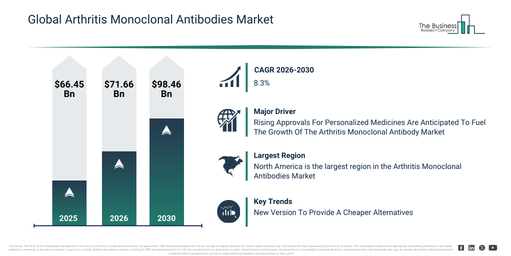
    The arthritis monoclonal antibodies sector has undergone significant expansion in the past few years. Projections indicate an increase from $66.45 billion in 2025 to $71.66 billion in 2026, reflecting a compound annual growth rate (CAGR) of 7.8%. Several factors have fueled this historic growth, including a rising incidence of rheumatoid arthritis, the limited efficacy of traditional disease-modifying antirheumatic drugs (DMARDs), heightened awareness of biologic treatment options, the broadening of rheumatology services within hospital settings, and greater overall healthcare investment.

    The arthritis monoclonal antibodies market is projected to experience significant expansion over the coming years, reaching a value of $98.46 billion by 2030 with a compound annual growth rate (CAGR) of 8.3%. This forecast period growth is driven by the advancement of next-generation monoclonal antibodies, the growing availability of biosimilars, the rise of personalized immunotherapy approaches, an expanding elderly demographic affected by arthritis conditions, and enhanced reimbursement frameworks for biologic therapies. Key trends shaping this period include a heightened uptake of biologic therapies for autoimmune arthritis, a growing inclination toward targeted monoclonal antibody treatments, the emergence of early and aggressive treatment strategies, the proliferation of biosimilars for arthritis-related monoclonal antibodies, and better patient access facilitated by hospitals and specialty clinics.

    Download A Free Sample Report For Comprehensive Market Insights:

    https://www.thebusinessresearchcompany.com/sample.aspx?id=3449&type=smp&utm_source=BlogsPR&utm_medium=Paid&utm_campaign=Jul_PR

    Arthritis Monoclonal Antibodies Market Expansion Drivers: What Is Shaping Future Growth?

    The increasing number of approvals for personalized medicines is anticipated to drive growth in the arthritis monoclonal antibody market moving forward. Personalized medicines are defined as therapeutic products or treatments specifically customized to meet individual patient needs. These therapies are developed based on a patient’s genetic, biomarker, phenotypic, or psychosocial characteristics, which help predict how they will respond to a particular treatment. Monoclonal antibodies (mABs) represent the latest generation of drugs that align with the personalized medicine framework, offering the potential to enhance patient outcomes and improve healthcare efficiency. For example, in February 2024, the Personalized Medicine Coalition, a US-based non-profit organization dedicated to advancing personalized medicine, released a report highlighting the significance of 26 newly approved personalized treatments, 19 expanded indications for existing personalized medicines, and 17 notable new or expanded indications for 12 diagnostic testing products. Consequently, the rising rate of approvals for personalized medicines is fueling the expansion of the arthritis monoclonal antibody market.

    Arthritis Monoclonal Antibodies Market Segment Landscape And Growth Potential

    The arthritis monoclonal antibodies market covered in this report is segmented –

    1) By Drug: Remicade, Humira, Enbrel, Rituxan, Orencia, Actemra, Simponi, Cimzia, Remsima

    2) By Application: Rheumatoid Arthritis, Osteoarthritis, Psoriatic Arthritis, Ankylosing Spondylitis, Fibromyalgia, Other Applications

    3) By End-Use: Hospitals, Research Institutes, Other End-Users

    Arthritis Monoclonal Antibodies Market Strategic Trends: What Is Defining The Next Phase Of Growth?

    Leading players in the arthritis monoclonal antibody space are increasingly introducing new biosimilar products like Hulio to offer more cost-effective treatment options. Designed as a biosimilar to AbbVie’s highly successful rheumatoid arthritis drug Humira, Hulio provides an alternative for patients. For example, in July 2023, Biocon Biologics—a biosimilar-focused subsidiary of Biocon Limited based in India—rolled out Hulio (adalimumab-fkjp), which mirrors Humira’s composition. This monoclonal antibody, prescribed for ailments such as rheumatoid arthritis and psoriatic arthritis, is available at a cost 5% less than Humira, currently priced at $6,922 per carton.

    Arthritis Monoclonal Antibodies Market Competitive Landscape: Who Are The Leading Companies?

    Major companies operating in the arthritis monoclonal antibodies market are Johnson & Johnson, Hoffmann-La Roche Ltd., Novartis AG, Pfizer Inc., AbbVie Inc., Amgen Inc., Genentech Inc., GlaxoSmithKline plc., AstraZeneca plc, Bristol Myers Squibb, Eli Lilly and Company, Thermo Fisher Scientific Inc., Sanofi SA, Daiichi Sankyo Company Ltd., Seattle Genetics, Teva Pharmaceutical Industries Ltd., Shanghai Junshi Biosciences Co. Ltd., GenScript Biotech Corporation, Sigma-Aldrich Co. LLC, AbGenomics Corp., ADC Therapeutics SA, Agensys Inc., Alexion Pharmaceuticals Inc., ALMAC Group Ltd., Ambrx Inc., Astellas Pharma Inc., Celgene Corporation, Celldex Therapeutics Inc., Boehringer Ingelheim International GmbH, Celltrion Inc., HanAll Biopharma Co. Ltd., Merck & Co. Inc., Mitsubishi Tanabe Pharma Corporation, Regeneron Pharmaceuticals Inc., Samsung Bioepis Co. Ltd.

    Access The Complete Arthritis Monoclonal Antibodies Market Report:

    https://www.thebusinessresearchcompany.com/report/arthritis-monoclonal-antibodie-global-market-report?utm_source=BlogsPR&utm_medium=Paid&utm_campaign=Jul_PR

    Arthritis Monoclonal Antibodies Market Regional Outlook: Where Are The Largest Opportunities Located?

    North America was the largest region in the arthritis monoclonal antibodies market in 2025. The regions covered in the arthritis monoclonal antibodies market report are Asia-Pacific, South East Asia, Western Europe, Eastern Europe, North America, South America, Middle East, Africa.

    Get in touch with us:

    The Business Research Company: https://www.thebusinessresearchcompany.com/?utm_source=BlogsPR&utm_medium=Paid&utm_campaign=home_page_test

    Americas: +1 310-496-7795

    Asia: +44 7882 955267 & +91 8897263534

    Europe: +44 7882 955267

    Email us at: marketing@tbrc.info

    Follow us on:

    LinkedIn: https://in.linkedin.com/company/the-business-research-company

    YouTube: https://www.youtube.com/channel/UC24_fI0rV8cR5DxlCpgmyFQ

    Global Market Model: https://www.thebusinessresearchcompany.com/global-market-model
  • Arthritic Therapeutic Market Growth Through 2030 Creates New Strategic Opportunities

    Arthritic Therapeutic Market Growth Through 2030 Creates New Strategic Opportunities

    Delivering more actionable and strategically valuable research, The Business Research Company’s 2026 market reports feature market attractiveness analysis, total addressable market evaluation, company benchmarking matrices, interactive Excel dashboards, expanded supply chain intelligence, emerging startup coverage, and detailed product insights.

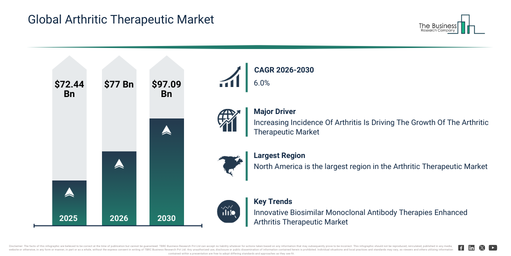
    Arthritic Therapeutic Market Expected To Reach $97.09 Billion By 2030 At 6% CAGR

    The market for arthritis therapeutics has experienced solid expansion in recent years, with projections indicating an increase from $72.44 billion in 2025 to $77 billion in 2026, reflecting a compound annual growth rate (CAGR) of 6.3%. This growth is driven by several factors, including a rising global prevalence of arthritis, a growing elderly population, restricted availability of advanced treatment options, heightened awareness regarding arthritis management, and the expansion of hospital and clinic facilities.

    The size of the arthritic therapeutic market is anticipated to experience robust expansion over the coming years. By 2030, it is projected to reach $97.09 billion, reflecting a compound annual growth rate (CAGR) of 6.0%. This forecast period growth is driven by the development of novel biologics and targeted therapies, a growing reliance on telemedicine and remote patient monitoring, the incorporation of digital health platforms, heightened funding for arthritis research and clinical trials, and the advancement of personalized medicine strategies for arthritis treatment. Key trends shaping this period include the widespread use of biologic and targeted therapies for managing arthritis, a shift toward customized arthritis care plans, an uptick in home-based physical therapy and rehabilitation options, the growth of online pharmacies and digital distribution channels, and a heightened emphasis on early detection and preventive arthritis management.

    Download A Free Sample Report For Comprehensive Market Insights:

    https://www.thebusinessresearchcompany.com/sample.aspx?id=19297&type=smp&utm_source=BlogsPR&utm_medium=Paid&utm_campaign=Jul_PR

    Arthritic Therapeutic Market Development Factors: Which Trends Are Supporting Demand?

    The rising prevalence of arthritis is anticipated to drive expansion in the arthritic therapeutic market moving forward. Arthritis encompasses over 100 conditions primarily marked by joint pain and inflammation. Its incidence is climbing due to an aging population, higher obesity rates, and lifestyle factors that exacerbate joint stress and inflammation. Therapeutic approaches for arthritis work to ease symptoms, curb inflammation, and enhance joint function, thereby improving the quality of life for individuals affected. As an example, a report published in June 2024 by the Australian Institute of Health and Welfare, an Australian government entity, indicated that roughly 514,000 people (2.0% of the population) had rheumatoid arthritis in 2022. In 2023, rheumatoid arthritis accounted for 2.0% of the total disease burden and represented 16% of the overall burden from all musculoskeletal conditions. Consequently, the growing incidence of arthritis is fueling growth in the arthritic therapeutic market.

    Arthritic Therapeutic Market Categorization By Product Type And Application

    The arthritic therapeutic market covered in this report is segmented –

    1) By Drug Class: Tumor Necrosis Factor (TNF) Inhibitors, Interleukin Inhibitors, Nonsteroidal Anti-Inflammatory Drugs (NSAIDs), Corticosteroids, Xanthine Oxidase Inhibitors, Other Drug Classes

    2) By Route Of Administration: Oral, Parenteral, Topical

    3) By Type: Psoriatic Arthritis, Rheumatoid Arthritis, Osteoarthritis, Gout, Other Types

    4) By Distribution Channel: Hospital Pharmacies, Retail Pharmacies, Online Pharmacies

    Subsegments:

    1) By Tumor Necrosis Factor (TNF) Inhibitors: Adalimumab, Etanercept, Infliximab, Certolizumab Pegol, Golimumab

    2) By Interleukin Inhibitors: Interleukin-6 (IL-6) Inhibitors, Interleukin-1 (IL-1) Inhibitors, Interleukin-17 (IL-17) Inhibitors, Interleukin-23 (IL-23) Inhibitors

    3) By Nonsteroidal Anti-Inflammatory Drugs (NSAIDs): Ibuprofen, Naproxen, Diclofenac, Celecoxib, Meloxicam

    4) By Corticosteroids: Prednisone, Methylprednisolone, Hydrocortisone, Dexamethasone

    5) By Xanthine Oxidase Inhibitors: Allopurinol, Febuxostat

    6) By Other Drug Classes: Disease-Modifying Antirheumatic Drugs (DMARDs), Janus Kinase (JAK) Inhibitors, Biologic DMARDs, Topical Analgesics, Opioid Pain Medications

    Arthritic Therapeutic Market Transformation Trends: Which Innovations Are Driving Change?

    Key players in the arthritis therapeutic market are prioritizing the creation of cutting-edge approaches, including biosimilar monoclonal antibody-based therapies, aimed at improving treatment outcomes while lowering costs. These biosimilar therapies are engineered to closely resemble and replicate the action of original monoclonal antibodies, delivering comparable therapeutic advantages at a more affordable price point. A case in point is May 2024, when Bio-Thera Solutions Ltd., a Chinese biopharmaceutical firm, introduced TOFIDENCE, an intravenous biosimilar monoclonal antibody product based on ACTEMRA. Formulated as a biosimilar to the reference drug ACTEMRA, TOFIDENCE (tocilizumab-bavi) has received approval for managing moderately to severely active rheumatoid arthritis, polyarticular juvenile idiopathic arthritis, and polyarticular juvenile idiopathic arthritis.

    Arthritic Therapeutic Market Company Landscape And Strategic Competition

    Major companies operating in the arthritic therapeutic market are Pfizer Inc., Johnson & Johnson, Hoffmann-La Roche Ltd, Merck & Co Inc., AbbVie Inc., Sanofi S.A., Bristol-Myers Squibb Company, AstraZeneca Pharma AB, GlaxoSmithKline plc, Eli Lilly and Company, Amgen Inc., Gilead Sciences Inc., Regeneron Pharmaceuticals Inc., Astellas Pharma Inc., Biogen Inc., Vertex Pharmaceuticals Incorporated, Zimmer Biomet Holdings Inc., UCB Pharma S.A., Incyte Corporation, Celltrion Inc., Mallinckrodt Pharmaceuticals, Genentech Inc., Anika Therapeutics Inc., Medac GmbH

    Access The Complete Arthritic Therapeutic Market Report:

    https://www.thebusinessresearchcompany.com/report/arthritic-therapeutic-global-market-report?utm_source=BlogsPR&utm_medium=Paid&utm_campaign=Jul_PR

    Arthritic Therapeutic Market Geographic Landscape: Which Region Dominates Industry Growth?

    North America was the largest region in the arthritic therapeutic market in 2025. The regions covered in the arthritic therapeutic market report are Asia-Pacific, South East Asia, Western Europe, Eastern Europe, North America, South America, Middle East, Africa.

    Get in touch with us:

    The Business Research Company: https://www.thebusinessresearchcompany.com/?utm_source=BlogsPR&utm_medium=Paid&utm_campaign=home_page_test

    Americas: +1 310-496-7795

    Asia: +44 7882 955267 & +91 8897263534

    Europe: +44 7882 955267

    Email us at: marketing@tbrc.info

    Follow us on:

    LinkedIn: https://in.linkedin.com/company/the-business-research-company

    YouTube: https://www.youtube.com/channel/UC24_fI0rV8cR5DxlCpgmyFQ

    Global Market Model: https://www.thebusinessresearchcompany.com/global-market-model