Month: July 2026

  • Pyoderma Gangrenosum Treatment  Market Trends And Growth Drivers Point To Strong Future Potential

    Pyoderma Gangrenosum Treatment Market Trends And Growth Drivers Point To Strong Future Potential

    Through market attractiveness analysis, total addressable market evaluation, company benchmarking matrices, interactive Excel dashboards, expanded supply chain intelligence, emerging startup coverage, and detailed product insights, The Business Research Company’s 2026 market reports provide more actionable and strategically valuable research.

    Pyoderma Gangrenosum Treatment Market Revenue Outlook: What CAGR Is Expected Through 2030?

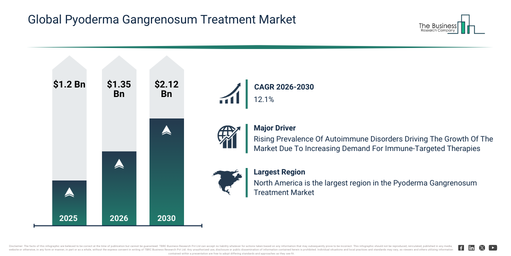
    The pyoderma gangrenosum treatment market size has experienced rapid growth in recent years. It is projected to increase from $1.2 billion in 2025 to $1.35 billion in 2026, demonstrating a compound annual growth rate (CAGR) of 11.8%. This historical expansion is attributable to an increase in the incidence of autoimmune diseases, advancements in dermatology specialty care, rising awareness concerning rare skin disorders, the expansion of hospital wound care units, and improved access to diagnostic testing.

    The pyoderma gangrenosum treatment market size is projected to experience substantial growth in the upcoming years. It is anticipated to expand to $2.12 billion by 2030, demonstrating a compound annual growth rate (CAGR) of 12.1%. This expansion during the forecast period is primarily attributed to advancements in targeted immunotherapy development, the increased availability of specialty biologic drugs, growing investment in treatments for rare diseases, a rise in outpatient dermatology centers, and more comprehensive insurance coverage for advanced therapies. Notable trends within the forecast period include the broader application of biologic therapies, the increasing adoption of combination drug regimens, developments in advanced wound care therapies, a rise in personalized treatment protocols, and more robust clinical monitoring and follow-up programs.

    Download A Free Sample Report For Comprehensive Market Insights:

    https://www.thebusinessresearchcompany.com/sample.aspx?id=33280&type=smp&utm_source=Blogs&utm_medium=Paid&utm_campaign=Jul_PR

    Pyoderma Gangrenosum Treatment Market Growth Factors Supporting Long-Term Expansion

    The expanding occurrence of autoimmune conditions is anticipated to stimulate the growth of the pyoderma gangrenosum treatment market moving forward. Autoimmune disorders are defined as conditions where the body’s immune system mistakenly targets its own tissues, leading to chronic inflammation and subsequent tissue damage. The increase in the prevalence of these disorders is attributed to aging populations, who are more prone to immune dysregulation. Treatments for pyoderma gangrenosum help manage autoimmune disorders by regulating an overactive immune system, which in turn aids in controlling inflammation and protecting healthy tissues, thereby addressing both skin ulcers and wider complications associated with autoimmune conditions. For instance, in September 2025, data from the National Institutes of Health, a US-based medical research agency, revealed that an estimated 23.5 million to 50 million Americans, comprising between 7% and 8% of the U.S. population, were living with at least one autoimmune disease, and this prevalence continues to climb due to intricate genetic, environmental, and societal influences. Thus, the increasing prevalence of autoimmune disorders is a significant factor driving the expansion of the pyoderma gangrenosum treatment market.

    Pyoderma Gangrenosum Treatment Market Segment Analysis: What Are The Major Market Categories?

    The pyoderma gangrenosum treatment market covered in this report is segmented –

    1) By Treatment Type: Topical Treatments; Systemic Treatments; Surgical Treatments; Wound Care Therapies

    2) By Drug Class: Immunosuppressive Drugs; Tumour Necrosis Factor Inhibitors; Antibacterial Agents

    3) By Route of Administration: Oral; Injectable; Topical

    4) By Distribution Channel: Hospital Pharmacies; Retail Pharmacies; Other Distribution Channels

    5) By End User: Hospitals; Dermatology Clinics; Outpatient Care Centers

    Subsegments:

    1) By Topical Treatments: Topical Corticosteroids; Topical Immunomodulators; Topical Antibiotics; Topical Antiseptic Agents

    2) By Systemic Treatments: Systemic Corticosteroids; Systemic Immunosuppressive Drugs; Biologic Therapies; Anti Inflammatory Medications

    3) By Surgical Treatments: Surgical Debridement; Skin Grafting Procedures; Reconstructive Surgical Procedures

    4) By Wound Care Therapies: Advanced Wound Dressings; Negative Pressure Wound Therapy; Moist Wound Healing Solutions; Infection Control Wound Care

    Pyoderma Gangrenosum Treatment Market Leading Companies Driving Competitive Growth

    Major companies operating in the pyoderma gangrenosum treatment market are Johnson & Johnson Services Inc., Roche Holding AG, Merck & Co. Inc., Pfizer Inc., AbbVie Inc., Sanofi SA, Novartis AG, Bristol-Myers Squibb Company, GlaxoSmithKline Plc, Amgen Inc., Boehringer Ingelheim Inc., Teva Pharmaceutical Industries Ltd., Biogen Inc., Fresenius Kabi AG, Intas Pharmaceuticals Ltd., UCB SA, Swedish Orphan Biovitrum AB, Celltrion Inc., InflaRx NV, and Aclaris Therapeutics Inc.

    Access The Complete Pyoderma Gangrenosum Treatment Market Report:

    https://www.thebusinessresearchcompany.com/report/pyoderma-gangrenosum-treatment-market-report?utm_source=Blogs&utm_medium=Paid&utm_campaign=Jul_PR

    Pyoderma Gangrenosum Treatment Market Regional Analysis: Which Region Leads By Revenue?

    North America was the largest region in the pyoderma gangrenosum treatment market in 2025. Asia-Pacific is expected to be the fastest-growing region in the forecast period. The regions covered in the pyoderma gangrenosum treatment market report are Asia-Pacific, South East Asia, Western Europe, Eastern Europe, North America, South America, Middle East, Africa.

    Get in touch with us:

    The Business Research Company: https://www.thebusinessresearchcompany.com/

    Americas: +1 310-496-7795

    Asia: +44 7882 955267 & +91 8897263534

    Europe: +44 7882 955267

    Email us at: marketing@tbrc.info

    Follow us on:

    LinkedIn: https://in.linkedin.com/company/the-business-research-company

    YouTube: https://www.youtube.com/channel/UC24_fI0rV8cR5DxlCpgmyFQ

    Global Market Model: https://www.thebusinessresearchcompany.com/global-market-model
  • Protein Language Models  Market Growth Outlook Reveals A CAGR Of 25.7% And A Market Value Of $3.05 Billion By 2030

    Protein Language Models Market Growth Outlook Reveals A CAGR Of 25.7% And A Market Value Of $3.05 Billion By 2030

    Enhanced with market attractiveness analysis, total addressable market evaluation, company benchmarking matrices, interactive Excel dashboards, expanded supply chain intelligence, emerging startup coverage, and detailed product insights, The Business Research Company’s 2026 market reports deliver more actionable and strategically valuable research.

    Protein Language Models Market CAGR Analysis And Future Market Development

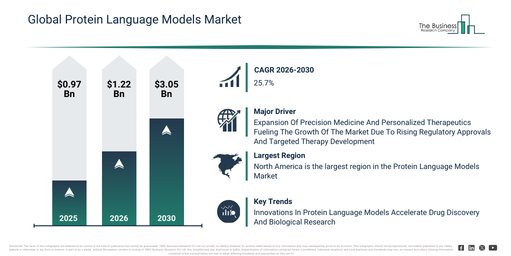
    The protein language models market has recently experienced significant expansion. Its valuation is set to rise from $0.97 billion in 2025 to $1.22 billion in 2026, achieving a compound annual growth rate (CAGR) of 25.5%. This past growth can be ascribed to several factors, including an increase in genomic sequencing data, greater biopharma research expenditures, the expansion of bioinformatics platforms, improved access to protein databases, and the initial integration of machine learning within biology.

    The protein language models market size is projected to experience substantial expansion in the coming years. By 2030, this market is forecast to reach $3.05 billion, demonstrating a compound annual growth rate (CAGR) of 25.7%. This growth over the forecast period is propelled by increasing demand for computational protein design, the expansion of AI-driven drug pipelines, a growing need for swift target identification, increasing collaborations in AI biology across industries, and greater investment in AI life science startups. Noteworthy trends during this period include the rising adoption of sequence-based protein representation models, the proliferation of cloud-hosted protein modeling platforms, an increasing need for protein annotation services, the growth of API-based bioinformatics toolkits, and wider integration of AI-powered drug discovery workflows.

    Download A Free Sample Report For Comprehensive Market Insights:

    https://www.thebusinessresearchcompany.com/sample.aspx?id=33275&type=smp&utm_source=Blogs&utm_medium=Paid&utm_campaign=Jul_PR

    Protein Language Models Market Growth Momentum: Which Factors Are Influencing Demand?

    The growth of the protein language models market is expected to be propelled by the expanding fields of precision medicine and personalized therapeutics. These healthcare strategies involve customizing treatments for individual patient characteristics, such as their genetic makeup, biomarkers, and disease profiles, to enhance treatment efficacy and minimize negative outcomes. The increase in regulatory approvals and a research focus on targeted therapies, which address specific biological pathways rather than uniform treatments, are driving precision medicine and personalized therapeutics. Protein language models contribute to precision medicine by facilitating detailed analysis of protein sequences and structures, aiding researchers in identifying therapeutic targets, predicting drug responses, and designing patient-specific biological treatments more efficiently. For instance, in February 2024, the Personalized Medicine Coalition, a US-based not-for-profit organization, reported that the Food and Drug Administration (FDA) approved 16 new personalized therapies for rare disease patients in 2023, a significant rise from six approvals in 2022. Consequently, the expansion of precision medicine and personalized therapeutics is accelerating the growth of the protein language models market. Rising Adoption Of AI-Driven Drug Discovery Fueling The Growth Of The Market Due To Target Identification And Candidate Optimization

    Protein Language Models Market Segment Performance And Strategic Opportunities

    The protein language models market covered in this report is segmented –

    1) By Component: Software; Hardware; Services

    2) By Deployment Mode: On-Premises; Cloud

    3) By Application: Drug Discovery; Protein Engineering; Disease Diagnosis; Functional Annotation; Other Applications

    4) By End-User: Pharmaceutical And Biotechnology Companies; Academic And Research Institutes; Healthcare Providers; Other End-Users

    Subsegments:

    1) By Software: Protein Sequence Analysis Platforms; Model Training And Fine Tuning Tools; Protein Structure Prediction Software; Protein Function Annotation Tools; Bioinformatics Integration Platforms

    2) By Hardware: High Performance Computing Systems; Graphics Processing Hardware; Tensor Processing Hardware; Data Storage And Processing Systems; Cloud Based Computing Infrastructure

    3) By Services: Consulting And Advisory Services; Custom Model Development Services; System Integration Services; Managed And Support Services; Training And Knowledge Transfer Services

    Protein Language Models Market Trends Reshaping Industry Growth

    Leading entities within the protein language models market are concentrating on creating advanced AI-powered protein language models to enhance protein sequence analysis and expedite drug discovery along with biological research. An AI-driven protein language model employs artificial intelligence, which is trained on extensive protein sequences, to foresee, decipher, and generate protein structures and functions. This capability accelerates protein engineering, aids in mutation assessment, and supports the creation of new therapeutic solutions. For example, in September 2024, Ginkgo Bioworks Holdings, Inc., a US-based biotechnology company, unveiled a Protein Large Language Model and Model API constructed with Google Cloud technology. This solution is trained on Ginkgo’s proprietary protein dataset and operates on Vertex AI, empowering enterprises and individual researchers to conduct sophisticated protein sequence analysis and improve pattern recognition, thereby accelerating drug development and biological research workflows.

    Protein Language Models Market Key Players: Which Companies Shape Industry Competition?

    Major companies operating in the protein language models market are Google LLC, Meta Platforms Inc., Pfizer Inc., Novartis AG, AstraZeneca PLC, NVIDIA Corporation, Owkin Inc., Generate Biomedicines Inc., Recursion Pharmaceuticals Inc., BenevolentAI Limited, Exscientia plc, Dyno Therapeutics Inc., Atomwise Inc., ProteinQure Inc., Cradle Bio B.V., Profluent Bio Inc., BioMap (Beijing) Intelligence Technology Co. Ltd., EvolutionaryScale Inc., Isomorphic Labs Limited, Insilico Medicine Inc., AbSci Corporation, Peptone Ltd., and Valence Labs Inc.

    Access The Complete Protein Language Models Market Report:

    https://www.thebusinessresearchcompany.com/report/protein-language-models-market-report?utm_source=Blogs&utm_medium=Paid&utm_campaign=Jul_PR

    Protein Language Models Market Global Footprint: Which Region Holds Market Leadership?

    North America was the largest region in the protein language models market in 2025. Asia-Pacific is expected to be the fastest-growing region in the forecast period. The regions covered in the protein language models market report are Asia-Pacific, South East Asia, Western Europe, Eastern Europe, North America, South America, Middle East, Africa.

    Get in touch with us:

    The Business Research Company: https://www.thebusinessresearchcompany.com/

    Americas: +1 310-496-7795

    Asia: +44 7882 955267 & +91 8897263534

    Europe: +44 7882 955267

    Email us at: marketing@tbrc.info

    Follow us on:

    LinkedIn: https://in.linkedin.com/company/the-business-research-company

    YouTube: https://www.youtube.com/channel/UC24_fI0rV8cR5DxlCpgmyFQ

    Global Market Model: https://www.thebusinessresearchcompany.com/global-market-model
  • Prion Disease Treatment  Market Set To Grow From $3.21 Billion In 2026 To $4.15 Billion By 2030 At A CAGR Of 6.6%

    Prion Disease Treatment Market Set To Grow From $3.21 Billion In 2026 To $4.15 Billion By 2030 At A CAGR Of 6.6%

    Enhanced with market attractiveness analysis, total addressable market evaluation, company benchmarking matrices, interactive Excel dashboards, expanded supply chain intelligence, emerging startup coverage, and detailed product insights, The Business Research Company’s 2026 market reports deliver more actionable and strategically valuable research.

    Prion Disease Treatment Market Revenue Growth Supported By A CAGR Of 4.15% Through 2030

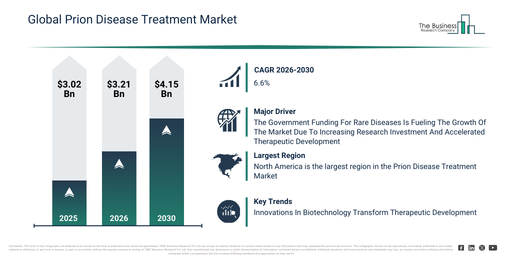
    The prion disease treatment market size has demonstrated significant expansion in recent years. This market is anticipated to expand from $3.02 billion in 2025 to $3.21 billion in 2026, achieving a compound annual growth rate (CAGR) of 6.4%. Factors contributing to this historical growth include increased funding for rare disease research, rising awareness of neurological disorders, the proliferation of genetic testing, numerous academic clinical studies, and the emergence of specialty neurology centers.

    The prion disease treatment market size is projected to experience robust expansion in the coming years. It is anticipated to reach $4.15 billion by 2030, demonstrating a compound annual growth rate (CAGR) of 6.6%. This anticipated growth during the forecast period can be ascribed to initiatives such as novel molecule discovery programs, precision neurology approaches, biomarker-based diagnostics, expanded orphan drug incentives, and advanced neuro research collaborations. Key trends expected during this period encompass targeted neurodegenerative drug research, advanced prion diagnostic testing, genetic risk screening programs, compassionate use therapy trials, and integrated supportive care protocols.

    Download A Free Sample Report For Comprehensive Market Insights:

    https://www.thebusinessresearchcompany.com/sample.aspx?id=33272&type=smp&utm_source=Blogs&utm_medium=Paid&utm_campaign=Jul_PR

    Prion Disease Treatment Market Industry Drivers: What Is Driving Revenue Growth?

    The expansion of the prion disease treatment market is anticipated to be driven by increasing government investment dedicated to rare diseases. Rare diseases are characterized as medical conditions affecting a small segment of the population, frequently presenting as chronic, progressive, and life-threatening. The surge in funding for these conditions stems from enhanced government and philanthropic contributions, which in turn accelerate research initiatives, clinical trials, and the creation of innovative therapies addressing significant unmet medical requirements. This government financial backing advances progress in prion disease treatment by sustaining long-term basic research, upholding specialized laboratories and surveillance systems, stimulating pharmaceutical innovation despite limited commercial drivers, and expediting the conversion of scientific discoveries into effective diagnostics and potential treatments. For example, in February 2024, the Department of Health and Social Care, a UK-based government department, allocated a $17.3 million (£14 million) investment to establish the UK Rare Disease Research Platform. This platform comprises 11 research nodes across the country and a central coordinating hub, with the objective of fostering coordinated collaboration among academic, clinical, and industry researchers, individuals living with rare diseases, research charities, and other stakeholders, all aimed at accelerating advancements in the comprehension, diagnosis, and treatment of rare diseases. Consequently, the rising government funding directed towards rare diseases is stimulating growth within the prion disease treatment market.

    Prion Disease Treatment Market Segment Analysis And Revenue Opportunities

    The prion disease treatment market covered in this report is segmented –

    1) By Disease Type: Creutzfeldt-Jakob Disease; Gerstmann-Sträussler-Scheinker Syndrome; Fatal Familial Insomnia; Kuru; Other Disease Types

    2) By Treatment Type: Medication; Supportive Care; Other Treatment Types

    3) By Route Of Administration: Oral; Parenteral

    4) By Distribution Channel: Hospital Pharmacies; Retail Pharmacies; Online Pharmacies

    5) By End-User: Hospitals; Specialty Clinics; Research Institutes; Other End-Users

    Subsegments:

    1) By Creutzfeldt-Jakob Disease: Sporadic Creutzfeldt-Jakob Disease; Familial Creutzfeldt-Jakob Disease; Iatrogenic Creutzfeldt-Jakob Disease; Variant Creutzfeldt-Jakob Disease

    2) By Gerstmann-Sträussler-Scheinker Syndrome: Early-Stage Gerstmann-Sträussler-Scheinker Syndrome; Progressive-Stage Gerstmann-Sträussler-Scheinker Syndrome; Advanced-Stage Gerstmann-Sträussler-Scheinker Syndrome

    3) By Fatal Familial Insomnia: Sleep Disorder Management; Autonomic Dysfunction Management; Psychiatric Symptom Management

    4) By Kuru: Motor Function Support; Cognitive Function Support; Symptomatic Neurological Care

    5) By Other Disease Types: Atypical Prion Disorders; Unclassified Prion Conditions

    #Prion Disease Treatment Market Growth Trends: What Is Influencing The Future Outlook?

    Major companies operating in the prion disease treatment market are directing their efforts towards devising innovative methodologies, such as viral vector-based gene therapy, to enable the delivery of targeted treatments across the blood-brain barrier and decelerate disease advancement. Viral vector-based gene therapy operates by utilizing modified viruses to introduce therapeutic genes into specific cells, thereby helping to rectify or diminish disease-inducing processes, including misfolded prion proteins, by achieving precise and lasting impacts. For instance, in February 2025, Apertura Gene Therapy, a US-based biotechnology company, supported the Broad Institute in its development of a gene therapy for prion disease that employs an engineered AAV capsid targeting TfR1. This therapeutic approach delivers therapeutic genes across the blood-brain barrier, ensuring extensive central nervous system distribution and potentially slowing or preventing the accumulation of prion protein. It offers high specificity, reduced off-target effects, and sustained therapeutic expression, representing a significant progression compared to conventional treatments that primarily address symptoms rather than modifying disease progression. Overall, this signifies a crucial move forward in transitioning from symptomatic management to disease-modifying interventions, with the potential to transform the treatment environment for prion disorders.

    Prion Disease Treatment Market Leading Players Shaping Industry Direction

    Major companies operating in the prion disease treatment market are Ionis Pharmaceuticals Inc., Broad Institute of MIT and Harvard, Sangamo Therapeutics Inc., Gate Bioscience, Apertura Gene Therapy, Sibylla Biotech, Case Western Reserve University, and National Prion Clinic.

    Access The Complete Prion Disease Treatment Market Report:

    https://www.thebusinessresearchcompany.com/report/prion-disease-treatment-market-report?utm_source=Blogs&utm_medium=Paid&utm_campaign=Jul_PR

    Prion Disease Treatment Market Regional Outlook: Where Are The Largest Opportunities Located?

    North America was the largest region in the prion disease treatment market in 2025. Asia-Pacific is expected to be the fastest-growing region in the forecast period. The regions covered in the prion disease treatment market report are Asia-Pacific, South East Asia, Western Europe, Eastern Europe, North America, South America, Middle East, Africa.

    Get in touch with us:

    The Business Research Company: https://www.thebusinessresearchcompany.com/

    Americas: +1 310-496-7795

    Asia: +44 7882 955267 & +91 8897263534

    Europe: +44 7882 955267

    Email us at: marketing@tbrc.info

    Follow us on:

    LinkedIn: https://in.linkedin.com/company/the-business-research-company

    YouTube: https://www.youtube.com/channel/UC24_fI0rV8cR5DxlCpgmyFQ

    Global Market Model: https://www.thebusinessresearchcompany.com/global-market-model
  • Portable Biotoxicity Detectors  Market Growth Is Reshaping Competitive Advantage Across The Industry

    Portable Biotoxicity Detectors Market Growth Is Reshaping Competitive Advantage Across The Industry

    Through market attractiveness analysis, total addressable market evaluation, company benchmarking matrices, interactive Excel dashboards, expanded supply chain intelligence, emerging startup coverage, and detailed product insights, The Business Research Company’s 2026 market reports provide more actionable and strategically valuable research.

    Portable Biotoxicity Detectors Market Growth From $1.21 Billion In 2026 To $2.31 Billion By 2030 At A CAGR Of 17.5%

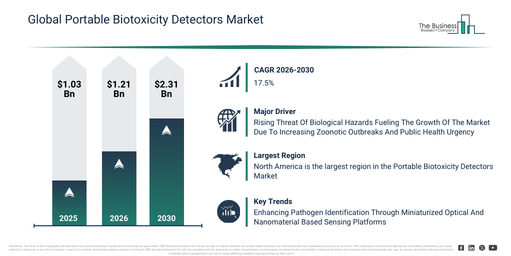
    The market size for portable biotoxicity detectors has seen rapid growth in recent years. This market is expected to expand from $1.03 billion in 2025 to $1.21 billion in 2026, achieving a compound annual growth rate (CAGR) of 17.3%. The historical period’s growth can be attributed to an increase in environmental pollution monitoring demands, previous biohazard and contamination incidents, the development of industrial safety regulations, the expansion of water and air quality testing programs, and a rise in laboratory and field biosensor research.

    The market for portable biotoxicity detectors is anticipated to experience substantial growth in the upcoming years. Its size is projected to reach $2.31 billion by 2030, expanding at a compound annual growth rate (CAGR) of 17.5%.

    This growth over the forecast period stems from factors such as increasing demand for swift on-field diagnostics, the broadening of smart environmental monitoring networks, stricter food and water safety compliance mandates, a rise in investment in portable analytical tools, and greater utilization in defense and homeland security sectors. Significant trends anticipated during this period include the emergence of portable multi-parameter detection devices, quick field biohazard screening capabilities, miniaturized biosensor platforms, continuous real-time environmental toxicity monitoring, and specialized emergency response detection kits.

    Download A Free Sample Report For Comprehensive Market Insights:

    https://www.thebusinessresearchcompany.com/sample.aspx?id=33268&type=smp&utm_source=Blogs&utm_medium=Paid&utm_campaign=Jul_PR

    Portable Biotoxicity Detectors Market Growth Factors Supporting Long-Term Expansion

    The increasing danger posed by biological hazards is anticipated to drive the expansion of the portable biotoxicity detectors market in the future. These hazards encompass disease-causing agents and harmful substances originating from bacteria, viruses, and other living entities, which present dangers to human well-being and ecological systems. The escalation of biological hazards can be attributed to a growing number of zoonotic spillover incidents, which are propelled by shifts in the environment and interactions between humans and animals. Portable biotoxicity detectors assist in managing the escalating threats from biological hazards by facilitating quick on-site detection and containment, thereby preventing extensive contamination. As an illustration, in April 2024, the World Health Organization documented over 7.6 million dengue cases worldwide by 30 April 2024, comprising 3.4 million confirmed cases, upwards of 16,000 severe cases, and more than 3,000 fatalities; notably, the Region of the Americas alone recorded more than seven million cases, which exceeded its 2023 annual total of 4.6 million cases. Consequently, the growing danger of biological hazards is fueling the expansion of the portable biotoxicity detectors market.

    Portable Biotoxicity Detectors Market Segments: Where Are The Largest Growth Opportunities?

    The portable biotoxicity detectors market covered in this report is segmented –

    1) By Product Type: Portable Biotoxicity Detectors; Stationary Biotoxicity Detectors; Handheld Detectors; Wearable Detectors

    2) By Deployment Mode: On-field; On-site; In-lab

    3) By Technology: Biosensors; Luminescent Microorganisms; Enzymatic Biosensors; Electrochemical Biosensors; Microfluidic Devices

    4) By Application: Water Quality Testing; Soil Monitoring; Air Quality Monitoring; Industrial Waste Monitoring; Food Safety Testing

    Subsegments:

    1) By Portable Biotoxicity Detectors: Battery Operated Portable Detectors; Smartphone Integrated Portable Detectors; Multi Parameter Portable Detectors; Field Deployable Rapid Detection Units

    2) By Stationary Biotoxicity Detectors: Bench Top Laboratory Detectors; Fixed Industrial Monitoring Systems; Continuous Monitoring Stationary Units; Automated High Throughput Detection Systems

    3) By Handheld Detectors: Single Use Handheld Detectors; Reusable Handheld Detection Devices; Real Time Handheld Detection Instruments; Compact Manual Sampling Detectors

    4) By Wearable Detectors: Clip On Wearable Detectors; Wrist Mounted Wearable Detectors; Body Mounted Continuous Monitoring Devices; Personal Safety Wearable Detection Systems

    Portable Biotoxicity Detectors Market Industry Trends Shaping Future Revenue Growth

    Major companies operating in the portable biotoxicity detectors market are concentrating on developing innovations in field-deployable diagnostics, such as aptamer-integrated colorimetric detection, to enable highly sensitive, real-time, and cost-effective identification of hazardous substances through automated optical systems and nanomaterial-driven signal amplification. Aptamer-integrated colorimetric detection describes a sensing mechanism utilizing synthetic nucleic acid ligands, or aptamers, specifically designed to bind to toxic targets, thereby triggering a visible color change in gold nanoparticles that can be electronically measured without the need for complex laboratory equipment. For example, in November 2025, the Indian Institute of Technology Madras, an India-based public technical and research university, introduced the Smart Malathion Detection Device (Smart MDD). This smart malathion detection device offers rapid and accurate identification of malathion residues in air, water, and agricultural products. It features real-time monitoring with high sensitivity, ensuring early detection and improved safety. The device is portable, easy to operate, and suitable for both field and laboratory use. With IoT connectivity and data logging, it facilitates remote monitoring and instant alerts.

    Portable Biotoxicity Detectors Market Major Participants And Competitive Dynamics

    Major companies operating in the portable biotoxicity detectors market are Abbott Laboratories, Siemens Healthineers AG, Merck KGaA, Agilent Technologies, Mettler-Toledo International Inc., Bruker Corporation, QIAGEN N.V., DiaSorin S.p.A., Tecan Group Ltd., Neogen Corporation, Smiths Detection Group Ltd., Yokogawa Electric Corporation, Quanterix Corporation, Envirologix Inc., BlueSense Diagnostics A/S, Optosky Technologies, Eurofins Technologies, Alexeter Technologies LLC, Biosensing Instrument Inc., Changsha Langshuo Technology Co. Ltd.

    Access The Complete Portable Biotoxicity Detectors Market Report:

    https://www.thebusinessresearchcompany.com/report/portable-biotoxicity-detectors-market-report?utm_source=Blogs&utm_medium=Paid&utm_campaign=Jul_PR

    Portable Biotoxicity Detectors Market Geographic Distribution And Regional Opportunities

    North America was the largest region in the portable biotoxicity detectors market in 2025. Asia-Pacific is expected to be the fastest-growing region in the forecast period. The regions covered in the portable biotoxicity detectors market report are Asia-Pacific, South East Asia, Western Europe, Eastern Europe, North America, South America, Middle East, Africa.

    Get in touch with us:

    The Business Research Company: https://www.thebusinessresearchcompany.com/

    Americas: +1 310-496-7795

    Asia: +44 7882 955267 & +91 8897263534

    Europe: +44 7882 955267

    Email us at: marketing@tbrc.info

    Follow us on:

    LinkedIn: https://in.linkedin.com/company/the-business-research-company

    YouTube: https://www.youtube.com/channel/UC24_fI0rV8cR5DxlCpgmyFQ

    Global Market Model: https://www.thebusinessresearchcompany.com/global-market-model
  • Polycythemia  Market Growth Is Accelerating As Industry Transformation Continues

    Polycythemia Market Growth Is Accelerating As Industry Transformation Continues

    Enhanced with market attractiveness analysis, total addressable market evaluation, company benchmarking matrices, interactive Excel dashboards, expanded supply chain intelligence, emerging startup coverage, and detailed product insights, The Business Research Company’s 2026 market reports deliver more actionable and strategically valuable research.

    Polycythemia Market Growth Potential: How Will Market Size Change Through 2030?

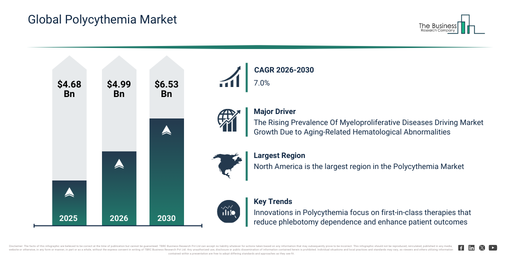
    The polycythemia market has experienced robust expansion in its size over recent years. It is projected to further expand from $4.68 billion in 2025 to $4.99 billion in 2026, demonstrating a compound annual growth rate (CAGR) of 6.7%. The historical growth can be ascribed to factors such as the rising prevalence of myeloproliferative disorders, increasing awareness of rare blood diseases, the expansion of specialty hematology centers, higher diagnostic testing rates, and the growing use of cytoreductive drugs.

    The polycythemia market size is set for significant expansion in the upcoming years, projected to reach $6.53 billion by 2030, exhibiting a compound annual growth rate (CAGR) of 7.0%. This future growth is primarily driven by advancements in targeted JAK2 therapies, the increasing adoption of genetic screening, a growing demand for personalized treatment plans, expanding access to specialty biologics, and an enlarging elderly population base. Key trends during this period are anticipated to include the rising uptake of janus kinase inhibitors, increased utilization of interferon based injectable therapies, a growing preference for therapeutic phlebotomy procedures, the expansion of hematocrit monitoring diagnostics, and a shift towards combination drug therapy approaches.

    Download A Free Sample Report For Comprehensive Market Insights:

    https://www.thebusinessresearchcompany.com/sample.aspx?id=33266&type=smp&utm_source=Blogs&utm_medium=Paid&utm_campaign=Jul_PR

    Polycythemia Market Expansion Supported By Key Demand Factors

    The increasing occurrence of myeloproliferative diseases is anticipated to boost the polycythemia market in the future. Myeloproliferative diseases are a category of uncommon blood disorders marked by an excessive production of blood cells within the bone marrow, leading to impaired blood function and circulation. The growing prevalence of age-related hematological abnormalities is a key factor behind the increase in these disorders, given that aging populations are more susceptible to bone marrow dysfunction. Polycythemia, as a significant subtype of myeloproliferative diseases involving the overproduction of red blood cells, is instrumental in enhancing clinical awareness, diagnosis, and ongoing management of these conditions, thus supporting market expansion. For instance, in September 2024, Blood Cancer United, a US-based nonprofit organization dedicated to curing blood cancers, reported that over 120,000 people in the United States were estimated to be living with or in remission from myeloproliferative neoplasms (MPNs) in 2023, underscoring the increased prevalence of these chronic hematologic disorders. Consequently, the rising incidence of myeloproliferative diseases is driving the growth of the polycythemia market.

    Polycythemia Market Segment Breakdown: Which Categories Generate The Most Revenue?

    The polycythemia market covered in this report is segmented –

    1) By Type: Primary polycythemia; Secondary polycythemia; Pseudopolycythemia

    2) By Drug Class: Antimetabolites; Janus Kinase 2 Inhibitors; Myelosuppressive Agents; Selective Serotonin Reuptake Inhibitors; Folic Acid; Other Drug Classes

    3) By Route Of Administration: Oral; Intravenous; Intramuscular

    4) By End Users: Hospital Pharmacies; Retail Pharmacies; Online Pharmacies

    Subsegments:

    1) By Primary Polycythemia: Polycythemia Vera; Familial Primary Polycythemia

    2) By Secondary Polycythemia: Hypoxia Induced Polycythemia; Tumor Associated Polycythemia; Drug Induced Polycythemia; Hormone Induced Polycythemia

    3) By Pseudopolycythemia: Stress Related Polycythemia; Dehydration Related Polycythemia; Plasma Volume Contraction Related Polycythemia

    Polycythemia Market Growth Trends Influencing Competitive Dynamics

    Key players within the polycythemia market are concentrating on advanced innovations, such as rusfertide, identified as a pioneering hepcidin mimetic peptide. This substance considerably decreases the requirement for frequent phlebotomy while simultaneously improving the regulation of hematocrit and enhancing patients’ overall quality of life. A hepcidin mimetic is defined as a pharmaceutical agent or compound engineered to mimic the action of hepcidin, which is the body’s principal hormone controlling iron balance. For example, in March 2025, Takeda Pharmaceutical Company Limited, a biopharmaceutical firm headquartered in Japan, announced encouraging preliminary data from its Phase 3 VERIFY study of rusfertide in patients diagnosed with polycythemia vera, showcasing a notable reduction in dependence on phlebotomy, superior hematocrit control, and significant patient-reported improvements, all while maintaining an acceptable safety profile.

    Polycythemia Market Key Players And Strategic Industry Positioning

    Major companies operating in the polycythemia market are Bristol Myers Squibb Company, Roche Holding AG, Merck And Company Inc., Bayer AG, Novartis AG, Takeda Pharmaceutical Company, Gilead Sciences Inc., Teva Pharmaceutical Industries Ltd., Incyte Corporation, Ionis Pharmaceuticals Inc., CTI BioPharma Corp., AOP Orphan Pharmaceuticals AG, Silence Therapeutics Plc, Italfarmaco S.p.A., PharmaEssentia Corporation, Karyopharm Therapeutics Inc., Protagonist Therapeutics Inc., Kartos Therapeutics Inc., Geron Corporation, and Perseus Proteomics Inc.

    Access The Complete Polycythemia Market Report:

    https://www.thebusinessresearchcompany.com/report/polycythemia-market-report?utm_source=Blogs&utm_medium=Paid&utm_campaign=Jul_PR

    Polycythemia Market Regional Analysis And Leading Geography

    North America was the largest region in the polycythemia market in 2025. Asia-Pacific is expected to be the fastest-growing region in the forecast period. The regions covered in the polycythemia market report are Asia-Pacific, South East Asia, Western Europe, Eastern Europe, North America, South America, Middle East, Africa.

    Get in touch with us:

    The Business Research Company: https://www.thebusinessresearchcompany.com/

    Americas: +1 310-496-7795

    Asia: +44 7882 955267 & +91 8897263534

    Europe: +44 7882 955267

    Email us at: marketing@tbrc.info

    Follow us on:

    LinkedIn: https://in.linkedin.com/company/the-business-research-company

    YouTube: https://www.youtube.com/channel/UC24_fI0rV8cR5DxlCpgmyFQ

    Global Market Model: https://www.thebusinessresearchcompany.com/global-market-model
  • Plant-Derived Analgesics  Market Trends And Growth Drivers Point To Strong Future Potential

    Plant-Derived Analgesics Market Trends And Growth Drivers Point To Strong Future Potential

    Delivering more actionable and strategically valuable research, The Business Research Company’s 2026 market reports feature market attractiveness analysis, total addressable market evaluation, company benchmarking matrices, interactive Excel dashboards, expanded supply chain intelligence, emerging startup coverage, and detailed product insights.

    Plant-Derived Analgesics Market Size Forecast: How Large Could The Market Become By 2030?

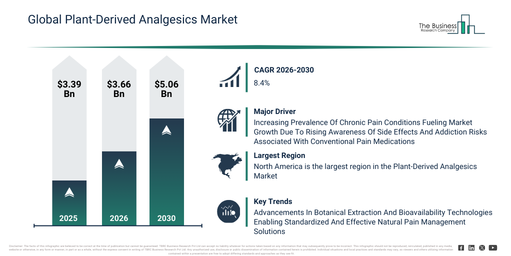
    The plant-derived analgesics market size has shown strong growth in recent years. It is anticipated to expand from $3.39 billion in 2025 to $3.66 billion in 2026, at a compound annual growth rate (CAGR) of 8.2%. The expansion observed in the historic period stems from factors such as traditional medicine adoption, the demand for natural pain relief, an increase in herbal supplement use, concerns regarding opioid side effects, and the broadening of botanical extraction practices.

    The plant-derived analgesics market is projected to experience substantial expansion in the coming years. This market is forecast to reach a valuation of $5.06 billion by 2030, demonstrating a compound annual growth rate (CAGR) of 8.4%. This anticipated growth is driven by several factors, including a growing preference for natural therapeutic options, the development of cannabinoid-based medicines, the increasing pipeline of plant-based drugs, enhanced clinical validation of botanical remedies, and the broader integration of holistic care practices. Key trends during this period are expected to include the development of standardized botanical pain extracts, the isolation of high-purity phytochemicals, the creation of combination herbal analgesic formulations, improvements in the bioavailability of plant-derived active compounds, and the proliferation of evidence-based botanical therapies.

    Download A Free Sample Report For Comprehensive Market Insights:

    https://www.thebusinessresearchcompany.com/sample.aspx?id=33264&type=smp&utm_source=Blogs&utm_medium=Paid&utm_campaign=Jul_PR

    Plant-Derived Analgesics Market Opportunity Drivers: What Is Creating New Revenue Potential?

    The growing occurrence of chronic pain conditions is anticipated to boost the expansion of the plant-derived analgesics market in the coming years. These persistent pain disorders encompass musculoskeletal pain, arthritis, neuropathic pain, and various inflammatory conditions, all necessitating continuous pain management. The worldwide prevalence of chronic pain is increasing, driven by factors such as aging demographics, inactive lifestyles, rising obesity rates, and the expanding burden of chronic illnesses. Plant-derived analgesics offer support in managing these conditions by providing pain relief derived from botanical extracts, herbs, and active plant compounds, which are increasingly adopted as supplementary or alternative pain management strategies. For example, data from November 2024, released by the Centers for Disease Control and Prevention (CDC), a federal public health agency based in the US, indicated that approximately 24.3% of adults in the United States suffered from chronic pain in 2023, with 8.5% experiencing high-impact chronic pain. Consequently, the escalating prevalence of chronic pain conditions across key healthcare markets is propelling the growth of the plant-derived analgesics market. The increasing consumer inclination towards natural remedies is set to drive the growth of the plant-derived analgesics market moving forward. Natural remedies are defined as treatments sourced from natural elements like plants, herbs, minerals, and animal products, utilized for preventing, managing, or alleviating health conditions. They are frequently linked with traditional, herbal, and complementary medicine practices, often serving as alternatives or adjuncts to conventional medical therapies. This preference for natural solutions is primarily escalating due to enhanced consumer awareness of holistic and plant-based healthcare approaches, alongside concerns about the side effects and prolonged use of synthetic medications. Plant-derived analgesics align with this trend by supplying pain relief options originating from medicinal plants, thereby satisfying consumer demand for plant-based and perceived safer therapeutic alternatives. As an illustration, in September 2025, the American Botanical Council (ABC), a US-based nonprofit educational and research body, reported that retail sales of herbal dietary supplements in the United States hit a record $13.231 billion in 2024. This represented an additional $680 million spent by U.S. consumers on herbal supplements compared to 2023, marking a 5.4% year-over-year increase. Hence, the rising consumer preference for natural remedies is significantly contributing to the expansion of the plant-derived analgesics market.

    Plant-Derived Analgesics Market Segmentation Trends And Revenue Drivers

    The plant-derived analgesics market covered in this report is segmented –

    1) By Product Type: Morphine; Codeine; Salicin; Cannabinoids; Curcumin

    2) By Formulation Type: Tablets; Capsules; Creams; Injectable Forms; Oils

    3) By Source: Plant-derived opioid alkaloids; Salicylate-type analgesics; Cannabinoids And hemp-derived; Polyphenolic; Other phytochemicals

    4) By Sales Channel: Hospitals; Clinics; Retail Sales; Online Sales; Hypermarkets And Supermarkets

    5) By Application: Chronic Pain Management; Acute Pain Relief; Post-Surgical Pain; Neuropathic Pain

    Subsegments:

    1) By Morphine: Immediate Release Formulations; Extended Release Formulations; Injectable Preparations; Oral Solid Dosage Forms

    2) By Codeine: Single Ingredient Analgesics; Combination Pain Relief Products; Oral Solid Dosage Forms; Liquid Oral Formulations

    3) By Salicin: Standardized Plant Extracts; Oral Solid Dosage Forms; Liquid Herbal Preparations; Combination Botanical Formulations

    4) By Cannabinoids: Tetrahydrocannabinol Dominant Products; Cannabidiol Dominant Products; Balanced Cannabinoid Formulations; Full Spectrum Plant Extracts

    5) By Curcumin: Standard Curcumin Extracts; Enhanced Bioavailability Formulations; Combination Herbal Products; Oral Solid Dosage Forms

    Plant-Derived Analgesics Market Innovation Trends Driving Future Development

    Leading companies within the plant-derived analgesics market are concentrating on technological advancements in botanical extraction, purification, and formulation techniques, including approaches for plant-based formulation and bioavailability enhancement. This focus aims to reduce batch-to-batch variability and improve both regulatory and consumer acceptance. Plant-based formulation and bioavailability enhancement specifically refer to the scientific optimization of plant-derived analgesic products through advanced formulation strategies, designed to improve the stability, solubility, and absorption of bioactive botanical compounds, thereby supporting more consistent product performance and enhanced therapeutic delivery. For instance, in January 2023, Medterra CBD, LLC., a US-based botanical wellness company, launched its Natural Pain Relief capsules to expand consumer access to plant-based pain management solutions. These Natural Pain Relief capsules are positioned as a plant-based, non-opioid pain management option, formulated with standardized botanical ingredients such as turmeric and Levagen+ palmitoylethanolamide (PEA), with the objective of enhancing bioavailability and providing relief from muscle pain, joint stiffness, and inflammation.

    #Plant-Derived Analgesics Market Industry Leaders: Which Organizations Are Driving Competition?

    Major companies operating in the plant-derived analgesics market are Dabur India Limited, Patanjali Ayurved Limited, Blackmores Limited, Bionorica SE, Emami Limited, Himalaya Wellness Company, Biologische Heilmittel Heel GmbH, Charak Pharma Private Limited, Indena S.p.A., Nature’s Way Products LLC, Arya Vaidya Sala Kottakkal, Gaia Herbs Farm Inc., Hamdard Laboratories (India), Shree Dhootapapeshwar Limited, Sri Sri Tattva, Euromed S.A., Sami-Sabinsa Group Limited, Martin Bauer Group, Shree Baidyanath Ayurved Bhawan Private Limited, Organic India Private Limited

    Access The Complete Plant-Derived Analgesics Market Report:

    https://www.thebusinessresearchcompany.com/report/plant-derived-analgesics-market-report?utm_source=Blogs&utm_medium=Paid&utm_campaign=Jul_PR

    Plant-Derived Analgesics Market Global Footprint: Which Region Holds Market Leadership?

    North America was the largest region in the plant-derived analgesics market in 2025. Asia-Pacific is expected to be the fastest-growing region in the forecast period. The regions covered in the plant-derived analgesics market report are Asia-Pacific, South East Asia, Western Europe, Eastern Europe, North America, South America, Middle East, Africa.

    Get in touch with us:

    The Business Research Company: https://www.thebusinessresearchcompany.com/

    Americas: +1 310-496-7795

    Asia: +44 7882 955267 & +91 8897263534

    Europe: +44 7882 955267

    Email us at: marketing@tbrc.info

    Follow us on:

    LinkedIn: https://in.linkedin.com/company/the-business-research-company

    YouTube: https://www.youtube.com/channel/UC24_fI0rV8cR5DxlCpgmyFQ

    Global Market Model: https://www.thebusinessresearchcompany.com/global-market-model
  • Pharmaceutical Quality Control Release Testing Service  Market Size Projected To Increase From $8.13 Billion To $11.01 Billion During The Forecast Period

    Pharmaceutical Quality Control Release Testing Service Market Size Projected To Increase From $8.13 Billion To $11.01 Billion During The Forecast Period

    Enhanced with market attractiveness analysis, total addressable market evaluation, company benchmarking matrices, interactive Excel dashboards, expanded supply chain intelligence, emerging startup coverage, and detailed product insights, The Business Research Company’s 2026 market reports deliver more actionable and strategically valuable research.

    Pharmaceutical Quality Control Release Testing Service Market Size Outlook: How Fast Will Revenue Grow Through 2030?

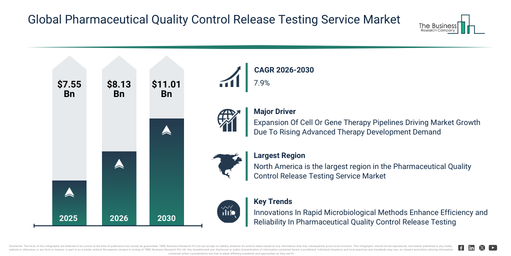
    The pharmaceutical quality control release testing service market has witnessed substantial growth over recent years. It is anticipated to expand from $7.55 billion in 2025 to $8.13 billion in 2026, achieving a compound annual growth rate (CAGR) of 7.6%. The expansion observed in the past can be attributed to more rigorous GMP regulations, a surge in global drug manufacturing, an increase in contract testing laboratories, rising requirements for biologics testing, and the broadened production of generic drugs.

    The pharmaceutical quality control release testing service market size is projected to experience substantial expansion in the coming years. Its valuation is set to reach $11.01 billion by 2030, exhibiting a compound annual growth rate (CAGR) of 7.9%. This anticipated expansion throughout the forecast period stems from factors such as the increasing development of complex biologic pipelines, a heightened frequency of regulatory audits, the wider adoption of outsourced QC models, a growing need for quicker batch release cycles, and an increase in multi-region drug approvals. Notable trends expected during this period encompass automated batch release testing, the implementation of digital laboratory quality systems, AI-assisted analytical validation, the emergence of connected stability testing labs, and the deployment of smart quality data platforms.

    Download A Free Sample Report For Comprehensive Market Insights:

    https://www.thebusinessresearchcompany.com/sample.aspx?id=33260&type=smp&utm_source=Blogs&utm_medium=Paid&utm_campaign=Jul_PR

    Pharmaceutical Quality Control Release Testing Service Market Industry Drivers: What Is Driving Revenue Growth?

    The increasing number of cell or gene therapy pipelines is anticipated to drive the advancement of the pharmaceutical quality control release testing service market moving forward. These pipelines consist of cellular and genetic therapeutic products currently undergoing development and regulatory assessment for eventual commercialization. This growth is predominantly fueled by heightened investment in biotechnology research and development, as pharmaceutical companies and biotech firms allocate substantial resources towards innovative cellular and genetic treatments for conditions previously considered untreatable. A burgeoning cell and gene therapy pipeline directly boosts the requirement for specialized quality control release testing services, which are vital for ensuring these complex biological products meet rigorous safety and efficacy standards prior to their market launch. For instance, in January 2025, data from the American Society of Gene and Cell Therapy, a US-based scientific association, indicated that the global gene therapy pipeline reached 2,117 programs in the fourth quarter of 2024, up from 2,041 programs in the third quarter of 2024. Hence, the expansion of cell or gene therapy pipelines is a significant force behind the growth of the pharmaceutical quality control release testing service market.

    Pharmaceutical Quality Control Release Testing Service Market Categorization By Product Type And Application

    The pharmaceutical quality control release testing service market covered in this report is segmented –

    1) By Product Type: Dissolution Testing; Anti-Corrosion Testing; ICH Stability Storage and Testing; Other Product Types

    2) By Service Type: Analytical Testing Services; Microbiological Testing Services; Stability Testing Services; Sterility Testing Services

    3) By Technology: Gas Chromatography (GC); Mass Spectrometry; Spectroscopy Methods

    4) By End Users: Pharmaceutical Manufacturers; Biotechnology Companies; Contract Development and Manufacturing Organizations (CDMOs); Contract Manufacturing Organizations (CMOs); Research and Academic Institutions

    Subsegments:

    1) By Dissolution Testing: Immediate Release Testing; Extended Release Testing; Delayed Release Testing; Sink Condition Evaluation

    2) By Anti-Corrosion Testing: Packaging Material Corrosion Testing; Container Compatibility Assessment; Environmental Stress Corrosion Testing; Protective Coating Evaluation

    3) By ICH Stability Storage and Testing: Long Term Stability Studies; Accelerated Stability Studies; Intermediate Stability Studies; Photostability Testing

    4) By Other Product Types: Impurity Profiling; Residual Solvent Testing; Elemental Impurity Analysis; Container Closure Integrity Testing

    #Pharmaceutical Quality Control Release Testing Service Market Growth Trends: What Is Influencing The Future Outlook?

    Major companies in the pharmaceutical quality control release testing services market are focusing on developing advanced solutions, such as microbiological quality control testing, to ensure product sterility, regulatory compliance, and timely batch release. This microbiological quality control testing utilizes specific techniques to monitor and measure microbial presence in pharmaceutical products and production settings, which assists in confirming sterility, maintaining product safety, and meeting regulatory requirements before batch release. For instance, in March 2025, Nelson Laboratories, a US-based microbiological testing company, introduced its Rapid Sterility Testing, a microbiology-based quality control testing offering designed to modernize sterility assurance processes. This solution is engineered to support faster batch release of sterile pharmaceutical products, shortening traditional fourteen-day incubation timelines to approximately six days. It also incorporates automated, quantitative data analytics to enhance result precision, reduce manual intervention, and improve overall testing reliability.

    Pharmaceutical Quality Control Release Testing Service Market Company Landscape And Strategic Competition

    Major companies operating in the pharmaceutical quality control release testing service market are Labcorp Holdings Inc., SGS S.A., Eurofins Scientific SE, Selvita S.A., WuXi AppTec Co. Ltd., Intertek Group plc, Charles River Laboratories International Inc., Piramal Pharma Limited, Siegfried Holding AG, Almac Group Limited, NSF International, ClinChoice Inc., BioAgilytix Inc., Microbac Laboratories Inc., ARL Bio Pharma Inc., Quality Chemical Laboratories LLC, Neopharm Labs Inc., Butterworth Laboratories Limited, Cambridge Polymer Group Inc., Honeyman Group Limited, and Element Materials Technology Group Limited.

    Access The Complete Pharmaceutical Quality Control Release Testing Service Market Report:

    https://www.thebusinessresearchcompany.com/report/pharmaceutical-quality-control-release-testing-service-market-report?utm_source=Blogs&utm_medium=Paid&utm_campaign=Jul_PR

    Pharmaceutical Quality Control Release Testing Service Market Geographic Landscape: Which Region Dominates Industry Growth?

    North America was the largest region in the pharmaceutical quality control release testing service market in 2025. Asia-Pacific is expected to be the fastest-growing region in the forecast period. The regions covered in the pharmaceutical quality control release testing service market report are Asia-Pacific, South East Asia, Western Europe, Eastern Europe, North America, South America, Middle East, Africa.

    Get in touch with us:

    The Business Research Company: https://www.thebusinessresearchcompany.com/

    Americas: +1 310-496-7795

    Asia: +44 7882 955267 & +91 8897263534

    Europe: +44 7882 955267

    Email us at: marketing@tbrc.info

    Follow us on:

    LinkedIn: https://in.linkedin.com/company/the-business-research-company

    YouTube: https://www.youtube.com/channel/UC24_fI0rV8cR5DxlCpgmyFQ

    Global Market Model: https://www.thebusinessresearchcompany.com/global-market-model
  • Personal Genome Services  Market Forecast Highlights Expansion From $7.85 Billion To $13.69 Billion Through 2030

    Personal Genome Services Market Forecast Highlights Expansion From $7.85 Billion To $13.69 Billion Through 2030

    Delivering more actionable and strategically valuable research, The Business Research Company’s 2026 market reports feature market attractiveness analysis, total addressable market evaluation, company benchmarking matrices, interactive Excel dashboards, expanded supply chain intelligence, emerging startup coverage, and detailed product insights.

    Personal Genome Services Market CAGR Analysis And Future Market Development

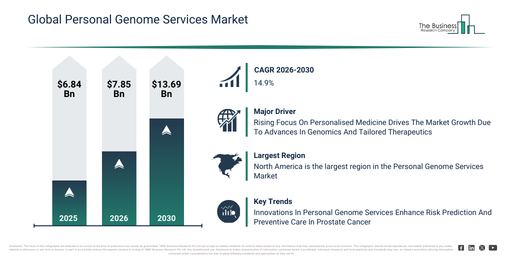
    The personal genome services market has experienced rapid growth in recent years. It is anticipated to expand from $6.84 billion in 2025 to $7.85 billion in 2026, exhibiting a compound annual growth rate (CAGR) of 14.7%. Historically, this market’s expansion can be attributed to several factors: declining sequencing costs, an increase in ancestry testing demand, a rise in consumer genetics awareness, the proliferation of genomics startups, and enhanced sequencing accuracy.

    The personal genome services market is projected for significant expansion in the coming years. This market is set to reach $13.69 billion by 2030, exhibiting a compound annual growth rate (CAGR) of 14.9%. Factors driving this growth during the forecast period include the increasing adoption of preventive genomics, wider use of pharmacogenomics, growing consumer demand for personalized wellness, more extensive insurance coverage for testing, and the integration of these services with digital health platforms. Key trends anticipated for this period encompass direct-to-consumer genome testing, comprehensive health risk genomic reports, bundled pharmacogenomic services, preventive genome screening packages, and digital platforms for genetic counseling.

    Download A Free Sample Report For Comprehensive Market Insights:

    https://www.thebusinessresearchcompany.com/sample.aspx?id=33258&type=smp&utm_source=Blogs&utm_medium=Paid&utm_campaign=Jul_PR

    Personal Genome Services Market Demand Drivers: What Is Fueling Industry Growth?

    A heightened focus on personalized medicine is projected to propel the expansion of the personal genome services market moving forward. This medical approach customizes treatment and prevention strategies based on an individual’s genetic, biological, and lifestyle characteristics. The adoption of personalized medicine is escalating due to progress in genomics and molecular diagnostics, which enable treatments to be tailored to an individual’s genetic profile for superior outcomes. Personal genome services support personalized medicine by analyzing an individual’s genetic makeup to forecast disease risk, inform drug selection, and customize prevention and treatment approaches. For instance, in February 2024, the Personalized Medicine Coalition, a US-based non-profit organization, indicated that in 2023, the FDA approved 16 new personalized treatments for rare disease patients, marking an increase from six in 2022. The newly approved personalized treatments for 2023 further included seven cancer drugs and three for other diseases and conditions. As a result, the increasing emphasis on personalized medicine is fueling the growth of the personal genome services market.

    Personal Genome Services Market Segmentation And Category Breakdown

    The personal genome services market covered in this report is segmented –

    1) By Service Type: Genetic Testing; Whole Genome Sequencing; Carrier Testing; Ancestry Testing; Other Service Types

    2) By Application: Healthcare; Research; Ancestry; Other Applications

    3) By End-User: Hospitals and Clinics; Research Centers; Direct-to-Consumer; Other End-Users

    Subsegments:

    1) By Genetic Testing: Health Risk Assessment Testing; Pharmacogenomic Testing; Nutritional Genetic Testing; Lifestyle Genetic Testing; Wellness Genetic Screening

    2) By Whole Genome Sequencing: Clinical Whole Genome Sequencing; Research Whole Genome Sequencing; Preventive Health Genome Sequencing; Rare Disease Genome Sequencing; Population Based Genome Sequencing

    3) By Carrier Testing: Inherited Disease Carrier Screening; Preconception Carrier Testing; Prenatal Carrier Testing; Reproductive Health Carrier Screening; Family Planning Carrier Testing

    4) By Ancestry Testing: Ethnicity Estimation Testing; Genealogical Lineage Testing; Migration Pattern Analysis; Regional Ancestry Breakdown; Family Relationship Discovery

    5) By Other Service Types: Newborn Genetic Screening; Predictive Genetic Testing; Sports Performance Genetic Analysis; Personalized Health Reporting; Custom Genetic Consulting Services

    Personal Genome Services Market Innovation Trends: Which Developments Are Transforming The Industry?

    Major companies in the personal genome services market are concentrating on creating sophisticated solutions like genome-wide risk stratification to deliver personalized health insights, forecast disease susceptibility, and guide preventive and lifestyle interventions. Genome-wide risk stratification involves analyzing an individual’s entire genome to identify genetic variations contributing to the risk of developing specific diseases or conditions, thereby enabling customized health risk predictions and targeted preventive strategies. For example, in November 2025, MyOme Inc., a US-based biotechnology company, introduced the first integrated polygenic risk score (iPRS) test for prostate cancer. This test combines approximately 7 million genetic markers with clinical factors to provide personalized 10-year and lifetime risk estimates, validated in 140,000+ diverse men. Its objective is early detection and prevention for 95% of cases without rare variants such as BRCA2, guiding PSA or MRI or biopsies for high-risk individuals (those with 3-4x elevated odds in the top decile) while reducing false positives and overtreatment. The benefits include precise stratification, equitable performance across ancestries, and lifelong AI-updated insights from one whole-genome sample.

    Personal Genome Services Market Competitive Analysis Of Major Industry Participants

    Major companies operating in the personal genome services market are Thermo Fisher Scientific Inc, Illumina Inc, Helix OpCo LLC, Ancestry.com Operations Inc, Fulgent Genetics Inc, 23andMe Holding Co, Prenetics Global Limited, MyHeritage Ltd, Color Health Inc, Genomics plc, GenoPalate Inc, Living DNA Ltd, Mapmygenome India Pvt Ltd, Nebula Genomics Inc, Xcode Life Sciences Pvt Ltd, Sema4 Holdings Corp, Gene by Gene Ltd, TellmeGen SL, CRI Genetics LLC, African Ancestry Inc, and DNAFit Limited.

    Access The Complete Personal Genome Services Market Report:

    https://www.thebusinessresearchcompany.com/report/personal-genome-services-market-report?utm_source=Blogs&utm_medium=Paid&utm_campaign=Jul_PR

    Personal Genome Services Market Regional Analysis: Which Region Leads By Revenue?

    North America was the largest region in the personal genome services market in 2025. Asia-Pacific is expected to be the fastest-growing region in the forecast period. The regions covered in the personal genome services market report are Asia-Pacific, South East Asia, Western Europe, Eastern Europe, North America, South America, Middle East, Africa.

    Get in touch with us:

    The Business Research Company: https://www.thebusinessresearchcompany.com/

    Americas: +1 310-496-7795

    Asia: +44 7882 955267 & +91 8897263534

    Europe: +44 7882 955267

    Email us at: marketing@tbrc.info

    Follow us on:

    LinkedIn: https://in.linkedin.com/company/the-business-research-company

    YouTube: https://www.youtube.com/channel/UC24_fI0rV8cR5DxlCpgmyFQ

    Global Market Model: https://www.thebusinessresearchcompany.com/global-market-model

  • Les casinos crypto : pourquoi le choix de Cryptoleo Casino ?

    Les casinos en ligne basés sur les cryptomonnaies gagnent en popularité, et parmi eux, Cryptoleo Casino se démarque par ses attraits uniques. Sa plateforme innovante attire aussi bien les novices que les joueurs expérimentés en quête d’une expérience de jeu sécurisée et enrichissante.

    Un environnement de jeu fiable

    La sécurité est primordiale pour tout joueur de casino en ligne. Cryptoleo Casino est licencié et réglementé, ce qui assure un haut niveau de fiabilité. De plus, la plateforme utilise des technologies de cryptage avancées pour protéger les informations personnelles et financières des utilisateurs. Cette approche garantit un environnement de jeu équitable et transparent, conforme aux normes de l’industrie.

    Un large éventail de jeux

    Le catalogue de jeux de Cryptoleo Casino est varié et attrayant. Les joueurs peuvent y trouver différents types de jeux, allant des machines à sous aux jeux de table comme le blackjack et la roulette. Les fournisseurs de jeux réputés, tels que Microgaming et NetEnt, contribuent à la qualité des titres proposés. Ceci assure que les joueurs bénéficient de graphismes de pointe et de mécaniques de jeu novatrices.

    • Machines à sous avec des jackpots progressifs
    • Jeux de table classiques : roulette, blackjack
    • Expériences de casino en direct avec des croupiers en direct
    • Jeux de poker et de baccarat
    • Promotions régulières et événements spéciaux

    Les avantages des paiements en cryptomonnaies

    Cryptoleo Casino se concentre sur les paiements en cryptomonnaies, offrant des options telles que Bitcoin, Ethereum, et d’autres monnaies numériques. Ces méthodes de paiement permettent des transactions rapides et sécurisées, sans les frais élevés souvent associés aux méthodes traditionnelles. Les retraits sont également rapides, permettant aux joueurs d’accéder à leurs gains en un temps record.

    Méthode de paiement Dépôt minimal Retrait minimum
    Bitcoin 0,001 BTC 0,002 BTC
    Ethereum 0,05 ETH 0,1 ETH
    Litecoin 0,1 LTC 0,2 LTC

    FAQ sur Cryptoleo Casino

    Cryptoleo Casino est-il sûr ? Oui, le casino est réglementé et utilise des technologies de cryptage avancées pour garantir la sécurité des joueurs.

    Quels types de jeux puis-je trouver sur Cryptoleo Casino ? Vous pouvez y trouver des machines à sous, des jeux de table, et des jeux de casino en direct.

    Comment effectuer un dépôt en cryptomonnaies ? Les dépôts peuvent être réalisés en utilisant plusieurs cryptomonnaies, avec des instructions claires sur la plateforme.

  • Comment évaluer vos résultats sur Jackbit Casino ?

    Jackbit Casino se distingue sur le marché des jeux en ligne grâce à une interface conviviale et une large sélection de jeux. Pour bien évaluer vos résultats sur https://jackbitcasinofr.com/, il est essentiel de prendre en compte plusieurs critères clés, allant de l’expérience utilisateur aux aspects financiers.

    Expérience de jeu globale

    Lorsque les joueurs se connectent à Jackbit Casino, ils sont accueillis par un environnement de jeu engageant. La plateforme propose une variété de jeux allant des machines à sous aux jeux de table, tous fournis par des développeurs de renom. Cela permet aux utilisateurs de bénéficier d’une expérience de jeu riche et variée.

    De plus, la navigation sur le site est intuitive, ce qui facilite l’accès aux différents sections et outils. La compatibilité mobile permet également aux utilisateurs de jouer où qu’ils soient, améliorant ainsi leur expérience globale sans compromis sur la qualité.

    Évaluation des performances financières

    L’un des aspects les plus cruciaux de l’évaluation des résultats sur Jackbit Casino est l’analyse des performances financières. Cela inclut l’examen des options de dépôt et de retrait, ainsi que des taux de retour aux joueurs (RTP).

    Aspect Détails Notes
    Dépôts Variété de méthodes y compris crypto Rapides et sécurisés
    Retraits Traitement rapide, diverses crypto Limites raisonnables
    RTP Des taux compétitifs Favorables aux joueurs

    Ces facteurs constituent des éléments de base pour évaluer la rentabilité de vos engagements sur la plateforme.

    Bénéficier des bonus et promotions

    Jackbit Casino propose une large gamme de promotions et de bonus, ce qui peut considérablement affecter les résultats des joueurs. Les bonus de bienvenue sont souvent accompagnés de conditions de mise, un détail à analyser avant de faire un dépôt.

    • Bonus de bienvenue compétitifs.
    • Promotions régulières pour fidéliser les joueurs.
    • Programmes VIP offrant des avantages supplémentaires.
    • Conditions de mise claires et accessibles.
    • Accès à des tournois exclusifs.

    Questions fréquentes sur les résultats chez Jackbit Casino

    Quels sont les délais de retrait sur Jackbit Casino ?

    Les délais de retrait varient selon la méthode choisie. En général, les retraits sont traités rapidement, souvent en moins de 24 heures pour les méthodes électroniques.

    Jackbit Casino est-il fiable ?

    Oui, Jackbit Casino est une plateforme sécurisée, bénéficiant d’une licence valide et utilisant des protocoles de sécurité avancés pour protéger les données des joueurs.

    Les bonus sont-ils intéressants sur cette plateforme ?

    Oui, les bonus offerts par Jackbit sont compétitifs et peuvent réellement améliorer l’expérience de jeu si les joueurs en comprennent bien les conditions.