Month: July 2026

  • Respiratory Endotherapy Devices  Market Trends And Growth Drivers Point To Strong Future Potential

    Respiratory Endotherapy Devices Market Trends And Growth Drivers Point To Strong Future Potential

    Enhanced with market attractiveness analysis, total addressable market evaluation, company benchmarking matrices, interactive Excel dashboards, expanded supply chain intelligence, emerging startup coverage, and detailed product insights, The Business Research Company’s 2026 market reports deliver more actionable and strategically valuable research.

    Respiratory Endotherapy Devices Market Growth Analysis: How Will Revenue Expand During The Forecast Period?

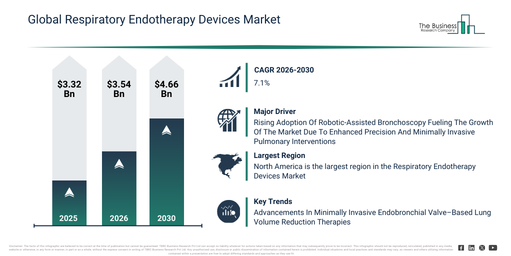
    The respiratory endotherapy devices market has experienced significant expansion in recent years. This market is projected to increase from $3.32 billion in 2025 to $3.54 billion in 2026, achieving a compound annual growth rate (CAGR) of 6.9%. Historically, this growth has been fueled by factors such as an escalation in chronic respiratory diseases, a rise in lung cancer diagnosis, the broadening of interventional pulmonology, the expansion of hospital endoscopy units, and the demand for minimally invasive procedures.

    The market for respiratory endotherapy devices is anticipated to experience substantial expansion in the coming years. This market is projected to reach a valuation of $4.66 billion by 2030, exhibiting a compound annual growth rate (CAGR) of 7.1%. Factors contributing to this growth during the forecast period include the rise in early lung screening programs, the adoption of robotic bronchoscopy, an increase in outpatient pulmonary procedures, the integration of advanced imaging, and the demand for precision airway therapy. Key trends expected over the forecast horizon involve minimally invasive airway intervention devices, the increasing use of disposable bronchoscopes, image-guided bronchoscopic procedures, sophisticated endobronchial ablation systems, and smart navigation bronchoscopy tools.

    Download A Free Sample Report For Comprehensive Market Insights:

    https://www.thebusinessresearchcompany.com/sample.aspx?id=33296&type=smp&utm_source=Blogs&utm_medium=Paid&utm_campaign=Jul_PR

    Respiratory Endotherapy Devices Market Industry Drivers: What Is Driving Revenue Growth?

    The respiratory endotherapy devices market is anticipated to be driven by the growing integration of robotic-assisted bronchoscopy going forward. These advanced robotic-assisted bronchoscopy systems facilitate precise navigation within the respiratory tract, thereby improving diagnostic accuracy and therapeutic outcomes. The increasing demand for these systems arises as healthcare providers seek minimally invasive solutions that can reduce procedure time, enhance patient safety, and improve overall clinical efficiency. Respiratory endotherapy devices equipped with robotic assistance support complex interventions by providing real-time imaging, superior maneuverability, and enhanced control. As an example, in September 2025 , data from the European Respiratory Society International Congress , a Switzerland -based membership organization, showed that the utilization of robotic-assisted bronchoscopy with integrated cone beam CT for peripheral lung lesions increased to 84.6% in 2025 , a significant leap from just 23.1% with conventional bronchoscopy in 2024 . Consequently, the rising adoption of robotic-assisted bronchoscopy is propelling the growth of the respiratory endotherapy devices market .

    Respiratory Endotherapy Devices Market Segment Outlook: Which Categories Are Expanding The Fastest?

    The respiratory endotherapy devices market covered in this report is segmented –

    1) By Product Type: Bronchoscopes; Endobronchial Ultrasound Systems; Biopsy Forceps; Guidewires; Catheters; Airway Stents; Endobronchial Valves; Ablation Devices; Other Endotherapy Accessories

    2) By Diagnostic Devices: Trans Bronchial Aspiration; Biopsy Forceps; Cytology Brushes; Other Diagnostic Devices

    3) By Patient Type: Adult Patients; Pediatric Patients

    4) By Specialist: Hospitals; Diagnostic Centers; Ambulatory Surgical Centers

    5) By End User: Peripheral Vascular Intervention; Endovascular Interventions; Cardiac; Interventional Radiology; Venous; Other End Users

    Subsegments:

    1) By Bronchoscopes: Flexible Bronchoscopes; Rigid Bronchoscopes; Video Bronchoscopes; Disposable Bronchoscopes; Therapeutic Bronchoscopes

    2) By Endobronchial Ultrasound Systems: Radial Endobronchial Ultrasound Systems; Linear Endobronchial Ultrasound Systems; Portable Endobronchial Ultrasound Systems; Cart Based Endobronchial Ultrasound Systems; High Resolution Endobronchial Ultrasound Systems

    3) By Biopsy Forceps: Flexible Biopsy Forceps; Rigid Biopsy Forceps; Disposable Biopsy Forceps; Alligator Jaw Biopsy Forceps; Cup Biopsy Forceps

    4) By Guidewires: Hydrophilic Guidewires; Non Coated Guidewires; Steerable Guidewires; Flexible Tip Guidewires; High Strength Guidewires

    5) By Catheters: Balloon Catheters; Aspiration Catheters; Delivery Catheters; Diagnostic Catheters; Therapeutic Catheters

    6) By Airway Stents: Silicone Airway Stents; Metallic Airway Stents; Covered Airway Stents; Uncovered Airway Stents; Expandable Airway Stents

    7) By Endobronchial Valves: One Way Endobronchial Valves; Permanent Endobronchial Valves; Temporary Endobronchial Valves; Adjustable Endobronchial Valves; Implantable Endobronchial Valves

    8) By Ablation Devices: Radiofrequency Ablation Devices; Cryoablation Devices; Laser Ablation Devices; Thermal Ablation Devices; Microwave Ablation Devices

    9) By Other Endotherapy Accessories: Suction Tubes; Specimen Collection Traps; Bronchoscopy Brushes; Biopsy Needles; Airway Dilators

    #Respiratory Endotherapy Devices Market Growth Trends: What Is Influencing The Future Outlook?

    Leading firms in the respiratory endotherapy devices market are concentrating on creating sophisticated solutions, like endobronchial valves, to lessen treatment risks and accomplish precise lung volume reduction without permanent tissue removal. An endobronchial valve is a minimally invasive implant inserted through bronchoscopy into specific airways to obstruct airflow to affected lung areas, thereby enabling healthier parts to operate more efficiently. For example, in February 2024, Olympus Canada Inc., a medical technology company based in Canada, introduced the Spiration Valve System aimed at treating severe emphysema. This device, shaped like an umbrella, is intended for placement in the most severely afflicted lung regions via a minimally invasive bronchoscopic procedure. It uniquely reroutes airflow from hyperinflated lung zones towards healthier tissue, thereby enhancing respiratory mechanics. Being the sole endobronchial valve therapy presently offered in Canada, it fulfills an unaddressed requirement in managing severe emphysema. Clinical data from the EMPROVE trial indicates sustained advantages over 24 months, encompassing significant enhancements in lung function, reduced breathlessness, and improved patient quality of life.

    Respiratory Endotherapy Devices Market Key Companies And Competitive Benchmarking

    Major companies operating in the respiratory endotherapy devices market are Johnson & Johnson, Medtronic plc, Siemens Healthineers, Stryker Corporation, GE Healthcare Technologies Inc., Boston Scientific Corporation, Intuitive Surgical Inc., Olympus Corporation, Hoya Corporation, Steris Healthcare, Teleflex Incorporated, Karl Storz SE & Co. KG, CookMedical, Merit Medical Systems Inc., Ambu A/S, Vygon, Richard Wolf GmbH, Vapotherm Inc, Scholly Fiberoptic GmbH, Clarus Medical LLC, ENDO-FLEX GmbH, The Lung Docs Inc., and Broncus Medical Inc.

    Access The Complete Respiratory Endotherapy Devices Market Report:

    https://www.thebusinessresearchcompany.com/report/respiratory-endotherapy-devices-market-report?utm_source=Blogs&utm_medium=Paid&utm_campaign=Jul_PR

    Respiratory Endotherapy Devices Market Regional Distribution: Which Areas Drive Market Expansion?

    North America was the largest region in the respiratory endotherapy devices market in 2025. Asia-Pacific is expected to be the fastest-growing region in the forecast period. The regions covered in the respiratory endotherapy devices market report are Asia-Pacific, South East Asia, Western Europe, Eastern Europe, North America, South America, Middle East, Africa.

    Get in touch with us:

    The Business Research Company: https://www.thebusinessresearchcompany.com/

    Americas: +1 310-496-7795

    Asia: +44 7882 955267 & +91 8897263534

    Europe: +44 7882 955267

    Email us at: marketing@tbrc.info

    Follow us on:

    LinkedIn: https://in.linkedin.com/company/the-business-research-company

    YouTube: https://www.youtube.com/channel/UC24_fI0rV8cR5DxlCpgmyFQ

    Global Market Model: https://www.thebusinessresearchcompany.com/global-market-model
  • Renal Toxicity – Absorption, Distribution, Metabolism, And Excretion (ADME) Toxicology Testing  Market Expansion Is Reshaping Competitive Dynamics Across The Industry

    Renal Toxicity – Absorption, Distribution, Metabolism, And Excretion (ADME) Toxicology Testing Market Expansion Is Reshaping Competitive Dynamics Across The Industry

    Through market attractiveness analysis, total addressable market evaluation, company benchmarking matrices, interactive Excel dashboards, expanded supply chain intelligence, emerging startup coverage, and detailed product insights, The Business Research Company’s 2026 market reports provide more actionable and strategically valuable research.

    Renal Toxicity – Absorption, Distribution, Metabolism, And Excretion (ADME) Toxicology Testing Market Forecast: What Market Value Is Expected By 2030?

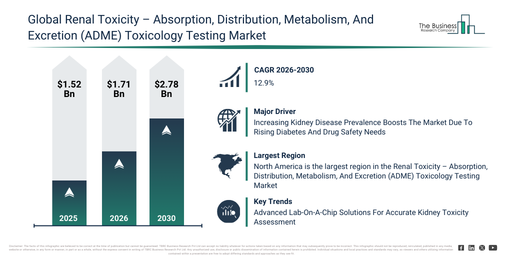
    The renal toxicity – absorption, distribution, metabolism, and excretion (ADME) toxicology testing market has experienced rapid growth in its size over recent years. It is projected to increase from $1.52 billion in 2025 to $1.71 billion in 2026, demonstrating a compound annual growth rate (CAGR) of 12.7%. The expansion witnessed in the historic period can be attributed to several factors including the growth in preclinical drug safety testing, an increase in nephrotoxicity related drug failures, the expansion of CRO services, more stringent regulatory safety requirements, and the greater adoption of in vitro assays.

    The renal toxicity – absorption, distribution, metabolism, and excretion (adme) toxicology testing market is projected to experience substantial expansion over the upcoming years. Its valuation is anticipated to reach $2.78 billion by 2030, demonstrating a compound annual growth rate (CAGR) of 12.9%. This projected increase is fueled by factors such as the rise in biologics and complex pharmaceuticals, the uptake of predictive toxicology models, the broadening use of organ-on-chip platforms, advancements in precision medicine research, and the demand for AI-driven safety analytics. Key developments within this period are expected to encompass kidney organoid-based toxicity assessments, AI-powered nephrotoxicity prediction tools, high-throughput renal screening solutions, biomarker-guided renal safety evaluations, and microphysiological kidney-on-chip systems.

    Download A Free Sample Report For Comprehensive Market Insights:

    https://www.thebusinessresearchcompany.com/sample.aspx?id=33295&type=smp&utm_source=Blogs&utm_medium=Paid&utm_campaign=Jul_PR

    #Renal Toxicity – Absorption, Distribution, Metabolism, And Excretion (ADME) Toxicology Testing Market Growth Factors: Which Forces Are Supporting Market Expansion?

    The increasing occurrence of kidney ailments is projected to drive the expansion of the renal toxicity-absorption, distribution, metabolism, and excretion (ADME) toxicology testing market in the future. These conditions involve damage to the kidneys, impairing their ability to filter blood and maintain the body’s balance. The rise in kidney-related disorders is attributable to the increasing incidence of diabetes, which harms kidney blood vessels and compromises their filtering function. Renal toxicity ADME/toxicology testing assists in detecting and evaluating potential kidney damage caused by various drugs or chemicals, thereby allowing for early intervention and the development of safer treatments. For instance, according to the American Cancer Society, a US-based professional organization, it is anticipated that in 2025, approximately 80,980 new cases of kidney (renal) cancer will be diagnosed in the US, leading to an estimated 14,510 deaths from the disease. Thus, the escalating prevalence of kidney-related disorders is serving as a significant impetus for the growth of the renal toxicity-absorption, distribution, metabolism, and excretion (ADME) toxicology testing market.

    Renal Toxicity – Absorption, Distribution, Metabolism, And Excretion (ADME) Toxicology Testing Market Segment Landscape: Which Areas Lead Market Development?

    The renal toxicity – absorption, distribution, metabolism, and excretion (adme) toxicology testing market covered in this report is segmented –

    1) By Test Type: In Vitro Renal Toxicity Testing; In Vivo Renal Toxicity Testing; In Silico Renal Toxicity Modeling

    2) By Method: Biochemical and Enzymatic Assays; Cell Based Renal Assays; Biomarker Based Toxicity Analysis; Histopathology and Imaging; Pharmacokinetic and Drug Metabolism Studies

    3) By Stage of Drug Development: Discovery and Lead Optimization; Preclinical Development; Clinical Development; Post Marketing Safety Studies

    4) By Technology: High Throughput Screening Platforms; Organ On Chip and Microfluidic Systems; Omics Based Toxicology Platforms; Artificial Intelligence and Predictive Modeling Tools; Digital Pathology and Imaging Systems

    5) By End User: Pharmaceutical and Biotechnology Companies; Contract Research Organizations; Academic and Research Institutes; Regulatory Laboratories

    Subsegments:

    1) By In Vitro Renal Toxicity Testing: Primary Renal Cell Assays; Immortalized Renal Cell Line Assays; Three Dimensional Renal Cell Cultures; Kidney Organoid Models; Transporter Interaction Assays; Biomarker Based Nephrotoxicity Assays; High Content Imaging Assays; Microphysiological Kidney System Models

    2) By In Vivo Renal Toxicity Testing: Acute Renal Toxicity Studies; Subacute Renal Toxicity Studies; Subchronic Renal Toxicity Studies; Chronic Renal Toxicity Studies; Renal Biomarker Evaluation Studies; Histopathological Kidney Assessment; Dose Response Toxicity Studies; Recovery and Reversibility Studies

    3) By In Silico Renal Toxicity Modeling: Quantitative Structure Activity Relationship Modeling; Machine Learning Based Toxicity Prediction; Physiologically Based Pharmacokinetic Modeling; Virtual Screening for Nephrotoxicity; Read Across Toxicity Modeling; Systems Biology Based Toxicity Modeling

    Renal Toxicity – Absorption, Distribution, Metabolism, And Excretion (ADME) Toxicology Testing Market Industry Trends: What Changes Are Reshaping Demand?

    Leading firms within the renal toxicity-absorption, distribution, metabolism, and excretion (ADME) toxicology testing market are concentrating on creating novel solutions, including low-drug-absorbing microfluidic chips, to enhance the predictive precision of kidney toxicity and decrease dependence on animal experimentation. Such a chip, a lab-on-a-chip apparatus intended for renal toxicity assessment, works by minimizing inadvertent drug uptake by its material, thereby guaranteeing a more faithful representation of kidney functions and precise quantification of drug impact on renal cells. As an example, in September 2024, Emulate Inc., a US-based biotechnology firm, introduced the chip-R1 rigid chip, aiming to improve kidney toxicity evaluation through more precise and dependable outcomes. This device is constructed for accurate ADME and toxicology modeling in organs with limited elasticity, such as the liver and kidney, employing low-drug-absorbing plastics and a slender, porous polycarbonate membrane to prevent compound degradation and increase drug recovery, especially for lipophilic substances. Key advantages encompass high shear stress tolerance (up to 2.3 dyn/cm²), preactivated surfaces facilitating simpler workflows, and enhanced cellular communication, with benefits extending to better reproducibility, accurate toxicity identification, and seamless integration with current organ-chip hardware to fast-track human-centric preclinical evaluations.

    Renal Toxicity – Absorption, Distribution, Metabolism, And Excretion (ADME) Toxicology Testing Market Industry Leaders And Market Competition

    Major companies operating in the renal toxicity – absorption, distribution, metabolism, and excretion (adme) toxicology testing market are Thermo Fisher Scientific Inc., Eurofins Scientific SE, Agilent Technologies Inc., WuXi AppTec Co. Ltd., Charles River Laboratories International Inc., PerkinElmer Inc., Beckman Coulter Inc., Bio-Rad Laboratories Inc., Pharmaron Beijing Co. Ltd., Simulations Plus Inc., GVK Biosciences Pvt. Ltd., Promega Corporation, Syngene International Ltd., SAI Life Sciences Ltd., QPS Holdings LLC, Southern Research Institute, BioIVT LLC, TCG Lifesciences Pvt. Ltd., Frontage Laboratories Inc., Symeres, TSRL Inc., BOC Sciences LLC, Vivisciences Preclinical CRO.

    Access The Complete Renal Toxicity – Absorption, Distribution, Metabolism, And Excretion (ADME) Toxicology Testing Market Report:

    https://www.thebusinessresearchcompany.com/report/renal-toxicity-absorption-distribution-metabolism-and-excretion-adme-toxicology-testing-market-report?utm_source=Blogs&utm_medium=Paid&utm_campaign=Jul_PR

    Renal Toxicity – Absorption, Distribution, Metabolism, And Excretion (ADME) Toxicology Testing Market Leading Geography: Which Region Generates The Most Revenue?

    North America was the largest region in the renal toxicity-ADME toxicology testing market in 2025. Asia-Pacific is expected to be the fastest-growing region in the forecast period. The regions covered in the renal toxicity – absorption, distribution, metabolism, and excretion (adme) toxicology testing market report are Asia-Pacific, South East Asia, Western Europe, Eastern Europe, North America, South America, Middle East, Africa.

    Get in touch with us:

    The Business Research Company: https://www.thebusinessresearchcompany.com/

    Americas: +1 310-496-7795

    Asia: +44 7882 955267 & +91 8897263534

    Europe: +44 7882 955267

    Email us at: marketing@tbrc.info

    Follow us on:

    LinkedIn: https://in.linkedin.com/company/the-business-research-company

    YouTube: https://www.youtube.com/channel/UC24_fI0rV8cR5DxlCpgmyFQ

    Global Market Model: https://www.thebusinessresearchcompany.com/global-market-model
  • Regenerative Therapies For Osteoarthritis  Market Size Projected To Increase From $3.46 Billion To $5.88 Billion During The Forecast Period

    Regenerative Therapies For Osteoarthritis Market Size Projected To Increase From $3.46 Billion To $5.88 Billion During The Forecast Period

    Through market attractiveness analysis, total addressable market evaluation, company benchmarking matrices, interactive Excel dashboards, expanded supply chain intelligence, emerging startup coverage, and detailed product insights, The Business Research Company’s 2026 market reports provide more actionable and strategically valuable research.

    Regenerative Therapies For Osteoarthritis Market CAGR Analysis And Future Market Development

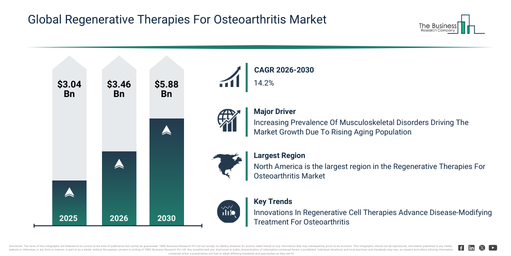
    The market size for regenerative therapies for osteoarthritis has observed rapid expansion in recent years. This market is expected to expand from $3.04 billion in 2025 to $3.46 billion in 2026, achieving a compound annual growth rate (CAGR) of 13.9%. Historically, this growth can be ascribed to factors such as the increasing prevalence of osteoarthritis, the growth of the aging population, the limitations associated with pain relief drugs, a rise in sports injuries, and the demand for non-surgical treatments.

    The regenerative therapies for osteoarthritis market is projected to experience substantial expansion in the coming years, with its valuation anticipated to reach $5.88 billion by 2030, exhibiting a compound annual growth rate (CAGR) of 14.2%. This anticipated growth during the forecast period can be attributed to several factors, including the increasing adoption of biologic therapy, the proliferation of regenerative clinics, stronger clinical evidence supporting these therapies, a growing demand for cartilage restoration procedures, and increased investment in cell therapy research. Key trends expected during this period encompass stem cell based joint repair therapies, the widespread use of platelet rich plasma treatment protocols, advancements in scaffold based cartilage regeneration, the development of minimally invasive regenerative injections, and the implementation of personalized biologic therapy plans.

    Download A Free Sample Report For Comprehensive Market Insights:

    https://www.thebusinessresearchcompany.com/sample.aspx?id=33292&type=smp&utm_source=Blogs&utm_medium=Paid&utm_campaign=Jul_PR

    Regenerative Therapies For Osteoarthritis Market Growth Factors Supporting Long-Term Expansion

    The expanding occurrence of musculoskeletal disorders is projected to fuel the advancement of the regenerative therapies for the osteoarthritis market moving forward. These disorders are conditions impacting bones, joints, muscles, and connective tissues, leading to pain and restrictions in movement and dexterity. The increasing incidence of musculoskeletal disorders is largely attributable to an aging population, as older demographics experience greater instances of joint degeneration and inflammatory conditions that affect musculoskeletal structures. This elevated incidence of musculoskeletal disorders consequently boosts the need for regenerative therapies, which provide advanced treatment solutions for joint restoration and tissue repair in patients suffering from osteoarthritis. For instance, in January 2024, data from the Office for Health Improvement & Disparities, a UK-based government agency, indicated that in 2023, 18.4% of individuals aged 16 and over reported living with a long-term musculoskeletal (MSK) condition, marking an increase from 17.6% in 2022. Thus, the growing prevalence of musculoskeletal disorders is a key driver for the regenerative therapies for the osteoarthritis market.

    Regenerative Therapies For Osteoarthritis Market Segment Breakdown: Which Categories Generate The Most Revenue?

    The regenerative therapies for osteoarthritis market covered in this report is segmented –

    1) By Therapy Type: Stem Cell Therapy; Platelet Rich Plasma Therapy; Tissue Engineering; Gene Therapy; Other Therapy Types

    2) By Distribution Channel: Direct Manufacturer Supply; Hospital And Clinic Procurement Channels; Specialty Medical Distributors

    3) By Application: Knee Osteoarthritis; Hip Osteoarthritis; Hand Osteoarthritis; Other Applications

    4) By End User: Hospitals; Ambulatory Surgical Centers; Specialty Clinics; Other End Users

    Subsegments:

    1) By Stem Cell Therapy: Autologous Stem Cell Therapy; Allogeneic Stem Cell Therapy; Mesenchymal Stem Cell Therapy; Adipose Derived Stem Cell Therapy; Bone Marrow Derived Stem Cell Therapy

    2) By Platelet Rich Plasma Therapy: Leukocyte Rich Platelet Rich Plasma Therapy; Leukocyte Poor Platelet Rich Plasma Therapy; Activated Platelet Rich Plasma Therapy; Non Activated Platelet Rich Plasma Therapy; Pure Platelet Rich Plasma Therapy

    3) By Tissue Engineering: Scaffold Based Tissue Engineering; Hydrogel Based Tissue Engineering; Biodegradable Matrix Tissue Engineering; Cell Seeded Tissue Engineering; Three Dimensional Tissue Engineering

    4) By Gene Therapy: Viral Vector Gene Therapy; Non Viral Vector Gene Therapy; In Vivo Gene Therapy; Ex Vivo Gene Therapy; Targeted Gene Therapy

    5) By Other Therapy Types: Hyaluronic Acid Therapy; Growth Factor Therapy; Chondrocyte Implantation Therapy; Peptide Based Therapy; Immunomodulatory Therapy

    Regenerative Therapies For Osteoarthritis Market Industry Trends Shaping Future Revenue Growth

    Leading companies in the regenerative therapies for the osteoarthritis market are concentrating on creating sophisticated solutions, like allogeneic mesenchymal stem cell (MSC) osteoarthritis therapies, to address the increasing need for treatments that modify the disease course. Allogeneic mesenchymal stem cell (MSC) osteoarthritis therapies utilize donor-derived stem cells to regulate inflammation and aid in cartilage regeneration within compromised joints, offering a readily available, scalable alternative to patient-derived cells, which facilitates consistent dosing and broader acceptance. An illustration of this is the collaboration in December 2025, where Cipla Limited, an India-based pharmaceutical firm, joined forces with Stempeutics Research, an India-based research and product development company, to introduce Ciplostem, a pioneering allogeneic MSC therapy targeting knee osteoarthritis. This therapy is given as a solitary intra-articular injection, containing 25 million cultured adult human bone marrow-derived MSCs combined with hyaluronic acid. Its design enables action at the cellular level to mitigate inflammation, impede disease advancement, improve joint function, and assist in maintaining cartilage quality for patients with Grade II and III knee OA. Prominent attributes of this treatment encompass its immediate availability (eliminating the need for custom preparation), its function at the cellular level as opposed to merely providing symptomatic relief, and its capacity for sustained betterment of joint health relative to conventional treatment plans.

    Regenerative Therapies For Osteoarthritis Market Key Players And Strategic Industry Positioning

    Major companies operating in the regenerative therapies for osteoarthritis market are Stryker Corporation, Smith & Nephew plc, MiMedx Group Inc, Anika Therapeutics Inc, Regentis Biomaterials Ltd, Zomedica Corp, Biosplice Therapeutics Inc, Tissue Regenix Group plc, Co.don AG, MEDIPOST Co Ltd, Ampio Pharmaceuticals Inc, Kolon TissueGene Inc, Mesoblast Limited, Orgenesis Inc, Hyalex Orthopaedics Limited, Orthocell Limited, Jellagen Limited, Hyalogic LLC, Bionaut Labs Inc, and Regeneus Limited.

    Access The Complete Regenerative Therapies For Osteoarthritis Market Report:

    https://www.thebusinessresearchcompany.com/report/regenerative-therapies-for-osteoarthritis-market-report?utm_source=Blogs&utm_medium=Paid&utm_campaign=Jul_PR

    #Regenerative Therapies For Osteoarthritis Market Largest Region: Which Geography Holds The Highest Market Share?

    North America was the largest region in the regenerative therapies for osteoarthritis market in 2025. Asia-Pacific is expected to be the fastest-growing region in the forecast period. The regions covered in the regenerative therapies for osteoarthritis market report are Asia-Pacific, South East Asia, Western Europe, Eastern Europe, North America, South America, Middle East, Africa.

    Get in touch with us:

    The Business Research Company: https://www.thebusinessresearchcompany.com/

    Americas: +1 310-496-7795

    Asia: +44 7882 955267 & +91 8897263534

    Europe: +44 7882 955267

    Email us at: marketing@tbrc.info

    Follow us on:

    LinkedIn: https://in.linkedin.com/company/the-business-research-company

    YouTube: https://www.youtube.com/channel/UC24_fI0rV8cR5DxlCpgmyFQ

    Global Market Model: https://www.thebusinessresearchcompany.com/global-market-model
  • Regenerative Artificial Skin  Market Forecast Highlights Expansion From $2.41 Billion To $3.84 Billion Through 2030

    Regenerative Artificial Skin Market Forecast Highlights Expansion From $2.41 Billion To $3.84 Billion Through 2030

    Enhanced with market attractiveness analysis, total addressable market evaluation, company benchmarking matrices, interactive Excel dashboards, expanded supply chain intelligence, emerging startup coverage, and detailed product insights, The Business Research Company’s 2026 market reports deliver more actionable and strategically valuable research.

    Regenerative Artificial Skin Market Forecast Highlighting Growth From $2.41 Billion To $3.84 Billion

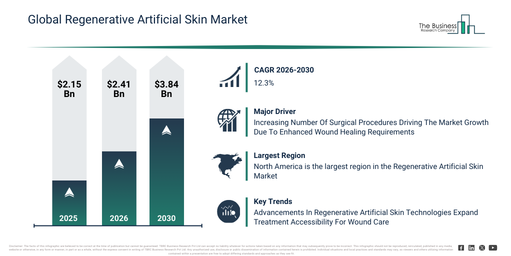
    The regenerative artificial skin market size has experienced rapid expansion in recent years. It is projected to increase from $2.15 billion in 2025 to $2.41 billion in 2026, registering a compound annual growth rate (CAGR) of 12.1%. Historically, this growth can be ascribed to rising burn injury cases, increasing chronic wound prevalence, growth in diabetic ulcer patients, expansion of reconstructive surgeries, and advances in tissue engineering research.

    The market for regenerative artificial skin is projected to experience swift expansion over the coming years. This market is anticipated to reach a valuation of $3.84 billion by 2030, demonstrating a compound annual growth rate (CAGR) of 12.3%. This projected growth during the forecast period is primarily driven by factors such as the increasing adoption of regenerative medicine, a heightened need for restoring skin function, an uptick in clinical trial engagements, the broader application of cell-based therapies, and increased healthcare expenditure on sophisticated wound care solutions. Key trends anticipated within this forecast timeframe encompass sophisticated bioengineered skin substitutes, products for dermal regeneration that are cell-based, composite multilayer skin scaffolds, customized graft design methodologies, and wound platforms designed for accelerated healing.

    Download A Free Sample Report For Comprehensive Market Insights:

    https://www.thebusinessresearchcompany.com/sample.aspx?id=33290&type=smp&utm_source=Blogs&utm_medium=Paid&utm_campaign=Jul_PR

    Regenerative Artificial Skin Market Expansion Supported By Key Demand Factors

    The expanding volume of surgical procedures is anticipated to drive forward the growth of the regenerative artificial skin market. Surgical procedures are defined as medical interventions that entail incisions or manipulation of body tissues to treat injuries, diseases, or deformities. The rising number of these procedures is largely fueled by the aging demographic, as older individuals frequently necessitate more surgical interventions for age-related health issues and chronic ailments. This increase in surgical procedures elevates the demand for regenerative artificial skin, which is vital for effective wound healing and tissue regeneration, ultimately accelerating recovery and mitigating complications in post-surgical patients. For instance, in June 2024, according to the American Society of Plastic Surgeons, a US-based professional medical organization, 2023 saw liposuction continue as the most popular plastic surgery procedure, with nearly 350,000 procedures carried out, representing a 7% increase over 2022. Therefore, the growing number of surgical procedures is a primary driver for the regenerative artificial skin market’s expansion.

    Regenerative Artificial Skin Market Segmentation Trends And Revenue Drivers

    The regenerative artificial skin market covered in this report is segmented –

    1) By Product Type: Synthetic Skin; Biosynthetic Skin; Composite Skin

    2) By Material: Engineered Skin Material; Bi Layered Material; Permanent Skin Material; Single Layer Material; Temporary Skin Material; Temporary Skin Material

    3) By Application: Burn Treatment; Chronic Wound Care; Surgical Reconstruction; Other Applications

    4) By End User: Hospitals; Clinics; Ambulatory Surgical Centers; Other End Users

    Subsegments:

    1) By Synthetic Skin: Polymer Based Synthetic Skin; Silicone Based Synthetic Skin; Elastomer Based Synthetic Skin; Hydrogel Based Synthetic Skin; Nanofiber Based Synthetic Skin

    2) By Biosynthetic Skin: Collagen Based Biosynthetic Skin; Gelatin Based Biosynthetic Skin; Fibrin Based Biosynthetic Skin; Chitosan Based Biosynthetic Skin; Hyaluronic Acid Based Biosynthetic Skin

    3) By Composite Skin: Collagen Polymer Composite Skin; Hydrogel Polymer Composite Skin; Elastomer Fiber Composite Skin; Biopolymer Synthetic Composite Skin; Multilayer Composite Skin

    Regenerative Artificial Skin Market Growth Trends Influencing Competitive Dynamics

    Major companies operating in the regenerative artificial skin market are concentrating on developing advanced solutions, such as fit-for-purpose autologous cell therapy cartridges, to enhance wound coverage, improve accessibility, and optimize resource use for smaller wounds. These fit-for-purpose autologous cell therapy cartridges refer to modified disposable cartridges engineered to efficiently deliver spray-on skin cells for wounds of varying sizes, assisting clinicians in treating smaller full-thickness wounds with minimal waste. For instance, in December 2024, AVITA Medical Inc., a US-based regenerative medicine company, introduced RECELL GO mini, a line extension of its RECELL GO system, which is FDA-approved for treating wounds up to 480 square centimeters. This launch enhances the capacity to deliver fit-for-purpose solutions, enabling clinicians to address the varied needs of patients with full-thickness wounds. The RECELL GO mini utilizes the same multi-use processing device as the standard cartridge but incorporates a smaller disposable cartridge, thereby enabling broader patient access while maintaining high-quality regenerative skin therapy outcomes.

    #Regenerative Artificial Skin Market Industry Leaders: Which Organizations Are Driving Competition?

    Major companies operating in the regenerative artificial skin market are Johnson & Johnson, Medtronic plc, 3M Company, Stryker Corporation, Baxter International Inc., Smith & Nephew plc, Zimmer Biomet Holdings Inc., Mölnlycke Health Care AB, Mallinckrodt plc, Integra LifeSciences Corporation, Gunze Limited, Organogenesis Holdings Inc., MiMedx Group Inc., Vericel Corporation, LifeNet Health Inc., AlloSource Inc., AVITA Medical Inc., Aroa Biosurgery Limited, Cook Biotech Incorporated, Tissue Regenix Group plc, CUTISS AG, and Tides Medical LLC.

    Access The Complete Regenerative Artificial Skin Market Report:

    https://www.thebusinessresearchcompany.com/report/regenerative-artificial-skin-market-report?utm_source=Blogs&utm_medium=Paid&utm_campaign=Jul_PR

    Regenerative Artificial Skin Market Geographic Distribution And Regional Opportunities

    North America was the largest region in the regenerative artificial skin market in 2025. Asia-Pacific is expected to be the fastest-growing region in the forecast period. The regions covered in the regenerative artificial skin market report are Asia-Pacific, South East Asia, Western Europe, Eastern Europe, North America, South America, Middle East, Africa.

    Get in touch with us:

    The Business Research Company: https://www.thebusinessresearchcompany.com/

    Americas: +1 310-496-7795

    Asia: +44 7882 955267 & +91 8897263534

    Europe: +44 7882 955267

    Email us at: marketing@tbrc.info

    Follow us on:

    LinkedIn: https://in.linkedin.com/company/the-business-research-company

    YouTube: https://www.youtube.com/channel/UC24_fI0rV8cR5DxlCpgmyFQ

    Global Market Model: https://www.thebusinessresearchcompany.com/global-market-model
  • Refurbished Cardiovascular And Cardiology Equipment  Market Expected To Reach $7.43 Billion By 2030 As Growth Accelerates At 9.9% CAGR

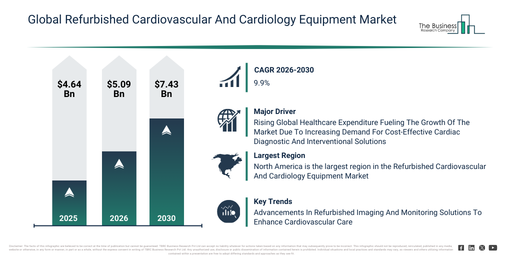
    Refurbished Cardiovascular And Cardiology Equipment Market Expected To Reach $7.43 Billion By 2030 As Growth Accelerates At 9.9% CAGR

    Through market attractiveness analysis, total addressable market evaluation, company benchmarking matrices, interactive Excel dashboards, expanded supply chain intelligence, emerging startup coverage, and detailed product insights, The Business Research Company’s 2026 market reports provide more actionable and strategically valuable research.

    Refurbished Cardiovascular And Cardiology Equipment Market Revenue Growth Supported By A CAGR Of 7.43% Through 2030

    The refurbished cardiovascular and cardiology equipment market has experienced substantial growth in recent years. This market is anticipated to expand from $4.64 billion in 2025 to $5.09 billion in 2026, exhibiting a compound annual growth rate (CAGR) of 9.7%. The historical expansion of this sector can be attributed to the elevated cost of new cardiology equipment, budget constraints impacting hospitals, the presence of established secondary equipment markets, increasing device replacement cycles, and widening gaps in healthcare infrastructure.

    The refurbished cardiovascular and cardiology equipment market size is projected to experience substantial expansion over the coming years, anticipated to reach a valuation of $7.43 billion by 2030, exhibiting a compound annual growth rate (CAGR) of 9.9%. This growth during the forecast period is primarily driven by an escalating focus on cost-optimized care delivery, an increase in access to cardiac diagnostics, enhanced acceptance of certified refurbished devices, the proliferation of private cardiac clinics, and rising demand in emerging markets. Significant trends expected during this period include a growing demand for certified refurbished systems, the proliferation of cost-effective cardiology equipment, the broader availability of warranty-backed refurbished devices, higher adoption rates in mid-tier hospitals, and an increase in third-party refurbishment providers.

    Download A Free Sample Report For Comprehensive Market Insights:

    https://www.thebusinessresearchcompany.com/sample.aspx?id=33289&type=smp&utm_source=Blogs&utm_medium=Paid&utm_campaign=Jul_PR

    #Refurbished Cardiovascular And Cardiology Equipment Market Growth Drivers And Industry Catalysts

    The global rise in healthcare spending is projected to boost the expansion of the refurbished cardiovascular and cardiology equipment market. This global healthcare expenditure encompasses all financial outlays by governments, insurance providers, and individuals for healthcare services, medical technologies, and public health initiatives worldwide. The upward trend in global healthcare expenditure is primarily driven by an aging demographic, leading to a substantial increase in cardiovascular disease cases and a subsequent rise in the need for diagnostic imaging, interventional treatments, and ongoing cardiac support. Refurbished cardiovascular and cardiology equipment assists in managing this increasing global healthcare expenditure by enabling healthcare providers to enhance their cardiovascular service capabilities and manage capital costs, thanks to their reduced purchase price compared to brand-new devices. As an illustration, Eurostat, a statistical office located in Luxembourg, reported in October 2024 that healthcare spending in 2023 totaled $2,030 billion (€1,720 billion), representing 10.0% of GDP, an increase from $1960 billion (€1,660 billion) and 9.9% of GDP recorded in 2022. Consequently, the global growth in healthcare spending is a key factor propelling the expansion of the refurbished cardiovascular and cardiology equipment market.

    Refurbished Cardiovascular And Cardiology Equipment Market Segment Analysis Highlighting Growth Areas

    The refurbished cardiovascular and cardiology equipment market covered in this report is segmented –

    1) By Product Type: Electrocardiographs; Defibrillators; Cardiac Ultrasound Systems; Stress Testing Systems; Holter Monitors; Other Product Types

    2) By Equipment Condition: Certified Refurbished Equipment; Remanufactured Equipment; Used Equipment With Warranty; Pre-Owned Equipment

    3) By Distribution Channel: Direct Sales; Online Sales Platforms; Third-Party Distributors; Medical Equipment Trade Shows

    4) By End-User: Hospitals And Clinics; Diagnostic Centers; Ambulatory Surgical Centers; Research Institutions; Home Care Settings

    Subsegments:

    1) By Electrocardiographs: Resting Electrocardiographs; Portable Electrocardiographs; Wireless Electrocardiographs; Multichannel Electrocardiographs

    2) By Defibrillators: Automated External Defibrillators; Manual External Defibrillators; Implantable Cardiac Defibrillators; Wearable Cardiac Defibrillators

    3) By Cardiac Ultrasound Systems: Transthoracic Cardiac Ultrasound Systems; Transesophageal Cardiac Ultrasound Systems; Doppler Cardiac Ultrasound Systems; Stress Cardiac Ultrasound Systems

    4) By Stress Testing Systems: Treadmill Based Stress Testing Systems; Bicycle Based Stress Testing Systems; Pharmacological Stress Testing Systems; Integrated Cardiac Stress Testing Systems

    5) By Holter Monitors: Single Channel Holter Monitors; Multi Channel Holter Monitors; Wireless Holter Monitors; Extended Duration Holter Monitors

    6) By Other Product Types: Cardiac Patient Monitoring Systems; Cardiac Event Recorders; Cardiac Output Monitoring Devices; Cardiac Telemetry Systems

    #Refurbished Cardiovascular And Cardiology Equipment Market Trends Influencing Long-Term Demand

    Leading companies within the refurbished cardiovascular and cardiology equipment market are concentrating on developing sophisticated refurbished ultrasound systems. This focus aims to boost diagnostic accuracy, enhance patient outcomes, lower operational expenses, and prolong the service life of medical devices for healthcare providers. The process of refurbishing ultrasound systems involves restoring used or previously owned ultrasound machines to a fully functional and reliable state, enabling their safe reuse in medical settings. For example, in April 2024, GE Healthcare, a US-based medical technology company, launched a new refurbishing unit in Bangladesh dedicated to its A1 SURE ultrasound systems. This unit revitalizes pre-owned ultrasound devices by replacing worn components, updating software, and guaranteeing complete functional performance, further providing a one-year warranty and adaptable financing options to hospitals and clinics. The refurbished systems retain the high-resolution imaging and advanced diagnostic capabilities characteristic of new devices, simultaneously lowering costs and expanding access to vital cardiovascular and cardiology imaging in developing regions.

    Refurbished Cardiovascular And Cardiology Equipment Market Leading Companies: Who Holds Significant Market Presence?

    Major companies operating in the refurbished cardiovascular and cardiology equipment market are Siemens Healthineers AG, Hitachi Ltd., Medtronic plc, Stryker Corporation, Koninklijke Philips N.V., GE HealthCare Technologies Inc., Sanrad Medical Systems, Neusoft Medical Systems Co. Ltd., Soma Technology Inc, Diamond Diagnostics, Amber Diagnostics, Radiology Oncology Systems Inc., Master Medical Equipment, Venture Medical ReQuip Inc, EverX Pty Ltd., Whittemore Enterprises Inc., Fair Medical Co. Ltd., Future Health Concepts Inc., Jaken Medical Inc., Mediproma B.V., and PrimedeQ India Private Limited.

    Access The Complete Refurbished Cardiovascular And Cardiology Equipment Market Report:

    https://www.thebusinessresearchcompany.com/report/refurbished-cardiovascular-and-cardiology-equipment-market-report?utm_source=Blogs&utm_medium=Paid&utm_campaign=Jul_PR

    Refurbished Cardiovascular And Cardiology Equipment Market Largest Region By Revenue And Market Share

    North America was the largest region in the refurbished cardiovascular and cardiology equipment market in 2025. Asia-Pacific is expected to be the fastest-growing region in the forecast period. The regions covered in the refurbished cardiovascular and cardiology equipment market report are Asia-Pacific, South East Asia, Western Europe, Eastern Europe, North America, South America, Middle East, Africa.

    Get in touch with us:

    The Business Research Company: https://www.thebusinessresearchcompany.com/

    Americas: +1 310-496-7795

    Asia: +44 7882 955267 & +91 8897263534

    Europe: +44 7882 955267

    Email us at: marketing@tbrc.info

    Follow us on:

    LinkedIn: https://in.linkedin.com/company/the-business-research-company

    YouTube: https://www.youtube.com/channel/UC24_fI0rV8cR5DxlCpgmyFQ

    Global Market Model: https://www.thebusinessresearchcompany.com/global-market-model
  • Recurrent Pericarditis  Market Set To Grow From $0.88 Billion In 2026 To $1.32 Billion By 2030 At A CAGR Of 10.8%

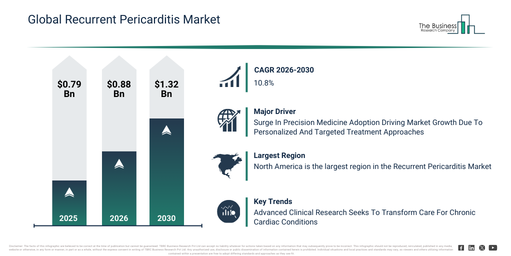
    Recurrent Pericarditis Market Set To Grow From $0.88 Billion In 2026 To $1.32 Billion By 2030 At A CAGR Of 10.8%

    Delivering more actionable and strategically valuable research, The Business Research Company’s 2026 market reports feature market attractiveness analysis, total addressable market evaluation, company benchmarking matrices, interactive Excel dashboards, expanded supply chain intelligence, emerging startup coverage, and detailed product insights.

    Recurrent Pericarditis Market Value Expansion And Long-Term Growth Outlook

    The recurrent pericarditis market has expanded significantly in recent years. Its value is projected to climb from $0.79 billion in 2025 to $0.88 billion in 2026, exhibiting a compound annual growth rate (CAGR) of 10.6%. This historic growth is attributable to factors such as the longstanding dependence on NSAIDs and colchicine, an increasing diagnosis of inflammatory heart conditions, the existence of established cardiology care pathways, enhanced accessibility to echocardiography, and the utilization of guideline-driven anti-inflammatory therapy.

    The recurrent pericarditis market is anticipated to experience substantial expansion in the coming years, with projections indicating a rise to $1.32 billion by 2030, reflecting a compound annual growth rate (CAGR) of 10.8%. This expansion over the forecast period is primarily driven by the increasing integration of biologic drugs, more refined recurrence risk stratification techniques, the proliferation of specialized cardiology clinics, heightened awareness surrounding immune-mediated pericarditis, and the growing application of targeted cytokine inhibitors. Significant developments during this period are expected to include an increased reliance on targeted biologic therapies, the broadening of long-term disease monitoring practices, the rise of anti-inflammatory combination therapies, a greater adoption of IL-1 inhibitors, and the establishment of structured protocols for recurrence prevention.

    Download A Free Sample Report For Comprehensive Market Insights:

    https://www.thebusinessresearchcompany.com/sample.aspx?id=33288&type=smp&utm_source=Blogs&utm_medium=Paid&utm_campaign=Jul_PR

    Recurrent Pericarditis Market Opportunity Drivers: What Is Creating New Revenue Potential?

    The recurrent pericarditis market is anticipated to expand due to the increasing focus on precision medicine strategies. This medical methodology involves customizing prevention and treatment for individual patients, considering their genetic profile, surroundings, and way of life. The heightened attention on precision medicine stems from its ability to enhance treatment effectiveness, given that therapies are adjusted to a person’s unique genetic and biological characteristics, resulting in superior outcomes and a lower chance of negative reactions. In the context of recurrent pericarditis, this approach facilitates advances in precision medicine through targeted treatments that address specific inflammatory pathways in patients, like those mediated by interleukin-1, thereby enabling more individualized and efficacious disease management. An illustration of this trend is seen in February 2025, when NHS England, a UK public healthcare body, reported that its NHS Genomic Medicine Service provided more than 810,000 genomic tests for patients throughout England in 2024. This figure has consistently risen annually since the service’s inception, showing an 8% increase compared to 2023. Consequently, the expanding focus on precision medicine methodologies is fueling the expansion of the recurrent pericarditis market.

    Recurrent Pericarditis Market Segment Performance And Strategic Opportunities

    The recurrent pericarditis market covered in this report is segmented –

    1) By Product Type: Non-Steroidal Anti-Inflammatory Drugs (NSAIDs); Corticosteroids; Colchicine; Biologics; Other Product Types

    2) By Diagnosis And Assessment: Electrocardiography (ECG); Echocardiography; Physical Examination

    3) By Route of Administration: Oral; Injectable

    4) By Application: Colchicine Therapy; Corticosteroids; Non-Steroidal Anti-Inflammatory Drugs (NSAIDs)

    5) By End-User: Hospitals; Ambulatory Surgical Centers; Clinics; Home Care Settings; Emergency Medical Services (EMS)

    Subsegments:

    1) By Non Steroidal Anti Inflammatory Drugs: Ibuprofen; Aspirin; Indomethacin; Naproxen

    2) By Corticosteroids: Prednisone; Methylprednisolone; Hydrocortisone; Dexamethasone

    3) By Colchicine: Oral Colchicine; Low Dose Colchicine; Extended Duration Colchicine Therapy

    4) By Biologics: Interleukin One Inhibitors; Monoclonal Antibody Therapies; Targeted Cytokine Inhibitors

    5) By Other Product Types: Immunosuppressive Agents; Analgesic Therapies; Supportive Combination Therapies

    Recurrent Pericarditis Market Innovation Trends Driving Future Development

    Key players in the recurrent pericarditis market are concentrating on creating therapies with anti-inflammatory and anti-fibrotic properties. These efforts aim to decrease inflammation in the pericardium, avert prolonged cardiac harm, enhance patients’ quality of life, and lower the frequency of recurrences. Anti-inflammatory actions work by lessening tissue inflammation, whereas anti-fibrotic actions either stop or reverse the development of scar tissue. Collectively, these actions contribute to safeguarding organs from injury and preserving their natural functions. As an illustration, Cardiol Therapeutics Inc., a clinical-stage life sciences firm based in Canada, advanced its CardiolRx in October 2024. CardiolRx presents a new oral, non-immunosuppressive treatment strategy for recurrent pericarditis. It operates by targeting the NLRP3 inflammasome, which is a significant upstream contributor to IL-1–mediated inflammation. The development of CardiolRx is geared towards preventing the disease from recurring, especially for individuals who experience a relapse after stopping IL-1 blocker treatments like rilonacept or anakinra. Within its late-stage clinical initiatives, CardiolRx seeks to diminish pericarditis flare-ups, ease chest pain, and bring inflammatory markers (CRP) back to normal levels.

    Recurrent Pericarditis Market Key Players: Which Companies Shape Industry Competition?

    Major companies operating in the recurrent pericarditis market are Johnson & Johnson Services Inc., Roche Holding AG, Merck & Co. Inc., Pfizer Inc., AbbVie Inc., Sanofi S.A., Novartis AG, AstraZeneca PLC, Bristol-Myers Squibb Company, GlaxoSmithKline plc, Eli Lilly and Company, Novo Nordisk A/S, Takeda Pharmaceutical Company Limited, Amgen Inc., Gilead Sciences Inc., Boehringer Ingelheim International GmbH, Regeneron Pharmaceuticals Inc., Biogen Inc., Lonza Group AG, Moderna Inc., and WuXi Biologics (Cayman) Inc.

    Access The Complete Recurrent Pericarditis Market Report:

    https://www.thebusinessresearchcompany.com/report/recurrent-pericarditis-market-report?utm_source=Blogs&utm_medium=Paid&utm_campaign=Jul_PR

    Recurrent Pericarditis Market Regional Analysis And Leading Geography

    North America was the largest region in the recurrent pericarditis market in 2025. Asia-Pacific is expected to be the fastest-growing region in the forecast period. The regions covered in the recurrent pericarditis market report are Asia-Pacific, South East Asia, Western Europe, Eastern Europe, North America, South America, Middle East, Africa.

    Get in touch with us:

    The Business Research Company: https://www.thebusinessresearchcompany.com/

    Americas: +1 310-496-7795

    Asia: +44 7882 955267 & +91 8897263534

    Europe: +44 7882 955267

    Email us at: marketing@tbrc.info

    Follow us on:

    LinkedIn: https://in.linkedin.com/company/the-business-research-company

    YouTube: https://www.youtube.com/channel/UC24_fI0rV8cR5DxlCpgmyFQ

    Global Market Model: https://www.thebusinessresearchcompany.com/global-market-model
  • Recombinant Vaccines  Market Opportunities Are Emerging Beyond Traditional Growth Areas

    Recombinant Vaccines Market Opportunities Are Emerging Beyond Traditional Growth Areas

    Enhanced with market attractiveness analysis, total addressable market evaluation, company benchmarking matrices, interactive Excel dashboards, expanded supply chain intelligence, emerging startup coverage, and detailed product insights, The Business Research Company’s 2026 market reports deliver more actionable and strategically valuable research.

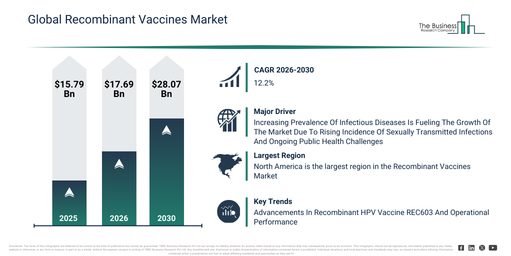
    Recombinant Vaccines Market Expected To Reach $28.07 Billion By 2030 At 12.2% CAGR

    The recombinant vaccines market has seen significant growth in recent years. Its projected expansion will take it from $15.79 billion in 2025 to $17.69 billion in 2026, achieving a compound annual growth rate (CAGR) of 12.0%. This historical growth is largely due to factors such as the successful deployment of hepatitis B recombinant vaccines, past global vaccination efforts, increased public understanding of viral diseases, a rise in immunization funding, and supportive regulatory frameworks for safer vaccine platforms.

    The recombinant vaccines market size is projected to experience substantial expansion over the coming years, with an anticipated growth to $28.07 billion by 2030, at a compound annual growth rate (CAGR) of 12.2%. This anticipated growth during the forecast period is primarily driven by factors such as the increasing need for precision vaccines, the broader availability of vaccines for emerging diseases, the rise in adult booster initiatives, expanding worldwide immunization coverage, and a robust pipeline of recombinant candidates. Key developments shaping the market during this period involve an uptick in recombinant subunit vaccines, the broadening of vector-based vaccine platforms, more extensive adult immunization programs, the development of combination recombinant vaccines, and an intensified focus on long-lasting immunity.

    Download A Free Sample Report For Comprehensive Market Insights:

    https://www.thebusinessresearchcompany.com/sample.aspx?id=33287&type=smp&utm_source=Blogs&utm_medium=Paid&utm_campaign=Jul_PR

    Recombinant Vaccines Market Growth Momentum: Which Factors Are Influencing Demand?

    The rising occurrence of infectious diseases is anticipated to boost the expansion of the recombinant vaccines market. Infectious diseases are illnesses caused by microorganisms like bacteria, viruses, fungi, or parasites, which can be transmitted between individuals directly or indirectly. The increase in the prevalence of these diseases stems from inadequate sanitation and hygiene, as insufficient access to clean water, proper sanitation, and effective waste disposal facilitates the easy transmission of harmful microorganisms via tainted food, water, and personal interaction, consequently heightening infection risks. Recombinant vaccines combat infectious diseases by utilizing biologically engineered genetic material from pathogens to provoke an immune response without causing sickness. For instance, in July 2024, the Australian Institute of Health and Welfare, a national agency based in Australia, reported that over 109,000 chlamydia and more than 40,000 gonorrhea notifications were the most frequently reported sexually transmitted infections in Australia in 2023, alongside over 6,400 infectious syphilis cases, underscoring the escalating incidence and persistent public health difficulties. Consequently, the growing incidence of infectious diseases is propelling the growth of the recombinant vaccines market.

    #Recombinant Vaccines Market Segment Landscape And Growth Potential

    The recombinant vaccines market covered in this report is segmented –

    1) By Type: Subunit Vaccines; Vector-Based Vaccines

    2) By Disease Indication: Human Papillomavirus (HPV); Herpes Zoster; Hepatitis B; Other Diseases

    3) By Route Of Administration: Parenteral; Other Route Of Administrations

    4) By End User: Pediatric; Adults

    Subsegments:

    1) By Subunit Vaccines: Protein Subunit Vaccines; Polysaccharide Subunit Vaccines; Conjugate Subunit Vaccines; Glycopeptide Subunit Vaccines; Recombinant Subunit Vaccines

    2) By Vector-Based Vaccines: Viral Vector Vaccines; Non Viral Vector Vaccines; Replicating Vector Vaccines; Non Replicating Vector Vaccines; Bacterial Vector Vaccines

    Recombinant Vaccines Market Trends Reshaping Industry Growth

    Companies active in the recombinant vaccines market are concentrating on the creation of innovative vaccines, such as the recombinant 9-valent HPV vaccine, to secure a competitive advantage. This recombinant 9-valent HPV vaccine offers protection against nine types of human papillomavirus (HPV) and is produced through recombinant DNA technology in a laboratory setting, without the use of live viruses, which assists in preventing HPV-related illnesses including cervical cancer and genital warts. For instance, in August 2023, Jiangsu Recbio Technology Co. Ltd., a China-based biopharmaceutical company, moved its recombinant 9-valent HPV vaccine, REC603, through Phase III clinical follow-up, with 24-month observations still in progress. The vaccine displayed strong immunogenicity, a favorable safety profile, scalable manufacturing potential, and long-term efficacy, thereby supporting its prospects for widespread HPV prevention and commercialization.

    Recombinant Vaccines Market Competitive Landscape: Who Are The Leading Companies?

    Major companies operating in the recombinant vaccines market are Johnson And Johnson, Merck And Co Inc., Pfizer Inc., Sanofi S. A., Novartis AG, AstraZeneca Plc, GlaxoSmithKline Plc, Mitsubishi Chemical Group Corporation, CSL Limited, Sinovac Biotech Ltd., Boehringer Ingelheim International GmbH, Zoetis Services Llc, Elanco Animal Health, BioNTech Se, Green Cross Corporation (Gc Biopharma), Bavarian Nordic A S, VBI Vaccines Inc., Vaxart Inc., Biological E Limited, Novavax Inc., Serum Institute Of India Private Limited, Vaxcyte Inc., Bharat Biotech International Limited, and Transgene S A.

    Access The Complete Recombinant Vaccines Market Report:

    https://www.thebusinessresearchcompany.com/report/recombinant-vaccines-market-report?utm_source=Blogs&utm_medium=Paid&utm_campaign=Jul_PR

    Recombinant Vaccines Market Geographic Analysis: Where Is Demand Growing The Fastest?

    North America was the largest region in the recombinant vaccines market in 2025. Asia-Pacific is expected to be the fastest-growing region in the forecast period. The regions covered in the recombinant vaccines market report are Asia-Pacific, South East Asia, Western Europe, Eastern Europe, North America, South America, Middle East, Africa.

    Get in touch with us:

    The Business Research Company: https://www.thebusinessresearchcompany.com/

    Americas: +1 310-496-7795

    Asia: +44 7882 955267 & +91 8897263534

    Europe: +44 7882 955267

    Email us at: marketing@tbrc.info

    Follow us on:

    LinkedIn: https://in.linkedin.com/company/the-business-research-company

    YouTube: https://www.youtube.com/channel/UC24_fI0rV8cR5DxlCpgmyFQ

    Global Market Model: https://www.thebusinessresearchcompany.com/global-market-model
  • Recombinant Proteins Manufacturing Services  Market Expansion Is Opening New Pathways For Strategic Investment

    Recombinant Proteins Manufacturing Services Market Expansion Is Opening New Pathways For Strategic Investment

    Through market attractiveness analysis, total addressable market evaluation, company benchmarking matrices, interactive Excel dashboards, expanded supply chain intelligence, emerging startup coverage, and detailed product insights, The Business Research Company’s 2026 market reports provide more actionable and strategically valuable research.

    #Recombinant Proteins Manufacturing Services Market Size And Revenue Forecast Through 2030

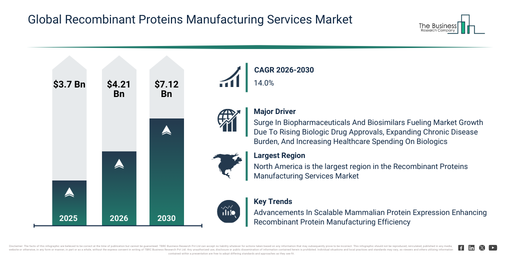
    The recombinant proteins manufacturing services market has experienced substantial growth in recent years. It is forecast to increase from $3.7 billion in 2025 to $4.21 billion in 2026, achieving a compound annual growth rate (CAGR) of 13.8%. Factors contributing to its historical growth include an expansion in biologics research programs, a rise in academic protein studies, the broadening of contract manufacturing models, an increase in monoclonal antibody development, and the past growth of biotech startups.

    The recombinant proteins manufacturing services market size is expected to experience significant expansion in the coming years. This market is projected to grow to $7.12 billion in 2030, driven by a compound annual growth rate (CAGR) of 14.0%. The anticipated growth during this period is largely due to an expanding pipeline of protein therapeutics, increasing outsourcing by pharmaceutical companies, a greater need for scalable bioprocessing, the proliferation of clinical stage biologics, and a growing demand for regulatory compliant facilities. Prominent trends for the forecast period include the broadening of outsourced protein production, an increase in custom expression services, a rising demand for GMP protein manufacturing, the development of integrated end-to-end service models, and a greater adoption of single use bioprocess systems.

    Download A Free Sample Report For Comprehensive Market Insights:

    https://www.thebusinessresearchcompany.com/sample.aspx?id=33286&type=smp&utm_source=Blogs&utm_medium=Paid&utm_campaign=Jul_PR

    Recombinant Proteins Manufacturing Services Market Expansion Drivers: What Is Shaping Future Growth?

    The rising need for biopharmaceuticals and biosimilars is anticipated to drive the expansion of the recombinant proteins manufacturing services market in the future. Biopharmaceuticals and biosimilars are defined as biologic drugs and their comparable forms, utilized in addressing long-term, uncommon, and intricate ailments such as cancer, autoimmune conditions, and metabolic issues. This increasing demand stems from the greater occurrence of chronic and life-threatening illnesses, innovations in the creation of biologic drugs, and broader patient access to specialized treatments within leading healthcare sectors. Recombinant proteins manufacturing services assist in the development and market launch of biopharmaceuticals and biosimilars by offering scalable, top-tier, and compliant production of protein-derived medications, thereby allowing pharmaceutical and biotechnology firms to expedite their development schedules and ensure a steady supply. For example, GOV.UK, a government website in the UK, indicated that businesses in the biopharmaceutical subsector achieved a total turnover of $135.5 billion (£98.9 billion) over the 2023/2024 period, marking a 15% rise from the previous year. Consequently, the expanding need for biopharmaceuticals and biosimilars is propelling the expansion of the recombinant proteins manufacturing services market.

    Recombinant Proteins Manufacturing Services Market Categorization By Product Type And Application

    The recombinant proteins manufacturing services market covered in this report is segmented –

    1) By Service Type: Process Development; Upstream Manufacturing; Downstream Manufacturing; Analytical Development and Quality Control; Finish And Lyophilization

    2) By Protein Type: Monoclonal Antibodies And Antibody Fragments; Vaccines And Viral Proteins; Enzymes And Growth Factors; Hormones And Cytokines; Other Therapeutic And Diagnostic Proteins

    3) By Host Cell: Mammalian Cells; Bacterial Cells; Insect Cells; Yeast And Fungi; Other Host Cell

    4) By Application: Therapeutics; Research And Development; Diagnostics; Other Applications

    5) By End-User: Pharmaceutical And Biotechnology Companies; Academic And Research Institutes

    Subsegments:

    1) By Process Development: Cell Line Development; Expression System Optimization; Process Scale Up; Process Validation

    2) By Upstream Manufacturing: Microbial Fermentation; Mammalian Cell Culture; Insect Cell Culture; Media And Feed Optimization

    3) By Downstream Manufacturing: Protein Purification; Chromatography Processing; Filtration And Concentration; Viral Clearance

    4) By Analytical Development And Quality Control: Method Development; Stability Testing; Purity And Potency Testing; Batch Release Testing

    5) By Finish And Lyophilization: Sterile Filling; Freeze Drying; Packaging And Labeling; Storage And Distribution Preparation

    Recombinant Proteins Manufacturing Services Market Strategic Trends: What Is Defining The Next Phase Of Growth?

    Leading companies within the recombinant proteins manufacturing services sector are concentrating on technological progress in high-yield protein expression and optimization methods. These include research-grade and scalable mammalian recombinant protein manufacturing capabilities, aiming to boost production efficiency, elevate protein quality, accelerate development schedules, and offer greater adaptability for varied biopharmaceutical development needs. These research-grade and scalable mammalian recombinant protein manufacturing capabilities involve enhancements in cell culture systems, expression technologies, and process management, facilitating the effective creation of high-quality recombinant proteins at minor research scales, alongside a seamless progression to larger manufacturing volumes. For instance, in September 2024, Axio BioPharma, a U.S.-based biotechnology firm, introduced recombinant protein manufacturing services designed to aid research-grade monoclonal antibody production and offer scalable mammalian protein expression solutions. This platform for recombinant protein manufacturing services provides both research-grade and scalable mammalian protein production functionalities, supporting the expression of high-quality monoclonal antibodies and recombinant proteins crucial for early-stage development. Offering adaptable production volumes, from small laboratory batches to scalable systems, the platform ensures dependable protein yields while preserving consistency and biological activity.

    Recombinant Proteins Manufacturing Services Market Company Landscape And Strategic Competition

    Major companies operating in the recombinant proteins manufacturing services market are Thermo Fisher Scientific Inc., Lonza Group Ltd., Charles River Laboratories International Inc., Catalent Inc., Samsung Biologics Co. Ltd., Recipharm AB, Bio-Techne Corporation, FUJIFILM Diosynth Biotechnologies, AGC Biologics A/S, WuXi Biologics (Cayman) Inc., KBI Biopharma Inc., GenScript Biotech Corporation, Rentschler Biopharma SE, Abzena Ltd., ProBioGen AG, NorthX Biologics AB, Creative Biolabs Inc., evitria AG, Boster Biological Technology Co. Ltd., Icosagen Group AS

    Access The Complete Recombinant Proteins Manufacturing Services Market Report:

    https://www.thebusinessresearchcompany.com/report/recombinant-proteins-manufacturing-services-market-report?utm_source=Blogs&utm_medium=Paid&utm_campaign=Jul_PR

    Recombinant Proteins Manufacturing Services Market Global Footprint: Which Region Holds Market Leadership?

    North America was the largest region in the recombinant proteins manufacturing services market in 2025. Asia-Pacific is expected to be the fastest-growing region in the forecast period. The regions covered in the recombinant proteins manufacturing services market report are Asia-Pacific, South East Asia, Western Europe, Eastern Europe, North America, South America, Middle East, Africa.

    Get in touch with us:

    The Business Research Company: https://www.thebusinessresearchcompany.com/

    Americas: +1 310-496-7795

    Asia: +44 7882 955267 & +91 8897263534

    Europe: +44 7882 955267

    Email us at: marketing@tbrc.info

    Follow us on:

    LinkedIn: https://in.linkedin.com/company/the-business-research-company

    YouTube: https://www.youtube.com/channel/UC24_fI0rV8cR5DxlCpgmyFQ

    Global Market Model: https://www.thebusinessresearchcompany.com/global-market-model
  • Recombinant Human Granulocyte Colonystimulating Factor Injection Rhgcsf  Market Trends Are Creating New Opportunities For Industry Leaders

    Recombinant Human Granulocyte Colonystimulating Factor Injection Rhgcsf Market Trends Are Creating New Opportunities For Industry Leaders

    Delivering more actionable and strategically valuable research, The Business Research Company’s 2026 market reports feature market attractiveness analysis, total addressable market evaluation, company benchmarking matrices, interactive Excel dashboards, expanded supply chain intelligence, emerging startup coverage, and detailed product insights.

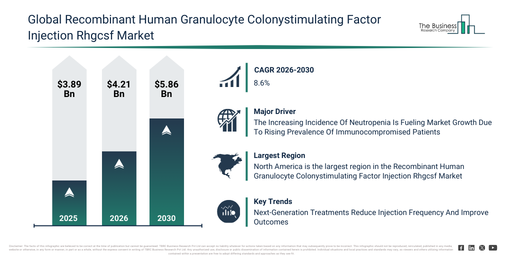
    Recombinant Human Granulocyte Colonystimulating Factor Injection Rhgcsf Market Growth From $4.21 Billion In 2026 To $5.86 Billion By 2030 At A CAGR Of 8.6%

    The recombinant human granulocyte colonystimulating factor injection rhgcsf market size has experienced robust expansion over recent years. This market is projected to expand from $3.89 billion in 2025 to $4.21 billion in 2026, demonstrating a compound annual growth rate (CAGR) of 8.3%. Factors contributing to this historical growth include an increase in global chemotherapy treatment volumes, a higher occurrence of neutropenia cases, the proliferation of oncology treatment centers, the long-standing use of colony stimulating factors, and substantial clinical guideline backing for GCSF application.

    The market for recombinant human granulocyte colony-stimulating factor (rhgcsf) injections is projected for robust expansion in the coming years. It is anticipated to grow to $5.86 billion by 2030, achieving a compound annual growth rate (CAGR) of 8.6%. This expected growth during the forecast period can be attributed to escalating cancer prevalence rates, a heightened demand for long-acting injectables, the expansion of biosimilar drug approvals, improved access to specialty biologics, and the increasing implementation of hospital supportive care protocols. Key trends identified for this period include the rise in biosimilar GCSF injections, the proliferation of prefilled syringe formats, greater adoption in chemotherapy support care, a strong demand for long-acting pegylated formulations, and an increased utilization of combination supportive therapies.

    Download A Free Sample Report For Comprehensive Market Insights:

    https://www.thebusinessresearchcompany.com/sample.aspx?id=33285&type=smp&utm_source=Blogs&utm_medium=Paid&utm_campaign=Jul_PR

    Recombinant Human Granulocyte Colonystimulating Factor Injection Rhgcsf Market Development Factors: Which Trends Are Supporting Demand?

    The growing occurrence of neutropenia is projected to drive the expansion of the recombinant human granulocyte colony-stimulating factor injection (rhG-CSF) market in the future. Neutropenia is a condition marked by unusually low neutrophil counts – these white blood cells are crucial for combating infections, leaving affected individuals highly vulnerable to bacterial and fungal pathogens. The rise in neutropenia cases largely stems from the increased adoption of intensive chemotherapy protocols in cancer therapy; contemporary oncology approaches utilize more potent dosing schedules to enhance patient survival, thereby escalating the prevalence and intensity of chemotherapy-induced bone marrow suppression. Recombinant human granulocyte colony-stimulating factor injection (rhG-CSF) addresses neutropenia by prompting the bone marrow to produce and mature neutrophil precursors, expediting the entry of mature neutrophils into circulation. This action diminishes the length and intensity of neutropenia and lessens the infection risk for patients. For example, in February 2025, the UK Health Security Agency (UKHSA), a governmental body in the UK, documented that febrile neutropenia (FN) or other infection presentations in immunocompromised individuals lacking a distinct anatomical source constituted 206 cases, which was 1.4% of all community-based diagnoses. Consequently, the escalating incidence of neutropenia is fueling the expansion of the recombinant human granulocyte colony-stimulating factor injection (rhG-CSF) market.

    Recombinant Human Granulocyte Colonystimulating Factor Injection Rhgcsf Market Segment Analysis And Revenue Opportunities

    The recombinant human granulocyte colonystimulating factor injection rhgcsf market covered in this report is segmented –

    1) By Type: Filgrastim; Lenograstim

    2) By Route Of Administration: Subcutaneous Injection; Intravenous Injection

    3) By Patient Type: Pediatric Patients; Adult Patients

    4) By Application: Cancer; Bone Marrow Disorders

    5) By Distribution Channel: Hospital Pharmacies; Retail Pharmacies

    Subsegments:

    1) By Filgrastim: Neupogen; Zarxio; Accofil; Granix

    2) By Lenograstim: Neutrogin; Lenograstim Biosimilar; Lenograstim Standard Formulation; Lenograstim Lyophilized Powder

    Recombinant Human Granulocyte Colonystimulating Factor Injection Rhgcsf Market Transformation Trends: Which Innovations Are Driving Change?

    Leading companies in the recombinant human granulocyte colony-stimulating factor injection (rhG-CSF) market are concentrating on creating advanced formulations, particularly PEG-free recombinant G-CSF fusion proteins. This focus aims to prolong drug half-life, decrease the frequency of injections, and enhance patient adherence, all while effectively preventing chemotherapy-induced neutropenia. These PEG-free recombinant G-CSF fusion proteins are sophisticated engineered molecules that merge G-CSF with a human Fc fragment, bypassing the use of polyethylene glycol (PEG), which in turn extends the medication’s half-life, improves its stability, and reduces the need for frequent injections. This approach ultimately boosts patient compliance and vigorously stimulates neutrophil production to prevent chemotherapy-induced neutropenia. For instance, in November 2024, Evive Biotech Co. Ltd., a biopharmaceutical company from China, partnered with APOGEPHA Arzneimittel GmbH, a German pharmaceutical company, to introduce Ryzneuta (Efbemalenograstim alfa Injection), an innovative, long-acting, PEG-free rhG-CSF product, into the German market. Ryzneuta is manufactured using Chinese Hamster Ovary (CHO) cells, ensuring a mammalian glycosylation pattern, and operates by binding to the G-CSF receptor to promote the survival, proliferation, and differentiation of neutrophil precursors and mature neutrophils. Its distinctive Fc-fusion design extends its half-life, lessens injection frequency, and reinforces immune function, thereby assisting in preventing chemotherapy dose reductions or delays. The product’s effectiveness and safety have been validated through numerous multi-center, randomized, active-controlled trials, marking a significant progression compared to conventional rhG-CSF injections.

    Recombinant Human Granulocyte Colonystimulating Factor Injection Rhgcsf Market Leading Players Shaping Industry Direction

    Major companies operating in the recombinant human granulocyte colonystimulating factor injection rhgcsf market are Pfizer Inc., Novartis AG, Amgen Inc., Intas Pharmaceuticals Ltd., Kyowa Kirin Co. Ltd., Dr. Reddy’s Laboratories Ltd., Cadila Pharmaceuticals Ltd., Biocon Limited, North China Pharmaceutical Group Corporation, Shijiazhuang Pharmaceutical Group Co. Ltd., Emcure Pharmaceuticals Ltd., Harbin Pharmaceutical Group Co. Ltd., Reliance Life Sciences Pvt. Ltd., Jiuyuan Gene Engineering Co. Ltd., Qilu Pharmaceutical Co. Ltd., Amoytop Biotech Co. Ltd., Kexing Biopharm Co. Ltd., Sunway Biotech Co. Ltd., Apotex Inc., and Wuzhong Pharmaceutical Group Co. Ltd.

    Access The Complete Recombinant Human Granulocyte Colonystimulating Factor Injection Rhgcsf Market Report:

    https://www.thebusinessresearchcompany.com/report/recombinant-human-granulocyte-colonystimulating-factor-injection-rhgcsf-market-report?utm_source=Blogs&utm_medium=Paid&utm_campaign=Jul_PR

    Recombinant Human Granulocyte Colonystimulating Factor Injection Rhgcsf Market Regional Distribution: Which Areas Drive Market Expansion?

    North America was the largest region in the recombinant human granulocyte colony-stimulating factor injection (rhG-CSF) market in 2025. Asia-Pacific is expected to be the fastest-growing region in the forecast period. The regions covered in the recombinant human granulocyte colonystimulating factor injection rhgcsf market report are Asia-Pacific, South East Asia, Western Europe, Eastern Europe, North America, South America, Middle East, Africa.

    Get in touch with us:

    The Business Research Company: https://www.thebusinessresearchcompany.com/

    Americas: +1 310-496-7795

    Asia: +44 7882 955267 & +91 8897263534

    Europe: +44 7882 955267

    Email us at: marketing@tbrc.info

    Follow us on:

    LinkedIn: https://in.linkedin.com/company/the-business-research-company

    YouTube: https://www.youtube.com/channel/UC24_fI0rV8cR5DxlCpgmyFQ

    Global Market Model: https://www.thebusinessresearchcompany.com/global-market-model
  • Quantitative Brain Function Imaging Device  Market Outlook Highlights The Next Major Growth Opportunities

    Quantitative Brain Function Imaging Device Market Outlook Highlights The Next Major Growth Opportunities

    Enhanced with market attractiveness analysis, total addressable market evaluation, company benchmarking matrices, interactive Excel dashboards, expanded supply chain intelligence, emerging startup coverage, and detailed product insights, The Business Research Company’s 2026 market reports deliver more actionable and strategically valuable research.

    Quantitative Brain Function Imaging Device Market Size Forecast: How Large Could The Market Become By 2030?

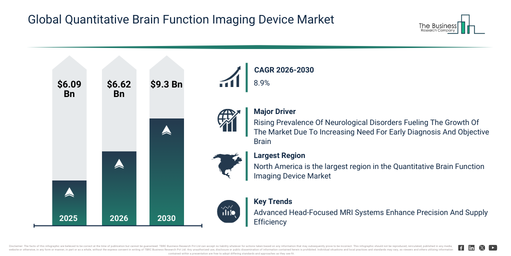
    The quantitative brain function imaging device market has experienced substantial expansion in recent years. It is anticipated to increase from $6.09 billion in 2025 to $6.62 billion in 2026, demonstrating a compound annual growth rate (CAGR) of 8.7%. This historic growth can be attributed to an increase in neurological disorder prevalence, the expansion of neuroscience research funding, improvements in hospital imaging infrastructure, a rise in the use of EEG and PET systems, and the development of advanced brain mapping techniques.

    The quantitative brain function imaging device market is anticipated to experience robust expansion over the coming years. This market is projected to reach $9.3 billion by 2030, exhibiting a compound annual growth rate (CAGR) of 8.9%. This projected growth is primarily propelled by factors such as an increasing demand for quantitative diagnostics, advancements in precision neurology, the expansion of brain-computer interface research, a rising need for mental health diagnostics, and greater investment in neurotechnology platforms. Furthermore, significant trends for this period include the widespread adoption of multi-modal brain imaging, an increase in functional brain mapping, the integration of advanced neuro-signal software, a growing application in psychiatric diagnostics, and the broader development of portable brain monitoring systems.

    Download A Free Sample Report For Comprehensive Market Insights:

    https://www.thebusinessresearchcompany.com/sample.aspx?id=33281&type=smp&utm_source=Blogs&utm_medium=Paid&utm_campaign=Jul_PR

    Quantitative Brain Function Imaging Device Market Growth Drivers: What Factors Are Accelerating Expansion?

    The quantitative brain function imaging device market is anticipated to experience growth driven by the rising incidence of neurological disorders. These conditions, which involve medical issues affecting the brain, spinal cord, or nerves, can lead to impairments in movement, sensation, cognitive abilities, or other bodily functions. The increasing occurrence of neurological disorders is primarily influenced by aging populations, which elevate the risk of conditions such as Alzheimer’s and Parkinson’s, thereby contributing to a growing global healthcare burden. Quantitative brain function imaging devices play a crucial role in managing neurological disorders by offering objective, data-driven assessments of brain activity, facilitating earlier diagnoses, precise disease monitoring, and personalized treatment plans. As an illustration, in March 2023, the Alzheimer’s Association, a US-based nonprofit voluntary health organization, reported that 6.7 million Americans aged 65 and above had Alzheimer’s, a figure projected to increase to 13.8 million by 2060. Hence, the increasing prevalence of neurological disorders is a significant factor propelling the expansion of the quantitative brain function imaging device market.

    Quantitative Brain Function Imaging Device Market Segments: Where Are The Largest Growth Opportunities?

    The quantitative brain function imaging device market covered in this report is segmented –

    1) By Component: Imaging Hardware; Electrodes And Sensors; Data Acquisition Systems; Software Platforms; Accessories And Consumables; Maintenance And Service Kits

    2) By Device Type: Functional Magnetic Resonance Imaging (fMRI); Positron Emission Tomography (PET); Electroencephalography (EEG); Magnetoencephalography (MEG); Near Infrared Spectroscopy (NIRS)

    3) By Modality: Single Modal Imaging; Multi-Modal Imaging

    4) By Application: Neurological Research; Psychiatric Research; Clinical Diagnostics; Brain-Computer Interface (BCI); Cognitive Neuroscience

    5) By End-User: Hospitals; Research Laboratories; Academic Institutes; Diagnostic Centers; Pharmaceutical And Biotechnology Companies

    Subsegments:

    1) By Imaging Hardware: Functional Magnetic Resonance Imaging Systems; Quantitative Electroencephalography Systems; Magnetoencephalography Systems; Functional Near Infrared Spectroscopy Systems

    2) By Electrodes And Sensors: Electroencephalography Electrodes; Magnetoencephalography Sensors; Functional Near Infrared Spectroscopy Optodes; Multimodal Neural Sensors

    3) By Data Acquisition Systems: Signal Amplifiers; Analog To Digital Converters; Neural Signal Recorders; Synchronization And Timing Modules

    4) By Software Platforms: Brain Signal Processing Software; Quantitative Analysis And Visualization Software; Image Reconstruction Software; Data Management And Integration Software

    5) By Accessories And Consumables: Electrode Caps And Headgear; Conductive Gels And Pastes; Cables And Connectors; Disposable Sensors

    6) By Maintenance And Service Kits: Calibration Kits; System Diagnostics Tools; Replacement Parts And Spares; Software Updates And Technical Support Services

    Quantitative Brain Function Imaging Device Market Trends: What Is Shaping Future Industry Growth?

    Leading companies in the quantitative brain function imaging device market are concentrating on technological breakthroughs, such as AI-based quantitative neuroimaging and imaging biomarkers, to achieve more accurate diagnoses, improve clinical decision-making, and support precision neurology through objective, reproducible brain metrics. AI-based quantitative neuroimaging and imaging biomarkers involve employing artificial intelligence algorithms to automatically extract, measure, and analyze objective, numerical indicators from brain imaging data. For instance, in December 2023, Quibim, a Spain-based healthtech company, unveiled QP-Brain, an AI-based quantitative brain imaging software designed to enable automated measurement of brain atrophy and lesion burden, assisting in the early detection and monitoring of neurological diseases. This software facilitates the early identification of subtle brain changes linked to neurodegenerative and neurological disorders. It provides objective, reproducible imaging biomarkers that contribute to earlier and more accurate diagnosis. By integrating seamlessly into existing PACS workflows, it streamlines radiological reporting and lessens dependence on subjective visual assessment.

    Quantitative Brain Function Imaging Device Market Major Participants And Competitive Dynamics

    Major companies operating in the quantitative brain function imaging device market are NeuroPace Inc., NeuroSky Inc, BrainsWay Ltd., Compumedics Limited, Brain Products GmbH, Emotiv Inc., Aspect Imaging Ltd., ANT Neuro/ANT North America Inc., Neuroelectrics Barcelona S.L.U., MR Solutions Ltd., Advanced Brain Monitoring Inc, Cerca Magnetics Limited, Cortech Solutions Inc., FieldLine Inc., Gowerlabs Ltd., Mitsar Co. Ltd, Mind Media B.V., Wearable Sensing LLC, Brain Vision LLC, CereHealth Corp.

    Access The Complete Quantitative Brain Function Imaging Device Market Report:

    https://www.thebusinessresearchcompany.com/report/quantitative-brain-function-imaging-device-market-report?utm_source=Blogs&utm_medium=Paid&utm_campaign=Jul_PR

    #Quantitative Brain Function Imaging Device Market Largest Region: Which Geography Holds The Highest Market Share?

    North America was the largest region in the quantitative brain function dmaging device market in 2025. Asia-Pacific is expected to be the fastest-growing region in the forecast period. The regions covered in the quantitative brain function imaging device market report are Asia-Pacific, South East Asia, Western Europe, Eastern Europe, North America, South America, Middle East, Africa.

    Get in touch with us:

    The Business Research Company: https://www.thebusinessresearchcompany.com/

    Americas: +1 310-496-7795

    Asia: +44 7882 955267 & +91 8897263534

    Europe: +44 7882 955267

    Email us at: marketing@tbrc.info

    Follow us on:

    LinkedIn: https://in.linkedin.com/company/the-business-research-company

    YouTube: https://www.youtube.com/channel/UC24_fI0rV8cR5DxlCpgmyFQ

    Global Market Model: https://www.thebusinessresearchcompany.com/global-market-model