Month: July 2026

  • Messenger Ribo Nucleic Acid (mRNA) Vaccine Contract Development And Manufacturing Organization (CDMO)  Market Forecast Reveals Where Future Industry Value Will Be Created

    Messenger Ribo Nucleic Acid (mRNA) Vaccine Contract Development And Manufacturing Organization (CDMO) Market Forecast Reveals Where Future Industry Value Will Be Created

    Through market attractiveness analysis, total addressable market evaluation, company benchmarking matrices, interactive Excel dashboards, expanded supply chain intelligence, emerging startup coverage, and detailed product insights, The Business Research Company’s 2026 market reports provide more actionable and strategically valuable research.

    Messenger Ribo Nucleic Acid (mRNA) Vaccine Contract Development And Manufacturing Organization (CDMO) Market Value Analysis: What Growth Is Expected Over The Forecast Period?

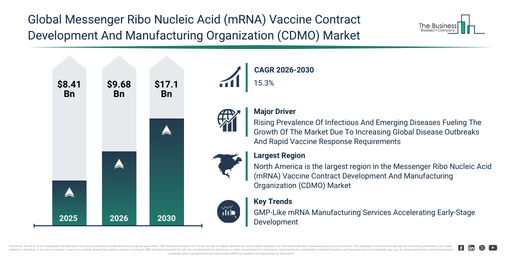
    The messenger ribo nucleic acid (mrna) vaccine contract development and manufacturing organization (cdmo) market size has shown rapid expansion in recent years. This market is projected to expand from $8.41 billion in 2025 to $9.68 billion in 2026, achieving a compound annual growth rate (CAGR) of 15.1%. The historical growth of this market can be linked to covid 19 vaccine programs, the rise of biotech startups, insufficient in-house manufacturing capabilities, an increase in contract manufacturing, and quick mrna platform validation.

    The market for messenger ribonucleic acid (mRNA) vaccine contract development and manufacturing organizations (CDMO) is projected to experience swift expansion over the coming years, reaching $17.1 billion by 2030 with a compound annual growth rate (CAGR) of 15.3%. This anticipated growth is driven by factors such as the increasing development of mRNA cancer vaccines, the rise of personalized vaccines, an increase in CDMO collaborations, the need for quick large-scale manufacturing, and an expanding range of mRNA therapies in development. Key trends anticipated during this period encompass services for lipid nanoparticle formulation, accelerated mRNA process scale-up, outsourced integrated fill-finish solutions, adaptable modular vaccine manufacturing facilities, and comprehensive end-to-end mRNA development offerings.

    Download A Free Sample Report For Comprehensive Market Insights:

    https://www.thebusinessresearchcompany.com/sample.aspx?id=33214&type=smp&utm_source=Blogs&utm_medium=Paid&utm_campaign=Jul_PR

    Messenger Ribo Nucleic Acid (mRNA) Vaccine Contract Development And Manufacturing Organization (CDMO) Market Expansion Drivers: What Is Shaping Future Growth?

    The increasing occurrence of infectious and newly developing diseases is projected to drive the expansion of the mRNA vaccine CDMO market in the future. These diseases are conditions resulting from disease-causing microbes that either spread quickly or appear for the first time, influenced by aspects like environmental shifts, city growth, and enhanced global connections. Increased global movement, higher population concentrations, and interlinked supply networks have sped up the spread of pathogens, leading to more common, extensive, and challenging-to-manage disease outbreaks. mRNA vaccine CDMOs are essential in tackling these issues, facilitating the swift creation, large-scale production, and adaptable manufacturing of vaccines necessary to combat changing infectious dangers. Given that mRNA technologies demand specific manufacturing facilities and specialized knowledge, vaccine developers often partner with contract development and manufacturing organizations to speed up development schedules and ensure manufacturing capabilities are in place during outbreaks. As an example, in May 2024, data from the World Health Organization (WHO), the United Nations’ global health agency based in Switzerland, showed that by 30 April 2024, over 7.6 million dengue cases were reported worldwide to WHO, comprising 3.4 million confirmed cases, more than 16,000 severe cases, and upwards of 3,000 fatalities. This rise was notably significant in the Region of the Americas, with cases surpassing seven million by April 2024, which exceeded the 2023 annual total of 4.6 million cases. Consequently, the increasing occurrence of infectious and emerging diseases is fueling the expansion of the mRNA vaccine CDMO market.

    Messenger Ribo Nucleic Acid (mRNA) Vaccine Contract Development And Manufacturing Organization (CDMO) Market Segment Breakdown: Which Categories Generate The Most Revenue?

    The messenger ribo nucleic acid (mrna) vaccine contract development and manufacturing organization (cdmo) market covered in this report is segmented –

    1) By Service Type: Process Development; Manufacturing; Analytical And Quality Control; Fill Finish; Packaging; Other Service Types

    2) By Vaccine Type: COVID-19 Vaccines; Cancer Vaccines; Infectious Disease Vaccines; Other Vaccine Types

    3) By Scale of Operation: Preclinical; Clinical; Commercial

    4) By End-User: Pharmaceutical Companies; Biotechnology Companies; Research Institutes; Other End-Users

    Subsegments:

    1) By Process Development: Formulation Optimization; Cell Line Development; Upstream Process Development; Process Scale-Up

    2) By Manufacturing: Lipid Nanoparticle Production; Enzymatic Capping; Purification Process

    3) By Analytical And Quality Control: Potency Testing; Purity Analysis; Stability Testing; Identity Testing; Microbial Testing

    4) By Fill Finish: Aseptic Filling; Vial Filling; Syringe Filling; Lyophilization

    5) By Packaging: Primary Packaging; Secondary Packaging; Labeling Operations; Cold Chain Packaging; Unit Dose Packaging

    6) By Other Service Types: Regulatory Support Services; Technology Transfer Services; Contract Development Services; Consulting Services; Supply Chain Management

    Messenger Ribo Nucleic Acid (mRNA) Vaccine Contract Development And Manufacturing Organization (CDMO) Market Strategic Trends: What Is Defining The Next Phase Of Growth?

    Leading companies in the mRNA vaccine CDMO market are increasingly prioritizing innovative approaches, such as phase-appropriate GMP mRNA contract development and manufacturing services, to accelerate preclinical and IND-enabling development, while upholding regulatory-aligned quality standards and achieving shorter timelines. Phase-appropriate GMP-like mRNA manufacturing refers to a production method designed to deliver high-quality, regulatory-aware mRNA material suitable for preclinical and early development stages, without the expenses and operational complexities associated with full GMP manufacturing. For instance, in May 2025, GenScript Biotech Corporation, a China-based global biotechnology reagents and services provider, launched a GMP-like mRNA manufacturing service aimed at supporting preclinical and IND-enabling development. This service provides high-quality, regulatory-aware mRNA with reduced lead times and lower costs compared to traditional full GMP manufacturing, reflecting the increasing demand for flexible, phase-appropriate CDMO solutions in the mRNA vaccine market.

    Messenger Ribo Nucleic Acid (mRNA) Vaccine Contract Development And Manufacturing Organization (CDMO) Market Key Players And Strategic Industry Positioning

    Major companies operating in the messenger ribo nucleic acid (mrna) vaccine contract development and manufacturing organization (cdmo) market are Sanofi S.A., Thermo Fisher Scientific Inc., FUJIFILM Diosynth Biotechnologies U.S.A. Inc., Danaher Corporation, Boehringer Ingelheim BioXcellence GmbH & Co. KG, AGC Biologics A/S, Eurofins Scientific SE, Lonza Group AG, BioNTech SE, Samsung Biologics Co. Ltd., WuXi Biologics (Cayman) Inc., Siegfried Holding AG, Recipharm AB, Vetter Pharma International GmbH, CordenPharma GmbH & Co. KG, Ajinomoto Bio-Pharma Services Inc., Novasep Holding S.A.S., Rentschler Biopharma SE, IDT Biologika GmbH, Wacker Biotech GmbH

    Access The Complete Messenger Ribo Nucleic Acid (mRNA) Vaccine Contract Development And Manufacturing Organization (CDMO) Market Report:

    https://www.thebusinessresearchcompany.com/report/messenger-ribo-nucleic-acid-mrna-vaccine-contract-development-and-manufacturing-organization-cdmo-market-report?utm_source=Blogs&utm_medium=Paid&utm_campaign=Jul_PR

    Messenger Ribo Nucleic Acid (mRNA) Vaccine Contract Development And Manufacturing Organization (CDMO) Market Regional Analysis: Which Region Leads By Revenue?

    North America was the largest region in the mRNA vaccine contract development and manufacturing organization (CDMO) market in 2025. Asia-Pacific is expected to be the fastest-growing region in the forecast period. The regions covered in the messenger ribo nucleic acid (mrna) vaccine contract development and manufacturing organization (cdmo) market report are Asia-Pacific, South East Asia, Western Europe, Eastern Europe, North America, South America, Middle East, Africa.

    Get in touch with us:

    The Business Research Company: https://www.thebusinessresearchcompany.com/

    Americas: +1 310-496-7795

    Asia: +44 7882 955267 & +91 8897263534

    Europe: +44 7882 955267

    Email us at: marketing@tbrc.info

    Follow us on:

    LinkedIn: https://in.linkedin.com/company/the-business-research-company

    YouTube: https://www.youtube.com/channel/UC24_fI0rV8cR5DxlCpgmyFQ

    Global Market Model: https://www.thebusinessresearchcompany.com/global-market-model
  • Memory-Augmenting Neural Devices  Market Size Projected To Increase From $1.63 Billion To $2.89 Billion During The Forecast Period

    Memory-Augmenting Neural Devices Market Size Projected To Increase From $1.63 Billion To $2.89 Billion During The Forecast Period

    Enhanced with market attractiveness analysis, total addressable market evaluation, company benchmarking matrices, interactive Excel dashboards, expanded supply chain intelligence, emerging startup coverage, and detailed product insights, The Business Research Company’s 2026 market reports deliver more actionable and strategically valuable research.

    Memory-Augmenting Neural Devices Market Revenue Outlook: What CAGR Is Expected Through 2030?

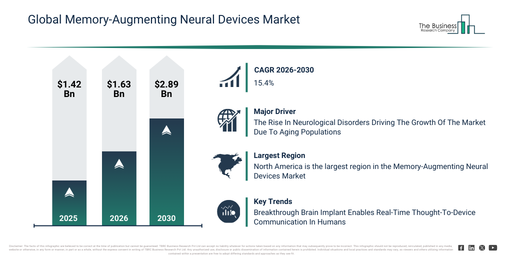
    The market for memory-augmenting neural devices has expanded rapidly in recent years. It is projected to increase from $1.42 billion in 2025 to $1.63 billion in 2026, at a compound annual growth rate (CAGR) of 15.2%. This growth observed in the past can be ascribed to the development of neurostimulation tools, early cognitive enhancement studies, the adoption of wearable neuro devices, the proliferation of BCI prototypes, and academic brain research programs.

    The market for memory-augmenting neural devices is projected to experience substantial expansion in the coming years. This market is forecast to reach $2.89 billion by 2030, exhibiting a compound annual growth rate (CAGR) of 15.4%. Factors contributing to this growth during the forecast period include the increasing requirements of an aging population, a growing demand for cognitive improvement, the spread of wearable neurotechnology, enhanced AI-powered neural analysis, and more extensive clinical validation studies. Key trends anticipated in the forecast period involve noninvasive brain stimulation wearables, AI-powered algorithms for memory enhancement, portable neurostimulation units, combined implant and wearable systems, and closed-loop cognitive assistance devices.

    Download A Free Sample Report For Comprehensive Market Insights:

    https://www.thebusinessresearchcompany.com/sample.aspx?id=33212&type=smp&utm_source=Blogs&utm_medium=Paid&utm_campaign=Jul_PR

    Memory-Augmenting Neural Devices Market Industry Drivers: What Is Driving Revenue Growth?

    The increasing incidence of neurological conditions is anticipated to fuel the expansion of the memory-augmenting neural devices market in the future. Defined as any disease or condition impacting the standard structure or function of the central nervous system (brain and spinal cord) or peripheral nervous system (nerves across the body), neurological disorders are surging due to the growing global elderly population, which subsequently raises the occurrence of age-related neurological conditions. Memory-augmenting neural devices offer assistance in managing neurological disorders by improving or recovering cognitive abilities, such as memory and learning, through specific neural stimulation and adaptive interface technologies. For example, data from March 2023, released by the Alzheimer’s Association, a US-based nonprofit voluntary health organization, indicates that in 2023, about 6.7 million Americans aged 65 and older were experiencing Alzheimer’s dementia, with projections suggesting this figure will escalate to 13.8 million by 2060. Consequently, the expanding occurrence of neurological disorders is a key factor propelling the growth of the memory-augmenting neural devices market.

    Memory-Augmenting Neural Devices Market Segmentation Trends And Revenue Drivers

    The memory-augmenting neural devices market covered in this report is segmented –

    1) By Device Type: Implantable Neural Devices; Noninvasive Brain Stimulation Devices; Other Device Types

    2) By Technology: Artificial Intelligence (AI) And Machine Learning-Based Memory Enhancement; Neural Implants & Electrodes; Transcranial Stimulation; Other Technologies

    3) By Application: Cognitive Enhancement; Neurodegenerative Disease Treatment; Brain-Computer Interfaces (BCIs); Other Applications

    4) By End User: Healthcare And Medical Institutions; Research And Academic Centers; Defense And Military; Other End Users

    Subsegments:

    1) By Implantable Neural Devices: Deep Brain Stimulation Systems; Cortical Microelectrode Arrays; Hippocampal Memory Prostheses; Neural Recording And Stimulation Implants; Closed Loop Neuromodulation Implants

    2) By Noninvasive Brain Stimulation Devices: Transcranial Magnetic Stimulation Systems; Transcranial Direct Current Stimulation Devices; Transcranial Alternating Current Stimulation Devices; Transcranial Random Noise Stimulation Devices; Focused Ultrasound Brain Stimulation Systems

    3) By Other Device Types: Wearable Neurofeedback Devices; Brain Computer Interface Headsets; Cognitive Enhancement Headgear; Portable Neurostimulation Devices; Hybrid Neural Modulation Systems

    #Memory-Augmenting Neural Devices Market Growth Trends: What Is Influencing The Future Outlook?

    Leading enterprises within the memory augmenting neural devices market are concentrating on creating advanced solutions, including implantable brain computer interfaces, with the aim of boosting cognitive abilities and improving memory recall. An implantable brain computer interface (BCI) refers to a device surgically positioned within the brain, which directly interprets neural signals and converts them into digital instructions for operating computers or external equipment. For example, during July 2025, Neuralink Corp., a neurotechnology firm based in the US, successfully placed its high-channel-count fully implantable brain computer interface (BCI) into a ninth human participant, as part of its continuing clinical trials. This implant is engineered to capture and decipher neural signals via extremely fine electrode threads embedded within the brain, facilitating immediate, real-time interaction between neural processes and external digital systems. The system incorporates wireless data transfer, permits extended implantation without requiring external hardware, and offers high-resolution signal acquisition, thereby enabling individuals to operate computers or interfaces solely through their thoughts. This significant achievement, notably the company’s inaugural occasion of conducting two implant surgeries within a single day, underscores enhanced surgical effectiveness and increasing clinical preparedness for widespread human implementation.

    #Memory-Augmenting Neural Devices Market Industry Leaders: Which Organizations Are Driving Competition?

    Major companies operating in the memory-augmenting neural devices market are Medtronic plc, Bitbrain Technologies S.L., NeuroLutions Inc., CorTec GmbH, FinalSpark Inc., Kernel Inc., Neuralink Corporation, NeuroPace Inc., Blackrock Neurotech Inc., NeuroSky Inc., Emotiv Inc., mBrainTrain Inc., BrainChip Holdings Ltd., BrainCo Inc., INBRAIN Neuroelectronics S.L., Merge Labs Inc., InBrain Neuroelectronics S.L., Axoft Inc., Motif Neurotech Inc., MintNeuro Inc.

    Access The Complete Memory-Augmenting Neural Devices Market Report:

    https://www.thebusinessresearchcompany.com/report/memory-augmenting-neural-devices-market-report?utm_source=Blogs&utm_medium=Paid&utm_campaign=Jul_PR

    Memory-Augmenting Neural Devices Market Largest Region By Revenue And Market Share

    North America was the largest region in the memory-augmenting neural devices market in 2025. Asia-Pacific is expected to be the fastest-growing region in the forecast period. The regions covered in the memory-augmenting neural devices market report are Asia-Pacific, South East Asia, Western Europe, Eastern Europe, North America, South America, Middle East, Africa.

    Get in touch with us:

    The Business Research Company: https://www.thebusinessresearchcompany.com/

    Americas: +1 310-496-7795

    Asia: +44 7882 955267 & +91 8897263534

    Europe: +44 7882 955267

    Email us at: marketing@tbrc.info

    Follow us on:

    LinkedIn: https://in.linkedin.com/company/the-business-research-company

    YouTube: https://www.youtube.com/channel/UC24_fI0rV8cR5DxlCpgmyFQ

    Global Market Model: https://www.thebusinessresearchcompany.com/global-market-model
  • Memory Implants  Market Growth Outlook Reveals A CAGR Of 9.7% And A Market Value Of $4.66 Billion By 2030

    Memory Implants Market Growth Outlook Reveals A CAGR Of 9.7% And A Market Value Of $4.66 Billion By 2030

    Through market attractiveness analysis, total addressable market evaluation, company benchmarking matrices, interactive Excel dashboards, expanded supply chain intelligence, emerging startup coverage, and detailed product insights, The Business Research Company’s 2026 market reports provide more actionable and strategically valuable research.

    Memory Implants Market Growth Analysis: How Will Revenue Expand During The Forecast Period?

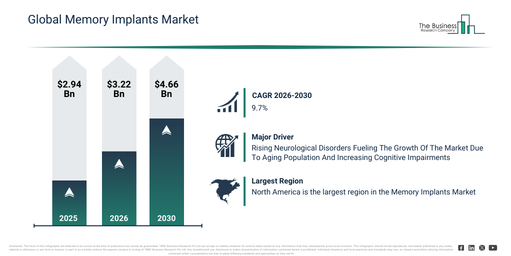
    The memory implants market size has demonstrated robust growth in recent years. It is projected to expand from $2.94 billion in 2025 to $3.22 billion in 2026, exhibiting a compound annual growth rate (CAGR) of 9.4%. The historical expansion of this market stems from several factors, including neuroscience research advances, early brain implant trials, growth in neuromodulation therapies, rising neurodegenerative disorders, and defense funded neural interface programs.

    The memory implants market is projected to experience robust expansion in the coming years. This market is forecast to reach $4.66 billion by 2030, exhibiting a compound annual growth rate (CAGR) of 9.7%. Factors contributing to this growth during the forecast period include an increase in cognitive disorder cases, advancements in brain computer interfaces, greater funding for neural engineering, the broadening of clinical neurotech trials, and the need for memory restoration therapies. Significant trends anticipated in the forecast period encompass implantable memory prosthetic systems, hippocampal signal encoding devices, closed loop neural memory stimulation, high density neural electrode arrays, and adaptive memory restoration implants.

    Download A Free Sample Report For Comprehensive Market Insights:

    https://www.thebusinessresearchcompany.com/sample.aspx?id=33211&type=smp&utm_source=Blogs&utm_medium=Paid&utm_campaign=Jul_PR

    #Memory Implants Market Growth Factors: Which Forces Are Supporting Market Expansion?

    The increasing occurrence of neurological disorders is anticipated to propel the expansion of the memory implants market moving forward. A neurological disorder is defined as a condition impacting the brain, spinal cord, or nervous system, leading to impairments in movement, sensation, cognition, behavior, or autonomic functions. The rise in neurological disorders is attributed to the rapid expansion of the aging population, which, in turn, boosts the prevalence of age-related conditions such as Alzheimer’s disease, Parkinson’s disease, and stroke, as neurological vulnerability escalates with increased life expectancy. Memory implants provide support to patients affected by the growing number of neurological disorders by contributing to improved cognitive function and overall quality of life. For instance, in March 2023, data from the Alzheimer’s Association, a US-based nonprofit voluntary health organization, indicated that approximately 6.7 million Americans aged 65 and older were living with Alzheimer’s dementia in 2023, a figure projected to increase to 13.8 million by 2060. Therefore, the rising prevalence of neurological disorders is driving the growth of the memory implants market.

    Memory Implants Market Segment Analysis Highlighting Growth Areas

    The memory implants market covered in this report is segmented –

    1) By Product Type: Deep Brain Stimulation Devices; Vagus Nerve Stimulation Devices; Implantable Memory Prosthetics; Electrode Arrays; Neural Signal Sensors; Brain–Computer Interface Hardware; Neuromodulation Devices; Wearable Neural Headsets; Other Product Types

    2) By Application: Alzheimer’s Disease; Parkinson’s Disease; Epilepsy; Traumatic Brain Injury; Memory Loss due to Aging; Other Cognitive Disorders; Other Applications

    3) By End-User: Hospitals; Clinics; Research Institutes; Rehabilitation Centers; Other End-Users

    Subsegments:

    1) By Deep Brain Stimulation Devices: Single Target Stimulation Systems; Multi Target Stimulation Systems; Closed Loop Stimulation Systems; Adaptive Stimulation Systems

    2) By Vagus Nerve Stimulation Devices: Implantable Vagus Nerve Stimulators; Transcutaneous Vagus Nerve Stimulation Systems; Programmable Vagus Nerve Modulation Devices

    3) By Implantable Memory Prosthetics: Hippocampal Memory Restoration Systems; Cortical Memory Enhancement Implants; Neural Memory Encoding Devices; Memory Recall Support Implants

    4) By Electrode Arrays: Depth Electrode Arrays; Surface Cortical Electrode Arrays; Flexible Neural Electrode Arrays; High Density Electrode Arrays

    5) By Neural Signal Sensors: Intracranial Neural Signal Sensors; Implantable Bioelectric Signal Sensors; Real Time Neural Monitoring Sensors

    6) By Brain–Computer Interface Hardware: Implantable Brain Signal Processing Units; External Neural Signal Interface Devices; Hybrid Brain Interface Systems

    7) By Neuromodulation Devices: Electrical Neuromodulation Systems; Magnetic Neuromodulation Systems; Targeted Neural Modulation Devices

    8) By Wearable Neural Headsets: Electroencephalography Based Neural Headsets; Cognitive Monitoring Neural Wearables; Noninvasive Neurostimulation Headsets

    9) By Other Product Types: Hybrid Memory Implant Systems; Experimental Neural Augmentation Devices; Integrated Cognitive Enhancement Platforms

    Memory Implants Market Leading Companies: Who Holds Significant Market Presence?

    Major companies operating in the memory implants market are Abbott Laboratories, Medtronic plc, Boston Scientific Corporation, LivaNova PLC, Renishaw plc, NeuroPace Inc., Beijing PINS Medical Co Ltd., FHC Inc., electroCore Inc., SetPoint Medical Corporation, Parasym Ltd., MicroTransponder Inc., ReShape Lifesciences Inc., Adriakaim Inc., Evren Technologies Inc., Soterix Medical Inc., Aleva Neurotherapeutics SA, SceneRay Corporation Ltd., NeuroSigma Inc., BioControl Medical Ltd.

    Access The Complete Memory Implants Market Report:

    https://www.thebusinessresearchcompany.com/report/memory-implants-market-report?utm_source=Blogs&utm_medium=Paid&utm_campaign=Jul_PR

    Memory Implants Market Regional Analysis And Leading Geography

    North America was the largest region in the memory implants market in 2025. Asia-Pacific is expected to be the fastest-growing region in the forecast period. The regions covered in the memory implants market report are Asia-Pacific, South East Asia, Western Europe, Eastern Europe, North America, South America, Middle East, Africa.

    Get in touch with us:

    The Business Research Company: https://www.thebusinessresearchcompany.com/

    Americas: +1 310-496-7795

    Asia: +44 7882 955267 & +91 8897263534

    Europe: +44 7882 955267

    Email us at: marketing@tbrc.info

    Follow us on:

    LinkedIn: https://in.linkedin.com/company/the-business-research-company

    YouTube: https://www.youtube.com/channel/UC24_fI0rV8cR5DxlCpgmyFQ

    Global Market Model: https://www.thebusinessresearchcompany.com/global-market-model
  • Medical Imaging Outsourcing  Market Forecast Highlights Expansion From $19.68 Billion To $27.88 Billion Through 2030

    Medical Imaging Outsourcing Market Forecast Highlights Expansion From $19.68 Billion To $27.88 Billion Through 2030

    Delivering more actionable and strategically valuable research, The Business Research Company’s 2026 market reports feature market attractiveness analysis, total addressable market evaluation, company benchmarking matrices, interactive Excel dashboards, expanded supply chain intelligence, emerging startup coverage, and detailed product insights.

    Medical Imaging Outsourcing Market Forecast: What Market Value Is Expected By 2030?

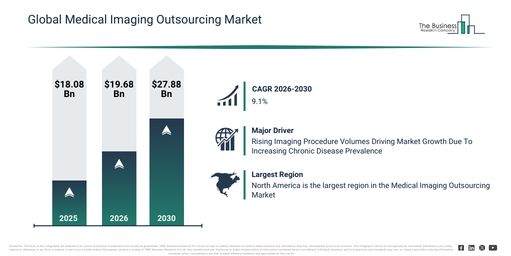
    The medical imaging outsourcing market has experienced robust expansion recently. It is projected to increase from $18.08 billion in 2025 to $19.68 billion in 2026, achieving a compound annual growth rate (CAGR) of 8.9%. Historically, this growth has been fueled by a scarcity of radiologists, rising volumes of diagnostic imaging, hospital cost reduction initiatives, the early integration of teleradiology, and the expansion of digital imaging systems.

    The medical imaging outsourcing market is poised for significant expansion over the next several years. It is projected to reach $27.88 billion by 2030, growing at a compound annual growth rate (CAGR) of 9.1%. This anticipated growth during the forecast period is driven by factors such as an increasing demand for cross-border reporting, accumulating imaging backlogs, the development of remote diagnostics models, a rise in outsourcing by hospitals, and the necessity for quicker report turnaround times. Prominent trends expected in this period include the establishment of global teleradiology reporting networks, continuous remote image interpretation services, centralized management of imaging workflows, cloud-based solutions for image archiving, and specialized subspecialty radiology outsourcing.

    Download A Free Sample Report For Comprehensive Market Insights:

    https://www.thebusinessresearchcompany.com/sample.aspx?id=33210&type=smp&utm_source=Blogs&utm_medium=Paid&utm_campaign=Jul_PR

    Medical Imaging Outsourcing Market Demand Drivers: What Is Fueling Industry Growth?

    The growth of the medical imaging outsourcing market is anticipated to be driven by increasing imaging procedure volumes. These volumes represent the total diagnostic imaging tests conducted by healthcare providers over a specific period. The rise in these volumes stems from the escalating incidence of chronic diseases, which necessitates frequent diagnostic imaging for early identification, tracking disease progression, and informing treatment decisions. Medical imaging outsourcing facilitates handling these increased demands by offering healthcare providers efficient access to remote radiology specialists, adaptable resources, quicker report delivery, and a reduced operational load, all without the need for expanding internal infrastructure. For example, in November 2023, the National Health Service, a UK-based government department, reported that in the year ending March 2023, England performed 45.0 million imaging tests, a 2.2% increase from the 44.0 million in the previous year. This included 10.3 million diagnostic ultrasound tests, which rose by 1.8%; 7.1 million CT scans, up by 5.5%; and 4.1 million MRI scans, showing a 6.2% increase. Consequently, the escalating imaging procedure volumes are propelling the expansion of the medical imaging outsourcing market. The growth of the medical imaging outsourcing market is projected to be advanced by the ongoing expansion of healthcare infrastructure. This infrastructure covers the necessary facilities, equipment, and personnel required for effective medical service delivery to a population. The expansion of healthcare infrastructure is occurring due to population growth, which necessitates a greater number of hospitals, clinics, medical devices, and skilled healthcare professionals to adequately serve the public and maintain well-being. This growth in infrastructure fuels the need for advanced diagnostic services, allowing medical imaging outsourcing to offer specialized knowledge, quicker service delivery, and economical options that enhance the expanding network of healthcare facilities. For instance, in May 2023, the American Health Care Association, a US-based nonprofit organization, reported that the number of hospitals in the United States grew by 0.591% from the prior year, increasing from 6,093 to 6,129. Thus, the expansion of healthcare infrastructure is a key driver for the medical imaging outsourcing market.

    Medical Imaging Outsourcing Market Segment Performance And Strategic Opportunities

    The medical imaging outsourcing market covered in this report is segmented –

    1) By Product Type: Computed Tomography (CT); Magnetic Resonance Imaging (MRI); Ultrasound; X-Ray; Nuclear Medicine; Other Modalities

    2) By Delivery Mode: Onsite Outsourcing Services; Offsite Outsourcing Services; Hybrid Outsourcing Services

    3) By Application: Cardiology; Diagnostic Imaging; Orthopedic; Diagnostic Testing Systems; Drug Delivery; Diabetes Care; Other Application

    4) By End Use: Hospitals And Clinics; Interventional Imaging Centers; Other End Uses

    Subsegments:

    1) By Computed Tomography: High Resolution Computed Tomography; Low Dose Computed Tomography; Contrast Enhanced Computed Tomography; Cardiac Computed Tomography; Whole Body Computed Tomography

    2) By Magnetic Resonance Imaging: Functional Magnetic Resonance Imaging; Diffusion Weighted Imaging; Magnetic Resonance Angiography; Magnetic Resonance Spectroscopy; Cardiac Magnetic Resonance Imaging

    3) By Ultrasound: Diagnostic Ultrasound Imaging; Doppler Ultrasound Imaging; Three Dimensional Ultrasound Imaging; Four Dimensional Ultrasound Imaging; Point Of Care Ultrasound

    4) By X-Ray: Digital Radiography; Computed Radiography; Mobile X-Ray Imaging; Fluoroscopy Imaging; Dental X-Ray Imaging

    5) By Nuclear Medicine: Positron Emission Tomography; Single Photon Emission Computed Tomography; Hybrid Nuclear Imaging; Radionuclide Imaging; Molecular Imaging

    6) By Other Modalities: Optical Imaging; Thermal Imaging; Elastography Imaging; Photoacoustic Imaging; Molecular Diagnostic Imaging

    Medical Imaging Outsourcing Market Key Players: Which Companies Shape Industry Competition?

    Major companies operating in the medical imaging outsourcing market are Sonic Healthcare Limited, RadNet Inc., Agfa HealthCare NV, Flatworld Solutions Pvt. Ltd., Radiology Partners Inc., Envision Radiology, ProScan Imaging, Alliance Medical Limited, Teleradiology Solutions, Everlight Radiology Limited, ONRAD Inc., RamSoft Inc., StatRad LLC, Sirona Medical Inc., Candelis Inc., MedWeb LLC, MetaMed, Shields Health Care Group, Diagnostic Imaging Services, MEDNAX Services Inc., 3DR Laboratories Inc., and American Imaging Consultants.

    Access The Complete Medical Imaging Outsourcing Market Report:

    https://www.thebusinessresearchcompany.com/report/medical-imaging-outsourcing-market-report?utm_source=Blogs&utm_medium=Paid&utm_campaign=Jul_PR

    Medical Imaging Outsourcing Market Geographic Analysis: Where Is Demand Growing The Fastest?

    North America was the largest region in the medical imaging outsourcing market in 2025. Asia-Pacific is expected to be the fastest-growing region in the forecast period. The regions covered in the medical imaging outsourcing market report are Asia-Pacific, South East Asia, Western Europe, Eastern Europe, North America, South America, Middle East, Africa.

    Get in touch with us:

    The Business Research Company: https://www.thebusinessresearchcompany.com/

    Americas: +1 310-496-7795

    Asia: +44 7882 955267 & +91 8897263534

    Europe: +44 7882 955267

    Email us at: marketing@tbrc.info

    Follow us on:

    LinkedIn: https://in.linkedin.com/company/the-business-research-company

    YouTube: https://www.youtube.com/channel/UC24_fI0rV8cR5DxlCpgmyFQ

    Global Market Model: https://www.thebusinessresearchcompany.com/global-market-model
  • Medical Fiber Optics  Market Expected To Reach $3.29 Billion By 2030 As Growth Accelerates At 7% CAGR

    Medical Fiber Optics Market Expected To Reach $3.29 Billion By 2030 As Growth Accelerates At 7% CAGR

    Enhanced with market attractiveness analysis, total addressable market evaluation, company benchmarking matrices, interactive Excel dashboards, expanded supply chain intelligence, emerging startup coverage, and detailed product insights, The Business Research Company’s 2026 market reports deliver more actionable and strategically valuable research.

    Medical Fiber Optics Market Size Outlook: How Fast Will Revenue Grow Through 2030?

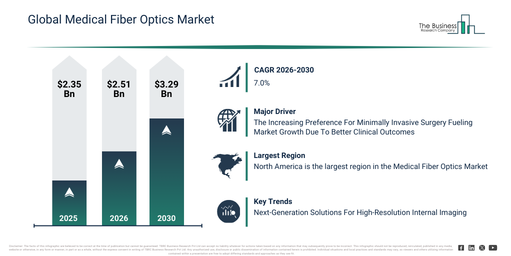
    The medical fiber optics market has demonstrated substantial growth over recent years. It is anticipated to increase from $2.35 billion in 2025 to $2.51 billion in 2026, achieving a compound annual growth rate (CAGR) of 6.8%. The expansion seen in previous periods can be linked to a rise in endoscopic procedures, advancements in laser-based therapies, the proliferation of minimally invasive diagnostics, hospitals’ demand for improved visualization tools, and ongoing progress in optical materials.

    The medical fiber optics market size is projected to experience substantial expansion over the coming years. Its valuation is anticipated to reach $3.29 billion by 2030, exhibiting a compound annual growth rate (CAGR) of 7.0%. This anticipated growth throughout the forecast period stems from factors such as a rise in image-guided surgeries, an escalating need for precision diagnostics, an increase in outpatient procedures, the broadening of biomedical sensing applications, and greater uptake of disposable optical devices. Key trends during this period are expected to encompass high-resolution endoscopic fiber systems, laser energy delivery fibers, miniaturized optical sensing probes, disposable fiber optic surgical tools, and advanced imaging fiber bundles.

    Download A Free Sample Report For Comprehensive Market Insights:

    https://www.thebusinessresearchcompany.com/sample.aspx?id=33209&type=smp&utm_source=Blogs&utm_medium=Paid&utm_campaign=Jul_PR

    Medical Fiber Optics Market Growth Drivers: What Factors Are Accelerating Expansion?

    The increasing preference for minimally invasive surgery is projected to boost the medical fiber optics market’s expansion in the coming years. This type of surgery involves executing procedures through small incisions, utilizing specialized instruments and advanced visualization technologies, which helps in reducing tissue damage, postoperative discomfort, and recovery durations. The inclination towards these procedures is growing due to factors such as faster patient recovery, lower complication rates, and shorter hospital stays. This trend directly stimulates the demand for medical fiber optics, given that flexible and high-precision fiber-optic components are vital for illumination and imaging in endoscopic, laparoscopic, and robotic-assisted surgeries, enabling surgeons to clearly visualize internal structures and perform complex operations via minimal access points. For instance, in November 2025, as per Intuitive Surgical Inc., a US-based medical device company, customers employed da Vinci robotic surgical systems in approximately 2.29 million surgical procedures worldwide during 2023, which signifies an increase of about 22% compared with 2022, with cumulative procedures on da Vinci platforms surpassing 14 million. Consequently, the escalating adoption of minimally invasive surgical procedures stands as a primary factor fueling the growth of the medical fiber optics market.

    #Medical Fiber Optics Market Segment Landscape And Growth Potential

    The medical fiber optics market covered in this report is segmented –

    1) By Type: Single Mode Optical Fiber; Multimode Optical Fiber

    2) By Usage: Disposable; Reusable

    3) By Application: Endoscopic Imaging; Laser Signal Delivery; Biomedical Sensing; Illumination; Other Applications

    4) By End User: Hospital; Specialty Clinics; Ambulatory Surgical Centers; Diagnostic Laboratories; Other End Users

    Subsegments:

    1) By Single Mode Optical Fiber: Long Distance Signal Transmission; High Precision Laser Energy Delivery; Advanced Biomedical Sensing

    2) By Multimode Optical Fiber: Short Distance Image Transmission; Endoscopic Imaging Bundles; Medical Illumination Systems

    Medical Fiber Optics Market Trends: What Is Shaping Future Industry Growth?

    Leading companies in the medical fiber optics market are concentrating on developing innovative products like imaging fiber assemblies to facilitate high-resolution, minimally invasive diagnostic imaging applications. These imaging fiber assemblies are specialized bundles of optical fibers crafted for integration into medical imaging catheters and systems, enabling the transmission and collection of light to produce high-quality internal images. Such assemblies provide enhanced flexibility and precision when compared to traditional rigid endoscopes, thus supporting a wide array of minimally invasive diagnostic and interventional procedures. For instance, in January 2025, Coherent Corp., a US-based photonics company, announced the launch of its AxioView imaging fiber assemblies, specifically designed for use in optical coherence tomography (OCT), near-infrared spectroscopy (NIRS), and multimodal catheter-based imaging applications. AxioView boasts specialty fiber designs optimized for medical imaging, catheter-ready distal geometries such as ball-tip and side-fire configurations, vertically integrated manufacturing to ensure consistent optical performance, and ISO 13485-certified production to meet regulatory requirements.

    Medical Fiber Optics Market Competitive Landscape: Who Are The Leading Companies?

    Major companies operating in the medical fiber optics market are Heraeus Holding GmbH, Boston Scientific Corporation, Fujikura Ltd., Coherent Medical Group, Smiths Group plc, MKS Instruments Inc., Carl Zeiss Meditec AG, Integra Lifesciences Corporation, IPG Photonics Corporation, SCHOTT AG, Radiall America Inc., OZ Optics Ltd., HEINE Optotechnik GmbH & Co. KG, ForTec Medical Corporation, Thorlabs Inc., Fiberoptics Technology Incorporated (FTI), Biolitec AG, Laser Mechanisms Inc., LEONI AG, Beijing L.H.H. Medical Devices Co. Ltd.

    Access The Complete Medical Fiber Optics Market Report:

    https://www.thebusinessresearchcompany.com/report/medical-fiber-optics-market-report?utm_source=Blogs&utm_medium=Paid&utm_campaign=Jul_PR

    Medical Fiber Optics Market Global Footprint: Which Region Holds Market Leadership?

    North America was the largest region in the medical fiber optics market in 2025. The regions covered in the medical fiber optics market report are Asia-Pacific, South East Asia, Western Europe, Eastern Europe, North America, South America, Middle East, Africa.

    Get in touch with us:

    The Business Research Company: https://www.thebusinessresearchcompany.com/

    Americas: +1 310-496-7795

    Asia: +44 7882 955267 & +91 8897263534

    Europe: +44 7882 955267

    Email us at: marketing@tbrc.info

    Follow us on:

    LinkedIn: https://in.linkedin.com/company/the-business-research-company

    YouTube: https://www.youtube.com/channel/UC24_fI0rV8cR5DxlCpgmyFQ

    Global Market Model: https://www.thebusinessresearchcompany.com/global-market-model
  • Magnetic Navigation Surgical Robot  Market Opportunities Are Emerging Beyond Traditional Growth Areas

    Magnetic Navigation Surgical Robot Market Opportunities Are Emerging Beyond Traditional Growth Areas

    Delivering more actionable and strategically valuable research, The Business Research Company’s 2026 market reports feature market attractiveness analysis, total addressable market evaluation, company benchmarking matrices, interactive Excel dashboards, expanded supply chain intelligence, emerging startup coverage, and detailed product insights.

    Magnetic Navigation Surgical Robot Market CAGR Analysis And Future Market Development

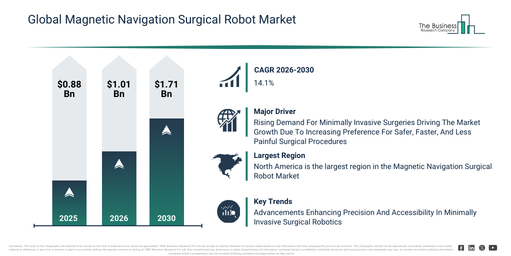
    The market for magnetic navigation surgical robots has experienced rapid expansion in recent years. It is projected to increase from $0.88 billion in 2025 to $1.01 billion in 2026, demonstrating a compound annual growth rate (CAGR) of 13.9%. The historic period’s growth can be attributed to an increase in minimally invasive surgery, the early adoption of surgical robotics, the necessity for greater procedural precision, a rise in complex cardiac interventions, and hospital investment in advanced operating rooms.

    The magnetic navigation surgical robot market is projected for significant expansion in the coming years. By 2030, this market is anticipated to reach $1.71 billion, exhibiting a compound annual growth rate (CAGR) of 14.1%. Factors driving this growth during the forecast period include an increase in robotic-assisted surgical procedures, the broadening scope of image-guided interventions, a greater need for highly accurate navigation systems, the proliferation of specialized surgical centers, and enhanced surgeon education in robotic platforms. Key trends expected during the forecast period involve magnetically guided minimally invasive operations, integrated software for surgical planning, robotic systems for catheter navigation, control modules for high-precision instruments, and tools for procedure simulation and planning.

    Download A Free Sample Report For Comprehensive Market Insights:

    https://www.thebusinessresearchcompany.com/sample.aspx?id=33207&type=smp&utm_source=Blogs&utm_medium=Paid&utm_campaign=Jul_PR

    #Magnetic Navigation Surgical Robot Market Demand Drivers Creating New Revenue Opportunities

    The future expansion of the magnetic navigation surgical robot market is expected to be driven by the increasing need for minimally invasive surgeries. These medical procedures are performed through small incisions using specialized instruments and techniques, which result in reduced tissue damage, less pain, and quicker patient recovery compared to traditional open surgeries. The adoption of minimally invasive surgery is growing due to progress in surgical instruments and imaging technologies, enabling enhanced precision with less patient trauma and faster healing times. Magnetic navigation surgical robots improve minimally invasive surgeries by offering surgeons accurate, real-time control of instruments through tiny incisions, leading to better accuracy, less tissue injury, and facilitating complex procedures that would be challenging or hazardous with traditional methods. For instance, in June 2024, data from the American Society of Plastic Surgeons, a US-based non-profit organization, indicated that 347,782 liposuction procedures were performed in 2023, showing a 7% increase from 2022. Minimally invasive procedures also grew by 7% during that year, surpassing the growth of surgical procedures by 2 percentage points. Overall, plastic surgeries rose 5% year-over-year, while minimally invasive treatments observed a 7% increase. Therefore, the rising demand for minimally invasive surgeries is a key factor propelling the growth of the magnetic navigation surgical robot market.

    Magnetic Navigation Surgical Robot Market Segment Analysis And Revenue Opportunities

    The magnetic navigation surgical robot market covered in this report is segmented –

    1) By Component: Hardware; Software; Services

    2) By Technology: Active Magnetic Navigation; Passive Magnetic Navigation

    3) By Distribution Channel: Direct Sales; Distributors

    4) By Application: Spine Surgery; Orthopedic Surgery; Neurosurgery; Interventional Cardiology; Ear, Nose, And Throat (ENT) Surgery; Other Surgical Applications

    5) By End-User: Hospitals; Ambulatory Surgical Centers; Specialty Clinics

    Subsegments:

    1) By Hardware: Robotic Manipulation Units; Magnetic Field Generation Systems; Surgical Instrument Navigation Components; Sensor And Imaging Hardware; Control And Power Supply Units

    2) By Software: Navigation And Guidance Software; Imaging Integration Software; Motion Control And Planning Software; User Interface And Visualization Software; Data Processing And Analytics Software

    3) By Services: Installation And System Integration Services; Clinical Training And Education Services; Maintenance And Technical Support Services; Calibration And Performance Optimization Services; Regulatory Compliance And Validation Services

    Magnetic Navigation Surgical Robot Market Trends Driving Strategic Industry Expansion

    Leading firms within the magnetic navigation surgical robot market are prioritizing the creation of novel solutions, including sophisticated endovascular robotic surgery systems, aimed at enhancing surgical accuracy and minimizing procedural hazards. These advanced endovascular robotic surgery solutions represent robotic frameworks that employ accurate, computer-driven navigation to maneuver instruments through blood vessels, thereby assisting surgeons in executing intricate operations with superior precision, less invasiveness, and heightened patient security. As an illustration, in November 2025, Stereotaxis Inc., a US-based medical technology company, secured U.S. FDA 510(k) clearance for its GenesisX Robotic Magnetic Navigation System, which is a groundbreaking surgical robot engineered to streamline installation and expand the availability of magnetic navigation technology in endovascular surgeries, demonstrating continuous advancements in this domain. Such robotic systems enhance procedural exactness and shorten recovery periods by allowing surgeons to conduct challenging operations with augmented control. With hospitals and surgical centers progressively looking for technologies that better patient outcomes while simultaneously optimizing infrastructure and operational efficiency, magnetic navigation surgical robots are becoming increasingly recognized as a crucial enabling technology.

    Magnetic Navigation Surgical Robot Market Leading Players Shaping Industry Direction

    Major companies operating in the magnetic navigation surgical robot market are Medtronic plc, Stereotaxis Inc., Globus Medical Inc., MicroPort Scientific Corporation, Genesis Robotic Magnetic Navigation System, ZimVie Inc., Northern Digital Inc., Brain Navi Biotechnology Co. Ltd., Synaptive Medical Inc., ClearPoint Neuro Inc., Naviq Inc., Polhemus Incorporated, Levita Magnetics International Corp., Flux Robotics Inc., Radwave Technologies Inc., Magnetecs Corporation, EndoQuest Robotics Inc., Nanoflex Robotics AG, Theranautilus Private Limited, Magnendo Corp.

    Access The Complete Magnetic Navigation Surgical Robot Market Report:

    https://www.thebusinessresearchcompany.com/report/magnetic-navigation-surgical-robot-market-report?utm_source=Blogs&utm_medium=Paid&utm_campaign=Jul_PR

    Magnetic Navigation Surgical Robot Market Leading Geography: Which Region Generates The Most Revenue?

    North America was the largest region in the magnetic navigation surgical robot market in 2025. Asia-Pacific is expected to be the fastest-growing region in the forecast period. The regions covered in the magnetic navigation surgical robot market report are Asia-Pacific, South East Asia, Western Europe, Eastern Europe, North America, South America, Middle East, Africa.

    Get in touch with us:

    The Business Research Company: https://www.thebusinessresearchcompany.com/

    Americas: +1 310-496-7795

    Asia: +44 7882 955267 & +91 8897263534

    Europe: +44 7882 955267

    Email us at: marketing@tbrc.info

    Follow us on:

    LinkedIn: https://in.linkedin.com/company/the-business-research-company

    YouTube: https://www.youtube.com/channel/UC24_fI0rV8cR5DxlCpgmyFQ

    Global Market Model: https://www.thebusinessresearchcompany.com/global-market-model
  • Lipid Nanoparticle Delivery System  Market Growth Is Accelerating As Industry Transformation Continues

    Lipid Nanoparticle Delivery System Market Growth Is Accelerating As Industry Transformation Continues

    Through market attractiveness analysis, total addressable market evaluation, company benchmarking matrices, interactive Excel dashboards, expanded supply chain intelligence, emerging startup coverage, and detailed product insights, The Business Research Company’s 2026 market reports provide more actionable and strategically valuable research.

    Lipid Nanoparticle Delivery System Market Expected To Reach $4.19 Billion By 2030 At 15.5% CAGR

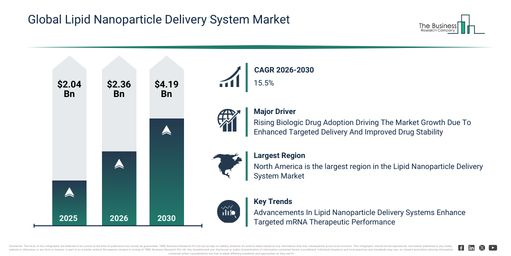
    The lipid nanoparticle delivery system market has experienced rapid expansion in recent years. It is projected to grow from $2.04 billion in 2025 to $2.36 billion in 2026, at a compound annual growth rate (CAGR) of 15.3%. This historical growth can be attributed to several factors, including advancements in lipid chemistry research, the increasing prevalence of nucleic acid therapeutics, the enlargement of vaccine development programs, augmented funding for gene therapy research, and the establishment of robust nanoparticle manufacturing capabilities.

    The lipid nanoparticle delivery system market is poised for substantial expansion in the coming years. It is expected to climb to $4.19 billion by 2030, demonstrating a compound annual growth rate (CAGR) of 15.5%. This anticipated growth during the forecast period is driven by several factors, including the expanding pipeline of RNA-based drugs, increased investments in precision medicine, the broader adoption of personalized therapeutics, a growing need for scalable delivery platforms, and a rise in regulatory approvals for gene therapies. Concurrently, major trends expected during this period involve the increasing embrace of mRNA-based therapeutic delivery, a rising demand for ionizable lipid formulations, a concentrated focus on targeted drug delivery systems, the expansion of scalable nanoparticle manufacturing processes, and an enhanced emphasis on ensuring delivery efficiency and stability.

    Download A Free Sample Report For Comprehensive Market Insights:

    https://www.thebusinessresearchcompany.com/sample.aspx?id=33202&type=smp&utm_source=Blogs&utm_medium=Paid&utm_campaign=Jul_PR

    Lipid Nanoparticle Delivery System Market Expansion Drivers: What Is Shaping Future Growth?

    The increasing use of biologic drugs is anticipated to propel the expansion of the lipid nanoparticle delivery system market moving forward. Biologic drugs are therapeutic products created from living systems, such as proteins, antibodies, or cells, designed to treat ailments that traditional chemical drugs cannot address. The utilization of biologic drugs is growing due to the rising incidence of chronic and complex diseases that require targeted therapies. Lipid nanoparticle delivery systems enhance the adoption of biologic drugs by encapsulating them to prevent degradation, facilitating cellular uptake, and enabling precise delivery to target tissues. For instance, in January 2023, as per Cardinal Health Inc., a US-based healthcare company, the US had 33 biosimilar products approved by the FDA as of January 2022, with 21 available on the market. By 2023, FDA-approved biosimilars had increased to 40, with 25 commercially available. Therefore, the expanding adoption of biologic drugs is driving the growth of the lipid nanoparticle delivery system market.

    Lipid Nanoparticle Delivery System Market Segment Analysis: What Are The Major Market Categories?

    The lipid nanoparticle delivery system market covered in this report is segmented –

    1) By Product Type: Solid Lipid Nanoparticles; Nanostructured Lipid Carriers; Liposomes; Other Product Types

    2) By Route Of Administration: Oral; Injectable; Topical; Other Route Of Administrations

    3) By Application: Drug Delivery; Gene Therapy; Vaccines; Cosmetics; Other Applications

    4) By End-User: Pharmaceutical And Biotechnology Companies; Research Institutes; Hospitals And Clinics; Other End Users

    Subsegments:

    1) By Solid Lipid Nanoparticles: Glyceryl Monostearate Based; Glyceryl Behenate Based; Stearic Acid Based; Compritol Based

    2) By Nanostructured Lipid Carriers: Type I Nanostructured Lipid Carriers; Type II Nanostructured Lipid Carriers; Type III Nanostructured Lipid Carriers

    3) By Liposomes: Multilamellar Vesicles; Small Unilamellar Vesicles; Large Unilamellar Vesicles; Giant Unilamellar Vesicles

    4) By Other Product Types: Polymeric Lipid Nanoparticles; Lipid Polymer Hybrids; Micelles

    Lipid Nanoparticle Delivery System Market Strategic Trends: What Is Defining The Next Phase Of Growth?

    Leading firms in the lipid nanoparticle delivery system sector are concentrating on creating sophisticated solutions, particularly targeted mRNA delivery systems, with the aim of boosting the accuracy, effectiveness, and safety of gene therapies and vaccines. This type of system is a technological approach employing lipid nanoparticles or alternative carriers to precisely deliver messenger RNA (mRNA) to intended cells or tissues, thereby ensuring robust protein production and concurrently reducing unintended effects and immune responses. As an illustration, in November 2025, Acuitas Therapeutics Inc., a biotechnology company based in Canada, introduced Next-Generation Lipid Nanoparticle Advancements designed to refine the targeted delivery and efficacy of mRNA therapeutics. Key attributes include up to fourfold potency increases for gene editing and vaccines, improved lipids engineered to lessen liver exposure while preserving effectiveness in mouse models, and DARPin-conjugated LNPs for precise targeting of T-lymphocytes. Such innovations significantly improve ALC-315, a component of Pfizer-BioNTech’s COMIRNATY vaccine, by facilitating superior intramuscular mRNA delivery for cancer vaccines even at reduced doses. Furthermore, these advancements open up wider applications in CAR T-cell therapies, epigenetic treatments, multivalent vaccines targeting diseases like malaria, HIV, or TB, and personalized oncology, ultimately speeding up the development of safer and more potent mRNA therapies that extend beyond liver targets.

    Lipid Nanoparticle Delivery System Market Leading Companies Driving Competitive Growth

    Major companies operating in the lipid nanoparticle delivery system market are Johnson and Johnson, Pfizer Inc, AstraZeneca plc, Avanti Polar Lipids Inc, Evonik Industries AG, Moderna Inc, Sanofi SA, BioNTech SE, Alnylam Pharmaceuticals Inc, Ascendia Pharmaceuticals Inc, Arcturus Therapeutics Holdings Inc, Lipoid GmbH, Creative Biolabs Inc, Acuitas Therapeutics Inc, Genevant Sciences GmbH, Polymun Scientific Immunbiologische Forschung GmbH, Carcell Biopharma Inc, Integrated Nanotherapeutics Inc, Sinopeg Biotech Co Ltd, CureVac NV, ReCode Therapeutics Inc, and Intellia Therapeutics Inc.

    Access The Complete Lipid Nanoparticle Delivery System Market Report:

    https://www.thebusinessresearchcompany.com/report/lipid-nanoparticle-delivery-system-market-report?utm_source=Blogs&utm_medium=Paid&utm_campaign=Jul_PR

    Lipid Nanoparticle Delivery System Market Geographic Distribution And Regional Opportunities

    North America was the largest region in the lipid nanoparticle delivery system market in 2025. Asia-Pacific is expected to be the fastest-growing region in the forecast period. The regions covered in the lipid nanoparticle delivery system market report are Asia-Pacific, South East Asia, Western Europe, Eastern Europe, North America, South America, Middle East, Africa.

    Get in touch with us:

    The Business Research Company: https://www.thebusinessresearchcompany.com/

    Americas: +1 310-496-7795

    Asia: +44 7882 955267 & +91 8897263534

    Europe: +44 7882 955267

    Email us at: marketing@tbrc.info

    Follow us on:

    LinkedIn: https://in.linkedin.com/company/the-business-research-company

    YouTube: https://www.youtube.com/channel/UC24_fI0rV8cR5DxlCpgmyFQ

    Global Market Model: https://www.thebusinessresearchcompany.com/global-market-model
  • Ligation Devices  Market Trends And Growth Drivers Point To Strong Future Potential

    Ligation Devices Market Trends And Growth Drivers Point To Strong Future Potential

    Enhanced with market attractiveness analysis, total addressable market evaluation, company benchmarking matrices, interactive Excel dashboards, expanded supply chain intelligence, emerging startup coverage, and detailed product insights, The Business Research Company’s 2026 market reports deliver more actionable and strategically valuable research.

    Ligation Devices Market Growth From $1.34 Billion In 2026 To $1.8 Billion By 2030 At A CAGR Of 7.8%

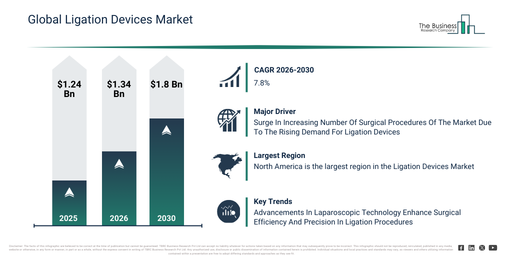
    The ligation devices market has shown substantial growth over recent years. Forecasts indicate its size will increase from $1.24 billion in 2025 to $1.34 billion in 2026, exhibiting a compound annual growth rate (CAGR) of 7.6%. This historical expansion can be ascribed to a rising number of surgical procedures, the development of hospital infrastructure, increased adoption of laparoscopic surgeries, improved access to advanced surgical instruments, and the growing incidence of chronic diseases.

    The ligation devices market is projected to experience robust growth in the coming years. Its value is anticipated to reach $1.8 billion by 2030, exhibiting a compound annual growth rate (CAGR) of 7.8%. This expansion during the forecast period is driven by a rising demand for less invasive surgical methods, increased funding for innovations in surgical technology, the proliferation of ambulatory surgical centers, an intensified emphasis on operational efficiency in procedures, and a greater uptake of sophisticated endoscopic instruments. Prominent trends expected within this period encompass a wider embrace of minimally invasive ligation methods, a surge in the use of disposable and single-use ligation devices, an increasing need for accurate clip application systems, the broadening of endoscopic and laparoscopic ligation techniques, and an elevated commitment to patient safety alongside surgical effectiveness.

    Download A Free Sample Report For Comprehensive Market Insights:

    https://www.thebusinessresearchcompany.com/sample.aspx?id=33200&type=smp&utm_source=Blogs&utm_medium=Paid&utm_campaign=Jul_PR

    Ligation Devices Market Industry Drivers: What Is Driving Revenue Growth?

    The expanding number of surgical interventions is anticipated to fuel the future growth of the ligation devices market. Surgical procedures are defined as clinical actions undertaken by qualified health professionals to treat ailments, mend injuries, or improve physiological processes. The volume of surgeries is climbing as healthcare infrastructure expands its capacity, caters to unaddressed surgical requirements, and improves access to surgical care across various demographics. Ligation devices are instrumental in supporting this rise in surgical volume, enabling surgeons to achieve secure vessel closure, efficient hemostasis, and dependable tissue approximation, which collectively enhance procedural safety and operational efficiency. For instance, in June 2024, reports from the International Society of Aesthetic Plastic Surgery (ISAPS), an association of aesthetic surgeons, revealed that total surgical and non-surgical procedures collectively grew by 3.4% in 2023, with over 15.8 million surgical procedures conducted worldwide, representing a higher figure compared to previous years. Thus, the increasing frequency of surgical procedures is a significant driver for the growth of the ligation devices market.

    Ligation Devices Market Segmentation: How Is The Market Structured Across Key Categories?

    The ligation devices market covered in this report is segmented –

    1) By Product Type: Clip Appliers; Endoscopic Ligators; Accessories

    2) By Material Type: Metal Ligation Devices; Polymer Ligation Devices

    3) By Application: Gastrointestinal Surgeries; Gynecological Surgeries; Cardiovascular Surgeries; Urological Surgeries; Other Applications

    4) By End-User: Hospitals; Ambulatory Surgical Centers; Specialty Clinics; Other End-Users

    Subsegments:

    1) By Clip Appliers: Reusable Clip Appliers; Disposable Clip Appliers; Laparoscopic Clip Appliers; Open Surgery Clip Appliers; Multi Fire Clip Appliers

    2) By Endoscopic Ligators: Band Ligation Devices; Loop Ligation Devices; Single Use Endoscopic Ligators; Multiple Band Endoscopic Ligators; Therapeutic Endoscopic Ligators

    3) By Accessories: Ligation Clips; Ligation Bands; Loading Cartridges; Applicator Handles; Replacement Components

    #Ligation Devices Market Growth Trends: What Is Influencing The Future Outlook?

    Key companies in the ligation devices market are concentrating on developing innovative minimally invasive surgical solutions, including advanced laparoscopic vessel sealing and ligation systems. These systems are designed to enhance procedural oversight, decrease operative duration, and facilitate accurate tissue management during intricate surgical procedures. Advanced laparoscopic vessel sealing and ligation systems are instruments precisely engineered to provide controlled energy for sealing and dividing blood vessels and tissue bundles, alongside an ergonomic design and improved access in restricted anatomical regions, ultimately boosting surgical precision and hemostasis. For instance, in March 2023, Medtronic, an Ireland-based medical technology company, unveiled the LigaSure Exact Dissector. This laparoscopic vessel sealing and dissection device features advanced bipolar energy delivery for consistent sealing, a curved jaw design for enhanced visualization and access, and a nano-coated jaw to minimize tissue sticking and improve procedural efficiency.

    Ligation Devices Market Competitive Landscape And Leading Companies

    Major companies operating in the ligation devices market are Johnson & Johnson Services Inc., Abbott Laboratories, Medtronic plc, Stryker Corporation, Boston Scientific Corporation, B. Braun Melsungen AG, Olympus Corporation, Smith & Nephew Plc, The Cooper Companies Inc., Teleflex Incorporated, Cook Medical LLC, Merit Medical Systems Inc., ConMed Corporation, CooperSurgical Inc., AngioDynamics Inc., Argon Medical Devices Inc., Scanlan International Inc., Purple Surgical, Unimicro Medical Systems Co. Ltd., Ovesco Endoscopy AG, Applied Medical Resources Corporation, Grena Think Medical, Genicon Inc., and Hakko Co. Ltd.

    Access The Complete Ligation Devices Market Report:

    https://www.thebusinessresearchcompany.com/report/ligation-devices-market-report?utm_source=Blogs&utm_medium=Paid&utm_campaign=Jul_PR

    Ligation Devices Market Regional Analysis And Leading Geography

    North America was the largest region in the ligation devices market in 2025. Asia-Pacific is expected to be the fastest-growing region in the forecast period. The regions covered in the ligation devices market report are Asia-Pacific, South East Asia, Western Europe, Eastern Europe, North America, South America, Middle East, Africa.

    Get in touch with us:

    The Business Research Company: https://www.thebusinessresearchcompany.com/

    Americas: +1 310-496-7795

    Asia: +44 7882 955267 & +91 8897263534

    Europe: +44 7882 955267

    Email us at: marketing@tbrc.info

    Follow us on:

    LinkedIn: https://in.linkedin.com/company/the-business-research-company

    YouTube: https://www.youtube.com/channel/UC24_fI0rV8cR5DxlCpgmyFQ

    Global Market Model: https://www.thebusinessresearchcompany.com/global-market-model
  • Kinase Drug Discovery Solutions  Market Opportunities Are Emerging Beyond Traditional Growth Areas

    Kinase Drug Discovery Solutions Market Opportunities Are Emerging Beyond Traditional Growth Areas

    Enhanced with market attractiveness analysis, total addressable market evaluation, company benchmarking matrices, interactive Excel dashboards, expanded supply chain intelligence, emerging startup coverage, and detailed product insights, The Business Research Company’s 2026 market reports deliver more actionable and strategically valuable research.

    Kinase Drug Discovery Solutions Market Size, Value And Growth Trends Through 2030

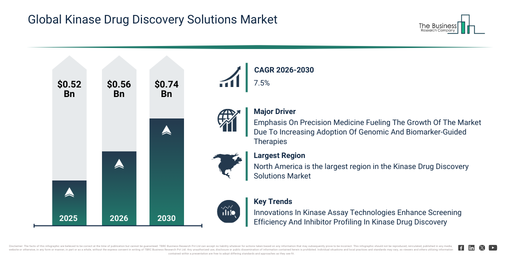
    The kinase drug discovery solutions market has experienced robust expansion in recent years. Its size is projected to expand from $0.52 billion in 2025 to $0.56 billion in 2026, achieving a compound annual growth rate (CAGR) of 7.3%. The growth observed in the historic period can be attributed to factors such as the increasing prevalence of kinase-driven diseases, the expansion of oncology research pipelines, advancements in assay development technologies, the growth of contract research services, and increasing pharmaceutical R&D investments.

    The kinase drug discovery solutions market is predicted to experience significant expansion over the next few years. It is projected to reach $0.74 billion by 2030, demonstrating a compound annual growth rate (CAGR) of 7.5%. This growth throughout the forecast period can be ascribed to the increasing embrace of precision oncology approaches, the growing integration of computational modeling in drug discovery, the broadening applications of biologics and gene editing, a rising need for swifter lead optimization, and an increase in partnerships between pharmaceutical firms and CROs. Prominent trends anticipated in the forecast period involve the expanded use of AI-driven kinase target identification, a surge in the adoption of structure-based drug design platforms, an escalating demand for high-throughput screening services, the proliferation of integrated medicinal chemistry solutions, and a heightened focus on the development of selective kinase inhibitors.

    Download A Free Sample Report For Comprehensive Market Insights:

    https://www.thebusinessresearchcompany.com/sample.aspx?id=33191&type=smp&utm_source=Blogs&utm_medium=Paid&utm_campaign=Jul_PR

    Kinase Drug Discovery Solutions Market Growth Momentum: Which Factors Are Influencing Demand?

    The increasing focus on precision medicine is anticipated to drive the expansion of the kinase drug discovery solutions market in the future. Precision medicine involves an escalating concentration within medical systems on creating and implementing therapies customized for unique patient traits, leveraging genetic, molecular, and biomarker data to enhance treatment results. The uptake of personalized medicine is increasing, attributed to advancements in genomic and sequencing technologies, which have lowered the duration, expense, and intricacy of genetic examinations. Kinase drug discovery solutions aid precision medicine through the provision of assays, screening technologies, and analytical instruments necessary for identifying and perfecting kinase inhibitors that accurately target disease-pertinent pathways and enhance therapeutic results. As an illustration, in February 2024, the Personalized Medicine Coalition, a US-based nonprofit group, reported that in 2023, the FDA cleared 16 new personalized therapies for rare disease patients, marking a notable rise from only six approvals in 2022. Consequently, the heightened focus on precision medicine is fueling the growth of the kinase drug discovery solutions market.

    Kinase Drug Discovery Solutions Market Segment Landscape: Which Areas Lead Market Development?

    The kinase drug discovery solutions market covered in this report is segmented –

    1) By Type: Small Molecules; Biologies; Antibodies; Gene Editing

    2) By Technology: High-Throughput Screening; Structure-Based Drug Design

    3) By Application: Cancer Research; Cardiovascular Diseases; Neurological Disorders; Metabolic Disorders; Autoimmune Diseases

    4) By End-User: Pharmaceutical Companies; Biotechnology Firms; Research Institutions; Academic Organizations

    Subsegments:

    1) By Small Molecules: Kinase Inhibitor Compounds; Allosteric Modulator Compounds; Covalent Inhibitor Compounds; Selective Kinase Modulator Compounds; Multi Target Kinase Inhibitor Compounds

    2) By Biologies: Recombinant Protein Therapeutics; Enzyme Based Therapeutics; Peptide Based Therapeutics; Fusion Protein Therapeutics; Protein Degradation Therapeutics

    3) By Antibodies: Monoclonal Antibodies; Bispecific Antibodies; Antibody Fragment Therapeutics; Conjugated Antibody Therapeutics; Humanized Antibody Therapeutics

    4) By Gene Editing: Clustered Regularly Interspaced Short Palindromic Repeats Based Editing; Transcription Activator Like Effector Nuclease Based Editing; Zinc Finger Nuclease Based Editing; Base Editing Technologies; Prime Editing Technologies

    Kinase Drug Discovery Solutions Market Trends Reshaping Industry Growth

    Companies operating within the kinase drug discovery solutions market are primarily focused on developing advanced products, such as ready-to-use kinase activity detection kits, to enhance assay consistency and streamline inhibitor profiling during early-stage drug discovery. A ready-to-use kinase activity detection kit is a complete assay solution that enables quick measurement of kinase enzyme activity without extensive preparation. It offers sensitive and accurate detection of phosphorylation events, facilitating efficient analysis of signaling pathways in research and drug development. For instance, in January 2026, Sino Biological, a US-based biotechnology company, launched the SwiftFluo TR-FRET Kinase Assay Kits, a ready-to-use, high-performance solution developed to support high-throughput screening of kinase inhibitors in drug discovery workflows. These kits utilize time-resolved fluorescence resonance energy transfer (TR-FRET) technology to provide strong signal stability, reduce background interference, and improve assay consistency, leading to faster and more precise identification of potential kinase inhibitor candidates for therapeutic development.

    Kinase Drug Discovery Solutions Market Industry Leaders And Market Competition

    Major companies operating in the kinase drug discovery solutions market are Thermo Fisher Scientific Inc., Eurofins Scientific SE, Pharmaron Incorporated, KMD Bioscience Co. Ltd., GenScript Biotech Corporation, Sino Biological Inc., Reaction Biology Corp, Domainex Ltd, Creative Bioarray Inc, Carna Biosciences Inc., BPS Bioscience Inc., Syngene International Ltd, MedChemExpress LLC, Creative Biogene Inc, Kinexus Bioinformatics Corporation, Enzymlogic S.L., AssayQuant Technologies Inc., LC Sciences LLC, Luceome Biotechnologies LLC, and BOC Sciences Inc.

    Access The Complete Kinase Drug Discovery Solutions Market Report:

    https://www.thebusinessresearchcompany.com/report/kinase-drug-discovery-solutions-market-report?utm_source=Blogs&utm_medium=Paid&utm_campaign=Jul_PR

    Kinase Drug Discovery Solutions Market Geographic Distribution And Regional Opportunities

    North America was the largest region in the kinase drug discovery solutions market in 2025. Asia-Pacific is expected to be the fastest-growing region in the forecast period. The regions covered in the kinase drug discovery solutions market report are Asia-Pacific, South East Asia, Western Europe, Eastern Europe, North America, South America, Middle East, Africa.

    Get in touch with us:

    The Business Research Company: https://www.thebusinessresearchcompany.com/

    Americas: +1 310-496-7795

    Asia: +44 7882 955267 & +91 8897263534

    Europe: +44 7882 955267

    Email us at: marketing@tbrc.info

    Follow us on:

    LinkedIn: https://in.linkedin.com/company/the-business-research-company

    YouTube: https://www.youtube.com/channel/UC24_fI0rV8cR5DxlCpgmyFQ

    Global Market Model: https://www.thebusinessresearchcompany.com/global-market-model
  • Kidney Transplant Rejection  Market Expansion Is Opening New Pathways For Strategic Investment

    Kidney Transplant Rejection Market Expansion Is Opening New Pathways For Strategic Investment

    Through market attractiveness analysis, total addressable market evaluation, company benchmarking matrices, interactive Excel dashboards, expanded supply chain intelligence, emerging startup coverage, and detailed product insights, The Business Research Company’s 2026 market reports provide more actionable and strategically valuable research.

    Kidney Transplant Rejection Market CAGR Analysis And Future Market Development

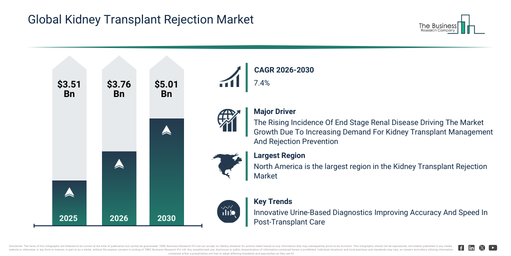
    The kidney transplant rejection market size has experienced substantial expansion in recent times. It is projected to increase from $3.51 billion in 2025 to $3.76 billion in 2026, achieving a compound annual growth rate (CAGR) of 7.2%. This historical expansion can be attributed to several factors: a rise in kidney transplant procedures, progress in histopathological assessment techniques, broader access to immunosuppressive drugs, the proliferation of transplant center networks, and enhanced post-transplant patient survival rates.

    The kidney transplant rejection market size is anticipated to experience robust expansion over the next few years. It is projected to increase to $5.01 billion by 2030, achieving a compound annual growth rate (CAGR) of 7.4%. The expected growth during this forecast period can be attributed to an escalating demand for personalized immunosuppression strategies, the increasing adoption of molecular diagnostics, the broadening scope of precision medicine in transplant care, a heightened focus on long-term graft survival, and growing investments in transplant monitoring technologies. Notable trends within the forecast period include the expanding use of biomarker-based rejection monitoring, the rising application of genomics-based diagnostic approaches, ongoing optimization of immunosuppressive therapy protocols, the proliferation of non-invasive rejection surveillance methods, and an intensified focus on the early detection of chronic rejection.

    Download A Free Sample Report For Comprehensive Market Insights:

    https://www.thebusinessresearchcompany.com/sample.aspx?id=33190&type=smp&utm_source=Blogs&utm_medium=Paid&utm_campaign=Jul_PR

    Kidney Transplant Rejection Market Expansion Drivers: What Is Shaping Future Growth?

    The increasing occurrence of end-stage renal disease is projected to fuel the expansion of the kidney transplant rejection market in the future. End-stage renal disease (ESRD) is defined as the last, irreversible phase of chronic kidney disease where kidneys are unable to perform their functions sufficiently without interventions like dialysis or a kidney transplant. The occurrence of end-stage renal disease is growing because of the widespread increase in chronic conditions such as diabetes and hypertension, which gradually impair kidney function, resulting in kidney failure. Kidney transplant rejection necessitates sophisticated monitoring and treatment strategies, thereby directly aiding in managing end-stage renal disease by helping transplanted kidneys stay viable and patients preserve their renal health. For example, as reported in September 2024 by the National Institute of Diabetes and Digestive and Kidney Diseases, a US-based government institute, over 808,000 individuals in the United States were living with end-stage kidney disease (ESKD), also known as end-stage renal disease (ESRD), in 2023, with 68% undergoing dialysis and 32% having received a kidney transplant. Consequently, the increasing prevalence of end-stage renal disease is propelling the expansion of the kidney transplant rejection market.

    Kidney Transplant Rejection Market Segments: Where Are The Largest Growth Opportunities?

    The kidney transplant rejection market covered in this report is segmented –

    1) By Rejection Type: Chronic Rejection; Acute Rejection

    2) By Treatment: Immunosuppressive Drugs; Antibody-Mediated Rejection Therapies

    3) By Diagnostic Approach: Biomarker-Based Diagnostics; Genomics-Based Diagnostics

    4) By Therapeutics: Small Molecule Inhibitors; Biologic Therapies

    5) By End-Users: Transplant Centers Or Hospitals; Diagnostic Laboratories; Pharmacies

    Subsegments:

    1) By Chronic Rejection: Antibody Mediated Chronic Rejection; Chronic Allograft Nephropathy; Interstitial Fibrosis And Tubular Atrophy; Vascular Chronic Rejection; Mixed Chronic Rejection

    2) By Acute Rejection: Cellular Acute Rejection; Antibody Mediated Acute Rejection; Hyperacute Rejection; Mixed Acute Rejection; Vascular Acute Rejection

    Kidney Transplant Rejection Market Strategic Trends: What Is Defining The Next Phase Of Growth?

    Companies operating within the kidney transplant rejection market are prioritizing the creation of advanced diagnostic solutions, such as noninvasive urinary biomarker testing, to facilitate more rapid, secure, and precise detection of transplant rejection. This noninvasive urinary biomarker testing method involves analyzing urine samples to identify molecular indicators of kidney inflammation or rejection, thereby assisting clinicians in quickly and safely pinpointing transplant complications without requiring invasive biopsies. For instance, in May 2024, Thermo Fisher Scientific Inc., a US-based biotechnology company, introduced the CXCL10 testing service, an innovative diagnostic tool specifically for kidney transplant recipients. The CXCL10 test detects the CXCL10 chemokine in urine, which is associated with early transplant rejection and inflammation. It delivers results within 24 hours, allowing for quicker clinical decisions, reducing the need for unnecessary biopsies, and enhancing patient convenience by utilizing noninvasive sample collection. Developed and validated by Thermo Fisher’s One Lambda Laboratories, this assay merges high sensitivity and specificity with practical ease of use in clinical settings, ultimately supporting improved post-transplant care and patient outcomes.

    Kidney Transplant Rejection Market Major Participants And Competitive Dynamics

    Major companies operating in the kidney transplant rejection market are F. Hoffmann-La Roche AG, Merck & Co. Inc., Sanofi SA, Novartis AG, Bristol-Myers Squibb Company, Thermo Fisher Scientific Inc., Takeda Pharmaceutical Company Limited, Amgen Inc., Asahi Kasei Corporation, Teva Pharmaceutical Industries Ltd., Astellas Pharma Inc., Biogen Inc., ChugAI Pharmaceutical Co. Ltd., Eurofins Scientific SE, Illumina Inc., Natera Inc., CareDx Inc., Azurity Pharmaceuticals Inc., Insight Molecular Diagnostics, and RenalytixAI plc.

    Access The Complete Kidney Transplant Rejection Market Report:

    https://www.thebusinessresearchcompany.com/report/kidney-transplant-rejection-market-report?utm_source=Blogs&utm_medium=Paid&utm_campaign=Jul_PR

    Kidney Transplant Rejection Market Largest Region By Revenue And Market Share

    North America was the largest region in the kidney transplant rejection market in 2025. Asia-Pacific is expected to be the fastest-growing region in the forecast period. The regions covered in the kidney transplant rejection market report are Asia-Pacific, South East Asia, Western Europe, Eastern Europe, North America, South America, Middle East, Africa.

    Get in touch with us:

    The Business Research Company: https://www.thebusinessresearchcompany.com/

    Americas: +1 310-496-7795

    Asia: +44 7882 955267 & +91 8897263534

    Europe: +44 7882 955267

    Email us at: marketing@tbrc.info

    Follow us on:

    LinkedIn: https://in.linkedin.com/company/the-business-research-company

    YouTube: https://www.youtube.com/channel/UC24_fI0rV8cR5DxlCpgmyFQ

    Global Market Model: https://www.thebusinessresearchcompany.com/global-market-model