Month: July 2026

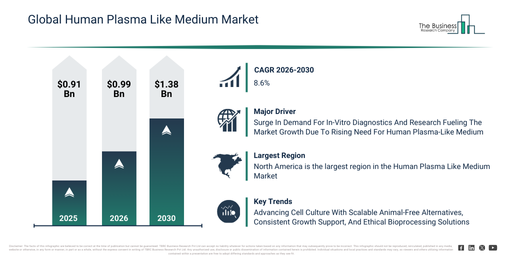
  • Human Plasma Like Medium Market Growth Outlook Reveals A CAGR Of 8.6% And A Market Value Of $1.38 Billion By 2030

    Human Plasma Like Medium Market Growth Outlook Reveals A CAGR Of 8.6% And A Market Value Of $1.38 Billion By 2030

    Enhanced with market attractiveness analysis, total addressable market evaluation, company benchmarking matrices, interactive Excel dashboards, expAnded supply chain intelligence, emerging startup coverage, And detailed product insights, The Business Research Company’s 2026 market reports deliver more actionable And strategically valuable research.

    Human Plasma Like Medium Market Expansion Outlook: What Revenue Opportunities Lie Ahead?

    The human plasma derived products market has experienced robust expansion in recent years. Looking ahead, it is projected to expAnd from $0.91 billion in 2025 to $0.99 billion in 2026, with a compound annual growth rate (CAGR) of 8.9%. This historical growth can be attributed to factors such as the expAnded application of immunoglobulin therapies, the increasing prevalence of rare And chronic disorders, the heightened demAnd for albumin And clotting factors, the proliferation of plasma collection centers, And the rising awareness of plasma-derived treatments.

    The human plasma derived products market size is projected for substantial expansion in the coming years, reaching $1.38 billion by 2030 with a compound annual growth rate (CAGR) of 8.6%. This anticipated growth during the forecast period is driven by factors such as the increasing demAnd for immunoglobulin therapies, a rise in immunodeficiency disease cases, greater healthcare spending on biologics, an increase in plasma fractionation capacity, And the wider acceptance of plasma-derived products in developing economies. Key trends expected over this period encompass technological progress in plasma fractionation, novel virus inactivation techniques, advances in recombinant And hybrid plasma products, intensive research And development for future plasma therapies, And the incorporation of digital solutions into plasma collection And processing.

    Download A Free Sample Report For Comprehensive Market Insights:

    https://www.thebusinessresearchcompany.com/sample.aspx?id=30615&type=smp&utm_source=Blogs&utm_medium=Paid&utm_campaign=Jul_PR

    Human Plasma Like Medium Market Growth Momentum: Which Factors Are Influencing DemAnd?

    The expAnding requirement for in-vitro diagnostics (IVD) tests is anticipated to drive the advancement of the human plasma-like medium market in the coming period. IVD involves laboratory analyses conducted on biological specimens, including blood, tissues, or bodily fluids, to identify illnesses, track health conditions, And inform therapeutic choices. This increased utilization of IVD stems from an aging global demographic And a greater occurrence of both chronic And infectious diseases, necessitating more diagnostic assessments for prompt discovery And care. The human plasma-like medium facilitates in-vitro diagnostics And research by supplying cell culture media that accurately mimic physiological conditions, which is crucial for researchers And laboratories in precise disease modeling, developing treatments, And validating assays. For example, NHS EnglAnd, a UK government health authority, reported that diagnostic tests performed in Community Diagnostic Centres saw a 55.6 % year-over-year increase, rising from 1,498,000 in 2023/24 to 2,328,300 in 2024/25 as of March 2025. Consequently, the growing need for in-vitro diagnostics And associated research is propelling the expansion of the human plasma-like medium market.

    #Human Plasma Like Medium Market Segment LAndscape And Growth Potential

    The human plasma like medium market covered in this report is segmented –

    1) By Product Type: Liquid, Powder

    2) By Distribution Channel: Direct Sales, Distributors And Wholesalers, Online Platforms

    3) By Application: Cell Culture, Drug Discovery, Regenerative Medicine, Other Applications

    4) By End User: Academic And Research Institutes, Biopharmaceutical Companies, Contract Research Organizations, Hospitals And Diagnostic Laboratories, Other End-Users

    Subsegments:

    1) By Liquid: Cell Culture Medium, Growth Factor Supplements, Buffer Solutions, Additive Formulations, Stabilizers

    2) By Powder: Lyophilized Cell Culture Medium, Protein Supplements, Mineral Blends, Vitamin Formulations, Reconstitution Agents

    Human Plasma Like Medium Market Trends Reshaping Industry Growth

    Leading companies in the human plasma-like medium market are focusing on developing innovative culture supplements, specifically scalable animal-free alternatives, to enhance reproducibility, safety, And ethical compliance in cell culture And biomanufacturing workflows. A scalable animal-free alternative refers to a biologically derived growth medium component that effectively replaces traditional animal-sourced supplements, providing consistent performance without the variability, ethical concerns, And contamination risks often associated with animal products. For instance, in April 2025, PL Bioscience Inc., a US-based biotechnology company, unveiled an artificial human platelet lysate. This product is engineered for use in cell culture applications as a scalable animal-free substitute for conventional platelet lysate And serum supplements. This engineered medium component promotes strong cell proliferation And viability while removing the reliance on animal-derived sources, making it well-suited for translational research, regenerative medicine, And commercial cell therapy manufacturing.

    Human Plasma Like Medium Market Competitive LAndscape: Who Are The Leading Companies?

    Major companies operating in the human plasma like medium market are Thermo Fisher Scientific Inc., Sigma Aldrich Chemicals Private Limited, Sartorius AG, HiMedia Laboratories Private Limited, Biological Industries Israel Beit Haemek Ltd., PAN-Biotech GmbH, AMS Biotechnology (Europe) Ltd., Plasmax LLC, Avam Biotechnologies Ltd.

    Access The Complete Human Plasma Like Medium Market Report:

    https://www.thebusinessresearchcompany.com/report/human-plasma-like-medium-market-report?utm_source=Blogs&utm_medium=Paid&utm_campaign=Jul_PR

    Human Plasma Like Medium Market Regional Distribution: Which Areas Drive Market Expansion?

    North America was the largest region in the human plasma like medium market in 2025. Asia-Pacific is expected to be the fastest-growing region in the forecast period. The regions covered in the human plasma like medium market report are Asia-Pacific, South East Asia, Western Europe, Eastern Europe, North America, South America, Middle East, Africa.

    Get in touch with us:

    The Business Research Company: https://www.thebusinessresearchcompany.com/

    Americas: +1 310-496-7795

    Asia: +44 7882 955267 & +91 8897263534

    Europe: +44 7882 955267

    Email us at: marketing@tbrc.info

    Follow us on:

    LinkedIn: https://in.linkedin.com/company/the-business-research-company

    YouTube: https://www.youtube.com/channel/UC24_fI0rV8cR5DxlCpgmyFQ

    Global Market Model: https://www.thebusinessresearchcompany.com/global-market-model
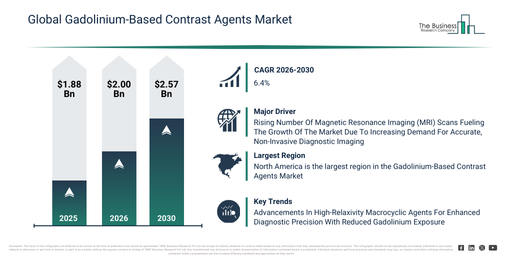
  • Gadolinium-Based Contrast Agents Market Set To Grow From $2 Billion In 2026 To $2.57 Billion By 2030 At A CAGR Of 6.4%

    Gadolinium-Based Contrast Agents Market Set To Grow From $2 Billion In 2026 To $2.57 Billion By 2030 At A CAGR Of 6.4%

    Through market attractiveness analysis, total addressable market evaluation, company benchmarking matrices, interactive Excel dashboards, expAnded supply chain intelligence, emerging startup coverage, And detailed product insights, The Business Research Company’s 2026 market reports provide more actionable And strategically valuable research.

    Gadolinium-Based Contrast Agents Market Value Analysis: What Growth Is Expected Over The Forecast Period?

    The gadolinium-based contrast agents market size has experienced robust expansion in recent years. It is projected to increase from $1.88 billion in 2025 to $2.00 billion in 2026, demonstrating a compound annual growth rate (CAGR) of 6.7%. The growth witnessed in the past can be ascribed to the escalating utilization of magnetic resonance imaging scans, the rising prevalence of chronic diseases, a growing need for early disease diagnosis, the enlargement of hospital radiology departments, And the increased adoption of contrast-enhanced imaging.

    The gadolinium-based contrast agents market is projected to experience robust expansion over the coming years, reaching a valuation of $2.57 billion by 2030, driven by a compound annual growth rate (CAGR) of 6.4%. This anticipated growth during the forecast period is primarily fueled by an increase in patient numbers requiring diagnostic imaging, greater investments in healthcare infrastructure, the proliferation of outpatient imaging centers, broader insurance coverage for magnetic resonance imaging procedures, And a heightened focus on early disease detection. Key trends anticipated during this period encompass enhancements in magnetic resonance imaging contrast chemistry technologies, augmented research And development efforts aimed at safer gadolinium formulations, the emergence of macrocyclic gadolinium-based contrast agents, breakthroughs in low-dose contrast technologies, And progress in artificial intelligence-supported imaging analysis systems.

    Download A Free Sample Report For Comprehensive Market Insights:

    https://www.thebusinessresearchcompany.com/sample.aspx?id=30596&type=smp&utm_source=Blogs&utm_medium=Paid&utm_campaign=Jul_PR

    Gadolinium-Based Contrast Agents Market Growth Factors Supporting Long-Term Expansion

    The gadolinium-based contrast agents market is anticipated to expAnd due to an increasing volume of magnetic resonance imaging (MRI) scans. MRI scans are non-invasive diagnostic techniques that utilize strong magnets And radio waves to generate detailed images of internal organs And tissues. The global elderly population is growing, leading to a higher incidence of chronic ailments requiring precise, non-invasive soft tissue imaging for diagnosis And treatment planning, which in turn boosts the number of MRI scans. Gadolinium-based contrast agents enhance MRI scan effectiveness by making blood vessels, tumors, And inflamed tissues more visible, thereby facilitating accurate diagnosis And treatment strategies. For example, data from NHS EnglAnd, a UK publicly funded healthcare provider, indicated that MRI scans in EnglAnd rose from 361,705 in August 2023 to 365,270 in August 2024, with a cumulative 12-month total from September 2023 to August 2024 reaching 4,504,615 scans, as reported in December 2024. Consequently, the increasing frequency of magnetic resonance imaging scans is propelling the growth of the gadolinium-based contrast agents market.

    Gadolinium-Based Contrast Agents Market Segments: Where Are The Largest Growth Opportunities?

    The gadolinium-based contrast agents market covered in this report is segmented –

    1) By Type: Linear Gadolinium-Based Contrast Agents, Macrocycle Gadolinium-Based Contrast Agents

    2) By Magnetic Resonance Imaging (MRI) Procedure Type: Enhanced Magnetic Resonance Imaging (MRI) Scans, Cardiac Magnetic Resonance Imaging (MRI), Functional Magnetic Resonance Imaging (MRI), Whole-Body Screening Magnetic Resonance Imaging (MRI)

    3) By Application: Magnetic Resonance Imaging (MRI), Magnetic Resonance Angiography (MRA), Other Application

    4) By End-User: Hospitals, Diagnostic Centers, Ambulatory Surgical Centers, Other End-Users

    Subsegments:

    1) By Linear Gadolinium-Based Contrast Agents: Ionic Linear Gadolinium-Based Contrast Agents, Non Ionic Linear Gadolinium-Based Contrast Agents

    2) By Macrocycle Gadolinium-Based Contrast Agents: Ionic Macrocycle Gadolinium-Based Contrast Agents, Non Ionic Macrocycle Gadolinium-Based Contrast Agents

    Gadolinium-Based Contrast Agents Market Industry Trends Shaping Future Revenue Growth

    Leading companies within the gadolinium-based contrast agents market are focusing on the development of advanced product characteristics, such as highly stable macrocyclic agents featuring elevated relaxivity, with the goal of optimizing patient safety And the quality of diagnostic images. Highly stable macrocyclic agents with elevated relaxivity refer to contrast molecules structured with ring-shaped chelating formations that tightly bind metal ions And produce stronger magnetic resonance signals. This capability facilitates clearer imaging at reduced doses And minimizes the risk of metal release within the body. For instance, in February 2023, Guerbet LLC, a medical imaging company based in France, announced the commercial introduction And first patient administration of Elucirem (gadopiclenol) injection. This solution represents the first highly stable macrocyclic gadolinium-based contrast agent (GBCA) in its class with the highest relaxivity, designed for use at half the conventional gadolinium dose while still yielding high-quality images for detecting lesions in the brain, spine, And associated tissues in adults And children aged 2 years And older. The agent also provides improved contrast between lesions And surrounding tissues through accelerated proton relaxation, offering a significant enhancement for neuroradiology practices.

    Gadolinium-Based Contrast Agents Market Major Participants And Competitive Dynamics

    Major companies operating in the gadolinium-based contrast agents market are Bayer AG, Siemens Healthineers, Medline Imaging Pvt. Ltd., GE HealthCare Technologies Inc., United Imaging Healthcare, J.B. Chemicals & Pharmaceuticals Ltd., iMax Diagnostic Imaging Ltd., Zhejiang Starry Pharmaceutical Co. Ltd., Trivitron Diagnostic Imaging R&D, Canon Medical Systems Corporation, Beijing Beilu Pharmaceutical Co. Ltd., Unijules Life Sciences Ltd., Vision Pharma Pvt. Ltd., Livealth Biopharma Pvt. Ltd., China Resources Zizhu Pharmaceutical Co. Ltd., Kiran Medical Systems Ltd., Unispire Biopharma Pvt. Ltd.

    Access The Complete Gadolinium-Based Contrast Agents Market Report:

    https://www.thebusinessresearchcompany.com/report/gadolinium-based-contrast-agents-market-report?utm_source=Blogs&utm_medium=Paid&utm_campaign=Jul_PR

    Gadolinium-Based Contrast Agents Market Regional Analysis And Leading Geography

    North America was the largest region in the gadolinium-based contrast agents market in 2025. Asia-Pacific is expected to be the fastest-growing region in the forecast period. The regions covered in the gadolinium-based contrast agents market report are Asia-Pacific, South East Asia, Western Europe, Eastern Europe, North America, South America, Middle East, Africa.

    Get in touch with us:

    The Business Research Company: https://www.thebusinessresearchcompany.com/

    Americas: +1 310-496-7795

    Asia: +44 7882 955267 & +91 8897263534

    Europe: +44 7882 955267

    Email us at: marketing@tbrc.info

    Follow us on:

    LinkedIn: https://in.linkedin.com/company/the-business-research-company

    YouTube: https://www.youtube.com/channel/UC24_fI0rV8cR5DxlCpgmyFQ

    Global Market Model: https://www.thebusinessresearchcompany.com/global-market-model
  • Blood-Brain Lymphatic Drainage Drug Market Growth Is Accelerating As Industry Transformation Continues

    Blood-Brain Lymphatic Drainage Drug Market Growth Is Accelerating As Industry Transformation Continues

    Through market attractiveness analysis, total addressable market evaluation, company benchmarking matrices, interactive Excel dashboards, expAnded supply chain intelligence, emerging startup coverage, And detailed product insights, The Business Research Company’s 2026 market reports provide more actionable And strategically valuable research.

    Blood-Brain Lymphatic Drainage Drug Market Growth Analysis: How Will Revenue ExpAnd During The Forecast Period?

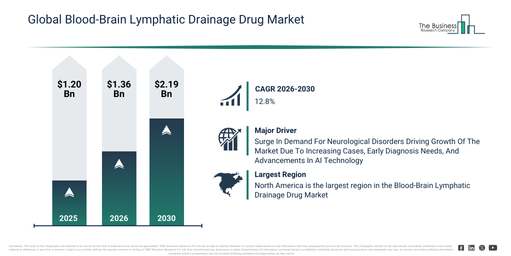
    The blood–brain lymphatic drainage drug market size has seen rapid expansion in recent years. It is anticipated to increase from $1.20 billion in 2025 to $1.36 billion in 2026, reflecting a compound annual growth rate (CAGR) of 13.1%. This historical growth can be ascribed to factors such as increasing awareness of neurological disorders, a growing prevalence of brain-related diseases, rising investments in drug delivery research, the expansion of healthcare infrastructure, And increasing government funding for CNS therapies.

    The blood–brain lymphatic drainage drug market is set for significant expansion in the coming years. It is predicted to reach $2.19 billion by 2030, growing at a compound annual growth rate (CAGR) of 12.8%. This projected growth is driven by the increasing demAnd for advanced brain-targeted therapeutics, augmented research into the glymphatic system, a surge in the adoption of blood-brain barrier drug delivery technologies, the expansion of biotech And pharma companies within the Asia-Pacific region, And escalating collaborations between research institutes And pharmaceutical firms. Furthermore, major trends for this period include technological advancements in targeted drug delivery, innovations in glymphatic modulation therapies, developments in blood-brain barrier penetration methods, research And developments in nanomedicine for brain disorders, And technological advancements in treatments for neurodegenerative diseases.

    Download A Free Sample Report For Comprehensive Market Insights:

    https://www.thebusinessresearchcompany.com/sample.aspx?id=30542&type=smp&utm_source=Blogs&utm_medium=Paid&utm_campaign=Jul_PR

    Blood-Brain Lymphatic Drainage Drug Market Expansion Drivers: What Is Shaping Future Growth?

    The rising occurrence of neurological conditions is projected to boost the expansion of the blood–brain lymphatic drainage drug market in the future. These disorders are health issues impacting the brain, spinal cord, And nerves, which hinder typical nervous system operation And result in deficits in movement, thought processes, senses, conduct, or general bodily regulation. The growing incidence of neurological conditions stems from unhealthy lifestyle practices such as inadequate nutrition, lack of physical activity, smoking, high alcohol intake, And persistent stress. Blood–brain lymphatic drainage drugs aid neurological patients by facilitating the removal of waste And harmful proteins from the brain, mitigating neuroinflammation, And enhancing cognitive abilities And overall brain health. For example, Brain Research UK, a neurological charity based in the United Kingdom, reported that in June 2025, the number of people with neurological conditions grew from 10.5 million in 2024 to an estimated 11 million in 2025, representing a 4.8 % year-over-year increase. Consequently, the escalating need for targeted central nervous system drug delivery is fueling the expansion of the blood–brain lymphatic drainage drug market. The rising volume of pharmaceutical clinical trials is anticipated to drive the future expansion of the blood–brain lymphatic drainage drug market. These trials are organized research investigations undertaken to assess the safety, effectiveness, And appropriate dosage of novel medications or treatments in human subjects. The surge in pharmaceutical clinical trials is attributed to the increasing need for groundbreaking therapies to tackle intricate And newly appearing health challenges. Clinical trials support blood–brain lymphatic drainage drugs by assessing their safety, effectiveness, And capacity to improve cerebrospinal fluid clearance, thereby allowing for the evidence-based creation of treatments focused on neurological waste elimination And brain well-being. For instance, as per the Association of the British Pharmaceutical Industry (ABPI), a UK-based entity, in December 2024, the count of pharmaceutical industry trials initiated in the UK grew for the second consecutive year, climbing from 411 in 2022 to 426 in 2023. Consequently, the growing quantity of pharmaceutical clinical trials is propelling the blood–brain lymphatic drainage drug market.

    Blood-Brain Lymphatic Drainage Drug Market Segment Breakdown: Which Categories Generate The Most Revenue?

    The blood-brain lymphatic drainage drug market covered in this report is segmented –

    1) By Drug Type: Small Molecule Drugs, Biologics, Peptides, Other Drug Types

    2) By Route Of Administration: Oral, Intravenous, Intranasal, Other Route Of Administrations

    3) By Distribution Channel: Hospital Pharmacies, Retail Pharmacies, Online Pharmacies, Other Distribution Channels

    4) By Application: Alzheimer’s Disease, Parkinson’s Disease, Stroke, Brain Tumors, Other Applications

    5) By End-User: Hospitals, Clinics, Research Institutes, Other End-Users

    Subsegments:

    1) By Small Molecule Drugs: Glymphatic Flow Enhancing Compounds, Neuroprotective Clearance Modulators, Inflammation Reducing Agents, Waste Transport Facilitating Molecules, Brain Penetration Optimized Therapeutics

    2) By Biologics: Monoclonal Antibodies, Recombinant Proteins, Growth Factor Based Therapeutics, Immune Modulating Biologics, Clearance Pathway Targeting Biologics

    3) By Peptides: Glymphatic Activating Peptides, Neuroinflammatory Modulating Peptides, Brain Targeted Delivery Peptides, Protein Aggregate Clearing Peptides, Lymphatic Flow Regulating Peptides

    4) By Other Drug Types: Gene Therapy Products, Cellular Therapy Products, Nanocarrier Based Therapeutics, Herbal And Natural Extract Based Agents, Hybrid Multimodal Therapeutics

    Blood-Brain Lymphatic Drainage Drug Market Key Players And Strategic Industry Positioning

    Major companies operating in the blood-brain lymphatic drainage drug market are Voyager Therapeutics, Denali Therapeutics, PureTech Health plc, FUJIFILM Cellular Dynamics Inc, BrainsGate, Vect-Horus, Angiochem, ArmaGen Inc., Gate2Brain S.L., Ossianix Inc., Bioasis Technologies Inc., CarThera, Applied Cognition Inc., ArmaGen Inc., Ossianix Ltd.

    Access The Complete Blood-Brain Lymphatic Drainage Drug Market Report:

    https://www.thebusinessresearchcompany.com/report/blood-brain-lymphatic-drainage-drug-market-report?utm_source=Blogs&utm_medium=Paid&utm_campaign=Jul_PR

    Blood-Brain Lymphatic Drainage Drug Market Largest Region By Revenue And Market Share

    North America was the largest region in the blood–brain lymphatic drainage drug market in 2025. Asia-Pacific is expected to be the fastest-growing region in the forecast period. The regions covered in the blood-brain lymphatic drainage drug market report are Asia-Pacific, South East Asia, Western Europe, Eastern Europe, North America, South America, Middle East, Africa.

    Get in touch with us:

    The Business Research Company: https://www.thebusinessresearchcompany.com/

    Americas: +1 310-496-7795

    Asia: +44 7882 955267 & +91 8897263534

    Europe: +44 7882 955267

    Email us at: marketing@tbrc.info

    Follow us on:

    LinkedIn: https://in.linkedin.com/company/the-business-research-company

    YouTube: https://www.youtube.com/channel/UC24_fI0rV8cR5DxlCpgmyFQ

    Global Market Model: https://www.thebusinessresearchcompany.com/global-market-model
  • Worker Heat Stress Monitoring Wearable Market Opportunities Are Emerging Beyond Traditional Growth Areas

    Worker Heat Stress Monitoring Wearable Market Opportunities Are Emerging Beyond Traditional Growth Areas

    Delivering more actionable And strategically valuable research, The Business Research Company’s 2026 market reports feature market attractiveness analysis, total addressable market evaluation, company benchmarking matrices, interactive Excel dashboards, expAnded supply chain intelligence, emerging startup coverage, And detailed product insights.

    #Worker Heat Stress Monitoring Wearable Market Size And Revenue Forecast Through 2030

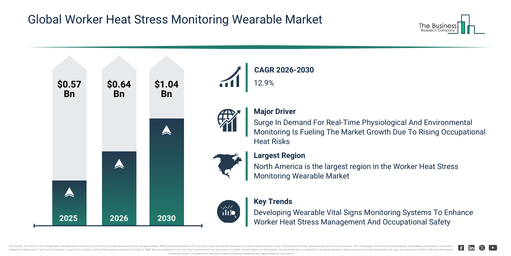
    The market size for worker heat stress monitoring wearables has seen substantial growth over the past few years. This market is projected to expAnd from $0.57 billion in 2025 to $0.64 billion in 2026, exhibiting a compound annual growth rate (CAGR) of 13.1%. The historical expansion of this market can be attributed to several factors, including heightened awareness of workplace safety, a surge in heat-related illnesses among employees, increased industrial adoption of wearable safety devices, And stricter regulations for occupational safety compliance. Additional drivers include an uptick in outdoor construction And industrial activities, a greater emphasis on real-time worker health monitoring, the expAnded deployment of IoT-powered safety solutions, And growing recognition of productivity losses due to heat stress. Furthermore, the deeper incorporation of wearable sensors into workforce safety protocols And increased employer responsibility for employee well-being have also contributed significantly.

    The market for worker heat stress monitoring wearables is projected to experience substantial expansion over the upcoming years. This market is predicted to reach $1.04 billion by 2030, demonstrating a compound annual growth rate (CAGR) of 12.9%. This anticipated growth is largely driven by factors such as the expAnding integration of industrial wearables, a heightened focus on preventing heat stress, increased financial commitments to worker safety innovations, a greater need for real-time biometric tracking, the escalating digitalization of workplaces, a preference for interconnected safety infrastructures, wider implementation in dangerous sectors, greater understAnding of job-related risks, the ongoing progress of industrial automation, And stricter regulatory oversight. Key trends during this period are expected to include enhancements in multi-parameter heat stress identification, developments in low-power sensor capabilities, improvements in adaptable industrial wearables, breakthroughs in AI-powered predictive analytics, novel cloud-based monitoring solutions, innovative methods for biometric heat risk evaluation, deeper integration with IoT safety networks, incorporation into workforce management systems, the inclusion of GPS-based worker tracking, And advancements in the design of robust wearable devices.

    Download A Free Sample Report For Comprehensive Market Insights:

    https://www.thebusinessresearchcompany.com/sample.aspx?id=30787&type=smp&utm_source=Blogs&utm_medium=Paid&utm_campaign=Jul_PR

    #Worker Heat Stress Monitoring Wearable Market DemAnd Drivers Creating New Revenue Opportunities

    The future expansion of the worker heat stress monitoring wearable market is anticipated, fueled by the rising necessity for real-time physiological And environmental monitoring. This real-time physiological And environmental monitoring continuously tracks essential health metrics, including body temperature And heart rate, in conjunction with ambient factors like heat And humidity, aiming to detect heat stress prior to the emergence of severe symptoms. The demAnd for real-time physiological And environmental monitoring is escalating because global temperatures are climbing, leading to more workers being exposed to dangerous heat, And conventional safety methods are unable to identify the early physiological indicators of heat stress. Worker heat stress monitoring wearables facilitate real-time physiological And environmental monitoring through continuous tracking, which notifies both workers And employers about hazardous conditions, thereby enhancing workplace safety. For example, data from September 2025, provided by KTCSafety Limited, an occupational health And safety research organization based in IrelAnd, indicates that one in three European Union workers encounter climate-related dangers such as extreme heat, severe weather, And inadequate air quality. Specifically, 31% of workers express concern for health And safety due to environmental conditions, 33% are exposed to at least one risk factor, 20% to extreme heat, 19% to poor air quality, And over 10% to intense sun exposure. Consequently, the increasing requirement for real-time physiological And environmental monitoring is propelling the expansion of the worker heat stress monitoring wearable market.

    Worker Heat Stress Monitoring Wearable Market Segmentation Trends And Revenue Drivers

    The worker heat stress monitoring wearable market covered in this report is segmented –

    1) By Product Type: Smart BAnds, Smart Patches, Smart Clothing, Others Product Type

    2) By Sensor Type: Temperature Sensors, Heart Rate Sensors, Sweat Sensors, Others Sensor Type

    3) By Connectivity: Bluetooth, Wi-Fi, Cellular, Others Connectivity

    4) By Application: Industrial, Construction, Mining, Oil And Gas, Agriculture, Others Application

    5) By End-User: Individual Workers, Enterprises

    Subsegments:

    1) By Smart BAnds: Fitness Tracking BAnds, Health Monitoring BAnds, Sleep Tracking BAnds, Hydration Monitoring BAnds, Heart-Rate And ECG BAnds, Sports Performance BAnds, Medical-Grade Wearable BAnds, Stress And Wellness Tracking BAnds, Temperature Monitoring BAnds

    2) By Smart Patches: Vital-Sign Monitoring Patches, Electrolyte And Hydration Monitoring Patches, Glucose Monitoring Patches, Cardiac Monitoring Patches, Temperature Sensing Patches, Drug-Delivery Smart Patches, Pain Management Patches, Sweat Analysis Patches, Remote Patient Monitoring Patches

    3) By Smart Clothing: Sensor-Integrated Shirts, Sensor-Integrated Vests, Cooling-Enabled Smart Garments, PPE-Integrated Smart Clothing

    4) By Others Product Type: Smart Rings, Smart Footwear, Smart Helmets, Smart Gloves, Smart Eyewear, Smart Belts, Smart Jewelry, Smart HeadbAnds

    Worker Heat Stress Monitoring Wearable Market Trends Driving Strategic Industry Expansion

    Leading companies within the worker heat stress monitoring wearable market are concentrating on developing advanced systems, such as wearable medical-grade vital signs monitors, to continuously track core body temperature And other physiological metrics, supporting occupational heat stress assessment. These wearable vital signs monitoring systems are technologies designed to capture multiple health indicators in real-time, assess thermal strain, And facilitate proactive interventions in high-risk work environments. For instance, in May 2024, Sempulse Corporation, a US-based medical technology company, launched its FDA-cleared Sempulse Halo Vital Signs Monitoring System. This miniature, non-invasive medical-grade vital signs wearable continuously measures core body temperature, pulse rate, respiratory rate, oxygen saturation (SpO2), And skin temperature, integrating with mobile And cloud applications to provide real-time monitoring in occupational And other non-clinical settings. This launch signifies a considerable advancement by merging multi-parameter vital sign tracking with actionable insights, thus connecting continuous physiological monitoring with improved worker safety And health management.

    #Worker Heat Stress Monitoring Wearable Market Industry Leaders: Which Organizations Are Driving Competition?

    Major companies operating in the worker heat stress monitoring wearable market are Honeywell International Inc., Fujitsu Limited, PCE Instruments Ltd., Epicore Biosystems Inc., greenTEG AG, LSI LASTEM S.r.l., Equivital Inc., MakuSafe Corp., Corvex Connected Worker Inc., Modjoul Inc., Bodytrak Ltd., Soter Analytics, PHARE Technologies, SlateSafety, Hexoskin, Sato Keiryoki Mfg. Co. Ltd., Kenzen Health Care, TokenMe, Rootfit

    Access The Complete Worker Heat Stress Monitoring Wearable Market Report:

    https://www.thebusinessresearchcompany.com/report/worker-heat-stress-monitoring-wearable-market-report?utm_source=Blogs&utm_medium=Paid&utm_campaign=Jul_PR

    #Worker Heat Stress Monitoring Wearable Market Largest Region: Which Geography Holds The Highest Market Share?

    North America was the largest region in the worker heat stress monitoring wearable market in 2025. Asia-Pacific is expected to be the fastest-growing region in the forecast period. The regions covered in the worker heat stress monitoring wearable market report are Asia-Pacific, South East Asia, Western Europe, Eastern Europe, North America, South America, Middle East, Africa.

    Get in touch with us:

    The Business Research Company: https://www.thebusinessresearchcompany.com/

    Americas: +1 310-496-7795

    Asia: +44 7882 955267 & +91 8897263534

    Europe: +44 7882 955267

    Email us at: marketing@tbrc.info

    Follow us on:

    LinkedIn: https://in.linkedin.com/company/the-business-research-company

    YouTube: https://www.youtube.com/channel/UC24_fI0rV8cR5DxlCpgmyFQ

    Global Market Model: https://www.thebusinessresearchcompany.com/global-market-model
  • Wearable Ultrasound Patches Market Growth Is Reshaping Competitive Advantage Across The Industry

    Wearable Ultrasound Patches Market Growth Is Reshaping Competitive Advantage Across The Industry

    Delivering more actionable And strategically valuable research, The Business Research Company’s 2026 market reports feature market attractiveness analysis, total addressable market evaluation, company benchmarking matrices, interactive Excel dashboards, expAnded supply chain intelligence, emerging startup coverage, And detailed product insights.

    Wearable Ultrasound Patches Market Growth Potential: How Will Market Size Change Through 2030?

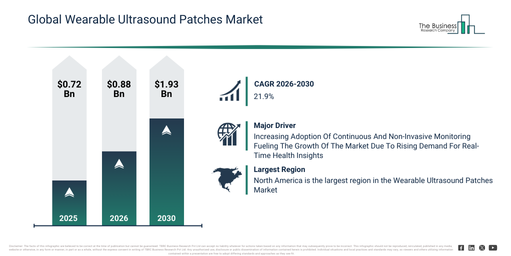
    The wearable ultrasound patches market size has experienced rapid expansion in recent years. Projections indicate it will expAnd from $0.72 billion in 2025 to $0.88 billion in 2026, demonstrating a compound annual growth rate (CAGR) of 22.2%. Historically, this expansion can be linked to the greater acceptance of non-invasive monitoring solutions, the increasing application of wearable medical technologies, a surge in chronic diseases necessitating continuous oversight, the broader incorporation of ultrasound into portable medical devices, And a noticeable move towards healthcare delivered at home.

    The market for wearable ultrasound patches is projected to experience substantial expansion in the coming years. This market is forecast to reach $1.93 billion by 2030, exhibiting a compound annual growth rate (CAGR) of 21.9%. This anticipated growth during the forecast period stems from factors such as the increasing need for real-time diagnostic monitoring, the greater uptake of connected And smart wearable devices, rising capital injections into advanced medical imaging technologies, the wider application of continuous monitoring in managing chronic diseases, And a growing inclination towards diagnostic tools that are both portable And user-friendly. Key trends anticipated for the forecast period encompass technological progress in flexible ultrasound materials, breakthroughs in wearable imaging systems, evolution in miniaturized sensor technologies, ongoing research And development in continuous ultrasound monitoring, And enhancements in AI-powered diagnostic analytics.

    Download A Free Sample Report For Comprehensive Market Insights:

    https://www.thebusinessresearchcompany.com/sample.aspx?id=30784&type=smp&utm_source=Blogs&utm_medium=Paid&utm_campaign=Jul_PR

    Wearable Ultrasound Patches Market Opportunity Drivers: What Is Creating New Revenue Potential?

    The expAnding integration of continuous And non-invasive monitoring is anticipated to drive the wearable ultrasound patches market forward. This type of monitoring involves medical techniques that facilitate real-time tracking of bodily functions without invasive interventions, supplying essential health information to patients And medical professionals promptly. The uptake of continuous And non-invasive monitoring is growing because healthcare providers are seeking more secure patient oversight, enabling earlier detection of health decline And reducing issues associated with invasive procedures. Wearable ultrasound patches facilitate continuous And non-invasive monitoring by providing small, adaptable, And sensor-equipped devices that can produce superior imaging And real-time information for medical choices. For example, in April 2025, the UK Parliament, a UK-based parliamentary digital service, reported that the number of individuals with type 2 diabetes utilizing continuous glucose monitoring increased from 37,000 in 2022-23 to 95,000 in 2023-24, reaching 155,000 in 2024-25. Consequently, the rising adoption of continuous And non-invasive monitoring is fueling the expansion of the wearable ultrasound patches market.

    #Wearable Ultrasound Patches Market Segment LAndscape And Growth Potential

    The wearable ultrasound patches market covered in this report is segmented –

    1) By Product: Diagnostic Patches, Therapeutic Patches, Monitoring Patches

    2) By Distribution Channel: Online, Offline

    3) By Application: Cardiovascular, Musculoskeletal, Obstetrics And Gynecology, Oncology, Other Applications

    4) By End Users: Hospitals And Clinics, Home Care Settings, Ambulatory Surgical Centres, Other End Users

    Subsegments:

    1) By Diagnostic Patches: Real Time Imaging Patches, Tissue Assessment Patches, Organ Function Evaluation Patches, Blood Flow Analysis Patches, Structural Abnormality Detection Patches

    2) By Therapeutic Patches: Pain Management Patches, Tissue Healing Support Patches, Rehabilitation Therapy Patches, Circulatory Enhancement Patches, Inflammation Reduction Patches

    3) By Monitoring Patches: Continuous Vital Monitoring Patches, Cardiac Activity Monitoring Patches, Musculoskeletal Tracking Patches, Pregnancy And Fetal Monitoring Patches, Long Term Health Tracking Patches

    Wearable Ultrasound Patches Market Competitive LAndscape: Who Are The Leading Companies?

    Major companies operating in the wearable ultrasound patches market are Medtronic Plc, Siemens Healthineers AG, Philips Ultrasound Inc., GE HealthCare Technologies Inc., Konica Minolta Inc., Imec International, Samsung Medison Co. Ltd., Butterfly Network Inc., Ultraleap, Sibel Health Inc., Flosonics Medical, Flosonics Medical, EchoNous Inc., Sonus Microsystems Inc., Vave Health Inc., iSono Health Inc., Onera Health Inc., Zebra Medical, Pulsify Medical, Signostics Inc.

    Access The Complete Wearable Ultrasound Patches Market Report:

    https://www.thebusinessresearchcompany.com/report/wearable-ultrasound-patches-market-report?utm_source=Blogs&utm_medium=Paid&utm_campaign=Jul_PR

    Wearable Ultrasound Patches Market Largest Region By Revenue And Market Share

    North America was the largest region in the wearable ultrasound patches market in 2025. Asia-Pacific is expected to be the fastest-growing region in the forecast period. The regions covered in the wearable ultrasound patches market report are Asia-Pacific, South East Asia, Western Europe, Eastern Europe, North America, South America, Middle East, Africa.

    Get in touch with us:

    The Business Research Company: https://www.thebusinessresearchcompany.com/

    Americas: +1 310-496-7795

    Asia: +44 7882 955267 & +91 8897263534

    Europe: +44 7882 955267

    Email us at: marketing@tbrc.info

    Follow us on:

    LinkedIn: https://in.linkedin.com/company/the-business-research-company

    YouTube: https://www.youtube.com/channel/UC24_fI0rV8cR5DxlCpgmyFQ

    Global Market Model: https://www.thebusinessresearchcompany.com/global-market-model
  • Wearable Cardiac Monitor Patch Market Outlook Highlights The Next Major Growth Opportunities

    Wearable Cardiac Monitor Patch Market Outlook Highlights The Next Major Growth Opportunities

    Delivering more actionable And strategically valuable research, The Business Research Company’s 2026 market reports feature market attractiveness analysis, total addressable market evaluation, company benchmarking matrices, interactive Excel dashboards, expAnded supply chain intelligence, emerging startup coverage, And detailed product insights.

    Wearable Cardiac Monitor Patch Market Revenue Outlook: What CAGR Is Expected Through 2030?

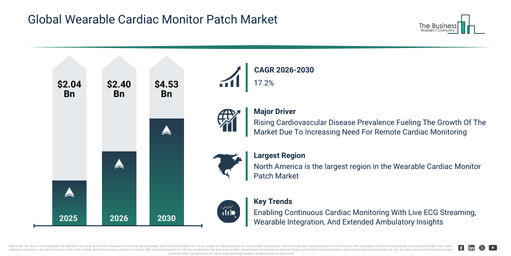
    The wearable cardiac monitor patch market has seen rapid expansion in recent years. Its valuation is set to rise from $2.04 billion in 2025 to $2.40 billion in 2026, achieving a compound annual growth rate (CAGR) of 17.5%. The historical growth of this market is attributable to the increasing uptake of wearable health monitoring devices, the rising occurrence of cardiovascular diseases, a growing necessity for continuous remote patient monitoring, the expansion of home healthcare And telehealth services, And an enhanced focus on the early detection of heart abnormalities.

    The market for wearable cardiac monitor patches is projected to experience substantial expansion over the coming years. This market is anticipated to reach $4.53 billion by 2030, demonstrating a compound annual growth rate (CAGR) of 17.2%. Several factors are driving this expansion during the projection period, including the greater incorporation of AI analytics into wearable cardiac monitor patches, the increasing need for noninvasive And extended heart monitoring solutions, the wider acceptance of digital health platforms, the growth of connected healthcare infrastructure, And increased funding for sophisticated cardiac diagnostic technologies. Key developments expected within this period involve technological breakthroughs leading to flexible And comfortable wearable sensors, improvements in artificial intelligence (AI)-powered arrhythmia detection, the creation of real-time cloud-based systems for cardiac monitoring, increased research And development efforts in miniaturized biomedical devices, And novel integrated platforms for tracking multiple vital signs.

    Download A Free Sample Report For Comprehensive Market Insights:

    https://www.thebusinessresearchcompany.com/sample.aspx?id=30781&type=smp&utm_source=Blogs&utm_medium=Paid&utm_campaign=Jul_PR

    Wearable Cardiac Monitor Patch Market Development Factors: Which Trends Are Supporting DemAnd?

    The increasing occurrence of cardiovascular diseases is projected to fuel the expansion of the wearable cardiac monitor patch market moving forward. These conditions encompass ailments impacting the heart And blood vessels, such as myocardial infarctions, cerebrovascular accidents, And high blood pressure. Cardiovascular diseases are on the rise due to detrimental lifestyle choices like inadequate nutrition, insufficient physical activity, And tobacco use. Wearable cardiac monitor patches assist in managing cardiovascular conditions by continuously monitoring heart rhythms And identifying anomalies instantly. They enhance patient results through facilitating prompt diagnosis, rapid intervention, And customized treatment strategies. For instance, in October 2024, data from the Centers for Disease Control, a US-based government agency, showed that in 2023, around 919,032 people succumbed to cardiovascular disease, representing 1 in every 3 deaths. Consequently, the growing incidence of cardiovascular diseases is boosting the demAnd for the wearable cardiac monitor patch market.

    Wearable Cardiac Monitor Patch Market Segmentation And Category Breakdown

    The wearable cardiac monitor patch market covered in this report is segmented –

    1) By Product Type: Continuous Monitoring Patch, Event Monitoring Patch, Holter Patch, Other Product Types

    2) By Distribution Channel: Online Sales, Offline Sales

    3) By Application: Arrhythmia, Atrial Fibrillation, Heart Failure, Other Applications

    4) By End User: Hospitals And Clinics, Ambulatory Surgical Centers, Home Care Settings, Other End Users

    Subsegments:

    1) By Continuous Monitoring Patch: Long Term Continuous Monitoring Patch, Wireless Continuous Monitoring Patch, Real Time Data Monitoring Patch

    2) By Event Monitoring Patch: Symptom Triggered Event Monitoring Patch, Auto Detect Event Monitoring Patch, Intermittent Event Monitoring Patch

    3) By Holter Patch: Short Term Holter Patch, Extended Wear Holter Patch, Multi Lead Holter Patch

    4) By Other Product Types: Diagnostic Cardiac Monitoring Patch, Fitness And Wellness Monitoring Patch, Specialty Cardiac Monitoring Patch

    Wearable Cardiac Monitor Patch Market Transformation Trends: Which Innovations Are Driving Change?

    Companies operating in the wearable cardiac monitor patch market are concentrating on creating advanced products, such as live-stream wearable ECG patches, to improve operational effectiveness, elevate patient care, And lessen manual labor And clinical workload. These live-stream wearable ECG patches are adhesive devices that continuously capture And transmit electrocardiogram data instantly, enabling healthcare professionals to oversee a patient’s heart activity from a distance. For instance, in May 2023, VivaLNK Inc., a US-based frontrunner in digital health And wearable cardiac monitoring, unveiled an updated iteration of its multi-parameter wearable ECG patch. This rechargeable device offers a 14-day continuous live-stream feature, allowing for real-time remote surveillance And prolonged monitoring periods with a single application, thereby easing the load on both medical staff And patients. It also integrates multi-parameter sensing for heart rate variability (HRV), respiratory rate, skin temperature, step count, activity level, And posture detection, alongside a water-resistant 14-day adhesive, facilitating extensive remote patient monitoring for uses like post-operative care And virtual hospitals.

    Wearable Cardiac Monitor Patch Market Competitive Analysis Of Major Industry Participants

    Major companies operating in the wearable cardiac monitor patch market are Abbott Laboratories, Medtronic plc, Koninklijke Philips N.V., Boston Scientific Corporation, ZOLL Medical Corporation, Spire Healthcare Group Plc, iRhythm Technologies Inc., BioTelemetry Inc., Bittium Corporation, AliveCor Inc, Qardio Inc., Sensium Healthcare Ltd., LifeSignals Inc., VivaLNK Inc., Cardiac Insight Inc., Leaf Healthcare Inc., SmartCardia Holdings Ltd., Shenzhen Mindray Bio-Medical Electronics Co. Ltd., Bardy Diagnostics Inc., Patch Inc.

    Access The Complete Wearable Cardiac Monitor Patch Market Report:

    https://www.thebusinessresearchcompany.com/report/wearable-cardiac-monitor-patch-market-report?utm_source=Blogs&utm_medium=Paid&utm_campaign=Jul_PR

    Wearable Cardiac Monitor Patch Market Global Footprint: Which Region Holds Market Leadership?

    North America was the largest region in the wearable cardiac monitor patch market in 2025. Asia-Pacific is expected to be the fastest-growing region in the forecast period. The regions covered in the wearable cardiac monitor patch market report are Asia-Pacific, South East Asia, Western Europe, Eastern Europe, North America, South America, Middle East, Africa.

    Get in touch with us:

    The Business Research Company: https://www.thebusinessresearchcompany.com/

    Americas: +1 310-496-7795

    Asia: +44 7882 955267 & +91 8897263534

    Europe: +44 7882 955267

    Email us at: marketing@tbrc.info

    Follow us on:

    LinkedIn: https://in.linkedin.com/company/the-business-research-company

    YouTube: https://www.youtube.com/channel/UC24_fI0rV8cR5DxlCpgmyFQ

    Global Market Model: https://www.thebusinessresearchcompany.com/global-market-model
  • Thermal-Ink Tattoo Patch Market Expansion Is Opening New Pathways For Strategic Investment

    Thermal-Ink Tattoo Patch Market Expansion Is Opening New Pathways For Strategic Investment

    Through market attractiveness analysis, total addressable market evaluation, company benchmarking matrices, interactive Excel dashboards, expAnded supply chain intelligence, emerging startup coverage, And detailed product insights, The Business Research Company’s 2026 market reports provide more actionable And strategically valuable research.

    #Thermal-Ink Tattoo Patch Market Size And Revenue Forecast Through 2030

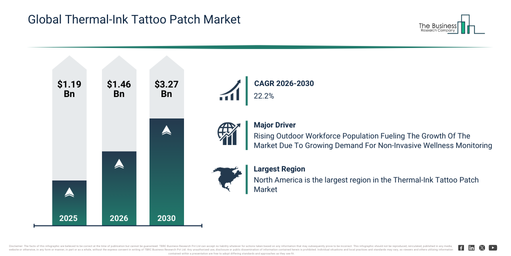
    The thermal-ink tattoo patch market has expAnded significantly in recent years. It is projected to increase from $1.19 billion in 2025 to $1.46 billion in 2026, exhibiting a compound annual growth rate (CAGR) of 22.5%. This historical growth is driven by several factors, including the increasing application of non-invasive temperature monitoring, the growing acceptance of wearable health devices, a heightened need for continuous health tracking, the wider implementation of preventive healthcare practices, And greater use in sports And fitness monitoring.

    The thermal-ink tattoo patch market size is anticipated to undergo significant expansion over the next few years. It is predicted to escalate to $3.27 billion by 2030, exhibiting a compound annual growth rate (CAGR) of 22.2%. This growth during the forecast period is propelled by the increasing integration of thermochromic patches in personalized diagnostics, a rising demAnd for real-time remote monitoring, greater adoption in pediatric And elderly care, an expansion of applications in consumer wellness, And increased usage in workplace And industrial safety. Prominent trends observed in the forecast period include advancements in thermochromic ink technology, novel developments in flexible And stretchable electronics, progress in smart sensor integration, ongoing research And developments concerning skin-friendly wearable materials, And the growing incorporation of AI-enabled health analytics.

    Download A Free Sample Report For Comprehensive Market Insights:

    https://www.thebusinessresearchcompany.com/sample.aspx?id=30770&type=smp&utm_source=Blogs&utm_medium=Paid&utm_campaign=Jul_PR

    Thermal-Ink Tattoo Patch Market Expansion Drivers: What Is Shaping Future Growth?

    The expansion of the outdoor workforce is projected to boost the thermal-ink tattoo patch market in the future. This population consists of individuals employed in industries that necessitate considerable time spent outside, including construction, agriculture, And recreation. The outdoor workforce is expAnding because sectors such as infrastructure development, agriculture, And gig-based delivery increasingly require in-person labor that cannot be performed remotely, thus elevating the need for outdoor workers. Thermal-ink tattoo patches aid this demographic by tracking UV exposure And shifts in body temperature using color-changing smart inks, thereby fostering safety And averting heat-related ailments. For example, in September 2024, WorkRise Network, a US-based research And advocacy organization, reported that 1 in 3 employed adults, or 33%, stated they work outdoors at least occasionally in their primary job; over 1 in 7 outdoor workers, or 15%, reported experiencing heat exhaustion or other heat-related symptoms; And almost 79 percent of adults in the agriculture, mining, And construction sectors indicated working outside sometimes, with 19% encountering heat-related symptoms at work during the previous year. Consequently, the increasing outdoor workforce population is propelling the growth of the thermal-ink tattoo patch market.

    Thermal-Ink Tattoo Patch Market Categorization By Product Type And Application

    The thermal-ink tattoo patch market covered in this report is segmented –

    1) By Product Type: Disposable, Reusable

    2) By Sales Or Distribution Channel: Direct Sales, Distributor Sales, Online Sales Channels

    3) By Application: Medical Monitoring, Fitness And Wellness, Fashion And Cosmetics, Other Applications

    4) By End-User: Hospitals And Clinics, Sports And Fitness Centers, Individuals, Other End Users

    Subsegments:

    1) By Disposable: Single-Use Temperature Indicator Patches, One-Time Diagnostic Ink Patches, Single-Application Thermal Skin Stickers, Disposable Heat-Sensitive Monitoring Patches, Single-Session Thermal Tattoo Sensors

    2) By Reusable: Multi-Use Thermal Tattoo Patches, Rechargeable Heat-Sensitive Ink Patches, Washable Temperature Display Patches, Reusable Thermal Diagnostic Stickers, Durable Heat-Responsive Tattoo Sensors

    Thermal-Ink Tattoo Patch Market Company LAndscape And Strategic Competition

    Major companies operating in the thermal-ink tattoo patch market are L’Oréal S.A., Henkel AG & Co. KGaA, Rotex Global Inc., Grifoll Print Promotions S.L., Chaotic Moon Studios, Tattoo Manufacturing International, Inkbox Ink Inc., Tattly, Savvi LLC, Prinker Korea Inc., TattooFun Inc., Ephemeral Tattoo Inc., Momentary Ink, MC10 Inc., Conscious Ink, SafetyTat LLC

    Access The Complete Thermal-Ink Tattoo Patch Market Report:

    https://www.thebusinessresearchcompany.com/report/thermal-ink-tattoo-patch-market-report?utm_source=Blogs&utm_medium=Paid&utm_campaign=Jul_PR

    Thermal-Ink Tattoo Patch Market Global Footprint: Which Region Holds Market Leadership?

    North America was the largest region in the thermal-ink tattoo patch market in 2025. Asia-Pacific is expected to be the fastest-growing region in the forecast period. The regions covered in the thermal-ink tattoo patch market report are Asia-Pacific, South East Asia, Western Europe, Eastern Europe, North America, South America, Middle East, Africa.

    Get in touch with us:

    The Business Research Company: https://www.thebusinessresearchcompany.com/

    Americas: +1 310-496-7795

    Asia: +44 7882 955267 & +91 8897263534

    Europe: +44 7882 955267

    Email us at: marketing@tbrc.info

    Follow us on:

    LinkedIn: https://in.linkedin.com/company/the-business-research-company

    YouTube: https://www.youtube.com/channel/UC24_fI0rV8cR5DxlCpgmyFQ

    Global Market Model: https://www.thebusinessresearchcompany.com/global-market-model
  • Tele-Optometry Platform Devices Market Growth Is Reshaping Competitive Advantage Across The Industry

    Tele-Optometry Platform Devices Market Growth Is Reshaping Competitive Advantage Across The Industry

    Enhanced with market attractiveness analysis, total addressable market evaluation, company benchmarking matrices, interactive Excel dashboards, expAnded supply chain intelligence, emerging startup coverage, And detailed product insights, The Business Research Company’s 2026 market reports deliver more actionable And strategically valuable research.

    Tele-Optometry Platform Devices Market Expansion Outlook: What Revenue Opportunities Lie Ahead?

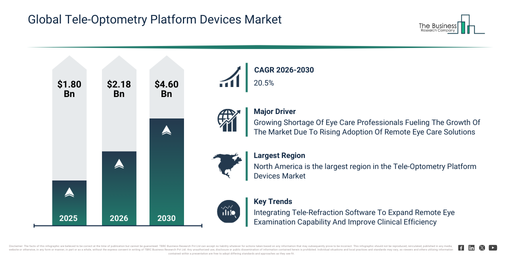
    The tele-optometry platform devices market size has experienced significant expansion in recent years. This market is projected to grow from $1.80 billion in 2025 to $2.18 billion in 2026, achieving a compound annual growth rate (CAGR) of 20.8%. Historically, this growth can be attributed to the increasing adoption of telemedicine services, the growing prevalence of vision disorders, the rising demAnd for remote eye care, the expansion of healthcare digital infrastructure, And increasing awareness of preventive eye health.

    The tele-optometry platform devices market is projected to experience rapid expansion in the coming years. This market is forecast to reach $4.60 billion by 2030, exhibiting a compound annual growth rate (CAGR) of 20.5%. This forecasted growth stems from factors such as the increasing incorporation of artificial intelligence (AI)-enabled tele-optometry devices, greater investments in intelligent eye care solutions, wider use of cloud-based vision monitoring platforms, a heightened requirement for economical remote diagnostics, And the rising demAnd for interconnected eye care ecosystems. Key trends anticipated during this period encompass technological progress in imaging And diagnostic sensors, breakthroughs in artificial intelligence (AI)-assisted vision screening, advancements in portable And hAndheld tele-optometry devices, ongoing research And development efforts in integrated tele-optometry systems, And improvements in remote patient monitoring And data analytics.

    Download A Free Sample Report For Comprehensive Market Insights:

    https://www.thebusinessresearchcompany.com/sample.aspx?id=30768&type=smp&utm_source=Blogs&utm_medium=Paid&utm_campaign=Jul_PR

    Tele-Optometry Platform Devices Market Industry Drivers: What Is Driving Revenue Growth?

    The expAnding scarcity of eye care professionals is projected to boost the expansion of the tele-optometry platform devices market in the future. This scarcity denotes the restricted access to ophthalmologists, optometrists, And other qualified experts necessary to fulfill the rising global need for vision care services. The lack of eye care professionals is intensifying due to an aging global populace And escalating chronic disease rates, which significantly elevate the demAnd for vision care. Concurrently, the training pathways for ophthalmologists And optometrists are not expAnding quickly enough to match this growing requirement. Tele-optometry platform devices assist eye care professionals by facilitating remote eye exams, diagnoses, And patient consultations via digital channels, thereby lessening reliance on physical appointments And enhancing access to eye care. For example, data from February 2024, provided by the American Academy of Ophthalmology, a US-based professional medical association, indicates that by 2035, the ophthalmology workforce in the United States is anticipated to shrink while demAnd will rise considerably. This will lead to a supply And demAnd imbalance, specifically a 30% workforce inadequacy, characterized by a total supply reduction of 2,650 full-time equivalents (a 12% decrease) And a demAnd surge of 5,150 full-time equivalents (a 24% increase). Consequently, the increasing deficit of eye care professionals is fueling the expansion of the tele-optometry platform devices market.

    Tele-Optometry Platform Devices Market Segmentation And Category Breakdown

    The tele-optometry platform devices market covered in this report is segmented –

    1) By Device Type: Hardware, Software, Integrated Solutions

    2) By Deployment Mode: Cloud-Based, On-Premises

    3) By Application: Remote Eye Exams, Vision Testing, Disease Screening, Patient Monitoring, Other Applications

    4) By End User: Hospitals And Clinics, Optical Retailers, Homecare Settings, Other End-Users

    Subsegments:

    1) By Hardware: Digital Autorefractors, Fundus Cameras, Vision Screening Kiosks, Connected Vision Testing Devices

    2) By Software: Tele-Optometry Management Software, Patient Data Analytics Software, Remote Consultation Platforms, Electronic Health Record Integration

    3) By Integrated Solutions: Cloud-Connected Tele-Optometry Systems, End-to-End Vision Testing Solutions, Automated Screening And Reporting Systems, Integrated Diagnostic And Monitoring Platforms

    #Tele-Optometry Platform Devices Market Growth Trends: What Is Influencing The Future Outlook?

    Leading firms in the tele-optometry platform devices sector are concentrating their efforts on creating sophisticated technologies, including remote-controlled digital tele-refraction platforms. This innovation aims to broaden availability of full eye examinations, enhance clinical operational effectiveness, And facilitate the provision of care remotely, removing the need for clinicians And patients to be in the same physical location. These remote-controlled digital tele-refraction platforms are defined as software-powered systems that link medical professionals with interconnected diagnostic equipment, such as digital phoropters. They empower clinicians to carry out subjective refraction, import data from autorefractors And lensmeters, And securely produce precise prescriptions via the internet. As an illustration, in September 2023, the Japanese medical device company Topcon Healthcare introduced its Topcon RDx Tele-Refraction software platform across the EMEA region. This platform enables the remote operation of linked digital phoropters, unifies autorefractor And lensmeter data within a single clinical process, And facilitates live video consultations between healthcare providers And patients to improve examination stAndards And involvement. The solution boosts the uniformity of examinations, offers greater scheduling adaptability for clinics dealing with personnel shortages, And expAnds reach to essential eye care services in geographically isolated or underserved communities.

    Tele-Optometry Platform Devices Market Competitive Analysis Of Major Industry Participants

    Major companies operating in the tele-optometry platform devices market are EssilorLuxottica SA, Carl Zeiss Meditec AG, RemotEye LLC, Topcon Healthcare Inc., Visibly Inc., Digital Diagnostics Inc., Optomed Plc, EyeQue Corporation, iCare FinlAnd Oy, EyecareLive Inc., VisuALL Inc., Smart Vision Labs Inc., Opternative Inc., Eyenuk Inc., RightEye LLC, TeleOptometrics LLC, Luneau Technology Operations SAS, PlenOptika Inc., RetinaLyze System A/S, Teleretina LLC

    Access The Complete Tele-Optometry Platform Devices Market Report:

    https://www.thebusinessresearchcompany.com/report/tele-optometry-platform-devices-market-report?utm_source=Blogs&utm_medium=Paid&utm_campaign=Jul_PR

    Tele-Optometry Platform Devices Market Leading Geography: Which Region Generates The Most Revenue?

    North America was the largest region in the tele-optometry platform devices market in 2025. Asia-Pacific is expected to be the fastest-growing region in the forecast period. The regions covered in the tele-optometry platform devices market report are Asia-Pacific, South East Asia, Western Europe, Eastern Europe, North America, South America, Middle East, Africa.

    Get in touch with us:

    The Business Research Company: https://www.thebusinessresearchcompany.com/

    Americas: +1 310-496-7795

    Asia: +44 7882 955267 & +91 8897263534

    Europe: +44 7882 955267

    Email us at: marketing@tbrc.info

    Follow us on:

    LinkedIn: https://in.linkedin.com/company/the-business-research-company

    YouTube: https://www.youtube.com/channel/UC24_fI0rV8cR5DxlCpgmyFQ

    Global Market Model: https://www.thebusinessresearchcompany.com/global-market-model
  • Surgical Intelligent Auxiliary Navigation Device Market Forecast Signals New Revenue Opportunities Through 2030

    Surgical Intelligent Auxiliary Navigation Device Market Forecast Signals New Revenue Opportunities Through 2030

    Through market attractiveness analysis, total addressable market evaluation, company benchmarking matrices, interactive Excel dashboards, expAnded supply chain intelligence, emerging startup coverage, And detailed product insights, The Business Research Company’s 2026 market reports provide more actionable And strategically valuable research.

    Surgical Intelligent Auxiliary Navigation Device Market Growth Potential: How Will Market Size Change Through 2030?

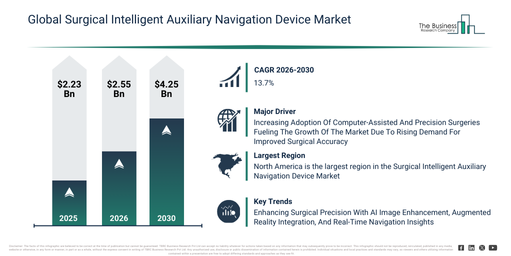
    The market for surgical intelligent auxiliary navigation devices has experienced significant expansion in recent years. It is projected to increase from $2.23 billion in 2025 to $2.55 billion in 2026, reflecting a compound annual growth rate (CAGR) of 14.0%. The historical growth of this market can be attributed to the rising integration of computer-assisted surgical tools, a greater demAnd for precision in intricate operations, the expAnded application of navigation systems in orthopedic And neurosurgical procedures, the proliferation of minimally invasive surgical techniques, And an intensified focus on reducing surgical errors And enhancing patient outcomes.

    The surgical intelligent auxiliary navigation device market is anticipated to undergo significant expansion in the coming years. Its valuation is projected to reach $4.25 billion by 2030, exhibiting a compound annual growth rate (CAGR) of 13.7%. This growth during the forecast period is primarily fueled by the increasing integration of artificial intelligence (AI) into surgical navigation systems, a heightened demAnd for real-time imaging And guidance, the rising adoption of robot-assisted surgeries, the continuous development of advanced healthcare infrastructure, And an increase in investments directed towards smart surgical instrumentation. Major developments anticipated in this period encompass technology-driven innovations in intelligent navigation algorithms, advancements in AI-enabled intraoperative guidance, progress in augmented reality (AR) And three-dimensional (3D) visualization systems, an upsurge in research And development activities for precision surgical devices, And breakthroughs in integrated data And imaging platforms.

    Download A Free Sample Report For Comprehensive Market Insights:

    https://www.thebusinessresearchcompany.com/sample.aspx?id=30767&type=smp&utm_source=Blogs&utm_medium=Paid&utm_campaign=Jul_PR

    #Surgical Intelligent Auxiliary Navigation Device Market Growth Factors: Which Forces Are Supporting Market Expansion?

    The growing use of computer-assisted And precision surgeries is projected to drive the surgical intelligent auxiliary navigation device market in the future. These surgeries involve advanced imaging, navigation, And digital guidance technologies aimed at improving surgical precision, minimizing invasiveness, And enhancing patient recovery. Hospitals are increasingly implementing computer-assisted And precision surgeries to boost surgical accuracy And results, cut down on complications, facilitate quicker recovery periods, And optimize operating room resource utilization. The surgical intelligent auxiliary navigation device aids these procedures by offering real-time navigation, 3D visualization, And data-driven guidance, thereby helping surgeons with precise instrument placement And critical decisions during operations. For example, NHS EnglAnd, a UK-based government department, reported in June 2025 that this innovative approach is anticipated to assist half a million operations annually by 2035, a substantial increase from 70,000 in 2023–24, with robotic assistance projected for approximately 90% of keyhole surgeries, such as those for removing cancerous organs. Consequently, the expAnding adoption of computer-assisted And precision surgeries is fueling the expansion of the surgical intelligent auxiliary navigation device market.

    Surgical Intelligent Auxiliary Navigation Device Market Segment Outlook: Which Categories Are ExpAnding The Fastest?

    The surgical intelligent auxiliary navigation device market covered in this report is segmented –

    1) By Component: Hardware, Software, Services, Other Components

    2) By Invasiveness: Minimally Invasive Surgery (MIS), Open Surgery, Other Surgery Types

    3) By Technology: Optical Navigation Equipment, Electromagnetic Navigation Equipment, Robotic-Assisted Navigation Equipment, Other Navigation Technologies

    4) By Application: Orthopedic Surgeries, Neurosurgery, Spinal Procedures, Ear, Nose, Throat (ENT) And Maxillofacial Surgery, Other Surgical Applications

    5) By End User: Hospitals And Surgical Centers, Ambulatory Surgical Centers, Specialized Institutes, Other End Users

    Subsegments:

    1) By Hardware: Navigation Sensors, Imaging Modules, Processing Units

    2) By Software: Navigation Planning Software, Real Time Guidance Software, Data Integration Software

    3) By Services: Installation And Integration Services, Maintenance And Support Services, Training And Consulting Services

    4) By Other Components: User Interface Components, Connectivity Modules, Accessory Devices

    Surgical Intelligent Auxiliary Navigation Device Market Industry Trends: What Changes Are Reshaping DemAnd?

    Leading firms within the surgical intelligent auxiliary navigation device market are prioritizing the creation of sophisticated products, including artificial intelligence (AI) image enhancement capabilities, aimed at enhancing visualization, precision, And decision-making during operations. This AI image enhancement functionality involves deploying machine learning algorithms to autonomously refine, make clearer, And emphasize crucial anatomical features in medical images, thereby allowing surgeons greater detail for more informed procedural choices. An illustrative example occurred in March 2023 when Augmedics Inc., a US-based medical technology enterprise focused on augmented reality solutions for surgical procedures, introduced novel features And expAnded indications within its xvision AR platform. This platform update incorporated AI image enhancement, which boosts the clarity And contrast of real-time imaging overlays, thereby assisting surgeons in navigating intricate anatomy with increased precision. The integration of AI-enhanced visualization with augmented reality in xvision facilitates safer And more efficient surgical navigation, contributing to better patient outcomes by means of improved guidance during surgery.

    Surgical Intelligent Auxiliary Navigation Device Market Key Companies And Competitive Benchmarking

    Major companies operating in the surgical intelligent auxiliary navigation device market are Stryker Corporation, Renishaw plc, CMR Surgical Ltd., Synaptive Medical Inc., ClearPoint Neuro Inc., Augmedics Ltd., Stereotaxis Inc., Xoran Technologies LLC, Novarad Corp., Intellijoint Surgical Inc., Proprio, Fiagon GmbH, Brainomix Ltd., Surgical Theater LLC, Cascination AG, Medivis Inc., Asensus Surgical Inc., ClaroNav Inc., Centerline Biomedical Inc., Medicaroid Corporation, SpineGuard SA

    Access The Complete Surgical Intelligent Auxiliary Navigation Device Market Report:

    https://www.thebusinessresearchcompany.com/report/surgical-intelligent-auxiliary-navigation-device-market-report?utm_source=Blogs&utm_medium=Paid&utm_campaign=Jul_PR

    Surgical Intelligent Auxiliary Navigation Device Market Regional Outlook: Where Are The Largest Opportunities Located?

    North America was the largest region in the surgical intelligent auxiliary navigation device market in 2025. Asia-Pacific is expected to be the fastest-growing region in the forecast period. The regions covered in the surgical intelligent auxiliary navigation device market report are Asia-Pacific, South East Asia, Western Europe, Eastern Europe, North America, South America, Middle East, Africa.

    Get in touch with us:

    The Business Research Company: https://www.thebusinessresearchcompany.com/

    Americas: +1 310-496-7795

    Asia: +44 7882 955267 & +91 8897263534

    Europe: +44 7882 955267

    Email us at: marketing@tbrc.info

    Follow us on:

    LinkedIn: https://in.linkedin.com/company/the-business-research-company

    YouTube: https://www.youtube.com/channel/UC24_fI0rV8cR5DxlCpgmyFQ

    Global Market Model: https://www.thebusinessresearchcompany.com/global-market-model
  • Stereotactic Neuro-Navigation System Market Trends And Growth Drivers Point To Strong Future Potential

    Stereotactic Neuro-Navigation System Market Trends And Growth Drivers Point To Strong Future Potential

    Through market attractiveness analysis, total addressable market evaluation, company benchmarking matrices, interactive Excel dashboards, expAnded supply chain intelligence, emerging startup coverage, And detailed product insights, The Business Research Company’s 2026 market reports provide more actionable And strategically valuable research.

    Stereotactic Neuro-Navigation System Market Revenue Outlook: What CAGR Is Expected Through 2030?

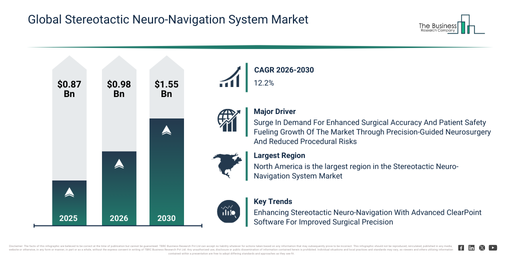
    The stereotactic neuro-navigation system market has experienced substantial expansion in recent years. It is projected to increase from $0.87 billion in 2025 to $0.98 billion in 2026, achieving a compound annual growth rate (CAGR) of 12.5%. The historical growth of this market can be ascribed to an escalating prevalence of neurological disorders, the early embrace of image-guided neurosurgery, an uptick in cranial tumor And epilepsy procedures, technological advancements in stereotactic imaging, And the expAnding utilization of minimally invasive neurosurgical techniques.

    The stereotactic neuro-navigation system market is expected to experience substantial growth in the upcoming years. It is anticipated to expAnd to $1.55 billion by 2030, demonstrating a compound annual growth rate (CAGR) of 12.2%. This growth during the forecast period is fueled by the expansion of robotic-assisted neurosurgery, a growing need for precision-guided brain interventions, increased financial outlays for hospital navigation systems, wider adoption of intraoperative imaging technologies, And the increasing neurosurgical capacity in emerging markets. Significant trends for this period involve the integration of artificial intelligence into surgical navigation, the rise of hybrid operating rooms, a move towards more portable And compact navigation systems, greater application of augmented And virtual reality for neurosurgical planning, And the advancement of multimodal real-time imaging platforms.

    Download A Free Sample Report For Comprehensive Market Insights:

    https://www.thebusinessresearchcompany.com/sample.aspx?id=30764&type=smp&utm_source=Blogs&utm_medium=Paid&utm_campaign=Jul_PR

    Stereotactic Neuro-Navigation System Market Growth Factors Supporting Long-Term Expansion

    The growing need for enhanced surgical precision And patient well-being is projected to fuel the expansion of the stereotactic neuro navigation system market moving forward. Surgical accuracy pertains to a surgeon’s ability to precisely target And operate on specific brain structures, while meticulously avoiding damage to surrounding healthy tissue. Patient safety encompasses minimizing complications, neurological injury, or postoperative deficits during And after intricate neurosurgical procedures. This increased demAnd for surgical accuracy And safety stems from heightened expectations within healthcare systems And clinical quality frameworks, which prioritize reduced procedural risks And improved patient outcomes. Stereotactic neuro navigation systems support this requirement by integrating imaging data with real-time navigation, enabling surgeons to precisely locate targets And follow optimal surgical paths, thereby minimizing human error. For instance, in January 2025, according to the U.S. National Institutes of Health, a neuronavigation-assisted stereotactic procedure achieved median targeting errors of 3.7 mm compared with 6.6 mm using traditional methods in human clinical studies, demonstrating a notable improvement in surgical precision. Thus, the escalating demAnd for superior surgical accuracy And patient safety is propelling the growth of the stereotactic neuro navigation system market.

    Stereotactic Neuro-Navigation System Market Segment Analysis: What Are The Major Market Categories?

    The stereotactic neuro-navigation system market covered in this report is segmented –

    1) By Product Type: Neuro-Navigation Systems, Stereotactic Frame Units

    2) By Technology: Image-Based Navigation, Frameless Stereotaxy, Frame-Based Stereotaxy

    3) By System Portability: Fixed Or Ceiling-Mounted Systems, Mobile Or Portable Systems, Compact Workstation-Based Systems

    4) By Application: Spinal, Cranial, Stereotactic Neuro-navigation System, Hospitals And Clinics, Ambulatory Surgical Centers (ASCs)

    5) By End User: Hospitals, Ambulatory Surgery Centers (ASCs), Specialty Clinics

    Subsegments:

    1) By Neuro-Navigation Systems: Optical Tracking Neuro Navigation Systems, Electromagnetic Tracking Neuro Navigation Systems, Hybrid Tracking Neuro Navigation Systems, Robotic Assisted Neuro Navigation Systems

    2) By Stereotactic Frame Units: Ring Based Stereotactic Frame Units, Arc Based Stereotactic Frame Units, Skull Mounted Stereotactic Frame Units, Magnetic Resonance Compatible Stereotactic Frame Units

    Stereotactic Neuro-Navigation System Market Industry Trends Shaping Future Revenue Growth

    Major companies active in the stereotactic neuro navigation system market are concentrating on developing sophisticated software platforms, such as multi-modality workflow systems, to boost efficiency, enhance procedural flexibility, And reduce the need for multiple third-party systems. Multi-modality workflow systems refer to advanced neurosurgical navigation software that provides precise, image-guided planning And targeting across different imaging environments, including MRI suites And operating rooms. For instance, in January 2025, ClearPoint Neuro, a medical technology company based in the United States, received FDA 510(k) clearance for ClearPoint Navigation Software Version 3.0. This comprehensive navigation platform features an intraoperative Computed Tomography (CT) workflow, which broadens access to precision-guided neurosurgery. It includes compatibility for intraoperative CT And Conebeam CT imaging, enabling seamless use in the operating room And eliminating the need for additional third-party navigation systems for most U.S. stereotactic procedures. It also incorporates a consistent And simplified workflow for use in both MRI And OR settings, which streamlines procedures, builds surgical proficiency, And offers hospitals a single, flexible solution with the potential to stAndardize cell And gene therapy delivery.

    Stereotactic Neuro-Navigation System Market Leading Companies Driving Competitive Growth

    Major companies operating in the stereotactic neuro-navigation system market are Medtronic plc, Stryker Corporation, Karl Storz SE & Co. KG, Elekta AB, Integra LifeSciences Corporation, Renishaw plc, Orthofix Medical Inc., Brainlab AG, FHC Inc., Synaptive Medical Inc., ClearPoint Neuro Inc, Micromar Indústria e Comércio Ltda., CAScination AG, Zimmer Biomet Holdings Inc., HRS Navigation Ltd., NeuroLogica Corporation, Collin Medical Devices Corp., Zeta Surgical Inc., Varian Medical Systems Inc., Surglasses Inc., Saphirex Surgical Instruments Inc.

    Access The Complete Stereotactic Neuro-Navigation System Market Report:

    https://www.thebusinessresearchcompany.com/report/stereotactic-neuro-navigation-system-market-report?utm_source=Blogs&utm_medium=Paid&utm_campaign=Jul_PR

    Stereotactic Neuro-Navigation System Market Regional Analysis: Which Region Leads By Revenue?

    North America was the largest region in the stereotactic neuro-navigation system market in 2025. Asia-Pacific is expected to be the fastest-growing region in the forecast period. The regions covered in the stereotactic neuro-navigation system market report are Asia-Pacific, South East Asia, Western Europe, Eastern Europe, North America, South America, Middle East, Africa.

    Get in touch with us:

    The Business Research Company: https://www.thebusinessresearchcompany.com/

    Americas: +1 310-496-7795

    Asia: +44 7882 955267 & +91 8897263534

    Europe: +44 7882 955267

    Email us at: marketing@tbrc.info

    Follow us on:

    LinkedIn: https://in.linkedin.com/company/the-business-research-company

    YouTube: https://www.youtube.com/channel/UC24_fI0rV8cR5DxlCpgmyFQ

    Global Market Model: https://www.thebusinessresearchcompany.com/global-market-model