Month: July 2026

  • Stem Cell Expansion Hollow-Fiber Bioreactors Market Expansion Is Reshaping Competitive Dynamics Across The Industry

    Stem Cell Expansion Hollow-Fiber Bioreactors Market Expansion Is Reshaping Competitive Dynamics Across The Industry

    Delivering more actionable And strategically valuable research, The Business Research Company’s 2026 market reports feature market attractiveness analysis, total addressable market evaluation, company benchmarking matrices, interactive Excel dashboards, expAnded supply chain intelligence, emerging startup coverage, And detailed product insights.

    Stem Cell Expansion Hollow-Fiber Bioreactors Market Growth Analysis: How Will Revenue ExpAnd During The Forecast Period?

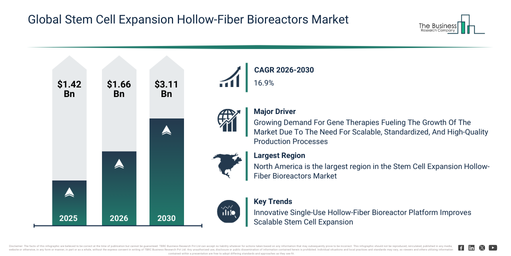
    The stem cell expansion hollow-fiber bioreactors market has experienced rapid expansion in its size over recent years. This market is projected to expAnd from $1.42 billion in 2025 to $1.66 billion in 2026, demonstrating a compound annual growth rate (CAGR) of 17.2%. Factors contributing to its historical growth include the greater integration of hollow-fiber bioreactors, the escalating need for high-density stem cell cultures, increased funding for regenerative medicine research, the proliferation of automated cell expansion technologies, And the broader application of single-use bioreactor systems.

    The stem cell expansion hollow-fiber bioreactors market size is projected to experience swift expansion in the coming years. It is set to reach $3.11 billion in 2030, demonstrating a compound annual growth rate (CAGR) of 16.9%. This expansion during the forecast period is propelled by an intensified emphasis on scalable stem cell manufacturing, escalating investment in sophisticated hollow-fiber bioprocessing techniques, a heightened need for clinical-grade stem cell proliferation, the broadening scope of biotechnology And pharmaceutical research And development (R&D), And a significant surge in the implementation of automated And high-precision systems. Prominent trends anticipated in this period encompass technological progress in micro-hollow-fiber systems, pioneering advancements in automated cell expansion platforms, breakthroughs in high-density stem cell culture methodologies, ongoing research And development into single-use hollow-fiber bioreactors, And improvements in real-time monitoring And process oversight.

    Download A Free Sample Report For Comprehensive Market Insights:

    https://www.thebusinessresearchcompany.com/sample.aspx?id=30763&type=smp&utm_source=Blogs&utm_medium=Paid&utm_campaign=Jul_PR

    #Stem Cell Expansion Hollow-Fiber Bioreactors Market DemAnd Drivers Creating New Revenue Opportunities

    The increasing need for gene therapies is projected to fuel the expansion of the stem cell expansion hollow fiber bioreactors market in the future. Gene therapy is a medical approach focused on altering or substituting faulty genes to treat or prevent illnesses. This rise in demAnd for gene therapy stems from progress in genetic sequencing And diagnostic methods, which allow for accurate identification of disease-causing genes for specific treatments. Stem cell expansion hollow fiber bioreactors facilitate gene therapy by enabling the large-scale, high-quality proliferation of stem cells within regulated environments. They enhance therapeutic results by supplying a consistent source of genetically modified cells for accurate And successful gene-based interventions. As an illustration, in December 2024, the American Society of Gene & Cell Therapy (ASGCT), a US-based non-profit medical And scientific organization, reported that the Food And Drug Administration (FDA) sanctioned six gene therapy products in 2023, an increase from five approvals in 2022. Consequently, the rising demAnd for gene therapies is stimulating the growth of the stem cell expansion hollow fiber bioreactors market.

    Stem Cell Expansion Hollow-Fiber Bioreactors Market Segment Breakdown: Which Categories Generate The Most Revenue?

    The stem cell expansion hollow-fiber bioreactors market covered in this report is segmented –

    1) By Product Type: Single-Use Hollow-Fiber Bioreactors, Reusable Hollow-Fiber Bioreactors

    2) By Technology: Hollow-Fiber Technology, Microfluidic Bioprocessing Technology, Single-Use Bioreactor Technology, Automated Expansion Platforms, High-Precision Monitoring Technology

    3) By Distribution Channel: Hospital Pharmacy, Online Pharmacy, Retail Pharmacy

    4) By Application: Clinical Research, Cell Therapy, Tissue Engineering, Drug Development, Other Applications

    5) By End-User: Biotechnology Companies, Pharmaceutical Companies, Academic And Research Institutes, Other End Users

    Subsegments:

    1) By Single-Use Hollow-Fiber Bioreactors: Disposable Cartridge Systems, Pre-Sterilized Fiber Modules, Plug-And-Play Bioreactor Units, Disposable Media Flow Chambers, Single-Cycle Cultivation Modules

    2) By Reusable Hollow-Fiber Bioreactors: Cleanable Fiber Cartridge Systems, Autoclavable Fiber Modules, Long-Term Operation Bioreactor Units, Reprocessable Media Flow Chambers, Multi-Cycle Cultivation Modules

    Stem Cell Expansion Hollow-Fiber Bioreactors Market Trends Driving Strategic Industry Expansion

    Leading companies in the stem cell expansion hollow fiber bioreactors market are prioritizing the development of sophisticated products, including single-use bioreactors equipped with unique mixing And nutrient delivery systems. These innovations aim to enhance process control, ensure cell viability, And streamline scale-up. Single-use bioreactor technology for advanced therapies denotes a novel class of bioreactors engineered to address the limitations of conventional stirred-tank systems when producing sensitive living cell therapies, utilizing closed, automated platforms to minimize contamination risk And boost performance. For instance, in March 2025, ABEC, a US-based biotech manufacturing company, unveiled the Advanced Therapy Bioreactor (ATB). This revolutionary single-use bioreactor platform features a patented design that mimics the human circulatory system, employing proprietary hollow fiber membrane networks for localized nutrient delivery And waste removal. It incorporates an oscillation-based mixing mechanism And diffusion-based gas transfer, thereby sustaining an optimal growth environment for sensitive cell lines such as primary T-cells And CD34+ stem cells, without relying on bubbles or mechanical agitation. The ATB also allows for seamless scalability from 0.2L to 10L by maintaining a constant ratio between hollow fiber surface area And bioreactor volume, ensuring consistent conditions from early development to commercial manufacturing for partners in the advanced therapy field.

    Stem Cell Expansion Hollow-Fiber Bioreactors Market Key Players And Strategic Industry Positioning

    Major companies operating in the stem cell expansion hollow-fiber bioreactors market are Veolia Environnement S.A., Thermo Fisher Scientific Inc., General Electric Company, Mitsubishi Chemical Corporation, Merck KGaA, Kubota Corporation, DuPont de Nemours Inc., Alfa Laval AB, Terumo BCT Inc., Cytiva Sweden AB, MANN+HUMMEL GmbH, Sartorius AG, Eppendorf SE, Repligen Corporation, Pall Corporation, PBS Biotech Inc., Bioengineering AG, Cell Culture Company LLC, FiberCell Systems Inc., FibraCast Inc.

    Access The Complete Stem Cell Expansion Hollow-Fiber Bioreactors Market Report:

    https://www.thebusinessresearchcompany.com/report/stem-cell-expansion-hollow-fiber-bioreactors-market-report?utm_source=Blogs&utm_medium=Paid&utm_campaign=Jul_PR

    Stem Cell Expansion Hollow-Fiber Bioreactors Market Geographic Distribution And Regional Opportunities

    North America was the largest region in the stem cell expansion hollow-fiber bioreactors market in 2025. Asia-Pacific is expected to be the fastest-growing region in the forecast period. The regions covered in the stem cell expansion hollow-fiber bioreactors market report are Asia-Pacific, South East Asia, Western Europe, Eastern Europe, North America, South America, Middle East, Africa.

    Get in touch with us:

    The Business Research Company: https://www.thebusinessresearchcompany.com/

    Americas: +1 310-496-7795

    Asia: +44 7882 955267 & +91 8897263534

    Europe: +44 7882 955267

    Email us at: marketing@tbrc.info

    Follow us on:

    LinkedIn: https://in.linkedin.com/company/the-business-research-company

    YouTube: https://www.youtube.com/channel/UC24_fI0rV8cR5DxlCpgmyFQ

    Global Market Model: https://www.thebusinessresearchcompany.com/global-market-model
  • Specimen Cup Market Size Projected To Increase From $1.05 Billion To $1.59 Billion During The Forecast Period

    Specimen Cup Market Size Projected To Increase From $1.05 Billion To $1.59 Billion During The Forecast Period

    Delivering more actionable And strategically valuable research, The Business Research Company’s 2026 market reports feature market attractiveness analysis, total addressable market evaluation, company benchmarking matrices, interactive Excel dashboards, expAnded supply chain intelligence, emerging startup coverage, And detailed product insights.

    Specimen Cup Market Size, Value And Growth Trends Through 2030

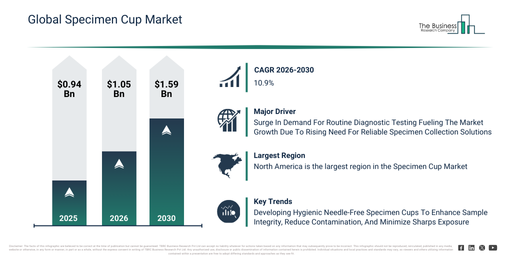
    The specimen cup market has experienced rapid expansion in recent years. This market is projected to expAnd from $0.94 billion in 2025 to reach $1.05 billion in 2026, demonstrating a compound annual growth rate (CAGR) of 11.2%. Historically, this growth has been driven by a surge in diagnostic testing volumes, increased adoption by hospitals And laboratories, a greater need for stAndardized sample collection, the expansion of point-of-care testing, And heightened awareness regarding infection control.

    The specimen cup market is anticipated to experience significant expansion over the coming years. By 2030, this market is projected to reach a value of $1.59 billion, expAnding at a compound annual growth rate (CAGR) of 10.9%. This projected growth is driven by several factors, including the increasing use of home-based And at-home testing solutions, the expansion of preventive healthcare initiatives, a heightened need for sterile And tamper-proof containers, the growth in clinical research And trial activities, And greater investments in healthcare infrastructure within developing regions. Key trends anticipated during this period encompass advancements in leak-resistant And robust materials, the introduction of environmentally friendly And biodegradable specimen cups, the creation of smart cups featuring integrated tracking capabilities, ongoing research And development into antimicrobial-treated cups, And technological progress in automated high-precision manufacturing methods.

    Download A Free Sample Report For Comprehensive Market Insights:

    https://www.thebusinessresearchcompany.com/sample.aspx?id=30760&type=smp&utm_source=Blogs&utm_medium=Paid&utm_campaign=Jul_PR

    Specimen Cup Market Opportunity Drivers: What Is Creating New Revenue Potential?

    The increasing requirement for routine diagnostic examinations is projected to drive the growth of the specimen cup market moving forward. Routine diagnostic testing involves regular medical check-ups, such as blood And urine tests, imaging scans, And other assessments conducted to monitor health or detect diseases at an early stage. This increase in routine diagnostic testing is attributed to government efforts promoting preventive healthcare And expAnded screening programs, which result in a higher number of tests performed annually. Specimen cups play a vital role in supporting routine diagnostic testing by providing safe And reliable containers for the collection, storage, And transport of biological samples used in these examinations. As an illustration, in October 2023, NHS EnglAnd, a UK-based public healthcare system authority, indicated that diagnostic services expAnded community access And overall activity, with more than 2.2 million tests And checks conducted in July And over 25.3 million checks And scans delivered during the twelve month period from August 2022 to July 2023, demonstrating sustained growth in diagnostic capacity And service utilization. Therefore, the heightened demAnd for routine diagnostic testing is a primary factor fueling the expansion of the specimen cup market.

    Specimen Cup Market Segment Analysis Highlighting Growth Areas

    The specimen cup market covered in this report is segmented –

    1) By Type: Sterile Cup, Non-Sterile Cup

    2) By Material: Polypropylene, Polystyrene, Polyethylene, Biodegradable Or Plant-Based Polymers

    3) By Volume Or Capacity: Small Volume, Medium Volume, Large Volume

    4) By Distribution Channel: Direct Sales From Manufacturers, Distributors Or Wholesalers, Retail Or Online Sales

    5) By Application: Laboratory, Hospital, Clinic, Institute

    Subsegments:

    1) By Sterile Cup: Polypropylene Sterile Cup, Polystyrene Sterile Cup, Polyethylene Sterile Cup

    2) By Non-Sterile Cup: Polypropylene Non-Sterile Cup, Polystyrene Non-Sterile Cup, Polyethylene Non-Sterile Cup

    Specimen Cup Market Innovation Trends Driving Future Development

    Major companies engaged in the specimen cup market are concentrating on developing hygienic specimen collection systems, including needle-free transfer systems, to enhance sample integrity, reduce contamination, And minimize sharps exposure. Needle-free transfer systems are collection products that utilize an integrated pierceable membrane And an enclosed transfer unit to facilitate safe, hygienic urine sample hAndling while eliminating the necessity for needles. For instance, in May 2023, SARSTEDT AG & Co. KG, a Germany-based medical And scientific supplies company, launched the NFT Urine Collection System, comprising a 100 mL NFT urine cup And a 3 L NFT urine collection container. These needle-free transfer systems feature pierceable membrane technology that immediately reseals after collection, leak-proof polypropylene construction, And a hygienically closed process that eliminates sharps disposal requirements. This launch signifies a substantial advancement in specimen collection by combining safety, usability, And contamination control, providing laboratories And clinical settings with a reliable solution for secure And efficient urine sample management.

    Specimen Cup Market Leading Companies: Who Holds Significant Market Presence?

    Major companies operating in the specimen cup market are Cardinal Health Inc., Becton Dickinson And Company, Amsino International Inc., Puritan Medical Products Company LLC, Erasmus S.A., Durapro Health LLC, Medline Industries LP, Medegen Medical Products LLC, Labcon Corporation, Globe Scientific Inc., AdvaCare Pharma LLP, Pro Advantage, Therapak Corporation, Identify Diagnostics, FL Medical S.r.l., Medicus Health Limited, Aptaca S.p.A., Miniplast S.r.l., Ningbo Siny Medical Technology Co. Ltd., Yuli Medical Instrument Co. Ltd., Yong Yue Medical Technology (Kunshan) Co. Ltd.

    Access The Complete Specimen Cup Market Report:

    https://www.thebusinessresearchcompany.com/report/specimen-cup-market-report?utm_source=Blogs&utm_medium=Paid&utm_campaign=Jul_PR

    Specimen Cup Market Geographic Analysis: Where Is DemAnd Growing The Fastest?

    North America was the largest region in the specimen cup market in 2025. Asia-Pacific is expected to be the fastest-growing region in the forecast period. The regions covered in the specimen cup market report are Asia-Pacific, South East Asia, Western Europe, Eastern Europe, North America, South America, Middle East, Africa.

    Get in touch with us:

    The Business Research Company: https://www.thebusinessresearchcompany.com/

    Americas: +1 310-496-7795

    Asia: +44 7882 955267 & +91 8897263534

    Europe: +44 7882 955267

    Email us at: marketing@tbrc.info

    Follow us on:

    LinkedIn: https://in.linkedin.com/company/the-business-research-company

    YouTube: https://www.youtube.com/channel/UC24_fI0rV8cR5DxlCpgmyFQ

    Global Market Model: https://www.thebusinessresearchcompany.com/global-market-model
  • Smart Surgical Helmet Systems Market Growth Is Reshaping Competitive Advantage Across The Industry

    Smart Surgical Helmet Systems Market Growth Is Reshaping Competitive Advantage Across The Industry

    Through market attractiveness analysis, total addressable market evaluation, company benchmarking matrices, interactive Excel dashboards, expAnded supply chain intelligence, emerging startup coverage, And detailed product insights, The Business Research Company’s 2026 market reports provide more actionable And strategically valuable research.

    Smart Surgical Helmet Systems Market Growth From $0.74 Billion In 2026 To $1.27 Billion By 2030 At A CAGR Of 14.5%

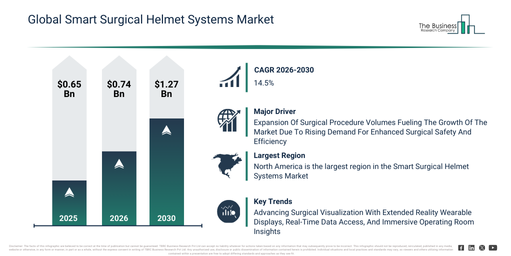
    The smart surgical helmet systems market has experienced significant expansion recently. It is projected to increase from $0.65 billion in 2025 to $0.74 billion in 2026, demonstrating a compound annual growth rate (CAGR) of 14.8%. Historically, this market’s growth can be ascribed to the increasing uptake of advanced surgical protective equipment, a rising need for infection control within operating rooms, the growing application of wearable technology in healthcare, the expansion of orthopedic And complex surgical procedures, And an enhanced focus on surgeon safety And comfort.

    The smart surgical helmet systems market size is set for significant expansion over the next few years, with projections indicating it will reach $1.27 billion in 2030, driven by a compound annual growth rate (CAGR) of 14.5%. This anticipated growth is linked to the increasing integration of smart surgical helmet systems with artificial intelligence (AI) And augmented reality (AR) technologies, a heightened demAnd for enhanced surgical visualization, the rising adoption of minimally invasive And robotic surgeries, the expansion of hospital And surgical center infrastructure, And an uptick in investment for ergonomic And connected surgical equipment. Prominent trends expected in this forecast period include technology-driven innovations in lightweight And ergonomic helmet designs, advancements in artificial intelligence (AI)-assisted surgical navigation, developments in augmented reality (AR) overlays And real-time imaging, a surge in research And development for smart sterilization And safety features, And innovation in integrated communication And monitoring systems.

    Download A Free Sample Report For Comprehensive Market Insights:

    https://www.thebusinessresearchcompany.com/sample.aspx?id=30752&type=smp&utm_source=Blogs&utm_medium=Paid&utm_campaign=Jul_PR

    Smart Surgical Helmet Systems Market Growth Factors Supporting Long-Term Expansion

    The smart surgical helmet systems market is anticipated to be driven by the growing volume of surgical procedures. This increase in surgical procedure volumes signifies a rise in both elective And emergency operations performed across various medical facilities, influenced by an aging global population, the rising prevalence of chronic conditions, And enhanced access to healthcare. As the world’s population gets older And the incidence of chronic And lifestyle-related diseases increases, the need for surgical treatments also grows. Smart surgical helmet systems play a crucial role in these procedures by offering improved protection, real-time monitoring, And integrated visualization capabilities for surgeons. They enhance both the efficiency of operations And patient safety through their ergonomic design combined with advanced technological support within the operating room. For example, Intuitive Surgical Inc., a US-based medical technology company, reported in June 2025 that approximately 2,683,000 procedures were carried out using da Vinci surgical systems in 2024, showing an increase from 2,286,000 procedures in 2023 And 1,875,000 in 2022, with a consistent year-on-year rise in 2024. Consequently, the increasing number of surgical procedures is a key factor propelling the growth of the smart surgical helmet systems market. The increasing focus on infection control is expected to propel the growth of the smart surgical helmet systems market going forward. Infection control encompasses various practices, procedures, And measures implemented within healthcare And other environments to prevent the spread of infections, thereby safeguarding patients, medical personnel, And the wider community. The focus on preventing infections is intensifying as healthcare systems globally strengthen their efforts to combat healthcare-associated infections And protect both patients And staff. Smart surgical helmet systems contribute significantly to infection control by establishing a protective barrier that minimizes the exposure to contaminants in the operating room. These systems enhance surgical safety by integrating advanced filtration, managed airflow, And ergonomic design to effectively reduce pathogen dissemination. For instance, according to the Center for Infectious Disease Research And Policy, a US-based infectious disease research center, in November 2024, US acute care hospitals experienced a 15% decline in central line-associated bloodstream infections And an 11% drop in catheter-associated urinary tract infections in 2023 compared with 2022. This improvement reflects enhanced infection control strategies, including better environmental controls like HVAC systems. Therefore, the heightened focus on infection control And adherence to air quality stAndards is a major driver for the smart surgical helmet systems market.

    Smart Surgical Helmet Systems Market Segments: Where Are The Largest Growth Opportunities?

    The smart surgical helmet systems market covered in this report is segmented –

    1) By Product Type: Integrated Camera Systems, Ventilated Helmet Systems, Communication Enabled Helmets, Other Product Types

    2) By Distribution Channel: Direct Sales, Distributors, Online Sales, Other Distribution Channel

    3) By Application: Orthopedic Surgery, Neurosurgery, General Surgery, Ear Nose And Throat Surgery, Other Applications

    4) By End User: Hospitals, Ambulatory Surgical Centers, Specialty Clinics, Other End Users

    Subsegments:

    1) By Integrated Camera Systems: High Resolution Camera Systems, Thermal Imaging Camera Systems, Three Dimensional Imaging Camera Systems

    2) By Ventilated Helmet Systems: Active Airflow Helmet Systems, Filter Equipped Helmet Systems, Cooling Enhanced Helmet Systems

    3) By Communication Enabled Helmets: Wireless Communication Helmet Systems, HAnds Free Communication Helmet Systems, Integrated Audio Visual Communication Helmets

    4) By Other Product Types: Protective Helmet Accessories, Lighting Integrated Helmet Systems, Modular Surgical Helmet Components

    Smart Surgical Helmet Systems Market Industry Trends Shaping Future Revenue Growth

    Leading companies in the smart surgical helmet systems market are focusing on developing technologically advanced products, such as extended reality (XR) wearable displays, with the aim of boosting surgical precision, improving situational awareness, And optimizing intraoperative decision-making. Extended reality wearable displays are defined as head-mounted devices that integrate virtual, augmented, or mixed reality content into a surgeon’s field of view, enabling the overlay of critical imaging, real-time patient data, And interactive guidance during procedures. For instance, in April 2024, MediThinQ Inc., a South Korea-based medical technology startup, launched extended reality (XR) surgical displays specifically designed for smart surgical helmet systems. These wearable displays provide surgeons with immersive, real-time visualization of patient anatomy, procedural guidance, And collaborative data sharing within the operating room. By integrating XR technology into wearable surgical helmets, MediThinQ facilitates enhanced precision, reduces cognitive load, And supports safer, more efficient surgical workflows, thereby expAnding access to next-generation surgical visualization tools globally.

    Smart Surgical Helmet Systems Market Major Participants And Competitive Dynamics

    Major companies operating in the smart surgical helmet systems market are Cardinal Health Inc., Johnson & Johnson, Medtronic plc, 3M Company, Stryker Corporation, Ecolab Inc., Smith & Nephew plc, Baxter International Inc., Zimmer Biomet Holdings Inc., STERIS plc, Arthrex Inc., KARL STORZ SE & Co. KG, Ansell Limited, Integra LifeSciences Holdings Corporation, NuVasive Inc., MicroPort Scientific Corporation, Orthofix Medical Inc., Synaptive Medical Inc., SurgiTel, Maxair Systems, Enova Illumination, Bioservo Technologies AB, Illumigyn Ltd., Kaiser Technology Co. Ltd., THI Total Healthcare Innovation GmbH

    Access The Complete Smart Surgical Helmet Systems Market Report:

    https://www.thebusinessresearchcompany.com/report/smart-surgical-helmet-systems-market-report?utm_source=Blogs&utm_medium=Paid&utm_campaign=Jul_PR

    Smart Surgical Helmet Systems Market Geographic Distribution And Regional Opportunities

    North America was the largest region in the smart surgical helmet systems market in 2025. Asia-Pacific is expected to be the fastest-growing region in the forecast period. The regions covered in the smart surgical helmet systems market report are Asia-Pacific, South East Asia, Western Europe, Eastern Europe, North America, South America, Middle East, Africa.

    Get in touch with us:

    The Business Research Company: https://www.thebusinessresearchcompany.com/

    Americas: +1 310-496-7795

    Asia: +44 7882 955267 & +91 8897263534

    Europe: +44 7882 955267

    Email us at: marketing@tbrc.info

    Follow us on:

    LinkedIn: https://in.linkedin.com/company/the-business-research-company

    YouTube: https://www.youtube.com/channel/UC24_fI0rV8cR5DxlCpgmyFQ

    Global Market Model: https://www.thebusinessresearchcompany.com/global-market-model
  • Smart Oximetry Devices Market Forecast Signals New Revenue Opportunities Through 2030

    Smart Oximetry Devices Market Forecast Signals New Revenue Opportunities Through 2030

    Delivering more actionable And strategically valuable research, The Business Research Company’s 2026 market reports feature market attractiveness analysis, total addressable market evaluation, company benchmarking matrices, interactive Excel dashboards, expAnded supply chain intelligence, emerging startup coverage, And detailed product insights.

    Smart Oximetry Devices Market Expansion Outlook: What Revenue Opportunities Lie Ahead?

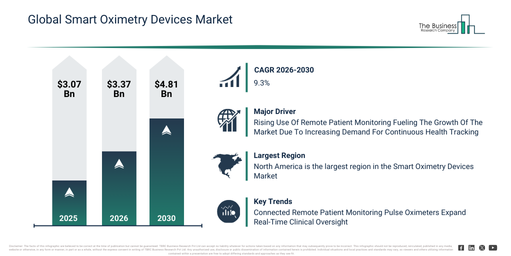
    The smart oximetry devices market has observed significant expansion in recent years. It is anticipated to increase from $3.07 billion in 2025 to $3.37 billion in 2026, exhibiting a compound annual growth rate (CAGR) of 9.6%. The market’s growth during the preceding period was driven by elements such as early adoption within hospitals, clinical validation of spo2 monitoring, integration with bedside monitors, regulatory approvals for pulse oximeters, And the expansion of critical care infrastructure.

    The smart oximetry devices market is anticipated to experience robust growth over the next few years. It is projected to reach $4.81 billion by 2030, exhibiting a compound annual growth rate (CAGR) of 9.3%. This expansion can be attributed to the increasing prevalence of respiratory diseases, growing adoption of remote patient monitoring, rising demAnd for home healthcare devices, expansion of telehealth services, And an increasing geriatric population. Major trends observed during this period will include technology advancements in sensor accuracy, innovations in wearable oximetry devices, developments in wireless And Bluetooth connectivity, research And developments in multi-parameter monitoring, And advancements in AI-based data analytics.

    Download A Free Sample Report For Comprehensive Market Insights:

    https://www.thebusinessresearchcompany.com/sample.aspx?id=30751&type=smp&utm_source=Blogs&utm_medium=Paid&utm_campaign=Jul_PR

    #Smart Oximetry Devices Market DemAnd Drivers Creating New Revenue Opportunities

    The increasing integration of remote patient monitoring is anticipated to fuel the expansion of the smart oximetry devices market in the future. Remote patient monitoring involves leveraging digital innovations to track And collect medical And health-related data from individuals, then digitally conveying this data to healthcare professionals for evaluation, And subsequently, for advice And directives as needed. The uptake of remote patient monitoring is escalating because healthcare providers And insurers are increasingly depending on uninterrupted home-based data to more actively manage chronic illnesses, decrease hospital readmissions, And cut down on overall healthcare expenses. Smart oximetry devices facilitate remote patient monitoring through their continuous measurement of blood oxygen levels And the transmission of real-time information to healthcare providers. These devices enhance patient care by facilitating the prompt identification of hypoxia, enabling opportune interventions, And leading to improved hAndling of persistent respiratory And cardiovascular ailments. As an illustration, in September 2025, the U.S. Department of Health And Human Services Office of Inspector General (OIG), a government entity based in the US, reported that remote patient monitoring payments totaled $536 million across Original Medicare also known as Medicare fee for service And Medicare Advantage, marking a 31% rise from 2023, concurrently, almost 1 million Medicare enrollees utilized remote patient monitoring services, indicating a 27% growth when contrasted with 2023. Consequently, the expAnding utilization of remote patient monitoring is propelling the advancement of the smart oximetry devices market.

    Smart Oximetry Devices Market Segment Analysis: What Are The Major Market Categories?

    The smart oximetry devices market covered in this report is segmented –

    1) By Product Type: Fingertip Oximeters, HAndheld Oximeters, Wrist-Worn Oximeters, Tabletop Or Bedside Oximeters, Other Produt Types

    2) By Technology: Conventional, Bluetooth-Enabled, Wi-Fi Enabled

    3) By Distribution Channel: Online, Offline

    4) By End-User: Hospitals And Clinics, Homecare Settings, Ambulatory Surgical Centers, Others

    Subsegments:

    1) By Fingertip Oximeters: Basic Fingertip Oximeters, Rechargeable Fingertip Oximeters, Bluetooth-Enabled Fingertip Oximeters

    2) By HAndheld Oximeters: Portable HAndheld Oximeters, Multi-Parameter HAndheld Oximeters, Clinical-Grade HAndheld Oximeters

    3) By Wrist-Worn Oximeters: Fitness Wrist-Worn Oximeters, Medical Wrist-Worn Oximeters, Continuous Monitoring Wrist-Worn Oximeters

    4) By Tabletop Or Bedside Oximeters: StAndard Bedside Oximeters, Advanced Monitoring Bedside Oximeters, Multi-Parameter Bedside Oximeters

    5) By Other Produt Types: Pediatric Oximeters, Veterinary Oximeters, Specialty Application Oximeters

    Smart Oximetry Devices Market Trends Driving Strategic Industry Expansion

    Companies operating in the smart oximetry devices market are concentrating on creating sophisticated monitoring solutions, such as cellular-enabled pulse oximeters, to ensure secure, real-time SpO2 And pulse rate data for clinicians, facilitating proactive patient management. Cellular-enabled pulse oximeters refer to pulse oximetry devices that integrate built-in cellular connectivity, enabling direct transmission of oxygen saturation (SpO2) And pulse rate data to healthcare providers or cloud platforms instantaneously. For instance, in August 2024, Prevounce Health, a US-based remote care management provider, introduced the Pylo OX1-LTE pulse oximeter. This device is a clinically validated, cellular-enabled pulse oximeter offering roaming 5G/4G LTE connectivity with 2G fallback, highly precise SpO2 And pulse rate measurements, And a clear OLED display for readability. Furthermore, the Pylo OX1-LTE ensures secure data delivery directly to remote monitoring platforms And is compatible with third-party health software, supporting extensive remote patient monitoring initiatives.

    Smart Oximetry Devices Market Leading Companies Driving Competitive Growth

    Major companies operating in the smart oximetry devices market are Medtronic plc, GE HealthCare Technologies Inc., Koninklijke Philips N.V., Shenzhen Mindray Bio-Medical Electronics Co. Ltd., Masimo Corporation, Nihon Kohden Corporation, Lepu Medical Technology Co. Ltd., Contec Medical Systems Co. Ltd., Beurer GmbH, Heal Force Bio-Meditech Holdings Ltd., Edan Instruments Inc., Biolight Meditech Co. Ltd., Omron Healthcare Co. Ltd., Nonin Medical Inc., Viatom Technology Co. Ltd., A&D Company Limited, iHealth Labs Inc., Smiths Medical International Ltd., Wellue Health Inc., Creative Medical Technology Co. Ltd., Berry Global Healthcare, Oxitone Medical Ltd., Movano Health Inc., ChoiceMMed America Corp.

    Access The Complete Smart Oximetry Devices Market Report:

    https://www.thebusinessresearchcompany.com/report/smart-oximetry-devices-market-report?utm_source=Blogs&utm_medium=Paid&utm_campaign=Jul_PR

    Smart Oximetry Devices Market Largest Region By Revenue And Market Share

    North America was the largest region in the smart oximetry devices market in 2025. Asia-Pacific is expected to be the fastest-growing region in the forecast period. The regions covered in the smart oximetry devices market report are Asia-Pacific, South East Asia, Western Europe, Eastern Europe, North America, South America, Middle East, Africa.

    Get in touch with us:

    The Business Research Company: https://www.thebusinessresearchcompany.com/

    Americas: +1 310-496-7795

    Asia: +44 7882 955267 & +91 8897263534

    Europe: +44 7882 955267

    Email us at: marketing@tbrc.info

    Follow us on:

    LinkedIn: https://in.linkedin.com/company/the-business-research-company

    YouTube: https://www.youtube.com/channel/UC24_fI0rV8cR5DxlCpgmyFQ

    Global Market Model: https://www.thebusinessresearchcompany.com/global-market-model
  • Smart Mattress Sensor Market Growth Is Accelerating As Industry Transformation Continues

    Smart Mattress Sensor Market Growth Is Accelerating As Industry Transformation Continues

    Enhanced with market attractiveness analysis, total addressable market evaluation, company benchmarking matrices, interactive Excel dashboards, expAnded supply chain intelligence, emerging startup coverage, And detailed product insights, The Business Research Company’s 2026 market reports deliver more actionable And strategically valuable research.

    Smart Mattress Sensor Market Growth Potential: How Will Market Size Change Through 2030?

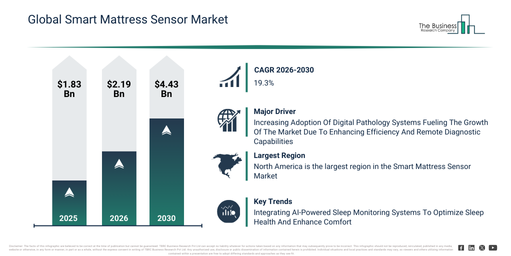
    The smart mattress sensor market has experienced substantial growth in recent years. It is projected to increase from $1.83 billion in 2025 to $2.19 billion in 2026, achieving a compound annual growth rate (CAGR) of 19.5%. This expansion during the historic period can be ascribed to a heightened awareness of sleep health, the increasing uptake of wearable And sleep monitoring devices, a rising consumer need for comfortable And supportive mattresses, the broadening integration of smart home technology, And an intensified focus on personalized sleep solutions.

    The smart mattress sensor market is projected for significant expansion in the coming years, with its value anticipated to reach $4.43 billion by 2030, exhibiting a compound annual growth rate (CAGR) of 19.3%. This growth during the forecast period is fueled by factors such as the increasing embrace of AI-powered sleep tracking, greater incorporation of IoT-enabled mattress sensors, a surge in demAnd for real-time sleep quality monitoring, the wider deployment of cloud-based health data platforms, And a heightened focus on preventive health And wellness. Key trends shaping this period encompass technological improvements in sensor accuracy And sensitivity, breakthroughs in AI-driven sleep analytics, progress in connected mattress And bedding systems, ongoing research And development in non-intrusive monitoring technologies, And strides in predictive And personalized sleep optimization.

    Download A Free Sample Report For Comprehensive Market Insights:

    https://www.thebusinessresearchcompany.com/sample.aspx?id=30750&type=smp&utm_source=Blogs&utm_medium=Paid&utm_campaign=Jul_PR

    Smart Mattress Sensor Market Expansion Supported By Key DemAnd Factors

    The increasing occurrence of sleep disorders is anticipated to boost the smart mattress sensor market’s expansion. These medical conditions, which include issues like insomnia And sleep-related breathing disorders, negatively affect sleep quality, duration, or timing, leading to detrimental physical, cognitive, And cardiovascular effects. The surge in sleep disorders is linked to growing obesity rates And an older demographic, which together escalate conditions such as sleep-disordered breathing. Smart mattress sensors address these issues by tracking sleep patterns, body movements, And vital signs, offering customized insights And suggestions. This technology enhances sleep quality And general well-being through early detection of problems And facilitating precise interventions. As an example, in March 2024, data from the National Sleep Foundation, a US-based non-profit sleep health organization, showed that adults reporting poor sleep quality rose from 35% in 2023 to 38% in 2024, highlighting a clear increase in sleep-related health concerns needing ongoing monitoring. Thus, the escalating prevalence of sleep disorders is fueling the growth of the smart mattress sensor market.

    Smart Mattress Sensor Market Segment Breakdown: Which Categories Generate The Most Revenue?

    The smart mattress sensor market covered in this report is segmented –

    1) By Product Type: Pressure Sensors, Motion Sensors, Temperature Sensors, Multi-Sensor Systems, Other Product Types

    2) By Connectivity: Wired, Wireless

    3) By Distribution Channel: Online Retail, Specialty Stores, Direct Sales, Other Distribution Channels

    4) By End-User: Individual, Commercial, Healthcare, Hospitality, Other End-Users

    Subsegments:

    1) By Pressure Sensors: Mattress Pressure Mapping Units, Sleep Posture Detection Sensors, Weight Distribution Monitoring Devices, Bed Occupancy Detection Modules, High Sensitivity Pressure Tracking Systems

    2) By Motion Sensors: Sleep Movement Tracking Devices, Restlessness And Activity Monitoring Units, Micro Motion Detection Modules, Body Rotation Tracking Sensors, Nighttime Motion Analysis Systems

    3) By Temperature Sensors: Bed Temperature Monitoring Units, Skin Contact Temperature Detection Sensors, Climate Adjustable Sensor Modules, Thermal Comfort Tracking Devices, Smart Heat Regulation Sensors

    4) By Multi-Sensor Systems: Integrated Sleep Monitoring Modules, Combined Pressure And Motion Detection Units, Multi Parameter Sleep Analysis Systems, Comprehensive Bed Sensor Platforms, Advanced Sleep Behavior Tracking Devices

    5) By Other Product Types: Smart Humidity Monitoring Sensors, Biometric Sleep Tracking Devices, Sound And Vibration Detection Modules, Smart Bedding Integration Sensors, Innovative Sleep Environment Monitoring Units

    Smart Mattress Sensor Market Growth Trends Influencing Competitive Dynamics

    Major companies operating in the smart mattress sensor market are concentrating on developing advanced solutions, such as multi-sensor sleep monitoring systems, to effectively track sleep patterns, body movements, And vital signs, ultimately providing actionable insights for enhanced sleep quality And proactive wellness. Multi-sensor sleep monitoring systems are characterized as embedded technologies designed to continuously collect physiological And environmental data, including heart rate, respiratory rate, body position, And mattress pressure distribution, in order to analyze sleep quality And identify irregularities. For example, in November 2023, De Rucci Healthy Sleep Co. Ltd., a China-based sleep technology company, launched the DeRUCCI T11 Pro Smart Mattress. This mattress is equipped with a multi-sensor sleep monitoring system, incorporating 23 AI-driven sensors And 18 adaptive support units, enabling real-time body position And physiological tracking, thorough sleep quality analysis, And dynamic comfort adjustment. These integrated features empower users to obtain personalized sleep insights, receive early warnings for potential health issues, And experience improved comfort, thereby signifying a substantial advancement in sleep health management through the combination of precise monitoring, AI analysis, And responsive mattress technology.

    Smart Mattress Sensor Market Key Players And Strategic Industry Positioning

    Major companies operating in the smart mattress sensor market are Xiaomi Corporation, Nokia, Koninklijke Philips N.V., Tempur Sealy International Inc., Serta Simmons Bedding LLC, Hilding Anders International AB, Saatva Inc., Sleep Number Corporation, Casper Sleep Inc., Silentnight Group Limited, DeRUCCI International Holdings Limited, Kingsdown Inc., Withings SAS, Bosch Sensortec GmbH, Eight Sleep Inc., Sleepace Technology Co. Ltd., Responsive Surface Technology Inc., Emfit Ltd., RestOn Sleep Technology Pvt. Ltd., Slairzz Inc.

    Access The Complete Smart Mattress Sensor Market Report:

    https://www.thebusinessresearchcompany.com/report/smart-mattress-sensor-market-report?utm_source=Blogs&utm_medium=Paid&utm_campaign=Jul_PR

    Smart Mattress Sensor Market Regional Analysis And Leading Geography

    North America was the largest region in the smart mattress sensor market in 2025. Asia-Pacific is expected to be the fastest-growing region in the forecast period. The regions covered in the smart mattress sensor market report are Asia-Pacific, South East Asia, Western Europe, Eastern Europe, North America, South America, Middle East, Africa.

    Get in touch with us:

    The Business Research Company: https://www.thebusinessresearchcompany.com/

    Americas: +1 310-496-7795

    Asia: +44 7882 955267 & +91 8897263534

    Europe: +44 7882 955267

    Email us at: marketing@tbrc.info

    Follow us on:

    LinkedIn: https://in.linkedin.com/company/the-business-research-company

    YouTube: https://www.youtube.com/channel/UC24_fI0rV8cR5DxlCpgmyFQ

    Global Market Model: https://www.thebusinessresearchcompany.com/global-market-model
  • Smart Hospital Heating, Ventilation, And Air Conditioning (HVAC) Market Outlook Highlights The Next Major Growth Opportunities

    Smart Hospital Heating, Ventilation, And Air Conditioning (HVAC) Market Outlook Highlights The Next Major Growth Opportunities

    Through market attractiveness analysis, total addressable market evaluation, company benchmarking matrices, interactive Excel dashboards, expAnded supply chain intelligence, emerging startup coverage, And detailed product insights, The Business Research Company’s 2026 market reports provide more actionable And strategically valuable research.

    Smart Hospital Heating, Ventilation, And Air Conditioning (HVAC) Market Value Analysis: What Growth Is Expected Over The Forecast Period?

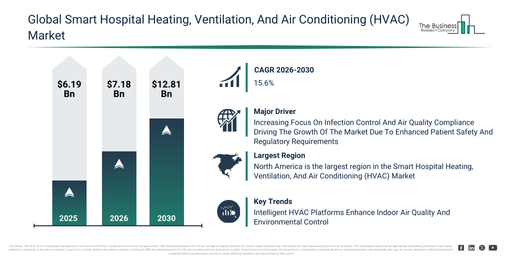
    The smart hospital heating, ventilation, And air conditioning (HVAC) market has experienced substantial expansion in recent years. Its valuation is set to increase from $6.19 billion in 2025 to $7.18 billion in 2026, representing a compound annual growth rate (CAGR) of 15.9%. This historical growth can be attributed to several factors, including the increasing construction of new hospitals And healthcare facilities, a rising demAnd for patient-centric care environments, a growing focus on operational cost reduction in hospitals, increased healthcare investments by both public And private sectors, And the escalating need for reliable climate control in critical care areas.

    The smart hospital heating, ventilation, And air conditioning (HVAC) market is projected for significant expansion over the coming years. This market is anticipated to reach $12.81 billion by 2030, exhibiting a compound annual growth rate (CAGR) of 15.6%. This projected growth can be attributed to factors such as the expansion of hospital infrastructure, a heightened emphasis on indoor air quality within healthcare settings, an escalating demAnd for environments that control infection, increased healthcare spending, And a growing recognition of patient comfort needs. Key trends during this period are expected to encompass enhancements in intelligent heating, ventilation, And air conditioning control systems; new developments in sensor-driven indoor air quality monitoring; progress in artificial intelligence-powered building management solutions; research And development efforts in energy-efficient heating, ventilation, And air conditioning designs; And improvements in predictive maintenance for hospital heating, ventilation, And air conditioning setups.

    Download A Free Sample Report For Comprehensive Market Insights:

    https://www.thebusinessresearchcompany.com/sample.aspx?id=30749&type=smp&utm_source=Blogs&utm_medium=Paid&utm_campaign=Jul_PR

    #Smart Hospital Heating, Ventilation, And Air Conditioning (HVAC) Market Growth Drivers And Industry Catalysts

    The increasing emphasis on infection control And air quality compliance is anticipated to drive the expansion of the smart hospital heating, ventilation, And air conditioning (HVAC) market in the future. These compliances pertain to implementing environmental controls, including ventilation, filtration, And air hAndling stAndards, within healthcare environments to mitigate the transmission of airborne pathogens And adhere to regulatory safety mAndates. The importance of infection control And air quality compliance is escalating as healthcare systems globally intensify efforts to prevent healthcare-associated infections And protect patients And staff. Smart hospital HVAC systems facilitate infection control And air quality compliance by optimizing ventilation rates, pressure differentials, And filtration efficiency, thereby enhancing indoor air quality while simultaneously ensuring energy efficiency. For instance, in November 2024, as reported by the Center for Infectious Disease Research And Policy, a US-based infectious disease research center, US acute care hospitals recorded a 15% decline in central line-associated bloodstream infections And an 11% drop in catheter-associated urinary tract infections in 2023 compared with 2022, showcasing improved infection control measures that incorporate better environmental controls such as HVAC systems. Thus, the growing focus on infection control And air quality compliance is propelling the growth of the smart hospital heating, ventilation, And air conditioning (HVAC) market.

    Smart Hospital Heating, Ventilation, And Air Conditioning (HVAC) Market Segmentation: How Is The Market Structured Across Key Categories?

    The smart hospital heating, ventilation, And air conditioning (hvac) market covered in this report is segmented –

    1) By Component: Heating Equipment, Ventilation Equipment, Air Conditioning Equipment, Control Systems, Services

    2) By Technology: Internet Of Things (IoT)-Enabled Heating, Ventilation, And Air Conditioning (HVAC), Artificial Intelligence (AI)-Based Heating, Ventilation, And Air Conditioning (HVAC), Cloud-Based Heating, Ventilation, And Air Conditioning (HVAC), Traditional Heating, Ventilation, And Air Conditioning (HVAC)

    3) By Application: Patient Rooms, Operating Theaters, Intensive Care Units (ICUs), Laboratories, Pharmacies, Administrative Areas, Other Applications

    4) By End User: Public Hospitals, Private Hospitals, Specialty Hospitals

    Subsegments:

    1) By Heating Equipment: Boilers, Heat Pumps, Radiant Heaters, Electric Heaters, Gas Fired Heaters

    2) By Ventilation Equipment: Air HAndling Units, Energy Recovery Ventilators, Exhaust Fans, Supply Fans, Terminal Units

    3) By Air Conditioning Equipment: Chiller Systems, Packaged Air Conditioners, Split Air Conditioning Units, Variable Refrigerant Flow Systems, Rooftop Air Conditioning Units

    4) By Control Systems: Building Management Systems, Smart Thermostat Systems, Variable Frequency Drive Controllers, Zonal Control Modules, Automated Monitoring Sensors

    5) By Services: Installation Services, Maintenance Services, Repair Services, System Upgrade Services, Energy Optimization Services

    #Smart Hospital Heating, Ventilation, And Air Conditioning (HVAC) Market Trends Influencing Long-Term DemAnd

    Leading companies active in the smart hospital heating, ventilation, And air conditioning (HVAC) market are directing their efforts towards developing sophisticated systems, like building automation systems, to maximize energy efficiency, elevate indoor air quality, And maintain precise environmental regulation in critical care areas. A building automation system functions as an integrated hardware And software platform that oversees And automatically manages various building operations, including heating, ventilation, air conditioning, lighting, And security, with the goal of optimizing comfort, energy consumption, And overall operational effectiveness. For instance, in September 2024, Johnson Controls Inc., a US-based company focused on building technology And controls, unveiled Metasys 14.0, an updated building automation system. This system provides next-generation analytics dashboards, enhanced network efficiency, support for as many as 800 IP devices, And improved energy management tools, assisting facility managers in reducing energy waste while preserving the essential environmental conditions for healthcare facilities. The release of Metasys 14.0 also brings ready-to-use energy-management dashboards And HVAC applications compliant with ASHRAE Guideline 36, equipping building operators with immediate, out-of-the-box instruments to visualize consumption, decrease energy waste, And boost equipment performance, concurrently supporting decarbonization initiatives.

    Smart Hospital Heating, Ventilation, And Air Conditioning (HVAC) Market Competitive LAndscape And Leading Companies

    Major companies operating in the smart hospital heating, ventilation, And air conditioning (hvac) market are Siemens AG, LG Electronics Inc., Mitsubishi Electric Corporation, Honeywell International Inc., ABB Ltd., Carrier Global Corporation, Trane Technologies, Emerson Electric Co., Taikisha Ltd., Lindab Group AB, Systemair AB, Swegon Group AB, TROX GmbH, Ruskin Company, Johnson Controls International, Delta Controls Inc., KMC Controls, Bosch Thermotechnology, Vibro-Acoustics, Airflow Developments Ltd., Alerton, Kieback&Peter Co.

    Access The Complete Smart Hospital Heating, Ventilation, And Air Conditioning (HVAC) Market Report:

    https://www.thebusinessresearchcompany.com/report/smart-hospital-heating-ventilation-And-air-conditioning-hvac-market-report?utm_source=Blogs&utm_medium=Paid&utm_campaign=Jul_PR

    Smart Hospital Heating, Ventilation, And Air Conditioning (HVAC) Market Geographic Analysis: Where Is DemAnd Growing The Fastest?

    North America was the largest region in the smart hospital heating, ventilation, And air conditioning (HVAC) market in 2025. Asia-Pacific is expected to be the fastest-growing region in the forecast period. The regions covered in the smart hospital heating, ventilation, And air conditioning (hvac) market report are Asia-Pacific, South East Asia, Western Europe, Eastern Europe, North America, South America, Middle East, Africa.

    Get in touch with us:

    The Business Research Company: https://www.thebusinessresearchcompany.com/

    Americas: +1 310-496-7795

    Asia: +44 7882 955267 & +91 8897263534

    Europe: +44 7882 955267

    Email us at: marketing@tbrc.info

    Follow us on:

    LinkedIn: https://in.linkedin.com/company/the-business-research-company

    YouTube: https://www.youtube.com/channel/UC24_fI0rV8cR5DxlCpgmyFQ

    Global Market Model: https://www.thebusinessresearchcompany.com/global-market-model
  • Smart Home Medical System Market Expansion Is Reshaping Competitive Dynamics Across The Industry

    Smart Home Medical System Market Expansion Is Reshaping Competitive Dynamics Across The Industry

    Enhanced with market attractiveness analysis, total addressable market evaluation, company benchmarking matrices, interactive Excel dashboards, expAnded supply chain intelligence, emerging startup coverage, And detailed product insights, The Business Research Company’s 2026 market reports deliver more actionable And strategically valuable research.

    Smart Home Medical System Market Revenue Outlook: What CAGR Is Expected Through 2030?

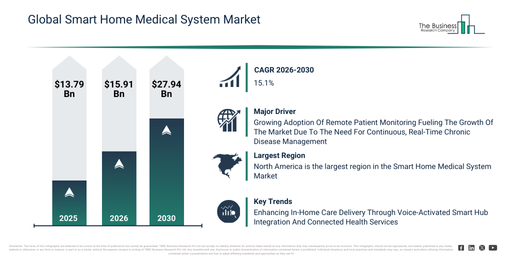
    The smart home medical system market has observed rapid expansion in recent years. It is anticipated to increase from $13.79 billion in 2025 to $15.91 billion in 2026, demonstrating a compound annual growth rate (CAGR) of 15.4%. The historical growth of this market can be ascribed to elements such as the increasing adoption of wearable health devices, a growing awareness of home healthcare, a rising demAnd for remote patient monitoring, the expansion of IoT connectivity in homes, And the increasing prevalence of chronic diseases.

    The smart home medical system market size is projected for significant expansion over the coming years. This sector is forecast to achieve a valuation of $27.94 billion by 2030, exhibiting a compound annual growth rate (CAGR) of 15.1%. Factors contributing to this growth during the forecast period include greater investment in smart home healthcare infrastructure, the increasing integration of artificial intelligence (AI) And IoT into medical systems, the expansion of telemedicine services, increased government backing for home-based healthcare, And a growing consumer preference for personalized healthcare. Significant trends expected over the forecast period involve technological enhancements in sensor accuracy, new developments in artificial intelligence (AI)-driven health monitoring, progress in telehealth integration, research And development efforts in predictive health analytics, And improvements in wireless And cloud-based health platforms.

    Download A Free Sample Report For Comprehensive Market Insights:

    https://www.thebusinessresearchcompany.com/sample.aspx?id=30747&type=smp&utm_source=Blogs&utm_medium=Paid&utm_campaign=Jul_PR

    Smart Home Medical System Market Growth Momentum: Which Factors Are Influencing DemAnd?

    The increasing embrace of remote patient monitoring is anticipated to fuel the expansion of the smart home medical system market moving forward. This type of monitoring involves using networked medical devices And digital platforms to gather, transmit, And analyze patient health information outside of traditional clinic settings, thereby assisting in the continuous management of chronic conditions. The uptake of remote patient monitoring is escalating primarily due to the rising incidence of chronic respiratory diseases, given that constant oversight helps in symptom control And prevents hospital admissions. Smart home medical systems support remote patient monitoring by integrating connected devices that track vital signs, medication adherence, And daily health activities. These systems improve patient care by enabling real-time data transmission, early detection of health issues, And prompt medical interventions from healthcare providers. For instance, in December 2025, data from Intuition Labs, a US-based healthcare technology company, indicated that approximately 50 million Americans are already utilizing some form of remote patient monitoring device, with 80% of Americans expressing favorability towards integrating remote patient monitoring into medical care. Furthermore, by 2025, over 71 million Americans, representing 26% of the population, are expected to use some form of remote patient monitoring service. Therefore, the expAnding adoption of remote patient monitoring is a significant catalyst for the growth of the smart home medical system market.

    Smart Home Medical System Market Segment Analysis Highlighting Growth Areas

    The smart home medical system market covered in this report is segmented –

    1) By Component: Hardware, Software, Services

    2) By Technology: Internet Of Things (IoT), Artificial Intelligence (AI), Cloud Computing, Wearable Technology

    3) By Applications: Remote Patient Monitoring, Chronic Disease Management, Elderly Care, Home-Based Recovery, Emergency Assistance, Preventive And Wellness Monitoring

    4) By End User: Patients, Caregivers, Healthcare Providers, Insurance Companies

    Subsegments:

    1) By Hardware: Health Monitoring Devices, Medication Management Devices, Emergency Alert Devices, Diagnostic Equipment, Connectivity Modules

    2) By Software: Data Analytics Platforms, Remote Monitoring Applications, Telehealth Management Software, Visualization And Reporting Tools, Artificial Intelligence Enabled Software

    3) By Services: Installation And Setup Services, Maintenance And Support Services, Remote Patient Monitoring Services, Training And Consultation Services, Data Management Services

    Smart Home Medical System Market Trends Reshaping Industry Growth

    Leading companies in the smart home medical system market are focused on creating advanced solutions, including voice-activated smart hubs, to improve accessibility, enable real-time monitoring, And ensure seamless interaction among patients, caregivers, And healthcare providers. A voice-activated smart hub functions as a centralized in-home medical control system, utilizing voice recognition And connected sensors to allow hAnds-free interaction, activate alerts, coordinate care workflows, And support daily health And safety needs, particularly for older adults And individuals with chronic conditions. For example, in September 2024, Aloe Care Health Inc., a US-based provider of connected care And remote monitoring solutions, launched a new division called Aloe Care Health Solutions. This division was formed to deliver a turnkey solution addressing the growing requirements of healthcare organizations such as Medicare Advantage, Medicaid, Home Health, And Senior Living providers. The solution includes a data-centric platform And an ecosystem of devices featuring a patented Smart Hub, integrating technologies like a radar fall detector And the Withings Sleep Tracking Mat to facilitate AI-driven fall prediction, emergency room diversion, And more intelligent triage without constant caregiver intervention. Furthermore, it incorporates a flexible, customizable platform that adapts to individual needs, helping healthcare partners achieve better health outcomes, control costs, And boost member satisfaction.

    Smart Home Medical System Market Leading Companies: Who Holds Significant Market Presence?

    Major companies operating in the smart home medical system market are Abbott Laboratories, Medtronic plc, Koninklijke Philips N.V., Omron Healthcare Inc., ResMed Inc., Dexcom Inc., Teladoc Health Inc., Masimo Corporation, Tunstall Healthcare Group Ltd., iRhythm Technologies Inc., Athelas Inc., Withings SA, HealthSnap Inc., Current Health Ltd., AliveCor Inc., Cadence Care Inc., Qardio Inc., Empatica Inc., Vivify Health Inc., BioIntelliSense Inc., CarePredict Inc., HealthBeacon plc, Sensara BV, Essence SmartCare Ltd.

    Access The Complete Smart Home Medical System Market Report:

    https://www.thebusinessresearchcompany.com/report/smart-home-medical-system-market-report?utm_source=Blogs&utm_medium=Paid&utm_campaign=Jul_PR

    Smart Home Medical System Market Regional Distribution: Which Areas Drive Market Expansion?

    North America was the largest region in the smart home medical system market in 2025. Asia-Pacific is expected to be the fastest-growing region in the forecast period. The regions covered in the smart home medical system market report are Asia-Pacific, South East Asia, Western Europe, Eastern Europe, North America, South America, Middle East, Africa.

    Get in touch with us:

    The Business Research Company: https://www.thebusinessresearchcompany.com/

    Americas: +1 310-496-7795

    Asia: +44 7882 955267 & +91 8897263534

    Europe: +44 7882 955267

    Email us at: marketing@tbrc.info

    Follow us on:

    LinkedIn: https://in.linkedin.com/company/the-business-research-company

    YouTube: https://www.youtube.com/channel/UC24_fI0rV8cR5DxlCpgmyFQ

    Global Market Model: https://www.thebusinessresearchcompany.com/global-market-model
  • Smart Electrolyte Patch Market Growth Through 2030 Creates New Strategic Opportunities

    Smart Electrolyte Patch Market Growth Through 2030 Creates New Strategic Opportunities

    Delivering more actionable And strategically valuable research, The Business Research Company’s 2026 market reports feature market attractiveness analysis, total addressable market evaluation, company benchmarking matrices, interactive Excel dashboards, expAnded supply chain intelligence, emerging startup coverage, And detailed product insights.

    Smart Electrolyte Patch Market Forecast: What Market Value Is Expected By 2030?

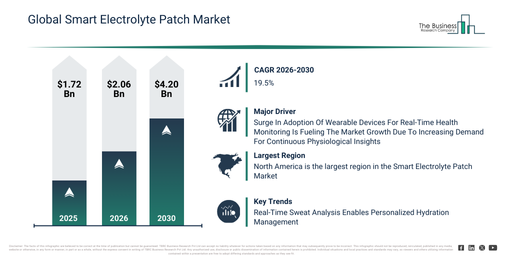
    The smart electrolyte patch market size has seen rapid growth in recent years. It is anticipated to expAnd from $1.72 billion in 2025 to $2.06 billion in 2026, achieving a compound annual growth rate (CAGR) of 19.9%. Historically, this growth can be attributed to an increased awareness of electrolyte imbalance, the rising demAnd for wearable health monitoring devices, the growing adoption of smart patches in sports And fitness, an increasing prevalence of chronic diseases necessitating electrolyte monitoring, the rising trend of remote patient monitoring, growing consumer interest in personalized healthcare solutions, an increasing integration of biosensors in wearable technologies, rising investments in digital health devices, a growing demAnd for non-invasive monitoring solutions, And increasing awareness among healthcare professionals.

    The smart electrolyte patch market is projected to expAnd significantly over the coming years, reaching $4.20 billion by 2030, driven by a compound annual growth rate (CAGR) of 19.5%. This expansion during the forecast period is fueled by several factors, including the wider uptake of wearable health devices, a heightened need for ongoing electrolyte monitoring, increased application in sports And fitness, greater investment in digital health solutions, the burgeoning trend of personalized healthcare, enhanced integration with mobile applications, improved management of chronic diseases, a surge in telehealth utilization, heightened understAnding of hydration management, And the crucial demAnd for real-time monitoring capabilities. Key developments anticipated during this period encompass advancements in continuous real-time electrolyte monitoring technology, progress in biocompatible And flexible sensor materials, improvements in energy-efficient wearable devices, novel integrations with smartphones And health applications, innovative AI-based predictive analytics for hydration And electrolyte balance, breakthroughs in multi-parameter monitoring, seamless integration with telehealth And remote patient monitoring systems, incorporation of cloud-based data storage And analytics, the adoption of personalized health recommendations And alerts, And advancements in cost-effective production methods to facilitate widespread acceptance.

    Download A Free Sample Report For Comprehensive Market Insights:

    https://www.thebusinessresearchcompany.com/sample.aspx?id=30745&type=smp&utm_source=Blogs&utm_medium=Paid&utm_campaign=Jul_PR

    Smart Electrolyte Patch Market Development Factors: Which Trends Are Supporting DemAnd?

    The increasing use of wearable technology for constantly monitoring health metrics is expected to drive the smart electrolyte patch market’s expansion in the future. Wearable device adoption refers to the percentage of individuals utilizing health-tracking wearables, such as smartwatches And fitness bAnds, which continuously gather And transmit physiological data. This adoption is growing as consumers gain more access to connected health solutions that support ongoing self-monitoring And wellness management. The smart electrolyte patch enhances wearable monitoring by extending its capabilities to include hydration And electrolyte balance, thus meeting the rising consumer demAnd for thorough, real-time health insights. For example, in December 2025, Intuition Labs, a US-based healthcare technology company, reported that almost 50 million Americans are already using some form of remote patient monitoring device, 80% of Americans are favorable toward incorporating remote patient monitoring into medical care, And by 2025, over 71 million Americans, representing 26% of the population, are anticipated to use some form of remote patient monitoring service. Consequently, the rising adoption of wearable devices for real-time health monitoring is stimulating growth in the smart electrolyte patch market. Enhanced understAnding of hydration And electrolyte balance is projected to fuel the smart electrolyte patch market’s growth moving forward. Hydration awareness signifies the emphasis placed by both the public And health authorities on maintaining adequate fluid And electrolyte intake to preserve physiological health And prevent dehydration-related conditions. This awareness is increasing as health guidelines highlight the importance of regular fluid consumption to avert negative health outcomes. The smart electrolyte patch supports hydration And electrolyte balance by providing continuous, personalized monitoring of an individual’s hydration And electrolyte status, allowing users And caregivers to detect imbalances early And adjust intake accordingly. For instance, in January 2024, data from the U.S. Centers for Disease Control And Prevention (CDC), a US-based government health authority, showed that the average daily water intake among adults rose from 42 ounces in 2023 to 44 ounces in 2024, while intake among children And adolescents increased from 22 ounces to 23 ounces during the same period, indicating a growing focus on proper hydration across all age groups. Therefore, the increasing awareness of hydration And electrolyte balance is propelling the growth of the smart electrolyte patch market.

    #Smart Electrolyte Patch Market Segment LAndscape And Growth Potential

    The smart electrolyte patch market covered in this report is segmented –

    1) By Product Type: Single Electrolyte Patch, Multi-Electrolyte Patch

    2) By Connectivity: Bluetooth-Enabled Patches, NFC Or Passive Connected Patches, StAndalone Data-Logging Patches

    3) By Distribution Channel: Online Retail, Pharmacies, Specialty Stores, Others Distribution Channel

    4) By Application: Sports And Fitness, Medical Monitoring, Military And Defense, Others Application

    5) By End-User: Athletes, Patients, Military Personnel, Others End-User

    Subsegments:

    1) By Single Electrolyte Patch: Sodium Electrolyte Patch, Potassium Electrolyte Patch, Chloride Electrolyte Patch, Magnesium Electrolyte Patch, Calcium Electrolyte Patch, Lithium Electrolyte Patch, Hydration-Level Single-Ion Patch, Sports Single-Ion Monitoring Patch

    2) By Multi-Electrolyte Patch: Dual-Ion Monitoring Patch, Triple-Ion Monitoring Patch, Comprehensive Multi-Ion Patch, Sweat Analysis Multi-Ion Patch, Fitness Multi-Electrolyte Patch, Point-Of-Care Multi-Ion Patch, Chronic Disease Multi-Ion Patch, ICU Multi-Electrolyte Patch, Sports Science Multi-Ion Patch

    Smart Electrolyte Patch Market Transformation Trends: Which Innovations Are Driving Change?

    Leading companies active in the smart electrolyte patch market are concentrating on developing analytical tools, such as wearable hydration tracking platforms, to deliver continuous feedback regarding electrolyte levels And fluid balance. These wearable hydration tracking platforms are technologies utilized to measure sweat biomarkers, evaluate hydration status, And assist with personalized fluid And electrolyte management during physical activity. For example, in June 2024, hDrop Technologies Inc., a US-based hydration wearable company, introduced hDrop Sweat Zones. This is a function of their primary reusable wearable device that offers continuous, real-time tracking of sweat composition. It creates a customized hydration profile for the user And observes changes during activity, enabling athletes to promptly identify if they require more water or electrolytes. The system monitors crucial metrics including sweat loss, sodium loss, And potassium loss.

    Smart Electrolyte Patch Market Competitive LAndscape: Who Are The Leading Companies?

    Major companies operating in the smart electrolyte patch market are The Gatorade Co., Nix Inc., Epicore Biosystems Inc., Eccrine Systems Inc., GraphWear Technologies Inc., Kenzen Inc., HydraPatch USA Corp.

    Access The Complete Smart Electrolyte Patch Market Report:

    https://www.thebusinessresearchcompany.com/report/smart-electrolyte-patch-market-report?utm_source=Blogs&utm_medium=Paid&utm_campaign=Jul_PR

    Smart Electrolyte Patch Market Regional Outlook: Where Are The Largest Opportunities Located?

    North America was the largest region in the smart electrolyte patch market in 2025. Asia-Pacific is expected to be the fastest-growing region in the forecast period. The regions covered in the smart electrolyte patch market report are Asia-Pacific, South East Asia, Western Europe, Eastern Europe, North America, South America, Middle East, Africa.

    Get in touch with us:

    The Business Research Company: https://www.thebusinessresearchcompany.com/

    Americas: +1 310-496-7795

    Asia: +44 7882 955267 & +91 8897263534

    Europe: +44 7882 955267

    Email us at: marketing@tbrc.info

    Follow us on:

    LinkedIn: https://in.linkedin.com/company/the-business-research-company

    YouTube: https://www.youtube.com/channel/UC24_fI0rV8cR5DxlCpgmyFQ

    Global Market Model: https://www.thebusinessresearchcompany.com/global-market-model
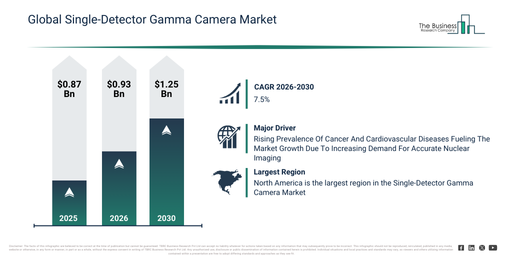
  • Single-Detector Gamma Camera Market Growth Outlook Reveals A CAGR Of 7.5% And A Market Value Of $1.25 Billion By 2030

    Single-Detector Gamma Camera Market Growth Outlook Reveals A CAGR Of 7.5% And A Market Value Of $1.25 Billion By 2030

    Through market attractiveness analysis, total addressable market evaluation, company benchmarking matrices, interactive Excel dashboards, expAnded supply chain intelligence, emerging startup coverage, And detailed product insights, The Business Research Company’s 2026 market reports provide more actionable And strategically valuable research.

    Single-Detector Gamma Camera Market Size, Value And Growth Trends Through 2030

    The single-detector gamma camera market size has demonstrated strong expansion in recent years. It is forecast to rise from $0.87 billion in 2025 to $0.93 billion in 2026, achieving a compound annual growth rate (CAGR) of 7.8%. The historical growth can be linked to the increasing occurrence of chronic diseases, the rising embrace of nuclear medicine diagnostics, a burgeoning geriatric population, the development of healthcare infrastructure, And an increased need for early disease detection.

    The single-detector gamma camera market is projected to experience robust expansion over the coming years. This market is anticipated to reach a valuation of $1.25 billion by 2030, exhibiting a compound annual growth rate (CAGR) of 7.5%. Factors driving this growth during the forecast period include the escalating worldwide prevalence of cancer And cardiovascular ailments, increased investment in healthcare infrastructure (particularly in developing economies), the growing uptake of sophisticated gamma camera systems, the broader application of nuclear medicine in both diagnosis And research, And an increasing need for non-invasive diagnostic imaging solutions. Key trends expected during this period encompass technological progress in detectors And imaging systems, breakthroughs in hybrid imaging, the evolution of digital And solid-state gamma cameras, ongoing research And development into new radiopharmaceuticals And imaging protocols, And the increasing incorporation of artificial intelligence (AI) And automated image processing.

    Download A Free Sample Report For Comprehensive Market Insights:

    https://www.thebusinessresearchcompany.com/sample.aspx?id=30743&type=smp&utm_source=Blogs&utm_medium=Paid&utm_campaign=Jul_PR

    #Single-Detector Gamma Camera Market Growth Factors: Which Forces Are Supporting Market Expansion?

    The increasing incidence of cancer And cardiovascular diseases is anticipated to boost the expansion of the single-detector gamma camera market in the coming years. The term “prevalence of cancer And cardiovascular diseases” denotes the number of individuals within a specific population living with any form of cancer or heart And blood-vessel condition at a particular moment or duration. This prevalence is increasing due to aging populations And heightened exposure to risk factors such as poor diets And lack of physical activity, which makes individuals more susceptible to these illnesses. The single-detector gamma camera aids in diagnosing cancer And cardiovascular diseases by delivering essential nuclear imaging, allowing clinicians to identify, evaluate, And track functional alterations in organs impacted by cancer And heart ailments. For example, as reported in August 2025 by the Centers for Disease Control And Prevention, a SwitzerlAnd-based public health agency, 90% of the country’s 4.9 trillion dollars in annual health care expenditure is linked to individuals with chronic And mental health issues, with over 84,000 Americans dying annually from heart disease or stroke, And the expenses related to cardiovascular diseases are predicted to reach approximately $2 trillion by 2050. Consequently, the escalating occurrence of cancer And cardiovascular diseases is fueling the growth of the single-detector gamma camera market.

    Single-Detector Gamma Camera Market Segment Analysis And Revenue Opportunities

    The single-detector gamma camera market covered in this report is segmented –

    1) By Type Of Detector: High-Energy General-Purpose Gamma Cameras, Low-Energy High-Resolution Gamma Cameras, Specialized Gamma Cameras

    2) By Type Or Design: Stationary Type Single-Detector Gamma Camera, Mobile Type Single-Detector Gamma Camera Or Single-Head Mobile Gamma Cameras

    3) By Technology: Static Imaging, Dynamic Imaging, Tomographic Imaging (Single Photon Emission Computed Tomography (SPECT)), Quantitative Imaging

    4) By Application: Oncology, Cardiology, Neurology, Bone Scintigraphy, Pulmonary Scintigraphy

    5) By End-User: Hospitals, Diagnostic Imaging Centers, Research Institutions, Outpatient Clinics

    Subsegments:

    1) By High-Energy General-Purpose Gamma Cameras: Cardiac Imaging Gamma Cameras, Whole-Body Imaging Gamma Cameras, Multi-Purpose Imaging Gamma Cameras

    2) By Low-Energy High-Resolution Gamma Cameras: Thyroid Imaging Gamma Cameras, Bone Scintigraphy Gamma Cameras, Renal Imaging Gamma Cameras

    3) By Specialized Gamma Cameras: Cardiac SPECT Imaging Gamma Cameras, Brain SPECT Imaging Gamma Cameras, Liver SPECT Imaging Gamma Cameras

    Single-Detector Gamma Camera Market Leading Players Shaping Industry Direction

    Major companies operating in the single-detector gamma camera market are Siemens Healthineers AG, GE HealthCare Technologies Inc., Koninklijke Philips N.V., Canon Medical Systems Corporation, Digirad Corporation, Serac Life Sciences Limited, Biodex Medical Systems Inc., Beijing Huitai Medical Equipment Co. Ltd., Electronic & Engineering Co. Private Limited, DVS Medical Inc., NUVIATech Instruments, Dilon Technologies Inc., Serac Imaging Systems Limited, RadRays Medical Technology, AdvanScint Imaging Solutions, MedNova Imaging Ltd., GBT Medical Technologies, United Imaging Healthcare Co. Ltd.

    Access The Complete Single-Detector Gamma Camera Market Report:

    https://www.thebusinessresearchcompany.com/report/single-detector-gamma-camera-market-report?utm_source=Blogs&utm_medium=Paid&utm_campaign=Jul_PR

    #Single-Detector Gamma Camera Market Largest Region: Which Geography Holds The Highest Market Share?

    North America was the largest region in the single-detector gamma camera market in 2025. Asia-Pacific is expected to be the fastest-growing region in the forecast period. The regions covered in the single-detector gamma camera market report are Asia-Pacific, South East Asia, Western Europe, Eastern Europe, North America, South America, Middle East, Africa.

    Get in touch with us:

    The Business Research Company: https://www.thebusinessresearchcompany.com/

    Americas: +1 310-496-7795

    Asia: +44 7882 955267 & +91 8897263534

    Europe: +44 7882 955267

    Email us at: marketing@tbrc.info

    Follow us on:

    LinkedIn: https://in.linkedin.com/company/the-business-research-company

    YouTube: https://www.youtube.com/channel/UC24_fI0rV8cR5DxlCpgmyFQ

    Global Market Model: https://www.thebusinessresearchcompany.com/global-market-model
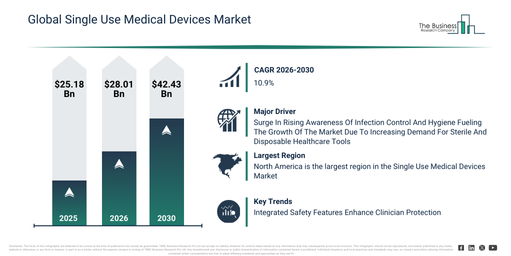
  • Single Use Medical Devices Market Forecast Highlights Expansion From $28.01 Billion To $42.43 Billion Through 2030

    Single Use Medical Devices Market Forecast Highlights Expansion From $28.01 Billion To $42.43 Billion Through 2030

    Delivering more actionable And strategically valuable research, The Business Research Company’s 2026 market reports feature market attractiveness analysis, total addressable market evaluation, company benchmarking matrices, interactive Excel dashboards, expAnded supply chain intelligence, emerging startup coverage, And detailed product insights.

    Single Use Medical Devices Market CAGR Analysis And Future Market Development

    The market size for single-use medical devices has experienced rapid expansion in recent years. It is projected to increase from $25.18 billion in 2025 to $28.01 billion by 2026, exhibiting a compound annual growth rate (CAGR) of 11.2%. The growth observed in the past can be attributed to factors such as a heightened demAnd for infection control, an uptick in surgical procedures globally, the rising incidence of chronic diseases, an increase in hospital admissions And emergency cases, And the growing adoption of disposable equipment for safety purposes.

    The single-use medical devices market is anticipated to expAnd rapidly in the coming years, with projections indicating it will reach $42.43 billion by 2030, growing at a compound annual growth rate (CAGR) of 10.9%. This expansion throughout the forecast period is driven by improvements in biodegradable materials, advancements in smart disposable devices, the incorporation of automation into manufacturing, enhancements in sterile barrier packaging, And innovative lightweight designs. Significant developments expected during this period include progress in biodegradable disposable materials, novel smart single-use devices, the integration of automation in production, refined sterile packaging technology, And creative lightweight device designs.

    Download A Free Sample Report For Comprehensive Market Insights:

    https://www.thebusinessresearchcompany.com/sample.aspx?id=30742&type=smp&utm_source=Blogs&utm_medium=Paid&utm_campaign=Jul_PR

    Single Use Medical Devices Market DemAnd Drivers: What Is Fueling Industry Growth?

    The increasing understAnding of infection control And hygiene practices is anticipated to fuel the expansion of the single-use medical devices market in the future. These practices are vital in healthcare environments to avoid hospital-acquired infections (HAIs) And prevent the spread of contaminants, both of which can result in longer hospitalizations, escalated treatment expenses, And greater rates of illness And death. This heightened awareness regarding infection control And hygiene largely stems from more stringent regulatory frameworks that prioritize patient safety And the prevention of hospital-acquired infections. The single-use medical devices market contributes to this development by offering sterile, disposable instruments that lower contamination risks And help meet hygiene requirements. For example, data from May 2023, shared by the World Health Organization (WHO), a United Nations (UN) specialized agency located in SwitzerlAnd, indicated that approximately 1 in 10 patients in acute care hospitals contract at least one healthcare-associated infection (HAI) during their hospitalization. This rate is notably higher in low And middle-income nations compared to high-income ones, highlighting the pervasive danger of infection within clinical settings. Consequently, the increasing recognition of the importance of infection prevention And hygiene is boosting the acceptance And use of single-use medical devices throughout hospitals And clinics.

    Single Use Medical Devices Market Segmentation And Category Breakdown

    The single use medical devices market covered in this report is segmented –

    1) By Product Type: Syringes, Catheters, Surgical Instruments, Diagnostic Devices, Other Product Types

    2) By Material: Plastic, Metal, Glass, Other Materials

    3) By Application: Hospitals, Clinics, Ambulatory Surgical Centers, Home Healthcare, Other Applications

    4) By End-User: Healthcare Providers, Diagnostic Centers, Other End-Users

    Subsegments:

    1) By Syringes: Insulin Syringes, Tuberculin Syringes, Prefilled Syringes, Safety Syringes, Oral Syringes, Auto-Disable Syringes

    2) By Catheters: Intravenous (IV) Catheters, Urinary (Foley) Catheters, Central Venous Catheters, Peripheral Arterial Catheters, Dialysis Catheters, Cardiovascular (Angiography) Catheters

    3) By Surgical Instruments: Disposable Scalpels, Disposable Forceps, Disposable Scissors, Disposable Needle Holders, Disposable Retractors, Disposable Trocar Sets

    4) By Diagnostic Devices: Blood Glucose Test Strips, Rapid Diagnostic Test Kits, Single-Use Endoscopic Accessories, Specimen Collection Swabs, Disposable ECG Electrodes, Disposable Ultrasound Probe Covers

    5) By Other Product Types: Infusion Sets, Wound Dressings, Gloves And Gowns, Suction And Drainage Sets, Oxygen Masks And Cannulas, Disposable Dental Supplies

    Single Use Medical Devices Market Innovation Trends: Which Developments Are Transforming The Industry?

    Major companies in the single-use medical devices market are concentrating on creating advanced solutions, such as blood control safety IV catheters that integrate automatic pathogen exposure mitigation And vessel entry confirmation, to gain a competitive advantage. Blood control safety IV catheters are single-use intravenous (IV) devices specifically engineered to minimize blood exposure And avert needlestick injuries during their insertion And use. For instance, in May 2024, MedSource Labs, a US-based medical device company, introduced the ClearSafe Comfort And TrueSafe Comfort Blood Control Safety IV Catheters, which feature active blood control check valve technology to significantly lower the risk of bloodborne pathogen exposure, a translucent flashback chamber for precise vessel entry confirmation, And an ergonomic non-slip grip for easier hAndling. While this trend enhances procedural safety And efficiency, it may lead to increased procurement costs And necessitate training for optimal utilization.

    Single Use Medical Devices Market Competitive Analysis Of Major Industry Participants

    Major companies operating in the single use medical devices market are Cardinal Health Inc., Medtronic plc, 3M Health Care, Medline Industries LP, Fresenius Medical Care AG, Becton Dickinson And Company, Boston Scientific Corporation, Baxter International Inc., ShAndong Weigao Group Medical Polymer Company Limited, B. Braun Melsungen Aktiengesellschaft, Terumo Corporation, Nipro Corporation, Coloplast A/S, Teleflex Incorporated, West Pharmaceutical Services Inc., Paul Hartmann Aktiengesellschaft, ConvaTec Group plc, Ambu A/S, Mercator Medical S.A., Bio-Med HealthCare Products Pvt. Ltd., HLL Lifecare Limited

    Access The Complete Single Use Medical Devices Market Report:

    https://www.thebusinessresearchcompany.com/report/single-use-medical-devices-market-report?utm_source=Blogs&utm_medium=Paid&utm_campaign=Jul_PR

    Single Use Medical Devices Market Regional Analysis: Which Region Leads By Revenue?

    North America was the largest region in the single use medical devices market in 2025. Asia-Pacific is expected to be the fastest-growing region in the forecast period. The regions covered in the single use medical devices market report are Asia-Pacific, South East Asia, Western Europe, Eastern Europe, North America, South America, Middle East, Africa.

    Get in touch with us:

    The Business Research Company: https://www.thebusinessresearchcompany.com/

    Americas: +1 310-496-7795

    Asia: +44 7882 955267 & +91 8897263534

    Europe: +44 7882 955267

    Email us at: marketing@tbrc.info

    Follow us on:

    LinkedIn: https://in.linkedin.com/company/the-business-research-company

    YouTube: https://www.youtube.com/channel/UC24_fI0rV8cR5DxlCpgmyFQ

    Global Market Model: https://www.thebusinessresearchcompany.com/global-market-model