Month: September 2026

  • Assistive Technology Market Valued At $49.07 Billion In 2026: Key Trends And Growth Drivers

    Assistive Technology Market Valued At $49.07 Billion In 2026: Key Trends And Growth Drivers

    Built to provide research that’s more actionable and strategically valuable, The Business Research Company’s 2026 market reports include market attractiveness analysis, total addressable market sizing, company benchmarking matrices, interactive Excel dashboards, broader supply chain intelligence, emerging startup tracking, and in-depth product insights.

    Assistive Technology Market Expansion Outlook: What Revenue Opportunities Are Ahead?

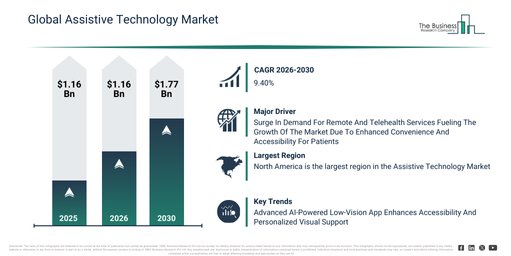
    The assistive technology market has experienced substantial growth in recent years. It is projected to expand from $31.16 billion in 2025 to $34.21 billion in 2026, at a compound annual growth rate (CAGR) of 9.8%. Historically, the expansion of this market can be attributed to factors such as limited awareness of assistive technologies, the high cost of devices, inadequate distribution channels, a growing aging population, and a reliance on manual assistive aids.

    The assistive technology market size is anticipated to experience substantial growth over the next few years. This market is set to expand to $49.07 billion in 2030, achieving a compound annual growth rate (CAGR) of 9.4%. The expansion during the forecast period is attributable to breakthroughs in AI-powered assistive robotics, the development of AR/VR-based rehabilitation tools, increased support from government and non-governmental organizations, the proliferation of smart home and connected devices, and growing investment in mobile assistive applications. Prominent trends for the forecast period include the increasing adoption of wearable assistive devices, a rising demand for home care and remote assistance solutions, the integration of mobile applications for disability support, a growing emphasis on cognitive and sensory assistance tools, and the expansion of inclusive educational and employment programs.

    Get A Free Sample Report With In-Depth Market Insights:

    https://thebusinessresearchcompany.com/sample_request?id=55663092&type=smp&name=Assistive%20Technology%20Market%20Report%202026&utm_source=Blogs&utm_medium=Paid&utm_campaign=Sep_PR

    Assistive Technology Market Expansion Drivers: What’s Shaping Future Growth?

    The assistive technology market is anticipated to expand moving forward, driven by the increasing need for remote and telehealth services. These services provide healthcare and medical consultations to patients through digital communication technologies, removing the requirement for in-person visits. The heightened demand for remote and telehealth arises from their convenience, as they allow patients to receive care from their homes, thereby cutting down travel time and enhancing prompt medical consultations. Assistive technology plays a crucial role in improving remote and telehealth services by enabling patients with disabilities or impairments to effectively communicate, access medical information, and smoothly engage in virtual consultations. For instance, in December 2023, data from the National Health Service, a UK-based government department, indicated 33.6 million registered individuals using the NHS App, with monthly logins seeing a 54% increase over the past year, rising from 16.8 million to 25.8 million. Consequently, the growing demand for remote and telehealth services is propelling the growth of the assistive technology market.

    Assistive Technology Market Segment Trends And Revenue Contributors

    The assistive technology market covered in this report is segmented –

    1) By Product Type: Mobility Impairment Devices, Visual Impairment Devices, Hearing Impairment Devices, Other Product Types

    2) By Technology Type: Assistive Robotics, Wearable Technology, Smart Home Devices, Mobile Applications, Augmented And Virtual Reality

    3) By Distribution Channel: Online Retailers, Specialty Assistive Technology Stores, Hospitals And Clinics, Government Agencies And Non-Governmental Organizations (NGOs)

    4) By Application: Mobility Assistance, Communication Assistance, Sensory Assistance, Cognitive Assistance, Environmental Control

    5) By End-User: Home Care, Educational Institutions, Healthcare Facilities, Employment Settings, Community Centers

    Subsegments:

    1) By Mobility Impairment Devices: Wheelchairs, Mobility Scooters, Walkers And Rollators, Canes And Crutches, Stair Lifts

    2) By Visual Impairment Devices: Screen Readers, Braille Displays, Magnifiers, Video Magnifiers, Text-To-Speech Devices

    3) By Hearing Impairment Devices: Hearing Aids, Cochlear Implants, Personal Amplifiers, Hearing Loops, Alerting Devices

    4) By Other Product Types: Speech Generating Devices, Adaptive Switches, Environmental Control Systems, Cognitive Aids, Assistive Software

    Assistive Technology Market Strategic Trends: What Defines The Next Growth Phase?

    Leading companies within the assistive technology market are dedicated to developing cutting-edge solutions, such as low-vision assistive applications, to boost accessibility and offer tailored visual assistance. A low-vision assistive app functions as a smartphone program that aids visually impaired individuals in increasing clarity and customizing their visual interaction with their environment. As an illustration, in September 2023, ReBokeh Vision Technologies, Inc., a US-based assistive tech company, unveiled ReBokeh Plus, an enhanced iteration of its AI-powered smartphone app. This application allows users to customize how they view their surroundings by applying real-time video filters specifically designed for their personal needs. Engineered for those with moderate vision impairment, ReBokeh’s technology modifies elements like contrast and sharpness to improve visual clarity. The updated Plus version introduces sophisticated customization features, granting users even greater adaptability. This breakthrough highlights the company’s commitment to enabling individuals with vision challenges to experience the world with more comfort and independence.

    Assistive Technology Market Competitive Analysis Of Leading Industry Participants

    Major companies operating in the assistive technology market are Apple Inc, Stryker Corporation, ResMed Inc, Sonova Holding AG, William Demant Holding A/S, GN Store Nord A/S, Cochlear Limited, Invacare Corporation, MED-EL Medical Electronics GmbH, Drive DeVilbiss Healthcare Inc, OrCam Technologies Ltd, 3Play Media Inc, HumanWare Group Inc, Freedom Scientific Inc, Karma Medical Products Co. Ltd, Enabling Devices LLC, Ossenberg GmbH, ZYGO-USA, Tobii Dynavox AB, Tobii Technology AB, Prentke Romich Company, AbleNet Inc

    View The Full Assistive Technology Market Report:

    https://thebusinessresearchcompany.com/report/assistive-technology-global-market-report?utm_source=Blogs&utm_medium=Paid&utm_campaign=Sep_PR

    Assistive Technology Market Geographic Spread And Regional Opportunities

    North America was the largest region in the assistive technology market in 2025. Asia-Pacific is expected to be the fastest-growing region in the forecast period. The regions covered in the assistive technology market report are Asia-Pacific, South East Asia, Western Europe, Eastern Europe, North America, South America, Middle East, Africa.

    Reach Out To Our Team:

    The Business Research Company: https://www.thebusinessresearchcompany.com/

    Americas: +1 310-496-7795

    Asia: +44 7882 955267 & +91 8897263534

    Europe: +44 7882 955267

    Email us at: marketing@tbrc.info

    Follow us on:

    LinkedIn: https://in.linkedin.com/company/the-business-research-company

    YouTube: https://www.youtube.com/channel/UC24_fI0rV8cR5DxlCpgmyFQ

    Global Market Model: https://www.thebusinessresearchcompany.com/global-market-model
  • Cell Culture Consumables And Equipment Market Forecast To Reach $25.49 Billion By 2030: Key Growth Drivers And Industry Trends

    Cell Culture Consumables And Equipment Market Forecast To Reach $25.49 Billion By 2030: Key Growth Drivers And Industry Trends

    Built to provide research that’s more actionable and strategically valuable, The Business Research Company’s 2026 market reports include market attractiveness analysis, total addressable market sizing, company benchmarking matrices, interactive Excel dashboards, broader supply chain intelligence, emerging startup tracking, and in-depth product insights.

    Cell Culture Consumables And Equipment Market Value Growth And Long-Term Outlook

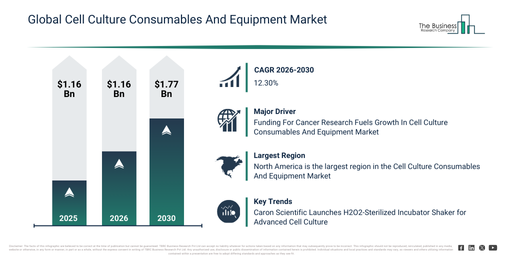
    The cell culture consumables and equipment market has experienced significant expansion in recent years. It is anticipated to increase from $14.69 billion in 2025 to $16.05 billion in 2026, demonstrating a compound annual growth rate (CAGR) of 9.3%. The expansion observed historically can be credited to factors such as limited availability of specialized cell culture instruments, reliance on conventional culture media, growing academic and industrial research activities, rising vaccine and biologics development, and increasing awareness of regenerative medicine potential.

    The cell culture consumables and equipment market is projected to experience significant expansion in the coming years. This market is forecast to reach $25.49 billion by 2030, exhibiting a compound annual growth rate (CAGR) of 12.3%. The anticipated growth during this period is driven by factors such as advancements in bioreactors and automated incubators, increased investment in stem cell and gene therapy research, the expansion of the biotechnology and pharmaceutical industries, the embrace of high-throughput screening technologies, and the integration of smart and automated laboratory equipment. Key trends anticipated for the forecast period encompass a growing demand for sophisticated cell culture consumables, the broadening scope of stem cell and regenerative medicine research, a greater adoption of automated cell culture instruments, an increase in drug screening and development applications, and an emphasis on high-quality culture media and reagents.

    Get A Free Sample Report With In-Depth Market Insights:

    https://thebusinessresearchcompany.com/sample_request?id=12091438&type=smp&name=Cell%20Culture%20Consumables%20And%20Equipment%20Market%20Report%202026&utm_source=Blogs&utm_medium=Paid&utm_campaign=Sep_PR

    Cell Culture Consumables And Equipment Market Growth Factors Behind Sustained Expansion

    The cell culture consumables and equipment market is expected to experience growth, propelled by an increase in funding for cancer research. This allocation of financial resources, crucial for supporting various projects and initiatives, plays a significant role in the development, advancement, and accessibility of cell culture consumables and equipment. For instance, in September 2023, the National Cancer Institute, a US-based government agency, received a budget of $7.3 billion from the United States Congress for fiscal year 2023, which represents a $408 million increase compared to 2022. Consequently, enhanced financial backing for cancer research is a key factor driving the expansion of the cell culture consumables and equipment market.

    Cell Culture Consumables And Equipment Market Segment Landscape: Which Areas Lead Development?

    The cell culture consumables and equipment market covered in this report is segmented –

    1) By Product: Consumables, Instruments

    2) By Application: Vaccination, Toxicity Testing, Cancer Research, Drug Screening And Development, Recombinant Products, Stem Cell Technology, Regenerative Medicine, Other Applications

    3) By End User: Industrial, Biotechnology, Agriculture, Other End Users

    Subsegments:

    1) By Consumables: Culture Media, Cell Culture Reagents, Serum And Supplements, Cell Culture Vials And Flasks, Culture Plates And Dishes, Pipettes And Pipette Tips

    2) By Instruments: Cell Culture Incubators, Bioreactors, Centrifuges, Microscopes, Cell Counters, Shakers And Stirring Systems

    Cell Culture Consumables And Equipment Market Industry Trends Fueling Future Revenue Growth

    Leading companies in the Cell Culture Consumables And Equipment market are concentrating on developing innovative products, such as in-unit dry hydrogen-peroxide fogging sterilization, to significantly reduce contamination risk and downtime in GMP cell culture production. This dry H2O2 fogging sterilization method is a decontamination technique that employs vapor-phase hydrogen peroxide without condensation, ensuring effective sterilization without water pooling. In March 2025, Caron Scientific, a US-based provider of environmental testing, controlled-environment incubators, and bioprocess equipment, launched its 7406 Series Incubator Shaker. This system offers the highest single-chamber capacity in its class while maintaining a compact, vertical footprint, and delivers precisely controlled temperature (20 °C–60 °C), CO2 (0–20%), humidity (ambient to 90%) and shaking parameters (adjustable RPM and orbit). Its integrated dry H2O2 decontamination cycle, continuously monitored by a humidity sensor and electronic control, actively prevents condensation and allows for immediate reuse post-sterilization, representing a first in incubator-shaker design. These combined features make it optimally suited for high-throughput, GMP-compliant biologics production, providing improved operational efficiency and robust contamination control.

    Cell Culture Consumables And Equipment Market Industry Leaders And Competitive Landscape

    Major companies operating in the cell culture consumables and equipment market are Becton Dickinson and Company, Corning Inc., Danaher Corporation, Eppendorf AG, HiMedia Laboratories Private Limited, Lonza Group AG, Merck KGAA, Promocell GmbH, Sartorius AG, Thermo Fisher Scientific Inc., Irvine Scientific Sales Company Inc., CellGenix GmbH, InVitria Inc., Cytiva, Bio-Techne Corporation, GenScript Biotech Corporation, Gedeon Richter Plc., Hetero Drugs Limited, Intas Pharmaceuticals Ltd., LG Chem Ltd., Lupin Limited, Bio-Rad Laboratories Inc., Illumina Inc., Qiagen NV, F. Hoffmann-La Roche Ltd, Norgen Biotek Corporation, Tecan Group Ltd.

    View The Full Cell Culture Consumables And Equipment Market Report:

    https://thebusinessresearchcompany.com/report/cell-culture-consumables-and-equipment-global-market-report?utm_source=Blogs&utm_medium=Paid&utm_campaign=Sep_PR

    Cell Culture Consumables And Equipment Market Regional Analysis And Top Geography

    North America was the largest region in the cell culture consumables and equipment market in 2025. Western Europe was the second-largest region in the global cell culture consumables and equipment market share. The regions covered in the cell culture consumables and equipment market report are Asia-Pacific, South East Asia, Western Europe, Eastern Europe, North America, South America, Middle East, Africa.

    Reach Out To Our Team:

    The Business Research Company: https://www.thebusinessresearchcompany.com/

    Americas: +1 310-496-7795

    Asia: +44 7882 955267 & +91 8897263534

    Europe: +44 7882 955267

    Email us at: marketing@tbrc.info

    Follow us on:

    LinkedIn: https://in.linkedin.com/company/the-business-research-company

    YouTube: https://www.youtube.com/channel/UC24_fI0rV8cR5DxlCpgmyFQ

    Global Market Model: https://www.thebusinessresearchcompany.com/global-market-model
  • Cell Counting Market Research 2026: Market Size, Trends, Segments And Growth Forecast

    Cell Counting Market Research 2026: Market Size, Trends, Segments And Growth Forecast

    Backed by market attractiveness analysis, total addressable market sizing, company benchmarking matrices, interactive Excel dashboards, wider supply chain intelligence, emerging startup coverage, and detailed product-level insights, The Business Research Company’s 2026 market reports are designed to offer research that is more actionable and strategically valuable than ever.

    Cell Counting Market Poised To Hit $17.83 Billion By 2030 With A 9.3% CAGR

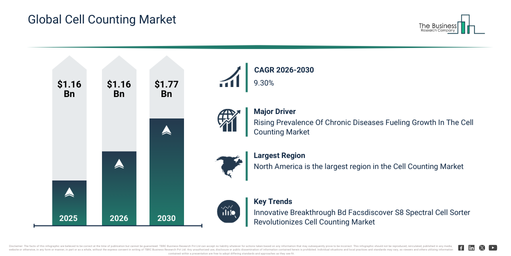
    The cell counting market has experienced significant expansion in recent years. Its valuation is expected to rise from $11.39 billion in 2025 to $12.49 billion in 2026, demonstrating a compound annual growth rate (CAGR) of 9.7%. This growth witnessed in the past can be ascribed to the broadening of life sciences research activities, an increasing reliance on cell culture techniques, greater investments in pharmaceutical research, enhanced academic research funding, and the widespread integration of laboratory automation.

    The cell counting market size is expected to witness substantial growth in the upcoming years. It is forecast to reach $17.83 billion in 2030, growing at a compound annual growth rate (CAGR) of 9.3%. This anticipated expansion over the forecast period is attributed to the increasing demand for cell-based therapies, the rising adoption of precision diagnostics, the expansion of biotechnology research pipelines, the growing utilization of AI-enabled laboratory analytics, and an increasing focus on standardized laboratory workflows. Key trends during this period include the rising adoption of automated cell counting systems, an increase in the use of flow cytometry-based cell analysis, growing demand for high-throughput cell counting, the expansion of cell-based research applications, and an enhanced focus on data accuracy and reproducibility.

    Get A Free Sample Report With In-Depth Market Insights:

    https://thebusinessresearchcompany.com/sample_request?id=61066428&type=smp&name=Cell%20Counting%20Market%20Report%202026&utm_source=Blogs&utm_medium=Paid&utm_campaign=Sep_PR

    Cell Counting Market Demand Drivers Opening New Revenue Streams

    The increasing incidence of chronic diseases is anticipated to drive the expansion of the cell counting market in the forthcoming years. Chronic diseases are characterized as conditions lasting a year or more, requiring continuous medical care, impeding daily activities, or both. These ailments often feature complex etiologies, multiple risk factors, lengthy incubation periods, extended illness, and result in reduced function or impairment. Cell counting provides an essential diagnostic, monitoring, and therapeutic approach for chronic illnesses. It aids healthcare professionals in identifying and tracking shifts in cell counts, which can provide critical data concerning disease advancement and treatment efficacy. For instance, in June 2024, according to the National Health Service, a UK-based government department, 3,615,330 individuals registered with a general practitioner (GP) were diagnosed with non-diabetic hyperglycemia or pre-diabetes (a condition with elevated blood sugar levels, not high enough to be classified as diabetes) in 2023, representing an 18% increase from 3,065,825 cases in 2022. Hence, the growing prevalence of chronic diseases is propelling the cell counting market.

    Cell Counting Market Segments: Where Is Growth Concentrated?

    The cell counting market covered in this report is segmented –

    1) By Consumables And Accessories: Media, Sera And Reagents, Assay Kits, Microplates

    2) By Product: Multi-Mode Readers, Cell Counters, Automated Cell Counters, Hemocytometers, Manual Cell Counters, Flow Cytometers

    3) By Application: Research Applications, Clinical And Diagnostic Applications, Industrial Applications

    4) By End-User: Hospitals And Diagnostic, Research Institutions, Pharmaceutical And Biotechnology Companies, Other End-Users

    Subsegments:

    1) By Media: Cell Culture Media, Specialized Growth Media

    2) By Sera and Reagents: Fetal Bovine Serum (FBS), Human Serum, Reagents for Cell Viability

    3) By Assay Kits: Cell Counting Kits, Apoptosis Detection Kits

    4) By Microplates: 96-Well Plates, 384-Well Plates, Specialized Cell Culture Plates

    Cell Counting Market Trends Powering Strategic Industry Growth

    Leading companies in the cell counting market are concentrating on innovative products such as the BD FACSDiscover S8 spectral cell sorter to better satisfy the requirements of their existing clientele. Spectral cell sorting represents a revolutionary method that categorizes cells based on their visual attributes by merging advanced spectral flow cytometry with high-speed imaging technologies. Unlike traditional flow cytometry, which identifies specific fluorescent bands, spectral flow cytometry gathers the entire spectrum of signals generated by sample arrangements, facilitating multi-parameter sorting. For example, in May 2023, Becton, Dickinson, and Company, a US-based firm producing medical devices, instrument systems, and reagents, launched the BD FACSDiscover S8 Cell Sorter. This device introduces two transformative technologies that enable researchers to uncover previously undetectable information about cells during standard flow cytometry investigations. With BD CellView Image Technology, researchers can examine comprehensive microscopic images of individual cells and sort them rapidly based on visual criteria to validate findings in real time. Furthermore, BD SpectralFX Technology allows researchers to conduct high-parameter studies using full-spectrum cell sorting and experience enhanced performance, thanks to a new flexible optical architecture and system-aware algorithms. The integration of these advancements within the BD FACSDiscover S8 Cell Sorter broadens the capabilities of researchers, holding the potential to revolutionize research and cell-based therapy development in various areas, including drug discovery, immuno-oncology, and genomics.

    Cell Counting Market Key Participants And Competitive Landscape

    Major companies operating in the cell counting market are Thermo Fisher Scientific Inc., Merck KGaA, PerkinElmer Inc., Bio-Rad Laboratories Inc., Danaher Corporation, Olympus Corporation, HORIBA Ltd., Logos Biosystems Inc., Becton Dickinson and Company, GE Healthcare, Agilent Technologies Inc., BioTek Instruments Inc., DeNovix Inc., Sysmex Corporation, Nexcelom Bioscience LLC, Beckman Coulter Inc., Roche Diagnostics International Ltd., Miltenyi Biotec GmbH, AccuBioTech Co. Ltd., ChemoMetec A/S, Countstar Microscopy Systems, Luminex Corporation, NanoEnTek Inc., Partec GmbH, Advanced Instruments Inc., Analytik Jena AG, Integra Biosciences AG, Meridian Bioscience Inc., Promega Corporation, Sartorius AG

    View The Full Cell Counting Market Report:

    https://thebusinessresearchcompany.com/report/cell-counting-global-market-report?utm_source=Blogs&utm_medium=Paid&utm_campaign=Sep_PR

    Cell Counting Market Geographic Analysis: Where Is Demand Rising Fastest?

    North America was the largest region in the cell counting market in 2025. Asia-Pacific is expected to be the fastest-growing region in the forecast period. The regions covered in the cell counting market report are Asia-Pacific, South East Asia, Western Europe, Eastern Europe, North America, South America, Middle East, Africa.

    Reach Out To Our Team:

    The Business Research Company: https://www.thebusinessresearchcompany.com/

    Americas: +1 310-496-7795

    Asia: +44 7882 955267 & +91 8897263534

    Europe: +44 7882 955267

    Email us at: marketing@tbrc.info

    Follow us on:

    LinkedIn: https://in.linkedin.com/company/the-business-research-company

    YouTube: https://www.youtube.com/channel/UC24_fI0rV8cR5DxlCpgmyFQ

    Global Market Model: https://www.thebusinessresearchcompany.com/global-market-model
  • Assistive Listening Devices Market Size In 2026: Growth Outlook And Forecast Through 2030

    Assistive Listening Devices Market Size In 2026: Growth Outlook And Forecast Through 2030

    Backed by market attractiveness analysis, total addressable market sizing, company benchmarking matrices, interactive Excel dashboards, wider supply chain intelligence, emerging startup coverage, and detailed product-level insights, The Business Research Company’s 2026 market reports are designed to offer research that is more actionable and strategically valuable than ever.

    Assistive Listening Devices Market Growth Potential: How Will Market Size Shift Through 2030?

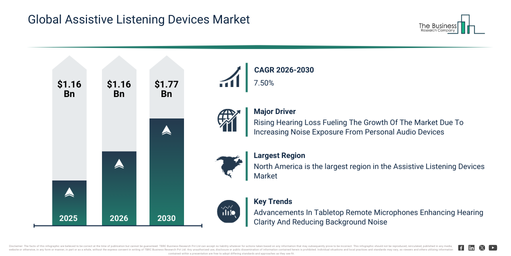
    The assistive listening devices market size has experienced significant expansion in recent years. It is anticipated to increase from $3.26 billion in 2025 to $3.51 billion in 2026, exhibiting a compound annual growth rate (CAGR) of 7.6%. The historical growth of this market can be attributed to factors like the rising prevalence of hearing impairment, an expanding aging population, the broadening of hearing healthcare awareness, the emergence of compact amplification technologies, and enhanced access to hearing support devices.

    The market for assistive listening devices is projected to experience substantial expansion in the coming years. This market is set to reach a valuation of $4.68 billion by 2030, exhibiting a compound annual growth rate (CAGR) of 7.5%. Factors driving this projected growth include the wider embrace of smart hearing technologies, an escalating need for remote and connected listening solutions, the broadening of pediatric hearing care initiatives, a heightened emphasis on creating inclusive communication settings, and increased funding for digital audiology instruments. Key developments expected during this timeframe involve the growing uptake of digital assistive listening devices, the increasing incorporation of wireless and Bluetooth technologies, a rising call for customized sound amplification options, the proliferation of portable and wearable listening gadgets, and a sharpened focus on optimizing speech clarity.

    Get A Free Sample Report With In-Depth Market Insights:

    https://thebusinessresearchcompany.com/sample_request?id=76457252&type=smp&name=Assistive%20Listening%20Devices%20Market%20Report%202026&utm_source=Blogs&utm_medium=Paid&utm_campaign=Sep_PR

    Assistive Listening Devices Market Development Factors: What’s Supporting Demand?

    The increasing incidence of hearing impairment is expected to fuel the expansion of the assistive listening devices market in the future. This condition involves a partial or complete inability to detect sound in one or both ears, thus impacting communication and the processing of auditory data. The surge in hearing loss can be attributed to extended exposure to loud sounds from personal audio devices, which progressively harms the inner ear’s sensitive components, resulting in irreversible hearing damage. The existence of hearing loss drives the need for assistive listening devices, since these technologies facilitate communication by enhancing and making sounds clearer, allowing those with hearing difficulties to engage more completely in everyday life. As an example, the World Health Organization, a Switzerland-based intergovernmental organization, projected in February 2025 that approximately 2.5 billion individuals will suffer from some degree of hearing loss by 2050, with more than 700 million likely requiring hearing care and rehabilitation services. Consequently, the growing occurrence of hearing loss will propel the expansion of the assistive listening devices market.

    Assistive Listening Devices Market Segment Analysis Spotlighting Growth Areas

    The assistive listening devices market covered in this report is segmented –

    1) By Product Type: Hearing Aids, Personal Sound Amplifiers, FM Systems, Infrared Systems, Induction Loop Systems, Other Product Types

    2) By Technology: Analog Assistive Listening Devices, Digital Assistive Listening Devices

    3) By Age Group: Pediatric, Adult

    4) By Distribution Channel: Online Stores, Speciality Stores, Retail Pharmacies, Other Distribution Channels

    5) By End User: Individuals, Hospitals, Clinics, Other End Users

    Subsegments:

    1) By Hearing Aids: Behind-the-Ear (BTE), In-the-Ear (ITE), In-the-Canal (ITC), Completely-in-Canal (CIC), Receiver-in-Canal (RIC), Invisible-in-Canal (IIC)

    2) By Personal Sound Amplifiers: Wearable Personal Sound Amplifiers, Handheld Personal Sound Amplifiers, Pocket Talkers

    3) By FM Systems: Portable FM Systems, Fixed FM Systems, Classroom FM Systems

    4) By Infrared Systems: Portable Infrared Systems, Fixed Infrared Systems, Wide-Area Infrared Systems

    5) By Induction Loop Systems: Portable Loop Systems, Permanent Loop Installations, Counter Loops

    6) By Other Product Types: Bluetooth Streaming Devices, TV Listening Systems, Telephone Amplifiers, Vibrotactile Devices

    Assistive Listening Devices Market Transformation Trends: What Innovations Are Driving Change?

    Leading companies in the assistive listening devices market are prioritizing the development of technologically advanced products, such as tabletop remote microphones, with the goal of reducing background noise and improving speech clarity. These portable tabletop remote microphones are specifically designed to capture and amplify sound from a particular source, like a speaker, and then transmit it to assistive listening systems for individuals facing hearing difficulties. An example occurred in March 2023, when AudioTelligence, a UK-based consumer electronics company, unveiled the Orsana assistive listening device. Positioned as a tabletop remote microphone, Orsana integrates cutting-edge Bluetooth Low Energy (BLE) technology along with a low latency codec, distinguishing it within the hearing enhancement market. This sophisticated Bluetooth functionality enables smooth wireless connectivity to BLE-enabled hearing aids or wireless earbuds, providing the low latency essential for natural, real-time conversations. As earbud manufacturers increasingly incorporate BLE Low Latency into their products, they are becoming ideal partners for Orsana, further enhancing its appeal and utility.

    Assistive Listening Devices Market Leading Companies And Competitive Benchmarking

    Major companies operating in the assistive listening devices market are Sonova Holding AG, Demant A/S, Amplifon S.p.A., GN Hearing A/S, Starkey Hearing Technologies Inc., Cochlear Ltd., Widex A/S, Phonak AG, Beltone, Oticon A/S, RION Co. Ltd., Sivantos Group, Williams AV LLC, Listen Technologies Corporation, Comfort Audio AB, Bellman & Symfon AB, Sound World Solutions LLC, Serene Group Inc., ClearSounds Communications Inc., Hamilton CapTel

    View The Full Assistive Listening Devices Market Report:

    https://thebusinessresearchcompany.com/report/assistive-listening-devices-global-market-report?utm_source=Blogs&utm_medium=Paid&utm_campaign=Sep_PR

    Assistive Listening Devices Market Top Region By Revenue And Market Share

    North America was the largest region in the assistive listening devices market in 2025. The regions covered in the assistive listening devices market report are Asia-Pacific, South East Asia, Western Europe, Eastern Europe, North America, South America, Middle East, Africa.

    Reach Out To Our Team:

    The Business Research Company: https://www.thebusinessresearchcompany.com/

    Americas: +1 310-496-7795

    Asia: +44 7882 955267 & +91 8897263534

    Europe: +44 7882 955267

    Email us at: marketing@tbrc.info

    Follow us on:

    LinkedIn: https://in.linkedin.com/company/the-business-research-company

    YouTube: https://www.youtube.com/channel/UC24_fI0rV8cR5DxlCpgmyFQ

    Global Market Model: https://www.thebusinessresearchcompany.com/global-market-model

  • CBCT Dental Imaging Market Forecast 2026: Market Size, Competitive Landscape And Growth Drivers

    CBCT Dental Imaging Market Forecast 2026: Market Size, Competitive Landscape And Growth Drivers

    Featuring market attractiveness scoring, total addressable market sizing, company benchmarking matrices, interactive Excel dashboards, deeper supply chain intelligence, emerging startup tracking, and granular product-level insights, The Business Research Company’s 2026 market reports are built to deliver research that is both more actionable and more strategically valuable.

    CBCT Dental Imaging Market Size And Revenue Outlook Through 2030

    The cbct dental imaging market has experienced robust expansion in recent years. Projections indicate it will expand from $1.35 billion in 2025 to $1.46 billion in 2026, demonstrating a compound annual growth rate (CAGR) of 8.5%. Historically, this growth has been driven by several factors, including the increasing demand for dental implant procedures, the expansion of orthodontic treatment adoption, rising investments in dental diagnostic infrastructure, growing awareness of advanced dental imaging, and the availability of compact cbct systems.

    The cbct dental imaging market is projected to experience substantial expansion over the upcoming years. Its valuation is anticipated to reach $2.02 billion by 2030, demonstrating a compound annual growth rate (CAGR) of 8.3%. This forecasted growth stems from factors such as the increasing embrace of digital dentistry solutions, a surging demand for diagnostic methods that are minimally invasive, the proliferation of dental clinics within developing markets, the expanding incorporation of AI-based image analysis, and a heightened emphasis on enhancing workflow efficiency within dental practices. Key trends identified for this period encompass the greater adoption of high-resolution 3D dental imaging systems, the increasing merging of cbct technology with digital dentistry workflows, a growing utilization of sophisticated image processing software, the widespread deployment of compact and in-clinic cbct systems, and an intensified focus on optimizing radiation dosages.

    Get A Free Sample Report With In-Depth Market Insights:

    https://thebusinessresearchcompany.com/sample_request?id=93739431&type=smp&name=CBCT%20Dental%20Imaging%20Market%20Report%202026&utm_source=Blogs&utm_medium=Paid&utm_campaign=Sep_PR

    CBCT Dental Imaging Market Growth Backed By Core Demand Fundamentals

    The increasing prevalence of dental disorders is projected to boost the growth of the CBCT dental imaging market in the coming years. Dental disorders encompass various conditions and problems affecting the oral cavity and its adjacent structures. CBCT dental imaging is utilized for diagnosing dental conditions, detecting impacted teeth, and improving dental services and treatment outcomes. For example, in October 2024, the Australian Institute of Health and Welfare, an Australia-based government agency, reported that there were around 87,400 hospitalizations for dental conditions in 2022–23, with children aged 5–9 years having the highest rate of preventable hospitalizations, at 12.3 per 1,000 population. Thus, the rising incidence of dental disorders will drive the expansion of the CBCT dental imaging market.

    CBCT Dental Imaging Market Segment Analysis: What Are The Core Market Categories?

    The cbct dental imaging market covered in this report is segmented –

    1) By Product Type: Flat Panel Detector, Image Intensifier, Other Product Type

    2) By Application: Dental Implants, Orthodontics, Endodontics, Other Application

    3) By End user: Hospitals, Dental Clinics, Academics and Research Institutes, Other End-User

    Subsegments:

    1) By Flat Panel Detector: Active Matrix Flat Panel Detectors, Thin-Film Transistor (TFT) Flat Panel Detectors

    2) By Image Intensifier: Single-Field Image Intensifiers, Dual-Field Image Intensifiers

    3) By Other Product Type: Charge-Coupled Device (CCD), Complementary Metal-Oxide-Semiconductor (CMOS)

    CBCT Dental Imaging Market Growth Trends Reshaping The Competitive Landscape

    Leading companies in the CBCT dental imaging market are developing imaging systems that incorporate advanced technologies, such as multi-modal 3D CBCT platforms, to enhance precision in diagnosis, treatment planning, and patient care. Multi-modal 3D CBCT platforms refer to CBCT devices that utilize a cone-shaped X-ray beam to capture three-dimensional volumetric images of the oral and maxillofacial region, while also supporting other imaging modes (like cephalometric or 3D-object scanning) within a single system, thereby improving workflow flexibility and diagnostic utility. For example, in February 2024, Carestream Dental, a US-based dental technology company, introduced the CS 8200 3D Access. This compact 4-in-1 system offers panoramic 2D imaging, 3D CBCT scanning, 3D-object scanning, and optional cephalometric imaging; it boasts ultra-high-resolution imaging at 75 microns, up to six selectable fields of view (from 4 × 4 cm to 10 × 10 cm), and AI-powered automatic panoramic curve mapping along with nerve mapping.

    CBCT Dental Imaging Market Top Companies Driving Competitive Growth

    Major companies operating in the cbct dental imaging market are Dentsply Sirona Inc., Carestream Health, Cefla s.c., KaVo Dental GmbH, Gendex, Acteon Group, Planmeca Group, Vatech Network, Genoray Co Ltd, J. Morita Mfg. Corp., Shanghai Handy Medical Equipment Co Ltd, Air Techniques International, Soredex, Xoran Technologies, NewTom, PreXion Inc., Fona Dental SRO, Owandy Radiology, Launca Medical Device Technology Co Ltd, Planmeca Oy, Morita Corporation

    View The Full CBCT Dental Imaging Market Report:

    https://thebusinessresearchcompany.com/report/cbct-dental-imaging-global-market-report?utm_source=Blogs&utm_medium=Paid&utm_campaign=Sep_PR

    CBCT Dental Imaging Market Global Footprint: Which Region Leads The Market?

    North America was the largest region in the CBCT dental imaging market in 2025. Asia-Pacific is expected to be the fastest-growing region in the forecast period. The regions covered in the cbct dental imaging market report are Asia-Pacific, South East Asia, Western Europe, Eastern Europe, North America, South America, Middle East, Africa.

    Reach Out To Our Team:

    The Business Research Company: https://www.thebusinessresearchcompany.com/

    Americas: +1 310-496-7795

    Asia: +44 7882 955267 & +91 8897263534

    Europe: +44 7882 955267

    Email us at: marketing@tbrc.info

    Follow us on:

    LinkedIn: https://in.linkedin.com/company/the-business-research-company

    YouTube: https://www.youtube.com/channel/UC24_fI0rV8cR5DxlCpgmyFQ

    Global Market Model: https://www.thebusinessresearchcompany.com/global-market-model
  • Catheters Market Size In 2026: Regional Growth, Key Segments And Future Outlook

    Catheters Market Size In 2026: Regional Growth, Key Segments And Future Outlook

    Built to provide research that’s more actionable and strategically valuable, The Business Research Company’s 2026 market reports include market attractiveness analysis, total addressable market sizing, company benchmarking matrices, interactive Excel dashboards, broader supply chain intelligence, emerging startup tracking, and in-depth product insights.

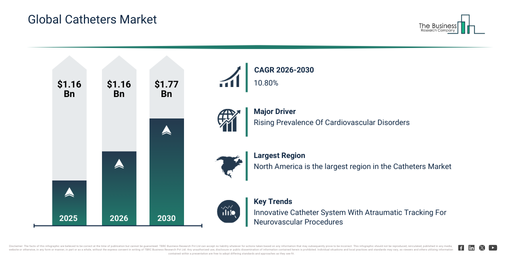
    Catheters Market Growth From $37.43 Billion In 2026 To $56.38 Billion By 2030 At A CAGR Of 10.8%

    The catheters market has demonstrated rapid growth over recent years. It is projected to expand from $33.8 billion in 2025 to $37.43 billion in 2026, reflecting a compound annual growth rate (CAGR) of 10.7%. The historical growth in this sector is primarily linked to the increasing prevalence of chronic diseases, a rise in hospitalization rates, the expansion of cardiovascular and urology procedures, enhanced access to clinical care, and the broader availability of disposable medical devices.

    The catheters market is set for considerable expansion over the coming years, with its size expected to reach $56.38 billion in 2030, achieving a compound annual growth rate (CAGR) of 10.8%. This growth throughout the forecast period is influenced by several factors, such as the increasing demand for advanced catheter materials, a heightened focus on reducing hospital-acquired infections, the expanding use of catheters in outpatient and homecare settings, the growing adoption of image-guided catheterization, and continuous innovation in catheter design. Prominent trends for the forecast period include the increasing adoption of antimicrobial coated catheters, a rising demand for specialty and multi-lumen catheters, the growing use of minimally invasive catheter procedures, the expansion of single-use disposable catheters, and an enhanced emphasis on patient safety and infection control.

    Get A Free Sample Report With In-Depth Market Insights:

    https://thebusinessresearchcompany.com/sample_request?id=5860&type=smp&name=Catheters%20Market%20Report%202026&utm_source=Blogs&utm_medium=Paid&utm_campaign=Sep_PR

    Catheters Market Growth Catalysts And Demand Drivers

    The increasing occurrence of cardiovascular ailments is projected to boost expansion within the catheters market in the coming period. This procedure, known as cardiac catheterization, involves guiding a catheter via a blood vessel to the heart to facilitate more accurate health condition diagnoses. A rise in the incidence of cardiovascular illnesses coupled with an escalating need for cardiovascular therapies is anticipated to elevate the requirement for catheters. As an illustration, data from January 2024, released by the American Heart Association, a US-based non-profit organization, indicated that the age-adjusted mortality rate attributable to cardiovascular disease climbed to 233.3 per 100,000 in 2024, representing an increase of 4.0% from 224.4 per 100,000 recorded in 2023. Consequently, the escalating frequency of cardiovascular disorders is a key factor propelling the expansion of the catheter market throughout the forecast period.

    Catheters Market Segment Breakdown: Which Categories Lead On Revenue?

    The catheters market covered in this report is segmented –

    1) By Product: Cardiovascular Catheters, Neurovascular Catheters, Urology Catheters, Intravenous Catheters, Specialty Catheters

    2) By Lumen: Single-lumen, Double-lumen, Triple-lumen

    3) By End User: Hospitals & Clinics, Ambulatory Surgical Centers

    Subsegments:

    1) By Cardiovascular Catheters: Angiographic Catheters, Balloon Catheters, Electrophysiology Catheters, Stent Delivery Catheters

    2) By Neurovascular Catheters: Microcatheters, Guiding Catheters, Balloon Catheters

    3) By Urology Catheters: Foley Catheters, Intermittent Catheters, Suprapubic Catheters

    4) By Intravenous Catheters: Peripheral IV Catheters, Central Venous Catheters (CVCs), Peripherally Inserted Central Catheters (PICC)

    5) By Specialty Catheters: Dialysis Catheters, Temperature Monitoring Catheters, Gastrostomy Catheters

    Catheters Market Trends Shaping Long-Term Demand

    Leading companies in the catheter industry are concentrating on creating innovations like atraumatic tracking, which removes the requirement for a microcatheter during medical procedures. Atraumatic tracking denotes a method or approach for monitoring a biological or physical process that aims to minimize or prevent trauma, damage, or negative effects on the subject being tracked. For example, in July 2024, Route 92 Medical, Inc., an American medical equipment manufacturing firm, unveiled the FreeClimb 88 Catheter System, specifically engineered for efficient maneuvering through complex neurovascular anatomy. This catheter system holds FDA 510(k) clearance, assuring its safety and effectiveness in navigating neurovasculature. Provided in lengths of 125 cm and 132 cm, it offers versatility for medical professionals. A specialized delivery catheter, equipped with a soft, tapered tip, lessens the ‘ledge effect’ and allows for smooth advancement through crucial arteries. Its construction enhances clinical operations by simplifying setup and improving the alignment of vessel sizes for enhanced flow regulation.

    Catheters Market Leading Players And Competitive Positioning

    Major companies operating in the catheters market are Boston Scientific Corporation, Coloplast A/S, ConvaTec Group Plc, Edwards Lifesciences Corporation, Hollister Incorporated, Johnson & Johnson, Medtronic Plc, B. Braun Melsungen AG, Terumo Corporation, Cook Medical Inc., Becton Dickinson and Company, Stryker Corporation, Merit Medical Systems Inc., Abbott Laboratories, Manfred Sauer GmbH, Koninklijke Philips N.V., Teleflex Incorporated, C. R. Bard Inc., Vascular Solutions Inc., Cordis Corporation, Rochester Medical Corporation, Navilyst Medical Inc., AngioDynamics Inc., Cardinal Health Inc., Olympus Corporation, Penumbra Inc., Siemens Healthineers AG, Smiths Medical Inc.

    View The Full Catheters Market Report:

    https://thebusinessresearchcompany.com/report/catheters-global-market-report?utm_source=Blogs&utm_medium=Paid&utm_campaign=Sep_PR

    Catheters Market Regional Split: Which Areas Are Fueling Growth?

    North America was the largest region in the catheters market in 2025. Asia-Pacific is expected to be the fastest-growing region in the forecast period. The regions covered in the catheters market report are Asia-Pacific, South East Asia, Western Europe, Eastern Europe, North America, South America, Middle East, Africa.

    Reach Out To Our Team:

    The Business Research Company: https://www.thebusinessresearchcompany.com/

    Americas: +1 310-496-7795

    Asia: +44 7882 955267 & +91 8897263534

    Europe: +44 7882 955267

    Email us at: marketing@tbrc.info

    Follow us on:

    LinkedIn: https://in.linkedin.com/company/the-business-research-company

    YouTube: https://www.youtube.com/channel/UC24_fI0rV8cR5DxlCpgmyFQ

    Global Market Model: https://www.thebusinessresearchcompany.com/global-market-model
  • Aspiration Tubing Market Trends Supporting 10.2% CAGR Growth Through 2030

    Aspiration Tubing Market Trends Supporting 10.2% CAGR Growth Through 2030

    Featuring market attractiveness scoring, total addressable market sizing, company benchmarking matrices, interactive Excel dashboards, deeper supply chain intelligence, emerging startup tracking, and granular product-level insights, The Business Research Company’s 2026 market reports are built to deliver research that is both more actionable and more strategically valuable.

    Aspiration Tubing Market Value Analysis: What Growth Lies Ahead Over The Forecast Period?

    The aspiration tubing market has experienced rapid growth in recent years. It is anticipated to expand from $4.23 billion in 2025 to $4.68 billion in 2026, exhibiting a compound annual growth rate (CAGR) of 10.6%. The expansion observed in the historic period was a result of limited material options for aspiration tubing, reliance on conventional pvc tubing, growing hospital and clinical procedures, increasing awareness of medical device safety, and the adoption of standard suction devices.

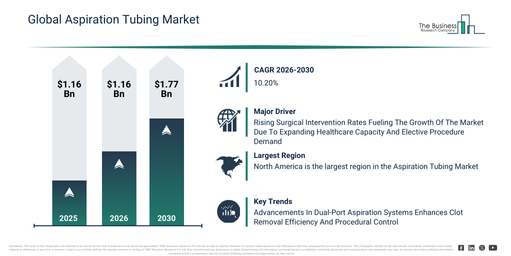
    The aspiration tubing market is expected to show significant expansion in the coming years. It is projected to reach $6.9 billion in 2030, achieving a compound annual growth rate (CAGR) of 10.2%. This growth over the forecast period is attributed to the advancement of silicone and polyurethane tubing, the increase in minimally invasive surgical procedures, the growth in pharmaceutical and biotechnology research, a rise in regulatory compliance and quality certifications, and its integration with smart medical equipment. Key trends for the forecast period include an increasing need for flexible and durable medical tubing, a greater shift towards DEHP-free and biocompatible materials, the broadening of drug delivery systems and catheter uses, an uptick in bio-pharmaceutical laboratory equipment utilization, and a heightened emphasis on sterilization and safety protocols.

    Get A Free Sample Report With In-Depth Market Insights:

    https://thebusinessresearchcompany.com/sample_request?id=91464016&type=smp&name=Aspiration%20Tubing%20Market%20Report%202026&utm_source=Blogs&utm_medium=Paid&utm_campaign=Sep_PR

    Aspiration Tubing Market Industry Drivers: What’s Behind The Revenue Growth?

    An increase in surgical intervention rates is anticipated to fuel the future expansion of the aspiration tubing market. Surgical intervention, defined as operative procedures for treating or managing diseases, injuries, or anatomical irregularities, is on the rise. This growth stems from healthcare systems addressing surgical backlogs and boosting their capacity to satisfy the increasing need for both routine and elective procedures. Aspiration tubing plays a crucial role in surgical interventions by effectively clearing blood and fluids from operative areas, which helps surgeons maintain optimal visibility, guarantees sterility, and facilitates the execution of safe and precise procedures. As an illustration, the Institute for Government, a UK-based organization, reported in October 2023 that hospitals handled 3.3 million admitted cases and 13.2 million non-admitted cases during the 2022/23 period. Consequently, the expanding volume of surgical interventions is a key factor boosting the aspiration tubing market’s expansion.

    Aspiration Tubing Market Segment Performance And Emerging Opportunities

    The aspiration tubing market covered in this report is segmented –

    1) By Type: Silicone Aspiration Tubing, Polyvinyl Chloride Aspiration Tubing, Polyurethane Aspiration Tubing

    2) By Application: Bulk Disposable Devices, Drug Delivery Systems, Catheters, Bio Pharmaceutical Laboratory Equipment’s, Other Applications

    3) By End-User: Healthcare, Medical Equipment Manufacturers, Hospitals And Clinics

    Subsegments:

    1) By Silicone Aspiration Tubing: Medical Grade Silicone Tubing, Transparent Silicone Tubing, Radiopaque Silicone Tubing, Reinforced Silicone Tubing

    2) By Polyvinyl Chloride (PVC) Aspiration Tubing: DEHP-Free Polyvinyl Chloride Tubing, Flexible Polyvinyl Chloride Tubing, Clear Polyvinyl Chloride Tubing, High-Pressure Polyvinyl Chloride Tubing

    3) By Polyurethane Aspiration Tubing: Ether-Based Polyurethane Tubing, Ester-Based Polyurethane Tubing, Reinforced Polyurethane Tubing, Low-Temperature Polyurethane Tubing

    #Aspiration Tubing Market Growth Trends: What’s Shaping The Future Outlook?

    Leading companies in the aspiration tubing market are concentrating on developing advanced products such as dual-port aspiration systems to enhance clot removal efficiency and decrease thrombectomy time during acute stroke interventions. Dual-port aspiration systems are defined as devices that facilitate the simultaneous operation of two aspiration catheters through a single vacuum source, thereby optimizing clot engagement and flow dynamics in neurovascular procedures. For instance, in May 2025, Imperative Care, Inc., a US-based company providing stroke intervention technologies, introduced the Zoom DuoPort, a system engineered to support continuous dual aspiration during thrombectomy procedures. This system integrates with Imperative Care’s Zoom Stroke System, which comprises the Zoom 88 and Zoom 71 catheters, the Zoom POD tubing, and the Zoom Pump. Key attributes include a proprietary TRX tip for real-time clot feedback, compatibility with multiple catheter sizes, and simplified connection interfaces designed to reduce setup time. The system improves aspiration power and procedural flexibility, enabling interventionalists to maintain uninterrupted flow control, achieve higher first-pass success rates, and minimize clot fragmentation. Its lightweight, compact design promotes ease of use and encourages adoption across various clinical environments, while component standardization ensures high procedural consistency and reliability.

    Aspiration Tubing Market Industry Leaders And Competitive Landscape

    Major companies operating in the aspiration tubing market are Olympus Corporation, Medtronic plc, Becton Dickinson and Company, Boston Scientific Corporation, Teleflex Incorporated, Pennine Healthcare, Ami Polymer Pvt. Ltd., Cobra Surgical, REDAX, Fairmont Medical, Summit Medical (Innovia Medical), Romsons Group Pvt. Ltd., Mesco Surgical, IndoSurgicals Pvt. Ltd., Skies Tech Products Pvt. Ltd., Medovations Inc., HK Surgical, Cubit Medisurge LLP, Shippert Medical, Revan Lifecare

    View The Full Aspiration Tubing Market Report:

    https://thebusinessresearchcompany.com/report/aspiration-tubing-global-market-report?utm_source=Blogs&utm_medium=Paid&utm_campaign=Sep_PR

    Aspiration Tubing Market Regional Analysis And Top Geography

    North America was the largest region in the aspiration tubing market in 2025. Asia Pacific is expected to be the fastest-growing region in the forecast period. The regions covered in the aspiration tubing market report are Asia-Pacific, South East Asia, Western Europe, Eastern Europe, North America, South America, Middle East, Africa.

    Reach Out To Our Team:

    The Business Research Company: https://www.thebusinessresearchcompany.com/

    Americas: +1 310-496-7795

    Asia: +44 7882 955267 & +91 8897263534

    Europe: +44 7882 955267

    Email us at: marketing@tbrc.info

    Follow us on:

    LinkedIn: https://in.linkedin.com/company/the-business-research-company

    YouTube: https://www.youtube.com/channel/UC24_fI0rV8cR5DxlCpgmyFQ

    Global Market Model: https://www.thebusinessresearchcompany.com/global-market-model

  • Catheter Introducer Sheaths Market Growth Forecast Through 2030: Market Size And Trends In 2026

    Catheter Introducer Sheaths Market Growth Forecast Through 2030: Market Size And Trends In 2026

    Backed by market attractiveness analysis, total addressable market sizing, company benchmarking matrices, interactive Excel dashboards, wider supply chain intelligence, emerging startup coverage, and detailed product-level insights, The Business Research Company’s 2026 market reports are designed to offer research that is more actionable and strategically valuable than ever.

    Catheter Introducer Sheaths Market Expansion Outlook: What Revenue Opportunities Are Ahead?

    The catheter introducer sheaths market has experienced strong expansion in recent years. It is anticipated to increase from $1.43 billion in 2025 to $1.57 billion in 2026, demonstrating a compound annual growth rate (CAGR) of 9.9%. This historical growth can be linked to factors such as the rise in interventional cardiology procedures, the growing prevalence of cardiovascular diseases, increased use of catheter-based vascular access, the expansion of hospital catheterization labs, and the rising adoption of minimally invasive surgeries.

    The catheter introducer sheaths market size is anticipated to show significant expansion in the coming years, with projections indicating a rise to $2.16 billion in 2030, at a compound annual growth rate (CAGR) of 8.4%. This growth during the forecast period can be primarily ascribed to factors such as an aging population facing a higher risk of vascular disease, a growing requirement for safer vascular access solutions, the broadening of neurointerventional procedures, an increase in the volume of outpatient interventional surgeries, and a heightened focus on minimizing procedure-related complications. Noteworthy trends expected within the forecast timeframe encompass the increasing adoption of minimally invasive interventional procedures, a rising demand for hydrophilic and radiopaque sheaths, an intensified effort to reduce vascular access complications, the expansion of catheter-based cardiology and neurovascular procedures, and a growing preference for integrated introducer sheath systems.

    Get A Free Sample Report With In-Depth Market Insights:

    https://thebusinessresearchcompany.com/sample_request?id=80856853&type=smp&name=Catheter%20Introducer%20Sheaths%20Market%20Report%202026&utm_source=Blogs&utm_medium=Paid&utm_campaign=Sep_PR

    Catheter Introducer Sheaths Market Opportunity Drivers: What’s Unlocking New Revenue Potential?

    The growing occurrence of cardiovascular disease is anticipated to fuel the expansion of the catheter introducer sheaths market in the future. Cardiovascular disease (CVD) encompasses various ailments impacting the heart and blood vessels. The rising incidence of cardiovascular diseases (CVD) stems from factors such as aging demographics, poor lifestyle choices, escalating obesity levels, socioeconomic determinants, and enhanced diagnostic techniques. Catheter introducer sheaths play a vital role in addressing cardiovascular disease, facilitating secure and efficient entry to the heart and blood vessels for both diagnostic and therapeutic interventions. For example, data from June 2024 by the Australian Institute of Health and Welfare (AIHW), an Australia-based independent government agency, indicated that around 144,000 people reported heart failure in 2022, and cardiovascular diseases (CVD) impacted 1.3 million adults, accounting for nearly 12% of the country’s disease burden and an approximate forfeiture of 666,000 healthy life years in 2023. Consequently, the growing occurrence of cardiovascular disease is stimulating the expansion of the catheter introducer sheaths market.

    Catheter Introducer Sheaths Market Segmentation: How Does The Market Break Down By Category?

    The catheter introducer sheaths market covered in this report is segmented –

    1) By Product Type: Integrated Introducer Sheaths, Separate Introducer Sheaths

    2) By Application: Cardiology, Vascular, Neurology

    3) By End-Use: Hospitals, Ambulatory Surgical Centers, Other End-Use

    Subsegments:

    1) By Integrated Introducer Sheaths: Single-Lumen Integrated Sheaths, Multi-Lumen Integrated Sheaths, Hydrophilic Coated Integrated Sheaths, Radiopaque Integrated Sheaths

    2) By Separate Introducer Sheaths: Single-Lumen Separate Sheaths, Multi-Lumen Separate Sheaths, Sheaths With Check Valves, Radiopaque Separate Sheaths, Hydrophilic Coated Separate Sheaths

    Catheter Introducer Sheaths Market Innovation Trends Shaping Future Development

    Major companies operating in the catheter introducer sheaths market are concentrating on developing innovative technologies, such as the multi-access blood control septum, to improve procedural efficiency, minimize complications, and enhance patient outcomes. This specialized technology, the multi-access blood control septum, is integrated into catheter introducer sheaths, enabling multiple access points while maintaining controlled blood flow. For instance, in October 2023, B. Braun SE, a Germany-based manufacturer of healthcare supplies, unveiled the Introcan Safety 2 IV Catheter with multi-access blood control, engineered to bolster clinician safety during IV access. This catheter incorporates a blood control mechanism that decreases the risk of blood exposure each time the hub is accessed, providing automated protection against needlestick injuries and bloodborne pathogens. Additionally, the catheter features Double Flashback Technology to aid first-stick success through rapid visual confirmation of successful vessel puncture, rendering the IV access process more efficient and effective.

    Catheter Introducer Sheaths Market Competitive Overview And Top Companies

    Major companies operating in the catheter introducer sheaths market are Johnson & Johnson Services Inc., Abbott Laboratories, Medtronic plc, Becton Dickinson and Company, Boston Scientific Corporation, Terumo Corporation, Smiths Medical International Limited, Teleflex Incorporated, Beijing Lepu Medical Technology Co. Ltd., Integer Holdings Corporation, Merit Medical Systems Inc., Penumbra Inc., C. R. Bard Inc., Asahi Intecc Co. Ltd., AngioDynamics Inc., Argon Medical Devices Inc., Cordis Corporation, B. Braun Melsungen AG, Oscor Inc., BrosMed Medical Co. Ltd., Galt Medical Corp., SCITECH Medical Products (Hefei) Co. Ltd., Vascular Solutions Inc., Cook

    View The Full Catheter Introducer Sheaths Market Report:

    https://thebusinessresearchcompany.com/report/catheter-introducer-sheaths-global-market-report?utm_source=Blogs&utm_medium=Paid&utm_campaign=Sep_PR

    Catheter Introducer Sheaths Market Top Region: Where Does Most Revenue Come From?

    North America was the largest region in the catheter introducer sheaths market in 2025. The regions covered in the catheter introducer sheaths market report are Asia-Pacific, South East Asia, Western Europe, Eastern Europe, North America, South America, Middle East, Africa.

    Reach Out To Our Team:

    The Business Research Company: https://www.thebusinessresearchcompany.com/

    Americas: +1 310-496-7795

    Asia: +44 7882 955267 & +91 8897263534

    Europe: +44 7882 955267

    Email us at: marketing@tbrc.info

    Follow us on:

    LinkedIn: https://in.linkedin.com/company/the-business-research-company

    YouTube: https://www.youtube.com/channel/UC24_fI0rV8cR5DxlCpgmyFQ

    Global Market Model: https://www.thebusinessresearchcompany.com/global-market-model
  • Aspiration Control System Market Forecast Highlights A $5.06 Billion Opportunity For Industry Participants

    Aspiration Control System Market Forecast Highlights A $5.06 Billion Opportunity For Industry Participants

    Built to provide research that’s more actionable and strategically valuable, The Business Research Company’s 2026 market reports include market attractiveness analysis, total addressable market sizing, company benchmarking matrices, interactive Excel dashboards, broader supply chain intelligence, emerging startup tracking, and in-depth product insights.

    Aspiration Control System Market Size Forecast: How Big Could The Market Get By 2030?

    The aspiration control system market has shown robust growth over recent years. It is anticipated to expand from $3.63 billion in 2025 to $3.88 billion in 2026, achieving a compound annual growth rate (CAGR) of 6.9%. This historical growth can be attributed to factors like the reliance on manual suction devices, the limited adoption of electronic control systems, an increase in hospital procedural volumes, expanding research laboratory activities, and the nascent stages of industrial automation within aspiration processes.

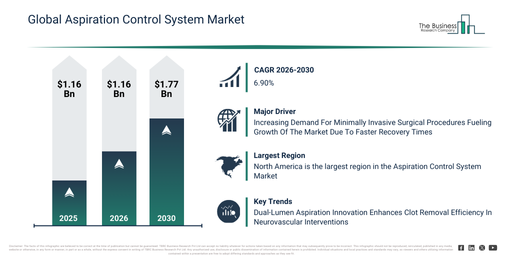
    The aspiration control system market is projected to experience substantial expansion in the coming years. This market is set to reach $5.06 billion in 2030, exhibiting a compound annual growth rate (CAGR) of 6.9%. Factors driving this growth during the projected timeframe include the advancement of hybrid and closed-loop control systems, growing investments in hospital and research infrastructure, the integration of sensor-based and programmable units, an escalating need for precise fluid handling in diagnostic procedures, and the broadening scope of industrial and manufacturing applications. Key trends anticipated during this period encompass the increased uptake of automated aspiration systems, a heightened requirement for precision and safety in fluid removal, the incorporation of multi-functional control capabilities, the wider deployment of aspiration control systems in industrial sectors, and an intensified emphasis on preventing contamination and enhancing operational efficiency.

    Get A Free Sample Report With In-Depth Market Insights:

    https://thebusinessresearchcompany.com/sample_request?id=83540826&type=smp&name=Aspiration%20Control%20System%20Market%20Report%202026&utm_source=Blogs&utm_medium=Paid&utm_campaign=Sep_PR

    Aspiration Control System Market Growth Factors: What’s Supporting Expansion?

    The burgeoning demand for minimally invasive surgical procedures is projected to drive the growth of the aspiration control systems market moving forward. These procedures are operations conducted via small incisions, utilizing specialized tools such as cameras and instruments, to lessen bodily damage compared to traditional open surgery. The increasing call for minimally invasive surgical procedures is fueled by advantages like quicker recovery times, which allow patients to heal rapidly, reduce the length of hospital stays, and return to normal activities sooner than with conventional surgery. Aspiration control systems play a vital role in minimally invasive surgical procedures by ensuring the efficient removal of fluids and debris, a critical function for maintaining a clear surgical field and facilitating precise instrument navigation. For instance, in June 2024, the American Society of Plastic Surgeons, a US-based organization of board-certified plastic surgeons, reported that minimally invasive procedures experienced a 7% rise in 2023, with the overall count surpassing 25 million. Hence, the increasing demand for minimally invasive surgical procedures is a key driver for the aspiration control systems market’s expansion.

    Aspiration Control System Market Segment Landscape And Growth Outlook

    The aspiration control system market covered in this report is segmented –

    1) By Type: Electronic Aspiration Control Systems, Mechanical Aspiration Control Systems, Hydraulic Aspiration Control Systems

    2) By Functionality: Speed Control, Position Control, Temperature Control, Pressure Control, Flow Control

    3) By Technology: Closed Loop Control Systems, Open Loop Control Systems, Hybrid Control Systems

    4) By End User: Hospitals, Diagnostic Laboratories, Research Institutes, Industrial Facilities

    Subsegments:

    1) By Electronic Aspiration Control Systems: Sensor-Based Aspiration Systems, Automated Vacuum Regulation Systems, Digital Flow Control Systems, Programmable Aspiration Units

    2) By Mechanical Aspiration Control Systems: Manual Suction Pumps, Foot-Operated Aspirators, Spring-loaded Aspiration Devices, Lever-Based Suction Regulators

    3) By Hydraulic Aspiration Control Systems: Fluid-Powered Aspiration Units, Pressure-Regulated Hydraulic Pumps, Piston-Driven Aspiration Systems, Dual-Chamber Hydraulic Suction Systems

    Aspiration Control System Market Industry Trends: What’s Reshaping Demand?

    Leading companies operating in the aspiration control system are concentrating on creating sophisticated solutions, including dual-lumen aspiration catheters, aiming to boost clot removal effectiveness and improve procedural results in neurovascular procedures. This type of catheter is a specialized medical instrument that incorporates two distinct internal channels (lumens) within one catheter shaft, engineered to enable either simultaneous or sequential aspiration from multiple points. As an example, in May 2025, Imperative Care, Inc., an American biotechnology firm, introduced Zoom DuoPort, which employs a continuous dual aspiration technique to offer superior aspiration control and instant clot feedback from the sterile field using two Zoom PODs. Its distinctive features include a dual-lumen structure, allowing simultaneous aspiration via both the Zoom 88 Support Catheter and the Zoom Aspiration Catheter, thereby maintaining continuous flow and reducing clot fragmentation during stroke treatments. Integrated into an advanced Aspiration Control System, the Zoom DuoPort enables the Continuous Dual Aspiration Technique, which significantly improves the efficiency of clot removal and increases first-pass success rates. This innovation, crafted for seamless integration with Imperative Care’s Zoom Stroke Solution, notably enhances procedural speed, efficacy, and overall patient results in neurovascular care.

    Aspiration Control System Market Key Participants And Competitive Landscape

    Major companies operating in the aspiration control system market are Medtronic Plc, Stryker Corporation, Boston Scientific Corporation, Terumo Corporation, Teleflex Incorporated, Cook Medical LLC, Nilfisk GmbH, Merit Medical Systems Inc., MicroVention Inc., Penumbra Inc., INTEGRA Biosciences AG, Phenox GmbH, Weinmann Emergency Medical Technology GmbH, Clements Medical Equipment Pty. Ltd., Rapid Medical Ltd., Vacuubrand GmbH, Balt USA, Acandis GmbH & Co. KG, Carl Roth GmbH + Co. KG, Nouvag AG.

    View The Full Aspiration Control System Market Report:

    https://thebusinessresearchcompany.com/report/aspiration-control-system-global-market-report?utm_source=Blogs&utm_medium=Paid&utm_campaign=Sep_PR

    Aspiration Control System Market Geographic Analysis: Where Is Demand Rising Fastest?

    North America was the largest region in the aspiration control system market in 2025. Asia-Pacific is expected to be the fastest-growing region in the forecast period. The regions covered in the aspiration control system market report are Asia-Pacific, South East Asia, Western Europe, Eastern Europe, North America, South America, Middle East, Africa.

    Reach Out To Our Team:

    The Business Research Company: https://www.thebusinessresearchcompany.com/

    Americas: +1 310-496-7795

    Asia: +44 7882 955267 & +91 8897263534

    Europe: +44 7882 955267

    Email us at: marketing@tbrc.info

    Follow us on:

    LinkedIn: https://in.linkedin.com/company/the-business-research-company

    YouTube: https://www.youtube.com/channel/UC24_fI0rV8cR5DxlCpgmyFQ

    Global Market Model: https://www.thebusinessresearchcompany.com/global-market-model

  • Cataract Surgery Devices And Equipment Market Analysis: $15.02 Billion Market Size In 2026 And Future Growth Prospects

    Cataract Surgery Devices And Equipment Market Analysis: $15.02 Billion Market Size In 2026 And Future Growth Prospects

    Featuring market attractiveness scoring, total addressable market sizing, company benchmarking matrices, interactive Excel dashboards, deeper supply chain intelligence, emerging startup tracking, and granular product-level insights, The Business Research Company’s 2026 market reports are built to deliver research that is both more actionable and more strategically valuable.

    Cataract Surgery Devices And Equipment Market Growth Potential: How Will Market Size Shift Through 2030?

    The cataract surgery devices and equipment market has shown consistent expansion in recent years. It is anticipated to increase from $14.52 billion in 2025 to $15.02 billion in 2026, registering a compound annual growth rate (CAGR) of 3.5%. This historical growth can be attributed to an expanding aging population, the escalating prevalence of cataract conditions, the development of ophthalmic surgical facilities, the increasing adoption of minimally invasive eye surgery, and the accessibility of sophisticated surgical instruments.

    The cataract surgery devices and equipment market size is projected to experience consistent growth in the upcoming years. It is forecast to expand to $17.2 billion by 2030, achieving a compound annual growth rate (CAGR) of 3.4%. This expansion during the forecast period is driven by factors such as the increasing demand for customized intraocular lenses, a rise in the adoption of laser-assisted cataract surgery, the expansion of ambulatory ophthalmology centers, growing investments in eye care infrastructure, and technological advancements in surgical visualization systems. Significant trends anticipated in this period include the increasing uptake of premium and multifocal IOLs, a growing use of femtosecond laser-assisted surgery, an escalating demand for advanced phacoemulsification systems, the expansion of outpatient cataract surgery centers, and an enhanced focus on surgical precision and outcomes.

    Get A Free Sample Report With In-Depth Market Insights:

    https://thebusinessresearchcompany.com/sample_request?id=26999752&type=smp&name=Cataract%20Surgery%20Devices%20And%20Equipment%20Market%20Report%202026&utm_source=Blogs&utm_medium=Paid&utm_campaign=Sep_PR

    Cataract Surgery Devices And Equipment Market Growth Momentum: What Factors Are Shaping Demand?

    An increase in the elderly population is predicted to drive expansion within the cataract surgery devices and equipment market going forward. This demographic includes individuals aged 65 and over. As this older demographic grows, its members are more susceptible to cataracts with advancing age, thereby increasing the need for cataract surgery devices to address the resulting vision problems. Consequently, the expanding older age group has generated a heightened requirement for both cataract surgery procedures and their associated devices. For example, data from January 2024 by the Population Reference Bureau (PRB), a private non-profit organization based in the US, projects that the American population aged 65 and older will rise from 58 million in 2022 to 82 million by 2050, signifying a 47% growth. Furthermore, this specific age cohort is projected to comprise a larger share of the overall population, increasing from 17% to 23%. This demographic change highlights a considerable aging trend within the U.S. population. These forecasts underscore the growing necessity of catering to the requirements of older adults across diverse sectors. Thus, the increasing geriatric population is a key factor propelling the expansion of the cataract surgery devices and equipment market.

    Cataract Surgery Devices And Equipment Market Segment Trends And Revenue Contributors

    The cataract surgery devices and equipment market covered in this report is segmented –

    1) By Type: Intraocular Lens (IOL), Ophthalmic Viscoelastic Device (OVD), Phacoemulsification Equipment, Femtosecond Laser Equipment

    2) By Surgery Type: Extracapsular Cataract Extraction, Phacoemulsification, Femtosecond Laser, Other Surgery Types

    3) By Application: Ophthalmology Centers, Hospitals, Clinics

    Subsegments:

    1) By Intraocular Lens (IOL): Monofocal IOL, Multifocal IOL, Toric IOL, Accommodative IOL

    2) By Ophthalmic Viscoelastic Device (OVD): Dispersive OVD, Cohesive OVD

    3) By Phacoemulsification Equipment: Phacoemulsification Machines, Handpieces And Accessories

    4) By Femtosecond Laser Equipment: Femtosecond Laser Systems For Cataract Surgery, Laser Treatment Accessories

    Cataract Surgery Devices And Equipment Market Trends Redefining Industry Growth

    Major companies within the cataract surgery devices and equipment market are actively developing innovative products such as the VERITAS Vision System to improve surgical accuracy and outcomes. The VERITAS Vision System is a next-generation phacoemulsification system, specifically designed to enhance patient safety, surgeon efficiency, and comfort. For instance, in February 2024, Johnson & Johnson, a US-based pharmaceutical, biotechnology, and medical technologies company, introduced the Tecnis PureSee intraocular lens (IOL). The TECNIS PureSee IOL features an innovative, purely refractive design that ensures consistent, high-quality vision with exceptional contrast and impressive low-light performance, rivalling that of monofocal IOLs. Cataract surgery stands as the most frequently performed surgery globally, with approximately 28 million procedures conducted annually. However, only 10-15% of patients currently receive advanced optical IOLs specifically engineered for astigmatism and presbyopia. Presently, surgeons and patients often face trade-offs when selecting an IOL, such as choosing between clear vision across all distances and the potential for glares or halos. The TECNIS PureSee aims to address these existing concerns, ultimately enhancing overall results for both patients and surgeons.

    Cataract Surgery Devices And Equipment Market Competitive Landscape: Which Companies Lead The Industry?

    Major companies operating in the cataract surgery devices and equipment market are Alcon Inc, Bausch + Lomb Inc, Carl Zeiss Meditec AG, HOYA Corporation, NIDEK Co Ltd, STAAR Surgical Company, Rayner, Oculentis, Asico, Medennium, Sight Sciences, Lumenis, Katalyst Surgical, Visionix, Moria Surgical, SIFI S.p.A, Appasamy Associates, Biotech Healthcare Group, Omni Lens Pvt Ltd, Altacor, Bohus BioTech AB, CIMA Technology Inc, i-Medical Ophthalmic International Heidelberg GmbH, Medisonic Equipments Pvt Ltd, OPTIKON SpA, Meda Co Ltd, Ziemer Ophthalmic Systems AG, HumanOptics AG, Hanita Lenses Ltd, Lenstec Inc, CRISTALENS SL, OPHTEC BV, Aurolab Co

    View The Full Cataract Surgery Devices And Equipment Market Report:

    https://thebusinessresearchcompany.com/report/cataract-surgery-devices-and-equipment-global-market-report?utm_source=Blogs&utm_medium=Paid&utm_campaign=Sep_PR

    Cataract Surgery Devices And Equipment Market Regional Breakdown: Where Is Demand Concentrated?

    North America was the largest region in the global cataract surgery devices and equipment market in 2025. Asia-Pacific was the second-largest region in cataract surgery devices and equipment market. The regions covered in the cataract surgery devices and equipment market report are Asia-Pacific, South East Asia, Western Europe, Eastern Europe, North America, South America, Middle East, Africa.

    Reach Out To Our Team:

    The Business Research Company: https://www.thebusinessresearchcompany.com/

    Americas: +1 310-496-7795

    Asia: +44 7882 955267 & +91 8897263534

    Europe: +44 7882 955267

    Email us at: marketing@tbrc.info

    Follow us on:

    LinkedIn: https://in.linkedin.com/company/the-business-research-company

    YouTube: https://www.youtube.com/channel/UC24_fI0rV8cR5DxlCpgmyFQ

    Global Market Model: https://www.thebusinessresearchcompany.com/global-market-model