
Month: October 2026

  • Travel Vaccines Market 2026 Outlook: Market Size, CAGR And Key Growth Opportunities

    Travel Vaccines Market 2026 Outlook: Market Size, CAGR And Key Growth Opportunities

    Backed by market attractiveness analysis, total addressable market sizing, company benchmarking matrices, interactive Excel dashboards, wider supply chain intelligence, emerging startup coverage, and detailed product-level insights, The Business Research Company’s 2026 market reports are designed to offer research that is more actionable and strategically valuable than ever.

    Travel Vaccines Market Size, Value And Growth Trajectory Through 2030

    The travel vaccines market size has experienced significant growth in recent years. This market is anticipated to expand from $5.09 billion in 2025 to $5.56 billion in 2026, registering a compound annual growth rate (CAGR) of 9.2%. Historically, the expansion can be attributed to several factors including limited vaccine access in emerging markets, low public awareness of travel-related diseases, reliance on traditional vaccination centers, regulatory approvals for mono vaccines, and the slow adoption of online booking platforms.

    The travel vaccines market is projected to experience substantial expansion in the coming years. By 2030, its value is expected to reach $8.16 billion, achieving a compound annual growth rate (CAGR) of 10.0%. This expansion throughout the forecast period stems from factors such as heightened global travel and mobility, progress in biotechnology leading to combination vaccines, the proliferation of digital health and telemedicine services, greater understanding of preventive healthcare, and the broadening of international travel immunization initiatives. Key developments anticipated during this timeframe involve a surge in global tourism and business trips, a heightened focus on preventive health for travelers, the expansion of online platforms for travel health services and bookings, the creation of combined and multivalent travel vaccines, and an increase in collaborative public-private efforts for worldwide immunization schemes.

    Get A Free Sample Report With In-Depth Market Insights:

    https://thebusinessresearchcompany.com/sample_request?id=70152883&type=smp&name=Travel%20Vaccines%20Market%20Report%202026&utm_source=Blogs&utm_medium=Paid&utm_campaign=Oct_PR

    Travel Vaccines Market Growth Drivers: What’s Behind The Acceleration?

    The escalating trend in travel and tourism is anticipated to propel the expansion of the travel vaccine market going forward. Travel and tourism encompass the movement of people or items, including vehicles such as trains, boats, and airplanes, between diverse remote geographic locations. Travel vaccines prove beneficial for tourists and travelers by keeping them safe and healthy during their international journeys. For instance, in May 2025, according to UN Tourism, a Spain-based specialized agency responsible for promoting responsible, sustainable, and universally accessible tourism, the first three months of 2025 saw over 300 million tourists traveling internationally. This figure was approximately 14 million more than during the same period in 2024, marking a 5% year-on-year increase. Therefore, the surge in travel and tourism is driving the growth of the travel vaccine market.

    Travel Vaccines Market Segment Landscape And Growth Outlook

    The travel vaccines market covered in this report is segmented –

    1) By Disease: Hepatitis A, Diphtheria, Pertussis, And Tetanus (DPT), Yellow Fever, Typhoid, Hepatitis B, Measles And Mumps, Rabies, Meningococcal, Other Diseases,

    2) By Composition: Mono Vaccines, Combination Vaccines

    3) By Booking Channel: Online Booking, In-Person Booking

    4) By Application: Domestic Travel, Outbound Travel

    Travel Vaccines Market Trends: What’s Defining The Industry’s Next Phase?

    Leading companies operating in the travel vaccine market are engaged in creating innovative vaccines to offer active immunization, thereby preventing Hepatitis A, a common concern for travelers. A travel vaccine is specifically formulated to shield individuals from infectious diseases prevalent in particular regions or countries, often recommended for those visiting such areas. For instance, in January 2024, Indian Immunologicals Ltd. (IIL), an India-based biotechnology firm, introduced Havisure, which stands as India’s first indigenously developed Hepatitis A vaccine. Havisure is projected to be crucial in delivering protection against the Hepatitis A virus, which predominantly affects the liver. This vaccine proves effective in averting the illness and is recommended for children as part of their routine immunization. Moreover, it is advised for individuals susceptible to exposure or those traveling to locations with elevated rates of hepatitis A.

    Travel Vaccines Market Competitive Landscape: Who Leads The Industry?

    Major companies operating in the travel vaccines market are Pfizer Inc, Johnson and Johnson, Merck & Co. Inc, Sanofi SA, GlaxoSmithKline plc, Takeda Pharmaceutical Company Limited, Serum Institute of India Pvt. Ltd., Bavarian Nordic A/S, Valneva SE, Panacea Biotec, Bharat Biotech International Limited, Bio Farma, Novavax Inc, Emergent BioSolutions UK, Biological E. Limited, Vabiotech, Cadila Healthcare Limited, Zydus Lifesciences Ltd, Cipla Inc, Haffkine Biopharmaceutical Corporation Ltd

    View The Full Travel Vaccines Market Report:

    https://thebusinessresearchcompany.com/report/travel-vaccines-global-market-report?utm_source=Blogs&utm_medium=Paid&utm_campaign=Oct_PR

    Travel Vaccines Market Global Footprint: Which Region Leads The Industry?

    North America was the largest region in the travel vaccines market in 2025. Asia-Pacific is expected to be the fastest-growing region in the forecast period. The regions covered in the travel vaccines market report are Asia-Pacific, South East Asia, Western Europe, Eastern Europe, North America, South America, Middle East, Africa.

    Reach Out To Our Team:

    The Business Research Company: https://www.thebusinessresearchcompany.com/

    Americas: +1 310-496-7795

    Asia: +44 7882 955267 & +91 8897263534

    Europe: +44 7882 955267

    Email us at: marketing@tbrc.info

    Follow us on:

    LinkedIn: https://in.linkedin.com/company/the-business-research-company

    YouTube: https://www.youtube.com/channel/UC24_fI0rV8cR5DxlCpgmyFQ

    Global Market Model: https://www.thebusinessresearchcompany.com/global-market-model
  • Traumatic Brain Injury Biomarkers Market Size Growth: From $1.68 Billion In 2026 To $3.67 Billion By 2030

    Traumatic Brain Injury Biomarkers Market Size Growth: From $1.68 Billion In 2026 To $3.67 Billion By 2030

    Featuring market attractiveness scoring, total addressable market sizing, company benchmarking matrices, interactive Excel dashboards, deeper supply chain intelligence, emerging startup tracking, and granular product-level insights, The Business Research Company’s 2026 market reports are built to deliver research that is both more actionable and more strategically valuable.

    Traumatic Brain Injury Biomarkers Market CAGR Outlook And Future Development

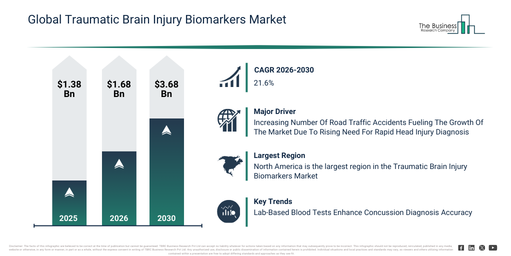
    The market size for traumatic brain injury biomarkers has observed considerable expansion over recent years. This market is expected to expand from $1.38 billion in 2025 to reach $1.68 billion in 2026, advancing at a compound annual growth rate (CAGR) of 21.9%. During the historical period, this growth was primarily fueled by the restricted availability of standardized TBI biomarkers, a dependency on conventional imaging techniques, increasing awareness regarding the impacts of traumatic brain injury, the proliferation of hospital-based diagnostic facilities, and nascent research into protein and genetic biomarkers.

    The market for traumatic brain injury biomarkers is projected to experience rapid expansion over the coming years. It will grow to $3.68 billion in 2030 at a compound annual growth rate (CAGR) of 21.6%. This anticipated growth during the projection period stems from progress in high-sensitivity protein and genetic assays, the incorporation of metabolomic biomarkers into TBI evaluation, the development of customized monitoring and prognosis instruments, increased adoption by hospitals and diagnostic laboratories, and escalating investment in TBI biomarker research and clinical trials. Key trends identified for the forecast timeframe encompass a greater uptake of blood-based and CSF-based biomarker tests, an intensified focus on the early detection and prognosis of traumatic brain injury, the creation of multiplex protein and genetic biomarker panels, an expansion of monitoring instruments to gauge treatment response, and the incorporation of research-derived biomarkers into clinical settings.

    Get A Free Sample Report With In-Depth Market Insights:

    https://thebusinessresearchcompany.com/sample_request?id=96978753&type=smp&name=Traumatic%20Brain%20Injury%20Biomarkers%20Market%20Report%202026&utm_source=Blogs&utm_medium=Paid&utm_campaign=Oct_PR

    Traumatic Brain Injury Biomarkers Market Growth Factors Behind Sustained Expansion

    The growing number of road traffic incidents is projected to fuel the expansion of the traumatic brain injury biomarkers market in the future. These events are defined as unforeseen occurrences that lead to injury, harm, or damage, frequently demanding immediate medical attention. The increase in road traffic accidents is a result of a rapid rise in private vehicle use, driven by urbanization and increased motorization. Traumatic brain injury biomarkers play a crucial role in managing road traffic accident cases by enabling quick and accurate evaluation of head injuries. They assist in early diagnosis through the detection of specific proteins in the blood, empowering clinicians to make timely treatment decisions and enhance patient recovery in emergency scenarios. For instance, in October 2025, a report from the National Highway Traffic Safety Administration (NHTSA), a US-based national safety organisation, revealed that the United States registered 6,138,359 police-reported motor-vehicle crashes. These incidents caused 40,901 deaths and 2,442,581 injuries, highlighting a considerable trauma burden. Hence, the increasing frequency of road traffic accidents is propelling the growth of the traumatic brain injury biomarkers market.

    Traumatic Brain Injury Biomarkers Market Breakdown By Product Type And Application

    The traumatic brain injury biomarkers market covered in this report is segmented –

    1) By Type: Protein Biomarkers, Genetic Biomarkers, Metabolomic Biomarkers

    2) By Sample Type: Blood-based, Cerebrospinal Fluid (CSF)-Based, Urine-Based

    3) By Application: Diagnosis, Prognosis, Monitoring Treatment Response

    4) By End Use: Hospitals And Clinics, Diagnostic Laboratories, Research Institutes

    Subsegments:

    1) By Protein Biomarkers: Glial Fibrillary Acidic Protein (GFAP), Ubiquitin C-Terminal Hydrolase L1 (UCH-L1), S100 Calcium Binding Protein B (S100B), Neuron-Specific Enolase (NSE)

    2) By Genetic Biomarkers: Apolipoprotein E (APOE) Genotyping, Brain-Derived Neurotrophic Factor (BDNF) Polymorphism, Interleukin-6 (IL-6) Gene Variants, Tumor Necrosis Factor-Alpha (TNF-α) Polymorphism

    3) By Metabolomic Biomarkers: Lactate, Creatine, Choline, N-Acetylaspartate (NAA)

    Traumatic Brain Injury Biomarkers Market Industry Trends Fueling Future Revenue Growth

    Leading companies operating in the traumatic brain injury biomarker market are concentrating on creating innovative solutions, such as a laboratory-based blood test, to enhance the precision and rapidity of concussion evaluation and diagnosis. A laboratory-based blood test serves as a diagnostic instrument that quantifies specific biomarkers in the bloodstream to determine the presence and severity of brain injuries, thereby enabling more prompt and objective clinical choices. For instance, in June 2025, Abbott Laboratories, a US-based healthcare enterprise, rolled out the Alinity i and Architect i1000SR lab tests. These tests identify two critical biomarkers, glial fibrillary acidic protein (GFAP) and ubiquitin carboxy-terminal hydrolase (UCH)-L1, to aid clinicians in evaluating suspected concussions within 12 hours of the injury. Additionally, they yield lab results in merely 18 minutes, facilitate quicker triage decisions in emergency contexts, and lessen the reliance on unnecessary CT scans. This innovation furnishes physicians with a trustworthy method for identifying patients with potential traumatic brain injuries. It also marks a substantial progression in broadening access to faster, evidence-informed care in emergency departments.

    Traumatic Brain Injury Biomarkers Market Company Landscape And Competitive Strategy

    Major companies operating in the traumatic brain injury biomarkers market are F. Hoffmann-La Roche Ltd, Thermo Fisher Scientific Inc., Abbott Laboratories, Siemens Healthineers AG, BioMérieux S.A., DiaSorin S.p.A., Abcam Limited, Fujirebio Inc., Meso Scale Diagnostics (MSD), Olink Holding AB, Quanterix Corporation, OriGene Technologies Inc., BioDirection Inc., BrainBox Solutions Inc., NeuroTrauma Sciences LLC, Banyan Biomarkers Inc.

    View The Full Traumatic Brain Injury Biomarkers Market Report:

    https://thebusinessresearchcompany.com/report/traumatic-brain-injury-biomarkers-global-market-report?utm_source=Blogs&utm_medium=Paid&utm_campaign=Oct_PR

    Traumatic Brain Injury Biomarkers Market Regional Distribution: Which Areas Power Market Growth?

    North America was the largest region in the traumatic brain injury biomarkers market in 2025. Asia-Pacific is expected to be the fastest-growing region in the forecast period. The regions covered in the traumatic brain injury biomarkers market report are Asia-Pacific, South East Asia, Western Europe, Eastern Europe, North America, South America, Middle East, Africa.

    Reach Out To Our Team:

    The Business Research Company: https://www.thebusinessresearchcompany.com/

    Americas: +1 310-496-7795

    Asia: +44 7882 955267 & +91 8897263534

    Europe: +44 7882 955267

    Email us at: marketing@tbrc.info

    Follow us on:

    LinkedIn: https://in.linkedin.com/company/the-business-research-company

    YouTube: https://www.youtube.com/channel/UC24_fI0rV8cR5DxlCpgmyFQ

    Global Market Model: https://www.thebusinessresearchcompany.com/global-market-model
  • Testosterone Replacement Therapy Market Outlook From 2026 To 2030: Key Growth Factors And Future Opportunities

    Testosterone Replacement Therapy Market Outlook From 2026 To 2030: Key Growth Factors And Future Opportunities

    Built to provide research that’s more actionable and strategically valuable, The Business Research Company’s 2026 market reports include market attractiveness analysis, total addressable market sizing, company benchmarking matrices, interactive Excel dashboards, broader supply chain intelligence, emerging startup tracking, and in-depth product insights.

    Testosterone Replacement Therapy Market Forecast: What Value Will The Market Reach By 2030?

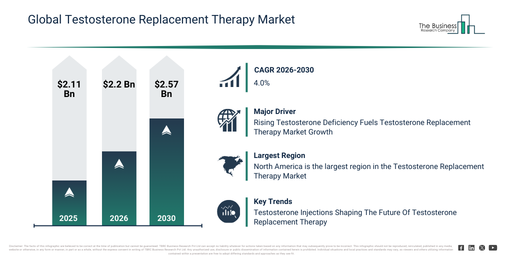
    The testosterone replacement therapy market size has shown consistent expansion in recent years. It is projected to grow from $2.11 billion in 2025 to $2.2 billion in 2026, exhibiting a compound annual growth rate (CAGR) of 3.9%. This historical market expansion can be attributed to various factors, including the increasing occurrence of hypogonadism, the development of oral testosterone formulations, a growing elderly population, heightened awareness among urologists and endocrinologists, and innovations in injectable testosterone therapies.

    The testosterone replacement therapy market size is projected to experience consistent expansion over the upcoming years. It is anticipated to reach $2.57 billion by 2030, exhibiting a compound annual growth rate (CAGR) of 4.0%. This growth during the forecast period can be attributed to the introduction of new transdermal gels and patches, advancements in precision medicine, increased use of therapies administered at home, broader clinical research into testosterone deficiency, and growing awareness regarding male fertility and wellness. Key trends anticipated during this period include personalized hormonal treatments, less invasive delivery methods, greater awareness of male hypogonadism, an increase in outpatient clinics and specialized endocrinology centers, and the rise of home-based testosterone therapy options.

    Get A Free Sample Report With In-Depth Market Insights:

    https://thebusinessresearchcompany.com/sample_request?id=16847604&type=smp&name=Testosterone%20Replacement%20Therapy%20Market%20Report%202026&utm_source=Blogs&utm_medium=Paid&utm_campaign=Oct_PR

    Testosterone Replacement Therapy Market Development Factors: What’s Supporting Demand?

    An anticipated increase in testosterone deficiency is projected to propel the expansion of the testosterone replacement therapy market. This deficiency, also known as hypogonadism, describes a state where the body produces insufficient testosterone and maintains low levels of the hormone. Testosterone replacement therapy aims to elevate the body’s testosterone to physiological levels, counteract the impacts of hypogonadism, and alleviate symptoms including diminished libido, erectile dysfunction, low mood, anemia, muscle loss, among others. For example, reports from PharmiWeb, an England-based media and technology company, indicated in March 2024 that the estimated occurrence of symptomatic testosterone deficiency in men within the 40-70 years age bracket ranges from 2.1 and 5.73, with an estimated prevalence reaching up to 38.7%. Consequently, the growing incidence of testosterone deficiency is fueling the expansion of the testosterone replacement therapy market.

    Testosterone Replacement Therapy Market Segments: Where Is Growth Concentrated?

    The testosterone replacement therapy market covered in this report is segmented –

    1) By Product Type: Oral, Implants, Gel Or Creams, Patches, Buccal Adhesive, Parenteral, Other Products

    2) By Indication: Hypogonadism, Genetic Disorders, Sex Organ Surgeries, Other Indications

    3) By Active Ingredient Type: Testosterone, Methyl Testosterone, Testosterone Undecanoate, Testosterone Enanthate, Testosterone Cypionate

    4) By End User: Hospitals, Clinics, Other End-User

    Testosterone Replacement Therapy Market Transformation Trends: What Innovations Are Driving Change?

    Leading companies in the testosterone replacement therapy market are increasingly prioritizing the introduction of testosterone cypionate injections to secure a competitive advantage. Testosterone Cypionate Injection (USP) is a drug containing testosterone cypionate, a synthetic variant of the body’s natural male sex hormone. This injection is frequently prescribed as part of testosterone replacement therapy to address various conditions related to testosterone deficiency in individuals. As an illustration, in April 2023, the U.S.-based pharmaceutical company Xiromed LLC launched its Testosterone Cypionate Injection (USP). This injectable version of the male hormone testosterone is utilized for treating men with low testosterone or conditions exacerbated by low testosterone levels, such as erectile dysfunction or hypogonadism. Specifically, testosterone cypionate is indicated for replacement therapy in males who exhibit symptoms of a deficiency or absence of endogenous testosterone. It is widely recognized as one of the most effective solutions for testosterone replacement therapy in men displaying signs of testosterone deficiency. Testosterone cypionate injections help restore testosterone levels to a healthy range, making them a highly beneficial form of hormone replacement therapy that is generally well-tolerated by most patients.

    Testosterone Replacement Therapy Market Key Participants And Competitive Landscape

    Major companies operating in the testosterone replacement therapy market are AbbVie Inc., Acerus Pharmaceuticals Corporation, Antares Pharma Inc., Bayer Aktiengesellschaft, BioTE Medical LLC, Clarus Therapeutics Inc., Eli Lilly and Company, Endo International plc, Pfizer Inc., Teva Pharmaceutical Industries Limited, Acrux Limited, Aytu BioPharma Inc., Cipla Limited, Sun Pharmaceutical Industries Limited, Mylan N.V., Bausch Health Companies Inc., Sandoz International GmbH, Besins Healthcare, Coloplast A/S, Recordati S.p.A.

    View The Full Testosterone Replacement Therapy Market Report:

    https://thebusinessresearchcompany.com/report/testosterone-replacement-therapy-global-market-report?utm_source=Blogs&utm_medium=Paid&utm_campaign=Oct_PR

    Testosterone Replacement Therapy Market Geographic Analysis: Where Is Demand Rising Fastest?

    North America was the largest region in the testosterone replacement therapy market in 2025. Asia-Pacific is expected to be the fastest-growing region in the testosterone replacement therapy market report during the forecast period. The regions covered in the testosterone replacement therapy market report are Asia-Pacific, South East Asia, Western Europe, Eastern Europe, North America, South America, Middle East, Africa.

    Reach Out To Our Team:

    The Business Research Company: https://www.thebusinessresearchcompany.com/

    Americas: +1 310-496-7795

    Asia: +44 7882 955267 & +91 8897263534

    Europe: +44 7882 955267

    Email us at: marketing@tbrc.info

    Follow us on:

    LinkedIn: https://in.linkedin.com/company/the-business-research-company

    YouTube: https://www.youtube.com/channel/UC24_fI0rV8cR5DxlCpgmyFQ

    Global Market Model: https://www.thebusinessresearchcompany.com/global-market-model
  • Trastuzumab Biosimilars Market Analysis 2026: Market Size, Growth Trends And Industry Outlook

    Trastuzumab Biosimilars Market Analysis 2026: Market Size, Growth Trends And Industry Outlook

    Built to provide research that’s more actionable and strategically valuable, The Business Research Company’s 2026 market reports include market attractiveness analysis, total addressable market sizing, company benchmarking matrices, interactive Excel dashboards, broader supply chain intelligence, emerging startup tracking, and in-depth product insights.

    Trastuzumab Biosimilars Market Set To Climb From $8.86 Billion In 2026 To $24.48 Billion By 2030

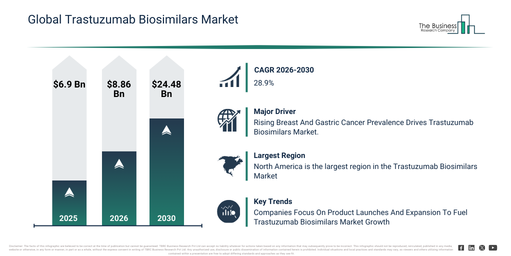
    The trastuzumab biosimilars market size has experienced substantial expansion in recent years. This market is forecast to increase from $6.9 billion in 2025 to $8.86 billion in 2026, achieving a compound annual growth rate (CAGR) of 28.5%. The historical growth of this market can be linked to the prevalent incidence of HER2 positive breast cancer, the expiration of trastuzumab patent exclusivity, escalating oncology drug costs, established regulatory pathways for biosimilars, and the adoption within hospital oncology settings.

    The trastuzumab biosimilars market size is projected to experience substantial growth in the coming years. It is anticipated to reach $24.48 billion in 2030, exhibiting a compound annual growth rate (CAGR) of 28.9%. This expansion during the forecast period can be attributed to factors such as the increasing prevalence of cancer, the broadening of indications to include gastric cancer, favorable reimbursement policies for biosimilars, growing confidence among physicians, and intensified efforts to contain healthcare costs. Key trends expected within this period encompass the rapid uptake of oncology biosimilars, enhanced access to HER2 targeted therapies, increased price competition in breast cancer treatment, wider integration of oncology services within hospitals, and a rising acceptance of biosimilar switching.

    Get A Free Sample Report With In-Depth Market Insights:

    https://thebusinessresearchcompany.com/sample_request?id=78146983&type=smp&name=Trastuzumab%20Biosimilars%20Market%20Report%202026&utm_source=Blogs&utm_medium=Paid&utm_campaign=Oct_PR

    Trastuzumab Biosimilars Market Demand Drivers Opening New Revenue Streams

    The increasing occurrence of breast and gastric cancer has been a key factor in the expansion of the trastuzumab biosimilars market. Trastuzumab biosimilar products are utilized for managing human epidermal growth factor receptor 2 (HER2) overexpressing breast cancer and metastatic gastric cancer. For example, in September 2023, the American Cancer Society, a US-based voluntary health organization dedicated to eliminating cancer, estimated that approximately 297,790 new cases of invasive breast cancer would be diagnosed in women in 2023, with about 43,700 women expected to die from breast cancer that same year. Moreover, Cancer India states that breast cancer is the most common cancer among women in India, accounting for 14% of all female cancers. This upward trend in breast and gastric cancer prevalence consequently escalates the demand for trastuzumab biosimilar, which provide a more affordable treatment option compared to costly alternatives, thereby fueling the growth of the trastuzumab biosimilars market.

    Trastuzumab Biosimilars Market Segment Analysis And Revenue Potential

    The trastuzumab biosimilars market covered in this report is segmented –

    1) By Product: Ogivri, Herzuma, Ontruzant, Trazimera, Other Products

    2) By Indication: Adjuvant Breast Cancer, Metastatic Breast Cancer, Metastatic Gastric Cancer, Other Indications

    3) By Distribution Channel: Hospital Pharmacy, Online Pharmacy

    Trastuzumab Biosimilars Market Trends Powering Strategic Industry Growth

    Major industry players are continuously prioritizing the launch of new products in untapped regions, a strategy that is actively shaping the market for trastuzumab biosimilars. Companies operating within the trastuzumab biosimilars market are undertaking various strategic initiatives, such as developing new products, forming partnerships, and expanding their geographical footprint and product portfolios, to maintain their competitive standing and better cater to customer requirements. For instance, in April 2024, Accord BioPharma Inc., a US-based pharmaceutical company, announced that the U.S. Food and Drug Administration (FDA) had approved HERCESSI (trastuzumab-strf), a biosimilar to Herceptin (trastuzumab), for the Treatment of Several Forms of HER2-Overexpressing Cancer. HERCESSI is prescribed for the adjuvant treatment of HER2-overexpressing breast cancer, metastatic breast cancer, and metastatic gastric or gastroesophageal junction adenocarcinoma. While generally aggressive, HER2-positive cancers typically respond effectively to targeted therapies. HERCESSI functions by binding to the HER2 receptor, thereby inhibiting its activity and slowing down the replication of cancer cells.

    Trastuzumab Biosimilars Market Key Players Shaping Industry Direction

    Major companies operating in the trastuzumab biosimilars market are Pfizer Inc., Amgen Inc., Teva Pharmaceutical Industries Ltd., Mylan NV, Fujifilm Kyowa Kirin Biologics Co. Ltd., Innovent Biologics Inc., STADA Arzneimittel AG, Apotex Inc., Samsung Bioepis Co. Ltd., Celltrion Inc., Zydus Lifesciences Limited, BIOCAD, Shanghai Henlius Biotech Inc., Biocon Limited, Alvotech Holdings S.A., Polpharma Biologics S.A, EirGenix Inc., Hetero Biopharma Limited, Mabion SA, ALTEOGEN Inc., Prestige BioPharma Limited, AryoGen Pharmed Co. Ltd., Intas Pharmaceuticals Limited, Glenmark Pharmaceuticals Ltd., Dr. Reddy’s Laboratories Limited, Torrent Pharmaceuticals Limited

    View The Full Trastuzumab Biosimilars Market Report:

    https://thebusinessresearchcompany.com/report/Trastuzumab-Biosimilar-global-market-report?utm_source=Blogs&utm_medium=Paid&utm_campaign=Oct_PR

    Trastuzumab Biosimilars Market Leading Geography: Which Region Contributes The Most Revenue?

    North America was the largest region in the trastuzumab biosimilars market in 2025. Middle East is expected to be the fastest growing region in the trastuzumab biosimilars market report during the forecast period. The regions covered in the trastuzumab biosimilars market report are Asia-Pacific, South East Asia, Western Europe, Eastern Europe, North America, South America, Middle East, Africa.

    Reach Out To Our Team:

    The Business Research Company: https://www.thebusinessresearchcompany.com/

    Americas: +1 310-496-7795

    Asia: +44 7882 955267 & +91 8897263534

    Europe: +44 7882 955267

    Email us at: marketing@tbrc.info

    Follow us on:

    LinkedIn: https://in.linkedin.com/company/the-business-research-company

    YouTube: https://www.youtube.com/channel/UC24_fI0rV8cR5DxlCpgmyFQ

    Global Market Model: https://www.thebusinessresearchcompany.com/global-market-model
  • Testosterone Cypionate API Market Growth Forecast: Market Size, Key Trends And Emerging Opportunities Through 2030

    Testosterone Cypionate API Market Growth Forecast: Market Size, Key Trends And Emerging Opportunities Through 2030

    Backed by market attractiveness analysis, total addressable market sizing, company benchmarking matrices, interactive Excel dashboards, wider supply chain intelligence, emerging startup coverage, and detailed product-level insights, The Business Research Company’s 2026 market reports are designed to offer research that is more actionable and strategically valuable than ever.

    Testosterone Cypionate API Market Size Outlook: How Quickly Will Revenue Expand Through 2030?

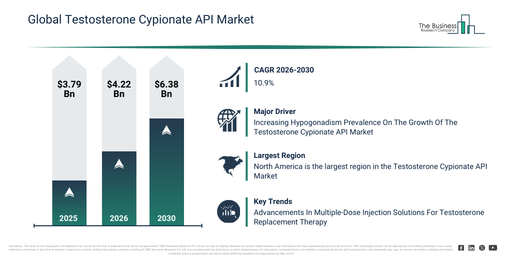
    The testosterone cypionate api market has experienced rapid expansion in recent years. Its valuation is set to increase from $3.79 billion in 2025 to $4.22 billion in 2026, registering a compound annual growth rate (CAGR) of 11.2%. Historically, this market’s growth has been driven by an increase in the diagnosis of testosterone deficiency, the wider availability of injectable hormone therapies, the growth of specialty pharmaceutical manufacturing, greater acceptance of long-term hormone treatment, and the provision of standardized dosing formulations.

    The testosterone cypionate api market is projected to experience swift expansion over the coming years. It is expected to reach $6.38 billion in 2030, demonstrating a compound annual growth rate (CAGR) of 10.9%. The market’s growth during the forecast period is primarily driven by factors such as the increasing demand for personalized hormone therapies, the expanding aging male population, rising investments in specialty pharma apis, a growing emphasis on high-purity injectable drugs, and enhanced regulatory oversight on steroid production. Key trends in the forecast period include a surging demand for hormone replacement therapy apis, an increased adoption of high-purity injectable steroids, a heightened focus on male hypogonadism treatment, the expansion of pharmaceutical-grade steroid manufacturing, and a reinforced commitment to regulatory compliance.

    Get A Free Sample Report With In-Depth Market Insights:

    https://thebusinessresearchcompany.com/sample_request?id=67007067&type=smp&name=Testosterone%20Cypionate%20API%20Market%20Report%202026&utm_source=Blogs&utm_medium=Paid&utm_campaign=Oct_PR

    Testosterone Cypionate API Market Industry Drivers: What’s Behind The Revenue Growth?

    The expanding demographic of older males is anticipated to stimulate the growth of the Testosterone Cypionate API market in the coming years. The term “geriatric male population” denotes men who are 65 years of age or older. This demographic is expanding as advancements in life expectancy contribute to a larger population of older adults. Testosterone cypionate aids this group by addressing the age-related reduction in testosterone, which frequently negatively impacts strength, metabolism, and overall quality of life. For instance, in 2023, the United Nations Department of Economic and Social Affairs (UN DESA), a US-based multilateral organization, reported that there were approximately 703 million individuals aged 65 or above worldwide. Consequently, a growing geriatric male population fuels an increased need for testosterone replacement therapies, thereby fostering the expansion of the Testosterone Cypionate API market.

    Testosterone Cypionate API Market Segment Analysis: What Are The Core Market Categories?

    The testosterone cypionate api market covered in this report is segmented –

    1) By Type: Purity ≥ 99%, Purity ≥ 99.5%

    2) By Application: 200 mg/ml Injection Solution, 250 mg/ml Injection Solution, Other Applications

    3) By End-User: Hospitals, Homecare, Specialty Clinics, Other End-Users

    Subsegments:

    1) By Purity ≥ 99%: Testosterone Cypionate For Pharmaceutical Use, Testosterone Cypionate For Research and Development, Testosterone Cypionate For Veterinary Applications

    2) By Purity ≥ 99.5%: High-Purity Testosterone Cypionate For Specialty Pharmaceuticals, High-Purity Testosterone Cypionate For Clinical Trials, High-Purity Testosterone Cypionate for Hormone Replacement Therapy

    #Testosterone Cypionate API Market Growth Trends: What’s Shaping The Future Outlook?

    Leading companies within the testosterone cypionate API market are prioritizing the development of innovative offerings, such as multi-dose injection solutions. This focus aims to expand their hormonal product portfolios and provide more economical treatment options for patients. Multi-dose injection solutions are advanced formulations designed to allow the administration of several doses from a single vial, thereby enhancing convenience and reducing waste in treatment protocols. For example, in April 2023, Xiromed LLC, a US-based pharmaceutical company, introduced Testosterone Cypionate Injection, USP, which is the generic equivalent of Depo-Testosterone. This specific product, an oil-soluble ester of testosterone, identified as the 17-(beta)-cyclopentylpropionate ester, is administered through intramuscular injection. It is utilized in the treatment of men suffering from conditions that lead to low or absent endogenous testosterone, effectively addressing the symptoms of testosterone deficiency. The product is indicated for replacement therapy in males with low testosterone levels, typically administered at a dosage ranging from 50 to 400 mg every two to four weeks, dependent on individual patient needs and clinical response.

    Testosterone Cypionate API Market Top Companies Driving Competitive Growth

    Major companies operating in the testosterone cypionate api market are Pfizer Inc., Sun Pharmaceutical Industries, Dr. Reddy’s Laboratories, Aurobindo Pharma, Cipla Ltd., Aspen Pharmacare Holdings Limited, Curia Global Inc., Marius Pharmaceuticals, Hubei Gedian Humanwell Pharmaceutical, Qinhuangdao Zizhu Pharmaceutical, Symbiotec Pharmalab, Xiromed LLC, Trifarma S.p.A, Manus Aktteva Biopharma LLP, Steroid SpA, LGM Pharma, Samex Overseas, AASraw Biochemical Technology Co. Ltd., Zhejiang Xianju Pharmaceutical Co. Ltd., Rifa Pharma

    View The Full Testosterone Cypionate API Market Report:

    https://thebusinessresearchcompany.com/report/testosterone-cypionate-api-global-market-report?utm_source=Blogs&utm_medium=Paid&utm_campaign=Oct_PR

    Testosterone Cypionate API Market Global Footprint: Which Region Leads The Market?

    North America was the largest region in the testosterone cypionate API market in 2025. The regions covered in the testosterone cypionate api market report are Asia-Pacific, South East Asia, Western Europe, Eastern Europe, North America, South America, Middle East, Africa.

    Reach Out To Our Team:

    The Business Research Company: https://www.thebusinessresearchcompany.com/

    Americas: +1 310-496-7795

    Asia: +44 7882 955267 & +91 8897263534

    Europe: +44 7882 955267

    Email us at: marketing@tbrc.info

    Follow us on:

    LinkedIn: https://in.linkedin.com/company/the-business-research-company

    YouTube: https://www.youtube.com/channel/UC24_fI0rV8cR5DxlCpgmyFQ

    Global Market Model: https://www.thebusinessresearchcompany.com/global-market-model
  • Transfection Technologies Market Forecast To 2030: Starting From $1.98 Billion In 2026

    Transfection Technologies Market Forecast To 2030: Starting From $1.98 Billion In 2026

    Backed by market attractiveness analysis, total addressable market sizing, company benchmarking matrices, interactive Excel dashboards, wider supply chain intelligence, emerging startup coverage, and detailed product-level insights, The Business Research Company’s 2026 market reports are designed to offer research that is more actionable and strategically valuable than ever.

    Transfection Technologies Market Forecast: Value Set To Climb From $1.42 Billion To $1.98 Billion

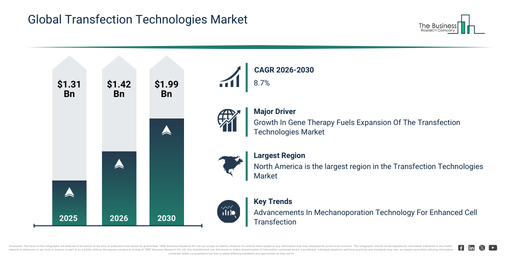
    The transfection technologies market has experienced robust expansion in recent years. Projections indicate it will expand from $1.31 billion in 2025 to $1.42 billion in 2026, demonstrating a compound annual growth rate (CAGR) of 8.8%. Historically, this expansion can be linked to several factors, including the surge in molecular biology research, progress in gene expression studies, the increasing demand for protein production, augmented funding for genomics research, and its initial uptake in academic settings.

    The transfection technologies market size is anticipated to experience substantial growth over the coming years. This market is projected to reach $1.99 billion by 2030, exhibiting a compound annual growth rate (CAGR) of 8.7%. Key drivers for this expansion during the forecast period include the increasing adoption of cell and gene therapies, expanding RNA therapeutics pipelines, growing investments in life sciences research, the need for effective transfection reagents, and the broader development of personalized medicine. Prominent trends expected in the same period involve a heightened demand for gene editing research tools, an increase in RNA-based therapeutics development, wider application in cell and gene therapy, an uptick in academic and biomedical research, and advancements in non-viral transfection methods.

    Get A Free Sample Report With In-Depth Market Insights:

    https://thebusinessresearchcompany.com/sample_request?id=32963996&type=smp&name=Transfection%20Technologies%20Market%20Report%202026&utm_source=Blogs&utm_medium=Paid&utm_campaign=Oct_PR

    Transfection Technologies Market Growth Backed By Core Demand Fundamentals

    The increasing prevalence of gene therapy is anticipated to boost the growth of the transfection technologies market moving forward. Gene therapy is a medical approach designed to manage or prevent diseases through genetic modification, which involves inserting, repairing, or replacing faulty genes. This growth in gene therapy is propelled by advancements in genetic research, improved delivery techniques, and its capability to address genetic conditions that were previously untreatable. Transfection technologies are essential for gene therapy, as they enable the accurate, safe, and effective transfer of genetic material into cells. These technologies facilitate both temporary and permanent alterations to the genome, which are critical for treating genetic diseases and cancers. For instance, in December 2024, as per the American Society of Gene & Cell Therapy (ASGCT), a US-based non-profit medical and scientific organization, the Food and Drug Administration (FDA) granted approval to six gene therapy products in 2023, an increase from five approvals in 2022. Thus, the expansion of gene therapy is fueling the development of the transfection technologies market.

    Transfection Technologies Market Segmentation And Category Overview

    The transfection technologies market covered in this report is segmented –

    1) By Product: Kits And Reagents, Equipment, Other Products

    2) By Transfection Method: Lipofection, Electroporation, Nucleofection, Cotransfection, Cationic Lipid Transfection, In-Vivo Transfection, Other Transfection Methods

    3) By Application: Virus Production, Protein Production, Gene Silencing, Stem Cell Reprogramming And Differentiation, Stable Cell Line Generation, Therapeutic Delivery, Biomedical Research, Other Applications

    4) By End-User: Pharmaceutical And Biotechnology Companies, Contract Research Organizations (CROs) And Contract Development And Manufacturing Organizations (CDMOs), Academic And Research Institutes, Other End-Users

    Subsegments:

    1) By Kits And Reagents: Transfection Kits, RNAi Reagents, DNA Reagents, Protein Transfection Reagents

    2) By Equipment: Electroporation Devices, Microinjection Equipment, Lipofection Devices, Sonoporation Equipment

    3) By Other Products: Transfection Software, Transfection Consumables, Custom Transfection Solutions

    Transfection Technologies Market Growth Trends Reshaping The Competitive Landscape

    Major companies in the transfection technologies market are concentrating on developing sophisticated technology, such as mechanoporation transfection systems, to facilitate more intricate and tailored applications in research and therapeutics. These mechanoporation transfection systems utilize mechanical forces to create temporary openings in cell membranes, allowing genetic material to enter cells. This method is efficient and minimally invasive, promoting better cell viability. For instance, in July 2024, STEMCELL Technologies, a Canada-based biotechnology company, launched CellPore, an innovative transfection system. This system includes a benchtop unit and the CellPore Transfection Kit 300, which is supplied with a specialized reagent kit and single-use delivery cartridges. By employing controlled, rapid deformation in microfluidic channels, CellPore effectively introduces small molecules, nucleic acids, proteins, and gene editing complexes into cells, ensuring minimal cell disruption and high viability. These attributes are crucial for advancing research and the development of cutting-edge cell and gene therapies.

    Transfection Technologies Market Competitive Analysis Of Leading Industry Participants

    Major companies operating in the transfection technologies market are Thermo Fisher Scientific Inc., Lonza Group Ltd., Agilent Technologies Inc., Sartorius AG, Revvity Inc., Bio-Rad Laboratories Inc., QIAGEN N.V., Bio-Techne Corp., STEMCELL Technologies Inc., Promega Corporation, Takara Bio Inc., OriGene Technologies Inc., Applied Biological Materials Inc., MaxCyte Inc., New England Biolabs Inc., Cell Signaling Technology Inc., System Biosciences LLC, AMSBIO LLC, Altogen Biosystems, OZ Biosciences, Biontex Laboratories GmbH, RJH Biosciences Inc.

    View The Full Transfection Technologies Market Report:

    https://thebusinessresearchcompany.com/report/transfection-technologies-global-market-report?utm_source=Blogs&utm_medium=Paid&utm_campaign=Oct_PR

    Transfection Technologies Market Regional Outlook: Where Is Opportunity Concentrated?

    North America was the largest region in the transfection technologies market in 2025. Asia-Pacific is expected to be the fastest-growing region in the forecast period. The regions covered in the transfection technologies market report are Asia-Pacific, South East Asia, Western Europe, Eastern Europe, North America, South America, Middle East, Africa.

    Reach Out To Our Team:

    The Business Research Company: https://www.thebusinessresearchcompany.com/

    Americas: +1 310-496-7795

    Asia: +44 7882 955267 & +91 8897263534

    Europe: +44 7882 955267

    Email us at: marketing@tbrc.info

    Follow us on:

    LinkedIn: https://in.linkedin.com/company/the-business-research-company

    YouTube: https://www.youtube.com/channel/UC24_fI0rV8cR5DxlCpgmyFQ

    Global Market Model: https://www.thebusinessresearchcompany.com/global-market-model
  • Testosterone Booster Market CAGR Forecast Through 2030: Key Trends Shaping Industry Expansion

    Testosterone Booster Market CAGR Forecast Through 2030: Key Trends Shaping Industry Expansion

    Featuring market attractiveness scoring, total addressable market sizing, company benchmarking matrices, interactive Excel dashboards, deeper supply chain intelligence, emerging startup tracking, and granular product-level insights, The Business Research Company’s 2026 market reports are built to deliver research that is both more actionable and more strategically valuable.

    Testosterone Booster Market Size, Value And Growth Trajectory Through 2030

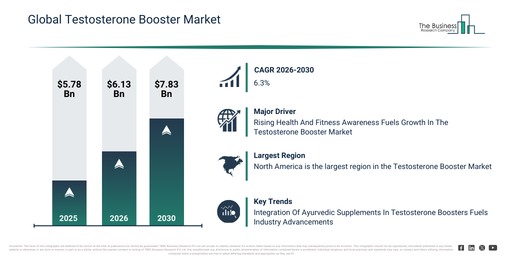
    The testosterone booster market has experienced robust expansion over recent years. Projections indicate it will expand from $5.78 billion in 2025 to $6.13 billion in 2026, exhibiting a compound annual growth rate (CAGR) of 6.1%. This historic growth can be linked to heightened awareness of male health, a rise in diagnosed cases of low testosterone, the widespread adoption of fitness supplements, the flourishing gym culture, and the broadening reach of retail pharmacy networks.

    The testosterone booster market is anticipated to experience substantial growth in the coming years. It is projected to expand to $7.83 billion by 2030, with a compound annual growth rate (CAGR) of 6.3%. This expansion during the forecast period is driven by factors such as an increase in demand for herbal and natural products, the growing adoption of personalized supplementation, the development of e-commerce channels, a rising health-conscious male population, and the broadening of sports nutrition and fitness programs. Significant trends expected in this period include the prominence of natural and herbal testosterone boosters, an increased focus on male health and wellness, the growth in online supplement retailing, personalized nutrition and supplementation, and the expansion of sports and fitness-oriented products.

    Get A Free Sample Report With In-Depth Market Insights:

    https://thebusinessresearchcompany.com/sample_request?id=75517488&type=smp&name=Testosterone%20Booster%20Market%20Report%202026&utm_source=Blogs&utm_medium=Paid&utm_campaign=Oct_PR

    Testosterone Booster Market Growth Factors: What’s Supporting Expansion?

    The increasing focus on health and fitness is anticipated to drive the expansion of the testosterone booster market in the future. Health and fitness encompass the complete well-being and optimal functioning of both body and mind, covering physical, mental, and social dimensions of health, with an emphasis on maintaining or improving one’s physical condition. Testosterone boosters can contribute to an increase in muscle mass and strength, which proves beneficial for athletic performance and overall physical robustness. For example, a September 2023 survey of 2,271 UK adults conducted by ukactive, a UK-based not-for-profit industry association, indicated that over half (54%) identified supporting their mental health as their primary motivation for being physically active, while 49% stated getting in shape. Additionally, 86% of respondents agreed that regular physical activity helps prevent a variety of illnesses and injuries. Consequently, this rising awareness regarding health and fitness is propelling the growth of the testosterone booster market.

    Testosterone Booster Market Segment Breakdown: Which Categories Lead On Revenue?

    The testosterone booster market covered in this report is segmented –

    1) By Component: Vitamins, D-Aspartic Acid, Zinc Component

    2) By Source: Mucuna Pruriens, Ginseng, Oyster Extract, Fenugreek

    3) By Application: Hospitals, Retail Pharmacies

    Subsegments:

    1) By Vitamins: Vitamin D, Vitamin B6, Vitamin B12

    2) By D-Aspartic Acid: D-Aspartic Acid Powder, D-Aspartic Acid Capsules

    3) By Zinc Component: Zinc Citrate, Zinc Monomethionine, Zinc Aspartate

    Testosterone Booster Market Industry Trends: What’s Reshaping Demand?

    Leading companies in the testosterone booster market are evolving their product formulations, notably through the incorporation of ayurvedic supplements, to enhance their market position. Ayurvedic supplements offer distinct advantages to testosterone boosters by providing a natural, holistic, and established methodology that appeals to consumers seeking alternatives to synthetic products. For instance, in November 2023, Jagat Pharma Pvt Ltd., an India-based ayurvedic company, unveiled a potent testosterone booster created to elevate energy levels, improve endurance, and augment muscle power. This latest product from the company is made with key Ayurvedic ingredients, including Ginseng Root Extract, Gokhru, Ashwagandha, Fenugreek, Safed Musli, and Kawach Beej. The product’s composition aims to increase strength, power, and stamina, leading to better physical performance and endurance.

    Testosterone Booster Market Leading Players And Competitive Positioning

    Major companies operating in the testosterone booster market are GNC Holdings LLC, Optimum Nutrition, MuscleTech, Nutrabolt, JYM Supplement Science, Performance Lab, Evolution Nutrition LLC, Iron Brothers Supplements, Musclepro Nutrition Pvt Ltd., Hybrid Nutraceuticals LLC, Vita Balance Inc., VH Nutrition LLC, SMP Nutra LLC, Roar Ambition Ltd, CrazyBulk NZ, Nugenix, TestoTEK, Invictus Labs, Zenith Nutrition, BL Bio Lab LLC

    View The Full Testosterone Booster Market Report:

    https://thebusinessresearchcompany.com/report/testosterone-booster-global-market-report?utm_source=Blogs&utm_medium=Paid&utm_campaign=Oct_PR

    Testosterone Booster Market Regional Split: Which Areas Are Fueling Growth?

    North America was the largest region in the testosterone booster market in 2025. The regions covered in the testosterone booster market report are Asia-Pacific, South East Asia, Western Europe, Eastern Europe, North America, South America, Middle East, Africa.

    Reach Out To Our Team:

    The Business Research Company: https://www.thebusinessresearchcompany.com/

    Americas: +1 310-496-7795

    Asia: +44 7882 955267 & +91 8897263534

    Europe: +44 7882 955267

    Email us at: marketing@tbrc.info

    Follow us on:

    LinkedIn: https://in.linkedin.com/company/the-business-research-company

    YouTube: https://www.youtube.com/channel/UC24_fI0rV8cR5DxlCpgmyFQ

    Global Market Model: https://www.thebusinessresearchcompany.com/global-market-model
  • Transdermal Skin Patches Market Size In 2026 And Beyond: Understanding Future Growth Potential

    Transdermal Skin Patches Market Size In 2026 And Beyond: Understanding Future Growth Potential

    Featuring market attractiveness scoring, total addressable market sizing, company benchmarking matrices, interactive Excel dashboards, deeper supply chain intelligence, emerging startup tracking, and granular product-level insights, The Business Research Company’s 2026 market reports are built to deliver research that is both more actionable and more strategically valuable.

    Transdermal Skin Patches Market Revenue Growth On Track For A 4.5% CAGR Through 2030

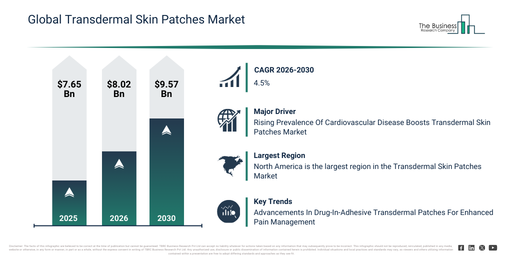
    The transdermal skin patches market has shown consistent expansion in recent years. Its value is expected to rise from $7.65 billion in 2025 to $8.02 billion in 2026, indicating a compound annual growth rate (CAGR) of 4.8%. This past growth can be attributed to several factors, including an increase in chronic pain conditions, a rise in nicotine addiction cases, developments in polymer science, a preference for controlled drug release methods, and the approval of transdermal therapies by regulatory bodies.

    The transdermal skin patches market is projected to experience consistent expansion over the upcoming years. Its valuation is set to reach $9.57 billion by 2030, exhibiting a compound annual growth rate (CAGR) of 4.5%. This anticipated growth is driven by factors such as an expanding senior demographic, increasing interest in home-based medical solutions, advancements in multi-layer patch technology, a rise in hormone imbalance conditions, and an intensified emphasis on ensuring patient adherence. Key developments during this timeframe are expected to encompass greater acceptance of non-invasive drug administration, an escalating need for extended-release pain management treatments, wider applications for hormone replacement patches, enhancements in skin-friendly adhesives and polymers, and broader utilization of patches for managing chronic illnesses.

    Get A Free Sample Report With In-Depth Market Insights:

    https://thebusinessresearchcompany.com/sample_request?id=47051179&type=smp&name=Transdermal%20Skin%20Patches%20Market%20Report%202026&utm_source=Blogs&utm_medium=Paid&utm_campaign=Oct_PR

    Transdermal Skin Patches Market Growth Catalysts And Demand Drivers

    The rising incidence of cardiovascular conditions is anticipated to fuel expansion in the transdermal skin patches market moving ahead. These diseases are medical conditions affecting the heart and its associated blood vessels. They are commonly linked to the formation of fatty deposits within arteries (atherosclerosis) and an elevated susceptibility to blood clots. Transdermal skin patches serve to avert angina episodes (chest pain) in individuals suffering from coronary artery disease (a condition where blood vessels supplying the heart narrow). Furthermore, they are employed to enhance the bioavailability of medications for managing heart failure. For example, data from August 2025 from the National Institutes of Health, a US-based government agency, indicates that from 2025 to 2050, the prevalence of cardiovascular disease is forecast to increase by 90%, mortality by 73%, and DALYs by 55%, with fatalities escalating from 20.5 million to 35.6 million. Consequently, the expanding occurrence of cardiovascular disease is a key factor propelling the development of the transdermal skin patches market.

    Transdermal Skin Patches Market Segment Outlook: Which Categories Are Growing Fastest?

    The transdermal skin patches market covered in this report is segmented –

    1) By Product: Matrix, Drug In Adhesive, Reservoir, Vapor

    2) By Active Ingredient: Fentanyl Transdermal Patch, Nicotine Transdermal Patch, Estradiol Transdermal Patch, Clonidine Transdermal Patch, Testosterone Transdermal Patch, Other Types

    3) By Distribution Channel: Pain Relief, Nicotine Cessation, Hormone Replacement Therapy, Neurological Disorders, Cardiovascular Disorders, Other Applications

    Subsegments:

    1) By Matrix: Drug-in-matrix Patches, Polymer Matrix Patches

    2) By Drug In Adhesive: Adhesive Matrix Patches With The Drug Incorporated In The Adhesive Layer

    3) By Reservoir: Drug Reservoir Patches With A Separate Compartment For The Drug, Multi-layer Reservoir Patches

    4) By Vapor: Vapor Patches That Release Active Ingredients In Vapor Form, Transdermal Patches Utilizing Vaporization Technology

    Transdermal Skin Patches Market Trends Shaping Long-Term Demand

    Leading companies active in the transdermal skin patches market are concentrating on developing advanced drug-delivery innovations, such as topical analgesic delivery systems, to enhance therapeutic efficacy, boost patient convenience, and provide sustained pain relief. These systems are engineered to administer medication directly through the skin at controlled rates, thereby improving bioavailability while minimizing systemic side effects. For example, in August 2023, Yaral Pharma Inc., a US-based pharmaceutical company, introduced its Lidocaine Patch 5%, a prescription-strength topical analgesic patch created for the relief of localized pain. The patch delivers continuous lidocaine over an extended period, contributing to better patient compliance and serving as a non-invasive alternative to oral pain medications. This introduction exemplifies the increasing move toward targeted, sustained-release transdermal solutions in pain management.

    Transdermal Skin Patches Market Leading Companies And Competitive Benchmarking

    Major companies operating in the transdermal skin patches market are Novartis, Hisamitsu Pharmaceutical Co. Inc, Henan Lingrui Pharmaceutical, Teva Pharmaceuticals, Luye Pharma Group Ltd, Purdue Pharma L.P., Nitto Denko Corporation, AdhexPharma, Noven Pharmaceuticals, Teikoku Pharma, Mylan Pharmaceuticals Inc, 3M Company, Acrux Ltd, Access Pharmaceuticals Inc, Rusan Pharma, Glenmark Pharmaceuticals, Cipla Ltd, Mundipharma, Dr Reddy’s Laboratories, Chattem, Clarity Medical, Welcare Industries S.P. A, F.L. Medical S.r.l, Europlaz Technologies Ltd, Zentiva, Medical-Łomża Sp. z o.o., Johnson & Johnson, Boehringer Ingelheim GmbH, Bayer AG, Bristol-Myers Squibb Company, GlaxoSmithKline plc, Endo Pharmaceuticals Inc.

    View The Full Transdermal Skin Patches Market Report:

    https://thebusinessresearchcompany.com/report/transdermal-skin-patche-global-market-report?utm_source=Blogs&utm_medium=Paid&utm_campaign=Oct_PR

    Transdermal Skin Patches Market Geographic Landscape: Which Region Leads Industry Growth?

    North America was the largest region in the global transdermal skin patches market in 2025. Middle East is expected to be the fastest growing region in the transdermal skin patches market report during the forecast period. The regions covered in the transdermal skin patches market report are Asia-Pacific, South East Asia, Western Europe, Eastern Europe, North America, South America, Middle East, Africa.

    Reach Out To Our Team:

    The Business Research Company: https://www.thebusinessresearchcompany.com/

    Americas: +1 310-496-7795

    Asia: +44 7882 955267 & +91 8897263534

    Europe: +44 7882 955267

    Email us at: marketing@tbrc.info

    Follow us on:

    LinkedIn: https://in.linkedin.com/company/the-business-research-company

    YouTube: https://www.youtube.com/channel/UC24_fI0rV8cR5DxlCpgmyFQ

    Global Market Model: https://www.thebusinessresearchcompany.com/global-market-model
  • Tenosynovitis Drugs Market To Witness 7.6% CAGR Growth Through 2030: Key Industry Drivers

    Tenosynovitis Drugs Market To Witness 7.6% CAGR Growth Through 2030: Key Industry Drivers

    Built to provide research that’s more actionable and strategically valuable, The Business Research Company’s 2026 market reports include market attractiveness analysis, total addressable market sizing, company benchmarking matrices, interactive Excel dashboards, broader supply chain intelligence, emerging startup tracking, and in-depth product insights.

    Tenosynovitis Drugs Market CAGR Outlook And Future Development

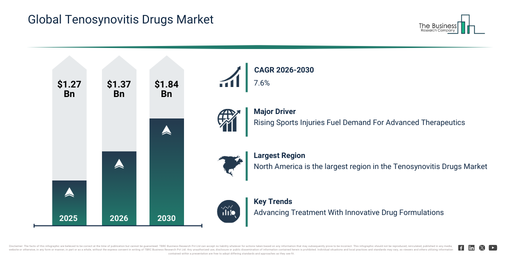
    The market for tenosynovitis drugs has shown significant growth in recent years. The market is projected to expand from $1.27 billion in 2025 to $1.37 billion in 2026, demonstrating a compound annual growth rate (CAGR) of 7.7%. Factors driving this historical growth include an increase in occupational injuries, extensive NSAID usage, the proliferation of orthopedic care facilities, musculoskeletal problems associated with an aging population, and a rise in the adoption of outpatient treatments.

    The tenosynovitis drugs market is projected to experience substantial expansion over the upcoming years, with its valuation anticipated to reach $1.84 billion by 2030, demonstrating a compound annual growth rate (CAGR) of 7.6%. This projected increase during the forecast timeframe stems from several factors, including a rise in workplace-associated injuries, greater involvement in sports, the development of minimally invasive treatment options, a heightened need for pain relief medications, and the broadening of outpatient orthopedic services. Key developments expected within this period encompass a higher occurrence of repetitive strain injuries, more widespread application of anti-inflammatory treatments, increasing acceptance of injectable corticosteroids, an expansion of conservative approaches to musculoskeletal care, and a greater emphasis on managing pain early.

    Get A Free Sample Report With In-Depth Market Insights:

    https://thebusinessresearchcompany.com/sample_request?id=17715526&type=smp&name=Tenosynovitis%20Drugs%20Market%20Report%202026&utm_source=Blogs&utm_medium=Paid&utm_campaign=Oct_PR

    Tenosynovitis Drugs Market Demand Drivers: What’s Powering Industry Growth?

    The projected expansion of the tenosynovitis drugs market is anticipated to be fueled by the rising occurrence of sports injuries. Sports injuries are defined as physical harm incurred during athletic pursuits or physical activity, varying from minor sprains and strains to more significant fractures or dislocations. These injuries result from several factors, including excessive use, incorrect technique, inadequate warm-up or stretching, and impacts with other participants or objects. Tenosynovitis medications aid in treating sports injuries by lessening tendon inflammation and easing pain, thus facilitating quicker recovery and enhanced movement. For example, Howden Group Holdings Ltd, a UK insurance intermediary, reported in November 2023 that the seriousness of ankle injuries in the English Premier League saw a 170% rise between October 2022 and January 2023. Following the FIFA World Cup Qatar 2022, calf/shin injuries climbed by 200%, and hamstring injuries by 130%. Consequently, the growing frequency of sports injuries is propelling the expansion of the tenosynovitis drugs market.

    Tenosynovitis Drugs Market Segmentation: How Does The Market Break Down By Category?

    The tenosynovitis drugs market covered in this report is segmented –

    1) By Drug Type: Nonsteroidal Anti-Inflammatory Drugs (NSAIDS), Corticosteroids, Antibiotics, Other Drug Types

    2) By Indication: De Quervain Tenosynovitis, Stenosing Tenosynovitis, Trigger Finger, Other Indications

    3) By Route Of Administration: Oral, Injectable, Topical

    4) By Distribution Channel: Hospital Pharmacies, Retail Pharmacies, Online Pharmacies

    Subsegments:

    1) By Nonsteroidal Anti-Inflammatory Drugs (NSAIDs): Ibuprofen, Naproxen, Diclofenac, Celecoxib

    2) By Corticosteroids: Prednisone, Methylprednisolone, Dexamethasone, Triamcinolone

    3) By Antibiotics: Penicillins, Cephalosporins, Fluoroquinolones, Macrolides

    4) By Other Drug Types: Disease-Modifying Anti-Rheumatic Drugs (DMARDs), Biologics, Analgesics

    Tenosynovitis Drugs Market Innovation Trends: What Developments Are Reshaping The Industry?

    Major companies within the tenosynovitis drugs market are concentrating on advanced drug formulations, such as delayed-release NSAID formulations, to enhance gastrointestinal tolerability and achieve more targeted anti-inflammatory efficacy. A delayed-release NSAID formulation refers to a pharmaceutical preparation of a non-steroidal anti-inflammatory drug (NSAID), like naproxen, specifically designed to release the active ingredient at a later stage in the gastrointestinal tract. For instance, in July 2024, ANI Pharmaceuticals Inc., a US-based pharmaceutical company, announced it had received U.S. Food and Drug Administration (FDA) approval for its abbreviated new drug application (ANDA) and subsequently launched Naproxen delayed-release tablets, USP. This medication was introduced as the generic equivalent of the reference listed drug (RLD), EC-Naprosyn, providing the same therapeutic benefits at a more affordable price. The delayed-release formulation was engineered to offer extended pain relief while reducing gastric irritation, making it a beneficial treatment for inflammatory conditions such as arthritis, tendonitis, and tenosynovitis.

    Tenosynovitis Drugs Market Competitive Overview And Top Companies

    Major companies operating in the tenosynovitis drugs market are Pfizer Inc., Roche Holding AG, Bayer AG, Sanofi S.A., AstraZeneca plc, GSK plc, Takeda Pharmaceutical Company Limited, Eli Lilly and Company, Amgen Inc., Teva Pharmaceutical Industries Ltd., Sun Pharmaceutical Industries Ltd., Perrigo Company plc, Cipla Limited, Dr. Reddy’s Laboratories Ltd., Aurobindo Pharma Limited, Endo International plc, Lupin Limited, Mallinckrodt Pharmaceuticals, Zydus Cadila Healthcare, AdvaCare Pharma.

    View The Full Tenosynovitis Drugs Market Report:

    https://thebusinessresearchcompany.com/report/tenosynovitis-drugs-global-market-report?utm_source=Blogs&utm_medium=Paid&utm_campaign=Oct_PR

    Tenosynovitis Drugs Market Top Region: Where Does Most Revenue Come From?

    North America was the largest region in the tenosynovitis drugs market in 2025. The regions covered in the tenosynovitis drugs market report are Asia-Pacific, South East Asia, Western Europe, Eastern Europe, North America, South America, Middle East, Africa.

    Reach Out To Our Team:

    The Business Research Company: https://www.thebusinessresearchcompany.com/

    Americas: +1 310-496-7795

    Asia: +44 7882 955267 & +91 8897263534

    Europe: +44 7882 955267

    Email us at: marketing@tbrc.info

    Follow us on:

    LinkedIn: https://in.linkedin.com/company/the-business-research-company

    YouTube: https://www.youtube.com/channel/UC24_fI0rV8cR5DxlCpgmyFQ

    Global Market Model: https://www.thebusinessresearchcompany.com/global-market-model
  • Transdermal Drug Delivery Systems Market Reaches $57.93 Billion In 2026: Key Developments Shaping Expansion

    Transdermal Drug Delivery Systems Market Reaches $57.93 Billion In 2026: Key Developments Shaping Expansion

    Built to provide research that’s more actionable and strategically valuable, The Business Research Company’s 2026 market reports include market attractiveness analysis, total addressable market sizing, company benchmarking matrices, interactive Excel dashboards, broader supply chain intelligence, emerging startup tracking, and in-depth product insights.

    Transdermal Drug Delivery Systems Market Value Growth And Long-Term Outlook

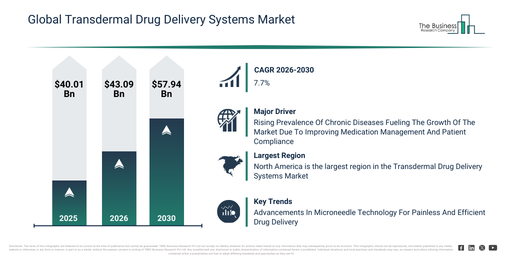
    The transdermal drug delivery systems market has demonstrated substantial growth in recent years. Its value is expected to increase from $40.01 billion in 2025 to $43.09 billion in 2026, reflecting a compound annual growth rate (CAGR) of 7.7%. Historically, this growth can be ascribed to factors such as the drawbacks of oral medications, the high incidence of chronic diseases, the necessity for patient compliance, innovations in patch technology, and the use of drug delivery in hospital settings.

    The transdermal drug delivery systems market is poised for substantial growth over the next few years. This sector is forecast to expand to a value of $57.94 billion by 2030, achieving a compound annual growth rate (CAGR) of 7.7%. The expansion anticipated during this period is largely driven by factors such as the rise of self-administered therapies, the increasing prevalence of wearable healthcare devices, the ongoing burden of chronic diseases, continuous innovation in drug delivery methods, and the broadening scope of outpatient care. Noteworthy trends projected for the forecast period include the increasing uptake of drug-in-patch systems, the widening application in pain management, a growing need for controlled drug release, the development of home-based drug delivery solutions, and significant advancements in microneedle technology.

    Get A Free Sample Report With In-Depth Market Insights:

    https://thebusinessresearchcompany.com/sample_request?id=38891732&type=smp&name=Transdermal%20Drug%20Delivery%20Systems%20Market%20Report%202026&utm_source=Blogs&utm_medium=Paid&utm_campaign=Oct_PR

    Transdermal Drug Delivery Systems Market Opportunity Drivers: What’s Unlocking New Revenue Potential?

    The expanding occurrence of chronic illnesses is anticipated to fuel the expansion of the transdermal drug delivery systems market in the foreseeable future. A chronic illness refers to an enduring health condition necessitating ongoing management, like diabetes or cardiac disease, which restricts everyday activities. This increase in chronic diseases is partly influenced by increasingly inactive lifestyles, given that less physical movement leads to weight accumulation, compromised cardiovascular well-being, and metabolic dysregulation. Transdermal drug delivery systems are utilized in chronic conditions to facilitate the continuous, regulated release of medication via the skin, thereby enhancing patient adherence and sustaining consistent therapeutic concentrations. As an illustration, in June 2023, the Institute for Health Metrics and Evaluation, a US-based public health research institute, disclosed that more than half a billion individuals globally were suffering from diabetes. This figure is projected to more than double, reaching 1.3 billion people by 2050. Consequently, the growing incidence of chronic diseases is a primary catalyst for the expansion of the transdermal drug delivery systems market.

    Transdermal Drug Delivery Systems Market Segment Landscape: Which Areas Lead Development?

    The transdermal drug delivery systems market covered in this report is segmented –

    1) By Formulation Type: Drug-In-Patch, Reservoir Type, Matrix Type, Microreservoir Type

    2) By Technology: Iontophoresis, Microporation

    3) By Application: Pain Management, Central Nervous System, Cardiovascular Diseases, Smoking Cessation

    4) By End User: Hospitals, Home Healthcare, Pharmaceutical Companies, Research Institutes

    Subsegments:

    1) By Drug-In-Patch: Single-layer Drug-in-Adhesive, Multi-layer Drug-in-Adhesive

    2) By Reservoir Type: Gel Reservoir Systems, Liquid Reservoir Systems, Solid Reservoir Systems

    3) By Matrix Type: Polymer Matrix Systems, Lipid Matrix Systems, Hydrogel Matrix Systems

    4) By Microreservoir Type: Microneedle Arrays, Microemulsion Reservoirs, Nanoparticle-Infused Reservoirs

    Transdermal Drug Delivery Systems Market Innovation Trends Shaping Future Development

    Major companies within the transdermal drug delivery systems market are concentrating on developing technological advancements, such as microneedle technology in drug delivery systems, to improve drug absorption and boost patient adherence. Microneedle technologies are devices that are minimally invasive, allowing for painless drug delivery through the skin, thus providing an alternative to traditional injection methods. For instance, in October 2024, Daewoong Pharmaceutical Co. Ltd., a South Korea-based pharmaceutical company, introduced its cutting-edge microneedle platform CLOPAM. This platform delivers a notable improvement in the effectiveness of drug delivery, alleviates the discomfort linked with injections, and enables the controlled, sustained release of medication. Its fundamental aim is to present a painless and more consistent option compared to oral or injectable medications, ultimately enhancing patient compliance and treatment outcomes.

    Transdermal Drug Delivery Systems Market Industry Leaders And Competitive Landscape

    Major companies operating in the transdermal drug delivery systems market are Pfizer Inc., Johnson & Johnson, Bayer AG, Novartis AG, 3M Company, Teva Pharmaceutical Industries Ltd., Mylan N.V., Skyepharma PLC, Noven Pharmaceuticals Inc., Hisamitsu Pharmaceutical Co. Inc., Watson Pharmaceuticals Inc., Endo International plc, Transdermal Technologies Inc., Actavis Inc., LTS Lohmann Therapie-Systeme AG, Perrigo Company plc, Nitto Denko Corporation, Zydus Lifesciences Ltd., Dr. Reddy’s Laboratories Ltd., Sandoz International GmbH, Cipla Ltd., Sun Pharmaceutical Industries Ltd., Luye Pharma Group, Mundipharma International Ltd., Aveva Drug Delivery Systems Ltd.

    View The Full Transdermal Drug Delivery Systems Market Report:

    https://thebusinessresearchcompany.com/report/transdermal-drug-delivery-systems-global-market-report?utm_source=Blogs&utm_medium=Paid&utm_campaign=Oct_PR

    Transdermal Drug Delivery Systems Market Largest Region: Which Geography Holds The Biggest Share?

    North America was the largest region in the transdermal drug delivery systems market in 2025. Asia-Pacific is expected to be the fastest-growing region in the forecast period. The regions covered in the transdermal drug delivery systems market report are Asia-Pacific, South East Asia, Western Europe, Eastern Europe, North America, South America, Middle East, Africa.

    Reach Out To Our Team:

    The Business Research Company: https://www.thebusinessresearchcompany.com/

    Americas: +1 310-496-7795

    Asia: +44 7882 955267 & +91 8897263534

    Europe: +44 7882 955267

    Email us at: marketing@tbrc.info

    Follow us on:

    LinkedIn: https://in.linkedin.com/company/the-business-research-company

    YouTube: https://www.youtube.com/channel/UC24_fI0rV8cR5DxlCpgmyFQ

    Global Market Model: https://www.thebusinessresearchcompany.com/global-market-model