Month: October 2026

  • Tenofovir Disoproxil Market Projected For Strong Expansion Through 2030: Key Trends And Future Outlook

    Tenofovir Disoproxil Market Projected For Strong Expansion Through 2030: Key Trends And Future Outlook

    Backed by market attractiveness analysis, total addressable market sizing, company benchmarking matrices, interactive Excel dashboards, wider supply chain intelligence, emerging startup coverage, and detailed product-level insights, The Business Research Company’s 2026 market reports are designed to offer research that is more actionable and strategically valuable than ever.

    Tenofovir Disoproxil Market Set To Climb From $3.95 Billion In 2026 To $4.85 Billion By 2030

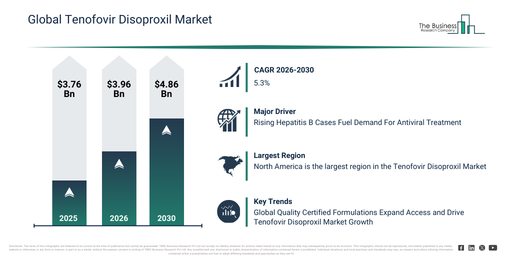
    The tenofovir disoproxil market has experienced substantial growth in recent years. This market is projected to expand from $3.76 billion in 2025 to $3.96 billion in 2026, exhibiting a compound annual growth rate (CAGR) of 5.3%. Historically, this expansion has been driven by factors such as significant global HIV prevalence, the proliferation of antiretroviral therapy initiatives, the incorporation into primary treatment protocols, an increase in hepatitis B diagnoses, and antiviral access programs supported by donors.

    The tenofovir disoproxil market is projected to experience robust expansion in the coming years. It will grow to $4.86 billion in 2030 at a compound annual growth rate (CAGR) of 5.3%. This anticipated growth is driven by factors such as an escalating need for chronic viral disease management, the proliferation of generic antiviral manufacturing, improved healthcare accessibility in developing regions, an increase in the use of preventive antivirals, and ongoing public health financial support. Key developments expected during this forecast period involve an increasing preference for antiviral combination therapies, broader application in HIV and Hepatitis B treatment, the wider acceptance of fixed-dose combinations, the expansion of long-term antiviral regimens, and a heightened emphasis on strategies for viral suppression.

    Get A Free Sample Report With In-Depth Market Insights:

    https://thebusinessresearchcompany.com/sample_request?id=12992262&type=smp&name=Tenofovir%20Disoproxil%20Market%20Report%202026&utm_source=Blogs&utm_medium=Paid&utm_campaign=Oct_PR

    Tenofovir Disoproxil Market Growth Drivers: What’s Behind The Acceleration?

    An increasing incidence of hepatitis B is projected to boost the expansion of the tenofovir disoproxil market in the future. This liver-targeting viral infection can lead to both short-term and long-term illnesses, spreading via exposure to contaminated blood or other bodily fluids. Key contributors to this rising prevalence include transmission from mother to child, inadequate vaccination rates, unsafe medical procedures, and the continued existence of long-term infections among those affected. In the management of chronic hepatitis B, tenofovir disoproxil serves to inhibit the virus’s multiplication and mitigate liver harm. For example, a March 2023 report from the US government agency, the Centers for Disease Control and Prevention, indicated that between 580,000 and 2.4 million individuals in the United States are estimated to be living with hepatitis B, with approximately two-thirds possibly undiagnosed. Consequently, the increasing occurrence of hepatitis B is a significant factor propelling the tenofovir disoproxil market’s expansion.

    Tenofovir Disoproxil Market Driver: Rising Global Healthcare Expenditure Accelerating Demand And Market Growth For Entecavir Treatments

    Increased spending on healthcare is anticipated to drive the expansion of the tenofovir disoproxil market in the future. This refers to the overall financial outlay on medical products and services aimed at sustaining and enhancing public health. The increase in healthcare spending is attributed to an aging demographic demanding more regular medical attention and prolonged health support. Greater healthcare investment facilitates the adoption of tenofovir disoproxil through wider availability of antiviral treatments, better diagnostic and therapeutic outcomes, and reinforced healthcare infrastructure for managing chronic hepatitis B and HIV. As an illustration, the UK government department, the Office for National Statistics, reported in April 2025 that total healthcare spending rose by 6.5% nominally and 2.4% in real terms (adjusted for inflation) between 2023 and 2024. Thus, the upward trend in healthcare spending is projected to stimulate the tenofovir disoproxil market’s development.

    Tenofovir Disoproxil Market Segment Trends And Revenue Contributors

    The tenofovir disoproxil market covered in this report is segmented –

    1) By Type: Tablet, Powder

    2) By Distribution Channel: Online Pharmacies, Retail Pharmacies, Wholesalers Or Distributors

    3) By Application: Hospital, Clinic

    Subsegments:

    1) By Tablet: Single-Drug Tablets, Fixed-Dose Combination Tablets

    2) By Powder: Oral Powder, Reconstitutable Powder

    Tenofovir Disoproxil Market Trends: What’s Defining The Industry’s Next Phase?

    Leading companies operating within the tenofovir disoproxil market are concentrating on broadening access through internationally quality-certified formulations, specifically WHO prequalified tablets, to serve global HIV and hepatitis B patient populations. A WHO prequalified tenofovir disoproxil fumarate tablet adheres to rigorous worldwide benchmarks for quality, safety, and efficacy, facilitating its wider distribution, particularly in settings with limited resources. As an illustration, in August 2024, Shijiazhuang Lonzeal Pharmaceuticals Co., Ltd., a pharmaceutical company from China, achieved WHO prequalification for its 300 mg tenofovir disoproxil fumarate 300 mg film coated tablet (Product code HP030), having demonstrated bioequivalence, GMP certification, and acceptability for HIV treatment. Therefore, the provision of globally quality-certified supply is a significant factor driving the growth of the tenofovir disoproxil market.

    Tenofovir Disoproxil Market Competitive Landscape: Which Companies Lead The Industry?

    Major companies operating in the tenofovir disoproxil market are Gilead Sciences Inc., Viatris Inc., Teva Pharmaceutical Industries Ltd., Cipla Ltd., Lupin Limited, Mylan N.V., Qilu Pharmaceutical Co. Ltd., Sun Pharmaceutical Industries Ltd., Dr. Reddy’s Laboratories Ltd., Aurobindo Pharma Limited, Hetero Drugs Limited, Laurus Labs Limited, Zydus Lifesciences Ltd., Blanver, SMS Pharmaceuticals, Bajaj Healthcare, Mangalam Drugs & Organics Ltd., Arene Lifesciences, Aurisco Pharmaceutical Co. Ltd., Sinoway Industrial Co. Ltd.

    View The Full Tenofovir Disoproxil Market Report:

    https://thebusinessresearchcompany.com/report/tenofovir-disoproxil-global-market-report?utm_source=Blogs&utm_medium=Paid&utm_campaign=Oct_PR

    Tenofovir Disoproxil Market Regional Breakdown: Where Is Demand Concentrated?

    North America was the largest region in the tenofovir disoproxil market in 2025. Asia-Pacific is expected to be the fastest-growing region in the forecast period. The regions covered in the tenofovir disoproxil market report are Asia-Pacific, South East Asia, Western Europe, Eastern Europe, North America, South America, Middle East, Africa.

    Reach Out To Our Team:

    The Business Research Company: https://www.thebusinessresearchcompany.com/

    Americas: +1 310-496-7795

    Asia: +44 7882 955267 & +91 8897263534

    Europe: +44 7882 955267

    Email us at: marketing@tbrc.info

    Follow us on:

    LinkedIn: https://in.linkedin.com/company/the-business-research-company

    YouTube: https://www.youtube.com/channel/UC24_fI0rV8cR5DxlCpgmyFQ

    Global Market Model: https://www.thebusinessresearchcompany.com/global-market-model
  • Tramadol Drug Market Growth Outlook For 2026: Drivers, Trends And Future Opportunities

    Tramadol Drug Market Growth Outlook For 2026: Drivers, Trends And Future Opportunities

    Backed by market attractiveness analysis, total addressable market sizing, company benchmarking matrices, interactive Excel dashboards, wider supply chain intelligence, emerging startup coverage, and detailed product-level insights, The Business Research Company’s 2026 market reports are designed to offer research that is more actionable and strategically valuable than ever.

    Tramadol Drug Market Poised To Hit $6.75 Billion By 2030 With A 7.4% CAGR

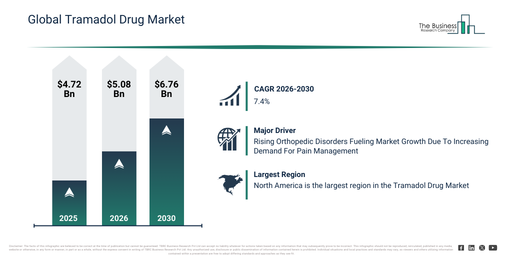
    The tramadol drug market has experienced robust expansion recently. Projections indicate its value will rise from $4.72 billion in 2025 to $5.08 billion in 2026, demonstrating a compound annual growth rate (CAGR) of 7.7%. Historical growth in this sector is largely due to factors such as the increasing prescription of tramadol for moderate pain, the extensive availability of oral formulations, a reliance on hospital pharmacies for distribution, the regulatory approval of generic versions, and a rising understanding of pain management therapies.

    The tramadol drug market is anticipated to experience robust expansion in the coming years. This market is projected to reach $6.76 billion by 2030, exhibiting a compound annual growth rate (CAGR) of 7.4%. Factors contributing to this growth during the forecast period include the development of innovative extended-release and oral disintegrating tablets, the broadening of online pharmacy channels, a surge in the adoption of intravenous and injectable formulations, an increasing need for dosage forms suitable for pediatric and geriatric patients, and the incorporation of smart adherence technologies. Key trends anticipated during the forecast period encompass a growing demand for non-opioid combination formulations, a heightened focus on extended-release and modified-release dosage forms, an expansion in online and retail pharmacy distribution channels, an increased application in postoperative pain management and chronic pain clinics, and an emphasis on patient-centric drug delivery and compliance solutions.

    Get A Free Sample Report With In-Depth Market Insights:

    https://thebusinessresearchcompany.com/sample_request?id=26996434&type=smp&name=Tramadol%20Drug%20Market%20Report%202026&utm_source=Blogs&utm_medium=Paid&utm_campaign=Oct_PR

    Tramadol Drug Market Growth Momentum: What Factors Are Shaping Demand?

    The increasing occurrence of orthopedic conditions is anticipated to stimulate the expansion of the tramadol drug market in the future. Orthopedic disorders are defined as medical ailments impacting bones, joints, muscles, ligaments, or tendons, resulting in discomfort and restricted mobility. The incidence of these disorders is rising considerably due to an expanding aging demographic, which in turn leads to a greater frequency of age-associated issues like osteoarthritis and osteoporosis, conditions that contribute to joint deterioration and bone weakening. Tramadol offers benefits for orthopedic disorders by alleviating moderate to severe pain stemming from conditions such as fractures, arthritis, or recovery following surgery, working on the central nervous system to diminish the sensation of pain. For example, data from July 2025 provided by the Institute for Health Transformation, an Australia-based health research institute, showed that in 2023, Australia experienced a fracture every 2.7 minutes, a frequency expected to sharply rise to one fracture every 30 seconds by 2033. Consequently, the growing prevalence of orthopedic disorders is a key factor propelling the growth of the tramadol drug market.

    Tramadol Drug Market Segments: Where Is Growth Concentrated?

    The tramadol drug market covered in this report is segmented –

    1) By Type: Tablet, Capsule, Liquid, Suspension, Other Types

    2) By Therapeutic Use: Pain Management, Anxiety Disorder, Postoperative Pain

    3) By Route Of Administration: Oral, Intravenous, Intramuscular

    4) By Distribution Channel: Hospital Pharmacies, Retail Pharmacies, Online Pharmacies

    5) By Application: Clinic, Hospital, Other Applications

    Subsegments:

    1) By Tablet: Immediate-Release Tablets, Extended-Release Tablets, Orally Disintegrating Tablets, Effervescent Tablets

    2) By Capsule: Hard Gelatin Capsules, Soft Gelatin Capsules, Modified-Release Capsules

    3) By Liquid: Oral Solution, Injectable Solution, Intravenous (IV) Formulation

    4) By Suspension: Reconstitutable Powder Suspension, Ready-To-Use Oral Suspension

    5) By Other Types: Suppositories, Transdermal Patches, Sublingual Tablets, Buccal Films, Topical Creams Or Gels

    Tramadol Drug Market Key Participants And Competitive Landscape

    Major companies operating in the tramadol drug market are Teva Pharmaceutical Industries Ltd., Sun Pharmaceutical Industries Ltd., Apotex Inc., Aurobindo Pharma Limited, Grünenthal GmbH, Nippon Shinyaku Co. Ltd., Ipca Laboratories Ltd., Piramal Pharma Solutions Limited, MSN Laboratories Pvt. Ltd., Ajanta Pharma Limited, Wockhardt Ltd., Troikaa Pharmaceuticals Ltd., Sakar Healthcare Limited, Unosource Pharma Limited, Labopharm Inc., Hiral Laboratories Limited, Nuray Chemicals Pvt. Ltd., Lavybens Pharma Private Limited, Jubilant Generics Limited, SLR Pharma Pvt. Ltd.

    View The Full Tramadol Drug Market Report:

    https://thebusinessresearchcompany.com/report/tramadol-drug-global-market-report?utm_source=Blogs&utm_medium=Paid&utm_campaign=Oct_PR

    Tramadol Drug Market Regional Analysis: Which Geography Leads On Revenue?

    North America was the largest region in the tramadol drug market in 2025. The regions covered in the tramadol drug market report are Asia-Pacific, South East Asia, Western Europe, Eastern Europe, North America, South America, Middle East, Africa.

    Reach Out To Our Team:

    The Business Research Company: https://www.thebusinessresearchcompany.com/

    Americas: +1 310-496-7795

    Asia: +44 7882 955267 & +91 8897263534

    Europe: +44 7882 955267

    Email us at: marketing@tbrc.info

    Follow us on:

    LinkedIn: https://in.linkedin.com/company/the-business-research-company

    YouTube: https://www.youtube.com/channel/UC24_fI0rV8cR5DxlCpgmyFQ

    Global Market Model: https://www.thebusinessresearchcompany.com/global-market-model
  • Temperature-Stable Messenger Ribonucleic Acid (mRNA) Vial Market Outlook 2026–2030: Growth Trends, Market Dynamics And Emerging Opportunities

    Temperature-Stable Messenger Ribonucleic Acid (mRNA) Vial Market Outlook 2026–2030: Growth Trends, Market Dynamics And Emerging Opportunities

    Featuring market attractiveness scoring, total addressable market sizing, company benchmarking matrices, interactive Excel dashboards, deeper supply chain intelligence, emerging startup tracking, and granular product-level insights, The Business Research Company’s 2026 market reports are built to deliver research that is both more actionable and more strategically valuable.

    Temperature-Stable Messenger Ribonucleic Acid (mRNA) Vial Market Forecast: Value Set To Climb From $2.28 Billion To $3.76 Billion

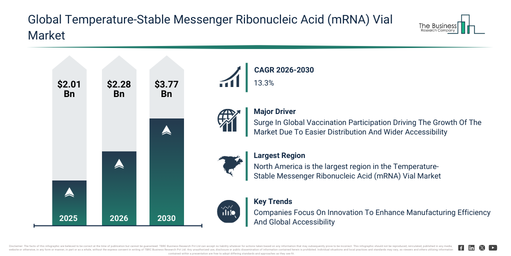
    The temperature-stable messenger ribonucleic acid (mrna) vial market size has experienced rapid expansion over recent years. It is anticipated to grow from $2.01 billion in 2025 to $2.28 billion in 2026, demonstrating a compound annual growth rate (CAGR) of 13.6%. Factors contributing to its historical growth include the broadening of mrna vaccine research, a rise in investment within lipid nanoparticle technologies, the expansion of worldwide immunization efforts, the challenges posed by cold-chain logistics that necessitated alternative solutions, and the initial implementation of stabilized mrna delivery systems.

    The market for temperature-stable messenger ribonucleic acid (mRNA) vials is projected to experience substantial expansion over the coming years. This market is anticipated to reach a valuation of $3.77 billion by 2030, driven by a compound annual growth rate (CAGR) of 13.3%. Factors contributing to this growth during the forecast period include a heightened demand for advanced mRNA therapeutics, a greater emphasis on worldwide vaccine availability, the expansion of decentralized healthcare systems, increased investments in biologics that can withstand varying temperatures, and a rise in regulatory approvals for mRNA-based innovations. Key trends observed throughout this period encompass the accelerated development of thermostable mRNA formulations, a growing preference for lyophilized mRNA vials, an increasing need for storage solutions that do not require a cold chain, the broadening of global mRNA distribution initiatives, and an intensified focus on the integrity and stability of packaging.

    Get A Free Sample Report With In-Depth Market Insights:

    https://thebusinessresearchcompany.com/sample_request?id=52041952&type=smp&name=Temperature-Stable%C2%A0Messenger%20Ribonucleic%20Acid%20%28mRNA%29%C2%A0Vial%20Market%20Report%202026&utm_source=Blogs&utm_medium=Paid&utm_campaign=Oct_PR

    Temperature-Stable Messenger Ribonucleic Acid (mRNA) Vial Market Growth Factors Behind Sustained Expansion

    The expanding involvement in worldwide immunization initiatives is anticipated to fuel the expansion of the temperature-stable messenger ribonucleic acid (mRNA) vial market in the coming period. A vaccine is a material engineered to stimulate the body’s immune system, assisting it in developing defense against a specific illness. This surge in global vaccine uptake stems from international cooperation, where synchronized actions among nations guarantee broader availability and fair distribution of vaccines. Temperature-stable mRNA vials facilitate global vaccination by permitting simpler storage, transit, and dissemination across various territories, eliminating the need for intricate cold chain infrastructure, thus ensuring greater reach and continuous immunization coverage globally. For example, data from October 2025, provided by Gavi, a US-based international organization that provides vaccines to children in developing countries, indicated that DTP3 vaccine coverage in Gavi-supported lower-income countries rose to 82%, an increase from 80% in 2023, approaching levels seen before the pandemic. Consequently, the growing involvement in global vaccination efforts is propelling the expansion of the temperature-stable messenger ribonucleic acid (mRNA) vial market.

    Temperature-Stable Messenger Ribonucleic Acid (mRNA) Vial Market Segment Analysis Spotlighting Growth Areas

    The temperature-stable messenger ribonucleic acid (mrna) vial market covered in this report is segmented –

    1) By Product Type: Lipid Nanoparticle Formulations, Polymer-Based Formulations, Lyophilized Messenger Ribonucleic Acid (mRNA) Vials, Other Product Types

    2) By Distribution Channel: Direct Sales, Distributors, Online Sales, Other Distribution Channels

    3) By Application: Vaccines, Therapeutics, Research, Other Applications

    4) By End User: Hospitals And Clinics, Research Institutes, Pharmaceutical And Biotechnology Companies, Other End Users

    Subsegments:

    1) By Lipid Nanoparticle Formulations: Cationic Lipid Nanoparticles, Ionizable Lipid Nanoparticles, Neutral Lipid Nanoparticles

    2) By Polymer-Based Formulations: Polyethylene Glycol-Based Formulations, Polymeric Micelles, Dendrimer-Based Formulations

    3) By Lyophilized Messenger Ribonucleic Acid Vials: Single-Dose Vials, Multi-Dose Vials

    4) By Others Product Types: Peptide-Based Formulations, Protein-Based Formulations, Hybrid Formulations

    Temperature-Stable Messenger Ribonucleic Acid (mRNA) Vial Market Industry Trends Fueling Future Revenue Growth

    Leading companies within the temperature-stable messenger ribonucleic acid (mRNA) vial market are concentrating on formulating novel approaches, including technology transfer frameworks, to boost manufacturing effectiveness, enlarge global production capacity, and enhance vaccine access in low- and middle-income regions. Technology transfer models describe processes for transmitting knowledge, skills, and manufacturing techniques from one entity to another, facilitating local manufacturing and wider dissemination. For example, SCHOTT Pharma, a pharmaceutical packaging company headquartered in Germany, unveiled its EVERIC freeze vials in January 2024. These EVERIC freeze vials are designed to endure temperatures down to -80°C, making them ideal for vaccines and medications such as mRNA and gene therapy treatments applied to infectious diseases, cancer, and central nervous system ailments. Their optimized strength design reduces the likelihood of breakage, thereby preventing the spoilage of vital medications and expensive operational delays.

    Temperature-Stable Messenger Ribonucleic Acid (mRNA) Vial Market Leading Companies: Who Holds The Strongest Market Presence?

    Major companies operating in the temperature-stable messenger ribonucleic acid (mrna) vial market are Arcturus Therapeutics Holdings Inc., CureVac AG, Sanofi S.A., Lonza Group AG, Gerresheimer AG, Stevanato Group, Schott AG, CSafe Global, Gennova Biopharmaceuticals Ltd., TTP Group, Peli BioThermal LLC, SiO2 Materials Science, Shijiazhuang Xinfuda Medical Packaging, Vaxess Technologies, Ethris, Lyophilization Techniques, 20Med Therapeutics BV, EnsiliTech, HDT Bio Corp., Emervax.

    View The Full Temperature-Stable Messenger Ribonucleic Acid (mRNA) Vial Market Report:

    https://thebusinessresearchcompany.com/report/temperature-stable-messenger-ribonucleic-acid-mrna-vial-global-market-report?utm_source=Blogs&utm_medium=Paid&utm_campaign=Oct_PR

    Temperature-Stable Messenger Ribonucleic Acid (mRNA) Vial Market Geographic Landscape: Which Region Dominates Industry Growth?

    North America was the largest region in the temperature-stable messenger ribonucleic acid (mRNA) vial market in 2025. Asia-Pacific is expected to be the fastest-growing region in the forecast period. The regions covered in the temperature-stable messenger ribonucleic acid (mrna) vial market report are Asia-Pacific, South East Asia, Western Europe, Eastern Europe, North America, South America, Middle East, Africa.

    Reach Out To Our Team:

    The Business Research Company: https://www.thebusinessresearchcompany.com/

    Americas: +1 310-496-7795

    Asia: +44 7882 955267 & +91 8897263534

    Europe: +44 7882 955267

    Email us at: marketing@tbrc.info

    Follow us on:

    LinkedIn: https://in.linkedin.com/company/the-business-research-company

    YouTube: https://www.youtube.com/channel/UC24_fI0rV8cR5DxlCpgmyFQ

    Global Market Model: https://www.thebusinessresearchcompany.com/global-market-model
  • Toxoplasmosis Treatment Drugs Market Size Forecast From 2026 To 2030: Key Industry Trends

    Toxoplasmosis Treatment Drugs Market Size Forecast From 2026 To 2030: Key Industry Trends

    Featuring market attractiveness scoring, total addressable market sizing, company benchmarking matrices, interactive Excel dashboards, deeper supply chain intelligence, emerging startup tracking, and granular product-level insights, The Business Research Company’s 2026 market reports are built to deliver research that is both more actionable and more strategically valuable.

    Toxoplasmosis Treatment Drugs Market Size And Revenue Outlook Through 2030

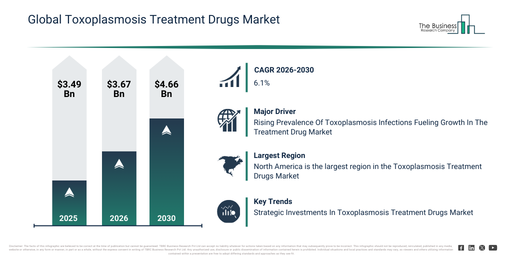
    The toxoplasmosis treatment drugs market has demonstrated robust expansion in recent years. This market is projected to increase from $3.49 billion in 2025 to $3.67 billion in 2026, achieving a compound annual growth rate (CAGR) of 5.3%. The growth observed in the preceding period can be attributed to the widespread occurrence of toxoplasmosis infections, the limited array of available treatment options, growing recognition among healthcare providers, expanded distribution through hospital pharmacies, and the utilization of conventional drug formulations.

    The toxoplasmosis treatment drugs market is projected to experience robust expansion over the coming years. Its value is anticipated to reach $4.66 billion by 2030, demonstrating a compound annual growth rate (CAGR) of 6.1%. This anticipated growth during the forecast period is attributable to progress in precision medicine, increased investment in anti-parasitic drug research and development, the broadening reach of online pharmacies, a rising population of immunocompromised patients, and the introduction of new combination therapies. Key trends identified for the forecast period encompass intensified research efforts in anti-parasitic drug creation, a growing preference for combination therapies, an increase in treatments for pediatric and immunocompromised patients, the widening of hospital and online pharmacy distribution networks, and the formulation of both oral and parenteral drug options.

    Get A Free Sample Report With In-Depth Market Insights:

    https://thebusinessresearchcompany.com/sample_request?id=36729138&type=smp&name=Toxoplasmosis%20Treatment%20Drugs%20Market%20Report%202026&utm_source=Blogs&utm_medium=Paid&utm_campaign=Oct_PR

    Toxoplasmosis Treatment Drugs Market Expansion Drivers: What’s Shaping Future Growth?

    The increased incidence of toxoplasmosis infections is projected to drive the expansion of the toxoplasmosis treatment drug market. Toxoplasmosis denotes an infection and sickness in humans and animals caused by the protozoan parasite Toxoplasma gondii. The occurrence of toxoplasmosis infection heightens the necessity for drugs like pyrimethamine, spiramycin, and leucovorin, utilized in treating patients with particular forms of toxoplasmosis, thereby invigorating the toxoplasmosis treatment drug market. For example, in February 2024, data released by the UK Health Security Agency, a UK-based government agency, indicated that 54 confirmed toxoplasmosis cases were reported in the second quarter of 2023, rising from 37 cases in the identical period of 2022. Consequently, the escalating prevalence of toxoplasmosis infections fuels the toxoplasmosis treatment drug market.

    Toxoplasmosis Treatment Drugs Market Segment Analysis: What Are The Core Market Categories?

    The toxoplasmosis treatment drugs market covered in this report is segmented –

    1) By Drug Class: Pyrimethamine, Spiramycin, Leucovorin, Sulfadiazine, Folic Acid, Other Drug Class

    2) By Indication: Chronic Toxoplasmosis Infection, Acute Toxoplasmosis Infection

    3) By Route Of Administration: Parenteral, Oral

    4) By Distribution Channel: Hospital Pharmacies, Online Pharmacies, Retail Pharmacies

    Subsegments:

    1) By Pyrimethamine: Brand Name Variants, Combination Therapies

    2) By Spiramycin: Brand Name Variants, Formulations

    3) By Leucovorin: Dosage Forms, Combination Therapies

    4) By Sulfadiazine: Brand Name Variants, Combination Therapies

    5) By Folic Acid: Supplement Formulations, Combination Products With Other Drugs

    6) By Other Drug Class: Atovaquone, Clindamycin, Trimethoprim-Sulfamethoxazole (TMP-SMX), Experimental Or Emerging Therapies

    Toxoplasmosis Treatment Drugs Market Strategic Trends: What Defines The Next Growth Phase?

    Companies operating within the toxoplasmosis treatment drugs market are increasingly concentrating on strategic investments. A strategic investment represents capital deployed by a company or individual with the aim of achieving long-term goals, such as securing a competitive advantage, entering new territories, or fostering technological advancements. For example, in April 2023, ASTRA Therapeutics, a drug development company based in the UK, acquired CHF 150,000 ($ 173787.15) in funding through such an investment. ASTRA Therapeutics’ objective is to develop treatments for parasitic diseases including malaria. Conditions like cryptosporidiosis and toxoplasmosis impact millions globally and are significant contributors to sickness and reduced output in both cattle and agriculture.

    Toxoplasmosis Treatment Drugs Market Top Companies Driving Competitive Growth

    Major companies operating in the toxoplasmosis treatment drugs market are Sanofi SA, GlaxoSmithKline plc, Teva Pharmaceutical Industries Ltd, Mylan NV, Sun Pharmaceutical Industries Ltd, Dr Reddys Laboratories Ltd, Amneal Pharmaceuticals Inc, Lupin Ltd, Alvogen Group Inc, Manus Aktteva Biopharma LLP, Cadila Healthcare Limited, Aurobindo Pharma Limited, Cipla Inc, Torrent Pharmaceuticals Ltd, Intas Pharmaceuticals Limited, Alembic Pharmaceuticals Limited, Glenmark Pharmaceuticals Ltd, Jubilant Life Sciences, Zydus Lifesciences Ltd, Hetero Drugs Limited, Strides Pharma Science Limited, Alkem Laboratories Limited

    View The Full Toxoplasmosis Treatment Drugs Market Report:

    https://thebusinessresearchcompany.com/report/toxoplasmosis-treatment-drugs-global-market-report?utm_source=Blogs&utm_medium=Paid&utm_campaign=Oct_PR

    Toxoplasmosis Treatment Drugs Market Geographic Spread And Regional Opportunities

    North America was the largest region in the toxoplasmosis treatment drugs market in 2025. The regions covered in the toxoplasmosis treatment drugs market report are Asia-Pacific, South East Asia, Western Europe, Eastern Europe, North America, South America, Middle East, Africa.

    Reach Out To Our Team:

    The Business Research Company: https://www.thebusinessresearchcompany.com/

    Americas: +1 310-496-7795

    Asia: +44 7882 955267 & +91 8897263534

    Europe: +44 7882 955267

    Email us at: marketing@tbrc.info

    Follow us on:

    LinkedIn: https://in.linkedin.com/company/the-business-research-company

    YouTube: https://www.youtube.com/channel/UC24_fI0rV8cR5DxlCpgmyFQ

    Global Market Model: https://www.thebusinessresearchcompany.com/global-market-model
  • TCR Therapy Market Growth Outlook From $0.34 Billion In 2026 To $1.14 Billion By 2030

    TCR Therapy Market Growth Outlook From $0.34 Billion In 2026 To $1.14 Billion By 2030

    Built to provide research that’s more actionable and strategically valuable, The Business Research Company’s 2026 market reports include market attractiveness analysis, total addressable market sizing, company benchmarking matrices, interactive Excel dashboards, broader supply chain intelligence, emerging startup tracking, and in-depth product insights.

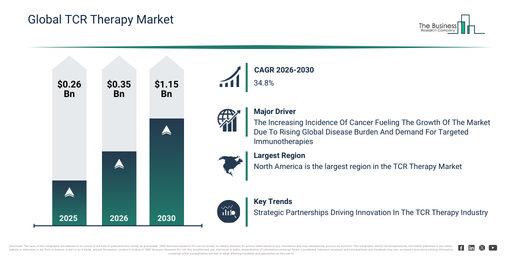
    TCR Therapy Market Revenue Growth On Track For A 34.8% CAGR Through 2030

    The tcr therapy market size has experienced rapid expansion in recent years. Projections indicate it will increase from $0.26 billion in 2025 to $0.35 billion in 2026, achieving a compound annual growth rate (CAGR) of 35.5%. This historical growth can be attributed to factors like the initial adoption of autologous tcr therapies, advancements in gene editing technologies, a surge in clinical trials for cancer immunotherapy, the rising incidence of hematologic malignancies, and collaborations between biotech firms and hospitals.

    The tcr therapy market is projected to experience substantial expansion in the coming years. Its valuation is anticipated to reach $1.15 billion by 2030, exhibiting a robust compound annual growth rate (CAGR) of 34.8%. This anticipated growth during the forecast period is fueled by several factors, including the increasing availability of off-the-shelf allogeneic tcr therapies, the incorporation of artificial intelligence in tcr design, market penetration into developing regions, new regulatory approvals for tcr applications, and progress in combined immunotherapy strategies. Key developments expected within this period encompass the evolution of personalized tcr therapy, the proliferation of off-the-shelf allogeneic tcr options, innovative combination immunotherapy techniques, broader accessibility through hospitals and specialty clinics, and sophisticated tcr gene editing technologies.

    Get A Free Sample Report With In-Depth Market Insights:

    https://thebusinessresearchcompany.com/sample_request?id=17085564&type=smp&name=TCR%20Therapy%20Market%20Report%202026&utm_source=Blogs&utm_medium=Paid&utm_campaign=Oct_PR

    TCR Therapy Market Demand Drivers Opening New Revenue Streams

    The increasing incidence of cancer is projected to propel the growth of the T-cell receptor (TCR) therapy market going forward. Cancer is defined as a group of illnesses characterized by the unrestrained proliferation and dissemination of atypical cells, influenced by factors such as demographic aging, lifestyle-related hazards, genetic predispositions, and environmental factors. The escalating number of cancer cases is augmenting the global disease burden, generating an urgent requirement for advanced treatment approaches that offer more accurate and lasting clinical outcomes. T-cell receptor (TCR) therapy addresses this burgeoning medical demand by modifying T cells to specifically recognize and eliminate cancerous cells, thereby providing a highly targeted immunotherapy option for complex and difficult-to-treat tumors. For instance, according to the American Cancer Society, a US-based non-profit organization, the estimated number of new lymphoma cancer cases increased from 89,010 in 2022 to 89,380 in 2023. Consequently, the rising incidence of cancer is driving the growth of the T-cell receptor (TCR) therapy market.

    TCR Therapy Market Segment Performance And Emerging Opportunities

    The tcr therapy market covered in this report is segmented –

    1) By Product Type: Infusions, Injectables, Other Product Types

    2) By Indication: Leukemia, Lymphoma, Myeloma, Other Indication

    3) By Distribution Channel: Online, Offline

    4) By End-User: Hospital Pharmacy, Specialty Clinics

    Subsegments:

    1) By Infusions: Autologous TCR Infusions, Allogeneic TCR Infusions

    2) By Injectables: TCR-based Injectable Formulations, Injectable TCR Gene Therapies

    3) By Other Product Types: TCR-Engineered Cell Therapies, TCR Combination Therapies with Other Immunotherapies, TCR-Based Biologics

    TCR Therapy Market Trends Powering Strategic Industry Growth

    Leading entities within the TCR therapy industry are increasingly engaging in strategic partnerships to deliver vital treatments to patients and secure a competitive advantage in the market. Such collaborations involve companies combining their respective strengths and resources to achieve mutual benefits and success. For instance, in December 2023, ImmunoScape, a US-based biotechnology company, formed a partnership with the Experimental Drug Development Centre (EDDC), a Singapore-based pharmaceutical company, for the development of new TCR-based bispecific molecules targeting solid tumors. This alliance seeks to utilize ImmunoScape’s expertise in systems immunology and computational biology, along with EDDC’s capabilities, to advance research in this area and establish a strategic coalition that leverages their distinct strengths to accelerate the creation of more accessible and potentially more effective cancer treatments.

    TCR Therapy Market Key Players: Which Companies Lead Industry Competition?

    Major companies operating in the tcr therapy market are Immunocore Limited, Immatics N.V., Adaptimmune Therapeutics plc, Alaunos Therapeutics Inc., Zelluna Immunotherapy AS, Lion TCR Pte Ltd, TCRCure Biopharma Corp., China Immunotech Inc., Bluebird bio Inc., Poseida Therapeutics Inc., Fate Therapeutics Inc., Atara Biotherapeutics Inc., Precision Biosciences Inc., Cellectis S.A., Cellular Biomedicine Group Inc., Takara Bio Inc., Tessa Therapeutics, Pfizer Inc., Novartis AG, Bristol Myers Squibb Company

    View The Full TCR Therapy Market Report:

    https://thebusinessresearchcompany.com/report/tcr-therapy-global-market-report?utm_source=Blogs&utm_medium=Paid&utm_campaign=Oct_PR

    TCR Therapy Market Largest Region: Which Geography Holds The Highest Market Share?

    North America was the largest region in the TCR therapy market in 2025. Asia-Pacific is expected to be the fastest-growing region in the forecast period. The regions covered in the tcr therapy market report are Asia-Pacific, South East Asia, Western Europe, Eastern Europe, North America, South America, Middle East, Africa.

    Reach Out To Our Team:

    The Business Research Company: https://www.thebusinessresearchcompany.com/

    Americas: +1 310-496-7795

    Asia: +44 7882 955267 & +91 8897263534

    Europe: +44 7882 955267

    Email us at: marketing@tbrc.info

    Follow us on:

    LinkedIn: https://in.linkedin.com/company/the-business-research-company

    YouTube: https://www.youtube.com/channel/UC24_fI0rV8cR5DxlCpgmyFQ

    Global Market Model: https://www.thebusinessresearchcompany.com/global-market-model
  • Toxicology Drug Screening Market 2026: Market Size, Growth Drivers And Emerging Opportunities

    Toxicology Drug Screening Market 2026: Market Size, Growth Drivers And Emerging Opportunities

    Built to provide research that’s more actionable and strategically valuable, The Business Research Company’s 2026 market reports include market attractiveness analysis, total addressable market sizing, company benchmarking matrices, interactive Excel dashboards, broader supply chain intelligence, emerging startup tracking, and in-depth product insights.

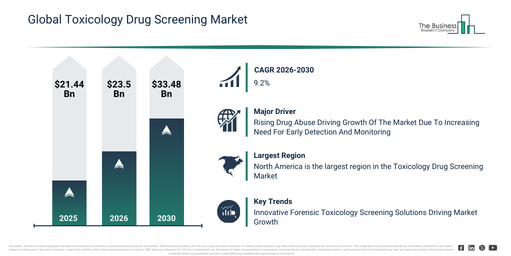
    Toxicology Drug Screening Market Growth From $23.49 Billion In 2026 To $33.47 Billion By 2030 At A CAGR Of 9.2%

    The toxicology drug screening market size has seen robust growth in recent years. It is forecast to expand from $21.44 billion in 2025 to $23.5 billion in 2026, achieving a compound annual growth rate (CAGR) of 9.6%. The expansion observed historically can be attributed to the reliance on manual toxicology testing methods, limited laboratory automation, the increasing prevalence of substance abuse monitoring, tightening regulatory oversight, and the adoption of conventional bioanalytical instrumentation.

    The toxicology drug screening market is anticipated to show significant expansion in the upcoming years. Its value is projected to reach $33.48 billion by 2030, growing at a compound annual growth rate (CAGR) of 9.2%. This expected increase during the forecast period can be attributed to the advancement of AI-driven predictive toxicology tools, the integration of genomics and transcriptomics into screening, the rise of contract research organizations (CROs), an escalating demand for real-time drug monitoring systems, and the implementation of cloud-based and secure data management platforms. Notable trends for this period include the increasing adoption of high-throughput screening technologies, the integration of LIMS and laboratory information systems, the growing utilization of predictive and AI-powered toxicology platforms, the expansion of workplace drug screening programs, and a strengthened focus on data security and compliance standards.

    Get A Free Sample Report With In-Depth Market Insights:

    https://thebusinessresearchcompany.com/sample_request?id=79588078&type=smp&name=Toxicology%20Drug%20Screening%20Market%20Report%202026&utm_source=Blogs&utm_medium=Paid&utm_campaign=Oct_PR

    Toxicology Drug Screening Market Development Factors: What’s Supporting Demand?

    The escalating incidence of drug abuse is anticipated to drive the growth of the toxicology drug screening market moving forward. Drug abuse refers to the damaging or excessive consumption of drugs for non-medical intentions, which negatively impacts a person’s health and daily life. The rise in drug abuse prevalence is attributed to increased stress and mental health struggles, leading many individuals to improperly use substances as a coping strategy. Toxicology drug screening is valuable in the context of drug abuse because it aids in identifying the presence of drugs or their metabolites within an individual’s body, thus enabling timely recognition, diagnosis, and management of substance misuse or overdose situations. For instance, in August 2024, information from the National Records of Scotland (NRS), a Scotland-based government department, showed that Scotland recorded 1,172 drug misuse deaths in 2023, representing a 12% rise (121 additional deaths) compared to 2022. Hence, the increasing prevalence of drug abuse is a primary stimulant for the toxicology drug screening market.

    Toxicology Drug Screening Market Segment Breakdown: Which Categories Lead On Revenue?

    The toxicology drug screening market covered in this report is segmented –

    1) By Type: Screening Assays, Analytical Confirmatory Tests, Sample Collection Devices, Laboratory Consumables, Rapid Point-of-Care Tests, Laboratory Software And Reporting Systems

    2) By Test Type: Acute Systemic Toxicity, Dermal Toxicity, Carcinogenicity, Ocular Toxicity, Genotoxicity, Neurotoxicity, Organ-Specific Toxicity

    3) By Technology Type: High-Throughput Screening, Genomics, Transcriptomics, Toxicogenomics, Molecular Screening

    4) By Application: Immunotoxicity, Systemictoxicity, Developmental And Reproductive Toxicity (DART), Endocrine Disruption, Other Applications

    5) By End Users: Hospitals, Clinics, Contract Research Organizations (CROs), Pharmaceutical Companies, Workplace Testing Facilities

    Subsegments:

    1) By Screening Assays: Immunoassay Drug Screening Kits, Enzyme-Linked Immunosorbent Assay (ELISA) Kits, Lateral Flow Rapid Screening Assays, Fluorescence Polarization Immunoassays

    2) By Analytical Confirmatory Tests: Gas Chromatography–Mass Spectrometry (GC-MS), Liquid Chromatography–Mass Spectrometry (LC-MS/MS), High-Performance Liquid Chromatography (HPLC), Capillary Electrophoresis Toxicology Tests

    3) By Sample Collection Devices: Urine Drug Collection Cups, Saliva (Oral Fluid) Collection Devices, Blood Collection Tubes, Hair Drug Collection Kits

    4) By Laboratory Consumables: Calibrators And Controls, Reagents And Buffers, Extraction Cartridges And Columns, Sample Preparation Kits

    5) By Rapid Point-of-Care Tests: Multi-Panel Urine Dip Cards, Saliva Drug Screening Cassettes, Breath Alcohol And Drug Screening Devices, Single-Drug Detection Test Strips

    6) By Laboratory Software And Reporting Systems: Laboratory Information Management Systems (LIMS), Toxicology Reporting And Result Interpretation Software, Chain-of-Custody Tracking Software, Compliance And Audit Documentation Systems

    Toxicology Drug Screening Market Transformation Trends: What Innovations Are Driving Change?

    Major companies within the toxicology drug screening market are focusing on implementing innovative solutions, such as the 3D liver microphysiological system, which facilitates the culturing of highly biomimetic human liver microtissues featuring organized cellular structures and active metabolic function. The 3D liver microphysiological system (MPS) serves as an advanced in vitro platform, specifically engineered to more accurately replicate the human liver’s physiological microenvironment than traditional cell culture methods, and typically involves growing multiple types of human liver cells. For example, in February 2025, CN Bio Innovations Ltd., a U.K.-based life sciences company specializing in organ-on-a-chip (OOC) technologies, launched the PhysioMimix DILI assay kit. This all-in-one laboratory kit is developed for the in vitro profiling of human drug-induced liver injury and includes a highly characterized 3D liver microphysiological system (MPS) that successfully recreates metabolically active, highly functional human liver tissue and Kupffer cells. Additionally, it offers simple integration of organ-on-a-chip technology with a plug-and-play format, thereby simplifying deployment and reducing time to adoption.

    Toxicology Drug Screening Market Leading Players And Competitive Positioning

    Major companies operating in the toxicology drug screening market are Thermo Fisher Scientific Inc., Abbott Laboratories, Danaher Corporation, Merck KGaA, Siemens Healthineers, BD Bioscience, Quest Diagnostics, ICON plc, Agilent Technologies Inc., Eurofins Scientific SE, Wuxi AppTec, Charles River Laboratories International Inc., Shimadzu Corporation, Waters Corporation, Bio-Rad Laboratories Inc., Bruker Corporation, Evotec AG, Promega Corporation, The Jackson Laboratory, Clinical Reference Laboratory Inc., Enzo Life Sciences Inc., Covance Inc., Randox Toxicology, Alere Inc.

    View The Full Toxicology Drug Screening Market Report:

    https://thebusinessresearchcompany.com/report/toxicology-drug-screening-global-market-report?utm_source=Blogs&utm_medium=Paid&utm_campaign=Oct_PR

    Toxicology Drug Screening Market Top Region By Revenue And Market Share

    North America was the largest region in the toxicology drug screening market in 2025. Asia-Pacific is expected to be the fastest-growing region in the forecast period. The regions covered in the toxicology drug screening market report are Asia-Pacific, South East Asia, Western Europe, Eastern Europe, North America, South America, Middle East, Africa.

    Reach Out To Our Team:

    The Business Research Company: https://www.thebusinessresearchcompany.com/

    Americas: +1 310-496-7795

    Asia: +44 7882 955267 & +91 8897263534

    Europe: +44 7882 955267

    Email us at: marketing@tbrc.info

    Follow us on:

    LinkedIn: https://in.linkedin.com/company/the-business-research-company

    YouTube: https://www.youtube.com/channel/UC24_fI0rV8cR5DxlCpgmyFQ

    Global Market Model: https://www.thebusinessresearchcompany.com/global-market-model
  • Tazarotene Market Forecast To Reach $6.43 Billion By 2030: Key Growth Drivers And Industry Trends

    Tazarotene Market Forecast To Reach $6.43 Billion By 2030: Key Growth Drivers And Industry Trends

    Backed by market attractiveness analysis, total addressable market sizing, company benchmarking matrices, interactive Excel dashboards, wider supply chain intelligence, emerging startup coverage, and detailed product-level insights, The Business Research Company’s 2026 market reports are designed to offer research that is more actionable and strategically valuable than ever.

    Tazarotene Market Value Growth And Long-Term Outlook

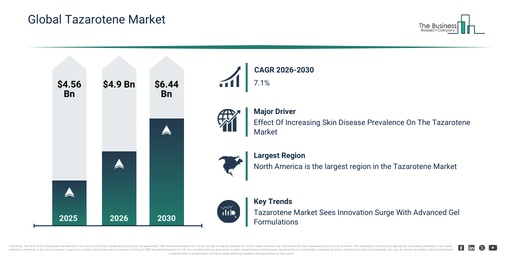
    The tazarotene market size has experienced robust growth in recent years. It is anticipated to increase from $4.56 billion in 2025 to $4.9 billion in 2026, achieving a compound annual growth rate (CAGR) of 7.4%. This historical expansion can be attributed to factors such as the rising prevalence of dermatological disorders, the broader availability of prescription topical treatments, the expansion of dermatology clinic networks, the acceptance of retinoid-based therapies, and advancements in topical drug formulation technologies.

    The tazarotene market size is projected to experience robust expansion over the coming years, reaching $6.44 billion by 2030, exhibiting a compound annual growth rate (CAGR) of 7.1%. This anticipated growth during the forecast period is driven by factors such as a heightened demand for highly effective dermatology treatments, an increase in clinical research endeavors, a greater emphasis on customized skincare solutions, the proliferation of pharmaceutical-grade dermatology products, and stricter regulatory oversight for topical medications. Key developments expected during this period involve a rising need for topical retinoid therapies, increased utilization of high-purity dermatological active pharmaceutical ingredients (APIs), a sharpened focus on treatments for acne and psoriasis, the development of sophisticated topical formulations, and an intensified commitment to clinical effectiveness and safety.

    Get A Free Sample Report With In-Depth Market Insights:

    https://thebusinessresearchcompany.com/sample_request?id=58342382&type=smp&name=Tazarotene%20Market%20Report%202026&utm_source=Blogs&utm_medium=Paid&utm_campaign=Oct_PR

    Tazarotene Market Growth Backed By Core Demand Fundamentals

    The rising incidence of skin conditions is anticipated to fuel the expansion of the tazarotene market in the future. Skin diseases represent a diverse range of ailments affecting the skin’s appearance, structure, and function, often manifesting as symptoms such as rashes, itching, inflammation, or lesions. This increasing occurrence of skin diseases is driven by escalating pollution levels, changing climate conditions, various lifestyle factors, genetic predispositions, and heightened exposure to allergens and irritants. Tazarotene is utilized in the treatment of skin diseases like acne and psoriasis, helping to lessen inflammation and promote healthy skin cell turnover. For instance, in December 2023, data from the National Institutes of Health (NIH), a U.S.-based organization functioning as the U.S. government’s principal medical research agency, indicated that the global prevalence of atopic dermatitis reached 2.6%, affecting approximately 204 million people worldwide. Thus, the increasing occurrence of skin diseases is stimulating growth in the tazarotene market.

    Tazarotene Market Segment Landscape And Growth Outlook

    The tazarotene market covered in this report is segmented –

    1) By Type: Purity ≥ 98%, Purity ≥ 99%

    2) By Form: Foam, Cream, Gel

    3) By Application: Psoriasis, Acne, Sun-Damaged, Other Applications

    Subsegments:

    1) By Purity ≥ 98%: Tazarotene With 98% Purity For Research And Development, Pharmaceutical-Grade Tazarotene (≥ 98% Purity), Tazarotene Formulations For Dermatological Use (≥ 98% Purity)

    2) By Purity ≥ 99%: High-Purity Tazarotene (≥ 99%) For Pharmaceutical Applications, Cosmetic-Grade Tazarotene (≥ 99% Purity), Tazarotene For Clinical Trials (≥ 99% Purity), Specialized Tazarotene Compounds (≥ 99% Purity)

    Tazarotene Market Growth Trends Reshaping The Competitive Landscape

    Key players within the tazarotene market are prioritizing inventive solutions, particularly generic topical formulations, to deliver a superior, budget-friendly choice and widen the reach of efficacious treatments for plaque psoriasis and facial acne. Generic topical formulations represent skin-applied medications that possess bioequivalence to branded items, containing the identical active ingredients in comparable strengths, though typically at a lesser expense. For example, in June 2023, Padagis LLC, a pharmaceutical manufacturer located in the US, unveiled Tazarotene Gel, a generic equivalent of Tazorac Gel. This gel offers the same therapeutic advantages for managing plaque psoriasis and facial acne vulgaris at a more economical price point. As the second generic prescription offering in this market, it boosts both rivalry and availability, positioning it as a valuable enhancement to the dermatological product spectrum.

    Tazarotene Market Competitive Landscape: Who Leads The Industry?

    Major companies operating in the tazarotene market are Cardinal Health, AbbVie Inc., GSK plc., Sandoz Group AG, Sun Pharmaceutical Industries Ltd., Perrigo Company, Seqens SAS, Glenmark Pharmaceuticals, Taro Pharmaceutical Industries, Olon S.p.A, Piramal Healthcare Ltd., Jiangsu Lianhuan Pharmaceutical Group, Cosette Pharmaceuticals Inc., Padagis US LLC, Ortho Dermatologics, Solaris Pharma Corp, Actavis Inc., Bioindustria L.I.M. Spa, Chongqing Huapont Pharmaceutical Co. Ltd.

    View The Full Tazarotene Market Report:

    https://thebusinessresearchcompany.com/report/tazarotene-global-market-report?utm_source=Blogs&utm_medium=Paid&utm_campaign=Oct_PR

    Tazarotene Market Regional Analysis: Which Region Leads By Revenue?

    North America was the largest region in the tazarotene market in 2025. The regions covered in the tazarotene market report are Asia-Pacific, South East Asia, Western Europe, Eastern Europe, North America, South America, Middle East, Africa.

    Reach Out To Our Team:

    The Business Research Company: https://www.thebusinessresearchcompany.com/

    Americas: +1 310-496-7795

    Asia: +44 7882 955267 & +91 8897263534

    Europe: +44 7882 955267

    Email us at: marketing@tbrc.info

    Follow us on:

    LinkedIn: https://in.linkedin.com/company/the-business-research-company

    YouTube: https://www.youtube.com/channel/UC24_fI0rV8cR5DxlCpgmyFQ

    Global Market Model: https://www.thebusinessresearchcompany.com/global-market-model
  • Topical Wound Agents Market Set To Expand From $2.75 Billion In 2026: Growth Outlook Through 2030

    Topical Wound Agents Market Set To Expand From $2.75 Billion In 2026: Growth Outlook Through 2030

    Backed by market attractiveness analysis, total addressable market sizing, company benchmarking matrices, interactive Excel dashboards, wider supply chain intelligence, emerging startup coverage, and detailed product-level insights, The Business Research Company’s 2026 market reports are designed to offer research that is more actionable and strategically valuable than ever.

    Topical Wound Agents Market Expansion Outlook: What Revenue Opportunities Are Ahead?

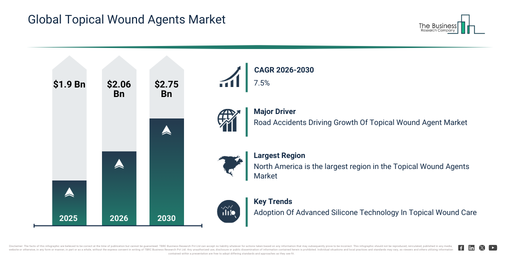
    The topical wound agents market has experienced strong growth in recent years. It is anticipated to expand from $1.9 billion in 2025 to $2.06 billion in 2026, driven by a compound annual growth rate (CAGR) of 8.4%. This historical expansion can be attributed to several factors, including the increasing prevalence of diabetes and ulcers, a rising number of surgical procedures, the proven efficacy of topical antimicrobials, the expansion of hospital wound care units, and the growing elderly population.

    The topical wound agents market is projected to experience significant expansion over the upcoming years. Its valuation is expected to reach $2.75 billion by 2030, achieving a compound annual growth rate (CAGR) of 7.5%. This growth during the forecast period is primarily fueled by factors such as an increased demand for chronic wound management, the growing adoption of advanced wound therapies, the expansion of outpatient care settings, a heightened emphasis on infection prevention, and a greater awareness regarding the importance of early wound treatment. Key trends anticipated in this period include a rise in the incidence of chronic wounds, the increasing application of advanced antimicrobial agents, a growing preference for home-based wound care solutions, the diversification of silver and growth factor-based products, and a higher acceptance of moist wound healing therapies.

    Get A Free Sample Report With In-Depth Market Insights:

    https://thebusinessresearchcompany.com/sample_request?id=86876990&type=smp&name=Topical%20Wound%20Agents%20Market%20Report%202026&utm_source=Blogs&utm_medium=Paid&utm_campaign=Oct_PR

    Topical Wound Agents Market Industry Drivers: What’s Behind The Revenue Growth?

    The escalating number of road accidents is projected to boost the expansion of the topical wound agent market in the upcoming period. Such accidents are defined as unforeseen vehicular impacts resulting in injuries from minor abrasions to serious trauma necessitating urgent medical intervention. This surge in road accidents is chiefly caused by human mistakes, notably distracted driving, which consistently plays a part in crash incidents. Topical wound agents play a vital role in emergency care by allowing swift disinfection, pain alleviation, infection prevention, and faster recovery of wounds suffered in accidents. An illustration of this trend is seen in August 2025, when the International Transport Forum, a France-based intergovernmental body, reported that Australia registered 1,297 road deaths in 2024, a 4% increase from the figures in 2023. Hence, the increasing incidence of road accidents is a key factor propelling the growth of the topical wound agents market.

    Topical Wound Agents Market Segmentation: How Does The Market Break Down By Category?

    The topical wound agents market covered in this report is segmented –

    1) By Drug Type: Antiseptics, Antibiotics, Other Drugs

    2) By Dosage Forms: Creams, Lotions, Powders, Emulsions, Gels, Other Dosage Forms

    3) By Application: Chronic Wounds, Acute Wounds

    4) By End-Use: Hospitals, Clinics, Other End-Users

    Subsegments:

    1) By Antiseptics: Chlorhexidine, Iodine-Based Antiseptics, Silver-Based Antiseptics, Hydrogen Peroxide

    2) By Antibiotics: Neosporin, Bacitracin, Mupirocin, Gentamicin

    3) By Other Drugs: Growth Factors, Local Anesthetics, Corticosteroids

    #Topical Wound Agents Market Growth Trends: What’s Shaping The Future Outlook?

    Major companies operating within the topical wound agents market are placing emphasis on advanced wound care products featuring silicone technology, such as silicone-enhanced foam dressings. These products offer advantages including gentle adhesion, extended wear time, and improved exudate management, thereby supporting optimal healing for complex wounds. Silicone-enhanced foam dressings are defined as multilayer wound applications designed with a soft silicone adhesive interface to minimize pain during dressing changes, a super-absorbent core to manage varying levels of exudate, and monitoring features that assist clinicians in assessing the wound without frequent removal. For example, in January 2023, Convatec Group plc, a UK-based medical products and technologies company, introduced ConvaFoam, a series of advanced foam dressings intended for diverse wound types and healing stages, incorporating enhanced silicone for superior adhesion and comfort, a patterned film layer that allows for exudate monitoring, and a super-absorbent layer capable of managing fluids for up to seven days.

    Topical Wound Agents Market Competitive Overview And Top Companies

    Major companies operating in the topical wound agents market are Johnson & Johnson, 3M Company, Pfizer Inc., Bayer AG, GlaxoSmithKline plc, Medline Industries LP, B. Braun SE, Coloplast A/S, Hartmann Group, Mölnlycke Health Care AB, BSN Medical, ConvaTec Limited, Sonoma Pharmaceuticals Inc., Teva Pharmaceutical Industries Ltd., Dr. Reddy’s Laboratories Ltd., Cipla Limited, Lupin Limited, Integra LifeSciences Corporation, Hollister Incorporated, Orion Corporation

    View The Full Topical Wound Agents Market Report:

    https://thebusinessresearchcompany.com/report/topical-wound-agents-global-market-report?utm_source=Blogs&utm_medium=Paid&utm_campaign=Oct_PR

    Topical Wound Agents Market Regional Analysis And Top Geography

    North America was the largest region in the topical wound agents market in 2025. Asia-Pacific is expected to be the fastest-growing region in the forecast period. The regions covered in the topical wound agents market report are Asia-Pacific, South East Asia, Western Europe, Eastern Europe, North America, South America, Middle East, Africa.

    Reach Out To Our Team:

    The Business Research Company: https://www.thebusinessresearchcompany.com/

    Americas: +1 310-496-7795

    Asia: +44 7882 955267 & +91 8897263534

    Europe: +44 7882 955267

    Email us at: marketing@tbrc.info

    Follow us on:

    LinkedIn: https://in.linkedin.com/company/the-business-research-company

    YouTube: https://www.youtube.com/channel/UC24_fI0rV8cR5DxlCpgmyFQ

    Global Market Model: https://www.thebusinessresearchcompany.com/global-market-model
  • Targeted Alpha-Therapy Market Research 2026: Market Size, Trends, Segments And Growth Forecast

    Targeted Alpha-Therapy Market Research 2026: Market Size, Trends, Segments And Growth Forecast

    Featuring market attractiveness scoring, total addressable market sizing, company benchmarking matrices, interactive Excel dashboards, deeper supply chain intelligence, emerging startup tracking, and granular product-level insights, The Business Research Company’s 2026 market reports are built to deliver research that is both more actionable and more strategically valuable.

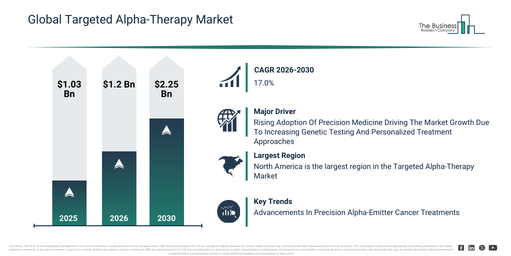
    Targeted Alpha-Therapy Market Poised To Hit $2.25 Billion By 2030 With A 17% CAGR

    The targeted alpha-therapy market size has shown significant expansion over recent years. It is anticipated to grow from $1.03 billion in 2025 to $1.2 billion in 2026, demonstrating a compound annual growth rate (CAGR) of 17.2%. Historically, this growth can be linked to advancements in nuclear medicine research, an escalating need for treatments in advanced cancers, the increase in radiopharmaceutical clinical trials, the availability of medical isotopes, and the rising acceptance of targeted radiation therapy.

    The targeted alpha-therapy market size is anticipated to undergo significant expansion in the coming years. It is projected to increase to $2.25 billion by 2030, exhibiting a compound annual growth rate (CAGR) of 17.0%. This growth during the forecast period is driven by factors such as greater investment in isotope manufacturing infrastructure, a rise in the adoption of personalized radiotherapy, the extension of targeted alpha therapies into new indications, increasing regulatory support for radiopharmaceuticals, and enhanced collaboration between nuclear and oncology specialists. Prominent trends expected in this period include the escalating development of alpha-emitting radiopharmaceuticals, a growing utilization of targeted radioligand therapies, a heightened focus on precision radiation delivery, the expansion of isotope production capabilities, and improved integration of targeting molecules.

    Get A Free Sample Report With In-Depth Market Insights:

    https://thebusinessresearchcompany.com/sample_request?id=82040748&type=smp&name=Targeted%20Alpha-Therapy%20Market%20Report%202026&utm_source=Blogs&utm_medium=Paid&utm_campaign=Oct_PR

    Targeted Alpha-Therapy Market Growth Catalysts And Demand Drivers

    The increasing emphasis on precision medicine is anticipated to boost the expansion of the targeted alpha-therapy market in the future. Precision medicine is defined as a healthcare strategy that tailors prevention, diagnosis, and treatment according to a person’s genetic profile, lifestyle, and surroundings to achieve superior results. The rise of precision medicine is driven by the expanding access to genetic testing, which facilitates more precise diagnoses and individualized treatments, leading to better patient outcomes. Targeted alpha-therapy contributes to precision medicine by delivering highly effective alpha-emitting isotopes specifically to cancer cells, thereby allowing for personalized and accurate treatment while reducing harm to healthy tissues. For example, data from March 2024, as reported by the American Pharmaceutical Review, a US-based journal, indicates that worldwide expenditure on precision medicine treatments amounted to approximately $32 billion in 2022 and is forecast to surpass $124 billion by 2027. Consequently, the increased attention on precision medicine is fueling the growth of the targeted alpha-therapy market.

    Targeted Alpha-Therapy Market Breakdown By Product Type And Application

    The targeted alpha-therapy market covered in this report is segmented –

    1) By Isotope Type: Actinium-225, Radium-223, Lead-212, Bismuth-213, Other Isotype Types

    2) By Application: Prostate Cancer, Bone Metastases, Pancreatic Cancer, Other Applications

    3) By End-User: Hospitals, Cancer Research Institutes, Specialty Clinics, Lymphoma, Other End Users

    Subsegments:

    1) By Actinium-225: Ac-225 Lintuzumab, Ac-225 PSMA-617, Ac-225 DOTATATE

    2) By Radium-223: Radium-223 Dichloride (Xofigo)

    3) By Lead-212: Pb-212 DOTAMTATE (AlphaMedix), Pb-212 TCMC-Trastuzumab

    4) By Bismuth-213: Bi-213 Lintuzumab, Bi-213 DOTATOC

    5) By Other Isotope Types: Thorium-227, Astatine-211, Terbium-149

    Targeted Alpha-Therapy Market Trends Shaping Long-Term Demand

    Leading companies in the targeted alpha-therapy market are concentrating on developing innovative solutions such as peptide receptor radionuclide therapy to enhance the efficacy of targeted cancer treatment, minimize off-target effects, and improve patient outcomes. Peptide receptor radionuclide therapy (PRRT) describes a precise cancer treatment that delivers radioactive isotopes directly to tumor cells by attaching them to peptides designed to specifically bind with receptors overexpressed on cancer cells, thereby reducing harm to healthy tissue. For instance, in February 2024, RadioMedix Inc., a US-based biotechnology company, partnered with Orano Med, a US-based pharma company, and secured the first targeted alpha therapy to achieve FDA breakthrough device designation, AlphaMedix (lead-212-Dotamtate), which aims to treat neuroendocrine tumors. It is formulated to treat advanced gastroenteropancreatic neuroendocrine tumors by delivering highly potent alpha radiation directly to cancer cells while protecting healthy tissue. Its key advantage stems from the high energy and short path length of alpha particles, which cause lethal DNA damage to tumor cells with minimal toxicity. This therapy offers a promising option for patients who are new to or have shown limited response to current beta-emitter treatments, with the objective of improving efficacy and safety in difficult-to-treat neuroendocrine tumors.

    Targeted Alpha-Therapy Market Company Landscape And Competitive Strategy

    Major companies operating in the targeted alpha-therapy market are Bayer Aktiengesellschaft, Novartis AG, Lantheus Holdings Inc., Telix Pharmaceuticals Limited, Eckert & Ziegler Strahlen- und Medizintechnik AG, Actinium Pharmaceuticals Inc., RayzeBio Inc., ITM Isotope Technologies Munich SE, ARTBIO Inc., AdvanCell Pty Ltd., IONETIX Corporation, Abdera Therapeutics Inc., Aktis Oncology Inc., Alpha-9 Oncology Inc., Clarity Pharmaceuticals Pty Ltd., Nucleus RadioPharma, Oncoinvent AS, PanTera, Perspective Therapeutics Inc., RadioMedix Inc.

    View The Full Targeted Alpha-Therapy Market Report:

    https://thebusinessresearchcompany.com/report/targeted-alpha-therapy-global-market-report?utm_source=Blogs&utm_medium=Paid&utm_campaign=Oct_PR

    Targeted Alpha-Therapy Market Geographic Distribution And Regional Opportunities

    North America was the largest region in the targeted alpha-therapy market in 2025. Asia Pacific is expected to be the fastest-growing region in the forecast period. The regions covered in the targeted alpha-therapy market report are Asia-Pacific, South East Asia, Western Europe, Eastern Europe, North America, South America, Middle East, Africa.

    Reach Out To Our Team:

    The Business Research Company: https://www.thebusinessresearchcompany.com/

    Americas: +1 310-496-7795

    Asia: +44 7882 955267 & +91 8897263534

    Europe: +44 7882 955267

    Email us at: marketing@tbrc.info

    Follow us on:

    LinkedIn: https://in.linkedin.com/company/the-business-research-company

    YouTube: https://www.youtube.com/channel/UC24_fI0rV8cR5DxlCpgmyFQ

    Global Market Model: https://www.thebusinessresearchcompany.com/global-market-model
  • Topical Drugs Contract Development And Manufacturing Organization (CDMO) Market Size And Growth In 2026: Key Factors Shaping Future Demand

    Topical Drugs Contract Development And Manufacturing Organization (CDMO) Market Size And Growth In 2026: Key Factors Shaping Future Demand

    Featuring market attractiveness scoring, total addressable market sizing, company benchmarking matrices, interactive Excel dashboards, deeper supply chain intelligence, emerging startup tracking, and granular product-level insights, The Business Research Company’s 2026 market reports are built to deliver research that is both more actionable and more strategically valuable.

    Topical Drugs Contract Development And Manufacturing Organization (CDMO) Market Growth Potential: How Will Market Size Shift Through 2030?

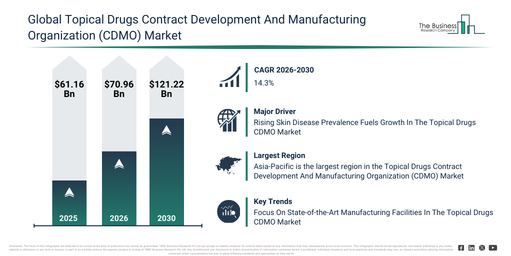
    The topical drugs contract development and manufacturing organization (CDMO) market has experienced rapid expansion recently. It is projected to increase from $61.16 billion in 2025 to $70.96 billion in 2026, showcasing a compound annual growth rate (CAGR) of 16.0%. The growth observed in the historic period can be ascribed to elements such as the increase in pharmaceutical outsourcing, a rising prevalence of dermatological conditions, cost optimization efforts by pharmaceutical companies, escalating regulatory complexity, and the wider expansion of generic topical drugs.

    The topical drugs contract development and manufacturing organization (cdmo) market is poised for substantial expansion over the next few years. It is forecast to grow to $121.22 billion in 2030 at a compound annual growth rate (CAGR) of 14.3%. This projected growth during the forecast period is driven by the increasing development of sophisticated topical therapies, a rising need for transdermal patches, the expansion of product pipelines within small and mid-sized pharmaceutical companies, a growing demand for scalable manufacturing capabilities, and an enhanced focus on expediting market entry. Significant trends anticipated in this period include an increase in the outsourcing of topical drug manufacturing, a surging requirement for complex topical formulations, the broadening of transdermal drug delivery platforms, a heightened emphasis on manufacturing processes that comply with regulations, and a greater inclination towards comprehensive end-to-end CDMO services.

    Get A Free Sample Report With In-Depth Market Insights:

    https://thebusinessresearchcompany.com/sample_request?id=50303436&type=smp&name=Topical%20Drugs%20Contract%20Development%20And%20Manufacturing%20Organization%20%28CDMO%29%20Market%20Report%202026&utm_source=Blogs&utm_medium=Paid&utm_campaign=Oct_PR

    Topical Drugs Contract Development And Manufacturing Organization (CDMO) Market Growth Factors: What’s Supporting Expansion?

    The burgeoning incidence of dermal ailments is projected to stimulate expansion within the topical drugs contract development and manufacturing organization (CDMO) market in the coming years. These conditions encompass various medical issues impacting the integumentary system, leading to symptoms like inflammation, pruritus, and skin lesions. A rise in these skin conditions stems from contributing factors including environmental pollution, exposure to UV radiation, genetic susceptibility, shifts in lifestyle, and microbial infections. The topical drugs contract development and manufacturing organization (CDMO) contributes to mitigating the frequency of skin diseases through the creation and production of specific treatments designed to enhance the management and care of dermatological ailments. An illustrative example is seen in 2023, where Cancer Australia, a government agency located in Australia, reported roughly 8,257 fresh diagnoses of melanoma of the skin, which represented 2.6% of all cancer-related fatalities. Consequently, the rising occurrence of skin diseases is a key impetus for the expansion of the topical drugs contract development and manufacturing organization (CDMO) market.

    Topical Drugs Contract Development And Manufacturing Organization (CDMO) Market Segment Trends And Revenue Contributors

    The topical drugs contract development and manufacturing organization (cdmo) market covered in this report is segmented –

    1) By Product Type: Semi-Solid Formulations, Liquid Formulations Drugs, Solid Formulations, Transdermal Products

    2) By Service Type: Contract Development, Contract Manufacturing

    3) By Therapeutic Area: Dermatology, Pain Management, Wound Care, Ophthalmology, Other Therapeutic Areas

    4) By End-Use: Pharmaceutical Companies, Biopharmaceutical Companies, Other End-Uses

    Subsegments:

    1) By Semi-Solid Formulations: Creams, Ointments, Gels, Pastes

    2) By Liquid Formulations Drugs: Solutions, Suspensions, Emulsions, Lotions

    3) By Solid Formulations: Powders

    4) By Transdermal Products: Patches

    Topical Drugs Contract Development And Manufacturing Organization (CDMO) Market Industry Trends: What’s Reshaping Demand?

    Major entities within the topical drugs contract development and manufacturing organization (CDMO) market are concentrating on establishing highly advanced production sites to maintain their standing. A state-of-the-art manufacturing facility is a specialized production location outfitted with the newest technology and sophisticated methods specifically tailored for the creation and production of topical pharmaceutical items. For instance, in November 2023, SOHM Inc., a US-based pharmaceutical company, opened a CDMO GMP manufacturing facility. The new Carlsbad facility is set to provide generous space for producing topical products and for SOHM’s operations, with 2,500 square feet designated for storing finished goods. Initially, it will possess a daily manufacturing capacity of 500 gallons (1,892 liters) for topicals. By the end of Q1 2024 or the start of Q2 2024, an expansion of its capacity to include soft-gel suppositories is anticipated.

    Topical Drugs Contract Development And Manufacturing Organization (CDMO) Market Competitive Landscape: Which Companies Lead The Industry?

    Major companies operating in the topical drugs contract development and manufacturing organization (cdmo) market are Catalent Inc., Lonza Group AG, Recipharm AB, Piramal Pharma Solutions, Cambrex Corporation, PCI Pharma Services, Famar S.A., Contract Pharmaceuticals Limited, UPM Pharmaceuticals Inc., MedPharm Ltd, Tergus Pharma LLC, NextPharma Technologies Holding Limited, Bora Pharmaceuticals Co. Ltd., LTS Lohmann Therapie-Systeme AG, CoreRx Inc., Halo Pharmaceutical Inc., Tapemark Company, Groupe PARIMA Inc., Dow Development Laboratories LLC, Tedor Pharma Inc.

    View The Full Topical Drugs Contract Development And Manufacturing Organization (CDMO) Market Report:

    https://thebusinessresearchcompany.com/report/topical-drugs-contract-development-and-manufacturing-organization-cdmo-global-market-report?utm_source=Blogs&utm_medium=Paid&utm_campaign=Oct_PR

    Topical Drugs Contract Development And Manufacturing Organization (CDMO) Market Geographic Analysis: Where Is Demand Rising Fastest?

    Asia-Pacific was the largest region in the topical drugs contract development and manufacturing organization (CDMO) market in 2025. The regions covered in the topical drugs contract development and manufacturing organization (cdmo) market report are Asia-Pacific, South East Asia, Western Europe, Eastern Europe, North America, South America, Middle East, Africa.

    Reach Out To Our Team:

    The Business Research Company: https://www.thebusinessresearchcompany.com/

    Americas: +1 310-496-7795

    Asia: +44 7882 955267 & +91 8897263534

    Europe: +44 7882 955267

    Email us at: marketing@tbrc.info

    Follow us on:

    LinkedIn: https://in.linkedin.com/company/the-business-research-company

    YouTube: https://www.youtube.com/channel/UC24_fI0rV8cR5DxlCpgmyFQ

    Global Market Model: https://www.thebusinessresearchcompany.com/global-market-model