Month: October 2026

  • Tissue Engineering For Wound Care Market Analysis: How The Industry Is Evolving Toward A $13.6 Billion Future

    Tissue Engineering For Wound Care Market Analysis: How The Industry Is Evolving Toward A $13.6 Billion Future

    Built to provide research that’s more actionable and strategically valuable, The Business Research Company’s 2026 market reports include market attractiveness analysis, total addressable market sizing, company benchmarking matrices, interactive Excel dashboards, broader supply chain intelligence, emerging startup tracking, and in-depth product insights.

    Tissue Engineering For Wound Care Market Size, Value And Growth Trajectory Through 2030

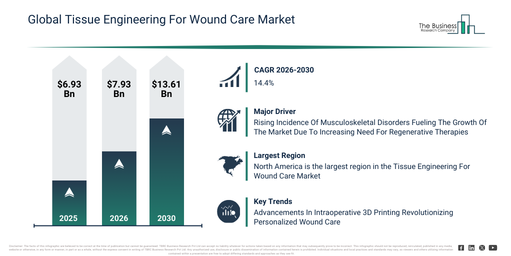
    The tissue engineering for wound care market has experienced substantial expansion in recent years. Its valuation is set to increase from $6.93 billion in 2025 to $7.93 billion in 2026, with a compound annual growth rate (CAGR) of 14.5%. The historical growth of this market can be linked to an aging population, the prevalence of diabetes, burn injuries, established hospital wound care programs, and advancements in biomaterials.

    The tissue engineering for wound care market is expected to demonstrate significant growth in the coming years. This market is forecasted to reach $13.61 billion by 2030, achieving a compound annual growth rate (CAGR) of 14.4%. The expansion projected for this period is driven by factors such as an increase in chronic wound cases, the adoption of regenerative medicine, the growth of outpatient wound care, innovations in biomaterials, and rising healthcare expenditure. Notable trends during the forecast period include the increasing use of bioengineered skin substitutes, the development of chronic wound management solutions, the integration of stem cell-based therapies, the broadened availability of advanced wound care products, and a stronger focus on achieving faster tissue regeneration.

    Get A Free Sample Report With In-Depth Market Insights:

    https://thebusinessresearchcompany.com/sample_request?id=94422404&type=smp&name=Tissue%20Engineering%20For%20Wound%20Care%20Market%20Report%202026&utm_source=Blogs&utm_medium=Paid&utm_campaign=Oct_PR

    Tissue Engineering For Wound Care Market Opportunity Drivers: What’s Unlocking New Revenue Potential?

    A growing number of musculoskeletal disorders is projected to drive expansion in the tissue engineering for wound care market over the next few years. These disorders involve conditions impacting muscles, bones, joints, tendons, or ligaments, leading to symptoms such as pain, rigidity, or restricted mobility. The increase in musculoskeletal disorders stems from more sedentary habits, where prolonged sitting and less physical activity cause muscles to weaken and joints to experience stress, resulting in persistent problems. Tissue engineering for wound care becomes essential for musculoskeletal disorders due to its capacity to aid in the regeneration of compromised tissues, thereby assisting in the recovery of function and structure in regions where natural recovery is inadequate. For example, in January 2024, data from the Office for Health Improvement and Disparities, a UK-based government public health agency, revealed that the percentage of individuals aged 16 and over reporting a long-term musculoskeletal (MSK) condition was 18.4% in 2023, an increase from 17.6% in 2022. Consequently, the rising occurrence of musculoskeletal disorders is set to stimulate the expansion of the tissue engineering for wound care market.

    Tissue Engineering For Wound Care Market Segment Outlook: Which Categories Are Growing Fastest?

    The tissue engineering for wound care market covered in this report is segmented –

    1) By Product Material: Scaffold, Tissue Grafts, Other Products

    2) By Type Of Wound: Chronic Wounds, Acute Wounds

    3) By Application: Skin Regeneration, Soft Tissue Repair

    4) By End-User: Hospitals, Specialty Centers And Clinics, Ambulatory Surgical Centers

    Subsegments:

    1) By Scaffold: Natural Scaffolds, Synthetic Scaffolds, Composite Scaffolds, Hydrogels, Nanofiber-Based Scaffolds

    2) By Tissue Grafts: Autografts, Allografts, Xenografts, Bioengineered Skin Substitutes, Amniotic Tissue Grafts

    3) By Other Products: Cell-Based Products, Growth Factors, Acellular Dermal Matrices, Collagen-Based Dressings, Stem Cell-Derived Biomaterials

    Tissue Engineering For Wound Care Market Innovation Trends Shaping Future Development

    Leading companies active in the tissue engineering for wound care market are concentrating on developing technologically advanced solutions, such as intraoperative 3D printers, to facilitate the rapid creation of complex structures. These advanced intraoperative 3D printers are tools utilized during surgical procedures to generate customized implants, models, or instruments in real-time, thereby improving precision and patient-specific treatment. For example, in September 2024, Tides Medical, a US-based biotechnology company, launched APLICOR 3D, an intraoperative 3D printer for personalized wound care. This innovation transforms wound care by employing the patient’s own tissue, artificial intelligence, and 3D printing technology to form personalized skin grafts directly at the treatment location. This singular procedure caters to the distinct needs of each patient while simplifying supply chain logistics, inventory management, and decreasing the workload for physicians. After the exact size, depth, and tissue volume required are determined by scanning the wound with a specialized tablet, the provider transmits the 3D file to the printer. Subsequently, after harvesting and processing fat into bio-ink, the 3D printer constructs the graft, allowing for effective wound closure in under one hour.

    Tissue Engineering For Wound Care Market Leading Companies And Competitive Benchmarking

    Major companies operating in the tissue engineering for wound care market are Smith & Nephew plc, ConvaTec Group Plc, MTF Biologics, MiMedx Group Inc., LifeNet Health Inc., Kerecis LLC, Aroa Biosurgery Ltd., Tissue Regenix Group PLC, BioStem Technologies Inc., Organogenesis Holdings Inc., Integra LifeSciences Holdings Corporation, Osiris Therapeutics (Smith & Nephew), Stryker Corporation, Medline Industries LP, Mölnlycke Health Care AB, 3M Health Care, Cardinal Health Inc., Derma Sciences Inc., Acell Inc., Wright Medical Group N.V., Anika Therapeutics Inc., Regen Lab SA, Skye Biologics Inc., Human Regenerative Technologies LLC, StimLabs LLC

    View The Full Tissue Engineering For Wound Care Market Report:

    https://thebusinessresearchcompany.com/report/tissue-engineering-for-wound-care-global-market-report?utm_source=Blogs&utm_medium=Paid&utm_campaign=Oct_PR

    Tissue Engineering For Wound Care Market Regional Analysis: Which Region Leads By Revenue?

    North America was the largest region in the tissue engineering for wound care market in 2025. The regions covered in the tissue engineering for wound care market report are Asia-Pacific, South East Asia, Western Europe, Eastern Europe, North America, South America, Middle East, Africa.

    Reach Out To Our Team:

    The Business Research Company: https://www.thebusinessresearchcompany.com/

    Americas: +1 310-496-7795

    Asia: +44 7882 955267 & +91 8897263534

    Europe: +44 7882 955267

    Email us at: marketing@tbrc.info

    Follow us on:

    LinkedIn: https://in.linkedin.com/company/the-business-research-company

    YouTube: https://www.youtube.com/channel/UC24_fI0rV8cR5DxlCpgmyFQ

    Global Market Model: https://www.thebusinessresearchcompany.com/global-market-model
  • Ticagrelor Market Outlook Through 2030: Understanding The Growth Opportunity

    Ticagrelor Market Outlook Through 2030: Understanding The Growth Opportunity

    Backed by market attractiveness analysis, total addressable market sizing, company benchmarking matrices, interactive Excel dashboards, wider supply chain intelligence, emerging startup coverage, and detailed product-level insights, The Business Research Company’s 2026 market reports are designed to offer research that is more actionable and strategically valuable than ever.

    Ticagrelor Market CAGR Outlook And Future Development

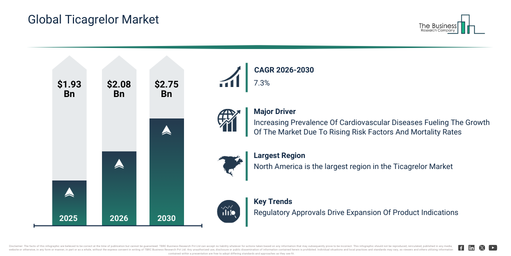
    The ticagrelor market size has shown substantial growth in recent years. It is projected to expand from $1.93 billion in 2025 to $2.08 billion in 2026, achieving a compound annual growth rate (CAGR) of 7.6%. The expansion observed in the historical period stems from various factors, including the restricted availability of antiplatelet therapies, an increasing prevalence of cardiovascular disease, the broadening of hospital pharmacy networks, a rise in clinical trials for cardiovascular drugs, and enhanced awareness regarding heart attack and stroke risks.

    The ticagrelor market is projected to experience robust expansion over the coming years, with its valuation anticipated to reach $2.75 billion by 2030, demonstrating a compound annual growth rate (CAGR) of 7.3%. This growth during the forecast period is attributable to several factors, including the introduction of extended-release ticagrelor tablets, the broadening of retail and online pharmacy distribution channels, the growing embrace of personalized cardiovascular treatment, escalating government efforts for cardiovascular disease prevention, and the incorporation of digital health monitoring systems. Key trends shaping the forecast period encompass the increasing application of ticagrelor in managing acute coronary syndrome, a rising inclination towards oral antiplatelet therapy instead of injectable alternatives, the expansion of hospital-based and ambulatory cardiology services, heightened awareness regarding stroke and myocardial infarction prevention, and the continued development of extended-release ticagrelor formulations.

    Get A Free Sample Report With In-Depth Market Insights:

    https://thebusinessresearchcompany.com/sample_request?id=33442923&type=smp&name=Ticagrelor%20Market%20Report%202026&utm_source=Blogs&utm_medium=Paid&utm_campaign=Oct_PR

    Ticagrelor Market Growth Momentum: What Factors Are Shaping Demand?

    The escalating incidence of cardiovascular diseases is anticipated to drive the expansion of the ticagrelor market moving forward. These conditions refer to a range of disorders impacting the heart and blood vessels, including coronary heart disease, heart failure, stroke, and hypertension. The increasing occurrence of cardiovascular diseases is mainly linked to unhealthy dietary choices, as consuming excessive amounts of saturated fats, trans fats, added sugars, and sodium contributes to high blood pressure, obesity, and elevated cholesterol, all major risk factors for heart-related ailments. Ticagrelor assists in treating cardiovascular diseases by preventing platelet aggregation, thereby lowering the risk of blood clots. This mechanism enhances patient outcomes by reducing the chances of heart attacks and strokes, especially in high-risk individuals. For instance, according to the American Heart Association, a US-based non-profit organization, the age-adjusted death rate from cardiovascular disease increased to 233.3 per 100,000 in 2024, up 4.0% from 224.4 per 100,000 in 2023, as reported in January 2024. Therefore, the rising prevalence of cardiovascular diseases is propelling the growth of the ticagrelor market.

    Ticagrelor Market Segment Landscape: Which Areas Lead Development?

    The ticagrelor market covered in this report is segmented –

    1) By Type: 90 mg Tablet, 60 mg Tablet

    2) By Drug Class: Antiplatelet Agents, Antithrombotic Agents

    3) By Distribution Channel: Hospital Pharmacies, Retail Pharmacies, Online Pharmacies

    4) By Application: Acute Coronary Syndrome, Myocardial Infarction, Stroke Prevention, Other Applications

    5) By End User: Hospitals And Clinics, Ambulatory Centers, Other End Users

    Ticagrelor Market Trends Redefining Industry Growth

    Leading firms in the ticagrelor market are actively seeking regulatory approvals to broaden product applications, enhance market access, and strengthen their competitive position. Such regulatory approvals denote the official permission granted by governmental bodies for the marketing and sale of a product, ensuring adherence to safety, efficacy, and quality standards. For instance, in May 2025, Alembic Pharmaceuticals Ltd., an India-based pharmaceutical company, secured an abbreviated new drug application (ANDA) from the US Food & Drug Administration (USFDA) for its generic ticagrelor tablets 90 mg and received tentative approval for the 60 mg strength. These tablets are prescribed to lower the risk of cardiovascular events and operate by inhibiting platelet aggregation, thereby preventing the formation of blood clots.

    Ticagrelor Market Industry Leaders And Competitive Landscape

    Major companies operating in the ticagrelor market are AstraZeneca PLC, Merck KGaA, Boehringer Ingelheim International GmbH, Sun Pharmaceutical Industries Limited, Dr. Reddy’s Laboratories Limited, Cadila Pharmaceuticals Limited, Alkem Laboratories, Alembic Pharmaceuticals Limited, CCL Pharmaceuticals, Neuland Laboratories, Jiangxi Synergy Pharmaceutical Co. Ltd., Leeford Healthcare Limited, Scimplify, JAMP Pharma Corporation, Actoverco Pharmaceutical Company, CTX Lifesciences Private Limited, DM Pharma, Hema Pharmaceuticals Pvt. Ltd., Chia-Tai Tianqing Pharmaceutical Group Co. Ltd., Biophar Lifesciences Pvt. Ltd., PhaseBio Pharmaceuticals Inc.

    View The Full Ticagrelor Market Report:

    https://thebusinessresearchcompany.com/report/ticagrelor-global-market-report?utm_source=Blogs&utm_medium=Paid&utm_campaign=Oct_PR

    Ticagrelor Market Geographic Distribution And Regional Opportunities

    North America was the largest region in the ticagrelor market in 2025. Asia-Pacific is expected to be the fastest-growing region in the forecast period. The regions covered in the ticagrelor market report are Asia-Pacific, South East Asia, Western Europe, Eastern Europe, North America, South America, Middle East, Africa.

    Reach Out To Our Team:

    The Business Research Company: https://www.thebusinessresearchcompany.com/

    Americas: +1 310-496-7795

    Asia: +44 7882 955267 & +91 8897263534

    Europe: +44 7882 955267

    Email us at: marketing@tbrc.info

    Follow us on:

    LinkedIn: https://in.linkedin.com/company/the-business-research-company

    YouTube: https://www.youtube.com/channel/UC24_fI0rV8cR5DxlCpgmyFQ

    Global Market Model: https://www.thebusinessresearchcompany.com/global-market-model
  • Tibsovo Market Growth Potential: What The Latest Forecast Reveals

    Tibsovo Market Growth Potential: What The Latest Forecast Reveals

    Featuring market attractiveness scoring, total addressable market sizing, company benchmarking matrices, interactive Excel dashboards, deeper supply chain intelligence, emerging startup tracking, and granular product-level insights, The Business Research Company’s 2026 market reports are built to deliver research that is both more actionable and more strategically valuable.

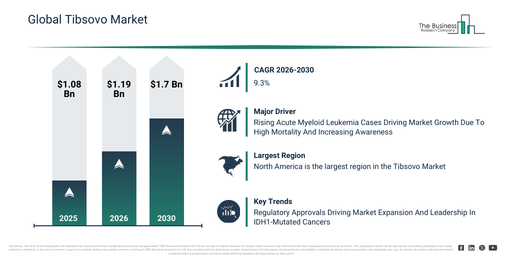
    Tibsovo Market Set To Climb From $1.18 Billion In 2026 To $1.69 Billion By 2030

    The tibsovo market has witnessed significant expansion over recent years. It is projected to grow from $1.08 billion in 2025 to $1.19 billion in 2026, demonstrating a compound annual growth rate (CAGR) of 9.6%. Historically, this market expansion was primarily driven by factors such as the restricted availability of IDH1-targeted drugs, the increasing prevalence of AML and cholangiocarcinoma, a reliance on conventional chemotherapy, limited awareness regarding genetic mutation testing, and constrained access to specialized oncology clinics.

    The tibsovo market is projected to experience robust expansion in the coming years. It is anticipated to reach $1.7 billion by 2030, exhibiting a compound annual growth rate (CAGR) of 9.3%. This expansion during the forecast period is fueled by factors such as the creation of innovative oral targeted treatments, the increased embrace of genetic testing and tailored medicine, the broadening of combination therapy protocols, escalating investment in cancer research, and the proliferation of hospital and specialized clinic networks. Key trends anticipated over the same period encompass the heightened acceptance of targeted therapies for AML and cholangiocarcinoma, a shift towards oral targeted medications instead of intravenous delivery, the broadening of combined therapeutic strategies, increasing recognition of IDH1 mutation testing, and a stronger emphasis on individualized cancer care.

    Get A Free Sample Report With In-Depth Market Insights:

    https://thebusinessresearchcompany.com/sample_request?id=32672777&type=smp&name=Tibsovo%20Market%20Report%202026&utm_source=Blogs&utm_medium=Paid&utm_campaign=Oct_PR

    Tibsovo Market Expansion Drivers: What’s Shaping Future Growth?

    The rising incidence of acute myeloid leukemia is anticipated to boost the expansion of the tibsovo market in the foreseeable future. Acute myeloid leukemia (AML) is characterized as a rapidly advancing cancer affecting the blood and bone marrow, which directly compromises blood cell generation, immune system functionality, and general well-being. The growing occurrence of acute myeloid leukemia can be largely attributed to the worldwide increase in the elderly population, given that the illness predominantly impacts older individuals, and extended lifespans result in a greater number of people reaching the age group most prone to acquiring this type of leukemia. Tibsovo assists in managing acute myeloid leukemia by specifically targeting IDH1-mutated cancer cells, thereby curbing irregular cell proliferation, slowing down disease advancement, improving therapeutic efficacy, and boosting survival prospects through the restoration of regular blood cell formation. As an illustration, a report released in February 2023 by the Leukemia Foundation, an Australian non-profit entity, projected that from 2022 to 2035, more than 7,000 children, 6,000 young adults, and 108,000 adults (25–65) are anticipated to receive diagnoses for blood cancers, predominantly encompassing ALL, AML, and non-Hodgkin lymphoma. Consequently, the expanding prevalence of acute myeloid leukemia is propelling the development of the tibsovo market.

    Tibsovo Market Segments: Where Is Growth Concentrated?

    The tibsovo market covered in this report is segmented –

    1) By Product: Tablets, Combination Therapy

    2) By Drug Administration: Oral Administration, Intravenous Administration

    3) By Distribution Channel: Hospital Pharmacies, Retail Pharmacies, Online Pharmacies

    4) By Application: Cancer Treatment, Acute Myeloid Leukemia, Targeted Therapy

    5) By End User: Hospitals, Specialty Clinics, Research Institutions, Homecare Settings

    Subsegments:

    1) By Tablets: Oral Tablets, Extended-Release Tablets

    2) By Combination Therapy: Tibsovo + Chemotherapy Agents, Tibsovo + Targeted Therapy Agents

    Tibsovo Market Strategic Trends: What Defines The Next Growth Phase?

    Leading firms in the tibsovo market are prioritizing the acquisition of regulatory authorizations to expand the drug’s availability and sustain its dominant position in treating IDH1-mutated cancers. These approvals represent official clearances from health bodies, permitting a medication to be lawfully distributed and utilized for particular health issues once its safety and efficacy are confirmed. An illustrative example is Servier Laboratoires, a pharmaceutical firm based in France, which in October 2023 secured approval from the European Commission for tibsovo (ivosidenib tablets), establishing it as the inaugural and sole IDH1-targeted treatment sanctioned in Europe for two difficult-to-treat forms of cancer. Its authorization covers its use alongside azacitidine for individuals newly diagnosed with acute myeloid leukemia (AML) presenting an IDH1 R132 mutation who cannot undergo conventional induction chemotherapy, and as a standalone therapy for adults suffering from locally advanced or metastatic cholangiocarcinoma with the identical mutation, following at least one previous systemic treatment. This particular approval, benefiting from an orphan drug designation, addresses significant unfulfilled medical requirements and offers renewed promise for enhanced patient outcomes and improved quality of life.

    Tibsovo Market Key Participants And Competitive Landscape

    Major companies operating in the tibsovo market are Servier Laboratoires, Agios Pharmaceuticals

    View The Full Tibsovo Market Report:

    https://thebusinessresearchcompany.com/report/tibsovo-global-market-report?utm_source=Blogs&utm_medium=Paid&utm_campaign=Oct_PR

    Tibsovo Market Largest Region By Revenue And Market Share

    North America was the largest region in the tibsovo market in 2025. Asia-Pacific is expected to be the fastest-growing region in the forecast period. The regions covered in the tibsovo market report are Asia-Pacific, South East Asia, Western Europe, Eastern Europe, North America, South America, Middle East, Africa.

    Reach Out To Our Team:

    The Business Research Company: https://www.thebusinessresearchcompany.com/

    Americas: +1 310-496-7795

    Asia: +44 7882 955267 & +91 8897263534

    Europe: +44 7882 955267

    Email us at: marketing@tbrc.info

    Follow us on:

    LinkedIn: https://in.linkedin.com/company/the-business-research-company

    YouTube: https://www.youtube.com/channel/UC24_fI0rV8cR5DxlCpgmyFQ

    Global Market Model: https://www.thebusinessresearchcompany.com/global-market-model
  • Thyroid Cancer Drugs Market Growth Outlook: Why Analysts Expect Continued Expansion

    Thyroid Cancer Drugs Market Growth Outlook: Why Analysts Expect Continued Expansion

    Built to provide research that’s more actionable and strategically valuable, The Business Research Company’s 2026 market reports include market attractiveness analysis, total addressable market sizing, company benchmarking matrices, interactive Excel dashboards, broader supply chain intelligence, emerging startup tracking, and in-depth product insights.

    Thyroid Cancer Drugs Market Forecast: Value Set To Climb From $1.47 Billion To $2.38 Billion

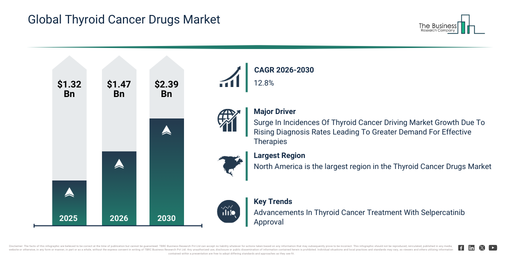
    The market size for thyroid cancer drugs has expanded rapidly in recent years. It is projected to grow from $1.32 billion in 2025 to $1.47 billion in 2026, at a compound annual growth rate (CAGR) of 11.8%. The growth observed in the past can be attributed to the escalating incidence of thyroid cancer, the adoption of kinase inhibitors, advancements in cancer diagnostics, the expansion of oncology hospitals, and enhanced access to targeted therapies.

    The thyroid cancer drugs market is anticipated to undergo substantial expansion over the next few years. It is projected to reach $2.39 billion by 2030, exhibiting a compound annual growth rate (CAGR) of 12.8%. This growth during the forecast period is attributed to several factors, including the increasing availability of personalized oncology drugs, a rising incidence of advanced thyroid cancer, intensified clinical trial activity, the broadening scope of immunotherapy combinations, and elevated oncology healthcare spending. Furthermore, major trends for this period encompass the rising adoption of targeted multikinase therapies, increased use of combination drug regimens, a growing focus on advanced and refractory thyroid cancer, the expansion of precision oncology treatment approaches, and enhanced hospital-based thyroid cancer management.

    Get A Free Sample Report With In-Depth Market Insights:

    https://thebusinessresearchcompany.com/sample_request?id=16185843&type=smp&name=Thyroid%20Cancer%20Drugs%20Market%20Report%202026&utm_source=Blogs&utm_medium=Paid&utm_campaign=Oct_PR

    Thyroid Cancer Drugs Market Development Factors: What’s Supporting Demand?

    The escalating occurrence of thyroid cancer is poised to drive the growth of the thyroid cancer drugs market in the coming years. Thyroid cancer involves malignant tumors developing in the thyroid gland, requiring prompt diagnosis and effective therapeutic intervention to prevent its progression and metastasis. The increase in thyroid cancer cases results from a combination of enhanced detection through more sensitive diagnostic procedures and a rise attributed to greater exposure to environmental factors. This growing prevalence of thyroid cancer bolsters the thyroid cancer drugs by stimulating demand for targeted therapies, immunotherapies, radiopharmaceuticals, and hormone-suppressing medications, which improve treatment outcomes and long-term survival. For instance, in September 2025, according to Cancer Research United Kingdom, a UK-based non-profit organization focused on cancer research and patient support, approximately 6,600 new cases of thyroid cancer are projected annually by 2038-2040, with incidence rates expected to rise by 27% from approximately 7.3 cases per 100,000 people per year in 2024-2026 to around 9.2 cases per 100,000. Therefore, the increasing incidences of thyroid cancer are propelling the expansion of the thyroid cancer drugs market.

    Thyroid Cancer Drugs Market Segment Analysis: What Are The Core Market Categories?

    The thyroid cancer drugs market covered in this report is segmented –

    1) By Drug Type: Ipilimumab, Cabozantinib-S-Malate, Caprelsa (Vandetanib), Doxorubicin Hydrochloride, Lenvatinib Mesylate, Nivolumab, Vandetanib, Other Drug Types

    2) By Type: Radioiodine Ablation, Thyroid Stimulating Hormone (THS) Suppression, Chemotherapy, Targeted Multikinase Therapy, Other Types

    3) By End Users: Hospitals, Oncology Clinics, Research Organizations, Other End-Users

    Subsegments:

    1) By Ipilimumab: Monotherapy Ipilimumab, Combination Therapy With Ipilimumab

    2) By Cabozantinib-S-Malate: Single-Agent Cabozantinib, Combination Therapy With Cabozantinib

    3) By Caprelsa (Vandetanib): Vandetanib For Medullary Thyroid Cancer (MTC), Combination Therapy With Vandetanib

    4) By Doxorubicin Hydrochloride: Doxorubicin For Chemotherapy, Liposomal Doxorubicin

    5) By Lenvatinib Mesylate: Lenvatinib For Differentiated Thyroid Cancer (DTC), Combination Therapy With Lenvatinib

    6) By Nivolumab: Monotherapy Nivolumab, Combination Therapy With Nivolumab

    7) By Vandetanib: Single-Agent Vandetanib, Combination Therapy With Vandetanib

    8) By Other Drug Types: Sorafenib, Everolimus, Pembrolizumab

    Thyroid Cancer Drugs Market Transformation Trends: What Innovations Are Driving Change?

    Leading companies active in the thyroid cancer market are innovating products such as selpercatinib to enhance treatment possibilities and patient outcomes. Selpercatinib, available under the brand Retevmo, is a medicine used to treat various cancers associated with Rearranged During Transfection (RET) mutations, including advanced or metastatic medullary thyroid cancer (MTC) and RET fusion-positive thyroid cancer. For instance, in September 2024, Eli Lilly and Company, a US-based pharmaceutical firm, received approval for selpercatinib (Retevmo) from the Food and Drug Administration (FDA), a US-based federal body tasked with safeguarding public health, for the management of advanced or metastatic medullary thyroid cancer (MTC) with a RET mutation. This authorization is valid for both adult and pediatric patients aged 2 years and older who require systemic therapy. This recent traditional approval represents a substantial improvement in treatment availability for patients with this specific variety of thyroid cancer.

    Thyroid Cancer Drugs Market Top Companies Driving Competitive Growth

    Major companies operating in the thyroid cancer drugs market are AbbVie Inc., AstraZeneca PLC, Bayer AG, Bristol Myers Squibb Company, Daiichi Sankyo Company Limited, Eisai Co. Ltd., Eli Lilly and Company, Exelixis Inc., F. Hoffmann-La Roche Ltd, Ipsen Biopharmaceuticals Inc., Johnson & Johnson, Kyowa Kirin Co. Ltd., Merck & Co. Inc., Novartis AG, Pfizer Inc., Sanofi S.A., Takeda Pharmaceutical Company Limited, Amgen Inc., Astellas Pharma Inc., Boehringer Ingelheim International GmbH

    View The Full Thyroid Cancer Drugs Market Report:

    https://thebusinessresearchcompany.com/report/Thyroid-Cancer-Drugs-Global-Market-Report?utm_source=Blogs&utm_medium=Paid&utm_campaign=Oct_PR

    Thyroid Cancer Drugs Market Regional Analysis And Leading Geography

    North America was the largest region in the thyroid cancer drugs market in 2025. Middle East is expected to be the fastest-growing region in the thyroid cancer drugs market during the forecast period. The regions covered in the thyroid cancer drugs market report are Asia-Pacific, South East Asia, Western Europe, Eastern Europe, North America, South America, Middle East, Africa.

    Reach Out To Our Team:

    The Business Research Company: https://www.thebusinessresearchcompany.com/

    Americas: +1 310-496-7795

    Asia: +44 7882 955267 & +91 8897263534

    Europe: +44 7882 955267

    Email us at: marketing@tbrc.info

    Follow us on:

    LinkedIn: https://in.linkedin.com/company/the-business-research-company

    YouTube: https://www.youtube.com/channel/UC24_fI0rV8cR5DxlCpgmyFQ

    Global Market Model: https://www.thebusinessresearchcompany.com/global-market-model
  • Thrombosis And Hemostasis Biomarkers Market Forecast Insights: The Road To $7.37 Billion By 2030

    Thrombosis And Hemostasis Biomarkers Market Forecast Insights: The Road To $7.37 Billion By 2030

    Backed by market attractiveness analysis, total addressable market sizing, company benchmarking matrices, interactive Excel dashboards, wider supply chain intelligence, emerging startup coverage, and detailed product-level insights, The Business Research Company’s 2026 market reports are designed to offer research that is more actionable and strategically valuable than ever.

    Thrombosis And Hemostasis Biomarkers Market Revenue Growth On Track For A 7.3% CAGR Through 2030

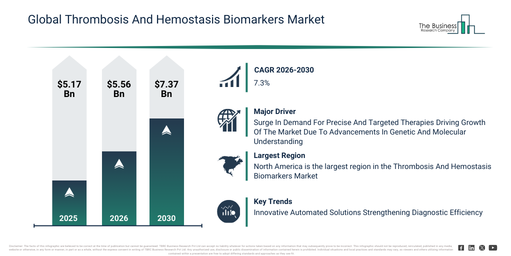
    The thrombosis and hemostasis biomarkers market has experienced robust growth in recent years. It is projected to expand from $5.17 billion in 2025 to $5.56 billion in 2026, achieving a compound annual growth rate (CAGR) of 7.6%. The historical growth of this market can be attributed to several factors, including the limited availability of coagulation biomarkers, the reliance on manual and semi-automated analyzers, an increasing prevalence of cardiovascular disorders, the growing diagnostic laboratory infrastructure, and a rising awareness of thrombosis and hemostasis disorders.

    The thrombosis and hemostasis biomarkers market size is projected to experience robust growth in the upcoming years. It is forecast to expand to $7.37 billion by 2030, exhibiting a compound annual growth rate (CAGR) of 7.3%. This anticipated growth during the forecast period is driven by technological advancements in fully automated analyzers, the increasing adoption of POCT coagulation devices, rising investment in personalized medicine, the expansion of pharmaceutical and diagnostic research, and the development of novel biomarkers for early disease detection. Significant trends expected in this period encompass the growing integration of advanced coagulation analyzers, an escalating demand for point-of-care testing solutions, a heightened focus on the early detection of cardiovascular disorders, the proliferation of diagnostic reagents and immunoassay kits, and the incorporation of biomarker testing into personalized medicine.

    Get A Free Sample Report With In-Depth Market Insights:

    https://thebusinessresearchcompany.com/sample_request?id=33797030&type=smp&name=Thrombosis%20And%20Hemostasis%20Biomarkers%20Market%20Report%202026&utm_source=Blogs&utm_medium=Paid&utm_campaign=Oct_PR

    Thrombosis And Hemostasis Biomarkers Market Industry Drivers: What’s Behind The Revenue Growth?

    The increasing requirement for precise and targeted therapies is projected to stimulate the expansion of the thrombosis and hemostasis biomarkers market. These advanced treatment methods specifically address the molecular and genetic characteristics of a patient’s disease, aiming to boost efficacy and reduce adverse effects. The rising demand for such therapies is driven by a deeper comprehension of genetic and molecular variations in diseases, enabling treatments to be more personalized for individual patients, thereby enhancing effectiveness and decreasing side effects. This demand for precise and targeted therapies benefits thrombosis and hemostasis biomarkers by fostering the development of more accurate diagnostic tools that can pinpoint specific biomarkers, ultimately leading to more effectively targeted treatments for clotting disorders and improved patient outcomes. For instance, in March 2024, Novotech, an Australia-based contract research organization (CRO), indicated that out of the 217 FDA-approved oncology therapies by the close of 2023, 43% were categorized as precision oncology treatments, with 78 incorporating deoxyribonucleic acid (DNA) or next-generation sequencing (NGS)-detectable biomarkers. Therefore, the growing demand for precise and targeted therapies will propel the growth of the thrombosis and hemostasis biomarkers market.

    Thrombosis And Hemostasis Biomarkers Market Segment Breakdown: Which Categories Lead On Revenue?

    The thrombosis and hemostasis biomarkers market covered in this report is segmented –

    1) By Product: Reagents And Consumables, Analyzers

    2) By Test Type: D-Dimer, Anti-Thrombin III, Plasminogen, Soluble Fibrin, Factor VIII, Post-Thrombin (PT), Activated Partial Thromboplastin Time (APTT) Test, Other Test Types

    3) By Application: Cardiovascular Disorders, Neurological Disorders, Oncology, Pregnancy-Related Disorders, Orthopedic Procedures

    4) By End User: Hospitals, Diagnostics Laboratories, Pharmaceutical Companies, Academic Institutions, Home Healthcare Settings

    Subsegments:

    1) By Reagents And Consumables: Coagulation Reagents, Control And Calibration Materials, Immunoassay Kits

    2) By Analyzers: Fully Automated Coagulation Analyzers, Semi-Automated Coagulation Analyzers, Point-Of-Care Coagulation Devices

    #Thrombosis And Hemostasis Biomarkers Market Growth Trends: What’s Shaping The Future Outlook?

    Leading companies within the thrombosis and hemostasis biomarkers market are concentrating on creating sophisticated solutions like automation integration, which enables more efficient laboratory processes and enhances testing accuracy. Automation integration in a clinical laboratory involves utilizing interconnected automated systems, instruments, and robotics to carry out laboratory testing procedures with minimal human involvement. For example, in April 2024, Siemens Healthcare, a Germany-based medical technology company, and Sysmex Corporation, a Japan-based medical technology company, introduced their joint portfolio of hemostasis testing solutions for laboratories. This comprehensive offering comprises a wide array of proven instruments and assay kits intended to support laboratory testing for various bleeding and clotting disorders, while also allowing for dynamic sample routing with automated reflex testing, which reduces turnaround times and increases throughput without requiring additional staff. Moreover, automation supports centralized control and real-time monitoring, facilitating intelligent workflow management, seamless quality control integration, and optimal resource allocation.

    Thrombosis And Hemostasis Biomarkers Market Leading Players And Competitive Positioning

    Major companies operating in the thrombosis and hemostasis biomarkers market are F. Hoffmann-La Roche Ltd., Thermo Fisher Scientific Inc., Abbott Laboratories, Siemens Healthineers AG, Becton Dickinson and Company (BD), Mayo Clinic Laboratories, bioMérieux S.A., Beckman Coulter Inc., QuidelOrtho Corporation, Bio-Rad Laboratories Inc., ARUP Laboratories, HORIBA Ltd., Werfen S.A., Pathkind Diagnostics Pvt. Ltd., Diagnostica Stago, Agilus Diagnostics, Helena Laboratories Corporations, Cleveland Clinic Laboratories, Diazyme Laboratories Inc., Biomedica Diagnostics Inc., Atlas Medical GmbH

    View The Full Thrombosis And Hemostasis Biomarkers Market Report:

    https://thebusinessresearchcompany.com/report/thrombosis-and-hemostasis-biomarkers-global-market-report?utm_source=Blogs&utm_medium=Paid&utm_campaign=Oct_PR

    Thrombosis And Hemostasis Biomarkers Market Geographic Analysis: Where Is Demand Accelerating Fastest?

    North America was the largest region in the thrombosis and hemostasis biomarkers market in 2025. Asia-Pacific is expected to be the fastest-growing region in the forecast period. The regions covered in the thrombosis and hemostasis biomarkers market report are Asia-Pacific, South East Asia, Western Europe, Eastern Europe, North America, South America, Middle East, Africa.

    Reach Out To Our Team:

    The Business Research Company: https://www.thebusinessresearchcompany.com/

    Americas: +1 310-496-7795

    Asia: +44 7882 955267 & +91 8897263534

    Europe: +44 7882 955267

    Email us at: marketing@tbrc.info

    Follow us on:

    LinkedIn: https://in.linkedin.com/company/the-business-research-company

    YouTube: https://www.youtube.com/channel/UC24_fI0rV8cR5DxlCpgmyFQ

    Global Market Model: https://www.thebusinessresearchcompany.com/global-market-model
  • Thrombophilia Market Explained: What Is Fueling Growth To $26.5 Billion By 2030?

    Thrombophilia Market Explained: What Is Fueling Growth To $26.5 Billion By 2030?

    Featuring market attractiveness scoring, total addressable market sizing, company benchmarking matrices, interactive Excel dashboards, deeper supply chain intelligence, emerging startup tracking, and granular product-level insights, The Business Research Company’s 2026 market reports are built to deliver research that is both more actionable and more strategically valuable.

    Thrombophilia Market Value Growth And Long-Term Outlook

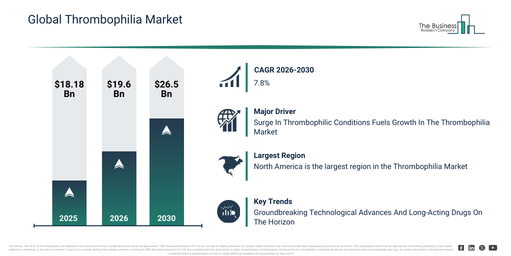
    The thrombophilia market has experienced robust growth in recent years. It will grow from $18.18 billion in 2025 to $19.6 billion in 2026 at a compound annual growth rate (CAGR) of 7.8%. The expansion observed in previous periods is attributable to factors such as the rising prevalence of inherited blood disorders, limited awareness of thrombophilia, growth in hospital infrastructure, the early adoption of anticoagulant therapies, and an increase in cardiovascular disease incidences.

    The thrombophilia market is poised for significant expansion in the coming years, with its size projected to reach $26.5 billion by 2030, demonstrating a compound annual growth rate (CAGR) of 7.8%. This growth over the forecast period is primarily fueled by the expansion of genetic testing services, the adoption of AI-based diagnostic tools, the integration of telehealth platforms, an increase in homecare anticoagulant management, and rising healthcare expenditure in emerging markets. Prominent trends expected during this period include personalized anticoagulant therapy, increased genetic screening for thrombophilia, advanced diagnostic testing for blood clotting disorders, a rise in awareness programs for blood disorders, and the integration of telemedicine into thrombophilia management.

    Get A Free Sample Report With In-Depth Market Insights:

    https://thebusinessresearchcompany.com/sample_request?id=91049028&type=smp&name=Thrombophilia%20Market%20Report%202026&utm_source=Blogs&utm_medium=Paid&utm_campaign=Oct_PR

    Thrombophilia Market Growth Factors: What’s Supporting Expansion?

    The rising incidence of thrombophilic conditions is anticipated to drive expansion within the thrombophilia market in the foreseeable future. These conditions, commonly referred to as thrombophilia, represent a group of disorders characterized by an elevated tendency to form blood clots (thrombosis). Their presence significantly influences the thrombophilia market, affecting diagnostic approaches, therapeutic strategies, and ongoing research efforts. For example, in July 2025, PubMed, a US-based public online database for biomedical literature, indicated that mutations such as factor V Leiden and prothrombin G202110A substantially increase the occurrence of stillbirth, showing a pooled OR of 2.35 (95% CI 1.74-3.17) and 2.62 (95% CI 1.79-3.84) respectively. This observed positive correlation remained consistent during sensitivity analysis. A positive correlation was also identified with antithrombin deficiency. Consequently, the growing occurrence of thrombophilic conditions is propelling the thrombophilia market.

    Thrombophilia Market Segmentation: How Does The Market Break Down By Category?

    The thrombophilia market covered in this report is segmented –

    1) By Type: Factor V Leiden, Prothrombin 20210, Antiphospholipid Syndrome, Other Type

    2) By Drugs: Heparin, Warfarin, Other Drugs

    3) By Route Of Administration: Oral, Parenteral, Other Route Of Administration

    4) By End-Users: Hospitals, Homecare, Specialty Centers, Other End Users

    Subsegments:

    1) By Factor V Leiden: Genetic Testing, Anticoagulant Therapy

    2) By Prothrombin 20210: Genetic Testing, Anticoagulant Therapy

    3) By Antiphospholipid Syndrome: Antiphospholipid Antibody Testing, Anticoagulant Therapy

    4) By Other Types: Protein C Deficiency, Protein S Deficiency, Antithrombin III Deficiency

    Thrombophilia Market Industry Trends: What’s Reshaping Demand?

    Leading companies in the thrombophilia market are prioritizing the development of novel technologies, such as long-acting fusion protein therapies for replacing coagulation factors. This focus addresses the increasing need for enhanced treatment durability, reduced administration frequency, and better patient compliance in conditions related to bleeding disorders and thrombophilia. Long-acting fusion protein therapies achieve this by combining coagulation factors with carrier proteins or Fc fragments, thus extending their half-life in the bloodstream. This innovation leads to less frequent dosing compared to conventional factor replacements and contributes to an improved overall quality of life for patients. For instance, in May 2023, researchers at the University of California, San Diego, introduced a pioneering technology called Eloctate, which shows promise for revolutionizing hemophilia treatment. This innovative approach utilizes a novel fusion protein that significantly boosts the stability and half-life of coagulation factors in the bloodstream. By integrating this technology with current therapies, the researchers intend to develop long-lasting medications that require less frequent administration, thereby enhancing patient compliance and overall quality of life.

    Thrombophilia Market Competitive Overview And Top Companies

    Major companies operating in the thrombophilia market are Pfizer Inc., F. Hoffmann-La Roche Limited, Fresenius Kabi AG, Hikma Pharmaceuticals PLC., Novartis AG, Shenzhen Hepalink Pharmaceutical Group Co. Limited, Teva Pharmaceutical Industries Limited, Sanofi SA, Boehringer Ingelheim GmbH, Instrumentation Laboratory SpA, Johnson & Johnson, Bristol-Myers Squibb, Roche, Abbott, C. H. Boehringer Sohn, Portola Pharmaceuticals, Daiichi Sankyo, Bayer Group, CSL Behring, Merck & Co Inc., Janssen Pharmaceuticals

    View The Full Thrombophilia Market Report:

    https://thebusinessresearchcompany.com/report/thrombophilia-global-market-report?utm_source=Blogs&utm_medium=Paid&utm_campaign=Oct_PR

    Thrombophilia Market Global Footprint: Which Region Leads The Industry?

    North America was the largest region in the thrombophilia market in 2025. The regions covered in the thrombophilia market report are Asia-Pacific, South East Asia, Western Europe, Eastern Europe, North America, South America, Middle East, Africa.

    Reach Out To Our Team:

    The Business Research Company: https://www.thebusinessresearchcompany.com/

    Americas: +1 310-496-7795

    Asia: +44 7882 955267 & +91 8897263534

    Europe: +44 7882 955267

    Email us at: marketing@tbrc.info

    Follow us on:

    LinkedIn: https://in.linkedin.com/company/the-business-research-company

    YouTube: https://www.youtube.com/channel/UC24_fI0rV8cR5DxlCpgmyFQ

    Global Market Model: https://www.thebusinessresearchcompany.com/global-market-model
  • Throat Sprays Market Forecast To Reach $1.31 Billion By 2030: Key Trends Explained

    Throat Sprays Market Forecast To Reach $1.31 Billion By 2030: Key Trends Explained

    Built to provide research that’s more actionable and strategically valuable, The Business Research Company’s 2026 market reports include market attractiveness analysis, total addressable market sizing, company benchmarking matrices, interactive Excel dashboards, broader supply chain intelligence, emerging startup tracking, and in-depth product insights.

    Throat Sprays Market Poised To Hit $1.31 Billion By 2030 With A 5.4% CAGR

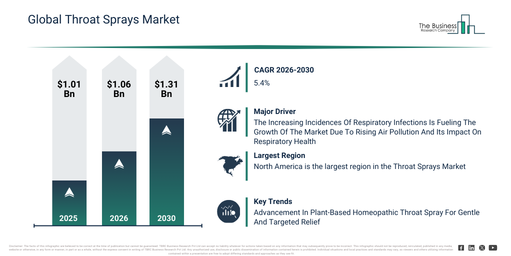
    The throat sprays market has experienced substantial expansion in recent years. It is projected to increase from $1.01 billion in 2025 to $1.06 billion in 2026, at a compound annual growth rate (CAGR) of 5.7%. The growth observed in previous periods is attributable to factors such as the limited supply of herbal and natural throat sprays, a continued reliance on traditional anesthetics and anti-inflammatory sprays, rising awareness regarding sore throat treatment alternatives, the expansion of retail pharmacy networks, and the increasing incidence of throat infections and respiratory conditions.

    The throat sprays market size is anticipated to undergo significant expansion over the next few years. It is forecasted to reach $1.31 billion in 2030, growing at a compound annual growth rate (CAGR) of 5.4%. This projected growth can be attributed to the introduction of fast-acting and combination formulations, an increasing demand for sugar-free and alcohol-free spray options, the proliferation of e-pharmacy and online distribution channels, a rising consumer preference for herbal and natural ingredients, and the integration of advanced delivery technologies such as mist and long-nozzle dispensers. Prominent trends expected in this forecast period include a growing inclination towards natural and herbal throat sprays, an increase in sugar-free and alcohol-free formulations, the wider adoption of advanced mist technology and long-nozzle dispensers, the expansion of online and retail pharmacy distribution networks, and an increased usage of throat sprays for comprehensive multi-symptom relief.

    Get A Free Sample Report With In-Depth Market Insights:

    https://thebusinessresearchcompany.com/sample_request?id=34794808&type=smp&name=Throat%20Sprays%20Market%20Report%202026&utm_source=Blogs&utm_medium=Paid&utm_campaign=Oct_PR

    Throat Sprays Market Demand Drivers: What’s Powering Industry Growth?

    A rise in respiratory infection cases is projected to drive the expansion of the throat sprays market in the future. These infections are defined as communicable diseases impacting any component of the respiratory system, such as the sinuses, throat, airways, and lungs. The escalation in respiratory infections stems from growing air pollution, given that pollutants compromise respiratory defenses, rendering individuals more susceptible to infections. Throat sprays assist with respiratory infections by delivering soothing and anti-inflammatory components directly to the throat, providing rapid alleviation of symptoms. A significant number also incorporate antimicrobial agents to combat infection and encourage quicker recovery. As an illustration, in June 2024, the UK Health Security Agency, a government body based in the UK, reported 1,681 critical care admissions for confirmed influenza by 108 NHS trusts in England between week 40 of 2022 and week 15 of 2023. This figure significantly exceeds the 182 admissions recorded by 114 trusts in the previous season, which had increased to 316 by week 39 of 2022. Consequently, the growing occurrence of respiratory infections is fueling the expansion of the throat sprays market.

    Throat Sprays Market Segment Trends And Revenue Contributors

    The throat sprays market covered in this report is segmented –

    1) By Type: Anti-Inflammatory Throat Sprays, Anesthetics Throat Sprays, Pain Relief Throat Sprays, Anti-Bacterial Throat Sprays, Natural Extract Throat Sprays

    2) By Formulation: Herbal, Sugar-Free, Alcohol-Free, Honey-Based

    3) By Delivery System: Advanced Mist Technology, Long-Nozzle Dispensers

    4) By Distribution Channel: Retail Stores, Drug Stores, Hospital Pharmacies, Online Pharmacies

    5) By Application: Sore Throat, Cough, Cold, Other Applications

    Subsegments:

    1) By Anti-Inflammatory Throat Sprays: Corticosteroid-Based Sprays, Non-Steroidal Anti-Inflammatory (NSAID) Sprays, Herbal Anti-Inflammatory Sprays, Combination Anti-Inflammatory Sprays

    2) By Anesthetics Throat Sprays: Local Anesthetics, Benzocaine-Based Sprays, Combination Anesthetic Sprays, Fast-Acting Anesthetic Sprays

    3) By Pain Relief Throat Sprays: Analgesic-Only Sprays, Combination Pain Relief And Anti-Inflammatory Sprays, Opioid-Based Pain Relief Sprays, Natural Pain Relief Sprays

    4) By Anti-Bacterial Throat Sprays: Antibiotic-Based Sprays, Antiseptic Sprays, Herbal Or Essential Oil-Based Antibacterial Sprays, Combination Anti-Bacterial And Pain Relief Sprays

    5) By Natural Extract Throat Sprays: Herbal Extract Sprays, Essential Oil-based Sprays, Homeopathic Throat Sprays, Vitamin And Mineral-enriched Natural Sprays

    Throat Sprays Market Innovation Trends: What Developments Are Reshaping The Industry?

    Major companies in the throat spray market are concentrating on developing products such as homeopathic throat spray to enhance throat care and provide effective relief. Homeopathic throat sprays utilize highly diluted natural substances to alleviate throat discomfort by supporting the body’s self-healing process. These are typically gentle, free from synthetic chemicals, and employed for soothing soreness, irritation, or hoarseness. For instance, in October 2024, Boiron, a US-based manufacturer of homeopathic products, introduced the ThroatCalm line with the launch of ThroatCalm Spray, designed to offer targeted relief from occasional minor sore throat pain. The spray features plant-based active ingredients such as Echinacea and Plantago major and a mint-like herbal flavor, providing a cooling mist without numbing effects or benzocaine. It is now available at Sprouts Farmers Market and Vitamin Shoppe locations.

    Throat Sprays Market Competitive Landscape: Which Companies Lead The Industry?

    Major companies operating in the throat sprays market are Walgreens, Procter & Gamble, Johnson & Johnson, Reckitt Benckiser Group, Prestige Consumer Healthcare Inc., Aboca S.P.A., Nature’s Way, Eu Yan Sang, Apivita, Specchiasol, Wedderspoon, Iscon Life Sciences Private Limited, Power Health, Intra Life Private Limited, Innoram Biogenics, Watsons, Lanes, Roots Healthcare, AGAN UK, ReBoost

    View The Full Throat Sprays Market Report:

    https://thebusinessresearchcompany.com/report/throat-sprays-global-market-report?utm_source=Blogs&utm_medium=Paid&utm_campaign=Oct_PR

    Throat Sprays Market Regional Distribution: Which Areas Power Market Growth?

    North America was the largest region in the throat sprays market in 2025. Asia-Pacific is expected to be the fastest-growing region in the forecast period. The regions covered in the throat sprays market report are Asia-Pacific, South East Asia, Western Europe, Eastern Europe, North America, South America, Middle East, Africa.

    Reach Out To Our Team:

    The Business Research Company: https://www.thebusinessresearchcompany.com/

    Americas: +1 310-496-7795

    Asia: +44 7882 955267 & +91 8897263534

    Europe: +44 7882 955267

    Email us at: marketing@tbrc.info

    Follow us on:

    LinkedIn: https://in.linkedin.com/company/the-business-research-company

    YouTube: https://www.youtube.com/channel/UC24_fI0rV8cR5DxlCpgmyFQ

    Global Market Model: https://www.thebusinessresearchcompany.com/global-market-model
  • Throat Lozenges Market Analysis: Understanding The Drivers Behind 6.7% CAGR Through 2030 Growth

    Throat Lozenges Market Analysis: Understanding The Drivers Behind 6.7% CAGR Through 2030 Growth

    Backed by market attractiveness analysis, total addressable market sizing, company benchmarking matrices, interactive Excel dashboards, wider supply chain intelligence, emerging startup coverage, and detailed product-level insights, The Business Research Company’s 2026 market reports are designed to offer research that is more actionable and strategically valuable than ever.

    Throat Lozenges Market Size And Revenue Outlook Through 2030

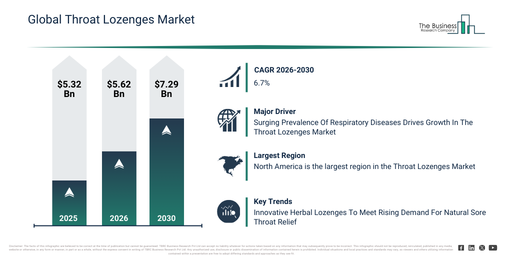
    The throat lozenges market size has demonstrated significant expansion in recent years. It is forecast to grow from $5.32 billion in 2025 to $5.62 billion in 2026, achieving a compound annual growth rate (CAGR) of 5.8%. The historical growth can be attributed to the widespread occurrence of sore throat and respiratory infections, a notable reliance on OTC medications, extensive distribution through retail pharmacies, consumer trust in established lozenge formulations, and the seasonal incidence of flu and colds.

    The throat lozenges market size is anticipated to experience substantial growth over the next few years. It is projected to expand to $7.29 billion in 2030, demonstrating a compound annual growth rate (CAGR) of 6.7%. The expansion during the forecast period can be attributed to heightened health awareness among consumers, an escalating demand for natural and herbal remedies, the broadening of e-commerce pharmacy platforms, continuous innovation in medicated and non-medicated formulations, and increasing urbanization leading to pollution-related throat issues. Key trends expected in the forecast period encompass a rising demand for sugar-free lozenges, a growing inclination towards herbal and natural ingredients, the expansion of online pharmacy sales channels, ongoing product innovation in flavor and texture profiles, and increased seasonal demand during cold and flu outbreaks.

    Get A Free Sample Report With In-Depth Market Insights:

    https://thebusinessresearchcompany.com/sample_request?id=78517745&type=smp&name=Throat%20Lozenges%20Market%20Report%202026&utm_source=Blogs&utm_medium=Paid&utm_campaign=Oct_PR

    Throat Lozenges Market Growth Drivers: What’s Behind The Acceleration?

    The growing occurrence of respiratory illnesses is anticipated to boost the expansion of the throat lozenges market in the foreseeable future. These conditions impact the lungs and other components of the respiratory system, frequently leading to discomforts like sore throat, coughing, and congestion. Throat lozenges offer relief from these symptoms by calming irritation and promoting ease in breathing. An example supporting this is a research study from December 2023, published by JAMA Network Open, a medical journal affiliated with the American Medical Association. This study on the global impact of chronic obstructive pulmonary disease (COPD) estimated that worldwide cases might approach nearly 600 million by 2050, indicating a 23% rise in its prevalence. Consequently, the rising incidence of respiratory diseases is fueling the development of the throat lozenges market.

    Throat Lozenges Market Segment Analysis Spotlighting Growth Areas

    The throat lozenges market covered in this report is segmented –

    1) By Type: Hard Candy Lozenges, Soft Lozenges, Compressed Lozenges

    2) By Ingredient: Menthol, Mint, Eucalyptus Oil, Peppermint Oil, Honey And Ginger, Lemon, Other Ingredients

    3) By Distribution Channel: Retail Pharmacy, Online Pharmacy, Other Distribution Channels

    4) By Application: Sore Throat, Cough And Cold

    Subsegments:

    1) By Hard Candy Lozenges: Sugar-Based Hard Lozenges, Sugar-Free Hard Lozenges

    2) By Soft Lozenges: Gel-Based Soft Lozenges, Non-Gel Soft Lozenges

    3) By Compressed Lozenges: Medicinal Compressed Lozenges, Non-Medicinal Compressed Lozenges

    Throat Lozenges Market Trends: What’s Defining The Industry’s Next Phase?

    Prominent companies within the throat lozenges market are engaged in developing innovative pharmaceutical products, including herbal formulation lozenges, aimed at enhancing the efficacy of sore throat relief while also addressing the rising consumer demand for natural ingredients. Herbal formulation lozenges are advantageous in the throat lozenges sector because they provide natural soothing benefits, alleviate discomfort, and serve as a milder alternative compared to synthetic components. For example, in September 2024, Cipla Health Limited, an India-based pharmaceuticals company, unveiled Cofsils mulethi lozenges, formulated for rapid sore throat relief by blending the comforting flavor of mulethi (rice) with various herbal constituents. These Cofsils Mulethi Lozenges offer swift relief from sore throat discomfort within just five minutes, employing a unique Triple Relief Formula that incorporates antiviral, antibacterial, and local anesthetic characteristics. Each lozenge contains active ingredients such as 2,4-amylmetacresol and dichlorobenzyl alcohol, which collaboratively work to soothe irritation and provide efficient pain alleviation.

    Throat Lozenges Market Leading Companies: Who Holds The Strongest Market Presence?

    Major companies operating in the throat lozenges market are GlaxoSmithKline plc, Thornton & Ross, Reckitt Benckiser Group plc, Bliss GVS Pharma Ltd, Sanofi SA, Ricola AG, Honibe, Doetsch Grether AG, Golden Throat, Fishermans Friend, Prestige Brands Inc, HALLS, Dabur India Limited, Strepsils, Luden’s, Wedderspoon, Cepacol, Vicks, Halls Johnson, Zand Herbal, SmithKline Consumer Healthcare, Herb Pharma

    View The Full Throat Lozenges Market Report:

    https://thebusinessresearchcompany.com/report/throat-lozenges-global-market-report?utm_source=Blogs&utm_medium=Paid&utm_campaign=Oct_PR

    Throat Lozenges Market Leading Geography: Which Region Contributes The Most Revenue?

    North America was the largest region in the global throat lozenges market in 2025. Asia-pacific is expected to be the fastest-growing region in the forecast period. The regions covered in the throat lozenges market report are Asia-Pacific, South East Asia, Western Europe, Eastern Europe, North America, South America, Middle East, Africa.

    Reach Out To Our Team:

    The Business Research Company: https://www.thebusinessresearchcompany.com/

    Americas: +1 310-496-7795

    Asia: +44 7882 955267 & +91 8897263534

    Europe: +44 7882 955267

    Email us at: marketing@tbrc.info

    Follow us on:

    LinkedIn: https://in.linkedin.com/company/the-business-research-company

    YouTube: https://www.youtube.com/channel/UC24_fI0rV8cR5DxlCpgmyFQ

    Global Market Model: https://www.thebusinessresearchcompany.com/global-market-model
  • Thin Film Drug Manufacturing Market Growth To $13.35 Billion By 2030: What’s Driving The Expansion?

    Thin Film Drug Manufacturing Market Growth To $13.35 Billion By 2030: What’s Driving The Expansion?

    Featuring market attractiveness scoring, total addressable market sizing, company benchmarking matrices, interactive Excel dashboards, deeper supply chain intelligence, emerging startup tracking, and granular product-level insights, The Business Research Company’s 2026 market reports are built to deliver research that is both more actionable and more strategically valuable.

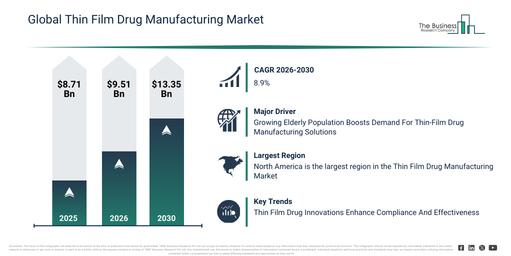
    Thin Film Drug Manufacturing Market Growth From $9.51 Billion In 2026 To $13.35 Billion By 2030 At A CAGR Of 8.9%

    The thin film drug manufacturing market size has shown significant growth in recent years. It is anticipated to expand from $8.71 billion in 2025 to $9.51 billion in 2026, achieving a compound annual growth rate (CAGR) of 9.2%. The historical increase in this market can be attributed to factors such as the difficulty patients experience in swallowing conventional tablets, an increasing emphasis on patient compliance, the early adoption of oral dissolving technologies, a rising demand for rapid onset therapies, and the expansion of hospital pharmacy distribution channels.

    The thin film drug manufacturing market is anticipated to experience substantial growth over the coming years, with projections indicating an increase to $13.35 billion in 2030, demonstrating a compound annual growth rate (CAGR) of 8.9%. This expansion during the forecast period is fueled by several factors, including developments in thin film formulation technologies, an increase in neurological disorders, the broadening reach of e-commerce for pharmaceutical distribution, greater investment in new drug delivery systems, and a rise in regulatory approvals for thin film drugs. Key trends driving this period include the growing preference for oral thin films for quick drug release, a heightened need for dosage forms that are easier for patients, more widespread use of thin films for neurological and CNS conditions, the development of taste-masked and orodispersible film technologies, and an increase in the use of thin films for treating migraine and opioid dependence.

    Get A Free Sample Report With In-Depth Market Insights:

    https://thebusinessresearchcompany.com/sample_request?id=86383039&type=smp&name=Thin%20Film%20Drug%20Manufacturing%20Market%20Report%202026&utm_source=Blogs&utm_medium=Paid&utm_campaign=Oct_PR

    Thin Film Drug Manufacturing Market Growth Factors Behind Sustained Expansion

    The global increase in the elderly population is expected to drive the expansion of the thin-film drug manufacturing market moving forward. This rise in the worldwide senior demographic is attributed to factors like extended life expectancies, advancements in medicine, improved nutrition and healthcare, and evolving family structures and societal norms. Thin film drug manufacturing addresses the needs of the growing elderly population by offering improved medication adherence, ease of use, precise dosage control, rapid dissolution, and enhanced stability, all of which contribute to better management of chronic conditions and overall health for older adults. For instance, in January 2024, the Population Reference Bureau, a US-based nonprofit organization, projected that the number of Americans ages 65 and older will increase from 58 million in 2022 to 82 million by 2050. Therefore, the increase in the global elderly population is a key driver for the thin film drug manufacturing market.

    Thin Film Drug Manufacturing Market Segment Performance And Emerging Opportunities

    The thin film drug manufacturing market covered in this report is segmented –

    1) By Type: Oral Thin Film, Transdermal Film, Other Types

    2) By Disease Indication: Schizophrenia, Migraine, Opioid Dependence, Nausea And Vomiting, Other Disease Indications

    3) By Distribution Channel: Hospital Pharmacies, Drug Stores, Retail Pharmacies, E-Commerce

    Subsegments:

    1) By Oral Thin Film: SubLingual Films, Buccal Films, Orodispersible Films, Taste-Masked Oral Films

    2) By Transdermal Film: Adhesive Transdermal Films, Matrix Transdermal Films, Reservoir Transdermal Films, Drug-Eluting Transdermal Films

    3) By Other Types: Topical Films, Ophthalmic Films, Intranasal Films, Veterinary Thin Films

    Thin Film Drug Manufacturing Market Industry Trends Fueling Future Revenue Growth

    Companies prominent in the thin film drug manufacturing market are concentrating on developing innovative products, such as oral thin film technologies, with the aim of improving patient compliance and user convenience. Oral thin film technologies involve creating films that dissolve rapidly, allowing medication delivery through the mouth’s mucous membranes for swift absorption. These films present a convenient, effective, and easy-to-use alternative to traditional oral dosage forms like tablets and capsules. For example, in April 2023, IntelGenx Corporation, a Canada-based pharmaceutical company, announced the Food and Drug Administration (FDA) approval of RIZAFILM for the treatment of acute migraine. This new formulation enables quick dissolution and absorption, potentially offering faster relief for migraines compared to conventional tablets. This innovation enhances bioavailability and provides a more convenient, user-friendly option, thereby improving patient compliance. The thin film technology significantly boosts patient compliance and ease of use, establishing it as a more accessible alternative for managing acute migraine attacks.

    Thin Film Drug Manufacturing Market Key Players: Which Companies Lead Industry Competition?

    Major companies operating in the thin film drug manufacturing market are Novartis AG, Merck KGaA, Dr. Reddy’s Laboratories, Indivior PLC, LTS Lohmann Therapie-Systeme AG, Aquestive Therapeutics, Zim Laboratories Ltd, Tapemark, AdhexPharma, MonoSol Rx, Aavishkar Oral Strips Pvt Ltd., APR Applied Pharma Research SA, Cynapsus Therapeutics Inc., Jurata Thin Film Inc., Nova Thin Film Pharmaceuticals LLC, Vektor Pharma TF GmbH, TFF Pharmaceuticals Inc., NAL Pharma, IntelGenx Corp, D.K. Livkon Healthcare Pvt Ltd.

    View The Full Thin Film Drug Manufacturing Market Report:

    https://thebusinessresearchcompany.com/report/thin-film-drug-manufacturing-global-market-report?utm_source=Blogs&utm_medium=Paid&utm_campaign=Oct_PR

    Thin Film Drug Manufacturing Market Regional Outlook: Where Is Opportunity Concentrated?

    North America was the largest region in the thin film drug manufacturing market in 2025. The regions covered in the thin film drug manufacturing market report are Asia-Pacific, South East Asia, Western Europe, Eastern Europe, North America, South America, Middle East, Africa.

    Reach Out To Our Team:

    The Business Research Company: https://www.thebusinessresearchcompany.com/

    Americas: +1 310-496-7795

    Asia: +44 7882 955267 & +91 8897263534

    Europe: +44 7882 955267

    Email us at: marketing@tbrc.info

    Follow us on:

    LinkedIn: https://in.linkedin.com/company/the-business-research-company

    YouTube: https://www.youtube.com/channel/UC24_fI0rV8cR5DxlCpgmyFQ

    Global Market Model: https://www.thebusinessresearchcompany.com/global-market-model
  • Therapeutic Proteins Market Trends Reshaping Industry Growth Through 2030

    Therapeutic Proteins Market Trends Reshaping Industry Growth Through 2030

    Built to provide research that’s more actionable and strategically valuable, The Business Research Company’s 2026 market reports include market attractiveness analysis, total addressable market sizing, company benchmarking matrices, interactive Excel dashboards, broader supply chain intelligence, emerging startup tracking, and in-depth product insights.

    Therapeutic Proteins Market Expansion Outlook: What Revenue Opportunities Are Ahead?

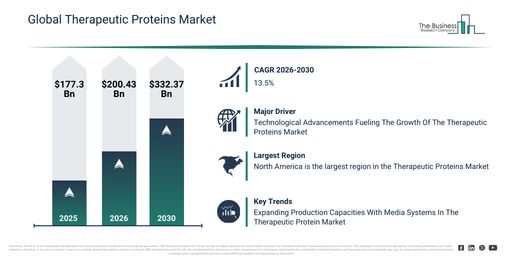
    The therapeutic proteins market has experienced rapid growth in recent years. It is anticipated to expand from $177.3 billion in 2025 to $200.43 billion in 2026, demonstrating a compound annual growth rate (CAGR) of 13.0%. The market’s historical expansion can be attributed to several factors, including the successful commercialization of insulin therapies, the increasing prevalence of chronic diseases, the strong clinical efficacy of protein drugs, the growth in biotechnology research, and a rise in regulatory approvals.

    The therapeutic proteins market is anticipated to undergo significant expansion in the coming years. Projections indicate it will reach a value of $332.37 billion by 2030, growing at a compound annual growth rate (CAGR) of 13.5%. This growth throughout the forecast period is primarily driven by expanding oncology and immunology pipelines, an increasing number of biologics approvals, rising investment in biopharmaceutical research and development, the growing adoption of biosimilars, and improved manufacturing scalability. Furthermore, key trends for this period include the broadening of recombinant protein therapies, an escalating demand for targeted biologics, the development of personalized protein medicines, greater uptake of long-acting proteins, and advancements in protein expression systems.

    Get A Free Sample Report With In-Depth Market Insights:

    https://thebusinessresearchcompany.com/sample_request?id=29918075&type=smp&name=Therapeutic%20Proteins%20Market%20Report%202026&utm_source=Blogs&utm_medium=Paid&utm_campaign=Oct_PR

    Therapeutic Proteins Market Demand Drivers Opening New Revenue Streams

    The therapeutic proteins market is experiencing growth fueled by technological progress in developing protein-based drugs. Unlike chemical synthesis, therapeutic proteins necessitate production through genetic engineering and recombinant DNA technology within living cells or organisms. Platform technologies in protein engineering, including glycoengineering, pegylation, Fc-fusion, albumin fusion, and albumin drug conjugation, are instrumental in improving the production yield, purity, circulating half-life, targeting capabilities, and overall functionality of therapeutic protein drugs. Notable therapeutic protein drugs, such as Belimumab, ipilimumab, taliglucerase alfa, albiglutide, and recombinant human coagulation factor IX, have been developed using these protein engineering technologies and received FDA approval within the last five years. The therapeutic protein market’s expansion is notably fueled by the rising occurrence of chronic conditions, particularly diabetes. Chronic diseases are defined as ailments that persist for a minimum of one year, interfere with daily life, or necessitate ongoing medical attention. Diabetes, a chronic health condition, arises when the body fails to produce adequate insulin or utilize it effectively. In managing diabetes, various protein therapeutics, such as insulin and GLP-1 receptor agonists, are employed to control blood sugar levels. These therapeutics function by stimulating insulin release in response to elevated blood glucose and by curbing the production of glucagon, another hormone that raises blood sugar. As an illustration, data from May 2024, provided by the British Diabetic Association (Diabetes UK), a UK-based patient, healthcare professional and research charity, indicates that approximately 4.4 million people in the UK were diagnosed with diabetes in 2022-23. Type 1 diabetes constitutes about 8% of these cases, while type 2 diabetes accounts for approximately 90%, with the remaining 2% covering other less prevalent forms of diabetes. Consequently, the growing prevalence of chronic illnesses such as diabetes significantly propels the therapeutic protein market.

    Therapeutic Proteins Market Segment Landscape And Growth Outlook

    The therapeutic proteins market covered in this report is segmented –

    1) By Product Type: Insulin, Fusion Protein, Erythropoietin, Interferon, Human Growth Hormone, Follicle Stimulating Hormone

    2) By Function: Enzymatic And Regulatory Activity, Special Targeting Activity, Vaccines

    3) By Application: Metabolic Disorders, Immunologic Disorders, Hematological Disorders, Cancer, Hormonal Disorders, Genetic Disorders, Other Applications

    Subsegments:

    1) By Insulin: Rapid-Acting Insulin, Short-Acting Insulin, Intermediate-Acting Insulin, Long-Acting Insulin

    2) By Fusion Protein: Tnf-Alpha Inhibitors, Anti-Cd20 Fusion Proteins, Other Targeted Fusion Proteins

    3) By Erythropoietin: Epoetin Alpha, Darbepoetin Alfa, Other Erythropoietin Variants

    4) By Interferon: Interferon Alpha, Interferon Beta, Interferon Gamma

    5) By Human Growth Hormone: Somatropin, Somatrem

    6) By Follicle Stimulating Hormone: Follitropin Alpha, Follitropin Beta

    Therapeutic Proteins Market Trends Powering Strategic Industry Growth

    Leading companies operating within the therapeutic protein market are concentrating on introducing media systems to address the rising demand for therapeutic proteins and achieve a competitive advantage. These media systems for therapeutic proteins are production platforms specifically designed to optimize the manufacturing of therapeutic monoclonal antibodies. For example, in July 2023, Lonza Group AG, a Switzerland-based pharmaceutical manufacturing company, unveiled the TheraPRO CHO (Chinese Hamster Ovary) Media System, a new cell culture platform intended to enhance productivity and quality in therapeutic protein manufacture. This two-part, chemically specified production technique is user-friendly and streamlines media preparation. It offers complete scalability and is backed by technical professionals with extensive troubleshooting knowledge.

    Therapeutic Proteins Market Competitive Landscape: Who Leads The Industry?

    Major companies operating in the therapeutic proteins market are Pfizer Inc., Johnson & Johnson Services Inc., F. Hoffmann-La Roche Ltd., Merck & Co. Inc., AbbVie Inc., Novartis International AG, Sanofi S.A, Bristol Myers Squibb Co., AstraZeneca plc, Abbott Laboratories, GlaxoSmithKline plc, Eli Lilly and Company, Boehringer Ingelheim International GmbH, Amgen Inc., Novo Nordisk A/S, Baxter International Inc., Teva Pharmaceutical Industries Ltd., CSL Behring LLC, Chugai Pharmaceutical Co. Ltd., Biogen Inc., Kyowa Kirin Co. Ltd., Oramed Pharmaceuticals Inc., Sandoz International GmbH, Hualan Biological Engineering Inc., Genentech Inc., ProBiogen AG, Diasome Pharmaceuticals Inc., Generex Biotechnology Corp., GeneScience Pharmaceuticals Co. Ltd.

    View The Full Therapeutic Proteins Market Report:

    https://thebusinessresearchcompany.com/report/therapeutic-proteins-global-market-report?utm_source=Blogs&utm_medium=Paid&utm_campaign=Oct_PR

    Therapeutic Proteins Market Geographic Landscape: Which Region Leads Industry Growth?

    North America was the largest region in the therapeutic proteins market in 2025. The regions covered in the therapeutic proteins market report are Asia-Pacific, South East Asia, Western Europe, Eastern Europe, North America, South America, Middle East, Africa.

    Reach Out To Our Team:

    The Business Research Company: https://www.thebusinessresearchcompany.com/

    Americas: +1 310-496-7795

    Asia: +44 7882 955267 & +91 8897263534

    Europe: +44 7882 955267

    Email us at: marketing@tbrc.info

    Follow us on:

    LinkedIn: https://in.linkedin.com/company/the-business-research-company

    YouTube: https://www.youtube.com/channel/UC24_fI0rV8cR5DxlCpgmyFQ

    Global Market Model: https://www.thebusinessresearchcompany.com/global-market-model