Month: October 2026

  • Subcutaneous Immunoglobulin (SCIG) Market Forecast To 2030: Starting From $25.71 Billion In 2026

    Subcutaneous Immunoglobulin (SCIG) Market Forecast To 2030: Starting From $25.71 Billion In 2026

    Built to provide research that’s more actionable and strategically valuable, The Business Research Company’s 2026 market reports include market attractiveness analysis, total addressable market sizing, company benchmarking matrices, interactive Excel dashboards, broader supply chain intelligence, emerging startup tracking, and in-depth product insights.

    Subcutaneous Immunoglobulin (SCIG) Market Set To Climb From $16.31 Billion In 2026 To $25.71 Billion By 2030

    The subcutaneous immunoglobulin (scig) market has seen substantial expansion in recent years. This market is projected to grow from $14.39 billion in 2025 to $16.32 billion in 2026, exhibiting a compound annual growth rate (CAGR) of 13.4%. Historically, this expansion is attributable to factors such as an increasing diagnosis of primary immunodeficiency disorders, the limitations inherent in intravenous immunoglobulin therapy, a rising requirement for long-term immune support, the enhanced safety profile of scig, and a growing patient preference for receiving care in a home setting.

    The market for subcutaneous immunoglobulin (scig) is projected to experience substantial expansion in the coming years. This market is forecast to reach $25.71 billion by 2030, exhibiting a compound annual growth rate (CAGR) of 12.0%. This anticipated growth is driven by several factors, including the broadened application of scig beyond immunodeficiency, a heightened emphasis on homecare treatments in healthcare, continuous innovations in infusion technology, the increasing occurrence of autoimmune and neurological conditions, and a rising preference for treatment approaches centered around patients. Key trends anticipated during this period involve a notable transition from intravenous immunoglobulin (IVIG) to scig treatments, an uptick in the usage of immunoglobulin therapy at home, a greater inclination towards devices enabling self-administration, the wider application of scig in managing chronic immune conditions, and an elevated need for sustained immune replacement therapy.

    Get A Free Sample Report With In-Depth Market Insights:

    https://thebusinessresearchcompany.com/sample_request?id=55473339&type=smp&name=Subcutaneous%20Immunoglobulin%20%28SCIG%29%20Market%20Report%202026&utm_source=Blogs&utm_medium=Paid&utm_campaign=Oct_PR

    Subcutaneous Immunoglobulin (SCIG) Market Opportunity Drivers: What’s Unlocking New Revenue Potential?

    The expansion of secondary immunodeficiency diseases is anticipated to boost the Subcutaneous Immunoglobulin Market moving forward. These diseases involve a diminished or impaired immune system stemming from causes external to the immune system itself. Factors contributing to the rise in secondary immunodeficiency conditions include aging populations, the application of immunosuppressive therapies, and exposure to environmental toxins. Subcutaneous immunoglobulin treatment delivers antibodies to fortify a compromised immune system, particularly in long-term ailments like HIV or autoimmune diseases, thus preventing infections and aiding immune function during therapy. For instance, in October 2024 according to the HIV i-Base is a UK-based treatment activist organization in 2023, new HIV diagnoses increased by 36% among heterosexual men, rising from 445 in 2022 to 605, and by 30% among heterosexual women, rising from 602 in 2022 to 780. Consequently, the growing prevalence of secondary immunodeficiency diseases is a key driver for the Subcutaneous Immunoglobulin Market’s expansion.

    Subcutaneous Immunoglobulin (SCIG) Market Driver: Rising Neurological Disorders Fuel Growth In The Subcutaneous Immunoglobulin Market

    Subcutaneous Immunoglobulin (SCIG) Market Breakdown By Product Type And Application

    The subcutaneous immunoglobulin (scig) market covered in this report is segmented –

    1) By Product Type: Immunoglobulin A (IgA), Immunoglobulin G (IgG)

    2) By Application: Primary Immunodeficiency Disorders, Autoimmune Diseases, Neurological Disorders, Other Applications

    3) By End-Use: Clinics, Hospitals, Homecare, Other End-Uses

    Subsegments:

    1) By Immunoglobulin A (IgA): IgA1, IgA2

    2) By Immunoglobulin G (IgG): IgG1, IgG2, IgG3, IgG4

    Subcutaneous Immunoglobulin (SCIG) Market Innovation Trends Shaping Future Development

    Major companies in the subcutaneous immunoglobulin (SCIG) market are prioritizing the development of advanced solutions, such as prefilled, ready-to-use formulations, to enhance the convenience of treatment, support self-administration, and generally improve the patient experience. Ready-to-use SCIG formulations are stable, premeasured immunoglobulin products designed for subcutaneous delivery, which enables patients with primary immunodeficiency and other immune disorders to administer their therapy more easily outside of clinical settings. For example, in April 2023, the U.S. Food and Drug Administration (FDA) approved a 50 mL / 10 g prefilled syringe presentation of Hizentra (Immune Globulin Subcutaneous [Human] 20%), offering patients a simplified, ready-to-use choice that facilitates more convenient home infusion and improves treatment adherence.

    Subcutaneous Immunoglobulin (SCIG) Market Company Landscape And Competitive Strategy

    Major companies operating in the subcutaneous immunoglobulin (scig) market are CSL Behring, Grifols S.A., Octapharma AG, Kedrion Biopharma, LFB Group, Biotest AG, Bio Products Laboratory Ltd., ADMA Biologics Inc., Kamada Pharmaceuticals, Takeda Pharmaceutical Company Limited, Baxter International Inc., Bharat Serums and Vaccines Limited, Emergent BioSolutions Inc., Pfizer Inc., Johnson & Johnson, Lonza Group, Argenx SE, CinnaGen Co., Intas Pharmaceuticals Ltd., Dr. Reddy’s Laboratories Ltd.

    View The Full Subcutaneous Immunoglobulin (SCIG) Market Report:

    https://thebusinessresearchcompany.com/report/subcutaneous-immunoglobulin-scig-global-market-report?utm_source=Blogs&utm_medium=Paid&utm_campaign=Oct_PR

    Subcutaneous Immunoglobulin (SCIG) Market Regional Analysis And Top Geography

    North America was the largest region in the subcutaneous immunoglobulin market in 2025. Asia-Pacific is expected to be the fastest-growing region in the forecast period. The regions covered in the subcutaneous immunoglobulin (scig) market report are Asia-Pacific, South East Asia, Western Europe, Eastern Europe, North America, South America, Middle East, Africa.

    Reach Out To Our Team:

    The Business Research Company: https://www.thebusinessresearchcompany.com/

    Americas: +1 310-496-7795

    Asia: +44 7882 955267 & +91 8897263534

    Europe: +44 7882 955267

    Email us at: marketing@tbrc.info

    Follow us on:

    LinkedIn: https://in.linkedin.com/company/the-business-research-company

    YouTube: https://www.youtube.com/channel/UC24_fI0rV8cR5DxlCpgmyFQ

    Global Market Model: https://www.thebusinessresearchcompany.com/global-market-model

  • Subcutaneous Drug Delivery Devices Market Size In 2026 And Beyond: Understanding Future Growth Potential

    Subcutaneous Drug Delivery Devices Market Size In 2026 And Beyond: Understanding Future Growth Potential

    Backed by market attractiveness analysis, total addressable market sizing, company benchmarking matrices, interactive Excel dashboards, wider supply chain intelligence, emerging startup coverage, and detailed product-level insights, The Business Research Company’s 2026 market reports are designed to offer research that is more actionable and strategically valuable than ever.

    Subcutaneous Drug Delivery Devices Market Forecast: Value Set To Climb From $32.03 Billion To $42.41 Billion

    The subcutaneous drug delivery devices market has experienced substantial growth in recent years. This market is projected to expand from $29.77 billion in 2025 to $32.03 billion in 2026, demonstrating a compound annual growth rate (CAGR) of 7.6%. Historically, factors contributing to this expansion include the increasing incidence of diabetes and various chronic conditions, the greater adoption of insulin pens and pen needles, the development of hospital and clinic infrastructure, the restricted access to advanced delivery technologies, and enhanced understanding of subcutaneous drug administration.

    The subcutaneous drug delivery devices market is anticipated to experience substantial expansion over the next few years. It is projected to reach a valuation of $42.42 billion by 2030, showing a compound annual growth rate (CAGR) of 7.3%. This growth during the forecast period is attributed to several factors, including the expansion of biologics and oncology therapies, the increasing use of smart auto-injectors, the broader establishment of homecare settings, advancements in implantable pump technology, and a rising need for patient-focused drug delivery solutions. Prominent trends expected in this period encompass a surge in the adoption of auto-injectors and smart injection devices, a growing preference for home-based and self-administration treatments, an increasing demand for minimally invasive drug delivery methods, the broadening of applications for biologic and biosimilar drug delivery, and improved patient adherence achieved through user-friendly device designs.

    Get A Free Sample Report With In-Depth Market Insights:

    https://thebusinessresearchcompany.com/sample_request?id=19723&type=smp&name=Subcutaneous%20Drug%20Delivery%20Devices%20Market%20Report%202026&utm_source=Blogs&utm_medium=Paid&utm_campaign=Oct_PR

    Subcutaneous Drug Delivery Devices Market Growth Momentum: What Factors Are Shaping Demand?

    The escalating incidence of diabetes and cardiovascular diseases (CVD) is anticipated to propel the growth of the subcutaneous drug delivery devices market moving forward. This rising prevalence of diabetes and cardiovascular conditions is fueled by aging populations, unhealthy diets, sedentary lifestyles, obesity, socioeconomic inequalities, stress, environmental factors, and limited access to preventive healthcare. Subcutaneous drug delivery devices serve to administer insulin and other medications for glycemic control in diabetes, and to supply drugs like anticoagulants or lipid-lowering agents in cardiovascular diseases, offering a convenient and regulated approach to manage these chronic ailments. For instance, in October 2024, the Centers for Disease Control and Prevention, a US-based federal agency, reported that 919,032 people died from cardiovascular disease in 2023, which is equivalent to 1 in every 3 deaths. Consequently, the increasing prevalence of diabetes and cardiovascular diseases (CVD) is driving growth in the subcutaneous drug delivery devices market.

    Subcutaneous Drug Delivery Devices Market Segment Analysis And Revenue Potential

    The subcutaneous drug delivery devices market covered in this report is segmented –

    1) By Product Type: Insulin Pens, Pen Needles, Injector Pens, Auto-Injectors, Implantable Pumps

    2) By Application: Diabetes, Fertility, Oncology

    3) By End-User: Hospitals And Clinics, Homecare Settings, Ambulatory Surgical Centers

    Subsegments:

    1) By Insulin Pens: Disposable Insulin Pens, Reusable Insulin Pens

    2) By Pen Needles: Standard Pen Needles, Safety Pen Needles

    3) By Injector Pens: Disposable Injector Pens, Reusable Injector Pens

    4) By Auto-Injectors: Manual Auto-Injectors, Smart Auto-Injectors

    5) By Implantable Pumps: Insulin Pumps, Drug Infusion Pumps

    Subcutaneous Drug Delivery Devices Market Trends Redefining Industry Growth

    Key players operating within the subcutaneous drug delivery devices market are dedicating efforts to developing innovative products, such as miniature digital liquid flow sensors. This focus aims to bolster the safety and precision of subcutaneous drug administration by offering accurate, customizable flow sensors for large-volume injectors. Miniature digital liquid flow sensors are compact instruments that accurately gauge the flow rate of liquids in small-scale applications, providing digital output for precise monitoring and control. As an example, in May 2024, Sensirion AG, a Switzerland-based provider of environmental and flow sensors, launched its SLD3x series sensor platform. This sensor series incorporates highly accurate digital liquid flow sensors with customizable options, delivering exact flow measurement, occlusion detection, in-line air bubble identification, and liquid temperature monitoring. These miniature sensors are perfectly suited for large-scale medical device manufacturing, guaranteeing optimal dosing and elevated patient safety in subcutaneous drug delivery.

    Subcutaneous Drug Delivery Devices Market Key Players Shaping Industry Direction

    Major companies operating in the subcutaneous drug delivery devices market are Pfizer Inc., Sanofi S.A., Roche Holdings Inc., Medtronic plc, Eli Lilly and Company, Amgen Inc., Novo Nordisk A/S, Becton Dickinson and Company, West Pharmaceutical Services Inc., Gerresheimer AG, Insulet Corporation, SHL Medical AG, Tandem Diabetes Care Inc., Ypsomed Holding AG, Nemera, Elcam Medical Ltd., Owen Mumford Ltd., Haselmeier GmbH, Sensile Medical AG, Enable Injections Inc., Unilife Corporation, PharmaJet, Oval Medical Technologies Ltd.

    View The Full Subcutaneous Drug Delivery Devices Market Report:

    https://thebusinessresearchcompany.com/report/subcutaneous-drug-delivery-devices-global-market-report?utm_source=Blogs&utm_medium=Paid&utm_campaign=Oct_PR

    Subcutaneous Drug Delivery Devices Market Geographic Analysis: Where Is Demand Rising Fastest?

    North America was the largest region in the subcutaneous drug delivery devices market in 2025. Asia-Pacific is expected to be the fastest-growing region in the market going forward. The regions covered in the subcutaneous drug delivery devices market report are Asia-Pacific, South East Asia, Western Europe, Eastern Europe, North America, South America, Middle East, Africa.

    Reach Out To Our Team:

    The Business Research Company: https://www.thebusinessresearchcompany.com/

    Americas: +1 310-496-7795

    Asia: +44 7882 955267 & +91 8897263534

    Europe: +44 7882 955267

    Email us at: marketing@tbrc.info

    Follow us on:

    LinkedIn: https://in.linkedin.com/company/the-business-research-company

    YouTube: https://www.youtube.com/channel/UC24_fI0rV8cR5DxlCpgmyFQ

    Global Market Model: https://www.thebusinessresearchcompany.com/global-market-model
  • Stress Supplements Market Reaches $3.76 Billion In 2026: Key Developments Shaping Expansion

    Stress Supplements Market Reaches $3.76 Billion In 2026: Key Developments Shaping Expansion

    Featuring market attractiveness scoring, total addressable market sizing, company benchmarking matrices, interactive Excel dashboards, deeper supply chain intelligence, emerging startup tracking, and granular product-level insights, The Business Research Company’s 2026 market reports are built to deliver research that is both more actionable and more strategically valuable.

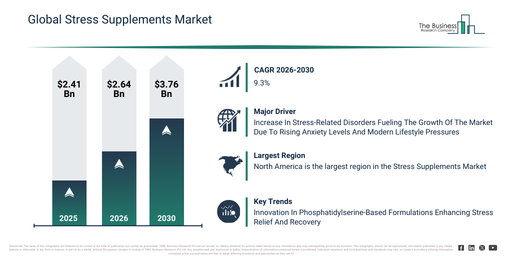
    Stress Supplements Market Revenue Growth On Track For A 9.3% CAGR Through 2030

    The stress supplements market has experienced significant growth in recent years. It will grow from $2.41 billion in 2025 to $2.64 billion in 2026 at a compound annual growth rate (CAGR) of 9.4%. Historically, this expansion can be attributed to increasing awareness of mental health management, heightened stress levels associated with urban lifestyles, a rise in dietary supplement consumption, the broader use of herbal and nutraceuticals, and wider availability of stress management products.

    The stress supplements market is anticipated to experience substantial expansion over the upcoming years. By 2030, this market is projected to reach $3.76 billion, exhibiting a compound annual growth rate (CAGR) of 9.3%. This growth during the forecast period stems from factors such as a heightened demand for holistic wellness solutions, a greater emphasis on preventive mental health, the proliferation of personalized nutrition platforms, the expanding use of online supplement retail, and advancements in functional ingredient blends. Key trends anticipated in this period encompass a heightened call for natural and adaptogenic ingredients, a surging preference for tailored stress support items, the wider availability of clean-label supplement formulations, an amplified focus on mood and cognitive well-being, and the proliferation of direct-to-consumer supplement brands.

    Get A Free Sample Report With In-Depth Market Insights:

    https://thebusinessresearchcompany.com/sample_request?id=97217352&type=smp&name=Stress%20Supplements%20Market%20Report%202026&utm_source=Blogs&utm_medium=Paid&utm_campaign=Oct_PR

    Stress Supplements Market Expansion Drivers: What’s Shaping Future Growth?

    The anticipated rise in stress-related disorders is projected to drive expansion within the stress supplements market moving ahead. These disorders encompass psychological or physical states stemming from extended or intense stress, impacting both emotional health and physiological processes. An uptick in these conditions is attributable to escalating workplace demands and rapid modern living paces. To manage stress-related disorders, stress supplements are utilized to aid in cortisol level regulation, diminish anxiety, and foster mental tranquility. As an illustration, the American Psychiatric Association, a professional body of psychiatrists located in the US, disclosed in May 2024 that 43% of adults experienced anxiety, marking a rise from 37% in 2023 and 32% in 2022. Consequently, the growing occurrence of stress-related disorders is fueling the expansion of the stress supplements market.

    Stress Supplements Market Segmentation And Category Overview

    The stress supplements market covered in this report is segmented –

    1) By Formulation Type: Tablets, Capsules, Powders, Liquids, Chewable

    2) By Type: Rhodiola Rosea Supplement, Melatonin Supplement, Vitamin D Supplement, Ashwagandha Supplement, L-Theanine Supplement, B-Complex Vitamins Supplement, Magnesium Supplement, Other Types

    3) By Purpose Of Use: Stress Reduction, Sleep Support, Anxiety Relief, Enhanced Mood, Cognitive Function Improvement

    4) By Distribution Channel: Online Retail, Pharmacies, Supermarkets And Hypermarkets, Specialty Stores

    5) By Application: Children, Adults

    Subsegments:

    1) By Tablets: Multivitamin Tablets, Herbal Extract Tablets, Adaptogen Tablets, Amino Acid Tablets, Mineral-Enriched Tablets

    2) By Capsules: Softgel Capsules, Hard Gelatin Capsules, Herbal Blend Capsules, Omega-3 Or Fatty Acid Capsules, Probiotic Capsules

    3) By Powders: Protein-Based Powders With Stress Relief Ingredients, Herbal Adaptogen Powders, Functional Beverage Mix Powders, Nootropic Powders, Collagen With Relaxation Additives

    4) By Liquids: Herbal Tinctures, Vitamin And Mineral Liquid Blends, Botanical Extract Tonics, Ready-To-Drink Relaxation Beverages, Functional Shots

    5) By Chewable: Gummies, Effervescent Chewable, Lozenges, Functional Candies, Flavored Nutraceutical Chews

    Stress Supplements Market Strategic Trends: What Defines The Next Growth Phase?

    Major companies active in the stress supplements market are focusing on the development of innovative formulations incorporating phosphatidylserine, which aim to regulate cortisol levels, improve recovery, and promote mental well-being via natural and functional ingredients. Phosphatidylserine acts as a phospholipid that helps maintain healthy brain cells and alleviates stress by moderating cortisol levels. For instance, in July 2025, KA-EX, a food and beverage company based in Switzerland, launched its rapid-acting cortisol stress reducer beverage in the U.S., marking a significant expansion within the stress supplements segment. KA-EX has achieved popularity among various consumers, including athletes and active individuals, for its demonstrated ability to reduce cortisol levels by 36% within 48 hours, thereby assisting with stress reduction, better sleep, and increased energy. Formulated with phosphatidylserine, amino acids, and anti-inflammatory ingredients, it supports mental well-being and stress management. The beverage is presented in a patented dual-compartment bottle designed to preserve ingredient stability until activation. KA-EX’s debut in the U.S. reinforces its position as a science-driven solution within the stress supplements market, appealing to consumers seeking effective approaches to manage stress and enhance overall recovery.

    Stress Supplements Market Competitive Analysis Of Leading Industry Participants

    Major companies operating in the stress supplements market are Bayer AG, Sanofi S.A., GlaxoSmithKline plc, Glanbia plc, Amway Corporation, Nature’s Bounty Inc., GNC Holdings LLC, Dabur India Limited, Alkermes plc, Patanjali Ayurveda, NOW Health Group Inc., The Himalaya Drug Company, Nutramax Laboratories Consumer Care Inc, Jarrow Formulas Inc., Nature’s Way Products LLC, Swanson Health Products Inc., BioGaia AB, Bluebonnet Nutrition Corporation, Allergy Research Group, KA-EX

    View The Full Stress Supplements Market Report:

    https://thebusinessresearchcompany.com/report/global-stress-supplements-market-report?utm_source=Blogs&utm_medium=Paid&utm_campaign=Oct_PR

    Stress Supplements Market Global Footprint: Which Region Leads The Market?

    North America was the largest region in the stress supplements market in 2025. Asia-Pacific is expected to be the fastest-growing region in the forecast period. The regions covered in the stress supplements market report are Asia-Pacific, South East Asia, Western Europe, Eastern Europe, North America, South America, Middle East, Africa.

    Reach Out To Our Team:

    The Business Research Company: https://www.thebusinessresearchcompany.com/

    Americas: +1 310-496-7795

    Asia: +44 7882 955267 & +91 8897263534

    Europe: +44 7882 955267

    Email us at: marketing@tbrc.info

    Follow us on:

    LinkedIn: https://in.linkedin.com/company/the-business-research-company

    YouTube: https://www.youtube.com/channel/UC24_fI0rV8cR5DxlCpgmyFQ

    Global Market Model: https://www.thebusinessresearchcompany.com/global-market-model
  • Strabismus Treatment Apparatus Market Growth Outlook For 2026: Drivers, Trends And Future Opportunities

    Strabismus Treatment Apparatus Market Growth Outlook For 2026: Drivers, Trends And Future Opportunities

    Built to provide research that’s more actionable and strategically valuable, The Business Research Company’s 2026 market reports include market attractiveness analysis, total addressable market sizing, company benchmarking matrices, interactive Excel dashboards, broader supply chain intelligence, emerging startup tracking, and in-depth product insights.

    Strabismus Treatment Apparatus Market Value Growth And Long-Term Outlook

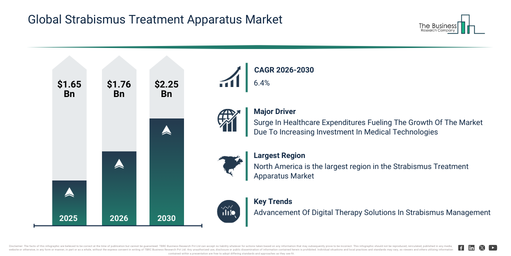
    The strabismus treatment apparatus market has experienced substantial growth in recent years. This market is anticipated to increase from $1.65 billion in 2025 to $1.76 billion in 2026, exhibiting a compound annual growth rate (CAGR) of 6.3%. The expansion observed in the historic period can be linked to factors such as early childhood eye screening, the continued application of traditional patch therapy, the provision of hospital-based ophthalmology care, a rise in pediatric eye disorders, and the adoption of orthoptic therapy.

    The strabismus treatment apparatus market is expected to experience significant growth in the upcoming years. It is projected to reach $2.25 billion in 2030, demonstrating a compound annual growth rate (CAGR) of 6.4%. This expansion during the forecast period can be attributed to innovations in digital therapy, the increasing use of homecare vision correction, rising screen exposure, the growing pediatric population, and the expansion of tele-ophthalmology. Noteworthy trends anticipated in this period include the development of vision therapy devices, the adoption of digital and VR-based therapies, an increase in pediatric strabismus diagnoses, the broadening of home-based treatment solutions, and an enhanced focus on non-surgical interventions.

    Get A Free Sample Report With In-Depth Market Insights:

    https://thebusinessresearchcompany.com/sample_request?id=71547891&type=smp&name=Strabismus%20Treatment%20Apparatus%20Market%20Report%202026&utm_source=Blogs&utm_medium=Paid&utm_campaign=Oct_PR

    Strabismus Treatment Apparatus Market Development Factors: What’s Supporting Demand?

    Increased spending on healthcare is expected to propel the expansion of the strabismus treatment apparatus market in the foreseeable future. These expenditures represent the aggregate financial outlay by individuals, entities, or governments towards medical services, health-related products, and public health initiatives within a defined timeframe. The upward trend in healthcare spending is fueled by the growing occurrence of chronic illnesses, which necessitate extensive, long-duration care and significantly add to overall health expenses. This funding plays a crucial role in supporting the strabismus treatment apparatus by facilitating the creation and availability of sophisticated diagnostic and therapeutic devices, thereby guaranteeing patients access to efficient, non-invasive treatment alternatives via public or private healthcare frameworks. As an illustration, a May 2024 report from the UK’s Office for National Statistics indicated that total healthcare spending in 2023 increased by 5.6%, an rise from the 2.8% recorded in 2022. Consequently, the increase in healthcare expenditures is a key driver for the growth of the strabismus treatment apparatus market.

    Strabismus Treatment Apparatus Market Segment Outlook: Which Categories Are Growing Fastest?

    The strabismus treatment apparatus market covered in this report is segmented –

    1) By Product Type: Prism Glasses, Eye Patches, Vision Therapy Software, Adjustable Sutures, Other Products

    2) By Age Group: Pediatric, Adult

    3) By End-User: Hospitals, Outpatient Clinics, Home Healthcare Settings

    Subsegments:

    1) By Prism Glasses: Fresnel Prism Glasses, Ground-in Prism Glasses, Clip-on Prisms

    2) By Eye Patches: Adhesive Eye Patches, Reusable Fabric Eye Patches, Pediatric Eye Patches, Orthoptic Training Patches

    3) By Vision Therapy Software: Home-Based Vision Therapy Software, Clinic-Based Vision Therapy Software, Gamified Vision Therapy Programs, VR-Based Vision Therapy Solutions

    4) By Adjustable Sutures: Sliding Noose Technique Sutures, Bow Tie Technique Sutures, Post-Operative Adjustable Sutures

    5) By Other Products: Occlusion Glasses, Eye Exercise Equipment, Electronic Eye-Tracking Devices

    Strabismus Treatment Apparatus Market Transformation Trends: What Innovations Are Driving Change?

    Leading firms within the strabismus treatment apparatus market are prioritizing the integration of digital therapy powered by eye-tracking technology, aiming to improve the accuracy of treatment, increase patient participation, and facilitate better monitoring of visual outcomes. These eye-tracking technologies utilize rapid sensors to record and evaluate eye movements instantly, enabling functions like adaptive visual stimulation, training for binocular alignment, and automatic evaluation of progress. As an illustration, in March 2024, NovaSight, an ophthalmic medical-device company based in Israel, disclosed the one-year follow-up outcomes for CureSight. This system is an eye-tracking digital therapy system intended for managing amblyopia linked to mild strabismus, and it includes features such as real-time adjustment of image sharpness to stimulate the weaker eye, ongoing tracking of improvements in visual acuity, and remote reporting tools for clinicians. The CureSight system contributes to better therapy compliance, greater treatment accuracy, and more informed long-term decisions in pediatric vision management.

    Strabismus Treatment Apparatus Market Leading Companies And Competitive Benchmarking

    Major companies operating in the strabismus treatment apparatus market are EssilorLuxottica Société Anonyme, NovaSight Ltd., Vivid Vision Inc., Metrovision SAS, RevitalVision Ltd., CooperVision Inc., HOYA Vision Care Company, ZEISS Vision Care, Essilor Instruments USA, Bernell Corporation, Good-Lite Company, Stereo Optical Company Inc., Richmond Products Inc., Oculus Optikgeräte GmbH, Vision Science Labs, RightEye Vision Therapy Solutions, Orthoptika, Amblyoplay, Visionary Tool & Technologies, Optelec US Inc., Rehacom GmbH, HTS Vision Therapy, NeuroVision Technologies, Insight Instruments Inc., Optovue Incorporated

    View The Full Strabismus Treatment Apparatus Market Report:

    https://thebusinessresearchcompany.com/report/strabismus-treatment-apparatus-global-market-report?utm_source=Blogs&utm_medium=Paid&utm_campaign=Oct_PR

    Strabismus Treatment Apparatus Market Regional Split: Which Areas Are Fueling Growth?

    North America was the largest region in the strabismus treatment apparatus market in 2025. Asia-Pacific is expected to be the fastest-growing region in the forecast period. The regions covered in the strabismus treatment apparatus market report are Asia-Pacific, South East Asia, Western Europe, Eastern Europe, North America, South America, Middle East, Africa.

    Reach Out To Our Team:

    The Business Research Company: https://www.thebusinessresearchcompany.com/

    Americas: +1 310-496-7795

    Asia: +44 7882 955267 & +91 8897263534

    Europe: +44 7882 955267

    Email us at: marketing@tbrc.info

    Follow us on:

    LinkedIn: https://in.linkedin.com/company/the-business-research-company

    YouTube: https://www.youtube.com/channel/UC24_fI0rV8cR5DxlCpgmyFQ

    Global Market Model: https://www.thebusinessresearchcompany.com/global-market-model
  • Sterile Injectables CDMO Market Size Forecast From 2026 To 2030: Key Industry Trends

    Sterile Injectables CDMO Market Size Forecast From 2026 To 2030: Key Industry Trends

    Backed by market attractiveness analysis, total addressable market sizing, company benchmarking matrices, interactive Excel dashboards, wider supply chain intelligence, emerging startup coverage, and detailed product-level insights, The Business Research Company’s 2026 market reports are designed to offer research that is more actionable and strategically valuable than ever.

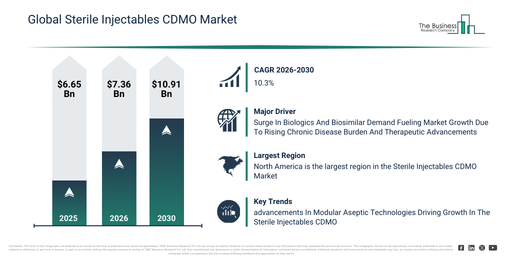
    Sterile Injectables CDMO Market Poised To Hit $10.91 Billion By 2030 With A 10.3% CAGR

    The sterile injectables CDMO market has shown rapid expansion in recent years. This market is anticipated to grow from $6.65 billion in 2025 to $7.36 billion in 2026, exhibiting a compound annual growth rate (CAGR) of 10.7%. The historical growth of this market can be attributed to several factors including limited CDMO infrastructure for sterile injectables, a growing demand for small molecule injectables, the reliance on in-house formulation development, increasing regulatory scrutiny for sterile manufacturing, and rising global pharmaceutical production.

    The sterile injectables cdmo market is projected to experience swift expansion over the coming years. This market is set to reach $10.91 billion by 2030, driven by a compound annual growth rate (CAGR) of 10.3%. Factors contributing to this growth include the expansion of large molecule biologics manufacturing, the rising need for cell and gene therapies, the implementation of advanced aseptic processing techniques, increased outsourcing to cdmos, and the growing requirements for specialized packaging and cold chain storage. Key developments anticipated during this period involve an escalating demand for contract manufacturing of sterile injectables, the broadening of analytical and testing services for quality assurance, an increase in the production of monoclonal antibodies, peptides, and cell/gene therapy, a greater embrace of lyophilized, emulsion, and reconstitutable injectable formulations, and the unification of formulation development with packaging and storage offerings.

    Get A Free Sample Report With In-Depth Market Insights:

    https://thebusinessresearchcompany.com/sample_request?id=42057935&type=smp&name=Sterile%20Injectables%20CDMO%20Market%20Report%202026&utm_source=Blogs&utm_medium=Paid&utm_campaign=Oct_PR

    Sterile Injectables CDMO Market Industry Drivers: What’s Behind The Revenue Growth?

    The expanding requirement for biologics and biosimilars is projected to propel the growth of the sterile injectables CDMO market moving forward. Biologics are medicinal products derived from living cells or organisms, designed to target specific disease elements, whereas biosimilars are almost identical versions of approved biologics, matching them in terms of quality, safety, and efficacy. The heightened need for biologics and biosimilars stems from the increasing prevalence of chronic and intricate health conditions, as these advanced therapies provide more focused and potent treatment options compared to conventional medicines. This escalating demand for biologics and biosimilars leads to a greater dependence on sterile injectable CDMO services, given that these treatments are commonly administered through injection and necessitate meticulously maintained sterile conditions to guarantee safety, quality, and compliance with regulations. For example, in February 2025, according to the Center for Biosimilars, a US-based nonprofit research organization, the US allocated an estimated US $324 billion to biologic medicines in 2023, constituting approximately 45% of the nation’s overall prescription drug expenditure. Consequently, the rising demand for biologics and biosimilars is fostering the expansion of the sterile injectables CDMO market.

    Sterile Injectables CDMO Market Segment Landscape: Which Areas Lead Development?

    The sterile injectables cdmo market covered in this report is segmented –

    1) By Type: Small Molecule, Large Molecule

    2) By Service: Formulation Development, Analytical And Testing Services, Manufacturing, Packaging, Storage, Other Services

    3) By Route Of Administration: Subcutaneous (SC), Intravenous (IV), Intramuscular (IM), Other Routes Of Administration

    4) By Therapeutic Area: Oncology, Cardiovascular Diseases, Central Nervous System Diseases, Infectious Disorders, Musculoskeletal Diseases, Hormonal Diseases, Other Therapeutic Areas

    5) By End-User: Pharmaceutical Companies, Biopharmaceutical Companies, Research Institutes, Other End-Users

    Subsegments:

    1) By Small Molecule: Solutions, Suspensions, Lyophilized Injectables, Emulsions, Reconstitutable Powders

    2) By Large Molecule: Monoclonal Antibodies (mAbs), Peptides And Proteins, Vaccines, Cell And Gene Therapies, Insulins And Biosimilars

    #Sterile Injectables CDMO Market Growth Trends: What’s Shaping The Future Outlook?

    Leading companies in the Sterile Injectables CDMO market are concentrating on creating advanced solutions, specifically modular aseptic filling platforms, to improve adaptability and productivity in sterile drug manufacturing. These platforms represent adaptable isolator-based sterile filling systems, constructed from interchangeable modules, which allow CDMOs to readily alternate between vial, syringe, or cartridge formats. This capability helps in shortening changeover times, reducing product wastage, and effectively managing small- to mid-scale batches for both clinical and commercial sterile injectables. As an illustration, in February 2025, Recipharm AB, a CDMO based in Sweden, unveiled a fully operational modular sterile filling system at its Wasserburg, Germany facility. This system is designed for the aseptic filling of small to mid-scale batches (ranging from 500–50,000 units), minimizes product loss to less than 500 milliliters, supports various interchangeable filling modules, and enables the efficient processing of high-value biologics within a complete isolator environment.

    Sterile Injectables CDMO Market Industry Leaders And Competitive Landscape

    Major companies operating in the sterile injectables cdmo market are Pfizer Inc., Thermo Fisher Scientific Inc., Boehringer Ingelheim, Fresenius Kabi AG, Lonza Group Ltd., Catalent Inc., Samsung Biologics Co. Ltd., Fareva SA, Recipharm AB, PCI Pharma Services, Vetter Pharma, Delpharm, Kindeva Drug Delivery LP, Ajinomoto Bio-Pharma Services, Cenexi, Grand River Aseptic Manufacturing Inc., INCOG BioPharma Services, Aurigene Pharmaceutical Services, Jubilant HollisterStier LLC, Symbiosis Pharmaceutical Services Ltd., Afton Scientific Corp., Amaran Biotechnology Inc.

    View The Full Sterile Injectables CDMO Market Report:

    https://thebusinessresearchcompany.com/report/sterile-injectables-cdmo-global-market-report?utm_source=Blogs&utm_medium=Paid&utm_campaign=Oct_PR

    Sterile Injectables CDMO Market Top Region: Where Does Most Revenue Come From?

    North America was the largest region in the sterile injectables CDMO market in 2025. Asia-Pacific is expected to be the fastest-growing region in the forecast period. The regions covered in the sterile injectables cdmo market report are Asia-Pacific, South East Asia, Western Europe, Eastern Europe, North America, South America, Middle East, Africa.

    Reach Out To Our Team:

    The Business Research Company: https://www.thebusinessresearchcompany.com/

    Americas: +1 310-496-7795

    Asia: +44 7882 955267 & +91 8897263534

    Europe: +44 7882 955267

    Email us at: marketing@tbrc.info

    Follow us on:

    LinkedIn: https://in.linkedin.com/company/the-business-research-company

    YouTube: https://www.youtube.com/channel/UC24_fI0rV8cR5DxlCpgmyFQ

    Global Market Model: https://www.thebusinessresearchcompany.com/global-market-model

  • Stem Cell Therapy Market 2026: Market Size, Growth Drivers And Emerging Opportunities

    Stem Cell Therapy Market 2026: Market Size, Growth Drivers And Emerging Opportunities

    Featuring market attractiveness scoring, total addressable market sizing, company benchmarking matrices, interactive Excel dashboards, deeper supply chain intelligence, emerging startup tracking, and granular product-level insights, The Business Research Company’s 2026 market reports are built to deliver research that is both more actionable and more strategically valuable.

    Stem Cell Therapy Market Size And Revenue Outlook Through 2030

    The stem cell therapy market has experienced rapid expansion in recent years. This market is projected to expand from $9.26 billion in 2025 to $10.51 billion in 2026, reflecting a compound annual growth rate (CAGR) of 13.5%. Historically, this growth can be attributed to the limited effectiveness of conventional treatments, the increasing prevalence of chronic and degenerative diseases, a rise in academic and clinical research funding, the early success of bone marrow transplantation, and growing awareness of regenerative medicine.

    The stem cell therapy market size is projected for significant expansion over the coming years, expected to reach $16.12 billion in 2030, demonstrating a compound annual growth rate (CAGR) of 11.3%. This anticipated growth during the forecast period is largely driven by expanding therapeutic applications beyond hematology, improving clinical outcomes through combination therapies, increasing investment from biotechnology firms, greater acceptance by regulatory authorities, and a rising demand for personalized medicine. Prominent trends identified for this period include the broadening of cell-based regenerative therapies, increased adoption of autologous stem cell procedures, a rise in clinical trials for multisystem disorders, advancements in stem cell banking infrastructure, and the growing integration of stem cell therapy in oncology.

    Get A Free Sample Report With In-Depth Market Insights:

    https://thebusinessresearchcompany.com/sample_request?id=32306372&type=smp&name=Stem%20Cell%20Therapy%20Market%20Report%202026&utm_source=Blogs&utm_medium=Paid&utm_campaign=Oct_PR

    Stem Cell Therapy Market Growth Factors: What’s Supporting Expansion?

    The expanding evolution of personalized medicine is anticipated to drive the advancement of the stem cell therapy market in the future. Personalized medicine, also referred to as precision medicine, represents a healthcare strategy that considers individual differences in genetic makeup, surroundings, and daily habits when devising patient treatment regimens. This approach customizes stem cell therapies for specific patients, utilizing their distinct genetic and health profiles to boost treatment efficacy, minimize negative reactions, and prioritize the patient’s welfare. Such a patient-focused method, combined with accurate patient identification, improved clinical trial outcomes, and broadening market reach, is poised to increase the attractiveness of stem cell therapies and stimulate market expansion. As an illustration, in February 2024, the Personalized Medicine Coalition, a US-based non-profit, reported that the FDA approved 16 new personalized treatments for rare disease patients in 2023, a rise from six in 2022. Among these newly sanctioned personalized treatments for 2023 were also seven cancer drugs and three for various other diseases and conditions. Consequently, the ongoing advancement of personalized medicine is a key driver for the growth of the stem cell therapy market.

    Stem Cell Therapy Market Segments: Where Is Growth Concentrated?

    The stem cell therapy market covered in this report is segmented –

    1) By Type: Allogeneic Stem Cell Therapy, Autologous Stem Cell Therapy

    2) By Cell Source: Adult Stem Cells, Induced Pluripotent Stem Cells, Embryonic Stem Cells

    3) By Application: Musculoskeletal Disorders and Wounds & Injuries, Cancer, Autoimmune Disorders, Others

    4) By End-Users: Hospitals And Clinics, Research Centers, Others

    Stem Cell Therapy Market Industry Trends: What’s Reshaping Demand?

    Major companies operating in the stem cell therapy market are concentrating on developing advanced automated manufacturing technologies, including end-to-end microfluidic-based cell processing platforms, to improve the scalability, consistency, and efficiency in cell therapy production. End-to-end microfluidic-based cell processing platforms are integrated automated systems that employ microfluidic technology to perform all crucial steps of cell therapy manufacturing within a single closed, precise, and scalable unit. For instance, in March 2025, Limula SA, a Switzerland-based cell therapy technology company, launched LimONE, which is designed to streamline the production of autologous and allogeneic cell therapies. LimONE combines automated cell enrichment, bioprocessing, and final product formulation within one modular system, enabling standardized, scalable, and cost-efficient cell therapy manufacturing. By minimizing process variability and allowing continuous, closed-system production, LimONE enhances manufacturing reliability and supports broader clinical and commercial adoption of stem cell and other cell-based therapies.

    Stem Cell Therapy Market Key Participants And Competitive Landscape

    Major companies operating in the stem cell therapy market are Fujifilm Holding Corporation, Thermo Fisher Scientific Inc., Takara Bio Inc., MEDIPOST Co. Ltd., Astellas Pharma Inc., Catalent Inc., Pharmicell Co. Ltd., JCR Pharmaceuticals Co. Ltd., Stemedica Cell Technologies Inc., Pluristem Technologies Ltd, Becton Dickinson Private Limited, Stem Cell Technologies India Pvt. Ltd, Cordlife India Pvt. Ltd, Lifecell International Pvt. Ltd, Stemcyte India Therapeutics Private Limited, Stempeutics Research Private Limited, Anterogen Co. Ltd, Tonghua Dongbao Pharmaceutical Co, China Biologic Products Holdings Inc, Cellerix, Cellgenix, NSgene, Tigenix, Renuron Group, Smart Cells, Genenta Science, Amsterdam Molecular Therapeutics (AMT), Ark Therapeutics, Arthrogen Bv, Diamyd Medical Ab, Oxford Biomedica, Transgene, Oncoarendi Therapeutics, Celon Pharma, Osiris Therapeutics, Capricortherapeutics, Cellular Dynamics, Discgenics, Takeda Pharmaceuticals, Kolon Tissue Gene, Athersys, Cyro-Cell International, Geron Corporation, Mesoblast Ltd, Astrom Biosciences Inc, Invitrogen, Cytori Therapeutics Inc, Nuvasive Inc, Aldagen Inc, Caladrius Biosciences Inc, Biogen Sa, Gamida Cell Ltd, Hisun Pharma, Novartis

    View The Full Stem Cell Therapy Market Report:

    https://thebusinessresearchcompany.com/report/Stem-Cells-Therapy-global-market-report?utm_source=Blogs&utm_medium=Paid&utm_campaign=Oct_PR

    Stem Cell Therapy Market Regional Breakdown: Where Is Demand Concentrated?

    North America was the largest region in the stem cell therapy market in 2025. The Middle East is expected to be the fastest-growing region in the global stem cell therapy market during the forecast period. The regions covered in the stem cell therapy market report are Asia-Pacific, South East Asia, Western Europe, Eastern Europe, North America, South America, Middle East, Africa.

    Reach Out To Our Team:

    The Business Research Company: https://www.thebusinessresearchcompany.com/

    Americas: +1 310-496-7795

    Asia: +44 7882 955267 & +91 8897263534

    Europe: +44 7882 955267

    Email us at: marketing@tbrc.info

    Follow us on:

    LinkedIn: https://in.linkedin.com/company/the-business-research-company

    YouTube: https://www.youtube.com/channel/UC24_fI0rV8cR5DxlCpgmyFQ

    Global Market Model: https://www.thebusinessresearchcompany.com/global-market-model
  • STAY-C For Feed Market Set To Expand From $6.96 Billion In 2026: Growth Outlook Through 2030

    STAY-C For Feed Market Set To Expand From $6.96 Billion In 2026: Growth Outlook Through 2030

    Built to provide research that’s more actionable and strategically valuable, The Business Research Company’s 2026 market reports include market attractiveness analysis, total addressable market sizing, company benchmarking matrices, interactive Excel dashboards, broader supply chain intelligence, emerging startup tracking, and in-depth product insights.

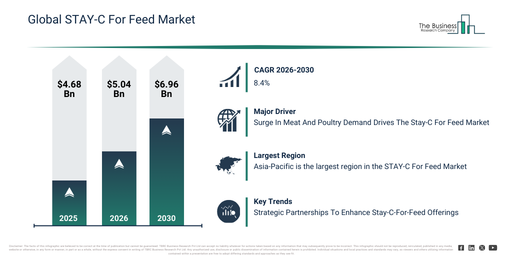
    STAY-C For Feed Market Growth From $5.03 Billion In 2026 To $6.96 Billion By 2030 At A CAGR Of 8.4%

    The stay-c for feed market has experienced substantial growth in recent years. It is projected to expand from $4.68 billion in 2025 to $5.04 billion in 2026, at a compound annual growth rate (CAGR) of 7.7%. This historical expansion can be ascribed to an intensified focus on animal health and immunity, the proliferation of commercial poultry and swine farming, a heightened awareness of vitamin deficiencies in livestock, the enlargement of compound feed manufacturing, and the established practice of utilizing vitamin c for animal stress management.

    The stay-c for feed market is projected to experience substantial expansion in the coming years, reaching $6.96 billion by 2030 with a compound annual growth rate (CAGR) of 8.4%. This anticipated growth during the forecast period can be attributed to factors such as the increasing global demand for animal protein, the expansion of aquaculture and functional feeds, the growing implementation of precision nutrition for livestock, the need for high-performance and stable feed additives, and supportive regulations aimed at enhancing feed quality standards. Key trends identified for the forecast period encompass a growing requirement for stable vitamin C sources in animal nutrition, an increased utilization of antioxidant feed additives to bolster livestock immunity, the rising use of stay-c in aquaculture feed supplementation, a move towards feed additives with high bioavailability, and the expansion of commercial livestock farming alongside intensive feeding methods.

    Get A Free Sample Report With In-Depth Market Insights:

    https://thebusinessresearchcompany.com/sample_request?id=49249799&type=smp&name=STAY-C%20For%20Feed%20Market%20Report%202026&utm_source=Blogs&utm_medium=Paid&utm_campaign=Oct_PR

    STAY-C For Feed Market Demand Drivers: What’s Powering Industry Growth?

    The rising demand for meat and poultry products is expected to stimulate the growth of the STAY-C for feed market in the future. Meat is defined as animal flesh consumed as food, encompassing fish, fowl, and poultry products. STACY-C is vital for maintaining the health of feed and for generating collagen, which supports muscles, vascular tissues, bones, and cartilage. For instance, in March 2023, the Australian Bureau of Statistics, an Australia-based government agency, indicated that pig meat production increased by 5.9% in the March 2023 quarter, reaching 117,512 tonnes, an increase from 111,000 tonnes recorded in December 2022. Thus, the escalating demand for meat and poultry products is a key driver for the expansion of the STAY-C for feed market.

    STAY-C For Feed Market Segment Analysis: What Are The Core Market Categories?

    The stay-c for feed market covered in this report is segmented –

    1) By Function: Single Functioned, Multi Functioned

    2) By Formulation: Dry, Liquid, Other Formulations

    3) By Livestock: Swine, Ruminants, Poultry, Aquatic Animals, Other Livestock

    Subsegments:

    1) By Single Functioned: Stay-c For Specific Feed Types, Basic Formulations With A Single Benefit

    2) By Multi Functioned: Stay-c With Multiple Benefits, Formulations Combining Various Ingredients For Enhanced Performance

    STAY-C For Feed Market Innovation Trends: What Developments Are Reshaping The Industry?

    Leading companies in the Stay-C-for-feed market are focusing on strategic alliances to enhance product development, extend their market reach, and improve animal health solutions. A strategic partnership generally signifies a collaborative relationship between two or more organizations, combining their resources, expertise, and efforts to achieve shared objectives. As an illustration, in February 2024, Cargill, Incorporated, a US-based food corporation that offers STAY-C for feed, formed a partnership with Enough, a UK-based producer of mycoprotein-based food. This collaboration saw Cargill invest in Enough’s Series C funding round and sign a commercial agreement to utilize and market its Abunda mycoprotein. This mycoprotein, generated via a zero-waste fermentation process using fungi and sustainably sourced sugars from Cargill’s glucose syrup, is a complete food ingredient abundant in amino acids and dietary fiber. The broadened partnership with Cargill is expected to enable the joint creation of alternative protein foods and support the scaling of production throughout Europe and other areas.

    STAY-C For Feed Market Top Companies Driving Competitive Growth

    Major companies operating in the stay-c for feed market are BASF SE, DSM Firmenich AG, Evonik Industries AG, Cargill Incorporated, Balchem Corporation, Adisseo France SAS, Zhejiang NHU Company Ltd, Northeast Pharmaceutical Group Co Ltd, CSPC Pharmaceutical Group Ltd, Shandong Luwei Pharmaceutical Co Ltd, Hebei Welcome Pharmaceutical Co Ltd, Henan Huaxing Pharmaceutical Co Ltd, Shandong Tianli Pharmaceutical Co Ltd, Anhui Tiger Biotech Co Ltd, Hubei Artec Biotechnology Co Ltd, Shanghai Longyu Biotechnology Co Ltd, Hugestone Enterprise Co Ltd, Shandong Hongda Biotechnology Co Ltd, Jiangsu Kolod Food Ingredients Co Ltd, Zhejiang Delekang Food Co Ltd, Anhui Biochem Biotechnology Co Ltd, Hebei Zhongsheng Pharmaceutical Co Ltd

    View The Full STAY-C For Feed Market Report:

    https://thebusinessresearchcompany.com/report/stay-C-for-feed-global-market-report?utm_source=Blogs&utm_medium=Paid&utm_campaign=Oct_PR

    STAY-C For Feed Market Geographic Landscape: Which Region Dominates Industry Growth?

    Asia-Pacific was the largest region in the STAY-C for feed market in 2025. The regions covered in the stay-c for feed market report are Asia-Pacific, South East Asia, Western Europe, Eastern Europe, North America, South America, Middle East, Africa.

    Reach Out To Our Team:

    The Business Research Company: https://www.thebusinessresearchcompany.com/

    Americas: +1 310-496-7795

    Asia: +44 7882 955267 & +91 8897263534

    Europe: +44 7882 955267

    Email us at: marketing@tbrc.info

    Follow us on:

    LinkedIn: https://in.linkedin.com/company/the-business-research-company

    YouTube: https://www.youtube.com/channel/UC24_fI0rV8cR5DxlCpgmyFQ

    Global Market Model: https://www.thebusinessresearchcompany.com/global-market-model
  • Sprycel Market Size And Growth In 2026: Key Factors Shaping Future Demand

    Sprycel Market Size And Growth In 2026: Key Factors Shaping Future Demand

    Backed by market attractiveness analysis, total addressable market sizing, company benchmarking matrices, interactive Excel dashboards, wider supply chain intelligence, emerging startup coverage, and detailed product-level insights, The Business Research Company’s 2026 market reports are designed to offer research that is more actionable and strategically valuable than ever.

    Sprycel Market Expansion Outlook: What Revenue Opportunities Are Ahead?

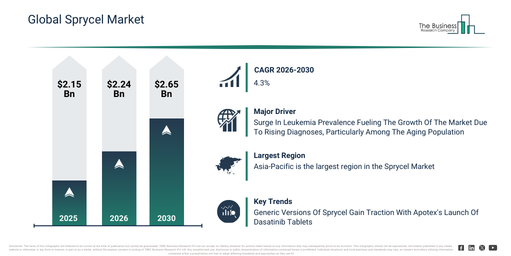
    The sprycel market has experienced consistent expansion in recent years. Its value is set to rise from $2.15 billion in 2025 to $2.24 billion in 2026, achieving a compound annual growth rate (CAGR) of 4.3%. This historical growth can be linked to factors like the elevated incidence of leukemia, the emergence of resistance to first-line treatments, the successful clinical outcomes of tyrosine kinase inhibitors, the integration into hospital oncology practices, and various regulatory clearances.

    The sprycel market size is anticipated to show consistent expansion over the next few years. It is projected to reach $2.65 billion in 2030 at a compound annual growth rate (CAGR) of 4.3%. This growth throughout the forecast period is attributable to advancements in precision oncology, personalized cancer treatment, the broadening of specialty care, innovation in oncology drugs, and improved survival rates. Key trends for the projected period encompass the sustained utilization of targeted leukemia therapies, increasing application in drug-resistant cml, the wider adoption of precision oncology treatments, the growth of specialty oncology pharmacies, and an emphasis on long-term disease management.

    Get A Free Sample Report With In-Depth Market Insights:

    https://thebusinessresearchcompany.com/sample_request?id=84858570&type=smp&name=Sprycel%20Market%20Report%202026&utm_source=Blogs&utm_medium=Paid&utm_campaign=Oct_PR

    Sprycel Market Growth Drivers: What’s Behind The Acceleration?

    The growing occurrence of leukemia is anticipated to fuel the expansion of the sprycel market in the coming years. Leukemia, a malignancy affecting the blood and bone marrow, is defined by an overproduction of abnormal white blood cells. The increasing number of leukemia cases is largely due to an aging demographic, as older individuals are more susceptible to developing this condition, resulting in a rise in diagnoses. Sprycel (dasatinib) serves as a treatment for particular forms of leukemia, including Philadelphia chromosome-positive chronic myeloid leukemia (CML) and acute lymphoblastic leukemia (ALL), by blocking the BCR-ABL protein essential for cancer cell proliferation. For example, the American Cancer Society (ACS), a US-based nonprofit health organization committed to eradicating cancer as a major health concern, reported that approximately 59,610 individuals were diagnosed with leukemia in 2023, with around 23,940 fatalities. Consequently, the rising incidence of leukemia is propelling the development of the sprycel market.

    Sprycel Market Segment Breakdown: Which Categories Lead On Revenue?

    The sprycel market covered in this report is segmented –

    1) By Indication: Chronic Myeloid Leukemia, Acute Lymphoblastic Leukemia

    2) By Dosage Forms: Tablets, Oral Suspension

    3) By Distribution Channel: Hospitals and Clinics, Retail Pharmacies, Online Pharmacies, Specialty Pharmacies

    Subsegments:

    1) By Chronic Myeloid Leukemia: Newly Diagnosed Chronic Phase CML, Imatinib-Resistant Or Intolerant CML, Accelerated Phase CML, Blast Phase CML

    2) By Acute Lymphoblastic Leukemia: Philadelphia Chromosome-Positive (Ph+) ALL In Adults, Philadelphia Chromosome-Positive (Ph+) ALL In Pediatric Patients, Relapsed Or Refractory Ph+ ALL

    Sprycel Market Trends: What’s Defining The Industry’s Next Phase?

    Leading companies in the sprycel market are concentrating on developing a generic version of sprycel, aiming to leverage the upcoming patent expiry and satisfy the increasing need for affordable cancer treatments. A generic Sprycel product refers to dasatinib-based medications produced by other manufacturers following the expiration of the original patent, delivering the same therapeutic effects at a reduced price. For example, in September 2024, Apotex Corp., a Canada-based pharmaceutical company, launched dasatinib tablets, representing a generic equivalent of Sprycel, a kinase inhibitor used for treating specific forms of leukemia. Dasatinib acts as a kinase inhibitor employed to manage certain types of leukemia in adults and children aged one year and older, encompassing Philadelphia chromosome-positive chronic myeloid leukemia (CML) and acute lymphoblastic leukemia (ALL), particularly when previous therapies were unsuccessful or not well-tolerated. The product is manufactured to meet stringent quality requirements, being free from latex, sugar, dyes, alcohol, and preservatives, and is supplied in bottles containing 30 or 60 tablets, depending on its strength.

    Sprycel Market Leading Players And Competitive Positioning

    Major companies operating in the sprycel market are Bristol-Myers Squibb Company, Otsuka Pharmaceutical Co. Ltd., Beacon Pharmaceuticals Limited, Panacea Biotec Limited, Apotex Corp., Hubei Haosun Pharmaceutical Co. Ltd., Dr. Reddy’s Laboratories Ltd., Lupin Limited, Zydus Lifesciences Limited, Biocon Limited, Zentiva k.s., Alembic Pharmaceuticals Limited, Granules India Limited, Natco Pharma Limited, Shilpa Medicare Limited, Prasco Laboratories, Stason Pharmaceuticals Inc., HRV Global Life Sciences Pvt. Ltd., Sichuan Elixir Pharmaceutical Co. Ltd., Gonane Pharma Limited

    View The Full Sprycel Market Report:

    https://thebusinessresearchcompany.com/report/sprycel-global-market-report?utm_source=Blogs&utm_medium=Paid&utm_campaign=Oct_PR

    Sprycel Market Largest Region: Which Geography Holds The Highest Market Share?

    Asia-Pacific was the largest region in the sprycel market in 2025. North America is expected to be the fastest-growing region in the forecast period. The regions covered in the sprycel market report are Asia-Pacific, South East Asia, Western Europe, Eastern Europe, North America, South America, Middle East, Africa.

    Reach Out To Our Team:

    The Business Research Company: https://www.thebusinessresearchcompany.com/

    Americas: +1 310-496-7795

    Asia: +44 7882 955267 & +91 8897263534

    Europe: +44 7882 955267

    Email us at: marketing@tbrc.info

    Follow us on:

    LinkedIn: https://in.linkedin.com/company/the-business-research-company

    YouTube: https://www.youtube.com/channel/UC24_fI0rV8cR5DxlCpgmyFQ

    Global Market Model: https://www.thebusinessresearchcompany.com/global-market-model
  • Spray-Dried Biologics Market Forecast 2026–2030: Market Size, Trends And Growth Opportunities

    Spray-Dried Biologics Market Forecast 2026–2030: Market Size, Trends And Growth Opportunities

    Featuring market attractiveness scoring, total addressable market sizing, company benchmarking matrices, interactive Excel dashboards, deeper supply chain intelligence, emerging startup tracking, and granular product-level insights, The Business Research Company’s 2026 market reports are built to deliver research that is both more actionable and more strategically valuable.

    Spray-Dried Biologics Market Growth Potential: How Will Market Size Shift Through 2030?

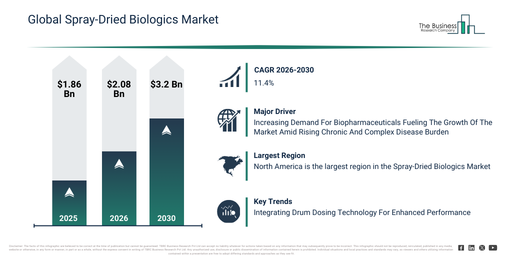
    The spray-dried biologics market has expanded considerably in recent times. It is anticipated to increase in value from $1.86 billion in 2025 to $2.08 billion in 2026, achieving a compound annual growth rate (CAGR) of 11.7%. The historical development of this market is due to several factors, including developments in biologics formulation science, a rise in biologic drug approvals, the requirement for improved drug stability, growth in vaccine manufacturing capacity, and the implementation of advanced pharmaceutical processing technologies.

    The spray-dried biologics market is projected to experience substantial expansion over the coming years, with its size forecasted to reach $3.2 billion by 2030, exhibiting a compound annual growth rate (CAGR) of 11.4%. This growth during the prediction period is largely driven by a rising demand for non-injectable biologics, increased capital allocation in dry powder delivery technologies, the growth of global vaccine manufacturing, an increased emphasis on minimizing cold-chain requirements, and improvements in spray-drying equipment technology. Key trends anticipated during the forecast period involve the wider acceptance of spray-drying for improving biologic stability, an escalating need for inhalable and orally administered biologic formulations, the expansion of continuous spray-drying methods, the growing application of dry powder biologics in vaccines, and a heightened emphasis on extending product shelf-life.

    Get A Free Sample Report With In-Depth Market Insights:

    https://thebusinessresearchcompany.com/sample_request?id=82435234&type=smp&name=Spray-Dried%20Biologics%20Market%20Report%202026&utm_source=Blogs&utm_medium=Paid&utm_campaign=Oct_PR

    Spray-Dried Biologics Market Growth Factors Behind Sustained Expansion

    The escalating demand for biopharmaceuticals is anticipated to fuel the expansion of the spray-dried biologics market moving forward. Biopharmaceuticals are therapeutic products sourced from biological origins, including living cells, proteins, and other biomolecules. The need for biopharmaceuticals is increasing globally due to a rise in chronic and complex health conditions, which creates a critical requirement for treatments offering enhanced specificity, improved efficacy, and reduced systemic side effects. The spray-dried biologics industry is observing growing demand as the swift growth of biopharmaceuticals prompts companies to implement scalable formulation technologies that enhance stability, extend shelf life, and optimize delivery efficiency. For instance, in February 2025, the World Health Organization (WHO), a Switzerland-based international public health agency, noted that its 2023 essential medicines list (EML) included 81 biologic therapies, accounting for more than 15% of all essential medicines. Thus, the increasing demand for biopharmaceuticals is propelling the growth of the spray-dried biologics market.

    Spray-Dried Biologics Market Segmentation: How Does The Market Break Down By Category?

    The spray-dried biologics market covered in this report is segmented –

    1) By Product Type: Monoclonal Antibodies, Vaccines, Enzymes, Hormones, Other Product Types

    2) By Route Of Administration: Oral, Inhalation Or Pulmonary, Injectable, Topical

    3) By End-User: Hospitals, Research Institutes, Pharmaceutical And Biotechnology Companies, Other End-Users

    Subsegments:

    1) By Monoclonal Antibodies: Chimeric Antibodies, Humanized Antibodies, Fully Human Antibodies, Bispecific Antibodies, Antibody Fragments

    2) By Vaccines: Live Attenuated Vaccines, Inactivated Vaccines, Subunit Vaccines, Toxoid Vaccines, Viral Vector Vaccines, Recombinant Protein Vaccines

    3) By Enzymes: Therapeutic Enzymes, Digestive Enzymes, Metabolic Enzymes, Recombinant Enzymes, Replacement Enzymes

    4) By Hormones: Peptide Hormones, Protein Hormones, Steroid Hormones, Recombinant Hormones, Growth Hormones

    5) By Other Product Types: Blood Factors, Cytokines, Fusion Proteins, Nucleic Acid Therapeutics, Cell Culture Media Proteins

    Spray-Dried Biologics Market Industry Trends Fueling Future Revenue Growth

    Major companies operating in the spray-dried biologics market are focusing on incorporating technological advancements, such as drum dosing technology, to enhance dose accuracy, powder handling efficiency, and reliable large-scale capsule filling. Drum dosing technology is an advanced powder-filling method that uses a rotating drum with precision-engineered dosing cavities and vacuum-assisted transfer to accurately meter and deposit dry powders into capsules, enabling capabilities such as consistent low-dose filling, improved flow management of spray-dried powders, and high-throughput scalability. For instance, in February 2024, Catalent Inc., a US-based contract development and manufacturing organization (CDMO), upgraded its inhalation manufacturing facility in the US by adding potent capsule-filling capabilities powered by drum-based dosing systems and in-line advanced mass verification. The upgraded platform supports accurate filling of engineered and spray-dried powders, featuring real-time dose validation and controlled low-humidity processing. This enhancement improves manufacturing efficiency, product consistency, and readiness for commercial-scale production of spray-dried biologic dry-powder inhalation therapies.

    Spray-Dried Biologics Market Competitive Overview And Top Companies

    Major companies operating in the spray-dried biologics market are Thermo Fisher Scientific Inc., Evonik Industries AG, Lonza Group AG, GEA Group, Fareva Group, Almac Group Limited, Seqens Group, Fabbrica Italiana Sintetici S.p.A., CordenPharma International, Hovione FarmaCiencia SA, Veranova Inc., Pace Analytical Services LLC, Olon S.p.A., Nova Laboratories Ltd, Leukocare AG, Micro Sphere SA, Seran Bioscience LLC, CritiTech Particle Engineering Solutions LLC, Xedev BV, BÜCHI Labortechnik AG.

    View The Full Spray-Dried Biologics Market Report:

    https://thebusinessresearchcompany.com/report/global-spray-dried-biologics-market-report?utm_source=Blogs&utm_medium=Paid&utm_campaign=Oct_PR

    Spray-Dried Biologics Market Regional Analysis: Which Region Leads By Revenue?

    North America was the largest region in the spray-dried biologics market in 2025. Asia-Pacific is expected to be the fastest-growing region in the forecast period. The regions covered in the spray-dried biologics market report are Asia-Pacific, South East Asia, Western Europe, Eastern Europe, North America, South America, Middle East, Africa.

    Reach Out To Our Team:

    The Business Research Company: https://www.thebusinessresearchcompany.com/

    Americas: +1 310-496-7795

    Asia: +44 7882 955267 & +91 8897263534

    Europe: +44 7882 955267

    Email us at: marketing@tbrc.info

    Follow us on:

    LinkedIn: https://in.linkedin.com/company/the-business-research-company

    YouTube: https://www.youtube.com/channel/UC24_fI0rV8cR5DxlCpgmyFQ

    Global Market Model: https://www.thebusinessresearchcompany.com/global-market-model
  • Sports Medicine Market Size Reaches $9.54 Billion In 2026: What Is Driving Growth?

    Sports Medicine Market Size Reaches $9.54 Billion In 2026: What Is Driving Growth?

    Built to provide research that’s more actionable and strategically valuable, The Business Research Company’s 2026 market reports include market attractiveness analysis, total addressable market sizing, company benchmarking matrices, interactive Excel dashboards, broader supply chain intelligence, emerging startup tracking, and in-depth product insights.

    Sports Medicine Market Value Analysis: What Growth Lies Ahead Over The Forecast Period?

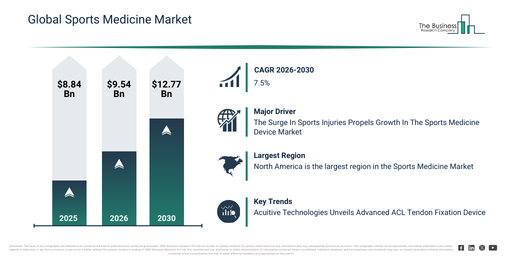
    The sports medicine market has experienced substantial growth in recent years. It is projected to expand from $8.84 billion in 2025 to $9.54 billion in 2026, exhibiting a compound annual growth rate (CAGR) of 8.0%. This historic period’s growth can be linked to factors such as the increasing frequency of sports injuries, a heightened awareness of musculoskeletal health, the rising adoption of orthopedic devices, the expansion of sports facilities and professional leagues, and advancements in surgical procedures.

    The sports medicine market is anticipated to show significant expansion in the coming years. It is projected to achieve a size of $12.77 billion in 2030, growing at a compound annual growth rate (CAGR) of 7.5%. This expansion during the forecast period stems from increasing demand for tele-rehabilitation, the integration of AI in injury diagnosis, the adoption of wearable recovery devices, a heightened focus on preventive care, and an expanding population of aging athletes. Key trends expected over the forecast period include minimally invasive surgical techniques, personalized rehabilitation programs, tele-rehabilitation and remote monitoring, advanced sports injury diagnostics, and wearable technologies for performance and recovery monitoring.

    Get A Free Sample Report With In-Depth Market Insights:

    https://thebusinessresearchcompany.com/sample_request?id=35113709&type=smp&name=Sports%20Medicine%20Market%20Report%202026&utm_source=Blogs&utm_medium=Paid&utm_campaign=Oct_PR

    Sports Medicine Market Demand Drivers Opening New Revenue Streams

    The projected increase in sports injuries is anticipated to fuel the expansion of the sports medicine device market moving forward. A sports injury defines the diverse range of wounds frequently sustained during athletic endeavors. Beyond merely treating injuries, sports medicine devices find application in performance training, physical therapy, and injury prevention; thus, the escalating number of sports injuries is set to propel the sports medicine devices market. As an illustration, Insideworldfootball, a UK-based web-based news-driven service, reported in October 2024 that sports injuries amounted to 4,123 in the 2023-24 season, indicating a 4% rise from the 2022-23 period. Consequently, the heightened occurrence of sports injuries is stimulating the growth of the sports medicine device market.

    Sports Medicine Market Segment Trends And Revenue Contributors

    The sports medicine market covered in this report is segmented –

    1) By Product: Orthopedic Devices, Body Reconstruction And Repair, Body Support And Recovery, Body Monitoring And Evaluation, Accessories

    2) By Orthopedic Product: Artificial Joint Implants, Arthroscopy Devices, Fracture Repair Devices, Prosthesis, Orthobiologic

    3) By Recovery And Support Product: Braces, Performance Monitoring Devices, Accessories, Other Recovery Products

    4) By Application: Knee Injury, Shoulder Injury, Ankle-Foot Injury, Back-Spine Injury, Hand-Wrist Injury, Hip-Groin Injury, Arm-Elbow Injury

    5) By End Users: Ambulatory Surgical Centers, Hospitals, Orthopedic Clinics, Other End Users

    Subsegments:

    1) By Orthopedic Devices: Braces And Supports, Splints, Orthopedic Implants

    2) By Body Reconstruction And Repair: Surgical Instruments, Biologics, Soft Tissue Repair Devices

    3) By Body Support And Recovery: Compression Wear, Rehabilitation Devices, Physiotherapy Equipment

    4) By Body Monitoring And Evaluation: Wearable Sensors, Diagnostic Imaging Devices, Motion Analysis Systems

    5) By Accessories: Ice Packs And Heat Wraps, Taping And Strapping Materials, Therapeutic Gel Packs

    Sports Medicine Market Trends Powering Strategic Industry Growth

    Leading companies active in the sports medicine device market are focused on developing innovative solutions, such as advanced resorbable tendon-fixation technologies, to cater to the growing demand for more robust fixation, minimally invasive procedures, and devices that support the body’s natural healing process in orthopedic and sports injury repairs. These technologies employ bioresorbable materials specifically engineered to mimic the properties of natural bone, thereby providing improved biocompatibility and fewer long-term complications compared to traditional metal implants. For example, in June 2023, Acuitive Technologies Inc., a US-based medical device manufacturer, launched the CITRELOCK ACL Tendon Fixation Device, an innovative system designed for secure tendon fixation. This device features a spiral thread for easy insertion and firm anchoring without harming the tendon, and it integrates Citregen, an advanced resorbable material optimized for orthopedic use. Citregen replicates natural bone composition, offers compressive strength comparable to cortical bone, and exhibits a modulus similar to trabecular bone, thus delivering strong fixation, natural integration, and predictable resorption.

    Sports Medicine Market Competitive Landscape: Which Companies Lead The Industry?

    Major companies operating in the sports medicine market are Stryker Corporation, Arthrex Inc., Zimmer Biomet Holdings Inc., Smith & Nephew plc, Mueller Sports Medicine Inc., Karl Storz SE & Co KG, CONMED Corporation, Johnson & Johnson, DJ Orthopedics LLC, Breg Inc., RTI Surgical Inc., Performance Health International Limited, Bauerfeind AG, Ossur Corporate, Cramer Product Inc., Medtronic plc, Bioventus LLC, Hanger Inc., AlloSource Inc., Surgalign Holdings Inc., DePuy Synthes Companies, Acumed LLC, Integra LifeSciences Corporation, Orthofix Medical Inc., Musculoskeletal Transplant Foundation

    View The Full Sports Medicine Market Report:

    https://thebusinessresearchcompany.com/report/sports-medicine-devices-global-market-report?utm_source=Blogs&utm_medium=Paid&utm_campaign=Oct_PR

    Sports Medicine Market Geographic Distribution And Regional Opportunities

    North America was the largest region in the sports medicine device market in 2025. Asia-Pacific is expected to be the fastest-growing region in the sports medicine devices market report during the forecast period. The regions covered in the sports medicine market report are Asia-Pacific, South East Asia, Western Europe, Eastern Europe, North America, South America, Middle East, Africa.

    Reach Out To Our Team:

    The Business Research Company: https://www.thebusinessresearchcompany.com/

    Americas: +1 310-496-7795

    Asia: +44 7882 955267 & +91 8897263534

    Europe: +44 7882 955267

    Email us at: marketing@tbrc.info

    Follow us on:

    LinkedIn: https://in.linkedin.com/company/the-business-research-company

    YouTube: https://www.youtube.com/channel/UC24_fI0rV8cR5DxlCpgmyFQ

    Global Market Model: https://www.thebusinessresearchcompany.com/global-market-model