Month: October 2026

  • Spine Biologics Market Valued At $3.16 Billion In 2026: Key Trends And Growth Drivers

    Spine Biologics Market Valued At $3.16 Billion In 2026: Key Trends And Growth Drivers

    Backed by market attractiveness analysis, total addressable market sizing, company benchmarking matrices, interactive Excel dashboards, wider supply chain intelligence, emerging startup coverage, and detailed product-level insights, The Business Research Company’s 2026 market reports are designed to offer research that is more actionable and strategically valuable than ever.

    Spine Biologics Market Size Forecast: How Big Could The Market Get By 2030?

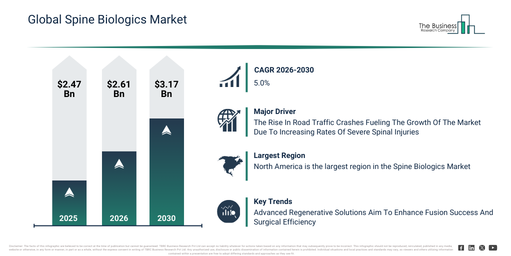
    The spine biologics market size has demonstrated robust growth over recent years. It is anticipated to increase from $2.47 billion in 2025 to $2.61 billion in 2026, registering a compound annual growth rate (CAGR) of 5.5%. The historical growth of this market can be attributed to various factors such as the rising incidence of degenerative spine disorders, an increase in spinal fusion surgeries performed, the limitations associated with traditional bone grafts, the expanding aging population, and the improved surgical outcomes provided by biologics.

    The spine biologics market is anticipated to experience consistent expansion over the upcoming years, projected to reach $3.17 billion in 2030 with a compound annual growth rate (CAGR) of 5.0%. This growth during the forecast period is driven by factors such as the increasing demand for regenerative medicine solutions, a rise in minimally invasive spine surgeries, a heightened focus on reducing post-surgical complications, ongoing technological advancements in biologic materials, and increased healthcare spending on orthopedic care. Key trends expected in the forecast period include the rising adoption of biologic bone grafts in spinal fusion, the increasing use of synthetic bone graft substitutes, a growing preference for minimally invasive spine procedures, the expansion of cell-based and regenerative spine therapies, and a higher demand for solutions that facilitate faster bone healing.

    Get A Free Sample Report With In-Depth Market Insights:

    https://thebusinessresearchcompany.com/sample_request?id=93329122&type=smp&name=Spine%20Biologics%20Market%20Report%202026&utm_source=Blogs&utm_medium=Paid&utm_campaign=Oct_PR

    Spine Biologics Market Growth Backed By Core Demand Fundamentals

    The increasing occurrence of road accidents is expected to drive the expansion of the spinal biologics market in the future. An unforeseen collision of vehicles on public roads, a road accident is a significant source of traumatic spinal injuries that require advanced biologic interventions. The escalation in road accident rates stems from elements such as higher traffic volume, distracted driving, impaired driving, and inadequate road infrastructure. Spinal biologics assist patient recovery by fostering spinal fusion, accelerating bone healing, minimizing surgical complications, and improving long-term functional outcomes. For example, in August 2025, the International Transport Forum reported that Australia recorded 1,297 road deaths in 2024, indicating a 4% increase compared to 2023. Thus, the rising count of road accidents is stimulating the growth of the spinal biologics market.

    Spine Biologics Market Segment Analysis Spotlighting Growth Areas

    The spine biologics market covered in this report is segmented –

    1) By Product: Bone Allografts, Bone Graft Substitute, Platelet Rich Plasma, Bone Marrow Aspirate Therapy

    2) By Surgery Type: Anterior Cervical Discectomy And Fusion (ACDF), ??Posterior Lumbar Interbody Fusion (PLIF), Transforaminal Lumbar Interbody Fusion (TLIF), ??Anterior Lumbar Interbody Fusion (ALIF), ??Lateral Lumbar Interbody Fusion (LLIF), Other Surgery Types

    3) By Application: Spinal Fusion, Spinal Non-Union And Fracture Repair, Degenerative Disc Disease Treatment, Other Applications

    4) By End User: Hospitals, Spinal Surgery Centers, Orthopedic Clinics, Other End Users

    Subsegments:

    1) By Bone Allografts: Fresh Allografts, Freeze-Dried Allografts

    2) By Bone Graft Substitute: Synthetic Bone Grafts, Demineralized Bone Matrix (DBM), Calcium Phosphate-Based Grafts, Platelet Rich Plasma (PRP)

    3) By Bone Marrow Aspirate Therapy: Concentrated Bone Marrow Aspirate, Bone Marrow Concentrates

    Spine Biologics Market Growth Trends Reshaping The Competitive Landscape

    Leading companies within the spinal biologics market are prioritizing the creation of advanced solutions, notably regenerative biologics, to enhance spinal fusion results and operational effectiveness. Regenerative biologics are medical products originating from natural or engineered biological components that encourage the repair, regeneration, or replacement of compromised tissues. For example, in October 2025, Aurora Spine Corporation, a Canada-based manufacturing entity, unveiled a new biologics portfolio through its dedicated Aurora Biologics division, with the aim of advancing spinal fusion success. This portfolio showcases 100% allograft bone products, including TURBO FUSE Fiber Putty and OSTEO BRIDGE Sponge Strips, specifically designed to improve spinal fusion outcomes. These biologics are seamlessly integrated with Aurora’s minimally invasive spinal implant technologies, which serves to boost surgical efficiency and facilitate long-term patient recovery. This strategic launch extends Aurora’s biologics offerings by over 30%, thereby fostering growth and aligning with their organizational mission to simplify complex spine care.

    Spine Biologics Market Leading Companies: Who Holds The Strongest Market Presence?

    Major companies operating in the spine biologics market are Medtronic PLC, Johnson & Johnson Services Inc., Stryker Corporation, Zimmer Biomet Holdings Inc., Integra LifeSciences Corporation, RTI Surgical Inc., LifeNet Health Inc., Xtant Medical Holdings Inc., Kuros Biosciences A.G., Cerapedics Inc, Aziyo Biologics, Bone Biologics Corp., Orthofix Medical Inc., NuVasive Inc., SeaSpine Holdings Corporation, Exactech Inc., DePuy Synthes, Globus Medical Inc., Spine Wave Inc., Osiris Therapeutics Inc.

    View The Full Spine Biologics Market Report:

    https://thebusinessresearchcompany.com/report/spine-biologics-global-market-report?utm_source=Blogs&utm_medium=Paid&utm_campaign=Oct_PR

    Spine Biologics Market Largest Region By Revenue And Market Share

    North America was the largest region in the spine biologics market in 2025. Asia-Pacific is expected to be the fastest-growing region in the forecast period. The regions covered in the spine biologics market report are Asia-Pacific, South East Asia, Western Europe, Eastern Europe, North America, South America, Middle East, Africa.

    Reach Out To Our Team:

    The Business Research Company: https://www.thebusinessresearchcompany.com/

    Americas: +1 310-496-7795

    Asia: +44 7882 955267 & +91 8897263534

    Europe: +44 7882 955267

    Email us at: marketing@tbrc.info

    Follow us on:

    LinkedIn: https://in.linkedin.com/company/the-business-research-company

    YouTube: https://www.youtube.com/channel/UC24_fI0rV8cR5DxlCpgmyFQ

    Global Market Model: https://www.thebusinessresearchcompany.com/global-market-model

  • Spinal Muscular Atrophy Treatment Market Size In 2026: Growth Outlook And Forecast Through 2030

    Spinal Muscular Atrophy Treatment Market Size In 2026: Growth Outlook And Forecast Through 2030

    Featuring market attractiveness scoring, total addressable market sizing, company benchmarking matrices, interactive Excel dashboards, deeper supply chain intelligence, emerging startup tracking, and granular product-level insights, The Business Research Company’s 2026 market reports are built to deliver research that is both more actionable and more strategically valuable.

    Spinal Muscular Atrophy Treatment Market Revenue Outlook: What CAGR Lies Ahead Through 2030?

    The spinal muscular atrophy treatment market size has experienced significant growth in recent years. It is anticipated to expand from $5.1 billion in 2025 to $5.89 billion in 2026, exhibiting a compound annual growth rate (CAGR) of 15.5%. Historically, this market expansion can be linked to several factors: a limited array of therapeutic options for SMA, insufficient awareness of genetic disorders, a reliance on hospital-based treatment, a sluggish adoption rate for innovative therapies, and the absence of comprehensive early diagnosis programs.

    The spinal muscular atrophy treatment market size is projected to experience substantial expansion in the coming years. It will grow to $10.38 billion in 2030 at a compound annual growth rate (CAGR) of 15.2%. This anticipated growth during the projection period can be attributed to several factors, including the advancement of gene therapies, increased funding for SMA research, expanded newborn screening programs, the proliferation of specialty clinics and at-home care options, and the incorporation of digital health and remote medical solutions. Key trends anticipated for the forecast period encompass a greater acceptance of gene therapy and SMN2-modifying treatments, an intensified emphasis on early detection and newborn screening efforts, an expansion of SMA management services through homecare and specialized clinics, the formation of more multidisciplinary care teams for SMA patients, and the seamless integration of telehealth with remote patient monitoring systems.

    Get A Free Sample Report With In-Depth Market Insights:

    https://thebusinessresearchcompany.com/sample_request?id=84911296&type=smp&name=Spinal%20Muscular%20Atrophy%20Treatment%20Market%20Report%202026&utm_source=Blogs&utm_medium=Paid&utm_campaign=Oct_PR

    Spinal Muscular Atrophy Treatment Market Growth Catalysts And Demand Drivers

    The increasing emphasis on gene therapy is projected to boost the expansion of the spinal muscular atrophy treatment market in the future. This medical approach entails altering an individual’s genetic makeup, specifically DNA or RNA, with the aim of treating or preventing various illnesses. The heightened attention on gene therapy stems mainly from its capacity to address or resolve the fundamental cause of genetic conditions through direct modification or replacement of defective genes, providing sustained or lasting therapeutic outcomes relative to conventional therapies. Specifically, spinal muscular atrophy treatments benefit from gene therapy, exemplified by onasemnogene abeparvovec (Zolgensma), which offers a single-dose, precise method to introduce a working copy of the SMN1 gene, substantially enhancing motor capabilities and patient life quality for those with SMA. As an illustration, in January 2024, the American Society of Gene and Cell Therapy, a US-based organization focused on gene and cell therapy, reported that the volume of gene therapies undergoing Phase III trials saw a rise of 10% in the fourth quarter of 2023 when contrasted with the preceding quarter. This represented the initial such uptick recorded since the third quarter of 2022. Consequently, the increased emphasis on gene therapy is fueling the expansion of the spinal muscular atrophy treatment market.

    Spinal Muscular Atrophy Treatment Market Segment Performance And Emerging Opportunities

    The spinal muscular atrophy treatment market covered in this report is segmented –

    1) By Treatment: Medication, Physical Therapy, Surgery, Other Treatments

    2) By Type: Werdnig-Hoffmann Disease, Infant Spinal Muscular Atrophy, Kugelberg-Welander Disease, Adult Spinal Muscular Atrophy

    3) By Route Of Administration: Oral, Parenteral

    4) By Distribution Channel: Hospital Pharmacies, Retail Pharmacies, Other Distribution Channels

    5) By End User: Hospitals, Homecare, Specialty Clinics, Other End Users

    Subsegments:

    1) By Medication: Nusinersen (Spinraza), Onasemnogene Abeparvovec-Xioi (Zolgensma), Risdiplam (Evrysdi), Antisense Oligonucleotides, Spinal Muscular Atrophy (SMN2) Splicing Modifiers, Corticosteroids, Supportive Medications

    2) By Physical Therapy: Occupational Therapy, Respiratory Therapy, Aquatic Therapy, Orthotic Support, Assistive Mobility Devices, Range-Of-Motion Exercises

    3) By Surgery: Spinal Fusion Surgery, Scoliosis Correction Surgery, Orthopedic Surgery, Gastrostomy Tube Placement, Tracheostomy

    4) By Other Treatments: Nutritional Support, Respiratory Support, Psychosocial Support And Counseling, Genetic Counseling, Stem Cell Therapy

    Spinal Muscular Atrophy Treatment Market Trends Shaping Long-Term Demand

    Leading companies in the spinal muscular atrophy treatment market are concentrating on developing innovative formulations like survival motor neuron 2 (SMN2) splicing modifier tablets to improve motor function and slow disease progression. Survival motor neuron 2 (SMN2) splicing modifier tablets are oral medications crafted to modify the splicing of the SMN2 gene, thereby enabling the production of functional SMN protein essential for motor neuron survival. These tablets aid in treating spinal muscular atrophy (SMA) by boosting the levels of full-length SMN protein, consequently enhancing muscle function and slowing the disease’s advancement. For instance, in February 2025, Genentech, Inc., a US-based biotechnology company, secured U.S. Food and Drug Administration approval for its Evrysdi (risdiplam) tablet, recognized as the inaugural and only non-invasive SMN2 splicing modifier tablet for SMA treatment. The Evrysdi tablet provides comparable efficacy and safety to the current oral solution, with additional benefits such as storage at room temperature and simplified administration for patients aged 2 years and older who weigh more than 44 lbs (20 kgs), offering enhanced convenience and adaptability in managing the condition.

    Spinal Muscular Atrophy Treatment Market Key Players: Which Companies Lead Industry Competition?

    Major companies operating in the spinal muscular atrophy treatment market are F. Hoffmann-La Roche Ltd, Novartis AG, Biogen Inc., Ionis Pharmaceuticals Inc., Chugai Pharmaceutical Co. Ltd, PTC Therapeutics Inc., Voyager Therapeutics Inc., Scholar Rock Holding Corporation, Genethon, Exegenesis Bio Inc., Alcyone Therapeutics Inc., Biophytis SA, Ractigen Therapeutics, Sarepta Therapeutics Inc., Astellas Pharma Inc., Pfizer Inc., AstraZeneca PLC, Roche Molecular Systems Inc., Avexis Inc., Cytokinetics Incorporated, Repligen Corporation, Neurogene Inc., Solid Biosciences Inc., Entrada Therapeutics Inc., Regenxbio Inc., Rocket Pharmaceuticals Inc., Asklepios BioPharmaceutical (AskBio) Inc., Ultragenyx Pharmaceutical Inc., Catalyst Pharmaceuticals Inc., NMD Pharma A/S, Biohaven Pharmaceutical Holding Company Ltd, Vybion Inc., Apteeus SAS, BIOCAD INDIA PRIVATE LIMITED

    View The Full Spinal Muscular Atrophy Treatment Market Report:

    https://thebusinessresearchcompany.com/report/spinal-muscular-atrophy-treatment-global-market-report?utm_source=Blogs&utm_medium=Paid&utm_campaign=Oct_PR

    Spinal Muscular Atrophy Treatment Market Regional Analysis And Leading Geography

    North America was the largest region in the spinal muscular atrophy treatment market in 2025. Asia-Pacific is expected to be the fastest-growing region in the forecast period. The regions covered in the spinal muscular atrophy treatment market report are Asia-Pacific, South East Asia, Western Europe, Eastern Europe, North America, South America, Middle East, Africa.

    Reach Out To Our Team:

    The Business Research Company: https://www.thebusinessresearchcompany.com/

    Americas: +1 310-496-7795

    Asia: +44 7882 955267 & +91 8897263534

    Europe: +44 7882 955267

    Email us at: marketing@tbrc.info

    Follow us on:

    LinkedIn: https://in.linkedin.com/company/the-business-research-company

    YouTube: https://www.youtube.com/channel/UC24_fI0rV8cR5DxlCpgmyFQ

    Global Market Model: https://www.thebusinessresearchcompany.com/global-market-model

  • Sphingosine 1 Phosphate Receptor (S1PR) Modulator Drugs Market Trends Supporting 5.5% CAGR Growth Through 2030

    Sphingosine 1 Phosphate Receptor (S1PR) Modulator Drugs Market Trends Supporting 5.5% CAGR Growth Through 2030

    Built to provide research that’s more actionable and strategically valuable, The Business Research Company’s 2026 market reports include market attractiveness analysis, total addressable market sizing, company benchmarking matrices, interactive Excel dashboards, broader supply chain intelligence, emerging startup tracking, and in-depth product insights.

    Sphingosine 1 Phosphate Receptor (S1PR) Modulator Drugs Market Growth Analysis: How Will Revenue Trend Over The Forecast Period?

    The sphingosine 1 phosphate receptor (s1pr) modulator drugs market has demonstrated robust expansion over recent years. It will grow from $2.57 billion in 2025 to $2.72 billion in 2026 at a compound annual growth rate (CAGR) of 5.6%. This historical increase can be ascribed to elements such as the clinical achievements of fingolimod, the rising prevalence of autoimmune conditions, the expansion of neurology treatment guidelines, the adoption of hospital-based immunotherapy, and regulatory approvals granted for s1pr drugs.

    The sphingosine 1 phosphate receptor (s1pr) modulator drugs market size is anticipated to undergo significant expansion in the coming years. It is projected to achieve a value of $3.37 billion by 2030, demonstrating a compound annual growth rate (CAGR) of 5.5%. This growth throughout the forecast period stems from factors such as an expanding population of multiple sclerosis patients, the broadening of s1pr drug development pipelines, a heightened preference for oral immunotherapies, increasing diagnosis rates for autoimmune diseases, and the rising adoption of specialty clinics. Prominent trends for the forecast period include the increasing deployment of immune cell trafficking modulators, their growing acceptance in multiple sclerosis treatment, the expansion of oral immunomodulatory therapies, a greater emphasis on targeted immune modulation, and their enhanced application in chronic autoimmune conditions.

    Get A Free Sample Report With In-Depth Market Insights:

    https://thebusinessresearchcompany.com/sample_request?id=65557585&type=smp&name=Sphingosine%201%20Phosphate%20Receptor%20%28S1PR%29%20Modulator%20Drugs%20Market%20Report%202026&utm_source=Blogs&utm_medium=Paid&utm_campaign=Oct_PR

    Sphingosine 1 Phosphate Receptor (S1PR) Modulator Drugs Market Opportunity Drivers: What’s Unlocking New Revenue Potential?

    The rising occurrence of autoimmune conditions is anticipated to drive the expansion of the sphingosine 1 phosphate receptor (S1PR) modulator drugs market in the future. Autoimmune diseases are characterized by the immune system mistakenly attacking the body’s own healthy cells, resulting in inflammation and damage. The increasing prevalence of these diseases is influenced by genetic factors, environmental triggers, shifts in lifestyle, and improved diagnostic methods. Sphingosine 1-Phosphate Receptor (S1PR) modulator drugs are utilized in autoimmune diseases to regulate immune cell migration, thereby reducing inflammation in conditions such as multiple sclerosis and ulcerative colitis. For example, in February 2025, the Australian Broadcasting Corporation, an Australia-based national public broadcaster, indicated that inflammatory bowel disease currently affects almost 180,000 Australians, with 93,700 individuals suffering from Crohn’s Disease and 80,430 from Ulcerative Colitis, and this total is projected to increase to 200,000 over the next 10 years. Hence, the growing incidence of autoimmune diseases is fueling the growth of the sphingosine 1-phosphate receptor (S1PR) modulator drugs market.

    Sphingosine 1 Phosphate Receptor (S1PR) Modulator Drugs Market Segment Landscape And Growth Outlook

    The sphingosine 1 phosphate receptor (s1pr) modulator drugs market covered in this report is segmented –

    1) By Type: Fingolimod, Ozanimod

    2) By Route Of Administration: Oral, Injectable

    3) By Application: Multiple Sclerosis, Cardiovascular Diseases, Transplant Rejection

    4) By End User: Hospital, Rehabilitation Centres, Retail Pharmacies

    Subsegments:

    1) By Fingolimod: Branded Formulations, Generic Formulations

    2) By Ozanimod: Oral Capsules, Other Formulations

    Sphingosine 1 Phosphate Receptor (S1PR) Modulator Drugs Market Innovation Trends Shaping Future Development

    Major companies operating in the sphingosine 1 phosphate receptor (S1PR) modulator drugs market are advancing oral therapies, such as etrasimod (VELSIPITY), with the goal of boosting patient adherence, enhancing efficacy, and expanding treatment reach in immuno inflammatory disorders. An oral S1PR modulator is defined as a small molecule pill that selectively binds to S1P receptors to modulate immune cell trafficking and reduce inflammation. For instance, in October 2023, Pfizer, a US based pharmaceutical and biotechnology company, obtained FDA approval for VELSIPITY (etrasimod) for moderately to severely active ulcerative colitis; this once daily drug delivers high receptor selectivity, a favorable safety profile, and convenient oral dosing.

    Sphingosine 1 Phosphate Receptor (S1PR) Modulator Drugs Market Competitive Landscape: Who Leads The Industry?

    Major companies operating in the sphingosine 1 phosphate receptor (s1pr) modulator drugs market are Novartis International AG, Bristol Myers Squibb Company, Celgene Corporation, Biogen Inc., Pfizer Inc., Merck & Co. Inc., AbbVie Inc., Johnson & Johnson, Ventyx Biosciences Inc., Arena Pharmaceuticals, Idorsia Pharmaceuticals Ltd., Sun Pharmaceutical Industries Ltd., Eisai Co. Ltd., Ono Pharmaceutical Co. Ltd., KYORIN Pharmaceutical Co. Ltd., Actelion Pharmaceuticals Ltd., Vanda Pharmaceuticals Inc., Juvisé Pharmaceuticals, Priothera Limited, Teva Pharmaceutical Industries Ltd.

    View The Full Sphingosine 1 Phosphate Receptor (S1PR) Modulator Drugs Market Report:

    https://thebusinessresearchcompany.com/report/sphingosine-1-phosphate-receptor-s1pr-modulator-drugs-global-market-report?utm_source=Blogs&utm_medium=Paid&utm_campaign=Oct_PR

    Sphingosine 1 Phosphate Receptor (S1PR) Modulator Drugs Market Geographic Analysis: Where Is Demand Accelerating Fastest?

    Asia-Pacific was the largest region in the sphingosine 1 phosphate receptor (S1PR) modulator drugs market in 2025. The regions covered in the sphingosine 1 phosphate receptor (s1pr) modulator drugs market report are Asia-Pacific, South East Asia, Western Europe, Eastern Europe, North America, South America, Middle East, Africa.

    Reach Out To Our Team:

    The Business Research Company: https://www.thebusinessresearchcompany.com/

    Americas: +1 310-496-7795

    Asia: +44 7882 955267 & +91 8897263534

    Europe: +44 7882 955267

    Email us at: marketing@tbrc.info

    Follow us on:

    LinkedIn: https://in.linkedin.com/company/the-business-research-company

    YouTube: https://www.youtube.com/channel/UC24_fI0rV8cR5DxlCpgmyFQ

    Global Market Model: https://www.thebusinessresearchcompany.com/global-market-model

  • Specific Antiviral Drugs For COVID 19 Market Forecast Highlights A $33.16 Billion Opportunity For Industry Participants

    Specific Antiviral Drugs For COVID 19 Market Forecast Highlights A $33.16 Billion Opportunity For Industry Participants

    Backed by market attractiveness analysis, total addressable market sizing, company benchmarking matrices, interactive Excel dashboards, wider supply chain intelligence, emerging startup coverage, and detailed product-level insights, The Business Research Company’s 2026 market reports are designed to offer research that is more actionable and strategically valuable than ever.

    Specific Antiviral Drugs For COVID 19 Market Forecast: What Value Will The Market Reach By 2030?

    The market size for specific antiviral drugs for covid 19 has witnessed rapid expansion in recent years. It is forecast to increase from $15.23 billion in 2025 to $17.83 billion in 2026, achieving a compound annual growth rate (CAGR) of 17.1%. Several factors contributed to its growth in the past, including the swift spread of covid-19, the issuance of emergency use authorizations, the reliance on established antiviral drug classes, limitations in global production capacity, and elevated rates of hospitalization.

    The market for specific antiviral drugs for covid 19 is poised for considerable expansion in the upcoming years. It is anticipated to achieve a valuation of $33.17 billion by 2030, growing at a compound annual growth rate (CAGR) of 16.8%. This growth throughout the forecast period can be attributed to several factors, including the advancement of next-generation antiviral drugs, an increase in public-private partnerships, the rising adoption of preventive treatments, the expansion of combination therapies, and the integration of personalized medicine approaches. Key trends expected during this period involve a surge in investment for covid-19 antiviral drug development, the increasing use of oral antiviral tablets, the growth of monoclonal antibody therapies, the broadening of hospital and retail distribution channels, and a focused effort on targeted treatment for hospitalized and high-risk patients.

    Get A Free Sample Report With In-Depth Market Insights:

    https://thebusinessresearchcompany.com/sample_request?id=37104444&type=smp&name=Specific%20Antiviral%20Drugs%20For%20COVID%2019%20Market%20Report%202026&utm_source=Blogs&utm_medium=Paid&utm_campaign=Oct_PR

    Specific Antiviral Drugs For COVID 19 Market Growth Momentum: What Factors Are Shaping Demand?

    The escalating count of COVID-19 infections is anticipated to stimulate the future expansion of the specific antiviral drugs for the COVID-19 market. COVID-19 cases pertain to individuals who have tested positive for the SARS-CoV-2 virus, which is responsible for COVID-19. The increase in COVID-19 cases is attributable to the emergence of new variants that exhibit easier transmission and a partial ability to evade immunity from prior vaccinations or infections. Specific antiviral drugs for COVID-19 are beneficial in mitigating the illness’s severity and duration, thus enhancing patient outcomes and reducing the overall impact of COVID-19 cases. For example, in May 2025, the World Health Organization, a global public health agency based in Switzerland, reported that the Eastern Mediterranean region’s test positivity rate surged from 4% to 17% in early 2025, surpassing the figures for the equivalent period in 2024. This rising number of COVID-19 cases therefore propels the growth of the specific antiviral drugs for the COVID-19 market.

    Specific Antiviral Drugs For COVID 19 Market Breakdown By Product Type And Application

    The specific antiviral drugs for covid 19 market covered in this report is segmented –

    1) By Type: Tablet, Injection

    2) By Indication: Hospitalized Patients, Non-Hospitalized Patients, Preventive Treatment

    3) By Drug Class: Nucleoside Analogues, Protease Inhibitors, Ribonucleic Acid Polymerase Inhibitors, Entry Inhibitors, Monoclonal Antibodies

    4) By Route Of Administration: Oral, Intravenous, Subcutaneous, Inhalation

    5) By Distribution Channel: Hospital Pharmacies, Retail Pharmacies, Other Distribution Channels

    Subsegments:

    1) By Tablet: Oral Antiviral Tablets, Combination Antiviral Tablets, Extended-Release Tablets

    2) By Injection: Intravenous (IV) Antiviral Injections, Intramuscular (IM) Antiviral Injections, Subcutaneous Antiviral Injections

    Specific Antiviral Drugs For COVID 19 Market Trends Redefining Industry Growth

    Key players within the specific antiviral drugs for the COVID-19 market are concentrating their efforts on creating groundbreaking treatments, like oral antiviral therapies, aimed at improving both the availability and efficacy of care. Oral antiviral therapies are medications administered orally to prevent the replication of viruses such as COVID-19, providing a practical and potent treatment solution. As an illustration, in March 2024, Shionogi And Co., a pharmaceutical company based in Japan, released Xocova and received full standard endorsement from Japan’s Ministry of Health, Labour and Welfare (MHLW) for its antiviral drug ensitrelvir. Moreover, it also delivers post-exposure prophylaxis by considerably decreasing the chance of symptomatic COVID-19 developing in individuals who have been exposed, and it shortens the duration of symptoms while demonstrating a positive safety profile.

    Specific Antiviral Drugs For COVID 19 Market Company Landscape And Competitive Strategy

    Major companies operating in the specific antiviral drugs for covid 19 market are Pfizer Inc., Merck & Co. Inc., Gilead Sciences Inc., Shionogi & Co. Ltd., Cipla Limited, Hetero Drugs Limited, Roche Holding AG, Johnson & Johnson, Novartis AG, GSK plc, Eli Lilly and Company, Regeneron Pharmaceuticals Inc., Sun Pharmaceutical Industries Ltd., Beximco Pharmaceuticals Limited, Atea Pharmaceuticals Inc., Enanta Pharmaceuticals Inc., RedHill Biopharma Ltd., Synairgen plc, Dr. Reddy’s Laboratories Ltd., Aurobindo Pharma Ltd., Lupin Limited, Natco Pharma Ltd., Zydus Lifesciences Ltd., Viatris Inc., Teva Pharmaceutical Industries Ltd., Hikma Pharmaceuticals PLC, Alkem Laboratories Ltd., Torrent Pharmaceuticals Ltd., Apotex Inc., Mylan N.V.

    View The Full Specific Antiviral Drugs For COVID 19 Market Report:

    https://thebusinessresearchcompany.com/report/specific-antiviral-drugs-for-covid-19-global-market-report?utm_source=Blogs&utm_medium=Paid&utm_campaign=Oct_PR

    Specific Antiviral Drugs For COVID 19 Market Global Footprint: Which Region Leads The Industry?

    North America was the largest region in the specific antiviral drugs for COVID 19 market in 2025. Asia-Pacific is expected to be the fastest-growing region in the forecast period. The regions covered in the specific antiviral drugs for covid 19 market report are Asia-Pacific, South East Asia, Western Europe, Eastern Europe, North America, South America, Middle East, Africa.

    Reach Out To Our Team:

    The Business Research Company: https://www.thebusinessresearchcompany.com/

    Americas: +1 310-496-7795

    Asia: +44 7882 955267 & +91 8897263534

    Europe: +44 7882 955267

    Email us at: marketing@tbrc.info

    Follow us on:

    LinkedIn: https://in.linkedin.com/company/the-business-research-company

    YouTube: https://www.youtube.com/channel/UC24_fI0rV8cR5DxlCpgmyFQ

    Global Market Model: https://www.thebusinessresearchcompany.com/global-market-model
  • Specialty Supplements Market Analysis: How The Industry Is Evolving Toward A $69.17 Billion Future

    Specialty Supplements Market Analysis: How The Industry Is Evolving Toward A $69.17 Billion Future

    Featuring market attractiveness scoring, total addressable market sizing, company benchmarking matrices, interactive Excel dashboards, deeper supply chain intelligence, emerging startup tracking, and granular product-level insights, The Business Research Company’s 2026 market reports are built to deliver research that is both more actionable and more strategically valuable.

    Specialty Supplements Market Size Outlook: How Quickly Will Revenue Expand Through 2030?

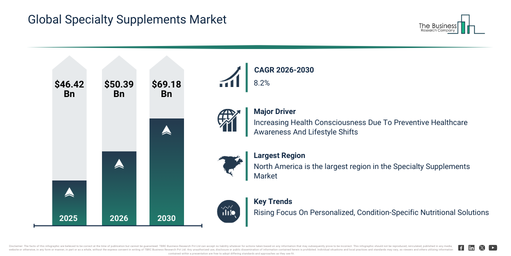
    The specialty supplements market has experienced robust expansion in recent times. Projections indicate it will expand from $46.42 billion in 2025 to $50.39 billion in 2026, demonstrating a compound annual growth rate (CAGR) of 8.6%. This past growth is attributable to several factors, including heightened awareness of dietary supplements, the increasing occurrence of lifestyle-related health issues, the restricted availability of clinically proven specialty supplements, a rise in health-conscious consumer attitudes, and a dependency on traditional retail distribution methods.

    The specialty supplements market size is set to experience robust growth in the upcoming years. It is forecast to grow to $69.18 billion in 2030, at a compound annual growth rate (CAGR) of 8.2%. This expansion during the forecast period is attributable to technological advancements in supplement creation, the proliferation of personalized nutrition offerings, increased e-commerce adoption for health-related products, rising demand from elderly and pediatric populations, and enhanced regulatory support and certifications for quality supplements. Prominent trends for this period encompass a growing consumer preference for targeted health supplements, an increased focus on immune support and wellness products, the development of sports nutrition and performance supplements, the expansion of online and direct-to-consumer distribution channels, and improved formulations incorporating clinically studied ingredients.

    Get A Free Sample Report With In-Depth Market Insights:

    https://thebusinessresearchcompany.com/sample_request?id=74420157&type=smp&name=Specialty%20Supplements%20Market%20Report%202026&utm_source=Blogs&utm_medium=Paid&utm_campaign=Oct_PR

    Specialty Supplements Market Expansion Drivers: What’s Shaping Future Growth?

    The escalating health awareness is projected to drive the growth of the specialty supplements market in the future. Health awareness encompasses individuals’ understanding and proactive commitment to maintaining and enhancing their health through lifestyle choices, diet, exercise, and preventive care. This surge in health consciousness is attributed to individuals actively seeking ways to sustain their well-being, avert illness, and adopt healthier lifestyles via informed dietary and supplement choices. Specialty supplements bolster health consciousness by providing targeted nutritional products that assist individuals in preserving and improving their well-being through scientifically formulated supplements. For instance, in 2023, according to the Global Wellness Institute, a US-based nonprofit organization, the global wellness economy reached $6.3 trillion, demonstrating significant post-pandemic growth, and is anticipated to grow at a robust 7.3% annually through 2028. Therefore, the increasing health consciousness is indeed propelling the expansion of the specialty supplements market.

    Specialty Supplements Market Segment Analysis And Revenue Potential

    The specialty supplements market covered in this report is segmented –

    1) By Type: Vitamins, Minerals, Herbal Supplements, Amino Acids, Probiotics, Other Types

    2) By Application: Sports Nutrition, Bone And Joint Health, Digestive Health, Immune Health, Other Applications

    3) By Distribution Channel: Online Retailers, Health Food Stores, Pharmacies, Supermarkets, Direct Selling, Fitness Centers, Other Distribution Channels

    4) By End User: Adults, Geriatric, Pregnant Women, Children, Other End Users

    Subsegments:

    1) By Vitamins: Vitamin A, Vitamin B Complex, Vitamin C, Vitamin D, Vitamin E, Vitamin K

    2) By Minerals: Calcium, Magnesium, Zinc, Iron, Potassium, Selenium, Copper

    3) By Herbal Supplements: Ginseng, Echinacea, Turmeric, Garlic, Ginkgo Biloba, Ashwagandha

    4) By Amino Acids: Branched-Chain Amino Acids (BCAA), Glutamine, Arginine, Lysine, Taurine, Tyrosine

    5) By Probiotics: Lactobacillus, Bifidobacterium, Saccharomyces, Streptococcus, Bacillus

    6) By Other Types: Enzymes, Omega Fatty Acids, Coenzyme Q10, Antioxidants, Collagen Supplements

    Specialty Supplements Market Strategic Trends: What Defines The Next Growth Phase?

    Leading companies within the specialty supplements market are increasingly concentrating on personalized and condition-specific nutrition, including the condition-specific supplementation model, aiming to provide focused nutritional solutions that cater to individual health requirements and boost the efficacy of wellness and therapeutic programs. This model involves creating nutritional products specifically designed to address distinct physiological demands and health issues linked to particular medical conditions or treatments. As an example, in March 2025, The Vitamin Shoppe, a US-based retailer and contract manufacturer of nutritional products, launched GLP-1 Support from Whole Health Rx. This specialty supplement is engineered to aid weight management and metabolic health by utilizing GLP-1 (glucagon-like peptide-1) analogs to assist in appetite regulation and enhance glucose metabolism. Intended for daily consumption, GLP-1 Support presents a convenient, scientifically supported method for facilitating healthy weight loss and maintaining consistent energy levels.

    Specialty Supplements Market Key Players Shaping Industry Direction

    Major companies operating in the specialty supplements market are Thorne HealthTech Inc., Life Extension Foundation Buyers Club Inc., Bactolac Pharmaceutical Inc., Designs for Health Inc., Ritual Inc., Seed Health Inc., SDC Nutrition Inc., Oriflame Holding AG, Bio Nutraceuticals Inc., HUM Nutrition Inc., Advanced Supplements LLC, True Nutrition Inc., ACF Pharma LLC, Lemme Wellness Inc., Vimergy LLC, 1Mission Nutrition LLC, Nugen Research Inc., Beyond Organic LLC, Fungi Perfecti LLC (operates as Host Defense Mushrooms), New Life Vitamins Inc.

    View The Full Specialty Supplements Market Report:

    https://thebusinessresearchcompany.com/report/specialty-supplements-global-market-report?utm_source=Blogs&utm_medium=Paid&utm_campaign=Oct_PR

    Specialty Supplements Market Regional Distribution: Which Areas Power Market Growth?

    North America was the largest region in the specialty supplements market in 2025. The regions covered in the specialty supplements market report are Asia-Pacific, South East Asia, Western Europe, Eastern Europe, North America, South America, Middle East, Africa.

    Reach Out To Our Team:

    The Business Research Company: https://www.thebusinessresearchcompany.com/

    Americas: +1 310-496-7795

    Asia: +44 7882 955267 & +91 8897263534

    Europe: +44 7882 955267

    Email us at: marketing@tbrc.info

    Follow us on:

    LinkedIn: https://in.linkedin.com/company/the-business-research-company

    YouTube: https://www.youtube.com/channel/UC24_fI0rV8cR5DxlCpgmyFQ

    Global Market Model: https://www.thebusinessresearchcompany.com/global-market-model
  • Specialty Pharmaceuticals Market Outlook Through 2030: Understanding The Growth Opportunity

    Specialty Pharmaceuticals Market Outlook Through 2030: Understanding The Growth Opportunity

    Built to provide research that’s more actionable and strategically valuable, The Business Research Company’s 2026 market reports include market attractiveness analysis, total addressable market sizing, company benchmarking matrices, interactive Excel dashboards, broader supply chain intelligence, emerging startup tracking, and in-depth product insights.

    Specialty Pharmaceuticals Market Size, Value And Growth Trajectory Through 2030

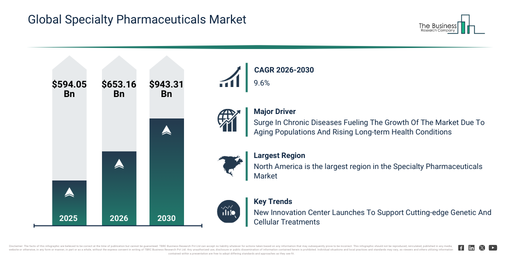
    The specialty pharmaceuticals market size has experienced considerable growth in recent years. It is projected to expand from $594.05 billion in 2025 to $653.16 billion in 2026, at a compound annual growth rate (CAGR) of 10.0%. The historical period’s growth can be attributed to the high cost of specialty pharmaceuticals, limited availability of advanced therapies, a growing prevalence of chronic and rare diseases, increasing healthcare infrastructure, and rising patient awareness about specialty treatments.

    The specialty pharmaceuticals market is projected to experience substantial expansion in the coming years. It is anticipated to grow to $943.31 billion by 2030, demonstrating a compound annual growth rate (CAGR) of 9.6%. This anticipated growth during the forecast period is primarily attributed to factors such as the development of cell and gene therapies, the broadening reach of personalized medicine, increasing investments in biologics and biosimilars, the growing adoption of advanced drug delivery systems, and the expansion of telehealth and remote patient management. Key trends identified for the forecast period include the rising acceptance of biologics and biosimilars in specialty treatments, continued growth in orphan drugs for rare diseases, increased utilization of personalized medicines and sophisticated drug delivery systems, the expansion of homecare services and specialty clinics for managing chronic diseases, and the integration of telehealth and remote patient monitoring specifically for specialty pharmaceuticals.

    Get A Free Sample Report With In-Depth Market Insights:

    https://thebusinessresearchcompany.com/sample_request?id=35228613&type=smp&name=Specialty%20Pharmaceuticals%20Market%20Report%202026&utm_source=Blogs&utm_medium=Paid&utm_campaign=Oct_PR

    Specialty Pharmaceuticals Market Development Factors: What’s Supporting Demand?

    The rising incidence of chronic ailments is anticipated to drive expansion within the specialty pharmaceuticals market moving ahead. These diseases are defined as enduring health issues, generally lasting a year or longer, necessitating continuous medical care or restricting daily routines. This increase in chronic conditions is attributed to an aging demographic, with elderly individuals being more prone to prolonged ailments like diabetes, cardiovascular disease, and arthritis. Specialty pharmaceuticals assist in managing chronic illnesses by delivering focused, highly effective treatments that enhance patient results and well-being, particularly when conventional therapies fall short. As an illustration, in June 2024, data from the National Library of Medicine, a US-based medical resource, indicates that the population of Americans aged 50 and older suffering from at least one chronic ailment is forecast to almost double by 2050, reaching approximately 142.66 million, which represents a substantial 99.5% growth. Consequently, the growing occurrence of chronic diseases is fueling the expansion of the specialty pharmaceuticals market.

    Specialty Pharmaceuticals Market Segmentation And Category Overview

    The specialty pharmaceuticals market covered in this report is segmented –

    1) By Drug Types: Biologics, Biosimilars, Orphan Drugs, Small Molecules, Other Drug Types

    2) By Route Of Administration: Oral, Injectables, Intranasal, Transdermal, Inhalation

    3) By Therapeutic Area: Oncology, Autoimmune Diseases, Neurology, Infectious Diseases, Rare Genetic Disorders, Other Therapeutic Areas

    4) By Distribution Channel: Online, Offline

    5) By End User: Hospitals, Specialty Clinics, Homecare Settings, Pharmacies

    Subsegments:

    1) By Biologics: Monoclonal Antibodies, Recombinant Proteins, Vaccines, Cell And Gene Therapies, Fusion Proteins

    2) By Biosimilars: Monoclonal Antibody Biosimilars, Insulin Biosimilars, Growth Hormone Biosimilars, Erythropoietin Biosimilars, Other Biosimilars

    3) By Orphan Drugs: Rare Genetic Disorders, Rare Cancers, Rare Metabolic Disorders, Rare Infectious Diseases, Rare Autoimmune Diseases

    4) By Small Molecules: Chemotherapy Agents, Immunosuppressants, Anti-inflammatory Agents, Antiviral Drugs, Hormonal Therapies

    5) By Other Drug Types: Advanced Drug Delivery Systems, Combination Therapies, Personalized Medicines, Nanomedicines, Radiopharmaceuticals

    Specialty Pharmaceuticals Market Transformation Trends: What Innovations Are Driving Change?

    Leading firms in the specialty pharmaceuticals market are concentrating on creating novel solutions, such as integrated digital care environments, to boost patient involvement, better treatment compliance, and optimize care provision. These integrated digital care environments are either virtual or physical settings, outfitted with digital health tools, facilitating synchronized, remote, and direct care by linking patients, healthcare professionals, and support systems to elevate treatment results and care effectiveness. For instance, in April 2024, Walgreens Boots Alliance, Inc., a US-based health and wellness enterprise primarily focused on pharmacy, launched gene and cell services as a component of Walgreens’ newly established specialty pharmacy unit. This initiative centers on advanced gene and cell therapy offerings, with the goal of enhancing patient care and the administration of treatments. The new service manages the intricate logistics and particular requirements associated with these innovative therapies. This introduction underscores Walgreens’ dedication to expanding its presence within the specialty pharmaceuticals market.

    Specialty Pharmaceuticals Market Competitive Analysis Of Leading Industry Participants

    Major companies operating in the specialty pharmaceuticals market are Pfizer Inc., Johnson & Johnson, Merck & Co. Inc., AbbVie Inc., Novartis AG, Sanofi S.A., GlaxoSmithKline plc, Gilead Sciences Inc., Amgen Inc., Viatris Inc., Teva Pharmaceutical Industries Limited, Bausch Health Companies Inc., Sun Pharmaceutical Industries Limited, Hikma Pharmaceuticals plc, United Therapeutics Corporation, Mallinckrodt plc, Biocon Biologics Limited, Medicure Inc.

    View The Full Specialty Pharmaceuticals Market Report:

    https://thebusinessresearchcompany.com/report/specialty-pharmaceuticals-global-market-report?utm_source=Blogs&utm_medium=Paid&utm_campaign=Oct_PR

    Specialty Pharmaceuticals Market Leading Geography: Which Region Contributes The Most Revenue?

    North America was the largest region in the specialty pharmaceuticals market in 2025. Asia-Pacific is expected to be the fastest-growing region in the forecast period. The regions covered in the specialty pharmaceuticals market report are Asia-Pacific, South East Asia, Western Europe, Eastern Europe, North America, South America, Middle East, Africa.

    Reach Out To Our Team:

    The Business Research Company: https://www.thebusinessresearchcompany.com/

    Americas: +1 310-496-7795

    Asia: +44 7882 955267 & +91 8897263534

    Europe: +44 7882 955267

    Email us at: marketing@tbrc.info

    Follow us on:

    LinkedIn: https://in.linkedin.com/company/the-business-research-company

    YouTube: https://www.youtube.com/channel/UC24_fI0rV8cR5DxlCpgmyFQ

    Global Market Model: https://www.thebusinessresearchcompany.com/global-market-model
  • Specialty Generics Market Growth Potential: What The Latest Forecast Reveals

    Specialty Generics Market Growth Potential: What The Latest Forecast Reveals

    Backed by market attractiveness analysis, total addressable market sizing, company benchmarking matrices, interactive Excel dashboards, wider supply chain intelligence, emerging startup coverage, and detailed product-level insights, The Business Research Company’s 2026 market reports are designed to offer research that is more actionable and strategically valuable than ever.

    Specialty Generics Market CAGR Outlook And Future Development

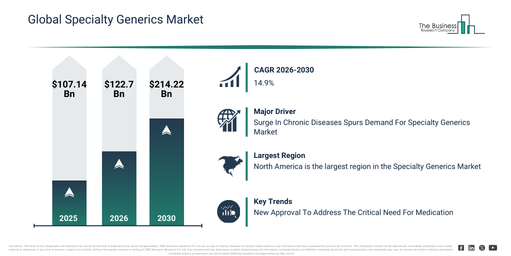
    The specialty generics market size has seen rapid growth in recent years. Its expansion is projected from $107.14 billion in 2025 to $122.7 billion in 2026, at a compound annual growth rate (CAGR) of 14.5%. This historical period’s growth can be attributed to several factors including the rising prevalence of autoimmune diseases, the expiration of patents for branded specialty drugs, increased investment in healthcare infrastructure, the expansion of hospital and retail pharmacy networks, and the early adoption of biosimilars in key markets.

    The specialty generics market is projected to undergo substantial expansion in the upcoming years. Its value is expected to reach $214.22 billion by 2030, exhibiting a compound annual growth rate (CAGR) of 14.9%. This forecasted growth can be attributed to several factors, including the enlargement of the specialty generics product portfolio, ongoing advancements in biologics manufacturing technology, increased healthcare expenditure, a rising need for personalized therapies, and more frequent collaborations between pharmaceutical companies and CDMOs. Dominant trends during this forecast period are anticipated to include increased adoption of biologics and biosimilars, an expansion of specialty pharmacy services, the integration of personalized medicine, a more complex regulatory compliance environment, and a growing demand for chronic disease treatment.

    Get A Free Sample Report With In-Depth Market Insights:

    https://thebusinessresearchcompany.com/sample_request?id=57720812&type=smp&name=Specialty%20Generics%20Market%20Report%202026&utm_source=Blogs&utm_medium=Paid&utm_campaign=Oct_PR

    Specialty Generics Market Industry Drivers: What’s Behind The Revenue Growth?

    The increasing prevalence of chronic ailments is anticipated to boost the demand for the specialty generic market. These enduring illnesses typically resist complete recovery, though they can sometimes be managed or even cured. Factors such as evolving lifestyles, dietary habits, and insufficient weight management contribute to chronic conditions, with some extended chronic infections also elevating the risk of cancer. The rising exposure to these health issues underscores the necessity of specialty generics for effectively treating intricate chronic diseases. For example, in March 2025, GOV.UK, a UK-based non-profit government organization, reported that the GP recorded type 2 diabetes prevalence in adults reached 7.0% for those aged 17 and over in England in March 2024, an increase from 6.8% in March 2023. Consequently, the rise in chronic diseases is a key impetus behind the expansion of the specialty generic market.

    Specialty Generics Market Segment Outlook: Which Categories Are Growing Fastest?

    The specialty generics market covered in this report is segmented –

    1) By Route Of Administration: Injectables, Oral, Other Routes Of Administration

    2) By Indication: Oncology, Autoimmune Diseases, Infectious Diseases, Other Indications

    3) By Distribution Channel: Retail Pharmacies, Specialty Pharmacies, Hospital Pharmacies

    Subsegments:

    1) By Injectables: Intravenous (IV) Injectables, Intramuscular (IM) Injectables, Subcutaneous (SC) Injectables

    2) By Oral: Tablets, Capsules, Liquid Formulations

    3) By Other Route Of Administration: Topical, Transdermal, Inhalation

    #Specialty Generics Market Growth Trends: What’s Shaping The Future Outlook?

    Companies operating in the specialty generic market are securing approvals for drugs like Lisdexamfetamine Dimesylate, addressing a vital requirement for medication. Within specialty generics, approval signifies the regulatory authorization granted to pharmaceutical products that are bioequivalent and therapeutically equivalent to brand-name specialty drugs, often utilized in treating complex or rare medical conditions, following the expiration of their patent protection. For example, in August 2023, Mallinckrodt plc, an Ireland-based specialty pharmaceutical company, obtained FDA approval for its Lisdexamfetamine Dimesylate Capsules within the SpecGx LLC Specialty Generics segment for treating Attention-Deficit/Hyperactivity Disorder (ADHD). Lisdexamfetamine dimesylate is classified as a specialty generic and a federally controlled substance (CII) used in the treatment of ADHD and other medical indications.

    Specialty Generics Market Leading Companies And Competitive Benchmarking

    Major companies operating in the specialty generics market are Teva Pharmaceutical Industries Ltd., Endo International plc, Akorn Operating Company LLC, Mallinckrodt Pharmaceuticals, Dr. Reddy’s Laboratories Ltd., Fresenius Kabi Brasil Ltda, STADA Arzneimittel AG, Cipla Limited, Lupin Ltd, Aurobindo Pharma Limited, Aspen Pharmacare Holdings Limited, Pfizer Inc., Accord Healthcare Limited, Amneal Pharmaceuticals Inc., Sandoz International GmbH, Zydus Lifesciences Ltd., Torrent Pharmaceuticals Ltd., Perrigo Company plc, Impax Laboratories Inc., Par Pharmaceutical Companies Inc., Alvogen, Alkem Laboratories Ltd., Wockhardt Ltd., Strides Pharma Science Limited, Indoco Remedies Ltd., Unichem Laboratories Ltd., Alembic Pharmaceuticals Ltd., Jubilant Life Sciences Ltd.

    View The Full Specialty Generics Market Report:

    https://thebusinessresearchcompany.com/report/specialty-generics-global-market-report?utm_source=Blogs&utm_medium=Paid&utm_campaign=Oct_PR

    Specialty Generics Market Regional Outlook: Where Is Opportunity Concentrated?

    North America was the largest region in the specialty generics market in 2025. Asia-Pacific is expected to be the fastest-growing region in the forecast period. The regions covered in the specialty generics market report are Asia-Pacific, South East Asia, Western Europe, Eastern Europe, North America, South America, Middle East, Africa.

    Reach Out To Our Team:

    The Business Research Company: https://www.thebusinessresearchcompany.com/

    Americas: +1 310-496-7795

    Asia: +44 7882 955267 & +91 8897263534

    Europe: +44 7882 955267

    Email us at: marketing@tbrc.info

    Follow us on:

    LinkedIn: https://in.linkedin.com/company/the-business-research-company

    YouTube: https://www.youtube.com/channel/UC24_fI0rV8cR5DxlCpgmyFQ

    Global Market Model: https://www.thebusinessresearchcompany.com/global-market-model
  • Specialty Enzymes Market Growth Outlook: Why Analysts Expect Continued Expansion

    Specialty Enzymes Market Growth Outlook: Why Analysts Expect Continued Expansion

    Featuring market attractiveness scoring, total addressable market sizing, company benchmarking matrices, interactive Excel dashboards, deeper supply chain intelligence, emerging startup tracking, and granular product-level insights, The Business Research Company’s 2026 market reports are built to deliver research that is both more actionable and more strategically valuable.

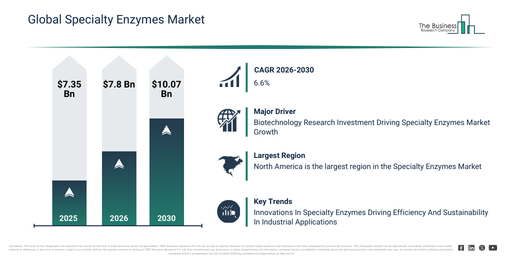
    Specialty Enzymes Market Set To Climb From $7.8 Billion In 2026 To $10.06 Billion By 2030

    The specialty enzymes market has experienced substantial expansion in recent years. It is projected to grow from $7.35 billion in 2025 to $7.8 billion in 2026, at a compound annual growth rate (CAGR) of 6.2%. This historic period of growth can be attributed to factors such as the limited availability of high-purity specialty enzymes, a reliance on microbial sources, increasing pharmaceutical and biotech research activities, a rising demand for enzyme-based diagnostics, and their growing adoption in the food and animal nutrition industries.

    The specialty enzymes market is anticipated to experience robust growth in the upcoming years. Its valuation is projected to reach $10.07 billion by 2030, achieving a compound annual growth rate (CAGR) of 6.6%. This expansion during the forecast period is driven by advancements in engineered and recombinant enzymes, the widening application of enzymes in novel therapeutics, an increasing need for highly efficient enzymes, the integration of digital and automated bioprocessing, and heightened investment in enzyme technology research and development. Key trends expected in this period include a rising demand for enzymes in pharmaceutical manufacturing and drug development, an expanded utilization of specialty enzymes for research and biotechnology purposes, the increasing adoption of enzymes in diagnostic and analytical procedures, the broadening of enzyme applications in the food and beverage and animal nutrition sectors, and an emphasis on engineering enzymes for specific processes with high stability and activity.

    Get A Free Sample Report With In-Depth Market Insights:

    https://thebusinessresearchcompany.com/sample_request?id=48582614&type=smp&name=Specialty%20Enzymes%20Market%20Report%202026&utm_source=Blogs&utm_medium=Paid&utm_campaign=Oct_PR

    Specialty Enzymes Market Growth Factors: What’s Supporting Expansion?

    Increased financial input into biotechnology research and development is projected to fuel market expansion over the forecast period. Specialty enzymes find extensive application in biotech R&D, especially within the field of molecular biology. Higher investment levels and a rise in the number of firms engaged in biotechnology research and development are anticipated to lead to an increased count of biotech researchers. As an illustration, the BioIndustry Association, a UK not-for-profit trade group representing the UK’s life sciences and biotech sector, reported in June 2024 that during the second quarter of 2024, UK biotech companies collectively attracted $810.25 million in venture capital funding. This represented a substantial 259% growth from the preceding quarter and a 48% increase compared to the same period last year. In 2024, funding for biotechnology research was £844 million in Q1, rising to £1,353 million in Q2. Consequently, the heightened investment in biotech R&D and the expanding number of biotech research firms are anticipated to drive growth in the specialty enzymes market.

    Specialty Enzymes Market Segment Landscape: Which Areas Lead Development?

    The specialty enzymes market covered in this report is segmented –

    1) By Type: Carbohydrases, Proteases, Lipases, Polymerases And Nucleases, Oxidase And Hydratases, Other Types

    2) By Source: Microorganisms, Animals, Plants

    3) By Application: Pharmaceutical, Diagnostics, Research & Biotechnology, Food & Beverage, Animal Nutrition, Other Applications

    Subsegments:

    1) By Carbohydrases: Amylases, Cellulases, Pectinases, Invertases

    2) By Proteases: Serine Proteases, Cysteine Proteases, Aspartic Proteases, Metalloproteases

    3) By Lipases: Microbial Lipases, Plant Lipases, Animal Lipases

    4) By Polymerases And Nucleases: DNA Polymerases, RNA Polymerases, Restriction Endonucleases

    5) By Oxidase And Hydratases: Laccases, Catalases, Alcohol Dehydrogenases

    6) By Other Types: Phosphatases, Transferases, Lyases, Ligases

    Specialty Enzymes Market Industry Trends: What’s Reshaping Demand?

    Major companies within the specialty enzymes market are increasingly focusing on developing innovative solutions, such as enzyme synthesis platforms, to enhance efficiency and sustainability across various industrial applications. Enzyme synthesis platforms are advanced technologies that facilitate the design, development, and optimization of custom enzymes for specific industrial uses, thereby improving efficiency and sustainability in biochemical processes. For instance, in September 2024, Biocatalysts Ltd., a US-based specialty enzyme provider for the food and beverage industry, introduced a unique lipase, Lipomod™ 70MDP. This new enzyme is formulated to boost the efficiency of fat and oil processing in food applications, specifically addressing the growing demand for specialty enzymes within the sector. The introduction of Lipomod™ 70MDP reflects Biocatalysts’ ongoing commitment to innovation and customization in enzyme technology, which is essential for meeting the specific needs of their clients in the food and beverage sector.

    Specialty Enzymes Market Industry Leaders And Competitive Landscape

    Major companies operating in the specialty enzymes market are BASF SE, Novozymes A/S, Roche Holding AG, Codexis Inc., Specialty Enzymes & Probiotics, Advanced Enzyme Technologies Ltd., BBI Solutions, E. I. du Pont de Nemours and Company, Sanofi, Amano Enzyme Inc., Nagase & Co. Ltd., Biocatalysts Ltd., Life Technologies Corporation, Amicogen Inc., AB Enzymes, Dyadic International Inc., Chr. Hansen Holding A/S, Merck KGaA, Biovet Private Limited., Antozyme Biotech, Kerry Inc., Thermo Fisher Scientific Inc., Koninklijke DSM N.V., The Soufflet Group, Shandong Longda Bio-Products Co. Ltd., Enzyme Development Corporation, International Flavors and Fragrances Inc., Enzyme Supplies Ltd., Alphazyme LLC, Enzyme Innovation inc., Creative Enzymes, Enzyme Solutions Inc., EnzymeWorks Inc., Enzyme Technologies Corporation, Enzyme Research Labs Inc., Enzyme Systems Products

    View The Full Specialty Enzymes Market Report:

    https://thebusinessresearchcompany.com/report/Specialty-Enzyme-global-market-report?utm_source=Blogs&utm_medium=Paid&utm_campaign=Oct_PR

    Specialty Enzymes Market Geographic Landscape: Which Region Leads Industry Growth?

    North America was the largest region in the viral specialty enzymes market in 2025. Middle East is expected to be the fastest growing region in the specialty enzymes market report during the forecast period. The regions covered in the specialty enzymes market report are Asia-Pacific, South East Asia, Western Europe, Eastern Europe, North America, South America, Middle East, Africa.

    Reach Out To Our Team:

    The Business Research Company: https://www.thebusinessresearchcompany.com/

    Americas: +1 310-496-7795

    Asia: +44 7882 955267 & +91 8897263534

    Europe: +44 7882 955267

    Email us at: marketing@tbrc.info

    Follow us on:

    LinkedIn: https://in.linkedin.com/company/the-business-research-company

    YouTube: https://www.youtube.com/channel/UC24_fI0rV8cR5DxlCpgmyFQ

    Global Market Model: https://www.thebusinessresearchcompany.com/global-market-model
  • Space-Based Emergency Medical Services Market Forecast Insights: The Road To $2.75 Billion By 2030

    Space-Based Emergency Medical Services Market Forecast Insights: The Road To $2.75 Billion By 2030

    Built to provide research that’s more actionable and strategically valuable, The Business Research Company’s 2026 market reports include market attractiveness analysis, total addressable market sizing, company benchmarking matrices, interactive Excel dashboards, broader supply chain intelligence, emerging startup tracking, and in-depth product insights.

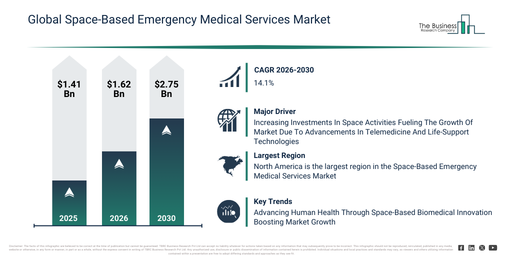
    Space-Based Emergency Medical Services Market Forecast: Value Set To Climb From $1.62 Billion To $2.75 Billion

    The space-based emergency medical services market size has witnessed swift expansion in recent years. It is forecast to grow from $1.41 billion in 2025 to $1.62 billion in 2026, achieving a compound annual growth rate (CAGR) of 14.9%. The historical period’s growth can be attributed to elements such as the limited availability of space-based medical technologies, an increasing number of government space missions, rising investment in private space companies, a lack of established onboard emergency medical protocols, and reliance on terrestrial healthcare support.

    The space-based emergency medical services market is projected for substantial expansion in the coming years. It is expected to grow to $2.75 billion in 2030 at a compound annual growth rate (CAGR) of 14.1%. This anticipated growth is fueled by progress in autonomous medical devices, an increase in commercial space tourism, the creation of orbital medical evacuation systems, the integration of AI-powered monitoring and telemedicine, and rising partnerships among space agencies and healthcare providers. Key developments during this period are set to involve the broader application of telemedicine and remote health surveillance for space missions, the incorporation of robotic surgical systems into orbital and sub-orbital ventures, the establishment of spacecraft-based medical retrieval and emergency reentry services, a heightened emphasis on preventive health programs and psychological support in space, and the implementation of on-site diagnostic instruments and mobile medical units in space tourism.

    Get A Free Sample Report With In-Depth Market Insights:

    https://thebusinessresearchcompany.com/sample_request?id=26961540&type=smp&name=Space-Based%20Emergency%20Medical%20Services%20Market%20Report%202026&utm_source=Blogs&utm_medium=Paid&utm_campaign=Oct_PR

    Space-Based Emergency Medical Services Market Demand Drivers: What’s Powering Industry Growth?

    The expansion of the space-based emergency medical services market is expected to be driven by increasing investments in space activities. Space activities refer to human efforts aimed at exploring and utilizing outer space, which includes launching satellites, undertaking missions, and delivering space-related services. The uptick in investments in space activities is a result of the growing demand for satellite-based communication and data services. These investments support space-based emergency medical services by enabling the development of sophisticated telemedicine, remote monitoring, and life-support technologies specifically designed for space environments. For example, in April 2024, the World Economic Forum, a Switzerland-based non-profit organization, projected that the space economy would grow from $630 billion in 2023 to $1.8 trillion by 2035, representing an average annual growth rate of 9%. Therefore, the rising investments in space activities are a key factor propelling the growth of the space-based emergency medical services market.

    Space-Based Emergency Medical Services Market Segments: Where Is Growth Concentrated?

    The space-based emergency medical services market covered in this report is segmented –

    1) By Service Type: Telemedicine, Medical Evacuation, On-Site Medical Assistance, Other Service Types

    2) By Application: Space Missions, Space Tourism, Other Applications

    3) By End-User: Government Agencies, Private Space Companies, Other End Users

    Subsegments:

    1) By Telemedicine: Remote Diagnosis, Virtual Consultations, Monitoring Services, Telepharmacy

    2) By Medical Evacuation: Spacecraft-Based Evacuation, Air-Based Support Systems, Emergency Reentry Services, Orbital Station Transfers

    3) By On-Site Medical Assistance: Mobile Medical Units, Robotic Surgical Systems, First Aid Kits and Supplies, On-Site Diagnostic Tools

    4) By Other Service Types: Psychological Support Services, Preventive Health Programs, Rehabilitation Services, Research-Based Medical Trials

    Space-Based Emergency Medical Services Market Innovation Trends: What Developments Are Reshaping The Industry?

    Companies primarily involved in the space-based emergency medical services market are channeling their efforts into developing advanced space medical research. This is aimed at creating innovative technologies for remote diagnosis, life support, and in-orbit treatment, thereby ensuring the safety and health of astronauts and space tourists during missions. Space medical research itself is defined as the investigation into how cosmic environments, including microgravity, radiation, and isolation, impact human health, along with the development of medical technologies, treatments, and protocols to support astronauts’ well-being throughout space missions. As an example, in February 2025, Bio Astra, a Canada-based space research company, initiated Twin Astra, a significant deep-space medical research program that provides medical services. This leading-edge program involves studying genetically identical twins, one positioned in space and the other on Earth, to gain insight into the biological consequences of space travel. The initiative is designed to propel both space exploration and Earth-based healthcare forward, and is expected to foster advancements in precision medicine, aging, cancer treatment, and regenerative therapies.

    Space-Based Emergency Medical Services Market Key Participants And Competitive Landscape

    Major companies operating in the space-based emergency medical services market are The Boeing Company, Lockheed Martin Corporation, Airbus SE, Northrop Grumman Corporation, National Aeronautics and Space Administration (NASA), Thales Group, Space Exploration Technologies Corp (SpaceX), KBR Inc., Blue Origin LLC, Maxar Technologies, Sierra Nevada Corporation, StemRad, Spacelabs Healthcare, Relativity Space, Rocket Lab, David Clark Company, Flight Medicine Systems, XRHealth, Advacam, Orbital Rx

    View The Full Space-Based Emergency Medical Services Market Report:

    https://thebusinessresearchcompany.com/report/space-based-emergency-medical-services-global-market-report?utm_source=Blogs&utm_medium=Paid&utm_campaign=Oct_PR

    Space-Based Emergency Medical Services Market Largest Region: Which Geography Holds The Biggest Share?

    North America was the largest region in the space-based emergency medical services market in 2025. Asia-Pacific is expected to be the fastest-growing region in the forecast period. The regions covered in the space-based emergency medical services market report are Asia-Pacific, South East Asia, Western Europe, Eastern Europe, North America, South America, Middle East, Africa.

    Reach Out To Our Team:

    The Business Research Company: https://www.thebusinessresearchcompany.com/

    Americas: +1 310-496-7795

    Asia: +44 7882 955267 & +91 8897263534

    Europe: +44 7882 955267

    Email us at: marketing@tbrc.info

    Follow us on:

    LinkedIn: https://in.linkedin.com/company/the-business-research-company

    YouTube: https://www.youtube.com/channel/UC24_fI0rV8cR5DxlCpgmyFQ

    Global Market Model: https://www.thebusinessresearchcompany.com/global-market-model

  • Space-Based Biopharmaceuticals Market Explained: What Is Fueling Growth To $8.12 Billion By 2030?

    Space-Based Biopharmaceuticals Market Explained: What Is Fueling Growth To $8.12 Billion By 2030?

    Backed by market attractiveness analysis, total addressable market sizing, company benchmarking matrices, interactive Excel dashboards, wider supply chain intelligence, emerging startup coverage, and detailed product-level insights, The Business Research Company’s 2026 market reports are designed to offer research that is more actionable and strategically valuable than ever.

    Space-Based Biopharmaceuticals Market Revenue Growth On Track For A 11.3% CAGR Through 2030

    The space-based biopharmaceuticals market has seen rapid growth in recent years. It is forecast to expand from $4.75 billion in 2025 to $5.29 billion in 2026, achieving a compound annual growth rate (CAGR) of 11.4%. Historically, this growth has stemmed from elements such as space research missions, the limitations encountered with earth-based crystallization, government investment in space programs, early experiments conducted on the ISS, and ongoing biotechnology innovation.

    The space-based biopharmaceuticals market is projected to experience substantial expansion over the coming years. Its valuation is anticipated to reach $8.12 billion in 2030, exhibiting a compound annual growth rate (CAGR) of 11.3%. This expansion during the projection period is primarily driven by factors such as the proliferation of commercial space stations, increased private investment in spaceflight, a rising need for sophisticated biologics, advancements in space automation, and breakthroughs in next-generation drug discovery. Concurrently, significant developments expected include leveraging microgravity for protein crystallization, the creation of biologics manufactured in space, an increase in collaborations between public and private entities in space biotechnology, the broadening scope of space-based drug discovery initiatives, and enhanced research into drug stability within the space environment.

    Get A Free Sample Report With In-Depth Market Insights:

    https://thebusinessresearchcompany.com/sample_request?id=62115977&type=smp&name=Space-Based%20Biopharmaceuticals%20Market%20Report%202026&utm_source=Blogs&utm_medium=Paid&utm_campaign=Oct_PR

    Space-Based Biopharmaceuticals Market Growth Drivers: What’s Behind The Acceleration?

    The increasing need for advanced therapeutics is anticipated to fuel the expansion of the space-based biopharmaceuticals market in the future. These advanced therapeutics represent cutting-edge medical interventions, encompassing gene therapy, cell therapy, and biologics, all engineered to address diseases at a molecular or cellular level. The escalating need for these treatments stems from the growing incidence of intricate and long-term illnesses like cancer, genetic conditions, and autoimmune diseases, which necessitate more precise, individualized, and potent cures than conventional approaches. Space-based biopharmaceuticals play a role in meeting this demand for advanced therapeutics by facilitating the creation of more effective and novel treatments, leveraging the distinctive microgravity environment that boosts drug effectiveness and speeds up the manufacturing of elaborate biologics. For example, in January 2025, the Cell and Gene Therapy Catapult, a UK organization dedicated to advancing the cell and gene therapy sector by connecting scientific research with commercialization, reported that the number of active advanced therapy clinical trials in the UK reached 187 in 2024, showing a 7% rise from 2023. Consequently, the rising demand for advanced therapeutics will propel the growth of the space-based biopharmaceuticals market.

    Space-Based Biopharmaceuticals Market Segment Analysis: What Are The Core Market Categories?

    The space-based biopharmaceuticals market covered in this report is segmented –

    1) By Product Type: Vaccines, Therapeutics, Diagnostics, Other Product Types

    2) By Application: Cancer Treatment, Infectious Diseases, Genetic Disorders, Other Applications

    3) By End-User: Pharmaceutical Companies, Research Institutes, Healthcare Providers, Other End Users

    Subsegments:

    1) By Vaccines: Infectious Disease Vaccines, Cancer Vaccines, RNA-Based Vaccines, Therapeutic Vaccines, Preventive Vaccines

    2) By Therapeutics: Monoclonal Antibodies, Gene Therapies, Cell Therapies, Protein-Based Therapies, Peptide-Based Therapies

    3) By Diagnostics: Molecular Diagnostics, Immunoassays, Biomarker Discovery, In Vitro Diagnostics

    4) By Other Product Types: Regenerative Medicines, Biologics, Tissue Engineering Products, Bio-Chemical Reagents

    Space-Based Biopharmaceuticals Market Trends: What’s Defining The Industry’s Next Phase?

    Leading enterprises within the space-based biopharmaceuticals market are establishing advanced biopharmaceutical and production infrastructure for the LIFE pathfinder module. These cutting-edge biopharma and manufacturing sites represent sophisticated, technologically advanced settings furnished with the latest innovations and methods for the study, creation, and mass production of biopharmaceuticals, adhering to stringent regulatory and quality criteria. As an illustration, during August 2023, Sierra Space, a US-based commercial space firm, revealed a strategic alliance with Redwire Corporation, a US company specializing in space infrastructure. This alliance aims to cultivate commercial pharmaceutical and biotechnology research as well as manufacturing capacities within low-Earth orbit (LEO). Furthermore, the partnership sought to furnish advanced biopharma and manufacturing installations for the LIFE Pathfinder module, leveraging extensive prior success in microgravity research. Redwire is contributing sophisticated biotechnology and production technologies for integration into Sierra Space’s large integrated flexible environment (LIFE) habitat platform. Such technologies encompass apparatus for crystallizing large molecules, manufacturing industrial crystals, and gradient-temperature furnaces, all intended to advance pharmaceutical drug development and human health studies in microgravity environments.

    Space-Based Biopharmaceuticals Market Top Companies Driving Competitive Growth

    Major companies operating in the space-based biopharmaceuticals market are Merck & Co. Inc., Bristol-Myers Squibb Company, Sierra Space Corporation, Rocket Lab USA Inc., Redwire Corporation, Axiom Space Inc., Varda Space Industries Inc., Nanoracks LLC, ResearchSat Pty Ltd., Techshot Inc., Space Tango Inc., nScrypt Inc., SpacePharma SA, Space Forge Ltd., LambdaVision Inc., Kibo Biotech Platform, ISS National Lab, BioServe Space Technologies, Space LiinTech, BioOrbit

    View The Full Space-Based Biopharmaceuticals Market Report:

    https://thebusinessresearchcompany.com/report/space-based-biopharmaceuticals-global-market-report?utm_source=Blogs&utm_medium=Paid&utm_campaign=Oct_PR

    Space-Based Biopharmaceuticals Market Regional Analysis: Which Geography Leads On Revenue?

    North America was the largest region in the space-based biopharmaceuticals market in 2025. Asia-Pacific is expected to be the fastest-growing region in the forecast period. The regions covered in the space-based biopharmaceuticals market report are Asia-Pacific, South East Asia, Western Europe, Eastern Europe, North America, South America, Middle East, Africa.

    Reach Out To Our Team:

    The Business Research Company: https://www.thebusinessresearchcompany.com/

    Americas: +1 310-496-7795

    Asia: +44 7882 955267 & +91 8897263534

    Europe: +44 7882 955267

    Email us at: marketing@tbrc.info

    Follow us on:

    LinkedIn: https://in.linkedin.com/company/the-business-research-company

    YouTube: https://www.youtube.com/channel/UC24_fI0rV8cR5DxlCpgmyFQ

    Global Market Model: https://www.thebusinessresearchcompany.com/global-market-model