Month: October 2026

  • Protein Purification Equipment Market Growth Forecast: Market Size, Key Trends And Emerging Opportunities Through 2030

    Protein Purification Equipment Market Growth Forecast: Market Size, Key Trends And Emerging Opportunities Through 2030

    Backed by market attractiveness analysis, total addressable market sizing, company benchmarking matrices, interactive Excel dashboards, wider supply chain intelligence, emerging startup coverage, and detailed product-level insights, The Business Research Company’s 2026 market reports are designed to offer research that is more actionable and strategically valuable than ever.

    Protein Purification Equipment Market Revenue Outlook: What CAGR Lies Ahead Through 2030?

    The size of the protein purification equipment market has experienced robust growth in recent years. This market is set to expand from $5.52 billion in 2025 to $5.98 billion in 2026, achieving a compound annual growth rate (CAGR) of 8.3%. Historically, the market’s expansion has been driven by increased biopharmaceutical research activities, the enlargement of vaccine development programs, a growing reliance on recombinant proteins, the wider implementation of chromatography-based purification techniques, and the accessibility of sophisticated laboratory instrumentation.

    The protein purification equipment market is projected to experience substantial expansion in the coming years. This market is set to reach $8.14 billion in 2030, exhibiting a compound annual growth rate (CAGR) of 8.0%. This anticipated growth during the forecast period is primarily driven by factors such as the escalating demand for biologics and biosimilars, increasing financial commitments towards protein-based therapies, the expanding scope of precision medicine research, the broader application of high-throughput purification techniques, and a rise in outsourcing activities to contract research organizations (CROs). Key developments anticipated within this period involve the greater integration of automated chromatography systems, an escalating need for highly pure protein isolation, the wider utilization of affinity and ion exchange methods, the proliferation of modular and scalable purification platforms, and an intensified emphasis on maintaining sample integrity.

    Get A Free Sample Report With In-Depth Market Insights:

    https://thebusinessresearchcompany.com/sample_request?id=95813668&type=smp&name=Protein%20Purification%20Equipment%20Market%20Report%202026&utm_source=Blogs&utm_medium=Paid&utm_campaign=Oct_PR

    Protein Purification Equipment Market Growth Backed By Core Demand Fundamentals

    The escalating emphasis on personalized medicine is anticipated to propel the growth of the protein purification equipment market. This approach customizes treatments for individuals suffering from chronic or genetic conditions, aligning therapy with their distinct genetic makeup, surroundings, and way of life. The surge in personalized medicine stems from a growing demand for precise therapies aimed at chronic and challenging-to-treat ailments. Protein purification instruments facilitate the isolation and examination of particular proteins, contributing to the development of personalized therapies specifically designed for individual patients. For example, data from February 2024, provided by the Personalized Medicine Coalition, a US-based non-profit body, indicated that the FDA sanctioned 16 novel personalized treatments for rare disease patients in 2023, marking a considerable rise from the six approved in 2022. Consequently, the heightened attention on personalized medicine is a primary force behind the expansion of the protein purification equipment market.

    Protein Purification Equipment Market Breakdown By Product Type And Application

    The protein purification equipment market covered in this report is segmented –

    1) By Product Type: Chromatography Systems, Electrophoresis Systems, Protein Fractionation Systems, Protein Concentration Systems, Other Product Types

    2) By Technology: Ion Exchange Chromatography, Affinity Chromatography, Size Exclusion Chromatography, High-Performance Liquid Chromatography, Other Technologies

    3) By Application: Drug Discovery, Vaccine Preparation, Genetic Engineering, Other Applications

    4) By End-User: Pharmaceutical And Biotechnological Companies, Academic Research Institutes, Contract Research Organizations, Other End-Users

    Subsegments:

    1) By Chromatography Systems: Affinity Chromatography Systems, Ion Exchange Chromatography Systems, Size Exclusion Chromatography Systems, Hydrophobic Interaction Chromatography Systems, Mixed Mode Chromatography Systems

    2) By Electrophoresis Systems: Polyacrylamide Gel Electrophoresis Systems, Capillary Electrophoresis Systems, Isoelectric Focusing Electrophoresis Systems, Two Dimensional Electrophoresis Systems, Agarose Gel Electrophoresis Systems

    3) By Protein Fractionation Systems: Ultrafiltration Fractionation Systems, Precipitation Based Fractionation Systems, Centrifugation Fractionation Systems, Membrane Based Fractionation Systems, Field Flow Fractionation Systems

    4) By Protein Concentration Systems: Centrifugal Concentration Systems, Ultrafiltration Concentration Systems, Lyophilization Concentration Systems, Precipitation Based Concentration Systems, Vacuum Evaporation Concentration Systems

    5) By Other Product Types: Magnetic Bead Based Protein Purification Systems, Spin Column Protein Purification Systems, Dialysis Protein Purification Systems, Microplate Based Protein Purification Systems, Filter Based Protein Purification Systems

    Protein Purification Equipment Market Growth Trends Reshaping The Competitive Landscape

    Major companies operating in the protein purification equipment market are concentrating on developing sophisticated technologies, such as protein purification technologies, to facilitate the precise isolation of target proteins, thereby guaranteeing high purity and optimal functionality for both research and therapeutic applications. Protein purification technologies encompass various techniques and methodologies utilized to isolate and obtain proteins in a purified state from intricate biological samples, leveraging their distinct characteristics. As an illustration, in November 2023, Cytiva, a US-based biotechnology firm, unveiled Protein Select, a novel protein purification technology. This innovation significantly streamlines and accelerates the process of recombinant protein purification. It achieves this by employing a self-cleaving traceless tag in conjunction with a compatible affinity chromatography resin, which standardizes purification for any protein without requiring specific binding partners. Through the Protein Select technology, researchers can procure highly pure, native proteins via a straightforward protocol that is entirely free of tag residues. Consequently, process developers benefit from faster, simpler, and more efficient protein purification procedures.

    Protein Purification Equipment Market Company Landscape And Competitive Strategy

    Major companies operating in the protein purification equipment market are Roche Diagnostics, Repligen Corporation, Thermo Fisher Scientific Inc., Danaher Corporation, Merck KGaA, GE Healthcare Technologies Inc., Becton, Dickinson and Company (BD), ECOLAB Inc., Lonza Group Ltd., Tosoh Corporation, Agilent Technologies Inc., Sartorius AG, Shimadzu Corporation, PerkinElmer Inc., Waters Corporation, JSR Corporation, Bio-Rad Laboratories inc., Qiagen N.V., Tecan Group Ltd., Eppendorf AG, Bio-Techne Corporation, Promega Corporation, Takara Bio Inc., Biotage AB, Shanghai Biotechnology Corporation, I&L Biosystems GmbH, LabGeni, PromoChrom Technologies Ltd., Inscinstech Co. Ltd., Taidu Biotech Co. Ltd.

    View The Full Protein Purification Equipment Market Report:

    https://thebusinessresearchcompany.com/report/protein-purification-equipment-global-market-report?utm_source=Blogs&utm_medium=Paid&utm_campaign=Oct_PR

    Protein Purification Equipment Market Geographic Spread And Regional Opportunities

    North America was the largest region in the protein purification equipment market in 2025. Asia-Pacific is expected to be the fastest-growing region in the forecast period. The regions covered in the protein purification equipment market report are Asia-Pacific, South East Asia, Western Europe, Eastern Europe, North America, South America, Middle East, Africa.

    Reach Out To Our Team:

    The Business Research Company: https://www.thebusinessresearchcompany.com/

    Americas: +1 310-496-7795

    Asia: +44 7882 955267 & +91 8897263534

    Europe: +44 7882 955267

    Email us at: marketing@tbrc.info

    Follow us on:

    LinkedIn: https://in.linkedin.com/company/the-business-research-company

    YouTube: https://www.youtube.com/channel/UC24_fI0rV8cR5DxlCpgmyFQ

    Global Market Model: https://www.thebusinessresearchcompany.com/global-market-model
  • Protein Purification and Isolation Market CAGR Forecast Through 2030: Key Trends Shaping Industry Expansion

    Protein Purification and Isolation Market CAGR Forecast Through 2030: Key Trends Shaping Industry Expansion

    Featuring market attractiveness scoring, total addressable market sizing, company benchmarking matrices, interactive Excel dashboards, deeper supply chain intelligence, emerging startup tracking, and granular product-level insights, The Business Research Company’s 2026 market reports are built to deliver research that is both more actionable and more strategically valuable.

    Protein Purification and Isolation Market Growth Analysis: How Will Revenue Trend Over The Forecast Period?

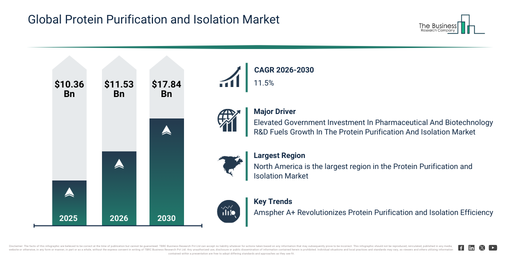
    The protein purification and isolation market has shown rapid expansion in recent years. Its valuation is expected to rise from $10.36 billion in 2025 to $11.53 billion in 2026, driven by a compound annual growth rate (CAGR) of 11.3%. The market’s past growth is primarily due to advancements in chromatography techniques, a heightened demand for protein therapeutics, the overall growth of biotechnology research, the adoption of automated laboratory equipment, and the expansion of contract research organizations.

    The protein purification and isolation market is poised for significant expansion in the coming years. Its size is projected to reach $17.84 billion in 2030, exhibiting a compound annual growth rate (CAGR) of 11.5%. This anticipated growth stems from several factors, including the emergence of new protein biomarkers, increasing applications in precision medicine, the incorporation of AI into protein purification processes, the broadening of proteomics services, and a rise in partnerships between pharmaceutical and biotechnology companies. Key developments anticipated during this period encompass high-throughput protein screening, analysis of single-cell proteins, increased automation in protein isolation workflows, improvements in purification reagents and consumables, and the integration of proteomics into drug discovery efforts.

    Get A Free Sample Report With In-Depth Market Insights:

    https://thebusinessresearchcompany.com/sample_request?id=84189838&type=smp&name=Protein%20Purification%20and%20Isolation%20Market%20Report%202026&utm_source=Blogs&utm_medium=Paid&utm_campaign=Oct_PR

    Protein Purification and Isolation Market Growth Catalysts And Demand Drivers

    Future expansion of the protein purification and isolation market is anticipated, driven by a rise in governmental expenditure on research and development within the pharmaceutical and biotechnology sectors. Research and development involves acquiring knowledge to either invent new products or find better methods to enhance current products and services. Elevated investment in research and development facilitates the creation of sophisticated protein purification techniques and offers additional advantages, including purified growth factors for hormones, DNA polymerases, and reverse transcriptase. As an illustration, in March 2023, the White House announced a budget allocation exceeding $3.4 billion for R&D related to the Cancer Moonshot initiative. This funding supports a broad spectrum of research programs spanning laboratory, clinical, public health, and environmental health across various government departments and agencies. From this total, $2.9 billion is specifically assigned to the Department of Health and Human Services, thereby boosting Cancer Moonshot efforts at the National Cancer Institute and ARPA-H. Furthermore, the budget emphasizes suicide prevention and mental health support for veterans, dedicating over $135 million to medical care within the Department of Veterans Affairs. Consequently, the expanding government investment in pharmaceutical and biotechnology R&D is a key factor propelling the growth of the protein purification and isolation markets.

    Protein Purification and Isolation Market Segment Analysis And Revenue Potential

    The protein purification and isolation market covered in this report is segmented –

    1) By Product: Instruments, Consumables

    2) By Technology: Ultrafiltration, Precipitation, Preparative Chromatography, Electrophoresis, Western Blotting, Dialysis And Diafiltration, Centrifugation

    3) By Application: Drug Screening, Protein-Protein Interaction Studies, Biomarker Discovery, Target Identification, Protein Therapeutics, Disease Diagnostics And Monitoring

    4) By End User: Academic Medical Institutes, Hospitals And Diagnostic Centers, Pharmaceutical And Biotechnology Companies, Contract Research Organizations

    Subsegments:

    1) By Instruments: Chromatography Systems, Centrifuges, Electrophoresis Systems, Filtration Systems, Other Instruments

    2) By Consumables: Resins And Media, Columns, Kits And Reagents, Membranes, Other Consumables

    Protein Purification and Isolation Market Trends Shaping Long-Term Demand

    Companies operating in the protein purification and isolation market are developing advanced products, such as Amsphere A+, to improve the efficiency and effectiveness of protein separation processes, thereby enhancing yield and purity in biopharmaceutical applications. For instance, in September 2024, JSR Life Sciences, LLC., a US-based biotechnology company, introduced Amsphere A+. This product features proprietary protein ligand and advanced polymer technology, outperforming its predecessor, Amsphere A3, in areas like binding capacity, alkali stability, and pressure-flow characteristics. These advancements result in increased efficiency during the production process. Overall, Amsphere A+ signifies a considerable improvement in performance.

    Protein Purification and Isolation Market Key Players Shaping Industry Direction

    Major companies operating in the protein purification and isolation market are Abcam PLC, Agilent Technologies Inc, Thermo Fisher Scientific Inc., Bio-Rad Laboratories Inc., BioVision Inc., Norgen Biotek Corp., GE Healthcare Technologies Inc., GEA Group AG, Expedeon Ltd., Creative Biostructure, Qiagen NV, Geno Technology Inc., The Merck Group, Labome, Promega Corporation, OPRL Biosciences Pvt. Ltd., Purolite LLC, Takara Bio Inc., F. Hoffmann-La Roche Ltd, Sigma-Aldrich Chemicals Private Limited, Cygnus Technologies LLC, Novasep, Kinnakeet Biotechnology LLC, Cambryn Biologics LLC, Worthington Biochemical Corporation, GenScript Biotech Corporation, Creative BioMart, OriGene Technologies Inc., Proteintech Group Inc., Rockland Immunochemicals Inc., Sino Biological Inc.

    View The Full Protein Purification and Isolation Market Report:

    https://thebusinessresearchcompany.com/report/protein-purification-and-isolation-global-market-report?utm_source=Blogs&utm_medium=Paid&utm_campaign=Oct_PR

    Protein Purification and Isolation Market Top Region By Revenue And Market Share

    North America was the largest region in the protein purification and isolation market in 2025. The regions covered in the protein purification and isolation market report are Asia-Pacific, South East Asia, Western Europe, Eastern Europe, North America, South America, Middle East, Africa.

    Reach Out To Our Team:

    The Business Research Company: https://www.thebusinessresearchcompany.com/

    Americas: +1 310-496-7795

    Asia: +44 7882 955267 & +91 8897263534

    Europe: +44 7882 955267

    Email us at: marketing@tbrc.info

    Follow us on:

    LinkedIn: https://in.linkedin.com/company/the-business-research-company

    YouTube: https://www.youtube.com/channel/UC24_fI0rV8cR5DxlCpgmyFQ

    Global Market Model: https://www.thebusinessresearchcompany.com/global-market-model
  • Protein Labeling Market To Witness 11.8% CAGR Growth Through 2030: Key Industry Drivers

    Protein Labeling Market To Witness 11.8% CAGR Growth Through 2030: Key Industry Drivers

    Built to provide research that’s more actionable and strategically valuable, The Business Research Company’s 2026 market reports include market attractiveness analysis, total addressable market sizing, company benchmarking matrices, interactive Excel dashboards, broader supply chain intelligence, emerging startup tracking, and in-depth product insights.

    Protein Labeling Market Forecast: What Value Will The Market Reach By 2030?

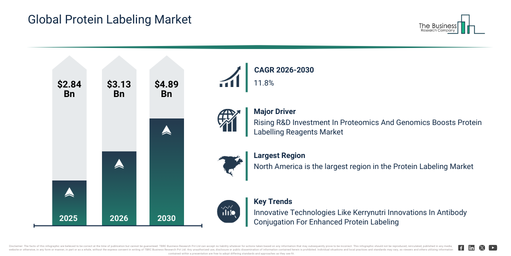
    The protein labeling market has experienced rapid expansion in its size over recent years. Forecasts indicate it will increase from $2.84 billion in 2025 to $3.13 billion in 2026, achieving a compound annual growth rate (CAGR) of 10.1%. Historically, this growth was influenced by factors such as the limited availability of specialized protein labels, reliance on traditional fluorescent dyes, a growing demand for cell-based assays, increasing research in proteomics, and the adoption of enzyme-conjugated labeling techniques.

    The protein labeling market size is anticipated to experience swift expansion over the next few years, projected to reach $4.89 billion by 2030, expanding at a compound annual growth rate (CAGR) of 11.8%. This growth during the forecast period is fueled by the development of novel fluorophore probes, increased utilization of recombinant and modified proteins, rising adoption of automated labeling platforms, advancements in proteomics and genomics research, and the growing integration of protein labeling with mass spectrometry and high-throughput assays. Prominent trends for the forecast period include the escalating demand for fluorescent and chemiluminescent protein labels, an increase in the use of recombinant and modified proteins for research, the wider adoption of in-vitro and in-vivo labeling techniques, the broadening of applications in cell-based assays and fluorescence microscopy, and the increasing employment of monoclonal antibodies in immunological techniques and protein micro assays.

    Get A Free Sample Report With In-Depth Market Insights:

    https://thebusinessresearchcompany.com/sample_request?id=44130420&type=smp&name=Protein%20Labeling%20Market%20Report%202026&utm_source=Blogs&utm_medium=Paid&utm_campaign=Oct_PR

    Protein Labeling Market Opportunity Drivers: What’s Unlocking New Revenue Potential?

    The protein labeling reagents market is experiencing growth fueled by increased investment in the research and development of proteomics and genomics. Proteomics involves examining the complete protein content within a cell, tissue, or organism. Crucially, protein labeling techniques employed prior to separation and analysis are vital for proteomic profiling strategies. An illustration of this trend is the significant rise in R&D expenditure by the UK government, as reported by the Office for National Statistics, a UK-based, government agency. In 2023, their net spending on research and development (R&D) climbed to £17.4 ($22.1 billion) billion, an increase from £16.1 billion ($20.45 billion) in 2022, representing an 8.2% surge. Consequently, the expanded financial commitment to the research and development of proteomics and genomics is propelling the market forward.

    Protein Labeling Market Segmentation And Category Overview

    The protein labeling market covered in this report is segmented –

    1) By Product: Reagents, Protein, Enzymes, Probes/ Tags, Monoclonal Antibodies

    2) By Labeling Method: In-vitro Labeling, In-vivo Labeling

    3) By Application: Cell Based-Assay, Fluorescence Microscopy, Immunological Techniques, Mass Spectrometry, Protein Micro Assay

    Subsegments:

    1) By Reagents: Fluorescent Dyes, Enzyme Labels, Chemiluminescent Reagents, Radioactive Labels

    2) By Protein: Recombinant Proteins, Native Proteins, Modified Proteins

    3) By Enzymes: Alkaline Phosphatase, Horseradish Peroxidase, Other Enzymatic Labels

    4) By Probes Or Tags: Biotin Labels, Antibody Tags, Fluorophore Probes, Affinity Tags

    5) By Monoclonal Antibodies: Primary Monoclonal Antibodies, Secondary Monoclonal Antibodies, Conjugated Monoclonal Antibodies

    Protein Labeling Market Innovation Trends Shaping Future Development

    Companies operating within the protein labeling market are prioritizing the creation of novel solutions, such as attaching antibodies to StarBright dyes, with the goal of boosting detection sensitivity, expanding multiplexing capabilities, and improving overall assay performance. StarBright dyes themselves are luminous, photostable fluorescent dyes crafted for the effective labeling of antibodies and proteins. As an illustration, in January 2025, Bio-Rad Laboratories Inc., a US-based life sciences company, introduced the TrailBlazer Tag and TrailBlazer StarBright Dye Label Kits. These kits enable researchers to efficiently link antibodies to StarBright dyes for sophisticated flow cytometry and imaging applications. These particular kits simplify the labeling procedure, sharpen signal clarity, and support intricate multi-color experiments in biomedical research.

    Protein Labeling Market Competitive Analysis Of Leading Industry Participants

    Major companies operating in the protein labeling market are Thermo Fisher Scientific Inc., Merck KGaA, PerkinElmer Inc., GE HealthCare Technologies Inc., F. Hoffmann-La Roche AG, Agilent Technologies Inc., BIO-RAD LABORATORIES, LI-COR Inc., Promega Corporation, Eurogentec S.A., Luminex Corporation, New England Biolabs Inc., Abcam plc., TriLink BioTechnologies LLC., Waters Corporation, AMETEK Inc., HORIBA Ltd., Spectris plc., METTLER TOLEDO International Inc., Shimadzu Corporation, Hitachi High-Tech Corporation.

    View The Full Protein Labeling Market Report:

    https://thebusinessresearchcompany.com/report/Protein-Labelings-global-market-report?utm_source=Blogs&utm_medium=Paid&utm_campaign=Oct_PR

    Protein Labeling Market Regional Analysis And Top Geography

    North America was the largest region in the protein labeling market in 2025. The regions covered in the protein labeling market report are Asia-Pacific, South East Asia, Western Europe, Eastern Europe, North America, South America, Middle East, Africa.

    Reach Out To Our Team:

    The Business Research Company: https://www.thebusinessresearchcompany.com/

    Americas: +1 310-496-7795

    Asia: +44 7882 955267 & +91 8897263534

    Europe: +44 7882 955267

    Email us at: marketing@tbrc.info

    Follow us on:

    LinkedIn: https://in.linkedin.com/company/the-business-research-company

    YouTube: https://www.youtube.com/channel/UC24_fI0rV8cR5DxlCpgmyFQ

    Global Market Model: https://www.thebusinessresearchcompany.com/global-market-model
  • Protein Inhibitors Market Projected For Strong Expansion Through 2030: Key Trends And Future Outlook

    Protein Inhibitors Market Projected For Strong Expansion Through 2030: Key Trends And Future Outlook

    Backed by market attractiveness analysis, total addressable market sizing, company benchmarking matrices, interactive Excel dashboards, wider supply chain intelligence, emerging startup coverage, and detailed product-level insights, The Business Research Company’s 2026 market reports are designed to offer research that is more actionable and strategically valuable than ever.

    Protein Inhibitors Market Size Outlook: How Quickly Will Revenue Expand Through 2030?

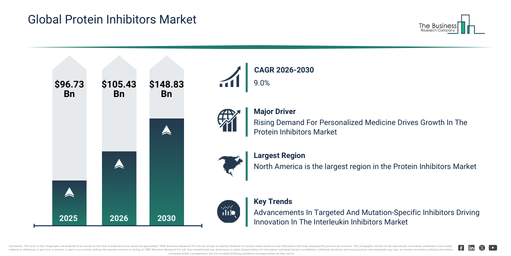
    The protein inhibitors market has experienced robust growth in recent years. It is projected to expand from $96.73 billion in 2025 to $105.43 billion in 2026, demonstrating a compound annual growth rate (CAGR) of 9.0%. This historical growth can be attributed to the limited availability of protein inhibitor therapies, a reliance on conventional chemotherapy, the growing prevalence of cancer and inflammatory diseases, increasing awareness of targeted therapies, and the adoption of hospital pharmacy distribution channels.

    The protein inhibitors market is set for considerable expansion in the upcoming years. It is forecast to grow to $148.83 billion in 2030, demonstrating a compound annual growth rate (CAGR) of 9.0%. This projected growth throughout the forecast period can be attributed to several factors, including the development of both selective and non-selective kinase inhibitors, progress in biologic monoclonal antibodies, the widening reach of online pharmacy and digital distribution, escalating research into protein degradation technologies, and increased investment in personalized protein inhibitor treatments. Noteworthy trends anticipated during this period encompass a rising demand for targeted protein inhibitor therapies, an expansion in oncology applications of protein kinase inhibitors, the proliferation of monoclonal antibody-based treatments, increasing adoption of combination therapy products, and a focus on small molecule and peptide-based inhibitors.

    Get A Free Sample Report With In-Depth Market Insights:

    https://thebusinessresearchcompany.com/sample_request?id=18826192&type=smp&name=Protein%20Inhibitors%20Market%20Report%202026&utm_source=Blogs&utm_medium=Paid&utm_campaign=Oct_PR

    Protein Inhibitors Market Growth Momentum: What Factors Are Shaping Demand?

    The protein inhibitors market is projected to grow due to the increasing demand for personalized medicine. This medical approach customizes treatment to an individual’s distinct genetic makeup, leading to more effective and precise healthcare interventions. Protein inhibitors are essential in personalized medicine as they target specific proteins to treat diseases based on an individual’s genetic profile. For instance, in February 2024, the Personalized Medicine Coalition, a US-based professional membership organization, reported that the FDA approved 16 new personalized treatments for rare disease patients in 2023, an increase from six in 2022. Moreover, the Personalized Medicine Coalition (PMC) classifies approximately 34%, which amounts to 12, of the 35 therapeutic NMEs as personalized medicines. Therefore, the growing demand for personalized medicine is fueling the expansion of the protein inhibitors market.

    Protein Inhibitors Market Segment Outlook: Which Categories Are Growing Fastest?

    The protein inhibitors market covered in this report is segmented –

    1) By Product: Protein Kinase Inhibitors, Monoclonal Antibody, Other Products

    2) By Application: Oncology, Inflammatory Diseases, Other Applications

    3) By Distribution Channel: Hospital Pharmacies, Independent Pharmacies, Online Pharmacies

    Subsegments:

    1) By Protein Kinase Inhibitors: Selective Kinase Inhibitors, Non-selective Kinase Inhibitors, Small Molecule Kinase Inhibitors, Biologic Kinase Inhibitors

    2) By Monoclonal Antibodies: Chimeric Monoclonal Antibodies, Humanized Monoclonal Antibodies, Fully Human Monoclonal Antibodies, Conjugated Monoclonal Antibodies

    3) By Other Products: Peptide Inhibitors, Protein Degradation Technologies, Small Molecule Inhibitors, Combination Therapy Products

    Protein Inhibitors Market Trends Redefining Industry Growth

    Key players in the protein inhibitors market are concentrating on developing innovative solutions like tyrosine kinase inhibitors to target specific signaling pathways, thereby enhancing therapeutic efficacy and improving patient outcomes in the treatment of cancer and other chronic diseases. A tyrosine kinase inhibitor (TKI) is a type of medication that obstructs the activity of tyrosine kinases, which are enzymes responsible for activating proteins involved in cell signaling, growth, and division, consequently helping to prevent the proliferation of cancerous or abnormal cells. For instance, in April 2024, F. Hoffmann-La Roche AG, a Switzerland-based healthcare company, obtained approval from the FDA for Alecensa (alectinib) as the first adjuvant treatment for patients with ALK-positive early-stage non-small cell lung cancer (NSCLC) who have undergone surgical tumor removal.

    Protein Inhibitors Market Leading Companies And Competitive Benchmarking

    Major companies operating in the protein inhibitors market are Bayer AG, AstraZeneca plc, F. Hoffmann-La Roche Ltd., Teva Pharmaceutical Industries Ltd., Apotex Inc., Novartis International AG, GlaxoSmithKline plc, Pfizer Inc., Boehringer Ingelheim International GmbH, Abbott Laboratories, Amgen Inc., Baxter International Inc., Merck & Co. Inc., AbbVie Inc., Bristol Myers Squibb Company, Biogen Inc., Eli Lilly and Company, Gilead Sciences Inc., Johnson & Johnson, Regeneron Pharmaceuticals Inc., Sanofi S.A., Takeda Pharmaceutical Company Limited, Vertex Pharmaceuticals Inc., Lonza Group AG, Catalent Inc., Thermo Fisher Scientific Inc., Charles River Laboratories International Inc., WuXi AppTec Co. Ltd.

    View The Full Protein Inhibitors Market Report:

    https://thebusinessresearchcompany.com/report/Protein-Inhibitor-global-market-report?utm_source=Blogs&utm_medium=Paid&utm_campaign=Oct_PR

    Protein Inhibitors Market Geographic Analysis: Where Is Demand Rising Fastest?

    North America was the largest region in the protein inhibitors market in 2025. The regions covered in the protein inhibitors market report are Asia-Pacific, South East Asia, Western Europe, Eastern Europe, North America, South America, Middle East, Africa.

    Reach Out To Our Team:

    The Business Research Company: https://www.thebusinessresearchcompany.com/

    Americas: +1 310-496-7795

    Asia: +44 7882 955267 & +91 8897263534

    Europe: +44 7882 955267

    Email us at: marketing@tbrc.info

    Follow us on:

    LinkedIn: https://in.linkedin.com/company/the-business-research-company

    YouTube: https://www.youtube.com/channel/UC24_fI0rV8cR5DxlCpgmyFQ

    Global Market Model: https://www.thebusinessresearchcompany.com/global-market-model
  • Protein Hydrolysis Enzymes Market Outlook 2026–2030: Growth Trends, Market Dynamics And Emerging Opportunities

    Protein Hydrolysis Enzymes Market Outlook 2026–2030: Growth Trends, Market Dynamics And Emerging Opportunities

    Featuring market attractiveness scoring, total addressable market sizing, company benchmarking matrices, interactive Excel dashboards, deeper supply chain intelligence, emerging startup tracking, and granular product-level insights, The Business Research Company’s 2026 market reports are built to deliver research that is both more actionable and more strategically valuable.

    Protein Hydrolysis Enzymes Market Size, Value And Growth Trajectory Through 2030

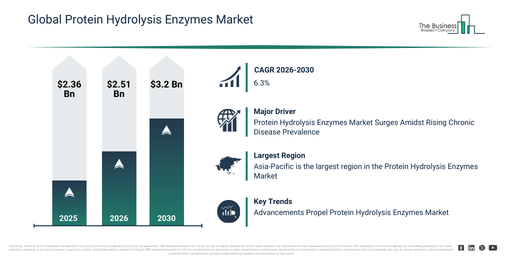
    The market for protein hydrolysis enzymes has experienced significant expansion recently. Projections indicate its value will increase from $2.36 billion in 2025 to $2.51 billion in 2026, demonstrating a compound annual growth rate (CAGR) of 6.3%. Factors contributing to its historical development include the increased need for functional foods, wider application of protein in animal feed, the expansion of the dairy and beverage sectors, progress in fermentation methods, and a heightened understanding of protein quality.

    The protein hydrolysis enzymes market size is projected to experience robust expansion over the coming years. It is predicted to reach $3.2 billion in 2030, demonstrating a compound annual growth rate (CAGR) of 6.3%. This anticipated growth stems from several factors, such as the rising need for plant-based protein items, the increasing integration of enzyme solutions within nutraceuticals, the expansion of the processed food sector, a heightened focus on protein digestibility and bioavailability, and escalating research and development efforts in enzyme technology. Key developments expected during this period involve enzyme-driven protein alterations, advancements in plant-derived enzymes, the development of high-solubility protein formulations, creation of low-viscosity protein solutions, and specialized protein hydrolysates.

    Get A Free Sample Report With In-Depth Market Insights:

    https://thebusinessresearchcompany.com/sample_request?id=15983523&type=smp&name=Protein%20Hydrolysis%20Enzymes%20Market%20Report%202026&utm_source=Blogs&utm_medium=Paid&utm_campaign=Oct_PR

    Protein Hydrolysis Enzymes Market Expansion Drivers: What’s Shaping Future Growth?

    The protein hydrolysis enzymes market is expected to expand moving forward, driven by the increasing incidence of chronic diseases. A chronic disease is defined as a health condition that develops progressively or is persistent in individuals, carrying long-lasting repercussions. Protein hydrolysis, facilitated by enzymes, generates the most physiologically active peptides; these peptides can aid in preventing cancer and other diseases by their capacity to modulate antioxidant enzymes, which are crucial in controlling the body’s pro-inflammatory processes. Therefore, a rise in the prevalence of chronic conditions is projected to boost the demand for protein hydrolysis enzymes. As an example, in June 2024, data from the National Health Service, a UK-based government department, indicated that 3,615,330 individuals registered with a general practitioner were diagnosed with non-diabetic hyperglycemia or pre-diabetes (a state of elevated blood sugar not yet at diabetic levels) in 2023. This figure represented an 18% increase from 3,065,825 cases recorded in 2022. Thus, the growing prevalence of chronic diseases is a significant factor propelling the growth of the protein hydrolysis enzymes market.

    Protein Hydrolysis Enzymes Market Segment Landscape: Which Areas Lead Development?

    The protein hydrolysis enzymes market covered in this report is segmented –

    1) By Type: Microorganisms, Animals, Plants

    2) By Method Of Production: Extraction, Fermentation

    3) By Application: Detergent And Cleaning, Food And Beverage, Animal Feed, Textile, Dairy, Other Applications

    Subsegments:

    1) By Microorganisms: Bacterial Enzymes, Fungal Enzymes, Yeast-Derived Enzymes

    2) By Animals: Animal-Derived Enzymes, Rennet

    3) By Plants: Plant-Derived Enzymes, Seed-Derived Enzymes

    Protein Hydrolysis Enzymes Market Strategic Trends: What Defines The Next Growth Phase?

    Companies operating in the protein hydrolysis enzyme market are concentrating on technological improvements, such as optimized enzyme blends, to enhance nutrient digestion, improve animal performance, and address specific challenges in livestock production. An optimized enzyme blend is a precisely formulated mix of various enzymes created to improve the digestion and utilization of nutrients in animal feed. For instance, in March 2023, International Flavors & Fragrances Inc., a US-based food and health ingredient provider, launched Axtra PRIME, a new optimized enzyme blend designed to improve nutrient digestion and enhance piglet performance in animal nutrition. This innovative solution targets key challenges in piglet production, especially during weaning, by combining xylanase, beta-glucanase, alpha-amylase, and protease enzymes to support healthier growth and better feed utilization.

    Protein Hydrolysis Enzymes Market Industry Leaders And Competitive Landscape

    Major companies operating in the protein hydrolysis enzymes market are Novozymes A/S, Royal DSM, DuPont de Nemours Inc., AB Enzymes GmbH, Advanced Enzyme Technologies, Dyadic International Inc., Jiangsu Boli Bioproducts Co. Ltd., Specialty Enzymes & Biotechnologies Co, Solvay Enzymes, Amano Enzyme Inc., Biocatalysts, Rossari Biotech Limited, Enzyme Solutions, DSM Nutritional Products, Chr. Hansen Holding A/S, Noor Enzymes, Enzyme Development Corporation, Enzyme Supplies Limited, Enzyme Innovation, Enzybel Group

    View The Full Protein Hydrolysis Enzymes Market Report:

    https://thebusinessresearchcompany.com/report/protein-hydrolysis-enzymes-global-market-report?utm_source=Blogs&utm_medium=Paid&utm_campaign=Oct_PR

    Protein Hydrolysis Enzymes Market Global Footprint: Which Region Leads The Market?

    Asia-Pacific was the largest region in the protein hydrolysis enzymes market in 2025. Asia-Pacific is expected to be the fastest-growing region in the protein hydrolysis enzymes market during the forecast period. The regions covered in the protein hydrolysis enzymes market report are Asia-Pacific, South East Asia, Western Europe, Eastern Europe, North America, South America, Middle East, Africa.

    Reach Out To Our Team:

    The Business Research Company: https://www.thebusinessresearchcompany.com/

    Americas: +1 310-496-7795

    Asia: +44 7882 955267 & +91 8897263534

    Europe: +44 7882 955267

    Email us at: marketing@tbrc.info

    Follow us on:

    LinkedIn: https://in.linkedin.com/company/the-business-research-company

    YouTube: https://www.youtube.com/channel/UC24_fI0rV8cR5DxlCpgmyFQ

    Global Market Model: https://www.thebusinessresearchcompany.com/global-market-model

  • Protein Degradation Therapy Market Growth Outlook From $1.35 Billion In 2026 To $1.82 Billion By 2030

    Protein Degradation Therapy Market Growth Outlook From $1.35 Billion In 2026 To $1.82 Billion By 2030

    Built to provide research that’s more actionable and strategically valuable, The Business Research Company’s 2026 market reports include market attractiveness analysis, total addressable market sizing, company benchmarking matrices, interactive Excel dashboards, broader supply chain intelligence, emerging startup tracking, and in-depth product insights.

    Protein Degradation Therapy Market CAGR Outlook And Future Development

    The protein degradation therapy market size has experienced significant expansion recently. It is projected to grow from $1.25 billion in 2025 to $1.35 billion in 2026, exhibiting a compound annual growth rate (CAGR) of 8.1%. This historic growth can be attributed to several factors, including advancements in molecular biology research, the expansion of targeted cancer therapies, an increased understanding of protein dysfunction in diseases, early-stage clinical successes, and growing venture capital funding in biotech.

    The protein degradation therapy market is anticipated to experience substantial expansion in the coming years. Its valuation is projected to reach $1.83 billion by 2030, demonstrating a compound annual growth rate (CAGR) of 7.8%. This expansion during the forecast period is propelled by factors such as the increasing need for new cancer treatments, growing investments in precision oncology, the broadening of protein degradation platforms, heightened clinical trial engagements, and greater regulatory backing for pioneering therapeutic solutions. Key developments anticipated in this period include the accelerated creation of targeted protein degraders, a sharpened emphasis on oncological uses, increased capital flow into PROTAC-based treatments, the enlargement of candidate pipelines in clinical stages, and improved partnerships between pharmaceutical and biotechnology companies.

    Get A Free Sample Report With In-Depth Market Insights:

    https://thebusinessresearchcompany.com/sample_request?id=75000225&type=smp&name=Protein%20Degradation%20Therapy%20Market%20Report%202026&utm_source=Blogs&utm_medium=Paid&utm_campaign=Oct_PR

    Protein Degradation Therapy Market Development Factors: What’s Supporting Demand?

    The increasing impact of cancer is anticipated to fuel the expansion of the protein degradation therapy market moving ahead. Cancer encompasses various conditions characterized by the unchecked multiplication and spread of atypical cells throughout the body. The incidence of cancer is increasing chiefly due to multiple factors, notably the expanding elderly demographic. Furthermore, lifestyle elements like tobacco use, unhealthy eating habits, insufficient exercise, and increasing levels of obesity have elevated the likelihood of developing diverse cancers. The necessity for protein degradation therapy in cancer treatment stems from its ability to target and eradicate particular proteins crucial for cancer progression and survival, potentially surmounting resistance to conventional therapies. For example, in February 2024, a report released by the World Health Organization, an intergovernmental entity based in Switzerland, projected that more than 35 million new cancer cases are expected by 2050, signifying a 77% surge from the approximately 20 million cases in 2022. Additionally, nations with a high Human Development Index (HDI) are forecasted to experience the most substantial rise in absolute figures, with an extra 4.8 million new cases anticipated in 2050 when contrasted with 2022 projections. Consequently, the expanding challenge of cancer is propelling the advancement of the protein degradation therapy market.

    Protein Degradation Therapy Market Segments: Where Is Growth Concentrated?

    The protein degradation therapy market covered in this report is segmented –

    1) By Type: Bavdegalutamide (ARV – 110), Vepdegestrant (ARV – 471)

    2) By Application: Oncology, Neurodegenerative Diseases, Infectious Diseases, Other Applications

    3) By End-User: Pharmaceutical Companies, Biotechnology Companies, Academic And Research Institutes

    Subsegments:

    1) By Bavdegalutamide (ARV-110): Androgen Receptor Degraders, Prostate Cancer Therapy

    2) By Vepdegestrant (ARV-471): Estrogen Receptor Degraders, Breast Cancer Therapy

    Protein Degradation Therapy Market Transformation Trends: What Innovations Are Driving Change?

    Leading companies in the protein degradation therapy market are increasingly adopting a strategic partnership approach to cultivate advanced therapies, capitalize on complementary specialized knowledge, share available assets, and accelerate both the discovery and subsequent development of novel drug candidates aimed at disease-contributing proteins. These strategic alliances involve organizations leveraging each other’s strengths and resources to achieve mutual advantages and shared accomplishments. For example, in February 2024, Arvinas, a U.S.-based biotechnology company, launched its inaugural oral PROTAC degrader (ARV-102), engineered to permeate the blood-brain barrier and target LRRK2 for applications in neurodegenerative diseases. The ARV-102 molecule is characterized by oral bioavailability, a brain-penetrant profile, and strong specificity for LRRK2. Such innovations enhance company pipelines by enabling the treatment of targets previously considered undruggable, although difficulties persist regarding long-term safety, manufacturing intricacies, and the optimization of pharmacokinetics due to the molecule’s considerable size.

    Protein Degradation Therapy Market Key Participants And Competitive Landscape

    Major companies operating in the protein degradation therapy market are Relay Therapeutics, Arvinas Holding Company LLC, Kymera Therapeutics, Nurix Therapeutics, Vividion Therapeutics, Mission Therapeutics Ltd., C4 Therapeutics Inc., Cullgen Inc., Frontier Medicines, Foghorn Therapeutics, Aileron Therapeutics, Ribometrix Inc., Nimbus Therapeutics, Jnana Therapeutics, KSQ Therapeutics, Stoke Therapeutics, Flare Therapeutics, Accent Therapeutics, Monte Rosa Therapeutics, Lycia Therapeutics, Dialectic Therapeutics, Amphista Therapeutics, Biotheryx Inc., Cedilla Therapeutics, Dewpoint Therapeutics Inc

    View The Full Protein Degradation Therapy Market Report:

    https://thebusinessresearchcompany.com/report/protein-degradation-therapy-global-market-report?utm_source=Blogs&utm_medium=Paid&utm_campaign=Oct_PR

    Protein Degradation Therapy Market Regional Split: Which Areas Are Fueling Growth?

    North America was the largest region in the protein degradation therapy market in 2025. Asia-Pacific is expected to be the fastest-growing region in the forecast period. The regions covered in the protein degradation therapy market report are Asia-Pacific, South East Asia, Western Europe, Eastern Europe, North America, South America, Middle East, Africa.

    Reach Out To Our Team:

    The Business Research Company: https://www.thebusinessresearchcompany.com/

    Americas: +1 310-496-7795

    Asia: +44 7882 955267 & +91 8897263534

    Europe: +44 7882 955267

    Email us at: marketing@tbrc.info

    Follow us on:

    LinkedIn: https://in.linkedin.com/company/the-business-research-company

    YouTube: https://www.youtube.com/channel/UC24_fI0rV8cR5DxlCpgmyFQ

    Global Market Model: https://www.thebusinessresearchcompany.com/global-market-model
  • Pharmaceutical Safety Assessment Market Forecast 2026–2030: Market Size, Trends And Growth Opportunities

    Pharmaceutical Safety Assessment Market Forecast 2026–2030: Market Size, Trends And Growth Opportunities

    Backed by market attractiveness analysis, total addressable market sizing, company benchmarking matrices, interactive Excel dashboards, wider supply chain intelligence, emerging startup coverage, and detailed product-level insights, The Business Research Company’s 2026 market reports are designed to offer research that is more actionable and strategically valuable than ever.

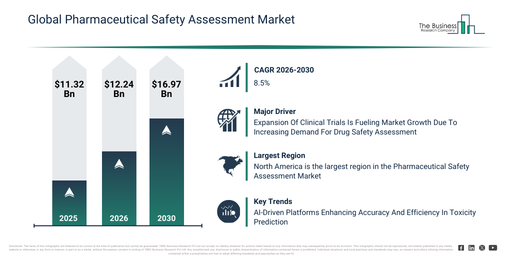
    Pharmaceutical Safety Assessment Market Poised To Hit $16.96 Billion By 2030 With A 8.5% CAGR

    The pharmaceutical safety assessment market size has demonstrated strong growth in recent years. It is anticipated to expand from $11.32 billion in 2025 to $12.24 billion in 2026, reflecting a compound annual growth rate (CAGR) of 8.2%. The expansion observed in prior periods can be attributed to factors such as the development of pharmaceutical research and development pipelines, increased regulatory oversight regarding drug safety, a rise in preclinical and clinical testing volumes, more widespread adoption of in-vitro safety assessment methodologies, and the increasing utilization of CRO-led safety studies.

    The pharmaceutical safety assessment market is projected to experience robust expansion over the coming years. This market is forecast to reach $16.97 billion in 2030, exhibiting a compound annual growth rate (CAGR) of 8.5%. This anticipated growth during the forecast timeframe is primarily driven by an increased dependence on computational safety evaluations, the broadening scope of personalized medicine development, a growing need for quicker regulatory clearances, the escalating incorporation of AI into drug safety processes, and more stringent post-market surveillance mandates. Key developments expected within this period encompass the greater deployment of AI-powered toxicity prediction tools, an uptick in the acceptance of in-silico safety evaluation models, the expanding integration of real-time pharmacovigilance solutions, the proliferation of automated preclinical testing platforms, and a heightened emphasis on safety analytics that adhere to regulatory standards.

    Get A Free Sample Report With In-Depth Market Insights:

    https://thebusinessresearchcompany.com/sample_request?id=29147&type=smp&name=Pharmaceutical%20Safety%20Assessment%20Market%20Report%202026&utm_source=Blogs&utm_medium=Paid&utm_campaign=Oct_PR

    Pharmaceutical Safety Assessment Market Industry Drivers: What’s Behind The Revenue Growth?

    The future expansion of clinical trials is expected to propel the growth of the pharmaceutical safety assessment market. Clinical trials represent research investigations conducted in humans to evaluate the safety, effectiveness, and side effects of new medical treatments, drugs, or interventions. The rise in clinical trials is attributed to the increasing demand for novel and effective treatments, as researchers and healthcare providers aim to develop therapies that can better prevent, manage, or cure diseases. These trials support pharmaceutical safety assessment by systematically evaluating a drug’s effects on humans through carefully controlled studies, monitoring for adverse reactions, determining safe dosage ranges, and providing essential data that regulatory authorities use to ensure that medications are both effective and safe for public use. For instance, in September 2025, according to the National Library of Medicine (NLM), a US-based biomedical library, a total of 554,798 studies were registered on ClinicalTrials.gov as of September 26, 2025. Therefore, the expansion of clinical trials is driving the growth of the pharmaceutical safety assessment market.

    Pharmaceutical Safety Assessment Market Breakdown By Product Type And Application

    The pharmaceutical safety assessment market covered in this report is segmented –

    1) By Type: In-Vitro Safety Assessment, In-Vivo Safety Assessment, Computational Safety Assessment

    2) By Drug Type: Biological Drugs, Chemical Drugs

    3) By Phase: Preclinical, Clinical (Phase I, II, III), Post-Market Surveillance (Phase IV)

    4) By End User: Pharmaceutical Companies, Biotechnology Companies, Medical Device Companies, Academic And Research Institutions, Contract Research Organizations (CROs)

    Subsegments:

    1) By In-Vitro Safety Assessment: Cell-Based Assays, Organotypic Models, Tissue Culture Models, High-Throughput Screening

    2) By In-Vivo Safety Assessment: Rodent Studies, Non-Rodent Studies, Toxicokinetic Studies, Carcinogenicity Studies

    3) By Computational Safety Assessment: Quantitative Structure-Activity Relationship (QSAR) Modeling, Physiologically Based Pharmacokinetic (PBPK) Modeling, Toxicity Prediction Software, In Silico Simulation Studies

    #Pharmaceutical Safety Assessment Market Growth Trends: What’s Shaping The Future Outlook?

    Major companies in the pharmaceutical safety assessment market are concentrating on creating AI-driven decision support tools to enhance the precision and efficiency of toxicity prediction and safety profiling. An AI-powered decision support tool is a software system that uses artificial intelligence to process data and provide insights, thereby supporting quicker and more accurate decision-making. For instance, in April 2024, Charles River Laboratories, a US-based life sciences company, in partnership with Deciphex, an Ireland-based company that enhances diagnostic precision and speed through AI-driven quality assurance, launched the Patholytix Foresight platform. This AI-powered decision support tool is specifically designed to revolutionize toxicologic pathology within pharmaceutical safety assessment. The platform utilizes artificial intelligence to rapidly analyze intricate preclinical pathology data, helping to identify potential safety risks sooner and reducing the subjective element in results. It offers distinct features such as an AI algorithm for detecting tissue abnormalities, a cloud-based system for global collaboration, and a scalable design that minimizes slide review time while simultaneously improving data accuracy and consistency.

    Pharmaceutical Safety Assessment Market Company Landscape And Competitive Strategy

    Major companies operating in the pharmaceutical safety assessment market are IQVIA Holding Inc., LabCorp (formerly Covance), Thermo Fisher Scientific (PPD), Charles River Laboratories, ICON plc, Parexel International Corp., Syneos Health, Eurofins Scientific SE, Wuxi Biologics Inc., SGS SA, Medpace Holdings Inc., Fujifilm Wako (Fujifilm Corp.), Pharmaron Beijing Co. Ltd., Inotiv (incl. Envigo), Evotec (Cyprotex), Intertek Group, Altasciences Inc., Aragen Life Sciences Ltd., CTI Clinical Trial and Consulting Inc., ChemDiv Inc., Frontage Laboratories, Medicilon Inc., Biotoxtech Co. Ltd., BioIVT, Accelera Srl.

    View The Full Pharmaceutical Safety Assessment Market Report:

    https://thebusinessresearchcompany.com/report/pharmaceutical-safety-assessment-global-market-report?utm_source=Blogs&utm_medium=Paid&utm_campaign=Oct_PR

    Pharmaceutical Safety Assessment Market Largest Region By Revenue And Market Share

    North America was the largest region in the pharmaceutical safety assessment market in 2025. Asia-Pacific is expected to be the fastest-growing region in the forecast period. The regions covered in the pharmaceutical safety assessment market report are Asia-Pacific, South East Asia, Western Europe, Eastern Europe, North America, South America, Middle East, Africa.

    Reach Out To Our Team:

    The Business Research Company: https://www.thebusinessresearchcompany.com/

    Americas: +1 310-496-7795

    Asia: +44 7882 955267 & +91 8897263534

    Europe: +44 7882 955267

    Email us at: marketing@tbrc.info

    Follow us on:

    LinkedIn: https://in.linkedin.com/company/the-business-research-company

    YouTube: https://www.youtube.com/channel/UC24_fI0rV8cR5DxlCpgmyFQ

    Global Market Model: https://www.thebusinessresearchcompany.com/global-market-model
  • Pharmaceutical Rapid Microbiology Testing Market Size Reaches $1.4 Billion In 2026: What Is Driving Growth?

    Pharmaceutical Rapid Microbiology Testing Market Size Reaches $1.4 Billion In 2026: What Is Driving Growth?

    Featuring market attractiveness scoring, total addressable market sizing, company benchmarking matrices, interactive Excel dashboards, deeper supply chain intelligence, emerging startup tracking, and granular product-level insights, The Business Research Company’s 2026 market reports are built to deliver research that is both more actionable and more strategically valuable.

    Pharmaceutical Rapid Microbiology Testing Market Size And Revenue Outlook Through 2030

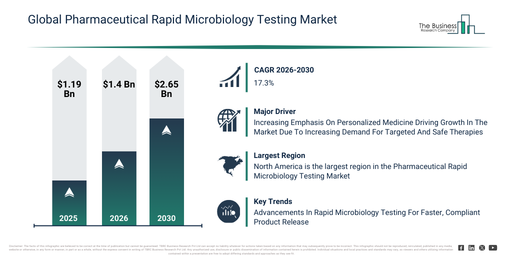
    The market for pharmaceutical rapid microbiology testing has experienced swift expansion in recent years. It is projected to grow from $1.19 billion in 2025 to $1.4 billion in 2026, achieving a compound annual growth rate (CAGR) of 17.6%. This historical growth can be attributed to several factors, including the reliance on traditional culture-based microbial testing, increasing regulatory requirements for faster product release, the expansion of pharmaceutical manufacturing activities, limited automation in microbiology laboratories, and a rising awareness of contamination risks.

    The pharmaceutical rapid microbiology testing market is projected for substantial expansion in the coming years. Its valuation is set to reach $2.65 billion by 2030, exhibiting a compound annual growth rate (CAGR) of 17.3%. This expansion during the forecast period stems from the advancement of automated and high-throughput testing systems, the incorporation of digital data management and cloud-based analytics, a growing embrace of rapid testing in biopharmaceutical workflows, the broadening of CMOs and contract testing laboratories, and escalating investments in sterility and quality control breakthroughs. Key trends anticipated during this period encompass the uptake of rapid PCR and ATP-based microbiology testing methods, enhanced utilization of flow cytometry and ELISA for detecting microbes, broadening applications in in-process and bioburden monitoring, a surging need for automated microbial detection systems, and the incorporation of rapid microbiology testing within quality control and sterility assurance frameworks.

    Get A Free Sample Report With In-Depth Market Insights:

    https://thebusinessresearchcompany.com/sample_request?id=90469613&type=smp&name=Pharmaceutical%20Rapid%20Microbiology%20Testing%20Market%20Report%202026&utm_source=Blogs&utm_medium=Paid&utm_campaign=Oct_PR

    Pharmaceutical Rapid Microbiology Testing Market Growth Factors: What’s Supporting Expansion?

    The pharmaceutical rapid microbiology testing market is expected to experience growth in the future, propelled by the increasing focus on personalized medicine. Personalized medicine represents a medical approach that customizes healthcare decisions and treatments according to an individual’s distinct genetic makeup, lifestyle, and environmental factors. The expansion of personalized medicine is driven by a rising demand for more effective and targeted treatments, which aim to reduce trial-and-error in therapy selection. Pharmaceutical rapid microbiology testing contributes to personalized medicine by enabling faster detection of microbial contaminants, thus ensuring the safety and sterility of customized therapies tailored for individual patients. For instance, in February 2024, the Personalized Medicine Coalition, a US-based non-profit organization, reported that in 2023, the FDA approved 16 new personalized treatments for rare disease patients, an increase from six in 2022. Therefore, the growing emphasis on personalized medicine is a key driver for the growth of the pharmaceutical rapid microbiology testing market.

    Pharmaceutical Rapid Microbiology Testing Market Segment Analysis And Revenue Potential

    The pharmaceutical rapid microbiology testing market covered in this report is segmented –

    1) By Product: Instruments, Reagents And Kits, Accessories

    2) By Technology Type: Polymerase Chain Reaction (PCR), Adenosine Triphosphate (ATP) Bioluminescence, Flow Cytometry, Enzyme-Linked Immunosorbent Assay (ELISA) Chromatography, Biosensors And Bioassays, Impedance Microbiology, Other Technology Types

    3) By Microorganism Type Tested: Bacteria, Fungi (Yeast And Mold), Viruses, Mycoplasma, Endotoxins

    4) By Application: Raw Material Testing, In-Process Testing, Microbial Limit Testing, Bioburden Assessment, Process Water Testing, Environment Monitoring, Sterility Testing

    5) By End-User: Pharmaceutical And Biotechnology Companies, Contract Manufacturing Organizations (CMOs), Hospitals And Diagnostic Laboratories, Research And Academic Institutes

    Subsegments:

    1) By Instruments: Adenosine Triphosphate (ATP) Bioluminometer, Flow Cytometer, Polymerase Chain Reaction (PCR) Thermocycler Or Real-Time Polymerase Chain Reaction (PCR) System, Automated Microbial Detection Systems, Rapid Immunoassay Analyzers

    2) By Reagents And Kits: Adenosine Triphosphate (ATP) Detection Kits, Polymerase Chain Reaction (PCR) Reagents, Enzyme-Linked Immunosorbent Assay (ELISA) Kits, Microbial Culture Media Kits, Fluorescent Staining Kits

    3) By Accessories: Microplates Or Test Tubes, Pipettes And Tips, Filters And Membranes, Sample Collection Swabs

    Pharmaceutical Rapid Microbiology Testing Market Industry Trends: What’s Reshaping Demand?

    Key players in the pharmaceutical rapid microbiology testing market are prioritizing the development of advanced innovations, such as adenosine triphosphate (ATP) bioluminescence, to enable quicker product release while meeting regulatory standards. Adenosine triphosphate (ATP) bioluminescence functions as a swift testing method that identifies living microorganisms by measuring ATP levels using a luciferase-driven light reaction, where the intensity of light indicates microbial contamination in pharmaceuticals, medical devices, and various other materials. For instance, in March 2025, Nelson Labs LLC, a US-based health company, launched a rapid-method sterility testing service. This pioneering pharmaceutical rapid microbiology testing approach incorporates accelerated detection times, automated result analysis, and high-throughput capabilities. Rapid sterility testing proves highly versatile, supporting a diverse array of pharmaceutical and medical device products by substantially reducing testing durations while ensuring adherence to regulatory standards.

    Pharmaceutical Rapid Microbiology Testing Market Key Players Shaping Industry Direction

    Major companies operating in the pharmaceutical rapid microbiology testing market are Merck KGaA, Becton Dickinson and Company, SGS SA, Eurofins Scientific SE, Charles River Laboratories International Inc, ALS Limited, WESSLING GmbH, Nelson Labs LLC, Labor LS SE & Co. KG, GBA Pharma GmbH, ANACON LABORATORIES PRIVATE LIMITED, Vimta Labs Limited, Pacific Biolabs Inc., Wickham Laboratories, Microchem Laboratory Inc., Infinity Laboratories Private Limited, Ghaziabad Testing Laboratories Private Limited, Medistri SA, PREWEL LABS PRIVATE LIMITED, TUV SUD SOUTH ASIA PRIVATE LIMITED

    View The Full Pharmaceutical Rapid Microbiology Testing Market Report:

    https://thebusinessresearchcompany.com/report/pharmaceutical-rapid-microbiology-testing-global-market-report?utm_source=Blogs&utm_medium=Paid&utm_campaign=Oct_PR

    Pharmaceutical Rapid Microbiology Testing Market Regional Analysis And Leading Geography

    North America was the largest region in the pharmaceutical rapid microbiology testing market in 2025. Asia-Pacific is expected to be the fastest-growing region in the forecast period. The regions covered in the pharmaceutical rapid microbiology testing market report are Asia-Pacific, South East Asia, Western Europe, Eastern Europe, North America, South America, Middle East, Africa.

    Reach Out To Our Team:

    The Business Research Company: https://www.thebusinessresearchcompany.com/

    Americas: +1 310-496-7795

    Asia: +44 7882 955267 & +91 8897263534

    Europe: +44 7882 955267

    Email us at: marketing@tbrc.info

    Follow us on:

    LinkedIn: https://in.linkedin.com/company/the-business-research-company

    YouTube: https://www.youtube.com/channel/UC24_fI0rV8cR5DxlCpgmyFQ

    Global Market Model: https://www.thebusinessresearchcompany.com/global-market-model

  • Pharmaceutical Quality Control Market Valued At $14.58 Billion In 2026: Key Trends And Growth Drivers

    Pharmaceutical Quality Control Market Valued At $14.58 Billion In 2026: Key Trends And Growth Drivers

    Built to provide research that’s more actionable and strategically valuable, The Business Research Company’s 2026 market reports include market attractiveness analysis, total addressable market sizing, company benchmarking matrices, interactive Excel dashboards, broader supply chain intelligence, emerging startup tracking, and in-depth product insights.

    Pharmaceutical Quality Control Market Growth From $10 Billion In 2026 To $14.58 Billion By 2030 At A CAGR Of 9.9%

    The market size for pharmaceutical quality control has experienced rapid growth in recent years. This market is projected to expand from $9.08 billion in 2025 to $10 billion in 2026, demonstrating a compound annual growth rate (CAGR) of 10.2%. Historically, this expansion has been driven by several factors, including limited access to advanced quality control instruments, a reliance on manual testing methods, the overall growth in pharmaceutical manufacturing, increasing demands for regulatory compliance, and the expansion of microbiological testing capabilities.

    The pharmaceutical quality control market is anticipated to experience robust expansion over the coming years. Its size is projected to reach $14.59 billion by 2030, exhibiting a compound annual growth rate (CAGR) of 9.9%. This expansion is primarily driven by factors such as the incorporation of cloud-based and AI-powered quality control solutions, the increasing use of automated analytical tools, greater investment in validation and qualification services, a heightened emphasis on sterility assurance and stability evaluations, and the growth of collaborative research and development efforts. Key developments during this period will involve the adoption of sophisticated chromatography and spectroscopy instruments, a surge in demand for microbiological and sterility testing services, the broadening of stability testing and validation offerings, an escalating focus on endotoxin and bioburden analysis, and an increasing need for both on-premises and cloud-hosted quality control systems.

    Get A Free Sample Report With In-Depth Market Insights:

    https://thebusinessresearchcompany.com/sample_request?id=47006151&type=smp&name=Pharmaceutical%20Quality%20Control%20Market%20Report%202026&utm_source=Blogs&utm_medium=Paid&utm_campaign=Oct_PR

    Pharmaceutical Quality Control Market Demand Drivers: What’s Powering Industry Growth?

    The increasing need for biosimilars is projected to fuel the expansion of the pharmaceutical quality control market moving forward. Biosimilars are biologic medical products that closely resemble an already approved reference biologic, demonstrating no clinically significant differences in terms of safety, purity, and potency. The heightened demand for biosimilars primarily arises from the expiration of patents on original biologic drugs, which allows more affordable options to become available in the market. Pharmaceutical quality control is essential for guaranteeing the safety, purity, and consistent quality of biosimilars through stringent testing against reference biologics, thereby aiding regulatory compliance and market approval. For instance, in January 2023, Cardinal Health Inc., a US-based healthcare company, disclosed that by January 2022, there were 33 FDA-approved biosimilar products in the US, with 21 accessible commercially. This number further climbed to 40 FDA-approved biosimilars, with 25 commercially available by 2023. Therefore, the rising demand for biosimilars is a key driver for the growth of the pharmaceutical quality control market.

    Pharmaceutical Quality Control Market Segmentation And Category Overview

    The pharmaceutical quality control market covered in this report is segmented –

    1) By Product: Consumables, Services, Instruments

    2) By Deployment Type: Cloud-Based And Web-Based, On-Premises

    3) By Analysis Type: Sterility Testing, Membrane Filtration, Direct Inoculation, Bio Burden Testing, Aerobic Count Testing, Anaerobic Count Testing, Spore Count Testing, Fungi or Mold Count Testing, Endotoxin Testing, Other Analysis Types

    4) By End-user: Pharmaceutical And Biotechnology Companies, Contract Development and Manufacturing Organization Or Contract Research Organization, Research Laboratories

    Subsegments:

    1) By Consumables: Culture Media, Reagents, Assay Kits, Filters And Membranes, Pipette Tips

    2) By Services: Microbiological Testing Services, Analytical Testing Services, Stability Testing Services, Sterility Assurance Services, Validation And Qualification Services

    3) By Instruments: Chromatography Systems, Spectroscopy Instruments, Particle Size Analyzers, Potential Of Hydrogen Meters And Electrical Conductivity Meters, Autoclaves And Incubators

    Pharmaceutical Quality Control Market Innovation Trends: What Developments Are Reshaping The Industry?

    Major companies in the pharmaceutical quality control market are increasingly focusing on technological advancements like intelligent software platforms to enhance testing accuracy and regulatory compliance. Intelligent software platforms for pharmaceutical quality control represent advanced digital systems that utilize automation, data analytics, and artificial intelligence (AI) to improve the precision, effectiveness, and adherence of testing processes. For instance, in June 2025, Dycine Pharmaceuticals Ltd., an India-based pharmaceutical company, launched an artificial intelligence-driven quality control platform designed to elevate manufacturing standards and ensure product integrity. This platform employs advanced artificial intelligence algorithms to detect anomalies, monitor real-time data, and streamline compliance procedures throughout the pharmaceutical production line. It offers essential features such as predictive analytics, automated reporting, and seamless integration with existing manufacturing systems, contributing to a reduction in errors, improved efficiency, and the maintenance of consistent quality across production batches.

    Pharmaceutical Quality Control Market Competitive Analysis Of Leading Industry Participants

    Major companies operating in the pharmaceutical quality control market are Thermo Fisher Scientific Inc., Abbott Laboratories, Danaher Corporation, Merck KGaA, Becton Dickinson and Company, SGS S.A., Eurofins Scientific SE, WuXi AppTec Co. Ltd., Charles River Laboratories International Inc., PerkinElmer Inc., Mettler-Toledo International Inc., bioMérieux SA, Shimadzu Scientific Instruments Inc., Waters Corporation, Randox Laboratories Ltd., SOLVIAS AG, Esco Micro Pte. Ltd, REMI Elektrotechnik Limited, Lucideon Limited, BRAM-COR S.p.A.

    View The Full Pharmaceutical Quality Control Market Report:

    https://thebusinessresearchcompany.com/report/pharmaceutical-quality-control-global-market-report?utm_source=Blogs&utm_medium=Paid&utm_campaign=Oct_PR

    Pharmaceutical Quality Control Market Geographic Analysis: Where Is Demand Accelerating Fastest?

    North America was the largest region in the pharmaceutical quality control market in 2025. Asia-Pacific is expected to be the fastest-growing region in the forecast period. The regions covered in the pharmaceutical quality control market report are Asia-Pacific, South East Asia, Western Europe, Eastern Europe, North America, South America, Middle East, Africa.

    Reach Out To Our Team:

    The Business Research Company: https://www.thebusinessresearchcompany.com/

    Americas: +1 310-496-7795

    Asia: +44 7882 955267 & +91 8897263534

    Europe: +44 7882 955267

    Email us at: marketing@tbrc.info

    Follow us on:

    LinkedIn: https://in.linkedin.com/company/the-business-research-company

    YouTube: https://www.youtube.com/channel/UC24_fI0rV8cR5DxlCpgmyFQ

    Global Market Model: https://www.thebusinessresearchcompany.com/global-market-model

  • Pharmaceutical Processing Seals Market Size In 2026: Growth Outlook And Forecast Through 2030

    Pharmaceutical Processing Seals Market Size In 2026: Growth Outlook And Forecast Through 2030

    Backed by market attractiveness analysis, total addressable market sizing, company benchmarking matrices, interactive Excel dashboards, wider supply chain intelligence, emerging startup coverage, and detailed product-level insights, The Business Research Company’s 2026 market reports are designed to offer research that is more actionable and strategically valuable than ever.

    Pharmaceutical Processing Seals Market Expansion Outlook: What Revenue Opportunities Are Ahead?

    The market for pharmaceutical processing seals has experienced rapid growth in recent years. It is forecast to increase from $2.68 billion in 2025 to $2.95 billion in 2026, achieving a compound annual growth rate (CAGR) of 10.4%. The expansion witnessed in the past can be attributed to several factors including rising pharmaceutical production, the adoption of mechanical seals, a demand for contamination-free processing, increasing automation in equipment, and regulatory pressure concerning process safety.

    The market for pharmaceutical processing seals is projected to experience substantial expansion over the coming years. This market is anticipated to reach a valuation of $4.33 billion by 2030, exhibiting a compound annual growth rate (CAGR) of 10.0%. Factors driving this growth during the projected period include the increase in biologics and vaccine production, advancements in seal material technology, the implementation of intelligent manufacturing solutions, the broadening of production facilities in developing markets, and an escalating demand for tailored sealing products. Key developments expected within this timeframe encompass the incorporation of sophisticated sealing materials, adherence to GMP and other regulatory requirements, greater automation within pharmaceutical production, improvements in process safety and contamination prevention, and the bespoke design and precise engineering of seals.

    Get A Free Sample Report With In-Depth Market Insights:

    https://thebusinessresearchcompany.com/sample_request?id=66103744&type=smp&name=Pharmaceutical%20Processing%20Seals%20Market%20Report%202026&utm_source=Blogs&utm_medium=Paid&utm_campaign=Oct_PR

    Pharmaceutical Processing Seals Market Growth Drivers: What’s Behind The Acceleration?

    The increasing prevalence of chronic diseases notably fuels the expansion of the pharmaceutical processing seals market. A chronic disease is defined as an ailment persisting for at least three months, with the potential to worsen over time. Conditions like diabetes, cardiovascular diseases, and different forms of cancer necessitate ongoing treatment and sustained management. With the global rise in these conditions, pharmaceutical firms are compelled to manufacture and supply an increased quantity of drugs. Such elevated production demands a diverse array of pharmaceutical processing seals to uphold product integrity, avert contamination, and guarantee the safety and effectiveness of pharmaceutical products. For example, data from September 2023, provided by the World Health Organization, a Switzerland-based specialized agency of the United Nations, revealed that non-communicable diseases (NCDs) or chronic diseases were responsible for 41 million deaths, representing 74% of total annual global deaths. Specifically, 17.9 million deaths were attributed to cardiovascular diseases, 9.3 million deaths to cancer, 4.1 million deaths to chronic respiratory diseases, and 2.0 million deaths to diabetes. Consequently, the escalating incidence of chronic diseases is propelling the expansion of the pharmaceutical processing seals market.

    Pharmaceutical Processing Seals Market Segment Outlook: Which Categories Are Growing Fastest?

    The pharmaceutical processing seals market covered in this report is segmented –

    1) By Type: O-Rings, Gaskets, Lip seals, D Seals, Other Types (Diaphragms And X-rings)

    2) By Material: Metals, PTFE, Silicone, Nitrile Rubber, EPDM, Other materials

    3) By Application: Manufacturing Equipment, Agitators, Mixers, Reactors, Gear Boxes, Other applications

    Subsegments:

    1) By O-Rings: Standard O-Rings, Custom O-Rings, Specialty O-Rings

    2) By Gaskets: Sheet Gaskets, Cut Gaskets, Composite Gaskets

    3) By Lip Seals: Single Lip Seals, Double Lip Seals, Custom Lip Seals

    4) By D Seals: Standard D Seals, Custom D Seals

    5) By Other Types: Diaphragms, X-Rings, Bellows Seals

    Pharmaceutical Processing Seals Market Trends: What’s Defining The Industry’s Next Phase?

    Major companies in the pharmaceutical processing seals market are driving innovation by creating advanced products, such as sustainable closure seals designed to enhance environmental sustainability. These eco-friendly seals aim to meet stringent regulatory requirements while reducing their environmental footprint, often incorporating biodegradable or recyclable materials to boost sustainability in pharmaceutical manufacturing processes. For instance, in February 2024, Schreiner MediPharm, a business unit of Schreiner Group, a Germany-based company that develops and manufactures innovative specialty labels for healthcare, launched sustainable closure seals. These new seals are made from film material that contains up to 90% post-consumer recyclate (PCR) designed for pharmaceutical packaging. The seals not only emphasize sustainability but also provide tamper protection, a critical aspect considering the rise in counterfeit drugs.

    Pharmaceutical Processing Seals Market Leading Companies And Competitive Benchmarking

    Major companies operating in the pharmaceutical processing seals market are Trelleborg AB, Freudenberg SE, Flowserve Corporation, James Walker & Co. Ltd., Parker-Hannifin Corporation, Compagnie de Saint-Gobain SA, Garlock Sealing Technologies LLC, John Crane Inc., IDEX Corporation, Marco Rubber & Plastic Products Inc., Technetics Group LLC, Sealmatic India Pvt. Ltd., Maffs Seals Pvt. Ltd., Quantech Sealing Systems, EagleBurgmann India Pvt. Ltd., Morgan Advanced Materials plc, Bal Seal Engineering Inc., Apple Rubber Products Inc., PPE Precision Polymer Engineering Inc., Minnesota Rubber and Plastics, Greene Tweed & Co., ElringKlinger Kunststofftechnik GmbH, Parco Inc., Seal & Design Inc., Hi-Tech Seals Inc., Eclipse Engineering Inc., Techno Ad Ltd., A. W. Chesterton Company, M&C TechGroup Germany GmbH, Meccanotecnica Umbra SpA, Vee Packings Inc., Arizona Sealing Devices Inc., CinchSeal Inc., Flexitallic Group, Hennig Gasket & Seals Inc.

    View The Full Pharmaceutical Processing Seals Market Report:

    https://thebusinessresearchcompany.com/report/pharmaceutical-processing-seals-global-market-report?utm_source=Blogs&utm_medium=Paid&utm_campaign=Oct_PR

    Pharmaceutical Processing Seals Market Global Footprint: Which Region Leads The Industry?

    North America was the largest region in the pharmaceutical processing seals market in 2025. Asia-Pacific is expected to be the fastest-growing region in the forecast period. The regions covered in the pharmaceutical processing seals market report are Asia-Pacific, South East Asia, Western Europe, Eastern Europe, North America, South America, Middle East, Africa.

    Reach Out To Our Team:

    The Business Research Company: https://www.thebusinessresearchcompany.com/

    Americas: +1 310-496-7795

    Asia: +44 7882 955267 & +91 8897263534

    Europe: +44 7882 955267

    Email us at: marketing@tbrc.info

    Follow us on:

    LinkedIn: https://in.linkedin.com/company/the-business-research-company

    YouTube: https://www.youtube.com/channel/UC24_fI0rV8cR5DxlCpgmyFQ

    Global Market Model: https://www.thebusinessresearchcompany.com/global-market-model