Month: October 2026

  • Radioligand Therapy Market Valued At $10.72 Billion In 2026: Key Trends And Growth Drivers

    Radioligand Therapy Market Valued At $10.72 Billion In 2026: Key Trends And Growth Drivers

    Featuring market attractiveness scoring, total addressable market sizing, company benchmarking matrices, interactive Excel dashboards, deeper supply chain intelligence, emerging startup tracking, and granular product-level insights, The Business Research Company’s 2026 market reports are built to deliver research that is both more actionable and more strategically valuable.

    Radioligand Therapy Market Growth Potential: How Will Market Size Shift Through 2030?

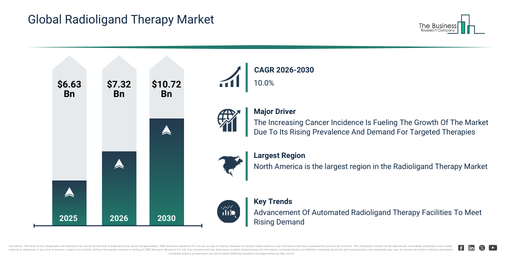
    The radioligand therapy market size has seen rapid growth in recent years. It is anticipated to expand from $6.63 billion in 2025 to $7.32 billion in 2026, achieving a compound annual growth rate (CAGR) of 10.4%. The historical growth of this market can be attributed to factors such as the limited availability of radioligands, the reliance on conventional cancer therapies, growing awareness of the benefits of targeted therapy, increasing hospital adoption of nuclear medicine techniques, and regulatory approvals for early RLT drugs.

    The radioligand therapy market is poised for significant expansion in the coming years. Its market size is projected to reach $10.72 billion by 2030, driven by a compound annual growth rate (CAGR) of 10.0%. This anticipated growth within the forecast period is attributable to several factors, including the ongoing development of novel alpha and beta emitters, the broadening application of combined emission therapies, its integration with precision oncology, an increase in clinical trials targeting neurological and cardiovascular conditions, and rising investments in home care and outpatient RLT services. Prominent trends for the forecast period encompass the increasing adoption of targeted radioligand therapy in oncology, the expansion of alpha and beta emitter-based treatments, the incorporation of radioligand therapy with personalized medicine approaches, growth in hospital and research institution-based RLT programs, and an elevated focus on minimizing side effects while enhancing patient outcomes.

    Get A Free Sample Report With In-Depth Market Insights:

    https://thebusinessresearchcompany.com/sample_request?id=53629632&type=smp&name=Radioligand%20Therapy%20Market%20Report%202026&utm_source=Blogs&utm_medium=Paid&utm_campaign=Oct_PR

    Radioligand Therapy Market Expansion Drivers: What’s Shaping Future Growth?

    The anticipated rise in cancer cases is projected to fuel the expansion of the radioligand therapy market in the future. Cancer is characterized by the unchecked proliferation of aberrant cells, which can infiltrate adjacent tissues and metastasize across the body. The surge in cancer prevalence is attributed to prolonged exposure to environmental contaminants, leading to DNA damage, cellular dysfunction, and the fostering of abnormal cell development. Radioligand therapy offers a treatment for cancer by delivering radiation directly to tumor cells via ligands that attach to specific receptors, thereby reducing damage to healthy tissues while internally eliminating cancerous cells. For example, as reported by the National Health Service (NHS), a government health agency in the UK, in October 2025, new cancer diagnoses totaled 354,820 in 2023, averaging 972 daily. This figure represents an increase of 8,605 compared to 2022. Consequently, the rising occurrence of cancer is a key factor boosting the radioligand therapy market’s growth.

    Radioligand Therapy Market Segment Analysis: What Are The Core Market Categories?

    The radioligand therapy market covered in this report is segmented –

    1) By Type Of Radioligand: Alpha Emitters, Beta Emitters, Auger Emitters, Combined Emissions

    2) By Molecular Target: Hormone Receptors, Growth Factor Receptors, Antigen Tumor Markers, Other Molecular Targets

    3) By Route Of Administration: Intravenous (IV), Intramuscular (IM), Subcutaneous, Oral

    4) By Application: Oncology, Cardiovascular Disorders, Neurological Disorders, Infectious Diseases

    5) By End-User: Hospitals, Diagnostic Laboratories, Research Institutions, Home Care Settings

    Subsegments:

    1) By Alpha Emitters: Actinium-225 (Ac-225), Radium-223 (Ra-223), Astatine-211 (At-211), Bismuth-213 (Bi-213)

    2) By Beta Emitters: Lutetium-177 (Lu-177), Iodine-131 (I-131), Yttrium-90 (Y-90), Samarium-153 (Sm-153)

    3) By Auger Emitters: Iodine-125 (I-125), Indium-111 (In-111), Gallium-67 (Ga-67), Thallium-201 (Tl-201)

    4) By Combined Emissions: Terbium-161 (Tb-161), Copper-67 (Cu-67), Rhenium-186 (Re-186), Lead-212 (Pb-212)

    Radioligand Therapy Market Strategic Trends: What Defines The Next Growth Phase?

    Major companies operating in the radioligand therapy market are focusing on developing advanced solutions, such as radioligand therapy facilities, to enhance production efficiency and maintain consistent quality and safety standards in the manufacturing and distribution of targeted cancer treatments. These specialized radioligand therapy centers are designed to handle and deliver radioactive drugs for targeted cancer treatment using advanced imaging systems and radiation shielding, ensuring safety through trained personnel and strict protocols. For instance, in January 2024, Novartis AG, a Switzerland-based pharmaceutical company, announced the automation of its new large-scale radioligand therapy (RLT) production plant in Indiana. This facility received Food and Drug Administration (FDA) approval for commercial manufacturing. This 70,000-square-foot facility is the largest and most advanced Novartis site dedicated to RLT, designed for efficient, time-sensitive production, and includes plans for fully automated production lines, enabling substantial supply increases to meet growing patient demand in the US and Canada.

    Radioligand Therapy Market Top Companies Driving Competitive Growth

    Major companies operating in the radioligand therapy market are Novartis AG, Lantheus Holdings Inc., Curium LLC, Eckert & Ziegler Strahlen- und Medizintechnik AG, Telix Pharmaceuticals, Mariana Oncology Inc., AdvanCell Pty Ltd., Evergreen Theragnostics Inc., Fusion Pharmaceuticals Inc., RadioMedix Inc., Ariceum Therapeutics GmbH, Radiopharm Theranostics Limited, Convergent Therapeutics Inc., C-Ray Therapeutics Inc.

    View The Full Radioligand Therapy Market Report:

    https://thebusinessresearchcompany.com/report/radioligand-therapy-global-market-report?utm_source=Blogs&utm_medium=Paid&utm_campaign=Oct_PR

    Radioligand Therapy Market Regional Analysis And Top Geography

    North America was the largest region in the radioligand therapy market in 2025. Asia-Pacific is expected to be the fastest-growing region in the forecast period. The regions covered in the radioligand therapy market report are Asia-Pacific, South East Asia, Western Europe, Eastern Europe, North America, South America, Middle East, Africa.

    Reach Out To Our Team:

    The Business Research Company: https://www.thebusinessresearchcompany.com/

    Americas: +1 310-496-7795

    Asia: +44 7882 955267 & +91 8897263534

    Europe: +44 7882 955267

    Email us at: marketing@tbrc.info

    Follow us on:

    LinkedIn: https://in.linkedin.com/company/the-business-research-company

    YouTube: https://www.youtube.com/channel/UC24_fI0rV8cR5DxlCpgmyFQ

    Global Market Model: https://www.thebusinessresearchcompany.com/global-market-model
  • Racecadotril Market Size In 2026: Growth Outlook And Forecast Through 2030

    Racecadotril Market Size In 2026: Growth Outlook And Forecast Through 2030

    Built to provide research that’s more actionable and strategically valuable, The Business Research Company’s 2026 market reports include market attractiveness analysis, total addressable market sizing, company benchmarking matrices, interactive Excel dashboards, broader supply chain intelligence, emerging startup tracking, and in-depth product insights.

    Racecadotril Market Value Analysis: What Growth Lies Ahead Over The Forecast Period?

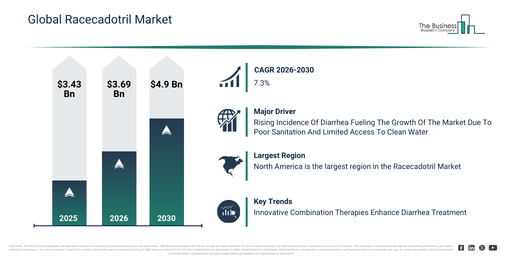
    The racecadotril market has demonstrated substantial growth in recent years. It is anticipated to expand from $3.43 billion in 2025 to $3.69 billion in 2026, progressing at a compound annual growth rate (CAGR) of 7.7%. The market’s past expansion is attributable to several factors, including the constrained availability of antidiarrheal medications, a reliance on conventional oral formulations, increasing public awareness of diarrhea treatment, a rise in hospital and clinic visits, and the embrace of standard dosage forms.

    The racecadotril market is projected to experience substantial expansion over the coming years, with its valuation set to reach $4.9 billion by 2030, exhibiting a compound annual growth rate (CAGR) of 7.3%. This anticipated growth during the forecast period stems from the creation of novel oral and injectable racecadotril formulations, a growing need for pediatric and geriatric therapies, the expansion of online pharmacy and home care provisions, enhanced regulatory clearances and safety oversight, and the development of programs for managing chronic and traveler’s diarrhea. Key trends expected in the forecast period encompass the escalating global incidence of acute diarrhea, a heightened focus on pediatric and geriatric patients, the proliferation of oral formulations and user-friendly dosage forms, the expansion of online pharmacies and in-home care distribution networks, and a strong commitment to ensuring safety, efficacy, and adherence to regulations.

    Get A Free Sample Report With In-Depth Market Insights:

    https://thebusinessresearchcompany.com/sample_request?id=21115510&type=smp&name=Racecadotril%20Market%20Report%202026&utm_source=Blogs&utm_medium=Paid&utm_campaign=Oct_PR

    Racecadotril Market Development Factors: What’s Supporting Demand?

    The growing occurrence of diarrhea is projected to boost the expansion of the racecadotril market. This condition is characterized by frequent, loose, or watery bowel movements, typically happening three or more times within a day. Its increasing prevalence stems largely from inadequate sanitation and restricted availability of clean drinking water, which facilitates the spread of disease-causing agents. Racecadotril aids in diarrhea treatment by diminishing excessive fluid secretion in the intestines, proving effective for managing acute symptoms. It maintains regular bowel function while providing swift relief, enhancing patient comfort and improving treatment results. As an illustration, data from March 2024 by the World Health Organization (WHO), a specialized United Nations agency based in Switzerland, indicates that diarrheal diseases cause approximately 1.7 billion cases annually and lead to the deaths of around 443,832 children under the age of 5, in addition to 50,851 deaths among children aged 5 to 9. Consequently, the escalating occurrence of acute diarrhea is stimulating the expansion of the racecadotril market. Increasing healthcare spending is anticipated to drive the expansion of the racecadotril market in the future. Healthcare expenditure encompasses the total funds allocated to medical services, treatments, facilities, research, and public health initiatives aimed at sustaining or enhancing health outcomes. The escalating need for healthcare spending arises from an aging populace, necessitating more medical attention, therapies, and prolonged healthcare provisions. Such expenditures facilitate the adoption of racecadotril by enhancing access to efficient treatments for conditions like acute diarrhea. It improves patient care by providing an economical solution that shortens symptom duration and severity, leading to superior health results and lessening the financial strain on healthcare infrastructures. For example, in December 2024, data from the Centers for Medicare and Medicaid Services (CMS), a US federal agency, showed that national health expenditures (NHE) increased by 7.5% to $4.9 trillion in 2023, representing 17.6% of gross domestic product (GDP). Furthermore, national health expenditures (NHE) are projected to grow at an average annual rate of 5.6% between 2023 and 2032, causing the health spending proportion of gross domestic product (GDP) to rise from 17.3% in 2022 to 19.7% in 2032. Consequently, escalating healthcare spending is stimulating the expansion of the racecadotril market.

    Racecadotril Market Segment Breakdown: Which Categories Lead On Revenue?

    The racecadotril market covered in this report is segmented –

    1) By Product Type: Oral Formulations, Injectable Solutions, Topical Preparations

    2) By Age Group: Pediatric Patients, Adult Patients, Geriatric Patients

    3) By Application: Acute Diarrhea, Traveler’s Diarrhea, Chronic Diarrhea

    4) By Distribution Channel: Pharmacy Outlets, Hospital Pharmacies, Online Pharmacies

    5) By End-User: Hospitals, Clinics, Home Care Settings

    Subsegments:

    1) By Oral Formulations: Capsules, Tablets, Granules, Sachets, Oral Suspension

    2) By Injectable Solutions: Intravenous Injection, Intramuscular Injection

    3) By Topical Preparations: Creams, Gels, Ointments, Lotions

    Racecadotril Market Transformation Trends: What Innovations Are Driving Change?

    Companies operating within the racecadotril market are prioritizing the development of innovative and improved formulations, such as combination therapies, to enhance treatment efficacy, widen therapeutic applications, and address challenging or resistant cases of acute diarrhea. Combination therapy refers to the concurrent administration of two or more medications to treat a specific disease or condition more effectively than a single drug alone. For instance, in April 2024, Daksh Pharmaceuticals Pvt. Ltd., an India-based pharmaceutical company, launched the ZOFLO-R tablet, which incorporates a blend of ofloxacin 200 mg and racecadotril 100 mg. This product, designed with dual action, aims to manage acute diarrhea caused by bacteria by offering both antimicrobial benefits and symptomatic relief. Ofloxacin operates by inhibiting bacterial DNA gyrase, resulting in bacterial cell death, while racecadotril functions by reducing intestinal fluid secretion to control diarrhea, jointly providing comprehensive alleviation from diarrhea and its symptoms.

    Racecadotril Market Leading Players And Competitive Positioning

    Major companies operating in the racecadotril market are Torrent Pharmaceuticals Ltd., Taj Pharma, Gnova Biotech, Jabs Biotech, Manus Aktteva Biopharma LLP, Wellona Pharma, Biofield Pharma, Anant Pharmaceuticals Pvt. Ltd., Daffohils Laboratories, AR Life Sciences, Novagen Healthcare Pvt Ltd, Omicron Pharma, Cixmech Pharmaceuticals, Sakthi Healthcare, Dr. Reddy’s Laboratories Ltd., Sun Pharmaceutical Industries Ltd., Cipla Ltd., Lupin Ltd., Alkem Laboratories Ltd., Intas Pharmaceuticals Ltd., Zydus Lifesciences Ltd., Abbott India Ltd., Mankind Pharma Ltd., Glenmark Pharmaceuticals Ltd., Alembic Pharmaceuticals Ltd., Micro Labs Ltd., Ipca Laboratories Ltd., Macleods Pharmaceuticals Ltd., Hetero Drugs Ltd., Aurobindo Pharma Ltd., Emcure Pharmaceuticals Ltd., Wockhardt Ltd.

    View The Full Racecadotril Market Report:

    https://thebusinessresearchcompany.com/report/racecadotril-global-market-report?utm_source=Blogs&utm_medium=Paid&utm_campaign=Oct_PR

    Racecadotril Market Geographic Analysis: Where Is Demand Rising Fastest?

    North America was the largest region in the racecadotril market in 2025. Asia-Pacific is expected to be the fastest-growing region in the forecast period. The regions covered in the racecadotril market report are Asia-Pacific, South East Asia, Western Europe, Eastern Europe, North America, South America, Middle East, Africa.

    Reach Out To Our Team:

    The Business Research Company: https://www.thebusinessresearchcompany.com/

    Americas: +1 310-496-7795

    Asia: +44 7882 955267 & +91 8897263534

    Europe: +44 7882 955267

    Email us at: marketing@tbrc.info

    Follow us on:

    LinkedIn: https://in.linkedin.com/company/the-business-research-company

    YouTube: https://www.youtube.com/channel/UC24_fI0rV8cR5DxlCpgmyFQ

    Global Market Model: https://www.thebusinessresearchcompany.com/global-market-model

  • Quit Smoking Drugs Market Trends Supporting 15.5% CAGR Growth Through 2030

    Quit Smoking Drugs Market Trends Supporting 15.5% CAGR Growth Through 2030

    Backed by market attractiveness analysis, total addressable market sizing, company benchmarking matrices, interactive Excel dashboards, wider supply chain intelligence, emerging startup coverage, and detailed product-level insights, The Business Research Company’s 2026 market reports are designed to offer research that is more actionable and strategically valuable than ever.

    Quit Smoking Drugs Market Size Forecast: How Big Could The Market Get By 2030?

    The quit smoking drugs market has witnessed rapid growth over recent years. It is anticipated to expand from $44.23 billion in 2025 to $50.94 billion in 2026, achieving a compound annual growth rate (CAGR) of 15.2%. This historical growth can be attributed to several factors, including heightened awareness of smoking hazards, an increase in smoking-related diseases, the availability of nicotine replacement therapies, government-led anti-smoking campaigns, and the expansion of pharmaceutical manufacturing in developing markets.

    The quit smoking drugs market is projected to experience significant expansion in the coming years. This market is anticipated to reach $90.73 billion in 2030, exhibiting a compound annual growth rate (CAGR) of 15.5%. Key factors contributing to this anticipated growth include advancements in digital health solutions, the increasing embrace of personalized medicine, the incorporation of AI into treatment monitoring, the broadening scope of telemedicine services, and the proliferation of wearable health monitoring devices. During the forecast period, prominent trends encompass personalized nicotine replacement therapies, mobile health (mHealth) and smoking cessation applications, prescription support facilitated by telemedicine, the combination of behavioral therapy with drug therapy, and wearable devices designed for craving monitoring.

    Get A Free Sample Report With In-Depth Market Insights:

    https://thebusinessresearchcompany.com/sample_request?id=48420735&type=smp&name=Quit%20Smoking%20Drugs%20Market%20Report%202026&utm_source=Blogs&utm_medium=Paid&utm_campaign=Oct_PR

    Quit Smoking Drugs Market Industry Drivers: What’s Behind The Revenue Growth?

    The increasing incidence of smoking addiction is anticipated to stimulate the expansion of the quit-smoking drug market moving forward. Smoking involves the inhalation and exhalation of vapors from burning plant materials, including tobacco, marijuana, and hashish. Quit smoking drugs function as prescription medications to alleviate the urge to smoke by curbing tobacco cravings and managing nicotine withdrawal symptoms, thereby facilitating effective cessation. For instance, reports from November 2025 by the OECD (Organisation for Economic Co-operation and Development), an intergovernmental international organization based in France, revealed that 14.8% of people aged 15 and above smoked daily in 2023. The leading countries with the highest proportion of daily smokers included Türkiye, Hungary, and Greece, along with accession/partner countries Indonesia, Bulgaria, and China, where at least one in four individuals smoked daily. In 2023, an average of 18.5% of men smoked daily compared to 11.4% of women. Consequently, the growing prevalence of smoking addiction is significantly fueling the growth of the quit-smoking drug market.

    Quit Smoking Drugs Market Segmentation: How Does The Market Break Down By Category?

    The quit smoking drugs market covered in this report is segmented –

    1) By Product: Drug Therapy, E-Cigarettes, Nicotine Inhalers, Nicotine Replacement Therapies, Nicotine Sublingual Tablets

    2) By Drug: Varenicline (Chantix), Bupropion (Zyban), Other Drugs

    3) By Distribution: Drug Store, Online Pharmacies, Retail Pharmacies

    Subsegments:

    1) By Drug Therapy: Bupropion (Zyban), Varenicline (Chantix)

    2) By E-Cigarettes: Disposable E-Cigarettes, Rechargeable E-Cigarettes, Pod Systems

    3) By Nicotine Inhalers: Prescription Inhalers, Over-The-Counter Inhalers

    4) By Nicotine Replacement Therapies (NRT): Nicotine Patches, Nicotine Gum, Nicotine Lozenges

    5) By Nicotine Sublingual Tablets: Fast-Acting Sublingual Tablets, Extended-Release Sublingual Tablets

    #Quit Smoking Drugs Market Growth Trends: What’s Shaping The Future Outlook?

    Leading companies in the quit smoking drugs market are concentrating on developing novel formulations and delivery methods, such as generic tablets, to expand their market leadership across regions and gain a competitive advantage. Generic varenicline tablets are non-branded forms of the medicine containing varenicline tartrate, which are bioequivalent to the original branded product and utilized for smoking cessation therapy. For instance, in January 2024, Lupin Limited, an India-based pharmaceutical company, introduced new Varenicline tablets in the United States, available in 0.5 mg and 1 mg strengths. These tablets represent the generic versions of Chantix tablets (0.5 mg and 1 mg) from PF Prism C.V. and are employed to aid in smoking cessation treatment. Functioning as a partial agonist of the nicotinic acetylcholine receptor, varenicline operates by stimulating dopamine release, which can mitigate withdrawal symptoms and cravings linked to nicotine addiction. This dual mechanism allows it to decrease the pleasurable sensations of smoking while simultaneously offering some stimulation to minimize withdrawal effects.

    Quit Smoking Drugs Market Competitive Overview And Top Companies

    Major companies operating in the quit smoking drugs market are 22nd Century Group, Cipla Limited, Dr. Reddy’s Laboratories, GSK Plc., Johnson & Johnson, NJOY LLC, Perrigo Company Plc, Pfizer Inc., Philip Morris International, Glenmark Pharmaceuticals Limited, Zydus Cadila Healthcare Limited, BioCorRx Inc., Ennaid Therapeutics LLC, Fertin Pharma A/S, Hikma Pharmaceuticals PLC, IntelGenx Technologies Corp., Innovus Pharmaceuticals Inc., Gilla Inc., Rusan Pharma Ltd., Novartis AG

    View The Full Quit Smoking Drugs Market Report:

    https://thebusinessresearchcompany.com/report/quit-smoking-drugs-global-market-report?utm_source=Blogs&utm_medium=Paid&utm_campaign=Oct_PR

    Quit Smoking Drugs Market Global Footprint: Which Region Leads The Market?

    North America was the largest region in the quit smoking drugs market in 2025. The regions covered in the quit smoking drugs market report are Asia-Pacific, South East Asia, Western Europe, Eastern Europe, North America, South America, Middle East, Africa.

    Reach Out To Our Team:

    The Business Research Company: https://www.thebusinessresearchcompany.com/

    Americas: +1 310-496-7795

    Asia: +44 7882 955267 & +91 8897263534

    Europe: +44 7882 955267

    Email us at: marketing@tbrc.info

    Follow us on:

    LinkedIn: https://in.linkedin.com/company/the-business-research-company

    YouTube: https://www.youtube.com/channel/UC24_fI0rV8cR5DxlCpgmyFQ

    Global Market Model: https://www.thebusinessresearchcompany.com/global-market-model
  • Quinolones Market Forecast Highlights A $66.44 Billion Opportunity For Industry Participants

    Quinolones Market Forecast Highlights A $66.44 Billion Opportunity For Industry Participants

    Featuring market attractiveness scoring, total addressable market sizing, company benchmarking matrices, interactive Excel dashboards, deeper supply chain intelligence, emerging startup tracking, and granular product-level insights, The Business Research Company’s 2026 market reports are built to deliver research that is both more actionable and more strategically valuable.

    Quinolones Market Revenue Outlook: What CAGR Lies Ahead Through 2030?

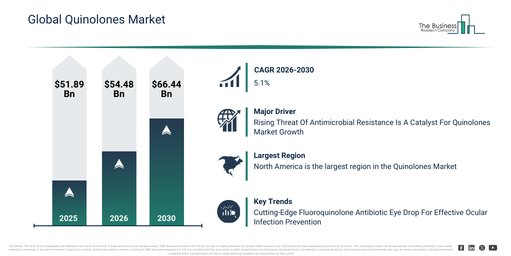
    The quinolones market has experienced steady expansion in recent years. It is projected to expand from $51.89 billion in 2025 to $54.48 billion in 2026, achieving a compound annual growth rate (CAGR) of 5.0%. The historical growth of this market can be ascribed to several factors, including the increasing prevalence of bacterial infections, a rise in hospital admissions, a strong demand for broad-spectrum antibiotics, the proliferation of retail pharmacies, and governmental efforts to control infectious diseases.

    The quinolones market is projected to experience substantial expansion over the upcoming years. It is anticipated to reach $66.44 billion in 2030 at a compound annual growth rate (CAGR) of 5.1%. This projected growth during the forecast period stems from factors such as progress in precision medicine, the creation of innovative quinolone formulations, wider reach of online pharmacy channels, heightened understanding of antimicrobial stewardship, and the increasing uptake of digital health monitoring instruments. Key developments expected during this period involve improved management of antibiotic resistance, broader access to generic drugs, customized treatment methodologies, an increase in outpatient and home healthcare provisions, and greater investment in research and development for new quinolones.

    Get A Free Sample Report With In-Depth Market Insights:

    https://thebusinessresearchcompany.com/sample_request?id=24707640&type=smp&name=Quinolones%20Market%20Report%202026&utm_source=Blogs&utm_medium=Paid&utm_campaign=Oct_PR

    Quinolones Market Growth Factors: What’s Supporting Expansion?

    The escalating risk of antimicrobial resistance is projected to fuel the expansion of the quinolones market moving forward. Antimicrobial resistance (AMR) signifies the capability of microorganisms, including bacteria, viruses, parasites, and fungi, to withstand the effects of antimicrobial drugs. Quinolones possess a broad spectrum of activity, rendering them effective against various types of bacteria. These medications, prescribed for specific infections, can penetrate diverse tissues, making them a preferred option when choices are limited. For instance, in October 2025, according to the World Health Organization, a US-based intergovernmental organization, a comprehensive global assessment examined antibiotic resistance prevalence and trends. This analysis utilized data from over 23 million confirmed cases of bloodstream, urinary tract, and gastrointestinal infections, as well as urogenital gonorrhea. These findings were based on reports provided by 104 countries in 2023. Thus, the increasing danger of antimicrobial resistance is driving the growth of the quinolones market.

    Quinolones Market Segment Trends And Revenue Contributors

    The quinolones market covered in this report is segmented –

    1) By Type: Norfloxacin, Ofloxacin, Ciprofloxacin, Gemifloxacin, Other Types

    2) By Pathogen Type: Gram-Positive Pathogen, Gram-Negative Pathogen

    3) By Application: Hospital Pharmacies, Retail Pharmacies, Online Pharmacies

    Quinolones Market Industry Trends: What’s Reshaping Demand?

    Leading companies in the quinolones market are prioritizing innovative products, such as fluoroquinolone antibiotic eye drops, to boost their market revenues. These eye drops represent a category of antibiotics employed in treating bacterial infections of the eye. For example, in July 2023, Harrow Health Inc., a US-based pharmaceutical firm, introduced Vigamox. This solution is isotonic, possessing an osmolality of approximately 290 mOsm/kg, and contains 5.45 mg moxifloxacin hydrochloride, equivalent to 5 mg moxifloxacin base. The medication is provided in a 3-milliliter bottle, delivered as a sterile ophthalmic solution within a dispensing system consisting of a tan polypropylene closure, a dispensing plug, and a natural low-density polyethylene bottle. Vigamox is advised for preventing eye infections both before and after surgical procedures.

    Quinolones Market Competitive Landscape: Which Companies Lead The Industry?

    Major companies operating in the quinolones market are Bayer AG, Novartis AG, Sanofi SA, Merck & Co. Inc., LG Life Sciences, Pfizer Inc., Viatris Inc., Lupin Limited, Hikma Pharmaceuticals plc, Zydus Group, KYORIN Holdings Inc., Teva Pharmaceutical Industries Ltd., GSK plc, Zee Laboratories, Cipla Ltd., Geo Pharma Pvt. Ltd., Finecure Pharmaceuticals, AstraZeneca plc, Sun Pharmaceutical Industries Ltd., Dr. Reddy’s Laboratories Ltd., Cadila Healthcare Ltd., Glenmark Pharmaceuticals Ltd., Alkem Laboratories Ltd., Torrent Pharmaceuticals Ltd., Macleods Pharmaceuticals Ltd., Alembic Pharmaceuticals Ltd., Hetero Drugs Ltd., Wockhardt Ltd.

    View The Full Quinolones Market Report:

    https://thebusinessresearchcompany.com/report/quinolones-global-market-report?utm_source=Blogs&utm_medium=Paid&utm_campaign=Oct_PR

    Quinolones Market Regional Split: Which Areas Are Fueling Growth?

    North America was the largest region in the quinolones market in 2025. The regions covered in the quinolones market report are Asia-Pacific, South East Asia, Western Europe, Eastern Europe, North America, South America, Middle East, Africa.

    Reach Out To Our Team:

    The Business Research Company: https://www.thebusinessresearchcompany.com/

    Americas: +1 310-496-7795

    Asia: +44 7882 955267 & +91 8897263534

    Europe: +44 7882 955267

    Email us at: marketing@tbrc.info

    Follow us on:

    LinkedIn: https://in.linkedin.com/company/the-business-research-company

    YouTube: https://www.youtube.com/channel/UC24_fI0rV8cR5DxlCpgmyFQ

    Global Market Model: https://www.thebusinessresearchcompany.com/global-market-model
  • Quinine Sulfate Market Analysis: How The Industry Is Evolving Toward A $3.8 Billion Future

    Quinine Sulfate Market Analysis: How The Industry Is Evolving Toward A $3.8 Billion Future

    Built to provide research that’s more actionable and strategically valuable, The Business Research Company’s 2026 market reports include market attractiveness analysis, total addressable market sizing, company benchmarking matrices, interactive Excel dashboards, broader supply chain intelligence, emerging startup tracking, and in-depth product insights.

    Quinine Sulfate Market Growth Analysis: How Will Revenue Trend Over The Forecast Period?

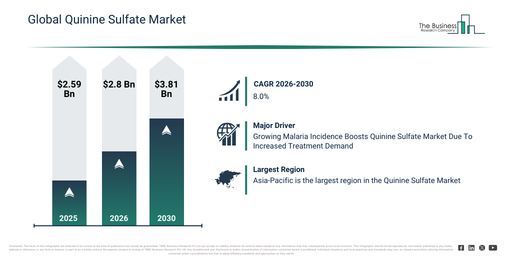
    The quinine sulfate market size has demonstrated significant expansion in recent years. It is anticipated to expand from $2.59 billion in 2025 to $2.8 billion in 2026, achieving a compound annual growth rate (CAGR) of 8.0%. This historical growth can be ascribed to the high prevalence of malaria in endemic regions, the long-standing clinical application of quinine, limited alternative therapies available in low-income regions, its inclusion in essential medicines lists, and established extraction methods.

    The quinine sulfate market is anticipated to experience robust growth in the upcoming years, projected to reach $3.81 billion by 2030, demonstrating a compound annual growth rate (CAGR) of 8.0%. This expansion during the forecast period is attributed to factors such as ongoing malaria control programs, the demand for low-cost antimalarials, the broadening of generic manufacturing, enhanced drug delivery formats, and improving healthcare accessibility in developing regions. Significant trends expected in this period include a sustained need for antimalarial therapies, continued application in treating nocturnal leg cramps, the expansion of generic quinine products, a heightened focus on affordable essential medicines, and advancements in pharmaceutical formulations.

    Get A Free Sample Report With In-Depth Market Insights:

    https://thebusinessresearchcompany.com/sample_request?id=10974839&type=smp&name=Quinine%20Sulfate%20Market%20Report%202026&utm_source=Blogs&utm_medium=Paid&utm_campaign=Oct_PR

    Quinine Sulfate Market Demand Drivers: What’s Powering Industry Growth?

    The rising occurrence of malaria is projected to drive expansion within the quinine sulfate market in the coming period. This severe infectious illness originates from Plasmodium parasites, spread via bites from infected female Anopheles mosquitoes. Factors contributing to the increase in malaria diagnoses include the expansion of mosquito breeding grounds linked to climate change, the proliferation of drug-resistant parasite variants, and inadequate access to medical care. The quinine sulfate market plays a role in treating malaria by eliminating Plasmodium parasites and preventing their multiplication and development inside red blood cells. For instance, in December 2024, the UK Health Security Agency (UKHSA), a UK-based government department, stated in its 2023 annual malaria report that 2,106 cases of imported malaria were reported in the UK. This marked a 26% increase from the cases reported in 2022. Consequently, the escalating incidence of malaria is propelling the expansion of the quinine sulfate market.

    Quinine Sulfate Market Segment Analysis Spotlighting Growth Areas

    The quinine sulfate market covered in this report is segmented –

    1) By Type: 200mg, 300mg, Other Types

    2) By Product Form: Quinine Sulfate Tablets, Quinine Sulfate Capsules, Quinine Sulfate Injections, Quinine Sulfate Powder, Quinine Sulfate Oral Solutions

    3) By Distribution Channel: Hospitals, Retail Pharmacies, Online Pharmacies

    4) By Application: Malaria, Problematic Leg Cramps, Lupus, Rheumatoid Arthritis, Other Applications

    5) By End-User: Adults, Pediatrics, Geriatrics

    Quinine Sulfate Market Leading Companies: Who Holds The Strongest Market Presence?

    Major companies operating in the quinine sulfate market are Sanofi SA, Viatris Inc., Teva Pharmaceuticals, Sun Pharmaceutical Industries Ltd., Aurobindo Pharma, Dr. Reddy’s Laboratories, Cipla Limited, Lupin Limited, Strides Pharma, Wockhardt Ltd., Pharmakina SA, Alchem International Private Limited, SimSon Pharma Limited, Hangzhou Dayang Co. Ltd., Haihang Industry Co. Ltd., Aecochem Corp, Buchler GmbH, Prism Industries Private Limited, Shreeji Pharma International, Sihauli Chemicals Private Limited

    View The Full Quinine Sulfate Market Report:

    https://thebusinessresearchcompany.com/report/quinine-sulfate-global-market-report?utm_source=Blogs&utm_medium=Paid&utm_campaign=Oct_PR

    Quinine Sulfate Market Top Region: Where Does Most Revenue Come From?

    Asia-Pacific was the largest region in the quinine sulfate market in 2025. The regions covered in the quinine sulfate market report are Asia-Pacific, South East Asia, Western Europe, Eastern Europe, North America, South America, Middle East, Africa.

    Reach Out To Our Team:

    The Business Research Company: https://www.thebusinessresearchcompany.com/

    Americas: +1 310-496-7795

    Asia: +44 7882 955267 & +91 8897263534

    Europe: +44 7882 955267

    Email us at: marketing@tbrc.info

    Follow us on:

    LinkedIn: https://in.linkedin.com/company/the-business-research-company

    YouTube: https://www.youtube.com/channel/UC24_fI0rV8cR5DxlCpgmyFQ

    Global Market Model: https://www.thebusinessresearchcompany.com/global-market-model
  • Quinine Market Outlook Through 2030: Understanding The Growth Opportunity

    Quinine Market Outlook Through 2030: Understanding The Growth Opportunity

    Backed by market attractiveness analysis, total addressable market sizing, company benchmarking matrices, interactive Excel dashboards, wider supply chain intelligence, emerging startup coverage, and detailed product-level insights, The Business Research Company’s 2026 market reports are designed to offer research that is more actionable and strategically valuable than ever.

    Quinine Market Forecast: What Value Will The Market Reach By 2030?

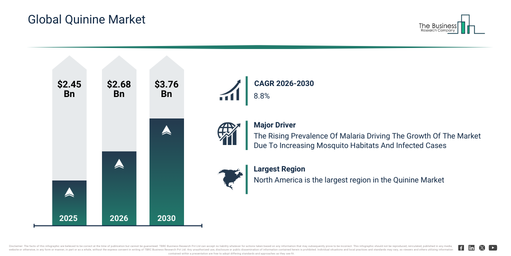
    The quinine market has shown significant expansion in recent years. Its valuation is projected to increase from $2.45 billion in 2025 to $2.68 billion in 2026, driven by a compound annual growth rate (CAGR) of 9.2%. This historical growth can be attributed to traditional reliance on cinchona bark extraction, limited availability of purified quinine, widespread use in malaria treatment, use in home remedies and tonic beverages, and adoption in oral formulations.

    The quinine market is projected to experience robust expansion over the coming years, with its valuation set to reach $3.76 billion by 2030, demonstrating a compound annual growth rate (CAGR) of 8.8%. This anticipated growth during the forecast period is attributable to several factors, including advancements in the technology for quinine synthesis and purification, increasing demand for quinine suitable for pharmaceuticals, the expansion of initiatives aimed at controlling malaria, a surge in functional beverages that incorporate quinine, and greater investment in research and development concerning antimalarial treatments. Key trends shaping the forecast period encompass an escalating demand for natural compounds that combat malaria, the expanding application of quinine in both tonic and functional drinks, the creation of pharmaceutical-grade quinine derivatives, heightened public understanding regarding malaria prevention and treatment, and an emphasis on adherence to regulatory standards and quality benchmarks for quinine products.

    Get A Free Sample Report With In-Depth Market Insights:

    https://thebusinessresearchcompany.com/sample_request?id=84948479&type=smp&name=Quinine%20Market%20Report%202026&utm_source=Blogs&utm_medium=Paid&utm_campaign=Oct_PR

    Quinine Market Growth Drivers: What’s Behind The Acceleration?

    The increasing incidence of malaria is projected to fuel the expansion of the quinine market in the future. Malaria, an infectious condition, arises from Plasmodium parasites delivered to humans via bites from infected female Anopheles mosquitoes. Its spread is intensifying due to escalating global temperatures, which broaden the living areas and reproductive periods of malaria-transmitting mosquitoes. Quinine, a powerful antimalarial medication, combats malaria by disrupting the parasite’s capacity to process hemoglobin in red blood cells, thereby hindering its development and existence. As an illustration, in April 2024, the UK Health Security Agency, a UK-based government body, reported 2,004 confirmed malaria cases in England in 2023, an increase from 1,369 in 2022. Consequently, the growing occurrence of malaria is propelling the quinine market’s growth.

    Quinine Market Segment Performance And Emerging Opportunities

    The quinine market covered in this report is segmented –

    1) By Product: Quinine Sulphate, Quinine Hydrochloride, Quinine Gluconate, Quinine Bisulphate

    2) By Administration: Oral Administration, Intramuscular Administration, Intravenous Administration, Other Administrations

    3) By Application: Malaria Treatment, Nocturnal Leg Cramps

    4) By Enduser: Hospitals, Clinics, Other Endusers

    Quinine Market Key Players: Which Companies Lead Industry Competition?

    Major companies operating in the quinine market are Teva Pharmaceutical Industries Ltd., Schweppes Australia Proprietary Limited, The United States Pharmacopeial Convention Inc., Chempro Pharma Private Limited, Taj Pharmaceuticals Ltd., Swiss Parenterals Private Limited, Leocorno Enterprises Private Limited, Healthy Inc., Jai Radhe Sales, Adooq Bioscience LLC, Akhil Healthcare Pvt Ltd., Van Wankum Ingredients B.V., Shreeji Pharma International, Prism Industries Private Limited, Lavina Pharmaceuticals Pvt Ltd., A. B. Enterprises, Spark Lifesciences Private Limited, Sihauli Chemicals Private Limited, Shanghai Nianxing Industrial Co. Ltd., Sakhiya Pharma Chem

    View The Full Quinine Market Report:

    https://thebusinessresearchcompany.com/report/quinine-global-market-report?utm_source=Blogs&utm_medium=Paid&utm_campaign=Oct_PR

    Quinine Market Regional Breakdown: Where Is Demand Concentrated?

    North America was the largest region in the quinine market in 2025. Asia-Pacific is expected to be the fastest-growing region in the forecast period. The regions covered in the quinine market report are Asia-Pacific, South East Asia, Western Europe, Eastern Europe, North America, South America, Middle East, Africa.

    Reach Out To Our Team:

    The Business Research Company: https://www.thebusinessresearchcompany.com/

    Americas: +1 310-496-7795

    Asia: +44 7882 955267 & +91 8897263534

    Europe: +44 7882 955267

    Email us at: marketing@tbrc.info

    Follow us on:

    LinkedIn: https://in.linkedin.com/company/the-business-research-company

    YouTube: https://www.youtube.com/channel/UC24_fI0rV8cR5DxlCpgmyFQ

    Global Market Model: https://www.thebusinessresearchcompany.com/global-market-model
  • Quadrivalent Market Growth Potential: What The Latest Forecast Reveals

    Quadrivalent Market Growth Potential: What The Latest Forecast Reveals

    Featuring market attractiveness scoring, total addressable market sizing, company benchmarking matrices, interactive Excel dashboards, deeper supply chain intelligence, emerging startup tracking, and granular product-level insights, The Business Research Company’s 2026 market reports are built to deliver research that is both more actionable and more strategically valuable.

    Quadrivalent Market Size Outlook: How Quickly Will Revenue Expand Through 2030?

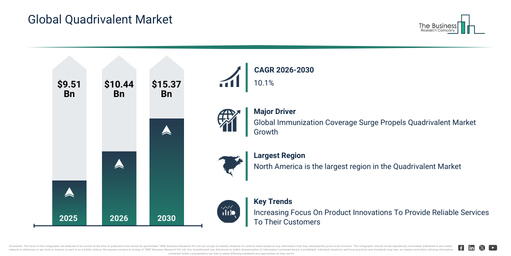
    The quadrivalent market has demonstrated significant expansion in recent years. It is projected to climb from $9.51 billion in 2025 to $10.44 billion in 2026, at a compound annual growth rate (CAGR) of 9.8%. The observed growth during previous periods can be linked to the rising occurrence of influenza, governmental vaccination drives, progress in vaccine development, increased public understanding concerning flu prevention, and the initial uptake of quadrivalent vaccines in advanced regions.

    The quadrivalent market is projected to experience swift expansion in the coming years, with its size anticipated to reach $15.37 billion by 2030, exhibiting a compound annual growth rate (CAGR) of 10.1%. This growth during the projection period is attributed to several factors, including an increased need for comprehensive influenza protection, advancements in vaccine delivery methods, the expansion of immunization initiatives in developing regions, greater financial commitments to biotechnology and personalized medicine, and supportive reimbursement frameworks and governmental aid. Key developments expected in the forecast timeframe encompass improvements in vaccine composition, broadened immunization schedules for various age groups, breakthroughs in cold chain and distribution networks, multi-strain influenza coverage, and adherence to regulatory standards and quality assurance.

    Get A Free Sample Report With In-Depth Market Insights:

    https://thebusinessresearchcompany.com/sample_request?id=38707977&type=smp&name=Quadrivalent%20Market%20Report%202026&utm_source=Blogs&utm_medium=Paid&utm_campaign=Oct_PR

    Quadrivalent Market Growth Factors Behind Sustained Expansion

    Global increases in immunization coverage are projected to boost the quadrivalent market. This coverage indicates the percentage of a population that has received particular or recommended vaccines within a given period. As immunization coverage expands, the demand for vaccines rises, particularly for quadrivalent vaccines, which protect against four strains and are often included in standard vaccination schedules to tackle multiple diseases with a single administration. For example, the World Health Organization, an international public health body based in Switzerland, reported in July 2025 that worldwide coverage for the initial dose of the HPV vaccine among girls climbed from 27% in 2023 to 31% in 2024. Consequently, increasing global immunization coverage is anticipated to fuel the future growth of the quadrivalent market.

    Quadrivalent Market Segment Landscape And Growth Outlook

    The quadrivalent market covered in this report is segmented –

    1) By Type: Intradermal Shot, Intramuscular Injection, Nasal Spray

    2) By Technology: Conjugated, Live, Inactivated, Recombinant, Toxoid, Other Technologies

    3) By Disease: Cancer, Hepatitis, Pneumococcal Disease, COVID-19, Influenza, Human Papilloma Virus, Meningococcal Disease, Polio, Rotavirus, Other Diseases

    4) By Age Group: Pediatric, Adult

    5) By Distribution Channel: Hospital And Pharmacy, Government Suppliers, Other Channels (NGOs)

    Subsegments:

    1) By Intradermal Shot: Standard Intradermal Injection, Needle-Free Intradermal Delivery

    2) By Intramuscular Injection: Standard Intramuscular Injection, Adjuvanted Intramuscular Injection

    3) By Nasal Spray: Live Attenuated Nasal Spray, Inactivated Nasal Spray

    Quadrivalent Market Industry Trends Fueling Future Revenue Growth

    Leading companies in the quadrivalent market are concentrating on developing safer, innovative vaccine delivery technologies, such as nano-particle technology, to boost their market revenues. This nano-particle technology mimics the external structure of viruses using virus-like particles (VLPs) without including live genetic material, thereby improving both safety and the immune response. For instance, in March 2024, Cadila Pharmaceuticals, an India-based pharmaceutical company, launched its advanced Quadrivalent Influenza Vaccine. This sophisticated immunization is engineered to offer protection against four distinct strains of the influenza virus: two A strains (H1N1 and H3N2) and two B strains. This specific quadrivalent formulation enhances the vaccine’s efficacy by targeting a broader spectrum of circulating influenza viruses, making it particularly effective during flu seasons. The aQIV aims to stimulate a robust immune response, consequently reducing the incidence of influenza-related morbidity and mortality. Its development underscores continuous efforts to improve public health outcomes in the context of evolving viral strains.

    Quadrivalent Market Competitive Landscape: Who Leads The Industry?

    Major companies operating in the quadrivalent market are AstraZeneca Plc, Serum Institute of India Private Limited, Sanofi S.A., GlaxoSmithKline Plc, CSL Limited, Bharat Biotech International Limited, Hualan Biological Engineering Inc., Merck & Co. Inc., Johnson & Johnson Services Inc., Pfizer Inc., Walvax Biotechnology Co. Ltd., Chongqing Zhifei Biological Products Co. Ltd., Biological E. Limited, GSK Biologicals SA, Institute of Vaccines and Biological Products Chinese Academy of Medical Sciences, Wuhan Institute of Biological Products Co. Ltd., Beijing Tian Tan Biological Products Co. Ltd., Shanghai Zhijiang Bio-pharm Co. Ltd., Bio Farma, Butantan Institute, Pasteur Institute of India, China National Biotec Group Co. Ltd. (CNBG)

    View The Full Quadrivalent Market Report:

    https://thebusinessresearchcompany.com/report/quadrivalent-global-market-report?utm_source=Blogs&utm_medium=Paid&utm_campaign=Oct_PR

    Quadrivalent Market Geographic Landscape: Which Region Dominates Industry Growth?

    North America was the largest region in the quadrivalent market in 2025. The regions covered in the quadrivalent market report are Asia-Pacific, South East Asia, Western Europe, Eastern Europe, North America, South America, Middle East, Africa.

    Reach Out To Our Team:

    The Business Research Company: https://www.thebusinessresearchcompany.com/

    Americas: +1 310-496-7795

    Asia: +44 7882 955267 & +91 8897263534

    Europe: +44 7882 955267

    Email us at: marketing@tbrc.info

    Follow us on:

    LinkedIn: https://in.linkedin.com/company/the-business-research-company

    YouTube: https://www.youtube.com/channel/UC24_fI0rV8cR5DxlCpgmyFQ

    Global Market Model: https://www.thebusinessresearchcompany.com/global-market-model

  • Purvalanol A (CDK Inhibitor) Market Growth Outlook: Why Analysts Expect Continued Expansion

    Purvalanol A (CDK Inhibitor) Market Growth Outlook: Why Analysts Expect Continued Expansion

    Built to provide research that’s more actionable and strategically valuable, The Business Research Company’s 2026 market reports include market attractiveness analysis, total addressable market sizing, company benchmarking matrices, interactive Excel dashboards, broader supply chain intelligence, emerging startup tracking, and in-depth product insights.

    Purvalanol A (CDK Inhibitor) Market Size, Value And Growth Trajectory Through 2030

    The market size for purvalanol a (cdk inhibitor) has seen robust expansion in recent years. It is set to grow from $0.64 billion in 2025 to $0.7 billion in 2026, achieving a compound annual growth rate (CAGR) of 9.9%. This past growth can be linked to the widening scope of molecular biology research, an increase in funding for cancer research, the growing adoption of small molecule inhibitors in laboratories, progress in understanding cell cycle biology, and the establishment of academic drug discovery programs.

    The market for purvalanol a (cdk inhibitor) is projected to experience robust expansion in the coming years, anticipated to reach $1.01 billion by 2030, exhibiting a compound annual growth rate (CAGR) of 9.6%. This growth during the forecast period can be primarily attributed to increasing investment in targeted cancer therapeutics, the rising adoption of precision oncology research, the expansion of cdks as therapeutic targets, growing collaboration between academia and pharma, and the increasing use of AI-driven drug discovery platforms. Significant trends foreseen during this period include the increased application of cdk inhibitors in oncology research, a growing focus on cell cycle targeted therapies, the expansion of preclinical cancer research applications, the rising integration of computational drug screening, and an enhanced emphasis on selective kinase inhibition.

    Get A Free Sample Report With In-Depth Market Insights:

    https://thebusinessresearchcompany.com/sample_request?id=73236190&type=smp&name=Purvalanol%20A%20%28CDK%20Inhibitor%29%20Market%20Report%202026&utm_source=Blogs&utm_medium=Paid&utm_campaign=Oct_PR

    Purvalanol A (CDK Inhibitor) Market Demand Drivers Opening New Revenue Streams

    The expanding occurrence of cancer is projected to boost the purvalanol A (CDK inhibitor) market’s growth. Cancer, a condition marked by the unchecked multiplication and dissemination of abnormal cells across tissues and organs, is becoming more common due to lifestyle elements that heighten the risk of genetic alterations and persistent inflammation. Purvalanol A (CDK Inhibitor) counters this rise in cancer cases by targeting cyclin-dependent kinases, thereby impeding the growth and spread of cancer cells. For example, in April 2024, Macmillan Cancer Support, a UK-based charity, predicted that the count of individuals living with cancer in the UK would surpass 3.5 million by 2025, 4 million by 2030, and 5.3 million by 2040. Consequently, the rising incidence of cancer is propelling the expansion of the purvalanol A (CDK inhibitor) market. The projected increase in healthcare spending is anticipated to boost the purvalanol A (CDK inhibitor) market in the coming years. Healthcare expenditure encompasses the collective funds allocated to health services, covering medical care, equipment, infrastructure, and staff by governments, individuals, and private organizations. This spending is growing due to the escalating incidence of chronic illnesses, which necessitate extensive and expensive treatments. Elevated healthcare spending facilitates the advancement and adoption of Purvalanol A (CDK inhibitor) through financing sophisticated research, clinical trials, and enhancing access to specialized cancer therapies. For example, in May 2024, the Office for National Statistics, a UK-based government department, reported that total healthcare expenditure experienced a 5.6% rise in nominal terms from 2022 to 2023, a considerable acceleration compared to the 0.9% growth noted in 2022. Consequently, increasing healthcare expenditure is stimulating the expansion of the purvalanol A (CDK inhibitor) market.

    Purvalanol A (CDK Inhibitor) Market Breakdown By Product Type And Application

    The purvalanol a (cdk inhibitor) market covered in this report is segmented –

    1) By Type: CDK1 Inhibition, CDK2 Inhibition, CDK4 Inhibition, CDK6 Inhibition, Dual CDK Inhibition

    2) By Application: Cancer Treatment, Cardiovascular Diseases, Autoimmune Diseases, Neurological Disorders, Infectious Diseases

    3) By End-User: Pharmaceutical Companies, Research Institutions, Biotechnology Firms, Hospitals, Diagnostic Laboratories

    Subsegments:

    1) By CDK1 Inhibition: ATP-Competitive Inhibitors, Non-ATP-competitive Inhibitors, Allosteric Inhibitors

    2) By CDK2 Inhibition: Selective CDK2 Inhibitors, Pan-CDK Inhibitors, Peptide-based Inhibitors

    3) By CDK4 Inhibition: Small Molecule Inhibitors, Monoclonal Antibodies, Combination Therapy Inhibitors

    4) By CDK6 Inhibition: ATP-competitive Inhibitors, Selective CDK6 Inhibitors, Dual CDK4/6 Inhibitors

    5) By Dual CDK Inhibition: CDK1/2 Dual Inhibitors, CDK4/6 Dual Inhibitors, Multi-CDK Inhibitors

    Purvalanol A (CDK Inhibitor) Market Company Landscape And Competitive Strategy

    Major companies operating in the purvalanol a (cdk inhibitor) market are Merck Kommanditgesellschaft auf Aktien, Bio-Techne Corporation, Cayman Chemical Company Inc., Selleck Chemicals LLC, Santa Cruz Biotechnology Inc, TargetMol Chemicals Inc. , MedChemExpress LLC, DC Chemicals Co. Ltd., BOC Sciences, AdooQ BioScience LLC, Focus Biomolecules LLC, APExBIO Technology LLC, LKT Laboratories Inc., Medkoo Biosciences Inc. , Alomone Labs Ltd., Glentham Life Sciences Ltd., Global Life Sciences Solutions LLC, AdipoGen Life Sciences, Enzo Biochem Inc., Zibo Hangyu Biotechnology Development Co. Ltd.

    View The Full Purvalanol A (CDK Inhibitor) Market Report:

    https://thebusinessresearchcompany.com/report/purvalanol-a-cdk-inhibitor-global-market-report?utm_source=Blogs&utm_medium=Paid&utm_campaign=Oct_PR

    Purvalanol A (CDK Inhibitor) Market Largest Region: Which Geography Holds The Highest Market Share?

    North America was the largest region in the purvalanol A (CDK inhibitor) market in 2025. Asia Pacific is expected to be the fastest-growing region in the forecast period. The regions covered in the purvalanol a (cdk inhibitor) market report are Asia-Pacific, South East Asia, Western Europe, Eastern Europe, North America, South America, Middle East, Africa.

    Reach Out To Our Team:

    The Business Research Company: https://www.thebusinessresearchcompany.com/

    Americas: +1 310-496-7795

    Asia: +44 7882 955267 & +91 8897263534

    Europe: +44 7882 955267

    Email us at: marketing@tbrc.info

    Follow us on:

    LinkedIn: https://in.linkedin.com/company/the-business-research-company

    YouTube: https://www.youtube.com/channel/UC24_fI0rV8cR5DxlCpgmyFQ

    Global Market Model: https://www.thebusinessresearchcompany.com/global-market-model

  • Purine Analogues Drugs Market Forecast Insights: The Road To $27.43 Billion By 2030

    Purine Analogues Drugs Market Forecast Insights: The Road To $27.43 Billion By 2030

    Backed by market attractiveness analysis, total addressable market sizing, company benchmarking matrices, interactive Excel dashboards, wider supply chain intelligence, emerging startup coverage, and detailed product-level insights, The Business Research Company’s 2026 market reports are designed to offer research that is more actionable and strategically valuable than ever.

    Purine Analogues Drugs Market CAGR Outlook And Future Development

    The purine analogues drugs market size has seen significant expansion over recent years. It is anticipated to expand from $16.34 billion in 2025 to $18.09 billion in 2026, at a compound annual growth rate (CAGR) of 10.7%. Throughout the past, this market’s expansion was influenced by the restricted availability of purine analogue drugs, a reliance on hospital-based chemotherapy, the widespread occurrence of hematologic malignancies, the use of conventional oral and injectable formulations, and the absence of targeted treatment options.

    The purine analogues drugs market is anticipated to experience substantial expansion over the upcoming years. This market is projected to reach $27.44 billion by 2030, demonstrating a compound annual growth rate (CAGR) of 11.0%. The expansion during the forecast period is attributable to several factors, including the creation of new purine analogues, the broadening of homecare chemotherapy options, a rise in clinical trials for investigational drugs, the incorporation of personalized medicine and targeted therapies, and the growing acceptance of oral formulations and convenient patient delivery methods. Key trends expected in this period encompass the increasing use of purine analogues in treating hematologic cancers, the introduction of both oral and injectable drug forms, an expansion of chemotherapy services in hospitals and homecare settings, a surge in clinical trials and research into experimental drugs, and a strong emphasis on personalized treatment plans and targeted therapies.

    Get A Free Sample Report With In-Depth Market Insights:

    https://thebusinessresearchcompany.com/sample_request?id=73028315&type=smp&name=Purine%20Analogues%20Drugs%20Market%20Report%202026&utm_source=Blogs&utm_medium=Paid&utm_campaign=Oct_PR

    Purine Analogues Drugs Market Growth Backed By Core Demand Fundamentals

    The expanding occurrence of hematologic malignancies is projected to stimulate the growth of the purine analogues drugs market moving forward. These malignancies are cancers that develop in the body’s blood-forming tissues, such as the bone marrow, or within immune system cells. The escalating incidence of hematologic malignancies is largely attributed to the aging demographic, given that the likelihood of developing blood cancers like leukemia, lymphoma, and myeloma rises considerably with age due to cumulative genetic alterations and diminished immune surveillance in older adults. Purine analogue drugs are instrumental in managing hematologic malignancies by disrupting the deoxyribonucleic acid (DNA) synthesis of abnormal blood cells, thereby decelerating or halting their unrestrained proliferation. For instance, data from May 2024 by the City of Hope, a US-based non-profit clinical research center, indicated that approximately 1.6 million people in the United States are currently affected by leukemia, myeloma, Hodgkin lymphoma, or non-Hodgkin lymphoma, with over 192,000 new blood cancer cases anticipated to be diagnosed in 2025. Hence, the increasing prevalence of hematologic malignancies is a key factor driving the expansion of the purine analogues drugs market.

    Purine Analogues Drugs Market Segment Analysis And Revenue Potential

    The purine analogues drugs market covered in this report is segmented –

    1) By Drug Type: Cladribine, Tioguanine, Clofarabine, Mercaptopurine, Fludarabine, Nelarabine, Other Types

    2) By Distribution Channel: Hospital Pharmacy, Retail Pharmacy, Online Pharmacy

    3) By End-User: Hospitals, Homecare, Specialty Clinics, Other End-Users

    Subsegments:

    1) By Cladribine: Injectable Cladribine, Oral Cladribine

    2) By Tioguanine: Tablet Formulation, Parenteral Formulation

    3) By Clofarabine: Clofarabine Injection, Lyophilized Powder

    4) By Mercaptopurine: 6-Mercaptopurine Tablets, 6-Mercaptopurine Suspension

    5) By Fludarabine: Fludarabine Phosphate Injection, Oral Fludarabine

    6) By Nelarabine: Nelarabine Intravenous Solution, Nelarabine Concentrate

    7) By Other Types: Azathioprine, Pentostatin, Experimental Purine Analogues

    Purine Analogues Drugs Market Growth Trends Reshaping The Competitive Landscape

    Leading companies within the purine analogues drugs market are increasingly embracing strategic partnerships to improve technology integration and extend their market reach. These partnerships generally involve a collaborative effort among two or more organizations, pooling their resources, expertise, and endeavors to accomplish shared goals. As an illustration, in November 2023, BioNxt Solutions Inc., a Canada-based life sciences firm focused on advanced drug reformulation and delivery, finalized an agreement for the 100% acquisition of intellectual property and co-development of its unique Cladribine orally dissolvable film (ODF) drug reformulation for multiple sclerosis. This arrangement grants BioNxt complete oversight over the development and progression of an innovative treatment intended to enhance dosing efficiency and patient adherence for multiple sclerosis. Utilizing its novel ODF formulation, BioNxt seeks to provide a more convenient option than traditional tablets, particularly aiding individuals with swallowing challenges, and is presently expediting comparative preclinical and clinical studies throughout Europe and North America.

    Purine Analogues Drugs Market Key Players Shaping Industry Direction

    Major companies operating in the purine analogues drugs market are Pfizer Inc., Sanofi S.A., Novartis AG, Merck KGaA, Viatris Inc. (Mylan), Fresenius Kabi AG, Dr. Reddy’s Laboratories Limited, Cipla Limited, Sagent Pharmaceuticals Incorporated, Taj Pharmaceuticals Limited, ScinoPharm Taiwan Limited, Zhejiang Cheng Yi Pharmaceutical Company Limited, Fermion Oy, Aetos Pharma Private Limited, Aark Pharmaceuticals, Aarti Pharmalabs Limited, Teva Pharmaceutical Industries Ltd., Hikma Pharmaceuticals PLC, Accord Healthcare Ltd., Sun Pharmaceutical Industries Ltd., Intas Pharmaceuticals Ltd., Lupin Limited, Zydus Lifesciences Ltd., Apotex Inc., Baxter International Inc., Piramal Pharma Limited, Natco Pharma Limited, Gland Pharma Limited, MSN Laboratories Pvt. Ltd., Alembic Pharmaceuticals Ltd.

    View The Full Purine Analogues Drugs Market Report:

    https://thebusinessresearchcompany.com/report/purine-analogues-drugs-global-market-report?utm_source=Blogs&utm_medium=Paid&utm_campaign=Oct_PR

    Purine Analogues Drugs Market Regional Analysis: Which Region Leads By Revenue?

    North America was the largest region in the purine analogues market in 2025. The regions covered in the purine analogues drugs market report are Asia-Pacific, South East Asia, Western Europe, Eastern Europe, North America, South America, Middle East, Africa.

    Reach Out To Our Team:

    The Business Research Company: https://www.thebusinessresearchcompany.com/

    Americas: +1 310-496-7795

    Asia: +44 7882 955267 & +91 8897263534

    Europe: +44 7882 955267

    Email us at: marketing@tbrc.info

    Follow us on:

    LinkedIn: https://in.linkedin.com/company/the-business-research-company

    YouTube: https://www.youtube.com/channel/UC24_fI0rV8cR5DxlCpgmyFQ

    Global Market Model: https://www.thebusinessresearchcompany.com/global-market-model

  • Pulmonary Or Respiratory Drug Delivery Market Explained: What Is Fueling Growth To $114.23 Billion By 2030?

    Pulmonary Or Respiratory Drug Delivery Market Explained: What Is Fueling Growth To $114.23 Billion By 2030?

    Featuring market attractiveness scoring, total addressable market sizing, company benchmarking matrices, interactive Excel dashboards, deeper supply chain intelligence, emerging startup tracking, and granular product-level insights, The Business Research Company’s 2026 market reports are built to deliver research that is both more actionable and more strategically valuable.

    Pulmonary Or Respiratory Drug Delivery Market Set To Climb From $82.22 Billion In 2026 To $114.23 Billion By 2030

    The market size for pulmonary or respiratory drug delivery has demonstrated substantial growth in recent years. It is anticipated to increase from $75.67 billion in 2025 to $82.23 billion by 2026, achieving a compound annual growth rate (CAGR) of 8.7%. Historically, this growth can be ascribed to an escalation in the prevalence of asthma and COPD, the extensive adoption of inhalers, the expansion of respiratory hospitals, advancements in aerosol technologies, and the proliferation of homecare treatments.

    The pulmonary or respiratory drug delivery market is set for robust expansion over the next few years, with its size projected to reach $114.23 billion in 2030, growing at a compound annual growth rate (CAGR) of 8.6%. This growth throughout the forecast period is driven by an aging population, increasing exposure to air pollution, the expansion of digital inhalers, broader homecare settings, and the rising prevalence of chronic respiratory conditions. Significant trends anticipated during this period include a greater embrace of inhalation-based drug delivery methods, a surging demand for home-based respiratory therapies, increased adoption of dry powder and metered dose inhalers, an expansion in the management of chronic respiratory diseases, and a heightened focus on user-friendly delivery devices.

    Get A Free Sample Report With In-Depth Market Insights:

    https://thebusinessresearchcompany.com/sample_request?id=63494101&type=smp&name=Pulmonary%20Or%20Respiratory%20Drug%20Delivery%20Market%20Report%202026&utm_source=Blogs&utm_medium=Paid&utm_campaign=Oct_PR

    Pulmonary Or Respiratory Drug Delivery Market Growth Catalysts And Demand Drivers

    The rising incidence of pneumonia is anticipated to stimulate expansion within the pulmonary or respiratory drug delivery market in the coming period. Pneumonia, a lung infection, leads to inflammation of the air sacs, potentially filling them with fluid or pus, resulting in symptoms such as coughing, fever, and labored breathing. Several factors contribute to the escalating prevalence of pneumonia, including aging populations, compromised immune systems, respiratory infections, air pollution, smoking, and the emergence of antibiotic-resistant bacteria. Pulmonary or respiratory drug delivery offers assistance to pneumonia sufferers by administering medications, like antibiotics, bronchodilators, or anti-inflammatory agents, directly to the lungs. This method facilitates quicker and more potent treatment, effectively mitigating symptoms, decreasing inflammation, eradicating infections, and enhancing respiratory function, which ultimately supports recovery and avoids complications. As an illustration, data from Clinical Trials Arena, a UK-based clinical research news platform, reported in December 2024 that hospital admissions for Mycoplasma pneumoniae surged by 461% between October 2023 and February 2024, increasing from 110 to 617 admissions. Within this, 20.2% of pneumonia cases were identified in children aged 0 to 4 years, 25.4% in those aged 5 to 9 years, and 17.5% in the 10 to 14 years age bracket, accounting for 410 out of the 650 total reported cases. Consequently, the expanding occurrence of pneumonia acts as a key driver for the pulmonary or respiratory drug delivery market.

    Pulmonary Or Respiratory Drug Delivery Market Segmentation And Category Overview

    The pulmonary or respiratory drug delivery market covered in this report is segmented –

    1) By Product: Formulation Type, Device Type

    2) By Canister Type: Plain Canister, Coated Canister

    3) By Application: Chronic Obstructive Pulmonary Disease, Asthma, Cystic Fibrosis, Other Applications

    4) By End-User: Hospitals, Clinics, Home Care Settings

    Subsegments:

    1) By Formulation Type: Dry Powder Inhalers (DPIs), Metered Dose Inhalers (MDIs), Nebulizers, Liquid Aerosols, Nasal Sprays

    2) By Device Type: Inhalers (Manual and Digital), Nebulizers (Compressor, Ultrasonic, Mesh), Breath-Activated Devices, Spacer Devices, Nasal Drug Delivery Devices

    Pulmonary Or Respiratory Drug Delivery Market Trends Shaping Long-Term Demand

    Leading companies in the pulmonary or respiratory drug delivery market are increasingly focusing on technological breakthroughs, such as intricate drug delivery systems, to boost treatment effectiveness and patient adherence. These advanced drug delivery systems are sophisticated technologies designed to enhance the precise targeting and controlled release of therapeutic substances, thereby improving drug efficacy and patient outcomes. For instance, in July 2023, Viatris Inc., a US-based healthcare company producing generic and branded medicines, and Kindeva Drug Delivery L.P., a US-based company providing drug delivery services, introduced Breyna (budesonide and formoterol fumarate dihydrate) Inhalation Aerosol, an inhalation aerosol cleared by the Food and Drug Administration, a US-based government agency. This product represents the first generic version of AstraZeneca’s Symbicort and is a metered-dose inhaler that combines budesonide and formoterol for addressing asthma and chronic obstructive pulmonary disease. It is offered in two strengths: 80 micrograms and 160 micrograms, both with 4.5 micrograms of formoterol.

    Pulmonary Or Respiratory Drug Delivery Market Competitive Analysis Of Leading Industry Participants

    Major companies operating in the pulmonary or respiratory drug delivery market are Merck & Co. Inc., Novartis AG, Thermo Fisher Scientific Inc., AstraZeneca plc, Abbott Laboratories, 3M Company, Koninklijke Philips N.V., GlaxoSmithKline, Omron Corporation, Teva Pharmaceutical Industries Ltd., Aptar Pharma, Sumitomo Pharma America Inc., Chiesi Farmaceutici S.p.A., Cipla Inc., Boehringer Ingelheim GmbH, Kindeva Drug Delivery Limited, Nemera Group, Hovione, H And T Presspart Group, Vectura Group plc

    View The Full Pulmonary Or Respiratory Drug Delivery Market Report:

    https://thebusinessresearchcompany.com/report/pulmonary-or-respiratory-drug-delivery-global-market-report?utm_source=Blogs&utm_medium=Paid&utm_campaign=Oct_PR

    Pulmonary Or Respiratory Drug Delivery Market Geographic Distribution And Regional Opportunities

    North America was the largest region in the pulmonary or respiratory drug delivery market in 2025. Asia-Pacific is expected to be the fastest-growing region in the forecast period. The regions covered in the pulmonary or respiratory drug delivery market report are Asia-Pacific, South East Asia, Western Europe, Eastern Europe, North America, South America, Middle East, Africa.

    Reach Out To Our Team:

    The Business Research Company: https://www.thebusinessresearchcompany.com/

    Americas: +1 310-496-7795

    Asia: +44 7882 955267 & +91 8897263534

    Europe: +44 7882 955267

    Email us at: marketing@tbrc.info

    Follow us on:

    LinkedIn: https://in.linkedin.com/company/the-business-research-company

    YouTube: https://www.youtube.com/channel/UC24_fI0rV8cR5DxlCpgmyFQ

    Global Market Model: https://www.thebusinessresearchcompany.com/global-market-model