Month: October 2026

  • Male Infertility Market Size And Forecast 2026–2030: Trends Driving Industry Expansion

    Male Infertility Market Size And Forecast 2026–2030: Trends Driving Industry Expansion

    Featuring market attractiveness scoring, total addressable market sizing, company benchmarking matrices, interactive Excel dashboards, deeper supply chain intelligence, emerging startup tracking, and granular product-level insights, The Business Research Company’s 2026 market reports are built to deliver research that is both more actionable and more strategically valuable.

    Male Infertility Market Poised To Hit $5.76 Billion By 2030 With A 6% CAGR

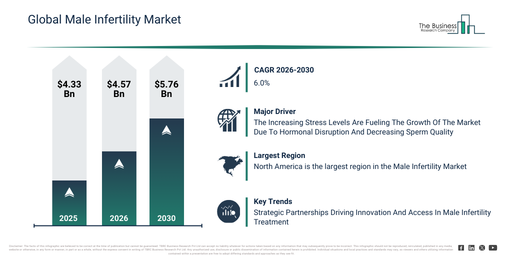
    The male infertility market size has experienced significant expansion in recent years. It is projected to expand from $4.33 billion in 2025 to $4.57 billion in 2026, demonstrating a compound annual growth rate (CAGR) of 5.6%. This historical growth can be linked to factors such as declining sperm quality globally, an increased prevalence of lifestyle-related infertility, the expansion of fertility clinics, growing acceptance of ART procedures, and advancements in semen analysis techniques.

    The male infertility market is poised for significant expansion in the coming years. By 2030, its valuation is projected to reach $5.76 billion, exhibiting a compound annual growth rate (CAGR) of 6.0%. This anticipated growth is driven by several factors, including an increase in infertility rates linked to environmental elements, a heightened demand for IVF and ICSI procedures, advancements in fertility diagnostic technologies, a greater awareness of male reproductive health, and the broadened availability of fertility treatments in developing economies. Key trends expected during this period involve a greater uptake of assisted reproductive technologies, the expanded utilization of advanced sperm diagnostic tests, an escalating emphasis on hormonal and targeted drug therapies, the broader application of microsurgical treatments for male infertility, and enhanced awareness leading to earlier diagnosis of male infertility.

    Get A Free Sample Report With In-Depth Market Insights:

    https://thebusinessresearchcompany.com/sample_request?id=19266568&type=smp&name=Male%20Infertility%20Market%20Report%202026&utm_source=Blogs&utm_medium=Paid&utm_campaign=Oct_PR

    Male Infertility Market Expansion Drivers: What’s Shaping Future Growth?

    The future expansion of the male infertility market is expected to be propelled by increasing stress levels. Stress levels denote the intensity of emotional, physical, or mental strain encountered when responding to challenging situations or pressures. The surge in stress originates from escalating work demands, where persistent pressure and high expectations cause burnout and disrupt mental well-being and work-life balance. Elevated stress can interfere with hormone balance, diminish sperm quality, and impair sexual function, leading to male infertility. Chronic stress disturbs cortisol and testosterone levels, contributing to an increase in infertility cases. As an illustration, in May 2024, the American Psychiatric Association, a US-based professional organization of psychologists, indicated that 43% of adults in the US felt more anxious in 2024, compared to 37% in 2023 and 32% in 2022, signifying a consistent rise in anxiety levels. Consequently, the increasing stress levels are driving the growth of the male infertility market.

    Male Infertility Market Segment Landscape: Which Areas Lead Development?

    The male infertility market covered in this report is segmented –

    1) By Treatment Type: Medication, Surgery, Assisted Reproductive Technology

    2) By Test Type: Sperm Agglutination, Deoxyribonucleic Acid Fragmentation Technique, Oxidative Stress Analysis, Computer Assisted Semen Analysis, Sperm Penetration Assay, Other Test Types

    3) By Distribution Channel: Hospitals Pharmacies, Pharmacies And Drug Stores, Online Pharmacies

    4) By End-User: Hospitals And Clinics, Fertility Centers, Research Institutes, Other End-Users

    Subsegments:

    1) By Medication: Hormone Treatments, Gonadotropins, Antibiotics, Antiestrogens, Dopamine Agonists

    2) By Surgery: Varicocelectomy, Vasovasostomy, Epididymovasostomy, Transurethral Resection of the Ejaculatory Duct (TURED), Sperm Retrieval Procedures

    3) By Assisted Reproductive Technology (ART): In Vitro Fertilization (IVF), Intracytoplasmic Sperm Injection (ICSI), Intrauterine Insemination (IUI), Sperm Donation, Cryopreservation Of Sperm

    Male Infertility Market Strategic Trends: What Defines The Next Growth Phase?

    Leading companies operating in the male infertility market are concentrating on strategic partnership approaches to enhance access to advanced fertility treatments across global markets. Strategic partnerships involve collaborations between organizations that combine resources and expertise to achieve shared objectives, helping to drive innovation, broaden market presence, and enhance R&D efforts. For instance, in June 2024, Ferring Pharmaceuticals, a Switzerland-based pharmaceutical company, joined forces with Posterity Health, a US-based male fertility clinic, to introduce a male fertility program on Ferring’s Fertility Out Loud platform designed to educate men about their fertility. This initiative provides men with a confidential online assessment and educational resources developed by reproductive urologists to aid their understanding of their fertility status and reduce the stigma associated with male infertility, which contributes to up to 50% of infertility cases. The program seeks to empower men to take early action, potentially improving a couple’s path to parenthood by addressing male fertility issues sooner and more conveniently through digital tools and telehealth.

    Male Infertility Market Industry Leaders And Competitive Landscape

    Major companies operating in the male infertility market are Novartis AG, Amgen Inc., Teva Pharmaceutical Industries Ltd., Intas Pharmaceuticals Ltd., NYU Langone Hospitals, Sun Pharmaceutical Industries Ltd., Cipla Limited, Ferring Pharmaceuticals, Fortis Healthcare, Vitrolife, Max Healthcare, CinnaGen Co., Aytu BioScience Inc., Zydus Hospitals and Healthcare Research Private Limited, Apricus Biosciences Inc., SCSA Diagnostics Inc., Andrology Solutions, Halotech DNA, Indira IVF, Conduit Pharmaceuticals, Shree IVF Clinics

    View The Full Male Infertility Market Report:

    https://thebusinessresearchcompany.com/report/male-infertility-global-market-report?utm_source=Blogs&utm_medium=Paid&utm_campaign=Oct_PR

    Male Infertility Market Geographic Landscape: Which Region Dominates Industry Growth?

    North America was the largest region in the male infertility market in 2025. The regions covered in the male infertility market report are Asia-Pacific, South East Asia, Western Europe, Eastern Europe, North America, South America, Middle East, Africa.

    Reach Out To Our Team:

    The Business Research Company: https://www.thebusinessresearchcompany.com/

    Americas: +1 310-496-7795

    Asia: +44 7882 955267 & +91 8897263534

    Europe: +44 7882 955267

    Email us at: marketing@tbrc.info

    Follow us on:

    LinkedIn: https://in.linkedin.com/company/the-business-research-company

    YouTube: https://www.youtube.com/channel/UC24_fI0rV8cR5DxlCpgmyFQ

    Global Market Model: https://www.thebusinessresearchcompany.com/global-market-model
  • Male Hypogonadism Market 2026 Outlook: Market Size, CAGR And Key Growth Opportunities

    Male Hypogonadism Market 2026 Outlook: Market Size, CAGR And Key Growth Opportunities

    Built to provide research that’s more actionable and strategically valuable, The Business Research Company’s 2026 market reports include market attractiveness analysis, total addressable market sizing, company benchmarking matrices, interactive Excel dashboards, broader supply chain intelligence, emerging startup tracking, and in-depth product insights.

    Male Hypogonadism Market Size And Revenue Outlook Through 2030

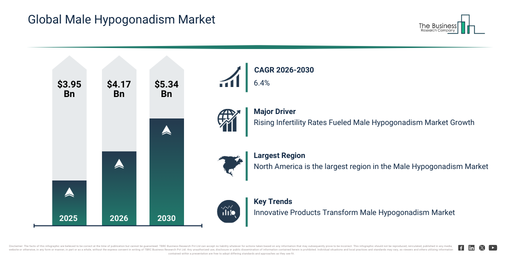
    The male hypogonadism market has demonstrated robust expansion in recent years. Its valuation is predicted to climb from $3.95 billion in 2025 to $4.17 billion in 2026, exhibiting a compound annual growth rate (CAGR) of 5.6%. Historically, this market’s development can be ascribed to the increasing occurrence of hypogonadism, growing understanding of testosterone deficiency, the expanding demographic of aging men, breakthroughs in hormone replacement therapies, and a greater embrace of diagnostic testing by physicians.

    The male hypogonadism market is anticipated to experience substantial growth over the upcoming years. Its value is projected to reach $5.34 billion by 2030, exhibiting a compound annual growth rate (CAGR) of 6.4%. Several factors are expected to contribute to this expansion during the forecast period, including the increased adoption of personalized medicine, the incorporation of AI into diagnosis and treatment, the rise of telehealth services, the growing use of advanced drug delivery systems, and enhanced investment in male hormonal research. Key developments anticipated in this period encompass personalized testosterone therapy, the development of minimally invasive drug delivery systems, initiatives to raise awareness about male hormonal health, the integration of telemedicine into hormonal treatment, and the broadening of chronic disease management services.

    Get A Free Sample Report With In-Depth Market Insights:

    https://thebusinessresearchcompany.com/sample_request?id=39180405&type=smp&name=Male%20Hypogonadism%20Market%20Report%202026&utm_source=Blogs&utm_medium=Paid&utm_campaign=Oct_PR

    Male Hypogonadism Market Development Factors: What’s Supporting Demand?

    The rising infertility rates are projected to fuel the expansion of the male hypogonadism market. Infertility describes a condition impacting either the male or female reproductive system, defined by the failure to achieve conception following 12 months or more of regular, unprotected sexual intercourse. Male hypogonadism, a factor that can result in reduced sperm production and infertility, is identified as one of the possible origins of male infertility. Consequently, the escalating occurrence of male infertility is anticipated to propel the growth of the male hypogonadism market. For example, data from February 2023, released by the Office for National Statistics, a UK-based government department, showed that in England and Wales, 31.8% of all live births were to non-UK-born mothers, an increase from 30.3% in 2022. Additionally, 37.3% of live births were to parents where either one or both were born outside the UK, marking a rise from 35.8% in 2022. Thus, the heightened infertility rate is acting as a catalyst for the expansion of the male hypogonadism market.

    Male Hypogonadism Market Segments: Where Is Growth Concentrated?

    The male hypogonadism market covered in this report is segmented –

    1) By Type: Klinefelters Syndrome, Kallmann Syndrome, Pituitary Disorders, Other Types

    2) By Drug Delivery: Topical Gels, Injectables, Transdermal Patches, Other Drug Deliveries

    3) By Therapy: Testosterone Therapy, Gonadotropin-Releasing Hormone Therapy

    Subsegments:

    1) By Klinefelter’s Syndrome: 47,XXY Syndrome, Other Variants

    2) By Kallmann Syndrome: Isolated Kallmann Syndrome, Syndromic Kallmann Syndrome

    3) By Pituitary Disorders: Hypopituitarism, Pituitary Tumors, Other Pituitary Disorders

    4) By Other Types: Androgen Insensitivity Syndrome, Testicular Dysgenesis Syndrome, Genetic Mutations And Disorders

    Male Hypogonadism Market Transformation Trends: What Innovations Are Driving Change?

    Leading entities within the male hypogonadism market are concentrating on creating cutting-edge solutions, including advanced digital platforms, aimed at connecting with patients via telehealth, providing educational materials, and simplifying treatment availability. This approach is transforming the management of male hypogonadism by boosting patient assistance and improving access to therapies. An example is the October 2024 introduction of TestoRx by LifeMD, Inc., a US-based virtual primary care provider. This direct-to-consumer telehealth service for testosterone replacement therapy operates under their Rex MD men’s health brand. The TestoRx program encompasses an initial online consultation, essential blood tests, a range of treatment choices covering both testosterone replacement and alternative methods to stimulate the body’s own hormone production, along with continuous virtual healthcare appointments and subsequent follow-up care.

    Male Hypogonadism Market Key Participants And Competitive Landscape

    Major companies operating in the male hypogonadism market are Pfizer Inc., Bayer AG, Eli Lilly and Company Ltd., Endo International plc., Merck & Co. Inc., Teva Pharmaceutical Industries Ltd., AbbVie Inc., Perrigo Company plc, IBSA Institut Biochimique SA, Sun Pharmaceutical Industries Limited, Antares Pharma Inc., Besins Healthcare Ltd., Clarus Therapeutics Holdings Inc., Lipocine Inc., Myovant Sciences Ltd., Sandoz International GmbH, TherapeuticsMD Inc., Viking Therapeutics Inc., Shionogi & Co. Ltd., Ferring Pharmaceuticals

    View The Full Male Hypogonadism Market Report:

    https://thebusinessresearchcompany.com/report/male-hypogonadism-global-market-report?utm_source=Blogs&utm_medium=Paid&utm_campaign=Oct_PR

    Male Hypogonadism Market Largest Region: Which Geography Holds The Highest Market Share?

    North America was the largest region in the male hypogonadism market in 2025. Asia-Pacific is expected to be the fastest-growing region in the male hypogonadism market report during the forecast period. The regions covered in the male hypogonadism market report are Asia-Pacific, South East Asia, Western Europe, Eastern Europe, North America, South America, Middle East, Africa.

    Reach Out To Our Team:

    The Business Research Company: https://www.thebusinessresearchcompany.com/

    Americas: +1 310-496-7795

    Asia: +44 7882 955267 & +91 8897263534

    Europe: +44 7882 955267

    Email us at: marketing@tbrc.info

    Follow us on:

    LinkedIn: https://in.linkedin.com/company/the-business-research-company

    YouTube: https://www.youtube.com/channel/UC24_fI0rV8cR5DxlCpgmyFQ

    Global Market Model: https://www.thebusinessresearchcompany.com/global-market-model
  • Malaria Treatment Market Size Growth: From $1.69 Billion In 2026 To $2.18 Billion By 2030

    Malaria Treatment Market Size Growth: From $1.69 Billion In 2026 To $2.18 Billion By 2030

    Backed by market attractiveness analysis, total addressable market sizing, company benchmarking matrices, interactive Excel dashboards, wider supply chain intelligence, emerging startup coverage, and detailed product-level insights, The Business Research Company’s 2026 market reports are designed to offer research that is more actionable and strategically valuable than ever.

    Malaria Treatment Market Growth From $1.69 Billion In 2026 To $2.18 Billion By 2030 At A CAGR Of 6.5%

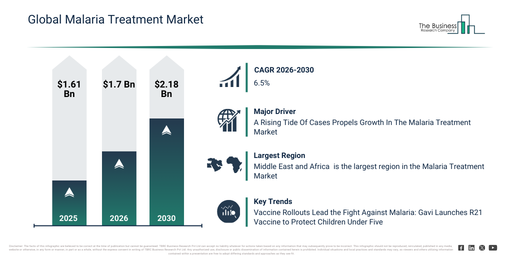
    The malaria treatment market has experienced robust expansion over recent years. Projections indicate its expansion from $1.61 billion in 2025 to $1.7 billion in 2026, demonstrating a compound annual growth rate (CAGR) of 5.6%. Historically, this growth can be ascribed to factors such as the high prevalence of malaria in tropical regions, the widespread use of chloroquine and artemisinin, various global health initiatives including WHO malaria programs, augmented funding for malaria research, and advancements in diagnostic technologies.

    The malaria treatment market is poised for significant expansion in the coming years. Its valuation is projected to reach $2.18 billion by 2030, exhibiting a compound annual growth rate (CAGR) of 6.5%. This anticipated growth during the forecast period stems from factors such as the creation of novel antimalarial vaccines, an increase in drug-resistant malaria strains, the implementation of digital health monitoring systems, the broadening of healthcare infrastructure across Africa and Asia, and the proliferation of public-private partnerships dedicated to malaria eradication. Key trends foreseen for this period encompass the uptake of rapid diagnostic technologies, an enlarging antimalarial drug pipeline, the advancement of vaccine development initiatives, heightened awareness alongside preventive actions, and the incorporation of telemedicine for effective malaria management.

    Get A Free Sample Report With In-Depth Market Insights:

    https://thebusinessresearchcompany.com/sample_request?id=15359391&type=smp&name=Malaria%20Treatment%20Market%20Report%202026&utm_source=Blogs&utm_medium=Paid&utm_campaign=Oct_PR

    Malaria Treatment Market Industry Drivers: What’s Behind The Revenue Growth?

    The increasing occurrence of malaria is expected to drive the expansion of the malaria treatment market. Malaria is a potentially life-threatening mosquito-borne illness caused by the Plasmodium parasite, characterized by recurring fever and other flu-like symptoms. This heightened incidence stems from factors such as poverty, limited access to healthcare services, climate change, insufficient malaria control measures, and drug resistance. Malaria treatment is crucial for effectively managing and curing infections caused by the Plasmodium parasite. For example, in December 2024, the UK Health Security Agency, a UK-based government department, stated that imported malaria cases in the UK reached 2,106 in 2023, reflecting a 26% rise from 2022, with England recording 1,977 cases and the rest distributed across Scotland, Wales, and Northern Ireland. Therefore, the significant incidence of malaria is stimulating growth in the malaria treatment market.

    Malaria Treatment Market Segment Analysis: What Are The Core Market Categories?

    The malaria treatment market covered in this report is segmented –

    1) By Treatment: Prescription Medications, Vaccines, Diagnostic Tests, Other Treatments

    2) By Route Of Administration: Oral, Parenteral, Intravenous

    3) By Distribution Channel: Direct Tender, Hospital Pharmacies, Retail Pharmacies, Online Pharmacies, Other Distribution Channels

    4) By End User: Hospitals, Specialty Clinics, Homecare, Other End Users

    Subsegments:

    1) By Prescription Medications: Antimalarial Drugs, Prophylactic Medications

    2) By Vaccines: RTS,S Or AS01, Other Experimental Vaccines

    3) By Diagnostic Tests: Rapid Diagnostic Tests, Microscopy-Based Tests, Polymerase Chain Reaction (PCR) Tests

    4) By Other Treatments: Supportive Care, Herbal Remedies, Vector Control Measures

    #Malaria Treatment Market Growth Trends: What’s Shaping The Future Outlook?

    Major companies in the malaria treatment market are concentrating on advancing vaccine rollouts to strengthen prevention efforts and diminish the worldwide impact of malaria. A vaccine rollout signifies the method of distributing and administering vaccines to a population, generally on a large scale. For example, in July 2024, Gavi, a Sweden-based vaccine alliance, initiated the R21 malaria vaccine rollout. The R21 vaccine is projected to notably reduce the number of malaria cases among children under five. This R21 malaria vaccine represents a pivotal breakthrough in public health endeavors to combat malaria in children, with aspirations that it will lead to a considerable decrease in disease burden and mortality rates linked to this preventable illness.

    Malaria Treatment Market Top Companies Driving Competitive Growth

    Major companies operating in the malaria treatment market are Pfizer Inc., Merck & Co., Johnson & Johnson, Roche Holding AG, Bayer AG, Novartis AG, Sanofi SA, AstraZeneca Plc, GlaxoSmithKline PLC, Takeda Pharmaceutical Company Limited, Viatris Inc., Sun Pharmaceutical Industries Ltd., Serum Institute of India, Cipla Ltd., Amneal Pharmaceuticals LLC, Lupin Ltd., Zydus Lifesciences Limited, Ipca Laboratories Ltd., Chongqing Holley Pharmaceutical Co. Ltd., Strides Pharma Science Limited, AdvaCare Pharma USA LLC, Actiza Pharmaceutical Private Limited

    View The Full Malaria Treatment Market Report:

    https://thebusinessresearchcompany.com/report/malaria-treatment-global-market-report?utm_source=Blogs&utm_medium=Paid&utm_campaign=Oct_PR

    Malaria Treatment Market Regional Analysis: Which Region Leads By Revenue?

    Middle East and Africa was the largest region in the malaria treatment market in 2025. Asia-Pacific is expected to be the fastest-growing region in the forecast period. The regions covered in the malaria treatment market report are Asia-Pacific, South East Asia, Western Europe, Eastern Europe, North America, South America, Middle East, Africa.

    Reach Out To Our Team:

    The Business Research Company: https://www.thebusinessresearchcompany.com/

    Americas: +1 310-496-7795

    Asia: +44 7882 955267 & +91 8897263534

    Europe: +44 7882 955267

    Email us at: marketing@tbrc.info

    Follow us on:

    LinkedIn: https://in.linkedin.com/company/the-business-research-company

    YouTube: https://www.youtube.com/channel/UC24_fI0rV8cR5DxlCpgmyFQ

    Global Market Model: https://www.thebusinessresearchcompany.com/global-market-model

  • Machine Learning (ML) in The Pharmaceutical Industry Market Analysis 2026: Market Size, Growth Trends And Industry Outlook

    Machine Learning (ML) in The Pharmaceutical Industry Market Analysis 2026: Market Size, Growth Trends And Industry Outlook

    Featuring market attractiveness scoring, total addressable market sizing, company benchmarking matrices, interactive Excel dashboards, deeper supply chain intelligence, emerging startup tracking, and granular product-level insights, The Business Research Company’s 2026 market reports are built to deliver research that is both more actionable and more strategically valuable.

    Machine Learning (ML) in The Pharmaceutical Industry Market Expansion Outlook: What Revenue Opportunities Are Ahead?

    The market size for machine learning (ML) in the pharmaceutical industry has experienced substantial expansion in recent years. It is forecast to increase from $4.08 billion in 2025 to $5.52 billion in 2026, achieving a compound annual growth rate (CAGR) of 35.4%. The drivers for this historical growth include augmented research and development investment within pharmaceuticals, the embrace of AI and ML in drug discovery, the rising incidence of chronic diseases, progress in computational biology, and collaborative efforts between pharmaceutical and technology companies.

    The market size for machine learning (ML) in the pharmaceutical industry is set to experience significant growth over the coming years. It is projected to expand to $18.71 billion in 2030, with a compound annual growth rate (CAGR) of 35.7%. This growth during the forecast period is primarily driven by the increasing integration of AI in clinical trials, the expanding scope of precision medicine, the greater adoption of real-world data analytics, advancements in cloud-based pharmaceutical platforms, and the ongoing development of personalized therapeutics. Prominent trends expected in this period include predictive drug discovery models, the optimization of clinical trials, the utilization of real-world evidence data, the implementation of personalized medicine, and the automation of regulatory compliance.

    Get A Free Sample Report With In-Depth Market Insights:

    https://thebusinessresearchcompany.com/sample_request?id=51802056&type=smp&name=Machine%20Learning%20%28ML%29%20in%20The%20Pharmaceutical%20Industry%20Market%20Report%202026&utm_source=Blogs&utm_medium=Paid&utm_campaign=Oct_PR

    Machine Learning (ML) in The Pharmaceutical Industry Market Growth Factors: What’s Supporting Expansion?

    The growing acceptance of artificial intelligence (AI) is propelling machine learning (ML) within the pharmaceutical sector. AI refers to computer software designed to imitate human thought processes for intricate tasks like analysis, reasoning, and learning, whereas ML, a component of AI, employs algorithms trained on datasets to create models capable of executing complex functions. Both AI and ML have found application in pharmaceutical technology and the development of drug delivery systems, providing accelerated answers to difficult problems. This technology holds the capacity to revolutionize drug delivery methods, improve instruments for decision-making, and process vast amounts of data for more informed choices. For example, as reported by Forbes, a US-based business magazine, in June 2023, around 432,000 UK organizations, equivalent to one in six, had implemented at least one AI technology. Moreover, at least one AI technology was adopted by 68% of large enterprises, 33% of medium-sized firms, and 15% of small businesses. Consequently, the expanding integration of artificial intelligence (AI) will fuel machine learning (ML) within the pharmaceutical industry.

    Machine Learning (ML) in The Pharmaceutical Industry Market Segment Breakdown: Which Categories Lead On Revenue?

    The machine learning (ml) in the pharmaceutical industry market covered in this report is segmented –

    1) By Component: Solution, Services

    2) By Deployment: Cloud, On-premise

    3) By Enterprise Size: Small and Medium Enterprises (SMEs), Large Enterprises

    Subsegments:

    1) By Solution: Drug Discovery Platforms, Predictive Analytics Tools, Clinical Trial Optimization Solutions, Patient Data Management Systems, Personalized Medicine Applications

    2) By Services: Consulting Services, Implementation And Integration Services, Data Analysis And Modeling Services, Training And Support Services, Managed Services

    Machine Learning (ML) in The Pharmaceutical Industry Market Industry Trends: What’s Reshaping Demand?

    Major companies engaged in machine learning within the pharmaceutical industry are focusing on creating user-friendly software platforms, such as drug discovery software, to improve their capabilities in discovering new drugs. Drug discovery software is a broad category encompassing various specialized tools and platforms employed throughout the entire process of identifying and developing novel pharmaceutical drugs. For instance, in December 2023, Merck & Co. Inc., a US-based pharmaceutical company, launched the AIDDISON drug discovery software, which stands as the first software-as-a-service platform to integrate drug discovery and synthesis through the application of generative AI, machine learning, and computer-aided drug design. This platform allows laboratories to pinpoint appropriate drug candidates in a vast chemical space, virtually screen compounds from a universe exceeding 60 billion chemical targets, and assess synthesis routes for drug manufacturing that is safer, more cost-effective, and results in higher yields.

    Machine Learning (ML) in The Pharmaceutical Industry Market Leading Players And Competitive Positioning

    Major companies operating in the machine learning (ml) in the pharmaceutical industry market are Amazon.com Inc., Alphabet Inc., Microsoft Corporation, Dell Technologies Inc., Hitachi Ltd., International Business Machines Corporation, Cisco Systems Inc., Oracle Corporation, Honeywell International Inc., Hewlett Packard Enterprise, NVIDIA Corporation, Thales SA, Atos SE, Hexagon AB, Palantir Technologies Inc., Alteryx Inc., Comet ML Inc., GAVS Technologies, NEC Corporation, Veritone Inc., H2O.ai Inc., Sparkcognition Inc., Akira AI, Deep Genomics Inc., Cloud Pharmaceuticals Inc., Atomwise Inc., Cyclica Inc., BioSymetrics Inc., Neptune Labs

    View The Full Machine Learning (ML) in The Pharmaceutical Industry Market Report:

    https://thebusinessresearchcompany.com/report/machine-learning-ml-in-the-pharmaceutical-industry-global-market-report?utm_source=Blogs&utm_medium=Paid&utm_campaign=Oct_PR

    Machine Learning (ML) in The Pharmaceutical Industry Market Geographic Distribution And Regional Opportunities

    North America was the largest region in the machine learning in the pharmaceutical industry market in 2025. Asia-Pacific is expected to be the fastest-growing region in the forecast period. The regions covered in the machine learning (ml) in the pharmaceutical industry market report are Asia-Pacific, South East Asia, Western Europe, Eastern Europe, North America, South America, Middle East, Africa.

    Reach Out To Our Team:

    The Business Research Company: https://www.thebusinessresearchcompany.com/

    Americas: +1 310-496-7795

    Asia: +44 7882 955267 & +91 8897263534

    Europe: +44 7882 955267

    Email us at: marketing@tbrc.info

    Follow us on:

    LinkedIn: https://in.linkedin.com/company/the-business-research-company

    YouTube: https://www.youtube.com/channel/UC24_fI0rV8cR5DxlCpgmyFQ

    Global Market Model: https://www.thebusinessresearchcompany.com/global-market-model
  • Lysosomal Enzyme Market Forecast To 2030: Starting From $13.48 Billion In 2026

    Lysosomal Enzyme Market Forecast To 2030: Starting From $13.48 Billion In 2026

    Built to provide research that’s more actionable and strategically valuable, The Business Research Company’s 2026 market reports include market attractiveness analysis, total addressable market sizing, company benchmarking matrices, interactive Excel dashboards, broader supply chain intelligence, emerging startup tracking, and in-depth product insights.

    Lysosomal Enzyme Market Growth Potential: How Will Market Size Shift Through 2030?

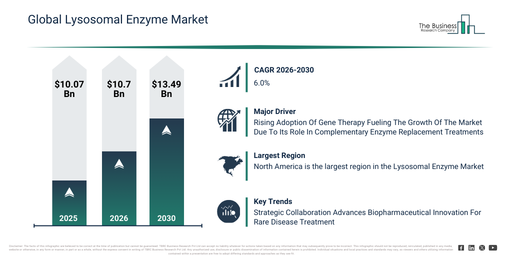
    The lysosomal enzyme market has demonstrated robust expansion over recent years. Its valuation is anticipated to climb from $10.07 billion in 2025 to $10.7 billion in 2026, advancing at a compound annual growth rate (CAGR) of 6.3%. The historical drivers behind this growth include heightened awareness of lysosomal storage diseases, the establishment of orphan drug programs, the provision of hospital-based genetic treatments, progress in recombinant enzyme development, and increased financial support for rare disease research.

    The lysosomal enzyme market is projected to experience robust expansion over the coming years. By 2030, this market is anticipated to reach a valuation of $13.49 billion, expanding at a compound annual growth rate (CAGR) of 6.0%. Factors driving this growth during the forecast period include the integration of gene therapy, the broadening of newborn screening programs, the development of personalized enzyme therapies, the scaling up of biopharmaceutical manufacturing, and worldwide initiatives for rare diseases. Key trends expected over the forecast period encompass an increase in enzyme replacement therapies, a heightened emphasis on rare genetic disorders, greater investment in recombinant enzymes, ongoing advancements in gene and enzyme therapies, and improving diagnostic rates for lysosomal conditions.

    Get A Free Sample Report With In-Depth Market Insights:

    https://thebusinessresearchcompany.com/sample_request?id=63280886&type=smp&name=Lysosomal%20Enzyme%20Market%20Report%202026&utm_source=Blogs&utm_medium=Paid&utm_campaign=Oct_PR

    Lysosomal Enzyme Market Demand Drivers: What’s Powering Industry Growth?

    The rising integration of gene therapy is anticipated to fuel the expansion of the lysosomal enzymes market in the future. Gene therapy refers to a medical intervention where genes within an individual’s cells are modified or substituted to manage or avert illnesses. Its uptake is growing due to progress in delivery methods and proven long-term effectiveness, establishing it as a feasible, potentially curative treatment for genetic conditions. Often, gene therapy necessitates initial or supplementary enzyme replacement therapies to alleviate symptoms and stabilize patients while the gene therapy takes hold, thereby maintaining demand for lysosomal enzyme products. For example, in April 2024, the American Society of Gene & Cell Therapy, a US-based non-profit body, reported that phase III gene therapy clinical trials increased by 10% in 2023, representing the initial quarterly rise since 2022. Consequently, the expanding use of gene therapy is poised to accelerate the expansion of the lysosomal enzymes market.

    Lysosomal Enzyme Market Segmentation: How Does The Market Break Down By Category?

    The lysosomal enzyme market covered in this report is segmented –

    1) By Type: Acid Alpha-Glucosidase, Acid Sphingomyelinase, Beta-Glucocerebrosidase, Hexosaminidase

    2) By Indication: Gaucher Disease, Mucopolysaccharidosis, Pompe Disease, Other Indications

    3) By Source: Recombinant Enzymes, Natural Enzymes, Synthetic Enzymes

    4) By Application: Enzyme Replacement Therapy, Research And Development, Diagnostics, Gene Therapy

    5) By End-Use: Hospitals, Diagnostic Laboratories, Research Institutions, Pharmaceutical Companies

    Subsegments:

    1) By Acid Alpha-Glucosidase: Pompe Disease Enzymes, Glycogen Storage Disease Type II Enzymes

    2) By Acid Sphingomyelinase: Niemann-Pick Disease Type A, Niemann-Pick Disease Type B

    3) By Beta-Glucocerebrosidase: Gaucher Disease Type I, Gaucher Disease Type II, Gaucher Disease Type III

    4) By Hexosaminidase: Tay-Sachs Disease Enzymes, Sandhoff Disease Enzymes

    Lysosomal Enzyme Market Innovation Trends: What Developments Are Reshaping The Industry?

    Leading companies operating within the lysosomal enzymes market are increasingly adopting a strategic partnership approach to broaden diagnostic capabilities and accelerate the creation of novel therapies. These strategic partnerships are defined as cooperative agreements between two or more organizations, pooling resources or capabilities to achieve common goals and bolster their competitive edge. For example, in February 2024, a Spain-based biotechnology company collaborated with Biosidus, an Argentina-based biotechnology company, to produce the active enzyme ingredient Agalsidase Beta. This strategic alliance represents a significant stride in developing and manufacturing treatments for rare diseases, specifically Fabry disease, which arises from lysosomal enzyme deficiency. It also establishes a regional landmark in rare disease treatment and reinforces companies’ commitment to global health and fostering accessible biopharmaceutical innovation.

    Lysosomal Enzyme Market Competitive Overview And Top Companies

    Major companies operating in the lysosomal enzyme market are Sanofi SA, BioMarin Pharmaceutical Inc., Amicus Therapeutics Inc., JCR Pharmaceuticals Co. Ltd., Protalix BioTherapeutics Inc., Takeda Rare Diseases (Shire), Ultragenyx Pharmaceutical Inc., Orchard Therapeutics plc, Sangamo Therapeutics Inc., Avrobio Inc., Greenovation Biotech GmbH, Chiesi Global Rare Diseases, GC Pharma, Pfizer Rare Disease (through Spark & partnered LSD programs), Idorsia Pharmaceuticals Ltd., Abeona Therapeutics Inc., Selecta Biosciences Inc., Denali Therapeutics Inc., Passage Bio Inc., Freeline Therapeutics plc, REGENXBIO Inc., Homology Medicines Inc., LogicBio Therapeutics Inc., Allievex Corporation, Reneo Pharmaceuticals Inc., Lysogene SAS, Sio Gene Therapies Inc., Anika Therapeutics Inc., ArmaGen Inc., PerkinElmer Inc., Thermo Fisher Scientific Inc., Merck KGaA (MilliporeSigma), Agilent Technologies Inc.,

    View The Full Lysosomal Enzyme Market Report:

    https://thebusinessresearchcompany.com/report/lysosomal-enzyme-global-market-report?utm_source=Blogs&utm_medium=Paid&utm_campaign=Oct_PR

    Lysosomal Enzyme Market Largest Region By Revenue And Market Share

    North America was the largest region in the lysosomal enzymes market in 2025. Asia-Pacific is expected to be the fastest-growing region in the forecast period. The regions covered in the lysosomal enzyme market report are Asia-Pacific, South East Asia, Western Europe, Eastern Europe, North America, South America, Middle East, Africa.

    Reach Out To Our Team:

    The Business Research Company: https://www.thebusinessresearchcompany.com/

    Americas: +1 310-496-7795

    Asia: +44 7882 955267 & +91 8897263534

    Europe: +44 7882 955267

    Email us at: marketing@tbrc.info

    Follow us on:

    LinkedIn: https://in.linkedin.com/company/the-business-research-company

    YouTube: https://www.youtube.com/channel/UC24_fI0rV8cR5DxlCpgmyFQ

    Global Market Model: https://www.thebusinessresearchcompany.com/global-market-model
  • Lysosomal Disease Treatment Market Size In 2026 And Beyond: Understanding Future Growth Potential

    Lysosomal Disease Treatment Market Size In 2026 And Beyond: Understanding Future Growth Potential

    Backed by market attractiveness analysis, total addressable market sizing, company benchmarking matrices, interactive Excel dashboards, wider supply chain intelligence, emerging startup coverage, and detailed product-level insights, The Business Research Company’s 2026 market reports are designed to offer research that is more actionable and strategically valuable than ever.

    Lysosomal Disease Treatment Market Value Analysis: What Growth Lies Ahead Over The Forecast Period?

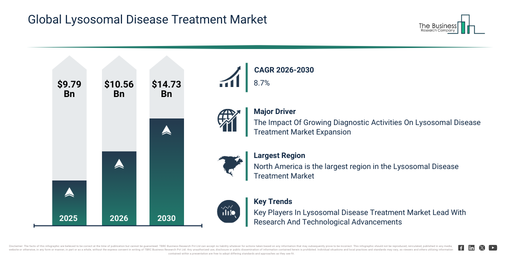
    The lysosomal disease treatment market size has demonstrated robust expansion in recent years. Projections indicate it will increase from $9.79 billion in 2025 to $10.56 billion in 2026, at a compound annual growth rate (CAGR) of 7.9%. This historical growth can be ascribed to advancements in enzyme replacement therapies, heightened awareness of lysosomal storage disorders, the expansion of pediatric care infrastructure, government funding for rare disease research, and the emergence of diagnostic technologies.

    The lysosomal disease treatment market is projected to experience substantial expansion in the coming years. It is set to reach $14.73 billion by 2030, exhibiting a compound annual growth rate (CAGR) of 8.7%. This anticipated growth is primarily driven by factors such as the increasing reach of personalized medicine, the growing embrace of gene therapy, heightened investments within the biotechnology sector, improvements in healthcare infrastructure across emerging markets, and collaborative efforts for developing drugs for rare diseases. Key trends anticipated during this period involve the creation of focused enzyme replacement therapies, enhanced diagnostic abilities for rare diseases, the expansion of treatment initiatives for both pediatric and adult patients, an increase in customized and precision medicine strategies, and a surge in partnerships between pharmaceutical companies and research institutions.

    Get A Free Sample Report With In-Depth Market Insights:

    https://thebusinessresearchcompany.com/sample_request?id=29615621&type=smp&name=Lysosomal%20Disease%20Treatment%20Market%20Report%202026&utm_source=Blogs&utm_medium=Paid&utm_campaign=Oct_PR

    Lysosomal Disease Treatment Market Growth Drivers: What’s Behind The Acceleration?

    The expansion of diagnostic procedures is anticipated to fuel the rise of the lysosomal disease treatment market. These activities involve structured processes and examinations designed to pinpoint and evaluate issues, states, or illnesses in people or systems, frequently requiring data gathering and analysis to guide decisions and therapeutic approaches. The increasing scope of diagnostics is driven by progress in medical technology, the escalating occurrence of chronic illnesses, a greater need for preventive medicine, enhanced public understanding and knowledge of health matters, and favorable government support and financial backing for healthcare programs. With enhanced sophistication, diagnostic methods allow healthcare professionals to detect lysosomal diseases with greater precision, leading to increased capital allocation for specific therapies and interventions. For example, in May 2023, data from the National Health Service (NHS), a UK-based publicly funded healthcare system, showed that 2,302,400 diagnostic tests were carried out in March 2023, marking a rise of 223,100 tests from March 2022. By the end of March 2023, the count of individuals awaiting a critical diagnostic test stood at 1,628,300, which was an increase of 59,400 over March 2022. Consequently, the expansion in diagnostic activities is a key impetus for the growth of the lysosomal disease treatment market.

    Lysosomal Disease Treatment Market Segment Trends And Revenue Contributors

    The lysosomal disease treatment market covered in this report is segmented –

    1) By Disease Type: Mucopolysaccharidosis, Pompe Syndrome, Fabry Diseases, Gaucher’s Disease, Other Disease Types

    2) By Therapy: Substrate Reduction Therapy, Stem Cell Therapy, Enzyme Replacement Therapy, Other Therapies

    3) By Route Of Administration: Oral, Parenteral, Other Routes Of Administration

    4) By End User: Hospitals, Specialty Clinics, Homecare, Other End Users

    Subsegments:

    1) By Mucopolysaccharidosis: MPS I (Hurler Syndrome), MPS II (Hunter Syndrome), MPS III (Sanfilippo Syndrome), MPS IV (Morquio Syndrome), MPS VI (Maroteaux-Lamy Syndrome), MPS VII (Sly Syndrome)

    2) By Pompe Syndrome: Late-Onset Pompe Disease, Infantile-Onset Pompe Disease

    3) By Fabry Disease: Classic Fabry Disease, Late-Onset Fabry Disease

    4) By Gaucher’s Disease: Type 1 Gaucher Disease, Type 2 Gaucher Disease, Type 3 Gaucher Disease

    5) By Other Disease Types: Niemann-Pick Disease, Krabbe Disease, Tay-Sachs Disease

    Lysosomal Disease Treatment Market Trends: What’s Defining The Industry’s Next Phase?

    Key companies within the lysosomal diseases treatment market are concentrating on progress in research and technology to reinforce their market position. Such advancements denote ongoing development and enhancements across scientific exploration and technological capacities. Illustratively, in September 2023, Amicus Therapeutics, an American biopharmaceutical firm, declared that the U.S. Food and Drug Administration (FDA) granted approval for Pombiliti (cipaglucosidase alfa-atga) combined with Opfolda (miglustat) 65mg capsules to manage late-onset Pompe disease (LOPD) in adult patients. This Pombiliti + Opfolda regimen constitutes a two-component therapeutic approach, comprising cipaglucosidase alfa-atga, which is a bis-M6P-enriched rhGAA promoting strong uptake via the M6P receptor, alongside miglustat, an oral enzyme stabilizer developed to mitigate the reduction of enzyme activity within the bloodstream.

    Lysosomal Disease Treatment Market Competitive Landscape: Which Companies Lead The Industry?

    Major companies operating in the lysosomal disease treatment market are Eli Lilly and Company, Takeda Pharmaceutical Company Limited, Sanofi SA, Pfizer Inc., Novartis International AG, Johnson & Johnson Services Inc., Alexion Pharmaceuticals Inc., Amicus Therapeutics Inc., Actelion Pharmaceuticals Ltd., Sigilon Therapeutics Inc., BioMarin Pharmaceutical Inc., Merck & Co Inc., AstraZeneca PLC, Astellas Pharma Inc., Horizon Therapeutics plc, Leadient Biosciences Inc., Orphazyme A/S, Recordati Industria Chimica e Farmaceutica S.p.A., Valerion Therapeutics Llc, Viatris Inc., Chiese Farmaceutici SpA, Genzyme Corporation, Ultragenyx Pharmaceutical Inc., Sangamo Therapeutics Inc., Avrobio Inc., Axovant Gene Therapies Ltd., Regenxbio Inc., Krystal Biotech Inc., Homology Medicines Inc., Orchard Therapeutics plc, Sarepta Therapeutics Inc., Solid Biosciences Inc.

    View The Full Lysosomal Disease Treatment Market Report:

    https://thebusinessresearchcompany.com/report/lysosomal-disease-treatment-global-market-report?utm_source=Blogs&utm_medium=Paid&utm_campaign=Oct_PR

    Lysosomal Disease Treatment Market Regional Analysis And Leading Geography

    North America was the largest region in the lysosomal disease treatment market in 2025. Europe is expected to be the fastest-growing region in the global lysosomal disease treatment market report during the forecast period. The regions covered in the lysosomal disease treatment market report are Asia-Pacific, South East Asia, Western Europe, Eastern Europe, North America, South America, Middle East, Africa.

    Reach Out To Our Team:

    The Business Research Company: https://www.thebusinessresearchcompany.com/

    Americas: +1 310-496-7795

    Asia: +44 7882 955267 & +91 8897263534

    Europe: +44 7882 955267

    Email us at: marketing@tbrc.info

    Follow us on:

    LinkedIn: https://in.linkedin.com/company/the-business-research-company

    YouTube: https://www.youtube.com/channel/UC24_fI0rV8cR5DxlCpgmyFQ

    Global Market Model: https://www.thebusinessresearchcompany.com/global-market-model

  • Lyophilized Injectable Drugs Market Reaches $4.86 Billion In 2026: Key Developments Shaping Expansion

    Lyophilized Injectable Drugs Market Reaches $4.86 Billion In 2026: Key Developments Shaping Expansion

    Featuring market attractiveness scoring, total addressable market sizing, company benchmarking matrices, interactive Excel dashboards, deeper supply chain intelligence, emerging startup tracking, and granular product-level insights, The Business Research Company’s 2026 market reports are built to deliver research that is both more actionable and more strategically valuable.

    Lyophilized Injectable Drugs Market Size Forecast: How Big Could The Market Get By 2030?

    The lyophilized injectable drugs market has experienced steady expansion in recent years. Its value is anticipated to climb from $4 billion in 2025 to $4.13 billion in 2026, exhibiting a compound annual growth rate (CAGR) of 3.4%. The growth observed in the past can be attributed to the increasing prevalence of chronic diseases, advancements in lyophilization technologies, heightened awareness about injectable drugs, the expansion of hospital and clinic infrastructure, and the demand for stable drug formulations.

    The lyophilized injectable drugs market size is projected to observe consistent expansion in the forthcoming years. It is anticipated to reach $4.87 billion by 2030, demonstrating a compound annual growth rate (CAGR) of 4.2%. This growth throughout the forecast period stems from the increasing proliferation of biologics and specialty drugs, the uptake of single-use vials and dual-chamber systems, the development of emerging markets, the incorporation of smart packaging solutions, and technological advancements in reconstitution devices. Furthermore, significant trends expected during this period include sophisticated drug stabilization methods, improved solutions for patient adherence, novel formulation technologies, optimization of the cold chain, and quick reconstitution devices.

    Get A Free Sample Report With In-Depth Market Insights:

    https://thebusinessresearchcompany.com/sample_request?id=40744340&type=smp&name=Lyophilized%20Injectable%20Drugs%20Market%20Report%202026&utm_source=Blogs&utm_medium=Paid&utm_campaign=Oct_PR

    Lyophilized Injectable Drugs Market Growth Factors Behind Sustained Expansion

    The increasing occurrence of cardiac conditions is projected to stimulate the expansion of the lyophilized injectable drugs market. Cardiac disorders encompass a wide array of ailments that impact the heart’s structure and function, including its valves, chambers, blood arteries, electrical system, and general pumping capability. Lyophilized injectable drugs, such as thrombolytic agents, antiarrhythmic medications, inotropic agents, and antihypertensive medications, are employed in the treatment of various cardiac disorders because they offer stability, convenience, and flexibility, along with rapid reconstitution, improved bioavailability, and a reduced risk of contamination. For instance, in September 2024, figures released by the British Heart Foundation, a UK-based cardiovascular research charity, indicated that approximately 7.6 million people in the UK are affected by heart and circulatory diseases, with around 4 million males and 3.6 million females living with these conditions. These diseases are responsible for about 27% of all deaths in the UK, translating to over 170,000 deaths annually, or roughly 480 deaths each day, equating to one death every three minutes. Therefore, the rising incidence of cardiac disorders drives the growth of the lyophilized injectable drugs market during the forecast period.

    Lyophilized Injectable Drugs Market Segment Analysis Spotlighting Growth Areas

    The lyophilized injectable drugs market covered in this report is segmented –

    1) By Packaging Type: Specialty Packaging, Point-Of-Care Reconstitution, Single-Use Vials, Other Packaging Types

    2) By Type of Delivery: Single-Step Devices, Multi-Step Devices, Prefilled Diluent Syringes, Proprietary Reconstitution Devices

    3) By Indication: Infectious Diseases, Autoimmune Diseases, Metabolic Conditions, Other Indications

    4) By End-User: Hospitals, Ambulatory Surgery Centers (ASCs), Specialty Clinics, Other End-Users

    Subsegments:

    1) By Specialty Packaging: Dual-Chamber Systems, Prefilled Syringes

    2) By Point-Of-Care Reconstitution: Portable Reconstitution Devices, Ready-To-Use Kits

    3) By Single-Use Vials: Glass Vials, Plastic Vials

    4) By Other Packaging Types: Multi-Dose Vials, Blister Packs, Bulk Packaging Solutions

    Lyophilized Injectable Drugs Market Industry Trends Fueling Future Revenue Growth

    Major companies operating in the lyophilized injectable drug market are focusing on innovative technology, such as non-invasive methods, for the development of lyophilized injectable drugs for the market. Non-invasive technology describes any method or device that gathers information or performs a task without breaking the skin or entering a bodily orifice. For instance, in October 2023, COMSER Pharma, a Spain-based compliance services and freezedry pharmaceutical solutions company, announced the launch of LyoFlow, a novel technology utilized for lyophilized injectable drug production. LyoFlow is a disruptive solution that facilitates the real-time, non-invasive extraction of the mass flow from a freeze-drying process. It can be easily integrated into any lyophilization equipment, allowing for the monitoring of product quality throughout the process.

    Lyophilized Injectable Drugs Market Leading Companies: Who Holds The Strongest Market Presence?

    Major companies operating in the lyophilized injectable drugs market are Pfizer Inc., Hoffmann-La Roche Ltd, Merck & Co Inc., Sanofi SA, Novo Nordisk A/S, Becton Dickinson and Company, Baxter International Inc., Sandoz, Nipro Corporation, B. Braun SE, Aurobindo Pharmaceuticals, Schott AG, Zydus Lifesciences, Recipharm AB, Vetter Pharma-Fertigung GmbH & Co. KG, Fresenius Kabi USA LLC, CordenPharma International, Aristopharma Limited., Accord Healthcare, Jubilant HollisterStier LLC, Ciron Drugs & Pharmaceuticals Pvt Ltd., MSN Laboratories, Qilu pharmaceutical Co Ltd., Genex Pharma

    View The Full Lyophilized Injectable Drugs Market Report:

    https://thebusinessresearchcompany.com/report/lyophilized-injectable-drugs-global-market-report?utm_source=Blogs&utm_medium=Paid&utm_campaign=Oct_PR

    Lyophilized Injectable Drugs Market Geographic Analysis: Where Is Demand Accelerating Fastest?

    North America was the largest region in the lyophilized injectable drugs market in 2025. Asia-Pacific is expected to be the fastest-growing region in the forecast period. The regions covered in the lyophilized injectable drugs market report are Asia-Pacific, South East Asia, Western Europe, Eastern Europe, North America, South America, Middle East, Africa.

    Reach Out To Our Team:

    The Business Research Company: https://www.thebusinessresearchcompany.com/

    Americas: +1 310-496-7795

    Asia: +44 7882 955267 & +91 8897263534

    Europe: +44 7882 955267

    Email us at: marketing@tbrc.info

    Follow us on:

    LinkedIn: https://in.linkedin.com/company/the-business-research-company

    YouTube: https://www.youtube.com/channel/UC24_fI0rV8cR5DxlCpgmyFQ

    Global Market Model: https://www.thebusinessresearchcompany.com/global-market-model
  • Lymphocyte Activating Gene 3 (LAG3) Antibody Market Growth Outlook For 2026: Drivers, Trends And Future Opportunities

    Lymphocyte Activating Gene 3 (LAG3) Antibody Market Growth Outlook For 2026: Drivers, Trends And Future Opportunities

    Built to provide research that’s more actionable and strategically valuable, The Business Research Company’s 2026 market reports include market attractiveness analysis, total addressable market sizing, company benchmarking matrices, interactive Excel dashboards, broader supply chain intelligence, emerging startup tracking, and in-depth product insights.

    Lymphocyte Activating Gene 3 (LAG3) Antibody Market Revenue Outlook: What CAGR Lies Ahead Through 2030?

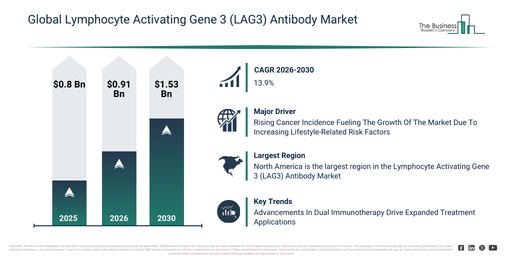
    The market size for lymphocyte activating gene 3 (lag3) antibodies has seen substantial growth in recent years. This market is set to increase from $0.8 billion in 2025 to $0.91 billion in 2026, achieving a compound annual growth rate (CAGR) of 13.8%. Key drivers for this historical expansion include the limited availability of lag3 antibodies, a reliance on traditional monoclonal antibody therapies, an expanding oncology pipeline, a rise in academic and clinical research efforts, and regulatory approvals for early-stage antibody treatments.

    The lymphocyte activating gene 3 (lag3) antibody market size is projected to experience substantial growth in the coming years. It is forecast to reach $1.53 billion in 2030, exhibiting a compound annual growth rate (CAGR) of 13.9%. This expansion during the projection period is primarily driven by factors such as the development of bispecific and tandem scfv antibodies, the broadening scope of combination immunotherapies, increased adoption in the treatment of autoimmune and infectious diseases, heightened investment in clinical trials and research and development, and their integration with personalized and precision medicine strategies. Noteworthy trends anticipated during the forecast period include the growing utilization of LAG3 antibodies in cancer immunotherapy, the formulation of combination therapies alongside other immune checkpoint inhibitors, an intensified focus on applications for autoimmune diseases, the expansion of clinical trials targeting infectious disease treatments, and the advancement of humanized and bispecific antibody platforms.

    Get A Free Sample Report With In-Depth Market Insights:

    https://thebusinessresearchcompany.com/sample_request?id=97402631&type=smp&name=Lymphocyte%20Activating%20Gene%203%20%28LAG3%29%20Antibody%20Market%20Report%202026&utm_source=Blogs&utm_medium=Paid&utm_campaign=Oct_PR

    Lymphocyte Activating Gene 3 (LAG3) Antibody Market Demand Drivers Opening New Revenue Streams

    The increasing occurrence of cancer is anticipated to fuel the expansion of the lymphocyte activating gene 3 (LAG3) antibody market moving forward. Cancer incidence defines the count of new cancer diagnoses emerging within a particular population during a specified duration. This increase in cancer incidence is attributed to lifestyle-related factors such as poor diet, smoking, alcohol consumption, and exposure to environmental pollutants, all of which elevate the risk of developing various forms of cancer. Lymphocyte activating gene 3 (LAG3) antibodies play a role in cancer treatment by re-establishing the function of exhausted T cells, thus proving effective in strengthening the immune system’s activity against tumors. They enhance treatment outcomes by stimulating anti-tumor responses, providing renewed optimism for individuals battling advanced cancers. For instance, in January 2024, as reported by the American Cancer Society, a US-based nonprofit cancer advocacy organization, the volume of cancer cases rose to 2,001,140, up from 1,958,310 in 2023, representing a 2.19% growth. Hence, the escalating cancer incidence is acting as a significant driver for the growth of the lymphocyte activating gene 3 (LAG3) antibody market.

    Lymphocyte Activating Gene 3 (LAG3) Antibody Market Segment Performance And Emerging Opportunities

    The lymphocyte activating gene 3 (lag3) antibody market covered in this report is segmented –

    1) By Type Of Antibodies: Monoclonal Antibody, Polyclonal Antibody, Bispecific Antibodies

    2) By Drug Class: Monotherapy, Combination Therapy

    3) By Mechanism Of Action: Immune Checkpoint Inhibitors, Immunomodulatory Antibodies, Co-Stimulatory Antibodies

    4) By Application: Cancer Immunotherapy, Autoimmune Diseases, Infectious Diseases

    5) By End-User: Pharmaceutical And Biotechnology Companies, Academic Research Institutions, Diagnostic Laboratories

    Subsegments:

    1) By Monoclonal Antibody: Human Monoclonal Antibody, Humanized Monoclonal Antibody, Chimeric Monoclonal Antibody

    2) By Polyclonal Antibody: Rabbit Polyclonal Antibody, Goat Polyclonal Antibody, Mouse Polyclonal Antibody, Donkey Polyclonal Antibody

    3) By Bispecific Antibodies: Tandem ScFv Based Bispecific Antibody, Dual Variable Domain Based Bispecific Antibody, Bispecific T Cell Engager, Immunoglobulin G such as Bispecific Antibody

    Lymphocyte Activating Gene 3 (LAG3) Antibody Market Trends Powering Strategic Industry Growth

    Leading firms within the Lymphocyte Activating Gene 3 (LAG3) Antibody market are prioritizing clinical trials aimed at creating novel products like advanced monoclonal antibodies, intending to boost anti-tumor immune responses and address resistance encountered with current immunotherapies. These advanced, engineered antibody therapies, known as next-generation monoclonal antibodies, are crafted to bind immune targets, including LAG-3, with enhanced precision, greater specificity, increased stability, and stronger functional potency. Their purpose is to improve T-cell activation, bolster anti-tumor responses, and overcome shortcomings of previous antibody treatments. As an example, in February 2025, the US-based biopharmaceutical entity Bristol-Myers Squibb Company issued an update concerning its fixed-dose combination product, Opdualag (nivolumab + relatlimab-rmbw). This product represents a pioneering dual immunotherapy, comprising the LAG-3-blocking antibody relatlimab alongside the PD-1 inhibitor nivolumab. Opdualag combines a humanized IgG4 monoclonal LAG-3 antibody (relatlimab) with a PD-1 inhibitor (nivolumab), administered intravenously every 4 weeks. Its mechanism of action involves inhibiting both the LAG-3–ligand interaction, which prevents T-cell exhaustion, and PD-1–ligand binding. This dual blockade stimulates T-cell proliferation and cytokine secretion more effectively than PD-1 monotherapy alone. Noteworthy attributes include its fixed-dose combination (480 mg nivolumab + 160 mg relatlimab) and its distinction as the initial approved therapy to target LAG-3 in a combined approach. Its indications span adult and pediatric patients (aged 12 years and older) suffering from unresectable or metastatic melanoma, providing an advantage over conventional PD-1 inhibitor monotherapy regarding progression-free survival.

    Lymphocyte Activating Gene 3 (LAG3) Antibody Market Key Players: Which Companies Lead Industry Competition?

    Major companies operating in the lymphocyte activating gene 3 (lag3) antibody market are F. Hoffmann-La Roche Ltd., Merck & Co. Inc., Novartis AG, Bristol-Myers Squibb Company, Regeneron Pharmaceuticals Inc., Daiichi Sankyo Company Limited, Ono Pharmaceutical Co. Ltd., Xencor Inc., Innovent Biologics Inc., Zai Lab Limited, MacroGenics Inc., Akeso Inc., Agenus Inc., Alphamab Oncology, AnaptysBio Inc., Crescendo Biologics Ltd., EpimAb Biotherapeutics Inc., Shanghai Henlius Biotech Inc., Immutep Limited

    View The Full Lymphocyte Activating Gene 3 (LAG3) Antibody Market Report:

    https://thebusinessresearchcompany.com/report/lymphocyte-activating-gene-3-lag3-antibody-global-market-report?utm_source=Blogs&utm_medium=Paid&utm_campaign=Oct_PR

    Lymphocyte Activating Gene 3 (LAG3) Antibody Market Global Footprint: Which Region Leads The Industry?

    North America was the largest region in the lymphocyte activating gene 3 (LAG3) antibody market in 2025. Asia-Pacific is expected to be the fastest-growing region in the forecast period. The regions covered in the lymphocyte activating gene 3 (lag3) antibody market report are Asia-Pacific, South East Asia, Western Europe, Eastern Europe, North America, South America, Middle East, Africa.

    Reach Out To Our Team:

    The Business Research Company: https://www.thebusinessresearchcompany.com/

    Americas: +1 310-496-7795

    Asia: +44 7882 955267 & +91 8897263534

    Europe: +44 7882 955267

    Email us at: marketing@tbrc.info

    Follow us on:

    LinkedIn: https://in.linkedin.com/company/the-business-research-company

    YouTube: https://www.youtube.com/channel/UC24_fI0rV8cR5DxlCpgmyFQ

    Global Market Model: https://www.thebusinessresearchcompany.com/global-market-model

  • Lyme Disease Vaccine Market Size Forecast From 2026 To 2030: Key Industry Trends

    Lyme Disease Vaccine Market Size Forecast From 2026 To 2030: Key Industry Trends

    Backed by market attractiveness analysis, total addressable market sizing, company benchmarking matrices, interactive Excel dashboards, wider supply chain intelligence, emerging startup coverage, and detailed product-level insights, The Business Research Company’s 2026 market reports are designed to offer research that is more actionable and strategically valuable than ever.

    Lyme Disease Vaccine Market Growth Analysis: How Will Revenue Trend Over The Forecast Period?

    The lyme disease vaccine market has experienced substantial growth in recent years. Its value is projected to increase from $1.12 billion in 2025 to $1.2 billion in 2026, achieving a compound annual growth rate (CAGR) of 7.3%. This historical expansion can be attributed to the rising occurrence of lyme disease in endemic areas, the limitations of past antibiotic-only treatment approaches, early-stage initiatives in vaccine research, a growing public awareness of tick-borne infections, and improvements in public health surveillance.

    The lyme disease vaccine market size is anticipated to undergo significant expansion in the upcoming years. It is predicted to reach $1.57 billion in 2030, demonstrating a compound annual growth rate (CAGR) of 7.0%. This projected growth over the forecast period stems from the broader implementation of vaccination programs in endemic regions, increased investment in preventing infectious diseases, progress in next-generation vaccine platforms, a rise in the uptake of combination vaccines, and an intensified global concentration on controlling zoonotic diseases. Dominant trends during this period include advancements in recombinant vaccine technologies, a stronger emphasis on preventive immunization initiatives, an increase in clinical research for tick-borne diseases, a growing demand for long-lasting immunity solutions, and enhanced collaboration between public and private health organizations.

    Get A Free Sample Report With In-Depth Market Insights:

    https://thebusinessresearchcompany.com/sample_request?id=78493451&type=smp&name=Lyme%20Disease%20Vaccine%20Market%20Report%202026&utm_source=Blogs&utm_medium=Paid&utm_campaign=Oct_PR

    Lyme Disease Vaccine Market Growth Backed By Core Demand Fundamentals

    The rising incidence of Lyme disease is anticipated to boost the expansion of the Lyme disease vaccine market moving forward. Lyme disease, a tick-transmitted infection caused by Borrelia bacteria, can lead to symptoms such as fever, tiredness, skin rash, and potentially severe complications affecting joints, the heart, or the nervous system if not treated. The growth in Lyme disease cases is linked to climate change, as warmer weather and less severe winters extend tick living areas, leading to more human encounters with infected ticks. Lyme disease vaccines contribute to preventing the illness by preparing the immune system to identify and combat Borrelia bacteria, thereby lowering the chances of infection. These vaccines streamline disease management by offering enduring protection, which enhances overall public health outcomes. For example, in March 2025, the Centers for Disease Control and Prevention indicated that approximately 89,000 cases of Lyme disease were reported in the United States in 2023, while alternative estimations suggest that around 476,000 people might be diagnosed and treated for Lyme disease each year. Consequently, the increasing prevalence of Lyme disease is propelling the growth of the Lyme disease vaccine market.

    Lyme Disease Vaccine Market Segment Landscape And Growth Outlook

    The lyme disease vaccine market covered in this report is segmented –

    1) By Vaccine Type: Recombinant Vaccines, Subunit Vaccines, Live Attenuated Vaccines, Other Vaccine Types

    2) By Technology: Lymphocytic Transformation Test, Urine Antigen Testing, Immunofluorescent Staining Nucleic Acid Test, Serological Test

    3) By Age Group: Pediatric, Adult, Geriatric

    4) By Distribution Channel: Hospitals And Clinics, Pharmacies, Government Supply, Other Distribution Channels

    5) By End User: Hospitals, Clinical Laboratories, Other End Users

    Subsegments:

    1) By Recombinant Vaccines: Protein-Based Recombinant Vaccines, Vector-Based Recombinant Vaccines, Deoxyribonucleic Acid (DNA)-Based Recombinant Vaccines

    2) By Subunit Vaccines: Protein Subunit Vaccines, Polysaccharide Subunit Vaccines, Conjugate Subunit Vaccines

    3) By Live Attenuated Vaccines: Naturally Attenuated Vaccines, Genetically Attenuated Vaccines, Temperature-Sensitive Attenuated Vaccines

    4) By Other Vaccine Types: Toxoid Vaccines, Inactivated Vaccines, Vectored Vaccines

    Lyme Disease Vaccine Market Growth Trends Reshaping The Competitive Landscape

    Leading companies in the Lyme disease vaccine market are concentrating on advancing their late-stage product candidates, such as booster vaccines, to address unmet medical needs, enhance immune protection, and simplify vaccination regimens. Booster vaccines are supplementary doses administered after the initial vaccination to restore or augment long-term immunity. For example, in September 2025, Valneva SE, a France-based biotechnology company, confirmed the positive immunogenicity and safety data from the ongoing Phase 2 study of Lyme disease vaccine candidate, VLA15. This is a multivalent vaccine designed to train the immune system to produce antibodies against OspA proteins on Borrelia bacteria. When a tick bites, these antibodies block the bacteria inside the tick, preventing infection in humans. The robust immune response and favorable safety profile following a third booster dose were consistent with those reported after receiving prior annual booster doses, further demonstrating compatibility with the anticipated benefits of a yearly vaccination before each Lyme season. This booster strategy is designed to provide continuous protection against Lyme disease, supporting the potential for an annual pre-exposure season booster to simplify protection for at-risk individuals.

    Lyme Disease Vaccine Market Competitive Landscape: Who Leads The Industry?

    Major companies operating in the lyme disease vaccine market are Pfizer Inc., Merck & Co. Inc., Sanofi S.A., Boehringer Ingelheim GmbH, University of Pennsylvania, Elanco Animal Health Incorporated, Zoetis Inc., Emergent BioSolutions Inc., Bavarian Nordic A/S, Aegis Life Inc., Bioveta a.s., Dynavax Technologies Corporation, Valneva SE, MassBiologics of UMass Chan Medical School, Inovio Pharmaceuticals Inc., US Biologic Inc., Blue Lake Biotechnology Inc.

    View The Full Lyme Disease Vaccine Market Report:

    https://thebusinessresearchcompany.com/report/global-lyme-disease-vaccine-market-report?utm_source=Blogs&utm_medium=Paid&utm_campaign=Oct_PR

    Lyme Disease Vaccine Market Regional Distribution: Which Areas Power Market Growth?

    North America was the largest region in the Lyme disease vaccine market in 2025. Asia-Pacific is expected to be the fastest-growing region in the forecast period. The regions covered in the lyme disease vaccine market report are Asia-Pacific, South East Asia, Western Europe, Eastern Europe, North America, South America, Middle East, Africa.

    Reach Out To Our Team:

    The Business Research Company: https://www.thebusinessresearchcompany.com/

    Americas: +1 310-496-7795

    Asia: +44 7882 955267 & +91 8897263534

    Europe: +44 7882 955267

    Email us at: marketing@tbrc.info

    Follow us on:

    LinkedIn: https://in.linkedin.com/company/the-business-research-company

    YouTube: https://www.youtube.com/channel/UC24_fI0rV8cR5DxlCpgmyFQ

    Global Market Model: https://www.thebusinessresearchcompany.com/global-market-model
  • Lung Cancer Drugs Market 2026: Market Size, Growth Drivers And Emerging Opportunities

    Lung Cancer Drugs Market 2026: Market Size, Growth Drivers And Emerging Opportunities

    Featuring market attractiveness scoring, total addressable market sizing, company benchmarking matrices, interactive Excel dashboards, deeper supply chain intelligence, emerging startup tracking, and granular product-level insights, The Business Research Company’s 2026 market reports are built to deliver research that is both more actionable and more strategically valuable.

    Lung Cancer Drugs Market Forecast: What Value Will The Market Reach By 2030?

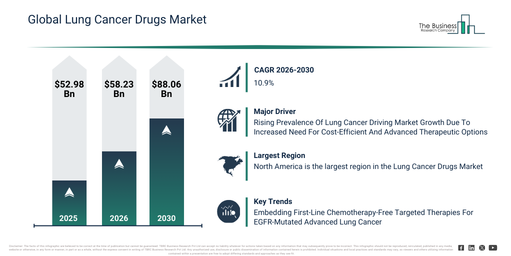
    The lung cancer drugs market has experienced significant expansion over recent years. This market is projected to expand from $52.98 billion in 2025 to $58.23 billion in 2026, registering a compound annual growth rate (CAGR) of 9.9%. Key drivers for historical market expansion include elevated smoking prevalence, increasing rates of lung cancer, broad adoption of chemotherapy, the growth of oncology hospitals, and enhanced availability of generic cancer drugs.

    The lung cancer drugs market size is anticipated to undergo significant growth over the next few years. It is projected to expand to $88.06 billion by 2030, achieving a compound annual growth rate (CAGR) of 10.9%. This expansion throughout the forecast period is attributable to various factors, such as the development and increased use of targeted and immunotherapy drugs, higher rates of lung cancer screening, escalating healthcare expenditure in oncology, an aging global population, and the increasing approval of combination therapies. Key trends expected during this forecast period include the rising adoption of targeted lung cancer treatments, a greater reliance on combination drug regimens, an intensified focus on early-stage lung cancer management, the broadening of personalized treatment protocols, and an increase in the administration of oncology drugs within hospital settings.

    Get A Free Sample Report With In-Depth Market Insights:

    https://thebusinessresearchcompany.com/sample_request?id=26967688&type=smp&name=Lung%20Cancer%20Drugs%20Market%20Report%202026&utm_source=Blogs&utm_medium=Paid&utm_campaign=Oct_PR

    Lung Cancer Drugs Market Growth Catalysts And Demand Drivers

    The rising incidence of lung cancer is projected to fuel expansion within the lung cancer drugs market in the coming years. This severe malignancy necessitates prompt and efficient therapeutic interventions, such as chemotherapy, targeted treatments, immunotherapies, and combined regimens, to enhance patient survival rates. The growth in lung cancer cases is largely attributed to environmental contaminants and carcinogen exposure, in addition to genetic factors, all of which contribute to mutations in lung cells, even among individuals who do not smoke. This escalating prevalence of lung cancer underpins the lung cancer drugs market by intensifying the demand for superior treatment options that can extend life expectancy, slow tumor advancement, and elevate patients’ overall quality of life. For example, in January 2023, the American Cancer Society, a US-based voluntary health organization focused on eradicating cancer, estimated approximately 238,340 new lung cancer cases (comprising 117,550 in men and 120,790 in women) and around 127,070 fatalities from lung cancer (with 67,160 in men and 59,910 in women) for 2023. Consequently, the growing rate of lung cancer prevalence is propelling the expansion of the lung cancer drugs market.

    Lung Cancer Drugs Market Breakdown By Product Type And Application

    The lung cancer drugs market covered in this report is segmented –

    1) By Drugs: Gemzar, Paraplatin, Taxotere, Navelbine, Avastin, Tarceva, Iressa, Other Drugs

    2) By Disease Type: Small cell lung cancer (SCLC), Non-small cell lung cancer (NSCLC)

    3) By End User: Hospitals, Clinics, Other End-Users

    Lung Cancer Drugs Market Trends Shaping Long-Term Demand

    Leading companies in the lung cancer drugs market are concentrating on product innovation and advanced formulations, such as chemotherapy-free combination therapies specifically targeting EGFR mutations. This strategic focus aims to boost treatment efficacy, decrease systemic toxicity, and improve the overall quality of life for individuals suffering from advanced non-small cell lung cancer (NSCLC). These therapies facilitate precision oncology approaches by offering targeted inhibition of specific molecular pathways that drive tumor growth. For instance, in August 2024, Johnson & Johnson, a US-based pharmaceutical company, obtained U.S. FDA approval for Rybrevant plus Lazcluze as a first-line, chemotherapy-free treatment for patients with EGFR-mutated advanced NSCLC. This combination therapy is engineered to provide dual inhibition of EGFR and MET pathways, thereby delivering enhanced anti-tumor activity while simultaneously minimizing exposure to traditional chemotherapy side effects. This approval signifies an increasing trend within the lung cancer market towards personalized, targeted treatment regimens, which ultimately improve patient outcomes and experience by reducing reliance on conventional chemotherapy.

    Lung Cancer Drugs Market Company Landscape And Competitive Strategy

    Major companies operating in the lung cancer drugs market are Bristol-Myers Squibb Company, Merck & Co. Inc., F. Hoffmann-La Roche Ltd., Novartis AG, Pfizer Inc., GlaxoSmithKline plc, Sanofi S.A., Sun Pharmaceutical Industries Ltd., Celgene Corporation, Mylan N.V., Ono Pharmaceutical Co. Ltd., Teva Pharmaceutical Industries Ltd., Takeda Pharmaceutical Company Limited, Ziopharm Oncology Inc., Menarini Group, AstraZeneca PLC, AbbVie Inc., Bayer AG, Boehringer Ingelheim International GmbH, Daiichi Sankyo Company Limited, Eli Lilly and Company Inc., Johnson & Johnson, Amgen Inc., Array BioPharma Inc., Astellas Pharma Inc., Clovis Oncology Inc., Eisai Co. Ltd., Exelixis Inc., Genentech Inc., Gilead Sciences Inc., Incyte Corporation, Ipsen Biopharmaceuticals Inc., Kyowa Kirin Co. Ltd., Loxo Oncology Inc., MedImmune LLC

    View The Full Lung Cancer Drugs Market Report:

    https://thebusinessresearchcompany.com/report/Lung-Cancer-Drugs-Global-Market-Report?utm_source=Blogs&utm_medium=Paid&utm_campaign=Oct_PR

    Lung Cancer Drugs Market Leading Geography: Which Region Contributes The Most Revenue?

    North America was the largest region in the lung cancer drugs market in 2025. Middle East is expected to be the fastest-growing region in the lung cancer drugs market during the forecast period. The regions covered in the lung cancer drugs market report are Asia-Pacific, South East Asia, Western Europe, Eastern Europe, North America, South America, Middle East, Africa.

    Reach Out To Our Team:

    The Business Research Company: https://www.thebusinessresearchcompany.com/

    Americas: +1 310-496-7795

    Asia: +44 7882 955267 & +91 8897263534

    Europe: +44 7882 955267

    Email us at: marketing@tbrc.info

    Follow us on:

    LinkedIn: https://in.linkedin.com/company/the-business-research-company

    YouTube: https://www.youtube.com/channel/UC24_fI0rV8cR5DxlCpgmyFQ

    Global Market Model: https://www.thebusinessresearchcompany.com/global-market-model