Month: October 2026

  • Herbal Medicine Market To Witness 11.1% CAGR Growth Through 2030: Key Industry Drivers

    Herbal Medicine Market To Witness 11.1% CAGR Growth Through 2030: Key Industry Drivers

    Built to provide research that’s more actionable and strategically valuable, The Business Research Company’s 2026 market reports include market attractiveness analysis, total addressable market sizing, company benchmarking matrices, interactive Excel dashboards, broader supply chain intelligence, emerging startup tracking, and in-depth product insights.

    Herbal Medicine Market Poised To Hit $391.88 Billion By 2030 With A 11.1% CAGR

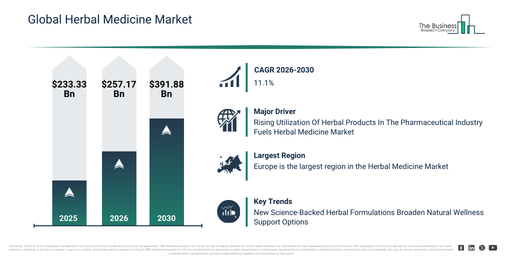
    The herbal medicine market has experienced significant expansion in recent years. Its value is projected to climb from $233.33 billion in 2025 to $257.17 billion in 2026, achieving a compound annual growth rate (CAGR) of 10.2%. This growth in previous periods can be linked to heightened awareness of natural remedies, the enduring practice of traditional herbal knowledge, the expansion of pharmaceutical and nutraceutical industries, a consumer preference for plant-based medicines, and governmental backing for herbal cultivation.

    The herbal medicine market is projected to experience substantial expansion over the coming years. By 2030, this market is anticipated to reach a valuation of $391.88 billion, demonstrating a compound annual growth rate (CAGR) of 11.1%. This projected growth can be attributed to several factors including advancements in herbal extraction techniques, increased capital allocation towards herbal pharmaceuticals, the widening of international distribution channels, a growing awareness of health among the populace, and the incorporation of herbal items into functional food products. Key trends anticipated during this period encompass a heightened call for natural health solutions, a steady rise in the uptake of herbal dietary supplements, an increasing inclination towards herbal beauty items, the blending of functional foods with herbal extracts, and the expansion of online retail platforms for herbal goods.

    Get A Free Sample Report With In-Depth Market Insights:

    https://thebusinessresearchcompany.com/sample_request?id=37755093&type=smp&name=Herbal%20Medicine%20Market%20Report%202026&utm_source=Blogs&utm_medium=Paid&utm_campaign=Oct_PR

    Herbal Medicine Market Demand Drivers: What’s Powering Industry Growth?

    The herbal medicine market is projected to grow as a result of the rising integration of herbal products into the pharmaceutical industry. Herbal products are defined as medications that exclusively use one or more herbal substances, one or more herbal preparations, or a blend of both as their active constituents. The utilization of herbal products within the pharmaceutical sector is expected to enhance the demand for the herbal medicine market. For instance, a February 2024 report from Glanbia Nutritionals (NA) Inc., a US-based company offering dairy and non-dairy solutions, highlighted that the United States herbal supplement market is valued at $5.9 billion, with a forecasted compound annual growth rate (CAGR) of 4.3% from 2022 to 2027. Thus, the increasing adoption of herbal products in the pharmaceutical Industry is fueling the expansion of the herbal medicine market.

    Herbal Medicine Market Segment Analysis Spotlighting Growth Areas

    The herbal medicine market covered in this report is segmented –

    1) By Product: Capsules And Tablets, Powders, Extracts, Syrups, Other Products

    2) By Category: Herbal Pharmaceuticals, Herbal Functional Foods, Herbal Dietary Supplements, Herbal Beauty Products

    3) By Distribution Channel: Hospitals, Retail Pharmacies, E-commerce

    4) By Application: Pharmaceutical And Nutraceutical, Food And Beverages, Personal Care And Beauty Products

    Subsegments:

    1) By Capsules And Tablets: Herbal Capsules, Herbal Tablets

    2) By Powders: Single Herb Powders, Blend Powders

    3) By Extracts: Liquid Extracts, Dry Extracts, Standardized Extracts

    4) By Syrups: Herbal Syrups, Cough Syrups

    5) By Other Products: Teas, Tinctures, Ointments And Creams

    Herbal Medicine Market Innovation Trends: What Developments Are Reshaping The Industry?

    Leading companies operating within the herbal medicine market are prioritizing the development of advanced solutions, such as targeted herbal formulations, to enhance overall health and wellness. These targeted herbal formulations are plant-derived products crafted with clinically studied ingredients to address specific health needs and promote effective daily wellness. For example, in December 2023, Garden of Life, a U.S.-based nutritional supplements company, introduced its new Herbals collection, featuring targeted herbal solutions grounded in nature and supported by scientific research. The collection comprises six formulations offering benefits for blood sugar support, stress relief, brain health, heart health, eye health, menopause, and hair growth. Each product blends primary clinically supported herbal ingredients with additional complementary components to provide whole-food-based benefits, available in consumer-friendly formats like softgels, capsules, and gummies. This launch underscores the use of clean, traceable, non-GMO ingredients with third-party certifications, thereby strengthening product quality and consumer trust while broadening the availability of science-backed herbal options across various health categories.

    Herbal Medicine Market Leading Companies: Who Holds The Strongest Market Presence?

    Major companies operating in the herbal medicine market are Patanjali Ayurved Ltd., Dabur Ltd., NOW Foods, Boiron Group, Nature’s Sunshine Products, Emami Ltd., Ricola AG, Young Living Essential Oils, Nature’s Way, Swanson Health Products, Gaia Herbs, New Chapter, Bio-Botanica Inc., Schaper & Brümmer GmbH & Co. KG, Traditional Medicinals, Herb Pharm, Nature’s Answer, Nature’s Bounty, Himalaya Global Holdings Ltd., Arizona Natural Products, Dasherb Corp, ZeinPharma Germany GmbH, Solaray, Hishimo Pharmaceuticals Pvt. Ltd., Beovita Deutschland GmbH & Co. KG, Dr. Willmar Schwable India Pvt. Ltd., Source Naturals

    View The Full Herbal Medicine Market Report:

    https://thebusinessresearchcompany.com/report/herbal-medicine-global-market-report?utm_source=Blogs&utm_medium=Paid&utm_campaign=Oct_PR

    Herbal Medicine Market Largest Region By Revenue And Market Share

    Europe was the largest region in the herbal medicine market in 2025. Asia-Pacific is expected to be the fastest-growing region in the herbal medicine market report during the forecast period. The regions covered in the herbal medicine market report are Asia-Pacific, South East Asia, Western Europe, Eastern Europe, North America, South America, Middle East, Africa.

    Reach Out To Our Team:

    The Business Research Company: https://www.thebusinessresearchcompany.com/

    Americas: +1 310-496-7795

    Asia: +44 7882 955267 & +91 8897263534

    Europe: +44 7882 955267

    Email us at: marketing@tbrc.info

    Follow us on:

    LinkedIn: https://in.linkedin.com/company/the-business-research-company

    YouTube: https://www.youtube.com/channel/UC24_fI0rV8cR5DxlCpgmyFQ

    Global Market Model: https://www.thebusinessresearchcompany.com/global-market-model

  • HER2 Inhibitors Market Projected For Strong Expansion Through 2030: Key Trends And Future Outlook

    HER2 Inhibitors Market Projected For Strong Expansion Through 2030: Key Trends And Future Outlook

    Backed by market attractiveness analysis, total addressable market sizing, company benchmarking matrices, interactive Excel dashboards, wider supply chain intelligence, emerging startup coverage, and detailed product-level insights, The Business Research Company’s 2026 market reports are designed to offer research that is more actionable and strategically valuable than ever.

    HER2 Inhibitors Market Size And Revenue Outlook Through 2030

    The her2 inhibitors market size has shown robust growth over recent years. Its expansion is anticipated to continue, rising from $9.64 billion in 2025 to $10.6 billion in 2026, achieving a compound annual growth rate (CAGR) of 9.9%. Historically, this market’s growth can be linked to the initial approval of her2-targeted therapies, an increase in breast cancer incidence, enhancements in her2 diagnostic testing, positive clinical trial outcomes, and the increasing adoption of targeted oncology treatments.

    The market for her2 inhibitors is anticipated to experience substantial expansion in the coming years. Its value is projected to reach $14.85 billion by 2030, demonstrating a compound annual growth rate (CAGR) of 8.8%. This anticipated expansion over the forecast period is fueled by several factors, including enhanced identification of her2-low patients, the broadening pipeline of new her2 inhibitors, a surge in the adoption of combination therapies, wider application in metastatic and adjuvant treatment scenarios, and increased expenditure in oncology healthcare. Key trends expected during this period involve the proliferation of her2-targeted combination treatments, a growing uptake of her2 inhibitors for early-stage cancers, heightened attention on treating her2-low breast cancer, advancements in next-generation antibody-drug conjugates, and more refined patient stratification alongside improved biomarker testing.

    Get A Free Sample Report With In-Depth Market Insights:

    https://thebusinessresearchcompany.com/sample_request?id=51904428&type=smp&name=HER2%20Inhibitors%20Market%20Report%202026&utm_source=Blogs&utm_medium=Paid&utm_campaign=Oct_PR

    HER2 Inhibitors Market Growth Drivers: What’s Behind The Acceleration?

    Governmental efforts to improve breast cancer care and treatment are anticipated to propel the growth of the HER2 inhibitors market going forward. These government initiatives, aimed at enhancing breast cancer care and treatment, encompass policies, funding, and programs implemented to improve the accessibility, affordability, and quality of care for individuals diagnosed with breast cancer. Through subsidized programs and research funding, government initiatives have broadened access to HER2 inhibitors, a breast cancer treatment, thereby advancing patient care and outcomes. For instance, in February 2023, the World Health Organization, a Switzerland-based intergovernmental organization, released a new Global Breast Cancer Initiative Framework. This framework provides a roadmap to achieve targets aimed at saving 2.5 million lives from breast cancer by 2040. Therefore, government initiatives to improve breast cancer care and treatment are a significant driver for the growth of the HER2 inhibitors market.

    HER2 Inhibitors Market Segment Performance And Emerging Opportunities

    The her2 inhibitors market covered in this report is segmented –

    1) By Treatment: Monotherapy, Combination Therapy

    2) By Application: Squamous Cell Carcinoma, Adenocarcinoma, Large Cell Carcinoma, Breast Cancer, Other Applications

    3) By End User: Hospitals, Clinics, Other End Users

    Subsegments:

    1) By Monotherapy: Single-Agent HER2 Inhibitors, Targeted HER2 Therapies

    2) By Combination Therapy: HER2 Inhibitors Combined With Chemotherapy, HER2 Inhibitors Combined With Targeted Therapies, HER2 Inhibitors Combined With Hormonal Therapies

    HER2 Inhibitors Market Trends: What’s Defining The Industry’s Next Phase?

    Leading companies in the HER2 inhibitor market are concentrating on developing therapies for pre-treated HR+/HER2-metastatic breast cancer to achieve a competitive edge. HR+/HER2-metastatic breast cancer is a subset of metastatic breast cancer defined by the existence of hormone receptors (HR+). For example, in February 2023, Gilead Sciences, Inc., a US-based biopharmaceutical company, received U.S. FDA approval for Trodelvy (Sacituzumab govitecan-hziy) to address adults with unresectable locally advanced or metastatic HR-positive, HER2-negative breast cancer, following prior endocrine-based treatment and two additional systemic therapies in the metastatic setting.

    HER2 Inhibitors Market Key Players: Which Companies Lead Industry Competition?

    Major companies operating in the her2 inhibitors market are Pfizer Inc., Johnson & Johnson Services Inc., F Hoffmann-La Roche Ltd., Merck & Co. Inc., Novartis AG, Sanofi SA, Bristol-Myers Squibb Company, AstraZeneca plc, Takeda Pharmaceutical Company Limited, Eli Lilly International Corp., C.H. Boehringer Sohn AG & Co. KG, Teva Pharmaceutical Industries Ltd., Daiichi Sankyo Company Limited, Ipsen SA, the Pierre Fabre Group, Biocon Biopharmaceuticals Pvt. Ltd., Innovent Biologics Inc., Seattle Genetics Inc., Zymeworks Inc., Puma Biotechnology Inc., MacroGenics Inc., Mersana Therapeutics Inc., Cellestia Biotech AG

    View The Full HER2 Inhibitors Market Report:

    https://thebusinessresearchcompany.com/report/HER2-Inhibitor-global-market-report?utm_source=Blogs&utm_medium=Paid&utm_campaign=Oct_PR

    HER2 Inhibitors Market Regional Analysis And Leading Geography

    North America was the largest region in the HER2 inhibitors market in 2025. Middle East is expected to be the fastest-growing region in the HER2 inhibitors market report during the forecast period. The regions covered in the her2 inhibitors market report are Asia-Pacific, South East Asia, Western Europe, Eastern Europe, North America, South America, Middle East, Africa.

    Reach Out To Our Team:

    The Business Research Company: https://www.thebusinessresearchcompany.com/

    Americas: +1 310-496-7795

    Asia: +44 7882 955267 & +91 8897263534

    Europe: +44 7882 955267

    Email us at: marketing@tbrc.info

    Follow us on:

    LinkedIn: https://in.linkedin.com/company/the-business-research-company

    YouTube: https://www.youtube.com/channel/UC24_fI0rV8cR5DxlCpgmyFQ

    Global Market Model: https://www.thebusinessresearchcompany.com/global-market-model
  • Hepatorenal Syndrome Treatment Market Outlook 2026–2030: Growth Trends, Market Dynamics And Emerging Opportunities

    Hepatorenal Syndrome Treatment Market Outlook 2026–2030: Growth Trends, Market Dynamics And Emerging Opportunities

    Featuring market attractiveness scoring, total addressable market sizing, company benchmarking matrices, interactive Excel dashboards, deeper supply chain intelligence, emerging startup tracking, and granular product-level insights, The Business Research Company’s 2026 market reports are built to deliver research that is both more actionable and more strategically valuable.

    Hepatorenal Syndrome Treatment Market Growth From $16.09 Billion In 2026 To $21.12 Billion By 2030 At A CAGR Of 7%

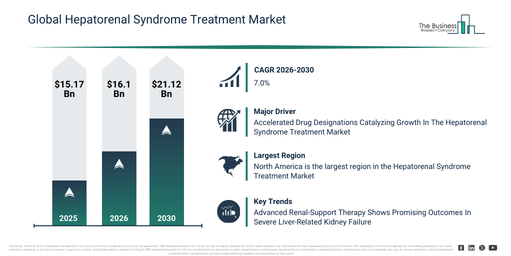
    The hepatorenal syndrome treatment market has experienced robust expansion in recent years. Projections indicate a rise from $15.17 billion in 2025 to $16.1 billion in 2026, exhibiting a compound annual growth rate (CAGR) of 6.1%. Historically, this market’s expansion can be linked to factors such as limited awareness of HRS, the absence of uniform treatment protocols, high mortality associated with liver failure, reliance on conventional dialysis methods, and restricted access to advanced therapeutics.

    The hepatorenal syndrome treatment market is anticipated to show robust expansion in the coming years. Its size is projected to escalate to $21.12 billion in 2030, driven by a compound annual growth rate (CAGR) of 7.0%. This growth during the forecast period can be attributed to progress in targeted therapies, the adoption of precision medicine methodologies, an expanding healthcare infrastructure, the integration of AI and digital tools for patient monitoring, and increased investment in the development of new drugs. Significant trends expected in the forecast period include the rising occurrence of chronic liver diseases, innovations in renal replacement therapies, customized treatment options for HRS, the expansion of hospital and clinical infrastructure, and a heightened focus on early detection and monitoring.

    Get A Free Sample Report With In-Depth Market Insights:

    https://thebusinessresearchcompany.com/sample_request?id=26822473&type=smp&name=Hepatorenal%20Syndrome%20Treatment%20Market%20Report%202026&utm_source=Blogs&utm_medium=Paid&utm_campaign=Oct_PR

    Hepatorenal Syndrome Treatment Market Growth Factors Behind Sustained Expansion

    The hepatorenal syndrome treatment market is projected to expand due to an increase in fast-track and novel drug designations. These regulatory pathways are designed to accelerate the development, review, and approval of drugs for serious conditions with unmet medical needs, aiming to deliver innovative therapies to patients more swiftly. This surge in fast-track and novel drug designations is specifically intended to expedite the creation of treatments for hepatorenal syndrome, addressing the urgent demand for effective therapies, potentially improving patient outcomes, and fulfilling unmet medical needs within this condition. For example, in January 2024, the New Drug Therapy Approvals 2023 report from the Center for Drug Evaluation and Research (CDER), a US-based branch of the U.S. Food and Drug Administration (FDA), indicated that CDER approved 55 novel drugs in 2023, with 20 (36%) identified as first-in-class, a notable rise compared to 37 novel drug approvals in 2022. Consequently, the increasing prevalence of fast-track and novel drug designations is significantly driving the growth of the hepatorenal syndrome treatment market.

    Hepatorenal Syndrome Treatment Market Segment Landscape And Growth Outlook

    The hepatorenal syndrome treatment market covered in this report is segmented –

    1) By Type: Type 1 Hepatorenal Syndrome, Type 2 Hepatorenal Syndrome

    2) By Treatment: Therapeutics, Surgical Treatment

    3) By End-User: Hospitals And Clinics, Ambulatory Surgical Centers, Academic And Research Institutes, Other End-Users

    Subsegments:

    1) By Type 1 Hepatorenal Syndrome: Intravenous Albumin, Vasopressors, Dialysis, Liver Transplantation

    2) By Type 2 Hepatorenal Syndrome: Albumin Infusion, Midodrine, Octreotide, Liver Transplantation

    Hepatorenal Syndrome Treatment Market Industry Trends Fueling Future Revenue Growth

    Leading companies in the hepatorenal syndrome treatment market are concentrating on developing novel advancements, such as vasoconstrictive renal-support therapies, to improve kidney function and clinical outcomes for patients facing rapid deterioration linked to advanced liver disease. A vasoconstrictive renal-support therapy is a pharmacological intervention crafted to boost renal perfusion and assist kidney recovery by specifically constricting splanchnic blood vessels and stabilizing circulatory function. For example, in June 2024, Mallinckrodt plc, an Ireland-based specialty pharmaceutical company, presented fresh clinical data on TERLIVAZ, a terlipressin injection approved for hepatorenal syndrome with a swift decline in kidney function. The results demonstrated positive outcomes across several patient subgroups, including enhanced reversal rates of kidney dysfunction and a reduced necessity for renal replacement therapy. This data additionally highlighted the therapy’s importance in tackling a life-threatening complication of advanced liver disease and its capacity to inform earlier diagnosis and more efficient clinical management.

    Hepatorenal Syndrome Treatment Market Competitive Landscape: Who Leads The Industry?

    Major companies operating in the hepatorenal syndrome treatment market are BioVie Inc., Cumberland Pharmaceuticals Inc., Mallinckrodt Pharmaceuticals, Orphan Therapeutics LLC, Baxter International Inc., Novartis AG, Eli Lilly and Company, Johnson & Johnson, Boehringer Ingelheim GmbH, Bayer AG, Gilead Sciences Inc., Pfizer Inc., AstraZeneca PLC, AbbVie Inc., Amgen Inc., F Hoffmann-La Roche Ltd, Takeda Pharmaceutical Company Limited, Daiichi Sankyo Company Limited, Teva Pharmaceutical Industries Ltd., Otsuka Pharmaceutical Co Ltd, Astellas Pharma Inc., Kyowa Kirin Co Ltd

    View The Full Hepatorenal Syndrome Treatment Market Report:

    https://thebusinessresearchcompany.com/report/hepatorenal-syndrome-treatment-global-market-report?utm_source=Blogs&utm_medium=Paid&utm_campaign=Oct_PR

    Hepatorenal Syndrome Treatment Market Geographic Analysis: Where Is Demand Accelerating Fastest?

    North America was the largest region in the hepatorenal syndrome treatment market in 2025. Asia-Pacific is expected to be the fastest-growing region in the global hepatorenal syndrome treatment market during the forecast period. The regions covered in the hepatorenal syndrome treatment market report are Asia-Pacific, South East Asia, Western Europe, Eastern Europe, North America, South America, Middle East, Africa.

    Reach Out To Our Team:

    The Business Research Company: https://www.thebusinessresearchcompany.com/

    Americas: +1 310-496-7795

    Asia: +44 7882 955267 & +91 8897263534

    Europe: +44 7882 955267

    Email us at: marketing@tbrc.info

    Follow us on:

    LinkedIn: https://in.linkedin.com/company/the-business-research-company

    YouTube: https://www.youtube.com/channel/UC24_fI0rV8cR5DxlCpgmyFQ

    Global Market Model: https://www.thebusinessresearchcompany.com/global-market-model
  • Hepatocellular Carcinoma Drugs Market Growth Outlook From $1.34 Billion In 2026 To $1.88 Billion By 2030

    Hepatocellular Carcinoma Drugs Market Growth Outlook From $1.34 Billion In 2026 To $1.88 Billion By 2030

    Built to provide research that’s more actionable and strategically valuable, The Business Research Company’s 2026 market reports include market attractiveness analysis, total addressable market sizing, company benchmarking matrices, interactive Excel dashboards, broader supply chain intelligence, emerging startup tracking, and in-depth product insights.

    Hepatocellular Carcinoma Drugs Market Expansion Outlook: What Revenue Opportunities Are Ahead?

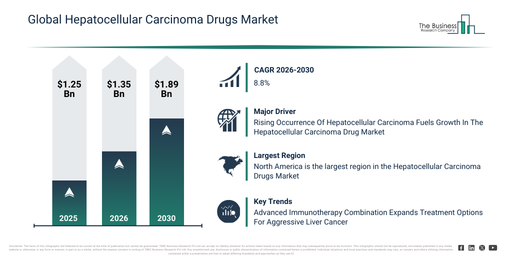
    Recent years have seen substantial expansion in the size of the hepatocellular carcinoma drugs market. Looking ahead, this market is anticipated to increase from $1.25 billion in 2025 to $1.35 billion in 2026, recording a compound annual growth rate (CAGR) of 8.0%. This historical expansion can be attributed to factors such as the prevalence of chronic hepatitis B and C, a significant incidence of liver cirrhosis, rising levels of alcohol consumption, limited available treatment options, and the late-stage diagnosis of hepatocellular carcinoma.

    The hepatocellular carcinoma drugs market is anticipated to experience substantial growth over the next few years. It is projected to expand to $1.89 billion by 2030, demonstrating a compound annual growth rate (CAGR) of 8.8%. This expansion during the forecast period is primarily driven by progress in targeted therapies, the increasing availability of immunotherapy drugs, the broader implementation of early screening programs, improvements in healthcare infrastructure within developing markets, and the growing embrace of personalized medicine. Significant trends expected during this time include the ongoing development of targeted therapies, advancements in immunotherapy, wider adoption of personalized medicine, enhanced early diagnosis and screening initiatives, and intensified research into combination therapies.

    Get A Free Sample Report With In-Depth Market Insights:

    https://thebusinessresearchcompany.com/sample_request?id=88324386&type=smp&name=Hepatocellular%20Carcinoma%20Drugs%20Market%20Report%202026&utm_source=Blogs&utm_medium=Paid&utm_campaign=Oct_PR

    Hepatocellular Carcinoma Drugs Market Demand Drivers Opening New Revenue Streams

    The growing incidence of hepatocellular carcinoma is projected to fuel expansion within the hepatocellular carcinoma drug market in the upcoming years. Hepatocellular carcinoma (HCC), the predominant type of liver cancer, is a primary malignant condition affecting the liver, originating from hepatocyte cells. The majority of HCC cases stem from hepatitis B or C infections or cirrhosis. The sustained increase in hepatocellular carcinoma cases consequently generates a greater need for efficacious hepatocellular carcinoma drugs to manage the illness. For example, data from the American Cancer Society, Inc., a US-based nationwide voluntary health organization focused on eradicating cancer, indicated that new liver cancer diagnoses among females in the United States rose from 12,660 in 2022 to an estimated 13,230 in 2023. This escalating occurrence of hepatocellular carcinoma is, therefore, stimulating the growth of the hepatocellular carcinoma drug market.

    Hepatocellular Carcinoma Drugs Market Breakdown By Product Type And Application

    The hepatocellular carcinoma drugs market covered in this report is segmented –

    1) By Type: Brachytherapy, Chemotherapy

    2) By Drug Class: PD-1/PD-L1 Inhibitors, Tyrosine Kinase Inhibitors

    3) By End User: Hospitals, Clinics, Cancer Rehabilitation Centers, Ambulatory Surgical Centers

    Subsegments:

    1) By Brachytherapy: Radioactive Seed Implants, Balloon-Activated Brachytherapy, Selective Internal Radiation Therapy

    2) By Chemotherapy: Systemic Chemotherapy, Targeted Therapy Agents, Combination Chemotherapy Regimens, Adjuvant Chemotherapy

    Hepatocellular Carcinoma Drugs Market Trends Powering Strategic Industry Growth

    Leading companies within the hepatocellular carcinoma drugs market are concentrating on developing pioneering products, such as immune checkpoint inhibitor combinations, to better treatment outcomes for individuals with advanced stages of the disease. An immune checkpoint inhibitor combination refers to a therapeutic approach that merges two complementary immunotherapies to intensify the body’s antitumor response by targeting diverse immune regulatory pathways. For example, in April 2025, the U.S. Food and Drug Administration, a regulatory authority situated in the US, endorsed the nivolumab–ipilimumab combination regimen. This two-agent therapy was sanctioned for the initial treatment of adults with unresectable or metastatic hepatocellular carcinoma after demonstrating superior overall survival and better response rates when compared to existing therapeutic choices. It introduces a clinically validated immunotherapy alternative that expands the systemic treatment options for advanced liver cancer.

    Hepatocellular Carcinoma Drugs Market Company Landscape And Competitive Strategy

    Major companies operating in the hepatocellular carcinoma drugs market are AbbVie Inc., Amgen Inc., Bayer AG, Bristol-Myers Squibb Company, Eisai Co.Ltd., Eli Lilly and Company, Johnson & Johnson, Merck & Co. Inc., Novartis AG, Pfizer Inc., Takeda Pharmaceutical Company Limited, Teva Pharmaceutical Industries Ltd., F. Hoffmann-La Roche Ltd, Gilead Sciences Inc., Exelixis Inc., Ipsen Pharma Biotech SAS, AstraZeneca plc, BeiGene Ltd., Ono Pharmaceutical Co. Ltd., Roche Holdings AG, Sanofi S.A., Astellas Pharma Inc., Daiichi Sankyo Company Limited, Otsuka Pharmaceutical Co. Ltd., Kyowa Kirin Co. Ltd., Sumitomo Dainippon Pharma Co. Ltd., Hengrui Medicine Co. Ltd., CSPC Pharmaceutical Group Limited, Hutchison China MediTech Limited, Jiangsu Hengrui Medicine Co. Ltd.

    View The Full Hepatocellular Carcinoma Drugs Market Report:

    https://thebusinessresearchcompany.com/report/hepatocellular-carcinoma-drugs-global-market-report?utm_source=Blogs&utm_medium=Paid&utm_campaign=Oct_PR

    Hepatocellular Carcinoma Drugs Market Global Footprint: Which Region Leads The Industry?

    North America was the largest region in the hepatocellular carcinoma drug market in 2025. The regions covered in the hepatocellular carcinoma drugs market report are Asia-Pacific, South East Asia, Western Europe, Eastern Europe, North America, South America, Middle East, Africa.

    Reach Out To Our Team:

    The Business Research Company: https://www.thebusinessresearchcompany.com/

    Americas: +1 310-496-7795

    Asia: +44 7882 955267 & +91 8897263534

    Europe: +44 7882 955267

    Email us at: marketing@tbrc.info

    Follow us on:

    LinkedIn: https://in.linkedin.com/company/the-business-research-company

    YouTube: https://www.youtube.com/channel/UC24_fI0rV8cR5DxlCpgmyFQ

    Global Market Model: https://www.thebusinessresearchcompany.com/global-market-model
  • Hepatitis Therapeutics Market Forecast To Reach $23.42 Billion By 2030: Key Growth Drivers And Industry Trends

    Hepatitis Therapeutics Market Forecast To Reach $23.42 Billion By 2030: Key Growth Drivers And Industry Trends

    Backed by market attractiveness analysis, total addressable market sizing, company benchmarking matrices, interactive Excel dashboards, wider supply chain intelligence, emerging startup coverage, and detailed product-level insights, The Business Research Company’s 2026 market reports are designed to offer research that is more actionable and strategically valuable than ever.

    Hepatitis Therapeutics Market Growth Potential: How Will Market Size Shift Through 2030?

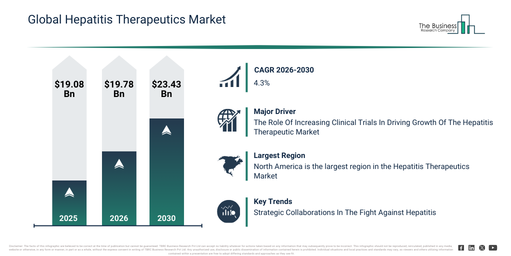
    The hepatitis therapeutics market size has experienced consistent growth in recent years. It is projected to increase from $19.08 billion in 2025 to $19.78 billion in 2026, achieving a compound annual growth rate (CAGR) of 3.7%. The expansion observed in the historic period can be ascribed to the elevated occurrence of hepatitis B and C infections, the introduction of interferon-based therapies, broadened public vaccination initiatives, improved blood screening and diagnostic awareness, and government-led viral hepatitis control programs.

    The hepatitis therapeutics market is anticipated to experience consistent expansion over the coming years. This market is projected to reach $23.43 billion in 2030, exhibiting a compound annual growth rate (CAGR) of 4.3%. Several factors are expected to fuel this growth during the forecast period, including an increased adoption of direct-acting antivirals, greater investment in innovative immune modulators, enhanced treatment accessibility in developing markets, improved diagnosis rates resulting from screening initiatives, and advancements in pipeline development for pan-genotypic therapies. Key trends anticipated over the same period encompass a growing uptake of direct-acting antivirals for hepatitis C, a heightened emphasis on combination therapies for chronic hepatitis, the expansion of vaccination efforts aimed at hepatitis prevention, a move towards long-term management strategies centered on oral antivirals, and an increasing reliance on online and specialty pharmacies for accessing medications.

    Get A Free Sample Report With In-Depth Market Insights:

    https://thebusinessresearchcompany.com/sample_request?id=51533655&type=smp&name=Hepatitis%20Therapeutics%20Market%20Report%202026&utm_source=Blogs&utm_medium=Paid&utm_campaign=Oct_PR

    Hepatitis Therapeutics Market Growth Backed By Core Demand Fundamentals

    The increasing volume of clinical trials is projected to stimulate the expansion of the hepatitis therapeutic market moving forward. These trials are research studies designed to evaluate new treatments, medications, or interventions in human participants. They are critical in the evolution of new hepatitis therapeutics, establishing a robust and ethical framework to assess the safety and efficacy of potential treatments, which ensures that patients receive the most effective and beneficial therapies accessible. For instance, in December 2024, the Association of the British Pharmaceutical Industry, a UK-based nonprofit organization, reported that the count of industry-initiated clinical trials in the UK rose from 411 trials in 2022 to 426 trials in 2023, representing a 3.7% increase. Thus, the escalating number of clinical trials is propelling the growth of the hepatitis therapeutics market.

    Hepatitis Therapeutics Market Segment Analysis And Revenue Potential

    The hepatitis therapeutics market covered in this report is segmented –

    1) By Disease Type: Hepatitis A, Hepatitis B, Hepatitis C, Other Disease Types

    2) By Drug Class: Oral Antivirals, Immune Modulators

    3) By Distribution Channel: Hospital Pharmacies, Drug Stores And Retail Pharmacies, Online Providers

    Subsegments:

    1) By Hepatitis A: Vaccines, Post-Exposure Prophylaxis (PEP)

    2) By Hepatitis B: Antiviral Medications, Immune Modulators, Vaccines

    3) By Hepatitis C: Direct-Acting Antivirals (DAAs), Ribavirin, Interferon-Based Therapies

    4) By Other Disease Types: Hepatitis D, Hepatitis E

    Hepatitis Therapeutics Market Growth Trends Reshaping The Competitive Landscape

    Major companies operating in the hepatitis therapeutics market are concentrating on agreements to develop therapeutics, aiming to gain a competitive edge. A strategic agreement represents a formal contract between two or more parties, outlining the terms of their cooperation to achieve shared business goals. For instance, in October 2023, GlaxoSmithKline PLC, a UK-based pharmaceutical and biotechnology company, announced an agreement to obtain an exclusive license for JNJ-3989. This compound is an investigational subcutaneous RNA interference (RNAi) therapeutic intended for the treatment of chronic hepatitis B (CHB). JNJ-3989 functions as a novel RNAi therapeutic that specifically targets the hepatitis B virus (HBV) X protein. The X protein is essential for both HBV replication and viral persistence.

    Hepatitis Therapeutics Market Key Players Shaping Industry Direction

    Major companies operating in the hepatitis therapeutics market are Gilead Sciences Inc., Bristol-Myers Squibb Co., AbbVie Inc., Merck & Co. Inc., Johnson & Johnson Services Inc., Cipla Inc., F Hoffmann-La Roche Ltd., Biocon Limited, LAURUS Labs Ltd., Zydus Lifesciences Limited, Hetero Healthcare Limited, Novartis AG, Sanofi SA, GlaxoSmithKline plc, Lupin Ltd., Teva Pharmaceutical Industries Ltd., NATCO Pharma Limited, Pfizer Inc., AstraZeneca plc, Boehringer Ingelheim International GmbH, Biocon Biopharmaceuticals Pvt. Ltd.

    View The Full Hepatitis Therapeutics Market Report:

    https://thebusinessresearchcompany.com/report/hepatitis-therapeutics-global-market-report?utm_source=Blogs&utm_medium=Paid&utm_campaign=Oct_PR

    Hepatitis Therapeutics Market Regional Distribution: Which Areas Power Market Growth?

    North America was the largest region in the hepatitis therapeutics market in 2025. Asia-Pacific is expected to be the fastest-growing region in the hepatitis therapeutics market report during the forecast period. The regions covered in the hepatitis therapeutics market report are Asia-Pacific, South East Asia, Western Europe, Eastern Europe, North America, South America, Middle East, Africa.

    Reach Out To Our Team:

    The Business Research Company: https://www.thebusinessresearchcompany.com/

    Americas: +1 310-496-7795

    Asia: +44 7882 955267 & +91 8897263534

    Europe: +44 7882 955267

    Email us at: marketing@tbrc.info

    Follow us on:

    LinkedIn: https://in.linkedin.com/company/the-business-research-company

    YouTube: https://www.youtube.com/channel/UC24_fI0rV8cR5DxlCpgmyFQ

    Global Market Model: https://www.thebusinessresearchcompany.com/global-market-model
  • Hepatitis Drugs Market Research 2026: Market Size, Trends, Segments And Growth Forecast

    Hepatitis Drugs Market Research 2026: Market Size, Trends, Segments And Growth Forecast

    Featuring market attractiveness scoring, total addressable market sizing, company benchmarking matrices, interactive Excel dashboards, deeper supply chain intelligence, emerging startup tracking, and granular product-level insights, The Business Research Company’s 2026 market reports are built to deliver research that is both more actionable and more strategically valuable.

    Hepatitis Drugs Market Value Analysis: What Growth Lies Ahead Over The Forecast Period?

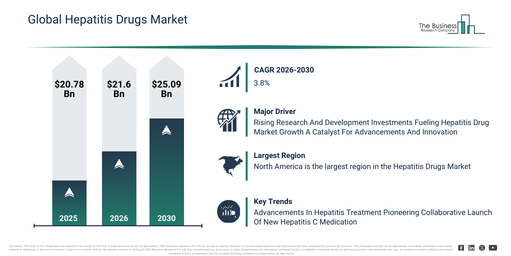
    The hepatitis drugs market size has demonstrated steady growth in recent years. It is projected to increase from $20.78 billion in 2025 to $21.6 billion in 2026, achieving a compound annual growth rate (CAGR) of 4.0%. The expansion observed historically stems from the high prevalence of hepatitis b and c infections, reliance on interferon-based therapies, limited treatment accessibility in low-income regions, government-led hepatitis screening programs, and a rise in blood transfusion and injection-related infections.

    The hepatitis drugs market size is anticipated to undergo consistent expansion in the coming years. It will grow to $25.09 billion in 2030 at a compound annual growth rate (CAGR) of 3.8%. This projected increase is largely due to factors such as the rising acceptance of direct-acting antivirals, heightened healthcare spending on liver diseases, the expansion of mass vaccination programs, improved awareness and diagnosis rates, and ongoing development of next-generation antivirals in the pipeline. Significant trends during the forecast period encompass a transition towards oral direct-acting antiviral therapies, the increasing use of combination drug regimens, a greater focus on pan-genotypic hepatitis treatments, the growth of generic and biosimilar hepatitis drugs, and an enhanced emphasis on early diagnosis and access to treatment.

    Get A Free Sample Report With In-Depth Market Insights:

    https://thebusinessresearchcompany.com/sample_request?id=85380763&type=smp&name=Hepatitis%20Drugs%20Market%20Report%202026&utm_source=Blogs&utm_medium=Paid&utm_campaign=Oct_PR

    Hepatitis Drugs Market Growth Catalysts And Demand Drivers

    The hepatitis drug market is anticipated to expand in the coming years due to increased investment in research and development. Research and development encompass the investigative activities undertaken by businesses, institutions, or organizations to discover, experiment with, invent, and enhance new or existing goods, processes, or services. Investments in these areas significantly contribute to financial growth, societal improvement, corporate success, and sustainability, fostering innovation and progress across various fields. For instance, in May 2023, the Parliament of Australia, the nation’s supreme legislative body, announced an investment of $12.1 billion in research and development for 2022–23, representing a 3.2% increase from 2021-2022. This growing commitment to research and development is thus propelling the hepatitis drugs market forward.

    Hepatitis Drugs Market Segmentation And Category Overview

    The hepatitis drugs market covered in this report is segmented –

    1) By Drug Class: Interferon Alphas, HIV NRTIs, Nucleotide Polymerase Or NS5A Inhibitor Combinations, Hepatitis C Protease Or NS5A Inhibitor Combinations, NS5A Inhibitors, Nucleotide Polymerase Inhibitors, Nucleoside Analogue Antivirals

    2) By Route Of Administration: Oral, Injection

    3) By Distribution Channel: Hospital Pharmacies, Retail Pharmacies, Online Pharmacies

    4) By Application: Hepatitis A, Hepatitis B, Hepatitis C, Hepatitis D, Hepatitis E

    Subsegments:

    1) By Interferon Alphas: Pegylated Interferon Alpha, Non-Pegylated Interferon Alpha

    2) By HIV NRTIs: Zidovudine, Lamivudine, Abacavir, Tenofovir

    3) By Nucleotide Polymerase Or NS5A Inhibitor Combinations: Sofosbuvir Or velpatasvir, Sofosbuvir Or ledipasvir

    4) By Hepatitis C Protease Or NS5A Inhibitor Combinations: Glecaprevir Or pibrentasvir, Paritaprevir Or ombitasvir Or dasabuvir

    5) By NS5A Inhibitors: Daclatasvir, Ledipasvir, Velpatasvir

    6) By Nucleotide Polymerase Inhibitors: Sofosbuvir, Dasabuvir

    7) By Nucleoside Analogue Antivirals: Adefovir, Entecavir, Lamivudine

    Hepatitis Drugs Market Trends Shaping Long-Term Demand

    Major companies operating in the hepatitis drugs market are focusing on developing drugs with innovative formulations to enhance treatment efficacy, improve patient compliance, reduce side effects, and address the various strains of the hepatitis virus. The FDA Fast Track designation is a process designed to expedite the development and review of drugs that treat serious conditions and fulfill an unmet medical need. Drugs receiving this designation are intended to help patients access new therapies more quickly, particularly for serious or life-threatening diseases. For instance, in February 2024, GSK plc, a UK-based pharmaceutical company, received the U.S. Food and Drug Administration (FDA) Fast Track designation for the drug bepirovirsen for the treatment of chronic hepatitis B (CHB). This designation is significant as it aims to accelerate the development and review process for therapies that address unmet medical needs in serious conditions.

    Hepatitis Drugs Market Competitive Analysis Of Leading Industry Participants

    Major companies operating in the hepatitis drugs market are Gilead Sciences Inc., F. Hoffmann-La Roche Ltd, GlaxoSmithKline plc, Johnson & Johnson, Merck & Co. Inc., Abbott Laboratories, AbbVie Inc., Arbutus Biopharma Corporation, Aspen Pharmacare Holdings Limited, Aurobindo Pharma Limited, Beximco Pharmaceuticals Ltd., Biocon Limited, Bristol-Myers Squibb Company, Cadila Healthcare Limited, Cipla Limited, Dr. Reddy’s Laboratories Ltd., Enanta Pharmaceuticals Inc., Hetero Drugs Limited, Laurus Labs Limited, Lupin Pharmaceuticals Inc., Micro Labs Limited, Mylan N. V., Natco Pharma Limited, Novartis International AG, Roche Holding AG, Sun Pharmaceutical Industries Limited, Teva Pharmaceutical Industries Ltd., Zydus Cadila Healthcare Limited, Vir Biotechnology Inc., Genentech Inc., Eisai Pharmaceuticals India Pvt. Ltd.

    View The Full Hepatitis Drugs Market Report:

    https://thebusinessresearchcompany.com/report/hepatitis-drugs-global-market-report?utm_source=Blogs&utm_medium=Paid&utm_campaign=Oct_PR

    Hepatitis Drugs Market Leading Geography: Which Region Contributes The Most Revenue?

    North America was the largest region in the hepatitis drugs market in 2025. Asia-Pacific is expected to be the fastest-growing region in the forecast period. The regions covered in the hepatitis drugs market report are Asia-Pacific, South East Asia, Western Europe, Eastern Europe, North America, South America, Middle East, Africa.

    Reach Out To Our Team:

    The Business Research Company: https://www.thebusinessresearchcompany.com/

    Americas: +1 310-496-7795

    Asia: +44 7882 955267 & +91 8897263534

    Europe: +44 7882 955267

    Email us at: marketing@tbrc.info

    Follow us on:

    LinkedIn: https://in.linkedin.com/company/the-business-research-company

    YouTube: https://www.youtube.com/channel/UC24_fI0rV8cR5DxlCpgmyFQ

    Global Market Model: https://www.thebusinessresearchcompany.com/global-market-model

  • Hepatitis B Virus (HBV) Capsid Inhibitors Market Forecast 2026: Market Size, Competitive Landscape And Growth Drivers

    Hepatitis B Virus (HBV) Capsid Inhibitors Market Forecast 2026: Market Size, Competitive Landscape And Growth Drivers

    Built to provide research that’s more actionable and strategically valuable, The Business Research Company’s 2026 market reports include market attractiveness analysis, total addressable market sizing, company benchmarking matrices, interactive Excel dashboards, broader supply chain intelligence, emerging startup tracking, and in-depth product insights.

    Hepatitis B Virus (HBV) Capsid Inhibitors Market Size Forecast: How Big Could The Market Get By 2030?

    The hepatitis b virus (hbv) capsid inhibitors market size has experienced significant expansion in recent years. It is projected to escalate from $0.52 billion in 2025 to $0.59 billion in 2026, achieving a compound annual growth rate (CAGR) of 13.7%. The historical growth observed in this sector was driven by factors including the worldwide impact of chronic hepatitis B infection, the deficiencies of current antiviral treatments, the initial clinical verification of capsid inhibitors, augmented funding for virology research, and increasing engagement in pharmaceutical pipeline development.

    The hepatitis b virus (hbv) capsid inhibitors market size is projected to experience rapid expansion over the coming years. Its valuation is anticipated to reach $0.98 billion by 2030, demonstrating a compound annual growth rate (CAGR) of 13.4%. This projected growth during the forecast period is attributable to several factors, including the increasing use of combination regimens with immunotherapies, a surge in investment directed towards curative hbv treatments, a rise in regulatory approvals for innovative antivirals, the expansion of global screening initiatives, and advancements in next-generation capsid inhibitors. Key developments expected within this period involve an escalating focus on functional cure strategies for hbv, the increasing creation of capsid assembly modulators, a growing adoption of combination therapy approaches, the expansion of late-stage clinical pipelines, and improved targeting of viral replication pathways.

    Get A Free Sample Report With In-Depth Market Insights:

    https://thebusinessresearchcompany.com/sample_request?id=84674280&type=smp&name=Hepatitis%20B%20Virus%20%28HBV%29%20Capsid%20Inhibitors%20Market%20Report%202026&utm_source=Blogs&utm_medium=Paid&utm_campaign=Oct_PR

    Hepatitis B Virus (HBV) Capsid Inhibitors Market Opportunity Drivers: What’s Unlocking New Revenue Potential?

    The expanding occurrence of hepatitis B virus infections is anticipated to boost the hepatitis B virus (HBV) capsid inhibitors market in the future. Hepatitis B Virus (HBV) infections are liver ailments stemming from the hepatitis B virus, capable of causing both short-term and long-term illnesses. These infections spread via exposure to contaminated blood or bodily fluids, potentially leading to severe issues like liver cirrhosis or liver cancer. The rising incidence of Hepatitis B Virus (HBV) infections is primarily attributable to insufficient vaccination rates, leaving many unprotected and facilitating the virus’s transmission through contact with infected blood or bodily fluids. Hepatitis B virus (HBV) capsid inhibitors combat hepatitis B virus (HBV) infections by interfering with the viral capsid’s formation and assembly, which in turn halts viral replication and curtails the infection’s dissemination throughout the body. For example, a report from the World Health Organization (WHO), a Switzerland-based intergovernmental body, in April 2024, indicated that by the close of 2022, merely 13% of those with chronic hepatitis B had been diagnosed, and roughly 3% (7 million) had undergone antiviral therapy. Regarding hepatitis C, 36% of affected persons were diagnosed, with 20% (12.5 million) getting curative treatment. These statistics fall significantly short of the worldwide goal to treat 80% of individuals with chronic hepatitis B and C by 2030. Consequently, the rising prevalence of hepatitis B virus infections is fueling the expansion of the hepatitis B virus (HBV) capsid inhibitors market.

    Hepatitis B Virus (HBV) Capsid Inhibitors Market Segment Outlook: Which Categories Are Growing Fastest?

    The hepatitis b virus (hbv) capsid inhibitors market covered in this report is segmented –

    1) By Drug Type: Core Protein Allosteric Modulators (CpAMs), Capsid Assembly Modulators, Other Drug Types

    2) By Application: Chronic Hepatitis B, Acute Hepatitis B, Other Applications

    3) By Distribution Channel: Hospital Pharmacies, Retail Pharmacies, Online Pharmacies, Other Distribution Channels

    4) By End-User: Hospitals, Clinics, Research Institutes, Other End-Users

    Subsegments:

    1) By Core Protein Allosteric Modulators (CpAMs): Class I Core Protein Allosteric Modulators (CpAMs), Class II Core Protein Allosteric Modulators (CpAMs)

    2) By Capsid Assembly Modulators: Direct Capsid Assembly Modulators, Indirect Capsid Assembly Modulators

    3) By Other Drug Types: Novel Capsid Inhibitors, Combination Therapies, Experimental Mechanism-Based Inhibitors

    Hepatitis B Virus (HBV) Capsid Inhibitors Market Innovation Trends Shaping Future Development

    Leading companies within the hepatitis B virus (HBV) capsid inhibitors market are focusing on innovations, including oral small molecule capsid assembly modulators, to enhance antiviral effectiveness, improve patient adherence, and achieve sustained viral suppression. These oral small-molecule capsid assembly modulators are orally administered antiviral agents designed to disrupt the assembly of the hepatitis B virus (HBV) capsid, thereby blocking its replication and reducing viral activity in the body. For example, in July 2024, Aligos Therapeutics, Inc., a US-based clinical-stage biopharmaceutical company, partnered with Xiamen Amoytop Biotech Co., Ltd., a China-based biopharmaceutical company, to initiate a clinical trial. This trial aims to evaluate innovative treatment candidates for chronic hepatitis B (CHB), leveraging Aligos’s advanced capsid assembly modulator technology to boost antiviral efficacy and accelerate the development of next-generation HBV therapies. This launch signifies a key progression in Aligos’s objective to develop effective and potentially curative treatments for patients living with chronic hepatitis B.

    Hepatitis B Virus (HBV) Capsid Inhibitors Market Leading Companies And Competitive Benchmarking

    Major companies operating in the hepatitis b virus (hbv) capsid inhibitors market are Johnson & Johnson, Roche Holding AG, GlaxoSmithKline plc, Gilead Sciences Inc., Jiangsu Hengrui Pharmaceuticals Co. Ltd., Novotech Health Holdings Pte. Ltd, Enanta Pharmaceuticals Inc., Assembly Biosciences Inc., Arbutus Biopharma Corporation, Aligos Therapeutics Inc., Qilu Pharmaceutical Co Ltd., Chia Tai Tianqing Pharmaceutical Group Co Ltd., Hepion Pharmaceuticals Inc., Shanghai Zhimeng Biopharma Inc., Antios Therapeutics, Bluejay Therapeutics Inc., Core Biopharma Inc., Door Pharmaceuticals, Shanghai Longwood Biopharmaceuticals Co. Ltd., Zhimeng Biopharma Inc.

    View The Full Hepatitis B Virus (HBV) Capsid Inhibitors Market Report:

    https://thebusinessresearchcompany.com/report/global-hepatitis-b-virus-hbv-capsid-inhibitors-market-report?utm_source=Blogs&utm_medium=Paid&utm_campaign=Oct_PR

    Hepatitis B Virus (HBV) Capsid Inhibitors Market Regional Outlook: Where Is Opportunity Concentrated?

    Asia-Pacific was the largest region in the hepatitis B virus (HBV) capsid inhibitors market in 2025. The regions covered in the hepatitis b virus (hbv) capsid inhibitors market report are Asia-Pacific, South East Asia, Western Europe, Eastern Europe, North America, South America, Middle East, Africa.

    Reach Out To Our Team:

    The Business Research Company: https://www.thebusinessresearchcompany.com/

    Americas: +1 310-496-7795

    Asia: +44 7882 955267 & +91 8897263534

    Europe: +44 7882 955267

    Email us at: marketing@tbrc.info

    Follow us on:

    LinkedIn: https://in.linkedin.com/company/the-business-research-company

    YouTube: https://www.youtube.com/channel/UC24_fI0rV8cR5DxlCpgmyFQ

    Global Market Model: https://www.thebusinessresearchcompany.com/global-market-model
  • Hepatitis B Virus (HBV) Market Size In 2026: Regional Growth, Key Segments And Future Outlook

    Hepatitis B Virus (HBV) Market Size In 2026: Regional Growth, Key Segments And Future Outlook

    Backed by market attractiveness analysis, total addressable market sizing, company benchmarking matrices, interactive Excel dashboards, wider supply chain intelligence, emerging startup coverage, and detailed product-level insights, The Business Research Company’s 2026 market reports are designed to offer research that is more actionable and strategically valuable than ever.

    Hepatitis B Virus (HBV) Market Revenue Outlook: What CAGR Lies Ahead Through 2030?

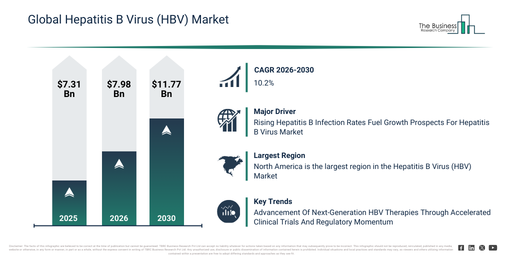
    The hepatitis b virus (hbv) market has experienced robust growth in recent years. It will grow from $7.31 billion in 2025 to $7.98 billion in 2026 at a compound annual growth rate (CAGR) of 9.3%. Historically, this expansion has been attributed to factors such as the high prevalence of hbv in the Asia-Pacific region, limited awareness concerning hbv treatment, low vaccination coverage in early years, a reliance on generic antiviral drugs, and an increasing incidence of chronic liver disease.

    The hepatitis B virus (HBV) market is projected to experience substantial expansion over the coming years. This market is anticipated to reach $11.77 billion by 2030, demonstrating a compound annual growth rate (CAGR) of 10.2%. Factors driving this growth during the forecast period include enhanced research and development in HBV treatments, the broadening scope of government vaccination initiatives, the embrace of precision medicine, escalating healthcare spending, and improvements in screening and diagnostic infrastructure. Key developments expected within this period encompass a greater uptake of antiviral therapies, the continued increase in hepatitis B vaccination programs, the creation of combination treatment approaches, a specific emphasis on managing HBV in pediatric and geriatric populations, and the broadening of screening and diagnostic services.

    Get A Free Sample Report With In-Depth Market Insights:

    https://thebusinessresearchcompany.com/sample_request?id=10353764&type=smp&name=Hepatitis%20B%20Virus%20%28HBV%29%20Market%20Report%202026&utm_source=Blogs&utm_medium=Paid&utm_campaign=Oct_PR

    Hepatitis B Virus (HBV) Market Growth Momentum: What Factors Are Shaping Demand?

    The increasing incidence of hepatitis B infection is anticipated to propel the expansion of the hepatitis B virus market going forward. Hepatitis B, a liver infection caused by the hepatitis B virus (HBV), is preventable through vaccination. Elevated hepatitis B infection rates are likely to increase demand for diagnostic tests and available treatment options. For example, the Centers for Disease Control and Prevention (CDC), a US-based national public health agency focused on controlling and preventing disease, injury, and disability, estimated 13,300 new hepatitis B infections and 69,800 new hepatitis C infections in 2023. Thus, the high prevalence of hepatitis B infection will drive the hepatitis B virus market.

    Hepatitis B Virus (HBV) Market Segment Landscape: Which Areas Lead Development?

    The hepatitis b virus (hbv) market covered in this report is segmented –

    1) By Type: Acute, Chronic

    2) By Treatment: Immune Modulator Drugs, Antiviral Drugs, Vaccine, Surgery

    3) By Age Group: Pediatrics, Adults, Seniors

    4) By End User: Medical Providers, Patients, Healthcare Payers

    Subsegments:

    1) By Acute HBV: Asymptomatic Acute HBV, Symptomatic Acute HBV, Severe Acute HBV

    2) By Chronic HBV: Chronic Hepatitis B (HBeAg Positive), Chronic Hepatitis B (HBeAg Negative), Chronic Hepatitis B With Compensated Liver Disease, Chronic Hepatitis B With Decompensated Liver Disease, Chronic Hepatitis B With Hepatocellular Carcinoma (HCC)

    Hepatitis B Virus (HBV) Market Trends Redefining Industry Growth

    Leading companies in the HBV market are prioritizing the advancement of innovative therapies through clinical trials and accelerating regulatory processes to improve treatment effectiveness and secure a competitive advantage. For instance, in August 2025, Aligos Therapeutics, a US-based therapeutics company, initiated patient dosing in its Phase II B-SUPREME trial, evaluating ALG-000184, a first-in-class oral capsid assembly modulator for chronic hepatitis B. This randomized, double-blind study will enroll approximately 200 treatment-naïve adults, comparing ALG-000184 to tenofovir disoproxil fumarate over 48 weeks. The primary objective is to achieve HBV DNA levels below quantifiable limits in both HBeAg-positive and HBeAg-negative participants, with secondary evaluations assessing safety, pharmacokinetics, and antigen changes. Earlier Phase I data indicated strong antiviral activity and good tolerability, reinforcing the drug’s potential. Interim results are projected for 2026, with full topline findings expected in 2027.

    Hepatitis B Virus (HBV) Market Industry Leaders And Competitive Landscape

    Major companies operating in the hepatitis b virus (hbv) market are Pfizer Inc., Johnson & Johnson Services Inc., F. Hoffmann-La Roche Ltd., Merck & Co. Inc., AbbVie Inc., Bristol-Myers Squibb Company, Sanofi SA, GlaxoSmithKline PLC, Gilead Sciences Inc., Mylan N.V., Teva Pharmaceutical Industries Ltd., Aurobindo Pharma Limited, Apotex Corp., Lupin Pharmaceuticals Inc., Cadila Healthcare Ltd., Dynavax Technologies Corporation, Accord Healthcare Inc., Par Pharmaceutical Inc., Arbutus Biopharma Corporation, Antios Therapeutics Inc.

    View The Full Hepatitis B Virus (HBV) Market Report:

    https://thebusinessresearchcompany.com/report/hepatitis-b-virus-hbv-global-market-report?utm_source=Blogs&utm_medium=Paid&utm_campaign=Oct_PR

    Hepatitis B Virus (HBV) Market Geographic Landscape: Which Region Leads Industry Growth?

    North America was the largest region in the hepatitis B Virus (HBV) market in 2025. Asia-Pacific is expected to be the fastest-growing region in the forecast period. The regions covered in the hepatitis b virus (hbv) market report are Asia-Pacific, South East Asia, Western Europe, Eastern Europe, North America, South America, Middle East, Africa.

    Reach Out To Our Team:

    The Business Research Company: https://www.thebusinessresearchcompany.com/

    Americas: +1 310-496-7795

    Asia: +44 7882 955267 & +91 8897263534

    Europe: +44 7882 955267

    Email us at: marketing@tbrc.info

    Follow us on:

    LinkedIn: https://in.linkedin.com/company/the-business-research-company

    YouTube: https://www.youtube.com/channel/UC24_fI0rV8cR5DxlCpgmyFQ

    Global Market Model: https://www.thebusinessresearchcompany.com/global-market-model
  • Heparin Market Growth Forecast Through 2030: Market Size And Trends In 2026

    Heparin Market Growth Forecast Through 2030: Market Size And Trends In 2026

    Featuring market attractiveness scoring, total addressable market sizing, company benchmarking matrices, interactive Excel dashboards, deeper supply chain intelligence, emerging startup tracking, and granular product-level insights, The Business Research Company’s 2026 market reports are built to deliver research that is both more actionable and more strategically valuable.

    Heparin Market Growth Analysis: How Will Revenue Trend Over The Forecast Period?

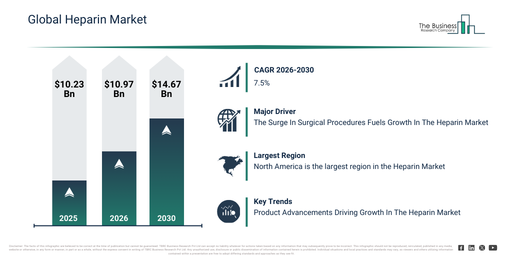
    The heparin market has witnessed substantial expansion in recent years. It is projected to increase from $10.23 billion in 2025 to $10.97 billion in 2026, registering a compound annual growth rate (CAGR) of 7.2%. This past growth can be ascribed to a rise in cardiovascular surgeries, extensive utilization in dialysis procedures, the proven clinical effectiveness of UFH and LMWH, an uptick in inpatient hospital admissions, and established reimbursement policies for anticoagulants.

    The heparin market is projected to experience substantial expansion over the upcoming years. Its valuation is set to reach $14.67 billion by 2030, exhibiting a compound annual growth rate (CAGR) of 7.5%. This anticipated growth during the forecast period stems from factors such as an increasing incidence of venous thromboembolism, a growing elderly demographic grappling with chronic conditions, the broader application of LMWH in outpatient settings, the proliferation of specialty pharmacies, and a heightened emphasis on preventive anticoagulation. Key trends anticipated during this period encompass the increasing uptake of low molecular weight heparin, the development of more comprehensive hospital-based anticoagulation protocols, a surge in requirements for dialysis and cardiac care applications, a move towards pre-filled and ready-to-use injectable forms, and the widening reach of online and retail pharmacy distribution channels.

    Get A Free Sample Report With In-Depth Market Insights:

    https://thebusinessresearchcompany.com/sample_request?id=28551627&type=smp&name=Heparin%20Market%20Report%202026&utm_source=Blogs&utm_medium=Paid&utm_campaign=Oct_PR

    Heparin Market Expansion Drivers: What’s Shaping Future Growth?

    The anticipated increase in surgical procedures is projected to propel the expansion of the heparin market in the future. A surgical procedure is defined as a medical intervention or treatment approach that entails either creating incisions or employing minimally invasive methods to reach and operate on the body’s tissues or organs. The increasing volume of surgical procedures requires the administration of heparin, an anticoagulant, to avert blood clot formation both during and following operations. This, in turn, stimulates the demand for heparin and accelerates the growth of the heparin market. For example, data from February 2024, provided by the American Academy of Facial Plastic and Reconstructive Surgery, a US-based non-profit entity, indicated that approximately 83% of all medical procedures conducted in 2023 utilized minimally invasive techniques, with conventional surgical procedures making up the other 17%. Furthermore, information from the American Society of Plastic Surgeons, a US-based specialty organization, revealed that in 2023, the overall count of cosmetic minimally invasive procedures rose from 23.7 million in 2022 to 25.4 million in 2023. Consequently, the escalation in surgical procedures is propelling the expansion of the heparin market.

    Heparin Market Segments: Where Is Growth Concentrated?

    The heparin market covered in this report is segmented –

    1) By Product: Unfractionated Heparin, Low Molecular Weight Heparin (LMWH), Ultra-Low Molecular Weight Heparin (ULMWH)

    2) By Source: Bovine, Porcine

    3) By Route of Administration: Intravenous, Subcutaneous

    4) By Application: Venous Thromboembolism, Atrial Fibrillation, Renal Impairment, Coronary Artery Disease, Other Applications

    5) By Distribution Channel: Hospital Pharmacies, Drug Stores And Retail Pharmacies, Online Pharmacies

    Subsegments:

    1) By Unfractionated Heparin: Injectable Formulations, Intravenous (IV) Solutions

    2) By Low Molecular Weight Heparin (LMWH): Enoxaparin, Dalteparin, Tinzaparin

    3) By Ultra-Low Molecular Weight Heparin (ULMWH): Specific Formulations For Specialized Therapies

    Heparin Market Strategic Trends: What Defines The Next Growth Phase?

    Leading firms within the heparin market are concentrating on creating novel solutions to boost drug effectiveness, better safety characteristics, and minimize adverse reactions, while concurrently investigating sophisticated delivery techniques and biosimilar advancements to address rising worldwide demand. A sterile blend, Heparin Sodium Chloride Injection, incorporates heparin, which functions as an anticoagulant (blood thinner), along with sodium chloride, with the latter component typically serving to preserve osmotic equilibrium and structural integrity within the solution. An example of this is seen in February 2024, when B. Braun Medical Inc., a medical enterprise located in the US, introduced its Heparin Sodium 2,000 Units in 0.9% Sodium Chloride Injection, available in a 1,000 mL EXCEL IV container at a concentration of 2 units/mL. This particular item represents the fifth addition to B. Braun’s Heparin product range, engineered to cater to the varied requirements of medical institutions for this vital anticoagulant drug.

    Heparin Market Key Participants And Competitive Landscape

    Major companies operating in the heparin market are Baxter International Inc., B. Braun Medical Inc., Dr. Reddy’s Laboratories Ltd., Fresenius SE & Co. KGaA, Leo Pharma A/S, Aspen Pharmacare plc, Bioiberica SA, Biomedical Foscama Group, Biovet SA, Changzhou Qianhong Bio-pharma Co. Ltd., CSPC NBP Pharmaceutical Co. Ltd., Intas Pharmaceuticals Ltd., Nanjing King-friend Biochemical Pharmaceutical Co. Ltd., Opocrin Pharmaceuticals Ltd., Pfizer Inc., Pharma Action Ltd., Rovi Pharma Industrial Services Ltd., Sagent Pharmaceuticals Inc., Sanofi S. A., Shenzhen Hepalink Pharmaceutical Co. Ltd., Sichuan Deebio Pharmaceutical Co. Ltd., Teva Pharmaceuticals Industries Ltd., VAV Life Sciences Inc., Viatris Inc., Wanbang Biopharmaceuticals Co. Ltd., Wockhardt Ltd., Xinbai Pharmaceuticals Co. Ltd., Yino Pharma Co. Ltd.

    View The Full Heparin Market Report:

    https://thebusinessresearchcompany.com/report/heparin-global-market-report?utm_source=Blogs&utm_medium=Paid&utm_campaign=Oct_PR

    Heparin Market Largest Region: Which Geography Holds The Biggest Share?

    North America was the largest region in the heparin market in 2025. Asia-Pacific is expected to be the fastest-growing region in the forecast period. The regions covered in the heparin market report are Asia-Pacific, South East Asia, Western Europe, Eastern Europe, North America, South America, Middle East, Africa.

    Reach Out To Our Team:

    The Business Research Company: https://www.thebusinessresearchcompany.com/

    Americas: +1 310-496-7795

    Asia: +44 7882 955267 & +91 8897263534

    Europe: +44 7882 955267

    Email us at: marketing@tbrc.info

    Follow us on:

    LinkedIn: https://in.linkedin.com/company/the-business-research-company

    YouTube: https://www.youtube.com/channel/UC24_fI0rV8cR5DxlCpgmyFQ

    Global Market Model: https://www.thebusinessresearchcompany.com/global-market-model
  • Heavy Metal Poisoning Drugs Market Analysis: $1.56 Billion Market Size In 2026 And Future Growth Prospects

    Heavy Metal Poisoning Drugs Market Analysis: $1.56 Billion Market Size In 2026 And Future Growth Prospects

    Built to provide research that’s more actionable and strategically valuable, The Business Research Company’s 2026 market reports include market attractiveness analysis, total addressable market sizing, company benchmarking matrices, interactive Excel dashboards, broader supply chain intelligence, emerging startup tracking, and in-depth product insights.

    Heavy Metal Poisoning Drugs Market Forecast: What Value Will The Market Reach By 2030?

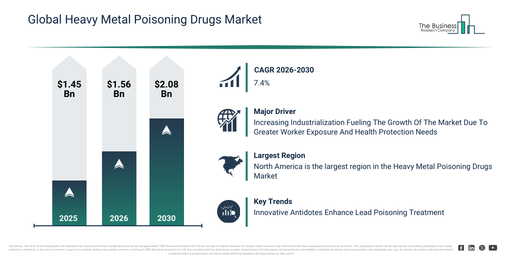
    The heavy metal poisoning drugs market has demonstrated robust expansion in recent years. It is anticipated to increase from $1.45 billion in 2025 to $1.56 billion in 2026, achieving a compound annual growth rate (CAGR) of 7.7%. The reasons for this historical growth encompass industrial pollution exposure, incidents of lead and mercury poisoning, the development of emergency medicine, specialized hospital toxicology units, and occupational health regulations.

    The heavy metal poisoning drugs market is anticipated to experience substantial expansion over the upcoming years. Its valuation is projected to reach $2.08 billion by 2030, exhibiting a compound annual growth rate (CAGR) of 7.4%. This projected growth during the forecast period is primarily driven by factors such as expanded environmental monitoring, more stringent safety regulations, advancements in diagnostic testing, increased industrialization in emerging economies, and enhanced public health surveillance. Key developments expected during this period include an ongoing dependence on chelation therapy, heightened recognition of environmental toxin exposure, broader implementation of emergency poison treatment protocols, greater adoption of oral and and injectable chelators, and an increasing emphasis on occupational and industrial safety.

    Get A Free Sample Report With In-Depth Market Insights:

    https://thebusinessresearchcompany.com/sample_request?id=57899713&type=smp&name=Heavy%20Metal%20Poisoning%20Drugs%20Market%20Report%202026&utm_source=Blogs&utm_medium=Paid&utm_campaign=Oct_PR

    Heavy Metal Poisoning Drugs Market Development Factors: What’s Supporting Demand?

    Future expansion of the heavy metal poisoning drugs market is anticipated to be fueled by rising industrialization. Industrialization describes the economic shift from an agricultural foundation to a system centered on manufacturing and services. This surge in industrial activity stems from rapid urban advancement and expanded infrastructure, which together foster an environment suitable for business expansion and economic development. Heavy metal poisoning drugs play a crucial role in supporting industrialization by safeguarding the health of workers, minimizing dangers associated with toxic exposure, and ensuring adherence to safety protocols, thereby boosting productivity and workplace security. As an illustration, data from the Office for National Statistics, a UK government department, revealed in September 2024 that the total sales value of UK manufacturers’ product sales climbed to $574.6 billion (£456.1 billion) in 2023, representing an increase of approximately $21.7 billion (£17.2 billion), or 3.9%, compared to $553.2 billion (£438.9 billion) in 2022. Consequently, the expansion of industrialization is stimulating the heavy metal poisoning drugs market’s growth.

    Heavy Metal Poisoning Drugs Market Segment Analysis: What Are The Core Market Categories?

    The heavy metal poisoning drugs market covered in this report is segmented –

    1) By Product Type: Deferasirox, Deferoxamine Mesylate, Emeramide, Other Product Types

    2) By Application: Arsenic Toxicity, Chromium Toxicity, Copper Toxicity, Lead Toxicity, Other Applications

    3) By End-User: Hospitals, Clinics, Home Healthcare

    Subsegments:

    1) By Deferasirox: Oral Tablet Formulations, Dispersible Tablets (DT), Generic Deferasirox Products, Iron Overload From Blood Transfusions, Beta-Thalassemia Related Use

    2) By Deferoxamine Mesylate: Intramuscular Injections, Subcutaneous Infusion Pumps, Iron Poisoning Emergency Kits, Aluminum Toxicity In Dialysis Patients, Pediatric And Adult Formulations

    3) By Emeramide: Mercury-Specific Chelation, Oral Capsule Form, Lipophilic Chelators, Environmental Toxic Exposure Applications, Investigational Therapies

    4) By Other Product Types: Dimercaprol (BAL), Dimercaptosuccinic Acid (DMSA), 2,3-Dimercapto-1-Propanesulfonic Acid (DMPS), Penicillamine, Calcium Disodium Ethylenediaminetetraacetate (EDTA)

    Heavy Metal Poisoning Drugs Market Transformation Trends: What Innovations Are Driving Change?

    Leading companies in the heavy metal poisoning drugs market are focusing on developing innovative solutions, such as antidotes for treating lead poisoning, to enhance therapeutic effectiveness, lessen side effects, and address the increasing incidence of exposure to toxic metals from environmental and occupational sources. Antidotes for lead poisoning treatment are chelating agents that bind to lead in the bloodstream, aiding its removal from the body through urine. For instance, in August 2023, Rising Pharmaceuticals, a US-based pharmaceutical company, launched edetate calcium disodium injection, an antidote designed for treating lead poisoning in both children and adults. This injectable chelating agent helps lower lead levels in the blood and tissues and is particularly important for managing severe cases like lead encephalopathy.

    Heavy Metal Poisoning Drugs Market Top Companies Driving Competitive Growth

    Major companies operating in the heavy metal poisoning drugs market are Sun Pharmaceutical Industries Ltd., Aurobindo Pharma Ltd., Dr. Reddy’s Laboratories Ltd., Hikma Pharmaceuticals, Lupin Pharmaceuticals Inc., Zydus Cadila, Aristo Pharmaceuticals Pvt. Ltd., Medopharm Pvt. Ltd., Cayman Chemical, Recordati Rare Diseases Inc., Midas Pharma GmbH, EmeraMed Limited, Ambrosia Remedies Pvt. Ltd., SGPharma Pvt. Ltd., Nouryon, Actavis Pharma, Captura Biopharma, Hope Pharmaceuticals, HOPO Therapeutics Inc., Triveni Interchem Pvt. Ltd.

    View The Full Heavy Metal Poisoning Drugs Market Report:

    https://thebusinessresearchcompany.com/report/heavy-metal-poisoning-drugs-global-market-report?utm_source=Blogs&utm_medium=Paid&utm_campaign=Oct_PR

    Heavy Metal Poisoning Drugs Market Regional Analysis: Which Geography Leads On Revenue?

    North America was the largest region in the heavy metal poisoning drugs market in 2025. The regions covered in the heavy metal poisoning drugs market report are Asia-Pacific, South East Asia, Western Europe, Eastern Europe, North America, South America, Middle East, Africa.

    Reach Out To Our Team:

    The Business Research Company: https://www.thebusinessresearchcompany.com/

    Americas: +1 310-496-7795

    Asia: +44 7882 955267 & +91 8897263534

    Europe: +44 7882 955267

    Email us at: marketing@tbrc.info

    Follow us on:

    LinkedIn: https://in.linkedin.com/company/the-business-research-company

    YouTube: https://www.youtube.com/channel/UC24_fI0rV8cR5DxlCpgmyFQ

    Global Market Model: https://www.thebusinessresearchcompany.com/global-market-model