Month: October 2026

  • Lyme Disease Vaccine Market Size Forecast From 2026 To 2030: Key Industry Trends

    Lyme Disease Vaccine Market Size Forecast From 2026 To 2030: Key Industry Trends

    Backed by market attractiveness analysis, total addressable market sizing, company benchmarking matrices, interactive Excel dashboards, wider supply chain intelligence, emerging startup coverage, and detailed product-level insights, The Business Research Company’s 2026 market reports are designed to offer research that is more actionable and strategically valuable than ever.

    Lyme Disease Vaccine Market Growth Analysis: How Will Revenue Trend Over The Forecast Period?

    The lyme disease vaccine market has experienced substantial growth in recent years. Its value is projected to increase from $1.12 billion in 2025 to $1.2 billion in 2026, achieving a compound annual growth rate (CAGR) of 7.3%. This historical expansion can be attributed to the rising occurrence of lyme disease in endemic areas, the limitations of past antibiotic-only treatment approaches, early-stage initiatives in vaccine research, a growing public awareness of tick-borne infections, and improvements in public health surveillance.

    The lyme disease vaccine market size is anticipated to undergo significant expansion in the upcoming years. It is predicted to reach $1.57 billion in 2030, demonstrating a compound annual growth rate (CAGR) of 7.0%. This projected growth over the forecast period stems from the broader implementation of vaccination programs in endemic regions, increased investment in preventing infectious diseases, progress in next-generation vaccine platforms, a rise in the uptake of combination vaccines, and an intensified global concentration on controlling zoonotic diseases. Dominant trends during this period include advancements in recombinant vaccine technologies, a stronger emphasis on preventive immunization initiatives, an increase in clinical research for tick-borne diseases, a growing demand for long-lasting immunity solutions, and enhanced collaboration between public and private health organizations.

    Get A Free Sample Report With In-Depth Market Insights:

    https://thebusinessresearchcompany.com/sample_request?id=78493451&type=smp&name=Lyme%20Disease%20Vaccine%20Market%20Report%202026&utm_source=Blogs&utm_medium=Paid&utm_campaign=Oct_PR

    Lyme Disease Vaccine Market Growth Backed By Core Demand Fundamentals

    The rising incidence of Lyme disease is anticipated to boost the expansion of the Lyme disease vaccine market moving forward. Lyme disease, a tick-transmitted infection caused by Borrelia bacteria, can lead to symptoms such as fever, tiredness, skin rash, and potentially severe complications affecting joints, the heart, or the nervous system if not treated. The growth in Lyme disease cases is linked to climate change, as warmer weather and less severe winters extend tick living areas, leading to more human encounters with infected ticks. Lyme disease vaccines contribute to preventing the illness by preparing the immune system to identify and combat Borrelia bacteria, thereby lowering the chances of infection. These vaccines streamline disease management by offering enduring protection, which enhances overall public health outcomes. For example, in March 2025, the Centers for Disease Control and Prevention indicated that approximately 89,000 cases of Lyme disease were reported in the United States in 2023, while alternative estimations suggest that around 476,000 people might be diagnosed and treated for Lyme disease each year. Consequently, the increasing prevalence of Lyme disease is propelling the growth of the Lyme disease vaccine market.

    Lyme Disease Vaccine Market Segment Landscape And Growth Outlook

    The lyme disease vaccine market covered in this report is segmented –

    1) By Vaccine Type: Recombinant Vaccines, Subunit Vaccines, Live Attenuated Vaccines, Other Vaccine Types

    2) By Technology: Lymphocytic Transformation Test, Urine Antigen Testing, Immunofluorescent Staining Nucleic Acid Test, Serological Test

    3) By Age Group: Pediatric, Adult, Geriatric

    4) By Distribution Channel: Hospitals And Clinics, Pharmacies, Government Supply, Other Distribution Channels

    5) By End User: Hospitals, Clinical Laboratories, Other End Users

    Subsegments:

    1) By Recombinant Vaccines: Protein-Based Recombinant Vaccines, Vector-Based Recombinant Vaccines, Deoxyribonucleic Acid (DNA)-Based Recombinant Vaccines

    2) By Subunit Vaccines: Protein Subunit Vaccines, Polysaccharide Subunit Vaccines, Conjugate Subunit Vaccines

    3) By Live Attenuated Vaccines: Naturally Attenuated Vaccines, Genetically Attenuated Vaccines, Temperature-Sensitive Attenuated Vaccines

    4) By Other Vaccine Types: Toxoid Vaccines, Inactivated Vaccines, Vectored Vaccines

    Lyme Disease Vaccine Market Growth Trends Reshaping The Competitive Landscape

    Leading companies in the Lyme disease vaccine market are concentrating on advancing their late-stage product candidates, such as booster vaccines, to address unmet medical needs, enhance immune protection, and simplify vaccination regimens. Booster vaccines are supplementary doses administered after the initial vaccination to restore or augment long-term immunity. For example, in September 2025, Valneva SE, a France-based biotechnology company, confirmed the positive immunogenicity and safety data from the ongoing Phase 2 study of Lyme disease vaccine candidate, VLA15. This is a multivalent vaccine designed to train the immune system to produce antibodies against OspA proteins on Borrelia bacteria. When a tick bites, these antibodies block the bacteria inside the tick, preventing infection in humans. The robust immune response and favorable safety profile following a third booster dose were consistent with those reported after receiving prior annual booster doses, further demonstrating compatibility with the anticipated benefits of a yearly vaccination before each Lyme season. This booster strategy is designed to provide continuous protection against Lyme disease, supporting the potential for an annual pre-exposure season booster to simplify protection for at-risk individuals.

    Lyme Disease Vaccine Market Competitive Landscape: Who Leads The Industry?

    Major companies operating in the lyme disease vaccine market are Pfizer Inc., Merck & Co. Inc., Sanofi S.A., Boehringer Ingelheim GmbH, University of Pennsylvania, Elanco Animal Health Incorporated, Zoetis Inc., Emergent BioSolutions Inc., Bavarian Nordic A/S, Aegis Life Inc., Bioveta a.s., Dynavax Technologies Corporation, Valneva SE, MassBiologics of UMass Chan Medical School, Inovio Pharmaceuticals Inc., US Biologic Inc., Blue Lake Biotechnology Inc.

    View The Full Lyme Disease Vaccine Market Report:

    https://thebusinessresearchcompany.com/report/global-lyme-disease-vaccine-market-report?utm_source=Blogs&utm_medium=Paid&utm_campaign=Oct_PR

    Lyme Disease Vaccine Market Regional Distribution: Which Areas Power Market Growth?

    North America was the largest region in the Lyme disease vaccine market in 2025. Asia-Pacific is expected to be the fastest-growing region in the forecast period. The regions covered in the lyme disease vaccine market report are Asia-Pacific, South East Asia, Western Europe, Eastern Europe, North America, South America, Middle East, Africa.

    Reach Out To Our Team:

    The Business Research Company: https://www.thebusinessresearchcompany.com/

    Americas: +1 310-496-7795

    Asia: +44 7882 955267 & +91 8897263534

    Europe: +44 7882 955267

    Email us at: marketing@tbrc.info

    Follow us on:

    LinkedIn: https://in.linkedin.com/company/the-business-research-company

    YouTube: https://www.youtube.com/channel/UC24_fI0rV8cR5DxlCpgmyFQ

    Global Market Model: https://www.thebusinessresearchcompany.com/global-market-model

  • Lung Cancer Drugs Market 2026: Market Size, Growth Drivers And Emerging Opportunities

    Lung Cancer Drugs Market 2026: Market Size, Growth Drivers And Emerging Opportunities

    Featuring market attractiveness scoring, total addressable market sizing, company benchmarking matrices, interactive Excel dashboards, deeper supply chain intelligence, emerging startup tracking, and granular product-level insights, The Business Research Company’s 2026 market reports are built to deliver research that is both more actionable and more strategically valuable.

    Lung Cancer Drugs Market Forecast: What Value Will The Market Reach By 2030?

    The lung cancer drugs market has experienced significant expansion over recent years. This market is projected to expand from $52.98 billion in 2025 to $58.23 billion in 2026, registering a compound annual growth rate (CAGR) of 9.9%. Key drivers for historical market expansion include elevated smoking prevalence, increasing rates of lung cancer, broad adoption of chemotherapy, the growth of oncology hospitals, and enhanced availability of generic cancer drugs.

    The lung cancer drugs market size is anticipated to undergo significant growth over the next few years. It is projected to expand to $88.06 billion by 2030, achieving a compound annual growth rate (CAGR) of 10.9%. This expansion throughout the forecast period is attributable to various factors, such as the development and increased use of targeted and immunotherapy drugs, higher rates of lung cancer screening, escalating healthcare expenditure in oncology, an aging global population, and the increasing approval of combination therapies. Key trends expected during this forecast period include the rising adoption of targeted lung cancer treatments, a greater reliance on combination drug regimens, an intensified focus on early-stage lung cancer management, the broadening of personalized treatment protocols, and an increase in the administration of oncology drugs within hospital settings.

    Get A Free Sample Report With In-Depth Market Insights:

    https://thebusinessresearchcompany.com/sample_request?id=26967688&type=smp&name=Lung%20Cancer%20Drugs%20Market%20Report%202026&utm_source=Blogs&utm_medium=Paid&utm_campaign=Oct_PR

    Lung Cancer Drugs Market Growth Catalysts And Demand Drivers

    The rising incidence of lung cancer is projected to fuel expansion within the lung cancer drugs market in the coming years. This severe malignancy necessitates prompt and efficient therapeutic interventions, such as chemotherapy, targeted treatments, immunotherapies, and combined regimens, to enhance patient survival rates. The growth in lung cancer cases is largely attributed to environmental contaminants and carcinogen exposure, in addition to genetic factors, all of which contribute to mutations in lung cells, even among individuals who do not smoke. This escalating prevalence of lung cancer underpins the lung cancer drugs market by intensifying the demand for superior treatment options that can extend life expectancy, slow tumor advancement, and elevate patients’ overall quality of life. For example, in January 2023, the American Cancer Society, a US-based voluntary health organization focused on eradicating cancer, estimated approximately 238,340 new lung cancer cases (comprising 117,550 in men and 120,790 in women) and around 127,070 fatalities from lung cancer (with 67,160 in men and 59,910 in women) for 2023. Consequently, the growing rate of lung cancer prevalence is propelling the expansion of the lung cancer drugs market.

    Lung Cancer Drugs Market Breakdown By Product Type And Application

    The lung cancer drugs market covered in this report is segmented –

    1) By Drugs: Gemzar, Paraplatin, Taxotere, Navelbine, Avastin, Tarceva, Iressa, Other Drugs

    2) By Disease Type: Small cell lung cancer (SCLC), Non-small cell lung cancer (NSCLC)

    3) By End User: Hospitals, Clinics, Other End-Users

    Lung Cancer Drugs Market Trends Shaping Long-Term Demand

    Leading companies in the lung cancer drugs market are concentrating on product innovation and advanced formulations, such as chemotherapy-free combination therapies specifically targeting EGFR mutations. This strategic focus aims to boost treatment efficacy, decrease systemic toxicity, and improve the overall quality of life for individuals suffering from advanced non-small cell lung cancer (NSCLC). These therapies facilitate precision oncology approaches by offering targeted inhibition of specific molecular pathways that drive tumor growth. For instance, in August 2024, Johnson & Johnson, a US-based pharmaceutical company, obtained U.S. FDA approval for Rybrevant plus Lazcluze as a first-line, chemotherapy-free treatment for patients with EGFR-mutated advanced NSCLC. This combination therapy is engineered to provide dual inhibition of EGFR and MET pathways, thereby delivering enhanced anti-tumor activity while simultaneously minimizing exposure to traditional chemotherapy side effects. This approval signifies an increasing trend within the lung cancer market towards personalized, targeted treatment regimens, which ultimately improve patient outcomes and experience by reducing reliance on conventional chemotherapy.

    Lung Cancer Drugs Market Company Landscape And Competitive Strategy

    Major companies operating in the lung cancer drugs market are Bristol-Myers Squibb Company, Merck & Co. Inc., F. Hoffmann-La Roche Ltd., Novartis AG, Pfizer Inc., GlaxoSmithKline plc, Sanofi S.A., Sun Pharmaceutical Industries Ltd., Celgene Corporation, Mylan N.V., Ono Pharmaceutical Co. Ltd., Teva Pharmaceutical Industries Ltd., Takeda Pharmaceutical Company Limited, Ziopharm Oncology Inc., Menarini Group, AstraZeneca PLC, AbbVie Inc., Bayer AG, Boehringer Ingelheim International GmbH, Daiichi Sankyo Company Limited, Eli Lilly and Company Inc., Johnson & Johnson, Amgen Inc., Array BioPharma Inc., Astellas Pharma Inc., Clovis Oncology Inc., Eisai Co. Ltd., Exelixis Inc., Genentech Inc., Gilead Sciences Inc., Incyte Corporation, Ipsen Biopharmaceuticals Inc., Kyowa Kirin Co. Ltd., Loxo Oncology Inc., MedImmune LLC

    View The Full Lung Cancer Drugs Market Report:

    https://thebusinessresearchcompany.com/report/Lung-Cancer-Drugs-Global-Market-Report?utm_source=Blogs&utm_medium=Paid&utm_campaign=Oct_PR

    Lung Cancer Drugs Market Leading Geography: Which Region Contributes The Most Revenue?

    North America was the largest region in the lung cancer drugs market in 2025. Middle East is expected to be the fastest-growing region in the lung cancer drugs market during the forecast period. The regions covered in the lung cancer drugs market report are Asia-Pacific, South East Asia, Western Europe, Eastern Europe, North America, South America, Middle East, Africa.

    Reach Out To Our Team:

    The Business Research Company: https://www.thebusinessresearchcompany.com/

    Americas: +1 310-496-7795

    Asia: +44 7882 955267 & +91 8897263534

    Europe: +44 7882 955267

    Email us at: marketing@tbrc.info

    Follow us on:

    LinkedIn: https://in.linkedin.com/company/the-business-research-company

    YouTube: https://www.youtube.com/channel/UC24_fI0rV8cR5DxlCpgmyFQ

    Global Market Model: https://www.thebusinessresearchcompany.com/global-market-model
  • Lumbosacral Radicular Pain Management Market Set To Expand From $1.17 Billion In 2026: Growth Outlook Through 2030

    Lumbosacral Radicular Pain Management Market Set To Expand From $1.17 Billion In 2026: Growth Outlook Through 2030

    Built to provide research that’s more actionable and strategically valuable, The Business Research Company’s 2026 market reports include market attractiveness analysis, total addressable market sizing, company benchmarking matrices, interactive Excel dashboards, broader supply chain intelligence, emerging startup tracking, and in-depth product insights.

    Lumbosacral Radicular Pain Management Market Size Outlook: How Quickly Will Revenue Expand Through 2030?

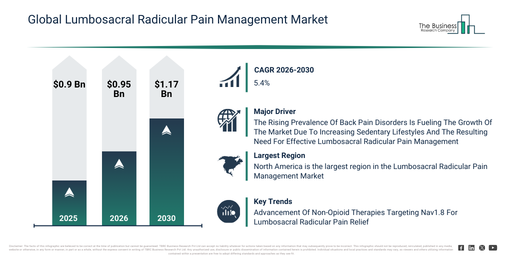
    The lumbosacral radicular pain management market has seen significant expansion over recent years. It is projected to expand from $0.9 billion in 2025 to $0.95 billion in 2026, demonstrating a compound annual growth rate (CAGR) of 5.7%. This historical growth can be attributed to several factors including an increase in spinal disc disorders, the reliance on pharmacological methods for pain relief, the availability of hospital-based pain treatment, a rise in orthopedic consultations, and the development of physical therapy services.

    The lumbosacral radicular pain management market size is anticipated to expand significantly over the next few years. It is projected to reach $1.17 billion by 2030, demonstrating a compound annual growth rate (CAGR) of 5.4%. This growth during the forecast period is primarily driven by factors such as the expanding aging population, the increasing need for long-term pain management solutions, the adoption of non-invasive therapies, the growth of home-based rehabilitation services, and continuous advancements in pain diagnostics. Prominent trends for the forecast period encompass a growing inclination towards multimodal pain management approaches, a wider acceptance of non-opioid therapies, the expansion of interventions based on physical therapy, an increasing demand for minimally invasive pain treatments, and the integration of personalized pain management plans.

    Get A Free Sample Report With In-Depth Market Insights:

    https://thebusinessresearchcompany.com/sample_request?id=94548638&type=smp&name=Lumbosacral%20Radicular%20Pain%20Management%20Market%20Report%202026&utm_source=Blogs&utm_medium=Paid&utm_campaign=Oct_PR

    Lumbosacral Radicular Pain Management Market Opportunity Drivers: What’s Unlocking New Revenue Potential?

    The increasing occurrence of back pain conditions is projected to boost the expansion of the lumbosacral radicular pain management market in the future. Back pain disorders encompass various conditions impacting the spine, muscles, or nerves in the back, leading to discomfort or pain. The growing incidence of these disorders stems from sedentary lifestyles, which weaken back muscles, resulting in poor posture and chronic pain. Lumbosacral radicular pain management seeks to alleviate nerve root irritation in the lower back, thereby lessening pain and inflammation, while also restoring mobility and enhancing the quality of life. For instance, in June 2024, according to the Australian Institute of Health and Welfare, an Australia-based government agency, in 2023, back problems were the third leading contributor to disease burden in Australia, representing 4.3% of the country’s total disease burden. Consequently, the increasing prevalence of back pain disorders fuels the growth of the lumbosacral radicular pain management market.

    Lumbosacral Radicular Pain Management Market Segment Analysis And Revenue Potential

    The lumbosacral radicular pain management market covered in this report is segmented –

    1) By Medication: Non-Steroidal Anti-Inflammatory Drugs, Opioids, Antidepressants, Anticonvulsants, Steroids

    2) By Physical Therapy: Manual Therapy, Exercise Therapy, Electrotherapy, Thermal Therapy, Hydrotherapy

    3) By Route Of Administration: Oral, Topical

    4) By End-User: Hospital Pharmacy, Retail Pharmacy, Online Pharmacy

    Subsegments:

    1) By Non-Steroidal Anti-Inflammatory Drugs: Ibuprofen, Naproxen, Diclofenac, Celecoxib, Etoricoxib

    2) By Opioids: Tramadol, Oxycodone, Morphine, Hydrocodone, Fentanyl

    3) By Antidepressants: Amitriptyline, Nortriptyline, Duloxetine, Desvenlafaxine, Venlafaxine

    4) By Anticonvulsants: Gabapentin, Pregabalin, Carbamazepine, Lamotrigine, Topiramate

    5) By Steroids: Dexamethasone, Methylprednisolone, Prednisone, Triamcinolone, Hydrocortison

    Lumbosacral Radicular Pain Management Market Innovation Trends Shaping Future Development

    Companies operating within the lumbosacral radicular pain management market are concentrating on developing advanced treatments, such as investigational oral NaV1.8 pain signal inhibitors, to provide a non-opioid alternative for prolonged pain relief. An investigational oral NaV1.8 pain signal inhibitor is an experimental drug targeting the NaV1.8 sodium channel, a key pathway for transmitting pain through sensory nerves. For instance, in December 2024, Vertex Pharmaceuticals, a US-based biotech company, announced the results from its Phase 2 study of suzetrigine for painful lumbosacral radiculopathy (LSR). The study met its primary endpoint, indicating a statistically significant and clinically meaningful reduction in pain from baseline within the suzetrigine group. Suzetrigine was generally well tolerated, with no serious adverse events reported. Vertex plans to address the significant placebo response in upcoming Phase 3 trials to better assess the drug’s efficacy.

    Lumbosacral Radicular Pain Management Market Key Players Shaping Industry Direction

    Major companies operating in the lumbosacral radicular pain management market are Pfizer Inc., Johnson & Johnson Services Inc., Bayer AG, Sanofi SA, Bristol-Myers Squibb, AstraZeneca plc, Novartis AG, GSK plc, Medtronic plc, Eli Lilly and Company, Amgen Inc, Koninklijke Philips NV, Stryker Corporation, Teva Pharmaceutical Industries Ltd, Boston Scientific Corporation, Dr Reddy’s Laboratories Ltd, NuVasive Inc., Nobel Biocare Holdings AG, Ultradent Products Inc., Nevro Corp., Zynex Inc., Eliem Therapeutics, Vertebral Technologies Inc., Semnur Pharmaceuticals Inc.

    View The Full Lumbosacral Radicular Pain Management Market Report:

    https://thebusinessresearchcompany.com/report/lumbosacral-radicular-pain-management-global-market-report?utm_source=Blogs&utm_medium=Paid&utm_campaign=Oct_PR

    Lumbosacral Radicular Pain Management Market Regional Outlook: Where Is Opportunity Concentrated?

    North America was the largest region in the lumbosacral radicular pain management market in 2025. Asia-Pacific is expected to be the fastest-growing region in the forecast period. The regions covered in the lumbosacral radicular pain management market report are Asia-Pacific, South East Asia, Western Europe, Eastern Europe, North America, South America, Middle East, Africa.

    Reach Out To Our Team:

    The Business Research Company: https://www.thebusinessresearchcompany.com/

    Americas: +1 310-496-7795

    Asia: +44 7882 955267 & +91 8897263534

    Europe: +44 7882 955267

    Email us at: marketing@tbrc.info

    Follow us on:

    LinkedIn: https://in.linkedin.com/company/the-business-research-company

    YouTube: https://www.youtube.com/channel/UC24_fI0rV8cR5DxlCpgmyFQ

    Global Market Model: https://www.thebusinessresearchcompany.com/global-market-model

  • Lumbosacral Radicular Pain Market Size And Growth In 2026: Key Factors Shaping Future Demand

    Lumbosacral Radicular Pain Market Size And Growth In 2026: Key Factors Shaping Future Demand

    Backed by market attractiveness analysis, total addressable market sizing, company benchmarking matrices, interactive Excel dashboards, wider supply chain intelligence, emerging startup coverage, and detailed product-level insights, The Business Research Company’s 2026 market reports are designed to offer research that is more actionable and strategically valuable than ever.

    Lumbosacral Radicular Pain Market Size, Value And Growth Trajectory Through 2030

    The lumbosacral radicular pain market has witnessed strong expansion in recent years. It is projected to increase from $0.97 billion in 2025 to $1.02 billion in 2026, registering a compound annual growth rate (CAGR) of 6.0%. The historical growth of this market can be linked to elements like an aging population, the prevalence of spinal degenerative disorders, the approach of opioid-based pain management, the establishment of hospital pain clinics, and the rising volumes of orthopedic surgeries.

    The lumbosacral radicular pain market size is anticipated to undergo significant growth in the upcoming years. It is projected to achieve a value of $1.28 billion by 2030, demonstrating a compound annual growth rate (CAGR) of 5.7%. This expansion during the forecast period can be ascribed to elements such as the embrace of non-opioid pain therapy, the increase in outpatient pain procedures, the emergence of digital pain monitoring tools, advancements in minimally invasive spine technologies, and the broadening of rehabilitation programs. Prominent trends within the forecast timeframe encompass the rising utilization of multimodal pain management, the expansion of interventional spine procedures, an elevated demand for non-opioid therapies, the growth of rehabilitation-based care, and the adoption of minimally invasive pain treatments.

    Get A Free Sample Report With In-Depth Market Insights:

    https://thebusinessresearchcompany.com/sample_request?id=12795152&type=smp&name=Lumbosacral%20Radicular%20Pain%20Market%20Report%202026&utm_source=Blogs&utm_medium=Paid&utm_campaign=Oct_PR

    Lumbosacral Radicular Pain Market Growth Momentum: What Factors Are Shaping Demand?

    The growing occurrence of degenerative spinal conditions is anticipated to drive expansion in the lumbosacral radicular pain market. These conditions encompass various disorders resulting from the progressive deterioration of the spine over time. The increase in degenerative spinal conditions stems from an aging global population and lifestyle choices that heighten the likelihood of spinal degradation and nerve compression, consequently boosting the need for diagnostic and therapeutic interventions. Lumbosacral radicular pain serves as an indicator of underlying degenerative spinal issues by signaling irritation or compression of nerve roots, thereby guiding clinical assessments and treatment strategies. For example, the University of Sydney, an Australian public university, reported in May 2023 an expectation that over 800 million individuals globally will experience back discomfort by the year 2050. This surge in degenerative spinal conditions is, therefore, a key factor propelling the growth of the lumbosacral radicular pain market.

    Lumbosacral Radicular Pain Market Segmentation And Category Overview

    The lumbosacral radicular pain market covered in this report is segmented –

    1) By Treatment Type: Pharmacological Treatment, Non-Pharmacological Treatment, Interventional Procedures

    2) By Route Of Administration: Oral, Topical, Injectable, Implantable

    3) By Distribution Channel: Hospital Pharmacies, Retail Pharmacies, Online Pharmacies

    4) By End User: Hospitals, Specialty Clinics, Rehabilitation Centers, Homecare Settings

    Subsegments:

    1) By Pharmacological Treatment: Nonsteroidal Anti-Inflammatory Drugs, Opioids, Anticonvulsants, Antidepressants, Muscle Relaxants, Corticosteroids

    2) By Non-Pharmacological Treatment: Physical Therapy, Exercise And Rehabilitation Programs, Chiropractic Care, Acupuncture, Cognitive Behavioral Therapy, Heat And Cold Therapy

    3) By Interventional Procedures: Epidural Steroid Injections, Radiofrequency Ablation, Nerve Root Blocks, Spinal Cord Stimulation, Minimally Invasive Decompression, Intrathecal Drug Delivery Systems

    Lumbosacral Radicular Pain Market Competitive Analysis Of Leading Industry Participants

    Major companies operating in the lumbosacral radicular pain market are Medtronic plc, Boston Scientific Corporation, Nevro Corp., SPR Therapeutics, Saluda Medical Pty Ltd., Nalu Medical Inc., Abbott Neuromodulation, Stryker Corporation, Zimmer Biomet Holdings Inc., Globus Medical Inc., NuVasive Inc., Orthofix Medical Inc., B. Braun Melsungen AG, Teleflex Incorporated, Merit Medical Systems Inc., Avanos Medical Inc., Halyard Health Inc., Terumo Corporation, Baxter International Inc., Fresenius Kabi AG, Hikma Pharmaceuticals PLC, Pfizer CentreOne, Teva Pharmaceutical Industries Ltd., Mallinckrodt Pharmaceuticals, Sun Pharmaceutical Industries Ltd., Lupin Limited, Zydus Lifesciences Ltd., Cipla Ltd., Dr. Reddy’s Laboratories Ltd., Amneal Pharmaceuticals Inc., Perrigo Company plc

    View The Full Lumbosacral Radicular Pain Market Report:

    https://thebusinessresearchcompany.com/report/lumbosacral-radicular-pain-global-market-report?utm_source=Blogs&utm_medium=Paid&utm_campaign=Oct_PR

    Lumbosacral Radicular Pain Market Geographic Landscape: Which Region Leads Industry Growth?

    North America was the largest region in the lumbosacral radicular pain market in 2025. The regions covered in the lumbosacral radicular pain market report are Asia-Pacific, South East Asia, Western Europe, Eastern Europe, North America, South America, Middle East, Africa.

    Reach Out To Our Team:

    The Business Research Company: https://www.thebusinessresearchcompany.com/

    Americas: +1 310-496-7795

    Asia: +44 7882 955267 & +91 8897263534

    Europe: +44 7882 955267

    Email us at: marketing@tbrc.info

    Follow us on:

    LinkedIn: https://in.linkedin.com/company/the-business-research-company

    YouTube: https://www.youtube.com/channel/UC24_fI0rV8cR5DxlCpgmyFQ

    Global Market Model: https://www.thebusinessresearchcompany.com/global-market-model

  • Losartan Potassium Active Pharmaceutical Ingredient (API) Market Forecast 2026–2030: Market Size, Trends And Growth Opportunities

    Losartan Potassium Active Pharmaceutical Ingredient (API) Market Forecast 2026–2030: Market Size, Trends And Growth Opportunities

    Featuring market attractiveness scoring, total addressable market sizing, company benchmarking matrices, interactive Excel dashboards, deeper supply chain intelligence, emerging startup tracking, and granular product-level insights, The Business Research Company’s 2026 market reports are built to deliver research that is both more actionable and more strategically valuable.

    Losartan Potassium Active Pharmaceutical Ingredient (API) Market CAGR Outlook And Future Development

    The market size for losartan potassium active pharmaceutical ingredient (API) has shown substantial growth recently. This market is projected to expand from $1.85 billion in 2025 to $1.97 billion in 2026, achieving a compound annual growth rate (CAGR) of 6.5%. Factors contributing to this historical expansion include the increasing prevalence of hypertension, the expiry of branded drug patents, the growth in generic pharmaceutical manufacturing, an elevated demand for cardiovascular drugs, and the broadening of global pharmaceutical supply chains.

    The losartan potassium active pharmaceutical ingredient (api) market is anticipated to demonstrate robust growth over the next few years. This market is predicted to reach a valuation of $2.54 billion by 2030, exhibiting a compound annual growth rate (CAGR) of 6.5%. Factors contributing to this growth during the forecast period include the rising burden of cardiovascular diseases, heightened demand from developing markets, continuous improvements in API manufacturing technologies, an increased emphasis on sustainable pharmaceutical production, and the broadening of applications in chronic kidney disease treatment. Key trends anticipated within the same period encompass a surging demand for generic losartan products, the wider implementation of continuous flow API manufacturing processes, a greater focus on developing economical antihypertensive APIs, the expanded application of losartan API in combination drug therapies, and a stronger commitment to producing regulatory-compliant APIs.

    Get A Free Sample Report With In-Depth Market Insights:

    https://thebusinessresearchcompany.com/sample_request?id=29182891&type=smp&name=Losartan%20Potassium%20Active%20Pharmaceutical%20Ingredient%20%28API%29%20Market%20Report%202026&utm_source=Blogs&utm_medium=Paid&utm_campaign=Oct_PR

    Losartan Potassium Active Pharmaceutical Ingredient (API) Market Expansion Drivers: What’s Shaping Future Growth?

    The increasing occurrence of hypertension is anticipated to boost the expansion of the losartan potassium active pharmaceutical ingredient (API) market in the future. Hypertension, characterized by continuously elevated blood pressure, can heighten the risk of cardiac conditions, strokes, and other serious health issues. The rising frequency of hypertension is associated with consuming diets high in salt and processed items, contributing to fluid retention and greater stress on the heart. Losartan potassium assists in managing hypertension by inhibiting angiotensin II, a hormone responsible for constricting blood vessels. This action allows blood vessels to relax and expand, thereby reducing blood pressure and alleviating the heart’s effort. For example, in September 2025, data from the World Health Organization (WHO), a global health authority based in Geneva, Switzerland, indicated that approximately 1.4 billion adults between 30 and 79 years of age had hypertension in 2024, an increase from about 1.3 billion adults in 2022. Consequently, the increasing prevalence of hypertension is propelling the expansion of the losartan potassium active pharmaceutical ingredient (API) market.

    Losartan Potassium Active Pharmaceutical Ingredient (API) Market Segment Outlook: Which Categories Are Growing Fastest?

    The losartan potassium active pharmaceutical ingredient (api) market covered in this report is segmented –

    1) By Product Type: Tablet, Capsule, Other Product Types

    2) By Production Method: Synthetic Route, Continuous Flow Production

    3) By Distribution Channel: Online Pharmacies, Hospital Pharmacies, Retail Pharmacies, Other Distribution Channels

    4) By Application: Hypertension, Heart Failure, Chronic Kidney Diseases, Other Applications

    5) By End-User: Hospitals, Clinics, Pharmaceutical Companies

    Subsegments:

    1) By Tablet: Immediate-Release Tablets, Extended-Release Tablets, Film-Coated Tablets, Orally Disintegrating Tablets

    2) By Capsule: Hard Gelatin Capsules, Modified-Release Capsules

    3) By Other Product Types: Bulk Active Pharmaceutical Ingredient (API) Powder, Granules For Suspension, Pre-Formulated Intermediates

    Losartan Potassium Active Pharmaceutical Ingredient (API) Market Strategic Trends: What Defines The Next Growth Phase?

    Leading companies operating within the losartan potassium active pharmaceutical ingredient (API) market are concentrating on developing innovative products and securing approvals, such as losartan potassium oral suspension, to improve patient compliance and broaden therapeutic applications. Losartan potassium oral suspension is a liquid version of losartan potassium medication, specifically designed for individuals who have difficulty swallowing tablets. For instance, in March 2025, Scienture Holdings Inc., a US-based biopharmaceutical company, obtained Food and Drug Administration (FDA) approval for Arbli. Arbli serves as a ready-to-use liquid formulation for addressing hypertension, reducing the risk of stroke in hypertensive patients with left ventricular hypertrophy, and treating diabetic nephropathy in type 2 diabetes patients. It allows for precise dosing without compounding and is supplied as a 165 mL peppermint-flavored suspension (10 mg/mL) with an 18-month shelf life at room temperature.

    Losartan Potassium Active Pharmaceutical Ingredient (API) Market Leading Companies And Competitive Benchmarking

    Major companies operating in the losartan potassium active pharmaceutical ingredient (api) market are Teva Pharmaceutical Industries Ltd, Sun Pharmaceutical Industries Ltd, Aurobindo Pharma Ltd, Dr. Reddy’s Laboratories, Cadila Pharmaceuticals Ltd, Lupin Ltd, Zydus Lifesciences Ltd, Alkem Laboratories Ltd, IPCA Laboratories Ltd, Alembic Pharmaceuticals Ltd, Granules India Limited, Vasudha Pharma Chem Ltd, IOL Chemicals and Pharmaceuticals Limited, Unichem Laboratories Ltd, Global Pharma Tek, Hetero Drugs Ltd, Manus Aktteva Biopharma LLP, Wellona Pharma, Atom pharma, Sinoway Industrial Co. Ltd, Cerata Pharmaceuticals LLP

    View The Full Losartan Potassium Active Pharmaceutical Ingredient (API) Market Report:

    https://thebusinessresearchcompany.com/report/losartan-potassium-active-pharmaceutical-ingredient-api-global-market-report?utm_source=Blogs&utm_medium=Paid&utm_campaign=Oct_PR

    Losartan Potassium Active Pharmaceutical Ingredient (API) Market Largest Region: Which Geography Holds The Biggest Share?

    North America was the largest region in the losartan potassium API market in 2025. Asia-Pacific is expected to be the fastest-growing region in the forecast period. The regions covered in the losartan potassium active pharmaceutical ingredient (api) market report are Asia-Pacific, South East Asia, Western Europe, Eastern Europe, North America, South America, Middle East, Africa.

    Reach Out To Our Team:

    The Business Research Company: https://www.thebusinessresearchcompany.com/

    Americas: +1 310-496-7795

    Asia: +44 7882 955267 & +91 8897263534

    Europe: +44 7882 955267

    Email us at: marketing@tbrc.info

    Follow us on:

    LinkedIn: https://in.linkedin.com/company/the-business-research-company

    YouTube: https://www.youtube.com/channel/UC24_fI0rV8cR5DxlCpgmyFQ

    Global Market Model: https://www.thebusinessresearchcompany.com/global-market-model

  • Local Anesthesia Drugs Market Size Reaches $4.94 Billion In 2026: What Is Driving Growth?

    Local Anesthesia Drugs Market Size Reaches $4.94 Billion In 2026: What Is Driving Growth?

    Built to provide research that’s more actionable and strategically valuable, The Business Research Company’s 2026 market reports include market attractiveness analysis, total addressable market sizing, company benchmarking matrices, interactive Excel dashboards, broader supply chain intelligence, emerging startup tracking, and in-depth product insights.

    Local Anesthesia Drugs Market Set To Climb From $4.94 Billion In 2026 To $6.15 Billion By 2030

    The market size for local anesthesia drugs has experienced robust growth in recent years. It is anticipated to expand from $4.69 billion in 2025 to $4.95 billion in 2026, at a compound annual growth rate (CAGR) of 5.6%. Historically, this expansion can be ascribed to factors like an increase in outpatient surgeries, the rising incidence of musculoskeletal disorders, a surge in dental procedures, the development of hospital infrastructure, and enhanced awareness regarding pain management choices.

    The local anesthesia drugs market is projected for substantial expansion over the coming years. Its valuation is anticipated to reach $6.15 billion by 2030, exhibiting a compound annual growth rate (CAGR) of 5.6%. This projected increase is driven by factors such as the embrace of advanced anesthetic formulations, the incorporation of robotics into surgical procedures, an expanding elderly demographic, the proliferation of ambulatory surgical centers, and advancements in sustained-release anesthetic technologies. Key trends during this period involve the increasing adoption of minimally invasive procedures, a heightened demand for outpatient surgeries, the creation of long-acting local anesthetics, an expansion of pain management clinics, and a greater emphasis on ensuring patient safety and comfort.

    Get A Free Sample Report With In-Depth Market Insights:

    https://thebusinessresearchcompany.com/sample_request?id=63118456&type=smp&name=Local%20Anesthesia%20Drugs%20Market%20Report%202026&utm_source=Blogs&utm_medium=Paid&utm_campaign=Oct_PR

    Local Anesthesia Drugs Market Development Factors: What’s Supporting Demand?

    The expanding occurrence of chronic illnesses is anticipated to drive the future expansion of the local anesthesia drugs market. A chronic disease is defined as a medical condition persisting for at least three months, which may worsen over time. Such conditions frequently require surgical procedures, thereby elevating the need for local anesthesia drugs. These medications are vital for managing pain during operations related to chronic ailments, enhancing patient comfort. The aging global population, innovations in surgical methods, and an emphasis on outpatient operations additionally contribute to the growing requirement for local anesthesia drugs. As an illustration, in January 2024, the American Cancer Society (ACS), a US-based non-profit organization dedicated to cancer research and awareness, reported that the United States is predicted to experience about 2,001,140 new cancer cases and approximately 611,720 cancer-related fatalities in 2024, equating to roughly 1,680 deaths daily. Consequently, the rising occurrence of chronic conditions is a key factor propelling the expansion of the local anesthesia drugs market.

    Local Anesthesia Drugs Market Segment Landscape: Which Areas Lead Development?

    The local anesthesia drugs market covered in this report is segmented –

    1) By Type: Bupivacaine, Lidocaine, Benzocaine, Ropivacaine, Prilocaine, Chloroprocaine, Other Types

    2) By Mode Of Administration: Injectable, Surface Anesthetic

    3) By Distribution Channel: Hospital Pharmacy, Pharmacy Stores, Other Channels

    Local Anesthesia Drugs Market Transformation Trends: What Innovations Are Driving Change?

    Leading companies in the local anesthesia drugs market are developing dual-acting local anesthetics to secure their market position. A dual-acting local anesthetic works by blocking sensory nerves to numb the targeted area and also provides anti-inflammatory effects or prolonged numbness. This combination renders it highly effective for surgical procedures and managing acute pain. For example, in January 2024, Heron Therapeutics, Inc., a US-based biotechnology company, introduced its FDA-approved product, ZYNRELEF. This product merges bupivacaine with a low dose of meloxicam to provide improved pain relief. Phase 3 studies demonstrated that it significantly reduces pain and the necessity for opioids in patients for up to 72 hours after surgery.

    Local Anesthesia Drugs Market Industry Leaders And Competitive Landscape

    Major companies operating in the local anesthesia drugs market are Hikma Pharmaceuticals PLC, Fresenius SE & Co. KGaA, Glenmark Pharmaceuticals Limited, B. Braun Melsungen AG, Pacira BioSciences Inc., Pfizer Inc., Septodont, Teva Pharmaceutical Industries Limited, Aspen Pharmacare Holdings Limited, Sagent Pharmaceuticals Inc., Mylan N.V., Akorn Operating Company LLC, Endo International PLC, Abbott Laboratories, Anesiva Inc., Baxter International Inc., Dentsply Sirona Inc., Jiangsu Hengrui Medicine Co. Ltd., Johnson & Johnson, Lannett Company Inc., Lupin Limited, Alembic Pharmaceuticals, Torrent Pharmaceuticals, Cadila Healthcare, Indoco Remedies, Jubilant Life Sciences, Zydus Cadila, Wockhardt Ltd., Par Pharmaceutical, West-Ward Pharmaceuticals Corp.

    View The Full Local Anesthesia Drugs Market Report:

    https://thebusinessresearchcompany.com/report/local-anesthesia-drugs-global-market-report?utm_source=Blogs&utm_medium=Paid&utm_campaign=Oct_PR

    Local Anesthesia Drugs Market Regional Analysis: Which Geography Leads On Revenue?

    North America was the largest region in the local anesthesia drugs market in 2025. Asia-Pacific is expected to be the fastest-growing region in the local anesthesia drugs market report during the forecast period. The regions covered in the local anesthesia drugs market report are Asia-Pacific, South East Asia, Western Europe, Eastern Europe, North America, South America, Middle East, Africa.

    Reach Out To Our Team:

    The Business Research Company: https://www.thebusinessresearchcompany.com/

    Americas: +1 310-496-7795

    Asia: +44 7882 955267 & +91 8897263534

    Europe: +44 7882 955267

    Email us at: marketing@tbrc.info

    Follow us on:

    LinkedIn: https://in.linkedin.com/company/the-business-research-company

    YouTube: https://www.youtube.com/channel/UC24_fI0rV8cR5DxlCpgmyFQ

    Global Market Model: https://www.thebusinessresearchcompany.com/global-market-model
  • Liver Health Supplements Market Valued At $14.82 Billion In 2026: Key Trends And Growth Drivers

    Liver Health Supplements Market Valued At $14.82 Billion In 2026: Key Trends And Growth Drivers

    Backed by market attractiveness analysis, total addressable market sizing, company benchmarking matrices, interactive Excel dashboards, wider supply chain intelligence, emerging startup coverage, and detailed product-level insights, The Business Research Company’s 2026 market reports are designed to offer research that is more actionable and strategically valuable than ever.

    Liver Health Supplements Market Forecast: Value Set To Climb From $11.59 Billion To $14.82 Billion

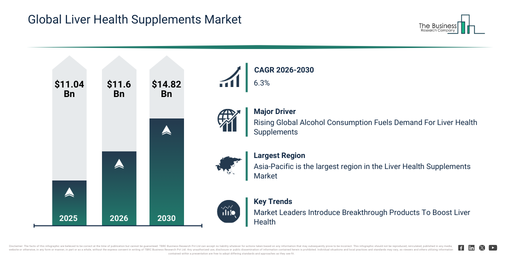
    The liver health supplements market has demonstrated robust growth over recent years. It is projected to expand from $11.04 billion in 2025 to $11.6 billion in 2026, achieving a compound annual growth rate (CAGR) of 5.1%. This historical expansion can be attributed to an increased awareness of liver diseases, a rising consumption of herbal supplements, the growing incidence of lifestyle-related liver disorders, the expansion of the retail pharmacy network, and the availability of diverse supplement forms.

    The liver health supplements market is projected to experience substantial expansion over the upcoming years. This market is forecast to reach $14.82 billion in 2030, exhibiting a compound annual growth rate (CAGR) of 6.3%. The anticipated growth during this period stems from several factors, including an escalating demand for customized liver health supplements, their incorporation into digital health platforms, a greater embrace of preventive healthcare practices, the expanding reach of e-commerce for supplement distribution, and breakthroughs in functional ingredient development. Key trends foreseen for the forecast horizon encompass an emphasis on liver detoxification, the uptake of natural and herbal supplements, tailored nutrition and supplementation approaches, the incorporation of immune support, and a focus on functional health and wellness.

    Get A Free Sample Report With In-Depth Market Insights:

    https://thebusinessresearchcompany.com/sample_request?id=11072143&type=smp&name=Liver%20Health%20Supplements%20Market%20Report%202026&utm_source=Blogs&utm_medium=Paid&utm_campaign=Oct_PR

    Liver Health Supplements Market Industry Drivers: What’s Behind The Revenue Growth?

    The expanding intake of alcoholic beverages is projected to stimulate the growth of the liver health supplements market in the coming years. Alcohol consumption involves drinking beverages containing ethanol, their active component. For individuals with elevated alcohol intake, liver health supplements offer beneficial support to the liver, which plays a crucial role in eliminating toxins from the body. Ingredients like milk thistle, dandelion root, and kudzu root found in these supplements can aid liver function by fostering detoxification and mitigating inflammation. A relevant example from February 2024, shared by the Australian Institute of Health and Welfare, an Australian government body, indicates that in 2022–2023, about 31% of individuals aged 14 and older, equivalent to 6.6 million people, consumed alcohol at levels that posed health risks. Consequently, the increasing consumption of alcohol is a key factor propelling the expansion of the liver health supplements market.

    Liver Health Supplements Market Segments: Where Is Growth Concentrated?

    The liver health supplements market covered in this report is segmented –

    1) By Product: Vitamin And Minerals, Herbal Supplements, Other Products

    2) By Nature: Organic, Conventional

    3) By Form: Dry, Tablets, Powder, Liquid

    4) By Distribution Channel: Hospital Pharmacies, Retail Pharmacies, Online Pharmacies

    Subsegments:

    1) By Vitamin And Minerals: Vitamin E, Vitamin C, B-complex Vitamins, Minerals

    2) By Herbal Supplements: Milk Thistle, Dandelion Root, Turmeric, Artichoke Extract

    3) By Other Products: Amino Acids, Probiotics, Fatty Acids

    #Liver Health Supplements Market Growth Trends: What’s Shaping The Future Outlook?

    Major companies engaged in the liver health supplements market are developing innovative products to maintain their position. Advancements in cutting-edge supplements are increasing as they contribute to stimulating the growth of new liver cells, which can help enhance liver function. For instance, in March 2023, Evogen Nutrition, a US-based healthy lifestyle nutrition company, launched Evogen Liver Longer, a new dietary supplement designed to support the liver. The supplement is formulated to comprehensively aid liver health and includes various liver-supporting ingredients, such as tauroursodeoxycholic acid (TUDCA), siphons, and milk thistle extract. These ingredients offer strong antioxidant support to safeguard and improve liver function.

    Liver Health Supplements Market Key Participants And Competitive Landscape

    Major companies operating in the liver health supplements market are Amway Corp., Balchem Corporation, Himalaya Wellness Company, NOW Foods Inc., Metagenics Inc., Aker BioMarine ASA, Enzymedica Inc., Jarrow Formulas Inc., Garden of Life, Designs for Health Inc., Nature’s Way Products LLC, Swanson Healthcare Products Inc., Irwins Natural, Integria Healthcare Pty Ltd., Integrative Therapeutics Inc., Premier Research Labs, Gaia Herbs Inc., Pure Encapsulations Inc., Solgar Inc., Renew Life, NutraBio, Nature’s Bounty Inc., Nutralife Health Products Inc., Organifi, Terry Naturally Vitamins, Natures Craft, Source Naturals Inc., America’s Finest Inc.

    View The Full Liver Health Supplements Market Report:

    https://thebusinessresearchcompany.com/report/liver-health-supplements-global-market-report?utm_source=Blogs&utm_medium=Paid&utm_campaign=Oct_PR

    Liver Health Supplements Market Geographic Spread And Regional Opportunities

    Asia-Pacific was the largest region in the liver health supplements market in 2025. North America is expected to be the fastest-growing region in the forecast period. The regions covered in the liver health supplements market report are Asia-Pacific, South East Asia, Western Europe, Eastern Europe, North America, South America, Middle East, Africa.

    Reach Out To Our Team:

    The Business Research Company: https://www.thebusinessresearchcompany.com/

    Americas: +1 310-496-7795

    Asia: +44 7882 955267 & +91 8897263534

    Europe: +44 7882 955267

    Email us at: marketing@tbrc.info

    Follow us on:

    LinkedIn: https://in.linkedin.com/company/the-business-research-company

    YouTube: https://www.youtube.com/channel/UC24_fI0rV8cR5DxlCpgmyFQ

    Global Market Model: https://www.thebusinessresearchcompany.com/global-market-model
  • Liver Cancer Therapeutics Market Size In 2026: Growth Outlook And Forecast Through 2030

    Liver Cancer Therapeutics Market Size In 2026: Growth Outlook And Forecast Through 2030

    Featuring market attractiveness scoring, total addressable market sizing, company benchmarking matrices, interactive Excel dashboards, deeper supply chain intelligence, emerging startup tracking, and granular product-level insights, The Business Research Company’s 2026 market reports are built to deliver research that is both more actionable and more strategically valuable.

    Liver Cancer Therapeutics Market Revenue Growth On Track For A 16.5% CAGR Through 2030

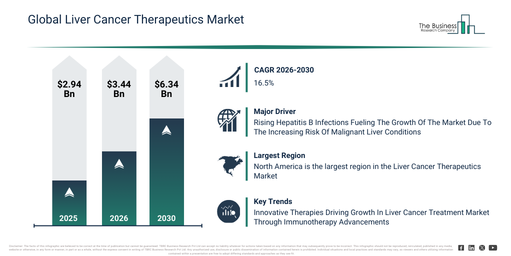
    The liver cancer therapeutics market size has shown significant expansion in recent years. It will grow from $2.94 billion in 2025 to $3.44 billion in 2026 at a compound annual growth rate (CAGR) of 16.8%. The growth observed in previous periods is attributable to factors such as the increasing worldwide prevalence of liver cancer, the restricted efficacy of conventional chemotherapy, heightened awareness regarding early diagnosis, the expansion of specialized oncology treatment centers, and the regulatory approvals granted to targeted therapeutic options.

    The liver cancer therapeutics market size is anticipated to undergo significant expansion in the upcoming years. It is projected to achieve a valuation of $6.34 billion by 2030, demonstrating a compound annual growth rate (CAGR) of 16.5%. This expected growth during the forecast period stems from the development of immuno-oncology pipelines, the rising incidence of chronic liver diseases, innovations in biomarker-driven therapies, increased healthcare expenditure allocated to cancer care, and the broader implementation of personalized oncology treatment strategies. Notable trends within the forecast period encompass the increasing adoption of immunotherapy for liver cancer, the greater utilization of targeted therapies for advanced stages of the disease, a growing preference for combination treatment regimens, the expansion of precision medicine methodologies, and an increase in clinical trials for novel liver cancer drugs.

    Get A Free Sample Report With In-Depth Market Insights:

    https://thebusinessresearchcompany.com/sample_request?id=43831264&type=smp&name=Liver%20Cancer%20Therapeutics%20Market%20Report%202026&utm_source=Blogs&utm_medium=Paid&utm_campaign=Oct_PR

    Liver Cancer Therapeutics Market Growth Factors: What’s Supporting Expansion?

    The anticipated rise in hepatitis B infections is set to stimulate the growth of the liver cancer therapeutics market. Hepatitis B is a viral disease caused by the hepatitis B virus (HBV) that primarily impacts the liver, potentially leading to both short-term (acute) and long-term (chronic) health complications, notably liver cancer. The increase in hepatitis B infections is partly influenced by the growing prevalence of injection drug use, which facilitates the virus’s spread through shared contaminated needles and syringes. Liver cancer therapeutics become crucial for hepatitis B infections because chronic infection can result in persistent liver inflammation and cellular damage, substantially elevating the risk of developing malignant liver conditions over time. Illustratively, in July 2025, the World Health Organization, a Switzerland-based health organization, stated that there are approximately 1.2 million new HBV infections globally every year. Therefore, the escalating incidence of hepatitis B infections is expected to propel the expansion of the liver cancer therapeutics market.

    Liver Cancer Therapeutics Market Segment Analysis: What Are The Core Market Categories?

    The liver cancer therapeutics market covered in this report is segmented –

    1) By Type: Hepatocellular Carcinoma, Cholangio Carcinoma, Hepatoblastoma, Other Types

    2) By Therapy Type: Targeted Therapy, Immunotherapy, Chemotherapy, Radiation Therapy, Other Therapy Types

    3) By Distribution Channel Type: Hospital Pharmacy, Retail Pharmacy, Online Pharmacy

    4) By End-Users: Pediatrics, Adults

    Subsegments:

    1) By Hepatocellular Carcinoma: Localized Hepatocellular Carcinoma, Advanced Hepatocellular Carcinoma, Recurrent Hepatocellular Carcinoma

    2) By Cholangiocarcinoma: Intrahepatic Cholangiocarcinoma, Extrahepatic Cholangiocarcinoma, Perihilar Cholangiocarcinoma

    3) By Hepatoblastoma: Standard-Risk Hepatoblastoma, High-Risk Hepatoblastoma, Metastatic Hepatoblastoma

    4) By Other Types: Fibrolamellar Carcinoma, Angiosarcoma Of The Liver, Hemangiosarcoma

    Liver Cancer Therapeutics Market Industry Trends: What’s Reshaping Demand?

    Leading companies in the liver cancer therapeutics market are concentrating on developing innovative treatments, such as prescription immunotherapy medications, to achieve long-lasting effects. These prescription immunotherapy drugs work by either enhancing or suppressing the body’s immune system to help combat specific conditions like cancer or chronic infections, through targeting and modulating immune responses. For instance, in April 2025, Bristol Myers Squibb, a US-based biopharmaceutical company, announced the U.S. Food and Drug Administration (FDA) approval of Opdivo (nivolumab) and Yervoy (ipilimumab) as a first-line treatment for adult patients with hepatocellular carcinoma (HCC), the most common primary liver cancer, that is either incurable or has spread. This product’s unique aspect is that its approval is founded on the results from the global Phase 3 randomized, open-label CheckMate-9DW trial. In this study, patients with metastatic or incurable HCC who had not previously received systemic therapy were randomly assigned to receive Opdivo plus Yervoy in conjunction with the investigator’s choice of tyrosine kinase inhibitor monotherapy (either lenvatinib or sorafenib). The combination therapy demonstrated statistically significant improvements in overall survival (OS) and overall response rate (ORR) when compared to the control arm, distinguishing it as the only trial supporting an FDA approval that shows superior results in this setting.

    Liver Cancer Therapeutics Market Top Companies Driving Competitive Growth

    Major companies operating in the liver cancer therapeutics market are Pfizer Inc., F. Hoffmann-La Roche Ltd., Merck & Co. Inc., Novartis AG, Bayer AG, Sanofi SA, Bristol-Myers Squibb, AstraZeneca PLC, Amgen Inc., Eli Lilly and Company , Gilead Sciences Inc., Regeneron Pharmaceuticals Inc., Eisai Co. Ltd., Ipsen, Exelixis Inc., BeiGene Ltd., Hutchmed, Celgene Corporation, Zymeworks Inc., Can-Fite BioPharma, Onyx Pharmaceuticals Inc.

    View The Full Liver Cancer Therapeutics Market Report:

    https://thebusinessresearchcompany.com/report/liver-cancer-therapeutics-global-market-report?utm_source=Blogs&utm_medium=Paid&utm_campaign=Oct_PR

    Liver Cancer Therapeutics Market Top Region By Revenue And Market Share

    North America was the largest region in the liver cancer therapeutics market in 2025. Asia-Pacific is expected to be the fastest-growing region in the forecast period. The regions covered in the liver cancer therapeutics market report are Asia-Pacific, South East Asia, Western Europe, Eastern Europe, North America, South America, Middle East, Africa.

    Reach Out To Our Team:

    The Business Research Company: https://www.thebusinessresearchcompany.com/

    Americas: +1 310-496-7795

    Asia: +44 7882 955267 & +91 8897263534

    Europe: +44 7882 955267

    Email us at: marketing@tbrc.info

    Follow us on:

    LinkedIn: https://in.linkedin.com/company/the-business-research-company

    YouTube: https://www.youtube.com/channel/UC24_fI0rV8cR5DxlCpgmyFQ

    Global Market Model: https://www.thebusinessresearchcompany.com/global-market-model

  • Live Cell Imaging Microscopes Market Trends Supporting 7.9% CAGR Growth Through 2030

    Live Cell Imaging Microscopes Market Trends Supporting 7.9% CAGR Growth Through 2030

    Built to provide research that’s more actionable and strategically valuable, The Business Research Company’s 2026 market reports include market attractiveness analysis, total addressable market sizing, company benchmarking matrices, interactive Excel dashboards, broader supply chain intelligence, emerging startup tracking, and in-depth product insights.

    Live Cell Imaging Microscopes Market Value Growth And Long-Term Outlook

    The live cell imaging microscopes market size has shown significant expansion in recent years. It is anticipated to grow from $1.71 billion in 2025 to $1.85 billion in 2026, with a compound annual growth rate (CAGR) of 8.0%. The market’s historical growth can be linked to the rise in cell biology research, progress in optical microscopy technologies, increased pharmaceutical R&D activities, higher funding for life sciences research, and the growing utilization of in vitro cell studies.

    The live cell imaging microscopes market size is projected to experience significant expansion over the next few years. It is expected to grow to $2.5 billion in 2030, driven by a compound annual growth rate (CAGR) of 7.9%. This projected growth can be attributed to several factors, including the increasing focus on stem cell and regenerative medicine research, the rising demand for live cell analysis in precision medicine, the broadening of automated laboratory workflows, the growing adoption of AI-enabled image analysis, and an increase in contract research services. Furthermore, prominent trends anticipated during this period involve a greater demand for real-time cellular analysis, a wider acceptance of fluorescence and confocal microscopy, the expanding application of live cell imaging in drug discovery, the development of automated and high-content imaging systems, and enhanced integration of imaging software and analytics.

    Get A Free Sample Report With In-Depth Market Insights:

    https://thebusinessresearchcompany.com/sample_request?id=64777195&type=smp&name=Live%20Cell%20Imaging%20Microscopes%20Market%20Report%202026&utm_source=Blogs&utm_medium=Paid&utm_campaign=Oct_PR

    Live Cell Imaging Microscopes Market Demand Drivers: What’s Powering Industry Growth?

    The increasing requirement for cell-based research is anticipated to boost the expansion of the live cell imaging microscopes market in the future. This type of research involves studying living cells to investigate biological functions, understand disease progression, and develop new therapies. Cell-based research is expanding because it offers potential for personalized medicine, enabling the development of treatments tailored to an individual’s unique genetic profile, thereby improving efficacy and reducing adverse reactions. Live cell imaging microscopes facilitate the real-time observation of cellular activities without disturbing the cells, providing detailed insights into how cells behave, how molecules interact, and their reactions to different environments. This functionality improves comprehension of disease mechanisms, the impact of drugs, and fundamental cellular operations. For example, in May 2024, the National Institutes of Health (NIH), a US-based medical research agency, reported an allocation of $2.22 billion for stem cell research, an increase from $2.20 billion in 2022. Consequently, the rising need for cell-based research is fueling the growth of the live cell imaging microscopes market.

    Live Cell Imaging Microscopes Market Segment Breakdown: Which Categories Lead On Revenue?

    The live cell imaging microscopes market covered in this report is segmented –

    1) By Type: Confocal Microscopy, Phase Contrast Microscopy, Fluorescent Microscopy, Quantitative Phase Contrast Microscopy

    2) By Application: Cell Biology, Developmental Biology, Stem Cell Research, Drug Discovery, Other Applications

    3) By End-User: Academic And Research Institutes, Pharmaceutical And Biotechnology Companies, Contract Research Organizations, Hospitals And Diagnostic Laboratories

    Subsegments:

    1) By Confocal Microscopy: Laser Scanning Confocal Microscopy (LSCM), Spinning Disk Confocal Microscopy, Multiphoton Confocal Microscopy

    2) By Phase Contrast Microscopy: Traditional Phase Contrast, Differential Interference Contrast (DIC), Enhanced Phase Contrast

    3) By Fluorescent Microscopy: Widefield Fluorescence Microscopy, Total Internal Reflection Fluorescence (TIRF) Microscopy, Super-Resolution Fluorescence Microscopy

    4) By Quantitative Phase Contrast Microscopy: Digital Holographic Microscopy (DHM), Optical Path Length (OPL) Mapping, Interferometric Phase Microscopy

    Live Cell Imaging Microscopes Market Innovation Trends: What Developments Are Reshaping The Industry?

    Leading companies in the live cell imaging microscopes market are dedicated to developing sophisticated products such as single molecule super-resolution imaging systems, aiming to enable more profound insights into dynamic cellular processes in real-time. A single-molecule super-resolution imaging system represents an advanced microscopy technology that allows researchers to visualize and monitor the position, movement, and interactions of individual molecules with nanometer-level accuracy. For instance, in January 2025, Oxford Nanoimaging (ONI), a UK-based firm focused on super-resolution microscopy development, introduced the Aplo Scope, a single-molecule super-resolution microscope engineered to observe and measure molecular interactions within cells and tissues with exceptional clarity. Created as part of the Aplo Platform, this compact benchtop system incorporates advanced imaging technology, automated workflows, and cloud-based software to streamline operations and achieve a nanoscale resolution of 20 nm. The Aplo Scope facilitates easier transitions between live-cell imaging and super-resolution microscopy, tackling challenges in areas like drug delivery, biomarker discovery, and antibody therapeutics, while simultaneously accelerating advancements in biomedical research.

    Live Cell Imaging Microscopes Market Leading Players And Competitive Positioning

    Major companies operating in the live cell imaging microscopes market are Thermo Fisher Scientific Inc., ZEISS Group, Keyence Corporation of America, Agilent Technologies Inc., PerkinElmer Inc., Bruker Corporation, EVIDENT, Leica Microsystems A/S, Thorlabs Inc., Oxford Instruments India Pvt. Ltd., Axion BioSystems Inc, OPTIKA S.r.l., Discover Echo, Curiosis Inc., Quasmo, Nikon Instruments Inc., Nanolive, Live Cell Instrument (LCI), BestScope, Confocal.nl.

    View The Full Live Cell Imaging Microscopes Market Report:

    https://thebusinessresearchcompany.com/report/live-cell-imaging-microscopes-global-market-report?utm_source=Blogs&utm_medium=Paid&utm_campaign=Oct_PR

    Live Cell Imaging Microscopes Market Regional Analysis And Top Geography

    North America was the largest region in the live cell imaging microscopes market in 2025. The regions covered in the live cell imaging microscopes market report are Asia-Pacific, South East Asia, Western Europe, Eastern Europe, North America, South America, Middle East, Africa.

    Reach Out To Our Team:

    The Business Research Company: https://www.thebusinessresearchcompany.com/

    Americas: +1 310-496-7795

    Asia: +44 7882 955267 & +91 8897263534

    Europe: +44 7882 955267

    Email us at: marketing@tbrc.info

    Follow us on:

    LinkedIn: https://in.linkedin.com/company/the-business-research-company

    YouTube: https://www.youtube.com/channel/UC24_fI0rV8cR5DxlCpgmyFQ

    Global Market Model: https://www.thebusinessresearchcompany.com/global-market-model

  • Live Attenuated Vaccines Market Forecast Highlights A $41.1 Billion Opportunity For Industry Participants

    Live Attenuated Vaccines Market Forecast Highlights A $41.1 Billion Opportunity For Industry Participants

    Backed by market attractiveness analysis, total addressable market sizing, company benchmarking matrices, interactive Excel dashboards, wider supply chain intelligence, emerging startup coverage, and detailed product-level insights, The Business Research Company’s 2026 market reports are designed to offer research that is more actionable and strategically valuable than ever.

    Live Attenuated Vaccines Market Poised To Hit $41.1 Billion By 2030 With A 9.6% CAGR

    The live attenuated vaccines market has experienced robust growth in recent years. It is forecast to grow from $25.95 billion in 2025 to $28.52 billion in 2026, exhibiting a compound annual growth rate (CAGR) of 9.9%. The market’s past expansion is attributable to the global infectious disease burden, government immunization initiatives, childhood vaccination policies, hospital-based vaccine delivery, and WHO vaccination programs.

    The live attenuated vaccines market is projected to experience robust expansion over the coming years. Its valuation is anticipated to reach $41.11 billion by 2030, exhibiting a compound annual growth rate (CAGR) of 9.6%. This anticipated rise during the projected timeframe stems from factors such as the increasing need for booster vaccinations, the emergence of infectious disease threats, the broadening of cold chain infrastructure, augmented global health financing, and advancements in next-generation vaccine technologies. Key developments expected during this outlook period encompass the expansion of national immunization initiatives, a rising need for childhood vaccinations, improvements in vaccine stability and storage methods, a heightened emphasis on readiness for pandemics, and the creation of multivalent vaccines.

    Get A Free Sample Report With In-Depth Market Insights:

    https://thebusinessresearchcompany.com/sample_request?id=14241572&type=smp&name=Live%20Attenuated%20Vaccines%20Market%20Report%202026&utm_source=Blogs&utm_medium=Paid&utm_campaign=Oct_PR

    Live Attenuated Vaccines Market Growth Drivers: What’s Behind The Acceleration?

    The expanding occurrence of infectious diseases is anticipated to boost the live attenuated vaccines market in the future. These diseases are conditions resulting from detrimental microorganisms such as bacteria, viruses, fungi, or parasites, capable of transmission directly or indirectly among individuals, animals, or environments. The surge in international travel intensifies the dissemination of infectious diseases, enabling pathogens to traverse borders more rapidly than control measures. Live attenuated vaccines play a crucial role in preventing infectious diseases by inducing a robust immune response using attenuated pathogens, thereby guaranteeing lasting immunity and curbing disease transmission. For example, in March 2025, the World Health Organization, an intergovernmental body located in Switzerland, reported that in 2023, approximately 10.8 million individuals globally contracted TB, comprising 6.0 million men, 3.6 million women, and 1.3 million children. Consequently, the rising incidence of infectious diseases is fueling the expansion of the live attenuated vaccines market.

    Live Attenuated Vaccines Market Segmentation: How Does The Market Break Down By Category?

    The live attenuated vaccines market covered in this report is segmented –

    1) By Vaccine Type: Monovalent, Multivalent

    2) By Route Of Administration: Intramuscular, Subcutaneous, Oral Attenuated, Intranasal Attenuated

    3) By Indication: Influenza, Measles, Mumps and Rubella (MMR), Polio, Chickenpox, Shingles, Rotavirus, Other Indications

    4) By Distribution Channel: Hospital Pharmacies, Retail Pharmacies, Online Pharmacies

    5) By End-User: Hospitals, Clinics, Diagnostic Centers, Research Institute, Other End-Users

    Subsegments:

    1) By Monovalent: Single-Dose Vaccines, Multiple-Dose Vaccines

    2) By Multivalent: Bivalent Vaccines, Trivalent Vaccines, Quadrivalent Vaccines, Other Multivalent Vaccines

    Live Attenuated Vaccines Market Trends: What’s Defining The Industry’s Next Phase?

    Leading companies in the live attenuated vaccines market are concentrating on developing advanced products such as single-dose vaccines to improve immunization efficiency and enhance patient compliance. Single-dose vaccines deliver lasting immunity with just one shot, removing the necessity for multiple doses. This simplifies the vaccination process for both patients and healthcare providers, boosting convenience and accessibility. For instance, in November 2023, Valneva SE, a France-based biotech company that develops vaccines for infectious diseases, revealed the launch of IXCHIQ, which gained approval from the U.S. Food and Drug Administration (FDA), a US-based health agency. This vaccine stands as the world’s first live-attenuated chikungunya vaccine designated for adults aged 18 and older. This approval carries significant weight because IXCHIQ is the world’s initial licensed vaccine for chikungunya, addressing a previously unmet medical need for protection against this mosquito-borne viral disease, known for causing severe fever, joint and muscle pain, and various other symptoms.

    Live Attenuated Vaccines Market Competitive Overview And Top Companies

    Major companies operating in the live attenuated vaccines market are Merck & Co. Inc., Sanofi SA, AstraZeneca plc, Abbott Laboratories, GlaxoSmithKline plc, Takeda Pharmaceutical Company Limited, Boehringer Ingelheim International GmbH, CSL Limited, GC Biopharma, Serum Institute of India Pvt. Ltd., Bavarian Nordic, Valneva SE, Southern Research, BioFarma, Bharat Biotech International Limited, Meissa Vaccines Inc., BioDiem Ltd., Bio-Med Limited, Naobios, Lakshmi Pharmaceuticals

    View The Full Live Attenuated Vaccines Market Report:

    https://thebusinessresearchcompany.com/report/live-attenuated-vaccines-global-market-report?utm_source=Blogs&utm_medium=Paid&utm_campaign=Oct_PR

    Live Attenuated Vaccines Market Geographic Analysis: Where Is Demand Rising Fastest?

    North America was the largest region in the live attenuated vaccines market in 2025. Asia-Pacific is expected to be the fastest-growing region in the forecast period. The regions covered in the live attenuated vaccines market report are Asia-Pacific, South East Asia, Western Europe, Eastern Europe, North America, South America, Middle East, Africa.

    Reach Out To Our Team:

    The Business Research Company: https://www.thebusinessresearchcompany.com/

    Americas: +1 310-496-7795

    Asia: +44 7882 955267 & +91 8897263534

    Europe: +44 7882 955267

    Email us at: marketing@tbrc.info

    Follow us on:

    LinkedIn: https://in.linkedin.com/company/the-business-research-company

    YouTube: https://www.youtube.com/channel/UC24_fI0rV8cR5DxlCpgmyFQ

    Global Market Model: https://www.thebusinessresearchcompany.com/global-market-model