Month: October 2026

  • Isovaleric Acidemia (IVA) Treatment Market Size Forecast: How The Industry Is Expected To Grow From 2026 To 2030

    Isovaleric Acidemia (IVA) Treatment Market Size Forecast: How The Industry Is Expected To Grow From 2026 To 2030

    Backed by market attractiveness analysis, total addressable market sizing, company benchmarking matrices, interactive Excel dashboards, wider supply chain intelligence, emerging startup coverage, and detailed product-level insights, The Business Research Company’s 2026 market reports are designed to offer research that is more actionable and strategically valuable than ever.

    Isovaleric Acidemia (IVA) Treatment Market Set To Climb From $0.66 Billion In 2026 To $0.83 Billion By 2030

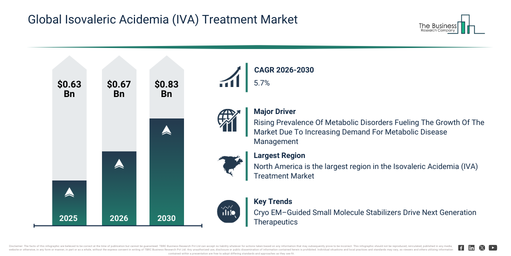
    The isovaleric acidemia (IVA) treatment market size has experienced significant growth in recent years. It is projected to expand from $0.63 billion in 2025 to $0.67 billion in 2026, at a compound annual growth rate (CAGR) of 5.8%. The historical growth can be attributed to enhancements in newborn screening programs, greater awareness of rare metabolic disorders, the availability of dietary and supplement-based management solutions, the expansion of pediatric metabolic clinics, and improved survival rates for IVA patients.

    The market size for isovaleric acidemia (IVA) treatment is projected to experience substantial expansion over the upcoming years. This market is set to reach $0.83 billion by 2030, exhibiting a compound annual growth rate (CAGR) of 5.7%. Factors contributing to this anticipated growth include progress in rare disease treatments, the broadening of genetic counseling availability, a heightened emphasis on preventive metabolic care, an increase in gene therapy clinical trials, and growing investments in orphan drug development. Key trends during this period are expected to encompass the wider implementation of early genetic screening and diagnosis, an increasing reliance on carnitine and glycine supplementation, an intensified focus on customized dietary management plans, the expansion of home-based long-term IVA care, and augmented research into gene therapy methods.

    Get A Free Sample Report With In-Depth Market Insights:

    https://thebusinessresearchcompany.com/sample_request?id=30382219&type=smp&name=Isovaleric%20Acidemia%20%28IVA%29%20Treatment%20Market%20Report%202026&utm_source=Blogs&utm_medium=Paid&utm_campaign=Oct_PR

    Isovaleric Acidemia (IVA) Treatment Market Growth Momentum: What Factors Are Shaping Demand?

    The growing incidence of metabolic disorders is anticipated to fuel the expansion of the isovaleric acidemia (IVA) treatment market in the future. These conditions interfere with the body’s standard metabolic functions, impacting its ability to convert sustenance into energy. Examples of such disorders encompass diabetes mellitus, hypothyroidism, hyperthyroidism, phenylketonuria (PKU), galactosemia, maple syrup urine disease (MSUD), isovaleric acidemia (IVA), Gaucher disease, Fabry disease, Wilson’s disease, and numerous lysosomal storage disorders. Their widespread occurrence is linked to lifestyle factors like inadequate diet and lack of physical activity, leading to issues such as obesity and insulin resistance. Treatment for isovaleric acidemia aids in controlling these conditions by targeting the accumulation of harmful substances, re-establishing proper metabolic activity, and averting issues such as neurological impairment. As an illustration, the World Health Organization, a Switzerland-based specialized agency of the United Nations, reported 2.0 million deaths from diabetes in September 2023. Consequently, the rising incidence of metabolic disorders serves as a key driver for the expansion of the isovaleric acidemia (IVA) treatment market.

    Isovaleric Acidemia (IVA) Treatment Market Segment Landscape And Growth Outlook

    The isovaleric acidemia (iva) treatment market covered in this report is segmented –

    1) By Type: Classical Isovaleric Acidemia, Non-classical Isovaleric Acidemia, Moderate Isovaleric Acidemia

    2) By Treatment: Dietary Management, Enzyme Replacement Therapy, Gene Therapy, Pharmacological Treatment

    3) By Route of Administration: Oral, Injectable

    4) By End-user: Hospitals, Clinics, Homecare Settings

    Subsegments:

    1) By Classical Isovaleric Acidemia: Dietary Management, Carnitine Supplementation, Glycine Supplementation, Emergency Management, Gene Therapy (Investigational)

    2) By Non-classical Isovaleric Acidemia: Observation and Preventive Care, Mild Dietary Modifications, Occasional Supplementation, Genetic Counseling and Monitoring

    3) By Moderate Isovaleric Acidemia: Protein-restricted Diet, Intermittent Carnitine/Glycine Therapy, Periodic Monitoring and Supportive Care, Acute Episode Management

    Isovaleric Acidemia (IVA) Treatment Market Trends Redefining Industry Growth

    Leading companies in the isovaleric acidemia (IVA) treatment market are increasingly adopting precision-medicine strategies, particularly those informed by sophisticated structural biology. An example of this is the development of high-resolution cryo-EM–guided small-molecule stabilizers for isovaleryl-CoA dehydrogenase (IVD). These stabilizers aim to improve the remaining activity of the IVD enzyme, decrease the accumulation of harmful metabolites, and provide more sustained metabolic correction for individuals with IVA. Specifically, these cryo-electron microscopy-guided small-molecule stabilizers of IVD are precisely engineered compounds developed through detailed cryo-EM structures to attach to and stabilize the impaired IVD enzyme, thereby assisting in the restoration of its typical metabolic function in isovaleric acidemia. For example, in June 2025, a research team released the cryo-EM structure of human IVD. This research demonstrated that IVD forms a tetramer with a unique U-shaped channel for substrate binding and pinpointed critical residues such as E411, T200, and R312 involved in coordinating FAD and substrate interactions. These discoveries shed light on how mutations causing disease interfere with FAD binding, identified new binding sites that could be targeted by stabilizing agents, and established the foundation for the logical development of small-molecule “molecular chaperones” capable of restoring the function of mutated IVD, representing a hopeful future therapeutic approach within the IVA treatment market.

    Isovaleric Acidemia (IVA) Treatment Market Competitive Landscape: Who Leads The Industry?

    Major companies operating in the isovaleric acidemia (iva) treatment market are Nestlé Health Science S.A., Nutricia Advanced Medical Nutrition, Nutricia Metabolics, Vitaflo International Ltd., Abbott Nutrition, Cambrooke Therapeutics Inc., Solace Nutrition LLC, Recordati Rare Diseases Inc., Targeted Medical Pharma Inc., Mead Johnson Nutrition, Ajinomoto Co. Inc., Danone S.A., Orchard Therapeutics plc, Rocket Pharmaceuticals Inc., REGENXBIO Inc., uniQure N.V., Abeona Therapeutics Inc., Bluebird Bio Inc., Editas Medicine Inc., CRISPR Therapeutics AG

    View The Full Isovaleric Acidemia (IVA) Treatment Market Report:

    https://thebusinessresearchcompany.com/report/isovaleric-acidemia-iva-treatment-global-market-report?utm_source=Blogs&utm_medium=Paid&utm_campaign=Oct_PR

    Isovaleric Acidemia (IVA) Treatment Market Geographic Distribution And Regional Opportunities

    North America was the largest region in the isovaleric acidemia (IVA) treatment market in 2025. Asia-Pacific is expected to be the fastest-growing region in the forecast period. The regions covered in the isovaleric acidemia (iva) treatment market report are Asia-Pacific, South East Asia, Western Europe, Eastern Europe, North America, South America, Middle East, Africa.

    Reach Out To Our Team:

    The Business Research Company: https://www.thebusinessresearchcompany.com/

    Americas: +1 310-496-7795

    Asia: +44 7882 955267 & +91 8897263534

    Europe: +44 7882 955267

    Email us at: marketing@tbrc.info

    Follow us on:

    LinkedIn: https://in.linkedin.com/company/the-business-research-company

    YouTube: https://www.youtube.com/channel/UC24_fI0rV8cR5DxlCpgmyFQ

    Global Market Model: https://www.thebusinessresearchcompany.com/global-market-model
  • Isotretinoin Drugs Market Reaches $1.7 Billion In 2026: Forecast And Growth Opportunities

    Isotretinoin Drugs Market Reaches $1.7 Billion In 2026: Forecast And Growth Opportunities

    Featuring market attractiveness scoring, total addressable market sizing, company benchmarking matrices, interactive Excel dashboards, deeper supply chain intelligence, emerging startup tracking, and granular product-level insights, The Business Research Company’s 2026 market reports are built to deliver research that is both more actionable and more strategically valuable.

    Isotretinoin Drugs Market Forecast: Value Set To Climb From $1.41 Billion To $1.7 Billion

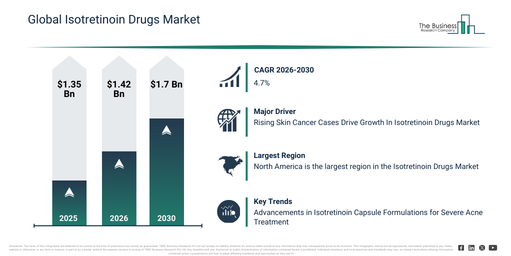
    The isotretinoin drugs market size has experienced robust growth in recent years. It is projected to expand from $1.35 billion in 2025 to $1.42 billion in 2026, reflecting a compound annual growth rate (CAGR) of 5.2%. Historically, this expansion can be attributed to the high prevalence of severe and treatment-resistant acne, the established clinical efficacy of isotretinoin, the limited effectiveness of alternative acne therapies, widespread dermatologist adoption, and the availability of capsule-based oral formulations.

    The isotretinoin drugs market is projected to experience consistent expansion over the coming years, set to reach a valuation of $1.7 billion in 2030, exhibiting a compound annual growth rate (CAGR) of 4.7%. This growth during the forecast period is propelled by factors such as the increasing occurrence of adult acne, improved access to dermatological services, a rising need for potent, lasting acne remedies, the proliferation of generic drug production, and enhanced patient oversight along with safety adherence initiatives. Key developments anticipated in this period include the continued establishment of isotretinoin as the leading treatment for severe acne, a heightened focus on risk management and regulated prescription schemes, the broader availability of generic isotretinoin products, increased understanding among adolescents and adults regarding ongoing acne care, and the expanded application of isotretinoin for uncommon dermatological and oncological conditions.

    Get A Free Sample Report With In-Depth Market Insights:

    https://thebusinessresearchcompany.com/sample_request?id=33646245&type=smp&name=Isotretinoin%20Drugs%20Market%20Report%202026&utm_source=Blogs&utm_medium=Paid&utm_campaign=Oct_PR

    Isotretinoin Drugs Market Expansion Drivers: What’s Shaping Future Growth?

    The isotretinoin drugs market is anticipated to grow, propelled by the increasing incidence of skin cancer. Skin cancer, defined as the uncontrolled multiplication of atypical skin cells, primarily results from extended exposure to ultraviolet (UV) radiation from the sun or tanning beds. The rise in cases is mainly attributed to elevated UV exposure, alongside ozone layer depletion and lifestyle modifications leading to more outdoor activities without adequate sun protection. Isotretinoin drugs are utilized for the prevention and treatment of specific skin cancer types due to their effectiveness in reducing the spread of abnormal skin cells. As an illustration, in January 2024, the American Cancer Society, a US-based non-profit organization dedicated to eliminating cancer, reported 108,270 skin cancer cases, indicating a 3.2% increase from the 104,930 cases documented in 2023. Consequently, the growing number of skin cancer cases will drive the expansion of the isotretinoin drugs market.

    Isotretinoin Drugs Market Breakdown By Product Type And Application

    The isotretinoin drugs market covered in this report is segmented –

    1) By Form: Capsules, Injection

    2) By Indication Type: Severe Acne, Neuroblastoma, Cutaneous T-Cell Lymphoma, Harlequin Ichthyosis, Xeroderma Pigmentosum, Fibrodysplasia Ossificans Progressiva, Squamous Cell Skin Cancers, Other Indication Types

    3) By Distribution Channel: Hospitals Pharmacies, Retail Pharmacies, Online Pharmacies

    Subsegments:

    1) By Capsules: Soft Gel Capsules, Hard Gel Capsules, Liquid-Filled Capsules

    2) By Injection: Intravenous Injection, Intramuscular Injection

    Isotretinoin Drugs Market Strategic Trends: What Defines The Next Growth Phase?

    Companies within the isotretinoin drugs market are prioritizing improvements in drug formulations, particularly isotretinoin capsules, aiming to broaden treatment possibilities and make them more readily available to patients. These isotretinoin capsules are indicated for serious forms of acne, such as nodular or cystic acne, and require strict adherence to usage guidelines because of notable side effects, notably the considerable danger of birth defects. An illustrative example occurred in July 2023 when Upsher-Smith Laboratories, LLC, a pharmaceutical firm based in the US, introduced its initial Isotretinoin Capsules USP. These capsules come in dosages of 10 mg, 20 mg, 30 mg, and 40 mg. The capsules hold therapeutic equivalency (TE code AB1) to the established brand Accutane. This medication is prescribed for addressing severe acne, presenting a validated option for challenging instances.

    Isotretinoin Drugs Market Company Landscape And Competitive Strategy

    Major companies operating in the isotretinoin drugs market are F. Hoffmann-La Roche Ltd., Viatris Inc., Teva Pharmaceutical Industries Ltd., Bausch Health Companies Inc., Hetero Drugs Ltd., Sun Pharmaceuticals Industries Limited, Intas Pharmaceuticals Ltd., Aurobindo Pharma, Dr. Reddy’s Laboratories Ltd., Cipla Limited, Amneal Pharmaceuticals LLC, Lupin Pharmaceuticals Inc, Zydus Lifesciences Limited, Glenmark Pharmaceuticals, Alkem Laboratories, Torrent Pharmaceuticals Ltd, Alembic Pharmaceuticals Ltd, Ajanta Pharma Ltd, Strides Pharma Science Limited, Wockhardt Ltd., Douglas Pharmaceuticals Limited, Chongqing Huapont Pharm Co. Ltd., Cipher Pharmaceuticals Inc.

    View The Full Isotretinoin Drugs Market Report:

    https://thebusinessresearchcompany.com/report/isotretinoin-drugs-global-market-report?utm_source=Blogs&utm_medium=Paid&utm_campaign=Oct_PR

    Isotretinoin Drugs Market Largest Region By Revenue And Market Share

    North America was the largest region in the isotretinoin drugs market in 2025. The regions covered in the isotretinoin drugs market report are Asia-Pacific, South East Asia, Western Europe, Eastern Europe, North America, South America, Middle East, Africa.

    Reach Out To Our Team:

    The Business Research Company: https://www.thebusinessresearchcompany.com/

    Americas: +1 310-496-7795

    Asia: +44 7882 955267 & +91 8897263534

    Europe: +44 7882 955267

    Email us at: marketing@tbrc.info

    Follow us on:

    LinkedIn: https://in.linkedin.com/company/the-business-research-company

    YouTube: https://www.youtube.com/channel/UC24_fI0rV8cR5DxlCpgmyFQ

    Global Market Model: https://www.thebusinessresearchcompany.com/global-market-model

  • Isocitrate Dehydrogenase (IDH) Inhibitors Market Growth In 2026: Market Size, Key Drivers And Future Outlook

    Isocitrate Dehydrogenase (IDH) Inhibitors Market Growth In 2026: Market Size, Key Drivers And Future Outlook

    Built to provide research that’s more actionable and strategically valuable, The Business Research Company’s 2026 market reports include market attractiveness analysis, total addressable market sizing, company benchmarking matrices, interactive Excel dashboards, broader supply chain intelligence, emerging startup tracking, and in-depth product insights.

    Isocitrate Dehydrogenase (IDH) Inhibitors Market Revenue Growth On Track For A 26.6% CAGR Through 2030

    The market size for isocitrate dehydrogenase (idh) inhibitors has experienced significant growth in recent years. It is projected to expand from $2.46 billion in 2025 to $3.13 billion in 2026, achieving a compound annual growth rate (CAGR) of 26.8%. This historical growth can be attributed to several factors, including advancements in cancer genomics research, the urgent unmet needs in oncology, the emergence of mutation-driven drug discovery, broader hospital oncology adoption, and an increase in clinical trial expansion.

    The isocitrate dehydrogenase (idh) inhibitors market size is anticipated to experience substantial growth over the next few years, with projections indicating it will expand to $8.02 billion in 2030 at a compound annual growth rate (CAGR) of 26.6%. This expected expansion during the forecast period is driven by progress in precision medicine, the rise of biomarker-driven oncology care, robust rare cancer drug pipelines, the development of combination cancer therapies, and regulatory backing for targeted drugs. Significant trends in the coming period encompass the broadening of targeted oncology therapies, increased drug development based on genetic mutations, an intensifying focus on treatments for rare cancers, the growing utilization of precision oncology diagnostics, and ongoing advancements in small molecule cancer inhibitors.

    Get A Free Sample Report With In-Depth Market Insights:

    https://thebusinessresearchcompany.com/sample_request?id=89123041&type=smp&name=Isocitrate%20Dehydrogenase%20%28IDH%29%20Inhibitors%20Market%20Report%202026&utm_source=Blogs&utm_medium=Paid&utm_campaign=Oct_PR

    Isocitrate Dehydrogenase (IDH) Inhibitors Market Development Factors: What’s Supporting Demand?

    The rising incidence of acute myeloid leukemia is anticipated to fuel the expansion of the isocitrate dehydrogenase (IDH) inhibitors market. Acute myeloid leukemia (AML) is characterized as a rapidly progressing cancer affecting the blood and bone marrow, marked by the swift generation of abnormal white blood cells that impede normal blood cell formation. This increased occurrence of AML is linked to an expanding aging population, as older individuals face a heightened risk of developing this aggressive blood cancer due to age-related changes in their bone marrow and immune system. Isocitrate dehydrogenase (IDH) inhibitors effectively treat acute myeloid leukemia by blocking mutant IDH enzymes, which helps restore typical blood cell development and decelerates the proliferation of leukemia cells. For instance, in February 2023, a report from the Leukaemia Foundation, an Australia-based non-profit organization, indicated that between 2022 and 2035, more than 7,000 children, 6,000 young adults, and 108,000 adults aged 25–65 are expected to be diagnosed with various blood cancers, primarily acute lymphoblastic leukemia (ALL), acute myeloid leukemia (AML), and non-Hodgkin lymphoma (NHL). Consequently, the growing frequency of acute myeloid leukemia is projected to propel the growth of the isocitrate dehydrogenase (IDH) inhibitors market.

    Isocitrate Dehydrogenase (IDH) Inhibitors Market Segment Analysis And Revenue Potential

    The isocitrate dehydrogenase (idh) inhibitors market covered in this report is segmented –

    1) By Type: IDH1 Mutant Medullary Malignant Tumor, IDH2 Mutant Medullary Malignant Tumor, Other Types

    2) By Molecule Type: Monoclonal Antibodies, Peptides, Small Molecules, Other Molecule Types

    3) By Route Of Administration: Oral, Parenteral, Subcutaneous, Topical

    4) By Application: FLT3 Inhibitor, DH Inhibitor, Hedgehog Pathway Inhibitor, Other Applications

    Subsegments:

    1) By IDH1 Mutant Medullary Malignant Tumor: Acute Myeloid Leukemia (AML), Glioma Or Glioblastoma, Cholangiocarcinoma, Chondrosarcoma

    2) By IDH2 Mutant Medullary Malignant Tumor: Acute Myeloid Leukemia (AML), Myelodysplastic Syndromes (MDS), Angioimmunoblastic T-Cell Lymphoma (AITL)

    3) By Other Types: Solid Tumors With IDH Mutations, Metastatic Cancers With IDH Alterations, Experimental Or Off-Label Uses In Rare Cancers

    Isocitrate Dehydrogenase (IDH) Inhibitors Market Transformation Trends: What Innovations Are Driving Change?

    Key companies operating in the isocitrate dehydrogenase (IDH) inhibitors market are heavily focused on securing regulatory approvals. This strategic emphasis aims to broaden the clinical applications of their therapies, accelerate their entry into the market, and achieve a competitive advantage in the treatment of IDH-mutant cancers. Regulatory approvals are formal permissions granted by health authorities, enabling a drug to be marketed and utilized after its safety and effectiveness have been confirmed. For instance, in August 2024, Servier Laboratoires, a pharmaceutical company based in France, received FDA approval for VORANIGO (vorasidenib) tablets. This approval designates it as the first targeted therapy for patients diagnosed with Grade 2 IDH-mutant glioma, including astrocytoma and oligodendroglioma with IDH1 or IDH2 mutations. This oral treatment significantly extends progression-free survival, a finding from the Phase 3 INDIGO trial, where patients experienced a median progression-free survival of 27.7 months compared to 11.1 months for the placebo group. VORANIGO provides a convenient and well-tolerated treatment choice with manageable side effects, representing a major therapeutic advancement for patients who previously had limited options.

    Isocitrate Dehydrogenase (IDH) Inhibitors Market Key Players Shaping Industry Direction

    Major companies operating in the isocitrate dehydrogenase (idh) inhibitors market are Roche Holding AG, Merck & Co. Inc., Bristol-Myers Squibb Company, Novartis AG, GlaxoSmithKline plc, Eli Lilly and Company, Daiichi Sankyo Company Limited, Les Laboratoires Servier, Evotec SE, HUTCHMED (China) Limited, Rigel Pharmaceuticals Inc., CStone Pharmaceuticals, Forma Therapeutics Holdings Inc., Philogen S.p.A., Kura Oncology Inc., Agios Pharmaceuticals Inc., Adooq Bioscience LLC, Taiho Pharmaceutical Co. Ltd., Celgene Corporation, Focus Biomolecules LLC, InvivoChem LLC

    View The Full Isocitrate Dehydrogenase (IDH) Inhibitors Market Report:

    https://thebusinessresearchcompany.com/report/isocitrate-dehydrogenase-idh-inhibitors-global-market-report?utm_source=Blogs&utm_medium=Paid&utm_campaign=Oct_PR

    Isocitrate Dehydrogenase (IDH) Inhibitors Market Regional Analysis And Leading Geography

    North America was the largest region in the isocitrate dehydrogenase (IDH) inhibitors market in 2025. Asia-Pacific is expected to be the fastest-growing region in the forecast period. The regions covered in the isocitrate dehydrogenase (idh) inhibitors market report are Asia-Pacific, South East Asia, Western Europe, Eastern Europe, North America, South America, Middle East, Africa.

    Reach Out To Our Team:

    The Business Research Company: https://www.thebusinessresearchcompany.com/

    Americas: +1 310-496-7795

    Asia: +44 7882 955267 & +91 8897263534

    Europe: +44 7882 955267

    Email us at: marketing@tbrc.info

    Follow us on:

    LinkedIn: https://in.linkedin.com/company/the-business-research-company

    YouTube: https://www.youtube.com/channel/UC24_fI0rV8cR5DxlCpgmyFQ

    Global Market Model: https://www.thebusinessresearchcompany.com/global-market-model
  • Ischemic Heart Disease (IHD) Drugs Market Size And Forecast 2026–2030: Trends Driving Industry Expansion

    Ischemic Heart Disease (IHD) Drugs Market Size And Forecast 2026–2030: Trends Driving Industry Expansion

    Backed by market attractiveness analysis, total addressable market sizing, company benchmarking matrices, interactive Excel dashboards, wider supply chain intelligence, emerging startup coverage, and detailed product-level insights, The Business Research Company’s 2026 market reports are designed to offer research that is more actionable and strategically valuable than ever.

    Ischemic Heart Disease (IHD) Drugs Market Value Growth And Long-Term Outlook

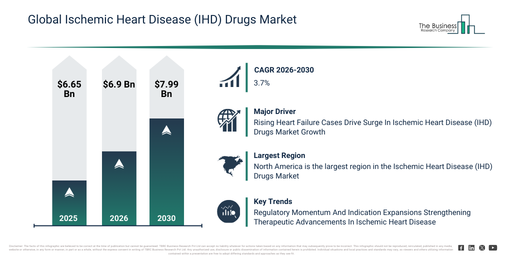
    The ischemic heart disease (ihd) drugs market size has experienced consistent growth in recent years. It is anticipated to expand from $6.65 billion in 2025 to $6.9 billion in 2026, progressing at a compound annual growth rate (CAGR) of 3.7%. This growth witnessed during the historic period stems from the rising prevalence of coronary artery disease, an expanding geriatric population, increasing awareness of cardiovascular health, a significant incidence of lifestyle-related risk factors, and the availability of generic drugs.

    The ischemic heart disease (IHD) drugs market size is anticipated to experience consistent expansion over the coming years. It is projected to grow to $7.99 billion in 2030, demonstrating a compound annual growth rate (CAGR) of 3.7%. This growth during the forecast period can be attributed to advancements in precision medicine, the integration of digital health solutions, increased adoption of combination therapies, the development of novel drug delivery systems, and the broadening of telehealth and remote monitoring services. Key trends identified for the forecast period include personalized cardiac therapy, new combination drug formulations, telemedicine-enabled cardiac care, enhanced cardiovascular risk prediction and monitoring, and minimally invasive drug delivery techniques.

    Get A Free Sample Report With In-Depth Market Insights:

    https://thebusinessresearchcompany.com/sample_request?id=58756923&type=smp&name=Ischemic%20Heart%20Disease%20%28IHD%29%20Drugs%20Market%20Report%202026&utm_source=Blogs&utm_medium=Paid&utm_campaign=Oct_PR

    Ischemic Heart Disease (IHD) Drugs Market Industry Drivers: What’s Behind The Revenue Growth?

    The escalating occurrence of heart failure is projected to stimulate the expansion of the ischemic heart disease (IHD) drug market moving forward. Heart failure is a persistent ailment where the heart muscle struggles to pump sufficient blood to satisfy the body’s demand for blood and oxygen. This condition can manifest as fatigue, shortness of breath, and difficulty with routine activities. Ischemic heart disease (IHD) drugs hold a vital position in the management of heart failure. These medications can assist in preventing heart failure by reducing the risk factors and symptoms associated with ischemic heart disease. Ischemic Heart Disease (IHD) drugs operate by inhibiting the heart’s pacemaker activity and are beneficial for heart failure patients exhibiting reduced ejection fractions and elevated resting heart rates, particularly after tolerating a beta-blocker. As an illustration, in September 2023, the Heart Failure Society of America, a US-based organization, reported that 6.7 million Americans over 20 years of age are affected by heart failure (HF), a number anticipated to climb to 8.5 million Americans by 2030. Therefore, the rising incidence of heart failure is a primary factor propelling the growth of the ischemic heart disease (IHD) drug market.

    Ischemic Heart Disease (IHD) Drugs Market Segmentation And Category Overview

    The ischemic heart disease (ihd) drugs market covered in this report is segmented –

    1) By Drug Class: Anti-Dyslipidemic Drugs, Calcium Channel Blockers, Beta-Blockers, Angiotensin-converting enzyme (ACE) Inhibitors, Angiotensin II Receptor Blockers (ARBs), Vasodilators, Antithrombotic Agents

    2) By Disease Class: Angina Pectoris, Myocardial Infarction

    3) By End User: Hospital Pharmacy, Retail Pharmacy, Online Pharmacy

    Subsegments:

    1) By Anti-Dyslipidemic Drugs: Statins, Fibrates, Niacin, Cholesterol Absorption Inhibitors

    2) By Calcium Channel Blockers: Dihydropyridines, Non-Dihydropyridines

    3) By Beta-Blockers: Cardioselective Beta-Blockers, Non-Selective Beta-Blockers, Vasodilating Beta-Blockers

    4) By Angiotensin-Converting Enzyme (ACE) Inhibitors: Enalapril, Lisinopril, Ramipril

    5) By Angiotensin II Receptor Blockers (ARBs): Losartan, Valsartan, Irbesartan

    6) By Vasodilators: Nitroglycerin, Isosorbide Dinitrate, Hydralazine

    7) By Antithrombotic Agents: Antiplatelet Drugs, Anticoagulants

    #Ischemic Heart Disease (IHD) Drugs Market Growth Trends: What’s Shaping The Future Outlook?

    Major companies in the ischemic heart disease (IHD) drugs market are concentrating on advancing regulatory approvals and extending drug indications to bolster therapeutic options and gain a larger market share. For example, in June 2023, Bristol Myers Squibb, a US-based biopharmaceutical company, announced that Camzyos (mavacamten), the first allosteric, selective cardiac myosin inhibitor for treating symptomatic NYHA class II–III obstructive hypertrophic cardiomyopathy (HCM), was approved by the European Commission. In the same year in the U.S., the FDA approved a supplemental new drug application, based on Phase 3 VALOR HCM data, which indicated a significant reduction in eligibility for septal reduction therapy among treated patients. Therefore, the increasing regulatory momentum and expanded labels for myosin inhibitors are stimulating growth in the IHD drug market.

    Ischemic Heart Disease (IHD) Drugs Market Competitive Analysis Of Leading Industry Participants

    Major companies operating in the ischemic heart disease (ihd) drugs market are Pfizer Inc., F. Hoffmann-La Roche Ltd., Merck & Co. Inc., AbbVie Inc., Bayer AG, Novartis AG, Sanofi S.A., Bristol-Myers Squibb Company, AstraZeneca PLC, GSK PLC, Eli Lilly and Company, Boehringer Ingelheim International GmbH, Viatris Inc., Teva Pharmaceutical Industries Ltd., Sandoz Inc., Sun Pharmaceutical Industries Limited, Dr. Reddy’s Laboratories Ltd., Cipla Limited, Lupin Limited, Recordati S.p.A., Zydus Lifesciences Limited, Glenmark Pharmaceuticals Ltd., Aurobindo Pharma Limited, Alembic Pharmaceuticals Ltd., Accord Healthcare Limited, Macleods Pharmaceuticals Ltd., Novitium Pharma LLC

    View The Full Ischemic Heart Disease (IHD) Drugs Market Report:

    https://thebusinessresearchcompany.com/report/ischemic-heart-disease-ihd-drugs-global-market-report?utm_source=Blogs&utm_medium=Paid&utm_campaign=Oct_PR

    Ischemic Heart Disease (IHD) Drugs Market Geographic Analysis: Where Is Demand Accelerating Fastest?

    North America was the largest region in the ischemic heart disease (IHD) drugs market in 2025. Asia-Pacific is expected to be the fastest-growing region in the forecast period. The regions covered in the ischemic heart disease (ihd) drugs market report are Asia-Pacific, South East Asia, Western Europe, Eastern Europe, North America, South America, Middle East, Africa.

    Reach Out To Our Team:

    The Business Research Company: https://www.thebusinessresearchcompany.com/

    Americas: +1 310-496-7795

    Asia: +44 7882 955267 & +91 8897263534

    Europe: +44 7882 955267

    Email us at: marketing@tbrc.info

    Follow us on:

    LinkedIn: https://in.linkedin.com/company/the-business-research-company

    YouTube: https://www.youtube.com/channel/UC24_fI0rV8cR5DxlCpgmyFQ

    Global Market Model: https://www.thebusinessresearchcompany.com/global-market-model
  • Ipatasertib Market 2026 Outlook: Market Size, CAGR And Key Growth Opportunities

    Ipatasertib Market 2026 Outlook: Market Size, CAGR And Key Growth Opportunities

    Featuring market attractiveness scoring, total addressable market sizing, company benchmarking matrices, interactive Excel dashboards, deeper supply chain intelligence, emerging startup tracking, and granular product-level insights, The Business Research Company’s 2026 market reports are built to deliver research that is both more actionable and more strategically valuable.

    Ipatasertib Market Poised To Hit $1.6 Billion By 2030 With A 13.1% CAGR

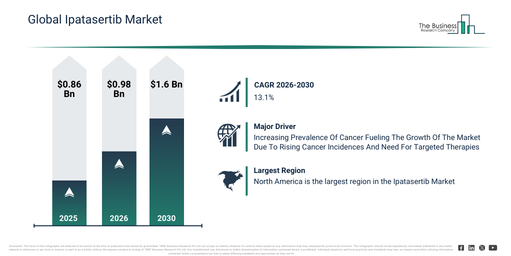
    The ipatasertib market has experienced rapid growth in recent years. It is projected to increase from $0.86 billion in 2025 to $0.98 billion in 2026, at a compound annual growth rate (CAGR) of 13.4%. The growth observed in the past can be ascribed to advancements in pi3k/akt pathway research, the increasing prevalence of advanced-stage cancers, the expansion of targeted oncology drug pipelines, the proliferation of clinical trials for small-molecule inhibitors, and a rising adoption of precision oncology approaches.

    The ipatasertib market is anticipated to show significant expansion over the coming years, with its size projected to reach $1.6 billion by 2030, exhibiting a compound annual growth rate (CAGR) of 13.1%. This expansion during the forecast period is propelled by factors such as increasing regulatory approvals for targeted cancer drugs, a growing demand for personalized cancer therapies, the broadening of combination therapy strategies, rising investments in oncology research and development, and an intensified focus on treatment options for resistant cancers. Furthermore, significant trends shaping this period include a heightened emphasis on AKT pathway inhibition therapies, a growing adoption of combination cancer treatment regimens, an increased focus on biomarker-driven oncology drugs, the expansion of targeted small-molecule pipelines, and enhanced clinical evaluations of precision oncology agents.

    Get A Free Sample Report With In-Depth Market Insights:

    https://thebusinessresearchcompany.com/sample_request?id=58171895&type=smp&name=Ipatasertib%20Market%20Report%202026&utm_source=Blogs&utm_medium=Paid&utm_campaign=Oct_PR

    Ipatasertib Market Growth Factors: What’s Supporting Expansion?

    The increasing incidence of cancer is projected to fuel the expansion of the ipatasertib market moving forward. Cancer describes a variety of conditions characterized by the unchecked proliferation and dissemination of atypical cells within the body. The rising occurrence of cancer stems from lifestyle choices such as poor nutrition, smoking, lack of physical activity, and excessive alcohol intake. Ipatasertib enhances cancer treatment strategies by targeting the PI3K/AKT signaling pathway, thereby effectively hindering tumor growth and multiplication. It reduces the viability of cancer cells and their resistance to therapy, leading to improved treatment results and patient outlook. For instance, in April 2024, data from the American Cancer Society (ACS) and the International Agency for Research on Cancer (IARC) showed 20 million new cancer cases in 2022, surpassing previous estimates, with projections indicating 35 million by 2050, representing a 77% increase. Hence, the growing prevalence of cancer is driving the growth of the ipatasertib market.

    Ipatasertib Market Segment Outlook: Which Categories Are Growing Fastest?

    The ipatasertib market covered in this report is segmented –

    1) By Indication: Prostate Cancer, Breast Cancer, Other Cancers

    2) By Dosage Form: Tablets, Capsules, Other Dosages

    3) By Route Of Administration: Oral, Intravenous

    4) By Distribution Channel: Hospital Pharmacies, Retail Pharmacies, Online Pharmacies

    Subsegments:

    1) By Prostate Cancer: Metastatic Castration-Resistant Prostate Cancer (mCRPC), Metastatic Hormone-Sensitive Prostate Cancer (mHSPC), Non-Metastatic Prostate Cancer

    2) By Breast Cancer: Triple-Negative Breast Cancer (TNBC), Hormone Receptor-Positive Or Human Epidermal Growth Factor Receptor 2 (HER2)-Negative Breast Cancer, Human Epidermal Growth Factor Receptor 2 (HER2)-Positive Breast Cancer

    3) By Other Cancers: Ovarian Cancer, Gastric Cancer, Pancreatic Cancer, Colorectal Cancer, Lung Cancer

    Ipatasertib Market Leading Companies And Competitive Benchmarking

    Major companies operating in the ipatasertib market are Thermo Fisher Scientific Inc., Illumina Inc., Myriad Genetics Inc., BGI Genomics Co. Ltd., Invitae Corporation, Guardant Health Inc., GeneDx LLC, Ancestry Inc., Oxford Nanopore Technologies plc, Genomic Health Inc., 23andMe Holding Co., Color Health Inc., Helix OpCo LLC, Personalis Inc., Dante Genomics, Gene By Gene Ltd., Veritas Genetics Inc., Futura Genetics, Nebula Genomics Inc., Pathway Genomics Corporation

    View The Full Ipatasertib Market Report:

    https://thebusinessresearchcompany.com/report/ipatasertib-global-market-report?utm_source=Blogs&utm_medium=Paid&utm_campaign=Oct_PR

    Ipatasertib Market Global Footprint: Which Region Leads The Industry?

    North America was the largest region in the ipatasertib market in 2025. The regions covered in the ipatasertib market report are Asia-Pacific, South East Asia, Western Europe, Eastern Europe, North America, South America, Middle East, Africa.

    Reach Out To Our Team:

    The Business Research Company: https://www.thebusinessresearchcompany.com/

    Americas: +1 310-496-7795

    Asia: +44 7882 955267 & +91 8897263534

    Europe: +44 7882 955267

    Email us at: marketing@tbrc.info

    Follow us on:

    LinkedIn: https://in.linkedin.com/company/the-business-research-company

    YouTube: https://www.youtube.com/channel/UC24_fI0rV8cR5DxlCpgmyFQ

    Global Market Model: https://www.thebusinessresearchcompany.com/global-market-model

  • In-Vitro Transcription Templates Market Size Growth: From $1.52 Billion In 2026 To $3.22 Billion By 2030

    In-Vitro Transcription Templates Market Size Growth: From $1.52 Billion In 2026 To $3.22 Billion By 2030

    Built to provide research that’s more actionable and strategically valuable, The Business Research Company’s 2026 market reports include market attractiveness analysis, total addressable market sizing, company benchmarking matrices, interactive Excel dashboards, broader supply chain intelligence, emerging startup tracking, and in-depth product insights.

    In-Vitro Transcription Templates Market Size And Revenue Outlook Through 2030

    The in-vitro transcription templates market has shown substantial growth in recent years. Its valuation is anticipated to climb from $1.24 billion in 2025 to $1.53 billion in 2026, achieving a compound annual growth rate (CAGR) of 23.0%. The expansion observed in the past can be attributed to the widespread use of in-vitro transcription in molecular biology research, the early adoption of rna synthesis tools in academic laboratories, the growth of gene expression and functional genomics studies, the availability of standardized dna template design methods, and the expansion of biotech research infrastructure.

    The in-vitro transcription templates market size is expected to experience substantial expansion in the coming years. It will grow to $3.22 billion in 2030 at a compound annual growth rate (CAGR) of 20.5%. This growth during the forecast period is primarily driven by the ongoing development in mRNA vaccine pipelines, increased financial commitments towards RNA-based therapeutics, the escalating need for rapid and scalable RNA production platforms, the broadening scope of clinical-stage genetic therapies, and the increasing requirement for high-quality templates in regulated manufacturing. Key trends identified for the forecast timeframe involve an escalating need for in-vitro transcription templates in mRNA vaccine creation, the increased adoption of high-fidelity templates for RNA-based therapeutics, a growing inclination for custom and sequence-specific transcription templates, the widening application of in-vitro transcription templates in diagnostic assay development, and a stronger emphasis on scalable and GMP-grade template production.

    Get A Free Sample Report With In-Depth Market Insights:

    https://thebusinessresearchcompany.com/sample_request?id=58756548&type=smp&name=In-Vitro%20Transcription%20Templates%20Market%20Report%202026&utm_source=Blogs&utm_medium=Paid&utm_campaign=Oct_PR

    In-Vitro Transcription Templates Market Demand Drivers: What’s Powering Industry Growth?

    The future expansion of the in-vitro transcription templates market is anticipated to be driven by the growing emphasis on gene therapy. Gene therapy involves medical methods aimed at altering or substituting genes within cells to manage or avert illnesses by rectifying genetic defects. This heightened interest in gene therapy stems from progress in technologies like CRISPR, rising financial commitments, an expanding array of research projects, and positive results from clinical trials. The in-vitro transcription templates market plays a crucial role in supporting gene therapy through the provision of RNA molecules vital for mRNA therapeutics, siRNA treatments, and gene-editing applications, thereby facilitating the creation of precise therapies for both inherited and acquired conditions. As an illustration, in March 2024, the U.S. Food and Drug Administration (FDA), a US-based federal agency, reported that 36 gene therapies had received approval, with more than 500 additional therapies under development, and an estimated 10–20 new approvals projected each year by 2025. Consequently, the escalating focus on gene therapy is boosting the growth of the in-vitro transcription templates market.

    In-Vitro Transcription Templates Market Segment Landscape: Which Areas Lead Development?

    The in-vitro transcription templates market covered in this report is segmented –

    1) By Treatment: Vaccine, Therapeutic

    2) By Research Stage: Exploratory, Clinical

    3) By Disease: Cancer, Infectious Disease, Lifestyle Disease, Genetic Disease, Other Diseases

    4) By End User: Pharmaceutical And Biotechnology Companies, Contract Research Organizations (CROs) And Contract Manufacturing Organizations (CMOs), Academics And Research, Other End Users

    Subsegments:

    1) By Vaccine: MRNA Vaccines, DNA Vaccines

    2) By Therapeutic: Gene Therapy, RNA-Based Therapeutics

    In-Vitro Transcription Templates Market Innovation Trends: What Developments Are Reshaping The Industry?

    Major companies active in the in-vitro transcription templates market are prioritizing the development of self-amplifying RNA (saRNA) synthesis services. This focus is aimed at improving the efficiency of RNA therapy, reducing manufacturing expenses, and enhancing the capabilities of next-generation genetic medicines. Self-amplifying RNA synthesis services describe technologies that create RNA molecules designed to replicate themselves within host cells, which allows for substantial protein expression from minimal RNA input and consequently boosts the potency and efficacy of RNA-based vaccines, immunotherapies, and gene therapies. For instance, in May 2024, GenScript Biotech Corporation, a US-based biotechnology company, introduced its self-amplifying RNA (saRNA) synthesis service as part of its broadened in-vitro transcription RNA portfolio. This service provides high-purity saRNA intended to deliver robust protein expression, support lower dosing requirements, decrease production costs, and improve therapeutic outcomes across various RNA-based applications.

    In-Vitro Transcription Templates Market Industry Leaders And Competitive Landscape

    Major companies operating in the in-vitro transcription templates market are Thermo Fisher Scientific Inc., Danaher Corporation, Merck KGaA, Eurofins Genomics LLC, Agilent Technologies Inc., Bio-Rad Laboratories Inc., Qiagen N.V., Integrated DNA Technologies Inc., Promega Corporation, Genescript Biotech Corporation, Takara Bio Inc., New England Biolabs, OriGene Technologies Inc., Synthego Corporation, Synbio Technologies, VectorBuilder Inc., Bio-Synthesis Inc., TriLink BioTechnologies, Norgen Biotek Corporation, Genaxxon BioScience GmbH, Enzo Life Sciences Inc., GeneCopoeia

    View The Full In-Vitro Transcription Templates Market Report:

    https://thebusinessresearchcompany.com/report/in-vitro-transcription-templates-global-market-report?utm_source=Blogs&utm_medium=Paid&utm_campaign=Oct_PR

    In-Vitro Transcription Templates Market Regional Distribution: Which Areas Power Market Growth?

    North America was the largest region in the in-vitro transcription templates market in 2025. Asia-Pacific is expected to be the fastest-growing region in the forecast period. The regions covered in the in-vitro transcription templates market report are Asia-Pacific, South East Asia, Western Europe, Eastern Europe, North America, South America, Middle East, Africa.

    Reach Out To Our Team:

    The Business Research Company: https://www.thebusinessresearchcompany.com/

    Americas: +1 310-496-7795

    Asia: +44 7882 955267 & +91 8897263534

    Europe: +44 7882 955267

    Email us at: marketing@tbrc.info

    Follow us on:

    LinkedIn: https://in.linkedin.com/company/the-business-research-company

    YouTube: https://www.youtube.com/channel/UC24_fI0rV8cR5DxlCpgmyFQ

    Global Market Model: https://www.thebusinessresearchcompany.com/global-market-model

  • In-Vitro Lung Model Market Analysis 2026: Market Size, Growth Trends And Industry Outlook

    In-Vitro Lung Model Market Analysis 2026: Market Size, Growth Trends And Industry Outlook

    Backed by market attractiveness analysis, total addressable market sizing, company benchmarking matrices, interactive Excel dashboards, wider supply chain intelligence, emerging startup coverage, and detailed product-level insights, The Business Research Company’s 2026 market reports are designed to offer research that is more actionable and strategically valuable than ever.

    In-Vitro Lung Model Market Growth From $0.65 Billion In 2026 To $1.28 Billion By 2030 At A CAGR Of 18.6%

    The in-vitro lung model market has experienced substantial growth in recent years. It will grow from $0.54 billion in 2025 to $0.65 billion in 2026 at a compound annual growth rate (CAGR) of 21.0%. This historical growth can be attributed to several factors, including the limitations of animal models in respiratory research, the persistent use of two-dimensional lung cell cultures, escalating respiratory disease research activity, an expansion in academic lung biology research, and the early adoption of organoid-based research methods.

    The in-vitro lung model market size is anticipated to see substantial growth in the upcoming years. It is projected to expand to $1.29 billion in 2030, demonstrating a compound annual growth rate (CAGR) of 18.6%. The growth expected during this forecast period is attributable to the increasing demand for predictive preclinical lung models, a heightened focus on minimizing animal testing, the expansion of respiratory drug development pipelines, growing investment in advanced in-vitro research tools, and the demand for more physiologically relevant lung disease models. Key trends in the forecast period encompass the increasing adoption of three-dimensional lung models in drug research, the growing use of lung-on-a-chip platforms for disease modeling, a rising preference for human-relevant in-vitro lung testing systems, the expansion of in-vitro lung models in toxicology and safety studies, and a greater integration of in-vitro lung models into preclinical research pipelines.

    Get A Free Sample Report With In-Depth Market Insights:

    https://thebusinessresearchcompany.com/sample_request?id=83973013&type=smp&name=In-Vitro%20Lung%20Model%20Market%20Report%202026&utm_source=Blogs&utm_medium=Paid&utm_campaign=Oct_PR

    In-Vitro Lung Model Market Growth Drivers: What’s Behind The Acceleration?

    The projected expansion of the in vitro lung model market is linked to the growing volume of clinical studies. These studies involve investigations aimed at assessing the safety, efficacy, and results of novel treatments, pharmaceuticals, and diagnostic instruments in human subjects. The surge in clinical investigations stems from evolving healthcare requirements, a heightened desire for advanced medical interventions, and the quest for innovative approaches to intricate health issues. The in vitro lung model market provides critical support for clinical research by supplying regulated environments conducive to drug assessment, toxicity analysis, disease representation, and the examination of lung-specific biological reactions. As an illustration, in January 2024, ClinicalTrials.gov, a US-based clinical trial registry, reported 477,230 registered clinical trials worldwide by the close of 2023, marking a rise from the 437,508 trials documented in 2022. Consequently, the increasing prevalence of clinical studies is a significant impetus for the in vitro lung model market.

    In-Vitro Lung Model Market Segments: Where Is Growth Concentrated?

    The in-vitro lung model market covered in this report is segmented –

    1) By Type: Two-Dimensional (2D) Model, Three-Dimensional (3D) Model

    2) By Application: Drug Discovery And Toxicology Studies, Physiological Research, Three-Dimensional (3D) Model Development, Other Applications

    3) By End-User: Academic Research Institutes, Pharmaceutical And Biotechnology Companies, Other End-Users

    Subsegments:

    1) By Two-Dimensional (2D) Model: Monolayer Cell Cultures, Co-cultures

    2) By Three-Dimensional (3D) Model: Spheroids, Organoids, Lung-On-A-chip Models

    In-Vitro Lung Model Market Trends: What’s Defining The Industry’s Next Phase?

    Major companies within the in vitro lung model market are prioritizing the development of advanced 3D respiratory tissue models. This initiative aims to enhance their physiological relevance, improve predictive accuracy, and strengthen preclinical testing capabilities. A 3D respiratory tissue model describes a three-dimensional structure cultivated in a laboratory setting, comprising primary or specialized respiratory cells grown in conditions that allow them to mimic the architecture and function of human airway tissues, including mucus production, ciliary movement, and barrier integrity. As an example, in April 2023, MatTek Corporation, a US-based biotechnology company, introduced EpiNasal. This innovation is a 3D respiratory tissue model constructed from primary human nasal epithelial cells, which replicates functional features of nasal epithelium such as goblet cells, active tight junctions, and beating cilia. It provides researchers with a highly relevant platform for evaluating the effects of pharmaceuticals, chemicals, pathogens, and consumer products on human respiratory tissues.

    In-Vitro Lung Model Market Key Participants And Competitive Landscape

    Major companies operating in the in-vitro lung model market are Thermo Fisher Scientific Inc., Lonza Group AG, PerkinElmer Inc., Charles River Laboratories International Inc., Epithelix, STEMCELL Technologies, American Type Culture Collection (ATCC), BioIVT, InSphero, Emulate Inc., PhoenixBio Co. Ltd., Newcells Biotech, CN Bio Innovations Ltd., Mimetas, Cyfuse Biomedical K.K., 3D Biotek LLC, AlveoliX AG, Hesperos Inc., SynVivo Inc., VITROCELL Systems GmbH

    View The Full In-Vitro Lung Model Market Report:

    https://thebusinessresearchcompany.com/report/in-vitro-lung-model-global-market-report?utm_source=Blogs&utm_medium=Paid&utm_campaign=Oct_PR

    In-Vitro Lung Model Market Leading Geography: Which Region Contributes The Most Revenue?

    North America was the largest region in the in-vitro lung model market in 2025. Asia-Pacific is expected to be the fastest-growing region in the forecast period. The regions covered in the in-vitro lung model market report are Asia-Pacific, South East Asia, Western Europe, Eastern Europe, North America, South America, Middle East, Africa.

    Reach Out To Our Team:

    The Business Research Company: https://www.thebusinessresearchcompany.com/

    Americas: +1 310-496-7795

    Asia: +44 7882 955267 & +91 8897263534

    Europe: +44 7882 955267

    Email us at: marketing@tbrc.info

    Follow us on:

    LinkedIn: https://in.linkedin.com/company/the-business-research-company

    YouTube: https://www.youtube.com/channel/UC24_fI0rV8cR5DxlCpgmyFQ

    Global Market Model: https://www.thebusinessresearchcompany.com/global-market-model
  • Investigational New Drug Contract Development And Manufacturing Organization (CDMO) Market Forecast To 2030: Starting From $8.17 Billion In 2026

    Investigational New Drug Contract Development And Manufacturing Organization (CDMO) Market Forecast To 2030: Starting From $8.17 Billion In 2026

    Featuring market attractiveness scoring, total addressable market sizing, company benchmarking matrices, interactive Excel dashboards, deeper supply chain intelligence, emerging startup tracking, and granular product-level insights, The Business Research Company’s 2026 market reports are built to deliver research that is both more actionable and more strategically valuable.

    Investigational New Drug Contract Development And Manufacturing Organization (CDMO) Market Expansion Outlook: What Revenue Opportunities Are Ahead?

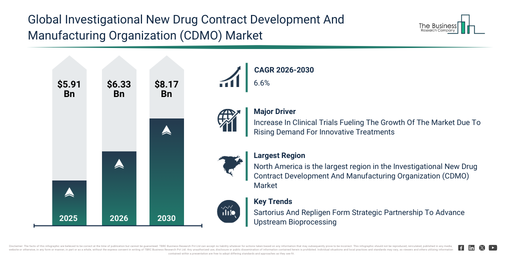
    The investigational new drug contract development and manufacturing organization (cdmo) market has experienced strong expansion in recent years. It is anticipated to grow from $5.91 billion in 2025 to $6.33 billion in 2026, at a compound annual growth rate (CAGR) of 7.1%. The growth observed in the past can be attributed to factors such as the limited availability of CDMOs for investigational drugs, an increasing demand for small molecule synthesis, a reliance on conventional manufacturing services, growing clinical trial volumes, and the early adoption of regulatory support services.

    The investigational new drug contract development and manufacturing organization (cdmo) market size is anticipated to experience substantial expansion in the upcoming years. Its valuation is projected to reach $8.17 billion by 2030, reflecting a compound annual growth rate (CAGR) of 6.6%. This growth during the forecast period can be attributed to the broadening of gene and cell therapy manufacturing capabilities, a heightened demand for monoclonal antibodies and recombinant proteins, increased investment in advanced formulation technologies, the implementation of scalable manufacturing platforms, and a rise in global biotechnology research collaborations. Significant trends expected in this period include an escalating demand for early-stage drug development services, the expansion of clinical trial material supply services, a stronger emphasis on regulatory compliance and quality standards, the development of biologics and advanced therapies, and the adoption of custom manufacturing solutions for both small and large molecules.

    Get A Free Sample Report With In-Depth Market Insights:

    https://thebusinessresearchcompany.com/sample_request?id=65848155&type=smp&name=Investigational%20New%20Drug%20Contract%20Development%20And%20Manufacturing%20Organization%20%28CDMO%29%20Market%20Report%202026&utm_source=Blogs&utm_medium=Paid&utm_campaign=Oct_PR

    Investigational New Drug Contract Development And Manufacturing Organization (CDMO) Market Growth Factors Behind Sustained Expansion

    The expansion of clinical trials is projected to fuel the advancement of the investigational new drug contract development and manufacturing organization (CDMO) market in the coming period. These trials are meticulously structured research endeavors that involve human volunteers to assess the safety and efficacy of medical treatments, procedures, or interventions within controlled environments. This increase in clinical trials primarily stems from the escalating need for novel therapies, with the rising prevalence of chronic and intricate diseases compelling pharmaceutical and biotechnology firms to create and evaluate new remedies. Investigational new drug CDMOs facilitate clinical trials by optimizing the production and formulation of drugs ready for testing, thereby guaranteeing a prompt and compliant provision of investigational products for every stage of a study. As an illustration, in December 2024, data from the Association of the British Pharmaceutical Industry, a UK-based pharmaceutical trade body, indicated that the overall number of industry-backed clinical trials commenced in the United Kingdom rose from 411 in 2022 to 426 in 2023. Concurrently, Phase III trial starts saw an increase of 16.5 percent during this identical timeframe, moving from 182 to 212. Consequently, the expanding volume of clinical trials is stimulating the development of the investigational new drug contract development and manufacturing organization (CDMO) market.

    Investigational New Drug Contract Development And Manufacturing Organization (CDMO) Market Segment Analysis: What Are The Core Market Categories?

    The investigational new drug contract development and manufacturing organization (cdmo) market covered in this report is segmented –

    1) By Product: Small Molecules, Large Molecules

    2) By Formulation Type: Solid Formulations, Liquid Formulations, Injectable Formulations

    3) By Service Type: Clinical Trial Material Supply, Regulatory Support Services, Manufacturing Services

    4) By End-User: Biotechnology Companies, Academic And Research Institutes, Other End-Users

    Subsegments:

    1) By Small Molecules: Synthetic Small Molecules, Semi-synthetic Small Molecules, Peptide-based Small Molecules, Oligonucleotides

    2) By Large Molecules: Monoclonal Antibodies (mAbs), Recombinant Proteins, Vaccines, Cell Therapy Products, Gene Therapy Products, RNA-based Therapeutics

    Investigational New Drug Contract Development And Manufacturing Organization (CDMO) Market Industry Trends Fueling Future Revenue Growth

    Leading companies in the investigational new drug contract development and manufacturing organization (CDMO) market are concentrating on strategic alliances to bolster their development capabilities and accelerate entry into clinical trials. Such strategic partnerships denote formal arrangements between two or more entities that collaborate to achieve common objectives, utilizing each other’s strengths, resources, or specialized knowledge for mutual benefits while maintaining their distinct autonomy. For example, in August 2023, Sartorius AG, a Germany-based life science company, collaborated with Repligen Corporation, a US-based life sciences company, to unveil an integrated system combining the BIOSTAT STR and XCell ATF technologies for upstream process intensification. This joint effort seeks to optimize biopharmaceutical production by enhancing both efficiency and scalability. The undertaking underscores Sartorius’ ongoing innovation in bioprocessing solutions, reaffirming its dedication to the advancement of the biomanufacturing industry.

    Investigational New Drug Contract Development And Manufacturing Organization (CDMO) Market Top Companies Driving Competitive Growth

    Major companies operating in the investigational new drug contract development and manufacturing organization (cdmo) market are Thermo Fisher Scientific Inc., Fresenius Kabi AG, Lonza Group Ltd., Catalent Inc., Samsung Biologics Co. Ltd., Fareva SA, Recipharm AB, PCI Pharma Services, Vetter Pharma, Delpharm, Kindeva Drug Delivery LP, Ajinomoto Bio-Pharma Services, Cenexi SAS, Grand River Aseptic Manufacturing Inc., INCOG BioPharma Services, Aurigene Pharmaceutical Services, Jubilant HollisterStier LLC, Symbiosis Pharmaceutical Services Ltd., Afton Scientific Corp., Amaran Biotech Inc.

    View The Full Investigational New Drug Contract Development And Manufacturing Organization (CDMO) Market Report:

    https://thebusinessresearchcompany.com/report/investigational-new-drug-contract-development-and-manufacturing-organization-cdmo-global-market-report?utm_source=Blogs&utm_medium=Paid&utm_campaign=Oct_PR

    Investigational New Drug Contract Development And Manufacturing Organization (CDMO) Market Regional Outlook: Where Is Opportunity Concentrated?

    North America was the largest region in the investigational new drug contract development and manufacturing organization (CDMO) market in 2025. Asia-Pacific is expected to be the fastest-growing region in the forecast period. The regions covered in the investigational new drug contract development and manufacturing organization (cdmo) market report are Asia-Pacific, South East Asia, Western Europe, Eastern Europe, North America, South America, Middle East, Africa.

    Reach Out To Our Team:

    The Business Research Company: https://www.thebusinessresearchcompany.com/

    Americas: +1 310-496-7795

    Asia: +44 7882 955267 & +91 8897263534

    Europe: +44 7882 955267

    Email us at: marketing@tbrc.info

    Follow us on:

    LinkedIn: https://in.linkedin.com/company/the-business-research-company

    YouTube: https://www.youtube.com/channel/UC24_fI0rV8cR5DxlCpgmyFQ

    Global Market Model: https://www.thebusinessresearchcompany.com/global-market-model
  • Intravenous Iron Drugs Market Size In 2026 And Beyond: Understanding Future Growth Potential

    Intravenous Iron Drugs Market Size In 2026 And Beyond: Understanding Future Growth Potential

    Built to provide research that’s more actionable and strategically valuable, The Business Research Company’s 2026 market reports include market attractiveness analysis, total addressable market sizing, company benchmarking matrices, interactive Excel dashboards, broader supply chain intelligence, emerging startup tracking, and in-depth product insights.

    Intravenous Iron Drugs Market Growth Potential: How Will Market Size Shift Through 2030?

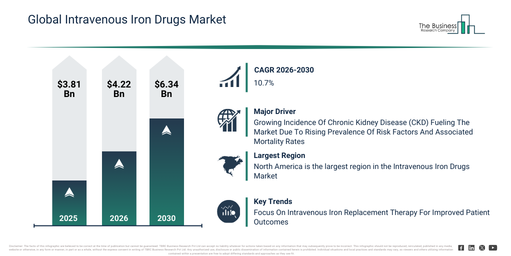
    The market for intravenous iron drugs has experienced substantial growth in recent years. It is anticipated to expand from $3.81 billion in 2025 to $4.22 billion in 2026, reflecting a compound annual growth rate (CAGR) of 10.8%. The historical rise in this market can be linked to the significant prevalence of iron deficiency anemia, challenges associated with oral iron absorption, structured hospital protocols for anemia management, increased adoption in dialysis centers, and the demonstrated clinical efficacy of IV iron therapies.

    The intravenous iron drugs market size is expected to experience significant growth in the upcoming years. It is projected to reach $6.34 billion in 2030, demonstrating a compound annual growth rate (CAGR) of 10.7%. The anticipated growth during this period is attributable to the rising burden of chronic diseases, an expanding population of dialysis patients, an increase in cancer-related anemia cases, the demand for rapid hemoglobin correction, and the broadening of outpatient infusion services. Key trends for the forecast period include an increasing application in the management of iron deficiency anemia, a growing adoption among patients with chronic kidney disease, a developing preference over oral iron therapies, the expansion of single-dose iron formulations, and higher utilization in oncology and gastroenterology.

    Get A Free Sample Report With In-Depth Market Insights:

    https://thebusinessresearchcompany.com/sample_request?id=95513183&type=smp&name=Intravenous%20Iron%20Drugs%20Market%20Report%202026&utm_source=Blogs&utm_medium=Paid&utm_campaign=Oct_PR

    Intravenous Iron Drugs Market Demand Drivers Opening New Revenue Streams

    The increasing occurrence of chronic kidney disease (CKD) is projected to propel the expansion of the intravenous iron drugs market moving forward. Chronic kidney disease (CKD) signifies the progressive deterioration of kidney function over time, leading to the kidneys’ diminished capacity to effectively filter waste and excess fluids from the blood. This rise in CKD cases is attributed to escalating rates of diabetes and hypertension, which contribute to kidney damage over time. Intravenous iron drugs aid chronic kidney disease patients by replenishing iron stores, rectifying anemia, and enhancing hemoglobin levels, which in turn improves oxygen transport and lessens the requirement for erythropoiesis-stimulating agents. For instance, in July 2025, according to Hamadan University of Medical Sciences, a Iran-based university, the global number of newly diagnosed chronic kidney diseases is projected to rise to 25.06 million by 2030. Hence, the increasing prevalence of chronic kidney disease (CKD) is driving the growth of the intravenous iron drugs market.

    Intravenous Iron Drugs Market Segment Breakdown: Which Categories Lead On Revenue?

    The intravenous iron drugs market covered in this report is segmented –

    1) By Product Type: Iron Dextran, Iron Sucrose, Ferric Carboxymaltose, Other Product Types

    2) By Indication: Chronic Kidney Disease, Inflammatory Bowel Disease, Cancer, Other Diseases

    3) By Distribution Channel: Hospital Pharmacy, Retail Pharmacy, Online Pharmacy

    Subsegments:

    1) By Iron Dextran: Low Molecular Weight Iron Dextran, High Molecular Weight Iron Dextran

    2) By Iron Sucrose: Standard Iron Sucrose Injection, Iron Sucrose Complex

    3) By Ferric Carboxymaltose: Single-Dose Ferric Carboxymaltose, Multiple-Dose Ferric Carboxymaltose

    4) By Other Product Types: Ferumoxytol, Ferric Derisomaltose, Sodium Ferric Gluconate

    Intravenous Iron Drugs Market Trends Powering Strategic Industry Growth

    Leading companies active in the intravenous iron drugs market are prioritizing the creation of novel therapies, such as intravenous (IV) iron replacement therapy, to enhance effectiveness, safety, and patient outcomes. Intravenous (IV) iron replacement therapy functions as a medical procedure that delivers iron directly into the bloodstream through an intravenous infusion. This treatment addresses iron deficiency and anemia, particularly beneficial for patients who struggle to tolerate or adequately absorb oral iron supplements. For instance, in June 2023, Daiichi Sankyo Company Limited, a Japan-based pharmaceutical entity specializing in advanced drug development and healthcare provisions, declared that the U.S. Food and Drug Administration (FDA) had sanctioned Injectafer (ferric carboxymaltose injection) for the management of iron deficiency in adult patients suffering from heart failure classified as New York Heart Association class II/III, with the aim of boosting exercise capacity. Injectafer is a broadly applied intravenous iron treatment, noted for its rapid replenishment of iron levels in individuals who are intolerant to or do not respond well to oral iron supplements.

    Intravenous Iron Drugs Market Leading Players And Competitive Positioning

    Major companies operating in the intravenous iron drugs market are Pharmacosmos A/S, American Regent Inc., Fresenius SE & Co. KGaA, Sandoz Group AG, Hikma Pharmaceuticals plc, Rockwell Medical Inc., Daiichi Sankyo Company Ltd., CSL Limited, Teva Pharmaceutical Industries Ltd., Sun Pharmaceutical Industries Ltd., Dr. Reddy’s Laboratories Ltd., Zydus Lifesciences Limited, Vifor Pharma Management Ltd., Galenica Ltd., Aspen Pharmacare Holdings Limited, Lupin Limited, Aurobindo Pharma Limited, Jiangsu Hengrui Pharmaceutical Co. Ltd., Kissei Pharmaceutical Co. Ltd., Nanjing Hicin Pharmaceutical Co. Ltd

    View The Full Intravenous Iron Drugs Market Report:

    https://thebusinessresearchcompany.com/report/intravenous-iron-drugs-global-market-report?utm_source=Blogs&utm_medium=Paid&utm_campaign=Oct_PR

    Intravenous Iron Drugs Market Geographic Landscape: Which Region Leads Industry Growth?

    North America was the largest region in the intravenous iron drugs market in 2025. Asia-Pacific is expected to be the fastest-growing region in the forecast period. The regions covered in the intravenous iron drugs market report are Asia-Pacific, South East Asia, Western Europe, Eastern Europe, North America, South America, Middle East, Africa.

    Reach Out To Our Team:

    The Business Research Company: https://www.thebusinessresearchcompany.com/

    Americas: +1 310-496-7795

    Asia: +44 7882 955267 & +91 8897263534

    Europe: +44 7882 955267

    Email us at: marketing@tbrc.info

    Follow us on:

    LinkedIn: https://in.linkedin.com/company/the-business-research-company

    YouTube: https://www.youtube.com/channel/UC24_fI0rV8cR5DxlCpgmyFQ

    Global Market Model: https://www.thebusinessresearchcompany.com/global-market-model
  • Intravenous Immunoglobulin Market Reaches $23.43 Billion In 2026: Key Developments Shaping Expansion

    Intravenous Immunoglobulin Market Reaches $23.43 Billion In 2026: Key Developments Shaping Expansion

    Backed by market attractiveness analysis, total addressable market sizing, company benchmarking matrices, interactive Excel dashboards, wider supply chain intelligence, emerging startup coverage, and detailed product-level insights, The Business Research Company’s 2026 market reports are designed to offer research that is more actionable and strategically valuable than ever.

    Intravenous Immunoglobulin Market Value Analysis: What Growth Lies Ahead Over The Forecast Period?

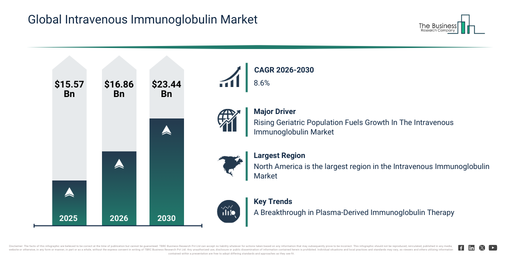
    The intravenous immunoglobulin market has experienced significant growth in recent years. This market is set to expand from $15.57 billion in 2025 to $16.86 billion in 2026, achieving a compound annual growth rate (CAGR) of 8.3%. Historically, this growth can be attributed to several factors including an increasing prevalence of primary immunodeficiency diseases, innovations in immunoglobulin purification techniques, a rise in hospital-based IVIG administration, growing public awareness concerning autoimmune disorders, and the expansion of IVIG production capacities.

    The intravenous immunoglobulin market is projected to experience robust expansion over the coming years. This market is anticipated to reach a valuation of $23.44 billion by 2030, demonstrating a compound annual growth rate (CAGR) of 8.6%. Factors contributing to this growth during the projection period include the rising need for home-based IVIG treatment, the creation of biosimilar IVIG products, the incorporation of automated infusion systems, a broadening range of applications in neurological conditions, and the expansion of immunoglobulin therapies in developing markets. Key trends identified for the forecast timeframe encompass personalized immunoglobulin treatment, IVIG administration at home, the evolution and uptake of biosimilars, improved purification and safety measures, and automated infusion systems.

    Get A Free Sample Report With In-Depth Market Insights:

    https://thebusinessresearchcompany.com/sample_request?id=8538&type=smp&name=Intravenous%20Immunoglobulin%20Market%20Report%202026&utm_source=Blogs&utm_medium=Paid&utm_campaign=Oct_PR

    Intravenous Immunoglobulin Market Growth Backed By Core Demand Fundamentals

    The expanding geriatric population is poised to advance the intravenous immunoglobulin market. This demographic, defined as individuals over 65 years old, often experiences compromised immune function and a scarcity of antibodies as they age, requiring immunoglobulins to supplement their antibody levels. This directly boosts the demand for intravenous immunoglobulins. For instance, in January 2024, the Population Reference Bureau, a Kenya-based Nonprofit organization, reported that the population of Americans aged 65 and older is projected to surge from 58 million in 2022 to 82 million by 2050, marking a 47% increase. Furthermore, this age group’s proportion of the total population is expected to climb from 17% to 23% during the identical period. Hence, the increasing geriatric population will undoubtedly stimulate the growth of the intravenous immunoglobulin market.

    Intravenous Immunoglobulin Market Segmentation: How Does The Market Break Down By Category?

    The intravenous immunoglobulin market covered in this report is segmented –

    1) By Type: IgG (Immunoglobulin G), IgM (Immunoglobulin M), IgA (Immunoglobulin A), IgE (Immunoglobulin E), IgD (Immunoglobulin D)

    2) By Distribution Channel: Hospital Pharmacy, Retail Pharmacy, Other Distribution Channels

    3) By Application: Hypogammaglobulinemia, Chronic Inflammatory Demyelinating Polyneuropathy (CIDP), Primary Immunodeficiency Diseases, Myasthenia Gravis, Multifocal Motor Neuropathy, Other Applications

    4) By End-User: Hospitals, Clinics, Home Care

    Intravenous Immunoglobulin Market Growth Trends Reshaping The Competitive Landscape

    Key companies operating in the intravenous immunoglobin market are concentrating on bringing innovative products to market, such as plasma-derived medicines, and securing their endorsement from federal bodies, including the US FDA, to gain a competitive advantage. The release of an FDA-approved advanced IVIG solution represents the U.S. Food and Drug Administration’s endorsement of a new intravenous immunoglobulin (IVIG) therapy designed for treating specific medical ailments. For example, in June 2024, Biotest AG, a Germany-based supplier of plasma proteins and products, publicly announced its initial U.S. Food and Drug Administration (FDA) approval for Yimmugo, designated for addressing primary immunodeficiencies. Yimmugo, acting as an intravenous immunoglobulin, incorporates pooled human plasma-derived immunoglobulin G (IgG), which is essential for providing immune support to patients with PIDs. This approval emerges amidst a rising need for plasma-derived treatments, underscoring the requirement for effective therapeutic options for individuals with weakened immune systems. Yimmugo further enhances Grifols’ existing collection of intravenous and subcutaneous immunoglobulins, thereby offering more alternatives for patients who rely on these vital medications.

    Intravenous Immunoglobulin Market Competitive Overview And Top Companies

    Major companies operating in the intravenous immunoglobulin market are Bio Products Laboratory Limited, Biotest AG, China Biologic Products Holdings Inc., CSL Behring, Grifols S.A., Kedrion SpA, Shanghai RAAS Blood Products Co. Ltd., Octapharma AG, Takeda Pharmaceutical Company Limited, Baxter International Inc., LFB Biotechnologies SAS, BDI Pharma Inc., Hualan Biological Engineering Inc., ADMA Biologics Inc., Bharat Serums and Vaccines Limited, Sanquin Plasma Products B.V., Prothya Biosolutions B.V., Sichuan Yuanda Shuyang Pharmaceutical Co. Ltd., Pfizer Inc., Kedrion Biopharma, Intas Pharmaceuticals, Octapharma Pharmazeutika Produktionsges.m.b.H., GC Pharma, Grifols Biologicals Inc., Kamada Ltd., LFB USA, Octapharma Plasma Inc., Panacea Biotec Ltd.

    View The Full Intravenous Immunoglobulin Market Report:

    https://thebusinessresearchcompany.com/report/intravenous-immunoglobulin-global-market-report?utm_source=Blogs&utm_medium=Paid&utm_campaign=Oct_PR

    Intravenous Immunoglobulin Market Largest Region: Which Geography Holds The Biggest Share?

    North America was the largest region in the intravenous immunoglobulin market in 2025. Asia-Pacific is expected to be the fastest-growing region in the forecast period. The regions covered in the intravenous immunoglobulin market report are Asia-Pacific, South East Asia, Western Europe, Eastern Europe, North America, South America, Middle East, Africa.

    Reach Out To Our Team:

    The Business Research Company: https://www.thebusinessresearchcompany.com/

    Americas: +1 310-496-7795

    Asia: +44 7882 955267 & +91 8897263534

    Europe: +44 7882 955267

    Email us at: marketing@tbrc.info

    Follow us on:

    LinkedIn: https://in.linkedin.com/company/the-business-research-company

    YouTube: https://www.youtube.com/channel/UC24_fI0rV8cR5DxlCpgmyFQ

    Global Market Model: https://www.thebusinessresearchcompany.com/global-market-model