Month: October 2026

  • Non-Alcoholic Steatohepatitis Treatment Market Research 2026: Market Size, Trends, Segments And Growth Forecast

    Non-Alcoholic Steatohepatitis Treatment Market Research 2026: Market Size, Trends, Segments And Growth Forecast

    Backed by market attractiveness analysis, total addressable market sizing, company benchmarking matrices, interactive Excel dashboards, wider supply chain intelligence, emerging startup coverage, and detailed product-level insights, The Business Research Company’s 2026 market reports are designed to offer research that is more actionable and strategically valuable than ever.

    Non-Alcoholic Steatohepatitis Treatment Market Size Outlook: How Quickly Will Revenue Expand Through 2030?

    The non-alcoholic steatohepatitis treatment market size has experienced rapid growth in recent years. It is expected to increase from $3.57 billion in 2025 to $4.98 billion in 2026, achieving a compound annual growth rate (CAGR) of 39.6%. Historically, this expansion can be linked to the growing prevalence of obesity, an increase in type 2 diabetes incidence, high consumption of processed foods, inadequate awareness regarding liver health, and limited treatment options for early-stage nash.

    The non-alcoholic steatohepatitis treatment market size is anticipated to experience substantial growth over the upcoming years, projected to reach $18.97 billion by 2030, demonstrating a compound annual growth rate (CAGR) of 39.7%. This expansion during the forecast period is driven by factors such as advancements in precision medicine, the development of novel NASH drugs, the adoption of digital health monitoring tools, government initiatives aimed at liver disease prevention, and increasing investment in liver disease research. Significant trends during this period are expected to include personalized lifestyle and diet management, advancements in non-invasive diagnostics, widespread fatty liver disease awareness programs, home-based liver health monitoring, and the development of novel pharmacological agents.

    Get A Free Sample Report With In-Depth Market Insights:

    https://thebusinessresearchcompany.com/sample_request?id=41689345&type=smp&name=Non-Alcoholic%20Steatohepatitis%20Treatment%20Market%20Report%202026&utm_source=Blogs&utm_medium=Paid&utm_campaign=Oct_PR

    Non-Alcoholic Steatohepatitis Treatment Market Growth Momentum: What Factors Are Shaping Demand?

    The increasing occurrence of insulin resistance has propelled the growth of the non-alcoholic steatohepatitis treatment market. Insulin resistance develops when muscles, fat, and liver cells do not adequately respond to insulin and struggle to absorb glucose from the blood, resulting in high blood sugar. These issues are linked to an unhealthy lifestyle, excessive sugar intake, and genetic predisposition. The prevalence of insulin resistance has expanded due to a rise in diabetes and other liver-related concerns, which are treated by non-alcoholic steatohepatitis treatment. For instance, in July 2025, PubMed, a US-based free biomedical literature database maintained by the U.S. National Library of Medicine, reported a significant increase in the prevalence rates of general obesity, abdominal obesity, severe obesity, and insulin resistance, with rates rising from 34.9% to 41.4%, 62.5% to 67.0%, 5.2% to 11.5%, and 22.5% to 30.2%, respectively. Therefore, the heightened prevalence of insulin resistance, driven by various liver and diabetes diseases, will stimulate the non-alcoholic steatohepatitis treatment market.

    Non-Alcoholic Steatohepatitis Treatment Market Segment Landscape And Growth Outlook

    The non-alcoholic steatohepatitis treatment market covered in this report is segmented –

    1) By Drug Type: Vitamin E And Pioglitazone, Ocaliva, Elafibranor, Selonsertib And cenicriviroc, Obeticholic Acid, Other Drugs Types

    2) By Test Type: Blood Tests, Liver Biopsy, Imaging Procedures

    3) By End User: Hospital Pharmacies, Retail And Specialty Pharmacies, Other End Users

    Subsegments:

    1) By Vitamin E And Pioglitazone: Vitamin E Supplements, Pioglitazone-Based Formulations.

    2) By Ocaliva: Ocaliva (Obeticholic Acid) For NASH

    3) By Elafibranor: Elafibranor Monotherapy, Elafibranor Combination Therapy

    4) By Selonsertib And Cenicriviroc: Selonsertib Formulations, Cenicriviroc Formulations

    5) By Obeticholic Acid: Immediate-Release Obeticholic Acid, Extended-Release Obeticholic Acid

    6) By Other Drug Types: Novel Agents In Clinical Trials, Combination Therapies

    Non-Alcoholic Steatohepatitis Treatment Market Trends Redefining Industry Growth

    Leading companies within the non-alcoholic steatohepatitis treatment market are innovating products such as endogenous hormones to capture larger customer bases, achieve greater sales, and elevate revenue. Endogenous hormones are organic substances produced internally by the body’s various glands, tissues, or organs, playing vital roles in regulating physiological functions. An example of this is from September 2023, when 89bio Inc., a US-based biotechnology firm, announced that the U.S. Food and Drug Administration (FDA) granted Breakthrough Therapy Designation (BTD) for Pegozafermin to treat individuals diagnosed with nonalcoholic steatohepatitis (NASH). Pegozafermin is distinguished by its composition as an engineered glycoPEGylated analog of fibroblast growth factor 21. This specific formulation is currently being developed for addressing non-alcoholic steatohepatitis (NASH) and severe hypertriglyceridemia (SHTG). Pegozafermin’s unique aspect lies in its application of specialized glycoPEGylated technology, which ensures an extended half-life while retaining its full potency. This advanced methodology improves the product’s effectiveness in modulating key factors associated with lipid metabolism, NASH, and hypertriglyceridemia, including the reduction of triglycerides, glycemic control, steatosis, inflammation, and fibrosis.

    Non-Alcoholic Steatohepatitis Treatment Market Competitive Landscape: Who Leads The Industry?

    Major companies operating in the non-alcoholic steatohepatitis treatment market are AstraZeneca PLC, Galmed Pharmaceuticals Ltd., Genfit S.A., Zydus Cadila Healthcare Limited, Bristol-Myers Squibb Company, Gilead Sciences Inc., Novo Nordisk A/S, Inventiva Pharma SA, NGM Biopharmaceuticals Inc., Galectin Therapeutics Inc., Madrigal Pharmaceuticals Corporation, Intercept Pharmaceuticals Inc., Cirius Therapeutics Inc., Viking Therapeutics Inc., Eli Lilly and Company, Terns Pharmaceuticals Inc., AbbVie Inc., Johnson & Johnson Private Limited, Sanofi S.A., F. Hoffmann-La Roche Ltd., C.H. Boehringer Sohn AG & Co. KG

    View The Full Non-Alcoholic Steatohepatitis Treatment Market Report:

    https://thebusinessresearchcompany.com/report/non-alcoholic-steatohepatitis-treatment-global-market-report?utm_source=Blogs&utm_medium=Paid&utm_campaign=Oct_PR

    Non-Alcoholic Steatohepatitis Treatment Market Largest Region: Which Geography Holds The Highest Market Share?

    North America was the largest region in the non-alcoholic steatohepatitis treatment market share in 2025. The regions covered in the non-alcoholic steatohepatitis treatment market report are Asia-Pacific, South East Asia, Western Europe, Eastern Europe, North America, South America, Middle East, Africa.

    Reach Out To Our Team:

    The Business Research Company: https://www.thebusinessresearchcompany.com/

    Americas: +1 310-496-7795

    Asia: +44 7882 955267 & +91 8897263534

    Europe: +44 7882 955267

    Email us at: marketing@tbrc.info

    Follow us on:

    LinkedIn: https://in.linkedin.com/company/the-business-research-company

    YouTube: https://www.youtube.com/channel/UC24_fI0rV8cR5DxlCpgmyFQ

    Global Market Model: https://www.thebusinessresearchcompany.com/global-market-model
  • Non-Alcoholic Steatohepatitis (NASH) Market Forecast 2026: Market Size, Competitive Landscape And Growth Drivers

    Non-Alcoholic Steatohepatitis (NASH) Market Forecast 2026: Market Size, Competitive Landscape And Growth Drivers

    Featuring market attractiveness scoring, total addressable market sizing, company benchmarking matrices, interactive Excel dashboards, deeper supply chain intelligence, emerging startup tracking, and granular product-level insights, The Business Research Company’s 2026 market reports are built to deliver research that is both more actionable and more strategically valuable.

    Non-Alcoholic Steatohepatitis (NASH) Market Size, Value And Growth Trajectory Through 2030

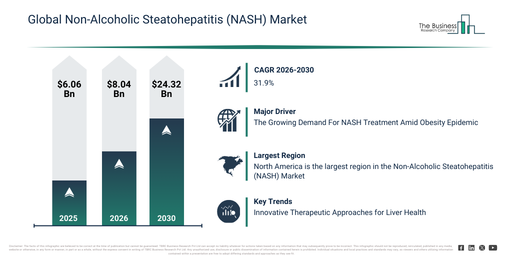
    The non-alcoholic steatohepatitis (nash) market has witnessed significant growth in recent years. This market is projected to expand from $6.06 billion in 2025 to $8.04 billion in 2026, demonstrating a compound annual growth rate (CAGR) of 32.7%. The market’s historical growth can be linked to factors such as limited awareness concerning nash, a scarcity of effective treatment solutions, a reliance on lifestyle adjustments, the widespread occurrence of metabolic disorders, and a disjointed market environment.

    The non-alcoholic steatohepatitis (nash) market is projected for rapid expansion over the coming years. This market is set to reach $24.32 billion by 2030, achieving a compound annual growth rate (CAGR) of 31.9%. Factors contributing to this anticipated growth include advancements in targeted therapies, greater healthcare spending, increasing use of non-invasive diagnostics, expanding pharmaceutical pipelines, and a surge in R&D collaborations. Key trends for the forecast period encompass the increasing prevalence of obesity and type 2 diabetes, the development of non-invasive diagnostic tools, intensified research into liver fibrosis therapies, an uptick in personalized and targeted drug treatments, and the widening reach of hospital and retail pharmacy networks.

    Get A Free Sample Report With In-Depth Market Insights:

    https://thebusinessresearchcompany.com/sample_request?id=66211429&type=smp&name=Non-Alcoholic%20Steatohepatitis%20%28NASH%29%20Market%20Report%202026&utm_source=Blogs&utm_medium=Paid&utm_campaign=Oct_PR

    Non-Alcoholic Steatohepatitis (NASH) Market Expansion Drivers: What’s Shaping Future Growth?

    The increasing incidence of obesity is fueling the demand within the non-alcoholic steatohepatitis (NASH) market in the future. Obesity is defined as an abnormal or excessive accumulation of fat that presents a health risk, alongside a body weight exceeding what is considered healthy or standard for an individual’s height. With non-alcoholic fatty liver disease becoming more common due to the growing obesity pandemic, NASH is anticipated to emerge as the primary cause of severe liver disease in the coming decades, consequently boosting the necessity for NASH therapies and associated medications. For example, data from May 2025 by the Government Digital Service, a UK government organization, indicates that from 2023 to 2024, the proportion of adults who were overweight (including obese) was greater in men (69.7%) compared to women (59.2%), whereas the proportion of obese adults was higher among women (26.9%) than men (26.2%). Consequently, the escalation in obesity cases is expected to propel the expansion of the non-alcoholic steatohepatitis (NASH) market.

    Non-Alcoholic Steatohepatitis (NASH) Market Breakdown By Product Type And Application

    The non-alcoholic steatohepatitis (nash) market covered in this report is segmented –

    1) By Dosage Form: Solid, Liquid

    2) By Product: Vitamin E and Pioglitazone, Ocaliva, Elafibranor, Selonsertib and Cenicriviroc, Other Products

    3) By Disease Cause: Hypertension, Heart Disease, High Blood Lipid, Type 2 Diabetes, Obesity

    4) By Sales Channel: Hospital Pharmacy, Retail Pharmacy, Online Provider

    5) By Application: Oral, Parenteral

    Subsegments:

    1) By Solid: Tablets, Capsules, Other Solid Dosage Forms

    2) By Liquid: Oral Solutions, Syrups, Injectable Solutions, Other Liquid Dosage Forms

    Non-Alcoholic Steatohepatitis (NASH) Market Strategic Trends: What Defines The Next Growth Phase?

    Companies active in the non-alcoholic steatohepatitis (NASH) market are developing thyroid hormone receptor-beta (THR-beta) agonists. These compounds are specifically developed to enhance liver metabolism, reduce liver fat accumulation, and improve liver function. THR-beta agonists operate by selectively activating the thyroid hormone receptor-beta subtype, a critical receptor involved in regulating metabolism, growth, and development. For instance, in March 2024, the Food and Drug Administration, a US regulatory body, granted approval to Rezdiffra (resmetirom), a thyroid hormone receptor-beta agonist, as the initial treatment for adults with noncirrhotic NASH exhibiting moderate to advanced liver scarring (fibrosis). By specifically engaging the THR-beta receptor, Rezdiffra aids in regulating lipid metabolism, leading to a decrease in intrahepatic triglycerides and overall liver fat accumulation.

    Non-Alcoholic Steatohepatitis (NASH) Market Company Landscape And Competitive Strategy

    Major companies operating in the non-alcoholic steatohepatitis (nash) market are NGM Biopharmaceuticals Inc., Novartis AG, AstraZeneca plc., GlaxoSmithKline plc., F. Hoffmann-La Roche AG, The Takeda Pharmaceutical Company Limited, Gilead Sciences Inc., Novo Nordisk A/S, Genfit SA, Intercept Pharmaceuticals Inc., Enanta Pharmaceuticals Inc., Blade Therapeutics Inc., Galmed Pharmaceuticals Inc., Immuron Limited, Terns Pharmaceuticals Inc., Tobira Therapeutics Inc., Arena Pharmaceuticals Inc., Galectin Therapeutics Inc., Viking Therapeutics, Madrigal Pharmaceuticals Inc., Cirius Therapeutics, Akero Therapeutics Inc., Echosens

    View The Full Non-Alcoholic Steatohepatitis (NASH) Market Report:

    https://thebusinessresearchcompany.com/report/non-alcoholic-steatohepatitis-NASH-global-market-report?utm_source=Blogs&utm_medium=Paid&utm_campaign=Oct_PR

    Non-Alcoholic Steatohepatitis (NASH) Market Regional Analysis: Which Region Leads By Revenue?

    North America was the largest region in the non alcoholic steatohepatitis (NASH) market share in 2025. The regions covered in the non-alcoholic steatohepatitis (nash) market report are Asia-Pacific, South East Asia, Western Europe, Eastern Europe, North America, South America, Middle East, Africa.

    Reach Out To Our Team:

    The Business Research Company: https://www.thebusinessresearchcompany.com/

    Americas: +1 310-496-7795

    Asia: +44 7882 955267 & +91 8897263534

    Europe: +44 7882 955267

    Email us at: marketing@tbrc.info

    Follow us on:

    LinkedIn: https://in.linkedin.com/company/the-business-research-company

    YouTube: https://www.youtube.com/channel/UC24_fI0rV8cR5DxlCpgmyFQ

    Global Market Model: https://www.thebusinessresearchcompany.com/global-market-model

  • Non Hodgkin Lymphoma (NHL) Market Size In 2026: Regional Growth, Key Segments And Future Outlook

    Non Hodgkin Lymphoma (NHL) Market Size In 2026: Regional Growth, Key Segments And Future Outlook

    Built to provide research that’s more actionable and strategically valuable, The Business Research Company’s 2026 market reports include market attractiveness analysis, total addressable market sizing, company benchmarking matrices, interactive Excel dashboards, broader supply chain intelligence, emerging startup tracking, and in-depth product insights.

    Non Hodgkin Lymphoma (NHL) Market CAGR Outlook And Future Development

    The non-Hodgkin lymphoma (NHL) market size has experienced significant expansion in recent years. It is forecast to increase from $10.86 billion in 2025 to $11.73 billion in 2026, demonstrating a compound annual growth rate (CAGR) of 8.0%. The expansion observed during prior periods can be attributed to several factors, including the rising global occurrence of NHL, improvements in chemotherapy protocols, increased spending on healthcare, enhanced public knowledge of lymphatic cancers, and the development of oncology hospital facilities.

    The non hodgkin lymphoma (nhl) market size is anticipated to experience substantial expansion in the coming years. It is projected to grow to $16.44 billion in 2030, exhibiting a compound annual growth rate (CAGR) of 8.8%. This expansion during the forecast period is driven by the expanding pipeline of targeted therapies, increasing approvals of biologics, rising adoption of personalized medicine, broadened access in emerging markets, and an increase in stem cell transplant procedures. Key trends observed over the forecast period encompass the increasing embrace of immunotherapy and targeted therapy, more frequent application of combination treatment regimens, an enhanced emphasis on early and precise diagnosis, the broadening of personalized treatment protocols, and a move towards outpatient and home-based care models.

    Get A Free Sample Report With In-Depth Market Insights:

    https://thebusinessresearchcompany.com/sample_request?id=15221451&type=smp&name=Non%20Hodgkin%20Lymphoma%20%28NHL%29%20Market%20Report%202026&utm_source=Blogs&utm_medium=Paid&utm_campaign=Oct_PR

    Non Hodgkin Lymphoma (NHL) Market Development Factors: What’s Supporting Demand?

    The significant prevalence of non-Hodgkin lymphoma is expected to propel the growth of the non-Hodgkin lymphoma market in the future. This condition is a cancer that develops within the lymphatic system, which forms part of the body’s immune system. The prevalence of non-Hodgkin lymphoma specifically indicates the number of individuals within a population who are currently diagnosed with or living with the condition at a given point in time. Non-Hodgkin lymphoma treatment aims to improve patient outcomes for those already diagnosed by targeting and managing the cancerous cells. For example, as reported in January 2023 by the American Cancer Society, a US-based cancer health organization, non-Hodgkin lymphoma constitutes 4% of all cancers. The organization projects that in 2023, it will impact approximately 80,550 Americans, including 44,880 males and 35,670 females. Furthermore, it is estimated that 20,180 people will die in 2023 as a result of non-Hodgkin lymphoma. Consequently, the high prevalence of non-Hodgkin lymphoma is a key factor driving the non-Hodgkin lymphoma market.

    Non Hodgkin Lymphoma (NHL) Market Segment Analysis And Revenue Potential

    The non hodgkin lymphoma (nhl) market covered in this report is segmented –

    1) By Type: B-Cell Lymphoma, T-Cell Lymphoma

    2) By Treatment: Surgery, Stem Cell Transplant, Chemotherapy, Immunotherapy, Targeted Therapy, Radiation Therapy

    3) By Route of Administration: Oral, Parenteral, Other Routes of Administration

    4) By Distribution Channel: Hospital Pharmacy, Retail Pharmacy, Online Pharmacy, Other Distribution Channels

    5) By End-Users: Hospitals, Homecare, Specialty Centers, Other End Users

    Subsegments:

    1) By B-Cell Lymphoma: Diffuse Large B-Cell Lymphoma (DLBCL), Follicular Lymphoma, Chronic Lymphocytic Leukemia (CLL), Mantle Cell Lymphoma, Burkitt Lymphoma, Marginal Zone Lymphoma, Primary Mediastinal B-Cell Lymphoma

    2) By T-Cell Lymphoma: Peripheral T-Cell Lymphoma (PTCL), Anaplastic Large Cell Lymphoma (ALCL), Cutaneous T-Cell Lymphoma (CTCL), T-Cell Lymphoblastic Lymphoma, Adult T-Cell Leukemia/Lymphoma (ATLL)

    Non Hodgkin Lymphoma (NHL) Market Transformation Trends: What Innovations Are Driving Change?

    Leading companies in the non-Hodgkin lymphoma market are increasingly concentrating on introducing advanced immunotherapies, such as Epcoritamab-bysp (EPKINLY), to secure a competitive advantage. Epcoritamab-bysp (EPKINLY) is a subcutaneous immunotherapy under investigation, designed to target CD20-expressing B-cell malignancies, demonstrating encouraging outcomes in clinical trials, particularly for relapsed or refractory B-cell non-Hodgkin lymphoma. As an illustration, in November 2023, AbbVie Inc., a US-based pharmaceutical company, was granted breakthrough therapy designation (BTD) by the United States Food and Drug Administration for Epcoritamab-bysp (EPKINLY). This approval targeted the treatment of adult patients diagnosed with relapsed or refractory (R/R) follicular lymphoma (FL) following two or more prior therapies. Concurrently, the European Medicines Agency (EMA) confirmed a Type II application for epcoritamab (TEPKINLY) for the identical indication. These recent updates draw support from previously published results from the Phase 1/2 EPCORE NHL-1 clinical trial. The trial examined the safety and initial efficacy of subcutaneous epcoritamab across 128 adult patients afflicted with relapsed, progressive, or refractory CD20+ mature B-cell non-Hodgkin’s lymphoma (NHL), which included FL.

    Non Hodgkin Lymphoma (NHL) Market Key Players Shaping Industry Direction

    Major companies operating in the non hodgkin lymphoma (nhl) market are Bayer AG, Teva Pharmaceutical Industries Ltd., F. Hoffmann La Roche Ltd., Merck & Co. Inc., Eli Lilly and Co., Novartis AG, GlaxoSmithKline plc, AbbVie Inc., AstraZeneca plc, Takeda Pharmaceutical Company Limited, Bristol Myers Squibb Co., Pfizer Inc., Celgene Corporation, Sanofi S.A., Janssen Pharmaceuticals Inc., Johnson & Johnson, Boehringer Ingelheim GmbH, Eisai Co. Ltd., Gilead Sciences, Incyte Corporation, Karyopharm Therapeutics, Kite Pharma Inc., Kyowa Hakko Kirin Co. Ltd., MorphoSys AG, Nordic Nanovector ASA, Ono Pharmaceutical Co. Ltd., Seattle Genetics Inc., Spectrum Pharmaceuticals Inc.

    View The Full Non Hodgkin Lymphoma (NHL) Market Report:

    https://thebusinessresearchcompany.com/report/non-hodgkin-lymphoma-NHL-global-market-report?utm_source=Blogs&utm_medium=Paid&utm_campaign=Oct_PR

    Non Hodgkin Lymphoma (NHL) Market Geographic Distribution And Regional Opportunities

    North America was the largest region in the non-Hodgkin lymphoma (NHL) market in 2025. Asia-Pacific is expected to be the fastest-growing region in the global non-Hodgkin lymphoma (NHL) market report during the forecast period. The regions covered in the non hodgkin lymphoma (nhl) market report are Asia-Pacific, South East Asia, Western Europe, Eastern Europe, North America, South America, Middle East, Africa.

    Reach Out To Our Team:

    The Business Research Company: https://www.thebusinessresearchcompany.com/

    Americas: +1 310-496-7795

    Asia: +44 7882 955267 & +91 8897263534

    Europe: +44 7882 955267

    Email us at: marketing@tbrc.info

    Follow us on:

    LinkedIn: https://in.linkedin.com/company/the-business-research-company

    YouTube: https://www.youtube.com/channel/UC24_fI0rV8cR5DxlCpgmyFQ

    Global Market Model: https://www.thebusinessresearchcompany.com/global-market-model

  • Nocturnal Enuresis Medication Market Growth Forecast Through 2030: Market Size And Trends In 2026

    Nocturnal Enuresis Medication Market Growth Forecast Through 2030: Market Size And Trends In 2026

    Backed by market attractiveness analysis, total addressable market sizing, company benchmarking matrices, interactive Excel dashboards, wider supply chain intelligence, emerging startup coverage, and detailed product-level insights, The Business Research Company’s 2026 market reports are designed to offer research that is more actionable and strategically valuable than ever.

    Nocturnal Enuresis Medication Market Set To Climb From $1.73 Billion In 2026 To $2.25 Billion By 2030

    The nocturnal enuresis medication market size has demonstrated significant expansion in recent years. It is anticipated to increase from $1.63 billion in 2025 to $1.74 billion in 2026, exhibiting a compound annual growth rate (CAGR) of 6.7%. The market’s historical growth was driven by factors such as the high prevalence of pediatric nocturnal enuresis, the extensive use of desmopressin, enhanced pediatric healthcare access, the expansion of retail pharmacy networks, and growing parental awareness.

    The nocturnal enuresis medication market size is projected to experience robust expansion over the coming years. Its valuation is set to reach $2.26 billion in 2030, exhibiting a compound annual growth rate (CAGR) of 6.7%. This anticipated expansion during the forecast period is driven by advancements in pediatric urology care, an increasing need for safer, long-term treatment options, innovations in drug formulations, a rise in diagnoses among adolescents and adults, and the broader availability of online pharmacy services. Prominent trends expected during this timeframe involve the growing application of desmopressin-based treatments, an escalating embrace of combination drug regimens, heightened awareness concerning pediatric bedwetting management, the proliferation of extended-release formulations, and a heightened emphasis on the long-term safety of treatments.

    Get A Free Sample Report With In-Depth Market Insights:

    https://thebusinessresearchcompany.com/sample_request?id=65308279&type=smp&name=Nocturnal%20Enuresis%20Medication%20Market%20Report%202026&utm_source=Blogs&utm_medium=Paid&utm_campaign=Oct_PR

    Nocturnal Enuresis Medication Market Industry Drivers: What’s Behind The Revenue Growth?

    A rising need for tailored care is anticipated to drive expansion in the nocturnal enuresis medication market moving ahead. This approach involves customizing medical treatments and health plans to align with a person’s distinct genetic makeup, way of life, choices, and particular health issues, leading to more focused and successful results. The escalating desire for personalized care stems from progress in medical technology, which enables healthcare professionals to customize therapies according to each patient’s genetics, lifestyle, and health status, resulting in more potent and specific treatments. By adapting treatment regimens for nocturnal enuresis medication to an individual’s precise medical background, lifestyle, and root causes, personalized care enhances the therapy’s efficacy and patient compliance. For example, in February 2024, the Food and Drug Administration (FDA), a US-based federal agency, endorsed 16 new personalized treatments in 2023 for rare disease patients, an increase from 6 in 2022, as reported by the Personalized Medicine Coalition, a US-based non-profit organization. Consequently, the heightened need for personalized care is boosting the expansion of the nocturnal enuresis medication market.

    Nocturnal Enuresis Medication Market Segmentation And Category Overview

    The nocturnal enuresis medication market covered in this report is segmented –

    1) By Drug Class: Desmopressin, Imipramine, Oxybutynin, Combined Pharmacotherapy

    2) By Age Group: Children, Adolescents, Adults, Elderly

    3) By Formulation Type: Tablets, Liquid Solutions, Sprays, Patches, Extended-Release Formulations

    4) By Distribution Channel: Hospital Pharmacies, Retail Pharmacies, Online Pharmacies

    Subsegments:

    1) By Desmopressin: Oral Tablets, Nasal Sprays, Sublingual Tablets

    2) By Imipramine: Oral Tablets, Extended-Release Capsules

    3) By Oxybutynin: Immediate-Release Tablets, Extended-Release Tablets, Transdermal Patches, Syrups

    4) By Combined Pharmacotherapy: Desmopressin And Oxybutynin, Desmopressin And Imipramine, Oxybutynin And Imipramine

    #Nocturnal Enuresis Medication Market Growth Trends: What’s Shaping The Future Outlook?

    Leading companies in the nocturnal enuresis medication market are prioritizing the development of advanced solutions, such as orally disintegrating tablets (ODT), to facilitate easier administration. Orally disintegrating tablets (ODTs) are solid dose forms that rapidly dissolve or break down in the mouth without needing water, making them an excellent choice for patients facing swallowing difficulties. As an illustration, in March 2024, Adalvo Limited, a pharmaceutical company located in Malta, introduced desmopressin orally disintegrating tablets (ODT) across Europe. Desmopressin ODT is specifically formulated for the treatment of primary nocturnal enuresis, presenting a convenient and straightforward option that quickly disintegrates in the mouth. This distinctive formulation proves particularly advantageous for pediatric and elderly patients, alongside individuals who struggle with swallowing tablets. This launch underscores Adalvo’s commitment to supplying high-quality, differentiated pharmaceutical products and improving patient access to essential therapies through strategic collaborations within the industry.

    Nocturnal Enuresis Medication Market Competitive Analysis Of Leading Industry Participants

    Major companies operating in the nocturnal enuresis medication market are Ferring Pharmaceuticals A/S, Serenity Pharmaceuticals LLC, Vantia Therapeutics Ltd., Pfizer Inc., Merck & Co. Inc., AbbVie Inc., Astellas Pharma Inc., Johnson & Johnson, Teva Pharmaceutical Industries Ltd., Sun Pharmaceutical Industries Ltd., Cipla Ltd., Dr. Reddy’s Laboratories Ltd., Zydus Lifesciences Ltd., Lupin Ltd., Torrent Pharmaceuticals Ltd., Mylan N.V., Sandoz Group AG, Endo International plc, Bausch Health Companies Inc., Hikma Pharmaceuticals PLC

    View The Full Nocturnal Enuresis Medication Market Report:

    https://thebusinessresearchcompany.com/report/nocturnal-enuresis-medication-global-market-report?utm_source=Blogs&utm_medium=Paid&utm_campaign=Oct_PR

    Nocturnal Enuresis Medication Market Largest Region By Revenue And Market Share

    North America was the largest region in the nocturnal enuresis medication market in 2025. Asia-Pacific is expected to be the fastest-growing region in the forecast period. The regions covered in the nocturnal enuresis medication market report are Asia-Pacific, South East Asia, Western Europe, Eastern Europe, North America, South America, Middle East, Africa.

    Reach Out To Our Team:

    The Business Research Company: https://www.thebusinessresearchcompany.com/

    Americas: +1 310-496-7795

    Asia: +44 7882 955267 & +91 8897263534

    Europe: +44 7882 955267

    Email us at: marketing@tbrc.info

    Follow us on:

    LinkedIn: https://in.linkedin.com/company/the-business-research-company

    YouTube: https://www.youtube.com/channel/UC24_fI0rV8cR5DxlCpgmyFQ

    Global Market Model: https://www.thebusinessresearchcompany.com/global-market-model
  • Nivolumab Market Analysis: $2.16 Billion Market Size In 2026 And Future Growth Prospects

    Nivolumab Market Analysis: $2.16 Billion Market Size In 2026 And Future Growth Prospects

    Featuring market attractiveness scoring, total addressable market sizing, company benchmarking matrices, interactive Excel dashboards, deeper supply chain intelligence, emerging startup tracking, and granular product-level insights, The Business Research Company’s 2026 market reports are built to deliver research that is both more actionable and more strategically valuable.

    Nivolumab Market Forecast: Value Set To Climb From $2.16 Billion To $3.62 Billion

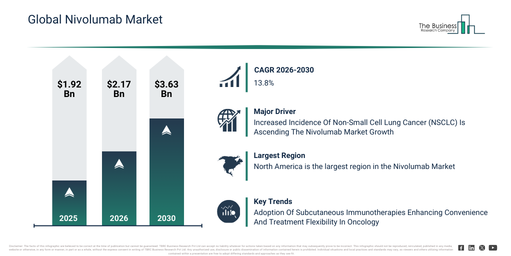
    The nivolumab market has experienced substantial expansion in recent years. Its value is projected to increase from $1.92 billion in 2025 to $2.17 billion in 2026, demonstrating a compound annual growth rate (CAGR) of 12.9%. The historical growth of this market is primarily due to factors such as the rising incidence of melanoma and NSCLC, the early approvals of nivolumab for metastatic cancers, the expansion of hospital infrastructure for oncology treatment, increased activity in oncology research and clinical trials, and the growing adoption of monoclonal antibody therapies.

    The nivolumab market size is anticipated to experience substantial growth in the coming years, projected to reach $3.63 billion by 2030 with a compound annual growth rate (CAGR) of 13.8%. This expansion during the forecast period can be attributed to several factors including the broadening of nivolumab indications, the increasing geriatric cancer population, its integration into combination therapies, escalating investment in biologics manufacturing, and the development of oncology infrastructure in emerging markets. Key trends influencing this period encompass advancements in immuno-oncology, the evolution of combination therapies, personalized cancer treatment approaches, the expansion of hospital-based oncology services, and the rising adoption of targeted therapies.

    Get A Free Sample Report With In-Depth Market Insights:

    https://thebusinessresearchcompany.com/sample_request?id=50520377&type=smp&name=Nivolumab%20Market%20Report%202026&utm_source=Blogs&utm_medium=Paid&utm_campaign=Oct_PR

    Nivolumab Market Growth Factors: What’s Supporting Expansion?

    The growing embrace of personalized medicine is anticipated to propel the expansion of the Nivolumab market in the future. This medical strategy customizes treatment and prevention plans according to an individual’s distinct genetic composition, way of life, and surroundings, moving away from standardized approaches. Its prevalence is on the rise, thanks to developments in genetic testing, which enable therapies to be precisely matched to each patient’s specific profile. Nivolumab functions as a personalized medicine, precisely targeting particular immune pathways determined by a patient’s tumor characteristics, thereby providing more customized and potent cancer therapy. For example, the Personalized Medicine Coalition, a US-based non-profit organization, announced in February 2024 that the FDA had sanctioned 16 novel personalized therapies for rare disease patients in 2023, marking a considerable jump from the six approvals in 2022. Consequently, the expanding use of personalized medicine is fueling the growth of the Nivolumab market.

    Nivolumab Market Segment Outlook: Which Categories Are Growing Fastest?

    The nivolumab market covered in this report is segmented –

    1) By Type: Injection 4mL, Injection 10mL

    2) By Route Of Administration: Intravenous, Other Routes Of Administration

    3) By Application: Melanoma, Non-small Cell Lung Cancer (NSCLC), Malignant Pleural Mesothelioma, Classical Hodgkin Lymphoma (CHL), Squamous Cell Carcinoma Of The Head And Neck (SCCHN), Renal Cell Carcinoma (RCC), Other Applications

    4) By End-User: Clinic, Hospital, Other End-Users

    Nivolumab Market Industry Trends: What’s Reshaping Demand?

    Major companies in the nivolumab market are prioritizing the development of new formulations and the expansion of treatment indications to improve patient convenience and bolster their immuno-oncology portfolios. For example, in December 2024, the Food and Drug Administration, a US-based federal agency, granted approval for Opdivo Qvantig, a subcutaneous formulation of nivolumab combined with hyaluronidase-nvhy, for use across all previously approved adult solid-tumor indications for intravenous nivolumab. This novel option allows for monotherapy, maintenance therapy after Opdivo plus Yervoy, or combination treatment with chemotherapy or cabozantinib. The approval is substantiated by the Phase 3 CHECKMATE-67T trial, which demonstrated comparable drug exposure, a similar safety profile, and a slightly higher response rate than IV nivolumab in patients with advanced renal cell carcinoma. With its flexible dosing schedules and sustained efficacy, the subcutaneous version provides a more convenient alternative for patients and reinforces Bristol Myers Squibb’s immuno-oncology portfolio.

    Nivolumab Market Leading Companies And Competitive Benchmarking

    Major companies operating in the nivolumab market are Bristol-Myers Squibb Company, Ono Pharmaceutical Co. Ltd., Xbrane Biopharma AB, NeuClone Therapeutics Inc., Dr. Reddy’s Laboratories Ltd., Biocon Limited, Samsung Bioepis Co. Ltd., Celltrion Inc., Amneal Pharmaceuticals LLC, Lupin Ltd., Intas Pharmaceuticals Ltd., Hetero Biopharma Ltd., Reliance Life Sciences Pvt. Ltd., Zydus Lifesciences Limited, mAbxience, Shanghai Henlius Biotech Inc., Innovent Biologics Inc., WuXi Biologics, Lonza Group AG, Samsung Biologics

    View The Full Nivolumab Market Report:

    https://thebusinessresearchcompany.com/report/nivolumab-global-market-report?utm_source=Blogs&utm_medium=Paid&utm_campaign=Oct_PR

    Nivolumab Market Regional Analysis And Leading Geography

    North America was the largest region in the nivolumab market in 2025. The regions covered in the nivolumab market report are Asia-Pacific, South East Asia, Western Europe, Eastern Europe, North America, South America, Middle East, Africa.

    Reach Out To Our Team:

    The Business Research Company: https://www.thebusinessresearchcompany.com/

    Americas: +1 310-496-7795

    Asia: +44 7882 955267 & +91 8897263534

    Europe: +44 7882 955267

    Email us at: marketing@tbrc.info

    Follow us on:

    LinkedIn: https://in.linkedin.com/company/the-business-research-company

    YouTube: https://www.youtube.com/channel/UC24_fI0rV8cR5DxlCpgmyFQ

    Global Market Model: https://www.thebusinessresearchcompany.com/global-market-model
  • Nitrogen Mustards Market 2026 Market Size And Growth Forecast: Key Trends To Watch

    Nitrogen Mustards Market 2026 Market Size And Growth Forecast: Key Trends To Watch

    Built to provide research that’s more actionable and strategically valuable, The Business Research Company’s 2026 market reports include market attractiveness analysis, total addressable market sizing, company benchmarking matrices, interactive Excel dashboards, broader supply chain intelligence, emerging startup tracking, and in-depth product insights.

    Nitrogen Mustards Market Revenue Growth On Track For A 5.8% CAGR Through 2030

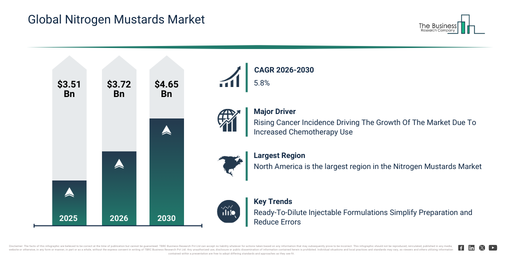
    The nitrogen mustards market has seen significant expansion in recent years. Its value is projected to rise from $3.51 billion in 2025 to $3.72 billion in 2026, achieving a compound annual growth rate (CAGR) of 6.1%. Throughout history, this growth was influenced by factors including a scarcity of chemotherapy alternatives, the increasing prevalence of cancer, reliance on treatments provided in hospitals, the regulatory clearance of initial nitrogen mustard medications, and an increase in the development of injectable chemotherapy formulations.

    The nitrogen mustards market size is projected to experience substantial expansion over the upcoming years. Its valuation is set to reach $4.65 billion by 2030, demonstrating a compound annual growth rate (CAGR) of 5.8%. This projected growth during the forecast timeframe is primarily driven by factors such as the evolution of combination and targeted therapeutic options, a growing need for oral and sustained-release drug forms, the proliferation of specialized oncology clinics, heightened financial commitment to cancer research, and the embrace of precision medicine alongside customized treatment strategies. Key trends anticipated within this period encompass an increasing inclination towards nitrogen mustards for cancer treatment, the creation of specific and combined chemotherapy preparations, the widening availability of both injectable and oral drug administration methods, a greater reliance on specialized clinics and hospital dispensaries, and a strong emphasis on ensuring patient well-being and adherence to regulations.

    Get A Free Sample Report With In-Depth Market Insights:

    https://thebusinessresearchcompany.com/sample_request?id=30673434&type=smp&name=Nitrogen%20Mustards%20Market%20Report%202026&utm_source=Blogs&utm_medium=Paid&utm_campaign=Oct_PR

    Nitrogen Mustards Market Demand Drivers: What’s Powering Industry Growth?

    The expansion of the nitrogen mustards market is anticipated to be driven by the escalating occurrence of cancer. Cancer is a collection of illnesses marked by the unrestrained proliferation and dissemination of abnormal cells within the body. The escalating incidence of cancer is attributed to lifestyle decisions such as inadequate nutrition, tobacco use, insufficient physical activity, and excessive alcohol consumption. Nitrogen mustards contribute to cancer therapy by disrupting the DNA of cancerous cells, thereby inhibiting their multiplication. They improve the efficacy of treatment through targeted chemotherapy, assisting in the management and reduction of tumor progression. For example, in January 2024, data from the American Cancer Society, a US-based nonprofit cancer advocacy organization, revealed that cancer cases climbed to 2,001,140 from 1,958,310 in 2023, representing a 2.19% increase. Consequently, the rising prevalence of cancer is a key factor propelling the growth of the nitrogen mustards market.

    Nitrogen Mustards Market Segment Landscape: Which Areas Lead Development?

    The nitrogen mustards market covered in this report is segmented –

    1) By Product Type: Mechlorethamine, Cyclophosphamide, Ifosfamide, Chlorambucil, Melphalan, Other Product Types

    2) By Application: Cancer Treatment, Autoimmune Diseases, Other Applications

    3) By Distribution Channel: Hospitals, Specialty Clinics, Online Pharmacies, Other Distribution Channels

    Subsegments:

    1) By Mechlorethamine: Injectable Formulation, Topical Formulation

    2) By Cyclophosphamide: Intravenous (IV) Formulation, Oral Tablets, Extended Release Formulation

    3) By Ifosfamide: Intravenous Formulation, Combination Therapy Formulation

    4) By Chlorambucil: Oral Tablets, Injectable Formulation

    5) By Melphalan: Oral Formulation, Intravenous Formulation, Powder for Injection

    6) By Other Product Types: Oral Formulation, Injectable Formulation, Combination Therapy Formulation

    Nitrogen Mustards Market Innovation Trends: What Developments Are Reshaping The Industry?

    Leading firms within the nitrogen mustards market are prioritizing the creation of sophisticated drug delivery methods, including ready-to-dilute injectable formulations, to improve the safety and ease of treatment. These ready-to-dilute injectable formulations represent liquid medications that are pre-processed for immediate dilution and administration, thereby streamlining preparation and minimizing potential dosing inaccuracies. As an example, in May 2025, Apotex Corp., a pharmaceutical company originating from Canada, introduced IVRA (Melphalan) hydrochloride injection 90 mg/ml multidose vial. This product is a ready-to-dilute liquid version of Melphalan injection, which secured approval through a 505(b)(2) new drug application (NDA) in the United States. This agent functions as an alkylating compound, employed in the palliative care of individuals suffering from multiple myeloma who are unable to undergo oral treatment. IVRA operates by binding alkyl groups to the DNA of cancerous cells, which interrupts their ability to replicate and ultimately causes cell death, thus assisting in managing tumor development.

    Nitrogen Mustards Market Industry Leaders And Competitive Landscape

    Major companies operating in the nitrogen mustards market are Baxter International Inc., Fresenius Kabi AG, Hikma Pharmaceuticals PLC, Pfizer Injectables (Hospira), Teva Pharmaceutical Industries Ltd., Sandoz International GmbH, Sun Pharmaceutical Industries Ltd., Aurobindo Pharma Limited, Dr. Reddy’s Laboratories Limited, Zydus Lifesciences Limited, Cipla Limited, Intas Pharmaceuticals Ltd., Emcure Pharmaceuticals Limited, Lupin Limited, Glenmark Pharmaceuticals Limited, Jiangsu Hengrui Medicine Co. Ltd., Zhejiang Hisun Pharmaceutical Co. Ltd., Qilu Pharmaceutical Co. Ltd., Shilpa Medicare Limited, MSN Laboratories Private Limited, Accord Healthcare Ltd., Mylan N.V. (Viatris Inc.), Fresenius SE & Co. KGaA, Baxter Oncology GmbH, Celon Laboratories Ltd., Taj Pharmaceuticals Limited, Alembic Pharmaceuticals Limited, Venus Remedies Limited, Natco Pharma Limited

    View The Full Nitrogen Mustards Market Report:

    https://thebusinessresearchcompany.com/report/nitrogen-mustards-global-market-report?utm_source=Blogs&utm_medium=Paid&utm_campaign=Oct_PR

    Nitrogen Mustards Market Geographic Analysis: Where Is Demand Accelerating Fastest?

    North America was the largest region in the nitrogen mustards market in 2025. The regions covered in the nitrogen mustards market report are Asia-Pacific, South East Asia, Western Europe, Eastern Europe, North America, South America, Middle East, Africa.

    Reach Out To Our Team:

    The Business Research Company: https://www.thebusinessresearchcompany.com/

    Americas: +1 310-496-7795

    Asia: +44 7882 955267 & +91 8897263534

    Europe: +44 7882 955267

    Email us at: marketing@tbrc.info

    Follow us on:

    LinkedIn: https://in.linkedin.com/company/the-business-research-company

    YouTube: https://www.youtube.com/channel/UC24_fI0rV8cR5DxlCpgmyFQ

    Global Market Model: https://www.thebusinessresearchcompany.com/global-market-model

  • Nimesulide Dispersible Tablet Market Size Forecast: How The Industry Is Expected To Grow From 2026 To 2030

    Nimesulide Dispersible Tablet Market Size Forecast: How The Industry Is Expected To Grow From 2026 To 2030

    Backed by market attractiveness analysis, total addressable market sizing, company benchmarking matrices, interactive Excel dashboards, wider supply chain intelligence, emerging startup coverage, and detailed product-level insights, The Business Research Company’s 2026 market reports are designed to offer research that is more actionable and strategically valuable than ever.

    Nimesulide Dispersible Tablet Market Value Growth And Long-Term Outlook

    The nimesulide dispersible tablet market size has shown substantial growth in recent years. This market is expected to expand from $0.82 billion in 2025 to $0.88 billion in 2026, exhibiting a compound annual growth rate (CAGR) of 7.0%. The expansion observed in the past can be linked to the widespread adoption of NSAIDs, an increasing need for convenient oral dosage forms, the broader availability of over-the-counter analgesics, a rise in conditions associated with pain, and improved pharmaceutical manufacturing capacity.

    The nimesulide dispersible tablet market size is projected to experience strong growth in the next few years. It is expected to grow to $1.16 billion in 2030, at a compound annual growth rate (CAGR) of 7.0%. The expansion during the forecast period can be attributed to the increase in patient-centric drug formulations, a growing preference for rapid-onset medications, rising demand in emerging markets, advancements in excipient technologies, and the expansion of homecare pain management. Key trends for the forecast period include an increasing demand for fast-acting pain relief formulations, the growing adoption of dispersible and patient-friendly tablets, their rising use in pediatric and geriatric populations, the expansion of generic pain management products, and an increasing focus on improved drug absorption.

    Get A Free Sample Report With In-Depth Market Insights:

    https://thebusinessresearchcompany.com/sample_request?id=65828139&type=smp&name=Nimesulide%20Dispersible%20Tablet%20Market%20Report%202026&utm_source=Blogs&utm_medium=Paid&utm_campaign=Oct_PR

    Nimesulide Dispersible Tablet Market Growth Drivers: What’s Behind The Acceleration?

    The rising occurrence of musculoskeletal ailments is projected to boost the expansion of the nimesulide dispersible tablet market in the future. These conditions involve issues with muscles, bones, joints, tendons, and ligaments, frequently leading to discomfort, rigidity, and limited movement. Several elements contribute to the increasing appearance of musculoskeletal problems, among them a growing elderly demographic. With advancing age, individuals experience diminished bone density, joint degradation, and reduced muscle strength, collectively increasing their vulnerability to such ailments. Nimesulide dispersible tablets are beneficial for musculoskeletal disorders, delivering potent alleviation of pain and inflammation linked to issues like arthritis, back pain, and muscle strains, and presenting a convenient choice for individuals who struggle with ingesting traditional pills. For example, data from January 2024 revealed that, per the Office for Health Improvement and Disparities (OHID), a government department in the UK, 18.4% of individuals reported experiencing long-term musculoskeletal conditions in 2023, marking an increase from 17.6% in 2022. Consequently, the growing occurrence of musculoskeletal disorders is propelling the expansion of the nimesulide dispersible tablet market.

    Nimesulide Dispersible Tablet Market Segments: Where Is Growth Concentrated?

    The nimesulide dispersible tablet market covered in this report is segmented –

    1) By Dosage Form: 70 mg Tablets, 100 mg Tablets, Custom Dosage Tablets

    2) By Indication: Pain Management, Inflammation Treatment, Fever Reduction, Chronic Pain Disorders, Postoperative Pain Relief

    3) By Patient Population: Adults, Geriatrics, Pediatrics

    4) By End-User: Hospitals, Clinics, Homecare, Other Users

    Subsegments:

    1) By 70 Mg Tablets: Pediatric Use, Geriatric Use, Low-Weight Adult Patients, Over-The-Counter Availability In Select Markets

    2) By 100 Mg Tablets: Standard Adult Dosage, Prescription-Based Distribution, Hospital Pharmacy Channels, Online Pharmacy Sales

    3) By Custom Dosage Tablets: Compounded Pharmacy Formulations, Clinical Trial And Research Use, Patient-Specific Therapy, Export Formulations Tailored To Regional Regulatory Needs

    Nimesulide Dispersible Tablet Market Key Participants And Competitive Landscape

    Major companies operating in the nimesulide dispersible tablet market are Abbott Laboratories Limited, Dr. Reddy’s Laboratories Limited, Cipla Limited, Zydus Lifesciences Limited, Orion Life Science, Torrent Pharmaceuticals Limited, Mankind Pharma Limited, Honz Pharmaceutical Pvt. Ltd., Taj Pharmaceuticals Limited, D M Pharma, Swiss Chem Healthcare, SiNi Pharma Private Limited, Wellona Pharma, Therawin Formulations, Mecoson Labs Private Limited, Bidu Biotech, Aelida Healthcare, Care Formulation Labs Private Limited, Yaxon Biocare Private Limited, Novique Life Sciences Private Limited, Henin Lukinz.

    View The Full Nimesulide Dispersible Tablet Market Report:

    https://thebusinessresearchcompany.com/report/nimesulide-dispersible-tablet-global-market-report?utm_source=Blogs&utm_medium=Paid&utm_campaign=Oct_PR

    Nimesulide Dispersible Tablet Market Global Footprint: Which Region Leads The Industry?

    North America was the largest region in the nimesulide dispersible tablet market in 2025. Asia-Pacific is expected to be the fastest-growing region in the forecast period. The regions covered in the nimesulide dispersible tablet market report are Asia-Pacific, South East Asia, Western Europe, Eastern Europe, North America, South America, Middle East, Africa.

    Reach Out To Our Team:

    The Business Research Company: https://www.thebusinessresearchcompany.com/

    Americas: +1 310-496-7795

    Asia: +44 7882 955267 & +91 8897263534

    Europe: +44 7882 955267

    Email us at: marketing@tbrc.info

    Follow us on:

    LinkedIn: https://in.linkedin.com/company/the-business-research-company

    YouTube: https://www.youtube.com/channel/UC24_fI0rV8cR5DxlCpgmyFQ

    Global Market Model: https://www.thebusinessresearchcompany.com/global-market-model

  • Nicotine Replacement Therapy Market Reaches $4.54 Billion In 2026: Forecast And Growth Opportunities

    Nicotine Replacement Therapy Market Reaches $4.54 Billion In 2026: Forecast And Growth Opportunities

    Featuring market attractiveness scoring, total addressable market sizing, company benchmarking matrices, interactive Excel dashboards, deeper supply chain intelligence, emerging startup tracking, and granular product-level insights, The Business Research Company’s 2026 market reports are built to deliver research that is both more actionable and more strategically valuable.

    Nicotine Replacement Therapy Market Poised To Hit $4.54 Billion By 2030 With A 5.6% CAGR

    The nicotine replacement therapy market has experienced substantial growth in recent years. It is anticipated to expand from $3.44 billion in 2025 to $3.65 billion in 2026, achieving a compound annual growth rate (CAGR) of 5.8%. The historical growth of this market is attributable to factors such as the increasing prevalence of smoking, a heightened awareness of smoking hazards, the proliferation of government anti-smoking campaigns, the widespread availability of over-the-counter nrt products, and expanding research into nicotine addiction treatment.

    The nicotine replacement therapy market is projected to experience substantial expansion over the upcoming years. Its valuation is set to reach $4.54 billion by 2030, exhibiting a compound annual growth rate (CAGR) of 5.6%. This anticipated growth during the forecast period stems from factors such as progress in digital health solutions, the emergence of personalized medicine, the uptake of connected health devices, the widening reach of online pharmacy channels, and increased funding for smoking cessation initiatives. Key developments expected within this period encompass tailored nicotine therapy programs, mobile health applications designed for quitting smoking, wearable technology for monitoring nicotine consumption, digital counseling and assistance platforms, and the incorporation of behavioral therapy with NRT.

    Get A Free Sample Report With In-Depth Market Insights:

    https://thebusinessresearchcompany.com/sample_request?id=55166373&type=smp&name=Nicotine%20Replacement%20Therapy%20Market%20Report%202026&utm_source=Blogs&utm_medium=Paid&utm_campaign=Oct_PR

    Nicotine Replacement Therapy Market Growth Factors Behind Sustained Expansion

    The growing occurrence of diseases linked to smoking is expected to fuel the expansion of the nicotine replacement therapy market ahead. These diseases are defined as health issues and conditions directly resulting from tobacco product consumption, especially via smoking. Nicotine replacement therapy (NRT) primarily functions as an instrument to assist individuals in discontinuing smoking, thereby lessening the chance of smoking-related diseases and aiding in conjunction with counseling, support, and a resolve to modify lifestyle habits. For example, a report released by the National Health Service (NHS), a publicly funded healthcare system situated in the UK, indicated in December 2023 that hospital admissions stemming from smoking-related diseases rose to an estimated 408,700 admissions in 2022-23 from 389,800 in 2021–22, marking a 4.8% increase. Consequently, the increasing prevalence of smoking-related diseases is propelling the expansion of the nicotine replacement therapy market.

    Nicotine Replacement Therapy Market Segment Analysis: What Are The Core Market Categories?

    The nicotine replacement therapy market covered in this report is segmented –

    1) By Product Type: Patch, Gum, Lozenge, Inhaler, Spray, Other Products

    2) By Distribution Channel: Hospital Pharmacy, Retail Pharmacy, Online Pharmacy

    3) By Location: Hospitals And Deaddiction Centers, Home

    Subsegments:

    1) By Patch: Transdermal Nicotine Patches, Extended-Release Patches, Combination Patches

    2) By Gum: Nicotine Chewing Gum, Sugar-Free Nicotine Gum, Different Strengths Of Nicotine Gum

    3) By Lozenge: Nicotine Lozenges, Different Strengths Of Nicotine Lozenges

    4) By Inhaler: Nicotine Inhalation Devices, Disposable Inhalers, Refillable Inhaler Systems

    5) By Spray: Nasal Nicotine Spray, Oral Nicotine Spray, Metered-Dose Spray Systems

    6) By Other Products: Nicotine Tablets, Electronic Cigarettes As NRT, Nicotine Pouches

    Nicotine Replacement Therapy Market Industry Trends Fueling Future Revenue Growth

    Leading businesses within the nicotine replacement therapy market are prioritizing inventive approaches, including smoking cessation filters like Cigibud, to mitigate the substantial health dangers linked to smoking. Such filters are products crafted to assist people in giving up smoking through lessening the consumption of detrimental compounds from cigarettes. As an illustration, Nanoclean Global Pvt. Ltd., an Indian nanotechnology startup, introduced Cigibud, recognized as the globe’s inaugural smoking cessation filter, in March 2023. This product represents a scientifically validated method for smoking cessation, developed utilizing proprietary nanofiber technology. The filter functions by diminishing tar and nicotine levels in cigarettes, thereby facilitating the process of quitting. Furthermore, it is both biodegradable and biocompatible, featuring internal pores so minute that even the tiniest particles are unable to pass through. Its mechanism involves a systematic reduction in nicotine intake, drawing inspiration from nicotine replacement therapy (NRT). Ultimately, these filters aim to aid individuals in ceasing smoking by cutting down the tar and nicotine from cigarettes.

    Nicotine Replacement Therapy Market Top Companies Driving Competitive Growth

    Major companies operating in the nicotine replacement therapy market are Pfizer Inc., Johnson & Johnson, GlaxoSmithKline plc, Haleon Group of Companies, Bayer AG, Sanofi S.A., Perrigo Company plc, Cipla Limited, Zydus Cadila, Dr. Reddy’s Laboratories Ltd., Sun Pharmaceutical Industries Ltd., Teva Pharmaceutical Industries Ltd., Viatris Inc., Abbott Laboratories, Takeda Pharmaceutical Company Limited, Fertin Pharma Limited, Perrigo India Pvt. Ltd., Lupin Ltd., Alkem Laboratories Ltd., Mylan N.V.

    View The Full Nicotine Replacement Therapy Market Report:

    https://thebusinessresearchcompany.com/report/nicotine-replacement-therapy-global-market-report?utm_source=Blogs&utm_medium=Paid&utm_campaign=Oct_PR

    Nicotine Replacement Therapy Market Regional Distribution: Which Areas Power Market Growth?

    Asia-Pacific was the largest region in the nicotine replacement therapy market in 2025. It is expected to be the fastest-growing region in the forecast period. The regions covered in the nicotine replacement therapy market report are Asia-Pacific, South East Asia, Western Europe, Eastern Europe, North America, South America, Middle East, Africa.

    Reach Out To Our Team:

    The Business Research Company: https://www.thebusinessresearchcompany.com/

    Americas: +1 310-496-7795

    Asia: +44 7882 955267 & +91 8897263534

    Europe: +44 7882 955267

    Email us at: marketing@tbrc.info

    Follow us on:

    LinkedIn: https://in.linkedin.com/company/the-business-research-company

    YouTube: https://www.youtube.com/channel/UC24_fI0rV8cR5DxlCpgmyFQ

    Global Market Model: https://www.thebusinessresearchcompany.com/global-market-model

  • Nicotine Addiction Treatment Market Growth In 2026: Market Size, Key Drivers And Future Outlook

    Nicotine Addiction Treatment Market Growth In 2026: Market Size, Key Drivers And Future Outlook

    Built to provide research that’s more actionable and strategically valuable, The Business Research Company’s 2026 market reports include market attractiveness analysis, total addressable market sizing, company benchmarking matrices, interactive Excel dashboards, broader supply chain intelligence, emerging startup tracking, and in-depth product insights.

    Nicotine Addiction Treatment Market Size And Revenue Outlook Through 2030

    The nicotine addiction treatment market has experienced substantial growth in its size during recent years. This market is projected to expand from $3.84 billion in 2025 to $4.22 billion in 2026, achieving a compound annual growth rate (CAGR) of 10.1%. The growth observed in previous periods can be attributed to heightened awareness concerning the health risks associated with smoking, an increasing prevalence of tobacco usage, government-backed anti-smoking campaigns, the accessibility of nicotine replacement therapies, and an expanding network of retail pharmacies.

    The nicotine addiction treatment market size is anticipated to undergo significant expansion in the coming years. It is forecast to attain a value of $6.21 billion by 2030, progressing at a compound annual growth rate (CAGR) of 10.1%. This projected growth during the forecast period is driven by factors such as the increasing adoption of digital cessation platforms, the development of AI-driven personalized therapies, the integration of mobile health applications, a rising demand for online counseling services, and the expansion of wearable nicotine monitoring devices. Prominent trends expected in this period encompass mobile health integration, personalized cessation programs, telehealth counseling services, the use of gamification for behavioral change, and wearable nicotine monitoring devices.

    Get A Free Sample Report With In-Depth Market Insights:

    https://thebusinessresearchcompany.com/sample_request?id=32272958&type=smp&name=Nicotine%20Addiction%20Treatment%20Market%20Report%202026&utm_source=Blogs&utm_medium=Paid&utm_campaign=Oct_PR

    Nicotine Addiction Treatment Market Demand Drivers Opening New Revenue Streams

    The increasing occurrence of tobacco addiction in adolescents is projected to drive the expansion of the nicotine addiction treatment market in the future. Tobacco addiction, or nicotine dependency, refers to a craving for tobacco, often consumed as cigarettes, which contain the potent addictive substance, nicotine. Adolescents often initiate smoking young, drawn by its perceived ability to alleviate anxiety, improve mood, and cope with depression. This escalating tobacco addiction consequently generates substantial demand for nicotine addiction treatment. An illustrative example is from October 2024, when the Centers for Disease Control and Prevention, a US-based government public health agency, reported that in 2024, 1 out of every 29 middle school students (3.5%) acknowledged using electronic cigarettes within the preceding 30 days. Thus, the growing incidence of tobacco addiction among teenagers is a primary factor fueling the expansion of the nicotine addiction treatment market.

    Nicotine Addiction Treatment Market Segment Breakdown: Which Categories Lead On Revenue?

    The nicotine addiction treatment market covered in this report is segmented –

    1) By Type: Pharmacological, Therapies, Other Types

    2) By Distribution Channel: Hospital Pharmacy, Retail Pharmacy, Online Pharmacy

    3) By End-User: Generation Z, Millennials, Generation X, Silent Generation

    Subsegments:

    1) By Pharmacological: Nicotine Replacement Therapies (NRTs), Prescription Medications

    2) By Therapies: Behavioral Therapy, Cognitive Behavioral Therapy (CBT), Group Therapy, Hypnotherapy

    3) By Other Types: Mobile Applications, Support Groups, Online Counseling Services

    Nicotine Addiction Treatment Market Trends Powering Strategic Industry Growth

    Leading companies in the nicotine addiction treatment market are prioritizing the implementation of combination therapy to enhance treatment effectiveness, reduce withdrawal symptoms, and improve the likelihood of long-term smoking cessation success. This treatment method integrates pharmacological interventions with behavioral therapies, acknowledging that a multi-pronged strategy is more impactful than relying on a single approach. Research indicates that combining medications with behavioral support significantly increases the chances of successful cessation compared to standalone treatments. For instance, in June 2024, the Royal Australian College of General Practitioners (RACGP), an Australia-based University, introduced an advanced therapeutic option known as Combination Therapy. This therapy places strong emphasis on cognitive behavioral therapy (CBT) and other psychological strategies, assisting individuals in identifying triggers and developing effective coping mechanisms. This element is crucial as it provides patients with practical skills to manage cravings and prevent relapse. The treatment regimen can include FDA-approved medications such as nicotine replacement therapies (NRT), varenicline (Chantix), and bupropion (Zyban). These medications operate by alleviating withdrawal symptoms and cravings, thereby making it simpler for individuals to concentrate on making behavioral changes.

    Nicotine Addiction Treatment Market Leading Players And Competitive Positioning

    Major companies operating in the nicotine addiction treatment market are Cipla Limited, Pfizer Inc., Glenmark Pharmaceuticals Limited, Johnson & Johnson Private Limited, GlaxoSmithKline plc, Perrigo Company PLC, Takeda Pharmaceutical Company Limited, Dr. Reddy’s Laboratories Limited, Cerecor Inc., Novartis International AG, Sanofi S.A., Sandoz International GmbH, Boehringer Ingelheim International GmbH, Alkermes plc, Teva Pharmaceutical Industries Ltd., Mylan NV, Sun Pharmaceutical Industries Ltd., Lupin Ltd., Aurobindo Pharma Ltd., Alembic Pharmaceuticals Ltd., Intas Pharmaceuticals Ltd., Cadila Healthcare Ltd.

    View The Full Nicotine Addiction Treatment Market Report:

    https://thebusinessresearchcompany.com/report/nicotine-addiction-treatment-global-market-report?utm_source=Blogs&utm_medium=Paid&utm_campaign=Oct_PR

    Nicotine Addiction Treatment Market Leading Geography: Which Region Contributes The Most Revenue?

    North America was the largest region in the nicotine addiction treatment market in 2025. The regions covered in the nicotine addiction treatment market report are Asia-Pacific, South East Asia, Western Europe, Eastern Europe, North America, South America, Middle East, Africa.

    Reach Out To Our Team:

    The Business Research Company: https://www.thebusinessresearchcompany.com/

    Americas: +1 310-496-7795

    Asia: +44 7882 955267 & +91 8897263534

    Europe: +44 7882 955267

    Email us at: marketing@tbrc.info

    Follow us on:

    LinkedIn: https://in.linkedin.com/company/the-business-research-company

    YouTube: https://www.youtube.com/channel/UC24_fI0rV8cR5DxlCpgmyFQ

    Global Market Model: https://www.thebusinessresearchcompany.com/global-market-model

  • Next Generation Tissue Biomarkers Market Size And Forecast 2026–2030: Trends Driving Industry Expansion

    Next Generation Tissue Biomarkers Market Size And Forecast 2026–2030: Trends Driving Industry Expansion

    Backed by market attractiveness analysis, total addressable market sizing, company benchmarking matrices, interactive Excel dashboards, wider supply chain intelligence, emerging startup coverage, and detailed product-level insights, The Business Research Company’s 2026 market reports are designed to offer research that is more actionable and strategically valuable than ever.

    Next Generation Tissue Biomarkers Market Growth From $3.42 Billion In 2026 To $5.5 Billion By 2030 At A CAGR Of 12.6%

    The next generation tissue biomarkers market has experienced significant growth in recent years. It is anticipated to increase from $3.03 billion in 2025 to $3.42 billion in 2026, demonstrating a compound annual growth rate (CAGR) of 12.9%. This historical growth can be ascribed to reliance on traditional histopathology techniques, limited biomarker identification methods, growing oncology research, increasing adoption of companion diagnostics, and early-stage investment in genomic and proteomic studies.

    The next generation tissue biomarkers market size is projected to experience substantial expansion over the upcoming years, reaching $5.51 billion in 2030 at a compound annual growth rate (CAGR) of 12.6%. This projected increase during the forecast period is primarily driven by breakthroughs in next-generation sequencing technologies, the incorporation of AI-powered tissue analysis, the development of spatial biology platforms, increasing financial commitment to multi-omics research, and enhanced partnerships between pharmaceutical companies and academic institutions. Significant developments anticipated during this timeframe involve the broadened application of spatial biology and multi-omics strategies, a greater uptake of digital pathology and AI-driven analysis in diagnostic procedures, an escalating need for biomarkers in oncology and companion diagnostics, an expansion in drug discovery and development leveraging tissue biomarkers, and the incorporation of transcriptomic and metabolomic biomarkers for tailored precision medicine.

    Get A Free Sample Report With In-Depth Market Insights:

    https://thebusinessresearchcompany.com/sample_request?id=45654169&type=smp&name=Next%20Generation%20Tissue%20Biomarkers%20Market%20Report%202026&utm_source=Blogs&utm_medium=Paid&utm_campaign=Oct_PR

    Next Generation Tissue Biomarkers Market Growth Backed By Core Demand Fundamentals

    The increasing need for personalized medicine is anticipated to propel the expansion of the next generation tissue biomarkers market moving forward. Personalized medicine defines a medical strategy that customizes treatment based on an individual’s genetic makeup, lifestyle, and environmental factors. Its adoption is on the rise due to continuous advancements in genomic technologies, which facilitate highly specific and individualized treatment approaches. This heightened demand for personalized medicine is spurring the development of next-generation tissue biomarkers, as they supply the precise and tailored information necessary to adapt treatments to each patient’s unique tissue profile. For instance, in February 2024, the Personalized Medicine Coalition, a US-based non-profit organization, reported that the FDA approved 16 new personalized treatments for rare disease patients in 2023, a significant increase from 6 approvals in 2022. The 2023 approvals also encompassed seven cancer drugs and three for other diseases and conditions. Thus, the escalating demand for personalized medicine is a key driver for the expansion of the next generation tissue biomarkers market.

    Next Generation Tissue Biomarkers Market Segmentation: How Does The Market Break Down By Category?

    The next generation tissue biomarkers market covered in this report is segmented –

    1) By Type: Genomic Biomarkers, Proteomic Biomarkers, Epigenetic Biomarkers, Transcriptomic Biomarkers, Metabolomic Biomarkers

    2) By Technology: Immunohistochemistry, Next-Generation Sequencing, Mass Spectrometry (Ms)-Based Proteomics, Spatial Biology Platforms, Digital Pathology And Artificial Intelligence Analysis, Other Technologies

    3) By Application: Oncology, Companion Diagnostics, Drug Discovery And Development, Neurology, Other Applications

    4) By End Use: Hospitals And Reference Labs, Pharma And Biotech Companies, Academic And Research Institutes, Contract Research Organizations

    Subsegments:

    1) By Genomic Biomarkers: Single Nucleotide Polymorphisms, Copy Number Variations, Gene Fusions

    2) By Proteomic Biomarkers: Protein Expression Levels, Post-Translational Modifications, Protein-Protein Interactions

    3) By Epigenetic Biomarkers: Histone Modification Patterns, Chromatin Remodeling Biomarkers, Non-Coding Ribonucleic Acid Regulation

    4) By Transcriptomic Biomarkers: Long Non-Coding Ribonucleic Acids, Circular Ribonucleic Acids, Alternative Splicing Variants

    5) By Metabolomic Biomarkers: Lipid Profiles, Amino Acid Signatures, Organic Acids

    Next Generation Tissue Biomarkers Market Growth Trends Reshaping The Competitive Landscape

    Leading companies within the next generation tissue biomarkers market are prioritizing the creation of sophisticated solutions, including genomic-based diagnostic assays and sequencing solutions, aiming to improve the precision, rapidity, and individualized nature of cancer diagnosis and therapy. These genomic-based diagnostic assays and sequencing solutions involve methods and instruments designed to analyze genetic data to pinpoint biomarkers linked to diseases, thereby facilitating highly accurate and tailored diagnostic and therapeutic strategies. An illustrative example occurred in August 2024, when Illumina Inc., a US-based biotechnology firm, secured FDA approval for its TruSight Oncology Comprehensive test, accompanied by two companion diagnostics, intending to quickly connect cancer patients with appropriate targeted therapies. This particular test analyzes over 500 genes from a single tissue sample, allowing for accurate selection of treatments for a range of solid tumors. Furthermore, it automates the detection of biomarkers and is capable of 24/7 deployment, substantially shortening turnaround times and boosting clinical efficiency, thereby exemplifying a contemporary method for streamlining cancer diagnostics within a regulated environment.

    Next Generation Tissue Biomarkers Market Competitive Overview And Top Companies

    Major companies operating in the next generation tissue biomarkers market are Roche Diagnostics, Thermo Fisher Scientific Inc., LabCorp., Quest Diagnostics Incorporated, Agilent Technologies Inc., Illumina Inc., Bio-Rad Laboratories Inc., QIAGEN N.V., Bio-Techne Corporation, Myriad Genetics Inc., NeoGenomics Laboratories Inc., Foundation Medicine Inc., NanoString Technologies Inc., PathAI Inc., Biocartis Group NV, Personalis Inc., Ultivue Inc., Indica Labs Inc., Strata Oncology Inc., Genialis Inc., Alida Biosciences Inc., Biofidelity Ltd.

    View The Full Next Generation Tissue Biomarkers Market Report:

    https://thebusinessresearchcompany.com/report/next-generation-tissue-biomarkers-global-market-report?utm_source=Blogs&utm_medium=Paid&utm_campaign=Oct_PR

    Next Generation Tissue Biomarkers Market Regional Outlook: Where Is Opportunity Concentrated?

    North America was the largest region in the next generation tissue biomarkers market in 2025. Asia-Pacific is expected to be the fastest-growing region in the forecast period. The regions covered in the next generation tissue biomarkers market report are Asia-Pacific, South East Asia, Western Europe, Eastern Europe, North America, South America, Middle East, Africa.

    Reach Out To Our Team:

    The Business Research Company: https://www.thebusinessresearchcompany.com/

    Americas: +1 310-496-7795

    Asia: +44 7882 955267 & +91 8897263534

    Europe: +44 7882 955267

    Email us at: marketing@tbrc.info

    Follow us on:

    LinkedIn: https://in.linkedin.com/company/the-business-research-company

    YouTube: https://www.youtube.com/channel/UC24_fI0rV8cR5DxlCpgmyFQ

    Global Market Model: https://www.thebusinessresearchcompany.com/global-market-model